Gillian Stone Reviews A Trio Of Recent Releases.
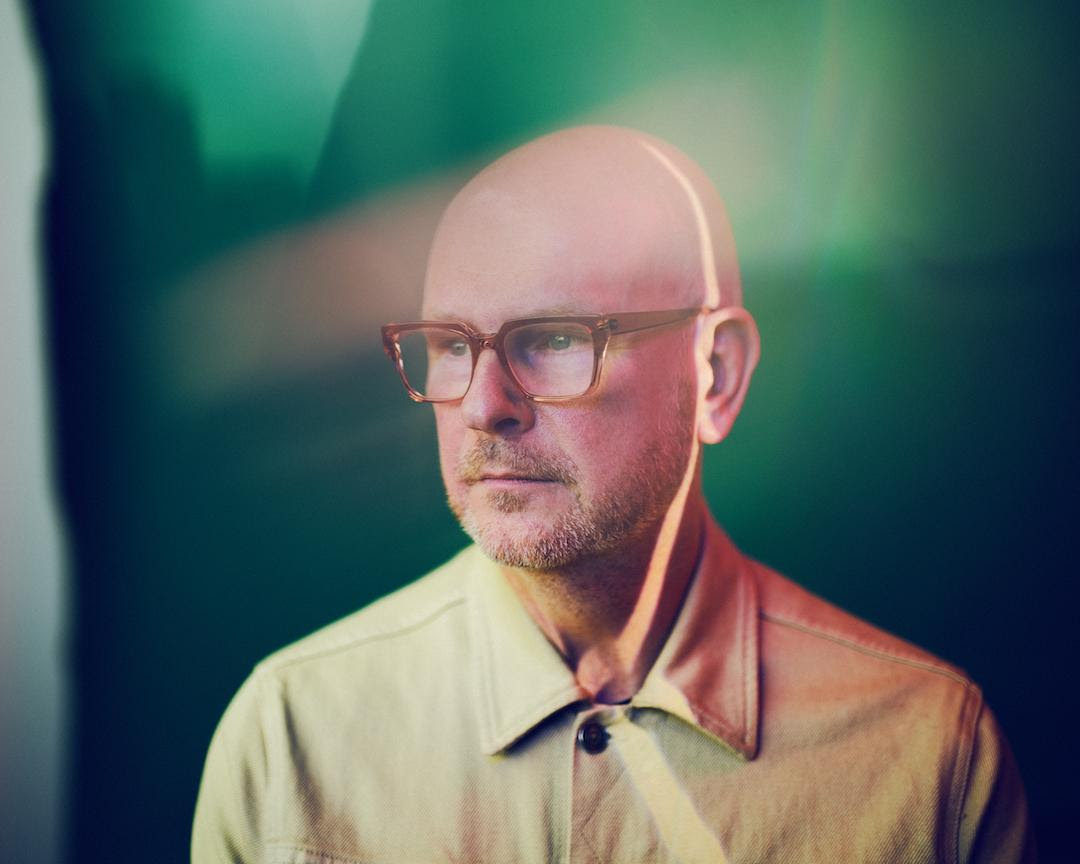
Ruxpin & Stafrænn Hákon ‘Meet Me In Forever’
(Sound In Silence) Available Now

Ruxpin and Stafrænn Hákon’s Meet Me In Forever (Sound In Silence) is imbued with chillness but also encourages bodily movement. This is the first collaborative effort from the Icelandic artists, who have been separately releasing music for over twenty years. Previously creating in somewhat disparate sonic worlds, Ruxpin’s melodic IDM and Stafrænn Hákon’s atmospheric post-rock collide in Meet Me In Forever.
With elements of melancholic nostalgia and an ambient retro-vibe overall, the album is reminiscent of turn of the millennia Boards of Canada with more sophisticated, modern production. This genre blending is clear off the top of the record in the first track “Flawless Delivery” with it’s clear yet warbling post-rock guitar tones, percussive breath sounds, and swirling synths. There are electroacoustic elements throughout the record, such as in the meditative third track, “Odesa”, and in the field recordings that accompany “Offshore” and “Reunited (If It’s What You Want)”. The latter, penultimate track, is perhaps the strongest on the record. Sparse vocals by Olena Simon soar over a Múm-esque soundscape, ending with a field recording of barking dogs and human laughter.
Overall, Meet Me In Forever retains a special quality of being a record you could both sleep to and dance to simultaneously.
Anemic Cinema ‘Iconoclasts’
(Ramble Records) Available Now
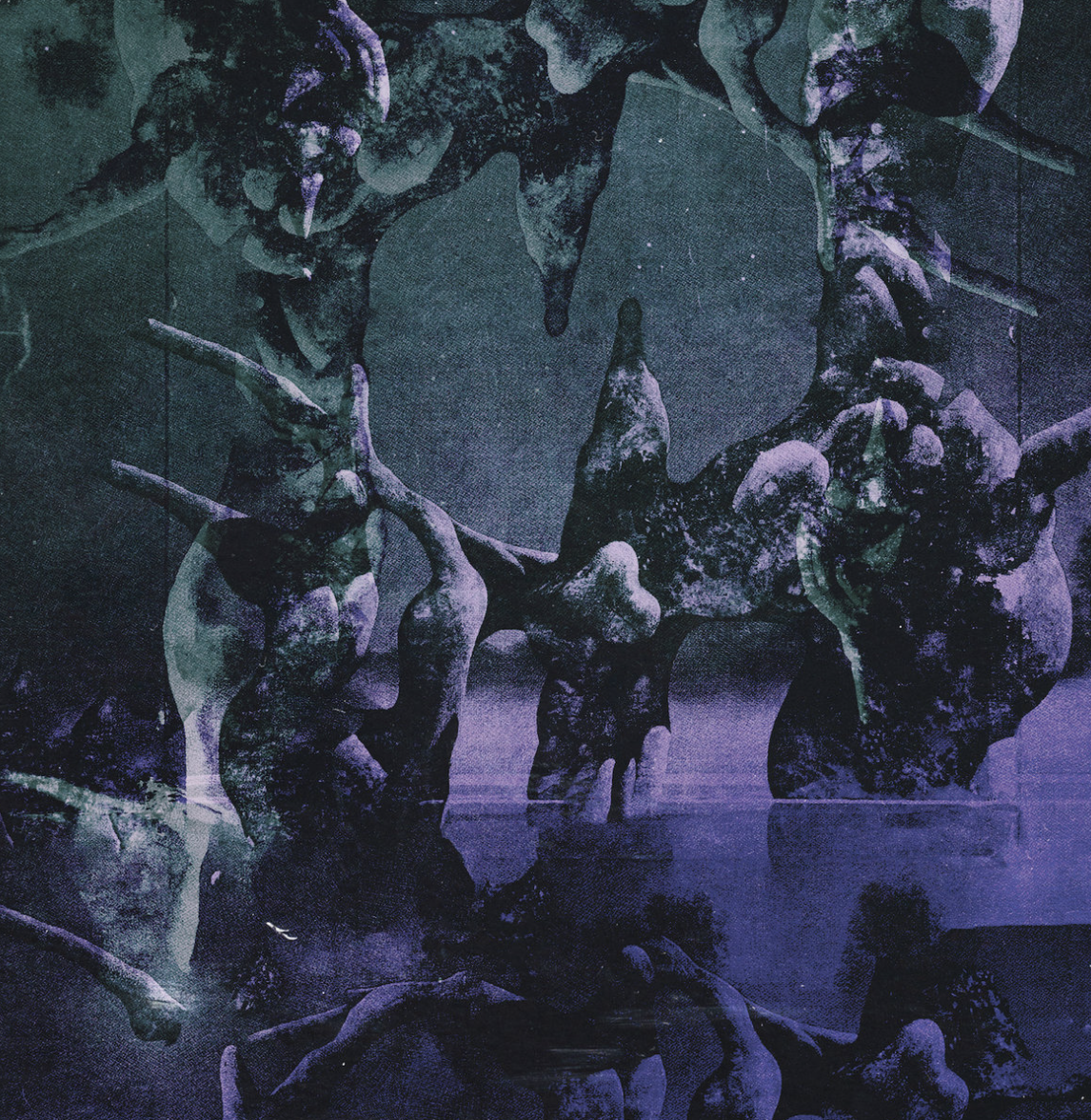
Iconoclasts, released via the independent Melbourne-based label Ramble Records, is “Avant-jazz-metal collective” Anemic Cinema’s newest offering. Undoubtedly a jazz record at its core, the album from the Belgium-based group is also so much more. Opening with the considerable energy of “Oneirophrenia” (meaning: state caused by sensory deprivation, sleep deprivation, or drugs that is hallucinatory and dream-like), the song introduces a heaviness along with alluding to influences from Zappa and Ornette Coleman. “Iconoclasts, Pt 1”, “Iconoclasts, Pt 2”, and “Iconoclasts, Pt 3”, three movements with a nod to prog in their naming convention, then take the listener on a vast and stunning timbral journey.
The intro of “Pt 1” hails to classical Modernism, while composer Artan Buleshkaj enhances the space with beautiful, reverb-y suss chords on baritone guitar. Things get far more metal in “Pt 2”, with the juxtaposition of horns and distorted guitar enhancing the angular aesthetic of the movement. It ends with Steven Delannoye’s solo bass-clarinet, which then evolves into a tritone driven bass clarinet riff that grounds “Iconoclasts, Pt 3”. For “Business in the Front, Party in the Back”, Delannoye’s tenor sax and Rob Banken’s alto sax trade solos over Buleshkaj’s fuzzed-out guitar. Halfway through, the track completely changes speed into more traditional jazz guitar, with the hollow body sound of Jim Hall, before the fuzzed-out guitar comes back in for a modified head that takes out the tune.
The album then moves into a fucked up little interlude, “In Sillico”, with wild, sliding guitar and fantastic drum work by Matthias de Waele. “Tessellate” trades a headbanger feel with total chaos, while “108” takes out the record with the softened timbres of acoustic steel sting guitar and soloing clarinet.
Iconoclasts is a singular experimental triumph that takes the listener on an epically diverse sonic journey.
Philip Selway ‘Strange Dance’
(Bella Union) Available Now
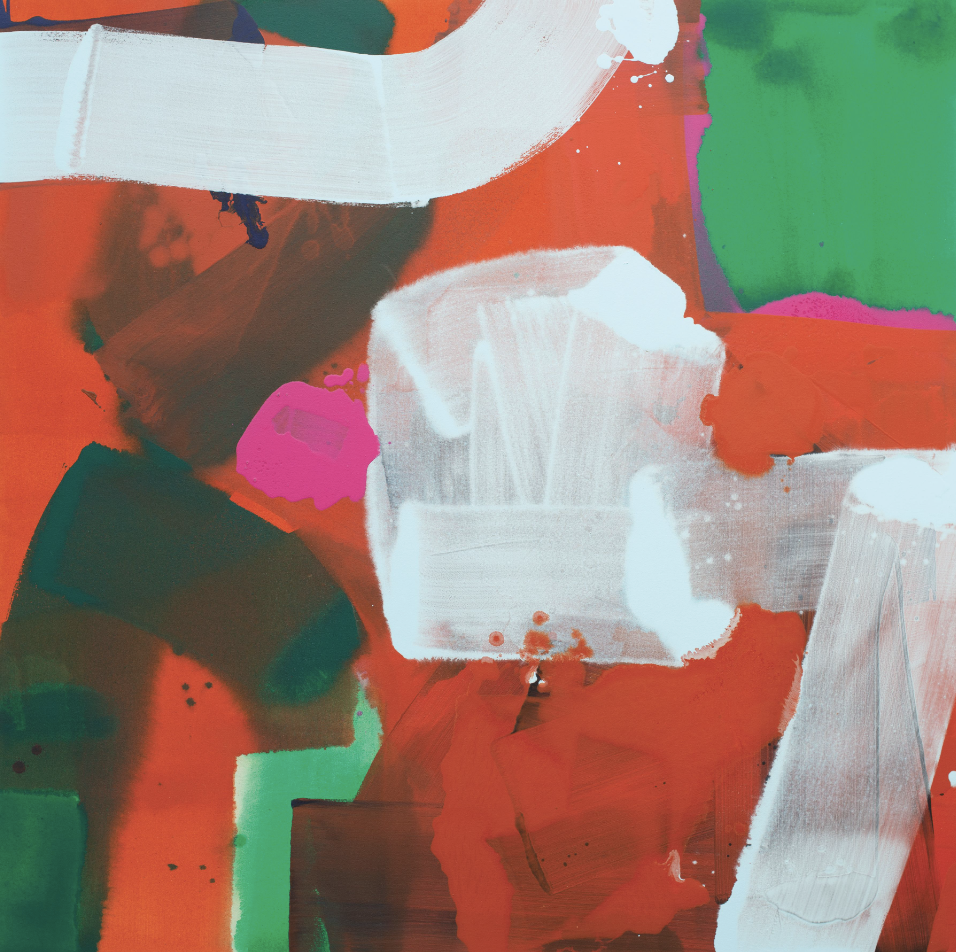
At the heart of Philip Selway’s Strange Dance, his third solo album released via Bella Union, is the orchestral piano ballad. It’s how the album begins (“Little Things”) and ends (“There’ll Be Better Days”), and where it returns to throughout (“The Other Side”, “The Heart Of It All”). Yet in between, there is also so much else going on.
Lyrically, the album is profoundly sad, but ends with the trepidatious hope of “There’ll Be Better Days”. There are tidbits of Radiohead’s influence – the occasional Thom Yorke chord progression and Jonny Greenwood string arrangement – but otherwise it stands apart.
Between Marta Salogni’s production and Selway’s vocals, the lush sonic environment is reminiscent of Peter Gabriel in his prime. And Strange Dance does stray from the piano ballad: “Picking Up Pieces” with its driving, 90s feel and “Make It Go Away” with its acoustic guitar and percussion that could be from a 80s Paul Simon record.
Favorites on the album include “What Keeps You Awake At Night”, which includes beautiful Steve Reich-esque glockenspiel, the unorthodox percussion timbres and high, sustained strings of title track “Strange Dance”, and “Salt Air” with its droning synth, distorted vocals, and sparsely swooping orchestral parts.
Throughout the record are the incredible percussion parts of Valentina Magaletti, who played in lieu of Selway as the Radiohead drummer felt he was “not in the right mindset” to contribute drums.
Strange Dance is a thing of luxuriant, sorrowful beauty that further establishes Selway as composer in his own right.
Joining the team earlier this year, Gillian Stone is a multi-instrumentalist and interdisciplinary artist originally from the Pacific Northwest and based in Toronto, Canada. Through her eponymous vocally-driven post-rock/drone folk solo project, she has released two singles, “Bridges” and “Shelf”, and her debut EP, Spirit Photographs. Stone holds a BFA in Jazz Studies from Vancouver Island University and an MA in Ethnomusicology from the University of Toronto. Drawing from her eclectic taste, she has worked with Michael Peter Olsen (Zoon, The Hidden Cameras), Timothy Condon and Brad Davis (Fresh Snow, Picastro), The Fern Tips (Beams) Völur (Blood Ceremony), NEXUS (Steve Reich), and visual artist Althea Thauberger.
The Monolith Cocktail Social Playlist #74: Yoko Ono, Wayne Shorter, Trupa Trupa, Blue Lake…
March 14, 2023
Anniversary Albums And Deaths Marked Alongside An Eclectic Mix Of Cross-Generational Music, Newish Tunes And A Few Surprises. Dominic Valvona.

Just give me two hours of your precious time to expose you to some of the most magical, incredible, eclectic, and freakish music that’s somehow been missed, or not even picked up on the radar. For the Social is my uninterrupted radio show flow of carefully curated music; marking anniversary albums and, sadly, deaths, but also sharing my own favourite discoveries over the decades and a number of new(ish) tracks missed or left out of the blog’s Monthly playlists.
The grand dame of high and conceptual arts, Fluxus major, and formidable musician Yoko Ono recently celebrated her 90th birthday. Incredible. And still in fine fettle after nine decades of groundbreaking work. A smattering of choice songs from the back catalogue waits.
As is customary each month, I also mark a number of choice anniversary celebrating albums. 50 in March, there’s tracks from the Faces Ooh La La, T-Rex’s Tanx, Roxy Music’s For Your Pleasure, the Mahavishnu Orchestra’s Birds Of Fire and Cymande’s Second Time Round. There are also a couple of hip-hop specials, with 30th selections from Ice-T’s Home Invasion and Lords Of The Underground’s Here Come The Lords. A mere fledgling in comparison, I also selected a tune from Crime And The City’s 2013 rebirth, American Twilight – in my opinion one of their best.
As ever I also pay a small tribute to those we’ve lost on the way, with nods to both De La Soul’s Trugoy the Dove/Plug 2 (nee David Jolicoeur), and the jazz doyen Wayne Shorter.
Spread out amongst that lot is newish music from Trupa Trupa, Lee Paradise, Florence Adooni, The Church, Elaine Howley, Misha Panfilov, Hinako Omori and Blue Lake. I’m currently in the middle of an escapist binge, soaking up episodes of Miami Vice, and so couldn’t resist adding a more obscure soundtrack from the series: Executive Slack’s ‘Our Lady’.
38 tracks in all; the alternative soundtrack to your week, or weekend. The alternative radio show, devoid of the chatter, the sycophantic and the bores.
___Track List___
Yoko Ono ‘Hirake’
Trupa Trupa ‘OPÓR’
Executive Slacks ‘Our Lady’
Lee Paradise ‘Timeless’
Wayne Shorter ‘Angola’
R.A.P. Ferreira ‘Fighting Back’
De La Soul ‘Plug Tunin’’
Florence Adooni ‘Yinne’
Wayne Shorter ‘Joy Ryder’
Faces ‘My Fault’
Yoko Ono ‘Approximately Infinite Universe’
Crime And The City Solution ‘My Love Takes Me There’
The Church ‘No Other You’
Lords Of The Underground ‘Flow On (New Symphony)’
De La Soul ‘Oodles Of O’s’
T-Rex ‘Mister Mister’
Roxy Music ‘Beauty Queen’
Yoko Ono & Automatique ‘Coffin Car’
Yoko Ono ‘Growing Pain’
Elaine Howley ‘Silent Talk’
Floating World Pictures ‘Til Dusk, At Devran’
Wayne Shorter ‘The Soothsayer’
De La Soul ‘Pass The Plugs’
Wayne Shorter ‘Montezuma’
Nacho Mendez ‘Levais Mi Amor’
Paul Fishman ‘Paradise’
Misha Panfilov ‘At The Helm’
Hinako Omori ‘Snow’
Wayne Shorter ‘Harry’s Last Stand’
Mahavishnu Orchestra ‘Celestial Terrestrial Commuters’
De La Soul ‘Tread Water’
Missus Beastly ‘Decision’
Horse Lords ‘Rundling’
Yoko Ono ‘Greenfield Morning I Pushed An Empty Baby Carriage All Over The City’
Cymande ‘Anthracite’
Blue Lake ‘Shoots’
Yoko Ono ‘It’s Time For Action!’
Ice-T ‘G Style’
A March Digest: Lonnie Liston Smith, Saba Alizadeh, Crime And The City Solution, Faust Tapes, Brian Bordello…
March 9, 2023
New Music on our radar, news and archive spots
Dominic Valvona

A new thread, feed for 2023, the Digest pulls together tracks, videos and snippets of new music plus significant archival material and anniversary celebrating albums or artists. The March edition features new sounds from Lonnie Liston Smith, Saba Alizadeh, Benedict Benjamin, Sebastian Reynolds, Brian Bordello,…plus from the Archives, a tenth anniversary piece on Crime And The City Solution’s 2013 rebirth ‘American Twilight’, and 50th anniversary piece on the Faust Tapes.
NEW MUSIC IN BRIEF
Lonnie Liston Smith ‘Cosmic Change’
(Jazz Is Dead)
Smooth soulful vibes, bulb-like notes and cosmic fanning rays from the great jazz-funk doyen Lonnie Liston Smith, who is set to release his first album in 25 years! Thanks to the overseeing facilitators of the enriching Jazz Is Dead label project, Adrian Younge and Ali Shaheed Muhammad have coaxed the legendary artist, ensemble bandleader and sideman for such impressive luminaries as Miles Davis, Pharoah Sanders, Gato Barbieri and Leon Thomas, back into the studio; just one of many great names from the spiritual, conscious and funky-jazz rolls of inspiring talents.
Co-composing and collaborating with their chagrin Younge and Muhammad both work in the old magic with a sense of the new and forward; paying homage yet creating something new, performing the very kinds of influential music that had an impact on those who came later, namely the hip-hop fraternity (Jazzmatazz era Guru and the Digable Planets being just two such notable collaborators and acolytes).
I can’t wait to get a hold of the full deal.
Lonnie Liston Smith JID017 is due out on the 28th April 2023.
Saba Alizadeh ‘Nafir (Clamour)’
(30M Records)
A very special, politically important vivid visual and musical statement from the evocative Iranian artist-composer and reputable virtuoso kamancheh (Iranian spike fiddle) player, Saba Alizadeh, ‘Nafir’ (or “Clamour”) is a metaphorical, symbolic encapsulation on life during the recent uprisings. Set in motion after the callous killing of Mahsa Amini and the strict authoritarian imposition of Islamic law and the violation of women’s right, last year’s protests in Iran were brutally crushed – with a number of executions carried out on the most tenuous of charges. And, if it couldn’t get much worse, there’s been an escalation of mass poisonings in girl’s schools throughout the country. The war in Ukraine, a continued war of words with the West over Iran’s nuclear capabilities and the growing pains of the economy have done all they can to bury the attention, brave opposition and movement for change since the initial spark in July of 2022.
As a reminder to the pain and suffering of that movement, Alizadeh has released this touching and moving video and electroacoustic suite. You can read his statement and press blurb below, which explains the thinking, process behind this incredible track.
“Nafir” is the sound of a million outcries channeled through the ancient string instrument Kamancheh” says composer and musician Saba Alizadeh about his latest single. “It’s the voice of the shed tears and blood”.
His instrument, the Kamancheh is said to be resemble the spectrum of the human voice, and it’s why he used it prominently in this piece as a metaphor for singing, for the gathered voices and cries of the oppressed, fighting against the darkness, the oppressor, here represented by the rhythm section.
Alizadeh explains: “This section is based on the rhythms of T’azie (traditional religious mourning ceremonies during shia commemoration Ashura) but at the same time resembles the sound of explosions (the sound that became the soundtrack of our lives in Iran for the past 5 months) and a respirator machine. It is at the same time a spray paint can that is writing slogans on walls or wiping them out.
At some point in the piece the rhythm section crescendos and tries to distort and destroy the kamancheh melody but it is not able to.”
In the video which is masterfully implemented by visual artist Siavash Naghshbandi, the voice of the Kamancheh and the beam of light interact with each other: the louder the voice of the kamancheh gets the brighter the beam becomes. It battles with the rhythm section and a metaphoric swarm of Kalashnikov bullets (as a universal sign of oppression). The finale gives hope: the cry of the Kamancheh and the warm bright light succeed defeating the bullets, the darkness and oppression.
Benedict Benjamin ‘Furlough Blues’
I’m not sure I could put it better, but the high anxiety of the Covid era is as Benedict Benjamin (formerly of The Mariner’s Children and Peggy Sue) puts it, channeled through a merger of the Byrds, Electrelane and DJ Shadow. Folk bluesy pop meets the psychedelic the roll of breakbeats and even an echo of jazz on a pandemic journal that’s almost wistfully disarming in its vocal delivery.
Featured a while back in Brian Bordello’s column (and making last month’s choice music playlist), Benjamin has now painstakingly produced a video for the song, the first in a series of such visual storytelling accompaniments to songs taken from the upcoming Tunnel album (released in June). A mix of collage and stop motion, the Furlough Blues video is a visual metaphorical feast of rocketed lighthouses and “evil catholic altars” that blast off towards the moon and fly across various digests, magazine backgrounds, beaming out their light.
Since that video’s official drop last week, Benjamin has released another single ‘White Noise’, which moves the music into another psychedelic folksy indie direction: “Elliott Smith crossed with Serge Gainsbourg” as Benjamin puts it. Have a listen here:
Abel Ray Remixes Sebastian Reynolds ‘Cheptegei’
A simmered techno reverberated dance vision of polymath composer and long-distance runner Sebastian Reynolds’ most recent athletics-euphoric and travailed inspired ‘Cheptegei‘ by Abel Rey, has just been dropped on Youtube. Feel the itching electronic vibes as Rey builds up a sophisticated remix of the homage to the 5000M Ugandan superstar Joshua Kiprui Cheptegei. The original version appeared on Seb’s Athletics EP last May, but there’s news of a new album, Canary, being released this summer.
Lunar Bird ‘Creatures’
I just have room to mention the latest diaphanous dream-pop single and video from those heavenly creatures Lunar Bird. Beach House with a taste of Italy and Cardiff, the brilliant, beautifully captivating group, swayed and floated along by Roberta Musillami‘s charming lush vocals, have been a mainstay of the Monolith Cocktail for a few years now. Once more they beguile and charm, even with the most plaintive and yearning of themes, on this infectiously spellbound new song. You don’t need much more than that…just give it your time and embrace the Lunar Birds magic.
NEW MUSIC/LONGER READ HIGHLIGHT
Brian Bordello ‘Songs For Cilla To Sing’
(Think Like A Key Music)

It is telling that Brian Bordello uses the title of a famous and lauded book/movie that depicts the desperation of a diorama of washed-up, failed characters willing to die in the course of winning a dance marathon, and so gaining the attentions of those who might save them from a life of pure poverty (and worst of all, obscurity and irrelevance) in America’s great depression. Horace McCoy ‘They Shoot Horses Don’t They’ melodrama, later turned into a film by Sidney Pollock almost forty years later in 1969, reflects the Shea Family patriarch and instigator of the Bordellos and soloist’s own, against all odds, desperations to get noticed; leading to one of the great “what ifs” in rock ‘n’ roll’s annals.
As ridiculous as it may seem on the surface, the lower than lo fi (making Sparklehorse sound like a flash git bombastic ELO in comparison), nee no fi King of the well-worn Tascam four-track and St. Helens idiosyncratic Les Miserable, was only one person away on the Venn diagram of Cilla Black’s orbit. His potential songbook of flange-y distorted (more through low grade recording techniques) and curmudgeon demos did make its way to the, then retired from singing, Liverpool songbird – in the three or four decades before her death more the star of TV presenting and hosting than performer.
We don’t know what the late Cilla made of it; the 80s Merseyside via Manc diy, C86 and Jason Pierce-echoed hushed unrequited and lovesick pop musings of Brian, recorded on the most basic of bog-standard equipment.
And yet, the aphorism, puns, and “desperation” prove melodically heart aching, touching and, above all, truthful. Use your imagination. Replace that guitar with a conducted orchestra, a touch of Abbey Road professionalism, and you can easily hear the one-time hatcheck girl personality turn songstress belt out some of these lamentable odes. Especially such fair as the shabby rain-washed ‘Betrayal’ and the vibraphone-like chimed ‘Impossible’. Saying that, the creepier, wallowed and spanked ‘Not Such A Bad Girl’ could easily be a nun-habit frocked Marianne Faithful number, and the lo fi breezy, almost continental bastardised, Paris meets Entertaining Mr. Sloan, ‘Handsome Jacques’ isn’t a million miles away from any Gauloise-fawned chanteuses of the 60s Belle Époque era.
Of course for me, as Brian’s editor at the Monolith Cocktail (our Brian has now been furnishing us with his reviews for the last four years or more) but also as a fan and obvious insider, I know and hear his passion for the spirit of a purer, more personality driven rock ‘n’ roll, and for the pop symphonies, ballads of such starlets and characters as Cilla and her generation. A nostalgia perhaps for simpler times, but also for a time when there was such a thing as the working classes getting on in the music and arts industries. That despite living it rough with a bog in the brick outhouse, no central heating and the fact you had to entertain yourself in those days, the greatest changes, such icons could reign.
And so this songbook is as much about the past as it is in catapulting another working class talent onto a bigger stage: hopefully through such patronesses as Cilla. That wasn’t to be of course, and so Brian continues to drag his arse up the coalface of obscurity each week. Saying that, as part of the American label Think Like A Key Music’s diy series, this album has had a small flourish of popularity, even making some lo fi amazon chart the other week. For a Collection of Cilla demos – some since released and transformed on other Bordellos releases – lost down the back of a proverbial sofa, it’s done quite well. If imagining Brian Epstein inviting Ian McCulloch to front The Tremolos, or The Red Crayola, Spaceman 3 and a budget Inspiral Carpets time-travelled back to 1962 sounds like one incredible proposition, then this songbook is for you. Unguarded, heart-on-the-sleeve honesty, pity and yet always with a wry sense of humour, Brian has conjured up a brilliant album: possibly despite himself. A national destitution, his name should join the pantheon of such notable mavericks as Stevie R. Moore, Roky Erickson and Saint Julian of Cope.
ARCHIVES/ANNIVERSARY
Crime And The City Solution ‘American Twilght’
(Mute Records) 2013

The second/third/fourth rebirth, incarnation of the iconic cult Crime And The City Solution was launched in 2013 with, perhaps, one of the ensemble’s best albums yet: American Twilight. Ten years on and my original review, written for the Welsh-international indie webzine God Is In The TV, still stands.
Re-born, so to speak, after a twenty-year hiatus, the poetically forlorn Antipodes Crime & The City Solution have returned to document the miasma landscape of our troubled times.
Breathing in the toxic fumes of mass-unemployment, foreclosures and desperation, their re-location to what was once the industrial hub of America, Detroit, seems entirely apt. Home to the furious garage rock and political spit of the MC5 and Stooges (to name just two big guns from the motor city’s heritage) Detroit imbues its latest émigrés with a wealth of material to chew on.
The four horseman of impending doom have tested the waters lately, their scout parties observed on the horizon by the band, who announce to anyone that listens: “Here comes the rain!” Though there is, thankfully, always a chance of redemption: “We must not let the doomsayers and the naysayers cause us to lose our faith. Because without love and without hope there can be no future.”
Morosely inquisitive, our ‘shined-on’ vessels wrestle with compassionate displays of belief and optimism in a very bleak world. Hardly strangers to the darker and seedier side of the boardwalk, the group’s numerous twists and turns since their birth in the late 70s, has seen them burn up the punk/post-punk scenes of Sydney and Melbourne; relocate to London at the invitation of Bad Seed, Mick Harvey; and end-up gaunt and morbid, residing in Wim Wender’s black and white ‘Wings Of Desire’ Berlin: their most productive but fabled swan song.
At one time or another their ranks have included members from The Birthday Party, Nick Cave & The Bad Seeds, Einstürzende Neubauten and DAF. Now in the lord’s year of 2013, core founder Simon Bonney and ‘Ich bin ein Berliner’s’ Alexander Hacke and Bronwyn Adams are joined in their quest by visual artists Danielle de Picciotto, drummer Jim White (Dirty Three, Cat Power), guitarist David Eugene Edwards (16 Horsepower, Wovenhand), bassist Troy Gregory (Witches) and Moog, keyboard operator Matthew Smith (Outrageous Cherry, Volebeats).
Mob-handed their wide-screen panoramic sound seems more spiritual and relenting, though still informed by that Gothic, almost Lynchian, twang: amplified through the country blues and Americana that’s absorbed by the group on this American Twilight odyssey.
Released as a teaser a few months back, the beatific, choral backed, ‘My Love Takes Me There’ exudes a haloed magnificence, yet equally darkened with distorted guitars and plaintive vocals that hail back to the bands earlier brooding soliloquies. A mature romantic nature is also found on the leading single, ‘Goddess’, an Apache toms-beaten power paean to a mythologized beauty: perhaps the bands most commercial anthem yet, though still permeated by those esoteric layers of lapsed Catholicism and scuzzy strident rock.
Meanwhile ‘The Colonel (Doesn’t Call Anymore)’ is a chilled reading from the scriptures, complete with a teetering Tower of Babel and ravaged roaming wolves, Bonny comes on like a mix of Scott Walker and a jaded Bob Dylan. And the ‘Domina’ is a gospel swaying, minor lament, heavenly remorseful and waning.
Looking for inspiration, whether it’s in the atavistic spiritualism of ghosts of the desert or in the sepulchre of organised religion, Bonney and his pilgrims move towards the light on their expansive return to form.
Faust ‘Faust Tapes’
(Virgin) 1973

50 this year, the second Faust album release of 1973 was a publicity stunt of subterfuge on the general public. With a ridiculously silly throw-away price tag, the Virgin label had a massive loss-making exercise in stupidity on their hands with the launch of their German malcontent signings. Now iconic, a cultish collage of propagandist machine music, industrial snores, the avant-garde, and krautrock break-outs of performed scraps, the Faust Tape may have sold over 50,000 copies in the scramble for a good deal, but it did little to help the fortunes of the band. Here then is my original lengthy essay on that story and album, taken from my night 20 year-old kruatrock odyssey series.
Virgin records began life in 1972, the brainchild of Richard Branson, Nik Powell and Simon Dapper, the story of which began with a shop in Notting Hill gate and a backroom mail order business known as Virgin Records and Tapes. The company name reflected their in-experience and self-confessed, but enthusiastic, naivety towards business. Starting out at first to sell other labels material and to unearth those hard to get underground releases, these three rather green long-haired upstarts, quickly transgressed to setting up a label of their own within a year of starting. Specialising in import records, Virgin relied upon a dedicated customer base of like-minded heads, who would inform them of what was currently worth checking out. This included turning the trio of entrepreneurs onto the burgeoning Krautrock scene of the late 60’s and early 70’s.
Requests began to roll in for obscure German bands, so many in fact, that Drapper contacted the infamous Ohr label, putting in an order for the more hip-happening groups of the moment. Soon a rich bundle of over thirty titles arrived on Drapper’s desk, comprising mostly of ‘Utter rubbish’ – Drapper’s words – and a few highlights, such as Tangerine Dream and Faust. But by this time, Virgin had already made an early play for the proto-spiritual ambient pioneer Mike Oldfield, whose Tubular Bells opus would become the first official release on the label. Overtures then, were made to both the Tangerine Dream and Faust, who it seemed were just about to drop ship from their current paymasters Polydor.
Uwe Nettlebeck and his band of crazed, freewheeling insurgents had finally over-stayed their welcome with that major label, testing the patience of the boardroom just a little too far. Faust’s last album, So Far, failed to toe the party line as more commercially viable big-seller. Continuing instead to follow there own agenda, the band hurried along an uncompromising avant-garde pathway of revolutionary deconstructive music. A move that drew much celebrated reactionary pats on the back, but did little to shift copies of their albums. Cast adrift, Faust now welcomed the attention of Virgin, deciding to sign a deal, though Uwe had no intention of making life easy for them, insisting that the first release must be sold for free to the public.
Uwe then handed over a collection of cutting room floor ideas and musical experiment excerpts, left over from the previous album recording sessions, giving the content away to Virgin for a nominal fee: zero in other words. This set of 26 unique snippets, sound collages and cutaways, would be bundled together and be titled “The Faust Tapes”, and end up being priced at the reduced token rate of 49p – at the time the price of a single – to cover expenses. Virgin to this day insists they never lost any money on the deal.
From the mere glancing explorations in piano, drums and voices to encouraging moments of startling produced promising songs, chaos reigns down, with pitched intergalactic warfare breaking out amongst the spillage from some industrial accident, to make this bundle of tracks far from boring or uninspired. God only knows what the public would make of this LP, with its Bridget Riley Op-Art black and white cover and reputation scaremongering press clippings on the back, to the missing track list and controversial price tag.
Well, the first week of release alone they shifted 50,000 copies, doubling sales not soon after and putting the band in the charts – for the first and only time – at number 12, though they would be removed on the grounds of the cover price. The heads and public seemed to go into a sort of feeding frenzy, buying into this relatively unheard of act from the fatherland, as if it was a competition. A large number of people hated the record, once they actually got it home, and as a consequence the follow up record, released at the end of the year, Faust IV, sold quite poorly in comparison. Branson, carried away in the initial overnight success, was convinced that they’d created a new ingenuous business model with which to break new bands – he would quite quickly rethink that strategy.
The Faust Tapes were an enigma, with small mystifying scraps of info and those untitled vignettes; the album became something of a cult. John Peel added to the aloof campaign that went with the record, by announcing a list of mock titles for the as yet unnamed tracks, stirring up the listeners in anticipation to quickly grab a pen as he would only read them out once. As it turned out, old Peely was in on the act, swindling many fans including Julian Cope with a disdained gesture of ridicule.
Virgin decided to back up the over-whelming success of the 1973 album by bringing the guys over for their first ever UK tour.
Fair enough you might think, only Uwe and co. had other plans; like throwing some turbulent spanners into the faces of the label.
The band’s Hans-Joachim Irmler and Rudolf Sosna refused point blank to embark on the tour, unless a ridiculous advance sum of £500,000 was paid – half exuberant and half antagonistic, fully encouraged by Uwe. A now apparent rift formed within the ranks, leading to Werner Diermaier, Jean- Hearvé Péron and Gunter Wüsthoff and a hastily recruited Peter Blegvad of Slapp Happy infamy, to fulfil the live dates. In true rebellious style, Uwe conceived a sort of auto-destructive performance with pneumatic drills, TVs and a cement mixer acting as props, waiting to be interacted with or smashed to smithereens: If anyone in the band got bored by all this reactionary antagonism, they could take a rest and play on the handy pinball machine, which would also deck the stage. All of this was of course meant to test the audience’s patience, on top of the proceeding ear splitting, innards dislodging hailstorm of sound that would leave them feeling sick.
Borrowing a PA from none other then the world’s one time loudest band The Who, Faust upped the ante and went one louder, channelling the most insane industrial gut wrenching music through their engineer, Kurt Graupner’s satanic black box of tricks, whilst chewing up the stage with the many building site strewn tools. This resulted in an often gob-smacked audience reacting in disbelief at the musical equivalent of having a bucket of pig shit poured over their heads. Even Blegvad remarked that it was the worst music he’d ever heard, and that it induced countless bouts of nose bleeding, leaving him with feelings of misery and nausea – and that’s one of their friends and band mates He went on to describe witnessing one over-enthusiastic young man headbutting the stage floor in unison to the bass drums incessant pounding, the resulting streaming blood worn like a badge of honour.
Despite all this, their fans were quite forgiving and sympathetic to the cause, even happily lapping up the handed out manifestos of intent, though usually in that typical pleasant English manner of ours, which never really leads to acting on our convictions.
After the uproarious set of concerts, Faust were scheduled to record their fourth album; Virgin insisting on them recording in England at their very own choice studio, the famous Manor House in Oxfordshire. Uwe objected at first but backed down, his band of misfits agreeing under a certain duress. Irmler and Sosna must have agreed to set aside their demands, as they both appear on the record. Faust IV would be their third album proper and cause many upsets, tantrums and even lead to arrests – don’t worry I’m saving this till the next chapter for you.
The Faust Tapes finally gained a track list when transferred to CD, which basically rectifies to a certain extent, what is actually taking place on each piece of sound or music. Some tracks have French or German titles, such as ‘J’ai Mal Aux Dents’, which translates as “I have toothache”, or ‘Der Baum’, which means “the tree”. Most remain untitled still or are referred to as exercises with maybe a bracketed explanation for a guide.
BUT WHAT DOES IT SOUND LIKE?
Out of the eerie discourse of enigmatic sounding disturbances, fades into view a rumbling low bass and ivory tinkling cramped run down, as various sets of hands feel up the grand piano for a thrill. The rumble turns into a drone over this short rift, like a squadron of B52s flying overhead on their way to some unfortunate target. Our first exercise is over in under a minute, interrupted by the next, a call and response loop that features some garbled compressed drums and saxophone gargles. Sharp intersected snippets of screeching car brakes are dispersed throughout the track, as someone blares out an illegible cuckoo taunt in a fraught hysteria fashion.
‘Flashback Caruso’ gently flows in with some embracing wistful acoustic guitar picking and delicate artful strumming, in the manner of an English psychedelic folk number, with wry token impressions of a Germanic Syd Barrett, who sings of marshmallow sandwiches and Lewis Carroll garden parties. A leftover from the late 60’s, this delightful foray even has the vocals bounce from speaker to speaker, as gentle waves of beautiful percussion and piano head towards la la land – the first highlight of the album.
Next up, a return to the exercise labelling with an otherworldly effects driven voices segue way. Elephant like trumpeting and disturbed bellowing is dripped in reverb, delay and echo to create an unsightly incident in the middle of a Marrakech bazaar, before swiftly leaving the scene and stumbling into the next track. ‘J’ai Mal Aux Dents’ shambles in, falling over a mix of proto-punk and staccato Stooges, conducted by a jittery guitar, its erratic rhythmic workout attacked by various thrown in sound effects and a rather obtuse saxophone. Disregard for conventional grooving gets under way as the song moves into uncharted territory, though it awkwardly has all the appearance of Them’s ‘Gloria’ being played by Devo or Dr. Feelgood met with a torrent of situationist sloganeering.
Moving on, we eavesdrop onto an atmospheric recording of the band going about their daily routine washing up, stacking bottles, listening to the radio and continuously stomping up and down a never-ending flight of wooden stairs. An answer machine unravels its un-translated message, which could imply something serious or banal. Funky zip zapping break beat drumming announces the intro of ‘Arnulf and Zappi on drums’, an explosion of Silver Apples, UFO’s and hurried phasered sounds that interject over the glorious rhythms. Péron knocks up a soul shaking krautrock bass riff to get this party truly off the ground.
‘Dr. Schwitters’ whips up a mesmerising diagnosis of baroque electro synths, holy sounding melodies and futuristic brain food on this far too short and promising exquisite burst of ethereal bewitchment. The good doctor of the title certainly knows his pills, liberally dishing out some kaleidoscope inducing mind benders for this track. Soon we are thrust into the melancholy, as the next vignette has dark moody shifting mangled soundscapes to chew on; ones that suffocate the listener in their grip. A further couple of excerpts also stray towards the shadows, comprising of short uncomfortable bursts of Trappist monks solemnly groaning or delayed soaked chainsaws from space, cutting through an incessant tribal esoteric led drum barrage. All the while choral accompaniments float in the background, sending the willies right up you with their stirring macabre spooky wallowing.
Our good doctor returns to duty with another charmed moment of grooving, though it doesn’t have any of the same identifying themes of its counterpart, this quick shot of falling apart drums and whirling dreamy organs sure taste good though.
Side one finishes on a de-tuned untitled cacophony of cosmic slop, as chaotic forward rolling drums and alarming synthesizer currents of sparks bash away together in the primordial soup.
Side two opens with more untitled bouts of fun and trickery, as phasers, delay and echo conjugate round a shifting space age theme, before jumping head long into a menagerie of saxophones squeaking away in confused unison. These haunting animalistic sirens of sax sound like Sun Ra on a real downer, as they wallow away like a herd of brass wildebeest drifting across the Serengeti in pained expressions of woe. Storms now gather overhead on our next stop, with curious metallic sounding strings wrestled through a speed shifter grinder and taken on some oriental styled esoteric nightmare. A last departing gesture of Gothic evoking piano leaves its mark on this occult oddball.
Those low humming aeroplane drones are back on Sosna’s little suite of keyboard and guitar excursions; he is given a trio of tracks to bewilder the listener with. Firstly he builds up a Dune evocative sweeping veranda of humming bass and oscillating spirits, then lets loose on a promising piano score, played with alluring and poised composure, before ending on drip-dropping dabs of ghostly cosmic effects. These droplets work towards a rhythm and are accompanied by more over-head bombing raids and reverberating nonsense.
An old world calls from the mists on the following bundle of non-titled tracks, as an atmospheric caustic blowing soundscape is built up for a wandering set of drums and unobtrusive xylophone. This is dragged into an attention-starved moment of up-tempo tumbling rhythms, menaced with an onset of gongs, drills, rattles, scaffold tubes, which are processed through heavy reverb.
Then a twitchy guitar is let loose, pinging around and fiddling while the background burns away. Some light percussion and piano quietly go about their business, neither adding nor taking anything away from this aimless ditty.
We’re now into the final few furlongs, which are all more conventionally song based, though that’s a slight misleading description, as they’re anything but conventional. ‘Stretch Out Time’ starts with jangled guitars, bass and tambourine and Zappi’s cardboard box/tin pots sounding drum kit. The vocals ape the title and offer such poignant romantic reflections as:
‘Stretch out time, dive into my mind and sign,
Get answer and hold dime,
But not into the coco smile.
Love is really so,
Love is really true.’
Faust attempt to be loved by the listener!
‘Der Baum’ is a lo-fi affair, which constantly stop/starts over its duration. Tight delay on the drums and emphasised cymbal shimmers, go all proto ‘Jennifer’ on this warmly felt ode. A descriptive analogy to the environment is used to express some memories of a failed love affair:
‘See her sitting on her chair,
When she stops kissing I know she won’t care.
He opened the door, turned on the light,
And it hurt my eyes.’
They continue with a final regretful, but touching verse of:
‘Feeling like a tree today,
And it’s a nice feeling, yeah.
The wind has come now,
So the leaves, they’re gone,
Because the wind has come.
See her lying in her bed,
Must be a nice feeling for her head.’
The final song ‘Chère Chambre’ translates as “dear room”, though the colourful narrated French/German prose gives few clues as to whether the vocalist is spewing forth his thoughts from a lonely room, dictating an abundance of ideas to his secretly or reading aloud from a Dear John letter. Thankfully I found a transcribed translation that seems to describe a free-flowing uninterrupted spewing of motorway journeys, emotional wellbeing, questions and state of mind, all told in a story telling like rendition.
A twee folksy guitar plays all the way through in an affable manner, whilst the narrator switches languages and continues to eloquently lay down genial tones.
The Faust Tapes act as a jump-off point for the next album. With startling insights and textural ideas it draws obvious comparisons to CAN’s Limited Edition LP, which likewise dips into the psyche of the band, digging up promising snatches of pure gold. It differs however from the Faust studio albums, which tend to follow a particular theme through to a conclusion, whereas this album hops quite erratically from one idea to the next. Generally an impressive futuristic and de-constructive collection of tracks, with touches of pulchritude and effulgent wonder that further enhances the reputation of Faust as trailblazing counter culture visionary misfits.
MEMORIAL
Ye Gods….the jazz messenger, doyen of melodious free jazz and teacher of the ways, Wayne Shorter has sadly passed away. Blue Note deity, still making it, still pushing at the envelope and still relevant even in his 80s, saxophonist/clarinetist/composer Shorter leaves behind one of the most accomplished and enviable catalogues in the jazz cannon. Where do you start? Art Blakey. Miles Davis. Weather Report. Herbie Hancock. Gil Evans. The Power Of Three. Esperanza Spalding. The list goes on and on, and across so many eclectic planes; electronica to opera. And so here is just a smattering:
Hi, my name is Dominic Valvona and I’m the Founder of the music/culture blog monolithcocktail.com For the last ten years I’ve featured and supported music, musicians and labels we love across genres from around the world that we think you’ll want to know about. No content on the site is paid for or sponsored and we only feature artists we have genuine respect for /love. If you enjoy our reviews (and we often write long, thoughtful ones), found a new artist you admire or if we have featured you or artists you represent and would like to buy us a coffee at https://ko-fi.com/monolithcocktail to say cheers for spreading the word, then that would be much appreciated.
Monthly Playlist Revue Of February 2023: Moonlight Benjamin, Von Pea, Philip Selway, Pussy Riot…
February 28, 2023
The Monolith Cocktail’s Monthly Playlist Of Choice Music
Picked By Dominic Valvona, Matt Oliver, Brian ‘Bordello’, Gillian Stone, Graham Domain
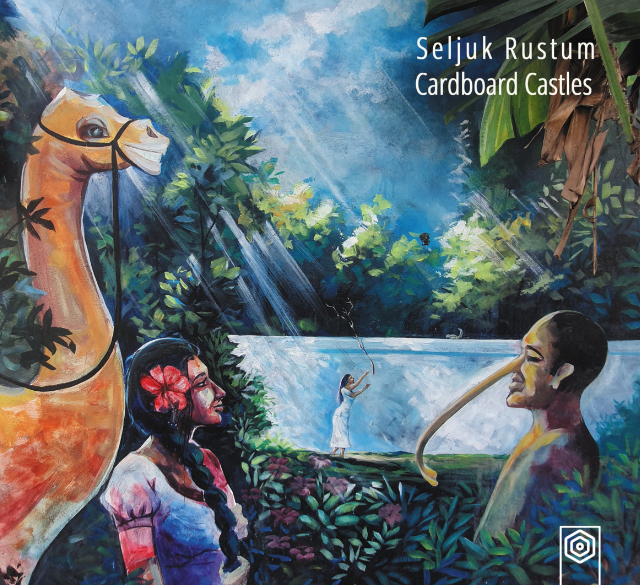
Four hours of choice music from February, the Monolith Cocktail Revue features tunes from our reviews and columns, plus the tracks we didn’t get room to feature. This month’s selection is courtesy of Dominic Valvona, Matt Oliver, Brian ‘Bordello’ She, Graham Domain and Gillian Stone.
.:TRACK LIST IN FULL:.
Moonlight Benjamin ‘Wayo’
Lunar Bird ‘Creatures’
Von Pea ‘Ode To Slick Rick’
Champion Poundcake ‘RAGS ANYMORE’
Spectacular Diagnostics ‘The Played List (Ft. Sonnyjim and Kid Acne)’
The Go! Team ‘Whammy-O’
Rogue Jones ‘Fffachlwch Bach (Bach)’
the clickBAITERS ‘Rear Ended’
Lucy & The Drill Holes ‘A Mouse’
Langkamer ‘Sing At Dawn’
First Day Of Spring ‘Normal Person (Love You Forever)’
SUO ‘Blue Evening’
Bondo ‘Instrument’
Mary Ocher ‘Love Is Not A Place (Ft. Your Government)’
Novelistme ‘Make Nothing’
Benjamin Benedict ‘Furlough Blues’
Za!/Tarta Relena/La TransMegaCobla ‘El Sweep The Lehelan’
Seljuk Rustum ‘Desi Bunny’
La Tene ‘La Taillée’
Imaad Wasif ‘Mr. Fear So Long (Money Mark Rework)’
Efeks ‘As Good As It Gets (Ft. The Strange Neighbour)’
The God Fahim ‘Man Of Steel’
Fliptrix ‘OCD With The LOVE (Ft. Coops And Verb T)’
Brainorchestra ‘Thin Patience’
Flying Monk & Wz (Corrupted Monk) ‘AF1’s’
Room Of Wires ‘Welcome To The End Game’
ANKHLEJOHN & LOOK DAMIEN! ‘CELINE AT THE MET GALA’
Pussy Riot ‘Putin’s Ashes’
Geeker-Natsumi ‘A Sheep That Never Gets Lost’
ASSASSUN ‘At Gunpoint’
Neon Kittens ‘Portable Fire’
Demikhov/Norda ‘Science! Science! Science!’
Antti Lötjönen ‘Circus/Citadel Pt. III’
Saint Abdullah ‘Divine Timing Is Intuitive’
Tachycardie ‘Collision Au Sens Strict’
Kety Fusco ‘Starless’
Polobi & The Gwo Ka Masters ‘Kawmélito’
Seaming To ‘Blessing’
Lisel ‘Immature’
Sly Moon ‘The Ghosts Comin’’
FUZ ‘First light’
Lavar The Star & Shabazz Palaces ‘Glass Top Roof (The One)’
Mecánica Clásica ‘Mantra De Felpa’
Kalia Vandever ‘Temper The Wound’
Xqui & Kaiho Zion ‘Agori Quitonie’
Stereo Hypnosis & Roedelius ‘VÍK I’
Philip Selway ‘Strange Dance’
The Good Ones ‘This Amazing Love Has Stayed With Me’
NO(w) Beauty ‘Atonia’
Floral Portrait ‘Winter Isolation’
Hawk Percival And Friends ‘The Mountain’
The Mining Co. ‘Wake Up’
Steve Stoeckel ‘Just One Kiss’
Chris Plum ‘As Long As The Sun’
Total Refreshment Centre ‘Black (Ft. Brother Portrait)’
Anteek Recipes ‘NY Fatcap’
Verb T & Illinformed ‘Bogus Journey’
Hus KingPin ‘Tony (Ft. Sagelnfinite)’ Copywrite/AWOL One & Kount Fif ‘Word From Our Sponsor’
The Perusal #40: Polobi & The Gwo Ka Masters, Moonlight Benjamin, BONDO, Kety Fusco, Antti Lötjönen…
February 15, 2023
Upcoming and recent albums in review
Dominic Valvona

Moonlight Benjamin ‘Wayo’
24th February 2023

PHOTO CREDIT: Cedrick Nöt
No one quite channels the “iwa” spirits and musical, drum-beating ceremony of Haitian vodou like one of its most exhilarating priestesses, Moonlight Benjamin. Returning with her atmospheric and grinded-scuzz swamp-blues foil Matthis Pascaud for a third manifestation of hungered electrified vodou-blues, Moonlight roughs up and adds a wider tumult of energy to her vocally incredible and dirt music imbued sound of deep southern roots, West African and Hispaniola influences: an all-round Francophone sound you could say, from Louisiana to Mali and, of course, her homeland of Haiti.
Born into this mortal world in tragic circumstances, an orphan at childbirth, the poetically named Moonlight started out singing hymns in the Christian Church before crossing the paths of vodou musicians, acolytes and picking up on the sounds of Western rock music on the radio. But with an eventual move to France, Moonlight would also take up the study of jazz. A return in 2009 to Haiti and vodou initiation, Moonlight became a priestess of an age-old religion, practice originally brought to Haitian shores by slaves from West and Central Africa.
Famous for its worked-up rhythmic rituals and exaltations, drama, the sounds and expressive vocalization of vodou was coupled to a myriad of bluesy, rocking, psychedelic, country and desert styles when the guitarist Pascaud entered the picture. Two critically favored, compelling and adventurous albums and numerous gigs later this sonic and, most importantly, vocal partnership now summons up something very special, soulful, spiritual and charged on Wayo.
Translating into a “scream of pain”, the title-track finds Moonlight commanding strength yet also emotional as a tempered, melodious if raw gumbo of New Orleans and Tuareg post-punk swamp blues buzzes around her. That voice, its range from earthiness to squeals and the deeply welled, is hard to compare with anyone else. Melodic with plenty of familiar tunes, those beautiful if on occasion riled tones evoke fleeting grasps of Joan Armatrading, Ami Kate, Brittany Howard, Cold Specks and Big Joanie. Yet this is Afro-Haitian soul, R&B, the venerable and raging conversing with French chanteuse and Portuguese fado; with camel motion traverses and panoramic spells in desert Westerns.
For his part, Pascaud’s sprung, tremolo and gristly guitar, with both a grinding coil and velocity and more melting wanes, stirs up a sinewy flex of Tinariwan, Modu Moctar, Hendrix and Mark Mulholland’s collaboration with another Haiti native, the poet-artist Frankétiene.
With the addition of a bass guitar and drums elements of Boukmen Eksperyans and the Vodoun Band Haiti beat comes into contact with soul revue backbeats, post-punk and cult rock ‘n’ roll.
All together it’s a real rich, ever-changing landscape of driven, slapping, bobbed and stonking rhythms and powerful, rough and yet elegant vocals with a sense of both pain and magic. As wild as it is composed, Moonlight Benjamin takes the vodou spirits back home to Africa, before returning, via the bayou, to Haiti on another fraught electrified album of divine communication.
Antti Lötjönen ‘Circus/Citadel’
(We Jazz) 24th February 2023

During the initial pandemic wave of April 2020 the double-bassist maestro Antti Lötjönen released his debut proper as bandleader to a quintet of exciting Finnish jazz talent.
That album, Quintet East, with its monograph vignettes and flexible free-play of be bop, Sonny Clark, the left bank and Bernstein-like musical NYC skylines, is improved upon by the ensemble’s follow-up, Circus/Citadel. With a title both inspired and imbued by the Romanian-born, German-language titan of 20th century poetry, Paul Celan, the issues of a tumultuous world on the precipice of disaster is channeled through a controlled chaos and a reach for the old and new forms of expressive jazz.
The seasoned Lötjönen, whose provenance includes stints in the Five Corners Quintet, 3TM and Aki Rissanen Trio, reels back in the talents of the alto and baritone saxophonist Mikko Innanen (part of the We Jazz label supergroup Kamo Saxo), tenor saxophonist Jussi Kannaste (a fellow 3TM band mate), trumpet player Verneri Pohjola and drummer Joonas Rippa on another highly impressive outing.
More coherent than the last time around however, the themes of the day, the protestations are galvanized and turned inside-out across a concrete vine swinging, guarded and maddening landscape. Celan’s harrowing verse, consumed as is right with WWII and the Holocaust, his Jewish struggles, is reflected by those old and contemporary challenges with a musicality that evokes the social conscious jazz records of Marcus Belgrave, Sam Rivers and Phil Ranelin. And yet the opening title-track three-part act and its couplet of suites also serenade and offer a lilted New Orleans fanfare, suggestive of America’s earlier Southern States jazz roots. That first trilogy of tracks is a journey in itself; from Dixie and Savoy Jazz (Gigi Gryce for one) to those musical, theatrical sounds of Bernstein and early Miles Davis, through to the farmyard percussion and wilder rushes of sax and trumpet on the final act. It feels at times like an avant-garde or free-jazz modernist score to Animal Farm. With all the connotations, metaphors that title implies, the circus of madness and fortress mentality are played off against each other.
Each suite breaks off into expressive groups, separations, with perhaps the horn section together or double bass and drums reacting to each other in almost isolation. Numerous versions of this practice, these little breakdowns, combos can be heard throughout; all played with expanding minds and adroit skill, dexterity and, that word again, expression. And there are some both playful (is that a “pop goes the weasel” riff on the activist-stoked ‘Defenestration’?) and wailing surprises to be heard on this bounded mix of the quickened, the controlled and purposeful.
I’m always building the We Jazz label up; always aggrandising that Helsinki based hub of Scandinavian jazz. But really, this is an enriching, immersive and artful start to the label’s 2023 calendar with a classic jazz album in the making. I reckon it will be one of the year’s best.
Polobi & The Gwo Ka Masters ‘Abri Cyclonique’
(Real World) 24th February 2023

Suffused, elevated and morphed with Parisian-based Doctor L’s jazz, electronica Francophone new waves and trip-hop, the ancestral Guadeloupe rural folk traditions of Léwòz and one of its renowned modern practitioners-deliverers Moïse Polobi is transformed into an environmental traverse. As the good doctor has proscribed so well for Les Amazon D’Afrique and the Mbongwana Stars, the roots of another form are, with subtle wondering and sophistication, given a unique sound experience.
At the heart of the 69-year-old farm worker and lumberjack’s earthy song music is a three-drum circle of rhythms. A disciple since being introduced by his Léwòz practicing mother at the age of twelve to this West African originated ritual, dance and music Polobi is a master of the Gwaka, a family of hand drums of all different sizes, used for various effects and parts – the “Buula” for example, being the largest of that family, used as the central rhythm. The “Djeme” is another; a rope-tuned skin-covered goblet shaped drum, its origins tied to the 15th century Mali Empire and its spread across the region; taken up by those unfortunate souls catered off to the Americas during the Transatlantic slave trade.
As an ancestor of those slaves, brought over to the French colonized Guadeloupe archipelago to harvest sugar (among other roles) on the plantations, Polobi’s identity is very much on show here; a call both pleading and poetically ached as this group of islands continues to be attached to France as a “region” – as a consequence, part of the EU too – despite decades of independence campaigns. And that’s despite the Colonist masters loss of the Caribbean islands during its own revolution to the British (the first of two attempts to take them). Yet with certain conditions, it remains a semi-autonomous part of France to this day. This means there’s a strong French culture, especially language wise, with French being the official dialect, but Creole really the more popular used amongst the locals. It’s alluded to in the lyrics on this new album’s trippy ‘Bouladje’ song: “What language should I speak? This one says speak to me in Creole/ This one says speak to me in French. Music is in French/ As children we sang in Creole/ Let’s talk to make ourselves understood.”
The call and response, Cándido-like hand drums rattling and rolled (we’re told Doctor L replaced the drums here with Cuban rhythms) ‘Neg Africa’ makes that connection to displacement from the homeland obvious; sounding as it does like an African homage musically and atmospherically.
To my own ignorance I never knew that there was as Tour de Guadalupe in the cycling calendar. Won by the promising Colombian talent of the same name ‘Camargo’ uses a mirage of nuzzled distant trumpet, slightly elliptical drumming and electronic processes to call for the locals to get energized and to win back the “yellow jersey”; a boost for Guadalupe’s population to take back their own destiny, to feel bolstered with a can-do attitude. Polobi it must be said is a cycling fan, so it can be read as a tribute to that Central American cycling star too.
As important as self-determination is and the struggle to preserve traditions, this album is as much about Polobi’s response to his natural environment. Named after the terrifying threats and realties of cyclones – though also a metaphor we’re told for the “resilience” of the music and for resistance – Abri Cyclonique pays a real tribute to Polobi’s little oasis out in the wilds of the archipelago’s Grande Savane region. ‘La Lézad’, with its spiral wafts of jazzy horn, drum scuttles and Gnawa-like vocals is named after a local river, whilst the mysterious Afro-Caribbean, Terry Hall meets Black Mango ‘Driv’ meanders lyrically through the geography towards the woods.
Biodiversity in sonic form, with the flora, fauna, crops and wildlife permeating the sophisticated interlaced production, Polobi’s rustic idyll comes alive: as much a barrier to the infringing forces of big business as a call to return back to a simpler life in harmony with nature.
A very personal album, this is the first to be released under Polobi’s own name. Previously the Guadalupe star has performed with his Indestawa Ka band, releasing eight albums and performing internationally. But this cyclonic whirlwind is something different, a galvanised, electrified and bolstered earthy and magical vision of his country’s past, present and future. It’s one of the most interesting albums yet in 2023, with a sound that reboots folkloric traditions in the face of an ever-encroaching modernity.
Kety Fusco ‘THE HARP, Chapter 1’
(Floating Notes Records) 3rd March 2023

“The harp was born in the 7th century, when the air was different, tastes and experiences had nothing to do with today’s world and to this day I cannot think that there is no evolution: that is why I am designing a new harp, it will still be her, but contemporary and everyone will have the opportunity to approach it; in the meantime, welcome to THE HARP”.
And with that Kety Fusco elicits, pulls, scratches, picks and manipulates both liminal and suggestive notes, textures, timbres, qualities and evocations from her choice instrument on the first of a three-chapter journey in harp exploration. But as that opening quote states, this is nothing less than an “evolution”; a post-classical transformation in which the harp, though present and familiar, is pulled into realms of serialism, soundscaping and futurism: all that history forgotten, or at least erased, in pursuit of innovation and the new.
This means certain avant-garde practices and non-musical materials, processes being brought in to the equation. Hairpins, stones, wax have all been used in the past on Fusco’s often-improvised performative compositions, peregrinations and suites. To further distance the harp from its classical, folk and majestic roots, Fusco uses an electrified soundboard of effects and a database library of digital sounds she’s collected over the years. On this nineteen-minute, more or less seamless journey, the Italian artist is said to have even used a vibrator – banging it against that already mentioned soundboard. Such devices do indeed change the scope of the instrument, making it almost abstract, recondite, the source hidden aurally.
Fusco uses both an 80-kilo wooden harp and a carbon electric harp on Chapter 1 in the new series – chapters 2 and 3 appearing annually over the next three years –, which across its duration passes through the states of elegy, the disturbing, the supernatural and diaphanous.
With an impressive CV of study, accolades and notable performances at festivals, events, even the Swiss parliament, Fusco knows her instrument, theory and practice inside-out. And so whilst there’s a spirit of experimentation and improvisation, Fusco knows exactly what she’s doing, implying and creating.
Released in the run-up to this album a short excerpt, ‘2072’, alluded to the premonition year of Fusco’s death! A Cassandra perhaps, or maybe told this date by a fortuneteller, a meeting with destiny, a preparation for death is congruously pulled form out of the whole piece. The melody is a funeral elegy, destined to carry Fusco over into the next world. Not so much a cascade, as the waves of purposeful picked notes are allowed to ring out each time, given a little space before the next iteration, there’s a sense of some kind of watery flow; a peace of mind with naturalistic stirrings. And yet there is that sadness too, emanating from airy mystery.
No surprises that Fusco has previously conjured up a horror soundtrack, as there’s a constant feeling of the shadowy, even eerie throughout much of the rest of this suite. Especially in the opening passages, I can hear hints of Lucrecia Dalt. Voice-like sounds, both apparitional and almost esoterically holy, stir whilst granular and clearer but mysterious drones and melodies start to build. Glissando and legato notes simultaneously seem light and yet loaded. The atmospheres that are produced move between the chthonian, the vaporous, airy and metallic. Because whilst there’s melody, a rhythm at times, the sound turns more industrial near the end with a film and rotor-like abrasion of steel and wire.
At other times there’s moments of ambience, a sprinkle of starry calculus and reflective stillness.
The harp has seldom sounded so removed, different; Fusco at one, entwined with her harps in a challenging performance that stretches the limits of this usually synonymous heavenly instrument. Where she goes next is anyone’s guess, but I’m sure it will be a whole different experience in sound and stringed exploration that pushes the envelope.
Za! ‘Za! & La Transmegacobla’
3 Phaz ‘Ends Meet’
(Via Discrepant)

An electrified double-bill from the discrepant portal of outlier labels this month, with albums from the Iberian (but worldly reaching) Za! duo and friends and the singular electronic-percussive global beat-maker 3 Phaz.
The first of these finds the Spanish underground favourites Za! in a “tri-state” union with the experimental Catalan Cobla wind quartet La Megacobla and the “trans-folk” duo of Tarta Relena. All together in one space they pool their resources into one, almost exhaustive, opus of controlled chaos and polygenesis musical abandon.
A Kabbalah, a cult that you might actually want to join – willing to sip the spiked kool aid with enthusiasm -, whole branches of Mediterranean dances (from the West Bulgarian quick-quick-slow-quick-quick metric beat Kopanista, to the complex bustling and cheerful Flamenco style of Buleria and the dance in a circle, Catalan, Sardana), folk traditions and sounds from atavistic realms are transported into a colourful vortex of psych, prog, krautrock, heavier riffage and heavy meta(l).
The whole is both crazy and life affirming; a burst of energy and spasmodic cross-pollination. It’s as if Zappa dropped acid in The Master Musicians Of Jajouka’s tea; a heady mix of Anatolian-Turkey, North Africa, Moorish Spain, Eastern Europe and The Levant mixed with hippie ideology and freewheeling cosmic fantasies. At any onetime I can hear snatches, a gaggale of Dakhu Brakha, Elektro Hafiz, Elias Rahbani, Crystal Fighters, Jethro Tull, Tone Of Voice Orchestra, Hebrew, the Medieval, the Tibetan and Moroccan.
A mizmar of the heralded and the theatrical, this combined effort of wild disciplines, influences and practices is a convergence of untethered rituals, ceremonies, spins and mayhem. A place in which Ethno-music and the sounds and traditions of Spain make free associations with a family tree that’s branches spread across the Med and further afield. And yet it all sounds so very new and refreshing.
The second release in this double-bill finds the artist 3Phaz amping up the Egyptian Shaabi sound with a highly percussive mix of Mahraganat (an Egyptian electro street sound originally derived from folk music), Techno and various Bass-heavy subcultures.
A very popular working class music, that Shaabi vibe is rhythmically transported, flung forward into a futuristic soundclash vision of electronica and beats. Although “clash” isn’t the right word as this process, experiment is pretty congruous, with those rattling hand drums, percussive trinket rings and scrapes and both fluted and piped mizmar is very much in synch with the metallic synthesized effects, rounded if deep bass pulsations and sonic signals. Put it another way: that Egyptian, Middle Eastern source material is ramped up in a spin, swirl and body-locking production of electro, jungle music and fuzzed, fizzled alternative futurism.
Tracks like ‘Sharayet’, with its rapid hand drummed drills, willowed Egyptian oboe and acid Arabia beats, sounds like Farhot meets Man parish in Cairo! Meanwhile, ‘Type Beat’ has a more club-y sound mixed with stirrings of Dave Clarke, whilst ‘Shabber’ seems to merge the street sounds of the souk market with Jeff Mills. Neither dystopian nor joyous, Ends Meet is instead a heady septet of electro-techno powered Arabian and Egyptian workouts; a rallying excitable transformation of traditional folk sucked into a newly formed vortex.
The Mining Co. ‘Gum Card’
(PinDrop Records) 17th March 2023

Not so much an artistic leap in the dark, Michael Gallagher has nevertheless put aside his conceptual method of preparation and writing for something less structured and preconceived. On his latest and fifth album, Gum Card, the Donegal native, but London-based, artist and musician has instead managed to piece together a loose theme of nostalgia and youth; throwbacks to an age of obsessive card collecting to particular life-affirming scenes and foolish misadventures (or rather the failure of) dabbling with the occult.
These weathered memories, reminisces are interjected with episodes of artistic doubt, phobias and ambient-settings scored, partially, with in-situ recordings of the atmosphere and room in which they are meant to be recorded – the lounge style Casio keyboard accompanied leftfield ruminating ‘Waiting Room’ for example, originally part of a wider concept of songs to be conceived in a chosen room environment, using that spaces own ambient sounds.
The Casio sound does however highlight Gallagher’s taste for experimenting with the music of his youth in the 80s. A touch of Fleetwood Mac here, some dry-ice and a little retro-cosmic projection over there. Although Gallagher’s soft-peddled signature of Americana and troubadour songwriting is still very much in attendance; a gentle mix of a winsome Chris Isaak and Spain. If anything Gum Card has more in common with the album before last, Frontier, then the previous sci-fi imbued Phenomenolgy – his best work in my opinion. However, no one style dominates this songbook as such, and I consider this album another experiment, progression of his craft. Because amongst the initial knowing MOR and softly-delivered aches and yearns of ‘Primary’, a subtle flange-dream spell of 2000s indie colours the bluesy vibe on a song in which the protagonists are trying to avoid such despondent melodrama, which is ironic as Gallagher actually doesn’t even like the blues.
Later on there’s a hint of Mike Gale’s Casio Bossa pre-set on the memory lane feely ‘Shallow Stream’ (dedicated to fishing with Dad back in Donegal as a young lad, and memorable for accidently harpooning his old man’s hand with a fish hook), shades of Galaxie 500 and Mercury Rev on the title-track, and strobe-lit purred electro-pop on ‘Limits’.
As always there’s great subtlety at work, a slow reveal of emotional pulls and fragility; of nostalgia and memories seen at a great distance, revalued both with wisdom and yet confliction too. Some of the strangest of those draws features Gallagher’s wife, unintentionally stepping in to soothingly sing the opening ‘Wake Up’, and the subject matter of the stripped-back, intimate yearned closer ‘Broken Baby Bird’. Both bookend the album with hospital set pieces; the first, a lunar Fiona Apple and Western-tinged delirium about Gallagher’s fear of the place and needles, the second, a caring allusion to his wife’s vulnerable state after undergoing a major operation: the fledgling fallen from a nest to the ground. Obsessions of youth continuing into adulthood, the worries over loved ones and glimmers of storytelling are all converged with Gallagher’s usual slow release and an ear for something a little different to the usual American, troubadour style of deliverance. He might loathe his London home of recent years, and dream of leaving, yet that crumbling edifice has incubated the development of a real talent; a moody soul with an amiable burr who’s simultaneously comfortable and yet despondent at the state of it all. The Mining Co. proves a brilliant vehicle for Gallagher as he matures into an interesting storyteller and observer, and Gum Card is yet another finely tuned songbook from the Donegal longing maverick.
BONDO ‘Print Selections’
(Quindi Records) 24th February 2023

How does such a languorous sound still have such drive and purpose? Far from listless, definitely not “aimless”, the L.A. quartet reimagines Fugazi as beachcombers, enticed by the twilight hours of a Pacific Ocean surf on their debut album.
Locked-in (“consumed in the process” as they put it) BONDO wind and unwind, drift and with a navel downward gaze somehow weave the indolent slacker vibe into post-hardcore, post-rock, jazzy (that Archie Shep influence in the band’s PR spill not actually that difficult to imagine), lo fi, grunge-y evocations of displacement. The idea being that each member of the band, each personality is “dissolved” to make way for the music, the theme no less than a “mind made anew”, “cleared of data and ego” yet witnessing “nothing in particular”.
With very little in the way of vocals or prompts, it’s mainly down to the feels of the music and the action, which on occasions builds up a surprising intensity on tracks like the “let it all go” spurred grind and slowcore, yet almost carefree, ‘New Brain’ – think OWLS and Bedhead with a touch of Acetones thrown in.
This is California alright, but one in which the punks, garage bands and downcast all hang out on the beachfronts, or, clear their heads whilst observing the coastal tides ebb and flow. And yet, most surprisingly (although that PR spill does name King Tubby as an influence) the Pavement-esque, baggy at times, languid and slowly hung guitar arcs ‘Zion Gate’ (clue is in the title) has a dub-like bent to it.
Print Selections is filled with recast rumbled surf music, echoes of Slint and The Archers Of Loaf, splish ‘n’ splash drums and processed guitars diligently working towards an unburdened purpose and shape. BONDO have risen to the challenge of the album format, holding attention and the gaze with an intelligent visceral L.A. malaise and languorous challenge to cut loose and find those new horizons.
Farid El Atrache ‘Nagham Fi Hayati’
(WEWANTSOUNDS) Available Now

In between leftfield excursions to Japan, cult French label showcases and repressed funk and soul rarities the reissue specialists (branching out with bands like Biensüre into releasing brand new original material too) WEWANTSOUNDS delve into the magic and sublime music of North Africa, Arabia and the Levant with this cinematic treasure from the late Egyptian superstar Farid El Atrache.
Released in 1974, the year that Farid passed away, the Nagham Fi Hayati album is a soundtrack of mawwal-longed sentiment, quickened shimmies and virtuoso performances that show off the matinee idol, singer and oud maestro’s repertoire: now at its most sagacious if ailing.
But first a little background. Born into a princely Druze clan family tree in Syria during WWI, in the grip of fighting with the French colonizers, Fraid, his mother and siblings were forced to flee the homeland. At around the age of nine Farid would pitch up in Egypt; staying until his death in the 1970s. Learning much from his Lebanese mother’s own musical prowess as a singer and oud player, the burgeoning pupil soon came to the attention of his elders; learning for a time under the stewardship of the polymath Egyptian composer Riad Al Sunbat, he would quickly make it to the airwaves, appearing on the country’s National radio station. Moves into the flourishing Egyptian movie business would follow; Farid appearing in thirty-one musical films in total.
As a playboy figure that never quite made it to the alter, Farid romanced co-stars, famous belly dancers and even a former Queen – before his ousting, King Farouk’s wife Nariman Sadek – whilst maintaining a career on celluloid, stage and as a recording artist popular across the entire Arab world and even beyond – a favourite of Brian Eno mo less, a snippet from his famous ‘Awad Hamsa’ song of the 60s was used on John Lennon’s art project ‘Revolution No. 9’.
As it happens, he plays the aging respected singing star in the movie that this album soundtracks. And once the much younger rival ships out to find wealth in Brazil, at first saves, out of kindness, the fallen heroine (played by Mervat Amin) from public shame before falling in love with her for real. Directed by the famed Egyptian director Henry Barakat, Nagham Fi Hayati finds Farid’s character, even with a sizable age gap, doing the honorable thing in marrying his pregnant secretary, the father now across the world with no idea he’s left his former lover knocked-up.
Musically this translates into the lushly and swirled orchestrated classicism, Arabian poetry of sentimental longing and fulgurated vowel prolonged lamenting matinee, ‘Alachan Malich Gheirak’ (“Because There Is No One Else For Me But You”), and the equally yearned emotional orchestration of drama, Franco-Arabian and concertinaed charm, ‘Ya Habaybi Ya Ghaybin’ (“My Absent Lover”).
Sitting between those love-lost and resigned suites, ‘Hebina Hebina’ (“Love Us, Love Us”) picks up the pace with North African darting and dotted quickening organ and a mixed chorus of backing singers, encouragingly and excitedly clapping away.
Appearing for the first time in its full-unedited form (a section was originally cut from the original LP version), the incredible unaccompanied lute set, ‘Takassim Oud’, finds Farid proving every bit the “king” of that stringed instrument. An appreciative audience constantly animated and bursting into applause, eggs on a solo performance that evokes flourishes of Spain, Turkey, and Arabian folk, and Egyptian desert mirages. It’s like witnessing something as sublime, virtuoso and mesmerizing as Django Rhinehardt, only its on the bandy, elastic, thumbed and strummed, picked and plucked, jumping and blurry rapid scales resonating oud.
The first reissue on vinyl since the 70s, this skilfully performed filmic affair-of-the-heart can now be yours. I suggest you make room for it in your collection now, but also start sourcing those old Egyptian movies. Farid was a titan of the form; his voice sublime and musicianship masterful. What a real pleasure to be made aware of this artist and star. Big thanks to WEWANTSOUNDS for that.
GRANDAD ‘S-T’
6th March 2023

Remaining anonymous for now, the E numbers fed maverick who sits behind the GRANDAD alias regurgitates the sort of electronic goofiness that labels such as Artetetra and Bearsuit knock out with such aplomb.
Bauhaus avant-garde theatre morphs into wired skittles’ rainbow cutes, or, a transmogrified Candy Crush on the debut EP by this noted orchestrator, composer and mischievous artist. If I listed the many “illustrious” figures from the scene that this alter ego has worked with, then I’m sure you’d guess who it is. So instead just trust me that this is a seasoned pro who hasn’t just splurged on Damon Hirst’s medicine cabinet but knows (I think anyway) exactly what they’re doing.
A rush of Japanese cartoon fantasy and platform gameplay scores, garbled indigestion and springy silliness is all synchronized with (what sounds like to me) visions of a reggae-house Felix Da Housecat, Egyptian Lover electro, Mike Dred’s spindled rushes and a surprising spot of scenic gazing (the EP’s final harmonium-like, freshly breathed trans-alpine mirage ‘Pest’, which has a touch of Roedelius about it). And then there’s also a scuffed and worked merger of early Jeff Mills, Populäre Mechanik and Basic Channel on the penultimate tubular hammering ‘Runner Runner’.
Attention deficit disorderly conduct wrapped up with more dramatic looming deep moods, kinetic chain reactions, giddy and heavily processed voices (from where or what, who knows) and intricate beat making, GRANDAD’s debut EP submerges and mutilates echoes of µ-Ziq, Autechre, Ippu Mitsui and Andrew Spackman’s SAD MAN project.
Zigzag pills are popped and metals beaten out on, despite all I’ve said, quite a focused set of maximalist propositions. Although, just to further pull this debut EP into the psychedelic-induced realms, the CD is being packaged by the aptly entitled and self-evident mushroom technologists, the Magical Mushroom Company, whose aim is not to microdot the general public but to replace plastic with the “magic of mushrooms”. Lick it and see: it might work. But you won’t need any drukqs or stimulants to enjoy this deep set of colour and goofball electronica.
Room Of Wires ‘Welcome To The End Game’
(Ant-Zen) 15th February 2023

A buzz, whine, flex and resonating ring of zinc and alloy, of recondite machines, permeates another heavy set from the Room Of Wires duo. The latest in a strong catalogue of such dark materials and alien mystery, Welcome To The End Game ties together a complex of dystopian woes, rage and dramas into an interlayered twisting and expanding metal muscled album of electronic.
Although both partners (both called Andrew as it happens) have never actually met, and each track is created apart in isolation remotely, every single fibre and inch of their processes comes together to sculpt the nightmares of our technological encroaching and constantly under surveillance world with a search, an escape, into the light. In practice this means for every granular and shadowy techno reverberation there’s a smattering of ambient and neoclassical passages.
It all starts with the sound of Cabaret Voltaire’s Arabian-electro protestations and snatches of dialogue, and moves across a vivid modulated, oscillating structure of ominous strains, tubular mettalics, deep bass-y echoes, slowed and stretched beats and the sound of kinetic-static charged ballbearings being moved around in a circular fashion.
‘Oceans Light’, featuring exm, is a surprise with its ascending beams of light, rising from the refracted still waters, and the mournful ‘Burial’ features a touch of Dead Can Dance’s ethereal, but also Eastern European holy, gauze, which brings some gravitas to the lamentable misty scene. Elsewhere there’s a grind and cosmic concentration of Cosey Fani Tutti, Gescom, Amorphous Androgynous, Art Decade and Mouse On Mars to be found lurking or springing into view.
An often unnerving experience in which you’re never quite sure of the environment, this electronic duo tap into the growing unease and fast-shifting realities of our present cataclysm, of which they believe, by the title, we’ve reached the “end game”, whatever that will reveal. As I said a few paragraphs ago, Room Of Wires navigate and balance the uncertainty with glimmers of escape, and moments of hope and release; the machinations and unseen forces that bear down upon us all at least dissipated enough to offer some light.
Hi, my name is Dominic Valvona and I’m the Founder of the music/culture blog monolithcocktail.com For the last ten years I’ve featured and supported music, musicians and labels we love across genres from around the world that we think you’ll want to know about. No content on the site is paid for or sponsored and we only feature artists we have genuine respect for /love. If you enjoy our reviews (and we often write long, thoughtful ones), found a new artist you admire or if we have featured you or artists you represent and would like to buy us a coffee at https://ko-fi.com/monolithcocktail to say cheers for spreading the word, then that would be much appreciated.
Monthly Playlist: January 2023: Mentrix, Kahil El’Zabar, Sara Noelle, Your Old Droog, Onoe Caponoe…
January 31, 2023
CHOICE MUSIC FROM THE LAST MONTH: TEAM EFFORT
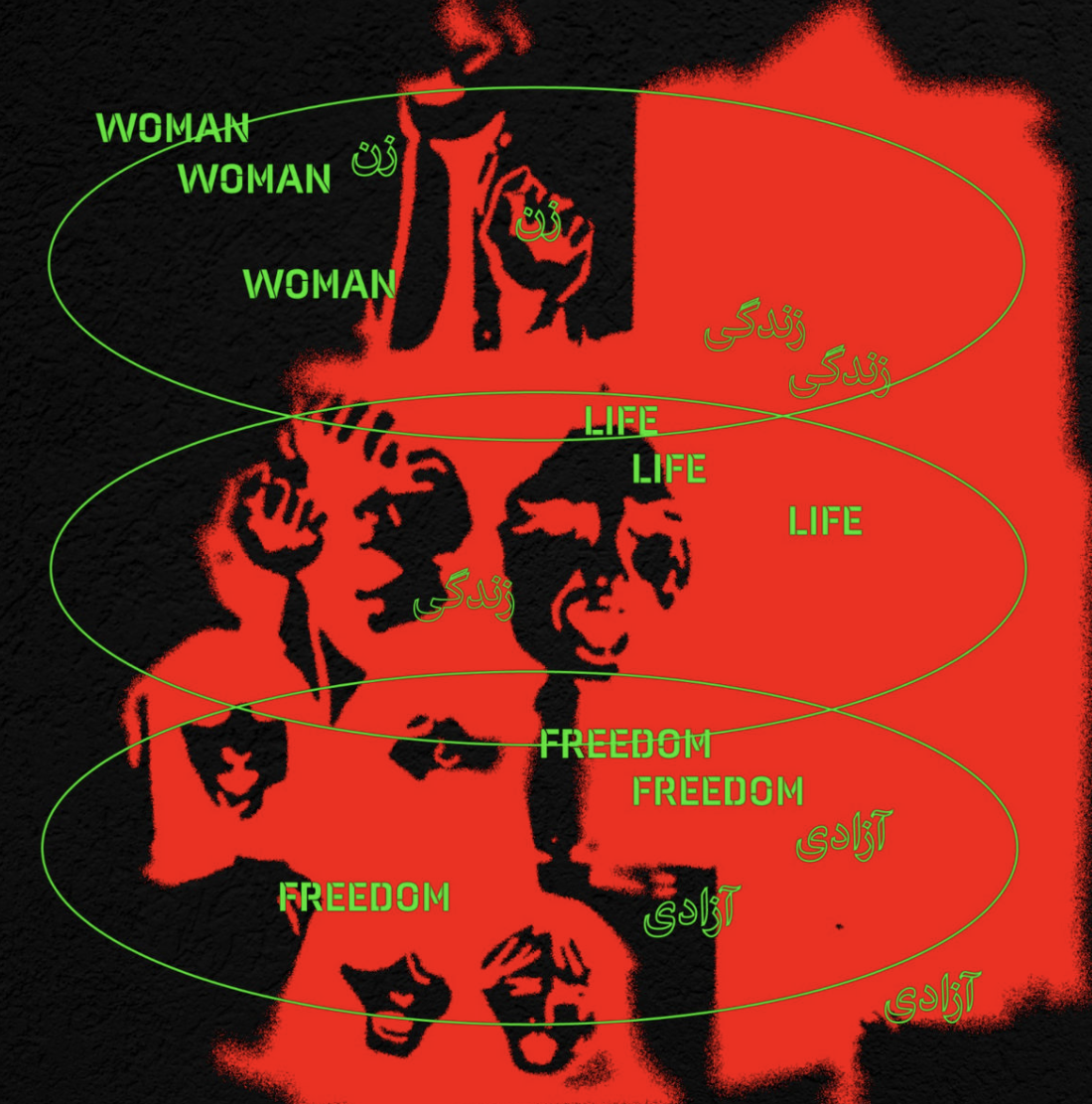
The inaugural Monthly Revue playlist of 2023; a choice selection of tracks from the last month on the blog. Curated by Dominic Valvona with Matt Oliver on the Rap Control once more, and music from reviews by our latest recruit Gillian Stone plus Brian ‘Bordello’ Shea and Graham Domain. Expect to hear the unexpected.
TRACK LIST//
Mentrix ‘Be Mahsa Be Nika’
Meadow Argus ‘No Company’
Anton Barbeau. ‘Dollis Hill Butchers’
Guided By Voices ‘Wild Kingdom’
The Wot Nots ‘Oi!’
Wings Of Desire ‘Runnin”
The Gangsta Rabbi ‘Ana’mika (138the Entr’acte)’
Neon Kittens ‘Chalk’
Smuts ‘Kalashnikova’
Dyr Faser ‘Life Form’
Earth ‘Rocker’
Xqui Ft. Bettina Schroeder ‘I Have A Knife’
Flexagon ‘Fort Saumarez: MP2’
George Winstone & Ben Monder ‘Part I’
Liela Moss ‘Empathy Files’
The Good Samaritans ‘Onughara’
Phil Ranelin & Wendell Harrison. ‘Genesis’
Fliptrix/Onoe Caponoe/Ramson Badbonez ‘SM58’
Masai Bey/BMS ‘I.a.a’
Micall Parknsun/Jazz T ‘Still…’
Dexter Dine ‘Sunshine In A Can’
Elise Preys/Marc-Antoine Perrio ‘Petites Heures’
Bjorn Magnusson ‘Everybody’s Got Something’
Designers ‘Moulindjek’
dal:um ‘Dot’
Clamb ‘Glittering Watermelon Oracle – Live’
Justo The MC/Axian ‘Autopilot’
Skyzoo/The Other Guys ‘Bodies!’
Carlos Nino & Friends ‘Drum Solo +, “Sounds Like Memory…”‘
Ghostwoods ‘Terminus’
Kety Fusco ‘2072’
Raul Refree ‘La Plage’
Esbe ‘Coventry Carol’
Sara Noelle. ‘Blooming Yucca’
Kahil El’Zabar And The Ethnic Heritage Ensemble ‘Harvest Time’
Beats & Pieces Big Band ‘Op’
Galactapus ‘Radio Kolossos’
Oddisee ‘Many Hats’
Upfront MC/Badhabitz ‘Stay Afloat’
Your Old Droog ‘Here’s Johnny’
Onoe Caponoe ‘Pet Cemetry’
Choice Albums of 2022: Part One M to Z: Machine Girl to THE Zew.
December 15, 2022
The second part of the Monolith Cocktail teams favourite albums of 2022.

A recap in case you haven’t yet read part one
Well was I wrong last year when called 2021 the annus horribilis of all years. It has been soundly beaten by the shit-show that is 2022. The invasion of the Ukraine, cost of living crisis, another hideous wave of Covid – which even if the jabs are being rolled out, and the deaths rate, hospitalizations is nothing like the first wave back in 2020, is still causing major illness, absences and disruptions to a society already facing a heap of doomsday scenarios -, strikes, activism, fuel poverty, looming austerity, and the continuing horror show of a zombie government being just some examples. Yes 2022 qualifies as one of the most incomprehensible years on record of any epoch; an ungovernable country in the grip of austerity point 2.0, and greater world untethered and at the mercy of the harridans on either side of the extreme political divide, the billionaire corporates and narcissist puritans.
And yet, it has been another great year for music. Despite the myriad of problems that face artists and bands in the industry, from a lack of general interest to the increasingly punitive costs of touring and playing live, and the ever encroaching problems of streaming against physical sales and exposure, people just can’t quit making music. And for that we, as critics – though most of us have either been musicians or still are – really appreciate what you guys do. In fact, as we have always tried to convey, we celebrate you all. And so, instead of those silly, factious and plain dumb numerical charts that our peers and rivals insist on continuing to print – how can you really suggest one album deserves their place above or below another (why does one entry get the 23rd spot and another the 22nd; unless it is a vote count) –, the Monolith Cocktail has always chosen a much more diplomatic, democratic alphabetical order – something we more or less started in the first place. We also throw every genre, nationality together in a serious of eclectic lists: no demarcation involved.
The lists include those albums we reviewed, featured on the site in some capacity, and those we just didn’t get the time to include. All entries are displayed thus: Artist in alphabetical order, then the album title, label, who chose it, a review link where applicable, and finally a link to the album itself.
This year’s picks have been chosen by (Dominic Valvona), Brian ‘Bordello’ Shea, Matt Oliver, Andrew C. Kidd and Graham Domain.
M.

Machine Girl ‘Neon White OST-The Wicked Heart’ ACK
Billy MacKenzie ‘Satellite Life’ (Cherry Red Records) GD
Mai Mai Mai ‘Rimorso’ (Maple Death Records) DV
Review
Nduduzo Makhathini ‘In The Spirit Of Ntu’ (Blue Note) DV
Marlowe ‘Marlowe 3’ (Mello Music Group) MO
Luke Mawdsley ‘Luke Two’ (Spine Records) DV
Premiere
Simon McCorry ‘Scenes From The Sixth Floor’ DV
Review
Brona McVittie ‘The Woman in the Moon’ (Arts Council of N. Ireland) GD
Review
Amine Mesnaoui & Labelle ‘African Prayers’ (Lo Recordings) DV
Review
Milc & Televangel ‘Neutral Milc Hotel’ (Filthy Broke Records) MO
Modern Nature ‘Island Of Noise’ (Bella Union) DV
Tumi Mogorosi ‘Group Theory: Black Music’ (Mushroom Hour & New Soil) DV
Montparnasse Musique ‘Archeology’ (Real World) DV
Review
Mount Kimbie ‘MK 3.5: Die Cuts | City Planning’ ACK
Muramuke ‘S-T’ (Accidental) DV
Ali Murray ‘Wilderness of Life’ (Dead Forest Records) GD
Reviews
N.
Nicole Faux Naiv ‘Moon Rally’ (Bronzerat) DV
No Age ‘People Helping People’ (Drag City) DV
Review
No Base Trio ‘II’ (Setoladi Maiale) DV
Review
Noah ‘Noire’ (Flau) DV
Review
Che Noir ‘Food For Thought’ (TCF Music Group) MO
O.

Old Fire ‘Voids’ (Western Vinyl Records) GD
Review
Open Mike Eagle ‘A Tape Called Component System With The Auto Reverse’ (Auto Reverse Records) MO
Orange Crate Art ‘Contemporary Guitar Music’ (Somewherecold) DV
Review
P.
The Paxton/Spangler Septet ‘Ugqozi’ (Eastlawn Records) DV
Review
Peace De Résistance ‘Bits And Pieces’ DV
Penza Penza ‘Neanderthal Rock’ (Funk Night Records) DV
Le Pietre Dei Giganti ‘Vetie e Culti’ (Overdub Recordings) DV
Review
Plastic Candles ‘Dust’ (Paisley Shirt Records) BBS
Review
Plop & Junnu ‘S-T’ (Fiasko Records) DV
R.
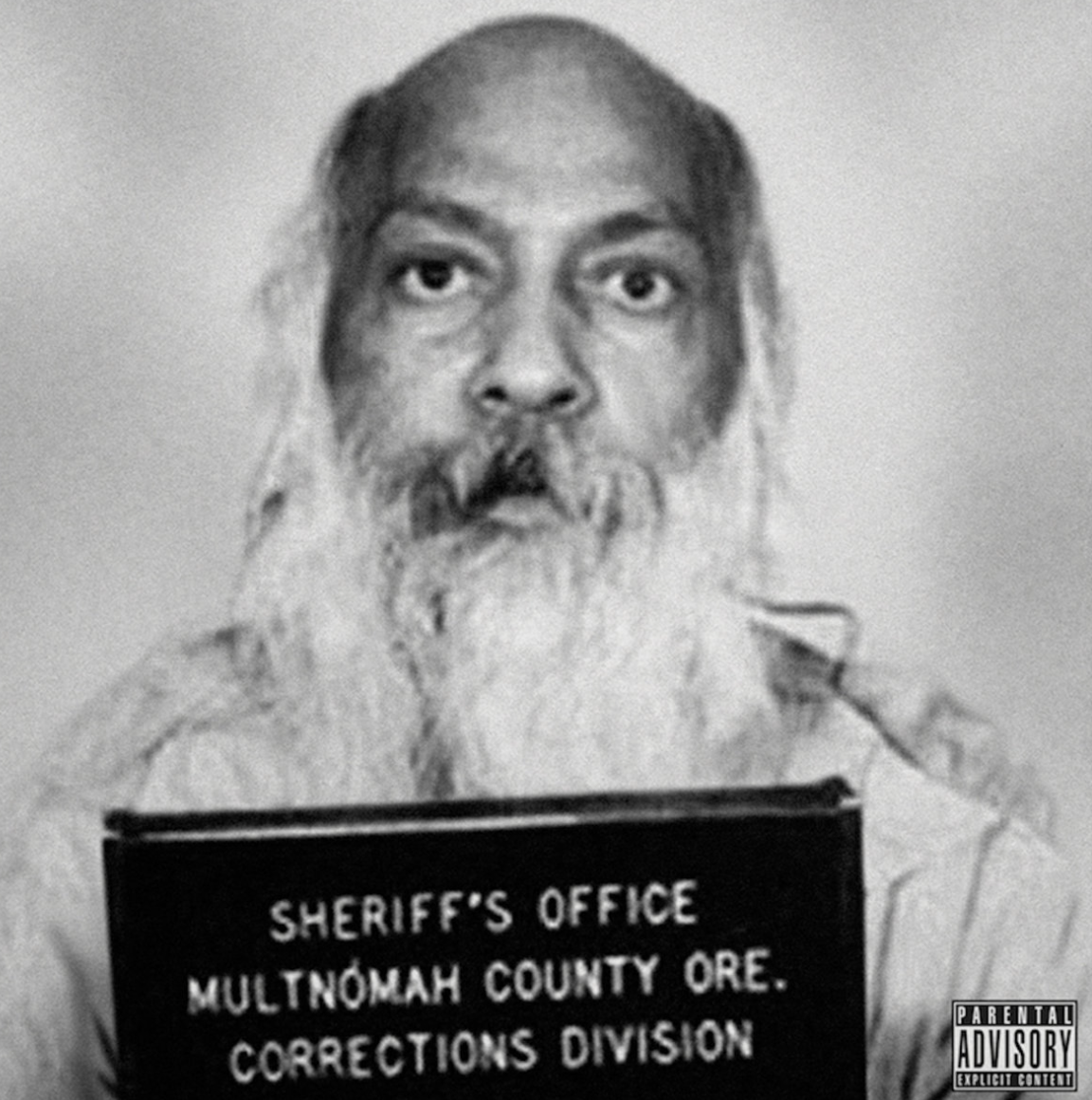
Revelators ‘Revelators Sound System’ (37d03d records) GD
Reviews
J Rocc ‘A Wonderful Letter’ (Stones Throw) MO
Robert ‘Orange is the New Black’ (Antelope Records) MO
Scott Robertson ‘Footprints In The Butter’ (Subjungle) BBS
Review
S.
Salem Trials ‘Love Joan Jett’ (Metal Postcard Records) BBS
Review
SAULT ‘AIR’ (Forever Living Originals) ACK
Review
Say What ‘S-T’ (We Jazz) DV
Review
Shabaka ‘Afrikan Culture’ (Verve/Impulse!) DV
Ignacio Simón ‘Old Friends’ (Bandcamp) GD
Review
Širom ‘The Liquefied Throne Of Simplicity’ (Glitterbeat) DV
Sis ‘Gnani’ (Native Cat Recordings) GD
Review
Silverbacks ‘Archive Material’ (Full Time Hobby) GD
Review
The Soft Pink Truth ‘Is It Going to Get Any Deeper Than This?’ ACK
Spygenius ‘Jobbernowl’ (Big Stir Records) BBS
Review
Staraya Derevnya ‘Boulder Blues’ (Ramble Records) DV
Review
Stepbrothers featuring the Honourable Ted ‘S/T’ EP (German Shepherd Records) GD
Review
Shepard Stevenson ‘Man Down’ (Somewherecold) DV
Review
Stereolab ‘Pulse of the Early Brain’ (Duophonic and Warp Records) GD
Robert Stillman ‘What Does It Mean To Be American’ (Orindal Records) DV
Carl Stone ‘We Jazz Reworks Vol. 2’ (We Jazz) DV
Review
Gillian Stone ‘Spirit Photographs’ DV
Review
STS & RJD2 ‘Escape From Sweet Auburn’ (RJ’s Electrical Connections) MO
Misha Sultan ‘Roots’ (Hive Mind) DV
Review
Sweeney ‘Stay for the Sorrow’ (Sound in Silence) GD
Review
T.

Team Play ‘Wishes And Desire’ (Soliti) DV
Mauricio Takara and Carla Boregas ‘Grande Massa D’Agua’ (Hive Mind) DV
Review
Tone Of Voice Orchestra ‘S-T’ (Stunt Records) DV
Review
Trupa Trupa ‘B Flat A’ (Glitterbeat) DV
Review
V.
Various/Solidary ‘Blue And Yellow’ & ‘Yellow And Blue: Help For Ukraine’ (Binaural Space) DV
Review
Various ‘Live at WOMAD 1982’ (Real World) DV
Review
Various ‘Mensajes del Agua: Nuevos Sonidos Desde Peru Vol 1’ (Buh Records) DV
Various ‘Music For Ukraine’ (We Jazz) DV
Review
Various ‘Pierre Barouh And The Saravah Sound: Jazz, Gumbo And Other Hallucinatory Grooves’ (WEWANTSOUNDS) DV
Review
Various ‘Spirit Of France’ (Spiritmuse) DV
Review
Vera Di Lecce ‘Alter Of Love’ DV
Violet Nox ‘Eris Wakes’ (Infinity Vine) DV
Review
Vukovar ‘The Body Abdicator’ (Other Voices) DV/BBS
Review
W.

Wish Master & Axel Holy ‘First Nature’ (Official Recordings) MO
Ethan Wood ‘Burnout’ (Whatever’s Clever) DV
Review
Billy Woods ‘Aethiopes’ & ‘Church’ (Backwoodz Studioz) MO
X.
Iannis Xenakis ‘Electroacoustic Works’ (Karlrecords) ACK
Z.

THE Zew ‘IFI1IFO’ (Numavi Records) BBS
Review
Hi, my name is Dominic Valvona and I’m the Founder of the music/culture blog monolithcocktail.com For the last ten years I’ve featured and supported music, musicians and labels we love across genres from around the world that we think you’ll want to know about. No content on the site is paid for or sponsored and we only feature artists we have genuine respect for /love. If you enjoy our reviews (and we often write long, thoughtful ones), found a new artist you admire or if we have featured you or artists you represent and would like to buy us a coffee at https://ko-fi.com/monolithcocktail to say cheers for spreading the word, then that would be much appreciated.
Monthly Playlist: November 2022: Cities Aviv, Mui Zyu, Edrix Puzzle, Juga-Naut, Illogic, Arthur King…
November 30, 2022
CHOICE MUSIC FROM THE LAST MONTH
CURATED BY DOMINIC VALVONA

The very last monthly playlist of 2022 is a bumper edition of eclectic choice music from the last month, with a smattering of tracks from upcoming December releases too.
This month’s picks have been collected from Dominic Valvona, Matt Oliver, Brian ‘Shea’ Bordello and Graham Domain. The full track list can be found below the Spotify link.
The monthly will be back in the New Year. Until then absorb this behemoth of a selection, and next month, ponder and peruse the blog’s 140 plus albums of 2022 features.
TRACK LIST IN FULL
Black Market Karma/Tess Parks ‘The Sky Was All Diseased’
Enter Laughing ‘Met Me When I landed’
Salem Trials ‘Man From Atlantis Is Dead’
Humour ‘Jeans’
Cities Aviv ‘Funktion’
Vlimmer ‘Mathematik’
Gabrielle Ornate ‘Phantasm’
Dead Horses ‘Can’t Talk, Can’t Sleep’
Lunar Bird ‘Driven By The Light’
Mui Zyu ‘Rotten Bun’
Thank You Lord For Satan ‘When We Dance’
Pozi ‘Slightly Shaking Cells’
My Friend Peter ‘When I Was’
U.S. Girls ‘Bless This Mess’
Sofie Royer ‘Feeling Bad Forsyth Street’
Surya Botofasina ‘Beloved California Temple’
Edrix Puzzle ‘Shadow of Phobe’
Let Spin ‘Waveform Guru’
Etceteral ‘Gologlavka’
Juga-Naut ‘Camel Walk’
The Pyramids ‘Queens Of The Spirits Part 1’
Illogic ‘Nowhere Fast’
Planet Asia/Snowgoons/Flash ‘Metabolism’
Dabbla/alone ‘Adept’
Karu ‘Spears Of Leaves’
Neon Kittens ‘Nil By Vein’
Renelle 893/King Kashmere ‘My Demons’
Mount Kimbie/Don Maker/Kai Campos Ft. Slowthai ‘Kissing’
Homeboy Sandman/Deca ‘Satellite’
Uusi Aika ‘S-T’
Gillian Stone ‘The Throne’
Raw Poetic/Damu The Fudgemunk ‘A Mile In My Head’
Boldy James/Futurewave ‘Mortemir Milestone’
Arthur King ‘Dig Precious Things’
Tom Skinner ‘Voices (Of The Past)’
Trans Zimmer & The DJs ‘Wind Quintet No. 3 In E Major, Second Movement’
George T ‘Dub On, King’s Cross’
The Dark Jazz Project ‘Great Skies’
Noémi Büchi ‘Measuring All Possibilities’
Russ Spence ‘Spectrum’
Seez Mics/Aupheus ‘Cancel The Guillotine’
Dezron Douglas ‘J Bird’
Fliptrix/Illinformed ‘Eden’
Apollo Brown/Philmore Greene ‘This Is Me’
Illogic ‘She Didn’t Write’
Milc/Televangel Ft. AJ Suede ‘Ronald Reagan’
Vincent/The Owl/Nick Catchdubs ‘Fade 2 Black’
Shirt/Jack Splash ‘Cancel Culture’
Clouds In A Headlock/ASM/Daylight Robbery ‘3D Maze’
The Strange Neighbour/Leolex/Bobby Slice Ft. DJ Sixkay ‘Keep Your Head Straight’
Kormac Ft. Loah & Jafaris ‘Bottom Of The Ocean’
A. O. Gerber ‘Walk In The Dark’
Ben Pagano ‘Hot Capital’
Hög Sjö ‘Love Is A Gamble’
Kinked ‘Introduzione Alla Fabula’
Årabrot ‘Going Up’
Old Fire Ft. Julia Holter ‘Window Without A World’
Meg Baird ‘Star Hill Song’
Susanna/Stina Stjern/Delphine Dora ‘Elevation’
Rita Braga ‘Nothing Came From Nowhere’
Orchid Mantis ‘Endless Life’
The Zew ‘Come On Down’
Ocelot ‘Santa Ana’
LINN ‘Okay, Sister’
Sanfeliu ‘Grassy Patch’
Young Ritual ‘Ages’
Yermot ‘Leaning To Lie’
The Perusal #37: Edrix Puzzle, Surya Botofasina, Dead Horses, Etceteral, The Dark Jazz Project…
November 4, 2022
Dominic Valvona’s Albums Revue For November
Unless stated otherwise all releases are now available to buy
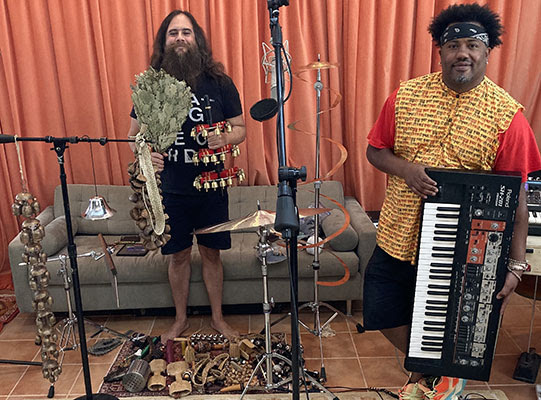
Edrix Puzzle ‘Coming Of The Moon Dogs’
(On The Corner Records)
Looping string theory jazz particles to a rocket ship bound for a deep space cosmology of titan referenced stellar sets, the Nathan “Tugg” Curan led Edrix Puzzle ensemble find a musical freedom amongst the stars of an alien concept world on their newest trip, the Coming Of The Moon Dogs.
Reimaging Herbie Hancock’s Mwandishi transferred to the made-up body-locking Afro and futurist jazz planet of Battagon, Curan and his astro crew of Martin Slattery (on bass guitar, clarinet and saxophone duties), Tom Mason (double-bass), Oli Savill (percussion) and Darren Berry (violin) zip and zap across a lunar environment overseen by a galactic vision of mythology’s Gia and Uranus and some of their kin: Rhea, Dione, Hyperion and Phobe.
Amongst the analog calculus, signals and bleeps an equally elastic and moon-bound tripping transformation of the Art Ensemble of Chicago vibe takes shape on an imaginative off world. It’s a world in which Afrikan Sciences break bread with King Crimson; where Soweto Kinch reassembles the late Pharaoh’s astral projections. Within that science fiction the troupe balance totally untethered chaos with breakbeats and a certain swing.
David Ornate Cherry’s organic water bowl percussion joins a celestial voodoo march on the old country resonated Art Ensemble fiddled ‘Deep In Dione’, whilst Matthew “Doc” Dunn and Andy Haas slink and waft the vapoured murk of the living, breathing ‘V11’ coded suite.
Tracks like the time changing spin around the Van Allen Belt ‘Unhuman Hyperion’ verge on hip-hop. But it’s the imbued spirit of Herb, his peers and acolytes in the space, progressive jazz field that permeate this alchemist exploration of far out atmospheres. In a constant motion throughout with the energy released in all directions, and on all planes, Coming Of The moon Dogs is an incredible survey of quickened and more floated, waning galactic jazz evocations. A solid piece of art, lit by a remote chemistry and performed with assured but always probing musicianship. Rather an escape to the planet of the breaks than an escape from it, sci-fi jazz meets the experimental, spiritual and progressive in a visceral explosion of ideas, vibes and grooves.
Surya Botofasina ‘Everyone’s Children’
(Spiritmuse Records)
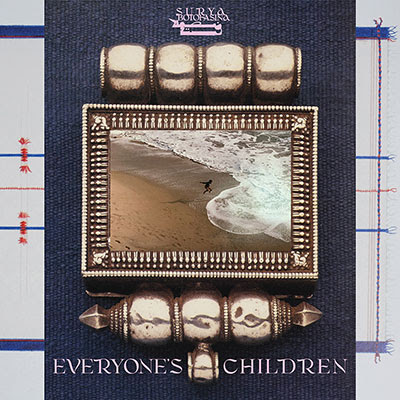
An acolyte of Alice Coltrane’s devotional embrace of Eastern spiritualism, imbued by that sagacious innovating jazz seer’s afflatus music and teachings, the keyboardist, composer and actor of some repute (from parts in Vinyl and Broadwalk Empire) Surya Botofasina bathes in his mentor’s light on this debut opus.
With the meditative, motored ascending arcs of Om Rama and such threaded throughout, Botofasina and friends set out on an astral and naturally felt work of spiritual jazz, trance, new age and ambient transcendence.
Our guide on this album of worship, remembrance and healing grew up at the Sai Anantam Ashram in the Southern Californian hills, where Coltrane led the daily bhajans, the traditional Hindu songs of praise and paean. His mother, Radha, was a disciple before him of this idyllic retreat’s guardian, a notable harpist but also pianist and vocalist herself and a one-time member of the American string band, The Spirits Of Rhythm. With such an enviable musical lineage and influence it’s no wonder that Botofasina would go on to become the Ashram’s music director and to internationally spread the word of this particular devotional form.
Encompassing all that reverence on his first fully realized album, Botofasina, aided by a cross-generational cast of guests, seeks to calmly honour but also demonstrate that faith. As a album to these enraged, divisive times, Everyone’s Children – with everything that album title’s metaphors, allusions, analogy entail – perseveres in the face of turbulence; softening and weakening the choppy waters in a blessed light of disarming but deeply felt warm suffused elevation.
With a both sentimental and yearning new age language of utterances from the Los Angles jazz singer stalwart Dwight Trible and fellow Californian indie folk vocalist Mia Doi Todd welling up and adding a certain wailed gravity, these divine acts of veneration ascend at a peaceable pace. The opening beachside temple suite running to over twenty-seven minutes as it shimmers and glistens with dappled electric piano, a serene air of the holy and washes of ambient synth.
Although often soothing with lightened touches of astral plane jazz and soul music, Botofasina’s piano occasionally stirs up outpourings of louder and harder pressed expressive emotions and serenades – as on the semi-classical and 60s jazz riptide evoked ‘I Love Dew, Sophie’.
Accentuating these spells of keyboard cascades, lit-up bulb like notes and rays the Canadian jazz drummer Efa Etoroma Jnr. adds splashes and tumbles, and the New York saxophonist Pablo Calogero wafts in with a suitable longing embrace. And overseeing it all is the Californian polymath (from noted producer to radio host, poet, percussionist and performer) Carlos Niño, who resembles a counter-culture 70s Carl Wilson chic. Together on this swami dedicated odyssey they border the heavenly as successful inheritors of Alice Coltrane’s devotional magic. As a debut album it’s a grand statement of spiritualism, nature and peacefully ascendant jazz; an escape from the material world.
Etceteral ‘Rhizome’
(tak:til/Glitterbeat Records) 11th November 2022
In what is a different, unique fashion, the Slovenian trio’s musical pairing of Boštjan Simon and Marek Fakuč (in part) react to their bandmate Lina Rica’s visual stimulus to create a cosmic electronic-jazz album of interlaced networks, connectivity and environmental crisis alarm.
Joining their fellow Slovenian compatriots, the dream-realism Širom, at Glitterbeat’s explorative, fourth world imbued instrumental sister imprint tak:til, the kosmische and organically freeform Etceteral base their new, mostly improvised album on the concept of its title, Rhizome: A continually growing horizontal underground stem, which puts out lateral shoots and adventitious roots at intervals; a non-linear network that connects any point to any other point.
With that theme, process in mind the trio reflect back a constant motion of soundscaping, rhythm and probing; balancing, at times, contemporary jazz with computer calculus, data, signals and metallic polygon shaped electronica. Yet, whilst Simon’s saxophone often drifts off into space, and his electronic effects, undulations more than hint at gravity-free zones in the cosmos, tracks such as the rolling, bounced and techno purred ‘Rome Burns’ allude to climate change and the extreme wildfires that engulfed much of Europe this year. It’s a great piece of flexible jazz that fuses Donny McCaslin and Go Go Penguin with Basic Channel to reflect an environmental angst of doom – fiddling with your suv sat nav whilst Rome burns to a cinder.
The rest of this interconnected, visual reactive album of performances and electronic augmented pulses and fusions goes through varying degrees of warping and reverberating transference. A jazz foundation is guided through a mirrored and computerised apparatus, which evokes shades of Squarepusher, Anteloper, Alfa Mist, Pyrolator and (rather handle as they share this column this month) Edrix Puzzle. Familiar echoes of rasped, cyclonic and honked sax, drum breaks and splashes receive an outer space production. Fakuč’s drums actually go into slow motion on the chrome soundscape ‘Dunno’. Etceteral turn it on and out on their improvised odyssey and contortion of activism. And yet the rhythms often driven, progressive and on occasion buoyant or bobbing, make this a most unique sort of an electronic dance album, despite its avant-garde, free and cosmic jazz foundations.
Karu ‘An Imaginary Journey’
(Beat Machine Music) 18th November 2022
Lost in the Karu alias of mystical, atavistic mining and reimagined absorptions and traverses, the Italian double-bassist and producer Alberto Brutti’s collaborative project transforms, transmogrifies a fertile polygenesis palette of rituals and dances and ethnography to produce a contemporary affected album of Afro-Futurism, jazz and primitivism.
Wrapped up into a musical journey across both familiar and more ambiguous, vague cultural landscapes, Brutti creates suggestive atmospheres and ceremonies; many of which are conjured from title references to old worlds, religious and mythological etymology. In that wide field of influences, inspirations there’s the Abrabic “kalam”, which can roughly be used to mean “speech”, “word” or “utterances” pertaining to the Islamic faith, but was also the catchall term to define that religion’s tenants of faith in the face of the philosophical doubters; the antiquity Hattian empire festival “purulli”, held at the Bronze Age settlement of Nerik, dedicated to the earth goddess Hannahanna (which may well be the source of the Biblical “hosanna”); the West Slavic (otherwise known as Lechites) tribal name for the chthonian god “Nyia”; and the ancient Greek word for “breath”, or in the religious context, “spirit” or “soul”, “pneuma”.
The first of that quartet lends itself to the album’s opening peregrination of African drums, Blacks’ Myth and cut-up Anthony Braxton, Roscoe Mitchell jazz renderings, reversals, abrasive industrial resonated sounds, Širom type otherworldly primitivism and stick choppy rhythms. Following in its wake there’s signs of Andy Haas, the esoteric, elephant trunk raising horns and the no wave sound of Mars and Milk TV. The latter title of that same quartet of wordy mentions signals a move further East, with again, vague notions of the Indian, Baul but also a soundtrack of downtempo breaks (ala Alfa Mist and J Dilla) and the hallucinogenic trance of Fursaxa (if remixed by Clap! Clap!).
‘Spear Of Leaves’ however, rearranges the bedeviled Faustus pact blues and dialogue of Robert Johnson on a palanquin caravan lumber across vapours of snorkeled saxophone. The final dream sequence on this imaginary travelogue drifts into a hollowed-out cane spun and fluted rainforest wash; ending on a more laidback piece of South American flavoured geography and waning jazz.
Between the haunted illusionary and mysterious, a removed time-travelling worldly plane emerges. Herbs, Roberto Musci, Amorphous Androgynous and Drexciya converge somewhere in the middle of the underworld and elevated.
The Dark Jazz Project ‘S-T’
(Irregular Frequencies) 14th November 2022
Making good on this summer’s three-track introductory EP, Andrew Spackman now unleashes a whole album of his latest regeneration creation, The Dark Jazz Project, on an unsuspecting audience.
The singular maverick electronic and art-house boffin recently hung-up his SAD MAN alias (after a splurge of numerous releases over the last five years) to crunch the codes of jazzcore.
‘100% political, 100% jazz, 100% dark’ we’re told, this latest platform for Andrew’s often sporadic leaps in electronic music and crushing techno filament cut-ups is about as removed from that jazz tag as you can get. The fact he’s also borrowed Sun Ra’s ‘Space Is The Place’ mantra too only feeds into the confusion. Any semblance to jazz is lost under a heavy tubular and granular transmogrification of the ominous, mysterious and, well, dark.
For this is the alien, sci-fi broken and fed through the Aphex Twin, Basic Channel, Radium, Rob Hood, Jeff Mills and Niereich & Shadym machine. Although the album’s opening hardline, dialed-in and pummeled beat gabbling Sun Ra lend sounds like Holly Herndon being thrown into the Hadron Collider, and Madlib seems to get trampled over, detuned and dissimulated on the bladed, driven and compressed frequency lunar ‘No Input’.
Andrews full gamut of skills, sonic palette comes to bear, as touches of primal, and even paradise moulding scores are set against more dissonant and chrome coated beats. Pins rain down on pulsating graphite spiky landscapes and imaginative darkly lit techno blocks of scrunched giant, weighted noise. A mirage or a topographic ocean; Olympus Mons or scorched earth, it all sounds a million miles away from even the most edgy and freeform ideals of jazz: not a saxophone in sight.
The Dark Jazz Project is yet another challenging move from one of the UK’s most inventive, inspired and, crucially, interesting leftfield electronic and techno composers of the last decade.
Yemrot ‘The Sunken Garden’
(PRAH Recordings)
Who wouldn’t when faced with the despair of the modern world and in processing the deep loss of a parent want to take a giant leap into escapism and the fantastical? Looking into one such yearning chasm the Margate-based musician Jimi Tormey, acting under the alias of both Yemrot and the character Dill Dandin, finds solace in a neverworld of the dreamy and plaintive: a creeping sadness to be exact.
Unfortunately, in part, triggered by the death of his father (the gorgeous, welling-up and heavenly ached ‘Big Tree’ being the most obvious eulogy to that passing) The Sunken Garden is a both heartfelt and also psychedelic process of grief and some drama.
That process is, at times, a family affair with his mother Lisa providing the majority of emotive violin/viola, and his brother Eric offering harmonies alongside their sister Tuli, but also mixing and mastering the whole mini album. The results are achingly beautiful, yet there’s a constant deep feeling and vapour of unease, despondency and shadowy despair that swells up or looms over the magical illusions.
Canterbury scene troubadours and Syd Barrett influences wind and delicately emerge from the heavier atmospheres of Alex Harvey, Daevid Allen, Soundgarden and Radiohead. The album’s centerpiece, ‘The Ballad Of Dill Dandin’, is an eleven-minute stretching instrumental of changing, moving parts and passages. From the Floydian to chimes of Mark Hollis an almost theatrical drama and shimmer of something magical and creates a starry aura. Dill floats and tumbles across a trio of “Learning To” affixed songs that balance the soft with the harsh, the cosmic with the mournful.
Classical forms, the psychedelic, progressive and alternative all merge to form an interesting twisting journey of loss and acceptance; a working through of beautifully heart wrenching and articulated poetic expression. In the end I don’t think that sinkhole world is an escape route, but just a more imaginative coping strategy at dealing and conveying such miserable times. The masterful, gentle ‘Big Tree’ alone will move even the most numbed to tears, and deserves a place in any list of the best songs in 2022.
The Magic City Trio ‘Amerikana Arkana’
(Kailva) Late November 2022
Finally out the other side of the pandemic The Magic City Trio emerges with the second half of their originally conceived double album package of Americana, Country and Western scored songs from 2018. If part one was consumed with death, bad luck and mental health, part two is concentrated on the themes of serenaded, romantic affairs, with disarming little tales, alms, hymns and barn dances dedicated to both unrequited and strained relationships and knockabout love.
As with the previous album, a familiar soundtrack and language, lyricism is used to convey the contemporary: something of the moment. The bell tolls and tremolo rattle snake sets of Ennio Morricone and untold Western themes rub up against Nashville, the Carter Family, Lee Hazelwood, Mariachi brass, Willie Nelson and the psalms songs of America’s Methodist Church, yet this is an unmistakably modern record. Timeless feelings, subjects nonetheless, but with a slight updated twist.
An extended guest list joins the band’s principles, the June Brides’ Frank Sweeney and Annie And The Aeroplanes’ Annie Holder. Most notably the Nashville virtuoso John Heinrich, who lends that irresistible steel pedal quiver and upward bend to the Sweetheart Of The Rodeo if covered by Teenage Fanclub, with Orbison and The Carters in tow, ‘Our Life In Chains’, and the Red Rhodes-esque accompanied Gram and Bonnie Raitt in heartache duet ‘She Left Without A Warning’. “Record breaking” (for what I’m not sure) banjo player Johnny Button meanwhile adds his Appalachian hoedown spring to ‘The Final Day On Earth’ tale of woe and alarm. Also on that same lamentable group effort, Primal Scream’s Andrew Innes offers up bird sounds, flutes and mellotron. He’s back, playing both electric and acoustic guitars, on the Muscle Shoals Stones like, touching ‘You’re My Best Friend’ – which actually could be a Primal Scream attempt to once more ape the Stones’ spiritual washed-up tides.
Frank, when not carrying a tone and timbre that evokes both Richard Hawley and Mick Harvey, and Annie, vocally a mix of Kirsty MacColl and a rustic Marianne Faithfull, share an array of twanged, bowed and stirring and washboard scratched instruments with Jeff Mead, Matt Lloyd, Larry Saltzman, Dave Howell and others: a full panoply of the country sound.
Amongst the self-penned declarations, hungdog lovelorn regrets and outlaws-on-the-run sense of rebellious romance, the band cover the theme from the archetypal thrown-together-in-desperate-circumstances Western ‘3:10 To Yuma’ (great movie, both the original and remake) and the Wesleyan Methodist church hymn, ‘And Am I Born To Die’. The first of which, originally penned by Frankie Laine, keeps a sense of the matinee drama and atmosphere but now sounds a bit like later Crime And The City Solution bounded together with Scott Walker (At The Movies) on a heavenly aria touched dusty trail. The latter, is every bit as reverent and elegiac, conjuring up the “trembling spirit” and quivering to the sounds of timpani and the bells of judgment. It did remind me however of Rick Danko; more lovely than stoic serious damnation.
Amerikana Arkina once more sets the mood, a complimentary partner to their more moody, plaintive 2018 songbook. Souls are bared; heartache delivered with a cinematic panache, and the Americana cannon once more successfully invoked.
Leverton Fox ‘In The Flicker’
(Not Applicable)
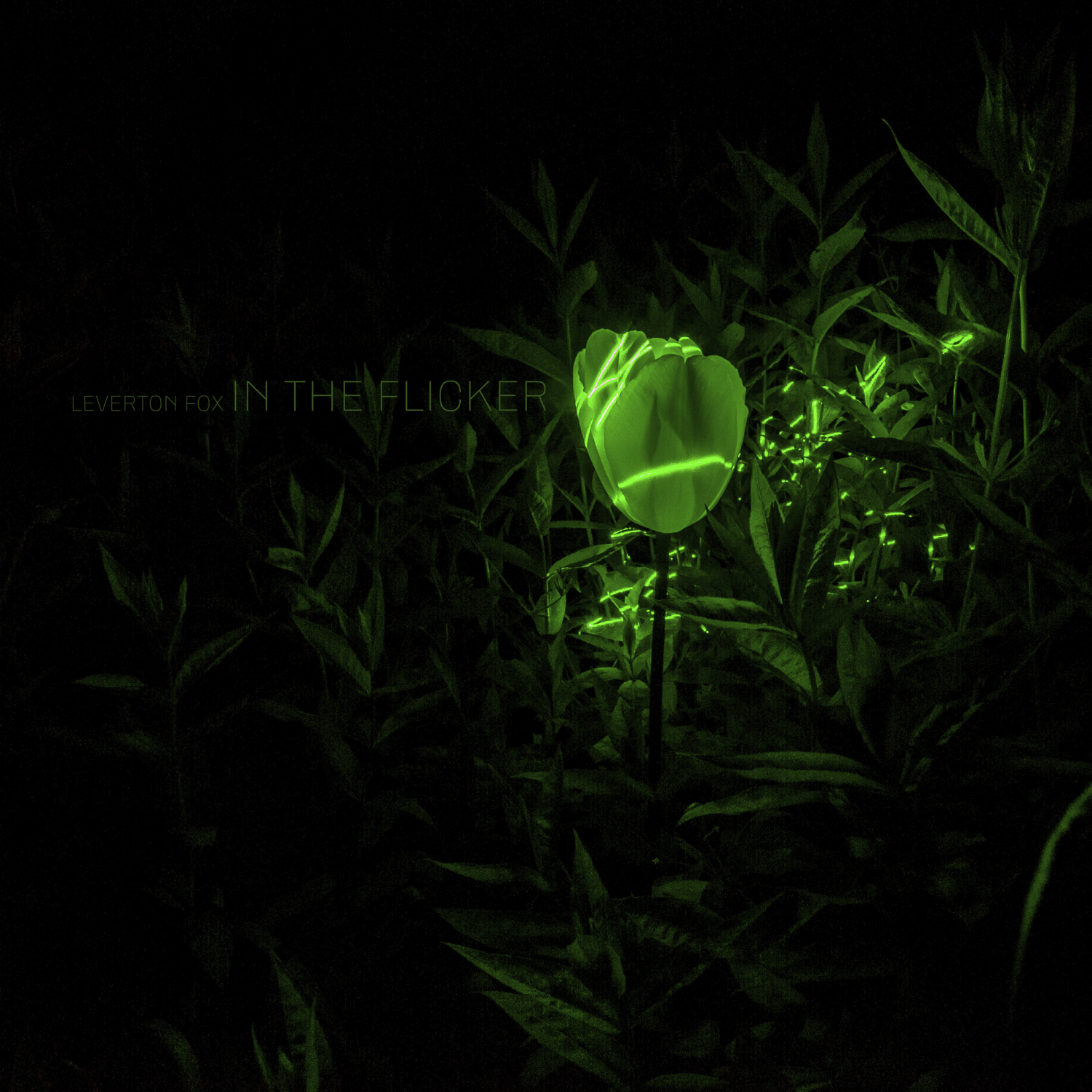
The gentle breeze rustling through the leaves and the sound of bracken and broken sticks underfoot in a less circumspect Sussex woodland has seldom sounded more alien, inter-dimensional and mysterious. Yet the Leverton Fox trio of Alex Bonney, Tim Giles and Isambard Khroustaliov has transmogrified the environment/atmosphere of their site-specific improvisation to beam out towards altogether more imaginative realms.
Intensified, if that’s the word, the trio of noted musicians/composers/artists in their own right attempt to sonically sculpt a 3D world with the added use of Dolby Atmos, a ‘surround’ format. Immersive being the key word, they draw the listener into lost worlds, primal soups and a more eerie lunar looming, time-travelling spheres.
Širom set-up in the undergrowth with Miles Davis at his most transient and wafting, Autechre, Tangerine Dream and Jon Hassell as ghostly traces of hidden sources merge with various aerial squiggles, zip-lines, machine purrs, occult sounds beamed from the Fortean Times transmitter, whipped up winds, clapped beats, crackles, raps, propeller and exotic sounding wildlife. A fully improvised soundscape that crosses mystical terra firma and unearthly corridors, In The Flicker takes in the most far-out, minimalist touches of jazz, electronica, dub, the dark arts, industrial, kosmische and Foley to create a certain mystique. The Leverton Fox(es) skilfully, intuitively explore and push a concept, conjuring up portals to more abstract planes; the familiar woodland site a mere jumping point for misty and bubbling invocations of an entirely different nature.
Dead Horses ‘Sunny Days’
(Maple Death Records) 14th November 2022

Jangling to a soft-stomping flange-induced country, rock ‘n’ roll bluesy acid dirge the Dead Horses esoteric sense of despair rings loud with slackened melodrama and scuzzy, dirty wiles. Whether it’s uprooting Spaghetti Western sets or up amongst the Andean condor nests looking down on the Nazca Lines, or, wading through swamps and thumbing a bum ride to a less idealized Laurel Canyon, the shared male/female vocal Italian group add a chthonian mystique and a touch of the Gothic to their brand of wrangled malcontent and doomed romantic aloofness.
A fair share of the new album, Sunny Days (released on the always intriguing and quality-delivered Maple Death Records label), rattles, spooks and melodically inhabits a reverberated atmosphere of Appalachian mountain songs and both languid and more heightened hysterics. A rewired Grace Slick, early Bad Seeds, Gun Club, Wall Of Voodoo and ‘Up The Hill Backwards’ Bowie flail about The Blood Meridian on the album’s opening song, ‘Can’t Talk, Can’t Sleep’, and Bosco DelRey mixes it up with the Velvets, Rey Crayola on ‘Hobo Talks’. The more mournful ‘The Cross’ has both an hallucinatory and The Kills vibe about it.
One of the standout songs however, takes a different direction. ‘Macabro’ still has that acid-folk country kick but also summons up a Latin drama, with a stirring vocal performance and Italo-Iberian stamp of bolero. Apparently this is the band’s first ever song in their native Italian tongue, and it’s all the better for it: more mysterious and hot-bloodily intense. No wonder it has become a sort of live anthem for the band.
It’s a long stretch from the Po Valley of antiquity to the Death Valley of inspired, mirage shimmered Western blues, but the Dead Horses as our guides navigate it with a flourish and macabre curiosity. If Crime And The City Solution buddying up with Aguaturbia and The Vaselines sounds like a desirable description then the rather ironically entitled Sunny Days stunt ‘n’ stomper is for you.
Biensüre ‘S-T’
(WEWANTSOUNDS)

Bringing together a mixed Mediterranean and Middle Eastern diaspora of musicians with a collective sense of belonging and yearn for their homelands, Biensüre transduces various cultural threads into a sophisticated and cool production of electro-pop, disco and sorrow.
Crossing paths in the cosmopolitan port city of Marseille, a refuge for centuries of émigrés and exiles, the group’s ranks include Kurdish, Turkish, Italian and Armenian lineages: The latter as a consequence of the early 20th century genocide. Within that gathering of cultural affiliations, and using the repurposed French expression for “of course”, Biensüre rally around the experiences of their poetically and longing yearned vocalist and saz player Haken Toprak. By the sounds of it that includes not just pining aches for his Kurdish-Turkish roots but declarations of unattainable love and serenaded exotic fantasies.
Already well into a contemporary revival of Anatolian and Middle Eastern synthesized pop, electro and disco (see groups such as Altin Gün and the Şatellites) Biensüre evoke such original trailblazers and icons as Erin Koray, Baris Manco, Moğollar and Kamuran Akkur. They augment those influences with subtle hints of Moroder, Vangelis, a throb of EDM and an unlikely bit of Nu Shooz on the drum-pad sizzled new waver ‘Çawa’.
Electrified misty veils hug the dancefloor, seductive movers are made, and swooned wanton vocals ache for what’s been lost on a unhurried smooth production that is simultaneously Turkish, Kurdish, Greek and Arabian in nature.
As funky as it is clean and lush, the Biensüre LP soaks up the great Marseille exile community and comes up with the goods. Breathlessly groovy yet casting back to the language (‘Zivistan’ the Northern-Kurdish word for “winter”) and memories of their ancestral homes, a nice balance is struck emotionally and musically between the modern and tradition. In all, a great pop record of Med flavours, with a soul and purpose.
Trans Zimmer & The DJs ‘S-T’
(Artetetra)
Launched into the most bonkers MIDI sound collage of platform hopping video game music, Esperanto era Sakamoto experimentation, slacker American dialogue, kooky fantasy and cartoon classical movements, the collective Trans Zimmer & The DJs (surely a play on the notable German film composer Hans) reimagine a Ritalin-starved Wendy Carlos running amok on Candy Crush.
Within the walls of a Taito/Capcom 80s arcade a loony tunes of polyphonic pre-set symphonies and chaotic snatches of gameplay chat trample over the course of a most silly bubblegum opera. It’s Baroque on speed; the Flaming Lips colouring in classical music scores; a grand misadventure of super hyped-up fanfares and cute vocoder J-Pop, hip-hop, electronica and lemon meringue pie snacks. Even aboard the S.S. Romulus the waters are choppy, tossing us around in a strange voyage of cult library music and late 90s American psych. I haven’t a clue what’s going on: not that it matters. The whole manic, yet always melodious and fun, experience seemingly a run through of the kitsch, crazy, miss-matched playful minds of those who created it. Skidding and scrabbling on a quest inside a 32-bit fantasy, Zimmer and friends level up across a most confusing, colourful whistle and skipped aural sinfonietta.
FOR THE FUNS
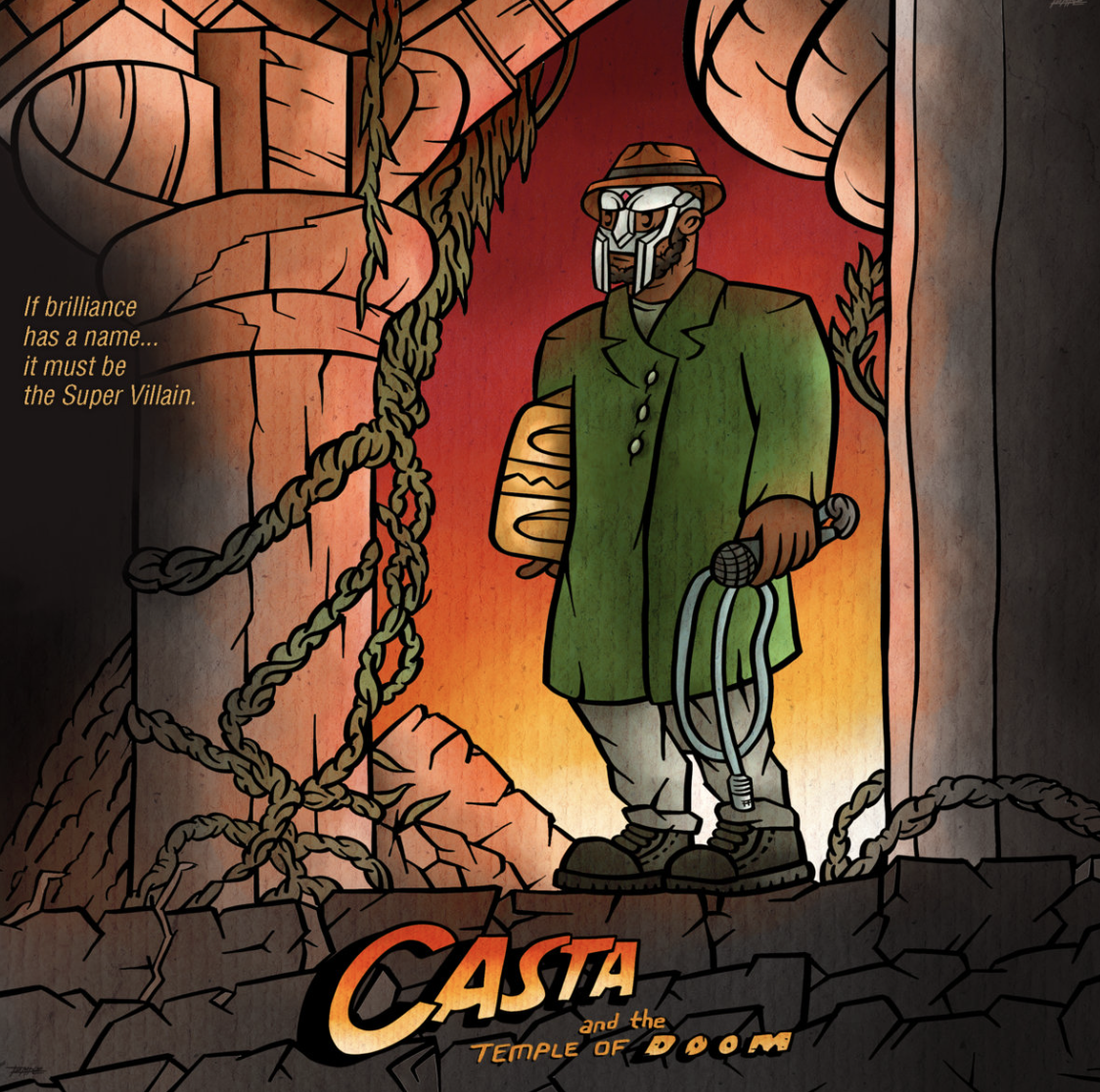
Casta ‘The Temple Of Doom’
(Bandcamp)
I suppose it was inevitable that at some point someone from the extensive late metal face villain and underground hip-hop genius MF Doom fandom would play on the Indiana Jones franchise – Indy literally escaping death in an airplane crush only to fall into the clutches of the Thuggee cult. I even named my playlist homage to the former Kausing Much Damage founder and prolific name riffing soloist, collaborator after the second Jones cinematic adventure myself. And I’m not alone on that score.
Released a year to the day of Daniel Dumile nee DOOM, Viktor Vaughn, Zev Love X’s death, the enterprising Portland producer Casta has merged the score from the Temple Of Doom with both samples and interview snippets from the MF Doom cannon: though it could have done with more Short Round quips in the mix.
In the spirit of such hip-hop mashups, with even Doom himself not adverse to sampling some cult, obscure and leftfield scores, Casta has some fun in paying tribute to a much-missed artist. From the Monsta Island Czars all-stars team-up to his work with a new breed of rap stars, such as Bishop Nehru, he leaves behind one of the greatest legacies in Hip-Hop: though his influence, creativeness, wordplay, pop culture, visuals and artwork reaches far beyond rap music, as this project proves.
Hi, my name is Dominic Valvona and I’m the Founder of the music/culture blog monolithcocktail.com For the last ten years I’ve featured and supported music, musicians and labels we love across genres from around the world that we think you’ll want to know about. No content on the site is paid for or sponsored and we only feature artists we have genuine respect for /love. If you enjoy our reviews (and we often write long, thoughtful ones), found a new artist you admire or if we have featured you or artists you represent and would like to buy us a coffee at https://ko-fi.com/monolithcocktail to say cheers for spreading the word, then that would be much appreciated.
Monthly Playlist Revue: October ’22: Muramuke, Marlowe, Voice Actor, Lira, Underground Canopy, Keep Shelly In Athens…
October 31, 2022
PLAYLIST SPECIAL
TEAM EFOORT/COMPILED BY DOMINIC VALVONA
Each month the Monolith Cocktail pool of collaborators search long and hard for the choicest of choice tracks; mixing genres and geography into an encapsulation of the last month on the blog.
That team includes me (Dominic Valvona), Matt ‘rap control’ Oliver, Brian ‘Bordello’ Shea, Andrew C. Kidd and Graham Domain.
You may have noticed since the summer that we’ve started compiling a Youtube playlist version, which includes extra bonuses from the No Base Trio and a seasonal treat from Escupemetralla plus some alternative tunes from the same artists on the Spotify list.
So without further ado, here is the October Revue:
And the Youtube version:
Full Track List:-
Montparnasse Musique Ft. Muambuyi and Mopero Mupemba ‘Panter’
Muramuke ‘Just One More’
Balaklava Blues ‘BEAT UP’
Marlowe/L’Orange/Solemn Brigham Ft. Deniro Farrar ‘Godfist’
Rockness Monsta/Method Man/Ron Browz ‘Beastie Boyz’
BeTheGun ‘Metropolis’
Lee Tracy/Isaac Manning ‘Love Is Everything’
Lee Scott Ft. Sly Moon ‘THE MORE I THINK ABOUT IT, THE LESS I CARE’
Voice Actor ‘Battling Dust’
Juga-Naut ‘To The Table’
Ernesto Djédjé ‘Nini’
Liraz ‘Mimiram’
Mehmet Aslan/Niño de Elche ‘Tangerine’
Underground Canopy ‘Space Gems’
Valentina Magaletti ‘Low Delights’
Carl Stone ‘Sasagin’
Tau & The Drones Of Praise ‘Bandia’
Keep Shelly In London Ft. Sugar For The Pill ‘Don’t Want Your Romance’
Librarians With Hickeys ‘I Better Get Home’
Una Rose ‘Partly’
Carla dal Formo ‘Side By Side’
Derrero ‘Long Are The Days’
Super Hit ‘Donde’
Rahill ‘Haenim’
David Westlake ‘English Parish Churches’
Cormac o Caoimh ‘Didn’t We’
VRï ‘Aberhonddu’
Tuomo & Markus ‘Highest Mountain’
Pitou ‘Dancer’ Dana Gavanski ‘Strangers’
The Zew ‘Come On Down’
Brona McVittie ‘Living Without You’
Brian Eno ‘These Small Noises’
Edouard Ferlet ‘REFLEX’
Rich Aucoin ‘Esc’
Puppies In The Sun ‘Light Became Light’
Short Fuze Ft. Dr. Khil ‘Love Letters To The Lost’
Loyle Camer ‘Speed Of Flight’
Ill Move Sporadic/Tenchoo ‘Amulet Chamber’
Atmosphere ‘Sculpting With Fire’
Ghoster ‘CRAME 4’
Clark ‘Frau Wav (Brief Fling)’
Verbz/Mr Slipz ‘Music Banging Like’
Jester Jacobs/Jack Danz ‘Opportune’
Darko The Super/Yuri Beats ‘Don’t Stay’
Open Mike Eagle ‘I’ll Fight You’ A.G. ‘The Sphinx’
El Gant Ft. DJ Premier ‘Leave It Alone’
Heavy Links/Luca Brazi ‘Complicated Theory’
Fliptrix, King Kashmere/Pitch 92 ‘Primordial Soup’
Shirt/Jack Splash ‘Death To Wall Art’
Smellington Piff/Ill Informed ‘Hard Times’
Hi, my name is Dominic Valvona and I’m the Founder of the music/culture blog monolithcocktail.com For the last ten years I’ve featured and supported music, musicians and labels we love across genres from around the world that we think you’ll want to know about. No content on the site is paid for or sponsored and we only feature artists we have genuine respect for /love. If you enjoy our reviews (and we often write long, thoughtful ones), found a new artist you admire or if we have featured you or artists you represent and would like to buy us a coffee at https://ko-fi.com/monolithcocktail to say cheers for spreading the word, then that would be much appreciated.
 Monolith Cocktail Blog