End of the Year Revue For 2025: Part Two: N to Z
December 15, 2025
Choice Highlights From The Last Year Part Two
In case you missed Part One of this illustrious list, here’s a recap.
I said I wasn’t going to do it this year. And this may be the last. But here is the second part of a comprehensive revue listing of choice albums (some extended EPs too) from 2025 that we returned to the most, enjoyed or rated highly. See it as a sort of random highlights package if you will.
As usual a most diverse mix of releases, listed alphabetically – numerical orderings make no sense to me unless it is down to a vote, otherwise what qualifies the placing of an album? What makes the 25th place album better than the 26th and so on…
Whilst there is the odd smattering of Hip-Hop releases here and there, our resident selector and expert Matt Oliver has compiled a special 25 for 25 revue of his own, which will go out next week.
Part One: A to M can be perused here
N……………
Neon Crabs ‘Make Things Better’ (Half Edge Records)
Review by Dominic Valvona
Noir & Superior, Che ‘Seeds In Babylon’
Picked by Dominic Valvona
Novelle & Rob Mazurek, Alberto ‘Sun Eaters’ (Hive Mind Records)
Review by Dominic Valvona
Nowaah The Flood ‘Mergers And Acquisitions’
Picked by Dominic Valvona
O……………
Occult Character ‘Next Year’s Model’ (Metal Postcard Records)
Picked by Dominic Valvona
P…………….
Philips Arts Foundation, Lucy ‘I’m Not A Fucking Metronome’
Reviewed by Brian Bordello Shea here
Phill Most Chill & Djar One ‘Deal With It’ (Beats House Records)
Picniclunch ‘snaxbandwitches’
Review by Brian ‘Bordello’ Shea
Pound Land ‘Can’t Stop’ (Cruel Nature Records)
Review by Brian ‘Bordello’ Shea
Q……………..
Querci, Cosimo ‘Rimane’ (Quindi Records)
Review by Dominic Valvona
R………………
Robertson, Kevin ‘Yellow Painted Moon’
Review by Brian ‘Bordello’ Shea
Rose, Sophia Djebel ‘Sécheresse’ (Ramble Records/WV Sorcerer Productions/Oracle Records)
Review by Dominic Valvona
Rumsey, Andrew ‘Collodion’ (Gare du Nord)
Review by Brian ‘Bordello’ Shea
S……………….
SAD MAN ‘Art’ (Cruel Nature Records)
Review by Dominic Valvona
Salem Trials ‘Heavenly Bodies Under The Ground’ (Metal Postcard Records)
Review by Brian ‘Bordello’ Shea
Sanders, Pharoah ‘Love Is Here – The Complete Paris 1975 ORTF Recordings’
(Elemental Music Records) Picked by Dominic Valvona
Schizo Fun Addict ‘An Introduction To…’ (Fruits der Mer)
Review by Brian ‘Bordello’ Shea
Schnitzler, Conrad ‘RhythmiCon’ (Flip-Flap)
Review by Dominic Valvona
Scotch Funeral ‘Ever & Ever’
Review by Brian ‘Bordello’ Shea
Silva, Maria Elena ‘Wise Men Never Try’ Review
‘Wise Men Never Try Vol. II’ Review by Dominic Valvona
Širom ‘In the Wind of Night, Hard-Fallen Incantations Whisper’
(Glitterbeat Records) Picked by Dominic Valvona
Sleepingdogs ‘DOGSTOEVSKY’ (Three Dollar Pistol Music)
Picked by Dominic Valvona
Soft Speaker ‘Rippling Tapestries’ (Cruel Nature Records)
Review by Brian ‘Bordello’ Shea
Sol Messiah ‘War of the Gods’ Picked by Dominic Valvona
Staraya Derevyna ‘Garden Window Escape’ (Ramble Records/Avris Media)
Review by Dominic Valvona
Stewart, Macie ‘When The Distance Is Blue’ (International Anthem)
Review by Dominic Valvona
T………………..
Teamaker, Marc ‘Teas n Seas’
Review by Brian ‘Bordello’ Shea
Theravada ‘The Years We Have’ Picked by Dominic Valvona
Toivanen Trio, Joona ‘Gravity’ (We Jazz)
Reviewed by Dominic Valvona here
Tomo-Nakaguchi ‘Out Of The Blue’ (Audiobulb Records)
Review by Dominic Valvona
Tortoise ‘Touch’ (International Anthem X Nonesuch Records)
Review by Dominic Valvona
Toxic Chicken ‘Mentally Sound’ (Earthrid)
Review by Brian ‘Bordello’ Shea
Trupa Trupa ‘Mourners’ (Glitterbeat Records)
Info/Singles Review Feature by Dominic Valvona
U…………………
Uhlmann, Josh Johnson, Sam Wilkes, Gregory ‘Uhlmann Johnson Wilkes’
(International Anthem) Review by Dominic Valvona
Ujif_notfound ‘Postulate’ (I Shall Sing Until My Country Is Free)
Review by Dominic Valvona
V………………….
Various ‘TUROŇ/AHUIZOTL’ (Swine Records w/ Fayuca Retumba)
Review by Dominic Valvona
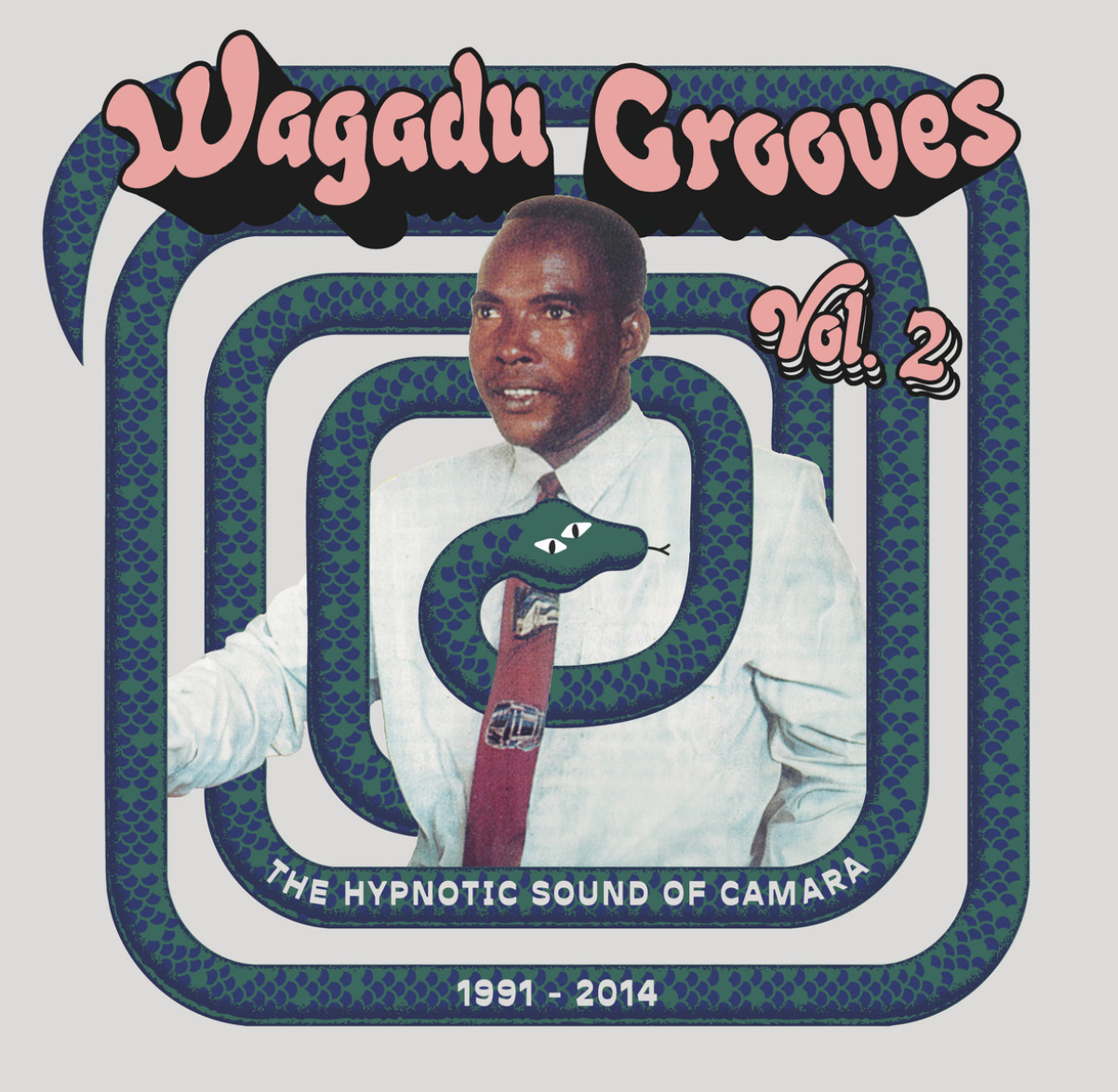
Various ‘Wagadu Grooves Vol. 2: The Hypnotic Sound Of Camera 1991 – 2014’
(Hot Mule) Review by Dominic Valvona
Vexations ‘A Dream Unhealthy’ (Cruel Nature Records)
Review by Brian ‘Bordello’ Shea
Violet Nox ‘Silvae’ (Somewherecold Records)
Review by Dominic Valvona
Voodoo Drummer ‘HELLaS SPELL’
Review by Dominic Valvona
W…………………..
Wants, The ‘Bastard’ (STTT)
Review by Brian ‘Bordello’ Shea
Warda ‘We Malo’ (WEWANTSOUNDS)
Review by Dominic Valvona
West Virginia Snake Handlers Revival ‘They Shall Take Up Serpents’
(Sublime Frequencies) Reviewed by Dominic Valvona
Winter Journey, The ‘Graceful Consolations’ (Turning Circle)
Reviewed by Dominic Valvona here
Y…………………….
Yellow Belly ‘Ghostwriter’ (Cruel Nature Records)
Review by Brian ‘Bordello’ Shea
Young Mothers, The ‘Better If You Let It’ (Sonic Transmissions)
Review by Dominic Valvona
Z……………………..
Zavoloka ‘ISTYNA’ Picked by Dominic Valvona
For those that can or wish to, the Monolith Cocktail has a Ko-fi account: the micro-donation site. I hate to ask, but if you do appreciate what the Monolith Cocktail does then you can shout us a coffee or two through this platform.
The Perusal #74: F. Ampism, Aus, Burning Books, Mauricio Fleury…
December 3, 2025
A world of sonic/musical discoveries reviewed by Dominic Valvona. All entries in alphabetical order.

F. Ampism ‘The Vertical Luminous’
(Hive Mind) 5th December 2025
A curious and, as the title suggest, luminous biomorphic world of inner and outer bodied molecules, particles and matter, the Brighton-based F. Ampism cuts a most wonderfully playful, curious and intriguing album for the always enlightening and brilliantly experimental label Hive Mind this month.
Ampism (that’s Paul Wilson when uncloaked from their sonic pseudonym) delights in making atoms speak, communicate, sing, gargle, mewl and murmur in a world of floated forms and running, pouring waters. Of an organic nature, sounds both recognisable and not connect with the electronic to create hallucinogenic, near cosmic and twinkled aspects of both cerebral and microscopic observations. And within that sphere there’s a host of fluctuations: ‘Worm Moon’ a near silken spun and spindled delicate vague evocation of Japanese theatre and ambient jazz, whilst the serial rhythms and beats, the suspended alien forms and cup pours of ‘Lunar Mansions’ could be a union between Mira Calix and Carmen Jaci. Such is the gentleness and dreaminess of this amorphous fourth world and bubbling and burbling chemistry that even the synth possessed ‘Midi Evil’ whirls and discombobulates disarmingly and harmlessly. ‘The Severed Head Is Smiling’ is also hardly sinister, caught in a magic-realism of mirrors, hallowed tubular dimensions and the sounds of the bird house.
Lovingly produced, full of that luminosity and replenished liquid growth, the album evokes feelings of happiness, rumination, the inquisitive and of near alien visitations. Less studied and technical, and more an enjoyable life form of music and sounds that proves a most enjoyable and mostly beautiful experience.
Aus ‘Eau’
(Flau) 6th December 2025
Finely balanced, Japan’s national instrument, the koto, is disarmingly and organically taken from its courtly origins and placed in more intimate, attuned settings. With his adroit koto foil Eden Okuno, the Tokyo composer and producer Yasuhiko Fukuzono creates a both fragrant and descriptive subtle album of ambient music, minimalist and environmental electronica; unmistakably Japanese, with threads and traces of the neo-classical and Hogaku music traditions and even further back, and yet almost in the spheres of Fourth World experimentation and the futuristic.
Under the Aus alias, Fukuzono produces a new project that centres around the fine, delicate and spindled use of the half-tube zither koto. Said to be an “ancestor” of the Chinese guzheng, brought over to Japan during either the 7th or 8th century, it’s thirteen or seventeen-stringed forms, strung over movable bridges, are plucked by the fingerpicks on the player’s right hand. Depending on the piece the instrument can be tunned differently, and sometimes, the seventeen-string version, when used in an ensemble, takes on the duties of the bass. It has an instantly recognisable sound; the accompaniment to rumination and contemplation within the bamboo waterfall replenished gardens of Japan; the uncurling flowery weavings and the calligraphy-like strokes of the brush.
Here, Okuno’s keen playing skills dazzle with subtle aplomb, description and a cascade of repeating rhythms as an electronic bed of surfaces and effects are placed underneath or used like an envelope. There’s also an equally subtle use of the piano – the lower-case work of Andrew Heath, a touch of Roedelius and even Tim Story, but also Sakamoto, sprung to mind -, the suffused presence of various poured, ceremonial and dripped waters, and the chimes, the tinkles, jangles and rings of various percussive and wind chime features. Altogether it makes for a most beautifully felt work of sensibilities, the naturalistic and meditative and visceral scales. And within that sound you can hear the crafting and scraping of artistic tools, the atmospheres of the recording settings and spaces, and the near fuzzy hum of the tape.
Attentive to the surroundings, but also aware of pushing the use of the koto, saving it from its more ceremonial staidness and just so preparations, Fukuzono claims the instrument for his own purposes and experiments for something more modern and intimate. For those with a penchant for the music of Satomi Saeki, Jo Kondo, Laraaji – who has even recorded a track after the instrument -, Akira Ito, Masahiro Sugaya and the partnership of Francesco Messina and Raul Lovisoni. Flau continue to produce exquisite, thoughtful works of disarming skill.
Burning Books ‘Taller Than God’
(Ingrown Records) Released 17th November 2025
One day someone will write the great study on music made during the Covid pandemic. A period that defined an era, no matter the cultural, geographical and political differences, by providing far too much time for all of us to think and reflect on the pointlessness of our existence: or was that just me? A shared consciousness of anxiety, stress and uncertainty prevailed, which hasn’t really abated: getting worse if anything. That day is not today, however. But, just one of the latest releases to pop up in my inbox this month from the highly prolific Ingrown Records imprint (if you ever want to disappear down the proverbial rabbit hole, to find new artists on the periphery then head over to the label’s bandcamp page for hours if not days of aural discoveries), Burning Books’ dramatically entitled Taller Than God album, was created during that momentous period.
Despite the epic subject matters, the grappling with all life’s philosophical quandaries, much of the music produced from between 2019 to 2021 was usually quite understated. And even though there is a presence outside us, a looming leviathan to be found hovering and often bearing down over the sonic landscapes here, the production is itself a balance of isolated intimacy and the sonorous heaviness and awe of the gradual, glacial movements of time over that map. A personal attempt to make sense of the enormity without losing sight of the individual at the centre.
And so, the trials and travails, the feelings of mental anguish are all transduced into a stunning work of both ambience and weight, a merger of the haunted and the reflective, the deep and tingly. Enervated passages of past or found recordings, a dancing pirouetted dancer a top of an old music box, can be heard amongst the near Lynchian and prowling as memories pass through the veils and hues of the shadows cast upon the mountain sides and across the plains. Gleams and drones, ebbing waves contour and create various atmospheres, whilst the reverberating chings and fuzz of an electric guitar and bass articulate something more ominous and brooding. The electrification occasionally sounds more like a mirage, almost like the country ambience of Steve Gunn and Daniel Vickers on tracks like the humming tone, soft knocked ‘Mountains Move’. Within that scope, the fateful creep of ‘Death Is Forgetting’ sounds like a union between Mike Oldfield and John Carpenter. There are a few instances of this near supranatural feel and atmosphere to be found, alongside the mysterious deep sounds of a ship in the mist, the bowels letting out some esoteric ferryman’s call. Elsewhere there’s faint hints of Eno, A Lily and the heavy bowed evocations of Simon McCorry. And on the finale title-track a touch of Daniel Lanois amongst the glassy hues, drones, percussive crescendos and scale. Taller Than God ends on the reassurances of hope after immersing us all in a simultaneously personal and collective experience across a varied topography of emotions and reflections. An ‘ode to humanity’, no less, Burning Books has produced one of the very best and well-crafted, sophisticated but empirical albums of this genre in 2025.
Mauricio Fleury ‘Revoada’
(Altercat Records) 5th December 2025
The last time I saw the well-travelled Brazilian musician Mauricio Fleury live was nearly a decade ago, when bandmates from the Bixiga 70 troupe he helped found led a carnival conga of audience members through the aisles of a seated venue as part of Celtic Connections – held each year in Glasgow, my adopted home of the last ten years. That night, and for a further seven or eight years, he was part of a collective that fused the language of Fela Kuti (which they spoke fluently) with a menagerie of Latin influences and the sound of Brazil’s inner-city bustle and hustles. And although it is a much celebrated and critically applauded group, Fleury’s CV is filled with more enviable collaborations, including a meeting and jam session with none other than Afrobeat rhythm provider and progenitor Tony Allen and the “blacktronica” and soulful house luminaries Ron Trent, Theo Parrish and Steve Spacek. This was back in 2007, but alongside his work with both the Brazilian jazz and bossa nova piano icon João Donato and tropicalia titan songstress Gal Costa, proved a catalyst for a migratory-like album of personal indulgences/stories, dramas and experiment.
Stepping out on the solo pathway, inspired as much by the places he’s lived and toured as by his crate-digging passions, the architecture, parks, its exotic bird life, and more urban environments of Brazil and further afield act as melodiously assured but pliable and warm map references. For Revoada is a personal album of worldly influences that springs forth from Brazil into Europe and the gateway to the Mediterranean, the Middle East and Eastern Africa. Starting out in ‘Kadıköy’, a district on the Asian shore of the Bosporus straddling city of Istanbul that overlooks the Sea of Marmara, Fleury reminisces on a hectic hunt for records by the cool Anatolian rock icons Barış Manço, Erkin Koray and Cem Karaca; in the city for a jazz festival back in 2017. This led to dreams of all those records he didn’t manage to find and this composition: the trip also led to Fleury, now living in Berlin, picking up the saz. The album’s opener takes a spice of Koray, a pinch of the backing from Selda Bağcan’s records and matches it with Altin Gun and a warm feeling of clavichord soul and Med grooves: It sounds like the Isley Brothers sunbathing in old Anatolia. There’s just enough electrified fuzz to make this an acid-soul number, as reimagined by Batov Records.
The first trip is followed by memories of home and the playground environment and its formative hangouts. ‘Banhando’ can be translated from Portuguese to mean “showered’ or “bathed”, but in this context is a reference to the nature park in the southeastern Brazilian city of São José dos Campos, where Fleury grew up. With a big rolling intro of bossa that quickly shimmies into a Latin-jazz sound with hints of Brubeck, Ramsey Lewis, Ayzymuth’s ‘Seems Like This’ and Greg Foat, there’s a sense of both breezily laid out memories and reminisces that capture the very feel of the place. The keys sound like bulbs of light. We next head to the city in which Bixiga 70 was formed, São Paulo, and the classic Riviera Bar, a place that obviously holds many memories for Fleury. ‘Tanto Faz’ is meant to be inspired in part by the sound of old TV soap – which it does – but reminded me in part of a Latin Americanised Lalo Schifrin and Michael LeGrand in the middle of a whistle and fluted diaphanous melody of feathered friends.
Fleury himself plays a range of keyboards, analogue synths, the flute and guitar on this musical voyage, aided by longtime foils, a number of notable and exciting Brazilian artists and players, and good friends. On pliable, walking and flexible acoustic and electric basses is the renowned Latin Grammy Award winner, producer and guitarist Fabio Sá;on rolling, falling, splashed drums and dried bone rattled, Latin percussion is the versatile producer and music director Vitor Cabral; the vibraphone and effects of Beto Montag (on the album’s zappy, beamed and jazzy-funk retro-fitted finale ‘Briluz’); and as part of the tumultuous, thunder wrapped dramatic turn Andrés Vargas Pinedo whistled bird called woodwind and brass rich title track ensemble, the flute of Sintia Piccin, oboe of Julianna Gaona, bassoon and French horn of Richard Fermino and clarinet of María “Mange” Valencia. Sá was also asked to write the wind quintet of bird-like mimics on the exotic aviary inspired title-track. This is a composition of contrasts, beginning as it does with a more serious turbulence of wobble board-like thunder and stormy cymbals, both reflecting the themes of travails and more difficult times, and a second part that opens up with that bird call menagerie. Sá also wrote the album’s Eastern African, via the spiritual jazz route, detour, ‘Jimma’. Inspired and influenced by the Ethiopian Jazz luminary Mulatu Astatke, who he toured Brazil with a number of years back, Sá paid homage to the great multi-instrumentalist and arranger’s hometown with a composition of spontaneity; a camel ride like motion trail across the dunes, unseating and decamping to the Addis saloon for a loose Ethio-jazz jamboree around the piano. There are hints of not only Astatke, Hailu Mergia and Abdou EL Omari but The Sorcerers, Ndikhu Xaba and one of Fleury’s biggest influences and musical heroes, Sun Ra.
A most touching, reminiscing and delightful travelogue of places, dear memories, and evocations that shows off, in a disarming and harmoniously melodious and funky jazzy way, Fleury’s capabilities and skills as both a composer and musician. The solo route looks to be a delightful and pleasingly creative one on an album with much to offer, setting out various moods and journeys.
Hamouna Isewlan ‘Təlle Talyadt’
(Remote Records / Studio Mali) Released 28th November 2025
Like many of the desert blues and rock luminaries before and after him, Hamouna Isewlan’s new album is suffused by the nomadic freewheeling and artisanal skills of the Berber ancestral Tuareg people; a loosely atavistic-connected confederacy (to put it into any kind of meaningful context) of diverse tribes that have traditionally roamed Sub-Saharan Africa since time immemorial. If further context and history was needed, this diverse society of various people, grouped together in an age that demanded a label, the term of ‘Tuareg’ is highly contested: arguably brought into the lexicon through the language of European Colonialism, though etymology traces the term back further through multiple sources. But many in the community would prefer we used the original ‘Kel Tamashek’. Isewlan’s rootsarein Mali, a country that he has been forced to leave to seek sanctuary in Algeria due to the unstable conditions; though as I write this, events are overtaking me as both the capital of Bamako and Mali itself are at risk of collapse and takeover by Jihadist groups.
Carved out of France’s greater Western African empire, demarcated without any sympathy for its diverse populations and history, Mali was cut more or less into two on its inception; the poorer north, one such seat of the Kel Tamashek, was more or less left to wither by the south and the government who considered its nomadic peoples backward, uncouth and because of their lighter skin colour, inferior. Though extremely complicated and far more nuanced than space allows here (I recommend reading Tim Marshall’s The Power of Geography: The Maps That Reveal the Future Of Our World for an analysis of the entire Sahel region and its many conflict over the decades), the Kel Tamashek began a decades long fight to create a self-governing autonomous state known as the Azawad. Beginning in the late 1960s and continuing until more recent times, this struggle made worldwide headlines when it was hijacked spectacularly by more extremist Islamic insurgents. Worryingly gaining ground as a Trojan Horse within their nomadic allies’ fight for independence, the destructive Islamist horrified many when they took the ancient seat of West African learning and trade, Timbuktu, and preceded to demolish it like barbarians. Former Colonial masters France were forced to intervene, finally halting the insurgents progress before forcing all groups involved back to where they started: many of them back across the border. Far from ideal, the Islamist usurpers dissipated to a degree but then switched to sporadic acts of terrorism, carrying out smaller militia attacks in Mali’s capital. This was pre Covid of course and the situation has changed dramatically; the threat has intensified with many declaring Mali a state on the verge of a Jihadist takeover. Much of this has been down to the expulsion of France by a Malian junta, led by General Assimi Goita. But with their departure the junta was unable to secure the country or even the capital. They made an even greater mistake by hiring Russian mercenaries, who failed miserably to fight off the main jihadist insurgent group, Jamat Nasr al-Islam wal Muslimin (JNIM), an affiliate of al-Qaeda. The capital of Bamako has been under direct threat and siege by the group who, as The Times reported last month, “paralysed the Malian economy with a fuel blockade that has prevented harvesting in several regions and forced the government to ration power, close schools and restrict civilian movement.” Anything can happen, including another coup within the Malian military itself: the omens are looking bleak; the outcome a possible state run by Jihadists: another Afghanistan in the making. It is undeniable that the country is suffering, with no-go zones across Mali, the threat of extreme violence and of imposed strict Islamic rule in those places controlled by the Jihadist groups. The original Kel Tamashek campaign and fight has been hijacked, its concerns, politics were always more localised but have now been engulfed by terror groups hellbent on a complete takeover of the entire Sahel region.
However, despite all this turmoil music is still being made, life is still going on in the country: as tough as they may be. In the face of such geopolitical upheaval and violence Isewlan chooses to embrace various topics of love: the yielding kind; the plaintive; the yearned; the desired; and the declared. A most touching but also yearning album that tends to the subjects of betrayal, universal and more intimate and personal love.
His new album, under this name (Isewlan in the Tamashek Tuareg language translates poetically as “the mountains of the desert”), is a songbook full of wanton reflections of both a love lost and gained, projected against the desert landscapes of his homeland. You can literally follow the pathways, the very contours, love lines and sloping dunes of Mali through his resonating electrified guitar work and the percussive and drummed rhythms and grooves of the band; many of the tracks moving in a camel or hoofed horsed motion across that iconic terrain.
An incredible player, starting out like so many of his peers and inspirations crafting a rudimental guitar from just tin cans and planks of wood (and still out blasting, outperforming those Western guitar gods with every luxury to hand), Isewlan’s career began to take off during the early noughties after making the leap from performing at weddings to recording with the band he co-founded in 2012, Aratan N’Akalle. Inspired in equal parts by Tinariwen, Ali Farka Touré, Aboubacar Traoré “Karkar”, Mark Knopfler, but most surprising, REM, the burgeoning lead artist now creates multiple evocative mirages and dreamy wanderings from a romantic travail of heartaches and more pleasing paeans to the pursuit of love and his muse.
Musically buoyant, changing from a rockified blues that Southern Americans would recognise (‘War hi toyyed’) to the signature sound of Tuareg desert rock (‘Iamna Iahla’) and a sort of rural form of reggae (‘Tənhay titt in’), the album is full of rich evocations and great flange and reverberated demonstrations of playing. I’m also hearing that Dire Straits influence on the pining resonating ‘Agg Adduniya’, and Vieux Farka Touré on the clopped motioned title-track.
This album, incidentally, has been released by the Bamako label and studio project Remote Records, but been brought to my attention by Paul Chandler, who has chronicled Mali’s music scene for a good couple of decades now. If you’ve been following us for a while, you may recall my piece on Chandler’s most excellent Every Song Has Its End: Sonic Dispatches From Traditional Mali survey (volume 2 of Glitterbeat Records’ Hidden Musics series), which went on to make our choice albums of that year’s list. So, thank you for introducing us to an artist keeping the traditions alive but also in the moment; Təlle Talyadt is an electrifying experience of lovelorn sentiment, rhythm and blues and groove.
Modern Silent Cinema ‘Surveillance Film (Original Motion Picture Soundtrack)’
(Bad Channel Records) 1st December 2025
A veritable flurry of activity this month from Cullen Gallagher’s long-running Modern Silent Cinema project, with both redux versions of archival soundtrack albums The Man Who Stopped and Stared at the Clouds (premiering on CD, vinyl and digital, we’re told, on the 15th December) and Flesh Mother (released on vinyl and CD on the 29th December) plus the new Surveillance Film soundtrack album. But for the purposes of this review, I’m going to focus on the latter, and Gallagher’s fifth collaborative original motion picture score for the Baltimore-based experimental filmmaker Matt Barry.
Plot wise, Barry’s latest docu-fiction movie interweaves the filmmaker’s own questions of intent with theoretical discussions about surveillance aesthetics and early cinema. On previous projects Gallagher reverberations, resonated shakes of the psychedelic, post-rock, krautrock, scuzz and fuzz have been led by the guitar and various atmospherics experiments; the themes ranging from the art of Duchamp, Man Ray and Marc Allégret and Winsor McCay’s famous Gertie On Tour animation. Here though, the sound is inspired or influenced in part by the scores of Ennio Morricone and his oft foil and Italian peer Alessandro Alessandro, but also by the use of the jaw or Jew’s harp in the former’s iconic Western soundtracks – played by Billy Strange. That instrument’s springy and spongy signature bounces and leaps like the march hare across many of the Latinised and Greek mythologically entitled instrumental tracks and vignettes/passages. That crucial instrument forms Riley-like patterns, boings and rebounds, as glass-like bulb, the bell jar notes and the crystal ring out or chime on the first few tracks.
Evocations of Walter Semtak and A Journey Of Giraffes sprung to mind on the first half of the album, that and the essence of those Italian composers working on Giallo soundtracks, Alain Goraguer, and on one of the quartet of mythological referenced Empusa (a one-footed shape-shifting female) tracks John Barry scoring Harry Palmer in an Hellenic setting. Later on, the mood reminded me of the submersible synth and electronic scores of Shepard Stevenson; especially on the plastic tube-y paddled and Fourth World-light ‘Medius’ – named I believe after one of Alexander the Great’s officers and friends, a native of Thessaly. But there’s many changes, from the near supernatural to distorted, the kinetic and library music-esque. It can give a near paranoia feeling, or at times something close to terrifying and ominous. And then again, there’s a sense of mystery, of myth and the ghostly amongst the loosened wires, detuned and both toy-like and spooked piano workings.
Gallagher expands his palette of instruments and ideas for a highly atmospheric score that stands alone and yet doesn’t proving overbearing or distract from the film it accompanies. Well worth the cinema ticket.
Andrew Spackman ‘The Marcus Neiman Cookie Recipe Hoax’
(Mortality Table Records) 12th December 2025
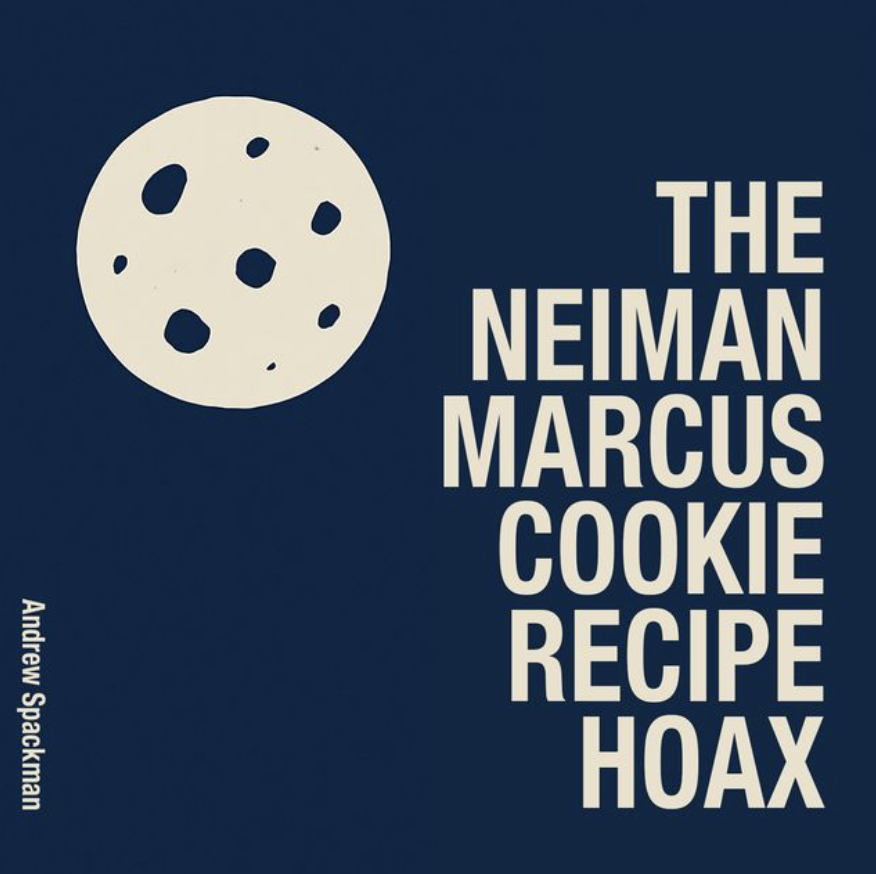
I’ve estimated that Andrew Spackman under his various alias and appellations (from the forlorn SAD MAN to Duchampian Nimzo Indian, Cars From The Future and The Dark Jazz Project) has easily released over thirty albums in just over the last decade. From boffin produced apparatus to techno glitches, distortions and soundtracks, the idiosyncratic inventive trick noise maker has tried his hand at everything, including a number of conceptually minded multimedia projects and stories.
Uncloaked, under his own name, Spackman builds an impressive sonic and melodic world from one of the Internet’s earliest viral bullshit hoaxes. The Marcus Neiman Cookie Recipe, as it was known, fuelled a whole industry of such faked indignations; not the only such lie to run and run, many varied episodes followed in its wake. For one of the best summaries, the Dallas (the city in which this hoax takes part) Eater obliges:
‘A woman visited “Neiman-Marcus Cafe” in Dallas and ordered a dessert after her dinner — the Neiman Marcus cookie. The woman was so enthralled by the delicious cookie that she asked an employee at the cafe if she could have the recipe. When the employee declined, the woman asked to purchase the recipe, and was told that it would cost her “two-fifty.” When the woman received her VISA statement a month later, she’d been charged $285 — $10 each for two salads, $20 for a scarf, and $250 for the famous cookie recipe.’ The outrage however was in mishearing the original “two-fifty”, which in her mind meant $2.50, not $250. And so, both incensed and in pique of revenge, she posted the recipe online for free. It doesn’t matter, as the recipe and entire incident was hokum – although the company at the centre of this lie did decide, after receiving opprobrium and a flood of angry letters, to eventually create their own cookie -, but the actual ingredients and baking instructions were pretty run-of-the-mill: nothing special. Over time, and various iterations the story has changed and the recipe with it: replacing certain ingredients, adding maybe more to the mix.
As a metaphor/analogy on the spread of such “compelling lies” and hyperbole, Spackman has cooked up a fantasy of his own; running with the original tale, handing out the ingredients and building up and scaling up a concept-based album of electronica and vague horns that sweep, drift, herald and toot across a plane of the cerebral, distorted and melodious.
Working across various electronic spines, with passages that conjure up the dramatic and at other times dissonant, the album’s ten tracks vary between shorter and long form passages. Between tubular pipes and scores, it can sound simultaneously like a lost futuristic Vangelis soundtrack or Mike Dred and Richard James lost in the fourth world peregrinations of Hassell and Pekka Airaksinen. There’s much to unravel, as each track develops in its own way and forms a hallucinatory experience of the buzzing, bristled, shaved, blowing and screwy.
Amongst the effects, the electronically synthesized there’s wah-wah-wah, heraldry to jazz tones and airs of sax, Budd-like tinkles and iterations of piano and pipes. A mix of avant-garde, a Riley nightmare on occasions, the most removed wisps of jazz, the cosmic, the metallic and machined and vapored voices, The Marcus Neiman Cookie Recipe Hoax is like a meeting between Variát, Popol Vuh, Robert Musci, and the Warp and Artetetra labels. Both in and projected outside the machine, new sound, sonic and sometimes melodious feelings are fed into the abstract, into entropy, the alarming and liquid. Whilst the themes, the inspiration are concrete, this soundtrack (I would call it it) shutters, expands and atmospherically offers more. Spackman is on a roll, with already a successful SAD MAN enterprise earlier this year, and now this on top of other recent filmic and art-electronic projects. Check back in a week or two to see if it has made my choice albums of the year list.
West Virginia Snake Handlers Revival ‘They Shall Take Up Serpents’
(Sublime Frequencies) Released 3rd October 2025
Reminding in part of the kind of religious sermon broadcasts used to great effect on Eno And Byrne’s My Life In The Bush Of Ghosts, but reverberated here, booming like a bluesman preacher half crazed by the effects of the poisonous serpents he wields and insists take’s a bite out of his arms to show a deadly, fateful commitment to faith, the performances and voices on this latest in-situ recording project by Ian Brennan (in cooperation and facilitated by Sublime Frequencies) is a revelatory reclamation of the original rock and roll and blues spirit. Or at least a more zealous form of the music used to accompany and rally literal interpretations (depending on sources, one that could be very skewed indeed) of lines from the Gospels of both Mark and Luke on healing and showing a strength of faith:
‘Behold, I give unto you power to tread on serpents and scorpions, and over all the power of the enemy: and nothing shall by any means hurt you.’ Luke 10:19
‘And these signs shall follow them that believe: In my name shall they cast out devils; they shall speak with new tongues. They shall take up serpents; and if they drink any deadly thing, it shall not hurt them; they shall lay hands on the sick, and they shall recover.’ Mark 16:17 – 18 (Thanks to Wikipedia for these quotes)
In all his time navigating the most dangerous and difficult to reach peoples and places in the world, it took a trip closer to home, to the only remaining West Virginian community of snake handlers, to witness a truly alien experience. Nothing could prepare for what awaited Ian on that fateful day, setting up his usual stripped-down apparatus of recording equipment, placing mics so as not to interfere or distract from the performances around the alter and platform for both bloodletting and speaker-breaking screaming exaltations.
To put it in more context, loosened and set free from the archetypal studio, Ian’s ad hoc and haphazard mobile stages have in the past included the inside of a Malawi prison, Mali deserts, and the front porches and back rooms of Southeast Asia: one of which was on the direct flight path of the local airport. Even that is only a tiny amount of a near forty release back-catalogue recorded over just the last two decades. As regular followers will know, I’ve interviewed and featured a majority of those projects from the field-recordist, producer, writer and violence prevention expert. But I have to say, this is one of the most incredible and wild yet.
From his own notes and descriptions ‘They Shall Take Up Serpents’ is linked to 2023’s Parchman Prison Prayer – Some Mississippi Sunday Morning album; back in the state penitentiary system, Ian recorded the songs of various prisoners inside the infamous maximum-security facility in the deep, deep South of America, finding a number of surprising performances of redemption and spiritual conversion. On the opposite bank geographically and spiritually speaking, showing certain divisions between the two forms and locations, the Appalachian side of this coin takes its lead from a controversial and dangerous (sometimes fatal) practice with its use of poisonous snakes. So dangerous in fact that at least a hundred prominent pastors have died over the last century, including founding father, the noted George West Hensley – an illiterate Prohibition era convicted moonshiner. Even if you survive, the omens are not great, with all medical intervention strictly forbidden. They do this to primarily test the faith, but also sometimes in the use of healing.
Excuse the pun, but a dying art, the practice as all but vanished from most parts of America; from 500 or more flocks in the 1970s to just a handful of dwindling pockets in the backwoods. As both a religion and way of life, scorned by Middle Class American, frowned upon by many as arcane, primitive and even backwards, the last surviving outposts of this rite stand now as a sort of twisted bastion against modernity and outsiders. The whole region has itself been decimated by globalisation and the move either overseas or away from its most prized industry of coal mining. Gutted out, as Ian would put it, this part of American is now infamous for its drug deaths: the highest per capita.
You may of course have seen the church of snake handler’s phenomenon via the 2020 HBO documentary Alabama Snake, which hones in on the 1991 attempted murder of Darlene Summerford by her husband, snake handling pastor Glenn Summerford (investigative journalist Dennis Covington originally covered this in his Salvation on Sand Mountain book), or through the National Geographic Channel aired Snake Salvation series of 2013 (again, another fatal snake bite killed the show’s main focus, Jamie Coots), or even the Sundance Film nominee Them That Follow, starring current in vogue star of the screen Walton Goggins. If you haven’t, then you’re in for a crazy, wild ride; a vehement demonstration of faith set to both the rawest and most pastoral rock ‘n’ roll and blues accompaniment.
The whole thing is insane, a reclamation of rock ‘n’ roll from Satan. For this church and their forebears believe they actually created the musical form: On the same crossroads as Robert Johnson, but instead of selling one’s soul for it, they wrestled it back from the devil. Near riotous – and Ian’s own descriptions are strikingly vivid, crazy and backdropped by the ritual of blood being spilled liberally from the climatic snake bite wounds; though it seems no one died this time thankfully.
It’s akin to witnessing the first flash of danger/excitement of the original rock ‘n’ roll spirit: say, Jerry Lee Lewis smoking his keys, setting alight to the piano for the first time. A spectacle, stripped back to the essence of performance, scripture and evangelism, every speech is delivered in a weird Captain Beefheart style – could this indeed be where the great progenitor of psych and off-the-grid rock ‘n’ roll and blues got it from in the first place. All the energy, palpitations, heaving convulsions and sweat comes through in the recordings. You could be there, in amongst the congregation as the musicians in the flock belt out roots rock ‘n’ roll like the Jon Spencer Blues Explosion in communion with John Lee Hooker and Canned Heat. Though it could also as easily evoke the MC5, and on the scuffle bluesy boogie ‘Jesus Has To Be #1’ a trace of ‘It’s All Over Now” and Taj Mahal. The more scuzzed-up doomed Biblical prophecy of ‘Prepare For The Time Of Famine’ recalled, to my ears anyway, both Wreckless Eric and electric Muddy Waters. And yet there’s also more refined moments of gospel to be found amongst the possessed teachings; an amble along a less rocky road to the banks of the River Jordon and onto heaven – however, it takes until the very end to hear a lead female vocal, much in the style of June Carter.
The titles are worthy of investigation alone: I never thought I’d ever see “ADHD Meds & Starbucks” in the same sentence together, or the supposedly reassuring and testing fateful last words of “Don’t worry, it’s just a snake bite” – the sub-title in brackets, being a disapproving and rhetorical “what happened to this generation”.
White men (and women) sing the blues in a fevered frenzy of the expelled and exhalated. Foreign, estranged, to even most of their fellow Americans, this practice is given free rein to astound and surprise the listener. Without any hint of the preconceived and without prejudice, Ian shines a light in on a controversial isolated community in the grip of social and economic disillusion and disparity: you could call it a retreat from the mechanisms of the outside world that works against such communities. Ian is neither an interloper nor ethnomusicologist in his role; choosing instead to let us decide or form opinion to these highly dangerous and volatile sermons, the words spoken, and acts invoked. This project is nothing short of a revelation; a glimpse into Godly anointed rock ‘n’ roll of a very disturbing and often evocatively punkish kind.
If you’ve enjoyed this selection, the writing, or been led down a rabbit hole into new musical terrains of aural pleasure, and if you can, then you can now show your appreciation by keeping the Monolith Cocktail afloat by donating via Ko-Fi.
For the last 15 years both me and the MC team have featured and supported music, musicians and labels we love across genres from around the world: ones that we think you’ll want to know about. No content on the site is paid for or sponsored, and we only feature artists we have genuine respect for /love or interest in. If you enjoy our reviews (and we often write long, thoughtful ones), found a new artist you admire or if we have featured you or artists you represent and would like to say thanks or show support, than you can now buy us a coffee or donate via https://ko-fi.com/monolithcocktail
The Perusal #71: Matt Bachmann, John Johanna, Johnny Richards & Dave King, The Good Ones…
September 8, 2025
A world of sonic/musical discoveries reviewed by Dominic Valvona. All entries in alphabetical order.
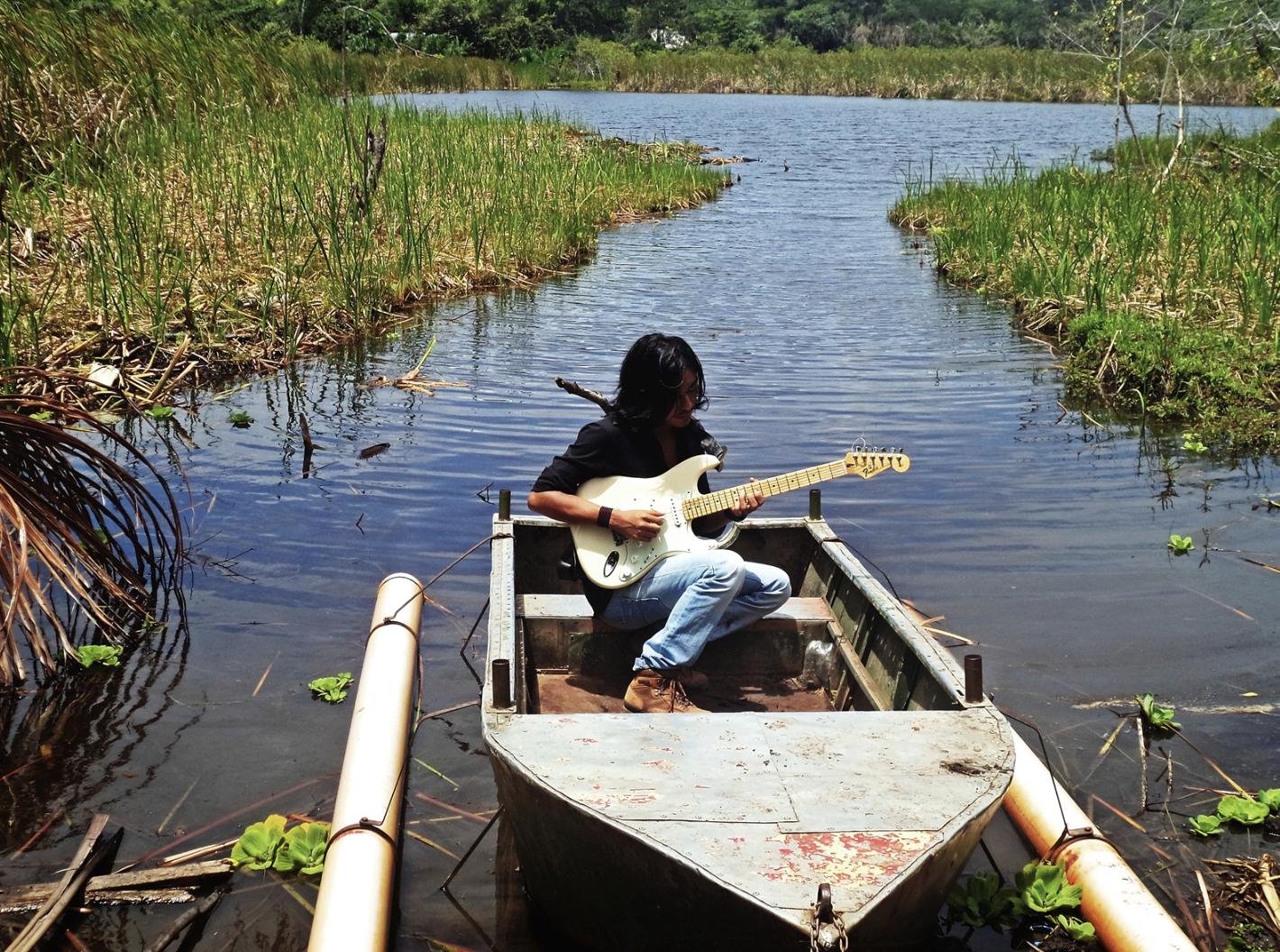
Image of Wayku courtesy of Jesús Flores
Matt Bachmann ‘Compost Karaoke’
(Orindal Records) 12th September 2025
Imbued and driven by a creatively successful obsession with film scores and incidental musical pieces, Matt Bachmann draws away from the earthy for something far more dreamy, escapist and calming. As if to illustrate, the artist, bassist, keys and various assorted instrumentalist soulfully, and low key, yearns “I don’t want to talk about the news” on the smooched and duck-billed saxophone accompanied dreamy if bluesy ‘Long Road’. And yet tied in part to reality, the dread and anxieties of our times, there’s an attempt to break new ground with music for a movie of life that doesn’t yet exist.
Leitmotifs and a recurring intimate ensemble appear throughout this latest near untethered cinematic-leaning album, but each composition, vignette of a kind, and song can be heard in isolation and apart from the rest. For the majority of the time, on an album mostly made up of instrumentals, with just a couple of tracks featuring Bachmann’s near meandered, contour ascending and descending peaceable vocals, there’s a trio core of longtime foils and ‘confidents’: Derek Baron (of Reading Group Records note) both on drums and a little woodwind; Jeff Tobias (Modern Nature, Sunwatchers) on alto saxophone and bass clarinet; and James Krichenia (Big Thief) ‘gumming’ up the groove (as it’s put) on hand drums and percussion. There’re further contributions from Roberta Michel on flute, Cory Bracken on vibraphone and percussion, and Kyle Boston on guitar. Sometimes altogether, or separately, this ensemble is subtle and attentive but moving freely and near lucid when alongside Bachmann’s carefully placed piano, synth, chime manipulations and bass parts and leads.
Emotions swim or cast adrift in a beautifully conveyed movement of suite-like arrangements, the near minimalist, field recordings, and bursts of music – the opening grasp, tangible hold of ‘Summer’s Last Grab’, is a short burst of spontaneous-like bounding seasonal change; almost like a freeform crescendo, with instruments pulled in from various points and angles. Much ground is covered musically and influence wise, and yet there’s no specific or easy to recognise reference or evocation of filmic composers, expect for Sakamoto, who’s 80s contemporary classical reinventions and scores, his synthesized and real Bamboo music clogs and shutters and tubular chimes can be heard suffused throughout the album’s ten tracks. You can also hear subtle hints of Sakamoto’s oft UK collaborative icon David Sylvain; touches of Japan’s former frontman turned prolific foil’s Rain Tree Crow and Nine Horses.
Japan, the country that is, seems a key inspiration. Amongst the vague Shinto temple bells, rung on a cold crisp day on ‘Autumnal Cycle’, are recalls of Yasuaki Shimizu, Ichiko Aoba, and the piano work of Masakatu Takagi and Akira Kosemura; the latter’s own craft set in motion as a therapy.
Added to that set of reference points, the music and sounds, with ease, amorphously shift and reshape using a palette of chamber music, the classical, jazz, Hassell’s fourth world peregrinations, Afro-Latin and the spiritual. For instance, the Star Trek catch phrase inspired ‘TIAGDTD’ (paired won by Bachmann into an acronym, after the famous Klingon defiant and fated line, “Today is a good day to die”), is a dance, a ceremony almost of Afro and clacked, snuzzled, waddled and mizzled saxophone, fourth world music and Finis Africae influences. The title track could be a horizon gazing and shifting communion of later Alice Coltrane, Keith Jarrett and Nicole Mitchell.
There’s much to admire about this album, from its near choir boy venerable holies, its vibraphone bulb notes meditations, its escape from the clutches of despair, its untethered melodious adaptions of diverse musical inspirations, and its filmic evocations of languid endurance and prevail. A lifeline as Bachmann puts it, this project has allowed for a new freedom of creativity and something more collective, more diaphanous, elusive and mysterious, at a key stage in a life of big changes (career wise, becoming a certified social worker and therapist in NYC); a healthy compost analogy mix of “both greens (food scraps) and browns (dead leaves, cardboard, etc.)”. As intimate as it is full of builds, a little drama and bombast, Compost Karaoke is a shared experience, an open project; the very opposite of Bachmann’s more isolated conceived and produced expressions.
The Good Ones ‘Rwanda Sings With Strings’
(Glitterbeat Records) 29th August 2025
The recording location this time around may have changed, but once more in spirit returning to the rural farmlands of a genocide scarred Rwanda, producer polymath Ian Brennan presses the record button on another in-situ, free-of-artifice and superficial production. The fifth such album of unimaginable stirred grief, heartache, and reconciliation from the country’s nearest relation to American Bluegrass, The Good Ones embrace, for the first time ever, the sound of strings. Accompanied, without any prior meeting, by the musicians Gordon Withers on cello, and Matvei Sigalov on violin, a sense of Americana, country and the beautified, ethereal sounds of Van Morrison’s Astral Weeks, of early Leonard Cohen and Nick Drake are brought to the Rwandan duo of Adrien Kazigira and Janvier Havugimana’s unique style of truthful roots music.
This could arguably be called The Good One’s American album: their American adventure. A result of travelling to the USA to appear, in part, on NPR’s notable Tiny Desk showcase, the duo were snapped on the same iconic Greenwich Village block that sports the cover of The Freewheelin’ Bob Dylan LP from 1963 – though Brennan informs me that this wasn’t in any way intentional, as the duo hadn’t even heard of Dylan before being photographed for their own album cover, with a casually draped arm across the shoulder, a tambourine in the other, standing and observing the leafy surroundings of one of New York’s most legendary folkloric talented hothouse neighbourhoods. In a hotel room, with Brennan and their new foils, they created a bridge between their own Rwandan backyard dirt music and that of a countrified, bluesy, traditional and folksy America.
The American theme continues of course with both the addition of Withers and Sigalov, two noted players with extensive CVs, making a name for themselves on the American East Coast. New Yorker Withers, as both a rock cellist and guitarist, has played with the J Robbins’ band, New Freedom Band and Betwixt, and the Russian-born, Washington D.C. based guitarist, violinist, producer and arranger Sigalov has a wide range of experience either playing or recording with Les Paul, Patti LaBelle, Issac Hayes, Ben Monder and Vinnie Colaiuta, amongst others. “The With Strings” part of the title is an intentional reference to records of the same name and of a certain vintage by such icons as Ella Fitzgerald, Frank Sinatra, Chet Baker and Charlie Parker.
I feel at this point that it would be beneficial to the reader, to have some context; a little background; a brief history if you like of the duo’s (parred down in recent times from a trio) direction, of the catalyst that set them on the path of making music.
Triggered, its argued even to this day, by a history of tribal warfare, insurrection, civil war, foreign interventions (rival European powers vying for influence in the region backed, trained or armed one side or the other, but failed to intervene once the bloodshed started) and the assassination of the then president Juvénal Habyarimana, the events of that three month period in 1994 saw a sudden death cull, ethnic cleansing of Rwanda’s Tutsi minority at the hands of the majority Hutus: though even moderate Hutus, along with Rwanda’s third main tribe the Twa were also far from safe, with many caught-up, trapped in the ensuing bloodbath.
Barbaric beyond any semblance to humanity, victims were brutalized, raped, cut to ribbons or herded together in buildings, churches, and schools and burnt alive. Unlike so many previous genocides however, most of those victims were murdered by hand with machetes, rudimental tools, weapons and gallons of Kerosene.
No family was left untouched, with both The Good Ones dual earthy vocalist set-up of Kazigira and Havugimana both losing loved ones, siblings and relatives in the horrific purge.
On the remote hilltop farm where he was born and still continues to work, but record too, Kazigira managed to hide and survive. But Havugimana lost his older brother; a loss felt considerably by the duo who looked up to him as an early musical mentor. Though not appearing this time around, oft third member Javan Mahoro and his foils, all represent one of Rwanda’s main three tribes: Hutus, Tutsi and Twa. And so, bring each culture together in an act of union, therapy and as a voice with which to reconcile the past.
Instantly drawn to the band during a research trip in 2009, Ian recorded their debut international album and the subsequent trio of records that followed: 2015’s Rwanda Is My Home, 2019’s Rwanda, You Should Be Loved, and 2022’s Rwanda…You See Ghosts, I See Sky. Ian’s wife and longtime partner on both this sixteen-year recording relationship and countless other worldly projects, the filmmaker, photographer, activist, writer Marilena Umuhoza Delli, was the one to instigate this Rwanda field trip: Marilena’s mother herself ended up immigrating for refuge to Italy, her entire family wiped out during the genocidal massacres.
In between numerous productions in dangerous and traumatized spots (from Mali to Cambodia and Kosovo) the partners recorded the fourth volume of Glitterbeat Records Hidden Musics series in Rwanda (back in 2017); bringing the incredible stirring songs, performances of the country’s Twa people (or pygmy as they’re unfortunately known; bullied and treated with a certain suspicion by others) to a wider audience.
The focal point, the inspired spot so to speak, throughout is Kazigira’s farm and haven, and the valley in which it is located; from which, a vantage point looks out to all the known world, or at least, the world that has importance, the surroundings that impact with the lives of the duo on a daily basis. It is here that they produce such incredible music and poetry; a sound and vocalised delivery that’s separated from all external influences.
Already receiving accolades aplenty in the West, working with an enviable array of admirers, from Wilco to TV On The Radio, Fugazi, Sleater-Kinney and MBV, it’s extraordinary to think that these earthy harmonic songs were produced in an environment without electricity; music that’s made from the most rudimental of borrowed farm tools, and from the detritus that blows in or litters the landscape.
On various occasions I’ve called this the true spirit of diy, of unfiltered raw emotion. The Good Ones speak of both love and the everyday concerns facing a population stunned and dealing with the effects of not only that genocide but cultural customs and the ongoing struggle to survive economically. Although in recent times, Rwanda has made the headlines as an alternative holding ground, a third-party processing centre for deported migrants from Europe. Whilst still in office, the Conservative government in the UK, after much criticism and protest, decided to fly those migrants denied a right of stay in the country to Rwanda. Only a few volunteers ever boarded such plane rides – and were paid for it too – before the Conservatives were voted out of office, replaced by the Labour party who reversed the policy almost immediately. Copping much international outcry, it soon turned out that other countries had already used Rwanda to dump their own migrant overspills, and that even Germany were seriously considering it.
Existing almost in its own musical category, its own world, The Good Ones play a real raw but also melodic, rhythmic roots music that sways, resonates with vague threads of folk, bluegrass, rock, punk and even a touch of the Baroque. Brennan, a man with an enviable catalogue of productions behind him, from every region of the globe, considers Kazigira ‘one of the greatest living roots writers in the world, in any language’. That’s some praise; one I’m willing to believe and repeat. It’s one hell of a voice, made even better and emotive, near spiritual or stirring when accompanied by percussionist and harmonising foil Havugimana.
On their fifth album, recorded 100% live in a hotel room without overdubs, in single takes, and without much preparation (if any), The Good Ones’ beautifully and plaintively redress various hardships and loss, whilst also evoking the landscape of Rwanda; all now lifted and stirred further by the sound of attuned, sensitive, yearned, tremored, mourned, plucked and touching cello and violin – which also on occasion sounds like a rural American folk fiddle, alongside a guitar, which on occasions similarly evokes a rustic, traditional essence of country and bluegrass banjo. Toil is made almost seamlessly ethereal and near sweet, with songs that despite their titles, often embody a sense of levitation: of hope too. At every atmospheric turn the sound of the Americana campfire, of folklore, the East Village, the sound of a stripped back Band, of Cohen, Drake and especially Van Morrison are entwined with the sweeter touching balladeers of Congo, of Mali and, especially when near a cappella, South Africa – it really reminded me in places of Amadou Diagne too, especially the ‘Freedom’ song.
Hardly rudimental, although The Good Ones duo is only really bringing the most basic of instruments – a springy resonating guitar, the rhythmical sound of finger clicks, an empty paper cup, plastic wrapping, a bucket, a couch cushion and pair of old boots – the sound is impressively alive, and full of feeling. Not so much an exciting, dynamic feeling, but a sensitive one attuned to sorrow, eulogy, pain, experiment and life; the horrors witnessed; the love lost; the ambitions still dreamt; Rwandan customs (doweries, marriage proposals); the theft of land; and the observance of village life.
Rwanda Sings With Strings is yet another incredible songbook, free of over production, and just left to develop. It was indeed an inspiring idea to add a subtle use of strings; one that doesn’t lose any of that homely rural bluesy signature and earthly soul but if anything, further emphasises the unintentional but obvious links to the sound and music brought across to America through African slavery an age ago. Two sets of musicians find true commonality and instantly synch to create something very special. Perhaps one of their best efforts yet; a definite addition to our choice albums of 2025 list.
John Johanna ‘New Moon Pangs’
(Faith & Industry) 12th September 2025
Revivalist songs from across a wide timespan that say as much about present societal woes as they did about the injustice, ruinations and toil of England in the 16th, 17th, 18th and the 19th centuries, are food for John Johanna’s latest, and returning, songbook. Not by name, except in the accompanying track-by-track notes, Johanna (actually the nom de guerre of one of Norfolk nature’s sons, Ben MacDiarmid) is drawn politically and societally towards the ideas of Distributism; a more achievable and perhaps practical philosophical compromise between carefree, devil-may-care Capitalism and hardline Socialism, and the idea that the world’s productive assets should be widely owned rather than concentrated. Favouring small independent craftsman and producers, or co-ops, member-owned and mutual organizations over state or big business monopiles, one its most famous cheerleaders was the famous G.K. Chesterton. It’s Chesterton’s works and their evocations of a particular poetically stirring England of both shambolic spiritualism and everyday mysticism that are tied together with a psychogeography through the age’s style road trip along an atavistic road well-travelled, that makes for a Dylan-esque harmonica-backed and skiffle-like ring of the past, on the album’s ‘The Rolling English Road’ meander. An inebriated greased old England of sextons, squires, drunken road workers, off-the-beaten-track detours of famous landmarks, battlefields and towns, and a history littered with references of the Romans and Bonaparte, is recalled from the folk tradition and given a new impetus.
Finding a middle road, Johanna now turns away (in part, but not totally forgotten) from his previous gospel-blues-raga-meets-Radio-Clash Testament references for the sound of poetic acoustic folk-rock. The tinged with painful emotions New Moon Pangs is Johanna’s ‘first fully fledged studio album’ in this mode; recorded with Faith & Industry label foils James Howard on electric bass, Ursula Russell on drums and Kristian Craig Robinson as both the ‘chancer on silver spoons’ and a more substantial role as producer. Recorded over two days at London’s Total Refreshment Centre, but finished at Johanna’s more rustic Norfolk home studio, IMZIM, the new album is both a breath of fresh air, and a bridge between his electrified spiritual Gambian EP collaboration with Sefo Kanuteh and his scriptures and Torah trip Seven Metal Mountains album (which made our choice albums of the year in 2019). Carrying over that afflatus, that divine providence, there’s still a big influence of hymns and psalms: even a mention of the Israelites -, as Johanna both recites near verbatim from that 18th century English Baptist minister and hymn-writer Samuel Medley (the opening reference to that antiquarian city of the Seleucid Empire, Antioch, is harmonised, double-tracked with Georgian England and adulation, praise for the redeemer) and reworks the same language of faith, of the spiritual into songs about grand days out in the Scottish landscape (Johanna and his family’s 2021 escape from the pandemic back to awe inspired nature and the Outer Hebridean geography of the Isle of Lewis and across from its Gallan Head mountain top the Seven Hunters islands, otherwise known as the Flannan Isles), seeking a creative rebirth, and the realisation that the rural life is where he belongs (inspired by the first half of the 20th century poet laureate John Masefield and his famous ‘London Town’, the original words ring true even now, but led Johanna to a concur, that after spending a decade in the capital himself, he really wasn’t a city lad).
Despite this being a thoroughly English tapestry, the influence stretche to the Southern Spirituals, and foundation myths of enterprise, industrialization in an expanding burgeoning America of the 19th century and early 20th., and to Chile and one of its most famous and celebrated composers, singer-songwriters, folklorists, ethnomusicologists and visual artists Violeta Parra. The hell’s ‘Fire’ blaze against avarice tycoons and ‘world dominators’ is another sermon made Dylan-esque (between Blood On The Tracks and Desire) and urgent, and was inspired in part by Johanna’s read-up on William
‘Devil Bill’ Rockefeller Sr., the patriarchal seed of the Rockefeller dynasty, father to Standard Oil’s founders. Variously described as a huckster, con man, ruthless capitalist, and accused of rape (ring any bells with our present shower of leaders and industrialists), Rockefeller was a man of his times, taking whatever he could get away with to eventually build one of America’s wealthiest dynasties. ‘A Dream of Violeta Parra’ meanwhile, is a tribute to the progenitor of Nueva canción Chilena (Chilian New Song); a record of who’s Johanna picked up twenty years ago in Berwick Street, its cover art drawing him in to the world of social-political traditional revivalist Latin America. As a tribute, Johanna weaves Parra’s notable poetics and language (the blossom mingled with mud; the dirt and ethereal) into another of those Dylan-esque whistle-blowed harmonica storyteller’s odes.
The rest of the album is inspired by such ethnomusicologist delights as the Norfolk farmhand come singer of traditional English song (‘Adieu to Old England’), Harry Box and a prison ballad from the days when gruel really was punishing; the drive home from a Chubby and the Gang gig in a blizzard, and the resulting songwriting workshop with pal and artist Harry Malt (‘Justine’); and an anonymous Jacobian/Stuart period broadsheet that despite its historical language could have been written for the sorry state of inequality that plagues us all now (‘The Poor Man Pays For All’).
Musically lilting, melodious there’s a real warmth and lovely feel to this album’s production as it vaguely echoes the sentiments of Terry Bush, the folk-rock of Pentangle, Fairfield Parlour and Steeleye Span, 1970s Fleetwood Mac, child of the Jago meets Thackery Mekons, Cat Stevens, XTC, The Strawbs and more contemporary artists like Paul Winslow and Valentino DeMartini.
The old is rejuvenated, and found relevant, stitched together in a loose Norfolk tableau. The rural lad does good once more, with nothing less than one of the best albums of 2025.
Isambard Khroustaliov & Ben Carey ‘Field Recordings From Other Constellations’
(Not Applicable) 12th September 2025
The award winning, and far too qualified, electronic and sound composer, software developer and researcher Sam Britton is at it again, fusing the generative and interconnective with the human and machine; this time around, pairing up with Australian foil, the equally qualified composer, improviser and educator, Ben Carey.
A serial offender in this department with the notable Long Division and Fake Fish Distribution experiments and through collaborations with such lauded operators as the Aphex Twin (via the Remote Orchestra project) and Matthew Herbert (New Radiophonic Workshop), and has a co-founder of the very platform this latest release is being facilitated by, the artist collective Not Applicable, Britton, under the Ismabard Khroustaliov nom de guerre, hooked up an impressive apparatus of ARP 2600, Buchla 200e, Destiny Plus 16 Psyche, Make Noise Strega & Morphagene, Moog ONE, Oberheim OB-X8 and Sequential Prophet 12 enabler equipment to venture beyond dimensions and space with his willing sonic partner. Carey, who is one half of the voice and electronic duo Sumn Conduit and has collaborated with such notable company as the JACK Quartet, Sydney Chamber Opera, ELISION Ensemble, Joshua Hyde, Chris Abrahams and Marin Ng, seems a fitting cosmonaut volunteer on this untethered and unbound trip, which has been edited down from a much longer, expanded live performance at Coda to Coda in London on the 3rd of July 2023.
Influential Eastern European science fiction and philosophical enquiry meet on this four-track visitation of alien organic matter, metallics, strange leviathans, machines and codes. Inspired by that genius titan of 20th century sci-fi and future prophecy, the Lviv born Polish writer Stanislaw Lem, and one of his most beloved (so it’s said) works, The Cyberiad, two prolific trick noise makers and manipulators of oscillations, wave forms and patches construct an atmospheric soundscape and journey into both satirical, ominous and mysterious space.
The book, or collection of short stories, follows two ingenious constructers (or robots of a kind) travels through a strange Medieval universe, where they encounter such oddities as a machine that is capable of creating anything, as long as it starts with the letter N, kings who oppress their people with parlour games and PhD pirates. Ahead of his time in so many ways, and in in so many different fields (nots just sci-fi), Lem wrote another famous work, the Summa Technologiac, in 1964, about the moral, ethical and philosophical consequences of various futuristic technology: predicting virtual reality (called “phantomatics” in the book), search engines, AI and singularity. Intellectual as it all might be, much of his actual fictional work is quite humorous in tone.
Here, it is transmogrified and transduced into a constantly developing scan and probe across synthetic and alien technology and off world destinations. A soundtrack in a manner, for a film yet to be made (as far as I’m aware of all of Lem’s cannon, it is only the most famous work, Solaris, that has ever been adapted for the big screen), it feels like a navigation at times, a mapping of extraterrestrial technology. But also, a twisting of reality itself and the fabric of the universe.
This is the near classical meets analogue sci-fi, the non-musical and techno minimalism, with centrifugal movements, fizzles, the sound of switches and mechanisms, electrical currents and static, calculus, pattered and padded rhythms, shocks, UFOs, elevators and accelerations. There are certain hints of the recognisable amongst the squirmed and scrawled alien liquids, especially when the sheet metal punch bag timpani pounds in on the Soviet era mirage ‘Discovering Alonta’. And the opener, ‘The Computerised Bullfrog’, recreates the title’s amphibian through said computerised effects: an artificial reality, the living mimicked through tech. But for the most part this is an ambiguous use of sounds and instruments.
If I was going to use any reference points, perhaps orbiting a similar universe as Tangerine Dream, Moebius, Cabaret Voltaire (also Richard H. Kirk’s uncoupled work), Basic Channel and East European experimental sci-fi.
A very atmospheric performance, bringing Lem’s space oddity philosophical quandaries and explorations to life, Field Recordings From Other Constellations builds a real imaginative as well as foreboding and uncertain world from codes, textures and soundboards.
Johnny Richards & Dave King ‘The New Awkward’
(False Door Records) 5th September 2025
Setting new challenges for artists, the restrictions imposed during the various Covid lockdowns, four or five years ago, meant many were forced to work in isolation or apart. And so, collaborations were largely created by participants working remotely and at a distance (sometimes considerable) from each other; sharing and sending results mainly over the Internet. This made for some intriguing, exciting and inventive results. I understand many musicians would rather work in the same room as their foils and partners, but personally, despite the distances, none of projects made during those trying times seemed to really suffer in quality or creativity. In fact, it made for some challenging surprises.
One such exchange of ideas, a sort of transatlantic partnership between the notable and acclaimed UK pianist and composer Johhny Richards and US-based drummer of equal note Dave King, ended up as untethered and genre-defying experiment in ‘impossible music’: or that which is near impossible to recreate, at least live; a response to certain conditions, certain prompts produced during a particular process that involved a bit of toing and froing between the two musicians. It’s Richards’ prompts that come first in this experiment. His piano, whether treated or untreated, adapted with various materials and objects (from screws to Blu-tack and a knife), and his transformance of the very workings, the guts, the hammers, pins and the action, were sent to King, who recorded his reactions, before once more travelling back to Richards to receive further overlayed parts.
The skilful anarchic (yet never too wild and unchained as to run away with itself, to get lost in chaos or totally lose the plot) style of piano which has served Shatner’s Bassoon so well, is once more unleashed. Unburdened by restrictions, sent out into the serialism ether, and without any preconceived ideas of how his drumming partner would respond, the connection and intuitive nature of this collaboration proved as frenzied as it did dramatic. It’s as if they both unknowingly created a score at times, and at other times, a simultaneously mischievous, playful, and avant-garde merger of off-kilter, kooky jazz, electronica, performance art, transmogrified classical music, the Duchampian, La Monte Young, cartoons, math rock equations, fusion and gamelan. It sounds also like a largely acoustic recreation of Warp Records (as mentioned in the briefing, Warp is cited as an influence and direction of travel) output; an experimental electronic record made without much in the way of the electronic.
Muscle memory from King’s impressive haul of instigated groups and ensembles (from The Bad Plus to Happy Apple) can’t help but turn up. But this album of variously paced and cryptic tracks, brilliantly matches random passings of Herbie Hancock, Tim Berne, Bach, Zappa, Mr. Bungle, Radiohead, Matthew Shipp and Cecil Taylor (I’m thinking of the recently released Taylor and Tony Oxley piano-drums combo experiment Flashing Spirits). It makes for a tumultuous balance between re-wired jazz-fusion, the near leapfrogging and frenzied, and the more serious atmospherically framed offerings – ‘False Doors’ with its heavy piano rumbles of a weather and thunder, and distant strike of a buoy out at sea, obscured by a prevailing fog, really sets a moody scene; almost esoteric in part before developing into a jazz-breaks, splashing of ride and crash cymbals and a near thriller or mystery piano dotting of notes-like soundtrack.
From being pulled through the fantastical mirror backwards to the unsettled and skewwhiff, much ground is covered. Starting from nothing, an incipient partnership of effected, pulled, chimed, chopped and string-like plucked piano workings and both dampened bass-y and more recognisable, if near unmanageable, notes seem to run independently of the drums. And yet the shuffles, breaks, spidery skirts and rattles around the kit, and drills, its free from movements, somehow stick to produce a remotely made piece of dynamic art, playfulness and moody observance. A very successful partnership.
Ujif_notfound ‘Postulate’
(I Shall Sing Until My Country Is Free) 9th September 2025
With no end in sight, and yet another deadline from Trump crossed, Putin’s barbaric invasion of the Ukraine depressingly drags on. Three and half years in – although the real flashpoint came in 2014 and the annexation of the Crimea – and Russia continues to pound away at an already devastated ruinous landscape. Casualties may have reached the million mark, as whole generations fill the mass grave sites on a scale rarely seen outside the scenarios of both World Wars.
In these horrific times it falls upon labels such as the electronic artists Dmyto Fedorenko and Kateryna Zavoloka’s I Shall Sing Until My Land Is Free to spread the sound of the sonic resistance. A soft power, a cultural emissary of that country’s experimental scene, the profits from its roster of artists, which includes both its founders, are donated to several self-defence and humanitarian foundations and local volunteer activists.
The latest release on that platform sees the noted Ukrainian multi-disciplinary electronic sonic, media and visual artist Georgy Potopalsky channel the apocalyptic horror, the destroyed and twisted concrete and steel scarred geography of his homeland to create a pulverised industrial and force field electrified work of conflict and brutalism. Under the Ujif_notfound alias, and with the artist’s usual themes that draw upon the volatility and dynamics between man and the machine, between user and interface, there’s now a focus towards, what the PR description describes as, ‘blasted soundscapes, frenetic breaks and bristling guitar noise’.
In practice this amounts to heavy meta(l) meets the electrifying bounce and fractures of techno and the gears and torqued industrial granular effects of machines (both the coded and the weaponized). Fizzling and warping, with ring outs of both contorting grindcore and repetitive guitar, the coarse and corrosive, an ominous presence is always near at hand; an alienness almost, and yet sense of war and its physical effects permeate the scorched earth. And yet, as pads are drilled with tight delay, or spiked, rotations spiral out the influence of Basic Channel, acid techno and breakbeat, there’s a danceable aspect, a dynamism of alive circuitry that gives some of the tracks a buzz.
The grains of acid rain, of filaments and detritus of weapons, missiles, rockets and drones appear like sonic drizzle though. But at the very end, a peaceful coda is reached; something approaching the ambient and Eno-esque, channelled once more through tubular metallic effects.
At any one time I’m hearing hints of Alberich, Cabaret Voltaire, Cosy Fanni Tutti, Atsushi Izumi, Brian Reitzell’s American Gods score, Autchere and Einstürzende Neubauten collectively pulled into a heavy set of the magnetic, pulsating, grinding, crushing, and shuttered. As sonically shocking as it is bouncing and charged, a full immersion that conjures up a full multimedia experience from one of Ukraine’s most prolific and creatively stimulating artists.
Visible Light ‘Songs For Eventide’
(Permaculture Media) 19th September 2025
Marking in a visceral, beatific, and sometimes plaintive manner, both seasonal changes and our relationship to the environment, the Visible Light musical partnership between experimentalist cellist and improvisor Amy McNally and multi-disciplinary artist and composer Matthew Hiram is deep in ecological study, philosophy and reflection.
Described as a “chamber-ambient” project, imbued and led by the environment and elements that surround them, the Visible Light vehicle has a both serious and meditative purpose. Hiram, as a “certified Minnesota Water Steward” and active contributor to nature conservation (and public art) initiatives and his foil create a quintet of suites from an atavistic but living and breathing nature. Their debut long-form release, Songs For Eventide, is not only released on the sustainable ecosystem themed Permaculture Media platform, but released in time for the Autumn Equinox this September.
The whole cycle of the seasons, from the awakening blooms of summer to the darkened, colder and more uninviting, even sad, drawing in of winter, are articulated graciously, purposefully, imaginatively and magically through the effected and processed sounds of the cello, flute, drones, vapours and a sustained mysterious bedding of electronic produced atmospheres. From blossoming wildflower carpets to the frozen elegy of the Boreal age – a reference, in technical terms, to the North or most Northern, but also the first climatic phase of the Blytt-Sernander sequence of northern Europe, during the Holocene epoch; its climate characteristics being long winters and short, cool to mild summers), long drawn strokes and bows, the occasional spaced out short pluck of cello, the willow and evergreen flute, sounds of tubular rings, and both ambient and new age electronic elements conjure up evocations of each studied season alongside classical American folk and rustic traditions, the classical, the pastoral, the Oriental (the cello on the opening ‘Bloom To Bloom’ sounds almost like a Southeast Asian dulcimer or something of that nature) and Celtic: both Irish and Scottish.
Each suite is an incredible observation of patterns, of language and a spectrum of natural light. Recorded beneath the canopy of nature, you can hear the soft downpour of rain pelting the tarpaulin that covers those musical observers – or so it sounds like on the chamber-trance and environment captured ‘Boreal Shift’.
The duo mention Sarah Davachi and Harold Budd, amongst others, as reference points. Both good calls, but I’d perhaps add Jeff Bird, Anne Muller, Alison Cotton and Simon McCorry to that loose sphere of influences. In all though, a thoroughly impressive adroit, stirring and near stained glass anointed eco system soundtrack of the reflective and magical.
Wayku ‘Selva Selva’
(Buh) 18th September 2025
Astral mirages, shamanistic dream ceremonies, and festive dances await the listener on this new album from the Peruvian guitarist, researcher and ethnomusicologist Percy A. Flores Navarro. Some of the ideas, the conceptions of these tracks may go back years, but this jungle menagerie and musical map of the abstract atmospheres, the psychogeography, the ancestral traditions of the Peruvian Amazon is a new venture under the adopted Wayku moniker. More or less flying solo, uncoupled from his Motilones de Trarpoto band, it’s the guitar that does most of the talking; channelled through various effects, adopting various meters, Peruvian and greater indigenous and Latin American styles whilst also evoking traces of rock ‘n’ roll, the more frantic and adroit displays of rock guitar soloing, jazz, and surf music.
A really skilful, attuned and expressive guitarist, Percy’s craft is given room and space to perform the articulate, joyful, mysterious and supernatural, bolstered or underlined by the use of synths, the bass and drums. At its heart, rejuvenated and refashioned, is an electrified version of the popular festival genre Pandilla; a more uplifting and celebratory community style that emerged from the Peruvian Amazon. Alongside a diverse range of rhythms, of traditions and more contemporary disciplines, it makes for a rich album of the nimble, playful, mystical, cosmic, otherworldly and infectious: you’ll be dancing along to at least a third of these mostly instrumental affairs.
Steeped in local colloquies, with references to ceremonies, to places and spirits named by the Quechua and even further back, there’s a story behind every track. Originally from the famous Amazon cloud forest city of Tarapoto (sitting in a valley between two rivers, located in the San Martín region of northern Peru, this large epicentre is often referred to as the “city of palms” for its abundance of the plant), which is itself full of myth and magic, Percy encapsulates the unseen forces and the feel of those lands that lay beneath the rich canopy of jungle, and live off and by the sides of the Amazon river in Peru. This porously spills over into bordering Brazil at times, picking up some of the Amazonas (the largest in all of South America) state’s indigenous sounds en route. There’s also, as I mentioned earlier, a certain tremolo-like turnpike wave and twang of coastal South American surf music, ala Dick Dale, to be added to the mix. Perhaps the sound of such Peruvian pioneers as Los Ranger’s de Tingo Maria, Los Zheros and Fresa Juvenil De Tarapoto via Mexico and Brazil propelled into a cosmology of supernatural, mythological and historical gravitas.
Educational in spirit and full of references to the prevailing economic and political disconnections that have separated the city from the interior and its various indigenous societies, Selva Selva is teeming with relevant messages and ethnographical context. The album came with plenty of notes, and plenty of relevant personal connective anecdotes and stories by the artist. Every track has a purpose, is well-thought out and planned. And, depending on how much the listener wishes to expand their understanding of the subject, can go as deep as they like into the interior of Percy’s studied forms.
From the sprinkling of magic and the amazon’s natural medicine cabinet – the wisdom of the ancients – to the short-lived autonomous jungle states and their founders (nods to Guillermo Cervantes’ proclaimed Third Federal State of Loreto in the 1920s, and Emilio Vizcarra’s Selva Nation in the late 19th century), a whole world of panther-like deities and ugly squatted spirit guardians, festival celebrations and fieldwork await as Percy reclaims his home’s legacy with verve and deft musicianship. An outstanding album from an outstanding guitarist.
If you’ve enjoyed this selection, the writing, or been led down a rabbit hole into new musical terrains of aural pleasure, and if you can, then you can now show your appreciation by keeping the Monolith Cocktail afloat by donating via Ko-Fi.
For the last 15 years both me and the MC team have featured and supported music, musicians and labels we love across genres from around the world: ones that we think you’ll want to know about. No content on the site is paid for or sponsored, and we only feature artists we have genuine respect for /love or interest in. If you enjoy our reviews (and we often write long, thoughtful ones), found a new artist you admire or if we have featured you or artists you represent and would like to say thanks or show support, than you can now buy us a coffee or donate via https://ko-fi.com/monolithcocktail
A world of sonic/musical discoveries reviewed by Dominic Valvona. All releases are featured in alphabetical order.

Audio Obscura ‘As Long As Gravity Persists On Holding Me to This Earth’
20th May 2025
Slipping in and out of realities and consciousness, between field recordings of nature with its birdcall choruses and the metallics, oscillations of the electronically engineered and synthesized, Neil Stringfellow – aka Audio Obscura – offers a liminal balance of sound collage, melody, and the alien drawn to a both felt and metaphorical gravitational pull on his first album in just over a year.
Returning after a fallow period of sonic recording with a new creative impetus – spending a good part of last year gigging heavily, with notable performances in Poland and at Switched On in Whitby –, As Long As Gravity Persists On Holding Me to This Earth is just the first of a number of releases due out this year – the Mortality Tables label has offered Stringfellow a platform for a new project in September. And it at least in part maintains a connection to last year’s brilliant hagiography album, Acid Field Recordings: the avian signatures and passages that seem near hallucinogenic; the subtle use of underlying or undulated soft beats. The elements of electro and trippy trance-y dub however are not so obvious: don’t get me wrong, you can still pick out evocations of The Orb, FSOL and Amorphous Androgynous. Instead, there is a new found beauty of moving classical strings, more piano and melodious qualities to be found in an amongst the tangible and intangible ambient dreaminess of magic, mystery, inquiry and the universal.
Held together by an ether and a sense that there is something that’s bigger than all of us out there in the expanses beyond these tethered gravity fields, Stringfellow’s expletory recordings seem to drift and linger in an ambience that is one part sci-fi, another organic, and another near cosmically holy. Choral voices, again in the classical mode between the pastoral, spiritual and otherworldly near aria work of György Ligeti and Popol Vuh swell and ascend as ghostly notes and lower-case Andre Heath style piano deeply and softly tinkle or draw into focus, and sonorous low sounds pulsate or throb in the wispy airs of the cerebral.
Despite the ambience and leitmotif of nature, the walks through the meadows and environmental field recorded scenes, some of these tracks offer drama, a gravitas, or break into electronic passages of beats and tubular patterned, plastique padded rhythms: to these ears a touch of Luke Slater, Wagon Christ, Air Liquide and Richard H. Kirk. You could venture to suggest sophisticated, but always felt and evoking, influences of trip-hop, downtempo, minimalist techno, even club electronica. It offers some surprising directions and turns from the spells of dream-realism and amorphous gravitational anchor: you would be hard pressed to plant your feet on ground in this constantly floated mirage, despite that gravitational force that bounds you to it.
A track such as ‘The Weight Of The World’ can throw us off balance with its brilliant and subtle dissonance and giddiness; a sound collage of layers, both found and collected and made anew, includes a kind of Revolution No.9 style Stravinsky type tune-up heightened fit of excitable and swirling orchestra, Don Cherry and Booker Little style cornet trumpet, a trudge through the grass, piques of reality and the beats of Howie B. I’m hearing hints of Fran & Flora, Xqui, Greg Nieuwsma & Antonello Perfetto and Alison Cotton converging with Bernard Szajner and Richard H. Kirk on an album of differing but congruous moods. For this feels like one long conceptual piece: Sure, each track begins as it also finishes as a separate vision, but without much effort they could more or less run seamlessly together with no pauses or interruptions into one ambitious movement of essence and reverberated fantasy.
You’ll be hard pressed to find a better, more complete vision in this field of musical, sonic and field recorded experiment this year: I say experiment, but this is a most lovely if sometimes mysterious and alien work of art to lose yourself in for an hour.
Jeff Bird ‘Ordo Virtutum: Jeff Bird Plays Hildegard von Bingen, Vol 2’
(Six Degrees Records) Released last month
Both outside itself with a certain gravity and majesty and sense of presence that isn’t wholly religious and divine, and yet very personal and sensitive to its creator, Jeff Bird’s second volume of harmonica, organ pump and Fron initiated compositions transposes the liturgies of the venerated historical European polymath figure of Hildegard of Bingen, taking her famous Order of Virtues play and transporting its glorious Benedictine stained-glass chorales and an essence of the anointed versant landscapes of Medieval Europe, to a vision of both of America’s Old West and southern borders.
Essentially, this is a further study and celebration of Bird’s love for the transcendent music of the 12th century abbess, whose talents stretched to practicing medicine, writing, philosophy and mysticism: often referred to as the “Sibyl of the Rhine”. A visionary to boot, she was also just as importantly an influential composer of “monophony”, the simple musical form typically sung by a single singer or played by a single instrumentalist – In choir, or choral form, it usually means the ensemble of voices all singing the same melody. She is indeed the patron saint of musicians and writers – although, her official canonization by the church would take over 800 years. One of her most established, noted works is a collection the Symphonia armonie celestium revelationum, an ordered liturgy of 77 sacred songs. On his previous beatified volume, Bird took another work, the O Felix anima, a piece written in poetry and music as a response to the relatively localised and obscured St. Disibod.
Ordo Virtutum – to give it its Latin name – is an allegorical morality play, or sacred music drama, composed during the construction of Hildegard’s abbey at Rupertsburg in 1151. Theme wise, a lyrical, choral and also more discordant struggle for a human soul, in a theosophy battle between the Virtues and the Devil, the story can be divided into five parts. Each part, character is represented by a singing voice or chorus; only the devil, who Hildegard says cannot produce divine harmony, is missing such a beautiful voice, his parts delivered in grunts or yells. Depending on sources, it has been suggested that the “soul” of that struggle refers to Richardis von Satde, a fellow Benedictine nun and friend, who left to become the abbess of another convent. Richardis was upset by this appointment, attempting to have it revoked. Unsuccessful, Richardis departed only to die some time shortly after – October 29th, 1151, to be precise. It has been also suggested that just before her untimely fateful death, she old her brother Bruno that she wished to return to Hildegard in an act similar to the “repentant soul” of the Ordo Virtutum.
Whatever the allusions, the allegory, it is a beautiful work; one of the first of its kind. Inspiring devotion, touched by the afflatus, Bird now transports the listener from its origins to vistas, reflections and environments that at first seem quite a distance away from that Medieval period struggle and drama. This is mostly down to the choice of instrumentation, with new arrangements created for a string orchestra, a pump organ, the harmonica and the more recently invented Fron – named after its inventor, the clockmaker and woodwork specialist Fron Reilly, this strange looking apparatus is essentially “a cylindrical instrument with a frame drum suspended in the centre of 10 strings. To play it, you have to turn a crank handle to make the instrument spin while using a bow or wand to vibrate its strings.”
A long-time foil within the Cowboy Junkies circle and multi-instrumentalist performer with an enviable list of notable artists over the decades, the founder member of the Canadian folk band Tamarack, who also scores music for TV and Film, sure has a rich CV to draw upon and channel into this project. Mastering an eclectic range of instruments, on last year’s Cottage Bell Peace Now Bird got to grips with a grand imposing pipe organ; a gift that he refurbished over time. I said at the time, when reviewing this highly recommended work, that in his hands the “pumped waves and layers emote spatial lenses, dusted beams of light, the concertinaed, ripples and spells of near uninterrupted cycles of abstract soul searching and peaceful inquiry.” And now back again, entwinned at times with the hinge-motion, country pining, mirage-invoked and concertinaed harmonica, this organ lays down breaths and sonorous deeply moving empyreal and elegiac beds and melodic directions to folkloric warriors, spiritual transcendence, redemption and the solace.
This is music that is both relenting and deeply moving; a sensitive but powerful score that twins alternative Western scores and music with the pastoral, classical and blessed. I’m picturing Bob Dylan Portraits, old Missouri, the southern borders of America in the 19th century, the work of Daniel Vickers, Laaraji and Bruce Langhorne; the lone bugle caller at a fort, a Colliery band, a Lutheran Popol Vuh. There’s just a passing evocation of the Cantonese on the spindled and string pulled ‘The Old Serpent Has Been Bound’; Bird creates a sort of shivered, scaly-like mythical dragon description from his chosen instrument that conjures up esoteric and supernatural illusions.
Dreamily merging various worlds into an hallucination of church parable and the more personal, Bird has pitched this album perfectly between swelling gravitas and the ambient and calming. Hildegard’s original is given a new impetus, a new direction, a living breathing embodiment of Bird’s Western visions and beyond. In one word: superb. And one of my favourite immersive experiences in a long time. The Devil it turns out, doesn’t always have the best tunes.
Dope Purple ‘Children In The Darkness’
(Riot Season Records) 20th June 2025
Seeing the light two years on from its inception in March of 2023, the midnight hour recording sessions that make up this mystical, supernatural album conjure up temple lurked spirits, an expressive cry from the shrouds, and monastic Shinto apparitions. All of which is consumed and enveloped within an acid-psych space-rock and fee-jazz rock out of the contorted, squeezed and wailed.
The Taiwanese group with feelers that extend out towards much of Southeast Asia, were joined on that fateful night by the Malaysian saxophonist Yong Yandsen and the British, but Singapore-based, drummer Darren Moore, and an audience of head music acolytes.
Just the sort of thing you’d expect from the mighty Riot Season camp, the trio of tracks that make up Children In The Darkness sound like Nic Turner going full welly on the saxophone whilst his Hawkwind band mates whip up a cosmic cacophony. But there’s far more to process than just that glib one-liner description, as the group also bleat, go wild, score, screech, peck, spin and whip up evocations of Bill Dixon, the ZD Grafters, Last Exit, Acid Mothers Temple, Ghost, Anthony Braxton and John Sinclair’s Beatnik Youth recordings with Youth.
Whilst unbound to a particular theme or a concept as such, the title was invoked by the atmosphere and mood of that session, recorded at Revolver in the Taiwan capital of Taipei City. And though it summons forth certain allusions to the chthonian, to the esoteric, and to the metaphorical, I can’t help feeling there is something in it about the uncertain, dreaded shadow of China and the limbo of the geopolitical events that could result in an invasion of that sovereign island nation: A new young generation used to freedoms and liberty on the precipice of a tyrannical struggle. For it is certainly near a horror show in places, summoning up the old spirits. But this album seems like a pained whelp from the shadows and an interstellar oscillation, ariel bending motherboard of escapist space projections that go both hard and more sensitively, with plenty of incipient starry passages, the odd near tender, mournful moment and some parts which seem more languid and emotionally drawn.
A great trip from a dope name play on the progenitors of dark and harrowed heavy meta(l), the Purple host go full on cosmic-occult.
Tigray Tears ‘The World Stood By’
13th June 2025
As attention spans seem to contract and the 24-hour newsfeed cycle is forced to update and move on every nanosecond in the battle to retain minds and lock in followers for monetary gain and validation, or to offer up a hit of dopamine, many geopolitical events – once seen as cataclysmic and about to push the world into climate crisis or war – seem to be quickly forgotten about. Usurped for the most part and replaced by the next teetering-into-the-abyss flashpoint, the next outrage. And so, as I’ve said before about the Rohingya genocide in a previous review, do you remember the humanitarian crisis, the large-scale deaths in the conflict between Tigray and Ethiopia? Of course you don’t. That’s old news. Slipped from the public gaze. We’ve had the aftereffects of COVID to contend with, the cost-of-living crisis and high inflation, Russia’s barbaric invasion of Ukraine, the continuing incursions of Islamic terrorism in Africa, and now, since the horrific vile attacks on Israel on October 7th by Hamas, another ongoing escalating conflict in the Middle East. Chuck in Trump’s return to power, and the ensuing appeasement of both Putin and China (will they, won’t they, soon invade Taiwan), the huge mess that is the Tariff wars, civil unrest and disillusionment, and what could be a full scale war between India and Pakistan and there just doesn’t seem to be enough room or bandwidth to take it all in, let alone worry and press for solutions.
Once again, the producer extraordinaire, writer and musician Ian Brennan is on hand to wake us from our stupor and ignorance; this time setting up his in-situ style recording equipment to record the pleaded, sorrowful, longed and outraged but just as magical and astonishing voices and music of exiled Tigray living in the Ethiopian capital of Addis Ababa and the Amhara region; forced to leave their disputed home in what many describe as a civil war, others a conflict over autonomy and rights, and others still, a battle between ethnic groups for dominance in the region.
To be honest, it’s far beyond my own knowledge and scope of specialism, the conflict fought in the Tigray region (the most northern state within the borders of Ethiopia) is convoluted and has a long history stretching back generations. But to be brief, this two-year conflict pitted forces allied to the Ethiopian federal government and Eritrea against the Tigray People’s Liberation Front (TPLF). The TPLF had previously been a dominant force politically in Ethiopia before conflict with its neighbours, unrest within the country, and disputes over leadership spilled out into horrific violence. But during this particular and most recent chapter, between the 3 November 2020and 3 November 2022, it is estimated that two million people were displaced from the region, and 600,000 killed. Tigray was itself left in ruins; its capital turned over to the federal government. Reports began to emerge in the aftermath of ethnic cleansing and war crimes. And the situation is no more stable now, a few years along, with conflict once more looming with Eritrea.
Loosened and set free from the archetypal studio, Ian’s ad hoc and haphazard mobile stages have included the inside of a Malawi prison, disputed regions of the Mali deserts, and the front porches and back rooms of Southeast Asia: one of which was on the direct flight path of the local airport. And yet that is only a tiny amount of the forty plus releases Brennan has recorded over the last two decades.
As if being a renowned producer of serious repute wasn’t already enough, he could also be considered a quality author; so far publishing four digestible tomes on a range of music topics and regularly contributing to a myriad of publications. He’s turn of phrase and candid nature brings music, the relationships, and journeys to vivid life, whilst never blanching from describing the harrowing, disturbing and traumatic realities of the geo-political situations, the violence – each release features a brilliant vivid travelogue written by Brennan to set the mood.
As a violence prevention expert and advocate, Brennan’s recordings can be said to act as both a testament and a healing process. It has taken him and his partner, foil on many of these recording projects, the Italian-Rwandan photographer, author and filmmaker Marilena Umuhoza Delli, who documents each trip, to some of the most dangerous places in the world; many of which have had little or no real coverage by the wider media.
The partnership now turns attention to the injustice and plight of the Tigray, perhaps one of the most forgotten or ignored groups in recent times – although the Rohingya of Myanmar (Brennan released a project on this very topic last year), the Uyghurs of China, and various other ethnic groups that have faced or are facing similar acts of violence, of ethnic cleansing and displacement could argue their cases just as strongly. The exiled are given an opportunity to reach the audience that so ignored them, with various voices conveying their fears and hopes, but also asking, pleading why it was allowed to happen. As Brennan says in the intro, “The majority sang plaintively and with unerring directness. As so often proved the rule, the person with the worst attitude proved the best singer. They were unburdened by any seeming eagerness to please.” But in saying that, there’s not really one example of the angered, the riled rand enraged; seldom any political redress but instead, either humbled and soulfully yearned expressions of the reconciliatory, some with heartache, and others, with voices that carry and echo. You only have to read those titles to gauge the mood here: ‘Wishing For Peaceful Time To Return’, ‘I Want My Mother To Be Happy And At Peace’, ‘Please Speak Kindly To Avoid Arguments (People Should Live In Love)’. All of which, staying connected to their roots and homeland, are sung in the Tigrinya language: from the soul.
Brennan doesn’t normally go in for editing much, nor does he usually add filters or effects, but this time around he seems to have congruously reverberated and played with some of the original organic recordings to give them an experimental and contemporary feel: something that transcends the location, heading towards the otherworldly, cosmic and the atmospheric. None more so than track ‘No Matter Where I Am, I Miss Tigray’, which fades into a gathering of various interlayered high and lower pitched vocals and a near trill but ends up enveloping the participants into some cosmic wind tunnel. And vocal on ‘My Heart Pleads For Your Forgiveness’ is undulated by shooting ray beams and quasi-spacey vibes.
Most of these singers are accompanied by the rustically struck, brushed and rhythmically stringy Krar, a five or six-stringed lyre tuned to the pentatonic scale (that’s five notes per octave) that was used to “adulate feminine beauty, create sexual arousal, and eulogize carnal love”. The Derg military junta that ruled the region and Eritrea between the mid 1970s and 1980s banned its use: going as far as to imprison those who played this popular instrument. The Wikipedia entry states that the krar had been “associated with brigands, outlaws, and Wata or Azmari wanderers. Wanderers played the krar to solicit food, and outlaws played it to sing an Amhara war song called Fano.” Brennan calls it the “sonic core for the [Tigray] culture”.
Sound wise, what is interesting and revelatory is the connections, the similarities and evocations between this region of East Africa and that of Southeast Asia (I’m thinking Cambodia and Vietnam), the Tuareg and actually many of Brennan’s other recordings: a connective sense of roots music, the origins of the blues, but also the theme of processing trauma, a troubled history, the longing for a return – endurance is another.
“What is the world saying about Tigray?” Not much, especially with the crisis in next door Southern Sudan overshadowing all events in East Africa – the humanitarian tumult putting as many as nine million people at jeopardy of starvation in the tumult that has followed that country’s independence and self-determination. But in a small way, Brennan at least tries to draw attention to this plight, and I so doing, introduces many of us to unique, magical, evocative and poetic voices.
Jason van Wyk ‘Inherent’
(n5MD) 13th June 2025
From the very start the subtleties, vapours and tubular notes on the South African composer and producer’s latest album imply a certain gravitas: even in their most serene, quiet and ambient moments. For this is a work of air and wind, but substance and depth that is capable of stimulating and evoking something beyond its both melodic and textural wave forms, its hidden sources of movement and a presence that is difficult to describe.
Said to be ‘a clear evolution of its predecessor’, and striking a balance between melody and atmosphere, Jason van Wyk manages to add drama to the merest of electronic wisps and breaths, and to conjure up feelings, contemplations and yearns. Both futuristic and yet identifiable to our times, with touches of the cosmic and the cerebral, Inherent is both an album that feels connected to self-exploration and the abstract, difficult to describe senses of something greater, an undefined force of nature, of space and emotions.
What’s more, Wyk manages to artfully build some of these fields of cloud and more granular passages into the rhythmic with the introduction of sophisticated beats, throbbing and deep bass, and undulations of the tubular and magnetic. For example, ‘Inner’ evolves from its fading ambience into a trance-like amalgamation of Moroder, Sven Vath and Eastern European techno, whilst ‘Remnants’ starts off with those melodic ambient waves, stirrings of a deeper hummed bass and engine, and builds into a near club-like sound, with echoes also of Emptyset and the Bersarin Quartet. ‘Cascades’ is similar in this regard but feels more like an epic movie soundtrack.
Thrushes of wrapped electronica and static merge with gauze, melodic fluctuations and drifts and a prism of projected light sources on a beautifully produced work of mystery, exploration and reflection.
Voodoo Drummer ‘HELLaS SPELL’
Was Released on the 11th May 2025
A kind of Odyssey, weaving and transposing into something weird, otherworldly and dadaist Greek myth, tragedy, atavistic verse and the classical whilst interrupting both iconic and traditional compositions by various idiosyncratic mavericks along the way, the debut album from the Athenian duo (and contributing friends) of Chris Koutsogiannis and Stavros Pargino takes us on a both fun and evocative theatrical journey in which all roads lead back to the underworld and “hell”.
Referencing all things Greco-absurdist and mythological, the self-anointed VOODOO DRUMMER – a name that formulated after participating, we’re told, in a Benin funeral, and from his appearances on the esoteric New Orleans scene – and his cellist foil fuse lofty aspirations with a spirit of playfulness across an album of original and transmogrified material that, for the most part, relates to Hellenic culture. And yet, off the beaten track, the roots of “rebetiko” Greek music from another age, the ancient scales and poetry of that Mediterranean civilization are crossed with early 20th century America, Western and Eastern European classical music from the 19th century, the avant-garde, the stage and the counterculture.
Those Greek references include a Dionysus leitmotif. The fecund god of wine, vegetation, orchards, fruit, fertility, theatre, religious ecstasy also dealt in ritual madness and insanity, and is featured as the drunken swaying Bacchus, complete with hiccups, unsteady feet and wordless murmurs and mumbles on his namesake track. He then appears as the wicked fickle punisher of the fated mythological king, Pentheus of Thebes, in the ‘Bacchae’ tragedy. In this lamentable tale, written by the famous Euripides during his late flourishing in Macedonian court of Archelaus I, Dionysus drives poor Pentheus mad for rejecting his “cult”: rather grimly, the orgiastic frenzied women of Thebes tear him apart in the final act.
Inspired by the Ancient Greek playwright Aristophanes’ comedic play of the same title, Antiquity beckons once more as Dionysus enters stage left on ‘Aristophanes’ Frogs’; a triumvirate set of movements under one roof. With prompts, scales and falls, the liberating god, who despairing of the state of Athens’ tragedies, travels to the underworld of Hades to bring the playwright Euripides back from the dead. And so, we begin this chthonian adventure to the sounds of rattlesnake percussion, Hellenic pitter-patters, rolling drum rhythms and the plucks of 5th century BC Athens, before rowing across a splish-splashing pizzicato and majestically bowed lake (complete with a croaking frogs chorus), and a sort of Faust meets strangely quaint experimental late 60s vocal. The final movement strikes up a controlled tumult of screaming and harassed viola and “Afro-Dionysus” drums as Hades opens up and swallow’s whole. Koutsogiannis andParginosare joined on this Dionysus inspiration by Blaine L. Reininger (of Tuxedomoon note) on violin and Martyn Jacques (of the Tiger Lillies) echoing the famous line from the play.
At this point, it must be pointed out that the duo expands the ranks to include contributions from a pair of Tiger Lillies and a Malian virtuoso. Koutsogiannis toured with the former in a previous life. Here, he brings in the already mentioned Jacques to narrate the final outro on the L.A. salacious dirty-mouthed referenced figure of countercultural pulp-poet-writer Charles Bukowski – in a somewhat dry, solemn but authoritarian cadence, Jacques echoes the literary badnik’s words, “We’re here to drink beer/We’re here to kill war/To laugh and live our lives so well/that death will tremble to take us.” Tiger foil Adrian Stout takes to the quivering aria apparitional saw on the opening partnership of ‘Pink Floyd in 7/8/John Coltrane’. A Saucerful of Secrets’ ‘Set The Controls To The Heart Of The Sun’ acid-cosmic trip is somehow given a new timing signature (the original is in 7/4 timing I believe) and smoothly twinned with Coltrane’s most beloved influential work, ‘A Love Supreme’ (a more conventional 4/4 time for the most part). It starts with a recurring frame drum or military ritualistic beaten drum, has the chimed ring of tubular-like bell soundings, and features retro Library sci-fi bends and theremin like warbles before changing the rhythm to one of light shuffling jazz. Something familiar of the two separate tracks can be heard, estranged as they are. Featuring on warm and humming, almost ambled bass guitar is another cast member, Tasos Papapanos.
Coining the description of “Afro-Dionysian”, the duo’s Hellenic tastes, reinventions bond with those of West Africa on occasion; especially when the kora marvel and artist Mamadou Diabaté makes an appearance on the ragtime dadaist, boozy cup poured and rattled, shaken voodoo inebriated “Drunk Dionysus”. The Malian virtuoso plays a one octave, out-of-tune version of the African metallophone, the metal balafon (reclassed as the “Weirdofon” by the Voodoo Drummer); sounding out vibes that are one part Roy Ayers, another part bobbing chimes and tinkling tines in the style of the Modern Jazz Quartet on a field trip to Bamako.
Back to those Greek references and allusions, and the second pairing of agreeable – when the timings are changed, the originals transported to Athens – covers, ‘Erik Satie In 7/8/Milo Mou Kokkino’ pulls together the first movement of the French composer’s famous Gnossiennes pieces and a traditional melody and song from Greece. Part of the original Trois Gnossiennes (followed by a further series) that Satie composed in the later years of the 19th century, these iconic and influential piano experiments were based around what is termed a free time method (devoid of time signatures or bar divisions) that plays with form, rhythm and chorded structures. Already etymology wise – and this is very interesting as it ties in with this album’s culture themes – in use before Satie coined the term, “Gnossiennes” could be found in French literature as a reference to the ritual labyrinth dance created by Greek mythological hero Theseus to celebrate his victory over the Minotaur. It was first described in the ‘Hymn to Delos’ by Callimachus, the ancient Greek poet, scholar and librarian, who resided in 3rd century BC Alexandria. Musically those dried bones rattle once more over dainty plucks, dissipated cymbals and a courtly dance. But then the cello, punctuated by a booming beaten drum, both strikes and laments like a siren performing a gypsy folk dance.
Taken in another direction, has is the way of things by this duo, there’s a transformed version of the street poet shaman Moondog’s ‘Elf Dance’, which has a certain classical gravity, a drama, a romantic bluesy feel and touch of Eastern European Klezmer. A very interesting take on an album that transposes the familiar to different climes.
HELLaS SPELL is a Hellenic chthonian voodoo vision in which Cab Calloway, 20s jazz radio hall, the far away influences of Appalachia and New Orleans meet dada and performative conceptual theatre. An intriguing debut that deserves attention.
Warda ‘We Malo’
(WEWANTSOUNDS) 13th June 2025
Continuing to unearth and showcase recordings from those defining sirens and chanteuses of the Arabian world during a golden age, the vinyl specialists WEWANTSOUNDS once more home in on the captivating performances of the late diva Warda Mohammed Ftouk. Simply Warda as she was known to a not only North African, Middle Eastern and Levant audiences but across the world, her name became a totem, and synonymous with the fight for not only Algerian independence in one age, but also as the voice for the soundtrack to the later Arab Spring. Invited as the voice of a nation on the eve of celebrating Algeria’s fiftieth anniversary as an independent country in 2012, right in the middle of the demonstrations, Warda was meant to sing the anthemic ‘We’re Still Standing’. Sadly, it wasn’t to be, as she suffered a fatal heart attack just a couple of months before the performance. Health problems, from a liver transplant in the 1990s to heart surgery in the early 2000s, often hampered Warda’s career, more so in the decades when she returned from her hiatus in the 1960s – her husband of the time, the former FLN (Algerian National Liberation Front) militant, now army officer, Djamel Kesri forbid her to sing, and so she spent a decade concentrating on raising a family before being invited to return to singing once more, in part at the bequest of Algeria’s president Houari Boumédiène who wished her to commemorate the country’s tenth anniversary of independence from France; which she did, performing in Algiers with an Egyptian orchestra. But both sampled liberally by the hip-hop fraternity and beyond, that voice, alongside its stirring, swirled, buoyant and undulating musical accompaniment, seems even more prescient in these troubled times, with conflict and the changing tides of politics in the Middle East and further afield.
Though born in Paris, Warda’s roots were both Algerian and Lebanese. Fate however, due to the ramifications of support for the former’s independence struggle by her father, would see the family expelled from France.
Whilst only a child in the 1950s Warda made her singing debut at her father Mohammed Ftouki’s renowned cabaret and North African diaspora hotspot, La Tam-Tam (the name derives from an amalgamation of Tunisia, Algeria and Morrocco). Here she was soon discovered by Pathé-Marconi’s Ahmed Hachlaf (the artistic director, programmer and radio host charged with looking after the famous studio and label’s Arabic catalogue), who quickly managed a recording session for the nascent star. But after the club was used to hide a cache of weapons bound for the fight against the French state in Alegria (La Tam-Tam and Ftouki tied, it is said, to the FLN and the political Movement for the Triumph of Democratic Freedoms), Warda’s father was imprisoned. After his release, and now denounced by the French authorities, the family left France to live in Beirut, in the Hamra Quarter of the city. Now concentrating his efforts on both Warda and her talented brother Messaoud (a renowned percussionist and composer), Ftouki dedicated his time to training the siblings for artistic success.
A hit on the Beirut cabaret scene, in 1959 Warda’s star would rise further when she met the legendary famous Egyptian composer, screen idol, crooner and songwriter Mohammed Abdel Wahab at a casino in the Lebanon city of Aley. Wahab took the burgeoning siren under his wing, teaching her classical techniques and writing for her: famously adapting the poet Ahmed Shawqi’s ‘Bi-Omri Kullo Habbitak’ “qasida” (an ancient Arabic word for poetry, often translated as “ode”). A leading light, able to rub shoulders with the great and impressive, Wahab’s name could open doors across the board, especially with the Arab leadership of the time, including Gamel Abdel Nasser. The infamous Egyptian leader suggested that Warda be cast in a pan-Arabian opera and perform Wahab’s ‘Al Watan Al Akbar’ song. She was duly signed by Helmy Rafla, the Egyptian director of musicals. A career on stage and the silver-screen followed, with Warda starring in both the Almaz We Abdo El-Hamouly and Amirat al-Arab films.
However, in a new decade, the 1960s, she married Kesriand took a forced break from her singing. Warda would divorce Kesri on the cusp of the 1970s (rather amicably we’re told), once more making a move and taking up permanent residence in Egypt, where she resumed her career once more. During this next chapter, she would remarry the Egyptian composer of note Baligh Hamdi, who went on to compose Warda’s most famous song. Working now with many of the country’s top composers, Warda would however fall foul of Egypt’s leader Anwar Sadat, who banned her from performing after she praised Arab rival leader, and dictatorial Libyan tyrant Muammar Gaddafi in the song ‘Inkan el-Ghala Yenzad’. Egypt’s First Lady and fan, Jehan Sadat, would thankfully soon lift this ban.
Warda’s career hit its peak during that decade, seeing her make a return to France for a famous recital at the iconic Olympia. And during the 80s and 90s, despite numerous health problems, some near fatal, Warda would cement her reputation as one of the Arabian world’s most beloved, respected divas.
This latest release from the vinyl revivalists both honours and goes some way to capturing the star at her peak during the 1970s. Partnering with her husband Hamdi, she created a series of albums filled, as the notes describes, ‘with lengthy, hypnotic compositions that showcased her commanding voice”. WEWANTSOUNDS and their partners have chosen to revive one such album, We Malo (or “So What”); a mesmerising, dramatic and near theatrical live recording from 1975. Backed by an Egyptian orchestra of signature rousing, stirred and attentive strings and the fluted, and by buoyant, dipped hand drums, an organ of some kind and the contemporary addition of a both trebly and bassy electric guitar, Warda, unsurpassed, holds the audience’s attention with a superb performance that runs through the emotions.
As story, declaration, or ode, Warda is as strong as she is venerable, reciting and playing with an appreciative audience, who clap, shout out, whistle and join in like for passages of call-response. She can be as coy and near flirtatious as she can be emotionally rousing and commanding. From plaintive heartache to vocally dancing over the attuned orchestral accompaniment, the nightclub atmospheric performance shimmies, swirls and lifts to a signature Egyptian matinee score. Warda is on a musical or film set, as she flows the contours of the sand dunes and embodies the spirited pull of an exotic land.
Repeating certain parts, musically and vocally, the whole five sectioned alum is essentially one long piece with pauses and sections when the music is wound down ready to strike up again for the next part. From the opulent regal and cabaret stage instrumentation and exotic belly-dancing-like trinkets shaking to the prominent in the mix sliding and plucked guitar notes of the later parts, you can easily hear why so many samplers, crate diggers form the hip-hop community have picked up on Warda’s back catalogue: you’ve probably never even realised that you’ve heard her reverent, romantic pleads and intonation sustained undulations before, cut-up and repurposed for a new generation.
Both very much of her age and yet timeless, stretching back to the atavistic soul of North Africa, but just as relevant for the age of cinema, and propelled forward, the voice of struggle, of self-determination in a tumultuous upended Arabian world, Warda’s voice cuts right through to hit you both hard and softly. But this album is like a familiar friend, welcomed and applauded back into the spotlight; a both fun and emotionally charged drama of falls, sweeps, swoons, the held and powerful. What a talent.
An essential purchase for those with a penchant for revered sirens of the Arabian world, We Malo is a gift of an album. Dominic Valvona
If you’ve enjoyed this selection, the writing, or been led down a rabbit hole into new musical terrains of aural pleasure, and if you can, then you can now show your appreciation by keeping the Monolith Cocktail afloat by donating via Ko-Fi.
For the last 15 years both me and the MC team have featured and supported music, musicians and labels we love across genres from around the world: ones that we think you’ll want to know about. No content on the site is paid for or sponsored, and we only feature artists we have genuine respect for /love or interest in. If you enjoy our reviews (and we often write long, thoughtful ones), found a new artist you admire or if we have featured you or artists you represent and would like to say thanks or show support, than you can now buy us a coffee or donate via https://ko-fi.com/monolithcocktail
THE MONTHLY DIGEST INCLUDES A CLUTCH OF ACCUMULATED NEW MUSIC REVIEWS; THE SOCIAL INTER-GENERATIONAL/ECLECTIC AND ANNIVERSARY ALBUMS CELEBRATING PLAYLIST; AND CHOICE PIECES FROM THE ARCHIVES

(Cover Star Macie Stewart. Photo credit Shannon Marks)
_____/THE NEW____
Macie Stewart ‘When The Distance Is Blue’
(International Anthem) 21st March 2025
Perhaps one of the most prolific collaborators of recent years, across several mediums, the multi-instrumentalist, composer, songwriter and artist Macie Stewart has come to represent a flourishing, explorative contemporary music scene with multitudes of connections and threads. Apart from projects with choreographer Robyn Mineko, Sima Cunningham, and the Pacific Northwest Ballet, Stewart has become a stalwart of the International Anthem family, contributing and helping steering releases by Rob Mazurek – who literally appears below this review with his foil Alberto Novelle -, Bex Birch, Damon Locks, Makaya McCraven and Alabaster DePlume.
Another foil, featuring in the intimate ensemble that plays on this Stewart’s first solo album for the imprint – the actual debut solo LP, Mouth Full Of Glass came out a few years back on another label -, is Lia Khol, a cellist and sound artist who already collaborates with Stewart in a duo. There’s also the addition of both the equally versatile artist Whitney Johnson (credits include the Verma band and the avant-pop lo-fi Matchess alias) on viola, and Zach Moore on double-bass. This is where those inter-connections must end, as I could just carry on regaling all the various entries from the bio and dedicate this review piece to one of the most enviable of CVs in the music scene. But we must not get distracted, and instead now look at the album.
When The Distance Is Blue could be read as…well, perhaps blue in mood. But this is an album that slips poetically in and out of consciousness, inhabiting, ruminating over and in some cases writing the aural equivalent of a love letter to the spaces in-between the tangible and the environment, with background passages of field recorded interactions taken from public places. For instance, the famous Tsukjii district of Tokyo, near to the Sumida River (reclaimed originally from lowland marshes) is referenced as the title for an atmospheric piece of recorded street side, market interactions. It carries on over and bridges the reverberating, sifted, swept and delicately plucked and vibrated opening suite ‘I Forgot How To Remember My Dreams’ and the near atavistic recalled, apparitional haunted voiced ‘Murmuration/Memorization’. The former of which features Khol’s clean cello and Stewart’s meticulously struck piano notes in a near forlorn but beautifully evocative mood. It reminded me of both Cage and Reich, of the Japanese school of contemporary classical music, and even a little of Sebastian Reynolds work with cellist Anne Muller. The latter, which is named, in part, after the stunning synchronised patterns of large groups of starlings as they come together in flight, seems to dial into something old or timeless; an elliptical dance of Tony Conrad like bows, Hellenic-like spirit voices rising and falling like their avian subjects, and the neoclassical.
The album title, and the underlying theme, is inspired, imbued by the American writer and activist Rebecca Solnit’s A Field Guide to Getting Lost book. I’ve unfortunately not read it, but the L.A. Times summarised the nine essay pieces that make up this work as: “An intriguing amalgam of personal memoir, philosophical speculation, natural lore, cultural history, and art criticism.” Elsewhere it’s been described as a wondering and lurching zigzag through history, politics and art, with the author described as a “Intellectual nomad” by The Guardian’s Josh Lacey when he reviewed it. But all can agree about the book’s themes of change and transformation. Of which Stewart taps into, recording the almost unnoticed; an essence of a particular time and place; a captured seasonal moment of rumination and episodes that left their mark. Across this a near perfect length album, a complete journey is sounded out through both attentive and deeply felt strings, piano, percussion, wordless voices and double bass. It’s a liminal sound that evokes Sakamoto, Cale, Alison Cotton and a sense of the Oriental slow movement, as it moves beautifully and moodily between pizzicato plucks, the cascaded, watered, resonated and bowed. I’ll say it again, as perfect a vision as you can get, everything about When The Distance Is Blue is just so right; every feeling, note, sensibility carefully pitched in a dreamy and ached, subtle and often mysteriously intriguing way.
Alberto Novelle & Rob Mazurek ‘Sun Eaters’
(Hive Mind Records) 28th March 2025
A moment in time; an afternoon’s encounter. The symbiotic alignment and then transformation of the improvised and layered, sonic and sound art foils Alberto Novelle and Rob Mazurek transduce timbral elements and textures into an amorphous act of existence on their collaborative release for the discerning internationalist label Hive Mind Records.
Created in a day, extemporised to a point, the Sun Eaters album, despite its rhythms, is a serialism of encounters and reactions to recognisable lines, soundings, echoes, flutters, melodic addresses, nature trial organic serenades, shakes, tingles, jangles and bleats from Mazurek’s trumpet, flute and percussion of bells. His partner on this exploration transforms these instruments into hallucinatory and playful electronic, modular and oscillated new atmospheres and ambiguous soundscapes that simultaneously evoke Jon Hassell’s Fourth World inventions, the collaborative work of Ale Hop and Laura Robles, the Aphex Twin, Carmen Jaci and King Champion Sounds.
When you address both participants extensive and envious CVs, you can only assume that together they will make something very experimental and unique, but not so academic and avant-garde as to create something dry, theoretical and impenetrable. Before we can any further, just a brief summary of the experience brought to the Dobialab studio that day in Northeastern Italy. I was only the other month referencing Mazurek in relation to Damon Locks and his List Of Demands LP. The cornetist and interdisciplinary innovator featured Locks in his Exploding Star Orchestra lineup, just one of the numerous groups the countercultural Chicago figure and influencer had instigated over the decades; most notably Isotope 217, the varied Chicago Underground ensembles, and one of my favourites, the Sau Paulo Underground offshoot. I could list umpteen other incredible collaborations (his work with Jeff Parker to name just one), and run-off a long list of influential labels that have carried his work (my friends at International Anthem for one) over the years, but you can get this all off the various bios circulating on the internet. His foil, Novello, often “repurposes found or decontextualised analogue devices to investigate the connections between light and sound in the form of contemplative installations and performances” under the JesterN guise – I borrowed that from his Bandcamp page by the way, hence the italics. He’s assisted such notable talent as Alvin Lucier, David Behman, Nicholas Collins and Trevor Wishart, and improvised with such luminaries as Evan Parker, Butch Morris and Karl Berger.
Combining these experiences, echoes of Don Cherry, Peter Evans and Miles casting shadows across an arid Latin sounded landscape are sampled and looped, turned into a language of abstract data, mechanics, transmissions, signals and pitch registers. There’s a buoyancy swimming below the synthesized beds that indicates a certain rhythm and movement. And yet at times the pair seem to be floating in the cosmos or lost in an illusion as they pull the AEoC through the mirror backwards and shake and rustle the cow bells of a herd heading for Tibetan shrines. Those bells by the way also ring out like tubular long pipes or like a sleigh ride into spiritual transcended. But I can’t help feeling there’s a lot of fun at play too on these peregrinations, especially on the Mexican wrestler referenced snake-rattled and mirage-esque ‘Luchadores Sudden Embrace’.
Taking a completely different direction, the fungi studied inspired finale, ‘A New Mycological Framework of Narrative’, is the sound of Richard H. Kirk’s wordless mewling and mantras, a touch of Kriedler and even Kraftwerk, and Finnis Africae being fed into a strange soundboard and apparatus of conductors.
A different kind of creation, this six-track reconfiguration seems to just be. Neither non-musical nor musical; neither avant-garde nor defined; the results are beyond simplified categorisation. Mood pieces? Sensory exploration? Textual exercises in ambiguity? Abstracted visions conjured out of an apparatus and range of acoustic instruments? All viable descriptions perhaps for an amorphous collaboration. Followers of both artists will be happy with the outcome.
El León Pardo ‘Viaje Sideral’
(AYA Records) 21st March 2025
A “sideral”, or celestial bodies related, “voyage”, the new inviting album from the Colombian brass, wind and multi-instrumental encompassing artist El León Pardo is imbued by pre-colonial Colombian magic and contemporary musical hybrids that fuse cumbia with the Afro-Caribbean and cosmic.
Noted for spreading the word and virtuosity of his chosen instruments and culture to the world through his work with Ondatrópica, Curupira and Frente Cumbiero, Pardo is imbued by the sound and symbolism of the “Kuisi” end-blown flute, and Sierra Nevada de Santa Marta mountain range in which its whistly trill echoed; the loose Colombian originated infectious rhythm of cumbia, which in more recent times has switched the European influence of accordion for electric guitar, but has been restyled and modernised throughout time to include the trends the day; and the ancient Pre-Colombian Zenu people of the Sinú River Valley and their atavistic flute.
Channelling all this to conjure up a dream realism peregrination, dance and wonderment, Pardo invites a number of Colombian foils to join him on a sometimes-surreal corridor to the stars. Taking up the offer is fellow eclectic polymath Edson Velandia, emcee N. Hardem of LNI and Soul Am Beats fame, and “nueva (“new”) cumbia” motivators Frente Cumbiero, who’s main instigator Mario Galeano is also a member of both the already mentioned Ondatrópicaand Los Pirañas groups. This trio’s contributions further expand the scope of influences and ideas, heading down into the lively Bogota barrios, or snake rattling and sauntering into a spellbinding oblivion of magic eye Colombia and the cosmos.
As the tile translates, there’s a relationship between the stars, the celestial spheres, playing out on Viaje Sideral. A both playful and deep immersion of universal mirages and dream states that simultaneously sound Andean and yet futuristic and cosmological, the album’s nine tracks use tradition and modern tech to build up an alternative reality. Analogue synths echo and modulate those space sounds: a representation of beamed astral planes and spectral rays, and travellers from other worlds landing in the mountain valleys of Colombia.
Whilst traditional instruments, the chuffed, short and longer, more drifting and circular convulsed flutes and pipes, both brassy and Latin trumpet, reference imaginative invocations of his homeland. Factor in some of that Afro-Caribbean influence and a touch of Mad Professor dub effects to this playful, inviting, danceable, percussive infectious, pop-y, soulful (there’s even some electric guitar parts that I would swear were Rhythm & Blues flavoured) and mystical, and you have a dreamt landscape brought to vivid, rhythmic life. El León Pardo isn’t however just about the magic, but by using the instruments he does, bonds with and sticks up for those pre-Colonial indigenous roots as a form of activism and conservation, education. This is nothing short of a great imaginative Colombian trip, equally at home under a menagerie canopy of exotic conjuring as it is in space.
Puce Moment ‘Sans Soleil’
(Parenthèses Records) 21st March 2025
Tuning in via the kosmische, new age, trance and ambient imbued modular electronic laboratory to the courtly and Imperial Gagaku tradition, the Puce Moment reconfigure purposeful Japanese ceremony, dance and music to conjure up an otherworldly, haunting and mystical soundscape under a “sunless” sky – if you directly translate that album title of “Sans Soleil”.
Travelling to the notable Japanese city of Tenri (the old capital of Japan, for a very brief period during the late 5th century rule of Emperor Ninken) in 2020 to record and work with the local Gagaku Music Society, the French duo of Nicolas Devos and Pénélope Michel recontextualised an old but continuous form originally performed for the elite. They expanded this exploration turn transformation further with the addition of the São Paulo born choreographer and dancer Vania Vanneau: furthering the soundscape project into dance, visual movement and performance art.
For those unaware of this Japanese form, Gagaku’s roots can be traced back to the 6th century, perhaps earlier, when Japanese delegates were sent to China to learn about its culture. They are said to have brought back a fusion of both Chinese and Korean music, instruments and dances to the Imperial court; to be performed at banquets for the elite. But some historical sources suggest that it was through the spread of Buddhism, making its way across from China to Japan. And one of the main dances, the “Bugaku”, involves the wearing of intricate Buddhist costumes and masks.
Familiar sounds of this form include the famous barrel-shaped wooden “taiko” drum, the “Koto” 13-string zither, the “Biwa” short-necked lute and the “Shō” wind instrument – used for one of the six titles of this peregrination and mood musical work. All of which, I believe, can be heard both in their recognisable form and morphed and woven into a modulated, generated, filtered atmosphere of electronic apparatus drones, fizzes, oscillations and amorphous mysticism.
Hinting at rips in the fabric, a misty geography and periods of historical meaning and reference, Sans Soleil summons ghosts, voices from the ether and the four winds and wisps of Jon Hassell, Hiroshi Yoshimura, Popol Vuh, Tony Conrad’s work with Jennifer Walshe and Ash Ra to magic up a sound world that sits on the border of the alien and cosmic, landscape and pure atmosphere: The word used is liminal. This convergence of trance-y, lucid synthesised sounds and voices on the air merges dreamily and spookily with Japanese tradition, ceremony and choreography to create something more akin to an experience, an immersion and dance.
Alessandro Alessandroni ‘Paesaggio Bellico’
(Four Flies Records) 18th March 2025
Like much of mainland Europe scared, brutally traumatised and worn out by WWII, Italy and its battle-ravaged population pretty much became risk adverse to war. Although eventually changing sides back to the Allies, the ill-fated bedfellows of the Nazi Axis alliance were, apart from the diehards/racists/antisemites/psychopaths, were always ill at ease goosestepping to the tune of Hitler. In fact, no matter how history has been warped, the Italians put down and made the butt of so many jokes, the country had some of the largest numbers of partisans fighting against the Fascist regime – percentage wise in all of Europe, Italian partisans were far more likely to be killed and murdered by the Nazis than anyone else.
Italy favoured internal civil war over the international: a war of ideologies, corruption, state and philosophy that rages to this day. Terrorism and organised crime concentrated the mind. But no one in Italy could turn away from the events that followed in the wake of WWII: the Iron Curtain and Cold War to Korean, Vietnam and so on. And that brings us to the work of the stellar talented and connected iconic and cult Italian composer Alessandro Alessandroni, who scored an impressive range of war themed documentaries and films during a career that spanned a good half of the 20th century.
Born on the release date of this latest battle, war and psychological collection (18th March), Alessandroni came of age during the rise of fascism and the events that would lead to the Allies invasion of first Sicily then mainland Southern and Central Italy, the horrific bloody battle of Monte Cassino and the brutal air raid bombardments that destroyed so much of the country – an agreement between both sides thankfully saved Rome and several other important cultural cities.
During a period between 1969 and 1978, the maverick and highly influential composer and multi-instrumentalist recorded a catalogue of scores and atmospheric pieces, suites that dealt with not only the military aspects but the trauma of war and its effects upon those who both fought and faced its wrath. After the smut and titillation of the Music From Red Light Films 1976-1980 collection, the Italian label Four Flies unearths an impressive and quality selection of these tracks, previously left dormant in the vaults.
A peer, foil, mentor and friend to such luminaries as Ennio Morricone, the Rome born maestro and artist first made a name for himself with his Spaghetti Western twang-y Duane Eddy signature guitar and whistling scores for the highly influential film director Sergio Leone. But Alessandroni also founded the wordless octet vocal group I Cantori Moderni (“The Modern Choristers”), which featured his wife Giulia De Mutiis, and went on to form the brief prog-rock-psych group The Braen’s Machine with fellow Italian cult composer Piero Umiliani.
During the late 1970s he was scoring more and more mondo trash, erotica and garish S&M horror – see Lady Frankenstein and Killer Nun. And yet, the quality of his work is never in doubt; often elevating such tawdry, amateurish affairs to cultish status by the music alone. Although far from serious, it seems Alessandroni’s craft is likened to playing with an amusement park of ideas, sounds and instruments: entertaining but also captivating in equal measures. With an ear attuned to the contemporary fashions, but the classical and traditional too, a lot of musical ground is covered in his compositions: from Italian folkloric standards to disco, library music and the salacious.
In turn, this package (the vinyl copy features 15 tracks, whilst the digital is expanded to include 29) channels much of that legacy, but with far more seriousness, artistic depth, emotion and compassion. Most of those familiar with his work will instantly recognise the signatures and the palette; from the spine-tingling chills and fears of his Giallo-like scores to the arpeggios, the twang and pick of his Wild West evocations – namely on the couplet of cloud hanging “Pattugliamento Aereo” (“Air Patrol”) pieces; although the second “Aereo” matches that with vague Alice Coltrane harp-like plucks and a subtle prog-esque organ.
Where sentimentality and a touching relief is needed, tracks like ‘Lettere dal Fronte’ (“Letters from the Front”) air towards Bacharach and Morricone, and feature that recurring Baroque chamber sound of harpsichord or clavichord that gives each occasion a sense of spindled timelessness. ‘I Sopravvissuti’ (“The Survivors”) is a lovely touching sentimental piece that evokes both the balletic scores of Aram Khachaturian (sounds uncannily like his suite from Kubrick’s 2001: A Space Odyssey) and wartime period classical music. Talking of 2001, with the use of the I Cantori Moderni ensemble of wordless voices both appearing like apparitions and spirits of lost and dead souls, or like some removed version of ecclesial requiem choristers, there’s also a semblance of the stirring visionary ominous fears and otherworldliness of György Ligeti.
Quite rightly, the ‘Dachua’ suite should evoke an enormity of horror, but this score is more in the mode of supernatural horrors from the crypt than genocide shock. It sounds like some lost silent film theme of haywire Baroque piano: a combination of devilment and madness, with one hand delicately lacing the keys, and the other, hitting near off-key jarred and out-of-key notes. And whilst sounding the most terrible aspects of war, from execution to the shelled-out ruins of a psychologically destroyed mind, the music strikes up the military snare, playing it like a spraying machine gun, or, building up an unsettling drama of pain and anguish: all managed beautifully, even when dipping into Library music, the hallucinating, dreamy and psychedelic.
Military timpani and drills aplenty amongst the plaintive recall of the acts and dogs of war, this survey features supernatural forces, cold chills, suspense, loss, remembrance and hope.
The suites, atmospheric pieces, scores and signature found on this Paesaggio Bellico are all far too good to be left undisturbed, languishing in the vaults of cult obscurity. Fans, heads and even those with a cursory interest should investigate.
___/THE SOCIAL PLAYLIST VOLUME 95
The Social Playlist is an accumulation of music I love and want to share; tracks from my various DJ sets and residencies over the years; and both selected cuts from those artists, luminaries we’ve lost and those albums celebrating anniversaries each month.
Running for over a decade or more now, Volume 95 is the latest eclectic and generational spanning playlist come radio show from me – the perfect radio show in fact, devoid of chatter, interruptions and inane self-promotion.
Each month I mark the passing of those artists we’ve recently lost, and as this is the first opportunity to do so, I’ve included homages to the last “doll” David Johansen, the soul music’s Carol King, Roberta Flack, vibes innovator and jazz fusionist Roy Ayers and troubadour Bill Fay.
Anniversary albums wise there’s tracks from Herbie Hanock’s Maiden Voyage (celebrating its 60th anniversary this year), Bob Dylan’s Bringing It All Back Home (also unbelievably 60 years old), David Bowie’s Young Americans (50 this month; see my short analysis in the Archives section below), Parliament’s Chocolate City (also 50), Sonic Youth’s Bad Moon Rising (40 this month), Radiohead’s The Bends (30 years old this month), Gene’s Olympian (another 30th) and Edan’s Beauty And The Beat (where does the time go…seriously! How can this LP be 20 years old this month?!).
As usual, I like to throw in a smattering of cross-generational tracks and some more recent ones – those that missed out on the previous Monthly playlists of new music. In the latter camp, we have a resurfaced (so not strictly new) live version of Throbbing Gristle’s ‘Convincing People’ from Volksbühne, Berlin, recorded on New Year’s Eve in 2005; an imaginative reverberating study, peregrination from Dorothy Carlos; and some mirage grunge indie from Raisa K. In the former, a number of oldies from Krumbsnatcha, 21. Peron, Stanton Davis’ Ghetto/Mysticism, Gloria Jones, Flutronix, Berlin Brats, Pete Dello and more… Expect no substitutes. Expect no algorithmic replicants. Expect no AI bullshit. All playlists are compiled without any external influences, totally conceived by whatever I wish.
IN FULL:
New York Dolls ‘Private World’
Gloria Jones ‘Cry Baby’
Roy Ayers ‘Ain’t No Sunshine’
Roberta Flack ‘Compared to What’
Parliament ‘Ride On’
Edan ‘Promised Land’
Herbie Hancock ‘The Eye Of The Hurrican’
21. Peron ‘Bes’
Bill Fay ‘Dust Filled Room’
Radiohead ‘My Iron Lung’
David Johansen ‘Heart of Gold’
Berlin Brats ‘(I’m) Psychotic’
New York Dolls ‘Don’t Start Me Talking’
Sonic Youth w/ Lydia Lunch ‘Death Valley ‘69’
Throbbing Gristle ‘Convincing People Live’
Dorothy Carlos ‘Balm’
Raisa K ‘Affectionately’
Roberta Flack ‘Some Gospel According to Matthew’
David Bowie ‘Can You Hear Me’
Roy Ayers ‘Pretty Brown Skin’
Stanton Davis’ Ghetto/Mysticism ‘Space-A-Nova II’
Krumbsnatcha ‘Closer To God’
King Honey w/ Hezekiah, Gos and Chief Kamachi ‘Trinity’
Georges Bodossian ‘Punching Bull’
Flutronix ‘Crazy’
Meridionale des cayes ‘Zanmi femme’
Bob Dylan ‘Love Minus Zero’
Bram Tchaikovsky ‘Robber’
Gene ‘Olympian’
Pete Dello and Friends ‘Arise Sir Henry’
___/ARCHIVES
Each and every month, I use the digest as a good excuse to once more retrieve congruous and related posts from the archives. This month, to tie in with the 50th anniversary of David Bowie’s “plastic soul” period, a short piece on one of the soul crooning pale duke’s best album’s Young Americans – well, in my opinion top three.
And from this time, near enough, a decade ago, another chance to read my review of Glitterbeat Record’s Hanoi Masters: War Is A wound, Peace Is A Scar album, raw and therapeutic sessions recorded by Ian Brennan and released during March of 2015.
Disingenuous to a fault, the cracked actor’s ‘plastic soul’ conversion, raised more than a few pencilled-in eyebrows and frowns.
Totally free of his carrot-topped mullet crown, he now hotfooted across the Atlantic to Philly, intoxicated by the city of brotherly love’s sweet, lovelorn soul music.
A new face in town, the burgeoning ‘thin white duke’ employed a cast of ethereal backing singers (including an as yet famous Luther Vandross) and kindred musicians (notably Bowie’s new lead-guitarist foil, Carlos Alomar) on his cocaine-fuelled pursuit.
Calling in the favours, fellow alienated Brit in residence, John Lennon, helped write the cynical snide ‘Fame’ (he plays on the recording and adds harmonies too) and let Bowie cover his stirring cosmological trip, ‘Across The Universe’ – much maligned, but I really dig this version, and even play it regularly in my DJ sets.
Reflective, sophisticated, Bowie and his detractors may have labelled him with derogatory terms, yet there’s no denying it’s another successful musical adoption: truly up there with his best ever work; a complete showman chameleon transformation. Even one of his most infamous haranguers Lester Bangs couldn’t help but admire it: the only Bowie LP he ever gave him credit for.
Decreed as the leading highlight’s of the album by the majority –
Young Americans (single), Win, Fame (single)
Pay attention to these often overlooked beauties –
Somebody Up There Likes Me, Across The Universe
Various ‘Hanoi Masters: War Is A wound, Peace Is A Scar’ (Glitterbeat Records)
A side excursion, travelling due east to Asia and breathing in the evocative songs of Vietnam, Glitterbeat Records launch a new series of field recordings entitled Hidden Musics. Finding a congruous musical link with their usual fare of West African releases, the label sent Grammy-award winning producer Ian Brennan (credits include, Tinariwen, Malawi Mouse Boys, The Good Ones) to Vietnam in the summer of 2014 to record some of the most lamentable and haunting resonating war-scarred music.
Indelibly linked to what the indigenous population call ‘the American war’, the examples of both yearning and praise pay tribute to the fallen: delivered not in triumphant or propagandist bombast but in a gentle meditative manner, these survivors, forty years on from the end of the harrowing and catastrophic (the repercussion still reverberating in the psyche of the burned America and its allies) war still undergoing a healing process.
Tinged with an omnipresent lilting sadness these songs are imbued with battle scares (hence the albums sub-title War Is A wound, Peace Is A Scar), as the featured artisans and traditional music masters who had joined the cause, sometimes for the first time in years, allow` their voices to be heard once again. Brennan’s notes are littered with these various connections to the war: ‘…a thirteen year old whose job was to sing to the troops to boost morale and provide solace. Another was a former AK-47 issued village leader who had not sung in over forty years and proved to be the most dead-on vocally.’
‘Un-mediated’ and as raw as you’ll ever likely to hear these fragile, half-forgotten songs without being there yourself, played on the most obscure accompaniment of moon-shaped 2-stringed and zither instruments – including the strange K’ni, a plucked instrument clasped between the teeth, the local dialectic language spoken through the single string to produce a weird otherworldly vocoder like effect –, each documented performance is a lingering trace of an old world. Industrialisation and technology it seems has no respect for the past, increasingly infringing on even the most remote and relatively atavistic traditions in the mantra of “progress”, replacing those indigenous songs with the cultural imperialism of their south east Asian neighbours (Japan and South Korea) K-pop and karaoke genres. Here then, before they vanish forever, Vietnam’s victors speak; from the sweetly yearned Phạm Mộng Hải eulogy to departed souls For The Fallen to the dew dropping off the blossom love paean to her homeland, Nguyễn Thị Lân sung Road To Home, each purposeful – with the occasional clanging up tempo surprise – song is a revealing glimpse into loss, exile and resistance.
Considering the history and ill blood between cultures – though this has eroded as capitalism takes hold and the country opens up – it has in the past been difficult to investigate for the serene and attentive beauty of the Vietnam music scene, but this earnest and adroit study into a world seldom covered proves enlightening.
Hi, my name is Dominic Valvona and I’m the Founder of the music/culture blog monolithcocktail.com For the last ten years both me and the MC team have featured and supported music, musicians and labels we love across genres from around the world: ones that we think you’ll want to know about. No content on the site is paid for or sponsored, and we only feature artists we have genuine respect for /love or interest in. If you enjoy our reviews (and we often write long, thoughtful ones), found a new artist you admire or if we have featured you or artists you represent and would like to say thanks or show support, than you can now buy us a coffee at https://ko-fi.com/monolithcocktail
ALBUM/BOOK: DOMINIC VALVONA

PHOTO CREDIT:: Marilena Umuhoza Delli
Introduction:
Despite the multiple Grammy-award nominations and wins, and a reputation for capturing some of the most mesmeric, raw and sublime performances in the most dangerous of locations, Ian Brennan is often self-deprecating about his (obvious) talents as a producer. Ian would have us believe he merely turns up and presses the record button; that his ‘field-recordings’ are entirely serendipitous. And in some ways, this is part of his underlying philosophy: removing himself from each recording so that the emphasis is wholly on the performance. Preferring to travel (when possible) to the source, each of Ian’s recording sessions are unique and truthful.
Loosened and set free from the archetypal studio, Ian’s ad hoc and haphazard mobile stages have included the inside of a Malawi prison, Mali deserts, and the front porches and back rooms of Southeast Asia: one of which was on the direct flight path of the local airport. And yet that is only a tiny amount of a near forty release back-catalogue recorded over just the last two decades.
As if being a renowned producer of serious repute wasn’t already enough, Ian could also be considered a quality author; so far publishing four digestible tomes on a range of music topics and regularly contributing to a myriad of publications. He’s turn of phrase and candid nature brings music, the relationships, and journeys to vivid life, whilst never blanching from describing the harrowing, disturbing and traumatic realities of the geo-political situations, the violence. As a violence prevention expert, advocate, Brennan’s recordings can be said to act as both testament and a healing process.
His partner in all these projects is his wife the Italian-Rwandan photographer, author and filmmaker Marilena Umuhoza Delli, who documents each trip.
The couple’s latest project once more draws attention to a forgotten people in crisis, recording the voices of the persecuted Rohingya: terrorised and ethnically cleansed by the Myanmar government and military. A stateless population forced to flee from their age-old home in the country’s Rakhine state, a million of this ethnic group currently live in the world’s biggest refugee camp over the border in Bangladesh.
Almost simultaneously, Brennan (with Forwards from both Delli – who also provides all the photography – and the widely acclaimed percussionist Dame Evelyn Glennie) has also brought out a new book. Part “impressions”, part exploits, and part ethnography without the cliché and stiff academia, Missing Music: Voices From Where The Dirt Road Ends is a personal semi-autobiography of a lifetime’s recording work and travels; complete with polemics on the state of the world and music industry at large.
Rohingya Refugees ‘Once We Had A Home’

As attention spans seem to contract and the 24-hour newsfeed cycle is forced to update and move on every nanosecond in the battle to retain minds and lock in followers for monetary gain and validation, many geopolitical events – once seen as cataclysmic and about to push the world into climate crisis or war – seem to be quickly forgotten, usurped and replaced by the next teetering-into-the-abyss flashpoint. And so, I say, “remember the Rohingya genocide?” Of course you don’t. That’s old news. We’ve had COVID, the cost-of-living crisis and high inflation, Russia’s barbaric invasion of the Crimea and Ukraine, the continuing incursions of Islamic terrorism in Africa, the ongoing conflict and ethnic-cleansing the Tigray by Ethiopia and Eritrea, and now, since the horrific vile attacks on Israel on October 7th by Hamas, another ongoing escalating conflict in the Middle East: including Israel’s total war strategy of bombardment and eradication, and siege of Gaza. Chuck in AI and China (will they, won’t they soon invade Taiwan) and the spectre of Iran suddenly launching a full-on campaign in the region, and the hyperbolic heavy load of world problems seem too large to quantify and process, let alone solve.
Thankfully Brennan and Delli do their utmost in the face of such ignorance and crisis fatigue to draw attention to one of the world’s worst forced movements of people. Escaping what has been defined in international law as genocide – accusations the Rohingya’s oppressors Myanmar face in the International Court of Justice in The Hague – the Rohingya ethic grouping of people claim their descendance from 15th century Islamic traders. But it’s thought that they probably arrived in what is now Myanmar (formerly Burma) via various historical waves of migration over time: from the ancient to Medieval. The Buddhist majority Myanmar’s history is full of origin stories and diversity. The government has its own list of “national races” no less: a 135 in total. Missing from that list however, the near wholly Muslim practicing Rohingya are referred to as “illegal migrants”; mere squatters on the land they’ve cultivated and shared for at least a millennium.
Dating back to the 1970s, the military juntas – the more recent short flirtation with a less than democratic system, now looking like nothing more than a blip, a footnote in the country’s story – have constantly persecuted this group, which before the genocidal campaign of 2017 numbered 1.4 million or more. Essentially stateless, and hunted down, displaced, a vast majority are confined to the world’s largest refugee camp in Bangladesh: although many have fled much further abroad and throughout more accommodating South-eastern Asian countries. A sick twist to this persecution and removal, the Myanmar military are forcibly conscripting the Rohingya to help fight an ongoing conflict with the Arakan Army in the region of the Rakhine State. Founded in 2009 to win self-determination for themselves, the Arakan are yet another convoluted thread to the story of woe; another ethnic group fighting to achieve their aims. And just to muddy the waters even more, the Arakan Army also features the Rohingya amongst its ranks.
Myanmar’s government would in their defence cry foul, that they were fighting insurgents, illegals, and terrorists. There have been incidents up and down the border, with the murder of police and military by both groups. And the Arakan have embarrassed the military, winning huge swathes of the Rakhine against a far superior and numerical army.
Within the makeshift camps, set up in the aftermath of Myanmar’s most brutal act to date – the full-scale programme of ethnic cleansing from its lands -, gangs roam and prey on the vulnerable eking out an existence in the face of extreme poverty and limbo. The future looks bleak, even with international condemnation, with no hope of return, of justice. In highlighting “hidden voices” and finding the rawest of accounts, their both poetically sung, and achingly voiced testaments are recorded for posterity by Brennan, who’s hands-off approach removes the barriers between recordist and performer. Ernest collected ethnography can take a walk, for this is above all about bringing authenticity and the marvels of the untainted, uncollyed and (cliché as it is, it still stands) the truthful to our ears. Because the remarkable thing about all of Brennan’s work is the way he introduces us all to revelatory sounds and connections.
Within the refugee camp, and despite the severe conditions, most of the recordings are incredibly lyrical and melodic to the ear: even when the musical accompaniment of percussive chings and shakes, entwinned plucks and occasional singular wooden box-like hits are minimal. Musically crossing borders with every caress, strike and either brassy or percolated drone, you’ll hear elements of the Islamic, of India, the Caucuses, Pakistan, Indonesia, Thailand and of course Myanmar. And despite the traumatic subjects, the crimes against humanity, even the harrowing testament can sound like an intimate courtly piece of theatre or a purposeful, softly placed dance. That goes for the yearning, near pleaded declarations of love for both soul mates and home too – although without the context, one echoed aching soul’s declaration, if unrequited or stopped, threatens to “hang” themselves.
The titles of these recordings certainly pull you back into the reality of their desperate plight, with reminders that this campaign against them is fuelled in part by religious nationalism (‘The Soldiers Burned Down Our Mosque’), but that sexual violence is a common weapon in that persecution (‘Let’s Go Fight The Burmese (They Raped Our Women))’.
As with most of these projects the revelation is not only in hearing such original and moving voices but in picking up what could be the very roots of musical forms that we’ve taken for granted or taken as our own. The soulfully lamentably exhaled ‘My Family Prays For Us To Come Home (Here We Have No Life At All)’ I swear has the very seeds of gospel music and the blues within its Rohingya folk traditional soul. And I seriously swear I can detect a Catskills-like banjo on ‘Let’s Go Fight The Burmese (They Raped Our Women)’ . It’s obviously not of course, as I’m sure it’s an instrument more native the climes and geography of Southeast Asia than Americana.
Once more it’s beauty that shines through the distress; the musicality of burning hope in the face of anguish and violence still connecting and making heart’s sing. Brennan’s minimal interference (although that’s not really the right word for it) allows for the most pure, candid, and unforgettable of raw performances. Without overdoing it, or using too many superlatives, these projects are amongst the most important documents of their kind; bringing the harsh realities of the forgotten Rohingya people to public notice in the hope that their story is heard: we can’t pretend we never heard it!
Book: Missing Music – Voices From Where The Dirt Road Ends (PM Press)

Ian Brennan has a real knack for writing; a visceral way of setting the scene, the danger and geo-political circumstances and context without succumbing to boring platitudes or stiff academic dullness. He certainly can’t be accused, unlike so many “worthy” signally publications and sites, of sucking the soul out of the music he writes about; like all the best writers, someone who actually loves music in all its forms. Brennan the celebrates what cannot be quantified or bottled: or for that matter sold! In fact, you could say he was in a continuing, constant, battle against the corporate forces of greed and consumerism, riling at the commodification of art.
Brennan has written several books in support of artists outside the Western sphere of influence, whilst also attacking the onslaught of “muzak”. But. How you open up ears and widen the appeal of independent voices and those musical forms from such far-flung pockets of the world as Cambodia, Malawi or São Tomé is anyone’s guess: I’ve tried for over two decades, finding it a total myth that each new generation, growing up in the age of the Internet and with access to the world’s music catalogue at the swipe of a screen, is somehow more eclectic – the short answer is, no they are not.
The horrible and lazy “world music” term – as Brennan would say, “all music is world music” – fetishizes those it seeks to label. But then again, plenty have tried to celebrate and promote those same voices and artists” WOMAD being the most glaringly obvious example, but literally 1000s of labels, from major to cottage industry independents. And yet, even as certain names fly, take hold, and capture Western audiences and build up sizable numbers online, they’re demoted to playing the “world stage”: demarcated and separated. If anything, we’ve gone backwards, with the main events dominated by the so-called “urban” stars, vacuous tiktok sensations and heritage acts (not wholly “white” I might add). Gone are the days when Kuti could share the same space as some Western rock act; even jazz, no matter the constant bullshit promoted trend to declare its renaissance and popularity, can’t get a main stage slot at any major festival. Don’t get me started on the advancing AI takeover of the arts and music; the future already here as thousands spend a fortune to see avatars of stars still alive and able to perform – namely that God awful ABBA production; the quartet rendered by tech to appear eternally youthful and at their peak. Now every artist is forced to compete with everyone whoever existed, dead or alive, for attention and support. In that climate Brennan champions a far humbler cast of artisans and amateurs alike, from the incarcerated soulful voices of the Mississippi penal system to the late North Ghanian funeral singer Mbabila “Small” Batoh and sagacious atavistic-channelling old folk of Azerbaijan.
Choosing just a smattering from a catalogue of at least forty releases over the last decade or more, Brennan’s latest book, Missing Music – Voices From Where The Dirt Road Ends collects together some of his most personal recording experiences. In fact, it reads in part like a winding autobiography along a road less travelled, with Brennan highlighting his older sister Jane’s struggles with Downs syndrome, whilst panning out to address the lack of social care, the stigma, and disparities at large in the American health care system. You can hear Jane’s voice and pure joy of expression on Who You Calling Slow?, recorded by Brennan and released under the Sheltered Workshop Singer title. Apart from his Rwandan recordings (his half Rwandan half Italian wife and partner on these projects, Marilena Umuhoza Delli’s family was forced to flee the genocide) I believe this project (and book chapter) is the closet and most personal to Brennan’s heart. Having to watch during the hands-off, isolated bleakness of COVID as his sister retreated into her shell, his words are a testament to the (cliché I know, but if it could be used with any real sincerity it’s here) power of music therapy.
“Just for the fuck of it” , the journey Brennan makes is an inter-personal, academic free one, with life-affirming stepovers in Suriname (‘Saramaccan Sound’), Bhutan (‘Bhutan Balladeers – Your Face Is Like The Moon, Your Eyes Are Stars’) and most rural outposts of Africa (‘Fra Fra – The Quiet Death Of A Funeral Singer’). That last chapter deals with death quite literally; marking the passing of Fra Fra’s Mbabila “Small” Batoh, who led the northern Ghanian trio of funeral singers and players. Primal, hypnotic with various sung utterances, callouts, hums and gabbled streams of despondent sorrow they personised the process of grief. But sounded like the missing thread between African roots music, the blues, and New Orleans marching bands. Incredible to hear – which you should if you haven’t already – it’s artists like “small” that Brennan truly rates: holding them up on an equal pedestal with the best the West has to offer in the roots stakes. Unfortunately, the enigmatic Djibouti artist Yanna Momina, star of the Afar Ways album of recordings, also passed away – I made a little tribute in last July’s Digest column. A member of the Afar people, an atavistic ancestry that spreads across the south coast of Eritrea, Northern Ethiopia and of course Djibouti (early followers of the prophet, practicing the Sunni strand of the faith), Momina was a rarity, a woman from a clan-based people who writes her own songs. Once more Brennan summons up the right words, expressions, and scenery in bringing her legacy to life.
More like the best of traveling companions, guides, open to adventure, Brennan’s writing balances joyous connections with the dangerous conditions in which he finds himself. Little details say so much in this regard, with the almost incidental sentence and anecdote about being cautioned to not use his first name of Ian because it sounded Armenian, when crossing the flashpoint and stepping into the continuing conflict between that country and Azerbaijan to record ‘Thank You For Bringing Me Back To The Sky’. But of course, when out of choice, traveling to such danger spots is either lunacy or brave, and along the way there’s plenty of discouragement and warning.
Anything but a thrill seeker, Brennan’s role in violence prevention makes it a vital part of his job; gaining a better understanding and knowledge from the horse’s mouth so to speak. Many of his impromptu sessions are therapeutic in allowing victims to speak about their trauma in the most unsympathetic of climates. The very roots of all Western music no less, Brennan freely comments on the disparity of fortunes between the artists detailed in his book and those in the English-speaking West – a language, statistically that sells more volumes and traction than any other. Arguments and studied polemics are made, politics auspice and solutions put forward against the blandification of the music industry and our environment – for example, why do so-called hip independent signalling businesses, such as cafes play such uniform bland, enervated and commercial music that’s the very opposite of their principles and mantra; Brennan says we shouldn’t take that crap and point it out to the barista the next time this background soundtrack insults our ears.
Of those “timeless voices”, which should be amplified, this little passage is one of the best: “Rather than seeking charity, theirs is the charitable act – truth offered without expecting anything in return. The only desires, connection.”
As a celebration that faces the hard truths, this book is a must read and guide to new and more deserving sounds from around the world; for these artists have more going for them, are closer to the pure soul, motivation and expression of music than the majority of fake acts and vaporous stars that do unfortunately dominate the airwaves and social media.
Ian Brennan on the Monolith Cocktail: Check out just a smattering of his projects I’ve reviewed, plus a very special interview from a while back.
Tanzania Albinism Collective ‘White African Power’
Witch Camp (Ghana): ‘I’ve Forgotten Now Who I Used To Be’
The Good Ones ‘Rwanda…You See Ghosts, I See Sky’
Ustad Saami ‘Pakistan Is For The Peaceful’
Sheltered Workshop Singers ‘Who You Calling Slow?’
Comorian ‘We Are An Island, But We’re Not Alone’
The Oldest Voice In The World (Azerbaijan) ‘Thank You For Bringing Me Back To The Sky’
ALBUM PURVIEW/CONTEXT: DOMINIC VALVONA
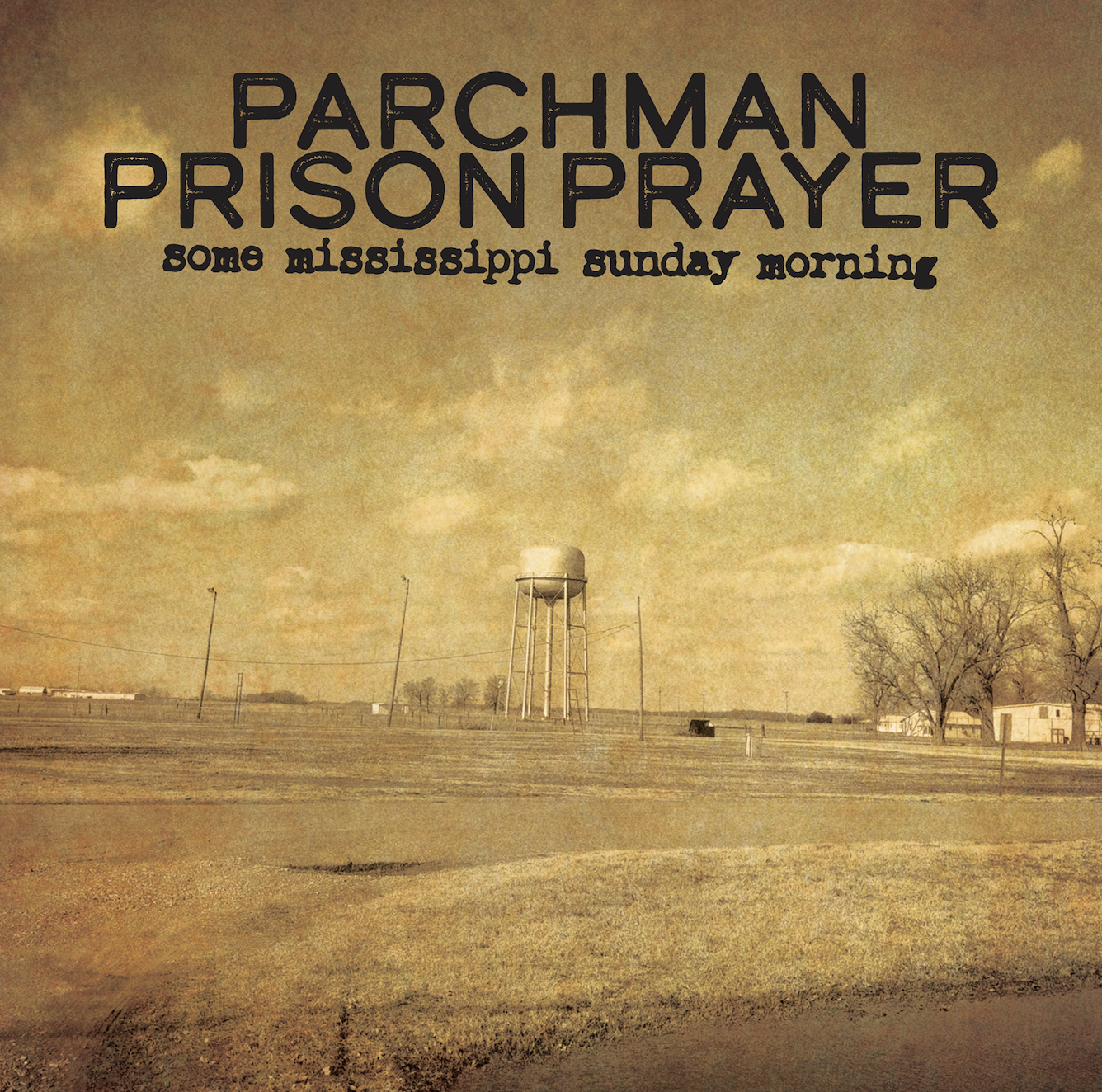
‘Parchman Prison Prayer – Some Mississippi Sunday Morning’
(Glitterbeat Records) 15th September 2023
Back in the state penitentiary system, the producer, author and violence prevention expert Ian Brennan finds the common ground once more with another cast of under-represented voices. Eight years on from his applauded, Grammy nominated Zomba Prison Project, Brennan, thousands of miles away from that Malawi maximum-security facility in the deep, deep South of America, surprises us with an incredible raw and “uncloyed” (one of Brennan’s best coined interpretations of his production and craft) set of performances of redemption and spiritual conversion.
On the surface, what connects that Zomba experience and this Sunday service communal at the infamous Parchman Prison in the Mississippi Delta is less a somber woe me sense of bitterness at incarceration, but a documentation of endurance and spirit. In fact, the inmates of Parchman seem, or the individuals put on tape and prosperity, to face up to their crimes, misdeeds; a self-realisation you could say. Most of this is down to finding religion; in this setting, and with the history, it’s Christianity – although no actual denomination is mentioned, its fairly obvious we’re talking the Baptismal, Evangelical kind that fires up the soul and glorious magic of Gospel music in the Black communities of America. In many ways, with suspicion and well-founded doubt, this paean, celebration of God and Jesus is routinely sniffed at or dismissed; the premise of salvation mocked even, and constantly skewered to certain groups, individuals own selfish purposes. Musically, this tradition has undeniably given birth to some of the greatest sounds and voices in the American music cannon; a sanctuary to find understanding and guidance in the face of oppression and racism. It’s difficult for many of us to understand faith, but there’s no way you can’t be moved by Arthea, the Staple Family and Sam Cooke (to name just a few of those hot-housed in the church). And although we’re not told of their crimes, their sentences (remember this is a prison that includes both a men’s and women’s death row), you can’t help but be moved by the inmates on this testament to spiritual salvation.
For some context, Parchman squats across 28sq miles of unconventional farm-like enclosures near to the uninhabitable swamps of the Delta, but also within shouting distance of the Blues map of iconic landmarks and civil rights flashpoints. In the former camp, the birthplace of Muddy Waters, Ike Turner and Sam Cooke (in nearby Clarksdale), and the place where Bessie Smith breathed her last and junction where Robert Johnson signed over his soul to the Devil. In a nutshell, the very birthplace of Blues as we know it. And if we go even further back, the conjuncture of at least two First Nation routes across the South. In the latter camp, Parchman is a “hop” and “skip” away from the gruesome, evil racist torture and murder (eventually lynched) of Emmett Till in 1955. That’s some psychogeography right there.

PHOTO CREDIT: Marilena Umuhoza Delli
The inmate population of the prison is mixed, with racial tensions resulting in some forms of segregation. Statistics wise, its ranked as one of the worst prisons for mortality rates and rioting. Improved, depending on who you listen to or read (Jay-Z was moved and enraged enough to back and file a class action suit against the “barbaric conditions” of this prison not all that long ago), Parchman was once run more or less like a private fiefdom, with prisoners routinely worked to near death; the Black inmates picking cotton, back in servitude and chains as if emancipation had never happened. This was Jim Crow country after all. A bleak environment to put it mildly, it formed the backdrop to Bukka White’s (one in a long line of Bluesman, Rock ‘n’ Rollers, Bluegrass and Country luminaries that spent time there) forewarned ‘Parchman Farm Blues’, to Faulkner’s The Mansion (christened with forebode by the author as “destination doom”) and Jesmyn Ward’s award-winning 2017 novel Sing, Unburied, Song. They based prisons in both Cool Hand Luke and O Brother Where Art Thou? on it too.
Whilst Brennan, as part of his ongoing acclaimed series of “in-situ” recordings around the world (mostly in some of the globe’s most dangerous and remote locations) with his filmmaker, photographer and activist partner Marilena Umuhoza Delli, hones in on just one such scandal hit prison, he’s shining a light on America’s entire prison system; its laws, sentencing and the disparity in incarcerating those from the Black population. Funds from bandcamp pre-sales for example went towards the NAACP Legal Defense Fund.
In answer to the intergenerational strife of racism in America, the voices on this album turn to the Gospels; guided by the prison’s chaplains, although services are in some cases segregated: but not here.
It took three years of bureaucracy to unlock the cell doors, and much apprehension, but Brennan’s skills in diplomacy eased the way for candid, pure performances; both a capella style and with the accompaniment of instruments from the prison chapel. And as ever, with minimal fuss the he captures some stark epiphanies, afflatus revelations and paeans from a cast of both partially identified and anonymous prisoners. The oldest of which, the seventy-three year old former rock ‘n’ roll singer turn chaplain, C.S. Deloch, who offers one of the most poignant quotes: “You’ve got to get out of prison while you’re still in prison”. That former life comes in handy as Deloch leads the congregation on the Muscle Shoals gospel (via Jamaica) ached ‘Jesus, Every Day Your Name Is The Same’, and the final group effort, hallelujah clapping with Fats Weller piano jangling, ‘Lay My Burden Down’.
Past lives for the most part are kept secret, but as you listen to those unfiltered (ok, the odd bit of echo here and there) humbling songs it becomes apparent that there isn’t any distinction or difference in quality to those professionals on the outside. The twenty-nine year old L. Stevenson, stripped back to nothing, has such a soulful reverence on ‘Open The Eyes Of My Heart, Lord’. And on the handclapped, iterated ‘I Gotta Run’, he performs a brilliant doo-wop-esque turn, complete with lower frog-like register bass. One anonymous participant sounds like John Legend, on the beautifully yearned love paean, ‘I Give Myself Away, So You Can Use Me’ – a real highlight that if buried on any compilation would have been assumed to be from some pianist-singer R&B troubadour of repute.
You could hear L. Brown’s ‘Hosanna’ litany being used as a hip-hop sample by Jay Z or the dodgier Kayne West – who’s had is own flirtations with the good book and gospel music.
Surprisingly, the only actual proto-rap inclusion on this album is the Robinson and A. Warren collaboration ‘Locked Down, Mama Prays For Me’, which combines a sympathetic soulful hum with a spoken word walk through of shame. There are rumminations on the hurt caused, and the machismo that comes with the territory, plus a special heartfelt apology to his mum.
PHOTO CREDIT: Marilena Umuhoza Delli
The sixty-three year old N. Petersen wades in the waters on the Holy Land baptismal Galilee, transferred to the Mississippi bayou, ‘Step Into The Water’, whilst A. Warren’s second appearance, ‘Falling In Love With Jesus Was The Best Thing I’ve Ever Done’, has a real Willis Earl Beal vibe. The most unusual recording is by the sixty-year old M. Palmer, who’s deeper than deep throaty baritone is almost mystical on ‘Solve My Mind’; especially with what appears to be a reverberated otherworldly drone accompaniment.
There’s music, song and litany that would be recognizable to inmates from the turn of the last century, whilst others, tap right into the modern age. The Gospel’s message runs deep in the Southern realms, and encouragingly seems to motivate even those with little hope of being released. Hard times are softened by belief and redemption on a revelatory production. Returning to America after a myriad of recordings throughout the world’s past and present war zones, scenes of genocide and remote fabled communities, Brennan finds just as much trauma and the need for representation back home.
Hi, my name is Dominic Valvona and I’m the Founder of the music/culture blog monolithcocktail.com For the last ten years I’ve featured and supported music, musicians and labels we love across genres from around the world that we think you’ll want to know about. No content on the site is paid for or sponsored and we only feature artists we have genuine respect for /love. If you enjoy our reviews (and we often write long, thoughtful ones), found a new artist you admire or if we have featured you or artists you represent and would like to buy us a coffee at https://ko-fi.com/monolithcocktail to say cheers for spreading the word, then that would be much appreciated.
Our Daily Bread 567: The Oldest Voice In The World (Azerbaijan) ‘Thank You For Bringing Me Back To The Sky’
April 3, 2023
ALBUM PURVIEW SPECIAL
Dominic Valvona

CREDIT: Marilena Umuhoza Delli
The Oldest Voice In The World (Azerbaijan) ‘Thank You For Bringing Me Back To The Sky’
(Six Degrees Records) 6th April 2023
There can be few remote corners of this well-traversed globe left unrecorded, yet the celebrated polymath and renowned in-situ recordist Ian Brennan and his wife, but most importantly partner on these sonic expeditions, the filmmaker and photographer Marilena Umuhoza Delli, have found one such spot on the Azerbaijan border with Iran. So remote in fact, almost untouched by modernity and technology, that the language spoken in this mountainous village is almost unintelligible to even those living in the valley below.
Settled by the atavistic Talysh people of this region, this outlier of naturalistic and hardened living is an ancient place with challenging origins shrouded in thousands of years of obscurity. Perhaps ancestors of the old Iranian tribe the Cadusii, this unique ethnic community, clinging and camped out on the southern mountains of Azerbaijan, is famous for its longevity; said to be the home of the oldest ever recorded human, at (an allegedly) 168 years old! But despite that remoteness, the ever encroaching dreaded Covid-19 pandemic found its way there, and by the time Brennan and Delli travelled to this outcrop, the number of centenarians had diminished greatly. As if the pandemic wasn’t tragic enough, our sonic explorers found that the living conditions for these elders were extremely harsh: no indoors plumbing, forced to sleep on floorboard mattresses. And so this project, just the latest in at least fifty recordings by Brennan, became an antidote of a kind to anti-ageism.
As dangerous places, states in flux and aftermaths of genocide go, compared to many of Brennan’s tour-of-duties (Rwanda, Vietnam, Cambodia, Pakistan etc.) Azerbaijan, on the surface, seems a far less hostile safer bet. However, that Southern Caucus region’s decades old fight with its western neighbor Armenia over the complicated and disputed landlocked Nagorno-Karabakh region (the Armenian’s refer to it instead as the Artsakh) reared its ugly head again in 2020; only brought to a conclusion (of a sort) by a trilateral agreement overseen by Russia in November of that year. In a window of opportunity Brennan and Delli made the trek in late 2021. Just months later, Russia would of course invade Ukraine.

CREDIT: Marilena Umuhoza Delli
What they both discovered and recorded for posterity is a most incredible document of elderly sagacious voices very much alive, yet all to aware of their own mortality. Surviving COVID but left to mourn those that didn’t, this should be a lamentable, saddening proposition. Far from prying in on a collective trauma, with a number of the performers obviously distraught and in a state of anguish at times, Brennan’s hand was indeed kissed by a long-since retired shepherd, who repeated his gratitude (giving the album its title in the process): “Thank you for bringing me back to the sky”.
This album could, like so many previous recordings in this vain, be said to act as a sort of therapy; a release. It certainly isn’t in the spirit of Lomax, saving old voices before they disappear; an ethnomusicologist exercise in Western preservation. As a subtle augmentation of elements are added, with some vocal performances, aches and talks further transported by a number of past Brennan collaborators (Kronos Quartet, Tinariwen, The Good Ones and Yoka Honda) on the bonus tracks.
For those new to Brennan’s hands-off approach, the set-up is as un-intrusive and natural as possible. The surrounding environment isn’t just welcome to bleed into each recording but invited. This translates into the creaking of a door; the crackled flames of a furnace; and in the case of the afflatus-touched ‘Lullaby’, what sounds like a rhythmic trudge through water.
Whilst most expressions, deliveries of earthy travail and more heavenly thanksgiving are pretty stripped back, soft but effective uses of mirrored and echoed reversals are used on the warped piano yearned ‘My Mother Lived To Be 110’, and the more avant-garde piano and spoken ‘The Young Men Are Sent To Die In Rich Man’s War’. This turns some recordings into portals to other worlds, others, like something from Zardoz, or even psychedelic and otherworldly.
Voices are effected on the reverberated, forewarned ‘Son, Don’t Go There, The Road Is Dangerous’, turning a couple of different vocals into something both giddy and esoteric. I haven’t asked or searched it out so do forgive my ignorance, but the poetic ‘You Are A Flower Yet To Grow’ sounds like it has some kind of accompanying bassoon blowing away on it; and ‘Pepe, Pepe (Donkey Song)’ features what I can only describe as a sort of primitivism jazz horn. There’s hand drums being respectively rattled and hit on the longer, lyrically melodious dance, ‘Bulbul (Nightingale)’ and the more Persian sounding ‘Screaming From The Mountain Top For My Son’.

CREDIT: Marilena Umuhoza Delli
Amongst the often more distressed offerings and terms of abandonment, wise advice to longevity comes in the form of the trolley-full-rattled-crockery (or so it sounds) accompanied heartfelt ‘The Secret To Life: I Was Loved’, and the acoustic guitar wobbled and bandy-stringed, talked ‘The Secret To life: I Worked Hard And Ate Butter’ – dairy lovers like me take comfort; although my work rate of honest craft and toil will have to be increased considerably if that’s the case to long life.
A quartet, as I mentioned earlier, of collaborative transformations have been added as “bonus” material. All those involved have at some point crossed congruous and valuable paths with Brennan in the field or studio, the first being the Kronos Quartet who lift a sorrowful Talysh mountain border voice with a treatment of neoclassical held and bowed strings and gravitas. Yuka Honda, meanwhile, evokes Die Wilde Jagd and The Pyrolator on the sophisticated electronic and minimalist Techno affected ‘Prayer Overheard’.
One of Mali’s Tuareg luminaries of desert rock and blues, the much lauded Tinariwen, cast a near Medieval and Oriental dream spell on ‘Ghosts’, and the Rwandan farming bluesman, The Good Ones, provide an elasticated, stringy and stripped backing for the female-voiced ‘A Lifetime Still’ – complete with a light chorus of birds.
Loss, bereavement, the wise observations of those uncomplicated voices, this latest recording from Brennan and Dilli (who records each project through her lens) encourages a dialogue and offers a unique angle on ageing, or rather, the abandonment and prejudice of growing old. In a time in which we’ve grown to distrust, cast off and denigrate old age in the pursuit of eternal youth (cosmetically and through the filters of Instagram), the old are looked on with embarrassment and as a burden; their deaths on mass, as they were shunted out of hospitals into care homes to spread COVID, until recently, seen as just a unfortunate result of the pandemic. We’ve come to see ageing as a reminder of our own unwanted mortality. As I’ve said, those voices come alive in the presence of Brennan, cutting through the pretence and bullshit with the most emotionally profound wisdom and anguish of the times. With such a skilled touch, Brennan loses none of the atavistic traditions yet transforms his hosts’ song into the “now” with a near-psychedelic, otherworldly and spiritual production of folk and the avant-garde. This is quite unlike anything else you’ve heard.
Hi, my name is Dominic Valvona and I’m the Founder of the music/culture blog monolithcocktail.com For the last ten years I’ve featured and supported music, musicians and labels we love across genres from around the world that we think you’ll want to know about. No content on the site is paid for or sponsored and we only feature artists we have genuine respect for /love. If you enjoy our reviews (and we often write long, thoughtful ones), found a new artist you admire or if we have featured you or artists you represent and would like to buy us a coffee at https://ko-fi.com/monolithcocktail to say cheers for spreading the word, then that would be much appreciated.
Our Daily Bread 537: Yanna Momina ‘Afar Ways’
August 16, 2022
ALBUM REVIEW
Dominic Valvona
Images: Marilena Umuhoza Delli
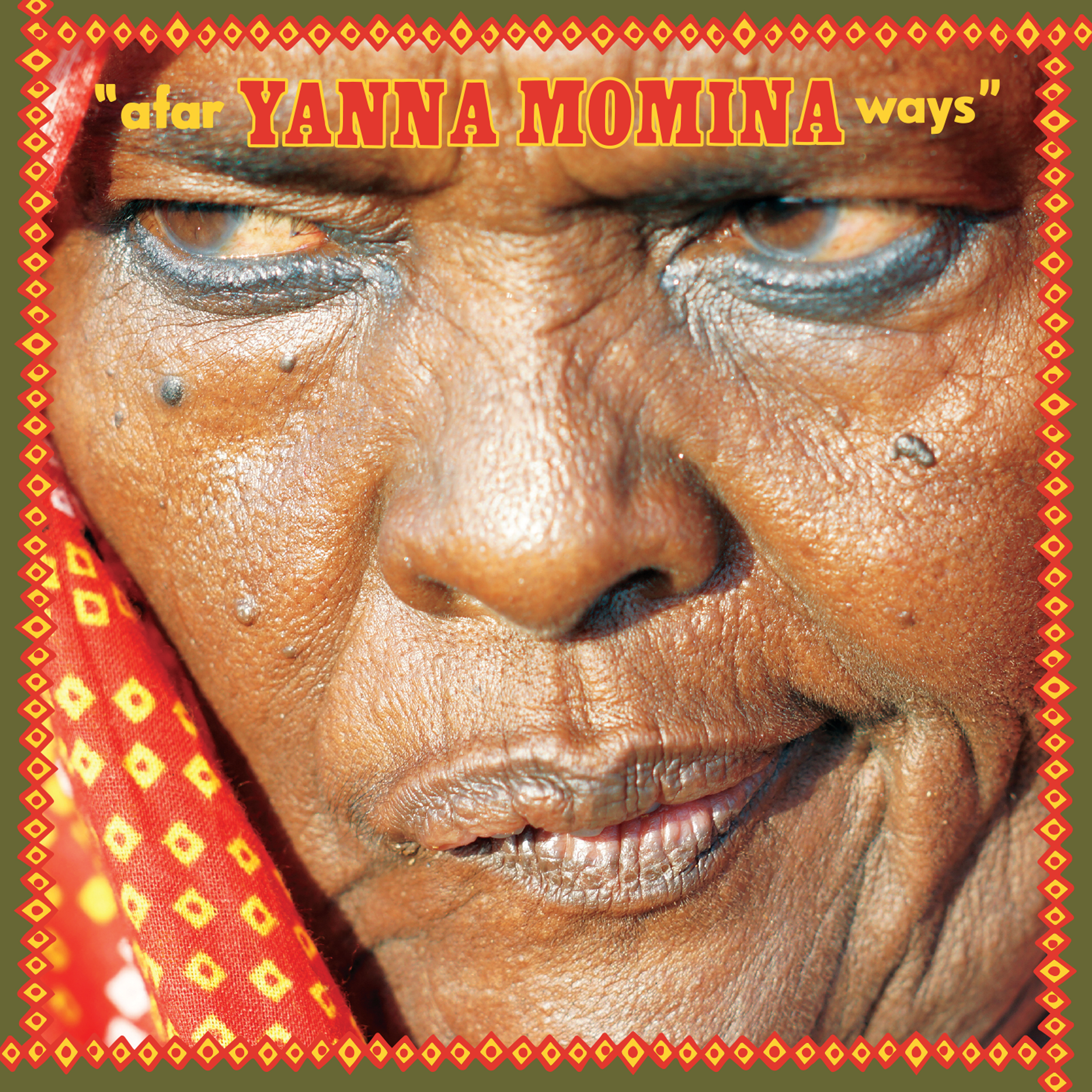
Yanna Momina ‘Afar Ways’
(Glitterbeat Records) 26th August 2022
Crisscrossing a number of the world’s most dangerous and often remote locations for the Glitterbeat Records label since 2014, the renowned Grammy Award winning polymath-producer Ian Brennan has repeatedly remained hidden as his subjects open up and unload a lifetime of trauma, or, candidly lay bare some of the most stripped, free of artifice performances you’ll ever likely to hear.
For many of the participants in this near decade running Hidden Musics series have rarely, if ever, been recorded before Brennan turned up. Many of them have held on for decades to the fall-out and legacy of war (in the case of this series’ inaugural volume, the Hanoi Masters War Is A Wound, Peace Is A Scar), genocide (the Khmer Rouge survivors They Will Kill You, If You Cry) and persecution (Abatwa – The Pygmy ‘Why Did We Stop Growing Tall?); their voices, as the title encapsulates, remaining hidden, neglected.
But there’s also been a theme of preservation too; capturing such local legends as the Pakistan spiritual doyen Usted Saami, the last one of his particular musical style left. As it stands, the label has released three volumes of that sagacious figure’s music.
The highly prolific Brennan has probably appeared more times than anyone else on the Monolith Cocktail. I even interviewed him a number of years back, on the occasion of not just another volume in the Hidden Musics series but his book of the time, How Music Dies (or Lives). Oh yes, amongst an enviable CV of skillsets, he also writes incredibly well: as the accompanying liner notes testify. His anecdotes and art of setting a scene always prove entertaining and informative. No one quite sums up the ridiculous dangers of recording in some of the worlds less than inviting environments like Brennan does. But he doesn’t do it alone, his partner, the renowned photographer and activist Marilena Umuhoza Delli captures a visual documentation of each recording project: a complete package.

And so it’s always a treat, an eye and ears opener to hear about the latest travelogue-rich production. On the occasion of the tenth release in this cannon, Brennan lands down in Djibouti, on the horn of Africa, to capture the evocative voice and music of the enigmatic Yanna Momina and ‘rotating cast of friends’, who passed around a couple of guitars and the slapped, struck percussive Calabash as the only means of accompaniment. Our producer’s usual hands-off approach allows this 76-year-old star to let rip; unleashing an incredible, unique vibrato trill and excitable expressive vocal that resonates loudly and deeply. There’s also a playful improvised outburst of primal-rap to enjoy on the animal-cooee hollered ‘The Donkey Doesn’t Listen’; the only backing on this occasion a wobbled human beatbox and bass thump. Yet a real groove is struck when it gets going, a sort of stripped ESG meets Funkadelic in the surroundings of ‘Aunt’ Momina’s stilted hut.
A member of the Afar people, an atavistic ancestry that spreads across the south coast of Eritrea, Northern Ethiopia and of course Djibouti (early followers of the prophet, practicing the Sunni strand of the faith), Momina is a rarity, a woman from a clan-based people who writes her own songs. This honoured artist – though not in the myopic, over-celebrated way in which we in the West would recognise the word – also plays the two-stringed ‘shingle’, an instrument played with nails. This is complimented – if you can call it that – by an improvised version of the maracas: basically a matchbox. But you would never guess it.
Recorded in a thatched hut, with the surrounding waters threatening to wash up into the ad-hoc studio, the outdoor sounds can’t help but bleed into the recordings: a distant crowing of birds, the fluctuation of creaks and a lapping tide. Intentionally this is an all-encompassing production that discards nothing and invites in the elements, the un-rehearsed, all to spark spontaneity and the magical moments that you’d never get if they were forced. It’s what Brennan is known for, a relaxed encouraging setup that proves free of the artificial and laboured.
The results are more akin to eavesdropping than a recording session, a once in a lifetime performance. And so nothing on this album feels pushed, composed or directed. Songs like the dancing ‘Honey Bee’ seem to just burst out of nowhere – a more full-on rhythmic joy of the Spanish Sahara bordering on the Balearic; an Arabian Gypsy Kings turn of loose and bendy-stringed brilliance.
This method also lends itself to coaxing out some of the most special if venerable performance, the heartbroken a cappella ‘My Family Won’t Let Me Marry The Man I Love (I Am Forced To Wed My Uncle)’ is Momina at her most intimate and lamentably fragile.
With a murmured hum turn loudly expressed vocal, Momina’s opening evocation ‘Every One Knows I Have Taken A Young Lover’ seems to stir up something both mystical and magical in its performer: a glow even. With a repeated thrummed strummed note and a barely rhythmic movement of percussion we’re transported to some very removed vision of deep-fried Southern blues. There’s more of that feel on the slap-y clap-y ‘Ahiyole’, this time though, of the Tuareg variety. And the beaten hand drummed ‘For My Husband’ has an air of voodoo Orleans about it.
Momina’s voice is however absent on the Andre Fanazara lead, ‘Heya’ (or “welcome”); another Spanish guitar flavoured soulful turn that features a collective male chorus of soothed, inviting harmonies.
Despite her years, Momina sounds full of beans; excited, fun and even on the plaintive performances, so alive. This isn’t a dead music, a version of the ethnographical, but a life affirming call of spontaneity in a world suffocated by over-produced pap and commercialism. Just when you think you’ve heard everything, or become somehow jaded by it all, Brennan facilitates something extraordinary and astounding. Cynicism died as soon as the first notes and that voice struck; this isn’t an exercise nor competition to see who can find the most obscure sounds, but a celebration and signal that there is a whole lot of great performers, musical performances that exist if you’d only look.
Hi, my name is Dominic Valvona and I’m the Founder of the music/culture blog monolithcocktail.com For the last ten years I’ve featured and supported music, musicians and labels we love across genres from around the world that we think you’ll want to know about. No content on the site is paid for or sponsored and we only feature artists we have genuine respect for /love. If you enjoy our reviews (and we often write long, thoughtful ones), found a new artist you admire or if we have featured you or artists you represent and would like to buy us a coffee at https://ko-fi.com/monolithcocktail to say cheers for spreading the word, then that would be much appreciated.
ALBUM/Dominic Valonva
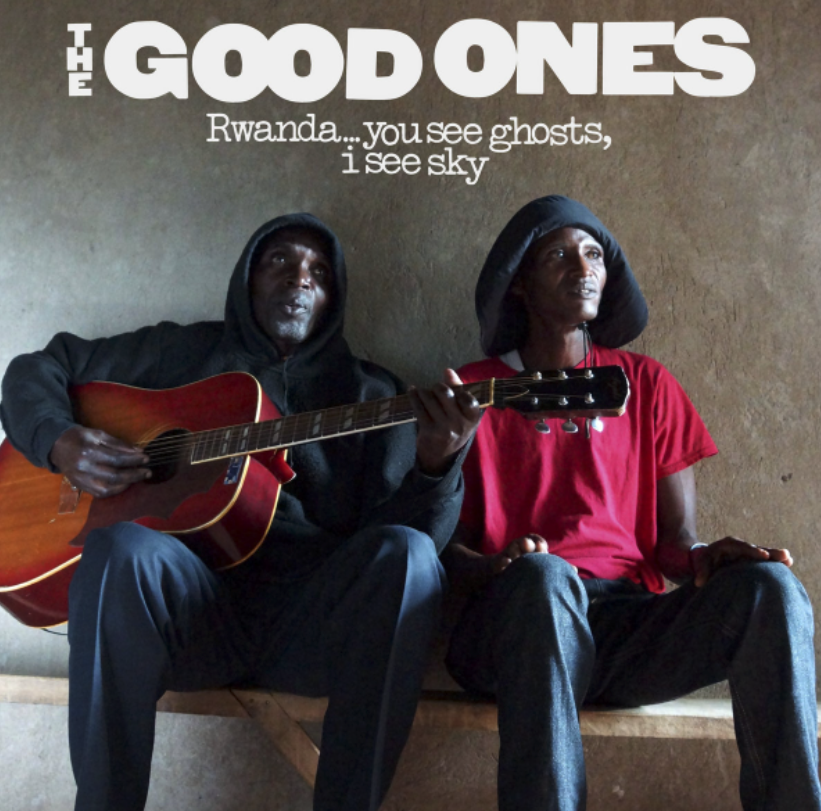
The Good Ones ‘Rwanda…You See Ghosts, I See Sky’
(Six Degrees Records) 8th April 2022
Once more returning to the rural farmlands of a genocide scarred Rwanda, producer polymath Ian Brennan presses the record button on another in-situ, free-of-artifice and superficial production. The fourth such album of unimaginable stirred grief, heartache and reconciliation from the country’s nearest relation to American Bluegrass, The Good Ones latest songbook arrives in time to mark the 28th anniversary of the Rwanda genocide in the mid-90s; a 100 days of massacre, the fastest ever recorded of its kind in the 20th century with the true figures disputed but believed to be around the million mark.
Triggered, its argued even to this day, by a history of tribal warfare, insurrection, civil war, foreign interventions and the assassination of the then president Juvénal Habyarimana, the events of that three month period in 1994 saw a sudden death cull, ethnic cleansing of Rwanda’s Tutsi minority at the hands of the majority Hutus: though even moderate Hutus, along with Rwanda’s third main tribe the Twa were also far from safe, with many caught-up, trapped in the ensuing bloodbath.
Barbaric beyond any semblance to humanity, victims were brutalized, raped, cut to ribbons or herded together in buildings, churches, and schools and burnt alive. Unlike so many previous genocides however, most of those victims were murdered by hand with machetes, rudimental tools, weapons and gallons of Kerosene. No family was left untouched, with both The Good Ones dual roots vocalist set-up of Adrien Kazigira and Janvier Havugimana both losing loved ones, siblings and relatives.
On the remote hilltop farm where he was born and still continues to work, but record too, Adrien managed to hide and survive. But Janvier lost his older brother, a loss felt considerably by the whole trio who looked up to him as an early musical mentor. As a healing balm all three members, including the as yet unmentioned Javan Mahoro, all represent one of Rwanda’s main three tribes: Hutus, Tutsi and Twa. And so bring each culture together in an act of union, therapy and as a voice with which to reconcile the past.
Instantly drawn to the band during a research trip in 2009, Ian recorded their debut international album and the subsequent trio of records that followed: 2015’s Rwanda Is My Home, 2019’s Rwanda, You Should Be Loved, and now in 2022, Rwanda…You See Ghosts, I See Sky. Ian’s wife and longtime partner on both this fourteen-year recording relationship and countless other worldly projects, the filmmaker, photographer, activist, writer Marilena Umuhoza Delli was the one to instigate this Rwanda field trip. Marilena’s mother herself ended up immigrating for refuge to Italy, her entire family wiped out..
In between numerous productions in dangerous and traumatized spots (from Mali to Cambodia and Kosovo) the partners recorded the fourth volume of Glitterbeat Records Hidden Musics series in Rwanda (back in 2017); bringing the incredible stirring songs, performances of the country’s Twa people (or pygmy as they’re unfortunately known; bullied and treated with a certain suspicion by others) to a wider audience.
Back again on Adrien’s farm and haven, this quintet was reunited to record a thirty-song session. Already receiving accolades aplenty in the West, working with an enviable array of admirers, from Wilco to TV On The Radio, Gugazi, Sleater-Kinney and MBV, it’s extraordinary to think that these earthy harmonic songs were produced in an environment without electricity; music that’s made from the most rudimental of borrowed farm tools in some cases.
The true spirit of diy, raw emotion, The Good Ones speak of both love and the everyday concerns facing a population stunned and dealing with the effects of not only that genocide but the ongoing struggle to survive economically. The album begins on a reflective tone of disarming hope however, with the tinny scrappy cutlery drawer percussive and rustic natty-picking bluegrass leaning, ‘The Darkness Has Passed’. From the outset those beautiful of-the-soil sagacious and honest vocals and harmonies prove moving and powerful. Whilst songs like the Afro-Cuban and bluesy bandy turn ‘Columbia River Flowers’ sound positively romantic; a sentiment that also permeates the almost childlike abandon of ‘Happiness Is When We Are Together’, which sounds not too dissimilar to a sort of African version of Beefheart or Zappa. ‘Berta, Please Sing A Love Song For Me’ is another lovely romantic smooch, which features the Orlando Julius like serenades of the noted NYC saxophonist Daniel Carter.
Often, the outdoors can be heard as an integral, fourth band member, with the farmyard, cowshed gates struck like a percussive metal rhythm, as on the poetically romantic ‘Beloved (As Clouds Move West, We Think Of You)’.
Considering the themes of the last three albums, the fourth is said to be the group’s most personal yet. ‘My Son Has Special Needs, But There’s Nowhere For Him To Go’ has a more edgy tone, featuring a sort of post-punk dissonant electric guitar – almost Stooges like – and relates to Janvier’s struggle to get educational assistance for his son who has special needs. ‘My Brother, Your Murder Has Left A Hole In Our Hearts (We Hope We Can Meet Again One Day)’ makes reference to those lost in the genocide, and in this most personal of cases, a sibling but also musical mentor. Again, the sound of the rural escape can be heard, its chorus of chirping birds mingling with a banged tambourine.
Existing almost in its own musical category, its own world, The Good Ones play real raw but also melodic, rhythmic roots music that sways, resonates with vague threads of folk, bluegrass, rock, punk and even a touch of the Baroque. Ian, a man with an enviable catalogue of productions behind him, from every region of the globe, considers Adrien ‘one of the greatest living roots writers in the world, in any language’. That’s some praise; one I’m willing to believe and repeat.
The Rwanda trio expand their sound and bolster their artistic merits to produce another essential album of honest graft, heartache and longing for better times on the most incredible of songbooks.
 Monolith Cocktail Blog