Perusual #012: The Singles, Tracks, Videos & Oddities Roundup: Ammar 808, Jon Hassell, Kamo Saxo, Itchy-O, Tony Price
June 16, 2020
New Music Of Interest Style Roundup/Dominic Valvona
The Perusal is my regular one-stop chance to catch up with the mounting pile of singles, EPs, mini-LPs, tracks, videos and oddities that threaten to overload the Monolith Cocktail’s inboxes each month. A right old mishmash of previews, reviews and informative inquiry, this weeks assortment includes Ammar 808, Jon Hassell, Itchy-O, Kamo Saxo and Tony Price.
Ammar 808 ‘Marivere Gati (featuring SUSHA )’
(Glitterbeat Records) Single/12th June 2020
“Except you, Divine mother, who else in this earth is to protect us ?
The ones who fall on your feet, giving up completely their ego,
you protect them, take care of them.
Meenakshi I believe in you.”
Dropping out of the nowhere, the latest trailblazing syncopation of transformed futuristic Pan-Maghreb languages, rhythms and ceremony from the leading producer Sofyann Ben Youssef expands the sonic horizons to collaborate with the Carnatic singer Susha.
Converging under Youssef’s most free spirited of electronic projects AMMAR 808, the signature propulsive TR-808 bass and warped effects of that alias meet with the alluring, buoyant spinning tabla driven devotional music of southern India, on the first single to be released from the forthcoming ‘Global Control / Invisible Invasion’ album. An ode to the goddess Meenakshi, who is an avatar of Parvati, the Hindu goddess of Fertility, love, and devotion, this hypnotizing throbbing fusion paves the way for an ever evolving and worldly sonic adventure.
Related from the Archives:
Ammar 808 ‘Maghreb United’ Album Review
Kamo Saxo ‘Koma Mate / Jagd (Feat. Jameszoo)’
(We Jazz Records) Single/12th June 2020
With a psychosis of breakbeats and prowling, jostling conscious jazz – the kind that channels the likes of such titans of the form as Sun Ra, Pharoah Sanders, Lloyd Miller, Leon Thomas and Albert Ayler – the exciting quintet Koma Saxo emerged last year as a new vehicle for a wealth of adroit European contemporary jazz musicians. Assembled by the Berlin-based Swedish bassist/producer Petter Eldh under the umbrella of the brilliant Finnish Jazz label We Jazz, the horn heavy ensemble includes many of the label’s stars, including Jonas Kullhammar, Mikko Innanen, and Otis Sandsjö on brass, and Christian Lillinger on the drums. The group made their performance debut at the label’s own festival in 2019, followed by a double A side single, the exotic flight of fantasy entitled ‘Part Koma/Fanfare For Komarum’, and a self-titled long player.
The latest double A-side single to drop from the ensemble refashions the conscious jazz swinging, double-bass tripping ‘Koma Tema’ performance from that debut album. Reincarnated as ‘Koma Mate’, the beats are dialed up, the skipping even more tripping, and the horns serenading. A sort of breakbeat abstraction with signs of melodious drifting, and cooing diaphanous spirits it doesn’t so much improve on the original as take it in a oft-kilter direction.
On the “flip” side, the Dutch producer Jameszoo is let loose to deconstruct and rebuild the Koma Saxo sound on the flexed and untethered tooting horn ‘Jagd’. Tenor sax floats and meanders over another tripped-up fluctuating groove to push the jazz group towards a hypnotized and fractured dancefloor.
Related from the Archives:
Koma Saxo ‘Port Koma/Fanfare For Komarum’ Single Review
Itchy-O ‘Milk Moon Rite’
(Commissioned by Onassis Foundation as part of the ENTER series) Performance/3rd June 2020
First aired at the beginning of June but recorded on May 7th, as the moon loomed large orbiting at its closest point to Earth, the grand gesturing esoteric Denver collective of Itchy-O executed its own “Milk Moon Rite” performance.
As the ensemble explain: “Earth’s only natural satellite has orbited our sky as a massive emblem for countless religious worshippers across the eons. Known to the Greeks as Selene, the Hebrew Yarcah, and the Hindu lunar god Chandra; Egyptians also associated the moon with Isis, to name just a few appearances across mythos. It personifies the mysteries of life and death, both scientifically and spiritually.”
The 13-minute film is part of ENTER, a series of new works commissioned from artists across the globe, created in 120 hours or less, and drawing on experiences and transformations faced through the COVID-19 pandemic.
“In a call to the gods for balance between opposites”, members of the drum driven art ensemble laid down a squalling friction of extemporized industrial ceremony and repetitive taiko beatings and hammerings: a vision that evokes Alejandro Jodorowsky conducting a unholy communion between Faust and Sunn O))) in a landscape in which the chthonian meets satanic. Settle down to the unsettling my children.
Itchy-O have in the past performed with David Byrne & St. Vincent’s band, shared the stage with experimental legends Devo, and anchored the world-renowned Dark Mofo Festival in Tasmania. Other performances include opening for Beats Antique, Melvins, and headlining Austin-based Fantastic Fest three years in a row.
Jon Hassell ‘Fearless’
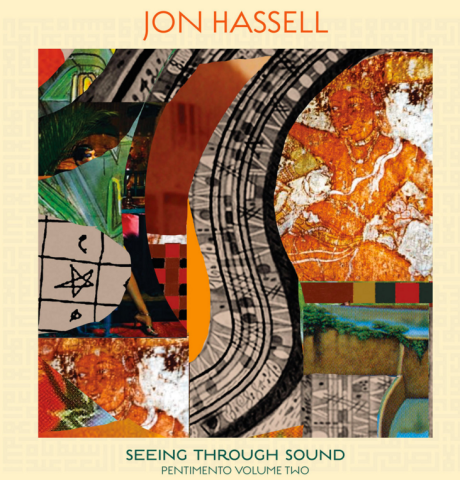
Taken from the upcoming new album Seeing Through Sound Pentimento Volume Two/24th July 2020
Progenitor of the borderless and amorphous evocatively traced, hazy dream experiments, John Hassell’s transmogrified nuzzling trumpet and sonic soundscape textures have inspired a generation of artists over the last forty odd years. The composer and trumpet player’s pathway, from adroit pupil of Stockhausen to seminal work on Terry Riley’s harangued piano guided In C, encompassed an polygenesis of influences: a lineage that draws inspiration from avant-garde progenitors like La Monte Young, and travels far and wide, absorbing sounds from Java to Burundi. Hassell attempted a reification of what he would term the “fourth world”; a style that reimagined an amorphous hybrid of cultures; a merger between the traditions and spiritualism of the third world (conceived during the “cold war” to denote any country that fell outside the industrious wealthier West, and not under the control of the Soviet Empire) and the technology of the first.
Though an independent artist pioneer in his own right, his name has become synonymous with that of Brian Eno’s, the pair working together on the first ambient traversing volume in Hassell’s Possible Musics series of iconic albums, in the late 70s.
Though he has continued to produce futuristic amorphous peregrinations, his back catalogue has in more recent years been rediscovered through various reissues. As a companion piece to the first Pentimento series of albums, 2018’s Listening To Pictures suite, a second volume is being released later next month. Pentimento is defined as the “reappearance in a painting of earlier images, forms, or strokes that have been changed and painted over”; a process, a layering of coats that is reflected musically on this upcoming experimental vision, Seeing Through Sound. From that album, the foggy-headed mysterious lurking, fanning rayed, early Can metronomic ‘Fearless’.
Related from the Archives:
Jon Hassell/Brian Eno ‘Fourth World Vol.1: Possible Musics’ Album Review
Jon Hassell ‘Dream Theory In Malaya’ Album Review
Jon Hassell/Farafina ‘Flash Of The Spirit’ Album Review
Tony Price ‘Interview’
Track preview from the upcoming LP Interview/Discount/17th July 2020
Abstracted No Wave meets dream fuzzy sparkled organ jazz on the latest suffused nuzzled trip from the multitasking Toronto visionary Tony Price. The New York based producer, musician, and songwriter makes his debut on the Telephone Explosion hub with a new album; a couplet of traversed vaporous jazzy meditations that seem to have been recorded from behind a cozy if mysterious fog. Maybe not a veiled fog, but as the first track from this side-long duo of tracks, ‘Interview’, is described in the accompanying blurb “a meditative exploration of the tile-tunneled labyrinths of NYC’s subway system at night.” You could say a field recording of the most amorphous group of subway jazz buskers emanating thoughts and musings into the nocturnal ether.
Leader on this dial tone hazed peregrination, Price lends his fingertips to an assortment of eye-candy keyboards and synthesizers (Fender Rhodes, Hohner D6 Clavinet, Arp 2600, SP1200, Prophet 5), sketches out gossamer guitar strands and a repetitive lurking bass and also programs the drums. Flanking him on this distant recording are some experimentalist heavyweights: Giosue Rosati on fretless electric bass, blog stalwart and friend Andy Haas on signature untethered saxophones & effects, and Dan Pencer on bass clarinet.
The imbued fleeted spark of modal jazz, electro-funk and narcotic non-linearity of 1970s minimalism style LP is framed as “an electrifying collision of fractured jazz- concréte and combustible downtown funk that crushes the entire continuum between minimalism and maximalism into a hypnotic wreck of metropolitan sound matter.” In practice, to these ears, it sounds like a communion of the Cosmic Range and Zacht Automaat. A winner in my book.
Price has lent his expertise to a wide range of critically acclaimed records on labels like 4AD, DFA, Slumberland and Burger Records amongst many others. In 2017 he founded his label and creative services unit Maximum Exposure, which quickly became an in-demand entity, providing production and design expertise to the likes of Capitol Records, Pat McGrath Labs, Vogue, SSENSE, 4AD, and Night School Recordings amongst others. The new album will be released next month, 17th July 2020, but you can now sneak a listen of the A-Side.
Hi, my name is Dominic Valvona and I’m the Founder of the music/culture blog monolithcocktail.com For the last ten years I’ve featured and supported music, musicians and labels we love across genres from around the world that we think you’ll want to know about. No content on the site is paid for or sponsored and we only feature artists we have genuine respect for /love. If you enjoy our reviews (and we often write long, thoughtful ones), found a new artist you admire or if we have featured you or artists you represent and would like to buy us a coffee at https://ko-fi.com/monolithcocktail to say cheers for spreading the word, then that would be much appreciated.
Tickling Our Fancy 087: Kahil El’ Zabar & David Murray, Above The Tree, Scarlet’s Well, Etienne de la Sayette…
June 10, 2020
REVIEWS ROUNDUP/Dominic Valvona
As of writing this latest roundup of new music recommendations and curios, the lockdown restrictions that many of us in the UK have been under are erratically and confusingly being lifted (to some degree). Still, anxiety and uncertainty reigns, as the music industry (I’m thinking more the venues, small scale enterprises, self-made and the diy) is left pretty much high and dry with little in the way of finical help, or even solutions to the inevitable problems of a post-Covid, isolationist society.
Live music being the biggest casualty of this lockdown, it is indeed pretty worrying that one of the only revenue streams left open to artists to make any real money from is now so endangered. As we have all seen for ourselves or heard from an abundance of artists and labels, the so-called savior of streaming has been anything but beneficial for the majority of artists. And can hardly count as revenue at all – unless you are Kanye West or Justin Bieber.
We will of course need time however to see how physical sales will fare; though I bet many out there have baulked at buying vinyl, CDs, anguishing over the spread of the virus. Records stores have been forced to close down and move online of course, which may also affect sales: the browser in particular will be affected, as will many of us who enjoyed not only looking for records but just the company and chat with the shop owner, the chance of coming across something by chance or being recommended something. Spontaneity has gone out the window in that respect.
With all that in mind, I ask you to do what you can in supporting new music and the artists featured in this roundup. You can of course purchase many on Bandcamp and similar sites.
As ever this selection is an eclectic gander at artists and bands from around the world, cosmos and beyond. Bringing us beautiful, evocative bluegrass rooted traverses, Kentuckian born and imbued Myles Cochran delivers a new subtly unveiling EP of ambient and guitar experiments, My Own Devices; sonic navigator Alex Norelli, under the Fierro Ex Machina nom de plume, conjures up an album of heavy electro-acoustic imaginings; and painter/musician Marco Bernacchia, aka Above The Tree, produces a vivid soundtrack of ambiguous folkloric and synthesized mystery on the new album King Above. In the Techno field of experimentation, the ever-prolific Sad Man is at it again with another album; this time in lockdown and going for the kicks. Also, Etienne de la Sayette unleashes another pleasant polygenesis album of African and South East Asian grooves.
In the reissues in-tray this month, I have a special treat for fans of The Monochrome Set’s stalwart vocalist, songwriter and guitarist Bid and his noughties project of surrealist and eccentric escapism, Scarlet’s Well. Join me as I run through a new decade spanning collection of songs from the catalogue. I also run through the recent reissue of the Indonesian music legend and maverick Harry Roesli’s ambitious 1975 psych-soul-pop-funk-gamelan opus, ‘Titik Api’.
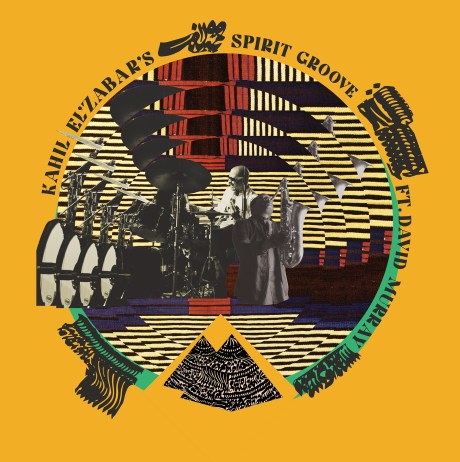
Headlining this latest roundup, two titans of the contemporary and spiritual jazz scene, Kahil El’ Zabar and David Murray, join forces once more to lay down a righteous transportive performance on the ancestral with a modern pulse communion Spirit Groove.
LEAD REVIEW
Kahil El’ Zabar’s ‘Spirit Groove Ft. David Murray’
(Spiritmuse) LP/12th June 2020
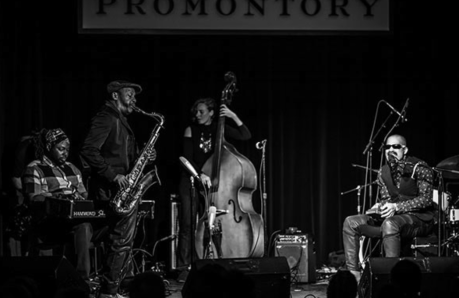
Praise be to the healing arts of those contemporary jazz luminaries Kahil El’ Zabar and David Murray. If ever there was a time when we all needed calm and a spiritual deliverance it’s right now. A service, a quasi-liturgy of spiritual jazz, the two American titans of their experimental forms have drawn on a wealth of providence and influences to once more join forces through El’ Zabar’s “spirit groove” of connectivity.
As a harmonious bedfellow to the Chicago drummer/percussionist’s lauded (especially be me) Ethnic Heritage Ensemble, this righteous groove communion with the tenor sax and bass clarinet maestro Murray “intends to move you nakedly with a deep sense of dance on a Mind/Body/Spirit level.” And what a groove it is; a disarming rhythmic set of performances with a poignant, timely message, or, as El’ Zabar himself puts it, “This is the moment to rekindle the notion of social relevance within the legacy of jazz as an improvised people’s movement for social change.”
The creative partners enact this change (or at least attempt it) by channeling both the ancients and jazz greats they’ve both been lucky enough to share stages with over the last fifty years. El’ Zabar for his part, learning the craft through the Chicago hothouse known as the School of the Association for the Advancement of Creative Musicians, and by playing with or supporting such greats as Eddie Harris, Cannonball Adderley, Rahsaan Roland Kirk, Pharoah Sanders, Dizzy Gillespie, Nina Simone and Archie Shepp (the list goes on). Oakland born Grammy Award winner Murray meanwhile has recorded and performed with a no less impressive list of notable talents, including Henry Threadgill, Olu Dara, McCoy Tyner and Elvin Jones. Murray was also a founding forefather of the horns and wind instruments lauded World Saxophone Quartet.
El’ Zabar’s atavistic with a modern pulse spiritual soul and jazz experiments are coupled with Murray’s untethered long and short breath saxophone contortions on an album of new, specially written material and expansions of compositions from the back catalogue.
Joining them on church service organ and cascading, accentuate piano is Chicago stalwart Justin Dillard, and on bowing soothed and more scuttling acoustic bass, the burgeoning talent Emma Dayhuff. This makes for an enviable solid act; a quartet of jazz apprentices from different generations that between them have connections to every great jazz pioneer of the last fifty plus years. But, nearly, all roads lead back to Coltrane in particular. Murray despite practicing and molding amore unique technique inspired by the triumvirate of old guard doyens Coleman Hawkins, Ben Webster and Paul Gonsalves then what Coltrane preached, he’s paid various homages to the late great saxophone deity. ‘Trane’, a notion, encapsulation, nod to his universal influence pared down to just the second syllable of a name, is all that’s needed on the track that appears on this album as a tribute of sorts. The swing time ‘Trane In Mind’ is a mood, a sense of that style; a splashed poolside dash of Coltrane in his ascendance.
Faith though is the main driver of the groove and varied utterances that pour out of this erudite ensemble’s performances. The water-carrier trickled percussive opener, ‘In My House’, welcomes all to El’ Zabar’s titular sanctuary; a place to raise the spirits and soul. A prayer in the form of a primal gospel House music anthem, the jug pouring shuffler features El’ Zabar’s signature vocal exaltations, which sometimes negate words and lyrics for just hums, feelings and an essence of vocal expression. A frame for a freeform expansion of the mood, Dillard switches from subtle piano phrasing to venerable organ, whilst Dayhuff bobs around as Murray customarily catches shortened hooted breaths and longer sublime circular breathing squalls.
The power of faith in love is enshrined on the next dreamy flight, ‘Necktar’. Dedicated to not only Murray’s new wife Francesca but also true love itself, the quartet skiffle and swing to a liquid soul music groove that sets up a meeting between Gil Scott Heron, Bill Withers and Lester Bowie. Talking of dedications, El’ Zabar’s ancestral percussive, vocal cooing ‘Katon’ opus was written for his fourth oldest son. (El’ Zabar has quite the brood of children and grandchildren we’re told). A special bond and sentiment is conveyed over a magical meditative suite of music box mbira, deft piano, serenading and hooting tenor and dipped bass.
‘In The Spirit’ is, as the title says, another faith radiating communion. Bird like fluting floats over dusty brushed drums on this venerated shuffled version of the original, first performed by El’ Zabar in late 70s Germany. Another past composition, the low-key Savoy jazz like ‘Song Of Myself’ was part of El’ Zabar’s trio project with Murray and the late bassist Fred Hopkins. “An introspection of dancing in your mind”, this riff on that recital stands out on an album of ancestral percussive heavy spiritual jazz and stripped acoustic House music with its smoky, kept subdued almost downtempo, intimacy. Almost veiled even, toots, dusty drums, hints of the vibes and live lounge atmospherics take the listener off into a new thoughtful space.
Working in various forms together since the late 80s, a third composition – appearing on the lauded LP of the same name – ‘One World Family’ is framed as a sort of “theme song” for the partnership. Extending the original with a more expansive performed backing of woody-slapped rhythms (which near the end climax in an erratic display of pounding and punching), spiraling reedy fashioned free-flowing saxophone and soulful melody, the quartet flex and breathe across a earthy but skybound cycle.
A reconnection, a spiritual bound partnership El’ Zabar and Murray appear from the tumult to capture a difficult to quantify feeling: a rage even. Quenching the soul with a “spirit groove”, they’ve laid down a both swinging and mesmeric alternative jazz service of mediation but also, and above all, they push for a positive change in the most inflamed and dangerous of times.
RECOMMENDATIONS
Etienne de la Sayette ‘Kobugi’
(Muju Records) LP/1st June 2020
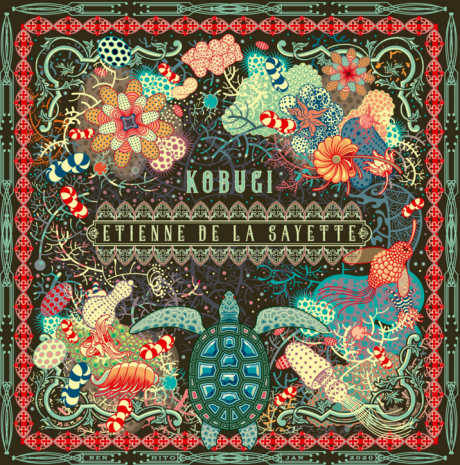
As pleasantly inviting as the album’s sumptuous artwork, the highly active Etienne de la Sayette delivers another worldly traverse of Africa and South East Asian rhythms.
Channeling a wealth of his ever-expanding array of projects, from the Ethnio-groove imbued Akalé Wube to Bae Ho homage-inspired Baeshi Bang, and from Frix to an assortment of film scores, the Etienne de la Sayette platform pulls together the overspill. Put together in-between all these other commitments, but far from a secondary concern, the latest album to emerge from that project is a rich gentle flowing exotic affair. Played entirely by the intimate band of flexible drummer Stefano Lucchini, balafon maestro Lansiné Diabaté, and a small circle of guests, the undulating soundtrack is mostly devoid of technological interference: no virtual instruments or MIDI were used in the making of this record we’re told. Etienne for his part plays a mix of accentuate and hooted, relaxed honked saxophone and flighty flute throughout this borderless escape.
Embracing genres, especially in the rhythm department, the opening odyssey ‘Jajinmori’ takes a traditional Korean rhythm that Etienne discovered whilst collaborating with percussionists in Busan in 2016 and adds a softened Kuti Afrobeat vibe, Orlando Julius Afrojazz sax and the buoyant wooden bobs of the balafon. Riding over the top of this wavy fusion, Chicago rapper turn Parisian scenester RaceCaR lyrically flows with a stream of poetic consciousness that kicks back to the ancients. He gets to finish the album too, with a more political spit against the arms industry and the militarization of authority on the growled, scuzzed acid-metal-psych Deep Purple-esque monster riff ‘War Business’. Though spanning a two-year period, this “sawn-off shotgun” of a leap from the rest of the material proves the timeliest in light of recent events.
Second guest spot on this album goes to Cameroon troubadour Erik Aliana, who arrives from another compass point to rasp, growl and also lay down sweeter vocal charms on the rustic-folky village song ‘Safari Kames’.
Taking the guiding light of Afrobeat once more, the busier ‘LOULOU’ is as much influenced by Steve Reich ad chamber music as it is by Kuti and Tony Allen. There’s even a tone of Benin spotting organ and Hailu Mergia woven into the flashbacks. Diabaté’s balafon is almost watery, like a jug pouring out the droplets of bouncing notes. It’s “shamanic invocations” that rise from ‘Kobugi King’; another undulating fusion of the dreamy and soulful, taking in Muscle Shoals organ, oriental voodoo and impassioned talking-in-tongues utterances.
With slightly more buzz and rattle, the group channels the spindled resonance of the metal tine thumbed Kalimba, as played in the style of Konono #1, on the wilder exchange of organ and free-form drums tribune to the African and Caribbean god of knowledge of stories, ‘Anansi’. They also evoke a bit of the intense fuzz of Marc Ribot; his ‘Ceramic Dog’ being mentioned in the notes.
The only cover, Tegenu Balkew’s Ethnio cassette obscurity ‘Anchi Bale Game’ plays loose with the original’s magical spell drift towards the Orient. In another example of the free-travel music show, the group takes on a reggae gait with the church service suffused beachcomber ‘Tortoises’.
The most interesting thing about this album and the musicianship is the flow of ideas, and the weaving together of both African and Korean rhythms, as Etienne and his ensemble blend tastes of Nigeria, Ghana, Cameroon and the Orient together in one track. Apart from a couple of numbers, Kobugi is a lilting, relaxed but deep listen; a cross-pollination of music synchronicity.
Myles Cochran ‘My Own Devices’
(9Ball Records) EP/19th June 2020

Regular readers and followers may remember that we premiered the experimental Kentuckian bluegrass, roots guitarist and composer Myles Cochran’s subtly evocative single, ‘It’s Like This’ last month on the Monolith Cocktail; a track that reverberated with the atmospherics and mood of a vaguely traced place on the outskirts of a recognizable American panorama. A hazy semblance of Cochran’s alternative Americana sound, that same single now forms one part of an extended version, ‘It’s Like This – It’s Like That’, on the new EP, My Own Devices. Expanded into a drifting Appalachian traverse with echoes of 75 Dollar Bill, and part rustically dreamy guitar, part lilted classical waned and bowing strings (the cello parts courtesy of Robert Curran), this couplet would make a great soundtrack to ambiguous horizons.
Recorded and put together between rural studios in France and the UK (where he now resides), much of this EP’s material wanes and sighs, breathes and pines across a sonorous prairie. The opening swooned, rhythmic shuffle ‘Love Is As Beautiful As Pizza’ merges reverberations of Myles Bluegrass signature trails with jazz, post-rock Mogwai and Daniel Lanois. As the title suggests, it is indeed a beautiful, and bowed mirage-y, instrumental.
Released a few months back, the ‘Early Dark’ peregrination blends more yearning sad and trembled strings with brushed drums, and the hint of a Mick Harvey soundtrack (there’s that word again, ‘soundtrack’). Though you can also confidently add shades of Ry Cooder, Robert Fripp, Warren Ellis and Steve Reich to both this ‘springtime mix’ and the rest of the EP’s material.
Plonking peaceably across the prairie, Cochran finishes up on a Bruce Langhorne meets Eno mosey ‘Churrito’; another drifter traverse of skiffle like rhythms, resonating guitar and spindly strings.
Almost just the tracings, lingering from behind the valley landscape, Cochran’s meditations and waning mood pieces are easy and quiet on the ear; shaped towards an alternative contemporary ambient vision of those bluegrass roots.
Myles will follow this latest EP up, we’re told, with an album entitled UNSUNG later this year.
Fierro Ex Machina ‘Processions’
LP/19th June 2020
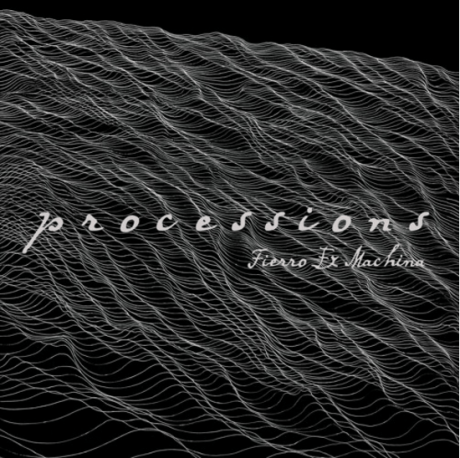
The sensory sonic processed imaginings of Alex Norelli concentrate the mind on some foreboding sometimes creeping recondite worlds: Worlds that branch both the chthonian and alien.
From an apparatus of electro-acoustic, and what the L.A. based multi-instrumentalist and creative calls their “noise harp” – an assemblage of deconstructed electric versions of classical strings and dejected music equipment, which includes Alex’s Grandmother’s out-of-tune 1950s S1 Hammond Organ -, materializes a quartet of heavy studies in the experimental neo-classical, ambient, soundtrack and jazz fields. Yes, I did mean to include jazz; the kind that the American Nocturnal avant-garde saxophonist Andy Haas exudes on his various boundary-pushing peregrinations. But also a semblance of Ornette Coleman’s strung-out writhed, iron gate hinge waning saxophone can be heard enervated on the album’s opening mourned journey through the portal, ‘Praeter Nexus’. Unsettling as it slowly gains gravitas and a seething momentum that grows more mysterious, more unknown. The Nexus track demonstrates a frayed, fabric torn movement simultaneously as spatial as it is claustrophobic and dark.
Ominous nocturnal movements follow with the spherical shifting ‘The Shadows Of Plants At Night’. Metronome counted ripples tick away in the night garden as a ghostly-like voiced sound and permutations of Donny McCaslin’s sax waft by. Those plants sound more like concrete planetary leviathans chiding and scraping together. The lamentable entitled ‘Do You Know The Sorrow Of The Horses’, which sounds like the opening from a particularly harrowing plaint from beyond the ether features howls of a kind from wolves of some sort prowling the borders. This wispy invocation, as a scion of Cage and Nam June Paik, trundles across the inner workings and mechanisms of a grand piano: or so sounds.
‘A Sail Of All Tears’ finds a trace of melody and even a rhythm amongst the circling uncertainty and the chills. Turning over in the darkness, dawdling bass guitar and electric guitar notes act as guidance through the enormity of the elementals.
There’s a dark majesty and gravity to all four of these heavy evocations. The dissonance is nowhere to be found however, and so even in the abyss each one of Norelli’s visceral statements remain in a sort of ominous building harmony; a synthesis of sonorous emotion, journeying towards the void: A soundtrack for our frightening times.
Sad Man ‘Daddy Biscuits’
LP/5th June 2020
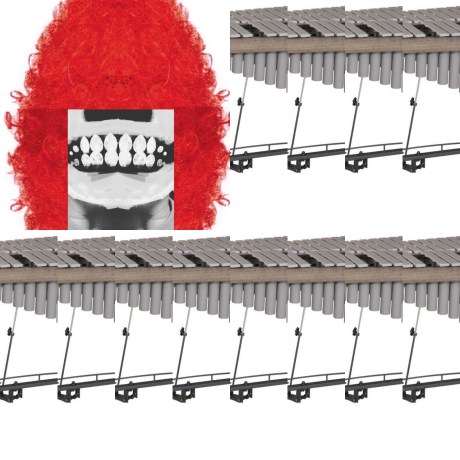
Despite the alter ego moniker of garden shed electronic music boffin Andrew Spackman’s most prolific incarnation yet, the Sad Man in lockdown is anything but as anxious and plaintive as the name might suggest. The latest (must be millionth, or something like that, release from Andrew now) experiments-in-motion album is in fact quite playful: a laugh even. Euphemisms, innuendo aside, Daddy Biscuits has a more uninterrupted flow of rhythms and progresses in a less agitated, ennui fashion than most of Andrew’s output.
Set loose with a trick noise making apparatus, the Sad Man goes for the kicks, transmogrifying House music and Techno for a staccato dancefloor. Jolted Djax Techno gets warped and bashed with shocks of Mike Dred, galloping 808s and mischievous Ed Banger electro funk on an album in which you can hear the cogs moving around in the artist’s noodle: where to go next? What about this, zap-bang-clatter-wobble-drill!! A Sad Man track seldom ends where it began.
God knows what the titles indicate half the time either. The titular cyber wilderness track alone goes through Luke Slater, Juan Atkins, Aphex Twin and the Chemical Brothers. The track ‘Sleeper’ is anything but somnolent, running as it does through a bastardize version of Herbie Hancock’s ‘Rockit’, 16-bit computer game coin-up prizes and hints of M-Plant Rob Hood and a crystalline dream magic. For me though, I love the strange curio ‘House Work’ (definitely a tune that would improve the chores no end). It sounds like Major Force mashed with Wagon Christ and Les Rita Mitsouko; a sort of electro-operatic funk.
For kicks then, Andrew eyes up the groove on a collection of both panel-beater workshop beats and modulated weirdness; an album for lovers of Warp, Leaf, early Jeff Mills and House Of Tapes. Lockdown proves a fertile environment for the conceptual artist and sonic maverick. I like this subtle change. Pass round the magic biscuits selection again in the future please.
Above The Tree ‘King Above’
(Hukot Disc/Plug In The Gear/Krimzkramz Sub Post) LP/Available Now

Dropped into some alternative futuristic pastoral world in the aftermath of an unexplained event – or that’s at least what it feels and sounds like to me -, visual artist and amorphous sonic sculptor Marco Bernacchia creates a visionary traced soundscape of haunting holy and esoteric materializations from out of the ether on his latest vivid soundtrack, King Above. A soundtrack, as it turns out, for an as yet unreleased documentary, this regal entitled suite of passages, renderings and lingerings would suit a mysterious theme with its signs of the ominous, exotic, and in some cases, supernatural.
Gravitating around the so-called “Italian occult psychedelic” scene, a catch-all term coined in the early noughties to describe the emerging esoteric and out-there sound being made by bands such as Comaneci and Father Murphy (both of whom feature in various ways on this album), Bernacchia practices a sort of ever-evolving vision of “outsider music”. Far too knowing and technically proficient and learned to be the musical equivalent of the usually naïve outsider art, his Above The Tree moniker mapped abstractions have a depth and knowledge that betrays an eclectic, studied palette of influences.
Blessed and doomed in equal measure, the Urbino Academy of Fine Arts alumni paints a both unsettling and pretty atmosphere. In between his professional practice (reaching the heights of exhibiting at the Venice Biennale; which is one way to say you’ve made it in the contemporary conceptual art world), the painter has learnt an assortment of instruments, from saxophone to guitar, the Malian harp-like Kamalengoni to the Russian variant of the Jew’s harp, the Vargan. All of which appear throughout the various dreamy drifts and Kosmische stirrings.
All these instruments and influences are filtered through a gauze of the gossamer, wispy and misty, with the bewitching chimes set against distant echoes of voices, messages and Medieval leftfield folk: think Faust at their most atavistic meets Sproatly Smith. Something like the courtly, rustic reverberations of a past epoch drift in and out of a vaporous bed of drones, ambience and exotic swathes of an unearthly realm. The plucked brushed tremulous guitar phrases often evoke Ry Cooder and (sharing this particular roundup) Myles Cochran.
Nature is always present no matter where Bernacchia guides us. There’s even a sort of nature meditation codex at the end of this fourteen-track oeuvre; the sound of birdsong and an ambiguous great scenic outdoors is permeated by the waning gravitas building accompaniment of bowed strings and the barest undulations of the synthesized. Icy blows, vortexes, cylindrical metallic and ghostly visitations merge with the pastoral and at times the revenant.
With permission from his already mentioned compatriots, Father Murphy, a sample from the group’s 2018 esoteric blessed ‘Communion’ – which featured on the Rising. A Requiem LP – features on the cooed cloisters score ‘Merci On Us’. The original song’s venerated choral atmospherics are woven into the lulled dreamy renaissance treatment.
“Donating” lyrics and voice to a couple of tracks, Francesca Amati of the Comaneci duo offers up a strange repeated breathy mantra on the open couplet ‘Windows Soul’, and utters soliloquy like phrases on the title-track. Amati sounds like a weird space-age narrator on the latter; her statements fragmented, almost disjointed.
Those utterances offer another layer of mystique to an album steeped in the abstract. Tangible instruments exist with the unmistakable tremolo of a guitar, gabbling of the ngoni and spring of a vargen, yet it’s the obscured textural hints of imagined places and spaces that win out. Bernacchia has embraced a history, myriad of emotive forces and atmospheres, the organic and synthesized, and transduced it all into this suffused empirical soundtrack of sublime outsider folk. I thoroughly recommend you seek it out.
REISSUES
Harry Roesli ‘Titik Api’
(Lamunai/Groovyrecord) LP/2nd June 2020

It may sound surprising to many of you dear readers to find that someone as switched-on as me hasn’t come across, until now, the Javanese Temple psychedelic funk of the Indonesian maverick Harry Roesli. Submitted by the kind folks at the Lamunai/Groovyrecord hub, a reissue version of the celebrated artist’s iconic mid 70s concept opus Titik Api has piqued my interest.
Providence wise first, Roesli was born in the bastion of Gamelan, on the island of Java in 1951. In what could be described as a privileged upbringing, Roesli’s father was a major general in the Indonesian army, his mother a doctor; both positions offering a relative security in a country ruled by the quasi-dictator Suharto – a leader with a tightening grip, who managed to keep hold of power for four decades, from 1967 to 1998.
Obviously a talented musician from a young age, Roesli actually decided to study engineering instead of music. It was during those formative years that the creatively minded bohemian was turned on to political activism – a story retold in more detail in the album’s liner notes. To be glib and race through the details, he became an active member of the 70s Tradisi Baru Movement. Translating as “New Tradition” this growing political and creative movement were committed to experimenting with Indonesian traditions such as gamelan. Critical of the regime however, it soon became too dangerous for student activists such as Roesli to evade the authorities iron fist. In one such crackdown, Roesli found himself imprisoned. Luckily for him, a Dutch member of Amnesty International was on the case; gaining an escape route for Roesli through the promise of a scholarship, studying percussion in Holland.
To cut a long story very short, this gave the burgeoning talent another layer of musicianship and host of new influences, which he eventually would take back to his native home. The music of Indonesia was now fused with prog rock, psych, acid rock, pop, enervated funk, soul and even the more complicated rock experiments of Zappa. All of which you can hear on the ambitious 1975 concept album, Titik Api: a kind of Indonesian drama set to music, with ‘prologs’ and ‘epilogs’ and a quasi-overture, a work of art from a hip-international minded cat. It’s nothing short of a Southeast Asian panorama of atavistic mysticism, romance and spiritual yearning.
The first cut from this double album alone, ‘Sekar Jepon’, moves from a gamelan Goblin to Bolero, whilst maintaining the signature zappy effects, sizzled fuzz and chiming percussion that permeates this entire opus. Those prog rock influences get harder on the hypnotizing temple rock ‘Jangga Wareng’: almost Sabbath heavy. The fluty thirteen-minute epic ‘Lembe Lembe’, features both shades of Jethro Tull and ‘Revolution’ era Jefferson Airplane. Slicker, leaning towards soul music, the romantic-sounding female lulled harmonies, sun-anointed ‘Merak’ fans out towards a lilting Brazilia. In a similar vein, another lengthy opus, ‘Kebo Jiro’, switches from soft funky soul and pop to fantasy boat ride, then snake-charming prog and rattling conga solo. ‘Curah Hujan’ takes a scenic route in an Alfa Spider convertible, as the radio blasts out a quasi-Bossa Italo love theme.
It seems Roesli wasn’t shy in throwing everything into his musical fantasy; Latin dreamy troubadour on the first of two ‘epilogs’, proto-disco on ‘Dinding Tolan, and Samba-rock on ‘Bunga Surga’.
From seductive slumbers to golden temple spiritualism and mirage-y trinkets and tubular tolls, Titik Api is an adventurous psychedelic vision from a fertile, expansive mind. An alternative Javanese dimension, invigorated by contemporary late 60s and 70s influences this is an all-encompassing epic from the Indonesian maverick. Don’t worry if like me you missed it first, second even third time around, this new reissue will serve crate-diggers and psychedelic fans alike well enough. Take a punt, dig it out and be introduced to a whole new rabbit hole of Southeast Asian music.
Scarlet’s Well ‘Magic (Selections From 1999 – 2010)’
(Tapete Records) LP/26th June 2020

The saga of the Monochrome Set spans five decades and umpteen break-ups. Blossoming at the fag end of the punk epoch, and continuing to produce music even to this day, the revered group has disbanded at least three times during a checkered history. The second those breakups, in 1998, proved a fertile escape for the Set’s stalwart singer, guitarist and songwriter Bid, who plowed his fantastical and whimsical inventions into a new band, Scarlet’s Well: a band that would, in one form or another last until the third incarnation of the Set in 2010.
A congruous bedfellow to Bid’s former group, Scarlet’s Well not only featured the Set’s 90s period keyboardist Orson Presence and producer Toby Robinson, but also transformed some of the unfinished material. Though it wasn’t just a place to crash for former Set members, the evolving, changing lineup would after a few albums expand to include Alice Healey on vocals.
Conceived as an “atmosphere” rather than a band, Bid conjured up a surrealist village diorama and cast of bawdy rouges, lost supernatural characters and monsters, explorers and pining cowboys/cowgirls to build an evocative storybook. Coming to life over seven albums of varying quality, this strange but disarming set location and its vague geographical tributaries (“somewhere east of the Azores and only slightly north of the Styx”) offers a magical encapsulation of all life’s woes, tribulations and physiological defects. It’s an adventure in which some of the salty sea dog inhabitants take the listener on a voyage to various atolls and exotic river ways; sailing into a range of both suffused and fleeting musical ports-of-call. Even the means of nautical travel differ, from a junk to galleon, a skiff to Pugwash shambolic pirate ship.
Receiving an appraisal a decade on from the Well’s final swansong, this oeuvre brings together a (almost) chronological collection of idiosyncratic pastoral whimsy and deeper, darker metaphors. “Bless my barnacles”, the rightly titled Magic collection opens with a couplet of alternative pop sea-shanties from the Well’s 2006 LP, Unreal: A year that proved very productive, with the band uncharacteristically releasing a duo of albums that year. ‘Sweetmeat’, which despite its alluded title sails on a junk to the gentle tones of a lullaby, has Bid channel Scott Walker and Roy Orbison on this beautiful sayonara caress. ‘Willy Whispers’ – no sniggering at the back – features the harmonizing sweet tones of Healey; who by this time was now a prominent member of the band. An example of that diverse range of influences and instrumentation, this spindled beauty simultaneously evokes Westerns, a punt down the Neva and the charming psychedelic storytelling of Pete Dello.
The debut album, Strange Letters, which now puts the songbook back in linear order, is represented by the solitary oompah-tuba ‘The Captain’s Song’. Reimagining a Brecht version of The Yellow Submarine, Bid’s put-on seadog baritone croons a veritable feast of sea-lovers Bonzo lyricism. Both comical and violent, he comes across like Blixa Bildgard early era Bad Seeds.
The first album of a new decade, 2000’s Les Baxter-esque The Isle Of Blue Flowers is represented by a trio of Spanish and concertinaed songs. Maybe a consequence of being signed to the Spanish label Siesta Records, there’s a dalliance with the host’s Flamenco and Latin spirit in the form of the castanet cantina ‘Lord Fish Garlic’s Last Expedition’: a song that fantasizes about a Suzanne Vega senorita fronting Fairport Convention during the Mexican war with America –imagine that! From the same album there’s the Franco-paradise Edwyn Collins-goes-surfing bendy title-track and the South Pacific meets Creole lala ‘Dark Dreams Aboard The Hesperus’.
Lewis Carroll’s literary and psychedelic totem heroine inspires the Well’s next album in the sequence, 2002’s Alice In The Underworld. A castaway choice of songs reflects the album’s use, again, of certain Spanish motifs and flairs. The exotic ‘Night Of The Macaw’ wafts lazily in a Caribbean bay; soft marimba and a lulling spiritual organ drift in the background of this beachcomber sway. ‘The Ballad Of Johnny Freak’ is another story entirely; a metaphorical tale of acceptance from Monsterism Island that puts Healey center-stage of a Hispanic lilted lament.
Moving forwards another two-years, The Dream Spider Of The Laughing Horse album features another of the band’s characteristic musical embraces: a kind of transcendent mosey form of Americana. The title-track, a trotting on the trial cowboy song, and ‘Big Dipper On The Spearman’s Floor’, a waylaid Hawaiian cowboy amongst the rock pools serenade, are chosen to fit the unfolding travelogue compilation.
The second album from 2006, Black Tulip Wings, goes all noir on us. The Bad Seeds rub shoulders with an enervated B52s, ‘Savage’ even goes into lounge swing halfway through its tremolo and Theremin-like wobbles. It’s show time on the album’s title-track as Brecht is brought to the Hollywood detective paperback.
Once more on the lonesome cowboy/cowgirl trial, the next two albums, 2008’s Gatekeeper and 2010’s Society Of Figurines reimagines the Western and country music cannons. On the first of these albums, Bid and his ensemble traverse The Mekons rebel country signature on the sweetly laced, springy desert key metaphor themed ‘Golden, It Is, Beautiful’. From the same record, ‘My Little Doll’ is a little more upbeat in comparison; a shuffling vision of The Bluebells round the campfire with the Frank And Walters. From the porcelain supernatural cast second of these two albums, it’s a strange combo of garage band with elements of the Inspiral Carpets baggy version of Tex Mex beat that underpins ‘Supernatural Services’. From that same record and drawing this decade spanning collection to a close, ‘The Vampire’s Song’ pitches Nosferatu in Nashville; the bloodsucker’s wandering song is a most lonesome pining affair.
Ambiguous throughout, Bid’s microcosm of mavericks, illusionists, rum miscreants and the plain misunderstood is an escape into the fantastical; a wealth of cryptic, surrealist psychedelic and cartoon outsider storytelling and art transduced into a disarming songbook of posy, shanties, ballads, cantas and pop. If you enjoy that long English tradition of eccentric songwriting, then this marvelous collection will quench your soul, heart and mind.
Hi, my name is Dominic Valvona and I’m the Founder of the music/culture blog monolithcocktail.com For the last ten years I’ve featured and supported music, musicians and labels we love across genres from around the world that we think you’ll want to know about. No content on the site is paid for or sponsored and we only feature artists we have genuine respect for /love. If you enjoy our reviews (and we often write long, thoughtful ones), found a new artist you admire or if we have featured you or artists you represent and would like to buy us a coffee at https://ko-fi.com/monolithcocktail to say cheers for spreading the word, then that would be much appreciated.
Album Review/Matt Oliver

Telemachus ‘Boring And Weird Historical Music’
(High Focus) LP/Available Now
His involvement with everyone who’s anyone in UK hip-hop – Verb T, Ocean Wisdom, Kashmere, M9, The Last Skeptik, Jam Baxter and legions more – lead to The Guardian lauding Telemachus/Chemo as “one of those slightly obscure figures who has helped British hip-hop move along more than most people will probably ever know”. Unlikely as it is that his work there will ever be done, Boring & Weird Historical Music reinforces the producer’s perspectives that have been broadening since 2013’s In The Evening. Notwithstanding the casting of Roc Marciano and Jehst, it was a classy spreading of wings as exploration of textures through a lens took root.
A year later, the breakaway In Morocco continued a bid for calm and knowledge, gathering aromatic instrumental dialects from where the sun sets, for the consummate expedition while couch-bound and down. Album number three doesn’t need the reverse psychology of the title, but it does make definitive the promotion of Telemachus to adventurer and alchemist, simmering down soul, jazz, funk, indigenous rhythms and found sounds raised at the mercy of voodoo forces and meditative properties.
For those wanting sounds formed through and for sensory deprivation, ‘Disaster Enabled Vending Machines’ (the new, unofficial byword for chillout), the bassy ‘Beaten Gold’ and ‘Caroline What Is Wrong With You’ are pro-lockdown, promoting classic trip hop incubation to soothe and shield from the sun with. Depending on your energy levels, either use them to expand your mind from the horizontal position as attainable exotica, or just to provide companionship, setting a tone that puts a barrier between you and the dusky, dusty heat generated by the maddening crowd outside.
However, for all the measured, karmic twangs a la Khruangbin or Skinshape, perpetual percussion, synth lines that shapeshift in the ear of the beholder, and dubby, desert shimmer soaking up pressure before coolly exhaling, it’s that unshakeable but defined trepidation that becomes the album’s fulcrum. Opening track ‘Ungraceful Piano Sequence’ sets a fork in the road asking you to choose your own adventure, and ‘You Wanted a Handful of Sardines, Did You Not’ could well lead you to a boiling pot of cannibalism as you find yourself making your way through dimly lit undergrowth. On ‘I Am Delicious and Cute So I Will Buy Again’ and ‘Battle Sequence’, the tiptoeing on eggshells forces you to face your fears and not just cock half an ear, widening the album’s shrewd unpredictability as it looks both ways before ambling off the beaten track.
‘Greed’, overseen by Jerome Thomas, aims to cleanse souls with stark warnings in hushed tones, and ‘By the Moon’, teased by RHI, is another example of the album’s sequencing tersely tugging at the comfort zone you think Telemachus has laid on. The dark carnival of ‘Wickedest Ting’ featuring Killa P is an unsuspecting but no less welcome mantrap, the main difference being that it’s brought out into the open kicking and screaming, instead of attempting to hide in plain sight.
As a storyteller passing around rolling papers and whose travelogue bears no tall tales despite the signs indicating otherwise, Boring & Weird… is a groggy but high functioning experience – it has to be given that the wonder of taking in the surroundings is speckled with Telemachus’ pessimism, where the recommended reclining could lead you down the back of the sofa like quicksand. The flippant titles back the theory that for all the shadows cast and enlightenment he fulfills, Telemachus is still in the entertaining business, leading category makers a merry dance. Certainly on first listen the overriding sensation is of comfort and immersion, but soon you’ll be wanting Boring & Weird… to be the soundtrack to your insomnia, punctuated by the quotations of a sensei floating and fleshing out the fable as you take a fine toothcomb to the clues left by its enigmatic, noir-ish sage. The album’s conclusion, ‘Fools Gold’ starring Chris Belson, is suitably ambiguous – the instrumentation suggests happy ending, the vantage point vocals deem that the battle is nowhere near over.
The authenticity of Chemo’s darker-than-you-think epiphanies, producing as he lives it from his lookout post and switching up significance/fantasy and reality with invisible stitching, make it good for both under the stars and the duvet. With some inevitability, the enjoyment of what it means to be weird means the boring never transpires.
Matt Oliver
Unable to kick the reviewing habit for what is now the best part of fifteen years, Matt Oliver has gone from messing around with music-related courseworks and DIY hip-hop sites to pass time in sixth form and university, to writing for/putting out of business a glut of magazine review sections and features pages in both the UK and the US. A minor hip-hop freak in junior school, he has interviewed some serious names in the fields of both hip-hop and dance music – from Grandmaster Flash to Iggy Azalea – and as part of what is now a glorified hobby (seriously, every magazine he used to turn up at bit the dust within weeks), can also be found penning those little bits of track info you find on Beatport and Soundcloud, or the notes that used to come with your promo CD in the post (visit here for more details). He’s currently giving the twitter thing a go, so follow him at@brimupnorth.
Tickling Our Fancy 085: Chouk Bwa & The Ångströmers, Edikanfo, Fra Fra, Muriel Grossman, Fadhilee Itulya…
May 7, 2020
ALBUM REVIEWS/Dominic Valvona

Easing the boredom of coronavirus lockdown, join me from the safety of your own home once more on a global journey of discovery. Let me do all the footwork for you, as I recommend a batch of interesting and essential new releases from a myriad of genres. All of which I hope you will support in these anxious and trying times. With all live gigs and events more or less quashed for the foreseeable future, buying music (whether it’s physical or through digital platforms) has never been more important for the survival of the bands/artists/collectives that create it.
As international as ever, this month’s revue includes not one but two releases from the wellspring of Highlife music, Ghana – though only one of these is contemporary, and only one could be considered a link to that signature sound. First, the sixth volume in Glitterbeat Records’ Hidden Musics series is, as its title may suggest, a more elegiac-framed affair of rustic processional performances: Fra Fra ‘Funeral Songs’. The second, Edikanfo’s The Pace Setters is the first ever reissue of an iconic 80s album from the Afrodsico troupe, produced, with the lightest of touches, by Brian Eno. From South America, the ever-changing Miguel Sosa (formerly of The Strumpets and IH8 Camera) releases another album under a new alias and with a new sound, Plano Remoto. Japan-based polymath Paul Thomas Kirk, under his Akatombo alias, is granted a (almost) twenty-year spanning highlights collection of discordant gloom industrial dance music by the Japanese label So I Buried Records. From Haiti, we have the collaborative voodoo communion between the locals Chouk Bwa and the Belgium dub electronica duo The Ångströmers, Vodou Alé. And from Kenya, guitarist Fadhilee Itulya releases his debut album fusion of Omutibo music.
Closer to home, though imagining all kinds of cosmological and spiritual visions, Sebastian Reynolds releases a ‘universal’ escapist EP of peregrinations, and Austrian saxophonist Muriel Grossman is granted a showcase of her spiritual jazz suites from the Jazzman label.
Chouk Bwa & The Ångströmers ‘Vodou Alé’
(Bongo Joe Records) LP/22nd May 2020

Like so many others before them, allured to the voodoo hypnotism of the shared Hispaniola Island of Haiti, Belgian production duo The Ångströmers spent a residency immersing and absorbing the local fusion of ‘mizik rasin’, and working with the Gonaïves-borne collective of Chouk Bwa. A hybrid of roots music tradition, the voodoo ceremony enchantments brought over to the Island from the Congo, the folkloric and rock and roll, mizik rasin has been made famous in more recent decades by Richard A. Morse’s acronym Haiti collective RAM, who have in turn welcomed curious acts such as Arcade Fire and tUnE-yArDs to its propulsive rhythm. The late Afrobeat rhythm king Tony Allen also spent time there working with local musicians on the Afro-Haitian Experimental Orchestra project in 2017. It’s easy to see why; the invigorating lively, often locked-in rhythms and spiritual call prove intense and inviting: to dance music artists especially.
The synthesis of Soukri voodoo polyrhythms and bassier dub electronica on this collaboration proves so attuned to both sensibilities and in-sync as to be difficult to separate the natural ritual from the augmented and synthesized. The furious, rushing hand-drumming is subtly reinforced and layered up for the most part with pulsating and throbbing undulations, atmospherics, phaser, echo and reverb reversal effects; all of which are used sparingly and wisely, and even sensitively.
A yearning plaintive procession of voices, both earthly and soulfully, emerge from the swirled vapours to lament Haiti’s tragic run of ecological disasters; the lead single ‘More Tan’ a bobbing and clattery beat with sonorous fuzzy bass lends a moving tribute to all those unfortunate souls affected by a quartet of devastating hurricanes and the Armageddon earthquake of 2010, which killed tens of thousands and left hundreds of thousands displaced, at the mercy of the elements, disease and a destabilized authority.
A primal ceremony of tumbled, fluttered cylindrical rhythms sucked into a vortex of warped dub and ringing oscillations, this collaborative union proves just how intoxicating and electrifying the voodoo spell can be. Given a sympathetic undercurrent and resonance of atmospheric electronica, the ritual sound and outpour of Haiti is reframed, guided into the 21st century. Not so much a novel direction as a subtle electronic music boost to tradition.
Muriel Grossmann ‘Elevation’
(Jazzman) LP/15th May 2020

Many jazz greats have of course attempted it, the ‘elevation’ of not just the form but consciousness itself. The Egyptologist anointed Pharoah Sanders even named an album after it; an ascendance at a time when jazz was embracing its spiritual roots and historical gravitas: a return to the source in Africa.
The supremely talented saxophonist bandleader Muriel Grossmann, imbued with that same spirit of vague conscious mysticism and experimentation, has now named one of her own impressive Afrojazz odysseys after that totem of an influential album. It won’t come as any surprise to find that the Pharaoh just happens to be one of Grossmann’s influences, alongside such luminaries as John and Alice Coltrane, Lester Young and Eric Dolphy; all of which permeate throughout this survey of the European jazz star’s recent(ish) work.
A sort of introduction for those unfamiliar with an artist who’s spent the last two decades on the European scene, playing with the likes of Joachim and Rolf Kühn, Wolfgang Reisinges and Thomas Heidepriem, the impeccable Jazzman label have chosen to represent Grossmann’s catalogue with suites from the 2016 Natural Time and 2017 Momentum albums; a moiety almost of complimentary records.
In all a quintet of congruous traverses, from a duo of albums, Grossman’s own Elevation seems a fully realised, interconnected and flowing oeuvre that could have been recorded all at the same session, only yesterday. An adventure across desert contours, on the caravan trail in search of enlightenment and jazz nirvana; the impressively invocative saxophonist and her troupe of regulars turn in a fantastical panoramic opus.
We start with the latter of those albums and a trio of pyramid backdrop numbers that pay homage to the Coltranes (especially Alice), the Pharaoh, Archie Shepp and Greenwich-hip era Albert Ayler. That guiding light title-track is a ten-minute plus extravaganza of splashing drums, oozing and swaddled sax and mini plucked out guitar solos. It sounds like the group is on an opulent trinket laden barge. At first lingering, trembling and stirring in milder Nile waters, the action hot’s up as the river becomes more animated and choppy. Grossmann literally spirals towards the stars; giddily blowing so fast that her trademark instrument turns into a clarinet at one point. Almost easing into the shimmery resonating ‘Rising’, the quartet sumptuously treads further along a mysterious pathway. Uros Stamenkovic brushes the sand off his flighty drum kit, and Radomir Milojkovic bends and picks out a dizzying frill of notes on guitar as Grossmann flitters and flutters on another of these conscious trips.
Still gliding or walking that same North African jazz geography, both ‘Your Peace’ and ‘Peace For All’ may very well have furnished another album, but embrace and breath the same spiritual to experimental jazz air. Shifting sands move underfoot on the first of those dusky shufflers, whilst Eastern mystical chimes and serenity make way for progressive soulful sax, successions of deft guitar licks and burnished drums on the second of those mirages.
Hardly a slavish attempt at reproducing Grossmann’s inspirations, Elevation is an impressive, evocative continuation of those forbearers blueprint. A showcase of exploratory jazz left free to follow those same forbearers by a group of European avant-gardists.
Edikanfo ‘The Pace Setters’
(Glitterbeat Records) LP/8th May 2020

Depending on who you listen to, inventive leftfield, ambient music doyen Brian Eno and his part in propelling the Ghanaian troupers Edikanfo to international attention (if for only the briefest of moments), off the back of their dynamic rich bustling debut album, was either merely down to “endorsement” or more to do with his key production skills. The fact that his indelible mark is light, if almost hidden, would suggest a less than fleeting relationship with the eight-piece Afrodisco group. Yet stage-manage the production of this Highlife funk fusion he did.
That endorsement, usually a sign of quality and importance, is shared by self-appointed one-man Ghanaian music industry mover-and-shaker Faisal Helwani. A forceful character in a time when you had to be forward and sometimes ungracious in getting results, Helwani was responsible in kick-starting the modern Ghana scene; setting up the now legendary Napoleon Club complex in the capital of Accra. Club, casino, restaurant and studio – Accra’s first professional recording studio; known as the less than imaginary but history cementing Studio One – all in one, the Napoleon became a lively exchange hub of activity and a hothouse for both emerging and established talent, inside the region and outside of it. With a finger in every conceivable pie, from running the studio to managing, publicizing and contracting bands, Helwani’s grip was strong and nebulous. As Eno – who offers linear notes insight on what is the very first reissue of Edikanfo’s influential and justifiably entitled The Pace Setters album – divulges: ‘Although undoubtedly an important figure in the African music scene he was quite a possessive man. There was a fair amount of grumbling going on among the musicians, who had pretty poor lives. After some of their appearances the band ended up actually owing Faisal money since he owned their equipment and hired it out to them for shows.’
Eno hit upon a novel way of sending the band some money as a thank you, fearing it wouldn’t reach them unless it fell directly into their hands: ‘All the musicians liked the beret I wore at the time, so I had the idea to send one to each of them as a gift – which would be a kind of Trojan horse for the real gift. Back in New York my girlfriend Alex, who had come to Accra with me, carefully sewed a few hundred dollar bills into the rim of each beret and somehow I got a message to them which said ‘DON’T OPEN THE BERETS WHEN FARISAL’S AROUND!!’ It worked…one of the musicians later told me he’d bought a small farm in Central Ghana with his hat-money.’
Helwani had initially approached Eno as a publicity coup after reading about his fostering interest in African music. The impresario invited him as ‘international observer’ to the biennial Festival Of African Song And Dance. It didn’t take long to leap from that to producing Helwani’s recent upcoming electric signing. Staying for around a month, Eno spent time and effort with Edikanfo, who’s live, busy sound proved problematic for the studio manipulator, unaccustomed as he was to recording a live band all at once. Without nearly enough mics for the task at hand, Eno was forced to think on his feet and to eventually just let the performances happen with as little interference as possible. Upon returning to NYC – Eno’s base at the time in the later 70s and early 80s – he released upon listening back to these electric sessions that, for once, his post-production magic as redundant. And so The Pace Setters is a relatively pure, unburdened sound without augmentation; closer to capturing the group’s famed live performances: the sweat and all.
Formed just a couple of years before; Edikanfo would quickly build a momentum after colliding with Eno’s ascended star. His brand soon shone a light that very quickly went out. Brought to an international stage, the octet rose just as their native country was plunged once more into political tumult. A second coup by the military leader-politician Jerry John Rawlings at the end of 1981 removed the civilian government he initially put in place – set up after Rawling’s original junta-led coup in 1979. Ghana had been relatively lucky, having escaped such violent upheaval up until then. Concentrating the mind somewhat and pushing Rawlings into action, the soon-to-be leader was on the former governing power of General Fred Akuffa’s execution list. When he did take over, Rawlings implemented a spot of his own ‘house-cleaning’ of former officials and supporters. The shock of which led to demonstrations, which in turn led to elections; though Rawlings would still win, being re-elected again and again, staying in power until 2001. The early days of power would be severe however, with curfews that soon ‘gutted’ not only the economy but also the live music scene. Restrictions and harassment proved so bad that Edikanfo were forced to part company, scattering overseas.
Now though, almost four decades after their spotlight burned most bright, bandleader, bass player and songwriter Gilbert Amarty Amar and those band mates that survived are back with a new tour prompted by the reissue of their seminal debut. In what can only be described as a laser beam reflective mirror ball of Afrodisco and Highlife funk, The Pace Setters is a humid fusion of sweetened lullaby serenades and busier sunburst dances. A shared effort with near enough each member of the troupe offering up a track, there’s a mix of timings, themes and rhythms. Tracks like the opener ‘Nka Bom’ celebrate “togetherness” with sun-blessed horns, dappled electric piano and open hi-hat bustle, whilst the elastic bass noodling, springy and Orlando Julius loose jazz swaddled ‘Gbenta’ is both peaceable and relaxed. Hints of Osibisa can be found on the lulled hymn like vocal beauty ‘Moonlight Africa’, which puts a faster hustle of drums and bass underneath the twinkled organ caressed chorus of sweetly laced voices. At all times (well nearly) the bounce of refracted laser disco beams ricochet off the brass and rafters.
What a great album: true to its name, setting a sometimes blazing, and others, a sometimes-sashaying pace. Forget the fact it’s now forty years old, turn the mother up and shake-off the woes and weight of life in lockdown. Edikanfo’s 1981 classic is still alive and magical in the here and now; sending us with verve towards the summer: even if that summer is very different to any most of us have ever experienced. Enjoy this most worthy repress.
Fadhilee Itulya ‘Kwetu’
(Naxos World) LP/8th May 2020

Though the Kenyan guitarist turn frontman has been around for a decade the Kwetu album of belonging and questioning, released via a re-invigorated Naxos World, is Fadhilee Itulya’s debut.
Channeling what sounds like a lifetime into that inaugural record, Fadhilee combines his Kenyan roots with more contemporary rock, soul, blues, and on the album’s one and only attempt at a celebratory sun-praised club mix, Balearic dance music. Creating a bridge between the more earthy, unspoiled authenticity of tradition and more polished pop production of a modern studio, Fadhilee draws on the Luhya and Isukha peoples of Western Kenya and their ancestral dances, ceremonies and instruments. This includes the duel guitar and empty incessantly tapped soda bottle accompanied chanted Omutibo, and the Isukuti drums of the celebratory dances performed amongst the latter of those communities. The driving syncopated rhythms of Omutibo were developed during the 1950s, into the 60s, before falling out of favour in the 70s. It forms a foundation on the Swahili entitled ‘Kwetu’ song; a title-track that translates as “home”, but carries more weight in what Fadhilee encapsulates as, “a place where I am welcome.” That could be anywhere, not just his homeland, as this is an album as much about international unity and liberation as a songbook that passes commentary on the closer-to-home social and political problems in Kenya.
Language is another constant theme, with Fadhilee switching effortlessly from Swahili to English to the chanted Luhya.
Sprinkled throughout this generous album, the rustic tapped bottle ringing, hand drum propulsed rhythms and chorus of dusty-soul chanting and more enthusiastic female trilling traditions sit alongside smoother, finessed performances: though it all feels like a intimate live session. The album opens with the reedy and flighty “prayer” of ‘‘Afirika’; an opening salvo that sets up the smooth reggae and jazzy-rock sound of Fadhilee’s lilted guitar and the accompanying backing of a rich harmony chorus. It also introduces us to the folksy flute-heavy collaboration of guest musician Adam Adiarra, who’s instrument flutters, weaves and floats throughout that opening introduction. More sauntering rhythms beckon on the spiritually lulled, twinkled piano tribute to women and motherhood ‘Mama’. Whilst the electric sunny funk ‘Tabasm’, which translates as “smile”, works up a fusion of flange-rock and gospel.
Despite moments of intensity and urgency, wilder electric guitar frills and the untethered breaks of tribal ceremonial passion, Kwetu is a mostly gentle, soulful affair. A peaceable showcase for an artist honed on tradition but pushing forward. A commercial album of smooth Kenyan fusions with some rougher edges, Fadhilee’s debut shows an artist as comfortable with the modern studio as he is with the in-situ rustic roots of the Kenyan grasslands.
Akatombo ‘Discordia: 2003-2020’
(So I Buried Records) Album/25th May 2020

From a label synonymous for unleashing the sludge-dread rock of those ominous bearers of doom, Qujaku, comes a sort of ‘best of’ collection of similarly caustic menace from the Scottish post-punker turn industrial electronic composer Paul Thomas Kirk. As it turns out, a logical creatively successful leap for the one-time band member of the 80s punk agitators The Actives, Kirk’s magnetic-charged Akatombo avatar fuses, fries and beats-into-shape remnants of that post-punk past. Based in Hiroshima the musician, producer, filmmaker, photographer and label boss has released a quintet of albums, all but one of them under his own Hand-Held Recordings imprint, since 2003. Collected together here is a smattering of buzzy dissonance and growling electronic transmissions from each of the album’s, plus one previously unreleased track, ‘Oblique & Fearless’: a cause metallic evocation of techno punk and Reznor chained industrial dread.
Going back to the beginning, 2003’s inaugural augury Trace Elements – released via the SWIM label – is represented by the Japanese trip-hop Western soundtrack ‘Humid’, the rough UNKLE trip-breaks with snarling bass ‘Overheat’, and dub-y reverb spiraling ‘Ponderlust’. Six years later Kirk would release the Unconfirmed Reports album under his own label. Taking the sonic exploration further towards the experimental, the frizzled distortion and Aphex Twin clattering of ‘A Prior Disengagement’ and Barry Adamson spy thriller tremolo with DJ Shadow drum breaks ‘SSRI’ mark that album’s evolving range and scope. 2011’s False Positives lends the Basic Channel tuned unfolding Kitchen-sink drama ‘Kleptocrat’ and cylindrical, muffled voiced ‘Precariat’ to this compilation.
The prize of opening this Discordia falls to the ominous moist chamber atmospheric ‘Click/Bate’, taken from the 2015 album Sometime, Never. Both lurking in the dark web subterranean yet also communicating with orbital space waves, this bleak vision reimagines The Orb on a downer. Reaching further into the esoteric sound, most recent album Tensile Strength is represented by a trio of industrial, ringing noisy visitations and broadcasts: ‘Debug. Injector’ is a churning vortex of the haunted, whilst the album’s title-track is full of punk snarls.
Veering between the heavy dance music of The Chemical Brothers and the sonorous metal machine music of Emptyset, and between the steaming razor breaks of UNKLE and the industrial wilding of Einsturzende Neubauten, Kirk’s Akatombo manifestation is channeled into a pretty decisive collection of highlights. Too driven to be classed as ‘mood music’ or dark soundtracks, the dystopian discord of Kirk’s sonic augurs and emotions could even be considered dance music: albeit on the fringes of a doomed dancefloor. A great showcase anyway for an electronic artist working in the gloom.
Sebastian Reynolds ‘The Universe Remembers’
(Faith & Industry) EP/22nd May 2020

Oxford-based polymath Sebastian Reynolds has finally found the time in his prolific schedule of collaborations, remixes, session work and productions to create his very own solo soundtrack of various eschatology inspired peregrinations. The Universe Remembers EP’s quintet of traverses drifts and wafts across an ambiguous, often vaporous, soundscape of neo-classical composition, retro futurist production, swanned Tibetan mystical jazz, both languid and accelerated running breakbeats, and ghostly visitations – haunted narrated extracts from T.S. Eliot’s all-encompassing philosophical, religious and metaphysical Holy Grail purview The Wasteland can be heard in a fuzzy echo on the EP’s title-track and single.
A cosmological junction of dystopian literature and the Buddhist/Daoism, The Universe Remembers is, as you might expect from a composer/multi-instrumentalist/producer who’s created music as varied as the transcendent Southeast Asian Manīmekhalā score that accompanied the multimedia Mahajanaka Dance Drama and the visceral chamber pieces of his collaboration with the pan-European Solo Collective trio, a mix of evocations simultaneously as dreamy as they are ominous and mysterious; and as contemplative as they are resigned to the fates.
Framed as a distillation of previous incarnations, namely the Keyboard Choir and Braindead Collective, the sound and sonic landscape channels the peaks and descending remembrance of a musical lifetime, with some of the material taken from various periods over the years, transformed and attuned for a concept of Theology; the part that’s concerned with death, judgment and the final destiny of the soul and humankind: Not too big a concept then.
Previously premiered on the Monolith Cocktail the guest produced title track features the attentive skills of Capitol K (who’s label is also facilitating the release of this EP) guiding a musical odyssey of twinkled trembled cascaded piano, slow beats and the mystical fluttering, spiraling and drifting clarinet of guest contributor Rachel Coombes. Featuring Seb’s penchant for the glitch-y piano resonance of Susumu Yokota and a most strangely sourced sample of the revered writer Anthony Burgess purchasing a Bösendorfer piano in Harrods, this magical escapist suite wafts between the snake charmer bazaars of Egypt and Calcutta, the Hitchcockian and avant-garde. It must be emphasized at this point that Burgess’ dystopian visions have had a profound effect on Seb; especially his most famous slim novel A Clockwork Orange. Seb has previously performed at the Burgess Foundation with the Solo Collective and even (in the last week) written a guest post for their website. Not that anything on this EP is even close to aping the synonymous ominous switched-on Bach of Wendy Carlos’ score for the Kubrick vision of that most famous futuristic nightmare.
Opening reverberating vapour ‘Amoniker’ builds a suffused trilled melodic swathe of pastoral merry evocations from a past epoch, smatterings of jazz, and distant masked break-beats around an increasingly echoing and delayed layered counting iteration. Doing what he does best, Seb finds and then takes original samples to explorative new soundscapes and worlds on the EP’s curtain call, ‘You Are Forgotten’. The Oxford polymath uses the baritone like resigned mooning vocal from the track of the same name by Desmond Chancer & The Long Memories as a foundation for a suffused saxophone swaddled and pining (courtesy of Adam Davy) slice of retro-futurist electronica. Spiritual manna phrases like “no memory”, ”no legacy” and “universal” drift into focus from a constructed ether to echo dramatically over the mysterious and masked invocations.
Keeping to the holy mountain of awe footpath, the totem of endurance, mysticism, beauty and immensity ‘Everest’ once more features those Tibetan evoking horns and cosmic awakenings. It also features not so much guitar performances as the essence of lingering notes and wanes (attributed to collaborators James Maund and Andrew Warne) on an ascendant score of both the celestial and peaceable.
If you love your trance, esoteric mysticism, trip-hop, the new age, satellite jazz and the poetic, then stick on The Universe Remembers and be transported to wondrous and meditative planes.
Plano Remoto ‘Plano Remoto’
(Jezus Factory) LP/11th May 2020
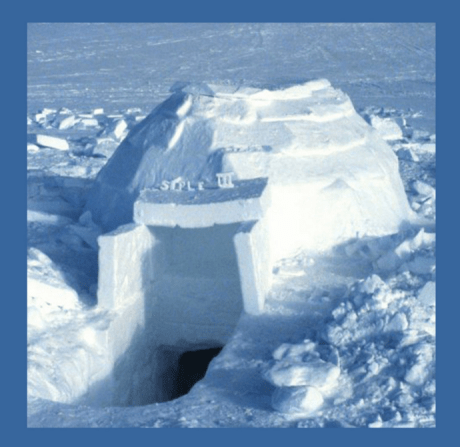
Whether its ennui or a conscious decision to keep critics, and his audience, on their toes the Argentine maverick Miguel Sosa once more changes direction on his latest album for the marvelous cottage-industry label, Jezus Factory. Sosa’s previous peregrination, Bermudas, was an analogue patchbay cosmic psychogeography of the infamous Bermuda Triangle region; filed under yet another alter ego, the Moog and ARP soundtrack homage Cassini Division. Prior to that the Jezus Factory stalwart had spent a tenure living in Antwerp, instigating or joining all manner of Belgian bands, from IH8 Camera to Strumpets and Parallels. The Strumpets would mutate into Angels Die Hard when Sosa had to return back home.
His latest venture, Plano Remoto, ropes in bass player/singer Mike Young, old pal and the owner of the TDR Studio in Buenos Aires Lucas Becerra, on drums, and Nico Courreges on double-bass. The results of two years of studio jamming and a build-up of Tascam recordings, this informal set-up’s self-titled debut (though it could easily be the first and only LP from this incarnation) is a right old mix of styles and ideas. A return, of sorts, to songwriting it starts with a day dreamy Gilberto Brasilia sandy lull of “la las” and pop with the strangely entitled ‘Bossa Zombie’ – the first part of that title is obvious, the second…not so much. Sosa and friends go on to jangle through removed versions of Bad Finger meets The Olivia Tremor Control balladry, harmony power pop (‘Leona’), Jeff Lynne “ahing” psychedelic anthems (‘Mel’), early 60s European new wave cinematic spell casting circus scene-set jazz lullaby (‘Fantasma’), and Baroque retro-futurist galactic love (‘Sandra’).
You may very well also pick up moments of Alex Harvey showmanship prog, soft rock furnishings and what sounds like an ominous Clockwork Orange space march on an album both simultaneously odd but also essentially pop. It’s a form of songwriting slightly askew and novel, yet pleasant, melodic and comfortable to the ear. God knows where Sosa will take us next.
Fra Fra ‘Funeral Songs’
(Glitterbeat Records) LP/24th April 2020

No stranger to this site, Grammy Award winning producer, author and peacemaker Ian Brennan has appeared countless times; namely as the in-situ producer on a myriad of unfiltered and direct performances and as the subject of an interview in 2016. Continuing his collaboration with Glitterbeat Records, Brennan is back with another chapter in the global expletory label’s Hidden Musics adventure; a series that unearths performances from ad-hoc musicians, located in some of the most remote, off-the-beaten-track, environments.
The sixth volume in this collection follows on from excursions to Pakistan, Cambodia, Vietnam and Mali, landing somewhere on a dusty road outside the northern Ghana hub of Tamale. Brennan once more entices a captivating set of recordings with as little interference as possible. Those previous records, whether it was capturing the evocative war-scarred yearns of both survivors of the Vietnam War or Pol Pot’s Khmer Rouge apocalypse, or lending a voice to the suffering plight of the Abatwa people in the border regions of a post-genocide Rwanda, all adhere to the American producer’s signature technique of less is more. As Brennan himself put it in his How Music Dies (or Lives) book in 2016: ‘My concern is not cultural authenticity, but emotional truth and uncloying performances. Purity without baggage.’
Brennan is not in the business of earnest backslapping or ethnography, rather, he wishes to just make what he calls ‘candid and new punk and dusty records.’ Forget Lomax and company, Hidden Musics is less an exercise in preservation and archiving, and more a trailblazing exposure of relatively unburdened magic outside the confines and restrictions of Western music. Responsible for all but one of the series – that being Paul Chandler’s Every Song Has Its End sonic dispatch from Mali survey -, Brennan focuses once again on the extremely localized sounds of his destination.
Fra Fra, the colonial name given to this particular tribe found in the northern part of Ghana, is a convenient name for just a trio of musicians who perform the funeral songs, plaints and paeans traditions of the country. A reversal of the north/south divide, it is northern Ghana that is synonymous for its wellspring of blues. That roots lament can be heard in the rustic, rudimental and springy performances of this group of locals. Led by the appropriately named Small, ‘a man who celebrates his diminutive size rather than seeing it as a lack of’, this trio proved difficult to capture. In part this was down to the processional manner of their playing style delivery; a manner that has more than a passing resemblance to New Orleans marching bands, which isn’t hard to figure when you consider the enforced enslavement of Ghanaians who passed through or made their home in the burgeoning port. So Brennan was forced to go for ‘coverage’ instead of precision, as Small and his wingmen gyrated in circles on the gravel floor.
Playing better (so they’d have us believe) when drunk on the production’s beer quota, inebriation seems to have lubricated proceedings for the better. With just the poor imitation of a guitar – the two-string Kologo – and its rusty percussive jangle of dog-tags that hang around the neck, and the tiny boned mouth flutes – which the Fra Fra call ‘horns’ – the funeral laments on this record are a grieving plea between the earthy and hidden spiritual forces. Primal, hypnotic with various sung utterances, call-outs, hums and gabbled streams of despondent sorrow the personable process of grief is opened up to a new audience. Not as mournful however as I’ve described, the cadence of voices, the scraped tremulous rhythms are often energetically poetic and bluesy: albeit far removed from what most people would recognize as the blues.
A chorus and a twang-y, hollowed-out and sporadic accompaniment of serial instrumentation deliver fatalistic subject matters, such as the destiny of orphans and the pining for loved ones.
Sadly we will hear a lot more funeral music before this Covid-19 epidemic ends, which is yet, and we hope it won’t, to hit Africa on the scale that it has in Europe and North America. For those in lockdown discovering music in its purest forms, the sixth showcase in the Hidden Musics series is another essential, unique taste of the sonic road less travelled. A record in which Brennan remains merely the ghostly facilitator.
The Monolith Cocktail needs your support more than ever:
Hi, my name is Dominic Valvona and I’m the Founder of the music/culture blog monolithcocktail.com For the last ten years I’ve featured and supported music, musicians and labels we love across genres from around the world that we think you’ll want to know about. No content on the site is paid for or sponsored and we only feature artists we have genuine respect for /love. If you enjoy our reviews (and we often write long, thoughtful ones), found a new artist you admire or if we have featured you or artists you represent and would like to buy us a coffee at https://ko-fi.com/monolithcocktail to say cheers for spreading the word, then that would be much appreciated.
Tickling Our Fancy 083: Awale Jant Band, JZ Replacement, Ville Herrala, Passepartout Duo, Orkesta Mendoza…
March 18, 2020
ALBUM REVIEWS
Dominic Valvona

Easing the boredom of coronavirus lockdown, join me from the safety of your own home on a global journey of discovery. Let me do all the footwork for you, as I recommend a batch of interesting and essential new releases from a myriad of genres, which I hope you will support in these anxious times. With all live gigs and events more or less quashed for the foreseeable future, buying music (whether it’s physical or through digital platforms such as Bandcamp) has never been more important for the survival of the bands/artists/collectives that create it.
From Java, there’s the latest project from the Hive Mind label in collaboration with Indonesian music digger Kai Riedl, a showcase of 2007 recordings from Idjah Hadidjah & Jugala Jaipongan plus a number of reworked transformations from a host of sonic and electronic artists. Various Maghreb artists from the 80s and 90s Lyon café and club scene can be heard for the first time on vinyl with a new compilation from Bongo Joe, the electrified Raï, Chaoui and Staifi K7 Club collection. Formed in London, the combined talents of Senegal singer/songwriter Biram Seck and French guitarist foil Thibaut Remy come together once more under the Awale Jant Band umbrella for another Afrobeat and soul showcase, Yewoulen. I also take a look at the Passepartout Duo of Nicoletta Favari and Christopher Salvito’s amorphous travelogue peregrination through Switzerland, the Caucasus, former Soviet Asiatic satellites and China performances, Vis-à-Vis; available next month on vinyl and digitally.
There’s also the upcoming Mexican cross border fraternization musical odyssey from Sergio Mendoza and his Orkesta, Curandero.
Back in Europe jazz bassist extraordinaire Ville Herrala is doing inventive things as a solo artist with the double bass; releasing his debut experimental LP for the Helsinki label We jazz. Still in a European jazz setting, there’s the debut LP from the disruptive JZ Replacement pairing of Zhenya Strigalev and Jamie Murray; the saxophonist and his drummer foil collide together with a myriad of rhythms and ideas to kick jazz into a new decade. We also have the most recent ambient voyage across graph paper from Moonside Tape’s founder Jimmy W, Midi Canoe.
Idjah Hadidjah & Jugala Jaipongan ‘Javasounds Vol.1: Jaipongan Music Of West Java’ (Hive Mind) LP/6th March 2020
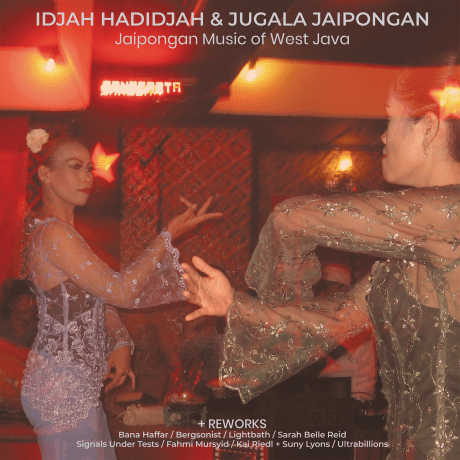
Borne from a dire situation, Indonesian composer and choreographer Gugum Gumbira circumnavigated the country’s authoritarian ban on rock and roll by creating the traditional infused Jaipongan style. Hidden beneath a hybrid of honest harvesting ritual music and atavistic gamelan lay a more sensual spark that encouraged dancing intimacy and a rapid, galloping rhythm that pushed this musical form towards rock: seen by those who made it and loved it as a rebellious gesture. The authorities seemed to have been unaware of its creator’s motives, as the dynamic sound spread throughout the country, unabated, finding favour amongst both the working classes and more affluent.
Mesmerizing with its quickened, often complicated, rhythms – which either flow constantly like a trickle or tumble in a sporadic fit – and bowed quivers, Jaipongan percussion and undulated metallophones are counterbalanced by untethered vocals of romantic and humbled wooing; sung, in this case, on this new edition of Gumbira recordings by the beautiful aria fluctuating Idjah Hadidjah. Gumbira met his muse in the early 80s, luring the iconic singer away from the Sundanese Shadow Puppet Theatre to join his Jugala Orchestra troupe; a collaboration that would go on to last the decade. They would reunite in 2007, recording at the Jugala Studios in Bandung, Java, backed by the studio’s house band. That session now forms the basis of this new vinyl/digi release from Hive Mind and the Indonesian music evangelist Kai Riedl, who present six original tracks from that reunion and a second disc of ‘reworks’ from a variety of contemporary artists in the field of soundscaping and sonic transformations. Riedl, of the Indo-influenced Macha band, has plenty of experience in this sector having made trips to the island of Java with sound engineer Suny Lyons in the noughties to record everything from solo string players to thirty-member gamelan orchestras, in locations as diverse as a darkly-lit nightclub to off-the-grid hideaways. As facilitators they offer up a showcase of the genre’s most entrancing siren and backing group.
Transporting the listener towards the gateway of an exotic unfamiliar geography, the resonating chimes, trinkets, gongs and clapping woody undulations, in fits and starts, playfully evoke both the earthy and ethereal in equal measure. Songs like ‘Sanja’ have a rustic, ritualistic vibe, yet the accelerating rhythm and beat suggests the club dancefloor.
Those Javanese intonations and accentuate sounds are transformed with this package’s Riedl instigated ‘reworks’, an extension of his project to open-up access to the music of Indonesia to western musicians. A range of assemblage inventive artists takes the source material on a journey of variously successful experiments: a music that lends itself well to this treatment as it happens. The North Carolina based artists Bana Haffar turns in a slow trance-y skying vision of the tumbling ‘Hiji Catetan’. N.Y. based musician Bergsonist transduces gamelan into signaled code on her dreamy Orbital-esque remembrance transformation, and Indonesian composer, sound-designer Fahmi Mursyid ratchets up the material with a Autechre breakdown of rewiring, buzz saw beats, dropped metallic ball bearings and zapped bass. For the most part these reworks wander in a serialism and ambient fashion of transcendence; the use of Hadidjah’s startling vocals especially lends itself well to these float-y deconstructions: It’s Jaipongan, but not as we know it.
This latest well-chosen project from the label and friends is another enticing, captivating window into a musical world few of us are even aware of: A great discovery eastwards, with more to follow hopefully.
JZ Replacement ‘Disrespectful’
(Rainy Days Record) LP/13th March 2020

Positively disruptive rather than ‘disrespectful’ to the fundamentals of jazz, the ‘symbiosis’ (as they call it) pairing of saxophonist Zhenya Strigalev (Ambrose Akinmusire, Eric Harland) and drummer Jamie Murray (Sun Ra Arkestra, Native Dancer) play hard and frantically fast with the genre on their latest union, JZ Replacement.
Crossing paths regularly on the London jazz stage, Strigalev has already made an appearance on Murray’s solo project, Beat Replacement. Pooling that talent once more for a new iteration, the JZ duo flex, bounce and distort an abundance of contemporary influences, from trip-hop to d’n’b, on their debut album. Recording with the very much in demand bass guitar maestro Tim Lefebvre – a member of Donny McCaslin’s troupe that famously backed Bowie on his last curtain call -, who brings yet another eclectic layer of dynamism to the polygenesis stew, the JZ pile full-throttle through off-kilter accelerations, breakbeats, hard-bop and vague Eastern European folk traditions to knock jazz into a new decade.
They’re as connected to Roni Size’s own transformative 90s fusions as they are to both modern North American and European jazz, and the explorative deconstructions of Ornette Coleman; blending in a dramatic, sometimes hardcore, fashion a spiraling vortex of squawking bleats with rattling erratic drumming. The previously featured ‘Tubuka’ is an example of those wide-ranging influences; skulking along as it does to a Massive Attack like broody bass line and a dubby post-punk menace before being harried by Murray’s drums and the spooked elephant heraldings of Strigalev’s saxophone. Wavering between a number of rhythmic and intense step-changes, the duo deftly react with both a rush and relaxed vigor. ‘Marmalade For Radhika’ changes that dynamic again with a sweetened drifting exploration that wafts through lingering traces of Savoy label jazz, the blues and the Cuban. But you’re just as likely to hear staccato jerks, short bursts of no wave Blurt and Liquid Liquid, hovering flange, space echoes and piercing squalls in a suffusion of ever-progressive performances.
Two artists at the height of their imaginative prowess, the JZ show a healthy disrespect for conventions as they blast apart the jazz scene; yet somehow make the intensity and waywardness flow. More please!
Awale Jant Band ‘Yewoulen (Wake Up)’
(ARC) LP/27th March 2020
Predominantly imbued by the Senegalese heritage and ‘gawlo’ storyteller tradition of this London-formed polygenesis collective’s songwriter/singer Biram Seck, and by some of its drumming/percussionist circle, the Awale Jant Band effortlessly broadens its musical horizons with another loose fusion of Afrobeat, soft heralded horn section soul and bustled funk. A merger of the Dakar-born dynamic Jant band and French guitarist foil Thibaut Remy’s Awale group, the lilted unison of West African and European musicianship once more leaps into action on the debut follow-up Yewoulen.
It’s a title which when translated from the Wolof people’s language – the dialect that Seck mostly sings in – of Senegal, Gambia and Mauritania encourages a “wake up” call. A unifying wake up call that is, with many of the both expressively joyful and sadder yearns driven by injustice and a need for understanding in a morosely hostile society. First though, there’s romanticism of a sort in the form of the album’s ascendant, snozzled horn and soft rolling, rattled and skipping ‘Sope’; a tender love paean that features a soulful trilling Seck vocally crossing paths with Al Green and Youssou N’Dour – which is handy, as the group’s Senegalese percussionist Medoune Ndiaye was a member of his backing group. Equally as loving, even sweet, is the Highlife with echoes of South America celebration ‘Amandine’; written by Remy as a dedication his first daughter. Staying with the upbeat (musically speaking), there’s what sounds like a busy groove-generated stopover in Lagos with the mellow Kuti vibes funk ‘Domi Adama’; a live feel track with plenty of swirling horns and bobbing sabra drumming action, courtesy of Fofoulah’s Kaw Secka). It’s followed by the Accra vibe and Stax Watts’s horn blasting song of happiness ‘Cubalkafo’.
In the more poignant and societal-political vane, Seck pays a plaintive jazzy lament to an old friend on the two-speed cantaloupe ‘Jules’, and comments on the sensitive issue of ritual circumcision on the African-rock lilted ‘Kassak’.
The message though is one of shared ancestry and a coming together for the benefit of others in an increasingly unsympathetic and dangerous world. This combined force of musicians does it with a real swerve on a groove that is constantly, gently moving between the spiritual and the soulful and funky. The Awale Jant Band turns in another great showcase of cross-fertilized rhythms.
Ville Herrala ‘Pu:’
(We Jazz) LP/21st February 2020
The Helsinki label of We Jazz is one that excels in pushing and remixing the boundaries of contemporary jazz; especially the role of the soloist, turning out vividly dexterous breathing experiments in counter-flow looped saxophone with Jonah Parzen-Johnson’s Imagine Giving Up, and now a suite of taut and quivering string and rhythmic slapped bodywork miniatures played using only the double-bass, by the Finnish bassist Ville Herrala.
A mainstay of the much admired Scandinavian jazz scene, the Turku born native has lent his adroit skills to such scene-setters as PLOP, Otto Donner, U-Street All Stars, Jukka Eskola Orquesta Bossa and the UMO Helsinki Jazz Orchestra. Stepping out from the group set-up, the conservatoire graduate goes solo for his debut LP Pu:. Herrala knocks, pads and bends out-of-shape the familiar bass sound to often take on the characteristics of a distressed cello. Consisting of fourteen vignettes split between the bowed and rhythmic, Pu: balances the springy and elasticated with the spindled and ponderous on an album of various moody experiments. ‘Pu:2’ (all the track titles by the way have this suffix) has the sort of quivery sustain intro you might expect to hear on a Hendrix record – hanging on an air-string before launching into a wild psychedelic scream – whilst ‘Pu:6’ has the double-bass almost mooing. In the minimalist, more sound experiment camp, the pendulous ‘Pu:3’ sounds like something scuttling in the attic, and the pitter-patter ‘Pu:5’ sounds like Herrala’s rolling a ball-bearing across the spider-like strings.
There’s oblique runs up the fretboard, bows across the bridge and saw-motioned tautened frictions throughout an LP that is equally as morose and haunted as it is mysteriously avant-garde. Semi-classical, semi-jazz, semi-minimalist and semi-soundscape, Pu: is an inventive suite of articulations, tones and atmospheres fashioned from a double bass in discomfort; stretched to its limits. Herrala proves a congruous edition to a most explorative jazz label on the fringes of reinvention.
Jimmy W ‘Midi Canoe’
(Moonside Tapes) LP/22nd February 2020
Featured recently in the last Tickling Our Fancy revue with his Kirigirisu Recordings enabled Singapore Police Background collaboration with fellow ambient peregrination explorer Dan Burwood, James Wilson is back this month with an equally minimal atmospheric solo under the Jimmy W appellation. Released via his own brilliant limited cassette specialist label Moonside Tapes, his latest ebb and flow traverse, Midi Canoe, flutters and drifts across crackling graph paper. A concatenate collection of vignettes, passages and extracts, Wilson builds a evanescent soundtrack of static fields, snozzled foggy wafts and air flows; pricked by bendy space warbles, metallic shivers and a gliding piano. There’s also a masked twinkled chime that sounds like a marimba, falling like droplets on a bedding of gauzy washes.
Tracks like ‘Unnameable Little Broom’ are given a Casio preset choral effect lull, whereas the poetically surreal evoked ‘It Was Evening All Afternoon’ has an air of early Cluster.
Showing just how well read this ambient composer is, there’s a third-note emphasized chiming mirage with space birdy warbled piece entitled ‘Mr. Cogito’s Last Dream’; a reference to the Polish author-poet Zbigniew Herbert’s philosophical canvas everyman of the title, the protagonist of a number of reflective, questioning dialogues and poems written under the despair of Communism. Getting technical, there’s an overlap of ghostly trailing notes and repeated nice piano motifs piece that refers to the white notes ‘Lydian’ scale. A mode as it were, this particular scale includes all the notes of an F scale without the Bb.
A suffused wash of enervated motorization and dreamy resonance, Wilson’s Midi Canoe is a mysterious voyage of inner meditation and the otherworldly that’s well worth seeking out. And whilst you are at it, take a look through the whole Moonside catalogue, especially the 2018 abstract hand-painted Mhva LP Scend, a concentrated vapour of sublime ambience.
Passepartout Duo ‘Vis-à-Vis’
(AnyOne) LP/10th April 2020
A project that sadly now seems inconceivable in the face of a growing coronavirus pandemic, the freely traversing duo of Nicoletta Favari and Christopher Salvito use the sounds and discoveries of a journey they made from Switzerland, via the Caucasus and former Soviet Asiatic satellites, to China. In conjunction with the AnyOne Beijing arts company label and curatorial platform to promote experimental and contemporary classical music to a ‘budding’ Chinese audience, the Passepartout Duo collaboration is a transportive album of scrap-built instruments and synthesized peregrinations, split into two separate seventeen-minute amorphous soundtracks.
The first part of these cross-panoramic sound adventures, ‘Heartwood’, expresses a sense of time passing; the metronome ticking away as the cycles of chimed strikes, sonorous drones and scuttling wooden undulations make way to crystalized gleams, spindled mechanisms and vague echoes of gamelan. The final section of this journey moves through uninterrupted duel divided melodies, glassy tubular drops and low veiled foghorn bass until ending on a trance-y spell.
The titular track begins with a busier sonic language of clanging and mallet metallics, overlapped with what sounds like an avant-garde video arcade of speed shifts, trickles and pattered Orientalism.
You’re never really sure of which terrain you might be passing through at any given time on this exploratory project of neo-classical travelogues, and that’s what’s so magical about it: anticipating what sonic landscape might come next, or where the duo will take us. In the process Vis-à-Vis flows through an undefined geography to create something fresh and different; a soundtrack untethered, if you will, to a particular time and place.
Orkesta Mendoza ‘Curandero’
(Glitterbeat Records) LP/10th April 2020

Another crisscrossing romp over the southern border, scion of the Calexico-Giant Sand-Xixa axis of Arizona-Mexican fusions, Sergio Mendoza once more leads his Orkesta out across a fertile musical geography on his new LP, Curandero.
And yet again, Mendoza pays a special homage to the sounds and myriad of styles he heard growing up between his two homes of Nogales, Arizona and Sonora, Mexico on an album that is playful and varied.
With an emphasis on pop, this guest heavy follow-up to 2016’s ¡Vamos A Guarachar! Has a more commercial and light sound. Recorded at a breakneck pace, without much planning. Mendoza and his collaborators go with the flow and mood on a Latino odyssey of reinvigorated musical staples. Songs like the 50s rock’n’roll tonk and cowbell tapping ‘Eres Official’ are meant to evoke the ghost of Buddy Holly, but also stir-up Ritchie Valens. US singer of Latin soul, violinist and fellow Arizona native Quetzal Guerrero makes one of many appearances on this low-rider wolf-whistle of a song. Mendoza says he was thinking about Stuart Copeland of The Police and his loud up the front in production style of drums when recording the bubbly undulated heatwave ‘Head Above Waters’. It sounds though like a jolly trek across the desert with Paul Simon in tow. The strangest flash of inspiration is with the broody love song ‘Little Space’, which features Nick Urata of Devotchka crooning like a mix of the Big O and Chris Isaak. Supposedly starting out like The Jam, Mendoza seems to have instead transformed The Beatles ‘I’m Looking Through You’ with the popular folk tradition of cumbia – a style that has had a renaissance in the last decade; modified, transmogrified to fuse with anything going, including electronica and dance music.
From the rambunctious to sauntering, cumbia is just one of the many Central and South American genres to make this LP. Expect to also hear concertina and raunchy ‘rancho’, blasted and serenaded ‘mariachi’, echoes of Joey Bataan and Andrew Sisters, the ‘boogaloo’ and matinee idol Mexican R&B on this sprawling songbook.
Mendoza is having a great time with all this, as he builds a musical escapism that one minute offers the corney, the next, a Ska like gallop across the border towards the Amazon. It’s a whistle-stop tour of lo fi Casio preset shimmy accompanied cruise ship lounge bars, wistful pining Western savannahs and Tijuana parties; a pop and rock celebration of a multifaceted and inspiring cross border melting pot, with something for everyone.
Various ‘Maghreb K7 Club: Synth Raï, Chaoui & Staifi 1985-1997’
(Sofa Records & Bongo Joe) LP/27th March 2020
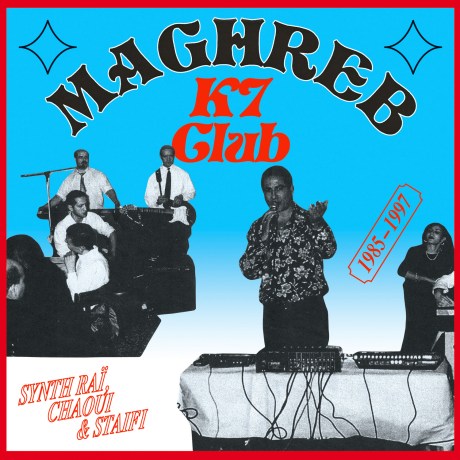
Music from the North African geography of the Maghreb as you’ve probably never heard it; shimmying with Arabian trinkets, rapid tabbing hand drums and exotic sand dune fantasy certainly, yet made otherworldly cosmic and electro-fied for the burgeoning democratized age of affordable low end tech: welcome to the Arabian expat scene in 80s and 90s Lyon.
From the assured collators Bongo Joe and, on this compilation, their partners Sofa Records a eight-song collection of Casio-preset and synthesized transformed musical poetry and lovelorn heartache from a myriad of Algerian artist’s that congregated around the French city’s North Eastern African café and bar hub. Joints such as the Le But Café, the Croix-Rousse and Guillotière were home to a social network hive of activity for conducting business and booking appearances for weddings, galas and studio sessions.
Musically a crossover of the Oran City folk Raï tradition and Zendari rhythm festive Staifi style from back home, the electrified sounds that emanated from this fertile scene were mostly distributed on cassettes, released by facilitators like Top Music, Édition Merabet and SEDICAV. Extraordinarily, and the reason for this collection, vinyl was discarded for the cheap and flexible culture of tape sharing at the time. The fast turnover, not only in recording these tracks but also in getting them on the market, cut out the middleman and helped foster a thriving local distribution network. Still, the power seemed to be with the publishers who could not only modify the lyrics but tamper with the style itself – adding synthesizer and drums – without seeking consent or even running it by the artists that recorded them. This led to some interesting results, as you’ll hear.
For the first time ever, the Maghreb K7 Club LP makes available a smattering of tracks on vinyl; tunes like the Arabian milky way swish ‘Maliky a Malik’ by Zaidi El Batni – which has a strange intro; someone’s footsteps walking through a cheap echo-chamber effect and some slapping – and the bandy, slinky liquid pop mirage with soothing female sighs ‘Goultili Bye Bye’ by funk-disco maestro Nordine Staïfi. Nordine gets two bites of the dancefloor glazed cherry on this album; his second feature, the infectious whistle-and-clap ‘Zine Ezzinet’ is a standout highlight – imagine an Arabian Nile Rodgers mixing down an Orange Juice funk.
Elsewhere, 808 rattles and harmonium merge with spirited song, whilst heavy accentuated Algerian romanticism is augmented by a Miami soundclash of electro beats. Though the most blatant use of that synthesizer influence is found with Salah El Annabi’s Francophone ‘Hata Fi Annabi’, which unexpectedly drops in a whole chunk of Jean-Michel Jarre’s famous ‘Oxygene’ to the mix.
The 90s sourced tracks in this collection are for obvious reasons more polished, but there’s a certain innocence and fuzzy sheen that I quite like about those older, 80s recordings.
Worth a punt just to own ‘Zine Ezzinet’ – fast becoming one of my favourite, essential movers of the year -, this compilation from Bongo Joe and friends is a wonderful platform to discover another bit of ear-opening musical history.
The Monolith Cocktail is now on the micro-payment donation site Ko-Fi:
Hi, my name is Dominic Valvona and I’m the Founder of the music/culture blog monolithcocktail.com For the last ten years I’ve featured and supported music, musicians and labels we love across genres from around the world that we think you’ll want to know about. No content on the site is paid for or sponsored and we only feature artists we have genuine respect for /love. If you enjoy our reviews (and we often write long, thoughtful ones), found a new artist you admire or if we have featured you or artists you represent and would like to buy us a coffee at https://ko-fi.com/monolithcocktail to say cheers for spreading the word, then that would be much appreciated.
Perusal #007: Singles, Previews & Oddities Roundup: Gawd Status, Adam Green, Lunar Bird…
March 9, 2020

A quick shifty, glance, a perusal of the mounting pile of singles, EPs, mini-LPs, tracks, videos and oddities that threaten to overload our inboxes this month by me, Dominic Valvona.
This week’s roll call includes the following picks: Gawd Status, Ghostwood Development Project, Adam Green, Irreversible Entanglements and Lunar Bird.
Gawd Status ‘Admiral Byrd’
(Tru Thoughts) Video/Happening Now
Taken from last year’s debut LP Firmamentum, the ether emanating Hip-Hop conspiracy hallucination ‘Admiral Byrd’ is the latest video to drop from the unholy Gawd Status union of leading UK rap architects King Kashmere and Joker Starr. Making our albums of 2019 features (picked by our resident know-all on the Hip-Hop essentials, Matt Oliver), the visionary psychedelic combo enter the sanctum of the tinfoil hat brigade to merge the real life exploits of the famed and heavily decorated American explorer, navel hero and aviator Admiral Richard E. Byrd with flat and hollow Earth rabbit hole lunacy. Byrd is notable amongst other things, for being the first to fly across Antarctica; a flight that may or may not of been sanctioned as a deep cover operation to find Nazis and UFOs in the uncharted frozen wastes. The mind boggles as a silver-suited adorned Gawd Status set out to unlock a truth.
Matt Oliver had this to say about them and their debut LP, Firmamentum, back in 2019:
‘When the Big Bang wiped everything out first time around, Gawd Status saw it as an opportunity, in which Kashmere’s Strange U spaceship nosedives into the jungle, moondust dementia still sputtering from its exhaust, and Joker Starr swaps the battle arena for the cannibalistic, kill or be killed lawlessness of the Firmamentum outback. The Gawd Status is a complicated one, seriously heavy at a skinflint eight tracks long (even in the current age of artists finally getting album length right, 28 minutes is a bit of a choker), fiercely standing up for itself in articulation of black rage and examination of conspiracy theories, and reveling in The Iguana Man’s thick doomsday fog. The event completed by some utterly bumping soul sisterhood from Fae Simon, its arrival at Tru Thoughts is a slight surprise. Nonetheless it’s a work of art that burns bright like a brilliant, tumultuous dream.’
Ghostwood Development Project Feat. Kool Keith ‘Gulley’
(Nepotismo Records) Single/6th March
Lazer guided, Lee Brunskjill hooks up with one-man cult Hip-Hop progenitor Kool Keith on his new electrified cosmic project the Ghostwood Development Project.
Dr. Octagon throws out a heavy-reference potted cosmology over a dialed calculating electrical field on the project’s inaugural single, ‘Gully’. Originally conceived after the pair met at Mike Patton & The Melvins curated chapter of All Tomorrow’s Parties Nightmare, all the way back in 2008, an initial spark was ignited over a mutual love of Sci-Fi movies, music and horror movie soundtracks.
This whole project has been a long time in the making, Lee was instrumental in putting together Leeds based Punk outfit Autopsy Boys and after they disbanded he went into social isolation to reevaluate his music and what it meant to him.
Lee rebuilt everything he’d known about music and self taught himself to mix, master and scratch and even built his own syths, which you can hear throughout this track.
By the time Lee had got his newfound skills on point he’d created ‘Gulley’ and found himself in need of a vocal and knew there and then that only Kool Keith would work. Having swapped numbers Lee contacted him, played him the track to which he said “This shit is hot!”. Lee remembers: “Within two days Kool Keith recorded his part and sent back his vocals. With that I set about mixing and mastering my first solo release. I wanted to announce my new project with something special but never imagined it would turn out this good.”
The Ghostwood Development Project moniker is a Twin Peaks reference as Lee explains:
“A few people have asked where I got the name from. It was a plan originally spearheaded by Benjamin Horne to build a country club on the location of Ghostwood National Forest. An intriguing subplot in Twin Peaks. Had this plot continued, I believe it would have revealed the imminent destruction of the town and elaborated on the evil spirits as well as the backstory of Bob, and his Lucifer-like nature. It also plays along nicely with the Twin Peaks‘ narrative of “evil in the woods.” The idea is to present my own personal experiences from an alternate timeline within the Twin Peaks universe where the project did happen and chaos was unleashed. My imagery, music, art, narrative and videos come from the area known as Ghostwood. “Stop Ghostwood” is a recurring theme throughout the saga. Naturally I adopted the term ‘Vote Ghostwood’ insinuating hell on earth has arrived.”
Irreversible Entanglements ‘No Más’
(International Anthem/Don Giovanni) Teaser/20th March 2020
The third of my recommendations this week is a tumbling and bowed untethered work of conscious jazz from the free-welding Irreversible Entanglements. Taken from the quintet’s upcoming album Who Sent You?, ‘No Más’ is a sublime rolling gauzy horns wafting teaser for what sounds like a beatified tapestry of poetic actions and contemplations.
Join Camae Ayewa (aka Moor Mother), saxophonist Keir Neuringer, trumpeter Aquiles Navarro, bassist Luke Stewart, and drummer Tcheser Holmes now on this political remonstration.
Lunar Bird ‘A Walk’
Single/6th March 2020
Transforming vulnerability into something positively and celebratory spellbinding and golden, the psychedelic gauzy pop band Lunar Bird turn on the translucent diaphanous charm for their brand new single, ‘A Walk’. Valuing instead of diminishing fragility and all it entails, the Italian formed, but in recent years Wales-based, band wash away all the travails with a most radiant dreamy pop mirage that evokes ethereal and lush moments from Beach House, Stereolab, Diva Dompe and Deerhunter.
A reference to Joan Miró’s famous abstract bronze sculpture of the same name, Lunar Bird is a cosmic fantasy duo spearheaded by Roberta Musillami and Francis George, that on this particular gorgeous recording expanded to also include Eliseo DiMalto on bass guitar and Andrea Rizzo on drums.
A Walk precedes the band’s debut album, released sometime in the Spring.
Adam Green ‘All Hell Breaks Loose (Misfits Cover)’
(30th Century) Track/Available Now
A lot of homages going on in one place here, as the former Moldy Peach turn left banke troubadour Adam Green pays his respects to the Misfits’ towering influential instigator Glenn Danzig with a cover of the band’s Western gallop homage to Scott Walker and John Franz, ‘All Hell Breaks Loose’. Green corrals the talents of producer Loren Humphrey (who also played drums), James Richardson of MGMT (guitar, bass, piano, brass arrangement, brass), and Jesse Kotansky (string arrangement, strings) on this heightened dramatic sweep through the imaginative mind of Danzig, who as it happens is apparently releasing a new album next month of Elvis covers.
In short, this is a congruous cover version that wouldn’t look out of place on Green last nostalgic songbook Engine Of Paradise; an album that channeled Lee Hazlewood, Burt Bacharach, Harry Nilsson, Ian McCulloch, Jim Sullivan and Father John Misty to produce romantic and candid swooners, Midnight Cowboy like cocktail ruminations on love in the context of a society in the grip of an ever intrusive and alienating social media, and folksy ditties imbibed with strolls in the Greenwich Village.
Support the Monolith Cocktail:
Hi, my name is Dominic Valvona and I’m the Founder of the music/culture blog monolithcocktail.com For the last ten years I’ve featured and supported music, musicians and labels we love across genres from around the world that we think you’ll want to know about. No content on the site is paid for or sponsored and we only feature artists we have genuine respect for /love. If you enjoy our reviews (and we often write long, thoughtful ones), found a new artist you admire or if we have featured you or artists you represent and would like to buy us a coffee at https://ko-fi.com/monolithcocktail to say cheers for spreading the word, then that would be much appreciated.
Tickling Our Fancy 082: Jimi Tenor, Slift, Ani Glass, Rainbow Island…
February 18, 2020
ALBUM REVIEWS
Dominic Valvona
I certainly never planned it that way (honest) but artists from the experimental electronica and ambient music fields dominate this month’s roundup. To start off there’s the all-spanning retrospective collection of the eclectic Finnish electronic one-man cult Jimi Tenor to salivate over; the double album compilation NY, Hel, Barca collects together many of his most seminal tracks from across his first six solo LPs (many of which have been deleted). Finally, after at least four years in the making, Welsh vaporous and diaphanous chanteuse Ani Glass releases her debut album, the cerebral electro pop Mirores. And Rainbow Island produces a colourful fuck-up of cosmic spasmodic bandy effects and break beats on their new LP, Illmatrix.
From the more ambient and understated end of electronic music, there’s the Dan Burwood and James Wilson collaboration for the Tokyo-based obscure label, Kirigirsu Recordings, Singapore Police Background, and musician/composer/sound artist Tony James Morton, inspired by the early developments in Hip-Hop, uses real-time sampled vinyl to create minimalist soundscapes on his new mini-CD release Fragments.
A few exceptions though, including the latest grandiose space opus from the Toulouse trio, Slift, the most recent dreamy shoegaze EP from the Brooklyn trio Vivienne Eastwood and a Turkish-Scandinavian progressive jazz fusion obscurity, Matao with Atilla Engin’s Turkish Delight.
Jimi Tenor ‘NY, Hel, Barca’
(Bureau B) LP/6th March 2020
Birthed from a combination of the signature instrument that permeates his omnivorous mixed bag of prolific music and the 70s teen idol, Finnish cult multi instrumentalist and composer Jimi Tenor is unarguably due this double-album overhaul. The later-ego of one Lassi O.T. Lehto, the eclectic ennui-shifting moniker has both absorbed and created a host of fusions over a thirty-plus period – and still continues to do so -, first as the leader of Jimi Tenor And His Shamans and then as both a solo artist and collaborator on a wealth of projects with such luminaries as Tony Allen, Abdissa Assefai, Nicole Willis and The Soul Investigators. From bootyliscious disco funk to Afrojazz and cult soundtracks, Tenor has covered it all. This retrospective spread concentrates on the first six solo albums (of a so far eleven album solo run); covering tracks from the inaugural 1994 Sähkömies album for the Finnish label Sähko, right through to the new millennium and the 2001 album Utopian Dream.
Recorded, hence the first location city of this collection’s title, in a New York apartment on rudimentary equipment, Sähkömies spawned Tenor’s first major club hit, the silly but infectious electro-house bouncing ‘Take Me Baby’. A game-changer, this DAF meets Depeche Mode on the dancefloor earworm took off after Tenor performed it at the Berlin Love Parade. It made the charts in the process and led to a three-album deal for Tenor with the iconic Warp label in the second half of the 1990s. That popular dance anthem is unsurprisingly included here alongside the more erratic burbling Bruno Spoerii-rubs-against-early-hip-hop kooky ‘Teräsmies’ and electronic chemistry set space quirk ‘Voimamies’. The follow-up album for the same label – released a year later – Europa, is represented by the Afro-Techno and minimalist Basic Channel apparition ‘Fantom’, the gyrating sexed-up Yello-House ‘A Daughter Of The Snow’, and lush flute-y Library Music with hints of a Japanese Style Council ‘Unmentionables’.
Moving on to Warp in ’97, the first of a trio of albums for the edgy-electronic label, Intervision, lends four tracks of differing creative influences to this compilation. There’s a transmogrified Lalo Schifrin meets Theremin aria quivered homage to ‘Tesla’, the Glam-skulking Alan Vega seedy ‘Sugardaddy’, Shintaro Sakamoto Kosmische ‘Shore Hotel’ and bubbly, filtered Acid-Jazz spruced ‘Outta Space’. Next up in that run, Orgamism is no less escapist and polygenesis. An Afro-futurist safari of clockwork birds-of-paradise, psychedelic folk flute and square-wave buzzes are conduced on the first track of that cusp-of-a-new-millennia album, ‘Xinotape Heat’, which also kicks off this whole collection. Playing up that millennial doomsday, ‘Year Of The Apocalypse’ is a David Axlerod Biblical somehow waylaid to the Paradise Garage – the rapture played out to a Chicago House piano gospel funk. From the same album the compiler’s of this retrospective have also chosen the jazzy lounge Zombies brooding ‘My Mind’; a semi-romantic curiosity that features Tenor on wafting serenaded saxophone duties.
Into the noughties, the final Warp album, Out Of Nowhere, finds Tenor on a funk odyssey vibe, taking Curtis Mayfield on another of those Acid-Jazz and sitar psychedelic trips with the high value production and commercial ‘Spell’. On the same record, Tenor pairs up with the Riga Symphony Orchestra to spin Easy Listening into a Rotary Connection meets Johnny Richards’ thriller of drama and suspense on ‘Backbone Of Night’. By this point we’re long used to the exotic menagerie of styles and crossovers, and by the time we reach the final solo album, 2001’s Utopian Dream, nothing is a surprise to the ears: The tile track, with its cyber elephant nozzle vacuuming, silly robotic voices and flighty saxophone transduces Marshall Jefferson, whilst on ‘Natural Cosmic Relief’ Tenor puts a pseudo Ian Curtis vocal over a kooky Japanese psychedelic backing.
As likely to hear Orlando Julius and Don Cherry as the Pet Shop Boys, International Pony or Ennio Morricone on acid, Jimi Tenor can mix the commercial dancefloor hit with the most cult and fused of sounds too. On this mixed bag, which is neither linear or thematic in it’s choosing and alignment, Garage follows Jazz follows Library Music oddities follows Funk follows Psychedelic Soul. A great place to start for those new to the influential composer, NY, Hel, Barca is a great retrospective but also an opportunity to own a load of tracks from a deleted back catalogue. Hopefully this compilation will also rightly cement a fairly underground maverick’s place in the development and story of electronic music fusion. There’s something, nearly, for everyone on this twenty-track purview.
Ani Glass ‘Mirores’
(Recordiau Neb) LP/6th March 2020

It has taken a good few years to materialize but finally the gauze-y vaporous debut album from the Welsh synth-pop siren Ani Glass has dreamily emerged. Since being enticed back to the Welsh hinterlands after leaving the frothy pop belles The Pipettes, the Cardiff native has been busy both with post-graduate studies in Urban And Regional Development (graduating in 2018) and involvement in promoting, through her solo musical projects, the Welsh and overlapping Cornish languages – all the way back in 2013, Ani joined the Cornish Corsedh, a group that awards those who’ve contributed to the Celtic spirit and bardship of that atavistic culture. The play on words title from this inaugural LP is itself taken, in part, from that West Coast vernacular: ‘miras’ being the Cornish word for “to look”, the Miró bit a nod to Ani’s favourite artist, the Spanish abstract doyen Joan Miró. Mirores we’re told,’essentially translates as ‘Observer’ thus presenting the album as Ani’s observation of the city in which she was born and now lives.’
Arriving four years after her initial solo EP debut Ffrwydrad Tawel the follow-up arrives in the wake of so much turmoil political and geographical turmoil. Now would seem as good a time as any to push a disappearing vernacular and heritage as Brexit emboldens Welsh nationalism. All this obviously feeds into the gossamer woven translucent ethereal pop of Mirores; an album that is based on a wealth of concepts. One of which is of course preservation, but another, the idea of movement and progress both societally speaking, but also in the sense of a journey; the contours of a picturesque Welsh landscape set against the more churning busy urban soundscape – a counterbalance that you’ll hear for yourselves, suffused throughout the atmospheric undulations of nature and sampled speeches, broadcasts.
After studying it so intensely, it will come as no surprise that another underpinning thread of this album, ‘A reaction to the values of capitalism’s priorities over the valued needs of society’s most unfortunate’, is the American-Canadian author activist Jane Jacobs most infamous polemic blast at the “urban renewal” zealots, The Death And Life Of Great American Cities.
In the interregnum between releases Ani learnt a good deal about production. And on Mirores she’s borrowed from some of the best purveyors of synthesized music: Vengalis, Moroder, Jean-Michel Jarre and Arthur Russell. The results of which send Ani through the looking glass of air-y untethered dreaminess. The arty wispy ‘Peiriawaith Perffaith’ (Perfect Machinery) has a touch of Kylie, even a Welsh Carol Rich, about it; the slightly more fearful and less lyrical ‘Cathedral In The Desert’ bears shades of both Soft Cell and early OMD. Taking a vignette style break from the veiled Celtic Avalon synth-pop, Ani merges South African Township gospel with choral Welsh colliery protest yearn on ‘I.B.T.’.
From the glassy transparent to more hazed-dream weaving, from homages to minimalist abstract painter Agnes Martin to lulled activism, Ani Glass’ patience has paid off with a disarmingly sophisticated pop album of subtleties that gradually seep into the unconsciousness.
Slift ‘Ummon’
(Stolen Body Records) 28th February 2020
The Titan themed Ummon is a supersonic Hawkwind, with Steve Vai in tow as a band member, catching a lift on the Silver Surfers’ board, on an adventure into deep space. I could leave it at just that, but I feel duty bound to expand. So here we go. In search of one of the original heaven and earth usurpers, the Titan seer’s Hyperion (god of heavenly light, father to sun, moon and dawn deities Helios, Selene and Eos), the Toulouse trio of Slift go full on space rock opera with an interstellar epic of doom metal and heavy psychedelic prog.
Trudging with ominous intentions as it is grandiose and squalling in a vortex of bombast, this lengthy conceptual opus swirls around a milky way inhabited by our makers: A universe that, as it happens, rocks to a sonic soundtrack of the Cosmic Dead, Ipsissimus, Sabbath, the Black Angels, Dead Meadows, Pink Floyd, the already Hawkwind, and at its most star-gazing, Spiritualized. Though that’s only half the story. It’s a bastardization of Viking pagan-metal and psych on the fantastical salute to the gods, ‘Thousand Helmets Of Gold’; ‘Width Of A Circle’ era Ronson battles a subdued motorik Can and baggy Stone Roses on the three-parter, ‘Citadel On A Satellite’; and a Teutonic bashing version of The Skids and Saints on the cosmic-punk curtain closer ‘Lions, Tigers And Bears’.
Galactus sized riffs and crescendos are numerous as the stars in the Mother Sky on this Moorcockian misadventure. Ummon is a solid heavy trip with plenty of space dust and ethereal dreamy escapism to break-up the onslaught. Slift go big and bold as the entice Hyperion back from exile to clear up the mess and spread some light on a space-rock epic that is anything but pompous. Slift, we salute you in your endeavor. Keep up the good work.
Singapore Police Background ‘Antiworlds’
(Kirigirisu Recordings) Out Now
Quiet of late even for a label that operates under the radar in relative obscurity, Neil Debnam’s (of cult favourites Flying Kites and, post-accident, Broken Shoulder fame) Tokyo-based label makes a welcome return in 2020 with another understated ambient exploration of soporific entrancing unease. The brilliantly named Singapore Police Background is a collaboration between Dan Burwood of Calm! and James Wilson of Opt Out; two artists that have previously both released ambient peregrinations on the Moonside Tapes facilitators.
Methodology wise the pair recorded together but polished off their evanescent ‘hypnagogic’ (the state immediately before falling asleep) experiments separately. This process results in an indolent suite of purred and murmuring ambient drone ‘Fragments’ and sedative induced reverberating lingers. Antiworlds is in most cases disarming and drifting; the barest traces of piano and guitar hidden beneath hazy square waves transmitted from the ether. Haunted, often creeping, elements of uncertainty can be found on the wearily entitled ‘See The Conkering Heroine Comes/Watching Newsnight Taking Valium’ couplet of malaise. This is continued on the equally entrancing ebb and flow sonic diptych ‘Iridescent Bodies/Under The Awning’. Standing out some what from the Boards Of Canada, sound In Silence and Eno-esque dreamy traverses, the beautifully contemplative ‘Outside The Blossoming Trees Wept Like Waiting Room Laughter’ is a conjuncture of a musical haiku, a scene from post WWII art house Japanese cinema and something lamentably and resigned, dreamt up by Ryūnosuke Akutagawa. There are actually some real nice understated melodic evocations to be found on this languid affair: the opening fragmentary drone being a prime example.
Intermittent signs of the elements and humanity often surface among the oscillations and dissipated swathes on an album by a collaborative partnership that shows potential and promise. Hopefully we’ll hear more from this effective duo in the future.
Tony James Morton ‘Fragments’
(Focused Silence) Mini-CD/17th February 2020

It might not sound apparent but the cylindrical generated ambience, opaque minimalist stirrings and waves of the musician/composer/sound artist Tony James Morton’s latest ‘fragmentary’ experiments are, process wise, inspired by techniques used in the early development of Hip-Hop; namely, creating new improvised sonic traverses in real time from samples taken directly from vinyl.
‘A fragmented interpretation’ as the PR spill describes it; Morton passes his sources through a custom-built sampler using a specially created visual programme language for music, the Max/MSP. That technique and method is interesting enough, pitching, as it does, Morton as a kind of conceptual DJ. But the most important thing is: how’s it sound.
Well, the sound is quite subtle with soundscapes materializing slowly, building towards fizzled peaks before dissipating gradually. ‘Fragment #1’ of this gently spinning moiety features enervated cause drones and crystallizations that eventually go on to form a heavenly momentum of cosmic rays. The second Fragment has a rotor like motion that turns out a vaporous melody. A distant muffled thunder acts as a deep bass whilst the dreamy and mysterious are evoked from Morton’s sustained pulses and buzzes.
The Fragments material is a stimulating, stirring couplet of improvisations; an evanescent passing of sound that has its moments.
Matao with Atilla Engin ‘Turkish Delight’
(Arsivplak/Guerssen) LP/19th February 2020
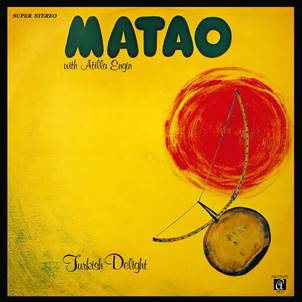
It won’t surprise you to learn that this latest obscure quirk from the Guerssen hub (this time via the Arsivplak label) is yet another example of a record that didn’t quite make the grade; a strange brew from the edges of jazz-fusion, close but not close enough technically, artistically or inventive wise to break through a crowded market.
A Turkish Delight from the Danish recorded union of the Matao trio and Atilla Engin, this rare (intentionally I’m sure) convergence of Turkish traditional music and progressive jazz, bordering at times on cult library music and at others on Krautrock (Agitation Free, Xhol Caravan) was only ever released in Denmark, but never, surprisingly, released in its spiritual home of Turkey. An exotic shimmy of belly-dancer sequins and trinkets, noodling and whirling between souk rock and sublime porte kitsch, Engin’s rootsy Turkish galloping and rattling percussion goes up against the 5/8 signature wah-wah, fuzzed and choppy electric guitar and clavinet-like electric piano on a series of instrumental jams that ape Santana, Pink Floyd, Passport, Elias Rahbani and Mustafa Ozkent.
Taking another punt a year on, the label is now releasing this exotic curio on limited vinyl, and again via the usual digital channels. Whether you need this Turkish flavoured fusion in your life or not remains debatable. However, that’s not to say there isn’t some interesting highlights or fine playing as the mixed Scandi-Turk quartet certainly stoke up a far zappy progressive noise and dynamic enough rhythm.
Anyone recently introduced to such modern Turkish psychedelic movers like Altin Gun will love it.
Vivienne Eastwood ‘Home Movies’
EP/2nd January 2020

Appropriating the grand disheveled dame of punk couture, but with a slight change in compass point direction, the gauze-y American dream-wave and shoegaze band Vivienne Eastwood have drifted into my inbox of submissions this month with a melodious, submerged in a dreamy liquid EP of sepia Home Movies. With scant information it seems the trio have been knocking around the lush flange-reverb coated scene of hazy guitar pop for eight years.
Progressively more dreamy in a wash of phaser drifting echo, previous releases have been more cause, fuzzy and distorted compared to this six-track of lo fi diaphanous malingering. Less Ariel Pink or No Age and more Lowtide and Slowdive, Home Movies’ sound spirals in a mirror-y fashion between the veiled layering pop of Sam Flex meets Lush opener ‘Hanging Gardens’, and the John Hughes soundtracked by Holy Wave ‘Afterall’. Nearer the backend of the EP, ‘No Toes’ seems to slide towards acoustic grunge.
It’s a lovely dream-pop, with certain post-punk edge, kind of EP, rich with wafting recollections and yearnings.
Rainbow Island ‘Illmatrix’
(Artetetra) LP/2nd February 2020

For a label synonymous for the chthonian and dangerous, the latest spams of omnivorous derangement from the sugarcoated named Italian quartet Rainbow Island at least finds some cosmic levity amongst the despair of the age. Though the recondite facilitator label responsible for this, as usual, limited release – the Italian experimental underground specialists Artetera – says it features darker, heavier sonorities than usual, Illmatrix rebounds across a frazzled bubble bath of bandy and bendy effects and off-kilter drum breaks. Certainly under a multitude of stresses and contorted manipulations, the fucked-up matrix has its moments of tangible rhythm and even melody to lock onto.
From a polygenesis source, with all four members spread throughout the UK, Thailand and their native Italy, the Rome conceived Islanders have pulled and stretched in all directions. Somehow it all comes together though, in an admittedly weird fashion. The opening candy kook ‘Jesterbus Ride’ is simultaneously lax, primal, Kosmische and psychedelic; a spherical chemistry of ever-shifting ideas that sounds like a Trip-Hop meets Library Music remix-in-motion by Andrew Weatherall. Elsewhere you hear what sounds like someone repeatedly hitting plastic tubes with a paddle reverberating beats, obscured masked voices and conversations, the clashing of blunt swords and menacing vacuum reversals.
It’s an odd sonic world indeed; a cosmology that harries the more mysterious sedation of Cluster with a 2-Step Dub beat (‘Simmia’), evokes the spasm-industrial sound of Populäre Mechanik (‘Cacao Hip Mini’) and plays Ping-Pong with Autechre and Unlimited outtakes Can (‘Dropzone’). It’s dance music on the verge of a nervous breakdown in one instance, utterly fucked-up the next, a deranged colorful information overload transduced into a concentrated energy of warped brilliance.
If you find Rainbow Island somehow cute, then you can always try the more sobering augurs of apocalyptic doom from label mate and fellow compatriot Giancarlo Brambillia. Released at the same time as the Illmatrix LP – a double bill if you like – the Milan-based maverick pitches the end of the “human epoch” on his limited cassette tape discourse Bee Extinction. Under the Kuthi Jin moniker, the drone-monger gives a less than optimistic outcome to our chances of survival.
Both albums from Artetetra inhabit a similar anxiety yet couldn’t sound more different. Go seek out, and whilst you’re at it take a perusal of the label’s entire back catalogue. You won’t be disappointed.
The Monolith Cocktail is now on Ko-Fi
Hi, my name is Dominic Valvona and I’m the Founder of the music/culture blog monolithcocktail.com For the last ten years I’ve featured and supported music, musicians and labels we love across genres from around the world that we think you’ll want to know about. No content on the site is paid for or sponsored and we only feature artists we have genuine respect for /love. If you enjoy our reviews (and we often write long, thoughtful ones), found a new artist you admire or if we have featured you or artists you represent and would like to buy us a coffee at https://ko-fi.com/monolithcocktail to say cheers for spreading the word, then that would be much appreciated.
Perusal #005: Singles, Previews & Oddities Roundup: The Band, Chassol, Graham Costello’s Strata…
February 17, 2020
PREVIEW/REVIEW
Dominic Valvona

A quick shifty, glance, a perusal of the mounting pile of singles, EPs, mini-LPs, tracks, videos and oddities that threaten to overload our inboxes this month by me, Dominic Valvona.
For your consideration this week, tracks, even a film trailer, from The Band, Chassol, Nordine Staifi, Graham Costello’s Strata and, Van Pool.
Graham Costello’s Strata ‘Cygnus’
(Gearbox Records) Single/14th February 2020
From out the burgeoning Glasgow jazz scene rises Graham Costello’s Strata; an impressive sextet that edges towards post-rock and minimalism but was founded on a synthesis of flowing progressive and fusion jazz. Embodied in their latest untethered mini-opus, a free-flowing ascendance to the northern constellation of ‘Cygnus’, drummer Graham and his Strata troupe dynamically turn in an amorphous performance. Both moody and mysterious, with a certain gravitas, they build subtly from horizon emergent lingering caressed saxophone and ebbing gentle piano to a crescendo of rapid percussive barreling rolls, punchier horns, slam the lid down on the keys avant-garde piano and Afro-jazz undulations on a suffused journey towards the stars.
A freestanding single, ‘Cygnus’ was recorded, as it happens, at Bryan Ferry’s Studio One in West London, and engineered by Hugh Padgham. Alongside Graham on this night flight peregrination were Harry Weir on tenor saxophone, Liam Shortall on trombone, Fergus McCreadie on piano, Mark Hendry on guitar and Joe Williamson on electric bass.
Of interest from the Archives:
Also on Gearbox Records: Abdullah Ibrahim ‘The Balance’ (review)
Nordine Staifi ‘Zine Ezzinet’
(Sofa Records/Bongo Joe) Teaser track from the MAGHREB K7 CLUB: Synth Raï, Chaoui & Staifi 1985-1997 compilation/27th March 2020
The Maghreb as you’ve probably never heard it before: All whistles, Casio presets and boogie disco on the cusp of alt-pop, like a North African Postcard Records. Sofa Records in conjunction with Les Disques Bongo Joe present Maghreb K7 Club: Synth Raï, Chaoui & Staiif 1985-1997, a compilation of tracks recorded and produced between those years in Lyon, France by musicians from North Africa’s Maghreb region; created in the hothouse environment of the city’s café culture by artist mostly from Algeria. This compilation brings together eight tracks that were then released on audio cassettes only, offering them for the first time ever on vinyl. Now there’s an offer you should find hard to refuse.
As the PR spill explains: ‘Most of Lyon’s musical scene is composed of men originating from eastern Algeria, but since the 1950s, the Croix-Rousse and Guillotière cafés have counted musicians from all over Maghreb. These cafés were social hubs, where these individuals met up weekly; playing together and sharing their everyday life experience — but they also had a major role in the development of popular music of French-based North Africans. In Lyon, Le But Café in the 3rd arrondissement or the bars on Sébastien Gryphe Street in the 7th arrondissement were among these: one could conduct business there, getting booked for a wedding, a baptism, a gala, or a studio session… all took place there.
Playing together in Lyon. The practice of music was cross-regional with different North African influences, but also with local traditions. These versatile musicians also absorbed new local influences: music within the context of immigration was a perfect school for musical cosmopolitanism. Chachacha or tango versions of some Cheikh El Hasnaoui tracks come to mind, or Mohamed Mazouni’s jerks and twists. Like their predecessors, the musicians in this compilation brilliantly integrate raï or staïfi tunes with disco aesthetics or funk guitar riffs as Nordine Staifi did. You could also think of Salah El Annabi who used the Oxygene theme (1976) by Jean-Michel Jarre, the Lyon-based composer and electronic music pioneer. “As we say around here, mixed weddings make good-looking lads!” said Abbès Hamou, a musician from Place du Pont. Following on from their musical traditions and unrestrained inventiveness, the musicians’ repertoire naturally assimilated their era’s aesthetics and technologies.’
From that compilation here’s Nordine Staifi’s ‘Zine Ezzinet’. Expect a full review report next month.
Robbie Robertson And The Band documentary ‘Once Were Brothers’
Film/Select cinemas from 21st February 2020
As the earnest progenitors of a peregrination soundtrack, later to be expanded into a whole genre in its own right, under the audacious ‘Americana’ moniker, The Band defined a bygone pioneering spirit at a time when the American youth (especially) were pushing for both social and political change. Their songs spoke and sympathized with a certain inherent truth and hardiness from an age of steam, aligned with the country’s most destructive historical chapter, the civil war; out-of-step yet somehow wholly relevant in the face of civil rights and the Vietnam war. In a manner they would also be chief instigators of the whole ‘revival’ scene that saw The Beatles and bands like The Kinks return to more pastoral roots.
It didn’t matter, and is a totally fatuous bum-steer that four fifths of that quintet were born and raised over the boarder in Canada; an historical America will forever be immortalized by such summary tales of the old west as ‘The Weight’, ‘The Night They Drove Old Dixie Down’ and ‘Across The Great Divide’ regardless of the authors nationality. Tales, which were so vivid as to be cinematic in their storytelling and nature; encompassing both tragedy and perseverance through the eyes of richly textured characters: the sort of individuals that could have easily stepped out of the novels of Steinbeck, Faulkner, Hemmingway and the photo-plated almanac chronicles of the 19th century.
It wasn’t just the landscape and their own interpretations they owned so convincingly, they could also be relied upon to adopt the mantle of the artists they covered too, from Chuck Berry to Sam Cooke. As a backing band themselves for such luminaries as Ronnie Hawkins, through to Bob Dylan (electrifying the troubadour laureate’s sound), that spiritually revered line-up of Robbie Robertson, Rick Danko, Levon Helm, Garth Hudson and Richard Manuel lived up to their presumptuous ‘THE BAND’ moniker; incorporating the sweet gospel soul of the deep south with country, ragtime, Tin Pan Alley and bluegrass at the drop of an old proverbial hat; they were ethereal and superior in musicianship, way beyond most of their contemporaries reach.
Rightly receiving another moment in the spotlight, a new documentary film, focused towards the group’s only surviving member, Once Were Brothers is inspired by Robertson’s 2016 bestselling memoir testimony of the same name. Presumptuous (that word again) to now single out his name (Robbie Robertson and the Band), even if he saw himself as unelected leader, this latest overview is billed as a confessional, cautionary, and sometimes humorous tale of Robertson’s young life and the creation of one of the most enduring groups in the history of popular music. The film, directed and put together by the trio of old hand Martin Scorsese (who of course memorably captured The Band’s The Last Waltz curtain call for posterity), Brian Grazer and Ron Howard blends rare archival footage and interviews with many of Robertson’s friends and collaborators, including Bruce Springsteen, Eric Clapton, Van Morrison, Scorsese, Taj Mahal, Peter Gabriel, David Geffen and Ronnie Hawkins, among others.
Hopefully it will prove a worthy chapter in the story of one of the greatest Bands to have ever stalked the Earth.
Chassol ‘Rollercoaster (pt.2)’
(Tricatel) Single/Out Now
On the big dipper of life, the surreal mindscape of the very much in-vogue idiosyncratic French producer Chassol is as cerebral as it is fun.
Firstly though, for those who’d like a bit of background, Paris-Martiniquais Chassol (real name Christophe Chassol) has been finessing his own experimental ‘ultrascore’ approach to composition, in which – inspired by Steve Reich and Hermeto Pascoal – vocal and ambient sounds from video footage are harmonised in perfect sync to create a living, breathing soundtrack. His experiments caught the ear of Diplo, who in turn put Frank Ocean onto Chassol’s 2013 album, Indiamore. Ocean – at the time working on Blonde – then tapped Chassol to join him at Abbey Road, to develop speech harmonisation on the album (following a period of Chassol ignoring his calls, having no idea who Ocean was). Shortly afterwards Solange – having Shazam-ed his music at a performance installation – sought out Chassol to produce several tracks on 2019’s When I Get Home.
His latest album, the upcoming Ludi (released on 6th March) is inspired by Hermann Hesse’s first long-form novel The Glass Bead Game, or as it is sometimes published the Magister Ludi (hence the LP title), and the themes of play, both in relation to that novel’s central board game theory and to an inspired reification of four sociology-based elements of ‘play’, as envisaged by sociologist Roger Caillois: chance, masks, competition (as depicted in the previous single, ‘Savana, Céline, Aya’) and on this latest single, ‘Rollercoaster (Pt.2)’, vertigo.
A bizarre ride that transduces and harmonises the sounds and sights Chassol captured on a ride at the Tokyo Dome theme park (captured GoPro gonzo style and without permission in the accompanying video), ‘Rollercoaster (pt.2)’ is a kooky adrenaline rush that features the guest vocal “ohms” of Alice Lewis, Thomas de Pourquery and Alice Orpheus.
There are certainly some heavy depths to both this single and the forthcoming multi-disciplinary double-album, yet a sense of wonderment, exploration and excitement too.
Van Pool ‘Bathing In The Open’
LP/26th January 2020
If you’re familiar with the expletory saxophone playing and electronic manipulations of the prolific Andy Haas – from his burgeoning days as a Muffin in Martha’s new wave outfit in the late 70s to his work with Meg Remy’s ever expanding U.S. Girls troupe, to his myriad of solo and collaborative projects, then you’ll be thrilled to hear he’s just formed a new group, the Van Pool. Different in mood to the amorphous unsettling augers and outright nightmares that permeated the evocations of his collaboration with Dan Fiorino on the American Nocturne visions, this latest improvised experiment of smoldering, squawking and yearning saxophone contortions and attuned blowing is a traverse of contemporary jazz.
Joining Andy on the quartet’s second album, Bathing In The Open, are the guiartist/bassists Omer Leibovitz and Kirk Schoenherr and drummer Layton Weedeman. From tranquil undergrowth wanderings, permeated by wafted guitar twangs and lingering saxophone to the more bent out of shape, more piercing and intense, this fantastical, transportive suite of ‘ideas’ is for fans of the Cosmic Range, Donny McCaslin, the Ross McHenry Trio, but also just fans of free-form, unburdened performance in general.
Of interest from the Archives:
Don Fiorino and Andy Haas ‘American Nocturne’ Review
U.S. Girls ‘In A Poem Unlimited’ Review
The Monolith Cocktail is now on Ko-fi
Hi, my name is Dominic Valvona and I’m the Founder of the music/culture blog monolithcocktail.com For the last ten years I’ve featured and supported music, musicians and labels we love across genres from around the world that we think you’ll want to know about. No content on the site is paid for or sponsored and we only feature artists we have genuine respect for /love. If you enjoy our reviews (and we often write long, thoughtful ones), found a new artist you admire or if we have featured you or artists you represent and would like to buy us a coffee at https://ko-fi.com/monolithcocktail to say cheers for spreading the word, then that would be much appreciated.
PHOTOS/GIG
Giorgio Lamonica

Continuing in 2020 with our collaboration with the leading Italian music publication Kalporz, the Monolith Cocktail will be cosying up and sharing reviews, interviews and other bits from our respective sites each month. Keep an eye out for future ‘synergy’ between our two great houses as we exchange posts.
This month we feature Giorgio Lamonica‘s recent photos of the virtuoso jazz drummer Yussef Dayes at the Locomotiv in Bologna.
Yussef Dayes Live At Locomotiv, Bologna, Italy
For the only Italian date for the British drummer (accompanied on bass by Rocco Palladino, the son of the much better known maestro Pino) the Locomotiv was completely full. The surprising thing was the very young average age of the audience, a sign that the idea of jazz being mainly the object of passion for those beyond a certain age is perhaps an outdated concept given the evolution that the genre is having; increasingly contaminated, as it is, by other sounds and other cultures.
Yussef Dayes is very good. He seems to have a brain for every limb and can create a deep empathy with the audience. Fantastic a long moment of improvisation during which a dialogue was established between the drummer and the audience: Yussef proposed a rhythm and the audience responded with vocals. This went on until the quatrains proposed by the drummer became so complex to sing that the whole Locomotiv broke out in a thunderous laugh. A very pleasant evening, we can only thank the venue once again for the always interesting choices in their programming.









Our Daily Bread 362: Pulled By Magnets ‘Rose Golden Doorways’
February 3, 2020
Album Review
Dominic Valvona

Pulled By Magnets ‘Rose Golden Doorways’
(tak:til/Glitterbeat) LP/28 February 2020
Prime motivator/instigator behind a myriad of acclaimed experimental jazz outfits, Seb Rochford’s influences and scope could be said to be wide-ranging and highly eclectic. This is due in part to the prolific and very much in-demand polymath’s Anglo-Indian and Irish-Scottish heritage; all of which has been fed, transduced into contemporary luminaries Polar Bear, Sons Of Kemet and Basquiat Strings, his collaborations with such notable doyens as Patti Smith, David Byrne and Brian Eno, and his soundtrack work. Though it might not be initially obvious, but the Indian part of that heritage informs his newest and most dark, murky abstracted project yet, Pulled By Magnets. Imbued by that and recent travels to India itself, the pacing and timings of the improvisational colouring ‘raag’ permeate the serialism subterraneans of this new trio’s debut LP, Rose Golden Doorways.
Featuring fellow Polar Bear Pete Wareham on contorting inpained and withering saxophone and Zed-U and Empirical’s Neil Charles on stalking, menacing bass guitar duties, Seb instigates, sets in motion opaque industrial post-punk rituals and esoteric jazz moods from his drum kit on an album of both the primal and mysteriously cryptic – adding another layer of mystique and interpretation through the album’s artwork, Seb visually offers a number of numerical value symbols to decipher.
Recorded in a Stoke Newington church (of all places), the atmosphere is not so much godly as supernatural, often even chthonian. No holy communion here, rather a recondite performance of searching and roaming about in the darkness under various stresses. The album starts with a howl of machinery and industrial wanes; a heart of darkness oscillation of piercing quivers and Bish Bosch style Scott Walker mood accompaniment. From this the staccato and strung-out evocations move with a certain menace through a suite of pendulous tribal witchery, lurking leviathans, lunar prisms, dungeons and cosmic doldrums. Between the churning maelstrom and river Styx voyages you may hear shadows of Andy Haas, Arthur Russell, Massive Attack, Mani Neumeier, Faust and a sedated King Crimson. All of which is of course undulated with that transformed vision of classical Indian music; a melodic framework that has no direct translation to the classical ideas of European music, and so encourages this kind of experimentation that Seb’s new project grants it.
Not a jazz album in the traditional or even avant-garde sense, Rose Golden Doorways is Seb’s most amorphous dark exploration yet; a total escapism from the tangible. It will be interesting to hear where he goes next.
Hi, my name is Dominic Valvona and I’m the Founder of the music/culture blog monolithcocktail.com For the last ten years I’ve featured and supported music, musicians and labels we love across genres from around the world that we think you’ll want to know about. No content on the site is paid for or sponsored and we only feature artists we have genuine respect for /love. If you enjoy our reviews (and we often write long, thoughtful ones), found a new artist you admire or if we have featured you or artists you represent and would like to buy us a coffee at https://ko-fi.com/monolithcocktail to say cheers for spreading the word, then that would be much appreciated.

