Monolith Cocktail Social #52
February 10, 2021
Playlist/Dominic Valvona

The inaugural Monolith Cocktail Social playlist of 2021, the blog’s eclectic/generational spanning version of our ideal radio show, includes the unusual mix of wonders, gems, missives and oddities from across time. With a couple of tracks in tribute to those we’ve recently lost too (including former down ‘n’ dirty Doll face glam puss Sylvain Sylvain and British progressive folk darlings the Trees siren Celia Humphris).
Tracks:..
Grazia ‘Soyle Beni’
Tiger B. Smith ‘Everything I Need’
Sylvain Sylvain ‘Trash’
The Spaceshits ‘Backstreet Boogie’
Paladin ‘Third World’
Prince Lasha, Sonny Simmons ‘Psalms Of Solomon’
Hareton Salvanini ‘Seios’
Cleveland Eaton ‘Chitown Theme’
Rotary Connection ‘The Weight’
Christy Essien ‘Take Life Easy’
King Tee ‘At Your Own Risk (Marley Marl Remix)’
Blade ‘Fade ‘Em Out’
Killa Instinct ‘The Bambi Murders’
Black Sheep ‘Yeaaahhh’
Marion Brown ’27 Cooper Square’
Night Beats ‘Don’t Be Afraid Of The Dark’
Tucker Zimmerman ‘Bird Lives’
Anne Briggs ‘Step Right Up’
Trees ‘Epitaph’
Sven Wunder ‘Toryanse’
Jody Grind ‘Plastic Shit’
Andrew Cyrille ‘Metamusican’s Stomp’
Colosseum ‘Take Me Back To Doomsday’
Electric Moon ‘Hotel Hell’
Rialto ‘Untouchable’
Made In Sweden ‘Winter’s A Bummer’
Mythos ‘Terra Incognita’
Odd Nosdam ‘Wig 02’
Rancho Relaxo ‘Sugar For The Devil’
Annexus Quam ‘Osmose I’
African Head Charge ‘Crocodile Shoes’
MRR-ADM ‘11even’
The Auteurs Vs µ-Ziq ‘Chinese Bakery’
Colin Newman ‘I’ve Waited Ages’ Martin Dupont ‘I Love The Lovers’
Ron Geesin ‘Parallel Bar’
Krohme ‘Goon Opera’
Azanyah ‘Let God Come First’
Yumi Arai ‘曇り空’
Dino Valente ‘Tomorrow’
Hi, my name is Dominic Valvona and I’m the Founder of the music/culture blog monolithcocktail.com For the last ten years I’ve featured and supported music, musicians and labels we love across genres from around the world that we think you’ll want to know about. No content on the site is paid for or sponsored and we only feature artists we have genuine respect for /love. If you enjoy our reviews (and we often write long, thoughtful ones), found a new artist you admire or if we have featured you or artists you represent and would like to buy us a coffee at https://ko-fi.com/monolithcocktail to say cheers for spreading the word, then that would be much appreciated.
Our Daily Bread 405: Kahil El’ Zabar ‘America The Beautiful’
October 13, 2020
Album Review/Dominic Valvona

Kahil El’Zabar ‘America The Beautiful’
(Spiritmuse) 23rd October 2020
Continuing a creative partnership with the Spiritmuse label, Chicago jazz luminary Kahil El’Zabar releases his third African rhythmic imbued spiritual album in two years; working yet again with an ever changing lineup of fellow visionaries and rising virtuosos from his home city and beyond. Following last year’s Be Known Ancient/Future/Music (which made our albums of the year) and this year’s Spirit Groove album collaboration with David Murray, the jazz incubator School of The Association for Advancement of Creative Musicians alumni and five decade jazz veteran pieces together a suitable afflatus cry from the despair of modern America on his latest sweeping grand gesture, America The Beautiful.
Though obviously, as you will hear for yourselves, chiming with the current divisive turmoil that has erupted in the wake of George Floyd’s “unconstitutional murder, and the Covid-19 pandemic, the catalyst was Kahil’s score for Darryl Robert’s award winning documentary film of the same title: a 2007 film about “self-image” in the USA. That title music, two versions of which bookend this ancient with a modern pulse oeuvre, is itself both an ironic and sneering riff on the original patriotic anthem that was written by Katherine Lee Bater, with music by church organist Samuel A. Ward, over a century ago. Bates the scholar, collage professor and highly prolific writer first wrote the proud-swelling lyrics as a poem (Rikes Peak) after being inspired by the great American outdoors and the country’s own version of the seven wonders. Countless versions have been performed, recorded since, including the maverick jazz artist Gary McFarland who devoted a conceptual eclectic musical suite to its rousing evocations; in the process jazzing and funking up the old bird. This take however finds little to rouse patriotism, sharing more in common with Ornette Coleman’s grandiose symphonic dissonance Skies Of America; that suite a contortion of Coleman’s naturalistic Native American rituals inspired master plan.
Kahil includes both a lilted and horn blown Bernstein-via-a-century’s-worth-of-Chicago jazz instrumental take, and a 80s pepped dance groove vocal version: The latter features the bandleader straining, pulling, mooning and crooning the original lyrics of ‘America The Beautiful’ to a dance limbering Chicago House like beat.
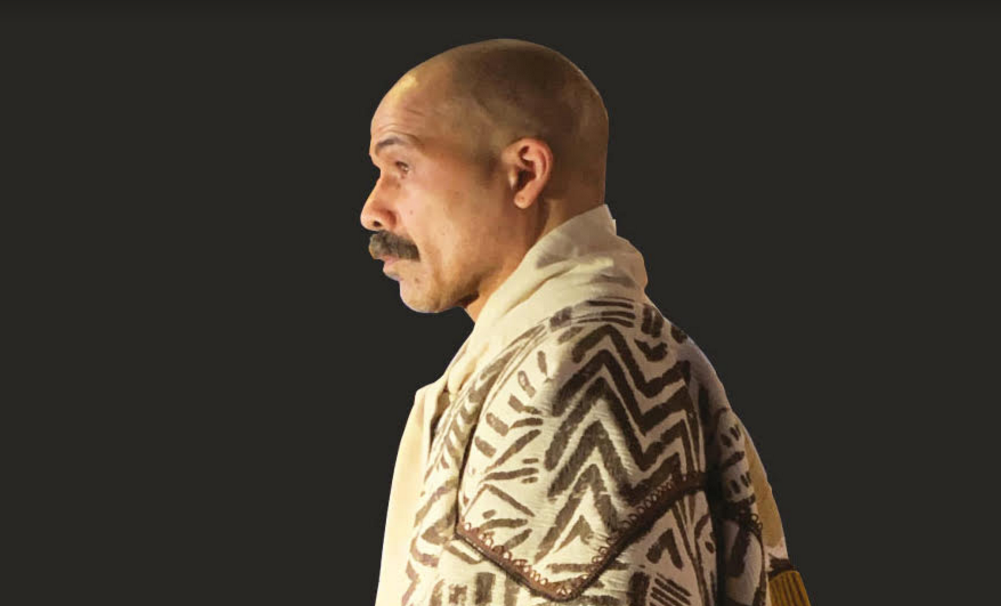
Building a fully realized album around that anthem, Kahil went back to record an array of new material and riffs on standards: his choices proving more spiritual, healing than angry and enraged. For this is a jazz artist preaching connectivity during a momentous epoch. A time, he hopes, that despite the tumultuous unrest and anxieties can offer us time to pause, reflect and reassess. In the spirit of one of Kahil’s idols, Coltrane, his inspiration is that grand doyen of jazz’s message of a “love supreme”, and also the African adventures of Byrd and Gillespie via Sun Ra’s cosmology of Afro-futurism. And so musically, despite the swells and layering of discordant instrumentation wailing, and crying out, this is a mostly divine experience; sweetened by the inclusion of a romanticized, serenaded beautiful version of the Bee Gees (via Al Green’s more soulfully hushed vision) ‘How Can You Mend A Broken Heart’. Only Kahil switches the “you” to “we”, and in doing so forces the emphasis on all of us to mend the rift. Musically it’s a swoon; a walk through a sweet Central Park backdrop. It has an air of both pained heartbreak yet also hope, and is the album’s most tender performance.
Swinging to a ‘Orleans gait, Kahil’s big band version of Charles Wright & The Watts 103rd Street Rhythm Band’s famous strut ‘Express Yourself’ is reimagined as a semi-classical jazz funk of King Curtis and Albert Ayler. Classically trained jazz cellist and Nicole Mitchell’s Black Earth Ensemble student, Tomeka Reid offers part of that semi-classical feel with a deep, arching quivery cello accompaniment.
Closing a quartet of congruous cover transformations, Kahil ad his troupe expand on the Afro-jazz percussive-heavy ‘Afro-Blue’ odyssey; the first jazz standard in the States built on a typical African 3:2 cross rhythm. Made famous by Mongo Santamaria with the Cal Tjader Sextet in ’59, and transformed by Coltrane who took it in a waltz-y swinging direction, this Chicago hothouse of talent goes earthy and deep, atavistic and dramatic. Samuel Williams plays a harassed, pointed elbow thrashing violin against the clay percussion and Masekela trumpet on a message from the motherland.
With all the original connotations bought into a modern epoch of discord, these standards now echo a longing and pain for change.
The rest of the album channels the inimitable groove that runs through Chicago jazz, soul, R&B, blues and dance music. ‘Jump And Shout (For Those Now Gone)’ is a poignant example of this history; evoking the city’s spiritual and avant-garde masters – The Art Ensemble Of Chicago being one. It’s a kind of sentiment, a yearning for justice, but with a bounce and venerated enlightenment. ‘Freedom March’ couldn’t be more relevant; the long march to equality accompanied by apparitional wails, shackles shaking percussion and anguished rasps of sax. It also sadly marks one of the late baritone saxophonist greats, Hamiet Bluiett’s last performances. Not only a phenomenal sax presence, but also a renowned clarinetist and composer, the co-founder of the late 60s Louisiana Black Artists Group and former member of the Charlie Mingus Quintet and the Sam Rivers large ensemble, blows a moving honked and aria-like squealing raspy baritone through this counterbalance of Mardi Gras swing and the disconsolate.
Kahil, literally, preys for guidance on both the electric piano dabbing, lamenting swell ‘That We Ask Of Our Creator, and the sweeping fluty beat-stretched ‘Prayer For The Unwarranted Sufferings’. Both draw from the pool of despair, yet find just as much hope to offer some glimmer of overcoming the impasse.
An extraordinary portrait of the current mood, Kahil’s conscious divine spiritual jazz opus channels the contorted soul of Chicago’s rich musical heritage; spanning eras as old as atavistic Africa, the be-bop, swing eras, leaping through the avant-garde and 80s dance music culture to create a soulful and always grooving purview of the American social-political divide in 2020: Election year.
An incredible jazz score no less from one of the most active and transformative artists in the field, a true acolyte of the scene’s most celebrated, progressive greats, Kahil carries the torch for a more healing engagement with the causes, activism he holds dear. There’s no mistaking where he’s coming from, with an album that has never been more vital and enriching to a culture and creative form under pressure and fire to react to the changes taking place.
See also…
Ethnic Heritage Ensemble ‘Be Known Ancient/Future/Music’ (here…)
Kahil El’ Zabar’s ‘Spirit Groove Ft. David Murray’ (here…)
Hi, my name is Dominic Valvona and I’m the Founder of the music/culture blog monolithcocktail.com For the last ten years I’ve featured and supported music, musicians and labels we love across genres from around the world that we think you’ll want to know about. No content on the site is paid for or sponsored and we only feature artists we have genuine respect for /love. If you enjoy our reviews (and we often write long, thoughtful ones), found a new artist you admire or if we have featured you or artists you represent and would like to buy us a coffee at https://ko-fi.com/monolithcocktail to say cheers for spreading the word, then that would be much appreciated.
Our Daily Bread 403: Bastien Keb ‘The Killing Of Eugene Peeps’
October 7, 2020
Album Review/Dominic Valvona
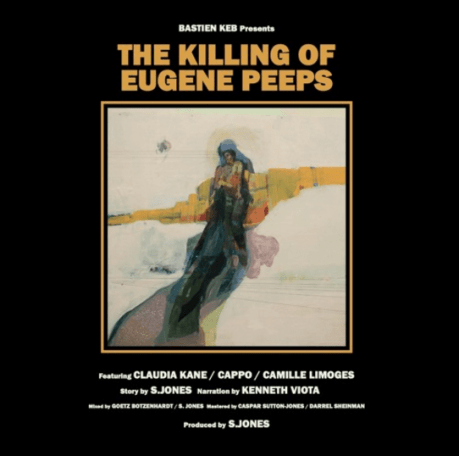
Bastien Keb ‘The Killing Of Eugene Peeps’
(Gearbox Records) 9th October 2020
The soundtrack to an American-noir-meets-Jackie Brown-meets-cross-continental-cult-60s movie that’s playing out in the head of Sebastian Jones, this ambitious suite of partly lulled and narrated cinematics, instrumentals and set pieces is as diaphanous as it is mournful. With a wide lens Jones (under the nom de plume of Bastien Keb) languidly drip feeds his fatigued melancholy, anxieties and deepest thoughts through a sorry tale of death and despair; as unveiled by a gonzo/Burroughs monologue style gumshoe, and sung, cooed by a fragile soul.
An ode we’re told to Italian Gallo paperbacks on screen, crime flicks of many other kinds and French New Wave cinema, The Killing Of Eugene Peeps mixes genres and influences up into a nostalgic opus that also has something to say about the draining mental stresses and indolent fatalism of the modern world too. Jones, using music as some kind of therapeutic outpouring, impressively managed to find the strength and will to create this impressive (if downbeat and aching) album whilst working a hard slog in a warehouse each night: The exhausting effects of which Jones says turned him into a zombie for a year.
The talented multi-instrumentalist, apart from guest spots by Kenneth Viota, Cappo and Camille Imogues, even played, recorded and produced this whole album single-handedly.
A work in three parts (the film score, soundtrack and incidental music), the dead-body-in-the-room Peeps is not so much told as a murder mystery but dissected in the form of soliloquys and resigned derisions on how this sad tragic event unfolded.
There’s plenty of title riffing on those crime flick inspirations, and musically Jones uses a leitmotif of nods to Lalo Schifrin, Issac Hayes, Alessandro Alessandroni and Krzysztof. A recurring San Fran/New York 70s detective movie and TV sound can he heard on the opening ‘Main Title’, which sounds like Hayes conducting an elegiac Corleone death march side-by-side with a New Orleans band, as a proto Tom Waits drawled figure narrates our city skyline information. Yet musically Jones moves on with the very next track, the soulful oozing pained ‘Lucky (Oldest Grave)’, which has an air of both a choral Clouddead (especially Yoni Wolf) and TV On The Radio about it. Sometimes the vocals are double-tracked, with one track being slurred as to sound almost drugged and lethargic. By the time we reach ‘Theme for An Old Man’ the brass and timpani detective noir is mixed seamlessly with jazz, soul and trip-hop (imagine Four Tet playing around with Portishead). And then the dreamy fluty gauze of ‘All That Love In Your Heart’ evokes some kind of 60s Italian or French flashback.
Echoes of dub, vibes, Ethno-jazz, Bernard Estardy, Miklos Roza, James Reese And The Progressions, Curtis Mayfield and hip-hop follow. Deft Nottingham rapper Cappo switches the narrative and sound, letting loose to a zappy 70s cult score with a consciousness left to roam freely flow on the ominous ‘Paprika’. A jazzy vision of Mike Patten and Jean-Claude Vannier’s creative partnership one moment, a wah-wah soul maverick cop score the next, Jones eclectic musicianship produces a modern noir both poignant and clever. All those various strands are pulled together for a sophisticated despair and eulogy, but also curiosity. This is a most beautiful, ambitious if often traumatic inquiry of a fully released drama, a filmic album of great depth and scope that has Jones channel his personal struggles to the soundtrack of poignant drama.
Monolith Cocktail Monthly Playlist: September 2020:
September 28, 2020
PLAYLIST REVUE/Dominic Valvona/Matt Oliver/Brain ‘Bordello’ Shea

Join us for the most eclectic of musical journeys as the Monolith Cocktail compiles another monthly playlist of new releases and recent reissues we’ve featured on the site, and tracks we’ve not had time to write about but have been on our radar.
Expect to hear everything and anything; from Azerbaijan guitar heroes (very perceptive at the moment considering the geopolitical border shooting in the news), jazz peregrinations, lopsided psychedelic pop, stop-start funk, abstract deconstructions, Beach Boys imbued ebb and flow ruminating, sketches from a doyen of Krautrock, a cross pollination of 808 Maghreb and India, poignant personal ambient laments, plus a load of choice Hip-Hop cuts. 50 tracks in all.
Those Tracks In Full Are:
Songhoy Blues ‘Barre’
Leron Thomas ‘Endicott’
Nubya Garcia ‘The Message Continues’
Dele Sosimi, Medlar ‘Gudu Gudu Kan’
Sidi Toure ‘Farra Woba’
Floodlights ‘Matter Of Time’
Lou Terry ‘The View’
Lizzy Young ‘Obvious’
Sampa The Great, Junglepussy ‘Time’s Up (Remix)’
Marques Martin ‘Hailey’
Nicky William ‘Pathetic Fuck’
Gibberish ‘I Dreamed U’
La China de La Gasolina ‘El Camino’
The Green Child ‘Fashion Light’
Ludwig Dreistern ‘New Oddity’
Namir Blade ‘Stay’
This Is The Kit ‘Coming To Get You Nowhere’
Esbe ‘My Love Knows No Bounds’
Stella Sommer ‘The Eyes Of The Summer’
Brona McVittie ft. Isan & Myles Cochran ‘Falling For Icarus’
Badge Epoque Ensemble ft. U.S. Girls & Dorothea Pass ‘Sing A Silent Gospel’
Liraz ‘Injah’
Junkboy ‘Belo Horizonte’
Rustem Quilyev ‘Ay Dili Dili’
Phew ‘All That Vertigo’
Krononaut ‘Leaving Alhambra’
The Strange Neighbour ‘Stuntman’
dedw8, Conway The Machine, 0079 ‘Clean The Whole Room Out’
Syrup, Twit One, Turt, C.Tappin, Summers Sons ‘Burn Out’
Verb T, Illinformed ‘New Paths’
Good Doom ‘Zig Zag’
Sheltered Workshop Singers ‘Dan I Am’
Staraya Derevnya ‘Hogweed Is Done With Buckwheat’
Sheltered Workshop Singers ‘My Life’
Violent Vickie ‘Serotonin’
Julia Meijer ft. Fyfe Dangerfield ‘The Place Where You Are’
Mike Gale ‘Pastel Coloured Warm’
Michael Rother ‘Bitter Tang’
Extradition Order ‘Let’s Touch Again’
Schlammpeitziger ‘Huftgoldpolka’
Ammar 808 ft. Kali Dass ‘Ey Paavi’
Edrix Puzzle ‘Jonny Buck Buck’
SOMA, Shumba Maasai, Hermes ‘Rudeboi’
Babylon Dead ‘Nineteen84’
The Jux, Turkish Dcypha, Wavy Boy Smith ‘Lost In Powers’
Verbz, Mr. Slipz ‘2202 Fm’
Tune-Yards ‘Nowhere, Man’
Chiminyo ‘I Am Panda’
Sebastian Reynolds ‘Heartbeat’
Tamar Collocutor, Tenesha The Wordsmith, Rebecca Vasmant ‘Yemaya (Vasmant Mixmaster)’
Hi, my name is Dominic Valvona and I’m the Founder of the music/culture blog monolithcocktail.com For the last ten years I’ve featured and supported music, musicians and labels we love across genres from around the world that we think you’ll want to know about. No content on the site is paid for or sponsored and we only feature artists we have genuine respect for /love. If you enjoy our reviews (and we often write long, thoughtful ones), found a new artist you admire or if we have featured you or artists you represent and would like to buy us a coffee at https://ko-fi.com/monolithcocktail to say cheers for spreading the word, then that would be much appreciated.
Our Daily Bread 397: Various ‘Door To The Cosmos’
September 7, 2020
Review/Dominic Valvona

Various ‘Door To The Cosmos’
(On The Corner) Album/18th September 2020
The celebrated polygenesis label On The Corner go all out to mark the release of their tenth mind-expanding record, Door To The Cosmos. Every bit as cosmological as that title suggests – borrowed from Saturn’s jazz messenger envoy Sun-Ra: “dare to knock at the door of the cosmos” – this eclectic experimental dance compilation brings together a representative showcase of both label stalwarts and the fresh intake of burgeoning signings. All of which share the practice of fusing sounds and sonics from various global cultures to create a more exotic, denser and layered vision of dance music, fit for the 21st century.
Not that you can easily separate into tangible categories of influence or genre, but for the benefit of this run-through, and to make my task easier, I’m going to at least attempt to break these 24-tracks down into genres of a kind. In the jazz sphere we’re offered both a combination of ensemble pieces and treatments from soloists alike. The first of which straight away falls outside of those perimeters with Black Classical floating to a jazzy evoked deep-bass and spiritually voiced hybrid of trip-hop and Low End Theory A Tribe Called Quest soundings on his ‘Sisters Brew’. Luminary of the Glasgow club and blossoming, thriving, jazz scene Rebecca Vasmant appears both as a soloist producer-composer with the disco glistened Afro-jazz-soul mover ‘Teen Town’, and, in the role of remixer, subtly taking a dip in the spoken-word conscious day-spar tranquility of Tenesha The Wordsmith and Tamar ‘Collocutor’ Osborn’s disarming fluty ‘Yemya’ collaboration. Composer and saxophonist Osborn furnishes this collection with a trio of tracks; appearing with a full troupe of modal style jazz musicians on the spiralling horns, amorphous swamp-jazz turn Miles Davis galactic funk implosion ‘Everywhere Live At TRC’ – which is further sent off into that heralded cosmos by Black Classical on “speed” mix duties -, and swirling around in a moody jumble of erratic breaks, prodded sax and vaporuos flute on ‘Lost And Found’ – another treated version, this time with Afrikan Sciences behind the transformation.

Another jazz, be it futuristic and eclectic in inspirations, combo turns in a celestial jam for the compilation in the guise of the Nathan ‘Tugg’ Curran led flexing Edrikz Puzzle, who produce a hard-bop in free fall with ‘Jonny Buck Buck’. Snozzled sax and double bass meets with a more harassed Jaki Liebeziet splurge of drum rolls and bounces on this peregrination.
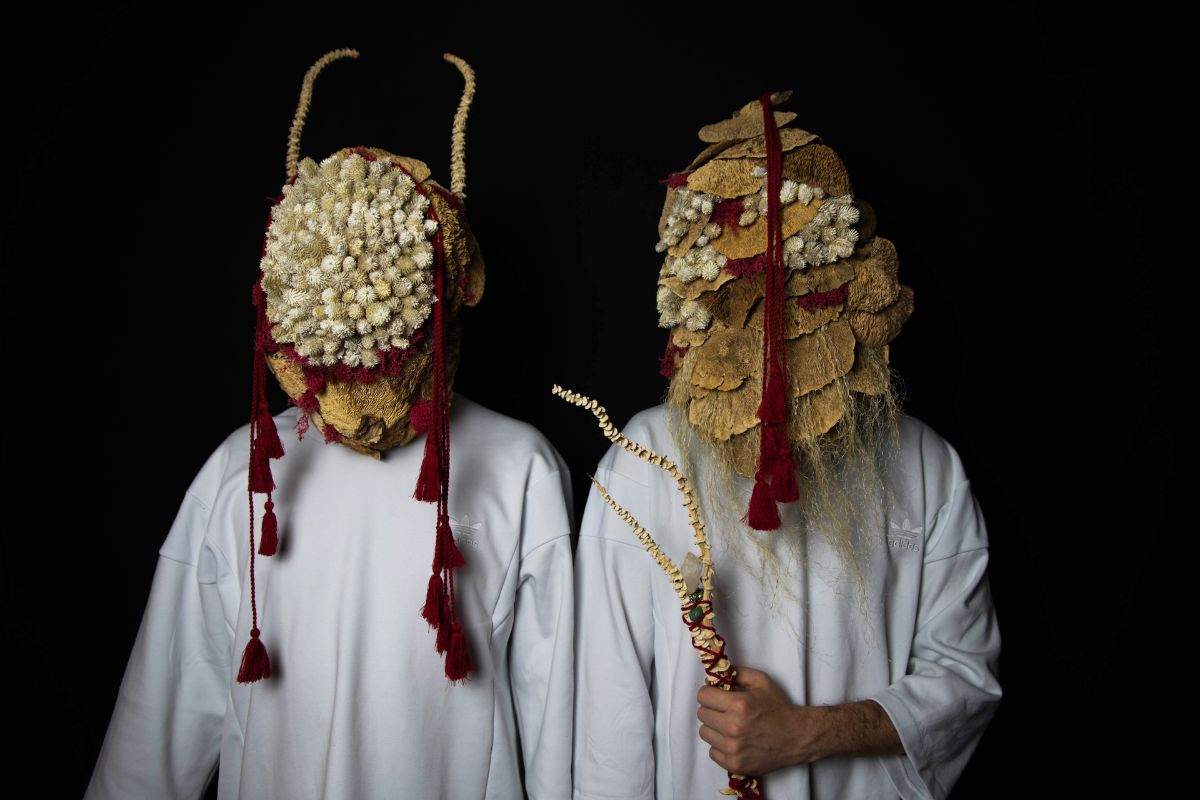
In the Afro-futurist and transformative indigenous cultures mode, “new spirit” producer Azu Tiwaline opens this survey with the tubular percussive Arabian space mirage ‘Violent Curves’. Featuring also Cinna Peyghamy as foil, this shrouded desert drift mines Azu’s southwestern Tunisian roots to produce something moody and sophisticated: a submersive camel trail across sand dunes. Gazing towards the Indian sub-continent, another producer Abdellah M. Hassak as the alter ego Guedra Guedra adds a deep House bass, metallic pulses and vaporous throbs to the brassy resonance of Indian instrumentation and voices on ‘Couscous Curtain’. South American head mask mystifiers Dengue Dengue Dengue (also known in these circles as the shortened DNGDNGDNG) get three goes at enticing the listeners into their tropical ether. Firstly with the spooked lunar vision of Colombian and Cumbia ‘Hiperborea’, then the hooted-House Peruvian pan-pipe (as reimagined by a 90s Harthouse label) ‘Semillero’, and finally, the hand drum ancestral chant and percussive shaken ‘Amnative’.
L.A. producer and DJ Jose Marquez uses his Latin roots and influences whilst also evoking New Orleans on his sassy Muscle Shores studio organ voodoo House track ‘La Negra Lorenza’.
Fitting only into categories of his own imaginations, Don Korta offers up a couple of ‘samosa beat’ shorts; the first, a shuffled gumbo, the second, a Madlib style loop of hand drumming breaks. And from the valleys of Welsh-futurism, Petwo Evans transports the vales’ mists and ethereal spirits to a vague African headland of spindled and wooden bobbing beats.
In what I can discern as House, Techno and Deep Bass culture, we have the data language low bass and rattling ‘Sorry’ from the Italian “Afro-Futurist” beat-shaker Raffaele Costantino, aka Khalab; the Basic Channel and electro pop sax honked ‘Agyapong’ by AJD Twitch; and DJAX Up-Beats wobbly lunar (almost dubby in places) ‘City’s Dead (Wrapped In Plastic)’ by Copenhagen talent Uffe.
It’s save to say that all of the label’s roster of DJ-producers, composers and jazz-heavy explorers pull club sounds in some imaginative and, sometimes, unique directions over the course of this new compilation. So expect to hear the spirit of Detroit and Chicago rubbing up against sub-bass waveforms, sophisticated itching electrified percussion, densely crafted effects, polyrhythms and real instruments on a compilation that spans both earthly and cosmological boundaries. On The Corner don’t just knock on that Sun-Ra eluded door but open it into an expanding sonic universe of jazz, Afro-Futurism, Arabian, tropical and worldly inspired dance music. It’s remarkable that this marks only the label’s tenth release; such is the breadth and quality. Better line up your copy soon, as this is going to fly out the proverbial door.
Hi, my name is Dominic Valvona and I’m the Founder of the music/culture blog monolithcocktail.com For the last ten years I’ve featured and supported music, musicians and labels we love across genres from around the world that we think you’ll want to know about. No content on the site is paid for or sponsored, and we only feature artists we have genuine respect for /love. If you enjoy our reviews (and we often write long, thoughtful ones), found a new artist you admire or if we have featured you or artists you represent and would like to buy us a coffee at https://ko-fi.com/monolithcocktail to say cheers for spreading the word, then that would be much appreciated.
Monolith Cocktail Monthly Playlist: August 2020: Secret Machines, Nosaj Thing, Charles Tolliver, Fliptrix, AUA…
August 28, 2020
PLAYLIST REVUE/Dominic Valvona/Matt Oliver/Brain ‘Bordello’ Shea
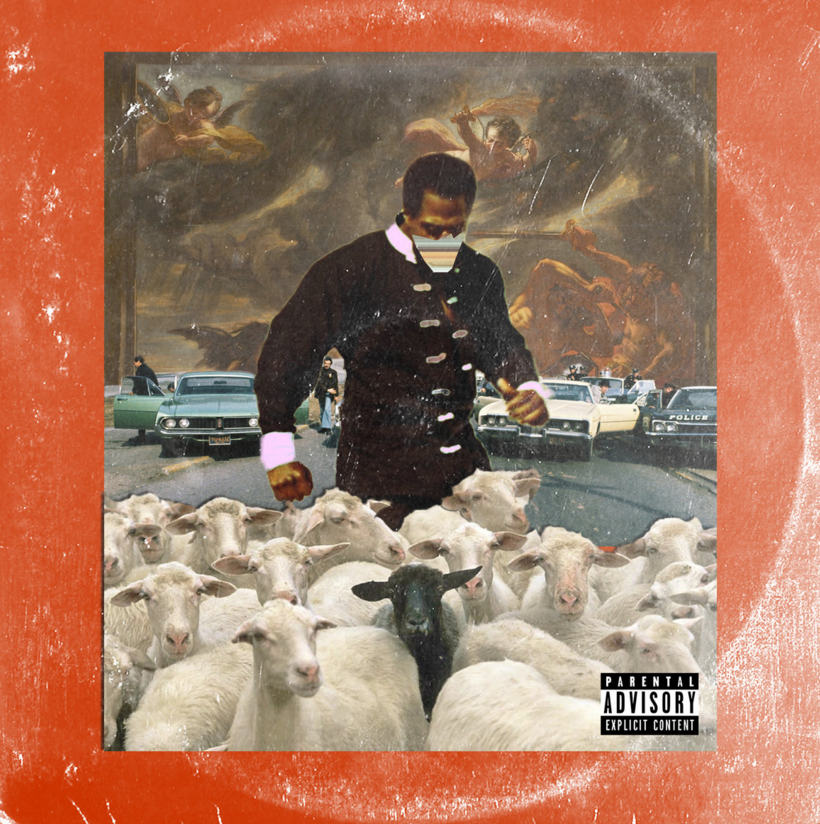
Join us once more for the most eclectic of musical journeys as the Monolith Cocktail compiles another monthly playlist of new release and recent reissues we’ve featured on the site, and tracks we’ve not had time to write about but have been on the radar.
The August edition kicks off with a blistering sunny-disposition Ron Gallo,space rock barrage returning Secret Machines and riotous Young Knives. Later on we’ve a host of jazz smarts from Stanley J. Zappa & Simo Laihonen, Charles Tolliver and Donny McCaslin.
As diverse as ever though, there’s a host of genres represented, including ‘Sufi Dub’ (Ashraf Sharif Khan & Viktor Marek) ‘after geography’ ambience (Forest Robots), ‘Eastern European femme fatal punk’ (Shishi) and ‘Euclid inspired polygon techno’ (Kumo).
Matt Oliver furnishes as ever with a host of choice hip-hop tracks from Fliptrix, Helsinki Booze Mercanhts, Loki Dope and Verb T.
There’s also a second despondent melodious grunge-y new wave rocker from the burgeoning talent that is Jacqueline Tucci. Something for everyone, more or less.
TRACKS
Ron Gallo ‘HIDE (MYSELF BEHIND YOU)’
Secret Machines ‘Everything’s Under’
Young Knives ‘Swarm’
Death By Unga Bunga ‘Trouble’
Shishi ‘OK Thx Bye’
Jacqueline Tucci ‘Sweeter Things’
Elian Gray ‘High Art’
Loki Dope ‘Have You Any Wool?’
Stanley J. Zappa & Simo Laihonen ‘E38 E 14th, City Of Piss, USA’
Charles Tolliver ‘Copasetic’
Nosaj Thing ‘For The Light’
Donny McCaslin ‘Reckoning’
VRITRA ‘CLOSER TO GOD’
Remulak & Type.Raw ‘Mad Skillz’
Vex Ruffin ‘Hinde Naman’
Mazi & Otarel ‘Staiy’
Fliptrix ‘Holy Kush’
Sausage Spine & Relentless Exquisite ‘Skin Diamond’
Verb T & Illinformed ‘Rotten Luck’
Pitch 92 & Lord Apex ‘Suttin’ In The Trunk’
Helsinki Booze Merchants ‘Tokyo Drift’
Fliptrix ‘Powerizm’
Diassembler ‘A Wave From A Shore’
Forest Robots ‘Over The Drainage Divide’
Mark Cale, Ines Loubet and Joseph Costi ‘Bodies Of Water’
Lucia Cadotsch, Otis Sandsjo, Petter Eldh ‘Azure’
Paradise Cinema ‘Possible Futures’
Only Now ‘Merciless Destiny’
J. Zunz ‘Four Women And Darkness’
Alan Wakeman, Gordon Beck ‘Chaturanga’
BROTHER SUN SISTER MOON ‘Numb’
Brian Bordello ‘Rock n Roll Is Dead’
The Hannah Barberas ‘W.Y.E.’
AUA ‘I Don’t Want It Darker’
Ashraf Sharif Khan & Viktor Marek ‘Drive Me On The Floor’
Harmonious Thelonious ‘Hohlenmenschemuziek’
Kumo ‘South African Euclid’
Cabaret Voltaire ‘Vasto’
Pons ‘Subliminal Messages’
Freak Heat Waves ‘Busted’
Constant Bop ‘Alone Again (Naturally)’
Josephine Foster ‘Freemason Drag’
John Howard ‘Injuries Sustained In Surviving’
Hi, my name is Dominic Valvona and I’m the Founder of the music/culture blog monolithcocktail.com For the last ten years I’ve featured and supported music, musicians and labels we love across genres from around the world that we think you’ll want to know about. No content on the site is paid for or sponsored and we only feature artists we have genuine respect for /love. If you enjoy our reviews (and we often write long, thoughtful ones), found a new artist you admire or if we have featured you or artists you represent and would like to buy us a coffee at https://ko-fi.com/monolithcocktail to say cheers for spreading the word, then that would be much appreciated.
Our Daily Bread 089: Zoe Polanski, Forest Robot, Stanley J. Zappa, John Howard, Yanti Bersaudara…
July 27, 2020
REVIEWS/Dominic Valvona

As usual, another international whirlwind of stopovers awaits reader, as I pick out choice and interesting new releases and reissues from across the globe. Channeling his traverses, mountain climbs and treks across the California wilderness into ambient peregrinations, Fran Dominguez as the Forest Robot, takes the listener out into the great outdoors, with his latest suite After Geography. An aural escape, a safe spatial plain, Dominguez creates an environment in which to take stock. A Finnish-American freeform jazz partnership is in vogue with Stanley J. Zappa’s new album for the Baltic coastal label We Jazz. Saxophonist and clarinetist Zappa (a nephew of the late Frank) and drummer/percussionist Simo Laihonen traverse British-Columbia and all points in-between on Muster Point. Creating the most hushed and diaphanous of cinematic dreampop, Israeli artist Zoe Polanski releases the Violent Flower album. I also take a look at the troubadour pianist John Howard, who from his Spanish studio home, ties in his latest adroit songbook To The Left Of The Moon’s Reflection with the second part of his published memoirs, Illusions Of Happiness, this month. And in my reissues section there’s the first ever reissue of the West Java Yanti Bersaudara sisters honeyed soul and beat group psych exotic self-titled ’71 nugget. The Australian born, but bought up in a rural backwater of England troubadour Campbell Sibthorpe returns back to his roots with the expansive storybook, Ytown.
Towards the fantastical, though based in geological science, experimental dub unit Cousin Silas And The Glove Of Bones reimagine a lost continental bridge of shared deities and cultures on the new album Kafou In Avalonia. And finally, we have the new no-fi songbook of despondent poetic scorn and resignation from our very own Brian ‘Bordello’ Shea, The King Of No-Fi’.
Zoe Polanski ‘Violent Flower’
(Youngbloods) Album/17th July 2020

Despite, at various times, living in one of the most contested dangerous spots on the global stage, Israeli artist Zoe Polanski transduces all the violence, danger and stresses into a most diaphanous, sometimes fantastical, synthesized musical haze. Her latest fully-realized shoegaze electronic swoon of an album – co produced and written with the Tel Aviv producer Aviad Zinemanas – is subtle but immersive, moody yet dreamy. Lit though by Polanski’s travails, a deep sense of sadness and sighed questioning lyricism permeates the wispy vaporous smoke machine pop production.
Beautiful throughout, hushed and fragile, Violent Flowers is a sweeping cinematic articulation of conflicted feelings. The title-track, and former single, draws upon the ongoing Israeli-Palestine tensions; which has taken on even more drama in recent months with the policy of planned Israeli annexations in the West Bank.
Channeling the Cocteau Twins and Chromatics, this gauzy serenade of blossoming synth-pop is a disarming evocation of lightness that features Polanski yearningly searching for a way back home amid the division. The album’s second single, ‘The Willows’, mourns not only the painful end of a “surreal” affair whilst travelling across the USA, but is also inspired by Polanski’s mixed feelings of empathy towards her Palestine neighbours with a longing to escape the rocket attacks that passed overhead when she lived in the atavistic port city of Jaffa, during the 2014 conflict with Gaza.
Born in another ancient city port, Haifa, on the slopes of Mount Carmel, Polanski escaped the tumult through music and cinema. The experimentally burgeoning musician and singer later moved to the States, recording with the NYC band Katamine and enrolling on a summer course in cinematography at the prestigious School of Visual Arts. The fruits of which can be heard evoking a kind of dream realism on this filmic scored album.
As it happens, on returning to Israel and settling in the liberal creative hothouse of Tel Aviv, Polanski started a new project of soaked-reverb “slow cinema verite” named after the renowned Hungarian filmmaker Béla Tarr. Tarr’s actual cinematographer Fred Kelemen caught Polanski at a live show. So impressed, he invited her to score his own upcoming film.
This latest vision sees the visual-audio talent reach ethereal, almost apparitional scales of atmospheric beauty as she sings veiled lines over her creative foil Zinemanas’ mirror-y and airy synthesis of arpeggiator, sine waves and enervated percussion. Dream pop and neon lit electronica meets Israeli panoramas, mysterious island inlets, touches of Vangelis (on the glassy contoured ‘Humboldt Current’), soft bobbing beats and pulchritude waves of silk.
Gentle, enchanting with an aching depth, Zoe Polanski together with Zinemanas have created a refreshing vision of dreamwave electronic pop and filmic music; one that offers a different perspective and sumptuous mystery. Turmoil has seldom sounded so gossamer and hushed.
Kalporz X Monolith Cocktail: Zoe Polanski ‘Pharaoh’s Island’
Stanley J. Zappa ‘Muster Point’
(We Jazz) Album/7th August 2020

A regular stopover on my global tour of reviews, the Helsinki festival-label-store hub We Jazz are proving to be among the most prolific deliverers of quality contemporary and experimental jazz. Earlier this month the assured label put out albums from the Danish-Finn JAF Trio and Gothenburg saxophonist Otis Sandsjö. Their latest release pairs up two former acolytes of the Mitford Graves school of free jazz enterprise: the American tenor/soprano saxophonist and alto clarinetist Stanley J. Zappa (who’s name embellished this LP) and Finnish drummer, percussionist Simo Laihonen. The Queens-made drummer extraordinaire and teacher Graves is renowned for his avant-garde contributions working with Albert Ayler, Paul Bley and the N.Y. Art Quartet; a reputation that is lapped up by his former students on this set of probing impulsive serialism recordings.
You may have guessed by the name, and yes Stanley is indeed a scion of the famous Zappa family tree: a nephew of the late rock-fusion genius Frank. Erring towards jazz, Stanley proves that old adage that the apple doesn’t fall far from the tree; highly adroit and proficient in pushing at the foundations, able to switch between the spiritual and hard bop. His foil Laihonen, of the long-standing Black Motor trio, proves equally as talented, propelling in bursts and snaps or in an amorphous fashion hitting and reeling shapeless accents and meanderings.
Joining them on the odd radial exploration, bassist Ville Rauhala adds some stringy, rubber-band thrummed double-bass runs and bodywork thwacking: less rhythmic and traditional, more loose and wandering.
Muster Point, a reference heavy album of track title locations (much of which name check places in Stanley’s British Columbia Canadian home), was recorded both in the studio and out on the road. You can hear some of the live spontaneity and an appreciative applause on the flighty clarinet and looming bass, with sporadic drum breaks, avant-garde piece ‘Muster Point IV’. Split between shorter ambling and more energetic incipient Muster Point entitled flexes, and deeper, longer workouts this album strikes out towards Pharaoh Sanders’ Egypt on the opening suite to dishing out tougher, heavier breaks on the street map ‘538 E14th, City Of Piss, USA’.
Fluting, twirling and coiling over the tumbling drums, rumbling timpani and shaking percussion, Stanley’s vibrato sax hawks and spirals with both longer and shorter breaths. Often sailing at a counter speed to Laihonen’s quickened rolling patterns, that wondering instrument trills freely as light as air itself. Well, for the most part. Stanley can also toot rapidly and with force when the occasion arises.
From drawing on the ancestral (on the Kahil El’ Zabar watery percussive underflow ‘Pleasant Avenue’) to skitting across a NYC boardwalk, Muster Point plays hard and footloose with freeform jazz; dipping into the spiritual and rapidly evoking hard bop dashes. Yet again its another fruitful experiment and performance from the We Jazz label.
Otis Sandsjo ‘Y-Otis 2’
JAF Trio ‘ST’
Forest Robot ‘After Geography’
Album/28th August 2020

With a deep connective respect to the landscapes this intrepid mountaineer and sonic explorer has scaled and traversed, Fran Dominguez provides a subtly evocative safe space in the most tumultuous of times. When all the elements of a virus epidemic and the ongoing tensions of Black Lives Matter mix with the divisive rage of social media and fake news, the only tool we have left to navigate the storm of constant faux-outrage is “intuition”. Put both together, as the California-based trekker Dominguez has done, and you get a most beautifully subversive ambient soundtrack; a tenderly produced sonic psychogeography of both the synthesized and naturalistic; a million miles away from the hubbub and stress of the online world. A sort of self-help guide for contemplation and rest you could say, the softened bobbing and trickled piano notes and gently blowing winds washing over the listener with just enough depth and interest to transport them to the awe-inspiring landmarks of nature.
With over 400 ascents and 6,000 odd miles of cross-country exploring under his belt, Dominguez tunes into those experiences when composing music under the Forest Robot title. Intuition, that main motivation and driver for the latest tonal contouring suite, After Geography, comes into practice after all the preparation in the world fails to allow for the variables that arise when climbing those magnificent rocky peaks. Though obviously a great title in itself and an encapsulation of the Forest Robot’s meditative semi-classical, semi-Kosmische maps, the inspiration behind it comes from Ringo Starr. As the anecdote from rock’s backpages goes, the bejeweled digit fingered Beatles drummer proposed it when the Fab Four were stumped for a title for their next album after Revolver. As a lighthearted chide at the rivals, The Rolling Stones, who’d just released Aftermath, Starr chimed in with “After Geography”. It seems highly appropriate in this context, and in this time.
An escapist survey that breaths in the influences of Roedelius, Boards Of Canada, Erik Satie, Harold Budd, Nils Frahm and Small Craft On A Milk Sea era Eno, the album covers the terrain in a gauze of delicate resonance, notation and obscured woody movements. Track titles become descriptive reference points and wildlife moments experienced, on this aural map; a clue at times to the scenic inspirations that encouraged them. ‘Of Birds Migrating In The Distance’ is for example a winged patted dance and flutter across the ivory, and the marimba-like bobbing ‘Glacial Architecture Of The Mountain Corridor’ features crystalized icy notes and melting droplets: it’s almost as if Dominguez captures the sunlight gleaming off the slowly melting glacier. ‘Over The Drainage Divide’, which doesn’t exactly sound very inspiring, is surprisingly wondrous, even spiritual, with its choral ethereal waves and hints of ghostly visitations. An ascendant version of that choral spirit can also be heard on the soft droning, delayed and bouncing notes beauty ‘All Across The High Plain After The Storm’.
A mostly peaceable geography, Dominguez’s latest impressive suite offers the safety of a timeless rugged pristine panorama. A breath of fresh air; a sonic plain on which to gain some perspective, that intuitive methodology proves highly successful on a most pleasing, imaginative ambient experience.
Campbell Sibthorpe ‘Ytown’
EP/21st July 2020

Following up on the impressive choral anthem ‘Good Lord’, which we premiered last month on the MC, the yearning troubadour Campbell Sibthorpe proves he has more than it takes to deliver the full emotionally stimulating package with his new, generous EP Ytown. Over seven tracks of similar beautifully realised rustic anthems and shorter mood passages, Campbell expands his themes of escaping the pastoral backwaters of small town life.
Both a travail down memory lane and pilgrimage, nature’s son returns from London to the town in which he spent those formative years, on the outskirts of Bristol, to mull over the past, but above all, as the Australian born songwriter/multi-instrumentalist set out to serenely on that ‘God Lord’ hymn, seeks to find himself amongst the humdrum scenery. Ytown could be many towns, any town, yet it proves evocative and creatively fertile enough to inspire this expansive songbook. The very essence of the place seeps into the music through field recordings and the sound of the local church’s pump organ – used very subtly as a sadly reverent undertow on the setting-sun curtain call ‘Strawberry Line Pt. 2’ a couplet to the EP’s only scenic twinkled if musing instrumental, The Shins like ‘Strawberry Line Pt. 1’.
Entirely self-produced and recorded from the bedroom of his youth, Ytown pays homage to innocence, to his childhood relationship with his ‘Father Carpenter’, and the unburdened freedoms of nature. The first of those is a powered-up Midlake country folk anthem, the latter, an achingly harmony rich longing to be as free and detached as the ‘Dandelion’.
Almost echoing an early Radiohead paired with the Fleet Foxes, the tender woven poetic ‘Pastel Porcelain’ seems to have stepped out of a medieval tapestry, and the opening dappled lit blossoming ‘The Sun Appeared’ shows an almost filmic and experimental quality to Campbell’s music.
A balance of acoustic naturalism and full on, climatic singles, Ytown is a great piece of expansive storytelling, a conceptual EP perfect in length, depth and heartfelt searching.
Campbell Sibthorpe ‘Good Lord’ Premiere
Brian Bordello ‘The King Of No-Fi’
(Metal Postcard Records) Album/16th August

The self-anointed king of no-fi returns with another songbook of quasi-demoed wistful despondency and self-deprecation; a stripped-back one-track display of rough charms that cuts to the heart of the cult St. Helens malcontent’s sardonic, but also extremely vulnerable, annoyances about modern life.
The idiosyncratic de facto leader of the long standing dysfunctional family legends The Bordellos, and the barely concealed instigator of the anti-Brit pop and plodding rock Idiot Blur Fanboy, Brian ‘Bordello’ Shea (who I must also point out is a regular contributor to these very pages) follows up on his recent solo offerings, the Liverpool Hipster Scene EP and Boris Johnson Massacre single, with another album for the Aussie platform, Metal Postcard Records. Recorded during lockdown whilst growing tired at the lack of revolutionary zeal and wit in contemporary music, and the reliance upon of nostalgia, regurgitation in the industry (both musically and through blogs, publications, radio), Brian has penned a quite sincere collection of romanticized sufferings, regrets and love songs.
Making even Sparklehorse sound like ELO in comparison, the no-fi production values on offer are raw but never really coarse or discordant. No augmentation, filters, effects or sundry, just a bare accompaniment of rough’n’ready but melodious acoustic guitar and the whirling of a rudimental four-track; the click of the record button and, at the end of each performance, the stop button.
Channeling various maverick troubadours, post-punk poets (Dan Treacy springs to mind) and a Brylcreem of rock’n’roll idols (ironically enough the release of this album intentionally falls on the anniversary of the true king, Elvis’ death), Brian postulates on a lack of energy and rage in music, the death of the mutherfucker personalities, a bevy of “scarlet” women and lost innocence. Brian can be a romantic sod at times, even sentimental; writing some real tender poetic lines amongst the scorn and despair, with even a hint of Bacharach on ‘Banana Splits’ (yeah, imagine that!). Various stolen kisses, evocations of less complicated, less divisive magical times permeate the album despite the constant references to the death of this and that and the lamentable resignations and threats to give it all up. Sometimes Brian just tersely pays homage to his icons, such as Lou Reed and Billy Fury.
Quite swooning in places, this is neither a plaintive nor angry songbook, but as I said before a sincere often humorous yearn from a maverick soul stuck in lockdown. The King is dead; long live the King.
The Bordellos ‘Debt Sounds’
The Bordellos ‘Will.I.Am You’re Really Nothing’
Cousin Silas And The Glove Of Bones ‘Kafou In Avalonia’
(Submarine Broadcasting Company) Album/19th June 2020

Reimaging a time when Earth’s landmasses were being reshaped, the atavistic geological inspired futurist dub unit pose a cultural “what if?” with their fourth “set”, Kafou In Avalonia. Developing out of a volcanic arc at the northern edges of the “supercontinent” Gondwana (we’re talking about 550 million years ago; when this leviathan contained one-fifth of all the planet’s land) but decoupling to form a drifting micro continent of its own, Avalonia, if it didn’t eventually breakup and collide with Pangea, would have bridged what is now the Atlantic Ocean. Crustal fragments underlie parts of Southwest England, Southern Ireland and the East Coast of America. Wishful dreaming Cousin Silas And The Glove Of Bones picture an alternative reality; one in which Avalonia still existed as a gateway between all Earth’s cultures and peoples. It acts as the crossroads that might have set out an entirely different course for civilization; a more integrated, less fractious one perhaps. In this setting Haitian, Brazilian, Angolan and Nigerian deities, spirits and rituals converge with an experimental soundtrack of post-punk dub, Kosmische and electronica.
Invoking a lost world, a quasi-Atlantis, they merge voodoo ceremony and tribal incantation with sonorous throbbing basslines, barracking drums, heavy reverb and craning Manuel Gottsching like guitar.
A reference heavy album, with various “Loa” (spirits) and divinities summoned and made offerings, the track titles name check a pantheon of the worshipped. The opening gabbling dub and primordial shrouded ethereal jug-poured ‘Oxûm Over Water’ pays homage to the Yoruba peoples river goddess, while the singing chorus and insect chirped trans-Europa rail momentum Kraftwerk meets Guru Guru ‘Oxalá Of The White Sky’ takes its name from the Brazilian “sky father” and creator of human beings. Elsewhere, Haiti’s spiritual ancestors are represented in the shape of the serpent creator of the cosmos, Damballa (the On-U-Sound dub prowling low frequency crumbled bass languorous ‘Damballah Of The Dark Sky’), and senior Petro visitation born from the heinous savagery and injustice of slavery, Ezilí Dantor (the lolloping Orb submersion ‘Ezilí Dantor Awake’). Incidentally, that last spirit especially took kindly too offerings of crème de cacao and jewelry, and on its birthday, a wild pig. It’s believed that one such feast in honor to Dantor preceded the infamous slave revolt of 1791.
Ancestral ghosts meet synthesized futurism on this mystical transformed aural geography, as recordings of various rituals swirl in and around a cosmic soup. A supernatural and celestial, seeping and vaporous vortex of polygenesis sources are gathered together to create an imaginative cosmology hybrid. If The Future Sound Of London and Ash Ra Tempel recorded an album at Lee Scratch Perry’s black ark studio it might very well have sounded something like this. And that’s me saying this is a bloody great experimental dub album. Seek out now.
John Howard ‘To The Left Of The Moon’s Reflection’
(UK John Howard/USA through Kool Kat Musik) Album/7th August 2020

Chiming with the second candid, sometimes wistful, chapter in the pianist raconteur’s memoirs, this latest fragrant songbook manages past regrets with wizened heartfelt balladry. With plenty of time, including the lockdown, to mull over the past, after writing two volumes of self-effacing recollections (part two, Illusions Of Happiness, is scheduled to tie in with this album, published on the 7th August) John Howard channels a lifetime of setbacks and learning through the philosophical and metaphorical.
Coming to terms and letting go in some respects, the fledging 70s star set back by a series of career mishaps and a traumatic accident (forced to make a fateful leap from the window of an apartment he shared in Earl’s Court with some colourful Filipino gay characters, who brought back a mad Russian ‘bit of rough’ intent on murder) muses over breakups (the la la, almost Christmas seasonal, chiming mini anthem ‘I’m Over You’) and a broken friendship (the regretful heartache ‘Echoes Of Pauline’). The latter’s real life subject appears as a recurring figure of that regret in John’s work; the best friend from school losing touch since 1973 (as John admits, probably down to him and not Pauline) first pops up on ‘The Flame’ from the career launching Kid In A Big World showcase, and later on ‘Pauline’s Song’, which featured on the 2009 EP Songs For A Lifetime.
Pauline’s presence, companionship is much missed it seems, as John looks out from his Spanish home veranda on an uncertain, if scenic, world. Idyllic though it is, his life in the Southeastern Spanish town of Murcia can’t make up for the pining of his former Welsh home, and even further back, Lancashire. Moving across the seas to preempt Brexit, John recalls a Welsh pastoral bliss on the wistfully beautiful melodious ‘And Another Day’. Yet both lyrically and through his signature subtle minor key changes moves deftly into the sadness of leaving it all behind. The scented waltz-y ‘Illusions Of Happiness’ ambles through a perfumed garden of delights but also mournfully wades out into the sea; waiting on something, a ship, vessel, the final boat ride perhaps.
Old ghosts mingle with analogies of saviors, and the tropes of coming-to-terms with one’s decisions. This is all done with a most adroit touch of pastoral organ, Baroque chamber pop, gentle Dylan-esque harmonica, concertina and softened tambourine rattled crescendos: all of which is played by John. It’s a sound that is saved from the saccharine and pushed towards the yearning beauty of the early Bee Gees, late 60s Beach Boys and the Incredible String Band, whilst echoing the flourishes of John’s burgeoning pianist troubadour career in the 70s.
The 17th album proper in a career that has regularly stalled (mostly down to the mishandling of others), with gaping holes in which John turned his hand to A&R, the lyrical To The Left Of The Moon’s Reflection follows on from last year’s brilliant Cut The Wire – just one album in a long line of such releases from arguably his most creatively prolific tenure. The poetically scene-setting songbook is a perfect accompaniment to those memoirs; a mature retrospection of a life well lived.
John Howard ‘Cut The Wire’
John Howard ‘Incidents Crowded With Life’
John Howard ‘Across The Door Sill’
Reissue
Yanti Bersaudara ‘ST’
(La Munai Records) Album/7th July 2020

A beautiful three-part harmony serenade drifting out of West Java, the much sought after 1971 album from the endearing Yanti sisters is finally being reissued for the first time ever. From Indonesian musical treasure hunters, La Munai Records, a befitting repackaged version of that original Bamboo Music magical Sundanese suffused treat.
Previous twee recordings, which swing between Merseybeat and enervated gospel soul, have made it digitally onto a number of platforms and compilations over the years, but the sisters’ later self-titled nugget has remained pretty elusive.
Released towards the end of their tenure, this beautifully cooed, lulled and charming harmony rich record seems oddly out of step with its time; though the strict regime in Indonesia had the gall to ban rock’n’roll, and so outpourings of fuzz-thrilled rebellion and salacious gyrating were kept to the minimum: more the early fab four’s ‘Tell Me Why’ or anything by The Tremeloes than the dirty scuzz and teasing of the Rolling Stones. That’s not to say the odd frizzle of psych and a coarse guitar twang or two doesn’t pop up here and there, but this early 70s songbook is mostly dreamy, heavenly even, and spiritual.
Whilst channeling the siblings (that’s Yani, Tina and Lin Hardjakusumah) West Javanese heritage of Bamboo Music, Gamelan and Jaipongan, you will also hear a constant sustained and fanning ray of church organ too. The lovely honeyed vocals even reach the ethereal heights, sounding like an Indonesian version of Dusty sings gospel.
The second most populous ethnic group in Indonesia, the Sundanese people (a name derived from the Sanskrit prefix “su”, which means “goodness”), of which the sisters belong, reside in a part of the country synonymous for its rich musical traditions. Soothed into an exotic dreamboat mix of angklung ringing and bamboo bobbing, reedy staccato surf guitar and ticking away drums those delicate ancestral chimes are propelled into the beat group era, and on the misty organ ghostly ‘Bulan Dagoan’, a spooked funhouse garage band era.
Coquettish, enticing, at other times like the 5th Dimension and choral rhyming, the girls vocal sound is sweetened; flourishing with yearned and exotic swooning.
For those of you wishing to enjoy a languorous dreamy slow boat to Java, with just enough fuzz thrills to pique the interest, let the Yanti sisters provide the hip accompaniment. If you’ve already been entertained by the trio, then you’ll find this ’71 release less saccharine and girl-group than previous albums; more magical and with more stained glass soul.
Hi, my name is Dominic Valvona and I’m the Founder of the music/culture blog monolithcocktail.com For the last ten years I’ve featured and supported music, musicians and labels we love across genres from around the world that we think you’ll want to know about. No content on the site is paid for or sponsored and we only feature artists we have genuine respect for /love. If you enjoy our reviews (and we often write long, thoughtful ones), found a new artist you admire or if we have featured you or artists you represent and would like to buy us a coffee at https://ko-fi.com/monolithcocktail to say cheers for spreading the word, then that would be much appreciated.
Monolith Cocktail Social Playlist #XLVII: Ennio Morricone, Art Decade, Voilaaa, Kahvas Jute…
July 15, 2020
PLAYLIST/Dominic Valvona
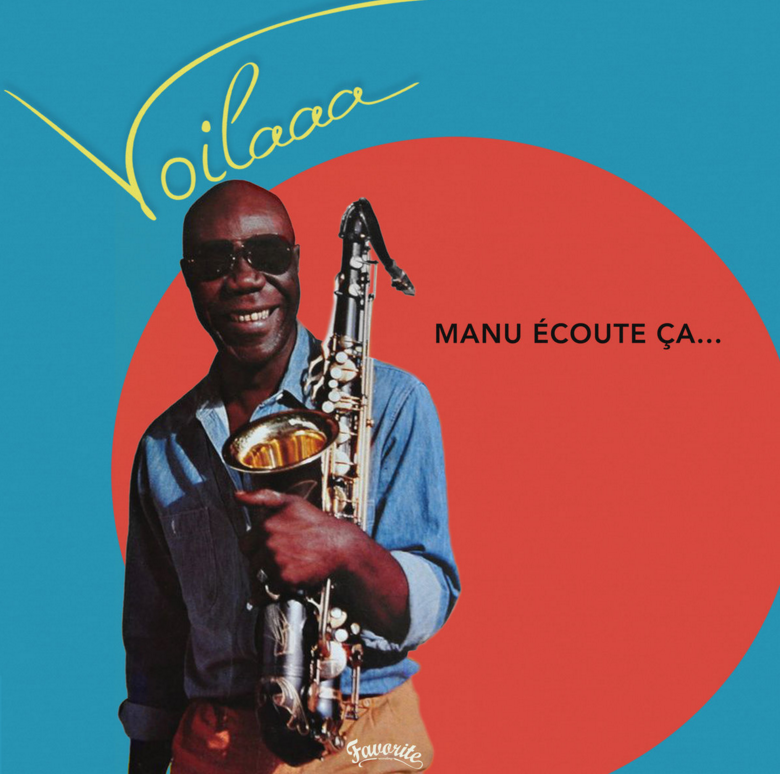
Welcome friends to another one of Dominic Valvona’s eclectic/generational spanning playlists; the Monolith Cocktail’s imaginary radio show. In practice this amounts to Dominic picking whatever he sees fit, including tributes to fallen idols and tracks from recent reissues. This month’s edition pays a small homage to the late Italian deity of soundtracks and composition, Ennio Morricone. Joining him in on this journey is Art Decade, Voilaaa, Kahvas Jute, Tono S., Pharoah Sanders, Electric Eels, Faris, VED, Abel Lima, The Staple Singers, Jerzy Milian and twenty-three other eclectic choice artists.
Listen how you choose, but each playlist is curated in a special order.
As usual, for those without Spotify (or boycotting it, pissed with it or whatever) you can find a smattering of videos from the set below the track list.
Track List:
Mike James Kirkland ‘What Have We Done’
Voilaaa ‘Manu ecoute ca…’
Pharaoh Sanders ‘Farrell Tune (live In Paris 1975)’
Tono S. & DJ Metys ‘Recept Na Uspech’
Lord Finesse with Sadat X and Large Professor ‘Actual Fatcs’
Weldon Irvine ‘Love Your Brother’
Ted Hawkins ‘Sweet Baby’
Tripsichord ‘The New World’
Kahvas Jute ‘Shes So Hard To Shake’
Country Weather ‘Boy Without A Home’
Orangutan ‘Chocolate Piano’
Jessamine ‘Inevitably’
Electric Eels ‘Sewercide’
Indianizer ‘Mazel Tov II’
Hypnotuba ‘Hubbubuzz’
Art Decade ‘Delta’
Ndikho Xaba ‘In Praise Of Women’
VED ‘Sture External’
Faris ‘Oulhawen Win Tidit’
Velvett Fogg ‘New York Mining Disaster 1941’
Group 1850 ‘Hunger’
Pisces ‘Oh Lord’
Yanti Bersaudara ‘Pohon Kenari’
DakhaBrakha ‘Vynnaya Ya’
Abel Lima ‘Aonte’
Ennio Morricone ‘Arianna’
Marva Josie ‘He Does It Better’
Gryphon ‘Mother Nature’s Son’
Robert Lester Folsom ‘Ginger’
Quiet World ‘Star’
Minami Deutsch ‘Sunrise, Sunset’
Uniting Of Opposites ‘Ancient Lights’
Jerzy Milian ‘Hausdrache’
Ennio Morricone ‘The Chase’
The Staple Singers ‘Washington We’re Watching you’
VIDEOS:
Hi, my name is Dominic Valvona and I’m the Founder of the music/culture blog monolithcocktail.com For the last ten years I’ve featured and supported music, musicians and labels we love across genres from around the world that we think you’ll want to know about. No content on the site is paid for or sponsored and we only feature artists we have genuine respect for /love. If you enjoy our reviews (and we often write long, thoughtful ones), found a new artist you admire or if we have featured you or artists you represent and would like to buy us a coffee at https://ko-fi.com/monolithcocktail to say cheers for spreading the word, then that would be much appreciated.
Tickling Our Fancy 088: Thiago Nassif, Mansur, The Lancashire Hustlers, JAF Trio, Otis Sandsjö…
July 2, 2020
REVIEWS SPECIAL/Dominic Valvona
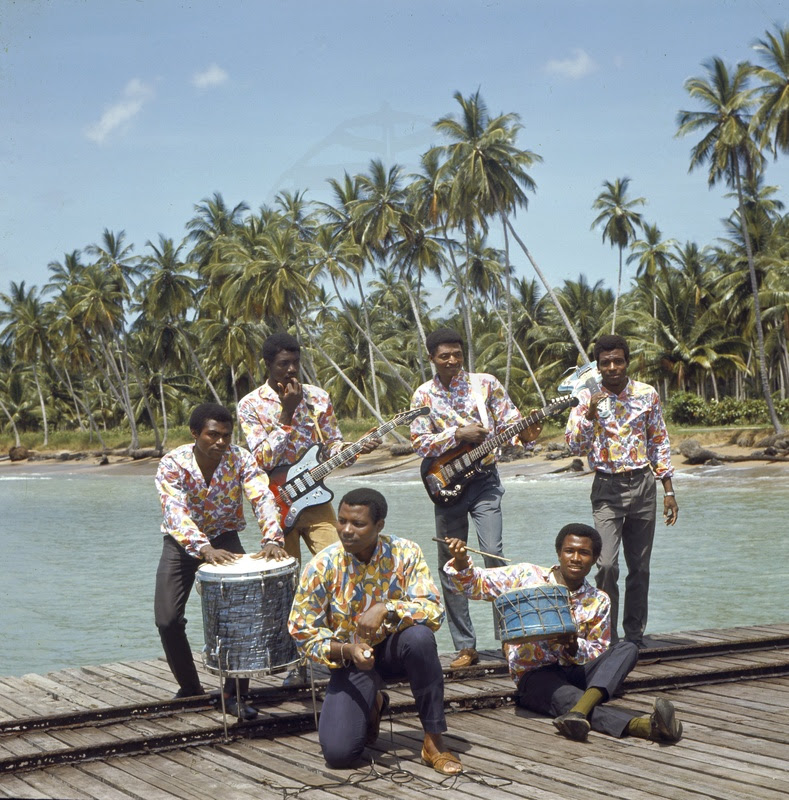
From the very start of the Covid-19 epidemic I’ve emphasized the importance of supporting artists and bands. More than ever in an industry with ever diminishing returns for the majority, and with the ever increasingly domination of streaming taking over from sales, they need our financial help.
With that in mind, there are more than enough new and upcoming releases to get you salivating at the prospect of spending those dwindling funds in my July roundup. Travelling to and beyond both Earthly and Heavenly realms from the comfort of you own sofa, I take a look at the upcoming debut suite from Jason Kohnen’s newest adventure (in collaboration with Dimitry El-Demerdashi and Martina Hórvath), Mansur; a wanderers traverse of burnished ruins and temenos set to a cinematic, warping trip-hop soundtrack called Temples. Fresh out of Rio, Brazilian wonderkid Thiago Nassif releases another vibrant and sophisticated pop album of samba and bossa no wave. Melbourne artist Wu Cloud returns from his off-the-beaten-track Indonesian getaway with an atmospheric exotic ambient electronica suite of jungle sonics. Out of Helsinki, two Nordic jazz albums from the We Jazz label; the first, the Danish-Finn JAF Trio lay down their dynamic live sound on wax for the first time, and the experimental Gothenburg tenor saxophonist/clarinetist Otis Sandsjö produces another volume of deconstructive electronic-hip-hop-trip-hop-jazz. From the relatively untouched musical atoll of São Tomé & Principe, Bongo Joe reissue Pedro Lima’s 80s classic Maguidala. Closer to home, The Lancashire Hustlers offer another nostalgic songbook of quality psych pop and troubadour pastoral soul with their fifth album, Four Hands, Two Voices.
Thiago Nassif ‘Mente’
(Gearbox Records) Album/3rd July 2020
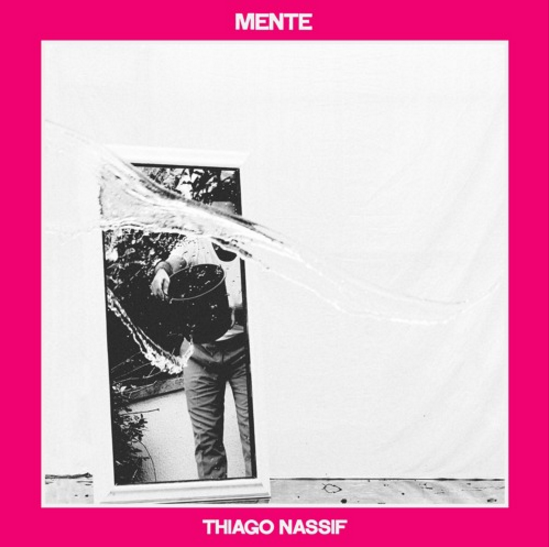
Feted no less by “no wave” off-kilter maverick and former Lounge Lizard Arto Lindsay, the Brazilian multi-instrumentalist and producer Thiago Nassif has made a name for himself over the last decade for producing the most idiosyncratic tropical-flavoured pop music. Drawn to Nassif’s transformed visions of bossa nova and samba, Lindsay, who has a reputation for refreshing those genres and working with many of the forms star turns, has co-produced a number of albums for the Rio-based artist; including this latest neon afterglow, Mente.
Channeling some of the American all-rounder’s past productions, most notably his work with the legend Caetano Veloso and more contemporary Tom Zé, Nassif balances those balmy softened open-toed sandal sauntering rhythms with harder edged experimental no wave and synthesized tubular metallics. It’s a juxtaposition of atmospherics, of light and shade, of the organic and plastic, and even languages: Portuguese and English. In practice this sounds pretty brilliant; a liquid (a blancmange even) of often slinking, bubbling, uptown/downtown Beck, Eno & Cale, Prince, Ariel Pink and St. Vincent, picked up and flown to a retro-futuristic Brazilian beachfront nightclub. The opening no wave soul mirage ‘Soar Estranho’ (one of my tracks of the year) shows off this cultural mix; reimagining Lodger era Bowie flanked by James Chance and Lou Reed’s doo wop chorus of female backing singers perusing in a discotheque. In short: cool as fuck. But just as you get comfortable, a lurch and shriek of tumbled drums enters the fray: less a harsh jerk, more a delightful off-kilter excursion.
Yet despite those interesting excursions, jolts and hooks and the contemporary feel, the melodies prove often nostalgic: a dreamy electro-fashioned sheen envelopes those bossa and samba grooves and tango washes that headily send the listener back to the 70s and early 80s. Still, it’s a fascinating world that escapes Nassif’s mind; a place where vague Robert Fripp guitar traces wane against a sunbaked percussion of bottle rattling; off-center piano and elliptical grooves merge with Herbie Hancock funk; fanned phaser guitar comes of against skulking seedy Gauloise-puffing French sophisticated cool aloof; an alternative reality in which Eno remixes Caetano’s more showy popular samba romantics.
Very imaginative and experimental, Nassif pushes South American music into exciting directions with an album that oozes a coolness of liquid tropical no and new wave. Mente surfs a delicious ebb and flowing tide of quirky “plastique” pop: A leopard skin upholstered, neon lit sumptuous groove of the fuzzy, fizzling and sauntering.
Mansur ‘Temple’
(Denovali Records) Album/10th July
Venturing once more into amorphous mysterious musical territories, Jason Kohnen finds another outlet for his traversing invocations with the Arabic named Mansur. Worn by infamous caliphs, this popular Middle Eastern name translates as “the one who is victorious”. The caliphate ruled by those who wore it was as vast and multicultural as the array of evocations and geography found on Kohen’s latest mini-album, Temple.
Previous esoteric and panoramic soundtracks by Kohen, from The Mount Fuji Doomjazz Corporation to The Kilimanjaro Darkjazz Ensemble, roamed a borderless realm of influences. With even less jazz on offer (though those previous two jazz affixed outfits always had a vague interpretation of the genre), the cinematic atmospherics of this newest incarnation, the Temple drifts, sweeps and swoons across a gauzy veiled expanse of ancient Persia, India, Arabia, South Eastern Europe and the Aegean. Much of this is down to the array of international instruments that both Kohnen and his collaborating foil Dimitry El-Demerdashi (ex-Phurpa fame) use to stirrup this mirage state of Dionysus acropolises and atavistic Sufi mysticism. Various two-string and more bowed instruments (such as the Chinese “erhu”, Iranian, Armenian and beyond “kemenche”, and Indian “dilruba”) rub up against reedy flutes (the Persian “ney” and Indian “bansuri”) and both staggered and slurred trip-hop beats, slithered synthesized effects.
Floating in and out of the album’s titular spell, vocalist Martina Hórvath appears like an ancestral spirit or forgotten deity dreamily cooing sweet evocations; part Hellenic, part Celtic. This and its “revisited” companion piece both reminded me of the experimental Greek duo Xaos; though the second ‘Temple’ altarpiece offers up crunchier giant’s footsteps like thuds, and casts supernatural shadows on the pillars.
Elsewhere on this well-travelled five-track adventure, the esoteric Balearic chill in the sun ‘Disciples’ takes the listener to Muslim Spain via the toiled troubles and lament of the East, and the five notes per octave scale ‘Pentatonic Ruins’ travels in slow-releases across both the Arabian deserts and foothills of Tibet. The album’s final magical escape ‘Leyenda’ (or “legend”) brings in a piano, bowls and the kemenche flute to evoke a kind of semblance of 1930s Cairo: A soundscape of intrigue, suspense, bazaars and Arabian music halls converge.
Wandering a proscenium of afflatus burnished ruins and temenos to a cinematic, warping trip-hop soundtrack, Kohnen finds another fruitful creative release for his mesmerizing mythology of mystical and spiritual sounds.
JAF Trio ‘S/T’ (3rd July 2020)
Otis Sandsjö ‘ Y-OTIS 2’ (24th July 2020)
(We Jazz) Albums

Constantly delivering some of the best in contemporary jazz over the years, the Helsinki label and festival platform We Jazz has regularly popped up on the site with its quality catalogue of, mostly, European talent. This month sees the Nordic facilitators release two albums of opposing styled experimentation.
Dropping just this week, the first of these deft workouts sees the lauded Danish-Finn live act JAF Trio of saxophonist Adele Sauros (of Superposition renown), bassist Joonas Tuuri (Bowman Trio) and drummer Emil Bülow lay down their dynamic buzz on wax for the first time. Formerly awarded the We Jazz “rising star” award in 2017 for their “loft style” conjunction of cool but busy American and European jazz frills, tumbles and stretches, the trio now capture that live spark in a studio setting.
With a faint air of nostalgia, or at least the influence of those hip cats Mingus and Wayne Shorter, and a lift of Be-Bop, the trio proves to be one classy act. Sauros blows and honks both a mean and snozzling (even clarinet like at times) sax over Tuuri’s double-bass bodywork tapping runs and bowed sloping and Bülow’s quickened drum spills and accentuated concentrations. Signature loftcore, the opening account of ‘Ninth Row Of The Fifth Floor’ is a showcase for clicked walking basslines, skipping breaks and schmoozing sax spontaneity.
Each track seems to start in one place but end up in another; liberally handing out solos and more stripped spots, both busy and more methodically studied, as they go. Whatever the mood, whether that’s more humming and whistled saxophone contemplation or counter d’n’b like rhythm erratics, the chemistry is playful but always probing. Loft space meets Pierrick Pédron on a contemporary breakbeat, the JAF Trio bounce ideas around in the studio to produce some top-drawer jazz.
Making good on his previous free-fall in motion Y-OTIS LP (which made our albums of the year), the second of We Jazz Records’ July releases finds the Berlin-based Swedish tenor sax and clarinet bandleader Otis Sandsjö once more pushing the boundaries of electronic jazz. Volume Two of this simultaneously flowing and fractured, stumbled jazz breakdown sees Otis deconstruct his group’s performances in real time. Like a remix before the originals even been finished, Otis enacts his ennui like wonder for changing the rhythm, groove and direction.
Backed by fellow label mates Petter Eldh (bass and synth) and Jonas Kullhammar (flute) of Koma Saxo fame, plus Dan Nicholls (keys and synth duties), Tilo Weber (drums), and with featured spots from Per “Texas” Johansson (flute), Lucy Railton (cello) and Ruhi Erdogan (trumpet), the native Gothenburg sonic explorer elliptically skips and trips through hints of J Dilla, Flying Lotus, Four Tet, John Wizard, Takashi Kokubo, 808 State and Bobbi Humphrey.
The jazz elements, which sound like a transmogrified electric Byrd, drift and waft in starts and stops. Otis sax hoots like a magical owl on the woodland fairytale turn Eddie Gale spiritual joint ‘Tremendoce’.
With two flute players in the ranks and Otis also on clarinet, there’s obviously a lot of wind being blown around; and again it’s mostly quite dreamy, organic and floating as it wraps around the constant breaks and lurch or dragging drum parts.
From the cosmic and celestial to earthy, the familiar is turned inside out on an album that mixes soul, hip-hop, d’n’b, trance, electronica and jazz together. Every bit as extraordinary and inventive as the previous volume, part two is a unique, re contextualized, pinball flipper driven rush that takes jazz forward. This is a really great trip of an album, as blissful as it is intense. Definitely in my choice picks of 2020; one of the best jazz albums you’ll hear all year.
The Lancashire Hustlers ‘Four Hands, Two Voices’
(Steep Hill) Album/12th June 2020
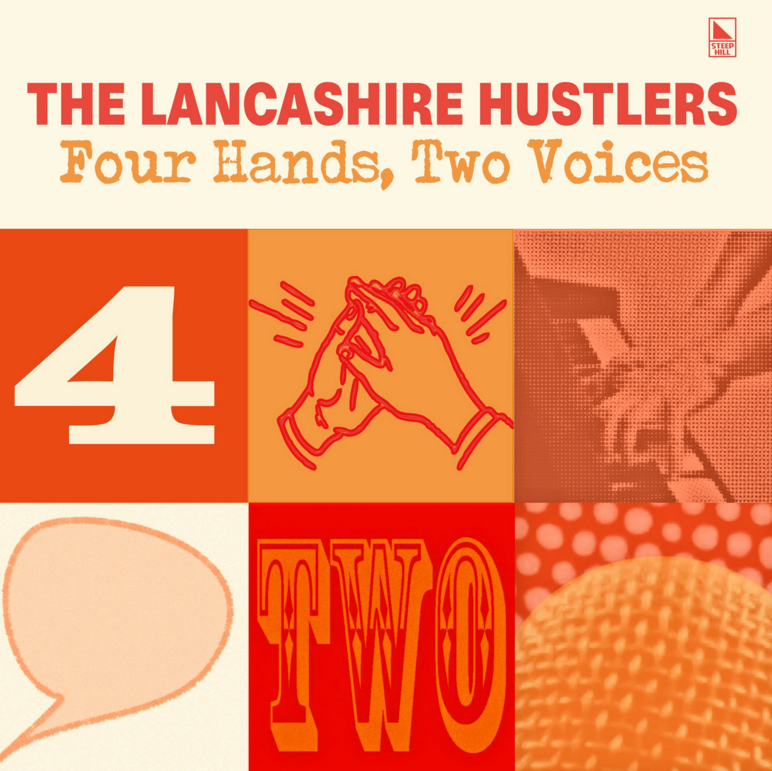
There’s nothing more reassuring and cozy than a new Lancashire Hustlers album. Bathed in a nostalgic glow of peaceable 60s and 70s harmonies and a lilted haze of the familiar, Brent Thorley and Ian Pakes always turn-out a disarming songbook of psychedelic and troubadour melodies worth savoring.
Following previous mini pop operas and a collection of songs based on the poems of Walter de la Mare, the Stockport duo reconvene for an album of self-discovery, raincloud love-lost misery, the philosophical and regretted: Not strictly a thematic album, more a concept of age-old tropes that continue to trouble the soul.
Musically combining the shared harmony of Turn Breaks with the idiosyncratic romantic psych pop of bands such as The Left Banke, they often stirrup a smorgasbord of congruous bands and artists. Four Hands, Two Voices is no exception, with surprise shades of Marvin Gaye and Curtis Mayfield on the pastoral soul opener ‘Top Gun (In Retirement)’, and a kind of Anthony Newly starring musical meets XTC on the more theatrical ‘Stuck In The Middle Of A Week’. Elsewhere amongst a repeating musical leitmotif of quasi-swami atmospheres (brassy resonating faux-sitar and finger-cymbal trinket charms), you will find dalliances with Bacharach (sharing a stage with George Harrison) on the lilting romantic waltz whimsy ‘It’s Too Early’, the voice of Glenn Tilbrook on the beautifully pining rained-off ‘The Flowers And The Reservoirs’, and Badfinger harmonizing with Dylan on the quivery, dreamy malady ‘Letters I Should’ve Written’.
Disarming what is a touching but poignant selection of both melancholy and lamentable reflection, the duo’s loving and comfortable, even smooth musical sheen makes the sadness and yearning parts more palatable.
Whether venturing into the mind to connect with an object of desire or sailing across the subconscious on an adventurous voyage into psychoanalysis, these northern hustlers are guaranteed to make the journey a most harmonious one. The duo’s fifth album is another lovely songbook of maverick encounters, pastoral soul and soft bulletins.
Wu Cloud ‘Pulsa Rimba’
(The Slow Music Movement) Album/18th June 2020
Under the sticking heat of a lush Indonesian jungle canopy and on the edge of golden idyllic Sumatran beaches, the free-rolling Melbourne artist Wu Cloud places the listener in a sumptuous soundtrack of resonating, delayed field recordings and subtle, distant lo fi rhythms on his debut longplayer for the Lisbon label The Slow Music Movement. An immersive sound experience, produced from a “rucksack studio”, Pulsa Rimba –which literally translates as the “pulse of the jungle” – is a insect chattering, monkey (or in this case, to use the old world appellation of the species, a “Monyet”) calling, bird hooting menagerie of local Indonesian wildlife and fauna; augmented by the most accentuating and intuitive of effects and enervated tricking and chiming of beats.
Almost carefree and meandering, Wu’s backpacker recordings take-in the exotics and dense jungle throbs of ‘Weh Island’ (an island off the northwest of Sumatra, often known by its biggest city and capital, Sabang) and the cross-traffic sounds of both nature and human encroachment in the Sumatran city of ‘Jambi’ (a busy port metropolis and greater province that lies close to the ruins of the ancient Srivijaya kingdom city of Muaro Jambi) on a gentle, unfolding ambient suite of the organic and synthesized.
From the hammock to bumpy bus rides, Wu captures in an ad hoc fashion a living moistened terrain. And those field recordings are left to drift and waft as a fine gossamer layer of undulated gamelan-esque rhythms, hand bell like softened chimes from the local bamboo tube apparatus known as a “angklung”, sloping refractions and water pouring percussion is added. Sometimes so hypnotic as to be somnolent, at other times mysterious and exotic enough to evoke some extraterrestrial activity (the lunar bound ‘Flying Lizard’), the jungle pulse is a mirage of kinetics, Eno and Cluster ambience and spacey-echoed remembrance of geography experienced.
Enchanting escapism, Wu Cloud’s atmospheric Indonesian jaunt is a conservation of sound; a contemplative wildlife sonic survey of what’s left of an untamed landscape.
Reissue
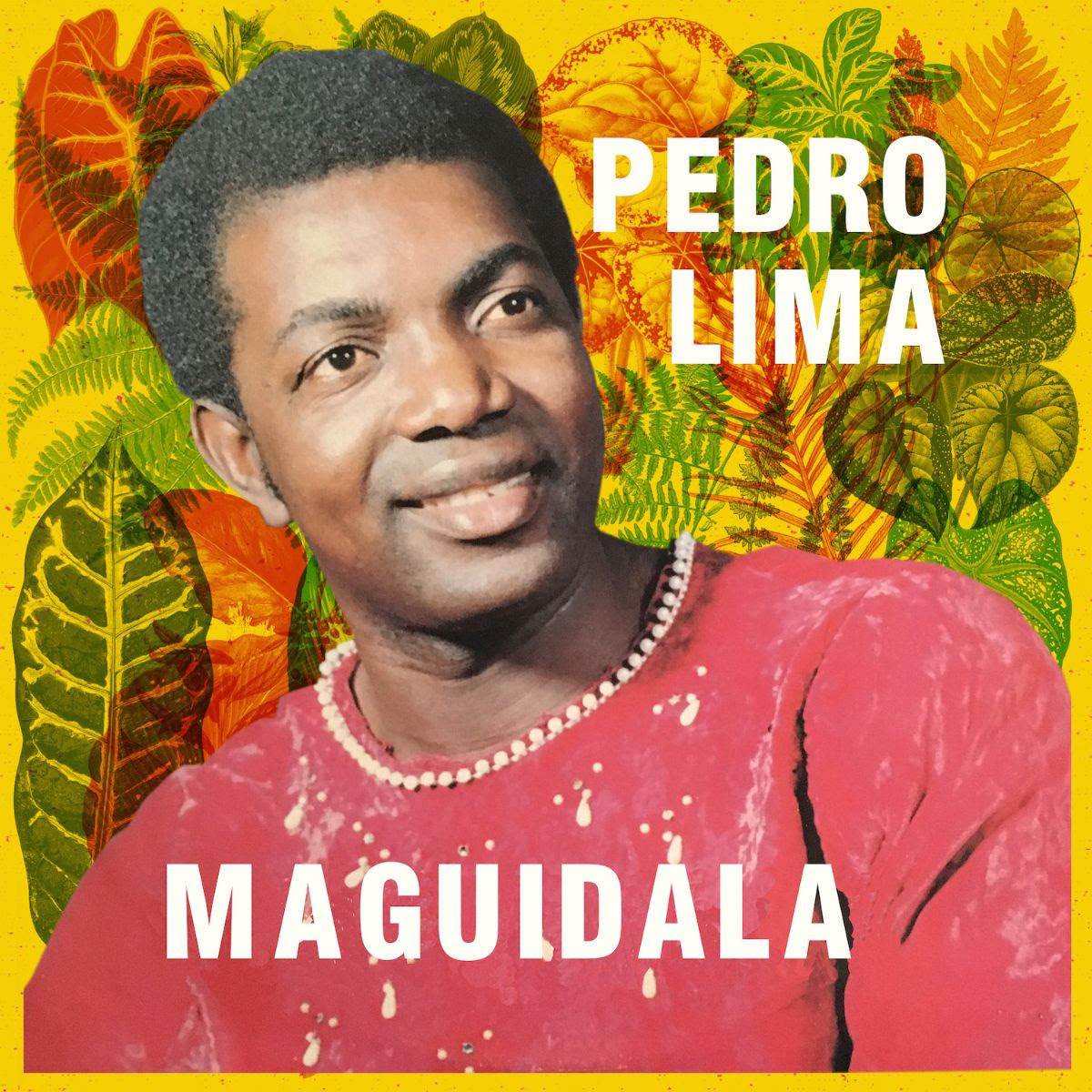
Pedro Lima ‘Maguidala’
(Bongo Joe) Album/17th July 2020
Seldom in the spotlight or given much attention, the African island nation of São Tomé & Principe remains relatively obscure: especially music wise.
A former Portuguese colony, whose African population were mostly enslaved souls shipped in from the continent’s interior and coastlines, this fertile island became famous for growing cocoa, sugar and coffee. Most heinously though, it soon became a transit post for the slave trade itself; its location off the coast of Gabon in the mid Atlantic offering an ideal cove for the transporting human cargo.
It would take over four hundred years but independence finally came in 1975. Though revolts against the colonial masters were a constant throughout its history, even as late as the 1950s when long-suffering Angolan contract workers rioted, enforced labour continued right up until political revolutionary groups such as the Movement For The Liberation of São Tomé & Principe overthrew the Caetano dictatorship. Democratic reforms would be slow but peacefully introduced in the 90s, and the island is now considered one of the most stable free nations in Africa.
An outspoken advocate of change, and star of this welcoming reissue, Pedro Lima was an activist and lauded recording artist who for his political stance was anointed by the islanders as “A voz de povo de São Tomé”: “the people’s voice of the island”. Not that you detect that revolutionary zeal in his most joyous, sun-scorched island life harmonies. Those sweetened but dynamic tones disarm any kind of anger or rage.
Remarkably, until recently, and through those discerning people at the Bongo Joe label/store, there hadn’t really been any musical survey of the São Tomé & Principe. Their Léve Léve compilation, which takes its title from the locals carefree “take it easy” attitude, was the first. Bongo Joe now hones in one of that compilation’s star turns with this reissue of what is considered as Lima’s best album, Maguidala – if nothing else, this reissue could save you a hefty sum, as the original is going for anywhere up to £350 on discogs.
Originally recorded in ’85 with his trusted band Os Leonenses, this both sauntering and scuffled four track highlight from the catalogue showcases an artist at his peak. Relaxed but also driven at times, Maguidala is a conjunction, as fertile as the soil, of influences from across not only the island but also African continent. Perhaps picked up when recording on the mainland in Angola for a number of labels, and further afield in Lisbon during the 80s for the IEFE imprint, Lima’s sound took in the famous Congolese rumba style of Soukous, the Dominican Merengue and local “Puxa” rhythms. The results are a most buoyant, harmonious dancing groove of scuttling percussion, beautifully lulled sweet voices, trickling, picked and streaked guitar and peaceable goodwill. The title-track and finale (‘Lionensi Sá Tindadji’) are both busy, more constantly, if softly, driven performances that skiffle and rattle along. Lima for the most part serenading, attempts to add a few shrills and “whompahs” on the latter.
‘Sãma Nanzalé’ seems more drifting; almost a beachcomber lullaby. Whilst ‘Cxi Compa Sã Cã Batéla’ skips, saunters and shuffles towards that Congolese rumba influence.
The laissez faire sound of an island hideaway, Lima’s Maguidala showcase is a perfect summer album; a piece of escapism we could all do with right now. Prompted in part by Lima’s death last year, Bongo Joe has revived a warranted classic and shone a light on a musical legacy. Stick it on and let the good time rumba and Créole harmonies wash over you.
Special word from me, founder and basically one-man operator behind the Monolith Cocktail.
Hi, my name is Dominic Valvona and I’m the Founder of the music/culture blog monolithcocktail.com For the last ten years I’ve featured and supported music, musicians and labels we love across genres from around the world that we think you’ll want to know about. No content on the site is paid for or sponsored and we only feature artists we have genuine respect for /love. If you enjoy our reviews (and we often write long, thoughtful ones), found a new artist you admire or if we have featured you or artists you represent and would like to buy us a coffee at https://ko-fi.com/monolithcocktail to say cheers for spreading the word, then that would be much appreciated.
Playlist/Dominic Valvona/Brian “Bordello” Shea/Matt Oliver

For those of you that have only just joined us as new followers and readers, our former behemoth Quarterly Playlist Revue is now no more! With a massive increase in submissions month-on-month, we’ve decided to go monthly instead in 2020. The June playlist carries on from where the popular quarterly left off; picking out the choice tracks that represent the Monolith Cocktail’s eclectic output – from all the most essential new Hip-Hop cuts to the most dynamic music from across the globe. New releases and the best of reissues have been chosen by me, Dominic Valvona, Brian ‘Bordello’ Shea and Matt Oliver.
Tracklist In Full:
Thiago Nassif ‘Soar Estranho’
Freak Heat Waves ‘Nothing Lasts Forever’
Lithics ‘Hands’
Ammar 808 ft. Susha ‘Marivere Gati’
Bab L’ Bluz ‘Gnawa Beat’
The Koreatown Oddity ft. Taz Arnold ‘Ginkabiloba’
Koma Saxo ‘Koma Mate’
Wish Master ‘Write Pages’
Gee Bag, Illinformed ‘I Can Be (Sam Krats Remix)’
Gorilla Twins ‘Highs & Lows’
Jeffrey Lewis ‘Keep It Chill In The East Village’
Armand Hammer ‘Slew Foot’
Public Enemy ‘State Of The Union’
Run The Jewels ‘Yankee And The Brave (ep.4)’
Gaul Plus ‘Church Of The Motorway’
Tamburi Neri ‘Indio’
Ty, Durrty Goodz ‘The Real Ones’
Fierro Ex Machina ‘A Sail Of All Tears’
Skyzoo ‘Turning 10’
Kahil El’Zabar ft. David Murray ‘Necktar’
Afel Bocoum ‘Avion’
Etienne de la Sayette ‘Safari Kamer’
The Lancashire Hustlers ‘Stuck In The Middle Of A Week’
Scarlet’s Well ‘Sweetmeat’
Campbell Sibthorpe ‘Good Lord’
Westerman ‘Drawbridge’
The Fiery Furnaces ‘Down At The So And So On Somewhere’
Kutiman ‘Copasavana’
Caleb Landry Jones ‘The Great I Am’
Bedd ‘You Have Nice Things’
The Original Magnetic Light Parade ‘Confusion Reigns’
Cosse ‘Sun Forget Me’
Bananagun ‘Modern Day Problems’
Salem Trials ‘Head On Rong’
Lucidvox ‘Runaway’
HighSchool ‘Frosting’
Jon Hassell ‘Fearless’
All our monthly playlists so far in 2020

