Most Loved and Enjoyed Highlighted Albums of 2024: Part Two: M – Z
December 16, 2024
Part Two of the Monolith Cocktail’s most loved and favourite albums of 2024 lists: from M to Z. Put together by Dominic Valvona and Brian ‘Bordello’ Shea.

Picking up on where we left off with Part One of the Monolith Cocktail’s most enjoyed and loved albums of 2024, Part Two continues to list all entries in alphabetical order, starting with M. So without further ado, here is the concluding spread of chosen albums – although anything we reviewed during the year should be considered a winner in that regard.
M_____________
Felix Machtelinckx ‘Night Scenes’ (Subexotic Records)
Chosen Dominic Valvona, reviewed originally by Graham Domain/Review
“The new album from Belgium singer, songwriter and producer Felix Machtelinckx is a strange album. In part electronic, it has an ethereal dreamlike quality where the music seems distant and the vocals sound as though they have been beamed through space from a distant galaxy.
Night Scenes is an intriguing album that is hard to define, but one that grows in definition, depth and subtle beauty with each play. It might prove to be a contender for album of the year.” GD
Marcelo D2 & SambaDrive ‘Direct-to-Disc’ (Night Dreamer)
Chosen by DV/Review
“Transforming choice tracks from his back catalogue of solo albums, put out between 1998 and 2013, the influential and acclaimed Brazilian rapper Marcelo D2 replaces the samples, breaks and scratching for a live, reactive Latin-jazz and samba trio.
As part of the championed ‘direct-to-disc’ series overseen by the Night Dreamer label, the South American hip-hop legend laid down ten performed tracks backed by the brilliant SambaDrive direct onto vinyl at the Haarlem Artone Studio in Holland. With no cuts, no edits, as little interference as necessary, these recordings sound near spontaneous, in the moment. The attitude, the passion, the crammed-in flow and more peppered lyricism is still very much on show, only now lilted towards a jazzier and Latin-fuelled backing that balances the urgency and freewheeling of the rapping with something more pliable, dissipating, funky and stylishly cool. Marcelo D2 & SambaDrive have created something very special; not so much an improvement as an alternative fruitful vision of Samba-rap. “ DV
Luce Mawdsley ‘Northwest & Nebulous’ (Pure O Records)
Chosen by DV/Review
“Over several years now the former Mugstar guitarist Luce Mawdsley has progressively shorn the more predatory slurred spoken-word mise-en-scenes and lurid, sleazy torturous self-harm from their music; gradually removing the “verbasier” programmed-like demonic effects from their voice and freeing themselves from a circled abyss of sonnets.
An holistic record that rescores the English scenery and places held near for Luce, the unfolding stages are both beautifully conveyed and hallucinatory in equal measure; a retold fairytale without any prompts, and without a human cast; a window in on the enchantments but also non-hierarchical, non-binary and free nature of the wilds and geography: a metaphor for Luce’s struggles to find an identity that feels natural, safe and unburdened. One part classical, one part Americana, and one part folksy (a touch of the Celtic too) there’s still a very modern twist to what we may identify as the familiar: imagine Prokofiev on an acid trip, or Ry Cooder in an English pasture laying down breadcrumbs for Hampshire & Foat.” DV
The Mining Co. ‘Classic Monsters’ (PinDrop Records)
Chosen by DV/Review
“Continuing to mine his childhood the London-based singer-songwriter Michael Gallagher once again produces a songbook of throwbacks to his formative adventures as a kid growing up in Donegal in Ireland.
His previous album almanac, Gum Card, touched upon a silly fleeting dabble with the occult, but this latest record (his sixth so far) is filled with childhood memories of hammy and more video nasty style supernatural characters, alongside a whole host of “weirdos”, “freaks” and “stoners”.
Once more back in his childhood home, frightened to turn the lights off, checking for Christopher Lee’s Dracula and the Wolfman under his bed, yet daring himself to keep watching those Hammer house of horror b-movies, Salem’s Lot and more bloody shockers, Gallagher links an almost lost innocence with a lifetime of travails, cathartic obsessions and searching desires.
I’m still astounded by the lack of support for his music or exposure, as Gallagher’s The Mining Co. vehicle is worthy of praise, airplay and attention. Hopefully it will be sixth album lucky for the Irishman.” DV
Hannah Mohan ‘Time Is A Walnut’ (Egghunt Records)
Chosen by DV/Review
“Geographically settling long enough to pen this solo songbook offering, but anything but settled emotionally, the former And The Kids vocalist-songwriter Hannah Mohan attempts to process the break-up of all break-ups.
Mohan rides the roller coaster of a drawn-out break-up with quirkiness and vulnerability, turning tortuous heartache into one of the best and most rewarding songbooks of the year. Mohan may have let her soul sing out, as she comes to accept an emotional turbulent period of stresses and anxieties and pain. But whether she’s finally pulled through the other side or not is up to you the listener.” DV
Jamison Field Murphy ‘It Has To End’ (Tomato Flower)
Chosen by Brian ‘Bordello’ Shea/Review
“Ah yes this is more like it. At last, an album with warmth, soul experiment and beauty. Just when I was beginning to think that it was a thing of the past James Field Murphy turns up with this home recorded gem, an album that combines all the things I love about the magic of music: songs with melody, “That Boy” could well be an outtake from The Beach Boys Smiley Smile album, and “It has To End” has a wonderful bonkers McCartney feel to it [remember McCartney was the most experimental of all the Beatles], and this track combines pop with experimental to a beautifully short and wistful degree. “Hate” is another beautiful song; yes indeed, a hate that is alright to love and love it I do. I love the tape pops in the background: you really cannot beat recording on tape.
It Has To End is a rare thing, an album you do not want to end. It’s an album I will be returning to on a regular basis over the coming months as James manages to balance off pop/psych beauty with experimentation perfectly.” BBS
N______________
NCD Instigators ‘Swimming With Sharks’ (Metal Postcard Records)
Chosen by BBS/Review
“The NCD Instigators were Tony, Brendan, and Desi Bannon, three brothers from Newcastle County Down in Northern Ireland who decided to form a band in the 80s together after many years of playing in various other bands. They took their love of metal, prog, folk and rock and home recorded several albums for their own pleasure, burning them onto CDRs to give to friends and family and playing the occasional gig.
There is just something quite magical about this album, and it is sad that now it is only being released years after the fact and that Tony (bass and vocals) is no longer with us, having passed away in 2020. Hopefully this release will ignite some long overdue interest in this underground lost great band from Northern Ireland.” BBS
Neon Kittens ‘It’s A NO Thing’ (Metal Postcard Records)
Chosen by BBS/Review
“The Kittens have a magic and their own sound: The guitar wizardry of Andy G (In a ideal world David Bowie would not be dead and Andy would be his guitarist songwriter partner) and the spoken, I am going to shove my stiletto shoe heel into your yearning heart, vocal coolness of Nina K. The Neon Kittens are one of those rare bands; we need them more than they need us.” BBS
Neutrals ‘New Town Dream’
Chosen by BBS/Review
“This is splendid stuff, an album of supreme guitar jangle, of well written and catchy songs about life in a small town that at times musically reminds me of early Wedding Present and The Pastels with such wonderfully British lyrics; although I wonder when “Travel Agents Window’s” was written as he mentions buying a bag of chips for 50p, when was the last time you managed to buy a bag of chips for 50p? Maybe life in this small town isn’t as bad as the Neutrals think. I do love this album though. I love the romance of everyday life songs, like little mini-Kitchen sink dramas filmed in grainy black and white. This is quite a gem of an album.” BBS
Not My Good Arm ‘Coffee’
Chosen by BBS/Review
“They take Rock ‘n’ Roll, Ska, Punk and Soul and tie it up and skin it alive whilst berating it with the sort of political soulful joyful nous that hasn’t been heard or witnessed since the Mighty Dexy’s Midnight Runners held the Top Of The Pops viewers enrapt with their explosion of attitude and musical good taste back in the early 80’s. Yes indeed, Coffee is a Northern indie soulful romp of an album by a band that I can imagine being a hell of a good night out to watch and by the looks of it gig on a very regular basis. So, keep your eyes scanned as they may be coming to your locality soon. I understand you can pick up a copy of Coffee on CD from their gigs, as by the looks of it they’ve not yet updated their bandcamp: probably too busy putting the fun into funk.” BBS
O_______________
OdNu + Ümlaut ‘Abandoned Spaces’ (Audiobulb)
Chosen by DV/Review
“Drawn together on what proves to be a deeply intuitive union for the Audiobulb label, the Buenos Aires-born but NY/Hudson resident Michel Mazza (the OdNu of that partnership) and the US, northern Connecticut countryside dweller Jeff Düngfelder (Ümlaut) form a bond on their reductive process of an album, Abandoned Spaces.
Tracks are given plenty of time to breathe and resonate, to unfurl spells and to open-up primal mirage-like and psyche-concocted soundscapes from the synthesized and played. And although this fits in the ambient electronic fields of demarcation, Abandoned Spaces is so much more – later on in the second half of the eight-track album, the duo expresses more rhythmic stirrings and even some harsher (though we are not talking caustic, coarse or industrial) elements of mystery, inquiry and uncertainty.” DV
Berke Can Özcan & Jonah Parzen-Johnson ‘It Was Always Time’ (We Jazz)
Chosen by DV/Review
““It Was Always Time”, and it was always meant to be, for the telepathic readings of both creative partners in this project prove synchronised and bound, no matter how far out and off-kilter their experiments of curiosity go or take them.
The Turkish polymath drummer and sound designer Berke Can Özcan and his foil the Brooklyn-based baritone/alto saxophonist and flutist Jonah Parzen-Johnson, have worked together before, namely on the former’s Lycian atavistic geographical infused and inspired Twin Peaks album, last year.
But before even that, back in the April of 2022, Parzen-Johnson found himself boarding a flight to Istanbul to perform a one-off gig with Özcan. Incredibly the two had never met until thirty minutes before going on stage for a soundcheck. The gig must have proved a creative, dynamic success as both musicians have now come together under the equal billing of this new album, recorded for the Helsinki-based hub We Jazz.
From the dubby to tribal, the esoteric to cloud gazing, Berke Can Özcan and Jonah Parzen-Johnson play out their fears and joys across an exciting album of possibilities and expressive, erring on the heavenly at one point, feelings. A fruitful combination that will endure, and hopefully reconvene in the future.” DV
P_______________
Pastense Ft. Uncommon Nasa ‘Sidewalk Chalk, Parade Day Rain’ (Uncommon Records)
Chosen by DV/Review
“Continuing to attract and surround himself with like-minded curious, inventive artisans of prose from the underground leftfield hip-hop scene, the Long and Staten Islands’ rapper and producer/beatmaker Uncommon Nasa now facilitates Pastense’s return with a post-pandemic opus of metaphysical, cosmological unravelled consciousness alchemy.
With no let-up in the quality of the expansive lyrical metaverse, tech comes in conflict with the forest’s birds and nature’s fight for survival amongst the concrete and chemically poisoned wells of so-called progression on an artistically simulated and stimulating canvas of thoughts and connectivity.
Pastense, in partnership with Nasa, creates a most excellent mind-expanding universe, and in doing so, one of the year’s best hip-hop albums: this is an artist and record worth championing.” DV
Ivo Perelman, Chad Fowler, Reggie Workman and Andrew Cyrille ‘Embracing The Unknown’ (Mahakala Music) Chosen by DV/Review
“A true “cross-generational” (with two of the participants born in the 1930s) coming together of avant-garde, freeform and hard bop talent, the ensemble quartet of Ivo Perelman, Chad Fowler, Reggie Workman and Andrew Cyrille “embrace” experiment. You could call it an extemporized gathering, with no prior arrangements and not much in the way of dialogue.
Making the abstract seem even more so, yet somehow conveying mood, emotions and self-expression, this descriptive and totally improvisational master class in free-thought-jazz somehow captures the internal struggles and reflections of the mind during an age of high anxiety, rage, divisiveness and unease.” DV
James P M Philips ‘Spite, Bile & Beauty’ (Turquoise Coal)
Chosen by BBS/Review
“Punk, folk, rock and a medieval becoming strangeness all collide to bring us another album of psychedelic whimsy from the head and heart of James P M Phillips: an album of joy, sadness, humour and pain. Whether it be the quite wonderfully disturbingly jagged “My Head Is Full Of Rats” or the quite beautiful folk strum of “My New Friend”, James has his own unique way of making music and writing songs; dipping his own original thought patterns into a hybrid of musical genre hopping eccentricity.” BBS
Poppycock ‘Magic Mothers’
Chosen by BBS/Review
“The whole album is joy. I love the mix of jazz, folk and psychedelic pop: alas, if only the last Zombies album was as enjoyable as this.” BBS
Pound Land ‘Live At New River Studios/ Worried’ (Cruel Nature Records)
Chosen by DV, but reviewed originally by Brian ‘Bordello’ Shea
“This new album by Pound Land is a double whammy of an affair. The first side recorded live, captures the band without guitar but with a rather fetching squelching punk rock synth suppling the health out of the watching masses. Pound Land are of course a punk and post punk rock outfit of political magnitude. A band that captures the atmosphere of living in this divided land we call the United Kingdom and make a hell of a fine racket while capturing the atmosphere as the live side of this cassette magically proves. The second side is taken up by the thirty-one-minute track, “Worried”, which is a fine sonic journey of sadness, horror and experimental splendour that takes in dub, punk, and electro soundscapes; a dream of a nightmare track that really needs to be heard by all.” BBS
R__________________
Revival Season ‘Golden Age Of Self Snitching’ (Heavenly Recordings)
Chosen by DV
Totally missed at the time by us (well, we did feature ‘Chop’ on the February edition of the Monthly playlist), this incredible union between Brandon “BEZ” (B Easy) Evans and beatmaker/producer Jonah Swilley is so “now” it hurts. A synergy that captures the times it was forged in, Golden Age Of Self–Snitching crafts electronic dance music both dystopian and club, hip-hop, 2-Step, the kind of fusions that TV On The Radio used to generate, locked beats and breaks and dub into a commentary on societal change, protestation and revolution. An essential flow of concentrated angst, frustrations and observation criminally overlooked, and which should make every end of year list of there was any real justice in this god damn forsaken world. DV
Kevin Robertson ‘The Call Of The Sea’
Chosen by BBS/Review
““The Call Of The Sea” is the fourth solo album from Kevin Robertson, a man who is also one of the vocalists/guitarists from Scottish guitar band The Vapour Trails. And here we have him once again showering us with sublime melodies. Melodies that are wrapped in Byrdsian like guitar jangle and vocal harmonies that have just stepped from scratched vinyl copies of ye olde mid-sixties beat boom collectables stopped for a cup of the finest Earl Grey with late 80’s early 90’s Scottish indie guitar wunderkinds’ Teenage Fanclub and Superstar while scribbling on postcards to send their love to those old scouse reprobates Shack and The La’s and the Coral.” BBS
S___________________
Salem Trials ‘View From Another Window’ (Metal Postcard Records)
Chosen by BBS/ Review
“The Salem Trials are clinically rambunctious. They are never further than being an arm’s length away from genius. They have their own sound: their own model of post-punk if you like. They take all the usual subjects (The Fall, Wire, Gang Of Four, the Blue Orchids and Subway Army) and mix them with a no wave sound coming from the streets of New York in the late 70s early 80s. They release albums constantly – this is actually the first of 2024 though, and fits in nicely with the army of their previously released albums.
Andy still being the inspired guitarist that he is, riffing like a cross between Keith Richards, Tom Verlaine and Brix Smith with a army of admirers gathering in her Dis guarded nightwear, and Russ still being the nutter on the bus wearing the splatter ballistic cop t-shirt and spitting feathers at the naked chickens queuing up outside to be the first in line for the latest modern contraption while he is creating art at its best out of the fuzzy felt of yesteryears clowns hats. You really have to love the Salem Trials.” BBS
The Salisman Communal Orchestration ‘A Queen Among Clods’ (Cruel Nature Records)
Chosen by BBS/Review
“I love the psychedelic otherworldliness of SCO. I love the way the lead vocalist phrases his words. He sings with the soul of an sad imperfect empathetic angel, you actually believe in what he is saying, “[If I Wasn’t ]So Godam Blue” is so goddamn beautiful, and with some pretty wonderful lyrics: “remember those days when I pissed in the street, well that is not my style anymore”. Pure heartbreak poetry at its best. The following track “Rum Punch” is as equally beautiful, a psych country-tinged beauty full of sadness and pathos.
I really do love this album SCO have the perfect blend of magic and tragic, and “A Queen Among Clods” is defiantly one of the most impressive and heartfelt original sounding albums I have had the pleasure to write about this year. A true stunner.” BBS
Sly & The Family Drone ‘Moon Is Doom Backwards’ (Human Worth)
Chosen by DV/Review
“A wrestling match on the barricades between the forces of Marxism, Populism, the consumer culture, nepotism, and encroaching forces of a technological dystopia, the collective forces of this group provide a reification-style soundtrack to the crisis of our times. Often this means escaping via a trapdoor to beyond the ether, or, to off worlds and mysterious alien landscapes. But we’re always drawn back into the horror, stresses and contorted darkness of reality; a sonic PTSD manifested in industrial noises from Capitalism’s workshop.
Poltergeist’s jamming activity, fizzles of sound waves and transmissions from the chthonian, ghost ship bristled low horns and higher pitched shrieks, bestial tubular growls, cymbal shaves, disturbances in the matrix, a short melody of pastoral reeds, drums that sounding like a beating. This is the sound of Moon Is Doom Backwards; pushing and striving to score this hideous age through the cerebral and chaotic.” DV
Juanita Stein ‘The Weightless Hour’ (Agricultural Audio)
Chosen by DV/Review
“And perhaps it all comes to this, that after twenty-five years in the music business as both the frontwoman of the Howling Bells and as an established solo artist Juanita Stein has finally found the strength of her own voice and creative force. Stepping out from behind the safeguards of noisy rock to find that silence resonates deeper and further, Juanita erases everything but the most vital, emotionally receptive and connective elements from her music to produce a sagacious, confident (despite the fragility and vulnerability in places) songbook of personal memories.
The Weightless Hour is the perfect album from a great voice and songwriter, who’s now able to find that distance from the events of the past and a new sense of reflected candidness and honesty in motherhood. Juanita’s true self and strength opens-up, the noise diminished for something far more powerful. Not so much defiant as confident. A definite album of the year.” DV
Mohammad Syfkhan ‘I Am Kurdish’ (Nyahh)
Chosen by DV/Review
“Like an ascending stairway, or flowing and resonating with evocative melodious magic, lute stirring ruminations sweep over Arabia and surrounding regions; referencing anonymous, collective and some original-penned compositions and dances to Islam’s ‘golden age’ of fairytale (‘A Thousand And One Nights’); Kurdish pride in the face of repression (the title-track of course) and its peoples’ struggle for independence and respect (‘Do Not Bow’); lovelorn enquires (‘Do You Have A Lover Or Not?’) and the missed daily activities, interactions of life back home in Raqqa. Across it all the hand drums tab, rattle and roll; the cello arches, weeps and bows in sympathy; and the bouzouki lute swoons and rings out the most nimble and beautiful of ached and more up-tempo giddy tunes.” DV
T____________________
The Tearless Life ‘Conversations With Angels’ (Other Voices Records)
Chosen by DV/Review
“Both a transference of souls from the now cremated – or laid to rest, depending on your choice of metaphorical ritual death – Vukovar plus a host of orbiting “other voices”, the make-up of The Tearless Life remains relatively, and intentionally, shrouded, obscured.
Taking a while to materialize, The Tearless Life’s debut opus is both the announcement of new age, but also a bridge between this latest incarnation and the former Vukovar invocation – they are in essence, a band that continues to haunt itself. Old bonds remain, sound wise and lyrically, but with a new impetus of murky, vapoured, gossamer, mono and ether effected solace, tragic romanticism, pleaded and afflatus love, spiritual inspired yearning and allegorical hunger.
Talking to angels, conversing with both the seraph and the fallen, the daemons and spirits of the alchemist’s alternative dimensions, the group transduce the writings of that most visionary seer John Dee, the opium eater Thomas De Quincey, William Blake, and the far more obscure Samuel Hubbard Scudder, who’s 19th century, fairy-like, Frail Children of the Air: Excursions Into The World Of Butterflies publication of philosophical essays lends its title to a song of tubular airy manifestations, distortion, wisped spiralling piques and beautified touching emotional anguish.
Conversations With Angels is epic; the first step in, what I hope, will be a fruitful conversation to divine enlightenment, curiosity, psychological and philosophical intelligent synth-pop.” DV
TRAINING + Ruth Goller ‘threads to knot’ (Squama Recordings)
Chosen by DV/Review
“Two connective forces in the experimental, inventive contemporary jazz scenes combine their experiences and art on this sonic and musical hybrid.
There’s enough threads, nodes and junctions in between to feed off, but both partners in this knotted tension and more spiritual, lofty, airy and aria-like ether Linda Sharrock “ah’d” fusion of influences and prompted sparks of inspiration read each other very well. Directed by, and riffing off, the “Exquiste Corpse” parlour game so beloved by the Surrealist movement, the trio of players expand beyond the jazz idiom into shadow worlds, the mysterious, supernatural, cosmic and near industrial.
Pretty much out on the peripherals of jazz, ascending, flexing, rasping, soothing and breathing iterations and more untethered expressions of freeform music, TRAINING + Ruth Goller fashion organic fusions from a process that promises the wild, tumultuous, wrangled and strange, yet also provides the melodic and dreamy.” DV
Twile (featuring Laura Lehtola) “Hunger Moon” (Cruel Nature Records)
Chosen by BBS/Review
““Hunger Moon” is an album that combines folk, trip-hop, electronica and magic, and weaves together a tapestry of undiluted majestic swoonincity that has not been heard since the Portishead debut album “Dummy”.
Hunger Moon really does not put a foot out of place as it flows and hooks you into its warm strangeness, cradling you and sweeping you up to a safe place where dreams are free to play and cast shadows over your deepest thought and emotions. Eight tracks to soundtrack you as you come down from your highest high. Truly magnificent.” BBS
V______________________
Various ‘Athos: Echoes From The Holy Mountain’ (FLEE)
Chosen by DV/Review
“Context is vital: history essential. For the publishing house/record label/curatorial/ethnologist platform FLEE has spent a year unravelling, digging and excavating and researching their grand project dedicated to the Athos monastic community.
No one quite puts in the work that FLEE and their collaborators do, with the scope and range of academia wide and deep. Musically, across a double album vinyl format there’s a split between those artists, DJs and producers that have conjured up new peregrinations influenced by the source material, and a clutch of recordings taken in the 1960s and in recent times of the Daniilaioi Brotherhood Choir, Father Lazaros of the Grigoriou monastery, Father Germanos of the Vatopedi and Father Antypas – there’s also attributed performances to the Iviron and Simonopetra monasteries too.
As an overall package however, Echoes From The Holy Mountain is a deep survey of a near closed-off world and all the various attached liturgical and historical threads. FLEE reawaken an age-old practice, bringing to life traditions that, although interrupted and near climatically hindered, stretch back a millennium or more. No dusted ethnographical academic study for students but an impressive and important purview of reverential dedication and a lifetime of service, this project offers new perspectives and takes on the afflatus. Yet again the platform’s extensive research has brought together an international cast, with the main motivation being to work with tradition to create something respectful but freshly inviting and inquisitive. The historical sound, seldom witnessed or heard by outsiders, is reinvigorated, as a story is told through sonic exploration.” DV
Various Artists ‘I’m Glad About It: The legacy Of Louisville Gospel 1958 – 1981’ (The Louisville Story Program/Distributed Through Light In The Attic) Chosen by DV/Review
“When Ben Jones, one of the many voices of authority and leading lights of the Louisville gospel legacy, enthuses that the talent at every Black church during the golden years chronicled in this ambitious box set was akin to witnessing and hearing “ten Aretha Franklins at every service”, he’s not boasting. Jones’ contributions, as outlined in this multimedia package’s accompanying 208-page full colour booklet, lays down the much unrepresented story of a thriving, enduring scene. Alongside a host of reverent members of the various Evangelist, Pentecostal, Baptist and Apostolic churches, artists, instigators and custodians, his informative, animated and passionate words draw you into a most incredible cross-community of afflatus bearers of the gospel tradition. For the Louisville scene was and continues to be every bit the equal of its more famous and celebrated rivals across the American South. And that Aretha quote is no exaggeration, as you will hear some of the most incredible voices and choirs to ever make it on to wax, or, in some cases, make it onto the various radio stations and TV shows that promoted this divine expression of worship. 83 songs, hymns and paeans of assurance, great comfort, tribulations and travails from a gospel cannon of pure quality, moving testament and joy.
‘I’m Glad About It: The legacy Of Louisville Gospel 1958 – 1981’ is an unprecedented example of just how to display and facilitate such a multifaceted project of documentation and archive – in the package I received there were links to a brilliant visual timeline and archive of some 1000 songs recorded by 125 different gospel artists. A labour of love and recognition, taking over three years to put together, The Louisville Story Program has not just set out to preserve but also equip the communities they serve with a genuine platform which can be added to overtime. But importantly, they’ve brought in a number of inspiring voices to help build a concise story of legacy and continued influence of the city and gospel music in general – Ben Jones citing Drake and Kayne unable to find a beat that they didn’t hear in church.” DV
Various ‘Congo Funk! – Sound Madness From The Shores Of The Mighty Congo River (Kinshaha/Brazzaville 1969-1982)’ (Analog Africa) Chosen by DV/Review
“A tale of two cities on opposites sides of the same river, the Congo, the latest excursion for the Analog Africa label celebrates and showcases an abundance of dynamite, soul and funk tracks from the two capitals of Kinshasa and Brazzaville.
Congo Funk in all its many variations is put under the spotlight, with an outstanding set list of fourteen tracks (whittled down from a container’s worth of singles) that will enthral and educate in equal measures. Essential dance floor fillers await.” DV
Various ‘Ghana Special 2: Electronic Highlife & Afro Sounds In The Diaspora 1980-93’ (Soundway Records) Chosen by DV/Review
“The first decade of the new millennium proved a fruitful period for (re) discovering Africa’s rich dynamic and explosive music heritage, with both (through their various Afro-funk and Afro-psych compilations) Soundway Records and Analog Africa (in particular their influential African Scream Contests) spoiling connoisseurs and those with just a curiosity alike to sounds rarely heard outside the continent. The former’s original five album Ghana Special spread was one such indispensable collection from that time; a perfectly encased box set survey of one of Africa’s most important musical junctions. Now, unbelievably, a full twenty years later Soundway have followed up that “highlife” triumph with a second volume; moving the action on into a new decade. Ghana Special part two is a refreshing map of the diaspora fusions and hybrids that spread across Europe during a time of movement and turmoil from Ghana’s hotbed of influential stars and musicians. In highlighting the stories and journeys of Ghana’s émigrés, and in introducing us to those sounds, movements that remain either forgotten or just not as celebrated, Volume 2 will become as indispensable as the first.” DV
Various ‘Ulyap Songs: Beyond Circassian Tradition’ (FLEE)
Chosen by DV/Review
“Broadening the scope, the guest list of collaborators stretches the imagination; often completely uncoupled from the source material. All together in one bumper package of ethnomusicology, it makes perfect sense, futuristic alternative planes and visions of a forgotten – mostly passed down orally – tradition. This is a document and testament to the hardiness, perseverance and survival of a culture massacred, exiled and incarcerated, the remnants of a culture almost lost in time, but proving to be very much alive and intriguing to our ears. FLEE and their collaborators, aiders have put together a brilliant, thorough piece of musical research that bristles and wafts with a bounty of possibilities.” DV
Various ‘Wagadu Grooves: The Hypnotic Sound Of Camara 1987-2016’ (Hot Mule)
Chosen by DV/Review
“Shedding light on a rarely told story, the latest showcase compilation from the Paris label Hot Mule unfolds the backstory and “hypnotic” sounds of Gaye Mody Camara’s iconic label; a story that encompasses the West African Soninke diaspora and legacy. The entrepreneur turn label honcho and umbrella for those artists both from the mainland French migrant community and from across swathes of what was the atavistic kingdom of the Soninke ethnic groups’ Wagadu, Camara, through various means and links, helped create a whole industry of music production in Paris during the 80s, 90s and new millennium. The sound is always amazing, and the voices commanding, a mix of those inherited Griot roots, the club, pop and caravan trial. Most importantly Wagadu does have that eponymous ‘groove’ of the title: the ‘hypnotic’ bit too.” DV
Violet Nox ‘Hesperia’ (Somehwerecold Records)
Chosen by DV/Review
“Building new worlds, futuristic landscapes and intergalactic safe havens, and leaving vapour trails of laconic, hypnotizing new age psy-trance mysticism, a message of self-discovery and of resistance in their wake, Violet Nox once more embrace Gaia, Greek and Buddhist etymology and astrology to voyage beyond earthly realms.
Referencing mythological starry nymphs, a sun god’s charioteer, Agamemnon’s granddaughter and scientific phenomenon as they waft, drift and occasionally pump through veils of ambience, trance, dub, EDM and techno, the Boston, Massachusetts trio (although this core foundation is pliable and has expanded its ranks on previous releases) of synthesists and electronic crafters Dez DeCarlo and Andrew Abrahamson, and airy, searching siren vocalist and caller Noell Dorsey, occupy a dreamy ethereal plane that fits somewhere between Vangelis, Lisa Gerrard, Mythos, Kavinsky, Banco de Gaia and ecological revering dance music.” DV
Virgin Vacations ‘Dapple Patterns’
Chosen by DV/Review
“From a multitude of sources, across a number of mediums, the concentrated sonic force that is Virgin Vacations ramp up the queasy quasars and the heavy-set slab wall of no wave-punk-jazz-maths-krautrock sounds on their debut long player. With room to expand horizons the Hong Kong (tough gig in recent years, what with China’s crackdowns on the free press and student activists; installing authoritarian control over the Island) ensemble lay out a both hustled, bustled and more cosmic psychedelic journey, from the prowling to the near filmic and quasi-operatic -from darkened forebode to Shinto temple bell-ringing comedowns that fade out into affinity.” DV
Z__________________________
Tucker Zimmerman ‘I Wonder If I’ll Ever Come True’ (Big Potato Records)
Chosen by DV
Whilst living in idyllic seclusion in Belgium during the 1970s, the venerated but underrated idiosyncratic US-born troubadour/singer-songwriter Tucker Zimmerman left the door ajar to friends (namely Ian A Anderson & Maggie Holland) and the like to spin a collection of unburdened, unpressured homegrown recordings. The results, unsurprisingly magical, halcyon and unassumingly poignantly poetic. The first ever release for ‘I Wonder If I’ll Ever Come True’ is as revelatory as much as it is sublime, felt, intimate, boosting a reputation and clamour for an overlooked maestro. DV
If you enjoyed or were introduced to new discoveries and wish to support us, you can donate the price of a coffee to https://ko-fi.com/monolithcocktail
The Monthly Playlist For November 2024
November 29, 2024
CHOICE/LOVED/ENJOYED MUSIC FROM THE LAST MONTH ON THE MONOLITH COCKTAIL: TEAM EFFORT
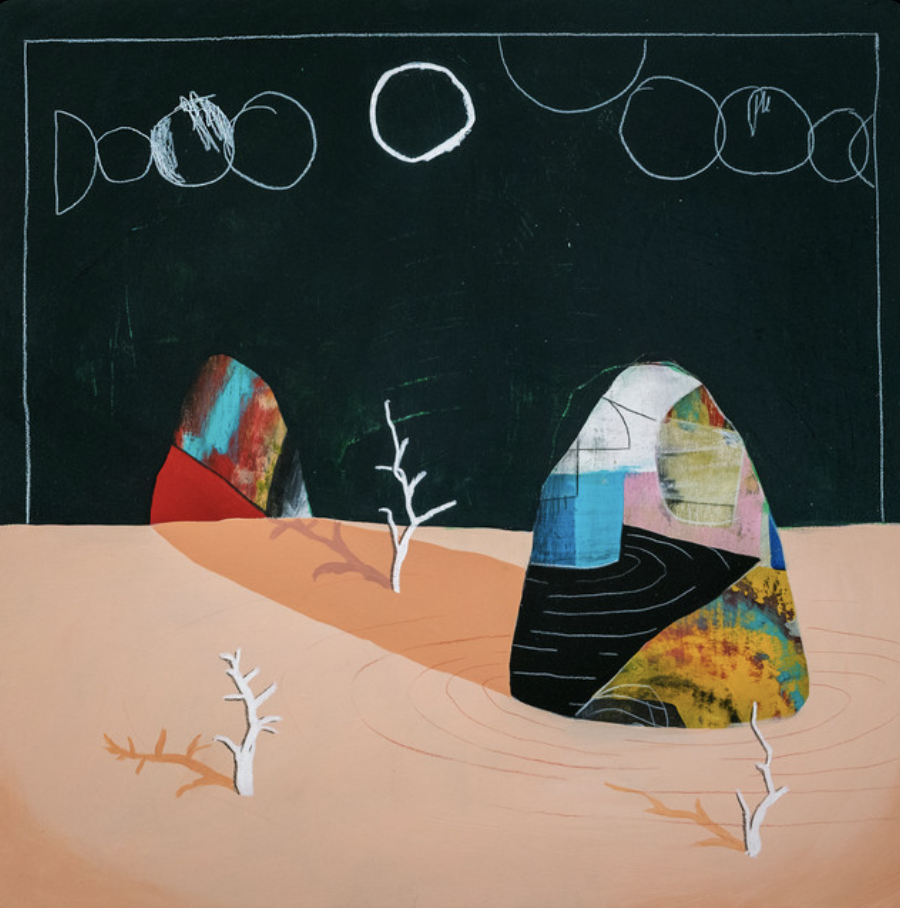
The Monthly Revue for November 2024: All the choice, loved and most enjoyed tracks from the last month, chosen by Dominic Valvona, Matt ‘Rap Control’ Oliver and Brian ‘Bordello’ Shea. As always our selection features a real shake up and mix of tracks that we’ve both covered in our review columns and articles over the last month, plus those tracks we didn’t have room to feature at the time.
Covering many bases, expect to hear and discover new sounds, new artists. Consider this playlist the blog’s very own ideal radio show: no chatter, no gaps, no cosy nepotism.
___/TRACKLIST_____
Les Amazones d’Afrique ‘Wa Jo’
Mulatu Astatke & Hoodna Orchestra ‘Major’
Orchestre Tout Puissant Marcel Duchamp ‘Speak by the E’
Marcelo D2 & SambaDrive ‘Samba de Primeira/Encontro com Nogueira’
Les Sons Du Cosmos ‘LAUNDRY’
Ric Branson Ft. Relense ‘Judas and the Black Messiah’
Juga-Naut Ft. Mr. Brown ‘Camel Coat’
Nowaah The Flood ‘On Location’
Blockhead ‘Orgy At The Port Authority’
Berke Can Ozcan & Jonah Parzen-Johnson ‘The Saint’
Elea Calvet ‘Landslide’
Roedelius ‘217 09’
Lolomis ‘Kristallen den Fina’
The South Hill Experiment ‘Silver Bullet’
Sparkz & Pitch 92 ‘Genius’
Jack Jetson & Illinformed ‘Pray’
Spectacular Diagnostics & Kipp Stone ‘BUCKET LIST’
Cavalier & Child Actor ‘Knight Of The East’
Walking The Dead ‘Fun Facts’
Humdrum ‘See Through You’
The Conspiracy ‘Tick Tok’
The Awkward Silences ‘Mother I’m on TV’
Trupa Trupa ‘Sister Ray’
Neon Kittens ‘Demons’
Bloom de Wilde ‘Dwindi’
Bell Monks ‘Before Dawn’
Spaces Unfolding & Pierre Alexandre Tremblay ‘In Praise of Shadows Pt. 2’
Gasper Ghostly ‘Floor Thirteen’
Son Of Sam & Masta Ace ‘Come A Long Way (Jehst Remix)’
Hegz & Dirty Hairy ‘Ruby Murray’
Glowry Boyz ‘FREE FALL’
Django Mankub ‘BEATSEVEN’
Sly & The Family Drone ‘Joyless Austere Post-war Biscuits’
Lolomis ‘Sieluni tanssimaan’
Cumsleg Borenail ‘Parade You ‘round Town’
Sam Gendel, Benny Bock & Hans P. Kjorstad ‘Charango’
Yazz Ahmed ‘A Paradise In The Hold’
Maalem Houssam Guinia ‘Matinba’
Baldruin ‘Hinein, hinaus, hinuber’
hackedepicciotto ‘Aichach – Live in Napoli’
Hornorkesteret ‘Krekling’
The Muldoons ‘Hours And Hours’
Juanita Stein ‘Motionless’
Sassyhiya ‘Take You Somewhere’
John Howard ‘If There’s a Star’
The Tulips ‘Haven’t Seen Her’
Jamison Field Murphy ‘Ermine Cloak’
Graham Reynolds ‘Long Island Sound’
Mauricio Moquillaza ‘___’
Kotra ‘Trials Of Discernment’
A WORLD OF SONIC/MUSICAL DISCOVERIES REVIEWED BY DOMINIC VALVONA
(Unless stated otherwise, all releases are available now)

CAN ‘Live in Keele 1977’
(Mute Records) 22nd November 2024
The sixth “live” album in Mute’s series of CAN performances, previously lost in the archives, or left to the bootleg community to post and share in various edited or mixed-up forms over the decades, Live in Keele is the second such live recording from the pivotal year of 1977. The most “requested” live performance yet we’re told, is taken from the band’s Keele University showcase, recorded in March of that year in the Staffordshire town of Newcastle-under-Lyme.
Whilst the legacy label Spoon has already released various versions of live material over the years – specifically the CAN Live 1971 – 1977 album -, and many fans have loaded up their amateur recordings onto Youtube and the like, this will be the first time proper that the Keele set has been released in its most complete, remastered form.
The set list has been argued over, depending on who you listen to and what version you find resurfacing on the net. But it can be agreed that the performance was a mix of refashioned, in-the-moment tracks from their most recent album, Saw Delight, some improvisations and recalls of past glories and themes. One such example lists ‘Fizz’ (as featured on that already mentioned Spoon endorsed Live collection), ‘Animal Waves’, ‘Sunshine Night And Day’, ‘Dizzy Dizzy’, ‘I Want More’, ‘Pinch’, ‘Don’t’ Say No’ and ‘Pellamen’ (an improvisation). And indeed, some of this is right, if only in short passages or bursts. But this release unhelpfully splits the tracks into non-committal numerical titles, ‘Eins’ to ‘Fünf’. Another version has the same performance kicking off with an untitled improv, followed by ‘Pinch’, ‘Don’t Say No’ and ‘Animal Waves’. The latter two’s inclusion is concrete, no argument. And I’m sure that’s a recall of ‘Pinch’ from Ege Bamyasi alongside a transmogrified glimpse of ‘I Want More’ in the mix.
But before we go any further, I feel we should familiarise ourselves with the band’s often dismissed or at least forgotten treasure, and the focal point of reference for this recording, the Saw Delight LP, plus the changes that had taken place in the setup and lineup during this pivotal year.
Traversing influences from around the globe, the ethnography alchemists CAN always effectively absorbed the traditional and authentic music of multiple cultures, including the Middle East, Far East and Turkey. However, it wasn’t until the release of 1977’s Saw Delight LP that the group found themselves lauded as so-called ‘world music’ pioneers. In truth this five track assiduous collection of Afro, Turkish, Arabian, South American and “Fourth World” imbued songs does sound like a precursor to the 80s explosion in ethnically traditional music.
Much of CAN’s later work is often passed over, if not dismissed. Perhaps this can be attributed to the fact that their last couple of albums proved disappointing, the strange proto-glam of Landed and the more disco-esque reggae of the conventional Flow Motion – which spawned their most commercial hit ‘I Want More’ – did little to ingratiate die-hard fans to the cause, with many believing they’d lost their experimental edge. Fortunately, I believe, Saw Delight placed them back on track for a momentary reprise, mainly due to the inclusion of former Traffic bass player Rosko Gee, and percussionist Reebop Kwaku Baah, who both added a touch of African grooves and Caribbean coolness to the Teutonic mix.
Rosko’s arrival changed the dynamics, allowing CAN’s co-founding bassist and producer Holger Czukay to step away from the instrument to concentrate on producing interloping and spontaneous sound effects. Interacting with telephone calls and various radio transmissions, Czukay created the technique of using a Morse code switch to relay the signal and tap out these often-strange sound bite samples.
Vocals at this time were shared by everyone, with Rosko pitching in with lyrics to ‘Call Me’ and collaborator Peter Gilmour (Journalist friend of the band who co-wrote tracks on their last two albums) supplying words for both ‘Don’t Say No’ and ‘Fly By Night’.
The music itself gyrated to a disco and funk fuelled world rhythm, sauntering along most of the time in a kind of infectiously serene fashion. The opening song on that album, ‘Don’t Say No’, springs into action, settling quite rapidly into a taut rhythmic and containable conducted feel-good jam. Oscillating and accelerating keyboard waves of sound shuffle around the wispy delivered vocals that prompt us to, “Do what you feel, what you need to do” in a relaxed Jamaican fashion. ‘Sunshine Day And Night’ featured a rallying conga intro, courtesy of Reebop, whose Ghanaian ancestry comes in quite handy on this West African flavoured jam. Czukay mingles at this point, shoehorning in waves of operator dialled phone conversations and snatches of transistor radio shows, whilst Irmin Schmidt emits a smog thick blanket of effects via his infamous Alpha 77 plaything.
Over on the flip side we find the 15-minute mini-opus ‘Animal Waves’, a moody piece that mixes elements of mysterious whispery windswept atmospherics with a more stirring and emotive melodic soundtrack. Touches of Cuban percussive grooves and African bubbling broody basslines pull at this sad and forlorn instrumental that is full of grandiose cinemascope and erudite musical charm. One of the more beguiling, if not strange, tracks is the sultry Barry White school of soulful disco, ‘Fly By Night’, a peculiar sounding funky balled that is unlike anything the group had ever recorded or where likely to never repeat.
Throughout this LP, the usually prominent and leading protagonist of the group, Michael Karoli, seems somehow restrained, playing the role of a drifter, though always managing to add desideratum moments of floating ark like celestial guitar licks at the right time. Also drumming prodigal magi Jaki Liebezeit moves to the sides, remaining an anchor, but reining in his usual freewheeling floor show of elaborate rolls, instead reverting to his machine accurate timings and leaving enough space for the percussion of Reebop.
The Keele performance must have been one of the group’s earliest stages to showcase the new material and their adopted new band members after Saw Delight’s release in March of that year. Riffing on the album’s highlight tracks, ‘Don’t Say No’ and ‘Animal Waves’, we can hear all the signature elements of groove and rhythm, and licks of the former on ‘Drei’, and the vaped and tunnelled shifts and starlit rays, the cyclonic tribal vocal samples and night flights of the latter on ‘Fünf’. Although, they sound like they’re in a hurry to set up the recognisable ‘Don’t Say No’ feel and beat, emerging suddenly as it does out of the previous Velvets-score-the-Omega-Man, cosmic summoning stained glass galactic organ and Hendrix-invoking performance – elements I’m sure of ‘Pinch’ with a hangover of their Soon Over Babluma period.
Elsewhere the performance is straight into a Turkish vision of whomp-whomp, whacker-whacker Fred Wesley J.B.’s and The Jimmy Castor Bunch, with echoes of Flow Motion. Schmidt’s keys seem to simultaneously invoke the sci-fi, Vincent Price horror show, Arabia, ? & The Mysterians and the acid, whilst Czukay gets the phone lines open, dialling up the operator with prank-like calls that leave the unsuspecting receiver hanging.
Liebezeit meanwhile keeps the groove going, busy but never overdoing his part nor bursting into a silly egotistical drum solo as he makes rhythmic trips from West Coast America to The Levant, Orient and Africa. Acid-rock, jazz, Afrobeat, funk, traditional influences meet as the action circles round the kit, the hi-hat pedal bounces and the cymbals shimmer and splash. Guitar prodigy Karoli has always pulled off a similar merger of influences whilst maintaining a cool aloof presence, rocking, fuzzing, wailing, screeching, and bending with the best of them. From Beefheart to Zappa, Garcia to Hendrix, he finds some incredible licks and riffs that squeal acid and psych rock but could be unconsciously and consciously gathered from all points of the compass and earths. Again, the Turkish, the Arabian, the Persian, the American West Coast scene, the avant-garde and even Eastern European seems to all come together in both tight and rubber banded displays of virtuoso riffage.
Latest recruit, Rosko Gee (Reebop Kwaku Baah isn’t mentioned as playing on this live recording) keeps a cool bass line going throughout. The ex-Traffic bassist adds a less driven and monotonous rhythm with funk, soul, R&B, African and Caribbean influences. These either sit underneath the freeform surface or go on long scale runs, and octave juggles, and sometimes just smoothly bounce around.
A defining period for CAN, the Live in Keele gig recording is a window in on a group that still retained it’s early 70s magic but was also moving on: an experiment with new members, and a freeing up of the long-established setup and sound. If you hated, or to put it less harshly, just aren’t into the Saw Delight LP period than you’ll still find much to excite and enjoy about this ’77 special. But if like me you rate that often missed out and sometimes dismissed entry in the CAN catalogue than you’ll be a little disappointed, as this performance doesn’t go far enough in using that album’s material, nor in breaking with the previous recordings and live shows. Yes, always improvising, and always transforming, often based on how the atmosphere is, where the crowd and vibrations take them, there is still a lot of familiar ground being retrodden. Most will be happy though, but heads and diehards will probably already know this set off-by-heart. Still, a worthwhile contribution to the series, and indeed one of their best captured gigs of that era.
Hackedepicciotto ‘The Best Of Hackedepicciotto (Live In Napoli)’
(Mute)
Responsible, in part at least, to helping shape a certain brooding yearned and dramatic sound over the last four decades in Berlin, the husband and wife creative partnership of Alexander Hacke and Danielle de Picciotto have at any one time, both separately and together, been members of Einstürzende Neubauten, Crime And The City Solution and the Anne Sexton Transformations imbued theatrical Ministry Of Wolves. During that time Danielle was the lead singer for the Space Cowboys and co-founded the famous Love Parade carnival.
As a duo in recent years, under the twinned Hackedepicciotto moniker, they’ve channelled much of that experience into a signature sound that embraces the cabaret and soundtrack gravitas of post-punk, post-industrial, electronica, the esoteric, weird folk and twisted fairytale: which they themselves have described as “symphonic drone”.
Their fifth album, the partial sonic and lyrical autobiography, part photo album scrap book dedication, Keepsakes, was released last year. As with most of their catalogue, the duo’s albums are either recorded in a stirring, inspiring location, or in a different country. The most recent being no exception, recorded as it was at Napoli’s legendary Auditorium Novecento using the famous venue’s stock of various instruments. The spirit of such early recorded crooners and composers as Enrico Caruso, in one of Europe’s first recording studios, hung. And amongst the tubular bells, the brass and grand piano Ennio Morricone’s twinkled and xylophone-like chimed sounding celeste was put to good use across an album of dedications to the partnership’s close friends and influential peers. For Keepsakes is (despite the cliché) the couple’s most personal, intimate album yet.
That album now forms the focal or centre point for this live release of choice bell tolled maladies and drone sonnets from the duo’s back catalogue. Performed over two nights, they’ve chosen to return to the Auditorium Novecento setting that made Keepsakes such an atmospherically rich and momentous, dramatic record. And so, they perform a quartet of songs from that most recent album alongside picks from the Menetekel (2017), The Current (2020), The Silver Threshold (2021) and Perseverantia (2023) albums. After the near hermetic, alchemist hymnal stripped opening a cappella version of The Silver Threshold’s beautified duet ‘Evermore’ – the duo’s first real stab at a love song -, and the Gothic Steppes throat-singer mystical-shrouded post-punk track ‘Awake’, taken from Perseverantia – Cave with shades of Sol Invictus and Brian Reitzell -, there’s a pretty faithful version of Keepsakes’ harder edged, gnarled and classical counterpoint ‘Aichach’. Dedicated to that small Bavarian town’s native electronic dance music pioneer Chrislo Haas – an agitating force behind Liasions Dangereuses, Minus Delta F, D.A.F. and Der Plan (the last three of which he co-founded) – , the late German icon’s proto punk and Tresor techno signature can be heard racing against sorrowful bowed strings on an instrumental that’s both sadly poignant and yet has a scuzzy, heavy attitude of dungeon synth disturbances and scaffold apparatus anvil beating. As an aside, the infamous Ilse Koch, the “concentration camp murderess”, “witch of Buchenwald”, who topped herself was imprisoned for life by the Americans in the late 1940s at that same town’s women’s prison.
After the Amon Düül II bubbling atmospheres and NASA transmissions of the slappy tablas, Celtic airs and apparitional aria ‘Third From The Sun’ (originally appearing on the Irish Sea imbued album, The Current), there’s a pairing of Keepsakes renditions; the female poet friend dedication, creeping and Gothic poetic, ‘Lovestuff’, and the tolled menacing moody chthonian ferryman’s journey ‘Songs Of Gratitude’. Later, with context and inspiration explained by Hacke (dedicated to a friend called Roland, who like Erik Satie before him in another age, but choosing the polar opposite colour, decided to only eat food that was black), there’s another faithful, if not even more sensory, spatial and entrancing version of ‘Schwarze Milch’. Translating as “black milk”, the odd cabaret sifts and brushed, hurdy-gurdy winded and smoky sax circus of the playful, disturbed and animal mask wearing cultish original now sounds more like a meeting of the Weimar Republic and American 1920s Jazz Age via Thomas Truax.
The rest of this twelve-track performance includes the Biblical mystical heralded hardliner symphonic ‘Jericho’ (sounding here, in this setting, like Dead Can Dance sharing the stage with Crime And The City Solution during their most morbidly morose days in 80s Berlin), which appeared on the couple’s debut album Menetekel in 2017; the elementals (from droplet of water to river to mountain and tree) sleigh ride of Carpathian, Celtic and Native Indian channelling ‘The Seventh Day’, taken from The Current album; the steam-punked vortex intense mix of frayed instrumentation and iron ‘The Silver Threshold’, taken from the album of the same name; and the otherworldly broadcast lament and beautified despair of Perseverantia’s twangy tremolo and affected strings brushed ‘Grace’, which here connects itself to and sounds like the reprise twin to the opening ‘Evermore’: a perfect bookend and curtain call.
By now accustomed to each other’s creative sparks, entwined completely, the couple traverse the sulfuric skyline landscapes of uncertainty and lament in perfect synergy. Live they manage to both project intimacy and yet the enormity of the world/worlds they conjure up and inhabit; the magical and Gothic, the chilling and “heaven sent”. This is the perfect showcase, and a more unique approach to showcasing the “best of” your catalogue. Not to mean this is any negative way, but it is only when you hear the vocals that you remember this is all live and performed in front of an audience (well, obviously the claps, whistles and cheers in between each track give it away). Why the couple aren’t more celebrated and known is a mystery to me, but hopefully this latest release will change that. A remarkable event of intensity, drama, the attuned, artful, Gothic, hermitic, industrial and celestial.
Mulatu Astatke & Hoodna Orchestra ‘Tension’
(Batov Records)
East Africa and the Levant merge together in a perfect harmonic invocation of the ancient spirits on this dream ticket, as the Ethio-jazz progenitor Mulatu Astatke matches his signature vibraphone evocations and his homeland’s sounds with those of Tel Aviv’s twelve-member collective the Hoodna Orchestra. Overseen all the while (and pitching in on tenor sax for the album’s ‘Delilah’) by the Dap-Kings instigator and Daptones label co-founder Neal Sugarman, who helped to initiate this album with the Orchestra’s very own guitarist Ilan Smilan (who also plays moonlights as a member of Sababa 5).
Whilst looking for the opportunity for a few years, the stars aligned, as they say, last year: thankfully before the current events that have brought real “tension”, war and an escalation of violence to Israel and its neighbours following the brutal horrific terrorist attacks of October 7th. Formed back in 2012 with a passion for untangling and rooting out African sounds, influences (especially from Ethiopia) that influenced Western musical forms, the Orchestra was well-prepared to embrace the magical vibrating music of the vibraphonist, pianist, organist, percussionist, composer and arranger Astatke.
A legend in spreading Ethiopia’s distinctive jazzy hybrid of traditional scales and rhythms with Western music and the classical, Astatke was among the first African-born artists to study in the US. After leaving his native Jimma birthplace during the early 1940s he trained abroad in London, Boston and New York, where he studied Latin and jazz music. Cultivating his own signature, he went on to collaborate with such luminaries as Duke Ellington and Mahmoud Ahmel. Although acclaimed for his art at the time and over the decades, Astatke was still confined to ethnologist fans, those in the know and crate-diggers of assured tastes. However, leaping forward, his music received a sort of renaissance reprisal off the back of the critically acclaimed Éthiopiques series of showcases put out by the French label Buda Musique during the late 90s. A compilation of songs from various singles and albums that Amha Records, Kaifa Records and Philips-Ethiopia released during the 1960s and 1970s in Ethiopia, this series included all the legends and gave rise to interest in the Ethio-jazz genre. Volume 4, dedicated to the music of Astatke, was featured in Jim Jarmush’s 2005 movie Broken Flower, giving further attention to the icon’s art.
During the new century Astatke found himself in demand, collaborating notably with The Heliocentrics, but many others from across the world. He also found a fanbase amongst the hip-hop set, his music sampled by a who’s who of rap producers and innovators.
Now, with the lightest of touches, his notes floating dreamily, hanging and drifting in the air, or bobbling, twinkling like translucent bulbs, Astatke’s signatures are put to good effect against an orchestra of instruments, from brass to organ, rhythm providing drums and various forms and apparatus of percussion.
Across six original Biblical and Levant reference entitled tracks, this combination raises the ancients, the atavistic and the mystical; merging Hebrew testament with Afrobeat, jazz, soul, funk, R&B and the tribal to evoke old historical Holy Land sites, the seductive enchantress who brought down Samson, and a famous Jerusalem city gateway. The album’s title-track introduces this fusion, with wafts of Pharoah Sanders and Getatchew Mekurya sax, glassy tinkles and shimmies and a constant chord prod of organ. Most surprisingly, it all sounds like a cool Lalo Schifrin chase sequence uprooted to the Tel Aviv coastline. The next, and lighter tune, ‘Major’, seems to channel Memphis soul, New Orleans and the Middle East, whilst the Judean hills archaeological site of ‘Hatula’ has an air of mystery, with the music in a near procession form sounding like The Budos Band being led by Idris Ackamoor. There’s some great piano on the latter, with Astatke’s virtuoso skills and sagacious experience touching on the classical, the Latin, gospel and Ethiopian with ease.
‘Yashan’, which literally translates into Hebrew as “old”, is a real Ethio-jazz imbued track of vibraphone glistened glassy notes – reminding me of the Modern Jazz Quartet -, but also features Afrobeat rhythms and Peter King and Fela-like saxophone rasps, squawks and deeper, near baritone tones. This could be the Wallias Band leading a swinging march through the valley of the kings. The temptress betrayer of the Book of Judges, ‘Delilah’ is scored with a seductive caress of wily flute and snake-charmer like brass, mirage style vibes, veiled sexiness and magical fantasy – imagine The City Champs meets Girma Hadgu.
The finale is a reference to the Jerusalem gate located in the old city, either built by or enlarged and remade by the Ottomans in the 14th century and known as the Gate of Silwan or the Mograbi Gate, or as here, the “Dung Gate” because it served as the dispatch point for the city’s garbage. Whilst contested, in Jewish lore it’s claimed to have been mentioned in the Book of Nehemiah and predates any claims a millennium of more later. Passing through it like a caravan trail of traders and minstrels, this combo of water carriers strikes up a metal hand drum, pots and pans rattling Afro-jazz and Arabian groovy spell. It’s a nice way to bring a harmonious end to the geographical evoked rhythm and soul map. The iconic Mulatu Astatke is neither leading nor following in this democratised union and exchange of cultures, sounds and fantasies, as the Hoodna Orchestra prove organically and instinctively gifted in extending the Ethio-jazz sound and melding with their foil.
Sly & The Family Drone ‘Moon Is Doom Backwards’
(Human Worth)
Incredibly, this is the very first time that I’ve ever written about this dynamic, discombobulation of post-punk-jazz-noise provocation, although members of this changeable collective lineup have appeared under different guises on the blog; just the other month Sly & The Family Drone’s reeds and bass clarinet player James Allsopp popped up on Scarla O’ Horror’s Semiconductor Taxidermy For The Masses exploratory workout.
Steered, if that’s the word, by recurring instigator Matt Cargill, who provides trick noises, various hazardous and dissonance electronic effects, voice and percussion, and with perhaps the best riff on a band name ever, the S&TFD’s provenance is kept mostly obscure. Except for the odd interview (usually with tQ), it is almost impossible to find out anything about them. Even in this day and age, and with the nefarious creep of AI, it seems incredible that there isn’t even a bio online.
But for this release, recorded in the September of 2021 at what sounds like the convivial Darling Buds of May evoked idyllic Larkins Farm, we have Kaz Buckland (on drums, electronics and reeds), Ed Dudley (electronics and voice) and Will Glaser (electronics and drums) joining both Allsopp and Cargill on an album of controlled chaos, pain, Fortean forbode, trauma, and distraught primal soup surveying.
According to the brief accompanying notes, this is perhaps their most ‘measured’, ‘meaningful’ and ‘meticulous’ work to date.
Time is maybe distorted, like an hallucination or fever dream on the finale, ‘Ankle Length Gloves’, which pitches the twinkled mechanisms and oddities of the Aphex Twin’s drukqs with a childlike toy xylophone or piano before paranormal forces take over, but the direction has a theme, a direction (if you can call it that), or at least concept. Not so much lost in the avant-garde, the konk and honk, shrieks and abstract sound manipulation and expressions, as knowing that there is a destination between the light and shade, the more incipient stirrings and the spikes, the barrages and cannonades. And there’s far more of the stirrings, the essence of instruments, the resonated, the echoed, the surface sounds and atmospheres than the full-on bombardments, the contorted and grinded on Moon Is Doom Backwards.
A wrestling match on the barricades between the forces of Marxism, Populism, the consumer culture, nepotism, and encroaching forces of a technological dystopia, the collective forces of this group provide a reification-style soundtrack to the crisis of our times. Often this means escaping via a trapdoor to beyond the ether, or, to off worlds and mysterious alien landscapes. But we’re always drawn back into the horror, stresses and contorted darkness of reality; a sonic PTSD manifested in industrial noises from Capitalism’s workshop.
Within those perimeters of rage, protestation, the menacing, unsettled and strung out there’s signs of Edrix Puzzle, Last Exit, The Bennie Maupin Ensemble’s Neophilia LP (especially the bass clarinet), Fred Frith, Bill Laswell, the live recordings of the Milford Graves, Charles Gayle and William Parker trio, Bill Dixon, Faust, Richard H. Kirk and Chris Corsano’s work with Bill Orcutt. And yet, there’s more, with both a hint of the Latin sound via Anthony Braxton and BAG on ‘Cuban Funeral Sandwich’, and the Art Ensemble of Chicago steered by unseen forces on the traumatic ‘Joyless Austere Post-War Biscuits’ – those two titles sounding like the worst picnic imaginable.
Poltergeist’s jamming activity, fizzles of sound waves and transmissions from the chthonian, ghost ship bristled low horns and higher pitched shrieks, bestial tubular growls, cymbal shaves, disturbances in the matrix, a short melody of pastoral reeds, drums that sounding like a beating. This is the sound of Moon Is Doom Backwards; pushing and striving to score this hideous age through the cerebral and chaotic.
Marcelo D2 & SambaDrive ‘Direct-to-Disc’
(Night Dreamer)
Transforming choice tracks from his back catalogue of solo albums, put out between 1998 and 2013, the influential and acclaimed Brazilian rapper Marcelo D2 replaces the samples, breaks and scratching for a live, reactive Latin-jazz and samba trio.
As part of the championed ‘direct-to-disc’ series overseen by the Night Dreamer label, the South American hip-hop legend laid down ten performed tracks backed by the brilliant SambaDrive direct onto vinyl at the Haarlem Artone Studio in Holland. With no cuts, no edits, as little interference as necessary, these recordings sound near spontaneous, in the moment. Shaped however in a preliminary fashion, by SambaDrive’s improvised performances that prefaced D2’s main act on tour, and by the rapper’s own experiments and congruous weaving of his homeland’s Latin sounds and atmospheres, including his collaborative projects with such legends as the late Sergio Mendes, the two musical worlds connect like a Samaba version of the Guru’s Jazzmatazz. The difference being, as that famous and accolade-carrying project featured samples mostly of the jazz greats it emulated and championed, this record (as outlined earlier) features an actual live act playing something faithful if a little lighter, more natural sounding and sometimes showman like, versions of the original D2 tracks.
A little older, wiser, and a few reinventions later, D2 playfully but still urgently raps lyrics from tracks that appeared on the Eu Tiro é Onda, À Procura da Batida Perfeita, A Arte do Barulho and Nada Pode Me Parar albums. All four were solo ventures that adopted and embraced a clever use of samba and Latin-jazz music that often culminated in the use of live bands and orchestras when performing live. But before that, going right back to the early 90s, D2 was instrumental in fusing hip-hop with other flavours, mostly notably alongside his late foil Skunk who co-founded the Planet Hemp group. A notable outfit in their homeland, they mixed cannabis culture with Californian skate punk and the sound of the Brazilian underground – think Beastie Boys meet Cypress Hill and The Dead Kennedys. But by the late 90s, D2 was ready to go solo, to broaden horizons, and find that international audience that had so far alluded him. By fully integrating the groove and funk, the jazzy and rock sounds of Brazil and the wider continent, his records really started to fly, with invitations from abroad, accolades and awards.
This won’t be the first time either that D2 has reinvented his sound and recorded different versions of his own music. Back in 2004 he was invited by the Brazilian MTV channel to create acoustic versions. Another decade, and the rapper is back recreating, refashioning and in some ways, opening the gates to new possibilities. Working with the talented trio of Mauro Berman on bass, Pablo Lapidusas on keys and Lourenço Monteiro on drums, those hip-hop orientated tracks are now more organic sounding, sauntering, laidback, smoother, and evocative of the lush sun blazed scenes of Rio and the lively shows of Cuba, the Latin theatre and lounge sets.
Stripping away much of the breaks, the hip-hop elements, tracks such as the opening ‘A Maldiçâo do Samba’ (taken from the 2003 album À Procura da Batida Perfeita) now sound more like Oscar Peterson jamming with Mendes, or Chucho Valdes flying down to Rio with Ramsey Lewis. ‘MD2 (A sigla no TAG)’, which originally appeared on the 2013 album Nada Pode Me Parar,sounds like Hemlock Ernst and Alfa Mist reworking Azymuth. And ‘A Procura da Batida Perfeita’, which translates as a Portuguese version of
“The Search for the Perfect Beat”, sounds like Uterco or Kid Frost backed by Gilberto. You can almost hear Lonnie Liston of the rhythm section of the Tamba Trio jamming with the Digable Planets or A Tribe Called Quest. In fact, it could be a rap version of a Jazz Is Dead project.
Elsewhere those bulb-like organ or electric piano notes linger and float over nocturnal lounge suites, the serenaded, playful, scenic and splashed. Though missing from this version, ‘Desabafo’ (the only solo track from 2008’s A Arte do Barulho album) originally featured a sample from Cláudya’s 1973, Lalo Schifrin meets Gilberto, horn blazed, ‘Deixa Eu Dizer’. The trio do a good job of invoking that showstopper, but also romantically entwine it with subtle Bossa hints and a romantic trailed-off piano.
The attitude, the passion, the crammed-in flow and more peppered lyricism is still very much on show, only now lilted towards a jazzier and Latin-fuelled backing that balances the urgency and freewheeling of the rapping with something more pliable, dissipating, funky and stylishly cool. Marcelo D2 & SambaDrive have created something very special; not so much an improvement as an alternative fruitful vision of Samba-rap.
Berke Can Özcan & Jonah Parzen-Johnson ‘It Was Always Time’
(We Jazz)
“It Was Always Time”, and it was always meant to be, for the telepathic readings of both creative partners in this project prove synchronised and bound, no matter how far out and off-kilter their experiments of curiosity go or take them.
The Turkish polymath drummer and sound designer Berke Can Özcan and his foil the Brooklyn-based baritone/alto saxophonist and flutist Jonah Parzen-Johnson, have worked together before, namely on the former’s Lycian atavistic geographical infused and inspired Twin Peaks album, last year. Parzen-Johnson, a featured guest alongside the Norwegian trumpeter Arve Henrikson, helped Özcan map the past lives and walking trials of an old civilisation that once called the Turkish shores its own.
But before even that, back in the April of 2022, Parzen-Johnson found himself boarding a flight to Istanbul to perform a one-off gig with Özcan. Incredibly the two had never met until thirty minutes before going on stage for a soundcheck. The gig must have proved a creative, dynamic success as both musicians have now come together under the equal billing of this new album, recorded for the Helsinki-based hub We Jazz. Parzen-Johnson has already made several records over the years for that label, including the soloist performance of You’re Never Really Alone from March of this year.
In this form they’re both free to operate yet tethered to a vapour, a mizzle and wisp of the atmospheric and the ambient; a substance that isn’t easy to define or describe, but a sonic, atonal and synthesized material that keeps the duo’s art from straying into dissonance or the avant-garde – though some will argue about the latter.
Creative adventurers of their respective instruments, Özcan’s balances his felt, tactile and exploratory drums and percussion and more off-kilter breaks and beats with Parzen-Johnson’s looping undulations, held sustained lingers, shortened reedy vibrations and full-on serenades, swaddles and quicker flutters.
Both the action and the more otherworldly passages extend beyond jazz and electronica into sci-fi and the blues on an album that manages to weave trauma, pain and sadness with wonder and joy. And because of that, there’s some surprising, unburdened performances, like the misty vespers, tubular percussive patterns, fluctuating sax and sweet memories of ‘São Paulo’, which sounds like Ben Vince in a primal South American soup with Tortoise and Albaster DePlume, and the more supernatural surface noise of the finale, ‘The Others’, a near entire electronic and atonal expression of mystique and danger that sounds more like the work of Xqui.
Elsewhere there’s parts that sound vaguely like the spiritual and more freeform jazz percussion of the Art Ensemble of Chicago and Maurice McIntyre; saxophone effected layers and weaving that evokes Colin Stetson and Donny McCaslin; and synthesized beds, patterns, oscillations and waves that orbit the same spheres as the Pidgins, TAU, Frederic D. Oberland (specifically his Solstice album), the Two Lone Swordsman and Etceteral. And when it all kicks off the pair remind me of Krolestwo, or a fantasy pairing of Anna Webber and Peter Giger.
From the dubby to tribal, the esoteric to cloud gazing, Berke Can Özcan and Jonah Parzen-Johnson play out their fears and joys across an exciting album of possibilities and expressive, erring on the heavenly at one point, feelings. A fruitful combination that will endure, and hopefully reconvene in the future.
Sam Grendel, Benny Brock, Hans P. Kjorstad ‘Dream Trio’
(Leaving Records)
Well, the title’s not wrong there, featuring as it does an experienced trio of notable names from the ever-expanding experimental jazz scene. First off, we have the L.A. based saxophonist and producer Sam Grendel, who’s either collaborated with, written for or been a foil to such noted artists and bands as Vampire Weekend, Sam Wilkes, Laurie Anderson, Ry Cooder…and the enviable list goes on and on. Standing one side of Grendal is the Oakland born but now L.A. residing keyboardist, composer, producer and sound designer Benny Bock, who’s been quite a mover and shaker in the electronic field, starting out as he did fixing up iconic synths at a repair shop before going on to work for the American audio engineer and synth designer (and of course, the founder of the no less iconic Oberheim Electronics company) Tom Oberheim. Bock has a wide sonic vocabulary though, which stretches from electronica to the classical and the worldly, and worked with such diverse acts as The Weekend, Feist and Rick Rubin. Completing the triangle, we have the musician and composer Hans P. Kjorstad, who’s speciality, if you will, is the study and use of microtonal music – as informed, so we are told, by Norwegian traditional music and experimental improvisation. As an extension of that study, Kjorstad also has an artistic interest in the audio-visual, working, as we’re also told, towards an increased sensitivity to the sensual potential in subtle tonality changes.
In case this leaves you feeling a little mystified, confused, the microtonal reference can be glibly explained as intervals that are smaller than a semitone, or a note that falls between keys. It’s more complicated than all that, and yet also simpler. And you know it when you hear it, as this dream trio headed project is informed and suffused by it. For it’s the tones of the instruments taking part, from Gendal’s “wind controller” and soprano saxophone to Bock’s UDO Audio synthesizer and Kjorstad’s violin, rather than their musicality that are on show here across ten eclectic expletory, improvised and extemporized recordings – and most importantly, with no overdubs.
The sphere of influences and sense of projecting untold landscapes, realms, fauna rich geography, moods and fantasy is spurred on by the location of this project: Japan. And you will hear the odd moment, passage of Bamboo music and the Japanese environmental music set throughout. But the most obvious international winding stopover is Peru, with the small Andean lute-family stringed ‘Charango’ inspired track. The trio astral plane across the vast ocean to a transformed South American environment of sounds, whilst also somehow evoking Michael Urbaniak’s violin, Sakamoto’s floppy disc mash-up chops and the fourth world no wave of Ramuntcho Matta.
Elsewhere the mood music, the tones, hinging effects, resonance and reverberations could be said to lean towards the most abstract forms of jazz (a touch of Anthony Braxton, Ornette Coleman and Andy Haas). And yet between the spidery rattles, textured and permeant sounding cuts (especially with some of Kjorstad’s style of marking the strings as if he was slowly using a saw rather than a bow, in a “col legno” style), the stumbled electronic drums and near mewling strains there’s a sense of musicality and even a rhythm at times with dreamy bulb-like notes, sounds of a transmogrified country-folky Appalachian mountains and the celestial (I’m thinking of Sun Ra). The near wistful and romantic serenading finale, ‘Everything Happens To Me’, isn’t a million miles away from Lester Young or even Charlie Parker.
And that isn’t even close to defining the album’s eclectic tastes, with the scores of Bill Helms sharing space with the bubbling lunar chemistry of such Library composers as Nino Nardini and Pierre Cavalli, the more melodic avant-garde experiments of Terry Riley, and smoother hybrid-jazz of The Jan Hammer Group and Greg Foat. That’s without mentioning the odd step towards post-rock and the 90s too.
The dream trio balance the challenging with tonal sensibilities and wildness without descending into dissonance, referencing so many ideas, musical memories and unconscious influences on the way to creating a diverse improvised album of real quality.
Orchestre Tout Puissant Marcel Duchamp ‘Ventre Unique’
(Bongo Joe)
A subversion of the beloved Benin Orchestre Poly-Rythmo de Cotonou and mischievous conceptual progenitor Marcel Duchamp, the multi-limbed, sometimes nebulous, Geneva-based collective are synonymous for fusing African sounds and rhythms with post-punk, no wave, psychedelia, jazz and art-rock. Like Duchamp, in an act of creative reappropriation, the “orchestra” take their Western African icon’s celebrated hybrid of obscure Vodoun, Jerk Fon and Cavacha Fon, Afrobeat, and even Bossa Afro and marry to their own rambunctious, sometimes more harmoniously beautiful, and intensified dance beats.
Without regurgitating the entire backstory and history, Orchestre Tout Puissant Marcel Duchamp’s main motivator and founding father, Vincent Bertholet, is also the co-founder of the Swiss label Bongo Joe. His revolving door of a concept and gathering of like-minded souls, has been going since 2006; the initial influences always consistent, but with a lineup that is always changing, engaging with new ideas and embracing a diverse cast of musicians from Europe and beyond. At present, that amounts to twelve musicians, some, returning faces, others forming a new intake of collaborators.
Boasting Western Africa’s “best rhythm section”, the spirt of Orchestre Poly-Rythmo de Cotonou permeates this latest album; the successor to their 2021, COVID epoch, We’re OK But We’re Lost Anyway. As the sleeve art (shoutout to the French painter Dove Perspicacius is in order) mightindicate the newest album, Ventre Unique, has its own weaving of creation, birth myth and dream realism fantasy. Without getting into it, the horse, centre and stuff of so many civilizations own myths and worship, strides an active volcano, whilst inside its stomach or womb figures lie together naked as the day they were born or indeed borne. For this album is all about the “spirit of generosity” and finding “commonality”, but also, I believe, finding a new pathway to shared collective endurance in an age of high anxiety and division.
At the time of recording this album at the Studio Midilive in Villetaneuse near Paris, the international group included Gilles Poizat on bugle, lead vocalist Liz Moscarola, marimba players Aïda Diop and Elena Beder, drummers Gabriel Valtchev and Guillaume Lantonnet, guitarists Romane Millet and Titi, trombonist Gif, viola-player Thomas Malnati-Levier, cellist Naomi Mabanda, and instigator-in-chief, Bertholet on the double bass. Everyone, more or less, pitches in on the vocals too, coalescing in harmonic spiritual accord, or in a worked-up or a more lilting style – catch latest recruit, or passing fancy, François Marry of Frànçois and the Atlas Mountains note, and her euphonious tones on ‘Tout Haut’. You can also hear new vocalist Mara Krastina (who will be more involved with the group in future we’re told) from Swiss band Massicot, sending us out on the finale ‘Smiling Like A Flower’.
You can hear every single note, every contribution and instrument; a united front of sound, even when building to a crescendo, accelerating at speed, or off-kilter. Swimmingly bobbling along on the marimba evocations of West Africa and a no wave dance fusion, the whole crew balance sophisticated coolness, a playfulness and a more humbling yearns for Gaia with agitation and tumultuous stresses. And within the perimeters of their influences, you can (OK, I can) echoes of Crack Cloud, Melt Yourself Down, the HiFiKlub, Robert Wyatt (as covered and transformed by Max Andrzejewski’s Hütte and Guests), Rip Rig & Panic, Family Fodder, Model Citizens, The Pop Group, and Pulsallama. Even then, that merely scratches the surface, as there’s a tint of aloof downtown New York Grace Jones on ‘Coagule’, and oddly, The Cure and The Banshees on the mystical percussive, and creeping double-bass subverted no wave jazzy ‘Petits Bouts’. But throughout, it had me reminiscing of an eclectic, African-infused 80s pop scene.
Lucid serendipities are countered with escalations, a shivering stress of strings, and discombobulating action and grooves, as the cover art horse clops and gallops throughout to remind us of our sentinel friend’s connection to the earth: or something like that. Ventre Unique provides the music of life in an increasingly hostile, traumatic world of woes; dancing to its own fluidity and beat with old and new friends/collaborators.
Hi, my name is Dominic Valvona and I’m the Founder of the music/culture blog monolithcocktail.com For the last ten years I’ve featured and supported music, musicians and labels we love across genres from around the world that we think you’ll want to know about. No content on the site is paid for or sponsored and we only feature artists we have genuine respect for /love. If you enjoy our reviews (and we often write long, thoughtful ones), found a new artist you admire or if we have featured you or artists you represent and would like to buy us a coffee at https://ko-fi.com/monolithcocktail to say cheers for spreading the word, then that would be much appreciated.
THE MONTHLY DIGEST OF ACCUMULATED NEW MUSIC, THE SOCIAL INTER-GENERATIONAL/ECLECTIC AND ANNIVERSARY ALBUMS CELEBRATING PLAYLIST, AND ARCHIVE MATERIAL CHOSEN BY DOMINIC VALVONA

___/NEW\___
Jonah Parzen-Johnson ‘You’re Never Really Alone’
(We Jazz)
The soloist is never alone it seems, when on stage. And the highly prolific, serial collaborator and in-demand Chicago born, but Brooklyn-based, alto and baritone saxophonist and flutist Jonah Prazen-Johnson (regular followers will recognize the name from his trio partnership appearance with the Lycia inspired Berke Can Özcanon the Twin Rocks album from late last year) stands in the spotlight reacting to, feeding off of, and giving it all back to his audience and the wider community: hence the “We made this together” statement included on the album cover.
In the age of high anxiety, division and unwilling compromise, Jonah finds both the space to let go of the strains on the mind, the worries and concerns. In a nutshell, with just the use of his polytonal saxophone holds, wanes and drones (between higher trills and deeper bass-y vibrations; often together simultaneously) and willow-y, natural blossom garden flute, he projects invocations of regret and rumination whilst offering support, and even “courage” to see through the worst of it. To the undulating waves, near bristled distortions and more melodious tones, to the didgeridoo-like circles, fog horns, honks and drawn-out, Jonah evokes melodic traces of his native home (Chicago), the avant-garde, explorative and pastoral. If names and luminaries such as Sam Rivers, Marshall Allen, Coltrane, Roscoe Mitchell (especially his partnership with Anthony Braxton), John Zorn, Peter Brötzmann and Jeremy Steig grab you, then make the commitment and purchase a copy a.s.a.p.
ZA! + Perrate ‘Jolifanto’
(Lovemonk) 22nd March 2024
Bonding together on one Dadaist inspired transmogrified cross-pollination of sonic and musical ideas, the Spanish collaboration of the duo ZA! (No strangers to this blog; first featured in my highly popular Spanish Underground piece from more than a decade ago) and the experimental vocalist Perrate come together on an extraordinary album of sound assaults and hybrids that turn Iberian traditions and cultures on their heads.
Both partners in this enterprise have spent two decades or more transforming the traditional music of their native land; the critically applauded Perrate exploring the “outer edges” of Flamenco, his identity and heritage entwined with the age-old Gitano Iberian Romani community of which he is descended – a culture abundant with the stars and progenitors, innovators of Flamenco -, and ZA! often crazily and imaginatively merging a variety of Spanish styles, folk music, with anything from the African beats to the psychedelic, electronic, Balinese polyrhythms, thick distortion, free jazz and the shepherds of Tuva.
Taking the first word from Hugo Ball’s exhaustive Dada recited ‘Karawane’ phonetic poem, “Jolifanto” is packed with ideas and flights of fantasy; yet never loses its Iberian foraged roots, with plenty of recognizable Flamenco guitar frills and intimate quivery entwined attentive and descriptive accompaniment – sometimes sounding like a cross between Raül Refree and Jeff Buckley. You can also pick up the atmospheric settings of the dance, the performance throughout the album. The original performance of that poem, performed at the famous iconic Cabaret Voltaire, put Hugo in a trance; the captivated audience compelled to rush up on stage before the Dadaist luminary was dragged away. A certain lunacy, this spirited experimentalism and performance is transcribed to a lot of ZA!’s music, but it somehow makes perfect sense when combined with the poetic longing calls, mewling, whoops, mantra, assonant and almost muezzin-like vocals of Perrate. At any one time you are likely to hear echoes of Moorish Andalusia, oscillated dub, elephant horns, percussive scuttles, krautrock, Vodun invocation, post-punk, no wave and Afro-Cuban, and pick out bursts of Jah Wobble, Anthony Braxton, Zacht Automaat, CAN, Greco and Cambuzat, African Head Charge, the Reynols, Mike Cooper & Viv Cooringham’s ‘A Lemon Fell’, Harry Belafonte (I kid you not), Sakamoto and the Gypsy Kings.
From the cosmic and unsettling to near terrifying, there’s a lot to process in this slightly madcap collaboration. And yet in saying that, this album has soul and a seriousness about it in revaluating, pushing at the boundaries and ideas of what Iberian culture means in the 21st century; finding connections across the borders with music from as far away as Arabia, South America and the original roots of the region’s Romani communities. A great work of art and brilliance from the partnership that will excite, wrong foot and entrance in equal measures.
Leonidas & Hobbes ‘Pockets Of Light’
(Hobbes Music)
Expanding upon their sonic partnership with a debut album of epic cosmological proportions, Leonidas & Hobbes reach further than ever before into both the cerebral and outer limits of space to channel a litany of anguish woes.
Between them, this pairing of like-minded curious and lauded electronic musicians/DJs/club night instigators, cover the capitals of London and Edinburgh with their enviable CVs and provenances in everything from house to techno, the ambient, Balearic and dance music genres. Making good on previous EPs (2017’s Rags Of Time and 2021’s Aranath) they now face the philosophical quandaries of humanity, technology, climate change, extinction and metaphysics across thirteen movements, dance grooves, soundtracks and celestial symphonies.
A self-proclaimed ‘lockdown album’, the pandemic and stretches of time spent apart from socializing and giging, have had a deep impact on both artists; combine that with becoming parents and breakups, and you’ll find a pair of minds concentrated on finding the ‘light’ in a universe of emptiness and apocalypse. With effected dialogue snatches of ground control communications and alternative pseudo drug escapes from authoritarian mind control and conditioning speeches, and broadcasted weather reports from the eye of the storm (in Charleston, North Carolina to be exact) smattered throughout, the concerns, enquires and philosophies of both partners on this odyssey are made clear.
Like one long set, a voyage of peaks, beats and more trance-y and contemplated ambient pieces, this album goes from literal takeoff to drifting untethered in the void and back to the inner mindscape. Production and style wise there’s retro-space and kosmische hints of Vangelis, La Dusseldorf, Iasos and Klaus Schulze next to more acid zapping old school evocations and breaks of Wagon Christ, Orbital, Luke Slater, Mo Wax and Howie B, plus a Balearic vision of The Orb and echoes of the 303 drum sounds of Mantronix and Man Parrish. Vapours and wisps mystify certain suites, whilst others bounce along on more kinetic waves as mindscapes are mixed with technology, science and the sci-fi. Pockets of Light channels Leonidas and Hobbes’ worries and prophecies into a reflective existential soundtrack.
Their Divine Nerve ‘The Return Of The Lamb’
(Staalplaat)
A second inclusion this year for the Ukrainian trick noise maker Dmytro Fedorenko, his last Variát collaborative venture with Masami Akita (under his Merzbow alias), Unintended Intention, was featured in this year’s inaugural Digest. A brutal, scarred abrasion of twisted steel and concrete that same atmospheric heavy set of dark META electronica is now stripped almost entirely of the human touch for something altogether more esoteric and alien.
With the Washington DC experimental artist Jeff Surak (who has a CV far too numerous and varied to list here, but in brief, he made his first tape manipulations in the 80s under the 1348 moniker on his own Watergate Tapes imprint, lived in Russia in the early 90s, and after returning home, directed the annual Sonic Circuits Festival of Experimental Music in DC for thirteen years…the list goes on) as his foil, Dmytro finds yet another vehicle for expelling demons, the bestial, the apparitions in the machines and unearthly. Under the afflatus/supernatural imbued Their Divine Nerve title both accomplished participants retune the Fortean radio set for a corrosive, fizzled, buzzing unholy noisy embrace of the pained, hurt, mystical and chthonian.
Generous with the amount and duration of the material, this is a serious set of discordant and more hermitic vibrations, spread over ten (thirteen tracks if you buy the “bonus” version, which does actually include the title-track) post-industrial strength hauntings of the soul and psyche. The action varies, however, from invocations of early Richard H. Kirk to Basic Channel, Bernard Szajner, SEODAH, Coil, Alejandro Jodorowsky’s Holy Mountain score, and Spain’s underground tape culture in the 80s. And within that sound-off board, portals and channels open up to the slithered tentacles of the Cthulhu and other leviathans from the depths, as dark matter is resourced to build a haunted factory of unidentified operative machinery and tools. Phantoms are everywhere in this fuckery of scrunched marches, square bladed sawing, needle sharp scratches of surfaces and iron materials.
Axes to grind, metaphors for the growing unease and trepidations of unimpeded violence, the continuing evil invasion of Ukraine, you could easily read the sonic tealeaves on this immersive experiment. All I know is that the biblical inspired The Return Of The Lamb offers analogies to the Christian symbol of sweetness, forgiveness, meekness, gentleness, innocence and purity, but it’s also a representation of both Christ himself and that of a sacrificial animal – when depicted with the Lion it can mean a state of paradise. Make what you will of that liturgy, but hope and salvation might yet arise from the distresses and savagery. In short, Their Divine Nerve is a successful debut in noisy art forms, horror, alien visitations and mystery.
Dave Harrington, Max Jaffe and Patrick Shiroishi ‘Speak, Moment’
(AKP Recordings)
An enviable trio of acclaimed and highly prolific musicians pulls together their talents and experiences for an improvisational album of both suffused gazing/reflection and wilder, unbound avant-garde extemporized entanglements. Dave Harrington, Max Jaffe and Patrick Shiroishi’s CVs, appearances and collaborations are lengthy and varied: far too numerous to list here anyway. But suffice to say this triumvirate of contemporary jazz explorers covers more or less all avenues of that genre’s legacy and penchant for change, experiment – from the more pliable to wielding and addressing the abstract evocations of trauma.
In the spirit of improvisation, all three players dashed this recording off in a single afternoon (as it happens, a couple of years back in an LA studio on the 25th October, my birthday!) having only met that same day for the first time. Astonishingly, Speak, Moment is a very sophisticated, cohesive album that gels together perfectly: even during its more untethered and intense passages of abandon.
The performances move loosely from the near ambient undertones of Jaffe’s incipient and resonating textural cymbal and sieved-like snare washes, the subtle twangs and psychedelic mirages of Harrington’s guitar, and the lilted tonal flutters and more tuneful rises of Shiroishi’s saxophone, to the near cacophony of staccato breaks of later tracks like ‘Ship Rock’ – a sort of stormy tempest rock-jazz fusion that sounds like The Jim Black Trio tied to a maelstrom tossed raft with Chris Corsano, Pat Metheny and the Red Crayola.
The traversed dreamy opener, ‘Staring Into The Imagination (Of Your Face)’, seems to allow the trio all the time and space needed to eloquently and in a more gauzy manner, express a soliloquy to the processing of feelings, environment and the unsaid – Harrington’s guitar reminding me in part of Fernando Perales and Myles Cochran, whilst Patrick Shiroishi’s sax has touches of Dexter Gordon, Roscoe Mitchell and Sam Rivers. Talking of Harrington, I did read that his own influences range from Bill Frisell to John Zorn and Jerry Garcia. The latter is very much channeled on the spiritual percussive trinket rattled and leviathan looming ‘How To Draw Buildings’, with guitar parts that sound almost late 60s Woodstock acid-rock in inspiration (almost Hendrix-like in his more restrained and meditative mode). You can also hear the aria-theremin higher voice-like notes of Sonny Sharrock amongst the wilderness and mizzle and sizzled resonance of Jaffe’s drums on that same track.
The next track, ‘Dance Of The White Shadow And Golden Kite’, reminded me of Ariel Kalma – that and Ornate Coleman in an exotic Afro-jazz bobbing dance with the Art Ensemble Of Chicago.
The atonal sensitivities shift amongst the ambiguous presence of other forces and introspective moods across a quintet of spontaneous explorations on an accomplished gathering of talented musicians. If you have an ear and like for the Cosmic Range, Tumi Mogorosi, Yonatan Gat and the Gunn-Truscinski Duo then you have to own this traversing improvised experiment.
Twin Coast ‘To Feel’
Back with another enveloped in guitar feedback sculpted and layered vision, the Chicago shoegazers and noiseniks Twin Coast get pulled into a paranormal alternate dimension: A static TV set cell that seems to be at least languidly comfortable and dreamy. Almost numbed to the whole sorry state of it all, the duo lose themselves in an unholy hallucinogenic white noise of static fuzz and crystal shimmers and flange reverberations. I’m calling erased apparitional shoegaze.
The traditional B-side as it were, is handed over to diy electronic artist Isaac Lowenstein, aka Donkey Basketball (a EDM project that apparently started off a joke but quickly grew into a very real act, mixing and merging everything from acid to jungle and techno). Isaac, a fellow Chicago resident, transform the original into a kinetic, machine and mechanics switching, twisting, ratcheting and spring-loaded minimalist techno percussive tunneled and vaporous space-trip. I’m hearing a touch of Mike Dred, Mouse On Mars, Ritchie Hawtin, Basic Channel and Autechre added to the mere essence of the original shoegaze immersion from the ether.
___/THE SOCIAL PLAYLIST: VOLUME 84\___

Continuing with the decade-long Social – originally a DJ club night I’d pick up at different times over the past 20 plus years, and also a café residency from 2012 to 2014 – playlist, each month I literally chose the records that celebrate anniversary albums, those that I’d love to hear on the radio waves or DJs play once and while, and those records that pay a homage and respect to those artists we’ve lost in the last month.
Anniversary spots this month go to the Style Council’s ’84 special Café Bleu (I’ve chosen to kick the whole playlist off this week with the more dance-funk, WAR impressionist ‘Strength Of Your Nature’, from an album that slips mostly into more Post-MOD, Jazz Café piano), RUN-DMC’s self-titled holler from the same year and Scott Walker’s menacing, out-there Climate Of The Hunter masterpiece. From a decade before, I’ve added a glam pop-gun tune from T. Rex’s Zinc Alloy And The Hidden Riders Of Tomorrow – the LP that must have been on Bowie’s mind when recording Young Americans. Leaping ahead twenty years and there’s a smattering of ’94 releases from the Hip-Hop royalty Gang Starr (Hard To Earn), Main Source (Fuck What You Think), The Auteurs (Now I’m A Cowboy) and the Aphex Twin (Selected Ambient Works 2; so good I’ve included two tracks). From more recent(ish) times, there’s a choice track from the late metal face don of leftfield Hip-Hop MF Doom and the equally revered Madlib, under their partnership guise of Madvilliany – I’ve chosen the Sun-Ra anointing ‘Shadows Of Tomorrow’, which pulls in the aardvark Quasimoto. And, as featured below in this month’s archive spot, a track from the Ministry Of Wolves ensemble cast of fairytale weavers album Republik Der Wölfe: subtitled ‘A Fairytale Massacre With Live Music’, a joint enterprise between the Dortmund Theater’s production director Claudia Bauer and musical director Paul Wallfisch, with the unholy musical alliance of Bad Seeds co-founder and adroit solo artist Mick Harvey, one time Einstürzende Neubauten, Crime And The city Solution grizzled maverick and one half of the Hackedepicciotto duo Alexander Hacke and fellow Crime and the City band mate, Berlin Love Parade co-instigator and the better half of that Hackedepicciotto partnership, Danielle De Picciotto, providing the suitable nursery grime soundtrack.
We can’t pass the month without marking the sad death of Karl Wallinger, the master songwriter behind hits for others, but also sole instigator of World Party – after leaving The Waterboys in the mid 80s. I guess ‘She’s The One’ will be rotated extensively, but I’ve chosen the just as popular and more soulfully blusy ‘Ship Of Fools’.
From the new to old past gloires, missives and curiosities, making up the rest of the playlist are tracks from Fat Francis, Dalla Diallo, Alamo, Trips And Falls, De La Soul, Heldon, MIZU, Gary Clail, Incentive and more….
TRACK LIST IN FULL:::::::::::::::::::::::::::::
The Style Council ‘Strength Of Your Nature’
Vampire Rodents ‘Trilobite’
Gang Starr ‘Code Of The Streets’
Run-DMC ‘Hollis Crew (Krush Groove 2)’
Madvillian (MF Doom/Madlib FT. Quasimoto) ‘Shadows Of Tomorrow’
Dalla Diallo ‘Sinde M’bobo’
T-Rex ‘Painless Persuasion V. The Meathawk Immaculate’
Metamorfosi ‘Caronte’
World Party ‘Ship Of Fools’
Walpurgis ‘Disappointment’
Fat Francis ‘It’s Not Rock and Roll’
Alamo ‘Got To Find Another Way’ We Cut Corners ‘Three People’
In Time ‘This Is Not Television’
The Wizards From Kansas ‘Hey Mister’
Eyes Of Blue ‘Largo’
Trips And Falls ‘I Learned Sunday Morning, On A Wednesday’
Kevin Vicalvi ‘Song From Down The Hall’
The Auteurs ‘Chinese Bakery’
Scott Walker ‘Rawhide’
The Ministry Of Wolves ‘Rumpelstiltskin’
MIZU ‘prphtbrd’
Heldon ‘Ballade Pour Puig Antich, Révolutionnaire Assassiné en Espagne’
Aphex Twin ‘#24’
Stringmodulator ‘White Noise’
Aphex Twin ‘#12’
Liz Christine ‘Two Seconds’
Heldon ‘Ouais, Marchais, Mieux Qu’en 68’
Incentive ‘Time Flows Beyond You’
Gary Clail ‘A Man’s Place On Earth’
Okay Temiz ‘Galaxy Nine’
De La Soul ‘What’s More’
Main Source ‘F*CK WHAT YOU THINK’
___/ARCHIVE\___
TEN YEARS OLD THIS MONTH: THE MINISTRY OF WOLVES ‘MUSIC FROM REPUBLIK DER WÖLF’
The Ministry Of Wolves ‘Music From Republik Der Wölfe’(Mute) 10th March 2014
Pre-dating the Viennese totem of the subconscious but already a Freudian labyrinth of analogy, metaphor and augury, the Gothic fairytale fables of the Brothers Grimm have just got a hell of a lot more unsettling and personal. Given a Pulitzer Prize winning overhaul by the esteemed award winning, self-confessional American poet Anne Sexton in her 1971 book ‘Transformations’, these same tales were brought back into the realm of the adults. Her candid, revisionist take, from the point of view of a ‘middle-aged witch’, on these standard stories is a beat poetic vivid survey on human nature: those all too familiar idiosyncrasies and failures set to a contemporary (for its time) miasma of inner turmoil.
Proving to be just as poignant forty odd years later, those reinterpretations are revitalized in a brand new multimedia stage production, debuting at the Theater Dortmund. To be performed tonight (15th February 2014) the Republik Der Wölfe, subtitled ‘A Fairytale Massacre With Live Music’, is a joint enterprise between both the Dortmund’s production director Claudia Bauer and musical director Paul Wallfisch, with the unholy musical alliance of Bad Seeds co-founder and adroit solo artist Mick Harvey, one time Einstürzende Neubauten and now Crime And The city Solution grizzled maverick Alexander Hacke and fellow Crime and the City band mate and Berlin Love Parade co-instigator Danielle De Picciotto, providing the suitable nursery grime soundtrack. Detached however from the visual spectacle, that very same soundtrack is due its own inaugural release next month; its loose narrative a series of congruous chapters, easily followed without any other stimulated aide to guide you.
Original characters that we’ve grown to love, hate, revile or recoil from, are transposed into the darker parts of our psyche. Those parable like lessons and auguries of danger get kicked around in a quasi-junkie Burroughs nightmare of cynicism and surreal terror. Tucked into a all too knowing grown ups world of jealousy and greed, Picciotto plays the part of storyteller – in this case switched, as I’ve already mentioned, from the usual young, naïve heroine into a middle-aged witch – on the opening account, ‘The Gold Key’. It’s followed by the Teutonic heavy drawling gusto of Hacke’s ‘Rumpelstiltskin’; played up to full effect, as the poisoned dwarf is revealed to be our doppelganger, ‘the enemy within’, and the spilt personality waiting to cut its way out of all of us. Sounding quite like a missing Amon Duul II number from the Hi Jack era, the song’s maligned and mischievous protagonist elicits a kind of sympathy: ‘No child will ever call me Papa’. Condemned to play the part of cruel interloper, poor old Rumpelstiltskin exists to remind us of our demonic, primal nature: a nagging inner soul tempting us to commit hari-kari on restraint.
The fabled ‘Frog Prince’ is a slithery customer, made to sound like an odious creep pursuing his very turned-off love interest. Mick Harvey moons and croaks with relish in recalling the bizarre tale of doomed romance; the moral, though dark and disturbing, can be summed up as: be careful what you wish for, the law of averages doesn’t exist and in this case turned out to be a dud, the frog was certainly no prince.
Happy endings become even more blurred with the triumvirate of leading ladies ‘Cinderella’, ‘Rapunzel’ and ‘Snow White’. ‘Cinders’ is a Casio pre-set piece of waltzing lullaby, dreamily led by our protagonist chanteuse, whilst Rapunzel and Snow White are given a fluid pained Leonard Cohen treatment. The latter a roll call of ‘seven’ inspired symbolism and metaphor, the former an idolised plaintive requiem to the exiled and ill-fated American dancer, Isadora Duncan – forced to leave the States for Europe because of her pro-Soviet sympathies, Duncan died rather ironically at the hands of the famous scarves she used to so great an effect in her dances, after one become entangled around the open-spoked wheels and rear axle of a car she was travelling in, breaking her neck.
Other notable tales of woe include the opium-induced, somnambulist ‘Sleeping Beauty’ – literally a languid sleepwalk through some Tibetan flavoured labyrinth – and lurid Harvey sung ‘Hansel & Gretel’ – the apparent naïve, saintly, twins getting the better of a cannibalistic old crone. But its ‘Little Red Ridding Hood’ who inhabits the most contemporary street hustling environment, transported from the danger lurking Black Forests into a world of creeps, junkies and ‘transmorphism’. The levels of macabre are amped up and the underlying psychosis adroitly delivered with atmospheric relish; our cast of ‘make-believe’ characters all too fallible human traits and sufferings enriched with a Murder Ballads style makeover, part Gothic part horrid histories.
FIFTY YEARS OLD THIS MONTH: T-REX ‘ZINC ALLOY AND THE HIDDEN RIDERS OF TOMORROW’
T-REX ‘Zinc Alloy And The Hidden Riders Of Tomorrow’ 1st March 1974
Whilst we are, or should be, aware of Bowie’s flirtatious lifting of Marc Bolan ideas, it’s the Zinc Alloy And The Hidden Riders Of Tomorrow: A Cream Cage In August album’s experiment with soul, a full eighteen months before the Thin White Duke’s own Young Americans, that proves to be the most obvious example of this latent influence (or if you want to be less generous, theft).
Swelling the ranks with the seductive, sumptuous tones of Gloria Jones – who evidently became Bolan’s love interest and partner till he died in 1977; a relationship that resulted in the birth of their son, Rolan – Bolan’s music opened out into yet greater velvety, blue-eyed soulful panoramas; a mix of plastic R&B, glamorous strutting and quasi-New York candy pop. From the bomp and shoop of the Gloria(fied), ‘Truck On’, to, in Bolan’s mind, one of T.Rex’s most ambitious singles, ‘Teenage Dream’, there’s an almost salacious knowing sophistication at work.
Already being regarded in some circles as washed-up, the ‘Zinc’ alter ego was an attempt to concentrate resources on the UK, as he’d spent considerable time attempting to crack the US market. He would continue to adapt the soul train, jingle-jangle sound with various other ‘boogie-woogie’ styles, including swamp rock; as he demonstrates with zeal on the poorly received LP, Bolan’s Zip Gun – at this point he may have thought seriously about sticking that ‘zip gun’ to his head as the album didn’t even chart.
Hi, my name is Dominic Valvona and I’m the Founder of the music/culture blog monolithcocktail.com For the last ten years I’ve featured and supported music, musicians and labels we love across genres from around the world that we think you’ll want to know about. No content on the site is paid for or sponsored and we only feature artists we have genuine respect for /love. If you enjoy our reviews (and we often write long, thoughtful ones), found a new artist you admire or if we have featured you or artists you represent and would like to buy us a coffee at https://ko-fi.com/monolithcocktail to say cheers for spreading the word, then that would be much appreciated.
The Perusal #49: Ndox Électrique, Rave At Your Fictional Borders, Tara Clerkin Trio, Wax Machine, Pidgins…
November 8, 2023
A WORLD OF DISCOVERIES REVIEWED BY DOMINIC VALVONA
(Unless stated otherwise, all releases are available now)

Ndox Électrique ‘Tëdak Mame Coumba Lamba ak Mame Coumba Mbang’
(Bongo Joe Records)

Continuing to circumnavigate the depths of Africa, on a quest to connect with the purest origins of that continent’s atavistic rituals, the Mediterranean punk and avant-rock motivators Gianna Greco and François R. Cambuzat seize on the adorcist practices of Senegal’s Lebu people.
The successor to that partnership’s Ifriqiyya Electrique collaboration with the descendants of Hausa slaves (a project that produced two albums of exciting Sufi trance, spirit possession performance and technology), the next chapter, Ndox Électrique, radically transforms the Lebu’s N’doep ceremonies of spirit appeasement.
Living in the peninsula of Cap-Vert, at the western most point in Senegal, the Lebu community lives side-by-side with their ancestral spirits. And in these ritualistic female-dominated performances of entranced elevation, loud drums, dancing, sweat and blood, they are summoned forth through possession to help heal the world.
Sneering at any kind of classification (this is neither ethnographical research nor “postcard” world music), Greco and Cambuzat immerse themselves, working hand-in-hand with their Senegalese ensemble cast of megaphone wielding vocalists and musicians. It’s a world away, you’d think, from their post-industrial, Gothic post-punk backgrounds – when not on the African trail, both musicians join forces with that iconic deity of the underground N.Y. scene, Lydia Lunch, to form the raucous Putan Club. But they’ve found a lively connection, merging the clattering, bounding (almost like timpani at times) and shuttled drums and instruments, Muezzin-like calls, and more sacrosanct voices and song with chugged, churned, squalled, engine kick-starting and ripping post-rock, industrial guitars and tech.
The opening rattled, lumbering catharsis ‘Jamm Yé Matagu Yalla’ is an introduction to this hyper-hybrid; a mix of Vodoun, Marilyn Manson, Islamic Sufi song and shredding Sunn O))). Those authentic, in the field, trances enter the creeping dreaded world of the late Scott Walker, and the post-punk specter of Rema Rema and Itchy-O, in the raw and intensified drama of ‘Lëk Ndau Mbay’.
Even though the voices are yelled through a megaphone to be heard above the heightened din, they come across as quite harmonious: hymnal in some cases. Certainly creating an atmosphere of ancient spirit communion and deliverance in the face of oppression, it’s the crunch and grind, and supernatural machinery of their European partners that gives it all a moody chthonian edge; firing up evocations of Faust, Coil and NIN. Actually, the fluted and riled ‘Indi Mewmi’ reminded me of both early Adam And The Ants and African Head Charge.
Between worlds the Ndox Électrique transformation moulds spheres of history and sound, whilst creating a dramatic new form of communication and ritual. Summoning up answers to a sickening society, both groups of participants in this blurred boundary exchange rev-up the sedate scene with a blast of authentic regeneration and dynamism. One that is neither wholly African nor European. Dimensions are crossed; excitement and empowerment, guaranteed.
Assiko Golden Band De Grand Yoff ‘Magg Tekki’
(Sing A Song Fighter/Mississippi Records) 10th November 2023

The second stopover in Senegal this month (see above), couldn’t be more different. The Ndox Électrique collaboration raised adorcist spirits in a hybrid of ritualism and industrial post-grind, whereas the lively Assiko Golden Band De Grand Yoff either raise the roof off the capital’s nightspots, or, find naturalistic contemplation to the sound of a delicately, thoughtfully spindled kora.
Whilst sharing the same geography, the AGBDGY take their cues instead from Dakar’s dynamite music scene, but also embrace the rhythmic percussive language of Fela Kuti and Tony Allen, and the Afro-jazz and soul of such artists as Peter King and Manu Dibango too.
The moniker itself represents the group’s base of influence in the Grand Yoff commune d’arrondissment of the Senegal capital; widened out further to include the traditional rhythms that passed through the infamous, ‘House of Slaves’, Gorée Island – although its importance and legacy has been disputed amongst scholars and the like in recent years, this once independent colonized port outlier from Dakar was a departure site for transporting slaves to the Americas. Fought over by the British and French, it later became part of the greater Dakar region, and a tourist destination memorial to that evil trade.
The message throughout these spheres of geography is one of cooperation, based upon the Sufi teachings of the Mouride Brotherhood: a large school of the Sufi Order, prominently in Senegal and Gambia, the adherents of which are known as ‘Mourides’ – translated from the Arabic to mean ‘one who desires’. In the local Wolof language, culture of Senegal those students of the faith are called ‘Taalibé’.
Exciting and unifying that community for twenty years now, their infectious sound of cross-pattern, clattering and cascading drums, and call-and-response vocals has been picked up by the combined facilitating partnership of Sing A Song Fighter and Mississippi Records labels. Sing A Song Fighter’s founder, Karl Jonas Winqvist, came across the collective whilst creating his own Senegalese fusion, the Wau Wau Collectif, back in 2018. From that same Sufi spiritual cross-pollination of dub, cosmic sounds and Wolof traditions fueled project, the poet-vocalist mouthpiece Djiby Ly steps forward to rouse the AGBDGY’s chorus responses and cross-section of pitched voices. And although the fourteen-strong drumming circle is obviously rhythm focused, there’s also the addition of the beautifully lilting balafon, picked and plucked woven kora, both suffused and pecking horns, fluted wind instruments and a both Marseille and Creole concertinaed bellow and squeeze of accordion.
In action, they sound out a controlled raucous of rustling, shaking ancestral calls and conscious version of Afro-beat, Afro-jazz and Afro-soul; like Kuti sharing the stage with Laba Sosseh and Seckou Keita. As a counterbalance, a pause from the rolling and polyrhythmic drums, there are short interludes of time-outs in the community and under nature’s canopy of bird song: the sound of the breeze blowing through the trees overhead and all around, and of children playing in the background, as the kora speaks in communal contemplation.
At times they create a mysterious atmosphere of grasslands, and at other times, play a more serenaded song on the boulevards that lead down to the sea. On fire then, when in full swing, but able to weave a more intricate gentler sound too, the AGBDGY prove an exhilarating, dancing combo with much to share: the ancestral lineage leading back centuries, but lighting up the present. Thanks for both partners in bringing this album to a wider audience, and indeed my attention.
Tara Clerkin Trio ‘On The Turning Ground EP’
(World Of Echo)

The recordings, releases, may have been a little thin on the ground in the last couple of years; marking the time between this latest EP and the trio’s last, the In Spring EP. But in that space they’ve carried on the writing, and extensively toured both Europe and Japan, with the odd track escaping the creative incubator on the way.
Originally a much bigger, expanded prospect, built around Tara Clerkin, the Bristol unit shed five of its members to create a slimmed down trio. Flanking Tara in their diaphanous vaporous version of trip-hop, dub and gauzy kosmische are Patrick Benjamin and Sunny-Joe Paradiso. Together they have formed a beautifully conceived vision, bookended by a pair of amorphous instrumentals.
On The Turning Ground is a series of hallucinations and evaporations. But that’s not to call them translucent, as all five tracks have a real substance and emotional pull. The opening ‘Brigstow’ is a subtle incipient brush and sift of vapours, submerged bass, ghostly notes from Mark Hollis’ piano, a echo of Gallic-dub accordion, and lingering xylophone. Howie B’s Music For Babies, France, Širom, Embryo and Don Cherry’s Organic Society flow in on a reverberated drift.
The first of three vocal tracks, ‘World In Delay’ follows; another gauzy morphine of dub scatter drums trip-hop that features a lucid, meandered wistful quality: like Sade fronting Lamb, accompanied also by Sakamoto’s piano, and produced by Massive Attack in the late 80s.
On an EP that reminds me of my own middle age, and my formative years in the electronic early 90s, ‘Marble Walls’ is like a lost dream from XL Recordings or Deconstruction. Built around an Ibiza-esque acoustic guitar loop, Tara (I’m assuming) wafts a floated vocal to Portishead and Lemon Jelly vibes. The titular turning ground is built around another lovely acoustic loop, which falls in a gentle cascade throughout, like something from the Baroque era, or from classical Iberia. The beats are more like UNKLE. The feels, atmosphere and vapours like Lush collaborating with Seefeel and Freak Heat Waves.
The final instrumental track, ‘Once Around’, draws this EP to a close with an escapist ambient dream sequence of soundtrack Raul Refreé, waves, bellows, celeste and morphed distant chamber music. Coming full circle, the empirical gorgeousness of this final spacious wisp mirrors the opening ‘Brigstow’, on what is a transported, effortlessly sublime trip of reimagined 90s (some 80s too) influences. But there is something very refreshing, modern and confident in the making: refreshing too. I’m a convert anyway.
Pidgins ‘Refrains Of The Day, Volume 1’
10th November 2023

The dictionary describes Pidgin as a grammatically simplified means of communication that develops between two or more groups of people that do not have a language in common: typically, its vocabulary and grammar are limited and often draws from several languages. Blowing all that open by drawing upon an amorphous palette of linguistic and worldly sources, the Pidgins duo of multi-instrumentalist Aaron With and drummer/percussionist Milo Tamez construct a removed musical dialect on the first volume of the Refrains Of The Day series (Volume 2 follows in 2024).
But it’s also an experiment in percussive rhythmic languages, using an eclectic assortment of instruments alongside insect chatter and bird-chirping moist rainforest field recordings. There’s some unusual apparatus indeed, used to emote a familiar yet otherworldly collage of environments: from the Laotian to the Chinese, Central American, African and alien. Much of this is down to the use of such unique instruments as the Cristal Baschet and glass harmonica: the former, made up of 56 chromatically tuned glass rods, which you rub with wet fingertips to illicit a ethereal sound, and the latter, uses series of glass bowls to produce tones by means of friction. Put with talking drums, the hurdy-gurdy and Chinese sheng, Maasai crosses paths with atavistic Mexican civilizations, Vodoun ceremony and emoted temple scenes in Xanadu.
It’s not surprising to find the duo referencing the fourth world and possible musics creations of Jon Hassell. But I’d also add Alice Coltrane, Desert Players Ornette Coleman, Ale Hop & Laura Robles and Walter Smetek to that pool of influences. When we hear a much effected, transformed voice, it’s either mysterious with longing and soulfulness, swimmingly quivered like Panda Bear, or, in the art experimentation form of Laurie Anderson using a Mogadon induced preset Speak And Spell.
New rituals, strange tongues and a obscure colloquialism emerge from drumming rhythms, whirly circled wind pipes, tines, metallic chimes and the morphed to produce an immersive world; one that’s simultaneously alien, naturalistic, primitive, supernatural, mystical, non-musical and complex. Nothing is quite how it seems in the pursuit of communicating a new multi-diverse sonic language; but that’s not to say it’s unsettling, just very interesting, as the direction of travel is not obvious. I look forward to hearing the next volume on this collaborative reinterpretation of language.
Rave At Your Fictional Borders ‘Potion Trigger EP’

With such an enviable CV of polygenesis creative outlets to his name, trick noisemaker and in-demand drummer Dave De Rose can be relied upon to guide himself and his collaborative partners towards ever-changing and open-ending musical horizons.
At the porous borders of cultural ambiguity, the latest communal project alludes to a ‘global awakening’: an expose of the ‘festering flaws in society’, and ‘the gradual realization that those in positions of power have forgotten their commitment to the people’ – if they ever did in the first place. Well amen to all that and more. Only, events seem to be running way ahead and out of control of governments and borders, with war on Europe’s door and in the Middle East.
But in turn, that nameless, unreferenced and untethered navigation of the current chaos is incredibly difficult to pin down. De Rose’s membership of Electric Jalaba, instigation of the Athens-London traversing Agile Experiments project and, most congruous, involvement with the doyen of Ethiopian music, Mulatu Astatke, are all drawn upon for a Rave At Your Fictional Borders. And as if the net hasn’t been cast widely enough already, De Rose is joined on this sonic adventure by Jon Scott (of GoGo Penguin note), Marius Mathiszik (Jan Matiz, I Work In Communications) and Henning Rohschürmann: you could say the melting pot has been truly stirred up.
Still rhythmic, even if the signatures are varied and at times like a drum kit engine slipping and spluttering in a staccato fashion, taking time to find traction and a groove, this quartet of performances has a certain drive and forward momentum. As vague as the provenance can be, with an amorphous bleed of the Atlas Mountains, Anatolia, the Hellenic, Balkans and East Africa, the opener (‘Fictional Border Crossings’) is brought in on a desolate mysterious temple wind, before building up the journey with an alchemy of silk Ethiopian mallet vibraphone, stylophone-like electric sparks, and sliding and shuffled prog-jazz drums. It sounds like a mirage.
Moving on, ‘Potion Trigger’ seems to merge CAN with Holy Fuck, Snapped Ankles and Richard H. Kirk; the rhythm a mix of dub, two-step, softened timpani and smashing splashes of cymbals. The mood becomes almost alien, the supernatural cries of incensed anger obscured but present as a fucked-up version of a air raid siren tries to wind up but dies out with a zip.
With a lolloped confident strut, echoed ricochet and rim shots, and hints of On-U Sound, Idris Ackamoor and Sly & Robbie, ‘New In Town’ ramps up the dub a notch, until a final phase of crystalized droplets cascade down on a cosmic plane. ‘Free At Last’, the jazz mantra of so many titles, locks into a nice intensity of Afrobeat, prog, electronica, jazz and breaks; like a moonbeam jam of Moses Boyd, Red Snapper and Battles. Not so much restless as always on the move, each track progresses along an unmade road: a map without borders or coordinates. Knowledge, experience and musicality come naturally, but it feels like these like-minded musicians were improvising, and just left in a room without preparation or communication to let go. There’s a knowing of course, and a concept that informs this EP, but this is an unconscious reaction to the present climate of fear, resignation and movement of people like no other.
Berke Can Özcan Ft. Arve Henriksen & Jonah Parzen-Johnson ‘Twin Rocks’
(Omni Sound)

Sharing an evocative and near illusionary hiking trial with his musical foils, the highly prolific Norwegian trumpeter Arve Henriksen, and equally impressive and in demand baritone saxophonist, Jonah Parzen-Johnson, the Istanbul-born polymath Berke Can Özcan finds inspiration from a mystical, mysterious, historical and enriching environment. The ‘Twin Rocks’ of the title references one such stirring, and in this case personal, stumbled upon highlight from the Lycian Way; a long distance charted (and uncharted for that matter) walk that hugs the Southwestern coastline of modern day Turkey.
In atavistic times, this region would have been known as Lycia, a flourishing state/nationality on the edge of Anatolia during the 15th and 14th centuries BC; the architectural remnants of which can be seen carved into the reddish rocky landscape. Siding with the Persian Empire during its apex of power and trade, Lycia was eventually controlled in turn by Ancient Rome, the Byzantines, Selijuks and Ottomans.
With all that history underfoot and all around, the composer, musician and instrument maker Özcan and his two sparring partners, create magic and an air of mystique; amorphously blending sonic aromas that evoke the Mediterranean, Iberian, Middle East and Turkey. And yet, Henriksen’s rasp, mizzle and oboe-like trumpet additions on the vaporous shaping ‘Buried Palms Garden’ and dreamy, melting ‘Snake Behind The Valley’, reminded me of Sketches Of Spain Miles and Chet Baker. Parzen-Johnson’s saxophone meanwhile, has echoes of Andy Haas, Ben Vance and the Pharaoh on the Oriental dub hallucination ‘Hidden Village’, and reminded me of Idris Ackamoor on the drifted ‘Red Pine Bridge And The Crystal Clear Dead-End’.
When evaporating or wafting across the landscape, or gazing at the light as it sparkles off the calm tidal waves, the jazz seed effortlessly germinates into trip-hop, with slow breaks and those languid Portishead vapours
Suffused with a gentle form of jazz and almost trippy, near–psychedelic atmosphere of mirages, heat warped effects and reversals, this felt and transient journey also features Özcan’s almost hushed, translucent vocals. Alongside an array of brushed, sifted and rhythmically softly beaten drum apparatus (steel to what sounds like a frame drum), the affected warbles of wildlife, bobbled and tinkled vibraphone and purposeful, ruminated upon Sakamoto piano notes, symbolic proclamations of intention, redress and reassurance are made: the “I would never be the snake behind” line inspired by the pathway taken around those significant, chanced upon twin rocks. Sometimes this comes across vocally like Alex Stölze, and at other times, like a soulful, removed version of Jon Marsh from The Beloved.
Nothing feels real, despite the familiarity, as nature and terrain, the fauna and remaining traces of ancient civilisation combine to inspire a dream spell absorption of the Lycian Way. Twin Rocks is an effortless sounding travelogue of landmarks transformed into imaginative poetry, meditation, and self-discovery.
Sam Newsome & Jean-Michel Pilc ‘Cosmic Unconsciousness Unplugged’

Joining the ranks of the great jazz (although they go beyond that, into the blues, classical and avant-garde) duos, the partnership of experimental soprano saxophonist and composer Sam Newsome and pianist, composer and educator Jean-Michel Pilc left a critically acclaimed marker with 2017’s Magic Circle album. Before that, and ever since, both foils in that collaborative duet built up enviable reputations, notably with Newsome as a soloist, and Pilc with his trio.
Despite all that experience, their second album together is all about spontaneity. Devoid of planning, of ‘preconceived ideas’, the ‘unconsciousness’ of the album title is uncoupled and set free in a restless motion. The succinct, matter of fact philosophy behind the concept: ‘it works or it doesn’t’.
And so both in improvised and transformative modes they interpret well-worn standards and create new explorations; always with a view to showcasing their respective instruments and instinctive abilities as they react to each other’s assured experimentation. This translates into both recognizable sounds and playing, and those more envelope-pushing tests of abstracted recondite expression. In Newsome’s case, modified attachments turns his saxophone into a circular squeezed and vibrato reed version of a didgeridoo, or, the sound of a strained valve that needs oiling. For amongst shortened pecks, piccolo-like flights and fluted melodies there’s dry whistles, restless flutters, the gasped and hinge-like: in one moment Coltrane and Wayne Shorter, the next, more like Sam Rivers and Anthony Braxton.
Pilc meanwhile, has a similar counterpoint of the semi-classical and avant-garde; using every part of his grand piano, from the inner spindled entangled guts to what sounds like a rhythmic taping of the lid. Obviously an adroit maestro, Pilc evokes a mix of Bill Evans, Cecil Taylor, Fabio Burgazzi (especially on the floated spellbound subconscious passage, ‘Bittersweet Euphoria Part 2’) and Stravinsky. And yet, the boundary testing instrumentation gels, feels descriptive and nearly always finds a connective melody of direction of travel.
Before I’d even read the track titles, listening without any reference points or info, I could detect a classy touch of Duke Ellington; a touch too of the Savoy label and even 1920s New York on the ship horn blown, Gershwin-esque tumble, mosey and slide, ‘Dancing Like No One’s Watching (But Everyone Is)’. That presence is made apparently obvious with the inclusion of the Duke’s signature, ‘Take The A Train’; the whistle and drive of a steam piston train rhythm all present and correct, but taken off the rails and into an untethered setting of swanned sax and hard bop punctuated runs. However, the old feel is undeniable. The duo also take a chance on the Duke’s ‘Solitude’; keeping the sentiments of fond remembrance and bitter loneliness, but finding much to play around with and reframe for an exploration of reflection.
Joining the old guard, there are also riffs on Jerome Kern and Oscar Hammerstein II’s musical number, ‘All The Things You Are’, and Irving Berlin’s ‘How Deep Is The Ocean’. The former dances on tiptoes to the old magic of the 1950s romantic jazz, whilst the latter is a somber reading of the original: the didgeridoo effect and a rough edged bristled vibration, the sweeps of a hidden brush and shifting tides all pointing towards something ominous, even alien, below the surface.
Away form the standards of jazz transformations, there’s the Alice Coltrane trinkets and wind chimes tingled and glinted, inner piano workings turn dulcimer and fluted sax climbing ‘Sounds From My Morning Window’, and the avant-garde boogie piano and chaotic strained sax tempest stirred, ‘The Storm Before The Quiet’. There’s some real class mixed with the unburdened pouring through every second of this album’s fifteen pieces; a real sense of freedom on the move, with the destination uncharted, unsettled and in some small part, mysterious. But as a showcase, the ‘unplugged’ consciousness platform reinforces the reputations of Sam Newsome and Jean-Michel Pilc’s explorative mastership and ingenious collaboration.
Wax Machine ‘The Sky Unfurls: The Dance Goes On’
(Batov Records)

Finding a more mellow tone under the influence of replenishing waters, the Lau Ro led Wax Machine project’s latest album offers a hazy and diaphanous musical landscape of rumination, wistful contemplation and enquiry.
Born in São Vicente, but leaving at the age of eight to emigrate to Italy, before eventually relocating to Brighton, the South American imbued group leader channels his global travels into the Wax Machine melting pot: a borderless, amorphous mix of the psychedelic, jazz, tropicalia and folk. After finally affording the airfare, Ro returned to his Brazilian homeland this year, spending five weeks reconnecting with family and the landscape. This heritage trip was followed up with a further five weeks of travel in Europe; navigating the waterfalls of the Pyrenees and Alps regions. Those stunning awe-inspiring vistas obviously had an effect, and so whilst concentrating the mind, Ro was moved to musically convey the thematic philosophically soulful concepts of ‘one’s own nature’, the breakdown of an individual’s identity, and the processes of reconnection.
New age in self-discovery tropes, the results are disarming, sensory, lush and gauzy across nine tracks of pastoral, hippie psychedlia, Latin, Laurel Canyon folk, dreamy and vaguely spiritual jazz, and more hallucinating spells.
Aiding Ro on this, mostly, relaxed traverse are Ozzy Moysey (on double bass and percussion duties), Adam Campbell (piano and keyboards), Isobel Jones (flute and vocals) and Tomas Sapir (drums, percussion and synths, plus the Clannad-like and veiled choral voices of Marwyn Grace and Ella Russell. Altogether in harmonious union, they drift and waft across a fantasy-style vision; allured towards ocean mirages, rivers, and of course, waterfall paradises.
The tropicalia sound of Ro’s heritage is back, and so when used to its fullest effect on such tracks as the lucid ‘Glimmers’, emotes the influence of Astrud Gibert and Giberto Gil. It must be said, as beautifully dreamy as it is, with touches of Hawaiian guitar, this coastal attraction lyrically could be about a drowning suicide; the Sarah Cracknell-esque wispy vocals protagonist seeming to sleepwalk helplessly into the ocean’s embrace, under a spell. In a similar – near uneasy if not psychedelic supernatural – way, the fluted, vaporous Holydrug Couple and Soundcarriers-like ‘Sister’ feels like an Italian Giallo moment. And the inter-dimensional radio set mystery, ‘Transmission’, reminded me of Belbury Poly scanning ghostly visitations from distant worlds.
Elsewhere, there are evocations of A Psychedelic Guide To Monsterism Island, the South Seas and the Valley Of The Dolls, with the Donovan, Fairport Convention, Greg Foat, The West Coast Experimental Pop Band, Misha Panfilov, Mark Fry and a calmer Marconi Notaro.
The Sky Unfurls: The Dance Goes On is a gauzy tapestry, created with much love, care and freedom; a wistful, rewarding experience of familiarity matched with Brazilian influences to produce a lush backdrop for questioning feelings and for making emotional connections of belonging.
Leisure FM ‘Fables EP’
(Ifm) 15th November 2023
Occupying a liminal position between the weary and resignation on one hand, yet dreamily gazing through the chthonian gauze of both Lutheran and Eastern European morose and fatalistic fairytale and fables towards hope, the Leisure FM twins offer hallucinatory experiences and cathartic relief on their debut EP.
Although certainly Gothic and shadowy, Milena and Weronika Szymanek cast spells of dream-realism electronic pop and despondent futility in conveying the eternal struggles of the heart; a process that’s mentioned in the accompanying PR notes as akin to the punishing eternal labours of Sisyphus, doomed by the Greek god Zeus to roll a boulder up a hill, only to see it roll back down, and thus begins the whole sorry task again in a perpetual loop. Don’t feel too sorry for old Sisyphus though, the mythical founder king of Ephrya (or Corinth as it became known) wasn’t exactly the most pleasant or rational of rulers; punished for cheating death twice, but his rule was strewn with murdered bodies and other self-serving crimes.
Undeniably, with the existential thrown into the alchemy of occultism, there’s a suffused moodiness and supernatural feel to the quartet of songs on this EP. But with a touch of Blake’s afflatus anointed, diaphanous magic, there’s moments of Seraph light too. Caught between worlds you could say – between angels and demons -, the twins set out to process past experiences and feelings. Lyrically, these stories, chapters are merely implied. On the opening malady, ‘Weather Warning’, an opened heart is laid bare with an esoteric language caught on the haunted winds, whilst the vocally subdued and stripped of joy titular-track references the loss of identity in a violent relationship – imagine the Au Pairs and Propaganda in the bewitching hour, bruised physically and mentally.
In a flange-fanned, reverberated world of their own making, Leisure FM come on like a meeting of Nico, Lomi MC, the Cocteau Twins, Lana Del Rey and the Banshees. The production – which also includes a nice sympathetic, saddened dramatic stirring of strings – is near on perfect in setting the mood (thanks in part to third wheel producer Charlie Allen) and conjuring up veiled confessionals of the heart. In the less exotic studio environment of Woolwich, South London, Leisure FM sleepwalk through an imaginative dream-pop fairytale of existential melancholy and sharing.
ZAHN ‘Adira’
(Crazysane Records) 24th November 2023

As much as I can imagine driving at a motorik pace along the European motorway systems, travelling in a bumper sticker covered motorhome, from one less than glamorous location to the next, the latest opus-expanded album from the German trio of ZAHN is a more heavy trip into a vortex spun wrangle of far out prowls, oscillations and growling loaded holidaying travails.
Heads partners Chris Breuer and Nic Stockman are joined by Muff Porter’s and the live setup Einstürzende Neubauten recruit, Felix Gebhard, across eleven extended journeys in krautrock, the kosmische, doom, heavy and post-rock, and psychedelia. This concentrated unit expands on a number of tracks to accommodate like-minded foils; Markus E. Lipka (of Eisenvates note) for example, lending plectrum slides, rung-out and revving electrified rock guitar to the Black Angels and The Holy Family esoteric spell, ‘Amaranth’. The crazy diamonds Floydian-turn-Western-turn-riled-rocker ‘Schmuck’ features Radare’s Jobst M. Feit on squalling and bended wanes guitar duties, whilst Joanna Gemma Auguri apparently adds accordion flourishes to the prowling, thrashing and ghostly smoked soundtrack, ‘Tabak’.
Germanic (naturally) in tone, the sound of Klaus Dinger, Sky Records analogue files and early Guru Guru (on the Mayan vapour cosmic mystique of Bavarian fairground meets UFO, ‘Yuccatan 3E’) can be picked up on this road trip. However, having said that, the opener (‘Zebra’) features thick-stringed bass ala Boris and Swans, and the synthesized melodies of OMD and early Gary Numan (Tubeway Army). ‘Apricot’ seems to marry kosmsiche with hip-hop breaks, before slipping into halftime hovers of Floyd (again). ‘Velour’ is like a hallucinatory brush with Jessamine, Goblin and Slift, and the finale, ‘Idylle’ has a translucent quality of fanning Eno-esque ambience and more supernatural SURVIVE vibes.
Eating plastic, or Clingfilm, wrapped sandwiches by the side of the autobahn on holiday may not sound very exotic or exciting, but ZAHN transforms the innocuous travels across the continent of their youth with a gristly, cosmic and moody locked-in travelogue soundtrack of epic proportions.
Koma Saxo ‘Post Koma’
(We Jazz) 10th November 2023

What comes next in this “post” (post-modern? post-Covid? post-truth? post-band itself?) era for Petter Eldh’s loose configuration of collaborators? Already pretty much using jazz as a springboard for a road less (well) traveled, the Swedish composer, producer and bassist led unit of Koma Saxo were always in a constant motion of evolution; sounding like a band remixing itself in real time, as they blurred the lines between ‘live instrumentation’ and ‘repurposed sampling’. In practice, this ‘holistic vision of jazz now and soon’ sounds like Max Andrzejewski’s Hütte, 3TM and Ill Considered being remixed by J Dilla, Kutiman and the Cut Chemist.
Holding on to jazz, in its many forms, evocations of Anthony Braxton, Sam Rivers, Leon Thomas, Marion Brown (ala Temps Fou), Duke Ellington, Jeremy Steig and Bobbi Humphrey can be heard morphing and reshaped into a breakbeat, drum ‘n’ bass and hip-hop production. This can turn out like the Healing Force Project repurposing swing, or, like an exotic, wavy Jimi Tenor and the El Michaels Affair breaking bread with Binker & Moses on a fantasy Nordic islet. One minute you’ll at the Mardi Gras, the next, walking the low-strung elastic splinters of a Charlie Mingus bassline.
A cross-generational reach of jazz history is taken in a wild, beat cutting and cyclonic direction by a quality unit that’s as familiar with the spiritual, be bop, conscious, Afro, blues and Savoy labeled genres as they’re with Mo Wax, DJ Shadow, Four Tet and the Guru. Post Koma is yet another lively, progressive album from a jazz project always in a state of change.
Sone Institute ‘The Narrow Gate And The Stone Clock’
(Mystery Bridge Records)

The biblical mixed with the alien, paranormal and industrial, Roman Bezdyk’s latest hidden sounds generated album is an obscured and mysterious control of the atmospheric and dramatic.
Following on from 2021’s After The Glitter Before The Decay landscape of specters, shapes and broadcasts from a post-industrial wasteland, The Narrow Gate And The Stone Clock scores the ‘altered states’ of Bezdyk’s ‘consciousness’; informed by the New Testament’s metaphor/analogy on choosing the right pathway (‘But small is the gate and narrow the road that leads to life, And only a few find it’. – Matthew, or this one from Luke, ‘Enter through the narrow gate. For wide is the gate and broad is the road that leads to destruction, and many enter.’) and by the struck clock sounds of the church where he would meditate.
A road less obvious, the knocks on heaven’s gates, near ethereal female voices and subtle tones of Tangerine Dream’s cathedral analogue-synths and organ are enveloped by a creation story primordial sulphur of raining filaments, retro-space data calculations, Fortean radio set tunnings, Richard H. Kirk’s breathed condensation, the concrete, sound of scaffolding and Kriedler, Basic Channel and Autechre techno extractions. But within that description, there’s also a leitmotif of slot machine mechanisms, orbiting spheres, surface noise, metallic reverberations and scaly movements.
The presence of someone, or something from beyond this world is almost constantly present through this sub conscious journey from incipient creation to heavenly elevation. And so, although there’s plenty of near supernatural elements and acid rain Blade Runner moments, this synthesis of field recordings, mono synth, guitar, radio and FX improvisations also ascends to zither-like gilded stairs towards Laraaji, and the near meditative. But yes, this is a soundscape of great mystery; esoteric by design or not, like Gunter Westhoff and Bernard Szajner broadcasting from the ether as the mechanical church clock strikes and amorphous pathway is opened.
Hi, my name is Dominic Valvona and I’m the Founder of the music/culture blog monolithcocktail.com For the last ten years I’ve featured and supported music, musicians and labels we love across genres from around the world that we think you’ll want to know about. No content on the site is paid for or sponsored and we only feature artists we have genuine respect for /love. If you enjoy our reviews (and we often write long, thoughtful ones), found a new artist you admire or if we have featured you or artists you represent and would like to buy us a coffee at https://ko-fi.com/monolithcocktail to say cheers for spreading the word, then that would be much appreciated.
The Monthly Playlist Revue: Jan 2020: Les Amazones d’Afrique, Ani Glass, Black Lips, Colin Stetson…
January 31, 2020
PLAYLIST
Dominic Valvona & Brian ‘Bordello’ Shea
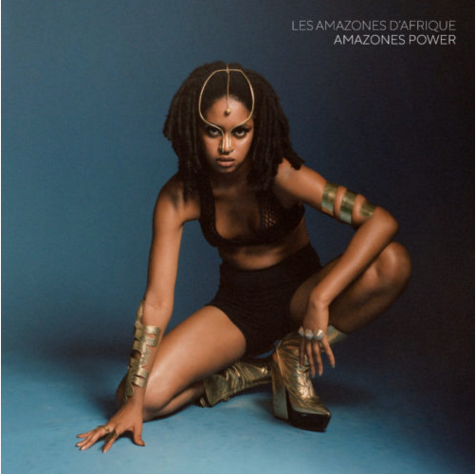
The behemoth Quarterly Playlist Revue is now more! With a massive increase in submissions month-on-month, we’ve decided to go monthly. The inaugural playlist carries on from where the popular quarterly left off; picking out the choice tracks that represent the Monolith Cocktail’s eclectic output. New releases and the best of reissues have been chosen by me, Dominic Valvona, and Brian ‘Bordello’ Shea.
JANUARY’S TRACKS ARE:
Les Amazones d’Afrique ‘Love’
Hailu Mergia ‘Abichu Nega Nega’
Dijf Sanders ‘Santoshi Mata’
Penya Na Msafiri Zawose ‘Heyyeh (Guedra Guedra Remix)’
Tony Allen & Hugh Masekela ‘We’ve Landed’
Ani Glass ‘Mirores’
Brainstory ‘Beautyful Beauti’
Syd Nukukluk ft. Monika ‘Plasticene’
Lee Scott ft. Dream McClean, DJ Frost & Sumgii ‘Sainthood’
Leaf Dog ft. Smellington Piff ‘Under The Spell’
Verses Bang ‘The Eagle Has Landed’
O.G. Natal & Kool Keith ‘Crime Don’t Pay’
The Van Allen Belt ‘Let It Goddam Be’
Extradition Order ‘Manhattan’
The Epstein ‘Lay Me Down’
Hallelujah! ‘Your Duck’
Deutsche Ashram ‘Slackjaw’
Sunflowers ‘Oscillations’
Shadow Show ‘Charades’
Black Lips ‘Odelia’
Pintandwefall ‘Ah-Ah-Ah’
Floodlights ‘Backyard’
Seattle Stomp ‘January’
Colin Stetson ‘West Of Arkham’
Lina_Raul Refree ‘Destino’
Brona McVittie ‘The Green Man’
Jonah Parzen-Johnson ‘Stand Still’
Ippu Mitsui ‘Recovery’
Hi, my name is Dominic Valvona and I’m the Founder of the music/culture blog monolithcocktail.com For the last ten years I’ve featured and supported music, musicians and labels we love across genres from around the world that we think you’ll want to know about. No content on the site is paid for or sponsored and we only feature artists we have genuine respect for /love. If you enjoy our reviews (and we often write long, thoughtful ones), found a new artist you admire or if we have featured you or artists you represent and would like to buy us a coffee at https://ko-fi.com/monolithcocktail to say cheers for spreading the word, then that would be much appreciated.
Perusal #002: Singles, Previews & Oddities Roundup: Ani Glass, Betacrack, Kamilita, Dijf Sanders, Jonah Parzen-Johnson…
January 20, 2020
Singles, Previews & Oddities Roundup
Dominic Valvona
A quick shifty, glance, a perusal of the mounting pile of singles, EPs, mini-LPs, tracks, videos and oddities that threaten to overload our inboxes this month by me, Dominic Valvona.
Featured artists include Ani Glass, Dijf Sanders, Betacrack, Kamilta, Jonah Parzen-Johnson and Liz Davinci.
Dijf Sanders ‘Ravana’
(Unday Records) Single/2nd January 2020
A plucking, steaming and lumbering exotica of amorphous esoteric Tibet, the Far East and China, the leading single from David ‘Dijf’ Sanders new album, Puja, is a downtempo fantasy of vague ethio-jazz, psychedelic and breaks. The Belgium composer and multi instrumentalist follows up previous traversing suites with another dramatic vision of borderless escapism. Sourced from a Hindu epic, ‘Ravana’ is a courtly sumptuous and hypnotic introduction to a sonic layered world of mystery.
Jonah Parzen-Johnson ‘Up’ & ‘Stand Still’
(We Jazz) Preview tracks from the upcoming new LP, Imagine Giving Up, released 7th February 2020
From a label we have tried to champion over the last couple of years, We Jazz, another inventive ambient explorative jazz suite (make that two) from the Brooklyn based baritone saxophonist Jonah Parzen-Johnson. Doing imaginative things with the saxophone and an undulation of lopping, augmented synth effects, Jonah produces a kind of Hassell meets Colin Stetson vision of untethered and unburdened music. Taken from the upcoming new LP, Imagine Giving Up, there’s the minimalist wafted and swaddling sax drifting over a ‘fourth world musics’ like electronic choppy reverb ‘Up’, and the more electrified and elongating, shimmery romanticism of ‘Stand Still’. It all makes for a very promising album.
Ani Glass ‘Mirores’
(Recordiau Neb) Single/17th January 2020
Welsh dream-synth chanteuse Ani Glass casts enchanting diaphanous gossamer shapes over a Moroder style bedding of enervated glitterings, vapours and piqued bubbles on her new single ‘Mirores’. Sang in the native Welsh tones, and with that veiled magical 80s soundtrack accompaniment, Ani’s coos glide towards fantasy.
‘Mirores’ is taken from the upcoming debut LP of the same name, due out on the 6th March 2020; summed up here from the press clippings: ‘With its tapestry of electronic sounds, elliptical melodies and samples threaded into a song cycle, MIRORES is based around the idea of movement and progress – one which takes us on a journey around her hometown of Cardiff. You can hear Ani’s recorded sounds of the urban landscape throughout; the movement of traffic and people and the magical yet infrequent sounds of nature coming together to create the score of a city’s symphony.’
Kamilita ‘Broken Hearted Freak’
https://soundcloud.com/thekamilita/broken-hearted-freak
Going to keep this one as brisk and vaporous as the artist’s music, but Kamilita wafts through an 80s backtrack of dreamy hazy Grimes meets Sugababes electro pop plaint on the latest single ‘Broken Hearted Freak’. Not much is known about the Seattle artist, who seems to have just materialized from the net to produce neo-pop visions of hi-nrg fitness video sass. Go seek and find out more.
Betacrack ‘Unselected Ambient Works Vol.1’
(Grumpy Records) LP/17th January 2020
The poor relation to Richard James’ iconic and highly influential Ambient Works collections, the ‘deranged’ components in the makeup of Betacrack’s electronic renderings sound like they’ve just gone plain wrong at their most resigned (‘Allude’), yet pickup for a caustic bity livener when they threaten to break out of the matrix (‘Duldrum’). A (re)Warp of the Aphex Twin and Analouge Bubblebath for an anguished, distressed mind, these Unselected Ambient Works from the Portland, Oregon wiz span many fields of introverted experimentation and minimalist Techno escapism. Basically: great. Again, please seek out!
Liz Davinci ‘Harvest Time’
Video/Single 11th January 2020
Starting the New Year with a new name and new video single, maverick chanteuse of semi-classical brooding aria pop Elizabeth Everts will from this point forward be addressed as the renaissance styled Liz Davinci. As a baptism of sorts, the American troubadour (living and composing music abroad in Munich) has released the inaugural video/single under the Davinci moniker, ‘Harvest Time’. Finding plenty of favour on a multitude of playlists and radio station selections, Liz’s understated 2019 EP Contraband featured on the Monolith Cocktail. The diaphanous rolling, almost operatic, sowed ‘Harvest Time’ is taken from that same EP.
Dominic Valvona
Hi, my name is Dominic Valvona and I’m the Founder of the music/culture blog monolithcocktail.comFor the last ten years I’ve featured and supported music, musicians and labels we love across genres from around the world that we think you’ll want to know about. No content on the site is paid for or sponsored and we only feature artists we have genuine respect for /love. If you enjoy our reviews (and we often write long, thoughtful ones), found a new artist you admire or if we have featured you or artists you represent and would like to buy us a coffee at https://ko-fi.com/monolithcocktail to say cheers for spreading the word, then that would be much appreciated.
Quarterly Revue Playlist 2019: Part Two: Apparat, Cairo Liberation Front, Tinariwen, Sampa The Great, Seba Kaapstad…
June 25, 2019
PLAYLIST
Compiled: Dominic Valvona/Matt Oliver
Art: Gianluigi Marsibilio


From an abundance of sources, via a myriad of social media platforms and messaging services, even accosted when buying a coffee from a barristo-musician, the Quarterly Revue is expanding constantly to accommodate a reasonable spread that best represents the Monolith Cocktail’s raison d’etre.
As you will hear for yourselves, new releases and the best of reissues plucked from the team – me, Dominic Valvona, Matt Oliver, Brian ‘Bordello’ Shea, Andrew C. Kidd and Gianluigi Marsibilio (who also put together the playlist artwork) – rub shoulders in the most eclectic of playlists, with tracks as geographically different to each other as Belem and Palermo.
Digest and discover as you will, but we compile each playlist to run in order so it feels like the best uninterrupted radio show or most surprising of DJ sets.
 Monolith Cocktail Blog