End of the Year Revue For 2025: Part Two: N to Z
December 15, 2025
Choice Highlights From The Last Year Part Two
In case you missed Part One of this illustrious list, here’s a recap.
I said I wasn’t going to do it this year. And this may be the last. But here is the second part of a comprehensive revue listing of choice albums (some extended EPs too) from 2025 that we returned to the most, enjoyed or rated highly. See it as a sort of random highlights package if you will.
As usual a most diverse mix of releases, listed alphabetically – numerical orderings make no sense to me unless it is down to a vote, otherwise what qualifies the placing of an album? What makes the 25th place album better than the 26th and so on…
Whilst there is the odd smattering of Hip-Hop releases here and there, our resident selector and expert Matt Oliver has compiled a special 25 for 25 revue of his own, which will go out next week.
Part One: A to M can be perused here
N……………
Neon Crabs ‘Make Things Better’ (Half Edge Records)
Review by Dominic Valvona
Noir & Superior, Che ‘Seeds In Babylon’
Picked by Dominic Valvona
Novelle & Rob Mazurek, Alberto ‘Sun Eaters’ (Hive Mind Records)
Review by Dominic Valvona
Nowaah The Flood ‘Mergers And Acquisitions’
Picked by Dominic Valvona
O……………
Occult Character ‘Next Year’s Model’ (Metal Postcard Records)
Picked by Dominic Valvona
P…………….
Philips Arts Foundation, Lucy ‘I’m Not A Fucking Metronome’
Reviewed by Brian Bordello Shea here
Phill Most Chill & Djar One ‘Deal With It’ (Beats House Records)
Picniclunch ‘snaxbandwitches’
Review by Brian ‘Bordello’ Shea
Pound Land ‘Can’t Stop’ (Cruel Nature Records)
Review by Brian ‘Bordello’ Shea
Q……………..
Querci, Cosimo ‘Rimane’ (Quindi Records)
Review by Dominic Valvona
R………………
Robertson, Kevin ‘Yellow Painted Moon’
Review by Brian ‘Bordello’ Shea
Rose, Sophia Djebel ‘Sécheresse’ (Ramble Records/WV Sorcerer Productions/Oracle Records)
Review by Dominic Valvona
Rumsey, Andrew ‘Collodion’ (Gare du Nord)
Review by Brian ‘Bordello’ Shea
S……………….
SAD MAN ‘Art’ (Cruel Nature Records)
Review by Dominic Valvona
Salem Trials ‘Heavenly Bodies Under The Ground’ (Metal Postcard Records)
Review by Brian ‘Bordello’ Shea
Sanders, Pharoah ‘Love Is Here – The Complete Paris 1975 ORTF Recordings’
(Elemental Music Records) Picked by Dominic Valvona
Schizo Fun Addict ‘An Introduction To…’ (Fruits der Mer)
Review by Brian ‘Bordello’ Shea
Schnitzler, Conrad ‘RhythmiCon’ (Flip-Flap)
Review by Dominic Valvona
Scotch Funeral ‘Ever & Ever’
Review by Brian ‘Bordello’ Shea
Silva, Maria Elena ‘Wise Men Never Try’ Review
‘Wise Men Never Try Vol. II’ Review by Dominic Valvona
Širom ‘In the Wind of Night, Hard-Fallen Incantations Whisper’
(Glitterbeat Records) Picked by Dominic Valvona
Sleepingdogs ‘DOGSTOEVSKY’ (Three Dollar Pistol Music)
Picked by Dominic Valvona
Soft Speaker ‘Rippling Tapestries’ (Cruel Nature Records)
Review by Brian ‘Bordello’ Shea
Sol Messiah ‘War of the Gods’ Picked by Dominic Valvona
Staraya Derevyna ‘Garden Window Escape’ (Ramble Records/Avris Media)
Review by Dominic Valvona
Stewart, Macie ‘When The Distance Is Blue’ (International Anthem)
Review by Dominic Valvona
T………………..
Teamaker, Marc ‘Teas n Seas’
Review by Brian ‘Bordello’ Shea
Theravada ‘The Years We Have’ Picked by Dominic Valvona
Toivanen Trio, Joona ‘Gravity’ (We Jazz)
Reviewed by Dominic Valvona here
Tomo-Nakaguchi ‘Out Of The Blue’ (Audiobulb Records)
Review by Dominic Valvona
Tortoise ‘Touch’ (International Anthem X Nonesuch Records)
Review by Dominic Valvona
Toxic Chicken ‘Mentally Sound’ (Earthrid)
Review by Brian ‘Bordello’ Shea
Trupa Trupa ‘Mourners’ (Glitterbeat Records)
Info/Singles Review Feature by Dominic Valvona
U…………………
Uhlmann, Josh Johnson, Sam Wilkes, Gregory ‘Uhlmann Johnson Wilkes’
(International Anthem) Review by Dominic Valvona
Ujif_notfound ‘Postulate’ (I Shall Sing Until My Country Is Free)
Review by Dominic Valvona
V………………….
Various ‘TUROŇ/AHUIZOTL’ (Swine Records w/ Fayuca Retumba)
Review by Dominic Valvona
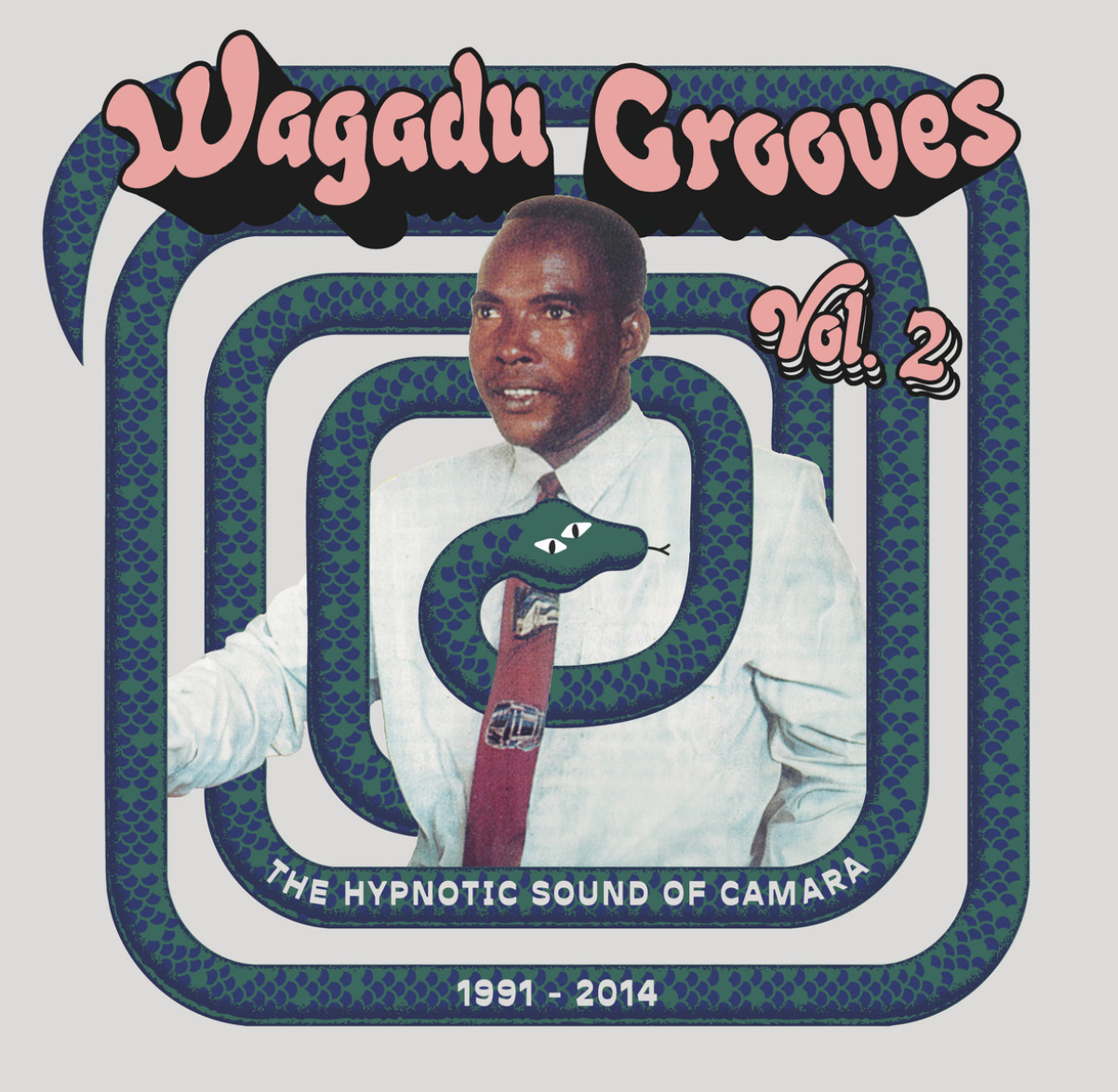
Various ‘Wagadu Grooves Vol. 2: The Hypnotic Sound Of Camera 1991 – 2014’
(Hot Mule) Review by Dominic Valvona
Vexations ‘A Dream Unhealthy’ (Cruel Nature Records)
Review by Brian ‘Bordello’ Shea
Violet Nox ‘Silvae’ (Somewherecold Records)
Review by Dominic Valvona
Voodoo Drummer ‘HELLaS SPELL’
Review by Dominic Valvona
W…………………..
Wants, The ‘Bastard’ (STTT)
Review by Brian ‘Bordello’ Shea
Warda ‘We Malo’ (WEWANTSOUNDS)
Review by Dominic Valvona
West Virginia Snake Handlers Revival ‘They Shall Take Up Serpents’
(Sublime Frequencies) Reviewed by Dominic Valvona
Winter Journey, The ‘Graceful Consolations’ (Turning Circle)
Reviewed by Dominic Valvona here
Y…………………….
Yellow Belly ‘Ghostwriter’ (Cruel Nature Records)
Review by Brian ‘Bordello’ Shea
Young Mothers, The ‘Better If You Let It’ (Sonic Transmissions)
Review by Dominic Valvona
Z……………………..
Zavoloka ‘ISTYNA’ Picked by Dominic Valvona
For those that can or wish to, the Monolith Cocktail has a Ko-fi account: the micro-donation site. I hate to ask, but if you do appreciate what the Monolith Cocktail does then you can shout us a coffee or two through this platform.
THE MONTHLY DIGEST INCLUDES A CLUTCH OF ACCUMULATED NEW MUSIC REVIEWS; THE SOCIAL INTER-GENERATIONAL/ECLECTIC AND ANNIVERSARY ALBUMS CELEBRATING PLAYLIST; AND CHOICE PIECES FROM THE ARCHIVES.

(Photo by Todd Weaver)
___THE NEW___
Ingebrigt Håker Flaten’s (Exit) Knarr ‘Drops’
(Sonic Transmissions) 22nd August 2025
Growing, developing and expanding the remit from what was meant to be a one-off commission, brought together especially for the Vossajazz Festival, the troupe is now on its third titanic fusion rich studio album proper. Set in motion by Ingebrigt Håker Flaten (who also runs the Sonic Transmissions label, home to the ensemble’s recordings) a number of years back, the (Exit) Knarr now acts as the ‘main creative vehicle’ for the Norwegian bassist going forward it seems.
Settling with a reasonable lineup on this third chapter but inviting in a number of guests on the album’s statement piece, a transformed vision of jazz deity Wayne Shorter’s ‘Deluge’ piece from the revered and influential 1965 album release JuJu, on this outing the sextet takes prompt or inspiration from a more visual source. In the sphere of the Russian maverick abstract visionary and Bauhaus professor Wassily Kandinsky and Swedish mystic and abstract progenitor – some would say the true and first ever abstract artist, beating her peers (Malevich and Mondrian) to pure abstraction by a few good years – Hilma af Klint, a number of graphic scores have been used to foster untethered freedoms and play from a group already in the freeform mode. In one way, addressing perhaps the lack of knowledge, the place in which she should stand, there’s an unsaid elevation of Klint, an early adopter of the very spiritualism, Theosophy, that first led the way for Mondrian and many of his circle to dare to strip away every last visage, reference of the world for abstraction. Arguably Klint can be said to preceded Kandinsky and the others to this goal. And her work is filled with the iconic circular shapes, the colurs that would go on to inspire Sonia Delaunay and many others.
As a visual methodology, these scores go some way to painting a reification of a partly live studio performance and the ‘tweaked’ effected and transmogrified aftermaths.
Bringing together Amalie Dahl on alto, Karl Hjalmar Nyberg on tenor and electronics, Marta Warelis on piano and also on electronics, Jonathan F. Horne on guitar, Olaf Olsen on drums and of course IHF on what sounds like both electric and double bass, the album divides two longer form performances with a couple of shorter pieces. Speaking the experimental language of Anthony Braxton with garbled, hysterical and squeezed abandon, and inspired by the equally freeform pioneering Mats Gustafasson and his No Ensemble, the ensemble open with an already mentioned version of Shorter’s ‘Deluge’; taking the original’s more controlled bluesy swing style of simmering and serenaded and crooned sax for a tumultuous ride on the open seas of both discord and crested freefalls. It starts with twisted guitar wire grabbing and neck sliding and incipient tethered drums but soon develops into a recognisable, familiar feel before numerous swells and peaks resemble a fusion of the Henry Grimes Trio (cicra ‘Fish Story’ if we’re being specific), Rashied Ali, the Anthony Braxton Quartet, Keith Jarratt and Darius Jones. Wild in places, with the guitar going on to sound like a sci-fi dialect of tabbed beeps and switches, and the horns squeezed until the pips fall out, the action is shared out equally between all participants without losing a single instrument.: and that’s when you consider there’s also the guests, Mette Rasmussen on a second alto and a second drummer, Veslemøy Narvesen added to that untamed tidal wave experiment.
The album title is next. A change of a kind in tempo and thought this shorter composition articulates those droplets in various ways on a performance that sounds more open air than studio recorded. The sound of a dragon fly’s wings in rapid hovered form hangs around in a chamber-esque atmosphere of musing and pondering. Part JAF Trio, part ECM and part classical-minded jazz of a certain vintage, the gentle cascade of drips and drops fall very nicely and mysteriously on this Scandinavian ice float.
A second centrepiece if you like, ‘Kanon’ is dedicated to the renowned Norwegian drummer, composer and free jazz improvisor of note Paal Nilssen-Love. From his parents famous Stavanger jazz club located incubator to the capital and onto wide world recognition, Paal played with such notable company as Mats Gustafasson and Peter Brotzmann’s Chicago Tentet, before going on to set up his own All Ears festival. As an inspiration to a generation of Norwegians, Paal’s influence is huge. And in this mode, at this time, the sextet conjures up a semblance of his artform and free experimentation. But first, it all starts with some speaking panning of a curled up rattling drum roll, the quivers and quavers of the piano and what could be the attempt to match the sound of a buzzing bee. But it all soon develops into a wilder proposition of Masayuki Takayanagi, Eric Dolphy (I’m thinking specifically here of Out To Lunch!), Roscoe Mitchell, Andy Haas, Bill Dixon and Last Exit. It keeps changing; whether that’s in the action, dynamics between players, the tampering down parts that then peak into hysterical cries of squeezed, rasped and the burbled. A surprising passage of play even takes on a Lalo Schifrin vibe nearer the end.
The finale is left down to a performance that’s manipulated (or ‘tweaked’ as it’s written here), stretched out and elongated into a sci-fi hallucination. As if being treated and remodelled in real time, it sounds like the band is being pulled via a prism into the mirror backwards. It reminded me of the We Jazz label and their own retreated, remixed projects over the years. But stands as a more electronically led production that offers up a slightly off-kilter and magically alien version of their sound.
Ingebrigt Håker Flaten’s (Exit) Knarr colour new directions with an extended palette of ideas and sounds; heading towards breaking point before returning back to a recognition of the free form jazz movement that we can recognise. Source it out.
Andy Haas & Brian g Skol ‘The Honeybee Twist’
1st August 2025
Striking up an online and postal friendship since first writing about the highly experimental saxophonist, trick noise maker and effects manipulator when touring as a band member with Meg Remy’s Plastic Ono Band-esque U.S. Girls a few years before Covid, the former Muffin, NYC side man to the city’s attracted maverick luminaries of the avant-garde and freeform jazz, and prolific collaborator with Toronto’s most explorative and interesting artists, has sent me regular bulletins (and physical copies) of his various projects. Some have been in the solo mode, others with friends, foils and collectives.
Running off just a smattering of those releases (a majority of which have been with the highly obscure Resonantmusic imprint) from the last decade or so, and you have three extraordinary albums with the stringed-instrumentalist Don Fiorino (American Nocturne, Don’t Have Mercy and Accidentals), various appearances on records by Matt ‘Doc’ Dunn’s The Cosmic Range, the warped and discombobulating For The Time, Being solo act, and the avant-garde improvised performative triumvirate of SCRT with regular collaborator David Grollman and Sabrina Salamone.
Andy Haas now partners up with fellow Toronto native Brian g Skol for an unusual duet of saxophone and drums. Although it was recorded back in that city in 2024, the finished concentration and spatial experiment is now seeing the light with an official release via Haas’s own Bandcamp profile. I’m glad it hasn’t disappeared into obscurity, as it is one of the best, most radical but surprisingly rhythmic and pumped, worldly sounding album’s he’s made; much of this is down to the visual artist and percussionist/drummer Skol’s expressive and grasp/ear for international influences of rhythm, from both the Latin and Afro-South American to North Africa and the influence of Jaki Liebezeit.
The Honeybee Twist is a strange union between two instruments seldom pitted against each other; certainly not in this setting, with Haas once more wildly controlling the panning of his serialism style and both atonal and shrilling, bristled circular breathing sax and Skol combining hand drums, various percussive elements and drum kit breaks to provide a beat, a groove or more sporadic passages of the tactile, textures and tumultuous.
From nothing, reifications of the fire thief Prometheus, compounds, a vertical axis used in a 3-D space to show depth and elevation, self-assembly and play of words take some form of shape across an album of mystery, extemporization, and musing. Whilst stirring up these evocations, these reference points, both players traverse and kick around Arabian landscapes, Jon Hassell’e fourth world, the extremes of Eric Dolphy, Albert Ayler, Sonny Simmons, Andrew Cyrille and Evan Parker, and the factory. The opening mythologically entitled ‘The Eagle And Prometheus’, sounds like a sax and drums transmogrification of Battles; leaping straight in with beating drums, splashes of cymbal and that signature circular breathing technique. This is where I believe you can hear an echo of Saw Delight era CAN relocated to Egypt or the Arabian souk: Haas’s sax starts to sound more like a shrilling vibrating mizmar or even a zurna, and Skol’s drums could be mistaken for the daf and riz on occasion.
Against the near constantly moving, feeling and exploring drums and percussion, Haas’s effected sax goes from blues to freeform jazz, to reflections and colloquy and soliloquy. There’s a harshness and roughness at times to that instrument as it goes through various warbles, buzzes, rasps and drones.
Despite the title of ‘Maybe I’m A Machine’, there is no mistaking that this is a very human interaction between two highly experienced experimental artists circumnavigating any kind of easy label, demarcation. The notes of an abstract nature bristle, vibrate and trill to a near amorphous global rhythm on a most experimentally original collaboration. Please seek it out.
Maria Elena Silva ‘Wise Men Never Try Vol. II’
1st August 2025
As promised last month, the second volume in the Wise Men Never Try series from the near evanescent and relaxed but deeply effecting singer and musician Maria Elena Silva.
After previous releases, some of which featured such notable company as Jeff Parker and Marc Ribot, and after stripping back Bob Dylan’s courtly enigmatic dames to their most essential essences with interpretations of both ‘Queen Jane’ and a summoned bell rung ‘Sad-Eyed Lady of the Lowlands’, the Chicago homed Maria has turned to readapting, revaluating and transposing various themed songbooks from America’s past. Volume I, reviewed in the July Digest, turned to the pages of the Great American Songbook with familiar standards made anew and enigmatic through the emotively ethereal, connective, almost otherworldly and with a real sense of depth and something approaching the tactile – especially instrument wise.
Under that same ‘umbrella title’ the second volume travels further back in time to the America Civil War period of rousing, rallying, sorrow, tragedy and hope sheet music; much of the material used to bolster a flagging campaign by the Union during the early and mid-years of that horrifying, destructive and divisive war – arguably never really settled, with suspicion still between the North and South of the country culturally, politically and economically. In fact, recalling songs from nigh on 160 years ago has never seemed more prescient; chiming true with the age we find ourselves in right now. A balance is struck, history revisited, propaganda resized, and the sentimental repurposed. But arguably, the emphasis in this case is on the music of the eventual winners in this five-year conflict; although a number of the songs and rallying calls for the Union were also adopted and adapted by the Confederacy after they’d seen the effect it had on boosting morale and symbolising the cause.
Once more in an intimate setting with just the accompaniment of Erez Dessel on piano, Tyler Wagner on double-bass, and Maria on guitar, the Civil War period is amorphously twisted into minimalist meanders and dreamily untethered shapes of the tactile, the avant-garde, and descriptive. At the heart of it all, Maria’s voice is relaxed and diaphanous; pitched somewhere between folk, the Celtic, the traditional and the jazzy. The tragically played out ‘Booth Killed Lincoln’ sounds a little like Joan Baez in parts. It certainly, in all its traditionalist lament, has an air of Dylan about it and the Laurel Canyon circle of female troubadours. Like a play in itself, the acts, steps that lead to the assassination of Abraham Lincoln on that fateful day, at that fateful performance at the Ford Theatre, Washington D.C., could be lifted off the sensational pages of that time’s broadsheets. Lincoln’s last breath, rather ironically to the last, is very much Dylan: “Of all the actors in this town, I loved John Wilkes Booth the best.” Musically, there’s but an essence of accompaniment, with the double-bass strings sounding more like a wooden set of spokes and a sort of dampened drum. The odd harmonic is twinged.
However, the album strikes a jarring chord of dissonance, a heavily pressed and free form piano opening gambit of Keith Jarrett and Thomas Schultz. Interpreting the American composer of romance and patriotism George Frederick Root’s most popular rallying call, ‘Battle Cry Of Freedom’, Maria seems to counterbalance Dessel’s passing storms, shades of forbode, salon bar upright tones, uncertainty, the abstract and discordant with disconsolate beauty. A second Root interpretation, the succour giving ‘Tramp Tramp Tramp’ (aka ‘The Prisoner’s Hope’, written in the later stages of the war) is sympathetic to the original, but more melodiously jazzy.
Some of the material leans towards country: albeit a version that exists in a fog of the Appalachians and Woodstock. There’s even a moment on ‘Abraham’s Daughter’ where either the double-bass or guitar resembles a banjo. And the album’s most unusual break from the formula (though to use that word is doing Maria and her foils a disservice), the finale ‘My Old Horse Died’, features a far more rustic, loosely and buzzier more carelessly strummed guitar and the sound of what could be some kind of replicated plucking/picking tines. I do love this song; it sounds like Dylan writing a filmic Western song to feature in Little Big Man or McCabe & Mrs. Miller. As far as I can hear, there isn’t much in the way of horses, but some ironic metaphor for loss, wistful financial and property woes: “Swallowed the place where my home stood. Mortgage guy came round, claimed the hole in the ground where my home once stood.” It almost sounds drunken this slice of Western music from the counterculture.
Remembrance, tragedy, the call to arms, and above all, the encouraging original lyrics of the abolitionist (one of the key themes, subjects of many of these songs) ring like wispy or beautified and pining poetry from the battle fields of America. Only, that same divisive rage, the splits, the distrustfulness and hunger for independence rages still to this day; a constant cry wolf of civil war is voiced whenever the political class weaponizes its losses, or failure to win an election. Handled with subtly, and a classy skill that stretches out the meaning, the lyricism, the mood and intention further, a new spotlight has been drawn upon these historical songs; taken into an avant-garde territory without losing sight of a melody, a form or shape, Maria and her foils create a rather unique and incredible atmosphere; bringing dusted off Civil War pamphlets, sheet music and the like to a new audience. Every bit as encapsulating and dreamy as Volume I. It will be interesting to see what Volume III offers, and where Maria goes next. An excellent, spellbinding series so far.
Saul Williams, Carlos Niño & Friends ‘Saul Williams meets Carlos Niño & Friends at TreePeople’ (International Anthem) 28th August 2025
An enviable collaborative union of talent from both the East and West coasts of an America on the eve (or thereabouts) of Trump’s inauguration, under the TreePeople canopy of righteous indignation at the state of a nation, gathered the totemic voiced poetic polymath Saul Williams, the divine styler, multi-instrumentalist, percussionist and producer of afflatus and new age conscious jazz and its many strands, Carlos Niño, and a host of congruous musical friends from a scene of ever-expanding inter-connections. You can’t get any more symbolic than this; setting up for an experimental – perhaps extemporized in part – performance beneath the black oak and walnut trees in Coldwater Canyon Park, L.A. Recorded at the time and now seeing the light (so to speak) eight months later into the new Presidency, this ensemble piece’s headlined foils and longtime friends since the 1990s, combine forces across an archaeological dig of free associations.
But before peeling back the layers of this psychogeography, a little about the artists involved in this part explorative, part free expressive, part oratory and part theatre. Not that Niño would boast, but the highly prolific producer, ‘expansive percussionist’, experimental composer, connector and communicator, has made albums as and with such notable luminaries as Ammoncontact, Build An Ark, The Life Force Trio, and others. And also overseen the Alice Coltrane protégé – the keyboardist, composer and actor – Surya Botofasina’s2022 devotional Everyone’s Children. All the while, leading or instigating his own loose ensemble of multidisciplinary artists and the & Friends banner. This time around, those friends include recurring foil Nate Mercereau (the solo artist in his own right’s skills include the guitar, composing, songwriting, live sampling and improvising), Aaron Shaw (the horn player has worked with such notable icons and names as Elijah Blake, Anderson Paak., Dave Chappelle, Herbie Hancock, and made music for TV and film), Andres Renteria (the L.A. percussionist/drummer and DJ has worked with an impressive host of artists over the year: Jose Gonzalez, Father John Misty, Flying Lotus and Nick Waterhouse), Maria The Artiste (hot-housed in the AACM of Chicago, the woodwind player, vocalist, vibraphonist, bandleader and composer is also a member of the late Horace Tapscott initiated, and now six decade running, Pan Afrikan Peoples Arkestra), Francesca Heart (the partial alias of Italian artist, researcher and electronic artist with a skill at playing the conch shell Francesca Mariano, who makes new age music of a kind on computers), Kamasi Washington (the saxophonist who’s profile has possibly been highest over the last twenty years, after ushering in a revival of a sort on spiritual, odyssey jazz, has picked up a number of awards and plaudits for his work and collaborations) and Aja Monet (the lauded and awarded contemporary poet, writer, lyricist and activist can be heard joining Williams with a forewarned and haunting poetic vision on ‘The Water is Rising/as we surpass the firing squad’).
Needing no introduction, but getting one anyway, American rapper, singer, songwriter, musician, poet, writer, and actor Saul Stacy Williams first came to attention during the late 1980s on the New York café poetry scene. The burgeoning innovator, mixing beat/poetics/slam and hip-hop, soon stood out. A big break came as the lead in the awarding winning Marc Levin directed movie SLAM in the 90s; the phenomenon of slam poetry, its reach via competitive performance outside academia, set free from the stiff studied branches of the elite institutions. The list of peers that Williams has performed with is incredible; from blast master KRS-One to illmatic Nas, The Fugees, beat poet Allen Ginsberg and Black arts movement luminary Sonia Sanchez. Williams has also been a driving force behind the Brooklyn Afro-punk movement, written a libretto for Ted Hearne’s LA Philharmonic produced oratorio PLACE and two symphonies by the late Swiss composer, Thomas Kessler, based on two books of Saul’s poetry, Said the shotgun to the head and The Dead Emcee Scrolls. The scope and range are wide indeed, with both Williams film roles and a stint on Broadway as the lead in the first hip-hop musical, Holler If You Hear Me – based upon the lyrics of Tupac Shakur – to consider. And on top of that a sextet of studio albums and quartet of poetry books, all translated into multiple languages. The self-titled album debut of which was produced by Rick Rubin. There’s so much more of course; a whole Wikipedia page in fact to delve into.
But what’s important is that the experience, creative richness and innovativeness of all participants in this movement of change is in no doubt. And when all brought together like this, the results have a real depth and breadth, weaving together so many connective threads of outrage and riled injustice and indignation. This is meta, an alternative, sometimes more felt than real, history toiled over until exposing the roots.
To distil this performance down to jazz would be an injustice in itself, as the ensemble and their two leads accentuate, ring and punctuate, and, without rhythm in most cases, build a spiritual, conscious and traumatic atmosphere around and bedded beneath the either peppered, prophesied, near uninterrupted flow of racial injury, of hurt, of rage and recourse. The musical and sound elements certainly recall some of the signatures of jazz; of artists such as Coleman, the Pharoah, the Art Ensemble of Chicago, of Don Cherry, The John Betsch Society, of Brother Ah and Idris Ackamoor. But nothing quite frames this performance, demarcated into four parts with an after show of appreciation and emotional final word sit-down with the audience. For amongst the collage of the atavistic and primal, as prehistoric beasts lift their heads disturbed by the stirring hands of the dig, and Edan’s wildlife emerges from the grasslands, and the sax sings a parched reedy song, the percussion mirrors the sounds of dry bones and beads, and the vibraphone’s bulb-like notes float like particles in the style of Jamal, Williams delivers omens and a associative thread of technological, economic, political, social ills. Williams sounds one part Quelle Chris, another part Amiri Baraka on that opening “land map”: that cradle of uncivilised repeal. Later on, as the poetics seem to be less interrupted or stretched, the style is more Watts Prophets; especially on ‘We are calling out in this moment’, which links together the origins of Manhattan and its stock exchange with the original Lenape peoples that once farmed it, cultivated it and called it home before the arrival of the Dutch and then the English. Origin stories connect with the occupy movement, Black Lives Matter in a flurry of redress; the financial epicentres slave trading roots almost matter-of-factly and shockingly mapped out.
Later on, Williams is joined by Aja Monet for the new age balm turn African wilderness haunting ‘‘The Water is Rising/as we surpass the firing squad’, who’s contribution amongst the vibraphone tinkles and dreamy serenaded saxophone wafts and lingers and pines, and the “insect gossip”, recalls Tenesha The Wordsmith passing the mic to the Last Poets, once Williams takes up his post in front of the said allegorical “firing squad”.
Sitting down with the audience at the very end of this astonishing performance – bordering on both the theatre, the counterculture, and the activist -, and after the stats, the re-purposed jargon, the rebalance of history as it was and is, a time of emotional pleading and reminder that there is still work to be done. But that message is one of community and the need to build and maintain networks of support in the tough times; not to wallow or give in. But as one stage in the fight this album marks a new enterprise and platform for greater harmony and a safe place for experimentation. International Anthem can do no wrong, as they continue to facilitate such creative sparks of inventive free play and poetry.
___/The Monolith Cocktail Social Playlist Vol. 100___
For the 100th time, the Social Playlist is an accumulation of music I love and want to share; with tracks from my various DJ sets and residencies over the years and both selected cuts from those artists and luminaries we’ve lost on the way and from those albums celebrating anniversaries each month.
Running for nearly 12 years now, Volume 100 is the latest eclectic and generational spanning playlist come radio show from me – the perfect radio show in fact: devoid of chatter, interruptions and inane self-promotion.
Here’s to the hundredth edition, which features a homage or two to Terry Reid and Howie Tee, who we both lost recently. Self-coining his own nickname, Reid’s voice was lionised as “superlungs” for his incredible vocal prowess. But as an all-round package, voice, guitarist and rock artist of universal repute – in any article or description, Reid is anointed as the ‘artists’ artist’ -, Reid could shake the foundations of blue-eyed soul and maximum R&B, blues rock and heavy rock. His name was touted around the 1960s, courted to front or join countless luminaries, from Led Zep and Deep Purple (he turned them both down). There’s many eclectic steps on the way, including a penchant for the Latin rhythms of Brazil (falling into his orbit during 1969, Gilberto Gil and Caetano Veloso, recently exiled by the military dictatorship of Brazil, were helped by Reid’s attorney to come to London; they would go on to flank Reid at the seminal Isle of Wight Pop Festival almost a year later in 1970), a direction into introspective jazz, desert mountain commune living and session work for Don Henley, Jackson Browne and Bonnie Raitt – this came after Reid more or less decided to retire from his solo career. A rich life lived. So, in my selection I’ve gone for a smattering spread of tracks from the cannon, starting back at the beginning with the title track from the 1968 LP bang bang you’re Terry Reid plus ‘The Hand Don’t Fit The Glove’, ‘Rich Kid Blues’, ‘Live Life’ and ‘Ooh Baby (Make Me Feel So Young)’.
From a whole other sphere of the musical landscape, Howie Tee, the hip-hop and new jack swing hit maker of repute during the 80s and 90s. Born in the UK, but raised up in Flat Bush, Brooklyn, Tee’s (or the name his folks would recognise, Howard Anthony Thompson) musical protectory took flight with a break in the early electro crew CDIII. Already familiarising himself with the mixing desk and production tools, Tee quickly jumped ship to producing, his first success being in conjunction with U.T.F.O.’s Kangol Kid, with the commercially hot hip-hop group Whistle. At the same time Tee also put together the equally successful Real Roxanne collaboration, scoring with ‘Bang Zoom (Let’s Go-Go)’ – which as the name suggests, rides on the go-go phenomenon. There would also be production credits for records by Cash Crew, Seeborn & Puma, E.S.P. and Izzy Ice. Tee then became the in-house producer for the New Jersey-based independent label Select Records, producing relative hits for Special Ed and Chubb Rock. But it wasn’t all hip-hop orientated, for in 1991 he mixed and co-produced Color Me Badd’s ‘I Wanna Sex You Up’: a Billboard number one. And he also made remixes for such diverse acts as Madonna and Maxi Priest. I’ve chosen both Special Ed and the Real Roxanne, plus Chubb’s bromance cut, ‘DJ Innovator’.
In a celebratory mood, I’ve also kept up the monthly inclusion of anniversary album tracks, with 60th nods to The Beatles Help, Dylan’s Highway 61 Revisited (I’ve gone for, what I hope, is two not so common of known cover versions from both) and Miles Davis E.S.P. There’s also 50th glass raisers to Cortex’s cult favourite, Troupeau Bleu, Don Cherry’s pioneering Brown Rice, and Eno’s Another Green World.
Every month I like to collect up some of the more newish or recent tracks that didn’t make the Monthly playlist selection – either for lack of space or I just forgot to include at the time. In that category there’s Elaine Howley’s diaphanous, translucent ‘Hold Me In A New Way’, Mike Cooper’s vague South Seas, Pacific exotic mirage ‘Eternal Equinox’, U.S. Girls’ Jane (Doe) Country and Plastic Ono Band funk ‘No Fruit’, the collaborative PAUER/Wolfgang Perez/Der Wandler/Magic Island union’s yearning ‘Falling Over You’, and Pons hi-energy 80s work-it no wave dance diatribe ‘Fast Money Music’. There’s also a track from the recently released, and featured, Woody at Home Vols 1 and 2 – Guthrie hanging round like Banquo’s ghost over Dylan, who’s Highway is revisited this month.
The rest of the playlist is made up of cross-generational from across the ages by Jaz-O, Baby Washington, Isan Slete, Vincent Over The Sink, Phantom Payn Days, Lynn Castle, Mad Walls, Massacre and more…
TRACK LISTING:
The Real Roxanne FT. Howie Tee ‘Bang Zoom (Let’s Go-Go)’
Pons ‘Fast Money Music’
Themselves ‘Roman is as Roman Does’
Waylon Jennings ‘You’ve Got To Hide Your Love Away’ Mariangela Celeste & Vangelis ‘Honolulu Baby’
Woody Guthrie ‘One Little Thing An Atom Can’t Do’
Frankie Valli & The Four Seasons ‘Queen Jane Approximately’
Terry Reid ‘The Hand Don’t Fit The Glove’
Baby Washington ‘The Ballad Of Bobby Dawn’
Terry Reid ‘Rich Kid Blues’
U.S. Girls ‘No Fruit’
Lynn Castle ‘You Are the One’
John Baldry ‘It Ain’t Easy’
Isan Slete ‘Lam Phloen’
Terry Reid ‘Bang, Bang (My Baby Shot Me Down)’
Miles Davis ‘R.J.’
Jaz-O ‘Put The Squeeze On ‘Em’
Special Ed ‘I Got It Made’
Cortex ‘Automne – Colchiques’
Brian Eno ‘Sky Saw’
Furniture ‘My Own Devices’
Mad Walls ‘Lily’
Massacre ‘Bones’
Terry Reid ‘Live Life’
Mint Tattoo ‘Wrong Way Girl’
Terry Reid ‘Ooh Baby (Make Me Feel So Young)’
Chubb Rock Ft. Howie Tee ‘DJ Innovator’
Don Cherry ‘Degi-Degi’
Elaine Howley ‘Hold Me In A New Way’
Mike Cooper ‘ETERNAL EQUINOX’
Xul Solar ‘Sigh’
Vincent Over the Sink ‘Number Theory’
Phantom Payn Days ‘primitive chamber music phone call blues’
Woody Guthrie ‘I’m A Child Ta Fight’
Willis Earl Beal ‘Like A Box’
Marcos Resende & Index ‘Nina Nenem’
___/Archives___
From the exhaustive Archives each month, a piece that’s either worth re-sharing in my estimates, or a piece that is either current or tied into one of our anniversary-celebrating albums. From the former category, my original review of Willis Earl Beal’s nite flights soul harrowed and ached Noctunes album, released a decade ago this month.

Willis Earl Beal ‘Noctunes’
(Tender Loving Empire) Released 28th August 2015
Whether stretched beyond the realms of fact and fiction or not, the many travails of Willis Earl Beal fit the outsider artist profile perfectly. With more deaths/rebirths than the Dali Lama’s had reincarnations, Beal’s self-made and put-upon myth status as the Zorro masked articulate esoteric blues and soul poet, only reinforces the mystery that surrounds him. Hardly the result of an easy life – one that’s seen him grow up in a sort of odd isolation, plagued by both physical and mental health; a consequence in no small part of his injuries sustained when trying out for the army.
His musical epiphany arrived whilst down-and-out in Albuquerque, New Mexico. The untrained, and at one time homeless, but naturally gifted songwriter recorded the rawest of lo fi tracks, leaving them with his hand drawn cover art at various coffee shops around town, alongside flyers seeking a girlfriend with his phone number written on them. These unassuming offerings eventually made their way onto the cover of Found Magazine in America and from there, fell into the hands of XL Recordings Jamie-James Medina. Originally signing to the labels Bronx-based offshoot Hot Charity, releasing two well-received albums – his debut Acousmatic Sorcery in 2012 and Nobody Knows follow up in 2013 – Beal succumbed to either ennui, despondency or the pressures of suddenly being foisted into the music business and quit. Beal slopped off into a self-imposed exile in the backwoods of Olympia, Washington, and became the Noctunes crooner.
As the title suggests – a riff on nocturnes – these twelve nocturnal lullabies, paeans and plaintive ballads evoke the romantic nighttime meditations. Stripped to the barest of accompaniments, yearningly swooning with the occasional burst of a drawn-out primal scream, high notes and pained wallowing, Beal creates a haunted soundtrack. Part southern river ambient journey, part soul-baring soliloquy.
Once again dodging definition, he takes the mournful strings and suffused hymn like aspects of his previous recordings and ditches the bounce and R&B elements for minimalism. Still channelling Otis Redding with a side order of Bill Withers and echoing traces of TV On The Radio’s most dilatory maladies, Noctunes is, when prescribed in small doses, a visceral stirring experience. Choosing to say more with a lot less, lyrics, which if uttered by many other artists would sound like mere platitudes, are given a gut-wrenching and despondent leverage when leaving Beal’s lips.
Often draining, and at times laying it on a bit too thick, the album’s impact can be enervated when digested in one session. Lingering manifestations rather than epiphanies, it feels like our protagonist is unburdening his heart. A tough call on paper, yet the bare faint undertones of funeral parlour organ, stuttering jazz style drums, murmuring hums and synths lift the songs gently above morose and indulgence.
We need your help. If you’ve enjoyed this selection, the writing, or been led down a rabbit hole into new musical terrains of aural pleasure, and if you able, then you can now show your appreciation by keeping the Monolith Cocktail afloat by donating via Ko-Fi.
For the last 15 years both me and the MC team have featured and supported music, musicians and labels we love across genres from around the world: ones that we think you’ll want to know about. No content on the site is paid for or sponsored, and we only feature artists we have genuine respect for /love or interest in. If you enjoy our reviews (and we often write long, thoughtful ones), found a new artist you admire or if we have featured you or artists you represent and would like to say thanks or show support, than you can now buy us a coffee or donate via https://ko-fi.com/monolithcocktail
Our Monthly Playlist selection of choice music and Choice Releases list from the last month.
We decided at the start of the year to change things a little with a reminder of not only our favourite tracks from the last month, but also a list of choice albums too. This list includes both those releases we managed to feature and review on the site and those we just didn’t get the time or room for – time restraints and the sheer volume of submissions each month mean there are always those releases that miss out on receiving a full review, and so we have added a number to both our playlist and list.
All entries in the Choice Releases list are displayed alphabetically. Meanwhile, our Monthly Playlist continues as normal with all the choice tracks from July taken either from reviews and pieces written by me – that’s Dominic Valvona – , Brian ‘Bordello’ Shea, and this month, Kalporz writer Samuel Conficoni. Our resident Hip-Hop expert Matt Oliver has also put forward a smattering of crucial and highlighted tracks from the rap arena.
CHOICE RELEASES FROM THE LAST MONTH OR SO:
Blanco Teta ‘‘La Debacle las Divas’
(Bongo Joe) Review
Lukas Cresswell-Rost ‘Weight Away’
(Wayside & Woodland Recordings) Review
Theon Cross ‘Affirmations: Live at Blue Note New York’
(New Soil) Review
Cumsleg Borenail ‘10mg Citalopram’
(Cruel Nature Recordings) Review
Exploding Star Orchestra ‘Holy Mountains’
Fortunato Durutti Marinetti ‘Bitter Sweet, Sweet Bitter’
(Quindi Records/We Are Time) Review
Tony Jay ‘Faithless’
Review
Freh Khodja ‘Ken Andi Habib’
(WEWANTSOUNDS) Review
The Lancashire Hustlers ‘Here But Not Here’
(Steep Hill) Review
Kevin Robertson ‘Yellow Painted Moon’
Review
Maria Elena Silva ‘Wise Men Never Try’
Review
Sol Messiah ‘War of the Gods’
THE PLAYLIST::
Blanco Teta ‘Subiduki’
Scotch Funeral ‘Weak at the Knees’
Freh Khodja ‘Aich Sar Bina Koulili’
Brickwork Lizards ‘All the We Are – Reworked by Sebastian Reynolds’
Natural Information Society ‘Sound Talisman’
Sol Messiah Ft. Sa-Roc ‘Auset’
Raekwon Ft. Ghostface Killah & Method Man ‘600 School’
Mr. Muthafuckin’ eXquire ‘Y.O.Utopia’
Open Mike Eagle ‘ok but I’m the phone screen’
Nicholas Craven & Boldy James Ft. C Dell & Nick Bruno ‘At&T’
Clipse, Pusha T & Malice Ft. Ab Liva ‘Inglorious Bastards’
Estee Nack & V Don Ft. Al-Doe ‘EZBRED’
Rachel Eckroth ‘Yin Yang’
Theon Cross Ft. Isaiah Collier, Nikos Ziarkas & James Russel Sims ‘We Go Again – Live at the Blue Note, NYC’
Peter Evans (Being & Becoming) ‘Malibu’
Homeboy Sandman & Sonnyjim ‘Can’t Stop Me’
Apollo Brown & Bronze Nazareth ‘Wheel Of Misfortune’
Ramson Badbonez & Leaf Dog ‘Celestial Bodies’
Max Schreiber ‘Layla Mistakel’
The Conspiracy ‘Salisbury Road’
SUO ‘Big Star’
Fortunato Durutti Marinetti ‘Beware’
Jeff Tweedy ‘Out in the Dark’
Kevin Robertson ‘Yellow Painted Moon’
Soft Hearted Scientists ‘Hello Hello’
Whitney ‘Dandelions’
The Lancashire Hustlers ‘Perhaps’
Ali Murray ‘ Toby’
Alex G ‘June Guitar’
Spotless Souls ‘In the Heart’
The Noisy ‘Twos’
Wolfgang Perez ‘So Ouco’
Eve Goodman & SERA ‘Blodyn Gwylly’
Joe Harvey-Whyte & Paul Cousins ‘lift’
Sirom ‘For You, This Eve, the Wolves Will Be Enchantingly Forsaken’
Austistici & Jacek Doroszenko ‘After Water Formed A Shape’
Cumsleg Borenail ‘You Mean Something To Me’
Cecil Taylor & Tony Oxley ‘Encore 1’
Exploding Star Orchestra ‘Afterburn (Parable 400)’.
If you’ve enjoyed this selection, the writing, or been led down a rabbit hole into new musical terrains of aural pleasure, and if you can, then you can now show your appreciation by keeping the Monolith Cocktail afloat by donating via Ko-Fi.
For the last 15 years both me and the MC team have featured and supported music, musicians and labels we love across genres from around the world: ones that we think you’ll want to know about. No content on the site is paid for or sponsored, and we only feature artists we have genuine respect for /love or interest in. If you enjoy our reviews (and we often write long, thoughtful ones), found a new artist you admire or if we have featured you or artists you represent and would like to say thanks or show support, than you can now buy us a coffee or donate via https://ko-fi.com/monolithcocktail
THE MONTHLY DIGEST INCLUDES A CLUTCH OF ACCUMULATED NEW MUSIC REVIEWS; THE SOCIAL INTER-GENERATIONAL/ECLECTIC AND ANNIVERSARY ALBUMS CELEBRATING PLAYLIST; AND CHOICE PIECES FROM THE ARCHIVES.
___THE NEW___
Autistici ‘Familiarity Enfolded’
(Audiobulb) 2nd August 2025
The middle sequence in a series of transformations by the Sheffield-based electronic composer, Familiarity Enfolded follows on from the first link in a chain of collaborative immersions, Familiarity Folded – released in just the last week. In what could also be a collaborative showcase for the Audiobulb label too, a smattering of artists who’ve previously released material on the platform now bond and work with Autistici in redeveloping or evolving and remixing his compositions and ideas for a three-part project.
Finding common ambient space and minimalist approaches to visioning new soundscapes and movements, part two includes contributions from Tomo-Nakaguchi (an artist we’ve raved about on the site in the last few years, and made our choice albums of the year lists), A Dancing Beggar (who hasn’t appeared for a very long time on this site, but has made our choice albums lists in the past), Russ Young and OdNu (another artist who has appeared in our reviews sections in the last couple of years). The prospects look good already, with this quartet’s sphere of influences within the ambient and electronic realms both adroit and always worthy of attention.
First up both Autistici and Tomo-Nakaguchi match-up for an incipient majestic awe of both the natural and synthetic on the opening ‘Twilight Glow Of The Sky’. What could be the sound of filaments falling like pattering rain on a drum skin or piece of Tupperware can be heard amongst the moving glimmering light captured at such an inspiring moment in time and place.
The cove atmospheric ‘Caiplie’s Hermitage’ references the atavistic caves of the title, found between the Scottish towns of Anstruther and Crail on the coastal pathways of Fife. A Dancing Beggar is the foil this time around, playing on the hallowed ghosts and history of that mysterious cavern, which is believed to have been used as a place or sanctuary of worship for Christians in the 9th century AD. There’s constant wash or downpour of rain and presence of water elements that continue throughout this piece, and it could be that the artists are perhaps sheltering from it as they build up an abstract picture that’s one part natural and the other near sci-fi. The brassy resonating strings of a guitar are plucked, pulled and sprung as heavenly machines move around in the background. A Dancing Beggar joins both Autistici and OdNu on the finale; a twenty minute plus long form illusion inspired by the track title’s Arthurian referenced enchantress, sibling, shapeshifter and seducer Morgan Le Fay mirage, the ‘Fata Morgana’. A “superior mirage” in other words, this optical phenomenon and complex mirage creates distorted and sometimes fantastical images of distantly observed objects. You must have seen this when looking at to sea in particular conditions and seeing tankers or ships appearing to float above the waves. Sonic wise, this reminded me of Jeff Bird with its essence of piped or pumped pastoral sounds. But there’s also something hallucinogenic about it too. There’s a Mark Hollis solo style piano bit, something that sounds almost like a concertinaed ghostly echo of some shipwreck shanty plus the shimmers and shivers of magic.
That leaves the final track of the quartet, the ‘Dissolved in Light’ collaboration with Russ Young, who I must admit I’m unfamiliar with. It begins with the itchy rubbing chorus of crickets and sundown atmospherics. A veil of mist dissipates to reveal a most minimalist timelessness before Laraaji-like bowls are struck softly and the sound of tines and melodious ambient waves entwine. Andrew Heath evocative piano notes and falls meet an amorphous staccato engine as the track moves along its placeable journey to the sacred.
‘Relinquishing’ control, the concept behind this series has worked rather well; resulting in some magical, stirring and illusionary pieces of sophisticated and highly immersive ambient and lowkey electronica. A Dancing Beggar seems to be adding something of the bucolic and pastoral to the mix to give it a connection to the human and greenery, the nature and history. But all four collaborators prove congruous partners on this project. Part three, Familiarity Unfolded, will follow in due course, and it will be interesting to hear the results of another set of sonic and musical partners.
The Lancashire Hustlers ‘Here But Not Here’
(Steep Hill) 4th July 2025
Rolling with the punches meted out by life; tumbling forward into a new songbook; The Lancashire Hustlers seventh album rings true with disillusion, detachment, bewilderment and isolation. It’s a feeling that’s hard to articulate or relate, but that unease at the tides of time and the disenchanted shrugs of malady sound pretty warm, gentle and sellable.
With a MOR breeze of soul in their sails once more, the long-standing duo of guitarist and vocalist Brent Thorley and drummer and backing vocalist Ian Pakes take beat group, Baroque, psych and troubadour influences for a both funky and yearned trip across the Northern countryside and towns of their home. Transporting a hint of Muscle Shoals to Lancashire for an idiosyncratic English take on the music of the Isley Brothers, Stevie Wonder, Curtis Mayfield, the duo (with an extended apparatus of instruments, which they both share) have a slight saunter and roll to their signature to their songwriting and playing. It’s the sound of The Beatles, of individual Lennon and McCartney on their solo work, of the Stones, of Ollie Halsall and John Compton with an undulation of gospel-light and country-soul electric piano and organ. Talking of the country reference, the most lovely ‘Just Because’ has what could be either a melodica or clarinet sounding like a forlorn but romantically sighed harmonica – there’s also the use of a lap steel guitar.
There are some heartfelt, sad plaints, and rural country swamp pop ditties that wouldn’t sound out of place on McCartney’s eponymous solo album and RAM; some songs that err towards the haunted, albeit with instrumental aping scurrying mouse effects – see the confessional, asking for forgiveness, pest and rodents quirky phobia, and Byzantine Stones flavoured ‘I Killed A Mouse’ -; and some that beat themselves up over guilt, frustration and heartache. Most out there, must be the dejected lament of feeling ignored, ‘Like A Ghost’, which sounds like a detour to some mysterious Hispaniola Les Baxter hideaway island of the occult. And yet, they never feel so down or in the blues funk that each song isn’t rich in playfulness lyrics wise, or ever dour.
Another enchanting as it is sorrowful and disenchanted songbook from a duo that continues to make its own luck, releasing a consistent catalogue of instantly likeable, melodious and breezily catchy albums. It’s always a pleasure to review and hear them.
Maria Elena Silva ‘Wise Men Never Try’
4th July 2025
Recently stripping back Bob Dylan’s courtly enigmatic dames to their most essential essences with interpretations of ‘Queen Jane’ and a summoned bell rung ‘Sad-Eyed Lady of the Lowlands’, Maria Elena Silva now turns to the pages of the Great American Songbook with a first volume of revisited and transposed standards made anew: that is, made emotively ethereal, near evanescence yet connected and with a real sense of depth and something approaching the tactile.
Under the ‘umbrella title’ of Wise Men Never Try, the inaugural volume features a small intimate accompaniment of players to accentuate and punctuate Silva’s carefully placed and near blown words, or, to wind along to a minimalist performance of the artful, the solo play, the quietened and sullen lament, the show tune stripped of artifice, and the enigmatic, near impregnable shell of a smoky cabaret tortured soulstress. Step forward Erez Dessel, who’s piano both articulates the feel and plays with a freer hand of spine-tinkles, ached suspense, distorts and slightly jars the nerves; especially on the opening version of Carolyn Leigh and Cy Coleman’s late 1950’s standard, ‘I Walk A Little Faster’ (the singular “I” has been dropped I assume to reframe the angle for a new interpretation), which was a hit for Blossom Desire in 1958. The original’s slight lilt of 50s swing and jazz is replaced with a jilt of dissonance on the piano; made more so because of the near silence that opens the song. In a bluesy-jazzy fashion that also recalls the theatre, Silva amorphously places the words with lulled and delicate breathless ease. As a theme of heartache and denial, this distillation is as beautiful as it is almost troubling and disconsolate. The album’s finale, ‘Some Enchanted Evening’, is the closet interpretation on the whole album, featuring a lovely melodious piano that wouldn’t sound out of place on the original; all very tender and dreamy. The Rodgers and Hammerstein number, composed for the South Pacific musical, is normally sung by male protagonist Emile as he captures the essence of love at first sight. Out of the female gaze, with a female perspective that theme is not so much lost but redefined.
We also have Tyler Wagner popping up on the double-bass, taking a tactile, textural jazzy approach, offering flexed stretches of the body, sensitive little crawls and climbs, and more physical thwacks of the bass strings. The filmic pining ‘I Should Care’, written by Alex Stordahl, Paul Weston and Sammy Cahn for the 1944 MGM matinee Thrill of a Romance – covered by all the notable greats over the decades, from Sinatra to Peggy Lee, Dizzy Gillespie and Amy Winehouse -, features a bass that quietly thumbs away a jazz rhythm in the style of early Blue Note, as Silva sympathetically oozes soulful pursed heartache.
Completing the accompanying trio – who it must be stated, don’t always play together or on every song – is Ben McDonald on electric guitar. Subtle for the most part, ‘I’m In Love Again’ has McDonald pinging harmonics, brushing up and down the fretboard and playing a nice Reinhardt-esque delicate languid sensitive form of haunted sympathy.
It must be pointed out that Silva also plays acoustic guitar on these numbers. ‘You Don’t Know How Glad I Am’, written by Jimmy Williams and Larry Harrison, and made her own by Nancy Wilson on the 1964 single, is an intimate entwined match of Silva’s climbing vocals and a guitar with a pinch of Spanish flair: albeit kept quite subtle. Silva’s version of that recognisable tune sounds somewhere between Judee Sill and Roberta Flack. It’s there again on the next song, ‘Close To You’, a sort of jazzy-gypsy guitar melancholy.
Silva’s voice is labyrinthine and enigmatic yet can’t quite hide the various emotional toils of disconsolate and sacrificial, torturous and resigned heartbreak. Despite the intimacy of the setting, every song has a stage-like atmosphere about it that croons and soothingly oozes sophisticated, elegant jazzy-blues performance from the stillness and blank space. But that voice is hard to define, to pin down; amorphously pitched between the great jazz singers, the voices of perhaps Julie London and Peggy Lee, and something approaching the folk doyens of the 60s. A beautiful, somewhat pining and plaint start to a series of such interpreted songbooks, volume one is a very personal take and perspective on a songbook we have come to take for granted and heard a thousand or more times. In this moment, this setting, those just recognisable songs have taken on a different quality and encouraged a new reading.
If that grabbed you, Silva will be back next month with a second volume, this time concentrated on songs of a certain vintage, and a prescient history, the American Civil War. Expect to read a review of that album at a later date.
Leo Wolf ‘I Saw Your Shadow On The Wall’
1st August 2025
The flicker of Richter’s candle appearing at the end of the labyrinth; the half-dreamt, half-seen M.R. James’ apparitions; the presence of the supernatural and mysterious prompted by sleep hallucinations; these are all in the essence and conjuring of imagery that is crafted from the North Carolina artist Leo Wolf’s ambient, atmospheric and filmic granular synthesis of processed sampled material from classical records and field recordings. With weight and texture these asynchronously breathed, and space filled recordings exist in a semi dream state, simultaneously paranormal and yet tethered to the search for light and gravitas in a world of synthesized melodic wave forms, tones, passes, undulations and bass-y padded throbs.
Building up a moving, simulating and often dramatic sensory experience from hidden sources, machinery and the recognisable captured moments of the artist’s surroundings – from the rain hitting a metal apparatus in the garden, to the clatter of cutlery and plates, the conversations caught between people in a restaurant or café setting -, this album’s building blocks act together and independently of each other to set in motion a feeling both hypnagogic and hypnotic – the former even features in the title of one track. Are we indeed awake or not? Who can tell, as Leo constructs a surprisingly beautiful work of ambient reflection, soundtracks and filtered brilliance.
A brilliance of light (metaphorical and real) can be found on each and every track more or less, as the mists, haze, the unsure fogs of the musty and gauzy are parted to reveal itself.
It sounds to me like 1980s paranormal VHS merged with His Name Is Alive, synthesized monastic and gothic voices, hollowed beams, overhead craft of an alien nature and generators. Nightmare and the sublime through the grainy lens, I Saw Your Shadow On The Wall envelops the listener in Leo’s personal searches and emotional pulls to create a most moving soundtrack.
___/The Monolith Cocktail Social Playlist Vol. 99___
For the 99th time, the Social Playlist is an accumulation of music I love and want to share; with tracks from my various DJ sets and residencies over the years and both selected cuts from those artists and luminaries we’ve lost on the way and from those albums celebrating anniversaries each month.
Running for nearly 12 years now, Volume 99 is the latest eclectic and generational spanning playlist come radio show from me – the perfect radio show in fact: devoid of chatter, interruptions and inane self-promotion.
Let us pay homage firstly to the late Argentine pianist and composer Lalo Schifrin, who passed away earlier this month. Arguably it took a South American to encapsulate and bottle through blazed horns, funky grooves, a chorus of dramatic near reverent voices, and thriller punches the sound of the streets of San Francisco and New York in the 60s and 70s; when Dirty Harry served Judge Dredd style justice and Steve McQueen handbrake turned and screeched recklessly as a getaway driver. Kung-Fu to Spies, Bossa, Samba, the orchestral, swing, jazz, the cultish and horror, Schifrin’s signature is legendary; his influence so wide and extensive as to have entered the musical lexicon. Arguably amongst the most sampled composers of all time too. So where do you start? How the hell do you represent such a legacy? Well, I’ve chosen a few personal favourites and a couple of more obscure tracks from a cannon that spans over seven decades: the theme from ‘Magnum Force’, ‘Kyrie’, ‘Once A Thief’, ‘Vaccinated Mushrooms’, ‘The Shadow’ and ‘Introit’. And literally as I’m writing this, news arrives of Ozzy Osbourne‘s sad departure from these realms. The Anti-christ, lord of heavy metal (or “heavy mental” as my old man always called it), arguably at least one of the founding fathers of that sound through Black Sabbath of course (or at least one of the earliest adopters), finally succumbed to his plague of illnesses and conditions. Near on breaking his neck on the unseemly naff chariot of a quad bike ages ago, but battling Parkinson’s, a ridiculous amount of addictions, it seemed Ozzy was always on the cusp of death; defying the odds not just to put one foot in front of the other, but to continue his career as dark magi, ring master to metal and its offspring. What seems like an age ago, the TV show that did much to revive his career, one of Brum’s most famous and celebrated sons managed to become relevant again to a whole new generation despite seeing a ramshackle, ailing former rock star on his downers, and unintentionally making a name for himself through various comedic episodes: even entering that lexicon on catch phrases, the metal equivalent of Fred Flintstone’s hollering “Wilma!”, more in desperation, of “Sharon!”. It always seemed a joke, or not to be taken too seriously, all that dark brooding, Satanic rites, devil’s spawn and howling metamorphous werewolf mooning: and it worked very well. And despite the hilarity, the idol status of motel, hotel, holiday inn wrecking, pissing on the Alamo, the Motley Crue pool side incident of snorting a row of ants, wife/partner/enabler/manager Sharon can tell a dark tale or two hundred about Ozzy’s drug-crazed manic violent outbursts. Still, he was a character; a motherfucker as Brian Bordello would say; a true individual; the like of which we won’t ever see again. Many wished Ozzy on, even those who weren’t fans. His final curtain call was only a matter of a few weeks ago, back on home soil. Like the trooper he was, Ozzy gave back to the city that panel-beat and moulded him. I’ve chosen a couple of tunes to see him off (please no jokes about double-checking the coffin on the day), one from the Sabbath days, the other, from Ozzy’s debut 80’s album Dairy Of A Madman.
Moving on now to the anniversary celebrating albums, there’s select tracks from Wayne Shorter’s most (arguably) influential and most covered LP, JuJu (60 this month), The Rolling Stones’ Out Of Our Heads (60 this month), The Fugs’ debut LP (60 this month), Milton Nascimento’s Minas (50 this year), Larry Jon Wilson’s New Beginnings (50 this year), The Verve’s A Northern Soul (unbelievably 30 years old in 2025) and Banco De Gaia’s Last Trian To Lhasa (30 this month).
Each month a smattering of newish tracks that didn’t make the Monthly Playlist of new music manage to creep into the set list. For July, there’s tracks from Nowaah The Flood, Rarelyalways with Nia J,Lunch Money Life, and DJ Haram with Moor Mother and 700 Bliss.
That leaves space for an intergenerational, cross-polygenesis mix of tunes from the triumvirate gathering of Chick Corea, Dave Holland and Barry Altschul (aka A.R.C.), Grass Widow, Julie Coker, Federico Balducci, Johhny Yen Bang, Chakk, MC 900 FT Jesus…
Tracks in full are::::
Lalo Schifrin ‘Theme From Magnum Force’
Banco De Gaia ‘Kincajou’
The Fugs ‘Slum Goddess’
Grass Widow ‘Tattoo’
Mighty Mighty ‘Yours Truly’
Batsumi ‘Mamshanyana’
Federico Balducci ‘Abode’
Black Sabbath ‘Who Are You?’
Lalo Schifrin ‘Kyrie’
Lalo Schifrin ‘Once A Thief’
Wayne Shorter ‘Deluge’
Nowaah the Flood ‘Protocol’
DJ Haram w/ Moor Mother and 700 Bliss ‘Lifelike’
MC 900 Ft. Jesus ‘Dancing Barefoot’
Lunch Money Life ‘The Garden’
Rarelyalways w/ Mia J ‘Paid’
Milton Nascimento w/ Beto Guedes ‘Caso Voce Queira Saber’
El Polen ‘A las Orillas del Vilcanota’
Joe King Kologbo ‘All Fingers Are Not Equal’
Julie Coker ‘Elelemi’
Lalo Schifrin ‘‘Vaccinated Mushrooms’
Chick Corea, Dave Holland & Barry Altschul ‘Games’
Lalo Schifrin ‘The Shadow’
Johnny Yen Bang ‘Kill The Disco’
Harte 10 ‘Some Ronnie – Live’
Ozzy Osbourne ‘Flying High Again’
Chakk ‘Caught in Your Face’
Co-Pilot ‘Cornerhouse’
The Rolling Stones ‘That’s How Strong My Love Is’
Lalo Schifrin ‘Introit’
The Verve ‘On Your Own’
Larry Jon Wilson ‘Broomstraw Philosophers And Scuppernong Wine’
___/Archives___
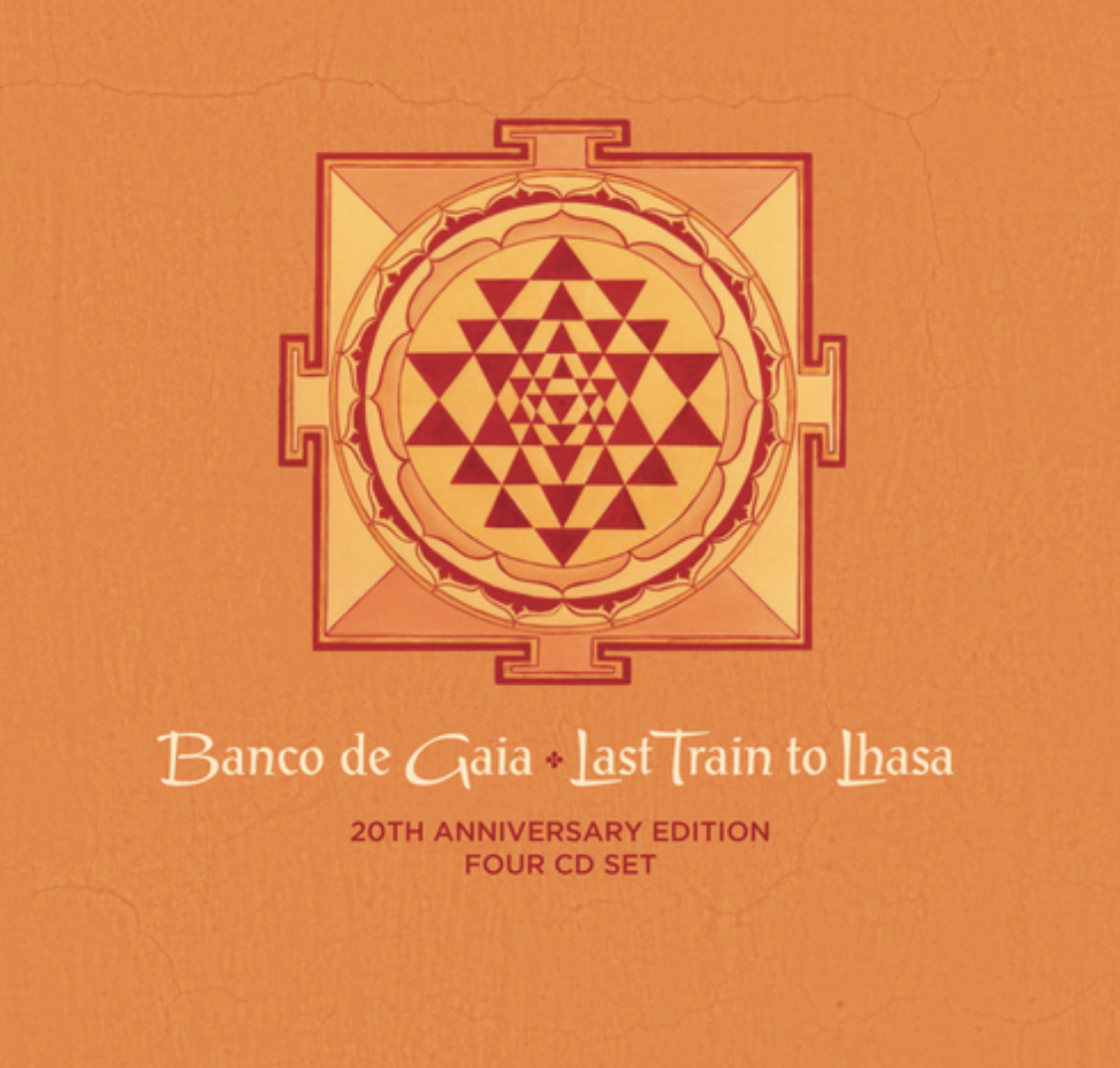
Already represented in volume 99 of the Social Playlist above, another chance to repost my piece on new age techno pioneer Banco De Gaia’s influential 1995 world peregrination Last Trian To Lhasa. Originally appearing as a twentieth anniversary special, with a repackaged version of the album plus extras.
Banco De Gaia ‘Last Train To Lhasa (20th Anniversary 4xCD Set)’
Despite, what on the surface, seems a plausible misconception, one of the UK’s chief progenitors of global trance peregrinations, Banco De Gaia, has become synonymous with all things Tibetan. Re-released on the occasion of its twentieth anniversary, the Banco’s Last Train To Lhasa album may have borrowed the title and evoked a transcendent spirit of the country’s mystical Himalayan landscapes, yet the group’s founder and guiding force Toby Marks never meant to confine his world sounds to one particular place: In truth, more a pan-global sound palette with echoes and traces of the Middle East, Asia and the Orient.
Going as far as to refute suggestions in every subsequent interview since its original release, the LP only actually features a solitary sample from the region and only gained its title from Marks wife on completion. However, Marks lent space on the album’s sleeve to publicising Tibet’s struggle against its overlord Chinese masters and would become a vocal advocate of the Free Tibet campaign – that now seems such a long time ago, and all but forgotten, with China since more or less swallowing Hong Kong and threatening an invasion of Taiwan, which if it does come, might just be the big one: the WWIII event we always dreaded.
Base camp on the enlightened journey to the ethereal, Tibet’s meditative disposition was no match for the authoritarian steamroller of the Communist party machine. And so, an ill-at-ease occupation and stalemate persists a generation later. Its international vessel of protest, the Dalai Lama in his own affable and gentle way backed by the Free Tibet campaign continues to be a big draw yet has decidedly been upstaged by events elsewhere. Clarifying his commitment to the cause, Marks was recently interviewed by the Free Tibet organisation in the run up to his trio of performances at this year’s Glastonbury and the anniversary Last Train To Lhasa release – perhaps a timely reminder.
Musically speaking, as I’ve already mentioned, the twentieth anniversary appraisal of Banco De Gaia’s blueprint reaches far beyond any Tibetan influence, imbued by cultures both imaginary and real from both terra firma and the stratosphere.
Highly praised for merging trance and nuanced electronic four-to-the-floor beats with atavistic echoes from mystically envisioned landscapes, Banco De Gaia’s Last Train To Lhasa was released in the dying ambers of the second rave and house music waves in 1995. On the cusp of Britpop, hung-over from grunge, guitars were about to once again dominate whilst house and techno music in all its many guises had reached superclub status; the underground movements fractured and broken up into a myriad of smaller tribes. Ambient and trance, usually the preserve of afterhours clubbing or allocated space in the “chill out” zones had already blossomed into its own industry. That unfairly and often fatuous “chill out” idiom used to sell everything from nirvana relaxation and transience to any ‘new age” missive. Never new in itself, until progress and technology made it easier and offered more options, the core ambient ingredient had already been in existence for decades. And despite what you may have read, Eno may have given it a name, but he certainly didn’t invent it. In this evolving stage of dance music, Banco De Gaia went to town, sitting on a fluffy cloud, hovering between trance and techno.
LTTL’s suffused panoramic station-to-station soundtrack was different. Sharing some of the peaceable beautiful nephology of The Orb and Air Liquid but with the satellite guided twinkle and kinetic rhythms of Orbital, the album sounded every bit as organic as it did electronic. The original album is boosted by a further three CDs worth of alternative takes, mixes, remixes and the missing until now, Apollo moon landing inspired space-voyage, ‘Eagle’ – recorded at the time but left off the final version of the LP. A box set only available as a limited-edition physical release – though now also available to hear on Bandcamp -, fans and admirers alike can really indulge, with 24 tracks of transcendent aural bliss.
Even if you are far from familiar with the source material, the general method applied is one of respectful tinkering and expansion, with Marks own alternatives plus a line-up of contemporary artists/producer remixes congruously immersive. A ‘Duck Asteroid Extended’ mix of the original ‘Kincajou’ for example, takes the steam driven new age suite on an epic, stripped and even more ambient, 44-minute journey: it takes the mix thirty-minutes to bring in the beats and reach a higher plain. Elsewhere, various tinkering’s of the holy misty mountain proverb ‘China (Clouds Not Mountains)’ takes the languid drifter into ever more esoteric territories, or in the case of Roedelius and Felix Jay collaborator Andrew Heath, adding a diaphanous piano to the meditative calligraphy-brushed valley narrative.
The reverberations of dub, bhangra, and the Orient are sometimes stretched into indolent escapism or given more power and lift on the varied versions of ‘Amber’. Sometimes as with the Carl Craig imbued Bluetech remix of ‘Kuos’, they are taken apart and rebuilt. Though nothing quite matches the rolling timpani introduction and celestial beauty of the original ‘White Paint’, ‘Where’s The Runway Dub’ and alucidnations ‘Dream Remix’ offer interesting interpretations; one a hymn in dub the other a suffused with kosmiche rays romance in the sky.
A carefully considered expansion of the Banco De Gaia panoramic worlds of the mid-90s, the 20th anniversary edition certainly offers the listener an immersive experience. And you can’t complain about getting your money’s worth, with over four hours of music over the four discs to peruse.
If you’ve enjoyed this selection, the writing, or been led down a rabbit hole into new musical terrains of aural pleasure, and if you can, then you can now show your appreciation by keeping the Monolith Cocktail afloat by donating via Ko-Fi.
For the last 15 years both me and the MC team have featured and supported music, musicians and labels we love across genres from around the world: ones that we think you’ll want to know about. No content on the site is paid for or sponsored, and we only feature artists we have genuine respect for /love or interest in. If you enjoy our reviews (and we often write long, thoughtful ones), found a new artist you admire or if we have featured you or artists you represent and would like to say thanks or show support, than you can now buy us a coffee or donate via https://ko-fi.com/monolithcocktail
 Monolith Cocktail Blog