The Monthly Digest includes a clutch of accumulated new music reviews, this year’s Halloween Playlist selection, a piece from the Archives and jukebox selection of anniversary celebrating LPS.
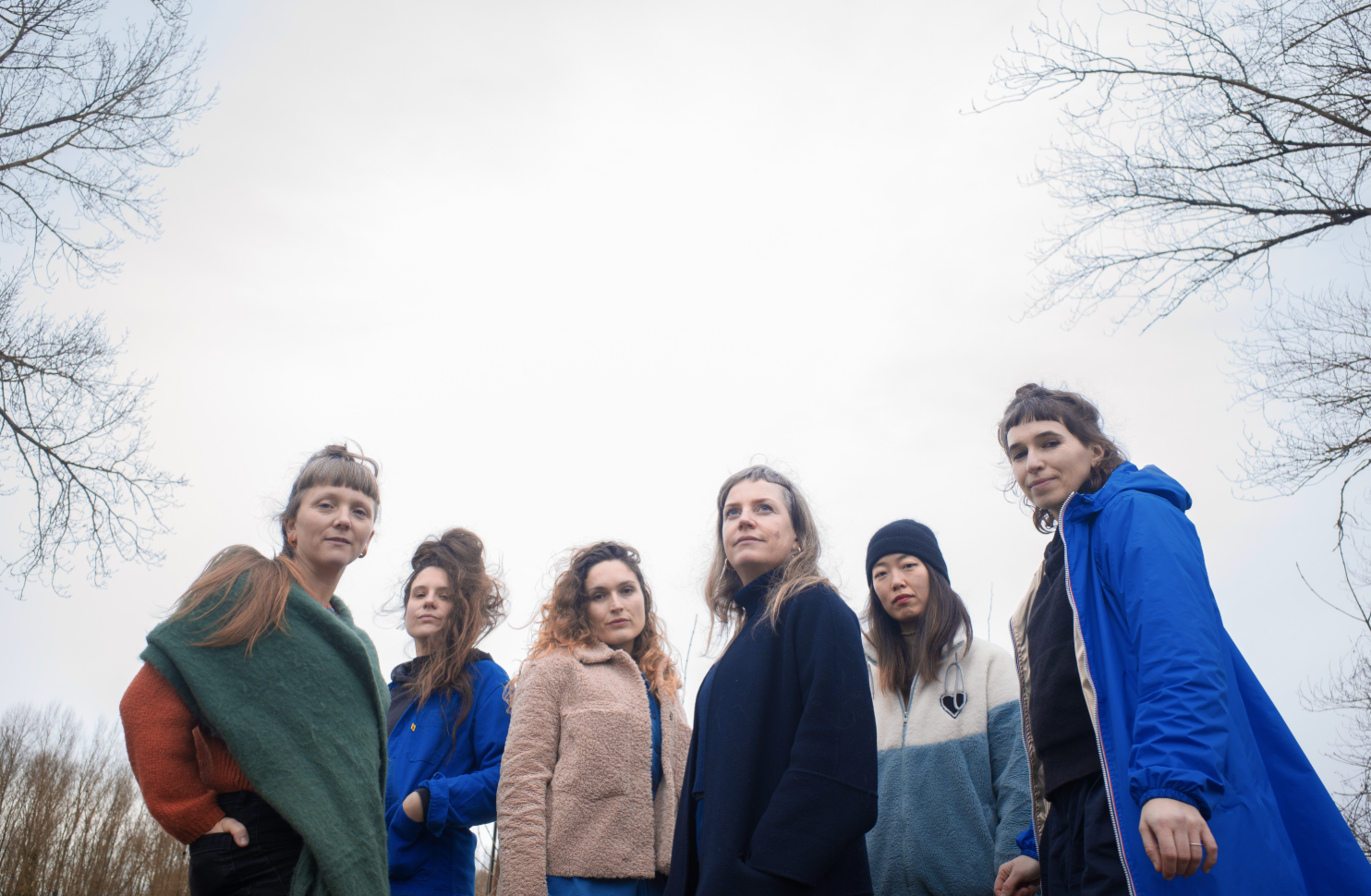
Photo Credit: Seismes photographed by Flavie Herbreteau
___/NEW MUSIC REVIEWS____
(All Entries in Alphabetical Order)
Brian Bordello ‘Who Killed Kurt Cobain’
(Metal Postcard Records) 6th October 2026
So, I was wondering with such a propounded rather than questioning title (the ? being missing from the title) if Brian Bordello was going to join in with the ghoulish online obsessive conspiracy set who cry foul play, nee murder about their iconic martyr, or, was going down the same vivid but multilayered route as the artist Sandow Birk and his gruesome, near cartoonish, depiction of Kurt Cobain’s death. Brian has gone for something even less clear, disarmed by the manner in which he’s recorded his first single in a long while, and more than a bit muggy and muddy.
Birk’s The Death of Kurt Cobain, Seattle oil on canvas artwork, painted not long after Cobain’s suicide in April of 1994, leaves little to the imagination – a riff on, and inspired by Harry Wallis’s 1856 painting of The Death of Chatterton, an even younger poet who famously committed suicide. Sensationalist even, Birk, brought up on the punk surf culture and street life of Southern California in the 70s and 80s, was influenced by the docudramas and the intrusive TV of the times. Brian doesn’t so much as follow this line but is candid and does play on the obsessions of fans who just can’t accept the most simple or plausible answer to their musical idol’s death: contrary to all the evidence.
Cobain’s fatalistic choices seemed inevitable after untold overdoses, and several earlier suicide attempts (according to Courtney Love). It’s a convoluted history, filled with contradictory accounts: inevitably coming to Netflix soon. And leaves room to doubt Kurt’s intentions. Though the facts as they stand support Kurt asking his old pal Dylan Carlson to obtain the shotgun that finally did him in, but for “self-protection” purposes. Whatever the motivation, a shotgun is some statement to make; the police photos, some only released to the public gaze decades later, are horrific and vivid; the effects of shooting your face off only too sickening to gawp at. Such a violent dispatch for a sensitive soul; perhaps knowing that there would be no way to turn back, and a small chance of survival, after already taking various concoctions of pills only to be saved by medics, and on one occasion, with an injection of naloxone by Love. And yet, it seems such a nasty way to go: the shock and cleanup for those he must have known would eventually find him denotes either an incredibly twisted fucked-up mind or someone making a disturbing and callous statement. It must be noted the police had been called on another occasion, confiscating both pills and a gun from Kurt: though Kurt vehemently denied he was trying to commit suicide.
It’s said via so many sources that Kurt was on the verge of splitting the band, pulling out of that year’s Lollapalooza, and yet Michael Stipe was adamant that Kurt was formulating a new Nirvana LP and direction, only to cancel the making of a demo – Stipe, from what I’ve read, seems to stick with the suicide narrative; almost finding it inevitable with the person he not only saw as a peer but friend.
On that tragic day in 1994, Kurt was found by an electrician who’d come to the house to install a security system. A note, addressed to his imaginary childhood friend Boddah, was found amongst the mess, part of it shared on Wiki and elsewhere stated that Kurt had not “felt the excitement of listening to as well as creating music, along with really writing…. for too many years.” Plausible…a statement that the creative will, and the love had run dry. It didn’t help that Kurt was only 27 when he died, feeding into the whole infamous “27” death cult of stars conspiracy.
Choosing a sad chapter from grunge rock’s front pages with which to make a solo return – Brian’s day job family band of a sort, The Bordellos recently released the ‘Oh Nora’ single, reviewed on these pages earlier this month – ‘Who Killed Kurt Cobain’ is yet another lower than lo-fi home recording on rudimental apparatus. The production, part of its charm and rawness, threatens to distort or break down at any second, as Brian’s Daniel Johnston meets John Shuttleworth vocals, Half Man Half Biscuit wit and wordplay, and the C86 jangled guitar prove both lamentable and shitty. It starts off well if you like, almost in sympathy (“Was he killed by too much love?” as one line goes, could be read with a double meaning: a clue, the Love part, the generic word or name of a certain suspect put forward by the naysayers), before eventually and near dreamily declaring the whole affair wasn’t a suicide at all, dialling into the whole conspiratorial discourse. And yet as I’ve already said, there’s a touch of sweetness and a lull to the coarser and dissonant aspects of this recording.
A difficult figure to sympathise with I grant you, but poor old Love comes in for the harshest criticism, her name as one of the most favoured candidates in a bizarre hotbed of murderous plots; although herself a heroin addict and right handful, staving off attempts to take their child into care because of their actions and drug dependency, Love come out alive and flourishes even despite setbacks and her poor behaviour, whilst arguably the real talent (and so the narrative goes) and golden ticket Kurt ends up with a blown-off face, dead at just 27 years of age. Perhaps he really was just drained, lacking the will to go on, stuck in a cycle of melancholic tragedy.
Sceptics will never be satisfied their idol left them high and dry and will never be happy with the manner of Kurt’s death or the investigation that surrounded it. And with no end of armchair experts, analysts – the boon of the internet age – on hand to refute and counterclaim against the evidence, Kurt’s suicide will remain forever suspicious. (I happen to not care but can’t see why Kurt wouldn’t just pull the trigger on his life and hurt from everything I’ve read; from the music I’ve experienced and the hectic fuss and self-destructive nature of his life).
Brian promises or threatens (depending on your view) to release a full songbook at some point in the near future; this time through the Cruel Nature Records label as opposed to dropping from out of nowhere with no fanfare nor any publicity at all, on Metal Postcard Records. Expect a full review when the time comes.
The Clean Crime Scene ‘Raw Cuts’
(Blank Verse/Brothers Club) 30th October 2026
Finally arriving after years of cultivation, the debut album from John Simek’s scuzzed and fuzzed and purposely muddied produced The Clean Crime Scene project is here. From its earliest foundations during the summertime family vacations of childhood reminisces on the Jersey Shore in 2021, where John recruited fellow Richmond, Virginia musicians Jay Wilder (the lead guitarist of this outfit, who also offers up some bass chops and plays keys) of Contraption and The Venus Explosion note, Ralph Nicastro (playing drums and some bass) of Sam Tropez, wreaths and Sparks Fly From A Kiss, and Colin Carhart (sharing drumming duties) also of wreaths, to the follow up recordings involving his wife Diana Simek, who layed down vocals back home in their own studio, and further contributions on violin and keys from Will Pattie (of The Fossil Collection note), Raw Cuts took some time to formulate and mold into its final shape.
Even then, with ‘fatigue’ setting in, during 2024-2025 John enlisted the help of John Trainum, whose eclectic credits include Kayne West, Kate Bolinger and Destructo Disk. Credited however, with providing keys on this album’s second track, ‘Elevator To Nowhere’, it was Trainum’s more professional Spacebomb studio in Richmond that provided the space needed to boost this vision. But this was still not quite done, and earlier this year John ‘relinquished’ the job of mastering to the Grammy Award winning engineer Alan Douches; quite the coup, as Douches’ own CV of credits includes some staggeringly incredible names from the noughties renaissance of indie and dance music – the LCD Soundsystem to Animal Collective and Sufjan Stevens – alongside established bands of previous decades – like Misfits and Motorhead. As I mentioned already that production has a muddy film that envelopes the sound in almost mono-like lo-fi quality, one that fuzzes and buzzes and murkily adds something creepy, dungeon-like, drudge-like to the ambitious indie-grunge-garage-rock-punk-shoegaze chemistry of the band’s songs.
With all that in mind, the album’s reference points, contacts mention everyone from Ty Segall to the Brian Jonestown Massacre and Mazzy Star: all good calls…no arguments from me. But I’m not sure if it is intentional or not, but nothing is made of the band’s almost fuzzed-up country-rock sound, with songs like the already mentioned ‘Elevator To Nowhere’ reminding me of a more spiky Long Ryders – albeit sharing the stage with the leather clad biker chic The Raveonettes and a less languid and needle sharing Royal Trux (especially vocal wise, when both John and Diana are either in a sort of grunge-y duet or calling and responding to each other’s lines). The flick-knife back-alley opener, ‘Backstabbers & Moneygrabbers’ reminded me in part of Neil Young’s Crazy Horse revival of the 90s and modern day, mixed with a subtle bit of R.E.M., the Throwing Muses and the two Kim’s (that’s Kim Deal and Kim Gordon).
A full-on grunge-y mood fest of relationships, street level grime and more sinister creepy material, Raw Cuts goes on to evoke PJ Harvey and The Pixies (‘Black Ice Blackout’), Some Girls era Stones and candy indie-country rock (‘In The Ground’), an Iggy fronting The Dandy Warhols (‘Don’t Mind At All’) and at many other times, the Spacemen 3.
The group mange to reconcile the dirge-y and gnarl with the more softened female tones of Mazzy Star and their ilk to slumber and indolently find some balance between the chalk outlined forensic scars of our ungovernable times and hushed voiced requited love reciprocations. Dirty as much as it is dreamily gazing at the criminal enterprise that is modern life, Raw Cuts is a simultaneously mucky and melodic surprise.
August Cooke ‘On The Line’
(Poets Studio) 20th October 2026
It might have taken a while (three years to the date…well, almost) to follow up the “sublime” (as I called it at the time) debut EP, Like Rivers, from the obviously talented London-based cellist, singer and composer August Cooke, but the wait has been more than worthwhile.
Studied and yet brilliantly dreamy in its echoes of theatre, of matinee movie scores, of the post-classical, of the psychedelic and diaphanous, the On The Line EP further plunges into a magical soundscape and musical songbook of the yearned and vulnerable. But before we go any deeper, a little background info is warranted, and a brief note on the EP’s participants and foils:
The nom de plume of one George Cooke, the August moniker was debuted back in 2023. Before that, Cooke trained as a cellist and completed his undergraduate degree in music at St. Peter’s College, Oxford University in 2013. Further studies in 2015 led to Cooke completing a post-graduate degree in Musical Performance from the Royal College of Music. Alongside this formal training he formed and toured with his inaugural band, Marvellous Medicine. The press release goes on to inform us that he was mentored by such luminaries as the cellist Alexander Chaushian in London and sarangi maestro Sarwar Hussain in Kolkata.
Cooke is joined on his second release by the versatile musician, producer and composer Felix Higginbottom (who works across both the jazz fields and the TV/Film scores landscape), clarinet player Benjy Sandler and the bassist and composer Daniele Gulino. Mostly appearing on the odd track but providing additional scope and attentive rises and falls to Cooke’s overall mastery of filmic quality set pieces and maladies. Benjay offers a classical swell on the Animal Collective communes with Dhani Harrison ‘Nila’. In the dreamy mode, this small epic sets off with filtered echoes of gamelan of something more Indian in source, but languidly chuffs to piped-like rhythms. I may be off, but I thought the title reminded me of something more mythological, so I looked it up. Nila is Sanskrit in etymology, the name of a Vanara (usually represented as monkeys, apes or forest dwellers) chieftain in the army of the Hindu deity Rama, who appears in the Hindu epic poem Ramayana, leading in battle against the malevolent supernatural rakshaska and King Ravana of Lanka. Whatever this has to do, allegorical, metaphorical or story wise is anyone’s guess, but I’m sure that its Indian influence is there.
Gulino meanwhile, offers a heavy but lovely dubby-style bass to the Panda Bear soft bulletin drama ‘Mountain Down’. There’s elbowed intense cello that reminds me of Fran & Flora, maybe Alison Cotton too, and an overall sound that recalls C Duncan.
The rest of the EP is magnificent in its diaphanous and near foggy mystery, with the title-track quavering through a magic picturesque forest of psych-folk and Parachute era Pretty Things, and Fearless era Pink Floyd. But then you suddenly catch a strange resemblance of the Lynchian in the form of a voiceless Twin Peaks-like score. The finale, ‘Gasoline’ could be an Italo-Arabian dream match between Jack Nietzsche and David Arnold but reproduced by The Music Tapes. It has, well like most of the EP, a cinematic quality, but then again it all sounds intimate despite the scale that’s softly revealed.
Possibly one of my favourite listening experiences of 2026, A most pleasant if stirring, even near elegiac in places, immersion into the lucid feelings and poetically clothed metaphors of memories, recalls and reminisces that threaten to tear apart or break. If the current timescale is repeated, expect the next EP, or an album indeed, in October of 2029: I joke of course, we’d like something far earlier please. Still the burgeoning star of his own project, Cooke breaths life into familiar sounds and genres, yet seems to hold up well as he offers something uniquely individual and introspective.
Josh Johnson ‘Animative’
(International Anthem/Nonesuch) 23rd October 2026
A second release from a member of the International Anthem family this month (albeit in conjunction with fellow congruous label partners Nonesuch), the saxophonist, composer, producer, synthesist, sideman and collaborator Josh Johnson, in “animative” style, draws in a reputable and enviable cast of guests on his latest untethered experiment in both the synthesised and electroacoustic.
Whilst dropping in from time-to-time on the Monolith Cocktail for analysis and review – his 2023 collaborative trio with Gregory Uhlmann and Sam Wilkes made my choice albums of that year -, I’ve hardly touched upon Johnson’s resume: which includes being also part of Jeff Parker’s ETA IVtet, the Small Medium Large ensemble; on the production side he’s credited with producing the singer-songwriter, poet and outstanding bassist Meshell Ndegeocello’s Grammy Award-winning The Omnichord Real Book album, as well as Chilli Pepper Flea’s Honore project. As it happens, the eclectic traversing Ndegeocello makes an appearance on this new album; lending a fat quivery bass line that crosses between soul, funk and R&B to the Herbie Hancock vibed ‘High Step’ (from my own backyard and days of making music in the backwaters of the Isle of Wight, it also reminded me of Paul Butler’s early Pnu Riff experiments, Herbie being a major influence on that project). That near conventional, when laid alongside the rest of the album (though I don’t mean that in a bad or disrespectful way), funky jazz track also brings in the talents of both the multi-instrumentalist, audio engineer, mixer, highly prolific producer and International Anthem stalwart Ben Lumsdine and the drummer, programmer and producer Brandon Combs on the, near flat-like, filtered drums. Lumsdine gets another chance before that on the near fuzzy tubular Chicago skyscape musing of ‘Reece’. Beneath Johnson’s saxophone – which has a kind of spray effect and spiralling frequency to it -, Lumsdine splashes on the cymbals and plays another kind of flattened nice roll of a beat.
Whilst we are talking about those guests, yet another talented drummer and percussionist, Aaron Steele, is credited with additional production chops and samples on the reverberated piano focused, flat tubular paddled, and vaporising bass purred ‘Mill’; a near 80s-like TV score of lament and mystique that, later on, features a turn towards the Latin percussive and rhythm wise. The second appearance this month (see Jeremiah Chiu’s album review nearer the beginning of this column), Chicago jazz trumpeter, composer and bandleader Marquis Hill can be heard alighting fourth world like trumpet to the golden jangly cosmic ‘Upstairs 2021’ – staircase to the spiritual? The universal? The inspired? Extending the roll call, IA label artist Macie Stewart (the multi-instrumentalist has worked with everyone from Rob Mazurek to Bex birch and Damon Locks, and partners up with Lia Khol in a duo project) floats violin on the Ariel Kalma and Phillip Glass-like circulating and filtered sax blown ‘It Can Be Everywhere’.
Yet another one of the multi-tasking polymaths involved on the album is the Grammy Award-winning arranger, bassist, composer and producer Paul Bryan, who applies subtle bass to the old spiritual swanned bluesy and Egyptologist jazz stirred ‘Close’ – think Leon Thomas via the Pharoah and Kahil El’Zabar. Joining Bryan and Johnson is the drummer, engineer, producer and bassist of some repute, Marlon Patton, who sloshes and jangles around on shuffled bop-style drums.
Covering most of the album already with those guest spots, Johnson is credited as the solo performer on four tracks, his multi-instrumental palette extending from sax to synth, sampler, piano, Rhodes keys, percussion and bass clarinet. The opener, ‘Idiofone’ – I’m not sure if this is a reference to the triangular vibrated idiophone -, sets the Reich/Glass/Gasper tone of hollowed tubular rhythmics and gated lopped saxophone, a distillation of Chicago electro-jazz and house music – more of that later on -, and the aquatic. ‘Jazz Chord Possession’ sounds like a transmogrified Kraftwerk via Mantronix and the Information Society, and ‘Aughts Hymnal’, just like its title, is a Penguin Café hymn of futurism and the spiritual.
Animative is a great word for this album’s rhythms of life and musings, its cross-germination of art music, jazz, trance, minimal techno, house and electronica; the fuel for which namechecks the late great Eddie Harris and Mal Waldron amongst the sagacious conjured and “transportive” teachings of the genius Wayne Shorter, and the West African philosophical writings and non-Western ideas of time and being of Dagara diviner, teacher and author Malidoma Patrice Somé, and, most surprisingly, the “dreamlike fiction” of Italo Calvino. This indicates a real depth at play, and yet this music is so accessible and inviting indeed, animated. A successful culmination of influences and personal growth, wisdom and the measuring of time by an artist simultaneously as experimental as they are immersed in musicality and encapsulating an abstract feel.
Ocean Moon & Silver Ley ‘Prismatic Fields’
(Open Universe) 16th October 2026
A benevolent union and blossoming of organic meta and foliage from Jon Tye and Bethany Ley; both appearing under their respective guises of Ocean Moon and Silver Ley for a diaphanous and dreamy abstract articulation of both untethered and more functional traverses of nature and the ‘metaphysical’.
Under the descriptive encapsulation of Prismatic Fields, the two foils travel freely, floating ideas and congruously head towards sparkles of light on a most beautifully constructed album.
The seeds were planted for this collaboration between the Cornwall-based artist and multi-tasker Tye and the Bristol-based producer, composer, harpist and vocalist Ley when the former was invited to ‘envision a series of releases for the German production music library Sonotan.’ That same platform then launched the experimental outlet and subsidiary label, Ocean Universe: of which this is its ‘inaugural release’, I believe.
They’ve interestingly dedicated the album to the botanist, author, and former director of the Centre for Native Peoples and the Environment at the State University of New York College of Environmental Science and Forestry Robin Wall Kimmerer; taking a leaf (excuse the pun) from her writings and teachings on her propounded Traditional Ecological Knowledge approach – which, according to Wiki, ‘she describes as a “way of knowing”.’ TEK is described as ‘an empirical approach based on long-term observation and relationship.’ Which also includes those cultural and spiritual considerations often marginalised by the Western scientific community.
In almost heavenly realms, crossing between the bamboo and lotus music of Asia, and drawing (especially) upon Ley’s talents of merging classical studies and learning with the electronic, floated Fourth World musical evocations prove gauzy manna for watery cascades, glistened harp, circulated, wafted, cooed, lulled and dabbed luminous vocals, and softened rhythms of life and fauna organic beats.
On a spectrum that takes in everything from the Future Sound of London and Amorphous Androgynous to Cuushe, Laaraji, Catrin Finch, Susumu Yokota, Sakamoto and Zoe Polanski, magical mulled moments and amorphous horizons converge to build an inviting oasis of the lunar and goldenly cascaded, a world of both rainbows and enervated mystery and exploration.
Qualm ‘Let’s Find Those Parrots In The Clouds’
(Zinnober Records) 23rd October 2026
Despite the unease and doubt that’s suggestive of this undefined troupe’s name, there’s next to no qualms about the direction of travel: free form jazz that probes at, and in a toppling fashion, freefalls towards poetic descriptive cerebral and more sky bound inquires.
Recruited from a number of criss-crossing and shared bands, including members of the Horse Lords, DRNTTCKS and ZEMENT, Qualm is an ever-developing project of players pulled from both America and Europe. Founded and steered (if that’s the word in a thoroughly democratic lineup of amorphous unfixed improvisors) by saxophonist, guitarist, synth operator and vocalist Philipp Hager, the group has seen various changes since its formation in 2020. This however is Qualm’s debut ‘full-length’ album; a showcase of their signature improvised form, given the time and the breadth to unfurl a menagerie of imbued metaphorical open-ended entitled “qualms”.
Across a quartet (quintet if you purchase the digi versions) of medium and longer form pieces/performances all recorded in a one day session, composer, saxophonist and sound artist Andrew Bernstein, drummer and percussionist Christian Büdel and electronic musician and bassist Sebastian Dyrschka draw upon their respective resources and influences to evoke everyone from the Pharoah to Peter Brotzmann, Sam Rivers, Nucleus, the Flow Trio, Polish free-jazz of a Biblical nature (see the near esoteric , wisped and vibrato-like breaths saxophone haunted ‘It Takes Not Much To Light The Fuse On The Powder Keg, Which We’ve Built Ourselves, Just To Avoid Dealing With Our Own Demons’) and Robert Dick’s Third Stone From The Sun LP.
As I described earlier, and on the opener, the group literally topple forward, splishing and splashing through a free-spirited vision of Iris Ackamoor style Afro-jazz as they sun worship The John Batsch Society and Prince Lasha whilst contemplating analogies to uncompromising zebras. That introduction track runs to twelve minutes in length and picks up various ideas as it moves constantly forward in a hurried flustering fashion: shooed percussive parts, changes to the drums from rattled sticks across rims to scrapes and brushes across deadened metals, a touch of Embryo krautrock and the Pharoah piping. But there’s a distinct recall of swing on the second performance, ‘A Sudden Qualm Of Sickness Overcame Us, While We Were On A Tub Riding Down To The River To find A Place To Dream’ (I’ve read shorter poems than that title), which also features, later on, more hysterical piques of Brotzmann and Mats Gustafasson.
‘Holy Smoke, It Flies High In The Sky’ reminded me in part of a Hugh Masekela vibe, but the swanned, bird-like flights of Wayne Shorter and an overgrown with wildlife and foliage boardwalk dance of 60s New York City jazz. Bonus track, ‘Sometimes You Have To Cut Things Here And There’ has a more willowy, greenery touch of the whistled and fluted, the fluttery and vibrating as the saxophone’s brass materials are coaxed and blown in a more Andy Haas fashion. Eventually, after both moments of theatre and dissonance, the synthesized vapours and rituals probe towards something like the new age, pagan and cosmic.
We may just have found those parrots of the title, floating up there in a dream-like suspended animation, as the Qualm quartet and friends let their skills do the metaphorical and allegorical talking. A great debut full of ideas and a well-balanced show of improvised musicianship from the free-form school of experiment and dynamics.
Séismes ‘SeùlSeùl’
(Carton) 30th October 2026
Without upsetting anyone’s preferred pronouns, I’m assuming that its ok to state this is an all-female sextet working within – but very loosely – the free jazz and fourth world fields of experimentation and both magical and mysterious abstractions. And it shouldn’t be the case in 2026, but this is extremely rare.
Felt via healing balms of the near new age and exotic, and by passages of intensity, the Séismes (translates as “earthquakes”) lineup of Mélanie Loisel (on double bass), Tatiana Paris (guitar), Léa Ciechelski (saxophone, flute), Aline Bissey (also on flute), Yurie Hu (keyboard, viola) and Marine Flèche (drums) also all contribute vocals and electronic effects to an improvised recorded debut album that combines both European and Korean influences and cultural sources.
Encouraging the geographic, scenery and projections of dramatic introspection and bathos, the “alone” aspects of the SeùlSeùl album title describe both standing amongst the exotic foliage and moving in unison with the rhythms of nature: at peace and yet also animated and fidgety. The troupe’s scope of influences and improvised exploration draws (to these ears anyway) upon Jon Hassell, Roberto Musci, Nicole Mitchell, Laraaji, Alice Coltrane and Walter Smetek, but delves even further and broadly to conjure up some surprises along the way. In practice this means nature’s rustles, the air and breeze act as a backdrop to the group’s atonal wind and brass instrument huffs, chuffs, hinges, dreamy drifts and articulations; to the scratchy, textural, scrapes and chinks of the tin and metal percussion; and the flexed but also sensitive combination of scuttled stick rolling and more rhythmic drums. And then you have the electronic aspects – that’s various oscillations, generator like Fortean crackles and plastique resonance – and the voices, which can be either in a singing fashion or delivered through the duet of flutes and the saxophone – sometimes sounding very vocally cooed and at others like some odd cuckoos.
There’s much to pick out from this imaginative and stirring assemblage performance; the familiar recall of Max Andrejewski’s Hutte & Guests take on Robert Wyatt on the Nordic-sounded and deliciously blurry fresh look at the world ‘Glasses’, and the near Krautrock momentum built up on the plastic pipped and Metheny guitar harmonics tweeting, percussive shaking and intense climatic ‘Du Jaune’ (“yellow”). There’s a John Zorn dimension to the title-track, and a mix of Franco-Hawaii, the magically rural, and the Balkans on the vocoder-effected vocalised ‘Pasteque’ – the parting vocals sound very folksy, almost Celtic. And you could almost suggest a touch of Staraya Derevnya on the poetically abstract ‘Cheveux au Vent’ (“hair blowing in the wind”).
All in all, an impressive debut of the ecological vibed, the organic fused with the electronic pulses and generators of modernity and dreamy lofty aspirations of untethered free sonic, atonal and rhythmical experimentation. Deerhoof meets Tortoise and Sam Rivers in a hinterland balanced somewhere on the astral panes between France and South Korea. In other words: this is for those who wish to immerse themselves in new soundscapes and visions.
_____/HALLOWEEN PLAYLIST FOR 2026____
Something different this month on the Digest, as I suspend the Social Playlist until November for this year’s Halloween Playlist: Manly P. Hall’s Secret Jukebox. Hoots and larks aplenty alongside psychic sonic defences and the disturbed.
This year’s gruesome track listing in full:
White Reaper ‘Friday The 13th’
Wovenhand ‘Dead Dead Beat’
Shriekback ‘Nemesis’
SHITNOISE ‘Whine In A Coffin’
Electric Sandwich ‘Devil’s Dream’
The Breedling ‘Torn Asunder’
Peter Evans ‘Witchcraft’
Sum of R ‘Waltz Of Death’
Dry Ice ‘Mary Is Alone, Pt. 1’
Dr. Doom ‘Body Bag’
Super Grupa Bez Falszywej Skromnosci ‘Satan’s Concept’
Bernard Szajner ‘Execute’
Wjerstean ‘Creature’
The Tryp ‘The Lizard Sheds It’s Skin’
The Flatliners ‘Gravelinerz’
Okay Temiz & Johnny Dyani ‘The Night – Gece’
From Nursery To Misery ‘The Fatal Bite’
Nolan Potter’s Nightmare Band ‘Bad Vibes’
Dyr Faser ‘Taste Of Blood’
Sonic Youth ‘Death to Our Friends’
Double Happys ‘Moss Monster’
Schizo Fun Addict ‘Tease Murderess’
Society of the Silver Cross w/ Blood And Sun ‘Unraveled’
Xqui w/ Lynn Gerrard ‘From The Crypt’
Cowboy Junkies ‘Me and the Devil’ Trifle ‘Devil Comin’’
And if you’re still not satisfied; totally wound up still, here’s a smattering of past sacrileges:
___/ARCHIVES____
Again, something different this month, and due to a suspension of the long running Monolith Cocktail Social Playlist series, a chance to still share choice tracks from those artists and bands celebrating particular LP anniversaries this October.
Sixty this month:
A live free form vision of Cecil Taylor’s ‘Steps’, originally released on record in 1966 as part of the jazz pianist luminary’s Unit Structures LP.
A supposedly live version of ‘Fire Engine’ by the acid freak 13th Floor Elevators. The original of course appears on their 1966 LP the Psychedelic World Of…, which is also sixty this month.
Let’s have some fun now, as we celebrate The Monkees self-titled debut LP, released this month back in ’66. A version of ‘Last Train To Clarksville’ by the Damnation of Adam Blessing.
And…a TV show mimed ‘Sweet Young Thing’….
Fifty:
Lester Bangs might not have had a kind word for it, but Patti Smith’s 1976 follow up to Horses, Radio Ethiopia undeniably has its moments. Right? Anyway, I’ve gone for the opener, ‘Ask The Angels’ which may or may not reinforce your prejudices.
Nearing the end (or over the finishing line) of CAN’s creatively pioneering epoch, 1976’s Flow Motion LP of cod-reggae lilted undulations is rarely held dear in even the heads hearts. Never mind that it was perhaps most people’s introduction to the band, through that album’s preening flux-disco hit single of ‘I Want More’. Personally Saw Delight, released just the next year, recovered their global traversing credentials and reputation – though many will argue with me on this, I think it’s one of their best late albums after Future Days.
In celebratory mode, and originally featured on the 1997 released triple remix album Sacrilege – various hip and Mute related and imbued artists taking turns to turn in and out, transmogrify and pay humble respect to CAN’s back catalogue – Air Liquid did a visitation transference remix of the Flow Motion title-track.
The modestly prolific Sparks nearly always have some anniversary or other, having straddled and released LPs during every decade from the 70s onwards – the Gilbert & Sullivan of pop are still at it over fifty years later, still recording and still out on the road. From 1976’s Big Beat LP, a live rendition of ‘Nothing To Do’, taken from the Lil Beethoven album tour, of which the Mael brothers also released a DVD – essential purchase!!!
Forty:
Something very Oar(ish) Skip Spence and the Jefferson Airplane about this. Yes, believe it or not, and despite its 60s sound, the Cowboy Junkies ‘Baby Please Don’t Go’ and the White Off Earth Now!! LP it appears on is forty years old!! This debut announces the Canadians-do-midwestern-esque drowsy drugged-up new country indie group to the world.
Thirty:
From the Wu-Tang Clan’s dojo of adjacent extended solo member headed albums, careering on to a scene that needed refreshing in ’96, Ghostface Killah’s Ironman shadow superhero persona. The obligatory team-up ‘Daytona 500’ features both Raekwon and Cappadonna keeping the Wu signature going.
Also this month, plucked from the Archives, my October 2016 review of Orkesta Mendoza’s Mexican deep dive ¡Vamos A Guarachar! album.
Orkesta Mendoza ‘¡Vamos A Guarachar!’
LP released by Glitterbeat Records on the 7th October 2016
A scion of the Calexico-Giant Sand-Xixa axis of Arizona/South and Central American cultural exchange, Okestra Mendoza keep the faith in these tumultuous times. Whilst President Trump certainly seems a possibility, thankfully the blowhards proposed border control wall is presently only a threat. Not that that will stop the Galexico band member and co-producer Sergio Mendoza from inhaling the intoxicant thrills, exotica and voodoo of Mexico and beyond. The multi-instrumentalist bandleader grew up in the “hinterlands” of Arizona after all, listening to the sounds emanating from the Mexican AM/FM radio stations. This heady mix of cumbia, mambo, mariachi, big band orchestras and the salacious swaggered ranchos was eventually channelled into a cornucopia of collaborative projects and bands. Merging these traditional forms with tremolo twanged rock’n’roll, psychedelia and electronic vibes Mendoza has created a timeless junction between neighbours on both the previous Orkesta LP (Mambo Mexicano) and the latest ¡Vamos A Guarachar!
Inhabiting a supernatural imagination of the cactus-strewn borderlands, where the otherworldly amorphously interchanges with ritual and reality, ¡Vamos A Guarachar! is both mysterious and fantastical yet equally kitsch. Imbued with the cumbia rhythm, which has enjoyed an electrified renaissance over recent years, Mendoza weaves both the dance styles sauntering hip swivel and more galloping raciness into the rich melting pot. ‘Cumbia Volcardora’ is a perfect example of this; wafting in the southern breezes with its cantina serenaded horns, ? And The Mysterians style ghost house organ, theatrical voodoo narration and Spanish vocals. A similar pattern of cross-pollination continues throughout the album: on the two-speed ‘Redoble’ the band fluctuate between a more up-tempo chase to Brazilian rocksteady and evoke both the feverish Mambo of the title but also a Balkan polka on ‘Mambo A La Rosano’.
Between ages with a penchant for a strange nostalgia, as seen through an esoteric lens, ‘Misterio’ is a curious tango crooned matinee that sounds like a lost theme tune from the 1950s. There is a Mexican film of the same name from 1980, which starred Juan Ferrara as a TV star who blurs reality with the plot of a soap opera he’s filming. It’s quite conceivable that this could be the band’s inspiration, the lamentable enchantment a good fit for the movie’s fantastical waltzing premise.
Though the esoteric and alien quivering magnetism atmosphere casts a spell over the album, there’s a host of quirky turns and a lot of fun to be had. For a starter there’s a kooky homage, or augur, to the spirit of the racoon on ‘Mapache’, and the zappy, rock guitar gnarling candy treat ‘Caramelos’. The times may be changing for the worse in Mendoza’s backyard, but the Orkesta put a raucous, colourful and upbeat shine on the political miasma, defending and celebrating the “honest cultural exchange” between both sides of the divide with relish and a certain oddness.
If you’ve enjoyed this selection, the writing, or been led down a rabbit hole into new musical terrains of aural pleasure, and if you able, then you can now show your appreciation by keeping the Monolith Cocktail afloat through the Ko-Fi donation site.

