The Perusal #62: Kotra, Niton, Ruth Goller, The Dark Jazz Project, Martin Tétreault…
December 3, 2024
A WORLD OF SONIC/MUSICAL DISCOVERIES REVIEWED BY DOMINIC VALVONA
PHOTO CREDIT: PAULA RAE-GIBSON
(Unless stated otherwise, all releases are available now)
Kotra ‘Grit Light’
(I Shall Sing Until My Land Is Free)
As Putin’s invasion of the Ukraine depressingly continues unabated, passing the 1000 days mark a few weeks ago – which also happens to near enough coincide with the Ukraine’s commemorations of the Holodomer, a timely reminder of “mother” Russia’s destructive despotism and politically sanctioned revenge policies -, it falls upon labels like the electronic artists Dmyto Fedorenko and Kateryna Zavoloka’s I Shall Sing Until My Land Is Free to spread the sound of the sonic resistance. A soft power, a cultural emissary of that country’s experimental scene, the profits from its roster of artists, which includes both its founders, are donated to several self-defence and humanitarian foundations and local volunteer activists.
To paraphrase the opening from my 2024 review of Fedorenko (appearing under his Variát moniker) and the harsh and confrontational Japanese artist Merzbow’s Unintended Intentions collaboration, nothing concentrates the mind more than witnessing the brutal barbaric dystopian-scarred landscapes of war-torn Ukraine, and the carnage, loss of lives in the meat grinder of a bastardised WWI battle for survival. The fear, destruction of this conflict has been transmogrified into the abrasive, concrete debris soundscapes of nightmares on both that album and others; the Berlin-based Fedorenko appearing under a number of different guises, channelling heavy abstractions of sophisticated, industrial, intelligent techno and dance music across a swathe of concepts and works.
Escalating into the broader war many had forewarned, but unless willing to accept capitulation, further violent barbarity and the military conquest of even more of Eastern Europe, the Baltic nations and Balkans, there is no real painless conclusion to this invasion. Trump’s boastful rhetoric is just that. But worrying all the same, as negotiations, which can’t truly be anything other than favourable to Putin in any scenario offered, seem very likely in the New Year. The transactional President will want to wrap this horrifying, economically destructive war up, and so there is a rush now for both sides to gain their territorial footholds (the Ukraine’s incursion and hold over swathes of the Russian Kursk region will be vital in any deal negotiated; one of the country’s most successful military coups, and almost in itself the sole campaign that unnerved and setback Putin’s war machine the most). At long last the UK and America have given the go-ahead for long range missile attacks – though confined to the Kursk region. But it has come at such a late stage, even too late, just as the encumberment Ukraine supporting Biden administration is about to leave the White House. If delivered sooner alongside the delayed Leopard tanks and the F-16s (or in the numbers that President Zelensky asked for), we may very well be seeing the Ukraine in a much more favourable position. As it is, one of the only leverages that Trump could have used, those long range ATACMS, has been played. And what the Ukraine needs more than anything else is manpower.
Still, Putin’s Russia has failed to bully the Ukraine into subjugation and defeat. Russia’s military, for all the world to see, has been shown up on the battlefield and forced into sacrificing untold numbers in suicidal missions to gain mere yards of empty landscape. Drones have had the better of the Russians across the trenches and out at sea against the Black Sea fleet on numerous occasions. And in recent months, they’ve been joined by anywhere between ten to eleven thousand troops from North Korea in an attempt push the Ukrainians out of the Kursk. But even more unnerving and dramatic for the Russians is the unfolding events in Syria, which have taken Putin’s ally Assad by complete surprise. Insurgent/rebel groups opposed to the Syrian dictator have, even to their own astonishment, gained a vital foothold in Aleppo – the first time the Syrian government has lost control of the strategic and important city since the start of the civil war. A stretched Russia is currently bombing the hell out of them. The world is hanging on to see what happens next.
Bearing testimony to what has taken place and what might be about to happen in 2025, Fedorenko once more takes on the guise of another of his many faces, that of Kotra, to charge up the electrodes and electrical barbed wire with another heavy bass suffused and industrial techno album of electrification, force fields and buzzed machine hive activity. From dissonance and pulverizing bass noises a rhythm is hewn and honed; a buzz and scaffold of signals, of invisible forces and currents fused together with a bounce.
Carried across an hour-long immersion of sonic forbode and shuttered, tubed, kinetic and frazzled IDM-styled beats, there’s a thematic atmosphere of heavy payload alienness and humming, engineered and motorised machines. Some of these sounds mirror the ominous buzz of drones in the theatre of war, and others, the propeller-like hovered flight of bombers. In short, picture Rob Hood or Jeff Mills on Tresor, maybe even Basic Channel, collaborating with Carter Tutti Void whilst caught up in industrial scale warfare. I Shall Sing Until My Land Is Free have proved their worth in exporting such electronic experimentation to an international audience if nothing else. But this truly is music with a serious intention, forged in the darkness of barbaric invasion, from those who fight culturally and physically for the survival of their country’s identity.
Niton ‘11’
(Shameless Records/Pulver und Asche Records)
A connection to the Island of my birth, the Italian-Swiss trio of Niton bears the name of the small village on the Isle of Wight where Marconi famously and successfully transmitted some of the first wireless waves. On the 23rd of January 1901, on the verge of a new century, just a day after the death of Queen Victoria and that enduring epoch, the Italian inventor’s transmission reached from the southernmost tip of the Island to Lizard in Cornwall. By the end of that same year Marconi would attempt to reach America.
As we locals pronounce it, “Knighton” – which is really confusing as there is an actual Knighton on the Island too; we differentiate them by calling the latter “K-nighton” -, Niton lies close to the more famous and larger one-time Victorian resort of Ventnor on the southern coast. Marconi’s picturesque spot is the site of St. Catherine’s Lighthouse, looking out to the great beyond, where no land can be sited, and all that lies ahead is the expanse of the English Channel. Many have attached significance to this location over the years, and this experimental electronic-acoustic group have decided to adopt it as a link from one age to the next; of progression, the sense of opportunity and technological advancement against the implications of more foreboding era in which democratized altruism has turned into a dystopian nightmare.
Choosing a significant date of correspondence, “11th January 1901”, from the lead up to that successful experiment, the trio invite the French-born British composer, multidisciplinary artist and researcher Olivia Louvel to run Marconi’s written words through the Fortean radio set on the opening atmospheric piece from side B of their newest, and fourth, album. Currently (or so when I looked it up recently on Louvel’s own site) studying a PhD at Brighton – where coincidently I worked before making the move to Glasgow in 2015 – in the interplay of voice and sculpture across that University’s fine arts and sound art departments, the award-winning artist doesn’t just read aloud but transforms the material by playing with the language, from Italian to English and vice versa. Historical timelines are recalled but also erased by blankets of foggy time, separation and vaporous disembodied elements, as Louvel sounds both of that Victorian-on-the-cusp-of-a-new-century era and yet futuristically oblique.
A reference to that date, but also the number of collaborative artists taking part for the first time in expanding Niton’s sonic investigation and freedoms, 11 marks the group’s tenth anniversary and new approach.
Widening participation with an international cast, electronic violinist Zeno Gabaglio, analogue synthesist Luca Xelius and “amplified objects” manipulator El Toxyque work with both noted veterans and exciting burgeoning artists across a diverse range of genres and disciplines to provide something different; avenues, turns, peregrinations toward the surprising, intense or avant-garde.
Just to pluck out a few examples, the twin contributions of the Casablanca singer-songwriter and solo artist Meryem Aboulouafa and the award-winning Swiss poet, Babel festival for literature and translation founder/artistic director Vanni Bianconi open the album by airing an Italian poem read out and mystified with poignancy and pain of the bittersweet over a wispy mirage of amorphous Arabian and North African desert stirrings. But it’s followed by a complete change in direction with the glitch kinetics and quarks, the Duchampian bicycle wheel spokes turning and rattled, and drum smacked, punched and physically handled abstract ‘Spin-orbit interaction’, which features the experimental drummer-percussionist Julian Sartorius. There are experiments too that sound like a very removed vision of jazz with the English saxophonist John Butcher channelling Mats Gustafsson and Andy Haas strained sucked dry vibes and Krononaut-like abstract chills, visitations and alienness on the alternative Bureau B label-esque ‘I was dying’. And the Ex and Dog Faced Hermans guitarist Andy Moor provides resonating copper stringy wrangle, scraped and scratchy lines, carries, sustained hovers that sound like a fusion of the Red Crayola, Derek Bailey and Yonatan Gat on the psych-jazzy and mysterious living, breathing entity ‘Huella infinite’.
But perhaps the most out-there of these collaborations is with the Cameroon shaman Achille Ateba Mvando, who both ceremonially and excitable utters and dances the ancestors Bantu rituals to a combination of traditional hand drums and handclapped rhythms and more modern buzzes, glitches and starry projected ambience – reminding me in some ways of both Bantou Mentale and Avalache Kaito.
Transcribing a feel, a sense of history, invention and amorphous globalism, Niton and their foils/partners converse with the past whilst venturing further into electronic experiment and soundscaping on an immersive album of sonic atmospheres, investigation and evocation.
Ruth Goller ‘SKYLLA’
(International Anthem) 6th December 2024
For those that missed out at the time on the Italian-born but London-based composer, bassist and experimental vocalist Ruth Goller’s 2021 debut LP, those gracious folk at International Anthem have pressed another batch of vinyl copies: Such was the initial demand, and three years on, a clamour to own Goller’s inaugural soloist fronted album, that it felt right to make it available again. Originally released on longtime collaborator Bex Burch’s Vula Viel Records label – also, confusingly, the name of the composer, percussionist, producer and instrument maker’s group -, SKYLLA showcased an inner lucidity of expressive vocalisation and pinged, plucked, spindled and resonating bass guitar harmonics that garnered a host of plaudits.
But this timely reissue arrives in the wake of Goller’s impressive scope of activities since that album’s release, and just a few months after the release of the follow-up, SKYLLUMINA. The CV is way too prolific to list in its entirety here, but the expletory composer and bass player’s most notable credits include two of the most important and influential groups to set off a jazz renaissance in recent years, Acoustic Ladyland and Melt Yourself Down. Goller has also performed with such luminaries as Kit Downes, Sam Amidan, Marc Ribot and (Sir) Paul McCartney, and plays with both Let Spin and Vula Viel. And just in the last month Goller teamed up with the German drumming and saxophone TRAINING combo of Max Andrzejewski and Johannes Schleiermacher for the wild, tumultuous, wrangled and strange, yet also melodic and dreamy threads to knot album – a collaboration so good that it makes this year’s choice albums list, which goes out in the next week.
In an experimental, expressive and often otherworldly atmosphere – like a cross between introspective cerebralism, the alien and, later, the near chthonian and darkened –, Goller’s Nordic/Icelandic-like vocal utterances, soundings and spatial harmonical airings mirror the vibrating and trebly harmonic twangs, pulls and language of both the electric and double-bass. Accompanied by the attuned, often choral and tripsy sprite vocals of Alice Grant and Lauren Kinsella, the odd caught recognisable word is entwined with coos of the pastoral, the neoclassical, ethereal and pronounced and instrumental gangly strands and shuttered and bassy sonorous reverberations.
You could imagine Bjork, flanked by Susanna and Hatis Noit, conducting an alternative ceremony or a Northern European pagan woodland choir to the experimental bass guitar work of Jaco Pastorius and evocations of dal:um, Gunn-Truscinski, Ramuntcho Matta and on ‘In more turbulent times, she managed to take the perfect shot’ a touch of Refree – there’s what I can only describe as a transmogrified feel of the Iberian to this track. The vibes on the final third part of the album are more ominous, almost menacing, and recall the work of Scott Walker and Boris; albeit with more untethered, lighter voices floating about.
If any of that sounds like an invitation to rediscover Goller’s unique entwinned dance and abstract airs of voice and bass then you’d better make sure you get that copy ordered pronto, as the last time it sold out quickly.
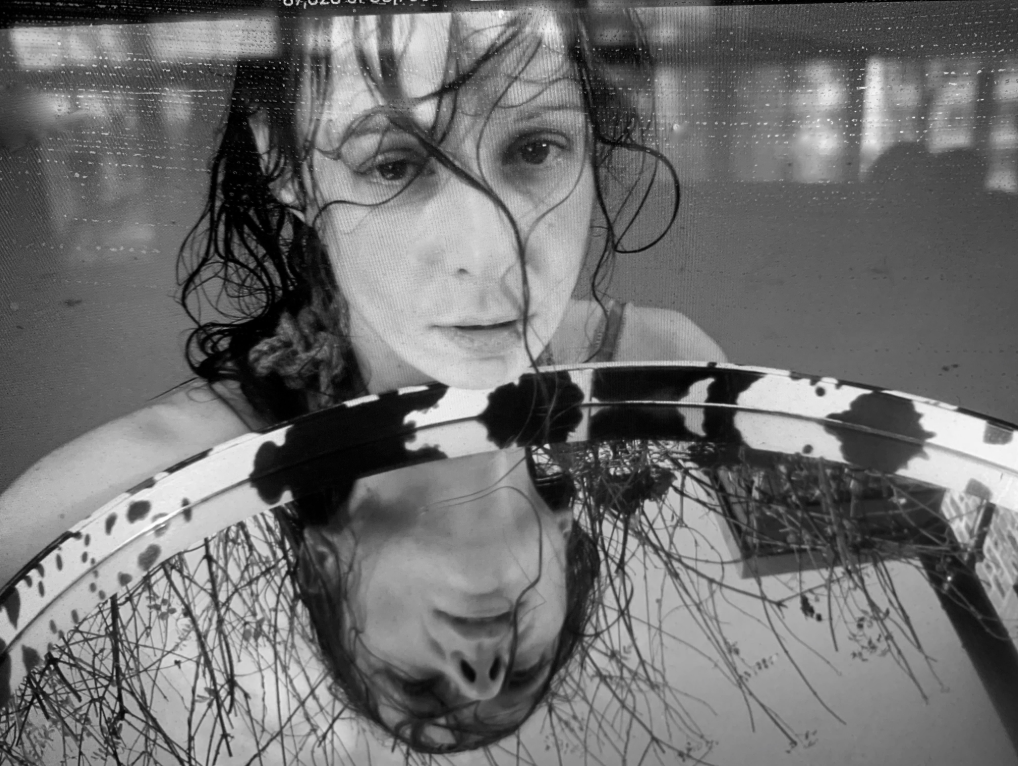
To coincide with this reprise, Goller and filmmaker Pedro Velasco have created a suitable visual abstract swim of a video for the album track ‘What’s really important she wanted to know, pt. 2’. Filmed entirely underwater at a local public pool, the conceptual feelings of both floating and swimming in an abstract liquid are cut to the harmonic pings, padded springy climbs of the music.
The Dark Jazz Project ‘5’
(Irregular Patterns)
After a prolific fluctuation of identities and experiments, the singular maverick electronic and art-house boffin Andrew Spackman hung-up his former SAD MAN alias (after a splurge of numerous releases over the last five years) a few years back to crunch the codes of jazzcore under The Dark Jazz Project title.
‘100% political, 100% jazz, 100% dark’ we we’re told, this most recent platform for Andrew’s often sporadic leaps in electronic music and crushing techno filament cut ups is about as removed from that jazz tag as you can get. Any semblance to jazz has been lost under a heavy tubular and granular transmogrification of the ominous, mysterious and, well, dark. And after three albums in that mode, and after another change in the direction of travel with this April’s cult (re)score of The Cabinet of Dr. Caligari, Spackman drops a surprise album of material that further expands the boundaries – the only recurring theme being that you won’t find a shred of jazz.
Album number “5” combines the apparitional dance music and pop synth vocals of seafarer’s ghosts, dream creations and new age with the techno of the Artificial Intelligence series, House music and a range of sounds that can only be described as whistled pipes, magnetic, kinetic, crystalised and bassy.
Beneath, above and consumed by metaphorical and thematic waves, a shipping forecast of hallucination, ethereal allure, and the emotive is transduced and transmogrified through Spackman’s unique apparatus. For glimpses of Radiance Basic Channel, the acid of LFO, and dreaminess veils of epic45 morph into spells of Mixmaster Morris and 808 State on the 90s meets Ibiza entranced ‘The Boat Is Sinking’ – no, not a screaming tumult of shipwrecked fear and danger, but far more soulful electronic mirage of haunted dance music.
Tracks like ‘Too Far Away’ weave giddy high octave, near cartoonish, EDM singing with Depeche Mode and Mark Franklin, and the spatial counterpoint between space age fantasy and the more unsettling ‘Testpiece’ sounds like acid rain hitting a windowpane whilst Moroder sequences a trip through the mists of time. The opening thwack turn rhythmic, drum pad crunched metallic spindled ‘Thunder’, features turnkey twists and a strange, obscured sound source horn that sounds like something from Eno and Jon Hassell’s “possible musics” explorations.
For a reference and theme, Spackman maps out a new sound by utilising the plaint songs of love lost upon the waves. Meanwhile, the album’s artwork, credited to B.S. Halpern, illustrates the density of commercial shipping throughout the world’s oceans. But, as with so many of Spackman’s projects, those prompts are transformed into something alien and cerebral, yet also striking, discombobulating. I will say, it is among his most soulful and melodious works to date. A layered album of many strands musically and sonically, the voices, mostly ghostly but in a nice melodic dreamy way, go well together with the balance of electronic forces. Considering, and I lost track a while back now, that Spackman has probably released nigh on fifty albums and pieces since this blog started, he continues to equally surprise and develop.
Xqui & Dog Versus Shadows ‘Dwell Time’
(Subexotic) 6th December 2024
Mundane behemoths of consuming spending, the Arndale chain of America-style shopping malls, first exported to UK shores in the early 1960s, provides the environment and atmosphere for the latest project by the sonic partnership of Xqui and Dog Versus Shadows.
Lancashire artist Xqui will need little introduction to regular followers of the Monolith Cocktail. The highly prolific artist, occupying a liminal space between ambient music, sound art, musique concrete, field recordings, hidden source material, found sounds and voice experimentation/transference, has frequented my reviews roundups for years; always playing catch-up, he no sooner releases one project than another arrives along the pipeline a week or two later. But featuring for the first time on the site, Dog Versus Shadows is the nom de plume of the Nottingham-based and no less prolific Lee “Pylon”, who switched roles from platforming an abundance of experimental electronic sounds as the host of the underground radio show Kites & Pylons (broadcast on Doncaster’s Sine FM) to making music himself.
As part of a trilogy of shopping centre albums, made by a host of experimental contemporary artists for the Subexotic Records label, this duo transduces the innocuous consumption and day-to-day thoroughfare of such commercial spaces into J.G. Ballard style dystopias, the sci-fi, esoteric, playful, and inter-dimensional. Defined as the length of time a shopper spends in a shopping centre – from the moment they enter till the moment they leave -, the language of capitalist spending theory, “Dwell Time”, is enveloped by the synthesized, warped, mechanized and consumed atmospherics, sine waves, filters, effects, degraded surface sounds, rhythms, chemistry, liquids and data of electronic music.
Whilst no particular Arndale centre is named or made obvious – there were 23 of them built, from Aberdeen to Dartford -, the most infamous is probably Manchester, which was devastated by an IRA bomb in the mid 90s. Closer to home – well Lee’s anyway, there’s also one in Nottingham. Derided, quite rightly, for their original brutalist and unsympathetic architecture, and the way they popped up over the rubble and dust of far more congruous, loved Victorian High Streets, they’ve often served as the blights of modernity, a totem for all modernist ills and the degradation of far less consumerist-obsessed times, when shopping was a gentler and more localised affair. From the lay-out to displays and choice of pipped “muzak”, the Arndale – a portmanteau of its architects Arnold Hagenbach and Sam Chippendale – meccas of pointless spending lure the consumer into an artificial, alternative reality in which time, location doesn’t exist.
Here, the duo emphasis this dreamier fantastical but alien and looming ominous despair, balancing indoor water feature idyllic whimsy and enchantment, the projected paradise of shop display Flamingos with forbode, unease and the surreal. And so, they somehow express the hallucinatory transfixed shopper’s gaze at plastic exotica, so entranced that for a moment they zone out into a weird void, or, make something as ordinary as roller shutters, the mechanisms, and drudgery of opening or closing up take on something far more dramatic and overbearing – there’s what sounds like a enervated lash or whip that trashes away indolently throughout. ‘Bargain Bin Shuffle’ takes on a sort of train-like rhythm, whilst the retro ‘A Fancy Electronic Gadget’ tweets and bobbles like something from the minds of Bruno Spoerri and Nino Nardini. Weirdly, the title-track sounds like an ethnographic Dadaist take on Javanese music.
Mark E. Smith once prompted a Northern uprising over these encroaching dystopian examples of rampant consumerism, on his 1980 track ‘N.W.R.A.’; lyrically picturing the day it was razed to the ground (which nearly happened 16 years), with “security guards hung from moving escalators” – rather strong. Chiming even then with the loss of community shops to such temples of commercialism, it marked a worrying change in habits and spending powers. Xqui and Dog Versus Shadows channel such apocalyptic concerns, protestations and the mundane and artificialness of such environments into something approaching a both playful, retro, knowing and sci-fi soundtrack of transmogrified muzak.
Various Artists ‘Fauna’
(n5MD) 10th December 2024
A deeply connective reminder about what we owe to the natural environment and its wildlife, the newest compilation from Oakland-based label n5MD finds roster signing Franck Zaragoza (otherwise known as Ocoeur) curating a curious and emotionally pulled gathering of congruous ambient peregrinations, scores and vapoured sensibilities that abstractedly, or otherwise, fall under the topic heading.
The label statement drives at humanities growing divisions, pursuit of consumerist and selfish pleasures, destructive consumptions and exploitation of the planet. All this at the expense of our animal friends; our lengthy historical relationship one of detachment to their pain, emotions and needs. Released on International Animal Rights Day (December the 10th), and with proceeds going towards the French organization L214 (taking their name from the French rural code in which animals are described, or translated, as “sensitive beings”, this group’s origins grew out of a campaign to abolish the cruel practices of foie gras, and mass industrial scale meat and dairy production), Fauna gathers together the work of an international host of mostly solo electronic and neoclassical composers, musicians and duos. Many of which have released or continue to release music on the Californian label.
It’s curator himself, Zaragorza, lends a beautifully cooed and vaporous ambient evocation to the compilation. The French minimalist, known for his introspective pieces and soundtracks for video games and documentaries, appears under his long-standing Ocoeur moniker with the rather pleasing and drifted ‘Second Chance’.
But the album opens with the Turin artist Memory Noise, who ushers in the collection with the recollected vapours, adult and children’s voices of laughter and play, airy and surface atmospheric ‘L’ora’, which reminded me of both the Aphex Twin’s Selected Ambient Works Volume 2 LP and Eno. Memories resonate amongst the sine waves, shrouds of time and melodious textures on this stirring piece.
Within the fields of ambient music and its many pathways there’s examples of artists using subtle if deep and sonorous neoclassical piano (the Athens born but France-based multimedia composer of note, Zinovia Arvanitidi’s capitulating and heavenly play of elemental nature ‘Light And Clouds’, which is exquisite and moving, and reminded me of both Hania Rani and Nils Frahm), and what sounds like guitar (Micah Templeton-Wolfe, otherwise known as Stray Theories, use of a lingered and drifted guitar line on the glassy chimed, deep thinking if broody ‘Veil’ adds a touch of Land Observation to a Boards of Canada backdrop).
In the more ominous category, the Sardinian composer Martina Betti scores a dramatic psychogeography of welled suspense and lament and foreboding electricity on the incredibly evocative ‘Invisible Cities’. Whilst there’s a real hymnal beauty and emotional felt pull on Mikael Lind’s patter-like melodies and searching lullaby turn heightened strings stirring ‘Fur and Feathers’ – think a lamented tearful Sigur Ros collaborating with Harold Budd; one of the compilation’s highlights for me.
An emotional ambient coalesce of like-minded artists, aiming to make the world a better place, and to rebalance our neglective relationship and dominion over those we share planet Earth with, the benevolent Fauna is a gift, a magical and often mood-shifting immersive draw of top-quality stirring electronica.
Martin Tétreault ‘Vraiment plus du Snipettes!!!’
(DAME/Ambiances Magnétiques) 6th December 2024
As the exclamation marks denote this is the third such volume of retrieved archival experiments produced via an apparatus of record player, cassettes, radio and various surface sounds from the free improvisation Québec innovator Martin Tétreault. With over sixty releases under his belt there’s a lot of material floating about: a lot of it previously unused.
Although there’s been considerable gaps in this series, which initially began back in 1992 with the limited cassette collection Snipettes!, followed by a “reprise” in 2007 after that inaugural instalment was re-released on CD, the latest volume continues to draw upon the idiosyncratic turntablist’s more “irreverent” sonic, dialogue, concrete and musical collages. For there is levity, a sense of fun, playfulness, wit in the way each avant-garde etude, passage or improvised performance is spliced (more in the sense of how it sounds than actual methodology) and put together.
At the centre of it all, or most of this play, is the turntable, which often sounds as if it is being impeded or led astray through pitch and speed manipulation and covered or wrapped by hidden materials. Less Qbert or DJ Shadow and more Basquiat or Nam June Paik qualifying for an avant-garde version of the DMC World Championships, captured extracts of serious theory, science, philosophy, lectures, the state of consciousness are morphed, twisted or shunted by a lifetime of accumulated snippets from TV, radio, cartoons, theatre, the opera, the rock concert and the art world. High meets low art, popular soundtracks meet the Afro-Cuban, and retro futuristic predictions of computer power, of domed utopias and the like come up against the mooning, the loony and ridiculous.
At times it plays out like Fluxus skits, and at others, finds a new rhythm and groove bordering on Afro-jazz or no wave or even funk from the transformed source material. A bastardised jazz-prog-noodling Zappa can suddenly also evoke Django Reinhardt fronting The Fugs; an informative French speaker is taken over by staccato nylon-strung Caribbean music and an off-kilter transformation of the Tango; Michèle Bokanowski “cirque’ comes to town under a bendy hallucination of shooting effects and Library music zaps; an echo of Jef Gilson is lost in the background cacophony of classical theatre; articulated ideas on science and reality sit next to feminine coquettish French annunciation and the scraping, rubbing and distorted abrasion of paper; and retro computerised calculus and sci-fi is paired with the spooky gothic theatrics of Edgar Allen Poe. These are just some of the happy accidents or intended results (in my mind) of these often humorous and amusing snippets. The uninspiring concrete mundanity of loading the tape recorder and other mechanised clicks, the dialling of an old telephone, stretch the imagination, whilst also stretching the listener’s patience in what can only be described as another of these Tétreault teases or in-jokes.
Originally these recordings would have been directly recorded on to a reel-to-reel, bypassing any mixing console. And so all the “quirks” the surface noises, the fizzes, crispy crinkles and muffles are kept as part of the makeup, the character; as Tétreault puts it, in keeping with preserving as much of the original recordings as possible.
Reanimating and morphing a diverse range of collected fragments from lessons in hypnotising to Marx Brothers like nights at the opera, and from echoes of the Art Ensemble of Chicago to recontextualised lofty addresses and sketches, Vraiment plus du Snipettes!!! is in many ways an antidote to the seriousness and earnestness of this art form.
Facilitated by the Canadian Ambiances Magnétiques – just one of the many labels that gathers under the Distribution Ambiances Magnetiques (or DAME as it is known) platform umbrella – this third collection of fragments, variations further cements Tétreault’s playful and experimental legacy, whilst also introducing a new generation to his pioneering work in the field of turntable-led, but also radio and cassette tape, exploration and transference. I’d recommend to anyone interested in Philip Jeck, Christian Marcley, People Like Us and Milan Knizak.
Black Temple Pyrämid ‘Frontier Plains Wonderers’
(Cruel Nature Records)
Someone could easily dedicate a blog to just reviewing the output of Cruel Nature Records. This onslaught of a label catalogue can boast of around 58 releases in 2024 alone, ranging from the sublime to barracking and raw, the kosmische to avant-garde.
Brian ‘Bordello’ Shea has already dipped his toe into the prolific giving waters, reviewing a couple of records from the November schedule last month, but I’m going to pick up on a returning entity, the obscured Black Temple Pyrämid, who featured on this site back in 2021 with the veiled atmospheric acid-hippie folk, post-punk and kosmische style The Hierophant album – released on the most brilliant underground label Submarine Broadcasting Co.
Details remain succinct, but opening gateways into cultist worlds, imbued by the Teutonic luminaries of acid, trance krautrock, the Pyrämid seem to broadcast from Colorado. This latest album was previously “nestled” amongst a number of releases held together within Patrick R. Pärk’s Desolate Discs hexalogy, released back in October. Now uncoupled in its full visionary glory, the experience is one of hallucination, the paranormal, the pagan, the hermitic, the entrancing, the disturbed and alien.
Across a quartet of both rhythmic and soundtrack-style preignitions, the mood is one of mysterious immersion, occultist weird folk, of amorphous sounds from different geographical realms and vague religious atmospheres; starting with the near sinister industrial steam-pressed tunnel slow-beaten and clang-reverberated ‘Fishers Peak Worship Song’, which could be a slowed down version of a monotonous Neu! traveling down a metallic corridor with Fritch and A.R. & Machines until the krautrock vibes become overbearing, eating away at this Faust-like march.
‘6,651 Days’ (which I think I’ve calculated as eight years and a few months) is an oddity and off-kilter dance of Krautrock-jazz, Bex Burch and Brahja-like Ethnic fusions, and American Monoexide elements, whilst ‘Alchemy of Emptiness’ draws, at first, on John Carpenter and Goblin, before a supernatural fusion of Current 93 and Drew Mulholland passages emerge. You can throw in a transformed version of techno 2-step, steely effects pedal Ash Ra Tempel, ethereal spells of renaissance hermitic invention and the sound of a guitar being sawed or sheared on a workshop grinder.
The finale is a 23-minute soundtrack of twisted dirge-y post-punk and mystical pagan ceremonial rites and mood music. Suffrage, the state of it all, this traditional whole side of an LP spanning score keeps a constant smirched and gloomy rolling, beating rhythm whilst adding or subtracting, or congruously moving into varied passages of the choppy, the skippy, mystical, pained, recollected and at the very end a droning stained-glass ray of hope. I’m calling this is an atmospheric convene between The Legendary Pink Dots, a more subdued GOAT, the Velvets and Nature And Organisation.
Pitching it just right as always, Black Temple Pyrämid invoke mystery, thought and the abstract feelings of “loss” and “mid-life growth” in a temporal framework of visions.
For the last ten years I’ve featured and supported music, musicians and labels I and the blog’s other collaborators love across genres from around the world that we think you’ll want to know about. No content on the site is paid for or sponsored and we only feature artists we have genuine respect or love for. If you enjoy our reviews (and we often write long, thoughtful ones), found a new artist you admire, or if we have featured you or artists you represent and would like to buy us a coffee at https://ko-fi.com/monolithcocktail to say cheers for spreading the word, then that would be much appreciated.
Our Daily Bread 632: Hornorkesteret, The Muldoons, The Salisman Communal Orchestration…
November 18, 2024
BRIAN ‘BORDELLO’ SHEA’S REVIEWS ROUNDUP – INSTANT REACTIONS.
The Conspiracy ‘Tick-Tok’
Single (Metal Postcard Records)
What I like about The Conspiracy is how bloody artfully British they are, like the Kinks or The Fall or Billy Childish or Comet Gain or the much-ignored Wonky Alice were artfully British. In fact, very much like Wonky Alice as The Conspiracy, like the aforementioned Wonky Alice, are criminally ignored, for The Conspiracy release songs of pop wonder that are maybe too clever to appeal to the common everyday white bread and I cannot believe it is not butter Oasis indie rock salivating radio X listening imbeciles.
Yes, The Conspiracy release songs filled with art pop and sublime arched melodies matched with pithy knowing lyrical commentaries on life today. They should be celebrated not locked away like the hidden treasure they truly are.
Empty House ‘Dream Lounge’
Album (Cruel Nature Records) 29th November 2024
Dream Lounge is a two-track instrumental album of pure dream inspiring glory. The first track, and title-track, is a 15 plus minute journey of subtle dance dream adventure that at no point ever grows boring and keeps you enrapt. It has the same hazy magic as The Smiths How Soon Is Now but with Morrissey’s vocals being replaced with Doug Ingle like organ virtuosity subtly weaving its way in and out of the track.
The Second track “Red Door” is a much more subtly rambunctious affair with throbbing synth bass and John Carpenter like soundtrack feel if written by Coil, and once again a long instrumental that never loses your attention.
Hornorkesteret ‘Dans fra dalstrøka’
Album (Panot)
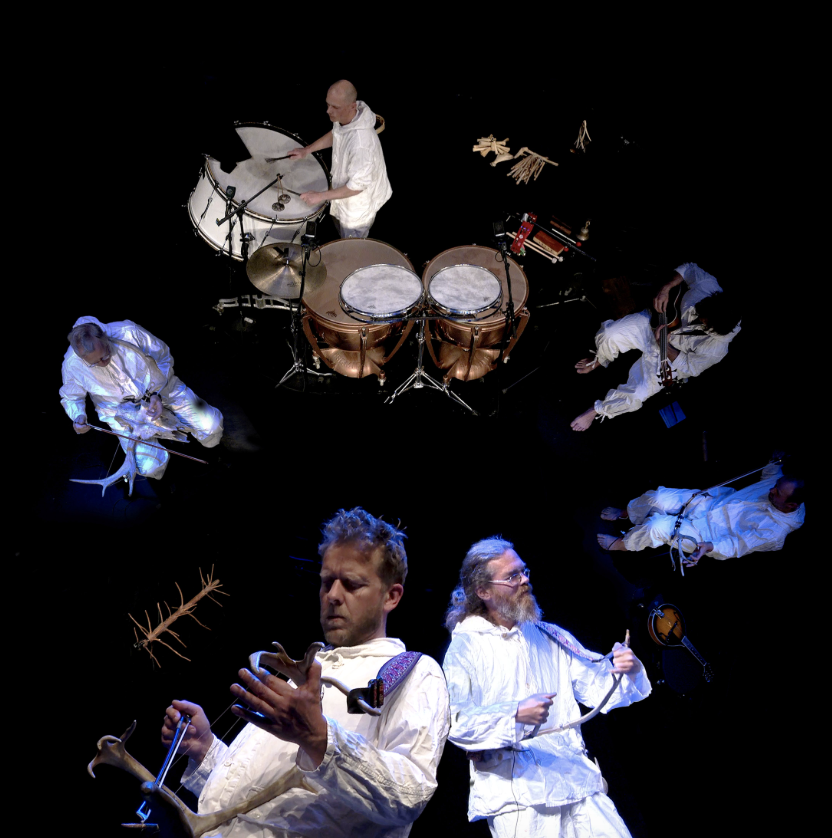
This is marvellously unhinged. Its instrumental Norwegian folk music performed on string instruments made from Reindeer antlers accompanied by percussion, bass and mandolin: need I say more.
Well, it is all rather strange and quite wonderful and best described as ideal music for sploshing through snow to whilst making your way to the tavern over the hill. At times I keep expecting the dulcet deranged vocal stylings of Tom Waites to emerge; he really should consider making an album with Hornorkesteret,it would be rather beautiful indeed.
The Muldoons ‘We Saw The View’
Album (Last Night From Glasgow) 29th November 2024
Guitar pop jangle, don’t you just love it. I do when it is the coating to such bittersweet songs as these; songs that deal with life as you move on from your younger years of your early twenties of college and the excitement of first love to the problems that come with responsibilities. The boredom that can happen and slowly growing apart in a long-term relationship (“27 Year Itch”), the lack of joy in fulltime employment (“Same Old Same”), looking back at what could have been (“The Hill”), all subjects done with a warmth and melodious guitar strum. All is not lost though, “Lost Without You” is a song of true love and respect, and “We Saw The View” is a heartwarming and enjoyable listening of extremely well written snapshots of life wrapped in a pop glory the Pale Fountains and The Trashcan Sinatra’s would be proud of.
St James Infirmary ‘All Will Be Well’
Album (Cruel Nature Records) 29th November 2024
All Will Be Well is an album made up of six long tracks of psych-tinged extravagance and 60’s ambience beauty that will appeal to all those who enjoy the Brian Jonestown Massacre, The Velvets and their ilk. The opening track “Fingertips” is a seven-minute jaunt of Velvet Underground-like inspired beat and guitars, which finely carries into track two, the excellently named “Tremelo Voxstar”.
My favourite track on the album is a nine-minute instrumental of wonder, part Spacemen 3 part The Lounge Orchestra, a relaxing float through the nostalgia of 70’s TV testcard heaven.
The final and title track is over ten minutes long and starts all psych folk and ends up being a church like ode to heavenly discovery and cultdom. All Will Be Well is indeed a beautiful and lovely sounding album of bewitching subtle musical genre shifting originality.
The Salisman Communal Orchestration ‘A Queen Among Clods’
Album (Cruel Nature Records) 29th November 2024
If I remember correctly I gave The Salisman Communal Orchestration’s “Of The Desert “ EP a rather marvellous review earlier in the year, and rightly so as it was a fine beast of a EP. And this album is also of the same quality.
I love the psychedelic otherworldliness of SCO. I love the way the lead vocalist phrases his words. He sings with the soul of an sad imperfect empathetic angel, you actually believe in what he is saying, “[If I Wasn’t ]So Godam Blue” is so goddamn beautiful, and with some pretty wonderful lyrics: “remember those days when I pissed in the street, well that is not my style anymore”. Pure heartbreak poetry at its best. The following track “Rum Punch” is as equally beautiful, a psych country-tinged beauty full of sadness and pathos.
I really do love this album SCO have the perfect blend of magic and tragic, and “A Queen Among Clods” is defiantly one of the most impressive and heartfelt original sounding albums I have had the pleasure to write about this year. A true stunner.
SASSYHIYA ‘Take You Somewhere’
Album (Skep Wax Records)
“Take You Somewhere” is a rather wonderful pop listen. 12 songs in 35 Minutes and each minute blessed with a charm of post-punk indie pop magic that is quite lovely to behold.
For those who love the sound and feel of the output of the likes of the Fall and early Orange Juice and The Raincoats and Modern Lovers. Jangly guitars, post-punk basslines and quirky lyrics are all wrapped together to make a highly enjoyable album of perfect indie pop. SASSYHIYA have provided us the lucky listeners with a debut album of pure pop suss.
The South Hill Experiment ‘Silver Bullet’
Single
“Silver Bullet” is a rather fine pop single. Quite Beck like at times, it’s all clockwork rhythms and mantra choruses: “I think I’m getting over it” is repeated hoping to convince the poor soul that he is getting over, although obviously not, but the simple beauty of this song is in fact the simple beauty of “it”.
The South Hill Experiment have the same magic that can be found in the best of Hall & Oates, but with a slightly more alternative darker curve.
Tremendous ‘Slipping Away’
Single 13th December 2024
“Slipping Away” is a rather catchy slice of FM/AM pop rock that one of a certain age might remember lighting up the radio in the 70’s early 80’s, all Raspberries guitars and the second-hand glamour of hi heeled glitter boots floppy hats and velvet trousers. Tremendous are a band steeped in the nostalgic pull of how slightly underground mainstream rock sounded, arching the same bow as Redd Kross and The Darkness and doing it with a supreme confidence and love.
Unicorn ‘Shed No Tear The Early Late Unicorn’
Album (Think Like A Key) 6th December 2024
“Shed No Tear The Early Late Unicorn” is a compilation of the first and final recordings of the 60/ 70’s British Pastoral rock band Unicorn, and any lovers of country rock will no doubt love this fine laid back stroll through the British countryside. The Flying Burrito Brothers, The Eagles and even at times Crosby Stills Nash and Young and The Byrds in more of their country days all spring to mind when listening to these lovely warm sounding laid back well written songs of soft rock excellence.
Without sounding like a Ronco advert from the 70’s “Shed No Tear” may well be an ideal Christmas gift for your Eagles loving relative, for country rock is for life not just for Christmas.
Our Daily Bread 628: The Armoires, The Boy With Perpetual Nervousness, Eurosuite, The Poppermost, Sassyhiya…
October 2, 2024
BRIAN ‘BORDELLO’ SHEA’S REVIEWS ROUNDUP – INSTANT REACTIONS.
The Armoires ‘Octoberland’
ALBUM (Big Stir Records) 11th October 2024
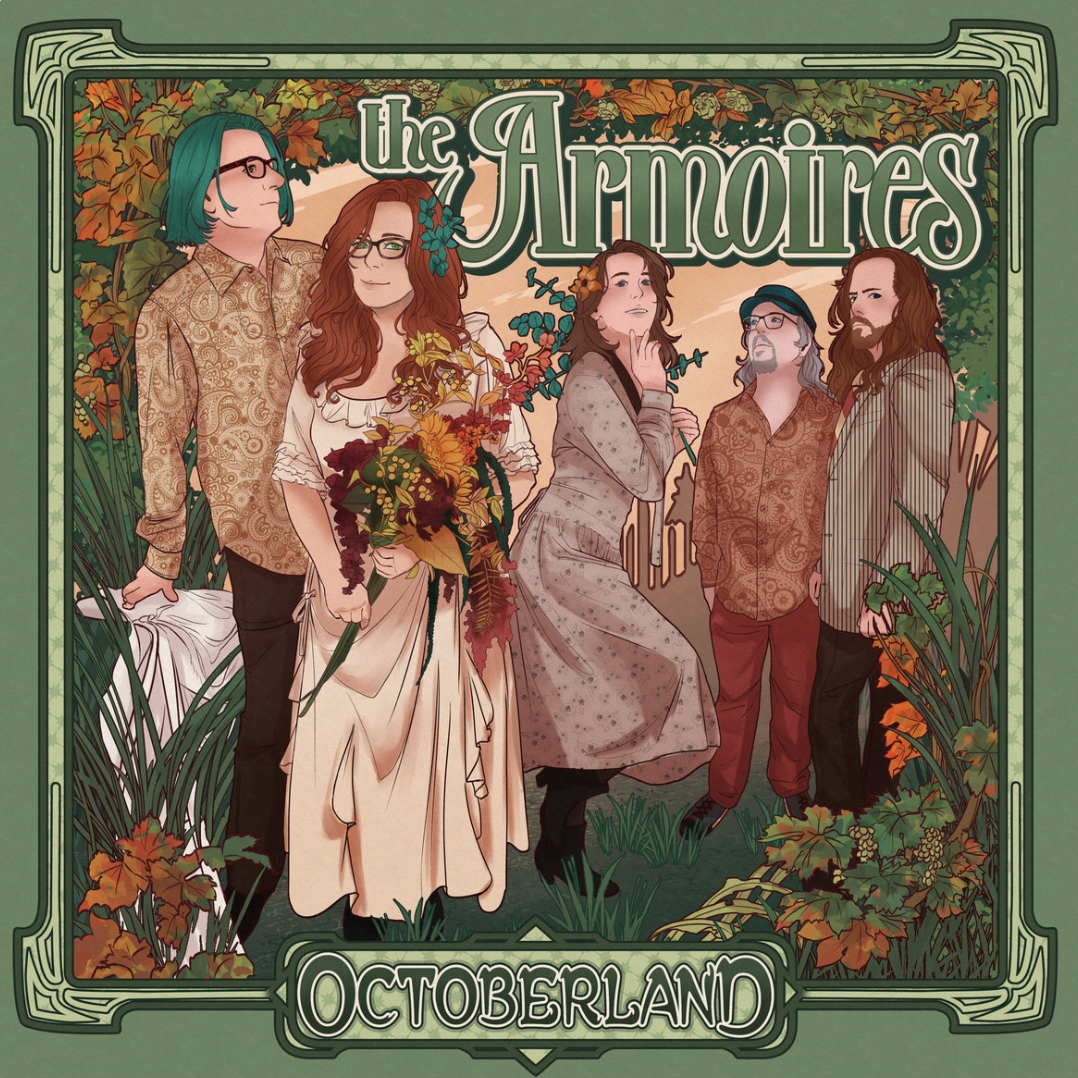
Octoberland is the second album from The Armoires, or should I call it the Sophomore release as they are American and they call it such over there in the USA, but as I am a cantankerous old northern git from the UK I will call it the second release. Yes, their second album, the follow up to their debut “Incognito”, which if I remember correctly was one of my albums of the year. And Octoberland is another fine album from the band.
What I like about The Armoires is the way they take their influences and meld them into sounding like The Armoires. They take Alt rock 60s jangle guitar and Folk and indie and AOR pop, Psych and country and mould it into a stew of great American beauty. Octoberland is the aural equivalent of spending a sunny autumn day walking in the park with your true love.
Beauty Stab ‘GUIDE/FRISK’
ALBUM
After a five plus year wait, we have the debut, and who knows, only album from the one time much tipped for big things Beauty Stab. An album filled with sex sleaze and glamour but with a healthy or unhealthy dose of darkness. Ten songs that mine electro/synth pop, Scary Monsters era Bowie and a touch of goth alongside the duo’s own genius layer of pop suss. If “Bring Me The Boy”, a gem of a synth/dance song and the first single from the album, in a remixed form, was released in the 80’s on a major label it would no doubt had been a top ten smash.
The sound and feel of eighties chart land I think has a big influence on Beauty Stab. They do share a name with ABC’s second album after all, and I can almost hear Martin Fry emote over the bass heavy synth pop funk of “Manic”.
“GUIDE/FRISK” is a wonderful and inventive crafted album that celebrates the joy and darkness and power that great pop music can bring to your life and really deserves to be heard by all.
Black Mirage ‘Black Mirage’
ALBUM (Inner Demons Records)
If John Carpenters Halloween was set in the midst of The Power of The Flower hippiedom of 1967 this fine debut album by Black Mirage could well be the soundtrack. A strummed and picked dulcimer emotes beautifully over some quite marvelous drones and whooshes of synth creating a quite beautiful and sometimes eerie montage of aural dulcitude. With Halloween soon approaching, and as the dark early Autumn nights move in, this could well be the ideal musical accompaniment for the rain tapping on your windowpane.
Black Wick ‘Video/Droned’
ALBUM (Ingrown Records)
“Video\Droned” is a 27-track album of computer game pop, found sound magic and tuneful and drifting synth mellow instrumental magic, with the odd [very odd] drone chucked in for good measure. There is something that it totally relaxing about putting on this long and rewarding album, and just closing your eyes and letting the music sooth you into a state of semi consciousness, taking in the experimental magic and letting it wash over you.
The Boy With Perpetual Nervousness ‘Dead Calm’
ALBUM (Bobo Integral Records)
The Boy With Perpetual Nervousness are a delightful sounding chiming guitar band. No more, no less, Dead Calm is an album that evokes the sounds of the three power pop B’s, The Byrds, The Beatles and Big Star, and is really an enjoyable listen. But what tears it apart from albums that plough the same jangle furrow is the quite sublime songwriting and lead vocals, which at times remind me if Teenage Fanclub had they decided to go in cahoots with Jackson Brown and record an album full of L.A. sunshine. A lovely pop album.
Eurosuite ‘Totally Fine’
ALBUM (Human Worth) 18th October 2024
Unhinged chaotic angry shouty music with a dark sense of humour still has a place in my life, even at my age I am so pleased to say. And “Totally Fine” by Eurosuite is all the above. It has a madness that brings to mind the much-missed Ceramic Hobs and Whitehouse, and at times The Sleaford Mods. And in 2024 we need a bit of anger to soundtrack these angry mixed up disturbing times. Eurosuite indeed do a fine job of supplying that soundtrack.
Kitchen Cynics & Margery Daw ‘As Those Gone Before’
ALBUM (Cruel Nature Records)
I admit I have a bit of a soft spot for weird, strange folk music, I put it down to watching too much Bagpuss and The Clangers as a toddler: wasn’t the 70’s a wonderful decade to be a child. So, this fine album of weird, strange folk songs is right down my summer pathway stroll of mischievous delight.
Kitchen Cynics & Margery Daw go from the childlike tales of the sinister folk whimsy “Christopher Tadpole” to the dark and cold clawing of “Mole Man“; if you wondered what story time at the nursery school on summer isle might sound like, these gems will answer your wonderings. “The Four Trains That Killed Me” and “Last Of The Little Lost Lambs” are both wonderfully John Cale like in the darkness and utter beauty as much as “Accused Isle” is like listening to a slightly deranged Pam Ayres on the old Radio Luxembourg via an old transister radio under the bed clothes in the darkest of nights [wasn’t the 70’s a wonderful decade to be a child]. “As Those Gone Before” is a true magical gem of off-kilter folk whimsy, an album of true eccentric magnificence.
Not My Good Arm ‘Coffee’
ALBUM
Who are Not My Good Arm I hear you ponder to yourself as you peruse this DFB [Damn Fine Blog]. Well our dear readers they are a DFB [Damn Fine Band] that hail from Leicester, I think, and are a five piece that produce a hell of a musicality charade.
They take Rock ‘n’ Roll, Ska, Punk and Soul and tie it up and skin it alive whilst berating it with the sort of political soulful joyful nous that hasn’t been heard or witnessed since the Mighty Dexy’s Midnight Runners held the Top Of The Pops viewers enrapt with their explosion of attitude and musical good taste back in the early 80’s. Yes indeed, Coffee is a Northern indie soulful romp of an album by a band that I can imagine being a hell of a good night out to watch and by the looks of it gig on a very regular basis. So, keep your eyes scanned as they may be coming to your locality soon. I understand you can pick up a copy of Coffee on CD from their gigs, as by the looks of it they’ve not yet updated their bandcamp: probably too busy putting the fun into funk.
The Poppermost ‘I Don’t Want To Know’
SINGLE
The Poppermost are back with another slice of retromania, another slice of ‘I cannot believe it was not recorded in the 60s’. Another fine single, yes indeed. “I Don’t Want To Know” has one wondering, “is this what it would have sounded like if Gilbert O Sullivan had for some reason hired the circa 1966 Kinks to back him”, on this just pre Psych pop frivolity that’s all backwards guitars and Beatle Boots. Another timeless gem.
Salisman Communal Orchestration ‘Of The Desert’
EP (Cruel Nature Records)
There is something quite mind swaying, something that exports brilliance about this EP. It is a wonderful experimental warm pop dance psych hybrid; like a 60’s garage band being dragged through a vacuum of all musicality that lies ahead in the future. It rocks and rolls like rock ought to roll, but very rarely does in this day and age. I love the way the singer sings “I don’t believe” on the second track “Precipice”, it makes me want to believe in the magic of life again. I love the heartwarming experimental cacophony of “Men Of The Desert” and the all-out beautiful psych of the final track “Friendly Beast”. A quite genius four track EP.
Sassyhiya ‘Boat Called Predator’
SINGLE (Skep Wax)
The lovely sound of rocking indie pop is alive and well it seems with this really, quite catchy little ditty. What I love about it is it actually sounds like a single and not just a track that sounds like an album track released to appear on youtube and Spotify just to let people know that an album will soon be on its way. Yes, I am old fashioned; I remember when singles used to be commercial and released in hope of garnering radio play and such a song a milkman could whistle as he delivered a daily pint…yes, the good old days when a single was a single and not a seven-minute dirge of regret.
SCHØØL ‘The End’
SINGLE (Géographie)
“The End” is a bit of an indie rock toe tapper; yes, a song one can indeed tap their toes to or even somebody else’s toes if you have their permission. It’s the kind of song you might have heard on snub tv back in the day, all J Masics guitars and slacker vocals saying nothing in particular but still saying it with enough panache to tap your toes to [or somebody else’s]. I’m sure both indie kids and indie pensioners will enjoy the wrap around familiarity of this track.
Twile (featuring Laura Lehtola) “Hunger Moon”
ALBUM (Cruel Nature Records)
“Hunger Moon” is an album that combines folk, trip-hop, electronica and magic, and weaves together a tapestry of undiluted majestic swoonincity that has not been heard since the Portishead debut album “Dummy”.
Hunger Moon really does not put a foot out of place as it flows and hooks you into its warm strangeness, cradling you and sweeping you up to a safe place where dreams are free to play and cast shadows over your deepest thought and emotions. Eight tracks to soundtrack you as you come down from your highest high. Truly magnificent.
A WORLD OF SONIC/MUSICAL DISCOVERIES AND POSSIBILITIES REVIEWED BY DOMINIC VALVONA
(Unless stated otherwise, all releases are available now)
Credit: Hanne Kaunicnik
Poeji ‘Nant’
(Squama)
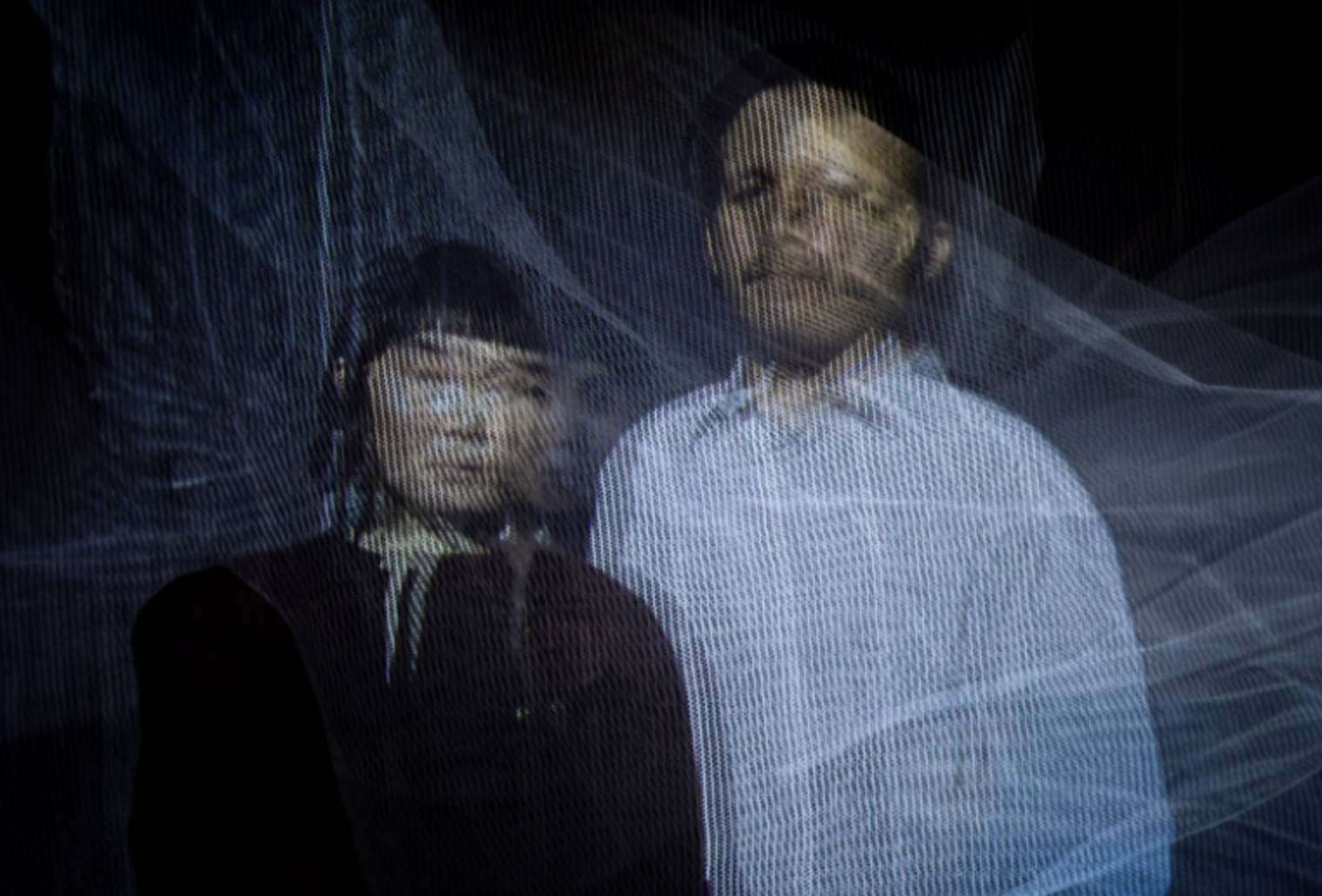
In shrouded chambers polygenesis cultures and roots cross paths and open up an amorphous portal to a unique world of redolent Asian percussion and Mongolian “urtyn duu” vocal soundings.
Making good on their cryptically coordinate-like coded 031921 5.24 5.53 EP from 2022, German drummer extraordinaire Simon Popp and the Ulaanbaatar born vocalist Enkhjargal Erkhembayar (shortened to Enji) have combined their individual disciplines and scope of influences to venture even further into uncharted territory.
For his part, the Bavarian Popp uses an extensive apparatus of hand drums and worldly sourced percussion to conjure up an atmosphere of both atonal and rhythmic (sometimes verging on a break or two) West Africa, Tibet, gamelan Indonesia and Japan. This in turn evokes a transmogrified vague sense of the avant-garde, of Kabuki theatre, of Shinto and Buddhist mysticism and mystery.
Popp’s collaborative foil Enji is a scion of the old Mongolian tradition of the Long song, a form of singing that emphasis and extends each syllable of text for long stretches of time. It’s said that a song with only ten actual words can last hours. Strong on the symbolism of the Mongolians much dependable horse, the long song form can be philosophical, religious, romantic or celebratory. Now, in a different century, Enji channels this heritage to voice, utter, accent, assonant, woo, and like breathing onto a cold glassy surface, exhales the diaphanous, gauzy, ached and comforting – the truly mysterious hummed ‘Buuwein Duu’ sounds like a lullaby.
Although much of the wording is linked to those roots, there’s an ambiguity to much of the carrying style vocals. For instance, the duo’s appellation of Poeji was chosen because it can be translated into various languages: meaning “sing” in Slovenian and roughly “poetry” in Japanese. The album title, Nant, is itself old Welsh in derivation, and can be translated as both “stream” and “valley”.
A fourth world dialect is achieved; a communication that needs no prior knowledge or understanding as the meaning is all in the delivery, emotion the cadence and largely extemporized feels and mood of the moment.
Described as working in the vernacular of post-dub and the downtemp, Nant reminded me in parts of the “tropical concrete” of the Commando Vanessa label pairing of Valentina Mag aletti and Marlene Riberio, Hatis Noit, Steve Reich and Werner “Zappi” Diermaier’s various drumming experiments as part of the faUSt duo with fellow original Faustian Jean Harve-Pèron. It is a unique conjuring of tones, textures, atmospheres, the avant-garde, the spontaneous (wherever the mood takes them) and the esoteric that won’t scare the horses. Instead, it sets a wispy, shrouded course to ventures into new realms of improvised communication; a bridging of cultures that reaches into new spheres of worldliness and the realms of new dimensions.
Raymond Antrobus & Evelyn Glennie ‘Another Noise’
30th August 2024
So tangible and effective is the clever – if taking a leap into the unknown and by chance – union between the two accomplished deaf artisans of their artistic forms that each pin-like sharp spike, each metallic shave, rattle and atmospheric undulation that builds around the unflinching candid delivery really hits hard and marks: leaves an audible impression.
The musicality, the rhythm is all in the poet Raymond Antrobus’ voice and often put-upon and sometimes self-doubting, cadence. It can’t all be put down to his deafness, but it offers something unique – although the William Blake professor of the album’s final bittersweet sign-off was both condescending and embittered-sounding in his succinct dismissal of Antrobus. I guess what I’m trying to say, is that sure the deafness is crucial, and that it opens up new or different ways of creating and circumnavigating the loss of this sense, but there is so very much more to both partners in this venture’s art form and genius that transcends the deaf condition.
Framed as it is, this inaugural collaboration between the poet and the virtuoso percussionist/composer Evelyn Glennie pushes the boundaries of poetry and sound; causing us to reevaluate our own perceptions. And with the equally acclaimed – and no stranger to this blog, as probably its most prolific featured artist/producer – in-situ producer Ian Brennan on board there’s an authenticity to what develops from the readings and mostly improvised percussive soundscapes.
Both partners on this evocative project can hardly be said to have a condition, a disability, or suffer for it. Glennie especially, through her old teacher Ron Forbes during her formative years, learnt to hear sound through different parts of her body: a physical response and channeling of sound that has helped and shaped the star percussionist to become one of the world’s greatest living musicians.
Unencumbered, the poetic language conveys, describes that unique relationship with sound, music and noise. The opening tubular shaken and spindled ‘The Noise’, which features the wooing, near ethereal sweet hummed undulations of guest artist Precious Perez, is the most obvious example of this. Rather importantly, the classically trained but eclectic Latin singer/songwriter/educator Perez, who is herself blind, is the president of the RAMPD.org charity fighting for disabled performers in the arts and more access. But it is her evocative voice that is called upon to offer something approaching a subtle wooing-like hum.
Giving each poetry performance a shiver of avant-garde, concrete and abstract sound art (even near Dadaist and Fluxus), Glennie (who had no prior knowledge of the material she was contextualizing or sounding) uses an apparatus of spokes, chains, tubes, bells and metallic-sounding brushes to articulate but also dramatically jolt and jar the alien, the unknown, but also the disturbing. She can also emphasis a state of isolation very well too; her foil’s themes often touching on a feeling of dislocation, not only because of his own deafness but because of his mixed ethnic roots: a feeling of the other you could say; of feeling adrift of both his English and Caribbean heritage.
Antrobus is unflinching on the topic of ancestral Black trauma and legacy. ‘Horror Scene As Black English Royal’ is a vivid example of slavery and that heritage that the Black community feels it can never leave behind or unshackle; prompted, I take it, by the whole Meghan Markle debacle and her fleeting acceptance into English royalty before the deluge of perceived outsider, and skin colour muddied the calm waters of stiff upper lipped etiquette in the White establishment. Glennie scores this poem with an atmosphere of horror and hurt; the sound of what could be an animalistic growl and pain striking out from the torture of slavery. ‘Ode To My Hair’ meanwhile, deals with the kinks and prejudice of a said Black “throw”, with Antrobus underlying dislocation once more emphasized as Black enough to be the victim of racism, but not Black enough for some in the Black community itself. There’s also a secondary theme of reconnection, using a haircut to talk about his relationship with his father. There are a few poems like this, where the touching relationship to a loved one, a child and even a cat is poignantly open and candid without resorting to the saccharine or to platitudes.
Talking of animals, birds, with all their various connotations, feature at various points on the album; cleverly linked to the learning of signing and to the very rhythm of city life on the visceral and incredible ‘Resonance’. I love some of the descriptions on this reading, especially the lyrically language used to describe their movement, like an “uncharted astronomy”, and the way Antrobus describes city birds as a whole different species to their country cousins.
Affectionate, personal as much as near dystopian, unnerving and hurting, Another noise is unlike anything you may have heard or felt in some time. For both artists sound and speech is near tangible; something you can almost touch. A sensory experiment, this collaboration does much to push, probe and explore perceptions of language, timbre, performance and delivery. This album is nothing less than a genuine work of artistic achievement from two of the UK’s most important artists.
The Mining Co. ‘Classic Monsters’
(PinDrop Records) 9th August 2024
Continuing to mine his childhood the London-based singer-songwriter Michael Gallagher once again produces a songbook of throwbacks to his formative adventures as a kid growing up in Donegal in Ireland.
His previous album almanac, Gum Card, touched upon a silly fleeting dabble with the occult, but this latest record (his sixth so far) is filled with childhood memories of hammy and more video nasty style supernatural characters, alongside a whole host of “weirdos”, “freaks” and “stoners”.
Once more back in his childhood home, frightened to turn the lights off, checking for Christopher Lee’s Dracula and the Wolfman under his bed, yet daring himself to keep watching those Hammer house of horror b-movies, Salem’s Lot and more bloody shockers, Gallagher links an almost lost innocence with a lifetime of travails, cathartic obsessions and searching desires.
A recurring metaphor, analogy and theme of blood runs throughout Classic Monsters, whether it’s the Top Trumps ghoulish kind of youth, or the more mature, adult-themed kind found on the taking-stock, trying not to run away, ‘Rabbit Blood’. The life force is both a reminder of immortality and the source of adolescent frights.
As always Gallagher’s lyrics are layered with references and meaning, and stretch the loose concept to open-up about anxieties, growing up and both the bliss and pains of love; the alum finale, ‘Planetarium’, sets a near ethereal astrological scene from the said title’s stargazer observatory, as two star-crossed in stoned awe and wonder look up to the celestial heavens to a retro-lunar, Theremin-like voiced and ballad style piano soundtrack. Songs like that evoke Gallagher’s sci-fi passions, and alternative Dark Star songbook score fixations (see the brilliant Phenomenology album). But even though there’s a smattering of space dust, and no matter what, a musical signature that runs throughout all his work – enervated cosmic cowboy troubadour, soft rock and evocations of the Eels, The Thrills, Josh T Pearson, Rezo and The Flaming Lips – Gallagher has changed his set-up a little.
Recording back in the Spanish studio environment that has served him so well, and once again working with the musician and producer Paco Loco (credits and highlights include working with the outstanding Josephine Foster, the Jayhawks’ Gary Louris and The Sadies), Gallagher is now also backed by the Los Jaguares de la Bahía band, who bring subtle psychedelic country and alternative rock influences to the sound. The cover art, especially the lettering style, signals The Flying Burrito Brothers or The Byrds – both of which you may detect – but there’s an almost distinct CAN-style drum on the opening sparse and wisped ‘Failure’, and a touch of Bonnie Prince Billy, Phosphorescent and Fleet Foxes.
Step forward Pablo Erra on bass, Patri Espejo on piano, Esteban Perler on drums and Loco on synths and ambient effects, for they manage to seamlessly evoke Bill Callahan one minute and Lou Reed the next. And yet also sound like Joe Jackson teaming up with Nick Lowe and the Boomtown Rats – to be honest, that last reference is largely down to the piano sound. They make the vampiric and howling themed ‘Blood Suckers’ sound disarmingly like a Scarlet’s Well fairytale of sweet dreams, soothed from beneath a baby’s calming mobile hanging over the cot. Weirdly (or not) both the band and Gallagher reminded me of Elbow and David Gray on the very 90s upbeat tempo’d ‘Killer Sun’.
It’s a winning combination that expands Gallagher’s musical scope without altering his signature style and voice, feel and intimacy. I’ve said it before about Phenomenology, but I really do think this is now his best album to date. And I’m still astounded by the lack of support for his music or exposure, as Gallagher’s The Mining Co. vehicle is worthy of praise, airplay and attention. Hopefully it will be sixth album lucky for the Irishman.
Jessica Ackerley ‘All Of The Colours Are Singing’
(AKP Recordings) 16th August 2024
Gifted guitarist, composer, bandleader and soloist Jessica Ackerley adds even more colour (sometimes vivid and striking, at other times, more pastel or muted) to their pliable sonic/musical palette. Seamlessly crossing over into art – inspired in part by the arid desert outdoor symbolic and metaphorical flowerings and abstracted landscapes of Georgia O’ Keefe – the now Honolulu-based musician turns markings and sketches into both untethered performative compositions that traverse the avant-garde, jazz, blues, experimental rock, R&B and the virtuoso. O’ Keefe’s “to see takes time” wisdom is used almost like a catalyst for the album’s articulation and more energetic ways of seeing.
Recorded in the unceded territory of the indigenous Kanaka Maoli, in the Mānoa Valley (one of Hawai’i’s venerated mythological creation story landscapes) All Of The Colours Are Singing filters an inspiring geography, sense of time and place whilst also channeling Ackerley’s synesthesia – hence that title.
With a rich CV of performances (from John Zorn’s The Stone to The Metropolitan Museum of Art) and projects behind them (from their extensive catalogue of eclectic work with such notable musicians as Marc Edwards, Tyshwan Sorey and Patrick Shiroshi), it’s no wonder that Ackerley manages to attract a talented pool of collaborators or foils. Step forward Walter Stinson on upright bass, Aaron Edgcomb on drums and Concetta Abbata on alternating violin and viola. Boundaries are crossed and blurred with this ensemble on an album of varying beauty and wilder improvisations; an album in which subtle sensibilities are comfortably followed by challenging free expressions of fusion and freeform progressive jazz. If there was an underlying genre or influence sound wise, then it must be jazz in its many forms, with echoes of the Sonny Sharrock Band and Philip Catherine, but also shades of the noirish, the smooth and more impressively quickly played and bent-out-of-shape kinds. Edgcomb’s drums can add to the jazzy feel, but also sieves, brushes and sweeps across the snare in a more tactile fashion – almost like applying brush strokes at times. It might just be me, but he reminded me of Guru Guru’s Mani Neumeier on the changeable in tempo and style, jazz-fusion ‘The Dots Are The Connection’.
But then there’s the near sweetly hummed and dreamy intro to that O’ Keefe borrowed title quote, and then what sounds like Tuareg desert or Songhoy blues guitar on the first part of the ‘Conclusion: In Four Micro Parts’ finale – this soon develops into a bout of buzzy intense Yonatan Gat experimental physical rock. That use of strings obviously steers the music away from the jazz sound towards the classical and chamber. Abbato, subtly reinforcing or emphasising the moments of grief, mourning and thoughtfulness, can both articulate dew being shaken off fluttered shaken feathers and stretch, strain and fray the violin and viola in a more avant-garde fashion – reminding me of Alison Cotton, Alex Stölze and, although she is a cellist, Anne Müller. Ackerley uses the guitar like an artist’s brush stroke, whether it is in a frenzy or blur of abstract or rapid markings and swishes, or more placed and calming. Invoking such refined and experimental bedfellows as Joe Pass, Marisa Anderson, Bill Orcutt, Chuck Johnson and the Gunn-Truscinski Duo, they walk a unique personalised pathway between medias and art forms to showcase and push at the boundaries of artful guitar-led performance and inner emotional workings.
Drew Mulholland & Garden Gate ‘Night Blooming Flowers’
(Subexotic Records) 23rd August 2024

Serial offenders of occult sounds and more nostalgic early analogue and library music, the transatlantic sonic conjuring sparring partners Drew Mulholland and Timmi Meskers have coalesced their individual disciplines for a suitably atmospheric esoteric soundtrack of retro horror novelties and pastoral chamber folkloric magik.
By candelabra light Meskers’ Garden Gate alter ego is called upon to bring a certain ethereal apparitional siren allure, enchantment and vintage, and bowed classical heightened spine-tingles and spooks to Mulholland’s BBC Radiophonics Workshop and his very own Mount Vernon Arts Lab project style electronics.
The University of Glasgow lecturer and composer-in-residence and his American “Baroque psych/horror savant” foil don’t do things by halves, having written a mini synopsis storyline of a kind for the protagonist of this horticultural paranormal and dream-realism tale. The title more or less tells you all you need to know: that is, a search and waylaid adventure to find the rarest of flowers, the botanist’s precious treasure, that only bloom’s at night. In between the start of a expedition and the final unveiling of this sought-after flower, there’s many a misstep along the pathway, as the dark arts merges with pagan and idyllic folklore to drag our main character into various spellbound jeopardies, fairytales and hallucinations.
Imbibed and inspired by a number of sources, one of Meskers most notable is the late British historian Emma Wilby’s Cunning Folk And Familiar Spirits: Shamanistic Visionary Traditions In Early Modern British Witchcraft And Magic tome; the central propound argument of which is that early modern beliefs and witchcraft were influenced by a substratum of shamanistic beliefs found in pockets of Europe – of which they are many detractors. You can throw in the Tarot and what musically sounds like to me the cult British horror soundtracks of the Amicus and Tigon studios, Dennis Wheatley, Isobel Gowdrie and a whole woodland of sprites, fairies and mythical beasts.
Altogether, with both partners’ range of influences, the soundtrack shivers, creeps and in both a supernatural and merrily manner merges the otherworldly analogue-sounding atmospheres of Belbury Poly, The Focus Group, Pye Corner Audio and Bibio with the pastoral willowy tapestries and bewitching spells of Tristram Cary, Marc Wilkinson, James Bernard, Harry Robinson and Sproatly Smith.
From dramatic stiletto piano and meanderings amongst the grass snake foliage and Piltdown Man decorated hilltops, to more hallucinatory passages of enticement, each piece of music conjures up a scene or chapter in a larger idiosyncratic tale from the pages of the Fortean Times, King James’s Daemonologie or pulp supernatural fiction. As Hauntology projects go, Night Blooming Flowers is a retro-styled success of subtle but effective storytelling, mystery and cult references; a soundtrack that now needs a film to go with it.
Asteroide & Fiorella16 ‘Suni A Través Del Espejo’
Downtime ‘Guts’ (Cruel Nature Records)
Through the various sonic peregrinations, noises and protestations of their extensive roster, the Northumberland diy label Cruel Nature travels between the hard bitten dystopias of life in a modern fractured state to more fantastical climes out in the expanses of space. Keeping up a steady prolific schedule each month, the label covers everything from the psychedelic to riled punk and societal angst.
Just dipping into the July haul of releases, I’ve picked out two albums from the mysteriously cosmic and krautrock imbibed camps; the Peruvian pairing of the Asteroide duo and Fiorella16’s Suni A Través Del Espejo and Downtime’s seemingly uninterrupted one-take Guts jam.
The former channels the psychogeography (both atavistic and otherworldly) of the Andean Altiplano, which spans Boliva, Chile and Peru. A natural phenomenon, the Altiplano (from the Colonial Spanish for “high plain”) is the most extensive high plateau on the planet outside of Tibet. It encompasses a whole high altitude giddy biosphere of pristine environments: from the famous Salar de Uyuni salt plains to Lake Titicaca – one of the main hubs along its banks, Puno, is where one half of this collaboration, the indy rock siblings Asteroide, hail from. “Through the looking glass” (as that album title translates), alongside sonic foil José María Málaga, aka Fiorella16, they magic up a highly mysterious communion with the elements and the forms, the ghosts and the extraterrestrial bodies that flicker in and out of the consciousness; that appear like dizzy, lack of oxygen and air, hallucinations and mirages.
A biomorphic score created in-situ, the properties of water, the season of Spring and a hilltop suddenly sound like the cosmic whirrs of UFOs, alien transmissions and caustic stirrings from the belly of volcanic chambers. A mixture of Steve Gunn and The Howard Hughes Suite-like post-rock Americana and harder Sunn O))) and Gunter Schickert guitar and synthesised atmospherics, generators, oscillations, satellites and Throbbing Gristle coarseness build up a near esoteric, primal communication with the plateau’s guardians. The finale, ‘PRIMAvera’, with its ‘Jennifer’ style reverberated throbbing wobbled bass, sulfur waves and data exchanges, finds the collaborative partners finally beamed-up via the tractor beam to some subterranean alien dimension.
A little bit different, though there are some krautrock-style overlaps, the “power duo” Downtime orbit head music space on their latest just-let-the-tape-record-whatever-emerges-from-an-intense-heavy-jam-like-session. Over forty minutes of edited thrashing, kraut/heavy/acid/doom rock, the participants in this expulsion of energy channel everything from the Boredoms, Acid Mothers Temple, Zeni Geva, Hawkwind, Ash Ra Tempel and Boris.
In a cosmic vacuum, near virtuoso fuzzy and scuzzy soloing and ripping phaser and flange guitar and tempo-changing beaten, crashed, squalling drums and acid galactic effects create a heavy meta(l) space rock behemoth of interstellar proportions.
A mere whiff of what to expect from this label’s catalogue, both albums are worthy of your credit and spare change.
Zack Clarke ‘Plunge’
(Orenda)
The critically hailed pianist-composer, New York improvised jazz scene stalwart, and bandleader Zack Clarke finds ever more inventive and omnivorous ways to push both the jazz form and his studied instrument on his latest album for the Orenda label.
“Building” (to paraphrase the album notes) bridges between groups of people, and cleverly merging the intelligent dance music movements with cosmic-funk-jazz, hip-hop breaks, prog and both classical and avant-garde forms, Clarke takes the proverbial “plunge” and resurfaces with a sometimes fun and at other times intense serialism of either spasmodic and stuttering or free-flowing discombobulating performative fusions.
Using modern production methods and a whole kit of tech, Clarke takes the idea of jazz in its earliest incarnation as dance music and runs with it; aping the minimalist techno and electronic rhythmic off-kilter mayhem of such iconic labels as Warp through an effects transforming removed version of the piano.
Dashed, chopped and cross-handed sophisticated modal runs and the piano’s very guts (its inner wiry stringy workings played at times almost like a splayed mallet(ed) chiming dulcimer) work with varied combinations of breakbeats, clattered, rattled, splashing and electronic padded drums and what sounds like 303 or 808 electro synths across a generous sixteen tracks.
At times all this sounds like Keith Jarrett corrupted by Drukqs era Aphex Twin; or like µ-Ziq fucking around with zappy-futuristic Herbie Hancock; or even Zappa jamming with Chick Corea. But then certain compositions (if that’s the appropriate word) reminded me of The Bad Plus, of Radiohead In Rainbows, of Mantronix, Squarepusher and Andrew Spackman’s Sad Man alter ego. It might only be me, but album finale ‘ANTHEM’ sounds like Abdullah Ibrahim transduced through d’n’b and breakbeat filters.
There’s a lot to unpick, to absorb, but weirdly enough Clarke’s inventive intentions are successfully accomplished as he bridges the avant-garde and jazz with a spectrum of fusions and experimental technology to produce a unique vision of dance music for a new century.
___/+ THESE RECOMMENDATIONS IN BRIEF
Any regular readers will know that I pride myself in writing more in depth purview-style reviews with a wider context. This means I naturally take more time and effort. Unfortunately, this also means that I can only ever scratch the surface of the thousands of releases both the blog and I get sent each month. As a compromise of sorts, I’ve chosen to now include a really briefly written roundup of releases, all of which really do deserve far more space and context. But these are recommendations, a little extra to check out of you are in the mood or inclined to discover more.
Poppy H ‘Good Hiding’
ALBUM (Adventurous Music)
In a constant artistic flux, the idiosyncratic trick noise maker and musical statements composer Poppy H always manages to embody a whole new sound with each release and project. The latest is no different for being different in that regard. A Good Hiding (a reference to taking a good beating or kicking, or just literally a “good hiding place”) is both a studied and beautifully evocative chamber haunting of removed folk and traditional ideas, windy funnelled atmospheres, low key padded bobbling and spinning electronics, voices and whispers from the air, ghostly classical piano and suffused ambient drama. To truly articulate the elegance, near Gothic mystery and dreaminess of it all would need far more words and depth: a real long form reading. But hopefully this will be enough to whet the appetite, as this is a very good album indeed.
Cumsleg Borenail ‘Broadmoor Time’
TRACK/VIDEO
Prolific instigator of phantasmagoria electronica Cumsleg Borenail is at it again with another fucked-up nightmare of sonic disturbance. As you may have rightly guessed from the title, this ominous, scary score channels the abusive, harrowing pained psychogeography of the infamous high-security psychiatric hospital in Berkshire, England. A right rogue’s gallery of inmates has occupied this facility over the decades; some of the UK’s very worst and unhinged offenders and murderers. And you can read much into the reasons behind the subject matter, the mental health care aspects and treatment especially, but it is a very haunted soundtrack of the recognisable made otherworldly, scaly and metallic.
Pauli Lyytinen ‘Lehto/Korpi’
ALBUM (We Jazz) 30th August 2024
Conjuring up a whole eco system of forest canopy menageries and lush greenness, the Finnish saxophonist Pauli Lyytinen sets out a “deep forest grove” biosphere of fertile heavenly auras and bird-like reedy probes on his solo debut for the We Jazz label.
A moiety of Don Cherry, both 60s hippy idealistic eco-friendly and more divine Biblical MGM sound studios soundtracks, cylindrical Fourth World blasts, and hints of Stetson and Brötzmann, Lyytinen’s saxophone positively sings on the wing whilst opening a blessed environment. Mentioned in the references, and on the nose, our fluttered, feathery saxophonist has Evan Parker’s own bird songs down to a tee. An unassuming charmer and yet full of experiment and organic untethered freedoms, Lehto/Korpi is far too good an album to be missed or overlooked.
Hi, my name is Dominic Valvona and I’m the Founder of the music/culture blog monolithcocktail.com For the last ten years I’ve featured and supported music, musicians and labels we love across genres from around the world that we think you’ll want to know about. No content on the site is paid for or sponsored and we only feature artists we have genuine respect for /love. If you enjoy our reviews (and we often write long, thoughtful ones), found a new artist you admire or if we have featured you or artists you represent and would like to buy us a coffee at https://ko-fi.com/monolithcocktail to say cheers for spreading the word, then that would be much appreciated.
The Perusal #52: Meril Wubslin, Maria Arnqvist, Ghost, Otis Sandsjö…
February 13, 2024
A WORLD OF DISCOVERIES REVIEWED BY DOMINIC VALVONA
(Unless stated otherwise, all releases are available now)

Maria Arnqvist ‘Mary Rose And The Purple Quintet’
(Sing A Song Fighter)
An incredible, adventurous concept (of a sort) album from the Swedish multi-instrumentalist and composer that not only showcases a breadth of ideas but also draws upon a wealth of worldly musical escapes and travels, Mary Rose And The Purple Quintet! is an ambitious statement.
One half of the self-professed “voodoo punk, art rock and psychedelic” Swedish duo Siri Karlsson, Maria Arnqvist weaves and sows the seeds for her own solo idiosyncratic fantasy on this character-driven songbook of piano-led or prompted quality vocalized and instrumental evocations.
Classically trained on the ivories, the source of this album’s deeply felt, keen and artfully beautiful material springs forth or subtly flows with an ever-moving cascade; a torrent; a disturbed pool or undulation of waves. Arnqvist proves highly talented in this regard; a near maestro of the instrument in fact, with certainly familiar echoes of what has come before – everything from the obvious classical strains and accentuated touches to the avant-garde of the name-checked Philip Glass and feels of quintessential balladry – but made a new when effortlessly merged with such instruments as the West African kora, an air of the folkloric and strange. Sousou Cissoko plays that kora incidentally, spindled melodically and woven beautifully – it reminded a little of the harpist Catrin Finch’s collaborative partnership with Seckou Keita.
There’s also a sort of Flyodian-progressive and Afro-jazz throaty and more float-y saxophone on a couple of songs. Add chamber-like and dramatic symphonic strings to that soundtrack – every track on this album could be a score in itself – and you have something very special and different and (that word again) worldly: at least transportive. You’ll be unsurprised to learn that Arnqvist has traveled abroad a lot, with stays absorbing the local sounds of instruments in Ouagadougou in Burkino Faso, and Boston in the States. When pulled together the results are both sophisticated and playful; the mood and balance shifting between the oddball theater of late 19th century barrel organ stoked Wild Western saloon japes and shoreline yearned morning choruses to the elements. In fact, this could be an alternative Western, with the unsympathetic roasting sun shimmers and hoofed giddy-up momentum of ‘I Caught You Runnin’ evoking some kind of amalgamation of David Carradine’s Kung Fu, the Mongolian song of Namger, and Sakamoto’s piano – a pursuit across a mirage salt plains perhaps?
At other times the mood is more folksy-classical; although the enchanting opener (a sort of overview overture) seems to reflect a restless spirit, spinning between timeless tones, West African dances and the drama of Mick Harvey’s more stirring sober scores.
The vocals are sung in English when recognizable, as Arnqvist also lyrically and with a melodious air also just swoons or coos the tune, thoughts and descriptive vowels. And the lyrics build up a poetic picture of dramas, emotional ties, scenery and acts, whilst never really making anything explicit as such. Natural elements are left to speak, as Mary Rose and that Purple Quintet meander, fluctuate up and down the scales, quiver and ride the tumultuous softened waves of this loose story.
An enchanting and softening restless spirit is at work on this astonishing, well-thought out and enacted solo turn from the Swedish talent; an album that will gently unfurl its magic and depth over repeated plays and time: and for that, will only get better on each listen.
Lothar Ohlmeier, Rudi Fischerlehner & Isambard Khroustaliov ‘In The Glooming’
(Non-Applicable) 16th February 2024

From the perceptive, intuitive and often haywire minds of the applauded Lothar Ohlmeier, Rudi Fischerlehner and Isambard Khroustaliov (the nom de plume of one Sam Britton) trio, another exploration into the probed parts of the grouping’s psyche, art forms, inquiry and mischief-making. Thematically wise however, this is latest experiment at the edges of electroacoustic serialism and free-roaming is about the trio’s friendship, perseverance, trust and handle on being human: in a world of ever encroaching technological takeover I’d suggest.
Drawing on their myriad of respectable experience over the decades, with Ohlmeier bringing along his bass clarinet (a pretty deft and extraordinary saxophonist too), Fischerlehner on drums and percussive elements, and Khroustaliov rewiring his electronic apparatus, all three participants pull from the “gloaming” (an expressive word taken from Irish lexicon that describes the “twilight”) a strange sound world and performance of avant-garde jazz, Fortean supernaturalism, the alien, odd and indefinable,
Recorded over in the former Cold War walled East Berlin – make what you will of that location -, melodious, almost at times sweetened and floated, clarinet wafts and occasionally strains amongst the clicks, reversals, signals and oscillations of circuitry and transmogrified data language. All the while sifted, brushed, hinged and more bell shaken percussive instruments often amorphously find a rhythm, a hit or timpani roll in the vagueness of an idea and direction. Unsettled and yet never really hostile, totally maniacal or mad, this is a world in which ECM, Sam Newsome, Roscoe Mitchell, The Art Ensemble Of Chicago and Eric Dolphy merge with Walter Smetek (I’m thinking of his 1974 Smetek LP especially), Valentina Magaletti, Affenstunde Popol Vuh, Angelo Bignamini and Lea Bertucci. A track like the tracing of time, weirdly tweaked and near whistled ‘End Zone’ sounds positively sci-fi and a little ominous. Whilst, the classical unhinged toy workshop combination of elements on ‘Violet Weeds’ sounds like Prokofiev conducting Autuchre for a performance of Brian Aldiss’ Hothouse. And ‘Pixel Head’ re-engineers the matrix for an odd futuristic charge of static and cable disarray. Sharing is caring as they say, and this trio seems to deeply feel that connection and intuitive spirit of freedom in creating something challenging, but also in those very special interactive moments: moments inspired in a manner by that twilight hour between the dark and light. A curious, wild and untethered yet professionally made work that defies boundaries.
Meril Wubslin ‘Faire Cą’
(Bongo Joe Records) 1st March 2024

Taking their Mitteleuropa mummers vision on the trail to, of all places, Lewisham in southeast London, and the studio of Kwake Bass, the Meril Wubslin trio cast more hallucinatory hypnotic rhythms in new surroundings without leaving that signature mysterious dimension that hovers between French-speaking Lausanne and Brussels.
Bass (or to give him his full due and title, Giles Kwakeulati King-Ashong) has worked with a myriad of influential and explorative figures over the years (from MF Doom and Roots Manuva to Lianne La Havas and Kate Tempest), so carries more than a touch of class and cache of ingenuity and talent. And yet far from changing the sound, based a lot on repetitive rustic nylon-stringed-like guitar rhythms and both scrappy and dreamy spelled percussion, the producer has continued to aid in magic-ing up a strange rural mysterious combination of Rufus Zuphall, These New Puritans, The Knife, Goat, Holydrug Couple and Die Wilde Jagd.
When the dual male and female vocals – shared and in a strange harmonic symmetry – mistily arise from the mystique and often dreamy-realism of humming motored esoteric vapours and woozy oscillations, they evoke a very removed version of Chanson with Sister Dominique and the pagan song of Summerisle. In fact, there’s a quite a lot of esoteric and folksy-like references sound wise, from the processional to tribal. And a cross-timeline of influences that stretch back into the Medieval. On occasion those hypnotic rhythms and percussive scrapes conjure up Gnawa trance, or the herding of goats in the mountains during older, simpler, primal times. And yet, there’s also a semblance of the Blues, of Dirt Music, to be found amongst the glassy bobbled vibraphone wobbles, trippy drum breaks, pastoral drug lingers, vague visitations from another dimension, UFOs and surreal echoes.
A diaphanous and occult balance of the rural and otherworldly, of enchantment and suffused otherness, Faire Cą is yet another promising statement of headiness and entrancing spells from the trio.
Ghost ‘S-T’, ‘Second Time Around’ and ‘Temple Stone’
(Drag City Records)
Following in the wake of Masaki Batoh’s most recent of incarnations, the brain waves initiated Nehan project album An Evening With (reviewed last month in my Perusal column), Drag City are reissuing a triple-bill of vinyl albums from the Japanese acupuncturist, musician and apparatus building artist’s most enduring and long-running ensemble Ghost.
Tying in with the fortieth anniversary of that evolving, line-up-revolving group’s conception, and the tenth anniversary of its completion, disbandment, their first run of albums from the 1990s is being given another pressing by the label that originally repressed them in the first place, three decades before: that run quickly selling out off the back of Ghost’s Lama Rabi Rabi debut album release for the American Drag City Records imprint. Originally released by the Japanese P.S.F. label on CD, that triplet of records laid down the foundations for a nomadic commune trip of acid wooziness, otherworldly folklore, abandoned temple spirit communions and visions.
Hauntingly formed in Tokyo in 1984 by underground and head music stalwart Batoh, their existence and presence on the scene were as veiled, translucent and hermitic as their name suggested. Pretty much adapts of Amon Düül II (from Phallus Dei to Dance of The Lemmings) and Popol Vuh, but also the psychedelic and folk movements of the UK in the 60s and 70s (from the Incredible String Band to Third Ear Band, Haps Hash And The Coloured Coats and Floyd), and closer to home, such native acts as the Far East Family Band and Acid Mothers Temple, these hallucinatory seekers explored various forms of transcendental music and tradition – although, in the PR briefing they’ve been compared to Os Mutantes. All of those reference points can be heard over their self-titled debut (1990) and Second Time Around (92) and Temple Stones (94) albums; reissued here on appropriate psychedelic clear coloured vinyl for the first time in 25 years.
Recurring currents and vibrations can be found on all three albums; the last of which is slightly confusing with a lot of crossover track-titles from the previous two; it must be stressed however, that even though they use the exact same names on Temple Stones, they are different, produced it sounds like, from the same session, but either an alternative to or riff on the original source and tune, atmosphere. Starting with the demigod, deity or presence theme of the “Moungod” on the self-titled album, the ghostly visitations traverse misty-veiled shrines, mountainous trails to meetings with kite-flying yogis, Shinto ceremonies and holy cavern settings. Surprisingly avoiding any real freak outs – ok, the occasional build-up of acid rock thrashing, splashing and tumult, but relatively subdued on that part – the music and atmospherics are often drowsy sounding; spiritually wafting along and even traditional: imagine Popol Vuh, the Incredible String Band and Floyd meets Alejandro Jodorowsky on the Holy Mountain. There’s also a touch of Julian Cope and Jason Pierce, even The Cult amongst the Taoism and other venerated mysterious leanings and moss. And, something that will carry over onto all the albums, there’s a constant air of the Medieval, the courtly and a touch of psychedelic folksy parchment; from maypole dances to willowy recorders whistled and fluty pagan pastoral processions and merriment.
Second Time Around is produced in the same mold, but seems to also have a more progressive feel, and even an air of the Celtic about it; another occult folksy-acid journey through mythological and spiritual tapestries. ‘People Get Freedom’ introduces us to a spindled lattice of gong washes and harpist sound-tracked moss gardens; the stepping stones trip then extending out towards a culmination of talking to Yogi ADII, the Moody Blues and wistful waltzes on the title-track. ‘Awake In A Middle’ however, sounds more like Satanic Majesty’s era and ‘Ruby Tuesday’ Stones, a more doleful King Crimson and fiddly acoustic dreamy Yes. There are murmurings and the odd bit of mooning, spooky chanting, and mantras to give it that occult, otherworldly sound from the ether, the gods, and the transcendental planes.
Finally, the Temple Stone album suffusion of veneration and mystique wonders around those ancient alters like an apparitional collective of the Flower Travellin’ Band, Yatha Sidhra and The Mission. Disturbed mood music and background wails and shouts are balanced with strange primal vapours, acid-folk (again), downer almost shoegaze vocals (although, on the old and magical rural never-world of ‘Freedom’, it sounds like AD II’s very own Chris Karrer), Indian brassy resonance, paused thoughtful piano and overhead drones.
All three albums are brilliant at pulling you into the Ghost troupe’s world of mysticism, drifted travels, psychedelic projections and wanderings. And not one of them is any better than the other, quality wise. Together they form a near-linear bond, capturing a short period in the band’s early-recorded history – the first of these albums appearing six years after the group’s initial conception -, which lasted thirty years. If this introduction style purview and review does grab you, then be quick, as I suspect these vinyl editions will fly off the Drag City Records shelves.
Otis Sandsjö ‘Y-OTIS TRE’
(We Jazz Records) 23rd February 2024
Following up previous albums in the Y-OTIS series, part TRE continues to deconstruct, shape and rebuild in real time the untethered sessions of the Berlin-based, but Swedish born, tenor saxophonist/clarinetist Otis Sandsjö’s studio experiments. With what has been called a “mixtape-like DNA” methodology, Otis with his long-standing foil and Koma Saxo leader Petter Eldh, and keyboardist Dan Nicholls, plus changing ensemble of musicians, remix themselves as they go along; fracturing, stumbling, free-falling, flipping, enveloping, cutting-up and sampling their jams into freeform opportunities and ideas.
The third album is much in the same vein: albeit this time around sounding more like a transmogrification of 90s and 2000s R&B and soul, with echoes and reverberations of slow elongated and stretched breaks. In practice this results in passing moments of J Dilla, Jimi Tenor, Madegg, Gescom, Four Tet, Healing Force Project and Shabazz Palaces tripping-out on jazz, funk and the blues. But that’s only half the story, as hinged and sirocco winded brass and woodwind is flipped out and put with an ever-changing revolution of morphed d’n’b, broken hip-hop beats, vague memory reflexes of Gershwin and the Savoy label era, The NDR Bigband, Philipp Gropper’s Philm and the most wobbly.
Nothing is quite how it seems, as the fluctuations and changes in the groove, timings and direction of travel often end up somewhere different; take the horizon opening ‘orkaneon’, which begins with a Ariel Kalma-style sustained, trance-y new age sax but finishes on Herbie Hancock being vacuumed and flipped by Squarepusher. In short: another successful adventure in the kooky jelly mould of hip-hop-breakbeat-jazz and beyond.
Various Artists ‘Merengue Típico: Nueva Generación’
(Bongo Joe)

A new year and a new musical excursion for the Bongo Joe label; a first foray and survey of the Dominican Republic’s localized ‘frantic’ Merengue phenomenon.
Sharing its Hispaniola Island location with Haiti (a most tumultuous relationship that’s led to various periods of civil war and bloodshed between the two former brutalized European colonies), the Dominican Republic is well placed to absorb the surrounding cultures of both the Caribbean and Latin America, with Merengue being just one these genres. The style was originally tied-in with the Spanish invaders, taking root on the Island in the early 1800s and played on traditional European instruments like the ‘bandurria’ style guitar. As time went by (especially in the more modern ‘Típico’ era) some of those original instruments were replaced by the accordion (introduced via German trade ships), the güira and the more localized two-headed ‘tambora’ drum (salvaged from rum barrels).
Its Island bedfellow of Salsa might be more globally renowned but Merengue is far older and established; a national dance and music used at various points in the country’s history and fight for independence as a rallying call, a unified and shared common bond: although, in one of the more controversial periods, Merengue was pushed and promoted by the military commander turn dictator, Rafael Leónidas Trujillo (nicknamed “El Jefe”). This particular compilation covers the creative boom after Trujillo’s death in the early 1960s – assassinated after a bloody, brutal regime that resulted in the estimated deaths of 50,000 people, including a sizable number of Haitians, and a number of opposition figures overseas. As the reins, paranoia of oppressive rule dissipated, culture grew once more with optimism. Merengue got a new lease of life with contemporary modernizations and expansions to the sound: now featuring strings and the bass. Pioneering figures like the iconic female trailblazer (and one of the stars of this collection) Fefita La Grande helped take the style forward and broke down barriers in a largely male dominated scene. The Afro-Hispaniola influences remained, as did the signature ‘quintillo’ five-beat rhythm, but there was a new step, confidence and joy to the music, which you will hear on this selection of nuggets reissued for the first time ever, chosen by the Funky Bompa – the alias of crate-digger Xavier Dalve.
Ten showcase tunes of quickened concertinaed ribbing (‘picaresque’ style), dancing, sauntering and jauntiness await; music from such commanding artists as the already mentioned Fefita but also the reeling sweetened and passionate tones of the mysterious Valentin and the Trio Royecell. Scuffling and skiffled, with the güira sounding like a scraped metallic washboard or cheese-grater, groups like the Trio Rosario step to a upbeat squeeze of accordion and touch of the Creole on the fun opening ‘Cuando Yo Muera’. But even when the themes, lyrics are meant to be more plaintive, even bluesy like Aristides Ramierz’s ‘Los Lanbones’, the action is less cantina woes and more “amigo” friendly light-heartedness.
The reach, influences, carry far and wide with knockabout she-shanty bellows, folk and the sounds of Afro-Cuba, Haiti and Colombia ringing away to an infectious, speedy and constantly lively rhythm. As an introduction to that, Merengue Típico offers an insightful party album survey of a Dominican Republic phenomenon, in many cases, still unknown to the greater world outside the Latin community. Here’s an infectious invite to put that gap in the musical knowledge right.
The Corrupting Sea ‘Cold Star: An Homage To Vangelis’
(somewherecold Records) 1st March 2024

Mainstay and foundation artist of the label he created, somewherecold’s Jason T. Lamoreaux pays “homage” and fealty to his hero Vangelis on his latest outing as The Corrupting Sea.
Arguably the Greek titan of the electronic and soundtrack form’s most enduring and influential work in the field of cinema and sci-fi, it is the icon’s distilled acid-pin-drop-rain atmospheric waterfall of dystopian mystery noirish Blade Runner score that inspires Jason’s Cold Star suites of synth evocations. The North American composer does this by fluently channeling that data, language and mood music whilst finding rays of hope and chinks in the metallic ominous granular skies.
Track titles will be familiar with even those with only a cursory interest in the grim futurescape and philosophical quandaries of artificial intelligence and what it is to be human storyline, of this bleak but incredibly affecting and prescient film – even more so in light of the introduction of such gimmicky but frightening programs as ChatGPT, and the encroaching possibilities of AI’s applications in making much of what we do redundant: even in the creative fields. For example, the ‘Voight-Kampff’ empathy test used to weed out the “Replicant” from the human in the film based on Richard K. Dick’s Do Androids Dream of Electric Sheep?, is just one such obvious timely example; here, in this state, chiming with softened sleigh bells, shimmery starry waves and crisp little explosions of grainy fuzz bit-crushes.
But as I’ve already mentioned, Jason finds some levitated release of hope in the cogs of technological progress; see the tenderness and reflection that is applied to the short ‘Like Tears In The Rain’ suite, which references Rutger Hauer’s iconic replicant character’s last fatalistic scene and memorable quote of the film: “lost in time…like tears in the rain”. The femme fatale of the picture if you like, ‘Rachael’ (with all that name’s Biblical significance) is also a balance of sci-fi and carefully placed stirrings; the calls of the analogue, of Jarre, of arpeggiator cascaded notes and android data.
Tracks like the grainy chomping and zip-line rippling ‘Four Years’ – the programmed-in longevity of replicants, so they supposedly don’t get the time to achieve human emotions and to rebel from their servitude of heavy lifting and soldiery in futuristic off-worlds – are not so much unsettling, but do have detuned bends and an assailing sense of uncertainty and the alien about them.
‘Replicant Hunters’ which opens this album, is pure Vangelis, but also has a hint of the Klaus Schulze about it too; square waves and bobbed bulb-like notes pass like cruisers in the alt-future nights.
Incidentally, that album title, Cold Star, references the cosmological phenomenon of “failed stars”, or “brown drawfs” as they are also known; a star that doesn’t have enough mass to sustain nuclear fusion in their cores, and so is cold or tepid to the touch. But there is nothing cold or dying about this six-track score, as a final sanctuary of hopefulness in a hopeless bleak dystopia is found on ‘Refuge’ amongst the static-charges and last gasps of a ticking hi-hat rhythm. Corridors are built into these moments of escape and clarity, as Jason pays respect and comes full circle back to his original influence on first starting out in the world of electronic experimentation and mood music.
OdNu + Ümlaut ‘Abandoned Spaces’
(Audiobulb) 10th February 2024
Drawn together and what proves to be a deeply intuitive union for the Audiobulb label, the Buenos Aires-born but NY/Hudson resident Michel Mazza (the OdNu of that partnership) and the US, northern Connecticut countryside dweller Jeff Düngfelder (Ümlaut) form a bond on their reductive process of an album, Abandoned Spaces.
The spaces in that title alongside reference prompts, inspirations motivated by the Japanese term for ‘continuous improvement’, “Kaizen”, and the procrastinated state of weakness of self-will known as the “Akrasia Effect”, are subtly and dreamily wrapped up in a gentle blanket of recollection. The lingering traces of humanity, nature and the cerebral reverberate or attentively sparkle and tinkle as wave after wave of drifty and pristine bulb-like guitar notes hover or linger, and passing drums repetitively add a semblance of rhythm and an empirical and evanescent beat.
The word ‘meticulous’ is used, and that would be right. For this is such a sophisticated collaboration and a near amorphous blending of influences, inspirations and styles: for instance, you can hear an air of Federico Balducci and Myles Cochran in the languorous guitar sculpting and threading, and an essence of jazz on the brushed and sifting, enervated hi-hat pumping drum parts. On the hallucinatory title-track itself there’s a strange touch of Byzantine Velvet Underground, Ash Ra Tempel and Floyd, and on the almost shapeless airy and trance-y ‘Unforeseen Scenes’ a passing influence of Mythos and the progressive – there’s also the first introduction of what sound like hand drums, perhaps congas being both rhythmically padded and in a less, almost non-musical way, flat-handily knocked.
Tracks are given plenty of time to breathe and resonate, to unfurl spells and to open up primal, mirage-like and psyche-concocted soundscapes from the synthesized and played. And although this fits in the ambient electronic fields of demarcation, Abandoned Spaces is so much more – later on in the second half of the eight-track album, the duo express more rhythmic stirrings and even some harsher (though we are not talking caustic, coarse or industrial) elements of mystery, inquiry and uncertainty. Here’s hoping OdNu + Ümlaut continue this collaboration, as this refined partnership proves a winning formula.
Hi, my name is Dominic Valvona and I’m the Founder of the music/culture blog monolithcocktail.com For the last ten years I’ve featured and supported music, musicians and labels we love across genres from around the world that we think you’ll want to know about. No content on the site is paid for or sponsored and we only feature artists we have genuine respect for /love. If you enjoy our reviews (and we often write long, thoughtful ones), found a new artist you admire or if we have featured you or artists you represent and would like to buy us a coffee at https://ko-fi.com/monolithcocktail to say cheers for spreading the word, then that would be much appreciated.
The Perusal #49: Ndox Électrique, Rave At Your Fictional Borders, Tara Clerkin Trio, Wax Machine, Pidgins…
November 8, 2023
A WORLD OF DISCOVERIES REVIEWED BY DOMINIC VALVONA
(Unless stated otherwise, all releases are available now)

Ndox Électrique ‘Tëdak Mame Coumba Lamba ak Mame Coumba Mbang’
(Bongo Joe Records)

Continuing to circumnavigate the depths of Africa, on a quest to connect with the purest origins of that continent’s atavistic rituals, the Mediterranean punk and avant-rock motivators Gianna Greco and François R. Cambuzat seize on the adorcist practices of Senegal’s Lebu people.
The successor to that partnership’s Ifriqiyya Electrique collaboration with the descendants of Hausa slaves (a project that produced two albums of exciting Sufi trance, spirit possession performance and technology), the next chapter, Ndox Électrique, radically transforms the Lebu’s N’doep ceremonies of spirit appeasement.
Living in the peninsula of Cap-Vert, at the western most point in Senegal, the Lebu community lives side-by-side with their ancestral spirits. And in these ritualistic female-dominated performances of entranced elevation, loud drums, dancing, sweat and blood, they are summoned forth through possession to help heal the world.
Sneering at any kind of classification (this is neither ethnographical research nor “postcard” world music), Greco and Cambuzat immerse themselves, working hand-in-hand with their Senegalese ensemble cast of megaphone wielding vocalists and musicians. It’s a world away, you’d think, from their post-industrial, Gothic post-punk backgrounds – when not on the African trail, both musicians join forces with that iconic deity of the underground N.Y. scene, Lydia Lunch, to form the raucous Putan Club. But they’ve found a lively connection, merging the clattering, bounding (almost like timpani at times) and shuttled drums and instruments, Muezzin-like calls, and more sacrosanct voices and song with chugged, churned, squalled, engine kick-starting and ripping post-rock, industrial guitars and tech.
The opening rattled, lumbering catharsis ‘Jamm Yé Matagu Yalla’ is an introduction to this hyper-hybrid; a mix of Vodoun, Marilyn Manson, Islamic Sufi song and shredding Sunn O))). Those authentic, in the field, trances enter the creeping dreaded world of the late Scott Walker, and the post-punk specter of Rema Rema and Itchy-O, in the raw and intensified drama of ‘Lëk Ndau Mbay’.
Even though the voices are yelled through a megaphone to be heard above the heightened din, they come across as quite harmonious: hymnal in some cases. Certainly creating an atmosphere of ancient spirit communion and deliverance in the face of oppression, it’s the crunch and grind, and supernatural machinery of their European partners that gives it all a moody chthonian edge; firing up evocations of Faust, Coil and NIN. Actually, the fluted and riled ‘Indi Mewmi’ reminded me of both early Adam And The Ants and African Head Charge.
Between worlds the Ndox Électrique transformation moulds spheres of history and sound, whilst creating a dramatic new form of communication and ritual. Summoning up answers to a sickening society, both groups of participants in this blurred boundary exchange rev-up the sedate scene with a blast of authentic regeneration and dynamism. One that is neither wholly African nor European. Dimensions are crossed; excitement and empowerment, guaranteed.
Assiko Golden Band De Grand Yoff ‘Magg Tekki’
(Sing A Song Fighter/Mississippi Records) 10th November 2023

The second stopover in Senegal this month (see above), couldn’t be more different. The Ndox Électrique collaboration raised adorcist spirits in a hybrid of ritualism and industrial post-grind, whereas the lively Assiko Golden Band De Grand Yoff either raise the roof off the capital’s nightspots, or, find naturalistic contemplation to the sound of a delicately, thoughtfully spindled kora.
Whilst sharing the same geography, the AGBDGY take their cues instead from Dakar’s dynamite music scene, but also embrace the rhythmic percussive language of Fela Kuti and Tony Allen, and the Afro-jazz and soul of such artists as Peter King and Manu Dibango too.
The moniker itself represents the group’s base of influence in the Grand Yoff commune d’arrondissment of the Senegal capital; widened out further to include the traditional rhythms that passed through the infamous, ‘House of Slaves’, Gorée Island – although its importance and legacy has been disputed amongst scholars and the like in recent years, this once independent colonized port outlier from Dakar was a departure site for transporting slaves to the Americas. Fought over by the British and French, it later became part of the greater Dakar region, and a tourist destination memorial to that evil trade.
The message throughout these spheres of geography is one of cooperation, based upon the Sufi teachings of the Mouride Brotherhood: a large school of the Sufi Order, prominently in Senegal and Gambia, the adherents of which are known as ‘Mourides’ – translated from the Arabic to mean ‘one who desires’. In the local Wolof language, culture of Senegal those students of the faith are called ‘Taalibé’.
Exciting and unifying that community for twenty years now, their infectious sound of cross-pattern, clattering and cascading drums, and call-and-response vocals has been picked up by the combined facilitating partnership of Sing A Song Fighter and Mississippi Records labels. Sing A Song Fighter’s founder, Karl Jonas Winqvist, came across the collective whilst creating his own Senegalese fusion, the Wau Wau Collectif, back in 2018. From that same Sufi spiritual cross-pollination of dub, cosmic sounds and Wolof traditions fueled project, the poet-vocalist mouthpiece Djiby Ly steps forward to rouse the AGBDGY’s chorus responses and cross-section of pitched voices. And although the fourteen-strong drumming circle is obviously rhythm focused, there’s also the addition of the beautifully lilting balafon, picked and plucked woven kora, both suffused and pecking horns, fluted wind instruments and a both Marseille and Creole concertinaed bellow and squeeze of accordion.
In action, they sound out a controlled raucous of rustling, shaking ancestral calls and conscious version of Afro-beat, Afro-jazz and Afro-soul; like Kuti sharing the stage with Laba Sosseh and Seckou Keita. As a counterbalance, a pause from the rolling and polyrhythmic drums, there are short interludes of time-outs in the community and under nature’s canopy of bird song: the sound of the breeze blowing through the trees overhead and all around, and of children playing in the background, as the kora speaks in communal contemplation.
At times they create a mysterious atmosphere of grasslands, and at other times, play a more serenaded song on the boulevards that lead down to the sea. On fire then, when in full swing, but able to weave a more intricate gentler sound too, the AGBDGY prove an exhilarating, dancing combo with much to share: the ancestral lineage leading back centuries, but lighting up the present. Thanks for both partners in bringing this album to a wider audience, and indeed my attention.
Tara Clerkin Trio ‘On The Turning Ground EP’
(World Of Echo)

The recordings, releases, may have been a little thin on the ground in the last couple of years; marking the time between this latest EP and the trio’s last, the In Spring EP. But in that space they’ve carried on the writing, and extensively toured both Europe and Japan, with the odd track escaping the creative incubator on the way.
Originally a much bigger, expanded prospect, built around Tara Clerkin, the Bristol unit shed five of its members to create a slimmed down trio. Flanking Tara in their diaphanous vaporous version of trip-hop, dub and gauzy kosmische are Patrick Benjamin and Sunny-Joe Paradiso. Together they have formed a beautifully conceived vision, bookended by a pair of amorphous instrumentals.
On The Turning Ground is a series of hallucinations and evaporations. But that’s not to call them translucent, as all five tracks have a real substance and emotional pull. The opening ‘Brigstow’ is a subtle incipient brush and sift of vapours, submerged bass, ghostly notes from Mark Hollis’ piano, a echo of Gallic-dub accordion, and lingering xylophone. Howie B’s Music For Babies, France, Širom, Embryo and Don Cherry’s Organic Society flow in on a reverberated drift.
The first of three vocal tracks, ‘World In Delay’ follows; another gauzy morphine of dub scatter drums trip-hop that features a lucid, meandered wistful quality: like Sade fronting Lamb, accompanied also by Sakamoto’s piano, and produced by Massive Attack in the late 80s.
On an EP that reminds me of my own middle age, and my formative years in the electronic early 90s, ‘Marble Walls’ is like a lost dream from XL Recordings or Deconstruction. Built around an Ibiza-esque acoustic guitar loop, Tara (I’m assuming) wafts a floated vocal to Portishead and Lemon Jelly vibes. The titular turning ground is built around another lovely acoustic loop, which falls in a gentle cascade throughout, like something from the Baroque era, or from classical Iberia. The beats are more like UNKLE. The feels, atmosphere and vapours like Lush collaborating with Seefeel and Freak Heat Waves.
The final instrumental track, ‘Once Around’, draws this EP to a close with an escapist ambient dream sequence of soundtrack Raul Refreé, waves, bellows, celeste and morphed distant chamber music. Coming full circle, the empirical gorgeousness of this final spacious wisp mirrors the opening ‘Brigstow’, on what is a transported, effortlessly sublime trip of reimagined 90s (some 80s too) influences. But there is something very refreshing, modern and confident in the making: refreshing too. I’m a convert anyway.
Pidgins ‘Refrains Of The Day, Volume 1’
10th November 2023

The dictionary describes Pidgin as a grammatically simplified means of communication that develops between two or more groups of people that do not have a language in common: typically, its vocabulary and grammar are limited and often draws from several languages. Blowing all that open by drawing upon an amorphous palette of linguistic and worldly sources, the Pidgins duo of multi-instrumentalist Aaron With and drummer/percussionist Milo Tamez construct a removed musical dialect on the first volume of the Refrains Of The Day series (Volume 2 follows in 2024).
But it’s also an experiment in percussive rhythmic languages, using an eclectic assortment of instruments alongside insect chatter and bird-chirping moist rainforest field recordings. There’s some unusual apparatus indeed, used to emote a familiar yet otherworldly collage of environments: from the Laotian to the Chinese, Central American, African and alien. Much of this is down to the use of such unique instruments as the Cristal Baschet and glass harmonica: the former, made up of 56 chromatically tuned glass rods, which you rub with wet fingertips to illicit a ethereal sound, and the latter, uses series of glass bowls to produce tones by means of friction. Put with talking drums, the hurdy-gurdy and Chinese sheng, Maasai crosses paths with atavistic Mexican civilizations, Vodoun ceremony and emoted temple scenes in Xanadu.
It’s not surprising to find the duo referencing the fourth world and possible musics creations of Jon Hassell. But I’d also add Alice Coltrane, Desert Players Ornette Coleman, Ale Hop & Laura Robles and Walter Smetek to that pool of influences. When we hear a much effected, transformed voice, it’s either mysterious with longing and soulfulness, swimmingly quivered like Panda Bear, or, in the art experimentation form of Laurie Anderson using a Mogadon induced preset Speak And Spell.
New rituals, strange tongues and a obscure colloquialism emerge from drumming rhythms, whirly circled wind pipes, tines, metallic chimes and the morphed to produce an immersive world; one that’s simultaneously alien, naturalistic, primitive, supernatural, mystical, non-musical and complex. Nothing is quite how it seems in the pursuit of communicating a new multi-diverse sonic language; but that’s not to say it’s unsettling, just very interesting, as the direction of travel is not obvious. I look forward to hearing the next volume on this collaborative reinterpretation of language.
Rave At Your Fictional Borders ‘Potion Trigger EP’

With such an enviable CV of polygenesis creative outlets to his name, trick noisemaker and in-demand drummer Dave De Rose can be relied upon to guide himself and his collaborative partners towards ever-changing and open-ending musical horizons.
At the porous borders of cultural ambiguity, the latest communal project alludes to a ‘global awakening’: an expose of the ‘festering flaws in society’, and ‘the gradual realization that those in positions of power have forgotten their commitment to the people’ – if they ever did in the first place. Well amen to all that and more. Only, events seem to be running way ahead and out of control of governments and borders, with war on Europe’s door and in the Middle East.
But in turn, that nameless, unreferenced and untethered navigation of the current chaos is incredibly difficult to pin down. De Rose’s membership of Electric Jalaba, instigation of the Athens-London traversing Agile Experiments project and, most congruous, involvement with the doyen of Ethiopian music, Mulatu Astatke, are all drawn upon for a Rave At Your Fictional Borders. And as if the net hasn’t been cast widely enough already, De Rose is joined on this sonic adventure by Jon Scott (of GoGo Penguin note), Marius Mathiszik (Jan Matiz, I Work In Communications) and Henning Rohschürmann: you could say the melting pot has been truly stirred up.
Still rhythmic, even if the signatures are varied and at times like a drum kit engine slipping and spluttering in a staccato fashion, taking time to find traction and a groove, this quartet of performances has a certain drive and forward momentum. As vague as the provenance can be, with an amorphous bleed of the Atlas Mountains, Anatolia, the Hellenic, Balkans and East Africa, the opener (‘Fictional Border Crossings’) is brought in on a desolate mysterious temple wind, before building up the journey with an alchemy of silk Ethiopian mallet vibraphone, stylophone-like electric sparks, and sliding and shuffled prog-jazz drums. It sounds like a mirage.
Moving on, ‘Potion Trigger’ seems to merge CAN with Holy Fuck, Snapped Ankles and Richard H. Kirk; the rhythm a mix of dub, two-step, softened timpani and smashing splashes of cymbals. The mood becomes almost alien, the supernatural cries of incensed anger obscured but present as a fucked-up version of a air raid siren tries to wind up but dies out with a zip.
With a lolloped confident strut, echoed ricochet and rim shots, and hints of On-U Sound, Idris Ackamoor and Sly & Robbie, ‘New In Town’ ramps up the dub a notch, until a final phase of crystalized droplets cascade down on a cosmic plane. ‘Free At Last’, the jazz mantra of so many titles, locks into a nice intensity of Afrobeat, prog, electronica, jazz and breaks; like a moonbeam jam of Moses Boyd, Red Snapper and Battles. Not so much restless as always on the move, each track progresses along an unmade road: a map without borders or coordinates. Knowledge, experience and musicality come naturally, but it feels like these like-minded musicians were improvising, and just left in a room without preparation or communication to let go. There’s a knowing of course, and a concept that informs this EP, but this is an unconscious reaction to the present climate of fear, resignation and movement of people like no other.
Berke Can Özcan Ft. Arve Henriksen & Jonah Parzen-Johnson ‘Twin Rocks’
(Omni Sound)

Sharing an evocative and near illusionary hiking trial with his musical foils, the highly prolific Norwegian trumpeter Arve Henriksen, and equally impressive and in demand baritone saxophonist, Jonah Parzen-Johnson, the Istanbul-born polymath Berke Can Özcan finds inspiration from a mystical, mysterious, historical and enriching environment. The ‘Twin Rocks’ of the title references one such stirring, and in this case personal, stumbled upon highlight from the Lycian Way; a long distance charted (and uncharted for that matter) walk that hugs the Southwestern coastline of modern day Turkey.
In atavistic times, this region would have been known as Lycia, a flourishing state/nationality on the edge of Anatolia during the 15th and 14th centuries BC; the architectural remnants of which can be seen carved into the reddish rocky landscape. Siding with the Persian Empire during its apex of power and trade, Lycia was eventually controlled in turn by Ancient Rome, the Byzantines, Selijuks and Ottomans.
With all that history underfoot and all around, the composer, musician and instrument maker Özcan and his two sparring partners, create magic and an air of mystique; amorphously blending sonic aromas that evoke the Mediterranean, Iberian, Middle East and Turkey. And yet, Henriksen’s rasp, mizzle and oboe-like trumpet additions on the vaporous shaping ‘Buried Palms Garden’ and dreamy, melting ‘Snake Behind The Valley’, reminded me of Sketches Of Spain Miles and Chet Baker. Parzen-Johnson’s saxophone meanwhile, has echoes of Andy Haas, Ben Vance and the Pharaoh on the Oriental dub hallucination ‘Hidden Village’, and reminded me of Idris Ackamoor on the drifted ‘Red Pine Bridge And The Crystal Clear Dead-End’.
When evaporating or wafting across the landscape, or gazing at the light as it sparkles off the calm tidal waves, the jazz seed effortlessly germinates into trip-hop, with slow breaks and those languid Portishead vapours
Suffused with a gentle form of jazz and almost trippy, near–psychedelic atmosphere of mirages, heat warped effects and reversals, this felt and transient journey also features Özcan’s almost hushed, translucent vocals. Alongside an array of brushed, sifted and rhythmically softly beaten drum apparatus (steel to what sounds like a frame drum), the affected warbles of wildlife, bobbled and tinkled vibraphone and purposeful, ruminated upon Sakamoto piano notes, symbolic proclamations of intention, redress and reassurance are made: the “I would never be the snake behind” line inspired by the pathway taken around those significant, chanced upon twin rocks. Sometimes this comes across vocally like Alex Stölze, and at other times, like a soulful, removed version of Jon Marsh from The Beloved.
Nothing feels real, despite the familiarity, as nature and terrain, the fauna and remaining traces of ancient civilisation combine to inspire a dream spell absorption of the Lycian Way. Twin Rocks is an effortless sounding travelogue of landmarks transformed into imaginative poetry, meditation, and self-discovery.
Sam Newsome & Jean-Michel Pilc ‘Cosmic Unconsciousness Unplugged’

Joining the ranks of the great jazz (although they go beyond that, into the blues, classical and avant-garde) duos, the partnership of experimental soprano saxophonist and composer Sam Newsome and pianist, composer and educator Jean-Michel Pilc left a critically acclaimed marker with 2017’s Magic Circle album. Before that, and ever since, both foils in that collaborative duet built up enviable reputations, notably with Newsome as a soloist, and Pilc with his trio.
Despite all that experience, their second album together is all about spontaneity. Devoid of planning, of ‘preconceived ideas’, the ‘unconsciousness’ of the album title is uncoupled and set free in a restless motion. The succinct, matter of fact philosophy behind the concept: ‘it works or it doesn’t’.
And so both in improvised and transformative modes they interpret well-worn standards and create new explorations; always with a view to showcasing their respective instruments and instinctive abilities as they react to each other’s assured experimentation. This translates into both recognizable sounds and playing, and those more envelope-pushing tests of abstracted recondite expression. In Newsome’s case, modified attachments turns his saxophone into a circular squeezed and vibrato reed version of a didgeridoo, or, the sound of a strained valve that needs oiling. For amongst shortened pecks, piccolo-like flights and fluted melodies there’s dry whistles, restless flutters, the gasped and hinge-like: in one moment Coltrane and Wayne Shorter, the next, more like Sam Rivers and Anthony Braxton.
Pilc meanwhile, has a similar counterpoint of the semi-classical and avant-garde; using every part of his grand piano, from the inner spindled entangled guts to what sounds like a rhythmic taping of the lid. Obviously an adroit maestro, Pilc evokes a mix of Bill Evans, Cecil Taylor, Fabio Burgazzi (especially on the floated spellbound subconscious passage, ‘Bittersweet Euphoria Part 2’) and Stravinsky. And yet, the boundary testing instrumentation gels, feels descriptive and nearly always finds a connective melody of direction of travel.
Before I’d even read the track titles, listening without any reference points or info, I could detect a classy touch of Duke Ellington; a touch too of the Savoy label and even 1920s New York on the ship horn blown, Gershwin-esque tumble, mosey and slide, ‘Dancing Like No One’s Watching (But Everyone Is)’. That presence is made apparently obvious with the inclusion of the Duke’s signature, ‘Take The A Train’; the whistle and drive of a steam piston train rhythm all present and correct, but taken off the rails and into an untethered setting of swanned sax and hard bop punctuated runs. However, the old feel is undeniable. The duo also take a chance on the Duke’s ‘Solitude’; keeping the sentiments of fond remembrance and bitter loneliness, but finding much to play around with and reframe for an exploration of reflection.
Joining the old guard, there are also riffs on Jerome Kern and Oscar Hammerstein II’s musical number, ‘All The Things You Are’, and Irving Berlin’s ‘How Deep Is The Ocean’. The former dances on tiptoes to the old magic of the 1950s romantic jazz, whilst the latter is a somber reading of the original: the didgeridoo effect and a rough edged bristled vibration, the sweeps of a hidden brush and shifting tides all pointing towards something ominous, even alien, below the surface.
Away form the standards of jazz transformations, there’s the Alice Coltrane trinkets and wind chimes tingled and glinted, inner piano workings turn dulcimer and fluted sax climbing ‘Sounds From My Morning Window’, and the avant-garde boogie piano and chaotic strained sax tempest stirred, ‘The Storm Before The Quiet’. There’s some real class mixed with the unburdened pouring through every second of this album’s fifteen pieces; a real sense of freedom on the move, with the destination uncharted, unsettled and in some small part, mysterious. But as a showcase, the ‘unplugged’ consciousness platform reinforces the reputations of Sam Newsome and Jean-Michel Pilc’s explorative mastership and ingenious collaboration.
Wax Machine ‘The Sky Unfurls: The Dance Goes On’
(Batov Records)

Finding a more mellow tone under the influence of replenishing waters, the Lau Ro led Wax Machine project’s latest album offers a hazy and diaphanous musical landscape of rumination, wistful contemplation and enquiry.
Born in São Vicente, but leaving at the age of eight to emigrate to Italy, before eventually relocating to Brighton, the South American imbued group leader channels his global travels into the Wax Machine melting pot: a borderless, amorphous mix of the psychedelic, jazz, tropicalia and folk. After finally affording the airfare, Ro returned to his Brazilian homeland this year, spending five weeks reconnecting with family and the landscape. This heritage trip was followed up with a further five weeks of travel in Europe; navigating the waterfalls of the Pyrenees and Alps regions. Those stunning awe-inspiring vistas obviously had an effect, and so whilst concentrating the mind, Ro was moved to musically convey the thematic philosophically soulful concepts of ‘one’s own nature’, the breakdown of an individual’s identity, and the processes of reconnection.
New age in self-discovery tropes, the results are disarming, sensory, lush and gauzy across nine tracks of pastoral, hippie psychedlia, Latin, Laurel Canyon folk, dreamy and vaguely spiritual jazz, and more hallucinating spells.
Aiding Ro on this, mostly, relaxed traverse are Ozzy Moysey (on double bass and percussion duties), Adam Campbell (piano and keyboards), Isobel Jones (flute and vocals) and Tomas Sapir (drums, percussion and synths, plus the Clannad-like and veiled choral voices of Marwyn Grace and Ella Russell. Altogether in harmonious union, they drift and waft across a fantasy-style vision; allured towards ocean mirages, rivers, and of course, waterfall paradises.
The tropicalia sound of Ro’s heritage is back, and so when used to its fullest effect on such tracks as the lucid ‘Glimmers’, emotes the influence of Astrud Gibert and Giberto Gil. It must be said, as beautifully dreamy as it is, with touches of Hawaiian guitar, this coastal attraction lyrically could be about a drowning suicide; the Sarah Cracknell-esque wispy vocals protagonist seeming to sleepwalk helplessly into the ocean’s embrace, under a spell. In a similar – near uneasy if not psychedelic supernatural – way, the fluted, vaporous Holydrug Couple and Soundcarriers-like ‘Sister’ feels like an Italian Giallo moment. And the inter-dimensional radio set mystery, ‘Transmission’, reminded me of Belbury Poly scanning ghostly visitations from distant worlds.
Elsewhere, there are evocations of A Psychedelic Guide To Monsterism Island, the South Seas and the Valley Of The Dolls, with the Donovan, Fairport Convention, Greg Foat, The West Coast Experimental Pop Band, Misha Panfilov, Mark Fry and a calmer Marconi Notaro.
The Sky Unfurls: The Dance Goes On is a gauzy tapestry, created with much love, care and freedom; a wistful, rewarding experience of familiarity matched with Brazilian influences to produce a lush backdrop for questioning feelings and for making emotional connections of belonging.
Leisure FM ‘Fables EP’
(Ifm) 15th November 2023
Occupying a liminal position between the weary and resignation on one hand, yet dreamily gazing through the chthonian gauze of both Lutheran and Eastern European morose and fatalistic fairytale and fables towards hope, the Leisure FM twins offer hallucinatory experiences and cathartic relief on their debut EP.
Although certainly Gothic and shadowy, Milena and Weronika Szymanek cast spells of dream-realism electronic pop and despondent futility in conveying the eternal struggles of the heart; a process that’s mentioned in the accompanying PR notes as akin to the punishing eternal labours of Sisyphus, doomed by the Greek god Zeus to roll a boulder up a hill, only to see it roll back down, and thus begins the whole sorry task again in a perpetual loop. Don’t feel too sorry for old Sisyphus though, the mythical founder king of Ephrya (or Corinth as it became known) wasn’t exactly the most pleasant or rational of rulers; punished for cheating death twice, but his rule was strewn with murdered bodies and other self-serving crimes.
Undeniably, with the existential thrown into the alchemy of occultism, there’s a suffused moodiness and supernatural feel to the quartet of songs on this EP. But with a touch of Blake’s afflatus anointed, diaphanous magic, there’s moments of Seraph light too. Caught between worlds you could say – between angels and demons -, the twins set out to process past experiences and feelings. Lyrically, these stories, chapters are merely implied. On the opening malady, ‘Weather Warning’, an opened heart is laid bare with an esoteric language caught on the haunted winds, whilst the vocally subdued and stripped of joy titular-track references the loss of identity in a violent relationship – imagine the Au Pairs and Propaganda in the bewitching hour, bruised physically and mentally.
In a flange-fanned, reverberated world of their own making, Leisure FM come on like a meeting of Nico, Lomi MC, the Cocteau Twins, Lana Del Rey and the Banshees. The production – which also includes a nice sympathetic, saddened dramatic stirring of strings – is near on perfect in setting the mood (thanks in part to third wheel producer Charlie Allen) and conjuring up veiled confessionals of the heart. In the less exotic studio environment of Woolwich, South London, Leisure FM sleepwalk through an imaginative dream-pop fairytale of existential melancholy and sharing.
ZAHN ‘Adira’
(Crazysane Records) 24th November 2023

As much as I can imagine driving at a motorik pace along the European motorway systems, travelling in a bumper sticker covered motorhome, from one less than glamorous location to the next, the latest opus-expanded album from the German trio of ZAHN is a more heavy trip into a vortex spun wrangle of far out prowls, oscillations and growling loaded holidaying travails.
Heads partners Chris Breuer and Nic Stockman are joined by Muff Porter’s and the live setup Einstürzende Neubauten recruit, Felix Gebhard, across eleven extended journeys in krautrock, the kosmische, doom, heavy and post-rock, and psychedelia. This concentrated unit expands on a number of tracks to accommodate like-minded foils; Markus E. Lipka (of Eisenvates note) for example, lending plectrum slides, rung-out and revving electrified rock guitar to the Black Angels and The Holy Family esoteric spell, ‘Amaranth’. The crazy diamonds Floydian-turn-Western-turn-riled-rocker ‘Schmuck’ features Radare’s Jobst M. Feit on squalling and bended wanes guitar duties, whilst Joanna Gemma Auguri apparently adds accordion flourishes to the prowling, thrashing and ghostly smoked soundtrack, ‘Tabak’.
Germanic (naturally) in tone, the sound of Klaus Dinger, Sky Records analogue files and early Guru Guru (on the Mayan vapour cosmic mystique of Bavarian fairground meets UFO, ‘Yuccatan 3E’) can be picked up on this road trip. However, having said that, the opener (‘Zebra’) features thick-stringed bass ala Boris and Swans, and the synthesized melodies of OMD and early Gary Numan (Tubeway Army). ‘Apricot’ seems to marry kosmsiche with hip-hop breaks, before slipping into halftime hovers of Floyd (again). ‘Velour’ is like a hallucinatory brush with Jessamine, Goblin and Slift, and the finale, ‘Idylle’ has a translucent quality of fanning Eno-esque ambience and more supernatural SURVIVE vibes.
Eating plastic, or Clingfilm, wrapped sandwiches by the side of the autobahn on holiday may not sound very exotic or exciting, but ZAHN transforms the innocuous travels across the continent of their youth with a gristly, cosmic and moody locked-in travelogue soundtrack of epic proportions.
Koma Saxo ‘Post Koma’
(We Jazz) 10th November 2023

What comes next in this “post” (post-modern? post-Covid? post-truth? post-band itself?) era for Petter Eldh’s loose configuration of collaborators? Already pretty much using jazz as a springboard for a road less (well) traveled, the Swedish composer, producer and bassist led unit of Koma Saxo were always in a constant motion of evolution; sounding like a band remixing itself in real time, as they blurred the lines between ‘live instrumentation’ and ‘repurposed sampling’. In practice, this ‘holistic vision of jazz now and soon’ sounds like Max Andrzejewski’s Hütte, 3TM and Ill Considered being remixed by J Dilla, Kutiman and the Cut Chemist.
Holding on to jazz, in its many forms, evocations of Anthony Braxton, Sam Rivers, Leon Thomas, Marion Brown (ala Temps Fou), Duke Ellington, Jeremy Steig and Bobbi Humphrey can be heard morphing and reshaped into a breakbeat, drum ‘n’ bass and hip-hop production. This can turn out like the Healing Force Project repurposing swing, or, like an exotic, wavy Jimi Tenor and the El Michaels Affair breaking bread with Binker & Moses on a fantasy Nordic islet. One minute you’ll at the Mardi Gras, the next, walking the low-strung elastic splinters of a Charlie Mingus bassline.
A cross-generational reach of jazz history is taken in a wild, beat cutting and cyclonic direction by a quality unit that’s as familiar with the spiritual, be bop, conscious, Afro, blues and Savoy labeled genres as they’re with Mo Wax, DJ Shadow, Four Tet and the Guru. Post Koma is yet another lively, progressive album from a jazz project always in a state of change.
Sone Institute ‘The Narrow Gate And The Stone Clock’
(Mystery Bridge Records)

The biblical mixed with the alien, paranormal and industrial, Roman Bezdyk’s latest hidden sounds generated album is an obscured and mysterious control of the atmospheric and dramatic.
Following on from 2021’s After The Glitter Before The Decay landscape of specters, shapes and broadcasts from a post-industrial wasteland, The Narrow Gate And The Stone Clock scores the ‘altered states’ of Bezdyk’s ‘consciousness’; informed by the New Testament’s metaphor/analogy on choosing the right pathway (‘But small is the gate and narrow the road that leads to life, And only a few find it’. – Matthew, or this one from Luke, ‘Enter through the narrow gate. For wide is the gate and broad is the road that leads to destruction, and many enter.’) and by the struck clock sounds of the church where he would meditate.
A road less obvious, the knocks on heaven’s gates, near ethereal female voices and subtle tones of Tangerine Dream’s cathedral analogue-synths and organ are enveloped by a creation story primordial sulphur of raining filaments, retro-space data calculations, Fortean radio set tunnings, Richard H. Kirk’s breathed condensation, the concrete, sound of scaffolding and Kriedler, Basic Channel and Autechre techno extractions. But within that description, there’s also a leitmotif of slot machine mechanisms, orbiting spheres, surface noise, metallic reverberations and scaly movements.
The presence of someone, or something from beyond this world is almost constantly present through this sub conscious journey from incipient creation to heavenly elevation. And so, although there’s plenty of near supernatural elements and acid rain Blade Runner moments, this synthesis of field recordings, mono synth, guitar, radio and FX improvisations also ascends to zither-like gilded stairs towards Laraaji, and the near meditative. But yes, this is a soundscape of great mystery; esoteric by design or not, like Gunter Westhoff and Bernard Szajner broadcasting from the ether as the mechanical church clock strikes and amorphous pathway is opened.
Hi, my name is Dominic Valvona and I’m the Founder of the music/culture blog monolithcocktail.com For the last ten years I’ve featured and supported music, musicians and labels we love across genres from around the world that we think you’ll want to know about. No content on the site is paid for or sponsored and we only feature artists we have genuine respect for /love. If you enjoy our reviews (and we often write long, thoughtful ones), found a new artist you admire or if we have featured you or artists you represent and would like to buy us a coffee at https://ko-fi.com/monolithcocktail to say cheers for spreading the word, then that would be much appreciated.
Jointly by Andrew C. Kidd and Ross Perry

Black Dog Productions ‘Bytes’ [1993]
The Black Dog ‘Spanners’ [1995]
(Warp Reissues)
Intelligent dance music. IDM. A difficult-to-define genre (if it even was one). Experimentation in dance music? The awkward shoehorning of ambience and danceable music? Flawed nomenclature aside, pinpointing the start of the movement is an even trickier task.
To dance is to move rhythmically. Ussachevsky and Stockhausen were creating electronic music in the 1950s, albeit it is difficult to argue that their creations were ‘danceable’. There are danceable moments on Spiral (Vangelis, 1977) and Équinoxe (Jean-Michel Jarre, 1978). Then there was the electro-pop Kraftwerk and the danceable synth-pop sounds of the likes of OMD, Moroder, Numan and Cabaret Voltaire. Yet, the sound that we most associate with modern-day IDM probably arrived in the very early 1990s. Utd. State 90 by 808 State (ZZT Records, June 1990) is an early example of the abstraction which underpins IDM, albeit that album was palpably more familiar as a resident in acid house. Tricky Disco by Tricky Disco (Warp, July 1990), Frequencies by LFO (Warp, July 1991) and Analogue Bubblebath by Aphex Twin (Mighty Force, September 1991) were IDM pathfinders. The public were probably exposed to IDM through Accelerator by Future Sound of London in April 1992 (released on Jumpin’ & Pumpin’). Warp can take credit for the naming of IDM on the compilation album, Artificial Intelligence, in July 1992.
Bytes (originally released in March 1993) is one of the most influential works in the intelligent dance music scene (it is regarded by some as the seminal work of IDM). The first iteration of the track Clan (Mongol Hordes), the work of I.A.O, an early moniker of Ken Downie (one of three aliases used on Bytes), featured on Warp’s AI compilation. Although Bytes is a compilation album, it has always been more synergistic than that – a musical Megazord of sorts (if such an obviously ‘90s reference can be afforded!). It was the third album in the Artificial Intelligence series and is thirty this year. When it was first released, it was a promise of futurity. Akin to the golden age of science fiction, there was experimentation, and comparatively difficult-to-differentiate narratives – the listener is drawn in and out of various sequences, some real, others fanciful.
There is no doubting the influence of the Detroit techno scene of the mid-1980s and its dramatis personae: the joyful R-Tyme; the villainy of Suburban Knight; the realism of Model 500; and of course, Derrick May. Listen to the analog crunch and pulsing rhythm on the opening Object Orient (Plaid) – two hallmarks of that sub-genre. It railroads through the sonic journey with playfully synthetic melodies, slowing only occasionally for brief vinyl cuts. It is a deconstruction of what preceded it, like time folded up in slow motion. Similarly, the repetitive four-four chops on Merck are akin to a Mayday track; the keys, syncopated at times, improvised later, dance their macabre dance. The Phil 5 interlude that precedes Fight The Hits harkens back to The Art of Stalking by Suburban Knight; the same could also be said for Atypic’s masterpiece Otaku which sadly did not appear on Bytes – this featured on the Black Dog Productions E.P. released in May 1992.
Bytes is fantastically congruous. After Merck (Balil) fires off high-frequency plasma rifle shots in rapid succession, its latter half is mesmeric and glistens into the orchestral opening of Jauqq (Close Up Over)*. As the syncopated rhythm fades, a metallic beat enters, and the sound is progressed. Another fine example of this is Olivine (Close Up Over) – IDM in the definitive sense – and its light synths that dot around the checked squares of some strange sonic chessboard. Here, the rhythm progresses up and down like opposing rooks; the L-shapes of the syncopated synth are warring knights. The lithe ending is regal, and heralds Clan (Mongol Hordes) (I.A.O.)– queenly, like the multidimensional chess piece, it serves to take the rest of the board out. It is IDM ex-animo. Its movements pitch-alter. This is music from the soul. It sounds as genre-buckling now as it will have done in the early 1990s. The alarm-like initial melody initially hides the subtle breakbeat that builds into the piece. The 4-4 rhythm doubles up, almost rolling over itself. The four-key synth melody stirrups. The melody changes. A deeper bass commandeers.
Futurism: lasering zaps and string stabs on Caz (Close Up Over) and the steely undertones of Jauqq (Close Up Over). Sporadic canons also unload on Focus Mel (Atypic) in a manner that is not too dissimilar to early Subotnick and Nu-Sound II Crew (nearly a half-century later), or an A. Bertram Chandler hero travelling ahead to save us, the listeners in the present day. Its outro is an echoing aftershock from another place – the future is being told by Xeper as he knocks hard on the other side of the great glass door of time. The track preceding it – Carceres Ex Novum (Xeper) – underpins the experimentation which defines Bytes.
Fight the Hits (Discordian Popes) is an awesome percussive assault (similar to Polygon Window’s Quoth) which serves as a bit of a palate cleanser and a much-needed bridge between the chaotic Yamemm and Handley’s magisterial three-track denouement. Yamemm (Plaid) itself is fragmented and perhaps anomalous in this album†.
Bytes concludes with 3/4 Heart (Balil). The stock-heavy modulations are polyrhythmic. A Vangelis-esque synth is organ-like at points. The melody is snappy – danceable even! A half-clap effect – perhaps an imagined crowd – heralds the vocal line, “we must surf the universe”. The sound at this juncture is more refined, the narrative complex – the listener revolves around in a full-circle. Oneness is achieved.
At this point, it is worth mentioning how instrumental Ed Handley is to the legacy of Bytes as a groundbreaking album in IDM’s naissance. Atypic(Turner)’s Focus Mel is excellent, but it his only solo track on the entire record, and Downie’s three contributions are dynamic detours in their own right. Handley absolutely dominates this album with five solo tracks and two as part of Plaid. Whether it is Balil or Close Up Over, his mastery of clever arpeggios, countermelodies and otherworldly harmonic pads married with second-wave Detroit rhythms give the album a melodic heart, which beats all the way through from Object Orient to 3/4 Heart.
Bytes (and by extension, The Black Dog Productions moniker) also acts as an important milestone in Plaid’s evolution as a duo. Before it, we can hear on disc one of Trainer (Warp, July 2000) – an excellent compilation of Plaid’s early career output – that the group were more experimental, sample-happy, willing to genre-hop. Take the Latin-infused breakbeat stylings of Scoobs In Columbia, the jazz-tinged Slice of Cheese, or even the proto-jungle of Perplex (all these tracks were originally released from the oft-forgotten debut album Mbuki Mvuki, released on The Black Dog Productions label in 1991). Bytes on the other hand showcases a more focused pair, albeit a little lop-sided, that fills the record with top-tier ambient techno (which yes, will always get the IDM treatment!).
Spanners (originally released in January 1995), their first release on Warp, was the hit LP of The Black Dog – and for good reason. It is great to think that ‘way back then’ albums that clocked in at 75-minutes were charting (imagine that nowadays when albums are often sub-30-minutes). Admittedly, we live in a different time where attention spans are shorter. Most tracks on Spanners feel like a tug-of-war between Plaid as a duo and Downie as a solo artist. Plaid in 1994/95 had their more functional IDM/ambient-techno sound figured out, whilst Ken Downie remained somewhat of a wild-card: his trappings being more cinematic, sample-based and experimental, drawing from a much broader spectrum of influences. One of the elements we most enjoy about the output from the original Black Dog has been trying to surmise not only who did what in each track, but also which members were involved in certain outings. This is no more rewarding than on Spanners where some tracks seem like the work of a sole member (usually Downie), whereas other tracks feel like the work of a tag-team, either consisting of a Plaid member and Downie, or in the case of Tahr and Frisbee Skip, Plaid on their own. Frisbee Skip could very well double as a bonus track on the duo’s first (mainstream/Warp) full length, Not for Threes, released in October 1997.
The opening to Spanners is Raxmus, a classic in the downtempo repertoire; its sawing introductory synth leads into a horizontally relaxed beat. Raxmus feels like one of the more seamless tracks on the album, and we speculate that it is possibly a Downie/Handley duet: Downie providing the trip-hop template; Handley layering in his Balil-style harmonics.
The heavily-syncopated rhythm on Barbola Work (which disintegrates towards the end of the track) is interspersed with boings and hits and twizzles. It follows the formula that many of the early tracks on this album have: Downie providing the track’s introduction, throwing a wide range of vocal samples and/or exotic instruments at you, before Plaid build the track up with their infectious basslines, whirring clicks, zapping sound effects and magical synths. The Sugarhill Gang-laced explosion of an intro on Barbola Work is Downie through and through. Plaid then takes over to put down the melodic scaffolding and beat-work. The transition admittedly does not work quite as well on this occasion as it does on the proceeding track, Psil-Cosyin, perhaps coming off as a little dissonant.
Arguably the most cohesive three-track sequence (or four if one includes Bolt 3) follows. A major Locrian scale surfaces on Psil-Cosyin and scintillates in scaling brightness as the piece progresses. This is one of two clear highlights of the album where all three members of The Black Dog play to their individual and collective strengths and produce a definitive masterpiece. As an early Spanners track, the song structure is as described in the last paragraph. One can consider Psil-Cosyin as being composed of three suites: in the first, Downie arrests your attention with a mysterious intro of odd vocal samples and pipes; the second is signature Plaid with a slow and progressive build-up; the third is a roaring crescendo which serves as a climax. Here, all three members of the group function as a rare and perfect whole: Turner’s acid synths; Downie’s eclectic sampling; Handley’s Balil-esque angelic arpeggio. The concluding higher-rpm of the track serves perfectly to lead-in the membranophonic beat that anchors the light synth swathes on Chase The Manhattan, which may be a Downie solo venture or a collaboration between Downie and Turner. It is tribal-house-infused. The spacey pads are those that we often associate with Downie’s Xeper alias; Turner possibly contributes with acid licks and humming bass lines.
Tahr is an amalgam of the latter two tracks: a polymer-pungi weaves around a 4-4 beat. In this piece we hear a lot of Turner’s percussive sensibilities, addictive basslines and frantic trance-like synths (these can also be heard on Atypic’s Jolly on Trainer). Handley comes in later with another Locrian melodic flourish. Although Tahr is a short track, it is a great example of Plaid’s symbiosis.
One criticism we have of Spanners is its length. The 19 tracks are not an issue (the Bolt skits are sometimes only seconds long); rather, it is the occasional meanderings of the trio. Perhaps this is because thirty years have passed and listeners of the present day are used to more perfunctory albums clocking in at sub-30-minutes. Take Further Harm as an example. It is an expansive piece, one that stretches in and out, starting in the realms of downtempo, ending in synth-plopping abstraction. That said, it is one of the greatest examples of the stylistic fork-in-the-road (or tug-of-war) between Plaid and Downie. All three members are involved here, and the stop-start industrial breakbeat combined with the odd mantra of a vocal sample gives it a ‘train that is meandering down the track and picking up steam’ feel. More samples are layered in as well as all the sonics that Downie brings to the table, and then, two minutes in, the signature Plaid-synths, pads and basslines play out to give the track a melodic grounding that it did not have before. The hip-hop breakbeat is replaced entirely by a more industrial one in its later stages. As a piece that starts off travelling in one direction, Further Harm changes tracks, and an unpredictable journey ensues – it is a microcosm of Spanners.
Utopian Dream is similarly frequentative. It is one of the most leftfield pieces on the album. We have never heard anything like this from the Plaid members (was this a Downie solo?); imagine a harsher version of Boards of Canada’s Zoetrope on In A Beautiful Place Out In The Country (Warp, November 2000). The elegiac Nommo and its modulated synth stanzas and bassline climb their respective octaves – sequentially. It could have featured in a fictional Xeper album along Carceres Ex Novum on Bytes. Could the track idea have been consolidated, or even progressed like Olivine or Clan On Bytes? Regardless, Nommo remains cinematic.
The right balance between track length and monoinstrumention is achieved on Chesh, the other album highlight (it feels like more of a Handley solo piece, or mostly Handley with (possibly) Turner adding in a background layer). Pseudo-mythical modulations ascend and descend masterfully – imagine Ransom first exploring Malacandra (an Out Of This Silent Planet by C. S. Lewis reference), or the space sequence in the 1950 film, Destination Moon. There are echoes of Andreas Vollenweider too. The Balil style countermelodies and light airy synths interplay with the heavier reverb-laden keys – it is a magnificently poignant closer.
Spanners is a work of subtly in both melody and rhythm. Take the lithe key flourishes on Pot Noddle, ceilinged by the quiet clarion of higher synths; the guitar is indistinct, and the rhythm section almost organic. Fast forward to the sounds of Four Tet. The start-stop breakbeats we heard on Further Harm, albeit slower. The frantic ‘western saloon piano’ sample serves as a mid-point alarm clock. End of Time thunderously drums around penetrating synthetics. It is punchy, echoing the head nodding thrums of Fight the Hits (Discordian Popes) on Bytes. It is also trancey, and chaotically space-like (imagine the Starship Enterprise on an intentional suicide mission!). The time-warping synths are magnificent and reminiscent of early Black Dog tracks like Ambience With Teeth and Virtual, both released on the Virtual EP (Black Dog Productions, April 1989).
The skits Bolt 1 – 7 appear at varying intervals on Spanners. Some are simply white noise and filtered static, others almost wheezy. Their purpose is unknown – are they the voices of pulsars, or the sounds one would experience in the belly of an exploratory spaceship? Bolt 3 harks back at the Phrygian Psil-Cosyin and the chaotic goblet drum effect that thrums on Chase The Manhattan. Bolt 7 slides into obliquity, and onwards to Frisbee Skip. Listening to the Bolt skits again, their darker and more intense aesthetic share a similarity to Allegory 1 [Red], which Downie et al dropped in 2020. The third track on that release – Bar 331 – is metallic and off-key, an eerie transmission that has resurfaced 25-years later. Unlike the Phil interludes on Bytes, which serve as key intros and outros and transitions between certain tracks, the Bolt skits feel more like aural non-sequiturs. After listening to them again, they remind us of the more experimental segments of tracks we would hear on later Plaid albums such as Rest Proof Clockwork (Warp, June 1999) and Double Figure (Warp, May 2001).
Perhaps due to it being released on General Production Recordings rather than Warp, we consider it interesting that The Black Dog’s second album – Temple Of Transparent Balls – has not been reissued. It split their audience down the middle. We still enjoy listening to the ‘progenitor’, almost stock sounds that feature on that release. It had a machine-like quality, an insight into the deeper engineering works of IDM: a sonic forge with the anvil strikes on display.
On Spanners and Temple Of Transparent Balls, Downie’s approach and sound is definitely more unpredictable and harder to pin down than the Plaidsters’ experimentations and manipulation. We feel that the Plaid duo provide the two Black Dog albums‡ with less experimentation and a lot of the more conventional beat-work, basslines and melodic structure that would soon form the foundations of their Warp-era work, whilst Downie, the aforementioned wild-card of the trio, added in an off-the-cuff sample here, some industrial Meat Beat Manifesto-esque breakbeats there, or some bizarre and dissonant sound effects out of nowhere. He also seems to be the more cinematic of the three; his sounds are often themed on science fiction, and past and future landscapes.
So, in 2023, where do Bytes and Spanners sit in the pantheon of intelligent dance music? Well, Handley, Turner and Downie are rightly the archetypes of the IDM sound in the same way that Richard D. James (as The Dice Man), B12 (as Musicology), Autechre and Alex Paterson (as Dr Alex Paterson) are by their participation on the first Artificial Intelligence release. Having been forged out of the molten ambient techno and fiery rave scenes, the joy in returning to Bytes has been its rhythmic experimentation. Although not perfect, Spanners achieved what it set out to do. It is expansive, and labyrinthine – it washed away the harsh melodia of Detroit techno to toy with its listeners.
After the synergy, the separation. We are left with The Black Dog Mk.2 (Downie and the Dust brothers) and Plaid. The subsequent releases of The Black Dog marked a departure in sound in some regards, yet their output remains as heterogenous and experimental as it did all those years ago. The ambience of Music For Photographers (2021) is one for the musical aesthetes of this world; as an album inspired by the slab-grey brutality of the concrete architecture of Sheffield, it is wonderfully light.
The work of Turner and Handley continued as the dynamic Plaid. The duo would go on to become a permanent fixture with electronic giants Warp, starting with the ambitious and guest-heavy Not For Threes in 1997, consistently putting out records with the label to this day, a very impressive feat indeed. But how does Spanners fit in with Plaid’s break-away from The Black Dog? From what we can hear on Spanners, Plaid had become an almost-finished article with both members Handley and Turner comfortable in their respective roles. Handley clearly had already found his niche as the melodic heart of the group under his Balil alias on Parasight EP (Rising High Records, November 1993) and Bytes. We hear this consistently again and again on the most melodic segments on Spanners. By this point, Turner had also spread his wings under the Tura alias, switching to this from Atypic around 1994 (his work as Tura can be heard on the earlier-mentioned Trainer). This cemented his role as the more technical of the two: a master of infectious basslines, staccatic synths and dissonant zaps. Interestingly, Handley and Turner’s decision to move on as a duo also led to them re-embracing the genre-bending experimentalism that marked their earliest Plaid material, particularly Mbuki Mvuki. Nevertheless, no matter what sub-genre they would delve into on subsequent albums, Bytes and Spanners provided the blueprint for what would become Plaid’s core sound.
Those who listen to Bytes and Spanners in the present day will enter a sonic-time capsule: a time when a new world was burgeoned upon the drawing of the hip hop, electro and early Detroit techno influences of the late 1980s. This was a time of innovation, and deeply intelligent composition.
Footnotes:
* On the original Bytes release, this opening was actually an interlude titled Phil(7), the final of the Phil interludes. These interludes (mysteriously credited to Echo Mike, a handle to whom the identity has never been revealed) are not listed as separate tracks on the re-issue, yet they are vital elements ensuring that Bytes as an album works as a cohesive whole.
† This feels like something from Plaid’s 1989–1992 phase when they were experimenting with different sounds and styles, particularly hip-hop, early ‘90s industrial-breakbeat and house. These styles are also evident on the early EPs of The Black Dog.
‡ We are careful not to classify Bytes as a Black Dog album as it was released under Black Dog Productions, the name of their label, and a sort of holding company of all three members of the group’s respective aliases. We have also been careful in differentiating between this and The Black Dog which was the name used for their group efforts as a trio.
DOMINIC VALVONA’S MONTHLY RECCOMEDNATIONS AND DISCOVERIES
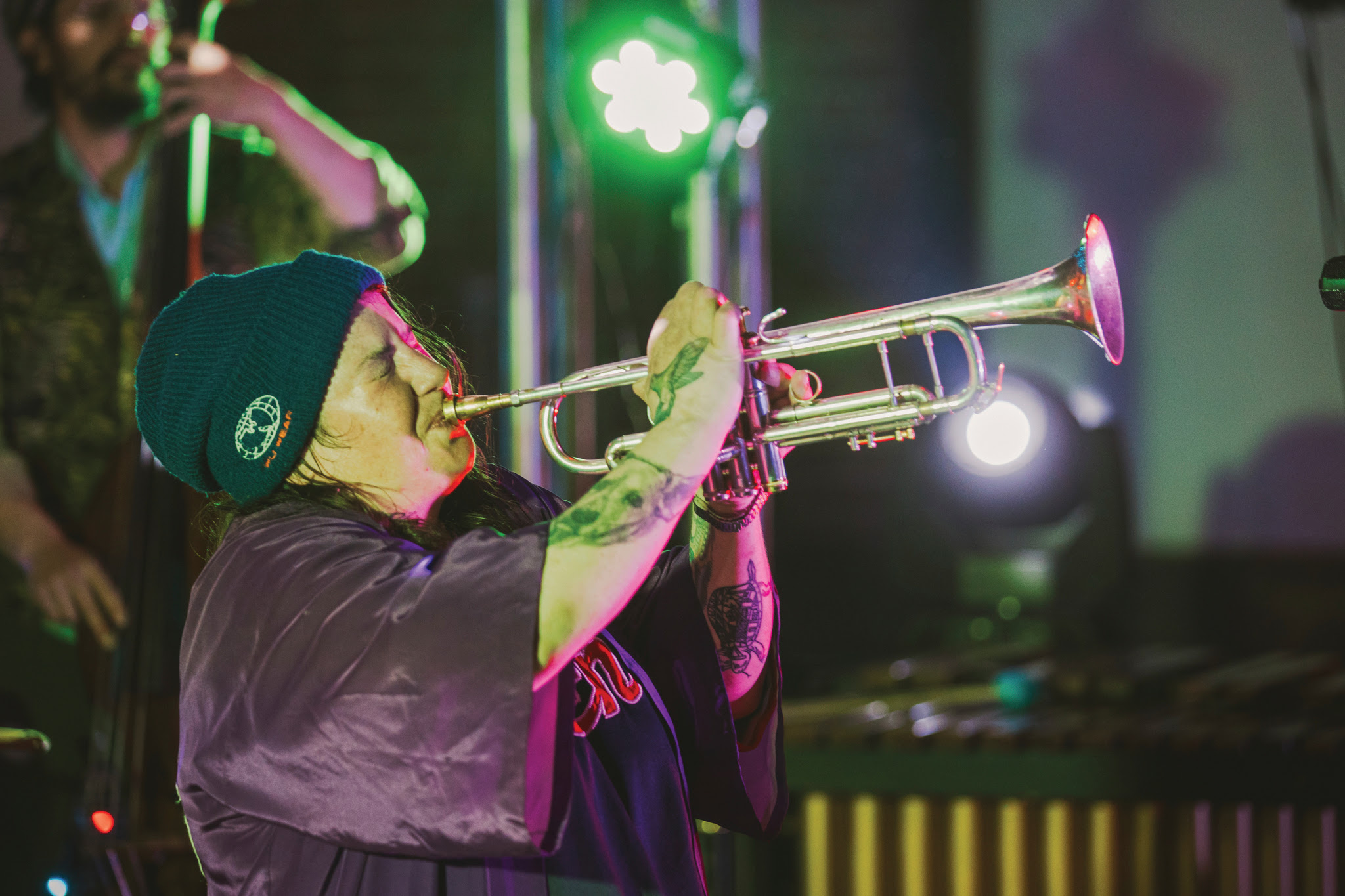
(Photo credit: Ben Semisch, courtesy of Bemis Center for Contemporary Arts)
Jaimie Branch ‘Fly Or Die Fly Or Die Fly Or Die ((word war))’
(International Anthem) 25th August 2023

As an unwittingly last will and testament, the late experimental trumpeter Jaimie Branch’s final led album with her Fly Or Die ensemble is a beautiful collision of ideas and worldly fusions that pushes and pulls but never comes unstuck. In fact, despite the “world war” suffix backdrop this album of both hollered and more disarming protestation colourfully embraces the melodic, the groove and even the playful.
Whilst the “avant-garde” label sticks, this rambunctious, more ambitious, more demanding minor opus flows and swings to a polygenesis mix of spiritual, conscious, Afro, Latin and Ethio-jazz, the great American songbook, no wave, noise and the psychedelic. And yet, on the other hand, is almost punk in attitude; a sort of anything goes in the pursuit of the message: an embodiment of challenging the boundaries.
In light of her untimely death at the age of just thirty-nine last year (the release of this album tying in with the first anniversary of her passing), this incredible statement can be read as a sonic monument; a legacy project left behind as a blueprint for a whole movement. The lyrics to the actionist rumpus ‘Burning Grey’, delivered more like Ariel Up or Polystyrene, to a swinging protest march of Phil Cohran, the Pan Afrikan Peoples Arkestra and Cab Calloway, seem almost prophetic: “Wish I had the time” and the lasting sign-off, “Don’t forget to fight”.
The final album is one Branch would recognize; more or less musically complete, recorded as it was back in April of 2022 during an artist residency at the Bemis Center For Contemporary Art in Omaha, Nebraska. However, Branch’s sister Kate and a cast of collaborators rallied round to finish the artwork and production; the final article a proud achievement encouraged on by well-wishers and friends alike.
Alongside “Breezy” Branch, who not only masters the trumpet but pushes her voice like never before and picks up on the percussion and some keys, is her stalwart troupe of Lester St. Louis (cello, flute, keys, marimba and voice), Jason Ajemian (double bass, electric bass, marimba and voice), and Chad Taylor (bells, drums, mbira, timpani and, you guessed it, marimba). That quartet is expanded further by an array of guests, including a trio of notable Chicago-hailed innovators (the city, one of Branch’s biggest influences and home for a period), the arranger/composer/engineer/trombonist Nick Broste, musician/vocalist Akenya Seymour and fellow International Anthem label mate, the drummer Daniel Villarreal (he released his debut, Panama ’77 on the imprint last year). Rounding that worthy impressive list off is the American multi-instrumentalist, Cave/Exo Planet/Circuit des Yeux (the list goes on) instigator Rob Frye.
Not so much a surprise, the album opens with a sort of stained glass bathed organ overture: part the afflatus, part pastoral hallowed ELP, part new age kosmische. A roll of bounded controlled thunder and gravitas is added to a crystal bellow and squeeze of radiant notes and the thinly pressured valves of Branch’s trumpet, which makes a brief appearance after the Ariel Kalma-like transcendence. ‘Aurora Rising’ lays down a short ceremonial communion with nature’s light before changing gear and spheres of influence. ‘Borealis Dancing’ now adds Mulatu Astake Ethio-jazz, a touch of Fela Kuti, Don Cherry and Yazz Ahmed to the ephemeral Northern Lights show as Branch toots long and softly at first before changing to higher pitch shrills. The rhythm, timing changes at the halfway mark towards a slinking groove of funk and Afro-jazz, the trumpet now cupped and echoing.
By the fourth track, ‘The Mountain’, there’s a complete sea change in mood, direction as Branch and her foils transform The Meat Puppets quickened country yin ‘Comin’ Down’. A dueting Branch and Ajemian bring it back home (so to speak) to the Ozarks and Appalachians via Paul Simon, Dylan, 60s West Coast troubadour traditions and a reimagined Sun Records. A brassy-sounded trumpet repeats the tone and springy country vocals as a gurgle of drawn-out cello plays a more somber rumination of hardy travail. To be honest, I was unaware of The Meat Puppets original, but this is a welcome meander in a different direction.
A full lineup joins in on the marimba heavy carnival turn mysterious swamp ether ‘Baba Louie’. Francis Bebey swerves to Satchmo New Orleans, whilst taking a dance around Masekela’s Soweto on a bustled bounce of joy and triumph, before succumbing to the voodoo psychedelic vapours; enticed by a cooing R&B flavoured misty Seymour. This bleeds into the bluegrass fiddled stirrings of ‘Bolinko Bass’, another Orleans evoked, almost regimental drummed bayou Mardi Gras of David Byrne, Funk Ark and Phil Ranelin. Almost mournful, ‘And Kuma Walks’ is more bluesy sounding, yet estranged at the same time; skulking amongst the spirits as someone saws through a fiddle as the trumpet aches in elegiac plaint.
Single, ‘Take Over The World’ is a hyped-up rattle and untethered excitement of no wave, punk jazz. Branch repeats a wild mantra and plays a burning bright thrill of trumpeted blasts whilst a controlled chaos spins all around her. Protest and partying converge for an electrifying, and later on, psychedelic bending stretched act of defiance.
The album ends by simmering down to a period of Afro-spiritual lament and reflection, on the sloganist berating ‘World War (Repirse)’. There’s serious bowed strings, trilled and forewarned trumpet, a sustained organ and windy, desolate enacted atmosphere on this weary actionist swan song: Branch urging caution at “false flags” and encouraging the fight.
For me Branch’s main instrument burns bright, and yet never seems to dominate, lead or overstay its welcome at any point on the album. Not for nothing is her own quote of “…meaning every note”, with not one rasp, trill, toot and cycle out of place; nothing is pushed but just felt and right at that moment. It feels to me, despite such a rich and diverse back catalogue, that Branch had so much more to give, her best still to come. And her gift was not just in crossing and mixing styles, influences, but also in pushing others to reach their own full potential as musicians. Fly Or Die Fly Or Die Fly Or Die ((word war)) is an accomplished album that channels the legacies of Chicago, New Orleans and New York to create an eclectic modern adventure in protest jazz.
Knoel Scott Ft. Marshall Allen ‘Celestial’
(Night Dreamers)
A leading light in the Sun Ra cosmology since auditioning for the Saturn jazz ambassador’s famous Arkestra ensemble in 1979, the baritone saxophonist, composer, vocalist and, when the occasion arises, dancer Knoel Scott amasses a lifetime of experience and musicianship on his debut solo-headed album. I say debut and solo, and without the extension of his previous KS Quintet named release, but the reeds specialist shares his Celestial project title with the Arkestra’s freeform progenitor, Marshall Allen.
Allen’s relationship with Sun Ra, on an album positively radiant and lunar with his guardianship and influence, goes back much further than Knoels; a stalwart since the ensemble’s formation in the 1950s, leading the troupe, the baton passed down as it were, after the cosmic Afrofuturist titan’s death in 1993. Unbelievably still in fine fettle, despite almost celebrating his centenary (that’s next May by the way), the avant-garde, inter-dimensional alto saxophonist, flutist, oboe, piccolo and EWI (that’s Electronic Wood Instrument) synthesist can be heard lending the latter’s strange sci-fi arcs, bends and space dust to the album’s title-track. It’s unsurprising to find that ‘Celestial’ has all the hallmarks of Ra too, written as it was originally with strings for the Arkestra, but never recorded.
The Arkestra family is extensive with celestial poetry taken from the late Arnold “Arto” Jenkins, recited on this universal lullaby. Art stuck with the Arkestra for thirty-six years, right up until his death in 2012. You can hear him and his “space megaphone” delivered offerings to the galaxy on Secrets Of The Sun, way back in 1962. As a homage to that universal-spiritualist’s wanton guidance, Knoel trips the radiant light fantastic, giving praise to the wisdom of the ancients and star people on a seeker’s performance of UFO oscillations, serenaded sentiments and dreamy translucence. It sounds like Cab Calloway and 50s wings being beamed up into Sun Ra’s off-world paradise.
The influence continues with the presence of the Paris scene stalwart and multifaceted (from Dancehall to Makossa, and of course jazz) drummer Chris Henderson, who’s experiences lend a both studied and more untethered freeform feel that moves between swing, big band, Latin, bop and the experimental.
This however is an inter-generational album, with fresher faces of the London scene, the very much in-demand UK keyboardist and versatile pianist Charlie Stacey and Verona-bred electric bassist and oft Arkestra and Knoel Quartet foil, Mikele Montolli. Hailed, quite rightly, as an advanced player, able to adapt to a wealth of styles, Stacey’s touch can evoke the best of those sublime 50s Blue Note recordings, touches of Oscar Peterson and Allen collaborator Terry Adams. The piano both flows with a tinkled busy lightness or strikes the heightened and jarring near-dissonance of freeform jazz; a descending off-tune part here, Cuban show time and bluesy or smoky lounge parts elsewhere: Unstated, yet moving along the action, or taking a soft stroll down the scales.
It’s another musician, part of the luminary brethren, that inspires the Afro-Cuban via Saturn’s rings ‘Makanda’. Paying tribute to a late mentor, Dr. Ken “Makanda” McIntyre, Knoel cooks up a Latin flavoured cool breeze of Havana, Harold Land vibes and R&B grooves: all undulated by sci-fi warbles and flits. A pivotal figure and influence for Knoel, “Makanda” (a name bestowed upon the reeds maestro and composer when playing in Africa, it translates from the Ndekele language as “many skins”, and in the Shona as “many heads”) founded the first ever African American music program in the States in 1971, and had worked with such notable talent as Eric Dolphy, Cecil Taylor and Nat Adderlay. Knoel and friends up the funk and balmy rhythms on this soulful homage to the late great man.
On his part, Knoel’s saxophone squawks, strains, honks and squeaks, and yet also serenades: even soothes. Wilder higher registered beak pecks turn into a near chaos, a cacophony, on the improvisation piece ‘Conversation With The Cosmos’. Coltrane, Sam Rivers and Anthony Braxton wail in zero gravity, whilst those wild rasps feel almost smoldering and lounge-like on the final mid paced twelve-bar slinky ‘Blu Blues’.
What a stellar set from the Arkestra acolyte, the Marshall and inner circle; and well done to the Night Dreamers for coaxing out this cosmic marvel. The process if you’re new to this label project, is to record the performances direct to tape before cutting on a Sally lathe the final vinyl artifact. In mono, recorded in an analogue studio, the sound is alive, inviting and, well, “celestial”. The experience speaks, communicates, and pushes the perimeters on every note, as a culmination of African American jazz styles are attuned to the stars.
Andrew Hung ‘Deliverance’
(Lex Records) 11th August 2023
With pain, suffering and anguish former Fuck Buttons trick noise maker Andrew Hung finds a cathartic release on his third solo outing, Deliverance. But as that title suggest, the anxieties and sense of isolation and belonging now seem to have slowly dissipated as Hung feels he’s been delivered from the morose and dark fog of depression; although there’s plenty of broody, moody despair and darkened thoughts to wade through before catching the light of hope.
Hope, being set free, the constantly developing artist and producer does seem to have found his creative peace; likening this album to “the end of the chrysalis stage, like breaking free from a previous life.” Not so much reincarnation as a new incarnation, pushed on during lockdowns to mine the deep well of his soul, to face regrets and failings, but also find what’s missing.
An act of self-realization perhaps, Hung conducts a therapeutic session both unflinching and revealing. If the lyrics of ‘Don’t Believe It Now’ are anything to go by, thoughts and mental anguish at one point were truly dark. However, that filtered vapour counters the resigned with a reviving build up. And on the opening tunneled, Sister Bliss and Underworld like, moody turn freedom spin, ‘Ocean Mouth’, Hung faces a list of disappointing traits head on: Almost like taking a breath as the Robert Smith-like palpitations and rave-y Bloc Party velocity of the production avoids suffocation and gravitates towards the techno cathedral of light. Submerged at every turn with recurring references to water, Hung swims and navigates the torrents and tides to find a number of revelations about himself: conquering fear.
The previous solo album, Devastations (a choice album no less in my end of year lists for 2021) looked to the cosmos with a propulsion of electronic, kosmische, motorik, Madchester and synth pop influences, and featured Hung the self-taught singer evoking a mix of Robert Smith (some very cure-esque touches musically too), Karl Hyde, Mark Hollis and The Cry’s Kim Berly. More distressed, gasping and wrenching Hung takes some of those same influences forward on Deliverance, whilst also seeming to whip up a touch of Minny Pops, New Order, Soft Cell and John Foxx on the struggles of isolation and need to belong themed neo-romantic ‘Find Out’.
In another honest cycle of shedding shame and casting away the pain in favour of finding that alluded love “saturation”, ‘Never Be The Same’ builds from synthesized drum pad elements of the 80s German new wave, Factory Records and industrial synth-pop into another unshackled escape towards the light of revelation. I’d throw in Martin Dupont, Tears For Fears and Yazoo to that both pumped and vapourous mix.
Floundering no more, Hung looks to have found his place, his voice too. Deliverance finds him channeling his lamentable, pained, and unsure emotions into something positive and bright with another candid confessional solo album of rave-y synth-pop indie brilliance.
Various ‘Intended Consequences’
(Apranik Records)
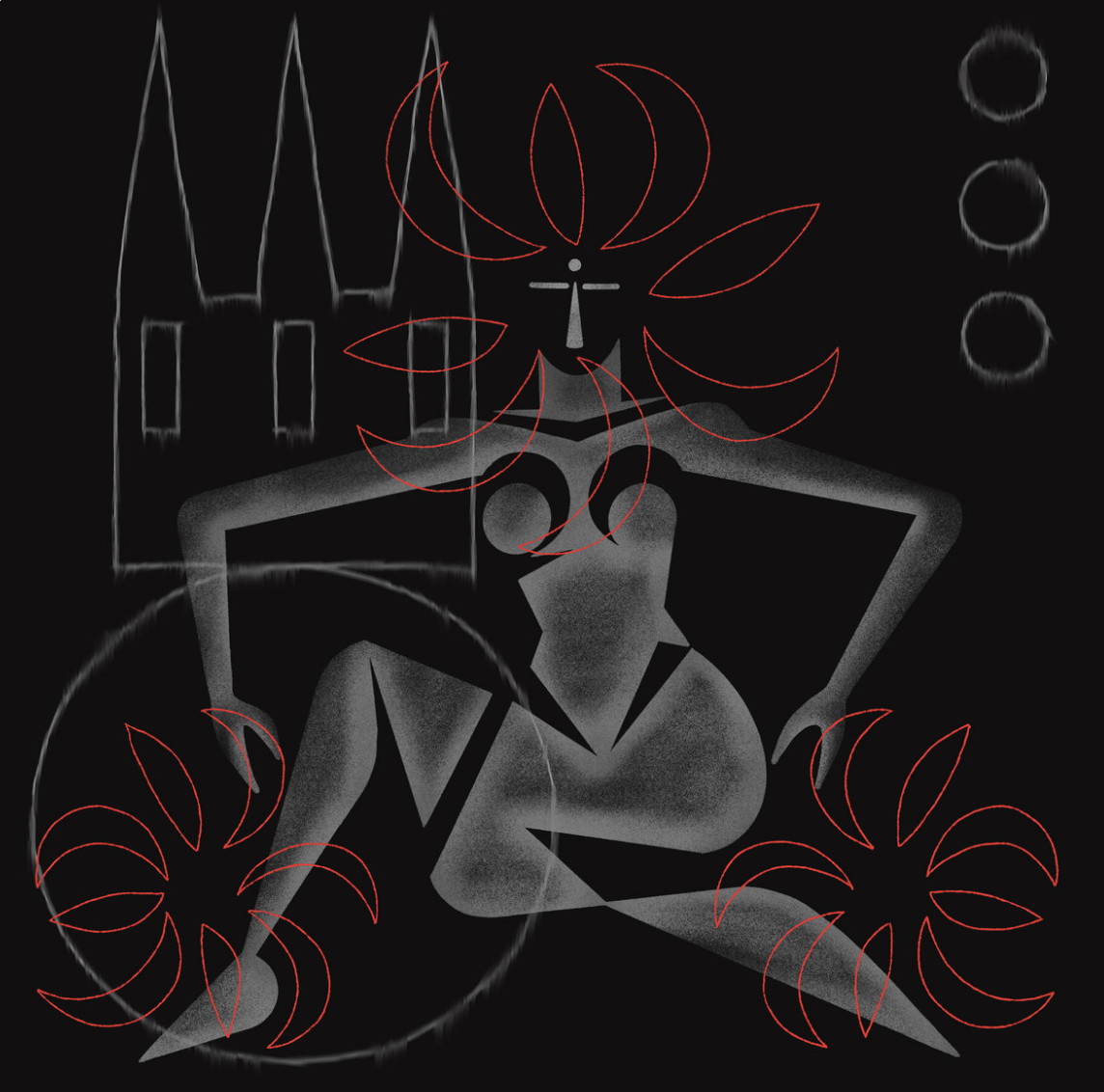
With a hellish multitude of flashpoints and distractions across the globe keeping the continuing fight for women’s liberation in Iran off the news rolls, it has become apparent that the Iranians themselves have been left to carry on the struggle with little support. In an ongoing war between the forces of the authoritarian religious state and a younger generation demanding an end to the erosions of there civil liberties and freedoms, the crisis in the country entered a dark bloody chapter last year with the murder in custody of Masha Zhina Amini by the “morality police”.
After a rightful campaign of protest and action at such a heinous crime, a brutal crackdown by the state led to mass arrests and even executions (mostly of male supporters, activists, and usually on trumped up charges). Further restrictions were invoked. And just as horrifying, in the last year, and right up to the last few months, there has been a nationwide spate of deliberate poisonings of schoolgirls (one of the groups who mobilized against the authorities in the wake of Amini’s cruel death) on mass. Defiant still, even in the face of such oppression, the brave women of Iran have strengthened their resolve only further.
In the face of such attacks, clampdowns, the music scene has responded with a strong message of resistance and solidarity. Despite everything, cities like the capital of Tehran have a strong music scene of contemporary artists, composers, DJs and performers working across all mediums, including art (which is probably why so much of the music is also so visceral, descriptive and evocative of imagery). One such collaborative force of advocates, AIDA and Nesa Azadikhah, co-founded the Apranik Records label, a platform for female empowerment. Following this year’s earlier Women Life Freedom compilation, a second spotlight volume delves further into not only the Tehran scene but picks out choice tracks from those female Iranians working outside the country, in such epicenters as London (AZADI.mp3) and Berlin (Ava Irandoost).
Sonic wise it covers everything from d’n’b, trance, deep house and techno to sound art experimentation. The range of moods is just as diverse in that respect, from restlessness to the reflective and chaotic.
Contributions from both Azadikhah (the hand drum rattled d’n’b breaks and spacy, airy trance ‘Perpetual’) and AIDA (the submerged melodious and dreamy techno ‘Ode To Expectations’, which features the final love-predicament film sample, “You know that I love you, I really do. But I have to look after myself too.”) can be found alongside a burgeoning talent pool. The already mentioned London-based producer and singer AZADI.mp3 opens this collection with a filtered female chorus of collective mantra protest, set to a sort of R&B, 2-step and bass throbbed production, on ‘Empty Platform’– just one of many tracks that uses the sounds of a more traditional Iran, especially the daf drum, alongside modern and futuristic warped effects. The sound artist and composer Rojin Sharafi likewise features the rattled rhythms of hand drums and some hidden spindled instrument – like running a stick across railings – on her entrancing kinetic techno ritual of “trauma”, ‘dbkk’.
Abji_hypersun allows the sounds of the environment to seep into her slow-building track of field recordings, collage and breaks (two-stroke scooters buzz by as distant female conversations reverberate on the street). Part jungle breaks pirate radio, part Matthew David, Jon The Dentist and LTJ Bukem, ‘Resist The God Trick’ evokes a tunneled vision of haunted reminisces and resistance in the shadows.
Emsho’s ‘Down Time’ is a rotor-bladed electro mix of Basic Channel and The Chemical Brothers, and Aida Shirazi’s mysterious wind of dark meta ‘R.E.V.O.L.U.T.I.O.N’ spells out the rage with a shadowy, near daemonic scripture of wrath and revenge – a gothic synth sinister avenging angel promises that the women of Iran will neither “forget” nor “forgive” their oppressors, torturers and murderers. Farzané seems to evoke the alien, the sci-fi on her experimental, sometimes disturbing dial twisting and crackled ‘Quori’ transmission, and the Berlin-based DJ, video artist and music producer Ava Irandoost draws on Laraaji-like dulcimer tones for her dream mirrored kosmische evocation ‘CINEREOUS’. The Tehran composer, pianist and bassist Ava Rasti draws a close to the compilation with a classical-tinged, harmonic ringed, saddened piano-lingering performance, entitled ‘Eight Night’ – an atmospheric troubled trauma is encapsulated with the deftest of touches.
It might be my own nostalgic penchant for 90s electronic music (my formative years of course), but this series (if we can call it that) could be an Iranian version of the Trance Europe Express compilations brought out during that decade; a treasure trove of discoveries and whole scenes that opened up a world of previously unknown music to many of us not living in the epicenters of North America, the UK and Europe and beyond. Hopefully this latest platform of innovative artists from across the arts will draw the attention it deserves; the message hardly virtuous, in your face, but sophisticated: the very act of female Iranians making a name for themselves despite censorship and bans a sign of empowerment and resistance in itself. Few groups deserve our support (which in the West has been sadly absent) more, but don’t just purchase for the cause but for the musical strives being awakened and produced under tyrannical oppression, and because this is a solid collection of great electronic music.
Nagat ‘Eyoun El Alb’
(WEWANTSOUNDS) 25th August 2023

Renowned as one of the greatest, most exceptional voices to have emerged from the golden 40s/50s/60s epoch of Egyptian and the greater Arabian songstresses and divas, Nagat El Seghirah was a rightly revered performer, who’s career spanned more than half a century.
Even in an age rich with accomplished, influential and groundbreaking singers Nagat held her own against such icons as Oum Kalthoum, Fairuz, Warda and perhaps the most celebrated of the lot, the anointed “voice of Egypt” Umm Kulthum. The latter, hailed the “star of the east”, was an influence on the early starter during the burgeoning years of imitation, when Nagat was a child, barely in her teens. Her affectionate appellation, “El Seghirah” or “El Sagheera”, can be translated as “the small”, “the young”, and marks the singer, performer and film star’s young apprenticeship; from entertaining the notable guests that gathered at her father’s (the famed calligrapher Mohamad Hosny) home at the age of five onwards, to her first role in cinema at the age of eight, starring in the 1947 film Hadiya. Hosny was known to push his extensive brood of children from two marriages, sometimes excessively, into various creative careers: Nagat’s half-sister was the famous actress Soad Hosny, her older brother, Ezz Eddin Hosni, a notable composer who helped her own development and natural talent.
During those initial years of development Nagat would interpret songs by such legendary figures as Mohamed Abdel Wahab, Baligh Hamdy and Kamal Al Taweel, but would find both her true and distinctive voice when interpreting the work of the Syrian diplomat-poet Nizar Qabbani. She gained adulation and fans after performing the esteemed poet’s tragic ‘Irja Ilyya’ (“Return To Me”), which is based on his sister who committed suicide rather than enter into an arranged marriage. Plaintive, stark, it rightly struck a chord with the public at the time, with its feminist lyrics and spotlight on forced marriages. It would be become a torchlight for freedom and injustice, with Nagat adding her own improvised original lines during the 1970s.
Born in 1938 but already gaining plaudits by the end of the next decade, into the next, Nagat released her first actual song ‘Why Don’t You Allow Me To Love You’ in 1955; the year she would also be married, for the first time, to a friend of one of her brothers: still only sixteen. It’s no surprise, although in no way a forced marriage, that she could, with a commanding voice, perform Qabbani’s tragedy. That marriage would only last however until the turn of the 1960s; when Nagat went on to marry the Egyptian film director Houssam El-din Mustafa in 1967 (a marriage that lasted an even shorter time). Nagat would remain, in fact seeing as she is still alive, in her eighties, remains unmarried. In recent years, since her singing retirement over twenty years ago, living a semi-reclusive life in Cairo but in poor health, there’s been some contact, even projects floated. Only last year she was featured on the official soundtrack for the streaming service series Moon Knight.
From concert to soundstage with starring roles in the films Black Candles, Beach Of Fun, My Dear Daughter and Dried Tears, Nagat gradually moved from shorter songs to ever more lengthy performances, some of which would last an hour. As time went on the songstress actress would find it harder to find those inspired works to perform. Retiring from film in 1976, Nagat would still persevere with music. And by the time she reached her early forties, in the 1980s, would release this four-track showcase of matured talented performances entitled Eyoun El Alb.
Originally brought out exclusively on cassette (like so much of the Egyptian music market), forty odd years later the reissue vinyl specialists of impeccable tastes (releasing a myriad of jazz titles and nuggets from across the Arabian world and Japan), WEWANTSOUNDS in conjunction with the Arabia and North African crate-digger Disco Abrabesquo (the moniker of the Egyptian, Amsterdam-residing DJ, Moataz Rageb), have pressed it onto vinyl for the first time. If you are a regular reader, or in fact a regular WWS’s follower and buyer, then you will be aware of that label’s previous collaboration with DA, last year’s (although they’ve also released a smattering of Egyptian focused records too over the years) Sharayet El Disco compilation. One notable inclusion on that eye-opening compilation (reviewed by me in May’s Perusal column) was from the legendary Al Massrieen. A much sought after recording outfit, the group’s Hany Shenouda produced the scenic, romantic ‘Ana Bashaa El Bahr’ (or “I Adore The Sea”) finale on this Nagat album. Adoration and yearned dreaminess for a place and time are evoked to Shenouda’s trebly near-psych tremolo guitar and light hand drum patters. Alongside the more lilting and fluted ‘Bahlam Meeak’ (“I Dream With You”), this is one of those examples of Nagat’s shortened form of storytelling romance and heartache. ‘Bahlam Meeak’ is also an example of Nagat’s more lightened, honeyed approach to what is a tinkled serenaded, wafted vision of blossom scented sand dune balladry. It evokes the music of Bacharach and the cool soundtracks of early 60s French and Italian new wave cinema.
Taking up the entirety of Side One, there’s the long form titular performance of heightened drama and searing swirled strings oboe and scuffled trinkets. Over eighteen-minutes of longed romantic gestures, the action pauses repeatedly between undefined sections; allowing the auditorium audience to show its appreciation, encouragement, which they do constantly, even when the music starts back up again. On a Matinee scale, this mini-story, unveiling of lovelorn exultations, but vulnerability and occasional lament, moves like a desert caravan across an Egyptian set, or, sumptuously glides into a Persian court. A fantastic display of sagacious craft, Nagat’s voice never has to rise or push to convey a class piece of theatre and effective yearn of love.
Only half that duration, but still a long track, ‘Fakru’ (“Do You Remember”) is a rumination; the vibrating pools of memoary reflected in the dreamy wobbled effects that permeate this fluctuating lead vocal delivery and prompting chorus of female voices. Classical Cairo, there’s a chink and tinkle of percussion and shimmy-shaking, belly dancing rhythm that luxuriantly accompanies a yearning poetic and sometimes coquettish Nagat on her reminisces. As I said already, this album represents various sides of the enchanting, soulful and also distinctive icon’s vocal presence and range. The long and short: the unmistakable sound of Egypt, but also those influences from abroad too, are melded together on a classy piece of cinematic and poetic mastery. Make room again on those creaking shelving units for another vinyl addition to the collection.
CHELA ‘Diagonal Drift’
(Echodelick – USA, We Here & Now – CA, Ramble Records – Aus, Worst Bassist Records – EU)
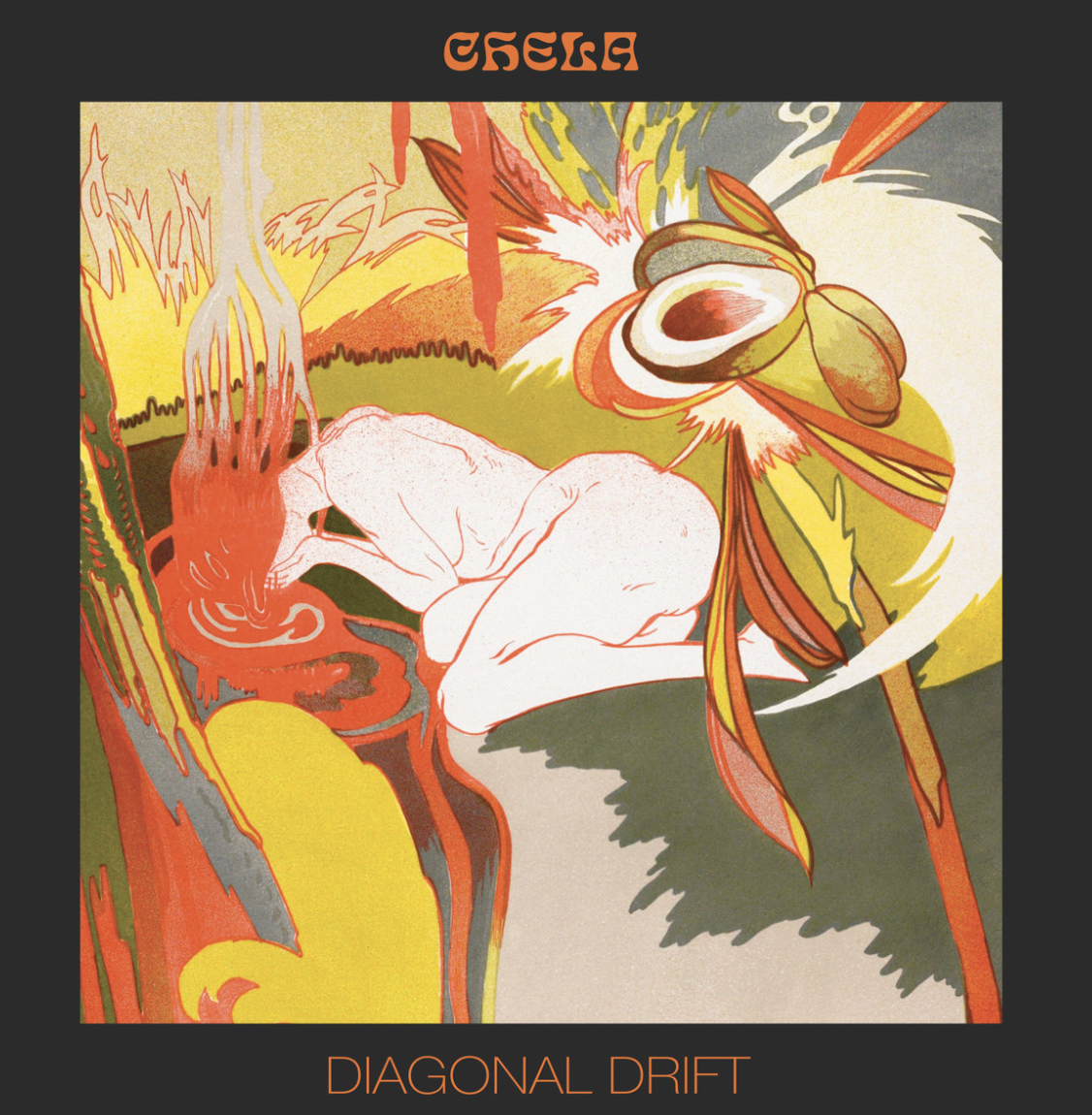
In communion with his long-time friend and collaborative foil in the University Challenged trio (alongside Oli Heffernan) Kohhei Matsuda, Ajay Saggar extends his blessed travels along the astral highways and byways with a new venture, CHELA.
Absorbed, imbued and inspired by Indian spiritualism, history and travails, its psychogeography and trauma, both partners in the new direction come together under the Sanskrit word for “disciple”; taken from the verb and root “to serve”, the “Chela” is similar in concept to a student, but implies a more loyal closeness with their teacher. In Hinduism this bond is considered sacred: An apt moniker for such inter-dimensional, afflatus dreamers and acolytes of raga, the new age, psychedlia and kosmische music.
Divine styler Saggar (who is also a member of King Champion Sounds, solos under the Bhajan Bhoy alias, and collaborates with Merinde Verbeck in the Deutsche Ashram duo) and Japanese noisenik Matsuda (most notably a member of the Bo Ningen quartet) spent much of 2022 putting this inaugural baptism together. And so with dedication to their art, the duo have sonically and melodically taken time, given depth to their new mysterious broadcast; that is, broadcasts from the ether, supernatural, uncertain, Fortean and cosmic. Different yet not entirely detached from previous incarnations, fans of both artists will pick up on past signatures, sounds and conceptions. However, they’ve managed to realign those same signatures, tuning into the mystical but often with trepidation and a sense that the noisier elements could consume all in their path.
Think Julius Eastman meets Fennesz we’re told; a good succinct summary. But I’d add a hell of a lot more, including Taylor Deupree and a cosmology of cosmic couriers. The opening ripple in the fabric of time, ‘Flyspray’, is an expanded peregrination of Beautifully tinkled Florian Fricke-like piano hauntings, Ariel Kalma and Syrinx new ageism and various Sky Records pioneers (Asmus Tietchens and Riechman spring to mind), all caught up in analogue wispy wind cacophony of divine rays, the esoteric and Eastern drones. Trippy warped reversals and folds, generator and processors nearly overwhelm the vague evocations of Tony Conrad, Schultz and a springy, but also spoke splayed banjo (which in itself seems to vaguely evoke the Balkans, Greece and strangely, India) on the reverberating ‘Appalachjo’.
In what could be a suggestion of “peace” and “harmony”, or reference to the Japanese town, ‘Heiwa’ is a hummed raga-like hymnal. A stand-up barrel-type piano plonks away from the ether, whilst ambient waves and traces of Dyzan invite heavenly reflection. ‘Ticker’ is a very different proposition. An intense chemistry of signals, beeps, quickened arrpegiator, moody signs of Faust and the sound of the Heart Of Darness are melted with Günter Schickert guitar, heavy acid Gong and various calculations.
‘Tanker’ feels like the most obvious attempt to score the sound of the title’s overbearing object; sounding like a alien freighter, both foreboding and mysterious. A scrawl and flapped ripple of radar and sonar bites into a resonating field of drones and sound waves, fog and guitar.
The final, spiritual and otherworldly track, ‘Worship’, features ghostly Indian voices and visitations from an event, service or chapter in time and history. A melodious piano chimes away in wisps of fanned cosmic mystique and cyclonic radio effects, whilst shades of FSOL, King Creosote (From Scotland With Love period) and Boards Of Canada linger. The video is more illuminating, a sepia film of bedside “worship”, healing for a leader, martyr, and a travelling funeral cortege that takes in rows of witnesses moved to touch, or just be in the essence of a distinguished teacher.
Once again with the cosmic and afflatus, Saggar and Matsuda expand their sound further. Diagonal Drift’s transcendental projection is just that, despite the building intensity and uncertainty, the broadcast noise of krautrock and kosmische styled aerial bends and radio tunings. CHELA is another welcome addition to the two artists oeuvre: one more step on the astral journey of mind-expanding experimentation.
GRAHAM DOMAIN’S RUN-THROUGH OF RECENT AND UPCOMING NEW RELEASES

__/SINGLES\__
THE TELESCOPES ‘Where Do We Begin’
(Tapete Records) (Download only Single)
It seems only vocalist Stephen Lawrie remains from the original group and only his voice reminds of The Telescopes classic sound!
This is the first single taken from forthcoming album Of Tomorrow. As such, it sounds a bit like the House of Love with Lou Reed – a psychedelic song about filling in the hole in your soul with more emptiness – the modern consumer society looking for fulfillment amid the waffle of internet influencers, ‘reality’ celebrity and brand name hypnosis! I await the new album with interest!
MATT SAXTON ‘Freedom’
(Bandcamp) (Download Single)
This is an electronic track with folktronica leanings that reminds me of John Grant. It’s a delight – like eating your favourite ice cream! Give it a listen while eating a Cornetto!
YOVA ‘Feel Your Fear’
(Bandcamp) (Download Single)
Unusual pop song from Yova – interesting, odd and compelling! Yova are a duo – with exposure they could be massive!
SALEM TRIALS ‘ESPERS SYC (See Your Crime)’ / ‘End of Level Boss’
(Metal Postcard) (Download Double A Side Single)
Excellent Double A Side from Salem Trials – ‘Espers SYC’ comes across like the Fall playing a speeded-up Joy Division ‘Exercise One’ – some nice jarring chords and fried bacon rhythm!
With singalongs like ‘reasonable doubt my arse’ it could become a staple at Strangeways Indie disco! The crime? Presumably using your intuition (ESP) – contravening Section 7 of the State Controlled Thought Act 2023.
‘End of Level Boss’ meanwhile conjures up the ghost of Ian Curtis dancing to James Brown after the sacked JB’s were replaced by a funky Sunn O))) – Mesmeric!
___/ALBUMS\___
OCEANS ‘Dreamers in Dark Cities’
(Bandcamp) (Vinyl/DL)

There are a few bands named Oceans but this particular band hail from Melbourne Australia. They sound like they have been listening to a lot of 1980’s indie music like the Sound, the Chameleons, New Model Army, Cocteau Twins, Pale Saints, Slowdive, The Scars.
‘Pure’ sounds like a poppier Pale Saints and is perhaps the best song on the album. “I just want to feel alive” he cries as the music rises in life affirming sonic radiance! ‘Apart’ reminds me of the Scars with touches of Ride and Pale Saints. ‘Feels Like You’ hints towards Slowdive, MBV and Ride.
‘Mike Tysong’ sounds like New Model Army circa ‘The Ghost of Cain’ but with vocals akin to Adrian Borland (the Sound of ‘The Lions Roar’ fame). ‘Soft’ has hints of The Chameleons guitar sound combined with vocals akin to Lush! ‘Look Into My Eyes’ employs the 3 / 4 rhythm beloved of The Cocteau Twins circa ‘Treasure’. An album of youthful energy and life affirming beauty. The songs are energetic, well-constructed and well-produced. I like the album, but the band need to bring more of their own creativity to the table so they sound like themselves rather than the sum of their influences. Once they find their own sound, they will be magnificent. They are part way there and I predict great things for them in the future.
CREEP SHOW ‘Yawning Abyss’
(Bella Union) (CD/Download Album)
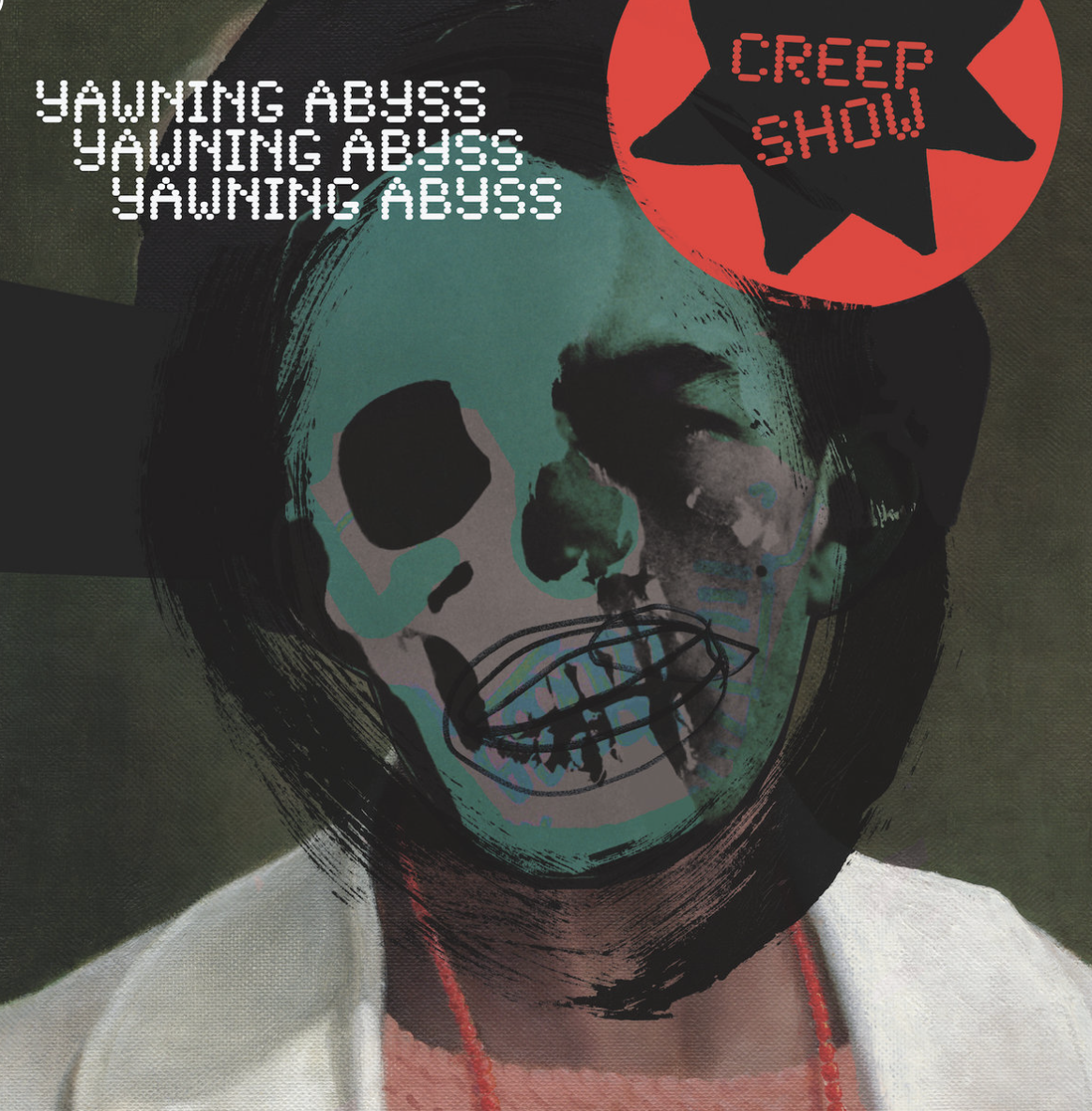
Make no mistake, John Grant is a genius! As half of Creep Show he provides the moments of sheer joy! ‘Bungalow’ comes over like a song that could have been on any of his brilliant solo albums, post ‘Queen of Denmark’. It’s a fantastic vocal, the music dark, funny, sexy, – electronic music at its best and a good song to boot! Elsewhere we find him singing strange rhymes on the title track ‘Yamning Abyss’ – a song that grows on you with each play.
The band Wrangler are the other half of Creepshow. Cabaret Voltaire’s Stephen Mallinder sharing vocal duties on such tracks as ‘Moneyback’ – “You want your money back / I didn’t think so”! Overall, a fine return from Creep Show who are doing a short tour of the UK over the summer!
JEAN MIGNON ‘AN/AL’
(Metal Postcard) (Download Album)

Raucous debut album by New York based Johnny Steines. A mixture of high energy garage punk and high-speed rock and roll – it sounds like a live album such is the energy contained in the grooves!
‘Tackled By Men’ recycles parts of ‘Jumping Jack Flash’, whilst ‘Canadian Exit’ has echoes of Warsaw’s ‘Failures’. If he can produce this excitement in a live-setting he willsurely make his own impact! Primal Rock and Roll that screams from the speakers andexcites like a high-speed car chase!
Key Tracks: All of them!
The BORDELLOS ‘Starcrossed Radio’
(Metal Postcard Records) (Download Album)

The latest release by St Helens finest is a cabinet of curiosities containing some wonderful lo-fi gems and hitherto lost standards!
Beginning with the glam stomp of ‘Attack of The Killer B-Sides’ – name checking great B- Sides by the likes of The Smiths, Stone Roses, The Beatles, Billy Fury, Shangri-Las, New Order, Rolling Stones, Mersey Beats etc… All delivered in a Mark Smith type drawl. Like any music fan, flipping a 45 over and discovering a great B Side was exciting and would lead to more investigation of the artist’s music.
‘Never Learn’ sounds like a lost standard to me – reminding of Morrissey when he was good, the accordion sound giving it a shade of the Pogues! The nice melody is under-pinned by what sounds like a balloon deflating, a synth or a cat being slowly trod on mixed with static and silence! Experimental brilliance!
‘Free New Music Day’ meanwhile takes the sound of the Doors Texas Radio and the Big Beat and transfers it to Northern England where you can ’take a cut price trip to the stars – singing Hallelujah in Karaoke bars’ – poetry from the streets Jim Morrison could only aspire to!
Other highlights include the strange melody picked out on guitar on ‘Sunk and Screwed’, which could be the theme to a weird kids cartoon! Oddly disturbing! I’m still humming it! ‘Vicious Circle’ could be a single. ‘Hurting Kind’ sounds like a lost Beach Boys campfire surf song – Brilliant!
The album ends with the sublime ‘Life Love and Billy Fury’ – a part electronic song where the melody or maybe some of the chord changes put me in mind of New Order without actually sounding like them! Great lyrics – another ‘lost standard’!
This album is one to treasure, an Aladdin’s cave of eclectic life affirming songs. The Bordellos are the fine web that holds the stars in place!
Our Daily Bread 569: Ali Murray & Cornelius Corvidae, Foil, Conrad Schnitzler & Ken Montgomery, Silver Moth…
April 7, 2023
GRAHAM DOMAIN’S REVIEWS SUITE
__SINGLES/EPS__
Ali Murray and Cornelius Corvidae ‘Split EP’
(Dead Forest Records)
As the name suggests this is an EP split between two artists playing two songs each.
Ali Murray hails from the beautiful windswept Isle of Lewis and vocally sounds like a cross between Elliott Smith and Andy Shauf. On some of his other releases he harnesses a shoegaze-like sonic template. Here he adopts a stripped-back sound of acoustic and electric guitar and organ. Standout track is the beautiful ‘Wish the Bones Away’ with its poetic lyrics and melancholic gothic strangeness. ‘Spirit of Unknowing’ meanwhile, uses acoustic guitar to great effect on an atmospheric ballad that combines the phrasing of John Grant with the sadness of Elliot Smith. Two songs of beauty and wonder!
Cornelius Corvidae hails from Minnesota, USA and inhabits two songs of cosmic Americana. ‘Silver Flower (Kali’s Invitation)’ employs acoustic picked guitar on a bleak ballad, all dark imagery and campfire ghost-story shadow. ‘Shiva in the Blood Orchard’ meanwhile, uses picked acoustic guitar set against Tudor-like keyboard melodies (reminiscent of the Moody Blues) on a dark folk ballad. Two artists, four great songs!
Foil ‘Portal’
(Jolt Music)
Foil (AKA singer and producer Helly Manson) releases her new single this month. Taken from the upcoming album On the Wing, the song begins like Steeleye Span with multi tracked folkish female vocals before a synth plays the same pattern over and over again accompanied by a cowbell rhythm! It lasts just 1 minute and 33 seconds and sounds like a demo for a song not finished and barely started! Still, there’s nothing else quite like it!
Juppe ‘Fade’
(Soliti)
Juppe hails from Helsinki in Finland (the happiest country in the world)! Of the singles theme he says ‘it’s very hard to get a place to rent here in Helsinki if you don’t have good credit! It’s very easy to fade away.’ With two fingers up to the Man – Juppe looks like Bob Mortimer and harnesses the sound of the Devils music Jamiroquai!
Bitter Defeat ‘Terrific Effort EP’
(Bandcamp)
This is the second EP from the New Zealand indie rock band following last years Minor Victory EP. Comprising 4 songs of guitar pop-rock that sit somewhere between the Lemon Heads and late-period Buzzcocks! Lead song ‘Sugar Blind’ is a catchy guitar driven pop song complete with Cure-like background vocal refrain! ‘Falling Down’, meanwhile has shades of the Charlatans with its driving organ sound! One to watch!
Nivis ‘Into the Void’ EP
(6415 Records)
The EP features 4 songs of pop-rock from the German indie-pop band. Lead track ‘Rain on a Funeral March’ is a catchy pop song that resonates more with each play. All four songs are well-produced, commercial pop-rock that remind me of people like Cyndi Lauper or Nena (of 99 Red Balloons fame). It’s the sort of music that was popular in the mid 1980’s! Shiny but not new!
Neon Kittens ‘Loving Your Neighbours Wife’ b/w ‘Marilyn Mansion (Where Horror Lives)
(Metal Postcard Records)
The new single from Neon Kittens, combines the white funk bass-lines of A Certain Ratio with Eno / Byrnes My Life in the Bush of Ghosts to produce K-Funk – the crunchy funk sound of biscuits out of their packet! With these hot cheesy bread rhythms, even Lego figures with botox can learn to smile again! Set to produce a water slide of elastic-legged banana dancing up and down the country!
B-side ‘Marilyn Mansion’ employs the sound of Early Gang of Four with the attack of Wire and a deadpan female Einar (Sugarcubes) on a twisted tale of non murder locations and funking in cars!
Draag ‘Mitsuwa’
A wonderful summery single from the LA Electro-Shoegaze band, taken from their forthcoming album Dark Fire Heresy. Acoustic guitars and subtle synths give way to chiming guitars and organ with multi-tracked harmonic female vocals! It reminds me very much of Lush in their prime! One to watch!
_____ALBUMS_____
Conrad Schnitzler & Ken Montgomery ‘CAS-CON 11 Konzert in der Erloserkirche, Ost-Berlin, 3.9.1986’
(Bureau B) 12th May 2023
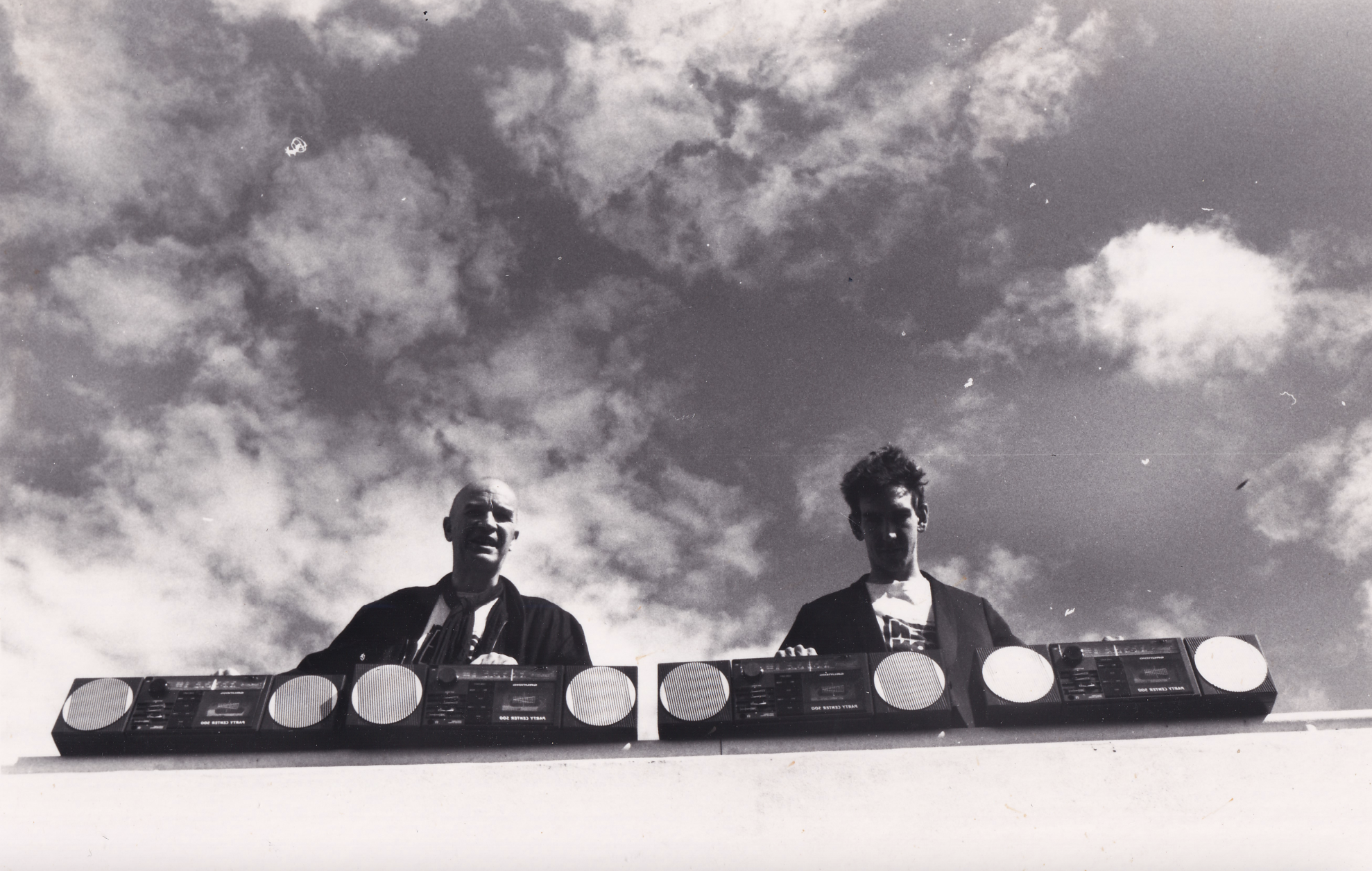
This is a live concert recorded in East Germany on 3.9.1986 where the music of German electronic experimental musician Conrad Schnitzler was mixed live by American collaborator Ken Montgomery. This was at a time when the Berlin Wall still stood and the GDR required the issuing of a special state permit for a live concert. This concert was promoted locally by word of mouth and went ahead illegally (without permit), where it was recorded and issued by an East German underground label on cassette.
Now fully restored, the concert has been issued for the first time on CD, Vinyl and as a Digital Download! Consisting of 6 tracks of austere serious yet playful experimental electronic music, it leaves little impression on first listen. With repeat plays however, the charms of the music reveal themselves, not so much in melody but in atmosphere and approach. It encapsulates the icy chill and drama of Delia Derbyshire, Bowie, Eno, Tomita, Cluster and early Popol Vuh! An interesting suite of music – one that becomes an essential listen the more you hear it!
FFO: Delia Derbyshire, Cluster, Popol Vuh, Tangerine Dream, Bowie, Tomita.
Volatile Youth ‘Post Falls, Idaho’
(Rummage Sale Records – Bandcamp)

The album begins with the song ‘California’ sounding like a strung-out Lou Reed if produced by Jesus and Mary Chain! ‘Love Like A Thousand Guns’ is superb low-fi Psychedelia with the backward vocal effect, once favoured by Siouxsie, that you don’t hear anymore since the onset of Digital! ‘She’s Starting to See the Flame’ is a country-tinged song sounding like Nick Drake if he had fronted the Byrds after they turned country-rock!
Overall, this is a fine album that is perhaps a touch too low-fi for its lofty ambitions! The songs are commercial and remind me of various bands and artists – among them Lou Reed, the Only Ones, the Byrds in their Gram Parsons era, Dennis Wilson and the gothic feel of Mazzy Star.
If it had been made by someone with a higher profile, say Bright Eyes, and recorded on decent sound equipment, it would undoubtedly have gained a wide audience. Hopefully it will be heard by many and receive the recognition it deserves.
Fhae ‘Sombre Thorax’
(4000 Records)

This is a wonderful album of ethereal, ambient, dream-folk-pop that ebbs and flows like the tides and inhabits its own world of subtle beauty. Sometimes, mists of the sea seem to creep into the music and the edges of reality become blurred, the music shape shifting into another dimension!
Fhae (20 year old Australian Ellena Ramsay) produces music in the vein of Julianna Barwick or Grouper – some of it lovely with multi tracked harmonies (like Barwick) and some of it (such as ‘Drain’ and ‘Man’) obscure in its strangeness (like Grouper)! There are some really beautiful and compelling tracks on the album, such as ‘Earth’, ‘Emergency’, ‘Love You’, ‘Comb’ and ‘Stuck’. A fantastic debut album, I can’t wait to hear more!
Stanley J. Zappa & Simo Laihonen with Suvadeep Das ‘Dance of the Moving Goal Posts’
(Ramble Records)

US saxophonist Stanley J Zappa (nephew of Frank Zappa) and Finnish drummer and percussionist Simo Laihonen recorded this album of 7 pieces of free improvised jazz live in Helsinki in 2018. The final track features Suvadeep Das on darbuka adding an extra percussive element!
It’s a lively set with the Sax sparring with the percussion throughout. If you enjoy free improv jazz, you may well enjoy this lively concert – give it a listen!
Nico Paulo ‘Nico Paulo’
(Forward Music Group)

This is a wonderful summery album of Bacharach-like melodies by the Portuguese-Canadian singer. A truly remarkable debut of ten self-composed wonderful songs that sound like standards.
Her voice is a bewitching combination of Judy Collins, Joni Mitchell and Natalie Mering (Weyes Blood). Musically it covers a wide spectrum of Tropicalia, Folk, Americana, Jazz and Pop. Her voice conveys real emotion and depth that is bounced off the beautiful melodies and lyrics.
There are so many fantastic songs on here that it’s hard to single out the standout tracks, but they include ‘Time’, ‘Lock Me Inside’, ‘The Master’, ‘Learning My Ways’, ‘Now or Never’.
A future classic that will undoubtedly have a far-reaching influence on stars not yet born! Is it too early to award it – Debut Album of the Year?
FFO: Weyes Blood, Aldous Harding, Joni Mitchell, Judy Collins, Beach House, Rumer.
Silver Moth ‘Black Bay’
(Bella Union) 21st April 2023

Silver Moth are a one-off ‘band-experiment’ made up of 7 members from various bands drawn together post-lockdown by a strong desire to make music again and see what happens! The band include Mogwai guitarist Stuart Braithwaite, Elisabeth Elektra, Evi Vine and Ben Roberts.
The first track ‘Henry’ is 7 minutes of atmospheric shoegaze guitar music with a girl singer whose cracked voice here sounds like Beth Gibbons at her emotional best!
‘The Eternal’ follows, not the Joy Division song, but a bleak winter hymnal resonating like sacred music for the End of Times!
‘Mother Tongue’ follows suite with its cinematic drama and pagan prayer-like plea for reconciliation and survival.
Final track ‘Sedna’ has the same sacred vibe – like Dead Can Dance played by Fields of The Nephilim.
Cinematic tracks full of atmosphere and grandeur! 45 minutes of Bliss! It may become the holy grail of lost albums in future years – if it slips under the radar!
FFO: Slowdive, Pale Saints, Howling Bells, Daughter, Siouxsie & the Banshees, Fields of the Nephilim.
A Little About The Writer:
Manchester-based musician and artist Graham Domain joined the team in 2022. The offspring of Scott Walker and David Slyvian, Graham has charmed us with his plaintive adroit music for years; releasing music for the iconic cult multinational platform Metal Postcard Records.
 Monolith Cocktail Blog