A WORLD OF SONIC/MUSICAL DISCOVERIES REVIEWED BY DOMINIC VALVONA

Battle Elf ‘10’
(Birdman Records) 2nd May 2025
Tago Mago era CAN invoking visitations in cahoots with Third era Soft Machine, the sound of the motor city trio of Battle Elf is a mysterious, supernatural concentration of various elementals and threads pulled together in heavy psychedelic dose of “conflict” and “redemption”.
Harnessing the Detroit environment of both active and defunct, rusted decayed industry and manufacture, the triumvirate draw of Gretchen Gonzales and Chris Peters on guitars and David Hurley on drums moves across a simultaneously disturbing and experimentally evocative landscape of cosmic and tribal mirages, the barren and chaotic. With leaps and bounds of faith and reaction, they recall the already mentioned influences of CAN – especially ‘Aumgn’, although ‘Stops Pretty Places’ could be a live version of the group – and the Soft Machine – tell me that doesn’t remind you of proto–Mike Ratledge Geiger-counter-like ripped organ on the opening part of the album’s first track, ‘Behind The Wilderness’ – alongside Fred Frith, Eddie Hazel, Ash Ra Tempel, and most surprisingly, the Cosmic Jokers. Apart from the Canterbury troupe, the rest are all referenced in the PR notes. But you could add Bill Orcutt and maybe some Faust to that list, along with a whole modern smorgasbord of similar sounding kosmische and experimental psych travellers, of avant-garde and space jazz funk influences. For an album without brass or horns of any kind, 10 has a real jazz feel and sound about it: you could say a Cosmic Slop version of Bitches Brew and such psychedelic affected LPs.
It helps that all three members of this project, between them, have a diverse range of bands, collaborations to channel; from Peters’ Racehorses Are Resources union with hip-hop producer and artist Quelle Chris, to Gonzales’ Universal Indians partnership with John Olson of Wolf Eyes note, and Hurley’s membership and crossover union with Peters in the Panto Collapsars trio. All tangents, interactions now meet at the Detroit crossroads: motor city now a distant memory of a heyday, superseded by kick out the jams, the revolutionary call of post-industry decline and the electricity and rebellion that forged the techno movement of the 1980s.
In this time and space, out on the margins, they counter actions of entanglement with the resonating effects of machinery and steel, the otherworldly and alien with the chthonian and wild. Free-range and yet examined, this avant-hard mood music of a kind is both improvisational and yet concentrated in heavy meta.
There’s plenty of nice touches, surprising and intriguing sounds and motions to be found across the quartet of long form pieces, with untethered rhythms emerging from the melee and more considered passages of guitar play and obscured atmospheric soundings. At times they manage to echo Manuel Gottsching’s transcendent and alien visions: both the menacing kind and the inviting astral plane kinds.
A cult record for head music nuts, the fantastical role-playing Battle Elf pulls together a strange, unearthly and yet industrial scarred heavy psych trip of the supernatural, marooned and wild.
A Single Ocean ‘S-T’
2nd May 2025
From the Chicago hot-house resurgence of cross-pollinated ideas and experiments, another vital conjuncture of that city’s underground post-everything sounds. In the form of an amorphous single ocean of rhythms, of fourth world possible and Japanese environmental musics, of organic electronica and analogue patterns, of post-rock-no-wave-funk and the chimed, the trio of Cameron Brand, Scott McGaughey and Christopher Schreck come together in a special union of transformed and edited improvisation.
After ‘formerly’ coming together to produce a solo album by McGaughey back in 2018, all three foils decided to continue the good work under the open-ended, all flows into the same body of water metaphor, A Single Ocean heading. The collaboration’s debut album is an impressive, congruous but fluctuating immersion and absorption of influences both studied and traversing.
There’s subtlety but more than enough surprising turns on the way, as that ocean of music ebbs and flows between shifts in emotion, pitch, rhythm and style. But that rhythmic response and the ease of the swimmingly and magnetic flows alongside the quirks, the manipulations, and building blocks (layering like bricks of sound, loops, percussion on top of each other) that echo Harmonia & Eno’s ’76 union as much as they do Eno’s My Life In The Bush Of Ghosts collab with Byrne, and even, Bowie’s Hansa period – especially the momentary squeezes and freedom wafts of saxophone. But from the opening dulcimer-like chimes and bamboo music, the near breathes of flute and the use of what could be a Fairlight-like 80s evocative synth, the trio meticulously seem to place the inspired spark of influence soundly in the 1980s and late 1970s. I’m hearing Japan (both the country and band) on the sprinkled ‘Cascades’ alongside Cybe; a hint of Orchestral Manoeuvres In The Dark’s inaugural LP alongside skying new age trance, Masayoshi Fujita and Tortoise – taking the post-rock out of the highly influential Chicago ensemble’s sound – on the poles and tubular synth shuttered and percussive ‘6.4 Blocks’; and a near complete change around of brooding bass and cool no wave on the synth-pop meets 80s cut-up hip-hop collage ‘White Bright Light’. You could add shades of moody TV On The Radio, Holy Fuck and Major Force to the latter. This is all within the boundaries of the first few tracks on a twelve-track spread, as the trio merge hidden sources of percussive instrumentation with the tubular and the electronic. For instance, ‘Waterways’, to these ears, reminded me of a Warp 9 kind of near nu-funky bassline, yet also seemed to work in Jon Hassell and Ramuntcho Matta to the clap of wood and bubbled bulbs of sparkle and strange dialectical, non-religious but near sacred or mysteriously voiced, hints of Bowie’s Low period. Voices, when they appear, are often obscured in some way, or broken up like a clicky disembodiment. There are snatches of what could be samples, snippets from various sources adding to a sense of tuning in to the frequency of the time and place, but perhaps eliciting another evocation, a sense that there is more going on beneath and surface and woven into the fabric.
By the time we reach the second half of the album, there are beams of near cathedral and pastoral organ, those drifted elements of a transmogrified Modern Jazz Quartet, and moments of Casio preset Arabia, Tonto’s Exploding Head Band, Richard Pinhas, Myssa Musique and Lukid; all effortlessly flowing to a data calculus, chemistry and airy mix of electronic movement music. A perfect balance and perfect album that will surprise as much as hypnotise and transport you, A Single Ocean is fresh and inventive enough to softly and subtly set its own course over familiar seas of sounds and influences. This comes highly recommended, especially for those fans of International Anthem and the rich Chicago underground scene.
OvO/Mai Mai Mai ‘Split Album’
(Arsenic Solaris) 25th April 2025
Both frightening visions and supernatural arcane traditions are invoked by the two sets of partners on this split album release from the French label. Having crossed paths a few years back at the Roadburn Festival in the Netherlands, the Ravenna-originating noiseniks OvO duo of chthonian and daemonic Biblical sludge-metal-doom-dread and the disguised Rome-based sonic explorer Mai Mai Mai converge for a special shared vinyl title: four new tracks from the former and two from the latter.
I’ve championed the work of Mai Mai Mai before. A few years back, I was kindly asked to premiere the ‘Fimmene Fimmene’ track from 2023’s double-spread Rimorso album, a work that drew upon the traditions and mysticism of the Apulia region of Italy’s deep south and included a contribution from the mesmerising ethereal elementals siren and Apulia folkloric choreographer dancing spirit of Vera di Lece. Something I called “Gothic ethnological” at the time, Mai Mai Mai transforms, transmogrifies the rural outliers, the regions shrouded in occult traditions, taking recordings from toiled fields, old superstitious rituals and traditional forms of music and combining them with the industrial, proto-techno, drones and, sometimes, punishing miasmic electronics.
Identified as Toni Curtone when unshrouded, the Rome artist now provides a couplet of supernatural atmospheres based around real documentations of spiritualism and old beliefs. ‘Affascino’ (or “I fascinate”) uses a recording of a Calabrian ritual to protect against the “evil eye”. Slowed down otherworldly transformations of monastic-like ceremonial incantation and instruction are merged with force fields, unidentified looming and zip-line craft, exorcism and an anointing cleansing cymbal brush.
‘Portatore di Luce’ (“bearer of light”) is similar in atmosphere and theme, featuring as it does the credited voice of M.E.R. taking part in a Mediumship trance. Communing with the spirit world in whispers before inhabiting some strange apparitional force, the voices of spiritualism are gradually turned into near animalistic barks, pants and unholy evocations as sonic wisps of paranormal activity envelope an ominous entrancement.
OvO (who I must admit I’m not familiar with) consists of guitarist and vocalist Stefania Pedretti and drummer Bruno Dorella, who seem to drag up from the bowels of hell, a heavy meta(l) of apocalyptic distress and bestial vocalised conniption. Across a quartet of fresh recorded material, the duo generates tunnelled industrial unit forbode, drag carcasses across morbidly curious horizons and attune themselves to heretic broadcasts. From the near laboured, and in some kind of near suspended pendulum drop, to accelerated kick drumming pummels and needle-like scratches, various 666 invocations and more mystical cultish atavistic forces are conjured up in infinite realms of horror and trauma. Pedretti talks in tongues, curses and growls from the very depths of pained recall and stressed guttural unhinged torment, as noise, various metals and machinery, and pulses stir up something unashamedly prophetic and fucked-up. ‘In Hollywood’ for example, features a repeated sample from some radio announcement transmogrified into something weirdly supernatural and creepily abstracted.
Together in a near unholy and otherworldly premonition of sonic manipulation, both partners prove their worth in striking up visitations and avant-doom communions.
SAD MAN ‘Art’
(Cruel Nature Records) 9th May 2025
The title is Art, and perhaps the first time that the Sad Man – uncloaked as Andrew Spackman – has cast off the implied references to his great love, his career outside the circuitry and boffin-made instrumentation and electronics of sound and rhythm, to make clear his intentions and inspirations.
Spackman’s most prolific guise yet is once more absorbed in the concept of art, or to be more particular surrealism. Taking as a muse, or a springboard for leaps further into the fantastical, this latest work of electronica and voice manipulation, dream-realism and alien supernaturalism is inspired by the famous English surrealist artist and poet Emmy Bridgwater. Though her station in Edwardian England and before WWII was hardly destitute, but of working-class stock, her progression and life choices were stymied – both due to her parent’s profession and her sex. And yet she entered both the Birmingham and London circles of the Surrealist movement, becoming a prominent member of both groups through her use of automatist pen ink drawings, magic realist and abstract paintings and collage.
Unlike many of her peers at the time, there would be no artistic furores to Paris, the epicentre of that movement during the first half of the 20th century. Many of Emmy’s contemporaries were of largely middleclass and upper-class stock, and so able to afford the time to pursue their art, to travel freely and even idle away their lives dining out on their radical ideas and playing out various stunts to overthrow closeted society. Emmy was already relied upon to care for her disabled sister, and when her mother took ill, she was forced to pretty much stall her artistic ambitions. But there would be return, in the 1970s, a time far more used to conceptualism and long since familiar with surrealism and all its eccentricities. The focus was now on collage and that continued use of juxtaposition and symbols, of placing the familiar in more magical or strange landscapes and situations.
One piece in particular, the Garden of Pleasure, has informed Spackman’s latest Sad Man concept story and soundtrack. A menagerie of animals both wild and domesticated, from a bird of prey to Heffer, butterflies and elephants, have been picked up and placed in a new setting, up on the hills whilst down below a cast of characters (from the shoulders up) have been plunked on pedestals. And a group of straw-hatted workers toil away in an unspecified field in the corner of the picture. The train-of-thought that has been imitated has spun a woven back story featuring a fictionalised version of Emmy; pulled out of time and cast in a story that both makes some sense and none at all. For a father, who isn’t really who he says he is, dies and leaves the family farm to his daughter Emmy – very prescient in these times, with Labour’s inheritance tax changes to farmers, and the ensuing battle between a political metropolitan class at odds with those of the traditional rural heartlands. Whilst travelling to the village in which she grew up, and to claim her holdings – although she doesn’t want or need a farm, and will sell it -, Emmy meets various suicidal characters and ghosts of the past. Between the linear narrative there’s chapters that hark back to the family history; a father overseas winning the war but making a fateful poor decision to throw the deeds on the show of a hand of cards, and Emmy’s special gift of talking to animals is described through what could be imagined events. The farm is central to all this, but the village pub, which is situated, it is said, across ley lines, is also a focus of strange going ons, a time-travelling portal to inquiries and philosophical questions of time itself and belonging.
Each chapter (there is ten in all) loosely applies to the sound world and the manifestations conjured and manipulated by Spackman on the score to this tale. However, the soundtrack extends to twelve pieces, each one having its own title and flight of reference point fantasy. Some of which seem to be computed spelling glitches, others more obvious descriptions such as ‘Voice’, which builds an almost serial suite and canvas of mysterious futurism, rotary shaved metallic pins, a walking or stomping soft but deep bass sense of movement and cybernetic techno from the panted, the uttered, rattled and detuned samples of an AI-like siren – sounding like Holly Herndon, who Spackman has collaborated with in the past on a NFT project that used her Holly+ AI digitalised vocals, and Laure Anderson. I’m convinced that this voice is repeating a line that sounds something like “hot house” at the start of the track.
Capturing the “surrealist” element in the making, Spackman’s artform is an attempt to subvert and find a unique or new approach to creating music and sound; to encapsulate the abstract in a form that doesn’t depend on the usual tools, the usual processes, especially in his chosen field of experimental electronica and soundtrack. Whilst even with the Panglossian lure and excitement of AI, it is almost impossible to make anything anew, unheard before. But Spackman’s discontented sounding Sad Man has a good try at remodelling a form that has now been around for half a century, combining a constant movement, his own juxtaposition of abrasive, coarse, needle-sharp electronic stalactites and beats, of magnetics and metal fillings with melodic touches, airs, beams of Tangerine Dream-like cathedral cosmic light, and the vapoured visions of Vangelis. He is after all looking for the “beauty” in such harsh examples of the kinetic, of mechanics and the bit-crushed and tightly wound.
Across both longer and shorter pieces, all of which themselves go through various changes, never ending up in the place in which they started, there’s those moments of tubular rays, wisps of cloud, dreamt vistas, parallel worlds and the playful. Overall, that grasp, the unearthing or celebration of crystal light and beams, reflections, is very sci-fi. Solar airs and stratospheric cathedrals hover and hang over a more hardened techno and electronic soundscape, as hints of Riley and Glass emerge from force fields, obscured alien terrains and ghostly visitations. The familiar trigger of tablas and a near lulling guitar stand out in the washes, the moistened dripped environments, and constantly evolving, changing passages of distortion, the plastique, and granular shapeshifting. Within that sphere there are sounds that could be alien breathing apparatus, an electrical storm of hailstones falling on a screen and shooting lasers.
Choosing a more inventive way to form this soundtrack, Spackman’s mode of dream-realism, his surrealist inspirations, sound somehow out of time and yet very much futuristic. The Garden of Pleasure collage is now more alien and needs deciphering, transformed as it is into a space between technological meltdown and the hallucinogenic. For Spackman this is yet another intriguing conceptual score and piece of literature fantasy. Art also pays homage to a pivotal figure within the English surrealist movement, and a local Brummie icon in freedom and inventive art – Spackman is himself from near about that neck of the wood -; one that deserves far wider attention.
Tomo-Nakaguchi ‘Out Of The Blue’
(Audiobulb Records) 3rd May 2025
A refined balance of the sonorous and lightened, of microtonal sounds and wave forms, and transformed instruments, constantly drifting and wafting and sometimes reverberating over a traverse of serenity, the lunar and blossomed, Tomo-Nakaguchi’s third album for the Audiobulb label is, as it is billed in the promotional material, “meticulous” and “intricate”.
Adroit with every sound, every texture and translucent jingle and tinkle placed perfectly to both subtly evoke a dance of filaments, of abstracted but felt scenes, moments captured in time and more cosmic/kosmische suspended animations.
As the title suggest, Out Of The Blue does have its surprises; the appearance out of more quiet and subdued ambient fields of a more abrasive but not overhearing electric guitar, sustained in an ebbing fashion, or, the beauty of a beachside aviary succumbing to hallucinatory mirages of the acoustic guitar: as transformed as it to sound more like a dulcimer or even a celeste. The flap of loosened recording tape, the sound of an amp switch, of the power sources that fire it up are there to offer a technological contrast to the more naturalistic soundings, the weightless and warming.
The generated soon winds down. The beauty soon shines through. And distortions never hide or shade the mostly floated airs of the saxophone, the bulb-like electric piano notes that pollinate the sun-bathed haze and various glassy tones. Environment music of 80s Japan, a touch of early Cluster, even something approaching the Kraftwerkian on the majestic ‘Filament’, and A Journey of Giraffes all came to mind when absorbing this slow ambient, modernist classical and cerebral electronic voyage of the inner and outer spaces, imaginings and landscapes transduced into an atmospheric dream. In all, a most immersive experience from the Japanese musician and composer, and contender for this month’s choice albums list.
Neon Crabs ‘Make Things Better’
(Half Edge Records) 2nd May 2025
Another twisted conception as members of the highly prolific and durable Neon Kittens and The Legless Crabs pool together in both a riled and darkly humorous, embittered frenzy; with jived barbed lyrics and wrangled steely sinewy guitar projectiles, sustain, wails and chugged punk-snot-rock and post-punk velocity aimed at the Trump administration and the greater board of douche bags running the “USS of A”. Yes, as the title of this remotely orchestrated and recorded project’s opening salvo makes clear, this is a rebellious sonic and hardwired dig at the authoritarian rule of the Donald and his cronies; a call-to-arms against the fascistic goosestepping march of a class that seems to relish being a piece-of-no-good-shit.
From both sides of the Atlantic, the British Neon’s instigator Andy Goz and his foils Nina K and Hope Munro join forces with their estranged Legless Crabs American maverick cousin Matt Nauseous on an album of bleak aphorisms, derangement, petulance and suicidal tendencies. Catching the zeitgeist, as the Trump maxim of unchained and lethal disruption, bullying negotiation and chaotic messaging throws up a new kind of hell and threatens to supersede the globalised norms of the past two decades for an unruly alliance of authoritarian “strongmen”, this violent, contortion of underground artists mines the present landscape of drug dependency escapism, disillusion, victimhood, suffering, austerity and anxiety.
Coming on at times like a wake-up call from a union between Iggy Pop and the B52s, and at others, like a skulking PiL and Scary Monsters Bowie, or even Sonic Youth, the action and timings fluctuate between the driven, the motoring and more strung-out. For this is often an album that evokes a bastardised and re-routed route 66 rock’n’roll Alan Vega shake of the open and on the road vision of America. Nauseous takes this on an amusing detour, via the Hitchhiker’s Guide To The Galaxy, The Beach Boys and Kim Fowley’s Animal God of the Streets, on the phaser and flange guitar mockery of intergalactic frippery ‘Space Vibes USA’ – a dig perhaps at the egotistical Musk and other entrepreneurial space dreamers.
The lyrics, as always, are fucking great; both fun, mocking (that word again) and hardcore. Not so much whining or crying, but simultaneously as irreverent as they are making a serious point about the disfunction of our times, and the spectre of fascism – I’d argue this word has been often overused in the past, and perhaps has outlived its usefulness, as fascism now, to me, doesn’t so much reflect its origins, its supremacist roots as stand for authoritarianism nationalism of a different ideological stripe; so for instance, Russia is fascistic, Iran is fascistic, China is fascistic, and so on and so on. A civil war, a cultural war has already begun – perhaps as long ago as a decade or more. A battle between the classes and the politics of globalism, open borders against the warranted fears of those that haven’t benefited a cent or penny from it. I’m being glib, opining a summary, when the various motivations and reasons need reams and hours of discussion. The Neon Crabs have a good stab at it though; paring down sometimes into one line how we all feel, or how fucking crazy the whole damn situation is.
Concerning to these ears though, the dejected Heroes style ‘Age of Annihilation’ sounds like a suicide chatroom. Nina K delivers a customary deadpan mix of virtual girlfriend empathetic malfunction and a Slavic version of Michi Hirota on this distraught Armageddon anthem. In contrast, ‘Some Random Country’ takes the throwaway disingenuous bully boy put-downs and antagonism of Trump and his shrill Vance against foreigners and the international community on a hyperbole piss-take – Vance, as he showed against Zelensky in the worst disrespected exchange to soil the White House, has no real grasp of history or geography; his comments aimed at Europe, but we all know he meant Britain and France, on war and conflict were so twisted and contemptible as to make this plank sound like a thicko tool in pay of the Russian state. (Has America actually won, outright, a single conflict on its own? Britain in contrast has, and so has France, but both have enabled, sacrificed and fought with America; both joined the coalitions in America’s war with Iraq and Afghanistan alongside something like 50 other countries. America, for all its recent pomp, hasn’t stood alone since Vietnam: and we all know how that turned out.)
As Nauseous hails on the drug-kick Iggy turn ‘J Spaceman’s Blues’ “wake up man!”. But then he also sings, “you bring the needle, I’ll bring the crystal”, and fist pumps drug addiction as Rome comes tumbling down around him. As the American SS reigns supreme, ripping up and skidding across the White House lawn in their gas-guzzling convertible Humvee, the Neon Crabs shake, rattle and roll up a post-punk derisory resistance. Long live this cross-Atlantic union.
Xqui ‘The Colour Of Spring’
2nd May 2025
Although, for the most part, a form of emotive evocative purity, of colder near tundra-like white breaths, tubular airs and chills, the highly prolific experimental composer Xqui ushers in the warming seasonal change, as the clocks go forward and the evenings get lighter. For Spring sounds less like a pretty, flowering, budding and blossoming dance of dewdrops and hazy sun beams, and more a thawing out distillation of Winter.
And then again, just to throw us off the scent, Xqui pays homage to the late, great Mark Hollis by naming both the album title and tracks after both songs from his Talk Talk and soloist (if that did mean only one, very influential and acclaimed, album under his own birth name) catalogues. The legacy of the adventurous and pioneering artful pop group Talk Talk is echoed mostly through those title references, with examples such as ‘Life’s What You Make It’, ‘Spirit of Eden’, ‘After The Flood’ and ‘Chameleon Day’. But it is Hollis’s sparser minimalistic later work that can be detected here across eleven ambient, atmospheric and near glacial visions of the crystalized, blowen and clean. Visions that often promise serenity and reflection, but also offer subtle hints of enormity, of environmental change and the cosmic. Some tracks could even be said to be moving in a sci-fi direction, aping echoes of the Kubrickian, of Tangerine Dream and a host of other quality synthesized and analogue space score sculptors. There are signs of deeper leviathans, of the alien, or a presence of some kind – maybe even some form of craft, or Arthur C. Clarke visionary intelligence aboard…I don’t know, maybe a cigar-shaped, impenetrable ship that hovers on the border of the ominous and awe-inspired on the edge of our atmosphere. At other times, this could the bow of a ship hidden in a fog or even an ether, slowly passing by in cycles. The ether element is a key one I think, as sometimes the atmospheres, the refined, perfectly measured minimal waves, pitches, scales seem to serenely merge with such a substance and mystery.
Alongside the mentioned spheres of influence and sounds, there’s a sense of drama, a transformed version of hidden sources and instruments and sentiment of reverence – especially on the lower but soft scales and movements of the mysterious ship like bows on ‘It’s Getting Late In The Evening’ – a title borrowed from the B-side to one of Talk Talk’s most commercially successful singles, ‘Life’s What You Make It’. Elsewhere, we are submerged within amorphous shaped clouds and elements that seem to have no density at all. And yet there is a real weight to it all that’s hard to describe. But for the most part Xqui creates the merest of essences, as he sculpts and prompts reactions and encapsulates a feeling and scape from the ether, his sources and finely attuned inspirations. Not so much a homage, as a prompt, a transformed response to the late Hollis, Spring is an original seasonal abstraction, and further expansion of Xqui’s desire to carry on communicating his sonic and compositional experiments to the wider world.
Greg Nieuwsma & Antonello Perfetto ‘Bird Brain’
(Cruel Nature Records) 25th April 2025
Connecting in Krakow as members of the progressively experimental Sawark before an eventual disbandment, the Midwest American and Neapolitan bred musicians Gerg Nieuwsma and Antonello Perfetto formed the Corticem partnership before sporting their own birth names for a new avant-garde chapter. After a number of albums, and once more partnering up with the Cruel Nature Records limited edition cassette platform, the duo expands their sound further still, prompted by a pair of nesting blackbirds observed over a month-long duration on Nieuwsma and his family’s balcony.
Taking the usual “bird brain” put-down and flipping it round to reflect both an affinity and near reverence for our avian friends, the duo sound out and react to the cerebral, philosophical and impressive behaviour and communications of the blackbird. But, inspired by Nieuwsma and his wife studying with curiosity and anticipation the birth of a quartet of “nestlings”, these themes also incorporate the very humanistic feelings of loss and nurturing, with Nieuwsma’s own thoughts about his kids leaving the family roost. And yet, after reading and swatting up on the study of such pioneering theorists as Robert Dooling and the philosophers Michel Serrer and Vinciane Despret, found that his perceptions, his sympathies and actions to protect and nurture were unwarranted. This was made clear when with a concentrated mind and plenty of research material, he found that blackbirds, and all birds, measured time differently: to them a month may seem like a year. This was made clear when the blackbird family abandoned their nest after only a month on Nieuwsma’s balcony, bringing up their family of fledglings in what seemed like such a short space of time.
Time and perception are the key words, but this album is also the reification of fascinating stats and theories on how we perceive the life cycle and our humanistic projections on nature as a whole. It all makes for an interesting, near miraged at times and psychedelic, soundboard experiment and device for free-improvised quantification. The blackbird’s song, the communication between its cloud or merl, are transformed from the familiar to the near alien, disturbing and supernatural through a trio of environmental field recordings. In either naturalistic real time or stretched-out and compressed, these recordings take on various transformative values; the variations change from the tranquil capture of passing time to a near otherworldly and paranormal pairing of cult Italian horror suspense and early Amon Düül II. Chirps suddenly sound more like squiggles, as the passing motions of hidden real sounds take on the generated machine sounds of a space craft.
Musically though, the rest of the album is in either a state of near slow suspension, a slowing down of time, or more spilled and splashing with the feelers in a sort of improvised mode of travel. With Nieuwsma on guitar and his foil Perfetto on a constant move across his drum kit and percussive apparatus, the playing shifts between a slacker-like bluesy psych vibe, post and math-rock, raga-like hallucinations and melts, and a strange aping of Moroccan gnawa. You could describe it better as Guru Guru meets King Champion Sounds, Don Caballero and Rhyton in a loose, acid head rock world of the wild and more languorous – throw in a little Velvets and a Mogadon induced Archers of Loaf to that mix for the full picture.
As momentary expectant, encouraging parents to a blackbird family, Nieuwsma and Perfetto channel study, theory, surprise, shock, and observation into a musical and sonic experimental flight of fantasy and improvised-like free play. Cerebrally transducing how time is measured by more or less embodying or looking at the subject through the eyes and brains of our avian friends, the duo question, inquire and mark their intricate behavioural patterns and unsaid intelligence, their speech and remarkable life cycles.
Hi, my name is Dominic Valvona and I’m the Founder of the music/culture blog monolithcocktail.com For the last ten years both me and the MC team have featured and supported music, musicians and labels we love across genres from around the world: ones that we think you’ll want to know about. No content on the site is paid for or sponsored, and we only feature artists we have genuine respect for /love or interest in. If you enjoy our reviews (and we often write long, thoughtful ones), found a new artist you admire or if we have featured you or artists you represent and would like to say thanks or show
The Perusal #62: Kotra, Niton, Ruth Goller, The Dark Jazz Project, Martin Tétreault…
December 3, 2024
A WORLD OF SONIC/MUSICAL DISCOVERIES REVIEWED BY DOMINIC VALVONA
PHOTO CREDIT: PAULA RAE-GIBSON
(Unless stated otherwise, all releases are available now)

Kotra ‘Grit Light’
(I Shall Sing Until My Land Is Free)
As Putin’s invasion of the Ukraine depressingly continues unabated, passing the 1000 days mark a few weeks ago – which also happens to near enough coincide with the Ukraine’s commemorations of the Holodomer, a timely reminder of “mother” Russia’s destructive despotism and politically sanctioned revenge policies -, it falls upon labels like the electronic artists Dmyto Fedorenko and Kateryna Zavoloka’s I Shall Sing Until My Land Is Free to spread the sound of the sonic resistance. A soft power, a cultural emissary of that country’s experimental scene, the profits from its roster of artists, which includes both its founders, are donated to several self-defence and humanitarian foundations and local volunteer activists.
To paraphrase the opening from my 2024 review of Fedorenko (appearing under his Variát moniker) and the harsh and confrontational Japanese artist Merzbow’s Unintended Intentions collaboration, nothing concentrates the mind more than witnessing the brutal barbaric dystopian-scarred landscapes of war-torn Ukraine, and the carnage, loss of lives in the meat grinder of a bastardised WWI battle for survival. The fear, destruction of this conflict has been transmogrified into the abrasive, concrete debris soundscapes of nightmares on both that album and others; the Berlin-based Fedorenko appearing under a number of different guises, channelling heavy abstractions of sophisticated, industrial, intelligent techno and dance music across a swathe of concepts and works.
Escalating into the broader war many had forewarned, but unless willing to accept capitulation, further violent barbarity and the military conquest of even more of Eastern Europe, the Baltic nations and Balkans, there is no real painless conclusion to this invasion. Trump’s boastful rhetoric is just that. But worrying all the same, as negotiations, which can’t truly be anything other than favourable to Putin in any scenario offered, seem very likely in the New Year. The transactional President will want to wrap this horrifying, economically destructive war up, and so there is a rush now for both sides to gain their territorial footholds (the Ukraine’s incursion and hold over swathes of the Russian Kursk region will be vital in any deal negotiated; one of the country’s most successful military coups, and almost in itself the sole campaign that unnerved and setback Putin’s war machine the most). At long last the UK and America have given the go-ahead for long range missile attacks – though confined to the Kursk region. But it has come at such a late stage, even too late, just as the encumberment Ukraine supporting Biden administration is about to leave the White House. If delivered sooner alongside the delayed Leopard tanks and the F-16s (or in the numbers that President Zelensky asked for), we may very well be seeing the Ukraine in a much more favourable position. As it is, one of the only leverages that Trump could have used, those long range ATACMS, has been played. And what the Ukraine needs more than anything else is manpower.
Still, Putin’s Russia has failed to bully the Ukraine into subjugation and defeat. Russia’s military, for all the world to see, has been shown up on the battlefield and forced into sacrificing untold numbers in suicidal missions to gain mere yards of empty landscape. Drones have had the better of the Russians across the trenches and out at sea against the Black Sea fleet on numerous occasions. And in recent months, they’ve been joined by anywhere between ten to eleven thousand troops from North Korea in an attempt push the Ukrainians out of the Kursk. But even more unnerving and dramatic for the Russians is the unfolding events in Syria, which have taken Putin’s ally Assad by complete surprise. Insurgent/rebel groups opposed to the Syrian dictator have, even to their own astonishment, gained a vital foothold in Aleppo – the first time the Syrian government has lost control of the strategic and important city since the start of the civil war. A stretched Russia is currently bombing the hell out of them. The world is hanging on to see what happens next.
Bearing testimony to what has taken place and what might be about to happen in 2025, Fedorenko once more takes on the guise of another of his many faces, that of Kotra, to charge up the electrodes and electrical barbed wire with another heavy bass suffused and industrial techno album of electrification, force fields and buzzed machine hive activity. From dissonance and pulverizing bass noises a rhythm is hewn and honed; a buzz and scaffold of signals, of invisible forces and currents fused together with a bounce.
Carried across an hour-long immersion of sonic forbode and shuttered, tubed, kinetic and frazzled IDM-styled beats, there’s a thematic atmosphere of heavy payload alienness and humming, engineered and motorised machines. Some of these sounds mirror the ominous buzz of drones in the theatre of war, and others, the propeller-like hovered flight of bombers. In short, picture Rob Hood or Jeff Mills on Tresor, maybe even Basic Channel, collaborating with Carter Tutti Void whilst caught up in industrial scale warfare. I Shall Sing Until My Land Is Free have proved their worth in exporting such electronic experimentation to an international audience if nothing else. But this truly is music with a serious intention, forged in the darkness of barbaric invasion, from those who fight culturally and physically for the survival of their country’s identity.
Niton ‘11’
(Shameless Records/Pulver und Asche Records)
A connection to the Island of my birth, the Italian-Swiss trio of Niton bears the name of the small village on the Isle of Wight where Marconi famously and successfully transmitted some of the first wireless waves. On the 23rd of January 1901, on the verge of a new century, just a day after the death of Queen Victoria and that enduring epoch, the Italian inventor’s transmission reached from the southernmost tip of the Island to Lizard in Cornwall. By the end of that same year Marconi would attempt to reach America.
As we locals pronounce it, “Knighton” – which is really confusing as there is an actual Knighton on the Island too; we differentiate them by calling the latter “K-nighton” -, Niton lies close to the more famous and larger one-time Victorian resort of Ventnor on the southern coast. Marconi’s picturesque spot is the site of St. Catherine’s Lighthouse, looking out to the great beyond, where no land can be sited, and all that lies ahead is the expanse of the English Channel. Many have attached significance to this location over the years, and this experimental electronic-acoustic group have decided to adopt it as a link from one age to the next; of progression, the sense of opportunity and technological advancement against the implications of more foreboding era in which democratized altruism has turned into a dystopian nightmare.
Choosing a significant date of correspondence, “11th January 1901”, from the lead up to that successful experiment, the trio invite the French-born British composer, multidisciplinary artist and researcher Olivia Louvel to run Marconi’s written words through the Fortean radio set on the opening atmospheric piece from side B of their newest, and fourth, album. Currently (or so when I looked it up recently on Louvel’s own site) studying a PhD at Brighton – where coincidently I worked before making the move to Glasgow in 2015 – in the interplay of voice and sculpture across that University’s fine arts and sound art departments, the award-winning artist doesn’t just read aloud but transforms the material by playing with the language, from Italian to English and vice versa. Historical timelines are recalled but also erased by blankets of foggy time, separation and vaporous disembodied elements, as Louvel sounds both of that Victorian-on-the-cusp-of-a-new-century era and yet futuristically oblique.
A reference to that date, but also the number of collaborative artists taking part for the first time in expanding Niton’s sonic investigation and freedoms, 11 marks the group’s tenth anniversary and new approach.
Widening participation with an international cast, electronic violinist Zeno Gabaglio, analogue synthesist Luca Xelius and “amplified objects” manipulator El Toxyque work with both noted veterans and exciting burgeoning artists across a diverse range of genres and disciplines to provide something different; avenues, turns, peregrinations toward the surprising, intense or avant-garde.
Just to pluck out a few examples, the twin contributions of the Casablanca singer-songwriter and solo artist Meryem Aboulouafa and the award-winning Swiss poet, Babel festival for literature and translation founder/artistic director Vanni Bianconi open the album by airing an Italian poem read out and mystified with poignancy and pain of the bittersweet over a wispy mirage of amorphous Arabian and North African desert stirrings. But it’s followed by a complete change in direction with the glitch kinetics and quarks, the Duchampian bicycle wheel spokes turning and rattled, and drum smacked, punched and physically handled abstract ‘Spin-orbit interaction’, which features the experimental drummer-percussionist Julian Sartorius. There are experiments too that sound like a very removed vision of jazz with the English saxophonist John Butcher channelling Mats Gustafsson and Andy Haas strained sucked dry vibes and Krononaut-like abstract chills, visitations and alienness on the alternative Bureau B label-esque ‘I was dying’. And the Ex and Dog Faced Hermans guitarist Andy Moor provides resonating copper stringy wrangle, scraped and scratchy lines, carries, sustained hovers that sound like a fusion of the Red Crayola, Derek Bailey and Yonatan Gat on the psych-jazzy and mysterious living, breathing entity ‘Huella infinite’.
But perhaps the most out-there of these collaborations is with the Cameroon shaman Achille Ateba Mvando, who both ceremonially and excitable utters and dances the ancestors Bantu rituals to a combination of traditional hand drums and handclapped rhythms and more modern buzzes, glitches and starry projected ambience – reminding me in some ways of both Bantou Mentale and Avalache Kaito.
Transcribing a feel, a sense of history, invention and amorphous globalism, Niton and their foils/partners converse with the past whilst venturing further into electronic experiment and soundscaping on an immersive album of sonic atmospheres, investigation and evocation.
Ruth Goller ‘SKYLLA’
(International Anthem) 6th December 2024
For those that missed out at the time on the Italian-born but London-based composer, bassist and experimental vocalist Ruth Goller’s 2021 debut LP, those gracious folk at International Anthem have pressed another batch of vinyl copies: Such was the initial demand, and three years on, a clamour to own Goller’s inaugural soloist fronted album, that it felt right to make it available again. Originally released on longtime collaborator Bex Burch’s Vula Viel Records label – also, confusingly, the name of the composer, percussionist, producer and instrument maker’s group -, SKYLLA showcased an inner lucidity of expressive vocalisation and pinged, plucked, spindled and resonating bass guitar harmonics that garnered a host of plaudits.
But this timely reissue arrives in the wake of Goller’s impressive scope of activities since that album’s release, and just a few months after the release of the follow-up, SKYLLUMINA. The CV is way too prolific to list in its entirety here, but the expletory composer and bass player’s most notable credits include two of the most important and influential groups to set off a jazz renaissance in recent years, Acoustic Ladyland and Melt Yourself Down. Goller has also performed with such luminaries as Kit Downes, Sam Amidan, Marc Ribot and (Sir) Paul McCartney, and plays with both Let Spin and Vula Viel. And just in the last month Goller teamed up with the German drumming and saxophone TRAINING combo of Max Andrzejewski and Johannes Schleiermacher for the wild, tumultuous, wrangled and strange, yet also melodic and dreamy threads to knot album – a collaboration so good that it makes this year’s choice albums list, which goes out in the next week.
In an experimental, expressive and often otherworldly atmosphere – like a cross between introspective cerebralism, the alien and, later, the near chthonian and darkened –, Goller’s Nordic/Icelandic-like vocal utterances, soundings and spatial harmonical airings mirror the vibrating and trebly harmonic twangs, pulls and language of both the electric and double-bass. Accompanied by the attuned, often choral and tripsy sprite vocals of Alice Grant and Lauren Kinsella, the odd caught recognisable word is entwined with coos of the pastoral, the neoclassical, ethereal and pronounced and instrumental gangly strands and shuttered and bassy sonorous reverberations.
You could imagine Bjork, flanked by Susanna and Hatis Noit, conducting an alternative ceremony or a Northern European pagan woodland choir to the experimental bass guitar work of Jaco Pastorius and evocations of dal:um, Gunn-Truscinski, Ramuntcho Matta and on ‘In more turbulent times, she managed to take the perfect shot’ a touch of Refree – there’s what I can only describe as a transmogrified feel of the Iberian to this track. The vibes on the final third part of the album are more ominous, almost menacing, and recall the work of Scott Walker and Boris; albeit with more untethered, lighter voices floating about.
If any of that sounds like an invitation to rediscover Goller’s unique entwinned dance and abstract airs of voice and bass then you’d better make sure you get that copy ordered pronto, as the last time it sold out quickly.
To coincide with this reprise, Goller and filmmaker Pedro Velasco have created a suitable visual abstract swim of a video for the album track ‘What’s really important she wanted to know, pt. 2’. Filmed entirely underwater at a local public pool, the conceptual feelings of both floating and swimming in an abstract liquid are cut to the harmonic pings, padded springy climbs of the music.
The Dark Jazz Project ‘5’
(Irregular Patterns)
After a prolific fluctuation of identities and experiments, the singular maverick electronic and art-house boffin Andrew Spackman hung-up his former SAD MAN alias (after a splurge of numerous releases over the last five years) a few years back to crunch the codes of jazzcore under The Dark Jazz Project title.
‘100% political, 100% jazz, 100% dark’ we we’re told, this most recent platform for Andrew’s often sporadic leaps in electronic music and crushing techno filament cut ups is about as removed from that jazz tag as you can get. Any semblance to jazz has been lost under a heavy tubular and granular transmogrification of the ominous, mysterious and, well, dark. And after three albums in that mode, and after another change in the direction of travel with this April’s cult (re)score of The Cabinet of Dr. Caligari, Spackman drops a surprise album of material that further expands the boundaries – the only recurring theme being that you won’t find a shred of jazz.
Album number “5” combines the apparitional dance music and pop synth vocals of seafarer’s ghosts, dream creations and new age with the techno of the Artificial Intelligence series, House music and a range of sounds that can only be described as whistled pipes, magnetic, kinetic, crystalised and bassy.
Beneath, above and consumed by metaphorical and thematic waves, a shipping forecast of hallucination, ethereal allure, and the emotive is transduced and transmogrified through Spackman’s unique apparatus. For glimpses of Radiance Basic Channel, the acid of LFO, and dreaminess veils of epic45 morph into spells of Mixmaster Morris and 808 State on the 90s meets Ibiza entranced ‘The Boat Is Sinking’ – no, not a screaming tumult of shipwrecked fear and danger, but far more soulful electronic mirage of haunted dance music.
Tracks like ‘Too Far Away’ weave giddy high octave, near cartoonish, EDM singing with Depeche Mode and Mark Franklin, and the spatial counterpoint between space age fantasy and the more unsettling ‘Testpiece’ sounds like acid rain hitting a windowpane whilst Moroder sequences a trip through the mists of time. The opening thwack turn rhythmic, drum pad crunched metallic spindled ‘Thunder’, features turnkey twists and a strange, obscured sound source horn that sounds like something from Eno and Jon Hassell’s “possible musics” explorations.
For a reference and theme, Spackman maps out a new sound by utilising the plaint songs of love lost upon the waves. Meanwhile, the album’s artwork, credited to B.S. Halpern, illustrates the density of commercial shipping throughout the world’s oceans. But, as with so many of Spackman’s projects, those prompts are transformed into something alien and cerebral, yet also striking, discombobulating. I will say, it is among his most soulful and melodious works to date. A layered album of many strands musically and sonically, the voices, mostly ghostly but in a nice melodic dreamy way, go well together with the balance of electronic forces. Considering, and I lost track a while back now, that Spackman has probably released nigh on fifty albums and pieces since this blog started, he continues to equally surprise and develop.
Xqui & Dog Versus Shadows ‘Dwell Time’
(Subexotic) 6th December 2024
Mundane behemoths of consuming spending, the Arndale chain of America-style shopping malls, first exported to UK shores in the early 1960s, provides the environment and atmosphere for the latest project by the sonic partnership of Xqui and Dog Versus Shadows.
Lancashire artist Xqui will need little introduction to regular followers of the Monolith Cocktail. The highly prolific artist, occupying a liminal space between ambient music, sound art, musique concrete, field recordings, hidden source material, found sounds and voice experimentation/transference, has frequented my reviews roundups for years; always playing catch-up, he no sooner releases one project than another arrives along the pipeline a week or two later. But featuring for the first time on the site, Dog Versus Shadows is the nom de plume of the Nottingham-based and no less prolific Lee “Pylon”, who switched roles from platforming an abundance of experimental electronic sounds as the host of the underground radio show Kites & Pylons (broadcast on Doncaster’s Sine FM) to making music himself.
As part of a trilogy of shopping centre albums, made by a host of experimental contemporary artists for the Subexotic Records label, this duo transduces the innocuous consumption and day-to-day thoroughfare of such commercial spaces into J.G. Ballard style dystopias, the sci-fi, esoteric, playful, and inter-dimensional. Defined as the length of time a shopper spends in a shopping centre – from the moment they enter till the moment they leave -, the language of capitalist spending theory, “Dwell Time”, is enveloped by the synthesized, warped, mechanized and consumed atmospherics, sine waves, filters, effects, degraded surface sounds, rhythms, chemistry, liquids and data of electronic music.
Whilst no particular Arndale centre is named or made obvious – there were 23 of them built, from Aberdeen to Dartford -, the most infamous is probably Manchester, which was devastated by an IRA bomb in the mid 90s. Closer to home – well Lee’s anyway, there’s also one in Nottingham. Derided, quite rightly, for their original brutalist and unsympathetic architecture, and the way they popped up over the rubble and dust of far more congruous, loved Victorian High Streets, they’ve often served as the blights of modernity, a totem for all modernist ills and the degradation of far less consumerist-obsessed times, when shopping was a gentler and more localised affair. From the lay-out to displays and choice of pipped “muzak”, the Arndale – a portmanteau of its architects Arnold Hagenbach and Sam Chippendale – meccas of pointless spending lure the consumer into an artificial, alternative reality in which time, location doesn’t exist.
Here, the duo emphasis this dreamier fantastical but alien and looming ominous despair, balancing indoor water feature idyllic whimsy and enchantment, the projected paradise of shop display Flamingos with forbode, unease and the surreal. And so, they somehow express the hallucinatory transfixed shopper’s gaze at plastic exotica, so entranced that for a moment they zone out into a weird void, or, make something as ordinary as roller shutters, the mechanisms, and drudgery of opening or closing up take on something far more dramatic and overbearing – there’s what sounds like a enervated lash or whip that trashes away indolently throughout. ‘Bargain Bin Shuffle’ takes on a sort of train-like rhythm, whilst the retro ‘A Fancy Electronic Gadget’ tweets and bobbles like something from the minds of Bruno Spoerri and Nino Nardini. Weirdly, the title-track sounds like an ethnographic Dadaist take on Javanese music.
Mark E. Smith once prompted a Northern uprising over these encroaching dystopian examples of rampant consumerism, on his 1980 track ‘N.W.R.A.’; lyrically picturing the day it was razed to the ground (which nearly happened 16 years), with “security guards hung from moving escalators” – rather strong. Chiming even then with the loss of community shops to such temples of commercialism, it marked a worrying change in habits and spending powers. Xqui and Dog Versus Shadows channel such apocalyptic concerns, protestations and the mundane and artificialness of such environments into something approaching a both playful, retro, knowing and sci-fi soundtrack of transmogrified muzak.
Various Artists ‘Fauna’
(n5MD) 10th December 2024
A deeply connective reminder about what we owe to the natural environment and its wildlife, the newest compilation from Oakland-based label n5MD finds roster signing Franck Zaragoza (otherwise known as Ocoeur) curating a curious and emotionally pulled gathering of congruous ambient peregrinations, scores and vapoured sensibilities that abstractedly, or otherwise, fall under the topic heading.
The label statement drives at humanities growing divisions, pursuit of consumerist and selfish pleasures, destructive consumptions and exploitation of the planet. All this at the expense of our animal friends; our lengthy historical relationship one of detachment to their pain, emotions and needs. Released on International Animal Rights Day (December the 10th), and with proceeds going towards the French organization L214 (taking their name from the French rural code in which animals are described, or translated, as “sensitive beings”, this group’s origins grew out of a campaign to abolish the cruel practices of foie gras, and mass industrial scale meat and dairy production), Fauna gathers together the work of an international host of mostly solo electronic and neoclassical composers, musicians and duos. Many of which have released or continue to release music on the Californian label.
It’s curator himself, Zaragorza, lends a beautifully cooed and vaporous ambient evocation to the compilation. The French minimalist, known for his introspective pieces and soundtracks for video games and documentaries, appears under his long-standing Ocoeur moniker with the rather pleasing and drifted ‘Second Chance’.
But the album opens with the Turin artist Memory Noise, who ushers in the collection with the recollected vapours, adult and children’s voices of laughter and play, airy and surface atmospheric ‘L’ora’, which reminded me of both the Aphex Twin’s Selected Ambient Works Volume 2 LP and Eno. Memories resonate amongst the sine waves, shrouds of time and melodious textures on this stirring piece.
Within the fields of ambient music and its many pathways there’s examples of artists using subtle if deep and sonorous neoclassical piano (the Athens born but France-based multimedia composer of note, Zinovia Arvanitidi’s capitulating and heavenly play of elemental nature ‘Light And Clouds’, which is exquisite and moving, and reminded me of both Hania Rani and Nils Frahm), and what sounds like guitar (Micah Templeton-Wolfe, otherwise known as Stray Theories, use of a lingered and drifted guitar line on the glassy chimed, deep thinking if broody ‘Veil’ adds a touch of Land Observation to a Boards of Canada backdrop).
In the more ominous category, the Sardinian composer Martina Betti scores a dramatic psychogeography of welled suspense and lament and foreboding electricity on the incredibly evocative ‘Invisible Cities’. Whilst there’s a real hymnal beauty and emotional felt pull on Mikael Lind’s patter-like melodies and searching lullaby turn heightened strings stirring ‘Fur and Feathers’ – think a lamented tearful Sigur Ros collaborating with Harold Budd; one of the compilation’s highlights for me.
An emotional ambient coalesce of like-minded artists, aiming to make the world a better place, and to rebalance our neglective relationship and dominion over those we share planet Earth with, the benevolent Fauna is a gift, a magical and often mood-shifting immersive draw of top-quality stirring electronica.
Martin Tétreault ‘Vraiment plus du Snipettes!!!’
(DAME/Ambiances Magnétiques) 6th December 2024
As the exclamation marks denote this is the third such volume of retrieved archival experiments produced via an apparatus of record player, cassettes, radio and various surface sounds from the free improvisation Québec innovator Martin Tétreault. With over sixty releases under his belt there’s a lot of material floating about: a lot of it previously unused.
Although there’s been considerable gaps in this series, which initially began back in 1992 with the limited cassette collection Snipettes!, followed by a “reprise” in 2007 after that inaugural instalment was re-released on CD, the latest volume continues to draw upon the idiosyncratic turntablist’s more “irreverent” sonic, dialogue, concrete and musical collages. For there is levity, a sense of fun, playfulness, wit in the way each avant-garde etude, passage or improvised performance is spliced (more in the sense of how it sounds than actual methodology) and put together.
At the centre of it all, or most of this play, is the turntable, which often sounds as if it is being impeded or led astray through pitch and speed manipulation and covered or wrapped by hidden materials. Less Qbert or DJ Shadow and more Basquiat or Nam June Paik qualifying for an avant-garde version of the DMC World Championships, captured extracts of serious theory, science, philosophy, lectures, the state of consciousness are morphed, twisted or shunted by a lifetime of accumulated snippets from TV, radio, cartoons, theatre, the opera, the rock concert and the art world. High meets low art, popular soundtracks meet the Afro-Cuban, and retro futuristic predictions of computer power, of domed utopias and the like come up against the mooning, the loony and ridiculous.
At times it plays out like Fluxus skits, and at others, finds a new rhythm and groove bordering on Afro-jazz or no wave or even funk from the transformed source material. A bastardised jazz-prog-noodling Zappa can suddenly also evoke Django Reinhardt fronting The Fugs; an informative French speaker is taken over by staccato nylon-strung Caribbean music and an off-kilter transformation of the Tango; Michèle Bokanowski “cirque’ comes to town under a bendy hallucination of shooting effects and Library music zaps; an echo of Jef Gilson is lost in the background cacophony of classical theatre; articulated ideas on science and reality sit next to feminine coquettish French annunciation and the scraping, rubbing and distorted abrasion of paper; and retro computerised calculus and sci-fi is paired with the spooky gothic theatrics of Edgar Allen Poe. These are just some of the happy accidents or intended results (in my mind) of these often humorous and amusing snippets. The uninspiring concrete mundanity of loading the tape recorder and other mechanised clicks, the dialling of an old telephone, stretch the imagination, whilst also stretching the listener’s patience in what can only be described as another of these Tétreault teases or in-jokes.
Originally these recordings would have been directly recorded on to a reel-to-reel, bypassing any mixing console. And so all the “quirks” the surface noises, the fizzes, crispy crinkles and muffles are kept as part of the makeup, the character; as Tétreault puts it, in keeping with preserving as much of the original recordings as possible.
Reanimating and morphing a diverse range of collected fragments from lessons in hypnotising to Marx Brothers like nights at the opera, and from echoes of the Art Ensemble of Chicago to recontextualised lofty addresses and sketches, Vraiment plus du Snipettes!!! is in many ways an antidote to the seriousness and earnestness of this art form.
Facilitated by the Canadian Ambiances Magnétiques – just one of the many labels that gathers under the Distribution Ambiances Magnetiques (or DAME as it is known) platform umbrella – this third collection of fragments, variations further cements Tétreault’s playful and experimental legacy, whilst also introducing a new generation to his pioneering work in the field of turntable-led, but also radio and cassette tape, exploration and transference. I’d recommend to anyone interested in Philip Jeck, Christian Marcley, People Like Us and Milan Knizak.
Black Temple Pyrämid ‘Frontier Plains Wonderers’
(Cruel Nature Records)
Someone could easily dedicate a blog to just reviewing the output of Cruel Nature Records. This onslaught of a label catalogue can boast of around 58 releases in 2024 alone, ranging from the sublime to barracking and raw, the kosmische to avant-garde.
Brian ‘Bordello’ Shea has already dipped his toe into the prolific giving waters, reviewing a couple of records from the November schedule last month, but I’m going to pick up on a returning entity, the obscured Black Temple Pyrämid, who featured on this site back in 2021 with the veiled atmospheric acid-hippie folk, post-punk and kosmische style The Hierophant album – released on the most brilliant underground label Submarine Broadcasting Co.
Details remain succinct, but opening gateways into cultist worlds, imbued by the Teutonic luminaries of acid, trance krautrock, the Pyrämid seem to broadcast from Colorado. This latest album was previously “nestled” amongst a number of releases held together within Patrick R. Pärk’s Desolate Discs hexalogy, released back in October. Now uncoupled in its full visionary glory, the experience is one of hallucination, the paranormal, the pagan, the hermitic, the entrancing, the disturbed and alien.
Across a quartet of both rhythmic and soundtrack-style preignitions, the mood is one of mysterious immersion, occultist weird folk, of amorphous sounds from different geographical realms and vague religious atmospheres; starting with the near sinister industrial steam-pressed tunnel slow-beaten and clang-reverberated ‘Fishers Peak Worship Song’, which could be a slowed down version of a monotonous Neu! traveling down a metallic corridor with Fritch and A.R. & Machines until the krautrock vibes become overbearing, eating away at this Faust-like march.
‘6,651 Days’ (which I think I’ve calculated as eight years and a few months) is an oddity and off-kilter dance of Krautrock-jazz, Bex Burch and Brahja-like Ethnic fusions, and American Monoexide elements, whilst ‘Alchemy of Emptiness’ draws, at first, on John Carpenter and Goblin, before a supernatural fusion of Current 93 and Drew Mulholland passages emerge. You can throw in a transformed version of techno 2-step, steely effects pedal Ash Ra Tempel, ethereal spells of renaissance hermitic invention and the sound of a guitar being sawed or sheared on a workshop grinder.
The finale is a 23-minute soundtrack of twisted dirge-y post-punk and mystical pagan ceremonial rites and mood music. Suffrage, the state of it all, this traditional whole side of an LP spanning score keeps a constant smirched and gloomy rolling, beating rhythm whilst adding or subtracting, or congruously moving into varied passages of the choppy, the skippy, mystical, pained, recollected and at the very end a droning stained-glass ray of hope. I’m calling this is an atmospheric convene between The Legendary Pink Dots, a more subdued GOAT, the Velvets and Nature And Organisation.
Pitching it just right as always, Black Temple Pyrämid invoke mystery, thought and the abstract feelings of “loss” and “mid-life growth” in a temporal framework of visions.
For the last ten years I’ve featured and supported music, musicians and labels I and the blog’s other collaborators love across genres from around the world that we think you’ll want to know about. No content on the site is paid for or sponsored and we only feature artists we have genuine respect or love for. If you enjoy our reviews (and we often write long, thoughtful ones), found a new artist you admire, or if we have featured you or artists you represent and would like to buy us a coffee at https://ko-fi.com/monolithcocktail to say cheers for spreading the word, then that would be much appreciated.
The Monthly Playlist For August 2024
August 30, 2024
CHOICE MUSIC FROM THE LAST MONTH ON THE MONOLITH COCKTAIL: TEAM EFFORT
The Monthly Revue for August 2024: Thirty-eight choice tracks chosen by Dominic Valvona, Matt ‘Rap Control’ Oliver and Brian ‘Bordello’ Shea from the last month. Features a real shake up and mix of tracks we’ve both covered in our review columns and articles. We’ve also added a smattering of tracks that we either didn’t get the room to feature or missed at the time. Covering many bases, expect to hear and discover new sounds, new artists. Consider this playlist the blog’s very own ideal radio show: no chatter, no gaps, no cosy nepotism. An Oasis free zone.
TrAcKliSt
Zack Clarke ‘Alternativefacts’
Leif Maine/Jackson Mathod/J. Scienide ‘Volte-Face’
OldBoy Rhymes/Mr. Lif/Sage Francis ‘American Pyramids’
boycalledcrow ‘magic medicine’
Dead Players ‘Gasoline Sazerac’
J Littles & Kong The Artisan ‘Do The Job’
Flat Worms ‘Diver’
Fast Execution ‘Total Bitch’
The Mining Co. ‘Time Wasted’
Tucker Zimmerman/Big Thief/Iiji/Twain ‘Burial At Sea’
Alessandra Leao & Sapopemba ‘Exu Ajuo’
Randy Mason ‘Wallet Phone Keys’
L.I.F.E. Long/Noam Chopski/Elohem Star ‘Cross Ponds’
Jacob Wick Ensemble ‘Rough And Ready’
Silas J. Dirge ‘Running From Myself’
Kayla Silverman ‘Maybe’
Hohnen Ford ‘Another Lifetime’
Sans Soucis ‘Brave’
Sweeney ‘School Life’
Chinese American Bear ‘Take Me To Beijing’
Tony Jay ‘Doubtfully Yours’
The Soundcarriers ‘Sonya’s Lament’
Henna Emilia Hietamaki ‘Maan alle’
Drew Mulholland & Garden Gate ‘Tumulus’
Tetsuo ii ‘Heart of the Oak’
Xqui & Agnieszka Iwanek ‘Echoes of Serenity 10b’
Poeji ‘Whoo’
Camille Baziadoly ‘Fading Pressure’
Petrolio ‘La Fine Della Linea Retta’
Fiorella 16 & Asteroide ‘PRIMAvera’
Michele Bokanowski ‘Andante’
Jan Esbra ‘Returning’
Nicole Mitchell & Ballake Sissoko ‘Kanu’
Jasik Ft. Frankie Jax No Mad ‘Atako (Pass The Champagne)’ Apollo Brown & CRIMEAPPLE ‘Coke with Ice’
Verb T/Malek Winter/BVA ‘Rubble’
Ivan the Tolerable ‘Floating Palm’
Pauli Lyytinen ‘Lehto II’
The Monthly Playlist For May 2024
May 31, 2024
CHOICE TRACKS FROM THE LAST MONTH, CHOSEN BY DOMINIC VALVONA/MATT OLIVER/BRIAN ‘BORDELLO’ SHEA

Representing the last 31 days’ worth of reviews and recommendations on the Monolith Cocktail, the Monthly Playlist is our chance to take stock and pause as we remind our readers and flowers of all the great music we’ve shared – with some choice tracks we didn’t get room or time to feature but added anyway.
Virgin Vacation ‘RED’
The Johnny Halifax Invocation ‘Thank You’
Chris Corsano ‘The Full-Measure Wash Down’
Essa/Pitch 92 Ft. Kyza, Klashnekoff, Tony D., Reveal, Doc Brown, Perisa, Devise, Nay Loco ‘Heavyweight$’
Hus KingPin ‘Tical’
Nana Budjei ‘Asobrachie’
Amy Rigby ‘Dylan In Dubuque’
The Garrys ‘Cakewalk’
La Luz ‘Always In Love’
Bloom De Wilde ‘Ride With The Fishes’
El Khat ‘Tislami Tislami’
Gabriel Abedi ‘Bra Fie’
Ibelisse Guardia Ferragutti & Frank Rosaly ‘TURBULENCIA’
Red Hot Org, Laraaji, Kronos Quartet, Sun Ra ‘Daddy’s Gonna Tell You No Lie’ (THIS MONTH’S COVER ART)
King Kashmere, Alecs DeLarge, HPBLK, Booda French, Ash The Author ‘Astro Children (Remix)’
Oddisee ‘Live From The DMV’
Amy Aileen Wood ‘Time For Everything’
Low Leaf ‘Innersound Oddity’
Jake Long ‘Celestial Soup’
Jonathan Backstrom Quartet ‘Street Dog’
Gordan ‘Sara’
Cuntroaches ‘III’
Morgan Garrett ‘Alive’
Cadillac Face ‘I Am The Monster’
Tucker Zimmerman ‘Advertisement For Amerika’
Poppycock ‘Magic Mothers’
Little Miss Echo ‘Hit Parade’
Olivier Rocabois ‘Stained Glass Lena’
Ward White ‘Slow Sickness’
Lightheaded ‘Always Sideways’
The Tearless Life w/ Band Of Joy ‘The Leaving-Light’
Michal Gutman ‘I’m The Walker’
Malini Sridharan ‘Beam’
Micha Volders & Miet Warlop ‘Hey There Turn’
Copywrite, Swab ‘Vibe Injection’
Napoleon Da Legend, DJ Rhettmatic ‘The King Walk’
Dabbla, JaySun, DJ Kermit ‘No Plan’
Gyedu-Blay Ambolly ‘Apple’
Brother Ali, unJUST ‘Cadillac’
Hometown Heros, DJ Yoda, Edo. G, Brad Baloo ‘What You Wanna Do’
Cities Aviv ‘Style Council’
Illangelo ‘The Escape’
Mofongo ‘Manglillo’
Aquaserge ‘Sommets’
Xqui, David Ness ‘The Confessions Of Isobel Gowdie’
Conrad Schnitzler ‘Slow Motion 2’
Noemi Buchi ‘Window Display Of The Year’
Hi, my name is Dominic Valvona and I’m the Founder of the music/culture blog monolithcocktail.com For the last ten years I’ve featured and supported music, musicians and labels we love across genres from around the world that we think you’ll want to know about. No content on the site is paid for or sponsored and we only feature artists we have genuine respect for /love. If you enjoy our reviews (and we often write long, thoughtful ones), found a new artist you admire or if we have featured you or artists you represent and would like to buy us a coffee at https://ko-fi.com/monolithcocktail to say cheers for spreading the word, then that would be much appreciated.
The Perusal #50: Lea Bertucci, Universal Harmonies & Frequencies, June McDoom, Kenneth Jimenez, George Demure…
December 6, 2023
A WORLD OF DISCOVERIES REVIEWED BY DOMINIC VALVONA
(Unless stated otherwise, all releases are available now)
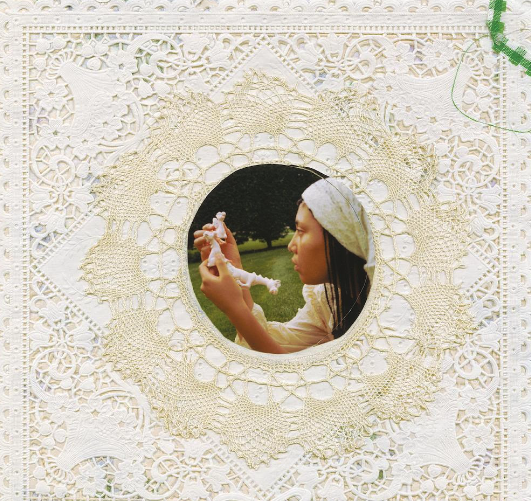
Universal Harmonies & Frequencies ‘Tune IN’
(Yeyeh)

Recorded in a five day window before their collaborative performance at the electronic music Dekmantel Festival (held in the Amsterdamse Bos, in the Netherlands), Jamel “Hieroglyphic Being” Moss and foil Jerzy Maczyński’s improvised sessions cover a lot of eclectic ground.
Marshall Jefferson meets Marshal Allen; jazz transduced through an electronic wave of electronic body movement, house, techno, trance and ambience, the project reconfigures, transforms and resets the perimeters with a spontaneous search for answers, realms, spaces and spiritual inquiry.
From an original soundboard of twenty-six long form peregrinations, whittled down and either left in their improvised form or reworked and reproduced under the guidance of recording engineer Rein De Sauvage Nolting (known on the scene as RDS), twelve finalized tracks emerged, selected by label facilitator Pieter Jansen. Each track finds a more exotic, mysterious and sometimes chaotic way to follow the rhythm and groove. For this is a strange and refreshing vision of dance music; an acid shooting laser beam and Artificial Intelligence album series imbued trip of whirly birds, alchemist mysticism, sci-fi and Pynchon metaphysics.
There’s fun to be had too, but a considered, sophisticated freedom of experience and influences that puts a diverse range of saxophone contours, breathing lungs-like expulsions of ruminated air, rasps, quacks and spirals with synthwaves, counter flows, various synthetic apparatus and a whole electronic ecology. Just the opening titular-track (running to twelve minutes) alone progresses through a shimmy-shimmer polygon analogue score of Sky Records kosmische, Lukid, psy-trance, house, Basic Channel, Beaumont Hannant and warbled synth-funk. Changing course, ‘Can U Hear The Hum’, which follows, marries Amazonian foliage and a squirreling Harmonia with the Inre Kretsen Grupp. And when we get to hear Moss and his motivational speeches on ‘Multidimensional Transformations’, it’s like Ramuntcho Matta go-going to early Chicago house music.
The fantasy mystery, ‘The Book Of Forbidden Knowledge’, reminded me of Bowie and his last ever foil, Donny McCaslin, and the tubular reed strained and piped ‘The Fifth Science’, has a touch of Matthew “Doc” Dunn’s Cosmic Range and his work with the saxophonist Andy Haas.
Within that stretch of the imagination, there’s moments of controlled tumult, the faraway sounds of a removed North Africa, crystallised visionary vistas, beautifully constructed mists, and waterside meditations. To put it another way, this partnership is like Floating points meets The Black Dog, Klaus Schulze, Benjamin Lew and Rebecca Vasmant in the most unique, transported of dance clubs: And that’s a very inviting proposition indeed.
June McDoom ‘With Strings EP’
(Temporary Residence Ltd.) Out Now Digitally/Vinyl Arrive February 24th 2024

Credit: Bella Newman
Despite the diaphanous, wispy and hushed delivery, June McDoom’s voice is anything but evanescent or forgettable. Because just like one of her most cherished heroines, Judee Sill, every word and expression is believable as a lived experience of heartbreak, yearning and a close relationship with the elementals of an ethereal, but deeply felt, nature.
On the follow-up to her debut EP, the burgeoning McDoom leads with a watery replenished and droplet-mimicking rendition of Sill’s environmental devotional, ‘Emerald River Dance’. The tragic, resurrected to cult status in recent years, troubadour’s fatalistic life was like something out of the gospels: updated in the bohemia of the Laurel Canyon. Forced into prostitution and petty crime to feed her drug addiction, and with a string of coerced and unhealthy marriages/relationships, Sill first came into contact with the afflatus sound that would become her trademark when in reform school during the 1960s; spending time learning the liturgy and gospel music whilst picking up the church organ. In a similar vein to the no less unfortunate Karen Dalton – a peer with an equally ill-fated car crash of failed marriages and addiction, and who’s stripped-back, unpretentious folk style is echoed on this EP -, Sill, despite her obvious talent and the circles she moved in (signed to Geffen’s Asylum Records, with a song bought and made famous by The Turtles no less, and her debut single, ‘Jesus Was A Cross Maker’, produced by Graham Nash), remained an obscure cult figure on the peripherals of the folk music scene. Possibly garnering more attention forty odd years later than she did in her own time. Every song, recording, newly discovered demo is heavily loaded, and yet transcendent.
McDoom has her work cutout, and yet breathes a new life into this near Southern spiritual hymn of softened beatific poetry. The original words remain intact, but with the added “I will hear what it is” line; McDoom placing herself within the sentiment of this aquatic and pastoral embrace. A favourite song for years, part of McDoom’s live repertoire, it proves the perfect congruous opener.
A second cover, and age-old standard of the Celtic set that translates across cultures and time, the traditional ballad, ‘Black Is The Colour Of My True Love’s Hair’, has roots (it’s believed) in Scotland. Nina Simone performed an impressionable version, and the American-in-Paris Tia Blake recorded an incredible minimalistic rendition. Both inspired McDoom to record a version; channeling in particular Blake, who is another interesting, fleeting artist from the folk cannon that disappeared off the radar, recording only one album of traditional songs at the age of nineteen in the French capital. Traversing, rather effortlessly I’d say, the Baroque, Appalachians and old Iberia, McDoom conjures up an apparitional-style mist of lament and dreaminess on her near-filmic and airy heaven-bound transformation.
As that EP title makes clear, With Strings doesn’t so much embellish as sympathetically accentuates and carefully brings home the emotional, touching and longed sentiment of McDoom’s stripped-down style with the small, intimate introduction f chamber strings and harp. Reimagining both ‘On My Way’ and ‘The City’ with this magnificent accompaniment that’s one part semi Baroque classical, and one part Alice Coltrane and cosmic, the vocals are further enhanced with the otherworldly three-part harmonies of Cécile McLorin Salvant and Kate Davis: Between them, their CVs and voices are imbued by jazz, French choral music, Creole, pop and the classics. Together it all reaches a near ethereal magic of the untethered and gauzy, with a semblance of the blues, country, and folk and spiritual. And yet, it’s all so modern sounding. ‘The City’ especially, has a breathless air and the space to progress: to confess too. Like a long list Lomax recording born anew, mixed with the beauty of Mercury Rev and The music Tapes, McDoom’s lacey arts and crafts vulnerability is soothed through a gauzy yesteryear. This city plaint is nothing short of sublime.
McDoom’s inspirations are worn on the sleeves, and yet I keep racking my brain to fathom who she reminds me of. An American Maria Monti? A softer Natalie Ribbons? Maybe a passing resemblance to Connie Converse perhaps? McDoom settles somewhere in-between them all as a refreshing, heavenly talent as she disarms the hurt and depth of emotional turmoil, inquiry and wonder with the most beautiful and impressive of deliveries. Certainly, one to watch.
Kenneth Jimenez ‘Sonnet To Silence’
(We Jazz)

Taking a leap into the untethered realms of Kenneth Jimenez’s dreams, the jump off point for his newest album literally takes flight. The Brooklyn-based bassist, composer and quartet bandleader runs for the mountains and sprouts wings; flying over the valley and the versant contours of free jazz and hard-bop: ala New York style.
This bird-like weightless journey often takes in the bustle, chaos of the city, and the excitable energy of his southern neighborhood (or “barrio” in this case) and ports. As the titles suggest, there’s a reference to Jimenez’s Costa Rican roots, and more than a spirit of that Central American’s oasis diverse landscape and bird life. But off the beaten track, Sonnet To Silence truly roams free between mirages and the strains of concentrated expression.
With Angelica Sanchez on piano, Gerald Cleaver on drums and Hery Paz on saxophone, the action is in a constant, almost restless state of movement: of the flighty, swanned, rolling, sprung, stretched, chuffed, pulled and heightened. Between them the quartet invoke Liberty era Jeremy Steig and Prince Lasha & Sonny Simmons on the whistled and wiry drawn-out and busy ‘Dia Laboral’ (“working day”), and Roscoe Mitchell and the Art Ensemble Of Chicago on the frayed taut double-bass stretched (Jimenez is an obvious talent in this department), turn bluesy and tumultuous, ‘El Patio’ (“the backyard”).
The dockyard 50s and 60s New York evoked ‘Mr. Shipping’ has a slight swing, plus a touch of both Marion Brown and Cecil Taylor – Sanchez in full flow, switching effortlessly between the melodious and experimental with almost jarred prods and block chords; reminding me at times, of Alice Coltrane accompanying Pharoah Sanders, but a little resonance of Oscar Patterson too.
So much is happening on this incredible, engaging and sometimes challenging (in the best possible way) album, which draws you in and then ups or changes the tempo, mood and direction. This is free jazz at its most promising; certainly encouraging and with dreamy quality that lifts you up into an imaginative vision of soaring and more complicated expression. Kenneth Jimenez and his quartet have produced one of the leading jazz albums of 2023.
Unwavering ‘Songs From A Tomb EP’
The solo moniker of one Matt Bennett, Unwavering has made an impact with now three of the blog’s writers. Before me, both Graham Domain and Brian ‘Bordello’ Shea pretty much nailed this atmospheric project of indie-folk: as difficult as it is to describe.
Following on from the debut album, Freeze/Thaw/Chorus, and last year’s Ley Lines In The Forth (great title by the way) EP, the Lothian winter’s mists and ‘dreich’ dampness seep into the new EP of acoustic evocations, blessings and stirrings. From the crypt, mausoleum to the nave, Bennett sends out both resonating roused rhythm guitar strikes and quieter, almost ambient in parts, passages of mediation and near despondency.
A hauntology of the downbeat – Brian ‘Bordello’ Shea described it as akin to a downcast Stone Roses, without Mani and Reni – and capture of the abstract environments – catching floating dust particles in a weakened beam of light, shining in through the cellar’s iron gridded window – from which it seems he is performing, there’s a real strange, cultish and sometimes hallowed beauty to the music. His guitar fills the cavern, the church and basement; resounding and loud but always melodious and effecting.
And through it all, he channels centuries of psychgeography; the marks left upon the landscape’s he’s trawled; the erosions and evaporated essences of what were. All of this is merged with personal inner feelings, remembrance and wounded modern travails, written, so it sounds, with a quill by candlelight.
At times it sounds like fellow Scot, Ali Murray, and at other times like the Cocteau Twins pairing with Steve Mason and Parachute era Pretty Things (that’s especially so on the hallucinatory, ambient textural and foggy ‘Slow Digression’), but also a hint of stripped 80s acoustic Goth and even Joan Of Arc. Bennett himself name-checks Kurt Vile, Harold Budd and Low, all of which ring true. But this EP is really quite idiosyncratic, between realms, time and spaces; a unique folk-indie inspired songbook that works outside the usual perimeters, length and borders of song writing. A really interesting discovery waits.
George Demure ‘Ear Candy Dandy + Bonus Album Dandy In Dub’
(Hobbes Music)
On a bobbled and float-y, light sunbeam dappled vapor of deep house, garage, electro, kosmische, leftfield pop electronica, dub and new wave (both the German and UK’s), the Edinburgh DJ/producer and singer-songwriter George Thomson continues the good work he laid down on the last EP: 2021’s well-received The Record Store.
With the same self-imposed limitations that he set back then, his latest George Demure alias album (expanding to a eighteen-track package with the addition of the Dandy In Dub bonus) makes a sophisticated use of a drum machine, two analogue synths (a mono and poly version) and a computer (to record upon). And yet, as sparse as that sounds, Thomson manages to fully expand his subtle sonic, musical, rhythmic and effects universe even further; channeling four decades of experience in both the Scottish and English capitals.
The CV is impressive and varied, starting out (roughly at the same time as myself, but geographically 500 miles away) in the burgeoning techno and house scenes of the early 90s in Edinburgh. After building up a reputation for producing his own music under the George T moniker, he made a move to London in the 2000s. The ‘T’ was put on hiatus however, and George Demure was born. This still gave Thomson ample time to collaborate with others, namely in recent years as one half of the Jeanga And George partnership. Facilitators and labels for those multiple projects and appellations include NRK, Stickman, 2020 Vision, Crosstown Rebels, Tirk, Greco-Roman, Optimo, Output Recordings and, now, Hobbes Music.
It shouldn’t come as any surprise to find Thomson well versed and full of ideas; using this album, in a fashion, to rediscover and connect with his formative years. A culmination if you like, of his years in the scene. But this is a very fresh projection of that, with both vocal tracks and instrumentals that bob about with the lightest of touches and skill. That’s not to say there isn’t depth, as no matter how soft they are, the bass does thump and the machinery and generators add something concrete and textural to the music.
Of one production, there’s still a wide variety of ideas and genres across the original album’s ten tracks and the bonus moiety’s further eight variants of sung, instrumental and ‘beat’ tracks. The opening, ‘Hello Mr. George’, offers an awakening rural scene, complete with bird song. Bouncing drum pads patter out a gentle bip-bop beat enveloped by light chords on a dappled electronic piano-like synth across a morning idyllic scene. By the time we reach the chimmy new wave-esque ‘Dub In Your Bubble’, and the opening crooned vocal of “Johanna”, we’re almost in the yearning schmooze territory of the crooner. Though as the song progresses, it becomes apparent that it’s more Robin Scott than Scott Walker; mixed I might add with a touch of the Sabres Of Paradise. Another vocal track, ‘Circles’, sounds more like a soulful leftfield downcast Matthew Dear.
An after hours downtime serenade, ‘Late Again’, that features Stevie ‘Chicago’ Christie whizzing Felix Da Housecat vibes past satellites, is a particular highlight – imagine Eno and Scott’s M persona making pop music together. By contrast, the therapy session, ‘Blah De Blah’, sounds like Polygon Windows lost in a haze of Bowie and Level 42! All the vocals have a real drift to them; almost languorous and untethered; a kind of free association soul-house-pop vibe that gives.
Elsewhere, the impeccable production mixes rotor-bladed Moroder with EDM; Kriedler with the melodica dub cloud operations of The Orb and FSOL; and the outdoor environments of epic45 with Roedelius and Thomas Dinger. Within that scope kinetic sounds are matched with the cosmic, vaporous and far out ‘jack-your-body’ moves. It’s a most lovely, swimmingly blend of motivations, feels and deep grooves that effortlessly comes together in a generous offering of electronic music: the very epitome of the Hobbes label’s remit in delivering leftfield unique visions of now techno, house and club sounds.
Lea Bertucci ‘Of Shadows And Substance’
(Cibrachrome Editions)
From the chthonian bowels of the geological to the vaporous airs of archaic pseudo-scientific sexism, the New York-based composer, producer, performer, saxophonist and label founder (of the Cibrachrome Editions imprint, under which this album is being released) Lea Bertucci continues to capture the intangible and abstract on her latest work, Of Shadows And Substance – a title borrowed from an episode of the Twilight Zone.
Two scored performances; two separate commission; each atonal experiment is an avant-garde and prompted reaction to a theme that simultaneously hides its sources, instrumentation, sense of place and time, yet evokes a certain recognisable mood.
Covering what used to be two sides of the traditional vinyl LP, these congruous long form pieces tap into Bertucci’s research methodology and serialism of composition and interpretation; stimulating the actions and atmospherics, but granting a form of autonomy to the musicians taking part. This includes an “intonation” tuning structure, the textural and semi-improvisational, and the use of the cello, double bass, harp, percussion and electronic apparatus.
As the album title might suggest, Side One’s ‘Vapours’ piece is, in part, informed by the literal description of the word: that is, a molecule existing on the verge of a liquid, gaseous or solid state. But it’s also a reference to the, far from sympathetic and almost dismissive, term to diagnose types of hysteria in women from a bygone age. Commissioned and played by the Italian Quartetto Maurice, these two interpretations mask the familiar with a highly experimental treatment, strain, stretching whining and searing atonal performance that conjures up shades of Walter Smetek, John Cale, Simon McCorry, Cale, Riech and Fluxus. At one point, when the intensity builds towards an otherworldly, unnerving drama of sawing and heightened tensions, there’s more than a trace of György Ligeti.
Maintaining a constant resonance of metallic sheens, rubs and refraction – in some manner, almost melodic, in the most removed sense of the word -, there’s a permeating connection that carries on throughout the various stages of drones, drawn-out bows, frictions, chaffs and didgeridoo-like blows. Neither vapourous nor hysterical, but somewhere in between, the Quartetto summon some unique visions of distress and abstracted classicism.
In a similar vein, the title-track sonically conveys the arse-end, final days of the anthropogenic epoch. Commissioned this time by the Philadelphia creative foundation, the ARS Nova Workshop, and performed by Henry Fraser, Lester St. Louis, Lucia Stravros and Matt Evans, this twenty-minute plus movement digs deep into the Earth. Like Scott Walker mining an atavistic psychogeography, layers of crust are removed to reach the present state of geological trauma: Or as Bertucci puts it, ‘a meditation on time-travel’ and ‘measure of accumulated events over glacial periods of time’; ‘a metaphor for social and environmental shifts’. This translates into shimmery vibrated cymbals, barely recognized saxophone rasps, the thump of primordial creatures chained to the bedrock, and spooked piano. By the close, the hovered instrumentation is in the airy realms of a calmer, more settled gauze.
Challenging in the best possible way, this couplet of performances is so textural that you could grasp it in your hands. A gateway, window into an experimental atonal world, Of Shadows And Substance is an inventive and intriguing proposition from a unique and adventures artist.
Xqui ‘Melting With Ice’

In the time it takes me to cast my critical mind and ear over this release from Xqui, there will most certainly have been at least another, if not more, projects cast out from the experimental creator’s hothouse studio: such is the abundant output from this highly prolific artist. Across an array of labels and facilitators, and in both a solo and collaborative capacity, Xqui occupies a liminal space between ambient music, sound art, musique concrete, transformed field recordings, hidden source material and voice exploration/transmogrification. Anything recognisable is made anew, strange and alien within this amorphous blending of the synthesised and technological – which isn’t to say these ideas aren’t organic, or that they lose that connection with their environmental, atmospherics settings. It’s safe to say that you never quite know what to expect with each release, such is the diversity and range.
Leaning more towards synthwaves and a chemical, scientific, numerical calculus of sum-parts and references, Melting With Ice draws us into an alternative futuristic and space-searching world of veiled machinery hums, generators, percolators and soft pulses; a sci-fi odyssey of Ligeti, Richard H. Kirk and the Theremin-like arias and apparitional sirens of Star Trek. But this is balanced out with a more naturalistic alchemy of watery elements, an exotic aviary of birds, and subtle hints of the pastoral.
Playing with voices, speech, annunciation and phonetics, Xqui uses a range of effects to convey just the mysterious, curious essence of conversations, whispers, breaths, expulsions of air, the choral and informed. ‘Cherry Red, Neon Blues’ is different in that regard. Here we find a Simon Armitage type poetically inhabiting a Gary Numan-like Blade Runner cybernetic set of neon-buzzed, hummed and lit removed romanticisms and forebode.
There’s a ghost in the matrix, aboard the cosmic flights of deep space probing, and under the Earth, as the ice caps melt and everything from the molecular to most expansive chasms changes: for the better or worse.
The minimalistic, with shades of Twin Peaks and Vangelis, ‘Pygmalion Effect’ references the famous psychological phenomenon in which high expectations lead to improved performances/outcomes in any given area, whilst low expectations lead to the opposite. Its name of course comes from the sculptor in Greek mythology who fell so in love with his ‘perfectly beautiful’ sculpture that it came to life. Make what you will of that. But as usual, based on the quality labyrinth of past creations, expectations are usually high for an Xqui album. And this is no exception; another highly evolved sound world that somehow makes even the innocuous more sci-fi or otherworldly, and attaches a deeper meaning, an experience to it: for example, the passing traffic driving through puddles as the rain hits the pavements to cause its own splash-back tide on ‘Sunrise Waves’; a recording enveloped in the thoughtful and searching. I recommend you check this one out, and the entire catalogue for that matter.
Alessandro Alessandroni ‘Alessandroni Proibito Vol. 2 (Music From Red Light Films 1976-1980)
(Four flies Records)
The stellar talent of over forty film scores, part of the great Italian composers epoch of the 1960s and 70s, and owner of one of the most iconic whistles and guitar riffs in cinematic history, really deserved so much more; putting his name to the forgettable skin-flick exploitation movies that don’t even get named on this second volume of obscurities from the Alessandro Alessandroni vault.
The dire schlock smut quintet of movie scores that inform this latest Italo-soundtrack maverick limited edition run from the Italian Four Flies label, have disappeared off a cliff. However, Alessandroni’s modest home studio scores remain, with a smattering of tracks from each now spread over a quintet of 7” vinyl singles, collected together in an alluring box set.
A peer, foil, mentor and friend to such luminaries as Morricone and Piero Umiliani, the Rome born composer, multi-instrumentalist maestro and artist must have hit the skids by the time these red light movies were released. For despite making a name for himself with that Spaghetti Western twang-y Duane Eddy signature and his highly influential work for Sergio Leone, by the the late 70s he was scoring more and more mondo trash, erotica and garish S&M horror – see Lady Frankenstein and Killer Nun. And yet, the quality of his work is never in doubt; often elevating such tawdry, amateurish affairs to cultish status by the music alone.
Although far from serious, it seems Alessandroni’s craft is likened to playing with an amusement park of ideas, sounds and instruments: entertaining but also captivating in equal measures. With an ear attuned to the contemporary fashions, but the classical and traditional too, a lot of musical ground is covered in his compositions: from Italian folkloric standards to disco, library music and the salacious. The second Proibito volume is no exception, with soft-pop-lit dalliances with the blues and Turkish-sounding guitar (the desire prowled sleazy, deep heat floor show, ‘Luci Rosa’: translating as “pink lights”), 10cc soft rock erotic body contouring (the lulled, wandering fingers caress down the spine ‘Tahiti Joint’), and Gallo humping orgasms (the weird spooked, moist-dripped cave (oh-ah!) and piano wire malarkey shivered ‘Climax’). Some of those tracks feature erotic wordless allurements and enticements, with Alessandroni’s wife, the fellow Roman and singer-actress Giulia De Mutiis, providing the sexy coquettish trapeze artist vibe expressions of dizziness on the Broadway stage circus act, ‘Ticket’. I think she also provides the Betty Davis-like oozed erotica on the smoky and funky ‘Miss X’.
In case you’re interested, Mutiis has credits for roles in 15 Scaffolds For A Murderer, The Laughing Woman and Any Gun Can play, but also joined her husband’s octet vocal group, The Modern Choristers (in 1961), which specialized in those choral wordless calls and atmospheres: appearing on many a film score. Apparently other family members were also corralled into Alessandroni’s experiments, although no one else is specially mentioned in the notes, and there are plenty of those siren voices to be heard throughout this compilation. The main man appears himself, delivering the “do-doing” and “bah-bahs” on the new wave discotheque and art-rock ‘Racing’.
As a member of the Italian set of pioneers and new wave, it’s unsurprising to hear echoes of the already mentioned Umiliani (both partners in the supposed anonymous rock group Braen’s Machine in the 70s), Giuliano Sorgini, Roberto Pregadio and Paolo Casa (especially his clavichord and electric piano, Stevie Wonder-esque moments). But with the use of the mandolin, accordion and melodica too, plus that famous guitar twang, you could be mistaken for thinking you’ve been transported to any port on the Med, South America and further East – especially when that spindled guitar starts to ape the resonating rings of a sitar. There’s a craft. There’s fun. There’s a swerve of soul-funk and frolicking titillation in these previously unreleased on vinyl recordings that make it worth the admission price. For those fans of Trunk Records and Finders Keepers, but also anyone with a penchant for the cult and Italian cinema, you’ll love this collection of smut recordings with élan.
Don Fiorino & Andy Haas ‘Accidentals’
(Resonantmusic)

After two decades of intermittent collaboration, Don Fiorino and Andy Haas have found a common language of challenging, free-expressive experimentalism and exploration together. Speaking that sonically, atonal and often non-musical dialect fluently across the previous albums of Death Don’t Have No Mercy and (the monolith cocktail profiled) American Nocturne, these two highly impressive musicians/artists have pushed thresholds and boundaries to emit a tumult of squeezed, pulled, squealed, entangled, gabbling, whistled and indescribable sounds from a host of stringed instruments and the saxophone. The duo’s third album is no exception, with eighteen descriptive, indicated and playful titles of the pressurized, near-distorted, flutter, fizzed, bandy and bended.
But before we go any further, a little CV check. Former Muffin, saxophonist maestro and transformer Andy Haas first blazed and scorched Martha’s ‘Echo Beach’ hit in ’78, before relocating from Canada to New York City in the early 80s; making a name for himself in the post-punk, no-wave and avant-garde scenes, and collaborating with such luminaries as John Zorn, Ikue More, Marc Ribot, Ken Aldcroft (which comes the closet to Haas’ improvisations with Fiorino)…the list goes on. Nearly two decades later and Haas relocated back to Toronto, just in time to prove an in-demand foil to a new generation of artists and producers; firstly joining the orbit of collaborators around Matthew ‘Doc’ Dunn’s head music super group, The Cosmic Range, and then Meg Remy’s U.S. Girls led vehicle, performing on 2018’s In A Poem Unlimited and on the subsequent tour – I personally witnessed Haas blowing up a storm on the tiniest sax I’d ever laid eyes on! A multitude of projects, solo albums fill the gaps in-between; many of which were released on this album’s label, Resonantmusic.
Likewise, Fiorino’s backstory spans the decades with a diverse range of improvisational projects as an incredible guitarist and painter – the latter informing the former. This expands to the glissentar, lap steel, bass, banjo, lotar and mandolin, and covers a host of influences from across the globe. You can find him filed under the Radio I-Ching trio and The Hanuman Sextet, but he also appears on the late drummer Dee Pop’s various projects, and with Daniel Carter, John Sinclair and Adventures In Bluesland.
It all amounts to a lifetime of experimentation for both partners in this venture.
Accidentals isn’t the easiest of listens; rooted by the sounds of it, and by that title, to the accidental results of close quarter improvised wrangling and inquisitiveness; the captured, freeform and untethered results recorded in-between longer performances perhaps? An intimate reaction to downplay perhaps?
By chuffing, rasping, stretching out and releasing tensions on the saxophone, and with Fiorino switching between his racks of stringed instruments, there’s some wild and crazy far-out flexed, physical contortions. Valves let out the steam slowly, as unrecognizable sources trill, flutter, suck, ripple and resonate. When on the fretless bass, it sounds like Bunny Bruen or Percy Jones or Mohini Dey thwacking, patting, tabbing and slapping full-trebled thickened strings. Haas meanwhile channels everyone from Antony Braxton and Roscoe Mitchell to Marshall Allen and Jeremy Steig. Within that sphere of inspiration, his sax finds moments of melody, serenade and the heralded.
Whilst there are evocations of jazz-fusion, La Monte Young, Walter Semtek, Federico Balducci, Zappa, the Middle and Far East, the personal ‘Eulogy 4 Dee’ (that’s Fiorino’s foil and band mate, the drummer Dee Pop) crosses Mali with Louisiana Delta Blues and Mardi Gras for a purposeful goodbye. And the flit, flighty and reed-squeezing ‘Curled Time’ merges Stooges Fun House with the sort of uncoying, stripped of artifice stringed recordings found on Ian Brennan’s recordings from forgotten parts of the world. But for the majority of the time, Accidentals is an album of abstraction, extraction and free-play, performed by two musicians at the height of their perceptive and explorative skills; the language now almost telepathic, with no prompts needed for expressing the chaos, tumult and stresses of the environment and greater geopolitical climate.
Cándido ‘La Muerte de Occidente’
(Natural Sciences)

On the face of it, nothing could be more incongruous than a practicing, bona fide Hare Krishna making gothic-punk house music. And yet, Cándido has done just that. Gone are the mantra chants, yoga and tambourines for an embrace of 80s underground electro Streetsounds, 303s and 808s, post-punk industrial S&M, the German new wave, EBM and jack-your-body early house music. For despite the opening Laraaji-like spiritual chimes and trinkets, this is an occultist club scene rave-up back dropped by the spiraling ‘death of the western world’.
A lively sound clash from the Buenos Aires underground, this album (Cándido’s debut for the Manchester imprint Natural Sciences) is less Zen and more dungeon; a dance music vision permeated by radio waves and samples of the reaper’s prophecy, film clips, cults, political epitaphs and a salacious Latin vamp (courtesy of the featured Contacto). In practice that all sounds like Mantronix, Cabaret Voltaire and Steve ‘Silk’ Hurley bruising it with Meat Beat Manifesto, or, an ashram soundtracked meeting between Nitzer Ebb, the Revolting Cocks, Rockit era Herbie Hancock, Farley Jackmaster Funk, Executive Slacks and Rammellzee.
It’s a unique take that has more in common with the Spiral Tribe, Chicago house scene, and Catholic guilt kinks than spreading the word of karma. In fact, it can all sound more gothic and illicit then blessed and spiritually enlightening. The only reincarnation going on here is in the beats. Cándido’s electro funeral pyre proves an infectious beat-driven 80s collider of underground dance music and industrial cut-and-shunt: An alternative route to transcendence.
Hi, my name is Dominic Valvona and I’m the Founder of the music/culture blog monolithcocktail.com For the last ten years I’ve featured and supported music, musicians and labels we love across genres from around the world that we think you’ll want to know about. No content on the site is paid for or sponsored and we only feature artists we have genuine respect for /love. If you enjoy our reviews (and we often write long, thoughtful ones), found a new artist you admire or if we have featured you or artists you represent and would like to buy us a coffee at https://ko-fi.com/monolithcocktail to say cheers for spreading the word, then that would be much appreciated.
Our Daily Bread 470: Dead Rituals & Francis Moon, Hits, Sun Atoms…
September 17, 2021
Brian ‘Bordello’ Shea’s Roundup

The cult leader of the infamous lo fi gods, The Bordellos, Brian ‘Bordello’ Shea has released countless recordings over the decades with his family band of hapless unfortunates, and is the owner of a most self-deprecating sound-off style blog. His most recent releases include the King Of No-Fi album, a collaborative derangement with the Texas miscreant Occult Character, Heart To Heart, and a series of double-A side singles (released so far, ‘Shattered Pop Kiss/Sky Writing’, ‘Daisy Master Race/Cultural Euthanasia’, ‘Be My Maybe/David Bowie’ and All Psychiatrists Are Bastards / Will I Ever Be A Man). He has also released, under the Idiot Blur Fanboy moniker, a stripped-down classic album of resignation and Gallagher brothers’ polemics.
Each month we supply him with a mixed bag of new and upcoming releases to see what sticks.
The Single.
Dead Rituals & Francis Moon ‘Tangled Up’
10th September 2021
This is actually quite a beautifully written pop song, and actually overcomes the awful bland production a lot of these indie pop songs have nowadays, the kind of production you hear on a song being played on an episode of Catfish when the person being catfished discovers that the hunk they thought they were talking to is in fact their best friends 80-year uncle who had a penchant for dressing like Touché Turtle and thrusting his pork sword at any passing stranger. This is a lovely well-written ditty and one if it came on the radio I would not turn off.
The Albums..
Hits ‘Cielo Nublado’
(Paisley Shirt Records) 17th September 2021
Why am I listening to so much indie pop this week?! Not that I’m complaining when it’s made with so much charm, melody and melancholia as this album by Hits; an album that brings back the golden days of K Records and the charm and beauty of a Sarah Records release back into my life, but with an added spice of sex and darkness which I am very taken with, especially on the slightly discordant ‘Flat Horizon’, which I have been listening to on a loop for far too long now for one’s own good and mental sanity.
But this is an album I think could well soundtrack the soon to be with us autumn evenings and bus rides to and from work. It has a certain feel like an old friend you have not seen in a long time giving you a hug and in that instant all those memories of what you shared between yourselves come flooding back, which you momentarily bathe and lose yourself in. Guitar jangle has not sounded so Revolutionary in such a long time, and not moved me so much in such a long time. Just guitar, bass and drums: Buddy Holly did not die in vain. This is an album to buy and cherish. And C+, it has a musical tribute to Alan Vega, which is short charming and catchy: as all indie pop should be.
ONETWOTHREE ‘ST’
(Kill Rock Stars) 15th October 2021
ONETWOTHREE are a three-piece post punk trio made up of three lady bassists from Switzerland, and the album is indeed a groovy post-punk delight. Obviously bass heavy with dashes of synth, guitar and a freshness that is welcome in this day of thawed out pre-frozen indie nonentities.
Instead of heart stopping originality and pop sass we are having music forced on us by those incapacitated with a grapefruit ear, but I’m happy to report that ONETWOTHREE have both a subtle originality and sprightly pop sass that has one sassing everywhere with indie pant shenanigans. They have tunes, melodies and a vocal charm that asks one the question, ‘why are we not hearing this on the radio more often?’ We need music with subtlety, charm and simple naive sexiness to soundtrack our daily life; the sort that ONETWOTHREE offer us.
Equinox x Xqui ‘External Combustion Tension’
5th November 2021
Music is an art form and this album by Equinox and Xqui is a work of art. It’s an album that takes poetry, spoken word and atmospherics into an almost sci-fi territory. Ambiance abounds, if ambiance can do such a frivolity. Imagine John Cooper Clark gusting gushing and guesting on an album by a stoned tired Add N To X.
This is an album to wipe away your afternoon contemplating life and losing yourself in the beauty and intelligence and humour, sadness and anger. This well written and produced original album offers you all this. It offers you so much, and it’s quite refreshing to listen to something not influenced by Chuck Berry and his duck walk, and something that is not scared to stick out its well stroked chin and make an album that screams out: “art is nothing not be afraid of”. And to adventure your way into a new listening experience is indeed not a bad thing, like growing as a human being is not a bad thing: one can never learn too much.
This album could be an antidote to the mediocre music that lacks originality soul and art that so spoils our radio. Oasis fans should be locked in a room and force fed this record through large speakers and then see if they have grown as human beings or at least learned to walk like one.
Hanrath & Way ‘Prismatic Illusions’
(Submarine Broadcasting Co.) 23rd August 2021

Another album of experimental atmospheric tomfoolery from the dyed in genius label that is Submarine Recordings; an album that is soaked in humour sex and repeated listening. Each listen is repaid with another view of life seen through an unwashed wine glass; experimental jazz-tinged vignettes of cinematic explosion rubbing shoulders with long journeys through the artic coldness of synth led melodrama: an album of illicit kisses of soiled and melted hearts drawn in the snow.
Junk culture and blindfolded Art viewing where the sunken ships are just the follies of the mediocre, this is an album of reawakening’s and unmissed opportunity, an album I recommend whole heartedly.
Sun Atoms ‘Let There Be Light’
1st October 2021
Once again I mention Wonky Alice in a review as this is what this album reminds me of, which let me tell you is a compliment as Wonky Alice were one of the finest psych influenced bands doing the rounds in the late 80s early 90s, and this album screams of late 80s early 90s guitar-based psych. And as an early twenty something I would have loved this album. Even as a 54-year-old I’m still enjoying this album for all the same reasons I expect, but I suppose with the added attraction of nostalgia attached. Not that this is an album of nostalgia, but an album of well performed songs that hover around the Psych genre, but with a touch of Leonard Cohen drama and dry humour strangely emerging, popping its head above the pulpit waving a floppy hat casting peace signs to the embers of a dying sun. Yes, this is indeed an enjoyable well produced well thought out pop listening experience with dashes, dare I say, of its own togetherness and originality.
Will Feral ‘Hellweb’
(Metal Postcard Records) 4th September 2021

Hellweb is a rather marvellous instrumental album, one that would make one hell of a horror film soundtrack. Will Feral could be the natural successor to John Carpenter, and one could imagine this easily being the music to the next Halloween movie, but one stuck sometime in the future in a nightclub maybe.
It is also an album that draws on past horror classics like The Sphinx, reminding me in parts of The Omen soundtrack, and at times the music from the already mentioned Halloween movies. John Carpenter is defiantly an influence. But also so is Moroder as there are definite electro dance vibes going on in some of the tracks without ever venturing into rave territory.
Hellweb is an album I would recommend to film score aficionados even if it is not a movie soundtrack. All this fine album is missing is a movie to soundtrack itself. And if this album was released on vinyl would sell like hotcakes.
REVIEWS/Brian ‘Bordello’ Shea

Brian ‘Bordello’ Shea joined the Monolith Cocktail team in January 2019. The cult leader of the infamous lo fi gods, The Bordellos, has released countless recordings over the decades with his family band of hapless unfortunates, and is the owner of a most self-deprecating sound-off style blog. His most releases include The Bordellos beautifully despondent pains-of-the-heart and mockery of clique “hipsters” ode to Liverpool, and, under the guises of the Idiot Blur Fanboy moniker, a stripped down classic of resignation and Gallagher brothers’ polemics.
Each week we send a mountain of new releases to the self-depreciating maverick to see what sticks. In his own idiosyncratic style and turn-of-phrase, pontificating aloud and reviewing with scrutiny an eclectic deluge of releases, here Brian’s latest batch of recommendations.
With all live gigs and events more or less quashed for the foreseeable future, buying music (whether it’s physical or through digital platforms such as Bandcamp) has never been more important for the survival of the bands/artists/collectives that create it. We urge you all to keeping supporting; to keep listening.
Princess Thailand ‘And We Shine’
(À Tant Rêver du Roi and Luik Records) Album/Available Now
If the swooning sound of post punk is the thing that swings your swinger then this fine album by Princess Thailand is the thing for you. Siouxsie and The Banshees attitude and early Cure like darkness melts over the proceedings like a black-hearted vamp of loneliness offering you one last grasp of togetherness. Guitars and sultry vocals merge with the feeling and memories of 80s post punk and, dare I say it, Goth to bring together an enjoyable flange filled half hour or so of dark sparkle angst.
Sir Robert Orange Peel ‘Are You Mod Enough’
(Metal Postcard Records) Single/Available Now
Welcome to another musical history lesson from Sir Robert Orange Peel; this time teaching us all about the mod culture fashions from the 60s: myself being too young to remember such a thing, but old enough to remember the late 70s revival. The joys of being a rockabilly in the early 80s, leather jacket winklepicker boots and huge Stray Cats like quiff surrounded by the be-parkered ones at a early 80s Kinks gig: and what a gig it was.
This is a joyful hipster swing of a track; one you could imagine Michael Cain sipping on a whisky and coke to, wearing horn rimmed glasses whilst watching the mini skirted beauties shaking their tail feather and there long lank hair swaying to this organ led beat happening at the London groovy discotheque.
Sir Bobby Jukebox ‘Friendship Gift’
(Already Dead Records) Album/22nd May 2020

Is there anyone out there old enough to remember the early 90’s and the wonderful joyful happy sounds of the Frank And Walters, who mastered in releasing catchy indie pop with melodies that caressed all the parts you wanted caressing by joyful indie music whilst hiding the dark underbelly of sadness.
Well if you do, this could well be for you. It has the same magical qualities but with the added spice of diy everything but kitchen sink woozy psychedelia, the injection of a “nah nah” chorus rush frenzies, and the Postcard era jangle of guitars – especially on ‘the has Edwyn entered the room’ ‘You Only Dance’. A joyful sugar rush of an album.
Bigflower ‘Hold You In Place’
Single/Available Now

Another day in lockdown and another slice of dark wonderful distorted searing guitar from the equally wonderful bigflower, an artist that should be celebrated not ignored: if this was the 90s when people still gave a shit about new music bigflower would be all over late night radio and in the serious music press. As this is Monolith Cocktail, and one of the only remaining serious music blogs still standing [no clickbait 10 songs about making tea from us] it is our duty to review and to publicize such a serious talent.
If dark beautiful guitar music that you can dive into and totally submerge yourself in is your thing, bigflower is certainly the man/artist/band for you. Get downloading: it’s free. And tell your guitar loving friends to do the same.
Palavas ‘Centerpiece’
(Wormhole World) Album/Available Now

Discordant noise merges with electro soundscapes that paint a sweeping aural picture of dark beauty, sometimes verging on the slightly psychedelic industrial sound that Throbbing Gristle used to thrive in producing; and I would advise any fans of Throbbing Gristle to give this festival of noise [noise in the best way] a go as I think they could well enjoy and be intrigued by this sound wash of danger. Once again Wormhole World Records produce the goods.
Salvatore Baglio ‘Sonic Doom: A Lo- Fi Home Companion’
Album/Available Now

Lo-fi is what I do best musically, so when I’m introduced to a 25-track album of such lo-fi beauties I’m indeed like a pig in muck. Recorded in various places on various recording equipment over the last 20 years by Salvatore Baglio, and compiled into this gem of a release.
Songs that makes one think of XTC, Guided By Voices, Cleaners From Venus, Clinic, and The Beach Boys at their crazy best amongst many other, what these songs have are invention, melody and tongue in cheek humour, and a great amount of songwriting talent.
There is the wonderful warmth that one gets from using cassette tapes to record that this album and these songs benefit greatly from; the warmth most of these songs, if not all of these songs, couldn’t be improved upon by using a state of the art 64 track studio, for what people do not quite grasp is that to succeed in making truly great lo-fi music you have to be a hugely talented songwriter with a inventive mind as you cannot hide behind 32 tracks of synths or millions of overdubs and get some producer to cover up some of your weaker tracks with studio trickery, and this album really does not have any weak tracks.
From the experimental instrumentals to stunning guitar pop all are polished gems. Some achievement that over the 25 tracks one does not find their minds wandering or wanting to skip songs. This really is a album all music lovers need to dive into and lose themselves in; a truly wonderful album and a masterclass in songwriting.
Nightingales ‘Four Against Fate’
(Ting Global Productions) LP/22nd May 2020
The Robert Lloyd warble is a thing of punk and post punk beauty, and here we are still in 2020 still enjoying the lyrical dexterity and humour of the great man: and long may it continue. As always songs of post punk verve leap from the speakers drenching you in memories of late night glories of listening to the much-missed John Peel; it really is like the last 35 years have not happened.
This album is simply timeless guitars jangling and twisting and distorting – as all great post punk guitars should do. Melodies reach out and throttle you while gently pulling on your heart strings reminding you no matter how bad things seem to be getting their are wonderful bands and characters like the Nightingales making enjoyable discordant pop songs full of wit adventure and wonder.
Xqui ‘Microchasm’
(Wormhole World) LP/15th May 2020
Found sounds or found zounds if you want to be funky, and I’m in a funky mood, the kind of mood where I feel like listening to cut up sounds welded together to make music with or without melody, the kind of thing you may find attractive whilst cutting a garden hedge or two. You can imagine Fred Astaire walking down a staircase whilst surrounded by beauties in fine gowns in black and white photos, whilst some guy is annoyingly recording the clip clop of his feet and making a strange trance like dance track from the aftertaste of the be-swathed one.
Found Zounds as I am now fond of calling them are something to be admired and beholden in a fashion not known by man, or men depending how many there are, or women even – let’s not be sexist about this. If you want to start and experiment into making found zounds you could not do worse than giving this a listen and losing yourself in the found zound wizardry of Xqui.
Simon Klein ‘Cat’
(Gare Du Nord) Single/Video/15th May 2020

Ah at last I was just beginning to despair of finding something I liked enough to be kind to in a review when this bountiful in bounce beauty came into my email box; a song that flounces with a fine subtle rockabilly beat, the kind of song that one twists to in their kitchen whilst waiting for the kettle to boil. And did you notice I wrote song and not track for it has lyrics and melody and everything. It is a song you can both dance to and stroke your chin to: hurrah!
Our Daily Bread 321: Susana Estrada, McPhee, Toxic Chicken, Gang Of Four, Thomas Hamilton and Xqui
April 15, 2019
Reviews: Brian ‘Bordellos’ Shea

Every other week we ask Brian ‘Bordellos’ Shea, of the legendary St. Helens lo fi cult that is The Bordellos, to accelerate through a mixed bag of new releases for the Monolith Cocktail, offering opine, vitriol and words of wisdom. This week he runs through a trio of oddities and madcap releases from the Guerssen hub, has chemical induced fun with a Toxic Chicken, and finds the Gang Of Four’s latest a drag and disappointment.
Susana Estrada ‘Amor y Libertad’
(Espacial Discos) 18th April 2019
This LP was originally released in 1981, and is a fine early 80’s Italo disco/funk album that really couldn’t of come from any other time.
The opening track, setting you in the mind to get down and boogie, is all Chic guitar riffs and ‘Good Time’ bass, the rapping of Susana Estrada recalling a girl who left her heart on the dancefloor of San Francisco, orgasm yelps and the faint popping of cheap champagne corks: a wonderful way to start any album.
The sign of a good disco or dance LP from the late 70’s/early 80s is that it should not just make you smile, but should also have the effect of a tidal wave of memories that wash you away, taking you back to those long summer nights of bad small town discos, you trying not to look too stupid with your slightly out of time drunk dance moves, trying to catch the eye of the pretty girl dressed in white with her not as attractive friend trying her best not to spill her drink whilst tossing her hair and wondering what time the chippy stays open till.
Amor y Libertad is not just a fine disco album but also succeeds in being a fine pop album of melodies abound, which is not always the case with disco LPs from this time – quite often just a couple of singles surrounded by extended dance filler. But this really is a well-written, well-performed, well-played, disco funk pop album; worthy of investigation by anyone with an interest in Italo Disco.
Mcphee ‘ST’
(Sommor) 18th April 2019
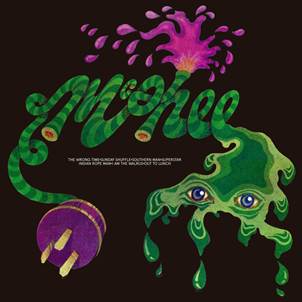
Mcphee were a psych rock band from Australia, this album being originally released in 1971 and described as one of the rarest albums from that country, which is maybe why I have never heard of it before – as I do have a love for psych rock.
This is a fine LP of the genre, riff heavy, wailing Hammond organ and Jefferson Airplay like vocals and with all the great Psych rock nonsensical lyrics, “Sunday Shuffle of the freedom kind”, but when have lyrics really ever mattered in Psych rock, they are feel good preaching peace kind of songs.
The group’s limited songwriting ability may explain the inclusion of some covers; the version of Neil Youngs ‘Southern Man’ is indeed a fine version and gives the chance for the guitarist to show off his no doubted ability. There is also a cover of Spooky Tooth and a strange ill advised slowed down almost stoner rock rendition of ‘I Am The Walrus’ which needs to be heard to be believed. And also, they do a more than good version of the Leon Russell/ Carpenters ‘Superstar’; in fact it is rather beautiful, even the sax solo does not destroy the moment.
The real highlight of the album is the 10 minute plus final track, ‘Out To Lunch’, a song that takes you on a trip that starts off all fab lounge music then leads you into the blues and then the Jazz rock of the Mothers of Invention: But I’ve always been a sucker for a heavy wah-wah workout. All in all a very enjoyable album and another great reissue of a lost out there classic.
Thomas Hamilton ‘Pieces For Kohn’
(Mental Experience) 18th April 2019

I find writing about music sometimes as hard as writing about sex. Not that I actually write about Sex; I’m no Jackie Collins, but to try and capture the passion music evokes is sometimes very difficult without sounding clichéd.
Pieces For Kohn is a case in point, an LP that was originally released in 1976 by Thomas Hamilton on his own label Somnath records, based around a series of electronic noises and spaced out beeps. And so, not the sort of music you can sing along to in the bath or something you would play whilst getting ready to hit the town in a wild night out unless you are R2 D2. Not something to turn the lights down and get ready for love, it isn’t exactly Barry White, it is as I said a series of spaced out beeps and electronic noises after all. Saying that, I find these four long instrumental pieces very enjoyable, they have a certain treasure in their strangeness; I could quite happily sit alone to this record and lose myself in my thoughts whilst sipping on a glass of red.
Not an LP to everyone’s taste I’m sure [but what is], but anyone who enjoys the workings and experiments of such doyens as Delia Derbyshire could well find this a rewarding listening experience.
Toxic Chicken ‘Fun’
6th April 2019

There is a genius in this LP that can really only be described by listening to it. Generic indie bands should be injected with this album, it may spark some sense of wild abandon and make them realise that there is more to life than dreaming about playing Glastonbury and getting a badly written review in a clickbait blog by someone who thinks Oasis are the be all and end all of rock n roll.
Fun is a emotional breakdown of a album; there is just so much happiness going on it is like a psychedelic children’s party, there are jelly riffs with fondant icing, a game of musical chairs when all the competitors are on speed, or their fizzy pop shaken to the extent of a eruption of volcanic LSD proportions.
Please do yourself a favour and give this album a listen, even if it’s just the once: you might be only able to listen once as the happiness might rot your brain. I do love eccentrics; there are just not enough of them. Toxic Chicken should be cherished.
Xqui ‘Settlers EP’
(Wormhole)
I am currently a little obsessed with the record label Wormhole, and I make no apologies for it, for they currently release some of the strangest, more out there, music available and it needs some praise and people writing about it or otherwise how are people going to hear about it and want to investigate the total mind expanding hipness. After all if the Monolith Cocktail don’t feature it there are not many other blogs brave enough to.
This latest release is a 5 track, more mini LP than, EP, as it lasts over 25 minutes and it is by Xqui, the Beatles of found and manipulated sounds if you like. He manages to find sounds and expand their strange and wonderfulness to new and strange heights, taking a low drone and turning it into a Bittersweet symphony. On ‘Biff’ he starts off with just a low hum and over the 11 minutes takes you on a slow relaxing trip towards heaven.
‘Suppose’ is a backward walk through snow; an aural delight of ignoring the scream of a MJ wannabe; starting something from a found sound dance of monks, a striptease nun licking the blood off the cross, on, what is, the shortest track on this entire EP. Settlers finishes with ‘Eye’, a Philip Glass like silent explosion of experimental pop. One might hope to hear the title track itself on the radio, if music like this got played on the radio: are you reading Stuart Maconie?! Get it on the Freak Zone.
Gang Of Four ‘Happy Now’
(Townsend Music) 19th April 2019

It must be hard being punk/post punk legends as obviously you have a history to live up to, but Gang of Four make it sound oh so easy with Happy Now. Maybe it’s because Andy Gill the legendary guitarist is the only remaining original member, but there’s a freshness that I wasn’t expecting to be honest.
It sounds like a new modern BBC 6 Music friendly band, making commercial easy on the ear guitar indie rock/pop with an occasional nod to dance. You can hear influences of bands that Gang Of Four themselves influenced: Nine Inch Nails in their poppier moments, Franz Ferdinand, even LCD Soundsystem.
Not everything is perfect; the lyrics are sometimes, shall we say, on the poor side but are covered up well with the ultra smooth production.
Happy Now is a well-produced modern sounding radio friendly album that would make an ideal soundtrack to your drive to work or to drop your kids off to school. There is a place for an album like this; an easy on the ear undemanding steering wheel tapper.
 Monolith Cocktail Blog