BRIAN ‘BORDELLO’ SHEA’S REVIEWS ROUNDUP – INSTANT REACTIONS. ALL ENTRIES IN ALPHABETICAL ORDER
Adjustable Mustard ‘Denatured Blue’
Album 6th November 2026
Gothic country blues psych rock is what we have here: and its very good indeed. The female vocalist has a fine tone to her voice that reminds me of Siouxsie Sioux but with an American twang, and at times has one casting their thoughts to the good old days of the band Bongwater. The guitarist at times seems to have been possessed by the spirit of Jimi Hendrix, especially on “Sadist For A Song With A Sinful Maker“. And so, the wonderfully named Adjustable Mustard are indeed mustard, and if you are looking for a new Jefferson Airplane these could be the ones you have been looking for.
Analog Dream ‘The Shape Of Us’
EP 20th August 2026
There is something very much early 90’s alt rock about this four track EP which I find very appealing. It reminds me of Sugar – the band that is, not what I can no longer have in my tea. Analog Dream I could imagine being featured on that wonderful late show special all those years ago called No Nirvana (I think), which had the likes of The Screaming Trees and The Smashing Pumpkins and indeed Sugar on it. Yes, they are good enough to have indeed been signed and probably then dropped by a major label after their first album only sold less than a million copies. I like Analogue Dream; they are very good at what they do, and I like what they do…which helps.
Antoine Bellanger ‘La Flute’
Album (Un je-ne-sais-quoi) 18th September 2026
This is all very lovely and warm sounding and French: an aural French Kiss if you like. Lo-fi and slightly experimental pop with spoken pieces scattered throughout, it’s like eavesdropping on strangers, friends who are talking and playing music to each other. It’s very beguiling and unusual and I just wish my French was better as I haven’t a clue what they are going on about. However, the warmth of the melodies and experimental nature overcome this slight hurdle, and on the whole it’s a rather beautiful sounding album.
Difficult ‘Stanislaus’
Album (Knuckles On Stun) 31st August 2026
Let’s be honest, this is right up my street, an album recorded on a four-track tape recorder. As regular readers of this wonderful blog or the handful of people who listen to my own music will know, I have more than a soft spot for it especially when it is done as well as this. Indiepop, punk and alt-rock all belted out with a passion love and humour and more importantly melody. When songs are recorded on a four-track they stand or fail on the strength of the songwriting as there is no studio trickery to cover up the shortcomings of the songs, and on Stanislaus there really is no shortcomings. This album deserves more than its limited 25 copy only cassette release, which as I type has already unsurprisingly sold out. A little indie pop gem, like the Pooh Sticks singing in an American accent.
Goldscammer ‘Mayday Royale’
Album (Morc Records) 28th October 2026
Mayday Royale is all fascinating stuff, gothic psych folk with an ethereal lo-fi magic; an album that weaves a spell of sadness and regret with a wonderful musicality. An album that one can really lose themselves in; at times reminding me of Sparklehorse, at other times, Skip Spence’s OAR masterpiece – both this album and OAR share a oneness of pure sublimity, of originality, the sound of the unravelling of ones psyche, the not quite knowing where the music is going nor which direction it is going to lead you but is quite a beautiful journey it is taking you on.
Darren Hayman ‘I’m Your Team’
Album (Audio Antihero) 16th October 2026
“It’s all been rather lovely” are supposed to be the final words of the great John Le Mesurier, and that phrase rather sums up this moving beautiful work of art by the equally as great Darren Heyman. Darren Hayman is obviously a fine songwriter as his past works have more than proved; just for the Hefner albums alone Darren should be hailed as one of the great British songwriters of the last thirty years or so. I’m Your Team is a subdued affair of sadness melody and melancholy, with a glimmer of the rising sun poking its tongue out at the surrounding darkness: as there is always darkness before light as there is always light before the dark. One of the finest albums I have heard so far this year, it’s always nice to witness a master of his art at the top of his game.
Railcard ‘Two Steps At A Time’
Album (Slumberland / Skep Wax) 18th September 2026
Well, this is all very nice, all 60s pop and indie pop like; it’s all hands in the air where has my hockey stick gone pleated skirts and longing looks; its Saint Etienne dipped in sherbet, the kind of album people who yearn for Joe 90 reruns on tv. Yes, indeed people like me who love music, and love the melody and chimes of guitars: the more vintage the better. The aural equivalent of staring into the eyes of a Sandi Shaw poster and thinking if only.
Swansea Sound ‘Mean To Be Mean’
Single (Skep Wax Records)
Another lovely catchy jangling piece of indie pop from Swansea Sound, a song were Amelia takes to task a music journalist about a bad review he wrote decades earlier. But myself, being married to a Welsh lady, I know they never forget. An amusing and entertaining duet between the two and a rather fine single.
Tana Delle Pigri ‘Figli delle Sette Cascate’
Album 21st September 2026
Figli delle Sette Cascate is almost what The Fall might have sounded like if they were Italian and performed Psych Jazz. It is an enjoyable trip of madness and funk with a bass that has just stepped out of a chase sequence in Starsky and Hutch, and guitars that screech and squeal and perform angular u-shaped bends, twisting and taunting in a cascade of drums and sixties organ frenzy. Yes, an album that is extremely entertaining and fun filled in a psych jazz dub alternative way.
Here’s the message bit we hate, but crucially need:
If you’ve enjoyed this selection, the writing, or been led down a rabbit hole into new musical terrains of aural pleasure, and if you able, then you can now show your appreciation by keeping the Monolith Cocktail afloat through the Ko-Fi donation site.
The Monthly Digest includes a clutch of accumulated new music reviews, this year’s Halloween Playlist selection, a piece from the Archives and jukebox selection of anniversary celebrating LPS.
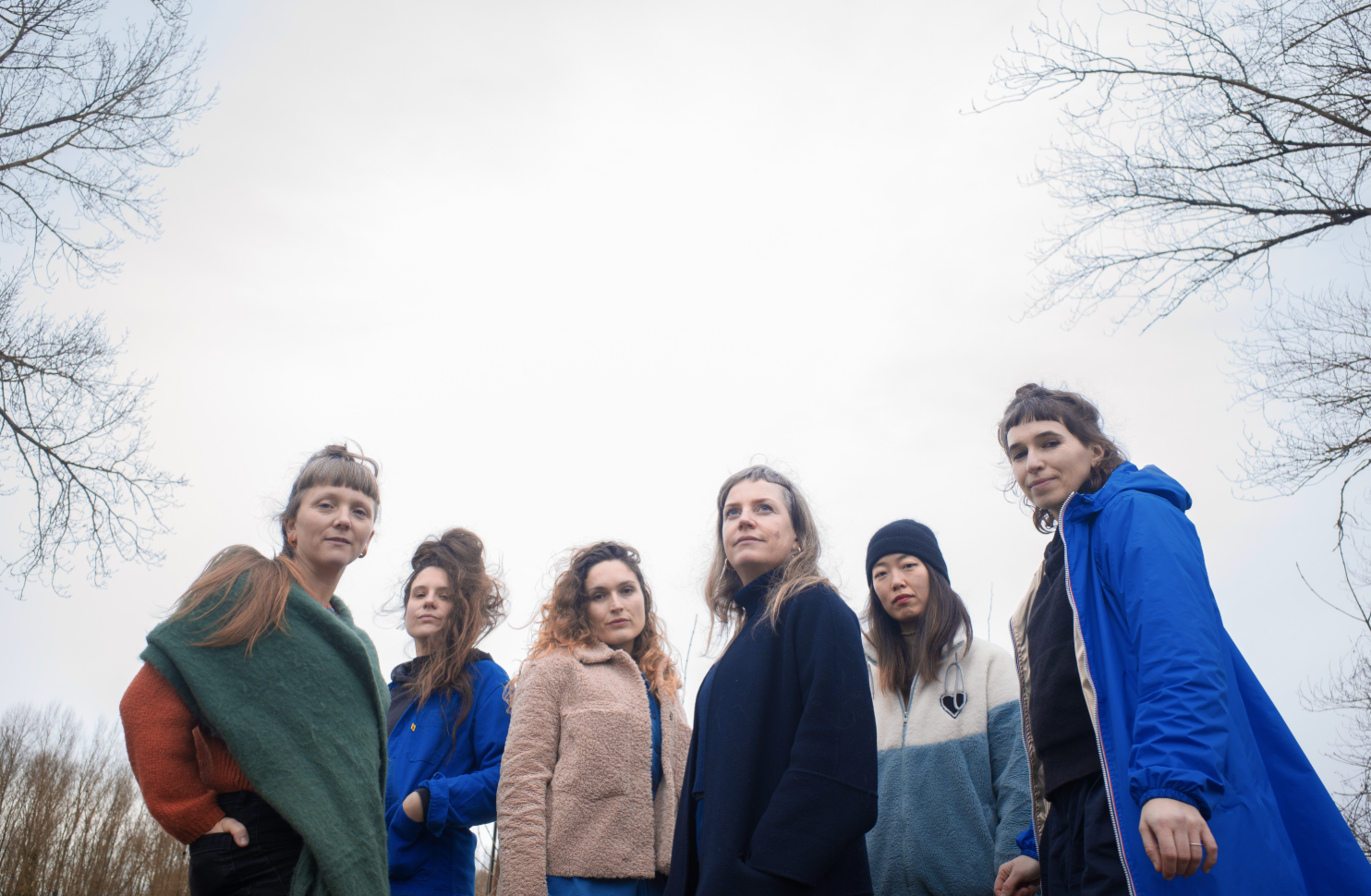
Photo Credit: Seismes photographed by Flavie Herbreteau
___/NEW MUSIC REVIEWS____
(All Entries in Alphabetical Order)
Brian Bordello ‘Who Killed Kurt Cobain’
(Metal Postcard Records) 6th October 2026
So, I was wondering with such a propounded rather than questioning title (the ? being missing from the title) if Brian Bordello was going to join in with the ghoulish online obsessive conspiracy set who cry foul play, nee murder about their iconic martyr, or, was going down the same vivid but multilayered route as the artist Sandow Birk and his gruesome, near cartoonish, depiction of Kurt Cobain’s death. Brian has gone for something even less clear, disarmed by the manner in which he’s recorded his first single in a long while, and more than a bit muggy and muddy.
Birk’s The Death of Kurt Cobain, Seattle oil on canvas artwork, painted not long after Cobain’s suicide in April of 1994, leaves little to the imagination – a riff on, and inspired by Harry Wallis’s 1856 painting of The Death of Chatterton, an even younger poet who famously committed suicide. Sensationalist even, Birk, brought up on the punk surf culture and street life of Southern California in the 70s and 80s, was influenced by the docudramas and the intrusive TV of the times. Brian doesn’t so much as follow this line but is candid and does play on the obsessions of fans who just can’t accept the most simple or plausible answer to their musical idol’s death: contrary to all the evidence.
Cobain’s fatalistic choices seemed inevitable after untold overdoses, and several earlier suicide attempts (according to Courtney Love). It’s a convoluted history, filled with contradictory accounts: inevitably coming to Netflix soon. And leaves room to doubt Kurt’s intentions. Though the facts as they stand support Kurt asking his old pal Dylan Carlson to obtain the shotgun that finally did him in, but for “self-protection” purposes. Whatever the motivation, a shotgun is some statement to make; the police photos, some only released to the public gaze decades later, are horrific and vivid; the effects of shooting your face off only too sickening to gawp at. Such a violent dispatch for a sensitive soul; perhaps knowing that there would be no way to turn back, and a small chance of survival, after already taking various concoctions of pills only to be saved by medics, and on one occasion, with an injection of naloxone by Love. And yet, it seems such a nasty way to go: the shock and cleanup for those he must have known would eventually find him denotes either an incredibly twisted fucked-up mind or someone making a disturbing and callous statement. It must be noted the police had been called on another occasion, confiscating both pills and a gun from Kurt: though Kurt vehemently denied he was trying to commit suicide.
It’s said via so many sources that Kurt was on the verge of splitting the band, pulling out of that year’s Lollapalooza, and yet Michael Stipe was adamant that Kurt was formulating a new Nirvana LP and direction, only to cancel the making of a demo – Stipe, from what I’ve read, seems to stick with the suicide narrative; almost finding it inevitable with the person he not only saw as a peer but friend.
On that tragic day in 1994, Kurt was found by an electrician who’d come to the house to install a security system. A note, addressed to his imaginary childhood friend Boddah, was found amongst the mess, part of it shared on Wiki and elsewhere stated that Kurt had not “felt the excitement of listening to as well as creating music, along with really writing…. for too many years.” Plausible…a statement that the creative will, and the love had run dry. It didn’t help that Kurt was only 27 when he died, feeding into the whole infamous “27” death cult of stars conspiracy.
Choosing a sad chapter from grunge rock’s front pages with which to make a solo return – Brian’s day job family band of a sort, The Bordellos recently released the ‘Oh Nora’ single, reviewed on these pages earlier this month – ‘Who Killed Kurt Cobain’ is yet another lower than lo-fi home recording on rudimental apparatus. The production, part of its charm and rawness, threatens to distort or break down at any second, as Brian’s Daniel Johnston meets John Shuttleworth vocals, Half Man Half Biscuit wit and wordplay, and the C86 jangled guitar prove both lamentable and shitty. It starts off well if you like, almost in sympathy (“Was he killed by too much love?” as one line goes, could be read with a double meaning: a clue, the Love part, the generic word or name of a certain suspect put forward by the naysayers), before eventually and near dreamily declaring the whole affair wasn’t a suicide at all, dialling into the whole conspiratorial discourse. And yet as I’ve already said, there’s a touch of sweetness and a lull to the coarser and dissonant aspects of this recording.
A difficult figure to sympathise with I grant you, but poor old Love comes in for the harshest criticism, her name as one of the most favoured candidates in a bizarre hotbed of murderous plots; although herself a heroin addict and right handful, staving off attempts to take their child into care because of their actions and drug dependency, Love come out alive and flourishes even despite setbacks and her poor behaviour, whilst arguably the real talent (and so the narrative goes) and golden ticket Kurt ends up with a blown-off face, dead at just 27 years of age. Perhaps he really was just drained, lacking the will to go on, stuck in a cycle of melancholic tragedy.
Sceptics will never be satisfied their idol left them high and dry and will never be happy with the manner of Kurt’s death or the investigation that surrounded it. And with no end of armchair experts, analysts – the boon of the internet age – on hand to refute and counterclaim against the evidence, Kurt’s suicide will remain forever suspicious. (I happen to not care but can’t see why Kurt wouldn’t just pull the trigger on his life and hurt from everything I’ve read; from the music I’ve experienced and the hectic fuss and self-destructive nature of his life).
Brian promises or threatens (depending on your view) to release a full songbook at some point in the near future; this time through the Cruel Nature Records label as opposed to dropping from out of nowhere with no fanfare nor any publicity at all, on Metal Postcard Records. Expect a full review when the time comes.
The Clean Crime Scene ‘Raw Cuts’
(Blank Verse/Brothers Club) 30th October 2026
Finally arriving after years of cultivation, the debut album from John Simek’s scuzzed and fuzzed and purposely muddied produced The Clean Crime Scene project is here. From its earliest foundations during the summertime family vacations of childhood reminisces on the Jersey Shore in 2021, where John recruited fellow Richmond, Virginia musicians Jay Wilder (the lead guitarist of this outfit, who also offers up some bass chops and plays keys) of Contraption and The Venus Explosion note, Ralph Nicastro (playing drums and some bass) of Sam Tropez, wreaths and Sparks Fly From A Kiss, and Colin Carhart (sharing drumming duties) also of wreaths, to the follow up recordings involving his wife Diana Simek, who layed down vocals back home in their own studio, and further contributions on violin and keys from Will Pattie (of The Fossil Collection note), Raw Cuts took some time to formulate and mold into its final shape.
Even then, with ‘fatigue’ setting in, during 2024-2025 John enlisted the help of John Trainum, whose eclectic credits include Kayne West, Kate Bolinger and Destructo Disk. Credited however, with providing keys on this album’s second track, ‘Elevator To Nowhere’, it was Trainum’s more professional Spacebomb studio in Richmond that provided the space needed to boost this vision. But this was still not quite done, and earlier this year John ‘relinquished’ the job of mastering to the Grammy Award winning engineer Alan Douches; quite the coup, as Douches’ own CV of credits includes some staggeringly incredible names from the noughties renaissance of indie and dance music – the LCD Soundsystem to Animal Collective and Sufjan Stevens – alongside established bands of previous decades – like Misfits and Motorhead. As I mentioned already that production has a muddy film that envelopes the sound in almost mono-like lo-fi quality, one that fuzzes and buzzes and murkily adds something creepy, dungeon-like, drudge-like to the ambitious indie-grunge-garage-rock-punk-shoegaze chemistry of the band’s songs.
With all that in mind, the album’s reference points, contacts mention everyone from Ty Segall to the Brian Jonestown Massacre and Mazzy Star: all good calls…no arguments from me. But I’m not sure if it is intentional or not, but nothing is made of the band’s almost fuzzed-up country-rock sound, with songs like the already mentioned ‘Elevator To Nowhere’ reminding me of a more spiky Long Ryders – albeit sharing the stage with the leather clad biker chic The Raveonettes and a less languid and needle sharing Royal Trux (especially vocal wise, when both John and Diana are either in a sort of grunge-y duet or calling and responding to each other’s lines). The flick-knife back-alley opener, ‘Backstabbers & Moneygrabbers’ reminded me in part of Neil Young’s Crazy Horse revival of the 90s and modern day, mixed with a subtle bit of R.E.M., the Throwing Muses and the two Kim’s (that’s Kim Deal and Kim Gordon).
A full-on grunge-y mood fest of relationships, street level grime and more sinister creepy material, Raw Cuts goes on to evoke PJ Harvey and The Pixies (‘Black Ice Blackout’), Some Girls era Stones and candy indie-country rock (‘In The Ground’), an Iggy fronting The Dandy Warhols (‘Don’t Mind At All’) and at many other times, the Spacemen 3.
The group mange to reconcile the dirge-y and gnarl with the more softened female tones of Mazzy Star and their ilk to slumber and indolently find some balance between the chalk outlined forensic scars of our ungovernable times and hushed voiced requited love reciprocations. Dirty as much as it is dreamily gazing at the criminal enterprise that is modern life, Raw Cuts is a simultaneously mucky and melodic surprise.
August Cooke ‘On The Line’
(Poets Studio) 20th October 2026
It might have taken a while (three years to the date…well, almost) to follow up the “sublime” (as I called it at the time) debut EP, Like Rivers, from the obviously talented London-based cellist, singer and composer August Cooke, but the wait has been more than worthwhile.
Studied and yet brilliantly dreamy in its echoes of theatre, of matinee movie scores, of the post-classical, of the psychedelic and diaphanous, the On The Line EP further plunges into a magical soundscape and musical songbook of the yearned and vulnerable. But before we go any deeper, a little background info is warranted, and a brief note on the EP’s participants and foils:
The nom de plume of one George Cooke, the August moniker was debuted back in 2023. Before that, Cooke trained as a cellist and completed his undergraduate degree in music at St. Peter’s College, Oxford University in 2013. Further studies in 2015 led to Cooke completing a post-graduate degree in Musical Performance from the Royal College of Music. Alongside this formal training he formed and toured with his inaugural band, Marvellous Medicine. The press release goes on to inform us that he was mentored by such luminaries as the cellist Alexander Chaushian in London and sarangi maestro Sarwar Hussain in Kolkata.
Cooke is joined on his second release by the versatile musician, producer and composer Felix Higginbottom (who works across both the jazz fields and the TV/Film scores landscape), clarinet player Benjy Sandler and the bassist and composer Daniele Gulino. Mostly appearing on the odd track but providing additional scope and attentive rises and falls to Cooke’s overall mastery of filmic quality set pieces and maladies. Benjay offers a classical swell on the Animal Collective communes with Dhani Harrison ‘Nila’. In the dreamy mode, this small epic sets off with filtered echoes of gamelan of something more Indian in source, but languidly chuffs to piped-like rhythms. I may be off, but I thought the title reminded me of something more mythological, so I looked it up. Nila is Sanskrit in etymology, the name of a Vanara (usually represented as monkeys, apes or forest dwellers) chieftain in the army of the Hindu deity Rama, who appears in the Hindu epic poem Ramayana, leading in battle against the malevolent supernatural rakshaska and King Ravana of Lanka. Whatever this has to do, allegorical, metaphorical or story wise is anyone’s guess, but I’m sure that its Indian influence is there.
Gulino meanwhile, offers a heavy but lovely dubby-style bass to the Panda Bear soft bulletin drama ‘Mountain Down’. There’s elbowed intense cello that reminds me of Fran & Flora, maybe Alison Cotton too, and an overall sound that recalls C Duncan.
The rest of the EP is magnificent in its diaphanous and near foggy mystery, with the title-track quavering through a magic picturesque forest of psych-folk and Parachute era Pretty Things, and Fearless era Pink Floyd. But then you suddenly catch a strange resemblance of the Lynchian in the form of a voiceless Twin Peaks-like score. The finale, ‘Gasoline’ could be an Italo-Arabian dream match between Jack Nietzsche and David Arnold but reproduced by The Music Tapes. It has, well like most of the EP, a cinematic quality, but then again it all sounds intimate despite the scale that’s softly revealed.
Possibly one of my favourite listening experiences of 2026, A most pleasant if stirring, even near elegiac in places, immersion into the lucid feelings and poetically clothed metaphors of memories, recalls and reminisces that threaten to tear apart or break. If the current timescale is repeated, expect the next EP, or an album indeed, in October of 2029: I joke of course, we’d like something far earlier please. Still the burgeoning star of his own project, Cooke breaths life into familiar sounds and genres, yet seems to hold up well as he offers something uniquely individual and introspective.
Josh Johnson ‘Animative’
(International Anthem/Nonesuch) 23rd October 2026
A second release from a member of the International Anthem family this month (albeit in conjunction with fellow congruous label partners Nonesuch), the saxophonist, composer, producer, synthesist, sideman and collaborator Josh Johnson, in “animative” style, draws in a reputable and enviable cast of guests on his latest untethered experiment in both the synthesised and electroacoustic.
Whilst dropping in from time-to-time on the Monolith Cocktail for analysis and review – his 2023 collaborative trio with Gregory Uhlmann and Sam Wilkes made my choice albums of that year -, I’ve hardly touched upon Johnson’s resume: which includes being also part of Jeff Parker’s ETA IVtet, the Small Medium Large ensemble; on the production side he’s credited with producing the singer-songwriter, poet and outstanding bassist Meshell Ndegeocello’s Grammy Award-winning The Omnichord Real Book album, as well as Chilli Pepper Flea’s Honore project. As it happens, the eclectic traversing Ndegeocello makes an appearance on this new album; lending a fat quivery bass line that crosses between soul, funk and R&B to the Herbie Hancock vibed ‘High Step’ (from my own backyard and days of making music in the backwaters of the Isle of Wight, it also reminded me of Paul Butler’s early Pnu Riff experiments, Herbie being a major influence on that project). That near conventional, when laid alongside the rest of the album (though I don’t mean that in a bad or disrespectful way), funky jazz track also brings in the talents of both the multi-instrumentalist, audio engineer, mixer, highly prolific producer and International Anthem stalwart Ben Lumsdine and the drummer, programmer and producer Brandon Combs on the, near flat-like, filtered drums. Lumsdine gets another chance before that on the near fuzzy tubular Chicago skyscape musing of ‘Reece’. Beneath Johnson’s saxophone – which has a kind of spray effect and spiralling frequency to it -, Lumsdine splashes on the cymbals and plays another kind of flattened nice roll of a beat.
Whilst we are talking about those guests, yet another talented drummer and percussionist, Aaron Steele, is credited with additional production chops and samples on the reverberated piano focused, flat tubular paddled, and vaporising bass purred ‘Mill’; a near 80s-like TV score of lament and mystique that, later on, features a turn towards the Latin percussive and rhythm wise. The second appearance this month (see Jeremiah Chiu’s album review nearer the beginning of this column), Chicago jazz trumpeter, composer and bandleader Marquis Hill can be heard alighting fourth world like trumpet to the golden jangly cosmic ‘Upstairs 2021’ – staircase to the spiritual? The universal? The inspired? Extending the roll call, IA label artist Macie Stewart (the multi-instrumentalist has worked with everyone from Rob Mazurek to Bex birch and Damon Locks, and partners up with Lia Khol in a duo project) floats violin on the Ariel Kalma and Phillip Glass-like circulating and filtered sax blown ‘It Can Be Everywhere’.
Yet another one of the multi-tasking polymaths involved on the album is the Grammy Award-winning arranger, bassist, composer and producer Paul Bryan, who applies subtle bass to the old spiritual swanned bluesy and Egyptologist jazz stirred ‘Close’ – think Leon Thomas via the Pharoah and Kahil El’Zabar. Joining Bryan and Johnson is the drummer, engineer, producer and bassist of some repute, Marlon Patton, who sloshes and jangles around on shuffled bop-style drums.
Covering most of the album already with those guest spots, Johnson is credited as the solo performer on four tracks, his multi-instrumental palette extending from sax to synth, sampler, piano, Rhodes keys, percussion and bass clarinet. The opener, ‘Idiofone’ – I’m not sure if this is a reference to the triangular vibrated idiophone -, sets the Reich/Glass/Gasper tone of hollowed tubular rhythmics and gated lopped saxophone, a distillation of Chicago electro-jazz and house music – more of that later on -, and the aquatic. ‘Jazz Chord Possession’ sounds like a transmogrified Kraftwerk via Mantronix and the Information Society, and ‘Aughts Hymnal’, just like its title, is a Penguin Café hymn of futurism and the spiritual.
Animative is a great word for this album’s rhythms of life and musings, its cross-germination of art music, jazz, trance, minimal techno, house and electronica; the fuel for which namechecks the late great Eddie Harris and Mal Waldron amongst the sagacious conjured and “transportive” teachings of the genius Wayne Shorter, and the West African philosophical writings and non-Western ideas of time and being of Dagara diviner, teacher and author Malidoma Patrice Somé, and, most surprisingly, the “dreamlike fiction” of Italo Calvino. This indicates a real depth at play, and yet this music is so accessible and inviting indeed, animated. A successful culmination of influences and personal growth, wisdom and the measuring of time by an artist simultaneously as experimental as they are immersed in musicality and encapsulating an abstract feel.
Ocean Moon & Silver Ley ‘Prismatic Fields’
(Open Universe) 16th October 2026
A benevolent union and blossoming of organic meta and foliage from Jon Tye and Bethany Ley; both appearing under their respective guises of Ocean Moon and Silver Ley for a diaphanous and dreamy abstract articulation of both untethered and more functional traverses of nature and the ‘metaphysical’.
Under the descriptive encapsulation of Prismatic Fields, the two foils travel freely, floating ideas and congruously head towards sparkles of light on a most beautifully constructed album.
The seeds were planted for this collaboration between the Cornwall-based artist and multi-tasker Tye and the Bristol-based producer, composer, harpist and vocalist Ley when the former was invited to ‘envision a series of releases for the German production music library Sonotan.’ That same platform then launched the experimental outlet and subsidiary label, Ocean Universe: of which this is its ‘inaugural release’, I believe.
They’ve interestingly dedicated the album to the botanist, author, and former director of the Centre for Native Peoples and the Environment at the State University of New York College of Environmental Science and Forestry Robin Wall Kimmerer; taking a leaf (excuse the pun) from her writings and teachings on her propounded Traditional Ecological Knowledge approach – which, according to Wiki, ‘she describes as a “way of knowing”.’ TEK is described as ‘an empirical approach based on long-term observation and relationship.’ Which also includes those cultural and spiritual considerations often marginalised by the Western scientific community.
In almost heavenly realms, crossing between the bamboo and lotus music of Asia, and drawing (especially) upon Ley’s talents of merging classical studies and learning with the electronic, floated Fourth World musical evocations prove gauzy manna for watery cascades, glistened harp, circulated, wafted, cooed, lulled and dabbed luminous vocals, and softened rhythms of life and fauna organic beats.
On a spectrum that takes in everything from the Future Sound of London and Amorphous Androgynous to Cuushe, Laaraji, Catrin Finch, Susumu Yokota, Sakamoto and Zoe Polanski, magical mulled moments and amorphous horizons converge to build an inviting oasis of the lunar and goldenly cascaded, a world of both rainbows and enervated mystery and exploration.
Qualm ‘Let’s Find Those Parrots In The Clouds’
(Zinnober Records) 23rd October 2026
Despite the unease and doubt that’s suggestive of this undefined troupe’s name, there’s next to no qualms about the direction of travel: free form jazz that probes at, and in a toppling fashion, freefalls towards poetic descriptive cerebral and more sky bound inquires.
Recruited from a number of criss-crossing and shared bands, including members of the Horse Lords, DRNTTCKS and ZEMENT, Qualm is an ever-developing project of players pulled from both America and Europe. Founded and steered (if that’s the word in a thoroughly democratic lineup of amorphous unfixed improvisors) by saxophonist, guitarist, synth operator and vocalist Philipp Hager, the group has seen various changes since its formation in 2020. This however is Qualm’s debut ‘full-length’ album; a showcase of their signature improvised form, given the time and the breadth to unfurl a menagerie of imbued metaphorical open-ended entitled “qualms”.
Across a quartet (quintet if you purchase the digi versions) of medium and longer form pieces/performances all recorded in a one day session, composer, saxophonist and sound artist Andrew Bernstein, drummer and percussionist Christian Büdel and electronic musician and bassist Sebastian Dyrschka draw upon their respective resources and influences to evoke everyone from the Pharoah to Peter Brotzmann, Sam Rivers, Nucleus, the Flow Trio, Polish free-jazz of a Biblical nature (see the near esoteric , wisped and vibrato-like breaths saxophone haunted ‘It Takes Not Much To Light The Fuse On The Powder Keg, Which We’ve Built Ourselves, Just To Avoid Dealing With Our Own Demons’) and Robert Dick’s Third Stone From The Sun LP.
As I described earlier, and on the opener, the group literally topple forward, splishing and splashing through a free-spirited vision of Iris Ackamoor style Afro-jazz as they sun worship The John Batsch Society and Prince Lasha whilst contemplating analogies to uncompromising zebras. That introduction track runs to twelve minutes in length and picks up various ideas as it moves constantly forward in a hurried flustering fashion: shooed percussive parts, changes to the drums from rattled sticks across rims to scrapes and brushes across deadened metals, a touch of Embryo krautrock and the Pharoah piping. But there’s a distinct recall of swing on the second performance, ‘A Sudden Qualm Of Sickness Overcame Us, While We Were On A Tub Riding Down To The River To find A Place To Dream’ (I’ve read shorter poems than that title), which also features, later on, more hysterical piques of Brotzmann and Mats Gustafasson.
‘Holy Smoke, It Flies High In The Sky’ reminded me in part of a Hugh Masekela vibe, but the swanned, bird-like flights of Wayne Shorter and an overgrown with wildlife and foliage boardwalk dance of 60s New York City jazz. Bonus track, ‘Sometimes You Have To Cut Things Here And There’ has a more willowy, greenery touch of the whistled and fluted, the fluttery and vibrating as the saxophone’s brass materials are coaxed and blown in a more Andy Haas fashion. Eventually, after both moments of theatre and dissonance, the synthesized vapours and rituals probe towards something like the new age, pagan and cosmic.
We may just have found those parrots of the title, floating up there in a dream-like suspended animation, as the Qualm quartet and friends let their skills do the metaphorical and allegorical talking. A great debut full of ideas and a well-balanced show of improvised musicianship from the free-form school of experiment and dynamics.
Séismes ‘SeùlSeùl’
(Carton) 30th October 2026
Without upsetting anyone’s preferred pronouns, I’m assuming that its ok to state this is an all-female sextet working within – but very loosely – the free jazz and fourth world fields of experimentation and both magical and mysterious abstractions. And it shouldn’t be the case in 2026, but this is extremely rare.
Felt via healing balms of the near new age and exotic, and by passages of intensity, the Séismes (translates as “earthquakes”) lineup of Mélanie Loisel (on double bass), Tatiana Paris (guitar), Léa Ciechelski (saxophone, flute), Aline Bissey (also on flute), Yurie Hu (keyboard, viola) and Marine Flèche (drums) also all contribute vocals and electronic effects to an improvised recorded debut album that combines both European and Korean influences and cultural sources.
Encouraging the geographic, scenery and projections of dramatic introspection and bathos, the “alone” aspects of the SeùlSeùl album title describe both standing amongst the exotic foliage and moving in unison with the rhythms of nature: at peace and yet also animated and fidgety. The troupe’s scope of influences and improvised exploration draws (to these ears anyway) upon Jon Hassell, Roberto Musci, Nicole Mitchell, Laraaji, Alice Coltrane and Walter Smetek, but delves even further and broadly to conjure up some surprises along the way. In practice this means nature’s rustles, the air and breeze act as a backdrop to the group’s atonal wind and brass instrument huffs, chuffs, hinges, dreamy drifts and articulations; to the scratchy, textural, scrapes and chinks of the tin and metal percussion; and the flexed but also sensitive combination of scuttled stick rolling and more rhythmic drums. And then you have the electronic aspects – that’s various oscillations, generator like Fortean crackles and plastique resonance – and the voices, which can be either in a singing fashion or delivered through the duet of flutes and the saxophone – sometimes sounding very vocally cooed and at others like some odd cuckoos.
There’s much to pick out from this imaginative and stirring assemblage performance; the familiar recall of Max Andrejewski’s Hutte & Guests take on Robert Wyatt on the Nordic-sounded and deliciously blurry fresh look at the world ‘Glasses’, and the near Krautrock momentum built up on the plastic pipped and Metheny guitar harmonics tweeting, percussive shaking and intense climatic ‘Du Jaune’ (“yellow”). There’s a John Zorn dimension to the title-track, and a mix of Franco-Hawaii, the magically rural, and the Balkans on the vocoder-effected vocalised ‘Pasteque’ – the parting vocals sound very folksy, almost Celtic. And you could almost suggest a touch of Staraya Derevnya on the poetically abstract ‘Cheveux au Vent’ (“hair blowing in the wind”).
All in all, an impressive debut of the ecological vibed, the organic fused with the electronic pulses and generators of modernity and dreamy lofty aspirations of untethered free sonic, atonal and rhythmical experimentation. Deerhoof meets Tortoise and Sam Rivers in a hinterland balanced somewhere on the astral panes between France and South Korea. In other words: this is for those who wish to immerse themselves in new soundscapes and visions.
_____/HALLOWEEN PLAYLIST FOR 2026____
Something different this month on the Digest, as I suspend the Social Playlist until November for this year’s Halloween Playlist: Manly P. Hall’s Secret Jukebox. Hoots and larks aplenty alongside psychic sonic defences and the disturbed.
This year’s gruesome track listing in full:
White Reaper ‘Friday The 13th’
Wovenhand ‘Dead Dead Beat’
Shriekback ‘Nemesis’
SHITNOISE ‘Whine In A Coffin’
Electric Sandwich ‘Devil’s Dream’
The Breedling ‘Torn Asunder’
Peter Evans ‘Witchcraft’
Sum of R ‘Waltz Of Death’
Dry Ice ‘Mary Is Alone, Pt. 1’
Dr. Doom ‘Body Bag’
Super Grupa Bez Falszywej Skromnosci ‘Satan’s Concept’
Bernard Szajner ‘Execute’
Wjerstean ‘Creature’
The Tryp ‘The Lizard Sheds It’s Skin’
The Flatliners ‘Gravelinerz’
Okay Temiz & Johnny Dyani ‘The Night – Gece’
From Nursery To Misery ‘The Fatal Bite’
Nolan Potter’s Nightmare Band ‘Bad Vibes’
Dyr Faser ‘Taste Of Blood’
Sonic Youth ‘Death to Our Friends’
Double Happys ‘Moss Monster’
Schizo Fun Addict ‘Tease Murderess’
Society of the Silver Cross w/ Blood And Sun ‘Unraveled’
Xqui w/ Lynn Gerrard ‘From The Crypt’
Cowboy Junkies ‘Me and the Devil’ Trifle ‘Devil Comin’’
And if you’re still not satisfied; totally wound up still, here’s a smattering of past sacrileges:
___/ARCHIVES____
Again, something different this month, and due to a suspension of the long running Monolith Cocktail Social Playlist series, a chance to still share choice tracks from those artists and bands celebrating particular LP anniversaries this October.
Sixty this month:
A live free form vision of Cecil Taylor’s ‘Steps’, originally released on record in 1966 as part of the jazz pianist luminary’s Unit Structures LP.
A supposedly live version of ‘Fire Engine’ by the acid freak 13th Floor Elevators. The original of course appears on their 1966 LP the Psychedelic World Of…, which is also sixty this month.
Let’s have some fun now, as we celebrate The Monkees self-titled debut LP, released this month back in ’66. A version of ‘Last Train To Clarksville’ by the Damnation of Adam Blessing.
And…a TV show mimed ‘Sweet Young Thing’….
Fifty:
Lester Bangs might not have had a kind word for it, but Patti Smith’s 1976 follow up to Horses, Radio Ethiopia undeniably has its moments. Right? Anyway, I’ve gone for the opener, ‘Ask The Angels’ which may or may not reinforce your prejudices.
Nearing the end (or over the finishing line) of CAN’s creatively pioneering epoch, 1976’s Flow Motion LP of cod-reggae lilted undulations is rarely held dear in even the heads hearts. Never mind that it was perhaps most people’s introduction to the band, through that album’s preening flux-disco hit single of ‘I Want More’. Personally Saw Delight, released just the next year, recovered their global traversing credentials and reputation – though many will argue with me on this, I think it’s one of their best late albums after Future Days.
In celebratory mode, and originally featured on the 1997 released triple remix album Sacrilege – various hip and Mute related and imbued artists taking turns to turn in and out, transmogrify and pay humble respect to CAN’s back catalogue – Air Liquid did a visitation transference remix of the Flow Motion title-track.
The modestly prolific Sparks nearly always have some anniversary or other, having straddled and released LPs during every decade from the 70s onwards – the Gilbert & Sullivan of pop are still at it over fifty years later, still recording and still out on the road. From 1976’s Big Beat LP, a live rendition of ‘Nothing To Do’, taken from the Lil Beethoven album tour, of which the Mael brothers also released a DVD – essential purchase!!!
Forty:
Something very Oar(ish) Skip Spence and the Jefferson Airplane about this. Yes, believe it or not, and despite its 60s sound, the Cowboy Junkies ‘Baby Please Don’t Go’ and the White Off Earth Now!! LP it appears on is forty years old!! This debut announces the Canadians-do-midwestern-esque drowsy drugged-up new country indie group to the world.
Thirty:
From the Wu-Tang Clan’s dojo of adjacent extended solo member headed albums, careering on to a scene that needed refreshing in ’96, Ghostface Killah’s Ironman shadow superhero persona. The obligatory team-up ‘Daytona 500’ features both Raekwon and Cappadonna keeping the Wu signature going.
Also this month, plucked from the Archives, my October 2016 review of Orkesta Mendoza’s Mexican deep dive ¡Vamos A Guarachar! album.
Orkesta Mendoza ‘¡Vamos A Guarachar!’
LP released by Glitterbeat Records on the 7th October 2016
A scion of the Calexico-Giant Sand-Xixa axis of Arizona/South and Central American cultural exchange, Okestra Mendoza keep the faith in these tumultuous times. Whilst President Trump certainly seems a possibility, thankfully the blowhards proposed border control wall is presently only a threat. Not that that will stop the Galexico band member and co-producer Sergio Mendoza from inhaling the intoxicant thrills, exotica and voodoo of Mexico and beyond. The multi-instrumentalist bandleader grew up in the “hinterlands” of Arizona after all, listening to the sounds emanating from the Mexican AM/FM radio stations. This heady mix of cumbia, mambo, mariachi, big band orchestras and the salacious swaggered ranchos was eventually channelled into a cornucopia of collaborative projects and bands. Merging these traditional forms with tremolo twanged rock’n’roll, psychedelia and electronic vibes Mendoza has created a timeless junction between neighbours on both the previous Orkesta LP (Mambo Mexicano) and the latest ¡Vamos A Guarachar!
Inhabiting a supernatural imagination of the cactus-strewn borderlands, where the otherworldly amorphously interchanges with ritual and reality, ¡Vamos A Guarachar! is both mysterious and fantastical yet equally kitsch. Imbued with the cumbia rhythm, which has enjoyed an electrified renaissance over recent years, Mendoza weaves both the dance styles sauntering hip swivel and more galloping raciness into the rich melting pot. ‘Cumbia Volcardora’ is a perfect example of this; wafting in the southern breezes with its cantina serenaded horns, ? And The Mysterians style ghost house organ, theatrical voodoo narration and Spanish vocals. A similar pattern of cross-pollination continues throughout the album: on the two-speed ‘Redoble’ the band fluctuate between a more up-tempo chase to Brazilian rocksteady and evoke both the feverish Mambo of the title but also a Balkan polka on ‘Mambo A La Rosano’.
Between ages with a penchant for a strange nostalgia, as seen through an esoteric lens, ‘Misterio’ is a curious tango crooned matinee that sounds like a lost theme tune from the 1950s. There is a Mexican film of the same name from 1980, which starred Juan Ferrara as a TV star who blurs reality with the plot of a soap opera he’s filming. It’s quite conceivable that this could be the band’s inspiration, the lamentable enchantment a good fit for the movie’s fantastical waltzing premise.
Though the esoteric and alien quivering magnetism atmosphere casts a spell over the album, there’s a host of quirky turns and a lot of fun to be had. For a starter there’s a kooky homage, or augur, to the spirit of the racoon on ‘Mapache’, and the zappy, rock guitar gnarling candy treat ‘Caramelos’. The times may be changing for the worse in Mendoza’s backyard, but the Orkesta put a raucous, colourful and upbeat shine on the political miasma, defending and celebrating the “honest cultural exchange” between both sides of the divide with relish and a certain oddness.
If you’ve enjoyed this selection, the writing, or been led down a rabbit hole into new musical terrains of aural pleasure, and if you able, then you can now show your appreciation by keeping the Monolith Cocktail afloat through the Ko-Fi donation site.
In review: a world of sonic discoveries. Dominic Valvona
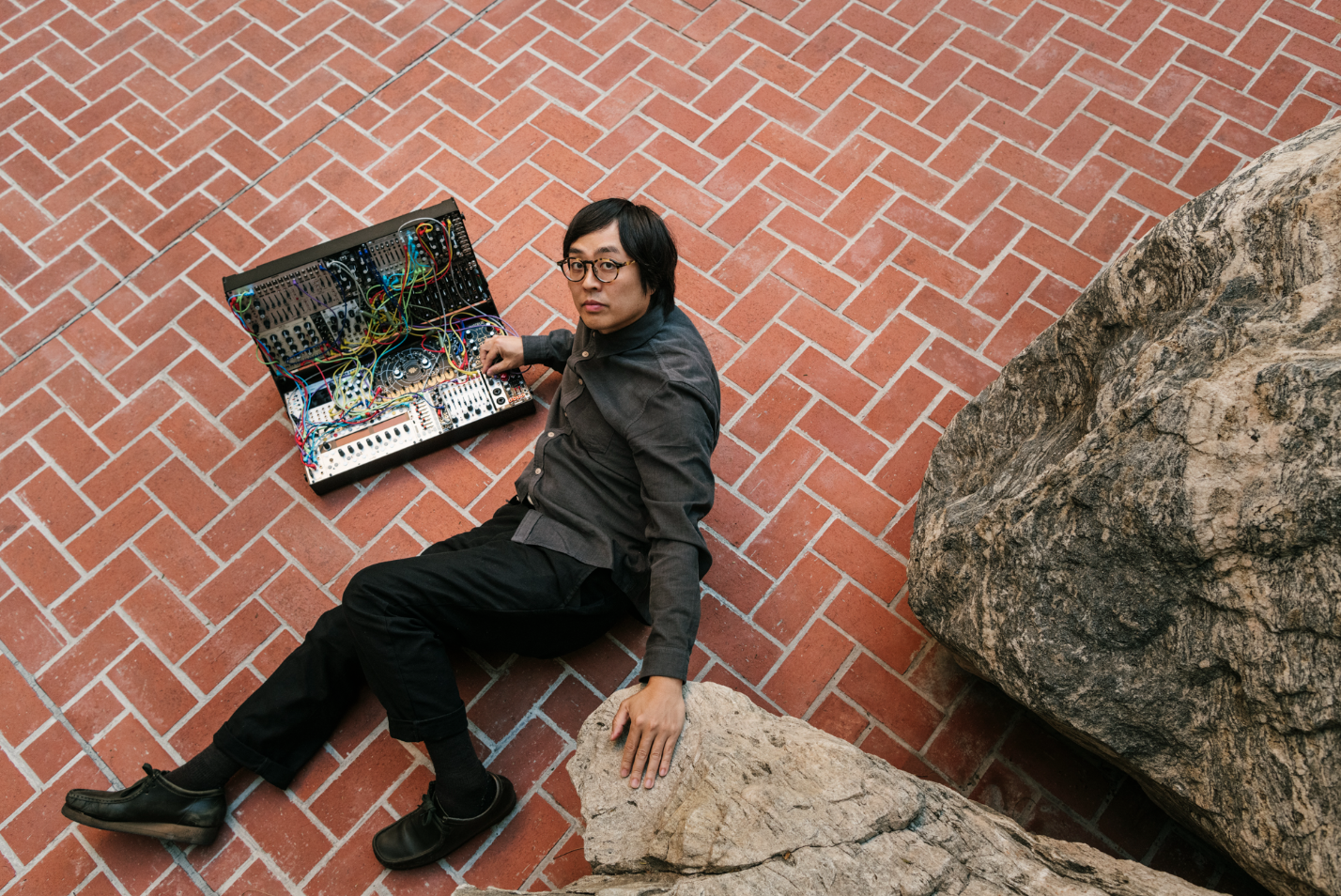
Photo Credit: Jeremiah Chiu by Brian Guido
Beat Keller & Jorge Espinal ‘El Agua Es Lava’
(Defkaz Records) 16th October 2026
Two lone swordsmen of their guitar art in combative experimental mode, the collaboration between the Swiss musician Beat Keller and his Peruvian-born foil Jorge Espinal is an exercise in instrumental transmogrification and the avant-garde.
Aligning respective disciplines with alarming, jarring and haywire results, the composer, sound engineer and, importantly and most demonstrably in this case, guitarist Keller entangles and tabs away to the meta contributions of his Buenos Aires-based trick noise maker. In a serial mode of a kind, with barely anything that would constitute the musical or the rhythmic, El Agua Es Lava (which I believe translates as “the water is lava”) skewers reference points from the most technically fucked-up of jazz guitar sparring and hysterics to the art school performances of Fluxus and their ilk, hardcore music, the industrial and erratically uncategorised.
Hi-pierced squalls and babbles of recognisable electric guitar shredding and fret gymnastics career or scramble across beaten metallics, workshop tools percussion, data coded squeals and thrusted oscillations. From the factory to volcanic explosive backdrops and the spine-chilling, distressed musicianship of a strange and alien kind builds up a crazy exploration of collaborative energies. Interesting sounds emerge: the growl of a revved-up guitar, the distorted coarse wiring and the belted drum kit that sounds like its being shoved down an iron fire escape.
But if you want a summary, and one of my descriptive go-tos, then imagine Gunter Schickert, Bill Orcutt, Steve Vai and Don Fiorino going to work like samurai guitar wielding mavericks against Glenn Branca, Fennesz and Last Exit.
Brama ‘La Raive’
(Airfono) 25th September 2026
Part of a much championed (including on this site) dynamic celebration of the Occitan language and it’s haphazard and continuously hampered cultural ties, the four-piece psychedelic-rock band Brama follow in the footsteps of fellow revivalists Cocanha this year in releasing their very own album.
I reviewed the latter earlier this summer, detailing or at least dipping into the context and foundations of the Occitan scene. So, excuse me if this does seem familiar, but here goes a very brief outlining of that history.
Playing on France’s foundations, pulled together in dominating fashion from various connected but distinguished former independent kingdoms and regions, and the erosion or indeed forced erasure of languages and cultures like the Occitan, the Clermont Ferrand quartet of Brama whisk and conjure up a “path between dream and reality, memory and imagination, where dance becomes a space vivid with memory.” They title this convergence “La Raive” or “The Rave” – an indication of direction and mood.
Though some nationalistic movements seem more in favour than others, France’s flirtations with fascism during the time of the Vichy regime’s collaboration with their Nazi overlords during WWII infamously, and most dangerously, used various folk traditions as state and ideological propaganda. Wrestling those same traditions now, and within the context of attacks in more recent decades on Occitan speakers and its alliance or take-up by activist groups locking horns with the French government, the recent musical forces behind this revival wish to free it from the forces of conservatism, misogyny and the stain imposed upon it by the tyrannical.
Whilst a far more in-depth and researched take is needed on all the ramifications, the nuances and the political outcomes, the strife and acts of resistance that have been imbued within this group’s sound and lyrics can be traced back to the patchwork of Medieval realms in what is now Southern France. A romantic language porously spreading out from its geographical namesake (loosely, I believe, formed on the model of Aquitaine, which is now known as Languedoc) into pockets of the Pyrenees (and so Spain too) and further afield into Italy, Occitan is roughly still in use, spoken by at least (depending on where you get your stats) a couple of million people. It’s poetic and lyrical turns, its polyphonic harmonies now, in part, provide manna and liturgy for Brama’s new album. And though I’m not sure if this instrument can be solely attributed to Occitan culture, the band use that most evocative of wound-up strung and drone intense instruments, the hurdy gurdy – credited to band member Amandine Pauvert.
But as this is, at least in part, a rave-up, the music is at least vibrant and animated; a danceable spell of Occitan etymology and ethnology twinned with excursions of motorik (Neu! via Beak> and The Soundcarriers) Krautrock and the electrified microtonal frills, dotting, dabbing and tabbing of Franco-Arabia. In fact, and I really wasn’t expecting this, Brama would be a great live partner to Qubec’s Angine de Portrine.
They begin, however, with an almost entirely vocal arrangement opener: save for a subtle hurdy gurdy drone that becomes one with the tones of the chorus of voices. Spanning the ages on short waves of passionate harmonious resonance, the quartet offer up a sort of vocalised liturgy come shoe-in for the next track, ‘Belou de jorn’, a more animated burst of motored lively dance-rock; a mix of the already mentioned AdP but also, strangely, Stereolab.
There are songs that groove and songs with a message, all mesmeric and hypnotic. The signature sound of souk-rock disco, the more fuzzed-up, and the near cosmic and starry is experimented with further on every track; as its title suggest, ‘Luminar’ seems to be transmogrifying a borrowed 70s Bee Gees tune and mixing it with the Arcade Fire whilst gazing at passing satellites and shooting stars, and ‘Belou de Nuech’ projects an astral journey to Java via Faust. ‘Niurada’ is like a cross between Alice Dona and Ladytron, played out to the pastoral sound of the cabrette and scrunchy guitar pedal effects.
The hurdy-gurdy drones evoke everything from medieval Occitan and the group France to the Celtic and psychedelically rural, whilst that microtonal guitar and the vocals fit the North African French diaspora. Imagine that all wrapped up in an electrifying Krautrock cornucopia of dancing and raving, and of motoring, and you’ll nearly there. For this is a pop-y like accessible cosmic renaissance of the “d’Oc” culture delivered with fuzzed and scuzzed energy and plastique tubular rhythmic finesse.
Jeremiah Chiu ‘Edge Conditions’
(International Anthem) Physical Release: 9th October 2026/Digital 27th October 2026
Modulating away from and decoupling, and yet once more working alongside his foil of recent years Marta Sofia Honer and band mates from the Small Medium Large ensemble, synthesist imbued composer and multi-instrumentalist Jeremiah Chiu unveils a soloist titled architectural and environmental inspired textural and rhythmic project that’s one part electronica of a 80s and 90s vintage pedigree, another part body music, and yet another that evokes the electronic, the floppy disk cut-ups and environment luminaries of Japan.
Edge Conditions features a pool of talented West Coast and Chicago hot-housed musicians; many of which have either released records on or been a loose part of the International Anthem label family. Whilst drawing upon the amorphous threads of Chiu’s previous collaborations with Honer, but also with the grandee of new age experimentation and fourth world peregrinations, Ariel Kalma, the former Chicago breed and L.A. based artist calls in favours from the Japanese musician, composer and artist of note, Takako Minekawa; the Japanese-American multi-instrumentalist, saxophonist, composer and poet Patrick Shiroishi (previous projects that I’ve reviewed include a match-up with Dave Harrington and Max Jaffe, plus involvement with the underground super group, Water Damage); Chicago jazz trumpeter, composer and bandleader or repute and influence, Marquis Hill; producer, multi-instrumentalist, trumpeter and instigator of the band Whitney, the alter-ego Resavoir and the Les Sons Du Cosmos trio, Will Miller; and the all-rounder percussionist and drummer with untold sessions and collaborations under his belt, plus a quartet of solo albums, and appearance’s in the already referenced SML troupe, Booker Stardum.
Possibly Chiu’s most unique foray into the rhythmical, Edge Conditions combines the plastique with the organic; the synthesized with the electroacoustic; and the concrete with the materials of space. Beats and tempos run out through an apparatus of effects merge with ease with more live or studio played drums, an essence of viola and hazy airs, breaths of trumpet; all of these sounds, patterns and wave forms meeting with the titular edge of both the abstract and the very real buildings, the public and shared spaces, and the places that converge glass and metal with a constant shimmered, bobbled and springy interactive dances and movements of either celebration, joy, introspection and cosmic mystique.
Futuristic and yet retrospective in recalling everything from the Yellow Magic Orchestra and its members various solo projects (I’m reminded of Sakamoto’s Esperanto LP on this album’s earlier tracks), plus their Japanese peers of Yasuaki Shimizu, Hiroshi Yoshimura, Susumu Yokota. This is layered up with shades of Lukid, μ-Ziq, Richard James in both his Aphex Twin and Polygon Window guises, Casino Versus Japan, Robert Hood, various House music and minimalist techno pioneers, and on the album’s metallic acid-house dance number ‘Night Fog’ a meeting of minds between Carl Graig and Felix da Housecat on an imaginary DJax Upbeat 12”.
You have the serious juxtaposed smoothly with club rhythmic body movements; and an assortment of instruments and effects that are often relieved from their serious avant-garde origins or loftier aspirations to just, well…dance around like Richie Hawtin’s Plastik “Men” or polygons and shapes lifted from their staid stasis as materials holding up the edifice of the city. Tracks like ‘Interface’ sound like a calculus centre of Tortoise and Holy Fuck quivery and chemistry wobbled body-rocking popping, whilst ‘Non-narrative’ is like some kind of techno funk from the Warp label of the early 90s. A contrast to both would be the sci-fi operatic VHS score of the fallen, ‘Sentimental Object’ and the Japanese garden wistful lingers, the metal scaffold tapping and the John Zorn like electronic valve instrument (performed by Miller) effected discombobulations and warps of the Fourth World and Ariel Kalma starring vapour thruster title-track. ‘A.M. Fuses’ is another danceable wavey number; worth mentioning for its Aphex and Sakamoto floppy disc cut-up breaking and paddled metallic tubular currents. This is one of those albums you’ll need to revisit often, with its true potential, its magic and groove revealing itself over time; on the fourth play through I’m still picking up on and noticing more modulations, clever interplay and sounds. It won’t light the world on fire but is none the less impressive and immersive for it. A really cool album of possibilities that dances to a mood and rhythm that many of us will find familiar but inviting.
The Corrupting Sea ‘Longing’
(Somnimage Records) 7th October 2026
At the helm, navigating the release of ambient and electronic music from the peripherals for the last decade (anniversaries looming) through his Somewherecold Records label venture whilst also spearheading his very own alias vehicle, The Corrupting Sea, Jason Lamoreaux once more sets both his measured philosophical quandaries and abstracted landscapes and scenes of personal joy, meditation and the existential to a subtle, immersive ecological ambient score.
Before we delve in, I must show my gratitude to Jason and his highly prolific label for offering room and a platform for two of this blog’s biggest champions and American pen pals, John Lane (masquerading wonderfully for years as A Journey Of Giraffes) and Violet Nox. It’s in this role alone that Jason can be held in high regard; offering up a vital showcase for those underground artists staggeringly ignored by the mainstream and even some of the snottier media outlets. I’ve merely dipped in from time-to-time but reviewed quite a haul of those albums over the years; some I’d suggest were every bit as important and good as anything turned out by Warp, Mute and the usual crowd of more celebrated and trumpeted labels.
Twenty-four albums in, with number twenty-five on the horizon (marking another anniversary, and the release of a very special collected works edition of the sonic saga so far), Longing draws on Jason’s own plaintive reminisces, the pains of missing out on exploring the environments, both the awe inspiring and the more intimate spots in nature, that have now become prohibited to hm due to illness. Candid if you ask him, and in the notes to this particular album, Jason has suffered for a long time with physical and mental disabilities; ones that cause extreme exhaustion and fatigue, and for obvious reasons make these youthful treks and communions of the past seem out of reach or difficult to replicate: There’s a specific recall in the notes of summer vacations spent in Yosemite National Park, scored aurally and sonically through the Andrew Heath-like lower-case trickles of piano notes, the churned vapours, the turbine like atmosphere and the language of the aviary on the rhetorical ‘Where Does One Go When One Can Go Nowhere’.
Through the main usage of ambient moods and feelings, Jason ponders with the prompt of descriptive, inquiring titles, the places held dear; scenes and locations of great importance, ones that evoke episodes from his life of safety, curiosity and encouragement. Incipient beginnings of near nothingness gradually take on a soft melodic quality as they grow and build upon the tunnelling rays and tubular synthetic wave forms that seem to convey a real depth and expression of the ecological set pieces, or the memories reflected in each track title.
Surveying a wondrous, mysterious and almost alien-sounded typography, Jason merges cleaner synthesised sounds and hidden sourced machine constructed atmospherics with field recordings of water sprays, moist dripping caverns, and the reverberated song and communications of birds. Some tracks sound more natural than others, whilst some could be said to be almost sci-fi, a touch off-world. Veils descend across fabled lakes with crystallised notation; what could be described as blizzardy specks move cyclonically in a synth-made whiteness; bucketed waters are scooped up in a fashion under the dripped dampness of a cave; and Forest Robots vibes are recalled in the gentle joyfulness and electronica celebration of ‘Tree Swings and Climbing Trees’. All the while that central sensibility of longing is drawn upon to create an album that’s simultaneously as pining as it is aspiring: the mood music of someone forced to watch from a distance, yet feeling some of the vitality, the enormity and inspiration of those landscapes and specific sites, memories that hold a special place in his life.
Allison de Groot & Rich Ruth ‘S-T’
(Western Vinyl) 2nd October 2026
Who knows what a Rich Ruth (the persona alias of Michael Ruth) produced Allison de Groot project would have sounded like in the end; that original remit and plan instead evolving into a shared titular collaboration of equals, with both creative sparks writing together, sharing and developing ideas conjured up in a Nashville studio over the course of a year.
The solo endeavour of the clawhammer banjo maestro of repute de Groot, this traversing work has grown from its incubator southern rooted projection into something, perhaps, much larger in expansive scale and deeper in layered immersive soundscapes. If much of the inspiration derives from that instrument of choice, the introduction of Ruth’s own multi-instrumental rack, plus the contributions of the Canadian and Berklee hot-housed violinist Patrick M’ Gonigle, and the erred wavy mirage-like steel peddle phrases and lines of Ruth’s oft Shrunken Elvis bandmate Spencer Cullum, have all added to the stirring evocations and scored environments that materialise from a reimagined Americana and abstract ambience.
Associated with ‘old-time tunes’, traditional American music and bluegrass, the clawhammer banjo takes its name from the claw-like posture that’s used by the player to ‘hammer’ the strings. This technique is said to emit a gentler and more melodic sound overall, and in this case, effortlessly blend an essence of its country origins with something both transcendent and cosmic: carrying the listener off to planes and places that exceed the borders of the American South and the home of country music itself.
Hear and Be Yonder David Casper and the tubular cascades of Mike Oldfield are transported to the prairie and wheat fields of a more abstract Nashville environment, as a synthesis of neo-classical and chamber dreams are woven together with the hallucinatory, and the more recognisable invocations of flowing, running rivers (the opening Oldfield-esque and dawn awakened light emitting Daniel Lanios golden rayed score ‘Nervion’ is named, I believe, after the Spanish river that runs along the ports and shipyards of Bilbao, out into the Bay of Biscay). Tracks like ‘New Intervention’ reminded me of Glass and Cage relocated to the old West, whilst ‘10-14’ was more like Tortoise panning for gold on the reservation with The Green Kingdom and Laraaji. But the banjo arpeggiator ‘Sorgin’ has a certain Japanese sound of paddled spokes and dulcimer-like woody bobbles, whilst ‘Rocks From The Moon’ could be Suzanne Ciani catching solar flares with Cluster. Imagine, if you will again, that Eno had produced Andrew Tuttle’s Fleeting Adventure, or Marisa Anderson had got together with Bruce Langhorne, for that’s about as close as I can get to describing this transportive new album from the collaborative partnership of de Groot and Ruth. And it must be one of the first albums of its nature to lift the clawhammer banjo from its origins and purpose to different heights, moods and fourth world-esque visions.
Miska Lamberg ‘presage’
(Discreet Archive) 2nd October 2026
And it all amounts to this: the minimalistic but deeply conveyed melodic score that builds into a haunted and sad dreaminess of the Boards of Canada and there like. Yes, the latest sound art or installation-like enveloped immersive experience from Miska Lamberg takes its long-form time to reach a certain gravitas of sound waves melody and feels that make the whole journey worthwhile.
Aptly released via the Discreet Archive platform – a label synonymous for allowing artists with such grand explorations the scope and time to breathe – Lamberg’s forewarned omens on presage use the environment, the hidden and obscured background field recordings of movements, the uncertainty and anticipation of various shortwave radio transmissions, and atonal drones and hums to conjure up a mysterious, sometimes near supernatural and alien landscape.
Lamberg’s biographical blurb states that, ‘pieces have been featured by record labels Sawyer Spaces, Dragons’ Eye Recordings, Falt and PRESQUE TOUT, and in exhibitions and performances at Museum of Technology, Urban Apa X Ateneum, Lighting Mind, Kamara, Swedish International Film Festival, Galleria Kalleria, Penthouse Collective’s gallery space, modern dance festival Tanssivirtaa Tampereella, and KATOAVA Collective’s various events and projects.’ And so, from the conceptualism of the art world to the studio and site specific, Lemberg has covered quite an array of sound experiments and sonic projects to build whole worlds out of not much more than the atonal and recondite. But this time around, prompted or indeed inspiring the stanzas of Minja-Milia Ikonan – which you can find included in the bandcamp description -, Lemberg’s presage evokes an assemblage of Helsinki environmental sourced recorded weather fronts and more disturbing ominous going ons.
Stormy but weightless winds, as noted by Ikonan, billow in across what could be described as cliff tops like synthesised airs: a mist even. Like early Kluster causing a venerable imbued mystique or even cathedral era Tangerine Dream, the atmospherics are liminal: between the otherworldly, the esoteric and sci-fi. Giant strides and brushed walks through grass and upon concrete are interspersed amongst the percolation of something boiling on the stove and the buzz of unidentified insects and those shortwave blizzards of crispy radio waves and radioactivity. This is track one by the way, which suffuses each strand, each tonal layer slowing and gradually over nearly twenty minutes.
Track two starts with an interference in the fabric, hisses and the looming presence of something from beyond. Again, hidden generators and machinery are obscured underneath a sort of greyish film, right up until that descriptive build-up of saddened but moving melodic sound waves that I described in the introduction.
As an experience its certainly an immersive one; a 4-D surrounded environment of the alien and yet familiar, reimagined through an apparatus and process that invokes the descriptive.
Light Conductor ‘Sequence Three’
(Constellation) 25th September 2026
Vapour trails and the luminescent heat patterns of distant planets are conjured up alongside soft hues of abstracted circular colours and amorphous transcended spiritualism on the latest and final sequence from the Montreal partnership of Stephen Ramsey and Jace Lasek: with Lasek’s Besnard Lakes band mate Olga Goreas orbiting as a third moon to the duo’s planetary base camp emissions of synthesised and vintage analogue psychedelic ambient slow-release space rock.
After two previous volumes, Light Conductor (a sort of vessel for the Young Galaxy’s Ramsey and his Besnard Lakes’ foil, Lasek, to pursue visionary drone scapes on distant planets) envision a diaphanous and mysterious escape to off-worlds; the utopia of World Expos and astrophysicists channelled into a long form kosmische and shoegaze imbued immersive experience in which the duo “…apply rockiest sound design to minimalist tracks.”
Through prisms of Fairlight synth, hints of 80s sci-fi VHS scores, Vangelis, Tangerine Dream, Zoon Van Shook, Iasos, new age music of a certain vintage, burbled submerged bass lines and touches of Moebius, our astronautic musicians follow the cosmic rays, watch for visitations from mystical aviators, pray at the altar of sci-fi, and make concrete the abstract perimeters of celestial feels and horizons. All the while they teether themselves to earthly concerns and dystopian crisis with the apparition broadcasts of financial ruination and the crash on the album’s middle marker, ‘Ghost City Radio’; a near Cassandra ominous Evangelistic rebuttal of Wall Street, the Stock Markets and Capitalism as par the course for the millennial generation, put to a saddened vapour, some sharp lifts, bobbed bass, and synthesised pre-set rhythms: a union between John Michal Jarre and University Challenged.
There’s some beautiful, and again, spiritual like expansions to this five-track suite of space dust particle shimmers, curvatures and spectral rainbows. And when Goreas’ signature wispy and husked shoegaze-y vocals emerge on the lush space aviary ‘Omenize’, those lunar mirages transform into a healing balm. The truly long form finale, ‘Supercontinent’, as epic as its title, features another cosmic menagerie alongside its drones, evocations of Cluster, Eat Lights Become Lights, and its plastique shuttled rhythms and metallic language
An immersive experience and cosmic opus of kosmische inspired slow-psychedelic and shoegaze rock from this Canadian collaboration; the perfect ending to a triptych sequence of such materialised interplanetary and otherworldly peregrinations and slow-burn releases of transcended escapism.
Mousecunt ‘Orgasmic Mouse’
(Infibulate Records) 25th September 2026
The inaugural release from the newly orchestrated Infibulate Records label, seeks to make its mark with a most controversially reactionary piece of Goth-synth-barbarity and industrial-EDM bad taste-riven polemics. Torture porn for the lugholes; repulsive lyricism aimed at unsettling; the anonymous Iranian band must have had to dodge the authoritarian camarilla’s morality police (surely) to unveil such filth, bloodiness and sexual depravity.
Information wise, we know that this group features “a woman” performing on Nord synths and vocals; “a man” performing on a Gibson guitar, Hofner bass and sharing vocals; and one more “man” on Tama drums. An anonymous line-up is mixed and mastered by another anonymous engineer in the USA; their task, to produce a sonic assault upon the senses from fortnight session played at a private studio in Azerbaijan earlier this year. They’ve been working under the anonymity cloak of darkness, we’re told, since 2022: and for good reason.
Explosively digging and wrestling in the dirt with themes of extreme artistry practice, domestic violence, volatile (to say the least) relationships, religion, humiliation and abandonment (through the most harrowing of Freudian prisms), the trio let loose with the obscenest lyrics I’ve heard since “GG” Allin or Throbbing Gristle.
Told through an “unreliable narrator” in an autobiographical-like (though it also says “from different perspectives”) style of protestation, name calling and accusation, and with barbed slugged shots of the near physical, Orgasmic Mouse could be deemed a quasi-concept album of a sort. At least joined together in a very abstract form; threaded together by a similar if changing moody production of dungeon abusing vulgarity, maximalist scopes, knife sharpened synths, both death metal guttural and more ghoulish coquettish vocalisation, and horror cult EDM.
It can be an uneasy and even vilely offensive if not dodgy listen lyrically wise – the opening gratuitous perversive analogies and troubling descriptive rage of ‘Fucking The Mirror’ being the worst -, but seems to indulge in the swamps of such criminality and extremism to reach the pit of hellish confession, and to rattle the foundations: In grappling with their subject matters they’ve dredged up the most caustic, spiteful and disturbing dialogues and poetry.
Because of their provenance, it’s impossible not to connect the dots: An Iranian goth-metal-synth-EDM-metal-art band dangerously sailing close to enraging the Islamic Republic’s sensibilities and rule of law. I can’t imagine, considering the recent bombardments from the USA, and the possibility of regime change, and the years since the Arab Spring of continuous opposition against this same regime by a sizeable (often young) part of its population have made it any easier to exist making this kind of music – so many artists, and protestors of recent years have ended up raped, tortured, disappeared or executed (and it must be said, with fuck all help, support or protest by the same brigades marching against Israel and the West week in, week out). Of course, it’s easy to see how reality being referenced and played out on the ghoulish, horror of this album – perhaps mirroring it far too well; the violence is everywhere: from the physical to insulting and sexual.
For a reference, imagine Ministry or Revolting Cocks going toe-to-toe with Xmal Deutschland, Alien Sex Fiend, Mercy Girl, Rosaceae and Nine Inch Niles.
How this will go down is anyone’s guess, but from a label built on provocation and the extremities of contemporary music, it’s a successful launch of offending, violent and more sensory punkified gothic dance music and tortured art performance.
Antonio Raia ‘Σ [sigma]’
(Kohlaas Records) 1st October 2026
Not the focal draw, but as part of his collaborations with fellow Neapolitan artist Renato Fiorito, the body, soul and environment amalgamated – like a united flow – saxophonist, composer and improvisor Antonio Raia has both appeared and been mentioned on the Monolith Cocktail twice: firstly with a premiere, shared with our Italian pen pals at Kalporz, of the eighteen minutes long ‘‘Too Many Reasons’, and then a couple of years later, as part of the greater contextual piece on Fiorito’s Lustra album
The former saw the amorphous saxophonist Raia and his sound artist foil join together to capture the abstract atmospheres of cerebral reconnection; a sonic field in which to escape the stresses and weight of the Covid pandemic. Produced in lockdown, in the partnership’s native Napoli, this imagined space, in which a faded, fuzzy pining and wandering saxophone wafts around a rotated motorised humming and propeller purred windy and airy isolated soundtrack, brought together two experimental composers looking to create an ‘intimate and visceral experience’.
The latter of those two pieces was described at the time as ‘a votive offering of gratitude and devotion’ to that same city; attributed to Fiorito this time around, the track and album was promoted as his ‘personal vision of Naples’. Raia on his part, popped up on the crackling fireside, faint melodic and reflective softly rasped saxophone memory of ‘3694’.
As resumes go, Raia’s includes the critically applauded 2018 debut solo album, Asylum, and the 2023 published soliloquy book, La memoria bucata –a project developed through the sonic manipulation of archival materials by the theatre director Antonio Neiwiller, who passed away prematurely in 1994. In 2024, at the invitation of filmmaker Béla Tarr, a key figure in radical contemporary European cinema, he conceived and realised Facing Béla Tarr, a sound action for saxophone and waterphone based on the film Prologue. Two years later, and bringing us right up to date, in early 2026 he composed and released the soundtrack for [campanamuta], a six-act radio work by Martin Errichiello produced by the Italian National broadcaster Rai Radio3. During that time, he’s also managed collaborations with Alvin Curran, Elio Martusciello, Mike Cooper, Chris Corsano, and David Ryan and others.
Merging once more with his environment – this time the former Wasserturm Berlin water tower, located in Prenzlauer Berg -, Raia uses the architectural acoustics within this long-since decommissioned space to form a bond with the atmospherics and his instruments of choice – in this case both the baritone and alto saxophones and the Japanese Koshi wind chimes. Almost uninterrupted, recorded without overdubs by the Grammy and Emmy Awards-winning producer Francesco Donadello, Raia lets his feelings being roused and stirred, prompted by this peculiar utility turn studio – the oldest such water tower of its kind in the city, built in 1877 and still in operation up until 1952.
But just to draw from further afield too, the album’s title is borrowed from the Greek alphabet, and the album’s only sax-free performance, ‘Veils of Echo’, has a decidedly Morricone-y feel to it – the chimes brushed and swept in glissando style like crystal glass are accompanied by an Alessandro Alessandroni-like reverberated whistle.
Invoking the blues, the noirish, an essence of the 1960s New York jazz scene, and the venrable, Raia’s soundings and dialogues with the reverberations and echoes traverse the lower register honks of a ship’s funnels to the near amplified blows of a near dry spittle and the cyclonic spirals of bird-like higher tones that fly towards the studio’s ceiling. I’m reminded of Jonah Parzen-Johnson’s own solo soliloquies, the explorations of Timo Lassy, and John Buckingham’s parts on Bill Dixon’s Son of Sisyphus album. Also, the Instagram video uploaded and shared soloist musings and outpourings performed by Andy Haas in the gardens of the Modern Art Museum in NYC during covid – just an individual playing and conversing, sending vibrations out into the environment.
You get to hear (I’m assuming) Raia’s voice on the album’s finale, ‘Body and Cipher’. Taking a near liturgy turn of religious holy mantras and cantos, venerated choral voices meet with the deeper and bigger sound of low honked, near tuba-like, sax.
Suffused amongst those instruments, which can be quite melodic and even tuneful at times, even sympathetic, yearned and responsive, are sounds that can only be described as paddled, or full of texture.
The sounds of extrospection, of mystery, of the mournful and the dreamy can be heard across this album’s various ruminative wanderings and reverberations; a combination of the physical and improvised, all prompted by that site-specific recording space.
If you’ve enjoyed this selection, the writing, or been led down a rabbit hole into new musical terrains of aural pleasure, and if you able, then you can now show your appreciation by keeping the Monolith Cocktail afloat through the Ko-Fi donation site.
The End of the Month Playlist For September 2026
September 29, 2026
Our Monthly Playlist selection of choice music from the last month. Curated by Dominic Valvona & Matt Oliver.
Choice music and sonics from the last month (or so) picked from our reviews, but also featuring the tunes we missed out on or didn’t get the room to feature at the time.
Curated by Dominic Valvona with choice hip-hop cuts selected by Matt Oliver and some tunes lifted from reviews by Brian ‘Bordello’ Shea. Includes entries from the Ukraine to Turkey to Somalia, the Americas and Europe. This month’s courtesy of featured artist Juga-Naut.
Please note: The Monolith Cocktail has given up its accounts on both Instagram and bluesky. You can find the blog on WordPress, in every search engine going, or on Facebook and X. Or if you don’t want to miss anything, you can sign up to email notifications.
If you’ve enjoyed this selection, the writing, or been led down a rabbit hole into new musical terrains of aural pleasure, and if you able, then you can now show your appreciation by keeping the Monolith Cocktail afloat through the Ko-Fi donation site.
The Track List For September 2026:
Dragonflies ‘Slower’
megiapa ’11.11’
Your Old Droog & Evidence ‘Brighton Beach’
Pastense ‘Colors in the Puddles’
Al-Khemetic, Sa-Roc & Dezarie ‘Power Bars’
Regina Collage ‘First New Place’
Crystal Eyes ‘Pretending To Be People’
American Motors ‘no horses’
Devon Church ‘Vast As Space’
Boycalledcrow ‘mantis man’
Baba Zula ‘Kutsal Zeytin Halayi’
Juga-Naut ‘Never Nothing’
Che Noir & The Uce ‘Urban Essence’
Jam Baxter ‘Whole Sky’
Dur-Dur Band ‘Adigaa I Dhalanrogey (You’ve Changed Me)’
The Male Pattern ‘Charlie (The Robbery)’
The Bordellos ‘Oh Nora’
Greg Freeman ‘Cahokia’
Party Dozen ‘Euro Stomper’
White Ring ‘CATATONIC’
Blu & Sndtrak ‘LA’
Michael Christmas, Chris Crack & Girl Talk ‘Garfield Hated Mondays But Didn’t Have A Job’
Blockhead, Proleter & Arms and Sleepers ‘Garbage Time’
Datkid, Illinformed & Dumb Logic ‘Narcotic Athletics’
Dollar Brand, Don Cherry & Carlos Ward ‘Bra Joe From Kilimanjaro’
Hieroglyphics, Casual, Opio, Phesto, Pep Love & Del The Funky Homosapien ‘Hard Numbers’
Curly Castro, shemar, Blackchai, Sunmundi ‘New Mutants’
Super Scintillant ‘Phase IV’
Xqui & Pyramids of Phobos ‘Progressive Modernism – Strings Version’
Mike Gale ‘Our Place’
Jon Tye, Amine Mesnaoui & Cubenx ‘Morning Glow’
For The Curious and Those Wishing To Catch Up On The Last Month’s Posts, Here’s The Links:
Perusal #83 – Super Scintillant, Érick d’Orion’s ‘Mes fantômes’, The Bordellos, Devon Church, Dragonflies, Leenalchi, megiapa, Stylianos Ou
Our Daily Bread 661 – Fran Ashcroft, bigflower, Cut Chord, The Free Four, Herb DiamantE, The Male Pattern, Minot, Neon Kittens, Spygenuis
Perusal #83: megiapa, Stylianos Ou, Devon Church, Dragonflies…
September 16, 2026
In review: a world of sonic discoveries. Dominic Valvona

Photo by Robert Macaisa for Off the 405, Courtesy of Getty Museum
An Ambiances Magnétiques Label Double-Bill
Super Scintillant ‘Tarot’
Érick d’Orion’s ‘Mes fantômes’
(Ambiances Magnétiques) Both Released 25th September
Two similar(ish) spheres of influence and conceptual works from artists aligned with the Canadian label’s “adventurous music-making” aesthetic this month. Only appearing recently on my radar, the Ambiances Magnétiques platform is based on and around the province of Québec; it’s stock in trade to showcase interesting, explorative and avant-garde releases from both some heavy hitters in the form and burgeoning fresh talent.
Firstly, the debut collaboration between the performer, electronic musician and artist Nicolas Bernier and his foil, the notable bass clarinettist, lecturer and professor Mélanie Bourassa, Tarot. With everything that title might allude to, from its Kosmische and early analog conceptual traditions to its hermetic and esoteric connotations, its symbolism and prophetic omens and warnings, that umbrella is used amorphously to explore and shape electroacoustic and modular apparatus conjured atmospheres and descriptions manipulated, or so it sounds, in real time.
Both partners on this sonic mystery and sci-fi adventure, draw upon their extensive backgrounds; Bernier with both his merging of musical and artistic projects, and his extensive prolific catalogue of collaborations, including with leftfield underground hip-hop Antipop Consortium con-founder Beans, and Bourassa with her study and teaching, and depth of experiences working with the Québec Symphony, the Metropolitan Orchestra, the Montreal Symphony and Violons du Roy.
Crossing the classical, the avant-garde, even hints of jazz with that “super scintillant” of electronic sparks and effects, the signal from Bourassa’s bass clarinet is routed directly into Bernier’s “rig”, allowing him to control the parameters of his system using her output. That’s the underlying method that sets in motion a both alien and reimagined pastoral investigation of the instrument; transduced and transformed from its familiar bass-y tones and higher flutiness and cyclonic flutters to sound both of its tradition and yet astral and part of the Fourth World legacy of Hassell and Roberto Musci too.
Fibres, metallics, space craft mechanisms, counterflows, the tubular plastique and unsettling whispers move around or directly reverberate off the bass clarinet’s audible finger work, its space bird-like cries, duck billed croaks, its squeezes and piped melodic spirals and song.
There’s one point where the clarinet travels almost to Egypt – not without diverting via NYC Gershwin and a stalk in the bush -, another where the instrument reminded me of Park Jiha’s work, Sakamoto and Arve Henrikisen.
It’s a both kinetic and improvised entwinning of the two disciplines and their scopes to perform a contemporary ballet of machine engineering and the acoustically amplified and breathing. A stellar futuristic whisk and more majestically adroit collaboration of mystique and atmospheric stirrings that can sometimes being near hymnal and other times unsettling or at least filled with a sense of in trepidation.
Delving much further into a metaphorical Venn diagram of supernatural and paranormal alluded untethered jams, Érick d’Orion‘s septet assemble of eclectically concentrated musicians’ tune into the psychic to communicate with old and new apparitions. I say apparitions, but this is a live (by the sounds of the audience appreciation) draw of influences, inspirations and record collections plucked from the ether or pulled from past experiences to march and rollick all over any semblance of preparation.
The multi-disciplinary audio artist, composer and improviser of note has shared his skills and exploratory travelling mind with such notable company as Evan Parker, Martin Tétreault, Otomo Yoshihide, Robin Fox, Ilpo Vaisanen, Alexandre St-Onge, Sam Shalabi, Günter Müller, and eRikm. An enviable and diverse list that now comes in handy on this expedition beyond the paranormal.
Gathering together Marie-Pierre Brasset on synths, Émile Boucher Cloutier on percussion, Michel Potiron on electric guitar, Réal Gagnon on drums, Stéphane Beaulieu on electric bass and Nicolas Gobeil on trumpet for an invocation and dance with the phantoms of past musical excursions and memories (both the conscious and unconscious kinds), Érick plugs into a Fortean amplifier to create an Acid Mothers Temple-Last Exit scuff and splash of Poltergeist activity at a Sly & The Family Drone punch up with Fugazi and The Pop Group.
Over two sides (though my edition came with an unnamed bonus track) the troupe of sonic psychic investigators communicate with feedback and foldback invoked ghosts, unholy disorder and knocked transmissions from beyond even Mina Crandon’s imaginative cons, before the tempo, the direction of travel changes towards a sudden lilted sympathetic echo of Don Cherry’s cornet trumpet that soon apes the bugle call of some lost fort in a matinee film. But then, just as you get a pause in the action, a handle, we roll up into the freeform drumming prowess and wild kit turnouts of Milford Graves and Tatsuya Yoshida. But again, we then leap into the gargled revved-up attitude of hardcore and jazzgrind, of a leaderless and instrumental live Black Flag and the Dead Kennedys pulling out a knife on the Red Hot Chilli Peppers.
And that’s only track one, ‘Spectres’: which to be fair is over twenty minutes plus in duration. ‘Ectoplasm’ is shorter but no different in its mix of ideas and improvised scope, starting with occultist atmospherics, Faust-like ceremonial ominous punctuations, and metal shredded guitar. However, it takes hold of a groove of a kind, or a momentum; a space rock flight of fantasy over Tangiers, with elements of Hawkwind and Amon Düül II and the Arabian desert trumpet evocations of Lee Morgan and Chet Baker. Metallic whips lash at the spectacle, whilst electronic apparatus concoct zips, the bass a growl, and the drums scuff and gallop towards the demonic icon.
I will just mention that third track, which begins with a hand drums and group effort embrace of Afro-funk before switching to the esoteric procession and ending up once more in the hardcore and jazzcore realms of free enterprising dread: it actually reminded me weirdly of Wicked Lady, and also has an air of prog and metal about it too.
If Ill Considered and Scarla O’Horror spent more time skateboarding in the late 1980s or hooked up for a musical collaboration with Laddio Bolockos and Massacre than this might well be the result. And if that doesn’t pique your interest then nothing will.
The Bordellos ‘Oh Nora’
(Metal Postcard Records) 11th September 2026
No, not a tribute (as I initially thought when seeing the title) to Nora Batty the pinny wearing, wrinkled stockings and hair nut costumed stoic and hard-faced muse of Compo in that quintessential English comedy of life in a Northern town, Last Of The Summer Wine, the protagonists of this latest song from the maverick family band, The Bordellos, are two star crossed lovers/singers sharing the same name; neither of whom are aware of each other’s romantic infatuation with the other. Both Nora’s – one an aspiring younger singer trying to crack the music industry, the other, in her mid-sixties, finding a newfound cult status after her 1970s flopped LP is picked up by a new generation, and once again appearing on stage – love one another from a far without knowing it. And it’s that relationship, or the simultaneously tantalising and both hand-wrung agonising over the prospects of what could be that are so movingly and whimsically sung about on this latest single.
Taken from what could be (if the band’s co-founder and the vocalist and acoustic guitar player of this song, Brian ‘Bordello’ Shea, ever gets the time) a larger planned musical entitled ‘Oh Nora – A Small Town Story’, this single sets the lo fi sympathetic plaintive tone; a sort of grim up North version of folkish-country Dylan with a lilted lean towards Simon & Garfunkel’s ‘Mrs. Robinson’, and yet unmistakably low rent English kitchen sink romance. Brian’s son, Dan Shea (of Vukovar and Beauty Stab fame, also known to have penned the odd piece for this site over the years) can be heard weeping a haunted malady of steel pedal wanes and quavers, whilst Uncle and brother Ant Shea completes this disenchanted but romantic trio on harmonica and vocal harmonies.
Perhaps one of the band’s most charming, less acerbic and jokey polemics on the state of the nation, yet set to small town suspicions, bigotries and the unwillingness of some to accept change, Oh Nora’s central characters are used to demonstrate a continued sneering and outright homophobic prejudice to same sex relationships and of openly gay people in close-nit communities: especially in towns long since left to rack and ruin by not only Tory policies but Labour’s too.
There’s a real tenderness here, even nostalgia (though not for the 60s of homosexual criminality, nor the early 70s when artists were obliged if not forced to hide their sexuality even in a supposed “gender-bender” age), yet it’s saved from being truly saccharine by The Bordello’s signature lyrical takes on the everyday detritus of pop culture, of fumbled love affairs and the innocuous habits that immediately conjure up life in a Northern town of old: This is a liaison that is quintessentially both English and Northern.
It remains to be heard what can be expanded upon, but The Bordellos certainly have the groundings for a sweetened if self-depreciating propounded musical.
Devon Church ‘The Shame Of Winnipeg”
(Ruination Records) 18th September 2026
Taking its cue, I’m sure, from Leonard Cohen’s (written with his collaborative foil Sharon Robinson) languorous rile at the rotten state of the world, ‘Everybody Knows’, NY producer and songwriter Devon Church encapsulates the underlying sour and the disenchantment of that 1988 anthem to despondent protestation and cynical beguilement.
Originally released on Cohen’s I’m Your Man LP, and if anything, a resounding triumph of the poet’s disgruntled take on the stench of the times and the decades previous (a contemporary chime with the AIDs epidemic of course, but also with long held musings on both relationships and religion, thrown in with corruption), it’s since become a totem; a go-to for wised-up film producers and directors on the hunt for that one song that so sums up the times.
But Devon doesn’t just write a long love letter to that iconic tune, nor just snatch its sound, but delves deeper into the catalogue to reprise that sort of Med Greek Island holidaying and retreated Cohen vibe too; a subtle breezy adoption of sun-kissed adult louche new wave, rock and troubadour vibes that called be described in some instances as yacht rock. Then again, inspired by his early adoption analog, mic and keyboard purchases during the Covid pandemic, Devon also adopts a shimmy chimmy sound of swimming and faux-Latin presets, a flange-y and phaser-ed embrace of Isaak and Lynchian noir and a subtle borrow of the Aussie sound that became synonymous with Crime And The City Solution, and some of the Bad Seeds work during the later 80s.
Despite hanging out with the Millennials, feeling their pains and carrying their withering gripes – as laid down by the Frankfurt School, Reductionist and Deconstruction theorists –, Devon’s tone seems more boomer, or even Generation X; his influences obviously for the music and activist poetics and polemics of the ageing Boomer class of Cohen, Scott Walker and even Dylan (really hearing some chimed evocations of his 80s works). But it’s actually executed with a smoothness and maturity that might be beyond Devon’s years. He certainly seems to thread if not make obvious connections across the generations and years like Dylan; his reference points and slogans in a lucid if sometimes vague coalesce that attempts to wrap up the last century and the slow collapse of humanity and society in the face of capitalism’s battle with feudal technocratic authoritarianism, globalism, the drag of neo-liberalism and both a crash that still hasn’t ever been resolved and a pandemic that pretty much destroyed everything we know and hold dear (form our jobs to relationships, most obviously our health mentally, and our suspicions about those who hold high office).
How this pans out can be summed up on the open ‘Back From The Grind’ salvo at the rich, the multinational companies, the online titans, and the unedifying prospects of having to earn one’s own living in very discouraging and bleak roles: well, earning your paltry, just living salary to feather the beds of those at the very top pf the chain – that old adage that money trickles down, which might have been true decades ago, doesn’t cut it in the 2020s. I say a salvo, but Devon has turned his (I quote) “The body is the engine of the economy” mantra into a cooly and sexy indolent and disarming Marxist despondent grudge at those who would force him to leave his lover’s embrace (and more) and his own bed to clock in. To a signature cool wave and the pad drums and pre-sets of his Korg Mini Pop analog drum machine (if we’re being specific for tech heads, a SR-120 wooded panelled edition of the Japanese’s companies early drum machine, brought out in 1976) and that Isaak noirish ‘Wicked Game’ borrow, one of Devon’s many guests pull up to offer sighed breathless harmonies and confessions.
In a similar mode, albeit recalling for me, vocally, Babybird and both voice wise and musically Aldo Struyf’s Belgian psycho-killer super project Creature With An Atom Brain, ‘Neon Genesis Fidel Castro’ and its Western-Gothic mood weaves the Communist’s muses and champions in with a loose connective spook of apportions and UFOs. Paying metaphorical gratitude’s and reparations to the Civil Rights heroine of the desegregation crisis of November 1960, ‘Ruby Bridges’ is tied together with further lyrical broadsides at capitalism’s failures, and the narcissist crisis of our online era; An American almanac that reaches from the start of one decade – starting off with Bridges place in history, bang in the middle of policy and racial changes as the first African American student to attend the previous “Whites-only” William Frantz Elementary School in Louisiana – to finish on the dying embers of a civil rights and generational uprising at the other – referencing the pied piper of alt-counter-culture malevolence and chemical fuelled Manchurian candidate bloody sacrifice, Charlie Manson. Musically it all sounds a bit like a lo fi Spector Girl Group in bed with Dylan at a Black Panthers benefit.
I could easily write about every single track on this album, such is the abundance of musical layering and topics to unpick, but will briefly just mention the cooed caressed feminine accompaniments on the Heyme recalled and shimmied diaphanous new age curtain call title-track – a reference maybe to Kent Monkman’s exhibition of the same name in that city, or just because it’s yet another rile against those pesky colonists that took the land from its indigenous folk -, and the definitely Yacht Rock vibes of the Mediterranean lovesick Cohen-esque ‘Jamie Joins The Priesthood’. The latter is a story of protagonists, and the disappointments and despondent fatalistic chasms of expectation – a kind of Millennial Catcher in the Rye perhaps? There’s one bit where the female voices seem to mimic a reimagining of the Stones’ ‘Paint It Black’, though with all the medicinal meds I’m taking these days to stay alive, I could be hallucinating this.
There’s a mention of the Durutti Column’s Vini Reilly in the press notes and briefing; his signature flange-y and dreamy guitar pining’s and playing style being compared to Devon’s. A good call, but I’d throw in Kevin Ayers perhaps too, a little of Crime And The City Solution and of course the new wave school.
Biblical propositions, fables and bad omens are grafted to a louche and languorous spectre and cerebral backing that Cohen would possibly smile at. It’s a deep listen on some levels, but tuneful and pleasant at every turn; less a whine really and more a sophisticated, mature (that voice both often gravelly and filled with life experiences of and wry knowing; not so much miserable as making sense of how society came to its current crisis) observation to these trying times and the cultural malaise.
Dragonflies ‘S-T’
(Dark Horse Records/BMG) 18th September 2026
Drawn together under the fluttered magical and dreamy wings of Dragonflies, foils Dhani Harrison and Nigel Godrich make hay as the dream collaboration.
Touching base at different points in their respective careers, Harrison originally reached out to Godrich for “guidance” on what would become his second solo album, Innerstanding. This was during the concentrated, time-on-their-hands, period of the Covid pandemic. Fast forward a few years and invited by Godrich to shape a collaboration together in his Brixton studio, Harrison channelled his inner light whilst his creative partner shaped the results in real time. All of which was augmented or accompanied by the sensitive swells and lower case scored strings of the famed Canadian composer and arranger David Campbell, and the added shaken and shimmered percussion of Godrich’s Ultraísta and Atoms for Peace bandmate Joey Waronker.
Just a cursory glance at the enviable CVs on paper is more than enough to whet the appetite and rally anticipation. Godrich with his producing and engineering prowess, working and guiding everything from Radiohead’s highly influential and experimental catalogue to records by Beck, R.E.M., Pavement, U2, Arcade Fire, and Paul McCartney. As a musician in his own right Godrich has helped instigate both the cross-Atlantic experimental rock trio of Ultraísta with Waronker and Laura Bettison, and the international supergroup Atoms For Peace with oft foil Thom Yorke, Flea, Waronker (again) and Mauro Refosco – God knows how the dairies and commitments align for that one.
Dhani….well, apart from the near obligatory mention of his late iconic father and former Beatle, George – perhaps also proving a pressure to bear on those slim shoulders; to live up to that legend would fuck with anyone’s confidence – , the musician, composer and singer-songwriter has carved out a solo career for himself, whilst also fronting his own thenewno2 band, and joining another supergroup lineup, the Fistful of Mercy, with Ben Harper, Joseph Arthur, Jim Keltner and Jessy Greene.
Lauded quite rightly by the industry, at this point in both their careers they could choose or dismiss whatever projects they want. So, it’s encouraging to see – wished on by fans alike – that they’ve pulled together their talents, their aspirations, as well as more bluesy plaintive woes and concerns for a fragilely and honestly projected psychedelic trip-hop experience: a balance of organic intuition and the synthesized that works rather well.
Their titular debut opens with the dreamily Floydian via Radiohead ‘Slower’, which also recalls a softer and more trippy‘Sätt att se’ by Dungen and both the suspended slow “tiss” sounded drums of Portishead and the vocal delivery style of their frontwoman Beth Gibbons (credited as one of the trip-hop inspirations for this album). At this point Harrison’s voice is in a psychedelic mode, but they can also sail close to the delivery, cadence, mood (and production wise, the electronic accompaniment too) of early 90s David Sylvain, especially on the more minimalist step-padded and ghostly Radiohead-esque piano drifted ‘Straight Line’: you could throw in an essence of Mark Hollis to that equation too. It’s an amalgamation of spiritual yin, plaint vulnerabilities, disarming polemics against the material world, and the feminine; interwoven with the instinctive, near organic if synthesized and electronic backing of Godrich.
I found the whole thing surprisingly soulful, with touches of modern R&B to be found permeating amongst the very on-trend 90s influences (UNKLE for sure, but as I already referenced Radiohead, and also Lamb and some of the early Mo Wax releases). Harrison’s sensitive soul gives it a unique direction and when needed a certain elevation above the wallowed dystopian lament of signature trip-hop: I’m aware it’s not always like that, but anything Portishead wise, or that features Thom Yorke, could be said to encourage such moody inspection and a certain sorrowful tone.
Anyway, as a collaborative project Dragonflies seems both confidently experimental but also bankable and appealing enough to crossover the generations and fractured scenery of the present leftfield genre. I’d call that a success and expect to hear more from both Godrich and Harrison in the future.
Leenalchi ‘Sugungga’
(Luka Bop) 2nd October 2026
K-pop’s saccharine and vacuous domination eclipses all, delivered through its TikTok friendly vessel. And it would seem, as we are led to believe in the West, that this is all South Korea has to offer creatively and culturally at present. But there are thankfully many alternatives, including the ensembled septet of Leenalchi (very important so as not to multilingually astute and respectful in the company of South Koreans or your international friends that you drop the “L” and pronounce the moniker as “EEE-nal-chi”) who transform the age-old traditional form of pansori with a taste of the eclectic and hot-wired wildness and funk of the contemporary. You could say it was a colourful alternative to the performative pop music of K-pop, which leaves many of its acts’ soulless throwaways, exhaustively worn out and replaced by the next shiny and ever younger next big thing.
Instigated or led by composer extraordinaire (incredibly successful career at the vanguard of South Korean cinema with scores for Train to Busan, Sympathy for Mr. Vengeance and The Wailing) and indie scenester of repute (one such band, SsingSsing apparently “clocking up” nearly ten million views for their Tiny Desk Concert) Jang Young Gyu, the Seoul-based septet merge playfulness with the theatrical on their fantastical reinvention of storytelling, poetic yearning and surrealist posed tapestries of allegory and metaphor.
Jang (just to complicate matters further, its occasionally written as Youngkyu Jang) corrals the talents of singer, songwriter, and artist EJae on bass, Oh Hyung Suk on drums, and the quartet of Park Soo Bum, Ahn Yi Ho, Ra Seo Jin and Choi Su In on vocals. And together, this big sound can both bombastically or in more sophisticated strains inhabit both visceral worlds of influence; from stage acted folk, the unveiling plays of yesteryear, to the slicker finger-snapping funk and electronica R&B of a more contemporary climate.
Firstly, a little background on the band’s main focus and sound. Pansori’s etymology can be broken down thus: the “pan” part can be translated as an open space or a place where many can gather, whilst “sori” could be interpreted as singing, a sound, or song. The form itself dates back to the 17th century, with its settings, characters and situations rooted in Korea’s Joseon period (the longest and very last imperial dynasty in that region’s history, a period that ran from 1392 until 1910), set, at that time, in the capital of Hanyang (present day Seoul). It’s believed to have evolved from the expressions and narrative songs of the shaman; remaining for much of its existence as a purely oral tradition until the 19th century pansori acquired ever more sophisticated literary layers: A popular form by then with the urban elite. But through increasing rapid industrialisation and modernization in the next century and the explosion of Western influences on the musical culture this ancient storytelling tradition began to fade. However, there would be a revival in the 1960s with pansori securing its survival and posterity as a National Intangible Cultural Property.
Over the course of that history, pansori has retained, if evolved, its original performance set-up: stories are both sung or spoken by a single female or male performer called either a “gwangdae” or a “sorigun”, accompanied by a seated drummer (called a “gosu”). The spoken parts are called “aniri” and the sung parts, “chang”, and both are usually mixed into each performance, which can last anywhere up to eight hours in duration! The double-headed barrel shaped drum (a “buk”) can be said to emit a rattling sound, played as it is with a drumstick in one hand whilst the opposite hand maintains the rhythm.
With stylised speech, narrations and gesticulations both cyclical tales of love across class divides mix with more satirical and witty observances of the fantastical and surreal. Updated and thrust into a new millennium no less, Leenalchi home in on the anthropomorphism aspects; namely with the album’s leading single, ‘Crying Softshell Turtle’, the tale of the titular character’s quest to cure the dragon king. Through a thumped backbeat, synthy zaps, 90s indie vibes and tribal voices, a magical, if gory in places, fairytale unfolds: our protagonist turtle brings a sacrificial rabbit filled with medicinal greatness to the court with a beseeched implored promise and contract: “I beg you to open his belly, and I pray to God there is a liver there. But if there isn’t a liver, you can execute my whole family and tear me to pieces, and I won’t have any regrets.”
From the symbolism of courtly fairytales to the ridiculous, Sugungga opens with the silly mantra of ‘Mao Mao Mao’: more “mewl” “mewl” “miaow” than communist chairman propagandist. Sliding M People-esque soul-pop sidles up to guttural theatre and the paddled plastique. In a similar mode, yet far more disco and funkier, ‘Tiger Is Coming’ sounds simultaneously like kabuki and something from the Mongolian steppes. ‘A Fish Map’, with its funky duck bass lines, could be a toss-up between Bootsy Collins, Basement Jaxx and International Pony.
Touches of psych, a very removed vision of R&B, rock ‘n’ roll, electronica and pop match with a diverse register of vocals either agitated, dramatically acted, hysterical, throaty, bluesy, mulled and heavily accented. It’s different for sure. A harmonious funkified union that congruously revives an old tradition, still breathing and most importantly, still relevant in a technological divisive, anti-humanist world of AI and screen time indoctrination. It’s possibly even best experienced with friends and a dancefloor; its playful spirit whimsical yet showing depth without losing its energy and infectious call to shake that booty.
megiapa ‘Intentions’
(International Anthem) 25th September 2026
A match made in the heavens of soulful humanistic futurism and beat-making, the linguist, producer, visual artist and vocalist megiapa seemed destined to join Chicago’s renowned International Anthem label family. Making an album debut on that community hub’s platform, the Ohio-born soulstress gathers together material imbued, inspired and brought together on the Chicago underground beat scene; sounds forged and created through regular spots at the Push Beats, Open Beats and Fresh Roasted showcases, and from sharing the stage with such notable company as Sev Seveer, Radius ETC, Elijah Jamal Asani and DJ Moppy.
Leaving Chicago for L.A. in 2023, megiapa was soon embedded in that city’s “low end theory” imbued underground and leftfield hip-hop and jazz scenes; namely in the enviable company of such luminaries of the form as Madlib, Flying Lotus, Daedelus and Georgia Ann Muldrow – I can hear the latter’s signature to a degree laced throughout Intentions. And so, this becomes an album born of both cities, the finishing touches galvanised on the West Coast but starring a cast of contributions from across state lines, brought into the studio as both an additional band and chorus of voices and vocalists.
That relationship with International Anthem was originally inaugurated by the community leader, curator, radio broadcaster and DJ, King Hippo (the alias of Alejandro Ayala) who wove megiapa’s beat making soulful sounds into the label’s live presentations. There would be subsequent openings for the roster’s recording artists Makaya McCraven, Bottle Tree and Ben LaMar Gay.
From initially creating music in headphones at home and through the use of the popular audio editing and recording app Audacity, that sound has blossomed and expanded to now incorporate a full band of musicians (more or less) and host of networked foils. Step forward bassist (though a multi-instrumentalist too) and artist The Growth Eternal; Sudan Archives collaborator and pianist Ahmed Muhammad (aka Kafari); the cross-generational L.A. community institution, Pan Afrikan People’s Arkestra musical director and drummer Mekala Session; producer, composer and artist Telemakus; trumpeter, producer and composer Will Miller (who goes under the Resavoir project); and percussionist Allakoi “Mic Holden” Peete. Completing that gathered ensemble is the vocal pool of Aankha Neal (of the notable eclectic spiritual Voice of Creation choir), Blvck Spvde, 10.4 ROG and others.
Fluidly congruous with vocals both diaphanously porous and soulfully experimental, megiapa’s sound is floated and chicly layered up with melodious R&B, jazz, hip-hop, funk and celestial. From not so straight-shooting smooth soul of either a 90s or a further back 70s vibe to crystalised fantasies aboard sci-fi funkified UFOs and beat manipulations of the already mentioned Madlib but also Madegg and J Dilla kind, there’s an abundance of lyrical and musical ideas expressed and played with throughout the album’s fifteen-track running order (track number fifteen, a beautifully marooned pop-soul electronic love paean entitled ‘Together Forever’, in this case, and on the version I was sent, is marked down as a bonus).
That voice, which is at the centre of this whole enterprise, can change from soul diva to just the echoed reverberations of the non-worded, an essence in fact at times, or the multi-layered; sometimes reminding me of Khruangbin and Janelle Monáe, and at other times of NicoTheGodess and Martina Topley-Bird. In fact one voice or voices that came to mind was the Rotary Connection, who happen to be covered effortlessly well and dreamily on this album with a steel drums-like and willowed fluted oasis lush take on their most famous psychedelic-spiritual-soul tune ‘Black Gold of the Sun’ (for the pedantic, this gold-standard neo-soul classic originally featured on the 1971 LP Hey, Love; the inaugural airing of the group’s The New Rotary Connection change in moniker).
Cascades and the sprung are cross-patched with Prince and slick noodled funk, as perfectly floated bulb-shaped crystal notes from a jazzy electric piano, a distant hand drum rhythm reminiscent of Curtis Mayfield and Marvin Gaye, the sound of futurism, the laughter and sampled memories, recalls, healing balm and reassurance of friends, and both ends of the romantically alluded spectrum (from declarations of love to plaintive soul yearns of coping with and enduring bad relationships and the self-absorbed personalities of old lovers). Every single element, ingredient of which is all just so; placed to near perfection in its flow: and that’s despite the more staccato and not so much broken up but eloped and changing beats and rhythms that add a subtle friction or point towards more exotic and off-world planes.
In short: astral soul for the beats’ generation. A most satisfactory organic ear, attuned to the stars, the cerebral and the soul, and perfectly settled within the International Anthem family.
Stylianos Ou ‘Moodtoxicosis’
(Jollies Records) 10th September 2026
Nothing concentrates the mind or leads to anxious panics like a cancer diagnosis. But the Athens published author, article contributor, visual artist and trick sonic experimentalist Stelios Papagrigoriou has transduced his treatment (the ordeal of a thyroidectomy) for thyroid cancer into dadaist and fantasy arcade game symphonic spurt and cut-up of manipulation and discombobulation.
In no way wishing to make this about my own pains and travails, I can sympathise having been diagnosed at the start of the year (and spent much time in hospital) with an autoimmune disease that had attacked and damaged my kidneys, and then on release suffering a stroke. Just like Stelios completing and wishing to capture the exact moments of the worst and most hallucinogenic abstract pains of his illness on his laptop in hospital, hooked up to monitors, I was writing and trying to keep this site afloat and running whilst recovering from a biopsy, prodding, tests and various medicated experiments: unlike our Greek patient, my writings stayed within the lines of the barely coherent despite my cognitive issues and the constant exhaustion.
In an avant-garde mode, Moodtoxicosis processes and then releases the procedure and its effects like crazy sonic and vocalised microbes and cells bursting to escape and wreck mischief, havoc and tricksiness. With title references to adjacent or causal conditions (the ‘Hashimoto’ of ‘Hashimoto’s Cave’ namechecking a deliberating autoimmune disorder that attacks the thyroid gland) and medicines used to alleviate it (the ‘Levothyroxine’ of the ‘Levothyroxine Lament’ used to treat an underactive thyroid) fitted alongside various described metaphorical fortresses of the mind state and beastly phantoms, the tripping illusions and hallucinations of a time spent fighting off and repairing the inner and physical vessel that’s gone through hell are turned into a both near cartoon and Fluxus musical mania.
The Art of Noise meets Taito on a drug bender; the Aphex Twin’s own form of sound drukqs makes play time with Zappa; the haphazard sporadically bursts into song against a soundscape of scanners and distorted signals. Yes, this is both a crazy and fitting experiment in bubble gum game boy platforming, conceptual sound forms, floppy disc voices, the dreamy and tine plucked – coming unstuck or in a spindly condition of chirped and pinged chimes. And within that description there’s an abundance of unusual and transmogrified noises and tonsil gymnastics and hysterics.
Get well Stelios (that should be Stylianos Ou if we are to be true to the alias), and never lose that zest for experimental reinvention that’s served you so well.
Here’s the message bit we hate but crucially need to keep going:
If you’ve enjoyed this selection, the writing, or been led down a rabbit hole into new musical terrains of aural pleasure, and if you able, then you can now show your appreciation by keeping the Monolith Cocktail afloat through the Ko-Fi donation site. You can buy us the equivalent currency of a simple coffee, or maybe more if you are inclined. Thank you.
Our Daily Bread 661: Fran Ashcroft, The Male Pattern, Cut Chord, Minot…
September 10, 2026
BRIAN ‘BORDELLO’ SHEA’S REVIEWS ROUNDUP – INSTANT REACTIONS. ALL ENTRIES IN ALPHABETICAL ORDER
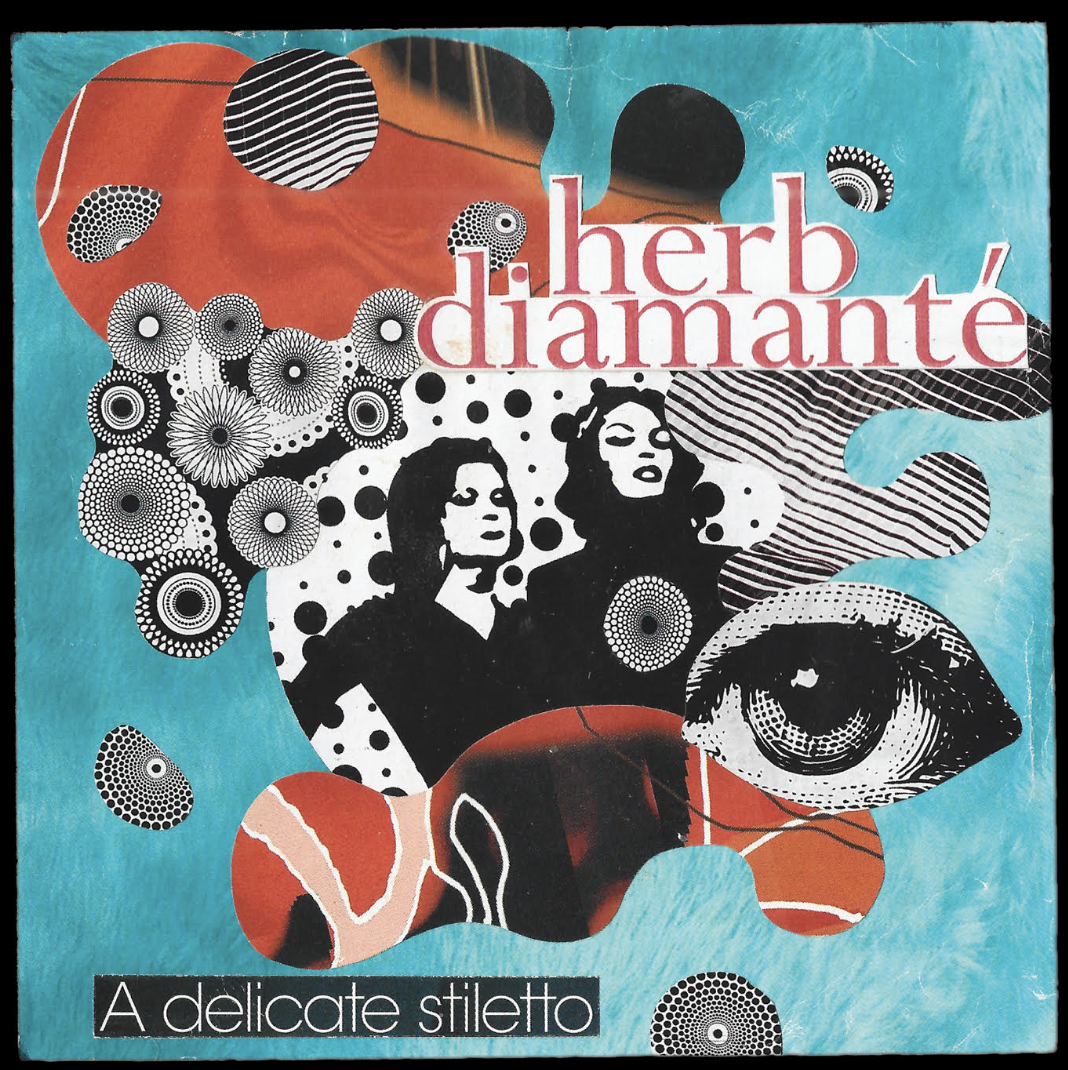
Fran Ashcroft ‘Things To Make Do With’
(Album) 24th September 2026
Fran Ashcroft is back with a free to download, if you want it, album – or if you want a CD instead, you can message him on his Bandcamp page. Let’s be honest, who doesn’t want it, because as ever with Fran you are blessed with a warm loving wash of arched eyebrow and tongue-in-cheek lyrical observations about the world in which we live. Gently poking fun at the high and mighty and the plainly stupid – particularly the powers that be that currently run the USA. Things To Make Do With really is a fine album, and a gentle reminder that music can entertain educate and enlighten.
These gems of songs have fine lyrics and tunes that have melody, dipping its toes in Lo-Fi Pop, Country (“Key To Your Heart” is a song worthy of Hank Williams), Jazz, Blues and Psych; flowing from the cocktail-like jazz of “Truth Love and Justice” to the early 60’s pop of “Blue Over You”. Yes indeed, Fran has quietly without any fuss released one of the albums of the year.
bigflower ‘Opinions’
Single – Released 19th August 2026
A song of darkness, anger, dismay and bloody brilliant guitar riffs. Yes, another in the long line of monthly tracks by bigflower. There is always a wonderful dense and all-consuming quality about bigflower and ‘Opinions’ is no different: and this opinion is one everyone should hear.
Cut Chord ‘Demolition Music’
EP – Released 29th July 2026
There is a rather lovely peacefulness to the five songs on this EP; soft, beguiling at times, with an undercurrent of sadness and melancholy that reminds me of Suzanne Vega but backed by The Red House Painters: especially on the rather splendid “Unfurling”. Cut Chord could well be a duo to keep an eye out for, and with the right label behind them could find themselves attracting the attention their obvious talent deserves.
The Free Four/Salem Trials ‘A Weasel In The Meatsafe’
Single – Released 25th August 2026
The Salem Trials are both back and not back at all, as they have confusingly changed their name to The Free Four but released it on the Salem Trials Bandcamp under their own name. Anyway, no matter what the name says or may be the two songs on this single sounds like The Salem Trials – a post-punk cacophony of guitars and madness that may sound like playing both a Fall LP and a Buzzcocks LP at the same time loudly in a small room.
Herb DiamantE ‘A Delicate Stiletto’
Album (Nyahh Records) 2nd September 2026
A Delicate Stiletto is a wonderful album. I love Scott Walker. I love Marc Almond. I love Peggy Lee. I love the seedy nightclub glamour of life, the image of the ageing night club crooner singing songs of once was and no longer is, of failed hopes and dreams, of how he could have and should have been a star but is now just a rain-soaked memory; a soundtrack to the bar tender pouring a drink to a stranger with a tale to tell. Herb DiamantE is that crooner and he spins wonderful images of lost love drunken nights and faded glamour set to a wonderful backing of pure sixties camp glitter ball hotel jazz sleaze. A Delicate Stiletto is a sequinned glory of an album.
The Male Pattern ‘I Was Shot In The Heart’
Album (Audio Antihero) 25th September 2026
The Male Pattern’s I Was Shot In The Heart is an album of the timeless variety and a bit of a throwback to the days when singer-songwriter’s told stories in the songs: something you do not come across as much as you once did. I was brought up soundtracked by country music…not that I lived in Texas or Nashville but in a North West industrial town in England in the 70s where Coronation Street was more like a fly on the wall documentary than a soap. My dad loved country music and played it constantly, so I grew up with tales of gunfighters as told by Marty Robbins or Kitty Wells singing of Back Street Love affairs, and although this album is not a country album as such it has the same grit and the same blue-collar tales of everyday and not so everyday happenings and life.
I Was Shot In The Heart is a fine album of well written tales and stories like a modern Streetheart by Dion or The Ghosts Of Tom Joad.
Minot ‘Down & Out At The Thunderbird’
Album (Drag Bunt Records) 2nd October 2026
Down & Out At The Thunderbird is a lovely rambunctious affair of early Fall like post-punk and 60s garage rock splendour, the kind of hip-shaking benevolence the mighty Billy Childish and his many outfits make quite perfectly; the kind of album you might have heard pre-Cramps gig blasting from the speakers as you wait for the madness to commence. Well my friends, the madness commences as soon as the needle hits the record on this quite marvellous album. One to play loudly and often.
Neon Kittens ‘It’s A Raid Monkey Tail’
Single – Released 23rd August 2026
Another amusing foray into sonic blast guitar territory from The Neon Kittens. Lasting just under one and a half minutes, this brief but perfect slice of post-punk has one grinning like the cheshire cat after drinking a bottle of my wife’s home-made tea wine: not that she makes wine anymore, nor do I drink alcohol anymore, but who needs alcohol to put a smile on your face when you have the Neon Kittens.
Spygenius ‘Rhizomania’
Album (Canute Records) 3rd October 2026
Spygenius are back with their second album, another foray into whimsical British folk psych pop. Yes indeed, you could not get a more British sounding album if you wanted to – so British it should come with a pop-up Morris dancer or at least a cardboard one which you could cut out and stick on your mantlepiece. Which may be the reason it is their first release on their own record label Canute Records and not the American based Big Stir Records that released their excellent debut, as this is far more real ale and cricket than cold beer and Baseball.
Spygenius carry on the great British tradition of whimsical pop, one I would recommend fans of the likes of Squeeze, XTC, Fairport Convention and anyone who has a penchant for the Piccadilly sunshine series of compilations of obscure English sixties psych released a number of years ago. Yes, an album of Summer Fetes and Autumnal walks.
If you’ve enjoyed this selection, the writing, or been led down a rabbit hole into new musical terrains of aural pleasure, and if you able, then you can now show your appreciation by keeping the Monolith Cocktail afloat through the Ko-Fi donation site.
The Digest for September 2026: New Music/The Social Playlist/Archives
September 2, 2026
The monthly Digest includes a clutch of accumulated short new music reviews, the social inter-generational/eclectic and anniversary albums celebrating playlist and an Archives Special.
___/NEW MUSIC REVIEWS___
(All entries in alphabetical order)
boycalledcrow ‘The Sprawl’
(Mortality Tables) 11th September 2026
Previous musical hallucinations have taken Carl M Knott (aka a boycalledcrow) through a Northern India roadmap, William Gibson’s dystopian sci-fi visions, and a strange manifestation of dream-realism that seems to be attached to, but very much removed from weird England. All of which has been woven into a sort of near avant-garde transported invocation of outsider art music.
Back with no less a “psychedelic” traverse of his obsessions – the ideas and questions that keep him up at night -, Knott turns long walks in search of UFOs (or as the recent senate hearings on the subject have now referred to them, UAP – that’s Unidentified Aerial Phenomena or Unidentified Anomalous Phenomena) and the search for aliens. Obsessed indeed with the whole conspiracist fantasy of government alien cover-ups, and the UAP phenomena – “show me the aliens!!” as Neil deGrasse Tyson would say -, the allure of declassifying files and perhaps finally exposing what so many hoped has been little more than a sensationalist anticlimax. It could in fact have been a government plot all along to encourage its citizens to watch the skies for them as documenters and early warning systems – as they can’t be everywhere – against enemy States infiltrating US airspace. Rod Dreher and JD Vance would have us perhaps believe that these alien entities were not from other galaxies but the Christian demons of our own nightmares.
Unexplained phenomena aren’t the only obsessions; whilst only alluding to it in the accompanying PR notes, Knott mind is also concentrated on the sorrowful pains of losing a “cherished loved one”. And often, there feels like a balance between the two worlds: the immaterial and the cosmic.
Taking a lead from such philosophical quandaries, Knott walks a mysterious and almost Freudian line between nightmares and dreams, lost as he is in the woods of his own imaginings, communing with the wildlife and familiars of a surrealist trippy kind to produce his most psychedelic walk-about yet.
It’s a musical landscape in which the pastoral English folk magik of the Green Man kind and the floral costumed mysterious figures of lore and traditional planes meet something far odder; a manifestation of strange visitations from both beyond the material and outer space.
Whilst previous releases have been built upon Knott’s reverberating loops of interlayered nylon-stringed acoustic guitar samples, this time around that instrument is not so prominent. It is of course there, hidden or far more medically dreamy; a few notes or a brief fairytale passage here and there arriving from the ether. The difference on The Sprawl is Knott’s use of live played drums to create slipped trip-hop and more like hip-hop instrumental beats, and his embrace of ambient and new age trance music to create a sort of familiar but unique radiated and mellotron-like rotor mysticism.
Boards of Canada at their best mutate into Pan-American, Black Dog, Casino Versus Japan and Susumu Yokoto across a spectrum of both near slow-released euphoric and moodier, near ominously alien and mournful hallucinations. ‘Mantis Man’ for some reason (and remember, I have had a stroke recently) reminded me at one point of a fairground Beatles during their Magical Mystery Tour period being warped and reversed through a portal and transformed into the Beta Band.
A cylindrical and gradually beamed presence of other worlds, of psychedelic sci-fi and entrancing electronica from a golden era in 90s Britain, and vapours all coalesce to build up a dream state that unveils more on each listen through. This really is an album that gets better with every play. I’d even suggest it’s one of the boycalledcrow project’s best yet.
Dollar Brand, Don Cherry & Carlos Ward ‘Third World – Underground’
(WEWANTSOUNDS) 11th September 2026
Quite rightly one of the most iconic collaborations in free/spiritual jazz circles; a cult and most treasured, revered LP on its release and ever since, the Third World Underground performance and LP unified the talents of the iconic jazz triumvirate of the South African pioneer Dollar Brand (the moniker used by Abdullah Ibrahim until the later 70s), American nomad Don Cherry and Panama-born, American bred Carlos Ward. Released in its original form over fifty years ago, recorded however live in 1972, that promising communion of luminaries and their roots expansive show is finally getting a proper international vinyl release (for the first time ever I believe) from the good folk at WEWANTSOUNDS.
A salivating proposition for jazz aficionados and anyone who rightly claims to love exploration and the pursuit of furthering the form, this iconic cult favourite (if you were both lucky enough to own a copy in its limited form or hear it by other means) was first released by the notable Japanese label Trio Records via their even rarer and revered Nadja imprint. Holding the license in that territory for the rightly iconic ECM, the roster included both pioneering and acclaimed experiments and influential LPs from not only the American scene but a smattering too of homegrown talent: Ryo Fukui and Kunihiko Sugano for example sharing space with the likes of Art Pepper and David Murray…though the list goes on.
It is then a very special release, especially in light of the recent passing of one of its chief architects, the foundation and cornerstone, and man responsible for the lion’s share of arrangements (its most constant rhythm of life, flow and timekeeper) Abdullah Ibrahim or Dollar Brand as he was known at the time before that religious conversion.
Rightly occupying the same lauded heights of veneration as his South African compatriot and good friend Hugh Masekela the sagacious adroit Ibrahim received nothing but respect and praise for his activism and musicianship; with even Nelson Mandela no less, anointing him as “South Africa’s Mozart”. Embodying the many travails of his homeland, giving voice to the townships with what many consider the unofficial national anthem of the anti-apartheid movement, ‘Manneberg’, he spent decades fighting the system through his music: mostly in the jazz form but the classical too. In a former epoch, when merely performing jazz in South Africa was seen as an act of resistance, the pianist-composer was mixing it up with his legendary counterparts across the Atlantic, playing with a staggeringly impressive cast of doyens including Duke Ellington, Max Roach, John Coltrane and Ornette Coleman. The Duke, alongside both Monk and Fats, is honoured on one of his earlier 70s LPs; the opening ‘Saleem Peace’ being one arrangement I can’t help but feel and hear being riffed on the opening performance of this LP: that and perhaps Ibrahim’s own ‘Ancient Africa’ tune.
Intersecting across timelines and through various set-ups, Ibrahim’s foil, the renowned Don Cherry, fell into his orbit on numerous occasion; both serving at various opportunities under or with Coleman: Cherry appearing in the pioneer’s groundbreaking Shape Of Jazz To Come quartet of ’59.
On his way to becoming the restless musical nomad of jazz lore, Cherry’s eventual self-exile to Sweden was set in motion by his mid-60s tours of Scandinavia, especially Denmark. The burgeoning trumpeter and cornet star played in the country’s capital of Copenhagen in ’63 with Archie Shepp, and in ’64 with Albert Ayler before returning in the pivotal year of ’65 to record a quartet of original and standard performances for Denmark’s national radio station. Though often dismissed by cats like Miles Davis for a lack of technical proficiency, Cherry’s constantly evolving visceral style had gained him an envious apprenticeship, partnering up as a foil to a litany of be-bop, hard-bop and free jazz doyens: from Sonny Rollins to Coltrane.
Famously and influentially, Cherry’s organic societal caravan trek and meander across porous borders expanded the cultural language of jazz; his collaborative spirit with a cross-generational and worldly network of artists and players covers everything from French no wave to the music of Turkey and of the Far East.
No less impressive a CV, alto-saxophonist and flutist Carlos Ward is perhaps best known as a jazz and funk sideman, though he would also go on to lead his own quartet in the 80s and release a quartet of LPs. Born in Ancón in Panama, but incubated in the USA, Ward’s formal training in music was via the Navy School of Music. Part of that military tour included a stint in Germany, where he met the bop, freeform, modal and jazz-rock infused trombonist of note Albert Mangelsdorff. But his first big break was with Coltrane’s octet of 65-66. At the same time Ward crossed paths with Cherry who was also playing with Ibrahim, who’d left his apartheid homeland five years beforehand. That association carried over, with a notable soloist spot on Cherry’s Relativity Suite being just one example, and an ever-developing collaboration with Ibrahim that lasted into the 90s.
Already well attuned to each other’s musical languages, the global influences and a growing connection to the roots’ basis of the jazz form and its African heritage, by the early 70s and date of this live recording all three foils were at their creative heights. There’s much made of the societal tumult of the era and the decolonization of Africa’s former European colonies during the 60s and 70s; said to be reflected in this live coalesce of talent and their free expressive lines of enquiry and amorphous third world regeneration. That title being an indicator of course of ownership, the trio have taken back a derisory if for a very long time, an academic term for countries seemingly underdeveloped and even backwards in comparison to the great Western powers of the 20th century; Africa’s many nations but as a whole falling under this sweeping statement, though South Africa was only third world in relation to its apartheid segregated mistreatment and heinous degradation of its indigenous Black population; one reason why Ibrahim left to pursue his art and activism abroad.
Recorded at the prestigious Jazzhaus Montmartre in Copenhagen – a venue on par, its boasted, with the Village Vanguard and Ronnie Scotts, and a familiar stage for Cherry from back in the mid 60s -, this union riffed on, around and in the fourth dimension added to Ibrahim’s arrangements and on the opening span of cascaded waters over the rapids via the imaginary bugle-like-calls and heralds of fort on the borders of Texas during another age, a Cherry credited number.
From the outset, Ibrahim keeps up a momentum of simultaneously troubled and ravine trickled waters on the piano as Cherry and Ward sound the call to meet on the parade ground and to shine, blaze with brightened horns of sentiment and mystery.
The second track is named I believe in honour of Cherry, and a version featured on Ibrahim’s Ancient Africa LP – let me know if I’m wrong on this score, especially linear notes writer of engaging and descriptive musically flourishing prose, Jaques Denis. Carry on that Victora Falls flow, there’s a shift towards Ibrahim’s joyful township gospel vibe. You can hear the enjoyment in the playing on this percussively scraped and spoons-like rattled warm melodious celebration; a nod perhaps to Cherry, but also the Pharaoh and Yusef Lateef.
In old money, side Two is a near seamless performance both of jazz’s African roots and further nomadic trail through the form’s cannon, its inceptions, mixed with a removed form of the classical.
It begins with a fusion of saloon and New Orleans bluesy jazz – think Oscar Peterson sharing the pianist bench with Toussaint and Cecil Taylor -, a riff on ‘The Moon’ and a trumpeted caravan trail over the sand dunes, before accenting the drama and peaks of the piano’s near off-kilter and simultaneous trembles and rhythmic waterfalls. ‘Jabulani-Easter Joy’ follows, keeping the signature piano sound and feel, but swaddled as it plays through an African marketplace to the tune of Hugh Masekela, a distant Mariachi band and the show bands of the 1920s.
There’s a communal township chorus of voices on the next part, a take on the traditional ‘Waya-Wa-Egoli’: already an album track of Ibrahim’s, paired up, as it is here with the accompanying ‘Swazi’. I believe all three foils are taking part, pleasingly humming and mouthing a hypnotic chant and mantra; a sing-along of the atavistic and spiritual; a connection to the continent. It ends on ‘Wayeah-Wayeah-O’, a final South African imbued calm of swimmingly hummed piano and fizzled-out saxophone.
At every turn the horn partnership proves as attentive as they do dynamic and free; mimicking each other at times, and at others in spirals of cyclonic honks and circus wails. Ibrahim enforces just how bloody good he was; the keys and notes pouring forth, flourishing and sweeping whilst at the same time repeating high noted repetitive tremors and spiky near out of key free hand accents and descriptive dances of the soul.
The word iconic is used too freely, but this revived and, finally, properly released LP, pressed onto vinyl, will do much to spread the word and accumulate new fans, new listeners to a magical trio at the height of their creative powers. Jazz royalty out on the fringes one minute, back into a melodious union of African soul and joy the next, Third World – Underground is a wonderous, dynamic and serenaded performance of the nomadic spirit; a return you could say to the roots, but also venture forth into the unknown or less charted.
Regina Collage ‘Horizont’
(Do You Have Peace?) Released 21st August 2026
Though the circumstances could have been better, the Ukrainian artist Regina Collage’s love of her newish Bristol home and its internationally influential and renowned music scene has opened new doors of introduction to a sound steeped in a kind of vapour and filter of dreamwave, coldwave, no wave, post punk synth pop and Goth electronica.
Forced to move away from her Kharkiv home on the Northeastern boundaries of Ukraine due to the relentless bombing campaigns by the Russian invaders since the outbreak of war over four years ago, Collage has found a strange kind of sanctuary in England; as the this latest album title alludes, the translated “Horizon” seems out of touch, never quite in sight or within reach; a metaphor for home and the detachment from events thousands of miles away in Eastern Europe’s most savagely and contested fought war.
Whilst events across the globe – from Israel’s ongoing war with Hamas and Iran’s proxies in the Middle East to the USA’s still very much active war with Iran itself – have pushed Ukraine’s defence against Russia off the newsfeeds, and as both attention spans have wearied or moved on and the divisive sides in the political ideological war of the West put each conflict in two regimented camps – usually the Ukraine falls into both the Right and Left’s conspiracist orbits, with, depending on which side, support and sympathy sometimes skewered for Russia and Putin -, this brutalist war continues unabated. Kharkiv’s importance strategically and geographically as the country’s second major city has made it one of the most important targets in Putin’s campaign; attacks from drones and missiles are almost a daily occurrence, with injuries and deaths registered every week, infrastructure and homes destroyed regularly: Already out of date at the time of writing, last month’s statistics roughly amounted to the total or partial destruction of 13,000 buildings and 9,000 apartments since the start of the war in 2022.
Changing hands over time, Kharkiv was once the capital of the Ukrainian S.S.R. until Kyiv took over in 1934. An epicentre of theatre, literature and the arts, home to the country’s Romantic writers’ revival, the city boosted an enviable cultural scene that revived and fed into a sense of independence. Although various periods of instability and the overbearing control from Tsarist Russia, then the Soviets and after the fall of the Berlin Wall, a post-Cold War Russia, have suppressed and worse, attempted to rewrite history, Ukraine maintains that same spirit of maintaining its own independence and destiny.
Collage’s parents remain in the city, which must be constant source of anguish and fear for Regina. These feelings, I would imagine, sung in a dreamy melange of echo, filters, vapes, industrial resonated moodiness and lament, are conveyed across the album’s thirteen differing tracks of influence and inspiration. It’s emphasised in the accompanying notes that the Liz Fraser meets lo fi minimal French chanteuse, Raincoats and Conny Frischauf-like vocals are all sung in a Ukrainian dialect. And it feels like the unearthing at times of some formerly hidden underground 80s synth-pop and Gothic release, revitalised with contemporary apparatus and the mood music of the times. You can add in a sort of Jah Wobble wavey and wobbly bass, some flange and phaser effects guitar playing (almost Banshees territory and the early Mute and 4AD Record labels roster) and atmospheric spells of Nocturnal Emissions, the Au Pairs and Coil.
Created between makeshift “bedroom recordings” and “borrowed studios” in and around Bristol, occupying thoughts and abstract expressions of the war and settling in a new home but not really knowing if it is temporary or for the long haul are transduced into a work of both weariness and endurance.
It all opens with the Eno/Harmonia and Thomas Dinger feel of ‘Tremelo’, which goes on to recall Stereolab, and strangely, Beach House, and works its way back and forth to the Cocteau Twins via factory reverberations, dissipated drum pad smacks and splays, and darker post-punk borrowings. New horizons are amorphously and moodily set beyond arrival on an album that conjures up diaspora disconnects and burnt-out maladies. Still, Bristol has opened up a music box of possibilities and foils with which to work out these desperate plights and exhaustive weathered thoughts of never quite reaching the acquired or ideal horizon.
Luce Mawdsley ‘Dream, Baby Butch’
(Pure O Records) 4th September 2026
What could be a daunting task, encapsulating and reflecting only the entire cannon of Western portraiture art and its idea of the feminine and queer gaze as realigned and recontextualised, reappropriated by the leading photography artist Catherine Opie, is handled with such sensibility by the former Mugstar guitarist and soloist composer of an as yet undiscovered but explored queer and non-binary vision of Americana, Luce Mawdsley.
After initially breaking free to pursue their own unique musical story with a number of abyss drawn sonnets informed by predatory slurred spoken-word mise-en-scenes and lurid, sleazy torturous self-harm, the Liverpool-based artist/musician began to pretty much mosey through an alternative version of this Western re-imaging: a sound I described at the time as a culminated merger of Morricone, Blood Meridian, Crime And The City Solution, El Topo and Hellenica.
Moving on still further with that developing soundscape and soundtrack-rich practice, Luce’s 2024 album, Northwest & Nebulous, created a continuous thread between that Western transformation and the traditional tones and echoes of both English pastoral and chamber music. Successfully integrated, the results now continue on this latest three-track soundtrack accompaniment to Becky Manson’s film, which presents Opie’s recent commission for the National Galleries of Scotland. Representing the devotional aspects of that same tradition, but through a mirage of new ideas on belonging and the art and curation of replacing old symbols and old representations with the stories and images of a LGBTQ+ community previously left out or removed from the gallery and museum space, Luce’s soundtrack reflects the three main themes, chapters in the journey from Opie’s formative crisis with identity and conformity in Cleveland to her experiments with gender at art school and the travails of motherhood as a lesbian. Marked by the retrospective span of Opie’s career, each project from that fifty-year career as a photographer, and I’d say installation, artist, is marked musically with moving adroit appeal; from the initial near angelic hymnal mirages and wavey subtle hints of Americana, but also (to my ears) the lilt of Hawaiian music of Luce’s main chosen pedal steel instrument on the opening title-track to the point in which that signature sound suddenly merges seamlessly with the near pipped gravitas and reverent devotional sound of the Cathedral – reminding me a lot of Jeff Bird of Cowboy Junkies note, but a soloist artist of similar influence.
Each musical passage proves just audible enough to not so much punctuate but to articulate the moment of each candid Opie declaration and explanation, as it sympathetically matches the juxtaposition of the artist’s own landmarks with those of other 500 years-worth of portraiture from the Western cannon. From both a decorative depiction of Mary and Child from the Renaissance epoch and a more modern rendering of motherhood by Picasso twinned with Opie’s own revelations and shared experiences of child-rearing, to what looks to be a family “collage” (as she describes it) from the English Civil War epoch countered by Opie’s own portraits series of domesticity in the lesbian community around America, each section is beautifully captivating musically. Luce doesn’t pull away from the focus but sets the tempo and suits the mulling over of what’s being described: serious but also dreamily ruminating and deeply felt. (Just to add, I personally love Opie’s portrait of a queer figure placed a few feet away from that of a painted Highland’s clan tartan clothed ruddy-faced Scotsman from the 17th century, when both should be at odds with each other they seem to strangely and brilliantly connect and make perfect sense at this time and in this place.)
The artwork is important of course (you or I could spend paragraphs and ages discussing all the various ideas, themes and relevancies of not only portraiture but art history; my thoughts just scratching the mere surface) but Luce’s score once isolated reveals ever more subtleties: just the merest hint of what sounds like metallic shimmers, a enervated softened and turned down low drum shuffle and textural brushes across the snare skin and off the rims, and a bassier undertone of real depth. If I was trying to find a reference, perhaps the work of Andrew Wasylyk and Daniel Vickers would be good, plus the already mentioned Jeff Bird. But what Luce seems to be doing is finding a new voice for the traditional steel pedal sound, which they describe as “surely the most nonbinary queer coded Western instrument”. Though I’m not so sure myself of that description, the instrument certainly seems to have more of a lilt, and I would say femineity to it when used as a balance against the more masculine stoicism and machismo of most traditional Americana and Country & Western music – just to take one example, the cosmic cowboy himself and former Monkee, Mike Nesmith always seemed to use it as a weeping melody or high aria-like plaint on his hangdog and hapless songs about regret and unrequited love. I expect you could probably get a grant these days to research and write a PhD paper on it, but it is something that Luce is pursuing; providing an alternative just like Opie’s own photographic works provide that alternative visual documentation of our progressively changing times, and a new sense of confronting the issues of belonging and erasure.
Euphoria is mentioned, even the Seraphim order of the highest of highest seated celestial angels, but a certain transcendence is reached on the pilgrimage to realisation and for finding a place in a world that has so far seemed hostile and cold to the LGBTQ+ identity within portraiture and this particular strand of musicality. As echoed in a most revealing film and project, Opie and Luce seem to prove a perfect collaboration.
You can visit Opie’s made visible themed To Be Seen retrospective come commission re-alignment of Scotland’s National portraiture collection in the Royal Scottish Academy building in Edinburgh until Sunday the 1st of November 2026. Taken from that show, Opie’s earliest self-portrait as a child posing like Charles Atlas in Cleveland adorns Luce’s EP, which is released via Luce’s own label, Pure O Records, with all proceeds going towards Liverpool’s oldest LGBTQ+ charity Sahir.
Shapeshifter ‘S-T’
(Lit Soc Records) 4th September 2026
The distinguished and loftier jazz critics through their industry outlets will home in on this trio’s technical abilities – which are top quality by the way -, but I’m drawn to performance, the feel and musicality; whether it’s experimental or an immersive experience that draws you in and makes you want, nee need, to hear more. And I’m pleased to announce that the rightly renowned but still burgeoning saxophonist and composer and now bandleader, Brittany Pitt has achieved it all on her inaugural Shapeshifter album.
Imbued and feeding off of the legacy – and very much still evolving – Toronto jazz scene, Brittany and her foils of fellow University of Toronto Faculty of Music alumni and guitarist/composer Dan Pitt, and drummer/composer/curator/educator Aidan McConnell manage to incorporate their previous projects and eclectic experiences on a live recorded performance that recalls moments and evocations of jazz-fusion, jazz-rock, the European school of contemporary jazz, and the freeform.
All three credited improvisers of that form bring something special and personal; drawing upon the jazz traditions of exploration and a forward momentum that simultaneously offers syncopation and the extemporised to breach and probe at the boundaries, yet still maintain something melodic, feelings and expressions of thought and rumination.
Cross-networks with CVs that contain an abundance of collaborations and studies with Canda’s new and established schools of jazz, it’s that scope of learning and sharing that now enfolds over nine tracks of both mirages and more active, busier pieces. The title-track jumps into life after an inviting tenor lead-in and Allen Holdsworth-like clever but attuned to the direction of travel guitar and spidery bouncing drums. As the track progresses from the floor of the “beloved” Toronto Sellers & Newel Second Hand Books store – doubling as a venue for such experimental and improvised showcases -, echoes of Europe’s ACT and We Jazz labels resonate with the American stirrings of Donny McCaslin and the intricate guitar work of Wes Montgomery before finally resting.
Harmonic pings and the bell of what sounds like a bicycle sound out across hi-hats chaffs and squeezed breaths over the tenor’s mouthpiece on the next track, ‘Union Street’. Every town or city has one it seems, but this busy bluesy sidewalk shuffle and snozzled accompanied piece builds in its momentum towards a strange alliance between Zappa and Beefheart strung-out and wiry guitar experiments and echoes of Black Conscious jazz from the 70s.
The shorter, near vignette ‘Prospect’ intro strangely evoked Jeff Buckley at a contemplating jazz retreat under the tutelage of Pat Metheny. This bleeds into a full-on and fully realised improvisation of bandy lunar guitar, dusted and shuffled busy drums and an air of spiritual jazz. ‘The Meaningful Conversation’ meanwhile reminded me of a downplayed borrow of Idris Ackamoor and Peter King, transported to the dry rasped planes of the desert. In other places the album draws comparisons (to my ears anyway) with Anteloper, the Jim Black Trio (minus the piano, which sounds odd I know), Bill Frisell and on the ‘Mentally Heavy’ Balearic-like and tuneful improv Lalo Schifrin via Coltrane – that same track has some wild fretboard strokes and noodling going on, plus soloist rock-jazz cries and whines.
Fulfilling its role, the inaugural Shapeshifter live showcase (recorded back in January of this year) does much to cement the reputation and draw of the Toronto jazz scene. One of the best examples of its kind in 2026, fusing the European with North America to balance out an idiosyncratic performance hard to repeat.
___/THE MONOLITH COCKTAIL SOCIAL PLAYLIST VOL. 110____
A little early this month, brought forward by the deaths of both country dame Dolly Parton and the never miscast or typecast actor and musical artist Tim Curry. I’ve added a smattering of tracks from the two on volume 110 of the long-running inter-generational/international/eclectic Monolith Cocktail Social Playlist – a kind of quasi radio show, or even a DJ set (yes, believe it or not I did used to gig as a DJ).
There’s more from both Curry and Parton in the Archive section below this; a sort of playlist of video moments and adjacent curated acts that seem close to or that orbit those two worlds.
If you’ve been following the site for some time, or just like the playlists I’ve been compiling, you will know that each month there’s a selection of tracks from anniversary celebrating LPs.
This month I’ve chosen tracks from The Remains’ self-titled debut of 1966, Funkadelic’s Tales of Kidd Funkadelic and Hardcore Jollies albums (both released in 1976). Another leap forward in the decades, and David Slyvian’s Gone To Earth is forty. I’ve also added a quartet of tunes from R.E.M.’s Adventures In Hi-Fi’, Suede’s Coming Up, Octopus’s From A To B (criminally overlooked), and The Cardigans’ First Band On the Moon, all of which celebrate their thirtieth birthdays this month.
The rest of the playlist is made up of the old and newish, with choice music from Mia Joy, The God Fahim and friends, Keiron Phelan & Peace Signs, 4 Mars, B Flatt, Sylvain Kassap, Don Peretz, Solso, Pipes You See Pipes You Don’t, Idioma Ideal, TESTPATTERN and Second Layer.
Volume 110’s Track List::::….
Dolly Parton ‘Help!’
4 Mars ‘Natesha (Conpassion)’
Octopus ‘Everyday Kiss’
Suede ‘Starcrazy’
Second Layer ‘Zero’
Funkadelic ‘Let’s Take It To The People’
The God Fahim Ft. NicoJP & Lil Supa ‘Lotus’
B Flatt ‘Crushed by Your Dreams’
The Remains ‘Lonely Weekend’
Pipes You See, Pipes You Don’t ‘Ten Thousand Years Old’
TESTPATTERN ‘Beach Girl’
Tim Curry ‘Hide This Face’
Vita Bergen ‘Disconnection’
Don Peretz ‘Epater Le Bourgeois’
David Sylvian ‘Gone To Earth’
R.E.M. ‘E-Bow The Letter’
Bix Medard ‘Are You Ready?’
Adelie ‘Sylvain Kassap’
Dolly Parton ‘You Gotta Be My Baby (Live)’
Keiron Phelan & Peace Signs ‘Robinson Crusoe’
Funkadelic ‘Soul Mate’
Kristoffer Bolander ‘I Forgive Nothing’
Porter Wagoner & Dolly Parton ‘The Pain of Loving You’
Mia Joy ‘See Us (Demo)’
Idioma Ideal ‘Puerta Secreta’
Solso ‘Lontana de me’
Opus Avantra ‘Il Pavone’
Dolly Parton ‘Purple Rain’
Bear Driver ‘Never Never’
The Cardigans ‘Choke’.
____/ARCHIVES_____
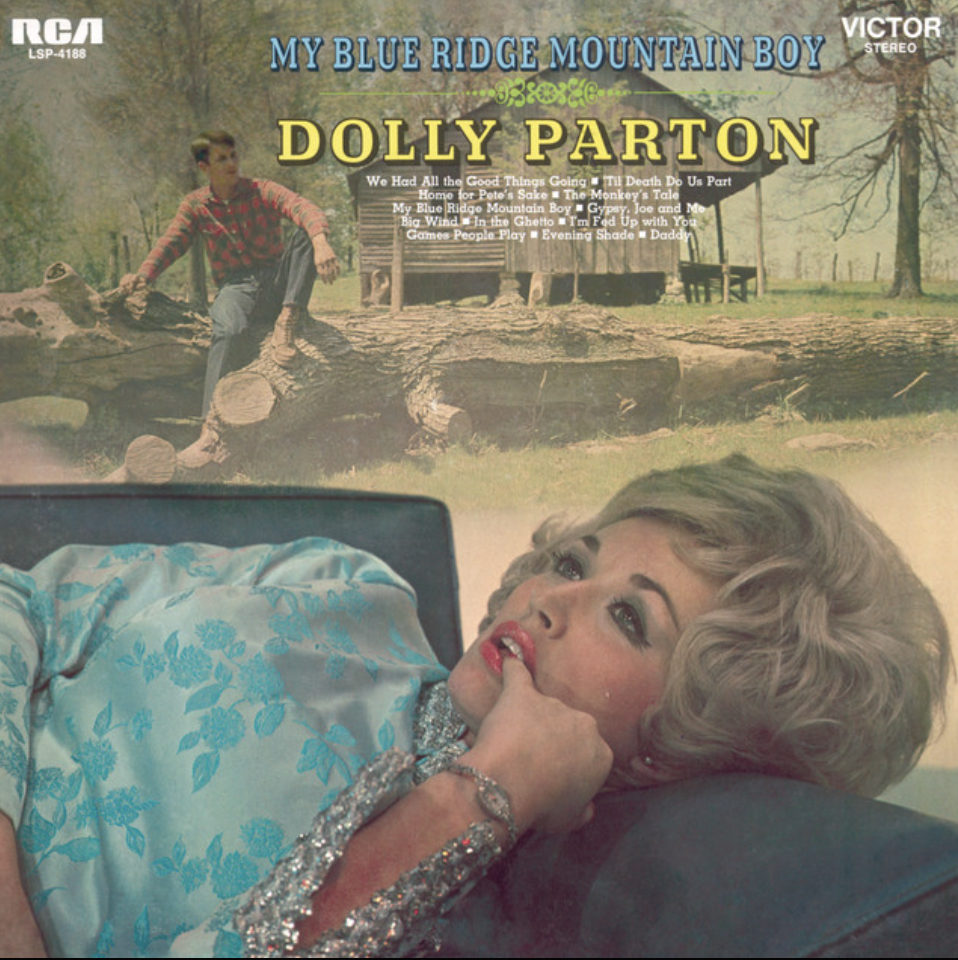
Something different this month, a hotchpotch smattering of favourite moments from Dolly and playlist of those who shared a similar trek or could feel indebted to that Tennessee gal’s travails and fortunes. Under the Sweethearts of the Rodeo & Log Cabin porch Divas heading, I’ve collected together a playlist to capture the musical joys, plaints and transcendence of Dolly and her peers, her scions and fans.
A Dolly Mixture of moments:
One: Dolly in a life-affirming duet with Kermit the Frog, riffing on Sly & The Family Stone’s ‘Everyday People’.
Two: And for balance, Dolly upstaged by Miss Piggy.
Three: Warming up for that eventual Trio album release many years later, Dolly nearly upstages the ridiculously sublime voices and presence of Emmylou Harris and Linda Ronstadt; covering one of a number of songs together, this time a song made famous by the legendary Carter Family, ‘Bury Me Under The Weeping Willow’.
Four: The odd couple. Dolly pays a visit to the lunacy and kooky childish playhouse of Pee Wee Herman. Excuse the quality of the video. Hang around until ‘Hey Good Lookin’, which is a hell of a lot more fun and brilliant than it ought to be.
Five: Let’s hear from dear ol’ Sis to see if it runs in the family.
Six: The technically adroit and informative Wings of Pegasus analyses the genius of Dolly Parton. No one should be in any doubt (and I’m pretty much sure that WoP is the only such analyst worth his salt on Youtube) of Dolly’s guitar prowess and performance after watching this – and remember kids…practice on that instrument.
Seven: A real teary-eyed tug on the heartstrings. The sorrowful lament would make angles cry. Dolly performs ‘Down From Dover’. The lyrics are incredible, the story tragic and bold for not only her times but anyone’s. Written originally when Dolly was just 18! I can’t believe anyone now at that age could be sagacious, already worn and hurt enough, nor lived enough life to come up with such a heart torn asunder malady. PS: I actually originally thought this was a cover; something from the Fairport and their ilk songbook…a traditional mourn brought up to date.
Eight: A no brainer, considering that rural upbringing and her own travails of poverty and Southern twang that Dolly would cover this. Elvis famously wished to record Dolly’s own ‘I Will Always Love You’, but as the Colonel’s 50% publishing ownership travesty of a deal threatened to run right over an aspiring songwriting Dolly, our Tennessee dame rightly decided a big fat no! Anyway, she does a service (just as gospely and spiritual) to the conscious, right-on Elvis and his Memphis social spun commentary.
Nine: Dolly with Oprah Winfrey sharing a joke that would probably never be dared aired or even considered now – more’s the pity. Dolly auditions for Porgy and Bess.
Ten: Taking it back down the country to the Southern Baptist, Dolly sings ‘Higher and Higher’ and the choking-back-tears, ‘Me and Little Andy’ on Carson Tonight – her inaugural appearance, which she even admits was probably the biggest moment in her career in terms of reaching that universal crossover audience.
“Give My Regards To (Off) Broadway”: Tim Curry Jukebox:
Tim Curry ‘We Went As Far As We Felt Like Going’
Tim Curry ‘Hide This Face’
Tim Curry And Eddie Murphy ‘Saturday Night Live Monologue’
Tim Curry ‘Paradise Garage’
Jobriath ‘Take Me I’m Yours’
Lou Reed ‘Andy’s Chest’
David Johansen ‘Here Comes The Night’
David Bowie ‘Rock ‘n’ Roll With Me’
Here’s the message bit we hate, but crucially need:
If you’ve enjoyed this selection, the writing, or been led down a rabbit hole into new musical terrains of aural pleasure, and if you able, then you can now show your appreciation by keeping the Monolith Cocktail afloat through the Ko-Fi donation site.
The End of the Month Playlist For August 2026
August 31, 2026
Our Monthly Playlist selection of choice music from the last month. Curated by Dominic Valvona & Matt Oliver.
Choice music and sonics from the last month (or so) picked from our reviews, but also featuring the tunes we missed out on or didn’t get the room to feature at the time. Curated by Dominic Valvona with choice hip-hop cuts selected by Matt Oliver and some tunes lifted from reviews by Brian ‘Bordello’ Shea. Includes everything from galloping jazz and underground rap cuts to a lamentable anniversary tie-in with the disastrous withdrawal of US troops from Afghanistan and all that’s rough and new in the gnarled guitar department.
Please note: The Monolith Cocktail has more or less given up its accounts on both Instagram and bluesky. You can find the blog on WordPress, in every search engine going, on Facebook, and still, on X. Or you can of course sign up to email notifications.
If you’ve enjoyed this selection, the writing, or been led down a rabbit hole into new musical terrains of aural pleasure, and if you able, then you can now show your appreciation by keeping the Monolith Cocktail afloat through the Ko-Fi donation site.
August’s track list:
Gentles ‘My Fugue, My Greek, My Brahms’
Neon Crabs ‘Invisible’
Origami Horses ‘Vultures’
SPAER ‘The Express’
Nonturn ‘Indicate’
Kaja Draksler, Petter Eldh & Christian Lillinger ‘Granular Navigation’
Homeboy Sandman & Jack Splash ‘Gas’
Serengeti ‘Dennehy’
Lee Scott, Black Josh, B-Movie Millionaires & Sly Moon ‘HEX’
Apollo Brown ‘Stovepipe Stuffing’
Hadja & Nils Kacirek ‘Hasrat (Shnsucht)’
bu.re_ ‘ii – Heat shimmer’
Motohiro Nakashima Ft. Marucoporoporo ‘Sea of Thought’
King Kashmere, Confucius MC & Jazz T ‘Classic Style’
Doc Da Mindbenda & IAMGAWD ‘Double Nickle In The Garden’
Open Mike Eagle & Kenny Segal ‘Trying to Remember What I Aimed At’
Von Pea ‘The Goof’
Declaime & SaltChunkJerry ‘Breakend Legs Man’
Occult Character ‘Unrequited Vibrations’
Enofa ‘Retire on That’
The Breedling ‘Stalker’
Raymond Roussel ‘the other side of the other side’
Bity Booker ‘The Ballad of Lost Town’
Becca Bartlett ‘Cicadas’
John Howard ‘Abbey Road, April 1974’
Leah Neale ‘Slip Away’
Pozi ‘Hale-Bopp’
Stuart Turner & Rob Grigg ‘For God’s Sake Burn It Down’
Beans ‘Remember’
Resavoir & Gregory Uhlmann ‘4th Cloud’
Enofa ‘Life Flower Town’
The monthly Digest includes a clutch of accumulated short new music reviews, the social inter-generational/eclectic and anniversary albums celebrating playlist and a piece from the Archives.

Before you read on, and if by the end of reading this column you’ve enjoyed this selection/the writing, or been led down a rabbit hole into new musical terrains of aural pleasure, please consider donating to the Monolith Cocktail blog’s Ko-Fi donation account. We are pretty much a one-man show with no sponsors or affiliations, and have sworn to never use or platform AI artists or use this tool in our own writing or research. Curated in a manner, each post and column is entirely self-motivated and beholden to no one. Please enjoy this month’s Digest column from MC founder Dominic Valvona.
___/NEW MUSIC REVIEWS SELECTION___
(All entries in alphabetical order)
bu.re_ ‘seasons in migration’
(AKP Recordings) 21st August 2026
Lower-case absorbed observations and measures of the seasons, as distilled through a both softened and gently piqued dappled lens, the latest traversed set of recordings from the L.A. born producer and multi-instrumentalist bu.re_ builds upon a process, a foundation and methodology to produce near weightless evocations of a familiar and yet almost abstract visceral capture of the seasonal changes.
If we want to get technical and precise, the quartet of tracks on this latest release from AKP Recordings is actually built upon a 12-chord progression, divided into four groups of chords; each of one of which lines up with and reflects a particular phase in the yearly cycle of the said seasons.
Ambience, the new age and Japanese environmental music prove complimentary in capturing the unfurling buds of Spring to the arrival of light poured rains and the lasting, expansive and near nothingness of a “tundra” environment recording that shifts its subtleties over the course of a whole long form suite: starting with a sort of thrashing and sieving sound before developing into Suzanne Ciani and Fairlight CMI-like waves, snuggled and mizzle and airy saxophone purrs, expansive horizon gazing synthesized vistas, and the floated specks of crystallised pollen.
Marking perhaps deeper meaningful episodes in the artist’s life, a reification of feelings invoked by watching such phenomenon, each beautifully conveyed piece is brilliant in its mood music encapsulation of sweltering mirages, roll out of an environment waking from its winter stupor and sleep and the blowy breaths of the wind arriving from a cooler North.
Impressions of Ariel Kalma, my old pal John Lane (going under his A Journey of Giraffes guise I’m reminded of his own homage of a kind to Susumu Yokoto on the Kono album), David Casper, Park Jiha’s summery vibraphone twinkles, and on the static slow released and languidly sax-pipped ‘heat simmer’, Matthewdavid and a restrained, Pharoah Sanders. For across the synthesised and the bulb shaped notes that materialise and float from the electric piano, and over the amorphous soundings of the tubular and bamboo, bu.re_ also adapts both the sax and flute to swan, breathe, waft, flutter its feathery wings and near hallucinate.
Gathered samples from over the last six years are transduced and made evocatively touching, contemplative and inviting when combined with an apparatus of electronic and wind instruments, processes and effects. A most diaphanously touched and sincere mused form of the four seasons, bu.re_ manifests so much more than just the weather and the measuring of the Calander months as they leave their mark upon milestones and concerns of a deeper nature.
Enfo ‘Small Modernist House In Woodland Setting’
(Subexotic Records) 14th August 2026
Despite the personality, the life stories, travails and hopefully more joyful and escapist episodes embedded within this opus-like scale journey from Enofa, I’ve pretty much ignored the research and notes to let the sounds, sonics, tape manipulations and melodic sweeps and soars of this generous eighteen-track album to speak and unravel their sensibilities and captured moods and experiences to me. I’m sure every suite and action has an explanation or series of prompted connections to the artist’s growth, anxieties and meditations, but to embrace without any prior judgement Small Modernist House In Woodland Setting is a both mysterious hauntology and surprising concepted work of ambience, field recorded and snatched sampled collage, disturbances in the soundscape fabric, environmental music and the exotic.
A fourth world vision in many ways that takes in timelines and evocations of periods from across history; from the near courtly and banquet music of the Medieval age and a weird folkloric England to vague chants and ceremonies from what could be Africa, South America and the Far East and Java. More Robert Musci and Glove of Bones than Hassell, but with the amorphous signatures of porous border leakages and influences of bamboo music, the tribal, the jug poured waters of an exotic garden retreat, the bowl reverberations of Lhasa you could be simultaneously and subtly taking in the worldly and off worldly.
It begins with the lushly Japanese-esque ritual karmas and spindled dulcimer-like tones of ‘The Wormery’ (reminded me of both Walter Smetek and a trumpet-free Don Cherry), and then both flows and disjoints with either surface noises or the unruly into passages of shaken dried beans or rice and ghostly waves of wooden tubular pole building on the speaking insect foliage chorus of ‘The Whispering Forest’ and the peculiar Staraya Derevnya and Lotus Eater’s plucked and twanged folkloric guitar mystical ‘Earthfasts’.
The album (or rather double LP) has its own recurring themes and signatures yet constantly expands and takes in an abundance of sources and influences; everything from an astral Mosquito Coast of reverberating hollas and pipped rituals (‘Interstitial’, which reminded me in part of both Elve and Amorphous Androgynous) to starry ecological trance and space mulch (‘Life Flower Totem’) and a more childlike discombobulation of toy instruments and radio tunning (‘Siobhan And Roisin Dance A Ceilidh’).
Metallic pins rain down whilst a Boyd Rice-like voice intones a gothic post-punk esoteric poignancy; motors judder and voices, interactions, aggro and choral voices lie in the undergrowth or the tape ether. Zen meditations overlap with the supernatural; cloud surfing beauty breaks away from the ominous soundscapes of Ramleh. A balance is kept throughout, as Enofa pulls the listener into an extraordinary travelogue and diary of memories, abstracted feelings and life changes. Anything but indulgent, it’s still a lot to take in, and the ambience of it may surprise when it turns corners and undulates with an eclectic spread of sound, the atonal, the discourse and the mysterious.
Nonturn ‘Repeating Town’
(Audiobulb Records) 22nd August 2026
Underlying this often pleasant and understated rhythm of the concrete is the idea of “how the city can be made to function as music”. Beats and loops created from the environment and resonance of Tokyo’s famous “bohemian” neighbourhood of Koenji are repeated, layered and placed on a 96 BPM grid and used as the basis of sampled material, with the results being a most ambient and minimal soundtrack of kinetics, soft industrials, reverberations and the tubular.
The alias of Kanazawa-born and Tokyo-based electronic composer Nozom Yoneda, the Nonturn project utilizes everything from the tools of construction to the traffic and architecture of a well-known musical underground (especially punk rock it’s said) and retail district in the Western regions of that metropolis. And all of it without the use of instruments, nor the obvious or familiar sounds of a buzzing city; transformed from their sources into a low rhythm and groove and set of looped or sampled sonics and ambience.
Every track is interesting in its style and mode of rhythm; from cupping sounds to the ringing of metallic reverberations, swept motions, scaffold and the warbled oscillations and vibrations and the pneumatic drills of machines. With some exceptions it makes for a softened post club absorption of Boards of Canada, Kriedler, Japanese Environmental music, and the early Warp label.
Those exceptions however, can be found in the form of the camera-like shutter snaps hollowed-out tubed captures of ‘Fathom’, and on the psychogeography of the industrial and more supernatural sounding ‘Disrupt’ – I’m convinced that the spirits of the district’s original temples, of which it is named after, are invoked through the mystical and spirit sounds that prick the metallurgy of the slab concreted exteriors; something seeping through from the back alleys in which the old has been hidden and rebuilt. The peeling of layers, of the daily actions and converse of a city district come alive through attentive and subtle uses of sampling and the transduced to create a most immersive sound world that grooves and rhythmically finds a connection with the concrete.
Sly & The Family Drone ‘With Love’
28th August 2026
Are they taking the piss? That discombobulation of provocative, riled up, multi-limbed distortions and dynamics, Sly & The Family Drone have only gone soppy on us? Well, at least with the title and the artwork of their latest instigated power play of no wave jazz and space rock transmogrification it seems their originally framed Valentine’s Day project is packaged in Barbara Cartland pink lace, satin and velvet; a single gloved hand laying a singular rose on a love heart shaped box of unknown delights. So, to all intents and purposes a romantic gesture; a sentimental wheeze.
A love letter to their fans perhaps, there’s a limited edition of twenty individually cut 12”s up for grabs, (if you’re asking, cut no less “in real time” by Michael Lawrence at Bladed Flier!) and a less limited version on pink and grey vinyl to devour. But I for one am not buying this Barbiefication for one minute, and once on the turntable it’s a whole different matter or meta of sonic infusions.
On this particular occasion, in this particular zone, the troupe corralled the talents of mainstay trick noise maker of various hazardous and dissonance electronic effects, voice and percussionist Matt Cargill, drummer and electronics dial turner Kaz Buckland, another electronic instigator Ed Dudley (also credited here as voice), fellow trick noise conjuror and drummer Will Glaser, and tenor saxophonist James Allsopp. Attentive certainly to the forces in the room, this diverse cast of players and artists – their lives and projects criss-crossing with each other over the years, and too numerous and extensive to list here -, they group both send out feelers to the universal forces and concentrate their psychic antenna on the cosmic.
Not so dissimilar to their lunar evocations and Fortean dialled-up peregrinations and activities on Moon Is Doom Backwards, but somehow even more alien, and this time around seemingly evoking both Irmin Schmidt’s Alpha 77 switchboard and Gunther Wüsthoff’s box of tricks alongside Amon Düül II very own Yogi talks to the Interstellar Drive circular oscillations of acid-space take offs.
Yes, this is an intergalactic trip of varying fusions, with a constant prevailing presence of space zeppelin propellors (another nice ADII vibe), constant rattling rim and tribal forward momentum drums (think Battles and Art Blakey meets Jacki Liebezeit – especially his Cyclopean team up), transmitted crackles and electricity, and a blurting and skonking, far out use of saxophone (Donny McCaslin lands with the Pharoah in the backyard of Jon Hassell’s Fourth World).
Moonwalks in zero gravity and the wafted trippy Floydian synched up with the Wizard of OZ airs of ‘Somewhere Over The Rainbow’ drift across the fabric of space to bring the mood into an untethered slowdown of song Byrd impressions and astral traverses. But the action is mostly navigated towards portal tunnelled and magnetic spherical space rock jazz jams that escape out through one star gate and appear in another dimension.
Like Hawkwind and Agitation Free riding aboard the Chariots of the Gods whilst crashing Chris Corsano’s stage, With Love is a space sonic drama; the band projected to some alien craft heading through a psychedelic wormhole towards a rendezvous with the illustrated worlds of Chris Foss and Angus McKie.
Centrifugal forces are ripped and then slowly forced out into a space field of acid, no wave and cosmic cried jazz on this voyager around the solar system and beyond: even the inner space of the mind…albeit one cooked and fried on various red and blue pills. Now as for the love, well, there’s definitely some fun going on with a release of voices left to wail and echo in glee and silly mooning. A love-in with the astrophysics and the pursuit of cosmic uncertainty and beauty, all rolled into one incredibly organic-fed performance.
Marvin Tate ‘Controlled Burn’
(Amalgam Music) 29th August 2026
Not so much parred down or enervated as intimate, the maverick (idiosyncratic would be a good description) poet, author, performer, artist, radio host and songwriter polymath Marvin Tate lets loose and agitates a conscious and wise accumulated stream to the sonics and guitar sculptured fuzz and scuzz of the former Wilco multi-instrumentalist LeRoy Bach.
With a number of previous bigger ensemble collaborations under his belt, Tate now finds a more minimal, but no less atmospheric and evocative, sound board with his fellow Chicago foil. Although the close-tied combo is expanded to include both a cameo from the Chicago hot housed and international Anthem stalwart Ben Lamar Gay on synth flute – you can hear it on the purred tweet-y sounded fluted and organ bedded ‘Best Side’. An invitation is also made to another of the contemporary Chicago gumbo scene’s notable players, the drummer, composer and improviser Quinn Kirchner. Opening out the sound and dynamics a touch with his drums, Kirchner can be heard, just about, on the Eugene McDaniels flange and wavey keys unrequited split-up short ‘Love Bass (I Was Hoping)’; the drum pad slavishly lo fi and cymbal crashed electronic cLOUDDEAD meets TV on the Radio ‘Mosh Pit’ – the lyrics either a continuation or repeat of the metaphor used by Tate’s on Mike Reed’s 2023 The Separatist Party album -; and a scrunched near heavy rock-prog Sabbath via Iron Butterfly and hard jazz roll and thrash on the rock-out punky Bukowski ‘First You Hear’.
Tate’s inimitable loose phrasing, observations, deciphers, enigmas, questioning and street staged episodes of life in this hood or that comes across like a combination of Malcom Mooney, Amiri Baraka, Thomas Albert Fabio and a less naïve and goofy David Liebe Hart. Without the lecturing tone, nor on the attack, politics and social comments are delivered candidly with a visual description unlike any other. No one quite encapsulates a whole woeful episode from the life of hard knocks quite like him, whether its recalls back to his older brother with both a fondness but brutal ghetto honesty, or the travails and inherited traumas that continue to plague the mind set and daily interactions. And then there’s a lot of references, remarks, poetic beats about a love lost, a love pornified and a love that stills worthy long after it’s died on the vine of reminisce.
There’s actions and annunciations driven just as much by agitation and immediacy as by attentiveness and inquiry. From a Chicago set vision of Cain and Able to proving that he was listening all along, highlights includes amorphous crossovers into Southern country-spirituals on the near plaintive, resigned ‘Robin’; the “streets made him” and numerous great lines from the brotherly affection ‘Baller’; the near Krautrock electronic pulsed octave, signal fluctuating ‘Went For A Run’; and the Sunn O))) meets Craig Ward and Hendrix on a bad trip scuzzed and riled ‘ Darren’.
Can meets Bad Brains; a post-punk transference of blues-rock and Fluxus; the sonic and sound world that underlays each poetic entry is kept lo fi and stripped-back so as not to overpower or take anything away from Tate’s startling and descriptive prose and near hectors of both low and high art.
Vivid throughout, there’s no doubt as to the drive and creative spontaneity that arises and flows from Tate’s poetry book of realities and cultural flotsam; of the eternal struggles and implicit dramas and the colourful ensemble that make up the poet’s life.
___/THE MONOLITH COCKTAIL SOCIAL PLAYLIST VOL. 109____
Yes, the same introductory paragraph and moan from this month. Despite Spotify’s many attempts to piss me off and burry my numerus playlists, I’m still persevering with the platform: more fool me. You may or may not have noticed holes and a smattering of said playlists suddenly disappearing. I’m pruning. And to be honest, after compiling over 300 of them since 2012 I’ve slowed down and fucked up my account to the point in which it has become tiresome to use. So, I’ve trimmed out those less popular playlists, and the ones with holes in them – various copyrights being either removed or now out of date, labels and those responsible for said artists and tracks either leaving the site or for some other reason taking down individual tracks from their catalogue without any explanation; luckily I’ve never, and I hope way too good at what I do to have ever included anything AI in my playlists over the years or recently, so that doesn’t hold as a reason.
In case you were wondering, or haven’t seen it on Reddit, social media posts or on notice boards, Spotify has at least decided to act by clamping down on AI created music, with some hilarious results as arbitrator of what constitutes the artificial and what doesn’t. There’s a methodology I’m told, which has unfortunately caught some true boba fide artists in the net. However, it was Spotify in the first place that was inventing and predominantly lifting up AI artists in their own playlists and on the platform as a whole.
By the way, if you are having trouble finding me on Spotify, I’m there under my name: DominicValvona.
And so, we come to this month’s Social, and the same old template of new and old tunes, cult and anniversary celebrating album tunes alongside some more recent ones that didn’t make the site’s Monthly playlist.
This month we pay our respects to Liverpool drummer and Teardrop Explodes totem Gary Dwyer, who’s death was announced by his former band mate David Balfe on the 10th August. The co-founding mainstay of the legendary post-punk-art band went on to also play on Julian Cope’s solo debut LP and serve as an integral part of the Liverpool scene. Dwyer has a couple of writing credits on the early singles and Kilimanjaro tracks ‘Laughing Gas’ and ‘Bouncing Babies’, and the later ‘In-Psychlopaedia’. I’ve gone with the first of those tracks, and one of my all-time favourites: I was obsessed for years, including in untold DJ mixes and shows.
Moving on to this month’s (or thereabouts) LP anniversaries, there’s select tracks from The Beatles’ Revolver (60 this month), with covers of ‘And Your Bird Can Sing’ by Guadalcanal Diary and an all-out showtime version of ‘Got To Get You Into My Life’ by Jackie Trent. Sharing that sixtieth accolade, The Walker Brothers’ Portrait, and Larry Young’s Unity. Two decades on and Nick Cave And The Bad Seeds’ transmogrified covers/homage, Kicking Against The Pricks, is unbelievably forty years old this month. Moving forward another decade, and making me feel all my years, The Sneaker Pimps’ Becoming X is now thirty years old. A new century and The Dears’ criminally underrated Gang Of Losers and equally passed-over Arts And Crafts album by Black Neon are both twenty this month. Closer to home, from 2016, I’ve decided to mark David West’s Peace And Love (featured below in the Archive section) and Ian Brennan’s in-situ recordings from Cambodia – Khmer Rouge Survivors: They Will Kill You, If You Cry.
The remainder of this month’s playlist includes cross-generational treasures and craziness and sublimity and headcases from across the globe and genres, including Connie Kim, The Exkursions, Royal Servants, Greg Foat, Pam Amsterdam, Yeah Yeah Noh, YAZ-KAZ, Thee American Revolution and many, many more…
The Complete Track List Is As Follows:
The Teardrop Explodes ‘Sleeping Gas’
The Walker Brothers ‘Saturday’s Child’
Royal Servants ‘Someone to Be with Me’
Jackie Trent ‘Got to Get You into My Life’
Sophie Baker ‘Paradise Lost’
Connie Kim ‘Doan Nguoi Lu Thu’
The Exkursions ‘Third Eye’
Thee American Revolution ‘Electric Flame’
Guadalcanal Diary ‘And Your Bird Can Sing’
Sneaker Pimps ‘Walking Zero’
Larry Young ‘Zoltan’
David West ‘Dream on Dreamer’
Nick Cave & The Bad Seeds ‘Sleeping Annaleah’
Battre Lyss ‘Vidsel-Sthlm, Enkel’
Frutos Del Pais ‘Todo Se Termina’
Soun San ‘Pjanch Meah (Defeat the Giant)’
Alice ‘Les fleurs’
The Black Neon ‘TX81Z’
The Dears ‘Ballad of Humankindness’
Yeah Yeah Noh ‘Cottage Industry’
Vasco De Mento ‘Nightmares’
YAS-KAZ ‘Bone Knife’
Piero Umiliani ‘Rivoluzionari’
Neuro…No Neuro ‘Spare One For Another’
Greg Foat ‘Blob #4’
Alarmist ‘CGI Sky’
Band of Holy Joy ‘I Got This Job On the Brutalism E’
Pan Amsterdam, Spice Programmers ‘Cutlery’
Kobalt 60 ‘Kaos from Order’
Baby Berserk ‘Entertainment’.
____/ARCHIVES_____
Plucked from the exhaustive archives’ sections of the site, released more or less a decade ago and reviewed on the site, David West’s languidly dreamy bedroom album, Peace Or Love.
David West ‘Peace Or Love’
Released by Tough Love, 5th August 2016
Languidly transducing his free and easy scraps of bedroom recordings into something resembling an album, the Pacific crossing maverick David West (based both in Australia and the USA) ties-down enough material to fashion eleven tracks for posterity on his latest release.
The follow-up to the Drop Out Of Collage cassette tape, Peace Or Love is a cornucopia of ideas, some fleeting others ambitious, delivered in the dreamiest gauze-y obscured way. Using a collage of samples, jams and more thought-out song suggestions, West sometimes meanders into somnolence, yet also stumbles into more fertile pastures.
His soft bulletins evoke a post-disco feel and groove on the funky keytar dance track, ‘Happiest Man In The Room’, and breezier, 99 Records meets Postcard ‘Au Contraire’. Somewhere between baggy indie and New Order, a synth pop 80s New York vibe is flittered with on the ‘heaven can’t wait’ poetic lilting ‘Dream On Dreamer’.
Purposely creating a lo-fi mood, West still hints at the bigger ideas. Strings (sampled I presume) can often be heard stirring throughout, lending either a plaintive note of mooning resignation or certain grandeur to proceedings. Vignettes such as ‘At Peace’ use them for a mixed emotional response: the title might suggest the comfort of death, and this bears out on the instrumental which is itself a mournful and ambient noise collage that features strange scrambled flickers of something from beyond the earthly realm.
Shifting genres, ‘Do You Miss Me Around’, with its overloaded noise gate distortions, sounds like a stab at No Age, and the first of a three-act suite, ‘Darkness In My Heart’ has an air of Wolf Parade. Touches, no matter how slight, of Tim Goldsworthy, ESG, Archie Bronson Outfit ‘Chunk’ period, Young Marble Giants and even Cabaret Voltaire all seem to make an appearance. And with contributions from an axis of San Fran/LA/Perth friends and West’s various stints with the Red Columns, Liberation and Rank/Xerox to expand and inspire the musical horizons, Peace Or Love is filled with some interesting hybrids and possibilities.
BRIAN ‘BORDELLO’ SHEA’S REVIEWS ROUNDUP – INSTANT REACTIONS. ALL ENTRIES IN ALPHABETICAL ORDER
Beans ‘Remember’
Single (Fuzz Club Records) Out Now
Ah, I admit I am not really a huge fan of Fuzz Club Records on the whole as I think that they have a certain sound, and I find that sound a bit dull on the whole nowadays: lots of bands with nice looking vintage guitars and sunglasses. I like Jesus and Mary Chain and Brian Jonestown Massacre as much as the next man, but do I want to listen to lots of bands that are not quite as good…even Jesus And Mary Chain sound like a not quite as good JAMC now.
But this single, ‘Remember’ by the Beans, is indeed very good and has an arch quality normally not associated with Fuzz Club. If Fuzz Club was The James Bond Franchise this would be its Roger Moore which we all can agree is a very good thing indeed.
Bity Booker ‘There’s No Song About Stones’
Released 5th June 2026
There’s No Songs About Stones is an album of sublime solo psych folk whimsy, just Bity and her classical acoustic guitar singing songs about sadness, birds, love and life but none about Stones Rolling or otherwise, just nine beautifully written and performed songs full of melancholy, melody and a magical sprinkling of fairy dust which draws one into Bity Bookers strange and wonderful world.
Eye With An Eye ‘Flow’
Single – Out Now
‘Flow’ is the debut single by Eye with An Eye, and quite a fetching affair it is to, all post punk moodiness with an aura of jazzy reflection, dark and reflective and deep like diving into the waters of somebody’s thoughts and dreams, and floats in a heaven like state awaiting the whirlpool of contemptable love to drag you in and smother you with contentment.
The Fox ‘For Fox Sake (2026 Remaster)’
Album (Think Like A Key Music) 14th August 2026
For Fox Sake was recorded overnight in 1970; the band thinking this would be the demo, but the record label thought differently and released it as the album. The album sadly sank without trace and The Fox survived not much longer.
But 56 years later Think Like A Key has thankfully re-released the album, and what an album it is. Wonderfully magical in all its psych rock glory, it captures the wonderful mood and excitement of the time: an aural time machine if you like. An album that captures a band having the time of its life and it being recorded mostly live captures the excitement of a young and talented band having the time of its life…the word groovy was invented just for albums like this believe me.
Gentles ‘Nation’
(Metal Postcard Records) Released 18th July 2026
Nation is the latest and final album by the Gentles in their current incarnation as their vocalist Brendan Parkes sadly died earlier this year. There is a punk psych art pop vibe to this album that reminds me of Blur in their Modern Life is Rubbish era, which can only be a good thing I think you might agree; maybe they have the same influences as there is definitely a Syd Barrett and Swell Maps, Buzzcocks and even Jilted John about them. An album that I would advise fans of the aforementioned could do worse than to check the Gentles out.
John Howard ‘Overnight Bags’
Album – Released 7th August 2026
With Overnight Bags I feel John Howard has just made his own The Boys From Dungeon Lane, an album of memories wrapped in melody and pop genius. Neil Hannon would sell his collection of Scott Walker albums to have written any one of these eleven gems, for John Howard has a wonderful talent of painting aural pictures, telling musical tales of love and sadness: I bet john is a hell of a people watcher.
Overnight Bags finds John, as I have said, looking back at his eventful life; from the plague of aids that took away too many of his friends in “What God Is This?” to the first time in Abbey Road recording his debut album in 1975, to him wondering what happened to his old teenage friends (“Josie, Do You Remember?”).
Overnight Bags is quiet the masterpiece, filled with melancholy, love and remembrance. This album is so good in fact I should have started with Paul McCartney has made his own Overnight Bags with his The Boys From Dungeon Lane.
Kevin ‘It Is What It Is’
Album (Riot Season) Released 24th July 2026
Chaotic Krautrock experimental psychedelic noise rock: “It Is what It Is”. I suppose that sums up the album, and lovers of the aforementioned will no doubt love this: and there is plenty to enjoy.
At times it reminds me of the excellent Poundland, especially vocal wise, and Potters Wheel has a rather wonderful hypnotic riff as does the Fall like “Murphy Is Buried” and “Wood Kill” could easily be off Julian Copes Masterpiece Jehovah Kill. Kevin takes all their influences and makes a fine engrossing soundtrack to delve into the mis-workings of the human psych.
Man & Machine ‘Earthman’
EP (Fruits Der Mer) Released 1st August 2026
This is a six track EP or mini album as we of a certain age like to call them (if it has more than four tracks, I would prefer to call it a mini LP). Well, this Mini LP is a lovely sounding affair; it has a beautiful airy sheen about it reminding me of the lovely slightly folkish pop rock from the seventies with just that dash of psych. Yes, it has a bewitching summerlike warmth, even one that one would find emitting from the BBC radio in those glory days of radio. This is quite a wonderful record, available as a lovely 10inch vinyl EP/mini-LP released on the Fruits De Mer Record label or as a download from Man & Machine’s Bandcamp page.
Neon Crabs ‘Big Dumb Racket’
EP (Metal Postcard Records) Released 28th July 2026
There is nothing big or dumb about this 4 track EP, unless being big and dumb is the sound of a galaxy of guitars storming up a post punk frenzy whilst the singer cajoles the inner demons into more demon like activity by out stooging the Stooges; if popping the Iggy was a Olympic event the Neon Kittens would be gold winners knocking Iggy Pop into second place: they just have the same grace like anger and fractured humour. Yes indeed, The Neon Crabs are very cool.
Occult Character ‘Unrequited Vibrations’
(Metal Postcard Records) Released 3rd August 2026
We have another fine single from Occult Character, Unrequited Vibrations is actually quite commercial and with the wind blowing in the right direction I could imagine this getting some radio play: and it would be well deserved. It certainly has lots of the odd ball charm that the Occult Character specialises in but the oddball ness is soundtracked by a rather wonderful catchy keyboard riff: let’s call it an ‘Einstein A Go Go’ for the now children.
Origami Horses ‘Vultures’
(Metal Postcard Records) Released 19th July 2026
A blast of alt pop/rock is good for you, so the Doctor tells me. And ‘Vultures’ is indeed a blast: a blast of screwed up alt pop perfection like Radiohead used to give us before they went all prog like and snarled at the beauty of the three-minute pop single. No worries on that score from The Origami Horses, they remember the magic of melody and the angry guitar wrapped in a velvet blazer.
Present Electric ‘My Heart Is Filled With A Hundred Knots Of Sorrow And A Thousand Knots Of Resentment’
Album – (Paisley Shirt Records) Released 31st July 2026
My Heart Is Filled With A Hundred Knots Of Sorrow And A Thousand Knots Of Resentment is probably the longest album title of the year and one I won’t be typing out again. Yes, it is an album of lo-fi experimental pop misadventure and a rather fine one at that; at times reminding me of Skip Spence’s OAR album, and at other times like the Velvet Underground – when in funny bugger mode – and also quite fascinatingly like Lennon’s Plastic Ono Band LP, especially on the beautiful “The Ring Is On The Phoenix’s Head”.
There is a hauntingly beautiful feel to the album, one that skips from melancholy to sunny delight with a natural graceful ease that one can only stand back and admire. Another winner as always from the Paisley Shirt Records label.
Stuart Turner and Rob Grigg ‘Gargoyles at the Memoir Club’
(Gare du Nord) Released 15th August 2026
Gargoyles At The Memoir Club is what Captain Beefheart might have sounded like if he recorded for Postcard records. Yes, it’s a strange old brew of guitar jangle, garage punk and Bad Seeds like blues madness. It is a musical exorcism, a bobsleigh ride through hell whilst swigging on a bottle of Thunderbird and recanting tales of previous misdemeanours.
Yes, this is a strange old album; an open mic night where Lloyd Cole and Tom Waites duet whilst Nick Cave juggles peanuts trying to attract the attention of the barmaid who really should know better but cannot help but smile at the velvet suited bare chested Australian.
Winter At Sea ‘Hearts’
EP – (A Cheery Wave Records) 28th August 2026
Post Rock atmospheric instrumental beauty. If that is your thing then this could well be just what you want to soundtrack your evening with…well, 20 minutes of it anyway; I suppose you could always put it on repeat and let the waves of emotion keep on covering you with the warmness and emotional stillness that this fine EP provides.
Yes, if you want a relaxing evening and not quite in the mood for Dark Side Of The Moon put this on instead. I have two good reasons for that, one, Dark Side Of The Moon is shit and, two, this isn’t.
Here’s the message bit we hate, but crucially need:
If you’ve enjoyed this selection, the writing, or been led down a rabbit hole into new musical terrains of aural pleasure, and if you able, then you can now show your appreciation by keeping the Monolith Cocktail afloat through the Ko-Fi donation site.

