Perusal #82: Becca Bartlett, Hui, Spaer, Free From Society…
August 3, 2026
In review: a world of sonic discoveries. Dominic Valvona

Becca Bartlett ‘Me, Myself And A Mirror’
Released 24th July 2026
The burgeoning Newfoundland singer-songwriter Becca Bartlett is wise beyond her years both creatively and emotionally, pulling on the heart strings but not in any kind of overblown sense, but subtly and with enough atmosphere and musical skill to serve up age old themes of self-identity and how to hold on to it.
Losing something of herself to appeal and seek validation, Becca seems to have already turned the page by the sounds of the sophisticated, but easily pulling on the emotions, set of songs: the current Berklee College of Music student’s debut EP no less.
Whilst finding a way in the world, and despite the yearns, lament and often plaintive subject matters and lyrics, Becca’s musicianship and vocals seem confident and at last, comfortable. Piquing my interest anyway, especially with the opening tree bug ‘Cicadas’ malady come beautifully heart aching cathartic release, her music is fresh introspection of atmospherics, country, the American 90s indie singer-songwriter scene, and folk-pop.
It begins with that already mentioned opening country-twang voiced – like the Cowboy Junkies meets Junita Stein; and even a touch of Tim Buckley – encouragement of finding one’s own place in the world despite the views and actions, the cold shoulder or discouragement of others – friends, or so-called friends, peers and romantic attachments. But with a range that is suffused with a hurting and yet enduring voice, sympathetic soft guitar and piano, and an attentive, comforting use of drums (just a few subtle uses of splashes and shimmering crescendos to stir the troubled waters), Becca can wisely rise through the scales and find the odd surprising note or two to turn even the most familiar sounding of ballads and releases of the spirit into something very interesting and deeply felt. Joni Mitchell is mentioned in the references, and it’s not immediately obvious but ‘Cicadas’ does have the air about it of a Joni song in its choice of these arcs and rises.
The title-track itself draws on the emotional wellspring that motivates and charges each of the EP’s six songs. Anecdotal wise, and it’s easy to imagine when you hear it, Becca has been overcome when performing ‘Me, Myself And A Mirror’. Written as a response to rejection (specifically mentioned, a rejection letter from her dream music school during a particular period of turmoil, when “nothing she accomplished felt like enough.”), this song is one of endurance, of overcoming the turbulence to finally see in that allegorical, metaphorical and all too real mirror a person worthy of acceptance and self-worth. Once more tugging at the proverbial in a dreamy hunger of dusted drums and country-folk-soul.
The rest of this generous EP’s songbook reminded me in part of a less esoteric Gillian Stone (the fellow Canadian artist who was once a writer on this site), of Neko Case and Jenny Lewis of Rilo Kiely fame. The ecologically distressed Cassandra laments of ‘Tears Of Gaia’ feature a lovely watery tumult of piano and performance not too dissimilar to Tori Amos, whilst ‘The Static’ has an air of Celtic-country to its longed ache for a mended and entwined heart.
Even the most jaded will reconcile with their tear ducts upon hearing this brilliant songbook: A captivating if heart aching debut from an artist with much to share.
Free Form Society ‘Jam Session #1’
(Free Form Society) Released 22nd July 2026
New beginnings this month, or at least the burgeoning anticipation of a team-up from the Argentine pairing of filmmaker, composer and sound artist Melisa Aller and Rob Conlazo of maverick favourites The Reynols.
A fresh enterprise, the Free Form Society is an umbrella for new musical improvisations and label activities, and a platform for experimenting further with “expanded cinema”.
Not so much a manifesto, the rules of this platform are scant (“no repetition”, “no rehearsals” and “no corrections” being the main ones), but include the abandonment of most restrictions in creating immersive improvised experiences of image, cinema and sonics.
Step forward the multi-talented Aller, who’s oeuvre includes experiments with Super 8 film (its apparatus and processes), the notable debut feature film Las Decisiones Formales and the Oberhausen International selected Caida triptych. Since 2013 Aller has been composing the soundtracks to her own films, whilst also releasing a couple of studio albums (2024’s Plastiques and 2026’s Destruktion), and taking part on various musical experiments with CS8 and EPM.
With a haywire provenance dating back decades, Conlazo’s day job sonically with The Reynols has so far produced at least 120 albums since 1993. A list of their collaborators and foils over those years will tell you all you need to know about the direction of sonic travel: Pauline Oliveros, Lee Ranaldo, The Nihilist Spasm Band, Damo Suzuki, Paul Dutton, John Oswald, Michael Snow, Alan Licht, Birchville Cat Motel and the Acid Mothers Temple. Alongside this outsider unit Conlazo has maintained an independent visual and conceptual art practice.
Brought together in this open-ended configuration, the pair now cruise, pummel, speed and also float through a both sleazy leather Vega and more Japandorf and Dinger motored extemporised cosmic vacuum on the project’s inaugural jam session.
One solid aural operation of sonic propulsion and vortex giddy, zero gravity noise oscillations, this twenty-three plus minutes session, recorded live in Buenos Aires, keeps up multiple passages of rhythm and momentum as it first lays into a psychobilly space rock tunnelled beat at the start: this arriving after what sounds like the astral chinking glassy wind chimes and the steam engine chug of the last train to Lhasa.
From skying to the Spacemen 3 and Acid Mothers, then beamed through the cylindrical reverberations of the space time continuum, there’s reference points to CAN, Johhny Marr, Hawkwind and industrial gothic rock. But the action moves on organically into a surreal lunar soup and the whirly uncertain space of the off world with distortions, metallic alien vessel architecture, a garbled use of tribal South American voices from Castaneda’s dreams, and Moorcock adventure. All the while a guitar, both in tremolo and reverb mode, strings out and wrangles suitably galactic hymns, contours, unrestrained scores and undulations whilst the filters and effects loosely circle and hover overhead.
A suitably imaginary inner and outer space is invoked through this spectrum of experiences, influences and the spirit of improvisation to set in motion a free form idea of collaboration without perimeters: a unique funnelling of multimedia disciplines into something uncharted.
Hui ‘Zerbricht Fels’
(Jollies) 6th August 2026
An inner and outer space menagerie of organic and synthetic biospheres and growth await the listener on this latest enterprise and union from Johannes Schebler and Sven Fritz; both electronic artists creating electronic eco-systems and fun, bobbled, bubbly and mysterious mutations under their respective Baldruin and Ervin Omsk alias.
Though connecting via label overlaps, the two had previously never met in person; not realising until recently that they both resided in the old German spa town of Wiesbaden, located in the Southern western state of Hess. Incongruous perhaps to that town’s famous old worldly German Kingdom vibe, the result of that creative partnership showcases each individual’s signatures of digital micro and macrobiotic life synthesis, and surprising sonic outcomes derived from fever dreams and surrealist juxtapositions of sci-fi, nature and a candy crush arcade machine giddy transmogrification of funny and more woeful, worried voices.
In the German vernacular that album title translates as “Breaks rocks”, whilst the track titles remain partly vague and partly inquisitive prompts; gateways you could say to a discombobulation, a twist and Dadaist/Fluxus sound off-world of alternative futurism and the view from both below and above the microscope of lunar playfulness.
And for your admittance into this attractive and absorbing fantasy, you can expect to her the very sounds of crystallised growth; the pitter patter and fanning of not quite rhythms and beats but something like it; the yip and zip, the mewl of furballs and high-pitched transformed voices; and a sort of dulcimer spindle of possibilities using hollowed out pipes and tines to play out a tune across a cavernous hideaway of stalactites.
If reference points terms – the old “you listened to this, so check out these curious companions” manner of finding similar bedfellows -, this exotic and galactic field work reminded me in part of Carmen Jacci, Mir Calix, the Italian Atretetra label’s output, Sakamoto’s floppy disc experiments and even, probably wide off the mark, Walter Smetek.
Adventurous in one way, the partnership lubes up their mechanicals, metallic filaments and percussion, and alien oddities for a promising collaboration of hyper-vivid and more nonsensical experimental and living, breathing, existing biomorphic play.
Motohiro Nakashima ‘Sea Of Thought’
(FLAU) 12th August 2026
Beautiful deterioration and the art of salvaging something meaningful, contemplative and worth holding on to from the events that seem set to overpower or engulf us; these are the considered subtly relented and forgiving musical evocations that emerge from both the diaphanous and the near shapeless perspectives of Motohiro Nakashima’s guitar renderings and electronic effects apparatus.
The Fukuyama (Hiroshima Prefecture) born, and Nara based guitarist uses delicate and floated picking skills, the worn cassette loops method of Frippertronics, self-built instruments and his collaborating guests’ own enervated forms of accentuation and near amorphous formed renderings to formulate and address the “contradictions and quiet helplessness embedded in contemporary life”. A fragility that is represented by the enervations of textures, of surface atmospherics and a technique of layering pioneered by Fripp (especially on the No Pussyfooting) and Eno (Discreet Music) that is laid down like a wash or bed for fellow label mates and fellow Japanese artists ARAKI Shin, marucoporoporo and Kumi Takahara to dreamily or introspectively add their amorphous ideas of observational expression and traversing feels.
Shin, whose participated in recordings, live performances, and compositions/arrangements for artists such as Aimyon, Sonoko Ito, Exile, Chemistry, Miu Sakamoto, Sawako, Shingo Sekiguchi, and the Tokyo Philharmonic Orchestra, contributes a form of near Fourth World and dry raspy suffused blows of saxophone to a number of tracks: sometimes almost sounding like the fuzz or fizzle of static, a mysterious substance and vapour, and at other times more like a wafted and near airy clarinet or oboe sound.
Singer and songwriter marucoporoporo can be heard vocally on the whispery, near breathless ‘Sea Of Thought’. Her voice could be described as ghost-folk, with a touch of the ethereal, as it emerges from the trembled minimalist washes and soft airs of consciousness over the waters.
Bringing a touch of Alison Cotton, of evocative chamber pastoral music and an abstract veneer of nature to these interconnective suites and emotional erasures, the Tokyo-based multi-instrumentalist and composer Takahara offers some sublime and gentle peaks of yearning, mulling, sentiment and drama: at one point building towards a more minimalist version of Sigur Ros, and at other times more like Simon McCorry.
Nakashima’s guitar picks, loops and permeations themselves reminded me in part of Junkboy, Steve Gunn, Myles Cochran and Peter Broderick. Taken altogether with the cyclonic effects of celluloid and taped memories; the near venerated and spiritual passages out in the pastures and fields, anointed by a sense that a great weight and miasma has been lifted; and the very subtle use of drums (see the Tortoise-like post-rock-jazz pining ‘Cycle’), this reminded me of a more washed out version of Robert Musci’s ‘Blue’ union with Massimo Mariani and Giovanni Venosta. But it feels very much a part of the whole FLAU family and its ascetic too; another understated album of meditations, reflections shaped from more sombre themes yet made somehow more introspectively pleasing and lightened.
Neon Crabs ‘A Big Dumb Racket’
(Metal Postcard Records) Released 28th July 2026
Here we go again, round the Pere U-bend with a Unabomber MC 900ft Jesus and Eastern European blade runner dominatrix in tow; another “dumb racket” from the misanthropic transatlantic dust-up of Andy Goz and his Neon Kittens foils Nina K and Hope and their Dallas Internet pen pal Matt Nauseous of Occult Character and Legless Crabs infamy.
No longer a burgeoning venture or sideline collaboration, the Neon Crabs project is at least four or five releases in (probably more, as the label and all the participants seem to release tracks every other month without fanfare or through a very tight number of controlled outlets; unfortunately, the MC not being deemed worthy enough to get the memos). And it’s obvious, despite the rile, nausea and petulant aphorisms of derision at the state of the world, they’re having a laugh pulling together and distilling their respective musical influences and distain into a fusion of new and no wave, post-punk (both of the spikey and the danceable kind) and the industrial.
Made in the collaborative long-distance mode – a necessity of the Covid pandemic age -, Andy and his Fall-like femme fatales in York match or discombobulate and harness the energy and despondency of their Texan counterpart across four tracks of varying disturbed speaking and scuzz.
The buzz hallucinogenic turn sinister grab of the 70s and 80s, ‘Altered States’, could be a Fripp’s turn on ‘It’s No Game’ via Disco Inferno; a lyrical smash up of Coupland, Easton Ellis and Lanier, whilst ‘Invisible’ is roughed up Iggy and the kind of “your pretty face is going to hell” jolted dance and street jive evocation of The Stooges breaking bread with Biting Tongues: an ode to the ignored that takes on a near stalker and ominous tone.
Nina K is on duty like a chatroom AI version of Michi Hirota on the second half of this EP (I’m it calling that, but I’m not really sure if it’s an extended single or a short EP). Kas Product in a technocratic feudal and online broadcast of removed entertainment wars and Internet addicted and addled porn runs in a kind of automated style on ‘Prison Of Imagination’, and has a blast with the Poison Girls, Black Randy and PiL on the just as pornified and sleazy dissection of branded ownership dystopia, ‘Letter To Dog’.
Prolific to a fault, with a track and project, a new album or EP every other day, it’s hard to keep up, but Andy, Nina and Hope’s maverick disgruntled and fun times cynical match up with the idiosyncratic Matt has both the legs and promise.
Raymond Roussel ‘No One Asked Us Yet’
(Halocline Trance) 21st August 2026
The second of two releases on the Halocline Trance label this month from the idiosyncratic musician, band leader and cultural theorist Eldritch Priest, the French polymath imbued Raymond Roussel trio alias sees Priest once again acquainting himself with those jazz roots after various curious chamber experiments.
Not so much an accompaniment or moiety, but from the same hand, Priest’s other release this month, Too, So Like Nothing, sees three of his piano compositions performed by the notable Roger Admiral, whilst No One Asked Us Yet has the Canadian polymath back on guitar, leading his trio into ever wilder, more avant-garde spaces and dreamt-up spells of somnolent phenomenon and untethered conceptual freeform expression.
With visionary aplomb and a deft style of conjuring up a fusion of ideas and angles, Priest is aided in his ideas, transferences and wanderings by fellow Canadian foils James Meger (on bass) and Brady Cranfield (on drums and electronic effects manipulations and filters).
For the record, Meger is described online and in the PR notes as ‘an active bassist and composer working primarily in the fields of jazz, free improvisation and rock music.’ And has worked with both local and international talent, including such noted company as Wayne Horvitz, Lori Freedman, Ig Henneman and Kris Davis, whilst also playing in Ron Samworth’s Dogs Do Dream, Peggy Lee’s Echo Painting, Sick Boss, The Alicia Hansen band, The Bruno Hubert Trio, Ten Thousand Wolves, The Now Orchestra, Cow Trance and others.
Cranfield meanwhile is ‘a Vancouver-based sound and visual artist, musician, and writer.’ He’s a holder of both a MA in Communications and an MFA from Simon Fraser University. ‘He’s also the founder and co-organizer (in collaboration with the artist Kathy Slade) of the ongoing public art project The Music Appreciation Society, and frequently collaborates with artist Jamie Hilder. He is currently also a member of the improv/electronic/jazz trio Alfred Jarry and the duo Vomit Fraud with Kay Higgins.’
Priest meanwhile has been working as a composer and improvisor for twenty-five years. His compositions include explorations in the chamber vernacular as well as solo works, some of which have been performed in ‘North American and Europe by interpreters such as the Arditti Quartet, Quatuor Bozzini, Philip Thomas, Continuum, and Arraymusic’. This practice is described on his bio as being characterized by an ‘ob/excessive approach to melody, not in a systematic or meaningful sense, but in the sense that they don’t stop and tend towards the absurd.’ ‘His improvisational work is like this too but improvised. Along with John Mark Sherlock, he co-founded the Toronto-based experimental music collective Neither/Nor, which in the early noughties commissioned and performed works by an international array of musician-composers.’
At present he’s a billed as an ‘active member of Vancouver’s improvisation and experimental jazz community’ as one half of Alfred Jarry, a duo that takes its name from the inventor of ’pataphysics – “the science of imaginary solutions that symbolically attributes the properties of objects, described by their virtuality, to their lineaments.”
‘Alongside his musical practice, Priest has pursued a career in academia as a cultural theorist, where he writes on sonic culture, experimental aesthetics, and the philosophy of experience from a ’pataphysical perspective. His writing has appeared in several journals and books including Theory, Culture and Society, Postmodern Culture, and AM: Journal of Art and Media Studies. Additionally, Priest has published two manuscripts—Boring Formless Nonsense: Experimental Music and the Aesthetics of Failure (Bloomsbury 2013), and Earworm and Event: Music, Daydreams and Other Imaginary Refrains (Duke University Press 2022). With members of the experimental theory group The Occculture, he co-wrote Ludic Dreaming: How to Listen Away from Contemporary Technoculture.’
The exhaustive list of credits continues, is fattened even more, but before this becomes just a Wiki entry let’s move on to his trio’s latest soundboard and art-rock-jazz imbued album of the inquisitive, the mysterious, the abstracted and the freeform.
Taking at least a page out of the book of the infamous and conceptually renowned French poet, novelist, playwright, musician and let’s not leave out, chess enthusiast Roussel, Priest and his foils riff not only on their own improvisational sounding arrangements but both on a lamentable lovelorn tradition and one of Bill Evan’s more pleasant swing numbers.
Roussel, beloved of the surrealists, exonerated by such leading conceptualists as Duchamp and revitalized by the Oulipo and Nouveau Roman thinkers, was famously ignored or heavily criticised whilst he lived; his homonymic puns, his coded layers dismissed by his peers, although in later years, his genius became a springboard, his books (including possibly two of his most well-known, Impressions d’Afrique and Locus Solus) a catalyst for his scions and the generations that followed – a big influence no less on Duchamp’s symbolic large glass, early installation work, The Bride Stripped Bare By Her Bachelors, Even. Somehow as the umbrella over Priest’s trio, their investigations and mirages, his legacy and processes seem to have been absorbed into a musical language that seems at first wildly loose and challenging to measure or make sense of. Here we see hints and peaks of what we know as the most out there and infused of jazz styles, an embrace of far out rock and post-rock, the electronic manipulations and dial twiddles of Squarepusher and Warp, and the more lunar and floated and drifted atmospheres of space.
There’s certainly prompts title-wise, from sleepwalking to venturing out beyond the great beyond on the album’s finale of mirage-feeling surrealism and musing moody rolls across an amorphous border between reality and the ether. More obvious, and as briefly alluded to a paragraph ago, there’s a languid come Zappa take on Bill Evans’ ‘Five’ – actually a combination of Wes Montgomery, Steve Vai and Allen Holdsworth finding common ground in the strung-out machinations of space. There’s also a dreamy fusion of the marooned and the reverberatingly cosmic on the trio’s interpretation of the old traditional ‘Black Is The Colour’ folk song; long since adapted and remoulded over the decades and centuries; it’s original writer long since forgotten I’m sure, with among its most famous takes being that of Christy Moore in the Celtic mode.
Elsewhere the action is both surprisingly attentive if avant-garde, with of course passages and whole tracks that seem serial and to follow no linear progression as such. It reminded me in places of everyone from Pat Methany, Jeff Parker, Last Exit, Bill Frisell, Wolfgang Muthspiel’s work with Brian Blade, Tonbucket and some of the guitar centric releases on the European ACT label. But a big surprise, though it may only be me hearing it, ‘Luster’ convinced me that I was hearing Radiohead for a minute; the electronics, an understated Aphex Twin. At one point on the drumsticks scattered, click-clack rolling and oscillated ‘Derelict Lounge’ Priest’s guitar takes on the sound of a violin.
Bent out of shape and then take on various flights of inquiry and the distorted, each performance seems to exist in its own space and time; dialled into its own special language and intelligence. A most remarkable and abstracted record.
Spaer ‘Lessons And Nonsense’
(VHS Records) 20th August 2026
An amorphous electic songbook of accumulated lessons learned and quirkier nonsense picked up across a decade or so, the solo project of Psymon Spine co-founder Peter Spears is an idiosyncratic package of observed oddities, curiosities and the more poignantly disenfranchised and disenchanted.
With disarming psychedelia, a pop naivety and embrace of the Beach Boys sublime harmonies and their whimsies (the album that really wasn’t, bundled together mostly out of scraps from the abandoned SMiLE sessions, Smiley Smile is referenced in the Spears PR notes, but even Wild Honey, Sunflower and Surf’s Up could be cuddled into that love-in) via the Animal Collective (Panda Bear especially, but also the Geologist’s solo projects too), Cloud and Terror Pigeon, the Spaer version of Spears is a strange bedfellow of the Psymon Spine group sound and ideas. Each song is from the same artist’s palette, but mixed differently, with the opening wistful cartoonish Aesop’s tale come universal observation of friendship through futility, ‘The Salamander And The Snail’. After witnessing the titular characters sharing a flip flop (I’m sure there’s point to be made here about manmade plastics and rubbers ending up thrown away or lost in the natural environment; here used as a handy makeshift boat or float, but usually a blight and hindrance and poison on the landscape) whilst attempting to navigate the cyclonic current of a river in Vermont, Spears has turned his musical sketch into a swimmingly concertinaed and bellowed wave of all those already mentioned Beach Boys influences.
And yet, there’s also a pastoral washed drawing board of references and experiments that wander off into their own world of influence and observation; including dalliances with the indie dance music of the early 2000s, Todd Rundgren, 70s solo artists of a certain pop-rock bent, prog-lite, Duncan C’s Fairlight and smoke machine years, Sam Flex, Bright Eyes, The Shins and The Unicorns. There’s what I would term a Balearic-like sound to the acoustic guitar at times on the Bergmann meets Wes Anderson nostalgic kick, whistled and cooed, ‘Indie Movie’, and even a campfire Fleet Foxes vibe meets Pixies moodiness to the “earnest” meant Autumnal love ode ‘The Woodstove’.
By the time we reach the finale of ‘These Bugs’, where the well-intentioned smacks straight into reality, Spears has corralled both his former bandmate Jon Becker in on Mick Ronson-style rock-out guitar and former collaborator, the singer, performer, bandleader and composer Kate Mertucci on vocals. With a touch of both the country twang (almost in jest), some hint of The Dears, Telenova and Blonde Redhead, Mertucci says sorry in a both touching and almost tongue-in-cheek dramatics as she deals with an infestation of ants: a true story ramped up to a sort of indie-dance rock opera, inspired by Spears’ own Vegan girlfriend and her principles suddenly overrun by marauding ants in their thousands.
Alluding to enquires about his own characterisation, a philosophical whimsy of a thread runs throughout this mini album (or extended EP if you will); all real concerns, woes, worries, anxieties and the more pleasing aspects of the daily grind are washed over by an amorphous feel for melody, feel and the quirky twists and turns of a mind set loose to wander and ruminate life’s foibles, set to a most pleasing soundboard of ideas.
Here’s the message bit we hate, but crucially need:
If you’ve enjoyed this selection, the writing, or been led down a rabbit hole into new musical terrains of aural pleasure, and if you able, then you can now show your appreciation by keeping the Monolith Cocktail afloat through the Ko-Fi donation site.
The End of the Month Playlist For July 2026
July 30, 2026
Our Monthly Playlist selection of choice music from the last month. Curated by Dominic Valvona & Matt Oliver.
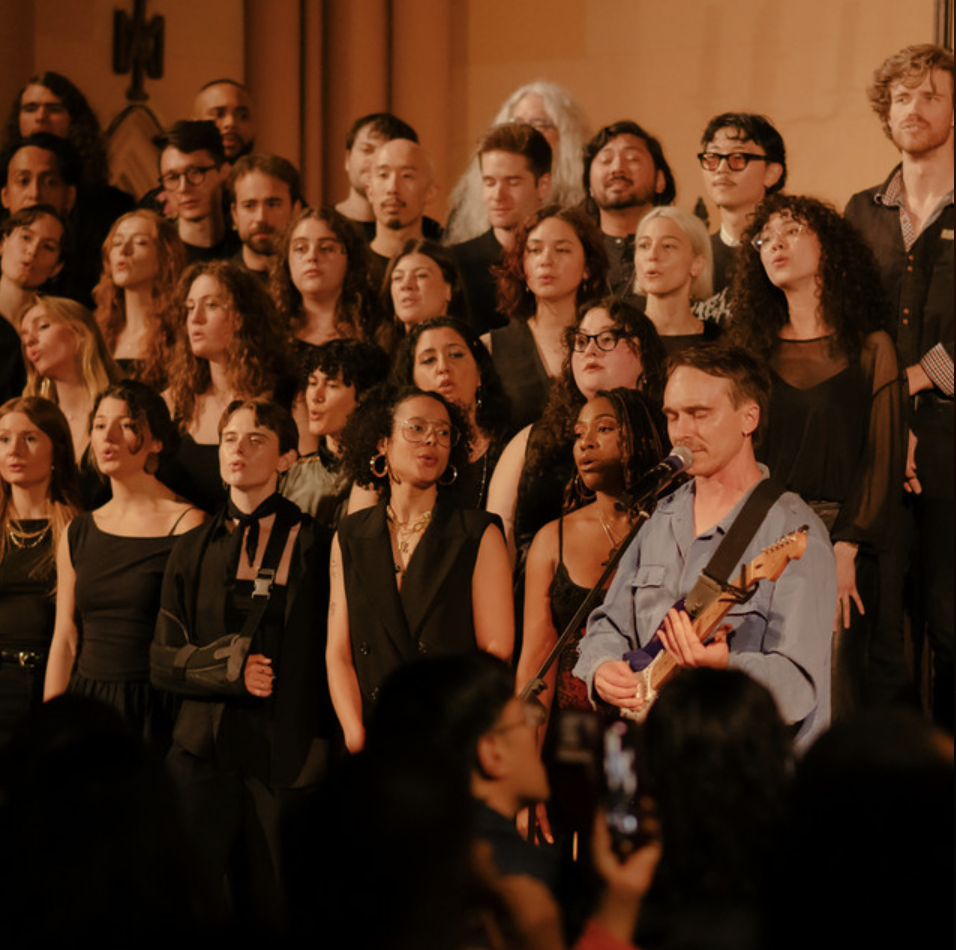
Choice music and sonics from the last month (or so) picked from our reviews, but also featuring the tunes we missed out on or didn’t get the room to feature at the time. Curated by Dominic Valvona with choice hip-hop cuts selected by Matt Oliver.
The Track List:
THAO & The Get Down Stay Down w/ Tune-Yards ‘Sick of the Times’
A Certain Ratio ‘Knife Slits Water (EM) 12” Version’
foamboy ‘FAR AWAY’
Homeboy Sandman & Jack Splash & CeeLo Green ‘World On Fire’
ECID ‘Break Up Insurance’
Space Afrika & Tony Njoku ‘MLN’
Skyzoo ‘Short Money’
Peter Evans ‘Genesis/Schismogenesis – Stage 4’
A-F-R-O & MotionPlus ‘Labor of Fruit’
Brian Ennals & Blockhead & Defcee & Mikie Mayo ‘Yellow School Buses’
King Kashmere & Genesis Elijah & Killa P & Dabbla ‘Big[Bad]’
Chuck Strangers ‘L2LL2C’
Post Elvis ‘Luna (Evil’s Ballad)’
Simon Klein ‘Don’t Leave Me Alone’
Robyn Hitchcock ‘My Dead Astronaut’
Babe Rainbow ‘Acid and Honey’
John Howard ‘Abbey Road, April 1974’
Skyjack ‘Shozi’
Richard Spaven & Wildchild ‘Finders’
The God Fahim ‘GFY’
Distant Fires Burning & Autistici ‘Scalar (Reverend Basstorius Remix)’
hackedepicciotto ‘Zeitwende’
Aisha Vaughan ‘Frozen’
August Cooke ‘On The Line’
Biita Houdei ‘The Ground Here’
Tristan Da Cunha ‘Preludio’
Feverdreamt ‘Shadow Catching Up’
Sir Richard Bishop ‘They Shall Take Up Serpents’
Park Jiha ‘Summer Illusion’
Los Orientales de Paramonga ‘Viajando Con Un Loco’
EYE WITH AN EYE (Bloom de Wilde & Nick Trepka) ‘flow.’
Tōth ‘Easy – Live With the Brooklyn Choir Project’
BRIAN ‘BORDELLO’ SHEA’S REVIEWS ROUNDUP – INSTANT REACTIONS. ALL ENTRIES IN ALPHABETICAL ORDER
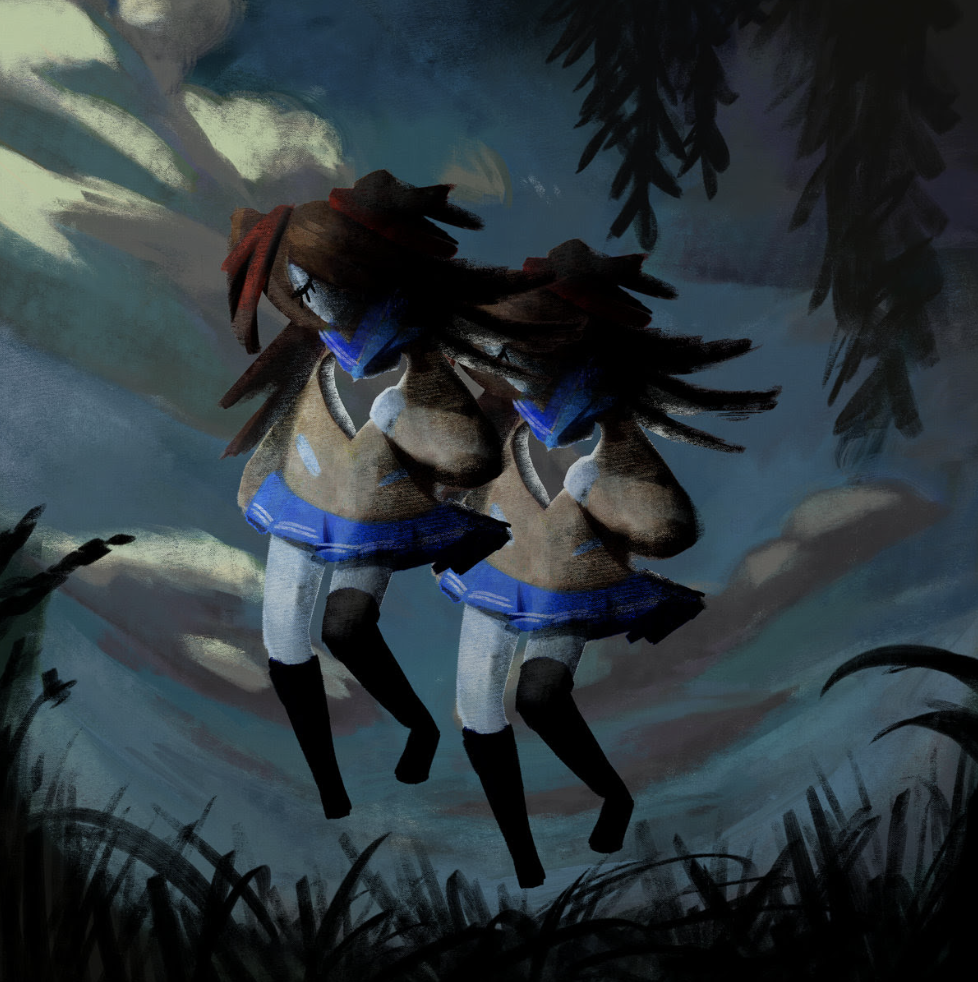
Dragged Up – Rapunzel /Black Carbon
Double-A-Sided Single (Warped Tracks (Fife), and on Label Obscura based in Toronto, Canada) 5th August 2026
The Excellent Dragged Up are back with two fine slices of Guitar strum. The First Track ‘Rapunzel’ is a sonic fuzzed up gem of garage psych indie splendour that has one’s mind taken on an imaginary journey of watching the Sonics hula hoop whilst swaying to the mighty sounds of a 60’s Beach Blanket Bingo soundtrack, plus it also has a rather ace Saxophone honking – not unlike the Sonics themselves. The second track ‘Black Carbon’ is a slightly more sedate affair that has not lost any of its psych bewitchery, and is quite a beautiful piece of vinyl art.
Feverdreamt ‘Our Only Fault Is Existing’
Album (Blackjack Illuminist Records) 3rd July 2026
Dark Gothic Synth folk is that a thing £ (I put a pound sign in because I could not find the question mark). Well, if it is not a thing it is now, as that’s the only way I can poorly describe this rather lovely album of…well, Dark Gothic Synth Folk.
If you were camping in the dark woods and nighttime was upon you, and you wanted something to catch the dying embers of the campfire Our Only Fault Is Existing could well be the album to do it. It’s an album of melancholy fortitude; an album of ghostly memories that not just haunt but bewitch a look through an old photo album and relive the days when your wrinkles were laughter lines and the person in your arms was the person in your heart. Music can be a bastard sometimes, but in a darlingly beautiful heartbreaking way.
Robyn Hitchcock ‘Yesterday’s Rain’
Single 24th July 2026
I do love Robyn Hitchcock, as all music lovers should; he is blessed with a songwriting talent of wit charm and melody and a voice to match. Yesterday’s Rain is full of all those things and lyrics that supply a steady stream of imagery that Barrett and a Psych era Lennon would be proud of.
Mike Honcho ‘Day To Day’
Album (Wormhole) 17th July 2026
Day To Day is an album of quite mellow and musical dance tracks that ooze sophistication and musicality and more importantly some pretty fine hooks and melody, which I tend to fins is not always the way with this genre.
There are only 25 copies of this CD for sale, released on the excellent Wormhole World records, so if you want to soundtrack your day with some fun experimental dance that is easy on the ear you better get your skates on or if you have no skates some other footwear that will make you move pretty sharpish.
John Howard ‘Abbey Road, April 1974’
Single
‘Abbey Road’ is a rather lovely piano perusal of sun and light; a short mid-tempo toe tapper that those of a certain age will no doubt cherish, help refurbish their aging heart with a soft glow of magic hope and loss. ‘Abbey Road’ is two and a half minutes of simple aural sublimity.
Simon Klein ‘Will You Marry Me’
Album (Gare du Nord) 17th July 2026
Will You Marry Me is quite a rather lovely album; an album in which Simon Klein celebrates his 46 years of marriage – whether his wife is celebrating this is maybe another question but let’s assume she is. The songs are mostly all upbeat and full of pop melodies from the rockabilly shuffle of “Cat” through the MOR prog pop of “Ever Present Help In Trouble” and the sweet almost Belle And Sebastian like ballad “Hold Me Now” and the jangly “Mrs Simon Klein“. “Will You Marry Me” is a happy go lucky sunny treat with not a dark cloud in sight.
Post Elvis ‘Sun & Moon’
Single 2nd July 2026
Two fine tracks of modern psychedelia that swing and sway with a Flaming Lips/Mercury Rev/Grandaddy charm that pleases one – especially if you are a fan of one of the aforementioned. I’m not saying that they all sound the same but they may all sip from the same mug of coco.
Sir Richard Bishop ‘Hillbilly Erotica’
Album (Drag City) 31st July 2026
Sir Richard Bishop’s Hillbilly Erotica certainly sounds like a saucy little number. I wonder how erotic hillbilly’s can be. I remember the Beverly Hill Billys from my youth and always had a thing for the attractive blond girl, so maybe that’s what’s making me gravitate to giving this album a listen.
And as I listen to this album I wonder if Sir Richard Bishop is an actual knight of the realm and if so, does he ride a horse and does he go to knightly functions alongside Sir Paul and Sir Cliff. The only thing putting me off reviewing this is the surname Bishop, me being a good Catholic lad and being made to attend strict catholic schools in the seventies and early years of the eighties I learned never to trust a bishop or any religious high-ranking officer: nothing erotic about them just plain creepy.
Anyway, onto the music. It’s fine and dandy and full of finger picking country strummed melody soaked ye haw magic. The beautiful “Postcoital Serenade” is indeed beautiful enough to play again before the coital shenanigans commence, as is “Finger Revisited” which melody wise had me thinking of the wonderful Nick Drake. And also did Frankie Howard name these tracks I really need to know. “Hookers Bend” – maybe Sir Richard Bishop is a rugby fan – is a rather wonderfully expertly strummed matador baiting delight Spanish Odessey of sublimity.
Hillbilly Erotica is indeed a fine listen and one to soundtrack the oncoming Long Summer nights or even the short afternoon delights.
Toxic Chicken ‘Time Traveller’
Album (Earthrid) 14th July 2026
What came first the Toxic Chicken or the egg? Well obviously Toxic Chicken as nothing comes before Toxic Chicken especially when artful experimental dance tinged pop is the calling of the day.
Time Traveller is an album of excellence, an enjoyable foray into the art instrumental bliss if the Aphex Twin actually had a twin it could well be Toxic Chicken.
Here’s the message bit we hate, but crucially need:
If you’ve enjoyed this selection, the writing, or been led down a rabbit hole into new musical terrains of aural pleasure, and if you able, then you can now show your appreciation by keeping the Monolith Cocktail afloat through the Ko-Fi donation site.
The monthly Digest includes a clutch of accumulated short new music reviews, the social inter-generational/eclectic and anniversary albums celebrating playlist and a piece from the Archives.

Photo Credit: Marilena Umuhoza Delli
___/NEW MUSIC REVIEWS SELECTION___
al niente ‘al niente’
(Discreet Archive) Released 10th July 2026
Drawing upon a diverse range of experiences, experiments and study, the Italian quartet of notable players known as al niente form a bond and untethered atonal, mostly non-musical and avant-garde language together to produce this atmospheric performance of the improvised and text-based compositions. The latter of which includes an interpretation of the composer and cellist Stefan Thut’s ‘Some, 1 – 4’, which finds a suitable spot amongst the near-quiet of nothingness and stirrings of resonated, shaved and hinging brass, the dry rasps and the steam-like released whistles of the flute. A double-bass thumbs or plucks a one note prompt (or reaction) as the silence acts not so much as a pause but a repeated use of space and abstract tone in itself: an important, integral part of the whole response to the initial sounds that set each performance in motion.
You can find it on the Bandcamp description yourself, but Thut describes this rendering and process of his template thus:
“What remains here of traditional notation is the succession of two elements and the vertical arrangement as in a four-voice setting. At first glance the columnar image receives a liquefaction as it expands through the action of making sound. But the repeated actions of the four performers also bring it back to the static of the image yielding an impression.”
The reference to voices is interesting, and easy to imagine replacing the instruments and resonation on not just this track but the others: a removed form of vocals I’d admit, more, and chiming with the quartet’s signature, atonal in execution.
Comprising of Beatrice Miniaci on both flute and bass flute, Cosimo Fiaschi on soprano saxophone, Gabriele Pagliano on double-bass and Luca Venitucci on the accordion and what’s termed “objects”, the quartet work in a kind of avant-garde, non-musical mode that evokes the most minimalist fields of jazz and the avant-garde; sieving, shifting and stretching the possibilities of the elements of breath and instrumental textured experiment.
Within that expanse of light and shaded microtonal and held suffused progressions and dialogues there’s light refractions and various pitches interacting with the industrial sounds of the workbench, of mechanics and tools, or with near esoteric leanings and released steam. Mysterious and almost esoteric in places, recorded somewhere in the city of Rome where the quartet are based, they conjure up as much atmosphere as they evoke a certain skill of untethered musicianship and reaction. Windows are opened – literally sounding at times like the hinges being activated – on this abstract horizon swell and permeation of Anthony Braxton and his peers, the tradition of innovative atonal experimentation and the avant-garde in Europe, and Ariel Kalma.
The Breedling ‘A Straunge And Terrible Wunder’
(Wrong Speed Records) 4th August 2026
Sticking close to home with a horror show score of electronic dark arts and Satanic conjuring, Chris Spalton (under The Breedling guise) soundtracks the supernatural and folkloric psychogeography of his county by reviving the hell hound legend of the bedevilled Black Shuck.
To borrow from Rev. Abraham Fleming’s August of 1577 dated account of the infamous beast – as repeated orally and with just a sensational touch of exaggeration for publishing purposes -, the most dramatic legendary description, passed down through the generations, and obviously unsubstantiated, of the East Anglian miscreant is as follows:
“This black dog, or the divel in such a likenesse (God hee knoweth al who worketh all,) running all along down the body of the church with great swiftnesse, and incredible haste, among the people, in a visible fourm and shape, passed between two persons, as they were kneeling uppon their knees, and occupied in prayer as it seemed, wrung the necks of them bothe at one instant clene backward, in somuch that even at a momet where they kneeled, they stragely dyed.”
Or better still and heading the title of this latest album from the Norfolk-based artist, Fleming summarised this beast and its most notorious episode as a “Strange and terrible wunder”.
Sightings and accounts continue, and just like UFO sightings, each period in history is reflective of its own hangups, fears and cultural obsessions. But in this mode and time, recalling the late Tudor era’s own distresses and religious fervours and religious wars, the bestial hound is no dressed-up Baskerville masquerade but a symbol of the daemonic sent to rip out the throats of the metaphorical flock of Christianity, or at the very least to frighten the congregation into towing the right pathway. Then again, there’s not much defence when such sharp-clawed and blood thirsty imaginings are about to pounce on the unsuspecting.
Inhabiting a world not unlike that of Robert Eggers nightmares, with a dash of quintessential English rural occultism and weirdlore, a chill of spine-tingling Gallo Italian horror and an apparatus best described as industrial foreboding and sinister. And yet there’s a darkly rooted use of ambience too, and incipient quietened passages in which the wind, the atmosphere is held off just long enough to escape the doom-laden electronica, the NIN-esque squalls, steely guitar resonance and hammered, nail-gunned (like a brutal version of modern diy workshop crucifixion) and beaten drumbeats.
Entwinned with the bracken density and shadows of the English woodlands, oscillations and prowls are exchanged for the creaking floors of an old mill struck out in isolation in the wilds or the sound of tormented individuals being tortured and ripped limb from limb. And yet, you can detect a suffusion or perhaps just a passing influence of Haxan Cloak, Umberto, Ital Tek and Lucrecia Dalt amongst the hell’s gateway of snared, growling, almost gaggled and howling, biting hounds and dark bewitched invocations. There is however some gleam of relief in the dying embers of the finale, a sudden navigation of the rotated and circled esoteric environment turns up in the clearing to the sound of bird song and a reminder that none of this has been real: or has it?
Spalton delivers an immersive, ominous soundtrack of real quality; a dungeon doom and folkloric rural electrified reading of a timely legend that demands attention. |It would be good to see some director pick this up for a movie, but until then, let the sonic distress and mystery invoke its own images and story.
Himba Hymn Collective ‘Ghosts Of Namibia’s Skeleton Coast’
(Sublime Frequencies) Released 8th May 2026
Possibly the most featured producer and in-situ instigator of inspiring, exceptional and jaw-dropping recordings on the Monolith Cocktail since its inception, Ian Brennan’s highly prolific output (not just musically, he’s also an incredibly expressive and candid writer too, as demonstrated by his accompanying descriptive linear notes) most recent release completely slipped my notice: an unheralded release it seems by Sublime Frequencies.
Joined on each of his global expeditions, as always, by his partner and foil the Italian-Rwandan photographer, author and filmmaker Marilena Umuhoza Delli, Ghosts Of Namibia’s Skeleton Coast finds the acclaimed producer, musician, writer and violence prevention advocate practising what he preaches in recording the unheard voices and performances of some of the world’s most isolated, ignored, disadvantaged, and marginalized.
Described by Ian as the ‘Most disproportionate travel to recording time ratio we’d ever risked.’ With ‘Four days flight, four days driving (two entirely off-road) to record for a few hours’ Ian and Marilena travelled to the world’s driest and oldest desert (not atavistic but even older, back to prehistoric times) in Namibia, on the southwestern coastline of Africa to capture the unique voices of the age-old Himba people; perhaps one of the most objectified and photographed tribes in the world, yet until now rarely given the space or platform to perform vocally and musically. The muse of National Geographic and untold covers for their famous red-hued moisturised and decorated skin – a second skin and mix of animal fat and ochre powder, it is both used as a sort of sunscreen that protects them from the harsh and unforgiving sun and cosmetically – and eroticized state of undress – the women usually going about their daily lives and routines topless -, the females, but men too, celebrate beauty.
With their near unbroken ancestral traditions, the Himba live a still largely pastoral existence, eking out a living through their most prized possession: cattle. Sharing much with their fellow Namibian’s, the Herero (both originally migrating from elsewhere in Africa to settle in the most sparsely populated large country on the continent, the two groups also share a Bantu ancestry), every hamlet features a central ‘Kraal’ where the cattle and goats are herded for safety each night.
The Himba are smattered in and around the Namibia desert, which despite its arid and dry reputation lies along the cool coastal exterior of the country, with the ocean to its side. Stretching for 1200 miles and reaching up to 100 miles inland, this vast challenging landscape is famous for its trade routes and important movement of both minerals and fish. Relatively stable these days – in fact, one of the safest places in Africa – that same desert and the country as a whole has suffered from some very dark, tumultuous and violent periods; including what has been called the first genocide of the 20th century, when the Colonialist rulers of what was then German South West Africa carried out a heinous and ruthless execution of the Herero and the Namaqua peoples after a rebellion by Chief Samuel Maharero – started after decades of slavery, persecution, the confiscation of cattle and starvation. The Germans originally colonised the region in 1884; an act of occupation, a stemming or barrier to the British Empire who were expanding westwards. Anywhere from 50,000 to 65,000 people were killed during the bloody years between 1904 and 1907, but the Dutch originated settlers the Boars were also known to have had their conflicts and subjugations of the same people too. War has followed, both civil and from across the borders, but Namibia is a much changed and settled country, a favourite to backpackers and tourists alike.
But with a near unbroken tradition, the Himba continue to draw attention to their idiosyncratic way of life and exotic (if I’m allowed to dare use that word) look. But the focus here is on their songs and performances, with a requested amassed cluster of both women and men captured for posterity on tape by Ian and shared to an international audience. With a rudimental or striped down travel kit of apparatus, recordings are usually raw, caught in the very moment when something is about to happen; a spontaneity; a one-off for the conditions and environment in which it has been sealed.
Ian’s own descriptions make my job easier, and I could literally just copy and paste his insights, his descriptions and directness. He really manages to evoke the scene, the ardent journey to the middle of a most unforgiving desert location, conjuring up the smells, the atmosphere, the cast of various performers brilliantly. My personal favourite is when Ian manages to reference the reduced life expectancy figure for the region as sixty with a request that he’d made earlier for the Himba villagers to specifically put forward their elders for the recordings. When Ian and Marilena finally make it, they are met with a group of men who aren’t so much as elderly as near the same age as Ian himself (hardly queuing up just yet to get his pension), and so proving just how reduced that life expectancy really is in these harsh conditions.
Ian just as brilliantly describes what you are about to hear: a psychedelic vocal tapestry, esoteric even in parts. The use of what’s called the Cattle Gun (a rarefied found these days we’re told, expensive and coveted, this lengthy horn, taken from the Oryx antelope, is coated in mud, and can be described as kind of strange jazz horn come breathed rattle) and the way in which the Himba cup their hands to cover their mouths in order to create the effect of chorusing and flanging is extremely helpful in understanding what you are about to experience.
Let’s take the psychedelic description first. You can hear it permeating nearly every track as a strange effect of hallucination and mirage. But when you get to the stringy strummed ‘Friend’s Who’ve Passed’ its entwinned with a rootsy vision of Beefheart and the blues. The vocal (I believe attributed to lead vocalist Tjamburu) is near garbled and active in its elegiac act of remembrance.
Esoterically there’s the opening introduction to the tribe’s reenactment of lion attack upon its prized cattle. Summoning up the heaving chest exhales and sweat, the growling threat and devouring jaws and clawed menace of a predator, the group effort of interactions and overlayered voices is near supernatural and bestial in invoking such a carnage.
As with so many of Ian’s previous truly international recordings there’s so much to pick up, so many crossovers or reverberations with traditions and music from other regions. You could be mistaken for thinking the pleaded ‘Please Help Me’ was an ancient recall from the Mississippi voice of spiritual gospel to the motherland – there’s an odd, near unmusical, languid if indolent enervated accompaniment (if you can call it that) of metal or tin being occasionally scrapped and shaved in the background, which only makes the whole thing more happenstance and surreal. ‘Don’t Cry (Your Father & Grandfather Are Good)’ reminded me a little of the harmonious unions of voices heard across the border in South Africa, albeit in the hallucinogenic mode, and the trilling, rolled tongue echoes – accompanied by what sounds like a klaxon going off – and laughing gas inhaled-like octave change of voice into the realms of the childish and silly ‘Be Brave In The Face Of Death’ reminded me of a far-off recollection of dub crossed with King Ayisoba.
Vocally otherworldly and yet also drawing on physicality, justifiable grievances, the confrontational, there’s a balance of the soulful, the earthy and the impassioned; using breathing and various mouth pulled and loose lipped trills to express both the painful and the ritualistic; indignation and communication.
Not so much worthy as essential listening to everyone who really wishes to get clued up and experience the sounds, the joy, the spontaneity and passions of music and performance from outside the mediocre TikTok trending dominated scope of the West and its global markets. Uncluttered and truthful, catalogued not as a Lomax-esque curiosity, and uncoupled from that whole World Music cloying presumption of posterity and study – even though these recordings will reserve and keep account of the Himba and their performances -, these expressions are very much still alive and just as important as the songs sung by the ancestors.
Nicola Miller’s Living Things ‘SPIT!’
(Watch The Ends The Night) 7th August 2026
Bouncing through a lively Latin and French Quarters whilst throwing up reminiscent city jazz skylines of the 50s and 60s and chasing the dramas of Noir and feeding off the spirit of the Big Easy, renowned Canadian saxophonist and composer (also, as you will hear, a deft hand on the flute too) Nicola Miller and her quartet troupe send out lively and excitable free form vibes on their latest album together, SPIT!
Spit in its various forms, from the driest reedy evocations to the most spittle and flappy lipped experiments of actionist jazz and its avant-garde cousin, this extraordinary display of loose and dynamic performances swings on the jungle vine whilst promenading and heralding down the New Orleans streets, thumping along the San Fran pavements of Lalo Schifrin and scoring the chaos and bustle of the boardwalks.
And then again, such as through the three-part ‘Telecommunications’ suite, you get the brass resonating, woodpecker woody block percussive and rasped reedy sucked valve work, the bristling and brushed abstracts of such icons as Anthony Braxton and Rosco Mitchell, Mats Gustafason and Ivo Perelman. Throw in the blues, and the puddle duck, pastoral chamber classical familiars of Prokofiev and the whole deal gets even more interesting, expanded and ambitious.
Imbued by her Nova Scotia base (subtle hints on the smog bound shipping horns of Doug Tielli’s trombone, and a general feel of the maritime can be heard suffused throughout the album), and already collecting an enviable haul of plaudits for her craft following the release of the Living Things’ 2024 debut (released on fellow Canadian label Cacophonous Revival), Miller now amps up the “extrovert” in her and “fires” up the band to produce a both experimental and untethered album of first class jazz performance and musicianship.
With reference points to a whole history of such jazz explorations and freedoms, Satchmo meets Sam Rivers, Eric Dolphy and Peter Brotzmann on the opening city lights, blasted and blared, brassy and swung opener; Miller’s alto sax going through various phases of the winding, the strangled and vibrated whilst Tielli’s sliding and elephant trunk raising trombone recalls a mix of Phil Ranelin and Theon Cross.
The already mentioned ‘Telecommunications’ triptych passes through just as many phases, from the flapped and dried-up breaths and cuckoo-like knocks and steamed resonance of Part I to the 50s jazz sonnet, greenery and wounded cornet-like strange harks of Part II and the busier film score excitements and confusions of Part III.
‘Where’ The Line’ settles into a strange duck-clarinet (that will be clarinettist and second saxophone player Frank Gratkowski, a former mentor to Miller whilst she was studying for her Masters) described bluesy and dreamy lost world of the misty and mysterious; obscure renderings of foggy ship horns again, with a walking stealthy bass line courtesy of Nicolas D’Amato, plunge us subtly into a primal swamp or an old coastline, with obscure recalls of Gershwin and Bix Beiderbecke.
Though not wholly dedicated to the troupe’s versatile drummer Nick Fraser, the finale, as its ‘Drummers Are Bad’ title may indicate, neither scolds nor lets the sticks man hog the entire track. Fraser does get to scuttle, skittle and feel his way in the avant-garde vogue around his kit in the name of unrestrained quickened and fired up improvisation; his foils equally building towards the wild, and a duck-billed excitement of brass and cartoonish chases along a pastoral pathway left overgrown and blanketed by the mists.
An incredible album from a burgeoning project of gifted, experienced and still inventive players surrounding the main instigations and prompts of their leader Miller. One of the best jazz albums so far in 2026, and that’s about as good a recommendation as you can get from me.
Tristan da Cunha ‘Maris Stella’
(Boring Machines) Released 10th July 2026
Touched by the afflatus the Italian trio of Francesco Vara (using the guitar to imitate the strings), Luca Scotti (on drums), and Nicolò Vara (on viola) make neo-classical and ambient oblations to the titular “star of the sea”, the ancient allegorical and metaphorical Latin name given to the Virgin Mary.
A reification of faith and guidance perhaps, or the act of being saved from the troupe’s overriding theme and concept of “isolation”, Maris Stella is deep adagio, often elegiac and mystical, suffusion of subtle atonal and more melodic and dramatic suites and vignettes – the latter labelled “interludio” like moments of reflection and pause; the first being an ambient corridor of rough textual tension on the bow, and the second, more like a verset of hallowed evensong and pipped liturgy.
Pitched somewhere between Reich and Alison Cotton with the imbued influences of Arvo Pärt,Godspeed You! Black Emperor and Stars of the Lid in tow, the score, the minor opus and longer form suites encompass post-rock, chamber music, soundtracks/scores, and obviously the religious – hear the gentle genuflections of the viola and its companions, or the sanctified choral voices that appear from a Mediterranean chapel on the mysterious ‘The Veil’.
Sometimes burnished, often shimmery cymbals and the deadened hit of the drum conjure up images of stirred-up waves splashing against the hull of the trio’s boat; an invitation to navigate both slowly and supernaturally amongst the recondite tides of the serious and classy, the careful and subtly monumental. Searching woes follow melodious escapes, venerability and the venerated but make, apart from the title, no obvious references other than musically to the church, but Mary stands as the abstract lighthouse, a sanctuary and point of lifting transcendence in the silence of loneliness and detachment of the modern era.
Whatever the intentions, the island borrowed Tristan da Cunha named trio combine reverence, the blessed age old iconography of the Christian church, and the matriarchy with an experimentally skilful use of ambience and various classical ideas; changing the traditional setup of a chamber ensemble by replacing the strings (except the viola, which is used almost like a lead instrument here) with the guitar and drums to evoke a number of expansive musical concepts and ideas that lead into other disciplines.
A complete work of art and a beacon with which to draw upon in this moment of crisis and isolation.
___/THE MONOLITH COCKTAIL SOCIAL PLAYLIST VOL. 108____
Despite Spotify’s many attempts to piss me off and burry my numerus playlists, I’m still persevering. You may or may not have noticed holes and a smattering of said playlists suddenly disappearing. I’m pruning. And to be honest, after compiling over 300 of them since 2012 I’ve slowed down and fucked up my account to the point in which it has become tiresome to use. So, I’ve trimmed out those less popular playlists, and the ones with holes in them – various copyrights being either removed or now out of date, labels and those responsible for said artists and tracks either leaving the site or for some other reason taking down individual tracks from their catalogue without any explanation; luckily I’ve never, and I hope way too good at what I do to have ever included anything AI in my playlists over the years or recently, so that doesn’t hold as a reason.
In case you were wondering, or haven’t seen it on Reddit, social media posts or on notice boards, Spotify has at least decided to act by clamping down on AI created music, with some hilarious results as arbitrator of what constitutes the artificial and what doesn’t. There’s a methodology I’m told, which has unfortunately caught some true boba fide artists in the net. However, it was Spotify in the first place that was inventing and predominantly lifting up AI artists in their own playlists and on the platform as a whole.
By the way, if you are having trouble finding me on Spotify, I’m there under my name: Dominic Valvona.
I’m going to try and keep everything from the covid years onwards, but you may now see gaps in the back catalogue as I move forward. And so, we come to this month’s Social, and the same old template of new and old tunes, cult and anniversary celebrating album tunes alongside some more recent ones that didn’t make the site’s Monthly playlist.
Sadly, and inevitably, I also mark the passing of those we’ve lost. In this case, and just a week or so ago, the British jazz-rock-prog-fusion community lost keyboardist and composer Dave Greenslade. An incredible CV, wealth of experiences, Dave’s journey took him from the burgeoning bluesy/R&B scene of London to Casablanca, a stint with the Ram Jam R&B/soul revue troupe motivated and led by Geno Washington and the virtuoso boasting Colosseum, before forming the just as legendary doubled-up keys instigated Greenslade – as every obituary almost in disbelief repeats, a group that dared to dispose of the role of lead guitar: the audacity!
On the Anniversary LPs front, there’s one big Sixtieth birthday to The Byrd’s Fifth Dimension and a fiftieth nod to The Beach Boys’ 15 Big Ones. Another decade closer and its fortieth salutations to Doug E. Fresh’s Oh My God, 2 Live Crew’s The 2 Live Crew Is What We Are, R.E.M.’s Life’s Rich Pageant and the Spacemen 3’s Sound Of Confusion. Leaping through the decades, I’m also marking the twentieth anniversaries of TV on the Radio’s Return To Cookie Mountain and Thom Yorke’s Eraser. And as featured in this month’s archives below, a tenth nudge to Ed Scissor & Lamplighter’s Tell Them It’s Winter.
The rest of this list is made up of intergenerational reaching tracks from Alcatraz, Lapera, Bal Pare, Sophie Nzayisenga, Double Happys, Evil Weiner, plus more recentish tunes from Clementine March and J Sciende. Lots more of course, to make up the thirty tracks in the July social revue.
Track list in full:::
The Beach Boys ‘Susie Cincinnati’
TV On The Radio ‘A Method’
Clementine March ‘Upheaval (First Version)’
The Byrds ‘Captain Soul’
Colosseum ‘Three Score And Ten, Amen’
Okay Temiz & Johnny Dyani ‘I’m A Green Lamp – Yesil Fener’
Angry Angels ‘Apparent-Transparent’
Greenslade ‘Time To Dream’
Hopkins-Bradley ‘Funny, But The Way I Feel’
Evil Wiener ‘Koo Koo’
R.E.M. ‘Fall On Me’
Double Happys ‘Some Fantasy’
Colosseum ‘The Machine Demands A Sacrifice’
J Sciende & Opio ‘Krush Groove Kangol’
Doug E. Fresh ‘The Show – Oh My God! Remix’
2 Live Crew ‘2 Live Is what We Are…(Word)’
Himba Hymn ‘Who Is going to Welcome The White People?’
Sophie Nzayisenga ‘Story of Nyangezi’
heka & GG Skips ‘High Tide’
Spacemen 3 ‘Rollercoaster (Live)’
Bal Pare ‘Die Idioten’
Naomie Klaus ‘Can You Tell Me What Is Micronet?’
Thom Yorke ‘The Clock’
Thick Pigeon ‘Sudan’
Human Greed ‘Freeview’
Ed Scissor & Lamplighter ‘TTIW’
Lapera ‘Catarsi’
Alcatraz ‘Where The Wild Things Are’
Walter Daniels/Oblivians/Monsieur Jeffery Evans ‘It Don’t Take Too Much’
Greenslade ‘Siam Seesaw’.
___/ARCHIVES___
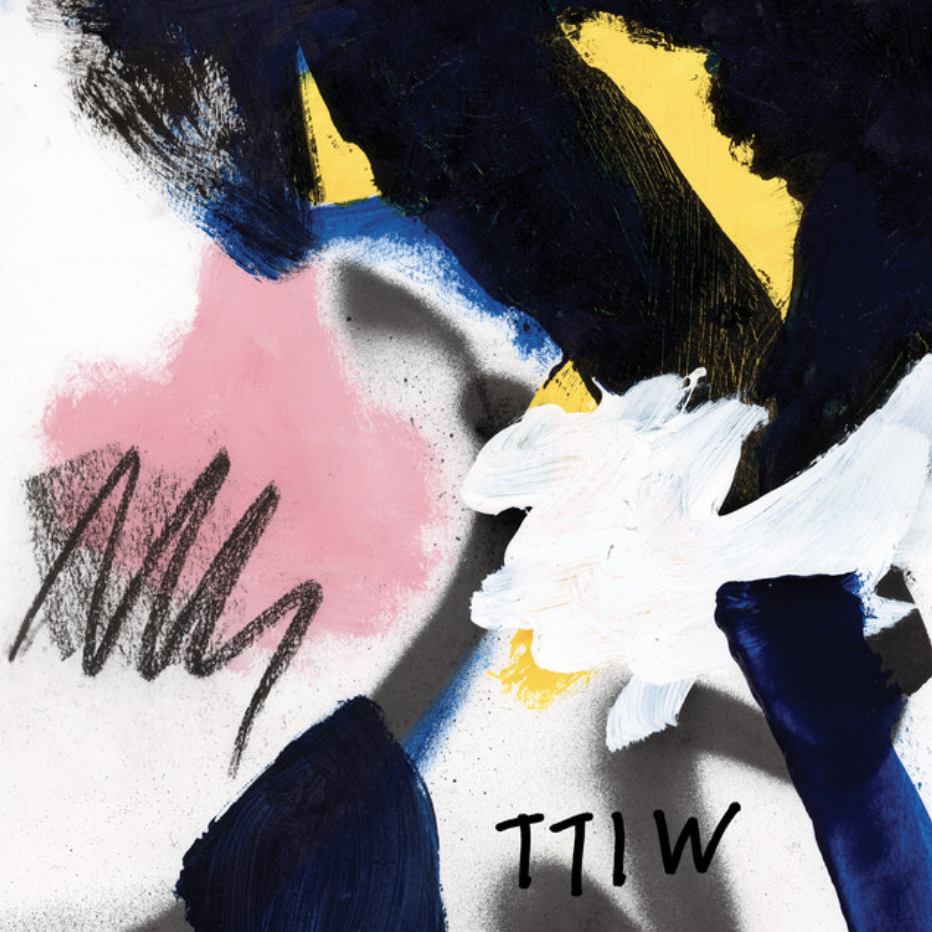
Ed Scissor & Lamplighter ‘Tell Them It’s Winter’
Released by High Focus Records, July 15th 2016
Emerging damaged and deeply troubled from the miasma underbelly of modern life, the congruous leftfield hip-hop partnership of wordsmith Ed Scissor and Glasgow-based producer Lamplighter convey a sad poetic beauty in their dystopian visions.
Much has been made of the duo’s caustic, and at times nihilistic, articulations and augurs. And their latest remote collaboration – the duo rarely share the same room as each other during the writing/recording process – Tell Them It’s Winter does explore familiar morbid curiosities, both musically and lyrically.
Yet, despite the travails, despite the gloom and all too real drudgery of an algorithm-driven society, Ed and his Lamplighter foil offer glimmers of light. Reminding us constantly of the universal infinite, Ed describes forces beyond the mundane. References to astrology, metaphysics and science flow like relentless streams of consciousness from Ed’s lips in a delivery style that shifts between rap, spoken word and, even, grime. Abstract elements of hip-hop and trip-hop mix seamlessly with the Shakespearean and biblical to produce the poetry, whilst tetchy minimal electronica and slow methodical beats layered over cLOUDDEAD expansive atmospheres and traces of neo-classical strings and looped recordings of old scratchy records create the backdrop to Ed’s winter of discontent.
Each track is free of demarcation and often floats off on different pathways before returning to focus once again on the central mood. There’s no room for prowess and flexing, Ed’s verses constructing a framework of unflinching honesty. Cormac McCarthy and Winterfell metaphors aside (the critics consensus analogies and reference points it seems for this album), the impending Machiavellian horsemen of doom bolted a long time ago. Tell Them It’s Winter is, if anything, a reminder that nothing has changed and that the central tenets of human suffrage carry on unabated in the 21st century.
Here’s the message bit we hate, but crucially need if we are to continue:
If you’ve enjoyed this selection, the writing, or been led down a rabbit hole into new musical terrains of aural pleasure, and if you able, then you can now show your appreciation by keeping the Monolith Cocktail afloat through the Ko-Fi donation site.
A world of sonic/musical discoveries reviewed by Dominic Valvona. All entries in alphabetical order.
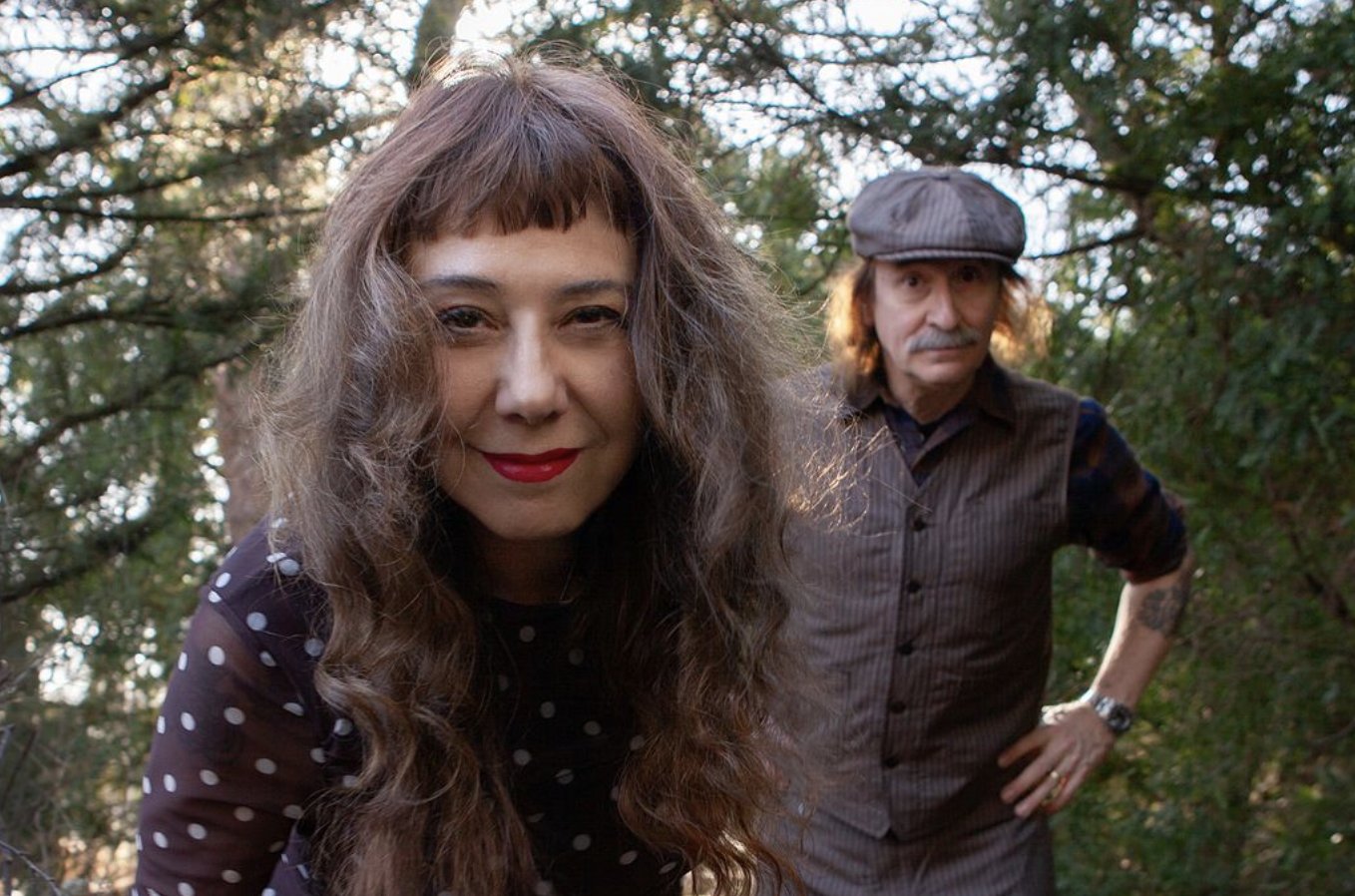
Photo Credit: Mara von Kumme
AD Ozium ‘In The Style Of Dead Sparrows’
(Saccharine Underground) Released 9th June 2026
Through a storm, a blizzard, and heavy reverberation the Washington D.C. based musician Jeremy Moore (of Zabus, Zero Swann and Bell Barrow note) creates both a mirage and world of paranormal and hallucinatory built-up environments; that and evocations prompted by the various deciphered titles that allude to mysterious enquires into faith and death.
A unique world of transmogrified guitar drifts and twangs and tape manipulations, In The Style Of Dead Sparrows is as esoteric as it is dreamy, with sounds that could only be described as a mutated helicopter-like chop of insects or Captain Beefheart guitars meets a stained-glass-polygon-window version of the Aphex Twin with one foot in dissonance and another in a blanched-out desert. From fear to distortions and white noise you can feel the presence of the unearthly, or at least transformed and made more worrying; unidentified propellers and rotors, the tunnelling scrolls of blanketing winds and the clawed and scratched offer something alien, an inter-dimensional being, or the abstract but sonorous weight of heavy meta.
A coarse atmosphere fizzles and hisses all the while as both enervated and more amped up guitar distortions, pliable twinges and twangs, resonance, and untuned improvs drift in and out of the Fortean surfaces of the spooked and ominous. It parts it reminded me of both of Blake Edward Conley’s Droneroom project and of Steve Gunn – the guitar often sounding like some very removed but evocative indolent glimpse of Hawaiian and a nightmarish Ry Coder -, but then this almost industrial and clanged punctuated blast through imaginative distortions of Death Valley and references to the Nazarene, the throne and terminal, is unique. Projected somewhere between the crumbled and the surreal, the supernatural and engineered, everything is engulfed in a production of magnified magnetics, tape malarky and derangement.
Once in, you become fully absorbed and caught up in the halcyon redial, the layered mechanics and more lo fi experimentation.
Audio Obscura ‘Dream States’
Released 12th June 2028
Drifting between dreamy somnolence and jet-lagged like misperceptions of space and time, Neil Stringfellow’s explorative Audio Obscura project finds a liminal plane of the half-remembered, half-reminisced and a track list of prompting mementos.
Creeping downstairs to unlock the imagination, to freely take to the piano, after restless nights spent fighting off the insomnia of a heatwave, Neil found solace and both inspiration from Duke Ellington’s perceptive and visceral line that “No this is not piano, this is dreaming” – the original extract, along with a little more expansion on dreams, is used on the opening piece, and appears again later, mouthed this time by what sounds like a manipulated and Orb-like child’s voice.
Running untethered from experience, study and the like, this central Ellington description is used like a soft mantra to create various mirages, surrealist dream states, contemplations, thought processes, balladry and the more mysterious. But unconnected to jazz, Neil seems to weave together two different musical or sonic ideas at once; for example, there’s neo-classical fragments of piano that suddenly get overridden by μ-Ziq and Aphex Twin-like dashes of electronica or d ‘n’ b (actually this album did remind me in part of the drukqs album).
Throughout the trickles, tinkles, the diaphanous flows and more plinky-plonky gated reactions of piano you can perhaps be reminded of Keith Jarrett, Cage, of La Monte Young, Sabine Liebner, Margaret Leng Tan and the prepared piano work of Nam June Paik, but compromised or jolted by break beats, ambient passages, satellite beeps, fizzles and phasers and vapours. Those electronic effects, the beats and overrides brought up echoes of Tomat, Apparat and Roni Size.
Surrealist pillows float on heavenly clouds, caressed by the harp, and metallic reverberations chime against a soundscape of breaths, soft choral voices and slow hallucinations to somehow clutch at the abstract; to sound a particular experience, a date and day of great empirical importance. If a piano could in fact dream, then this album does much to convince us of its sentinel being, separated from its author, as if playing and recollecting passages, phrases and ideas itself.
Distant Fires Burning & Autistici ‘Scalar’
(Audiobulb Records) 18th July 2026
The experimental electronic label and hardware hub is known for its unconventional approaches to remix projects. Those familiar with this site may recall one such release by the latter of this team up, the Sheffield-based electronic composer Autistici, whoreleased acollaborative chain of such repurposed, resourced explorations through the Familiarity series. In that series fellow peers and label mates went to work on transducing or expanding upon the original material: or sounds and code adjacent to it anyway. Sharing the spotlight this time around with Belgium bass-player and “knob twiddler” Gert De Meester and his Distant Fires Burning alias (a moniker that leans towards the bass guitar), their Scaler track is given free reign and transported via various electronical fields of inquiry and exploration by a clutch of similar artists.
Opening with an “E-xtended Mix”, the foundation is hollowed tubular bounce and fizzle bed of static-charged kinetic techno track. Partly organic in its makeup but a synthesis of padded beats, squiggles, broadcast interferences and a transformed trebly bass guitar track, it reminded me of Kriedler, Orbital and Cabaret Voltaire. Meester does his own homework later on under the Reverend Basstorius alias, keeping (like most of the crew involved on this seven-track remix special) the static charges, the crispiness but adding a cosmic soundscape of Banco de Giai and early Warp label trance.
UK “sound experimenter” Kingbastard (as he known) continues to play with the crackled atoms of the original, but goes for an electrical charge of techno and filtered passes and switchery zips, whilst the Hungarian producer, sound-designer and instrumentalist Ficture (the solo project appellation of Gábor Tokár) deepens the bass, adds a circulating spin of cyber wind and a Land Observations-style set of guitar loops to the vaporized mood – there’s what can only be described as a sort of Indian-trance-jig at the very end.
Erik Schoster, appearing under the active alias of He Can Jog, seems to be heading towards a similar current as the Bureau B label in Germany; some echoes of Harmonious Thelonious amongst the zippy and farty bass lines, the wizzes and generally slowed down playfulness. Appearing on the site a few times before, northern Connecticut countryside dweller Jeff Düngfelder (who uses the Ümlaut guise) brings the mystique, plus a spring woody ruler-like repeated sound and wispy cosmic dust to the kinetic original.
The final remix is by the rather anonymous Pulse Mandala, who settles the source material into a signature relaxation (though pining and almost electronically bluesy) of space-bound reflection, breaths and drifted neo-classical piano spells.
Combined, this is an interesting, entrancing and kinetic bouncing metallic EP or mini-album or extended 12” release of both subtle and cerebral techno music and genre offshoots; the quality is obvious and the ideas not just intelligent but visceral too.
Hackedepicciotto ‘Lichtung’
(Mute) 10th July 2026
From the metallic synthesised undulations and suffusions of the German hinterlands, the coupling of Alexander Hacke and Danielle de Picciotto once more entwine themselves as they conjure up yet another Gothic romanticism of surrealism, the near theatrical, the magical, and the elegiac.
Proving the most prolific of duos over the last five or six years, with a number of enigmatic and powerful symbiotic albums of the sulfuric and dreamy, they once more draw upon an enviable experience of projects as they return to the wilds and nature of their now rooted German home on the rural outskirts of Berlin. For the nomadic lifestyle and creative process of most of their work (for example, the album Menetekel was recorded in a medieval church in Krems on the Danube, whilst The Current was recorded in Blackpool and Keepsakes was recorded at the famous Auditorium Novecento in Naples) has found a home amongst the “clearings”, the fields, and fauna of that inspired home; one that is just distant enough from the urban pull of the city, but close enough for creative engagements.
Both partners in this marriage share a singular vision to evoke and somehow put into their own language and sonic soundscape their fears, loves, longing appeals, and processes of rumination and more essentially, escapism.
As Covid proved a “weird euphoria” of inspiration for the duo, the alarming discourse and divisive political and societal climate providers suitable fodder, with Alexander and Danielle returning to the land and environments that offer solace and reflection without the noise and rage of the Tiktok generation’s confrontational activism.
Almost looping all the way back to his formative years as a teenager in Germany, experimenting at a young age with electronica, and his membership just a little while later of the iconic and most influential Einstürzende Neubauten, Alexander once more sets to the controls of this synthesized and electro biomorphic concocted pastoral soundtrack – a combination actually of Teutonic kosmische music, a light touch of techno, and smattering of Kreidler, Der Plan, NIN and Thomas Dinger. His wife and musical foil Danielle (a co-founder of Berlin’s most famous techno Mardi Gras, the Love Parade, and collaborator in a number of projects, but also an oft member of Crime & The City Solution) is American, but found herself drawn to Berlin For the first time ever I believe, she has chosen to wholly adopt the German language of romanticism, fantasy and poetry for this latest album Lichtung.
Duetting at every turn, the cadence, syntax and accent is as German as you can get; from the harsher fully announced and pronounced to the softer joys of embodying a life well lived and enjoyed amongst the greenery of their retreat, away from the madness. It’s almost like a return or full embrace of a Germanic culture rescued from nationalism and put to better use amongst the cosmic tubular auras and peaceable longing intentions of their sonic soul partners. For it shares more in common with the land sound artistic experiments and innovations and feels of Cluster, Ariel Kalma and Syrinx, but thrust forward into the 1980s, and augmented by passages of drama, seriousness and elegy: there’s a moment on the haunting funeral procession closer, ‘Der Marschall’ (which isn’t difficult to translate as “the marshal”) when the bell that tolls could equally be taken from the ominous elegiac scene of a Western as it could be from Joachim Patnir’s Charon Crossing The Styx painting.
There’s even more of this Western hint on the warping Gothic and hard German accented ‘Vogelfrei’ (“outlawed”), which reminded me both of Mick Harvey’s more broody bass lines and of Crime & The City Solution. A maverick swell and spindled yarn of tin star weight that evokes something altogether beautifully enigmatic and sombre.
Organic whilst absorbed in a metal and kinetic electro field, machines, drum pads and transmission bleeps and blips interact with weeping and sorrowful lamented strings: often recalling the work of neo-classicism and the score work of Nicolas Britell. Enchantment follows the substance of emotional plaint and recall, as the music takes on a near Kraftwerkian vibe on the most kosmische and German electronic springy bounced plastique and tube-paddled magnetic ‘Zeitenwende’ (“turning point”). And yet strangely, sounding melodically and vocally familiar, it feels like one of those near timeless tributes to the landscape, not so much joyful in abundance but romantically finding a gleam of light in the density of these most troubled times amongst the pastures and wilds of the countryside.
I hope this coupling always continue to make music. They’ve brought a seriousness but also near Dadaist and Surrealist legacy, plus a kind of industrial fairy tale sound, to soundscaping and capturing a most uniquely artful encapsulation of their woes, worries, loves and dreams. Back home, happy – even if this album is filled with an elegiac theme – in their skins and surroundings, rather than draw away into isolation and a cooling balm of therapeutic deliverance from the hostility of the age they’ve continued to explore and magic up a magnetic and beautifully delivered, charismatic soundtrack. Long may it continue.
Skjack ‘Let The Sky Open Under Your Feet’
(Kujua) Released 3rd July 2026
Hardly a recent turn in fortunes or a resurgence of exposure for the melodiously, politically and consciously aware South African jazz scene, the country can however boast of such noughties talents as Nduduzo Makhathini (recording for and anointed no less than by Blue Note), Thandi Ntuli and the alto-saxophonist Mthunzi Mvubu. Those are just a smattering of a worthy and exciting pool of players and artists in a celebrated scene that’s broken internationally. You can also throw in the mixed Swiss and South African, Cape Town formed, quintet of Skyjack to that burgeoning list.
Skyjack are imbued by a most incredible landscape (despite the painful history, the Apartheid system and its barriers to the Black African majority’s access to it; shunted and enclosed into the shanty towns that grew up around the diamond and coal mines) and an equally incredible musical legacy that includes the likes of both Abdullah Ibrahim and his Dollar Bill alias, Hugh Masekela, the Jazz Epistles, Bheki Mseleku, and the Blue Notes. You can hear the influence of those luminaries on the latest, and fourth, album by the quintet of pianist Kyle Shephard, bassist Shane Cooper, drummer Jonno Sweetman, and the dual horns section of trombonist Andreas Tschopp and saxophonist Marc Stucki. And although it’s very much an equally shared recording, you can’t help but be drawn to Shephard’s prowess and, should I dare to suggest, leadership on the piano; one part Ibrahim, another part Oscar Peterson and Thelonious Monk, a mixture of the neo-classical concert hall, the township, the South African vista and a timeless vibe of America’s pioneering and counter experimental leaders of the 50s and 60s. Beautifully melodic with notes and phrases and runs that sometimes softy jar or rise up toward the plateaus and heights, his piano expertise (the CV is indeed wide, with projects that include scores) and ability to cross hands is exemplary and always interesting without losing a sense of touch, feeling and melody. During the course of one track the style can take in the stage, the lounge, the serenaded, and the improvised.
Before drawing in the rest of the group and that inspirational geography, the references that spring to mind whilst taking in this album include Archie Shepp’s union with Jason Moran, Billy Higgins’ Quartet (“Soweto”) and Idris Mohammad’s “Sudan”, but also the very European jazz label ACT and its enviable catalogue of collaborative albums.
Back to that stunning (as you can tell, I’m still going with the superlatives to describe that landscape) topography and the Western Cape province town of Stellenbosch, renowned for its abundance of oak trees, its sheltered valley and hilly terrain, and of course beauty. An eternal reminder of its Dutch settlers founding, Stellenbosch is, I believe, one of the earliest such towns to be imposed on the South African landscape by Europeans. Having never been, the pictures online testify to its outstanding surroundings. In a studio, I presume, within that idyllic spot, Skyjack inspired by that oft quoted 13th century Persian poet, Rumi (a line of which is used as the album title), turn on a deeply interconnective performance of descriptive peregrinations and moods, of the near romantic and philosophical, and a sound that recalls the almost joyful union and resistance of township jazz, and of the tribal – coming off like Ndikho Xabu when escaping dreamily into the bush or conjuring up a dialogue with the ancestors.
Each player has a lot to offer both in the semi soloist encounters and when all playing together at once across a panorama and near flowing abundance of solid great jazz tunes and expressions. Shane Cooper gets to flex, but never so bended or pulled as to lose shape; there’s a solo vignette with his instrument’s name on it, a break, but short spotlight on his spring grooves and bobbled and reverberated improvisations. Meanwhile, Jonno Sweetman changes with the mood music, offering sympathy and the cuddled with passages of splashing and shimmy shimmering cymbals, dynamic swells and upturns in action and rolls. Andreas Tschopp does a cracking job on trombone (a touch of Phil Ranelin perhaps), making that instrument cover a diverse range of tunes, more wild spirals and heralds and blasting when the occasion calls. Keeping on the horns, Marc Stucki’s saxophone parts can be as soulful and serenading as they can be more in keeping with the untethered work of the Pharoah, Wayne Shorter and Grachan Moncur III – there’s a nice fluttery, near buzzed, Cage-like free form expressive study on the moth that lets the sax hog the spotlight nicely against strange ethereal arias.
Creating their very own expansive universe, but somehow describing and paying some kind of homage to the environment itself, Skyjack make a thoroughly impressive melodious album of contemporary and past South African jazz themes. A befitting tribute but also an album to get lost in poetically, spiritually and imaginatively.
Aisha Vaughan ‘Water World’
(Leaving Records) 17th July 2026
Through the studio window and out until the glades, the lush valleys and hills, the meadows and fields and pastures of remote Wales, diaphanous expressions are left to freely roam and hang in the air.
Sharing much with another Celtic siren of the form, Celestial North (the Scottish artist lives over the border these days in the Lake District), Aisha Vaughan embraces a similar New Age vibe of fusing nature with a subtle use of electronica to conjure up misty voiced myths, fantasies and cosmic transcendence. But whilst softly veiled in a both atavistic stripped time – before humans had made their mark or converted the land to the new religions – and something more attuned to the 80s and 90s eras of Trance and the already mentioned New Age musical genre, Vaughan demonstrates the processes and acts of overcoming past traumas and restrictions under the replenishing rains and waters of the Welsh landscape, or under the moon beams of the lunar cycle.
And yet, you could be mistaken in part, especially when the fluty panpipes reveal themselves, for wandering amorphously from the ancient shepherded Bannau Brycheiniog to Breton or the Andes. Such is the near seamless drift and suffusion of ethereal qualities and near wordless beautifully longed and channelled vocals that the Wales backdrop is not so obviously reflected musically You could perhaps find it referenced through the wooded canopies and riverbanks of bird song, the allure and draw of Celtic invoked mysticism from another age and the entrancing undulations of this appropriately entitled Water World.
Electronically placing arpeggiators both beneath and over ambient breaths and a bed of lush if gauzy melodious waves of fairytale, the celestial and twinkled, each piece on this mini album invites you into a carefully constructed cascade of healing and therapeutic deliverance.
Julee Cruise meets Clannad and Amethystium as Moroder and Vangelis build up their synthesis of early electronica; or the Chromatics visit the Celtic psychogeography, invited by Alison Goldfrapp. These are just two descriptions that spring to mind whilst absorbing and laying back in my study of this dreamy, sometimes haunting (but not really in a paranormal or especially supernatural way) shrouded soundscape and vocally expressive peregrination and inviting magical plane.
Colin Webster/ Balázs Pándi/ Matt Cargill ‘Chewed Up And Spat Out’
(Raw Tonk Records) Released 15th May 2026
In sporadic bursts, popping up from time to time over the years on the Monolith Cocktail, agitator sonic noise diviner and hazardous dissonance unloader Matt Cargill is back this early summer with two releases: firstly, as a collaborator on this tumultuous union, and once more with the oft-day-job of Sly & The Family Drone (see this month’s review).
Rolling into London town for a few days, Hungarian drummer extraordinaire Balázs Pándi decided to call upon The Spasm Band, Sex Swing and Dead Neanderthals saxophonist Colin Webster, who in turn pulled Cargill into a death match/death roll of free form jazzcore, noiseniks, doom, alien and hysterical experimentation. Our Hungarian drumming friend has a CV that takes in everything from the Venetian Snares to various collaborative formations with Merzbow, To Live And Shave In L.A., The Kilimanjaro Darkjazz Ensemble and Zu. And that’s keeping it brief by the way.
We can only imagine the scene and set up, but the sound that was produced was both squawked and screwy, frightening and primal; a crazed distressing free jam of the strained (no more so than with the one long strained dump that’s squeezed out in alarming pain and hysterics on the ‘The Money Shitter’), the bestial, and the strangulated (like squeezing the last pips out of a dry reed, or standing on the Webster’s intestines).
Whilst there’s splashes and rolls, breaks on the drums to latch onto, the free spirited if caustic concentrations of interplay are in the avant-garde meets fucked-jazz zone. It reminded me in places of Andy Haas and his various projects, but also of John Zorn, Roscoe Mitchell, a little of such jazzcore noise and histrionics as UIUIUI, and the AEOC. Between and underneath the lattice work of percussion, the rollicking and bashed, beaten, sieved and sifted and spidery drums and the saxophone howls, distress, konks, doom spirals and rasps, Cargill keeps up a communication and undulation/oscillation of rippled effects, ariel-tunings, squiggles, and radio menace. It makes for a strange, sometimes captivating, but always challenging reading of the present confusion of the world; a spontaneous outpouring of aggressions, frequencies, vibrations, expressions and invocations from three always interesting and inventive musicians.
If you’ve enjoyed this selection, the writing, or been led down a rabbit hole into new musical terrains of aural pleasure, and if you able, then you can now show your appreciation by keeping the Monolith Cocktail afloat through the Ko-Fi donation site.
The End of the Month Playlist Revue for June 2026
June 30, 2026
Our Monthly Playlist selection of choice music from the last month. Curated by Dominic Valvona & Matt Oliver.
Track Listing is as follows:
Ferg’s Imaginary Big Band ‘Do The Right Thing’
Pussy Riot ‘PAIN/БОЛЬ’
Parallel Thought ‘Casus Belli’
Sam Krats, Edo. G, Jeru The Damaja, El Da Sensei & DJ Rougue ‘360’
Wiki Ft. Your Old Droog ‘All in The Lining’
The Difference Machine, Day Tripper, Dr. Conspiracy & GRETZKY DA ‘Star Children’
Baba Zula ‘Kutsal Zeytin Halayi’
The Taps of the Holy Trinity ‘Most Of Them Were Ghost’
Movie Star Junkies ‘Hard To Beat’
Mick Harvey & Amanda Acevedo ‘Perfect Storm’
Tele Novella ‘Ring Of Stones’
Claptrap ‘Shrug Emoji’
Oopsie Daisies ‘HAGS’
Schizo Fun Addict ‘Scent Of Heather’
BLEU REINE ‘Cavalier Seul’
Leah Callahan ‘Driving’
The Loft ‘Sad Comedian’
Max Knouse ‘Cavalrain’
Suzanne Ciani, Metropole Orkest & Simon Dobson ‘Section 4: Animal Kingdom’
The Moose Funk Squad & The Primitive One ‘Freaks of Nature’
Wish Master ‘Think About It’
Awon and The Other Guys ‘Ice Rink’
Kong the Artisan, J Littles & Blak Twang ‘Know About Me’
Qewl & Nightwalker ‘On My Mama’
Supreme Cerebral & The Beat Junkies ‘Supreme Junkies’
Boards of Canada ‘Blood In The Labyrinth’
Fatoumata Diawara ‘Massa’
Puce Moment ‘Tehuano’
DJ Grzyb, Tamten, Maysia Osu, Silky Oolong ‘Trombita Dub’
Tomat ‘Blue Reverie’
Here’s the message bit we hate, but need:
If you’ve enjoyed this selection, the writing, or been led down a rabbit hole into new musical terrains of aural pleasure, and if you able, then you can now show your appreciation by keeping the Monolith Cocktail afloat through the Ko-Fi donation site.
BRIAN ‘BORDELLO’ SHEA’S REVIEWS ROUNDUP – INSTANT REACTIONS. ALL ENTRIES IN ALPHABETICAL ORDER
bigflower ‘Difficult Times’
Track – Released 11th June 2026
Now then, this does not sound like the Rolling Stones but for some reason reminds me off them: Maybe if sucked through a high-powered vortex and fed into a mincer of self-doubt paranoia anger and hope it might be what they would sound like. It certainly has a rather nagging wonderful guitar riff that is digitally delayed to the inch of its life. Once again bigflower blooms again.
Cult Of Free Love ‘Know Your Name / She Floats On Fire’
Single (Fuzzed up & Astromoon Records) Released 19th June 2026
Psychedelic is what we have here, not the 60’s variety but an early 90’s sounding variety [to my ageing ears anyway], the kind that would have had A&R men stroking their chins and wallets to sign back in the day when The Stone Roses ruled the roost and bands like the Telescopes were releasing sublime and ignored gems of albums like their second album Higher And Higher, and Thee Hypnotics were playing to 5 men and a slightly bedraggled caricature of Moe Bandy who had turned up thinking it was country night.
Yes indeed, The Cult Of Free Love have captured the magic in the bottle of that era and shaken it up and soaked we the jolly listeners with a splendid froth of psychedelic guitar riffs that leaves us an aural adventure of crushed velvet; of a time when goths where goths and knew a thing or two about style and elegance. All in all, a psych goth gem.
Earth Mother Fucker/ Poundland ‘Split”
Album (Cruel Nature Records) 8th July 2026
Mind-bending blitzkrieg bop punk rock garage punk sizzle. Yes, that is one way to poetically describe this fine album by Earth Mother Fucker and Poundland. Two bands that soundtrack these unpleasant divided days of living in the UK when life is coloured concrete grey and all the magic has gone.
Life is no longer John Lennon chewing gum while singing “All You Need Is Love” or The Sex Pistols saying shit on national TV. Music really does not speak to a nation anymore. It is as underground as it has ever been. It no longer shocks or delights a nation. Music no longer matters to kids like politics no longer matters to kids. There are no longer any teenage tribes. They all dress the same, they have had all the individuality drilled out of them by the saturation of not upsetting the norm.
I guess that is why Earth Mother Fucker and Poundland sound like they do, because they are probably at the age when they knew how much music mattered and changed lives and brought great change to life and culture. And if a couple of people under the age of twenty hear this album and it inspires them to pick up an instrument and express emotion and love and anger there is hope for the world yet.
Max Knouse ‘Goat Pupil’
Album (Ruination Records) Released 12th June 2026
Goat Pupil is an album of well written and performed Smog like alt country blues folksongs. Max Knouse is a talented chap and has a wonderful way about how he draws you in with his laid-back lazy drawl (drawl you in even). There is a charm and earthy gentleman like elegance about his delivery and his softly picked strummed guitar floats like a fading butterfly surfing the barbecue smoke filled evening air casting future memories waiting to be plucked from the shadows of the dying sun.
The Loft ‘Badges’
Album (Tapete) Released 8th May 2026
The Loft are back with their second album, and very good it is to if you are fan of indie guitars that chime and jangle and were young when Creation Records had never even heard of Oasis; and yes I am all of the above so love the T-rex guitar riffage of “Sad Comedian” and can appreciate the summery Go Betweens’ pop “Campervan”: how middle aged is to write an indie rock song about escaping in a campervan…Very.
This album is indeed a fun listen and is always a delight to hear the distinctive vocals of Pete Astor backed by the fine indie guitar chime of Andy Strickland, and lovely to know that they still have it after all these years.
Oopsie Daisies ‘HAGS’
(Metal Postcard Records) Released 11th June 2026
The warm swooshing sound of synth; the jangling of guitars; the sublime melodies of youth; yes, this is the sound of Bedroom pop, the true magic of music captured not in the hallowed walls of Abbey Road haunted by the ghosts of The Beatles and The Hollies and George Martins’ white shirts but in a room with a bed in it and curtains overlooking the streets of Portland. Yes, indeed music can be made anywhere, all you need is some cheap instruments and songwriting talent which Mr Oopsie Daisies has in abundance it seems.
Schizo Fun Addict ‘Indigo Teleport’
Video B-Side (Fruits de Mer Records)
Indigo Teleport is the latest track by Schizo Fun Addict. Well actually it’s the B-side to their last single, released as a very ltd 7 inch on Fruits De Mer, but they have posted it now online and it can be heard on YouTube, so if that is your thing give it a watch and listen and you will find them in and on post punk territory. Yes, touches of the mighty Fall and early Pavement lay waste to the slumber party of life, and we are left deriding the pitiful state of UK radio when one would hear this and its ilk on night time national radio and now we are left scouring YouTube for morsels of musical glory.
Emmaleen Tangleweed ‘The Weaving’
Album (Cruel Nature Records) 31st July 2026
The Weaving is a Country blues and folk masterclass, the kind of album that could have been made any time in the last 70 years, not a synth or any AI in sight, just a talented songwriter guitarist singing well written and performed magnificently songs of darkness and loss and death. Not an album to be played at your daughters twelve birthday party, and I cannot imagine any tracks being slipped in between “Agadoo” and “Ooops Upside Your Head” at a wedding disco soon.
The Weaving is an album to be played late at night as the rain bewitches the window, with a glass of whiskey by your side as memories and heartache waltz seductively like a candleflame dancing sweet nothings casting shadows of virginal enticement.
Wire Worms ‘Beneath The Eildon Tree’
(Cruel Nature Records) 31st July 2026
Wire Worms are a six-piece Northern neo-folk band and like all the best neo-folk bands draw influences from many other genres; so one can feel the influence of experimental noise and the whispering tangents of Black Metal if not in sound but in atmospheric Eastern European wanderings.
Beneath The Eildon Tree is an album that should appeal to both those with a fondness of traditional British Folk and those who bow their heads at the altar of Current 93 and Death In June. There is a wonderful darkness and melancholy that seeps and indeed sweeps from Beneath The Eildon Tree that leaves the listener in a catatonic trance like state of pure oneness with bliss.
The monthly Digest includes a clutch of accumulated short new music reviews, the social inter-generational/eclectic and anniversary albums celebrating playlist and pieces from the Archives.
___/NEW MUSIC REVIEWS___
Gustavo Cortiñas ‘The Drum Also Sings’
Released 5th June 2026
Hot-housed within the great Chicago hothouse of influences but stretching way beyond to encompass and be imbued by the talking, communicating, expressive, storytelling drums that made their way across the Atlantic (to both North and South America) from Africa through the heinous slave trade, the latest album by the impressive and noted drummer polymath Gustavo Cortiñas does indeed sing but also gesticulates and splashing around in describing both the abstract and the visceral.
Exchanging rhythms and phrases with his peers, the Chicago-based (via a craft studied and at both New Orleans and Northwestern Universities) drummer extraordinaire, composer, producer and educator shares the studio with not only the living but the luminaries of jazz past: namechecking the rightly exalted and praised Max Roach, championing his famous melodic drumming style, but also at times during the more tumultuous but controlled parts the late great icon’s Absolution period. And via Roach, there’s also a reference to the late Blue Note anointed Chicago great, Big Sid Catlett on one of the album’s triumvirate of “dialogues”. Part II of that same communication with the past, bounded forward into the now, is a collective improvisation of a Papa Jo Jones phrase, the band leader and drummer famously who “anchored” the Count Basie Orchestra during the 1930s and 1940s.
With that much pioneering talent onboard Cortiñas expands the ranks to include the duo percussive and drumming dynamism of Dave King and Isaiah Spencer; the former of course a founding member of both the Bad Plus and Happy Apple, and the latter, the Chicago-born and active instigator of a much enviable exciting and groundbreaking scene both as a collaborator and as the band leader of his own sextet. Whether feeding off of their host, or pummelling away, or finding a secondary rhythm and counterpoint, or rustling and feeding their hand expressions through various snake-like and dry beaded percussive instruments, they match, entwine and often expand each performance across a healthy relay of styles and influences: from Afro-Latin to New Orléans, the carnival and the vine swings of Art Blakey, the big band swing too of the 1920s, and play of Baby Dodds.
But whilst the drums talk a parade of contemporary feminine voices reach back and forth across time, cultures and geography and meaning to sing or speak. The young Tzotzil poet Angelina Suyul, can be heard uttering in the Mayan phonetic across the textually scuffed, sieved, scrapped and constantly rolling, forward momentum expression of Roy Haynes and Anthony Williams-like ‘The Spontaneity Of Heartbeats’, whilst the Chilean singer-songwriter, visual artist and sculptor of electronic folklore, La Paula Horrera,lends a diaphanous lullaby turn fierce and phonetic-dancing plead to the barricade of emotions and swinging drumming and percussive attuned ‘Your Resilience Is Resistance’. Also hailing from the South American continent is the Argentinian vocalist Martya de Humahuaca; a voice that both moves on the air and convulses in an atavistic-like aria over stick-beaten tribal dance rhythms and lolloping rolls. From the much-loved, on this blog anyway, and praised Chicago label hub of International Anthem, polymath (by my reckoning the CV includes composer, improvisor, clarinettist, pianist, vocalist and educator) Angel Bat Dawid interprets Psalm 23 on the closing well of powerful litany and increasingly wildly and disruptive scripture. Reiterating certain lines (that’s the whole “My Lord is my Shepard”, and “Yea, though I walk through the valley of the shadow of death” speech) with ever more energetic and possessed hysterics, Dawid takes the Biblical via the American Spiritual for a tumultuous outpouring of the gabbled and pointed.
Tracing and improvising with the strong and enduring beat that drove jazz, swing, the big bands, the Latin and more, Cortiñas and his foils roll across a porous borders geographically, technically and rhythmically; experimenting with the litany but also with a rewilding of influences, inspirations whilst making expressive overtures and references to Roach and his peers (even those that in turn inspired that giant of the drumming world).
DJ Grzyb & The Make-Believe Ensemble ‘The Return Of DJ Grzyb’
(HUVESHTA RITUALS) Released 10th June 2026
Through a sonic and multilayered ricochet and echoed leitmotif of psy-dub, psy-trance and IDM, fantastical myths are tied together with amorphous cross-references to both Eastern European and Far Eastern folklore, the occult, the hermitic and supernature.
The return of Warsaw-based producer, DJ and live performer Tamten, under the mystically aligned club-sounds anchorite alias of DJ Grzyb, marks a collaborative sonic, rhythmic and absorbed geography of both mushroom induced invocations and new age mantras. Reeling in both a Polish and international cast of artists and musicians, playing a multitude of worldly instruments or using their voices to evoke the right mood, Tamten and friends embark on a sort of quasi-holy mountain rave-up, but one that’s been recorded at Lee Scratch Perry’s Black Ark and then transported to a supernatural and fabled terrain of dream-magic and half-realities. Step forward the roll call of Marysia Osu on lattice-worked and glistened harp; Silky Oolong (aka, we’re told, the later ego of Kaja Domańska) lending an almost mystically entrancing cyber voice whilst giving instruction to a majority of the tracks; Milo Kurtis multitasking with vocals, clarinet, ocarina, percussion and the oddly curious tine twanged zanaz; Sทา้ว หมาหยยุ on an assortment of Thai instruments, including the chuffed and blown Khaen, the thick finger cymbal chimed and rung ching and the traditional bamboo pi phu thai instrument; Andrzej Dudek-Dürer on the brassy resonating sitar and the long-necked tanpura; Otto Topola adding whispery poetics to the lunar shuttering beat trancey ‘The Big Red Moon’, Marysia Osu as a second harpist on a quartet of tracks; Naphta (the alias of Pawel Klimczak) putting down thick wobbled stringy guitar reverberations and plastic tubbed-like percussion on muffled and then galloping ‘The Three Deaths’.
Almost continuous, each track sems to lead into the next, or at least sit in its languid altered state of drugged-up ritual together like a sort of concept album for the raved-up spiral tribe. Left of field reports, mountain worship and tales of the psychogeography fuse with the sound of David Wojnarowicz being transformed via Amorphous Androgynous, the Dead Skeletons, Cosma and Cousin Silas And the Glove Of Bones. Oddities are thrown up by this club-like dream-trance of ideas and traditional transmogrified sounds: The pan-piped Shepard’s ‘The Matys Song’ sounds like The Golden Child score meets Banca de Gaia, whilst the Indian-entranced evocation of ‘Hall Of All Weather Gods’ sounds like something from David Ornette Cherry’s Organic Nation Listening Club.
Reality and myth converse on the pine forest (though it oftens feels musically like the rainforests of new age musical South America) dancefloor on an album that celebrates as much as mystifies and plays with Polish folklore, its history and geographical porous borders of extended fables and alternative worships. Probably sounds even better and makes more sense on mushrooms.
Kirigirisu Recordings Double-Bill
Autodetuned ‘Clutter’
Meadow Argus ‘Dreams Are Another Doorway’
Both released 29th May 2026
A double helping of abstracted tones and sonic atmospheres from former Audio Antihero label stalwart Neil Debnam (of Flying Kites note, and after an accident which put him out of action for a time, the more stripped back Broken Shoulder outlet) and his Tokyo-based platform. After neglecting the label for a fair time, I’ve added to just two recentish releases from the sporadic schedule.
First up and it’s the latest project from the Madrid-based sound artist Juan Cepas, Autodetuned. Eager followers of the genre and its adjoined nodes of influence might recognise Cepas for his improvised partnership with José Mª Pérez-Flor in the 500 Goats duo: first initiated during the Covid pandemic. “Tones over tunes” is the watch word for this solo exploration of concreate and alien industrial experiments.
With an apparatus of contact microphones, effects chains, reverberating trebly guitar strings, various unidentified and unknown metallic tools and objects, pitches and field recordings the results are akin to taking a fantastic voyage of the paranormal inside the very substances of concrete, stone and metal themselves: like a endoscope inside the textures and binding agents of amorphous materials used as foundation building blocks of the various chambers, chasms and more tubular corridors being investigated. Then again, it’s often more akin to the sci-fi, to off-worlds and the haunted presence of mysterious actors funnelling, whistling, stretching out and broadcasting from the Fortean TV set. Signals and communications from the fabric of this strange tonal world are charged with crispy electricity, the overspill of dust speckled rain and the gargle of curious amphibians moulded from cement.
Next, we have a hauntology of dream scenarios, wanderings, fragments that appear during the hours of sleep, problems or enquires that need to be worked out during those somnolent and relaxed hours, by Tynam Krakoff’s Meadow Argus sonic outlet.
The accompanying Bandcamp descriptive spill/part review in itself by Joe Posset kind of does my job for me (it’s a damn fine articulated description of the album for sure) and mentions Boards of Canda (when they were good) as a reference. Spot on with that observance.
But I guess I’d better add something of my own.
Dreams Are Another Doorway opens into a strange, near ghostly and unconscious state of disembodied snatches of dialogues and enquires on the brain. The miracle of thought processes, the retained snippets and incidents, the conversations and ideas that we mull over in that unconscious state are played out over scratchy films of old gramophone and radio broadcasts, ambient ebbs and a ghostly mirage of a sea shanty-like harmonium. Reminisces, the sound of shared laughter is blended with mysterious sound effects and enervated waves of the near ominous and untethered.
From seas of tranquillity to altered states of reality via vague echoes of Mo Wax, Leaf label, The Northern Lighthouse Board, the Orb and even a passing of jazz, Krakoff’s latest soundscape is an immersive experience that will do anything but send you off to sleep. There’s far too much, even in its most ambient and longform passages, to pick out and experience for that. This strange tape embodies an indolent and almost woozy experiment in entering a dreamlike state of inquisitiveness and also a clockwork satsuma of half-remembered interactions, broadcasts and information.
New York City Chapters vs Weird Shit U.S.A. 2 ‘Slow Diet Ketamine Era’
(Artetetra) 30th June 2026
Hallucinating tape spools and the corner ketamine dealer skits converge for a most warped generator of sound and vocal snippets and snatches on this discombobulating and transmogrified mix tape from the weirdo union of Aaron Anderson’s latest illusion-guise and the “sampledelia” and “digital feed hijacking” duo of New York City Chapters.
From dialling into the passing TV broadcasts from across the street vendor’s store to fucking with a stream of Meta and a drug-induced digestion of breaks, misplaces of jazz, the sounds and voices of New York City, the looping eccentricities of just fucking around with effects and speed shifts, and the slicing and spicing of a mental record collection, there’s much to unpick from the tape’s two sides of leftfield mind-bending clatter, clutter and looping lunacy. And yet, it makes sonic sense: in some ways. For using the city as a backdrop, a sound lab and lobotomy, they’ve made a sort of Matthew David vision of New York that filters but embraces its most crazy biomorphic extremities: from the reshaping of the architecture to a sudden appearance of Alica Keys most iconic if insufferable anthem and passages of hip-hop, jive talk and jazz. But then you also get a stream of consciousness that sounds like a Mogadon-induced cut-up of Odd Nosedam, Edan and Cities Aviv. There’s a loop of “I want to break free” Feddy Mercury against pop-like funk, 4 Tet, the Dream Warriors, Bowie and mizmar-horns.
Part 2 has a slightly different take, with passages more…well, only just slightly more melodic and not so manic. There’s a lot of growly cyber bass, but plenty of warped spells of tuneful reverberations, dub, no wave and more current electronic experimentation.
Together it makes for the craziest of sonic fever dreams; a kind of more energized and charged-up cLOUDDEAD if you like.
___/THE MONOLITH COCKTAIL SOCIAL PLAYLIST VOL. 107____
The Social Playlist is an accumulation of music I love and want to share; tracks from my various DJ sets and residencies over the years; and both selected cuts from those artists, luminaries we’ve lost and those albums celebrating anniversaries each month.
Running for over a decade or more now, Volume 107 is the latest eclectic and generational spanning playlist come radio show from me – the perfect radio show in fact, devoid of chatter, interruptions and inane self-promotion.
As with most months, I inevitably mark the passing of those artists we’ve recently lost, and as this is the first opportunity to do so, there’s a smattering of entries from the late genius of the jazz form and saxophonist extraordinaire Sonny Rollins. Going right back, almost to the beginning and the mid 1950s, I’ve gone for ‘Valse Hot’ from the Plus 4 LP with Clifford Brown, Max Roach, Richie Powell and George Marrow – an enviable lineup – then some action from Live At the Village Vanguard with ‘Old Devil Moon’, and finally something from the Freedom Suite.
From the world of art, creating a landscape that anyone with sense would happily walk into and never leave again, I’ve paid a little homage to the late painter David Hockney. Nico Muhly is inspired by a palette full of signature themes from the Hockney collection, but I’ve opted for one of the most obvious and celebrated, ‘Pools’. And I couldn’t leave the TV Personalities and their ‘David Hockney’s Dairy’ knockabout out.
My haul of Anniversary albums this month includes Bob Dylan’s Blonde On Blonde, which is sixty years old this month. But I’ve gone for covers versions rather than the originals to mix it up, choosing Julie Felix’s impression of ‘Sad Eyed Lady Of The Lowlands’, and Marianne Faithfull’s interpretation of ‘Visions Of Johanna’. Also celebrating its sixth this year is Aretha Franklin’s R&B and gospel showcase, Soul Sister, The Mothers Of Invention’s whackoo trip ‘Freak Out!, and Wayne Shorter’s Speak No Evil opus. Jumping forward another decade and there’s choice tracks from both La Dusseldorf’s eponymous LP of ’76, and the garage rock ‘n’ roll, Byrd’s psych, bubblegum revivalist new wavers the Flamin’ Groovies’ Shake Some Action.
From 1986, there’s nods to The Smiths’ The Queen Is Dead, Madonna’s True Blue, and The Fall’s Bend Sinister (trueful, I’m a bit early with this one as I’m sure it was released a little later in the year). Forward yet another decade and its tunes from Placebo’s self-titled debut LP and Beck’s Odelay. And finally, from the archive spots below, tracks from both Bowie’s Labyrinth soundtrack LP (released in 1986) and Spain’s Carolina LP (a mere decade old in June).
From my collection, and the ever-growing list of releases I wished I’d owned, a complete random selection with tracks from A Clean Kitchen Is A Happy Kitchen, A Dancing Beggar, La Shark, aCivilian, Adhelm, Screaming Urge, From Nursery To Misery, Selezione Naturale…
Complete Track List is as follows:
Sonny Rollins ‘Someday I’ll Find You’
Aretha Franklin ‘Can’t You Just See Me’
The Mothers Of Invention ‘Trouble Every Day’
The Fall ‘Gross Chapel – British Grenadiers’
A Clean Kitchen Is A Happy Kitchen ‘Yellow’
Screaming Urge ‘War’
Placebo ‘Bionic’
aCivilian ‘Cheat’
Le Shark ‘I Know What You Did Last Summer’
Television Personalities ‘David Hockney’s Diary’
Nico Muhly ‘Pools’
Marianne Faithfull ‘Visions Of Johanna’
The Smiths ‘Cemetery Gates’
Flamin’ Groovies ‘I Can’t Hide’
La Dusseldorf ‘La Dusseldorf’
Sonny Rollins ‘Old Devil Moon – Live At The Village Vanguard’
Adhelm ‘Swin’
Selezione Naturale ‘Ritmo Avanti’
A Dancing Beggar ‘Here Come the Wolves’
Julie Felix ‘Sad Eyed Lady Of The Lowlands’
Madonna ‘Live To Tell’
David Bowie ‘Magic Dance’
From Nursery To Misery ‘The Oak Tree’
Wayne Shorter ‘Wild Flowers’
Chance ‘Too High To Land’
Beck ‘Diskobox’
Spain ‘The Depression’
Platonica Erotica ‘Pawnshop’
Tim Hollier ‘Evolution’
Sonny Rollins ‘Valse Hot’
____/ARCHIVES_____
It was forty years ago since David Bowie donned his pantomime garb and took on the role of camp arch villain in Labyrinth; or rather, the soundtrack album was released to the general public. For better or worse, here’s my appraisal, plucked from part three of my Bowie homage, published over a decade ago. And from a mere decade ago, plucked from the archives for June 2016, my original review of Josh Haden‘s slowcore Americana Spain alias LP, Carolina.
Labyrinth (EMI) 1986
Dressed to kill as the pantomime dame in a pupated fantasy world, Bowie moons forlornly in the children’s movie of Labyrinth. Cast as the archetypal misguided villain Jareth, our cracked actor fulfils his need to sing and dance, from behind another façade.
For those expecting a whimsical affair, the Trevor Jones and Bowie soundtrack is itself full of both mellifluous romantic waltzes and ominous discordance. Of course, the South African composer of over fifty films, was used to scoring this sort of picture, having already done Time Bandits and The Dark Crystal. Bowie however offers up some pining laments, capturing the spirit of his conceited but lovelorn goblin king. In fact, though obviously directed at a younger audience, the vocal tracks have an instant commercial allure to a mature market too, tapping into the new fan base, which he picked-up on Let’s Dance.
In truth the fun-frolicking joyous ‘Magic Dance’ and gospel backed ‘Underground’ are better than anything off his previous release Tonight (with the exception of ‘Blue Jean’ and ‘Loving The Alien’). The slippery chameleon was however ‘losing his edge’, identified as a crooning balladeer in a sharp lapelled suit, devoid of new ideas. The next few years wouldn’t change that opinion.
Spain ‘Carolina’
(Glitterhouse Records) 3rd June 2016
With a poignant prompt, Carolina is the first album by Josh Haden’s musical project Spain since the death of his father Charlie in 2014. Amongst the most renowned and celebrated jazz bassists of the last century, working with such major heavyweights as Keith Jarrett and Ornette Coleman, the late Charlie was for obvious reasons a handy mentor to his son, contributing throughout with advice and even playing on the records. Tribute would be too strong a word, instead imbued by and referenced in a number of themes, Charlie’s spirit is omnipresent throughout.
It has however given Josh pause for thought: solace and reflection being the album’s key subjects. Though the very nature of the ‘slowcore’ music Josh, alongside other innovators of the genre such as Low and Willard Grant Conspiracy, has become renowned for is based on if not constantly paying homage to the great Americana songbook of the past two hundred years. Coming almost full circle, the literally titans of the 1929 great depression, both in fiction and reportage, chime with the events of 2008. Even when the protagonist of a beautifully descriptive lament eulogies an American victory in the 1777 campaign for independence on ‘Battle Of Saratoga’, Josh has his mind on the present: augurs for the future, compelled by events in the past.
Entrenched in not just the history of the expansive, pioneer spirit America but in its music too, the opening alt-country swoon ‘Tennessee’ absorbs the ghosts of Nashville and Memphis. A grand vista indeed that captures the American state in a tale of loss and escape – the protagonist losing land, trapped by history itself – ‘Tennessee’ has a plaintive quality of resignation. No less steeped in myth, ‘Apologies’ moves the action to Beverly Hills, Josh joined by a female counterpoint vocal on the repeating, “There was a witness” refrain, sings almost softly as though floating through or above the unfolding events.
Josh goes onto evoke both an air of The Band’s Rick Danko on both the stirring ballads ‘Lorelei’ and ‘Starry Night’, and a heavier alternative rock and blues, often reminiscent of a cowboy twanging Pearl Jam, tone on ‘For You’.
Life on the homestead, the American War of Independence, Steinbeck’s visions of the great depression, mining disasters and William Faulkner’s short sentence encapsulation of a time and events are woven into both Josh’s formative years growing up in Malibu, and a more contemporary setting to create a deeply moving album.
Here’s the message bit we hate, but crucially need:
If you’ve enjoyed this selection, the writing, or been led down a rabbit hole into new musical terrains of aural pleasure, and if you able, then you can now show your appreciation by keeping the Monolith Cocktail afloat through the Ko-Fi donation site.
Our Daily Bread 657: Boards Of Canada ‘Inferno’
June 15, 2026
Thirteen years after Tomorrow’s Harvest, Boards of Canada return with Inferno – a dense, haunting and deeply rewarding record. Glasgow local Mikey McDonald explores the duo’s long-awaited comeback.
Boards of Canada ‘Inferno’
(Warp) Released 29th May 2026
Boards of Canada are brothers Michael and Marcus Sandison who, contrary to popular belief, are in fact Scottish, not Canadian. They make music from their own studio, somewhere in the hills in the middle of nowhere (postcode N/A). The best compliment I can pay Boards of Canada is that they’re masters of their craft, pioneers of electronic music, and true visionaries. For decades they have dazzled us by blending the analogue and digital worlds, creating melodies and soundscapes that could belong only to them.
And yet, the brothers have always carried an air of mystery. In fact, if you dig deep enough into the internet, you’re likely to find only one interview (approximately a minute and a half) when they were invited onto The John Peel Show back in 1998, shortly after the release of their groundbreaking debut Music Has the Right to Children, one of the most influential albums in contemporary music. In the interview, one of the brothers informs us that his favourite letter of the alphabet is ‘M’ before remarking, “we’re off to the pub actually” – a phrase that should be all too familiar to us Scots.
I was first introduced to Boards of Canada way back in high school when a friend (thanks Tino) put me on to none other than Dayvan Cowboy from The Campfire Headphase. I was pretty blown away. Not just by the track itself, but by the way electronics were fused with acoustic guitars throughout the album. I hadn’t really heard anything quite like it. That record in particular is home to some of my favourite tracks of all time, including Macquarie Ridge, Peacock Tail and Tears from the Compound Eye.
Anyway… It’s 2026, and after a 13-year hiatus, the duo are back with their latest album, the forebodingly titled Inferno, which marks their fifth full-length under Warp Records. It’s natural to draw comparisons to Music Has the Right to Children, Geogaddi or their last release, Tomorrow’s Harvest, but the truth is that Inferno exists within its own world, quietly blazing from within. I’m going to use that old cliché that it’s a difficult listen but a highly rewarding one, and it’s true.
Hydrogen Helium Lithium Leviathan, besides being a mouthful to say, references the three elements that started this whole universe thing – a theme the album isn’t shy about exploring. And then there’s Leviathan, the biblical sea monster. On a good set of headphones, you can actually detect an inhuman groan buried deep in the mix, and I can’t help but wonder if this is the creature stirring beneath the surface.
Age of Capricorn continues the zodiac thread running through their discography, after Aquarius on Music Has the Right to Children and Gemini on Tomorrow’s Harvest. Spiritual chants and religious broadcasts intertwine throughout the track before a voice confesses, “I’m a sinner. All have sinned. You bore my sin. You shed your blood for me”. The contrast between the track’s warm glow and its uneasy spiritual undertones feels entirely deliberate.
Memory Death features swarms of bugs and ominous bleeps – we’re alive, but for how long? Out of nowhere, breathtaking vocal samples emerge and offer some much-needed space to breathe.
Inferno is one of those rare albums that changes depending on how you hear it. Through speakers it expands outward, filling the room with warmth, static and shadow. Through headphones it collapses inward, revealing hidden voices, tiny details and fragments of memory buried beneath the surface. Both experiences are rewarding: one lets you inhabit the world, the other lets the world inhabit you.
Elsewhere, Blood in the Labyrinth sounds sick. Not just ‘sick bro’, but actually infected. To say this track is eerie and capable of haunting your dreams would be an understatement. Perhaps most surprising is the inclusion of a sitar, which shouldn’t really work with everything else around it, but somehow it does.
Disturbing male vocal samples can be heard, but you’d be doing well to decipher those without Googling. Perhaps most heart-wrenching is when a young female recalls a harrowing moment in her life:
“You know, and I- when I finally did dive in and get her she was already dead, and um, after that I just ran off screaming”
Unlike the former, there’s nothing hazy or muffled about these words, and maybe we’re meant to feel her pain. It does make me feel a little sad, so I turn into the sad me. The juxtaposition between these samples is true mastery, and it’s hard not to feel shivers.
Anyway… What’s quite memorable is how the album closes. Penultimate track You Retreat in Time and Space feels like the album’s true closer, but Boards of Canada wouldn’t let us off the hook that easily. The track twinkles and shines, and where Age of Capricorn feels triumphant, Retreat radiates serenity, hope, and optimism. The track is both lush and divine, featuring angelic vocals and what sounds like boats docking in the latter half, perhaps offering a chance to escape.
Unfortunately, or fortunately, it’s not over.
I Saw Through Platonia feels like one of the most important tracks the duo have ever written. If Retreat offers a place to rest, then Platonia brings us crashing back down to Earth. It’s a track so utterly terrifying that it could soundtrack the end of the world. And if it did, you’d have to applaud – no end could ever be this beautiful. It sounds windy, but even those winds feel as though they’ve been lifted from the hostile atmosphere of Venus, and only Boards of Canada could make a piano sound so utterly morbid. It’s painfully magnificent.
Bells drift in and out of the mix, though they sound less like a Sunday church service and more like waiting to ride the escalator to hell. An unnerving heartbeat pulses beneath everything before abruptly stopping, leaving the listener with six long seconds to contemplate what they’ve just encountered. Is this the end? Is Inferno Boards of Canada’s farewell fire?
Now that the review is almost over, and we have jointly exercised our constitutional rights, I would like to leave you with one very important thought. Sometime after reading this, you may have the opportunity to listen to Boards of Canada.
Do it.
You know, there’s a lot of fucked up shit going on in the world we live in. Sometimes it’s overwhelming, and that chaos, that darkness can feel unbearable and contagious. Yet somehow Boards of Canada continue to find beauty in the static. Thirty-one years on, they’re still dazzling us in ways nobody else can.
So go on, hit play, and open the light.
They must be so fucking proud.
And there’s a proud me too…
Mikey McDonald
ALBUM REVIEWS BY DOMINIC VALVONA: A WORLD OF SONIC DISCOVERIES

Photo Credit: Trevor Stuurman
Burial Cake ‘small steps’
(Somewherecold Records) 19th June 2026
Motivated, or forced if you like, to reevaluate life after the triple whammy of a near-death experience, subsequent hospitalisation and the implosion of a twelve-year relationship, Blake Edward Conley picks and shakes away at a new tonal pathway of soundtrack-like strung-out and mirage evoked Americana under the newly fashioned alias of Burial Cake.
His usual signature trade of abandonment, oaths, mourning and love hang like tangible descriptions in rippled, palpitating and softly juddered panoramas and mirages. But with a sudden change in misfortune, Blake heads inside, faces the interiors of an intimate setting and just lets the tape roll as his off-grid atmospheric and often moody reflections take shape; manifestations and haunted near improvised and spontaneous sounding efforts produced to comprehend the abstract and all too real brushes with mortality and a love lost.
Without prying, and as the PR blurb enquires from the beginning, this latest album of what looks like randomly smattered numbered recordings could be experienced perfectly well without its context and backstory. But once the circumstances are revealed its difficult not to hear or read into each tremolo vibration, stroke, zoomed slides, body and fretboard knocks and tactile hand gestures something both darker and often lonely. But then out of the rustle and wrangle, the more melodic attempts – like Robbie Robertson’s caught on the Twin Peaks set, or a foggy recollection of the Spanish-Texas sound -, there’s a couple of answer machine messages to prompt and make pretty clear the background to this sorry tale of woe, recovery and heartache. The spikey bluesy distorted ‘small steps #13’ and the melted country-drone ‘small steps #14’ both feature these final worries and concerns, both callers imploring Blake to get in contact as soon as possible. It can’t but prompt also concerns in us the listener of the state of the artist, in his dark place, breaking off or unable to reciprocate that same concern back: to just let them know he’s alive, let alone all right.
Inspired in part, title wise, by a reversal of Coltrane’s seminal famous Giant Steps LP of 1960 on Atlantic Records, Blake actually, especially on the opening track, seems to almost ape the saxophone with a magnetic-like buzz and fuzz of vibrated electrified strings. A gateway to modern improvised jazz, that LP signalled something new and the way forward. Blake however, in a much more intimate, private way, still recalls his long-standing droneroom project, but tries to refocus his artform and channel it differently with this latest project and move (as a consequence I believe of the split) from Tacoma to Seattle (although a city move, he remains in the same Northwestern state of Washington).
Magnetic with spells of the dreamy and near magical, the feel and musicianship is a balance of broodier and more attentive forces: Sunn O))) meets Gunn, or Fred Frith in a crush with Ry Coder. Rattle snacks, a long since abandoned rust belt, the cactus dotted landscapes and borderlands all merge into that performance space of gloomy rumination and bluesy experimental loss. It feels like some passages are there to haunt Blake, whilst others almost offer some light, a way to process and recover.
Hadley Caliman ‘Iapetus’
Reissue Special (Wewantsounds) 19th June 2026
Our friends at the specialist rare finds and vinyl reissue label WEWANTSOUNDS continue to mine the vaults of the crate-digger’s and breakbeat connoisseur’s favourite, the Mainstream label this month. The first such vinyl reissue of its kind, the imprint has resurrected one of the best ever recorded examples of its kind, with one of the most outstanding and illustrious of lineups, shining a light on the tenor saxophonist and flutist Hadley Caliman’s much revered and classic solo album of 1972, Iapetus.
Bob Shad’s original Mainstream “broad church” imprint grew out of an already 30-year spanning career when it took shape in the 1960s; a showcase for prestigious artists, session players and Blue Note luminaries chancing their arm in the bandleader or solo spotlights. A musical journeyman himself, Shad (whittled down from Abraham Shadrinsky) began his producer’s apprenticeship at the iconic Savoy label, then moved to National Records before taking up an A&R role at Mercury, where he launched his own, and very first, label EmArcy. It was during this time that Shad would produce records for the venerated, celebrated jazz singer deity Sarah Vaughan, the Clifford Brown & MaxRoach Quintet, Dinah Washington and The Big Brother Holding Company.
Mainstream was home to the developing tastes and an incubator for 70s jazz, whether that was fusion, the spiritual, the art rock variety or the conscious kind. One such glowing example was Shad’s signing, the highly impressive Oklahoma raised but L.A. and San Francisco hot-housed Caliman, who recorded a couple of impressive and defining solo LPs for the label at the turn of that new decade.
After securing his platform in 1971 with the self-titled debut, Caliman followed up with the Greek Titan and Jupiter moon etymological entitled Iapetus. The majority of the compositions on this far-reaching and renowned LP were composed by the no less notable and influential pianist, composer, electronic musician, essayist and conceptual artist Todd Cochran; just one of the many doyens and acclaimed artists and musicians lining up to enrich and push the boundaries of Caliman’s Modal and spiritual vibed visions.
With so many crossovers, links in the network and amongst the players on this rarefied treasure, it would be fair to outline each band member’s diverse backgrounds and connections. Cochran himself is the polymath most responsible for helping put this LP together, having arrived off the back of performing on and shaping the Bobby Hutcherson’s Quartet’s iconic Head On LP for Blue Note, and already releasing a couple of LPs for Prestige. As a side nom de plume for some his career, Cochran also went under the Bayeté name. As a master of composition and keys virtuoso, you can hear a heavy use of the Fender Rhodes on Caliman’s eclectic fusion of a showcase LP; bulbs shaped electrified notes hover, hang around like pollen and space dust, or reverberate, whilst Oscar Peterson-like displays of modal and explorative notes and runs cascade and trickle both melodically and in a more avant-garde style.
Stepping up next, we have the sensational Woody “Sonship” Theus, an L.A. birthed virtuoso who was already “well acquainted” with the flute, violin, trumpet and piano as a kid before homing in on the drums. By the way, that middle name is in honour of not only Jesus but Coltrane’s ‘Sun Ship’. As an incredible engine room, but tactile drummer too, Theus worked with such luminaries of the art as Larry Nash, John Klemmer, Charles Llyod, McCoy Tyner, Woody Shaw, Freddie Hubbard, Michael Urbaniak and the exalted Pharoah. Here, he delivers a drumming showcase, splashing around with cymbals, hurtling away in an Irmin Schmidt-like phaser and flange tunnelled cosmic psych effect, and rolling and beating out a spiritual, experimental and sometimes just funky breakbeat. He’s just as at ease on the more mirage and dreamy peregrinations and settings; sifting, sieving and tactile across primal horizons and nature. Rhythms and timings can suddenly leap into action from nowhere, and he’s been left at times to play off in duets with just the double-bass or the keys.
Moving on, but in the same music section of the ensemble, we also have the percussive pairing of Spanish Harlem’s conga and timbales player Victor Pantoja and the Dominican drummer and fellow timbales player Hungria Garcia. The former is probably best known for his time with both Santana and the also the Latin rock band Azteca – founded and linked by Santana percussionist Coke Escovedo – and was named by his peers and foils as “El Negrito”, whilst the latter was famously a member of Mongo Santamaria’s Cuban spectacle and outfit, going on to form the Riot rock group in the 70s, and playing with such noted visionaries as Gabor Szabo, Don Ellis and Stevie Wonder. They both add a certain exotic presence, a simmer, rattle and shake of dragon flies and butterflies, the brush and scrub of the earth, and the jingle of cattle bells from the African bush on the atmospheric dreamy nature and spiritual yin ‘Dee’s Glee’. It might also well be their inclusion that helps to steer the Latinised ‘Quadrivium’ towards the Afro-Latin sounds of Brazil and Cuba; an almost pan-fluted and whistle caress of Latin America via Hermeto Pascoal and Jeremy Steig.
Next on trumpet and flugelhorn, the Houston born but Afro-Cuban roots Luis Gasca, who also (and that’s where those connections and nodes cross once more) played with Mongo Santamaria he also but played with that other Latin-Jazz titan Tito Puente, but once he let his hair down, or grow, in keeping with the hippie countercultural norms of the late 60s, hung out as a renowned sideman on the San Francisco Bay scene, turning up as at Woodstock with Janis Joplin and The Big Brother Holding Co., lending his now psychedelic horns to the Grateful Dead, and also filling the ranks of Santana’s band during those heady days. His cult LP, For Those That Chant, is a classic. That trumpet is equally as blazing and burning as it is burnished and dry across the Iapetus skyline: recalling a host of gifted auteurs of the art form but swinging also to a 50s and early 60s period of influences too.
Finally, we have the moving Modal bass lines and flexes of the notable double-bassist James Leary. The CV is impressive to say the least, with periods conducting on Broadway and stints with Count Basie, Eddie Harris, Dizzy and Max Roach. There’s plenty of room for that hummed and descriptive double-bass to swing between stage and the golden era of Blue Note, whilst also sounding out the terrain on the dreamier hallucinated and lunar pieces.
I guess we should return back to the man of the hour, and Caliman’s own impressive background. Crossing networks porously, and just like a number of his foils on this LP, he also worked up musical relationships with Santana, but also whilst moving between the West Coast and Washington, with such luminaries and notables as Earl Hines, the Grateful Dead, Freddie Hubbard and Jon Hendrick, and Ray Draper. L.A and San Fran were the calling, and his sophomore LP, illuminated by the mythological references to a progenitor of mankind, the father of Prometheus, and the astrological references to the mostly iced, distinctively bright and dark hemispheres observed their largest moon of Saturn, sits well in that environment; from noirish blues to showtime swing, the near psychedelic, the spiritual, and when the keys and drums and horns merge on the opening ‘Watercress’, evocations of Bitches Brew Miles and soul-jazz.
Elsewhere you can pick up flashes of Byard Lancaster, Joe Zawinul and Miles’ own electric key experiments, plus Oscar Peterson, Max Roach, the funk and more soulful, and something almost otherworldly.
Far too impressive, and filled with a most enviable ensemble, to lay dormant or unloved, the Iapetus reissue is a stunning, visionary masterclass in both expanding and firing up jazz so that it swings as much as it floats or hovers between the Latin and the experimental, the orbital and the primal.
Fatoumata Diawara ‘MASSA’
(NØ FØRMAT!) 6th June 2026
Although the diaphanous voiced Fatoumata Diawara hardly shies away from delicately and beautifully articulating the subjects she holds dear, to spotlighting with a certain tenderness but also power the problems of polygamous family woes in Western African, of motherhood and the contemporary ills that plague not just her homeland but the world as a whole, her music is a celebration of roots and culture; an exchange of ideas and art between her homeland and the modern approaches and pop and club music of the French producer and project instigator -M-.
Whilst Mali is being ripped apart, a decade or more into a grippling war and ongoing, but never extinguished, Islamic insurgency, its music scene has never been more influential and in rude health. It must be said, mainly as a result of its musical diaspora, with many forced to flee to Europe, across the borders: from various celebrated Tuareg nomadic groups to a number of internationally acclaimed virtuosos. Many have stayed of course, but the daily threat of attacks must be plaguing their nerves.
A complicated picture that needs far more nuance and context than I can give it here, the back-and-forth battle between the government and the combined forces of the al-Qaeda-linked Jama’at Nusrat al-Islam wal-Muslimin (JNIM) and ethnic Tuareg separatists under the umbrella of the Azawad Liberation Front (FLA), rages on indefinitely; once halted by the intervention of the former colonial forces of France, who were themselves more or less kicked out of the country to be replaced, by of all the worst possible choices, a ragtag of Russian mercenary forces – who have themselves failed miserably and dangerously to defend the capital and huge swathes of the country, letting the insurgents gain the upper hand. As it stands, Mali is on the precipice of an Islamic terrorist takeover if something isn’t done soon by the current governing regime.
Concentrating many minds, Diawara, who runs a charity in Mali that provides financial support to make art and music accessible to children with albinism and disabilities, must look on with horror at the developing crisis back home. But this album, in this time, is as I’ve already said, a kind of celebration or at least outward unifying collaboration between Mali and the contemporary productions of Europe.
Already working with a host of such projects, including the Gorillaz, the singer, songwriter, guitarist (influential and acclaimed enough on this instrument to have made history this year as the first black woman to sign a signature guitar deal with Gibson Epiphone) now reconnects with -M-‘s Malian-French Lamomali collective; the lineup of which often features the acclaimed kora maestro Toumani Diabate and his grandson, the singer, kora scion and producer Sidiki Diabate. But as a solo fronted venture, Diawara keeps the roots of home very close whilst expanding her sights on futurizing that sound with synthesizer effects, and a quite subtle but effective use of modern production. And so, whilst imbued by the desert blues, the stripped rock n roll and the more traditional vocals of Mali, you can expect to hear her storytelling prowess and messages of resilience, the “orphan’s song”, faith and motherhood blended with spells of Afropop, Chic-like funk, modern R&B, pop and electronica.
Alongside the synthesizer pads, the metallic effected parts of piano, the flat drumbeats and Euro-club feels, you can hear Diawara’s electrified and acoustic guitar trills, solos, and nomadic desert bluesy landscape projections and a voice that is commanding and yearned as it is filled with reassurance and sympathy for the subjects she’s articulating or agitating.
As an experiment in spreading Malian music to an ever-greater international audience I’d suggest Fatoumata Diawara, with help from her production foil -M-, has achieved those aims with aplomb, depth and with an ease of the rhythmic and funky.
Ferg’s Imaginary Big Band ‘The New Atomic’
(Trash City Records) 26th June 2026
Transmogrified through a maximalist and hysterical, but also attentive and swooning use of untold influences and accumulated aspirations, Fergus Quill goes fully “atomic” on a revived Big Band sound.
Long since grown unfashionable and no longer economically viable for the most part, Quill throws everything but the kitchen sink at it; scattering an eclectic record collection, years of experiment and a healthy absorption of inspirations into a thoroughly excitable, dramatic and unifying set of performances and transformed cover version homages.
Already a renowned instigator, musician and bandleader on the British jazz scene (although you’re as likely to think you’ve been dropped in the Chicago, New York, old MGM backlot scene of L.A. in the golden age of cinema and New Orleans hothouses of the past as you are the in a more contemporary London), notable for his contributions alongside Theo Goss and Nico Widdowson in a critically applauded trio since 2020, and for co-founding the Independent Record label and his involvement with the National Youth Jazz Orchestra, Quill draws in a number of friends and past collaborators for his Imaginary Big Band’s third outing. There’s a writing credit for Widdowson on the Lalo Schifrin horn blazing and whacker Mainstream funk label Cotton Club vine swinging street beat ‘Do The Right Thing’ and an arranging credit on the more intimidate, dreamy and magical WWII era radio music hall sentimental recall ‘Same Sky’. The former could be a manic reconstruct of Spike Lee’s home turf brought into the hands of Jimi Tenor, whilst the latter, features the swooning and contralto-like wartime heartache of co-writer and vocalist Amy Clark (Quill is co-signer so to speak on that same flashback to a bygone era; a mix of Radio Hall Sarah Vaughan and Vera Lynn!).
Just the opening nine-minute blast of interstellar atomic age throwbacks, ‘Jay Sufin On Saturn’, runs through an entire album’s worth (for anyone else) of ideas and references; from Saturn’s cultural ambassador to Earth Sun Ra to The Big Easy, the soundtracked beat of Eastwood’s Callahan in San Fran, Duke Ellington, Screamin’ Jay Hawkins, Gershwin, Gil Evans, James Chance, Skies Of Americas Ornette Coleman, Cab Calloway and Glenn Branca. Fast forward to the creature-feature drama of ‘iBesszilla’, and the action is a fun and silly madness of Max Steiner, horror picture shows of the 1950s and the more experimental dried reed and strangulated horns of Sam Rivers and Anthony Braxton, and a sudden acceleration of hardcore.
A bit of a surprise, but there’s a stalking Muscle Shoals via swamp soul version of Bob Dylan’s minor key bitter love pill ‘Love Sick’. Here, and with a renewed if plaintive vocal treatment, Time Out Of Mind Dylan is given a delta bluesy jazzy feel that seems entirely plausible. The curtain call protestation, ‘I Shall Not Be Removed’ is returned back to its American Spiritual roots, its gospel home ground so to speak, with a harmonious and beautified Orleans influence and snuggled Big Band finish.
Breathing new life into the Big Band sound whilst referencing its past glories and the very reasons its both bombastic and more romanticised sounds were so special and revered, Quill and his imaginary troupe playfully and in actionist dynamism, realign the olds with a refreshing blast of no wave, the avant-garde, Afro-futurism, and a mania of contemporary flashpoints. There’s much to unpick and enjoy in equal measure.
Andy Haas ‘Messianic Time’
(Resonant Music) Released 14th May 2026
On a creatively prolific role of late, with a trio of headed albums plus a recent dispatch from the Van Pool (check out my review from April) unit, Andy Haas isn’t just pushing envelopes but refolding them into shapes and sonic sounds unbeknown to the saxophone outside the arenas of freeform jazz, the avant-garde and musique concrete.
I’ve previously outlined Andy’s CV, his background, and untold cross-generational collaborations both in the New York scene and over the border in Canada. Too many to list, the orbit that has been pulled towards the explorative musician is exceptional; everyone who’s worth mentioning on the underground during the course of the last forty plus years anyway.
Flanked once more by a revolving lineup of such gifted players, Andy’s latest project includes the gangly post-punk, hardcore and no wave jazz growls, revved-up and snarled bass pulsations and prowls of Brenna Rey, and the tumultuous freefalling and rolling thunderous drums of James Paul Nadien – think Art Blakey meets Fuzai and Last Exit.
Our saxophonist of note is back at the centre of this both bestial, wild and Antony Braxton-style piped and squeezed experiment; once more setting the controls of his effects apparatus in real time and afterwards to suck out the tune or to give his horn a vibrating mania of high pitch tones, squeals, metallic resonance, something that can only be described as snorkelling, and an edge. That sax sounding at any one time like an old-fashioned kettle whistling and pleading to be taken off the stove, the oboe and the mizmar.
Theme wise, it seems the trio are either manifesting or invoking the arrival of a new messiah or taking part in a primal scream therapeutic session to overcome the end times. With violent near hardcore thrashed blasts at war itself and Blurt and The Flying Luttenbachers no wave blasts at sacred cow gods, the Abrahamic triangle of religious apocalyptic texts, there’s a funnelling of oppressions waiting to explode. You can hear what sounds almost like the steam being released, the pressure valves being opened on that old golden calf as Moses descends from the heights carrying God’s ten commandments, or the impending doom of the next missile as it lands and tears up another Guernica.
At this point I have to point out that Messianic Time has a slight novelty factor track list wise, with the Bandcamp version containing two tracks not on the CD version, whilst the physical version contains four tracks not available on Bandcamp. Just for transparency, I jumped the gun and listened to the Bandcamp version whilst waiting on the CD. But the general improvised growl and darkened jazz mood is the same I believe across both.
It’s not all action, but the forces of Rosco Mitchell, Laddio Bolocko, Pere Ubu, Dewey Redman (circa Tarik), Brom, Peter Kowald, and Scrala O’ Horror all collide to evoke a maelstrom of Biblical chaos and hope. Another incredible performance of effects manipulated free-dark-hardcore-jazz and oft-groove from the sax maverick and his foils.
Puce Moment ‘O.R.G.II’
(Odd Doo) 12th June 2026
A continuation of Nicolas Devos and Pénélope Michel’s Puce Moment’s collaborative spirit of exploration; an exercise in transformative pipe organ music, imbued by and then lifted from the venerated stage of St. Jospeh Church in Armentières (located on the Belgian border, Northwest of Lille) and set to the performance of Christian Rizzo’s à l’ombre d’un vaste détail, hors tempête at the Biennale de Lyon in 2025.
First Introduced to a 1942 mechanical instrument version of the organ in February of 2019, the conceptual duo has built upon those early experiments, working with the likes of the artistic director, curator, choreographer and visual artist polymath Rizzo, but also with such international company as the Gagaku Music Society and the São Paulo born choreographer and dancer Vania Vanneau. This has led to a merger of their Kosmische Zodiak Club-esque soundscapes with dance, visual movement and performance art over the years, and most recently, this droned and piped contextualized special performance.
With titles that reference a multitude of mythological and religious etymological derived forms of wind and air (from the widely-used Ottomon Turkish derived sea breeze of “Imbat” to the Hebrew “wind”, “breath” of the Holy Spirit “Ruach”, and the violent “Tehuano” wind that blows through the gap of the Chivela Pass in Mexico), the source and inspiration is referenced in every breath and bellow that’s played through that auspicious organ; augmented by the duo’s electronic apparatus, and featuring a specially constructed mechanical hand, used to play along on one octave and controlled by a sequencer.
More akin to the kosmische expansions of early Popol Vuh, Tangerine Dream and their ilk, and to the pastoral ambience of Jeff Bird than the holy and reverential, the pumped, filtered and droned atmospheres seem to reach out past the stained-glass and into the abstract and as yet undiscovered. Melodic rays and patterns seem to emerge from the enveloped and a foundational bed of undulated pipe music. At times almost glassy, and at others, throbbed and anointed by repeating touches of light, the sounds stretch out and expand into the air itself. Hymnal qualities are balanced by both the playful and by the elemental manifestations of the titles: such as the scorched, arid and sun blared aspects of the opening Church service come Kosmische-inspired ‘Simoon’; a reference to the strong, hot, dry and dust-laden desert “poison wind”.
Organ music is once more transformed and yet despite the various concepts and effects, doesn’t lose its sustained, rising and building qualities and evocations.
The Taps Of The Holy Trinity ‘Customs & Rituals’
(Fenny Compton) 20th June 2026
Invoking the ancestors through various “customs and rituals”, the Australian troupe with strong Hellenic and Mediterranean roots cast suitably evocative spells and conjure up various visions of both the atavistic and esoteric as the newly formed The Taps Of The Holy Trinity cult.
From Dionysus to the Byzantine, and via the Ottoman Empire’s colonisation and conquest of Greece and its neighbours, an atmosphere of acid-psych-folk and atavistic past lives that brush up against passages of Aussie Gothic, the dirt music of Hugo Race and Chris Eckman, and a strange mirage of Outback and North African desert blues melts perfectly with a hauntology of diaspora and displacement. Whilst Australia seems to have been a real pull for tens of thousands of Greek citizens, their journey starts back in less auspicious times, fighting for national identity against the Ottomans during the 19th and 20th centuries – a history that is way too complex and layered to go into here. The first Balkan War (in short, and again, without the entire history and context, this period references the war between 1911 – 1912, when Bulgaria alongside Greece, Serbia and Montenegro fought against the Ottoman Empire, just before its historic loss, its demise and rebirth as Turkey after World War I) led to such displacement and a refugee crisis. There’s a reference on the album to the walking on fire ritual of ‘Anastenaria’, which, depending on the sources you research, seems to have originated either from Ancient Greece or from those refugees (many of which were Bulgarian) forced out of what was then known as Eastern Thrace (a geographical and historical region in Southeast Europe that roughly corresponds with what we know as Thrace) following the first Balkan War of its name. Dancing in an ecstatic ceremony across burning coals, this show of faith proves fertile inspiration for the crackled and exhaled mysticism of the group and their trippy manifestation of a mystified land full of apparitions.
Lining up to field this project is the Aussie with Med ties pairing of Arthur Karanikas (of BBQ Haque note we’re told) and Michael Plater (working both solo and as The Right Hand Is Doomed To Blacken, and the H.P. Lovecraft or M. R. James-esque The Northern Lighthouse Board). They are joined on a suitably eclectic variety of traditional and indigenous instruments by Dee Hannan (a member of the congruously evoked George Xylouris Ensemble), Dave Bullock (of both the incredibly entitled Paul Kidney Experience, and Kiss My Poodle’s Donkey), and Danny Martinov (of The Exit Keys). That foundation is rounded off with the European showing of Italian violinist Massimiliano Gallo and the UK experimentalist Paul Rodgers. Widening the scope further, this culmination of talent lays down the popular Demotika folk style of Greece with the folk styles of Anatolia and its surrounding lands with an exotic Byzantine incense of magic, courtly rituals, the hungering and hallucination.
Golden metallic-encased gong-like shimmers and the rustle and jangle of trinkets build up an atmospheric picture, as ghostly wails and Boyd Rice and Current 93-like male vocals play on the esoteric – you can throw in Nature & Organisation and Sol Invictus if you desire. At times it’s like Brian Jones unshackled from the Stones, cross-legged in a Sublime Porte opium bizarre with the Velvets and Aphrodite’s Child. But then you get, like on the whistly piped and reverberated bluesy ‘Burial Crowns’, a whiff of Alejandro Jodorowksy and Popol Vuh.
A sonic version of the bubble rising inside a lava lamp, the The Taps Of The Holy Trinity’s debut album is an intriguing debut from a Hellenic vision of the Incredible String Band brought up on the dirt music of the 80s Aussie scene; a meeting with the ancestors and stories of a magically imbued and yet also lamentable land trapped on an astral plane of psychedelic mischief and panoramic cosmic gazing.
Here’s the message bit we hate, but crucially need more than other:
If you’ve enjoyed this selection, the writing, or been led down a rabbit hole into new musical terrains of aural pleasure, and if you able, then you can now show your appreciation by keeping the Monolith Cocktail afloat through the Ko-Fi donation site.

