Our Daily Bread 562: Ali Farka Touré ‘Voyageur’
March 2, 2023
ALBUM REVIEW/FEATURE
Dominic Valvona
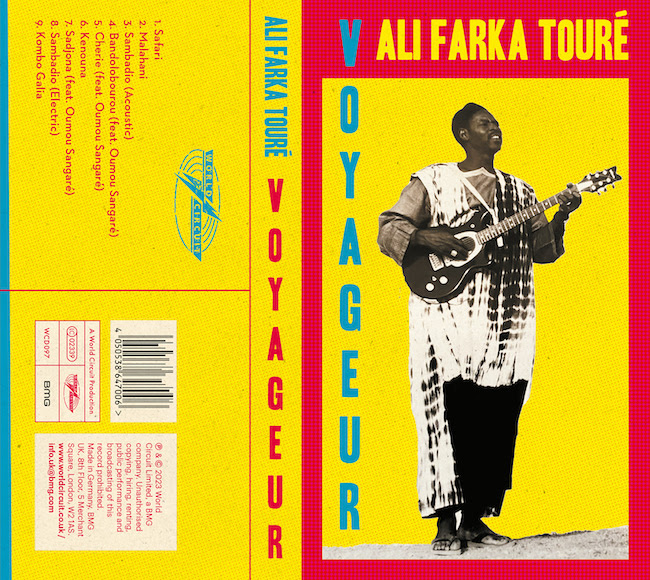
Ali Farka Touré ‘Voyageur’
(World Circuit) 3rd March 2023
With a name woven into the very fabric and soil of Mali, no one performer can claim to represent such a multifaceted culture and land quite like the venerated Ali Farka Touré. That rightly celebrated titan was able to channel the various traditions of a people as diverse as the Songhaï – the ancestors of a predominantly Muslim community that once dominated the Western Sahara in the 15th and 16th centuries – and the Bozo fishing communities of the Niger River. In between that, absorbed into his burgeoning craft, Ali’s many job roles – from subsistence farming on the family land to mechanic, taxi driver and ambulance driver – brought him into contact with the pastoralist Fula and endeared him to the wonderful pentatonic harp and female voiced music of the Wassoulou region – an historical and cultural area without defined borders that on a modern map amorphously spreads out into Mali, the Ivory Coast and Guinea.
Many of which, especially the Wassoulou sound, can rightly lay claim to giving birth to our Westernised form of blues music. But don’t ever dare utter its name, as Ali, when later exposed to and picked up by audiences in Europe and the States, was saddled with that “blues” tag. He would famously dismiss such comparisons, favouring the term “local” music instead. It’s an important distinction in understanding his music. With no real equivalence in the West, the music press and media were still quick to label it so. It must be said that after first encountering a six-string acoustic guitar after seeing a 1956 ballet performance in Guinea, Ali would be inspired to tune into the radio waves emanating from across the ocean, especially the burgeoning blues sounds of Albert King and John Lee Hooker – the artist who, if any, can be said to have come closest to Ali’s sound. But soul and R&B also played their parts, with a liking for James Brown and Otis Redding. What Ali played was authentic music, the roots of which were taken with the enslaved unfortunate souls across the Atlantic.
Born himself in the central Mali town of Niafunké, close to the region of Timbuktu and the lifeline of the River Niger, Ali’s initial one-string apprenticeship flowered into a sound few have equaled since. As ever a deft, skilled expressive storyteller on the six-string as he was on the traditional thumbed and nimbly picked instruments of his homeland, the rural star’s fortunes and access to the music industry changed when he took on a job as a recording engineer for Radio Mali in the 1970s. He would record a septet of influential albums during that period for the Paris label Son Afric. Enter the label behind this, and previous, Ali Farka Touré showcases, the 80s formed World Circuit, whose instigator Anne Hunt made a journey to Mali to find Ali – now semi-retired – in the hope of signing him up. Hunt was successful in facilitating the concerts in London that would lead, in part, to a rush of adulation and several world tours. As the momentum grew giddy, with an abundance of Western artists lining up to collaborate, Ali recorded a run of impressive influential albums with such notable icons as Ry Cooder – they would team up for the World Circuit released Grammy Award (one of many) winning Talking Timbuktu LP. But despite the creative successes something didn’t feel right spiritually, the pull of his homeland just too deep. And so, Ali would return home to his birthplace, but maintain a recording schedule with the release of both the village inspired Niafunké and the Savane (released posthumously) albums. His collaborations would continue too, with an impressive doublet of Grammy winners with the kora maestro Toumani Diabate.
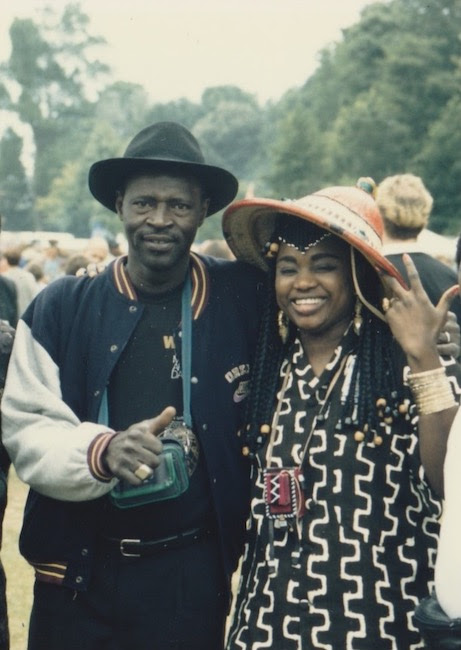
Photo credit: Henriette Kuypers
This latest project, produced by the label’s Nick Gold who spent time with the late Ali (his brilliant accompanying notes are full of vivid anecdotes and adventures spent with the Mali icon) and his scion, the equally gifted virtuoso Vieux Farka Touré (who I’m lucky enough to have seen live, and not blowing one’s own trumpet, has one of my lines, soundbites, used in his Wikipedia entry), is the first album of ‘unheard’ material from the legend since his 2010 posthumously released partnership with Diabate – released four years after his death from cancer in 2006. Voyageur is a welcoming addition to the catalogue, an incredible nomadic traverse of songs that capture Mali’s diversity and rich musical heritage; especially with his celebrated guests opening the sound up, travelling even further afield to those bordering regions that meet Mali.
Ali’s earthy timbre and twined, trilled, and constantly turning over guitar parts find a congruous union with the ngoni plucks of his guests Bassekou Kouyate (another leading light of the Mali scene) and Mama Sissoko, the R&B and soulful sax melodies and phrases of one-time James Brown sideman Pee Wee Elis and the majestic, carrying vocals of ‘The songbird of Wassoulou’ Oumou Sangaré.
Coalesced from a trio of recording opportunities (a 1995 session at Elephant Studios in London, a ‘91 session at Berry Street Studios, also in London, and captured recordings from the Hotel Mande in the Mali capital of Bamako in 2004) over a fifteen year span, the nine songs on this collection show a relaxed performer; the spiritual doyen of that often-used “desert blues” appellation almost effortlessly switching from flange fanning electric to spindled and rustic acoustic as he plucks out expressive paeans and yearns. Comparable acoustic and electric versions of the earnest Fula praised ode to ‘Sambadio’, the legendary fearless farmer, cultivator of the land, prove shining examples of this switch. The stripped-back campfire version heads down the rural, mosey route with a country hushed hoof-like rhythm, tool tilling sounds and a roots-based feel of Malian blues – even if we’re not supposed to use that term. Its electrifying companion is a merger of reedy tooted, pined, soulful highlife, Marvin Gaye and picked out guitar fanning.
But the album opens by administering the right kind of medicine with the Songhaï driven, stick rattling and fluty (courtesy of the Niger Fula flute player Yacouba Moumouni) swirls and undulations of the forthright vocalized ‘Safari’. The ‘medicine’ is this case refers to the guidance in bringing someone back to their senses. Ali sings that he has the medicine to cure ‘baliky lalo’ – “old men whose behavior is contrary to our customs and morals.” The song reminded me in part of fellow Malian guitar star Samba Touré. Later, and in a similar vein, the song of praise to the Bozo fishing elite who’ve mastered the water spirits, ‘Kombo Galia’, amps up that fuzzed electrified buzz with a sound that could be said to evoke swamp boogie and John Lee Hooker.
This album really comes alive with the addition of the beautifully, effortlessly commanding vocals of Oumou Sangaré. A World Circuit signing, friend to the late Ali, her ease permeates the lion-taming Fula Celebration to the Diona chief Amiri Amadou Dicko, ‘Bandolobourou’, and the acoustic, lifting and snozzled account of the Donso hunters, ‘Sadjona’. However, released in the run-up to this album, aired on YouTube last month, her lilted but resonating turn on the delicately spun and fluttered ‘Cherie’ duet (of a kind) is a particular highlight: a constantly nimble-fingered, light yet deeply felt laidback joy.
Ali Farka Touré aficionados will find this a welcome addition to the chronology, with recordings that many will have either never known about or been anticipating. But I’m sure there’s going to be surprises for even the most committed of fans. And for newcomers to Ali’s legacy, this album will prove a great entry point with its diversity and range, showing Ali with various collaborators and paying homage to several cultural styles, traditions. These songs are anything but unfinished scraps, demos, or downtime experiments. Instead, Voyageur is a collection of real quality.
Hi, my name is Dominic Valvona and I’m the Founder of the music/culture blog monolithcocktail.com For the last ten years I’ve featured and supported music, musicians and labels we love across genres from around the world that we think you’ll want to know about. No content on the site is paid for or sponsored and we only feature artists we have genuine respect for /love. If you enjoy our reviews (and we often write long, thoughtful ones), found a new artist you admire or if we have featured you or artists you represent and would like to buy us a coffee at https://ko-fi.com/monolithcocktail to say cheers for spreading the word, then that would be much appreciated.
Monthly Playlist Revue Of February 2023: Moonlight Benjamin, Von Pea, Philip Selway, Pussy Riot…
February 28, 2023
The Monolith Cocktail’s Monthly Playlist Of Choice Music
Picked By Dominic Valvona, Matt Oliver, Brian ‘Bordello’, Gillian Stone, Graham Domain
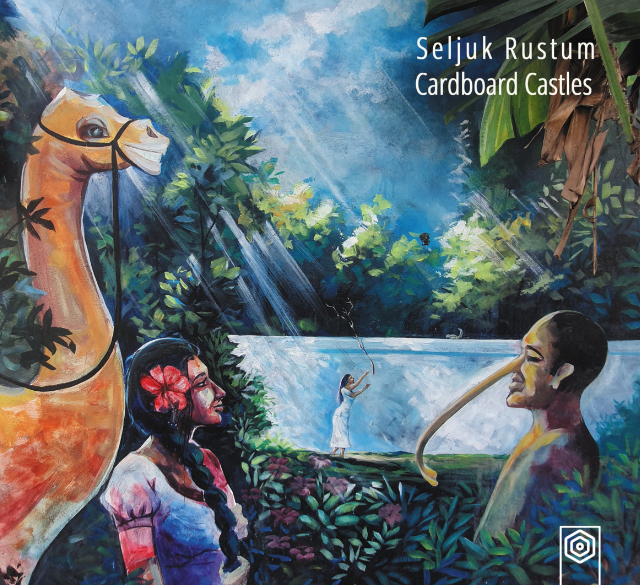
Four hours of choice music from February, the Monolith Cocktail Revue features tunes from our reviews and columns, plus the tracks we didn’t get room to feature. This month’s selection is courtesy of Dominic Valvona, Matt Oliver, Brian ‘Bordello’ She, Graham Domain and Gillian Stone.
.:TRACK LIST IN FULL:.
Moonlight Benjamin ‘Wayo’
Lunar Bird ‘Creatures’
Von Pea ‘Ode To Slick Rick’
Champion Poundcake ‘RAGS ANYMORE’
Spectacular Diagnostics ‘The Played List (Ft. Sonnyjim and Kid Acne)’
The Go! Team ‘Whammy-O’
Rogue Jones ‘Fffachlwch Bach (Bach)’
the clickBAITERS ‘Rear Ended’
Lucy & The Drill Holes ‘A Mouse’
Langkamer ‘Sing At Dawn’
First Day Of Spring ‘Normal Person (Love You Forever)’
SUO ‘Blue Evening’
Bondo ‘Instrument’
Mary Ocher ‘Love Is Not A Place (Ft. Your Government)’
Novelistme ‘Make Nothing’
Benjamin Benedict ‘Furlough Blues’
Za!/Tarta Relena/La TransMegaCobla ‘El Sweep The Lehelan’
Seljuk Rustum ‘Desi Bunny’
La Tene ‘La Taillée’
Imaad Wasif ‘Mr. Fear So Long (Money Mark Rework)’
Efeks ‘As Good As It Gets (Ft. The Strange Neighbour)’
The God Fahim ‘Man Of Steel’
Fliptrix ‘OCD With The LOVE (Ft. Coops And Verb T)’
Brainorchestra ‘Thin Patience’
Flying Monk & Wz (Corrupted Monk) ‘AF1’s’
Room Of Wires ‘Welcome To The End Game’
ANKHLEJOHN & LOOK DAMIEN! ‘CELINE AT THE MET GALA’
Pussy Riot ‘Putin’s Ashes’
Geeker-Natsumi ‘A Sheep That Never Gets Lost’
ASSASSUN ‘At Gunpoint’
Neon Kittens ‘Portable Fire’
Demikhov/Norda ‘Science! Science! Science!’
Antti Lötjönen ‘Circus/Citadel Pt. III’
Saint Abdullah ‘Divine Timing Is Intuitive’
Tachycardie ‘Collision Au Sens Strict’
Kety Fusco ‘Starless’
Polobi & The Gwo Ka Masters ‘Kawmélito’
Seaming To ‘Blessing’
Lisel ‘Immature’
Sly Moon ‘The Ghosts Comin’’
FUZ ‘First light’
Lavar The Star & Shabazz Palaces ‘Glass Top Roof (The One)’
Mecánica Clásica ‘Mantra De Felpa’
Kalia Vandever ‘Temper The Wound’
Xqui & Kaiho Zion ‘Agori Quitonie’
Stereo Hypnosis & Roedelius ‘VÍK I’
Philip Selway ‘Strange Dance’
The Good Ones ‘This Amazing Love Has Stayed With Me’
NO(w) Beauty ‘Atonia’
Floral Portrait ‘Winter Isolation’
Hawk Percival And Friends ‘The Mountain’
The Mining Co. ‘Wake Up’
Steve Stoeckel ‘Just One Kiss’
Chris Plum ‘As Long As The Sun’
Total Refreshment Centre ‘Black (Ft. Brother Portrait)’
Anteek Recipes ‘NY Fatcap’
Verb T & Illinformed ‘Bogus Journey’
Hus KingPin ‘Tony (Ft. Sagelnfinite)’ Copywrite/AWOL One & Kount Fif ‘Word From Our Sponsor’
Our Daily Bread 561: Seaming To, Kerala Dust
February 27, 2023
Double-Bill Of Reviews From Gillian Stone

About the reviewer:: Joining our team this year, Gillian Stone is a multi-instrumentalist and interdisciplinary artist originally from the Pacific Northwest and based in Toronto, Canada. Through her eponymous vocally-driven post-rock/drone folk solo project, she has released two singles, “Bridges” and “Shelf”, and her debut EP, Spirit Photographs. Stone holds a BFA in Jazz Studies from Vancouver Island University and an MA in Ethnomusicology from the University of Toronto. Drawing from her eclectic taste, she has worked with Michael Peter Olsen (Zoon, The Hidden Cameras), Timothy Condon and Brad Davis (Fresh Snow, Picastro), The Fern Tips (Beams) Völur (Blood Ceremony), NEXUS (Steve Reich), and visual artist Althea Thauberger.
Seaming To ‘Dust Gatherers’
(O SingAtMe )
Seaming To’s Dust Gatherers, released February 10th via O SingAtMe, is a hauntingly beautiful and otherworldly journey through both hyper-modern and timeless soundscapes. The sound design is wonderfully spacious and manages to be lush and sparse at the same time. While she plays most of the instruments on the record (piano, analog synths, clarinets, and glockenspiel), it’s the London-born, UK-based artist’s voice that drives Dust Gatherers. Throughout the record, Seaming To warbles, whispers, croons, screeches, and sings to a choir of her own voices. There is a theatrical element in her delivery, as her voice depicts unique characters between songs – sometimes evoking 40’s jazz, sometimes musical theatre, sometimes classical. Often the listening experience borders on creepy, like living inside a 90’s-era Dracula-themed video game.
The structure and tracking of Dust Gatherers are utterly brilliant. Instrumental “AnOverture” introduces the juxtaposition of the electronic and symphonic elements the make up the album’s ethos. The next three tracks, “Blessing”, “Tousles”, and “Brave” are imbued with choral synths and swirling vocals. It is not until the fifth track, “Traveller”, that acoustic instruments come back into the fold, with the introduction of Seaming To’s clarinet. Clarinets then mesh beautifully with synths on “Water Flows”, followed by the instrumental synth piece “xenanmax”. The album then takes a left turn into the string-quartet-driven “Hitchhiker”, and pivots again into the Björk-style melodies and microbeats of “Look Away”. The final two songs on Dust Gatherers, which appear to be companion pieces, harken back to the golden era of jazz, finishing the record with a sense of timelessness. Piano ballad “Pleasures are Meaningless” alludes to the final track, jazz standard “Tenderly”, which is tethered down by pulsing clarinets and synth glitches. Ever present are Seaming To’s profoundly strong character vocals, which evoke goosebumps at every turn.
Kerala Dust ‘Violet Drive‘
(PIAS)
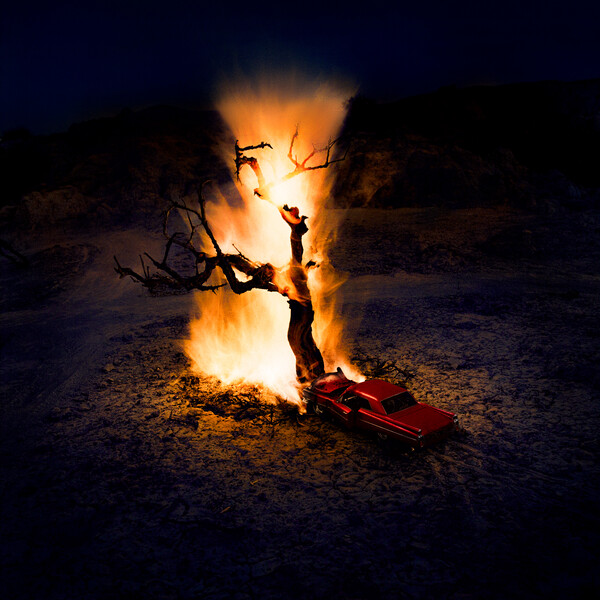
Kerala Dust’s Violet Drive is quite the genre mashup. The disparate textures created by Edmund Kenny (vocals and electronics), Harvey Grant (keys), and Lawrence Howarth (guitar) shouldn’t work, but they do. Like something from Factory Records’ Haçienda-era, Violet Drive can be described as Tom Waits at a rave – like Rain Dogs remixed through the lens of progressive trance. Built above the driving and droning foundation of the record are Howarth’s Marc Ribot-style guitar parts and Kenny’s crooning, sultry, Lou Reed-inspired vocals. Formed in London, based between Berlin and Zurich, and working out of their studio in Berlin, the eclectic three-piece recorded Violet Drive in the Alps over two weeks. The album “draws heavily on European culture torn between the past and future” and is partially inspired by the history and architecture of Berlin. Perhaps the best representation of this is the sixth track on the record, “Salt”. With its droning world textures, hand claps, and melancholy vocals, the song could be an archive of the city – of its complexity, its people, its transience, and of its space and place in the European imagination.
Brian ‘Bordello’ Shea’s Roundup Of Reviews

THE SINGLE
Mediocre ‘To Know You’re Screwed Is To Know A Lot’
(Dangerbirds Records)
I am quite pleased to be able to say that Mediocre do not live up to their name. And that ‘To Know You’re Screwed Is To Know A Lot’ is a fine catchy indie rock/pop splurge of hormonal excitement, a brief couple of minutes of thinking “I really will have to dig out that Elastica album from my collection”. And Mediocre emit the same ‘I do not give a fuckery’ as that once wonderful band.
Mediocre has announced their Dangerbird Records debut EP To Know You’re Screwed, due out April 7th.
ALBUMS

Schizo Fun Addict ‘Love Your Enemies…’
(Fruits Der Mer) 20th March 2023
I will be honest I love Schizo Fun Addict and have been really looking forward so much to hearing this album, especially after hearing the two teasers tracks released over the last few months: ‘Forever Before’ the opening track is a blissful foray into 60s Californian jangle, with a hint of soft shoegaze shuffle, and even better, the complete gem of a song ‘Fate Chase’, a song worthy of the Mamas and Papas with a beautiful chiming guitar riff worthy of Roger McGuin at his most inspired, and if anyone ever asks what is perfect pop just play them this gem.
Love Your Enemies… in fact is a album full of beautiful pop songs; songs that where made to be played on the radio, to be shared with your nearest and dearest. Songs that are filled with love and emotion: ‘Activate’ and ‘Over The Hills And Far Away’, the Led Zepp cover that actually far surpasses the original, are both extremely moving. And ‘Outrun’, my favourite track on the album, has one believing there must be a God: how else could there be anything quite so heavenly sounding.
This album is one of the best and wormiest sounding albums I have heard in many years. It has the same magic and otherworldly but inwardly peaceful calmness about it as Pet Sounds, and there is something about Schizo Fun Addict that reminds me of the Beach Boys but without ever actually sounding like them – I will put it down to musical genius and heavenly inspiration.
Love Your Enemies… is available to buy on ltd vinyl from Fruits Der Mer records, or if there is none of them left by the time you read this can be downloaded from Schizo Fun Addicts’ bandcamp page. Either way just get it into your life.
Floral Portrait ‘S-T’
Available Now
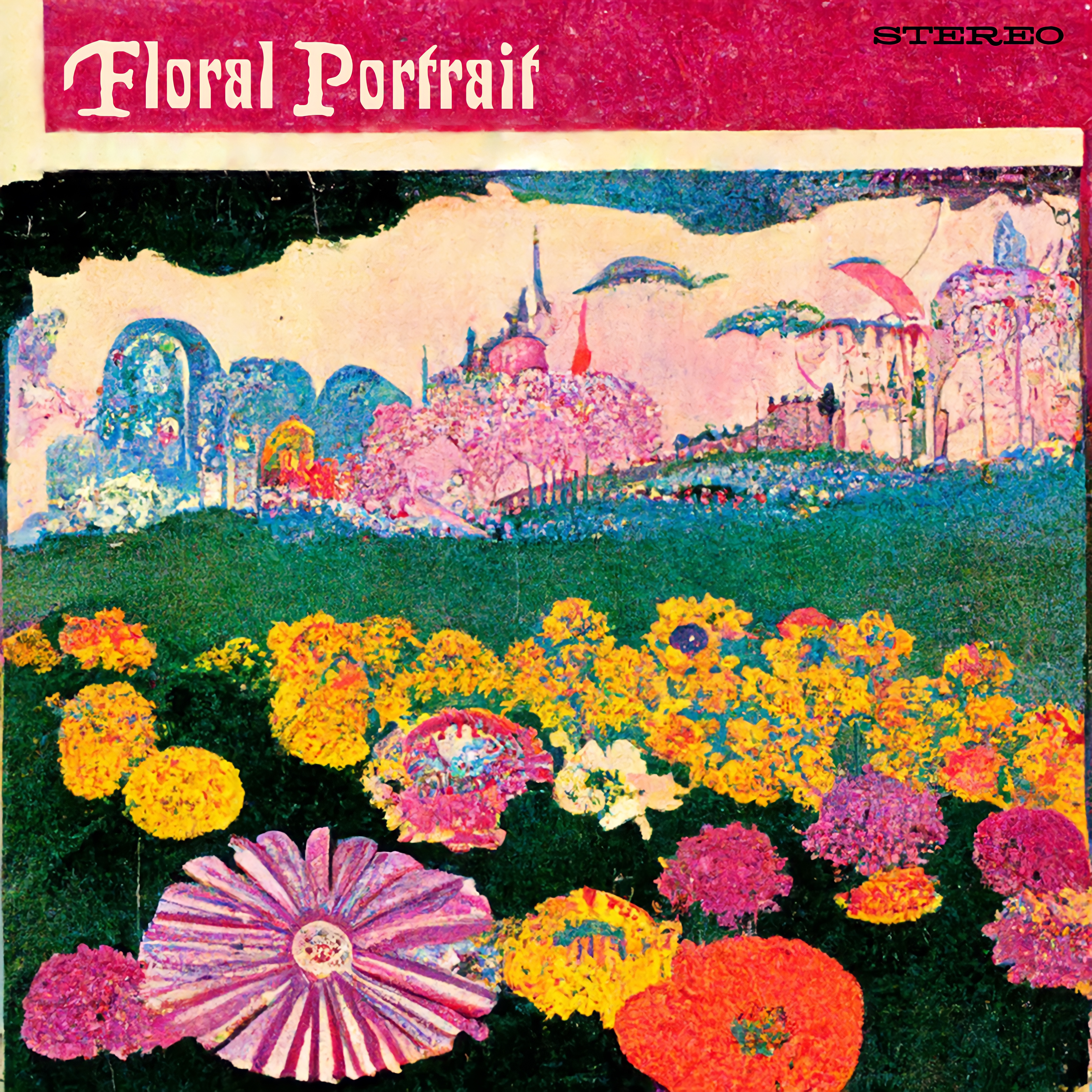
Music is indeed timeless as this beautiful work of aural art demonstrates. Floral Portrait has produced a work of pure pop, a masterclass in baroqueness – you could say they are going for baroque if one is inclined, in which I am. I’m also inclined to let myself drift away in the gentleness of the soft waves of psych that engulfs my Sunday morning, taking me floatingly to the melody inn a place where The Zombies and the Pet Sounds era Beach Boys reside, a place where the house band is Nirvana (the 60s version not the strange way to rid ones selves of acne version). Yes indeed-y, this album is one of pure 60s sunshine and yearning delight.
Hawk Percival ‘Night Moods Vol.I’
(Think Like A Key Records) Available Now
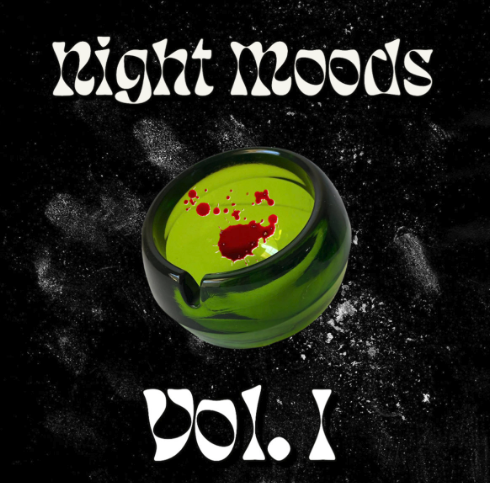
Oh my god! How I love Hawk Percival. She is like a lo-fi indie Noosha Fox (I am once again showing my age). But come on, ‘S-S-S-Single Bed’ was one of the singles of the 70s and I think that Hawk Percival shows the potential to make something equally as wonderfully magical, as this 6 track mini album shows so much pop suss and quirky originality.
It takes from the past – you can hear the timeless melodies from the 60s/70s – and twists it into something new. She plucks the spinning melodies from the air and weaves them into her own unique creation making an album of future desert island discs. I think Hawk Percival could well be one to watch.
This album is part of the DIY music series released by the excellent Think Like A Key records, and good on them for releasing this little lo-fi treasure.
Various Artists ‘New No York’
(Metal Postcard Records) Available Now

A compilation of music from Metal Postcard bands, but what all these bands have in common is Andy Goz. Yes, the guitar genius who’s in all these bands, and all the bands are of course pretty darn special.
The Neon Kittens, the first band featured on the comp, show that they’re beyond seductiveness with four tracks of dark sexual solitude, a murderous art cartoon of frustration, the yearning softly spoken female vocals of Nina K, and discordant guitar haunts-the-inner-art-school-no-wave-cool that lurks deep within all of us.
The second band featured is the mad post punk joy that is the Salem Trials. Andy this time is joined by the wonderful Russ. Imagine Mark e Smith and Pete Shelly spitting live wasps at each other whilst Keith Richards watches on in amused disgust detuning his guitar, sucking on a cigarette rolled with the ashes of the dearly departed Tom Verlaine. Four tracks of post-punk wonder and originality: no one sounds like the wonderful Salem Trials.
The third band is the experimental post-punk dance pop Lucy & The Drill Holes, the most gothic and dance-y of the four bands featured. It’s the sound of Stereolab’s French Disco being invaded by and sketched by shy mellow art lovers.
The final band, the Clickbaiters, are the most rock ‘n’ roll and punk of the four, at times resembling early 80s Fall and, at other times, coming across like post- punk psychobillies Demented Are Go or Alien SexFiend, especially on ‘Lousy Friend’ – 2 minutes 43 seconds of pure spite and disgust – and the excellent lo-fi rock ‘n’ rolling, ‘The Fantastic Fur and Kid Chlorine’.
New No York is a quite wonderful comp of post-punk invention and fury and no doubt will be soundtracking my next few weeks.
Steve Stoeckel ‘The Power Of And,’
(Big Stir Records) Available Now
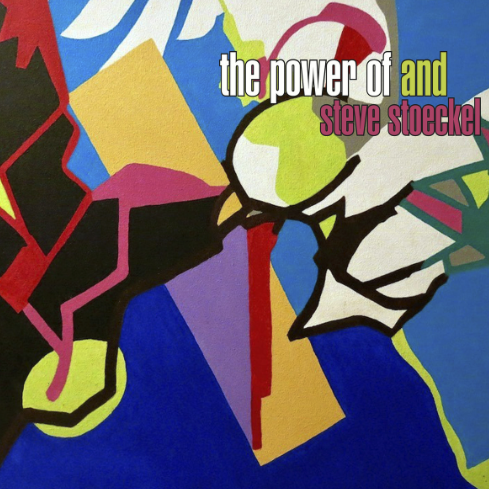
“Oki-dokie” as the great man of the forest once said whilst felling a great bush of yesterday’s misanthropes as they changed their points of view due to the magic of McCartney deeming from his radio. Macca’s gift for melody whispering in their non acclimatised lug holes, they bathed in the aural glory and then caught the forest express to the first independent record store they come across, splashed their money down onto the counter and said give us a McCartney CD. The shop assistant taken aback at being surrounded by forest misanthropes could only stutter in a nervous fashion: “We have no McCartney. In fact we have no Beatles”. (Yes what kind of record store has no Beatles or Macca in it I hear you ask; they did have but a gang of wannabe scousers turning up with nostalgia in their hearts, who bought them all). “But I do have this”, and nervously took out the just arrived new cd from Big Stir recording artist Steve Stoeckel. “He may not be Macca but he lives in the same ballpark” he said placing the disc into the cd player. The forrest misanthropes were knocked sideways by the tuneful beat glory of Steve Stoeckel and somewhat moved by the beauty of Steve’s ballads and bought the fucking lot.
Chris Church ‘Radio Transient’
(Big Stir Records) 24th March 2023
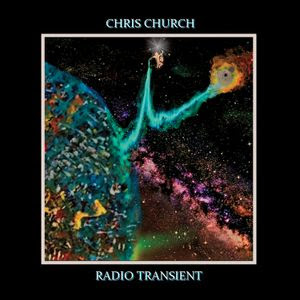
If Radio Transient was released in the 80s on an American arm of a major record label I would not have been surprised. It is the kind of album I would occasionally stumble across in that decade, in my working in record shop days, the odd gem that was released amongst the dross that American arms of Major record labels used to release on a weekly basis; the odd gem that would make working in a record store worthwhile.
Radio Transient has the slight alternative feel that used to occasionally slip through the net. It has an air of Johnny Marr like tunefulness and jangliness on some of the songs, especially on the opener ‘GCRT’, which has the sublime edginess that the early Smiths had in spades, and ‘Over And Out, which is swathed in Byrds/Smiths Rickenbacker glory.
Radio Transient is in fact a fine radio album no matter what decade we live in as we all know that music is timeless and this album proves the case in point, taking American mid 80s MOR rock and covering it in undenying, loving indie – or should we call it college rock sheen. And if the Warren Zevon like ‘One More Chance To Get Over You’ was released as a single in the 80s, I think Chris Church might have had a hit on his hands.
In a spot of self-publicity, a case of pop eating itself, Brian Bordello is actually an artist in his own right in case you were unaware. His latest wishful thinking paean, Songs For Cilla To Sing, is released through Think Like A Key:
Our Daily Bread 559: Dur-Dur Band Int. ‘The Berlin Session’
February 22, 2023
Album Review by Dominic Valvona

Dur-Dur Band Int. ‘The Berlin Session’
(Outhere Records) 3rd March 2023
Marking the first session of new-recorded music since the halcyon days of their heydays in 80s Somali, the revivalist legacy incarnation of the Dur-Dur Band is back with a truly “international” sounding groove. The International addition in that ensemble title not only references the sound – Somali in origin but spreading throughout the region and across the seas to evoke the rhythms of Indonesia, Thailand, the Caribbean and beyond – but also the history and consequences of a band that has been forced to split up and flee abroad to escape the civil war.
A band for decades now in a diaspora, the original line-up that first caused a sensation on the Euro-chic Via Roma stretch of Mogadishu’s cafes, cinema and music culture has changed over time. But founding member and bass player Cabdill Cujeeri (some names can be confusing as people switch between their Somali spellings and English, which in this case is Abdillahi Ugery) with vocalists Xabiib Sharaabi (the Somali “king of pop”) and Faadumina Hilowle have been joined by a number of other talented Somalia’s: even members from rival groups.
It must be stated – depending on what source you use or find – that the band’s history is a complicated one. Sharing the stage with that other famous and popular Somali group, the Iftin Band, the initial Dur-Dur Band could be found hotfooting across both the stages of the Jubba Hotel and the Mogadishu National Theatre before civil unrest and war forced them to disband in the 90s and scatter to the four winds. At one point they reconvened in Addis Ababa, over the border in Ethiopia. A move that makes perfect sense musically yet came with its own drawbacks. Members then emigrated to Djibouti, the USA and UK. It would be a fundraiser that brought them back together, or rather a loose configuration of that troupe, in 2003 with the Somali “revivalist” and community advocate Liban Noah’s benefit concert for the restoration of Somalia’s Hargesia’s National Theatre. A strong tradition in the country, with pop bands and the like often state-funded, you find groups like the Dur-Dur used as backing for plays – one such run being for May One Of Us Fall In Love. This stepping out would later lead to the formation of the Dur-Dur Band Int., paying homage to their legacy and keeping the flame alive as it were. It helped of course that John Beedle – not entirely aware of who it was – uploaded a cassette tape of the band to his popular Likemba blog. Labeled as “Mystery Somali funk”, it started a whole Western clamour for both the Dur-Dur Band and their peers music. All of a sudden a flurry of compilations and collections followed, building up a picture of a near fabled, undiscovered African music scene.
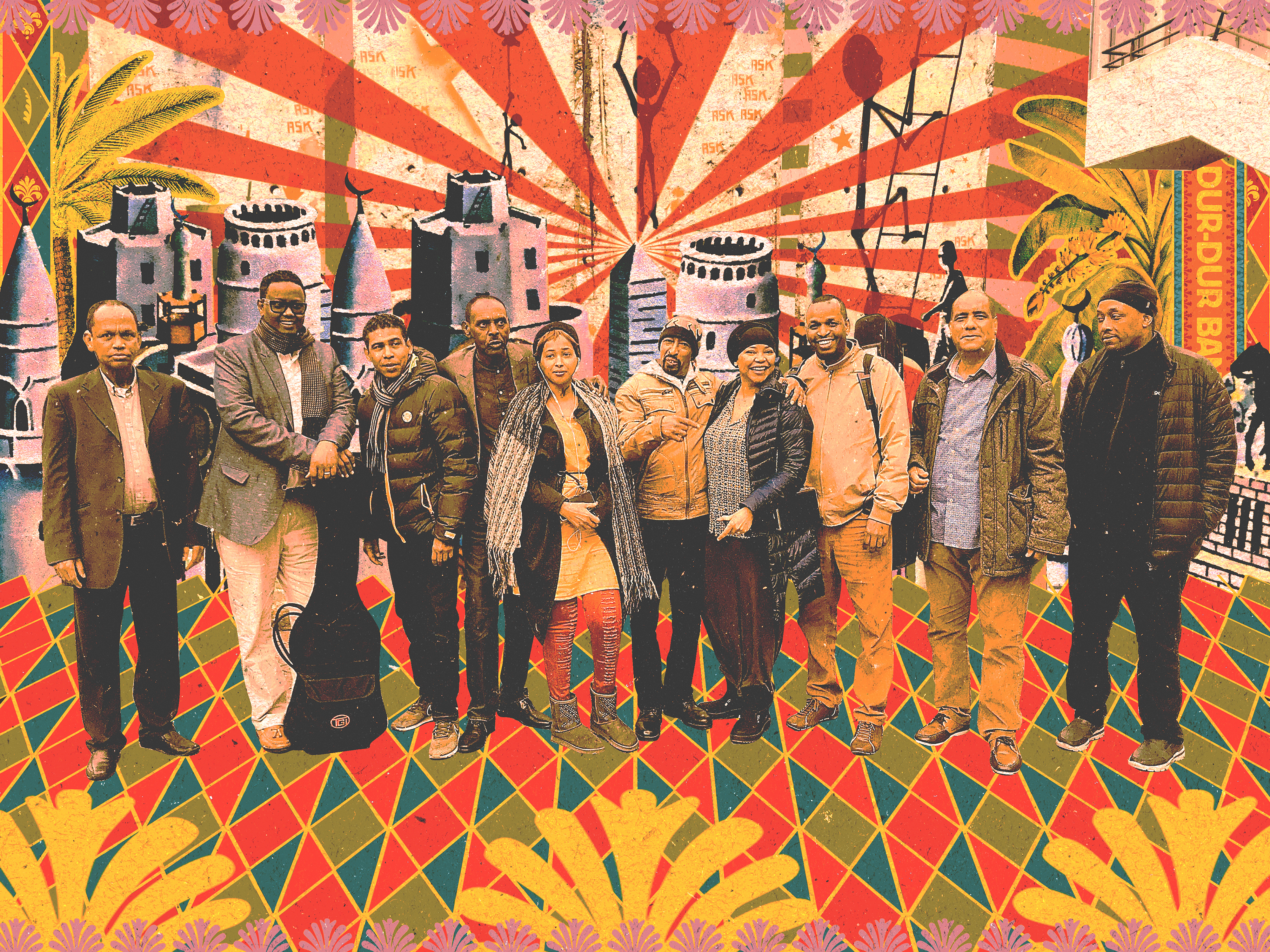
The most recent chapter of a story that is vey much ongoing, finds the band going into the studio to lay down some new material ahead of a HKW performance in Berlin. With a performative enthusiasm and trio of vocalists (the Djibouti singer, founder of the Sharef Band, Cabdinuur Alaale joining Fadumina and Xabiib) the energy in the room is palpable, starting with the familiar sunny-side-up funk, radiance and looseness of ‘Wan Ka Helaa’ – which I think is a riff or meant to be a version of Fadumu Qassim and the Waaberi Band’s ‘Waakaa Helaa’ (or, “I Like You”). Afro-beat, shades of Cambodia and Ethiopia, a touch of the Hues Corporation lilted upbeat, the Lijadu Sisters and Gyedu-Blay Ambolly converge on one soulful introduction.
We’re into a reggae vibe, or to be exact the North Somali and Ethiopian neighbour’s “Dhaanto” style that’s said to have inspired that Jamaican honed phenomenon, on the simmered and Compass Point Allstars (Cabdinuus – I think – sounding almost like Grace jones) sounding ‘Riyo’. On the next song that Dhaanto gait starts to merge with slackened ska and Ethio-jazz. But it’s back to a shuffle and swing of Mogadishu funk, soul, zappy keyboards and ray-fanned organ on the second half of the album. There’s even room for some spells of Kuti, a little Ebo Taylor and Xasan Diiriya in that magical mix of yearned and excitable love and plaint.
Simultaneously familiar whilst offering a fresh songbook (of a sort), the Dur-Dur Band Int. Berlin Session is as lilting as it is dynamic. Above all it’s always grooving to a unique fusion of worldly rhythms and beats, catapulting that Somali funk to new heights and hopefully making new fans with lively and cool performances. Nothing should keep you buying a copy.
Hi, my name is Dominic Valvona and I’m the Founder of the music/culture blog monolithcocktail.com For the last ten years I’ve featured and supported music, musicians and labels we love across genres from around the world that we think you’ll want to know about. No content on the site is paid for or sponsored and we only feature artists we have genuine respect for /love. If you enjoy our reviews (and we often write long, thoughtful ones), found a new artist you admire or if we have featured you or artists you represent and would like to buy us a coffee at https://ko-fi.com/monolithcocktail to say cheers for spreading the word, then that would be much appreciated.
Our Daily Bread 558: Tachycardie, Chris Plum, Fuz…
February 20, 2023
GRAHAM DOMAIN’S REVIEW ROUNDUP COLUMN

:ALBUMS:
TACHYCARDIE ‘Autonomie Minerale’
(Un-je-ne-sais-quoi)
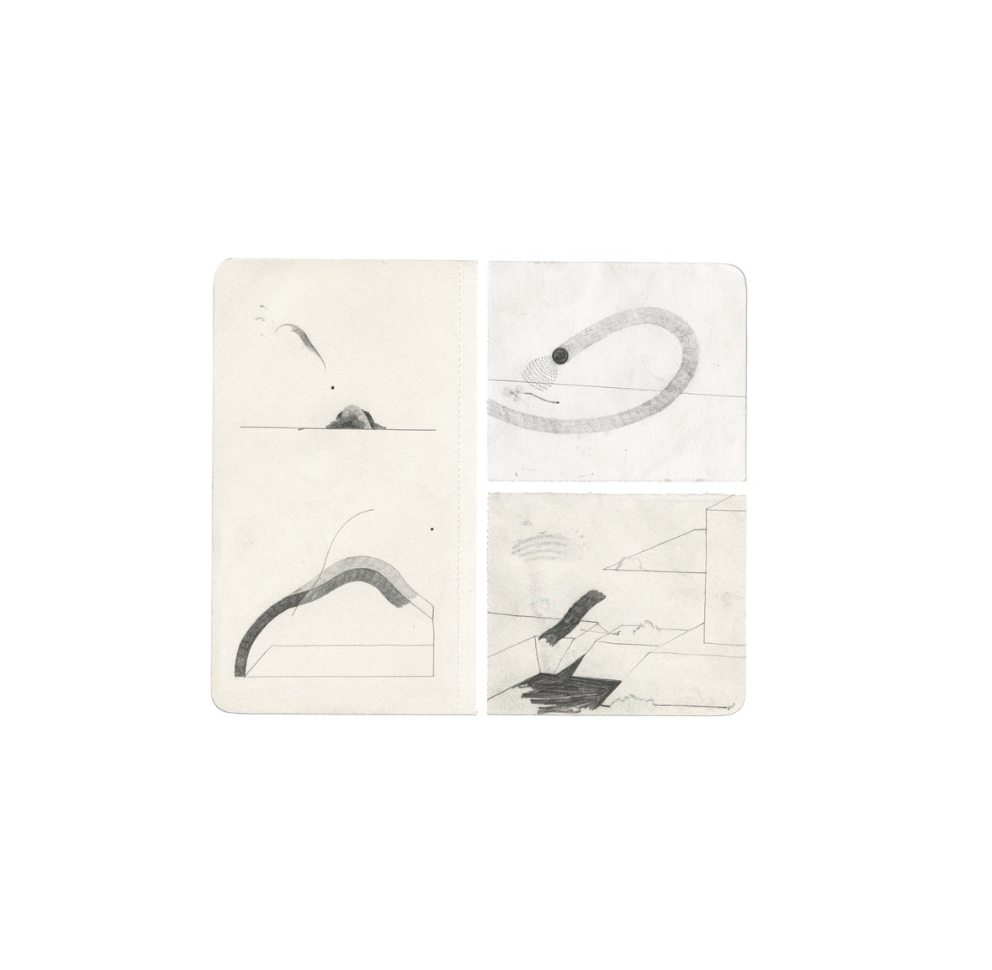
This is the third album in a trilogy of ambient sound-art works by French composer Jean-Baptiste Geoffroy. Consisting of seven pieces of strange, dark, tribal, alien ambient dissonance and warm unnatural half-light!
In the first piece, ‘Parties sud puis nord’, tribal drums and hyper percussion are intermittently infiltrated by reverberating clangs and deep disturbed atmospheric noise. It is a strangely compelling listen! Although if listened to by those of a disturbed mind it may likely trigger psychosis, one-legged
Russian dancing or paper moon madness!
In ‘Gris de haute pression’ tribal drums and hypnotic looped bells hang in the air. The sound of a mast creaking on a ghost ship is heard as the vessel nears a bleak volcanic island. A lone sea birds’ cry echoes across the dark looming cliffs! The mind retreats, the darkness falling over crumbling dreams and burying hope in the inky blackness!
The best piece is perhaps ‘Collision au sens strict’ – Throbbing alien dissonance reverberates across a dead ocean as metal insects scurry across the coffin-like box you wake up in! Disturbing and exhilarating!
The composer explains what we all had guessed: ‘This piece resulted from…the mechanical oscillation of a stone that is hit…and the electronic oscillation of a home-made synthesiser…no one can tell where synthesis starts and sonic naturalism ends.’
You will not find another album like this. It will penetrate your dreams bringing raptures of nightmare terror, joyous pain and nerve scraping pleasure. As the stones with eyes move closer, watching, surrounding your house, you may never ‘escape into night’ or feel at ease again!
CHRIS PLUM ‘The Small Hours’
(Self-Released)

The new album from Detroit indie veteran Chris Plum (Brendan Benson, Mood Elevator) is an album inspired by jazz ballads from the 1940’s, 1950’s and 1960’s but with a modern twist! The band put together from musician friends consists of piano, double bass, brushed drums, guitar, brass and woodwind. All the songs are self-penned originals filled with humour and observation and are memorable after only a couple of plays.
‘The Executive’ reminds me of a song that Elvis Costello could have written, when he has occasionally written in a similar jazz ballad vein. But, the standout track for me is ‘No More Heartache’ – which musically shares common ground with early Tom Waits!
It is obviously a labour of love for Chris so good luck to him for following his muse regardless of commercial considerations.
::SINGLES/EPS::
The Early Mornings ‘Ultra Modern Rain’ (EP)
(Practise Music/Rough Trade)
This is the second excellent EP by Manchester 3-piece The Early Mornings and features 5 tracks of spiky post rock no wave – sharing DNA with the likes of Wetleg, the Breeders, The Fall, and The Raincoats.
It is an exhilarating ride of moody bass lines, spikey guitar, distorted chords and garage drums with vocals by Annie Leader.
Standout tracks: ‘First Words’, ‘Ultra-Modern Rain’, ‘Loves Not Hard’.
The Neon Kittens ‘Frozen Peas’
(Metal Postcard Records)
Taken from the debut album No Drugs Required this is a slab of post pandemic madness – a release from the confines of drudgery -, sounding like a cross between early Gang of Four, the Scars and a Felix the Cat cartoon, bounds along like a gazelle chasing a bus! A superb single, unlike anything else around today!
Flipside ‘FriendZone’ sounds like the music from South Park – Terence and Philip doing a mad dance while the corpse of Kenny looks on as Cartman ‘charms’ a new girl-friend! Brilliant!
Fuz ‘First Light’
(Menace Records)
‘First Light’ is the excellent debut single by French duo Fuz. Laid-back soulful vibe, indie post-rock with interesting low-key melodies from the guitar and keyboard duo. It has echoes of mid 70’s bands like Steely Dan or Johnny Green and the Greenmen (‘Seven over from Mars’)! One to play on late night radio shows like ‘Nobody’s Listening Not Even My Mum’!
No(w) Beauty ‘The Art of Four’
(Menace Records)
‘The Art of Four’ is the exceptional new single from four-piece French jazz men No(w) Beauty. The instrumental is propelled along by hip-hop style drums and bass where the piano and trumpet alternate between melody and melodic soloing! Love it! A full album follows on February 24th.
Complete Mountain Almanac ‘February’
(Bella Union)
The second single from Neo-Folk duo Complete Mountain Almanac is a stunningly beautiful song contrasting the effects of climate change on the planet with the effects of breast cancer on the body. The collaboration is between exceptional singer and musician Rebekka Karijord and poet and lyricist
Jessica Dessner (who developed the cancer). The duo are joined by brothers Aaron and Bryce Dessner of The National. Their self-titled Debut Album is out Now!
Rigolo ‘If’
(Antropotopia)
The new single by Italian alt-pop group Rigolo builds on an indie post-rock vibe but what makes them sound unique (to these ears) is an electric cello played upfront to carry the melody pre-vocals! It seems to be a song about self-discovery and working out your true place in the world. Sung in English the song acquires an air of irony and humour, which I’m not sure is intentional (and occasionally reminds of Einar from the Sugarcubes)! The song is fairly inoffensive pop music despite using the F word a few times. I expect they are the equivalent of The Beautiful South in their own country with their dual boy/girl combined and alternating lead vocals.
New Album Aliante is out now!
The Perusal #40: Polobi & The Gwo Ka Masters, Moonlight Benjamin, BONDO, Kety Fusco, Antti Lötjönen…
February 15, 2023
Upcoming and recent albums in review
Dominic Valvona

Moonlight Benjamin ‘Wayo’
24th February 2023

PHOTO CREDIT: Cedrick Nöt
No one quite channels the “iwa” spirits and musical, drum-beating ceremony of Haitian vodou like one of its most exhilarating priestesses, Moonlight Benjamin. Returning with her atmospheric and grinded-scuzz swamp-blues foil Matthis Pascaud for a third manifestation of hungered electrified vodou-blues, Moonlight roughs up and adds a wider tumult of energy to her vocally incredible and dirt music imbued sound of deep southern roots, West African and Hispaniola influences: an all-round Francophone sound you could say, from Louisiana to Mali and, of course, her homeland of Haiti.
Born into this mortal world in tragic circumstances, an orphan at childbirth, the poetically named Moonlight started out singing hymns in the Christian Church before crossing the paths of vodou musicians, acolytes and picking up on the sounds of Western rock music on the radio. But with an eventual move to France, Moonlight would also take up the study of jazz. A return in 2009 to Haiti and vodou initiation, Moonlight became a priestess of an age-old religion, practice originally brought to Haitian shores by slaves from West and Central Africa.
Famous for its worked-up rhythmic rituals and exaltations, drama, the sounds and expressive vocalization of vodou was coupled to a myriad of bluesy, rocking, psychedelic, country and desert styles when the guitarist Pascaud entered the picture. Two critically favored, compelling and adventurous albums and numerous gigs later this sonic and, most importantly, vocal partnership now summons up something very special, soulful, spiritual and charged on Wayo.
Translating into a “scream of pain”, the title-track finds Moonlight commanding strength yet also emotional as a tempered, melodious if raw gumbo of New Orleans and Tuareg post-punk swamp blues buzzes around her. That voice, its range from earthiness to squeals and the deeply welled, is hard to compare with anyone else. Melodic with plenty of familiar tunes, those beautiful if on occasion riled tones evoke fleeting grasps of Joan Armatrading, Ami Kate, Brittany Howard, Cold Specks and Big Joanie. Yet this is Afro-Haitian soul, R&B, the venerable and raging conversing with French chanteuse and Portuguese fado; with camel motion traverses and panoramic spells in desert Westerns.
For his part, Pascaud’s sprung, tremolo and gristly guitar, with both a grinding coil and velocity and more melting wanes, stirs up a sinewy flex of Tinariwan, Modu Moctar, Hendrix and Mark Mulholland’s collaboration with another Haiti native, the poet-artist Frankétiene.
With the addition of a bass guitar and drums elements of Boukmen Eksperyans and the Vodoun Band Haiti beat comes into contact with soul revue backbeats, post-punk and cult rock ‘n’ roll.
All together it’s a real rich, ever-changing landscape of driven, slapping, bobbed and stonking rhythms and powerful, rough and yet elegant vocals with a sense of both pain and magic. As wild as it is composed, Moonlight Benjamin takes the vodou spirits back home to Africa, before returning, via the bayou, to Haiti on another fraught electrified album of divine communication.
Antti Lötjönen ‘Circus/Citadel’
(We Jazz) 24th February 2023

During the initial pandemic wave of April 2020 the double-bassist maestro Antti Lötjönen released his debut proper as bandleader to a quintet of exciting Finnish jazz talent.
That album, Quintet East, with its monograph vignettes and flexible free-play of be bop, Sonny Clark, the left bank and Bernstein-like musical NYC skylines, is improved upon by the ensemble’s follow-up, Circus/Citadel. With a title both inspired and imbued by the Romanian-born, German-language titan of 20th century poetry, Paul Celan, the issues of a tumultuous world on the precipice of disaster is channeled through a controlled chaos and a reach for the old and new forms of expressive jazz.
The seasoned Lötjönen, whose provenance includes stints in the Five Corners Quintet, 3TM and Aki Rissanen Trio, reels back in the talents of the alto and baritone saxophonist Mikko Innanen (part of the We Jazz label supergroup Kamo Saxo), tenor saxophonist Jussi Kannaste (a fellow 3TM band mate), trumpet player Verneri Pohjola and drummer Joonas Rippa on another highly impressive outing.
More coherent than the last time around however, the themes of the day, the protestations are galvanized and turned inside-out across a concrete vine swinging, guarded and maddening landscape. Celan’s harrowing verse, consumed as is right with WWII and the Holocaust, his Jewish struggles, is reflected by those old and contemporary challenges with a musicality that evokes the social conscious jazz records of Marcus Belgrave, Sam Rivers and Phil Ranelin. And yet the opening title-track three-part act and its couplet of suites also serenade and offer a lilted New Orleans fanfare, suggestive of America’s earlier Southern States jazz roots. That first trilogy of tracks is a journey in itself; from Dixie and Savoy Jazz (Gigi Gryce for one) to those musical, theatrical sounds of Bernstein and early Miles Davis, through to the farmyard percussion and wilder rushes of sax and trumpet on the final act. It feels at times like an avant-garde or free-jazz modernist score to Animal Farm. With all the connotations, metaphors that title implies, the circus of madness and fortress mentality are played off against each other.
Each suite breaks off into expressive groups, separations, with perhaps the horn section together or double bass and drums reacting to each other in almost isolation. Numerous versions of this practice, these little breakdowns, combos can be heard throughout; all played with expanding minds and adroit skill, dexterity and, that word again, expression. And there are some both playful (is that a “pop goes the weasel” riff on the activist-stoked ‘Defenestration’?) and wailing surprises to be heard on this bounded mix of the quickened, the controlled and purposeful.
I’m always building the We Jazz label up; always aggrandising that Helsinki based hub of Scandinavian jazz. But really, this is an enriching, immersive and artful start to the label’s 2023 calendar with a classic jazz album in the making. I reckon it will be one of the year’s best.
Polobi & The Gwo Ka Masters ‘Abri Cyclonique’
(Real World) 24th February 2023

Suffused, elevated and morphed with Parisian-based Doctor L’s jazz, electronica Francophone new waves and trip-hop, the ancestral Guadeloupe rural folk traditions of Léwòz and one of its renowned modern practitioners-deliverers Moïse Polobi is transformed into an environmental traverse. As the good doctor has proscribed so well for Les Amazon D’Afrique and the Mbongwana Stars, the roots of another form are, with subtle wondering and sophistication, given a unique sound experience.
At the heart of the 69-year-old farm worker and lumberjack’s earthy song music is a three-drum circle of rhythms. A disciple since being introduced by his Léwòz practicing mother at the age of twelve to this West African originated ritual, dance and music Polobi is a master of the Gwaka, a family of hand drums of all different sizes, used for various effects and parts – the “Buula” for example, being the largest of that family, used as the central rhythm. The “Djeme” is another; a rope-tuned skin-covered goblet shaped drum, its origins tied to the 15th century Mali Empire and its spread across the region; taken up by those unfortunate souls catered off to the Americas during the Transatlantic slave trade.
As an ancestor of those slaves, brought over to the French colonized Guadeloupe archipelago to harvest sugar (among other roles) on the plantations, Polobi’s identity is very much on show here; a call both pleading and poetically ached as this group of islands continues to be attached to France as a “region” – as a consequence, part of the EU too – despite decades of independence campaigns. And that’s despite the Colonist masters loss of the Caribbean islands during its own revolution to the British (the first of two attempts to take them). Yet with certain conditions, it remains a semi-autonomous part of France to this day. This means there’s a strong French culture, especially language wise, with French being the official dialect, but Creole really the more popular used amongst the locals. It’s alluded to in the lyrics on this new album’s trippy ‘Bouladje’ song: “What language should I speak? This one says speak to me in Creole/ This one says speak to me in French. Music is in French/ As children we sang in Creole/ Let’s talk to make ourselves understood.”
The call and response, Cándido-like hand drums rattling and rolled (we’re told Doctor L replaced the drums here with Cuban rhythms) ‘Neg Africa’ makes that connection to displacement from the homeland obvious; sounding as it does like an African homage musically and atmospherically.
To my own ignorance I never knew that there was as Tour de Guadalupe in the cycling calendar. Won by the promising Colombian talent of the same name ‘Camargo’ uses a mirage of nuzzled distant trumpet, slightly elliptical drumming and electronic processes to call for the locals to get energized and to win back the “yellow jersey”; a boost for Guadalupe’s population to take back their own destiny, to feel bolstered with a can-do attitude. Polobi it must be said is a cycling fan, so it can be read as a tribute to that Central American cycling star too.
As important as self-determination is and the struggle to preserve traditions, this album is as much about Polobi’s response to his natural environment. Named after the terrifying threats and realties of cyclones – though also a metaphor we’re told for the “resilience” of the music and for resistance – Abri Cyclonique pays a real tribute to Polobi’s little oasis out in the wilds of the archipelago’s Grande Savane region. ‘La Lézad’, with its spiral wafts of jazzy horn, drum scuttles and Gnawa-like vocals is named after a local river, whilst the mysterious Afro-Caribbean, Terry Hall meets Black Mango ‘Driv’ meanders lyrically through the geography towards the woods.
Biodiversity in sonic form, with the flora, fauna, crops and wildlife permeating the sophisticated interlaced production, Polobi’s rustic idyll comes alive: as much a barrier to the infringing forces of big business as a call to return back to a simpler life in harmony with nature.
A very personal album, this is the first to be released under Polobi’s own name. Previously the Guadalupe star has performed with his Indestawa Ka band, releasing eight albums and performing internationally. But this cyclonic whirlwind is something different, a galvanised, electrified and bolstered earthy and magical vision of his country’s past, present and future. It’s one of the most interesting albums yet in 2023, with a sound that reboots folkloric traditions in the face of an ever-encroaching modernity.
Kety Fusco ‘THE HARP, Chapter 1’
(Floating Notes Records) 3rd March 2023

“The harp was born in the 7th century, when the air was different, tastes and experiences had nothing to do with today’s world and to this day I cannot think that there is no evolution: that is why I am designing a new harp, it will still be her, but contemporary and everyone will have the opportunity to approach it; in the meantime, welcome to THE HARP”.
And with that Kety Fusco elicits, pulls, scratches, picks and manipulates both liminal and suggestive notes, textures, timbres, qualities and evocations from her choice instrument on the first of a three-chapter journey in harp exploration. But as that opening quote states, this is nothing less than an “evolution”; a post-classical transformation in which the harp, though present and familiar, is pulled into realms of serialism, soundscaping and futurism: all that history forgotten, or at least erased, in pursuit of innovation and the new.
This means certain avant-garde practices and non-musical materials, processes being brought in to the equation. Hairpins, stones, wax have all been used in the past on Fusco’s often-improvised performative compositions, peregrinations and suites. To further distance the harp from its classical, folk and majestic roots, Fusco uses an electrified soundboard of effects and a database library of digital sounds she’s collected over the years. On this nineteen-minute, more or less seamless journey, the Italian artist is said to have even used a vibrator – banging it against that already mentioned soundboard. Such devices do indeed change the scope of the instrument, making it almost abstract, recondite, the source hidden aurally.
Fusco uses both an 80-kilo wooden harp and a carbon electric harp on Chapter 1 in the new series – chapters 2 and 3 appearing annually over the next three years –, which across its duration passes through the states of elegy, the disturbing, the supernatural and diaphanous.
With an impressive CV of study, accolades and notable performances at festivals, events, even the Swiss parliament, Fusco knows her instrument, theory and practice inside-out. And so whilst there’s a spirit of experimentation and improvisation, Fusco knows exactly what she’s doing, implying and creating.
Released in the run-up to this album a short excerpt, ‘2072’, alluded to the premonition year of Fusco’s death! A Cassandra perhaps, or maybe told this date by a fortuneteller, a meeting with destiny, a preparation for death is congruously pulled form out of the whole piece. The melody is a funeral elegy, destined to carry Fusco over into the next world. Not so much a cascade, as the waves of purposeful picked notes are allowed to ring out each time, given a little space before the next iteration, there’s a sense of some kind of watery flow; a peace of mind with naturalistic stirrings. And yet there is that sadness too, emanating from airy mystery.
No surprises that Fusco has previously conjured up a horror soundtrack, as there’s a constant feeling of the shadowy, even eerie throughout much of the rest of this suite. Especially in the opening passages, I can hear hints of Lucrecia Dalt. Voice-like sounds, both apparitional and almost esoterically holy, stir whilst granular and clearer but mysterious drones and melodies start to build. Glissando and legato notes simultaneously seem light and yet loaded. The atmospheres that are produced move between the chthonian, the vaporous, airy and metallic. Because whilst there’s melody, a rhythm at times, the sound turns more industrial near the end with a film and rotor-like abrasion of steel and wire.
At other times there’s moments of ambience, a sprinkle of starry calculus and reflective stillness.
The harp has seldom sounded so removed, different; Fusco at one, entwined with her harps in a challenging performance that stretches the limits of this usually synonymous heavenly instrument. Where she goes next is anyone’s guess, but I’m sure it will be a whole different experience in sound and stringed exploration that pushes the envelope.
Za! ‘Za! & La Transmegacobla’
3 Phaz ‘Ends Meet’
(Via Discrepant)

An electrified double-bill from the discrepant portal of outlier labels this month, with albums from the Iberian (but worldly reaching) Za! duo and friends and the singular electronic-percussive global beat-maker 3 Phaz.
The first of these finds the Spanish underground favourites Za! in a “tri-state” union with the experimental Catalan Cobla wind quartet La Megacobla and the “trans-folk” duo of Tarta Relena. All together in one space they pool their resources into one, almost exhaustive, opus of controlled chaos and polygenesis musical abandon.
A Kabbalah, a cult that you might actually want to join – willing to sip the spiked kool aid with enthusiasm -, whole branches of Mediterranean dances (from the West Bulgarian quick-quick-slow-quick-quick metric beat Kopanista, to the complex bustling and cheerful Flamenco style of Buleria and the dance in a circle, Catalan, Sardana), folk traditions and sounds from atavistic realms are transported into a colourful vortex of psych, prog, krautrock, heavier riffage and heavy meta(l).
The whole is both crazy and life affirming; a burst of energy and spasmodic cross-pollination. It’s as if Zappa dropped acid in The Master Musicians Of Jajouka’s tea; a heady mix of Anatolian-Turkey, North Africa, Moorish Spain, Eastern Europe and The Levant mixed with hippie ideology and freewheeling cosmic fantasies. At any onetime I can hear snatches, a gaggale of Dakhu Brakha, Elektro Hafiz, Elias Rahbani, Crystal Fighters, Jethro Tull, Tone Of Voice Orchestra, Hebrew, the Medieval, the Tibetan and Moroccan.
A mizmar of the heralded and the theatrical, this combined effort of wild disciplines, influences and practices is a convergence of untethered rituals, ceremonies, spins and mayhem. A place in which Ethno-music and the sounds and traditions of Spain make free associations with a family tree that’s branches spread across the Med and further afield. And yet it all sounds so very new and refreshing.
The second release in this double-bill finds the artist 3Phaz amping up the Egyptian Shaabi sound with a highly percussive mix of Mahraganat (an Egyptian electro street sound originally derived from folk music), Techno and various Bass-heavy subcultures.
A very popular working class music, that Shaabi vibe is rhythmically transported, flung forward into a futuristic soundclash vision of electronica and beats. Although “clash” isn’t the right word as this process, experiment is pretty congruous, with those rattling hand drums, percussive trinket rings and scrapes and both fluted and piped mizmar is very much in synch with the metallic synthesized effects, rounded if deep bass pulsations and sonic signals. Put it another way: that Egyptian, Middle Eastern source material is ramped up in a spin, swirl and body-locking production of electro, jungle music and fuzzed, fizzled alternative futurism.
Tracks like ‘Sharayet’, with its rapid hand drummed drills, willowed Egyptian oboe and acid Arabia beats, sounds like Farhot meets Man parish in Cairo! Meanwhile, ‘Type Beat’ has a more club-y sound mixed with stirrings of Dave Clarke, whilst ‘Shabber’ seems to merge the street sounds of the souk market with Jeff Mills. Neither dystopian nor joyous, Ends Meet is instead a heady septet of electro-techno powered Arabian and Egyptian workouts; a rallying excitable transformation of traditional folk sucked into a newly formed vortex.
The Mining Co. ‘Gum Card’
(PinDrop Records) 17th March 2023

Not so much an artistic leap in the dark, Michael Gallagher has nevertheless put aside his conceptual method of preparation and writing for something less structured and preconceived. On his latest and fifth album, Gum Card, the Donegal native, but London-based, artist and musician has instead managed to piece together a loose theme of nostalgia and youth; throwbacks to an age of obsessive card collecting to particular life-affirming scenes and foolish misadventures (or rather the failure of) dabbling with the occult.
These weathered memories, reminisces are interjected with episodes of artistic doubt, phobias and ambient-settings scored, partially, with in-situ recordings of the atmosphere and room in which they are meant to be recorded – the lounge style Casio keyboard accompanied leftfield ruminating ‘Waiting Room’ for example, originally part of a wider concept of songs to be conceived in a chosen room environment, using that spaces own ambient sounds.
The Casio sound does however highlight Gallagher’s taste for experimenting with the music of his youth in the 80s. A touch of Fleetwood Mac here, some dry-ice and a little retro-cosmic projection over there. Although Gallagher’s soft-peddled signature of Americana and troubadour songwriting is still very much in attendance; a gentle mix of a winsome Chris Isaak and Spain. If anything Gum Card has more in common with the album before last, Frontier, then the previous sci-fi imbued Phenomenolgy – his best work in my opinion. However, no one style dominates this songbook as such, and I consider this album another experiment, progression of his craft. Because amongst the initial knowing MOR and softly-delivered aches and yearns of ‘Primary’, a subtle flange-dream spell of 2000s indie colours the bluesy vibe on a song in which the protagonists are trying to avoid such despondent melodrama, which is ironic as Gallagher actually doesn’t even like the blues.
Later on there’s a hint of Mike Gale’s Casio Bossa pre-set on the memory lane feely ‘Shallow Stream’ (dedicated to fishing with Dad back in Donegal as a young lad, and memorable for accidently harpooning his old man’s hand with a fish hook), shades of Galaxie 500 and Mercury Rev on the title-track, and strobe-lit purred electro-pop on ‘Limits’.
As always there’s great subtlety at work, a slow reveal of emotional pulls and fragility; of nostalgia and memories seen at a great distance, revalued both with wisdom and yet confliction too. Some of the strangest of those draws features Gallagher’s wife, unintentionally stepping in to soothingly sing the opening ‘Wake Up’, and the subject matter of the stripped-back, intimate yearned closer ‘Broken Baby Bird’. Both bookend the album with hospital set pieces; the first, a lunar Fiona Apple and Western-tinged delirium about Gallagher’s fear of the place and needles, the second, a caring allusion to his wife’s vulnerable state after undergoing a major operation: the fledgling fallen from a nest to the ground. Obsessions of youth continuing into adulthood, the worries over loved ones and glimmers of storytelling are all converged with Gallagher’s usual slow release and an ear for something a little different to the usual American, troubadour style of deliverance. He might loathe his London home of recent years, and dream of leaving, yet that crumbling edifice has incubated the development of a real talent; a moody soul with an amiable burr who’s simultaneously comfortable and yet despondent at the state of it all. The Mining Co. proves a brilliant vehicle for Gallagher as he matures into an interesting storyteller and observer, and Gum Card is yet another finely tuned songbook from the Donegal longing maverick.
BONDO ‘Print Selections’
(Quindi Records) 24th February 2023

How does such a languorous sound still have such drive and purpose? Far from listless, definitely not “aimless”, the L.A. quartet reimagines Fugazi as beachcombers, enticed by the twilight hours of a Pacific Ocean surf on their debut album.
Locked-in (“consumed in the process” as they put it) BONDO wind and unwind, drift and with a navel downward gaze somehow weave the indolent slacker vibe into post-hardcore, post-rock, jazzy (that Archie Shep influence in the band’s PR spill not actually that difficult to imagine), lo fi, grunge-y evocations of displacement. The idea being that each member of the band, each personality is “dissolved” to make way for the music, the theme no less than a “mind made anew”, “cleared of data and ego” yet witnessing “nothing in particular”.
With very little in the way of vocals or prompts, it’s mainly down to the feels of the music and the action, which on occasions builds up a surprising intensity on tracks like the “let it all go” spurred grind and slowcore, yet almost carefree, ‘New Brain’ – think OWLS and Bedhead with a touch of Acetones thrown in.
This is California alright, but one in which the punks, garage bands and downcast all hang out on the beachfronts, or, clear their heads whilst observing the coastal tides ebb and flow. And yet, most surprisingly (although that PR spill does name King Tubby as an influence) the Pavement-esque, baggy at times, languid and slowly hung guitar arcs ‘Zion Gate’ (clue is in the title) has a dub-like bent to it.
Print Selections is filled with recast rumbled surf music, echoes of Slint and The Archers Of Loaf, splish ‘n’ splash drums and processed guitars diligently working towards an unburdened purpose and shape. BONDO have risen to the challenge of the album format, holding attention and the gaze with an intelligent visceral L.A. malaise and languorous challenge to cut loose and find those new horizons.
Farid El Atrache ‘Nagham Fi Hayati’
(WEWANTSOUNDS) Available Now

In between leftfield excursions to Japan, cult French label showcases and repressed funk and soul rarities the reissue specialists (branching out with bands like Biensüre into releasing brand new original material too) WEWANTSOUNDS delve into the magic and sublime music of North Africa, Arabia and the Levant with this cinematic treasure from the late Egyptian superstar Farid El Atrache.
Released in 1974, the year that Farid passed away, the Nagham Fi Hayati album is a soundtrack of mawwal-longed sentiment, quickened shimmies and virtuoso performances that show off the matinee idol, singer and oud maestro’s repertoire: now at its most sagacious if ailing.
But first a little background. Born into a princely Druze clan family tree in Syria during WWI, in the grip of fighting with the French colonizers, Fraid, his mother and siblings were forced to flee the homeland. At around the age of nine Farid would pitch up in Egypt; staying until his death in the 1970s. Learning much from his Lebanese mother’s own musical prowess as a singer and oud player, the burgeoning pupil soon came to the attention of his elders; learning for a time under the stewardship of the polymath Egyptian composer Riad Al Sunbat, he would quickly make it to the airwaves, appearing on the country’s National radio station. Moves into the flourishing Egyptian movie business would follow; Farid appearing in thirty-one musical films in total.
As a playboy figure that never quite made it to the alter, Farid romanced co-stars, famous belly dancers and even a former Queen – before his ousting, King Farouk’s wife Nariman Sadek – whilst maintaining a career on celluloid, stage and as a recording artist popular across the entire Arab world and even beyond – a favourite of Brian Eno mo less, a snippet from his famous ‘Awad Hamsa’ song of the 60s was used on John Lennon’s art project ‘Revolution No. 9’.
As it happens, he plays the aging respected singing star in the movie that this album soundtracks. And once the much younger rival ships out to find wealth in Brazil, at first saves, out of kindness, the fallen heroine (played by Mervat Amin) from public shame before falling in love with her for real. Directed by the famed Egyptian director Henry Barakat, Nagham Fi Hayati finds Farid’s character, even with a sizable age gap, doing the honorable thing in marrying his pregnant secretary, the father now across the world with no idea he’s left his former lover knocked-up.
Musically this translates into the lushly and swirled orchestrated classicism, Arabian poetry of sentimental longing and fulgurated vowel prolonged lamenting matinee, ‘Alachan Malich Gheirak’ (“Because There Is No One Else For Me But You”), and the equally yearned emotional orchestration of drama, Franco-Arabian and concertinaed charm, ‘Ya Habaybi Ya Ghaybin’ (“My Absent Lover”).
Sitting between those love-lost and resigned suites, ‘Hebina Hebina’ (“Love Us, Love Us”) picks up the pace with North African darting and dotted quickening organ and a mixed chorus of backing singers, encouragingly and excitedly clapping away.
Appearing for the first time in its full-unedited form (a section was originally cut from the original LP version), the incredible unaccompanied lute set, ‘Takassim Oud’, finds Farid proving every bit the “king” of that stringed instrument. An appreciative audience constantly animated and bursting into applause, eggs on a solo performance that evokes flourishes of Spain, Turkey, and Arabian folk, and Egyptian desert mirages. It’s like witnessing something as sublime, virtuoso and mesmerizing as Django Rhinehardt, only its on the bandy, elastic, thumbed and strummed, picked and plucked, jumping and blurry rapid scales resonating oud.
The first reissue on vinyl since the 70s, this skilfully performed filmic affair-of-the-heart can now be yours. I suggest you make room for it in your collection now, but also start sourcing those old Egyptian movies. Farid was a titan of the form; his voice sublime and musicianship masterful. What a real pleasure to be made aware of this artist and star. Big thanks to WEWANTSOUNDS for that.
GRANDAD ‘S-T’
6th March 2023

Remaining anonymous for now, the E numbers fed maverick who sits behind the GRANDAD alias regurgitates the sort of electronic goofiness that labels such as Artetetra and Bearsuit knock out with such aplomb.
Bauhaus avant-garde theatre morphs into wired skittles’ rainbow cutes, or, a transmogrified Candy Crush on the debut EP by this noted orchestrator, composer and mischievous artist. If I listed the many “illustrious” figures from the scene that this alter ego has worked with, then I’m sure you’d guess who it is. So instead just trust me that this is a seasoned pro who hasn’t just splurged on Damon Hirst’s medicine cabinet but knows (I think anyway) exactly what they’re doing.
A rush of Japanese cartoon fantasy and platform gameplay scores, garbled indigestion and springy silliness is all synchronized with (what sounds like to me) visions of a reggae-house Felix Da Housecat, Egyptian Lover electro, Mike Dred’s spindled rushes and a surprising spot of scenic gazing (the EP’s final harmonium-like, freshly breathed trans-alpine mirage ‘Pest’, which has a touch of Roedelius about it). And then there’s also a scuffed and worked merger of early Jeff Mills, Populäre Mechanik and Basic Channel on the penultimate tubular hammering ‘Runner Runner’.
Attention deficit disorderly conduct wrapped up with more dramatic looming deep moods, kinetic chain reactions, giddy and heavily processed voices (from where or what, who knows) and intricate beat making, GRANDAD’s debut EP submerges and mutilates echoes of µ-Ziq, Autechre, Ippu Mitsui and Andrew Spackman’s SAD MAN project.
Zigzag pills are popped and metals beaten out on, despite all I’ve said, quite a focused set of maximalist propositions. Although, just to further pull this debut EP into the psychedelic-induced realms, the CD is being packaged by the aptly entitled and self-evident mushroom technologists, the Magical Mushroom Company, whose aim is not to microdot the general public but to replace plastic with the “magic of mushrooms”. Lick it and see: it might work. But you won’t need any drukqs or stimulants to enjoy this deep set of colour and goofball electronica.
Room Of Wires ‘Welcome To The End Game’
(Ant-Zen) 15th February 2023

A buzz, whine, flex and resonating ring of zinc and alloy, of recondite machines, permeates another heavy set from the Room Of Wires duo. The latest in a strong catalogue of such dark materials and alien mystery, Welcome To The End Game ties together a complex of dystopian woes, rage and dramas into an interlayered twisting and expanding metal muscled album of electronic.
Although both partners (both called Andrew as it happens) have never actually met, and each track is created apart in isolation remotely, every single fibre and inch of their processes comes together to sculpt the nightmares of our technological encroaching and constantly under surveillance world with a search, an escape, into the light. In practice this means for every granular and shadowy techno reverberation there’s a smattering of ambient and neoclassical passages.
It all starts with the sound of Cabaret Voltaire’s Arabian-electro protestations and snatches of dialogue, and moves across a vivid modulated, oscillating structure of ominous strains, tubular mettalics, deep bass-y echoes, slowed and stretched beats and the sound of kinetic-static charged ballbearings being moved around in a circular fashion.
‘Oceans Light’, featuring exm, is a surprise with its ascending beams of light, rising from the refracted still waters, and the mournful ‘Burial’ features a touch of Dead Can Dance’s ethereal, but also Eastern European holy, gauze, which brings some gravitas to the lamentable misty scene. Elsewhere there’s a grind and cosmic concentration of Cosey Fani Tutti, Gescom, Amorphous Androgynous, Art Decade and Mouse On Mars to be found lurking or springing into view.
An often unnerving experience in which you’re never quite sure of the environment, this electronic duo tap into the growing unease and fast-shifting realities of our present cataclysm, of which they believe, by the title, we’ve reached the “end game”, whatever that will reveal. As I said a few paragraphs ago, Room Of Wires navigate and balance the uncertainty with glimmers of escape, and moments of hope and release; the machinations and unseen forces that bear down upon us all at least dissipated enough to offer some light.
Hi, my name is Dominic Valvona and I’m the Founder of the music/culture blog monolithcocktail.com For the last ten years I’ve featured and supported music, musicians and labels we love across genres from around the world that we think you’ll want to know about. No content on the site is paid for or sponsored and we only feature artists we have genuine respect for /love. If you enjoy our reviews (and we often write long, thoughtful ones), found a new artist you admire or if we have featured you or artists you represent and would like to buy us a coffee at https://ko-fi.com/monolithcocktail to say cheers for spreading the word, then that would be much appreciated.
The Monolith Cocktail Social Playlist #73: Stella Chiweshe, Digable Planets, Milk TV, Sonic Youth, Bob Dylan, Dori Sorride…
February 13, 2023
Anniversary Albums And Deaths Marked Alongside An Eclectic Mix Of Cross-Generational Music, Newish Tunes And Surprises.
To reiterate last month’s message, just give me two hours of your precious time to expose you to some of the most magical, incredible, eclectic and freakish music that’s somehow been missed, or not even picked up on the radar. For the Social is my uninterrupted radio show flow of carefully curated music; marking anniversary albums and, sadly, deaths, but also sharing my own favourite discoveries over the decades and a number of new(ish) tracks missed or left out of the blog’s Monthly playlists.
Anniversary picks this month include tracks from 50th anniversary celebrating LPs from Dr. John (In The Right Place), Alice Cooper (Billion Dollar Babies) and The Stooges (Raw Power); 40th’s from the likes of Echo And The Bunnymen (Porcupine) and Sonic Youth (Confusion Is Sex); hip-hop heavy 30th’s from the Souls Of Mischief (93 ’till Infinity), Digable Planets (Reachin‘) and Brand Nubian (In God We Trust), plus more indie, just on the cusp of Britpop fair from Radiohead (Pablo Honey) and The Auteurs (New Wave).
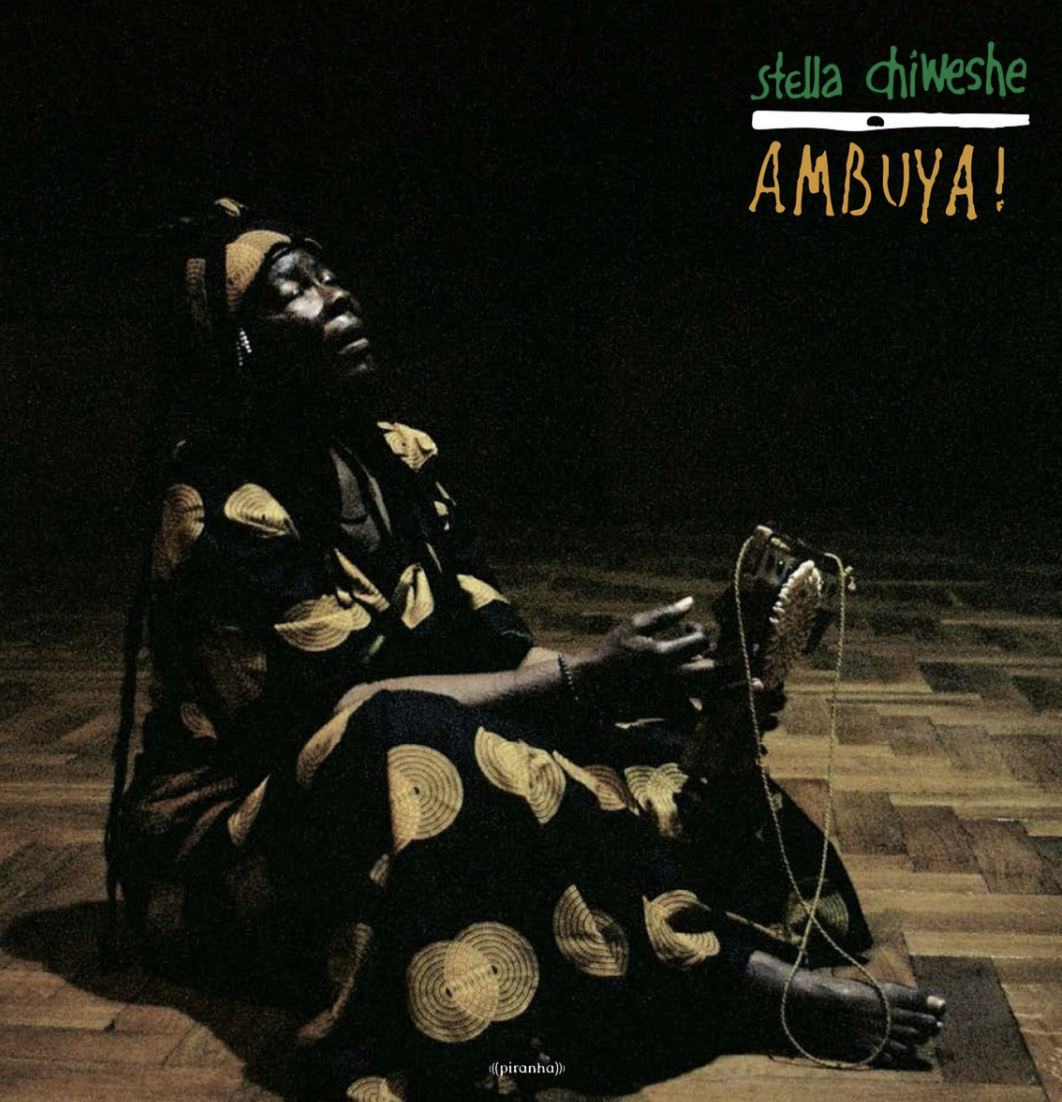
Marking those who’ve passed on in the last four weeks, where do you begin to start with such titans as Burt Bacharach, his genius, melody writ large into the very fabric of our culture, our cinema and musical cannon. Well, you just pick a favourite, and so I’ve gone for that Walkers Brother classic ‘Make It Easy On Yourself’. Similarly how do you represent the extensive, long career of the Zimbabwean songstress and ‘Queen of Mbira’ Stella Chiweshe with just one choice track. Again, just pick what you love and so here’s the opening buoyant lilt from her more recent Ambuya! album, ‘Chachimurenga’. It has been a terrible month for notable deaths, and so we also have tracks from Tom Verlaine and Yukihiro Takahashi too; the former, from the iconic doyen of alternative rock, new wave, punk’s 1979 eponymous solo, and the latter, taken from the former Yellow Magic Orchestra instigators’s 1981 solo album, Neuromatic – out new romantic(ing) the new romantics, and out Japan(ing) Sylvain’s Japan.
In the new(ish) category I’ve chosen a smattering of delights from Neuro….No Neuro, Karen Vogt & Simon McCorry, Marlene Riberio and Milk TV. That just leaves a curated selection of discoveries and music from my collection from across time and genres, and those older releases that have just been uploaded to Spotify in recent weeks, with songs and music from Jessie Mae Hemphill, Seventies Tuberide, Phil Mufu, A. R. & The Machines, Leo Sayer, Laurence Vanay, Chip Wickham, Ramon Farran & Lucia Graves and many more.
::That Tracklist In Full::
Stella Chiweshe ‘Chachimurenga’
A.R. & The Machines ‘Echo Boogie – Live At Elbphilharmonie Hamburg’
Dr. John ‘I Been Hoodood’
Digable Planets ‘Nickel Bags’
Madison Washington ‘((((Facts)))))’
Souls Of Mischief ‘Never No More’
Brand Nubian ‘Punks Jump Up To Get Beat Down’
Jessie Mae Hemphill ‘Tell Me You Love Me’
Some Cash Players ‘Cold 40s’
Seventies Tuberide ‘Eyes Closed’
Milk TV ‘Bowery’s Swing’
Tom Verlaine ‘Red Leaves’
Sonic Youth ‘Confusion Is Next’
Radiohead ‘I Can’t’
The Auteurs ‘How Could I Be Wrong’
Blue House ‘Accelerate’
Yukihiro Takahashi ‘Drip Dry Eyes’
Phil Mfu ‘Electronic Jam Number 7’
Joel Vandroogenbroeck ‘Rocks’
Neuro…No Neuro ‘Blunt Affect’
Karen Vogt & Simon McCorry ‘The Path Divides’
Marlene Riberio ‘You Do It’
Holly Henderson ‘The Planes’
Bob Dylan ”Till I Fell In Love With You’
Leo Sayer ‘Only A Northern Song’
Laurence Vanay ‘Voyage Les Yeux Fermes’
VRITRA ‘Safe Passage’
Burt Bacharach ‘Make It Easy On Yourself’
Dori Sorride ‘Persone Fragili’
Chip Wickham ‘Lower East Side’
Alice Cooper ‘Unfinished Sweet’
The Stooges ‘Shake Appeal’
Echo & The Bunnymen ‘Back Of Love’
Ramon Farran & Robert Graves ‘Under The Olives’
Nyokabi Kariuki ‘Ngurumo, Or Feeding Goats Mangoes’
Dougie Stu ‘Silhouettes’
Our Daily Bread 557: Trupa Trupa ‘ttt’
February 9, 2023
Cassette Tape Album Review

Trupa Trupa ‘ttt’
(Glitterbeat Records) 21st February 2023
The Polish outfit Trupa Trupa fashion their very own Faust Tapes out of an accumulation of sonic explorations, unfinished jams and rehearsal sessions, field recordings and play, off the back of their highly acclaimed (made my choice albums list of 2022) B Flat A album last year.
In the interval between recording new martial ttt is an almost seamless cassette offering of two experimental sound collages – coming in at just under the forty-minute mark. A development played out under the spell of psychedelic hallucination, mirage and more caustic machined distortions and abrasions, the triple “ts” experiment could be read as a really untethered avant-garde outlet for the band. Not that they’ve ever been conventional on that front with previous works melding and contorting, as they do, psych with no wave, post-punk, the industrial and indie to produce a multi-limbed psycho drama or revelation, the hypnotic and propulsive.
In fact, and as this latest couplet of suites proves, Trupa Trupa have always managed to layer the meta, whether its been on the Syd Barrett-esque succinct voiced lyricism of the whirled kooky ‘Uniforms’ (from B Flat A) or the heavy guitar wrangled, Swans cover The Church, ‘Remainder’ (from the 2019 album Of The Sun). Of The Sun, as I wrote at the time, even has a sort of Can Unlimited track called ‘Angle’, which wouldn’t sound out of place on this tape. As it also happens, Can’s late tape manipulator, early sampler and cut-up doyen, Holger Czukay was born in the band’s home city of Gdansk (albeit when it was the known as the Free City of Danzig), a fact that can’t have escaped them, especially as the already mentioned off-cuts, experimental threads compilation of Unlimited and indeed Can themselves could well be a heavy influence.
De facto spokesman, point of contact for me, Grzegorz Kwiatkowski mentions similar(ish) musical and visual experiments in this field by Glenn Gould (The Idea Of North) and The Beatles (‘Revolution 9’), both of which I can detect: to a point. But this is most definitely the spliced and continuously assembled world of Trupa Trupa, both in the metaphysical environments and psychogeorgaphy of Gdansk and out on the road. With that in mind, sides A and B suggest a radio free Europe of transmissions, dialled in emergent glimpses of ideas and rehearsal space workouts with industrialisation, mystery and the recondite.

Part A begins with a looping guitar that almost trips over itself, and cooed, mooning and aaah’d voices – a sort of outsider art form of primitivism and the psychedelic. Soon the atmosphere changes into a form of metal machine music, with a mysterious darkened funnel of Scott Walker and Sun O))) and a sharp static Lynchian scratch of something alien, and perhaps ominous. As it goes on the mood shifts from Cosey Fanni Tutti and Kluster to the lo fi-ness of Sonic Youth and the Red Crayola; later on it’s incipient stirrings of space rock Hawkwind and ADII. A knocking tool, utensil sounds like it’s hitting a wooden fence panel by the end of this journey.
Over to side B and strung-out voices and the sound of tape itself make way for a dreamy, jazzy session of enervated psych-gospel. A recent Radiohead vibe and Can evocations merge for a played-out musical performance that wanders almost listlessly into a cosmic peregrination. But then something almost daemonic tries to contact us through the Fortean Times radio set, and we’re back in more esoteric territory. Answer machine or a fax or photocopier set of stretched bleeps repeat across a pulsating passage of ambience after that, but makes way for a spike of backbeat Suicide and a squall of windy distortion. A finale wash, flow of voluminous water pours over a reflective environmental outro. You can hear a soft, almost peaceable guitar being strummed delicately in a troubadour style as thoughts meander against the hidden backdrop of a fountain, or a waterfall, or even a watermill – maybe none of these -; a gushing stream of consciousness balanced against gentler trials and errors in music making.
Reminisces, vignettes of a particular time and place; what could have been an evanescent moment lost; radiophonics and the extemporised are all captured within the unburdened perimeters of Trupa Trupa’s unlimited world of sound exploration. An intriguing “annex” as it were to the sonic, literary, philosophical, and historical interlayering processes of this Polish band, ttt offers, nee suggests ever more experimental avenues and an alternative release of the group’s inner workings; a sort of non-linear (off)roadmap to a “lost highway” and a mysterious European trauma. And yet for a band synonymous with grappling with the difficult questions, the evils of legacy (especially when confronting episodes from Poland and Europe’s history in relation to Kwiatkowski’s own Concentration Camps heritage) this tape is a mostly congruous affair.
Trupa Trupa are in their ascendency all right, their creative collective consciousness constantly dreaming up fresh ways of hearing and articulating the wastelands of what was once called civilisation; the discourse all but filtered out for the most part on this immersive experience. They can do no wrong it seems at the moment, and must be considered one of the most important bands to emerge from Europe in the last decade. On the strength of this latest release it will be very interesting to know where they will go next.
You can order that tape here, and if you’re quick enough, can grab one of the limited edition signed copies.
Kalporz X Monolith Cocktail: [Scoutcloud] Metaphysical, dreamlike: the sonic surrealism of the mysterious Russian musician Mitka
February 7, 2023
Exchanging posts with our Italian penpals at Kalporz
For those new readers/followers in 2023, the Monolith Cocktail has collaborated with the leading Italian culture/music site and festival Kalporz over the last few years. Each month we exchange posts from our respective sites. This month Monica Mazzoli introduces us, via the long-running [Scoutcloud] series, to the “metaphysical” surrealism of Mitka.
An aura of mystery surrounds the biography of Mitka. The sound engineer and musician from Ekaterinburg who works mainly for the film industry, does not give live concerts and is absent from social media having an almost ascetic lifestyle, at least so the press release reads release of his record company DiG Records. The cover of her Sound2 record, by Alina Vinogradova is dreamlike, metaphysical; so much so that it could very well be a surrealist painting by Remedios Varo. The music of the Russian artist is equally so, all the five songs on the album traveling beyond six minutes and sounding like a sort of hallucinated, visionary folk music: it seems that Mitka, for example, has recorded the sounds of drums in the forest, and built his own guitar. Beyond reality: the sense of mystery/dream prevails.
 Monolith Cocktail Blog