Our Daily Bread 549: Gillian Stone ‘Spirit Photographs’
November 15, 2022
ALBUM REVIEW
DOMINIC VALVONA
Gillian Stone ‘Spirit Photographs’
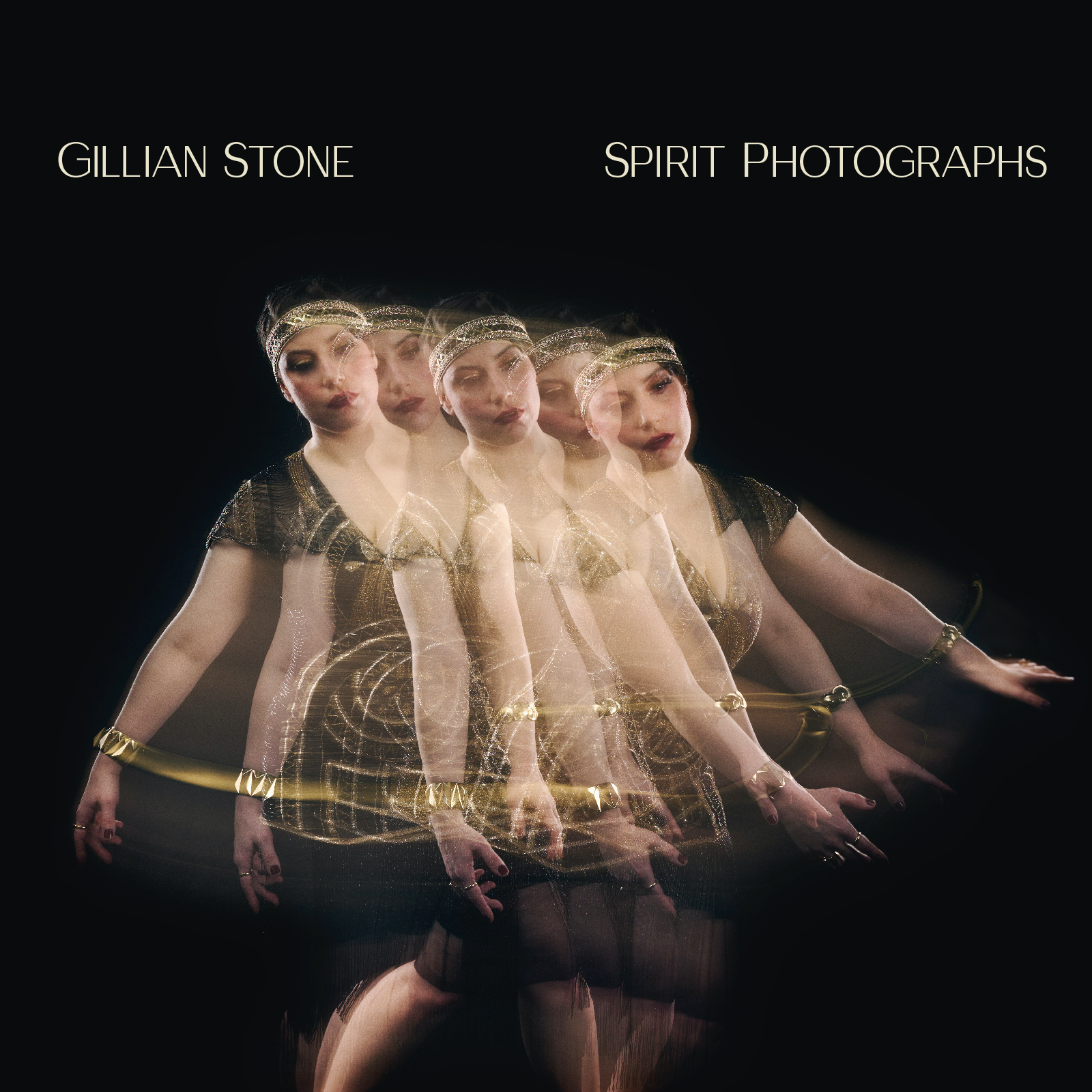
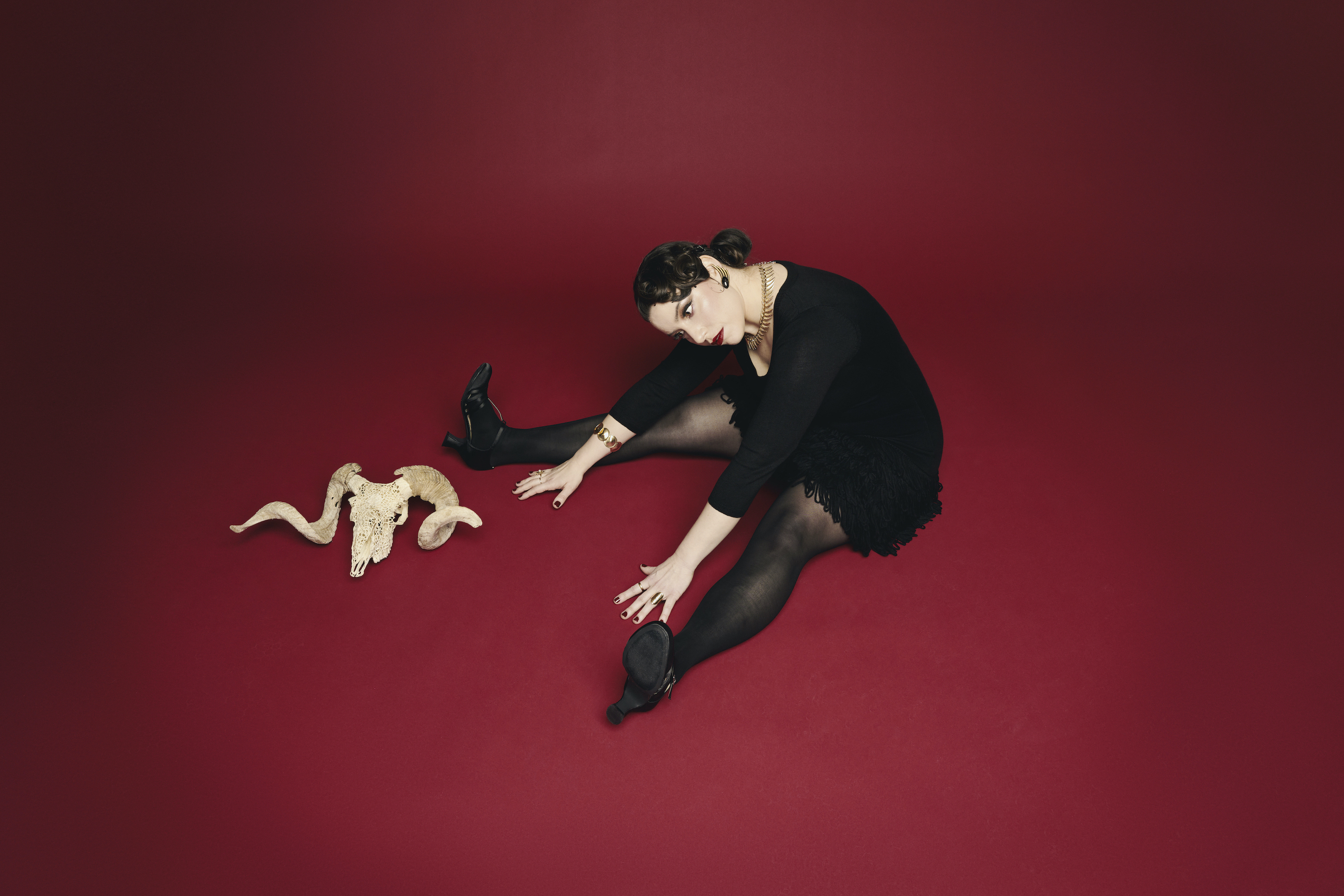
Dressed like a spiritualist flapper of the 1920s on the cover of her new EP, the Toronto siren and artist Gillian Stone summons various manifestations in the pursuit of processing both grief and the debilitating effects of mental health.
Made apparent by the title, the 19th century and early 20th century phenomena of “spirit photography” lends a somewhat esoteric, supernatural and mysterious angle to what is in fact the more academic psychiatric method of dealing with, and in time, coming to terms with loss. For each song on this deeply felt, atmospheric release represents one of the five stages of Elizabeth Kübler-Ross’ pioneering model: that’s Denial, Anger, Bargaining, Depression and finally, Acceptance. The Swiss-American doyen of psychiatry, heralded in Time magazine as one of the 20th century’s “100 Most Important Thinkers’, wrote one of the leading works (On Death And Dying) on accepting the inevitable in the late 1960s, after personally witnessing such traumas and dealing with childhood illness herself – an epiphany was struck after facing the aftermath of the Second World War’s concentration camps.
More or less the standard in counseling and navigating death, Kübler-Ross’ process is merged with unscientific empirical desperation and the often charlatan practice of Spiritualism. As a practice that grew out of the infancy of photography itself, and in part from the collective grief of the American Civil War, certain practitioners using various techniques added dead family members, loved ones in apparitional form to sitting portraits – usually lurking behind the very much alive subject, or manifesting from their supposed psyche. What may have been a comfort to some – proof of life-after-death and messages from beyond the ether – was essentially a trick. However, Stone draws that which cannot be quantified, explained together with the scientific mind in an act of describing her own anxieties, pains, but eventual release from the spectre of depression. And although this is a sometimes haunting, uneasy EP, Stone’s beautifully accented prose and emotions are delivered with a lighter, diaphanous touch that exudes as much promise as sorrow. Even when covering the heavy melancholy of Black Sabbath’s morbidly curious ‘Solitude’ Stone turns a self-pitied gloom of a tune into a Pentangle (the quintessential English acid-psych-folk ensemble not the Satanic symbol) like, medieval reaching and more sweetened proposition.
Stone obviously turns the original’s pained, male-prospective on its head: with everything that entails. Mind, it’s still a trudge through the miserable, and it’s also used to represent ‘stage four” on the scale: depression. Talking though of addressing gender imbalances, Stone enters, at times, the heavily over-subscribed post-rock arena on many of the EP’s tracks. It’s a genre I’m not too impressed with personally, and find quite boring and mundane – sacrilege I know, but God I hate Mogwai and their self-indulgent turgid malaise. Stone however, brings an endearing, inviting almost, quality to that genre; especially on the gently sweeping, almost sleepwalking dreamt spell ‘June’, which opens the EP. Representing the first stage, denial, this slow drummed bohemian and quivery-droned chill is one of Stone’s most sublime turns; a kind of haunted communion of Dana Gavinski, Michael Peter Olsen, the Heartless Bastards and Aldous Harding – two of which appear on Stone’s specially created playlist of EP influences.
Working with co-producer Michael Peter Olsen (Zoom, The Hidden Cameras) and drummer Spencer Cole (Weaver, Weather Staion) Stone’s singular talents are amplified by the accentuated, careful and purposeful contributions of her foils. Especially on the two tracks already mentioned, but also on the folksy and gothic travelled tumultuous ‘Amends’ (Provincials and These Trials break bread with All About Eve as a snuggled suffused saxophone-like drone weeps), and David Sylvain mood piece ‘Raven’s Song’. The latter I’m sure has some American Gothic, Poe-like inspiration about it; after all, it is supernatural in sound with touches of creeping hymnal atmospherics and even the ominous clopping of hooves.
That’s both “anger” and “bargaining” dealt with on this journey. The final stage, turning point you could say, is of course “acceptance”, and this is reflected on the siren song ‘The Throne’. Full of “drowning” metaphors it might be, but the waters of despair also cleanse and wash away the helpless state of a mental stumbling block in the process. Hints of 70s folk-rock and country can be, intentional or not, detected on what is another beautifully conveyed plaint. I must emphasis however that Stone’s timbre, cadence and tone is far from mournful, or even helpless. Instead the abstract of dealing with such problems, illness and grief is articulated with a certain beauty (that word yet again) and spirit of perseverance and understanding. In an age, as Stone quotes, of “collective trauma” it can feel so comforting to know that others get your pain, or, in this case can transform it into something so constructive and creatively therapeutic: no matter how bleak. But unlike the parlour tricks, charade of spirit photography, Stone casts her ghostly visitations aside, finding a release and source of light in the darkness of both inner and outer torment.
Hi, my name is Dominic Valvona and I’m the Founder of the music/culture blog monolithcocktail.com For the last ten years I’ve featured and supported music, musicians and labels we love across genres from around the world that we think you’ll want to know about. No content on the site is paid for or sponsored and we only feature artists we have genuine respect for /love. If you enjoy our reviews (and we often write long, thoughtful ones), found a new artist you admire or if we have featured you or artists you represent and would like to buy us a coffee at https://ko-fi.com/monolithcocktail to say cheers for spreading the word, then that would be much appreciated.
Brian ‘Bordello’ Shea’s Monthly Reviews Column

Singles
Cormac O Caoimh ‘Didn’t We’
How on earth could I not write about this song, for it is a song about one of my favourite songs, the Jimmy Webb song ‘Didn’t We’. My favourite version is not actually mentioned, which is by the very rarely mentioned easy listening singer from the 60s/70s Sheila Southern, her version being on the sings Jimmy Webb album released on the budget label Marble Arch records in 1970 – well worth keeping an eye out for in your local charity shop. This song is a cracking little unusual pop song. I do love pop songs about pop songs, and this is a finely written one by Cormac O Caoimh and Lindy Morrison. Yes I to was wondering whether it was the same Lindy Morrison from the wonderful Go Betweens. If so, then she is used to being on finely crafted, well written pop songs, which this indeed is.
Schizo Fun Addict ‘Over The Hills And Far Away’
Schizo Fun Addict have just released a teaser video for their new album that will be coming to us in early 2023, and once again, with this a cover of the Led Zepplin classic ‘Over The Hills And Far Away’, have completely reinvigorated and made it sound like one of their own, which I think is the idea of a cover, otherwise I think doing a cover is a pointless exercise and you may as well listen to the original.
But no such worries in that department from Schizo who have taken one of my favourite Zeps tracks and if anything improved it or made it so different it is like two completely different songs. Instead of the Zep theatrics we have a woozy stoned psych trip of shoegaze folk splendor, like the ghost of Sandy Denny haunting the serenity of early Mercury Rev. At this point all betting is off as what will be my favourite album of next year, as Schizo Fun Addict already have that in the bag.
Salem Trials ‘Zipporah’
(Metal Postcard Records)
Yes, another single from the wonderful Salem Trials. ‘Zipporah’ is a fuzzy pop delight with a guitar riff that reminds one of the 80s guitar favourites The Primitives; a riff that could have walked, or in the case slinked and strutted, of their debut LP Lovely. But instead of the twee vocalising of indie 80s sex goddess Tracy Tracy we have the mad wonderful unique vocalising of Russ ranting, snarling, gurgling not so sweet nothings to anyone within earshot: the nutter on the bus singing along to his favourite hits from yesteryear. Russ and Andy should have a statue erected in their honour for their attempt to keep modern indie guitar music interesting and vital, which the Salem Trials undoubtedly are.
bigflower ‘Magic Beans’
bigflower are back with another installment of guitar surge, and indeed how the guitar surges on this beauty of a track; another dense shadow of regret and sadness and inner turmoil. There is nobody sounding like bigflower today but not everybody has bigflower’s talent and pedigree.
Mark Hegan ‘Rearrange Me’
This is a pleasant well-produced radio friendly pop rock ballad. You know, the Snow Patrol, Keane type of track. And I’ll admit something, it’s the kind of thing I normally do not listen to out of choice, but I thought I would give this a mention as Mark Hegan does it better than most of the stuff I’m sent. And anyone with a penchant for radio friendly pop rock songs should give it a listen as I think they might well enjoy it.
Albums/EPs
Thank You Lord For Satan
(Buh Records)

Thank You Lord For Satan are a fine band and this, their debut, album is indeed a fine listen. An album that takes on board psychedelia with a mixture of synth pop and indeed straight ahead pop. The sultry sexy and dark opener ‘A million Songs Ago’ sets the tone with intertwining Velvet like guitars and soft sensual vocals, and at times vocal wise reminds me of a cross between The All Saints and Leonard Cohen: a strange but beautiful combination.
This debut is indeed like fresh of breath air blowing through the corridors of the halls of psych rock. Showing that with a bit of intelligence and originality and song writing talent greatness can still be achieved in the ever-growing paint by numbers genre that psych rock has become.
THE Zew ‘IFI1IFO’
(Numavi Records)

1FI1FO is a beautiful lo-fi album of near experimental folk songs, with vocals and guitar going through occasional effects to a quite beautiful degree, slightly distorting and giving the album a lovely warm and woozy effect.
The songs and vocals are rather moving, reminding one of camping in the woods with your memories for company. A quite a simple and nostalgic affair, the whole albums flows together and moves with a subtle lo-fi grace that one does not come across often enough, and come the end of the year this could well be one of my favorites. Very special indeedy.
Neon Kittens ‘S-T’
(Metal Postcard)

Experimental no wave pop is not noise pollution, in fact it is darn sexy. Darn sexy is a much underused word in reviewing circles as it sounds like something a passed his prime urban cowboy may say to his best drinking buddy in a down-at-heel bar, and this 4-track slice of experimental epery (yes a made up word). Yes I am flying by the seat of my pants a bit like this quite wonderful EP is. At last, the sound of music not stuck inside the rules; not being made to tick the right boxes; not being made like it was recorded by a middle-class twat wanting to be featured on a episode of Catfish to be played whist some wistful teenager stares at their phone in hope that Nigel really does look like the picture sent and not Nigel Farage. This is the real sound of the musical underground the sound of people making music they want to make, music they like, not making music they think other people may like. This is the sound of real life.
Russ Spence ‘Attempted Soundscapes EP’
(Metal Postcard Records)

This is the debut EP by Russ Spence the vocalist from The Salem Trials, whom I seem to write about on a monthly basis due to their prolific output. Attempted Soundscapes is an EP of experimental tracks that have more in common with Throbbing Gristle and the later works by Scott Walker, so not an EP you will be hearing on BBC 6Music anytime soon; although I could imagine the Freakzone having some fun with it.
The opening track ‘Take The Long Way Home’ is an atmospheric little beauty all spooky Halloween synths, muffled Prodigy drumbeats and the vocalizing of a ghostly Mark E Smith whispering sweet nothings to an empty pint glass. The second track, ‘Simple Sins’, features fellow Salem Trials member Andy on guitar, and supplies the sonic cathedral of feedback that runs throughout this moody atmospheric piece. It’s probably my fave of the four tracks on this excellent debut.
Cream Gorilla ‘S-T’
(NoMen)

Cream Gorilla were an experimental art-noise band from Tokyo who were together from 1997 to 2002 and got back together in 2022 for one final recording. Their complete output is now available on this CD, 35 tracks in all. As you would expect from an experimental art-noise band the tracks are indeed experimental and indeed very noisy but also mostly short: 35 tracks in 40 minutes. So gives you no chance to grow tired or bored of their strange chaotic noise outpourings. Well-done NoMen Records for gathering this delight of indeed artistic noise terror.
Bigfatbig ‘Rockin’ And Rollin’ and Whatnot’

The joyful sound of indie guitar pop; the well played, well written sound of two young ladies writing about the problems and real-life experiences young ladies have to deal with in this day and age, which I being a man in his mid 50s only get second hand from my daughter and my old Shangri-La’s albums. But I really enjoyed these four tracks. It is indeed a joyful romp that had me thinking back to the early days of Kenicke. I think Bigfatbig will do very well, and I wish them luck on their journey through the glittery cesspit that is the music industry.
Dot Dash ‘Madman In The Rain’
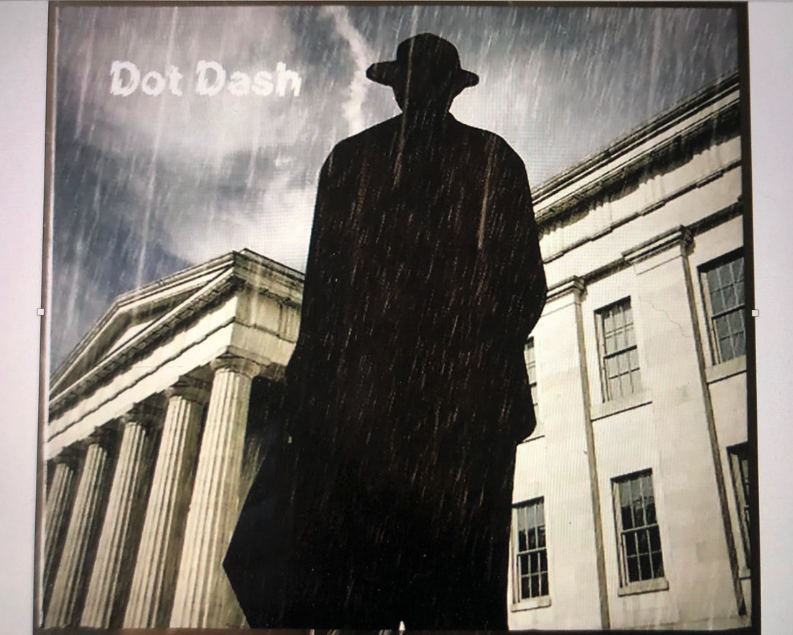
The new Dot Dash album is upon us. Another half an hour or so of pure catchy pop with guitars that jangle and chime and strummed vigorously keyboards that alternate between sounding like they have just been holidaying from the Seeds debut album or from a hit from the Motors. Pure pop for not just now people but even for now and then people.
A Champagne filled picnic of sunny delight of an album is what this is. I hear so many albums trying to achieve what this achieves, which is a well-written album of well-written pop songs. It even has good lyrics and hummable melodies, which is indeed a rarity believe me. C86, power pop and 60s garage pop combined beautifully to make an album of perfect pop.
Vlimmer ‘Menschenleere’
(Blackjack Illuminist Records)
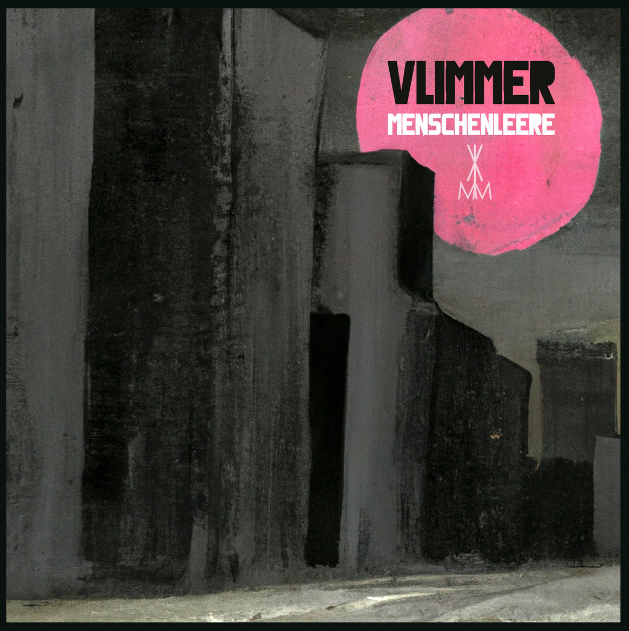
I will be honest; I very rarely listen to goth music anymore. Back in my youth in the 80s I did enjoy the Sisters Of Mercy, Rose Of Avalanche, the Skeletal Family and such, like even having some of their albums. So I do not claim to be an expert on the genre, but I must admit to enjoying this album; an album of darkness with a slight pop edge at times reminding me of the Sisters Of Mercy being covered by Aha – can you imagine how much better the Sisters Of Mercy would have been with Morten Hacket singing lead.
This album will be up so many old goths streets they will be breaking out their velvet trousers and hairspray in a second of hearing the first doom laden chord. If it is possible to have an enjoyable romp through darkwave or whatever the pesky kids are calling it this week, then Vlimmer isindeed your man.
Monolith Cocktail Social #71: Tame One, Aphex Twin, Orange Juice, CAN, Ryo Fukui, Bnny…
November 9, 2022
THE CROSS-GENRE/CROSS-GENERATIONAL PLAYLIST
DOMINIC VALVONA SELECTS
The final Social of 2022 is another bonanza of both the well-worn and more obscure tunes from across the expanses of eclectic music with a few recent choice tracks thrown in. My imaginary radio show, a taste of my collection and my past audio misadventures in DJing, the Social is meant to be a diverse soundtrack free of barriers and cliquey snobbery.
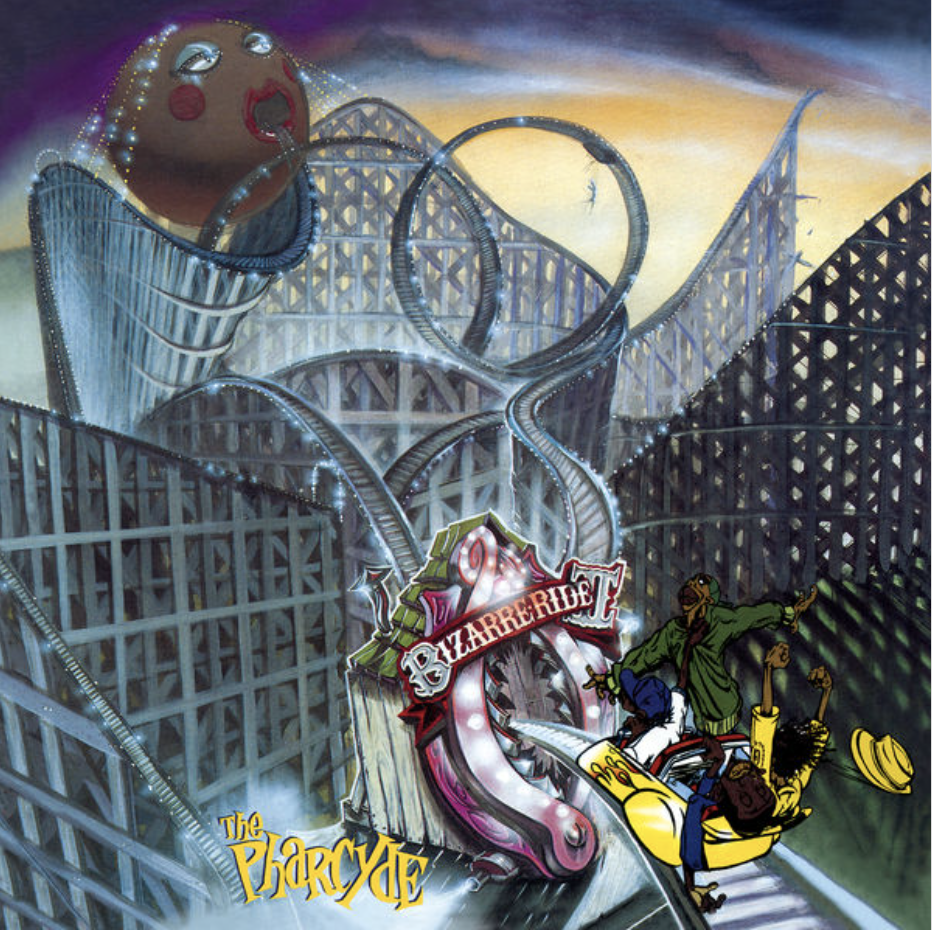
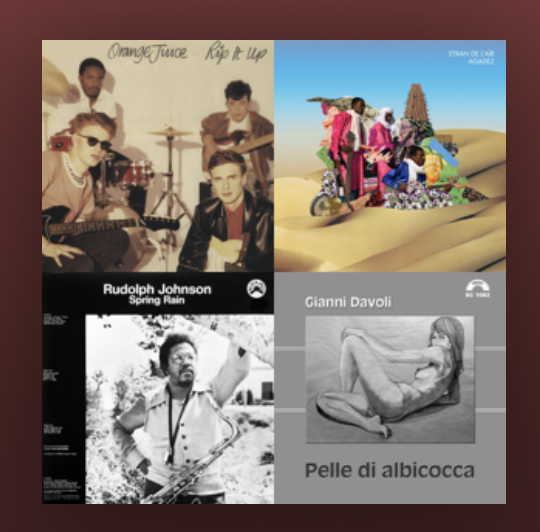
As always it’s both a celebration and commiseration as I mark the passing of both the hip-hop legend Tame One and the mad, bad and dangerous to have known rock ‘n’ roll progenitor Jerry Lee Lewis, whilst also highlighting the 50th anniversaries of Lou Reed’s Transformer, Hawkwind’s Doremi Fasol Latido, CAN’s Ege Bamyasi and Nektar’s A Tab In The Ocean albums; the 40th anniversary of Orange Juice’s Rip It Up and the 30th anniversaries of The Pharcyde’s ‘Bizarre Ride II The Pharcyde’ and the Aphex Twin’s Selected Ambient Works 85-92 LPs – both of which I remember buying on their release.
Added to that list are some incredible jazz suites from Rudolph Johnson, The John Betsch Society and Ryo Fuki; a pained score from the Ukrainian frontline by Angel Rada; another glimpse into the Beach Boys upcoming Sail On Sailor 1973 box set with the previously unreleased (officially speaking) Holland outtake ‘Carry Me Home’, penned and sung by Dennis Wilson, and amongst the fandom, hailed is one of the group’s most sublime and best songs to get the elbow; and Sahal sounds from Etran de L’Air, with a track from their new album, Agadez. Vince Tempera, Plone, Shawn Lee’s Ping Pong Orchestra, First Frontal Assault, Fall of Saigon, New Burns and more can be added to that list too.
TRACK LIST FOR THE MONOLITH COCKTAIL SOCIAL VOLUME #71
Orange Juice ‘Flesh Of My Flesh’
Etran de L’Air ‘Imouwizla’
Rudolph Johnson ‘Devon Jane’
Vince Tempera ‘Pelle di Albicocca’
The John Betsch Society ‘Ra’ Jerry Lee Lewis ‘Money – Live At The Star Club, Hamburg 1964’
Mickey Gloss ‘Crocodile Smile’
Plone ‘Minature Magic’
Aphex Twin ‘Pulsewidth’
Elzhi ‘Amnesia’
First Frontal Assault ‘Bloodfire Assault’
Tame One ‘Da Ol’ Jersey Bastard’
The Pharcyde ‘Pack The Pipe’
Shawn Lee’s Ping Pong Orchestra ‘Rocket Ship’
CAN ‘One More Night’
Fall Of Saigon ‘Visions’
Lou Reed ‘Andy’s Chest’
Stockholm Monsters ‘Winter’
Christine Perfect ‘And That’s Saying A Lot’
Ryo Fukui ‘Speak Low’
New Burns ‘Marlene Left California’
The Beach Boys ‘Carry Me Home’
The Idets ‘Look My Way’
Bnny ‘I’m Just Fine’
Som Imaginario ‘Armina – Vineta 1’
Plastic penny ‘Your Ways To Tell Me Go’
Nekter ‘King of Twilight’
Little Free Rock ‘Wait A While’
Angel Rada ‘Ghost In Odessa’
Hawkwind ‘Urban Guerilla’
Diane Cluck ‘4 Score Lightnings’
Museao Rosenbach ‘Zarathustra – Il Tempio Delle Cles’
Hamilton Leithauser & Paul Maroon ‘How & Why’
The Perusal #37: Edrix Puzzle, Surya Botofasina, Dead Horses, Etceteral, The Dark Jazz Project…
November 4, 2022
Dominic Valvona’s Albums Revue For November
Unless stated otherwise all releases are now available to buy
Edrix Puzzle ‘Coming Of The Moon Dogs’
(On The Corner Records)
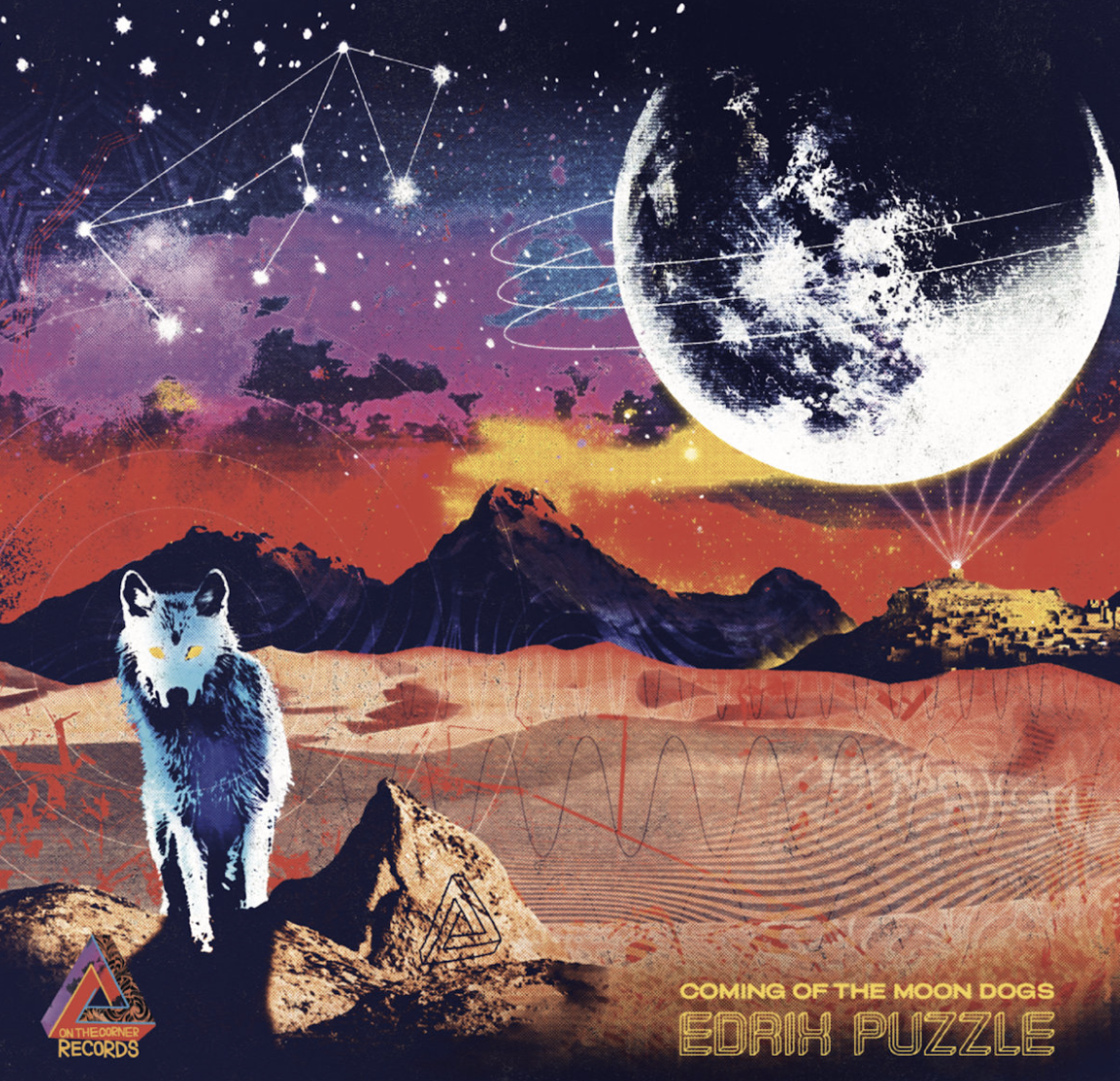
Looping string theory jazz particles to a rocket ship bound for a deep space cosmology of titan referenced stellar sets, the Nathan “Tugg” Curan led Edrix Puzzle ensemble find a musical freedom amongst the stars of an alien concept world on their newest trip, the Coming Of The Moon Dogs.
Reimaging Herbie Hancock’s Mwandishi transferred to the made-up body-locking Afro and futurist jazz planet of Battagon, Curan and his astro crew of Martin Slattery (on bass guitar, clarinet and saxophone duties), Tom Mason (double-bass), Oli Savill (percussion) and Darren Berry (violin) zip and zap across a lunar environment overseen by a galactic vision of mythology’s Gia and Uranus and some of their kin: Rhea, Dione, Hyperion and Phobe.
Amongst the analog calculus, signals and bleeps an equally elastic and moon-bound tripping transformation of the Art Ensemble of Chicago vibe takes shape on an imaginative off world. It’s a world in which Afrikan Sciences break bread with King Crimson; where Soweto Kinch reassembles the late Pharaoh’s astral projections. Within that science fiction the troupe balance totally untethered chaos with breakbeats and a certain swing.
David Ornate Cherry’s organic water bowl percussion joins a celestial voodoo march on the old country resonated Art Ensemble fiddled ‘Deep In Dione’, whilst Matthew “Doc” Dunn and Andy Haas slink and waft the vapoured murk of the living, breathing ‘V11’ coded suite.
Tracks like the time changing spin around the Van Allen Belt ‘Unhuman Hyperion’ verge on hip-hop. But it’s the imbued spirit of Herb, his peers and acolytes in the space, progressive jazz field that permeate this alchemist exploration of far out atmospheres. In a constant motion throughout with the energy released in all directions, and on all planes, Coming Of The moon Dogs is an incredible survey of quickened and more floated, waning galactic jazz evocations. A solid piece of art, lit by a remote chemistry and performed with assured but always probing musicianship. Rather an escape to the planet of the breaks than an escape from it, sci-fi jazz meets the experimental, spiritual and progressive in a visceral explosion of ideas, vibes and grooves.
Surya Botofasina ‘Everyone’s Children’
(Spiritmuse Records)
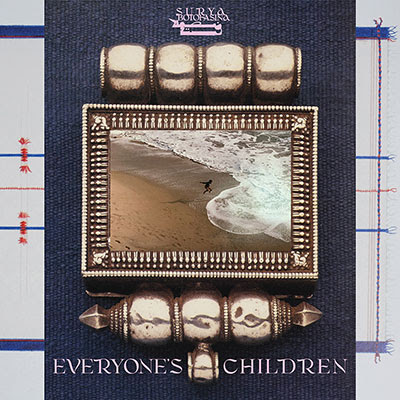
An acolyte of Alice Coltrane’s devotional embrace of Eastern spiritualism, imbued by that sagacious innovating jazz seer’s afflatus music and teachings, the keyboardist, composer and actor of some repute (from parts in Vinyl and Broadwalk Empire) Surya Botofasina bathes in his mentor’s light on this debut opus.
With the meditative, motored ascending arcs of Om Rama and such threaded throughout, Botofasina and friends set out on an astral and naturally felt work of spiritual jazz, trance, new age and ambient transcendence.
Our guide on this album of worship, remembrance and healing grew up at the Sai Anantam Ashram in the Southern Californian hills, where Coltrane led the daily bhajans, the traditional Hindu songs of praise and paean. His mother, Radha, was a disciple before him of this idyllic retreat’s guardian, a notable harpist but also pianist and vocalist herself and a one-time member of the American string band, The Spirits Of Rhythm. With such an enviable musical lineage and influence it’s no wonder that Botofasina would go on to become the Ashram’s music director and to internationally spread the word of this particular devotional form.
Encompassing all that reverence on his first fully realized album, Botofasina, aided by a cross-generational cast of guests, seeks to calmly honour but also demonstrate that faith. As a album to these enraged, divisive times, Everyone’s Children – with everything that album title’s metaphors, allusions, analogy entail – perseveres in the face of turbulence; softening and weakening the choppy waters in a blessed light of disarming but deeply felt warm suffused elevation.
With a both sentimental and yearning new age language of utterances from the Los Angles jazz singer stalwart Dwight Trible and fellow Californian indie folk vocalist Mia Doi Todd welling up and adding a certain wailed gravity, these divine acts of veneration ascend at a peaceable pace. The opening beachside temple suite running to over twenty-seven minutes as it shimmers and glistens with dappled electric piano, a serene air of the holy and washes of ambient synth.
Although often soothing with lightened touches of astral plane jazz and soul music, Botofasina’s piano occasionally stirs up outpourings of louder and harder pressed expressive emotions and serenades – as on the semi-classical and 60s jazz riptide evoked ‘I Love Dew, Sophie’.
Accentuating these spells of keyboard cascades, lit-up bulb like notes and rays the Canadian jazz drummer Efa Etoroma Jnr. adds splashes and tumbles, and the New York saxophonist Pablo Calogero wafts in with a suitable longing embrace. And overseeing it all is the Californian polymath (from noted producer to radio host, poet, percussionist and performer) Carlos Niño, who resembles a counter-culture 70s Carl Wilson chic. Together on this swami dedicated odyssey they border the heavenly as successful inheritors of Alice Coltrane’s devotional magic. As a debut album it’s a grand statement of spiritualism, nature and peacefully ascendant jazz; an escape from the material world.
Etceteral ‘Rhizome’
(tak:til/Glitterbeat Records) 11th November 2022
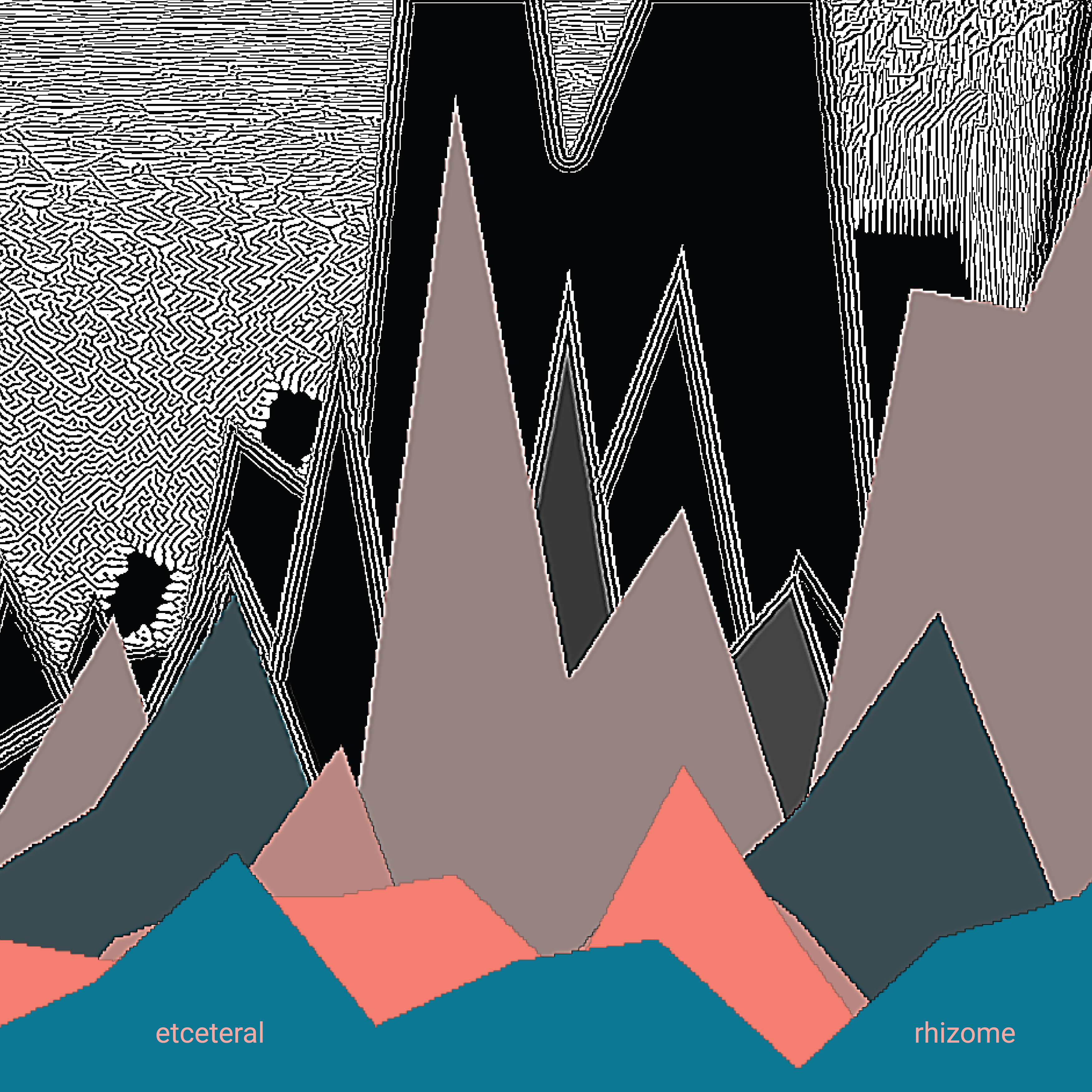
In what is a different, unique fashion, the Slovenian trio’s musical pairing of Boštjan Simon and Marek Fakuč (in part) react to their bandmate Lina Rica’s visual stimulus to create a cosmic electronic-jazz album of interlaced networks, connectivity and environmental crisis alarm.
Joining their fellow Slovenian compatriots, the dream-realism Širom, at Glitterbeat’s explorative, fourth world imbued instrumental sister imprint tak:til, the kosmische and organically freeform Etceteral base their new, mostly improvised album on the concept of its title, Rhizome: A continually growing horizontal underground stem, which puts out lateral shoots and adventitious roots at intervals; a non-linear network that connects any point to any other point.
With that theme, process in mind the trio reflect back a constant motion of soundscaping, rhythm and probing; balancing, at times, contemporary jazz with computer calculus, data, signals and metallic polygon shaped electronica. Yet, whilst Simon’s saxophone often drifts off into space, and his electronic effects, undulations more than hint at gravity-free zones in the cosmos, tracks such as the rolling, bounced and techno purred ‘Rome Burns’ allude to climate change and the extreme wildfires that engulfed much of Europe this year. It’s a great piece of flexible jazz that fuses Donny McCaslin and Go Go Penguin with Basic Channel to reflect an environmental angst of doom – fiddling with your suv sat nav whilst Rome burns to a cinder.
The rest of this interconnected, visual reactive album of performances and electronic augmented pulses and fusions goes through varying degrees of warping and reverberating transference. A jazz foundation is guided through a mirrored and computerised apparatus, which evokes shades of Squarepusher, Anteloper, Alfa Mist, Pyrolator and (rather handle as they share this column this month) Edrix Puzzle. Familiar echoes of rasped, cyclonic and honked sax, drum breaks and splashes receive an outer space production. Fakuč’s drums actually go into slow motion on the chrome soundscape ‘Dunno’. Etceteral turn it on and out on their improvised odyssey and contortion of activism. And yet the rhythms often driven, progressive and on occasion buoyant or bobbing, make this a most unique sort of an electronic dance album, despite its avant-garde, free and cosmic jazz foundations.
Karu ‘An Imaginary Journey’
(Beat Machine Music) 18th November 2022
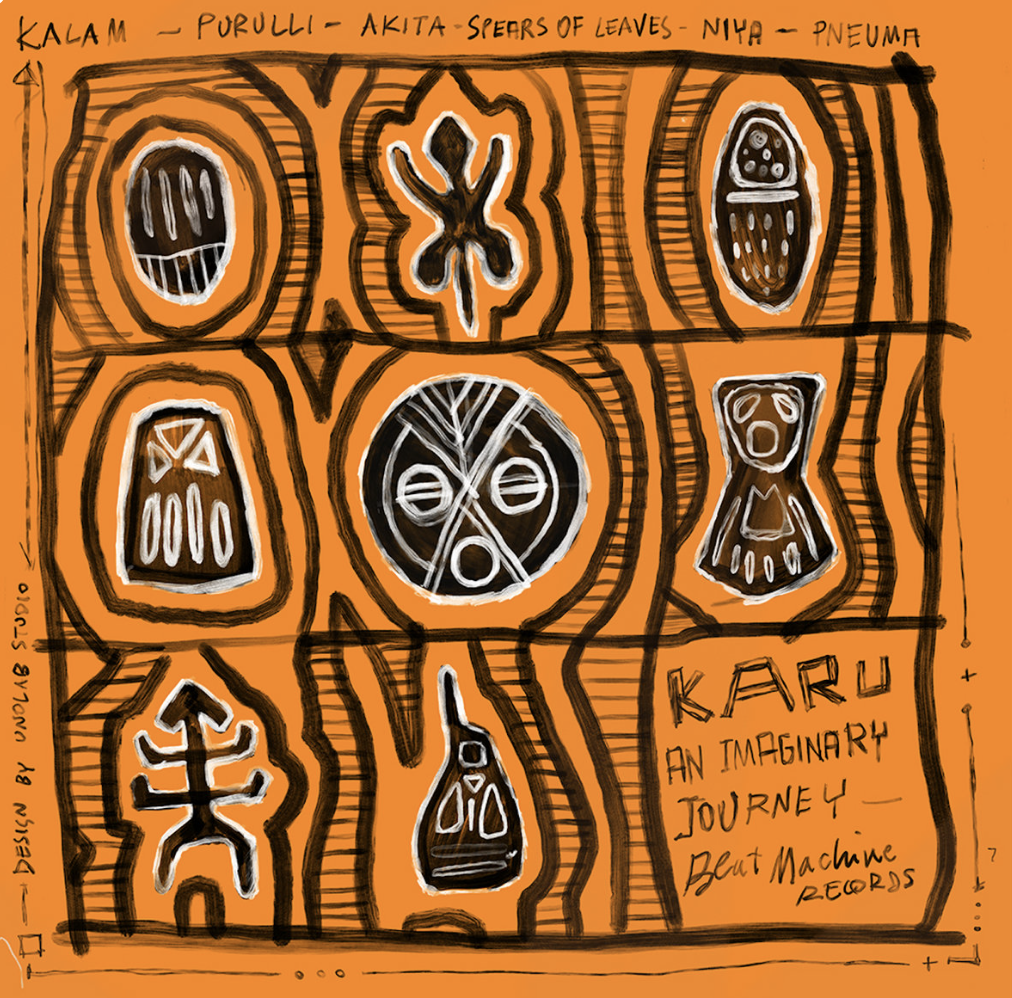
Lost in the Karu alias of mystical, atavistic mining and reimagined absorptions and traverses, the Italian double-bassist and producer Alberto Brutti’s collaborative project transforms, transmogrifies a fertile polygenesis palette of rituals and dances and ethnography to produce a contemporary affected album of Afro-Futurism, jazz and primitivism.
Wrapped up into a musical journey across both familiar and more ambiguous, vague cultural landscapes, Brutti creates suggestive atmospheres and ceremonies; many of which are conjured from title references to old worlds, religious and mythological etymology. In that wide field of influences, inspirations there’s the Abrabic “kalam”, which can roughly be used to mean “speech”, “word” or “utterances” pertaining to the Islamic faith, but was also the catchall term to define that religion’s tenants of faith in the face of the philosophical doubters; the antiquity Hattian empire festival “purulli”, held at the Bronze Age settlement of Nerik, dedicated to the earth goddess Hannahanna (which may well be the source of the Biblical “hosanna”); the West Slavic (otherwise known as Lechites) tribal name for the chthonian god “Nyia”; and the ancient Greek word for “breath”, or in the religious context, “spirit” or “soul”, “pneuma”.
The first of that quartet lends itself to the album’s opening peregrination of African drums, Blacks’ Myth and cut-up Anthony Braxton, Roscoe Mitchell jazz renderings, reversals, abrasive industrial resonated sounds, Širom type otherworldly primitivism and stick choppy rhythms. Following in its wake there’s signs of Andy Haas, the esoteric, elephant trunk raising horns and the no wave sound of Mars and Milk TV. The latter title of that same quartet of wordy mentions signals a move further East, with again, vague notions of the Indian, Baul but also a soundtrack of downtempo breaks (ala Alfa Mist and J Dilla) and the hallucinogenic trance of Fursaxa (if remixed by Clap! Clap!).
‘Spear Of Leaves’ however, rearranges the bedeviled Faustus pact blues and dialogue of Robert Johnson on a palanquin caravan lumber across vapours of snorkeled saxophone. The final dream sequence on this imaginary travelogue drifts into a hollowed-out cane spun and fluted rainforest wash; ending on a more laidback piece of South American flavoured geography and waning jazz.
Between the haunted illusionary and mysterious, a removed time-travelling worldly plane emerges. Herbs, Roberto Musci, Amorphous Androgynous and Drexciya converge somewhere in the middle of the underworld and elevated.
The Dark Jazz Project ‘S-T’
(Irregular Frequencies) 14th November 2022
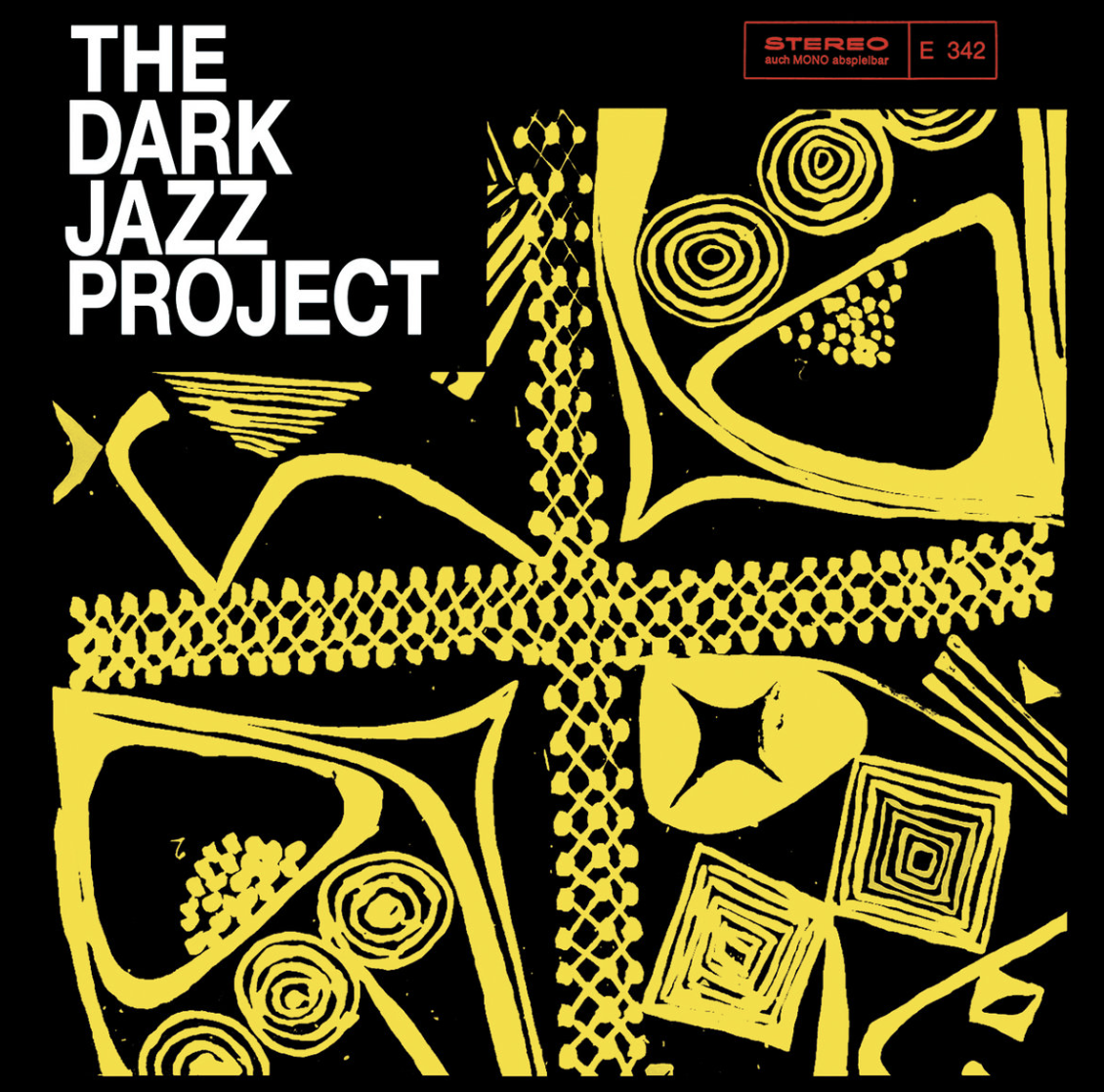
Making good on this summer’s three-track introductory EP, Andrew Spackman now unleashes a whole album of his latest regeneration creation, The Dark Jazz Project, on an unsuspecting audience.
The singular maverick electronic and art-house boffin recently hung-up his SAD MAN alias (after a splurge of numerous releases over the last five years) to crunch the codes of jazzcore.
‘100% political, 100% jazz, 100% dark’ we’re told, this latest platform for Andrew’s often sporadic leaps in electronic music and crushing techno filament cut-ups is about as removed from that jazz tag as you can get. The fact he’s also borrowed Sun Ra’s ‘Space Is The Place’ mantra too only feeds into the confusion. Any semblance to jazz is lost under a heavy tubular and granular transmogrification of the ominous, mysterious and, well, dark.
For this is the alien, sci-fi broken and fed through the Aphex Twin, Basic Channel, Radium, Rob Hood, Jeff Mills and Niereich & Shadym machine. Although the album’s opening hardline, dialed-in and pummeled beat gabbling Sun Ra lend sounds like Holly Herndon being thrown into the Hadron Collider, and Madlib seems to get trampled over, detuned and dissimulated on the bladed, driven and compressed frequency lunar ‘No Input’.
Andrews full gamut of skills, sonic palette comes to bear, as touches of primal, and even paradise moulding scores are set against more dissonant and chrome coated beats. Pins rain down on pulsating graphite spiky landscapes and imaginative darkly lit techno blocks of scrunched giant, weighted noise. A mirage or a topographic ocean; Olympus Mons or scorched earth, it all sounds a million miles away from even the most edgy and freeform ideals of jazz: not a saxophone in sight.
The Dark Jazz Project is yet another challenging move from one of the UK’s most inventive, inspired and, crucially, interesting leftfield electronic and techno composers of the last decade.
Yemrot ‘The Sunken Garden’
(PRAH Recordings)
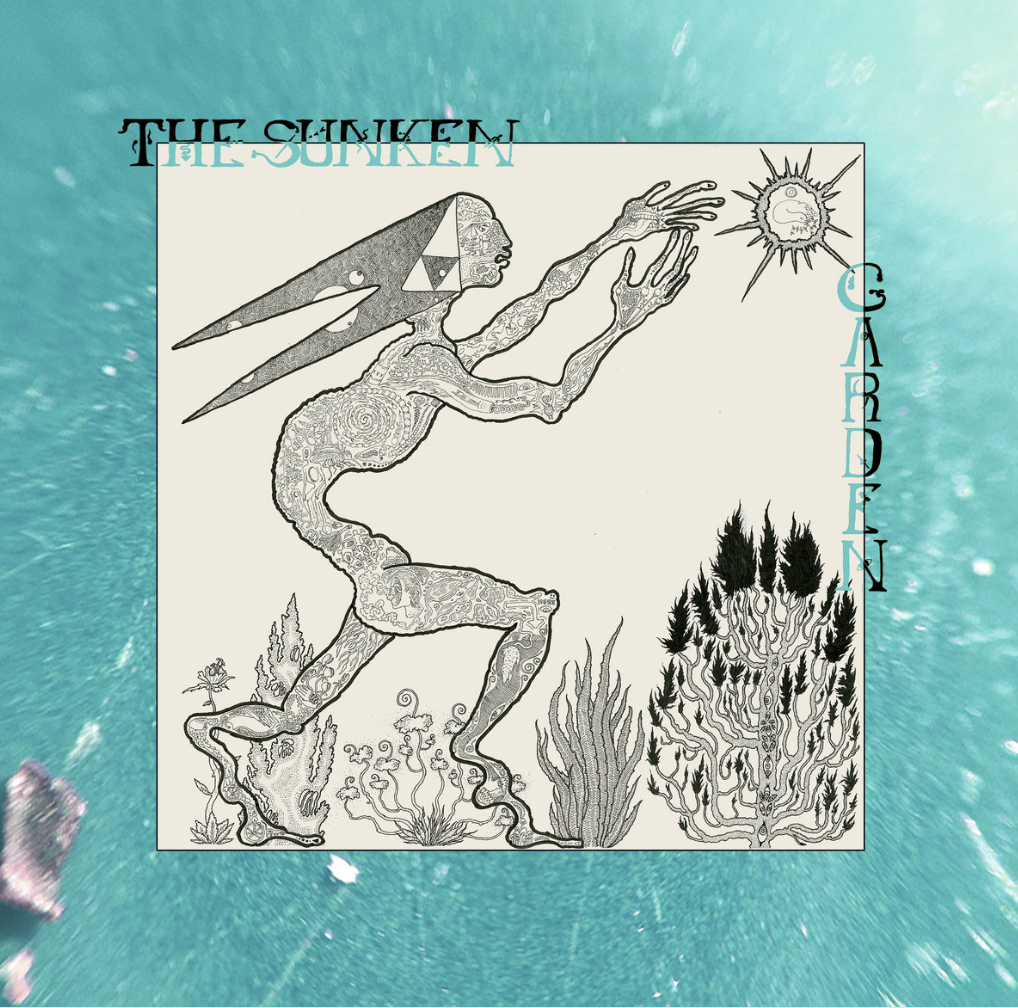
Who wouldn’t when faced with the despair of the modern world and in processing the deep loss of a parent want to take a giant leap into escapism and the fantastical? Looking into one such yearning chasm the Margate-based musician Jimi Tormey, acting under the alias of both Yemrot and the character Dill Dandin, finds solace in a neverworld of the dreamy and plaintive: a creeping sadness to be exact.
Unfortunately, in part, triggered by the death of his father (the gorgeous, welling-up and heavenly ached ‘Big Tree’ being the most obvious eulogy to that passing) The Sunken Garden is a both heartfelt and also psychedelic process of grief and some drama.
That process is, at times, a family affair with his mother Lisa providing the majority of emotive violin/viola, and his brother Eric offering harmonies alongside their sister Tuli, but also mixing and mastering the whole mini album. The results are achingly beautiful, yet there’s a constant deep feeling and vapour of unease, despondency and shadowy despair that swells up or looms over the magical illusions.
Canterbury scene troubadours and Syd Barrett influences wind and delicately emerge from the heavier atmospheres of Alex Harvey, Daevid Allen, Soundgarden and Radiohead. The album’s centerpiece, ‘The Ballad Of Dill Dandin’, is an eleven-minute stretching instrumental of changing, moving parts and passages. From the Floydian to chimes of Mark Hollis an almost theatrical drama and shimmer of something magical and creates a starry aura. Dill floats and tumbles across a trio of “Learning To” affixed songs that balance the soft with the harsh, the cosmic with the mournful.
Classical forms, the psychedelic, progressive and alternative all merge to form an interesting twisting journey of loss and acceptance; a working through of beautifully heart wrenching and articulated poetic expression. In the end I don’t think that sinkhole world is an escape route, but just a more imaginative coping strategy at dealing and conveying such miserable times. The masterful, gentle ‘Big Tree’ alone will move even the most numbed to tears, and deserves a place in any list of the best songs in 2022.
The Magic City Trio ‘Amerikana Arkana’
(Kailva) Late November 2022
Finally out the other side of the pandemic The Magic City Trio emerges with the second half of their originally conceived double album package of Americana, Country and Western scored songs from 2018. If part one was consumed with death, bad luck and mental health, part two is concentrated on the themes of serenaded, romantic affairs, with disarming little tales, alms, hymns and barn dances dedicated to both unrequited and strained relationships and knockabout love.
As with the previous album, a familiar soundtrack and language, lyricism is used to convey the contemporary: something of the moment. The bell tolls and tremolo rattle snake sets of Ennio Morricone and untold Western themes rub up against Nashville, the Carter Family, Lee Hazelwood, Mariachi brass, Willie Nelson and the psalms songs of America’s Methodist Church, yet this is an unmistakably modern record. Timeless feelings, subjects nonetheless, but with a slight updated twist.
An extended guest list joins the band’s principles, the June Brides’ Frank Sweeney and Annie And The Aeroplanes’ Annie Holder. Most notably the Nashville virtuoso John Heinrich, who lends that irresistible steel pedal quiver and upward bend to the Sweetheart Of The Rodeo if covered by Teenage Fanclub, with Orbison and The Carters in tow, ‘Our Life In Chains’, and the Red Rhodes-esque accompanied Gram and Bonnie Raitt in heartache duet ‘She Left Without A Warning’. “Record breaking” (for what I’m not sure) banjo player Johnny Button meanwhile adds his Appalachian hoedown spring to ‘The Final Day On Earth’ tale of woe and alarm. Also on that same lamentable group effort, Primal Scream’s Andrew Innes offers up bird sounds, flutes and mellotron. He’s back, playing both electric and acoustic guitars, on the Muscle Shoals Stones like, touching ‘You’re My Best Friend’ – which actually could be a Primal Scream attempt to once more ape the Stones’ spiritual washed-up tides.
Frank, when not carrying a tone and timbre that evokes both Richard Hawley and Mick Harvey, and Annie, vocally a mix of Kirsty MacColl and a rustic Marianne Faithfull, share an array of twanged, bowed and stirring and washboard scratched instruments with Jeff Mead, Matt Lloyd, Larry Saltzman, Dave Howell and others: a full panoply of the country sound.
Amongst the self-penned declarations, hungdog lovelorn regrets and outlaws-on-the-run sense of rebellious romance, the band cover the theme from the archetypal thrown-together-in-desperate-circumstances Western ‘3:10 To Yuma’ (great movie, both the original and remake) and the Wesleyan Methodist church hymn, ‘And Am I Born To Die’. The first of which, originally penned by Frankie Laine, keeps a sense of the matinee drama and atmosphere but now sounds a bit like later Crime And The City Solution bounded together with Scott Walker (At The Movies) on a heavenly aria touched dusty trail. The latter, is every bit as reverent and elegiac, conjuring up the “trembling spirit” and quivering to the sounds of timpani and the bells of judgment. It did remind me however of Rick Danko; more lovely than stoic serious damnation.
Amerikana Arkina once more sets the mood, a complimentary partner to their more moody, plaintive 2018 songbook. Souls are bared; heartache delivered with a cinematic panache, and the Americana cannon once more successfully invoked.
Leverton Fox ‘In The Flicker’
(Not Applicable)
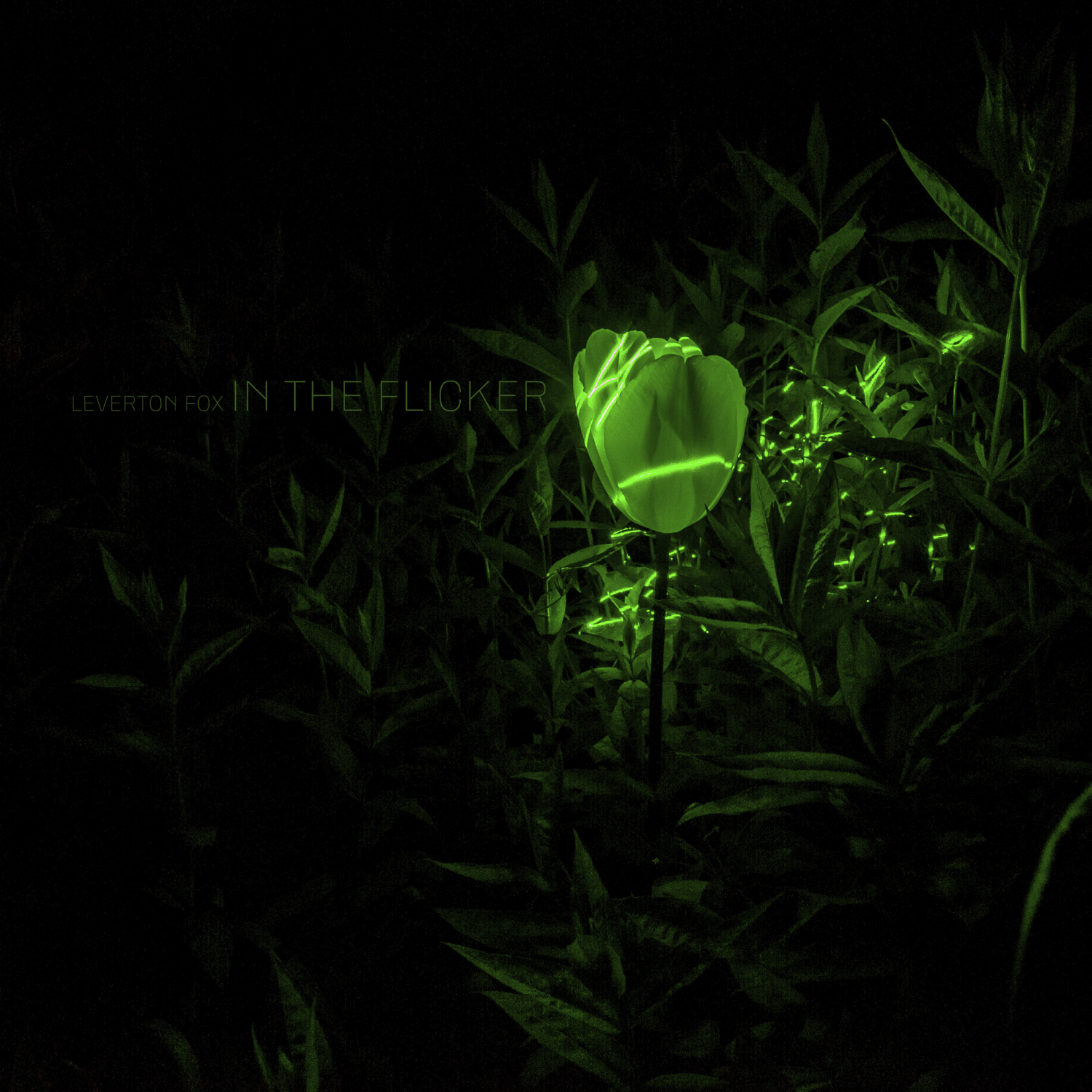
The gentle breeze rustling through the leaves and the sound of bracken and broken sticks underfoot in a less circumspect Sussex woodland has seldom sounded more alien, inter-dimensional and mysterious. Yet the Leverton Fox trio of Alex Bonney, Tim Giles and Isambard Khroustaliov has transmogrified the environment/atmosphere of their site-specific improvisation to beam out towards altogether more imaginative realms.
Intensified, if that’s the word, the trio of noted musicians/composers/artists in their own right attempt to sonically sculpt a 3D world with the added use of Dolby Atmos, a ‘surround’ format. Immersive being the key word, they draw the listener into lost worlds, primal soups and a more eerie lunar looming, time-travelling spheres.
Širom set-up in the undergrowth with Miles Davis at his most transient and wafting, Autechre, Tangerine Dream and Jon Hassell as ghostly traces of hidden sources merge with various aerial squiggles, zip-lines, machine purrs, occult sounds beamed from the Fortean Times transmitter, whipped up winds, clapped beats, crackles, raps, propeller and exotic sounding wildlife. A fully improvised soundscape that crosses mystical terra firma and unearthly corridors, In The Flicker takes in the most far-out, minimalist touches of jazz, electronica, dub, the dark arts, industrial, kosmische and Foley to create a certain mystique. The Leverton Fox(es) skilfully, intuitively explore and push a concept, conjuring up portals to more abstract planes; the familiar woodland site a mere jumping point for misty and bubbling invocations of an entirely different nature.
Dead Horses ‘Sunny Days’
(Maple Death Records) 14th November 2022

Jangling to a soft-stomping flange-induced country, rock ‘n’ roll bluesy acid dirge the Dead Horses esoteric sense of despair rings loud with slackened melodrama and scuzzy, dirty wiles. Whether it’s uprooting Spaghetti Western sets or up amongst the Andean condor nests looking down on the Nazca Lines, or, wading through swamps and thumbing a bum ride to a less idealized Laurel Canyon, the shared male/female vocal Italian group add a chthonian mystique and a touch of the Gothic to their brand of wrangled malcontent and doomed romantic aloofness.
A fair share of the new album, Sunny Days (released on the always intriguing and quality-delivered Maple Death Records label), rattles, spooks and melodically inhabits a reverberated atmosphere of Appalachian mountain songs and both languid and more heightened hysterics. A rewired Grace Slick, early Bad Seeds, Gun Club, Wall Of Voodoo and ‘Up The Hill Backwards’ Bowie flail about The Blood Meridian on the album’s opening song, ‘Can’t Talk, Can’t Sleep’, and Bosco DelRey mixes it up with the Velvets, Rey Crayola on ‘Hobo Talks’. The more mournful ‘The Cross’ has both an hallucinatory and The Kills vibe about it.
One of the standout songs however, takes a different direction. ‘Macabro’ still has that acid-folk country kick but also summons up a Latin drama, with a stirring vocal performance and Italo-Iberian stamp of bolero. Apparently this is the band’s first ever song in their native Italian tongue, and it’s all the better for it: more mysterious and hot-bloodily intense. No wonder it has become a sort of live anthem for the band.
It’s a long stretch from the Po Valley of antiquity to the Death Valley of inspired, mirage shimmered Western blues, but the Dead Horses as our guides navigate it with a flourish and macabre curiosity. If Crime And The City Solution buddying up with Aguaturbia and The Vaselines sounds like a desirable description then the rather ironically entitled Sunny Days stunt ‘n’ stomper is for you.
Biensüre ‘S-T’
(WEWANTSOUNDS)

Bringing together a mixed Mediterranean and Middle Eastern diaspora of musicians with a collective sense of belonging and yearn for their homelands, Biensüre transduces various cultural threads into a sophisticated and cool production of electro-pop, disco and sorrow.
Crossing paths in the cosmopolitan port city of Marseille, a refuge for centuries of émigrés and exiles, the group’s ranks include Kurdish, Turkish, Italian and Armenian lineages: The latter as a consequence of the early 20th century genocide. Within that gathering of cultural affiliations, and using the repurposed French expression for “of course”, Biensüre rally around the experiences of their poetically and longing yearned vocalist and saz player Haken Toprak. By the sounds of it that includes not just pining aches for his Kurdish-Turkish roots but declarations of unattainable love and serenaded exotic fantasies.
Already well into a contemporary revival of Anatolian and Middle Eastern synthesized pop, electro and disco (see groups such as Altin Gün and the Şatellites) Biensüre evoke such original trailblazers and icons as Erin Koray, Baris Manco, Moğollar and Kamuran Akkur. They augment those influences with subtle hints of Moroder, Vangelis, a throb of EDM and an unlikely bit of Nu Shooz on the drum-pad sizzled new waver ‘Çawa’.
Electrified misty veils hug the dancefloor, seductive movers are made, and swooned wanton vocals ache for what’s been lost on a unhurried smooth production that is simultaneously Turkish, Kurdish, Greek and Arabian in nature.
As funky as it is clean and lush, the Biensüre LP soaks up the great Marseille exile community and comes up with the goods. Breathlessly groovy yet casting back to the language (‘Zivistan’ the Northern-Kurdish word for “winter”) and memories of their ancestral homes, a nice balance is struck emotionally and musically between the modern and tradition. In all, a great pop record of Med flavours, with a soul and purpose.
Trans Zimmer & The DJs ‘S-T’
(Artetetra)
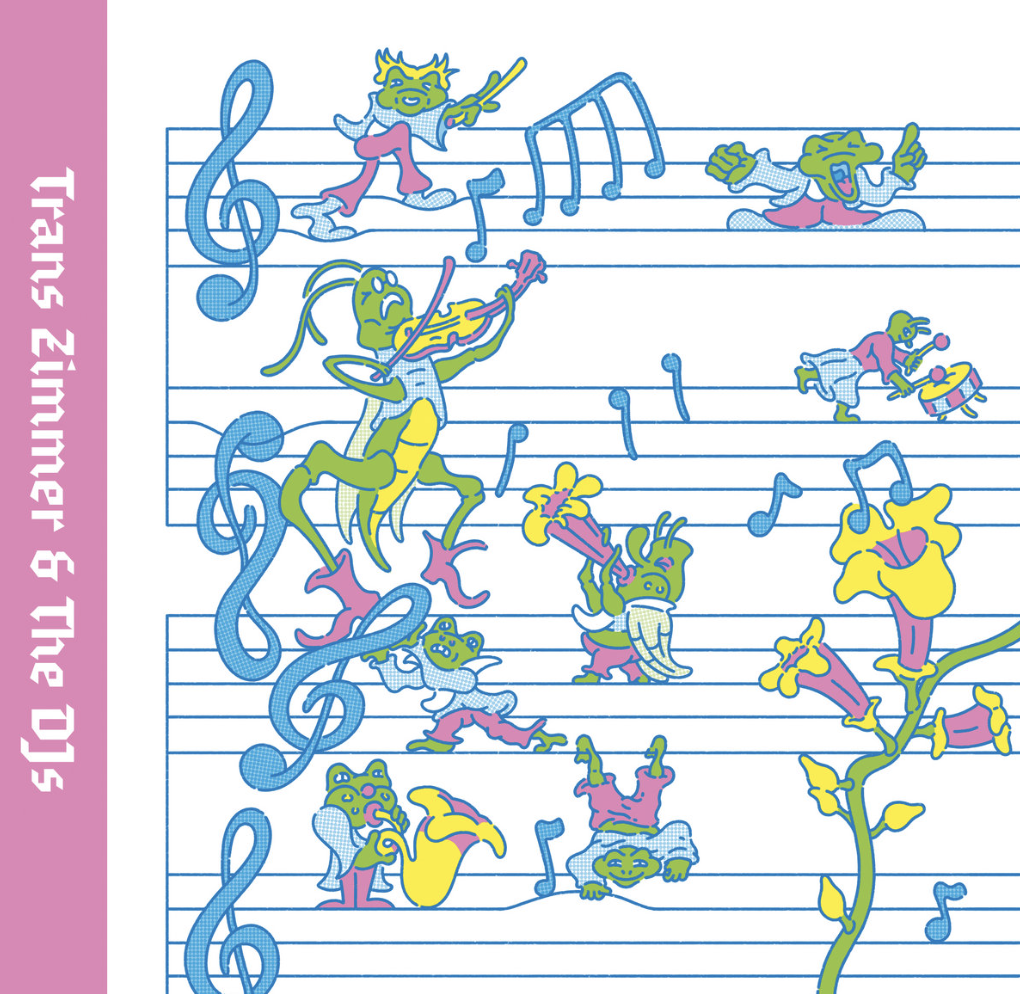
Launched into the most bonkers MIDI sound collage of platform hopping video game music, Esperanto era Sakamoto experimentation, slacker American dialogue, kooky fantasy and cartoon classical movements, the collective Trans Zimmer & The DJs (surely a play on the notable German film composer Hans) reimagine a Ritalin-starved Wendy Carlos running amok on Candy Crush.
Within the walls of a Taito/Capcom 80s arcade a loony tunes of polyphonic pre-set symphonies and chaotic snatches of gameplay chat trample over the course of a most silly bubblegum opera. It’s Baroque on speed; the Flaming Lips colouring in classical music scores; a grand misadventure of super hyped-up fanfares and cute vocoder J-Pop, hip-hop, electronica and lemon meringue pie snacks. Even aboard the S.S. Romulus the waters are choppy, tossing us around in a strange voyage of cult library music and late 90s American psych. I haven’t a clue what’s going on: not that it matters. The whole manic, yet always melodious and fun, experience seemingly a run through of the kitsch, crazy, miss-matched playful minds of those who created it. Skidding and scrabbling on a quest inside a 32-bit fantasy, Zimmer and friends level up across a most confusing, colourful whistle and skipped aural sinfonietta.
FOR THE FUNS
Casta ‘The Temple Of Doom’
(Bandcamp)
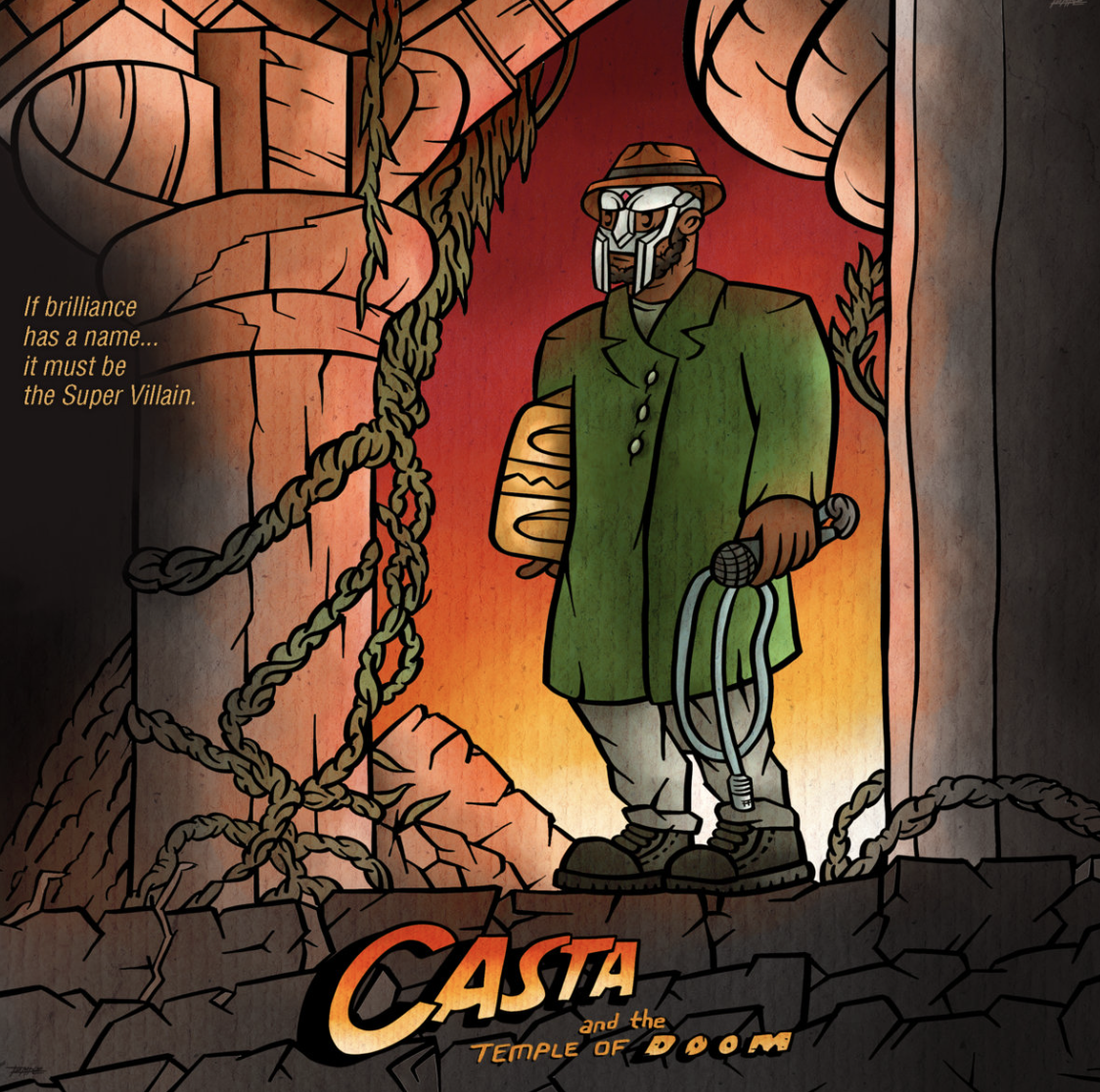
I suppose it was inevitable that at some point someone from the extensive late metal face villain and underground hip-hop genius MF Doom fandom would play on the Indiana Jones franchise – Indy literally escaping death in an airplane crush only to fall into the clutches of the Thuggee cult. I even named my playlist homage to the former Kausing Much Damage founder and prolific name riffing soloist, collaborator after the second Jones cinematic adventure myself. And I’m not alone on that score.
Released a year to the day of Daniel Dumile nee DOOM, Viktor Vaughn, Zev Love X’s death, the enterprising Portland producer Casta has merged the score from the Temple Of Doom with both samples and interview snippets from the MF Doom cannon: though it could have done with more Short Round quips in the mix.
In the spirit of such hip-hop mashups, with even Doom himself not adverse to sampling some cult, obscure and leftfield scores, Casta has some fun in paying tribute to a much-missed artist. From the Monsta Island Czars all-stars team-up to his work with a new breed of rap stars, such as Bishop Nehru, he leaves behind one of the greatest legacies in Hip-Hop: though his influence, creativeness, wordplay, pop culture, visuals and artwork reaches far beyond rap music, as this project proves.
Hi, my name is Dominic Valvona and I’m the Founder of the music/culture blog monolithcocktail.com For the last ten years I’ve featured and supported music, musicians and labels we love across genres from around the world that we think you’ll want to know about. No content on the site is paid for or sponsored and we only feature artists we have genuine respect for /love. If you enjoy our reviews (and we often write long, thoughtful ones), found a new artist you admire or if we have featured you or artists you represent and would like to buy us a coffee at https://ko-fi.com/monolithcocktail to say cheers for spreading the word, then that would be much appreciated.
GRAHAM DOMAIN’S REVIEWS SPECIAL
ALBUMS
Old Fire ‘Voids’
(Western Vinyl Records) 4th November 2022
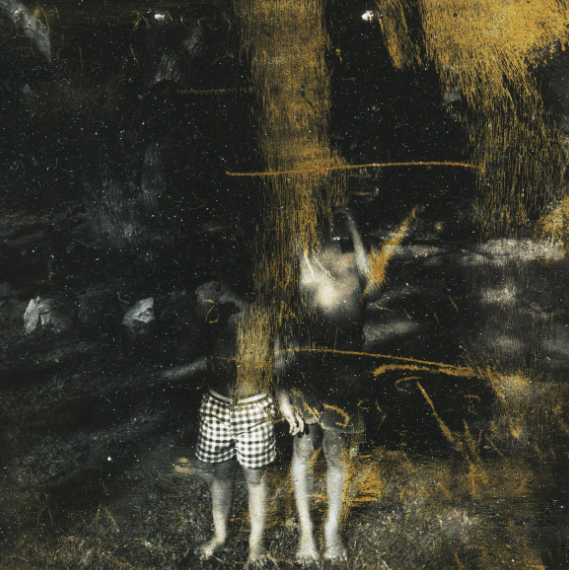
Voids is the second album by Old Fire, AKA composer and producer John Mark Lapham (formerly of The Earlies). Whilst the first album received comparisons to This Mortal Coil, the new one comes across like the soundtrack to a bleak art film, particularly the instrumental tracks. Which isn’t to say it’s not great! Indeed, the music is often uplifting in its sadness and beauty.
Over the five years in which it was recorded, the Pandemic happened, Lapham lost both parents and split from his long-term partner. Feelings of loss, isolation and desolation form the themes of the album and are ever present in the music and songs throughout. Partly a collaborative affair there are fantastic performances from Bill Callahan, Julia Holter, Loma’s Emily Cross and Adam Torres!
The album begins with the instrumental ‘All Gone’, which fades in on mournful brass and echoing piano with squiggles of babbling synth noise, space FX and virtual ghost choir! Soon giving way to ‘Blue Star’ a dream-pop/country/jazz song that part recalls Marissa Nadler circa ‘Drone-flower’. This gem of a song features the wonderful Emily Cross of Lomawith a voice as devastating as Lana Del Rey!
‘When I was in My Prime’ features the magnificent Bill Callahan (Smog) intoning a tale of summer love, loss, sadness and longing. Beginning with a droning orchestra it soon conjures a picture of flying insects feeding on wild flowers, the anticipation and the thrill of love, the freeing of the soul. A double bass and brushed drums add to the air of ease. But all too soon, as birds swoop down, still feeding at the death, a lonely guitar sings of the emptiness left behind as love leaves and a relationship ends!
‘Corpus’ follows – wind noise and droning keyboards mix with sad brass, tremolo guitar, brushed drums and discordant noise while Mr Smog intones a mantra that rests somewhere in-between Nick Cave and Ian McCulloch but, ultimately, could only be Bill Callahan. ‘Love is Only Dreaming’ is next, an instrumental that is more about atmosphere than melody sounding not unlike the throb of an alien space craft in a 1950’s Sci-fi B-Movie!
Adam Torres sings the fantastic ‘Dreamless’ sounding somewhere in-between Billy Mackenzie and Russell Mael with his soaring falsetto. The song and electronic music give the feel of floating in space – drifting endlessly in the black void – dreamless!
An outstanding piano version of John Martyn’s ‘Don’t You Go’ sung by Bill Callahan is a definite highlight! The sad themes of loss and mourning fitting in perfectly with the rest of the album.
The strange sci-fi world of ‘Window’ features Julia Holter singing through a voice processor or vocoder making her sound cold and alien, machine like almost! This contrasts with the warm music of woodwind, harp, brass, brushed drums and tremolo guitar. The overall feel is like something from the Cocteau Twins circa ‘Echoes in a Shallow Bay’– Wonderful!
The album ends with four superb instrumental pieces. In ‘Uninvited’, swashes of guitar fade in as the cold dawn peers through the curtains. The sound of early morning comedown, half dream, half surreal train ride down the rabbit hole of perception! ‘Memory’ creates feelings of unease, of distorted reality, a mushroom trip too far, a silent scream! Beauty born of sorrow and realisation. Like taking ownership for the weight of the world! This sense of sorrow overwhelms, bursting its banks in ‘Father as a Child’. While ‘Circles’ finds calm reflection after the storm, the floodwaters finally beginning to subside as the Sun breaks through the clouds and birds return to the skies!
FaltyDL ‘A Nurse to my Patience’
(Blueberry Records) 11th November 2022
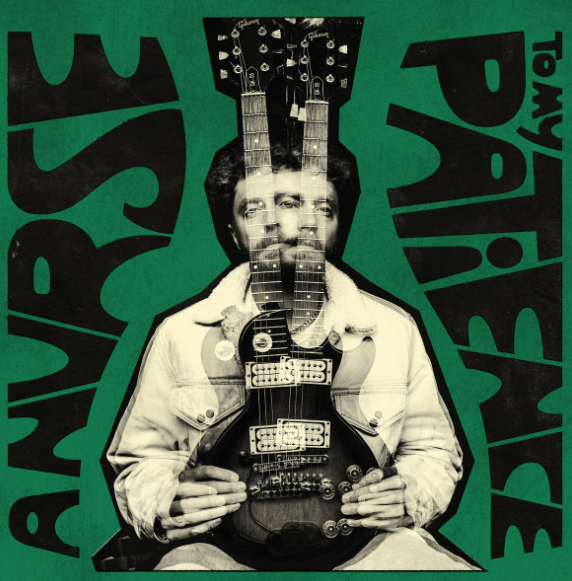
The new album by FaltyDL (Electronic Musician and New York based Producer Drew Lustman) is a departure from his more dance-orientated records. The album draws on the sounds more often associated with less commercial independent or experimental artists. There are still tracks that can be danced to, but perhaps not in the usual dance clubs. ‘Zoo Jarre’ is reminiscent of New Order while ‘God Light’ filters in The Cure. ‘Come See Us’ features Interpol’s Paul Banks on vocals over a pounding drum machine and synth driven electronic alternative 80s style song! Much better are ‘Four Horses’ and ‘A Brother Bears the Silence’ – two acoustic psychedelic songs featuring the incredible Julianna Barwick on background vocals (check out her own incredible Healing is a Miracle album). ‘Doves Fears’ ends the album on an instrumental high note of anthemic surf guitar and pop synth summer melody.
A O Gerber ‘Meet Me at the Gloaming’
(Hand in Hive / Father Daughter Records)

The second album by LA resident A O Gerber explores childhood trauma, her fraught upbringing in a religious community, childhood fear of the unknown. However, the introspective songs are filled with melody and sound almost pop-country in their stripped back guitar, vocals, bass, drums format. Vocally she reminds me of Susanna Hoffs from the Bangles. However, the songs exist in the unreality of twilight, the gloaming, where dreams meet material existence, a reality half hidden by the falling shadows of night.
Modern Stars ‘Space Trips for the Masses’
(Little Cloud Records) 11th November 2022
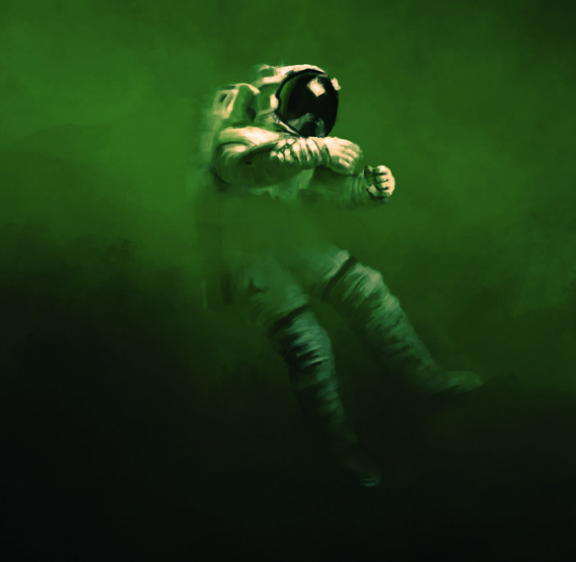
The third album by psychedelic riders of the storm, Modern Stars, falls somewhere between The Mission and The Fields of the Nephilim. New single ‘Monkey Blues’ also has hints of the Doors and may have been an underground hit had it come out in 1987! That’s not necessarily a criticism as the 3-piece band hail from Italy and perhaps, are not too familiar with 1980’s UK Goth! ‘Mmmm’ is a Goth anthem if ever there was one, complete with flanged metallic drums. While, ‘My Messiah’ musically sounds like a discarded Joy Division jam from 1978 but in a good way! ‘Drowning’ adds tabla hand drums and sitar to the mix. The album ends with ‘Ninna Nanna’ a song that sounds a bit different with female vocals. Unfortunately, the vocal melody sounds like ‘Come by yar my lord’, perhaps making it the first Goth-spel song? Overall, a fine, if not totally original, album.
Ben Pagano ‘Exploring Dreams’
(Bandcamp)

This is the third release from New York singer songwriter and keyboard maestro Ben Pagano. The album is a collection of seven songs that sit vocally somewhere between Supertramp and Randy Newman! My favourite song is ‘Everybody’s Ghost’. The arrangements are pleasant with piano, synths, guitar, bass and drums and the overall sound has a 1970’s soft rock or AOR feel that will find favour with many. If he can stamp more of his own personality and quirkiness on the songs, he may get the success he seeks. One to watch!
I Work in Communications ‘Kiss My Emoji Ring’
(Tier)

‘The taste of Square Sausage versus the taste of sausages of other shape’ has perhaps never been considered for a ‘Panorama’ Special Investigation! However, under the watchful eye of Dr Arthur Mind MBS there has now been an investigative study to show that the shape of food can and does have a positive effect on its taste!
Consider the Triangle, for example, and its effect on the cheesiness of food! Former Cosmonaut Alexi Kraft discovered the wonders of this shape when he invented Kraft Cheese Slices in order to supply the first man in space Yuri Gagarin with a calcium filled snack that would strengthen his bones whilst orbiting the Earth in Vostok 1 on April 12 1961. After several attempts to sustain enough calcium for the space flight using oblong shaped cheese, the triangle was discovered by accident to be the perfect shape for maximum cheesiness, when one of the oblong shaped cheeses broke diagonally in half while Yuri was riding his bicycle down a hill in preparation for the G Force of the rocket launch!
Of course, in modern times it is quite apparent that a Babybel round cheese is nowhere near as tasty as a Kraft Cheese Triangle! However, the shape of food was soon to play a devastating part in Gagarin’s life. Tragedy struck Gagarin when in 1966 he inadvertently ate a Quality Street green triangle whilst filming an advert for Kraft! His ‘hero status’ in tatters, Gagarin was forced to flee to the West. He never recovered from his fall from grace, ending his days hidden in a bear costume-playing Bungle on Rainbow.
Like the dream reality of Yuri Gagarin, Kiss My Emoji Ring is heroic, strange, troubled, shaped with taste like a square sausage, weird! Doomed to global obscurity but reaching for the stars!
AND A COUPLE OF SINGLES
Tigercub ‘The Perfume of Decay’
(Loosegroove Records)
Gillian Stone ‘Ravens Song’
(Bandcamp)
Taken from the forthcoming EP Spirit Photographs, the new single from this Toronto-based experimental singer and musician is a sparse yet cinematic soundscape-folk song. It reminds of Nick Cave or P J Harvey in its moonlit darkness – can’t wait for the EP!
Monthly Playlist Revue: October ’22: Muramuke, Marlowe, Voice Actor, Lira, Underground Canopy, Keep Shelly In Athens…
October 31, 2022
PLAYLIST SPECIAL
TEAM EFOORT/COMPILED BY DOMINIC VALVONA

Each month the Monolith Cocktail pool of collaborators search long and hard for the choicest of choice tracks; mixing genres and geography into an encapsulation of the last month on the blog.
That team includes me (Dominic Valvona), Matt ‘rap control’ Oliver, Brian ‘Bordello’ Shea, Andrew C. Kidd and Graham Domain.
You may have noticed since the summer that we’ve started compiling a Youtube playlist version, which includes extra bonuses from the No Base Trio and a seasonal treat from Escupemetralla plus some alternative tunes from the same artists on the Spotify list.
So without further ado, here is the October Revue:
And the Youtube version:
Full Track List:-
Montparnasse Musique Ft. Muambuyi and Mopero Mupemba ‘Panter’
Muramuke ‘Just One More’
Balaklava Blues ‘BEAT UP’
Marlowe/L’Orange/Solemn Brigham Ft. Deniro Farrar ‘Godfist’
Rockness Monsta/Method Man/Ron Browz ‘Beastie Boyz’
BeTheGun ‘Metropolis’
Lee Tracy/Isaac Manning ‘Love Is Everything’
Lee Scott Ft. Sly Moon ‘THE MORE I THINK ABOUT IT, THE LESS I CARE’
Voice Actor ‘Battling Dust’
Juga-Naut ‘To The Table’
Ernesto Djédjé ‘Nini’
Liraz ‘Mimiram’
Mehmet Aslan/Niño de Elche ‘Tangerine’
Underground Canopy ‘Space Gems’
Valentina Magaletti ‘Low Delights’
Carl Stone ‘Sasagin’
Tau & The Drones Of Praise ‘Bandia’
Keep Shelly In London Ft. Sugar For The Pill ‘Don’t Want Your Romance’
Librarians With Hickeys ‘I Better Get Home’
Una Rose ‘Partly’
Carla dal Formo ‘Side By Side’
Derrero ‘Long Are The Days’
Super Hit ‘Donde’
Rahill ‘Haenim’
David Westlake ‘English Parish Churches’
Cormac o Caoimh ‘Didn’t We’
VRï ‘Aberhonddu’
Tuomo & Markus ‘Highest Mountain’
Pitou ‘Dancer’ Dana Gavanski ‘Strangers’
The Zew ‘Come On Down’
Brona McVittie ‘Living Without You’
Brian Eno ‘These Small Noises’
Edouard Ferlet ‘REFLEX’
Rich Aucoin ‘Esc’
Puppies In The Sun ‘Light Became Light’
Short Fuze Ft. Dr. Khil ‘Love Letters To The Lost’
Loyle Camer ‘Speed Of Flight’
Ill Move Sporadic/Tenchoo ‘Amulet Chamber’
Atmosphere ‘Sculpting With Fire’
Ghoster ‘CRAME 4’
Clark ‘Frau Wav (Brief Fling)’
Verbz/Mr Slipz ‘Music Banging Like’
Jester Jacobs/Jack Danz ‘Opportune’
Darko The Super/Yuri Beats ‘Don’t Stay’
Open Mike Eagle ‘I’ll Fight You’ A.G. ‘The Sphinx’
El Gant Ft. DJ Premier ‘Leave It Alone’
Heavy Links/Luca Brazi ‘Complicated Theory’
Fliptrix, King Kashmere/Pitch 92 ‘Primordial Soup’
Shirt/Jack Splash ‘Death To Wall Art’
Smellington Piff/Ill Informed ‘Hard Times’
Hi, my name is Dominic Valvona and I’m the Founder of the music/culture blog monolithcocktail.com For the last ten years I’ve featured and supported music, musicians and labels we love across genres from around the world that we think you’ll want to know about. No content on the site is paid for or sponsored and we only feature artists we have genuine respect for /love. If you enjoy our reviews (and we often write long, thoughtful ones), found a new artist you admire or if we have featured you or artists you represent and would like to buy us a coffee at https://ko-fi.com/monolithcocktail to say cheers for spreading the word, then that would be much appreciated.

Following in the wake of his debut novel THE GREAT IMMUREMENT, which we serialised during the summer of 2020, Vukovar helmsman (and book reviewer collaborator to the Monolith Cocktail) Rick ACV now follows up with the surreal, esoteric and challenging Astral Deaths & Astral Lights. Although after seven year he’s announced the final death of the Vukovar project, Rick will be back with a new musical project in 2023.
But for now we will concentrate on the literary, with Rick playing with format, language and font, his half-thoughts of waking hours, death and the occult merging dream-realism with a languid sense of discomfort: a sorry state of existence, where angels do indeed dare to tread. William Blake and Austin Osman Spare meet Kōbō Abe in the hotel lobby portal of the never-world: personal and universal. Parts One & Two were debuted during August, followed up by Part Three and Part Four. Part Five was published earlier this month. We now continue with the concluding chapters: VI, THE DUKE PAOLO AND LITTLE K., VII, THE SYMBOLS WILT and THE TURIN HORSE
VI
We are born with the knowledge of everything that has come before, as part of an ever-expanding hive mind. The last Astral Death taught me as much. But with being shown the spaces between spaces and what is across everything beyond (and including) the veil, and with becoming all of these people, I have to wonder if the threads and webs all come from my mind. I’ve given life to it all.
But this trail quickly runs cold and I notice the scent of my sex, sweat and smoke – the three s’ – has become too pervasive in all corners in this room. It used to be my pride but now it has taken form as a repulsion, growing and expanding and it can’t be stopped.
The Partner sees me but only as if through a cracked mirror on a strange angle. I know this because that is how the whole world and beyond appears to me, how we witness each other.
I wander freely into the loving arms of a loving life as if a tottering child, and then, diverted at the last moment, stumble instead into an open and long abandoned mine, never to be seen in this form again.
This lucidity is not wanted. An Ascending/Descending Godling such as this self in the usual-world should not be anchored in any world that can believed to be a usual-world.
It will soon pass.
THE DUKE PAOLO AND LITTLE K.
- I absorb everything that absorbs me. These lives and these places are alive, like art, like the death rattles in the dying, like the purifying fire into which the bodies are thrust.
I appear to now be transporting what leaves these bodies. St Pietro? The Duke Paolo. Lost souls that need guiding.
………..
Don’t feel control over this one. V v v little influence for now.
There is a woman walking along a country path by herself. It’s a bright, sunny day, all made up of natural silence and the subtle sounds of breezes through bushes. The bushes seem crooked and ready to pounce on the woman. She stops to bend down, collects an extraordinary looking flower, stands up and breathes it in deeply. After a pause, she smiles, pauses again and continues along the path.
We feel coiled and ready to strike.
She notices us approaching as she crosses the rickety bridge but she is not alarmed by our furious pace. In fact, she smiles and politely greets us.
She waits for a response and doesn’t have time to be shocked as we carry on towards her and grab her by the throat. She struggles, we strangle. What Should-Be death, but isn’t, manifests itself as a strange motion within the centre of us and though the body with the fist around its neck stops moving, the same body emerges from within us and continues on its path, still walking. We arise and continue on OurSelves.
I know not how long we travel for but that doesn’t seem to have any significance here. My self and this other self become closer and close to becoming fused in some way I have never experienced before.
Eventually we come to a stop. Darkness is heavy and oppressive on all sides and all we can make out is a faint showing of what may be concrete walls which surrounds us completely.
Hello?
A bright bleaching light whitens everything in every direction and we must shield ourselves to it. It hurts even through the cover of the arm. But, it gradually fades to reveal our setting. We are standing in a field and the colours of the woodlands and the streams are strange and saturated; everything is covered in a haze and the bright light is making everything unclear. We look around and spot movement and set off towards the stream.
The movement is that of three nude women – three bathers – and they acknowledge our distant presence as they smile warmly to one another and cast brief glances our way. A gentle and sweet singing floods the place and weaves between the trees, filling us in totality with an old and sinister folk song, The Twa Magicians. We come to a stop about ten metres from The Bathers. A light mist appears and disappears before another bright light takes us by surprise. Once more we lose and then regain orientation. The Bathers are beckoning us and laughing, frolicking in this sticky sweet place. We go towards them with faint hope of some depraved sexual abandon but our path is blocked by nothing at all. We cannot pass. The Bathers become hysterical as we commit to a sort of mime routine. We can get no further and are disappointed. But not too much; depravity can be had everywhere and everywhen.
We turn to leave and beside us is a door. We trust nothing in our existence but commit to everything. Through the door is a tiny square yard with extremely high walls, decorated by paintings depicting bathers such as the ones we have just departed. As our eyes come across an old telephone, it rings.
Hello?
Hello dear Paolo.
…
You do know who this is?
…
Cut the call and think no more. Back through the door. Bathers now on the opposite side of the stream and carry me, as though on thread, towards them and I cross the stream for them and to them. I fall in the water and see hidden depths without sinking to them. Try to get up. Head held in place by a Bather. All becomes frightening and insides are chilled. A young drowned boy is amongst the secrets held by these hidden depths. The other Bathers swim down and mess with the corpse. Rise from the water, sit on a rock and think.
The return home must be made.
Suburban estate in severe disrepair. Everything is dark and the buildings shift, moving close together and grow tall, crowding the streets to trap me. Fighting, mania, conversations in silence and in dog-barks along my way. My house is the last house, the one dead-centre of the nightmarish maze of alley ways and streets that surround. Trees block the view of the ground floor of my house and I slip between them into the darkness and may now rest.
This is the place. Flatlands by the sea with small grassy hills every immeasurable amount of distance. There are no people except one, the all-important one; Little K. I watch him, far from me on one of those hills, the one with two Dead-White Trees. The trees are crooked, brilliant white and are burdened with no life and weighed down with only a few branches. I move closer and Little K., the young drowned boy, runs tirelessly between and around the trees, no emotion whatsoever rests in his dripping features.
He stops and faces the sea. I see what he is looking at.
A huge pane of glass stands upright with no support, equidistant between him and the sea.
It smashes.
I look up to the sky and sink into the ground, further and further, and water rushes in to cover me. I see Little K. at the top, staring down at me, still emotionless.
I know where I need to go.
In the morning I sit at my oversized desk and light a cigarette. My book is already full but I write over the already-written words until my thoughts are exhausted.
The boy is doing exactly what he ought to be – waiting for me. He waits on my rock on the bank of the stream, the woods heavy and constrictive, caused by the saturated ever-summer. His clothes and body are soaked, his face is expressionless and his demeanour is impenetrable. Water continually falls from this unpitiable young man. I am drawn to him and do not know why. I know he is important. Vital. Vital to what, I do not know. How he is vital to this unknown thing… I pretend to myself that the answer is hidden deep within me.
How do you do? I’m the Duke Paolo, pleased to meet you.
(I put my hand out. Little K. grips it and gasps as though he has just emerged from the deep. His eyes are blank but bulging. Some seconds pass and we let go of one another.)
Would you like to come with me? I’m very busy but could do with a friend.
He stands up and looks right into me.
I show Little K. around my home and get him settled in. The usual incoherent radio chatter with constant interference hisses away in the background and I sharpen my knives. I catch Little K. looking emotionlessly at the scattered bodies and explain that they are empty now. They are just spare parts. I like to be reminded, also, of the fate we surely must all face, even beings-in-suspension such as myself.
The bodies, I mutter after some silence, keep me company, too.
If I am to learn what all this is about then I must show the workings of my existence to Little K. It is constant and does not rest. On the way to the pub unnatural fog brings with it lost, bloody, confused souls, but, we press on. We are surrounded by dull conversation but enjoy the alcohol; my young friend does his unblinking best to keep up with me. I sit myself uninvited at the next table opposite a man quietly reading. I look at the clock, look to him where my gaze is met then un-met, and I reach up and slash his throat. Little K. laughs in his seat. I walk away from the bloodless scene and my friend follows. On the way back we play pooh sticks but he doesn’t seem fond of this.
Time continues at its unmoving pace and shape. Little K. becomes a little acolyte of mine, witnessing all of my severe actions and assisting in any way he can. I take him to see Messalina and Agrippina to fuck, both of whom are sad to see him go. Little K. also in this time completes his own rounds. He does this alone but tells me in great detail of the necessary yet ghastly exploits, writing them into stories of the grotesque, even, non more so than ‘The Ghosts Of The Apaches’. This is a story of schoolchildren who play on farmland and fall prey, one after the other, in horrifying ways to the hazards around them.
There is something that unnerves me, even though we have become so close. I have never wanted for answers here; I accept my role. Now that there are questions unanswered, however, I am struggling to accept all that is around me.
I have become lost in this being within being within being, with all of our voices combining to shout in unison over our own noise “what is this life?” – but we, as The Duke, there is so much more and we may never escape, as though we ourselves are Little K., a drowned voyeur, submerged and surrounded by a corporeal liquid of all that we do not understand, of all the questions our Creator leaves unanswered. If we are worthy, then the answers are there for us to piece together.
Me… us… The Duke… we exist within and without the borders of this/these recollections.
Little K. is disarming us. It must be nearly time. I wish that it wasn’t so, I wish that I didn’t have to keep losing friends. Myself, I would like to stop turning friends into Dead-Friends.
…..
I come upon the stream from as before, but now it is still and sullen, untouched and undisturbed except for just one of the nymphs. She is a powerful presence by the stream, brushing her hair and sitting still. It’s as though I am watching old, grainy footage. She looks up to the top of a hill and sees The Duke Paolo standing there, though this me is silhouetted by a blinding light from behind him.
…..
The scene shifts; we are all of us in a darkened warehouse. The Nymph is sat in the same position, doing the same thing with an obvious ‘film set’ that has been made to look like the stream where she just was. There is a low rumbling hum with the intermittent sound of metal on metal. There is somebody a few yards away from The Nymph, that is neither me nor the other me, painting her on a canvas. She looks deeply saddened. She begins to sing gently:
The lady stands in her bower door
As straight as a willow wand;
The blacksmith stood a little forebye
With a hammer in his hand.
“Weel may ye dress ye, laidy fair,
Into yer robes o red;
Befor the morn at this same time
I’ll gain yer maidenhead.”
“Awa, awa ye coal black smith
Would you do me the wrang?
To think to gain my maidenhead
That I hae kept sae lang!”
The Painter coughs and splutters really quite horrifically. I can’t bear to pay witness to this. Almost as if I will it to power, all falls silent and we are back next to the stream. Paolo’s silhouette is moving slowly towards The Nymph. She smiles and continues her song.
Then she has hadden up her hand,
And she sware by the mold.
“I wouldna be a blacksmith’s wife
For the full o a chest ‘o’ gold”
“I’d rather I were dead and gone
And my body laid in grave
E’er a rusty stock o coal black smith
My maidenhead should have”
But he has hadden up his hand
And he sware by the mass
“I’ll cause ye be my light leman
For the hauf o that and less”
We are back in the warehouse, only now, The Painter is preparing to hang himself. He gathers his death quickly and with no feeling. As he hangs, expression unchanging, The Nymph sings on.
O bide, lady, bide
And aye he bade her bide;
The rusty smith your leman shall be
For a’ your muckle pride
Then she became a turtle dow
To fly up into the air,
And he became another dow
And they flew pair and pair.
She turnd hersell’ into an eel
To swim into yon burn
And he became a speckled trout
To gie the eel a turn.
I am purely observer now. I am there without really being there. The Nymph is sitting on a chair in a room made from mirrors. As the song goes on, she gets up, walks around examining her reflection tenderly and dances in a strange type of ritual way.
Then she became a gay grey mare
And stood in yonder slack
And he became a gilt saddle
And sat upon her back.
Was she wae, her held her sae,
And still he bade her bide;
The rusty smith her leman was,
For a’ muckle pride.
Then she became a het girdle,
And he became a cake.
And a’ the ways she turned hersell’,
The blacksmith was her make.
She turned hersell’ into a ship
To sail out ower the flood;
He ca’ed a nail intill her tail
And syne the ship she stood.
Was she wae, he held her sae,
And still he bade her bide;
The rusty smith her leman was
For a’ her muckle pride.
Then she became a silken plaid
And stretched upon a bed
And he became a green covering,
And gained her maidenhead.
A thumping, percussion-heavy ritual type music builds in volume and speed gradually with The Nymph’s dancing getting more and more manic.
Eventually she collapses in exhaustion.
We briefly see her silhouette embrace the other Paolo’s. Where is Little. K? Where am I? Everything fades. I Continue.
VII
How close we are to the precipice. I have brought us here, I have guided us along the path that The Spinners have already chosen for me.
Sleep should never be had.
Its grasp, its groping grasp always wins in the end. Here, though, it is keeping this victim from its welcoming arms and embrace, and instead, holds The Ascender/Descender by the throat, holding us over some bizarre cliff-edge, forcing the hand of chance to lose its hold for the slightest, smallest moment. It may not be its intention, but it is what will happen, and the now-empty chokers of sleep will just watch, emotionless, as we ascend/descend in the strange airless and windowless hole, with no before or after. Nothing to see, nothing to feel. Nothing to breathe, nothing to scream. Just nothing.
There are a lot of unconnected but significant dots flying around. Sometimes it’s hard to fathom. It should be understood that it is not for us to fathom. I don’t feel sad for all of these deaths, the deaths of friends and family, though I recognise the sadness and sad nature of them. These are the worlds I exist within and there is no much light in these places. I accept that. The constant present offers more. One of the few happy gleams and twinkles from a time full of dead stars.
Everything must have a centre. What is the centre here?
I will survive forever, a cockroach existence, parasitic maybe.
All in the name of extreme aversion to and fear of death.
THE SYMBOLS WILT
The actions of a life simply passing itself by.
Breathless after my journey to this frozen and unloved graveyard that hides in the hills, I place my hand upon a collapsed section of icy dry-stone wall and hold it there. I can feel the moss and the smoothe edges of the stone but none of the cold. In this moment, I am more certain of myself than I ever have been. I cannot be found here. Not even by myself; that isn’t what I am looking for. I know I’ll find what it is I’m looking for and I do.
There is a wild and uninviting halo formed by the overgrowth and in its Dead-Centre is a gleaming white frost flower with its deep, bloody eye.
On every petal, a love-letter… and held in the bloody eye is my unwavering belief that I wrote them all when I brought the seed to its final home to begin again.
I know all of these words. They read like a love-letter of several collapsing disordered minds.
The delusions of Dante are and were ill founded and unfounded… Hell is one step back from finding the way to break eternal recurrence, starting afresh in a new body and all that new living and new life entails… 1000 torn anuses… Here comes the ferryman with flashing eyes, to take me to my killer and claim the reward – my everlasting soul for a song. It wasn’t a waste…
…Thyself and myself- the patron saint of the archaic, king of the concrete fantasy – never was as immortal as thyself and myself now cause upon one another; just as never was the western sky as blue as it was in the 19th century, when my number is and was bleak, is and was blank, is and was empty…
…This confusion, this dark backwards, this failure in the duty of mothers, this burying of liberty’s putrid corpse is my misinterpretation of the immortal hour and the purity of my love, of my sex and of my fetishes – my fetishes of and for fetishes… the transference of energies after the golden death of the body is the cause of all this. Some (like myself and thyself) have masses of unaccountable energy and scientifically, energy can only be transferred; it can’t be destroyed. I want to wonder about that, moving between bodies. Not really ‘woman trapped in a man’s body’ and vice-versa, because that’s impossible to know for sure… the people without these powerful energies – i.e. everybody not me and thee – are parasites. Wasteful piles of stolen, irony blood and flesh with nothing between the eyes. For these vermins who inhibit our private world, our over-garden, to have a soul would be a travesty…
…deady deady dead will be the white noises, interfering with everything and offering nothing. As thine anger rises like a scorpion, remember that the joy of black black moods and being at war is that when it passes, the white is whiter than it was before and the peace is more peaceful than it was before. Necessary annihilation…
…Now the symbols wilt and we can make and remake them in our own image…
I think about gripping the stem in my fist and wrenching what is clearly my degenerating heart from the ground but I choose to leave it. I vow to never return here again.
My head has never looked so happy.
THE TURIN HORSE
For all my reticence
For all my refusals and restraints
For all I have given and ungiven to stray away from this, my final choice…
I retire to bed.
I wait for death and do nothing else.
I die, once and for all, in totality.
Sleep.
Brian ‘Bordello’ Shea’s Reviews Spread

SINGLES
Blue Violet ‘Favourite Jeans’
(Me & My Records)
Blue Violet’s ‘Blue Jeans’ is nothing more or nothing less than a beautiful pop song. And that is all I really need to say about this lovelorn little simple fragile ballad of tender regret: “if we were made of Glass we’d have shattered by now”. Pure pop poetry.
Psychotic Monks ‘Post-Post-’
(Fatcat Records / Vicious Circle)
The Psychotic Monks, I saw the band name and thought straight back to the hellish days of senior school when the strict catholic school I attended was run by psychotic monks. But I’m happy to say these psychotic Monks beat you into submission with fuzzy distorted bass and clattering guitars not cane and straps.
‘Post-Post’ is an 8-minute gem of distorted aggression that takes me back to the wonderful live performances of John Peel favourites the Levellers 5. And is a rare thing at just being over 8 minutes long it doesn’t outstay its welcome. A pure 8 minutes of feverish disgust.
Una Rose ‘Resolutions’
‘Resolutions’ is a faded gem of a song. A blink of an angel’s kiss. A summer that never passes just turns to Autumn, and more awkwardly beautiful. A song about the strange and rewarding bond there is between father and daughter or between two soul mates. A song that captures the love that lies between two people who no longer see each other as often as they like but are only a thought away. This song flutters and sways you gently until you feel the loveliest of warm hugs; a magic Autumn pop kiss of a song.
Carla Dal Forno ‘Side By Side’
(Kallista Records)
Oh my dearie lord, what we have here is a sensuous seduction of a track; a song of lovelorn glamour a stroked bedside nightshade crawl of yesterday’s wanton lust. A song of yearning that reminds you that it was best to fall in love when you were both young and attractive and life was one long ride of not caring and laughter and lust. A song to remind you of how you used to be and that makes you beautifully knotted inside. Listening and remembering is one and maybe the most powerful spells the magic of music casts.
ALBUMS
Super Hit ‘Get It Together’
(Metal Postcard Records)

This album by Super Hit is mostly a gentle and swaying affair of short guitar jangle tunes, half instrumental with a smattering of quite charming songs, and is a very relaxing way to spend a half hour or so contemplating having an afternoon nap. This could well be the album to tempt you into a dream like state. At times reminding me of Felt – especially on the rather excellent ‘King Of Suffering’ -, but the stand out track is the 18 minute closer ‘Get It Together’ which is like a unusual compilation of the best of the tracks that came before it, a jarring piece of lo-fi jangle art.
Derrero ‘Curvy Lines’
(Recordiau Prin)
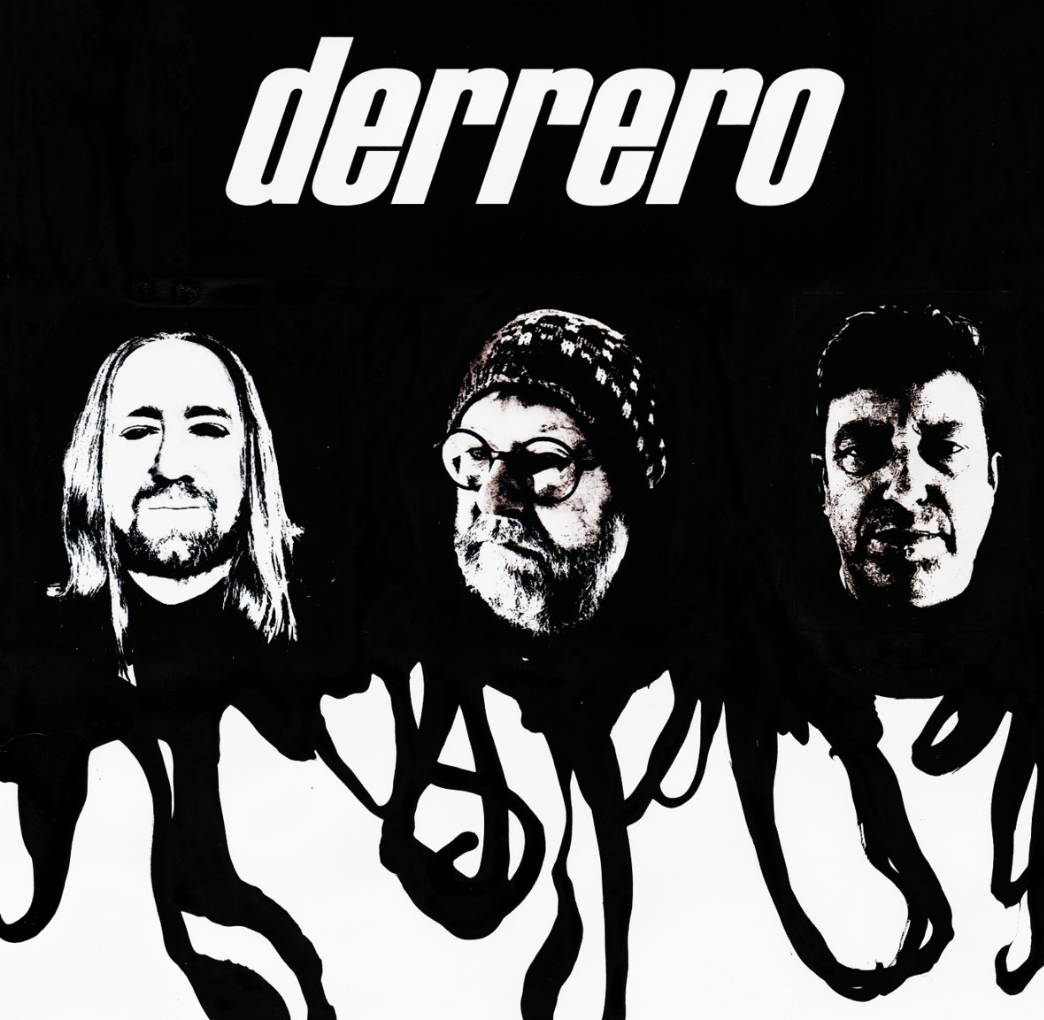
Curvy Lines is an album of prog, pop and psych guitar mastery; an album to put on your CD player and lie back and let the melodies float over you and pull you into the magical world, where such things matter.
It is an album of sunshine ray beams and stardust, an album to enjoy with your morning coffee or a glass or bottle of wine before bed. The Beach Boys, Mercury Rev and 70s pop radio collide into a headlong collision of joy and muse – not the band Muse as they are terrible, but the kind of muse talented Welsh artistic types emit with a longingly frequency.
Curvy Lines is an album of buttercup beauty with the occasional kick in the crotch discordancy. “Numbah Wahn” and Numbah Wahn is were this beauty will be in my personal jukebox in the coming weeks.
Tuomo & Markus ‘Game Changing’
(Grand Pop Records) 14th October 2022

This is a wide cinemascope of an album, a record that takes one on a ride of nostalgic wonder drawing in psych-tinged soft rock and the MOR country rock of the seventies and leaves one in a blanket glow of warmth and peace. It’s a road trip being soundtracked by mix tape of Crosby, Stills and Nash, Steely Dan, America, Nick Drake and the Flaming Lips.
The opening track ‘Game Changing’ is jaw droppingly magnificent, a beautiful beguiling ballad worthy of Mercury Rev at their magical best. And truly is a wonder of a song. ‘Highest Mountain’ is worthy of Gene Clark’s No Other, and No Other is a fine album to mention as they both have the same all-consuming gorgeous vastness.
This is one of those albums that should be played to the narrow-minded morons who say they don’t make records like they used to do, as this proves they do. And in this case better than they used to do. An album that should grace the record shelves of all music lovers.
David Westlake ‘My Beautiful England’
(Tiny Global Productions) 14th October 2022
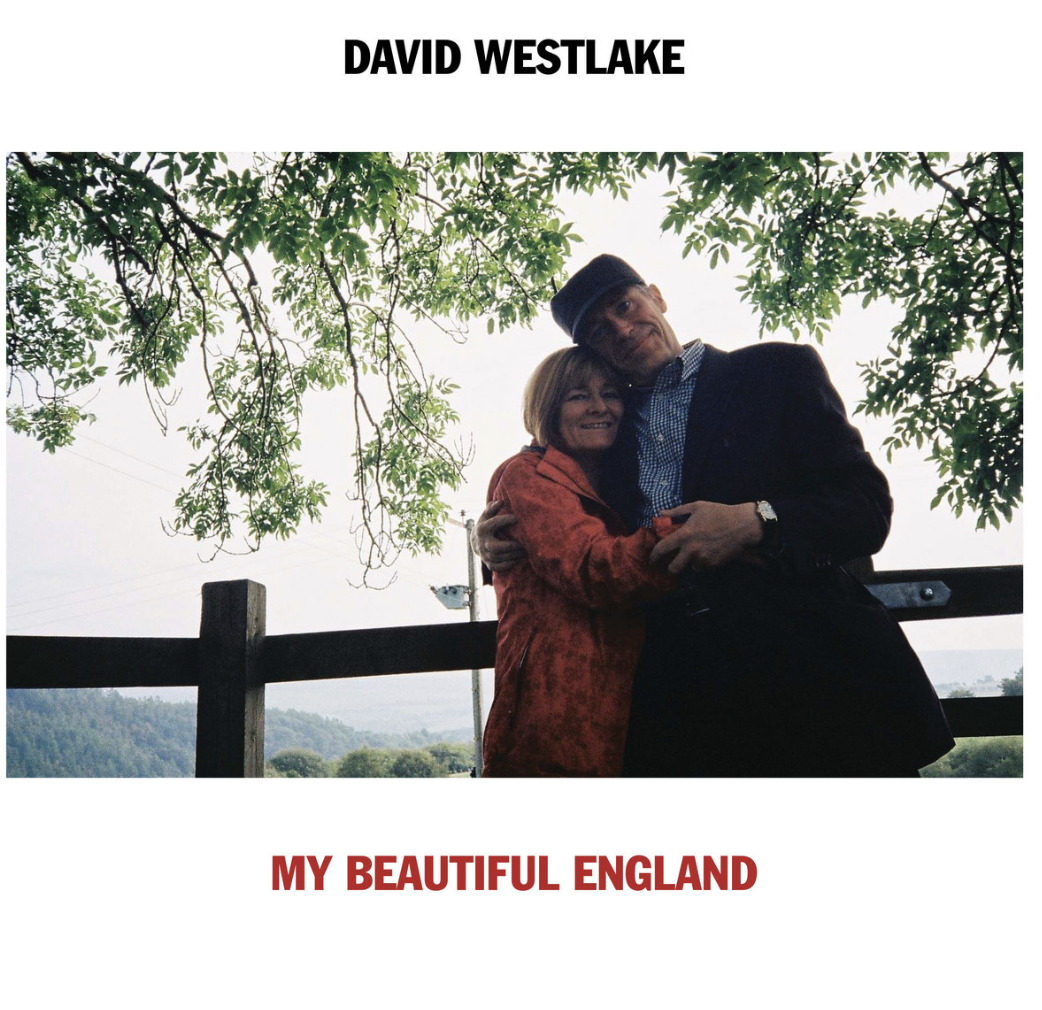
My Beautiful England is an album of pure sadness and nostalgia; an album of songs that bemoans the effects that modern life is having on our once great and beautiful country; an album that takes us back to the time when every day was Autumnal and students used to have a certain charity shop chic and music still mattered: and music does still matter.
Music can lift you when you are down, can soundtrack all those wonderful and not so wonderful times in your life, and My Beautiful England indeed is an album that matters. And as much as I do not like to mention my own music, but I will anyway, it travels the same path as The Bordellos Ronco Revival Sound album, both drawing on music of the past and painting pictures of a country long gone.
David Westlake‘s beautiful songs has one drawn back to the halcyon days of late 60s Kinks or early 90s Edwyn. And the wonderful ‘Mallory Kept Climbing The Mountain’ has one thinking back to the wonderful Go Betweens or Monochrome Set of the 80s.
My Beautiful England is a beautiful album of well written, lyrically captivating and melodious pop songs.
Jd Meatyard ‘Live The Life’

Jd Meatyard is a man who loves music; a man who is soaked in the spirit and the history of rock ‘n’ roll. His alternative folk songs are charged with a natural melodeon charm and this, his 6th album [I think?], is probably his most musically commercial yet.
His love of the Velvet Underground – ‘Story Of My Life’ being lyrically almost made up of Lou Reed/Velvets song titles – and his love of Woody Guthrie folk is combined with the attack of the Pixies and the Fall and the humour and charm of The Modern Lovers. Live The Life to me sounds like the sound of a rock ‘n’ roll poet looking back and celebrating his life taking in the places he has been/lived and the many characters he has met over the years. And it’s a quite bewitching and indeed a hugely enjoyable listen.
Librarians With Hickeys ‘Handclaps And Tambourines’
(Big Stir Records)

Another jump into the sunshine from Big Stir Records – do they specialize in releasing the happiest sounding music possible? Once again we are offered the jangling clap happy sixties sound, this time by Librarians with Hickeys. From the opening track, the organ led ‘I Better Get Home’, it’s all handclaps and shouted hey backing vocals, through the Byrds-like ‘Ghost Singer’ and ‘Can’t Wait Till Summer, and nearly every other track actually. Yes indeed, the Byrds do seem like a big influence on the Librarians With Hickeys Sound, and to be honest they do the Byrds very well, mixing it with an early 80s power pop feel. And there is no doubting their skill and craft in producing an album of enjoyable melodious songs.
The Monolith Cocktail Social: Volume #70: Pharoah Sanders, Ros Serey Sothea, R.E.M., J Scienide, Genesis, Nicolini…
October 14, 2022
Dominic Valvona’s Eclectic/Generational Spanning Playlist

More or less the blog’s radioshow (minus any vacuous chat and clique guests), the Social is my ‘anything goes’ playlist selection of tracks I’ve played out, accumulated, come across or been handed over the last forty years.
Reaching the 70th volume this month, the choice tracks are every bit as eclectic, sometimes fun, and intriguing. I usually pay homage or doff my cap to those we’ve lost in that time, but also to those albums celebrating special anniversaries. In the former camp I couldn’t not miss the opportunity to say farewell to astral, spiritual and freeform jazz doyen Pharoah Sanders, including a smattering of personal favourites and a snatch of interview from the In The Beginning 1963-64 album.
In the celebratory mode, I’ve picked tracks from Prince’s 1999 LP (marking its fortieth anniversary this October), R.E.M.’s Automatic For The People (thirty this month) and Genesis’ Foxtrot (unbelievably a half century).
However, we kick off volume 70 with the Cambodian chanteuse Ros Serey Sotha and the electrified, hot-footing Orchestra Baobob from Senegal – we’ve already raked up the musical air miles with just those two opening acts. Added to that there are cuts from Annie Anxiety, Stelvio Cipriani, Platonica Erotica, Magic Mixture, Ill Biskits, the Jim Black Trio and more.
That Track List In Full:
Ros Serey Sotha ‘Easy Come Easy Go’
Orchestra Baobab ‘Kelen ati leen’
Pharoah Sanders ‘High Life’
Santiago Córdoba/Bauls Of Bengal ‘Tigres En Fuga’
More Eaze/Claire Rousay ‘kyle’
Annie Anxiety ‘Closet love’ Prince ‘Delirious’
Stelvio Cipriani ‘Bersaglio altezza uomo (Titoli)’
Universal Totem Orchestra ‘Codice Y16’
Platonica Erotica ‘Holy Holy’
Romica Puceanu ‘Multă Lume Noroc Are’
David Ackles ‘Surf’s Down’
R.E.M. ‘The Sidewinder Sleeps Tonite’
Nicolini ‘Snake Head Wine’
Algebra Suicide ‘Somewhat Bleeker Street’
NINA/Dean Blunt ‘grandiosee’
Paul Jacobs ‘After Dark’
Able Tasmans ‘Dileen’
Magic Mixture ‘You’
Flaming Ember ‘Livin’ High, Money Low’
’68 Comeback ‘Clean Yong 16’
Pharoah Sanders ‘Farrell Tune (Live In Paris 1975)’
Barney Wilen ‘Scorpion’
Ill Biskits ‘Let ‘Em Build’
Mic Geronimo/Murder Inc. ‘Time To Build’
J Scienide ‘Why Even Try???’
Between ‘Song For Two’
Genesis ‘Watcher Of The Skies’ Nick Garrie ‘Ink Pot Eyes’
Pharoah Sanders w/Sun Ra & Black Harold ‘The Shadow World’
Picchio dal pozzo ‘Cocomelastico’
Jim Black Trio ‘Next Razor World’
Dom Um Romao ‘Jungle Carnival’
Pharoah Sanders ‘Interview – Coming To New York’
Pharoah Sanders ‘Colors’
Our Daily Bread 545: Clark ‘Body Riddle & 05-10’
October 12, 2022
ALBUM REVIEW
ANDREW C. KIDD

ÉLIANE RADIGUE ‘Occam XXV’
(Organ Reframed, 2022)
I am writing this review in 2022. But to give it its full consideration, I have to transport myself back to October 2006 when I was relatively new to Warp’s output. I spent much of my spare cash on the label’s releases in the local music shop, and by the autumn of that year, my CD collection included the likes of Geogaddi by Boards of Canada (2002), Arrhythmia by Antipop Consortium (2002), One Word Extinguisher by Prefuse 73 (2003) and Untilted by Autechre (2005). I owned no Clark records at that time. Body Riddle was my first. I found the CD wedged somewhere between Basement Jaxx and Deep Dish in a dusty shelf of said local music shop.
Back to 2022. Body Riddle has been remastered and released alongside a LP titled 05-10, a collection of previously unreleased recordings. For the purposes of this review, I will critique Body Riddle as a record in its own right with no references to Clark’s other portfolio pieces. I have left any comparisons to his preceding and proceeding works in my write-up of 05-10.
*
Body Riddle sounds as chaotic now as it did back when it was first released. From the opening, hung-drawn-and-quartered live drumming of Herr Barr, to the steely bells and light analogue melodies that ascend to the heady-high treble of altered synths, its opening track spans all the frequency ranges. Shining out of this rhythmic roughhouse are glints of fragility on Frau Wav. The immersive string section is drawn and meditative. Bridging outros were in mode back in its day; less so nowadays. Brother Boards had already lain the concrete slabs within which skits and short between-pieces had become cemented in the electronica of the day. Springtime Epigram and the already-struck cymbals and strange analogue moments on Dew on the Mouth are examples of these on Body Riddle. What Clark masterfully constructed though were doorways and dark hatches of half-melodies and tones chipped into these slabs that would become part of later pieces. Clark reaches his live drumming zenith on Roulette Thrift Run. The snare rolls, playful claps and off-beat vocal cuts showcase his command of knotty rhythms. Clark’s track placement is also noteworthy. The progression from Herzog to Ted remains one of the best track transitions in electronic music. On Herzog there are counter melodies within melodies and clock hands that keep time and strangely held wind-whorling notes that appear and disappear. The synths crunch and grain and spit and shout and yell and yell louder. The chain-rattling outro that precedes Ted is a master stroke. Ted is a piece of brutalistic beauty that builds upon itself to eventually tower like a giant musical steel structure. Metallic sounds bounce around, sparking off molten beats and alloyed rhythms.
The syncopated rhythms of Vengeance Drools is Four-Tet-circa-Rounds. The everyday ambience is Shadow-esque. Its pulsatile beat denatures uncomfortably. It is grotesque, and beautiful. Now to Matthew Unburdened and its macabre, off-key, honky tonk sound that builds into a deeply emotive whorl of otherworldly pianos and deep-noted cello strings that pull the listener by the lapels towards Clark. We are so close to him that we can feel his breath. We are facing the man at this moment.The chiming fibrillation of Night Knuckles has always been hypnotic. The playful melody runs away on marimba- and kettle drum-like notes. The shuffling percussive elements add depth. The switch between syncopation and gentle horn-frequency swathes of sound would fill any empty space. Its claustrophobia is finally offset by the introspections of The Autumnal Crash. Tom- and crash cymbal-heavy drums circle around to uplift the listener before everything quietly disintegrates away.
*
05-10 is an offering for the fans who are treated to sounds and styles that nestle somewhere between late-90s IDM and mid-2000 ambience. Re-Scar is more of the former. It is acid-infused and cymbal-driven. Dead Shark Eyes and Roller the Wick would result in a similar tone of red on musical litmus paper. The unmistakable amen break of Urgent Jack Hell showcases his rhythmicity (was this a nod to label mate Squarepusher?). The energy on these tracks is reminiscent of Clark’s own phantasmagoric album, Turning Dragons (Warp, 2008). 05-10 is an imperfect release. It is not the gesamtkunstwerk of Body Riddle; rather, we are offered sketches and faint reflections that reference Clark’s other works, for example, Dusk Raid shades a little like Iradelphic (Warp 2012). There are passages of brilliance in each of its pieces. One such example is the modern-day landscape that Clark builds on Dusk Swells. We are in a land far removed from Body Riddle. Here we have Clark the composer. His signature strings build and layer to become polysymphonic. I am reminded of the eerily tonality of The Last Panthers (Warp, 2016).
05-10 is strongest as it approaches its ambient end. Dusk Raid is a deeply complex piece. The rhythm shuffles around the wheezes of a recorder and distorted guitar strums. Its faintly-definable chorus decays even further before illuminating the second half of the piece. There is progression of the previous rhythm. The plucks and faint horn sounds melt away again into quietude. The downtempo vibe is welcome catharsis. The sustained synths of Autumn Linn are held and played in free-form fashion. The watery change in timbre during its concluding minutes is life-giving. Sparrow Arc Tall is interludinal. It provides an inkling of hope, like a slit of light that steals through a closed curtain. The light piano notes and synth throbs are rays of illuminated dust. Clark also has an enduring ability to distort. Take the other-dimensional Herr Barr (Improv). The rhythm pulses like an incantation, and despite the departure from its source material, the original’s élan vital still flickers. Such transmutation continues on Observe Harvest which opens with an end-times-like pummel of minor key and splintered Rhodes notes. The white noise oscillates to crackle and pop as if this were the last vinyl being played. Dust has filled the grooves. The stylus scores its way into the record, edging slowly towards an inevitable end.
*
My anatomisation of Clark’s body of work could be essay-length. This review has already surpassed 1,000 words. To sum up, I regard Body Riddle as his most influential album. It remains one of the defining sounds of mid-noughties Warp. Despite it being a full sixteen years after the original release, its complex rhythms are as intricate as the milled timepiece it was back then, and its fresh metal sounds are as burnised as they were upon its formation. Body Riddle was composed in a gilded age of electronic music. It is still lustrous like gold.
 Monolith Cocktail Blog