The Monolith Cocktail Social #51: Juan-Juan Zou, Jo Bisso, Disco Zombie, Meatraffle…
November 23, 2020
PLAYLIST: Dominic Valvona
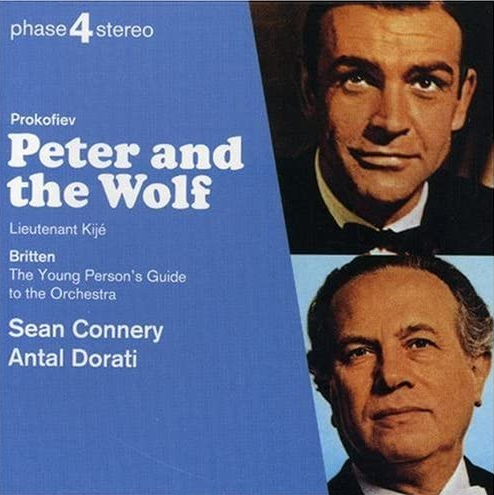
Regular readers and followers will know we celebrated the 50th edition of our imaginary cross-genre and cross-generational spanning radio show, the Monolith Cocktail Social, last month. Carrying on the good work for another fifty (though the last half century did take us 6 years), here’s the latest edition of oddities, smashing hits, novelties, the sublime and more.
We cater to everyone’s tastes, with Taiwanese disco (Juan-Juan Zou), French Ye-Ye (Jacqueline Taieb), petulant snot Krautrock covers (Disco Zombie), the glorious Benin groovers (Orchestre Super Borgou de Parakou), golden age Hip-Hop (Terminator X, Channel Live), Krautrock rock (Krokodil) and a multitude of genres, eras. There’s even a tribute of a sorts to the recently departed inimitable Scotsman Sean Connery.
Tracklist:
Juan-Juan Zou ‘Pond Side’
Bango ‘Mongoose Mix’
Jo Bisso ‘Love Beat’
Zafer Dilek ‘Kol Bastu’
Meitei ‘Oiran I’
Jacqueline Taieb ‘Bravo’
Velvet Crush ‘One Thing Two Believe’
Ninni Forever Band ‘Liekeissa’
Baron Zen ‘Fuckin’ Bored’
Kleenex ‘Hitch-Hike’
Disco Zombies ‘Sad Skinhead’
Prince Douglas ‘Hard Times Dub’
Phantom Band ‘Brain Police’
Meatraffle ‘Oh Corona’
THE NAMES ‘Discovery’
Keep Shelly In Athens ‘I See In Your Mind’
Gary McFarland & Peter Smith ‘Salvation Army Rags’
Man ‘A Night In Dad’s Bag’
Don Nix ‘Olena’
Chicago Underground Duo ‘Moon Debris’
Orchestra Super Borgou de Parkou ‘Abakpe’
Abu Obaida Hassan ‘Nas Fi Nas’
Mike James Kirkland ‘I Need Your Love’
Binary Star ‘Solar Powered’
Channel Live ‘Station Identification’
Da Youngsta’s ‘Rated P.G.’
Terminator X ‘Buck Whylin”
Funkdoobiest ‘Bow Wow Wow’
Biting Tongues ‘Bos Toyota Trouble’
Erlon Chaves ‘Me And My Baby Brother/Day By Day’
Jack van Poll ‘Objizdka’
Lunar Drunes ‘Moon Bathing’
Joe Meek & The Blue Men ‘Valley Of The Saroos’
Sergei Prokofiev ft. Sean Connery ‘Peter And The Wolf Op. 67: “This Is The Story Of Peter And The Wolf”‘
Roberto Musci, Giovanni Venosta & Massimo Mariani ‘Blue’
Krokodil ‘You’re Still A Part Of Me’
Euclid ‘Gimmie Some Lovin”
Mamman Sani ‘Gosi’
JuJu ‘Black Experience’
Lionlimb ‘Temporary’
Tear Gas ‘Lost Awakening’
The Plastic Cloud ‘Face Behind The Sun’
Key & Cleary ‘The Secret’
Furry Lewis ‘See That My Grave Is Kept Clean’
Sandy Harless ‘I Knew Her Well’
Alex Konadu ‘Obi Abawuo’
Hi, my name is Dominic Valvona and I’m the Founder of the music/culture blog monolithcocktail.com For the last ten years I’ve featured and supported music, musicians and labels we love across genres from around the world that we think you’ll want to know about. No content on the site is paid for or sponsored and we only feature artists we have genuine respect for /love. If you enjoy our reviews (and we often write long, thoughtful ones), found a new artist you admire or if we have featured you or artists you represent and would like to buy us a coffee at https://ko-fi.com/monolithcocktail to say cheers for spreading the word, then that would be much appreciated.
Our Daily Bread 412: Toxic Chicken, Helen McCookerybook and Rotifer, Trouble Tracer, Sturle Dagsland…
November 20, 2020
Reviews Jamboree
Brian ‘Bordello’ Shea

The cult leader of the infamous lo fi gods, The Bordellos, Brian ‘Bordello’ Shea has released countless recordings over the decades with his family band of hapless unfortunates, and is the owner of a most self-deprecating sound-off style blog. His most recent releases include The Bordellos beautifully despondent pains-of-the-heart and mockery of clique “hipsters” ode to Liverpool, the diatribe ‘Boris Johnson Massacre’ and just in the last couple of months, both The King Of No-Fi album, and a collaborative derangement with the Texas miscreant Occult Character, Heart To Heart. He has also released, under the Idiot Blur Fanboy moniker, a stripped down classic album of resignation and Gallagher brothers’ polemics.
Each week we send a mountain of new releases to the self-depreciating maverick to see what sticks. In his own idiosyncratic style and turn-of-phrase, pontificating aloud and reviewing with scrutiny an eclectic deluge of releases, here Brian’s latest batch of recommendations.
Singles/Tracks.
Sturle Dagsland ‘Kusansgi’
A track that is as mad as bats is something that should always be celebrated, so here I am celebrating this mad as bats track that is a lovely strange experimental cut up joy of alternative pop; not a song that many people will choose for their first dance as a married couple, but wouldn’t it be great if it was. A song that would bring tears to the eyes of many Aunt Agnese’s, and not one’s of joy. There is always room for the strange in this wonderful world of pop.
Baits ‘What’s On Your Mind’
(Numavi Records) 13th November 2020

This is a gem of an alternative guitar track, one that fizzes with some aplomb, screeching purring like a alley cat with carnal thoughts occupying its waking hours. This song sounds like a pure release of pent up energy and aggression, and a band that can capture that magic is one to watch. A rock ‘n’ roll treat.
Albums/EPs..
Toxic Chicken ‘Uniquely Dancing Into Babylon’
4th November 2020
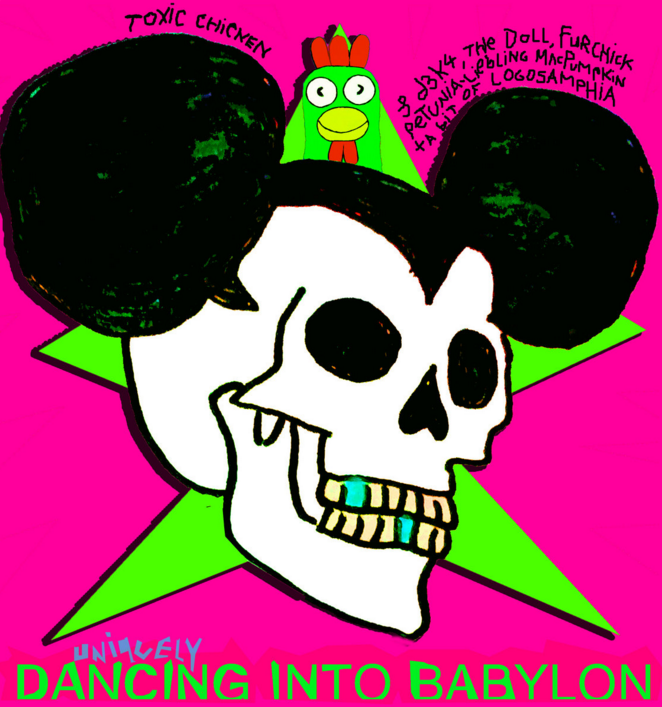
There is something truly marvelous about the music of Toxic Chicken, it is a wonderful intoxicating blend of found sound, electronica and dance, mixed with a element of the true spirit of psychedelia; it is not just music to lose yourself in but also music to find yourself in and then lose yourself all over again in. There is something just so uniquely special about Toxic Chicken’s music ‘Contracts Are An Illusion’ could well be the music pocket calculators dance to a night out boogieing with their retro digital watch friends: all flared trousers and LED lights. There is a track called ‘Signing Tonnes Of System-Orientated Papers Without Reading Them’, and guess what the track lives up to if not even surpasses expectations. With an inventive foray into the mind of a cartoon Yellow Submarine Beatle the whole album is one of true adventure.
See also…
Toxic Chicken ‘Uncomfortable Music’ (Here…)
Toxic Chicken ‘Fun’ (Here…)
Toxic Chicken ‘Wormhole’ (Here…)
Helen McCookerybook and Rotifer ‘Equal Parts’
(Gare du Nord) 4th December 2020

This six track EP is a beautiful stroll down the paths of gentle guitar strum bliss; songs filled with sixties sunshine and pop filled love and romance; a wholesome semi jangle of heartfelt innocent seduction. Yes the kind of record to listen to when you need to escape the mundanities of everyday life with songs exploring the inner turmoil of everyday life with humour, love, and even whistling on ‘Sorry’. Helen McCookerybook‘s and Rotifer‘s vocals blend together beautifully on these six tracks of slightly quirky indie pop and makes one long for a full album, But leaving one wanting more is surely always a good thing and this EP is a very good thing indeed.
Allyson Seconds ‘Bag Of Kittens’
(Big Stir Records) 14th November 2020

What we have here music lovers is a reissue of Allyson Seconds debut album, originally released in 2009, all the songs being written and produced by the extremely talented underground cult artist Anton Barbeau. And what a fine album it is as well; songs of melody and sunshine pop psychness that explode in a mirage of delight and wonder: West Coast pop at its finest.
It has all one wants from a sunshine filled pop album. It has “ba ba ba” backing vocals, twanging guitars, melodies dealt from the heart and perfect pop vocals from Allyson: part seduction part sass, part not quite little girl lost, but little girl finding herself and liking what she is finding. This is a true treat for all who have a liking for 60s/70s influenced West Coast pop perfection; a ray of sunshine for the cold winter months ahead.
The Legless Crabs ‘No Way No Wave’
(Metal Postcard Records) 3rd November 2020
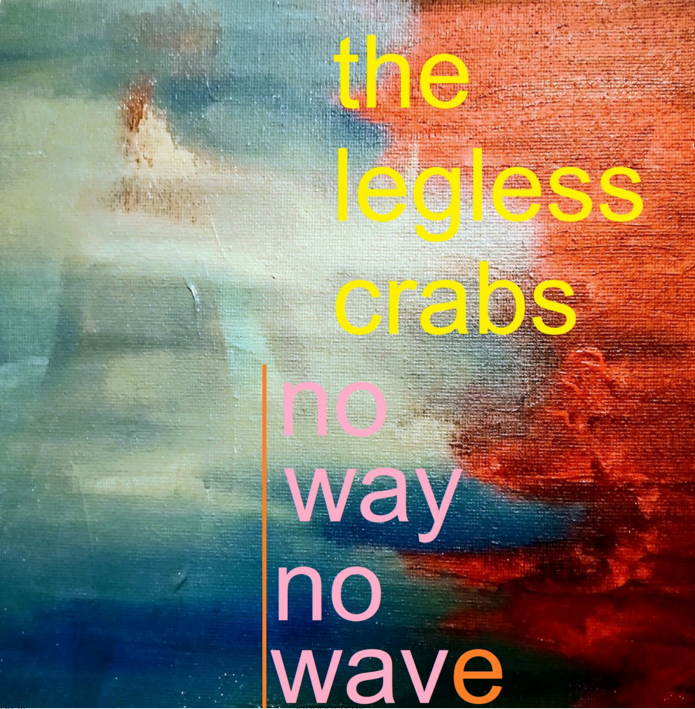
The greatest rock ‘n’ roll band in America at the moment is no doubt the Legless Crabs. You can argue with me if you want, but you would be wrong because they are, and this is their 2nd album of the year or their 3rd if you include the album of EPs and singles. And it is exactly what you would expect from the Crabs: turmoil humour, disgust spat out in a mish mash of distortion, clattering drums, half spoken vocals like Lou Reed with an abscess poking the inhabitants of The USA with a big stick telling them on the whole how stupid they are and to prove the point how stupid they are. Why are the Legless Crabs not on the cover of the Rolling Stone; why are they not blasting out of every radio in America.
The Legless Crabs are America’s best kept musical secret; they are the closet thing they have to the Velvet Underground at the moment: alternative music that is both alternative and music that’s not just some cut and paste facsimile. There might be just a little too much intellect and adventure on show to appeal to the masses, but the underground should take them with open arms and hug the crap out of them. Pure rock ‘n’ roll genius.
See also…
The Legless Crabs ‘Be A Sadist’ (Here…)
The Legless Crabs ‘One People One Mind One Death’ (Here…)
Trouble Tracer ‘AutoFahrt’
(Crow Versus Crow) 13th November 2020

The garbled outpourings from a drunken Bagpuss maybe or even a blindfolded tour of all the hot spots in a bin man’s lorry, or whatever else you can imagine being off kilter but strangely enjoyable that is what we have here, It’s the kind of release I’m surprised is not on Wormhole World records; the kind of release I would have loved to play to drive my Bruce Springsteen loving brother out of our shared bedroom, whilst growing up. Yes, this is not to everyone’s taste I am sure; strange noises and strange noises made with one’s mouth with the occasional rattle and bang of some kind of pan or saucer, so not music as such, just audible art. And I find it very relaxing and amusing. 21 short tracks of audible insanity cannot be a bad thing. An ideal Christmas gift for the uncle you do not know what to buy for.
Premiere: (Track) Tiger Mendoza ‘Words’
November 18, 2020
Premiere
Dominic Valvona
Photo Credit: Helen Messenger

Tiger Mendoza ‘Words (Featuring Kate Herridge)’
Taken from TMSK8: The Mixtape
6th November 2020 via bandcamp
20th November 2020 via all digital service platforms
Previously limited exclusively to Bandcamp, Oxford-based guitarist, producer and remixer Tiger Mendoza (the moniker of one Ian De Quadros) is sharing the slinking and sulking Trip-Hop ‘Words’ track from his new project, TMSK8: The Mixtape, with the Monolith Cocktail ahead of a general digital release on the 20th November 2020 (with a physical release in the pipeline). This no wave funk sass of soulful but haunting moody attitude features the vaporous sultry voice of Ocean Ruins’ Kate Herridge sophisticatedly evoking a hint of SAULT and ESG, whilst Ian’s UNKLE and DJ Shadow influences provide the breaks.
When asked about the roots of Tiger Mendoza, Ian says “having initially been more focused on song-writing on guitar from the age of 16, I fell in love with acts such as UNKLE and DJ Shadow and composers such as Clint Mansell and Vangelis, these artists lead me to start experimenting with making electronic music”. All of which you can expect to hear on the mixtape, alongside a haul of contemporary Hip-Hop, glitch electronica, Chemical Brothers style refashions and guest spot collaborations.
As well as keeping busy working on his own tracks, Ian has produced remixes for luminaries such as Public Enemy and DJ Shadow, and has supported AKDK and Sink Ya Teeth.
Hi, my name is Dominic Valvona and I’m the Founder of the music/culture blog monolithcocktail.com For the last ten years I’ve featured and supported music, musicians and labels we love across genres from around the world that we think you’ll want to know about. No content on the site is paid for or sponsored and we only feature artists we have genuine respect for /love. If you enjoy our reviews (and we often write long, thoughtful ones), found a new artist you admire or if we have featured you or artists you represent and would like to buy us a coffee at https://ko-fi.com/monolithcocktail to say cheers for spreading the word, then that would be much appreciated.
Our Daily Bread 411: The Awkward Silences ‘S/T’
November 16, 2020
Album Review/Dominic Valvona
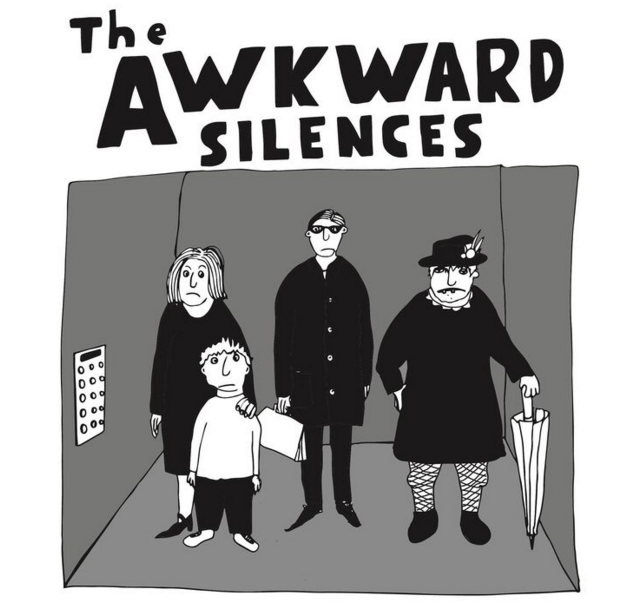
The Awkward Silences ‘ST’
(Blang Records) 27th November 2020
Making a bolshie return with the first album in five years, the annoyed and disgruntled antifolk trailblazers hit their no-wave, post-punk and shambled pop stride with a seriously great record of both offence-taken and offence-given candid rhetoric. Boasting of their rebellious dysfunctional status on the previous Outsider Pop album (which made our choice albums articles that year) of sardonic, peeved white-funk and Daniel Johnston styled resignation, The Awkward Silences make good on a (mostly forced) hiatus to deliver both songs of malcontent and vulnerability – said to be their most personal work yet.
Led once more by de facto helmsman Paul Hawkins – who corrals a band put back by mental health issues, bereavement and other such life complications – the Awkwards rattle the bar with a powered-up seething display of barely-controlled anger. As I said just now, this is a deeply personal affair. Hawkins apart from singing and writing songs and books is a disability campaigner with the Attitude Is Everything charity and newer Beyond The Music initiative (aimed at improving employment opportunities for disabled people in the music industry), and so many of the most poignant broadsides on this album are fueled by those experiences. For example, the Leonard Cohen tangos with the Bad Seeds ‘The Medical Medal’ in some ways reels at the dehumanized way science, especially gene, treat those with “defects” in their DNA code. Here Hawkins rallies against the creeping uncertainties and eugenics of curing and eradicating disabilities: the very disability that shaped and made Hawkins what and who he is: “Scientists fixed my genes for being born this way.”
There’s a lot of inner turmoil on display; a lot of “feeling fine” but in reality struggling to cope with the overbearing miasma of mental illness and the dark thoughts, overthinking that invades a great many people in these uncertain, pandemic times. You can hear that on both the disarmingly ironic malaise of both ‘Everything Will Probably Be Fine’ and the following, cracked actor, ‘Pretending To Be Fine’. The first of which features Mary Boe in a sort of daydream mode, channeling Kirsty McCall as she convinces herself that life isn’t a pile of crushed potentials and worn down mundanity – looking for the little wins, such as supermarket bargains. The second of those far-from-fine couplets pushes together PiL and Altered Images for more mental fatigues.
Elsewhere Hawkins finds social interaction etiquette as complicated as ‘Quantum Physics’; fires a clever sneering broadside at that obnoxious and plainly untruthful adage of the “self-made man”, and the misconceptions of what really makes someone working class in the first place, as definitions shift, to a mix of Attila The Stockbroker and Art Brut; and harasses the office dictate of “organized fun” to a backing track of The Auteurs and gospel organ.
The most unusual track however on this entire album is the band’s curtain call, ‘The New World’, which recently also took the finale spot on Blang Records recent anniversary compilation Scratchcard – reviewed last month on the blog. Theme wise taking its cue from The Village People’s ‘Go West’, the Awkwards go for willful optimism in bleak times, taking that old adage that “our best days haven’t happened yet” as they narrate a John Mouse meets The Rakes style bruiser travail about the American settlers. Like a needled David Byrne marauding over a soundtrack of Boots For Dancing, Delta 5, Moonshake, even a lo fi Cars (on the Stiff Records, if it did disco, disgruntled ‘Getting Ready Fro My Life To Begin’), Hawkins and his troupe make a damn fine record; an indictment on the state of dysfunctional Britain. It’s good to have them back and on form; just as unique and rebellious as ever.
See also:
Paul Hawkins & The Awkward Silences ‘Outsider Pop’ (Here…)
Blang Records ‘Scratchcard’ (Here..)
Hi, my name is Dominic Valvona and I’m the Founder of the music/culture blog monolithcocktail.com For the last ten years I’ve featured and supported music, musicians and labels we love across genres from around the world that we think you’ll want to know about. No content on the site is paid for or sponsored and we only feature artists we have genuine respect for /love. If you enjoy our reviews (and we often write long, thoughtful ones), found a new artist you admire or if we have featured you or artists you represent and would like to buy us a coffee at https://ko-fi.com/monolithcocktail to say cheers for spreading the word, then that would be much appreciated.
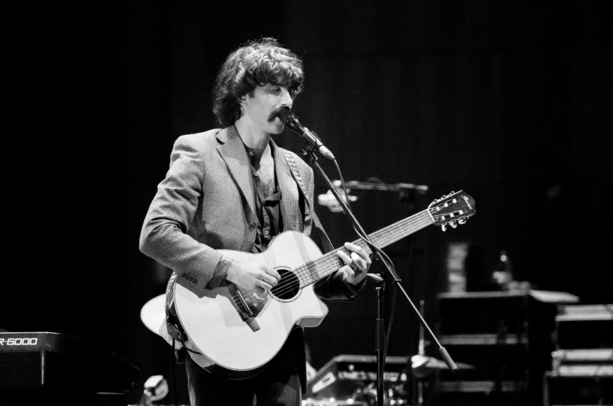
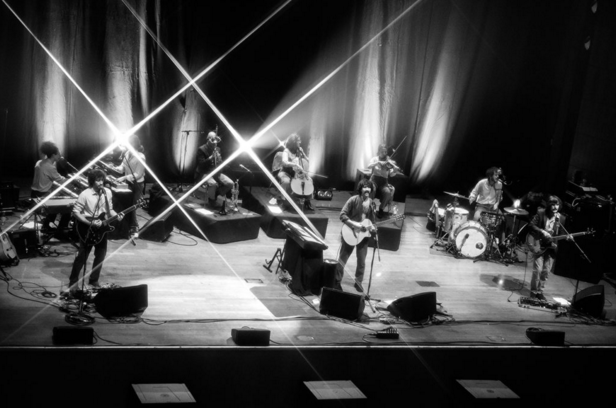
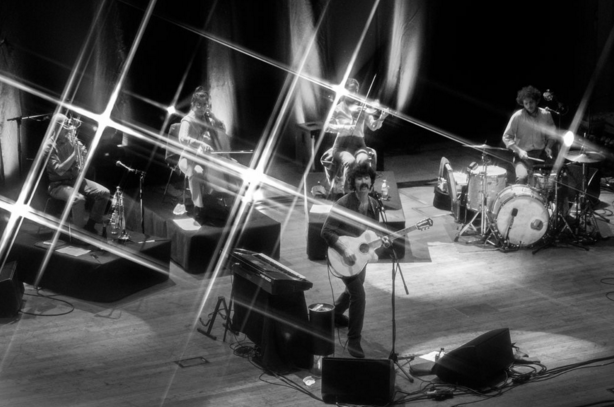
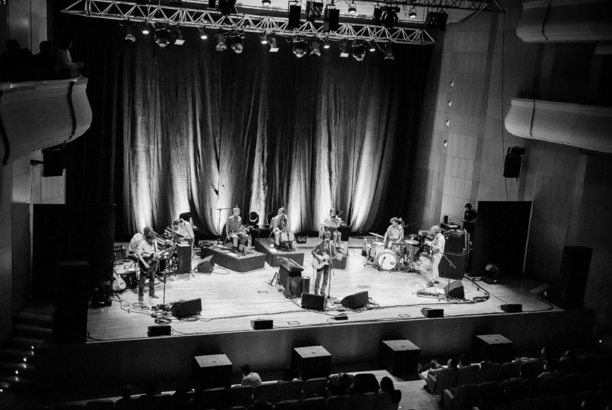
Kalporz X Monolith Cocktail: (Photogallery) Andrea Laszlo De Simone at the Teatro Manzoni, Bologna
November 12, 2020
Live Performance Photogallery
Giorgio Lamonica

For the past couple of years the Monolith Cocktail has collaborated with the leading Italian music publication Kalporz, sharing reviews, interviews and other bits from our respective sites each month. Keep an eye out for future ‘synergy’ between our two great houses as we exchange posts.
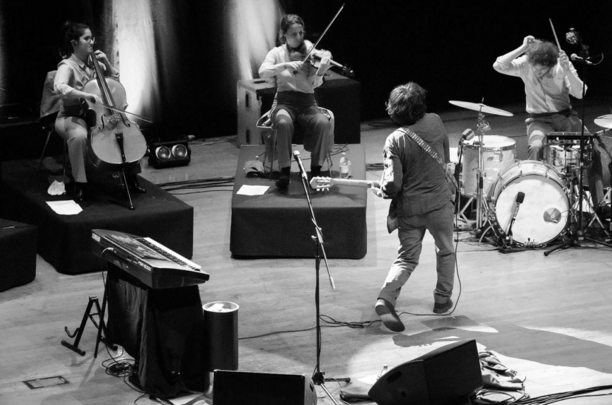
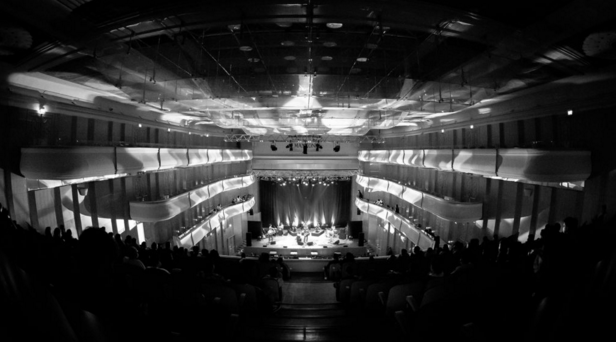
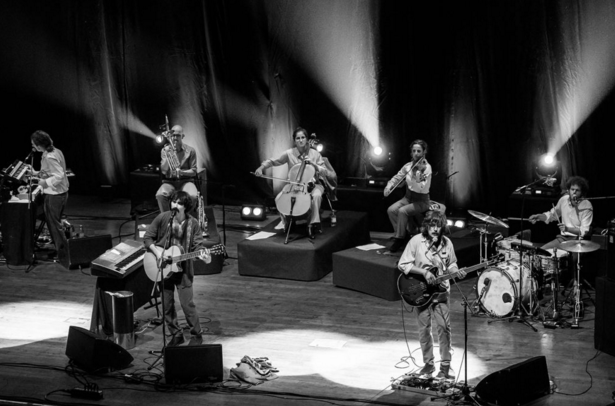
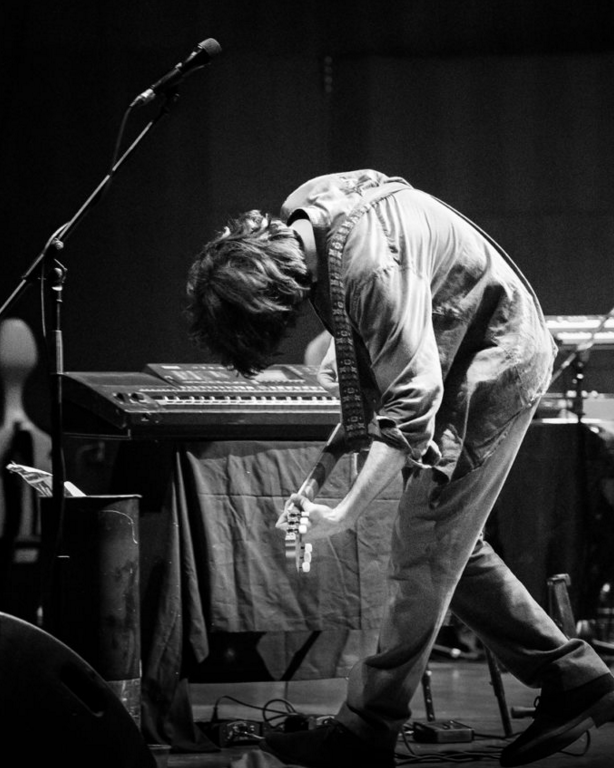
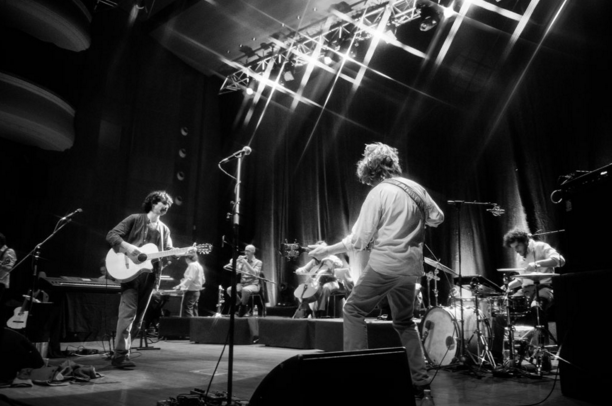
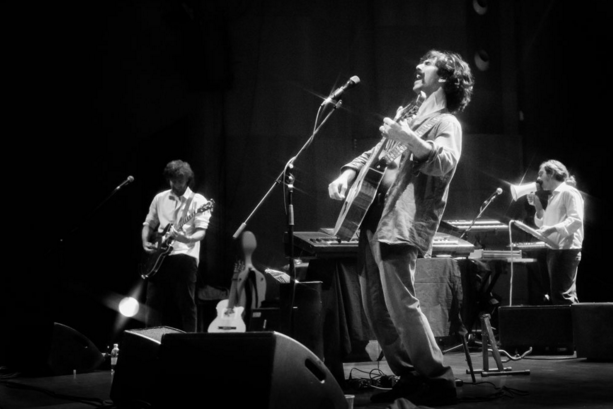
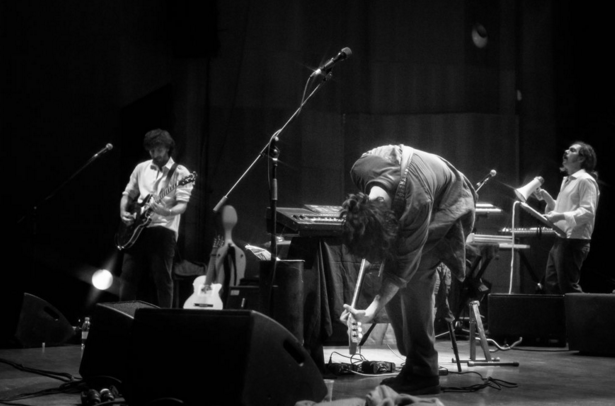
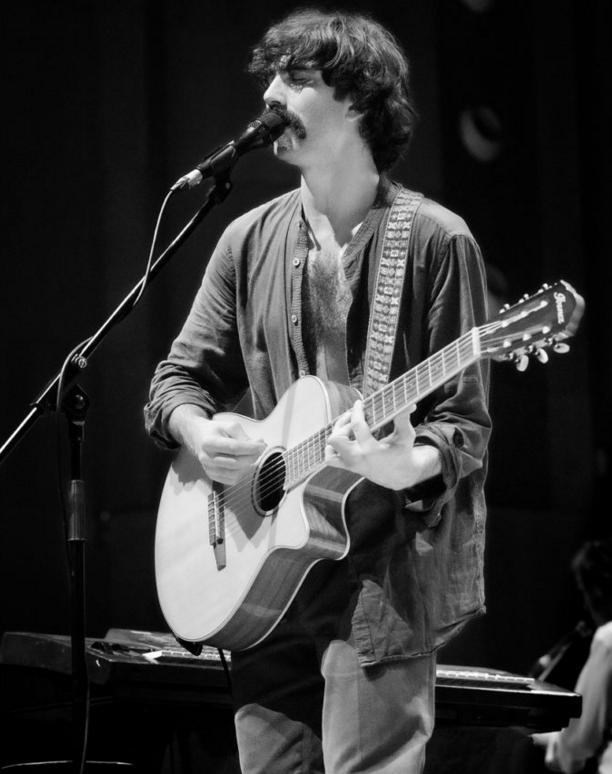
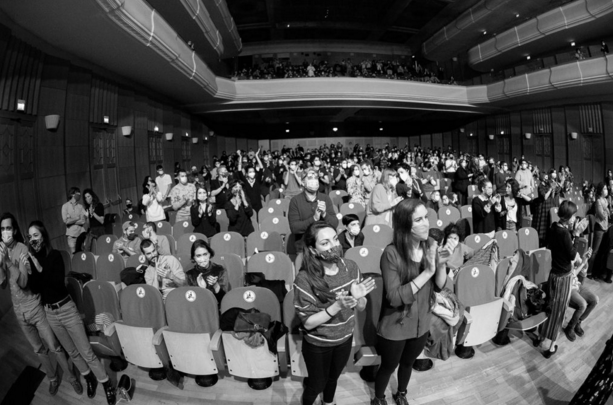
This month Giorigia Lamonica finds just the right words to capture the, well-intentioned, restrictions experience of a live concert in pandemic riven Italy, with composer, artist and multi-instrumentalist Andrea Laszlo De Simone’s performance at the Teatro Manzoni, in Bologna, on Saturday 24th October: part of the Express Festival, an event organized by DNA and the Locomotiv Club.
Andrea Laszlo De Simone‘s live performances are always remarkable thanks to a meticulous care of the arrangements and a rich group of well-prepared musicians. What remained most impressive about this concert, however, was not so much the performance of the singer-songwriter or the musicians, which was very good, but the solemn and melancholic atmosphere born from the awareness that everyone (artists, audience, staff) already knew that we were attending the last concert before the closing of the theatres. The last law about a new lockdown had been pronounced a few hours before. I remember well how the people in the audience were sad, weird and pissed off, as well as happy to enjoy the last concert before a long painful stop. I remember the faces of the musicians, concentrated and attentive, but a little off inside. I remember Elisa’s eyes at the box office very well.
Also on this occasion, as I assume in all the previous ones, the whole staff meticulously followed the rules, the number of seats occupied guaranteed a widely reassured distancing, the audience behaved impeccably. But evidently this is not enough; evidently the occasions of “non-essential” contact should be avoided, as if the essentiality of events of that kind is an objective concept.







Premiere: (Single) Sebastian Reynolds ‘HAL’s Lament’
November 11, 2020
Premiere Single
Words: Dominic Valvona
Photo Credit: Miles Hart
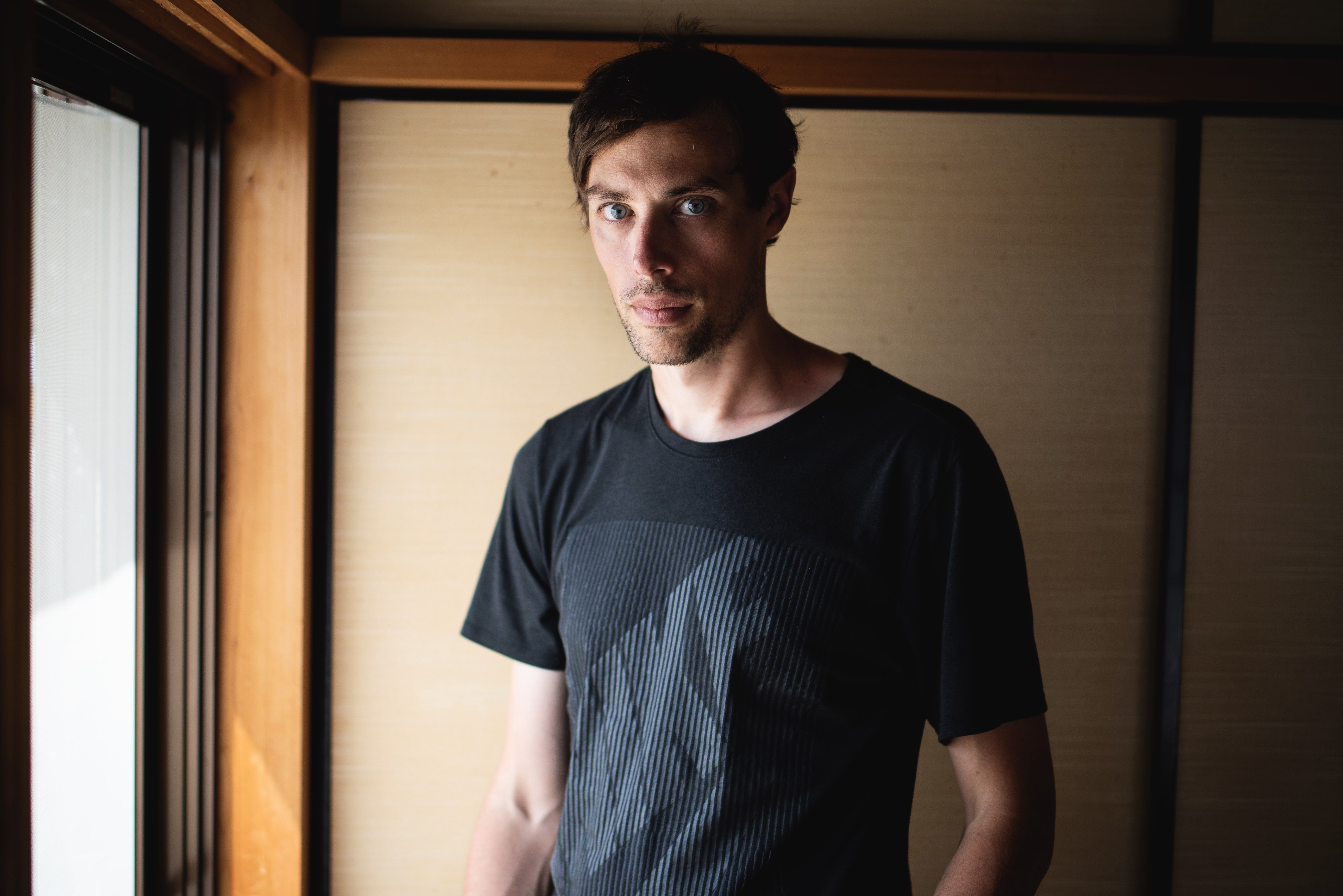
Sebastian Reynolds ‘HAL’s Lament’
(Faith & Industry) 13th November 2020
The highly prolific polymath (composer, producer, keyboardist and pianist par excellence, remixer and record label boss) and encouraging meditative Oxford-based artist Sebastian Reynolds is back once more on the Monolith Cocktail with another mind-expanding cerebral trip, ‘HAL’s Lament’. The second single, to be released this Friday, in the run up to next year’s Nihilism is Pointless EP (released in January 2021), is a plaintive augur of a homage to one of Arthur C. Clarke’s and Stanley Kubrick’s most memorable characters, the increasingly scheming A.I. companion HAL from a 2001AD: A Space Odyssey. As I say an augur, Seb’s mysterious cries and cybernetic wallows from a mysterious cosmic depth issue a warning of the dangers of utopian idealization; HAL is the ultimate example of higher intelligence – cunningly, almost, out-humaning the humans on board a spaceship bound to a evolutionary star gate – evolving into a dystopian nightmare. In this case, taking on logical decisions of self-preservation that ultimately leads to the calculated murders of the spaceship’s crew.
Following on from last month’s quivery swelled spatial drama with moments of grinded and sparked dissonance, ‘Diving Board’, Seb composes a suffused mirage of foggy voices and an ominous alarm of slow synthesized metrics that channel his teenage love for sci-fi trip hop acts such as UNKLE, as well as the deep grooves and dense atmospheres of Massive Attack and Burial. I’d add a hint of the Future Sound Of London to that bold list of inspired techno, electronica and breaks’ stars.
The EP and singles are being released via producer Capitol K’s burgeoning Faith & Industry label, the release platform for Capitol K’s output as well as luminaries such as John Johanna, Champagne Dub, Blue House and Thomas Nation. Nihilism is Pointless follows on from the previous The Universe Remembers EP (also released via Faith & Industry) and the single ‘Heartbeat/My Mother Was The Wind’ (released through Seb’s own label PinDrop). The Monolith Cocktail is happy to premiere.
See also:
Sebastian Reynolds ‘‘Maṇīmekhalā’ (Here…)
‘The Universe Remembers’ (Here…)
‘Diving Board’ (Here)
Sorry to ask again, but you can now help the Monolith Cocktail through the micro-payment support platform Ko-Fi:
Hi, my name is Dominic Valvona and I’m the Founder of the music/culture blog monolithcocktail.com For the last ten years I’ve featured and supported music, musicians and labels we love across genres from around the world that we think you’ll want to know about. No content on the site is paid for or sponsored and we only feature artists we have genuine respect for /love. If you enjoy our reviews (and we often write long, thoughtful ones), found a new artist you admire or if we have featured you or artists you represent and would like to buy us a coffee at https://ko-fi.com/monolithcocktail to say cheers for spreading the word, then that would be much appreciated.
Tickling Our Fancy 094: Stella Sommer, Star Feminine Band, Augenwasser, Lucia Cadotsch…
November 6, 2020
Dominic Valvona’s Reviews Jamboree

Despite the game-changer omnipresence of the pandemic, and the ever-convoluted confusing nightmare of governments failing to keep a lid on this unpredictable virus, the all too predictable countdown to Christmas klaxon has been sounded, and the yearly “best ofs” selection prompting is in full swing. I haven’t actually worked out what the Monolith Cocktail will do this year for our own more eclectic “choice albums” articles. Somehow it seems so redundant in such miserable times when so many have been pushed into unemployment, and with the combined forces of a global virus and the ever-creeping progress of technology (streaming especially) that creatives are finding it impossible to keep doing what they love or survive under the stresses. Then again it is a chance to celebrate for us all the great music that continues to be made, even in this crisis. And there has been so much of it: the good stuff I mean.
With that in mind, let me continue with the usual (unusual) haul of new releases; starting with the life-affirming all-girl troupe from Benin, the Star Feminine Band, and their debut album of joyously delivered serious issues of female empowerment and emancipation in Africa.
Stella Sommer follows up a stunning Lutheran romantic solo debut with a second album of unrushed, beautiful maladies and wanton yearns, Northern Dancer. Imbued by the times and a penchant for the dank miserablist steel synth cities of England, Augenwasser releases his new synth-soul album Sleepdancer for Bongo Joe. The Parisian synth-pop duo Tender Tones manage to turn in a brilliant sophisticated pop EP after the setback of a burglary and the loss of their recordings. Lucia Cadotsch is back with her Speak Low Trio for another meandrous, amorphous voiced jazzy volume of German stage songs, ballads and jazz wonders. And lastly, Krakow’s Corticem look to the stars and beyond on their epic industrial, Krautrock, and spasmodic Planetarium escape.
In the singles section we have Teppo Mäkynen moonlighting under his soul food alias The Stance Brothers, with a beat-y soul snap jazz new 7” for We Jazz (the second release from the Helsinki label to make the cut this week); Verse Bang touches down in L.A. with his candid pandemic trap video ‘Open Space’; Julia Meijer finds inspiration under the waves on the latest single to drop from next year’s The Place Where You Are EP; and we have a snippet preview from the upcoming Night Dreamer label’s next direct-to-disc session; a fuzzed and scuzzed fusion from the pioneers of Anadolu Psych, Moğollar.
Singles/Videos
Moğollar ‘Anatolian Sun – An Introduction Preview’
(Night Dreamer)
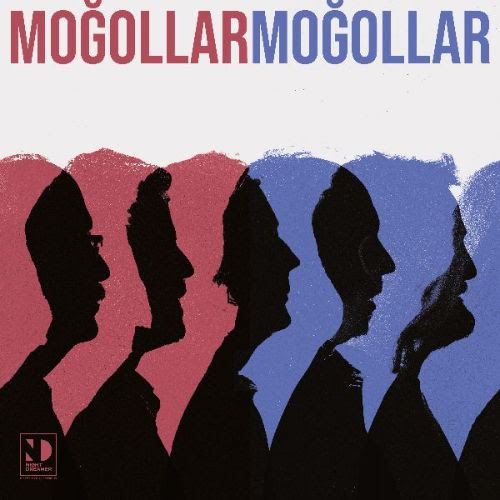
Following the recently released Hayvan Gibi live BaBa ZuLa album session for the “direct-to-disc” project label Night Dreamer, comes a similar session from one of the original Anatolian pioneers, Moğollar. Inspiring the Istanbul souk rock and psychedelic BaBa – the group’s founding member Osman Murat Ertel actually produced this session – psych originators Moğollar have been lured into the studio to cut their first new material in over a decade for the seventh installment of this brilliant expletory and dynamic series.
Anatolian Sun Part 1 & Part 2 is framed as a career overview; a sagacious vision of weathered bowed, aching, longing Turkish atavistic landscapes and progressive, fuzzed and scuzzed psychedelic rocking.
A little detail and context to get you in the mood:
‘Formed in 1967 with keyboardist Murat Ses at the helm, Moğollar were the original Anadolu psych originators. [Among their achievements] They were the first Turkish pop band who tried to blend the microtonal folklore and traditional instruments of rural Anatolia with Western pop and rock; they were the first Turkish psychedelic band to achieve overseas recognition, winning the prestigious French Grand Prix Du Disque in 1971 after a period in Paris; and they coined the very phrase ‘Anadolu Pop’ with their first album release. They were radical, innovative, and hugely popular, and when the great artists of the Turkish rock revolution appeared on the scene, Moğollar were already there – stars including Barış Manço, Selda, Cem Karaca and Ersen all recorded with them or briefly joined the line-up. Moğollar were and are the undisputed pioneers of the style.
Moğollar first emerged out of the pop group Silüetler (‘The Silhouettes’), with whom the young Istanbul-raised keyboardist Murat Ses had been playing. Silüetler had enjoyed some success in the mid-1960s, but the mercurial Ses wanted to push his music into new realms. Recruiting Silüetler’s vocalist Aziz Ahmet, they formed Moğollar in late 1967, and were joined shortly after by visionary bassist Taner Öngür and electric guitarist and saz player Cahit Berkay, both of who [still] feature in the group to this day. Ses and his band mates had long been fascinated by the traditional microtonal folklore and rural instruments of Turkey’s Anatolian hinterland, and were determined to bring them into Western pop and rock to create a radically new kind of Turkish popular music. By the end of the 1960s Moğollar had found underground stardom across Turkey, playing a truly original mixture of Anatolian folklore, Western pop and wailing late 1960s psychedelia. We have a preview video to share with you right now, ahead of the album’s release on the 11th December 2020.
See also:
BaBa ZuLa ‘Hayvan Gibi’ (Here…)
The Stance Brothers ‘On Top’
(We Jazz Records) 6th November 2020
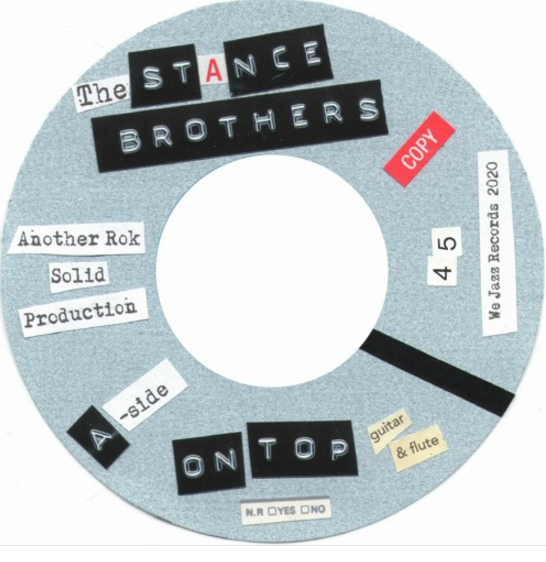
Hark at the cool, bar room hang out vibes of this one! Another We Jazz 7” of effortless in-crowd jazz that reimagines The Sorcerers teaming up with The Afro Soul-Tet, Rufus Harley and Mel Brown, but remixed by Madlib: Yep that’s great praise indeed from me.
Under the soul food imbued The Stance Brothers alias, producer/drummer Teppo Mäkynen works the “guitar & flute (played in this instance by Timo Lassy under the cover of his Diamond T cover)”, “organ & vibes” and “beat” into three different versions of a reimagined Stax-Hip-Hop-Jazz sizzler. Nothing else needs to be said: A solid soul-snap of jazz.
Fans of the Helsinki hub We Jazz can find a second release this month in the albums section below, with Lucia Cadotsch’s trip-y, freeform album of reinterpretations Speak Low II.
See also…
OK:KO/Alder Ego/Timo Lassy & Teppo Mäkynen ‘Ateneum 2019 (We Jazz Live Plates VOL. 2)’ (Here…)
Stanley J. Zappa ‘Muster Point’ (Here…)
JAF Trio ‘S/T’ – Otis Sandsjö ‘Y-OTIS 2’ (Here…)
Verses Bang ‘Open Space (Oozhe Remix)’

Verses “the eagle” Bang has flown the UK coop for pastures new, relocating recently to the allure of L.A. And who could blame him as the dank drizzle of early evenings draw in on a miserable winter lockdown. The idiosyncratic and pop culture sartorial dressed burgeoning artist isn’t about to let the coronavirus dampen this new life, as he touches down in his new city with a candid offering of trap.
On the intersection of Hollywood Boulevard, Bangs reiterates his ongoing recovery from addictions (Codeine and weed) and struggles with mental health to a backdrop of artifice; all shot on that Pandora’s box of artificial validation, the iPhone. The pandemic bubble of L.A. looks appealing in aquamarine tinted filter, but there’s a battle going on here below the surface; a confession and search for identity in a an age of high anxiety and rage.
Following on from the deconstruction of an addicted personality, Cardigans & Calories, and a clutch of video singles and tracks, Bangs conveys the isolation we all feel at the moment, trapped in the middle of a worldwide virus. Getting in the right headspace, Bangs uses his platform wisely to rap candidly about his travails and the woes, worries he and many of us are feeling right now.
I wish him all the luck in the world with his move Stateside. And look forward to hearing his new material.
See also…
Verses Bang ‘The Eagle Has Landed’ (Here…)
Julia Meijer ft. Fyfe Dangerfield ‘Under Water’
(Pindrop) 6th November 2020
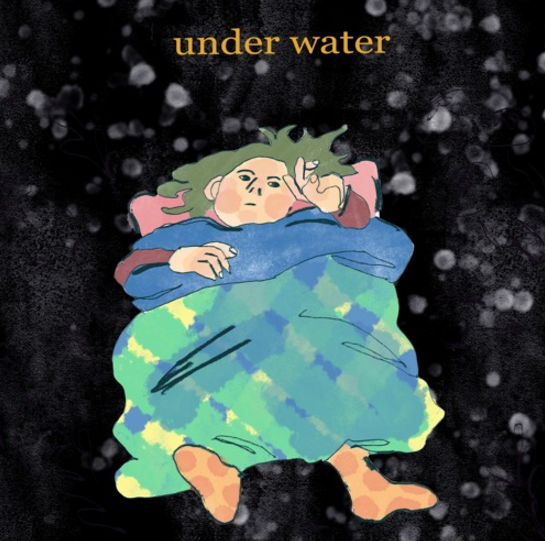
Far exceeding the Scandi-pop or indie tag that seems to haunt and follow around any artists or band from that part of the world, the much more tactile and expansive singer-songwriter Julia Meijer seems to channel new, wider influences on each release she puts out on the burgeoning Pindrop label. Based actually in Oxford, the Swedish-born artist has been experimenting with a sound that encompasses folk, indie, pop, new wave and subtle electronica. I pretty much rated her 2019 debut album Always Awake, which I said at the time fluctuated brilliantly between the hymnal, the synth-glistened and rocking: a mix of Lykke Li, Kate Nash and New Young Pony Club.
Ahead of next year’s The Place Where You Are EP, and following on from recent singles ‘Skydda Dig’ and ‘The Place Where You Are, the third single from that songbook ‘Under Water’ drops today. Once more featuring the lush harmonious woes of former Guillemots front man Fyfe Dangerfield, who is part of Julia’s backing band, this latest alluring – but also prowling almost – single has an air of Fleetwood Mac about it. Nicely tampered with subtle washes and a stepped-up rhythmic drive, Julia searches for new perspectives under the echoed waves.
Julia has this to say about the single’s inspiration and theme:
“The inspiration for ‘Under Water’ came to me when I was snorkeling once. It felt like I was in space, things moved very slowly. I wanted to capture that sense of peace and slow pace in the music, but also a creeping sense of panic and stress. The lyrics are about the thoughts that came up in my head as I was swimming and got to see things from a new perspective, like looking up towards the sky from under the water”.
A swimmingly well-crafted song that bodes well for next year’s EP.
See also…
Julia Meijer ‘Always Awake’ (Here…)
Albums/EPs..
Star Feminine Band ‘S/T’
(Born Bad Records) 13th November 2020

Disarming a serious message of female liberation and opportunity with the most joyous, passionate and brightly fluttering of song, the Star Feminine Band sound like (Le) Musical Youth meets Wells Fargo and the Dur Dur Band on their debut album for the Paris label Born Bad. With a remarkable backstory, coming together in the most unusual of circumstances and uniquely pushing the rights of sisterhood in their Benin homeland, this cast of young kids and teenagers (though those ages hide the fact they’ve had to grow up fast in a society that undervalues female empowerment and freedom) send out the positive vibes through an embrace of Ghanaian Highlife, Congolese Rumba, Soweto lilting choral soul, Nigerian Afrobeat, the local Vodun and even Calypso.
It’s no surprise that Benin has such a glorious mix of styles within and bleeding over its border, caged-in as it is by Togo, Nigeria, Burkina Faso and Niger. It is a shinning intersection of African music and a progenitor of styles itself, home to such legends as Gnonnas Pedro and Antione Dougbe. Those male titans can now make room for this sisterhood of infectious, candid girls from the remote Northern town of Natitingou.
At this point we need a little background for context. Answering the call of this project’s instigator Andrè Balagueman through a local radio station for girls interested in taking part in a series of free music training sessions, five of the eventual lineup arrived from that remote Northern Benin village in response. They were joined by two of Balagueman’s own daughters to make this a seven-piece. With no previous musical experiences other than natural talent, they were all taught the drums, guitar, bass and keyboards. Sessions were intense, fitted in-between the priority of school. No one though could quite predict how this project would keep building momentum. But then not everyone has the driver that propels this group. Music for them is nothing short of emancipation, the opportunity to break away from a male-dominated culture.
Prospects are slim for women in many of these outposts, where forced marriages and teen pregnancies are common. Employment means selling bar peanut, bananas and the local “millet drink”. Thankfully the noise that started to grow around this breakout band garnered much attention nationally. The mayor of Natitingou even designated them a practice space.
Furthering an obvious appeal and rich polyrhythmic energy, French engineer Jérémie Verdier carried news of this unique Benin wonder to Europe: stumbling upon the band whilst volunteering in the country a couple of years ago. On his return home he enthused about them to the Spanish engineers and videographers Juan Toran and Juan Serra, who were fascinated enough to seek out and record them: both musically and for a short documentary.
What they captured is a sweetened, spritely youthful energy; a burgeoning, blooming even, upbeat Afro-pop, soul, funk and choral record of girl-power. Far from some kind of manufactured band, or gimmick, the Star Feminine Band really do have something to shout about; whether that’s a demand for equality on tracks such as the swaddled Township ‘Femme Africaine’, or in encouraging women to succeed, as they do on the shared vocal stubbed drums loose ‘Rew Be Me’. That second track is sung in the “Peul” ethnic group dialect (one of the largest nomadic groups in the Sahel and West African regions), and is just one of various languages and tribal heritages that you’ll hear on a championed shared experience of ethnic diversity. The Highlife trilled, drum splashed dance ‘Iseo’ is a call to arms in that respect, exhorting a need for the many strands of Benin culture to unite for the common good.
But amongst the lilting and tighter invigorating performances this is about providing a real space for women to break with convention, and to wrestle free of constrictive traditions. As its instigator Balagueman puts it: “I simply wanted to show the importance of women in the societies of North Benin by forming a female orchestra.” With ages as young as ten, and the oldest only seventeen, there’s a long bright future ahead for this group, who create nothing short of infectious sunshine joy.
Tender Tones ‘Youth Retirement Club’
(Somewherecold Records) 14th November 2020

Constantly increasing their roster and tastes, North American hub Somewherecold Records’ latest signing is the Paris-based Tender Tones synth-pop pairing of Manon Deruytere and Maxine Parguad. An electro gliding fantasy of sophisticated French pop, shoegaze and Chromatics like vaporous exuded diaphanous lure, the duo provides the most crystalline and clean synthesized soundtracks to an occasion of woe and setbacks. For this is version two of what should have been the debut EP, a reconstruction from memory after the original recordings were stolen along with the Tenders gear in a burglary at their Parisian apartment.
A recreation then, Youth Retirement Club is a record haunted by that miscreant crime, something that can’t help but seem even more personal than the theft of obvious valuables. And so a certain menace and sense of loss permeates the often driven sparkling pulse of this nu-wave glinting synth-noir extended EP.
With duets (sort of) throughout, combining a shadowed deeper male voice with a breathless, more sighed and cooed female vocal, the duo sing and skulk over a balance of the heavenly (‘In Dreamed Lives’) and a blazing alarm of broody darker forbade (‘Red Lovers’). All the while lyrics speak of resigned romanticisms, nostalgia and broken dreams. That nostalgia seeps into the very fabric of this dreamscape, resulting in echoes of the 70s and 80s. But it’s a manufactured past; an alternative soundtrack to Stranger Things, with moments of a more disarming Depeche Mode and Vangelis.
A superb breathe of fresh air in this genre, with customary French élan, the Youth Retirement Club is for lovers of Jennifer Touch and Emika, and just anyone after a classy evocative outpour of synth-pop sophistication. They’ve not only turned a bad situation and loss into a win, but also managed to produce a great EP.
Augenwasser ‘Sleepdancer’
(Bongo Joe) 13th November 2020
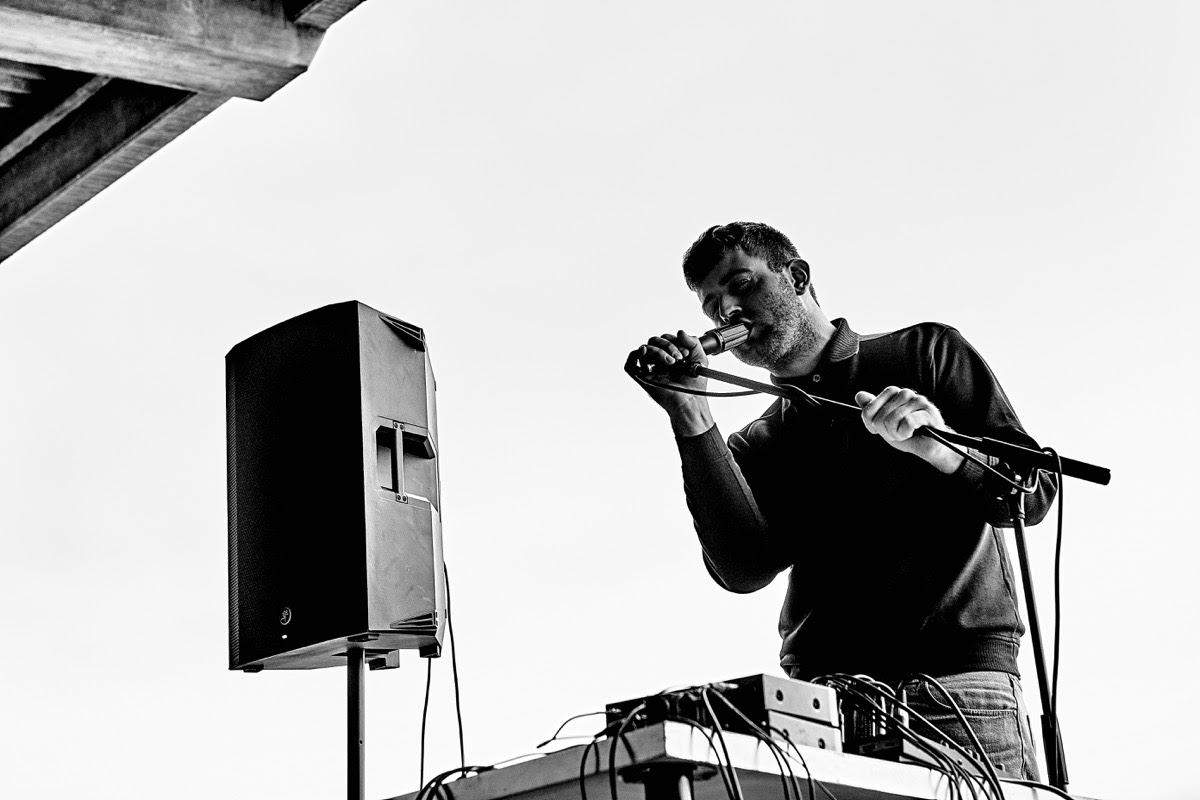
It hasn’t surprised me to find the latest release from Elias Rascle’s electronic alter-ego Augenwasser is in partnership with Bongo Joe, as there are certain post-punk and C86 synth imbued tracks on the new album that wouldn’t sound out of place on that label’s recent survey of 80s obscured Swiss experimental electronica, INTENTA. A real Swiss affair (the label, the artist and at least some of the sonics it is inspired by all emanating from that alpine retreat), the multi-instrumentalist artist Elias also seems attracted to the damp eerie-synth of a Northern English city: somewhere like late 70s Sheffield or Manchester. That means echoes of Cabaret Voltaire, early Human League and such amongst hints of DAF, Kas Product and even Suicide. But far from a rainy dank steel city sound, this album is actually quite soulful in its romantic gestures and forlorn.
Fatigued by a daily grind, he dreamily and hypnotically drifts through a somnolent suffusion of Casio pre-set rhythms, snozzled and floaty saxophone, trance-y guitar, Geiger counter tight and padded electronic drums and synthesized organ; all the time referencing a search for the “light”.
Often resigned sounding, our synth-troubadour comes on like a post-punk Jim Morrison; especially on the album’s Velvet Underground-esque lead single and opener ‘Paid The Rent/Going Out’. But the next languid reverberation from the ether, the ‘Work Wait Work’ cycle sounds like Teardrop Explodes era Julian Cope hovering over a Harmonia track. ‘Back To Daylight’ reimagines a vampiric Nilsson if he’d signed to Mute Records on a kind of synth-noir, slurred night owl downer that could easily be a damnation of a depleting nightshift job.
Elias could be actually sleepwalking, hugging Kippenberger’s contorted bent street lamps, on a sort of sloshed traipse through art-school Casio Bossa with ‘Born On A Saturday’. But by the end of the Sleepdancer album he strikes up Roedelius’s piano, for the melodious float-y curtain call ‘Dead Of Night Running Away’.
It’s an album of insular blues, lost causes and despondent soul, finely crafted to ooze a sophisticated aura of melodic lo fi electronic pop that feels just right in these present pandemic days. This isn’t to say Sleepdancer is a dark or miserable experience. Elias continues to experiment freely with his songwriting on this dream state of a chiming, untethered record.
Lucia Cadotsch ‘Speak Low II’
(We Jazz) 27th November 2020
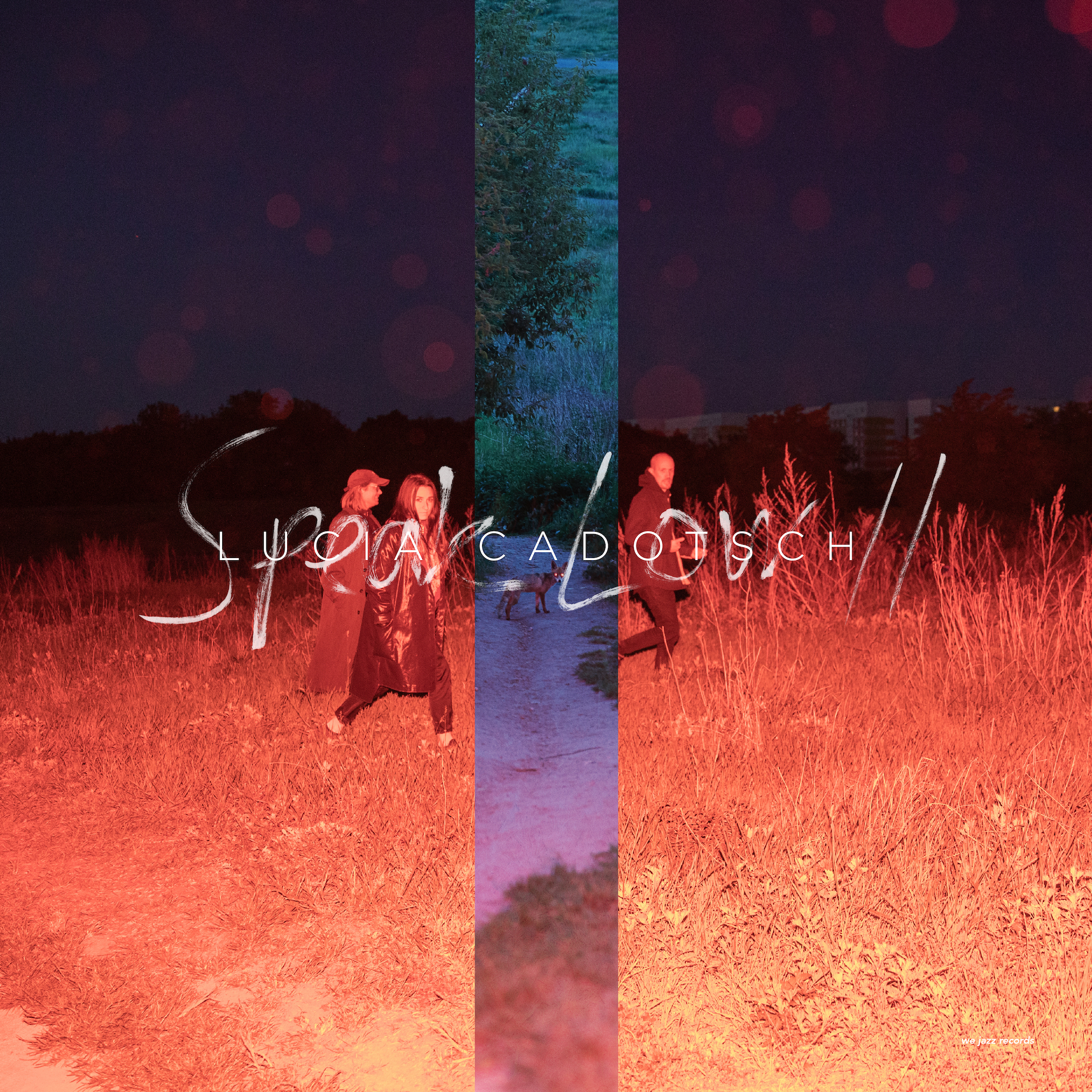
This edition of my fancies is turning into a We Jazz label love-in, with this being the second release from the Helsinki hub to make the cut this month. Tripping a light fantastic across a curious and congruous selection of covers and standards, two of We Jazz’s (sort of) house band members, Otis Sandsjo (of Y-OTIS reconstructive hip-hop jazz fame) and Peter Eldh (of the masterful Koma Saxo), once more join forces with the amorphous voiced Lucia Cadotsch to re-shape the unfamiliar familiar under the umbrella of the Berlin-based Swiss singer’s Speak Low Trio.
Arriving five years after the debut album, but a well-oiled machine thanks to plenty of live performances, the trio expand the ranks to accommodate the prestigious ECM label solo pianist Kit Downes and cellist Lucy Railton. Equally as untethered, on a serial pathway of musical freedom, this broadened set-up meanders, drifts, floats and hovers over a flowing oeuvre of German stage numbers, ancient folk laments, avant-garde troubadour maladies and jazz balladry on the second volume of such interpretations – that first volume featuring the trio’s favourite songs of the previous decade.
Reminding me in part of Max Andrzejewski’s Hutte And Guests Play The Music Of Robert Wyatt album, the Speak Low trio go down a both psychedelic dreamy and free-flowing route as they capture something of the essence, mood of the originals. And so Duke Ellington’s 1937 bi and polytonality ballad wonder ‘Azure’ maintains much of its mystery and exoticism, but now takes on a more otherworldly spellbound loose quality with Kit’s mirror-y organ shimmers and Otis’ snuffled stubbed tenor saxophone. Luica’s voice is pretty magical too; a jazzy range of wooing, coos and freely tripping allurement.
Randy Newman’s most covered song ‘I Think It’s Going To Rain Today’ is given a suffused lightened warm touch of snuggled sax and spidery double-bass, whilst Eno’s piano downer (but touching) ‘By This River’ has a more romantic, even ethereal touch. The Ahmed Jamel Trio’s 50s augur ‘What’s New’ and Tony Williams ‘There Comes A Time’ are both effortlessly combined for an experiment of be-bop, trip-hop and melodious longing. And that crooners and majesties favourite yearning ballad, ‘Wild Is The Wind’, is let loose, pulled away from the moody dragging version made famous by Bowie to a unique space of weather stirring aped sax (which sounds at times like some pained creature), pondering double-bass and a beautifully moving vocal. A second Bowie connection, Brecht’s infamous and recycled macabre Baal production song ‘Ballad Of A Drowned Girl’ was performed and recorded by the cracked actor of course. This sorry episode sees the seduced victim of that play’s protagonist kill herself by drowning – inspired in fact by both the murder of famous Marxist revolutionary martyr Rosa Luxemburg in 1919, and Ophelia. In this vision, the trio tip-toe around in a watery graveyard of flitting, trickling, dancing river life; the mood and drama enervated by a most meandrous vocal. Mirage-y, bowed, haunted and rasping with spasms of rhythms and spiraling, this second volume of jazzy transformations is a master class in unburdened reinterpretations; the group neither tied to or beholden to the source material they’re riffing and freely playing around with. That’s not to say they haven’t given these songs the respect they’re due, but that they offer only an amorphous thread, a layline in which to focus on and then stretch, push beyond. More than that, it’s a great, most beautiful jazz album; the star turn of which is Lucia’s stunning if effortlessly sounding gossamer vocals.
Corticem ‘Planetarium’
(Submarine Broadcasting) 21st October 2020
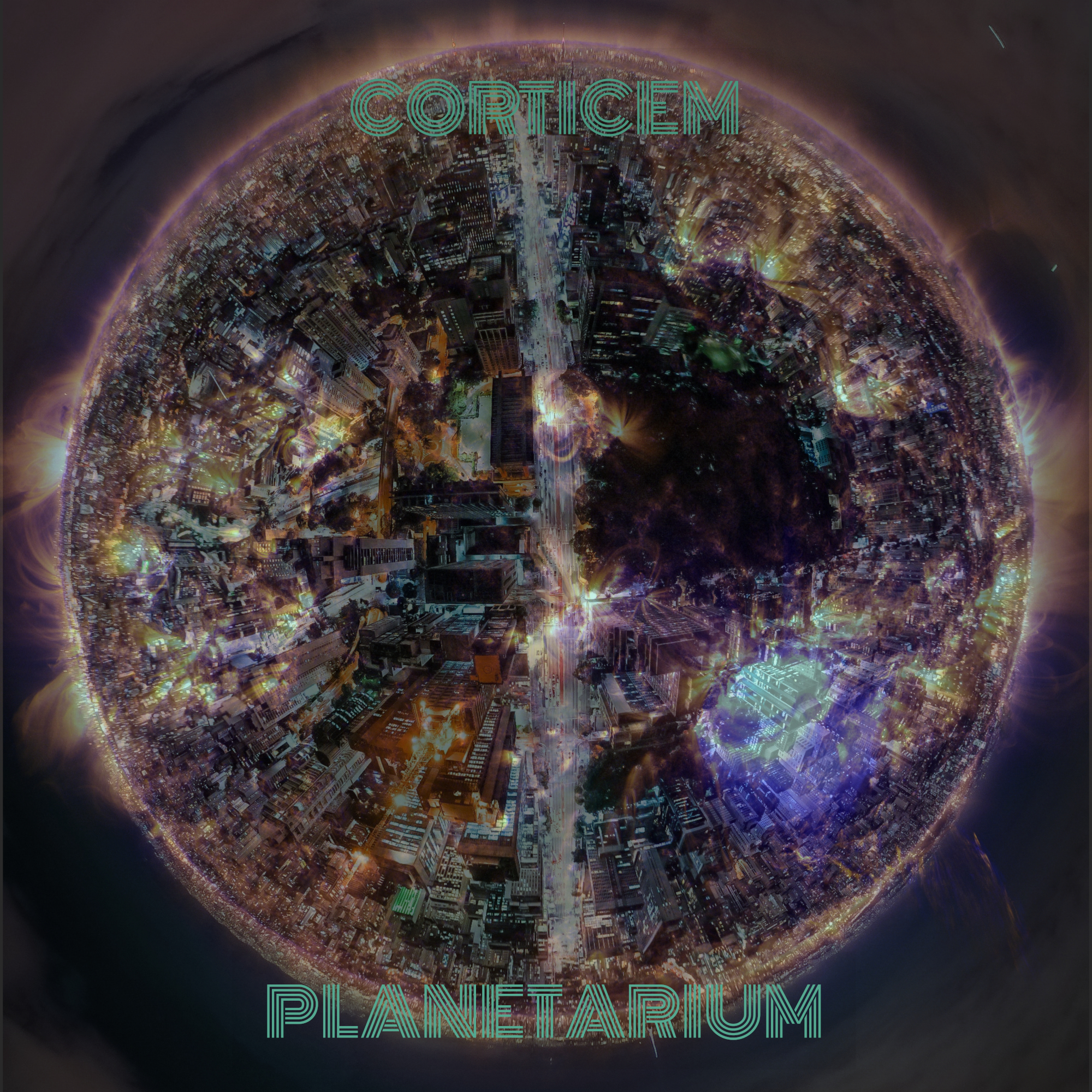
Less Holst The Planets magnum opus, more lo fi Krautrock purview of a sinister, mysterious cosmology, beamed from a subterranean bunker in Krakow, Corticem’s Plantetarium dials into the present pandemic dystopia whilst casting a soundtrack of awe at those heavenly bodies. I say from Krakow, and a bunker, but the trio have lost their previous studio/rehearsal space; the loss of which acting as an unfortunate stimulus for the mix of industrial, entrancing, cosmic and experimental exploration on this minor-opus of concentrated malcontent, despondency and rage. In the rush they quickly took action to record sessions to tape using whatever they could hastily pack up. This set up works out as “Theremin-like feedback loop from a cigarette pack-sized amp held up to the guitar pickup; multi-tracked bowed cymbals; a single mic on a drum kit running through a broken amp; reversed drums; and the walls”. A description that pretty much does my job for me, as that is exactly how it sounds.
Formed by members of the “songs strange and not so-strange” Sawak in the Polish city of Krakow, Corticem finds the trio of orbital sonic cosmonauts Bogdan Markiewicz, Antonello Perfetto and Greg Nieuwsma looking to escape towards the stars but anchored to the malaise and mounting horrors of terra firma: A world gripped in Covid distress. Not unsurprisingly tracks such as the interplanetary raga doom rocking ‘Planet Coronavirus; The Dying Quasar’ have an atmosphere of prevailing dread; a merging of scientific speak samples, suffused fuzz, guitar friction and drum beats, all lost in a smog. ‘Planet Bye & Good Riddance’ warps a newsreader’s update on coronavirus cases in the trio’s Poland-based home to a soundtrack of mosey galactic cowboy music. The final nail on that coffin of discontent and derision at what our world has become, ‘Planet JuJu: The Nasty Earth’ resonates with very bad JuJu, as a vocal becomes more and more deranged and tortured. Sonically speaking, hi-frequency whines like a quivering viola or violin from Outside The Dream Syndicate pierces Klaus Dinger’s drums and a cacophony of Cage.
There’s alien abduction to the synth menace of Bernard Szajner’s Dune missives, Air Liquide, Jóhann Jóhannsson darker stirrings and Future Sound Of London on the foreboding rotor beamed dark material ‘I Went To Mars And All I Got Was Abducted’. And a rewire, part augur of future resource calamity and part pun riff on the moon landings, with the opening reversal whipped and sucking ‘7001: Houston, We Have A Drinking Problem’. Actually, it’s quite a nice contemplative track that reminded me of both Daniel Lanois and Craig Ward.
Greek myths abound on the ecclesiastical ARP like mystery of ‘Mercury: Between Gods And Mortals’ – imagine Tangerine Dream’s cathedral organ synth -, and ‘Jupiter Is A Warped Tape’ imagines a slurred HAL and slow beat to avant-garde jazz spasms of drums version of a union between Jello Biafra and The Heroes Of Hiphoprisy. Throw in liberal contortions of Swans, the faUSt pairing of Jean-Hervé Peron and Zappi Diermeir, Mythos, the satellite refraction broadcasts of Gunther Wusthoff, The Cosmic Range, Itchy-O and Ash Ra Tempel and you get the picture.
The Submarine Broadcasting platform is on a roll of late; Planetarium being among the best, most interesting and thoughtful albums they’ve ever released. A commanding oeuvre as dystopian and alarming as it is alien, otherworldly. Definitely making my end of year articles.
Stella Sommer ‘Northern Dancer’
(Northern Dancer Records/The Orchard) 30th October 2020

A thawing of the Lutheran North European romantic malady that permeated Stella Sommer’s beautifully yearning debut album, the German songstress seems to almost float across the paused and gorgeous follow-up, Northern Dancer.
Still evoking the deeply voiced presence of Nico and a smoky, aged Marianne Faithful, Stella’s gauzy Teutonic venerable vocals also open up peaceably, dreamily and delicately on what is another songbook of longing and isolation. For this is a much softer effort than 2018’s 13 Kinds Of Happiness, which offered the odd barreling bounding gallop of early 80s Bowie and Kate Bush.
The instrumentation this time around is a controlled enervated vapour of colliery brass and gentle orchestration swells: A sort of pastoral woodland of pizzicato strings, timpani, flute, tuba and shimmery splashed cymbal crescendos. There’s also a sparse but lovely use of rolling and plonked piano, some light guitar and a withheld suffusion of ambient atmospherics. All of which is perfectly pleasing and melodious but above all stirring; resembling, as the main theme seems to be, a riverside or ocean and pier scene of wanton love and heartache. You could say it captures a lapping tide, or the waves, as a sagacious Stella sends out flowery metaphors to an absent lover, listener, confidante.
Yet, there are touches too of Scott Walker’s morose, and even some supernatural Nick Cave (through the filter of Lee Hazelwood) to be found on songs such as ‘Young Ghost, Old Century’.
Overall a work of pulchritude vulnerability and hushed intoned romantic yearns, Stella Sommer’ second beatific album offers an even subtler songbook of both existential and visceral tender malady: Not so much a progression, improvement on that stunning debut, more a lighter, mature gossamer extension of it, every bit as breathtaking and unrushed.
See also:
Stella Sommer ’13 Kinds Of Happiness’ (Here…)
Hi, my name is Dominic Valvona and I’m the Founder of the music/culture blog monolithcocktail.com For the last ten years I’ve featured and supported music, musicians and labels we love across genres from around the world that we think you’ll want to know about. No content on the site is paid for or sponsored and we only feature artists we have genuine respect for /love. If you enjoy our reviews (and we often write long, thoughtful ones), found a new artist you admire or if we have featured you or artists you represent and would like to buy us a coffee at https://ko-fi.com/monolithcocktail to say cheers for spreading the word, then that would be much appreciated.
Reviews Roundup/Brian ‘Bordello’ Shea

The cult leader of the infamous lo fi gods, The Bordellos, Brian ‘Bordello’ Shea has released countless recordings over the decades with his family band of hapless unfortunates, and is the owner of a most self-deprecating sound-off style blog. His most recent releases include The Bordellos beautifully despondent pains-of-the-heart and mockery of clique “hipsters” ode to Liverpool, the diatribe ‘Boris Johnson Massacre’ and just in the last couple of months, both The King Of No-Fi album, and a collaborative derangement with the Texas miscreant Occult Character, Heart To Heart. He has also released, under the Idiot Blur Fanboy moniker, a stripped down classic album of resignation and Gallagher brothers’ polemics.
Each week we send a mountain of new releases to the self-depreciating maverick to see what sticks. In his own idiosyncratic style and turn-of-phrase, pontificating aloud and reviewing with scrutiny an eclectic deluge of releases, here Brian’s latest batch of recommendations.
Singles.
Bunny And The Invalid Singers ‘The Certainty Kids/None Of This Happened’
(Bearsuit Records) 31st October 2020
A new release from Bearsuit Records is always a thing to look forward to. This time we have a new single from Bunny and the Invalid Singers, taken from their new forthcoming album due for release in January 2021. It is what you expect from Bunny and the Invalid singers and indeed Bearsuit Records itself: two tracks of sublime beauty that you could imagine turning up on the new James Bond soundtrack, or more like an old James Bond soundtrack, as both tracks are blessed with a 60s shadowy seduction but are very of this time, and are two examples of beautifully experimental pop at its finest.
I would love to hear the instrumental bliss of Bunny and the Invalid singers work with a vocalist of the caliber of a Matt Monroe or Scott walker: that would be a thing of artful sophistication indeed. Maybe they should see if Dan from Beauty Stab/Vukovar/The Bordellos is free. But these two tracks are as ever as near perfect as one could ever wish for. I look forward to the album.
See also…
Bunny & The Invalid Singers ‘Fear Of The Horizon’ (Here…)
Two Tribes ‘Cruel Sensuality’

I like this track for many reasons there is the strange otherworldly kind of Balearic beat to it and the haunting lady vocals [yes haunting lady vocals are a thing and one to be enjoyed], but the main reason I like this is it reminds me of my favourite TV detective Colombo, why? Well it reminds me of the episode when he outwits the bad night club owner who buries his ex-business partner under the fish tanks that are in the floor of the dance floor [he indeed was sleeping with the fishes]. This track could well have featured in that episode and if it is good enough for the mighty Colombo it certainly is good enough for me.
Peter Cat ‘A.S.M.R’
(MoFi Records)
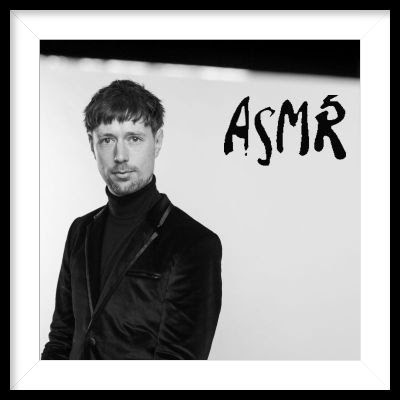
Peter Cat is a fine name for pop star – a cartoon pop star anyway -, and Peter Cat is an ideal wannabe cartoon pop star. I like the way he takes his not being serious about this pop lark really seriously. I can imagine he takes it so seriously in a non-serious way: seriously I really do. There needs to be people like Peter Cat in the world of pop music as he understands how truly ridiculous pop music needs to be sometimes; sometimes pop music should be all popping balloons on the floor whilst perv-y camera men try to zoom up the ra ra skirted audience members legs and thighs in true 70s TV pop tradition.
There are far to many bands falling into the trap of being the next Joy Division without having the guts to go and hang themselves. This track is pure silly disposable pop, part cartoon time Primal Scream ‘Rocks’, part Divine Comedy at his most arch like and part Black Lace ‘We’re Having A Gangbang’, a song many will not take seriously and seriously that is the point.
Subcult ‘Medicated’
29th October 2020

Ah, jingle jangle alternative guitar rock, never the most original of things, you know what you are getting within the first few bars and indeed you do with this the new single by Subcult. And that is not such a bad thing really as what you get is a couple of minutes of melody and youth filled enthusiasm: and we all need that in our lives. A fact about Subcult that made me smile is they list a few bands they have supported, one of the bands being called Crywank. Who on earth would call their band Crywank? There is certainly nothing wank about Subcult. They can use that quote on their posters and advertisements…no need to thank me.
Albums..
The Left Outsides ‘Are You Sure I Was There?’
(Cardinal Fuzz (UK) and Feeding Tube (USA)) 13th November 2020

The Left Outsides are a rare thing, a married couple that is in perfect harmony: and what beautiful harmony it is. Songs that tilt and wilt and seduces one’s ears in the psych folk rhapsody of a young Nico and has you bathing in the pastoral feel of Sandy Denny. In the hands of The Left Outsides the F word is one of friendship, fortitude and fluorescent finery, where the songs float and soothe and leaves one longing to rekindle the magic of true love and romance.
This really is a beautiful work from viola to acoustic and electric guitar and the chime of church bells to the beautiful merging of the two voices as one leaving us; the listeners enrapt in the tales of Autumnal romance both lost and found taking us down the slightly off kilter psychedelic paths of the almost Coral like ‘November On My Mind’ or the Jefferson Airplane ‘My Reflection, Once Was Me’ would fit lovingly on Surrealistic Pillow.
Are You Sure I Was There is a fine album and one I would recommend to lovers of psych-folk, folk or the psychedelically inclined. Or, anyone who wants to warm themselves with the sound of Autumnal romance on the oncoming cold Winter nights.
Tiña ‘Positive Mental Health Music’
(Speedy Wunderground) 6th November 2020

As anybody who reads these reviews or even heard my records knows I am a sucker for slightly Syd Barrett/Television Personalities influenced psych, so of course I’m going to enjoy this album. It has all the qualities one wants from their pop music; beguiling melodies, keyboards that swoon, and curtsy guitars that go from jangle to jangle: ‘Rooster’ even has a ‘Be My Baby’ drumbeat. It has all the boxes ticked; the lyrics of a quirky netherworld poetic, and the vocalist has a pleasing voice that has the right amount of cracking and whine in its timbre, the kind of voice one believes has had its heart broken at least twice in its life but has the good sense and fine enough black humour to get over it.
On the whole this is a mighty fine pop album and is really nicely produced. In fact, the kind of production that could tempt me from my bedroom and my beloved old tape four-track, and everyone knows that is indeed high praise. Another one to add to the list for the end of year “best ofs”, the music industry so loves.
The Loved Drones ‘Conspiracy Dance’
(Freaksville) 30th October 2020
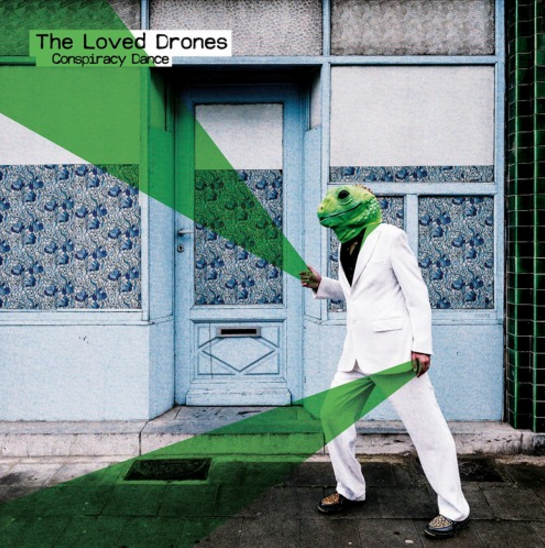
I love listening to albums by artists who actually love music. You can always tell when the artists have a more than passing interest with the history of rock n roll as these bands/artists normally let their many influences flow through their own art. I am pleased to be able to say The Loved Drones are one of these bands.
The album starts with ‘Lights’, a storm of backwards guitars lash into a space rock John Fox hybrid of originality and a forerunner and tempter of what is to come, and what is to come is a musical journey through the sometimes dark sometimes magical but always entertaining world of the Loved Drones.
Yes my dear readers what you get is an album that has you remembering moments from your youth when the days when the radio was your best friend the days when you would tune in and hear songs of great individuality; when the likes of M’s ‘Pop Music’ would both grace the charts and the hearts of the general listening public. ‘My Name Is Sky’ would have been a worthy follow up single and would have saved the poor M from being forever known as a one hit wonder. But this is music for today an album that straddles the history of rock and pop, sprinkling fairy dust over the turntable as it spins and weaves tales of magic and wonder, telling us the story of The Cramps guitar icon on the ‘The Day That Bryan Gregory Died’, a story that needs telling and tell it they do with a hurl of twanging guitars, or songs predicting the takeover of the world by aliens (‘Headhand’).
But as we know all the best bands have the slightly away with the fairy’s quality, always one step away from the mad house, and the Loved Ones have that quality in spades alongside their other important qualities like song writing talent – both lyrically and musically – and as previously mentioned, a love of rock n roll history. So you get a wonderful mishmash of influences from the psychedelic through synth pop and prog to pure pop magic and post-punk glory.
This is an album that would make the world a better place by every household owning a copy; an album that emits love, humour and joy, and one that should be played in schools to describe the phrase “the magic of music”.
See also…
The Loved Drones ‘Good Luck Universe!’ (Here…)
‘Conspiracy Dance’ (Here…)
Will Feral ‘Bad Kids’
11th October 2020

If incidental soundscapes influenced by 80’s horror films is your thing this will be just right up your street: preferably one inhabited by serial killers and ghosts and ghouls or even Trump supporters if you are in the USA or Boris Johnson fans in the UK; the closest thing I suppose we have to Zombies in this day and age, both brain dead with no feelings for other forms of human life. Now then, what we have here is 8 shortish tracks of DIY synth spookers part John Carpenter part Deliea Derbyshire, and each track ideal for a evening of Halloween social distancing and trick or treating face masks of course should be worn at every opportunity. And no doubt will. This is an enjoyable atmospheric little album, so treat yourself and download and help to soundtrack the 31st of October and beyond.
The Dandy’s Boutique ‘Delightful Weird’

I know nothing of The Dandy’s Boutique, an artist I came across being played on the excellent Graham Duff radio show on Totally Radio; the track being the rather wonderful ‘Stay Away’, which has a bass riff and a half part “Girls and Boys”, part grab your handbag put it in the middle of the dancefloor and boogie: Is there anything quite as life affirming as a DIY disco ditty?!
Anyway ‘Stay Away’ happens to kick off this rather lovely album; an album that combines synth-pop, dance and indie-pop to great effect, and is indeed greatly affecting, especially on the synth ballad ‘Don’t Let Go’. And goes on exploring the virtues of having humour, originality and talent; ‘Pitter Patter’ being a fine instrumental, reminding me what the Great Joe Meek may have done if left alone with a synth for an hour or so. What I like most about this album is the overwhelming atmosphere of melancholy even on the upbeat dance tracks like ‘Passing The Time’. There is a certain feel that I find quite refreshing. I think Dandy’s Boutique might not quite realize how good they actually are, as this is a fine album indeed and people should give it a listen.
Hi, my name is Dominic Valvona and I’m the Founder of the music/culture blog monolithcocktail.com For the last ten years I’ve featured and supported music, musicians and labels we love across genres from around the world that we think you’ll want to know about. No content on the site is paid for or sponsored and we only feature artists we have genuine respect for /love. If you enjoy our reviews (and we often write long, thoughtful ones), found a new artist you admire or if we have featured you or artists you represent and would like to buy us a coffee at https://ko-fi.com/monolithcocktail to say cheers for spreading the word, then that would be much appreciated.
Our Daily Bread 409: Vukovar ‘The Colossalist’
November 2, 2020
ALBUM REVIEW
Dominic Valvona
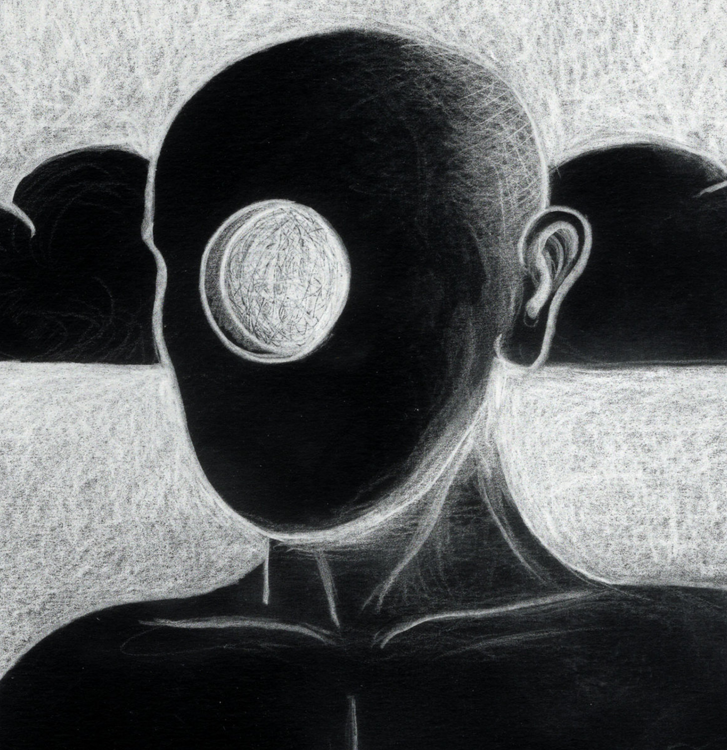
Vukovar ‘The Colossalist’
(Other Voices Records) 15th November 2020
Death’s morbid shadow looms large over the spoilt Gothic and postindustrial romanticisms of Vukovar. Once more indebted to the influence of the late underground malcontent cult figure, and much-troubled, Simon Morris (of Ceramic Hobbs infamy and more), who’s tragic omnipresence can be heard (literally) ringing out in a vaporous elegiac homage on the final curtain call of the band’s eighth and newest grand opus, The Colossalist, Vukovar reels in mourning after his suicide late last year – the album is being released to coincide with the anniversary of his death. If anyone was in any doubt of his profound loss, they could read Vukovar co-founder Dan Shea’s candid poignant piece (which the MC published; see bottom of this review) on his former confident and foil. Morris, alongside Holy Hero of Smell & Quim, worked with the band on their 2019 totem, Cremator, and was more or less becoming part of the lineup going forward. In a wispy hazed rewrite of the indie-psych Galaxie 500’s ‘Hearing Voices’ Vukovar wrap Morris’ voice and words up in a act of remembrance: a kind of communion codex, soundtracked by an imaginary team-up of OMD and The Fall.
Spirits then, loom large from the ether across this latest installment in the band’s history; a constant spooky, eerie gloom that prevails against the bruised and mentally fatigued New Romantic wide-eyed-boy soul led plaintive heartache of the vocals and narration. It is a marked death in the sense of the former incarnation of Vukovar – a name pulled like a sharp reminder of death and atrocity on the borders of the EU, in the Balkan conflicts of the 1990s – disbanding. And so with the deathly spine-tingles of inevitability also comes a “rebirth”, as the next chapter of this Northwest of England troupe announce a second, third, fourth (I’ve lost count) coming, framed as the “NeuPopAct”.
If you haven’t been following my six-year long progress report, then in short this is a band prone to break-ups and fall outs – not all of their own making. Apart from Dan Shea, only Rick Clarke remains as stoic warden of the original inception. Constantly imperiled by their own actions and ennui, and by a stone-cold refusal to compromise, plus a lack of, well…realizing their potential, they’ve picked countless fights, jumped a Pearl Harbour’s worth of sinking ships and released far too much great music without a plan. Eight albums proper with EPs, singles and stand-alones in that brief window, it’s not easy to keep up. It also doesn’t help that they’ve constantly changed labels and platforms in that time. For this colossus they’ve once more reunited with the caustic home of dark forces, esoteric and experimental music, Other Voices Records, for what is promised to be their most ambitious project yet: a Brueghel sonic synth-pop triptych of albums called Eternity Ends Here, the inaugural part of which is The Colossalist. In a continuation of their work with the acclaimed cult illustrator Andrzej Klimowski, who recently provided the illustrations for Clarke’s entombed surreal horror The Great Immurement (which the MC also published in serialized form), one of his hued pencil drawings adorns the cover of this chthonian pop mire.
Vukovar have always extended the cast of collaborators with each enterprise, working with post-punk vixen Rose McDowall on a number of recordings, and with Current 93 avatar wizard Michael Cashmore on the 2018 oeuvre Monument. Here, it seems (and it is enough) just the spirit of Morris enters the pentagram. Morris would no doubt have been a sparring partner if things had turned out differently, and played a major part on this newest album.
The men who haunted themselves, this latest incarnation once more embody a lamentable, macabre golden dawn; a world in which Prospero and Crowley waltz in the embers of the crumbling edifice we call Western civilization in 2020. Not so much political, as a despairing divine comedy of mental and physical exhaustion, the results of a 24 hour newsfeed of dread and anxiety. The effects of this climate and the idiosyncratic bullshit mating rituals that passes for love, drain and cause a not always encouraging concentration of the mind: Regrets, self-delusion, addiction, recovery and survival all resonating in a mass of conflicting truths. Sorry to get all profound, but it’s important to try and contextualize the half-sung, half-spoken in the shadows, poetic, and often romantically (that word again) despondent lyricism. Often it’s ripped from a rich Tarot card liturgy of Wiccan, Pagan and dark arts. At other times, it’s heartfelt, sad and crushing.
Musically continuing a signature sound of both industrial and post-punk synth singles and more experimental soundscape passages, Vukovar can sometimes soar with New Romantic dreaminess and allure. The opening trudge, ‘There Must Be More Heaven Than This’, balances the introductory spindly guillotined piano wire dance of something approaching hope with a menacing military tattoo of Teutonic ghosts and a morose of throbbing daemons and strained plaints, on a song that sounds like a communion of Death In June and Coil. The very next aura sees OMD on a downer, crying despair on the shoulders of Numan’s Tubeway Army and The Go-Betweens. Dan seems vocally shadowed by a higher aria like apparition on a track that screams single potential: And what do you know, it is. The album’s first of two such singles in fact – the B–sides don’t appear on the album, so that’s some more fresh material to catch-up with. This is the “neu-pop” in Vukovar’s sound; one that swings between an embrace of dark melodious pop and a more morbidly curious strain of experimentation. A musical landscape steeped in esoteric pilgrimages to the underworld, through portals into the ether and apocalyptic wastelands. This same landscape varies in its degrees of bleakness, with piques of Gothic heroism and candid anthems of vulnerability allowing some kind of light.
Songs like ‘A Danse Macabre’ strip it all away for a pitying soulful voice, cooing over a metallic arpeggiator and hiss of white noise rain, whilst other tracks, like the denser mono-like self-referential ‘Vukovar (The Double Cross)’, offer wooed lament in a ghostly veil of the Pale Fountains, Kate Bush and Martin Dupont. One of the most surprising unholy orders is the pastoral haunted ‘In A Year Of 13 Moons’, which reimagines Warren Ellis in collaboration with the Hifiklub, performing in Wender’s 80s Berlin.
A devilish work; a full-on enigmatic experience of Gothic soul and pop, Vukovar’s latest overhaul, refresh still maintains a connection with past triumphs, yet seems even more heavenly, strung out in the void of wide-eyed despair. Honed to a point and as curious as ever in skulking the inferno and dank specter of preening cloaked magik, this album offers a therapeutic release for its creators (and perhaps us); for it is a murky but resigned romantic escape that by timely accident marks the stresses, uncertainty of the pandemic. The statuesque Greek mythological vague connection entitled eighth album in the Vukovar cycle is another imaginative totem from a band with little sign of flagging; the ideas just keep flowing down the cerebral canal that resembles the River Styx.
With the loss of Morris it can only be conjuncture as to what the future could have sounded like, and in what direction the band would have moved. And this is a worthy elegiac to a presence that, by the sounds of it, continues to inspire.
The Colossalist I’m glad to confirm is another quality expansive work of art from one of the country’s most criminally underrated bands. Not that validation is needed; this (in the words of Brian ‘Bordello’ Shea) should be all over the bloody radio. And if you don’t agree with my enthusiasm for this album, there will be another one along very soon.
See also…
Vukovar ‘Cement & Cerement’ (here…)
‘Cremator’ (here…)
‘Monument’ (here…)
‘Infinitum’ Premiere (here…)
Rick Clarke ‘The Great Immurement’ Serialization (here…)
Dan Shea (Guest Post) ‘Notes from the Psychiatric Underground, or Why I Miss Simon Morris’ (here…)
Dan Shea’s Lockdown Jukebox (here…)
Hi, my name is Dominic Valvona and I’m the Founder of the music/culture blog monolithcocktail.com For the last ten years I’ve featured and supported music, musicians and labels we love across genres from around the world that we think you’ll want to know about. No content on the site is paid for or sponsored and we only feature artists we have genuine respect for /love. If you enjoy our reviews (and we often write long, thoughtful ones), found a new artist you admire or if we have featured you or artists you represent and would like to buy us a coffee at https://ko-fi.com/monolithcocktail to say cheers for spreading the word, then that would be much appreciated.
Monolith Cocktail Monthly October 2020: Star Feminine Band, Akrobatik, Kahil El’Zabar, Austra…
October 30, 2020
PLAYLIST
Dominic Valvona/Matt Oliver/Brian ‘Bordello’ Shea
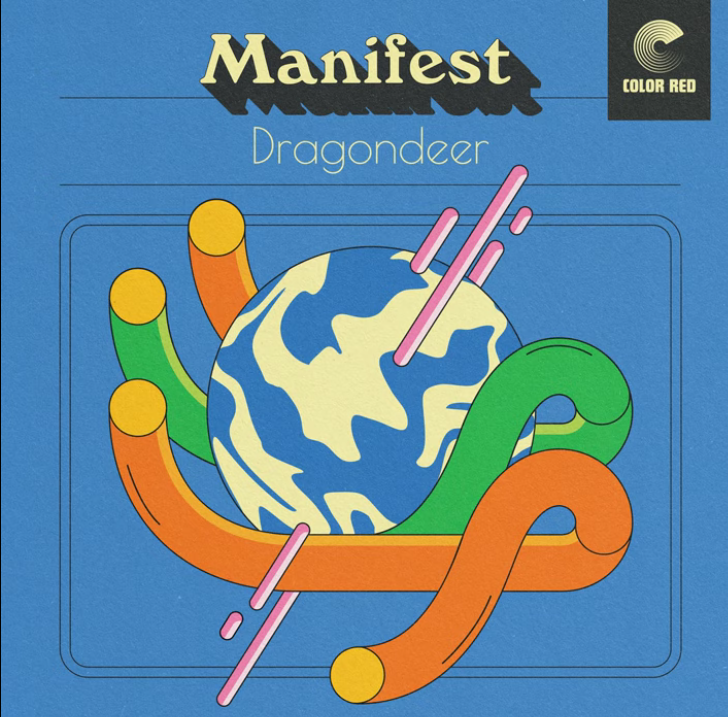
Join us for the most eclectic of musical journeys as the Monolith Cocktail compiles another monthly playlist of new releases and recent reissues we’ve featured on the site, and tracks we’ve not had time to write about but have been on our radar.
Expect to hear everything and anything; from the joyous Star Feminine Band of Benin to an all star Brit-rap cast communion of Juga-Naut, Micall Parknsun, Cappo and Vandal Savage. We got jazz in all its many guises (Kahil El’Zabar, Yazz Ahmed, Doug Carn), choice guitar bands (Mylittlebrother, HighSchool, Salem Trials, Besnard Lakes), souk rock pysch (BaBa Zula), a crop of experimental artists (Seb Reynolds, Johanna Burnheart, Netta Goldhirsch), ambient wonders (A Journey Of Giraffes) and of course a haul of new hip-hop cuts (Homeboy Sandman, Wolfgang Von Vanderghast, Sha Hef, Joker Star). 54 tracks in all chosen by the team of me Dominic Valvona, Matt Oliver and Brian ‘Bordello’ Shea.
Track List.:. Star Feminine Band ‘Femme Africaine’
Dragondeer ‘Manifest’
Baba Zula ‘Çöl Aslanlari (Desert Lions)’
The Spyrals ‘Same Old Line’
Wolfgang Von Vanderghast ‘Oh What A Carry On’
Swamp Harbour (Stinkin Slumrock, Bisk, Sam Zircon, Jack Danz) ‘No Response’
Homeboy Sandman ‘Waiting On My Girl’
Aesop Rock ‘Pizza Alley’
Akrobatik ‘HOH’
Kahil El’Zabar ‘Prayers For The Unwarranted Sufferings’
Gunn-Truscinski Duo ‘Valley Spiral’
Verbal Kent (The Other Guys, Apollo Brown) ‘Band Logos On My Right (Remix)’
Baeshi Bang (Ip Koa Son) ‘Janggi Taryeong’
The Good Ones ‘Soccer (Summer 1998)’
IKLAN ‘Suffer 2’
Dean & Britta ‘Neon Lights’
Juanita Stein ‘1,2,3,4,5,6’
Wise Intelligent (Snowgoons) ‘Before I Wake’
Sha Hef ‘1008 Ways’
Mark Ski (El Gant, G. Huff) ‘Catch-REC’
J-Live ‘Paint A Picture’
Fliptrix ‘Detonator’
Action Bronson ‘C12H16N2’
Bastien Keb ‘Rabbit Hole’
Juga-Naut (Micall Parknsun, Cappo, Vandal Savage) ‘Gaudi-Gang’
SonnyJim (Must Volkoff) ‘Swim’
D’Lyfa Reilly (Aver) ‘Shoreline’
Paten Locke (Willie Evans Jr, Dillion, Asamov, Basic, J-One-Da, Jay Myztroh) ‘One Time’
Sebastian Reynolds ‘Diving Board’
Joker Starr (The Jones Brothers) ‘Streets Of Rage’
Flavigula ‘Probability Poem’
Hifiklub (Roddy Bottum) ‘Eye Of The Tiger’
Nick Frater ‘Say It’s Alright (Say What You Like’
The Besnard Lakes ‘Raindrops’
Sa-Roc ‘Lay It Down’
Marco Colonna (Noise Of Trouble) ‘Sanza’
Doug Carn (Ali Shaheed Muhammad, Adrian Younge) ‘Desert Rain’
Acquiles Navarro & Tcheser Holmes ‘Pueblo’
Sweatson Klank (Tiffany Paige, John Robinson) ‘No Time’
Yazz Ahmed (Surly) ‘Deeds Not Words (Remix)’
Uhuru Republic (Giulietta Passera, Msafiri Zawose) ‘Jungla’
The Loved Drones ‘My Name Is Sky’
HighSchool ‘New York, Paris And London’
Mylittlebrother ‘Howl’
Salem Trials ‘Apperley Bridge’
Lucidvox ‘Amok’
Johanna Burnheart ‘Mythos’
Netta Goldhirsch ‘Fake News’
A Journey Of Giraffes ‘Play With The Toys You Have’
Caphas Teom ‘The Kingdom Of Heaven’
epic45 ‘Towpath Acid’
Austra (Planningtorock) ‘Planningto Risk It’
Lizzy Young ‘Coocoo Banana’
Hi, my name is Dominic Valvona and I’m the Founder of the music/culture blog monolithcocktail.com For the last ten years I’ve featured and supported music, musicians and labels we love across genres from around the world that we think you’ll want to know about. No content on the site is paid for or sponsored and we only feature artists we have genuine respect for /love. If you enjoy our reviews (and we often write long, thoughtful ones), found a new artist you admire or if we have featured you or artists you represent and would like to buy us a coffee at https://ko-fi.com/monolithcocktail to say cheers for spreading the word, then that would be much appreciated.

