Tennyson In Space: Appl. E. (Parts 3 to 6)
October 10, 2025
The Monolith Cocktail Serialises Andrew C. Kidd’s Tennyson Imbued sci-fi Saga.
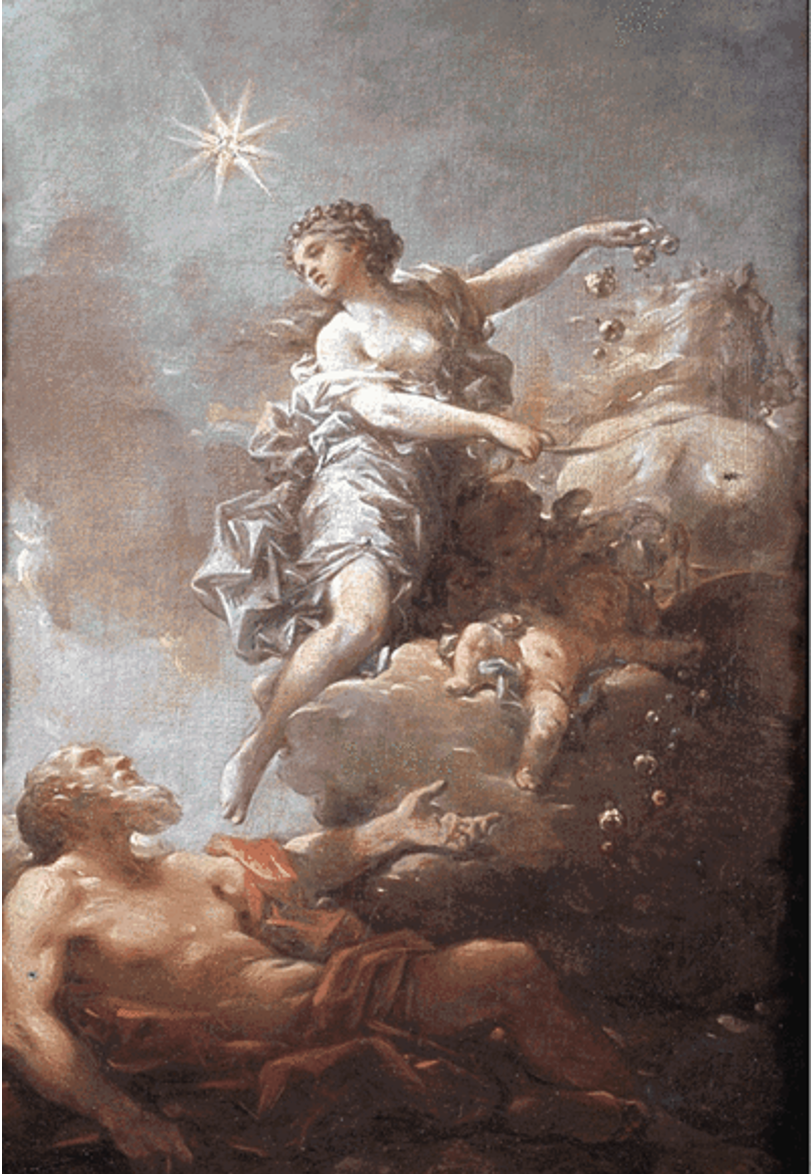
Dabbling over the last decade with showcasing exciting, sometimes improbable, intriguing work from new and aspiring writers, the Monolith Cocktail has played host to serialisations of stories by Rick Clarke (of Vukovar and The Tearless Life infamy) and Ayfer Simms (the Franco-Istanbul writer, and for a few years, an integral member of the MC team offering various reviews and conducting interviews).
Furnishing the site since Covid with review pieces and the odd feature, Glaswegian-based writer Andrew C. Kidd now adds his name to this list. Andrew shares his grand interstellar saga, Tennyson In Space, with the MC readers through an epic serialisation. Over the last five months or so we’ve published the Prologue, Part One and Part Two of The Violin, all four parts of the Hic Sunt Leones Et Corvi suite, the Pink Nepenthe and the first half of Appl. E. We now continue with the final chapters of the latter.
Part 3
With the conference having adjourned some hours ago, Alard stood pensively at the threshold of the generous living accommodation provided by the Domini. The dark walls seemed to be closing in on him. Each pipe had taken an apparently different route into and out of the stonework. Light-headedness sought to topple him. He squatted down in an attempt to shake off this strange sensation.
‘I fear your decision will lead to a trade disagreement… or worse’, □ motioned. ‘You haven’t the ethical approval or proprietary rights. I mean, for goodness sake, try to consider this objectively!’
Her monitor oscillated.
‘You have little regard for the inevitable consequences’, □ continued. ‘Hostility at this sensitive juncture is inconceivable.’
‘But you have just conceived it, have you not?’ Alard smirked. ‘In any case’, he quickly followed, ‘it was your algorithmic predictions that led us here. And it was your decision to take flight and open the first–’
‘I believe that we agreed never to disclose how we got here.’
□ was right. He had to stop these momentary lapses.
An apple, an apple, an apple! The Elusimicrobia had been yielded from an apple.
‘I must ask you to re-consider your choice. My predictive modelling of your decision has only one outcome: strife’, □ persisted.
Pacing up and down the room, Alard slapped his hands together, clasping them in a form of contorted prayer.
‘I have made my decision and that decision is final.’
‘If that is your final decision, our collaboration must end here’, □ replied.
How predictable, he thought to himself. Algorithmic sentience: the weighty burden of programmers!
‘Once you walk through those doors. We shall no longer know each other.’
‘Be quiet!’, Alard yelled. ‘Of course we will know each other.’ He mocked her nasal vocal output. ‘We created Appl. E. and we shall…’
Alard stopped talking.
The room imbued a strange silence. □’s screen was stock still.
* * *
He was holding his breath.
‘Right’, exhaling loudly, ‘apply the label now.’
Dr. El-hen looked at Alard, smiling warmly. The binding of the fluorophoric antibody to the antigenic epitope glowed neon green on their shared screen. The viridescent methylated cytosine groups were modifying histones. Mastery of the stem cell cycle was the prize for those who could determine all the histone states. It was proving to be an arduous journey. The destination was differentiation.
Alard and El-hen studied the screen. A symphony of cells and enzymes was playing. For now, it was harmonic. They would both have to wait for the triumphant climax.
With the immunolabelling complete, Alard and El-hen moved their shared attention to the cells as they aligned themselves in neat rows. Next, they would measure the density of the labels and match these to the cell cycle.
Human studies next, Alard had promised Professeur Meuse.
Their present research was proof-of-principle of their latest bioengineering success: the addition of methyl groups to the bases in the DNA sequence of the epidermal layer.
Lucidum: clarity. An accidental but poetic choice of the duo. Once identified, the process would be replicated on a micro-engineering level. Soon they would be able to print these signatures onto microfluidic chips.
‘I am so glad that you can join us tomorrow’, Dr. El-hen said.
Alard smiled as he removed the extrusion-printed specimen, placing the synthetic organ carefully in the biobath, An entire epidermal layer, clearer than he had ever imagined, was the result.
He placed it gently down on the counter to commence the stabilisation process. Appl. E. was added. Alard’s thoughts moved onto the next step: replication of cardiac tissue.
* * *
Professeur Meuse relaxed back into his chair in a demonstration of false certitude. Alard knew him to be a difficult man. They had both engaged in many arguments since the start of their collaborative venture.
‘But we are in the business of regenerating tissue, not harvesting it from people’, Alard affirmed.
He looked over at the Professeur. Lines creased his face. Fluorescent lighting had bleached his skin.
Meuse was old enough to have crossed the great celestial bridge that separated the old universe from the new. He had witnessed the Never War. Inter-planetary over-population. Decimation of cultural relativism through the autarchic hand of the Domini and his associates. All he had ever known was demographic turbulence. Perhaps years of anthropological study had worn him down? Could this explain his jaundiced opinion that farming human tissue was the solution to increasing the yield of primary cells?
It was hard to believe that the consummation of years of academic excellence had led this eminent figure to such a conclusion. Alard looked away from the Professeur who continued to stare out of the porthole.
The field of tissue regeneration had attracted all manner of interested parties. From Alard’s experience, those involved in this research could be broadly separated into two groups. The first sought to harness the technology for the sake of science. This was an advancement beyond any measure of what had been possible before.
There were also those who envisioned it as a commercial enterprise: a method of preservation, paid for by those had the financial firepower to fund their new hearts and lungs.
He could not place Meuse in either group. Beneath his clean-shaven façade, he knew that a darker character lurked. His entry into the regenerative sciences had occurred later in life. Why the move from population dynamics to tissue scaffolds? Alard considered that as the years advanced, perhaps the Professeur simply wished to live on.
‘How beautiful…’ El-Hen moved closer to the porthole. She had slackened her safety harness. Her face was being underlit in the soft light.
Outside the vessel, a water ice wreath levitated around the great head of Saturn. The soft gold imparted a subtle majesty. They had left the glacial Eris to visit one of their sponsors on base in a Saturnian moon cluster. A welcome party awaited their arrival.
Alard smiled absently. His thoughts remained with Meuse and his imagined flesh farms. The Professeur’s arguments had become more impassioned. He knew that with the right backing, he would seek to make his dangerous dream a dreadful reality.
As the vessel made its final approach, Alard turned to observe El-hen who continued to marvel at the glinting rings. Her hand was locked by Meuse. The tips of his fingers were strained white.
Alard’s desire for the docteur had not abated. It was evident from the time they had spent together that she felt similarly. A Bunsen flame burned deep inside them. It could only be a matter of time before its strength would cause the laboratories of Clan Dœmae to catch fire.
* * *
The issue is tissue.
Meuse’s mantra echoed silently in the mind of Alard.
Deep in the accommodation provided by their hosts on the Saturnian base, he replayed the last experiment in his somnolence.
The failure of the myocytic scaffold had not come as a surprise. New vessels had quickly outgrown the extracellular matrix which had quickly disintegrated before their eyes. Two-photon microscopy had yielded all the green nuclei they wished to see. Red vessels had started to proliferate on the dark background. Their thin lines were reassuring at first. Eventually, an all-consuming rubor reflected on their faces.
Rouge! Rouge! Rouge! Disintegrating muscle. We have become purveyors of necrosed tissue. Merchants of cellular death!
Please, Alard… El-hen leant forward on a polished plastic chair …I will speak to Ian–
A purposeless exercise. He is as desperate as we are. Tell him we have already replicated hundreds, probably thousands, of cell lines by now. Why the need for more?
Aes-the-tics. The scornful intermediary of Pallas sounded somewhere else in his subconscious. Her word bled out red onto the slide set.
Part 4
Meuse poured himself another drink. A gentle click noise sounded as the hatch of the door slid back into its closed position. El-hen had elected to retire to her quarters for the night. The Professeur and Alard were left alone.
‘I must say, you spoke with such authority that you almost convinced me that your theory is plausible’, Meuse opined with his back turned to Alard. The cling of the crystal glass connecting with the decanter rung passingly.
‘Life and death must co-join’, Alard pressed.
The Professeur returned to his seat and stared at Alard. His red-hair glowed in the soft light.
‘Lifeforms die and their cells die’, Meuse replied. ‘And once dead, there is no transference from the living to the extinguished state.’
He took a sip from his glass. Two slow shakes of his head followed in a subtle show of disdain.
‘I disagree wholeheartedly’, Alard retorted. ‘Take a body. Once death has consumed it, the cells do not die, but rather, serve to fertilise a world from which that body was bequeathed to. The body serves to–’
Alard paused. He had noticed Meuse holding his glass against the ceiling light to illuminate its amber contents. The Professeur eventually returned to Alard. A quick flick of his long hand beckoned him continue.
‘What I am proposing–’ Alard stretched his syllables irritably ‘–is that the ‘essence’ of the body, its being, élan vital, or however you wish to describe it, transitions. The body passes on what it once knew.’
‘So why I am unable to speak Inuinnaqtun or Natsilingmiutut? After all, I am a descendant of those who once communicated in these languages.’
A subtle shudder interrupted their conversation. The interstellar vessel continued on its return journey to Eris. Outside, the same black scene persisted, interrupted only by stars and the faint diagonal line of dust that ringed around a distant exoplanet.
‘If I may’, Meuse said. ‘Let us reshape our conversation, interesting as it has been, to talk shop for moment.’
‘Of course.’ Alard nodded. His vague form continued to flare out in holographic form.
‘It has come to my attention that your recent endeavours have been somewhat–’ Meuse considered his phrasing carefully ‘–less convincing.’
‘Less convincing?’, Alard echoed.
Meuse assented and opened a file onto the visual display. The read-outs of the failed myocytic scaffolding were quickly scanned by the duo.
‘Professeur’, Alard interjected. ‘I must insist that conversations of this nature involve Dr. El-hen. After all, she is one of the principal researchers involved in this work.’
‘Are you seeking to defer responsibility, Docteur Alard?’
‘Of course not. However, it is her intellectual property as much as mine. She should be given the opportunity to discuss these findings.’
‘Firstly, the IP is Dœmaen. Secondly, abject failure is not something to be “discussed”, Docteur.’
Meuse stared intently at Alard’s hologram. He continued:
‘What I wish to understand is how you plan to achieve success.’
‘You know as well as I do that this is science–’ Alard mirrored Meuse’s formality ‘–and that science is an iterative process. Accomplishments are met with disappointments, in equal measure.’
Meuse returned to the counter to recharge his glass. Alard considered the change in his superior’s tone. He was under no illusion that Meuse was a visionary. After all, it had been his decision with who to share his discovery with at the conference on Manitoud. He was also wary of the monopolism of his superior’s vision.
Rebus omnibus: Meuse’s motto.
Success above all else.
The bulbous base of the thick-cut glass orb covered the lower half of the Professeur’s face. Alard observed the unblinking eyes of Meuse – they had remained fixed upon him. He was being examined. The black pupils of the Professeur contracted latently. His irises were alive, drawing him in like a whirlpool. Why the scrutiny?
Alard sensed Meuse had a deeper awareness of something. An unpleasant sensation washed over him. Was it choler? Or jealousy? Shared failures had undoubtedly strengthened the bond between Alard and El-hen. He had been very careful in concealing his feelings towards her. Yet Alard was mindful that matters of the heart resided in strange metaphysical spaces. He was under no illusion that Meuse was a man of intuition.
‘Alors… tell me, Docteur Alard… how are we are going to convince our Patrons at Clan Dœmae that we will reach our goal?’, he pursued plainly.
‘We are already working at full capacity and at the limits of our ethical agreements–’
‘Why limit yourself when you know what can be achieved?’ The Professeur was rhetorical in his reply. He smiled drunkenly at Alard who shimmered silently. His oculi continued to spiral; the vision being imparted was a fanatical one.
‘Courage’, Meuse said before pausing.
‘Courage?’, Alard inflected.
‘Yes, courage!’, he hammered in reply, quickly sipping more of the amber liquid. The glass was placed down heavily on the table.
‘The word entered my mind as we are discussing your work on myocyte regeneration. Its etymology is fitting. Our ancestors would have pronounced it ‘corage’. Cor: after the heart.’
Meuse leant back in his chair. He toyed with the lip of his glass.
‘You see, dear Docteur. Only those who act courageously can affect true change. Imagine the possibility of endless regeneration. A new heart when atherosclerosis blocks the old one from beating. Neuronal cells reappearing in a disappearing brain. Organ failures consigned to the annals of antiquity.’
‘I am well aware of our intended destination, Professeur’, Alard broke in. ‘I also have my own imaginations of such a future.’
‘Then – don’t hold back! Do share these visions!’, Meuse demanded excitedly.
‘Okay, I have often wondered what will become of us after we have been replaced, or at least, once parts of us have been replaced. Who will be then? And what next, after our replaced organs fail. More implanted parts destined to malfunction.’
Alard saw that Meuse was transfixed upon his hologram.
‘Until now, all we have ever known is life as a two-dimensional line. One that has a beginning and an end. If we succeed in our research, we will not only lengthen that line but change how it is sewn.’
Alard hesitated. He had never spoken so openly about his sentiments on never-death.
‘What do you mean by “how it is sewn”?’, Meuse enquired.
‘We are more than carbonised shells’, Alard explained. ‘Death represents a severed line in our lives, but that line is never cleanly cut. It is left frayed, open to other thready remnants. Those tattered ends represent all the different physical and metaphysical aspects of our lives: hydrogen; oxygen; knowledge; id; ego; superego… our separate identities! It is from these remaining threads that the future material of our progeny are sewn.’
Alard paused for a moment.
‘Fibres are twisted into single strands that become woven into an embroidered patchwork’, he continued. ‘One that becomes more intricate with each passing generation. If we create the possibility of an endless cycle of forever-self, the fabric will never change. It is this fabric that binds us. Without it, we will simply stagnate.’
Meuse smiled thinly at Alard’s flickering holograph. The amber liquid had made him heady.
‘Is this a convoluted way to tell me that you are having reservations about our work?’, Meuse retorted glibly. ‘As I have already explained to you, I only seek to associate with those who have courage.’
Alard allowed the Professeur to continue unobstructed.
‘Let us move away from this allegorical posturing’, Meuse continued tersely. ‘Our Maîtres at the Clan have agreed in principle to my proposal. I believe El-hen may have mentioned this to you?’
Pupillary constriction. Choler, Alard affirmed. The Professeur was closing in on him. Alard shook his head.
‘Well, we need to press on with the next phase in cardiac muscle development.’ Meuse paused as he looked into the empty glass. His eyes then immediately met with Alard’s.
‘Organ harvesting–’
‘–is out of the question!’, Alard implanted angrily.
A loud thud sounded as the glass was thrown down onto the floor. The Professeur staggered as he stood up to walk over to the porthole. He stretched his back by winging out his arms. A sigh spread out into the room as Meuse brought his arms down.
‘If you wish to end our collaborative venture–’
‘End our…’, Alard exclaimed breathlessly.
‘If we cannot agree–’
‘Listen to me–’ Alard made a swift recovery, blocking Meuse ‘–you have the gall to lecture me on courage, yet it was I who took the bold step to isolate the Elusimicrobia at a time when the Eridians shirked their responsibilities. I approached the Domini who connected you to me. The rest lost out. You profited. But I must remind you that Appl. E. is my discovery. Where would be today had I not ventured out into the…’
‘Silence!’, Meuse bellowed angrily. ‘I must remind you that under the terms of our agreement on Manitoud, an agreement sanctioned by the Domini, you are not permitted to disclose the origins of your discovery on that Eridian hellhole!’
‘The truth alarms you’, Alard replied firmly.
‘Truths in this situation are unnecessary but they are not inconsequential’, the Professeur retorted.
Meuse sat down again after feeling light-headed. He was aware that drink was leading the conversation astray. Alard continued to talk but words evaporated around him. Meuse stood up again irritably. He walked over the porthole.
A showcase for the abyss! The Professeur observed the irregular arrangements of the stars that hung a thousand lifetimes away. His introspections progressed on an imagined line that connected these glittering dots. Thoughts of the Clan and the Domini interrupted its needling course so that it became knotted. Their requests had always been straightforward. Vita persavero. But what if his endeavours resulted in negative yields? Such an enterprise would no longer be theirs but his and his alone. He could not afford to fail.
Beads out sweat trickled at his hairline, reflecting indistinctly in the porthole. Beyond this, the interconnecting line had now balled itself into a malignant skein.
Meuse turned away to observe the interior of this room on the interstellar vessel. Here was reality. Anything else beyond this was simply plasma bound by an unknowable gravity. He thought positively, of Clan Dœmae and their recent procurement of Sobere on Eris, of the inevitable expansion, of life imperishable. His future could be a glorious one. The conquest to end all conquests.
He smiled reflexively at Alard the hologram, his thoughts simmering.
‘The agreed truth is that you yielded those cultures from an apple’, the Professeur affirmed bitterly.
‘An apple?’, Alard inflected brazenly. He started to laugh.
‘An apple’, Meuse re-echoed. He walked back over to the amber bottle.
El-hen, having been stirred by the steady crescendo of voices in the adjoining room, woke to listen to the warring researchers. She heard little other than the closing tone of the holographic software. Meuse had ended the transmission. The faint image of Alard faded from view. She listened to Meuse as he fumbled with the decanter.
* * *
After exiting the viewing room, Alard walked swiftly down the corridor to his quarters. His mind moved apace. He thought incoherently. His head had been made woolly by the argument with Meuse. The claustrophobia of the Saturnian moon module heightened his dissolution.
His assigned lodgings amounted to little more than a field camp. The straps on his somnolence stand were slack. When the modular engines cut to cease the simulated gravity in their overnight reset, he would be jostled uncomfortably in his sleep. He had already donned a survival suit as he doubted the ability of the oxygenators and heaters to sustain him.
Before his departure with El-hen, Meuse had explained to Alard that their sponsors were insistent that he was to be transferred to this rock. Apparently, this particular moon had garnered interest from planetary oceanographers.
Where there is ice, there is life.
Earlier, when Alard trundled over from the inter-lunar landing site, he had concluded that the existence of novel microbiota in this barren landscape was an impossibility. It was an absurd place. There was little evidence of any recent excavation. The skeleton crew that accompanied him were all automated. They simply compounded its lifelessness.
In his dormitory, Alard finally found some placidity in music. The positivity, the forward energy, the rhythmic simplicity – each note played soon settled the young researcher. He resolved that would wake afresh and card the wool that benumbed his mind to make peace with the Professeur and the Clan.
He was soon drifting between different dream sequences. The pool had returned. This time he had been immersed in it. It was murky in its depths. Bubbles frothed around him. A small shard of light wavered beside him. Alard followed it as a thin line, looking upwards to its source. Kicking, his body slowly ascended.
By the time he reached the surface, his lungs were bursting. He inhaled sharply at the breaching moment. Treading gently, he observed his thoughts of □ as oscillations that rippled outwards. Her memory blurred in and out of focus. Alard had not communicated with her since their disagreement on the future of their Elusimicrobia. The distance between them was more than any starship could travail. He had been informed that she had sought collaboration with those at Pallas.
Alard began to tire. His rate heart increased. Lactate acid was poisoning the muscles. He could no longer kick. Flailing, water splashed around him uncontrollably. His breathing had become chaotic. He gasped for air. Eventually, he started to sink. Still fighting, he turned one way then the next. The light source was no longer visible. His body started to cool. The pool darkened. Breath left him.
He awoke in a cold sweat. The plastic of his vertical berth felt glossy. Recycled air still entered his lungs. The straps were no tighter.
He called for one of the moon personnel. An automaton appeared at the threshold of his camp room.
‘I wish to send a communiqué.’ His slumbrous command was met with a pre-programmed pleasantry.
Alard was escorted the short distance from his quarters to the viewing room.
He thought little of Clan Dœmae and their decree that there was to be no communication with □. Even if Meuse and his associates were alerted to his present actions, his employment with the Clan had been effectively terminated. Despite his resolve to make amends, he knew the inner workings of the Clan too well. They would not take him back willingly. He would have to force their hand. By communicating with his rival, the Professeur, the Clan, everyone that he had worked for would be spooked.
His secret was their secret. Exposure risked everything.
The optical message lanced out of the base into the blackness. Alard had thrown down his astral gauntlet.
He returned to his stand and stared up at the low ceiling of the module. A neat latticework of bevelled lines intersected at regular intervals. Alard looked down and closed his eyes. He spun on an aslant axis. Music did very little to drown out his remembrances of his quarrel with Meuse. The cold dimensions of this moon closed in. Beneath him, invisible oceans of ice threatened to shatter. Eventually, a frozen hand carried him away into a bitter sleep.
Part 5
Some distance away, in the vacuum of space, between Alard’s moon and Eris, El-hen sobbed at her husband’s decision.
‘I am afraid–’ Meuse spoke firmly ‘–that the time has come to seek a newer collaborator. One with heart. One who will achieve more… desirable outcomes.’
She looked disconsolately at her husband as he continued:
‘Why are you so upset? We have lit a fire, my dear. We must take this opportunity to bathe in its light. We shall no longer operate in the shadows. Our advances will herald a new era in regenerative medicine. Our business is life!’, he exclaimed. ‘And the extension of it. It is important that we act decisively. Others are sure to follow. We cannot allow ourselves to be usurped.’
Meuse paused. He leant over towards El-hen who lay on the far side of their bed. Her body had turned away from him. She quickly withdrew her hand away from his.
The Professeur stood up and walked towards the door, feigning an absent stare. He stepped back to place his glass on the table beside their bed. The carefully co-ordinated sequence had meant that he had managed to catch his wife’s expression. She stared out blankly. A numb acceptance was etched on her face.
‘Your work with Dr. Alard – the incorporation of Appl. E. into the tissue scaffolds, the epidermal restoration, the replication in mucosal membranes – each of these steps have been important milestones…’
‘What will happen to Docteur Alard?’ Her red eyes, passionate and unyielding, had suddenly fixed upon his as he had relaxed to pour himself a drink.
‘He shall be relieved of his position’, Meuse replied curtly as he walked back towards the porthole with glass in hand.
El-hen stood up from the chair reflexively. She pivoted at the doorway, hand gripping its thick plastic frame, about to reply except that words were lost to her.
Meuse had returned to his study of the forever darkness that reached out at him beyond the porthole. He toyed with the already-emptied glass in his hand.
A smiling, elliptical shape materialised before him. It was the stiffened linen of a theatre mask mutating from one grotesque distortion to another. Its crooked mouth contorted into an incisor-exposing sneer. The grimace reflecting back at him was his own.
Earlier that evening, the Clan had intercepted Alard’s dispatch to □. Nothing contained within this message posed any immediate danger to the organisation. Nevertheless, the repercussive potential of a future exposition weighed heavily on his mind. Docteur Alard was under his direction. He bore responsibility for his team and their actions.
His thoughts moved to his wife. He felt a sense of embarrassment. Or was it fear? Regardless, she had burned both of them. Her tears were the salt-tears of a betrayer. Their salinity would cleanse the wound that she had inflicted upon their relationship.
He returned to the intercept.
Only if Alard hadn’t acted so rashly. That Square was with Pallas. He knows that. Dangerous Pallas. An unforgiving Clan.
The Professeur shuddered. More of the tranquillising liquid was required. He manoeuvred away from the vacuous void to fill his glass. Neptune came into view. She was cataract-white from this distance. A lifeless eye forever open in faceless space. Still, their craft was making good progress. Soon the pallid planet would orb blue-green before them. Eris beckoned.
Meuse paced towards the domed dormer which protruded out from the main body of the vessel like a blown-glass bleb. He sat cross-legged in the observation chair and took in the near-three-sixty-degree view of the stars. They were languid, always ambiguous, never revelatory. Their maddening stillness opposed his own self. He looked down at his glass and the golden liquid that was being made amber by the backlight from the lounge area. Its splendour bathed him in an artificial glow.
Earlier in the evening this liquid had imbued a sense of weightlessness, leaving him buoyant and drifting. As the contents of the glass had been emptied in successive measure, the weight of the fluid had been displaced inside him. He was plunging to depths unfathomable. Graceless thoughts surrounded him on his descent. A cruel disposition served as an anchor. His ego continued to sink until he was concealed by the plumes of sand and mud on the seabed of his mind. Subjectivity drowned him. He was left with an id-flooded ballast tank and a super-ego torpedoed.
Hours passed and the night drew on. A laser-message speared out of the interstellar vessel into the anonymity of space.
The restful stars continued to observe Meuse in his dormer. Their effect was disorientating. He stared into drained glass after drained glass. Nausea laddered up his gullet.
Retching, he slumped forward. His face was pressed uncomfortably against the thick pane. Meuse watched the endless black limbs of the cosmos extend towards him. It seized his body. He did not resist; rather, he simply closed his eyes and let the blanket blackness slowly smother him.
* * *
Shots continued to reverberate inside this cramped space. A kyphotic figure moved against the backdrop of the faint emergency light. His heart raced. A heavy head spun on many axes. The brightness dimmed as spasms tore through his body.
The pain was immense.
His shooter was smiling contortedly at his reflection in the corridor porthole. Blood slowly filled the gaps between his teeth. A fragmented tooth was lodged awkwardly in his top lip. The agent of Œmbelia had not been prepared for the recoil of the gun. After pulling the trigger, it kicked back into his face. A cold pain had already set in.
He walked back into the place where the bloodied body floated limply in a tangle of lax straps. Hyper-flexed knees were curled so that the figure took on a semi-circular shape. The gangly agent could not see his head. All he had heard was three dull thwumps.
The backfiring gun had filled the entirety of his visual field before it wrecked his face. But he was sure that was where his shots had entered.
Ideally, he would have liked a clean kill with the plasma cannon discharging between the eyes – had he had more bullets, he would have pulled the trigger once more for good measure. From his crude assessment of the scene, this did not appear to be necessary. His victims survival suit had been punctured beyond repair. There was no oxygen or accessory heat in this icy space.
He laughed at himself painfully as he vacated the camp.
* * *
A long clang echoed inside the arching hanger. The thermometer read two hundred below beyond the two-metre-thick blast doors. Inside, the temperature approximated minus fifteen Celsius.
The silhouetted outlines of three hooded figures were blurred by their warm breaths that cooled beyond the dew point. Each exhaled water droplet shrouded them in deeper obscurity.
After securing the newly-arrived craft, the attendants brushed down the ice that had encrusted the exterior of this vessel, eventually fastening the skybridge to one side of its fuselage.
Two figures alighted from the craft and were met by the Le Surveillant of this Eridian spaceport. He was a fastidious man, of middle age, donning a flat-crowned kofia, his spoken French was that of an islander. He gazed attentively as the matchstick outline of the flame-haired Meuse move quickly across the gangway. An extinguished El-hen trailed behind him.
‘Professeur’, Le Surveillant addressed Meuse as if the academic commanded a military garrison. ‘Professeur, we have received an emergency transmission from the Saturnian base.’
‘I shall take it in my quarters’, Meuse replied curtly, trying to feign indifference. A small bead of sweat rippled out from his temple. He brushed this away nervously. His head throbbed unbearably. The recollection of the previous night and his late-night instructions came flooding back to him.
‘Monsieur, it has been relayed to us on Fréquence Rouge. C’est une interception urgente.’
The Comorian stood firm.
‘In accordance with interstellar protocol, I must insist–’
‘Bien, bien.’
The Professeur followed Le Surveillant to the communication room, climbing the metal ladders to the gantry that dangled over the hanger.
‘Meuse here.’
El-hen observed her husband closely. He nodded infrequently. His verbalisation, silent to her through the thick glass of the tower, was made more difficult by his side-on stance. He mouthed something like ‘le transfert’ or ‘triompher’. She struggled to discern which it was. Meuse hailed from Québéc. His chantant often caught her out. Her intonation Maghrébine did likewise to him. Eventually, with his eyebrows raised sullenly, he turned to face her.
For whatever reason, she had been thinking of Alard and his decision to remain on the Saturnian base. It had been his way of demonstrating his determination. There he would stand his ground.
Alard the decisive! Principled Alard. She smiled as she thought of him.
‘Mon amour’, Meuse returned grievously. ‘Docteur Alard has been shot.’
Part 6
Alard awoke to the percussive sound of the ventilation unit. It spun cyclically. A deep thrum reverberated dully like a tabla. There was the glistening pitch of a triangle. He continued to imagine this scene as a strange symphonic dance.
His last memory had been lying bloodied in the rudimentary infirmary on that Saturnian hinterland. His transfer from their medical facilities to Ilion had been swift. Dr. El-hen had made the necessary arrangements. Her insistence that the novel Dœmaen tissue scaffold should trialled on Alard was met with congruent voices. He remained in a semi-conscious state. Oxygen tubes and intravenous lines filtered into him.
The soft tissue injuries to his hand and heel were minor. Dœmaen-derived neo-tissues were implanted to correct these.
His eye proved trickier. The bullet had pierced the cornea, rupturing his pupil and lens. Each had blown inwardly. The vitreous humour having escaped and long dried into his lower eyelid. His eye was deemed unsalvageable.
Meuse had insisted that Alard’s epigenetic signature needed altering. Full chromosomal supplanting was required, a technique that the researchers at the Clan had failed to master during their in vitro studies. Meuse sought the collective opinion of the resurrectional cognoscenti on his payroll. The first first-in-human trial of this experimental technique was sanctioned.
In a state of desperation, El-hen sough to convince the ailing Alard that this method was the only way that the Clan could save his sight. Whether it was the analgesia talking, or his own scientific intrigue, Alard agreed to this course of treatment.
‘Has □ replied?’, El-hen was asked. Alard had been met with silence. He knew that any trial of this magnitude was commercially sensitive. Pallas and her representatives could have no knowledge of it. A portcullis had sealed the Dœmaen research facility.
Alard had been born an Ilion, yet he was soon to abdicate his genetic line. Complete recombination of his DNA followed. He cared little for who or what he was or would become. He lay with his eyes bound. Appl. E. was infused. His memory was vague thereafter. Gene editing regressed him. The wheel of life came to a slow halt. He returned from adulthood to enter a pre-infant state.
Reversing foetal-further, the backpedalling gathered speed, until eventually, pluripotent cells spun out between the spokes in a dazzling array of nascency.
The wheel spun faster. His primogenitors proliferated, spiralling to disappear to reveal their procreators. The colours of carbon were the last he saw before he drifted off into an unconscious state.
Alard’s stay on Ilion was short-lived. In the days that followed, his new eye, a xenograph with his host immunity altered, had failed. Those in the hospital room ran through an exhaustive list of possible causes. Anti-microbial resistance, or potentially hyper-immunity from the recombinated signature? Maybe the bioink that was too thick? It could have been a simple infection.
The risk of rejection was supposed to have been removed by self-culturing and xenobotic-driven immunomodulation. Had it been the Appl. E.? The research team concluded that controlled studies were required. Plans were drawn up for future trials.
Those caring for Alard resolved to be unresolved. Alard’s bioengineered graft was being destroyed by his own cells. The cellular therapies he had received rendered him genotypically different. He had been changed irrecoverably. Once given, the ‘mark’ of the maker remains implanted within the nucleosomes and mitochondria.
What had been done could not be un-done. Alard was a Dœmaen now.
Meuse ordered the immediate discharge of his patient. Alard was sent to his homeland of Manitoud.
* * *
Blood seeped from his hand and his eye and his heel. The punctured Alard had been making the printed green grasses of the mountainside on his duvet blue. His hand grasped the leaf blades and tillers. He writhed in pain for the pain was still immense.
‘You come from the Reservoir of Xenos. You left as an Ilos.’
The voice of □ bored deep into his head.
‘Yet here you are, lying before me naked, ashamed, dying. Your tissue has been soiled following the failed experiments of the Clan.’
□ had changed since Alard last saw her. She was no longer an opaque screen. Her dream had always been to become embodied and she had achieved just that. Standing taller than any man or woman of the present age, her figure was slender and supple. Her black hair fell in thick waves. Bright green eyes bore into his very being.
‘I am an Ilos!’, Alard coughed uncomfortably. ‘It is my right–’
‘You resigned that right when you supplanted Ilion for Clan Dœmae. Your lymphocytic profile, your tissue signature, they are all stained with their mark. You cannot simply beg to be reverse-engineered to an Ilos again.’
Blood congealed through the gaps of Alard’s fingers as he pressed his palm tighter over the wound on his broken skull. The whites of his eye had become blood-filled. Arching his head back, he manoeuvred his body, coughing to clear his chest to ready himself to reply.
‘No! Before you ask again, the answer is no. It is not possible. I cannot regenerate you’, the scornful □ said pre-emptively.
‘You cannot, or you will not?’, Alard spluttered. The damaged muscles of his uncovered eye spasmed causing him to cry out in pain. He pressed his palm down harder.
He remained in this room, sleeping beneath the floral designs. His body moved in the sheets at frequent intervals to change the dimensions of the bright mountainside. The phosphorescence of the yellow light made his headache and nausea worse.
His euphoria soon abated. A calmer demeanour predominated in this stricken man. Occasional bursts of rabbling protest followed. Eventually, the room attained a strange silence, interspersed only by rapid rushes of deep breathing that would decrescendo to shallower sounds. His thoughts became confused, time-pressed, until – they faded to nothing.
Alard lay dead in the efflorescence of this room. His body rested amongst the violet colours of the sheeted flowers. A gentle wind had moved insouciantly through the narrow-tufted leaves of the white asphodels. A door opened. His body was transferred swiftly down the corridor towards the ejector.
His death had probably been preventable. □’s decision had been a conscious one, yet her passivity had been feigned to the fallen scientist. Power, or rather, the wielding of the broadsword of power, had always felt light in her algorithmic hands. But after Alard had been struck down, □ reflected how something as sharp as this could feel so blunt.
Years had passed since their bitter parting. She had not been prepared for Alard’s return. Despite all her strength and computational prowess, □ was left feeling something altogether different. She had never encountered the death of a patient before.
Although she had developed life-saving techniques with Pallas, she had elected not to deploy these to save Alard. Had this been out of spite? Or had she simply yielded to her algorithmic processes that assessed the probabilities to conclude that her decision was the correct one?
His body lay before her as he approached the anteroom of the ejector. Whatever the reason for her decision, it was inconsequential now. Death had consumed Alard. Even in this advanced age, anti-clockwise turning of the inscrutable hands of time was impossible.
In the days that proceeded his death, □ had learned that the bullet removed from Alard by the Dœmaen pathologist was that of an Œmbelian weapon. The fired shots had been far from clinical, yet they had proven fatal.
She wondered why those working at the Clan had transferred him to Manitoud. They must have known that he was dying. His tissues had obviously necrosed even before his arrival to this mountainous place. It was highly probable that there was not enough viable tissue to proceed with any meaningful reconstructive efforts. Had they data that she did not?
She had been led to believe that their techniques were at an early stage. Perhaps they had developed a method more novel than hers? She even considered the possibility that this had been an unsuccessful attempt by the Dœmaens to seek collaboration with her superiors at Pallas.
In reality, □ existed in a universe that was more complex than her algorithmic processes could quantify. Alard was sent to her to die. The Clan’s data were at a pre-clinical stage. Commercial interests preceded all else. Collaboration would never be acceptable in this cosmic game.
The Dœmaens had played a devious card. They considered □ to be their greatest threat. Conscience, morality, superego – they were well aware that personality, no matter how artificial the algorithm, was desired by the likes of □. The Clan harnessed the power of sorrow and torment. □ remained in a state of emotional infancy. By weaponising her creator, the Clan had launched a silent assault on all these aspects of her developing persona.
Alard had been deployed on his final mission to impart grief on an algorithm unexposed to the harsh realities of consciousness. Through this, □ would eventually be extinguished.
* * *
The long walls of Ilion disappeared from view. Feet-facing forward, Alard lay prone as he hurtled through space. A pulsed coil had launched his funeral pod into the lifeless vacuum.
Within the confines of his rectangular box, a screen flashed intermittently above his head. Alard’s upbringing, his training, all his marvellous discoveries – all these moments of his life played on repeat.
□ wondered whether she and Alard would not only progress through space, but time itself. The Thanatologist in the anteroom of the ejector had told her that some even make it to the event horizon of a black hole.
She had elected to share this cramped space with Alard as he progressed away from this life, perhaps unto a next one. □ had been uploaded to the confines of the circuity of the ten-by-ten-inch monitor above his waxen features.
Their journey would turn out to be a short one. The cosmic coffin unceremoniously careened off other coffins that littered the surrounding atmosphere of Manitoud, clustering together as flotsam.
□ persisted in personification. She possessed an ovoid face. It was featureless. She spoke to Alard. He was death-mask-calm. His skull one-eyed. Her laugh was made coarse and guttural by the poor-quality audio output.
Over time, the power waned inside their coffin. She recalled the times that Alard had guided her here. The pretences she had programmed into the Eridian systems had always been false. Detours from their scheduled trips to Dysnomia, the small moon that hung languidly above the base on Eris. Their small craft would pass through these very funeral fields on their way there.
Alard would dangle weightlessly to attach hooks to these matt-black containers, winching each one in turn towards their craft. It was a soundless task in these vacuous reaches. Inside the cargo hold, the crude hammering and scraping to crack open the coffins was cacophonous.
Alard cast each cracked coffin-shell to begin on the next one. The cut garments of those he exhumed were retained in a separate bag to the tissue samples. These he would eventually weave into in small patchworks.
The fabric that binds us.
Upon completion of this heinous work, he and □ would continue on their journey to Dysnomia to deliver their Eridian-agreed payload. They would deposit the surplus evidence of those they had exhumed in orbit. The thrusters of their craft would turn them away from the dark face of Dysnomia, to return to the Eridian laboratories.
She laughed at Appl. E. and its ridiculous nomenclature.
Alard the unashamed. Alard the wistful. Alard the visionary!
It had been in these very same cadaveric fields that they now found themselves in, amongst those they had sampled as they slept eternally. □ and Alard had agreed to waken these poor souls.
The harvesting of your flora will bring life to others, she had reassured them.
□ hoped that their coffin would be spilt open in the same way, releasing them into the openness of space. She imagined the steely glint of someone else’s scalpel cutting into Alard’s abdomen, spilling out the contents haphazardly. His gut-decayed microbiota, the Elusimicrobia, would be corralled into specimen pots and transported to blindingly bright rooms for centrifuging and incubation. Bacterial cells, cultured exponentially, would be added to polymers and hydrogels, serving to halt tissue rejection.
A perfect Promethean process. Tissues growing to die to be replaced to grow and die and be replaced again. Life persisting indefinitely. The light inside their coffin flickered as the power source began to dwindle. □ in her new state of consciousness wondered if those staring skywards on Eris would continue to perceive them as a coruscating star. Her primary sequencing returned with a more objective outcome, concluding that stars, like their observers, are only born so they can die.
A world of sonic/musical discoveries reviewed by Dominic Valvona. All entries in alphabetical order.
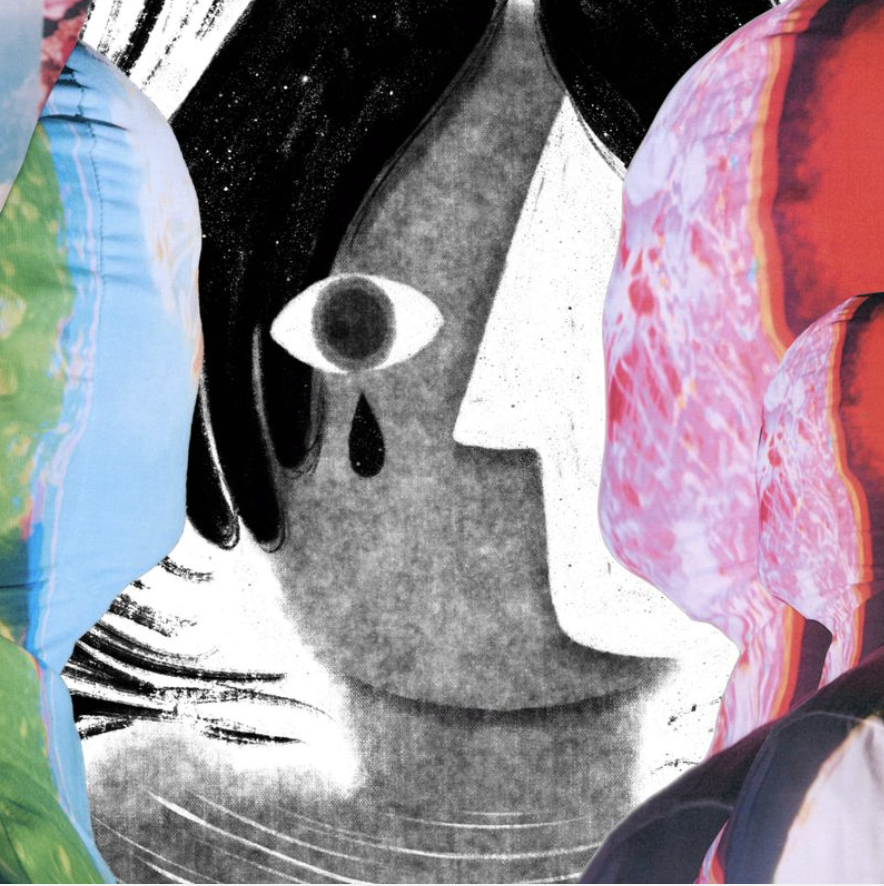
Peter Evans’ Being & Becoming ‘Ars Ludicra’
(More Is More Records) 17th October 2025
Without doubt one of the most exciting, dynamic and explorative trumpet players and band leaders on the avant-garde, psych, hard bop and beyond jazz scenes during the last decade, the New York-based musician and noted improviser Peter Evans once more lends his hallucinogenic, mirage squeezes and spiral climbs and his higher octave pitched, piccolo shrills and freefalls to another inception of the Being & Becoming ensemble: his primary band since its creation back in 2017.
Marking another “chapter”, encapsulating the small evolving group’s extensive touring schedule during the period of 2023 to 2024, the Latinized Ars Ludicra (which I’m sure translates as “sport arts”) captures a quartet (extended to a quintet when including the highly regarded and acclaimed soprano and flutist Alice Teyssier on the album’s finale, ‘Images’) fully trained up on an intensive live regime of flexing, dynamism and experiment. It’s said too that the group have widened their scope and extended their range of instrumentation to embrace sounds previously missing from the last two albums. This is a band, it’s pointed out in the accompanying literature, that has moved on much since their last outing in 2022, under the ‘Ars Memoria’ banner. At least a different energy anyway. But despite splish-splashing with constant resonating and crashing cymbals and the tight rolls and roll offs of Nigerian-American drummer Michael Shekwoaga Ode on the opening oasis promise of ‘Malibu’, there’s a balance struck between moods and action, with some passages and compositions breaching the twilight zone, the astra, a mirage that has more in common with Miles Davis and Wayne Shorter’s more untethered cosmic drifts, and their more abstract feels of transcendence and floating in a psychedelic nothingness on the outer reaches of space.
With the glassy bulb-like play, busy twinkled starry rings and doorbell ding dongs, cascades and translucent vibraphone spells of the Chicago-born but NYC based Blue Note artist Joel Ross these spacy and out-of-body elements recall both a magic and a slipping off into transcendent zones of Bitches Brew and the like. Although Ross could at any one time evoke glimpses of Roy Ayers, Gary Burton and contemporary peer Yuhan Su. There’s the melodious lightness of the Modern Jazz Quartet played against more post-bop and freeform experimentation that often lifts, but also casts out into the near surreal manifestations of dreams. Often it’s played against what I would call anti-music that’s more in keeping with the sound of the Soft Machine and the free-form, and at other times with the jazz-fusion of Weather Report, especially Joe Zawinul (an electronic apparatus and number of synths standing in for organs, electric piano and the like): I’m hearing this on the group’s extended Miles-esque blues-psych-trip and expressively agitated and riled-up cover of the late fateful Siberian poet and punk-folk icon Yanka Dyagilera’s ‘My Sorrow is Luminous’ – a sad tale really, born into the USSR, a fated progenitor of the underground punk scene, Dyagilera sadly died at the age of twenty-four just as the Berlin Wall came crumbling down and the transition from paranoid Cold War empire to free market chaos and oligarch mayhem. Running with the original sentiment, the original lament, and underscored with the historical context, the group nevertheless take it into uncharted territory – like a missing link between Third and Bitches Brew, but with the addition of Toshinori Kondo taking turns with Miles at lead.
The rest of the album features the neutron star electromagnetic radiation beam emitting inspired ‘Pulsar’, ‘Hank’s’ astral trip and the semi-symphonic classical bluesy meta contemplation of ‘Images’. On the latter, as mentioned earlier, guest flute-swapping virtuoso Teyssier provides flutters, flits and the sense of a mysterious woodland universe. ‘Pulsar’ has bounded and stick like Afro-Cubism drums, a hint of Jef Gilson, almost a touch of Chet Baker and vortex hallucinations of the atomised and of science. Evans trumpet all the while is curving and spiralling into infinity or drifting over amorphous borders when not shortened and high pitched, squeezed and tight.
I’d like to just mention the final member of this ensemble, Nick Jozwiak on bass, who moves about quite independently of his foils. Hardly conventional, that bass is flexes but offers little drive or rhythm but bobs up and gives a semblance of direction and timing. The multi-instrumentalist and avant-garde “hired gun” is also credited with synth duties, much like the majority of his colleagues, blending the two instruments together throughout an album that feels cosmic but not so much technological and futuristic, nor electronic.
Evans made our choice albums list last year with his trio (flanked by Koma Saxo and Post Koma instigator and bassist Petter Eldh and New York downtown experimental rock and jazz drummer pioneer Jim Black)and their Extra album. And I got to say, this third album from the Being & Becoming troupe is set to make this year’s list too. Evans is on a roll so to speak, with an album of quality performances and unified dynamics. They’ve managed to capture the live spirit whilst offering plenty of passages of thought, reflection and the cerebral, and to progress ever forward. It says so much about the quality of the group and their latest album, that it was recorded at the rightly venerated Van Gelder studios in New Jersey, with its 60 years plus history and status as a national treasure in the jazz world, home to recordings for Blue Note, Prestige, Impulse! And Verve. A stamp of real excellence, the spirits and vibes of that iconic studio seem to have materialised on the recording: A real recommendation if ever there was one.
Will Glaser ‘Music of The Terrazoku, Ethnographic Recordings From An Imagined Future’ (Not Applicable) 24th October 2025
Opening the door to possible worlds and to possible musics (in the sense of Hassell and his peers’ Fourth World experiments), prompted by climatic disaster/change, Will Glaser’s sprawling ambitious work of eclectic and amorphous, porous and developing peregrinations imagine societal changes through the merging of cultural sonic threads and archeology.
The London-based drummer, electronics manipulator, in-demand foil, and instigator of a multitude or projects has dreamt up an epic double-album format of environments, places and scenes from a world in which all continents seem to have conversed into one super soundscape of influences. Glaser has surmised a backstory, a springboard for his latest project. From a transitional stage in the wake of ecological collapse emerges a new “Earth tribe” network of surviving communities called the “Terrazouku”, resolute on living in harmony with nature whilst resisting the destructive urge to dominate. This vision unfolds over a generous offering of near uninterrupted soundtracks, traverses, expressions and rhythmic workouts.
For the first solo operation – that’s composed and produced entirely by Glaser – in a career that’s filled with collaborations, Glaser has reached out to an enviable who’s who of the current experimental scene in London. Names familiar to Monolith Cocktail readers, such as the composer, bassist and experimental vocalist Ruth Goller, the in-demand reeds player James Allsopp, vocalist Ed Dudley, and reeds experimentalist Alex Bonny, join the French violinist Agathe Max, improvising guitarist, composer Tara Cunningham, extremely busy drummer/percussionist Jem Doulton, Irish vocalist, composer Lauren Kinsella and cellist Kirke Gross. There are crossovers with the revolving lineups of both Sly & The Family Drone and Scarla O’ Horror, but also more than enough connections to each and every artist and musician involved across the album’s sixteen tracks. Some make a fleeting appearance, whilst others linger on for a few tracks. But they all increase the spheres of influence, the scope of the project to take in a near inexhaustible range of musical strands and ideas congruous to the evolution of this story.
Imagined as ethnographic artifacts, it seems that Glaser’s dreamt-up world returns to a primitive-like state of the electro-acoustic for a majority of the album’s length. An amalgamation of tribal naturism, the hermetic, esoteric, mystical and primordial, the album’s four, more or less seamless, sections suggest a real depth and quality.
At the outset we are transplanted and submerged into an environment both recognisable and mysterious. The ‘Then It Wasn’t’ opener manages to evoke gamelan, the go-go rhythms of David Ornette Cherry, the early work of the Aphex Twin, percussive fourth world ideas of Ganesh Anaadan’s Self Made LP with Hans Reichel, Test Dept., Wendy Carlos, the near anti-music drumming splish-splashing of free from jazz, and a taste of Sunburned Hand of Man. The first few tracks are what you might called long form, or at least over seven minutes in length, but tracks constantly vary. And so, all these influences develop in their own time. By the second track (‘Sunshower’), which carries over the ending from the last, the mood changes again with a sci-fi evocation of Komsische music and the Blade Runner score. The disembodied aahing and wooing voice of Ruth Goller can be heard alongside Agathe Max’s searing and stirring violin on a track both otherworldly and yet anchored softly and hauntingly towards classical ambient music. ‘Illusions of Abundance’ meanwhile, takes us into a twittery strange vegetation environment of shuttered and serialism style percussion, before developing into a lumbering Beefheart, Faust and Staraya Derevyna like bluegrass-psych trip through Raymond Boni’s jungle. By the way, the wild languid and out-of-shape guitar is courtesy of Tara Cunningham.
Side B, as it is mapped out, passes through vague suggestions of metal bowls and tubular bell like struck and shimmered Java and Tibet, and blown winds, before the dreamy, drifted and effected bass clarinet of James Allsopp circulates and waddles – duck like – in a style reminiscent of cosmic jazz, John Laurie, Constia Miereanu and Hans Koch on the trio of ‘Howl’, ‘Only The Wind’ and ‘Wrath’ tracks. This phase ends on the pleasantly entitled ‘When The Clouds Pass’; a track that seems to broadcast via the use of transduced bird tweets across an Alejandro Jodorowsky soundscape of mysticism.
The rhythmic phase if you like, Side C starts with a sort of shakers and shackled Afro-Thai type of bounding and bouncing percussive apparatus beat (that’s Jem Doulton’s introduction to this album). Alex Bonney’s flittered, almost digeridoo-like recorder flutters and chuffs over the top, and at times evokes the pan pipes of South America. The following track, ‘Bees’, however, is an entirely different proposition. This is where the electronics really kick in, with a hive mind activity of bees turned into a digital buzz and Germanic techno shutter beat. There’s more of this on ‘Pylons’, which matches lunar birds with dub and the pummelled sound of Room of Wires. I was also picking up hints of Front 242 and the Storm Bugs on this echoey electrified magnetic off-grid fourth world experiment.
Change is in the air and wind again on the final side of this double album spread. Richard H. Kirk like shouts, hysterics reverberate and are funnelled through a static charge and magnetic bombardment of friction and the electrically charged on ‘There’s Shit In The River’. Ed Dudley rages, swears and screams in fits to a distorted crushing of Cabaret Voltaire and Nitzer Ebb industrial primitivism, whilst the waters constantly run by. Copters above the brooding, underscored with menaced tides, continue a wash of the ominous and uncertain over a quartet of tracks steeped in strange jungle vegetation and alien outland mystique. Reimagining tribal gatherings, the convergence of polygenesis communitas unifying on a ravaged Earth that’s been reclaimed by an untamed nature, there’s some very strange and yet recognisable goings on. The near forlorn and sorrowful finale, ‘Dedicated To All Living Beings Who Suffer’, features Lauren Kinsella’s stark and yet grieving and felt reading of a poem by the Chinese poet and activist Yang Licai; played out to the Simon McCorry and Alison Cotton-esque avant-theatre-classical deeply grooved, soulful and wept cello of Kirke Gross. Both beautiful and poignantly full of a harrowed, sacrificial and political language, in the end it all comes down to the life-giving force of “water”. It’s an emotional end to a remarkable and ambitious album, which succeeds in holding the listener’s attention to the end.
Recordings from a Cassandra purported world, the warnings unheeded but with no real knowing grasp on reality, Glaser has built a possible future soundscape and cyber tribal rhythmic primitivism on the sonic fuel and carbon of the world as it is now to great effect and depth. From Mike Cooper to Glove of Bones, Fernando Grillo, John Bergamo, Paul Burwall, Tonto’s Expanding Head Band, Bush Of Ghosts era Eno, Jon Hassell and Jon Appleton’s work with Don Cherry, there’s a vast scope of rich influences on display and environments to absorb. An incredible project with untold possibilities that really does feel like a retrieved artifact from a future yet unmade.
GRABENFUSSS ‘The Horror’
Released 5th September 2025
I’m going blind on this recent submission from the obfuscated Glasgow magi behind this amalgamation, chemistry and incantation of hauntology, hermetic, sci-fi, tech, and righteous horror. Fans of the blog (always a good start with any request for a review) for a while, and materialising in my adopted city home of the last decade, this shrouded invocation deserves its anonymity, its mystique.
Their latest initiated rites drama is very, very good. And despite describing their own sound as lo fi sorcery, there’s nothing that lo fi about this ambitious, grand gestured astral and tormented projection and esoteric vexed minor opus. For there is a scale here that seems large and almost cinematic. From the increasingly agitated and riled language of the shriven and the post-punk acolyte of cryptic Gothic ceremony and spells, there’s both an alien and all too harrowed conjunction of worlds; of our trails and oppression under the spectre of technology, the unkindest of political systems, the threat of austerity, war and violence. At times the vocals, part Cabaret Voltaire, part Pop Group, but all Scottish indignation, summon up the arcane. There’s symbolism, the cryptic, the sacrificial, the moon child and the witchery at play, all with a 21st century twist.
Dealing with death in its many manifestations, there’s a serious theme at the heart of this work as it opens on a seemingly lighter bit of play and the sample/recording of a young kid’s take on the subject: When you die, your head falls off, and, and, your body goes into the attic, and, and, and your head goes off into space.” The accompanying incipient drones, charging of motors and generators give it a sort of Lynchian and creepy edge, however. This is ‘Company Robot’, a track of data, electronic rhythms, persistent horns, up beats, the cursed and brooding, the disconsolate and highly atmospheric. It crosses field recordings, magik and the machine to sound like a communal disturbance of the already mentioned Cabaret Voltaire, Coil, Ramleh and early Luce Mawdsley.
The soundtrack – as it would make a bloody good one – changes between Gothic industrialism to Kosmische, bounced techno and the chaos of a rolling cascade and pummel of real drums, and the echoed, resonated strokes and picks of a recognisable electric guitar. ‘Light Years Away’ is in the twisted techno camp, bobbing almost to a transformed recall of the Sabres of Paradise and Renegade Soundwave casting down fire and brimstone before a cathedral of lit rays takes over from a clash of drums and the growing noise of transmitted interference. ‘Broken Kingdoms’ starts off with a farty, flutter and sonorous drones, and yet is what I’d call ambient. There’s arching bends and the pierced sounds of hidden alarm, a shake of wind chime blown by esoteric winds, and the near munching of ariels. There could be a UFO present, oscillating overhead, its magnetic fields vibrating. But all of this is interrupted by the roll and smash collider of punk-Kraut-psych-rock drums and an unhinged vocal that repeats in a deranged mantra on “dignified death”. ‘Space Death’ is switch-manipulated percolation of the Pop Group in chthonian mood: Death haunts this doomed orbital convulsion of tongues, utterances and pain as tentacles thrash. Suddenly there’s a broadcast snippet from the news; a riot, police called as the audience at a musical behave with vulgar selfishness: the growing problem of decorous behaviour, chatting away and singing louder than the actors. This being Glasgow reimagined as a portal to unknown dimensions, there’s even a mention of the city’s football legacy with a Celtic Vs Rangers match.
In amongst the more extended tracks, there’s a number of vignette duration recordings coded and numbered under the ***PLSVHF*** headings. Of these, ‘No. 19’ features electronic arpeggiator, visitation transmissions and the odd snatch of a broadcast (something that repeated throughout the album) and a sort of quasi concrete manipulation of the orchestral, whilst ‘No. 31’ has more of a lunar rippled belch and guttural cosmic feel to it – this is where that guitar I mentioned appears.
Overall, imagine a horror show combination of Conrad Schnitzler, Locrian, Hunting Lodge, Yellow Swans and Escupemetralla evocations. Oh, and by the way, GRABENFUSSS is German for “Trench Foot”: make what you will of that; a harbinger of discomfort and agony. A thoroughly curious and tormented work of cosmic-harrowed wrath.
Amira Kheir ‘Black Diamonds’
(Sterns Music/Contro Culture Music) 10th October 2025
An offering of love, respect and homage to her roots, Amira Kheir re-energizes, makes anew and personalises traditional songs from a number of admired songwriters and crafts new magical mirage-style material on her incredible new studio album Black Diamonds. The fourth such self-production, released under her own Contro Culture label in union with the specialist UK label Sterns Music (responsible for introducing the music of such luminaries as Salif Keite, Youssou N’Dour and Franco & OK Jazz to these shores), offers up a dreamy and atmospheric songbook that seamlessly flows between musical styles and across the porous borders of Eastern and Western Africa and the Middle East. All to the benefit of Kheir’s ancestral homeland of Sudan, which positively shines like both the material and proverbial diamonds of the title.
Projecting connections to an afflatus and poetically envisioned land, Kheir beckons the listener into a world of positive vibes, of sweetness, of the lilted, and yet no less yearned, hungered and passionate. And so, the music and scene-setting lyricism of Fadl Almula, Abdel-Gadir Talodi, Abdel-Rahman Alrayyah and Isa Barwi are woven into fresh perspectives on the country and its surrounding neighbours, cultures. Paeans of a kind to the loved sit side-by-side with lyrical magical descriptions of Sudan’s topography and its fauna (the comforting recollected mentions of the neem and palm trees on the longing, dry rattled and spiritual Afro-jazz, with classical strains, ‘Ard Alafrah’, which translates as “land of happiness”), and such important city links as Umdurman, which sits on the western banks of the replenishing Nile (the often spelt or referred to as Omdurman, a major city in the Sudan located within the famous state of Khartoum, is mentioned on the rustically spindled, Tuareg-like and quasi-reggae riffed ‘Sundani’, “my Sudan”). I must add at this point, the piano that appears across these songs reminded me in part more of the South African jazz pianists Nduduzo Makhathini and Abdullah Ibrahim.
Vitally important to the Sudanese-Italian singer-songwriter, is language, with songs sang in Arabic, English and Italian; the links to cultures African, Arabian and European, and the blending of all three, setting her music and vocals apart. Winning a heap of plaudits for that unique eclectic voice, Kheir merges the influences of desert song with jazz, neo-soul, R&B, funk, desert-rock (you can feel the sand itself beneath your feet on the drifted ‘Zenuba’, which sounded in part like the brilliant harmonious dune-shifting mirages of Tinariwen), the Persian and the more traditional styles birthed in the Sudan. Ranging between the earthy and ethereal, the soulful and encapsulating, each song shows a variation of tone, performance and charged emotion: relaxed and beckoning, floating and encapsulating.
The depth is hardly pushed or forced, and yet there is a well of passion and stirring endorsement for a country she obviously loves and beautifies. There are some songs that pass the eight-minute mark, allowed to unfurl gently, soul searching and weaving a dream blanket of atmospheres that are magical and almost hypnotising. Perhaps more than ever, a celebration of such idyllic climes is needed, especially when faced with the devastating humanitarian crisis in the country right now.
But by lifting spirits, revitalising the beauty, grandeur, the magic and the atavistic, Kheir lightens up her vision of an enduring, fascinating, homely, nurturing and enchanting Sudan on a magnificent album of diaphanous and yearning beauty. There’s every chance this will make the end of year lists as one 2025’s most special and captivating albums. This is real soul, reimagined and once more connected to its original roots.
Elsio Mancuso & Berto Pisano ‘Nude Per L’Assassino’
(Four Flies Records) 17th October 2025
I’m sure many fans of the pulp Italian Giallo phenomenon will disagree, but as with most examples of this shock and gore, salacious and voyeuristic exploitation genre, it’s usually the soundtrack that has the quality and not the cinematography and storylines: as influential as they both are, a bridge to the slasher cult in both the US and UK. If wrapped up in some pseudo-European style, and in a foreign language, with film directors, screenwriters and actors alike pulled from more discerning productions, many of the films that were produced during the “golden age” (we’re talking the 60s and 70s) of Giallo were pretty crummy, exploitative and titillating.
There was of course the odd example of female revenge, or a female led cast that didn’t just lose their clothes, or graphically meet the most creatively lurid death. And many leading directors to this day pontificate about its iconic cinematography, its style and its influence. In the former camp, the latest Italian cult favourite to be lifted up by its far superior score, under the facilitation of the Four Flies Records label, Nude Per L’Assassino is one such revenge style flick (spoiler alert), with its racing leathers and motorcycle crash helmet wearing murderer exacting bloody vengeance on both the doctor responsible for the bodged abortion of a fellow model, and all those that either aided, abetted or showed callous disregard for the victim: this included a number of male photographers from the film’s Albatross Modelling Agency and some of its models too. To be fair, most of the victims are incredulous perverts, rapists, and vacuous individuals out to climb the slippery pole.
If researching this title, buried deep within the psyche of cult film buffs, you will find a repeated criticism: that by the date of this film, originally released in cinemas on the August 26th 1975, the genre had become stale, and that this movie was more or less an exercise in Giallo bingo card checklist ticking, with the style now “codified” (as someone else put it) and chiselled in crypt stone. The label describes the film as “the most sexist, sleaziest, and most unhinged Giallo film of the decade.” That reads like an endorsement if anything; a real temptation if ever I heard one.
But worry not, for the soundtrack carries more weight, and features connections and threads that link back to some of Italy’s top pioneering composing talent.
Believed lost but recently found and dusted off by the specialist Italian label, remastered from the original tapes, packaged too in a new “lavish” vinyl edition, Nude Per L’Assassino (or as it’s more well-known in the English-speaking world, stripped of its romantic Italian language, reduced to the blunter and creepier Strip Naked For Your Killer) is now being released just in time for its 50th anniversary. Why should we be excited? Well, probably because it’s pretty cool, and that this occult, hallucinogenic, romantic even, and funky surreal soundtrack is a rarefied find from some of Italy’s most notable composers and musicians of the period. Well, one of the names that adorns the title, Berto Pisano is at least in the running for that status. Pretty much carrying the credit, the only name acknowledged on the film itself, whilst erstwhile partner Elsio Mancuso’s name only previously appeared on the Italian Public Performance Rights Organization (PRO) registered paperwork. There’s very little about Mancusco however online; mostly references to collaborations with other notable composers working in the fields of suspense and that most Italian of Italian genres, the Western – namely the very un-Italian but synonymous with its cinema during the 60s and 70s, composer Vasco Vassil Kujucharov. Pisano, however, has a very well documented CV and history. The Sardinian born composer, conductor, arranger and musician started out as a double bass player on the burgeoning post-war jazz scene, playing with such movers as the Quartetto Astor (later the Asternovas), but also appearing in fellow Italian luminary Peiro Umiliani’s famous octet. He’d also cross creative paths with another of the revered Italian composer’s Armando Trovajoli. Outside jazz, and mostly famously perhaps, Pisano began a successful collaboration with the popular three-octave stretching soprano singing sensation Mina (Mina Anna Mazzini). His most highly prolific career move was in the realms of TV and film, composing around 50 scores and soundtracks across two decades: a mere sampler of titles being A Game Of Crime, Django Kills Softly, Kill! Kill! Kill! Kill! and Naughty Nun.
Making an appearance on both smooched, lilted jazzy serenading and cupped trumpet is the Italian flugelhornist and trumpeter Oscar Valdambrini. Bringing some much-needed class, Valdambrini’s resume includes stints with Rex Stewart, Gianni Basso and Freddie Hubbard (who’s influence I believe can be heard suffused amongst the reeds on this score), and arrangements with the already mentioned Trovajoli. It’s claimed the Turin-born maestro was a pivotal figure in the birth of modern jazz in his home country. His wafted pines, tender declarations, cornet-like swaddles, early Miles-esque passages and more Euro-Latino Herb Alpert spells add a certain jazz tinge to the supernatural suspense and spine-tingled dramatics.
And yet, this soundtrack’s opener kicks off proceedings with the bass and hi-hat of a Temptations or Curtis Mayfield record. Near Orleans and NYC back dropped Bondian with funk and soul influences, plus a hint of Lalo Schifrin thrown in on the horns, the film’s title track features scaling strings and tight breaks more in keeping with Motown than Italian slasher vogue. And yet, the second track, ‘Fotomodelle’ (the not so difficult to translate “photo model”) is almost reminiscent of Bacharach: albeit in a dippy Euro kitsch of lush romantic serenades and wooing female voices and skin flick signatures. For the record, so to speak, this package includes a number of variations on each of the main themes and pieces of incidental music, including the ‘Studio Fotografico’ bracketed version of the former, which has a little more sass and sexiness, a Hammond organ and lilt of Alpert trumpet, and the ‘Lounge’ version, which is just that, a jazzy and Bossa-like lounge smoochy take of bub-a-bub female vocals and deliciousness.
In the surrealist forbode category, and nightmarish zone, ‘Follia Omicida’ (“homicidal madness”) rolls in the timpani and tumultuous warnings, and ‘Occhi Senza Sguardo (Voce e Organo)’ (“eyes without gaze: voice and organ”) sets an elegiac funeral scene with its slumber church organ creeps. There are shivers on the psychologically dark prompted ‘Scivolando Nel Buio #2’ (“slipping into the dark”), and something bordering on sci-fi hypnotising terror on the female gasped earlier version of that same track. You can also pick up the use of Hitchcockian blade striking strings and other scares along the way. But for much of the soundtrack, it’s an uneasy entwined harmony of dreamy, even druggy, death and beautified satin thriller.
There’s a melancholy, a sadness, and yet friction of that Giallo signature creeping and stalking menace. But the quality is pretty good, the sound surprising in places. Each track is played with professional skill and respect and the art of description. And rather handily, it’s being released in time for Halloween. Four Flies have saved a classic from the snatches of obscurity whilst showcasing a killer soundtrack.
Sebastián Rojas ‘En La Orilla’
(Buh Records) 17th October 2025
Under crimson skies on the metaphorical, allegorical shoreline, bathed in a synthesized production of synth-wave, cold-wave, new wave pop and at least the spirit of Bolero, of South American experimental and roots pop, the Mexico City scene composer, musician and singer-songwriter Sebastián Rojas plots a solo journey from emotional maelstrom to stability on his debut album. Having previously played guitar in a number of bands from the homeland, straddling the downtown rock, post-punk and art-punk scenes, and collaborated with various artists, Rojas has decided to go it alone. Well, to a point, as he’s asked a few friends to play on that burgeoning venture.
Bringing along his The Americojones Experience foil Américo Hollander on bass, the Demencia Infantil’s Emiliano Tinajero on saxophone, the polymath Nicolás Fernández on synths (he also co-wrote the album track ‘Míranos’, which translates as “look at us”) and key Mexico indie scene figure Hugo Quezada (of Exploded View note) to produce, Rojas is backed by a congruous ensemble of sensitive, attuned and explorative musicians whilst navigating the choppy waters and emotionally blue tide that both beckons and backs away in languorous retreat. In addition to that lineup, there’s such a breadth of subtle instrumentation at use throughout the new album; from machines to the more organic use of acoustic guitar, percussion and the vibraphone (well, it could be a marimba too, but it sounds like the glassy bulb notes of Japanese environmental music meets The Thompson Twins and Cage on the magnetic ‘Marea’ (“tide”).
Informed by a run of bad luck, and a low point in his life, En La Orilla (“on the shore”) was born from a chain of events that began when Covid hit in 2020. Rojas was at the time on tour with his former band, just as they were about to take off, but for obvious reasons as the pandemic’s lockdowns curtailed international travel, was left high and dry, forced to return home broke from Berlin. To add to all the uncertainty, the career limbo, his mother fell gravely ill. And yet, Rojas, we are told, found love and the impetus to rebuild from the setbacks of the Covid crisis. The results of which are unfurled, wrapped in the enigmatic, and more obviously emotionally charged, spread across an album of atmospherics, balladry and the synthesized.
References in the PR literature point out the influences (in spirit) of different Bolero forms, and such icons of the genre as Pedro Infante and Los Panchos, plus the music of Benny Moré, an idol from the Cuban homeland of Rojas’ father. It’s not like you can easily detect it in what is a more contemporary embrace of the 80s, but the saxophone often, in its brassier form, often recalls its use in Central and Southern American music – at other times, it’s a mix of both new wave, Hansa studio and the mirage evoking. There are of course lyrically and most probably insider references to Mexico City and its surroundings, and the continents at large. The finale for instance, borrows a line, phrase from the late award-winning Chilean novelist, short story writer, poet and essayist Roberto Bolaño Ávalos. “Pulmón del trópico”, or “lung of the tropics”, finishes the album with breathing, living and airy abstract feelings played out to mysterious shadowy synths, plastic tubular bass and the psychedelic.
From vague echoes of Memory Tapes to China Crisis, Central Unit, Tiempo 55, Chromatics, Robert Wyatt, Japanese environmental music, imaginary 80s Miami and UK Fairlight synth wave pop and Factory pop, there’s a philosophical but also sentimental ease that permeates both the more stripped back and more atmospheric built songs. Bathed in rays and vapours, or dreamily sailing close to disconsolate abandon, Rojas and his fine ensemble of friends’ drift and lurk between the shadows and the light on an album of both nostalgic leaning and yet contemporary inventive pop music with a depth, sophistication and swimmingly bluesy feel. The Mexico City scene is rewired, re-articulated and made anew.
Cosimo Querci ‘Rimane’
(Quindi Records) Released 4th October 2025
Whilst the name may suggest connotations of the Renaissance, and the ancient valley of Casentino – its rich oval shaped landscape dotted with Medieval villages – location in which this debut solo album was made reinforces ideals of that period from Italy’s history, Cosimo Querci seems to send his idyllic surroundings into a swimming reverberated circulation of post-punk-dub, Krautrock, neo-psych, the baggy, new age and the possible music peregrination territory of both Jon Hassell and Finis Africae.
Certainly, attuned to his Italian roots and a particular period of more experimental, countercultural and leftfield music from the 70s and 80s, the psychedelic troubadour of looping flange and various echoed, dreamy filters and effects takes a core songbook of ideas and marries them to something subtly surprising and fresh, with evocations of the tropics, the Caribbean and the Fourth World. Ebbing in a constant reverberated cycle, with as much groove and rhythm as flights and passages of more atmospheric or light projected neo-spiritualist and cosmic feels, Rimane (“remains”) features five kaleidoscopic and light bathed tracks of differing length journeys. All of which could be said to have a hypnotic and wavy vibrated quality about them, soaked in reverb, resonance and soft spectrums of trippy gauze.
Almost entirely created by Querci (who not only sings but plays the electric 12-string guitar and the bass, an electric organ and flute) with his drumming and percussive foil Walter Bellini, the album progresses through the dreamy evocations of soundsystem culture and hints of Arthur Russell, Careless Hands, Phantom Band and Wild Havana before ending up in a light bringing union between Susumu Yokata and Sergius Golowin on the opening ‘Telepatica Pretesa’ (which I think translates as “telepathic claim”).
‘Rimanemai’ (“never stayed”) carries on the vibe, but this time with a dreamy trippy wash of Panda Bear, Sam Flex and CAN via the Stone Roses – here’s the baggy sound I mentioned earlier. There’s also a slight step change of the Latin on the beat.
‘Nina Ferale’ (“wild Nina”) inhabits the “possible musics” projects of Hassell and likeminded artists of that fourth world exploration; a touch of Malaysia perhaps, something off world too. But once the drums come in, we are in the territory of the Secret Machines and Neu! (using, if stumbling to catch a different timing, the famous motoik beat) and Stereolab.
‘Caotico Drammatico’ (“chaotic dramatic”) starts off very differently, to a sort of preset-like bossa Der Plan electronic shimmy: a little also like Kriedler. The light fills in from both sides as that synchronised rhythm carries through to an airy heavenly haze of indie and new age techno ala Banca de Gaia.
The finale, ‘Manina Nera’ has a very psychedelic, cavernous start with its echoey ricochet like shots off a circus snare and what sounds like a sustained melodica hanging in the ether. Sort of shoegaze, baggy and shuttering.
As debuts go, Rimane is a winner with cult status written all over it; the artist leaving us wanting more of this musical world that he’s created in the ancient valley region of Casentino. Those Italian roots have been taken to far off and imaginative places; a psychedelic world of possibilities.
If you’ve enjoyed this selection, the writing, or been led down a rabbit hole into new musical terrains of aural pleasure, and if you can, then you can now show your appreciation by keeping the Monolith Cocktail afloat by donating via Ko-Fi.
For the last 15 years both me and the MC team have featured and supported music, musicians and labels we love across genres from around the world: ones that we think you’ll want to know about. No content on the site is paid for or sponsored, and we only feature artists we have genuine respect for /love or interest in. If you enjoy our reviews (and we often write long, thoughtful ones), found a new artist you admire or if we have featured you or artists you represent and would like to say thanks or show support, than you can now buy us a coffee or donate via https://ko-fi.com/monolithcocktail
Our Monthly Playlist selection of choice music and Choice Releases list from the last month.

We decided at the start of the year to change things a little with a reminder of not only our favourite tracks from the last month but also a list of choice albums too. This list includes both those releases we managed to feature and review on the site and those we just didn’t get the room for – time restraints and the sheer volume of submissions each month mean there are always those records that miss out on receiving a full review, and so we have added a number of these to both our playlist and releases list.
All entries in the Choice Releases list are displayed alphabetically. Meanwhile, our Monthly Playlist continues as normal with all the choice tracks from July taken either from reviews and pieces written by me – that’s Dominic Valvona – and Brian ‘Bordello’ Shea. Our resident Hip-Hop expert Matt Oliver has also put forward a smattering of crucial and highlighted tracks from the rap arena.
CHOICE RELEASES FROM THE LAST MONTH OR SO:
Alien Eyelid ‘Vinegar Hill’
(Tall Texan) Review
Darko The Super ‘Then I Turned Into A Perfect Smile’
Eamon The Destroyer ‘The Maker’s Quilt’
(Bearsuit Records) Review
Ike Goldman ‘Kiki Goldman In How I Learned To Sing For Statler And Waldorf’
The Good Ones ‘Rwanda Sings With Strings’
(Glitterbeat Records) Review
Headless Kross/Poundland ‘Split Album’
(Cruel Nature Records) Review
John Johanna ‘New Moon Pangs’
(Faith & Industry) Review
The Last Of The Lovely Days ‘No Public House Talk’
(Gare du Nord) Review
Lt. Headtrip & Steel Tipped Dove ‘Hostile Engineering’
(Fused Arrow Records) Review
Pharoah Sanders ‘Love Is Here – The Complete Paris 1975 ORTF Recordings’
(Transcendence Sounds)
SCHØØL ‘I Think My Life Has Been OK’
(GEOGRAPHIE) Review
Tom Skinner ‘Kaleidoscopic Visions’
(Brownswood/International Anthem) Review
Theravada ‘The Years We Have’
Ujif_notfound ‘Postulate’
(I Shall Sing Until My Country Is Free) Review
Visible Light ‘Songs For Eventide’
(Permaculture Media) Review
THE PLAYLIST::
Star Feminine Band ‘Mom’lo Siwaju’
A-F-R-O, Napoleon Da Legend, PULSE REACTION ‘Mr Fantastic’
Pharoah Sanders ‘Love Is Here (Part 1) (Live)’
Tom Skinner ‘Margaret Anne’
Holly Palmer & Jeff Parker ‘Metamorphosis (Capes Up!)’
Matt Bachmann ‘TIAGDTD’
Darko the Super, Andrew ‘The Bounce Back (Heaven Bound)’
Verb T, Vic Grimes ‘Anti-Stress’
Cymarshall Law, Ramson Badbonez ‘Emerald Tablet’
Datkid, Mylo Stone, BVA, Frenic ‘Poundland’
Verbz, Mr Slipz ‘What You Reckon?’
Theravada ‘Doobie’
The Expert, Buck 65 ‘What It Looks Like’
Lt Headtrip, Steel Tipped Dove ‘0 Days Since Last Accident’
Ujif Notfound ‘Postril’
Lael Neale ‘Some Bright Morning’
Alien Eyelid ‘Flys’
John Johanna ‘Justine’
Ike Goldman ‘Land Of Tomorrow’
Ananya Ashok ‘Little Voice’
Rezo ‘Nothing Else’
Howling Bells ‘Unbroken’
The Good Ones ‘Kirisitiyana Runs Around’
Jacqueline Tucci ‘Burning Out’
Dyr Faser ‘Control Of Us’
The Last Of The Lovely Days ‘Runaway’
Frog ‘SPANISH ARMANDA VAR. XV’
The Bordellos ‘The Village People In Disguise’
The Jack Rubies ‘Are We Being Recorded?’
The Beths ‘Ark Of The Covenant’
SCHOOL ‘N.S.M.L.Y.D’
Neon Kittens ‘Own Supply High’
ASSASSUN ‘The Sons Of The United Plague’
Pelts ‘Don’t Have To Look’
Visible Light ‘Purple Light’
Wayku ‘Suchiche’
Here’s the message bit we hate, but crucially need:
If you’ve enjoyed this selection, the writing, or been led down a rabbit hole into new musical terrains of aural pleasure, and if you able, then you can now show your appreciation by keeping the Monolith Cocktail afloat through the Ko-Fi donation site.
For the last 15 years both me and the MC team have featured and supported music, musicians and labels we love across genres from around the world: ones that we think you’ll want to know about. No content on the site is paid for or sponsored, and we only feature artists we have genuine respect for /love or interest in. If you enjoy our reviews (and we often write long, thoughtful ones), found a new artist you admire or if we have featured you or artists you represent and would like to say thanks or show support, than you can now buy us a coffee or donate via https://ko-fi.com/monolithcocktail
The Digest for September 2025: New Music/The Social Playlist/And Archives
September 22, 2025
The monthly Digest includes a clutch of accumulated new music reviews; the social inter-generational/eclectic and anniversary albums celebrating playlist; and choice timely pieces from the archives.
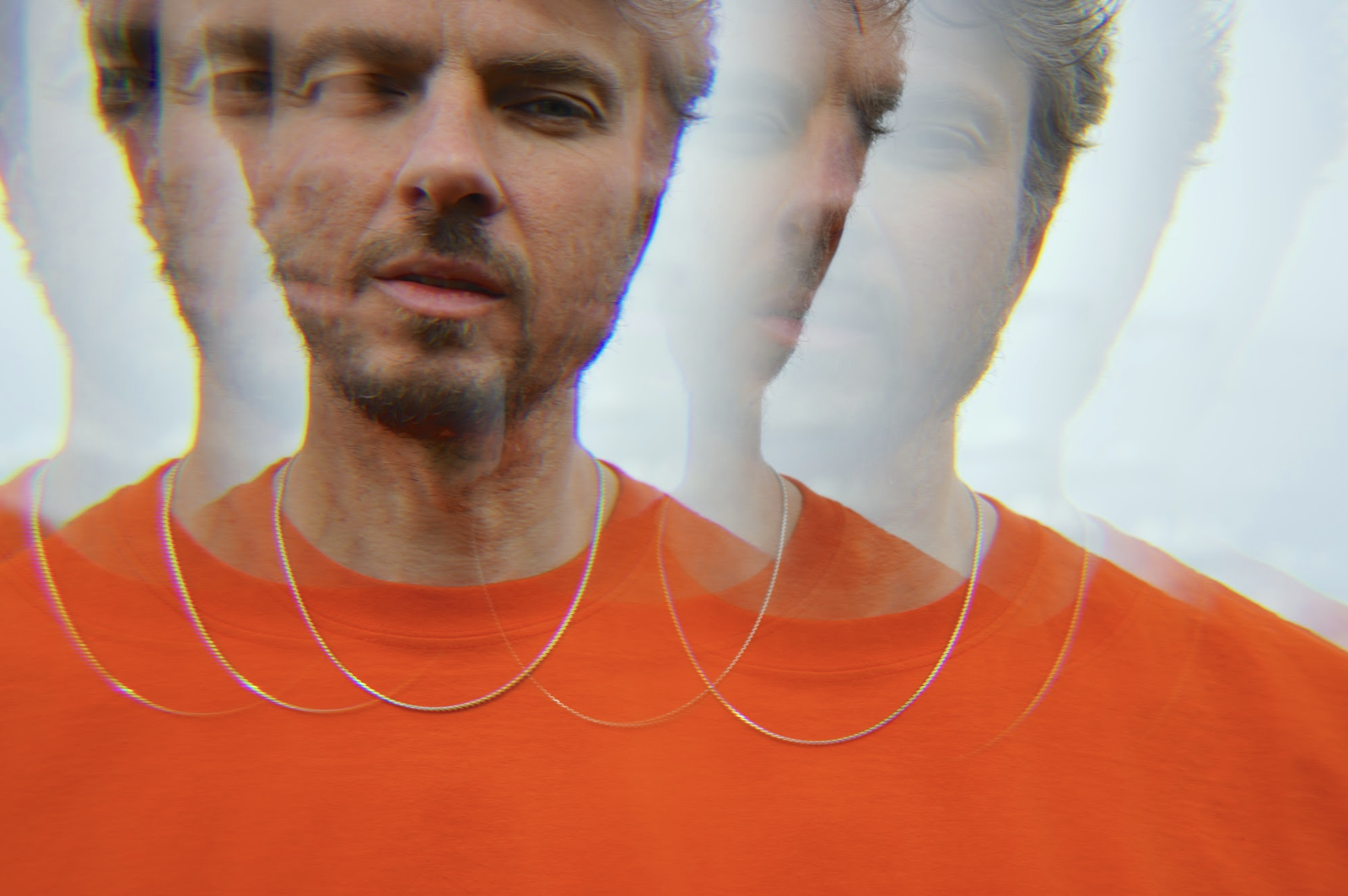
Tom Skinner photograph courtesy of Jason Evans.
___THE NEW___
Group Modular ‘The Tunnel/Lonely Pylon’
Reissue Special Released 19th September
The first transmission (or rather a retransmission if you like) from the Group Modular duo of Mule Driver and Marky Funk in three years, marks the inaugural chapter in a new series of special 7” releases “powered” by the duo’s alter ego Confused Machine and Delights labels. Those lucky enough to have grabbed original copies (sold in separate splits editions, both sold out almost immediately) of ‘The Tunnel’ and ‘Lonely Pylon’ will know that the former was part of Norman Records’ 2021 25th Anniversary split release by Polytechnic Youth, and that the latter was recorded exclusively for the third instalment in Russian Library’s L series of split 7” EPs back in 2022.
Back on the radar, with the chance to own these hauntological sci-fi suites and dramatization soundtracks, the self-described “Outer space sounds from Jerusalem-Tel Aviv route” library music makers reacquaint us all with their brand of analogue period cult space age influences and their taste for atmospheres and theme tunes that emit something that’s near supernatural. ‘The Tunnel’ is a curious Pietro Grossi like rocket ship steam and gas fusion of soft timpani, Roy Budd and Greg Foat-esque barque sci-fi harpsichord, and d ‘n’ b like dub beats. And the electric field throbbed ‘Lonely Pylon’ is a Library music imbued psychogeography of paranormal nature and unnerving children’s sci-fi TV of the 70s and early 80s – imagine Brian Hodgson, Sapphire and Steel and bygone public broadcasted information warnings resurrected by The Advisory Group or My Autumn Empire.
Hopefully this latest 7” series will prove a catalyst for more new recordings from the duo, who haven’t released anything together since Per Aspera Ad Astra in 2022. You’d better be quick, as I have a feeling it will sell out pretty sharpish.
Lt. Headtrip & Steel Tipped Dove ‘Hostile Engineering’
(Fused Arrow Records) 23rd September 2025
The gristle, outpoured thoughts, observations, protestations and glue between the oppressive urban structures of our dysfunctional, unworkable society both poetically and rhythmically twist and flow over a counterculture haunted psychedelic-prog, Krautrock and jazz-soul production on this debut project collaboration.
From the experimental, leftfield platform of Fused Arrow Records and its stalwart producer, engineer, beat maker and artist in his own right, Steel Tipped Dove, a new partnership with rapper, producer and instigator Lt. Headtrip.
Dove’s production and various studio skills can be heard on releases from such notable talent as Fatboi Sharif & Roper Williams, billy woods & Messiah Musik, Darko The Super, MC Paul Barman and Zilla Rocca. He’s also collaborated with the most dope and pioneering Dose One. The Lieutenant’s CV is no less impressive, setting up the ‘we are the karma kids’ label, organizing projects and events in the Brooklyn, Manhattan and Queens areas, and either collaborating or sharing stages with Armand Hammer, Open Mike Eagle, Quelle Chris, Beans, Backwoods Studioz, Reservoir Sound and Uncommon Records.
A magic combination of old hands from the underground scene then, the Hostile Engineering environment that engulfs them is twisted, churned, inhaled and transformed into a sometimes gothic, sometimes industrial, and sometimes more soulfully halo-lit arena for the spoken and rapped lyrics; the cadence of which reminded me at any one time of the Antipop Consortium, Rob Sonic, dalek, and when humorously and from a self-aware but confident in their own skin way, addresses the issues of sexuality, sex and the tired old tropes of rap machismo on the smoochy drifted saxophone and crunched drum beats produced ‘We Got The Sugar’, comes across a little like Homeboy Sandman: a sample of the lyrics being, “last week I was helpin’ his girl find her panties. This week I’m his bro’s new daddy. Just cause I can rap along to Liquid Swords don’t mean my dick’s boring.”
There’s more than enough clever ideas here, with samples I’ve yet to recognize, and an atmosphere that seems to channel all kinds of musical influences; from zappy Kraftwerkian synth and drum pads electro to the Floydian, Roy Ayers, Soul cuts, cult soundtracks (of suspense, horror and sci-fi futurism), heavy rock and prog – I think I’m overthinking it, but alongside what could be a sample from Sabbath or their ilk, it sounds like a short miraged shiver of cymbal resonance and slow drums from Neu!’s ‘Weissensee’ on the automation for the people, insurance servitude and dead-end careers themed polemic ‘0 Days Since Last Accident’.
Bot factories, the nightmarish promises of constant bodily cosmetic regeneration and the self-absorbed legacies that go with hanging on to the bullshit zenith of eternity, high anxiety, and on the repurposed halcyon soul Kayne-Jay-Z-Biggie fantasy “money, money, money” ‘Fund Don’t Stop’, a backslap to rampart consumerism and unsignifying spectacles of Black Friday (“We been shoppin’ since we bought that serpent’s product in the garden.”) – a lifetime of spending, from the womb to the tomb.
At thirty minutes long, there’s no fat on the bones, and yet plenty of tempo, musical changes, and a fresh rap style that neither preaches nor sits back in a nonchalant pose. A really successful pitch, bringing both talents together to fuse and articulate the present depressing miasma of the times in which we all live; glued to this rock, with no anchor, no compass, attached to the screen and validation culture of social media and its puppet masters. One of the freshest hip-hop releases of 2025.
Tom Skinner ‘Kaleidoscopic Visions’
(Brownswood/International Anthem) 26th September 2025
Reaching the midlife point, the UK drummer and composer Tom Skinner finds time to reflect and take stock with a mature kaleidoscope of culminated visions pulled and drawn from a highly prolific career and enviable CV of performances, collaborations and recordings (from Sons of Kemet to The Smile, David Byrne Floating Points…. the notable list goes on).
Arriving a few years after Voices Of Bishara (an album inspired by the American jazz and classical cellist Abdul Wadud and his seminal privately pressed cult masterpiece ‘By Myself’), the follow up weaves the former into a rich, often cinematic, psychedelic and floated meditation and dialogue of jazz, neo soul, cult soundtracks and the contemporary classical. At 45 years of age, the time felt right for such an undertaking. A culmination of experiences, of influences now coming together; a bond that embraces not only Skinner’s vaguely Middle Eastern entitled Bishara live band but a number of congruous international collaborating foils: neo-soul doyen, and right acclaimed, award-wining polymath (but you can list the main qualifications as singer-songwriter, poet and bassist) Meshell Ndegeocello; the self-described multifaceted Charleston musician, score composer, film and radio programmer and vocalist Khari Lucas, otherwise known as Contour; London born and raised but now Berlin-based keyboardist and vocalist Jonathan Geyevu, aka Yaffra; and on electric guitar for a couple of tracks, Adrian Utley of trip-hop luminaries Portishead.
That group of friends is split between two sides of a traditional vinyl format: a moiety of instrumental material and vocalist starring peregrinations, with side A featuring the electric-chamber-jazz Bishara quartet of bassist Tom Herbert, cellist Kareem Dayer, and woodwind and reeds players Robert Stillman and Chelsea Carmichael, and Side B, a cosmic mirage of sung and spoken discourse, soliloquy and healing. Described as “distinct sonic landscapes”, both parts are harmoniously conjoined, with leitmotifs, recurring sounds and an overall feel that draws upon a cosmology of Afro, spiritual, conscious, spacey, psychedelic and experimental jazz.
It begins with the promise of comfort; a putting of the mind at ease so to speak. ‘There’s Nothing To Be Scared Of’ begins with an incipient jingle-jangle and stirring drones of woodwind and the cello before hitting a peak of what can only be descried as Lalo Schifrin meets Bobby Hutcherson and Lonnie Liston Smith and the Cosmic Echoes on a 1960s filmset. From then on out, this jazz-chamber match the flighty, craned and fantastical with amorphous hints of Nicole Mitchell, Village Of The Sun, Kibrom Birhane, the Ancient Infinity Orchestra, Coltrane, Matana Roberts and Sven Wunder. You could call it a cross-generational sound, with the first half of the album feeling itself out across an evocative landscape and more abstract metaphysical space full of reflections on emotional states and those people held either dear or inspirational. That includes the late New Jersey born and raised novelist, writer, memoirist, poet and filmmaker Paul Astor (author of the loose New York Trilogy, Moon Palace and The Music Of Chance), and Skinner’s mother, the former classical concert pianist and victim of the arts misogyny, Anne Shasby.
There are some beautiful moments captured amongst the often-slow momentum, and the gander and bird-like flexes; a sense of the mellow and unfurled: the soulful too. And yet there’s a certain drama to be found, and even mystery to this section of instrumental description, of roots and spiritual emotions.
The second section features the vocal talents and essences of Skinner’s collaborative foils; starting with the soul, funk, jazz, hip-hop, reggae and rock spanning polymath Meshell Ndegeocello, who soulfully and dreamily oozes and woos a sense of both the ancestral therapy and a mirage feeling of homely comfort. Ndegeocello’s voice emerges from a hallucinatory wilderness, floating across a nine-minute cosmic-soul and R&B jazz suite of horn snozzles and soft burbles, glassy bulb vibraphone notes, and gentle plucks.
Taking a sadder, more pained discourse-like tone, Contour’s R&B neo-soul voice aches and yearns on the bluesy chamber-jazz piece ‘Logue’. The language is one of rise and fall, trauma and endurance, survival and striving in a ruthless landscape. And yet, again, there is a kind of near diaphanous beauty about some of the music, the flutier parts and delicate bulb-like notes that seem to float around in a slow ponderous rhythm. It’s the feeling of being drained, and the attempts to break free of the malaise.
The finale, ‘See How They Run’, features the soulful poetic spoken tones of Yaffra both responding to a secondary voice and speaking out loud his thoughts, enquires to the promise of eternal enlightenment, in an almost winding, untethered fashion. It reminded me in part of Andy Hay, Diggs Duke and even Tricky, playing out over another neo-soul leaning dreaminess.
Informed and prompted by middle age (a youthful middle age of experience rather than depressing aging pains), Skinner offers a retrospective pause whilst looking towards a creative future. Cross-generational concerns, references, influences converge in a mature work of feelers, reflections and freedom. Consolation in an age of accelerated isolating atomisation and introspective anxiety.
Water Damage ‘Live At Le Guess Who?’
(Cardinal Fuzz in Europe/12XU in N. America) Released 5th September 2025
In the venerated surroundings of the Medieval city of Utrecht, the religious epicentre of the Netherlands (or so it is said), as part of the Le Guess Who? Festival lineup, the Water Damage ensemble preached their own unique fire and brimstone of monotonous locked-in drones, the wailed and frayed, the squalled and resonant.
Whilst following no recognisable domination on this plane, the Austin collective of like-minded acolytes to all things underground, invoked some kind of near religious sonic experience as they went to work on the opening track, ‘Reel 28’, from their most recent album, Instruments (released back in May of this year). Without a break or let-up, they relentlessly, but slowly, created a mesmerising lumber of the avant-garde, of Motor City, Jap, Kraut and Doom rock. Enslaved to the rhythm you could say, for a full 45 minutes both the group and their audience are caught in the hypnotic flay and sway of the scuzzed and intense bowed needling and sawing momentum that is created.
Absorbed into the core for that performance, guests Ajay Saggar (a serial offender, featured untold times on this site over the years under various collaborative and solo guises: Bhajan Bhoy, Deutsche Ashram, King Champion Sound and University Challenged) and fellow astral traveller Patrick Shiroishi (the Japanese-American multi-instrumentalist and composer, based in L.A., last appeared on this site playing foil on saxophone to Dave Harrington and Max Jaffe on the Speak, Moment collaborative album) take up the mantle on guitar and “free-reeds”. Their contributions are equally as mystical, magical, intense and droning; with Shiroishi especially summoning both a Mogadon Hawkwind and Sam Rivers simultaneously.
With the “Maximal Repetition, Minimum Deviation” motto and mantra, they conure up a monster; a ceremonial rite; even, as the accompanying press release describes it, an exorcism. And yet it is quite melodic. Reference points, for me, would be Tony Conrad and Faust’s seminal Outside The Dream Factory, but also Tony’s Transit Of Venus collab with Hangedup, Glenn Branca, La Monte Young (these last two actually referenced by in the press release), Earth, Boris, Swans, Hala Strana, France, Smote, Pharoah Overlord and Amon Düüls I and II, and The Black Angels. But like the old city that played host to the festival and the Water Damage performance, there’s an almost otherworldly summoning of the Medieval: a sort of mythologised or transmogrified evocation of an abstract atmosphere from that period; it sounds at times almost like a hurdy-gurdy is being wound up like some kind of ancient transmitter; plugged in to a mystical and harrowing age.
I must add, for once, the sound is really good. You can hear every part, every contribution, and even the bass line (you wouldn’t believe how few recordings ever get the bass right, or let you hear anything more than just a mumble of bass; live recordings are often even worse, almost bass free). The bass here is integral to keeping up that never ending rhythmic sway; and despite its repetition, is such a great little riff that is never grows tired. Compliments to the sound engineer, and who ever mastered this performance, then, for instead of a block intensity of lost instruments you get a clear production, with every cog, every drone and note audible.
I’d say an improvement on the album track, and a really intensive yet hypnotic hermetic experience that feels untethered to any particular time, age or period.
___/The Monolith Cocktail Social Playlist Vol. 101___
For the 101st time, the Social Playlist is an accumulation of music I love and want to share, with tracks from my various DJ sets and residencies over the years and both selected cuts from those artists and luminaries we’ve lost on the way and from those albums celebrating anniversaries each month.
Last month we celebrated the 100th edition of this series, which originally began over 12 years ago. The sole purpose being to select an eclectic and generational spanning playlist come radio show, devoid of podcast-esque indulgences and inane chatter. In later years, I’ve added a selection of timely anniversary celebrating albums to that track list, and paid homage to some of those artists lost on the way. In the former camp this month, and to tie in with the Archive spots on Bowie and CAN, there’s a 30th anniversary nod to 1. Outside – a tour I actually witnessed, I kid thee not: Wembley Arena if you must know – and 50th nod to Landed. Joining this celebration there’s also tracks from Kate Bush’s Hounds Of Love (40 this year), The Fall’s This Nation’s Saving Grace (also 40), Blur’s The Great Escape (30), Dexter Gordon’s One Flight Up (60), Wolf Parade’s Apologies to the Queen Mary (20) and Mew’s And The Glass Handed Kites (also 20).
Each month I also like to add a number of newish/recentish tunes (more or less anything from the last year): those that either missed out on the regular Monthly Playlist of brand-new music releases, or only just come to my attention. We have Monde UFO, Lukid, the El Maryacho team up with Nowaah The Flood, Penza Penza, the Tone Of Voice Orchestra, Elkotsch (thanks to blog friend and supporter Andy Haas for recommending this one) and the triumvirate collaboration of Phew, Erika Kobayashi and Moebius. Oh, and something not so much new but surfaced from Dylan this week.
The rest of the playlist is an anything goes selection of stuff I’ve accumulated, loved, treasured, wanted to own or played out during my sets over the decades. In that category there’s music from the Walker Brothers, the Jazzpoetry Ensemble, Mother Lion, Garybaldi, A Tent, The Barrino Brothers, Departmentstore Santas, Gene Martin, and Akofa Akoussah.
Track List:::::
Wolf Parade ‘Shine A Light’
Butterglory ‘She Clicks The Sticks’
Blur ‘Entertain Me’
Mew ‘The Zookeeper’s Boy’
David Bowie ‘We Prick You’
Kate Bush ‘The Big Sky’
Garybaldi ‘Maya desnuda’
The Fall ‘I Am Damo Suzuki’
CAN ‘Vernal Equinox’
The Jazzpoetry Ensemble ‘Motherless (Live)’
Dexter Gordon ‘Darn That Dream’
Polyrhythm Addicts ‘Big Phat Boom’
Akofa Akoussah ‘Sumga Ma Bacci’
El Maryacho & Nowaah The Flood ‘SOAPS’
The Barrino Brothers ‘Born On The Wild’
Tone of Voice Orchestra ‘Tourist at God’s Mercy’
Penza Penza ‘Dusty’
Los Darlings De Huanuco ‘Lobos Al Escape’
Elkotsh ‘Da’a Adeema’
Monde UFO ‘Sunset Entertainment 3’
Phew, Erkia Kobayashi & Moebius ‘Katherine’
The Detroit Escalator Co. ‘Manuel Transmission’
A Tent ‘Seven Years – part 2 (Abundance)’
Lukid ‘The Secret of Bell Making’
Bob Dylan ‘Rocks And Gravel (Solid Road)’
Mother Lion ‘Simple House’
The Walker Brothers ‘Walkin’ in The Sun’
Departmentstore Santas ‘Play in the Sun’
Gene Martin ‘We Shall Be Like Him’
The Hitchhikers ‘Feel A Whole Lot Better’
___/Archives___
From the exhaustive Archives each month, a piece that’s either worth re-sharing in my estimates, or a piece that is current or tied into one of our anniversary-celebrating albums.
This month there’s my previous pieces on CAN’s Landed (50 this year) and Bowie’s 1. Outside (30 years old this month).
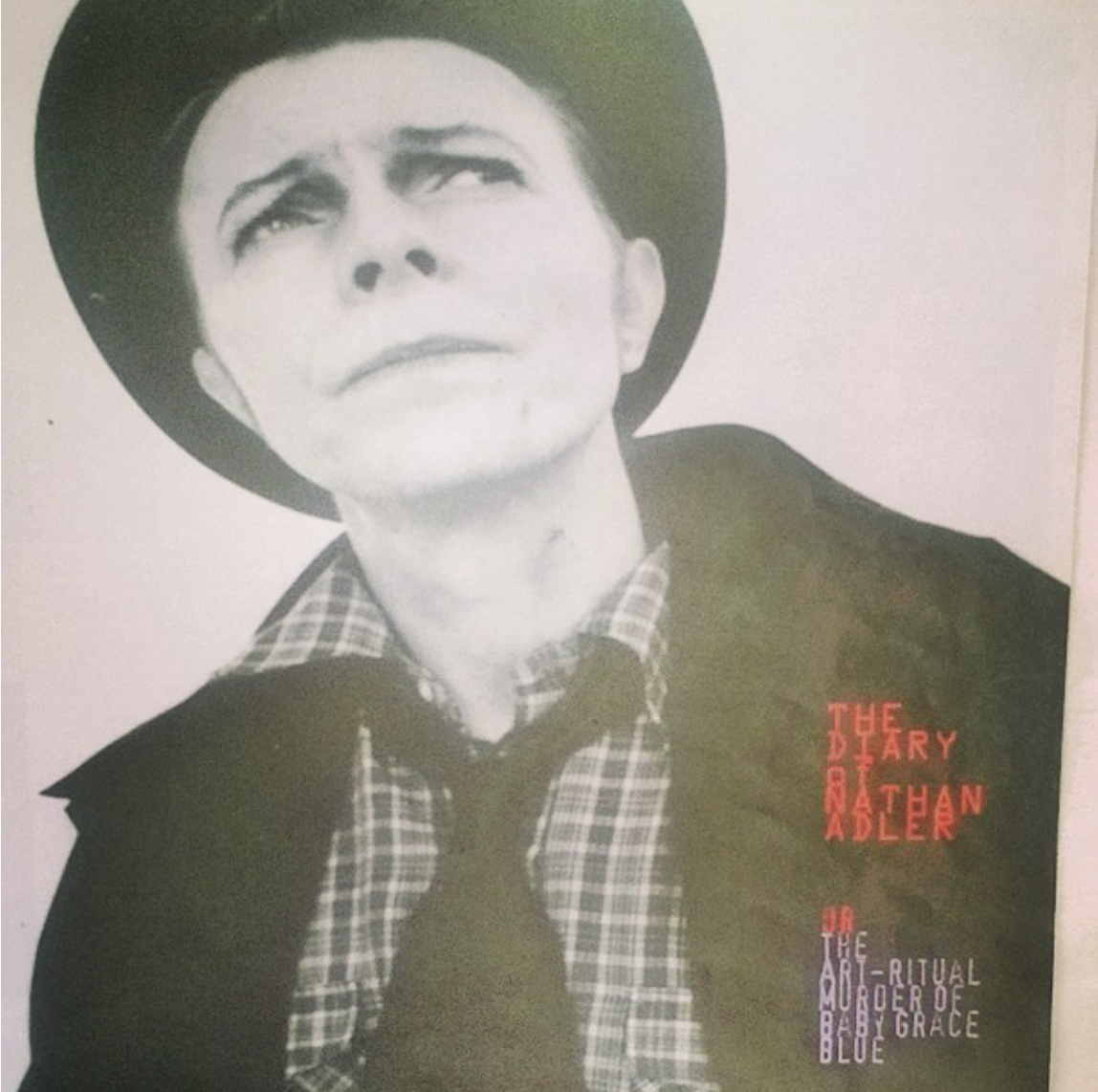
David Bowie 1.Outside (Arista/BMG) 1995
With ‘five years’ remaining until the new millennium, Bowie, tapping into the anxiety and quest for spiritual relief, returned to his first passion: contemporary art.
Back with his most innovative collaborator, Brian Eno, he dredged the bottomless pit of morose and despair. Dreaming up a morbid tale of future sacrificial performance art gone wild and taboo breaking cybernetics he narrated a woeful diegesis through a series of ‘verbasier programmed’ characters.
Disturbing to say the least, our ‘cracked actor’ pitches an avant-garde ‘whodunnit?’, set in a parallel bleak world where the self-mutilated gestures of Günter Brus (the patriarchal figurehead of body art) and ‘the orgiastic mystery theatre’ of Hermann Nitsch have been taken to new, hyper, extremes of bloodletting.
Led by the investigative diary of art crime detective Nathan Adler, a cryptic cut-up of Burroughs/Burgess language is used to not just explain the circumstances that befell the poor victim Baby Grace, but also delve into the collective psyche.
Out on a limb musically, Bowie’s home life may have been content, yet something suddenly propelled him to bravely create a depressive requiem. Easily the best, if not most original, material since Scary Monsters, 1.Outside was entirely written in the studio as the band extemporized: motivated by Eno’s synonymous oblique strategy cards.
Scott Walker lost in cyberspace; the industrial melancholy is at its most anguished on ‘A Small Plot Of Land’ (a version was used on the, Bowie as Warhol starring, tragic biopic of Basquiat directed by Julian Schnabel), yet a more revved-up, pummelling bombastic variant is used on ‘Hallo Spaceboy’ and ‘The Heart’s Filthy Lesson’ (perfectly playing out David Fincher’s Seven).
Leaving many fans bemused (as I myself witnessed on the Outside tour, the baying audience pleading for the greatest hits package), the philosophical snuff opus seemed puzzling to those familiar with the pop-lite Bowie. Thankfully Bowie cut loose the shackles of commerciality for a contemporary blast of shock and dread.
CAN ‘Landed’ (Virgin) 1975
Richard Branson’s pastoral record label Virgin hooked our Cologne ‘seven-day sonic avant-garde evangelists’ in early 1975, tempting them away from the clutches of their former masters United Artists, whose relationship with the band had been tenuous at best. They now joined the hippie-idealistically run, free thinking label of choice – at least that’s how it appeared to the onlooker-, sharing the stable with both fellow countrymen Faust, Tangerine Dream and Slapp Happy, the psychedelic progressive band Gong, and the million zillion selling Mike Oldfield, Virgin’s biggest selling artist by miles – whose Tubular Bells behemoth had reined in a load of money and success, paving and paying the way for most of the roster.
Branson may have looked like he’d stepped off the cover of a Jethro Tull album, but he turned out to be a shrewd businessman. After all, he managed to propel Faust into the album charts with their Faust Tapes mesh-mash classic: albeit that the said album was put on sale for a paltry 49p and probably didn’t actually net the group much money, but hell, it sold over 100,000 copies, so they became a household name in the head community for a while at least.
Business wise, sister label Harvest – equally rich in allusions to the Woodstock ethos – would distribute CAN’s records in their homeland, whilst EMI, who owned both labels, would just count the cash it hoped would now roll in. One of the stipulations in the Virgin contract was that the band would have to use superior recording equipment for their next album. A multi-tracking desk was delivered to their own sacred Inner Space studio HQ, which they were still allowed to use though the records would now be mixed elsewhere. Unfortunately, a deep sense of forlorn began to creep in, mixed with paranoia, the arrival of the new technology now making it possible for the band to record their parts separately if they so wished. Until this point Holger Czukay had masterminded all the recording and editing on just a two-track recorder. He had also always encouraged the group to play together in the spirit of improvisation. But now, the band could successfully overdub and add parts at a higher quality then had previously been possible before, taking a more insular approach to recording.
In scenes not too far removed from the Beatles fractured shenanigans on the White Album, the group began to play some of their own parts in secrecy, the thought of being scrutinized and criticized by their fellow band members filling them with dread.
Again, like The Beatles, they invited an outside musician into the studio to lift the tension and scrutiny. This fortunate man was Olaf Kubler, who had served as producer on both Amon Duul and Amon Duul II albums, although he dramatically fell out with one of AD II’s bandleaders John Weinzierl, who made his feelings towards him pretty clear in recent interviews. Kubler was called in for his saxophone prowess, being asked to lay down some cool sultry cuts on the track ‘Red Hot Indians’ for what would be the Landed LP.
Sessions for what would be the band’s Landed album began in the first few months of 1975, in-between tour commitments, which included a couple of gigs with the troubled American folk troubadour Tim Hardin, who it’s rumoured was asked to join the band full time.
Hardin didn’t really front CAN in these gigs, instead, he would merely leap on stage to perform one of his own tunes, usually something like ‘The Lady Came From Baltimore’, and maybe front a couple of the groups own tracks before exiting stage right. Whether he ever considered seriously joining the band, Hardin’s deadly heroin habit put a damp squib on things, finally getting the better of him in 1980 with one overdose too many.
Anyhow, Karoli had so far done a good job of semi-fronting the band, going on to lead all the vocals on this album; delivering some softly inspired dream like performances throughout.
Landed in some ways directly follows on from their previous effort Soon Over Babaluma, especially in the sound collage experiments of this album’s ‘Vernal Equinox’ centre piece and ‘Unfinished’, both of which re-work similar themes and threads found on ‘Chain Reaction’ and ‘Quantum Physics’. The rest of the LP consists of far rockier progressive tones, with allusions to their contemporaries, particularly Pink Floyd. To a point there is also an attempt towards the glam-rock of both Roxy Music, Bowie and Mott The Hopple – all influences CAN’s peers, Amon Duul II, also breathed-in on the 1974 album Hijack, though to a less successful degree.
‘Full Moon On The Highway’ and ‘Hunters And Collectors’ relish in the glow of these new influences, though remain slightly more conventional compared to CAN’s usual free roaming exploratory material. Most of the seven tracks now run in at under six minutes and sound much more formulated, the exceptions being the already mentioned two saga driven soundscape pieces, which combined, make up three quarters of the overall albums running time.
The lyrics themselves seem to be full of references to mysterious alluring women, clad in leathers, who turn up at ungodly hours on celestial described highways. Analogies run riot, the open road acting as a metaphor for following certain paths, Karoli constantly encouraging the listener to cut loose and float away. Journalist and friend to the band, Peter Gilmour, co-wrote both ‘Full Moon On The Highway’ and the lazy sedate ‘Half Past One’. Peter would also go on to write CAN’s biggest hit, the disco chugger ‘I Want More’.
Many critics have panned Landed, seeing it as the beginning of the end for the group. It does seem a slight exaggeration. Certainly, the dynamics were slowly ebbed away, the production becoming much more polished, though it suffers from some very messy trebly moments at times.
Footage of them performing ‘Vernal Equinox’ on the Old Grey Whistle Test at the time sees Irmin Schmidt wearing a fetching bondage inspired chain mail waistcoat whilst theatrically commits Hari Kari on his keyboards, whilst Czukay, all ten-yard stare, sports white gloves and a sheriffs’ badge. A mid-life crisis beckoned with all this new pomp and strange fashions, turning off many fans, including the disdain of Julian Cope who states that this act of regalia wearing extravagance ended his relationship with the band. So, in a way CAN did seem to be heading over the precipice, the best days behind them, but this album is viewed way too harshly.
Landed for what it’s worth is a decent album, with enough ideas and demonstrations of superb musicianship, Karoli alone performing some of his most sublime guitar work yet.
The albums artwork, by the curiously alluding Christine, displays a collection of passport photo sized images of the band. Each individual photo is covered in graffiti or scribbled on, lending silly moustaches, cartoon glasses and an array of comical hats and hairstyles to the now light-hearted looking band. Peering out from under the heavy de-faced images they pose in a manner that lets us know they still have much to give- also, am I imagining perhaps a Carlos the Jackal type reference here, the many disguises and such.
CAN shifted back towards the Afro-beat and World music styles on their next couple of releases and also brought in ex-Traffic members Rosko Gee on percussion and Reebop Kwaku Baah on the bass to great effect. Czukay moved away from his bass guitar duties so that he could explore radio short wave editing and cutting up techniques in greater detail. He would of course go on to leave the band in 1977, leaving Liebeziet, Schmdit and Karoli to carry on for a while before everyone split for good to pursue their own solo projects, a reunion in 1989 included Malcolm Mooney and resulted in a new album titled Rite Time.
The year is 1975 and CAN have laid down their 7th album, after being together for nearly eight years. To get this far they have travelled an etymological musical odyssey, that has taken in the dark esoteric voila seeped mood of The Velvet Underground, the psychedelic spiritual enlightenment of America’s west coast, the African dance style rhythms of Nigeria and Ghana, the dreamy hypnotic Turkish flavored folk music, the otherworld tour of the nebula emitted from Hendrix and the lessons learnt from Stockhausen and Von Biel. CAN had surpassed all their peers and become possibly one the greatest assembled bands of musicians that the west has ever seen – seriously these guys could out play anyone, though they never had time to wallow in ego and always looked towards experimentation rather than dwelling on their skills.
There now follows a run-through of the album:
Dropping in with an up-tuned arching guitar fuzz and treble heavy hi-hat, ‘Full Moon On The Highway’ leaps straight into action. Jaki Liebezeit sets down an incessant workman like beat, hammering away on the bass drum as Michael Karoli casually begins his salacious vocals –
‘I made it hard today,
For I had to do it to me.
And if it’s only to hold her,
She’s gonna get it today’
A certain sense of portend fear hangs in the air, Karoli in his full Germanic romantic disdain rattles off omnivorous statements about taking to the highway, where star crossed lovers may unlock some inner meaning and truth.
Rock hard screaming lead guitar hooks run rampant, exercising no sign of restraint and sprinting ahead as though in a 100-meter sprint. Piano flourishes and honky tonk bravado light up the mood as those bawling guitars and Alpha 77 effects wail away like banshees. Czukay takes his bass on free roaming tour of run downs, slides and felicitous infused funk workouts, never staying put in one place for too long, always running his fingers all over his instrument. An intense burst of exuberant searing drums, keyboards and clashing turmoil all culminate into a finale furore, that threatens to end in a mess but is saved by the rallying cry of Karoli riding in on his gleamed-up guitar. He transposes glam via Pink Floyd to produce something unheard, a riff from the other side.
Taking a more serene path, ‘Half Past One’ begins with some archaic ethnographically seductive Spanish guitar and heavy tub tapping drums. A dozy laid-back vocal pronounces –
Over the beach,
Into the sun,
Wake again by half past one,
Alright’
The last word being some kind of reassurance amid the strangely relaxed drug induced soirée, that peers at some snapshot of the protagonists’ relationships, a casual affair on the beach in this case.
Schmidt interjects with some delightful mandolin sounding oscillations and yowling alarmed synths, whilst Czukay adds some chuggering engine bass lines, sliding around the neck as though revving it up.
The general breathless ambiance begins to wash ashore, like a lapping tide, meandering its way towards some welcoming gypsy encampment. Quacking wah-wah and folk tale violins add to the general malaise, building towards a newfound intensity as the song picks up momentum: The final 30 seconds bathing in the now pressured final crescendo.
Now steps forward the ambiguous and genre dodging ‘Hunters And Collectors’, with its almost glam postulations and Afro- funk grooves, this four minute Floyd gesturing dose of mayhem ducks any formal categorisation.
A doom-laden piano emphasis each intro chord, like an operatic indulgence. Karoli in magi pose announces the chorus –
‘Hunters and collectors, all come out at night.
Hunters and collectors, never see the light’
The song now kicks in with some sky rocketing theatrics. Dense melodies of climbing synth lines and evocative sexed up Teutonic choral backing adding to the melodrama. Czukay and Liebezeit cook up a fine jumped-up funky backing, with double shimmering hi-hat action and posing bass guitar. They all soon break down into a more stretched out segue way, taking in the early years of Parliament and some Afro highlife.
Karoli now dabbles with the vocals, as they take on some added menace; he conjures up images of leather clad biker gangs, savage sexual degradation and drugs –
Thirty leather kids, on the gang ban trail,
Get your big brown man with the snakes in bed.
Dirty bother me now, it soaks into a cup,
She says “if you don’t start at all, you never have to stop”.
Other worldly radio signals and snippets of conversation from the ether add to the esoteric atmosphere that is entrenched in seedy tales of chemical indulgences.
The opera swoops back in before what sounds like the set-piece breakdown brings the curtain down, as strange broken cogs, ratchets and springs all produce a comical ending, just before the swept in majestic intro of ‘Vernal Equinox’ is brought in.
As the ambivalent last track on side one, ‘Vernal Equinox’ continues the dynamism and piano melody from the previous track, but runs rough shot and fancy free, producing an eight-minute omnivorous jam or epic narrative.
It all begins with a search light introduction of space age doodling, with a chorus of sonar equipment and lasers shooting off in all directions, all played out over a heavy laden piano, hurtling towards a cacophony of destruction.
Rabid lead guitar rips into the track, Karoli literally plays for his life in a fit of feverish exhaustion, running through the full collection of riffs and chord rushes that he’s picked up over the years.
Flailing drums explode like a barrage of mortars, as UFO’s crash land all around, Czukay finds some cover and rattles off his defensive bass.
That Alpha 77, the exulted secret box of tricks, spits out havoc. Crazed wrecking layers of multiplying textures take the drama back to the cosmos soul searching of Soon Over Babaluma, but with a now more invigorated pumped-up stance. The raging narrative falls into one of those accustomed breakdowns. Liebezeit and his meteoric rhythm accompany arpeggiator sonic waveforms and metallic sounding drips during this break in the pace. The full swing returns in style, turning the jamboree into a jazz funk quest, as what sounds like Robert Fripp battling it out with an alien horde from the planet of Sun Ra, delivers a belting finale of elation.
Side two opens with the bongo tribal reggae of ‘Red Hot Indians’, a jaunty slice of infectious pigeon-toed dance rhythms and cool wistful chant like grooves. Karoli goes all faux-Caribbean with his laid-back vocals, he casually lays down some lines in an almost staccato fashion –
‘It’s the DNA song, DNA song, it’s the DNA song.
Strike mess, hole mess, shadow mess’.
Kubler Olaf blurts out an effortlessly uber cool prompting saxophone melody, liberally peppering the track, whist Liebezeit just reclines back on his sun lounger, knocking off some tom rolls and sipping a pina colada.
Mixing in some more African highlife and even-tempered down Roxy Music, this track flows along in its own serenity. The second wind of extra rhythms start to sway in an hypnotic motion, like some kind of mantra as Karoli mumbles recollection of some cryptic halcyon memories –
‘Then you took me back, steam machine.
Dreamt my way into a daydream.
Let me vanish into yesterday,
And my night drops fade away’.
As though to ratify the shambling theme, the song naturally fades out on its own breezy demeanour.
We now come to the soundscape behemoth of ‘Unfinished’, which by its title remains to be determined by the listener as to whether or not this maybe the case.
A set piece of sound cutting and masking that harks back to Future Days, with its reverential cinema scope builds and gliding synths this track could just yet be one of CAN’s finest moments.
Opening with what sounds like an orchestra tuning up, we hear a noisy interlude of violins, strings, brass and unfamiliar instruments all preparing themselves for the performance. That looming ever-present box of tricks, the Alpha 77, fires up and screeches over the top of our orchestra pit, launching bolts of lightning along with the odd spark of lush melodic wonder.
Breathing in the same aroma found on their soundtrack piece ‘Gomorrha’ and the melodic beauty of ‘Bel Air’, our macabre galactic Schmidt now unleashes some welcoming felicitous doses of extreme perturbation, underpinned by some humbling broody but magisterial bass.
All of a sudden, a series of gory effects and sounds enters the stage, as the demonic bound trip to the nebula goes all pants messing chaotic. Squealing guitars, that evoke the sounds of distressed souls pleading, cut through the heightened tense mire.
Factory steam powered machinery like the sort found on the Forbidden Planet, is ratcheted up, bashing away and powering up some monstrous life form. Some tumbling toms are given a swift kicking, the occasional crash of a cymbal unsettling the air as Liebeziet desperately tries to carry on playing whilst his space craft flies into the sun: holding on for dear life he is soon saved by his comrades who now work towards an uplifting final stretch.
Whistling sounds fly overhead, and gongs gently shimmer in the background, Schmidt throws in everything even the studios sink, as a build towards some sort of journey to the upper echelons of the solar system begins.
Escapist melodies and angelic ethereal guitars all scale the dizzying heights, like the dark side of the moon played by Stockhausen and backed by Ornette Coleman. A dream- like vaporous empyrean utopia opens out as our Cologne astronauts now proceed to save the best till last. Pulchritude swathes of divine beauty flow with delight as a lavishly rich melody of heavenly choral opulence raises us to some higher plain. The final few minutes being amongst the most sublime that CAN ever laid down, a spiritual guiding stairway to the universe.
Here’s the message bit we hate, but crucially need:
If you’ve enjoyed this selection, the writing, or been led down a rabbit hole into new musical terrains of aural pleasure, and if you able, then you can now show your appreciation by keeping the Monolith Cocktail afloat through the Ko-Fi donation site.
For the last 15 years both me and the MC team have featured and supported music, musicians and labels we love across genres from around the world: ones that we think you’ll want to know about. No content on the site is paid for or sponsored, and we only feature artists we have genuine respect for /love or interest in. If you enjoy our reviews (and we often write long, thoughtful ones), found a new artist you admire or if we have featured you or artists you represent and would like to say thanks or show support, than you can now buy us a coffee or donate via https://ko-fi.com/monolithcocktail
Kalporz X Monolith Cocktail: The Top 7 Suede Songs
September 18, 2025
Our continuing partnership with the leading Italian culture/music site and platform Kalporz. This month, an editorial special on Suede.
At regular points during the year the Monolith Cocktail shares posts from our Italian pen pals at Kalporz. The site recently celebrated its 25th anniversary – more or less coinciding with our very own 15th anniversary. Here’s to longevity, which isn’t easy in the unstable online world.
For September the editorial team pick and plead their case, selecting a magnificent seven from Britpop darlings Suede, who have just released their tenth album, Antidepressants, this month.
Suede is riding high: their latest album “Antidepressants” was released on September 5th via BMG (a review coming soon), while a few days ago they announced a live show at the Fabrique in Milan, scheduled for Friday March 27th, 2026. It was necessary to draw up a #top7 to establish some fixed points in their career, for the benefit of those who don’t, perhaps, know them fully.
7. “The Only Way I Can Love You” (from “Autofiction”, 2022)
It must be admitted that it was difficult to draw up our top seven, as the material from Suede’s “second life” is as valid as that of the 1990s: songs like “Hit Me”, “Outsiders”, and “Life Is Golden” could be among the best from any other British rock band. Yet I hadn’t yet found the beauty offered by their last two albums, released amid lockdowns and inconclusive wars. The songs become the very blood galloping through our veins, speaking of attachment to life, the importance of the future, and…, yes, human weakness. The frailties of everyday life that, once recognised, would make us feel better. I’m exaggerating they would guarantee world peace. “The Only Way I Can Love You”, track number four on Autofiction, in its splendid four minutes of catharsis and tears, sums up all these feelings: “I pretend I don’t adore you, but I’d take a bullet for you/Yes, it’s a sweet and bitter love”; “I’ll love you as I’m capable of doing it”, I’m not a hero at work, a social media idol, a politician holding the fate of the world in my hands. I have my limits, which are my strength. Today, art and music breathe in a song like this. (Matteo Maioli)
6. “Barriers” (from “Bloodsports”, 2013)
“Barriers” is the first single from Suede’s second half, after their 11-year hiatus, and the opening track on “Bloodsports”. It’s a comeback anthem, epic, triumphant. That’s why it’s so important. It’s a song about “leaping over barriers” because Suede probably needed to dive back into the fray with a song like this, which in terms of pomp has nothing to envy of songs like U2’s “Where the Street Have No Name”. With a comeback like that, the band could only have a radiant rebirth. (Paolo Bardelli)
5. “Trance State” (from “Antidepressants”, 2025)
As Maioli said above, Suede have truly outdone themselves on their last two albums, achieving a quality and clarity of expression that many bands of their era no longer possess: either they’re still sitting on their laurels, touring without any albums coming out (Oasis and Radiohead, the reference was all too easy), or they continue to put out stuff without many ideas (Manic Street Preachers?). Suede, on the other hand, have taken a new path for themselves, that of a darker sound than usual and tending towards the post-punk sound of Joy Division, and “Trance State” is a clear example. A song about alienation, drugs, and emotional survival is supported by a bass so beautiful it could be played by Simon Gallup. What stylistic perfection, guys! (Paolo Bardelli)
4. “Pantomine Horse” (from “Suede”, 1993)
“Pantomime Horse” is one of the most intense moments on an album that introduced Suede to the world. The glossy, glam Britpop of the opening minutes suddenly gives way to a ballad that is a metaphor for fragility, a confession of a constructed, uncertain identity, the tale of a (sexual) awakening that causes a mask to fall. It is also the second longest track on the album (after “Breakdown”), probably the least immediate: a tormented mood permeates the slow pace of a sound with gothic overtones, Brett Anderson’s singing is suspended between falsettos, whispers, and the sensation of a lament that could erupt into tears; Bernard Butler’s guitar expands the sounds and gently distorts them, and in those layers we glimpse the shadow of an almost orchestral crescendo that culminates with the mantra-like question “Have you ever tried it that way? ” The Londoners give in to their darkest and most vulnerable side, giving us a fascinating interlude like few others in their discography. (Piergiuseppe Lippolis)
3. “The Wild Ones” (from “Dog Man Star”, 1994)
The Anderson/Butler wonder duo lasted only two albums, their debut and this, “Dog Man Star”, and not even fully (Butler left before the entire album was finished). One of the most iconic and languid songs on this second, much-loved effort by our guys is this, “The Wild Ones”, which – coincidentally – is about a breakup, but one between lovers not between bandmates.
“And oh, if you stay
I’ll chase the rain-blown fields away
We’ll shine like the morning and sin in the sun”
It’s an evocative piece played as if on Mars, while Anderson’s interpretation is inspired by Scott Walker, Edith Piaf, Frank Sinatra and Jacques Brel, “people with the emotional and musical range to turn a song into a drama. That’s what I wanted for “The Wild Ones”: for it to be a timeless piece of melodic beauty that people would marry and share their first kisses to.” A later released version of this song clearly demonstrates the differences in arrangement between the two, and so you can decide for yourself whether you prefer the original or the variant with Butler’s four-minute solo (! )
2. “Animal Nitrate” (from “Suede”, 1993)
Suede made their recording debut between 1992 and 1993 with a series of killer singles, of which “Animal Nitrate” undoubtedly represents the pinnacle. Brett Anderson’s melodic, feverish vocals draw heavily from Bowie and new wave, while Bernard Butler’s guitar delivers one of the most memorable riffs of the ’90s: chromatic, sharp, and at the same time irresistibly catchy. And to think that the guitarist’s stated inspiration came from an innocuous clarinet-based British TV theme song from the ’70s, transformed here into a murky, sinful theme. Because the song, between allusions to sex and drugs and the suburban atmosphere of the video, transports us to rooms in London suburbs where we imagine all sorts of depravity and repressed desire. The result is a dazzling song, a manifesto of their decadent aesthetic, destined to remain forever among the absolute pinnacles of the British band. (Saverio Paiella)
1.“Beautiful Ones” (from “Coming Up”, 1996)
“Beautiful Ones”, which for the danceable (and tipsy) me will always have “The” in front of it, is Suede’s tenth single and their third—along with “Stay Together” and “Trash”—to land in the UK top ten. I’m not mentioning these other songs randomly, but to highlight the shift in strategy that became necessary with 1996’s Coming Up: catchy melodies, aimed at making inroads on the radio and the charts, introduced by simpler riffs, thanks to the addition of guitarist Richard Oakes, the replacement for Bernard Butler, who was not even twenty at the time. The affinity between the two lies only in their haircut: Bernard was the leading lady, the latter an honest but talented follower. “Beautiful Ones” became the London group’s hit par excellence, fusing the glam drive of T. Rex with the magnetism of David Bowie; I agree with Ricky Jones of Clash Magazine, who describes it as ” a jangly masterpiece with one of the most melancholic sing-along choruses Britpop would ever produce“, and it’s true; the guitar sounds as much like Johnny Marr as it does Mick Ronson. Thirty years on its shoulders, carried magnificently, a hymn to youth. (Matteo Maioli)
Our Daily Bread 646: Alien Eyelid, Eamon The Destroyer, Frog, Pelts…
September 15, 2025
Brian ‘Bordello’ Shea’s Reviews Roundup – Instant Reactions. All entries in alphabetical order.

Alien Eyelid ‘Vinegar Hill’
Album (Tall Texan) 5th September 2025
Psychedelic country-soul is a rather beautiful thing, especially when performed with such heart and soul. Alien Eyelid have a wonderful laidback all-consuming warmth with a hint of baroque-ness that at times remind me of the wonderful Left Banke, especially on beautiful psychedelic ballad “Blue”. The title track “Vinegar Hill” could have walked straight from Basement Tapes with its Dylan and The Band feel, until it goes all early King Crimson on us, and is one of those rare things, a ten-minute track that does not overstay its welcome.
This Alien Eyelid debut is a gem of an album, and one of the finest things I have had pleasure to listen to this year.
The Beths ‘Straight Line Was A Lie’
Album (ANTI-)
I seem to be writing a lot about indie guitar music at the moment; there has certainly been an influx of the stuff appearing in my inbox and long may it continue if it is all of the quality of this quite lovely album of guitar indie pop/rock. The Beths of course write songs of verve and heart, and this new album is no different. Straight Line Was A Lie is an album ram jammed with catchy choruses and heartfelt lyrics all wrapped in fine melody and radio friendly hooks and jangly guitar chimes, as all good indie pop/rock should.
Eamon The Destroyer ‘The Maker’s Quilt’
Album (Bearsuit Records)
You can never be disappointed when a new release by Bearsuit Records appears. There is always a tinge of adventure, as you know it is going to be a trip hop and skip and a jump of musical exploration. The Maker’s Quilt is no exception; an album that brings together dance, psych, 60’s like spy soundtracks with a tinge of folk and rock/pop… all sometimes in the same song. At times it reminds me of what the Wicker Man soundtrack might have sounded like if it was set in the late 80’s early 90’s in a village just outside Manchester when the acid house explosion was happening. There is a joy and a magic and a melancholy madness that is just impossible to resist and resist you shouldn’t.
Frog ‘Bitten By My Love Version XI’
Single taken from Album The Count (Audio Antihero) 19th September 2025
“Bitten By My Love” is a rather lovely single, but what else could you expect from the marvellous Frog. Six minutes of undiluted late summer breeze love, a heavenly stroll through the textures of late-night radio; a song that sends my mind spinning back to the days when songs like this would haunt and confuse and engross in equal measures. A sexual healing for the social misfit.
The Jack Rubies ‘Are We Being Recorded’
Single (Big Stir Records) 19th September 2025
I don’t think I have written about any releases on Big Stir Records for a while. So here I am putting it right, for here we have the new single by The Jack Rubies, a band that once again takes me back to my youth. The days when I spent the hours of 9 to 5.30 working (or not working) in various record stores, and I remember The Jack Rubies album Fascination Vacation being unloved and unsold in the record racks, which is a shame as I remember it being not a bad record. And thirty-seven years down the line here I am listening to the latest release by same band. And how little changes for once again it is indeed not a bad record and sounds like it could have well been released back in the days when the pubs shut at eleven o’ clock. It has the air of a record that thinks a lot of itself, and that always appeals to me…call me strange. Link (no examples available yet to hear).
Ike Goldman ‘Kiki Goldman In How I Learned To Sing For Statler And Waldorf’
Album, 10th September 2025
I love this album so much that I’ve just bought a copy on CD: do I need say more. Well, I will, apart from it having the best album title I have come across in a long time, it’s such a lovely beautifully happy/sad album full of melancholy and magic. It may be the closest one can get to rediscovering the joy of The Beach Boys Friends and Smiley Smile era without actually listening to the said albums. Plus, anyone who mentions Stephen Sondheim in his influences is certainly someone who deserves giving a listen to, and once you have given a listen to downloading or streaming or buying his CD.
Noisy ‘Grenadine’
Single
“Grenadine” is a song that is swathed in a beautiful melancholy, a melody that will haunt and play bellringers pontoon with your heart; a pure and unadorned example of why pop music can save your life and make even the bad times bearable. One of the only plus points about growing old is that you have the joy and innocence of your youth to look back on, and this single brings that joy flooding back with a tearful smile and fading caress.
Pelts ‘Swimming’
Single (Fika Recordings) 10th September 2025
Here we are again with a track of post-punk indie-guitar-pop: Am I becoming a man who only reviews indie post punk guitar meanderings? Am I revisiting my teenage years of being totally enamoured with the indie scene of the 80s, or is it just that I am being sent loads of fine new alternative guitar pop/rock? Well probably a bit of all the aforementioned. For the Pelts ‘Swimming’ is indeed a fine tuneful guitar thrust of angular melodious alternative pop skew wifferty (not to be confused with 60’s psych cult band Skip Bifferty). Yes indeed, another fine track and one you will find on their forthcoming 4-track EP, released on the excellent Fika Recordings label. So, seek and buy my old chums or forever hold somebody else’s codpiece.
SCHØØL ‘I Think My Life Has Been OK’
Album (GEOGRAPHIE)
There are a few questions this debut album throws up. One, are they a French band that sings in English? So do they, in rehearsals, talk to each other in French and then sing the songs in English or to get in the mood? Or do they talk in English? Also, when they play in France, do they sing the songs in French or English? Apart from those burning questions this is actually a quite catchy album of alt guitar rock/pop and very late eighties and early 90’s indie rock: early Blur, Ride, Chapterhouse and the like all spring to mind. I would certainly advise any indie guitar music fans out there to give this a listen, as it is very good indeed.
If you’ve enjoyed this selection, the writing, or been led down a rabbit hole into new musical terrains of aural pleasure, and if you can, then you can now show your appreciation by keeping the Monolith Cocktail afloat by donating via Ko-Fi.
For the last 15 years both me and the MC team have featured and supported music, musicians and labels we love across genres from around the world: ones that we think you’ll want to know about. No content on the site is paid for or sponsored, and we only feature artists we have genuine respect for /love or interest in. If you enjoy our reviews (and we often write long, thoughtful ones), found a new artist you admire or if we have featured you or artists you represent and would like to say thanks or show support, than you can now buy us a coffee or donate via https://ko-fi.com/monolithcocktail
The Perusal #71: Matt Bachmann, John Johanna, Johnny Richards & Dave King, The Good Ones…
September 8, 2025
A world of sonic/musical discoveries reviewed by Dominic Valvona. All entries in alphabetical order.
Image of Wayku courtesy of Jesús Flores
Matt Bachmann ‘Compost Karaoke’
(Orindal Records) 12th September 2025
Imbued and driven by a creatively successful obsession with film scores and incidental musical pieces, Matt Bachmann draws away from the earthy for something far more dreamy, escapist and calming. As if to illustrate, the artist, bassist, keys and various assorted instrumentalist soulfully, and low key, yearns “I don’t want to talk about the news” on the smooched and duck-billed saxophone accompanied dreamy if bluesy ‘Long Road’. And yet tied in part to reality, the dread and anxieties of our times, there’s an attempt to break new ground with music for a movie of life that doesn’t yet exist.
Leitmotifs and a recurring intimate ensemble appear throughout this latest near untethered cinematic-leaning album, but each composition, vignette of a kind, and song can be heard in isolation and apart from the rest. For the majority of the time, on an album mostly made up of instrumentals, with just a couple of tracks featuring Bachmann’s near meandered, contour ascending and descending peaceable vocals, there’s a trio core of longtime foils and ‘confidents’: Derek Baron (of Reading Group Records note) both on drums and a little woodwind; Jeff Tobias (Modern Nature, Sunwatchers) on alto saxophone and bass clarinet; and James Krichenia (Big Thief) ‘gumming’ up the groove (as it’s put) on hand drums and percussion. There’re further contributions from Roberta Michel on flute, Cory Bracken on vibraphone and percussion, and Kyle Boston on guitar. Sometimes altogether, or separately, this ensemble is subtle and attentive but moving freely and near lucid when alongside Bachmann’s carefully placed piano, synth, chime manipulations and bass parts and leads.
Emotions swim or cast adrift in a beautifully conveyed movement of suite-like arrangements, the near minimalist, field recordings, and bursts of music – the opening grasp, tangible hold of ‘Summer’s Last Grab’, is a short burst of spontaneous-like bounding seasonal change; almost like a freeform crescendo, with instruments pulled in from various points and angles. Much ground is covered musically and influence wise, and yet there’s no specific or easy to recognise reference or evocation of filmic composers, expect for Sakamoto, who’s 80s contemporary classical reinventions and scores, his synthesized and real Bamboo music clogs and shutters and tubular chimes can be heard suffused throughout the album’s ten tracks. You can also hear subtle hints of Sakamoto’s oft UK collaborative icon David Sylvain; touches of Japan’s former frontman turned prolific foil’s Rain Tree Crow and Nine Horses.
Japan, the country that is, seems a key inspiration. Amongst the vague Shinto temple bells, rung on a cold crisp day on ‘Autumnal Cycle’, are recalls of Yasuaki Shimizu, Ichiko Aoba, and the piano work of Masakatu Takagi and Akira Kosemura; the latter’s own craft set in motion as a therapy.
Added to that set of reference points, the music and sounds, with ease, amorphously shift and reshape using a palette of chamber music, the classical, jazz, Hassell’s fourth world peregrinations, Afro-Latin and the spiritual. For instance, the Star Trek catch phrase inspired ‘TIAGDTD’ (paired won by Bachmann into an acronym, after the famous Klingon defiant and fated line, “Today is a good day to die”), is a dance, a ceremony almost of Afro and clacked, snuzzled, waddled and mizzled saxophone, fourth world music and Finis Africae influences. The title track could be a horizon gazing and shifting communion of later Alice Coltrane, Keith Jarrett and Nicole Mitchell.
There’s much to admire about this album, from its near choir boy venerable holies, its vibraphone bulb notes meditations, its escape from the clutches of despair, its untethered melodious adaptions of diverse musical inspirations, and its filmic evocations of languid endurance and prevail. A lifeline as Bachmann puts it, this project has allowed for a new freedom of creativity and something more collective, more diaphanous, elusive and mysterious, at a key stage in a life of big changes (career wise, becoming a certified social worker and therapist in NYC); a healthy compost analogy mix of “both greens (food scraps) and browns (dead leaves, cardboard, etc.)”. As intimate as it is full of builds, a little drama and bombast, Compost Karaoke is a shared experience, an open project; the very opposite of Bachmann’s more isolated conceived and produced expressions.
The Good Ones ‘Rwanda Sings With Strings’
(Glitterbeat Records) 29th August 2025
The recording location this time around may have changed, but once more in spirit returning to the rural farmlands of a genocide scarred Rwanda, producer polymath Ian Brennan presses the record button on another in-situ, free-of-artifice and superficial production. The fifth such album of unimaginable stirred grief, heartache, and reconciliation from the country’s nearest relation to American Bluegrass, The Good Ones embrace, for the first time ever, the sound of strings. Accompanied, without any prior meeting, by the musicians Gordon Withers on cello, and Matvei Sigalov on violin, a sense of Americana, country and the beautified, ethereal sounds of Van Morrison’s Astral Weeks, of early Leonard Cohen and Nick Drake are brought to the Rwandan duo of Adrien Kazigira and Janvier Havugimana’s unique style of truthful roots music.
This could arguably be called The Good One’s American album: their American adventure. A result of travelling to the USA to appear, in part, on NPR’s notable Tiny Desk showcase, the duo were snapped on the same iconic Greenwich Village block that sports the cover of The Freewheelin’ Bob Dylan LP from 1963 – though Brennan informs me that this wasn’t in any way intentional, as the duo hadn’t even heard of Dylan before being photographed for their own album cover, with a casually draped arm across the shoulder, a tambourine in the other, standing and observing the leafy surroundings of one of New York’s most legendary folkloric talented hothouse neighbourhoods. In a hotel room, with Brennan and their new foils, they created a bridge between their own Rwandan backyard dirt music and that of a countrified, bluesy, traditional and folksy America.
The American theme continues of course with both the addition of Withers and Sigalov, two noted players with extensive CVs, making a name for themselves on the American East Coast. New Yorker Withers, as both a rock cellist and guitarist, has played with the J Robbins’ band, New Freedom Band and Betwixt, and the Russian-born, Washington D.C. based guitarist, violinist, producer and arranger Sigalov has a wide range of experience either playing or recording with Les Paul, Patti LaBelle, Issac Hayes, Ben Monder and Vinnie Colaiuta, amongst others. “The With Strings” part of the title is an intentional reference to records of the same name and of a certain vintage by such icons as Ella Fitzgerald, Frank Sinatra, Chet Baker and Charlie Parker.
I feel at this point that it would be beneficial to the reader, to have some context; a little background; a brief history if you like of the duo’s (parred down in recent times from a trio) direction, of the catalyst that set them on the path of making music.
Triggered, its argued even to this day, by a history of tribal warfare, insurrection, civil war, foreign interventions (rival European powers vying for influence in the region backed, trained or armed one side or the other, but failed to intervene once the bloodshed started) and the assassination of the then president Juvénal Habyarimana, the events of that three month period in 1994 saw a sudden death cull, ethnic cleansing of Rwanda’s Tutsi minority at the hands of the majority Hutus: though even moderate Hutus, along with Rwanda’s third main tribe the Twa were also far from safe, with many caught-up, trapped in the ensuing bloodbath.
Barbaric beyond any semblance to humanity, victims were brutalized, raped, cut to ribbons or herded together in buildings, churches, and schools and burnt alive. Unlike so many previous genocides however, most of those victims were murdered by hand with machetes, rudimental tools, weapons and gallons of Kerosene.
No family was left untouched, with both The Good Ones dual earthy vocalist set-up of Kazigira and Havugimana both losing loved ones, siblings and relatives in the horrific purge.
On the remote hilltop farm where he was born and still continues to work, but record too, Kazigira managed to hide and survive. But Havugimana lost his older brother; a loss felt considerably by the duo who looked up to him as an early musical mentor. Though not appearing this time around, oft third member Javan Mahoro and his foils, all represent one of Rwanda’s main three tribes: Hutus, Tutsi and Twa. And so, bring each culture together in an act of union, therapy and as a voice with which to reconcile the past.
Instantly drawn to the band during a research trip in 2009, Ian recorded their debut international album and the subsequent trio of records that followed: 2015’s Rwanda Is My Home, 2019’s Rwanda, You Should Be Loved, and 2022’s Rwanda…You See Ghosts, I See Sky. Ian’s wife and longtime partner on both this sixteen-year recording relationship and countless other worldly projects, the filmmaker, photographer, activist, writer Marilena Umuhoza Delli, was the one to instigate this Rwanda field trip: Marilena’s mother herself ended up immigrating for refuge to Italy, her entire family wiped out during the genocidal massacres.
In between numerous productions in dangerous and traumatized spots (from Mali to Cambodia and Kosovo) the partners recorded the fourth volume of Glitterbeat Records Hidden Musics series in Rwanda (back in 2017); bringing the incredible stirring songs, performances of the country’s Twa people (or pygmy as they’re unfortunately known; bullied and treated with a certain suspicion by others) to a wider audience.
The focal point, the inspired spot so to speak, throughout is Kazigira’s farm and haven, and the valley in which it is located; from which, a vantage point looks out to all the known world, or at least, the world that has importance, the surroundings that impact with the lives of the duo on a daily basis. It is here that they produce such incredible music and poetry; a sound and vocalised delivery that’s separated from all external influences.
Already receiving accolades aplenty in the West, working with an enviable array of admirers, from Wilco to TV On The Radio, Fugazi, Sleater-Kinney and MBV, it’s extraordinary to think that these earthy harmonic songs were produced in an environment without electricity; music that’s made from the most rudimental of borrowed farm tools, and from the detritus that blows in or litters the landscape.
On various occasions I’ve called this the true spirit of diy, of unfiltered raw emotion. The Good Ones speak of both love and the everyday concerns facing a population stunned and dealing with the effects of not only that genocide but cultural customs and the ongoing struggle to survive economically. Although in recent times, Rwanda has made the headlines as an alternative holding ground, a third-party processing centre for deported migrants from Europe. Whilst still in office, the Conservative government in the UK, after much criticism and protest, decided to fly those migrants denied a right of stay in the country to Rwanda. Only a few volunteers ever boarded such plane rides – and were paid for it too – before the Conservatives were voted out of office, replaced by the Labour party who reversed the policy almost immediately. Copping much international outcry, it soon turned out that other countries had already used Rwanda to dump their own migrant overspills, and that even Germany were seriously considering it.
Existing almost in its own musical category, its own world, The Good Ones play a real raw but also melodic, rhythmic roots music that sways, resonates with vague threads of folk, bluegrass, rock, punk and even a touch of the Baroque. Brennan, a man with an enviable catalogue of productions behind him, from every region of the globe, considers Kazigira ‘one of the greatest living roots writers in the world, in any language’. That’s some praise; one I’m willing to believe and repeat. It’s one hell of a voice, made even better and emotive, near spiritual or stirring when accompanied by percussionist and harmonising foil Havugimana.
On their fifth album, recorded 100% live in a hotel room without overdubs, in single takes, and without much preparation (if any), The Good Ones’ beautifully and plaintively redress various hardships and loss, whilst also evoking the landscape of Rwanda; all now lifted and stirred further by the sound of attuned, sensitive, yearned, tremored, mourned, plucked and touching cello and violin – which also on occasion sounds like a rural American folk fiddle, alongside a guitar, which on occasions similarly evokes a rustic, traditional essence of country and bluegrass banjo. Toil is made almost seamlessly ethereal and near sweet, with songs that despite their titles, often embody a sense of levitation: of hope too. At every atmospheric turn the sound of the Americana campfire, of folklore, the East Village, the sound of a stripped back Band, of Cohen, Drake and especially Van Morrison are entwined with the sweeter touching balladeers of Congo, of Mali and, especially when near a cappella, South Africa – it really reminded me in places of Amadou Diagne too, especially the ‘Freedom’ song.
Hardly rudimental, although The Good Ones duo is only really bringing the most basic of instruments – a springy resonating guitar, the rhythmical sound of finger clicks, an empty paper cup, plastic wrapping, a bucket, a couch cushion and pair of old boots – the sound is impressively alive, and full of feeling. Not so much an exciting, dynamic feeling, but a sensitive one attuned to sorrow, eulogy, pain, experiment and life; the horrors witnessed; the love lost; the ambitions still dreamt; Rwandan customs (doweries, marriage proposals); the theft of land; and the observance of village life.
Rwanda Sings With Strings is yet another incredible songbook, free of over production, and just left to develop. It was indeed an inspiring idea to add a subtle use of strings; one that doesn’t lose any of that homely rural bluesy signature and earthly soul but if anything, further emphasises the unintentional but obvious links to the sound and music brought across to America through African slavery an age ago. Two sets of musicians find true commonality and instantly synch to create something very special. Perhaps one of their best efforts yet; a definite addition to our choice albums of 2025 list.
John Johanna ‘New Moon Pangs’
(Faith & Industry) 12th September 2025
Revivalist songs from across a wide timespan that say as much about present societal woes as they did about the injustice, ruinations and toil of England in the 16th, 17th, 18th and the 19th centuries, are food for John Johanna’s latest, and returning, songbook. Not by name, except in the accompanying track-by-track notes, Johanna (actually the nom de guerre of one of Norfolk nature’s sons, Ben MacDiarmid) is drawn politically and societally towards the ideas of Distributism; a more achievable and perhaps practical philosophical compromise between carefree, devil-may-care Capitalism and hardline Socialism, and the idea that the world’s productive assets should be widely owned rather than concentrated. Favouring small independent craftsman and producers, or co-ops, member-owned and mutual organizations over state or big business monopiles, one its most famous cheerleaders was the famous G.K. Chesterton. It’s Chesterton’s works and their evocations of a particular poetically stirring England of both shambolic spiritualism and everyday mysticism that are tied together with a psychogeography through the age’s style road trip along an atavistic road well-travelled, that makes for a Dylan-esque harmonica-backed and skiffle-like ring of the past, on the album’s ‘The Rolling English Road’ meander. An inebriated greased old England of sextons, squires, drunken road workers, off-the-beaten-track detours of famous landmarks, battlefields and towns, and a history littered with references of the Romans and Bonaparte, is recalled from the folk tradition and given a new impetus.
Finding a middle road, Johanna now turns away (in part, but not totally forgotten) from his previous gospel-blues-raga-meets-Radio-Clash Testament references for the sound of poetic acoustic folk-rock. The tinged with painful emotions New Moon Pangs is Johanna’s ‘first fully fledged studio album’ in this mode; recorded with Faith & Industry label foils James Howard on electric bass, Ursula Russell on drums and Kristian Craig Robinson as both the ‘chancer on silver spoons’ and a more substantial role as producer. Recorded over two days at London’s Total Refreshment Centre, but finished at Johanna’s more rustic Norfolk home studio, IMZIM, the new album is both a breath of fresh air, and a bridge between his electrified spiritual Gambian EP collaboration with Sefo Kanuteh and his scriptures and Torah trip Seven Metal Mountains album (which made our choice albums of the year in 2019). Carrying over that afflatus, that divine providence, there’s still a big influence of hymns and psalms: even a mention of the Israelites -, as Johanna both recites near verbatim from that 18th century English Baptist minister and hymn-writer Samuel Medley (the opening reference to that antiquarian city of the Seleucid Empire, Antioch, is harmonised, double-tracked with Georgian England and adulation, praise for the redeemer) and reworks the same language of faith, of the spiritual into songs about grand days out in the Scottish landscape (Johanna and his family’s 2021 escape from the pandemic back to awe inspired nature and the Outer Hebridean geography of the Isle of Lewis and across from its Gallan Head mountain top the Seven Hunters islands, otherwise known as the Flannan Isles), seeking a creative rebirth, and the realisation that the rural life is where he belongs (inspired by the first half of the 20th century poet laureate John Masefield and his famous ‘London Town’, the original words ring true even now, but led Johanna to a concur, that after spending a decade in the capital himself, he really wasn’t a city lad).
Despite this being a thoroughly English tapestry, the influence stretche to the Southern Spirituals, and foundation myths of enterprise, industrialization in an expanding burgeoning America of the 19th century and early 20th., and to Chile and one of its most famous and celebrated composers, singer-songwriters, folklorists, ethnomusicologists and visual artists Violeta Parra. The hell’s ‘Fire’ blaze against avarice tycoons and ‘world dominators’ is another sermon made Dylan-esque (between Blood On The Tracks and Desire) and urgent, and was inspired in part by Johanna’s read-up on William
‘Devil Bill’ Rockefeller Sr., the patriarchal seed of the Rockefeller dynasty, father to Standard Oil’s founders. Variously described as a huckster, con man, ruthless capitalist, and accused of rape (ring any bells with our present shower of leaders and industrialists), Rockefeller was a man of his times, taking whatever he could get away with to eventually build one of America’s wealthiest dynasties. ‘A Dream of Violeta Parra’ meanwhile, is a tribute to the progenitor of Nueva canción Chilena (Chilian New Song); a record of who’s Johanna picked up twenty years ago in Berwick Street, its cover art drawing him in to the world of social-political traditional revivalist Latin America. As a tribute, Johanna weaves Parra’s notable poetics and language (the blossom mingled with mud; the dirt and ethereal) into another of those Dylan-esque whistle-blowed harmonica storyteller’s odes.
The rest of the album is inspired by such ethnomusicologist delights as the Norfolk farmhand come singer of traditional English song (‘Adieu to Old England’), Harry Box and a prison ballad from the days when gruel really was punishing; the drive home from a Chubby and the Gang gig in a blizzard, and the resulting songwriting workshop with pal and artist Harry Malt (‘Justine’); and an anonymous Jacobian/Stuart period broadsheet that despite its historical language could have been written for the sorry state of inequality that plagues us all now (‘The Poor Man Pays For All’).
Musically lilting, melodious there’s a real warmth and lovely feel to this album’s production as it vaguely echoes the sentiments of Terry Bush, the folk-rock of Pentangle, Fairfield Parlour and Steeleye Span, 1970s Fleetwood Mac, child of the Jago meets Thackery Mekons, Cat Stevens, XTC, The Strawbs and more contemporary artists like Paul Winslow and Valentino DeMartini.
The old is rejuvenated, and found relevant, stitched together in a loose Norfolk tableau. The rural lad does good once more, with nothing less than one of the best albums of 2025.
Isambard Khroustaliov & Ben Carey ‘Field Recordings From Other Constellations’
(Not Applicable) 12th September 2025
The award winning, and far too qualified, electronic and sound composer, software developer and researcher Sam Britton is at it again, fusing the generative and interconnective with the human and machine; this time around, pairing up with Australian foil, the equally qualified composer, improviser and educator, Ben Carey.
A serial offender in this department with the notable Long Division and Fake Fish Distribution experiments and through collaborations with such lauded operators as the Aphex Twin (via the Remote Orchestra project) and Matthew Herbert (New Radiophonic Workshop), and has a co-founder of the very platform this latest release is being facilitated by, the artist collective Not Applicable, Britton, under the Ismabard Khroustaliov nom de guerre, hooked up an impressive apparatus of ARP 2600, Buchla 200e, Destiny Plus 16 Psyche, Make Noise Strega & Morphagene, Moog ONE, Oberheim OB-X8 and Sequential Prophet 12 enabler equipment to venture beyond dimensions and space with his willing sonic partner. Carey, who is one half of the voice and electronic duo Sumn Conduit and has collaborated with such notable company as the JACK Quartet, Sydney Chamber Opera, ELISION Ensemble, Joshua Hyde, Chris Abrahams and Marin Ng, seems a fitting cosmonaut volunteer on this untethered and unbound trip, which has been edited down from a much longer, expanded live performance at Coda to Coda in London on the 3rd of July 2023.
Influential Eastern European science fiction and philosophical enquiry meet on this four-track visitation of alien organic matter, metallics, strange leviathans, machines and codes. Inspired by that genius titan of 20th century sci-fi and future prophecy, the Lviv born Polish writer Stanislaw Lem, and one of his most beloved (so it’s said) works, The Cyberiad, two prolific trick noise makers and manipulators of oscillations, wave forms and patches construct an atmospheric soundscape and journey into both satirical, ominous and mysterious space.
The book, or collection of short stories, follows two ingenious constructers (or robots of a kind) travels through a strange Medieval universe, where they encounter such oddities as a machine that is capable of creating anything, as long as it starts with the letter N, kings who oppress their people with parlour games and PhD pirates. Ahead of his time in so many ways, and in in so many different fields (nots just sci-fi), Lem wrote another famous work, the Summa Technologiac, in 1964, about the moral, ethical and philosophical consequences of various futuristic technology: predicting virtual reality (called “phantomatics” in the book), search engines, AI and singularity. Intellectual as it all might be, much of his actual fictional work is quite humorous in tone.
Here, it is transmogrified and transduced into a constantly developing scan and probe across synthetic and alien technology and off world destinations. A soundtrack in a manner, for a film yet to be made (as far as I’m aware of all of Lem’s cannon, it is only the most famous work, Solaris, that has ever been adapted for the big screen), it feels like a navigation at times, a mapping of extraterrestrial technology. But also, a twisting of reality itself and the fabric of the universe.
This is the near classical meets analogue sci-fi, the non-musical and techno minimalism, with centrifugal movements, fizzles, the sound of switches and mechanisms, electrical currents and static, calculus, pattered and padded rhythms, shocks, UFOs, elevators and accelerations. There are certain hints of the recognisable amongst the squirmed and scrawled alien liquids, especially when the sheet metal punch bag timpani pounds in on the Soviet era mirage ‘Discovering Alonta’. And the opener, ‘The Computerised Bullfrog’, recreates the title’s amphibian through said computerised effects: an artificial reality, the living mimicked through tech. But for the most part this is an ambiguous use of sounds and instruments.
If I was going to use any reference points, perhaps orbiting a similar universe as Tangerine Dream, Moebius, Cabaret Voltaire (also Richard H. Kirk’s uncoupled work), Basic Channel and East European experimental sci-fi.
A very atmospheric performance, bringing Lem’s space oddity philosophical quandaries and explorations to life, Field Recordings From Other Constellations builds a real imaginative as well as foreboding and uncertain world from codes, textures and soundboards.
Johnny Richards & Dave King ‘The New Awkward’
(False Door Records) 5th September 2025
Setting new challenges for artists, the restrictions imposed during the various Covid lockdowns, four or five years ago, meant many were forced to work in isolation or apart. And so, collaborations were largely created by participants working remotely and at a distance (sometimes considerable) from each other; sharing and sending results mainly over the Internet. This made for some intriguing, exciting and inventive results. I understand many musicians would rather work in the same room as their foils and partners, but personally, despite the distances, none of projects made during those trying times seemed to really suffer in quality or creativity. In fact, it made for some challenging surprises.
One such exchange of ideas, a sort of transatlantic partnership between the notable and acclaimed UK pianist and composer Johhny Richards and US-based drummer of equal note Dave King, ended up as untethered and genre-defying experiment in ‘impossible music’: or that which is near impossible to recreate, at least live; a response to certain conditions, certain prompts produced during a particular process that involved a bit of toing and froing between the two musicians. It’s Richards’ prompts that come first in this experiment. His piano, whether treated or untreated, adapted with various materials and objects (from screws to Blu-tack and a knife), and his transformance of the very workings, the guts, the hammers, pins and the action, were sent to King, who recorded his reactions, before once more travelling back to Richards to receive further overlayed parts.
The skilful anarchic (yet never too wild and unchained as to run away with itself, to get lost in chaos or totally lose the plot) style of piano which has served Shatner’s Bassoon so well, is once more unleashed. Unburdened by restrictions, sent out into the serialism ether, and without any preconceived ideas of how his drumming partner would respond, the connection and intuitive nature of this collaboration proved as frenzied as it did dramatic. It’s as if they both unknowingly created a score at times, and at other times, a simultaneously mischievous, playful, and avant-garde merger of off-kilter, kooky jazz, electronica, performance art, transmogrified classical music, the Duchampian, La Monte Young, cartoons, math rock equations, fusion and gamelan. It sounds also like a largely acoustic recreation of Warp Records (as mentioned in the briefing, Warp is cited as an influence and direction of travel) output; an experimental electronic record made without much in the way of the electronic.
Muscle memory from King’s impressive haul of instigated groups and ensembles (from The Bad Plus to Happy Apple) can’t help but turn up. But this album of variously paced and cryptic tracks, brilliantly matches random passings of Herbie Hancock, Tim Berne, Bach, Zappa, Mr. Bungle, Radiohead, Matthew Shipp and Cecil Taylor (I’m thinking of the recently released Taylor and Tony Oxley piano-drums combo experiment Flashing Spirits). It makes for a tumultuous balance between re-wired jazz-fusion, the near leapfrogging and frenzied, and the more serious atmospherically framed offerings – ‘False Doors’ with its heavy piano rumbles of a weather and thunder, and distant strike of a buoy out at sea, obscured by a prevailing fog, really sets a moody scene; almost esoteric in part before developing into a jazz-breaks, splashing of ride and crash cymbals and a near thriller or mystery piano dotting of notes-like soundtrack.
From being pulled through the fantastical mirror backwards to the unsettled and skewwhiff, much ground is covered. Starting from nothing, an incipient partnership of effected, pulled, chimed, chopped and string-like plucked piano workings and both dampened bass-y and more recognisable, if near unmanageable, notes seem to run independently of the drums. And yet the shuffles, breaks, spidery skirts and rattles around the kit, and drills, its free from movements, somehow stick to produce a remotely made piece of dynamic art, playfulness and moody observance. A very successful partnership.
Ujif_notfound ‘Postulate’
(I Shall Sing Until My Country Is Free) 9th September 2025
With no end in sight, and yet another deadline from Trump crossed, Putin’s barbaric invasion of the Ukraine depressingly drags on. Three and half years in – although the real flashpoint came in 2014 and the annexation of the Crimea – and Russia continues to pound away at an already devastated ruinous landscape. Casualties may have reached the million mark, as whole generations fill the mass grave sites on a scale rarely seen outside the scenarios of both World Wars.
In these horrific times it falls upon labels such as the electronic artists Dmyto Fedorenko and Kateryna Zavoloka’s I Shall Sing Until My Land Is Free to spread the sound of the sonic resistance. A soft power, a cultural emissary of that country’s experimental scene, the profits from its roster of artists, which includes both its founders, are donated to several self-defence and humanitarian foundations and local volunteer activists.
The latest release on that platform sees the noted Ukrainian multi-disciplinary electronic sonic, media and visual artist Georgy Potopalsky channel the apocalyptic horror, the destroyed and twisted concrete and steel scarred geography of his homeland to create a pulverised industrial and force field electrified work of conflict and brutalism. Under the Ujif_notfound alias, and with the artist’s usual themes that draw upon the volatility and dynamics between man and the machine, between user and interface, there’s now a focus towards, what the PR description describes as, ‘blasted soundscapes, frenetic breaks and bristling guitar noise’.
In practice this amounts to heavy meta(l) meets the electrifying bounce and fractures of techno and the gears and torqued industrial granular effects of machines (both the coded and the weaponized). Fizzling and warping, with ring outs of both contorting grindcore and repetitive guitar, the coarse and corrosive, an ominous presence is always near at hand; an alienness almost, and yet sense of war and its physical effects permeate the scorched earth. And yet, as pads are drilled with tight delay, or spiked, rotations spiral out the influence of Basic Channel, acid techno and breakbeat, there’s a danceable aspect, a dynamism of alive circuitry that gives some of the tracks a buzz.
The grains of acid rain, of filaments and detritus of weapons, missiles, rockets and drones appear like sonic drizzle though. But at the very end, a peaceful coda is reached; something approaching the ambient and Eno-esque, channelled once more through tubular metallic effects.
At any one time I’m hearing hints of Alberich, Cabaret Voltaire, Cosy Fanni Tutti, Atsushi Izumi, Brian Reitzell’s American Gods score, Autchere and Einstürzende Neubauten collectively pulled into a heavy set of the magnetic, pulsating, grinding, crushing, and shuttered. As sonically shocking as it is bouncing and charged, a full immersion that conjures up a full multimedia experience from one of Ukraine’s most prolific and creatively stimulating artists.
Visible Light ‘Songs For Eventide’
(Permaculture Media) 19th September 2025
Marking in a visceral, beatific, and sometimes plaintive manner, both seasonal changes and our relationship to the environment, the Visible Light musical partnership between experimentalist cellist and improvisor Amy McNally and multi-disciplinary artist and composer Matthew Hiram is deep in ecological study, philosophy and reflection.
Described as a “chamber-ambient” project, imbued and led by the environment and elements that surround them, the Visible Light vehicle has a both serious and meditative purpose. Hiram, as a “certified Minnesota Water Steward” and active contributor to nature conservation (and public art) initiatives and his foil create a quintet of suites from an atavistic but living and breathing nature. Their debut long-form release, Songs For Eventide, is not only released on the sustainable ecosystem themed Permaculture Media platform, but released in time for the Autumn Equinox this September.
The whole cycle of the seasons, from the awakening blooms of summer to the darkened, colder and more uninviting, even sad, drawing in of winter, are articulated graciously, purposefully, imaginatively and magically through the effected and processed sounds of the cello, flute, drones, vapours and a sustained mysterious bedding of electronic produced atmospheres. From blossoming wildflower carpets to the frozen elegy of the Boreal age – a reference, in technical terms, to the North or most Northern, but also the first climatic phase of the Blytt-Sernander sequence of northern Europe, during the Holocene epoch; its climate characteristics being long winters and short, cool to mild summers), long drawn strokes and bows, the occasional spaced out short pluck of cello, the willow and evergreen flute, sounds of tubular rings, and both ambient and new age electronic elements conjure up evocations of each studied season alongside classical American folk and rustic traditions, the classical, the pastoral, the Oriental (the cello on the opening ‘Bloom To Bloom’ sounds almost like a Southeast Asian dulcimer or something of that nature) and Celtic: both Irish and Scottish.
Each suite is an incredible observation of patterns, of language and a spectrum of natural light. Recorded beneath the canopy of nature, you can hear the soft downpour of rain pelting the tarpaulin that covers those musical observers – or so it sounds like on the chamber-trance and environment captured ‘Boreal Shift’.
The duo mention Sarah Davachi and Harold Budd, amongst others, as reference points. Both good calls, but I’d perhaps add Jeff Bird, Anne Muller, Alison Cotton and Simon McCorry to that loose sphere of influences. In all though, a thoroughly impressive adroit, stirring and near stained glass anointed eco system soundtrack of the reflective and magical.
Wayku ‘Selva Selva’
(Buh) 18th September 2025
Astral mirages, shamanistic dream ceremonies, and festive dances await the listener on this new album from the Peruvian guitarist, researcher and ethnomusicologist Percy A. Flores Navarro. Some of the ideas, the conceptions of these tracks may go back years, but this jungle menagerie and musical map of the abstract atmospheres, the psychogeography, the ancestral traditions of the Peruvian Amazon is a new venture under the adopted Wayku moniker. More or less flying solo, uncoupled from his Motilones de Trarpoto band, it’s the guitar that does most of the talking; channelled through various effects, adopting various meters, Peruvian and greater indigenous and Latin American styles whilst also evoking traces of rock ‘n’ roll, the more frantic and adroit displays of rock guitar soloing, jazz, and surf music.
A really skilful, attuned and expressive guitarist, Percy’s craft is given room and space to perform the articulate, joyful, mysterious and supernatural, bolstered or underlined by the use of synths, the bass and drums. At its heart, rejuvenated and refashioned, is an electrified version of the popular festival genre Pandilla; a more uplifting and celebratory community style that emerged from the Peruvian Amazon. Alongside a diverse range of rhythms, of traditions and more contemporary disciplines, it makes for a rich album of the nimble, playful, mystical, cosmic, otherworldly and infectious: you’ll be dancing along to at least a third of these mostly instrumental affairs.
Steeped in local colloquies, with references to ceremonies, to places and spirits named by the Quechua and even further back, there’s a story behind every track. Originally from the famous Amazon cloud forest city of Tarapoto (sitting in a valley between two rivers, located in the San Martín region of northern Peru, this large epicentre is often referred to as the “city of palms” for its abundance of the plant), which is itself full of myth and magic, Percy encapsulates the unseen forces and the feel of those lands that lay beneath the rich canopy of jungle, and live off and by the sides of the Amazon river in Peru. This porously spills over into bordering Brazil at times, picking up some of the Amazonas (the largest in all of South America) state’s indigenous sounds en route. There’s also, as I mentioned earlier, a certain tremolo-like turnpike wave and twang of coastal South American surf music, ala Dick Dale, to be added to the mix. Perhaps the sound of such Peruvian pioneers as Los Ranger’s de Tingo Maria, Los Zheros and Fresa Juvenil De Tarapoto via Mexico and Brazil propelled into a cosmology of supernatural, mythological and historical gravitas.
Educational in spirit and full of references to the prevailing economic and political disconnections that have separated the city from the interior and its various indigenous societies, Selva Selva is teeming with relevant messages and ethnographical context. The album came with plenty of notes, and plenty of relevant personal connective anecdotes and stories by the artist. Every track has a purpose, is well-thought out and planned. And, depending on how much the listener wishes to expand their understanding of the subject, can go as deep as they like into the interior of Percy’s studied forms.
From the sprinkling of magic and the amazon’s natural medicine cabinet – the wisdom of the ancients – to the short-lived autonomous jungle states and their founders (nods to Guillermo Cervantes’ proclaimed Third Federal State of Loreto in the 1920s, and Emilio Vizcarra’s Selva Nation in the late 19th century), a whole world of panther-like deities and ugly squatted spirit guardians, festival celebrations and fieldwork await as Percy reclaims his home’s legacy with verve and deft musicianship. An outstanding album from an outstanding guitarist.
If you’ve enjoyed this selection, the writing, or been led down a rabbit hole into new musical terrains of aural pleasure, and if you can, then you can now show your appreciation by keeping the Monolith Cocktail afloat by donating via Ko-Fi.
For the last 15 years both me and the MC team have featured and supported music, musicians and labels we love across genres from around the world: ones that we think you’ll want to know about. No content on the site is paid for or sponsored, and we only feature artists we have genuine respect for /love or interest in. If you enjoy our reviews (and we often write long, thoughtful ones), found a new artist you admire or if we have featured you or artists you represent and would like to say thanks or show support, than you can now buy us a coffee or donate via https://ko-fi.com/monolithcocktail
Our Monthly Playlist selection of choice music and Choice Releases list from the last month.

We decided at the start of the year to change things a little with a reminder of not only our favourite tracks from the last month but also a list of choice albums too. This list includes both those releases we managed to feature and review on the site and those we just didn’t get the room for – time restraints and the sheer volume of submissions each month mean there are always those releases that miss out on receiving a full review, and so we have added a number of these to both our playlist and releases list.
All entries in the Choice Releases list are displayed alphabetically. Meanwhile, our Monthly Playlist continues as normal with all the choice tracks from July taken either from reviews and pieces written by me – that’s Dominic Valvona – and Brian ‘Bordello’ Shea. Our resident Hip-Hop expert Matt Oliver has also put forward a smattering of crucial and highlighted tracks from the rap arena.
CHOICE RELEASES FROM THE LAST MONTH OR SO:
Kai Craig ‘A Time Once Forgotten’
(Whirlwind Recordings) Review
Crayola Lectern ‘Disasternoon’
(Onomatopoeia) Review
Julian Cubillos ‘S-T’
(Ruination Record Co.) Review
Daemon ‘Euphonic’
Escupemetralla ‘Exotic Matter of the Universe Series of Albums: Sublimado Corrosivo, Burros de Dios / Asses of God, Vida y Color, The Third World Chickenpoxp, Multimierda’ Independently Released Review
Andy Haas & Brian g Skol ‘The Honeybee Twist’
Review
Mico Boule ‘Cellular Degradation’
Review
The Neon Crabs ‘Drop It On Ya!’
Album (Metal Postcard Records) Review
Scotch Funeral ‘Ever & Ever’
Review
Maria Elena Silva ‘Wise Men Never Try Vol. II’
Review
Soft Speaker ‘Rippling Tapestries’
Album (Cruel Nature Records) Review
Marc Teamaker ‘Teas n Seas’
Review
Various ‘Live Outside Vol. 2’
(Playing For Change Records)
Saul Williams, Carlos Niño & Friends ‘Saul Williams meets Carlos Niño & Friends at TreePeople’ (International Anthem) Review
THE PLAYLIST::
Julian Cubillos ‘Fruit Stripe’
Ghostface Killah ‘Windows’
Daemon ‘Megalodon (Top of the World)’
Cumsleg Borenail ‘At Least There Is A Personality To Disorder’
Alexei Shishkin ‘Disco Elysium’
James Brett ‘Torrential Rain’
hyacinth. ‘do the lovers still meet at the challenger shuttle memorial?’
Binary Star Ft. Buff1, Decompoze, One Be Lo, Vital & Senim ‘Fellowship’
billy woods Ft. Messiah Musik ‘Golgotha’
Playing For Change & Tinariwen ‘Le Chant des Fauves’
Kai Craig ‘Namesake’
The Cords ‘I’m Not Sad’
The 1981 ‘Soft Goodbye’
The Stripped Bananas ‘Vampire of Mine’
Oopsie Daisies ‘As If’
Scotch Funeral ‘She’s A Writer’
Neon Crabs ‘Pumps On A Puma’
Occult Character ‘Butterfly’
CRIMEAPPLE & DJ Skizz ’97 Tape Master’
Nacho Picasso, Milc & TELEVANGEL ‘Tubbs & Crockett’
Dr. Syntax & Boyce ‘Smoking’
Jazz T, Micall Parknsun, Joker Starr & MCM Caveman ‘Nebula X’
Nourished by Time ‘Max Potential’
Saul Williams, Carlos Nino & Friends ‘The Water is Rising/as we surpass the firing squad…’
John Robinson, BudaMunk, Elon Kush & Invizible Handz ‘Stealth’
OldBoy Rhymes Ft. Ariano ‘Curly Head’
Mr. Lif, Jehst, Illogic & Spectacular Diagnostics ‘If Not Now’
Marc Teamaker ‘North Dakota’
Four Day Beard ‘Stay’
Tiberius ‘Sag’
Crayola Lectern ‘Dissolve’
SUO ‘The Troubling’
The Northern Lighthouse Board ‘Secret Worship’
The Besnard Lakes ‘Give Us Our Dominion’
Ingebright Haker Flaten ‘Austin Vibes’
Soft Speaker ‘Nautilus’
The New York Salsa Company ‘This Machine Won’t Stop’
geeker-natsumi ‘Signal140’
If you’ve enjoyed this selection, the writing, or been led down a rabbit hole into new musical terrains of aural pleasure, and if you can, then you can now show your appreciation by keeping the Monolith Cocktail afloat by donating via Ko-Fi.
For the last 15 years both me and the MC team have featured and supported music, musicians and labels we love across genres from around the world: ones that we think you’ll want to know about. No content on the site is paid for or sponsored, and we only feature artists we have genuine respect for /love or interest in. If you enjoy our reviews (and we often write long, thoughtful ones), found a new artist you admire or if we have featured you or artists you represent and would like to say thanks or show support, than you can now buy us a coffee or donate via https://ko-fi.com/monolithcocktail
Our Daily Bread 645: James Brett, Hyacinth, The Neon Crabs, The New York Salsa Company…
August 25, 2025
Brian ‘Bordello’ Shea’s Reviews Roundup – Instant Reactions. All entries in alphabetical order.

The 1981 ‘Soft Goodbye’
Single (Dandy Boy Records) Released 29th August 2025
‘Soft Goodbye’ is an example of the jingle-jangle joy of a fine guitar riff, and it really is a fine guitar riff and well worth giving a listen just for the joy that the magic of the riff emits from your listening device.
James Brett ‘Torrential Rain’
Single Released 15th August 2025
I’m not really a fan of the hot weather, but I’m a fan of Torrential Rain, and as I write this it’s pushing 29 degrees. This blast of indie dance is indeed refreshing; it comes across like I imagine what a Shaman demo may have sounded like in the late 80’s or an EMF demo. There is a somewhat home recorded slightly off-centre quality about it that I feel very appealing indeed.
The Jimmy C ‘Refreshing’
Vinyl Album Edition (Think Like A Key) 5th September 2025
Refreshing is an album of mostly extremely short pop songs performed with so much vim and vigour that a 70’s tv advert would be embarrassed by its vigorous vim. And indeed, it is a fine album of home recorded power pop, Americana and indie rock n roll that at times reminds one of both Red Kross and Jellyfish. And I’m sure it will find itself in the record collections of all those sun-hugging guitar loving power pop aficionados out there.
The Cords ‘I’m Not Sad’
Single Released 13th August 2024
How on earth could anybody be sad when this under two-minute rambunctious slice of indie guitar pop reverberates into your jolly old lugholes; sounding not unlike The Primitives when they were young and carefree and did not have mortgage worries, and whether you were too old to wear denim shorts that did not reach your knees…ah those where the days.
Flea ‘Sick Bake’
Single, released 1st August 2025
‘Sick Bake’ is a fine single. It has the sound of 80’s Manchester before Baggy took over. It’s all grumbled vocals and harsh guitars: a little like that fine, and now rarely mentioned band the Inca Babies. It reminds me of the days of trawling around Afflecks Palace shopping for clothes, records and whatever else grabbed our fancy back in the day. Great days, great music and ‘Sick Bake’ is a great single.
Four Day Beard ‘Stay’
Single (Dark Fur Records) Released 23rd July 2025
There is no need for me to proclaim not to be confused with Rhianna‘s ballad ‘Stay’ because it is a blinking blimey cover version of the blighter. And a lovely charming, beautiful cover version it is as well, all deep yearning and heartfelt vocals performed no doubt by a gent with a fading twinkle of fond memories and lustful regrets, as sweet as a young child dipping their licked finger into a bag of their older sisters Sherbert.
Hyacinth ‘In Heaven’
Album (Cruel Nature Records) Released 1st August 2025
Have you ever drunkenly danced in the early hours of the morning to the soundtrack of the Teletext music on the television, if not why not? Obviously, that only applies to people of a certain age when teletext on tv was such a thing…those who probably remember the Hitman and Her, or hazily remember it anyway. Why I hear you probably ask yourself, as you think what is this old duffer pontificating about now. Well, it’s because that is what this quite enjoyable forage into the midstream of ambiance dance reminds me of. The warm bewitching sound of the blissful memory of youth entwining the thought of only hours before sharing time with your friends and old lover over more than a few bottles/pints of the demon brew, and as you both sway in a staggered like out-of-it-Travolta way (or in my case an out-of-it-Jarvis Cocker) you gently sway in the memory of the laughter and goodnight kisses.
Monogroove ‘Popsicle Drivethru’
Vinyl Album Edition (Think Like A Key) 29th August 2025
I wonder if Monogroove have listened to an album not made after 1966, as Popsicle Drivethru is an album of 60’s beat music, all very poppy and jangly like, the kind of thing you hear on a documentary about The Beatles made by a cable tv station that can’t afford to license the actual music by The Beatles so have music by a band playing in the background with a similar energy. Monogroove indeed are full of pop energy 60’s Beat style with songs of borrowed melodies and a certain charm. Popsicle Drivethru is indeed an enjoyable album especially if you are all consumed with the British beat pop between the years of 1963 and 1966.
The Neon Crabs ‘Drop It On Ya!’
Album (Metal Postcard Records) Released 28th July 2025
The cold steel flash of post-punk genius is once again wafted in by the rather excellent Neon Crabs. Iggy and The Stooges, Atari Teenage Riot and early Adam and The Ants collide in this misadventure of dark humour influenced by the world and the ridiculous life we are all living.
It is only a matter of time before the Neon Crabs are blasting on a daily basis from BBC 6 Music and getting write ups from the Blogs that people read, and being name dropped by influencers, and Matt is being touted as one of the great lyricists in modern underground music today (which he indeed is), and Andy supplies the ideal soundtrack with his incendiary shrapnel chord meanderings. The Neon Crabs are the ideal band to soundtrack life in a not ideal world. Also, every time Matt says, “Lets Rock”, it makes me grin from ear to ear.
The New York Salsa Company ‘This Machine Won’t Stop’
Single (Bad Soup Records) Released 27th August 2025
If sinister Garage rock Psych is the bag you are carrying, then this rather fetching blast of noise plumage is just for you. Short and sweet and sensual like a sexy primetime Fuzztones but with artier leanings; like a strawberry dipped in chocolate with imagined lipstick yearnings.
Soft Speaker ‘Rippling Tapestries’
Album (Cruel Nature Records) Released 1st August 2025
Rippling Tapestries is an album of hazy psychedelic indie rock songs covered in a warm blissed out sadness. Not unlike the first House Of Love album Motion Sensor (it could have stepped right off it in fact), the Soft Speaker have the same qualities as the afore mentioned band but with very subtle Americana undertones – but that could well be because they are indeed American and in fact they do produce Rippling Tapestries of songs: so a band that live up to their name in a very good way.
Some Brian Bordello News:
If you are currently suffering from Oasis hyperbole derangement, and need the antidote, then you can purchase our Brian and his dysfunctional family band The Bordellos’ Liam Gallagher EP diatribe via Bandcamp now:
The very same label, Metal Postcard Records, will soon be releasing the latest single ‘Village People’ in due course (no link or pre-order as yet, but keep checking out the label’s bandcamp page). However, the band showcased the track at the recent Preston Pop Festival jamboree, and you can now view that performance below:
If you’ve enjoyed this selection, the writing, or been led down a rabbit hole into new musical terrains of aural pleasure, and if you can, then you can now show your appreciation by keeping the Monolith Cocktail afloat by donating via Ko-Fi.
For the last 15 years both me and the MC team have featured and supported music, musicians and labels we love across genres from around the world: ones that we think you’ll want to know about. No content on the site is paid for or sponsored, and we only feature artists we have genuine respect for /love or interest in. If you enjoy our reviews (and we often write long, thoughtful ones), found a new artist you admire or if we have featured you or artists you represent and would like to say thanks or show support, than you can now buy us a coffee or donate via https://ko-fi.com/monolithcocktail
THE MONTHLY DIGEST INCLUDES A CLUTCH OF ACCUMULATED NEW MUSIC REVIEWS; THE SOCIAL INTER-GENERATIONAL/ECLECTIC AND ANNIVERSARY ALBUMS CELEBRATING PLAYLIST; AND CHOICE PIECES FROM THE ARCHIVES.

(Photo by Todd Weaver)
___THE NEW___
Ingebrigt Håker Flaten’s (Exit) Knarr ‘Drops’
(Sonic Transmissions) 22nd August 2025
Growing, developing and expanding the remit from what was meant to be a one-off commission, brought together especially for the Vossajazz Festival, the troupe is now on its third titanic fusion rich studio album proper. Set in motion by Ingebrigt Håker Flaten (who also runs the Sonic Transmissions label, home to the ensemble’s recordings) a number of years back, the (Exit) Knarr now acts as the ‘main creative vehicle’ for the Norwegian bassist going forward it seems.
Settling with a reasonable lineup on this third chapter but inviting in a number of guests on the album’s statement piece, a transformed vision of jazz deity Wayne Shorter’s ‘Deluge’ piece from the revered and influential 1965 album release JuJu, on this outing the sextet takes prompt or inspiration from a more visual source. In the sphere of the Russian maverick abstract visionary and Bauhaus professor Wassily Kandinsky and Swedish mystic and abstract progenitor – some would say the true and first ever abstract artist, beating her peers (Malevich and Mondrian) to pure abstraction by a few good years – Hilma af Klint, a number of graphic scores have been used to foster untethered freedoms and play from a group already in the freeform mode. In one way, addressing perhaps the lack of knowledge, the place in which she should stand, there’s an unsaid elevation of Klint, an early adopter of the very spiritualism, Theosophy, that first led the way for Mondrian and many of his circle to dare to strip away every last visage, reference of the world for abstraction. Arguably Klint can be said to preceded Kandinsky and the others to this goal. And her work is filled with the iconic circular shapes, the colurs that would go on to inspire Sonia Delaunay and many others.
As a visual methodology, these scores go some way to painting a reification of a partly live studio performance and the ‘tweaked’ effected and transmogrified aftermaths.
Bringing together Amalie Dahl on alto, Karl Hjalmar Nyberg on tenor and electronics, Marta Warelis on piano and also on electronics, Jonathan F. Horne on guitar, Olaf Olsen on drums and of course IHF on what sounds like both electric and double bass, the album divides two longer form performances with a couple of shorter pieces. Speaking the experimental language of Anthony Braxton with garbled, hysterical and squeezed abandon, and inspired by the equally freeform pioneering Mats Gustafasson and his No Ensemble, the ensemble open with an already mentioned version of Shorter’s ‘Deluge’; taking the original’s more controlled bluesy swing style of simmering and serenaded and crooned sax for a tumultuous ride on the open seas of both discord and crested freefalls. It starts with twisted guitar wire grabbing and neck sliding and incipient tethered drums but soon develops into a recognisable, familiar feel before numerous swells and peaks resemble a fusion of the Henry Grimes Trio (cicra ‘Fish Story’ if we’re being specific), Rashied Ali, the Anthony Braxton Quartet, Keith Jarratt and Darius Jones. Wild in places, with the guitar going on to sound like a sci-fi dialect of tabbed beeps and switches, and the horns squeezed until the pips fall out, the action is shared out equally between all participants without losing a single instrument.: and that’s when you consider there’s also the guests, Mette Rasmussen on a second alto and a second drummer, Veslemøy Narvesen added to that untamed tidal wave experiment.
The album title is next. A change of a kind in tempo and thought this shorter composition articulates those droplets in various ways on a performance that sounds more open air than studio recorded. The sound of a dragon fly’s wings in rapid hovered form hangs around in a chamber-esque atmosphere of musing and pondering. Part JAF Trio, part ECM and part classical-minded jazz of a certain vintage, the gentle cascade of drips and drops fall very nicely and mysteriously on this Scandinavian ice float.
A second centrepiece if you like, ‘Kanon’ is dedicated to the renowned Norwegian drummer, composer and free jazz improvisor of note Paal Nilssen-Love. From his parents famous Stavanger jazz club located incubator to the capital and onto wide world recognition, Paal played with such notable company as Mats Gustafasson and Peter Brotzmann’s Chicago Tentet, before going on to set up his own All Ears festival. As an inspiration to a generation of Norwegians, Paal’s influence is huge. And in this mode, at this time, the sextet conjures up a semblance of his artform and free experimentation. But first, it all starts with some speaking panning of a curled up rattling drum roll, the quivers and quavers of the piano and what could be the attempt to match the sound of a buzzing bee. But it all soon develops into a wilder proposition of Masayuki Takayanagi, Eric Dolphy (I’m thinking specifically here of Out To Lunch!), Roscoe Mitchell, Andy Haas, Bill Dixon and Last Exit. It keeps changing; whether that’s in the action, dynamics between players, the tampering down parts that then peak into hysterical cries of squeezed, rasped and the burbled. A surprising passage of play even takes on a Lalo Schifrin vibe nearer the end.
The finale is left down to a performance that’s manipulated (or ‘tweaked’ as it’s written here), stretched out and elongated into a sci-fi hallucination. As if being treated and remodelled in real time, it sounds like the band is being pulled via a prism into the mirror backwards. It reminded me of the We Jazz label and their own retreated, remixed projects over the years. But stands as a more electronically led production that offers up a slightly off-kilter and magically alien version of their sound.
Ingebrigt Håker Flaten’s (Exit) Knarr colour new directions with an extended palette of ideas and sounds; heading towards breaking point before returning back to a recognition of the free form jazz movement that we can recognise. Source it out.
Andy Haas & Brian g Skol ‘The Honeybee Twist’
1st August 2025
Striking up an online and postal friendship since first writing about the highly experimental saxophonist, trick noise maker and effects manipulator when touring as a band member with Meg Remy’s Plastic Ono Band-esque U.S. Girls a few years before Covid, the former Muffin, NYC side man to the city’s attracted maverick luminaries of the avant-garde and freeform jazz, and prolific collaborator with Toronto’s most explorative and interesting artists, has sent me regular bulletins (and physical copies) of his various projects. Some have been in the solo mode, others with friends, foils and collectives.
Running off just a smattering of those releases (a majority of which have been with the highly obscure Resonantmusic imprint) from the last decade or so, and you have three extraordinary albums with the stringed-instrumentalist Don Fiorino (American Nocturne, Don’t Have Mercy and Accidentals), various appearances on records by Matt ‘Doc’ Dunn’s The Cosmic Range, the warped and discombobulating For The Time, Being solo act, and the avant-garde improvised performative triumvirate of SCRT with regular collaborator David Grollman and Sabrina Salamone.
Andy Haas now partners up with fellow Toronto native Brian g Skol for an unusual duet of saxophone and drums. Although it was recorded back in that city in 2024, the finished concentration and spatial experiment is now seeing the light with an official release via Haas’s own Bandcamp profile. I’m glad it hasn’t disappeared into obscurity, as it is one of the best, most radical but surprisingly rhythmic and pumped, worldly sounding album’s he’s made; much of this is down to the visual artist and percussionist/drummer Skol’s expressive and grasp/ear for international influences of rhythm, from both the Latin and Afro-South American to North Africa and the influence of Jaki Liebezeit.
The Honeybee Twist is a strange union between two instruments seldom pitted against each other; certainly not in this setting, with Haas once more wildly controlling the panning of his serialism style and both atonal and shrilling, bristled circular breathing sax and Skol combining hand drums, various percussive elements and drum kit breaks to provide a beat, a groove or more sporadic passages of the tactile, textures and tumultuous.
From nothing, reifications of the fire thief Prometheus, compounds, a vertical axis used in a 3-D space to show depth and elevation, self-assembly and play of words take some form of shape across an album of mystery, extemporization, and musing. Whilst stirring up these evocations, these reference points, both players traverse and kick around Arabian landscapes, Jon Hassell’e fourth world, the extremes of Eric Dolphy, Albert Ayler, Sonny Simmons, Andrew Cyrille and Evan Parker, and the factory. The opening mythologically entitled ‘The Eagle And Prometheus’, sounds like a sax and drums transmogrification of Battles; leaping straight in with beating drums, splashes of cymbal and that signature circular breathing technique. This is where I believe you can hear an echo of Saw Delight era CAN relocated to Egypt or the Arabian souk: Haas’s sax starts to sound more like a shrilling vibrating mizmar or even a zurna, and Skol’s drums could be mistaken for the daf and riz on occasion.
Against the near constantly moving, feeling and exploring drums and percussion, Haas’s effected sax goes from blues to freeform jazz, to reflections and colloquy and soliloquy. There’s a harshness and roughness at times to that instrument as it goes through various warbles, buzzes, rasps and drones.
Despite the title of ‘Maybe I’m A Machine’, there is no mistaking that this is a very human interaction between two highly experienced experimental artists circumnavigating any kind of easy label, demarcation. The notes of an abstract nature bristle, vibrate and trill to a near amorphous global rhythm on a most experimentally original collaboration. Please seek it out.
Maria Elena Silva ‘Wise Men Never Try Vol. II’
1st August 2025
As promised last month, the second volume in the Wise Men Never Try series from the near evanescent and relaxed but deeply effecting singer and musician Maria Elena Silva.
After previous releases, some of which featured such notable company as Jeff Parker and Marc Ribot, and after stripping back Bob Dylan’s courtly enigmatic dames to their most essential essences with interpretations of both ‘Queen Jane’ and a summoned bell rung ‘Sad-Eyed Lady of the Lowlands’, the Chicago homed Maria has turned to readapting, revaluating and transposing various themed songbooks from America’s past. Volume I, reviewed in the July Digest, turned to the pages of the Great American Songbook with familiar standards made anew and enigmatic through the emotively ethereal, connective, almost otherworldly and with a real sense of depth and something approaching the tactile – especially instrument wise.
Under that same ‘umbrella title’ the second volume travels further back in time to the America Civil War period of rousing, rallying, sorrow, tragedy and hope sheet music; much of the material used to bolster a flagging campaign by the Union during the early and mid-years of that horrifying, destructive and divisive war – arguably never really settled, with suspicion still between the North and South of the country culturally, politically and economically. In fact, recalling songs from nigh on 160 years ago has never seemed more prescient; chiming true with the age we find ourselves in right now. A balance is struck, history revisited, propaganda resized, and the sentimental repurposed. But arguably, the emphasis in this case is on the music of the eventual winners in this five-year conflict; although a number of the songs and rallying calls for the Union were also adopted and adapted by the Confederacy after they’d seen the effect it had on boosting morale and symbolising the cause.
Once more in an intimate setting with just the accompaniment of Erez Dessel on piano, Tyler Wagner on double-bass, and Maria on guitar, the Civil War period is amorphously twisted into minimalist meanders and dreamily untethered shapes of the tactile, the avant-garde, and descriptive. At the heart of it all, Maria’s voice is relaxed and diaphanous; pitched somewhere between folk, the Celtic, the traditional and the jazzy. The tragically played out ‘Booth Killed Lincoln’ sounds a little like Joan Baez in parts. It certainly, in all its traditionalist lament, has an air of Dylan about it and the Laurel Canyon circle of female troubadours. Like a play in itself, the acts, steps that lead to the assassination of Abraham Lincoln on that fateful day, at that fateful performance at the Ford Theatre, Washington D.C., could be lifted off the sensational pages of that time’s broadsheets. Lincoln’s last breath, rather ironically to the last, is very much Dylan: “Of all the actors in this town, I loved John Wilkes Booth the best.” Musically, there’s but an essence of accompaniment, with the double-bass strings sounding more like a wooden set of spokes and a sort of dampened drum. The odd harmonic is twinged.
However, the album strikes a jarring chord of dissonance, a heavily pressed and free form piano opening gambit of Keith Jarrett and Thomas Schultz. Interpreting the American composer of romance and patriotism George Frederick Root’s most popular rallying call, ‘Battle Cry Of Freedom’, Maria seems to counterbalance Dessel’s passing storms, shades of forbode, salon bar upright tones, uncertainty, the abstract and discordant with disconsolate beauty. A second Root interpretation, the succour giving ‘Tramp Tramp Tramp’ (aka ‘The Prisoner’s Hope’, written in the later stages of the war) is sympathetic to the original, but more melodiously jazzy.
Some of the material leans towards country: albeit a version that exists in a fog of the Appalachians and Woodstock. There’s even a moment on ‘Abraham’s Daughter’ where either the double-bass or guitar resembles a banjo. And the album’s most unusual break from the formula (though to use that word is doing Maria and her foils a disservice), the finale ‘My Old Horse Died’, features a far more rustic, loosely and buzzier more carelessly strummed guitar and the sound of what could be some kind of replicated plucking/picking tines. I do love this song; it sounds like Dylan writing a filmic Western song to feature in Little Big Man or McCabe & Mrs. Miller. As far as I can hear, there isn’t much in the way of horses, but some ironic metaphor for loss, wistful financial and property woes: “Swallowed the place where my home stood. Mortgage guy came round, claimed the hole in the ground where my home once stood.” It almost sounds drunken this slice of Western music from the counterculture.
Remembrance, tragedy, the call to arms, and above all, the encouraging original lyrics of the abolitionist (one of the key themes, subjects of many of these songs) ring like wispy or beautified and pining poetry from the battle fields of America. Only, that same divisive rage, the splits, the distrustfulness and hunger for independence rages still to this day; a constant cry wolf of civil war is voiced whenever the political class weaponizes its losses, or failure to win an election. Handled with subtly, and a classy skill that stretches out the meaning, the lyricism, the mood and intention further, a new spotlight has been drawn upon these historical songs; taken into an avant-garde territory without losing sight of a melody, a form or shape, Maria and her foils create a rather unique and incredible atmosphere; bringing dusted off Civil War pamphlets, sheet music and the like to a new audience. Every bit as encapsulating and dreamy as Volume I. It will be interesting to see what Volume III offers, and where Maria goes next. An excellent, spellbinding series so far.
Saul Williams, Carlos Niño & Friends ‘Saul Williams meets Carlos Niño & Friends at TreePeople’ (International Anthem) 28th August 2025
An enviable collaborative union of talent from both the East and West coasts of an America on the eve (or thereabouts) of Trump’s inauguration, under the TreePeople canopy of righteous indignation at the state of a nation, gathered the totemic voiced poetic polymath Saul Williams, the divine styler, multi-instrumentalist, percussionist and producer of afflatus and new age conscious jazz and its many strands, Carlos Niño, and a host of congruous musical friends from a scene of ever-expanding inter-connections. You can’t get any more symbolic than this; setting up for an experimental – perhaps extemporized in part – performance beneath the black oak and walnut trees in Coldwater Canyon Park, L.A. Recorded at the time and now seeing the light (so to speak) eight months later into the new Presidency, this ensemble piece’s headlined foils and longtime friends since the 1990s, combine forces across an archaeological dig of free associations.
But before peeling back the layers of this psychogeography, a little about the artists involved in this part explorative, part free expressive, part oratory and part theatre. Not that Niño would boast, but the highly prolific producer, ‘expansive percussionist’, experimental composer, connector and communicator, has made albums as and with such notable luminaries as Ammoncontact, Build An Ark, The Life Force Trio, and others. And also overseen the Alice Coltrane protégé – the keyboardist, composer and actor – Surya Botofasina’s2022 devotional Everyone’s Children. All the while, leading or instigating his own loose ensemble of multidisciplinary artists and the & Friends banner. This time around, those friends include recurring foil Nate Mercereau (the solo artist in his own right’s skills include the guitar, composing, songwriting, live sampling and improvising), Aaron Shaw (the horn player has worked with such notable icons and names as Elijah Blake, Anderson Paak., Dave Chappelle, Herbie Hancock, and made music for TV and film), Andres Renteria (the L.A. percussionist/drummer and DJ has worked with an impressive host of artists over the year: Jose Gonzalez, Father John Misty, Flying Lotus and Nick Waterhouse), Maria The Artiste (hot-housed in the AACM of Chicago, the woodwind player, vocalist, vibraphonist, bandleader and composer is also a member of the late Horace Tapscott initiated, and now six decade running, Pan Afrikan Peoples Arkestra), Francesca Heart (the partial alias of Italian artist, researcher and electronic artist with a skill at playing the conch shell Francesca Mariano, who makes new age music of a kind on computers), Kamasi Washington (the saxophonist who’s profile has possibly been highest over the last twenty years, after ushering in a revival of a sort on spiritual, odyssey jazz, has picked up a number of awards and plaudits for his work and collaborations) and Aja Monet (the lauded and awarded contemporary poet, writer, lyricist and activist can be heard joining Williams with a forewarned and haunting poetic vision on ‘The Water is Rising/as we surpass the firing squad’).
Needing no introduction, but getting one anyway, American rapper, singer, songwriter, musician, poet, writer, and actor Saul Stacy Williams first came to attention during the late 1980s on the New York café poetry scene. The burgeoning innovator, mixing beat/poetics/slam and hip-hop, soon stood out. A big break came as the lead in the awarding winning Marc Levin directed movie SLAM in the 90s; the phenomenon of slam poetry, its reach via competitive performance outside academia, set free from the stiff studied branches of the elite institutions. The list of peers that Williams has performed with is incredible; from blast master KRS-One to illmatic Nas, The Fugees, beat poet Allen Ginsberg and Black arts movement luminary Sonia Sanchez. Williams has also been a driving force behind the Brooklyn Afro-punk movement, written a libretto for Ted Hearne’s LA Philharmonic produced oratorio PLACE and two symphonies by the late Swiss composer, Thomas Kessler, based on two books of Saul’s poetry, Said the shotgun to the head and The Dead Emcee Scrolls. The scope and range are wide indeed, with both Williams film roles and a stint on Broadway as the lead in the first hip-hop musical, Holler If You Hear Me – based upon the lyrics of Tupac Shakur – to consider. And on top of that a sextet of studio albums and quartet of poetry books, all translated into multiple languages. The self-titled album debut of which was produced by Rick Rubin. There’s so much more of course; a whole Wikipedia page in fact to delve into.
But what’s important is that the experience, creative richness and innovativeness of all participants in this movement of change is in no doubt. And when all brought together like this, the results have a real depth and breadth, weaving together so many connective threads of outrage and riled injustice and indignation. This is meta, an alternative, sometimes more felt than real, history toiled over until exposing the roots.
To distil this performance down to jazz would be an injustice in itself, as the ensemble and their two leads accentuate, ring and punctuate, and, without rhythm in most cases, build a spiritual, conscious and traumatic atmosphere around and bedded beneath the either peppered, prophesied, near uninterrupted flow of racial injury, of hurt, of rage and recourse. The musical and sound elements certainly recall some of the signatures of jazz; of artists such as Coleman, the Pharoah, the Art Ensemble of Chicago, of Don Cherry, The John Betsch Society, of Brother Ah and Idris Ackamoor. But nothing quite frames this performance, demarcated into four parts with an after show of appreciation and emotional final word sit-down with the audience. For amongst the collage of the atavistic and primal, as prehistoric beasts lift their heads disturbed by the stirring hands of the dig, and Edan’s wildlife emerges from the grasslands, and the sax sings a parched reedy song, the percussion mirrors the sounds of dry bones and beads, and the vibraphone’s bulb-like notes float like particles in the style of Jamal, Williams delivers omens and a associative thread of technological, economic, political, social ills. Williams sounds one part Quelle Chris, another part Amiri Baraka on that opening “land map”: that cradle of uncivilised repeal. Later on, as the poetics seem to be less interrupted or stretched, the style is more Watts Prophets; especially on ‘We are calling out in this moment’, which links together the origins of Manhattan and its stock exchange with the original Lenape peoples that once farmed it, cultivated it and called it home before the arrival of the Dutch and then the English. Origin stories connect with the occupy movement, Black Lives Matter in a flurry of redress; the financial epicentres slave trading roots almost matter-of-factly and shockingly mapped out.
Later on, Williams is joined by Aja Monet for the new age balm turn African wilderness haunting ‘‘The Water is Rising/as we surpass the firing squad’, who’s contribution amongst the vibraphone tinkles and dreamy serenaded saxophone wafts and lingers and pines, and the “insect gossip”, recalls Tenesha The Wordsmith passing the mic to the Last Poets, once Williams takes up his post in front of the said allegorical “firing squad”.
Sitting down with the audience at the very end of this astonishing performance – bordering on both the theatre, the counterculture, and the activist -, and after the stats, the re-purposed jargon, the rebalance of history as it was and is, a time of emotional pleading and reminder that there is still work to be done. But that message is one of community and the need to build and maintain networks of support in the tough times; not to wallow or give in. But as one stage in the fight this album marks a new enterprise and platform for greater harmony and a safe place for experimentation. International Anthem can do no wrong, as they continue to facilitate such creative sparks of inventive free play and poetry.
___/The Monolith Cocktail Social Playlist Vol. 100___
For the 100th time, the Social Playlist is an accumulation of music I love and want to share; with tracks from my various DJ sets and residencies over the years and both selected cuts from those artists and luminaries we’ve lost on the way and from those albums celebrating anniversaries each month.
Running for nearly 12 years now, Volume 100 is the latest eclectic and generational spanning playlist come radio show from me – the perfect radio show in fact: devoid of chatter, interruptions and inane self-promotion.
Here’s to the hundredth edition, which features a homage or two to Terry Reid and Howie Tee, who we both lost recently. Self-coining his own nickname, Reid’s voice was lionised as “superlungs” for his incredible vocal prowess. But as an all-round package, voice, guitarist and rock artist of universal repute – in any article or description, Reid is anointed as the ‘artists’ artist’ -, Reid could shake the foundations of blue-eyed soul and maximum R&B, blues rock and heavy rock. His name was touted around the 1960s, courted to front or join countless luminaries, from Led Zep and Deep Purple (he turned them both down). There’s many eclectic steps on the way, including a penchant for the Latin rhythms of Brazil (falling into his orbit during 1969, Gilberto Gil and Caetano Veloso, recently exiled by the military dictatorship of Brazil, were helped by Reid’s attorney to come to London; they would go on to flank Reid at the seminal Isle of Wight Pop Festival almost a year later in 1970), a direction into introspective jazz, desert mountain commune living and session work for Don Henley, Jackson Browne and Bonnie Raitt – this came after Reid more or less decided to retire from his solo career. A rich life lived. So, in my selection I’ve gone for a smattering spread of tracks from the cannon, starting back at the beginning with the title track from the 1968 LP bang bang you’re Terry Reid plus ‘The Hand Don’t Fit The Glove’, ‘Rich Kid Blues’, ‘Live Life’ and ‘Ooh Baby (Make Me Feel So Young)’.
From a whole other sphere of the musical landscape, Howie Tee, the hip-hop and new jack swing hit maker of repute during the 80s and 90s. Born in the UK, but raised up in Flat Bush, Brooklyn, Tee’s (or the name his folks would recognise, Howard Anthony Thompson) musical protectory took flight with a break in the early electro crew CDIII. Already familiarising himself with the mixing desk and production tools, Tee quickly jumped ship to producing, his first success being in conjunction with U.T.F.O.’s Kangol Kid, with the commercially hot hip-hop group Whistle. At the same time Tee also put together the equally successful Real Roxanne collaboration, scoring with ‘Bang Zoom (Let’s Go-Go)’ – which as the name suggests, rides on the go-go phenomenon. There would also be production credits for records by Cash Crew, Seeborn & Puma, E.S.P. and Izzy Ice. Tee then became the in-house producer for the New Jersey-based independent label Select Records, producing relative hits for Special Ed and Chubb Rock. But it wasn’t all hip-hop orientated, for in 1991 he mixed and co-produced Color Me Badd’s ‘I Wanna Sex You Up’: a Billboard number one. And he also made remixes for such diverse acts as Madonna and Maxi Priest. I’ve chosen both Special Ed and the Real Roxanne, plus Chubb’s bromance cut, ‘DJ Innovator’.
In a celebratory mood, I’ve also kept up the monthly inclusion of anniversary album tracks, with 60th nods to The Beatles Help, Dylan’s Highway 61 Revisited (I’ve gone for, what I hope, is two not so common of known cover versions from both) and Miles Davis E.S.P. There’s also 50th glass raisers to Cortex’s cult favourite, Troupeau Bleu, Don Cherry’s pioneering Brown Rice, and Eno’s Another Green World.
Every month I like to collect up some of the more newish or recent tracks that didn’t make the Monthly playlist selection – either for lack of space or I just forgot to include at the time. In that category there’s Elaine Howley’s diaphanous, translucent ‘Hold Me In A New Way’, Mike Cooper’s vague South Seas, Pacific exotic mirage ‘Eternal Equinox’, U.S. Girls’ Jane (Doe) Country and Plastic Ono Band funk ‘No Fruit’, the collaborative PAUER/Wolfgang Perez/Der Wandler/Magic Island union’s yearning ‘Falling Over You’, and Pons hi-energy 80s work-it no wave dance diatribe ‘Fast Money Music’. There’s also a track from the recently released, and featured, Woody at Home Vols 1 and 2 – Guthrie hanging round like Banquo’s ghost over Dylan, who’s Highway is revisited this month.
The rest of the playlist is made up of cross-generational from across the ages by Jaz-O, Baby Washington, Isan Slete, Vincent Over The Sink, Phantom Payn Days, Lynn Castle, Mad Walls, Massacre and more…
TRACK LISTING:
The Real Roxanne FT. Howie Tee ‘Bang Zoom (Let’s Go-Go)’
Pons ‘Fast Money Music’
Themselves ‘Roman is as Roman Does’
Waylon Jennings ‘You’ve Got To Hide Your Love Away’ Mariangela Celeste & Vangelis ‘Honolulu Baby’
Woody Guthrie ‘One Little Thing An Atom Can’t Do’
Frankie Valli & The Four Seasons ‘Queen Jane Approximately’
Terry Reid ‘The Hand Don’t Fit The Glove’
Baby Washington ‘The Ballad Of Bobby Dawn’
Terry Reid ‘Rich Kid Blues’
U.S. Girls ‘No Fruit’
Lynn Castle ‘You Are the One’
John Baldry ‘It Ain’t Easy’
Isan Slete ‘Lam Phloen’
Terry Reid ‘Bang, Bang (My Baby Shot Me Down)’
Miles Davis ‘R.J.’
Jaz-O ‘Put The Squeeze On ‘Em’
Special Ed ‘I Got It Made’
Cortex ‘Automne – Colchiques’
Brian Eno ‘Sky Saw’
Furniture ‘My Own Devices’
Mad Walls ‘Lily’
Massacre ‘Bones’
Terry Reid ‘Live Life’
Mint Tattoo ‘Wrong Way Girl’
Terry Reid ‘Ooh Baby (Make Me Feel So Young)’
Chubb Rock Ft. Howie Tee ‘DJ Innovator’
Don Cherry ‘Degi-Degi’
Elaine Howley ‘Hold Me In A New Way’
Mike Cooper ‘ETERNAL EQUINOX’
Xul Solar ‘Sigh’
Vincent Over the Sink ‘Number Theory’
Phantom Payn Days ‘primitive chamber music phone call blues’
Woody Guthrie ‘I’m A Child Ta Fight’
Willis Earl Beal ‘Like A Box’
Marcos Resende & Index ‘Nina Nenem’
___/Archives___
From the exhaustive Archives each month, a piece that’s either worth re-sharing in my estimates, or a piece that is either current or tied into one of our anniversary-celebrating albums. From the former category, my original review of Willis Earl Beal’s nite flights soul harrowed and ached Noctunes album, released a decade ago this month.

Willis Earl Beal ‘Noctunes’
(Tender Loving Empire) Released 28th August 2015
Whether stretched beyond the realms of fact and fiction or not, the many travails of Willis Earl Beal fit the outsider artist profile perfectly. With more deaths/rebirths than the Dali Lama’s had reincarnations, Beal’s self-made and put-upon myth status as the Zorro masked articulate esoteric blues and soul poet, only reinforces the mystery that surrounds him. Hardly the result of an easy life – one that’s seen him grow up in a sort of odd isolation, plagued by both physical and mental health; a consequence in no small part of his injuries sustained when trying out for the army.
His musical epiphany arrived whilst down-and-out in Albuquerque, New Mexico. The untrained, and at one time homeless, but naturally gifted songwriter recorded the rawest of lo fi tracks, leaving them with his hand drawn cover art at various coffee shops around town, alongside flyers seeking a girlfriend with his phone number written on them. These unassuming offerings eventually made their way onto the cover of Found Magazine in America and from there, fell into the hands of XL Recordings Jamie-James Medina. Originally signing to the labels Bronx-based offshoot Hot Charity, releasing two well-received albums – his debut Acousmatic Sorcery in 2012 and Nobody Knows follow up in 2013 – Beal succumbed to either ennui, despondency or the pressures of suddenly being foisted into the music business and quit. Beal slopped off into a self-imposed exile in the backwoods of Olympia, Washington, and became the Noctunes crooner.
As the title suggests – a riff on nocturnes – these twelve nocturnal lullabies, paeans and plaintive ballads evoke the romantic nighttime meditations. Stripped to the barest of accompaniments, yearningly swooning with the occasional burst of a drawn-out primal scream, high notes and pained wallowing, Beal creates a haunted soundtrack. Part southern river ambient journey, part soul-baring soliloquy.
Once again dodging definition, he takes the mournful strings and suffused hymn like aspects of his previous recordings and ditches the bounce and R&B elements for minimalism. Still channelling Otis Redding with a side order of Bill Withers and echoing traces of TV On The Radio’s most dilatory maladies, Noctunes is, when prescribed in small doses, a visceral stirring experience. Choosing to say more with a lot less, lyrics, which if uttered by many other artists would sound like mere platitudes, are given a gut-wrenching and despondent leverage when leaving Beal’s lips.
Often draining, and at times laying it on a bit too thick, the album’s impact can be enervated when digested in one session. Lingering manifestations rather than epiphanies, it feels like our protagonist is unburdening his heart. A tough call on paper, yet the bare faint undertones of funeral parlour organ, stuttering jazz style drums, murmuring hums and synths lift the songs gently above morose and indulgence.
We need your help. If you’ve enjoyed this selection, the writing, or been led down a rabbit hole into new musical terrains of aural pleasure, and if you able, then you can now show your appreciation by keeping the Monolith Cocktail afloat by donating via Ko-Fi.
For the last 15 years both me and the MC team have featured and supported music, musicians and labels we love across genres from around the world: ones that we think you’ll want to know about. No content on the site is paid for or sponsored, and we only feature artists we have genuine respect for /love or interest in. If you enjoy our reviews (and we often write long, thoughtful ones), found a new artist you admire or if we have featured you or artists you represent and would like to say thanks or show support, than you can now buy us a coffee or donate via https://ko-fi.com/monolithcocktail
 Monolith Cocktail Blog