Monolith Cocktail Social Playlist: #XLIV: Clothilde, Keef Hartley Band, Finis Africae, Eno & Cale, Haruomi Hosono…
April 6, 2020
PLAYLIST/Dominic Valvona
Cool shit that the Monolith Cocktail founder and instigator Dominic Valvona has pulled together, the Social playlist is a themeless selection of eclectic tracks from across the globe and ages. Representing not only his tastes but the blogs, these regular playlists can be viewed as an imaginary radio show, a taste of Dominic’s DJ sets over 25 plus years. Placed in a way as to ape a listening journey, though feel free to listen to it as you wish, each playlist bridges a myriad of musical treasures to enjoy and also explore – and of course, to dance away the hours to.
For those of you without access to Spotify, we’ve chosen a random smattering of tracks from Youtube.
Tracks
The Lovin’ Spoonful ‘Revelation: Revolution ’69’
Dyke & The Blazers ‘Swamp Walk’
Keef Hartley Band ‘You Can Choose’
Steamhammer ‘Supposed To Be’
Klaus Doldinger’s Passport ‘Schirokko’
Som Tres ‘Eu Já Tenho Você’
Freda Payne ‘Let It Be Me’
Emitt Rhodes ‘Let’s All Sing’
Keyboard ‘I Wish You know’
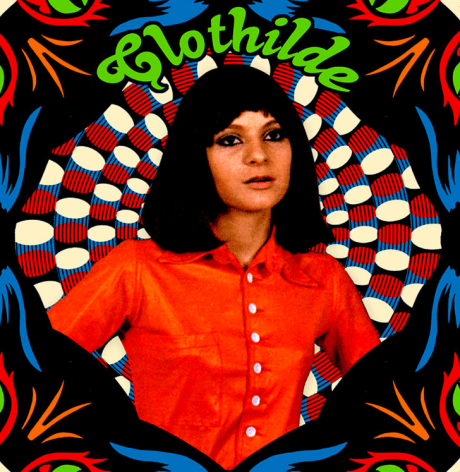
Clothilde ‘Saperlipopette’
N’Goma Jazz ‘Kupassiala Kuawaba’
Tabou Combo ‘Haiti’
Dick Khoza ‘Zumbwe (Baby Tiger)’
Def Jef ‘Get Up 4 The Get Down’
Souls Of Mischief ‘A Name I Call Myself’
Honey Cone ‘Deaf, Blind, Paralysed’
The Last Electro-Acoustic Space Jazz & Percussion Ensemble ‘One For The monica Lingas Band’
Sum Pear ‘Bring Me Home America’
J Scienide & Kev Brown ‘100 Grand’
Paper Garden ‘Lady’s Man’
Brian Eno & John Cale ‘Lay My Love’
Mick Ronson ‘Growing Up And i’m Fine’
David Johansen ‘Here Comes The Night’
Ben Von Wildenhaus ‘The Limping Axeman’
Marconi Notaro ‘Ah Vida Avida’
Alessandro Alessandroni ‘Babylon City’
Between ‘Scatter’
Finis Africae ‘Zoo Zulu’
Gescom ‘C2’
Luke Vibert ‘Funky Acid Stuff’
Cos ‘Video Boma’
Haruomi Hosono ‘Sports Men’
Blurt ‘Let Them Be (Live)’
Essential Logic ‘The Order Form’
Parasites Of The Western World ‘Mo’
Rob Jo star Band ‘Stone Away’
Semi-Colon ‘Ebenebe’
Sam Rivers ‘Crux’
N’Ghare Hi Power Band ‘Campus Rock’
Dr. Alimantado ‘NO Gwaan SOH’
VIDEOS
ODB 374: Roedelius ‘Selbstporträt Wahre Liebe’
April 2, 2020
ALBUM REVIEW
Words: Dominic Valvona

Roedelius ‘Selbstporträt Wahre Liebe’
(Bureau B) LP/10th April 2020
Losing none of that zest for creating and wonderment, the eight-five year old progenitor of ambient, new age and neo-classical music Hans-Joachim Roedelius is still exploring and still producing experimental compositions at a prolific rate. There is, four decades on from his richest period of self-discovery and defining the perimeters of what electronic music could be, no let up in the Roedelius schedule. As famous for his collaborative partnership with the late Dieter Moebius in the Kluster/Cluster/Qluster arc, the Berlin born masseur and physiotherapist turned self-taught composer, has also laid down a breadcrumb trail of impressive and highly influential solo releases, numbering somewhere in the 100s.
Just one part of that extensive catalogue of solo work, the introspective Selbstporträt series is being revisited by the aging doyen for the Bureau B label. Originally made during various sessions for Cluster, between 1973 to 1979, these intimate contemplative and ruminating self-portraits were released in the late 70s and early 80s – later volumes appear sporadically in the 90s and 2000s too. Though always going forward, Roedelius has been nudged into a challenge as Bureau B founder Gunther Buskies proposes the octogenarian return to the processes and methodology of that period to create another ‘Selbstporträt’. Cheekily as the PR spill has it, seeing if he, ‘was capable of “beaming back” to his youthful years, reaching into the sonic past of the Self-Portrait series to deliver similarly persuasive results.’ The short answer to that is: Yes. But before we divine the results of Selbstporträt Wahre Liebe, a little background colour first.

A founding pillar of the Kosmische sound in the late 1960s and early 70s, originally taking shape from experimental performances at the legendary Berlin club they helped found, the Zodiak Free Arts Lab, the first incarnation of this amorphous partnership that made Roedelius’ name, Cluster, featured Joseph Beuys disciple and electronic music progenitor Conrad Schnitzler; the music, almost dark, Lutheran and hymn like, an early modulation of piano, organ and guitar, fed through an array of homemade effects, that made its debut on a label sonorous for its stoic church organ music. This was the first incarnation, Kluster.
Many ‘head music’ fans will be enamored or at least familiar with the second phase, as Kluster interchanged its capital letter to a ‘C’ and Schnitzler left (for the first time). Releasing some of the most sublime peregrinations and odd candy coated pop electronica under the Cluster banner, their most formative period during the early to mid 70s remains their most famous and influential. This brought plenty of admirers and fellow sonic travelers to the Forst located woodland glade studio retreat. Most famously Brian Eno and Michael Rothar of Neu! Both of whom would join Roedelius and Moebius to form the (a)side project supergroup Harmonia.
Apart from a dormant period during the 80s, as Roedelius and Moebius pursued both solo and collaborative careers (many of which would overlap), Cluster survived well into the next century. Finally calling it a day in 2010: For this version of the partnership anyway. Dropping the C for a ‘Q’ this time around, Roedelius found a new collaborative partner in the sound installation artist and like-minded sonic explorer keyboardist Onnen Bock. After a number of albums together the duo expanded to a trio when bass player virtuoso and (another) keyboardist Armin Metz joined the ranks. In the last few years the Qluster trio have been drawn to Roedelius’ neo-classical piano compositional improvisations and sketches; the previous suite Tasten was built around a trio of them, and the more electronic offering Echtzeit, though far less so, also seemed informed by it.
In many ways following on from the last album together, making a return to the warmth and traversing heavenly space sounds we have come to associate with all things Kosmische, the golden epoch of that genre filled our ears once more on Qluster’s seventh (and so far last) album, Elemente; a feat that is repeated on this solo portrait.
Leaving Qluster aside for the moment, Onnen Bock, together with Wolf Bock, shadows Roedelius on this vintage warm-up. Intimately (re)acquainted with himself, the fascinations and interests that originally sparked the previous series of visceral sketches may have changed but the soundboard tools remain the same, with Roedelius once more making use of the Farfisa organ, Fender Rhodes, drum machine and tape-delay to fashion a new empirical suite of Kosmische neo-classical moods and dreamgazing.
Though it’s been over four decades since those iconic peaceable recordings, the old apparatus from that period is just as warm and receptive to the ambient progenitor’s touch and imagination. If you’re familiar with those composition then you’ll bound to recognize the recurring Baroque fairground piped merry-go-rounds and serene glide motifs that appear on this wonderful erudite album. Especially the playful but calmed trans-alpine gliding ‘Geruhsam’, which – in my imagination anyway – conjured up an image of either a bossa signature steamboat sailing across a Swiss lake, or, a enervated chuffing steam engine travelling across a tranquil mindscape.
Elsewhere the bright diaphanous notes of the Rhodes lightly hang in the air as they did before; lingering with an echo of glassy Kosmische reverent soul on compositions such as the romantic resonate ‘Wahre Liebe’ – that’s ‘true love’ – and dreamily fanned on the comforting cloud breathing ‘Nahwärme’ – which translates as, depending on your fancy, either ‘local heating’ or ‘convenient heat’; an aloof soundtrack for a German boiler installation company perhaps? Sometimes that organ glistens and at other times almost drifts into the ecclesiastical. The complimentary Farfisa is equally as gorgeous; deftly played and perfectly attuned. A real warmth is created (there’s that word again), but also an overlapping cascade of bulb-like notation and subtle refractions of light play.
Reverent, beautiful, encapsulating, with even a touch of giddy uncertainty – I’m referring to the ‘roundabout’ motion of ‘Im Kreisel’ – Roedelius has lost none of his sparkle, or for that matter his romanticism and hope. A fine balance between past triumphs and the new, Selbstporträt Wahre Liebe is unhurried and playfully understated; a timeless album simultaneously made with a sagacious touch and young curiosity. At the stately age of 85, Roedelius proves to still be on form as he looks back once more before easing forward.
Related posts from the Archives:
Hans-Joachim Roedelius Interview
Qluster ‘Elemente’ Review
Hans-Joachim Roedelius ‘Kollektion 2: Roedelius – Electronic Music Compiled By Lloyd Cole’ & ‘Tape Archive 1973-1978’ Review
Cluster ‘1971 – 1981’ Boxset Review
And Now, A Word From Our Founder
Hi, my name is Dominic Valvona and I’m the Founder of the music/culture blog monolithcocktail.com For the last ten years I’ve featured and supported music, musicians and labels we love across genres from around the world that we think you’ll want to know about. No content on the site is paid for or sponsored and we only feature artists we have genuine respect for /love. If you enjoy our reviews (and we often write long, thoughtful ones), found a new artist you admire or if we have featured you or artists you represent and would like to buy us a coffee at https://ko-fi.com/monolithcocktail to say cheers for spreading the word, then that would be much appreciated.
The Monolith Cocktail Revue Playlist: March 2020: Pozi, Run The Jewels, Cult Of The Damned, Tamikrest…
March 31, 2020
PLAYLIST
Dominic Valvona/Matt Oliver/Brian ‘Bordello’ Shea’

By now we’ll probably all aware and getting jaded by the constant newsroll of Covid-19 horror stories, and the ominous stench of pandemic armageddon. To return to some sort of normality, the Monolith Cocktail promises to keep finding all the best new music for you to enjoy and mull over. No cheap epidemic cash-ins and no tenuous links to self-promotional lockdowns here. Just great music, which we hope you will all keep supporting during these anxious uncertain times.
For those of you that have only just joined us as new followers and readers, our former behemoth Quarterly Playlist Revue is now no more! With a massive increase in submissions month-on-month, we’ve decided to go monthly instead, in 2020. The March playlist carries on from where the popular quarterly left off; picking out the choice tracks that represent the Monolith Cocktail’s eclectic output – from all the most essential new Hip-Hop cuts to the most dynamic music from across the globe. New releases and the best of reissues have been chosen by me, Dominic Valvona, Brian ‘Bordello’ Shea and Matt Oliver.
THE TRACKS IN FULL ARE:
Lunar Bird ‘A Walk’
TrueMendous ‘Hmmm’
Awale Jant Band ‘Just Be Free’
Mdou Moctar ‘Ibitlan’
Collocutor ‘The Angry One’
Superposition ‘Antiplace’
The Stroppies ‘Holes In Everything’
Pozi ‘Whitewashing’
Loose Fit ‘PULL THE LEVER’
The National Honor Society ‘First Among The Last’
Jacqueline Tucci ‘Fear’
Jaga Jazzist ‘Spiral Era (EDit)’
Jennifer Touch ‘Attic’
Bedd ‘Auto Harp’
The Saxophones ‘Flower Spirit’
Schizo Fun Addict ‘Whiskey’
Ploom ‘Swish’
Tamikrest ‘Amidnin Tad Adouniya’
Hifiklub & Roddy Bottum ‘David Says’
Rowland S Howard ‘Pop Crimes’
The Hannah Barbeas ‘No Majesty’
The Proper Ornaments ‘Broken Insect’
Irreversible Entanglements ‘No Mas’
Nduduzo Makhathini ‘Indawu’
Masta Ace ‘GMO’
Riz Ahmed ‘Fast Lava’
Voodoo Black ‘Fizzy’
dug & Hassan el HoBo ‘Electric Sheep’
Harold Nano ‘Menton Train Jump’
Slitty Wrists ‘Su-Mi-Ma-Sen’
Shortwave Research Group ‘Perpetual Midnight’
Cult Of The Damned (Lee Scott, Mikavelli, BeTheGun, Bill Shakes, Sly Moon & Saler) ‘OFFIE’
Run The Jewels Ft. Greg Nice & DJ Premier ‘Ooh LA LA’
Super Inuit ‘Mothering Tongue’
Sebastian Reynolds ‘The Universe Remembers’
Chouk Bwa & The Angstromers ‘Move Ten’
Tom Caruana ‘Dennis The Space Hopper’
Clear Soul Forces ‘Chinese Funk’
Ghostwood Development Project Ft. Kool Keith ‘Gulley’
Bishop Nehru ‘Too Last’
Nomad, Chester P ‘Athens In Mordor (Secondson Remix)’
Cut Beetlez. Nice Guys ‘Cut Ya Ass Up’
Jehst ‘Wild Herb’
Mr Key ‘Kids Story 2’
Pwaz One, DJ Dister, Akrobatik ‘No Contest’
Estee Nack, Superior ft. Daniel Son ‘POPROCKCLASSICS’
And Now, A Word From Our Founder
Hi, my name is Dominic Valvona and I’m the Founder of the music/culture blog monolithcocktail.com For the last ten years I’ve featured and supported music, musicians and labels we love across genres from around the world that we think you’ll want to know about. No content on the site is paid for or sponsored and we only feature artists we have genuine respect for /love. If you enjoy our reviews (and we often write long, thoughtful ones), found a new artist you admire or if we have featured you or artists you represent and would like to buy us a coffee at https://ko-fi.com/monolithcocktail to say cheers for spreading the word, then that would be much appreciated.
Perusal 008: The Singles, Previews & Oddities Roundup: Bedd, Super Inuit, Nduduzo Makhathini…
March 30, 2020
PREVIEW/REVIEW
Words: Dominic Valvona
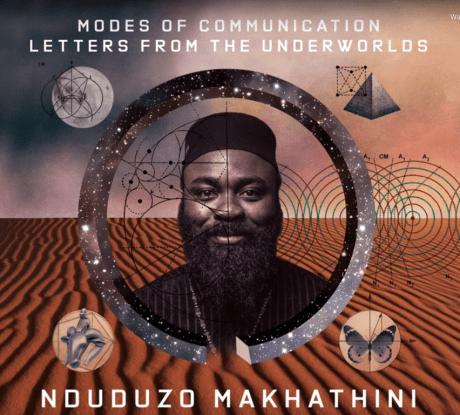
The Perusal is a chance to catch up, taking a quick shifty at the mounting pile of singles, EPs, mini-LPs, tracks, videos and oddities that threaten to overload the Monolith Cocktail’s inboxes each month. Chosen by Dominic Valvona, this week’s roundup includes Bedd, Nduduzo Makhathini, Super Inuit, Senji Niban and Jacqueline Tucci.
Nduduzo Makhathini ‘Indawu’
(Blue Note Records) Single/Now
Ahead of the impressive South African pianist and composer Nduduzo Makhathini’s traversing roots debut album, Modes of Communication: Letters From The Underworlds, for the iconic Blue Note label next month the spiritually ancestral homage ‘Indawu’. Communing with the water spirits of the Nguni people of (predominantly) South Africa, Makhathini creates a splashed and rippled, choral celestial jazz offering to these mystical influences, who are known for their fondness towards music and dance; occupying as they do the riverbank, which has become a central ritual space visited to appease the ancestors. And this is the enchantment with which to use.
The third such suite to precede that debut long-player, Indawu follows on from ‘Beneath the Earth’, which featured the lead vocals of Msaki, and ‘Yehlisan uMoya’ (Spirit Come Down) which featured the vocals of Omagugu. The roll call of guests on this watery swell features the American alto saxophonist Logan Richardson along with a South African band that includes Linda Sikhakhane on tenor saxophone, Ndabo Zulu on trumpet, Zwelakhe-Duma Bell Le Pere on bass, Ayanda Sikade on drums, and Makhathini’s wife Omagugu and daughter Nailah on background vocals.
Nduduzo Makhathini grew up in the lush and rugged hillscapes of umGungundlovu in South Africa, a peri-urban landscape in which music and ritual practices were symbiotically linked. The area is significant historically as the site of the Zulu king Dingane’s kingdom between 1828 and 1840. It’s important to note that the Zulu is deeply reliant on music for motivation and healing. This embedded symbiosis is key to understanding Makhathini’s vision.
The church also played a role in Makhathini’s musical understanding, as he hopped from church to church in his younger days in search of only the music. The legends of South African jazz have always heavily influenced Makhathini, including Bheki Mseleku, Moses Molelekwa and Abdullah Ibrahim. “The earlier musicians put a lot of emotions in the music they played,” he says. “I think it may also be linked to the political climate of those days. I also feel there is a uniqueness about South African jazz that created an interest all around the world and we are slowly losing that too in our music today. I personally feel that our generation has to be very conscious about retaining these nuances in the music we play today.”
Through his mentor Bheki Mseleku, Makhathini was also introduced to the music of John Coltrane’s classic quartet with McCoy Tyner. “I came to understand my voice as a pianist through John Coltrane’s A Love Supreme,” he says. “As someone who started playing jazz very late, I had always been looking for a kind of playing that could mirror or evoke the way my people danced, sung, and spoke. Tyner provided that and still does in meaningful ways.” Makhathini also cites American jazz pianists including Andrew Hill, Randy Weston, and Don Pullen as significant influences.
Makhathini has released eight albums of his own since 2014 when he founded the label Gundu Entertainment in partnership with his wife and vocalist Omagugu Makhathini. His 2017 album Ikhambi was the first to be released on Universal Music South Africa and won Best Jazz Album at the South African Music Awards (SAMA) in 2018.
On the strength of this single alone, Modes of Communication: Letters From The Underworlds sounds certain to make headway internationally, and maybe win that award again.
Jacqueline Tucci ‘Fear’
Single/Available Now
Jacqueline Tucci was probably looking for more than just a glib, off-the-cuff review from me, but with some records, less is more. And with that in mind, and unintentionally arriving at probably the most anxious and uncertain of times, the gorgeous new single ‘Fear’ is a melodious controlled tumult of indie pop, grunge, C86, punk and a grinding jangle of the Throwing Muses.
In Tucci’s own words: ‘“Fear” is about a time in my life when I felt like I was really searching for something but I didn’t know what it was. The song was born out of those feelings of restlessness and frustration.
Sometimes we search for ourselves in various places, people, and things and end up ignoring what’s right in front of us.
I hope you enjoy this song and if you’ve ever shared these feelings, maybe you’ll find some comfort in it.’
The Toronto artist worked with producer Nops Whileway, who, ‘allowed the song to take shape organically, resulting in what I feel is its most honest realization.’
Pure brilliance; guitar anxiety for our times.
Bedd ‘Auto Harp’
Single/20th March 2020
Like an understated breath of fresh air from cosmic suburbia, the diaphanous slow anthem from the newly conceived Oxford band Bedd reimagines a small English town Mercury Rev in aria ascendance. Like a lost celestial Britpop anthem, ‘Auto Harp’ tenderly rises from its subtly spindly music box mechanisms and hushed deadpan vocal delivery to reach the saw-quivered heights of the celestial heavens.
You could suggest this touching sentiment of majestic indie had a certain cinematic, expansive quality, and you’d be right, as Auto Harp was originally composed by the band’s de facto leader, songwriter, singer and producer Jamie Hyatt for a film project that never came to fruition. Jamie: “I wanted to compose a track that leaves the listener feeling simultaneously melancholy and up-lifted. Auto Harp is both intimate and expansive at the same time and is perhaps a perfect encapsulation of our band’s intent, to both draw the listener into a quiet conversation and then take them out into the splendor of the universe”.
The band moniker of Bedd is an interesting one, as Jamie explains: “the word bedd is Welsh for grave and I liked the idea of drawing a connection between the bed and the grave as the grave is the ultimate resting place”.
Jamie is an Oxford music scene stalwart, known for his previous bands The Family Machine, The Daisies and Medal as well as his score for the film Elstree 1976. The single Auto Harp is accompanied by a beautifully atmospheric video by filmmaker Liam Martin, shot on location at Port Talbot beach in South Wales.
Jamie as main songwriter and vocalist he is ably supported by a range of fellow local Oxford musical talents. These talented individuals include bandmates from his previous project The Family Machine, in the shape of bass player Darren Fellerdale and guitarist Neil Durbridge. Also, in the mix are guitarist Tom Sharp, electronic musician and producer Tim Midlen, also known as The Manacles of Acid, and drummer Sam Spacsman. Auto Harp was recorded and produced by Jamie with the band at Glasshouse studios in rural Oxfordshire and mixed and mastered by Robert Stevenson. Auto Harp follows the debut Bedd single ‘I Whoo Yeah’, which was released on a compilation via local Oxford tape label Beanie Tapes.
This latest slow-burning dreamy anthem look sets to propel the band from their Oxford base to a more universal audience.
Senji Niban ‘Where The Birds Fly Now?’
(Pure Spark Records) Single/3rd April 2020
The last time the Monolith Cocktail featured the Tokyo electronica composer and remixer Koichiro Shigeno, he was sharing a Bearsuit Records split EP showcase with The Moths Poets, back in 2016. Recording under his Senji Niban appellation, the experimental wiz produces the kind of busy accompaniment you might find sound tracking a speeded-up film collage of Russian constructivism; melding the Yellow Magic Orchestra with Sky Records’ Dadaist fringe. Other explorations take in the strange aural fragrance of liquid bossa nova and a neo-classical Roedelius, and the minimal kinetic techno kookiness of early Kreidler.
It’s no wonder that Shigeno’s sound and style is so open and eclectic; growing up, as he did, introduced to Classical and Modern Jazz by his music lover parents, but shocked by listening to Haruomi Hosono/Tadanori Yokoo‘s ‘Cochin Moon’ – borrowed from a junior high school friend. It changed his life.
Those influences were gradually expanded over the years to include Krautrock, Mondo Music, Ambient and Acid. Shigeno has released music on a number of imprints, including his very own private label, Yorozu: a long-established Japanese Techno-Pop label.
Shigeno joined fellow Tokyo traveler Ippu Mitsui’s burgeoning Pure Spark Records label rooster in 2019, joining the label boss on the limbering tropical electronic co-production ‘Melting Pot’. His inaugural solo release for the label, is the trance-y chorus of bird calls, barracking drum rolls, metallic whiplashes and cybernetic nature, Where The Birds Fly Now? This eight-minute odyssey is a minor opus of avant-garde electro, deep bass and evolving tropical atmospherics. Enjoy the preview ahead of its release on Friday 3rd April.
Super Inuit ‘Mothering Tongue’
Single/13th March 2020
Electronic fused wanton suffering has seldom floated on such a suffused pulse of shoegaze and the leftfield. Yet the Edinburgh duo of Fern Morris and Brian Pokora have managed to simultaneously evoke both The Cocteau Twins and Four Tet on their melodious air-y new single ‘Mothering Tongue’ (great title by the way).
More effortlessly cooed than plaintively sorrowful, Morris makes it all sound so peaceable and entrancing as she subtly wafts over a bed of enervated glitch-y and raspy deep and downbeat cast electronica – even when singing the lamentable anguished line, “You’re not the only one suffering”.
It’s nothing short of a gorgeously understated electronic pop mini opus for our times.
Hi, my name is Dominic Valvona and I’m the Founder of the music/culture blog monolithcocktail.com For the last ten years I’ve featured and supported music, musicians and labels we love across genres from around the world that we think you’ll want to know about. No content on the site is paid for or sponsored and we only feature artists we have genuine respect for /love. If you enjoy our reviews (and we often write long, thoughtful ones), found a new artist you admire or if we have featured you or artists you represent and would like to buy us a coffee at https://ko-fi.com/monolithcocktail to say cheers for spreading the word, then that would be much appreciated.
Premiere
Dominic Valona
Photo Credit: Miles Hart
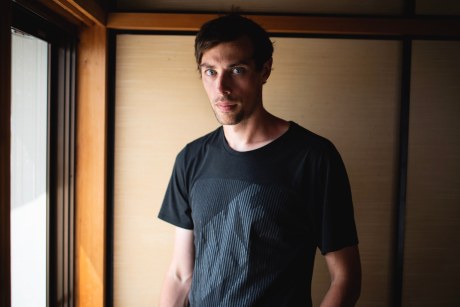
Sebastian Reynolds ‘The Universe Remembers’
(Faith & Industry) Single/27th March 2020
Oxford-based polymath Sebastian Reynolds has finally found the time in his prolific schedule of collaborations, remixes, session work and productions to create his very own solo soundtrack of various inspired peregrinations. The Universe Remembers quintet drifts and wafts across an ambiguous, often vaporous soundscape of neo-classical composition, retro futurist production, swanned Tibetan mystical jazz, both languid and accelerated running breakbeats, and ghostly visitations – haunted narrated extracts from T.S. Eliot’s all-encompassing philosophical, religious and metaphysical Holy Grail purview The Wasteland, can be heard in fuzzy echo on the featured title-track single.
A cosmological junction of dystopian literature and Buddhist Eschatology, The Universe Remembers is, as you might expect from a composer, multi-instrumentalist and producer who’s created music as varied as the transcendent Southeast Asian Manīmekhalā score that accompanied the multimedia Mahajanaka Dance Drama and the visceral chamber pieces of his collaboration with the pan-European Solo Collective trio, the evocations are simultaneously as dreamy as they are ominous and mysterious.
A guest producer on the premiere track we’re hosting today, Capitol K has lent his skills before to Seb’s work as a remixer. His Faith & Industry label, the platform for Capitol K’s output as well as luminaries such as previous Monolith Cocktail albums of the year entrant John Johanna and Champagne Dub, is facilitating the release of this EP. Ahead of the 22nd May 2020 release date, Seb has kindly agreed to share that twinkled trembled cascaded piano and slow beat vaporous turn tumultuous reversal title-track. Featuring the ambiguous mystical fluttering, spiraling and drifting clarinet of Rachel Coombes, and a penchant for the glitch-y piano resonance of Susumu Yokota, this traverse wafts between the snake charmer bazaars of Egypt and Calcutta, the Hitchcockian, and avant-garde.
Expect to be enticed into a wonderfully amorphous soundscape of trance, esoteric mysticism, trip-hop, new age, satellite jazz and the poetic.
Background:
Following his formative years leading premier UK cult musical ensembles the Keyboard Choir and Braindead Collective, Sebastian has more latterly made a name for himself with the modern classical trio Solo Collective in which he performs with German chamber musicians Alex Stolze and Anne Müller (Erased Tapes) and the Thai/Anglo dance and music show Mahajanaka Dance Drama that he scored and produced. The Universe Remembers is a distillation of these various musical inclinations, from the distorted crescendos of tracks such as the elegiac, otherworldly ‘Everest’, evoking the digital climaxes of the Keyboard Choir, to the deft use of clarinet on the title track and the swooning saxophone melodies of ‘You Are Forgotten’ evoking the retro futurism of the Blade Runner score and nodding to the post-jazz interests of the Braindead Collective. The vocal samples on the title track are from T.S. Elliot’s epic poem The Waste Land and they represent Sebastian’s ongoing interest in dystopian contemporary literature, as previously heard on the Catch 22 based piece ‘Ripeness Is All’ (featured on Solo Collective Part 2). EP opener ‘Amoniker’ calls to mind Boards of Canada’s use of tape-warped samples and stuttering rhythms. The Universe Remembers is Sebastian’s first solo release aside from the dance score commissions and it certainly serves as a further glimpse into the inner workings of a prolific, wide ranging and unpredictable music creator.
Previous releases include the two Solo Collective albums, Part 1 (November 2017) and Part 2 (June 2019), both released through Alex Stolze’s imprint Nonostar, and two EPs from the Mahajanaka Dance Drama Thai project, Mahajanaka (April 2017) via Nonostar again, and Maṇīmekhalā (October 2019) via his own PinDrop label and PR company. Sebastian’s projects have had glowing critical acclaim from across the media, and received airtime across the BBC and far beyond.
The Monolith Cocktail is now on the micro-donation payment hub Ko-Fi:
Hi, my name is Dominic Valvona and I’m the Founder of the music/culture blog monolithcocktail.com For the last ten years I’ve featured and supported music, musicians and labels we love across genres from around the world that we think you’ll want to know about. No content on the site is paid for or sponsored and we only feature artists we have genuine respect or love for. If you enjoy our reviews (and we often write long, thoughtful ones), found a new artist you admire or if we have featured you or artists you represent and would like to buy us a coffee at https://ko-fi.com/monolithcocktail to say cheers for spreading the word, then that would be much appreciated: especially in these most uncertain and anxious times.
REVIEW
Dominic Valvona
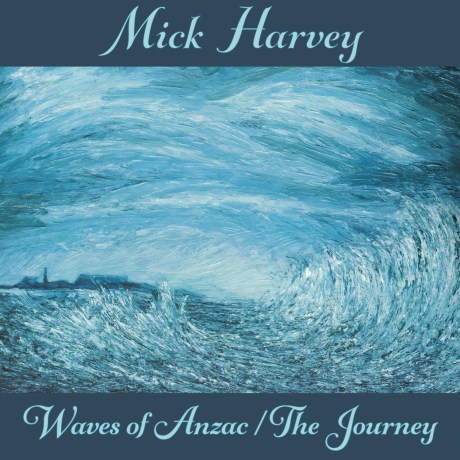
Mick Harvey ‘Waves Of Anzac/The Journey’
(Mute) 17th April 2020
Excuse the obligatory uninspired platitudes but Mick Harvey’s first soundtrack release in a decade is a most worthy and stirring orchestration for two poignant themes; the often forgotten story of the ANZACs and their sacrifices and loyal service during both World Wars and, later, Vietnam, and the ongoing crisis of child refugees and people seeking asylum in offshore detention centers scattered throughout the South Pacific atolls.
Though it’s been a long time since Harvey released a soundtrack the former Birthday Party bruiser, Bad Seeds and Crime And The City Solution instigator has been busy. Despite being ignored by the majority of press and blogs, his charmingly understated Four (Acts Of Love) album of afflatus paeans and lamentable covers and original numbers, was wholly embraced by the Monolith Cocktail, the only blog, to our knowledge, to both critically endorse it and grant it a coveted place in a ‘choice LPs of the year’ list. In 2014, Harvey alongside Crime and the City Solutions’ Alexander Hacke and Danielle De Picciotto and musical director Paul Wallfisch, formed the nursery grime musical outfit, The Ministry Of Wolves, for a set of theater performances. By way of the Pulitzer Prize winning author Anne Sexton’s, even more, macabre revisionist take on the original Brothers Grimm fairy tales, the acclaimed stage production also spawned an LP, Music From Republik De Wölfe. Inspired and finding it far more fun than he originally envisaged, Mick Harvey’s 90s English translations of the louche coffee society genius of wit, salacious and often dark humoured song, Serge Gainsbourg, were given a new lease of life that same year. To coincide with the anniversary of the bawdry polymath’s birth, Harvey’s moiety of homages, Intoxicated Man and Pink Elephants were re-issued, followed up with a small number of select live shows in Australia and Europe (including shows at Primavera and London’s Union Chapel). Invigorated by this return to the back catalogue, Harvey and his congruous band mates, which include the assiduous multi-instrumentalist J.P. Shilo and the no-less talented Glen Lewis and Hugo Cran, set up camp in Harvey’s Melbourne base of operations to record another two volumes of Gainsbourg prose, Delirium Tremens and Intoxicated Women. Fast-forward to this year and once more alongside J.P. Shilo, Harvey has been paying another homage. This time to the late knockabout foil Rowland S. Howard. Originally involved with and playing on the maverick’s Teenage Snuff Film and, later, Pop Crimes albums, Harvey has taken part in a tribute concert, whilst his label Mute have recently re-issued those two high influential totems.
The Waves Of Anzac/The Journey LP collects together two recent soundtracks of evocative timeless classical gravitas; composed and performed with an attentive touch, only occasionally revving up the unsettling electrified caustic waning specter of the late Scott Walker when scoring the most ominous, tumultuous of moods.
As a concatenate relative to Waves Of Anzac, at the end of last year Harvey collaborated (on yet another project) with Christopher Richard Barkes on the tragic WWI pliant The Fall And Rise Of Edgar Bourchier And The Horrors Of War. Before this and only now seeing the light, the soundtrack to Kriv Stenders 2015 directed Why ANZAC? documentary with Sam Neill was released to coincide with the centenary of the Gallipoli campaign. A campaign that featured the recently formed Australian And New Zealand Army Corps of the acronym title, commanded by General William Birdwood, the concentration of which took part in the ill-fated fight to open up a second front in the bogged-down war against Germany and her Ottoman allies. Even by the standards of the carnage on the Western Front and the badly laid plans of removed generals, this invasion of The Dardanelles was a tragic horror show. Audaciously planned by Churchill with certain fatal assumptions made about the Turkish forces who held the high ground, had knowledge of the terrain and were, unfortunately for the Allies, commanded by the military genius and future young Turk leader of a post-Ottoman Turkey, Mustafa Kemal (Atatürk), many of the antipodeans most hardy, loyal and brave died on the beaches in a eight month slog against tenacious defenders. The final tally of 56,000 Allied deaths included 8,070 Australians and 2,721 New Zealanders; disproportionate figures considering the populations of these British overseas territories: a generation lost as they say.
Part of an ABC documentary series on ‘forgotten war stories’, the Aussie actor Neill presented a personal journey and family attachment to that sorry chapter; setting the Gallipoli and Western Front against a contemporary background of political division. Harvey for his part composed a mostly subtle, moving movement of short spiraling strings and atonal searing atmospheric leitmotifs. From melodious ripples to elbowed cello maladies, Waves Of Anzac is both a yearned and moody, with the final timpani and pealing bell tolled ‘The Aftermath’ being the album’s most dark. Though the focus of this album is Gallipoli, half of the tracks reference the ANZACs various actions on The Somme and in Mesopotamia during WWI, and their part in the defense of Greece and Crete during WWII. There’s even a piece of edgy reverberated trauma in motion music for a chapter on Vietnam. Though, in hindsight rather wisely, Britain declined to join the Americans, Australia and New Zealand unfortunately did.
A balance of stain glass lit annotations, the stately and aching; Harvey produces an articulate tribute to the horrors of war.
The four-part Journey performance is no less evocative, reflecting as it does the travails and terror of refuges making their way across the Pacific maelstrom towards sanctuary and the hope of asylum. Most of these unfortunate souls however, find themselves metaphorically washed up in detention camps indefinitely, marooned on islets such as Nauru, Manus Island and Christmas Island. Released in support of #KidsOffNauru, Harvey conducts a tumult mix of chamber and Baroque-pop, an oceanic waltz of dramatic swells and mournful torrents. Harvey and his The Letter String Quartet ensemble track that journey, from the ‘Pyramids’ like Radiohead signature beckoning and lamentable march of ‘Conflict’, through the confusion intense torrid of ‘All At Sea’ to the lulled ethereal choral ‘Hope’.
Classical music with an augmentation of the modern, Waves Of Anzacs/The Journey is an often-understated work of sadness, fear, trauma and also anger that stands well in any period. Harvey offers a moving testament of assured maturity to his subjects, connecting as he does, two different tragedies, from wartime and a so-called peacetime, on one sublime album.
Related posts from the Archives:-
Mick Harvey ‘Delirium Tremens’
Mick Harvey Live At The Oran Mor
Mick Harvey ‘Four Acts Of Love’
Rowland S. Howard ‘Teenage Snuff Film’ & ‘Pop Crimes’
The Monolith Cocktail is now on the micro-donation hub Ko-Fi:
Hi, my name is Dominic Valvona and I’m the Founder of the music/culture blog monolithcocktail.com For the last ten years I’ve featured and supported music, musicians and labels we love across genres from around the world that we think you’ll want to know about. No content on the site is paid for or sponsored and we only feature artists we have genuine respect for /love. If you enjoy our reviews (and we often write long, thoughtful ones), found a new artist you admire or if we have featured you or artists you represent and would like to buy us a coffee at https://ko-fi.com/monolithcocktail to say cheers for spreading the word, then that would be much appreciated.
Our Daily Bread 372: Loose Fit, Occult Character, Ploom…
March 23, 2020
REVIEWS
Brian ‘Bordello’ Shea

Brian ‘Bordello’ Shea joined the Monolith Cocktail team in January 2019. The cult leader of the infamous lo fi gods, The Bordellos, has released countless recordings over the decades with his family band of hapless unfortunates, and is the owner of a most self-deprecating sound-off style blog. His most releases include The Bordellos beautifully despondent pains-of-the-heart and mockery of clique “hipsters” ode to Liverpool, and, under the guises of the Idiot Blur Fanboy moniker, a stripped down classic of resignation and Gallagher brothers’ polemics.
Each week we send a mountain of new releases to the self-depreciating maverick to see what sticks. In his own idiosyncratic style and turn-of-phrase, pontificating aloud and reviewing with scrutiny an eclectic deluge of releases, here Brian’s latest batch of recommendations.
With all live gigs and events more or less quashed for the foreseeable future, buying music (whether it’s physical or through digital platforms such as Bandcamp) has never been more important for the survival of the bands/artists/collectives that create it. We urge you all to keeping supporting; to keep listening.
Loose Fit ‘Loose Fit EP’
(FatCat Records) EP/3rd April 2020
I do like a bit of bass heavy post punk and Loose Fit do it better than most. This reminds more than a than a bit of Bow Wow Wow and then all of a sudden on ‘Reflux’ the memories of the wonderful X Ray Spex come surging back, which is no bad thing: a lot worse could come surging back than memories of one of punk’s finest. There’s honking sax, which you do not hear often in bass heavy post punk unless you call the Coasters bass heavy post punk, whom of course you can’t unless you have never heard the Coasters – and then you can think anything. Isn’t imagination a wonderful thing.
Ploom ‘Ploom EP’
EP/6th March 2020

What we have here my dears is the debut EP from Denver Psych band Ploom, or that is how they describe themselves in the press release. And that will do for me, as they do have a slight psych feel about them. Going off at various tangents throughout their songs at times, they recall a sunny Mothers of Invention or psychedelic Strokes: in fact you could call them Sun Strokes! (Please no groaning at the back). No really this is a rather excellent listen; a band to listen to whilst riding in a open top car to on a summers day and can imagine them doing really well on the festival circuit: a band to wave giant inflatable too.
Occult Character ‘Steve Albini’s Kundalini ‘
(Metal Postcard) LP/9th March 2020
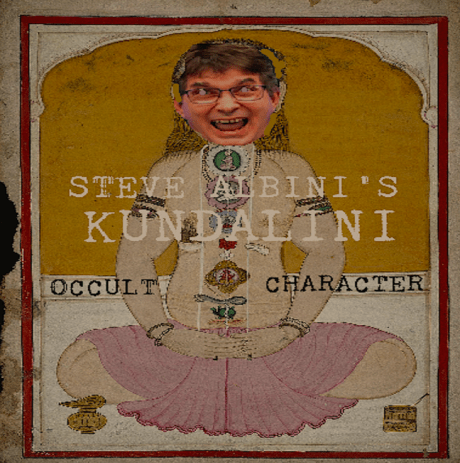
A brand new LP from the wonderful Occult Character, and as ever, dark funny lyrical portraits of life in the USA today is the order of the day, but this time taking on a more musically commercial slant. Synth led beats smoother production, and if not for the many curse words, you could imagine gracing daytime radio. This could almost be a pop album it certainly deserves to reach a larger audience. Who else but Occult Character would write a song about a homophobic microwave and other such oddities? It is indeed a crazy world and maybe this is the album to soundtrack it.
Various ‘Mark Barton’s Sunday Experience Album’
(Bearsuit Records) LP/27th March 2020

This LP breaks my heart a little as it is a tribute to someone I considered a friend; somebody who I talked via the internet to for over 15 years, and had a great drunken night out with together watching my sons band Vukovar: the first of many nights, or so we thought. But sadly he discovered he had cancer not long after and through various reasons we never got to meet up again.
Mark was a lovely great man who also happened to be a great writer and a great supporter of underground music, and the underground community thought a great deal of Mark, as this CD proves. This could have easily been a 100-track box set, for all the artists giving up tracks to this fine tribute to a fine man. This CD shows what a wide and varied taste Mark had, and he had a beautiful poetic way of praising the music he loved with his writing: one I won’t even try to match.
The music on this album is as I have already said varied, but what it has in common is that it is all excellent, all unique in their own ways; from the dark sweeping guitar sounds of bigflower to the psych tinged rock n roll of the Moon Duo and Schizo Fun Addict, to the wayward lo-fi shambolic of my own Bordellos – a song we wrote a few years ago in tribute the great man and his fine blog.
There are washes with the experimental: the excellent Harold Nono and the Polypores, BBC 6Music faves The Lovely Eggs, and JD Meatyard, even the legendary noise gods Godflesh make an appearance. So many great reasons to purchase this CD.
Mark would be more than a little embarrassed but also deeply touched by this compilation; I just wish he was still around for to enjoy this fine tribute.
All money raised goes to the Macmillan Cancer Support charity.
Rita Braga ‘Tremble Like A Ghost’
Single/21st March 2020

What the world needs now more than anything else is an electro Betty Boop. It really does. And that is what we have here. Three and a half minutes of pop fun. The kind of song that could make you breakout into sporadic leg and hand movements that resembles a meeting of the Charleston you know and love committee. Yes a quirky little pop gem, one for us oldsters and you youngsters and those in-between.
Schizo Fun Addict ‘The Last Wave’
(Flicknife Records) LP/Now
Schizo Fun Addict a band that should be cherished and held close to one’s heart. They are one of the many bands that deserve to be better known and raved about, so with this the new album I’m going to do just that and rave about the beauty and joy one can have by losing themselves in Schizos own and original sounding laid back beauty. Sixties psych merges with smooth American FM late night 70’s sounds and British 80’s pop, one of the only bands of today I can hear the influence of Prefab Sprout creep through as well as their obvious love of the Stone Roses and My Bloody Valentine.
The Schizos have so much going for them. Not just fine original musicians and great songwriters but they have one of the most beautiful female voices in modern pop with the candy covered angel whisper of Jayne Gabriel: a voice I could listen to all day and completely lose myself in.
So for anyone out there who hasn’t heard of the Schizo Fun Addict go and do yourselves a favour start with this album and then work your way back through the treasure of a back catalogue. And a treasure it surely is: a band to be treasured in fact.
The Hannah Barberas ‘Into The Wild’
LP/3rd April 2020

Ah C86 those were the days; when boys with floppy fringes wore their hearts on their sleeves, and their guitar songs of love gone wrong and love in waiting. And this enjoyable album by the Hannah Barberas takes us all back there. Over jangly guitars, occasional northern soul beats, and songs of love gone right and long, this LP almost had me wanting to put leather patches on the elbows of my Oxfam jackets and dig out a Davy Crockett hat and kneel and pray to an effigy of Saint Edwyn. This album is highly recommended for those who want to return to those fine days of the June Brides and Brilliant Corners.
EXCHANGE
Words: Matteo Mannocci

Continuing in 2020 with our collaboration with the leading Italian music publication Kalporz, the Monolith Cocktail will be cosying up and sharing reviews, interviews and other bits from our respective sites each month. Keep an eye out for future ‘synergy’ between our two great houses as we exchange posts.
This month Matteo Mannocci on the ‘Shardcore’ collective’s Eric Drass’ Covid-19 inspired genetic coded electronic suite.
If you think you have nothing to do and a lot of free time to spend, know that you are not alone. The appearance of Covid-19 was definitely a big hit for the whole world, especially for its (semi-)unknown virus nature that hasn’t taken long to get to know us all.
There are many ways to get to know your enemy, and one of these is to find out what it sounds like: that’s when several artists scattered around the world, once the DNA sequence of this new virus was released, immediately decided to ‘arrange’ the MIDI score derived from its genetic code.
This track, produced by Eric Drass of the ‘shardcore’ collective, is a long electronic sequence, a couple of hours long, that reflects its genetic code in musical notes. Can that complete listening experience work as a vaccine?
Related posts from the Archives:
Photo Roll: Yussef Dayes Live
Scoutcloud: Brainstory
Interview: Orville Peck
Review: Girl Band ‘The Talkies’
Tickling Our Fancy 083: Awale Jant Band, JZ Replacement, Ville Herrala, Passepartout Duo, Orkesta Mendoza…
March 18, 2020
ALBUM REVIEWS
Dominic Valvona

Easing the boredom of coronavirus lockdown, join me from the safety of your own home on a global journey of discovery. Let me do all the footwork for you, as I recommend a batch of interesting and essential new releases from a myriad of genres, which I hope you will support in these anxious times. With all live gigs and events more or less quashed for the foreseeable future, buying music (whether it’s physical or through digital platforms such as Bandcamp) has never been more important for the survival of the bands/artists/collectives that create it.
From Java, there’s the latest project from the Hive Mind label in collaboration with Indonesian music digger Kai Riedl, a showcase of 2007 recordings from Idjah Hadidjah & Jugala Jaipongan plus a number of reworked transformations from a host of sonic and electronic artists. Various Maghreb artists from the 80s and 90s Lyon café and club scene can be heard for the first time on vinyl with a new compilation from Bongo Joe, the electrified Raï, Chaoui and Staifi K7 Club collection. Formed in London, the combined talents of Senegal singer/songwriter Biram Seck and French guitarist foil Thibaut Remy come together once more under the Awale Jant Band umbrella for another Afrobeat and soul showcase, Yewoulen. I also take a look at the Passepartout Duo of Nicoletta Favari and Christopher Salvito’s amorphous travelogue peregrination through Switzerland, the Caucasus, former Soviet Asiatic satellites and China performances, Vis-à-Vis; available next month on vinyl and digitally.
There’s also the upcoming Mexican cross border fraternization musical odyssey from Sergio Mendoza and his Orkesta, Curandero.
Back in Europe jazz bassist extraordinaire Ville Herrala is doing inventive things as a solo artist with the double bass; releasing his debut experimental LP for the Helsinki label We jazz. Still in a European jazz setting, there’s the debut LP from the disruptive JZ Replacement pairing of Zhenya Strigalev and Jamie Murray; the saxophonist and his drummer foil collide together with a myriad of rhythms and ideas to kick jazz into a new decade. We also have the most recent ambient voyage across graph paper from Moonside Tape’s founder Jimmy W, Midi Canoe.
Idjah Hadidjah & Jugala Jaipongan ‘Javasounds Vol.1: Jaipongan Music Of West Java’ (Hive Mind) LP/6th March 2020
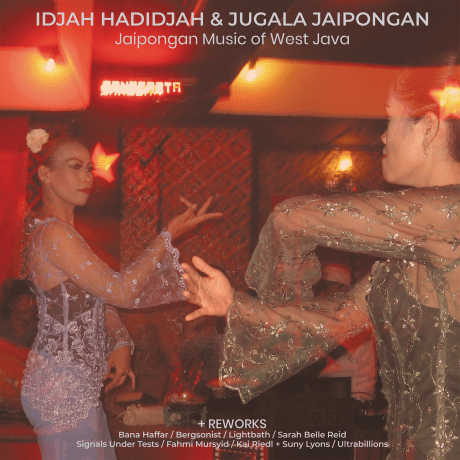
Borne from a dire situation, Indonesian composer and choreographer Gugum Gumbira circumnavigated the country’s authoritarian ban on rock and roll by creating the traditional infused Jaipongan style. Hidden beneath a hybrid of honest harvesting ritual music and atavistic gamelan lay a more sensual spark that encouraged dancing intimacy and a rapid, galloping rhythm that pushed this musical form towards rock: seen by those who made it and loved it as a rebellious gesture. The authorities seemed to have been unaware of its creator’s motives, as the dynamic sound spread throughout the country, unabated, finding favour amongst both the working classes and more affluent.
Mesmerizing with its quickened, often complicated, rhythms – which either flow constantly like a trickle or tumble in a sporadic fit – and bowed quivers, Jaipongan percussion and undulated metallophones are counterbalanced by untethered vocals of romantic and humbled wooing; sung, in this case, on this new edition of Gumbira recordings by the beautiful aria fluctuating Idjah Hadidjah. Gumbira met his muse in the early 80s, luring the iconic singer away from the Sundanese Shadow Puppet Theatre to join his Jugala Orchestra troupe; a collaboration that would go on to last the decade. They would reunite in 2007, recording at the Jugala Studios in Bandung, Java, backed by the studio’s house band. That session now forms the basis of this new vinyl/digi release from Hive Mind and the Indonesian music evangelist Kai Riedl, who present six original tracks from that reunion and a second disc of ‘reworks’ from a variety of contemporary artists in the field of soundscaping and sonic transformations. Riedl, of the Indo-influenced Macha band, has plenty of experience in this sector having made trips to the island of Java with sound engineer Suny Lyons in the noughties to record everything from solo string players to thirty-member gamelan orchestras, in locations as diverse as a darkly-lit nightclub to off-the-grid hideaways. As facilitators they offer up a showcase of the genre’s most entrancing siren and backing group.
Transporting the listener towards the gateway of an exotic unfamiliar geography, the resonating chimes, trinkets, gongs and clapping woody undulations, in fits and starts, playfully evoke both the earthy and ethereal in equal measure. Songs like ‘Sanja’ have a rustic, ritualistic vibe, yet the accelerating rhythm and beat suggests the club dancefloor.
Those Javanese intonations and accentuate sounds are transformed with this package’s Riedl instigated ‘reworks’, an extension of his project to open-up access to the music of Indonesia to western musicians. A range of assemblage inventive artists takes the source material on a journey of variously successful experiments: a music that lends itself well to this treatment as it happens. The North Carolina based artists Bana Haffar turns in a slow trance-y skying vision of the tumbling ‘Hiji Catetan’. N.Y. based musician Bergsonist transduces gamelan into signaled code on her dreamy Orbital-esque remembrance transformation, and Indonesian composer, sound-designer Fahmi Mursyid ratchets up the material with a Autechre breakdown of rewiring, buzz saw beats, dropped metallic ball bearings and zapped bass. For the most part these reworks wander in a serialism and ambient fashion of transcendence; the use of Hadidjah’s startling vocals especially lends itself well to these float-y deconstructions: It’s Jaipongan, but not as we know it.
This latest well-chosen project from the label and friends is another enticing, captivating window into a musical world few of us are even aware of: A great discovery eastwards, with more to follow hopefully.
JZ Replacement ‘Disrespectful’
(Rainy Days Record) LP/13th March 2020

Positively disruptive rather than ‘disrespectful’ to the fundamentals of jazz, the ‘symbiosis’ (as they call it) pairing of saxophonist Zhenya Strigalev (Ambrose Akinmusire, Eric Harland) and drummer Jamie Murray (Sun Ra Arkestra, Native Dancer) play hard and frantically fast with the genre on their latest union, JZ Replacement.
Crossing paths regularly on the London jazz stage, Strigalev has already made an appearance on Murray’s solo project, Beat Replacement. Pooling that talent once more for a new iteration, the JZ duo flex, bounce and distort an abundance of contemporary influences, from trip-hop to d’n’b, on their debut album. Recording with the very much in demand bass guitar maestro Tim Lefebvre – a member of Donny McCaslin’s troupe that famously backed Bowie on his last curtain call -, who brings yet another eclectic layer of dynamism to the polygenesis stew, the JZ pile full-throttle through off-kilter accelerations, breakbeats, hard-bop and vague Eastern European folk traditions to knock jazz into a new decade.
They’re as connected to Roni Size’s own transformative 90s fusions as they are to both modern North American and European jazz, and the explorative deconstructions of Ornette Coleman; blending in a dramatic, sometimes hardcore, fashion a spiraling vortex of squawking bleats with rattling erratic drumming. The previously featured ‘Tubuka’ is an example of those wide-ranging influences; skulking along as it does to a Massive Attack like broody bass line and a dubby post-punk menace before being harried by Murray’s drums and the spooked elephant heraldings of Strigalev’s saxophone. Wavering between a number of rhythmic and intense step-changes, the duo deftly react with both a rush and relaxed vigor. ‘Marmalade For Radhika’ changes that dynamic again with a sweetened drifting exploration that wafts through lingering traces of Savoy label jazz, the blues and the Cuban. But you’re just as likely to hear staccato jerks, short bursts of no wave Blurt and Liquid Liquid, hovering flange, space echoes and piercing squalls in a suffusion of ever-progressive performances.
Two artists at the height of their imaginative prowess, the JZ show a healthy disrespect for conventions as they blast apart the jazz scene; yet somehow make the intensity and waywardness flow. More please!
Awale Jant Band ‘Yewoulen (Wake Up)’
(ARC) LP/27th March 2020
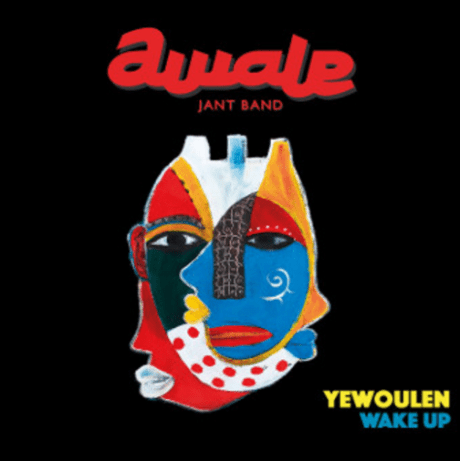
Predominantly imbued by the Senegalese heritage and ‘gawlo’ storyteller tradition of this London-formed polygenesis collective’s songwriter/singer Biram Seck, and by some of its drumming/percussionist circle, the Awale Jant Band effortlessly broadens its musical horizons with another loose fusion of Afrobeat, soft heralded horn section soul and bustled funk. A merger of the Dakar-born dynamic Jant band and French guitarist foil Thibaut Remy’s Awale group, the lilted unison of West African and European musicianship once more leaps into action on the debut follow-up Yewoulen.
It’s a title which when translated from the Wolof people’s language – the dialect that Seck mostly sings in – of Senegal, Gambia and Mauritania encourages a “wake up” call. A unifying wake up call that is, with many of the both expressively joyful and sadder yearns driven by injustice and a need for understanding in a morosely hostile society. First though, there’s romanticism of a sort in the form of the album’s ascendant, snozzled horn and soft rolling, rattled and skipping ‘Sope’; a tender love paean that features a soulful trilling Seck vocally crossing paths with Al Green and Youssou N’Dour – which is handy, as the group’s Senegalese percussionist Medoune Ndiaye was a member of his backing group. Equally as loving, even sweet, is the Highlife with echoes of South America celebration ‘Amandine’; written by Remy as a dedication his first daughter. Staying with the upbeat (musically speaking), there’s what sounds like a busy groove-generated stopover in Lagos with the mellow Kuti vibes funk ‘Domi Adama’; a live feel track with plenty of swirling horns and bobbing sabra drumming action, courtesy of Fofoulah’s Kaw Secka). It’s followed by the Accra vibe and Stax Watts’s horn blasting song of happiness ‘Cubalkafo’.
In the more poignant and societal-political vane, Seck pays a plaintive jazzy lament to an old friend on the two-speed cantaloupe ‘Jules’, and comments on the sensitive issue of ritual circumcision on the African-rock lilted ‘Kassak’.
The message though is one of shared ancestry and a coming together for the benefit of others in an increasingly unsympathetic and dangerous world. This combined force of musicians does it with a real swerve on a groove that is constantly, gently moving between the spiritual and the soulful and funky. The Awale Jant Band turns in another great showcase of cross-fertilized rhythms.
Ville Herrala ‘Pu:’
(We Jazz) LP/21st February 2020

The Helsinki label of We Jazz is one that excels in pushing and remixing the boundaries of contemporary jazz; especially the role of the soloist, turning out vividly dexterous breathing experiments in counter-flow looped saxophone with Jonah Parzen-Johnson’s Imagine Giving Up, and now a suite of taut and quivering string and rhythmic slapped bodywork miniatures played using only the double-bass, by the Finnish bassist Ville Herrala.
A mainstay of the much admired Scandinavian jazz scene, the Turku born native has lent his adroit skills to such scene-setters as PLOP, Otto Donner, U-Street All Stars, Jukka Eskola Orquesta Bossa and the UMO Helsinki Jazz Orchestra. Stepping out from the group set-up, the conservatoire graduate goes solo for his debut LP Pu:. Herrala knocks, pads and bends out-of-shape the familiar bass sound to often take on the characteristics of a distressed cello. Consisting of fourteen vignettes split between the bowed and rhythmic, Pu: balances the springy and elasticated with the spindled and ponderous on an album of various moody experiments. ‘Pu:2’ (all the track titles by the way have this suffix) has the sort of quivery sustain intro you might expect to hear on a Hendrix record – hanging on an air-string before launching into a wild psychedelic scream – whilst ‘Pu:6’ has the double-bass almost mooing. In the minimalist, more sound experiment camp, the pendulous ‘Pu:3’ sounds like something scuttling in the attic, and the pitter-patter ‘Pu:5’ sounds like Herrala’s rolling a ball-bearing across the spider-like strings.
There’s oblique runs up the fretboard, bows across the bridge and saw-motioned tautened frictions throughout an LP that is equally as morose and haunted as it is mysteriously avant-garde. Semi-classical, semi-jazz, semi-minimalist and semi-soundscape, Pu: is an inventive suite of articulations, tones and atmospheres fashioned from a double bass in discomfort; stretched to its limits. Herrala proves a congruous edition to a most explorative jazz label on the fringes of reinvention.
Jimmy W ‘Midi Canoe’
(Moonside Tapes) LP/22nd February 2020
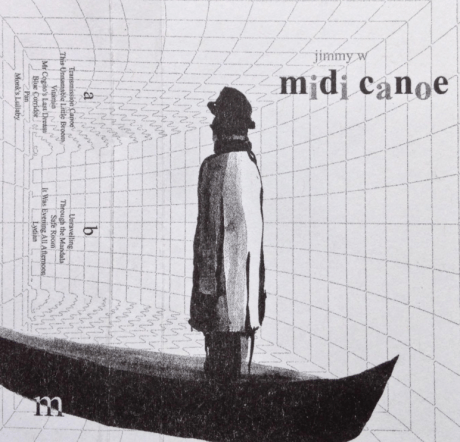
Featured recently in the last Tickling Our Fancy revue with his Kirigirisu Recordings enabled Singapore Police Background collaboration with fellow ambient peregrination explorer Dan Burwood, James Wilson is back this month with an equally minimal atmospheric solo under the Jimmy W appellation. Released via his own brilliant limited cassette specialist label Moonside Tapes, his latest ebb and flow traverse, Midi Canoe, flutters and drifts across crackling graph paper. A concatenate collection of vignettes, passages and extracts, Wilson builds a evanescent soundtrack of static fields, snozzled foggy wafts and air flows; pricked by bendy space warbles, metallic shivers and a gliding piano. There’s also a masked twinkled chime that sounds like a marimba, falling like droplets on a bedding of gauzy washes.
Tracks like ‘Unnameable Little Broom’ are given a Casio preset choral effect lull, whereas the poetically surreal evoked ‘It Was Evening All Afternoon’ has an air of early Cluster.
Showing just how well read this ambient composer is, there’s a third-note emphasized chiming mirage with space birdy warbled piece entitled ‘Mr. Cogito’s Last Dream’; a reference to the Polish author-poet Zbigniew Herbert’s philosophical canvas everyman of the title, the protagonist of a number of reflective, questioning dialogues and poems written under the despair of Communism. Getting technical, there’s an overlap of ghostly trailing notes and repeated nice piano motifs piece that refers to the white notes ‘Lydian’ scale. A mode as it were, this particular scale includes all the notes of an F scale without the Bb.
A suffused wash of enervated motorization and dreamy resonance, Wilson’s Midi Canoe is a mysterious voyage of inner meditation and the otherworldly that’s well worth seeking out. And whilst you are at it, take a look through the whole Moonside catalogue, especially the 2018 abstract hand-painted Mhva LP Scend, a concentrated vapour of sublime ambience.
Passepartout Duo ‘Vis-à-Vis’
(AnyOne) LP/10th April 2020
A project that sadly now seems inconceivable in the face of a growing coronavirus pandemic, the freely traversing duo of Nicoletta Favari and Christopher Salvito use the sounds and discoveries of a journey they made from Switzerland, via the Caucasus and former Soviet Asiatic satellites, to China. In conjunction with the AnyOne Beijing arts company label and curatorial platform to promote experimental and contemporary classical music to a ‘budding’ Chinese audience, the Passepartout Duo collaboration is a transportive album of scrap-built instruments and synthesized peregrinations, split into two separate seventeen-minute amorphous soundtracks.
The first part of these cross-panoramic sound adventures, ‘Heartwood’, expresses a sense of time passing; the metronome ticking away as the cycles of chimed strikes, sonorous drones and scuttling wooden undulations make way to crystalized gleams, spindled mechanisms and vague echoes of gamelan. The final section of this journey moves through uninterrupted duel divided melodies, glassy tubular drops and low veiled foghorn bass until ending on a trance-y spell.
The titular track begins with a busier sonic language of clanging and mallet metallics, overlapped with what sounds like an avant-garde video arcade of speed shifts, trickles and pattered Orientalism.
You’re never really sure of which terrain you might be passing through at any given time on this exploratory project of neo-classical travelogues, and that’s what’s so magical about it: anticipating what sonic landscape might come next, or where the duo will take us. In the process Vis-à-Vis flows through an undefined geography to create something fresh and different; a soundtrack untethered, if you will, to a particular time and place.
Orkesta Mendoza ‘Curandero’
(Glitterbeat Records) LP/10th April 2020
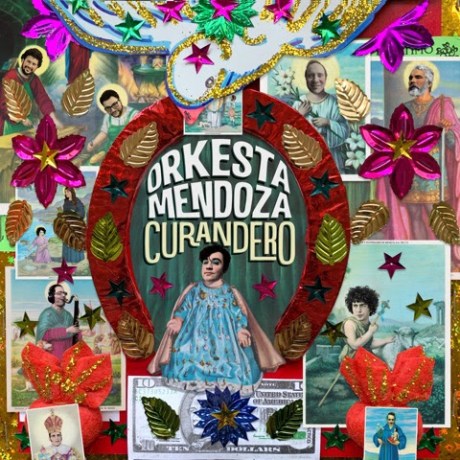
Another crisscrossing romp over the southern border, scion of the Calexico-Giant Sand-Xixa axis of Arizona-Mexican fusions, Sergio Mendoza once more leads his Orkesta out across a fertile musical geography on his new LP, Curandero.
And yet again, Mendoza pays a special homage to the sounds and myriad of styles he heard growing up between his two homes of Nogales, Arizona and Sonora, Mexico on an album that is playful and varied.
With an emphasis on pop, this guest heavy follow-up to 2016’s ¡Vamos A Guarachar! Has a more commercial and light sound. Recorded at a breakneck pace, without much planning. Mendoza and his collaborators go with the flow and mood on a Latino odyssey of reinvigorated musical staples. Songs like the 50s rock’n’roll tonk and cowbell tapping ‘Eres Official’ are meant to evoke the ghost of Buddy Holly, but also stir-up Ritchie Valens. US singer of Latin soul, violinist and fellow Arizona native Quetzal Guerrero makes one of many appearances on this low-rider wolf-whistle of a song. Mendoza says he was thinking about Stuart Copeland of The Police and his loud up the front in production style of drums when recording the bubbly undulated heatwave ‘Head Above Waters’. It sounds though like a jolly trek across the desert with Paul Simon in tow. The strangest flash of inspiration is with the broody love song ‘Little Space’, which features Nick Urata of Devotchka crooning like a mix of the Big O and Chris Isaak. Supposedly starting out like The Jam, Mendoza seems to have instead transformed The Beatles ‘I’m Looking Through You’ with the popular folk tradition of cumbia – a style that has had a renaissance in the last decade; modified, transmogrified to fuse with anything going, including electronica and dance music.
From the rambunctious to sauntering, cumbia is just one of the many Central and South American genres to make this LP. Expect to also hear concertina and raunchy ‘rancho’, blasted and serenaded ‘mariachi’, echoes of Joey Bataan and Andrew Sisters, the ‘boogaloo’ and matinee idol Mexican R&B on this sprawling songbook.
Mendoza is having a great time with all this, as he builds a musical escapism that one minute offers the corney, the next, a Ska like gallop across the border towards the Amazon. It’s a whistle-stop tour of lo fi Casio preset shimmy accompanied cruise ship lounge bars, wistful pining Western savannahs and Tijuana parties; a pop and rock celebration of a multifaceted and inspiring cross border melting pot, with something for everyone.
Various ‘Maghreb K7 Club: Synth Raï, Chaoui & Staifi 1985-1997’
(Sofa Records & Bongo Joe) LP/27th March 2020
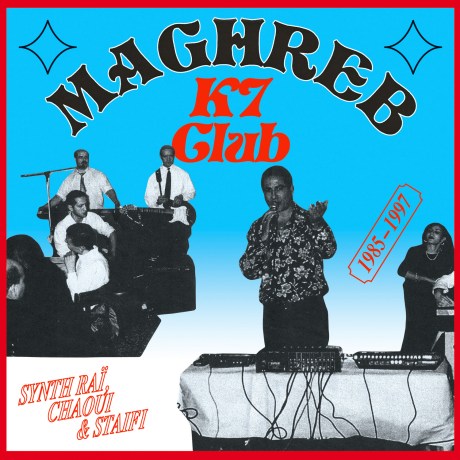
Music from the North African geography of the Maghreb as you’ve probably never heard it; shimmying with Arabian trinkets, rapid tabbing hand drums and exotic sand dune fantasy certainly, yet made otherworldly cosmic and electro-fied for the burgeoning democratized age of affordable low end tech: welcome to the Arabian expat scene in 80s and 90s Lyon.
From the assured collators Bongo Joe and, on this compilation, their partners Sofa Records a eight-song collection of Casio-preset and synthesized transformed musical poetry and lovelorn heartache from a myriad of Algerian artist’s that congregated around the French city’s North Eastern African café and bar hub. Joints such as the Le But Café, the Croix-Rousse and Guillotière were home to a social network hive of activity for conducting business and booking appearances for weddings, galas and studio sessions.
Musically a crossover of the Oran City folk Raï tradition and Zendari rhythm festive Staifi style from back home, the electrified sounds that emanated from this fertile scene were mostly distributed on cassettes, released by facilitators like Top Music, Édition Merabet and SEDICAV. Extraordinarily, and the reason for this collection, vinyl was discarded for the cheap and flexible culture of tape sharing at the time. The fast turnover, not only in recording these tracks but also in getting them on the market, cut out the middleman and helped foster a thriving local distribution network. Still, the power seemed to be with the publishers who could not only modify the lyrics but tamper with the style itself – adding synthesizer and drums – without seeking consent or even running it by the artists that recorded them. This led to some interesting results, as you’ll hear.
For the first time ever, the Maghreb K7 Club LP makes available a smattering of tracks on vinyl; tunes like the Arabian milky way swish ‘Maliky a Malik’ by Zaidi El Batni – which has a strange intro; someone’s footsteps walking through a cheap echo-chamber effect and some slapping – and the bandy, slinky liquid pop mirage with soothing female sighs ‘Goultili Bye Bye’ by funk-disco maestro Nordine Staïfi. Nordine gets two bites of the dancefloor glazed cherry on this album; his second feature, the infectious whistle-and-clap ‘Zine Ezzinet’ is a standout highlight – imagine an Arabian Nile Rodgers mixing down an Orange Juice funk.
Elsewhere, 808 rattles and harmonium merge with spirited song, whilst heavy accentuated Algerian romanticism is augmented by a Miami soundclash of electro beats. Though the most blatant use of that synthesizer influence is found with Salah El Annabi’s Francophone ‘Hata Fi Annabi’, which unexpectedly drops in a whole chunk of Jean-Michel Jarre’s famous ‘Oxygene’ to the mix.
The 90s sourced tracks in this collection are for obvious reasons more polished, but there’s a certain innocence and fuzzy sheen that I quite like about those older, 80s recordings.
Worth a punt just to own ‘Zine Ezzinet’ – fast becoming one of my favourite, essential movers of the year -, this compilation from Bongo Joe and friends is a wonderful platform to discover another bit of ear-opening musical history.
The Monolith Cocktail is now on the micro-payment donation site Ko-Fi:
Hi, my name is Dominic Valvona and I’m the Founder of the music/culture blog monolithcocktail.com For the last ten years I’ve featured and supported music, musicians and labels we love across genres from around the world that we think you’ll want to know about. No content on the site is paid for or sponsored and we only feature artists we have genuine respect for /love. If you enjoy our reviews (and we often write long, thoughtful ones), found a new artist you admire or if we have featured you or artists you represent and would like to buy us a coffee at https://ko-fi.com/monolithcocktail to say cheers for spreading the word, then that would be much appreciated.
The Monolith Cocktail Social Playlist: Volume XLIII
March 16, 2020
PLAYLIST
Compiled by Dominic Valvona
Graphics Gianluigi Marsibilio

For all our friends and followers alike in coronavirus lockdown, let the Monolith Cocktail ease some of the doldrums and boredoms of quarantine with another Social Playlist (the 43rd edition in fact). The blog’s imaginary radisohow (or podcast if you prefer) brings together tracks from across time, genres and the globe to take the listener on a musical odyssey of discovery.
For those of you without access to Spotify, we’ve chosen a random smattering of tracks from Youtube.
Tracks:
Evie Sands ‘I’ll Hold Out My Hand’
Clarence Reid ‘Along Came A Woman’
Urbano de Castro ‘Urbanito’
Marva Whitney ‘What Kind Of Man’
The Scruffs ‘Go Faster’
The Cake ‘Ooh Poo Pah Doo’
The Koobas ‘A Little Piece Of My Heart’
Eternity’s Children ‘The Sidewalks Of The Ghetto’
Armando Trovajoli ‘I Love You’
Ziad Rahbani ‘Raksat Tahiat’
Eris Van Bloom ‘Forget Me After’
Yasuaki Shimizu ‘Lebon Lipon’
The Clientele ‘I Had To Say This’
The Plastic Cloud ‘Shadows Of Your Mind’
Grapefruit ‘Yesterday’s Sunshine’
Moses Gunn Collective ‘Mercy Mountain’
3Ds ‘Evocation Of W.C. Fields
The Exploding Hearts ‘Throwaway Style’
Rockin’ Ramrods ‘Willie’s Plastic People Factory’
The Fe-Fi-Four Plus 2 ‘Pick Up Your Head’
The Pazant Brothers ‘Dancing In The Street’
Anthony Braxton ‘G-647 (Opus 23H)’
Sonny Sharrock ‘Bailero’
Crispy Ambulance ‘Chill’
Big L ‘Devil’s Son’
Ramson Badbonez ‘I Got Dat Sting’
Tuff Crew ‘Show Em Hell’
Sonny & The Sunsets ‘Ghost Days’
Moonshake ‘Mugshot Heroine’
Lungleg ‘Punk Pop Travesty’
Thee Headcoats ‘The Messerschmitt Pilot’s Severed Hand’
The Intelligence ‘My Ears Are Dust’
Jeremy Steig ‘Home’
Weldon Irvine ‘Turkish Bath’
Bembeya Jazz National ‘N’Lanyo’
Bongos Ikwue ‘Ella’
Seamajesty ‘Abacat’
Acid Arab ‘Electrique Yarghol’
Pan Ron ‘Pros Reang Yeh Yeh’
Benkadi International ‘Kelou Na’
Dzyan ‘Light Shining Out Of Darkness’
Green On Red ‘Drifter’
For Youtubers
All Selections made by Dominic Valvona
 Monolith Cocktail Blog