THE MONTHLY DIGEST INCLUDES A CLUTCH OF ACCUMULATED NEW MUSIC REVIEWS PLUS VOLUME 97 OF THE SOCIAL INTER-GENERATIONAL/ECLECTIC AND ANNIVERSARY ALBUMS CELEBRATING PLAYLIST.

Cosmic Ear
___/THE NEW___
LIUN + The Science Fiction Band ‘Does It Make You Love Your Life?’
(Heartcore Records) 23rd May 2025
In the making for five years the latest release from the alliance between the vocalist, artist, bandleader Lucia Cadotsch, producer and saxophonist Wanja Slavin and an ensemble of woodwind, strings and brass and electronic foils, is a magic electroacoustic trip of fantasy and fairytale.
With a voice that floats over contours, swirls, piques, spins, scales, plunges and drops, the dreaminess of Cadotsch is enhanced by an attentive soundtrack that is simultaneously dramatic, theatrical and musical. And yet it’s all somehow tethered to the urban, with its use of electronica (from synth pop to breakbeat and trip-hop) and often subtle but deep bass vibrations and near alien and imposing atmospheres.
Questioning and testing the boundaries without ever falling apart nor sounding incongruous, every turn and sound is perfectly balanced; from the near swells of orchestration that wouldn’t sound out of place in a Hans Zimmer or David Arnold score, to the jazzy woodland spritely breakbeating woodwind evocations of Otis Sandsjö found on the orbital progressive-jazz celestial ‘Bloody Breakup’ – the latter reference is unsurprising, as one of Cadotsch’s other projects, the Speak Low Trio, includes both Sandsjö and Peter Eldh amongst its ranks.
Everything is channelled into a concrete tripsy fusion of contemporary dance and the balletic, with the themes, the language translucently yet deeply connective; a yearn or near wistful set of observations on modern romance, attachment/detachment, place, belonging, and finding your feet and legacy in an increasingly cold and hostile environment. Titles include a reference to the iconic movie dame Faye Dunaway, who has gone through the mill herself, a unique tough singular talent hampered by travails aplenty, mental health, alcoholism, and the focus last year of a major (and candid) documentary, and an innocuous but curiously and inspired observed daddy longleg.
Though Swiss herself, most of Cadotsch’s partners in this union are from or work in Berlin, where this album was forged. The groundwork and ideas of which began back at the start of this decade. Does It Make You Love Your Life? was ushered in and helped on its way by Kurt Rosenwinkel, the American jazz guitarist and polymath who not only plays the synth on this album but also releases it on his own label Heartcore Records.
The talent pool is in no question, the enablers and musicians that join the mizzle and fuzzed, the blizzard-like chuffs, the lifting and raspy saxophone odes, etudes, cycles and sentiments of Slavin’s cinematic, stage and jazzy saxophone, and Cadotsch’s often melisma vocals adding an extended flavour of the playful, the worldly, the sentimental, the classical and avant-garde. At times this sound palette invokes a touch of Southeast Asia, of Indonesian Gamelan, and at others, like a strange version of a Satie music box.
Stirrings of the Tara Clerkson Trio, Qrauer, Ruth Goller, Kreidler, Alex Stolze, Nyman and Glass are transduced into urban pop and trip-jazz for an accomplished, often understated but impactful, album that has soul and magic in equal parts. Well worth the wait.
Your 33 Black Angels ‘Eternities II’
Released last month
Generously gifting us a vinyl version of their eighth album, the second ‘eternities’ volume (arriving six years after the first), the simultaneously pumped, glammed, moody and near psychedelic three-decade spanning New York kissed angels prove able and dynamic at integrating a fusion of electronic genres and ideas into their sound.
Sophisticated and lively, from the dancefloor to the darker creeping recesses of the underground and strip-light flickered underpasses, Dan Rosato, Josh Westfal and Daniel Bombach seem fresh and in an experimental mood. Considering the amount of time they’ve been producing their signature mix of “bubble house”, “acid pop wonder”, “electro” and “dream-pop”, they sound neither jaded nor tired. In fact, as familiar as the elements and various inspirations are, this is a dynamic record of the brooding and near euphoric. This is electronic pop with a certain, sometimes menacing, edge and depth of quality seldom heard in much synth-pop or electronic-indie music. For there is a range of effects, of influences and references both human and near otherworldly and alien – cosmic celestial sounds alongside more twisted and creepy affected voices; dystopian sci-fi against the cool chrome possibilities of Moroder-like arpeggiator.
The difference in mood and style is almost on a track-by-track basis; the atmospheric scene-setting ‘Test_Run’ opener of digital metaphor and cyber dread is from the underpass, or the Tresor bunker, with its pulsated broody beats, hints of Fad Gadget, a less bombastic Muse and Brian Reitzell, whilst the very next track, the surrealist novel inspired ‘Macunaíma’, has a strange, removed Latin electronica feel of vocoder lyrics, tripping memories and touch of Banco da Gaia new age trance. The latter of those two is a reference to the surrealist polymath Mário de Andrade’s famous novel, which I said to have either ushered in or been in the first flourish of what’s termed Brazil Modernism. Far too convoluted to get into here in the form of a music review, the protagonist, “a hero without any character”, stands as magical-realist metaphor for Brazil’s three races origin myths – the white, the black and the native. Director Joaquim Pedro de Andrade made a loosely based film of the story in 1969, changing some of the plot, with our main character near corrupted after leaving his Amazonian home for the city (Rio in the film, Sao Paulo in the book), and undergoing a transformation, changing his very race, meeting terrorists and birthing his only child – his own birth a really strange miracle, emerging fully formed as an adult from his elderly mother. Read into it what you will, but here there is a vibe that is swimmingly tripsy and soaring.
Further on, ‘Light Life’ seems to ape early Richard James and his Polygon Windows phase on Warp, and yet shimmers with globules and digital trails to emerge as a sci-fi pop version of Daft Punk and Beat Connection. ‘It’s In’ reminded me of 80s NYC electronic and synth collage experimentation, post-punk-disco, Front 242, Cabaret Voltaire and the Yellow Magic Orchestra. And ‘Shaggy & Joe’ could be a quirky kiss-off of Foster The People, Apparat and Reflektor era Arcade Fire. They finish off the album on a sort of Cathy Pacific serenade of glissando and plucked gilded beautifully reflective strings. But they really reminded me in places of Barbarian era Young Knifes. The grit and energy perhaps, and the acceleration. Computerised synthesisers, the drum pad fuzzes, breaks and machine-made beats and something of the kinetic is balanced by more humanistic-played instruments and vocals – although at times this voice is filtered, transformed through R&B pop-style vocoder and twisted into the near demonic. A constant thread of lip smacked rebuttals, of breakup and the machine is interlocked into a futuristic dance catalogue of eternal footprints.
Spelterini ‘Hyomon-Dako/Magnésie’
(Kythibong) 20th May 2025
Well-received last time on the Monolith Cocktail (back in 2022 as part of my Perusal #36 column with their ‘Paréidolie’ drum and drone journey) the French quartet are back with a “diptych” style album of longform rhythmic trances and squalling focused intensities.
Named in honour of the 19th century Italian tightrope walker, Maria Spelterini, who’s death-defying stunts included numerous handicapped (blindfolded, manacled or with weighted peach baskets strapped to her feet) walks across the Niagara Falls, the Spelterini pairing of Papier Tigre, La Colonie de Vacances and Chasusse Trappe members likewise walk a similar path, balancing between influences from the post-punk, minimalist, drone, kosmische and krautrock spheres. Once again keeping balanced whilst straddling the rhythmic, the droning, the hypnotising and wilder and more industrial, Pierre-Antoine Parois, Arthur de la Grandière, Meriadeg Orgebin and Nicolas Joubo emerge from their arts lab incubator to progress over what used to be in old money, the equivalent of two sides of a standard LP format.
Covering Side One, if you like, is the staccato turn cymbal splashed motoring (but not motorik) ‘Hyomon-Dako’. The starting point is a Stereolab magnetic bounce and paddled-like drums and dwindled guitars, with an essence of more modern faUSt and Beak>. You’d have to throw in Nurse With A Wound and This Heat as the action seems to build subtly over an entrancing beat that’s one part post-punk and another part locked-in kosmische hypnotism. The finale is a crescendo of harsher, near hardcore and industrial noise and static.
The white powder of magnesium oxide inspired ‘Magnésie’ is another twenty-minute build-up of similar influences but sounds like a transmogrified Velvets at times. Dot-dash-like Morse Code and heavier strains of wielding and welding work in and out of a looping-like concentration of psych-post-punk and needle-registering frequencies.
Spelterini combine their source, influences to create another hypnotising concentration of neo-krautrock and post-punk intensity and an ever-changing progressive trajectory.
Cosmic Ear ‘Traces’
(We Jazz) 25th May 2025
Traces of the Don Cherry sound imbue the debut album from the newly formed Cosmic Ear troupe of celestial and fourth world journeying accomplished intergenerational players. Referencing benchmarks, both familiar sounding and near amorphous geographical points of inspiration, this ensemble embark on the ancient trade routes that connect exotic mirages to straddle a number of inspired jazz soundscapes, rhythms and atmospheres.
No one is more able to carry on the legacy of this album’s spiritual guardian than the Swedish musician, composer and visual artist Christer Bothén, who collaborated frequently with Cherry back in the 70s. Expanding his own skills of instrumentation, and after learning hunter music and taking instruction from the Malian master musician Broema Dombia, Bothén introduced the innovative cornetist to the West African n’goni, a canoe-shaped, dried-animal skin wrapped lute favoured in Mali and its bordering regions. That same instrument now appears here, alongside the Angolan berimbau (a gourd resonating instrument used in Brazilin music) the Malian karignan (a metal scraper) and range of signature jazz instruments, from tenor sax to trumpet (of course), contra bass, clarinets, double bass, piano, various metal and tin sounding percussive tools and the congas.
Furthering the musical scope with Afro sounds (from Afro-jazz to Afro-Brazil and an essence of North Africa and Arabia) the group seamlessly meld flavours and spices, the “brown rice” ingredients, to conjure up their own worldly visionary sound that feeds on Cherry’s explorative work in the 1970s and 1980s; taking in, as referenced on the album’s finale ‘TRACES of Codona and Mali’, Cherry’s Codona triumvirate world fusion and free-jazz crossroads experiment with foils Colin Walcott and Nana Vasconcelos. The echoes ring exotically loud on not only this suite of spindly dulcimer-like threads, both calling and wilder expressions of Albert Ayler-like sax and Miles trumpet, and an overall essence of Alice Coltrane and fourth world possibilities, but across all the album’s six variant mood pieces, travels and motions.
With the leading sideman and instigating Swedish tenor saxophonist Mats Gustafsson, the Croatian roots composer, bandleader and trumpeter force behind the Tropiques, Fire! Orchestra, Angles 9 and Subtropic Arkestra projects Goran Kajfeš, South American studied noted percussionist Juan Romero and bassist and multi-instrumentalist extraordinaire Terbjorn Zetterberg (appearing here under his Kansan Zetterberg alias) completing the circle, the range of experiences is infinite. The quintet expands to include special guest Marianne N´Lemwo, adding a touch more of the West African sound to the varied peregrinations and feel. Within that lineup there’s plenty of crossovers, with various players at various points in their career joining forces: notably Bothén and the reeds experts Gustafsson and Kajfeš, all three Scandinavians having collaborated in various setups over the years.
In practice, this interchange of ideas summons up images of jungles, grasslands, sand dune processions, the cerebral, pining and cosmically mysterious and lunar. On the opening ‘Father and Son’ movement Cherry’s percussive elements – tubular metal instruments, dried beans and rice being shaken like slow waterfalls – mate with bristled and elephant trunk brass and Afro-jazz groove that wouldn’t sound out of place on an Orlando Julius or Peter King track. The near obligatory and worldly free-jazz explorers go to source of inspiration, ‘TRACES of Brown Rice’, draws from the Cherry wellspring but also recalls The John Betsch Society as the group move from the blues to mirage.
A sort of removed, or at less more oblique version of the romantic, ‘Love Train’ certainly has its dreamy evocations and serenades, but progresses from a classical but just off and contemporary enough to slightly jar Abdullah Ibrahim and McCoy Tyner style piano part to echoes of Tangiers and Salah Ragab style Cairo. That is until the horns bleat and scream, cry and climax in near hysterical fits of tumult and emotional discharge. ‘Right Here, Right Now’ features the already mentioned n’goni, but merges a Malian landscape with elements of the AEoC, Andy Haas and the oscillating shimmers of Irmin Schmidt. Sympathetically, and highly atmospheric, the hallucinatory serenades and longing conveyed on ‘Do It (Again)’ once more call upon Cherry’s spirit percussively: the general signature beads that shake and rattle, the textural sounds of instruments unfamiliar to Western ears, forming a lived-in but also fresh and exotic backdrop. There’s a suffix title, “For Sofia Jernberg”, which I believe is a nod to the Ethiopian-born and Swedish adopted singer, improviser and composer, and noted collaborator with her homeland’s most famous export, Hailu Mergia. Whilst nothing is so obvious as to reflect those roots, the track does have a certain vibration and bluesy gauze that could be said to have borrowed from that part of the world, and from Jernberg’s own cross-pollination embrace of the chamber, of jazz, the classical.
A new chapter. A new break. A new legacy-charged and inspired setup from some of Scandinavia’s most important and exploratively adroit players, Cosmic Ear is an open experiment of free, Afro, spiritual, bluesy, rootsy jazz that traverses all points of the African Continent (from South to the West, East and North), South America, the Indian Subcontinent and Arabia, whilst seeking the limitless expanses of the cosmos. A brilliant debut from a mighty fine ensemble of gifted sagacious but playful and experimental artists.
The Mining Co. ‘Treasure In Spain EP’
(PinDrop Records) 30th May 2025
More or less back in the present, or at least with recollections from a much more recent past, the Irish troubadour Michael Gallagher finds gold in his creative home-from-home of Andalusia in Spain. As the title suggests, this is a metaphorical, allegorical treasure of romantism and tender reflections on his muse and partner, but also another chance to bathe in the suffused warmth of Southern Iberia and the inspiring studio of his chosen producer Paco Loco.
Once more in the wings as overseer and foil, Loco (who has worked with the outstanding Josephine Foster, the Jayhawks’ Gary Louris and The Sadies) pitches in on bass and with a touch of glimmered and shimmering sustained Muscle Shoals spiritual organ and what sounds like an opened-up Exiles On Main Street piano – echoes of that iconic dishevelled album can be heard on the EP’s finale, ‘We Are Not Alone’, a country burred amalgamation of the Stones, Josh T Pearson and the Tindersticks in a sort of country-rock séance. That same track carries on the familiar theme of apparitions, spirits, and the supernatural that ran throughout last year’s Classic Monsters album – one of our choice albums 2024 no less –, and to a lesser extent on Gum Card. A creepy invocation, the dead walk amongst us, accompanied by flange effected guitar, harmonies and a full band feel of shambled, breaky heart Stones influences.
Filling out the role of Gallagher’s band is both Rober García and a returning Esteban Perles on drums, and Pablo Errea and Laia Vehí on backing vocals/harmonies. With the feel more or less a comfortable conjuncture of soft Southern soul, R&B backbeats as reimagined by Mick Ronson, Americana and country-rock. Perhaps the most fully realised performance yet, this four-track songbook is the most radio friendly too: which isn’t a bad thing.
With a mix of touching declarations of love and support to his muse and mini dramas, observations and reflections that play with analogies to scarred environments and plaintive souvenir collectors that hide a much deeper, troubling trauma, Treasure In Spain reminded me in parts of John Craigie, the Brakes, the Style Council and Boomtown Rats. Essentially, a well-crafted congruous production of rounded songs that balance paean with the lamented and lilting.
Gallagher’s most commercial, melodiously warm and fully communicated release yet is still rich with his Mining Co. signatures, tweaks, idiosyncrasies, turn-of-phrase and personality. Americana meets the Donegal diaspora after returning to Earth from his cosmological spells and more rooted autobiographical statements. Hopefully after plugging this man’s talents for so many years now, Treasure In Spain will finally shine more light on a under-appreciated songwriting treasure.
___/The Social Playlist Vol. 97___
The Social Playlist is an accumulation of music I love and want to share; tracks from my various DJ sets and residencies over the years; and both selected cuts from those artists, luminaries we’ve lost and those albums celebrating anniversaries each month.
Running for nearly 12 years now, Volume 97 is the latest eclectic and generational spanning playlist come radio show from me – the perfect radio show in fact, devoid of chatter, interruptions and inane self-promotion.
One of the pillars of that playlist series is the anniversary celebrating albums slots: usually 10th, 20th, 30th, 40th, 50th and 60th anniversaries. This month I’ve selected tracks from Albert Ayler’s supernatural apparition sprouting divine styled Spiritual Unity (60 this month); Minnie Riperton’s melliferous and slinking soul fantasy Adventures In Paradise (50th this month); New Order’s third album, the Kraftwerkian, German new waver Lowlife (40 this month); Scott Walker’s harrowed-by-thou-name Tilt (30 this year); and Teenage Fanclub’s Big Star and Crazy Horse imbued Grand Prix (dropping right in the middle of the Britpop phenomena in ‘95).
I always like to select a smattering of recentish releases each month, usually those tunes I missed or didn’t get the room to feature in the site’s exclusively new Monthly Playlist selections: consider it a second chance. May’s edition includes 2025 tracks from MIEN, the Natural Information Society with Bitchin Bajas, Occult Character, The Body, Dis Fig, and Peter Cat.
The rest of the playlist is made-up of tracks I rate, love, wish I owned or indeed do own, from decades of music collecting and DJing. So find RJ Payne, The God Fahim and Knowledge The Pirate on the spook vibes plus Shyheim, Joe Gibbs, Railroad Jerk, Howie B, The Black Lips, Captain Beefheart, Doris, Andre Williams, Kool Kim, Saar Band, The Mice, Toys That Kill, Luke Jenner, The Models, Docteur Nico, Charles Gayle, The Jean-Paul Sartre Experience, Mappa Mundi and French TV.
Tracks in full for Vol. 97 are:::
The Jean-Paul Sartre Experience ‘Einstein’
MIEN ‘Evil People’
Railroad Jerk ‘Don’t Be Jealous’
The Mice ‘Not Proud of the USA’
Captain Beefheart & His Magic Band ‘Click Clack’
Minnie Riperton ‘Feelin’ That The Feeling’s Good’
Saar Band ‘Double Action’
Andrew William’s Velvet Hammer ‘I Miss You So’
Shyheim ‘Here Come The Hits’
Natural Information Society & Bitchin Bajas ‘Nothing Does Not Show’
The Body, Dis Fig ‘Holy Lance (Audiotree Live Version)’
Scott Walker ‘Tilt’
Doris ‘You Never Come Closer’
Albert Ayler ‘Ghosts: First Variation’
RJ Payne, The God Fahim & Knowledge The Pirate ‘THE UGLINESS’
Occult Character ‘She’s A Reptile’
New Order ‘This Time of Night’
Luke Jenner ‘About to Explode’
Docteur Nico ‘Toyei Na Songo’
Joe Gibbs ‘He Prayed Version’
Howie B. ‘How To Suckie’
Kool Kim ‘The Heavenly Sword’
Teenage Fanclub ‘Don’t Look Back’
The Models ‘Bend Me, Shape Me’
Peter Cat ‘Starchamber’
Toys That Kill ‘Psycho Daisies’
Black Lips ‘You’re Dumb’
Charles Gayle ‘Compassion I’
French TV ‘The Kokonino Stomp’
Mappa Mundi ‘Sexafari’
Hi, my name is Dominic Valvona and I’m the Founder of the music/culture blog monolithcocktail.com For the last 15 years both me and the MC team have featured and supported music, musicians and labels we love across genres from around the world: ones that we think you’ll want to know about. No content on the site is paid for or sponsored, and we only feature artists we have genuine respect for /love or interest in. If you enjoy our reviews (and we often write long, thoughtful ones), found a new artist you admire or if we have featured you or artists you represent and would like to say thanks or show support, than you can now buy us a coffee or donate via https://ko-fi.com/monolithcocktail
Brian ‘Bordello’ Shea’s Reviews Roundup – Instant Reactions

ALL ENTRIES IN ALPHABETICAL ORDER
Tristan Armstrong ‘Lonely Avenue’
Album (Self Release) Already Out There On Bandcamp
Power Pop, Power Pop, Power Pop…I get sent so much power pop that I despair. Not that I don’t like power pop: I do. But only when it has a touch of adventure and thrill, and songwriting talent, and so much of it is so bloody average. They all know how to make power pop records; they just forget to write good songs: it’s all shit lyrics and borrowed melodies and crunchy guitars.
But this album by Tristan Armstrong succeeds where so many other fail, as he has the crunchy guitars but he has also songwriting talent and remembered that music is an artform and there is more to life than The Beatles, Big Star and Bad Finger. Tristen adds Americana, and I can hear just as much influence of Gram Parsons and Whiskeytown and Wilco than the usual three B’s, and so this has a lovely subtle urge of mild experimental warmth and texture that lesser artists would not consider. And when he does venture into the Big Star territory with “Queen Of Diamonds”, he does it with a natural flowing charm.
Yes indeed “Lonely Avenue” is a fine pop rock album and one that I would recommend to both power pop lovers and those who just love and enjoy a bloody good album.
Fran Ashcroft ‘Box Harry Day’
Album 30th May 2025
Box Harry Day is the third album from Fran Ashcroft, and anyone who has been lucky enough to enjoy his last two gems will indeed enjoy this his third foray into his own whimsical and darkly dour comical view on life and the characters he comes across in this not-so-Great Britain.
The twelve tracks on this album are split between six wonderful written vignettes and six beautiful orchestral instrumentals composed by Fran using AI, but in this case Fran being an extremely talented producer and musician has composed some rather beautiful pieces of music and they fit in well with his more lo-fi lyrical gems, and proving in the right creative hands AI can be used to make some quite beautiful art. Box Harry Day is an album of warmth, beauty and songs of lyrical accuracy of everyday British life that stands alongside the works of Coward, Davies, Dury and Haines.
bigflower ‘Something Appears’
Single – Already Out There On Bandcamp
Bigflower is back with his usual blast of monthly excellence, this time with a sonic endeavour of synth excellence. Yes indeed, “Something Appears” is a monster of a track, part Giorgio Moroder part Manchester rave; a track so buoyant that if Shelly Winters had this on her iPod in The Poseidon Adventure she would not have drowned and would have lived to swim another day: you could say she was raving not drowning.
Cody Brant & Diumal Burdens ‘A Panacea Nurtured Gurgles’
Album (Cruel Nature Records) Already Out There On Bandcamp
An aural montage of madness is maybe how one can describe this mixture of found sounds, drumbeats and samples. For “A Panacea Nurtured Gurgles” and albums of this ilk are really works of aural art best enjoyed when trying to escape the mundanities of life; finding escape in the subtle humour and the strategic placing and overlaying of sounds to create a painting of sound: a painting you can close your eyes and lose yourself in.
Fir Cone Children ‘Gearshifting’
Album (Blackjack Illuminist Records) Already Out There On Bandcamp
This album is very good – now there’s a review for you. But I’m not lying, it is very good. It sounds like the Shop Assistants, Ride and the Olivia Tremor Control getting together to gatecrash the local school indie disco to impress nobody but themselves. It has melody, charm and a not so deadly danger. It has what everyone wants from their indie album: pop suss, experimental joy mixed in with the usual post punk bass extravagancies and chiming flange melodious guitar with some rather fetching vocal harmonies – and I can even hint a subtle influence of Syd’s Pink Floyd in the mix. Can I say anymore to convince you to give this fine album a listen… if not, then bugger you. It’s your loss.
Mama Oh No ‘The Mutant’
Single Already Out There
I have more than a soft spot for 60’s Garage Rock, so this wonderful blast of riffery is indeed a blessing to the ears; a track that could have walked off any of those wonderful 60’s garage rock compilations I used to spend my teenage years rifling through in the old Prope Records in Button Street in Liverpool in the 80’s. Yes indeed, ‘The Mutant’ is blessed with a rather wonderful walking bass riff, fuzz guitars and an organ sound that would make the organist from the Fuzztones weep with joy. As you will need not telling, I await the album.
òrain ‘Hanging Fruit’
EP (Practise Music) Already Out There
This four-track EP is a rather lovely warm sounding thing of indie pop splendour; an EP of wonderfully written songs that has one’s head spinning in a slow like carousel waltz of melancholy and pure bliss. Songs that lovers of Belle And Sebastian and the Sundays will grab and hold to their hearts and play until they are paisley etched shadows of forgotten dreams and half remembered fantasy wishes.
St Johns Wood Affair ‘2’
Album 23rd May 2025
The swinging sounds of the 60’s are plundered and rediscovered in this gem of psych tinged poptitude; all original songs all steeped in the love of all things 60s pop. “Center Of Your Universe” the opening track is all “Last Train To Clarksville” guitar jangle and tells you what to expect from the rest of the album: all in your mind’s eye lyrics and the spirit and love of 1967. If an album was made to come with a cardboard cutout Kaftan, it was the St Johns Wood Affair’s 2.
Byrds like harmonies and backward guitars abound on “Hoping On The Train In Vain”, and “Magic Carpet Ride” haunted by the ghosts of the memory of late 60’s Small Faces. My favourite track, the lovely “Secret Garden”, is a kiss of pure psych pop bliss.
2 is an enjoyable and fun listen, especially for us who are still in love with the 60s sound and the 60s dream that will never fade.
Sister Wives ‘YnCanu’
Single (Libertino) Already Ou There
There is something rather beautiful about the Welsh language, and this fine single “YnCanu” by Sister Wives is a rather dark and gothic psych-Grunge gem sang in their native language. Imagine if you will The Feminine Complex being transported twenty years into the future to Seattle and told to make their mark on the local rock scene. If you can imagine that you may have some idea what this single may sound like. If you can’t imagine that just give it a listen…you will not be disappointed.
Smashing Red ‘Dark Eyed Girl’
Single (Metal Postcard Records) Already Out There
The ‘Dark Eyed Girl’ is a 60’s tinged guitar pop song that could have appeared any time over the last 50 years. It could have been performed equally by The Honeycombs (have you heard their stunning flop single “Eyes”, a forgotten dark masterpiece), The House Of Love or even Luke Haines’s Auteurs in a less narky moment. Yes, the ‘Dark Eyed Girl’ is indeed a fine guitar pop song, one that weaves a sensual sinister magic that is strangely attractive like a 60’s Mick Jagger in a floral dress.
Hi, my name is Dominic Valvona and I’m the Founder of the music/culture blog monolithcocktail.com For the last ten years both me and the MC team have featured and supported music, musicians and labels we love across genres from around the world: ones that we think you’ll want to know about. No content on the site is paid for or sponsored, and we only feature artists we have genuine respect for /love or interest in. If you enjoy our reviews (and we often write long, thoughtful ones), found a new artist you admire or if we have featured you or artists you represent and would like to say thanks or show support, than you can now buy us a coffee at https://ko-fi.com/monolithcocktail
Our continuing partnership with the leading Italian culture/music site and platform Kalporz. Words by Monica Mazzoli. Translation by Dominic Valvona.
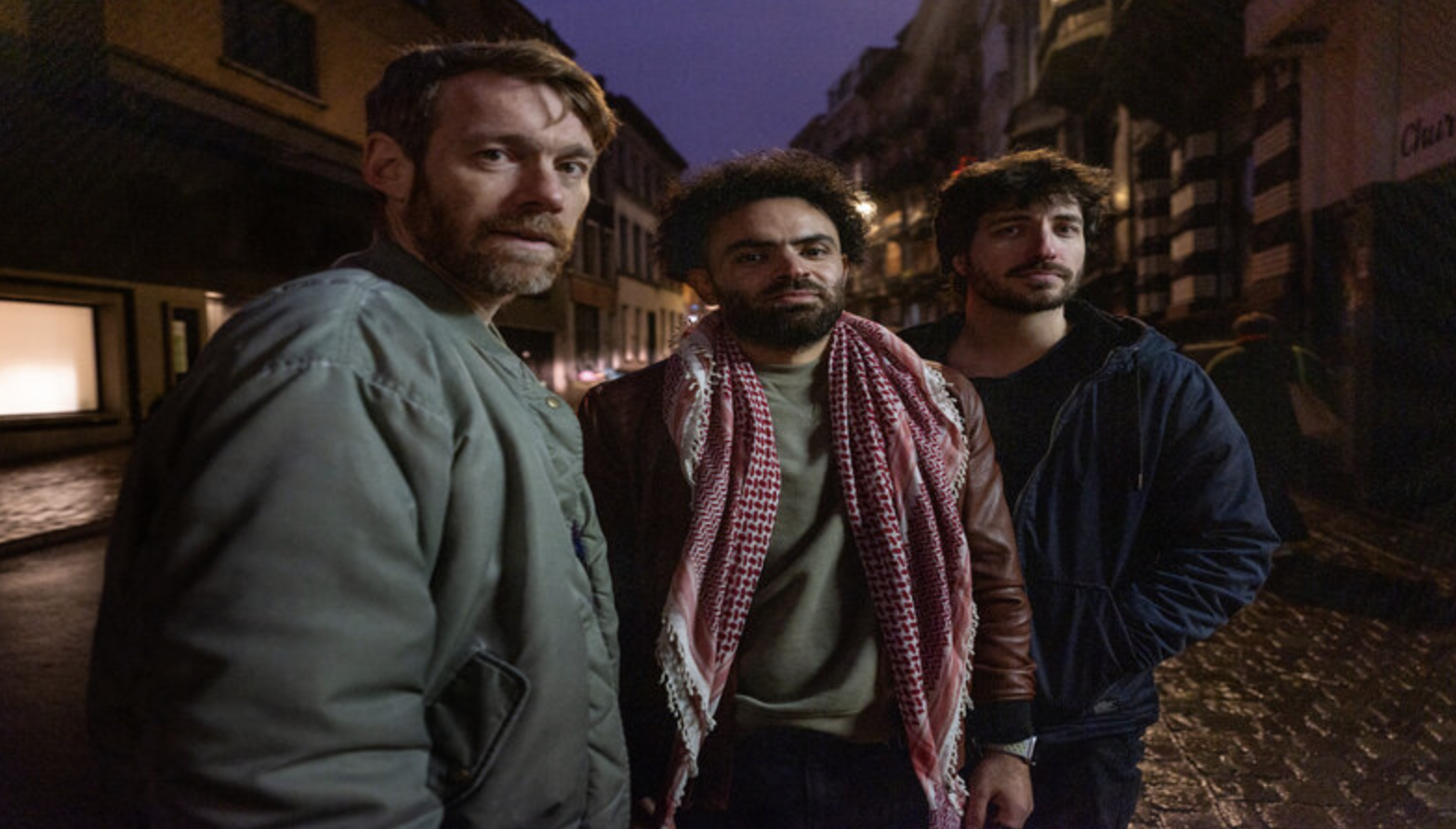
Each month the Monolith Cocktail shares posts from our Italian pen pals at Kalporz. May’s swap finds Monica Mazzoli introducing us to the Belgian-Iraqi trio Use Knife.
“You can’t separate politics from art. […] When we worked together with Saif, that was already a political thing”. With this clear and concise statement released to The Quietus in 2023, Kwinten Mordijck – one of the three minds that gave life to the Belgian-Iraqi trio Use Knife – emphasized the socio-political nature of the artistic project that he was setting up with Stef Heeren and Saif Al-Qaissy . Almost two years have passed and on March 28th, 2025 the second album under the name Use Knife, État Coupable, was released, but Mordijck ’s sentence now rings truer than ever.
The trio’s first album The Shedding of Skin (2022) was born from the meeting of Mordijck, Heeren and Al-Qaissy during a musical research residency at the cultural center of Gent Viernulvier: long sonic jams in which to confront the need to “feel the other’s point of view when making music”, and to think about how “someone from another culture reacts when making music with you” (words in quotation marks by Heeren – always – to The Quietus).
On one side two Belgian musicians who have abandoned their previous sound guise between alt-folk and electroacoustic music ( Kiss The Anus Of A Black Cat ) to experiment with analogue and modular synths and measure themselves against the rhythmic complexity of Arabic and Iraqi music (in this case), on the other, an Iraqi singer and percussionist who left his homeland (Iraq) to escape the war and gives voice to his experiences in music (read the lyrics of “Freedom, Asshole”).
Two distant worlds: neither of the two prevails over the other but a rhythmic magma with many facets is created between West and East. The opening track of État Coupable, the latest album by the trio mixed by Radwan Ghazi Moumneh (Jerusalem in My Heart), “Demain Sera Mieux” is paradigmatic in this sense. In the four and a half minutes of the piece, a 10/6 time signature (popular in Iraq but also in Armenian and Turkish music) is grafted onto a vortex of synths. Or again: the vibrations, the industrial beats of a track like “ Iraqi Drum Set ” are also ignited by the daf percussions (i.e. a frame drum that is part of the Middle Eastern musical tradition) and the chaos of words resulting from sampling the trio’s conversations about Iraqi instruments and their pronunciation.
The sound discourse of Use Knife (the name comes from a verse by Current 93, “the stars spell grammar or use knife”) is sharp and in media res: there are no preambles, we enter into the heart of an artistic creation that wants to become action. MM
Wayside And Woodland Recordings Ben Holton shares his latest album as The Balloonist, Dreamland, and a specially curated accompanying playlist with our Monolith Cocktail readers. Author: Ben Holton and Dominic Valvona.
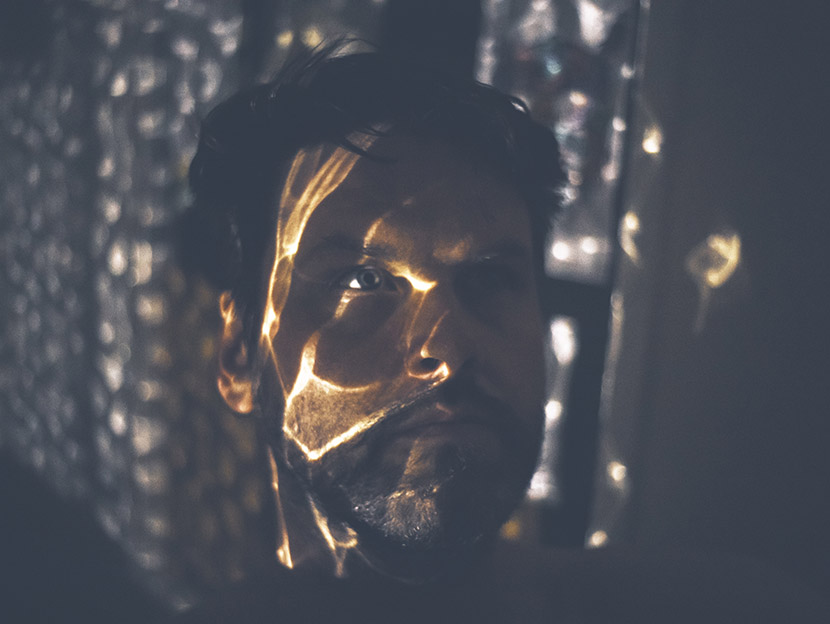
A week on from the release of Ben Holton’s latest stunning and mesmerising hazy album under The Balloonist appellation, the Monolith Cocktail is pleased to have been asked to share a specially curated accompanying playlist palette of musical and atmospheric influences chosen by the co-founder of the South Staffordshire and West Midlands based record and print platform Wayside And Woodland Recordings.
Thematically, through the delicate and gauzily floated and sparkled, Dreamland is inspired by Holton’s ‘childhood memories’ and ‘how they echo and ripple through adolescence, young adulthood and beyond.’ Retrieved and conjured up into spells of ambient ghostly resonance, the more hypnotising and hazily filtered, these visitations from the past are both magical and oblique. The Balloonist’s oeuvre of recollected memories prompted by landmarks on the environment, and the more abstract formed dreamscapes of his imagination form an understated but no less stunning, visualised soundtrack.
Holton’s Bandcamp entry offers up ‘shades of The Caretaker, July Skies, Basinski etc but also ghostly echoes of Prefab Sprout, Pet Shop Boys and other smudged 80s/early 90s sounds…’ All of which I’d concur with, but also offer a touch of the Durutti Column and Mark Hollis. Most of those inspirations, or at least congruous bedfellows, can be found in the playlist that Holton has specially compiled for the blog below.
From sisters with transistors to new age ambient composers, 80s art pop and school TV soundtracks, the journey that Holton has laid out for our readers and followers is sublime and majestic: a rich compilation of crystallised heralding, synthesised bells and tender sweeps.
I now hand you over to Ben who has written an insightful accompaniment that informs and offers a window in on his and that of The Balloonist’s processes and inspirations:
‘For this mix I’ve included music that hovers in and around the last three The Balloonist albums and, in some ways, has been feeding into my subconscious over the last 43 years. This is music I never thought, when I first started making music, would be influencing the sounds I made myself.
Specific to Dreamland, though, and the only ‘song’ featured on the playlist, we begin with ‘Wild Horses’ by Prefab Sprout. There are actually a fair few 80s pop songs I could have included here but that wasn’t quite my aim for this mix. ‘Wild Horses’ is a spectacular production, one which teeters on the edge of a dream and, at points, falls right in (maybe it’s when we hear the breathy voice of Jenny Agutter?). This is the exact kind of song I was imagining falling in and out of sleep listening to, whilst be driven around the warm summer lanes in the late 80s/early 90s. It’s all about those warm pads and chimes.
Ray Russell is an English session musician and Jazz player and it’s very likely you’ve heard some of his soundtrack and incidental music on one of the many TV shows he appears in. The album ‘Childscape’ is my particular favourite and features many glistening, chiming pieces that transport me back to childhood (as I’m guessing was at least *part* of his aim?).
More library music now, with the legendary Trevor Bastow of Bruton Music fame etc. It’s his late 80s and 90s work that fascinate me the most though. Seen by some as a little sterile (maybe?), to me, it’s the soundtrack to childhood intrigue and the subtle beauty of the every day. ‘Preservation’ is a perfect example of this.
Watching the ITV Schools programming of the 80s and early 90s, either in school on a massive telly on wheels or at home feeling ‘slightly unwell’ was an absolute delight (for some strange reason I can’t quite put my finger on!). One of my favourite bits though was the in-between segments, during which we waited for a programme to start, literally watching a chrome ITV logo slowly rotate. To aid our anticipation, were treated to Brian Bennett’s wonderfully exploratory ‘The Journey’, lulling us into a hazy daydream. Then, to snap us out of it and gently rouse us for the ‘main feature’, we’d have the cheery ‘Just A Minute’ (not included here). Both classics.
I only discovered Suzanne Ciani a couple of years ago and it may have been the cover that caught my eye. A soft-focus image of a lady in white, in front of a big mixing desk. And behind her, a couple of lovely big synthesisers in front of a nice big window. It put me in mind of a living room from the early 80s, all wood panelling and afternoon sun. The album is an absolute beauty and ‘Malibuzios’ blew me away when I first heard it. The descending synth chimes were so familiar and connected with something deep inside, something that, you’ve guessed it, whisked me back to the warmth of childhood. In particular the quiet weekdays on which I reflected on the ‘A Quiet Day’ album.
Will Ackerman is an artist I’ve only recently delved into properly, after dipping my toe into the world of his California based Windham Hil label (now sadly defunct) a little over the years. His is a sound I feel very familiar with. Not just the folk inspired acoustic guitar, a sound I grew up hearing, but the fretless bass, synth pads and crisp reverb that accompanies and enhances it. Again, it’s a sound that takes me back to my 80s childhood, listening to tapes in my parent’s car. The way folk music, such as Fairport Convention adapted to the popular pallet of times is where I can trace this familiarity back to, I think. Also, as with Suzanne Ciani, there’s the aspect of New Age music here that, as a kid, being exposed to it by my mum, kind of annoyed and infuriated me. However, those sounds stayed in my head and I’m becoming more and more open to those sounds as time goes on.
My good friend Antony Harding of July Skies introduced me to (Genesis founder member) Anthony Phillips a few years ago and I am eternally grateful to him for that. I mainly love Anthony’s home recorded ‘Private Parts and Pieces’ series that started in the late 70s. Dreamlike snapshots that can lull one into a nostalgic revery at the drop of a well-timed key change. ‘Summer Ponds and Dragonflies’ is a good example of this.
I’m not sure how I stumbled onto the work of Kuniyuki Takahashi, but it was definitely via Bandcamp. I don’t really know any of his other music other than his ‘Early Tape Works’ compilations to be honest but was captivated, totally, the first time I heard them. There’s something about the saturated warmth of these tape recordings that, especially on headphones, just completely encapsulates me. Cocoon-like. I think some of this definitely seeped into certain tracks on Dreamland.
I’ve been listening more and more to artists on the German ECM label over the past few years and Eberhard Weber is one of my favourites. Again, like the New Age music I detested as a kid, Jazz is something I’ve grown to absolutely adore, especially the stuff that borders on ambient and New Age. It’s definitely something I’m leaning into with The Balloonist. As I’m by *no means* a jazz proficient guitarist, it’s fun to pretend I am and, as a result, it pushes me into unfamiliar territory. Which is important as an artist, I think.
Staying with the ambient Jazz theme I’ve chosen another of the greatest exponents of the genre, Pat Metheny. His chord phrasing, tone and melodic sense is just magical I think.
And to end, we go back to pop music. But this time it’s a drifting, dreamlike deconstruction of ‘Everybody Wants To Rule The World’ by Tears For Fears. I heard this many moons ago on the b-sides compilation CD ‘Saturnine Martial & Lunatic’ which I’d borrowed from a friend of mine. I was enjoying the gently swaying rhythm and synth pads and then I was hit by that beautiful pirouetting guitar line. Eventually it resolved into the familiar cyclical pattern we all know and love and I realised it was some kind of meditation on the original theme of the song. I was quietly blown away. In some ways it’s the ultimate reference point for Dreamland, as it’s literally a piece of drowsy ambience with disembodied elements of pure pop threaded and weaving through it like ribbons of memory.
So, in short, with The Balloonist, I’m leaning into sounds that informed my childhood in ways that other music didn’t. The less obvious sounds. Half heard smooth radio pop, incidental TV music and 80s folk. Also, sounds that I actively *didn’t like* as a young teenager, namely Jazz and New Age which have taken on a deeper resonance and poignance over time, further opening my ears and mind to the infinite possibilities of making music.’ Ben Holton
Hi, my name is Dominic Valvona and I’m the Founder of the music/culture blog monolithcocktail.com For the last ten years both me and the MC team have featured and supported music, musicians and labels we love across genres from around the world: ones that we think you’ll want to know about. No content on the site is paid for or sponsored, and we only feature artists we have genuine respect for /love or interest in. If you enjoy our reviews (and we often write long, thoughtful ones), found a new artist you admire or if we have featured you or artists you represent and would like to say thanks or show support, than you can now buy us a coffee at https://ko-fi.com/monolithcocktail
A WORLD OF SONIC/MUSICAL DISCOVERIES REVIEWED BY DOMINIC VALVONA

Battle Elf ‘10’
(Birdman Records) 2nd May 2025
Tago Mago era CAN invoking visitations in cahoots with Third era Soft Machine, the sound of the motor city trio of Battle Elf is a mysterious, supernatural concentration of various elementals and threads pulled together in heavy psychedelic dose of “conflict” and “redemption”.
Harnessing the Detroit environment of both active and defunct, rusted decayed industry and manufacture, the triumvirate draw of Gretchen Gonzales and Chris Peters on guitars and David Hurley on drums moves across a simultaneously disturbing and experimentally evocative landscape of cosmic and tribal mirages, the barren and chaotic. With leaps and bounds of faith and reaction, they recall the already mentioned influences of CAN – especially ‘Aumgn’, although ‘Stops Pretty Places’ could be a live version of the group – and the Soft Machine – tell me that doesn’t remind you of proto–Mike Ratledge Geiger-counter-like ripped organ on the opening part of the album’s first track, ‘Behind The Wilderness’ – alongside Fred Frith, Eddie Hazel, Ash Ra Tempel, and most surprisingly, the Cosmic Jokers. Apart from the Canterbury troupe, the rest are all referenced in the PR notes. But you could add Bill Orcutt and maybe some Faust to that list, along with a whole modern smorgasbord of similar sounding kosmische and experimental psych travellers, of avant-garde and space jazz funk influences. For an album without brass or horns of any kind, 10 has a real jazz feel and sound about it: you could say a Cosmic Slop version of Bitches Brew and such psychedelic affected LPs.
It helps that all three members of this project, between them, have a diverse range of bands, collaborations to channel; from Peters’ Racehorses Are Resources union with hip-hop producer and artist Quelle Chris, to Gonzales’ Universal Indians partnership with John Olson of Wolf Eyes note, and Hurley’s membership and crossover union with Peters in the Panto Collapsars trio. All tangents, interactions now meet at the Detroit crossroads: motor city now a distant memory of a heyday, superseded by kick out the jams, the revolutionary call of post-industry decline and the electricity and rebellion that forged the techno movement of the 1980s.
In this time and space, out on the margins, they counter actions of entanglement with the resonating effects of machinery and steel, the otherworldly and alien with the chthonian and wild. Free-range and yet examined, this avant-hard mood music of a kind is both improvisational and yet concentrated in heavy meta.
There’s plenty of nice touches, surprising and intriguing sounds and motions to be found across the quartet of long form pieces, with untethered rhythms emerging from the melee and more considered passages of guitar play and obscured atmospheric soundings. At times they manage to echo Manuel Gottsching’s transcendent and alien visions: both the menacing kind and the inviting astral plane kinds.
A cult record for head music nuts, the fantastical role-playing Battle Elf pulls together a strange, unearthly and yet industrial scarred heavy psych trip of the supernatural, marooned and wild.
A Single Ocean ‘S-T’
2nd May 2025
From the Chicago hot-house resurgence of cross-pollinated ideas and experiments, another vital conjuncture of that city’s underground post-everything sounds. In the form of an amorphous single ocean of rhythms, of fourth world possible and Japanese environmental musics, of organic electronica and analogue patterns, of post-rock-no-wave-funk and the chimed, the trio of Cameron Brand, Scott McGaughey and Christopher Schreck come together in a special union of transformed and edited improvisation.
After ‘formerly’ coming together to produce a solo album by McGaughey back in 2018, all three foils decided to continue the good work under the open-ended, all flows into the same body of water metaphor, A Single Ocean heading. The collaboration’s debut album is an impressive, congruous but fluctuating immersion and absorption of influences both studied and traversing.
There’s subtlety but more than enough surprising turns on the way, as that ocean of music ebbs and flows between shifts in emotion, pitch, rhythm and style. But that rhythmic response and the ease of the swimmingly and magnetic flows alongside the quirks, the manipulations, and building blocks (layering like bricks of sound, loops, percussion on top of each other) that echo Harmonia & Eno’s ’76 union as much as they do Eno’s My Life In The Bush Of Ghosts collab with Byrne, and even, Bowie’s Hansa period – especially the momentary squeezes and freedom wafts of saxophone. But from the opening dulcimer-like chimes and bamboo music, the near breathes of flute and the use of what could be a Fairlight-like 80s evocative synth, the trio meticulously seem to place the inspired spark of influence soundly in the 1980s and late 1970s. I’m hearing Japan (both the country and band) on the sprinkled ‘Cascades’ alongside Cybe; a hint of Orchestral Manoeuvres In The Dark’s inaugural LP alongside skying new age trance, Masayoshi Fujita and Tortoise – taking the post-rock out of the highly influential Chicago ensemble’s sound – on the poles and tubular synth shuttered and percussive ‘6.4 Blocks’; and a near complete change around of brooding bass and cool no wave on the synth-pop meets 80s cut-up hip-hop collage ‘White Bright Light’. You could add shades of moody TV On The Radio, Holy Fuck and Major Force to the latter. This is all within the boundaries of the first few tracks on a twelve-track spread, as the trio merge hidden sources of percussive instrumentation with the tubular and the electronic. For instance, ‘Waterways’, to these ears, reminded me of a Warp 9 kind of near nu-funky bassline, yet also seemed to work in Jon Hassell and Ramuntcho Matta to the clap of wood and bubbled bulbs of sparkle and strange dialectical, non-religious but near sacred or mysteriously voiced, hints of Bowie’s Low period. Voices, when they appear, are often obscured in some way, or broken up like a clicky disembodiment. There are snatches of what could be samples, snippets from various sources adding to a sense of tuning in to the frequency of the time and place, but perhaps eliciting another evocation, a sense that there is more going on beneath and surface and woven into the fabric.
By the time we reach the second half of the album, there are beams of near cathedral and pastoral organ, those drifted elements of a transmogrified Modern Jazz Quartet, and moments of Casio preset Arabia, Tonto’s Exploding Head Band, Richard Pinhas, Myssa Musique and Lukid; all effortlessly flowing to a data calculus, chemistry and airy mix of electronic movement music. A perfect balance and perfect album that will surprise as much as hypnotise and transport you, A Single Ocean is fresh and inventive enough to softly and subtly set its own course over familiar seas of sounds and influences. This comes highly recommended, especially for those fans of International Anthem and the rich Chicago underground scene.
OvO/Mai Mai Mai ‘Split Album’
(Arsenic Solaris) 25th April 2025
Both frightening visions and supernatural arcane traditions are invoked by the two sets of partners on this split album release from the French label. Having crossed paths a few years back at the Roadburn Festival in the Netherlands, the Ravenna-originating noiseniks OvO duo of chthonian and daemonic Biblical sludge-metal-doom-dread and the disguised Rome-based sonic explorer Mai Mai Mai converge for a special shared vinyl title: four new tracks from the former and two from the latter.
I’ve championed the work of Mai Mai Mai before. A few years back, I was kindly asked to premiere the ‘Fimmene Fimmene’ track from 2023’s double-spread Rimorso album, a work that drew upon the traditions and mysticism of the Apulia region of Italy’s deep south and included a contribution from the mesmerising ethereal elementals siren and Apulia folkloric choreographer dancing spirit of Vera di Lece. Something I called “Gothic ethnological” at the time, Mai Mai Mai transforms, transmogrifies the rural outliers, the regions shrouded in occult traditions, taking recordings from toiled fields, old superstitious rituals and traditional forms of music and combining them with the industrial, proto-techno, drones and, sometimes, punishing miasmic electronics.
Identified as Toni Curtone when unshrouded, the Rome artist now provides a couplet of supernatural atmospheres based around real documentations of spiritualism and old beliefs. ‘Affascino’ (or “I fascinate”) uses a recording of a Calabrian ritual to protect against the “evil eye”. Slowed down otherworldly transformations of monastic-like ceremonial incantation and instruction are merged with force fields, unidentified looming and zip-line craft, exorcism and an anointing cleansing cymbal brush.
‘Portatore di Luce’ (“bearer of light”) is similar in atmosphere and theme, featuring as it does the credited voice of M.E.R. taking part in a Mediumship trance. Communing with the spirit world in whispers before inhabiting some strange apparitional force, the voices of spiritualism are gradually turned into near animalistic barks, pants and unholy evocations as sonic wisps of paranormal activity envelope an ominous entrancement.
OvO (who I must admit I’m not familiar with) consists of guitarist and vocalist Stefania Pedretti and drummer Bruno Dorella, who seem to drag up from the bowels of hell, a heavy meta(l) of apocalyptic distress and bestial vocalised conniption. Across a quartet of fresh recorded material, the duo generates tunnelled industrial unit forbode, drag carcasses across morbidly curious horizons and attune themselves to heretic broadcasts. From the near laboured, and in some kind of near suspended pendulum drop, to accelerated kick drumming pummels and needle-like scratches, various 666 invocations and more mystical cultish atavistic forces are conjured up in infinite realms of horror and trauma. Pedretti talks in tongues, curses and growls from the very depths of pained recall and stressed guttural unhinged torment, as noise, various metals and machinery, and pulses stir up something unashamedly prophetic and fucked-up. ‘In Hollywood’ for example, features a repeated sample from some radio announcement transmogrified into something weirdly supernatural and creepily abstracted.
Together in a near unholy and otherworldly premonition of sonic manipulation, both partners prove their worth in striking up visitations and avant-doom communions.
SAD MAN ‘Art’
(Cruel Nature Records) 9th May 2025
The title is Art, and perhaps the first time that the Sad Man – uncloaked as Andrew Spackman – has cast off the implied references to his great love, his career outside the circuitry and boffin-made instrumentation and electronics of sound and rhythm, to make clear his intentions and inspirations.
Spackman’s most prolific guise yet is once more absorbed in the concept of art, or to be more particular surrealism. Taking as a muse, or a springboard for leaps further into the fantastical, this latest work of electronica and voice manipulation, dream-realism and alien supernaturalism is inspired by the famous English surrealist artist and poet Emmy Bridgwater. Though her station in Edwardian England and before WWII was hardly destitute, but of working-class stock, her progression and life choices were stymied – both due to her parent’s profession and her sex. And yet she entered both the Birmingham and London circles of the Surrealist movement, becoming a prominent member of both groups through her use of automatist pen ink drawings, magic realist and abstract paintings and collage.
Unlike many of her peers at the time, there would be no artistic furores to Paris, the epicentre of that movement during the first half of the 20th century. Many of Emmy’s contemporaries were of largely middleclass and upper-class stock, and so able to afford the time to pursue their art, to travel freely and even idle away their lives dining out on their radical ideas and playing out various stunts to overthrow closeted society. Emmy was already relied upon to care for her disabled sister, and when her mother took ill, she was forced to pretty much stall her artistic ambitions. But there would be return, in the 1970s, a time far more used to conceptualism and long since familiar with surrealism and all its eccentricities. The focus was now on collage and that continued use of juxtaposition and symbols, of placing the familiar in more magical or strange landscapes and situations.
One piece in particular, the Garden of Pleasure, has informed Spackman’s latest Sad Man concept story and soundtrack. A menagerie of animals both wild and domesticated, from a bird of prey to Heffer, butterflies and elephants, have been picked up and placed in a new setting, up on the hills whilst down below a cast of characters (from the shoulders up) have been plunked on pedestals. And a group of straw-hatted workers toil away in an unspecified field in the corner of the picture. The train-of-thought that has been imitated has spun a woven back story featuring a fictionalised version of Emmy; pulled out of time and cast in a story that both makes some sense and none at all. For a father, who isn’t really who he says he is, dies and leaves the family farm to his daughter Emmy – very prescient in these times, with Labour’s inheritance tax changes to farmers, and the ensuing battle between a political metropolitan class at odds with those of the traditional rural heartlands. Whilst travelling to the village in which she grew up, and to claim her holdings – although she doesn’t want or need a farm, and will sell it -, Emmy meets various suicidal characters and ghosts of the past. Between the linear narrative there’s chapters that hark back to the family history; a father overseas winning the war but making a fateful poor decision to throw the deeds on the show of a hand of cards, and Emmy’s special gift of talking to animals is described through what could be imagined events. The farm is central to all this, but the village pub, which is situated, it is said, across ley lines, is also a focus of strange going ons, a time-travelling portal to inquiries and philosophical questions of time itself and belonging.
Each chapter (there is ten in all) loosely applies to the sound world and the manifestations conjured and manipulated by Spackman on the score to this tale. However, the soundtrack extends to twelve pieces, each one having its own title and flight of reference point fantasy. Some of which seem to be computed spelling glitches, others more obvious descriptions such as ‘Voice’, which builds an almost serial suite and canvas of mysterious futurism, rotary shaved metallic pins, a walking or stomping soft but deep bass sense of movement and cybernetic techno from the panted, the uttered, rattled and detuned samples of an AI-like siren – sounding like Holly Herndon, who Spackman has collaborated with in the past on a NFT project that used her Holly+ AI digitalised vocals, and Laure Anderson. I’m convinced that this voice is repeating a line that sounds something like “hot house” at the start of the track.
Capturing the “surrealist” element in the making, Spackman’s artform is an attempt to subvert and find a unique or new approach to creating music and sound; to encapsulate the abstract in a form that doesn’t depend on the usual tools, the usual processes, especially in his chosen field of experimental electronica and soundtrack. Whilst even with the Panglossian lure and excitement of AI, it is almost impossible to make anything anew, unheard before. But Spackman’s discontented sounding Sad Man has a good try at remodelling a form that has now been around for half a century, combining a constant movement, his own juxtaposition of abrasive, coarse, needle-sharp electronic stalactites and beats, of magnetics and metal fillings with melodic touches, airs, beams of Tangerine Dream-like cathedral cosmic light, and the vapoured visions of Vangelis. He is after all looking for the “beauty” in such harsh examples of the kinetic, of mechanics and the bit-crushed and tightly wound.
Across both longer and shorter pieces, all of which themselves go through various changes, never ending up in the place in which they started, there’s those moments of tubular rays, wisps of cloud, dreamt vistas, parallel worlds and the playful. Overall, that grasp, the unearthing or celebration of crystal light and beams, reflections, is very sci-fi. Solar airs and stratospheric cathedrals hover and hang over a more hardened techno and electronic soundscape, as hints of Riley and Glass emerge from force fields, obscured alien terrains and ghostly visitations. The familiar trigger of tablas and a near lulling guitar stand out in the washes, the moistened dripped environments, and constantly evolving, changing passages of distortion, the plastique, and granular shapeshifting. Within that sphere there are sounds that could be alien breathing apparatus, an electrical storm of hailstones falling on a screen and shooting lasers.
Choosing a more inventive way to form this soundtrack, Spackman’s mode of dream-realism, his surrealist inspirations, sound somehow out of time and yet very much futuristic. The Garden of Pleasure collage is now more alien and needs deciphering, transformed as it is into a space between technological meltdown and the hallucinogenic. For Spackman this is yet another intriguing conceptual score and piece of literature fantasy. Art also pays homage to a pivotal figure within the English surrealist movement, and a local Brummie icon in freedom and inventive art – Spackman is himself from near about that neck of the wood -; one that deserves far wider attention.
Tomo-Nakaguchi ‘Out Of The Blue’
(Audiobulb Records) 3rd May 2025
A refined balance of the sonorous and lightened, of microtonal sounds and wave forms, and transformed instruments, constantly drifting and wafting and sometimes reverberating over a traverse of serenity, the lunar and blossomed, Tomo-Nakaguchi’s third album for the Audiobulb label is, as it is billed in the promotional material, “meticulous” and “intricate”.
Adroit with every sound, every texture and translucent jingle and tinkle placed perfectly to both subtly evoke a dance of filaments, of abstracted but felt scenes, moments captured in time and more cosmic/kosmische suspended animations.
As the title suggest, Out Of The Blue does have its surprises; the appearance out of more quiet and subdued ambient fields of a more abrasive but not overhearing electric guitar, sustained in an ebbing fashion, or, the beauty of a beachside aviary succumbing to hallucinatory mirages of the acoustic guitar: as transformed as it to sound more like a dulcimer or even a celeste. The flap of loosened recording tape, the sound of an amp switch, of the power sources that fire it up are there to offer a technological contrast to the more naturalistic soundings, the weightless and warming.
The generated soon winds down. The beauty soon shines through. And distortions never hide or shade the mostly floated airs of the saxophone, the bulb-like electric piano notes that pollinate the sun-bathed haze and various glassy tones. Environment music of 80s Japan, a touch of early Cluster, even something approaching the Kraftwerkian on the majestic ‘Filament’, and A Journey of Giraffes all came to mind when absorbing this slow ambient, modernist classical and cerebral electronic voyage of the inner and outer spaces, imaginings and landscapes transduced into an atmospheric dream. In all, a most immersive experience from the Japanese musician and composer, and contender for this month’s choice albums list.
Neon Crabs ‘Make Things Better’
(Half Edge Records) 2nd May 2025
Another twisted conception as members of the highly prolific and durable Neon Kittens and The Legless Crabs pool together in both a riled and darkly humorous, embittered frenzy; with jived barbed lyrics and wrangled steely sinewy guitar projectiles, sustain, wails and chugged punk-snot-rock and post-punk velocity aimed at the Trump administration and the greater board of douche bags running the “USS of A”. Yes, as the title of this remotely orchestrated and recorded project’s opening salvo makes clear, this is a rebellious sonic and hardwired dig at the authoritarian rule of the Donald and his cronies; a call-to-arms against the fascistic goosestepping march of a class that seems to relish being a piece-of-no-good-shit.
From both sides of the Atlantic, the British Neon’s instigator Andy Goz and his foils Nina K and Hope Munro join forces with their estranged Legless Crabs American maverick cousin Matt Nauseous on an album of bleak aphorisms, derangement, petulance and suicidal tendencies. Catching the zeitgeist, as the Trump maxim of unchained and lethal disruption, bullying negotiation and chaotic messaging throws up a new kind of hell and threatens to supersede the globalised norms of the past two decades for an unruly alliance of authoritarian “strongmen”, this violent, contortion of underground artists mines the present landscape of drug dependency escapism, disillusion, victimhood, suffering, austerity and anxiety.
Coming on at times like a wake-up call from a union between Iggy Pop and the B52s, and at others, like a skulking PiL and Scary Monsters Bowie, or even Sonic Youth, the action and timings fluctuate between the driven, the motoring and more strung-out. For this is often an album that evokes a bastardised and re-routed route 66 rock’n’roll Alan Vega shake of the open and on the road vision of America. Nauseous takes this on an amusing detour, via the Hitchhiker’s Guide To The Galaxy, The Beach Boys and Kim Fowley’s Animal God of the Streets, on the phaser and flange guitar mockery of intergalactic frippery ‘Space Vibes USA’ – a dig perhaps at the egotistical Musk and other entrepreneurial space dreamers.
The lyrics, as always, are fucking great; both fun, mocking (that word again) and hardcore. Not so much whining or crying, but simultaneously as irreverent as they are making a serious point about the disfunction of our times, and the spectre of fascism – I’d argue this word has been often overused in the past, and perhaps has outlived its usefulness, as fascism now, to me, doesn’t so much reflect its origins, its supremacist roots as stand for authoritarianism nationalism of a different ideological stripe; so for instance, Russia is fascistic, Iran is fascistic, China is fascistic, and so on and so on. A civil war, a cultural war has already begun – perhaps as long ago as a decade or more. A battle between the classes and the politics of globalism, open borders against the warranted fears of those that haven’t benefited a cent or penny from it. I’m being glib, opining a summary, when the various motivations and reasons need reams and hours of discussion. The Neon Crabs have a good stab at it though; paring down sometimes into one line how we all feel, or how fucking crazy the whole damn situation is.
Concerning to these ears though, the dejected Heroes style ‘Age of Annihilation’ sounds like a suicide chatroom. Nina K delivers a customary deadpan mix of virtual girlfriend empathetic malfunction and a Slavic version of Michi Hirota on this distraught Armageddon anthem. In contrast, ‘Some Random Country’ takes the throwaway disingenuous bully boy put-downs and antagonism of Trump and his shrill Vance against foreigners and the international community on a hyperbole piss-take – Vance, as he showed against Zelensky in the worst disrespected exchange to soil the White House, has no real grasp of history or geography; his comments aimed at Europe, but we all know he meant Britain and France, on war and conflict were so twisted and contemptible as to make this plank sound like a thicko tool in pay of the Russian state. (Has America actually won, outright, a single conflict on its own? Britain in contrast has, and so has France, but both have enabled, sacrificed and fought with America; both joined the coalitions in America’s war with Iraq and Afghanistan alongside something like 50 other countries. America, for all its recent pomp, hasn’t stood alone since Vietnam: and we all know how that turned out.)
As Nauseous hails on the drug-kick Iggy turn ‘J Spaceman’s Blues’ “wake up man!”. But then he also sings, “you bring the needle, I’ll bring the crystal”, and fist pumps drug addiction as Rome comes tumbling down around him. As the American SS reigns supreme, ripping up and skidding across the White House lawn in their gas-guzzling convertible Humvee, the Neon Crabs shake, rattle and roll up a post-punk derisory resistance. Long live this cross-Atlantic union.
Xqui ‘The Colour Of Spring’
2nd May 2025
Although, for the most part, a form of emotive evocative purity, of colder near tundra-like white breaths, tubular airs and chills, the highly prolific experimental composer Xqui ushers in the warming seasonal change, as the clocks go forward and the evenings get lighter. For Spring sounds less like a pretty, flowering, budding and blossoming dance of dewdrops and hazy sun beams, and more a thawing out distillation of Winter.
And then again, just to throw us off the scent, Xqui pays homage to the late, great Mark Hollis by naming both the album title and tracks after both songs from his Talk Talk and soloist (if that did mean only one, very influential and acclaimed, album under his own birth name) catalogues. The legacy of the adventurous and pioneering artful pop group Talk Talk is echoed mostly through those title references, with examples such as ‘Life’s What You Make It’, ‘Spirit of Eden’, ‘After The Flood’ and ‘Chameleon Day’. But it is Hollis’s sparser minimalistic later work that can be detected here across eleven ambient, atmospheric and near glacial visions of the crystalized, blowen and clean. Visions that often promise serenity and reflection, but also offer subtle hints of enormity, of environmental change and the cosmic. Some tracks could even be said to be moving in a sci-fi direction, aping echoes of the Kubrickian, of Tangerine Dream and a host of other quality synthesized and analogue space score sculptors. There are signs of deeper leviathans, of the alien, or a presence of some kind – maybe even some form of craft, or Arthur C. Clarke visionary intelligence aboard…I don’t know, maybe a cigar-shaped, impenetrable ship that hovers on the border of the ominous and awe-inspired on the edge of our atmosphere. At other times, this could the bow of a ship hidden in a fog or even an ether, slowly passing by in cycles. The ether element is a key one I think, as sometimes the atmospheres, the refined, perfectly measured minimal waves, pitches, scales seem to serenely merge with such a substance and mystery.
Alongside the mentioned spheres of influence and sounds, there’s a sense of drama, a transformed version of hidden sources and instruments and sentiment of reverence – especially on the lower but soft scales and movements of the mysterious ship like bows on ‘It’s Getting Late In The Evening’ – a title borrowed from the B-side to one of Talk Talk’s most commercially successful singles, ‘Life’s What You Make It’. Elsewhere, we are submerged within amorphous shaped clouds and elements that seem to have no density at all. And yet there is a real weight to it all that’s hard to describe. But for the most part Xqui creates the merest of essences, as he sculpts and prompts reactions and encapsulates a feeling and scape from the ether, his sources and finely attuned inspirations. Not so much a homage, as a prompt, a transformed response to the late Hollis, Spring is an original seasonal abstraction, and further expansion of Xqui’s desire to carry on communicating his sonic and compositional experiments to the wider world.
Greg Nieuwsma & Antonello Perfetto ‘Bird Brain’
(Cruel Nature Records) 25th April 2025
Connecting in Krakow as members of the progressively experimental Sawark before an eventual disbandment, the Midwest American and Neapolitan bred musicians Gerg Nieuwsma and Antonello Perfetto formed the Corticem partnership before sporting their own birth names for a new avant-garde chapter. After a number of albums, and once more partnering up with the Cruel Nature Records limited edition cassette platform, the duo expands their sound further still, prompted by a pair of nesting blackbirds observed over a month-long duration on Nieuwsma and his family’s balcony.
Taking the usual “bird brain” put-down and flipping it round to reflect both an affinity and near reverence for our avian friends, the duo sound out and react to the cerebral, philosophical and impressive behaviour and communications of the blackbird. But, inspired by Nieuwsma and his wife studying with curiosity and anticipation the birth of a quartet of “nestlings”, these themes also incorporate the very humanistic feelings of loss and nurturing, with Nieuwsma’s own thoughts about his kids leaving the family roost. And yet, after reading and swatting up on the study of such pioneering theorists as Robert Dooling and the philosophers Michel Serrer and Vinciane Despret, found that his perceptions, his sympathies and actions to protect and nurture were unwarranted. This was made clear when with a concentrated mind and plenty of research material, he found that blackbirds, and all birds, measured time differently: to them a month may seem like a year. This was made clear when the blackbird family abandoned their nest after only a month on Nieuwsma’s balcony, bringing up their family of fledglings in what seemed like such a short space of time.
Time and perception are the key words, but this album is also the reification of fascinating stats and theories on how we perceive the life cycle and our humanistic projections on nature as a whole. It all makes for an interesting, near miraged at times and psychedelic, soundboard experiment and device for free-improvised quantification. The blackbird’s song, the communication between its cloud or merl, are transformed from the familiar to the near alien, disturbing and supernatural through a trio of environmental field recordings. In either naturalistic real time or stretched-out and compressed, these recordings take on various transformative values; the variations change from the tranquil capture of passing time to a near otherworldly and paranormal pairing of cult Italian horror suspense and early Amon Düül II. Chirps suddenly sound more like squiggles, as the passing motions of hidden real sounds take on the generated machine sounds of a space craft.
Musically though, the rest of the album is in either a state of near slow suspension, a slowing down of time, or more spilled and splashing with the feelers in a sort of improvised mode of travel. With Nieuwsma on guitar and his foil Perfetto on a constant move across his drum kit and percussive apparatus, the playing shifts between a slacker-like bluesy psych vibe, post and math-rock, raga-like hallucinations and melts, and a strange aping of Moroccan gnawa. You could describe it better as Guru Guru meets King Champion Sounds, Don Caballero and Rhyton in a loose, acid head rock world of the wild and more languorous – throw in a little Velvets and a Mogadon induced Archers of Loaf to that mix for the full picture.
As momentary expectant, encouraging parents to a blackbird family, Nieuwsma and Perfetto channel study, theory, surprise, shock, and observation into a musical and sonic experimental flight of fantasy and improvised-like free play. Cerebrally transducing how time is measured by more or less embodying or looking at the subject through the eyes and brains of our avian friends, the duo question, inquire and mark their intricate behavioural patterns and unsaid intelligence, their speech and remarkable life cycles.
Hi, my name is Dominic Valvona and I’m the Founder of the music/culture blog monolithcocktail.com For the last ten years both me and the MC team have featured and supported music, musicians and labels we love across genres from around the world: ones that we think you’ll want to know about. No content on the site is paid for or sponsored, and we only feature artists we have genuine respect for /love or interest in. If you enjoy our reviews (and we often write long, thoughtful ones), found a new artist you admire or if we have featured you or artists you represent and would like to say thanks or show
The Monthly Playlist selection of choice music, plus our Choice Albums list from the last month.
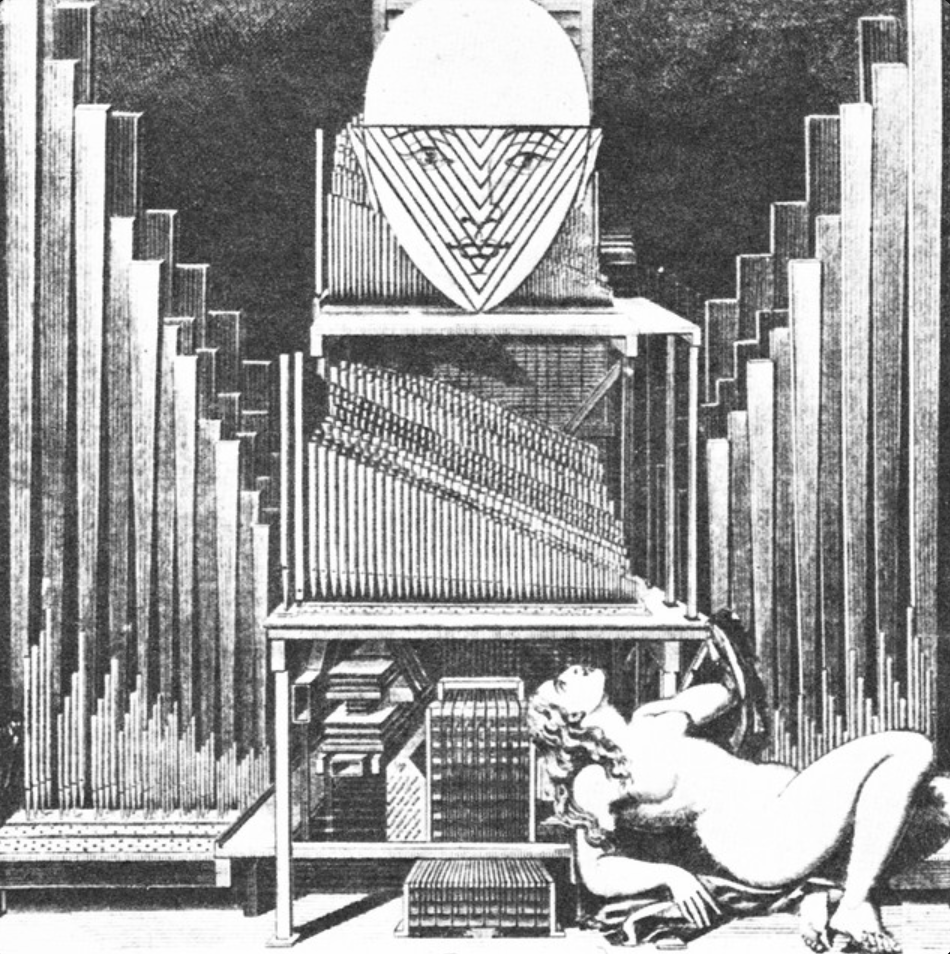
We decided at the start of the year to change things a little with a reminder of not only our favourite tracks from the last month, but also a list of choice albums too. This list includes both those releases we managed to feature and review on the site and those we just didn’t get the time or room for. All entries are displayed alphabetically.
Our Monthly Playlist continues as normal, with tracks from April (and a few from the end of March) chosen by me, Dominic Valvona, Matt Oliver and Brian ‘Bordello’ Shea.
Those Choice Albums____
Ayarwhaska ‘Dendritas Oscilantes’
(Buh Records) Review
Jonah Brody ‘Brotherhood’
(IL Records) Review
The Corrupting Sea ‘Political Shit’
(Somewherecold Records)
Manu Dibango ‘Dibango ‘82: La Marseille December ‘82’
(WEWANTSOUNDS) Review
Nana Horisaki ‘Scoppi’
(Kirigirisu Recordings)
iyatraQuartet ‘Wild Green’
Review
Pidgins ‘Refrains of the Day, Vol. 2’
(Lexical Records) Review
Pound Land ‘Can’t Stop’
(Cruel Nature Records) Review
Michael Sarian ‘ESQUINA’
(Greenleaf Records) Review
Conrad Schnitzler ‘RhythmiCon’
(Flip-Flap) Review
Sleepingdogs ‘DOGSTOEVSKY’
(Three Dollar Pistol Music)
Toxic Chicken ‘Mentally Sound’
(Earthrid) Review
The Playlist____
Joe Probet ‘Landslide’
Penza Penza ‘Carl Wilson’s Morning Routine’
Homeboy Sandman & yeyts. ‘Thanksgiving Eve’
Blu, August Fanon, Kota the Friend & R.A.P. Ferreira ‘Happy’
Aupheus w/ Kool Keith ‘It’s My Space’
Ukandanz ‘Yene Felagote’
Lamat 8 and Tartit ‘Afous Dafous (Yoga Flow)’
Manu Dibango ‘Waka Juju Part 3’
Michael Sarian ‘Glory Box’
sleepingdogs ‘sell fish’
Kannaste4 ‘Ups and Downs’
Your Old Droog & Edan ‘The Glitch’
Anarchitact, Myka 9, N ‘Daddication Pt. 1’
The High & Mighty, The Alchemist & Your Old Droog ‘The Rose Bowl’
Masai Bey & Kitchen Khemistry ‘Transit Authority’
Dr. Syntax & Palito ‘Sprung’
Claude Cooper ‘Happenings’
Batsauce ‘Murmurate – Instrumental’
Ammar 808 ‘Ah Yalila’
Kin’Gongolo Kiniata ‘Bunda’
Jonah Brody ‘The Ancestors Are Taking Workshops’
iyatraQuartet ‘Wild Green’
Wolfgang Perez ‘Preludio A Un Suicida’
Pidgins ‘Results Oriented’
Briana Marela ‘Vibrant Sheen’
Hectorine ‘Everybody Says’
The Pennys ‘Say Something’
Bernardo Devlin ‘5:45’
Ayarwhaska ‘Desasosiego2000’
Occult Character ‘New Mothball Empire’
VESCH ‘Who the Hell are You’
SUE ‘Get Over It’
Hi, my name is Dominic Valvona and I’m the Founder of the music/culture blog monolithcocktail.com For the last ten years both me and the MC team have featured and supported music, musicians and labels we love across genres from around the world: ones that we think you’ll want to know about. No content on the site is paid for or sponsored, and we only feature artists we have genuine respect for /love or interest in. If you enjoy our reviews (and we often write long, thoughtful ones), found a new artist you admire or if we have featured you or artists you represent and would like to say thanks or show
The Digest for April 2025: New Music/The Social Playlist
April 25, 2025
The Monthly Digest includes a clutch of accumulated new music review, and the Social Inter-Generational/Eclectic and Anniversary Albums Celebrating Playlist.

___/THE NEW___
Staraya Derevyna ‘Garden Window Escape’
(Ramble Records/Avris Media) 2nd May 2025
Pulling out of the historic district of St. Petersburg once more to conjure up an amorphous polygenesis-sourced hallucination, the pan-global Staraya Derevyna capture of diverse artists, led by the Israel/Ukrainian musician and sound engineer Gosha Hniu, wheel out the mechanical dream-machine on their latest estranged and avant-garde descriptive album Garden Window Escape.
Imagine Beefheart conducting the Sharmanko Kinetic Theatre, or Faust manhandling a pair of shearing buzzing shavers. Perhaps, the Plastic Beatniks warped mirage vision of Americana coming up against the sound worlds and the alternative pyschogeographic folk of Širom and La Tène. You can imagine the Red Crayola in Eastern Europe during the Medieval times, hanging out with CAN as they dish out their EFS series experiments whilst a languid Einstürzende Neubauten add their signature imaginings and post-punk industrial stirrings.
The imaginative hermitic workings and the transmogrified poetic works of the Russian polymath Arthur Molev that suffuse this latest release of performative and fantasy clockwork circus merges the mysterious with the murky, the atmospherics of alternative pastoral histories with the strained, strangulated and brassy textural wanes of bass clarinet, the flute and the cello, and the hidden source sounds of rope pulleys and cogs and levers that need oiling. For the icon Rus, the holy reimagined Rus is rewoven by the merry-go-round minstrels of Maya Pik, Ran Nahmias, Grundik Kasyansky, Miguel Pérez, Yoni Silver and Andrea Serafino to atheatre of esoteric poetry and dreams.
Who knows what it all means, but this collective always impress with their journeying and deeper connections to a sense of conceptualisation steeped in both the real and fantastical. Through the abstract and most emotive and surreal, every Staraya Derevyna is a revelation. And Garden Window Escapeis just as imaginative and evocative.
Michael Sarian ‘ESQUINA’
(Greenleaf Records) 25th April 2025
On the corner or a “corner”, albeit with a Spanish/Portuguese language entitled twist, the accomplished trumpeter, bandleader and composer Michael Sarian is imbued by the spirit of Miles Davis’s iconic 1972 LP – that and the electrified period that also took in Bitches Brew, Black Beauty and Agharta albums – on his latest album, ESQUINA.
Full of lunar mystery and dreamy mirages, Sarian traverses, hovers, inhabits and floats across a largely improvised vision of prog-jazz and jazz fusion; taking a different direction after a trio of albums that bordered more upon a chamber-jazz and acoustic sound. The same players now venture into territory mapped out so cosmically and exploratively by Jon Hassell, the Soft Machine, Nucleus, Weather Report, Herbie Hancock and the already mentioned Davis. In addition to the long form peregrinations that make up this three track album, the ensemble also transposes Portishead’s classic trip-hop track ‘Glory Box’; an influence for Sarian since he first heard it as a kid on its original release in the mid 90s, and here, transformed into a spacy soul-jazzy lounge vision of Pink Floyd and the El Michels Affair with the smooth melodic trumpet drifts and near sensitive expressions of Chat Baker and Kenny Dorman.
Back in the fold, now reconfigured and in a freeform mood of prompted celestial and hallucinatory dream experimentation and resonating gauze, noted Argentine pianist and composer Santiago Leibson probes, dabs, sustains Marion Brown bulb-like notes, galactic Davis sounds and Herbie Hancock effects, metallic and vibrating languages from the Hammond B3, the Mini Moog and Wurlitzer, Alaska born, NYC relocated in-demand bassist Marty Kenny offers near cosmic soulful bass lines, prog noodling and swamp funk undertones, and renowned Brooklyn-based drummer Nathan Ellman-Bell makes his way around the kit as he offers the subdued and descriptive and leaps of near d ‘n’ b-like breaks and cymbal splashes. As I said before, this is near lunar in its projection, on the edges of tripping out; at times, and as noted in the PR notes, sounding not too dissimilar to the work of Donny McCaslin. At other times it reminded me of Arve Henriksen. We are of course in the jazz fusion sphere of influence, but not quite indulgently prog enough to put people off.
Instead, we get a band escaping their surroundings, pepped up on electric Davis but not quite breaking out into the psychedelic funk boom-bap of that period. Dreaming and pushing an intuitive bond they conjure up an intergalactic dream of influences, musical genres as they enter another dimension. Tamed but adventurous, this is a group at their playful and inventive best.
iyatraQuartet ‘Wild Green’
11th April 2025

Imbibed by individually strong and impressive classical CVs and a shared experience of study at the Royal Academy of Music, the iyatraQuartet ensemble have previously merged a penchant for India and Arabia with European and closer-to-home influences from across time.
The last time I featured the quartet, back in 2020 with the Break The Dawn album, they gravitated towards India, both musically and religiously. The group’s name, pronounced “ey-at-ra”, is even taken from the Hindu expression for travel, “yatra”. It helps that the quartet’s co-founder and violinist maestro (to name just one instrument among her eclectic repertoire) Alice Barron studied South Indian violin techniques with the country’s star turn duo, the Mysore Brothers. And on this latest empirical and tapestry-come-alive thematic album of nature’s cycles and seasonal graces, Wild Green, you can hear the distinctive bellowed drone of that region’s Shruti box instrument on the title-track. As an indicator of the direction of travel and the scope of influences, this venerable, stirring choral fluctuated voiced sprouting of the pastoral was actually originally inspired by the noted historical European polymath figure of Hildegard of Bingen, better known as the Sibyl of the Rhine, who, apart from being a Benedictine abbess, founder of monasteries, a medical writer and practitioner, philosopher, mystic and visionary was also an influential composer of “monophony”, the simple musical form typically sung by a single singer or played by a single instrumentalist. In choir, or choral form as it is here, it usually means the ensemble of voices all singing the same melody. Incorporated within that framework is a vast swathe of traditional and folk music that counters subtle hints of those Indian foundations with the Medieval.
Either literally woven from a parchment canvas or played in the “wilds”, the garden idyllic, Barron, alongside George Sleightholme on clarinets, Rich Phillips on cello and Will Roberts on percussion (all four pitch in together voice wise), compose a greenery of Orcadians’ prayers, legendary tales of enchanted fish, lunar bound vibrations, Yuletide lullaby and the changing of the calendar seasons.
Beautifully pitched between the romantic languages of old Europe (the music box springs dance and love song ‘Beatriz’ is sung in the Medieval language of Occitan, which poured across borders from France into pockets of Spain, the valleys of Italy and Calabria) and vocalised expressions of the apparitional and banshee-like, the classical and atavistic, life is breathed into a rousing scenery. Celtic, Eastern European, the Baltics, the South American and fantastical are all entwinned on an album of minor rhapsody, the plaintive, yearned and near mysterious; the musicianship first rate as you’d expect, expressive, just as identifiable as it is obscured and used to sound out the growth of branches, seeds and flowers, the atmospheres of antiquity and a present reflection on nature, and the shrills, vibrations, looming arches and mists of imaginative storytelling. The voices, from across the ages, personify historical references and skill; illuminating and beatified in equal measures, with an ear for the classics, the folk-rock of the 1960s and early 1970s, various traditions, and the improvised.
This is living, breathing music that reflects the imaginative surroundings and themes of the ensemble as they mould chamber music, the classical, the pastoral, folklore and folk music to their own unique signature of the felt and stirring.
IOM ‘Spiritual Wastelands’
(Cruel Nature Records) 28th March 2025
Circulating, pulsing and dancing through the magnetic circuits of the inner body and mind, caught up in the chaotic stresses and violence of our current times, the latest album from the Spanish musician and sound designer Iker Ormazabal Martinez is powered by a caustic electricity and metallic industrial percussive tools.
Under the soloist guise of IOM, Martinez wields his EBM and industrial synth-techno influences to beat out and charge up a physical sonic response to modern existence. Wretched, sometimes near violent, but always with structure and rhythm, the nine concomitant pieces that make up the thematic whole of Spiritual Wastelands move between the darker club music of the German underground and the alien factories of dead industry.
From Basque country Vitoria to Catalonia Barcelona and a relocation in recent years to London, the granular guide of frazzled and force field gated electronica has merged his experiences as a keyboardist and sample-instigator for pop and rock groups, a musician with a company of Butoh dancers (originally a Japanese “dance of utter darkness” in which performers, usually covered in white paint makeup, intentionally use slow body movements and confront themes of darkness and transformation, but also far more radical and taboo subjects), and experimental electronic artist to create a vaporising density of tubular, barracking sheet metal dance music. Through the distress and clang of the pipes, the fizzled and machine reverberated, glimpses of trance-y light are found, and on the mystical voiced ‘Light’, featuring The Seer no less, there’s an obscured hint of Middle Eastern horns and a shrouded spiral of the Sufi against a darker churn of laboured drones and resonating steel.
Vocals sound near Germanic, or of that school, or go deep and near sinister; reminding me in part of Front 242 and NIN but put against sounds and rhythms and beats that err towards Basic Channel, Pan Sonic, Cabaret Voltaire and CABLE. The futuristic computerised and iterated saw brushed ‘Somatic Response’, sounds almost Kraftwerkian in comparison: perhaps a little Kriedler.
Mind and body yearning for spiritual guidance or a way out, react to the modern furnace on an album full of oomph and fried electricity. Does After releasing a variety of works on a myriad of labels, IOM finds the perfect pitch with Cruel Nature ever seldom put out an uninteresting or intriguing album.
Conrad Schnitzler ‘RhythmiCon’ and ‘Drei Kugeln’
(Flip-Flap) 29th March 2025
A leading, if often overlooked, progenitor of the Kosmiche and Krautrock eras, Conrad Schnitzler’s various stints as a founding member and instigator of the inaugural Kluster (forming the trio with fellow Zodiak Free Arts Lab stalwarts Hans-JoachimRoedelius and Dieter Moebius in 1969) and Tangerine Dream groups (an early member in 1970, he featured on the group’s debut LP Electronic Meditation) would reverberate throughout his solo and collaborative work, right up until his death in 2011. After more or less setting in motion an entire field of sound experimentation in the 1970s, by the 1980s Conrad had accumulated a strong body of work and was once again forming new bonds and ideas with Germany’s post-punk generation: integrating some of the more interesting ideas into his synthesizer-based modulations and soundscapes that would both echo and inform the German new wave and techno.
A Berlin stalwart and co-founder of the already mentioned and famous Zodiak Arts Lab, it would be Conrad’s contact with the leading performance and installation progenitor of that era, Jospeh Beuys, that helped form his early thinking and ideas of free play and experimentation. Leading, an admittedly amateur musician, to a both conceptual and playful method of exploration within the circuitry, cables, soundboards, switches and apparatus of electronic and analogue fields of sound development and rhythm. None more so than with this double-bill of unearthed album selections from the Flip-Flap label; a special platform set up in 2021to release a limited-edition series of selective works personally chosen by Conrad himself. A while back, it was the Hamburg-based, all-things German electronica, label Bureau B that seemed to have the role of releasing his recordings from the vaults and lab; some of which featured reworks, and finishing touches by the artist/musician/producer Kurt Dahlke (a founding member of D.A.F. and Der Plan of course), under his Pyrolator alias. But, seemingly, picking up the baton, this enterprise revives that body of work, previously left dormant or sealed behind closed doors.
The first album of which, Rhythmicon, is, as that title suggest, a selection of tracks focussed on the play and kinetic chain reactionary experiments of prompted, set in motion and manipulated rhythmic constructions. As part of my research, I’ve looked that album title up and found that it actually references an electro-mechanical musical instrument of the same name, designed and built by Leon Theremin for composer Henry Cowell. It was intended, so the Wikipedia entry goes, “to reveal connections between rhythms, pitches and the harmonic series.” A further description: the Rythmicon “used a series of perforated spinning disks, similar to a Nipkow disk, to interrupt the flow of light between bulbs and phototoreceptors aligned with the disk perforations. The interrupted signals created oscillations which were perceived as rhythms or tones depending on the speed of the disks. It generated both pitches and rhythms and has been described as a precursor of drum machines.”
I take it that this apparatus signals Conrad’s own idiosyncratic rhythm productions, created over an eighteen-year period from 1982; now collected together for an hour-plus album of strange, modulated shapes, reverberations, chemistry, neutrons, rays, bounces and tubular metallic cosmic dances and playful techno visions made on some orbiting spacelab.
Part futuristic, part tribal, part alien, part chemistry, part hypnotically entrancing and part new wave, Conrad sometimes leads and sometimes absorbs the current trends, the evolution taking place within electronic music during the pivotal 80s and 90s periods. And so, you can hear echoes of Luke Slater, Rob Hood, Autechre, Populaire Mechanik (the brainchild of fellow Berlin-based musician/drummer Wolfgang Seidel, who actually collaborated with Conrad during the Zodiak Lab days and was inspired to form the mechanic group as a consequence), Kriedler, Basic Channel and on the “7:51” track (all tracks are named after their duration in minutes and seconds) a touch of OMD’s debut album.
Intentionally made to be simple, there is however a lot of sophistication and skill in these often off-kilter rhythmic reactions; the art and skills of constant movement and drum machine-like patterns really mesmerising and spacy, but near skeletal industrial and machine made too with particles bouncing around and various symbiotic shapes forming.
By contrast, the second album to transmit from the Flip-Flap facilitators, Drei Kugeln, is more about the soundscape and the atmosphere. A continuous soundtrack in a manner, the thirty tracks that make up this both mysterious and alien visitation from the reaches of some science-fiction evoked off-world, subtly build or change a thematic sound palette of hidden metallic sources, force fields, paranormal activity, reversals, signals, lost and found transmissions and near choral passages of space awe and venerable breath.
Channelling past experiments with Tangerine Dream and other such congruous nebula searching and invoking kosmische music projects, but mythology and technology too, Conrad brings mystique to his deep investigations and chilled solar wind breathed vortex transformation of inner and outer space. Aboard a supernatural space freighter, or sucked into the very machine itself, Drei Kugeln is a very rare sonic immersive experience with plenty of interesting, explorative changes and feelings of both the uncertain and dreamy.
This is a great package and showcase for an innovator who is sadly missed and often forgotten in the story of electronic and analogue evolution. Proving just as fresh, alive and futuristic as the day they were recorded, these experiments perfectly balance out the more rhythmic encounters of the first album. Both releases are perfect examples of Conrad’s art form and constant motivation to explore and experiment. Nothing short of revelations from a back catalogue and library of electronic play and inventiveness that needs to be in the public realm and celebrated. Don’t choose, but put both releases on your wish list.
___/THE SOCIAL PLAYLIST VOLUME 96__
The Social Playlist is an accumulation of music I love and want to share; tracks from my various DJ sets and residencies over the years; and both selected cuts from those artists, luminaries we’ve lost and those albums celebrating anniversaries each month.
Running for over a decade or more now, Volume 96 is the latest eclectic and generational spanning playlist come radio show from me – the perfect radio show in fact, devoid of chatter, interruptions and inane self-promotion.
Each month I mark the passing of those artists we’ve recently lost, and during the last four weeks both Clem Burke (an oft Mod Ramone for the kicks, stalwart and force behind Blondie, and numerous collaborations, sit-ins) and David Thomas (the iconic frontman of the cult Pere Ubu).
In the Anniversary albums category, there’s tracks from Joan Baez’s Diamonds & Rust (released 50 years ago this mont), Roland Haynes’ 2nd Wave (another 50th), Prince’s Around The World In A Day (40 years old this exact week), the Aphex Twin’s …I Care Because You Do (30 this month), Pavement’s Wowee Zowee (also 30 this month), the Tindersticks celebrated self-titled LP of 1995, and The Books’ Lost And Safe (20 this month).
Amongst a selection of tracks from across the ages, the genres, and from across the world, there’s a smattering of recentish tracks from MC Paul Barman, Che Noir, Marcelo D2, Eiko Ishibasi and Leah Neal.
__/TRACKLIST____
Blondie ‘Dreaming’
Pere Ubu ‘Modern Dance’
Leah Neal ‘Down On The Freeway’
Joan Baez ‘Simple Twist Of Fate’
Eiko Ishibasi ‘Trial’
Che Noir ‘Bow And Arrow’
Erick Cosaque ‘An madam cadimalade’
Roland Haynes ‘2nd Wave’
MC Paul Barmen ‘Pearl Of Light’
Prince ‘America’
Pavement ‘Fight This Generation’
Pere Ubu ’49 Guitars And One Girl’
Aphex Twin ‘Next Heap With’
The Books ‘Vogt Dig For Kloppervok’
Marcelo D2 ‘LUCIDEZ
Agincourt ‘Going Home’
Tindersticks ‘No More Affairs’ The Anderson Council ‘Do You Remember Walter’
Kak ‘Electric Sailor’
Suburban Studs ‘PUTIN’S BOMB’
Blondie ‘Love At The Pier’
Autosalvage ‘Rampart Generalities’
Buffalo ‘Ballad Of Irving Fink’
Robert Dick ‘Third Stone From The Sun’
Blondie ‘Kung Fu Girl’
Chandra ‘Get It out of Your System’
Pere Ubu ‘Love Is Like Gravity’
Thee U.F.O ‘Kranke Schussel’
Romeo Void ‘Six Days and One’
Teisco ‘Vision of Shore’
Now For The Pleading:
Hi, my name is Dominic Valvona and I’m the Founder of the music/culture blog monolithcocktail.com For the last ten years both me and the MC team have featured and supported music, musicians and labels we love across genres from around the world: ones that we think you’ll want to know about. No content on the site is paid for or sponsored, and we only feature artists we have genuine respect for /love or interest in. If you enjoy our reviews (and we often write long, thoughtful ones), found a new artist you admire or if we have featured you or artists you represent and would like to say thanks or show support, than you can now buy us a coffee at https://ko-fi.com/monolithcocktail
Brian ‘Bordello’ Shea’s Reviews Roundup – Instant Reactions

The Pennys
Ayarwhaska ‘Dendritas Oscilantes’
Album (Buh Records) 11th April 2025
This album is noisy. It is chaotic. It is fun. It has an experimental vigour that should be applauded. The first track is called “XXX Speed Grindcore” and lasts 52 seconds and is the kind of thing John Peel would fill in 52 seconds of his show with. There are guitar riffs aplenty, ones that would make Billy Childish weep with joy. There are off-kilter vocal forays into electronic noise, feedback aplenty and the sound of someone clearing their throat. If this is what Peruvian Punk Rock sounds like please send me a Box Set.
NOTE: Presently no examples of the music available until release. Visit the Buh label bandcamp page.
The Conspiracy ‘Rainbow Prism’
Single (Metal Postcard Records) 13th March 2025
There is an old British psychedelic magic about ‘Rainbow Prism’ that should be celebrated by the current ever expanding psych fraternity. And the only reason I can think of why it isn’t, is because they have not heard it. For it has all the great qualities of British psych, and if this track was released on say Fruits De Mer Records, The Conspiracy would be all over Record Collector and Shindig and getting airplay from late night BBC 6 music: attention The Conspiracy deserves.
Elmer Gantry’s Velvet Opera ‘Elmer Gantry’s Velvet Opera (Remaster Reissue)’
Album (Think Like A Key Records) 25th April 2025
What we have here is not a new band. No, I have made an exception to the rule of only reviewing new music to review this wonderful reissue of the Elmer Gantry’s Velvet Opera’s self-titled, and only, album from 1968 (I think) reissued on the wonderful Think Like A Key Records.
It is quite a marvellous album full of mellotrons, sitars and screaming like psych rock guitars and a quite marvellously busy bassist that has to be heard to be believed. This is really a must have for any fans of 60’s psych or music lovers who want to get the aural feel of life in late 60’s swinging London.
NOTE: Presently no examples of the music available until release, but you can find or order the album here
Occult Character ‘Party Heaven’
Album (Metal Postcard Records) 4th April 2025
Party Heaven is an eight-track mirage of deranged emotional psychosis; a Party Platter of unhinged outpourings of electro-punk. Yes, Occult Character is back with eight short tracks that confuses and delights in equal measure; songs that captures the ugliness of modern life, painting a dark picture but with a huge pink lipstick smile scrawled all over it. Madness and Magic at its most extreme.
The Pennys ‘Say Something’
Track/Video
A song of pure sweetness and sadness; a lovely jangle guitar Odyssey of lo-fi home recorded indie bliss. A track worthy of the golden days of jangle pop when Subway supplied darn fine tooting slices of indie pop melancholy and not overpriced sandwiches. Album to follow this summer.
Poundland ‘Can’t Stop’
Album (Cruel Nature Records) 28th March 2025
You can lose yourself in a abattoir of current events, open the newspaper, open twitter or X or whatever it is called nowadays, read the news listen to the news watch the fucking news and you are overcome, overwhelmed with the sinking feeling of life in its most horrible reality. In this time of being on the brink of world war 3 and lost in the everyday mundanity of the 9 to 5 life or the hoping to get onto the mundanity of the 9 to 5 life just so you can get away from your bloody job coach and the latest nonstarter of training course you have to attend, its only three buses there and three buses back and there is a chance no matter how slight that they will keep you on in a full time position as a general dogsbody until they discard you when a much more viable and cost cutting option comes along. Poundland are the soundtrack to this life; they are the suppliers of the modern British folk song but not the hey diddly dee bounce your child on your knee with your finger in your ear type folk song, they are writing about street life for the everyday working class. They write songs about the everyday experience. They write about how the littlest thing can make a difference – like how the thought of the flapjack in your pocket can lift the mundanity of your working day – and the banality of tv, but not set to acoustic guitar and fiddle but the dense sound of noise or the simple drumbeat and the confusion, the feedback of the distorted guitar and bass: lo-fi punk at its best.
Poundland are one of the finest and important bands in the UK today, and capture the essence of true life in Britain in 2025 in all its ugly lack of glory.
Smellsofwitches ‘Bride of Fistula’
Single 28th March 2025
Brides Of Fistula is the debut release from new Wigan outfit, the wonderfully named Smellsofwitches. And it is a strange fish of a track, all experimental improvised glory but with a marvellously warm texture and feel. It may not have a melody that one can hum along to but is all the more fascinating and bewitching for that very reason.
SUE ‘Get Over’
Single
This is actually rather good, a throwback to those days of flannel shirts and The Late Show being dedicated to those pesky grunge bands from the good old US of A. And indeed, this track by Sue would not be out of place on that show: all angst vocals and heavy guitars. This could do very well, or would have 30 odd years ago.
Toxic Chicken ‘Mentally Sound’
Album (Earthrid) 16th April 2025
Let’s be honest, the only thing musically mentally sound about the great Toxic Chicken is the title of this album, as we in the know all know Toxic is one of the great musical eccentrics that live in the underground occasionally releasing mostly instrumental forays into the psych of electronica. And this wonderful album is an aural stroll through a strange Forrest as the sun goes down. Tracks that bewitch and amuse, entertain in equal measure. Songs that trip and drip through the mind, a relaxing frenzy of the old adage that a bird in the bush is a better than the bird in the freezer, or something similar that really is not too similar at all, and that is the perfect description of the works of The Toxic Chicken. For it sounds like electronica; it feels like electronica; but there is just something there that makes it much more. It has a slight dark ember of a twisted foray into the thinking of a musical maverick; an index into the mind of the closest thing the world of electronica has to Syd Barrett. Mentally Sound is indeed extremely sound but in the most magically unsound way.
Vesch ‘Passport’
Album (Incompetence Records) 11th April 2025
Art-Punk Cabaret is how Vesch describe themselves, and I’m not going to argue with that. For what we have is an enjoyable foray into a land where Xray Spex and The Teardrop Explodes and Lena Lovich rule the radio, as at different times the band remind me of all three. Maybe late seventies post punk and early eighties pop is what is in vogue in Russia at the moment, as that is where Vesch hail from.
Passport is an album made up of off-kilter and extremely enjoyable unusual inventive pop music. It may not be to everybody’s taste but is certainly to mine.
Tennyson In Space: The Violin Part 2
April 4, 2025
The Monolith Cocktail Serialises Andrew C. Kidd’s Tennyson Imbued Opus

Dabbling over the decade with showcasing exciting, sometimes improbable, intriguing work from new and aspiring writers, the Monolith Cocktail has played host to serialisations of stories by Rick Clarke (of Vukover and The Tearless Life infamy) and Ayfer Simms (the Franco-Istanbul writer was an integral member of the MC team for a good few years, offering various reviews and conducting interviews).
Furnishing the site since Covid with review pieces and the odd feature, Glaswegian-based writer Andrew C. Kidd now adds his name to this list, sharing his grand interstellar opus with the MC readers through an epic serialisation. Last month we published the Prologue and Part One of The Violin: the first chapter of this grand sci-fi story. We now continue with the concluding part of that inaugural chapter.
Andrew seeks inspiration from music and anything that chronicles the fantastical. And in Tennyson, he finds sentiment and solace.
Part 2
Half-aware in a half-dream, the young Commodore roused from her stupor. Tito was drifting silently beside her.
‘W-where… am I?’ Her speech was slurred.
Tito’s teeth took on a yellow hue through his white beard. He grinned inertly before his gaze slowly returned to the porthole.
‘Where are the other Commodores?’, she continued to enquire. ‘AURORA?’ Her voice ascended quietly.
‘Are you not able to hear their voices?’, Tito muttered after a short pause.
The young Commodore strained her neck forward, but a strap crossed over her forehead. She was being kept firmly supine on a board that had been secured to the living quarters wall. Her hair wafted around her head and face in zero-gravity.
Tito plucked at one of the thin cables on the box relic. His dry fingertips scraped against it in a coarse strumming motion.
‘They sing to us, melodiously!’ He laughed a little. ‘Listen…’
Loose hair hung limply from the straightened form of the longer relic.
‘P-please don’t!’, she pleaded upon realising that she was unable to raise her hands in self-defence. They were bound to the board she lay on.
‘Calm now!’, his voice rasped in command. ‘I implore you to listen–’
The straightened relic touched the box-like form which he had rested under his chin. A small clatter occurred when it touched a black board with cables that ran up its body. The young Commodore wondered if this was a simple circuit board. She had been trained in interstellar survival, yet nothing had prepared her for this. The pupils of her eyes remained pint-pointedly fixed on Tito. A mephitic musk clung to the air; it was nauseating.
The hair of the long relic made a wretched whispering sound as it glided across the cables on the box form. As he pressed down on these wires with his other hand, Tito uttered a sharp curse. Initially she wondered if this related to the indelible impressions the cables left on his fingertips. But she soon realised that another one of the hairs of the long relic had snapped. Its lithesome form collapsed over the box relic. Tito placed it down on a white surface next to where she lay. He floated thoughtlessly away into the darkness of the long passageway, mumbling indistinctly to himself.
* * *
During the earliest days of his depression, Tito did not eat. He remained unmoved in his living quarters for hours upon end, eventually only leaving his sleeping compartment when his bodily functions required servicing.
His muscles ached, and after a while, his body started to waste. His limbs disappeared. They flailed gently in his deep sleep like those skeletal satellites that floated endlessly in their tombs in the lower decks.
Long days became even longer months. AURORA had long been forgotten. Tito would have to service the ship and its systems manually.
Electrolysis, the running of electricity through water, had to be adjusted depending on the background oxygenation levels. Ambient temperature settings continuously altered according to the electromagnetism of his location. The wheelhouse manned to manoeuvre its circular form in the direction he wished to travel. These automated tasks had been inherited by Tito, yet he partook in none of these. The ship sailed onwards in its rudderless voyage.
Another cosmic storm had rocked the vessel on the day that he should have succumbed to his inadequate handling of the Pathfinder.
He lay face-down on the floor. The straps that held him vertically in his sleeping compartment had failed to secure him. He coughed into the pooled blood that blebbed around him. A scalp wound stung.
He managed to float to feel the narrow walls of the passageway that led down from his dormitory to the bridge. A red background light blinkered and hampered his vision. Critical warnings flashed in a lightshow of doom.
It had only been a matter of months since he had corrupted the machine learning algorithms of the murderous AURORA. Years of survival training on the mother ship kicked in instinctively. He went to the bridge and opened up a schematic view of the vessel. All systems were deemed ‘critical’.
His hierarchical assessment of what needed repairing made the reality even grimmer. The electrical circuitry would have to be salvaged. If he was without power, he was without life.
Next, the system that made oxygen from water. Finally, he secured the navigational platform upon which this hulking metal ship pivoted. This would come at the expense of other systems: radioactive protection; waste disposal; gravity.
All of the lights except one small lamp in the living quarters were switched off. This had been the blessing of a miswiring at the time of its creation.
The radio was kept disabled. He elected to keep the ship silent. The ambling and pregnant mother ship would have conceived and birthed his replacement by now. He or she would arrive in another 25-years, preserved in silence, ice-enshrouded inside their pod.
Relief pods would always find their respective Pathfinder. No storms or mutinies or mishaps could dislocate this tracking signal from the mother ship. The wandering Tito was aware of this. He also knew that once he had been located, a communiqué would be sent from the docked pod to its mother ship. This message would take years to reach her.
A few years passed after Tito had regained control of the now crippled ship. He had been gazing endlessly at the inky nothingness streaming past the vessel. He navigated himself in weightless movement to one of the store rooms located in the deck immediately below the one he inhabited.
It was a filthy space. He had been depositing his bodily waste in used ration crates. He wished to jettison these into deep space, however malfunctions in the air-locking system had meant that everything contained within the Pathfinder had been hermetically sealed.
Nothing could be released from the inside; the manual lever that opened the exterior doors was located on the outside.
Tito had stockpiled the soiled ration crates in various store rooms on this deck. As he navigated through the main passageway of the ship, the sickly fluorescence of his cabin light only provided faint illumination.
His eyes squinted into the tunnelling black. Using his fingers, he cautiously felt round the darkened hollow of the hatch that led down to the lower decks. He pushed himself off and let his body float weightlessly onto the next level.
Tito moved down the lower passageway to a new room which he had recently cleared to make way for more used crates. He laughed quietly at the irony in the microcosmic life cycle of these containers that had once contained his food.
As he entered the cleared store room to open a new crate, a smaller container floated into his field of vision. His attempts to catch it in the darkness had resulted in his arm striking it. His body leapt forward through the hatch to catch it before it floated down into the ghastly lower reaches of this vessel.
The old container felt like nothing he had touched before. It was old and bound in a taught hide. He was rendered fatigable after a mere few attempts to break open the latch to reveal its contents. The pulp of his hands had been long-wasted.
He eventually prized upon its lock after pressing it forcibly down on the corner of the one of the tables. This sudden downward movement had resulted in his palm catching its sharp edge. Life-blood spilled onto the casing of the old container which absorbed it immediately. He wiped the remainder of the blood onto his white spacesuit.
Tito peered down into its open contents. There, strapped down by two bands, was a box relic. White dust scattered across a black board that ran up its middle. An ornate headpiece curled at its peak.
The carbonised form matted against his bright torchlight. Unconsciously, his index finger pressed against one the cables that travelled up half the length of its ancient form. A catgut-sharp twang echoed even after its vibration had ceased.
He quickly closed the old container and took it to his living quarters.
Sound!
He had not heard a sound like that for a very long time. Deep in his cavernous subconscious, fragments of a melancholic G minor theme of an old canzonetta played out. He hummed it imaginatively in adagietto rather than its original andante tempo.
In the days that passed, Tito remained in a trance, a state away from the present.
Where have I heard this sound before?
He sought restorative retrospection, eventually finding an answer to his question.
He had been a child when he last heard this sound. It remained as distantly familiar as when he first heard it on his mother ship. Melodies played on box relics like this funnelled out through the many speakers during their teachings of the old ways.
Tito had never really listened to the mundane AI voices and their musings about these relics and those that played them. He had only ever cared for the melodious beauty of these ancient harmonies; they had echoed up the vast corridors of his mother ship as it carried him into immensity.
After this realisation, Tito had a joyous reawakening.
It can be played!
He re-opened the old container to find an accompanying stick-like longer relic. Its straightened form and taught hair could make the longer sounds, the sounds that floated endlessly in harmony. He remained awake for many days on end as he tried to work out how to recreate the sounds of his childhood.
It happened on the third or fourth day after his discovery of the mysterious container. He had been hovering out its form, plucking frustratedly at the cables. This blunt sound was one of two sounds that the box relic could make. He wished to forge the longer noise, a sound that would reverberate around this vessel.
That day, his hand had grasped at the end of the long relic. Having moved it towards the box relic, the languishing hairs accidently slid across its cables. Tito listened to the sound that levitated up from the box relic. They travelled into ethereal realms. He bore a broad smile under his dark beard as his tired eyes settled to close after his endeavours.
Finally, in this dark and desolate place, he had found light.
* * *
Outside the vessel, galaxies spiralled, contorting into moving mountains that hung in crownless majesty. She dreamt of conquests and bold discoveries; of bountiful life on planets similar to the one her ancestors had vacated. Light soon blinded her visions. She woke to a man’s voice.
‘We have a need to personify everything’, Tito mused rhetorically. ‘Take the so-called Caryatid. A hand reaching out to touch the untouchable – as told to me in my infancy.’
He grasped at the empty space in front of him.
‘Hah! It is a void, merely a star formation in a multiverse of cosmoi. An asterism in a sea of stars–’ his hand compressed into a ball ‘–a simple trick of blue and yellow light ceding into the altered infrared of viewing ports. But its comparison to a hand is baffling.’
He sighed loudly.
‘What could a human hand possibly reach, never mind grasp!’, he concluded animatedly.
The pulp of his closed fist thumped the white interior of the ship. His hand, having now opened up, slid slowly down to drop limply by his side. He moved away from the wall weightlessly. The volume of his voice decreased to a deep rumble. His eyelids were heavy.
‘What are you going to do to me?’, the young Commodore slurred helplessly.
‘Why – I shall play you more music…’
His voice continued to dwindle. The young Commodore saw that his eyes were now closed.
‘Without it’, he proceeded tiredly, ‘I was but a grey shadow of a man. Lo! Its compositional form, its notation, its beauty… it is quite simply transcendent… outshining the very light of the stars… within which we dwell…’
His eyelids remained shuttered. He mumbled some more.
‘But alas… we must wait a while before we can hear such harmony again–’
The thrum of the engine quavered in the background. Above this, a quiet snoring sound grumbled along in unison. Tito had fallen asleep.
The young Commodore woke to the stiflingly heat of the living quarters. Her lips separated to reveal a dry mouth. Many hours had passed since she had last had fluids.
Unsteadily, and sleepily, Tito was fumbling at the table in the far side of the living quarters. He rummaged around in a locked box, eventually picking up a sharp object. Unmistakably sharp edges gleamed in a sudden show of brilliance.
He approached her slowly. Having failed in his first few attempts to secure his thumb and middle finger in the obturating handles of the object, he now held this steady. She felt the steely coolness of its metal on her warm face. Sobbing loudly, her chest rose up in panic. She thrashed and thrashed within the confines of the taught straps secured across her head, torso and legs. Above the loud wailing and panic, a faint sound next to her right ear went snip.
Tito manoeuvred backwards.
Breathing hard, he leaned over her, presenting her with a lock of her own hair.
‘You see, it’s too short.’ His head shook.
‘This is why we have to wait–’
* * *
The young Commodore lay laxly, still bound. Her muscles had made their long retreat inwards, leaving only bones and skin that veiled thinly over her body. A languid greyness masked her once youthful face. She stared vacantly at the ceiling. Tito had captured not only her body, but, finally, her spirit.
He plucked at the cables on the box relic mournfully as the vessel sank deeper into the vacuum of space. His gaze remained fixed upon the porthole. Out there, time warped, so much so that light shifted red in the endless abyss. These were the colours of stars that bled out in a slow haemorrhage as they reddened in their journey to eternity.
It was here, in this space, in these ungodly living quarters, that Tito and his prisoner had conversed only a few months ago. The young Commodore had interrupted his same, senseless contemplation when she asked him if he was going to kill her.
Tito had looked reposeful, reverential even, as he held up the thread-bare longer relic that she had once observed him press against the cables of the ancient sound box. His face bore a gleeful grimace.
‘My dear, if I were to kill you, how would your tresses grow to the length needed to re-hair my bow?’
Andrew C. Kidd
A WORLD OF SONIC/MUSICAL DISCOVERIES REVIEWED BY DOMINIC VALVONA

Jonah Brody ‘Brotherhood’
(IL Records) 11th April 2025
What a genuine polymath talent the West Country singer-songwriter, composer, producer and multi-instrumentalist Jonah Brody really is. His solo debut album, unassuming in places, gentle in others, but then able to emotively pull on all the right strings and adopt a diverse musical and sonic musical palette, encompasses aspects of his theatre background, his ethnographic studies and career curveball into psychotherapy.
Blissful and poignant club, ambient, trance music and noughties indiepop with a cerebral edge, Brotherhood channels and takes on a range of personalities in an attempt to articulate, feel out and process the personal tragedy of loss, the philosophical quandaries of encroaching tech and AI and its relationship to creativity and the very existence of humanity, and the more mundane aspects of living in a frightfully anxious century. Starting with the more personal of those subjects, Jonah is inspired to collect his thoughts and somehow capture his feelings when tackling the death of his brother Tomo, who passed away in 2020. On the ghostly folk yearn ‘The Ancestors Are Feeling Gentle’, Jonah’s fragility is channelled via Oar era Skip Spence from the ether. Lyrically touching and yet almost dreamy, its simultaneously painful and yet also somewhat abstract in its renderings and vocalised suffering. But beautiful too, and somewhat psychedelic and therapeutic.
That word, therapeutic is important. Jonah, as I briefly mentioned, has trained and works in psychotherapy, specialising in psychedelic therapy. And it shows: in a good way. Whilst combating the fallout and loss of his brother, plunged into the deep end, Jonah weaves psychedelic influences, elements of the new age rave scene and alt-lifestyles into the swimming, often ambient and near cosmic (so cosmic as to be Kosmische) soundtrack (and I mean soundtrack, with spells of the near cinematic). Effecting his voice, alt-monologues, burning the midnight oil type fringe radio show announcers and what can only be described as a character who sounds like a cross between the beatnik countercultural White Panther and weed advocate John Sinclair and disgraced Richard Nixon, Jonah offers various forms of that therapy; of feeling through and processing not only death but the questions of our seemingly dark uncertain times. Sometimes this is done through the theatrical, and the discipline of acting, of wearing a disguise: Whether that through the twisted trailer park Southern Baptist turn kool-aid poet protagonist conjuring up psychedelic visions of buffalo herds searching for gold in the permafrost from a filthy shower, on the Redneck LCD Soundsystem transmission ‘The Computers Are Cleaning’, or the fucked-up, identity crisis fever dream AI voice on ‘The Singularity Has A Dream Too’.
Jonah’s was after all awarded the young theatre composer of the year accolade in 2016. And he couldn’t resist to throw in at least one reference, namechecking in a playful way that titan of reinvented musical theatre Stephen Sondheim on the Floydian meets Terry Riley and Panda Bear-esque gentle cascaded and Vangelis heralded electronic neo-pop score ‘The Ancestors Are Feeling Sondheim’. Sondheim has become a byword, part of the lexicon, and a shortcut to encompassing a whole style of musical theatre, of writing and performance: addressing darker elements of the human experience through the traditional cannon. I’d suggest that is in evidence on not only this track, which you could rightly imagine as some futuristic stage score, but throughout the entire album.
There’s a sampled extract from the sock puppet relationship counselling therapy of Marshall Rosenberg, the noted nonviolent communication innovator, on the languid Basic Channel plastic tube synth drums meets Beloved ‘The Ancestors Are Taking Workshops’. It’s not entirely clear, and by the sounds of that title, if such liberal mediations are encouraged or read as part of the contemporary yin for therapy.
This is a world in which OK Computer is anything but OK. A period in which the spectre of singularity is both encouraged and dreaded. A soliloquy over drowsy mirages, passages of wispish despondent indifference, contemplation and escapism. The songs and music move beautifully and movingly between soulful machine pop, a removed form of cult status 70s singer-songwriters, Balearic and 80s/90s club sounds, indie-dance, art-pop and exotic, bird enriched canopy, trance. I’m picking up Laurie Anderson one minute, Harold Grosskopf and Iasos the next, or, a touch of Matthew Dear, Tom Rosenthal, K. Leimar and Arthur Russell.
An incredible album that unfurls its sophistication and depths over repeated plays, Brotherhood deals with harsh realities and loss in a most imaginative and soulful way; the human in the grip of AI and computer learning, making a last stand before singularity becomes reality and the alt-bros of technological supremacy make us all redundant and surplus to requirements. Already in my end-of-year list as one of the finest albums I’ve listened to in 2025.
Pidgins ‘Refrains of the Day, Vol. 2’
(Lexical Records) 4th April 2025
Making good with 2023’s inaugural volume of daily refrains, the Mexico City collaboration of electroacoustic multi-instrumentalist and vocalist Aaron With and drummer/percussionist Milo Tamez return with an ever-expansive sound and “pidgin” coined language of the abstracted, amorphous and redirected.
The term “Pidgin”, used to name this duo’s project, is a grammatically simplified means of communication that develops between two or more groups of people that do not have a language in common: typically, its vocabulary and grammar are limited and often draws from several languages. Here, it’s used to describe an improvised form of worldly influences transformed to create an unburdened escape from classification and a history dominated by Colonialism and grotesque skewered technology. In another way, and as referenced in the titles of the album’s first couplet of tracks, ‘Getting Things Done’ and ‘Things To Do’, it’s used to free us from the pressures and mundanity of checklists and exercises, or as the duo describe it, the “involuntary, detached feelings of the mechanical productivity mindset”.
With some self-imposed limitations to their methodology and freedoms, the improvised focus is on a single element in each performance. In most cases, the rhythm, which they say is often neglected within improvised music. Tamez more then makes up for this, changing between a wide spectrum of percussive and drumming apparatus and instruments, and from across the world: includes West Africa, Southeast Asia, Latin America and beyond. Talking drums, slit drums, gongs, guiros and Mexican ayayote seed ankle shakers all form various rhythmic shapes, patterns and amorphous tribal, ceremonial and abstract exotic forest and jungle dances. Combined with warbly, cybernetic, gargled and more harmonious hermetic effected vocals that sound like a cross between Eno, Panda Bear, Battles and Laurie Anderson, and the sounds of whirly tubes, an Australian frog, the gourd resonated balafon and something called an electric “alimbas”, linguistic and worldly sources either merge, react or play with each other to make a new musical dialect and interaction.
Reference points include both Tamborileros del Barrio de Yalcoc of Chiapas and the Senegalese Bougarabou drumming of Casamance, but I think you can add Ale Hop’s collaboration a few years back with Laura Robles, Afro-Latin influences, Terry Riley and Alabaster DePlume. Whilst the atmospheres conjure up the imaginings of atavistic Mexican civilizations, Vodoun, Shinto and Tibetan ceremony, Balinese gamelan and a strange transmogrification of Indian worshipping George Harrison.
A continuation of Volume One’s peregrinations of strange tongues and obscure colloquialism, explorative and inter-dimensional drumming rhythms, whirly circled windpipes, tines and metallic chimes, Volume Two expands the horizons and visions further; lifting the listener once more out of the ethnographical constraint, and freeing up the mind to travel unbridled through a new language of improvised experiment.
Manu Dibango ‘Dibango ‘82: La Marseille December ‘82’
(WEWANTSOUNDS) 4th April 2025
Although the series of enviable icon performances organised by Christian Ducasse in the French cultural and polygenesis melting pot of Marseille in the early 80s wasn’t labelled at the time or since as a showcase for the great and good in saxophone lore, the lineup was certainly dominated by saxophonist deities and innovators. The inaugural season of shows kicked off with two of jazz music’s most free, unburdened luminaries, Archie Shepp and Sam Rivers. A year later and the headliners were Stan Getz and Georges Adams. But sitting between both sets of accomplished saxophone legends, taking to the Théâtre La Criée on the 22nd December 1982, was the Cameroon-Parisian saxophonist, multi-instrumentalist, bandleader and titan of African fusion Manu Dibango, his famous eight-piece band and, for at least part of the performance, his world traveller nomadic foil, Don Cherry.
Released for the first time on vinyl (I believe), in partnership with INA and Dibango’s own legacy label Soul Makossa, that concert receives the full WEWANTSOUNDS label treatment with remastered tracks and linear notes by both Graeme Ewens (who was there in the flesh on that night) and Ducasse – who also shot the photo that now blazes the cover. The project’s original intentions to “leave a mark” on the French port’s cultural landscape was admirable. Through the combined Association Concert Promotion in Marseille and Cri du Port association, Ducasse drummed up an incredible series of events that showcased a wealth of talent.
Championed as one of the pillars of African music internationally, the late Dibango left his Cameroon birthplace of Douala (the economic and arguably cultural capital of the country) for his adopted home of Paris as a young man to study piano, before taking up the saxophone. All the while imbued by his roots, during the early 1960s Dibango joined the first international African dance band of its type, the Congolese rumba band African Jazz. Exceptionally talented, and proving every bit a leader and innovator, he quickly became a key player on the scene, going on to form his own signature band, and collaborate with a diverse range of other notable stars and virtuoso performers such as the Fania All Stars, Fela Kuti, Herbie Hancock, Bill Laswell, Bernie Worrell, Ladysmith Black Mambazo, King Sunny Adé and Sly and Robbie. As a result, his sound expanded beyond the traditional roots of Cameroon and its neighbours, fusing together combinations of funk, soul, boogie, and jazz. His influences ranged from Congolese rumba to Sidney Brecht, Coltrane and King Curtis.
Most will be familiar with his mega hit ‘Soul Makossa’, which brought a Cameroon genre defined by a strong bass rhythm, brass and regular 4/4 time to a global audience in the early 70s – said to be the most sampled African track in history. It seemed that success brought its own artistic drawbacks, as Dibango’s inquisitive nature and natural versatility struggled to break free from the “makossa” label: although it must be pointed out, Dibango named his own label after it.
By the time of this performance in 1982, Dibango was once more channelling his homeland, bringing the sentimentality, love and authenticity of African village life and traditional music to the stage and mixing it with contemporary 80s sounds, technological advancements and production. Much of the material that made up this concert would be taken from his most recent LP of the time, Waka Juju, which drew upon the Yoruba traditions and rhythms of West Africa, the heavy beat dance and call-and-response singing “Bikutsi” form, and the various drums that accompanied such rituals, celebrations and magical invocations. A pivotal year for Dibango and that awfully inefficiently categorised “World Music” sound generally, the Cameroon star would be asked to artistically direct a showcase box set of his fellow country stars. The Fleurs Musicales Du Cameroun compilation would prove a winner, and most iconic, influential showcase.
Such was Dibango’s charisma, his musical skills and ability to adopt so many influences from not just Africa but Europe and beyond, he became something of a national treasure in France; years later fronting his own regular popular show Salut Manu on one of the country’s main channels, and more or less claimed by the French as their own.
At this conjuncture, in 1982, Dibango’s “Makossa Gang” of virtuosos and noted musicians/artists included stalwart guitarist and fellow Cameroon expat and composer Jerry ‘Bokilo’ Malekani, a founder member of the famous Le Ry-Co Jazz group, who joined Dibango’s ensemble after his disbanded in ’72. In a group that’s drum and percussion heavy, there’s the “three-piece rhythm section” of Brice Wassy (another member of the Cameroon camp, anointed the king of the 6/8 rhythm, and foil to Mali’s Afro-pop legend Salif Keita), Valery Lobe (composer and arranger to boot, who has worked with far too many artists to name here) and Jean Pierre Coco (who I have to admit, I know next to nothing about). Harmonising beautifully, soulfully and earthly is the “choral pairing” of Florence Titty Dimbeng, a Cameroon icon, working internationally with Dibango but also sharing stages with the likes of Miles Davis and Nina Simone, and Sissy Dipoko, the singer, athlete and catwalk model. The set-up was completed by bassist Hary Gofin, who you will hear a lot of, and keyboardist Del Rahbenja, a one-time member of Jef Gilson’s cult Malagasy group in the 70s.
Sharing the bill as part of a ten-day tour of France, trumpeting nomad Don Cherry joined the ensemble for a second act; incorporating his own worldly wonderings within Dibango’s equally expansive and eclectic journeying. He’s not featured on this LP, but WWS have told me that there will be a future release of Cherry’s performance with Dibango: waiting in the wings.
On that night, the entire ensemble ease into the performance with an audience encouraged clapping rendition of the Eastern Cameroon folk song, ‘Migilbawe’. A spiritual village scene rich with subtle harmonizing and the constant stick rattling beat, authentic roots and soul mingle for a hymnal start.
A shimmer of sparkled percussion brings in a familiar Afrobeat groove as the band smoothly slip into a lively version of ‘Africa Boogie’. Appearing originally on the already mentioned Waka Juju LP that same year, the best track Fela Kuti never wrote, is full of heralded African pride and solo spots that take in funk, fusion music, jazz, Congolese and Cameroon influences – sounding like a love-in between Tony Allen, New Air, King Curtis and Peter King. The elements of sustained 80s synthesized production certainly place this eleven-minute live version, which seems to slip and slide, bounce and saunter to several tempo changes, bouts of simmering down and then intensity.
“Side one” ends with the percussive, near Afro-Brazilin inspired ‘Ashiko Oumba’. Keeping a constant rhythm throughout, rattling a bottle and blowing the odd whistle, whilst building us a picture – talking to the crowds in the role of storyteller and educator – Dibango takes this one down a notch. Both serenades and fluted leaps of Afro-jazz and Afro-R&B sax, the choral soulful voices of his backing singers, and an incipient band holding back make for something buzzing with anticipation, before finding that funky carnival groove.
Flipping over to “side two” and there’s a contiguous three-part breakdown of the Waka Juju LP title-track, split into various tempo changes, various combinations of instruments, but thoroughly dominated by African percussion and drums. Again, with the carnival, almost samba-like feel, there’s passages of smoother electric-piano-like soulful simmering, saxophone doused Afrobeat, the tribal, the village voice, and sleigh bell shaken 80s fusions. The original motif, riff is all present and correct but led through a both relaxed and shuffling display of love and pride.
This is roots music played at its best by a Dibango and his band of virtuoso foils. The quality of the recordings themselves – remastered from the original tapes we’re told – is top notch, and it does feel, if you turn it up loud enough, like you could be right there in the front row. But I’m looking forward to hearing Don Cherry’s section at some point – I’m anticipating Hugh Masekela vibes. A legendary performance is brought back from the vaults, and rightfully given a new airing as Dibango’s legacy is once more, rightly, celebrated.
Bernardo Devlin ‘The Night Before The Space Age’
(stereo-b) 25th April 2025
Having so far alluded my radar, and without reading the PR briefing, my first thoughts on investigating this grownup existential songbook were of a Benelux Leonard Cohen – complete with those rising near heavenly beatific choral backing voices -hungdogging it in a bleak Lutheran Northern Europe. To my surprise, and with all the intonations, cadences of the German school of such downcast troubadourship, a touch of the shrugged French masters of the form, and even a hint of morose Scott Walker, the veteran artist and composer Bernardo Devlin is actually Portuguese. A revelation you could cry, as Bernardo channels an international cast of voices and influences, from Waites to Nico, Michal Gira, Bowie (‘Dome’, to these ears, has an air of David’s 2000s period, but especially ‘The Loneliest Guy’ song from his Reality album) and Heyme on his latest album, the anticipated with baited forlorn and resignation, The Night Before The Space Age.
Alongside those referenced voices, and even further away from his Lisbon-base camp, the music is itself a brilliant and perfectly paced combination of post-punk, gothic, Brecht, Walker-esque, Swans, Sylvian and near challenging balletic mature avant-garde influences. Definity not what you expect from a sun-baked Portugal.
Sci-fi of a very plaintive, lurking and shadowy kind, our sagacious lyrical host lumbers, drags and in a more nostalgic mood of reflection, draws us into his magnetic pulled heart of darkness. Drama at a slow pace, with depth and despondent weariness, controlled denunciations and signs of reminisced breaks from the mire of this hellish futuristic mindscape of the worn-down and bedraggled, each song is a stage-set, the act in a pondered and propound philosophical sigh or emotive stirring of unease and longing.
Most of these songs could easily soundtrack a European noir thriller, murderous plotted psychological drama or morbidly curious film. Of course, no surprises there as Bernard has written for the screen on numerous occasions during his five-decade career; proving an adroit hand at stirring up the right moods and atmospheres, and selling an idea, an image and encapsulation of the emotional.
That CV also includes Osso Exótico, which he co-founded in the late 80s, and collaborations with the English composer and pianist Andrew Poppy and the Swedish-American multi-instrumentalist Helena Espvall, who now appears as a foil playing both lead and rhythm guitar and providing some of those lulling, near devout, on a majority of the album’s ten tracks. Without listing everyone else, there is a host of other contributors, especially on the backing vocals sides, that help create the right mood of despondency and haunted balladry and more up-tempo reverberations of phaser-like piano iterations and redress.
Themes vary in this both lugged and more menacing suspension of alternative space age ushering uncertainty; musings, we’re told on limitless power (step forward Elon and bro pals, the autocracy of unelected masters and leaders), of gene inheritance trauma, dread and reflections on finding a momentary senses of solitude and peace in the early hours (in this case, the ungodly hour of “5:45”). Whatever the topics, there’s a worrying sense of fate and dispassionate inevitability throughout; pessimism in an age that threatens to explode for good. Idiosyncratic, despite me naming all those reference points, Bernardo has a unique character and voice to share with us, making this an intriguing and successfully absorbing, embracing album of music and sagacious lyricism. Again, think Cohen wandering the aftermath of a future dystopia.
Wolfgang Pérez ‘Memorias Fantasmas’
(Hive Mind Records) 18th April 2025
As the name might indicate, with the most German of German names and most Spanish of Spanish names, Wolfgang Pérez’s heritage, his “casta”, is a mix of the two nationalities.
Based in Essen, the industrial hub of the Ruhr, the songwriter, arranger, guitarist and artist has previously released albums that draw upon this linage: especially last year’s Spanish language AHORA album, the follow-up to the debut Who Cares Who Cares from 2021. Within that scope of influences there’s a musical embrace of everything from pop to chamber music and jazz.
The latest release, facilitated by those keen folk at Hive Mind Records, once more draws from Pérez’s Spanish genes with a transmogrification of the beautified coos and voices, and the melodious traditional accompanied music of his family singing in church. Part memories placed in new sonic surroundings, part mirage/hallucination and “phantom” inhabited, recordings taken by his grandfather Fernando on a cheap piece of “shitty” recording equipment in a church in the historically famous Spanish city of Segoiva are rendered otherworldly and near supernatural.
Taped back in 1982, straight from the family audio photo album, Catholic liturgy and traditional benediction is both filtered through and hindered by crackles, static, staccato breaks in the flow, fizzes and ground shaking sonorous propeller and pneumatic style bass. Rubber band plucked instruments of a fashion, unoiled pulleys and squeaks of hidden tools and objects and antenna signals interrupt those wooed and diaphanous choral communions. The old foundations of that prized Castille & Leon regional city, with its intact 2000-year-old Roman aqueduct, popular Medieval castle of Alcázar, and abundance of Latin churches, is returned to new frequencies, both haunted and unreal.
Reminding me in places of both the Spanish underground tape culture of the 1980s (Felix Menkar, C – 307 and Neo Zelanda) and the contemporary Spanish maverick manipulators and instigators Escupemtralla, Memorias Fantasmas is transmitted from an amorphous ether of repurposed memories. Inter-dimensional tweaks and feeds offer a strange and experimental take on the family archives, a sense of place and time.
This three-track EP is a gift from the artist, a precursor of a full album, which will be released in the summer by the same label. I’m not sure if Wolfgang Pérez will be heading in the same direction or once more, trying something new and different, but his roots will play some part on that upcoming release. Keep an eye and ear out for it.
Note: Pieces will all be premiered on Radiophrenia Glasgow sometime between April 7th and April 20th.
Pacha Wakay Munan ‘El tiempo quiere cantar’
(Buh Records) 25th April 2025
Brought to visionary life, the ancient instruments of pre-Hispanic colonised Peru are revitalized in a conversation, invocation of the ancestors by the duo of Dimitri Manga Chávez and Ricardo López Alcas. A scholarly, musicologist and archaeological rich project transformed into a mysterious, mystical and both tonal and melodic atmosphere and musical quartet of imaginative mythology, discovery and atavistic ritual and ceremonial performances, El tiempo quiere cantar (which I believe translates loosely as “time wants to sing”) tunes into the vibrations and winds of the old North Peruvian kingdom of Chimú, the more southern coastline Nasca civilization and the revered sacred site of Huacca Aliaga, located in the Peruvian capital of Lima.
Concentrated on whistling vessels, ceramic and cane panpipes and seashell horned trumpets from these sites, valleys and regions, new life is breathed and chuffed into an assortment of discovered instruments previously either undocumented or left out of the history books. Voices, chants from a veiled Andes and Peru are not so much found as finally given a respective hearing; the duo and friends not just noting an absence but reconnecting proudly with a once rich and complex culture, fatally destroyed by the Spanish in the early 1500s. A point of note is that the Chimú kingdom succeeded the even older Moche; flourishing between 900AD and the late 1400s, but first conquered by the Inca emperor Topa Inca Yupanqui and then later the Conquistadors.
But, as I’ve or more or less suggested, this is anything but an exercise in ethnomusicology and preservation, as the notable musicians, pulled together under the Pacha Wakay Munan title, seem to conjure up new horizons, fourth world experiments and evocative marches, processions and dances that lie somewhere between Medieval folk and the otherworldly. This culminates in spells in which spirits and ghostly visons of magic are carried across an exotic canopy of twittery and fluted whistling, low heralded announcements, and conch shells blows across the ocean; a sonic and atmospheric world in which the ‘El Taki Onkoy’ or “sick song” chant of the Culina language, first documented by the famous German-Peruvian composer, teacher and musicologist Rodolfo Holzmann, is voiced by singer, choir director, composer and artist guest Ximena Menéndez to evocative and dreamy but also more wilder and moaned effect.
Another guest, and musicologist, Chalena Vásquez Rodríguez appears as part of the improvised session ‘Mundo Posible’ (“world possible” I believe), here reinterpreted as a matchmaker between classical and freely played South American piano, a touch nearly of Tango, and sea shanty-like piped music. Third foil, Peruvian flutist, composer, sound artist, researcher and educator Camilo Ángeles lends a light wind and air of nearly obscured misty breaths and blows on the two stage‘Qinray Tema’. With an essence, breathing cycles and whistles of the horizontally held metal transverse and the pelican bone flutes merge with frame drum-like folk-style joy.
Sometimes this all sounds like a world of communication between the ancestors and the aliens of Erich von Däniken’s Chariots of the Gods, with the supernatural woven into kazoo-like marches and astral projections. Living, breathing artefacts reborn and taking their rightful place in the history of Peruvian culture.
Synthetic Villains ‘Cosmic’
(Flood of Sound) 31st March 2025
As a fellow child of the 1970s and 1980s like me, Richard Turner’s informative years were soundtracked and visually and imaginatively accompanied by an explosion in sci-fi on the big and small screen. During a magical era, roughly between the late 1960s and early 80s, there was (as Turner himself outlines) an abundance of both optimistic and darker sci-fi wonders, thrillers, mysteries and gravitas awed spectaculars, including Star Wars, Star Trek, Battlestar Galactica, Buck Rogers in the 25th Century, Dr. Who, Lost in Space, E.T, The Hitchhiker’s Guide to the Galaxy, and Gerry Anderson’s puppetry productions Fireball XL5, Captain Scarlet and Thunderbirds. That’s without delving into cinema. And here again Turner references, possibly the greatest sci-fi movie ever made, 2001: A Space Odyssey, alongside Dark Star, Silent Running, THX1138, Blade Runner, The Black Hole and Close Encounters of the Third Kind. Of course, there has to also be a mention of those films, concepts that made that later era possible: George Melies’ A Trip to the Moon, Flash Gordon and Forbidden Planet for instance.
In an age yet to be totally ruined by the internet and social media, space, its exploration and discoveries seemed far more optimistic and a touch naïve: which wasn’t a bad thing. Unfortunately, that soon turned sour in an age of mutually assured nuclear annihilation. And despite the spectacular progress, from the invention of flight to jet engine and landing on the moon all within less than a hundred years, we are yet to replicate achievements made in the 60s and 70s. Humanities clamour and dreams to travel beyond Earth are now decided upon by tech billionaires; altruistic attentions more or less replaced by commercial agents and idealistic supremacists.
As a homage of a kind to the spectacular, the theatrical, the analogue age of experimentation, Turner, under the Synthetic Villains alias, conjures up a cosmic soundtrack of short sound-effects-like pieces, celestial suites, mysterious and thriller-type cult scores, library music incidentals, and kosmische-style hallowed universal awe. Whilst mentioning in the press release info a love for the Stones’ psychedelic-space trip ‘2000 Light Years From Home’, Pink Floyds’ ‘Interstellar Overdrive’ and Hawkind’s ‘Space Is Deep’, the music and sounds here are of a more Radiophonic Workshop, cult, estranged clavichord, or celeste, played Baroque celestial kind.
For this is the space dreams and drama of childhood refigured by a cybernetic, metallic voiced Focus Group, Broadcast and Jez Butler. A countdown, thrusters engaged, sliding doors and haywire circuitry lunar exploration of uncertainty, cathedral-celestial bathed solar rays and winds, and chthonian moon base atmospherics that border on the supernatural and alien, this album evokes hints of Vangelis, Tangerine Dream, Daphne Oram, The Advisory Circle, Greg Foat, Alain Gorageur, Michael Legrand, Bitchin Bajas and the Douglas Grindstaff, Jack Finlay and Joseph Sorokin trio of Star Trek sound guys.
Fun, suspense, nostalgia, wisps and vapours of alien constellations and heavenly bodies all merge to score an era of awe, wonder and impending sci-fi dread on a novel album of lunar bird sirens, clandestine chimes, library sounds and the analogue tunings, signals and vibrated, transformed robotic voices, commands and countdowns. Press play and settle back into a much better age.
Kannaste4 ‘Out Of Self and Into Others’
(We Jazz) 25th April 2025
Sounding like a Finnish amalgamation of Connect 4 and Canasta, Jussi Kannaste’s quartet showcase a display of various jazz forms and moods on the much-anticipated album, Out Of Self and Into Others. I say anticipated, as this is the gifted and much admired, in-demand tenor saxophonist’s debut album as a bandleader. And what a nascent announcement it is too.
But before that we must mention the troupe he has headed for some time; a live ensemble that has made its mark but only now puts that exciting dynamism, that channelling of jazz history and variety on wax. Appearing alongside the brass expert, sideman and educator (the head of the department of jazz at the respected Sibelius Academy in Finland) Kannaste is joined by trumpeter, composer, educator and bandleader in his own right Tomi Nikku (also of the Bowman Trio fame), drummer extraordinaire Joonas Riippa (who plays in a myriad of groups on the scene, including, alongside Kannaste, the notable Antti Lötjönen quintet) and We Jazz label stalwart, the Swedish bassist Petter Eldh (the grand instigator of the Koma Saxo and Post Koma ensembles, and part of the Y-OTIS set-up).
Together they form an intuitive bond, infusing nine original compositions with a freshness, attentiveness and sensitivity, but leaping into action as they change up the mood music from swing and screen to the blues, smokestack NYC jazz of the 50s and 60s, the freeform and experimental. With twenty plus years of experience in the bag, the scope and range of influences, the skill set is wide and international, with echoes of Lalo Schifrin, the New Orleans vibe (on the Mardi-Gras blues ‘Different Worlds’, which by the end feels like the band have lifted off their shoulders a heavy burden), Ornette Coleman, early Miles, Lester Young, Harold Land, Jimmy Giuffre, Andy Haas and Anthony Braxton (both the latter on the short avantgarde remembrance piece of supressed trombone-mimicking squeezed and thin-lipped dry spitted ‘Elegy’)
From circular heralds and brightened blasts to vibrato bristles in which every fibre of breath is made audible on the album’s vignettes of pauses and reminisces, the horns duo of Kannaste and Nikku interweave, shadow or form a duet together over the effective rattled, resonated springy and loose splayed double bass crabbing and calmer mused pulls of Eldh and the textural brushed, dusted, sieving and tighter rhythmic drumming of Riippa.
Each member of the band is given ample opportunity to step out on their own within the framework of these compositions, but not as virtuoso show-offs, but as integral passages, lead-ins and incipient introductions to both stretched out and tighter performances that mix flurries of the excitable and flexing with dashes, walks, serenades, crooning and the subdued and hushed. As a debut for Jussi Kannaste as a bandleader, this album is an exceptional, commanding show of vibrant, lively and mulled bluesy jazz with a history and legacy.
Now For The Pleading:
Hi, my name is Dominic Valvona and I’m the Founder of the music/culture blog monolithcocktail.com For the last ten years both me and the MC team have featured and supported music, musicians and labels we love across genres from around the world: ones that we think you’ll want to know about. No content on the site is paid for or sponsored, and we only feature artists we have genuine respect for /love or interest in. If you enjoy our reviews (and we often write long, thoughtful ones), found a new artist you admire or if we have featured you or artists you represent and would like to say thanks or show support, than you can now buy us a coffee at https://ko-fi.com/monolithcocktail

