Premiere: Simon McCorry ‘The Nothing That Is’
February 6, 2020
Video/Single
Words: Dominic Valvona
Photo Credit: James Kriszyk
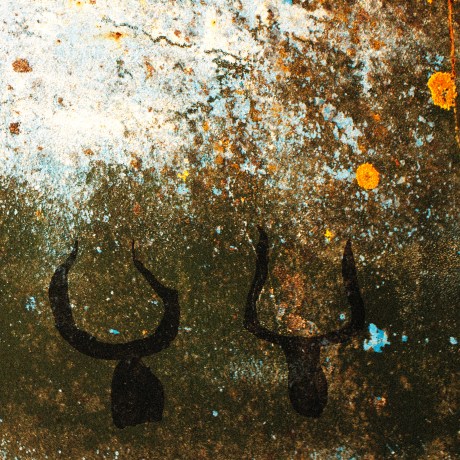
Simon McCorry ‘The Nothing That Is’
(Close Recordings) Single/7th February 2020
Following on from last year’s acclaimed (especially by us) ambient album of field recording manipulations Border Land, classically trained cellist and composer Simon McCorry is back with an equally evocative, though far less supernatural and mysterious, work of atonal art, ‘The Nothing That Is’.
Created from the musical ideas that informed his involvement with the original score for Javaad Alipoor’s play Rich Kids: A History of Shopping Malls in Tehran – which premiered at the Traverse as part of the Edinburgh Fringe Festival in 2019 -, ‘The Nothing That Is’ peregrination is a subtly airy and stripped back performance that builds upon McCorry’s use of live looping and computer processing: processes and technologies that transform the cello to sound ever more ambiguous.
As McCorry explains it: “Each layer [on ‘The Nothing That Is’] has one sustained note followed by silence. As one note finishes the next is added. An overall harmonic motion is established that pushes the piece to its conclusion. There is no melodic solo line to tie everything together. The cycling individual tones all together create an emotive power. By themselves they are just looped individual notes and reveal nothing.”
Imbued with Brian Eno’s pioneering long tape loop works of Discreet Music and in part by ‘Fratres, Cantus in Memoriam Benjamin Britten and Tabula Rasa by Arvo Pärt, The Nothing That Is – which takes its title from a line in the American modernist poet Wallace Stevens’ seminal and empirical ‘The Snowman’ poem –The Nothing That Is continues McCorry’s exploration of compositional techniques that perfectly marry sound, space and silence.
Expanding on the track and accompanying video, McCorry explains, “My thought is being influenced by reading David Abram’s The Spell of the Sensuous: Perception and Language in a More-Than-Human World or rather I’m finding a lot that resonates in how I’m thinking at the moment. The Nothing That Is video looks at diverse processes and their cycles in time and how they are all similar, whether “artificial” or “natural”. They all ‘flow’ and ‘ebb’ in similar ways. There is also an underlying theme of the anthropocene and the decay of civilization, the tension between our dominant ‘modern’ logical positivist approach to the world around us and dislocation from ourselves as other animals, as living breathing entities in a living breathing environment.”
The Monolith Cocktail is pleased to share with its readers the precursor video version of this track ahead of its official release tomorrow, Friday the 7th February 2020.
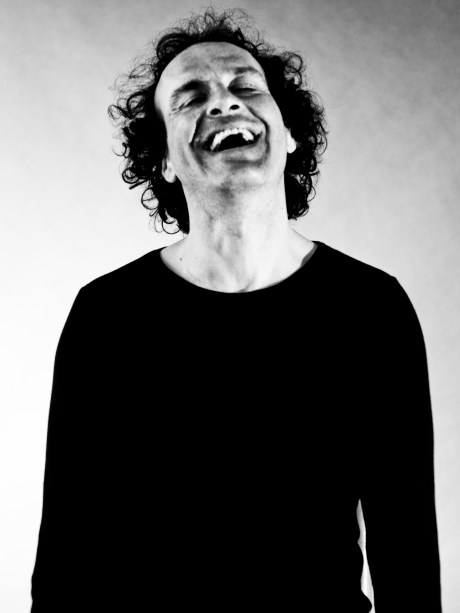
Background: Having worked as a composer for theatre, contemporary dance and circus, McCorry has channeled his experiences of creatively supporting the conveyance of a narrative or theme and laid down a series of responses to what he sees in the world at large. Originally born in London to mixed Indian/British heritage, McCorry trained in cello at The Centre for Young Musicians & Morley College then studied philosophy at Durham University. He is now based in Stroud, Gloucestershire. As a performer McCorry is well travelled, he has performed at many prestigious events and institutions including in Orlando Warrior with Julia Cheng at the South Bank as part of China Changing Festival 2017 and more recently supported luminaries such as ambient electronic legends The Orb.
Further Reading From The Archives:
Border Land in review from 2019
Premiere: A Journey Of Giraffes ‘Kona’ LP
August 22, 2019
Premiere
Words: Dominic Valvona
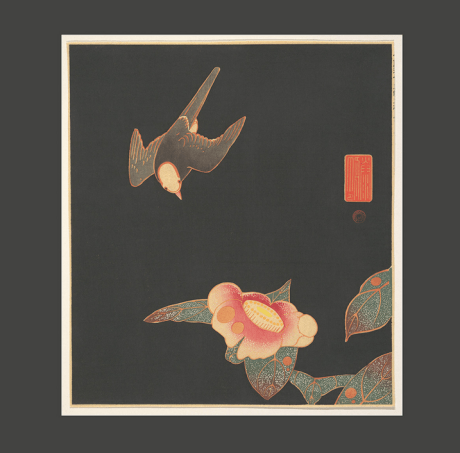
A Journey Of Giraffes ‘Kona’
(Somewherecold Records) 23rd August 2019
John Lane has travelled a long way, in musical terms, from his burgeoning lo fi days recreating a Casio keyboard vision of Brian Wilson’s beachcomber dreamy beatifications, under the seashell symphony ego of Expo, to the more transcendental meditative beginnings of his present alter ego, A Journey Of Giraffes. The safari has moved, in more recent years, away from the Beach Boys to more ambient and traversing experimental influences. The last album from the unassuming Baltimore composer that we featured, a couple of years back, went all out on an aimless supernatural field-recorded walk through the forest. F² is an eerie and strange affair; a mixture of Arthur Russell meets Panda Bear and Alejandro Jodorowsky in the backyard of Maryland.
Taking another road-less-travail kind of amble through another sort of imaginative woods setting, Lane’s latest, and quite possibly his most complete, album Kona, which we are lucky and indeed honored to be premiering today, is inspired by a Japanese art, music and contemplation. A love letter in many ways to the late Japanese electronic composer Susumu Yokota, this sweeping, often subtly matriculate and ambient affair, suite pays a homage not only to his more washed and ruminative musical peregrinations but his quotes as well. The album title is itself taken from one such lyrical pronouncement/augur: “Bones of the dead are shattered like kona and sprinkled over the homeland. Children can fly in the sky when sprinkled with Angel’s kona.”
Known for bridging techno, house and more minimalistic, and almost the neo-classical, fields of electronic music to forge a thoroughly modern Japanese sound, it is Yokota’s brushed calligraphy and mysterious evocations that are used like footnotes to Lane’s interpretive exploration: Less the Jeff Mills and Rob Hood acid burbles and intelligent techno of Acid Mt. Fuji, and more the gliding, thoughtful intricacies and panoramas of Sakura.
A clue as to what you might expect to hear from Lane’s Japonism, the quilted bird-in-motion artwork (Swallow and Camellia by Itō Jakuchū) is a suitable guide to this deep immersive experience; one that is influenced as much but the literary finesse of Natsume Soseki‘s The Three Cornered World novella as it is by Studio Ghibli’s seminal animated movie, Spirited Away. Kona is full of glistening water pool grottos and firefly lit paper lantern trails; a night garden both mysterious and imbued with peaceable Taoist understatement. You can certainly expect to hear dulcet thumb-plucked strings cascade against reverberated singular piano notes and pestle-and-mortar like scrapings, or, an insect chorus and water droplets falling on a millennia-aged and stoic moistened rock whilst hovering low synthetic drones pulse and throb. Beats are kept to a minimal, but they are there in the sophisticated mix of the fairytale and plaintive.
Magically ruminating, offering both the beatific and uncertain, Kona is an exotic, sometimes ceremonial, Zen like soundtrack that evokes the Fourth World Possible Musics of Jon Hassell, Popol Vuh and the higher plain communal glistened zither transcendence of Laraaji. As I’ve already said, this could be Lane’s most realized, complete album yet. And you can now wander that path yourself, as we premiere the album today, here:
Our Daily Bread 333: Western Edges ‘Prowess’
June 14, 2019
ALBUM REVIEW
Words: Andrew C. Kidd
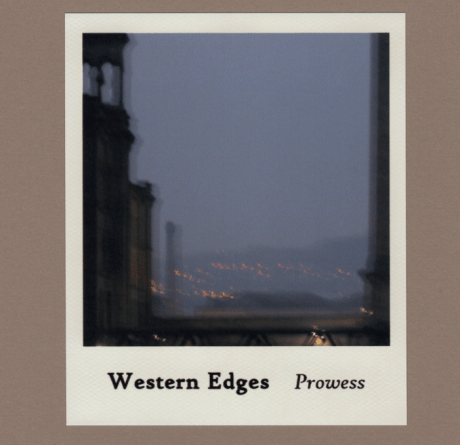
Western Edges ‘Prowess’
(Sound In Silence) 10 April 2019
After listening to the eight tracks of Prowess, I am left thinking about Andrew Marvell’s famous poem, ‘The Garden’; in particular, the lines:
“Meanwhile the mind, from pleasure less,
Withdraws into its happiness”
After being overcome by the ampleness of all the fruits and flowers of his metaphorical garden, Marvell eventually found solace in nature (or, rather, through the Greek derivation, meta ta physika: after the things of nature). Marvell was a Yorkshireman and so is Richard Adams, the producer of the deeply meditative Prowess.
Warm pads and a gently repetitive motif introduce You Look So Beautiful From Up Here. It is a sound akin to the opener on Bibio’s ambient masterpiece, Phantom Brickworks (Warp, 2017). The hymnal piece that follows, Suddenly: A Dream, coruscates in the brightness of its light synthwork.
Adams was supposedly inspired by the Aire Valley when writing Prowess. From its tributaries in the Becks of Skipton and Bradford and the Rivers of Worth and Calder, the veiny arm of the River Aire stretches across Yorkshire. He captures the essence of this age-old waterway in his title track, Western Edges; it is a short sketch comprised of unhurried notes that glint like asymmetric, sun-touched ripples on a calm river.
Solid Gold Soul builds upon multiple layers; the sub-bass sings and the shuffle house rhythm is measured. Airy synths float atop it all. The oscillating, singsong sub-bass, augmented by the step-like synth melody, is also worth mentioning on You’re Going To Miss My Love. The track that follows, All Downhill From Here, features heavily processed plucks and piano effects that filter outwards in an expansive blend of polyrhythm and lyrical notes.
Very Good On The Rushes features a synth-heavy dream-sequence backed by more sub-bass. Absence is quietly ambient and minimally techno. The synths on this piece play out in a refreshingly major key and melt into one another. A slightly deeper synth layer heralds a house beat as deep as England and the 4-4 driven bass guitar riff that eventually replaces it is the anchor upon which a syncopated melody can fix; perhaps this an homage to the industrial sounds that would have emanated out of Saltaire in days past. One could even seek deeper meaning from its title, Absence: the idea of being away from something.
Adams has in effect created his own internal garden in Prowess. Using source material and influences that are close to home, he has brought us, the listener, closer to domestic peace. This is a work full of soothing melodies, wistful drones and contemplative rhythms. In our world of busy abundance, we should all consider retreating into gardens like this more often.
Playlist: Dominic Valvona/Matt Oliver
I’ll be brief – less chat, more music please – as you want the goods, but the Quarterly Revue is our chance to pick out choice tracks to represent a three month period in the Monolith Cocktail’s output. New releases and the best of reissues plucked from the team – me, Dominic Valvona, Matt Oliver, Brian ‘Bordello’ Shea, Andrew C. Kidd and Gianluigi Marsibilio – rub shoulders in the most eclectic of playlists. The full track list is awesome, global and diverse and can be found below.
Tracklist in full:
Abdesselem Damoussi & Nour Eddine ‘Sabaato Rijal’
Bassekou Kouyate & Ngoni Ba (Ft. Abdoulaye Diabate) ‘Fanga’
Foals ‘Cafe D’Athens’
Kel Assouf ‘Tenere’
Deep Cut ‘Sharp Tongues’
Royal Trux ‘Suburban Junky Lady’
Ifriqiyya Electrique ‘Mashee Kooka’
39 Clocks ‘Psycho Beat’
The Proper Ornaments ‘Crepuscular Child’
Swazi Gold ‘Free Nelly’
Eerie Wanda ‘Magnetic Woman’
Julia Meijer ‘Fall Into Place’
Mozes And The Firstborn (Ft. PANGEA) ‘Dadcore’
Lite Storm ‘People (Let It Go Now)’
Downstroke & Gee Bag ‘Ooh My My My’
Errol Dunkley ‘Satisfaction’
Old Paradice/Confucius MC/Morriarchi ‘Sunkissed’
Black Flower ‘Future Flora’
Santiago Cordoba ‘Red’
Dexter Story (Ft. Kibrom Birhane) ‘Bila’
Houssam Gania ‘Moulay Lhacham’
Garrett N. ‘Avant’
Sir Robert Orange Peel ‘I’ve Started So I’ll Finish’
Gunter Schickert ‘Wohin’
Defari & Evidence ‘Ackknowledgement’
Eddie Russ ‘The Lope Song’
Oh No & Madlib ‘Big Whips’
CZARFACE & Ghostface ‘Mongolian Beef’
Greencryptoknight ‘Superman’
Choosey & Exile (Ft. Aloe Blacc) ‘Low Low’
Little Albert ‘Gucci Geng’
The KingDem ‘The Conversation (We Ain’t Done Yet)’
Wiki ‘Cheat Code’
Dear Euphoria ‘Push-Pull’
Tim Linghaus ‘Crossing Bornholmer (Reprise, Pt. II)’
Station 17 (Ft. Harald Grosskopf & Eberhard Kranemann) ‘…And Beyond’
Heyme ‘Noisz’
Clovvder ‘Solipsismo’
Ustad Saami ‘God Is’
Louis Jucker ‘Seagazer’
The Telescopes ‘Don’t Place Your Happiness In The Hands Of Another’
Blue House ‘Margate Jukebox’
Tempertwig ‘Apricot’
3 South & Banana ‘Magdalen Eye’
With Hidden Noise ‘The Other Korea’
Beauty Stab ‘O Eden’
Coldharbourstores ‘Something You Do Not Know’
Katie doherty & The Navigators ‘I’ll Go Out’
Mekons ‘How Many Stars?’
Graham Domain ‘Farewell Song’
Album Review: Words: Andrew C. Kidd

Welcoming our newest guest writer to the Monolith Cocktail fold, Andrew C. Kidd pens a most philosophical purview of the recently-released About B. collection of reworked and previously unreleased “memory sketches”, by the German-based composer Tim Linghaus.
Tim Linghaus ‘About B. (Memory Sketches B-Sides Recordings)’
(Sound In Silence) 18th January 2019
“Memory, even if you repress it, will come back at you and it will shape your life”, postulated the lauded German writer and academic W. G. Sebald in what would be his last published interview1. After listening to About B. (Memory Sketches B-Sides Recordings), I am left ruminating on Sebald’s statement highlighting the inexorable influence of memory.
Memory has been the focus of other experimental musicians. One such project that comes to mind is Everywhere at the End of Time, the bold, six-album series written by The Caretaker, a pseudonym of James Leyland Kirby, that chronicles the gradual diminution and distortion of memory in the context of Alzheimer’s disease. Unlike Kirby, Tim Linghaus does not pursue a linear narrative in his wistfully elegant collection. Instead, his 17 compositions are sketches, or rather, brief snapshots in time that seek to capture the subtle moments that occur in a life.
Although About B. (Memory Sketches B-Sides Recordings) does not follow a linear course, to suggest that Linghaus considers memory to be non-linear would be incorrect. His interpretation of the linearity of memory, or to put it simply, the idea of memory as a continuum with our self-development in present day being highly influenced by memories of the past and future memories unconsciously being shaped by past events, occurs through a series of recurring motifs. These include the distinct but detached sounds of radio static, the familiar crackle of a vinyl record spinning atop a platter and the muffled warmth of the mechanical assembly of hammers hitting piano strings as keys are pressed. He also captures the often fleeting and frustratingly fragmented aspects to memory through the periodicity of his analogue synth arpeggios and the ephemeral nature of many of the pieces (some are as short as 30 seconds).
Devoid of intelligible words (the dreamy Where Is My Girl does feature a disguised vocal harmony), I do wonder whether Linghaus has opted for the piano as an instrument to represent his ‘voice’. The warm tonality of the piano, or perhaps even temperament (in the piano tuning sense), evokes many emotions. Snow at Franz-Mehring-Platz is melancholic. Anatomy Of Our Awkward Farewell Gestures springs into a slow waltz and contradicts the other pieces around it. The piano notes on Chased By Two Idiots are long and sustained; this track engenders a feeling of darkness which is further augmented by the deep bass-sequence and the glassy drone noises.
People listening to Tim Linghaus will of course draw comparisons to the German-born British composer Max Ritcher, particularly when presented with the complex rhythmic structure on Before Berlin (About B. End Title), the legato played on Jonathan Brandis and the plaintive strings that flood over I Was Atom And Waves (Reprise, Pt. II). The shifts of tone colour on Repetitive Daydream Sequence, Pt. VI (Humboldt University Chemistry Class 1975) are very reminiscent of the American producer Oneohtrix Point Never and his Russian Mind EP (No Fun Production, 2013). The oscillated rhythms of Looking For Dad In Radio Noise (Reprise, Pt. III) and Plaenterwald are akin to the now disbanded group, Emeralds; in particular, their Does It Look Like I’m Here? LP (Editions Mego, 2010).
Of the 17 tracks on About B. (Memory Sketches B-Sides Recordings), 4 are reworked versions of compositions from a previous album. Only Linghaus will know whether he calls the memories that featured on his debut album differently. Alternatively, these recollected memories may indeed be the same, but perhaps on further introspection he felt it necessary to make alterations to the original interpretations to better record their deeper meaning. Nevertheless, memory is a thoroughly complex faculty and an extremely difficult subject to explore and document. I applaud Tim Linghaus in his attempt to preserve his memories in the form of music.
1Jaggi M. The Last Word. The Guardian [newspaper on the Internet] 2001 Dec 12 [cited 2019 February 5].
Our Daily Bread 288: Refree ‘La Otra Mitad’
November 19, 2018
Album Review/Dominic Valvona
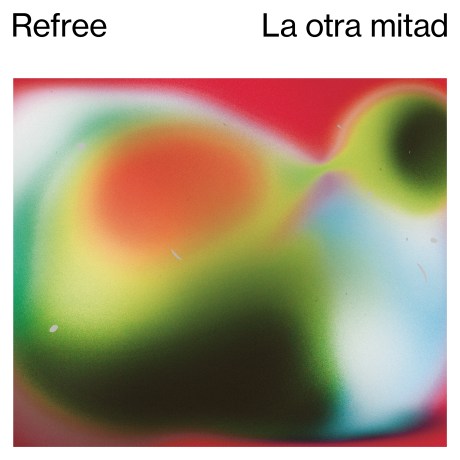
Refree ‘La Otra Mitad’ (tak:til/Glitterbeat Records) 7th December 2018
Recording in the field, catching both on-set and off the dialogue, conversations and even the spontaneous warbling song of a child, the lion’s share of the material on the renowned Spanish producer and film music composer (also solo artist in his own right) Raül Refree’s La Otra Mitad album was created for film director Isaki Lacuesta’s movie exploration of Flamenco, Entre dos Aguas.
Capturing both the essence and environment of the movie’s San Fernando location, and spirit of the non-professional cast, Refree’s often-reflective compositions and sketches represent his unique approach to conveying the abstract and visceral.
Representing at times what I, with my admitted ignorance of the form, recognize as the toiled, yearning and sometimes diaphanous flourishes of the highly-skilled Flamenco tradition, Refree performs the odd deft solitary passage but mostly reconfigures this signature Spanish style, remodeling it into an amorphous soundscape, or reversing it through a vacuum of suspense – ‘Dar a luz (Mix 1)’, which when translated into English means ‘giving birth’, and so makes sense as the sensation sounds like someone being rushed backwards out of a womb-like tunnel of both radiance and trepidation. Tracks such as ‘Barbacoa’ are literal, the composer recording the mood and conversation of the film crew and actors in their downtime at a barbecue; the results of which when edited in Refree’s in-situ studio sound intimate, yet like an ambient mirage. But sometimes the voices are in song, the Flamenco singers Rocio Márquez, Niño de Elche and Pilar Villa find their sonorous wails, lulls and beautifully expressed vocals sampled and turned into the ghostly and transported. Though the brighter, in praise, and less transformed ‘Cuando Salga El Sol (When The Sun Rises)’ is left to work its delightful Flamenco magic.
Lacuesta had in mind the relationship enjoyed by Neil Young and Jim Jarmusch on the collaborative score for the movie Dead Man, when approaching Refree. And in some way there is a semblance of that process; Refree pushing traditional sources into contemporary directions, his eclectic CV, which includes both co-producing and collaborating with Sonic Youth’s Lee Ranaldo (Electric Trim), and Spanish enigmas Silva Pérez Cruz and Rosalía, channeled through an experimental traverse of ideas; from the picturesque to tragic, fleeting to sobering.
Originally earmarked for a two-volume duo of instrumental-leaning 10” solo EPs, La Otra Mitad couples what was two separate envisaged projects together on one album. Volume Two, the soundtrack, I’ve already discussed; Volume One however is a different, but concomitant, proposition. Named after the guitars it was performed on, Jai Alai Vol 01 (as it was titled) featured a series of reflective pining, waning and timeless solo guitar compositions. The LGO played (is that even a guitar?) track features Flamenco gestures and resonating echoes of Ry Cooder country, but also, on the second of the ‘LGO’ performances, a hint of the Middle East permeates an intense to wound-down, heavy to light, ratcheted spring folksy rhythm. The moiety of ‘Ramírez’ experiments feature a plucked, harmonics twanging nuanced guided hand; both sounding classical and sad but transcending subtly their time and place.
An amorphous, removed album of guitar articulations, moods, location and voice that somehow seems simultaneously tethered to Spain yet peculiarly outside of it. An experiment in reification and the aleatory, capturing the essence but also transient, Refree creates an unusual aural experience that’s difficult to categorize; neither avant-garde nor world music as such, nor is it in the perimeters of rock, it is instead a most unique collection.
Our Daily Bread 287: R. Seiliog ‘Megadoze’
November 14, 2018
Album Review/Dominic Valvona
R. Seiliog ‘Megadoze’ (Turnstile Music) 30th November 2018
The Welsh producer’s most cerebral and tactile electronic evocations yet, Robin Edwards’ (under the mantle of his R. Seiliog moniker) new album subtly pushes out into the expanses of a naturalistic imbued void with a depth and patience seldom heard outside the fields of ambient and new age music.
Echoing the trance-y and controlled build-ups of techno’s burgeoning creative epoch in the early to mid 1990s – especially the likes of Seefeel, Sun Electric, Beaumont Hannant and, well, a fair share of the Warp and R&S labels output in that period – Edwards ‘ambisonic’ visions shift seamlessly between the mysterious and radiant; weaving together elements of Kosmische, minimalism, intelligent techno and even psychill into wondrous soundtrack of discovery.
Megadoze is in no way, as the title might suggest, one big somnolent snooze fest; even if there is a lot of suffused ambience to be found, and tracks take an unhurried amount of time to unfurl their brilliance and scope. The minimalist whispery, silvery and peaceable ‘DC Offset’ (a reference to ‘mean amplitude displacement’ too lengthy to discuss here) for example bears traces of The Orb and David Matthews, yet also features the sort of downplayed beats and rhythms associated with sophisticated dance music. In fact, no matter how gentle or languid, each track features constantly stimulating and evolving textures of metallic and crisp, whipped beats amongst the vapours, undulations, drones and waveforms.
A manufactured wilderness and cosmos, Megadoze sounds like Autechre rewiring The Future Sound Of London and Steve Reich: Imagine cascading waters, volcanic glass, the dewy lushness of fauna and awe of the constellations organically shining or ringing through omnipotent machinations and the itchy, pitter-patter of computerized, sequenced drums.
In many ways a 90s album thrust into the next century, produced on more sophisticated apparatus; Edwards’ brand of nuanced electronica is rich with the possibilities of both eras. His most ambitious work to date, Megadoze is alive with ideas and tactile sensibilities, a moody record that can, over time, open-up with wonder and radiant magic.
Dominic Valvona’s review roundup of new releases
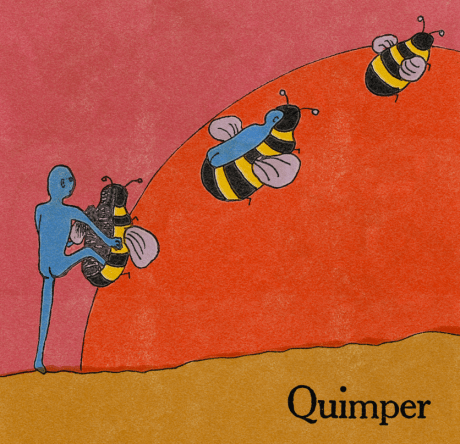
As ever, another fine assortment of eclectic album and EP reviews from me this month, featuring new releases from David Cronenberg’s Wife, Kid Kin, Jack Ellister, Paul Jacobs, Quimper, Spaciousness and Paula Rae Gibson & Kit Downes.
In brief: I take a gander at new EPs from the cinematic post-rock artist, composer and producer Peter Lloyd, who releases his swathes of guitar-electronica under the Kid Kin pseudonym, and the Autumnal songbook of self-deprecating, sardonic love trysts and illusions from London’s bastions of antifolk, David Cronenberg’s Wife.
Album wise there’s the beautifully penned troubadour psychedelic folk and scenery instrumentals of Jack Ellister’s Telegraph Hill – his first LP for the You Are The Cosmos label -; the barreling scuzzy garage and synth psychedelic lo fi magnificence of Paul Jacob’s Easy; the esoteric surrealist magic-realism of Quimper’s Perdide, a new age ambient compilation; Spaciousness, from London’s Lo Recordings that attempts to praise and explore the ambient musical genre, in what is the first in a series of collections from the label; and the first, and challenging, collaboration between the experimental siren Paula Rae Gibson and British jazz pianist Kit Downes, Emotion Machine.
Paul Jacobs ‘Easy’ (Stolen Body Records) 19th October 2018
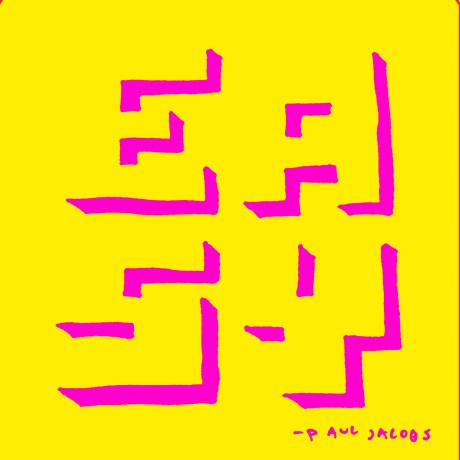
The very first sloppy collides of a track on this most fuzzy of hurtling and chaotic albums of vapour-wave pop, stonking garage and psychedelic twists and turns, could be, for all I can make out, a reversed bastardization of Bowie’s own ‘Holy Holy’. It certainly has the proto-Glam and strung-out rock’n’roll stomp of that record, but the maverick Paul Jacobs slurs and languidly warps, whatever it is, into a distortion-levels noisy Ty Segall.
Jacobs, who has already released eight albums of similar dizzying Kool Aid induced barrages (mostly on his own), indolently throws-up vague musical references throughout his latest album for the Stolen Body Records label; whether that’s turning on his best Lodger/Scary Monsters intonations and strutting messily but surely to an amalgamation of Liars and Blancmange on the cheque-cashing ‘Expensive’, or, whistling to the Native Indian backbeat of Adam And The Ants on ‘Laundry’, or, channeling PiL, the Killing Joke and Spiritualized on the Gothic spooked to deranged dreamy lullaby escape of ‘Trouble (Last Song)’. But you’re just as likely to hear passing shades of Sam Flax, Ariel Pink and Alan Vega swirling and bobbing about in the cycle wash of clattering sound clashes: It might all sound like a shamble. But it’s a most magnificent, bewildering and dynamic shamble.
Vocally Jacobs is masked under a lo fi mono-like production, which makes it difficult to catch what he’s on about at times. The odd whispered, crooned and melted lyric from these often mundane metaphorically entitled songs offer clues: a pop at the music industry here, soliloquy delivered anxiety, searching for purpose, there.
Layering a garage punk guitar with 1980s drum pad tom rolls, spacey chimes with vapours of post-punk, Paul Jacobs’ barreling, pummeling tunes are far more nuanced and sophisticated than I’ve described: Noisy of course, attuned as it is to a DIY sound, but brimming with riffs, hooks and splashes of radiant synth and psychedelic pop.
Cut from the same cloth as, the already mentioned, Liars, Ty Segall and Ariel Pink, Easy is an amazing record, a breakdown in motion, a racket that takes its core garage rock pretensions into the future.
Jack Ellister ‘Telegraph Hill’ (You Are The Cosmos) 27th November 2018
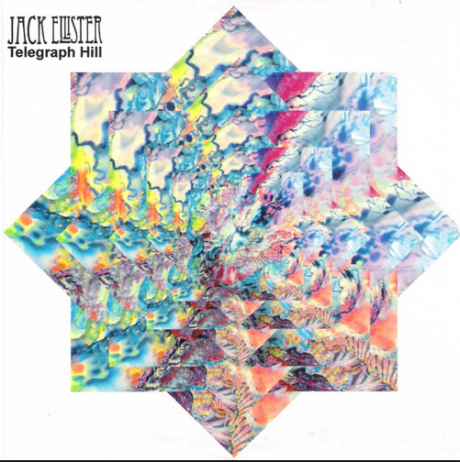
Penning a most placeable album, keeping it for the most part intimate, Jack Ellister’s latest collection of hazy troubadour balladry is turned down low and sweet, played out mostly on the acoustic guitar.
Normally associated with the Fruits de Mer label, releasing a string of singles and albums for them over the last six years, Ellister’s personable third album has found a new home on the You Are The Cosmos imprint.
An almost solitary affair, the multi-instrumentalist playing almost everything but the drums (played by long time collaborators Tomasz Helberg and Nico Stallmann), Telegraph Hill is an often lilted and twilled songbook of melodious psychedelic folk. The Telegraph Hill of that title refers to Ellister’s home studio in South East London, which can be read as an indication of his homely themes of belonging, of finding solace in the simple things and loved ones. The focus of many of these songs being the love-of-his-life muse, he expresses a joyful contentment throughout; wistfully and dreamily waxing lyrically like a lovesick Romeo.
Originally conceived as an EP bridge between albums, the nine-track Telegraph Hill is quite short in running time, and features a few instrumentals, two of which are more like passing interludes that seem to be added as padding; especially the final great American plains, Andes and Australian Outback merging, softened Native Indian stomp and gliding bird flight descriptive guitar peregrination, ‘Condor’. To be fair, the pastoral empirical ‘Maureen Feeding The Horses’, with its encapsulation of a rural scene (a moment in time) that captures a trapped kaleidoscopic sun shining through glass, illuminating this naturalistic aside, fits perfectly. ‘Icon Chamber’ however, seems an odd throwaway library music experiment from the laboratory in comparison.
Ellister is at his best when tenderly strumming a paean and singing; his fuzzy voice evoking a young Leonard Cohen on the Medieval chamber folksy ‘Roots’ (one of the album’s highlights), both Donovan and Tim Burgess on the trippy warbled flute-y and drum shuffling ‘High Above Our Heads’, and Syd Barrett on the Floydian via an enervated samba saunter ‘Mind Maneuvers’.
From pea-green seas of psychedelic nursery rhymes to 18th century inns, Ellister’s magical stirring atmospheres and folksy odes sound at any one time like visages of Caravan, The Incredible String Band, Fairfield Parlour, Spiritualized, Mike Cooper, Primal Scream and Roy Harper. Unobtrusive and unguarded, Telegraph Hill lays Ellister’s sensitive soul bare on what is, for the most part, a most assiduous halcyon earnest album of brilliantly crafted songs.
Kid Kin ‘Kid Kin EP’ November 2018

Never mind the worms the ‘Early Bird’ of the new EP from the Oxford multi-instrumentalist, producer, composer Peter Lloyd, has in this instance, caught the cyclonic glassy arpeggio rays of a multilayered crescendo instead. The third instrumental track from an EP of wide-lens anthemic post-rock visceral evocations, ‘The Early Bird’ features Lloyd’s signature ‘quiet/loud’ suffused climaxes and build-ups of various synth lines and descriptive, waning guitars.
Conceived as an encapsulation of his ‘connective’ ebb and flow live shows, Kid Kin is best experienced in its entirety, from beginning to end. Each track is separated – though ‘The Early Bird’ is followed by the Four Tet remix-esque radiant kinetic ‘Gets The Worm’, but in title split only – with no particular overlay or link. But squeeze them together into one continuous performance it would work well.
Saving his music from erring too close to Ad lands staple ideal of epic rock (U2, Coldplay), the opening ‘Jarmo’ vista sounds like a lost Mogwai soundtrack. The swelling, mindful but lifting towards the light ‘War Lullaby’ (which also features a strange 8-bit pinball ricocheting moment of electronica chaos) isn’t more than a fjord’s distance from sounding like Sigur Rós: a good thing in this case.
Confidently soundscaping post-rock panoramas, Peter Lloyd’s synthetic swathes and resonating layered guitar mini opuses are missing a documentary film. So descriptive is the drama and narrative. If immersing yourself in an ambient cinematic rock vision of moody and stirring expanses sounds right up your proverbial street; if you’re tired of post-rock’s old guard, then take a punt on the Kid.
Quimper ‘Perdide’ October 10th 2018
Curious oddities from beyond the ether and surface of Stefan Wul’s sci-fi paperback world of Perdide (the planet immortalized in the French author’s cult The Orphans Of Perdide) permeate the latest surreal musical séance from the beguiled Quimper duo.
A timely release for the bewitching hour, summoning up, as it does, vague vapours of Eastern European art house magical-realism, and imbued by both the 1970s library music and British horror soundtracks favoured by the Belbury Poly, The Advisory Circle and Berberian Sound Studios period Broadcast, Quimper once more occupy the esoteric heights.
Lynchian, peculiar, innocence turned into something otherworldly, the John Vertigen and his apparition vocalist foil Jodie Lowther (who also illustrates all their various releases) duo float, waft and shuffle around the most mysterious and kooky settings.
A whispery translucent cooed lullaby about the ‘Lovely Bees’, can eerily take on a most unsettling feeling, as Lowther’s vocals, or rather the most distant traces of them, channel a childish-like Japanese spirit to the accompaniment of a sinister dreamy sounding Roj. Elsewhere on this claustrophobic haunting soundtrack, Quimper imagine Mike Oldfield and John Carpenter communing, on the shivery spirit conjuring ‘Skin Without Size’; transduce an enervated vision of Richard James’ Polygon Windows through a ghost’s dissection, on ‘Vivisection’; dance to a mambo beat whilst a 1920s magic show opens a trapdoor to some snake god on ‘False Serpent Opens Doors’; and enact mellotron-mirage bucolic worship on, ‘Christ In A Field Of Caravans’.
They do all this from behind a gauze-y film of soft, wooing reverberation; only the essence, the air-y remains of what was once concrete, have been captured; broadcast, it sounds, through a Medium. Lynch should rightly love this stuff, especially Lowther’s untethered, so delicate and lingering as to not exist at all, nursery rhyme like siren calls. Perdide is one of the duo’s most interesting, realized albums yet, an illusionary surrealist world of creeping dreamscapes.
Various ‘Spaciousness: Music Without Horizons’ (Lo Recordings) 2nd November 2018
Tainted in part by its reputation for pseudo-hippie idealism and penchant for irritating whale song and the sounds of the rainforest – the soundtrack to countless holistic day spas -, new age music summons up a myriad of less than flattering connotations. Of course, as this first in a series of showcase purviews will prove, there’s actually much more to this often-maligned musical form.
In partnership with former Coil member Michael J York and musician/writer polymath Mark O Pilkington’s Attractor Press platform, Lo Recordings are here to celebrate its resurgence and more aloof, spiritual and philosophical highlights. As part of a wider project that will include writing, still and moving images and live events, the overlapping, multi-connective Spaciousness compilation provides an audio lineage; balancing peregrinations from both new age (but also embracing deep listening and post-classical) music’s progenitors and rising stars.
A leading luminaire, the divine styler of radiant transcendence, Laraaji, has by happy accident given this double-album straddling selection its title. Laraaji, who has himself, enjoyed a renewed interest in the last few years, especially for his ties to Brian Eno, and of course spiritual ambient quests, pops up partnering the Seahawks on the suitably aquatic undulated ‘Space Bubbles’ tribute to new age inspiration, dolphin-whisper, floatation tank and mind expanding drugs evangelist, John C Lilly. Another of the pioneers, Lasos, appears alongside the contemporary artist Carlos Gabriel Niño (one of the new guard, bridging the gap between the new age, the meditative, jazz and free form; signed to David Matthew’s – more of him later – expletory Leaving Records). The pair plays around with light on their majestic searing, glistening panoramic finale, ‘Going Home’. Lasos alongside another great doyen of the genre, Steven Halpern, were among the first artists to subvert and work outside the perimeters of the mainstream music industry; circumnavigating it by dealing direct with their audience through mail order cassettes.
Two of the already mentioned catalysts for Spaciousness, instigators behind Strange Attractor Press, also appear (under the Teleplasmite nom de plume) paying homage to a visionary muse, Ingo Swann. Propounding ‘remote views’, an artist and psychic, the duo construct a suitable Kosmische vaporous evocation on the roaming ‘Song For Ingo Swann’. Posthumous tribute is also paid to the late composer Susumu Yokota, with an ‘inter-generational span’ remix by DK of his dissipated ‘Wave Drops’ exploration; a soundscape of horse snorts, abstract saxophone, steam and Far East moorings.
The second wave of this new age movement is represented by artists such as MJ Lallo, who’s venerated, and equally expansive 2001: A Space Odyssey like, traverse, ‘Birth Of A Star Child’ is featured. Written originally for the Vatican in the 1980s, this version has been borrowed from a recent compilation of her home studio recordings, Take Me With You (1982-1997), this monastery in space choral eulogy was made by processing computerized drums, synth and Lallo’s voice through a Yamaha SPX 90 digital effects unit to produce an otherworldly, ageless sense of ominous awe.
Possibly one of the better-known figures of the last decade or more in his field, the renowned musician/producer and Tangerine Dream affiliate member in recent years, Ulrich Schnauss, partners with Lo Recordings founder Jon Tye on the jazzy desert wandering ‘Orange Cascade’. The duo’s diaphanous lulling visionary textures explore the intersection between live instrumentation (wafts of saxophone, sitar and flute in this case) and synthesized sound.
The most contemporary wave, so to speak, is represented by Matthew David’s (as Mindflight) Jon Hassell resonant stratospheric hymn ‘Ode To Flora’; Cathy Lucas’ ‘mating song of quarks’ primal soup bubbling and vague jazzy translucent ‘Chatterscope’; and Yamaneko’s ‘one big stare out of a bedroom window at 2 am’ sanctified, page-turning, mysterious ‘Lost Winters Hiding’. All these artists add to, or share, the vastness of space with their new ageism and cerebral ambient forbearers; a sign if any were needed that we could all do with a pause and a deeper purposeful meditative break from the divisive-ratcheted noise of our times.
In waves and cycles, the transcendent and deeply thoughtful search for peace and new horizons is gathering a pace. And what better example of its reach, scope and lineage (and future) than this inaugural Spaciousness purview; a collection that will do much to illuminate as push forward the limits of the new age and its various ambient sub genre strands and astral flights of fantasy. A great start to a wider investigation.
Paula Rae Gibson & Kit Downes ‘Emotion Machines’ (Slowfoot Records) 2nd November 2018
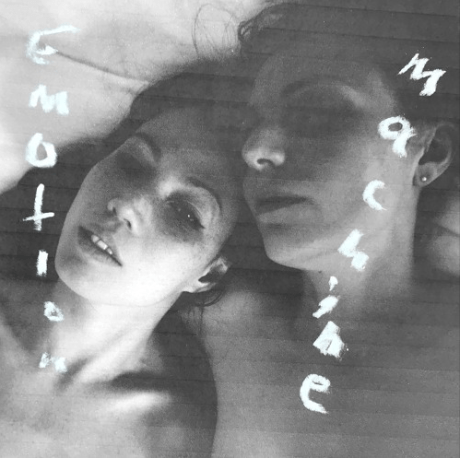
Amorphously set adrift into the abstract, untethered in compositional serialism, renowned photographer and experimental siren Paula Rae Gibson and collaborative foil, the acclaimed, award-winning British jazz pianist Kit Downes set out on a most challenging travail on the new album, Emotion Machine.
Already deconstructively – though also at times melodiously flowing – applying both equally stark and diaphanous vocals to a quartet of albums, Gibson’s minimal, but often striking, voice is in its element up against and submerged beneath Downes’ fine layering and often attenuate arrangements. Neither strung-out jazz nor avant-garde cabaret, the duo’s inaugural collaboration together is more conceptual sound design and dissonant drone than musical, with the odd flurry of neo-classical piano, some transduced cello and a splash of brushed-shuffled drumming offering the only traces or recognizable instrumentation throughout.
Re-translating their Delta Blues, Icelandic art-rock and early musical inspirations in a frayed somber and emotionally retching environment of uncertainty, they inhabit a miasma of toil and pained expression. In this gloom of uneasy, sometimes plaintive, surroundings the pauses, resonance and spaces are just as important as the minimalist instrumental accents and stripped-down-to-their-refined-essence-of-understanding fashioned lyrics: Gibson’s mix of concomitant couplets, stanzas and one-liners are left hanging in the expanses whilst Downes quivery, motor-purring snozzled and waned backing fades, dissipates or stops dead.
From the ethereal to the contralto, beautifully gossamer to ominously discordant, Emotion Machines is an efflux between the timeless and contemporary. Conceptually and artistically pushing the musical boundaries, as much a performance piece as cerebral exploration of the voice, Gibson and Downes interchange their disciplines to produce an evocative suite of poignant expressive heartache and drama.
David Cronenberg’s Wife ‘The Octoberman Sequence’ (Blang) 26th October 2018 (Download)/ 2nd November (Ltd. 12” Vinyl)
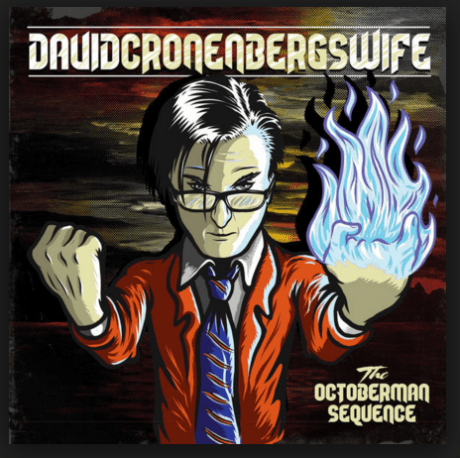
Weaponizing sardonic wit and despondency with élan, the antifolk cult London band, David Cronenberg’s Wife, offer up a signature serving of slice-of-life anxiety-riven and cross-signaled love derisions on their Autumnal EP.
Featuring a doublet of previously unrecorded resigned romantic numbers but fronted by the ‘live stalwart’ ‘Rules’ – two versions in fact; the single edit, a safe for the dour risk-averse airways, omits the only swearing word in the song: “Fuck around” -, The Octoberman Sequence is a most generous release from the DIY scenesters. ‘Rules’ itself is a galloping anthem that builds momentum and just keeps rolling on, pouring a hearty scorn on life-plans, the anguish life choices of the hand wringing middle classes, and Hollywood’s false platitude perfections as a strutting backing track of ? And The Mysterians/Sir Douglas Quintet organ stabs and proto Stooges (as fronted by Ian McCulloch) plows on. It’s easy to hear why this has become a live favourite. For one thing it dismembers the bullshit, spits out the unthinkable (the rules for s stress-free life, “Don’t marry”, tick, “Don’t have kids”, tick, being the first of the DCW’s seven-rule commandments), but above all, sounds great.
As for those previously unrecorded songs, the slumbered voice-over ridicule with lulled female accompanied ‘You Should See’ sets up our misdirected protagonist on a awkward date: So awkward in fact and indecisive, our lead’s inner monologue and own assured boastful knowledge of literature prompts him to spill the sexual predilections of Marcel Proust, before shuffling off home to “Masturbate over films made in the Czech Republic”. The other song, ‘The Dude Of Love’, is a 1960s good ol’ Freebird Southern boogie with a Kinks style chorus semi-stalker ditty. A rich, seedy, tableau of delusional creeps on the London Underground – one, a Lynyrd Skynyrd reject, the other, our awkward, but still egotistical, friend who seems to have totally misread the signals.
Nestled alongside these are the more serious intoned appendage love muscle punned ‘Love Organ’, and dour counterculture meets lamentable country blues troubadour ‘Song For Nobody’ – a kind of Dylan-as-pinning-cowboy paean turn disgruntled love rat finality that ends on a sour note.
Corralling the ditsy platitudes and unrealistic expectations of love in the age of #MeToo, DCW with wicked relish rattle and roll to their own unique post-punk, post-country and antifolk bombast on what is another clever and candid realized songbook of self-depreciation and protestation.
Tickling Our Fancy 068: Kammerflimmer Kollektief, Picturebox, Bokanté And Metropole Orkest, Perhaps…
September 3, 2018
Dominic Valvona’s New Music Reviews Roundup
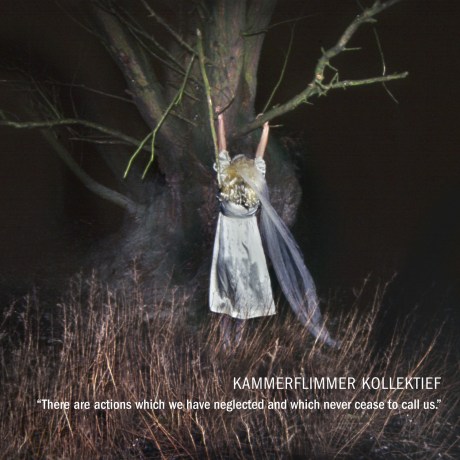
A bumper roundup this month from me of eclectic tastes from across the sphere, including albums, singles, cassettes and EPs from Kammerflimmer Kollektief, Andrew Heath, Picturebox, Bokanté And Metropole Orkest, Acid Mothers Temple & The Melting Paraiso U.F.O., Perhaps and Stringmodulator.
In brief, ‘lower-case’ minimalist composer Andrew Heath delivers another almost recondite album of in-situ recordings for the Disco Gecko label, with his fifth album Evenfall. In the same orbit, albeit far more mysterious, haunted and experimental, the Kammerflimmer Kollektief conjure up seven cerebral mood environment themed extemporized performances on, what could be, the longest entitled LP of 2018, There Are Actions Which We Have Neglected And Which Never Cease To Call Us. Crossing over with the titans of proto-Krautrock, the freak-out that is the Acid Mothers Temple & The Melting Paraiso U.F.O., Jim Haney’s own Kosmische Afrobeat and jazz explorers Perhaps feature two of its members on their upcoming improvisation Hexagon. Haney also, through the boutique Kamikaze cassette tape platform, re-releases/re-introduces two of the legendary astral-travellers iconic albums to the world, In C and La Novia. Plus we have the latest recruit to join the Submarine Broadcasting Company hub, the German ten-string duo Stringmodulator; delivering their debut manifesto of noise for the label, all sounds emanating through just a bass and electric guitar.
Away from the electronic traverses and peregrinations there’s the new album of maverick Canterbury psych and new wave pop eccentricity from Picturebox; the Gare du Nord label supergroup long for ‘escape’ on their second album. And the cinematic transglobal partnership Bokanté And Metropole Orkest release a dramatic sweeping suite, What Heat.
Bokanté And Metropole Orkest – Conducted By Jules Buckley ‘What Heat’ (Real World Records) 28th September 2018
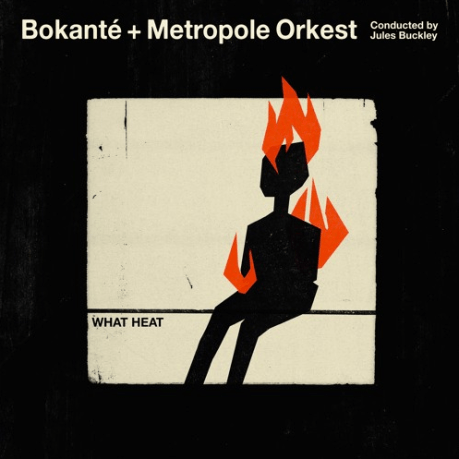
Unsurprisingly, considering the renowned cast of musical talent that has joined forces to create this sweeping cinemascope suite, the supergroup-within-a-supergroup behind this global union of outstanding collectives has risen to the challenge of producing a polygenesis epic. The providence is as rich as it is long, with the ‘Texan-bred’ New York instrumental jazz hybrid Snarky Puppy founder Michael League the instigator behind the continent-straddling intergenerational Bokanté, and the acclaimed English conductor, composer and musician Jules Buckley leading the multiple Grammy-winning cross-discipline and genre Metropole Orkest ensemble.
Within those two groups number a multitude of talented individuals and guests too numerous to name, though one of the most integral performers, a co-founder of Bokanté, is the Montreal-based Guadeloupean vocalist Malika Tirolien, who’s robust if diaphanous pitch and scale fluctuating coos and song can be found navigating and articulating the themes and distresses on every composition. An awe-inspiring voice of transglobal tones, expressions and dynamism, Tirolien’s meandering vocals are informed and graced by the Creole language – a most flowing of French-based languages that can sound especially percussive and funky, the dialect of her home being quite a specific form of it, though not too dissimilar to the Creole of Martinique and other former colonial French territories. It also lends its etymology to the ensemble that League and Tirolien started; Bokanté translates as ‘exchange’.
Musically transcending borders, the catalyst for this ambitious project – theoretically an acoustic one – is to not only share and celebrate cultures but draw attention to the increasingly hostile political tensions that threaten to cut off communities around the world. A reminder then of the benefits of our multicultural legacy, What Heat returns to the source, combing the Arabian and North African lands for inspiration.
A highly atmospheric and dramatic soundtrack with a stirring, accentuate company of strings adding a certain gravitas this sprawling panorama is cinematic in scope and mood. Broodily romantic, traversing a West African diorama, with guest Weedie Braimah on the djembe, the opening ‘All The Way Home’ fuses the true soul of that continent with flashes of jazz and urban modern R&B, tracing a connection all the way from New York to Ghana and Mali: Rustic sounding banjo and pedal steel guitar giving the impression that the group are merging the desert plains of Africa with American bluegrass and the Morricone imagined Wild West on the tribal soulful ‘Fanm (The Woman)’ and more enigmatic sounding ‘Chambre à Échos (Echo Chamber)’.
Elsewhere the evocation of Hispaniola, Brazil, Tunisia merges and crosses amorphously to an often lush but also tumultuous Buckley conducted Orchestra and quivered springy flute-y and skittering percussion. Plaintive, mournful and equally in anger at topics such as the migrant crisis, the album can’t help but sound like a rousing filmic adventure throughout: a most beautifully performed and sung one at that. Remarkably considering how densely packed the arrangements’ cast is, there is plenty of space to be found, even when a maelstrom turbulence is stirred up.
Swooning over vistas like a contemporary Gershwin who’s been listening to Beck, Trip-Hop, Afro-Futurist jazz, country and Malian blues, this, as it turns out, most congruous partnership successfully conjures up a wondrous hybrid drama that pushes each of the respective ensembles to the limits.
Perhaps ‘Hexagon’ (Riot Season Records) 12th October 2018
Acid Mothers Temple & The Melting Paraiso U.F.O. ‘In C’ & ‘La Novia’ (Kamikaze Tapes) Out Now
In what is a crossover of mutual appreciation and ‘head music’ hedonism, Jim Haney of the Kamikaze Tapes felicitator and astral-navigator of the Boston, Massachusetts cosmic-jazz-psych-Krautrock band Perhaps has been sucked-in to the acid-cosmology of the legendary Japanese ‘freak-out’, the Acid Mothers Temple & The Melting Paraiso U.F.O.. The Acid Mothers’ only real constant presence, and its founder, Kawabata Makoto, alongside just one of the group’s many band members over the decades, Mitsuru Tabata, both feature on Perhaps’ latest traverse, Hexagon. Meanwhile the Acid Mothers have re-released two of their most fabled albums, In C and La Novia, through Haney’s ‘boutique’ tape platform: I believe for the first time on cassette.
Both sharing similar musical tastes and penchant for experimental improvisation, it seems an obvious choice for Haney to absorb their experience and free-form escapism on Perhaps’ sixth long player; an album that features one long extended flight of woozy fantastical psychedelic-Afrobeat-jazz-Kosmische jamming, cut into a moiety over two sides of vinyl. ‘The Number Of The Priest’, parts one and two, pit Tony Allen’s repetitive Afrobeat drum beat an Idris Ackamoor breaks bread with Xhol Caravan style peregrination against a constant tide and enveloping of zapping, rippling, squelched, high velocity takeoffs and oscillations. All of which threaten to fold or tear the melodic celestial fabric.
On the shore of an Afro-Futurist style Topographic Ocean, journeying across alpha waves and signing squiggles across the Milky Way, part one of this cosmic soundtrack opens with a more earthy rustic country blues harmonization. Members of the extensive guest list ape a despondent Crosby, Stills & Nash or Mike Nesmith style chorus: “Oh the water runs high on the river at midnight/I sit on the shore to grieve and to cry/The woman I love she left me this morning, with no one to kiss me goodnight.” They soon leave these weeping shores, beckoning in the acid Afrobeat and deconstructive forces that try to dismantle it.
The second part continues the same vibe but with more strangled, scratchy and tangled guitar, synth polygons and six-sided mayhem! Despite the stellar meteorite shower of debris and harsher effects that threaten to destroy it, there’s a great Afro-jazz melody and beat at the heart of this trip. A trip that at its most hallucinatory-chaotic and noisiest bears all the hallmarks of the Acid Mothers.

Speaking of which. Two of the loose freak-out ensemble’s prolific back catalogue titles are gathered together on tape, re-released or re-introduced to the universe twenty years on from their original release dates. For those unaware of this Japanese institution that sprouted out of the kool-aid soup in the early 1990s, the Acid Mothers haven’t just taken a liberal sip from the Krautrock chalice but bathed in it as the natural disciples to that epochs cosmic explorers and innovators. They do such a good job of it that you could easily mistake them for golden era Amon Düül I and II, Ash Ra Tempel, Can, Popol Vuh or Birth Control. In the mode of a transient, transcendental Les Rallizes Dénudes they absorb and produce a psychedelic phantasm of both meditative mysticism and freeform thrashing acid rock. Constantly evaluating and evolving, even forming alliances with their influences, just one example being Acid Gurus Temple (later changed to Acid Mothers Guru Guru) with madcap drumming progenitor and bandleader of Guru Guru Mani Neumeier, only the founding arch druid of this enterprise, Kawabata Makoto remains at the helm after twenty-five years of spewing out proto-Krautrock explorations.
Originally released in 1998 as a transmogrification riff on Terry Riley’s masterpiece of minimalism, ‘In C’, the Acid Mothers push the perimeters of that exalted composer’s loose concept towards the dreamy and haunted. Consisting of fragments and modules in C (though even this basic premise isn’t written in stone, with other notes and scales allowed if the situation and environment call for it), the actual rudimental arrangement can be shortened, extended, played within various structures and at a variety of tempos. An open-ended performance the Acid Mothers use a similar chiming, ringing vibraphonic introduction but transformed so it takes on the ascendant visage of an astral spiritual pilgrimage. That is until they throw in the overlapping rotating drum barrage. Sort of split, though thin quieter dissipation passages link each section together, into three parts (the third I think is a separate track entirely), the dizzy Wurlitzer motion calms into a mystical Tibetan meets Afghan occult of ghostly visitations (the ghost train to Lhasa!) section before communing with the reverberating spirits of early Can and Yeti and Wolf City period Amon Düül II.
From the dawn of the new millennium La Novia builds another one of those haunted mystical freak-outs, on this occasion channeling the atavistic folk music of the southern European Occitanian tradition. Historically spanning a third of southern France, parts of Catalonia, Monaco and Italy, this region, once know under the Roman Empire’s yolk as Aquitania, is still imbued with its legacy and cultural connections. Here, the Acid Mothers troupe take one of the Occitanian’s lamentable folk ditties and transform it into mantra like liturgy, half Axlerod, half Tibetan. Monk like hums and strange annunciations overlap with female apparitions to set up a spooky atmosphere. Guitars and drums eventually seep into the tapestry of amplified Popol Vuh, Phallus Dei Amon Düül II and the Ash Ra Tempel, but then fade into a medieval spell. A second track strikes up when the first melts away; this last peregrination drifting in a dreamy state on an Eastern pillow before fleshing out another fuzzy psychedelic, otherworldly jam.
Both albums prove invaluable to the evolution of psych and Krautrock, the Acid Mothers possibly one of the most experimental and best groups to emerge in the aftermath of the original scene. They’ve arguably become one of the most highly influential groups of their own era. Many, if not all, inroads into this freakzone over the last three or more decades lead back to those crazy Japanese. Long may they continue to oscillate towards the stars in their Technicolor U.F.O. If you want to own any of their extensive, haphazard and often impossibly hard to track back catalogue, this double-bill cassette would be a great start.
Kammerflimmer Kollektief ‘There Are Actions Which We Have Neglected And Which Never Cease To Call Us’ (Bureau B) 23rd September 2018
Fathoming serialism soundtracks from, as the group put it, ‘who the fuck knows’ for over twenty years, across ten albums, the Kammerflimmer Kollektief once more peer into the ether to extract another avant-garde-ambient-industrial-kosmische-jazz vision on what could be the year’s longest entitled album.
Going through a manner of changes during that time, the Kollektief’s constant presence and founder Thomas Webber is bookended on the new album by the deft, probing, double-bass player Johannes Frisch and atmospherically eerie harmonium vessel Heike Aumüller – though Webber, on whining and waning guitar sculpting duties, and his companions use a host of instruments throughout their conceptual-minded performances.
Countering various moods with a number of real locations, each extemporized track is framed as a ‘Action’; each example of which counterbalances the ‘immersive’ with the ‘haunted’, the ‘lucid’ with the ‘impassioned’ and the recondite with the concrete. A reification of ideas and psycho-geography that informs each destination, all seven action titles offer vague clues and prompts to the group’s inspirations; many of which hold a literary reference – the radio signal melee, ‘Action 2: Discharged, Quauhnáhuac’ referencing the double volcanic snuggled small Mexican town made famous by the acclaimed writer Malcolm Lowry in his critically venerated Under The Volcano novel as the diorama for a day (of the dead) in the life of its fateful alcoholic British consul protagonist, Geoffrey Firmin.
Elsewhere in the purview of feelings and environments, the trio articulate a lucid state in the San Diego coastal Imperial Beach; a location of Surf lore that has appeared in a myriad of fictional titles, but equally notable for its strong US Navy presence. Though eventually clicking into a twisted esoteric Western ritual, this opening action is anything but a moody soundtrack to this surfing paradise, travelling as it does through an inverted test tube into a menacing landscape of controlled wailed guitar, harmonium drones and sawing, scraping strings; breaking out into a final jazzy, skipping outro. Keeping Stateside and in the Californian outlier, ‘Action 5’ features the small Marin County town of Bolinas: the mood ‘resplendent’. Though the improvised soundscape drifts between the ominous and weird, the harmonium is the only instrument that is easy to identify amongst the wooden creaks and stretches (a set of oars perhaps?), rotors and hums.
Back on European shores we have invocations of the Jean-Jacques Rousseau inspired French park and commune, Ermenonville (planned in 1752 by Rousseau patron and friend, René Louis de Girardin; the philosopher’s tomb famously sits on an artificial island in the middle of a lake in the gardens); the foot-of-the-Carpathian town of Ivano-Frankivsk, part of Western Ukraine (changing hands between various empires, including the Holy Roman and Soviet, over the ages); and the Saxony-Anhalt town, resting on the east side of the Elbe River, of Jerichow (not incidentally translated etymology style from the Biblical Jericho). Closer still to home, the album’s most serene moment is a Roedelius/Möbius/Eno/Rother Harmonia style drift into the port of Hamburg. ‘Action 3’ is anything but as ‘thoughtless’ as the mood prefix suggests; instead it sounds like a gentle but deep sailing meditation into the veils of some mysterious salvation.
Impossible to escape the German lineage of Krautrock, post-industrial and Kosmische, the Kollektief often evoke the folkloric mysticism atmospheres of Dance Of The Lemmings and older Amon Düül II albums, Faust, Einstürzende Neubauten. But they also stir up the most experimental of European jazz, esoteric Americanna, avant-garde and Godspeed You! Black Emperor influences too. Yet they conjure ghostly apparitional manifestations both imaginatively disturbing and dreamy, and entirely their own. TAAWWHNAWNCTCU is a topography of not only real historical, literary places but also feelings, emotions; a deep suffusion of enigmatic intelligence.
https://soundcloud.com/bureau-1/kammerflimmer-kollektief?in=bureau-1/sets/kammerflimmer-kollektief-there-are-actions-which-we-have-neglected-snippets
Andrew Heath ‘Evenfall’ (Disco Gecko) 21st September 2018
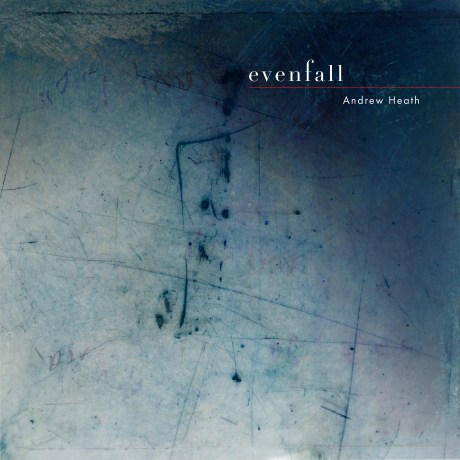
Once more resonating with the piano explorations of open-ended collaborative partner on a series of projects over the years, Hans-Joachim Roedelius – most famously on the Meeting The Magus album, and more recently with the live improvised recording Triptych In Blue, which also features fellow avant-garde composer/artist Christopher Chaplin – Andrew Heath’s latest album for Disco Gecko (his fifth) continues to emanate the most deft and ambient of musical articulations from a chosen environment. As with his last album Soundings, the self-styled composer of ‘lower-case’ minimalism evokes enigmatic, mysterious and occasionally mournful passages of evolving, passing time through the use of found and created sound manipulation and in-situ (a concatenate theme that connects to Heath’s site specific video art) field recordings.
The ‘in-situ’ of this soft imbued tribute to the Evenfall hour of light that beckons the start of the evening is a remote woodland glade in the English Cotswolds. It’s a place where nocturnal nature meets the machinations of human activity, the friction buzz and fizzled zap of a manmade electric fence and distant humming drones of an unidentified engine offer a constant synthesized undulation for light rain and stirrings in the undergrowth.
Articulating the seclusion, though never far away from the presence of the outside world, and passing of time in his chosen Avalon, Heath’s signature phrased piano note caresses, couplets and subtly-placed chords are this time accompanied and expanded upon to not only feature his own underwater bendy guitar and Morse-code tapping tape manipulations but also the searing soprano saxophone of the award-winning (Young Musician Of The Year 2018) Lydia Kenny and poignantly stark narrated poetry of the prize-winning Romanian poet, writer and journalist Maria Stadnicka. You could say it was a Gloucestershire effort, if not certainly informed by the county, as all the cast on this recording are based there or have an affinity with it, and of course it is home to the location from which the field recordings are taken from.
Kenny for her part, offers a suffused longing with occasionally piercing notes traverse to Heath’s piano and burnished, rubbing metallic drones on ‘The Still Of Evenfall’, and Stadnicka reads, in an almost automated, somehow not quite human mimicry of A.I. fashion, her intimate elegiac and startling erudite poem Breathing on the floating, misty ambient ‘The Garden Reveals Itself’: A poetic revelation metaphor that chimes with Heath’s unhurried compositions, the final line of Stadnicka’s poem lending itself to the title, describing artfully through the action of ‘breathing’ the memories, sense and sensations that come to those awaiting the inevitable; ruminating on the hours left:
‘He believes in time,
and in mistakes –
the heroic stare of heavy hours,
equally empty for all.’
With what sounds like all the time in the world, unpressured and untethered Heath creates the minimalist musical equivalent of slow food – though every effort is made at a serialism non-musical exploration, rhythms and patterns emerge to put this album in the neo-classical and melodious ambient camps. Adding at a slow pace a number of instruments and techniques Heath expands his nuanced experiments on Evenfall to shift, however minor, the focus and atmosphere on each new album. Heath stakes his claim as a natural scion of the ambient progenitors, especially his sometime foil, Roedelius: A compliment that don’t come any better.
Picturebox ‘Escapes’ (Gare du Nord) 21st September 2018

As if the cottage-industry polyglot Ian Button hadn’t led or collaborated enough already, more or less appearing as he does as the omnipresent instigator of the lion’s share of releases on his own diy-fashioned Kent-Paris international connected label Gare du Nord, he’s back once more stoking the fires of another unassuming supergroup: Picturebox. Two years on from the Canterbury soft bulletin psych and curious pop-imbued band’s last album, Button has somehow not only found the time and the patience to recall songwriter Robert Halcrow, Ben Lockwood and Alex Williams but also corralled fellow label stalwart Jack Hayter (a multi-tasker in his own right, he’s let loose on the violin on the Slim Chance-esque rustic canal path ‘The Vicar’s Dog’) and one-man band Matthew Dutra (not letting anyone else get a look in, Dutra not only co-wrote the concertinaed train journey inspired ‘GNER’ but also plays the guitar, piano and harmonica on it). In many ways a crossover project, Picturebox shares members with Buton’s other label love-in, and growing super-supergroup, Papernut Cambridge.
Quintessentially English, channeling many of the Kentish and bordering counties cannon of lo-fi mavericks and psychedelic eccentrics, from Kevin Ayers to Syd Barrett, though equally comfortable evoking new wave, Britpop and indie, the Picturebox set out to produce ‘pop music with an edge.’ And so just when you think the grinding fuzz and warping that introduces the album’s opening track, ‘Stumble’, indicates we might be in for an abrasive psych trudge they break out into a jangly pop mash-up of The Lemonheads, Stiff Fingers and Robyn Hitchcock. Elsewhere they evoke a melancholic Boo Radleys on the wistful daydream ‘Secret Escapes’, Denim on the Casio bossa-shimmer pre-set kooky ‘Nice Boys’ Mobile Disco’ and The Kinks on the downer minor bass chord pinged and submerged ‘Sirens’.
Those familiar to the label and its signature themes will recognize the idiosyncratic whimsy, sometimes surreal resignation, that often disarms or brings a comical veil to the sadder tropes of loneliness, unrequited love, and political climate, or as this album’s title makes apparent, the idea of and need to escape. Frustrations and the feelings of powerlessness, whether it’s in a job or relationship transcribe into quirks and metaphors: For example, the trapped in uninspiring low paid work after leaving school, encapsulated in the conformity of a ‘Uniform’.
Escaping by train, cab and airplane, Picturebox seem to have failed in getting away if the album’s final vignette swansong is anything to go by. That finale, ‘Troyte’, is a fleeting elegiac woozy Church organ service; a pastoral English past encapsulated and recalled in a short venerable passage; a reminder of the past, nostalgia and parochialism, which might be a comment on Brexit. The mood and outcome of which the group really hopes to break free and escape from. Pop music with an edge indeed, Escapes is another brilliant curious songbook of melodic eccentricity from the Gare du Nord stable.
Stringmodulator ‘Manifesto – Noises Made By Guitar And Bass’ (Submarine Broadcasting Company) 10th September 2018

Pretty much summing up the methodology of the German duo, the Stringmodulator moniker and title of their latest album is self-explanatory: Basically take your guitar and bass strings and…well, modulate them. Modulate them that is, through an effects-pedal switchboard of phaser, fuzz, reverb, cosmic flange and delay; ten strings looping, overlapping and pulsing to create a sound greater than the sum parts of Jan Quednau’s bass and Fabian Chmielewski’s electric guitar.
Entirely channeling through these two instruments, composed spontaneously and recorded on a two-track device without overdubs, the duo’s manifesto-driven debut for the Submarine Broadcasting Company platform transduces elements of Krautrock, post-rock, electronica and jazz fusion into a warped soundtrack of curious, wild and motoring instrumentals.
After the swirling ambient mists and distant low airplane engine like hums have dissipated on the ‘Prologue’, repetitive notation nodes, loops, patterns and resonance form to produce a Techno rhythm and bounce on the rock music version of ‘Pocket Calculator’ meets Yellow Magic Orchestra ‘Thump & Shriek’. Ruminating over pining, often meditative, landscape, Chmielewski’s guitar phrases arch and arc like the communing astral postures of Manuel Göttsching; especially on the ballad-esque scenic cave with water pool feature curtain call ‘A Quiet Place’.
Providing a varied and echo-y bed for his musical partner, Quednau offers a driving, prowling rhythm with his bass, but can also create a vaporous presence. On the Mike Oldfield lurking in the crypt with John Carpenter spooky suspense ‘Horror Vacui’, that bass guitar lays down an ominous and looming Goblin-esque atmosphere, and manages to turn the Kosmische chugger ‘Growl’ into a twisted Native Indian tribal beat.
Careering between a possessed, strangulated Land Observations on the ghost-in-the-machine ‘Guitar Sabotage’ and a caustic reverberating The Normal on the sharp squiggly sculpted ‘White Noise’ the duo sure know how to fill enough space and make enough noise for just two instruments. Yet they can articulate and describe subtly and skillfully the emotions and themes of their attuned performances, especially on the aching distressed rebounded ‘Echo Chamber’.
Not unique by any stretch Stringmodulator are however quite different in their approach; many of their contemporaries choosing similar two-instrument collaborations, though it’s usually twinned with a drum kit, work in the rock and indie genres. More like an amped-up Eno & Fripp or loopcentric lapping Math Rock version of Ash Ra Temple colliding with Einstürzende Neubauten this ten-string project is influenced by a wide range of conceptual and experimental artists: even soundtrack composers. Arty, technical yet ballsy, they span many moods; energetic being one of their strongest. I’m recommending it though because it is so different and difficult to define. It confounds me to be honest. And I find that interesting.
Words: Dominic Valvona
Glitterbeat Records 5th Anniversary: A Celebration
March 22, 2018
Words: Dominic Valvona

If the Glitterbeat Records label had a remit, ‘a raison d’etre’, it would be all about transcending borders, whether it’s the physical, geographical or subconscious kind, to bring the most ‘vibrant’ and ‘committed’ of artists to a global audience. Finding existing and ‘possible musics’ (to borrow a term from the label’s own reissue of Jon Hassell and Brian Eno‘s iconic 1980 transformative soundscape experiment, Fourth World Volume One: Possible Musics) from across the world, the independent German-based sister label to Glitterhouse Records has in a short timeframe helped reshape and redefine what we know as ‘world music’ – a fatuous term in itself, still largely used to denote anything outside the comfort zone of Western commercial music.
Originally putting out a catalogue of sublime and obscure records from some of Malia’s most important, traversing desert blues and rock artists (from Ben Zabo to Tamikrest and the Songs For Desert Refugees compilation) on Glitterhouse, world traveler bluesman Chris Eckman of Dirtmusic fame (the labels unofficial in-house band) went on to co-found the Glitterbeat imprint with Peter Weber in 2013. The inaugural release on that label, now celebrating its fifth anniversary, was a 12″ remix of Ben Zabo’s Dana by Mark Ernestus (Rhythm & Sound, Basic Channel), released sometime around March 22nd, 2013.
From the already mentioned desert blues stars of Mali and ‘beyond’, Eckman’s ever growing roster of contemporary sonic adventurers hail from a number of other African countries, including Ghana, Mauritania and the Bargou Valley bordering Algeria. And has since gone on to expand its remit and reach out to include music from the Balkans, Southeast Asia, the Levant and South America.
As you can imagine, this global expansion encompasses a myriad of musical styles, many of which were in serious danger of disappearing into obscurity if not for the work of music ethnologists such as Paul Chandler and Grammy Award winning field-recordist/producer Ian Brennan (we were lucky enough to interview Ian a couple of years ago), who both recorded for posterity ‘lost voices’ and atavistic guardianship documented collections for the label under the Hidden Musics series.
So busy and bustling with potential releases, in the last couple of years they’ve set up a congruous imprint of their own, the tak:til scion: an extension and home for more transcendental, meditative and experimental material that doesn’t quite fit the main label. Featuring a mix of re-released and remastered iconic albums from the ambient, soundscape and devotional genres – including the already mentioned inaugural Jon Hassell and Brian Eno collaboration -, Tak:til has featured Širom‘s Slovenian odyssey I Can Be A Clay Snapper and 75 Dollar Bill‘s psychedelic desert rock and trance of the Maghreb, avant-garde, jazz and even swamp boogie delta blues transient W/M/P/P/R/R.
From handkerchief waving Albanian songs of sorrow to Istanbul dub; from hybrid collaborations such as Tony Allen‘s album with some of Haiti’s finest musicans, the Afro-Haitian Experimental Orchestra, to the electric griot psych of Noura Mint Seymali; from the Turkish pregriation and siren vocals of Gaye Su Akyol to the carnival funk of Bixiga 70; Glitterbeat Records has helped uncover a whole new musical world of discovery for people like me. It’s no surprise that they’ve won the WOMAX label of the year so many times, and attracted heaps of acclaim. I’ve more or less featured every single one of their forty plus releases, and seldom found a dud. And Glitterbeat Records have appeared more times than any other label in our end of year features.
To celebrate the label’s fifth anniversary, I’ve chosen both personal favourite releases and tracks from the back catalogue.
Lobi Traoré ‘Bamako Nights: Live At Bar Bozo 1995’ 2013

From the very beginning, one of Glitterbeat Records earliest releases, Bamako Nights captures the loose, almost extemporized sounding, drift of the late Malian legend Lobi Traoré (who died at the age of 49 in 2010); capturing one of his ‘packed-to-the-rafters’ live shows from the feted and iconic Bar Bozo. The singer/songwriter takes the crowd with him as he meditatively affects an adroit passage through Mali’s social and political pains. Attenuate guitar lines bolstered by flanger; licks powered by enveloping sustain; and a band whose steady yet often expletory solo spotted, bubbling bass and rapid percussion bind the nuanced accents together, all prove rhythmically hypnotic.
To have been a-fly-on-the-wall at one of these intimate, intense, shows must have been a magical experience; especially as Traoré kept the anticipation building; the appreciative audience either enthralled by every descriptive note and earthy toiled vocal or adding their own backing chorus of spiritual hollering and hand clapping: You’ll be hard-pressed to find a greater live experience and encapsulation of the atavistic West African blues.
Samba Touré ‘Albala’ 2013
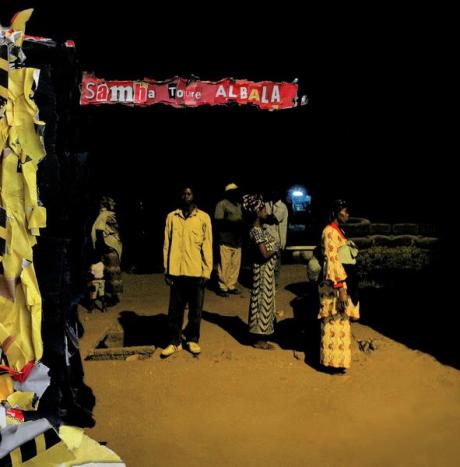
As Mali continues to exist in a fragile union after the recent Islamic hijacked insurgency (curtailed by former colonial masters France with additional support from the UK), a host of the country’s great and good (Bassekou Kouyate, Fatoumata Diawara, Baba Salah, Tamikrest to name just a few), compelled to speak out, have added gravitas to their praised sweet tribal blues in defiance of the regimes that would have banned or at the very least censored their music. Known for his work with the late Malian legend, Ali Farka Touré, Samba Touré is an amiable enough chap whose previous acclaimed albums, Songhaï Blues and Crocodile Blues, were more genial affairs, shows his disapproval with a grittier, riskier brand of protest on Albala.
Albala – translated from the Songhaï language as ‘danger’ or ‘risk’ – is a darker, albeit lamentably so, album. But so delicately melodious and nimble is the delivery that the cries of woe remain hymn-like and hypnotically diaphanous: the blues may have turned a deeper shade of forlorn yet still sways with meandrous buoyancy and restrained elegance.
A traditional accompaniment from Touré’s regular band mates Djimé Sissoko (on ngoni) and Madou Sanogo (tapping out a suitable candour on congas and djembe), with guest performances from celebrated ‘master’ of the one-stringed violin, the souk, Zoumana Tereta, and fellow Malian ‘neo-traditional’ singer Aminata Wassidje Touré is bolstered by effective guitar and keyboard layers from Hugo Race (The Bad Seeds, Dirtmusic, Fatalists). This subtle mix works wonders, giving the overall sound a mystical delta blues feel, resplendent with fuzz, wah-wah and wailing soul.
Aziza Brahim ‘Soutak’ 2014

Born in the hardened landscape of a Saharawi refugee camp on the border of Algeria and the Western Sahara, beguiled vocalist Aziza Brahim embodies the wandering spirit of her people; their settled, though often borderless and disputed lands, previously claimed by Spain, were invaded in 1975 by Morocco. Though made up of many tribes with many different goals the Saharawi people did mount a fight back. It was in this climate that Brahim was hewed.
Soutak, or ‘your voice’, is centered on just that. The backing is striped to a degree, so the poetic reverberated vocals can echo and warble soulfully without interruption. Though there is no mistaking that strong, robust and primal Saharan spirit, the congruous accompaniment is a mix of both Balearic and folk rock styles – especially the deep sleek bass guitar notes that slide and weave under Brahim’s distinctive voice.
Produced by Chris Eckman (of Dirtmusic fame), whose assiduous talents have done wonders with Malian blues rockers Tamikrest and Bamako Afrobeat artist Ben Zabo, Soutak was recorded live in Barcelona: the fluid lilting cosmopolitan sound of that city is unmistakable.
Serene and subtly sung, the choral, almost desert gospel hymns take time to unfurl their charms, so be patient. Once again Glitterbeat and Eckman have a classic world music crossover on their hands.
Dirtmusic ‘Lion City’ 2014

Connecting the ‘dirt music’ environment of an unforgiving Australian outback with the Cajun swamplands, desert and bustling African townships, Glitterbeat Records co-founder and producer of their awe-inspiring roster of world music greats, Chris Eckman, leads his nomad troupe across esoteric and meditative terrain soundscapes.
At times almost alien, their borderless approach to mixing rock, blues and (mostly) West African music in a seamless wash, creates something both mysterious and original. Recorded at the same time as their last album Troubles, in Bamako, Lion City couldn’t help but be guided politically and socially by the upheaval in Mali. A testament to the eerie developments and a lament that also offers hope, Dirtmusic and their guests (which include such luminaries as the Ben Zabo Band and Samba Touré) prove that you can work alongside African artists without succumbing to condensation.
Far more successful if not authentic than anything Albarn or indeed the ‘Radio’ polygenesis collectors The Clash could ever produce, these Westerners move serenely, blurring the cultural boundaries as they circumnavigate the psychogeography of the chaotic city and romanticized but often harsh sand dune landscapes of both West and North Africa. You could say it was a culmination of the entire Glitterbeat labels stock, condescend into one challenging soundtrack.
Noura Mint Seymali ‘Tzenni’ 2014

The technicalities, pentatonic melodies and the fundamental mechanics aside, nothing can quite prepare you for that opening atavistic, panoramic vocal and off-kilter kick-drum and snare; an ancestral lineage that reaches back a thousand odd years, given the most electric crisp production, magically restores your faith in finding new music that can resonate and move you in equal measure.
Hailing from the Islamic Republic of Mauritania, nestled in between Algeria, Senegal, Mali and the Western Sahara, with the Atlantic lapping its shoreline, Noura Mint Seymali keeps tradition alive in a modern, tumultuous, climate. Her homeland – run ever since a coup in 2008, by the former general Mohamed Ould Abdel Aziz, duly elected president in 2009 – was rocked by the immolation sparked Arab Spring and subsequent youth movement protests, all of which were violently suppressed by the authorities. Add the omnipresent problems of FGM, child labour and human trafficking to the equation and you have enough catalysts to last a lifetime. However, Noura’s veracious commanding voice responds with a dualistic spirit, the balance of light and shade putting a mostly positive, if not thumping backbeat, to forlorn and mourning.
Recorded in New York, Dakar and in the Mauritania capital of Nouakchott, Tzenni transverses a cosmopolitan map of influences and musical escapism. The original heritage still remains strong, yet the ancient order of griot finds solace with the psychedelic and beyond.
Jon Hassell/Brian Eno ‘Fourth World Vol.1: Possible Musics’ 2014
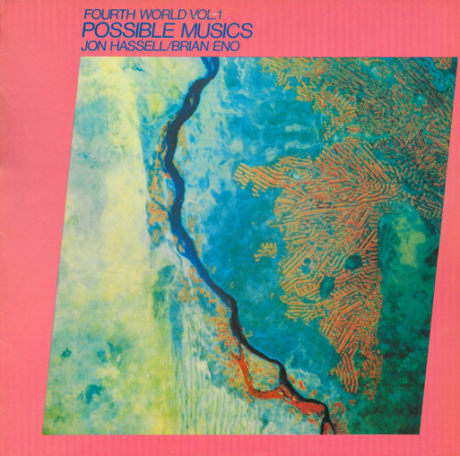
Already riding high on a crust of acclaimed production projects and numerous semi-successful collaborations and solo albums, when Brian Eno touched down in New York City in 1978 he would unintentionally help direct another important development in ambient and world music (and also end up staying for five-years). Absorbed in what the city had to offer him musically, Eno came across the stripped and atmospherically rich experiments of trumpeter/composer Jon Hassell, who’s own pathway from adroit pupil of Stockhausen to seminal work on Terry Riley’s harangued piano guided In C, encompassed an polygenesis of influences: a lineage that draws inspiration from avant-garde progenitors like La Monte Young, and travels far and wide, absorbing sounds from Java to Burundi.
Though a minor figure in the sense of worldwide recognition, and never one to brush with any sort of commercial popular appeal, Hassell irked out his own personal philosophy. With a handy masters degree in composition, he attempted a reification of what he would term the “fourth world”; a style that reimagined an amorphous hybrid of cultures; a merger between the traditions and spiritualism of the third world (conceived during the “cold war” to denote any country that fell outside the industrious wealthier west, and not under the control of the Soviet Empire) and the technology of the first.
Untethered to any particular landscape and age (though traversing for the most part the mysterious, veiled continent of a inter-dimensional Africa), geographical and environmental alluded titles act as points of reference; alluding both to such diverse subject matter as the traditional songs of the Central African pygmy tribes (Ba-Benzéle) and the latitudes and weather phenomenon of an undisclosed landscape or city (Rising Thermal 14° 16’ N; 32° 28’ E).
Moving at a similar pace throughout, the lingering vapours drift over and enclose the listener; hinting always at some mystical or miasma presence; steeping each composition in a sepia of low emitting foggy harbour like droning horns, plastic pipe sounding percussion, tape echo experimentation, panoramic glides over the savannahs and of course Hassell’s stripped bare, reedy and masked stirring trumpet.
An almost continuous set of transient movements, the mood varied from lightly administered rhythmically slow paced pieces to cerebral blankets of panoptic memory; a style coined as “future primitive”. Reissued by Glitterbeat Records under their visionary imprint Tak:til, this album can be read as a principle guiding light and inspiration for their roster and ambitions.
Various ‘Hanoi Masters: War Is A wound, Peace Is A Scar’ 2015
A side excursion, travelling due east to Asia and breathing in the evocative songs of Vietnam, Glitterbeat Records launched their new series of field recordings entitled Hidden Musics with the Hanoi Masters compilation. Finding a congruous musical link with their usual fare of West African releases, the label sent Grammy-award winning producer Ian Brennan (credits include, Tinariwen, Malawi Mouse Boys, The Good Ones) to Vietnam in the summer of 2014 to record some of the most lamentable and haunting resonating war-scarred music. Indelibly linked to what the indigenous population call ‘the American war’, the examples of both yearning and praise pay tribute to the fallen: delivered not in triumphant or propagandist bombast but in a gentle meditative manner, these survivors, forty years on from the end of the harrowing and catastrophic (the repercussion still reverberating in the psyche of the burned America and its allies) war, were still undergoing the healing process.
Tinged with an omnipresent lilting sadness these songs are imbued with battle scars (hence the albums subtitle War Is A wound, Peace Is A Scar), featured artisans and traditional music masters who had joined the cause, sometimes for the first time in years, allow their voices to be heard once again and recorded for posterity.
Considering the history and ill blood between cultures – though this has eroded as capitalism takes hold and the country opens up – it has in the past been difficult to investigate the serene and attentive beauty of the Vietnam music scene, but this earnest and adroit study into a world seldom covered proves enlightening and humbling.
Bixiga 70 ‘III’ 2015
Speaking Fela fluently with marked respect and reverence, going as far as to borrow part of the late Nigerian bandleader and doyen of Afrobeat’s backing group moniker, Bixiga 70 may be inspired and informed by Kuti but they do so much more with his high energy polyrhythms and feverish hot-footed anthems. The eclectic Sao Paulo band, who joined the Glitterbeat family in 2015, add even more flavour to the Afrobeat template on this their third album. Energised by their performances in the hotbeds of fusion, from North Africa to Europe, and working with a decentralised method of producing new material, the III album reaches out and embraces an even richer array of world sounds.
Incorporating the rhythms and dances of their own continental home, Bixiga shake and shimmy to the local customs of cumbia and the sensual hip movements of the carimbo on a trio of slinky paeans to the indomitable spirit of joyous release. Congruously they go, flowing from one source to the next deftly, passionately and with a raw powered energy, our Brazilian friends relationship with Glitterbeat has proved to be a sound move; an ideal home for the group’s ever expanding fields of sound and exploration.
Afro-Haitian Experimental Orchestra ‘A.H.E.O’ 2016
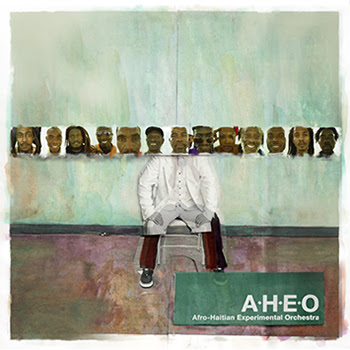
Progenitor and embodiment of the Afrobeat drum sound, still in high demand four decades after his explosive partnership with Fela Kuti, the much-venerated Tony Allen extends his infectious percussion style beyond the African homeland. Sharing an obvious entwined history with Africa, the shared Hispaniola Island of Haiti proves both an esoterically mysterious and congruous collaborative foil to Allen’s distinct drumming patois.
Invited to perform in 2014 by the French Institute Of Haiti’s director Corinne Micaelli, Allen’s visit would end with a public broadcasted concert in the main square of the capital, Port-au-Prince. Collaborating with Allen would be a cross-section of local percussionists and singers recruited by vocalist, dancer, ‘voodoo priest’ and director of the Haitian National Bureau Of Ethnology, Erol Josué; Josué would himself lend his sweet yearning and reflective tones to two of the tracks on this album.
The call went out and the great and good of the Haitian music scene came. Racine Mapou de Azor, the Yisra’El Band, Lakou Mizik and RAM. Another Monolith regular and one-time Port-au-Prince resident, Mark Mulholland was drafted in as the experimental orchestra’s guitarist, and as it would turn out, eventual legacy overseer. With only five days of studio rehearsal time to gel and work out their performance, the sessions proved both, as Mulholland observed, ‘chaotic’ and overwhelming’.
Elevating beyond the borders it was created behind, the Afro-Haitian Experimental Orchestra root foundations shuffle and shake free of their stereotypes to move freely in an increasingly amorphous musical landscape. You’re just as likely to hear vibrations and traces of Dub, native Indian plaintive ghostly echoes, Sun Ra’s otherworldly jazz and funk as to hear the indigenous Haiti sounds and Afrobeat pulse. Tony Allen is once more at the heart of another bustling, dynamic explosion in rhythm.
Various Artists ‘Hidden Musics Vol 2. Every Song Has Its End: Sonic Dispatches From Traditional Mali’ 2016

Though no less an achievement, the second volume in Glitterbeat Records “Hidden Musics” series offers the full gamut not just musically but visually too, and is a far more ambitious documentation of a troubled country’s lost tradition than the 2015 Hanoi Masters survey. Expanding to include 11 concatenate videos, Every Song Has Its End is the most complete purview of Mali’s musical roots yet. This is due to the project’s mastermind and architect Paul Chandler, who has documented Mali’s music scene for more than a decade.
Forgotten in some extreme cases, ignored or considered as Mali’s past by new generations, maestros of the 6-string Danh, such as Boukader Coulibaly, and the Balafon, Kassoun Bagayoko, are celebrated and interviewed for this collection. Whether it’s traversing the Gao region in the northwest to record the earthy desert pants of the female vocal ensemble, Group Ekanzam, or capturing a Sokou and N’goni love paean performance by Bina Koumaré & Madou Diabate in the heart of the country, this chronicle of the pains, virtues, trauma and spirit of the country’s musical heritage is an extraordinary love letter and testament to the country.
Bargou 08 ‘Targ’ 2017
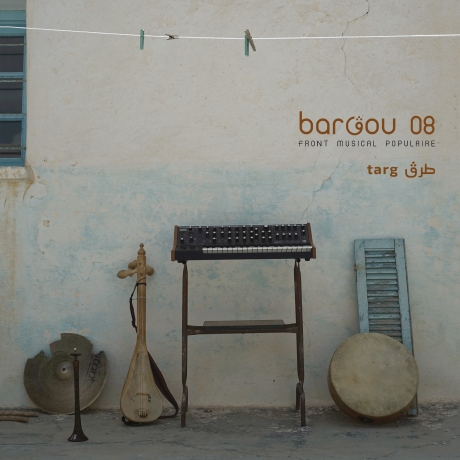
Ahh…the sounds of a dusky reedy gasba flute; the tactile patted and burnished bendir drum; the rustic, earthy strung loutar, and the flowing, soaring scale vocals of the Bargou 08 project’s chief instigator Nidhal Yahyaoui, set an impressive atmosphere in the first couple of minutes of the album’s opening track, Chechel Khater. And that’s all you’d need, except there’s another eight equally evocative and thrilling tracks to hear.
The source of this sound derives from a relatively uncharted region that lies obscured between the mountains of northwest Tunisia and the Algerian border, called the Bargou Valley, which despite its barren isolation, has cultured a unique musical fusion, stretching back hundreds of years. Captivating and magical enough in its ancestral unchanged form, the songs of the valley, sung in the local Targ dialect (a language that is one part Berber, the other Arabic), are given a contemporary jolt that transforms the atavistic paeans, odes and poetry of yore into an intoxicating swirling rapture of electronic North African funk.
Filled with a legacy of turmoil and tension that goes back an aeon the album’s many themes, from describing a lover’s vital attributes on Mamchout to laments of alienation, resonate strongly with the growing unease of events, initiated six years ago by the Arab Spring. Tunisia itself is facing a struggle and teetering on the edge, with no guarantee that certain cultures won’t just disappear or be fragmented in the ensuing melee. Originally setting out to document his Bargou Valley home’s musical heritage before it disappeared, Yahyaoui has successfully and thankfully, with his musical partner, producer and the album’s keyboard player Sofyann Ben Youssef captured this rich mesmeric culture for posterity. And in doing so, produced a masterpiece that will endure.
Širom ‘I Can Be A Clay Snapper’ 2017
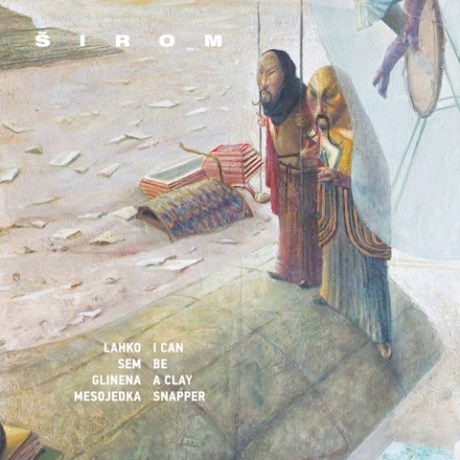
With an unspecified, but as the name suggests, emphasis on the “tactile”, Glitterbeat Records new imprint label gives a welcome platform to entrancing experimental tonal performances and sonic polygenesis traverses alike. In the latter camp is this Slovenian peregrination suite from the landlocked, Alps nestling country’s visceral sonic conjurors, Širom.
Evoking memories and feelings, both real and imagined, with a soundtrack thick with atavistic connections, the trio of punk and post-rockers turn experimental folk and acoustic instrumental cartographers convey a personal relationship to their homeland, on their second album together under the Širom banner.
Yet whatever the backgrounds, traces of North Africa, the Adriatic and the Middle East, the performances sail scenically through a dreamy otherworldly representation of Slovenia: Oriental, alien and Balkan visions permeate the plucked, malleted, chimed and purposefully played compositions, which subtly and rather cleverly build up complicated layers and various overlapping time signatures during the course of their journey.
Theremin like siren voices drift in and out, enacting the myth and seraph, whilst on the watermill turning Everything I Sow Is Fatal Sun Ra travels with John Cale and Pharaoh Sanders on a pilgrimage to Samarkand. The most recurring sounds however pay testament to the Balkans ghosts. The folkloric stirrings, lulls and yearning of Slovenia’s past bordering both a pan-Europa of migration and grief – stretching back a millennia – are transduced into often haunted vistas and metaphysical passages.
A most impressive and expansive inaugural Balkans travail; different from the previous two releases on this burgeoning new imprint, yet keeping to the tactile, accentuate and imaginative remit, whilst conjuring up mystical new soundscapes.
Tamikrest ‘Kidal’ 2017
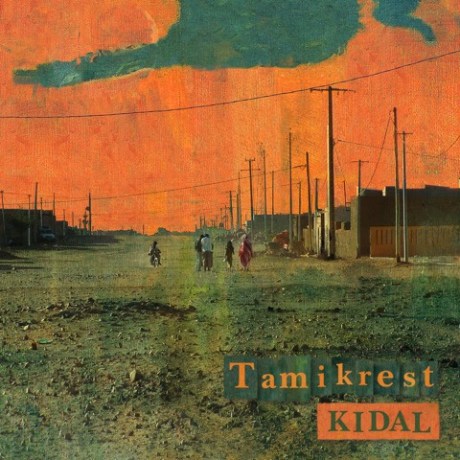
Still availed of a homeland, though now liberated from their draconian Islamist partners, the Tuareg are once again left as wanderers in their own land, the unofficial guardians and custodians of the Saharan wilderness. For now only a dream, best realized and protested through music, the rock’n’roll Bedouins Tamikrest emerge once more from the barren landscape with a message of “power and resistance” on their fourth, equally entrancing, album Kidal. Paying homage to the strategically and spiritually important cultural trading town of the title, the highly-acclaimed (and rightly so) Tamikrest exude both the sadness and suffering of the dispossessed people who cling to the southwestern Saharan hub that is Kidal: a town which has seen its fair share of fighting, fought over, conquered and reconquered over time, it remains a symbolic home to the Tuareg. This is after all the town that nurtured them and where it all began.
Assiduous, confident and articulate, the musicianship shows not so much a progression as a balance between the meditative and rock’n’roll spirit of the Tuareg musical resistance. Tamikrest are as brilliant as ever musically, and Kidal is, despite its plaintive and lamentable subject woes, a beacon of hope in an ever-darkening world of uncertainty.
Ifriqiyya Électrique ‘Rûwâhîne’ 2017

Capturing something quite unique, the collaborative industrial post-punk and avant-garde rock scenes of Europe clash head-on with the descendants of the Hausa slaves atavistic rituals styled group, Ifriqiyya Electrique, create an often unworldly chthonian conjuncture of Sufi trance, spirit possession performance and technology.
A film project and now immersive sonic experience, inspired by the important Banga music traditions and the accommodating, rather than exorcising, of spirits ceremonial wild dances and call and response chanted exaltations of the black communities – originally transported to the region from sub-Saharan Africa – in the oasis towns of southern Tunisia, this astounding meeting of cultures and history is anything but scenic.
Formed in the Djerid Desert, the idea forged by field-recordist and veteran guitarist of the politically-charged Mediterranean punk and “avant-rock” scenes, François Cambuzat, and bassist Gianna Greco – both of which occasionally join forces with that livewire icon of the N.Y. underground, Lydia Lunch, to form the Putan Club -, the Ifriqiyya Electrique spans both continents and time. For their part, Cambuzat and Greco provide the grind, industrial soundscape texturing, sonorous drones and flayed guitars, but mostly, the “electrique”, whilst, offering a dialogue with the spirits and the tradition, Banga musician Ali Chouchen – joined in the live theatre by an expanded cast of fellow voices, krabebs and Tunisian tabla players from the community, which includes Tarek Sultan, Yahia Chouchen and Youssef Ghazala – provides peripheral sounding evocative echoed and esoteric vocals and equally haunting nagharat.
Spiritual conversations transformed and realigned with the machine age turmoil of industrial noise, Arthur Baker style rock and hip-hop production, post-punk and even Teutonic techno, Rûwâhîne is a rambunctious unique force.
Park Jiha ‘Communion’ 2018

Circumnavigating the globe to bring much-needed exposure to new sounds, Glitterbeat Records imprint tak:til gives a second wind to a suite of acuity serialism from Southeast Asia. Released originally in South Korea in 2016, the neo-classical musician/composer Park Jiha’s debut solo album Communion is given an international release by the label of repute.
Inspiring what we’re told is a burgeoning Korean music scene (well, an alternative to the K-Pop craze), a chief progenitor of the movement Jiha alongside collaborative partner Jungmin Seo originally melded the country’s musical heritage with an eclectic range of contemporary sounds as the 숨[suːm] duo in 2007. Releasing the highly influential regional albums Rhythmic Space: A Pause For Breath (2010) and 2nd (2014), Park and Seo crossed the time zones to perform at both WOMAD and SXSW. Congruously putting the duo on hold to explore a more ‘personal’ and minimalistic ‘musical vocabulary’ as a solo artist, Jiha dexterously balances the air-y abstract breathes of the ‘piri’ double reed bamboo flute, the searing twang of the ‘saenghwang’ mouth organ and the softly paddled patter of the ‘yanggeum’ hammered dulcimer in what is a dialogue between a dulcet calm, the meditative and an entangled dissonance.
Transforming Korean traditions into a more experimental language that evokes the avant-garde, neo-classical and jazz yet something quite different, Park Jiha’s tranquil to entangled discourse evocations reach beyond their Southeast Asian borders both musically and metaphysically into something approaching the unique.
Playlist
 Monolith Cocktail Blog