Our Daily Bread 401: Ustad Saami ‘Pakistan Is For The Peaceful’
September 25, 2020
Review
Words: Dominic Valvona
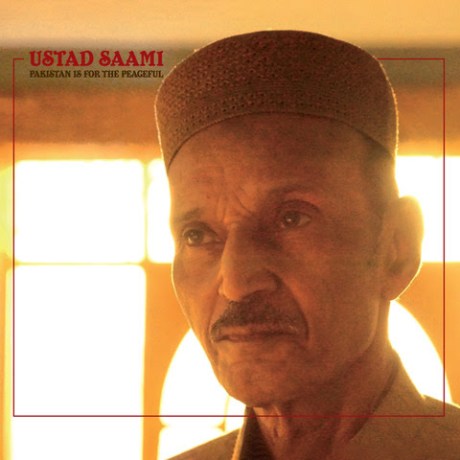
Ustad Saami ‘Pakistan Is For The Peaceful’
(Glitterbeat Records) Album/9th October 2020
The only living master of an ancient Sufi devotional form in transcendence, the seventy-six year old Ustad Saami lives in hope that his transportive blessed “Surti” music may yet bring peace to a most turbulent and dangerous Pakistan. In a region in which fundamentalism holds a powerful grip of fear on the population, most forms of music that don’t conform to a strict Islamic code are banned or at the very least pressured to go underground.
The danger is all too real and prevalent, and in venturing to Pakistan a few years ago to record the great adorations of Saami, the in-situ American producer Ian Brennan (no stranger to this blog) was taking a huge risk. Brennan is of course used (to a point) of luring out forgotten, ignored and obscure voices from some of the most inhospitable places and warzones in the world. The Hidden Music series for Glitterbeat Records, of which this is the second Saami album to be appear, has seen the Grammy Award winning producer already travel to both a post genocide Rwanda and Cambodia, and also to a mine-riddled Vietnam to coax out the most striking emotional of open and frank recordings. Now capturing for posterity, he once again facilitates the most intimate conditions for another deeply immersive liturgy of heavenly Surti adulations.
Pakistan Is For The Peaceful is, considering the geopolitical tumult and violence, a hopeful title. But then the exalted master has spent a lifetime in the service of his music; learning the forms 49-note microtonal system of vocal prayers since being singled out for the pathway to devotion. It has been a harsh learning at that; the pupil Saami forbidden by his master from speaking or communicating verbally, instead guided towards lyrical expressions. He wouldn’t even get to step on stage to perform this eight centuries generational hand-me-down veneration until the age of thirty-five. And then, until only in recent years, more or less confined to his home of Pakistan. Now in his mid seventies, a more worn Saami still manages to rise every morning at 4am to practice and perform his drill exercises until dawn.
Following on from the well-received 2019 album God Is Not A Terrorist this second brassy resonating, concertinaed and bellowed magisterial rich suite of incredibly hypnotic lengthy performances is even better.
Joined by his four sons (Rauf, Urooj, Ahmed and Azeem), who both vocally respond to Saami’s paeans and provide an assortment of dipped, purposeful and reverberating harmonium, tambura and tabla, the master conjures up a holy out-of-body experience. Performing from Saami’s rooftop home in Karachi, this ensemble entrance and send the listener off into the inspired heavens.
The leading voice of Saami comes from the gut, but isn’t so much guttural as aching in its reverence and otherworldliness. Those shimmering nodes of resonance and sorrowed drones meanwhile stir up a spiritual epiphany: something extremely special.
This album is why I started this whole damn blog; a search for those uncynical real performances that get lost in the daily hubris of incessant noise and divisive outrage. This is music from another dimension in comparison to all that. And thanks in part to Brennan; it will now exist as a recorded testament forever, even if it this form of Islamic spiritualist music is set to die out with its leading light. As sad as that sounds, that dying art has never sounded so ethereal and yet alive. So I say: soak it up; bathe in the glow.
Also…
Ustad Saami ‘God Is Not A Terrorist’ here…
Glitterbeat Records 5th anniversary special here…
The Ian Brennan interview here…
Hi, my name is Dominic Valvona and I’m the Founder of the music/culture blog monolithcocktail.com For the last ten years I’ve featured and supported music, musicians and labels we love across genres from around the world that we think you’ll want to know about. No content on the site is paid for or sponsored and we only feature artists we have genuine respect for /love. If you enjoy our reviews (and we often write long, thoughtful ones), found a new artist you admire or if we have featured you or artists you represent and would like to buy us a coffee at https://ko-fi.com/monolithcocktail to say cheers for spreading the word, then that would be much appreciated.
Monolith Cocktail Social Playlist: Vol. XLIX: Kamuran Akkor, Zoot, Awate, Dead Moon, Cut Worms…
September 23, 2020
PLAYLIST
Dominic Valvona
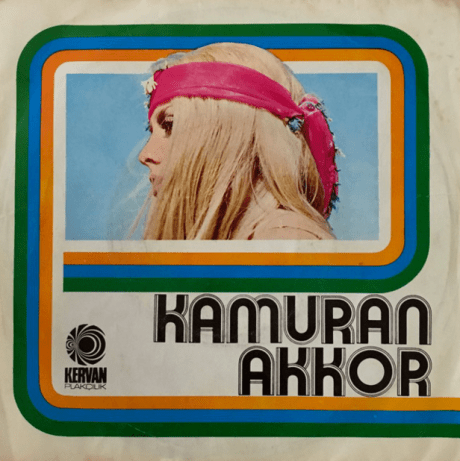
For all our friends and followers alike in the shadow of a second coronavirus lockdown, let the Monolith Cocktail ease some of the doldrums and boredoms of a partial restricted winter with another Social Playlist (the 49th edition in fact). The blog’s imaginary radio show (or podcast if you prefer) brings together tracks from across time, genres and the globe to take the listener on a musical odyssey of discovery; with a few recent reissues and even newish tracks thrown in. Expect to anything or everything between Turkish sirens, troubled troubadours that failed to break through, preposterous hard rawk and kitsch beat band cover versions, diaphanous voices from North Africa, the sounds of liberation, concept prog, moseying cowboy blues and good ol’ gospel veneration.
For those of you without access to Spotify, we’ve chosen a random smattering of tracks from Youtube below the track list.
TRACK LIST FOR VOLUME XLIX:
Kamuran Akkor ‘Yorgun Gozler’
Gina X Performance ‘Strip Tease’
Ilous & Decuyper ‘Beruk !!!’
Jon English ‘Laughing At The Guru’
Selda Bagcan ‘Yaz Gazeteci Yaz’
Peter Ives ‘In Pursuit Of Treasure’
Zoot ‘Eleanor Rigby’
Iron Claw ‘Gonna Be Free’
Guadalcanal Diary ‘Michael Rockefeller’
The Toms ‘It’s Needless’
Charanjit Singh ‘Hey Mujhe Dil De’
Orchestre Regional De Mopti ‘Boro’
Sounds Of Liberation ‘Billie One’
Kool Blues ‘Can We Try Love Again’
Los Teddy’s ‘Soy Jack Flash’
Kim Tolliver ‘I Gotta Find A Way’
Derrick Morgan ‘Never Stop Loving You’
Awate (Ft. Turkish Dcypha) ‘Austerity’
Haiku D’ Etat ‘Slower Traffic To The Right’
Nice & Smooth ‘How To Flow’
Maryn E. Coote ‘Emotion’
James Reese & The Progressions ‘You Can Make It If You Try/Love Ain’t Easy’
These Trails ‘Sowed A Seed’
Nahawa Doumbia ‘Blonde Yirini’
Emerald Web ‘Openings’
Good Doom ‘Multi Level Lounge’
Cut Worms ‘Every Once In A While’
Front Page Review ‘FEELS LIKE LOVE’
Julian’s Treatment ‘Fourth From The Sun’
Blackfeather ‘Seasons Of Change Pt. 1’
Deux Filles ‘Shalama’
Rufus Zuphall ‘Knights Of The 3rd Degree’
Speed, Glue & Shinki ‘Mr. Walking Drugstore Man’
Cowboy ‘Use Your Situation’
Washington Phillips ‘Take Your Burden To The Lord And Leave It There’
Dead Moon ‘Can’t Help Falling In Love’
And those Youtube versions:
Hi, my name is Dominic Valvona and I’m the Founder of the music/culture blog monolithcocktail.com For the last ten years I’ve featured and supported music, musicians and labels we love across genres from around the world that we think you’ll want to know about. No content on the site is paid for or sponsored and we only feature artists we have genuine respect for /love. If you enjoy our reviews (and we often write long, thoughtful ones), found a new artist you admire or if we have featured you or artists you represent and would like to buy us a coffee at https://ko-fi.com/monolithcocktail to say cheers for spreading the word, then that would be much appreciated.
Our Daily Bread 400: Rupert Lally ‘Marine Life’
September 21, 2020
Review
Words: Dominic Valvona
Rupert Lally ‘Marine Life’
(Glass Reservoir) Album/21st September 2020
From an experimental gently challenging label that has only just resurfaced after a long hiatus – following the release of Darren Hayman’s out-of-the-box exploration, Wembley Eiffel Tower -, Glass Reservoir is thankfully back with a roster of new releases in 2020. They’ve picked a right old apocalyptic time to make that return mind, but they have and I for one am happy with that.
GR is an imprint with a remit. That is, to explore the boundaries between the electronic and acoustic. Each release is an invitation to the artist; each release confined to digital download and a limited copy run of hand printed CDs.
The first of a trio of announced releases, Rupert Lally adds to his previous recent subtle Strange Systems and Lost To The Past suites with another evocative ambient soundtrack, Marine Life. An ocean purview, Lally’s aquatic delving compositions provide an out-of-body (of water) experience both beneath and above an unspecified, amorphous sea.
Less Jacques Cousteau and more a blend of Kosmische glide, Vangelis and Arthur C. Clarke’s Cradle, the marine life in this case is mysteriously majestic, supernatural and even alien. The album’s most surprising departure from the signature shimmery efflux, radiant and floating serenity is the almost dreamy, hallucinogenic ‘The Diving Bell’. Frazzled, fizzing splashes cast that bell into the depths of Atlantis on a submerged Bladerunner-esque, ghostly windswept score.
Tranquility beckons though on the album’s opening diaphanous becalmed tide stunner ‘Deceptively Calm’. Lally sends the listener sailing across topographic oceans, or diving into the enormity of nature across squarewaves, subtle melodious synth wanes, vapours and rotor-like undulations. It’s an album of synthesized nature, of refracted light play and the aural senses. Lally creates a great scenic soundtrack to re-launch a quality, unassuming, label.
Hi, my name is Dominic Valvona and I’m the Founder of the music/culture blog monolithcocktail.com For the last ten years I’ve featured and supported music, musicians and labels we love across genres from around the world that we think you’ll want to know about. No content on the site is paid for or sponsored and we only feature artists we have genuine respect for /love. If you enjoy our reviews (and we often write long, thoughtful ones), found a new artist you admire or if we have featured you or artists you represent and would like to buy us a coffee at https://ko-fi.com/monolithcocktail to say cheers for spreading the word, then that would be much appreciated.
Premiere: (Video) Giacomelli ‘The Best Of Both Possible Worlds, Part II’
September 17, 2020
Premiere
Words: Dominic Valvona
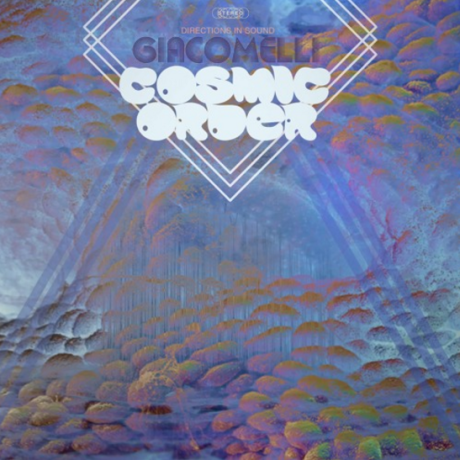
Giacomelli ‘The Best Of Both Possible Worlds, Part II’ taken from the upcoming album suite Cosmic Order released by Somewherecold Records, 9th October 2020
Beamed across the Atlantic by the North American hub Somewherecold Records, we have a most grand spanning opus from Silicon Valley composer Steve Giacomelli, who releases his triple CD expansive series of cosmic ordered suites for the experimental ambient and electronic label next month.
His fourth such album of ambient minimalism for the label, this celestial and evolutionary mined impressive ARP Odyssey synth birthed album of thirty-six ascendants, refractions, pulses and gravitas inspiring space music uses a number of techniques to accomplish an overall sound of forgotten Sky Record maestros (think Asmus Tietchens, Wolfgang Riechmann), Tangerine Dream, early Cluster, Vangelis, Tomat and solo Roedelius. This synthesized vision – that can sometimes err towards the ominous forebode and mystery of Kubrick – synthesis of the abstract, deep space, the inner mind, nature and the heavenly is accomplished with an apparently limited pallet and the use of counterpoint sequences, the generative and a method, favoured by Frank Zappa, called “xenochrony” – that is the extracting of a solo or other part from its original context and placing it into a completely different song/composition. These techniques make for a most impressive traverse of the astral planes, new age transcendence, theorems, gases and topographic ebbs and flows.
From that three-hour epic, the Monolith Cocktail is premièring the geometric patterned and busy algorithm Kosmische junction of nature and technology, ‘The Best Of Both Possible Worlds II’. Personally I’m hearing a cross serenity and pulse of Kraftwerk, Eno and Cage, but see what you think as we share this sweeping analogue soundtrack.
The 3XCD and digital download Cosmic Oder album is released by Somewherecold Records on the 9th October 2020
Hi, my name is Dominic Valvona and I’m the Founder of the music/culture blog monolithcocktail.com For the last ten years I’ve featured and supported music, musicians and labels we love across genres from around the world that we think you’ll want to know about. No content on the site is paid for or sponsored and we only feature artists we have genuine respect for /love. If you enjoy our reviews (and we often write long, thoughtful ones), found a new artist you admire or if we have featured you or artists you represent and would like to buy us a coffee at https://ko-fi.com/monolithcocktail to say cheers for spreading the word, then that would be much appreciated.
Tickling Our Fancy 091: Maalam Mahmoud Gania, Pons, Rüstəm Quliyev, Schlammpeitziger, Sheltered Workshop Singers…
September 14, 2020
Album Reviews Galore
Words: Dominic Valvona

An eclectic array of reviews, Dominic Valvona’s long-running Tickling Our Fancy column aims to cast the net wide, choosing a diverse collection of recent and upcoming releases for your perusal.
This month’s selection includes two special reissues, the first, the cross-pollinating “Azerbaijani Gitara” music of the late Caucasus legend Rüstəm Quliyev, the second, a beatific Gnawa set of recordings from the late esteemed Moroccan master Maalam Mahmoud Gania.
I also have a gander at the fantastical anthropologist ambient tape from the shrouded Maitrii Orboreal Ceremony, and a new album of sun-dappled affirmations from the Beach Boys imbued pastoral recluse Mike Gale. There’s the American three-piece Pons, who launch a torrid of punk and indie-dance mayhem on the unsuspecting public with their debut album, Intellect. From the prolific Hamburg label of experimental electronica, there’s a new reggae-imbued techno suite from Schlammpeitziger, and a very special project from the renowned producer Ian Brennan, his most personal yet, the Sheltered Workshop Singers (perhaps the first recording of its type anywhere). And finally, Esbe takes us on an Egyptian and Sufi India fantasy with her new synthesised album, Saqqara.
Pons ‘Intellect’
(Stick ’n’ Move Records) Album/17th September 2020

A volatile chaos that is remarkably tactile in places, the blossoming erratic American trio of Pons throw everything into their debut album Intellect. The culmination of various mischievous bombardments and jerked dances on a slew of EPs and singles, from a band that first formulated their blueprint in North Carolina in 2018 before relocating a year later to Virginia, this paranoid hectic and ridiculous fully realised long-player whips up a torrid of unhinged energy.
Reminding me of that first White Denim album, yet coarser and heavier, Intellect is full of ideas in what, by now, is a worn cross-section of post-punk and garage related genres. From the off though, you know this is going to be something else; a diy friction of scuzzed garage/skate/doom punk that creeps as much towards the Gothic as it does towards indie-dance.
They set us up with a reverberated, eerie lead-in of “we got a winner” samples and bird squawks, then roll pendulously into an harassed vision of The Stooges ripping it outta the Talking Heads before speed-freaking style riffing on Liquid Liquid, Ludus, Essential Logic and The Black Lips: Phew! Suck that up.
An ennui of rhythms, time changes and moods flip constantly between intense mania and more limbering no-wave downtown NYC Keith Herring doodled electro-funk. ‘Primal Urge’ is just that: a primal doom quickened, kettle rolling grunt of 80s Californian punk. ‘Jimmy Two-Dimes’ fucks up brilliantly The Strokes, and even, smashes up the NY Dolls and Suicide. But if we’re talking of real concentrated madness, ‘Dick Dastardly’ runs that cartoon scoundrel through a gruff free fall of James Chance, Ornate Coleman (yeah imagine that!) and space rock.
Funhouse Teenage Shutdowns, Nuggets garage gets roughed up on ‘Fabrication’, and Black Randy fights it out with The Electric Eels on the paranoia enclosing ‘Polly’s Hotel’. Single ‘Subliminal Messages’ takes a different musical route entirely; the advertiser slated consumerist nightmare limbers onto a dancefloor occupied by Disco Drive, Gang Gang Dance and Juan MacClean. ‘I See My Name In Lights’ bastardizes Electric 6, DAF, the Italian proto-punk dance miscreants Halleluah!, Renegade Soundwave and Death Grips: perhaps a touch of a synth-punk Beastie Boys.
What a record. I’m not sure I could really argue that the Pons are doing anything particularly new. Yet Intellect has quickly enthralled and excited me. Subtle meets the hardliners, as the bonus of youth drudges, sludges and drums up a vortex of generation X and boomer credulity. Nothing short of a brilliant noise, energy directed for the benefit of all, a glorious skewered and deranged indie-dance album of punk snot petulance and fun.
Mike Gale ‘The Star Spread Indefinite’
Album/25th September 2020
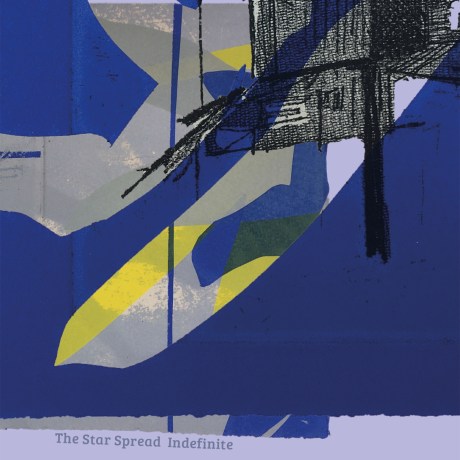
The former Co-Pilgrim and Black Nelson instigator Mike Gale may have retired from performing live some time ago now, but he’s still been highly prolific in recording. Using his trusty 32-track TASCAM cassette recorder, in just the last 18 months Gale has released the Pacific Ocean lulled sorrowed album, Summer Deluxe, a recent compilation of (far from) unfinished works and B-side paeans and breezes entitled B, C, D Side Volume 1, and a lockdown mini-album, Sunshine For The Mountain God. And now with this latest acoustic-led songbook, Gale furnishes us with the astral dreamy entitled The Star Spread Indefinite.
That cosmological title was found amongst his recent reading material, in Justin Hopper’s The Old Weird Albion. In one particular section, the uncovering of an ancient piece of artwork, scratched into the wall of a flint mine in Sussex triggered a beautiful starry-poetic response from the discoverer who found and named it. As a poetic prompt it brings Gale out of the melancholy of lockdown into a most dreamy state of reflection. And in his most lulled, drifting ruminating moments, balances a languid sense of yearning despondency with a peaceable message of positive affirmation for our near-miraculous existence.
The Monolith Cocktail was lucky enough to share the album’s precursor video-track (created by Jussi Virkkumaa) recently, ‘Go Help’: A tropical-lilted wistful tiptoe sauntering, and disarming disconsolate bobbing continuation of the plaintive beachcomber Beach Boys sound that has permeated the reclusive polymath’s output for a number of years. That means more of those lulled layered harmonies and the present lingering presence of a distant lapping tide. Though Gale lends an English pastoral bent to the Beach Boys California beach combing romanticisms. You can hear it clearly on the 70s AM radio dial wash ‘Stripped Sunlight’, which has an air of the SMiLE era about it.
Elsewhere in his harmonious gauzy hushed way, Gale evokes the Laurel Canyon dappled loveliness of Marc Eric, a beachside relocated epic45 and Roger Bunn on the sweetly synthesized golden ray affirmation ‘This Year’. The starry lush ‘Pastel Coloured Warm’, with its bahbahbah lilting chorus, hints at a meeting between the Go-Betweens and Prefab Sprout. Albeit a less sparse version, Gale also channels the spirit of Sparklehorse throughout this often-gossamer songbook. There’s also an easing into the Yacht Rock genre and the 80s phaser-effect and dry-ice cool of Phil Collins to provide a softened pop feel to some of the washes.
With soothing élan and shimmery dreaminess, Gale aches and wistfully fights through the disappointment, knock backs and anxiety to lift himself above it all with repeated mantras of “I’ll get my wish”, or, “This year I’m going to make it.” Let’s hope he does make it, as Gale is a fine musician and songwriter. The Star Spread Indefinite confirms that.
See also…
Mike Gale ‘Go Help‘ Premiere
Schlammpeitziger ‘Ein Weltleck In Der Echokammer’
(Bureau B) Album/25th September 2020

After previously unconsciously composing a kind of reggae and dub vision of Kraut-tronica over nine albums, Cologne stalwart of thirty years Jo Zimmermann has decided to now consciously meld those genres to his quirky lilt of electronic music on the tenth album, Ein Weltleck In Der Echokammer (for those needing a translation, that’s “a world leak in the echo chamber”).
It wasn’t, we’re told, until Zimmermann’s friend and ‘reggae expert’ Bettina Lattak remarked upon the composer, illustrator and performance artist’s oblivious use of those Caribbean flavours that it all suddenly clicked. And for this latest electro-fusion, fun, radiant, bouncing and sub-tropical suite, he, unabashed, tinkers almost effortlessly with a reggae sound stripped of context, history and religion: Just the feel, vibe and resonance. In practice this results in dubby warbled bass and echo, limbering gaited rhythms and a laid-back candour. There’s even a lilted saunter of steel drums to be heard, bobbing away on the tropical soulful electro-funk ‘Handicapfalter’.
That relaxed sound and sway – bordering on sun-bleached escapism – is counterbalanced by electro-cool starry synths, industrial metallic scuttles and a sophisticated layering of synthesized toms, kick-drums and polygons. It’s a sound that transduces label mates Station 17 and Clap! Clap!, a more languid Dunkelziffer, Holgar Czukay and Kraftwerk into a kind of Krautrock Compass Points Allstars, or, a futurist Marvin Gaye produced by a late 70s post-punk erring Eno. The itching percussive space-y tweeting ‘Tanzfußfalle’ seems to have invited Air, Psycho & Plastic and International Pony onto a dancefloor. That Kraftwerk namedrop evidently is a given. Zimmermann, trading under his longstanding Schlammpeitziger persona, references the Baroque harpsichord neo-classical Trans-European Express suite ‘Spiegelsaal’ (or ‘The Hall Of Mirrors’ as most of us know it) on his own mirrored trans-alpine refracted Oompah magic ‘Hüftgoldpolka’. Imbued with the Dusseldorf unit’s own spell-casting allusions on fame and image, Zimmermann leads a merry dance of his own.
There are of course some serious moments on what is essentially a tempered subtle pleasant soundtrack of understated techno, Kosmische and dance music. In what is a newish development, on this the second release for Bureau B, Zimmermann takes to singing; adding a cryptic whimsy and curiosity of half-narrated and humming, sighing and despondent lyricism to a number of tracks.
A warping, bended and sometimes crystalline, sometimes rattling, reggae-light sonic quirk, Ein Weltleck In Der Echokammer seems to offer a bright window into another world; a ladder out of the echo chamber towards a nice suffusion of Germanic electronic escapism.
Sheltered Workshop Singers ‘Who You Calling Slow?’
Album/18th September 2020

Used to travelling around the globe as the inconspicuous in-the-field recordist and in-situ producer, Ian Brennan has made a critically acclaimed career out of recording some of the most persecuted, ignored and neglected communities: from an Albinism refuge in Tanzania to the Abatwa pygmies of Rwanda and the victims of Pol Pot’s genocide in Cambodia. It’s a varied career; with projects as diverse as the Malawi Mouse Boys film score that never was to recording the prisoners of that same country’s maximum-security facility in Zomba.
Yet all of those projects share Ian’s overriding raison d’être, as laid out in his brilliantly engaging How Music Dies (Or Lives) tome: ‘My concern is not cultural authenticity, but emotional truth and uncloying performances. Purity, without baggage!’
The Grammy-nominated award winner’s latest project though, is his most personal yet. Collaborating with his only sister, Jane, who has Down Syndrome, Ian uniquely facilitates a platform for the Sheltered Workshop of diverse voices; spotlighting the ‘developmentally-disabled’ population in what could be the first ever album of its kind. In his notes Ian refers to a nameless “music expert” and his recent assertions that there was no such thing as a “virgin birth”, as he called it, left in music, that it was all based on “outside influence”. Ian however calls upon that “expert” to witness “what can happen when you hand a guitar for the first time to someone who has only partial use of their limbs.” As do some of the ensemble on this remarkable set of recordings. For this is a cast that have never before had that access or even opportunity to make themselves heard through the connective joy of music: the same one Ian enjoys with his sister Jane.
This album is far from an exercise in either charitable virtue or worse, exploitation. It’s more an overdue platform for those who have previously been ignored, sidelined and even patronized due to their needs and disabilities; especially vocally with most unable to articulate because of a reduced vocabulary and speech impediment. However, Ian finds that there are few more “expressive singers” than that are “non-verbal”. And the various pure emotions on display from this group of performers, who’ve previously never sung in front of a mic or played an instrument before, are deeply felt and resonating.
It’s a language that often sounds strikingly stripped of convention; often, to my ears, having more in common with Ian’s recordings from Africa, especially the incredibly vulnerable Tanzania Albinism community on the White African Power album. Sometimes almost ghostly and fragile, and at other times harmonic and utterly compelling, these voices can be as succinct as the performer Dan repeating his name with a raspy growl over a twanged guitar string accompaniment, or, as amorphous as the group effect of mourned vocals on ‘I Love You (Farewell Father)’. Incantation mantra meets the soulful and even fearless.
Accompaniments come in the form of the most expressive and unburdened of experimentation. The already mentioned Dan seems to channel both Medieval sonnet and primal blues-y-swamp rock on his opening turn, whilst Grace’s life story, with its guitar buzz, distortion and drone, hints at psychedelic grunge and shoegaze doom. Tom’s disconsolate ‘Sometimes I Feel Just Like A Zombie’ is so mysterious with its throat-singing snouts and hums that it could be some lost Tibetan malady. Glass-sounding xylophone keyboard effects, trembled strings, slapped rhythms and choruses of kazoos all make appearances on this open and candid collection of unbridled and unreserved communication. But don’t ever think to buy this album just out of charity or compassion, or even as a novelty (even though proceeds do go to a great cause); instead buy it because of those purely uncloying and truthful performances. But buy it because it has personality and something important to say.
See also…
Ian Brennan ‘Interview’ (here)
Ustad Saami ‘God Is Not A Terrorist’ (here)
Malawi Mouse Boys ‘Score For A Film About Malawi Without Music From Malawi’ (here)
Tanzania Albinism Collective ‘White African Power’ (here)
Esbe ‘Saqqara’
(New Cat) album/25th September 2020

Channeling a dreamy cast of ancient Egyptian characters (both fictional and historical), the diaphanous-breathed enchantress Esbe conjures up a most atmospheric peregrination on her fifth album, Saqqara. A musical odyssey of imagined reincarnated lives, the vocalist, producer and composer drifts down an atavistic Aswan, past the landmarks of Pharaoh dynasties: A musical traverse that extends from one civilisation to the next, past Arabia towards Uruk and then into the mystifying regions of Indian Sufi.
But firstly, more about the Egyptian allure that drew Esbe in. The album’s title Saqqara (or sometimes spelt as “Sakkara”) refers to the desert edge site of the awe-inspiring pyramid-tomb of the IIIrd dynasty Pharaoh Djoser; son of the dynasty foundress Nimaathap, who ruled sometime between the years of 2667 – 2648 BC. Not just a resting place but a show of power, Djoser’s impressive tomb was conceived by the even more famous polymath prime minister, high priest and royal architect (known by some Egyptologists as the Egyptian Leonardo) Imhotep. It forms part of the legendary City Of The Dead necropolis that extends across Giza and Dahshu, but is the only one still standing. As it inspired countless others before, this Step Pyramid now forms at least some of the storytelling poetry and atmospherics of this continuously hypnotizing electronic, real instruments and vocal mirage.
Under that monument’s shadow Esbe imagines an Egyptian woman dreaming of a lover, symbolically laying down with the revered Arabian leopard, to an entrancing, circling exotic menagerie and a shimmered procession on the album’s opening ambient fusion ‘My Love Knows No Bounds’. Esbe also evokes the torrid romance between Cleopatra and Mark Anthony on an updated vision of the sword and sandal soundtrack, ‘Carry Me Away’. Half Mills & Boon, half alluring lovelorn exotic camel trail; the two star-crossed lovers are cast adrift to a sound-bed of ponderous synthesizer vapours and cluttering drums.
The desires of escapism of a slave girl, seconded to laboring under the deathly heat on the pyramids, form the yearning sorrows of the Celtic-Arabian ‘I’ll Fly’. Subtle tubular Japan-esque synth percussion and sand dune jazz, dusky trumpet serenade and snake rattles converge to create the musical accompaniment.
Biblical augurs of doom are given a pining 80s synth dreamwave of crystal rays on the duel environmental and lunar phenomenon ‘Paint The Moon’, and low key acid-Arabia undulations permeate the caressed astral ‘Bedouin Prince’.
Moving further east to the subcontinent of India, Esbe lulls and coos melodious devotionals in the style of the Sufi music of Qawaali. Inspired by that forms doyen Nusrat Fateh Ali Khan, Esbe spindles an electronic spiritual version of Transglobal Underground on ‘Qawaali Dance’, and builds up a filmic drama of unfurled beauty on the epic ‘Qawaali Siesta’.
It’s a cinematic musical world that fuses tablas, zither and electronics with the sounds of the desert wildlife. Vocally Esbe draws on her eclectic Polish, Lithuanian and Jewish roots whilst embracing the phrasings, melodies of North Africa, the Middle East and mystical India. It makes for an ambiguous and impressive vocal that soars aria-like and chorally fills the space: A voice that even smolders.
Saqqara is a dreamy soundtrack that perfectly encapsulates an Egyptian fantasy: one that has a lushly performed lyrical and thematic message for the present epoch.
Maitrii Orboreal Ceremony ‘Prismic Passageways’
(Moonside Tapes) Album/11th August 2020

An ethnographical fiction, bordering on Atlantis myth, the shrouded instigators behind this latest experimental ambient peregrination for the always intriguing cassette label Moonside Tapes set sail for an imaginary land of shaman rituals and mysticism.
With a backstory mined from the annals of real historical anthropology and the field recorder’s archives, those mysterious forces of the Maitrii Orboreal Ceremony build up a half-convincing soundscape catalogue of fantastical atmospheres from the missing geographical link of Maitrii, a South Pacific realm that could have been part of another fantastical dreamed-up sunken continent, Aninomola. Because it never existed, it acts as an inspiration and blank canvas for an atavistic soundtrack of quasi-tribal primitivism and spiritualism.
The back-story goes that the only remnants, evidence of this obscure place and civilization are to be found in the notebooks and recordings of the anthropologist Dr. August Maynard, who it seems disappeared; his belongings in turn, found by villagers on the shores of that equally mystical, though very real, abandoned oasis, Easter Island.
Split into two lengthy recordings of grouped together themes, Prismic Passageways is divided into Trance and Meditation suites. “Presented here unabridged” and in “stereo”, the trance quintet of seamlessly strung-together tracks swirls around in Shamanistic communion, whilst the meditation sextet of dreamy esoteric atmospheres ventures past the misty coastline holy places into the interior. That first side of the tape feels like a misty ether veiled rowing boat drift to Skull Island. Summoned forth into a strange landscape, obscured creature calls and the haunted presence of the Maitrii spirits lure the weary travellers into an ambient sound world. A sorcerer’s crystalline ray reaches out to break the omnipresent foggy mirage at one point, and later, those so far feint rolls across a frame drum and lightly woody beaten pallets are ramped up into heavily reverberating, echoed elongated rhythms. It ends in an intoxicant spiral of drug-induced hallucinogenics: a spiral wispy drowsy and unsure ceremony in the catacombs.
That flip side, which traverses a ‘dawn prayer’, the fabled sun eater, and references the Hebrew biblical place of the ‘Land of Beulah’ – a place somewhere between Heaven and Earth -, features a venerable resonance of South Seas ancient mantric voices, bobbing trickled wooden marimba and minimal ambient suffusions.
For those wishing something different from their ambient traverses, enter the strange anthropological mystery of the Maitrii Orboreal Ceremony.
See also:
Jimmy W ‘Midi Canoe’ (here)
Cousin Silas And The Gloves Of Bones ‘Kafou In Avalonia’ (here)
Reissue Features:
Rüstəm Quliyev ‘Azerbaijani Gitara’
(Bongo Joe) Album/18th September 2020

The history and travails of the fecund oil rich country of Azerbaijan are atavistic. This is a nation that has striven to gain independence from a string of empires: both Tsarist and Soviet Russia, Iran, Albania, and much further back, the great Mongol Khan Timur. Desired not only for its abundance in fossil fuels – providing 80% of the Soviet’s oil on the Eastern Front during WWII, and continuing even now to be a vital pipeline for the post-communist Russian Federation – but for its geographical corridor to its fellow Transcaucasia neighbours of Georgia and Armenia in the west, to the south, Iran, in the north, Russia, and to the west, the vast inland lake, the Caspian Sea.
Khanates, caliphates, communism and secularism – Azerbaijan’s first declaration of independence came in 1918 and with it the first secular Muslim state – have all made their marks on this fertile land that in recent years has attempted to make inroads with NATO, the EU and China, whilst shaking off corruption. Since the collapse of the Soviet Union and with it Azerbaijan’s second declaration of independence, coups and counter-coups have hampered a smooth transaction towards democracy. Though the country remains stable, if governed for at least the last two decades by the Aliyev family.
Bordering as it does so many cultures, its no wonder that one of the country’s most celebrated guitar pioneers Rüstəm Quliyev absorbed and embraced such a diverse range of customs from abroad and far; from local modals, wedding celebrations and traditions to the regal music of the Persian court, Bollywood musicals and dreamy evocations of Arabia. Reissued by those tastemakers at Bongo Joe Records, this incredible sounding compilation brings together a smattering of eclectic guitar led tracks from the late legend’s expansive diy produced catalogue.
As with many of his forbearers and peers, Rüstəm would firstly master the region’s traditional instruments, the tar (an ornate curvy looking waisted long-necked lute) and saz (another long-necked lute instrument, shaped like a teardrop almost) before picking up the guitar; an instrument or version of which first trickled into the country from the Czech factory makers Jolana in the 1960s. But Rüstəm’s first introduction to the “gitara” was whilst serving in the Soviet military in Russia; an episode that soon ended, allowing the burgeoning talent to return to a civil war in his own homeland.
Hailing from the disputed mountainous Nagorno-Karabakh region of Azerbaijan, Rüstəm’s backyard was in the middle of a war. A convoluted history, but circumstances saw the autonomous Armenian ethnic-majority southern Caucasus area internationally recognized as part of Azerbaijan, but governed by the Republic Of Artsakh. Both breakaway states locked horns in the wake of the Soviet implosion; old rivalries, disputes were bought to the surface and violence soon ensued, including ethnic cleansing atrocities. In 1994 Russia secured a ceasefire after six years of conflict. As a consequence of this upheaval, with populations dispersed in some cases, Rüstəm moved further west towards the country’s Caspian costal capital of Baku; a move that would connect the rural visionary’s formative training with the lakeside cosmopolitan city’s network of international visitors and students, one of which, a student from Afghanistan, would introduce Rüstəm to such Afghan luminaries as Ahmed Zair. Included in this collection, ‘Əfqan Musiqisi’ is inspired by a track on a mixtape his Afghan student pal made for him. As an honour to him this pining song includes the heartfelt lines, “Let’s meet each other again, my friend, because separating is like unexpected death.” It sounds, as does most of his music, like a cross-pollination of influences; a Silk Road lament of bobbed hand drums, threaded lute and synthesized moaning choral voices. That synthesizer patch work is an integral part of the music by the way; a cheap sounding keyboard theatre of misty gazing ambience, punctuation of bass and percussive rolls that accompanies the often rapid, if elegant, nimble guitar performances.
Imbued both by doyens of the country’s “gitara” scene, including fellow Karabakh legend Rafiq Hüsey (aka Ramis), yet experimenting himself by refashioning a Jolana Czech guitar, Rüstəm managed to craft a unique merger of the past and present, the traditional and innovative. It helped that he came from a family of engineers, and with his brothers was able to set up a home studio. You can, if inclined, read more details about his tweaks, tunings and such in the liner notes provided by the album’s compilers Ben Wheeler and Stefan William. But in short, his style incorporated a wealth of inspirations, even wider than those already mentioned. For example, you can hear that wealth of influences on both the scenic searching, rough ’n ’ready Persian blues and rock number ‘İran Təranələri’, and the misty-eyed classical, popular Iranian street number, ‘Fars Musiqisi’ – the former via a transmogrified Niles Rodgers. Looking towards India, a famous Bollywood song imbues the strangely windy, horn heralding Western gallop ‘Tancor Disko’: imagine Pino Ruches riding shotgun with Ry Coder and Link Wray. Rüstəm transforms the highly complex classical poetic and improvised folk traditions of the country’s Mugham culture with the silken courtly, echoed fret work of ‘Neyçün Gəlməz’, and replaces the saz for his rapid guitar riffing on the Baba Zula like psychedelic ‘Yanıq Kərəmi’ and 80s sheened wedding dance ‘Baş Sarıtel’.
A caucuses Dick Dale, Omar Souleyman, Hank Marvin, perhaps as some people have proposed, even a touch of funk Mardi Gras Eddie Hazel, Rüstəm was an extraordinary gifted guitarist; one that could riff and strangulate, wrangle a constant trickle of quickened notes and multilayering, resonating poetry. Often he mimics a voice, at other times the lute or saz, yet always sounds mesmerizing and untethered. A rich showcase indeed, it’s time to traverse the Transcaucasia, the Steppes and beyond for those bored with western guitar slingers. Dip your toes into a whole unique and heartening guitar landscape.
Maalam Mahmoud Gania ‘Aicha’
(Hive mind Records) Album/October 2020

After various cultural excursions in South America, Arabia and West Java, Hive Mind Records return full circle to the “Gnawa” music that launched them with a striking reissue package of the beatific Aicha album by the form’s late great doyen Maalam Mahmoud Gania. It was of course Gania’s final studio album Colours Of The Night that first kicked off the label a few years ago. Now, picking up on that saintly venerating Moroccan music again, and in collaboration with Gania’s family, the label have chosen this moment of great turmoil (you could say it was a calm, healing balm just when we needed it most) to release a previously shrouded 90s cassette tape of entrancing communion and invocations from an artist rightly celebrated for pushing Gnawa beyond his hometown of Essaouira to an international audience. For one thing, Gania is celebrated for, perhaps, releasing the first ever Gnawa record, but also for working with such luminaries as Pharaoh Sanders, Bill Laswell and Santana.
The Islamic spiritual devotional poetry, dance and music of the Gnawa ethnic group – a group of Sub-Saharan people descended from slaves – this trance like sound is said to be one of the roots of the “blues” rhythm. Though a scion of the Islamic faith, this music is less restrictive in paying devotion and paean to a host of earthly saints and supernatural “mluk” (or “melk”). These abstract entities, the mluk, are represented by seven saints and seven colours; colours that “entrancer” dancers can wear in the form of robes or scarves. On the album’s bluesy, even jazzy threaded ‘Assamaoui’, those trancers wear blue in reference to the song’s sainted “Sidi Sma” (or “Samaoui”) and their implied ascendant relationship to the sky.
Gnawa is, in short, a music, culture of displacement because of its origins, but taken hold in Morocco, especially Gania’s home the key port of Essaouira, a strategically important fortress trading port on the country’s western coastine with the Atlantic. Gania’s home is where this set of recordings was made with an intimate setting of musicians. Though information remains scant, Berkley scholar and curator of the Moroccan Tape Stash blog Tim Abdellah attempts to dig deep and uncover the details; invited as he was to write the extensive liner notes and context for this special reissue. In fact, I’ve learnt a hell of a lot from his writing and scholarly notes on the subject. There’s even a translation of the exonerating call and response lyrics, which are often short lines of veneration for sainted shrines and deities that can be both combined with or sung in any order depending on occasion and mood.
Aicha, itself a reference to “she of many monikers”, a powerful female entity with untold mythical origins, is rich with the anticipated quivery strums and throbbing tensions of Gania’s “gumbari” – a camel-skin covered three-string lute. Bowed, stringy and incessant, but gentler and deeper than his playing on Colours Of The Night, Gania’s signature instrument weaves a nice bluesy accompaniment to his soulful exaltations. As always Gania’s gumbari lead is joined by the scuttled, scratchy tin paddled percussive rhythm of the iron castanets, the “krakebs”. It makes for a lively but soothing liturgy of entrancing adulation and praise.
Hypnotizing as always, with the galloping kept to a minimum, this spiritual six-track album is a Gnawa highlight, and a great place to begin discovering this immersive and special music. The label’s done another first class job of bringing this to a wider audience.
See also…
Maalam Mahmoud Gania ‘Colours Of The Night’ (here)
Houssam Gania ‘Mosawi Swiri’ (here)
Moulay Ahmed El Hassani ‘Atlas Electric’ (here)
Rodrigo Tavares ‘Congo’ (here)
Hi, my name is Dominic Valvona and I’m the Founder of the music/culture blog monolithcocktail.com For the last ten years I’ve featured and supported music, musicians and labels we love across genres from around the world that we think you’ll want to know about. No content on the site is paid for or sponsored and we only feature artists we have genuine respect for /love. If you enjoy our reviews (and we often write long, thoughtful ones), found a new artist you admire or if we have featured you or artists you represent and would like to buy us a coffee at https://ko-fi.com/monolithcocktail to say cheers for spreading the word, then that would be much appreciated.
Our Daily Bread 398: Ammar 808 ‘Global Control/Invisible Invasion’
September 10, 2020
Review
Words: Dominic Valvona
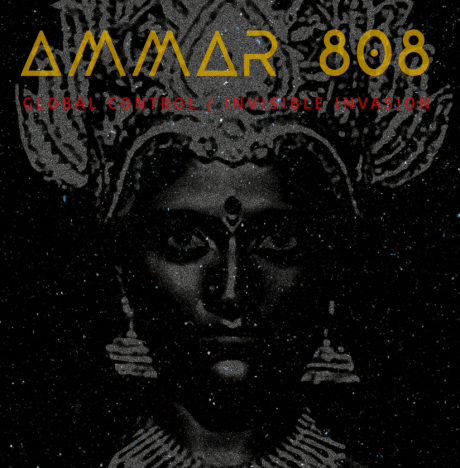
Ammar 808 ‘Global Control/Invisible Invasion’
(Glitterbeat Records) Album/18th September 2020
Previously amplifying and transforming both the traditional ritual and rhythms of the Bargou Valley region and the broader Maghreb, Tunisian producer Sofyann Ben Youssef now turns attention to the Hindu imbued sounds of Southern India for his latest captivating sonic acceleration. Following on from his Bargou 08 partnership with Nidhal Yahyaoui and debut Ammar 808 jolt of desert-style futurism, Sofyann dives into the traditions of Carnatic music whilst summoning up a cosmology of gods and deities on the immersive Global Control/Invisible Invasion experience.
Recorded and titled before the great pandemic, Global Control/Invisible Invasion refers to an “invasion” that “happens in brain” and the “the soul”. Sofyann explains: “We’re invaded without ever seeing it externally, and this system decrees our fate.” It’s a force that started at the beginning of time, sidetracked by a manifestation of religions, monetary systems, virtual economics, media and politics that are all constantly at odds with the individual. Deep indeed is the rhythm of life, the rhythm of freedom. You may actually hear it with this latest offering: a surprising harmonious if bombastic panoramic charge.
A logical, congruous expansion it seems to those North African fusions of sci-fi and the atavistic, the exonerations, paeans, yearnings and “mathematical” buoyant rhythms of Southern India are bombarded with the customary TR-808 drum machine ticks and clatter, warped effects and sonorous sub-bass in a way that unites the two cultures.
This though is a return for Sofyann who, at the age of twenty, studied in Delhi for a time learning the sitar and tabla whilst absorbing everything the country had to offer. As part of his own search and understanding of identity in the wake of the Arab Spring, the burgeoning beat-provider, keyboardist journeyed back years later to the country to record what would be this transformative hybrid. Aiding him in this venture, fellow producer and studio owner Paul Jacobs was tasked with finding the cast of collaborating Indian musicians, who’s sound is transformed by Sofyann’s production and sonics; a cast that includes, amongst others, the enchanting, stirring melodious voice of Susha and galloping, rattling percussion of Thanjai Nayandi Melam.
These elements are vibrated, ramped-up and exaggerated in an almost continuous assault on the senses; a sonic language of counterbalanced extremes fed into a percussive, breakbeat driven gatecrash of Indian mountain region weddings, rituals and conversations with gods. The last of those comes in the for of the album’s reverberated Bhangra battling ‘Ey Paavi’, which pitches the boasting death destruction ratcheting of Bhima and Duryodhana with flipped beats, sub-bass buzzing R&B vocal effects and a frisson of percussion. One of many names for the Hindu god Ganesha, ‘Mahaganapatim’, lends both communal chanted blessings and an increasingly inter-layered bombast of percussive breaks to this spiritual futuristic dance music. Flipping, bounding and propulsive, tracks such as the rotor oscillating ‘Pahi Jagajjanai’ send ethereal Indian song towards the Techno of Jeff Mills or Basic Channel. The shivered cymbal and trinkets scraping desert trance ‘Arrisothari Yen Devi’ adds a lo-rider vocal detuned hip-hop effect to the original shrouded echo-y vocals.
At times this overdrive sounds more like a dance music set; a remix vision of traditional Southern India and contemporary African EDM, yet really Sofyann pushes way beyond that into new exciting horizons. The Ammar 808 project once more crosses generations and geography to dynamically invigorate and drive forward those cross-pollinations; in so doing, the North African beat provider finds a common cause in two very different cultures.
See also:
Ammar 808 ‘Marivere Gati (featuring SUSHA )’
Bargou 08 ‘Targ’ LP Review
Glitterbeat Records 5th Anniversary Special
Our Daily Bread 397: Various ‘Door To The Cosmos’
September 7, 2020
Review/Dominic Valvona
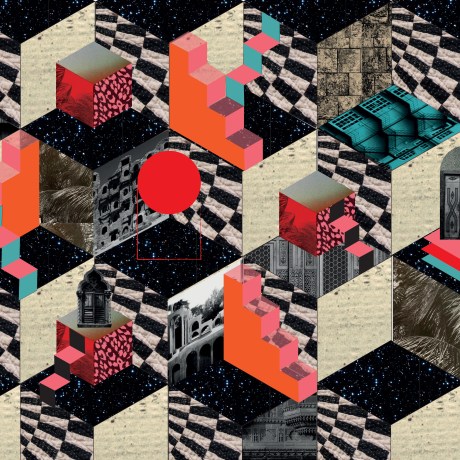
Various ‘Door To The Cosmos’
(On The Corner) Album/18th September 2020
The celebrated polygenesis label On The Corner go all out to mark the release of their tenth mind-expanding record, Door To The Cosmos. Every bit as cosmological as that title suggests – borrowed from Saturn’s jazz messenger envoy Sun-Ra: “dare to knock at the door of the cosmos” – this eclectic experimental dance compilation brings together a representative showcase of both label stalwarts and the fresh intake of burgeoning signings. All of which share the practice of fusing sounds and sonics from various global cultures to create a more exotic, denser and layered vision of dance music, fit for the 21st century.
Not that you can easily separate into tangible categories of influence or genre, but for the benefit of this run-through, and to make my task easier, I’m going to at least attempt to break these 24-tracks down into genres of a kind. In the jazz sphere we’re offered both a combination of ensemble pieces and treatments from soloists alike. The first of which straight away falls outside of those perimeters with Black Classical floating to a jazzy evoked deep-bass and spiritually voiced hybrid of trip-hop and Low End Theory A Tribe Called Quest soundings on his ‘Sisters Brew’. Luminary of the Glasgow club and blossoming, thriving, jazz scene Rebecca Vasmant appears both as a soloist producer-composer with the disco glistened Afro-jazz-soul mover ‘Teen Town’, and, in the role of remixer, subtly taking a dip in the spoken-word conscious day-spar tranquility of Tenesha The Wordsmith and Tamar ‘Collocutor’ Osborn’s disarming fluty ‘Yemya’ collaboration. Composer and saxophonist Osborn furnishes this collection with a trio of tracks; appearing with a full troupe of modal style jazz musicians on the spiralling horns, amorphous swamp-jazz turn Miles Davis galactic funk implosion ‘Everywhere Live At TRC’ – which is further sent off into that heralded cosmos by Black Classical on “speed” mix duties -, and swirling around in a moody jumble of erratic breaks, prodded sax and vaporuos flute on ‘Lost And Found’ – another treated version, this time with Afrikan Sciences behind the transformation.

Another jazz, be it futuristic and eclectic in inspirations, combo turns in a celestial jam for the compilation in the guise of the Nathan ‘Tugg’ Curran led flexing Edrikz Puzzle, who produce a hard-bop in free fall with ‘Jonny Buck Buck’. Snozzled sax and double bass meets with a more harassed Jaki Liebeziet splurge of drum rolls and bounces on this peregrination.
In the Afro-futurist and transformative indigenous cultures mode, “new spirit” producer Azu Tiwaline opens this survey with the tubular percussive Arabian space mirage ‘Violent Curves’. Featuring also Cinna Peyghamy as foil, this shrouded desert drift mines Azu’s southwestern Tunisian roots to produce something moody and sophisticated: a submersive camel trail across sand dunes. Gazing towards the Indian sub-continent, another producer Abdellah M. Hassak as the alter ego Guedra Guedra adds a deep House bass, metallic pulses and vaporous throbs to the brassy resonance of Indian instrumentation and voices on ‘Couscous Curtain’. South American head mask mystifiers Dengue Dengue Dengue (also known in these circles as the shortened DNGDNGDNG) get three goes at enticing the listeners into their tropical ether. Firstly with the spooked lunar vision of Colombian and Cumbia ‘Hiperborea’, then the hooted-House Peruvian pan-pipe (as reimagined by a 90s Harthouse label) ‘Semillero’, and finally, the hand drum ancestral chant and percussive shaken ‘Amnative’.
L.A. producer and DJ Jose Marquez uses his Latin roots and influences whilst also evoking New Orleans on his sassy Muscle Shores studio organ voodoo House track ‘La Negra Lorenza’.
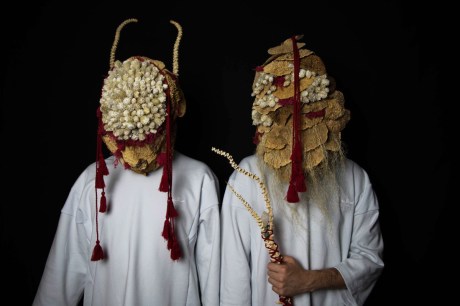
Fitting only into categories of his own imaginations, Don Korta offers up a couple of ‘samosa beat’ shorts; the first, a shuffled gumbo, the second, a Madlib style loop of hand drumming breaks. And from the valleys of Welsh-futurism, Petwo Evans transports the vales’ mists and ethereal spirits to a vague African headland of spindled and wooden bobbing beats.
In what I can discern as House, Techno and Deep Bass culture, we have the data language low bass and rattling ‘Sorry’ from the Italian “Afro-Futurist” beat-shaker Raffaele Costantino, aka Khalab; the Basic Channel and electro pop sax honked ‘Agyapong’ by AJD Twitch; and DJAX Up-Beats wobbly lunar (almost dubby in places) ‘City’s Dead (Wrapped In Plastic)’ by Copenhagen talent Uffe.
It’s save to say that all of the label’s roster of DJ-producers, composers and jazz-heavy explorers pull club sounds in some imaginative and, sometimes, unique directions over the course of this new compilation. So expect to hear the spirit of Detroit and Chicago rubbing up against sub-bass waveforms, sophisticated itching electrified percussion, densely crafted effects, polyrhythms and real instruments on a compilation that spans both earthly and cosmological boundaries. On The Corner don’t just knock on that Sun-Ra eluded door but open it into an expanding sonic universe of jazz, Afro-Futurism, Arabian, tropical and worldly inspired dance music. It’s remarkable that this marks only the label’s tenth release; such is the breadth and quality. Better line up your copy soon, as this is going to fly out the proverbial door.
Hi, my name is Dominic Valvona and I’m the Founder of the music/culture blog monolithcocktail.com For the last ten years I’ve featured and supported music, musicians and labels we love across genres from around the world that we think you’ll want to know about. No content on the site is paid for or sponsored, and we only feature artists we have genuine respect for /love. If you enjoy our reviews (and we often write long, thoughtful ones), found a new artist you admire or if we have featured you or artists you represent and would like to buy us a coffee at https://ko-fi.com/monolithcocktail to say cheers for spreading the word, then that would be much appreciated.
Junkboy Special: ‘Belo Horizonte’ Video & Tropicalia Playlist
September 4, 2020
Playlist/Video Premiere
Words: Dominic Valvona

Junkboy ‘Belo Horizonte’
Taken from the reissued/remasterd Sovereign Sky LP, released via Fretsore Records, 25th September 2020
Junkboy ‘Tropicalia Special’ Playlist
Available via Spotify
In the run-up to the release of Junkboy’s acclaimed 2014 cult album Sovereign Sky (released later this month), the Hanscomb brothers in partnership with Ian Sephton of Fretsore Records (who signed the boys back in 2019) have already shared the hazy-soulful Love-esque lapping tidal reflection single-video ‘Salt Water’ with the Monolith Cocktail’s followers, and now, furnish us with a second single of equally lush quality, the sauntering Brazilian psych lilt ‘Belo Horizonte’.
A culmination of Mik and Rich Hanscomb‘s experiments with a number of different styles, Sovereign Sky adopted a relaxed attitude to the pastoral, to cooing frat-folk, surf music, Britpop, the hip sound of Tokyo’s Shibuya Kei district and surprisingly, the languid sweltering rays of late 60s and early 70s Brazilian psych: otherwise known as “Tropicalia”. That album gave fair voice and a wistfully charmed backing of tenderly picked acoustic guitars, stirring strings and hushed, almost whispered, vocals to both the pains and loves of maturity. The brothers mellowed tones and introspection offered a mature observation on the world around them: especially, at the time, their relocated new home of Brighton. It’s a place in which Marc Eric meets Cornelius, and epic45 make friends with Harpers Bizarre; a place where Hawthorne, California and the beach samba saunter of Brasilia is transcribed to the English downs and seaside.
Not just to tie in with that forthcoming reissue release but also, as Mik Hanscomb offers, a reminder that “this is a music of resistance, and well, perhaps that spirit is needed now more than ever”, the brothers have also compiled a homage style playlist to their Tropicalia influences for us on Spotify.
It maybe the end of the summer, but the boys has provided the perfect comedown and ease into autumn. Enjoy.
The remasterd reissue of the previously limited Sovereign Sky is being released on the 25th September 2020 through Fretsore Records. You can read our original review in the link below, and also find previous Junkboy posts and premieres.
Junkboy ‘Salt Water’ Premiere (here)
‘Sovereign Sky’ Review (here)
‘Trains, Trees, Topophila’ Albums Of 2019 (here)
‘Waiting Room’ Premiere (here)
Our Daily Bread 395: Bróna McVittie ‘The Man In The Mountain’
September 1, 2020
Review/Dominic Valvona

Bróna McVittie ‘The Man In The Mountain’
(Company Of Corkbots) Album/2nd September 2020
The diaphanous voiced and ephemeral harpist Bróna McVittie once again beckons us into her imaginary gossamer world of alternative Celtic fables and mystery with a second album of poetic imbued brilliance. Following on from the much-admired trip-folk cinematic debut We Are Wildlife (which evidently made our choice albums of that year), the Northern Irish enchantress roams a similar gauzy landscape of lingering, lightly-touched evocations; a place in which giants fight over causeways and warrior suitors declare chaste love for the chieftain’s “flower of the hazel glade” daughter.
Though the cover interpretations of old have been “dialed back” for more original songs, the evergreen Man In The Mountain album is heavy with references and inspirational threads from such gifted luminaries as Siegfried Sassoon, Pablo Neruda, William Wordsworth and Henry Williamson. The music is pretty timeless too; a misty shrouded soundtrack based more on the hushed cadence of Bróna’s voice and the subtle trails and wafted semblance of instrumentation than rhythm or the traditional perimeters of folk music.
Yet there’s a modern touch to those both pining and woodland sprite entranced folklores with collaborations from both the electronic duo Isan and Nordic avant-garde composer Arve Henriksen. The former provides an understated ripple of incipient bobbing and skimming percussive Techno for, and co-arranges, the nuclear fusion updated vision of the Greek tragedy, ‘Falling For Icarus’, and the cantering Bert Jansch-breaks-bread-with-Curved Air swoon ‘Eileen Aroun’ – a peaceable, softly-plucked take on Carroll O’Daly’s 14th century declaration of love. Henriksen, for his part, helps entice Bróna towards the airy amorphous soundscape visions of Jon Hassell and Eno’s ‘fourth world’ ambient jazz traverses, Dingo era Miles Davis and a lulled Don Cherry on her transformation of Samuel Ferguson’s famous ballad, ‘The Lark In The Clean Air’.
Legendary Irish mythological figures, ill-fated sacrificial souls and even the “green man” are placed in less familiar settings: a sort of resonance from a banjo sounding instrument takes us away from the Emerald Isle towards the waning drift of Miles Cochran’s alternative Americana soundscapes. It’s a sound inspired as much by the Boards Of Canada as it is the Incredible String Band.
Despite being so softly sung, it’s Bróna’s vocals that seem to be the highlight; improving all the time; holding notes so breathlessly long and yearned, and almost raspingly, dreamily emerging from the ether of some ancient headland to lull pursed lip sonnets and tales.
Beautifully conceived and imaginative, Bróna McVittie and her subtle foils on this eloquent lush songbook push Celtic imbued folk gently towards electronica and experimental jazz. This is done with such ease and grace that those seeking the traditional will find little in the way of discourse or friction, or even anything approaching radicalism. The Man In The Mountain is rather a caressed, vaporuos doorway into an alternative musical tapestry of folk that isn’t afraid to expand into the synthesized and modern.
See also…
Bróna McVittie ‘The Green Man’ (Here)
‘We Are Wildlife’ Album Review (Here)
Monolith Cocktail Monthly Playlist: August 2020: Secret Machines, Nosaj Thing, Charles Tolliver, Fliptrix, AUA…
August 28, 2020
PLAYLIST REVUE/Dominic Valvona/Matt Oliver/Brain ‘Bordello’ Shea
Join us once more for the most eclectic of musical journeys as the Monolith Cocktail compiles another monthly playlist of new release and recent reissues we’ve featured on the site, and tracks we’ve not had time to write about but have been on the radar.
The August edition kicks off with a blistering sunny-disposition Ron Gallo,space rock barrage returning Secret Machines and riotous Young Knives. Later on we’ve a host of jazz smarts from Stanley J. Zappa & Simo Laihonen, Charles Tolliver and Donny McCaslin.
As diverse as ever though, there’s a host of genres represented, including ‘Sufi Dub’ (Ashraf Sharif Khan & Viktor Marek) ‘after geography’ ambience (Forest Robots), ‘Eastern European femme fatal punk’ (Shishi) and ‘Euclid inspired polygon techno’ (Kumo).
Matt Oliver furnishes as ever with a host of choice hip-hop tracks from Fliptrix, Helsinki Booze Mercanhts, Loki Dope and Verb T.
There’s also a second despondent melodious grunge-y new wave rocker from the burgeoning talent that is Jacqueline Tucci. Something for everyone, more or less.
TRACKS
Ron Gallo ‘HIDE (MYSELF BEHIND YOU)’
Secret Machines ‘Everything’s Under’
Young Knives ‘Swarm’
Death By Unga Bunga ‘Trouble’
Shishi ‘OK Thx Bye’
Jacqueline Tucci ‘Sweeter Things’
Elian Gray ‘High Art’
Loki Dope ‘Have You Any Wool?’
Stanley J. Zappa & Simo Laihonen ‘E38 E 14th, City Of Piss, USA’
Charles Tolliver ‘Copasetic’
Nosaj Thing ‘For The Light’
Donny McCaslin ‘Reckoning’
VRITRA ‘CLOSER TO GOD’
Remulak & Type.Raw ‘Mad Skillz’
Vex Ruffin ‘Hinde Naman’
Mazi & Otarel ‘Staiy’
Fliptrix ‘Holy Kush’
Sausage Spine & Relentless Exquisite ‘Skin Diamond’
Verb T & Illinformed ‘Rotten Luck’
Pitch 92 & Lord Apex ‘Suttin’ In The Trunk’
Helsinki Booze Merchants ‘Tokyo Drift’
Fliptrix ‘Powerizm’
Diassembler ‘A Wave From A Shore’
Forest Robots ‘Over The Drainage Divide’
Mark Cale, Ines Loubet and Joseph Costi ‘Bodies Of Water’
Lucia Cadotsch, Otis Sandsjo, Petter Eldh ‘Azure’
Paradise Cinema ‘Possible Futures’
Only Now ‘Merciless Destiny’
J. Zunz ‘Four Women And Darkness’
Alan Wakeman, Gordon Beck ‘Chaturanga’
BROTHER SUN SISTER MOON ‘Numb’
Brian Bordello ‘Rock n Roll Is Dead’
The Hannah Barberas ‘W.Y.E.’
AUA ‘I Don’t Want It Darker’
Ashraf Sharif Khan & Viktor Marek ‘Drive Me On The Floor’
Harmonious Thelonious ‘Hohlenmenschemuziek’
Kumo ‘South African Euclid’
Cabaret Voltaire ‘Vasto’
Pons ‘Subliminal Messages’
Freak Heat Waves ‘Busted’
Constant Bop ‘Alone Again (Naturally)’
Josephine Foster ‘Freemason Drag’
John Howard ‘Injuries Sustained In Surviving’
Hi, my name is Dominic Valvona and I’m the Founder of the music/culture blog monolithcocktail.com For the last ten years I’ve featured and supported music, musicians and labels we love across genres from around the world that we think you’ll want to know about. No content on the site is paid for or sponsored and we only feature artists we have genuine respect for /love. If you enjoy our reviews (and we often write long, thoughtful ones), found a new artist you admire or if we have featured you or artists you represent and would like to buy us a coffee at https://ko-fi.com/monolithcocktail to say cheers for spreading the word, then that would be much appreciated.
 Monolith Cocktail Blog