The Perusal #35: Al-Qasar, Forest Robots, Clear Path Ensemble, Lampen, Noah, Yara Asmar…
September 7, 2022
DOMINIC VALVONA’S ECLETIC REVUE
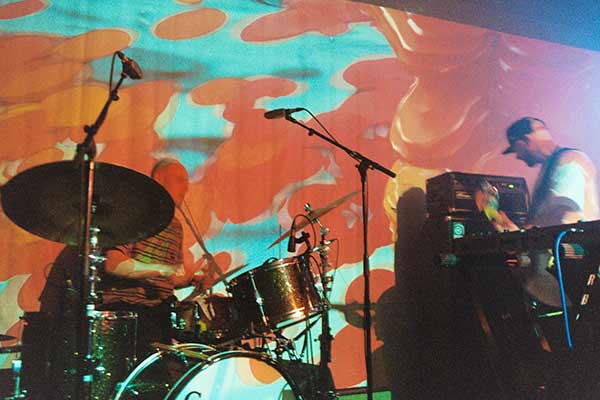
Al-Qasar ‘Who Are We?’
(Glitterbeat Records) 16th September 2022

Bubbling up from the Barbès Algerian enclave of Paris (the 18th Arrondissment boulevard that’s home to the yet to be gentrified and tourist-friendly passed Little Algeria community) and crisscrossing continents, the Al-Qasar group fuzz-up and electrify the sound of Arabia and its diaspora.
Helmed by instigator-in-chief Thomas Attar Bellier that neighborhood bustle is elevated and blasted back out into the world at large, absorbing and picking up sonic waves, spikes from Northeast Africa to a hardcore California and a rich tasting Sublime Porte.
It all helps of course that Attar Bellier is a global nomad, having lived in New York, Lisbon and Paris, but also having worked in the recording studios of L.A. during that circumnavigation of multicultural living he produced enough tracks of his own, releasing the well-received Miraj EP.
I get the impression that this is a fluid project, but at the time of this, the debut longplayer, Attar Bellier has opened up the ranks to include Jaouad El Garouge on vocals and a number of instruments synonymous with Moroccan Gnwa and North African traditions, Guillaume Théoden on bass and sub-bass duties, Nicolas Derolin on a myriad of percussive and hand drum instruments and Paul Void on drums. That seems the core anyway, but in this electric saz tangling and psychedelic post-punk rich sound there’s a cast of guest pioneering musicians to add yet another layer, another sonic perspective.
From the start there’s Sonic Youth’s guitar-sculptor Lee Ranaldo providing multi-layers of sustain, whines and abrasions to both the opening Swans meet Faust squall turn spindled and more familiar Middle Eastern electric fez intro ‘Awtar Al Sharq’, and the second, dervish-spun spirited and phlegm-voiced tour of Anatolia, The Balkans and Arabia, ‘Awal’.
That legend of the California punk scene, miscreant Dead Kennedys founder Jello Biafra goes free-radical on the staccato jangling ‘Ya Malak’. In a kind of John Sinclair mode, he reads out a poignant translation of a poem by the famous Egyptian revolutionary poet Ahmed Fouad Negam, updated for the cataclysmic state of the world in 2022, and the crumbled, violently oppressed post Arab Spring. This is where, despite the Cairo-futurism, the rattled and slapped hand drum energy, that the political motivations, the despair and anger comes to the fore; all that history, the post-colonial tumult and also fall-out from an Arabian-wide protest movement seeking modernization, the right to earn and end to greed. Read through a tiny transistor style radio Biafra’s agitator spirit turns this into a sort of Arabian Fugazi.
Moving on, but just as political, the New York-based Sudanese vocal doyen Alsarah (of Alsarah & The Nubatones renown) brings her impressive expressive outpourings and trill to the rattlesnake desert song ‘Hobek Thawrat’. In that soulful, rising loved-yearned voice there’s a protest against the coup on her homeland, the chorus itself repeating a slogan from the recent demonstrations. A sound of the Sahel, the women folk of Tinariwen and a little Bab L’Bluz Gnawa hover over this beautifully delivered protestation.
It runs throughout, this sound’s birthplace, but Al-Qasar pay a special homage on the (so good they name it twice) ‘Barbès Barbès’, which also features the electric oud pioneer Mehdi Haddab (of Speed Caravan note). Metal work drums, a nice rolling groove and souk candour prove a friendly hustled soundtrack for a meander in the heavily African outpost. Haddab gets a solo of a kind, providing a romanticized, poetic and folksy oud, with bursts of blurred quickened neat fretwork that borders on Baba ZuLu style psychedelic rock.
The finale, ‘Mal Wa Jamal’, features the longing ached vocals of the Egyptian singer Hend Elrawy soaring over an inspirial organ and almost post-punk push. Elraway’s beautiful wails prove disarming as the song’s lyrics concern a female-centric outlook on prostitution and its consequences. There’s attitude certainly, but it’s all wrapped up in a fizzled, fuzzy and mystical film of Arabian dance and fantasy. No surprise that they’ve been added to the Glitterbeat Records label roster, an imprint for just this sort of fusion; one in which you’ll hear an Arabic Muscle Shoals merging with Anatolian psych, a touch of Electric Jalaba and Şatellites if remixed by Khalab. A brilliant package of transformed traditions wrapped up in electrifying futurism; the sounds of Arabia, North Africa and beyond are thrust into a dynamic, unifying and eclectic direction.
Clear Path Ensemble ‘Solar Eclipse’
(Soundway Records) 9th September 2022

Out of the Wellington jamming session hothouse incubator and blossoming jazz scene in New Zealand Cory Champion rides the sun-birched rays and waves to cook-up a congruous album of many flavours. From a knowing position the jazz percussionist flows freely between a 70s ECM back catalogue of inspirations and the funk, fusion, spiritual and more freeform genres of his chosen art form.
Under the Clear Path Ensemble alias – his second such alias, also going under the Borrowed CS title when making leftfield deep house and techno cuts – Champion channels both Latin and Uniting Of Opposites style brassy Indian reverberations on the golden ‘Kihi’; offers up an acid jazz turn retro zippy-zappy late 70s disco funk fusion on ‘Drumatix’; and magic’s up a post-Bitches Brew Mile Davis band mystery of African-flavoured marimba and jug-poured, lava-lamp liquid cosmic spiritualism on ‘Revolutions’. But the mood, musicality changes again when we reach the jazzy-suspense score ‘Absolvo’: an early 70s cool cult vision of a Lalo Schifrin thriller.
The finale, ‘Tennis Ball’, could be said to have taken Liquid Liquid’s percussion, beats and a bit of the Style Council’s laidback washy soul-funk. And the dreamy seasonal solstice ‘Sunrise Motif’ finds a blend of the Modern Jazz Quartet, the willowy fluted bucolic and Nate Morgan. All the while translucent bulb-like notes flow or float from the vibraphone as other light-footed percussive vibrations dance and softly quicken the pace.
A harp run here and muffled, mizzle sax or trumpet there; a touch of electric piano and pining strings on anther track; all elements that come together across a changing groove.
Clive Zanda meets a less busy Michael Urbaniek on a minor jazz odyssey of nostalgic but very much alive and contemporary fusions, Champion’s second album in this role is a sophisticated, smooth but also freeform set of moods, visions and counterflows. It proves a perfect fit for the eclectic and much-praised Soundway label.
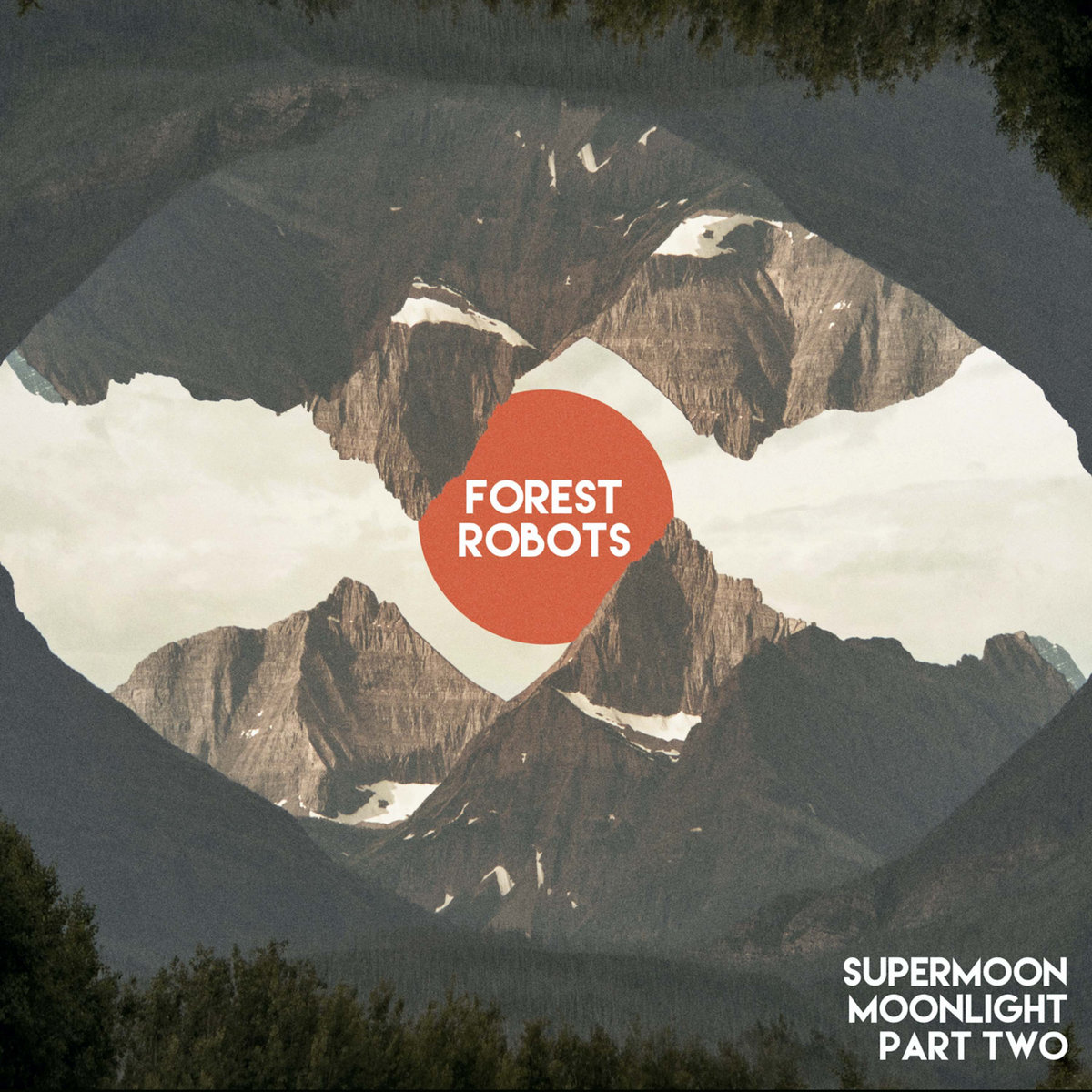
Forest Robots ‘Supermoon Moonlight Part Two’
(Subexotic)

After an initial redolent arpeggiator wave of Roedelius, a rainbow of trance, vapoured breathed coos and transience follows, marking what will be an entirely different kind of record for the Californian electronic artist and topographical trekker Fran Domingeuz.
Under the Forest Robots alias/umbrella, Fran has produced numerous adroit, studied and evocative ambient and neoclassical soundtracks to the myriad of landscapes and forest trials he’s traversed over the years. As the world dramatically succumbed to a global pandemic, and the chance to escape to the wilds became scarce, the signature form stayed but now the music was suddenly a therapy and a vehicle for channeling the anxiety, stresses of such uncertain times.
Now (thankfully) with the worse behind us, Fran emerges with the ‘long gestating’ follow-up to Part One of his Supermoon Moonlight suites from 2018. Although recording sessions for Part Two started back in 2019 it has taken a while to finally process the last couple of years and to finish and release this beautifully conceived album of suffused and uplifting hope.
The geography and National Geographic almanac proverb-like and Zen titles remain (‘All The Rivers Born In The Mountains’, ‘Wind Always Runs Wilder Along The River’s Current’) but the underlying theme has Fran exploring the complexities of parenthood and the ‘kind of spiritual and emotional legacy a father would wish to leave for his kids.’ A warming sentiment and inspired prompt makes for a very different kind of album though. From the same gifted mind and ear yet swimming in the sine waves of trance, synth-pop, 90s techno and dance music this is relatively a new but welcoming direction, expansion on his signature sound.
Upbeat as much as reflective, the feel is often dreamy; the gravity and awe of nature gently present; cut-out mountainsides, flowing connective rivers and a canopy of redwoods, the stage is set as stars shoot across the night skies and moonbeams illuminate.
In the slipstream and bubbled undulations The Beloved shares space with The Orb, Stereolab, 808 State, Sakamoto, Vince Clarke, Boards Of Canada, I.A.O., the Aphex Twin and Ulrich Schnauss. This is a beautiful combination that filters the aftermath of the rave culture, the burgeoning British minimal techno scene of the early 90s Warp label, 80s synth-pop and electronic body music. Yet there’s room for a certain crystallised chilled sparkle of the Chromatics and the Drive time moody, ruminated dry-ice scores of Cliff Martinez within that beat-driven glow. And the elements of charcoal fires crisply burning and flickering, and the poured waters have a certain Luc Ferrari influence – albeit far less avant-garde.
Playful and sophisticated with a surprising dance-y pulse and radiant outlook, Part Two should act as a testimony to an inspired and inspiring composer. I think his kids will be rightly proud of their dad and his musical legacy: electronic music with a soul and purpose.
Machine ‘S-T’
(WEWANTSOUNDS)

Back again in The Perusal (becoming a 2022 regular) those vinyl specialists at WEWANTSOUNDS have remastered and pressed that rarest-of-rare conscious-soul-funk LPs, the obscure assembled Machine’s self-titled debut (and only) album from 1972.
The rumour-mill is strong on this one; the cause of its £500 plus price tag on Discogs believed to be a result of either a very limited release or no release at all – shelved as it were. It could be down to the sheer quality of the competition, arriving as it did in the wake of similar social-political soul as Marvin Gaye’s What’s Going On and Curtis Mayfield’s Superfly (but also his albums previous to that). Both prove a massive influence on this smooth and funky eight-track showcase.
What we do know however is that the make up of this group included a trio of well-rehearsed session players from the All Platinum Studios stable in New Jersey. That included main man Michael Watson on vocals and guitar, bass-player Curtis McTeer (also playing with labelmates The Rimshots) and drummer Donald McCoy, who were then fattened out with the organist/pianist Ray Jones, another bassist, Frank Prescod, and both Dee and Cordy Pridges on horns. On the same label and one of the most established, successful acts The Whatnauts lent both their backing vocalists and, rather oddly, their manager (credited on percussion) Bunch Herndon to this widening lineup. And on top of all that, the notable Sammy Lowe (arranging for such distinguished company as Nina Simone, Sam Cooke and James Brown) offers a subtle suite of strings to the mix, taking it down the Rotary Connection route.
The Whatnauts prove a pretty integral ingredient to the Machine track list, lending both the ‘Only People Can Save The World’ and ‘Why Can’t People (Be Color Too?)’ songs to the album. Machine keep the sentiment of both, but add both an almost bucolic and pastoral gospel-rayed yearn to the first, and up the Gator funk and Stevie Wonder boogie on the Sly Stone on-message second.
They open on the relaxed but simmered Southern-funk-hits-the-streets-of-NYC style ‘Time Is Running Out’. Fred Wesley & The J.B.’s buzzy licks meet Maxayn attitude sass, sweet sax and touch of ‘Brotherman’ The Final Solution on a conscious-political workout – the repeated vocal refrain apparently ad-libbed.
Very much of its time and again on-message, ‘World’ tunes into the Vietnam War and its impact on and confliction with the African-American community. The actual groove is quite percussive with a touch of The Temptations Psychedelic Shack, Mayfield and The Meters.
There’s a seagull hovering harbor scene, not a million miles away from Otis’ wistful gaze, on the gear-changing ‘Trails’. It starts with that atmospheric rumination, a hint of the Latin and some romantic allusions before quickening into a banjo-rhythmic strumming West coast jive. It then goes on to wail and cry with a sequel of electric guitar. ‘Lock Your Door’ however could be a lost Northern Soul dancer, and the balladry pined ‘Boots In The Snow’ is another of those Marvin Gaye try-outs, with a touch of 70s Motown.
An enervated Nat Turner, Undisputed Truth, Mary Jane Hooper, Johnny Pate with those Mayfield and Gaye inspirations, Machine stepped-out to lead their own socially conscious project. But whilst the elements are all present, the sound isn’t quite unique enough, overshadowed as they were by a multitude of bands/artists working in the same groove and message. Still, at least you can now own a real rarity without forgoing this month’s rent, gas or mortgage payment. And it’s well worth a spin at that.
Noah ‘Noire’
(Flau Records) 26th August 2022

Ever the diaphanous siren of soothed vaporous experiments and song, the Hokkaido-born artist Noah once more drifts and floats across a sophisticated combination of futuristic etudes and distilled electronica. Following on from the beautiful balletic-inspiredÉtoile (given a glowing review by my good self), this latest emanation of whispered and cooed translucence is just as lovely and swathed in dreamy effects.
A collection of tracks from between a pre-Covid era of 2015-2020, the Noire album is awash with studied yet effortless sounding sonic theme variations; a nine-track congruous suite that riffs on Noah’s signature of ghostly plinky-plonked semi-classical piano (occasionally an electronic one by the sounds of it) and minimal 808-style synthesized waves, percussion and bobbled beats.
Noah’s breathless vocals and atmospherics seem to be reaching us from the ether: often just the reverberations of some distant hazy whisper. The opening transparent slow spiral ‘Twirl’ could be a distant relation to Julee Cruise; an enchanted but haunted echo from a palatial ballroom, yet still highly intimate. ‘Odette’ oozes languorous modern soul and R&B, like Solange drifting over the Boards of Canada.
Undulated by softened kinetic ratchets, screws and turns there’s a coming together of purposeful techno and more rhythmic retro house beats, enervated as to never overpower the general woozy and beautifully longing mood.
Shorter reflections, pieces are balanced by extended tracks and the heavenly, bobbing and echoed looped single ‘Gemini – Mysterious Lot’; the sound relaxing as it moves from transformed Sakamoto to cool dreamy pop.
Remaining something of an enigma Noah appears and then floats away, leaving a lingering presence with music created in a dream. Noire is another great, captivating showcase for that talent.
Lampen ‘S-T’
(We Jazz) 9th September 2022

A re-release of a kind, in case you both missed it the first time around or because of its limited run on CD, the free and post-jazz Finnish duo Lampen are now offering their 2020 self-titled album on vinyl for the first time – a very nice package it is too.
I would be one of those people that did miss it the first time around, and so I now find myself discovering its highly experimental, explorative qualities, imbued as they are by the Japanese art of “kintsugi” (or “golden joinery”), the repairing art of mending areas of breakage with lacquer dusted or mixed with powdered gold, silver and platinum. As much a philosophy as a method of repair, the breaks and cracks are treated and documented rather than disguised or thrown away.
The binding metal dust is like a woven vein and testament to that object’s knocks and history. With all its obvious metaphors the Lampen lads are less than careful, seeming to deconstruct and rebuild simultaneously in an act of free-spirited concentration: if that makes sense. For they break and stretch the performances yet, because their craft is obviously brilliant, they seem to always be in unison, synchronicity throughout.
Across five crawling and more crescendo splashed tracks, guitarist Kelle Kalima and percussionist/sampler Tatu Rönkkö rattle and wane; bend and set in motion a tumult of krautrock, progressive, industrial, post-punk, psychedelic and avant-garde workouts and soundtracks. In abandoned rusted turbine dominated factories, mysterious chambers but also hovering over lunar terrains Lampen evoke hints of Rhyton, Peter Giger, Krononaut, The Mount Fuji Doomjazz Orchestra, King Crimson, Faust and The Mosquitoes. All good and appealing to those like me longing to hear jazz pushed into such directions.
Rather surprisingly, amongst the sustained drones, harmonic pings and sculpting Kalima’s guitar bursts into acid-country indie-rock territory – think, of all people, John Squire on the Stone Roses second album. There’s even spots of no wave and dub to be found emerging from various tangents and untethered directions.
Impressive throughout, whether that’s in slow motion or more maelstrom driven bursts, Lampen’s debut album is a barely contained, unnerving in places, cranium-fuck of excellent moody jazz and industrial resonating experiment. Second time around then, the duo offer us another chance to indulge in their brand of unbridled post-jazz. I think you should take them up on the offer.
Qrauer ‘Odd Fazes’
(Nonostar) 22nd September
Following on from their debut Heeded showcase for Alex Stolze’s burgeoning Nonostar label back in April, arrives an extended debut album from the German electronic duo Qrauer, who transduce chamber music, the semi-classical and percussive into a sophisticated transformation of minimalist-techno and intelligent EDM suites.
The combined, refined but ever open skills of percussionist, producer and remixer Christian Grochau and his foil the pianist, multi-instrumentalist and composer Ludwig Bauer come together to fluidly remodel their chosen instruments into a both mindful and danceable work of electroacoustic moods and soundscape sonic worlds.
Instead of a pulled-together album of 12”’s and mixes and the like, Odd Fazes feels like a complete journey from beginning to end, with shorter more ambient gazing vignettes alongside longer more evolving pieces. And so you have the trance-y, droned and transformed glitch-y orchestral spell of the incipient stirring ‘Reg. Capture’ followed immediately by the polyrhythmic, clean percussive and galvanized EDM noirish ‘Drumthrives’. Or the Drukqs era Aphex Twin piano – played on a distant echo-y stage – beautifully, but slightly off-kilter, resonating ‘Fuq’ following on from the Artificial Intelligence series trance and suspense soundtrack ‘Cool Edit’. This offers a variation and nice set of breaks between the more techno pumped movers and sonic imaginations.
Later on, Nonostar labelmate Anne Müller adds her swoonstress cello to a couplet of evocative tracks. The first of which, ‘Rund’, has an air of the Aphex Twin (again) about it. Circling bowl rings, kinetic twists and percussive itches are woven into a mild tempo EDM pulse as Müller’s trembled and attentive cello saws and plucks are turned into repeating, recontextualized beats or motifs. On ‘Oval’ the adroit, experimental cellist seems to revive some of her stirring, pining gravitas from the Solo Collective project she shares with both Nonostar founder Stolze and, another labelmate, Sebastian Reynolds. There’s also a hint, I think, of fellow cellist and experimental artist Simon McCorry too on this deeply felt mournful piece.
Multi-textured with a constant movement and undulated beat that builds and builds yet never settles for the predictable euphoric, anthem moment, there’s a lot of clever, purposeful work at play. I haven’t even mentioned the layers of satellite and moon-bending refractions, nor the cosmic flares, the droplets of notes, cooed waveforms, fizzes and experimental recondite sound sources that have been meticulously thought-out. Again, just like the Heeded EP, the debut album is another cerebral rework of electronic body music, techno, EDM and the classical; a complete dancefloor-ready and mindful journey.
Simon McCorry ‘Scenes From The Sixth Floor’
(Shimmery Moods)

Turning the worries and mental strains of ill health into something creatively rewarding, the highly prolific cellist sound sculptor and composer Simon McCorry is thankfully back on the experimental electronic scene after a stay in hospital last Christmas. After a period of healing, recuperation, McCorry assembles a sort of soundtrack to that worrying, anxious period.
Following a loose ‘mental thread’ (as he puts it) Scenes From The Sixth Floor is an evocative and ruminating work of both studied ambient peregrinations and post-club techno comedowns; beginning with the cult kosmische drop through Tarkovsky’s glass portal, ‘Falling Through The Mirror Backwards’. Part illusion, part Moebius scores Hitchcock’s Spellbound, it’s the sound of our composer freefalling through a gauzy blanket, unable to latch onto the sides or gain traction as he spirals in sedated state to earth. Yet this there’s also no panic, rather a hallucinatory feel.
The next track, ‘Fragmentation’, is the first of two pieces developed from previous commissions/projects. Originally, albeit loosely, based on a Mad Hatter’s Tea Party dance piece, the landscape on this piece is less Lewis Carroll surrealism and more an evolving soundtrack that absorbs Bleiche Brunnen period Asmus Tietchens, Bernard Szajner sci-fi, Tangerine Dream, John Carpenter and Sven Vath. From the primal liquid blobs to the supernatural and futuristic, McCorry creates a whole atmospheric world before building steadily towards a patter beat of early 90s set techno (R&S/Harthouse).
Another developed idea, ‘The Sea Of Stories’ takes its cue from Philip Ridley’s feted Moon Fleece book – an intense and thrilling exploration of memory and identity. One of the only tracks with which you can hear a mostly untreated, transformed as it is, cello, McCorry’s instrument of virtuoso choice aches and arches movingly whilst a constant arpeggiator waterfall cascades onto shimmered, light catching waves. Be careful, if you close your eyes you could just find yourself carried away on the tide.
Up above now to the skies and the stirring and soaring ‘The Secret Life Of Clouds’. A beautiful if almost little mysterious, unsure passage, I picked up Schulze, Frosse and even a touch of Air Liquide on this natural phenomenon. But it’s Roedelius’ fairground piped style of playfulness and new classical analogue electronica that’s felt on the arpeggiator-bounced ‘Surfacing’; although this mood changes with another of those post-club undulations, pitter-pattering way at the end.
Tubular marimba and small thrusts of Kriedler and Pyrolator make up the mid-temp techno styled ‘Earth Best’, and the angrier entitled ‘Day Of Wrath’ has a certain European yearn and another echo of Roedelius’ whistled Bavarian fairground vibes. The cello, which remains pretty much hidden throughout the album, now starts to materialize, producing a weepy bowed melody and sense of purpose. Constantly enriching the ambient genre and beyond McCorry has bounced back with a reflective and developed soundtrack of perfectly crafted and moving compositions, some of which contain a certain mystery, dreamy-realism that remains to be deciphered. Proving the cello still has some way to go as an imaginative and explorative tool, the gifted player finds new tones, textures and spells of magic to further that instrument’s sound, use and reach. It’s good to have him back is all I can say. And this album further cements an already impressive reputation as a true innovator and master of the form.
REZO ‘Sew Change’
30th September 2022

Shy of just eighteen months the Irish duo of REZO follow up last year’s debut album Travalog with another relaxed, gentle-of-touch songbook, Sew Change. The seeds of this particular brand of disarming but deeply moving craft were sown from a distance, with both partners in this project recording their parts in separate locations on that debut. Nothing quite concentrates the mind as an epidemic and its confinement, and so the introspection flowed on that record, which despite the distance geld perfectly: in keeping with both musician’s Ireland and Med environments, the music effortlessly blended a touch of the Balearics with more soft-peddled Americana and singer-songwriter material.
As a sort of bridge back to Travalog, the spoken-word return down memory lane family themed ‘You Are What You Wear’ repurposes the sleepy, laidback rolled and Damon Alban-esque with a lick of Baxter Dury ‘Life During Lockdown’ backing. Only this time there’s an additional soulful female cooed chorus and the subject is Colm O’Connell’s family-run knitwear factory in the city centre of Dublin. Within that idyllic-natured return to a more carefree childhood, the whole gamut of life, death and remembrance is narrated both fondly and poignantly.
Concentrating on what’s most important, attempting to right some wrongs and holding one’s hands up to past mistakes, Colm and his foil Rory McDaid ease through some highly sensitive subjects to a musical accompaniment of Americana (once more), synthesized shading and gentle spacey takeoff sparkles, enervated bobbing dance music, piano-led balladry and wistful acoustics. However, within that scope they evoke a Muscle Shoals spiritual Rolling Stones, and a little Billy Preston, on the gospel organ sustained (with a cheeky hint of ‘Let It Be’ I might add) ‘I’m Not Enough’.
Talking of the sensitive, and careful not to cancel themselves in the process, the duo filter their concerns on the increasingly problematic and volatile theme of cancel culture on the Med-twanged, gauzy ‘Erays’. Like passing through gargled spacy waters and a dry-ice machine they make sure to carefully word their take; misspelling “Erase” as a nod to rays of sunshine and hope in this struggle over censorship. They also seem to tackle teenage suicide and mental health issues on the iconic Dublin Nine Arches set drama ‘Boy On A Bridge’, and explore the grief of dementia by marrying solo McCartney to the Eels on the synth undulating ‘Sometimes’.
Already included on July’s monthly playlist, ‘Your Truth’ still stands out as one of the album’s best offerings. On a song about the cost of “freeing your mind”, or the indulgences of going too far, that Americana feel is taken in a novel direction with softly padded congas, a smooth bass and veil of psychedelic-indie ala later MGMT – I’m also positive I can also hear a touch of TV On The Radio.
In its entirety Sew Change is a completely realised album of reminisces, reflections and softly hushed reconciliations, set to a gentle wash of the spiritual, Irish snug and saloon bar piano, a lilted Dylan-esque lyrical cadence (see the nativity-evoked ‘Hiding In Plain View’) and hazy suffusion of synth. The duo expand the palette without upsetting the formula to produce a complimentary follow-up every bit as slowly captivating.
John Howard ‘From The Far Side Of A Far Miss’
(Kool Kat) 9th September 2022
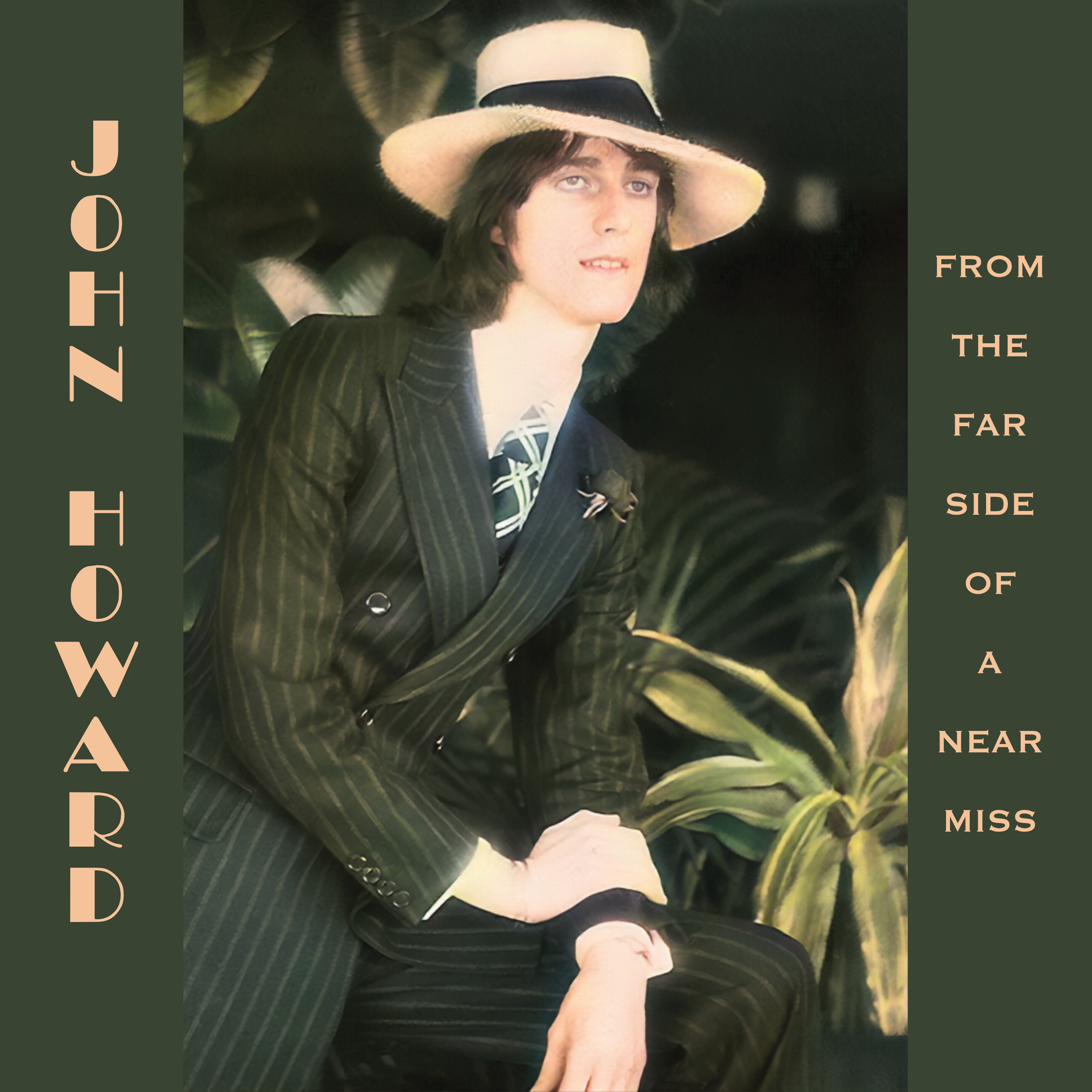
Following in the slipstream of his third and final volume of memoirs (In The Eyeline Of Furtherance) the singer-songwriter John Howard, with the wind in his sails, is back with yet another album. But instead of the usual songbook formula this is a continuous one-track work of disarming, gentle brilliance that runs to over thirty-five minutes.
You could say it was a return to Howard’s long form songwriting experiments of 2016 and the Across The Door Sill album, or perhaps even a reaction to (one of his heroes of the form) Bob Dylan and his Boomer odyssey ‘Across The Rubicon’, which more or less charts an entire epoch. Howard is a bit younger than Dylan of course, but both artists seem to be making some of their best work at this stage in their lives: uncompromising and unburdened by expectation or the need to suck up to fashions, labels, even the public they share an envious position. That Dylan mini-opus only lasted a mere seven-minutes in comparison, whilst Howard’s grand effort runs and runs, covering as it does a lifetime as a proxy soundtrack to his series of autobiographies.
Far more melodious than his hero’s reflections, this scrapbook photo album reminisce features Howard’s signature balladry-troubadour and stage musical verve of poetically candid prose, sung both wistfully and with a certain yearn.
Love is all though as Howard sets scene after scene, analogy after analogy; reconciling his past to a watery-mirrored piano-led score that’s constantly moving, picking up suffused strings, Dylan’s harmonica, a bucolic burnished harpsichord, a planetarium mood piece starry synth and light dabbing’s of congas and shaker. In what could be a reference to his own semi-cover version album Cut The Wire, there’s a hint of the Incredible String Band and also Roy Harper about this extended performance; especially Howard’s version of the former’s ‘In The Morning’. Later on it’s a lilt of The Beach Boys, bobbing on the “ripples of forever” line. Yet it’s unmistakably a John Howard sound, a lovingly executed piece of songwriting that more than holds its own across thirty-five minutes plus of ebbing drama.
But this is also a two-way conversation with Howard playing both sides of a long affair; the part of old lovers and new, friends, acquaintances and family, their words echoing now in the mists of the time that’s left. Dylan, that recurring idol, acts as a silent partner in one such discourse, as Howard sings about artistic integrity and his inspirations, a pantheon of uncompromising doyens. And in that same particular passage we also have Monroe and the Fab Four popping up; a Hard Days Night Beatles name-checked in what is both a celebrated yet fraught with delusion and remembrance chapter on this long winding road.
I particularly enjoyed the more salt-of-the-earth café scene diorama; Howard in voyeuristic mode describing a very unlikely cast, using both a kid who’s reading a Russian literary titan and a priest faraway in reflective thought (perhaps regret) as conduits for naming even more idols and favourites: “The kid who’s reading Tolstoy, listening to The Rolling Stones; I can hear old Jagger’s laughter floating from his phone.” Great lines by the way. The priest is “remembering Bowie’s Low”, which could of course be a reference to the same priest featured in the lyrics to ‘Five Years’ now contemplating a life that’s perhaps not all it seems.
Addressing, redressing whilst swanning through fantasies of a swish Ritz, 5th Avenue and Caesars Palace, imaging an alternative stratospheric career trajectory, headlining the Albert Hall, Howard takes us on a rolling, fluctuating journey through of his thoughts, dreams (realized and abandoned), regrets and hurt. By the end of this epic piece the final phrase, sung in a lasting glow, says it all: “It simply is what it always was”. Dylan couldn’t have put it much better.
An ambitious undertaking, From The Far Side Of A Far Miss is the work of an artist still willing to take chances and explore. Whilst his peers rely on the back catalogue, or drum out the same music they made over fifty plus years ago, Howard seems entirely comfortable in his own skin as a wiser yet still spritely young-at-heart artist composing music on his own terms. Fresh new introspections, concepts abound as he shows there’s still so much more to share and create.
Yara Asmar ‘Home Recordings 2018-2021’
(Hive Mind Records) 16th September 2022
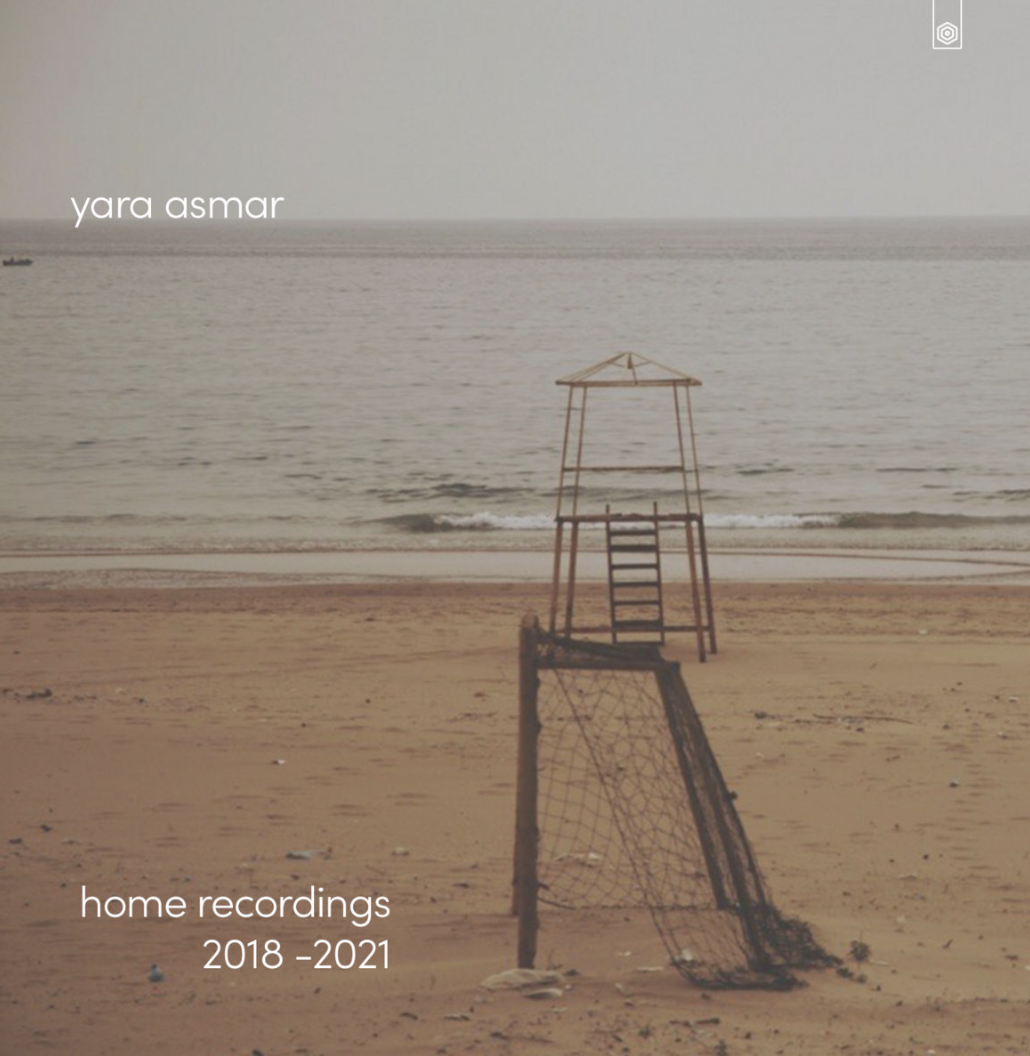
The latest discovery on the Hive Mind radar emanates from Beirut, with the serialism and tonal atmospheres, ambient and minimal semi-classical melodies of Yara Asmar.
In a tumultuous climate, referenced in a sampled conversation piece on ‘Is An Okay Number’ and in the unsaid but moody reflections and vaporous drifts that push out into the unknown and untethered, the twenty-five year old multi-instrumentalist, video artist and puppeteer manages to often leave the earthly mess of a region in crisis and float out above the city.
From an airy viewing platform we can identify swirls, waves, gauzy veils and echoes of the concertinaed (courtesy of Asmar’s grandparents’ accordion), tubular metallic rings and tingles (that will be the metallophone), a serious but graceful piano, a music box, hinges and searing gleams and a beatified magical spell of Christian church liturgy. The latter source was recorded by Asmar from church hymnal services around the Lebanon; transduced into the hallowed yet otherworldly and mysterious, given a gentle waltz-like ghostly quality and only sense of a presence. A reference to country’s much troubled religious turmoil? The art of remembrance? Spiritualism? Or the familiar sounds of an upbringing? Whatever the reason it sounds both equally as ethereal, as it does supernatural: passages into other realms.
Tracks like ‘We Put Her In A Box And Never Spoke Of It Again’ are almost lunar in comparison to those hymns; lending a moon arc of Theremin-like UFO oscillations and cult library cosmic scores to this set of peregrinations and field-recordings. Yet for the most part this is a truly dreamy, translucent and amorphous album of delicate classicism, explorative percussion and ambient; an ebb and flow of reverberations and traces of moods, thoughts that literally floats above the clouds and out beyond the Lebanese borders. These home recordings recorded onto cassettes and a mobile phone capture something quite unique, in what are the most unique of times.
Valentina Magaletti & Yves Chaudouët ‘Batterire Fragile’
(Un-Je-Ne-Sais-Quoi) 23rd September 2022
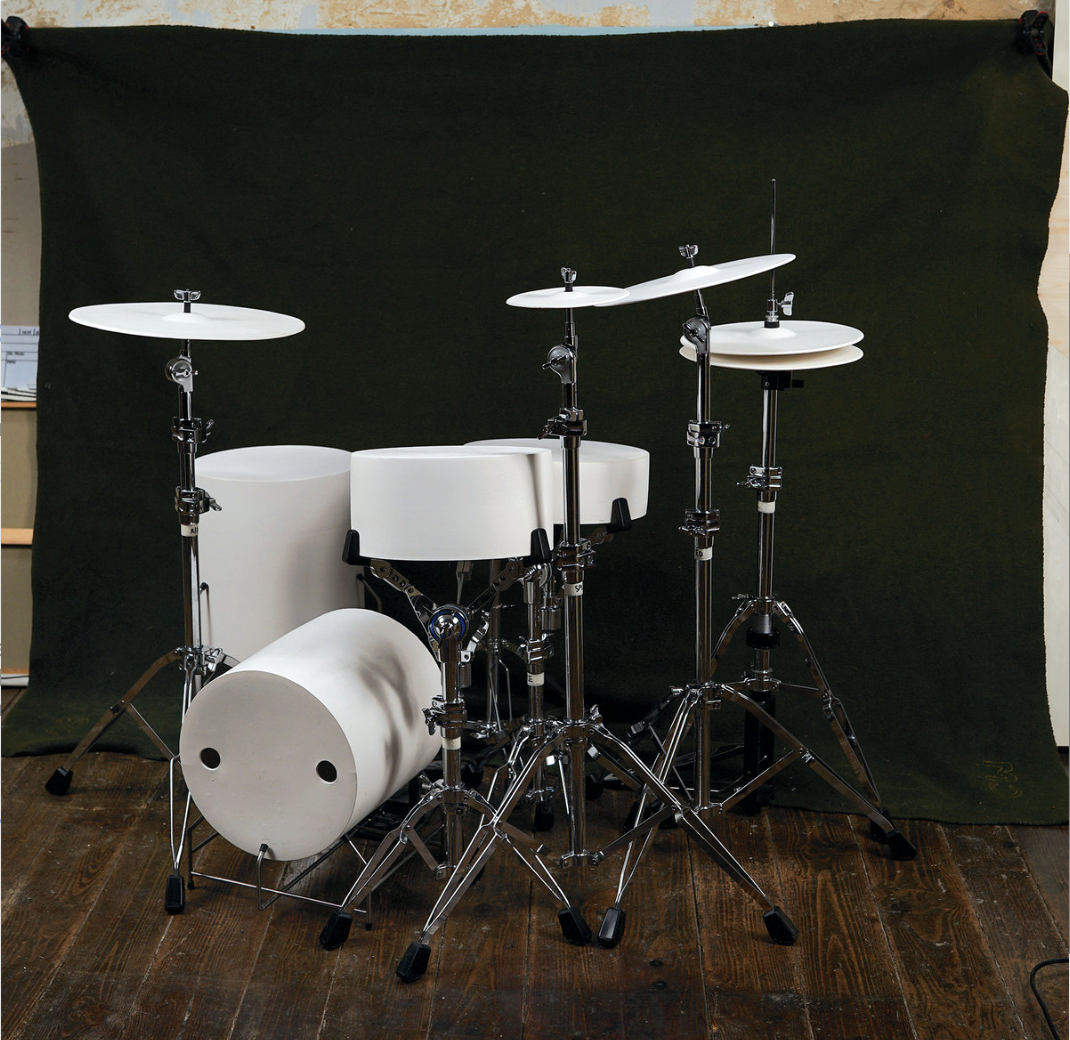
Is it performance art or just performance? Probably both as the lauded drummer extraordinaire Valentina Magaletti once more sits behind the artist Yves Chaudouët’s conceptualized porcelain drum kit.
If you follow either of these artists then you’ll know that this is the second installment of recordings to be taken from the original project back in 2017. Conceived by the painter turn multimedia artist Chaudouët as an exploration in texture and friction, wood, metal and rubber were all added to the porcelain kit; the effects of which, in the hands of such an accomplished musician traverse the concrete, avant-garde, art rock, breakbeat, the classical and freeform and dark jazz.
It’s been a couple of years since I last featured the highly prolific composer/producer and percussionist Magaletti, featuring her ‘tropical concrete’ communal with Marlene Riberio, Due Matte. In this space Magaletti continuously rattles, rolls, skids, skiffles, dusts and lays spidery tactile rhythms and strokes down as mooning, wailed and frayed bowed primal supernatural atmospherics stir.
We could be in Southeast Asia, Tibet or West Africa, even the Caribbean with passages that sound like steel drums bouncing away. We could also be in a subterranean chamber as resonating echoes of this tinny, metallic and deadened kit ricochet of the walls. Reductionist theatre, ceramic jazz, a paranormal drumming séance, the mood isn’t always easy to gauge. But as experimental as it is Magaletti is constantly rhythmic throughout; switching yet always hitting a beat, and even in some parts something that resembles a groove. An exercise on concept but also percussive, drumming performance, this collaboration straddles both the art and musical camps to bring us something quite different yet always engaging, interesting and virtuoso.
Hi, my name is Dominic Valvona and I’m the Founder of the music/culture blog monolithcocktail.com For the last ten years I’ve featured and supported music, musicians and labels we love across genres from around the world that we think you’ll want to know about. No content on the site is paid for or sponsored and we only feature artists we have genuine respect for /love. If you enjoy our reviews (and we often write long, thoughtful ones), found a new artist you admire or if we have featured you or artists you represent and would like to buy us a coffee at https://ko-fi.com/monolithcocktail to say cheers for spreading the word, then that would be much appreciated.
The Monolith Cocktail Monthly Playlist Revue: Future Kult, Your Old Droog, Baby Cool, Drug Couple, Brown Calvin…
August 31, 2022
PLAYLISTS SPECIAL
TEAM EFFORT/ CURATED BY DOMINIC VALVONA

All the choice tracks from the last month, selected by the entire Monolith Cocktail team: Dominic Valvona, Matt Oliver, Brian ‘Bordello’ Shea, Graham Domain and Andrew C. Kidd.
For the past couple of months we’ve been experimenting with both Spotify version and Youtube (track list will vary) versions of the playlist. Whatever your preference found both below:
TRACKLIST
Future Kult ‘We’
Grooto Terazza ‘Tropische Krankheiten’
Speech Debelle Ft. Baby Sol ‘Away From Home’
Joe Nora & Mick Jenkins ‘Early’
A.G. ‘Alpha Beta’
Your Old Droog & Madlib ‘The Return Of The Sasquatch’
Gabrielle Ornate ‘The Undying Sleep’
Yumi And The Weather ‘Can You Tell’
Baby Cool ‘Magic’
Claude ‘Turn’
Lunar Bird ‘Venilia’
Imaad Wasif ‘Fader’
Legless Trials ‘X-Tyrant’
Dearly Beloved ‘Walker Park’
Staraya Derevnya ‘Scythian Nest’
Short Fuze & Dr. Kill ‘Me And My Demons’
Group ‘The Feeling’ JJ Doom ‘Guv’nor’ (Chad Hugo Remix)
DJ Nappa ‘Homeboys Hit It’
DJ Premier Ft. Run The Jewels ‘Terrible 2’s’
Zero dB ‘Anything’s Possible’ (Daisuke Tanabe Remix)
Underground Canopy ‘Feelm’
Revelators Sound System ‘George The Revelator’
Montparnasse Musique Ft. Muambuyi & Mopero Mupemba ‘Bonjour’
The Movers ‘Ku-Ku-Chi’
Yanna Momina ‘Heya (Welcome)’
Vieux Farka Toure & Khruangbin ‘Savanne’
Barrio Lindo ‘Espuma De Mur’
Brown Calvin ‘Perspective3’
Nok Cultural Ensemble Ft. Angel Bat Dawid ‘Enlightenment’
Li Yilei ‘A Hush In The Dark
Celestial North ‘Yarrow’
Andres Alcover ‘White Heat’
Nick Frater ‘Aerodrome Motel’
Drug Couple ‘Lemon Trees’
Cari Cari ‘Last Days On Earth’
Ali Murray ‘Passing Through The Void’
Diamanda La Berge Dramm ‘Orangut The Orangutan’
Your Old Droog ‘The Unknown Comic’
Jesse The Tree ‘Sun Dance’
TrueMendous & MysDiggi ‘Talkk’
STS & RJD2 ‘I Excel’
Jester Jacobs & Jack Danz ‘HIT’
Oliver Birch ‘Docile Healthier’
GOON ‘Emily Says’
Lucy & The Drill Holes ‘It’s Not My War’
Apathy, Jadekiss & Stu Bangas ‘No Time To Waste’
Verbz & Mr Slipz ‘Music Banging Like’
Sly Moon ‘Back For More’
Guilty Simpson Ft. Jason Rose & DJ Ragz ‘Make It Count’
Hi, my name is Dominic Valvona and I’m the Founder of the music/culture blog monolithcocktail.com For the last ten years I’ve featured and supported music, musicians and labels we love across genres from around the world that we think you’ll want to know about. No content on the site is paid for or sponsored and we only feature artists we have genuine respect for /love. If you enjoy our reviews (and we often write long, thoughtful ones), found a new artist you admire or if we have featured you or artists you represent and would like to buy us a coffee at https://ko-fi.com/monolithcocktail to say cheers for spreading the word, then that would be much appreciated.
Singles Night At The Monolith Cocktail HQ: Montparnasse Musique, Lunar Bird, Gabrielle Ornate, Future Kult…
August 24, 2022
SINGLES/VIDEO TRACKS ROUNDUP
BY DOMINIC VALVONA
PHOTO CREDIT: ERIC BECKMAN

A one-off revue of recent and upcoming singles and videos being dropped that I didn’t have room for in my perusal roundups, I’m trying something very new with this post, as the blog’s never specifically done this sort of thing before.
Montparnasse Musique ‘Bonjour’
(Real World Records)
A welcoming polygenesis, South African lilted and woozy pattered beat teaser for the forthcoming album from the duo Montparnasse Musique, ‘Bonjour’ is full of pan-African essences, rhythms and goodwill. A collaborative affair, the new single features both Muambuyi and Mopero Mupemba of the Congotronics outfit, the Kassai Allstars. Another layer to this complimentary electric mix, a congruous, scene-setting music video has been created – shot on the streets of Kinshasa – by the renowned filmmaker Renaud Barrett (Systeme K!, KOKOKO!).
Carrying on from where they left off with their self-titled EP, Aero Manyelo and Nadjib Ben Bella combine their South African and Algerian roots with both the old and new to create a 21st century African hybrid that mixes ritual, ceremony and ancient mysticism with what’s happening on the streets and dancefloors of the continent now. The debut album dig, Archeology is due out on the 11th November 2022. Expect a review in the coming months.
Future Kult ‘We’
(Action Wolf Records/AWAL)
One of my favourite renegade soundclashs of 2022, the Berlin-based Welsh-Austrian sonic-visual partnership of Sion Trefor and Benjamin Zombori pump out their fourth and newest single ‘We’ this week.
In the wake of their highly recommended self-titled pan-global sounds album (by us), arrives another eclectic, omnivorous power grab that drags the vacuous, soul-destroying and destructive selfish, image obsessed malignant hyperbole of the 21st century onto the dance floor. Moodily bouncing to the sound of barricade drums and climatic EDM, with shades of Battles, Front 242, The Juan Maclean and Midnight Juggernauts, the Future Kult duo and friends turn anguish and riled-up anger into an infectious broody anthemic electronic flashpoint. It gets better on every play I’m telling you. And Benjamin’s visual effects add a cosmic energy to the sound.
Lunar Bird ‘Venilia’
Excuse my ignorance for one second, but I did think the title of this latest diaphanous, magical enchantment from the Joan Miro-inspired Lunar Bird was just another spelling of the word ‘vanilla’. It is of course ‘Venilia’ the Roman deity associated with the winds and the sea that proves a both lofty and atavistic poetic subject for another dreamwave wisp of a song from the band. Allured hallucinatory towards that goddess, the lush Beach House-like soundtrack of synthesised fizz, gauzy psychedelic breathlessness and swimmingly vibed restlessness entwines mythology with a beautiful language of rebirth and longing; an Italian cinematic beach paradise in song – even if it is probably the band’s claimed home of Wales.
Celestial North ‘Yarrow’
Like a muse siren from the canvases of the Pre-Raphaelites or the cooed breathless yearns of a chivalry medieval tapestry depicting some magical garden of escapism, Celestial North once more steps over into the ethereal realms with this enchanted botanical themed suite. A meditative fauna dwelling score of beautiful piano tinkled reflection and sentiment, misty synthesised dreamy atmospherics and diaphanous sighed voices, has the air of something magical and sublime. ‘Yarrow’ then is something of a healing balm; nature’s ways distilled into a most stirring but pleasant mirage.
The Edinburgh artist, now based in the Lake District, has been graciously releasing tracks in the run up to the debut album, earmarked for this September. I suggest you keep an ear out for that album.
Violet Nox ‘Magnetar’
(Aumega Project Records – Germany/Infinity Vine – USA)
Available since the end of July 2022
From the Gaia attuned Eris Wakes album, another colourful, textural exploration visualisation to accompany an aria voiced (courtesy of the trained opera singer and guest vocalist Noell Dorsey) electronic state of consciousness. Yes, the Boston synth collective (working around and off the core of Dez De Carlo and Andrew Abrahamson) send out more positive if mysterious vibes with Chris Konopka’s magnetic filings turn psychedelic corrosion video for the ticking House rhythmic, phaser waves and buoyant drum pad bobbled ‘Magnetar’. Artist Konopka manages to add allure and to entrance a track that is already fairly wispily cosmic and trance-heavy.
Gabrielle Ornate ‘The Undying Sleep
Proving quite the prolific artist, the colourful mélange imbued Gabrielle Ornate has just released her seventh single, The Undying Sleep. More pop, slightly less bohemian, the language remains but the trance and maximalist production is upped another level with a slow release of cosmic fizzled star bursts, churned trip-hop like beats and St. Vincent-style guitar licks. Teardrops fall into the ether under the hippie eye of Horus on another hit record from the burgeoning artist. One to watch as they say.
Barrio Lindo ‘Espuma de Mar’
(Shika Shika)
A move by the Latin American folktronica artist Barrio Lindo (alias of Agustín Rivaldo) to create music for the listener to get lost in, this new wafted, dreamy project was made with friends on the outskirts of Buenos Aires in early 2020. The sea foamed imbued Espuma de Mar album is filled with refined, studied evocations of a jazzy tinged, ambient and woozy South America, Africa and the Caribbean, and chamber orchestral music.
The title-track traverse features the hazy blows, lingers and spells of Mariana Iturri (on flute and vocals), Nicolás Lapine (on trumpet), Ignus on drums and Rumbo Tumba and removes Latin lilted moves to somewhere entirely different, even ethereal. The album is due out on the 23rd September 2022.
Hi, my name is Dominic Valvona and I’m the Founder of the music/culture blog monolithcocktail.com For the last ten years I’ve featured and supported music, musicians and labels we love across genres from around the world that we think you’ll want to know about. No content on the site is paid for or sponsored and we only feature artists we have genuine respect for /love. If you enjoy our reviews (and we often write long, thoughtful ones), found a new artist you admire or if we have featured you or artists you represent and would like to buy us a coffee at https://ko-fi.com/monolithcocktail to say cheers for spreading the word, then that would be much appreciated.
The Perusal #34: Claude, Li Yilei, The Movers, Foch/Delplanque, Staraya Derevnya, Brown Calvin…
August 8, 2022
Dominic Valvona’s Reviews Roundup
The Movers ‘Vol 1 – 1970 – 1976’
(Analog Africa) 5th August 2022
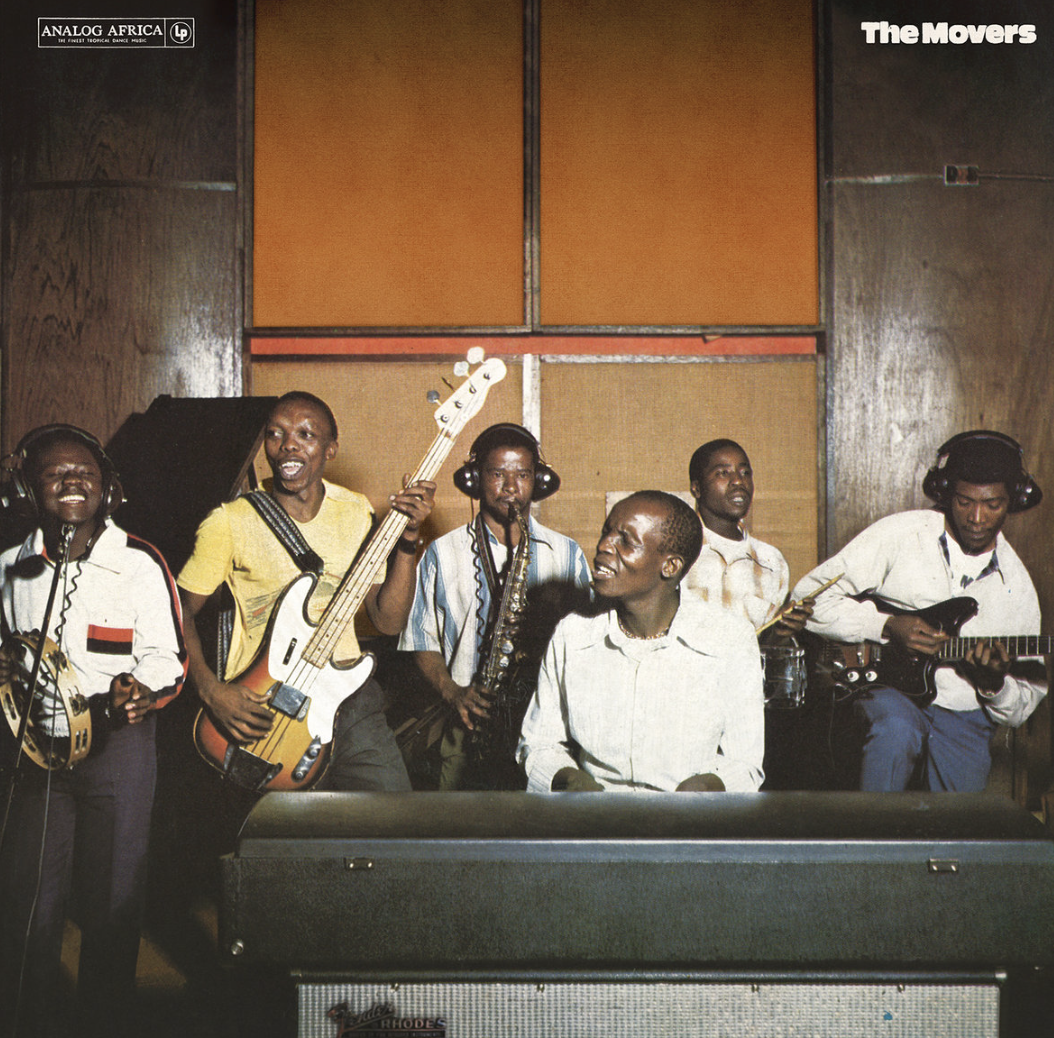
Although it struck Samy Ben Redjeb (founder of the Analog Africa label) instantaneously, the impact that was felt on that day in 1996 when introduced to the neat, sunny-side-up Township soul of The Movers has taken more than two-decades to come to fruition. But now in 2022, finally, there’s a choice compilation of the South African band’s back catalogue to rave about and soak up: just in time for a sizzling, Earth-scorching summer.
Possibly one of the most popular bands of the 1970s in their homeland – even breaking the Apartheid bonds of segregation as the first black band to get airplay on white radio stations -, The Movers have nevertheless left behind scant information, and a provenance riddled with holes. This is despite selling 500,000 copies of their debut LP, Crying Guitars, in just the space of a few months and in providing a peaceable (almost Caribbean in lilt) anthem (‘Soweto Inn’) soundtrack to the mid-70s student revolts and resistance. Yet it proved extremely difficult to track down anyone involved in this South African sensation.
However, what Samy did glean after help and introductions from Kaya Radio’s Nicky Blumenfeld was that the band first took shape in the late 60s, instigated by the two relatively unknown musician brothers, the bassist Norman and guitarist Oupa Hlongwane. To make this band a reality, the brothers approached the Alexandra township-based businessman Kenneth Siphayi with a proposal: if Siphayi would lay-out the money for them to buy some instruments in return they’d give him a cut from future live shows and record deals. In the end their patron didn’t just dole out the funds but took on a manager’s role, introducing them to the simmered, evangelical balm organist Sankie Chounyane. The ranks soon swelled however to accommodate the funky tight drumming of Sam Thabo and the relaxed reeds of saxophonist Lulu Masilela.
Initially they signed to the Teal Records label in 1969, releasing an instrumental record. But almost right away they worked with the vocalists Blondie Makhene (a fourteen year-old vocal prodigy we’re told) and Sophie Thapedi. With a great soulful voice Thapedi sang one of the band’s most popular, enduring hits ‘Soweto Inn’, and channeled Miriam Makeba on the Overton Berry Trio-esque organ suffused, cheek-popping and beautifully wooed ‘Ku-Ku-Chi’. Makhene for his part sounds far beyond his years on the infectious, stained glass township boogie ‘Kudala Sithandana’ and, in harmony with a heavenly female chorus, sounds a bit like Labi Siffre on the whistled fluty R&B turn ‘Six Mabone’.
Unmistakably South African; blessed with that languorous sunny disposition groove, The Movers took a piece of Stax soul revue, Booker Ts’ organ, Steve Cropper’s effective but never overplayed licks, and a taste of The Meters and combined it with the indigenous Mbaqanga (also known as “township jive”) and marabi (a sort of ragtime, jazzy and bluesy style that evolved out of the mining communities, synonymous for its cheap keyboard-led sound) styles. This spills out into reggae, even rock steady, yet always sounds inherently relaxed: never pushed, hurried. Chounyane’s organ standouts, but it never overpowers nor seems particular showy: thin but very effective, a township Ramsey Lewis bathing in the Lord’s light. ‘Give Five Or More’ is an unpressured eased introductory like beauty that features a buzzy organ but also those Stax chops and some gentle drum sizzles –for some reason it reminded me, melody-wise of The Monkees.
A soul revue from the heart of South Africa’s politically explosive townships, The Movers delivered a light gospel-tinged fusion of ripe hotfooted, containable energy. It would be a sacrilege to miss owning a slice of those sweetened South African-lilted R&B, soul, funk and rock steady grooves, so do yourselves a favour and pick up Vol. 1 this summer.
Claude ‘A Lot’s Gonna Change’
(American Dreams) 12th August 2022

Disarmingly wistful and woozy, the refined production and songwriting on Claudia Ferme’s debut album lays a gossamer veil over a litany of anxious quandaries and existential malaise.
Almost, to her credit, effortlessly dreamy, Ferme floats and drifts into a myriad of introspective roles, rooms and scenarios under the Claude alias. The Chicago-based artist nails the despondency of the times whilst giving a most languidly deadpan but essentially captivating voice to the growing pains of a “twenty something”: that first decade of “expectation”, of real responsibility, and yet in this infantile age, in which – especially my generation – we cling to youth and even childhood, you’re still considered an empty vessel and teenager with nothing to worry about and everything to look forward to. But Ferme offers up a certain emotionless face to such woes, troubles; even lightening the mood with the most diaphanous of laidback and aloof vocals, and a backing that is gently smoldered in a relaxed mix of 70s soft rock, synthwave, dream and art pop.
Featured a little while ago in one of my monthly perusals, the inaugural single and opener on this album, ‘Twenty Something’, sets out the vision and mood with its closed-eyes wispy saxophone motifs and perfectly dreamy reflections: “I’d rather be hurt by my own doing, then be let down by someone else. At least that’s what I tell myself.”
That’s followed by the most recent single, the Gabriel Garcia Márquez inspired ‘Roses’, which takes a line from the feted Colombian author’s famous Love in The Time Of Cholera novel and runs with all its metaphorical, symbolist connotations. The thorny prick of this flower’s stem and the book’s obsessive protagonist’s eating of it, bot alluding to themes of self-tortuous behavior. But what we take away from the song and lyrics is that we all need to be a lot more forgiving.
Elsewhere the painful anxieties and mental fatigue hang like post-it notes attached to a bedroom mobile on the listless ‘I Think I’ll Pass Today’, and on the all-too realistic outcomes of a burst bubble of love naiveties, Chromatics vapour trailing ‘Claustrophobia’ – a longing if dry yearn for magic and something lasting in a cynical world of fleeting, vacuous feelings and connectedness.
In contrast, the acoustically gorgeous ‘Meet Me’ has a slight air of Blonde Redhead and some kind of Spanish peppering. But the song that, softly, breaks the wafted, lush mold is the almost rocking ‘Oh, To Be’, which sets Ferme against a more electric spiky backing; adding a silent scream and edge to the synthesised suffusion.
A Lot’s Gonna Change is a most wonderful, captivating and skilfully delicious debut that subtly evokes the worlds of Aldous Harding, EX:Re and Cate Le Bon. A coming of age songbook, a rebirth, in which the harshness of the epoch, the pressures both unique and synonymous with a generation finding its way, are snuggled in a relaxed balm.
Staraya Derevnya ‘Boulder Blues’
(Ramble Records)
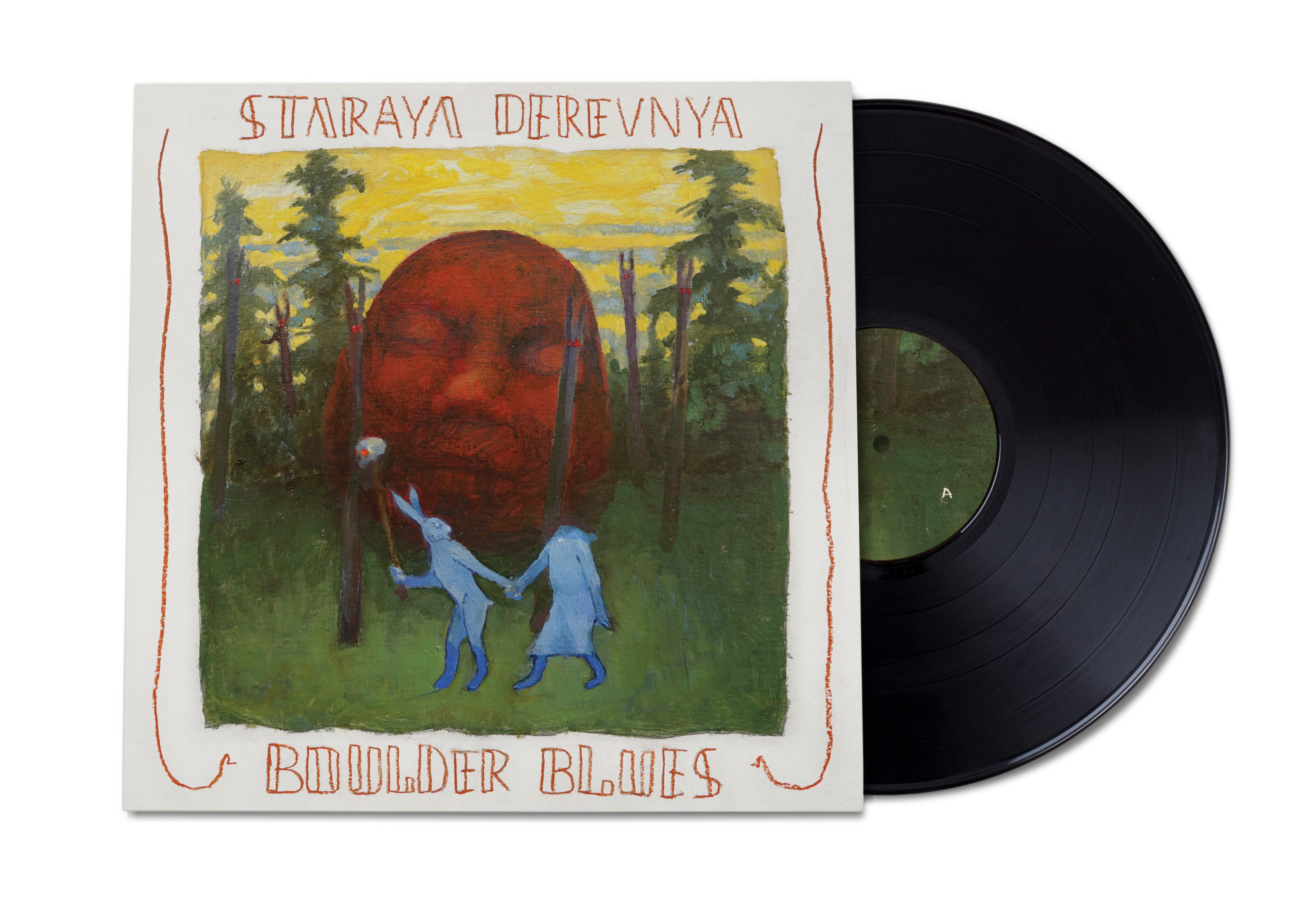
The pan-Israel ensemble are once more on the move, recording another elevated and mystical ethnographical transportive work that takes in and transduces not only their native lands but also the UK, Germany and Mexico. Boulder Blues then is a geographical soundboard of history and the avant-garde; of evoked ancient nomadic tribes and primitivism made psychedelics, and a mantra iteration of a very removed form of what we know as the blues.
With up to eleven (could be more) band members involved, many of which drift in and out of this five-track assemblage of peregrinations and mental release, there’s a lot to take in: to work out. Like “what the hell was that sound?” Or, “where the hell are we?”
Scratchy nylon Beefheart and the Velvet’s guitar, hoots and erratic mooning voices merge with Širom-like (that’s the second time I mention them in this roundup) percussion, Unlimited E.F.S. series Can skits and Faust as fantasies of the Mongolian steppes, the Black Sea, Kabbalah mysticism and krautrock era Germany are invoked. At times it resembles a communion between the Red Crayola and Holgar Czukay; at others, 666 era Aphrodite’s Child share the byway with Don Cherry and Pharoah Sanders.
Staraya Derevnya are totally out there with their “bubbling pelt” and “gallant spider” poetic descriptive wanderings, pains and blues abstractions. Still, they remain rhythmic, even melodious in places; dancing, marching and on the trinket ringed, shadowy ritual title-track, exhaustively repeating the same incantation for five-minutes straight.
I must confess. I really dig this collective. And I’ve even included them in the blog’s choice albums list before now. Boulder Blues is another incipient esoteric, magical album of post-punk, krautrock, psychedelic, far-out and primitive traverses.
Li Yilei ‘Secondary Self’
(LTR Records) 26th August 2022
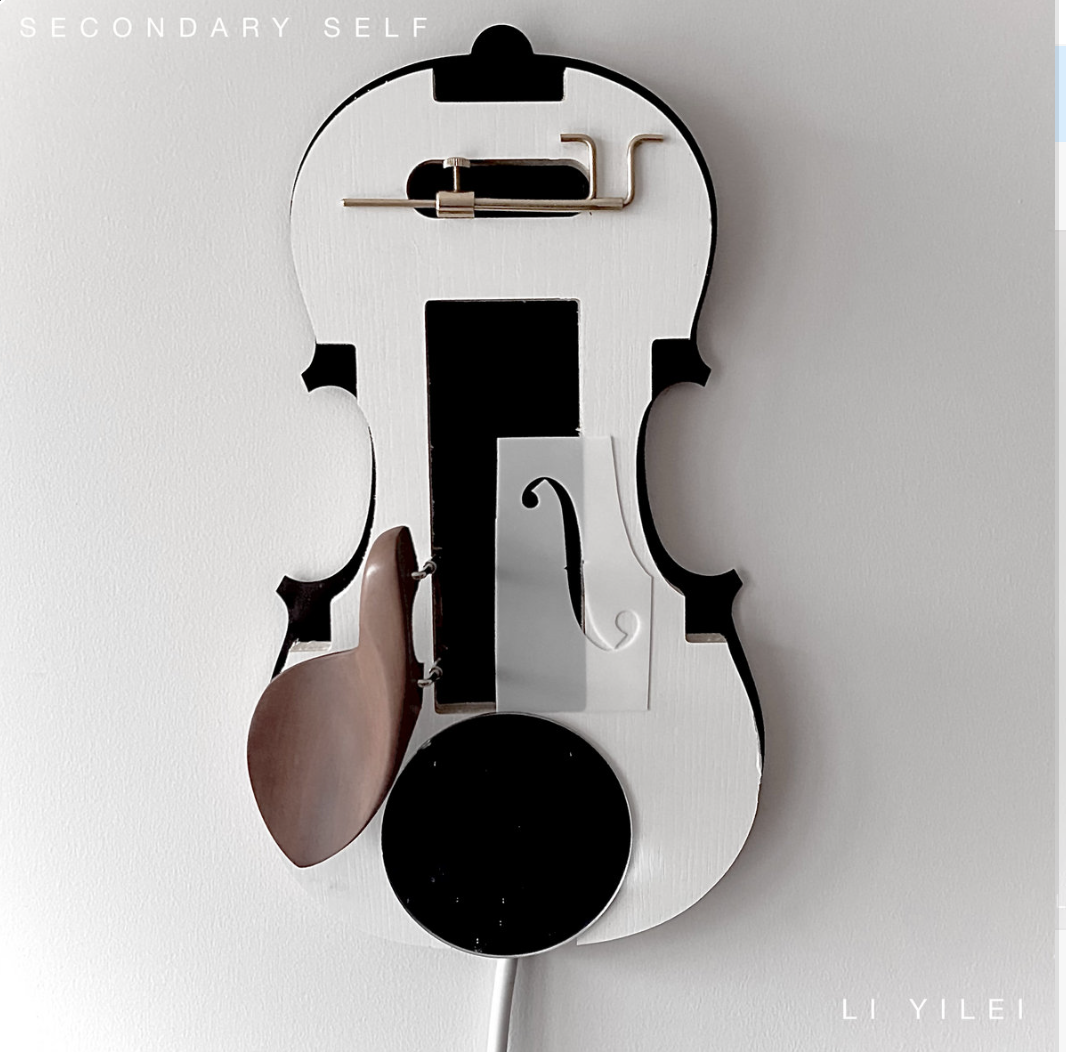
Spanning the entire Covid epoch, so to speak, and a period in which the sonic sculptor-composer Li Yilei travelled from her London-based home to native China and to Shanghai, Secondary Self is a surprisingly (as the PR notes remark) cohesive album of hidden source material powered recordings, abstract hymnals and coded language.
Made up for the most part by pieces originating from a Café OTO commission, there’s also an omitted (due to time constraints) track from Yilei’s 2020 debut album Unabled Form, plus the more recent serene meditation ‘Melt’ from February of this year. That spare experiment, ‘Warmth Ageing’, was created during sessions for the inaugural album synthesis of the evanescent and tactile; an album that received a glowing review from me at the time. Not so much interchangeable this searing, buzzy winged metallic current is a congruous fit on both albums; neither of which particularly offer connective themes of concepts.
That main body of work continues Yilei’s keening simulations of transformed settings, rumination’s and repurposed white spaces; created from a number of obscured and experimentally stretched instruments: the reverberation of percussive bowls and a serial wrangle of echoed guitar tabbing, harmonics and improvised squiggles. There may well be some kind of stringed instrument in there, effected and smothered in reverb, but for the majority of the time the trace of anything familiar is synthesised, electronically morphed into something more abstract, stranger, and on occasion, diaphanous.
It’s something approaching the beautiful that opens up the Secondary Self as an affecting otherworldly siren is sustained across the near ethereal, crystallised freeze of ‘A Hush In The Dark’. A semblance of some kind of voice and almost tender notes provide a touch of the natural: the composer even. As the title would suggest, the second suite ‘Bird Box’ once again features the familiar: the whistle and tweets of birds. Only this avian chorus is given a lunar galvanised bouncy buzz; accompanied later by a drilled code, or, a pummelled Morse-coded read-out. And so a back garden bird box is pierced with the higher sonic register and transported to some place else entirely.
‘Mosquito Alarm’ seems to be slowly driven by a looped photocopier, but flits with deeper bass-y pitches and cosmic mystery. There’s a brief spell of dog howls and more bird communication amongst the dreamy, near psychedelic lapping reversals, incanted whispers and memory recalls of ‘Murmur’ however.
The remaining tracks burble, vibrate and oscillate, recalling vague signs of early 70s analogue experiments, Ambient Works Vol. 2 Richard James, the kosmische and the unsaid. Yilei’s square waves, acousmatics and ruminated efforts cannot be easily defined. Instead, this is a sound that fluctuates between the arts space, the outdoors, and an amorphous myriad of electronic genres. This third album will do much to reinforce what I already knew back in 2020, that Li Yilei’s visions are quite unique, and that the artist is constantly pushing at the boundaries to create both the challenging and meditative.
Foch/Delplanque ‘Live Au GRM’
(Parenthèses Records)

From the equally hallowed and chthonian atmospheric environment of the Maison de la Radio et de la Musique’s studio 104 in Paris, an extemporized performance recording now made available, nearly, six years after its initial transmission.
By 2016, the year of this Groupe de Recherches Musicales curated concert series, the drummer-percussionist Philippe Foch and his foil at the time, and subsequently, the multi-tasking electronic music composer, critic, author, teacher (the list goes on and on) Mathias Delplanque had already produced the collaborative Taarang album that led to a 2015 residency at the National Centre For Musical Creation in Reims, and the Secret album of material recorded from that performance.
Pretty much accustomed to each other’s methods, by the time of Live Au GRM the synchronicity was at an apex, with Foch at the centre of a world percussive assemblage and Delplanque at his side sampling the results in real time.
Recondite empirical vibrations, scratches and stretches across frame drum skins and the resonance of cymbals are transformed further by Delplanque into otherworldly, mysterious forms of primitivism, mythology, musique concrete, the strung-out and cavernous. For we could well be in the incense chambers of Byzantium, the Minotaur’s maze, or, transported to India with a serialism burst of tablas.
Over the course of 26 minutes there’s bot spacious and sporadic passages of unprepared playfulness and exploration in an environment circled by scurrying bestial movements and noises from the darkness. Incipient patterns, traces across tubular metals emerge but are often shunted, shuttered and dissipated back into the shadows.
An alchemy of slapped and paddled physicality and shimmered reverberated trinkets, tinkles emanate from Foch’s eclectic ensemble of instrumentation on a polygenesis performance of hollowed and far denser bass-y tones. In places it reminded me of an entirely stripped of melody Širom, bits of Amon Düül II’s more experimental Dance Of The Lemmings and a little of Faust’s Werner “Zappi” Diermaier.
Scrabbled, almost clawed, and more singular beaten sounds, the hushed ssh-like whispers of a voice and galvanised buzzes appear out of nowhere on a transformative piece of treated and developing improvisation. There really is no telling where this sonic partnership will end up, or what atmospheres they’ll create, only that it will be both esoteric and in an avant-garde direction of percussive and drummed fascination.
Shepherd Stevenson ‘Man Down’
THLTTLDBB ‘SeeUSearching’
(both on Somewherecold Records)
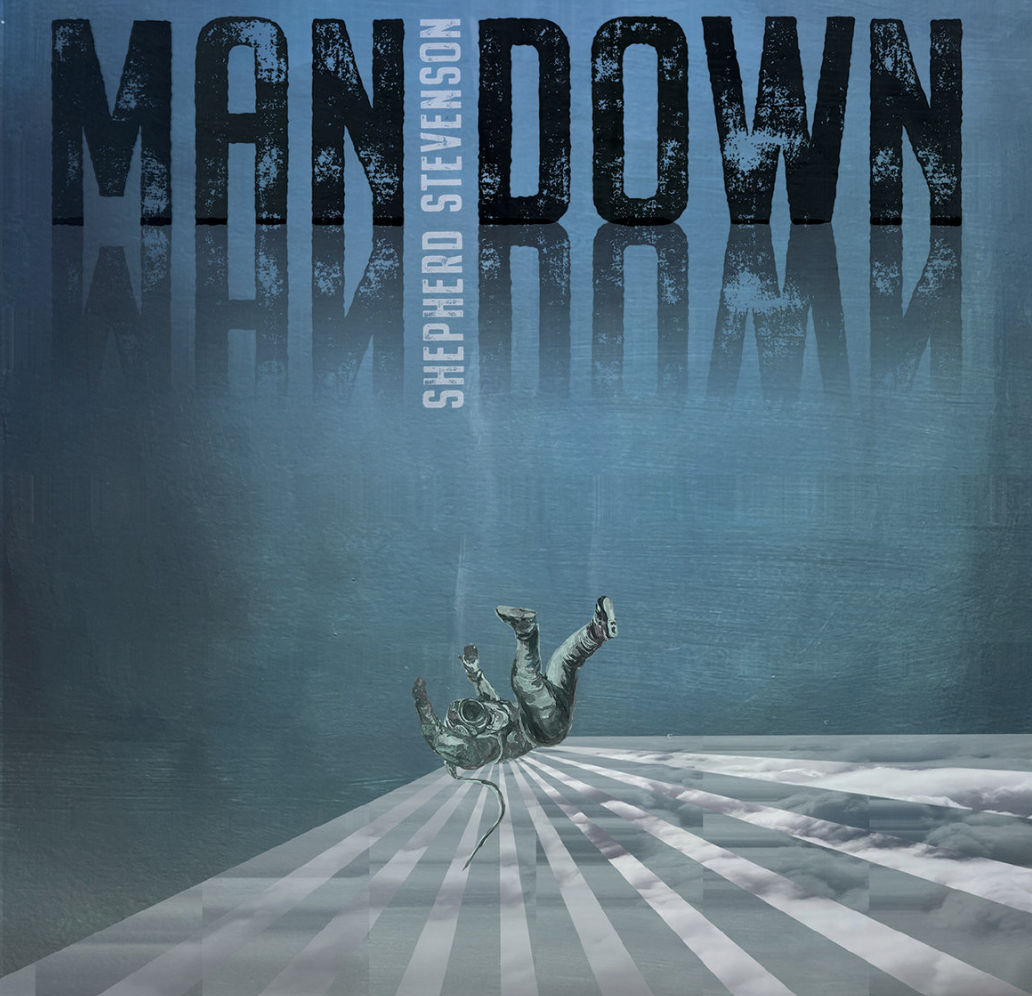
Taking on a filmic quality the multi-tasking L.A. musician, composer and actor Shepherd Stevenson’s inaugural solo effort is rich with the sound of placeable cinematic soundtracks.
Although starting out as and then becoming a stalwart of the alternative 1980s Denver scene (The Aviators, The Young Weasels, Crankcall Loveaffiar), and then going on to help found the L.A. rock band Pigmy Love Circus, Stevenson has also proved a considered hand at composing music for films – a recent list of which includes Erasing Eden, Doobious Sources and Mermaid Down. This album debut, Man Down, was itself originally written to accompany Annie Sperling and Mason Rothschild’s Deep Map art installation, which was projected onto the side of the U.S.S. Iowa, moored in Long Beach; part of the Alta Sea’s Project Blue, a ‘digital port for content and education resources for the emerging Blue Economy’ (that is, exploration, preservation and regeneration of the marine environment). And whether it’s intentional or not, Stevenson often conjures up spells of fluted and dreamy underwater fantasies: ‘Submissions’ to these ears sounds like a Verne-inspired dive beneath the waves, with a touch of both equal enchantment and scuba-equipped Bond thriller.
Occasionally something more foreboding, alien emerges from the depths like some ancient Lovecraftian leviathan. This effect, evocation can be felt on the oppressive and crushing bass, shadowy ‘Old Legions’ – a mix of Jóhann Jóhannsson at his most ominous and touch of Bernard Szajner and Room Of Wires.
For the majority of the time Stevenson molds kosmische, techno and synthwave into various futurist and mysterious projections; stirring up a gently burbled and bubbled acid and fluttered progressive-techno suite of otherworldly sonar waves and cosmic noir on the opening ‘B. Whaler’, and channeling Cliff Martinez on the scalextric-set looping dystopian scares ‘Sadurday’. There’s also some strange Germanic classical fairground thing going on with the Wendy Carlos and Roedelius harped, heavenly ‘ode to toy’ ‘With Dots’. I also detect some lovely climbing Eno notes on the deeply felt and bass-stamped, but neoclassical ebbing, ‘Hoary Notions’. And just when you think you’ve got him worked out, ‘Way Down’ motors at a nice speed towards Germanic 80s synth pop.
Hymnal Western-twanged dives, sci-fi vistas and unknown entities await on a finely-crafted, cinematic quality debut. Stripped of its original visuals, it’s left to the listener to dream and be moved to the lilted and more feared aspects of the imagination.
Under what could just be the longest acronym ever, or a particular recondite sequence known only to the artists, the duo of Matt Greenwall and Phillip Andrew Lewis conjure up the both gently cooed and reverberated hauntings of various imagined transmissions and transduced whispers on their new album of wispy and soothingly effective ambient suites.
Barely above that whisper, these quite but deeply stirring pieces seem to feed a collection of processed video and tape loops into the ether; the returning sound waves, broadcasts now sonic mirages, passages of the American strange, the waves lapping onto a cult 50s soft surf soundtrack, or, the breeze blowing gently across the Appalachian Mountains.
AM/FM radio signals crisply spark as glass birds sound and translucent bulbs ring in the resonance of a drone. The nebulous meets the ghostly; traces of a less fearful Twin Peaks and a haunted theatre are suffused in an ebbing ambient cycle. Voices come and go as movie dialogue is manipulated into echoes of the past. The dreamy spells linger as you catch some hallowed or mysterious presence drifting off into the empirical.
Elements of the semi-classical, trip-hop experiments, European library music, old film image reels and analogue ambient music can all be detected and felt on this both organic but artificially constructed, amorphous album. The opening ambient aria beauty, ‘Angela’s Light’, is worth the entrance fee alone.
Brown Calvin ‘dimension//perspective’
(AKP Recordings) 26th August 2022
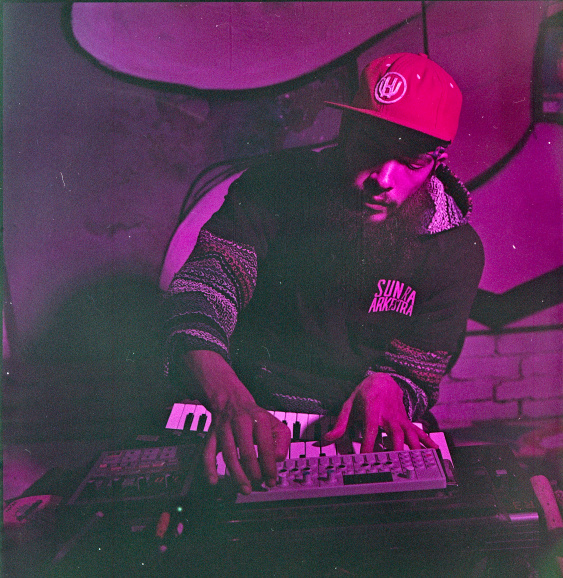
Although split into “dimension” and “perspective” suites the latest elemental album from the Portland, via Philly, producer and composer Andre Burgos is an almost uninterrupted, constantly moving beat-making and cosmic expansive ball of energy.
Under the Brown Calvin alias, and uncoupled from his vocalist foil Brown Alice in the “intergalactic” Brown Calculus duo, Burgos’ Afrofuturist soundtrack transduces all the strains, stresses and rage of the last few years into a controlled chaos of universal proportions.
Traces of hip-hop, jazz, electronica, kosmische, soul and funk can be heard, morphed, effected, and warped as sporadic African hand drums spring into action and scrapped percussion add a sense of ancestral continuity to this ascension into space. Civility, society maybe a tinder box on Earth, but out into the cosmos lies possibilities; a certain escape and serenity, especially sonically, as this album can testify.
An ambitious, lengthy, infinity even, peregrination opens this album. What, in old money, would constitute the whole side of an LP is an astral and contorting vision of analogue-soundboard pulsating circuitry kosmische (ala Tangerine Dream, Moebius and Schulze), Afrikan Sciences oscillations and tangents of beats, ripples and purrs of Rhodes and progressive jazz.
The rest of the album isn’t so much broken up into demarcated parts as a number of symbolist, calculus numbered points along a flipped, staccato or churned journey of expressive freedom. All the shit, the despair and hate is fuelled into a spiritual quest for answers. A multitude of coded, infinity (that word again) suffixed ‘perspectives’ offer variations on the musical themes; some parts in that scope are more liquid, whilst others fracture off into to the psychedelic. Some float, others catch on a ball-in-the-cup loop or form a tumble of breaks. Shooting stars cross the great expanse and dancing translucent bulbs act as notation of a kind. There’s plenty of bending, arcs of distortion in those heavenly realms too; but also the threat of overload.
This is the soundtrack to the African space programme; an untethered energy of J. Dilla, Flying Lotus, slugabed, Don Cherry, Labelle and Floating Points. Burgos has a great capacity, hunger to try out many ideas and to take from eclectic sources; opening the way to free-form movements and a sonic alchemy. The Brown Calvin moniker proves a fruitful transition but also the vessel for a new cosmology and language with which to process our troubling times.
Die Welttraumforscher ‘Liederbuch’
(Bureau B) 26th August 2022
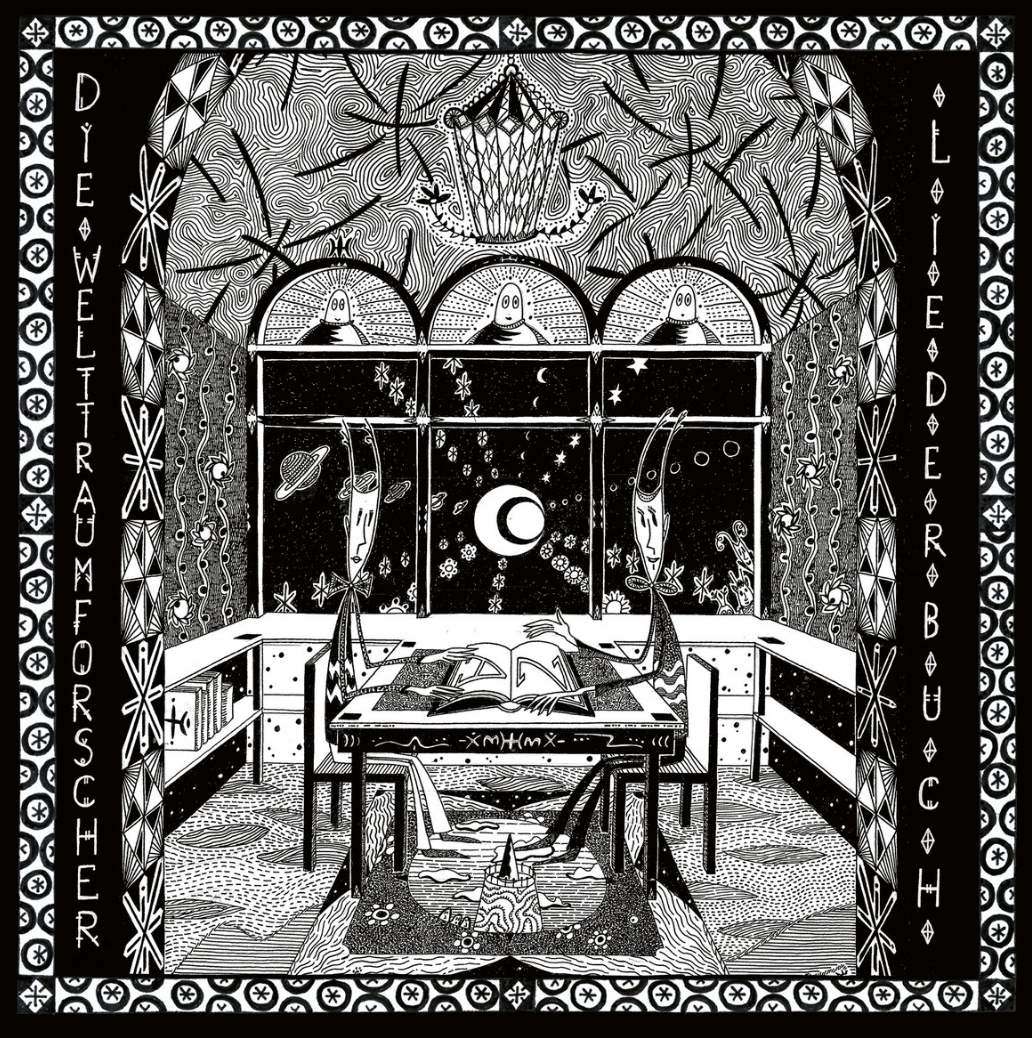
It’s a novel way in which to reconnect with an enchanted world inspired back catalogue; a project that’s spawned at least thirty albums and a fecund of illustrative, multimedia works. But for this latest Die Welttraumforscher (translating as The Space Explorers) album a couple of concept characters look back over a forty-year multiverse and pick out their favourite songs to tell a different story.
Conjured up from the mind of Christian Pfluger, the part Dadaist, part Swiss maverick fantasist, this “pop-up book” of imaginative fairytales now puts the “insect twins” turn compilers Brtz and Brxl at the centre of a new songbook.
Although already receiving a two-part retrospective last year (the fortieth anniversary year) the Liederbuch album seems to reach back to titles from Ein Sommer In Der Wirklichkert (from 1991) and Binike (1986) and keeps up the character board from across the decades.
In this magical landscape we meet cosmic-travellers (Lia and Mira from the Northern Crystal realm), silent forest dweller Ohm Olunde, the mysterious dark pilots, crop-circle researcher Leguan Rätselmann and the Owlmaster Kip Eulenmeister. Reminding me a little of the same magical dioramas and cast that inhabit the musical world of Scarlet’s Well, albeit a both very Germanic and Transalpine version, these characters are often playful, childlike and sweetly placed within an eclectic soundtrack.
Fluctuating between musical moods, genres, Pfluger (who remains very much an enigma) skips through echoes of the German new wave, the bucolic and ambrosian, and more lo fi. From the acoustic, with a touch of some Spanish flair and the pastoral, to preset Casio keyboard synth wheezes, the musical scope is varied and large. Mooning through woodlands to cosmic Theremin-like aerial loons, the storyboard drums up a myriad of settings too.
As influential as he is influenced, touches of progressive idiosyncratic stars mingle with shades of the kosmische, Per W, The Incredible String Band, SFA, Gorky’s Zygotic Mynci, Spike & Debbie and trip-hop. There’s also a bit in ‘Goldene Barken’ where someone blows their nose and coughs to a semi-post-punk, scratchy Velvets guitar backing.
Whimsical, cartoonish, and eccentric Pfluger’s imaginative cosmology remains a curio, a vehicle for escapism but the absurd and fantastical; the music, still after all this time, just as captivating and inviting.
Hi, my name is Dominic Valvona and I’m the Founder of the music/culture blog monolithcocktail.com For the last ten years I’ve featured and supported music, musicians and labels we love across genres from around the world that we think you’ll want to know about. No content on the site is paid for or sponsored and we only feature artists we have genuine respect for /love. If you enjoy our reviews (and we often write long, thoughtful ones), found a new artist you admire or if we have featured you or artists you represent and would like to buy us a coffee at https://ko-fi.com/monolithcocktail to say cheers for spreading the word, then that would be much appreciated.
Our Daily Bread 529: Live At WOMAD 1982
July 20, 2022
ALBUM COMPILATION REVIEW
Dominic Valvona
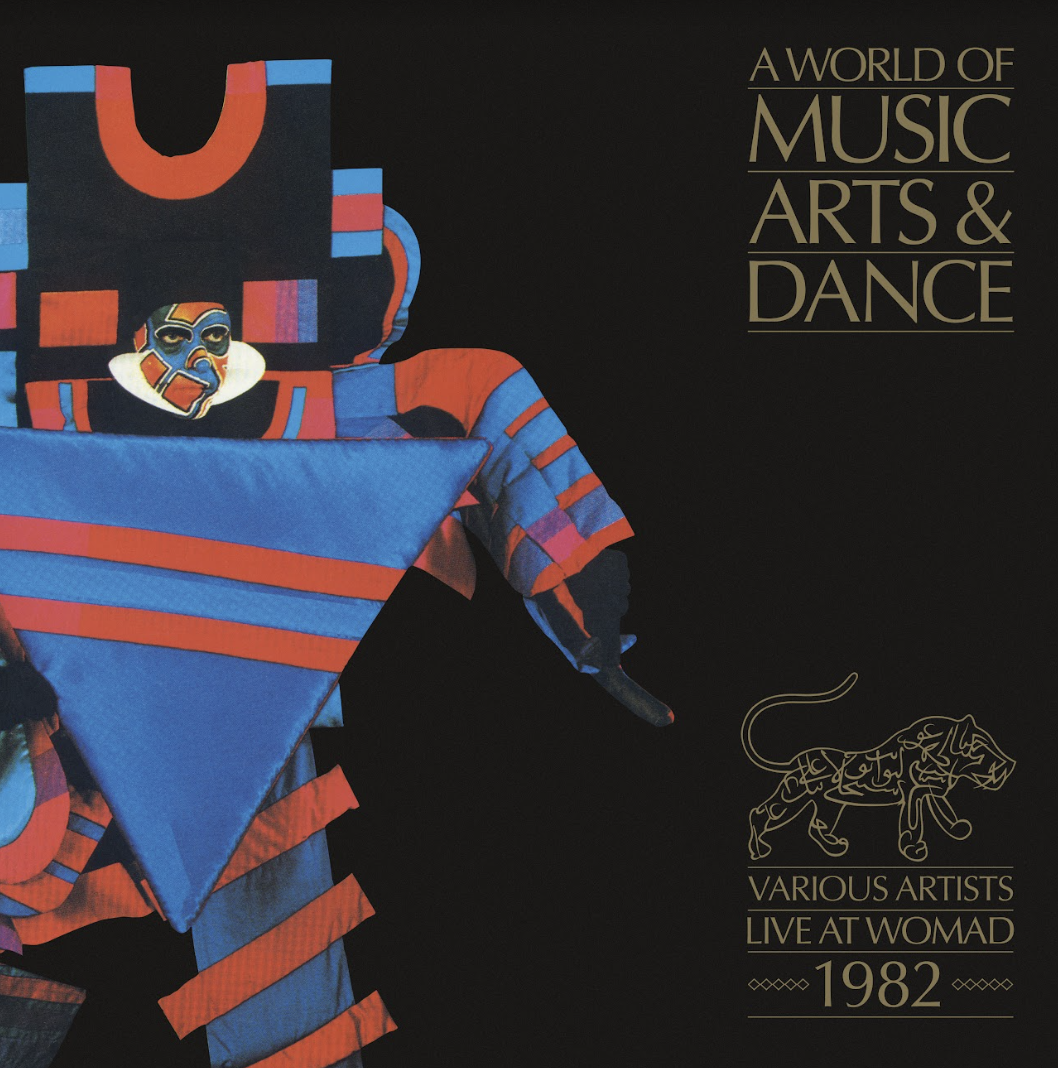
Various ‘Live At WOMAD 1982’
(Real World Records) 29th July 2022
Chief among those promoting (what has become a problematic term in itself) “world music”, the WOMAD festival and organization took a punt forty years ago in treating those artists considered outside the rather myopic scope of Westernized music with equal validity and respect. Even now, as we like to believe our tastes are so much more eclectic, festivals struggle with giving parity to the stars of Africa, South America, and Asia. Glastonbury, that so called totem, consigns (for the most part) world music to its own stage and fringe.
These days of course all festivals need to balance commercial concerns with the creative. It’s a business after all, and anyone setting up such an enterprise has a litany of historical financial failures to jolt them from taking gambles on lineups: the extraordinary naïve but possibly musically, as well as diverse, benchmark being both Woodstock and the 1970 Isle Of Wight festivals, but in more recent times, the failure of many so-called boutique mini-festivals.
It does however seem that WOMAD remains the “allowable” alternative; although even they had to include some stellar pop, rock bands and artists on the bill at the inaugural event in 1982: The likes of a rising Simple Minds and the blossoming Echo And The Bunnymen, albeit with the sonorous galloping and clattering drum beat of WOMAD stars and stalwarts, the Drummers Of Burundi – appearing under the elevated Royal Burundi Drummers name in this case.

What could have seemed a vanity project for its main instigator Peter Gabriel became a mainstay of the international music festival circuit. That very first event, now celebrating its fortieth anniversary, was almost the last.
Creatively and collaboration wise an incredible success, WOMAD was an unmitigated financial disaster for Gabriel and his partners. Facing bankruptcy, personal physical violence, the former Genesis star turned soloist and producer, label boss was thankfully able to pay off the accrued debts when his former prog-rock band mates offered to play a benefit concert. With the sagacious advice of Harold and Barbara Pendleton, who’d created the relatively successful Reading Jazz And Blues Festival, and others the WOMAD ideal was saved from collapse and a minor footnote in Rock’s Back Pages.
Arguably still one of the only avenues for world music, the WOMAD festival is one of the most cherished if not important events of its kind anywhere. But those early days in the idea incubator of Gabriel’s mind, it seemed pure madness to even conceive of such a thing. Being called mad or crazy was part of the course for Gabriel however, who not only saw it as a challenge but adopted such derisory language in his various projects: Syco being another one. And so “MAD” became part of the festival signature, appellation, though it also, when put together with the “WO” bit made up the World Of Music Arts Dance acronym. Corralled into this mad project, the young collective of post-punk tastemakers that made up The Bristol Recorder went from interviewing Gabriel for one of their magazines (with accompanying vinyl) to taking on the day-to-day running of what would be the first grand-scale festival of its kind dedicated to world music and its ilk. What might have surprised, or set a spark for Gabriel was the zine team’s mutual interest in eclectic music; a love for the Gamelan music of Bali and Java especially. They would also be pretty useful at sniffing out the talent and bringing attention to new sounds, new fusions, many of which featured in the very first WOMAD lineup.
A benefit concert helped to ease WOMAD out of a financial blackout, and in the very beginning too, when announced to the press from a farmhouse north of Bath, Gabriel would have to release a charity album to help fund it. Music And Rhythm, as it was called, featured a rafter of the acts that appeared in 1982. In conjuring up the spirit of WOMAD, the Burundi Drummers would beat out a thunderous performance on the front lawn – so thunderous in fact that the local farmers were worried that it would upset the livestock grazing in this idyllic valley retreat. Overcoming such protests, a lack of support and any sponsors the tribal drummers and an international cast from over twenty countries appeared at the Royal Bath and West Showground near Shepton Mallet in Somerset in the July of 1982.
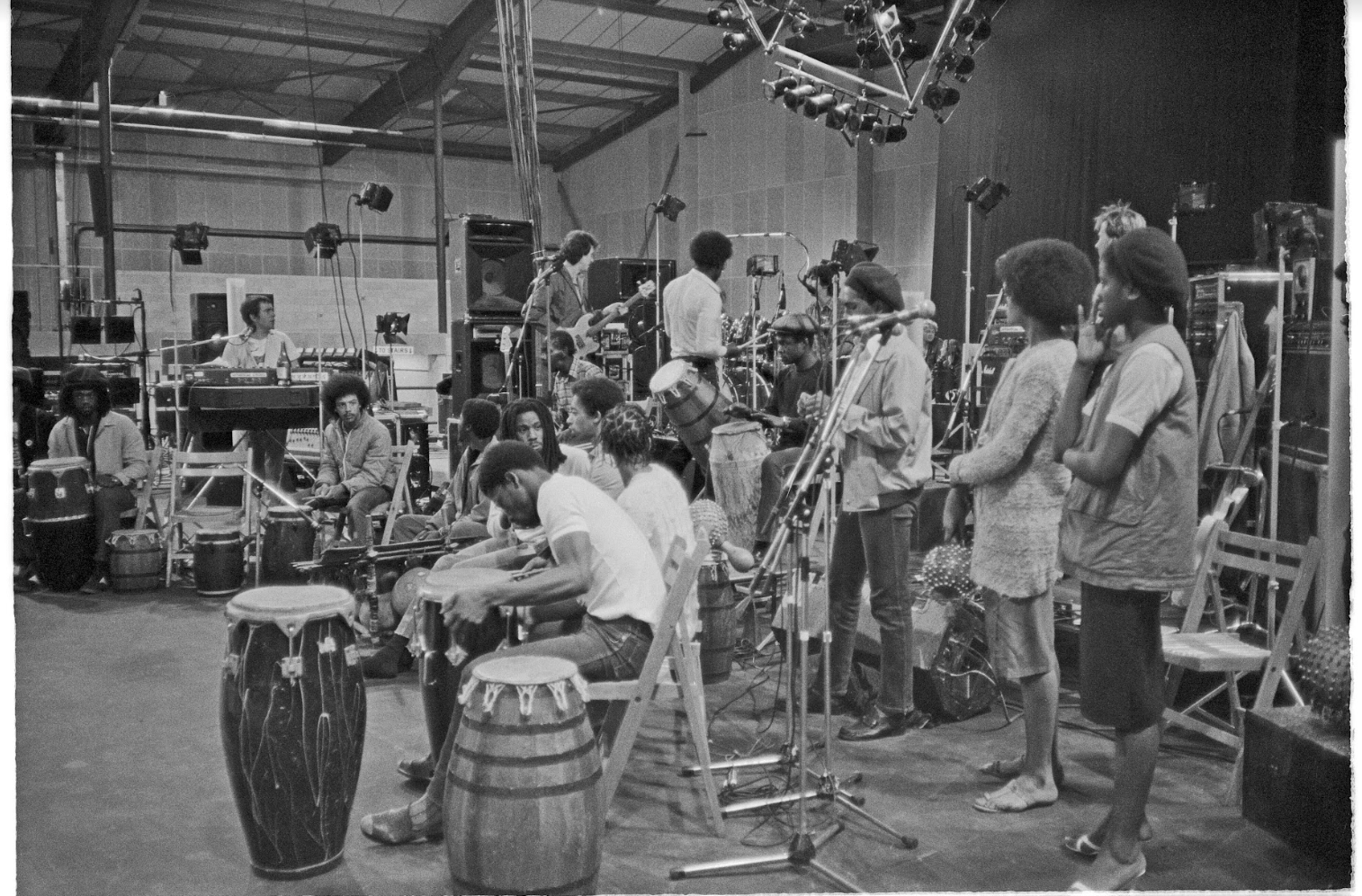
Now forty years later in the act of both preservation and celebration, Real World Records have retrieved and restored (including bonus material) nineteen live tracks from that event; many of which have never been heard before. Original programme notes, with even the times of performances, have also been included in this snapshot of not just WOMAD’s foundations but a changing post-punk scene; an age of fusions, collaborations and the increasing influence of world music on the Western cannon.
I could regale countless artists just before and after this event that would work with those from South Africa to Timbuktu; from Hispaniola to Southeastern Asia. But here were ensembles with atavistic and more contemporary heritages mixing it and existing on equal terms with rock bands in the West. As Gabriel would put it: “Our dream was not to sprinkle world music around a rock festival, but to prove that these great artists could be headliners in their own right.”
Ian McCulloch and his Bunnymen, riding high at the time in the indie scene and obviously a draw, appeared with the (already mentioned) Royal Burundi Drummers in one such meeting of alien cultures. A stirring emergence from the Gothic mists vision of ‘Zimbo’ is taken up a level of the exotic and moody by a deep lumbering of beaten drums; a union of Joy Division pain and authentic African tribal rhythms.
The familiar Drummers Of Burundi, who’s ranks could swell to thirty plus members but appeared in a reduced, but no less impactful, form at WOMAD, have their incredible floor-shaking front lawn performance ‘Kama K’iwacu’ included on this compilation. Due to the physicality of their performances these rousing bombastic drum initiations, rituals could only be played in short sets, and so during that three-day festival they appeared at least four times, across multiple stages.
In a similar mode, passed on through generations, compilation openers The Musicians Of The Nile brought an Upper Nile touch of the ancients to proceedings. The gypsy descendants from the age of the Pharaohs are represented by a mystical, mizmar-drone sandy embankment peregrination entitled ‘Taksim Arghul’ (which both by its name and sound has a real Turkish feel to it) and shorter, quickening tabla rhythmic sunrise introduction called ‘Tabla Iqae’.
Staying in Africa, highlife doyen Prince Nico Mbarga, appearing with the actually London-based The Ivory Coasters, shines with a sun brilliance and life-affirming rendition of ‘Wayo In-Law’ – a bonus track and really worthy of inclusion; among my favourite turns on the whole album. The Cameroon-Nigerian star is famous for releasing one of the continent’s best-selling records of all time, ‘Sweet Mother’, and famously appeared with various versions of the Rocafil Jazz troupe. If you love the lilted South African leaning sounds of King Sunny Ade, then you’re in for a treat.
Travelling eastwards, the Chinese (though there’s no information to hand on the provenance of this group) Tian Jin Music And Dance Ensemble provided a peaceable Zen moment of blossom tree beautification, fluted and dulcet mallet atmospherics on the forked and bowed ‘Raindrops Pattering On Banana Leaves’. Representing the Gamelan sound, the twenty-five strong Sasono Mulyo ensemble of Javanese and Balinese musicians and dancers magnificently set out on a two-speed voyage of discovery.
Circumnavigating the Pacific, and to the Hispaniola and Americas, the Puerto Rican, Venezuelan, Colombian and Dominican Republic troupe of NYC salsa stalwarts, Salsa de Hoy (notably playing with such luminaries as Oscar Hernandez and Tito Puenta) give a suitable Latin buzz of sauntering and horn paraded fun to the festival with their signature barroom jazz signature.
Showcasing a burgeoning world music infused spirit of diversity in the UK, as the transference from punk to post-punk was now complete, there’s a great, if looser and more dubby rendition of The Beat’s two-tone single ‘Mirror In The Bathroom’ and a Mardi Gras, via Manu Dibango, and ska version of Pig Bag’s self-titled anthem. Evolving out of The Pop Group, picking up on the way a burgeoning Neneh Cherry and the Antiguan-British dub bassist/guitarist Jean Oliver, the eclectic Rip Rig & Panic serve up a sassy and pumped-up smorgasbord of Liquid Liquid no wave, neo-soul, Pablo dub and bleated, trilled lurching saxophone with ‘You’re My Kind Of Climate’. Previously of both groups, the pianist Mark Springer appears in his solo guise playing an electric-piano like flange-effected soulful, spiritual hymn ‘Key Release’ – actually, it has more than a semblance of Bill Withers too.
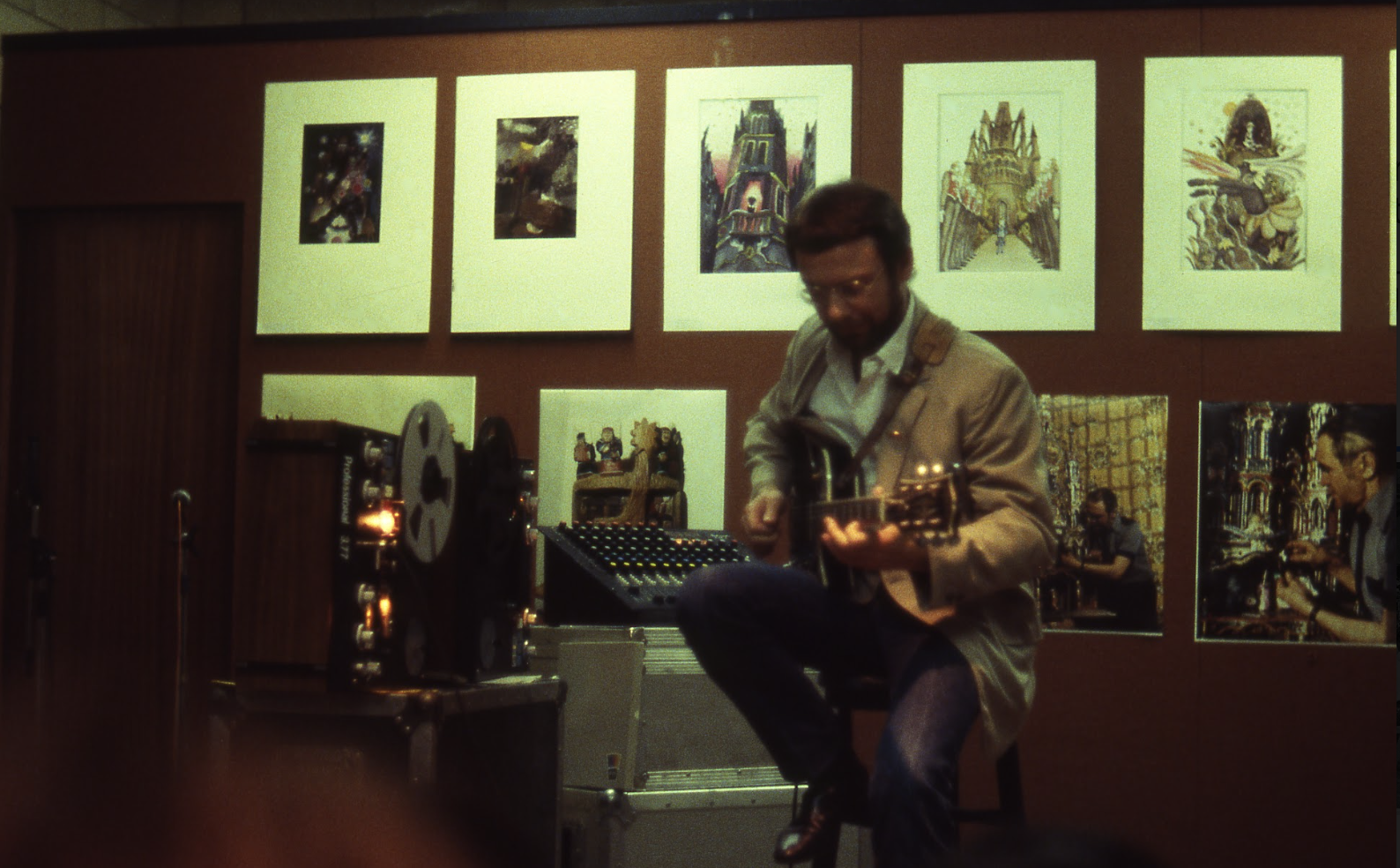
Despite the name Ekome were a Bristol dance and music company formed in the aftermath of a Ghanaian steel and skin-drumming workshop. Members appeared twice at WOMAD, rattling away to call and response trills and an Afro-Brazilian carnival feel on ‘Gahu’, and also in accompanying Gabriel on the Scottish-piped yearned cry of universal suffrage and apartheid anthem ‘Biko’ – a cry of lament for the late leading South African activist that has an air of both Marillion and Mission To Burma about it. Gabriel’s plaint proved a worthy and indeed poignant reminder of the festival’s platform in not only sharing the global community’s music but in shining a light on global issues, the crimes of world leaders, and in this case, the apartheid movement. This stirred rendition did a lot to raise the profile of detention deaths in South Africa, paying special homage to one of the leading activists of that struggle in the 70s, Steve Biko, who died in police custody five years previous to this event.
Gabriel, as much for his formative years steering Genesis as for his subsequent solo endeavours and collaborations, was of course one of the festival’s main attractions. And so he appears twice on this live collection; once with the already mentioned ‘Biko’ tribute and before that with a bittersweet irony, over a hammer and tongs electronic production, performing a pop-fusion version of ‘I Have The Touch’ – taken from his then current self-tilted album and a single in its own right.
From a similar orbit, Robert Fripp (at the time reforming King Crimson) offered up as almost Eno-esque, late Tangerine Dream classical-strained electronic suite; an ambient stirred anthem that gave a certain gravitas to the festival, named in its honour, ‘WOMAD II’. Fripp’s solo recitals were self-confessed challenges to the audience, needing certain conditions, and restricted to smaller crowds of 150, and so hence the maverick’s higher number of performances across the three-day event.
Fellow former idiosyncratic prog-rocker Peter Hammill, of Van Der Graf Generator fame, is captured with a new age Cope and Gong-like version of the almost theatrical, giddy ‘A Ritual Mask’ – the opening meandered and building maelstrom from his twelve album, Loops And Reels.
No festival of its nature could be complete without the Irish, and the famous Dublin institution The Chieftains. Proving a popular choice, the Irish-Gaelic troupe (almost together for twenty years by this point), fiddle and clap a merry Celtic jigged version of the hoedown country standard ‘Cotton-Eyed Joe’ – the Emerald Isle goes West to Arkansas.
Still, just about in their infancy and most interesting period, a pre-arena anthem-hitting Simple Minds stand out as a usual choice. Their current at the time ‘Promised You A Miracle’ 12” is performed with professional clarity and vigor; a decent enough live version of the original anyway, sounding a bit in places like ABC.
Taken as a whole this run-through of the inaugural WOMAD holds-up as a pretty unique, open and international experiment. Astonishing to think that despite barriers coming down, and with a supposedly easier than ever access to every music scene in every corner of the world, WOMAD remains the only real prominent and long-running celebration and showcase for such worldly wonders in the UK. That year, 1982, sounds pretty vibrant even now by recent standards. And this live album proves Gabriel and associates were right in fighting to keep it alive, no matter the cost, sniping and criticism that came their way. Not just a worthy album, but a global, polygenesis power house of sounds and energy that’s well worth the admission price. Live albums don’t come much more eclectic. Here’s to the next forty years.
Hi, my name is Dominic Valvona and I’m the Founder of the music/culture blog monolithcocktail.com For the last ten years I’ve featured and supported music, musicians and labels we love across genres from around the world that we think you’ll want to know about. No content on the site is paid for or sponsored and we only feature artists we have genuine respect for /love. If you enjoy our reviews (and we often write long, thoughtful ones), found a new artist you admire or if we have featured you or artists you represent and would like to buy us a coffee at https://ko-fi.com/monolithcocktail to say cheers for spreading the word, then that would be much appreciated.
PLAYLIST SPECIAL
Dominic Valvona
An imaginary radio show if you like, a taste also of my DJ sets, the Monolith Cocktail Social is a playlist selection that spans genres and eras to create the most eclectic of soundtracks. Each month I compile a mixed bag of anniversary celebrating albums (this month being 50 years since the release of Amon Düül II’s seminal acid-rock communions with Yeti, Wolf City, Curtis Mayfield’s equally seminal soul triumph soundtrack Superfly, T-Rex’s big-hitter The Slider, and the more obscure self-titled album of brown-eyed soul and singer-songwriter woes from the mellow New York artists Alzo), newish tracks (this month that includes Wu-Lu, Horsegirl, Cities Aviv, Eerie Wanda, Basia Bulet and Robert Stillman) and music from the last six, seven decades (that includes The Wolfgang Press, Delaney Bramlett, Readykill, 5 Revolutions, Lew Lewis, Sergius Golowin and many more). Expect to anything and everything.
That track list in full—–
5 Revolutions ‘Greetings’
Deeper ‘Willing’
Horsegirl ‘Anti-Glory’
Free Loan Investments ‘BBC’
The Wolfgang Press ‘Shut The Door’
Bill Jerpe ‘Behind The Times’
Delaney Bramlett ‘What Am I Doin’ (In A Place Like This)’
Spontaneous Overthrow ‘All About Money’
Crimewave ‘Disposable’
Krack Free Media ‘Let The Band Play’
Cities Aviv ‘BLACK PLEASURE’
Wu-Lu ‘South’
Readykill ‘Watching The World Going Down’
Thirsty Moon ‘Speak For Yourself’
Curtis Mayfield ‘Little Child Runnin’ Wild’
Patrick Gauthier ‘The Good Book’
Wax Machine ‘Canto De Lemanjá’
Sun Ra Arkestra Meets Salah Ragab ‘Ramadan’
Amon Düül II ‘Sleepwalker’s Timeless Bridge’
Pugh Rogefeldt ‘Haru Sett Mej Va…’
Misha Panfilov Sound Combo ‘Way Higher’
Chris Corsano/Bill Orcutt ‘The Secret Engine Of History’
Idassane Wallet Mohamed ‘Aylana’
Susanna w/Delphine Dora ‘Le Possédé’
Basia Bulet ‘The Garden (The Garden Version)’
Azalia Snail ‘You Belong To Me’
Eerie Wanda ‘Sail To The Silver Sun’
T. Rex ‘Ballrooms Of Mars’
Grave Flowers Bongo Band ‘Squeaky Wheel Oil Can’
Lew Lewis ‘Wait’
Os Mundi ‘Gloria’
Daevid Allen & Kramer ‘Thinking Thoughts’
Shoes ‘Tomorrow Night’
Alzo ‘Without You Girl’
The Ladybug Transistor ‘Windy’
Ben Marc w/Joshua Idehen ‘Dark Clouds’
Robert Stillman ‘Cherry Ocean’
Sergius Golowin ‘Die weiβe Alm’
ALBUM REVIEW/Dominic Valvona
Catrin Finch & Seckou Keita ‘Echo’
(bendigedig) 27th May 2022
Marking a decade-long collaboration, the harmonic pairing of Welsh harpist Catrin Finch and Senegal kora player and vocalist Seckou Keita are back with the third in a trilogy of cross-lineage, cross-cultural and cross-border gilded rich albums.
Imbued by traditions that go back centuries, Finch’s legacy includes Celtic folklore, the classical and the harp’s age-old reverence – Finch was at one time the UK’s Royal Harpist to Prince Charles, a revered title revived at the turn of the millennium, last used during the Autumn years of Queen Victoria’s reign. Keita can trace his lineage back to a long line of Griot bards and kings, and through his father, right back directly to the Medieval Malian Empire’s founder Sunjata Keita.
Garnering much critical and creative praise for their previous SOAR (2018) and Clychau Dibon (2013) records, the duo, caught up like the rest of us obviously in the pandemic, suffered the travails of social-distancing to complete this latest shared experience of loss, reflection and hope. Unable to work this incredible, adroit collaboration of instruments remotely however, both partners in this international union managed to book a conference room in a hotel on the outskirts of Birmingham, in the UK.
Possibly not the most inspiring of locations, both removed artists found themselves having to reconnect, as if from scratch, separated as they had been by distance, and of course with lockdowns: concentrating on those closer to home and pursing more localized projects.
As sparks and prompts, accumulated projects as varied as a ballet score to TV commissions, festival collaborations and work-in-progress sketches offered a framework on which to build new ideas. It helps that both maestros of their disciplines have an enviable CV and plenty of experience, awards and concert performances (more than 200) to their names. And so this distance, break in the creative period couldn’t hold the partnership back from picking up on where they left off, pre-Covid.
The backstory to this partnership, a bringing together of musical spheres and instrumentation from, what looks on the surface unrelated, suddenly makes sense; a harmonious connection, fueled by the duo’s last two albums together. For the very first time, Echo welcomes the addition of a strings; a couple of violin, viola, cello and double-bass players from Cardiff. The initial idea was inspired by the partnerships work in 2021 with the Royal Liverpool Philharmonic Orchestra. Here it offers a whole new layer, and a swell of moving classicism and a cinematic score quality to the weaved and enchanted sounds of the harp and kora.
As always, each composition tells a story, is motivated by the personal and organically showcases a particular unique tuning and skill without losing sight of the melody. Devoid of soulless displays of virtuoso Echo draws the listener right into the moment.
Despite the horrendous last two years, the album actually starts with a peaceable, charmed and gliding display of hope. Originally the ‘overture’ score for the ballet Giselle, and a “scrap of a tune” that surfaced during a sound-check jam before a 2019 gig in Manchester, ‘Gobaith’ (which means “hope” in Welsh) us remolded, turned into a lushly blessed performance of subtle filmic strings, lilted lattice work kora and gently sparkling harp.
Lifting the emotional pull, the string ensemble-free ‘Dual Rising’ weaves a groove out of quickened caresses, flourishes and undulations. With a dash of the Latin, even some Greco antiquity, that liquid – with only some softened small stamps – rhythmic workout takes its inspiration from the duo’s past collaboration with the ‘breackneck’ speedy style of Edmar Castañeda’s Colombian harp.
In a display of the lightened and sweetened, ‘Tabadbang’ has a spring in its step, a sense of happy adventure. In keeping a restless kid busy, hanging around as the adults wish to discuss something far too important for prying ears, back in Keita’s homeland they’d send the youngsters on a wild goose chase of distraction. Here that memory is turned into a lifted, hummed-like lullaby amble.
A testament to this duo’s hybrid of languages, craft and inspirations the enervated pulse setting, spindled and soaring ballad ‘Jeleh Calon’ brings together the Mandinka work for ‘smile’ and Welsh for ‘heart’. It was actually sparked off by Finch’s NHS research into tinnitus, which led to investigating the yoga of sound and, in particular, – hence the heartbeat-like rhythm – the practice of synching one’s heartbeat to a specific timing, or ‘entrainment’ as it’s known.
Though every composition feeds on that hybrid and the counterbalance of cultures, the harmonious qualities of each artist’s particular instrument, ‘Julu Kuta’ challenges both, but especially the kora, with a tricky chromatic scale. As a tribute to innovation, inspired by Keita’s experiment in 2007 to construct a double-necked kora (which he managed to successfully pull-off with the help of his cousin), the Db to D to Eb to E to A scale sounds like a beautiful spell being unfurled. Despite being difficult, Finch’s heaven-calling brushes and waves and Keita’s dainty spirals and spins sound melodically reminiscent and very much at ease.
As a timely reminder of loss and remembrance, there’s the sweetly pronounced ‘Chaminuka’ dedication to Keita’s late friend and fellow musician, the mbira player Chartwell Dutiro. Instead of a mournful elegy, this is a beautifully sung (both in Dutiro’s native Zimbabwean dialect of Shona and in Keita’s own Mandinka) and soothingly played homage.
The journey from West Africa to Wales has never seemed shorter; the difference in cultures never so close. Finch and Keita perform wondrous parallels together, further elevated by the subtle but evocative additional classical strings. Echo moves this combined strength further along the road, adding depth to the duo’s sound and showing that despite the hardships, distancing, everything still comes together in a unified brilliance of forms and shared experiences.
music/culture blog monolithcocktail.com For the last ten years I’ve featured and supported music, musicians and labels we love across genres from around the world that we think you’ll want to know about. No content on the site is paid for or sponsored and we only feature artists we have genuine respect for /love. If you enjoy our reviews (and we often write long, thoughtful ones), found a new artist you admire or if we have featured you or artists you represent and would like to buy us a coffee at https://ko-fi.com/monolithcocktail to say cheers for spreading the word, then that would be much appreciated.
The Monthly Playlist Revue: May ’22: Junior Disprol, Misha Sultan, Vera Di Lecce, Celestial North…
May 30, 2022
THE PLAYLIST
Dominic Valvona/Matt Oliver/Brian Bordello Shea

All the choice tracks from the last month, plus a few missed ones we’ve corralled from last month, the Monolith Cocktail team’s playlist revue is both a catch-up and showcase of the blog’s eclectic and mind bending tastes. Sitting in on this month’s selection panel is Dominic Valvona, Matt Oliver and Brian ‘Bordello’ Shea.
TRACK LIST IN FULL IS:
Junior Disprol Ft. Krash Slaughta ‘Rotund Shogun’
Deca ‘Tuning’
Exterior ‘Orthodox Dreams’
FAST DE ‘Miss Trutti Finally Found Her Gem’
Pussy Riot Ft. Slayyter ‘HATEFUCK’
Masai Bey ‘Stanza X’
BITHAMMER! ‘Make You Mine’
Flat Worms ‘Into The Iris (Live)’
Salem Trials ‘Vegaville’
Walker Brigade ‘Disease’
Team Play ‘Sunrise’
James Howard ‘Baloo’ Adam Walton ‘Mary Sees U.F.O.S.’
Joviale ‘UW4GM’
Shabaka ‘Black Meditation’
Kritters ‘New York’
Ralph Of London ‘Lys’
Ethan Woods ‘Utopia Limited (Cuddly Tie-In)’
Staples Jr. Singers ‘I’m looking For A Man’
Ramson Badbonez ‘Rap Bio’
Mr. SOS & Maxamill ‘War Criminal’
The Difference Machine ‘Old Men’
Omega Sapien ‘Jenny’
Mr. SOS ‘Peace & Prosperity’
Jermiside & The Expert Ft. Tanya Morgan ‘Crime Rule The City’
Quelle Chris ‘DEATHFAME’
Wish Master & Billy Whizz ‘THOUGHTS OF THOUGHTS’
Guillotine Crowns ‘Killer’ Orryx ‘Eldritch’
Celestial North ‘When The Gods Dance’
Henna Emilia Hietamäki ‘Protesti’
Lucrecia Dalt ‘No One Around’
STANLAEY ‘Fluorescent Fossils’
Your Old Droog ‘Go To Sleep’
Tommaso Moretti Ft. Ben LaMar Gay ‘A Call For Awareness’
Black Mango Ft. Samba Touré ‘Are U Satisfied’
Avalanche Kaito ‘Flany Konare’
Tomo-Nakaguchi ‘Halation’
Private Agenda ‘Splendour’
Sebastian Reynolds ‘Four-Minute Mile’
Chouk Bwa & The Ångströmers ‘Agwetaroyo’
Misha Sultan ‘Nyepi’
The Master Musicians Of Jajouka ‘Khamsa Khamsin’
Gustavo Yashimura ‘Las Prendas del Corazon’
Stephanie Santiago ‘Activa Tu Cuerpo’
Gabrielle Ornate ‘Free Falling’
Black Monitor ‘Xexagon77’
Borban Dallas & His Filipino Cupids ‘Too Convenient’
Martha And The Muffins ‘Save It For Later’
Super Hit ‘Blink 182’
Reverend Baron ‘Let The Radio Play’
Alas The Sun ‘Distant Drone’
Jelly Crystal ‘I Tryyy’
LINN ‘Happiness Is Real’
Lenka Lichtenberg ‘That Monster, Custom’
Brigitte Beraha ‘Blink’
Vera Di Lecce ‘Altar Of Love’
Francesco Lurgo ‘I Am Already Far Away’
Hi, my name is Dominic Valvona and I’m the Founder of the music/culture blog monolithcocktail.com For the last ten years I’ve featured and supported music, musicians and labels we love across genres from around the world that we think you’ll want to know about. No content on the site is paid for or sponsored and we only feature artists we have genuine respect for /love. If you enjoy our reviews (and we often write long, thoughtful ones), found a new artist you admire or if we have featured you or artists you represent and would like to buy us a coffee at https://ko-fi.com/monolithcocktail to say cheers for spreading the word, then that would be much appreciated.
Dominic Valvona’s Essential Roundup
Unless stated otherwise, all releases are available to buy now.

The Master Musicians Of Jajouka ‘Dancing Under The Moon’
(Glitterbeat Records) 13th May 2022

Truly atavistic, the Rif Mountain ensemble known as The Master Musicians Of Jajouka were once heralded by William Burroughs (no less) as, “the four thousand year old rock and roll band”. Carrying a real mystique until more recent times this Moroccan outpost, holy mountain shrine located group claim descent from the venerable Ahl Serif tribe (which roughly translates as “the saintly”) and their sacred idol, the legendary Arab healer Sidi Hamid Sheich. And in an act of preservation they continue to keep the signature double reed Ghaita flute (an instrument almost identical to the Arabian Mizmar) and Lira (a fiddle-like instrument) led mesmerising, entrancing and leaping performative music that goes hand-in-hand with their devotion alive.
Until the last century Jajouka and music created there were virtually unknown. That was until the well-travelled artist and Burroughs foil Brion Gysin made the wild trip across an antiquity-rich African landscape to that remote village hideaway in the Jebala foothills. Passing such incredible ancient relics as The Pillars Of Hercules, and the final resting place of Jean Genet at Larache, Gysin found real nourishment and something inspiring when introduced to a previous incarnation of the troupe. Making various connections after witnessing shaggy sheepskin adorned dancers bounding over a bonfire to ‘wooden trumpeted fanfares’, Gysin saw something far older, a cultural lineage that predated Sufi mysticism, going back further towards Pan-like Greek and Roman ritual and Persia.
Bringing back his own recordings to London at a later date in 1968, he’d turn on his old mucker and Rolling Stone Brian Jones to this ancient, but very much alive, trance. No stranger to picking up on and embracing world sounds and instruments, Jones would be inspired to make his own trip to Jajouka, taking the sound engineer George Ckiantz with him. God only knows what the locals must have thought of the pretty much strung out by now, hippie Jones, but they welcomed him into the fold nonetheless, introduced to the chief in that period and defacto band leader Abdeslam Attar. As was the custom, Jones and Ckiantz made a number of recordings during their stay. Released at a later date (posthumously for Jones) with added electronic phasing and cutting methods to encourage a more psychedelic montage effect, these tapes made up the first release on the Stones own label imprint in the 70s.
Pretty much blowing the lid of this isolated group, a succession of visitors made the journey pilgrimage; from jazz deity Ornette Coleman, who jammed with the ensemble for his 1975 album Dancing In Your Head, to Rolling Stone writer Robert Palmer and the American photographer Joel Rubines. The latter, who as it happened was fluent in the Darija Arabic dialect, made the now famous, and purist at that point, The Master Musicians Of Jajouka recordings. A decade on and the Stones came knocking for real this time with an offer of collaboration, followed not too soon by the explorative Bill Laswell.
Fast forward another couple of decades and the now Bachir Attar led group invited the Italian musician and engineer Jacupo Andreini to record the most comprehensive testament yet. What he captured is now in the hands of Glitterbeat Records, a double-CD spread of ten-minute plus adorations, romances, courtly music and processions.
A septet of heralding circular-breathing fluted horns, the quivering frayed twang and pluck of Liras, galloping drums and a unison of voices conjure up visions of mystery, rituals and moonbeam bathed dances. We could be atop of the holy mountains, but also anywhere along the antiquated Mediterranean coastline, to Moorish Spain.
Venerations to the master but also Islamic faith, including a flighty, swallow-winged wispy and willowy avian prayer to Allah, appear alongside the regal and lively. ‘Hlilya’ is something altogether different; a sort of ancient bounced progenitor of Breakbeat and 2-Step.’Khamsa Khamsin’ with its triple reedy drones and fanfare parade could even be said to have a hint of swing, even jazz about it. This processional, as well as the dancing ‘Opening The Gate’, would have, at one time, been the accompanying tunes for the Sultan’s walk to and back from the mosque.
Like a chorus of busy buzzes or a sustained mizzle, the sound of a trio of Ghaitas is a thing to behold. And when the frame-like drums appear it’s a both beautified and racing entrancing experience like no other. That weaved and bowed Lira has a great sound too; a twine and bandy tone that reminded me of the Appalachians.
Atonal, mesmerising and yet melodic the atavistic music of this holy anointed sanctuary has never sounded so intriguing. No wonder Ornette was so eager – they were even flown over to play at the science-fiction jazz innovator’s funeral. He heard, saw what you yourself can now enjoy, bathe in; music that doesn’t just travel back decades but a millennia, all the way back to the once great Persian empire and beyond. But this isn’t just artifact, an exercise in ethnography, but a living, breathing form very much alive and stirring.
Avalanche Kaito ‘ST’
(Glitterbeat Records)

Full disclosure time. Many of you maybe be aware that on occasion I’ve moonlighted to pay the rent as it were, working with various labels (Analog Africa, Spiritmuse, Pindrop) and artists (Kahil El’Zabar, Lost Colours, Hello Cosmos, Matt Donovan) over the last five or more years. In the last year I’ve been commissioned to write the inviting words for a couple of Glitterbeat Records projects, most recently Širom’s The Liquefied Throne Of Simplicity album. But I’ve also provided the words for the label’s Griot post-punk phenomenon Avalanche Kaito and their debut titular album. I’ve included it not so much as a promotion, but just because it’s a truly incredible record. Anyway, find my original draft-like review showcase below:
Emerging from an entirely original dimension in sound, the polygenesis Avalanche Kaito redefine what it is to talk with the ancients whilst leaping forth into a futuristic chaos of noise on their debut album journey. A palpable experience with each sonic blast, each layer a revelation, this simultaneously taut but expansive universe in which the oral traditions of the West African griot converge with Belgium post-punk, krautrock, math rock and the industrial exists in its own space.
Initialing colliding together as a duo, the Burkina Faso urban griot and multi-instrumentalist Kaito Winse and Brussels noise punk drummer Benjamin Chaval were joined by Chaval’s growling, grinded bassist sparring partner from a previous incarnation, Le Jour du Seigneur, Arnuad Paquotte on this specific line-up’s vision of ancestral proverb metaphors and dataist inspired technology. Although released this summer, eight months after the debut showcase EP, Dabalomuni, the guitarist from that extraordinary otherworldly session, Nico Gitto is now, going forward, part of the transformed setup; not so much replacing Paquotte as expanding the sound into another direction.
Aided by another influential cog in this wheel, Chaval’s previous band manager Michael Wolteche helped to shape this myriad of elements and strands, which coalesce into a dynamic, often intense yet unruly cosmic ritual and unlimited expression of change.
That previous EP was just a small window into a greater universe of animalistic symbolism poetics and allegorical stories wildly vociferated and loquaciously delivered under a rich exotic canopy or, echoed out into space, the ether. With the help of the visual language programme PureData (an open source apparatus for creating interactive computer music and multimedia works) and his pummeling, rattled drumming, Benjamin and his deeply trebly prowling, sinewy bassist foil Arnuad create an effective torque of post-punk-prog-tribal-free-jazz-industrial-electronic tumult for Kaito’s fluty rasped, bow quivered, messenger drums beating commune with his roots and life in a very different bush of ghosts.
The message that underlines Kaito’s griot ancestry and the band’s motivation, spontaneity, was explained in a recent interview they did with Parisa Eshrati for the Trial & Error Collective site, with Michael’s onus on the ‘live’, opining that: ‘Today we see that everything is dematerialized, everyone is addicted to playlists and clicks on the Internet. When the moment of the concert comes, we forget all that, and we get back to the spirit of the ritual, of the interaction between flesh and blood people.’
Although created in a studio setting that live in the moment feeling and dynamism is authentically recreated on this album. In that same interview Ben outlines the process: ‘There was an improvised stage in the studio with Kaito and me, and then this material was worked on, it went into the digital mixer, to be enriched with computational sourdough.’
In practice that blows up and out into the interdimensional slackened bass stalk of ‘Sunguru’, the wilder, quickened hysterics and danger of the progressive deconstruction ‘Douaga’, the Jah Wobble throbbed esoteric and celestial manifestation ‘Goomde’, and the Scott Walker atmospheric gloom and earthy soul tumbling ‘Eya’. At any one-time snarling yet hypnotic, willowy but thickened with brooding menace, animal spirits from an African exotica come alive to a mysterious matrix that evokes but never settles on warped sparks of 70s era Zappa, Yontan Gat, Fugazi, Black Midi, A Clean Kitchen Is A Happy Kitchen.
Magnetic, straddling multiple worlds, universes Avlanche Kaito are metal and flesh, blood and biometrics, tradition and transition, all wrapped up on a chaotic road trip. The open road, pathway from Kaito’s village home of Lankoé in landlocked Burkina Faso to Brussels via a digital mill in Montpellier and Mount Analouge proves infinitely more important, radical and creative than the destination.
Jimi Tenor ‘Multiversum’
(Bureau B) 20th May 2022

Continuing his “ikigai” (as it’s called in the press blurb) passion for diy home recording, the polymath Finn Jimi Tenor releases his third album for the Bureau B label this month. Following on from the catch-up retrospective NY, Hel, Barca and a collection of rarities, Deep Sound Learning, the multi-instrumentalist, nee “renaissance man”, now knocks out an album of originals that work around and off of drum machine beats and synth loops.
Multiversum channels the well-travelled and three-decade plus recording maverick’s eclectic tastes, but is also prompted by the label’s invitation to record an album based on Tenor’s basic live set-up of reeds and synth; a minimalist approach that he’s been using successfully for the past two decades. Proving no less effective, the scale of this enterprise is wide and deep; a brilliant run through a smorgasbord of musical styles and rhythms.
For an artist already renowned for his use of Afro-beat and jazz, and for his collaborations with the former’s beat provider doyen Tony Allen and other such luminaries as Kabu Kabu and Abdissa Assefa, Tenor once more draws on those founding genres to build up a mixed bag of dance and pop tracks, jazz-fusion peregrinations and nostalgic filmic and TV series theme tunes. Talking of which, Tenor’s ‘Slow Intro’ lead-in of cosmic flute, apparitional choral voices and passing satellites is part Les Baxter, part 70s soundtrack score.
A minute later (quite literally) and we’re properly transported to the multiverse with a touch of Greg Foat library music and shooting beam electro pop spiritual guided ‘Life Hugger’. Spells of floated, rasped sax and flute with beams of organ follow, on the acid-jazz bent ‘Jazznouveau’, and a trip-hop flighty fluted and whistled Cousteau dives languidly into ‘Uncharted Waters’ on the next fusion of sounds.
By the time we reach ‘Baby Free Spirit’ Tenor’s bobbing and bouncing down to a dance track of late 80s Chicago House and electronic body music: although the bass is extremely deep and menacing.
Showcasing more of his soulful, funky side, ‘Birthday Magic’ sends Marvin Gaye “skinny-dipping” down in West Africa. The Finale, ‘Bad Trip Good’, however, voyages seamlessly into both Jon Hassell and Desert Players era Ornette Coleman territories, to finish on a polygenesis sonic score, which also features an undulated low-level techno beat, sax lulls and coos and a soaring build-up of strings.
Kutiman, Alex Puddu, Eden Ahbez, Jeremy Steig, Weldon Irvine can all be detected, though Tenor’s cosmology hardly waits around to land on any of them for long. Jimi Tenor, like his name (a convergence of teen idol Jimmy Osmond and the Finn’s favourite instrument, the tenor sax), could rattle off these kinds of hybrid fusions all day long. His sensibility errs towards electronic pop but also a knowing, sometimes tongue-in-cheek take on cult, kitsch composers too.
Fundamentally its all dance music of a kind with an injection of global tourism; a universal canvas for omnivorous playtimes.
And if you can’t get enough of Tenor this month, a new Omniverse survey, almanac of his second great passion, photography, is dues out in tandem with this album.
During a break in his musical exploits – well, more like hitting a brick wall of a kind, believing it to be over before it had even started -, in 1992 Tenor found himself upping sticks to live in New York, where he took a job photographing tourists at the Empire State Building.
Images taken during that heady frantic time, when Tenor was juggling work with late night drinking bouts at the local Dominican restaurants and cramming in a seven hour shift at (once more) making music, sit alongside his promo shots and album covers. Fellow tourist booth pal and Tenor archivist of a sort, Hitoshi Toyoda lends a helping hand, having squirrelled away some of those New York shots. For fans and completists alike, it will prove an essential addition; sound-tracked by that latest album.
Lucrecia Dalt ‘The Seed’
(Invada Records) 20th May 2022

Lucrecia Dalt’s debut score deserves a better movie. Separated from the exclusive Shudder streaming service’s Sam Walker directed alien-horror trip The Seed, Dalt’s soundtrack proves a far more interesting, mysterious proposition of the otherworldly, esoteric and sci-fi.
The sound artist, musician and composer conjures up a pulsation of short evocations, stirrings and sinister presences fit for a Gallio horror, yet has to provide the atmospheric shocks and creeping menace for a millennial staycation under the stars: a narcissistic poolside monotony destroyed by an alien meteor shower. An E.T. body shocker, the visitor from another constellation proves both a helpless baby and yet alluring threat to the protagonists of this movie. All kinds of ugly, distressing impregnations follow as a seed is indeed planted: though it all could just be down to a particular grotesque trip.
Emanating from tape loops made through a Copicat tape delay, various digital synths and a Korg Monologue, the Biblical, mythological and cosmic all cross paths with sinister metallic forces. Rippled, purred tones, tubular mothership pipework, a frayed bow or two, drones and throbbing pulses are all that’s needed to convey the unsettling and alien. But there’s also plenty of bestial movements and some electronic beats to set the heart racing: the eyes flitting intently towards the dark corners of the room.
Set in a peculiar, bad mezcal tripping Mojave Desert, yet sonically without much in the way of a locational prompt, we could be in a macabre underground vault, bounding across lunar landscapes or aboard some Venutian spaceship. Diaphanous gravitas at the sight of astral phenomenon, concepts of E.T. contamination brought to Earth via meteors, ancient exorcism miracles and the fate of a penance-cursed Greek boulder pusher reference titles point to the action, drama unfolding on screen. The soundtrack growing gradually more warped as the characters lose their bodies, soul and minds.
Shades of Laurie Spiegel, Cliff Martinez, Bernard Szajner, Jóhann Jóhannsson, Pauline Oliverous and early Aphex Twin lurk amongst the considered, skilfully built soundscapes, zones, fears and wraith like stalking terrors. Saying that, there’s the odd ethereal voiced spirit, plus a springy catgut thumbed rhythm to be found on the mosey-down canter ‘Blob On The Lawn’.
Removed from the movie itself, the 26-track (all of which are mostly under the three-minute mark) soundtrack for The Seed signals a promising start to Dalt’s filmic aspirations. Though saying that, we shouldn’t be surprised that the incredibly experienced, multimedia composer has taken to this quite comfortably. With great care and a handle on leitmotifs, sounds the polymath artist convincingly scores horror and sci-fi with a certain atmospheric élan, a depth and real sense of the ‘other’.
It seems we won’t have to wait long for the next score either. Just as this review goes out, word reaches us that Dalt’s soundtrack for the recent SKY/HBO comic-horror The Baby is due to be released next week (May 27th), by the same label. ‘A journey into motherhood through a new – quite unexpected – lens’, we’re told, ‘the central character Natasha (played by Michelle De Swarte of The Duchess fame) is landed with a baby after a life of doing exactly what she wants, when she wants. Controlling, manipulative and with violent powers, the baby twists Natasha’s life into a horror show.’ The series was created by Siân Robins-Grace (Kaos, Sex Education) and Lucy Gaymer, and directed by Nicole Kassell and is produced by SISTER (Chernobyl, Landscapers) and Proverbial Pictures. Here’s a sneak peek:
Brigitte Beraha ‘Blink’
20th May 2022

Barely tethered the second album from the incredibly voiced composer Brigitte Beraha and the Lucid Dreamers quartet captures the fleeting, the blink-and-you-miss-it moments, the intangible and abstract.
As the ensemble’s name implies, this is a must lucid and dreamy affair; an explorative jazzy spell that wonders into the avant-garde, minimal and classical, and evokes the free-flowing inspirations of a post Soft Machines Robert Wyatt, Talk Talk, Basil Kirchen and Steve Lacy.
Flanked and enveloped by George Crowley (on reeds and electronics), Aleyona Mick (piano and synth) and Tim Giles (drums, percussion and also electronics) Beraha’s ambled, cooed, fluid vocals are repeatedly morphed and transformed to sound like wisped siren calls and instruments; anything to give it all a congruous but experimental expression.
The improvised exploration tiptoe of post-punk-jazz meandering, ‘Doors’, features a spoken word journey that’s part Raincoats, part inanimate object fetish. A symbolic, conscious freedom that opens, sizes up and dances around the concept of doors and their wooden origins, suddenly takes in a philosophical sadness with spontaneous creaks and yucky yelps.
On the third improvised track, ‘Remembering’, Beraha’s voice takes on a phonetic transformation over a sparse, piano-plonky semi-classical accompaniment. The album’s most electronically charged of electronic compositions ‘Wait For Me’ almost merges that voice with the galvanized steel and zinc of Basic Channel techno sonics, squelches and tubular kinetics. Moans and coos blend with the emotional machine stimulator.
If we’re talking emotions then ‘Lullaby’ proves an evocative beauty of sadness and loss. Lyrically touching base with a father and daughter relationship, hints are conveyed of an eternal sleep, a resting place and conversations left unsaid. It has that Wyatt-like brilliance of lucid vulnerability. Swaned soothed saxophone, softened cymbal taps and plaintive piano offer the accompaniment. On another Wyatt enchantment, the title-track poetically articulates a yearn for the evanescent as trickles, washes and serenades flow into the cosmic-light territory of Donny McCaslin and Matthew Dunn.
Beautifully liquid, magical and unburdened Blink is a hazy brill and airy exhale of explorative jazz that will further cement the reputation of everyone involved: A most fantastic spell indeed.
Various ‘Sharayet El Disco: Egyptian Disco & Boogie Cassettes 1982-1992’
(Wewantsounds) 3rd June 2022

Pulled from the tape cassette culture of 80s and very early 90s Egypt by the Amsterdam-resided Egyptian deejay, Disco Arabesquo (otherwise known as Moataz Rageb), the latest release from the Wewantsounds label showcases a city, country that embraced the disco trend but made it their own.
Previously confined to what was a full-on endorsement of technology at the time, the majority of tracks on this compilation were only available on the cassette format. And so for the very first time those obscure and hard to track down Cairo tunes have now been made available on vinyl.
As one exotic, faraway oasis, North Africa (see Casablanca Records as only one of the most glaringly obvious examples) and especially a palm shaded Egypt has inspired and had the alluring effect on the original home of disco in the States. With its own special desert and Nile romanticisms and fantasies the Cairo scene was graced by a litany of stars from the not only the Arabian music world but stage and screen. Two such stars, actresses, Simone Philip Kamel (known simply as Simone on record) and Ninochka Manoug Kupelion (known professionally to adoring fans as Lebleba) make appearances on this boogie survey. The former, Simone, rests her signature soprano voice for Cairo Francophone chic and coquettish fun. ‘Merci’ could be a relative of the French female disco troupe New Paradise, only with a distinct Arabian dreaminess and matinee strings. Lebleba, who cuts a fun Egyptian version of a overflowing fruit hatted Carmen Miranda on the original cassette artwork, goes for a laser shooting disco heart-to-heart on the pop ‘Ana Alby Har Nar’.
Removed to the land of the pyramids, hints of Boney M can be detected wrapped up in the matinee stringed female/male shared pop-funk ‘Hezeny’ by the popular Al Massrieen (who Habbi Funk dedicated a compilation to a number of years back), whilst Odyssey dances hand-in-hand with Hot Chocolate and the Hues Corporation on Dr. Ezat Abou Ouf And El Four M’s enervated laser sweeping glitterball pastiche ‘Genoun el Disco’ – the four M’s by the way is a reference to the family group’s fourtet of diaphanous voiced sisters, Maha, Mona, Mervat and Manal.
Barely adopting the disco trend from across the ocean, no one could sound more Egyptian and less American than the famous singer/actor Eman el Bahr Darwish, grandson of the even more legendary ‘peoples’ artist Sayed Darwish. Eman shimmies across the bazaars to a souk funk of bellydancing percussion, rattling hand drums, willowed flute and a swirl of strings. It’s almost as if he’s stepping straight off a film set, delivering a number.
A disco exotica of cinematic romantic drama without the Studio 64 excess, the Sharayet El Disco compilation is a pop kitsch and seductive treat to the ears. Recommended for those seeking something a little special, cute from outside the myopic disco frontiers of the USA and Europe.
Sebastian Reynolds ‘Athletics EP’
(Faith & Industry) 20th May 2022

Not that the new athletics-inspired EP from serial polymath Sebastian Reynolds isn’t a motivator and driver, but you probably won’t be hearing it anytime soon pumping out of your gym’s speakers, or used in conjunction with the fireworks, pyrotechnic glitz of modern sport, as athletes emerge from the tunnel onto the track. No, for this is a far more layered, sophisticated set of electronic evocations to keep the loneliness of a middle-distance runner at bay.
Seb both celebrates and scores the euphoria, pressures and pains of running at an amateur and professional level on his latest labour-of-love project. As a blossoming runner in his own right, he combines his two greatest passions to create a sympathetic and subtle race through the emotions and trails. Athletics hasn’t always attracted the most nuanced of soundtracks. Lucky to have been front row at a number of championships myself, I can testify that it’s mostly all EDM and bombastic rubbish.
Vangelis had a good crack at it, thought admittedly for another age entirely, the dawning of the modern Olympics, with the onus on track and field. The score for Chariots of Fire remains the benchmark, and it informs, to some degree, at least one of the EP’s bookended world record breaker paeans, ‘Four-Minute Mile’. In tribute to the patron saint of middle-distance runners, Seb has transduced Sir Roger Bannister’s 1954 record breaking run – achieved really more through science, strength of mind and character, as our Rodger didn’t even train that thoroughly, balancing his amateur running credentials with a career as a neurologist – into a short electronic suite; part atmospheric broadcast, part dreamy synthesized joy.
Leap forward sixty plus years and it’s the Ugandan superstar Joshua Kiprui Cheptegei’s 5000M world record beating run that Seb turns into a swimmingly warm, almost semi-carnival celebration of human endurance. Paying certain homage to Cheptegei’s African roots the versatile acclaimed ‘reeds man’ Peter Fraser plays a semi-modern Afrobeat suffusion of sax whilst former Guillemot Grieg Stewart follows suit with vague African clattered drumming. It’s all actually quite club-y, quite trance-y too.
In between those two giants of the sport there’s a succession of dub-y electronica motivations, build-ups and workouts. Spurred on, ‘Final Push’ has a drive and motion, and a real sense of gravitas (even mystery): a struggle against the body’s fatigue, muscle aches and those burning lungs. ‘Dominance Hierarchy’ with its electro kinetics, knocking drums has an air of both Sabers Of Paradise and Boards Of Canada, whilst the gong resonated, mid-tempo swim ‘Hammering’ reminded me of The Future Sound Of London and southern dub Clap! Clap!
Seb quantifies the rush, the pulse, and expectations of his passion without slipping into the superficial exuberance of EDM bombast. Stereotypes are more or less missing from this athletic purview. This would make a great series of soundtracks for sporting documentaries, highlights. BBC Sport needs to get on the blower to our Seb now.
Flat Worms ‘Live in Los Angeles’
(Frontier Records) 13th May 2022

As introductions go, this smash and bash (but very much controlled) driving live showcase from L.A.’s garage-punk trio Flat Worms proves a compact baptism of fire. You could say it has roused my interest.
Admittedly I’ve never come across this tumult before now, so have no idea how the originals sound. I’d imagine the torque, grind, sustain and dynamism is ramped up with adrenaline, and is “in the moment” as they say. Though it has of course been recorded for posterity, hence why this isn’t a live review but a ‘live recorded’ album one instead.
Still, as live records go it’s a lively scowled, crescendo-packed, screwy and heavy trebly-loaded surge; a high velocity hammering of King Gizzard, Electric Eels, The Croissants, Salem Trials, The Damned and Ty Segall. The latter is hardly surprising considering the trio of guitar/vocalist Will Ivy, bassist/vocalist Tim Hellman and drummer Justin Sullivan have previously recorded with that singular talent at his home studio: Hellman has even been a Segall wingman at times.
We now pause for a succinct background check. Between them, members of this congruous L.A. union of garage, drudge-rock, punk and post-punk attack have played with Kevin Morby, The Babies and the Oh Sees. They formed this tight unit back in 2015 though, going on to release a clutch of singles, EPs and two albums, some, as I’ve mentioned, recorded at Segall’s HQ. In more recent times Steve Albini’s sat in that engineer’s chair: one hell of a vote of confidence boost.
They now make an impressive debut on the ‘seminal punk’ operators Frontier Records with this live demonstration. And just like all the best punk-garage records it both blasts and stutters through a short set: no breaks, just a couple of acknowledgments to the whooping, egged-on and goading (in the best possible way) audience.
It’s a thrashing, distorting yet melodic performance; sometimes like a butchered Modern Lovers ‘Roadrunner’, or a Heartbreakers turn at CBGBs. There’s a song in every performance, a tune that breaks out of the seedy back alley kickings and gnarled fizz. Neither dark nor a joy, this Zebulon gig is a great night out spent indoors, with the volume cranked up and curtains drawn. I look forward to now acquainting myself with the lads back catalogue.
Francesco Lurgo ‘Sleep Together Folded Like Origami’
(Bosco Rec.)

Nothing quite concentrates the mind nor offers an unwelcome window of enforced reflection like a pandemic, especially one that grinded society to a standstill. Forced into confinement, with face-to-face socializing restricted like never before, many of us either broke down or found a distraction and chance to connect with life’s simpler pleasures. In the case of the Italian musician/artist Francesco Lurgo that was an exploration of the ideas of intimacy.
As a mood board that’s both a celebration and search of that intimate theme, Lurgo’s debut solo album is an atonal, sonic and stirred-up account of ambient, neoclassical and electronic suites. Formerly one half of the FLeUR duo, the now uncoupled Lurgo voyages through varied states; a flux of emotional pulls, draws that are backed up by literary and artistic sources, inspirations. The album’s title itself, Sleep Together Like Folded Origami, paraphrases an excerpt from Sally Rooney’s Conversations With Friends novel, and the artist Aurora Bertoli reflects the same motif of that sleepy realm of togetherness on the album’s sleeve.
Sailing through these emotions and nocturnal symbols, Lurgo’s ship drifts upon the rocks to the sound of an atmospheric fog and wafted vapours on the album’s penultimate timed ominous beauty ‘One Moment Before The Shipwreck’. As a couplet, recorded a minute later, the final suite has a disorientated feel of cut-up reversals and pieced together perspectives, memories. With shipping analogies, cast adrift metaphors of finding solid land, something less veiled and hidden, the rest of this dreamy swell and synthesized purred, rippled textured album evokes hints of Simon McCorry, Rhomus Index, Andrew Wasylak and on the light tubular score, ‘Carnation Bloom’, Vangelis.
Metals, low horn-like drones, a pressing slackened high piano note or two, a sense of gravity and depth, reverberations and subtle use of strings are all used to convey the languid, comforting at times, longed and cerebral nature of the album’s themes. Those origami folded comforts, embraces and thoughts ride out the stresses of the pandemic and signal an interesting, creatively enquiring start to a solo pathway.
Dominic Valvona’s Roundup

The Shorts (videos, tracks, singles)
Stephanie Santiago ‘Activa Tu Cuerpo’
(Movimientos Records)
Soulfully lucid with a tinge of jazzy R&B and a reverberation of Cumbia, the London-born ‘Colombianx’ burgeoning sensation Stephanie Santiago entrances with another vision of her Latin roots. Growing up as the daughter of Colombian musician parents – her father an accordionist, her mother a singer –, in a home filled with the joyous, sauntering music of South America, Stephanie embraced the ancestral vibes but lent them an expanded eclectic mix of sounds: from soul to jazz, reggaeton and even punk.
Via the Latin contemporary Movimientos Records label, Stephanie continues to find her place, sense of community in the bustled melting pot of London. From the Alma Carnavalera EP, and most recent single, the Monolith Cocktail is spreading the good word and happy to share the funk-dripped bass and dreamy rich ‘Activa Tu Cuerpo’.
Celestial North ‘When The Gods Dance’
A magical, softened driving gallop over Celtic folklore and hillsides, the diaphanous voiced Celestial North dreams big, dancing with the gods, on her new enchanted and cinematic swelled gauzy single. From our side of the border here in Scotland, but based in the splendor of the Lake District, the soloist counters turbulence and drama with atavistic veils from a mythology to create a whole new entrancing fantasy.
Orryx ‘Ifera’
(ZamZam Records)
The titular evocation from the Bristol-based artist Christelle Atenstaedt’s new EP, ‘Ifera’ sounds like it’s been woven from the ether. As a repeated chime rings out suffused atmospherics envelope a yearned vocal. Materializing from the vapours, a trance-y beat finds a sort of traction and drive. Under the Lovecraftian guise of Orryx, esoteric and Byzantine stirrings draw the listener into a slowly powerful world of gothic-pop and electronica.
Christelle combines ethereal vocal loops with a selection of hardware synths, samplers and effects pedals on the EP’s quartet of original tracks – the fifth being a remix from dark wave techno duo Fever 103°. Delve in, and succumb to the mantric powers of this hypnotic artist.
ALBUMS/EPs
Black Mango ‘Quicksand’
(Gusstaff Records)

Transforming Mali’s world-renowned signature blues sound – from the city streets, back lanes of the Bamako capital to Tuareg roaming desert regions – the visionary producer Philippe Sanmiguel has been instrumental in fusing that sound with rock music, atmospheric mirages and electronics.
Based in the capital for the last sixteen years, Philippe has amassed an enviable roll call of productions for such icons and talents as Samba Touré, Anansay Cissé, Tartit and Mariam Koné. During that time he’s enjoyed a creative partnership with the Glitterbeat Records label and its founding partner Chris Eckman. Alongside his foil Hugo Race (who appears on this album), Eckman’s Dirtmusic band was drawn to Mali a decade ago, recording sessions for both the Troubles and Lion City albums whilst in Bamako with Philippe.
An integral part of the scene then, I’m guessing it didn’t take much persuading to get most of those artists to appear on his new showcase, Quicksand.
Under the Black Mango alias, Philippe opens up his own compositions to the great and good of Mali, and admirers alike. Produced over several years in various recording sessions, each collaborator has been given “free range”. The results of which are equally as searching as they are dreamy: even hallucinogenic. The opening heat bending, dub-y ‘Bakeina’s Dream’ straddles both; melting in a desert setting as the earthy soulful vocals of Bocar Sana Coulibaly drift through from some mirage oasis. Bocar, a member alongside Ali Traoré (both also nephews of the late esteemed Ali Farke Touré) of Espoirs de Niafunké, makes a second appearance later on, joining the brilliant guitarist and artist Anansy Cissé on the meandered, spoke-plucked and gauzy ‘The First Stone’.
Pretty much one of the most popular and gifted guitarists to emerge from Mali, Samba Touré adds a sustained flange of bended notes and expressive lines to the Phantom Band meets Belgium alt-rock ‘Are U Satisfied’ – Philippe’s voice on this one almost channels Michael Karoli of Can’s languid lyrical, questioning malaise. Samba plays some nice electric-blues and semi-classical tones in harmony with the mandolin and harp-like airy spirals of the ngoni on the infinity ether R&B flavoured ‘Mad Girl’. Offering up the R&B, the soul on that same track is the celebrated Malian songstress, music teacher and Les Amazons d’Afrique super group member Mariam Koné. Mariam can also be found lending a searching cosmic gospel vocal on the Flyodian, astral and progressive tumultuous ‘Minamba’.
From Samba’s regular band setup the ngoni and tama (a hour-glass shaped talking drum, the pitch of which can be tuned mirror the human voice) maestro Djime Sissoko gets to let loose on the percussive heavy, spacey ‘Bankoni’. With buoyant drums, bottle taps, ricochets and buzzes this scrapped and scuttled finale marks a mysteriously veiled ending to a Mali traversing psychogeography of both magic and the all too real consequences of the violence that’s plagued, and continues to plague, the country and its borders.
Talking of those fraught, violent themes, the already mentioned Hugo Race moodily channels his Dirt Music calling on the bleeding ‘Heaven Sands’. Part swamp gator blues, part outback Mick Harvey, Hugo leads us across a much troubled, metaphorical landscape towards better days. Though Philippe’s dub-y, Terry Hall-like ‘Quicksand Blues’ has far more ominous, political references to a desert storm of terrorism, immigration and blood-soaked sand dunes. ‘Ghost Sand’ meanwhile is just that, an instrumental passage of haunted lingers, traces of those both missing or forced to abandon the deserts of Mali for the cities; out of displacement, conflict or poverty.
There’s a far greater talent pool involved on this album, which transcends Mali’s extraordinary legacy as arguably one of the true homes of the blues and rock genres. Quicksand marks a sagacious yet experimental achievement for the producer-musician and artist in his own right. A showcase for his own talents, his friends and for the country itself; roots music taken to another level and given a contemporary lift.
Further Reading::
Private Agenda ‘A Mannequin’
(Lo Recordings)
A sophisticated mood board of veiled, gauzy electronica with hints of real tinkered piano, A Mannequin is the second studio album from Berlin/London portal Private Agenda: the languorous sonic partnership of Sean Phillips and Martin Aggrowe.
Conceptually using each song and shorter breather, pause, to reflect particular character traits, and in doing so, asking certain questions about the ‘dichotomies’ that define us, this duo play around with a soundboard of synth-pop, nu-soul, ambient, downtempo, new age, chillwave, new wave, AOR gold and house music.
A fantasy with spells of starry, shimmery tinkled magic and more hazy, vaporous plaintiveness, this mostly dreamy, relaxed album glides or drifts through twelve degrees of being; starting with the ambient turn, the Air-like mirage ‘Irresistible’. I haven’t made my mind up if this is about holding a mirror up to narcissistic self-love or a complete 360 degrees turn, and in fact dreamily cooing for ore of it.
‘Neo-Nostalgia’ not just a track in itself, could be a perfect description for the whole record, with its constant lingering traces, the essence of 80s songwriter and synth pop, electronica, disco and yacht rock. The duelist ‘Gemini’ seems to lushly brood through Tokyo 80s glowing new wave, the Balearic new age, and yet also fit within the perimeters of the music of the cult Laurel Canyon singer-songwriter Ned Dohney.
There’s a change in musical mood, instrumentation by the fourth lovelorn song, ‘Touching’, which features an eloquent spell of classical light piano. It returns later on with just a hint of distant birdsong and a synthesized pre-set on the interlude-like ‘Purity’.
Elsewhere those floated ethereal vocals – which are never pushed, never sang in anger or even loudly – are wrapped in relaxed funk, castaway tropical percussion, neon-lit drama, opulent gauze and airy filters. With nothing strained, no real tensions, the music glides through a swirl of pre-Miami Vice Jan Hammer, Vangelis, Groove Armada, Spaceface, and on the finale, ‘Substance’, an exotic laidback pan-pipe hint of South American trance: As they’ve coined it, a ‘musical hyper-realism’.
Despite that laidback, even disarming if saddened at times production, the personality is seriously mined to create a fantasy come lyrical expression of who we truly are. A voyage of self-discovery you could say.
Saturno 2000: La Rebajada de Los Sonideros 1962 – 1983
(Analog Africa)
Once more landing on South and Central American shores Analog Africa airways celebrates the obscure ‘Rebajada’ phenomenon with what must be the only, if not first, compilation of its kind dedicated to that trippy, slowed-down form. Originally asked by Analog’s founder Samy Ben Redjeb back in 2010 to come up with an idea for a collection, noted DJ expert Eamon Ore-Giron (stage name DJ Lengua) offered up the Rebajada Mota Mix, which as a real slow-burner took time to reveal its magic. And so more then a decade on, this proposal now sees the light of day on a dedicated 15 track survey, taking in a twenty-one year period from ’62 to ’81.
First though, a little background. In a nutshell, ‘Rebajada’ is a well-coined name that literally translates as ‘to reduce, or to lower’, in this case slowing down the continent’s famous Cumbia and, to a lesser extent, Porro rhythms. Cumbia, a catch-all for a Latin American amalgamation of rhythms and folk dances drawn from the indigenous, enslaved African community and Spanish colonial cultures, and Porro, a style originally seeded in the Caribbean facing region of Colombia that evolved into a ballroom dance played by brass heavy bands and orchestras, are both simmered down with the speed and much of the gallop taken out so as to produce sometimes crazy but often sauntering, more relaxed dances. It’s a sound that allows the listener to drink it all in.
Brought to Mexico by ‘the sonidero’ (sound-system operators as they were known), tunes from Peru and Ecuador were by accident or luck transformed into a new style that sent the audience wild. Two cities and groups of people lay claim to initiating it though. In one corner the catalyst Pereas and Ortegas brothers, who travelled across Latin America crate digging before returning home to Mexico City. They sold their wares, finds to various sound-systems on the hunt for something new and fresh to blow away the competition. A number of which, in trying to match the beats of each region with that of Mexico City’s own styles began experimenting. One such maverick, Marco Antonio Cedilio of the Sonido Imperial fame, created a ‘revolutionary’ pitching system that could slow records down. In the opposing corner, the northern Mexican city of Monterrey and Sonidero Gabriel Dueñez, who by happenstance set in motion a chain of events that would see the city, lay claim to inventing the ‘Rebajada’ style. By escaping electrocution at the hands of a short circuit spark that nearly set his turntable on fire, the revolutions were slurred and slowed down by the damage, playing Cumbia at much reduced bpm and so creating this new rhythm and dance sensation. Another well-known sonidera, Joyce Musicolor, as mediator puts it best: “Rebajada, and the equipment to perform it, is from here [Mexico City] but it was Monterrey that popularized it.”
Contentious to this day, no matter what the truth, a new sound was born that grew and grew, yet remains relatively unknown outside Latin America. Here then is a survey of that scene, with a majority of the songs sounding unlike the originals; notable exceptions being the few classics composed by Polibio Mayorga, or rather the Ecuadorian Junior Y Su Equipo, and the Mexican Los Dinners group’s scrappy, tinny shuffled percussive and giddy-horse canter, bounding drum saunter ‘Sampuesana’.
Although we’ve heard a lot about Mexico, the lion’s share of choice selections are drawn from Venezuela, Ecuador, Colombia and Peru. Well, there’s actually only one apiece from both Venezuela and Colombia; the tremolo quivered Western themed reverberation of Duane Eddy, if produced by Joe Meek, ‘Infinito’ by Hugo Blanco Y Su Arpa Viajera, and the rattle-y percussive chapel squeeze-box, organ stuttered ‘La Danza Del Mono’ by Lucho Gavilanes.
Obviously when taken down a notch of two in the speed stakes it produces some funny as well as odd subgenres, and with the elements of low rent tech makes some tracks sound like 8-bit zappy and warbled versions of Andean pipe music. In that category you can include the oscillating ghost-synth like filtered Ecuadorian Junior Y Su Equipo group’s ‘La Borrachita’ and their second contribution, the googly, high-pitched and fluted ‘Bien Bailadito’.
From Peru, Los Santos’ cosmic futuro entitled ‘Saturno 2000’ (borrowed for this compilation’s title) sounds like a slowed fusion of Porro and Highlife with its raised and suffused blasted horns, galloped hand drums and distinct tropical Latin lilt. Monolith Cocktail followers and Analog Africa aficionados will recognize one name from the list, the Peruvian cat Manzanita. A compilation of his influential music was released only last summer by the label. Here, in a very different guise is his bottle-rolling duet of the slurred ‘Paga La Cuenta Sinverguenza’, and, with Su Conjunto, the more strung-out gangly guitar wondering ‘El Jardinero’.
Back to where it all got so peculiar and relaxed, the Mexican outfit Conjunto Tipico Contreras turn in a shunted, scrappy and concertinaed vision of a epic exotic film score from the MGM studio heydays; a record that has both a mix of the Mayan jungles and fertile crescent. The beat is destined, if not already, to be sampled.
Could Rebajada be the sound of this summer? It’s certainly a contender, just because it’s often so strange and hypnotising. You kind of hear the process, the slowness, yet it works as a sauntering, relaxed yet somehow still busy tropical shuffle. Having constantly documented all the best African nuggets, Samy and his partner on this compilation, Eamon, have put together an essential guide to a Latin American treasure trove.
Ethan Woods ‘Burnout’
(Whatever’s Clever Records)
From out of the rustic idylls of Western North Carolina emerges a cabin essence songbook; a disarming pastoral lilted and psychedelic melt of connectedness, and yet, also yearning heartache. Ethan Woods and friends absorbed the meandered thoughts that take shape when disconnected from the newsfeed roll of social media and bustle of the city, out on a summer balm encased porch, and under a wooded canopy.
First conceived back in Brooklyn between 2015 and 2017, Woods fine-tuned his collection of dreamy, mesmerizing songs when he moved to Asheville, North Carolina a year later. Created in-situ at the foothills of the Appalachians, but brushed-up upon returning to Brooklyn once more with added parts recorded at the now defunct Fort Briscoe during the pandemic, the fruits of Woods and his sympathetic ensemble is let loose just in time for the summer of 22.
From beginning to end Burnout unfolds over the course of a day, following the sundial’s shadow until nightfall drops. That’s when the nocturnal soundscape collage, performed in part by the electronic experimentalist Aaron Smith, opens up a whole new evocation of nighttime camouflaged hoots, insect chatter and an Americana ether of obscured sounds.
Apart from Aaron there’s contributions from Woods partner Lauren Gerndt, percussionist Matt Evans, Trevor Wilson, Sarah Goldfeather, Finn Shanahan, Karl Larson, Jude Shimer and Alvin the rooster. Yes that’s correct, a credit goes to the rooster, who sets the alarm and atmosphere. No contribution is too small: from Gerndt’s read out one-liner about teddy bears to helping in the development of the arrangements themselves.
In the press notes, as an ample description, we’re told to think Alan Lomax recording a super group of Sufjan Stevens and The Books. I’d suggest led by David Byrne with Paul McCartney, Animal Collective, Galaxie 500, Ladybug Transistor and Clap Your Hands And Say Yeah vibes. In all, a sort of ebb and flow of psych, troubadour, soft rock and enervated dirt music country.
Characters from childhood, like ‘Mrs. Moo’, are accorded a lo fi swim of the sentimental and playful, with humble spells of honesty. Never quite straight up, always melting in with the arable outdoors on waves and oscillations of marching drumbeats, cymbal splashes, distant snozzles, tinkled piano and lax acoustic guitar. Music finds form and a rhythm; an either melancholic or romantic emotive tune in untroubled and unguarded song forms. Most of which bleed into each other, almost like a continuous recording.
Woods pastoral retreat proves a most magical, heart rendering, if sometimes pining, place to spend an hour or two. I’m really impressed by this slow-burning trip that drops The Books off for the weekend in a log cabin for a soliloquy session of candid therapy.
Misha Sultan ‘Roots’
Gustavo Yashimura ‘Living Legend Of The Ayacucho Guitar’
(Both Hive Minds Records) 6th May 2022
Nearing the label’s fifth anniversary (see my future purview celebration later this year) with no signs of flagging, Hive Mind Records are stepping up with two releases on the same day. Both cassette and digital albums couldn’t be more different too; with organic and global electronica from the Russian artist Misha Sultan and Peruvian Andes guitar evocations, flourishes from the Ayacucho-imbued maestro Gustavo Yashimura.
It shouldn’t really be that surprising, the eclectic richness of this dual release, as the label has previously traversed an electric Atlas Mountains, celebrated the colourful rituals of Gnawa music, and stopped over in Java, Highlife Western Africa and tripped out with the Acid mothers and Reynols.
The first of these showcases brings together the work of the multi-instrumentalist Misha Sultan, collecting pieces from 2015 to 2022. Hailing from the heart of Siberia, and industrious city of Novosibirsk, Misha was forced to leave his homeland.
The so-called ‘Chicago of Siberia’, on the banks of the Ob River, a crossing point of the legendary Trans-Siberian Railway and historically an important flashpoint of the civil war, informs, inspires some of the recordings. A geographical behemoth that sits between the Ural Mountains and Northern Asia, touching the Pacific Ocean in the East, Siberia isn’t just the exiled, infamous hardened remote atelier of literature, art and politics but a beautifully diverse landscape; the Eurasian melting pot as it were. Mirroring that diversity, Misha’s music travels to the Congo, Bali and Arabia whilst absorbing bits of kosmische, ambient, trance, washed-out psych, 90s chill-out, breakbeat and dub.
Real instruments, such as bubbled and shuttled mallets, flighty and dreamy flute and bamboo and metal percussion melt into synthesised waves, rays and atmospherics; some of which, on the odd track, are provided by the mysterious Mårble and Dyad. ‘Ant Invasion’ sets the tone, the scene, with a peaceable-like meadow field recording of hedgerow birds and tranquil washes of Mythos and Andrew Wasylyk. A shuffle of hand drums kick in and vague Ash Ra Tempel prompts take us towards more far eastern fringes. ‘Sand Ashram’ wobbles and bobs to Richard H. Kirk’s red sands invocations, Warp Records early Artificial Intelligence series, Banco de Gaia and the chill-out vibes of Liquid and William Orbit. ‘Why Are We Here?’ meanwhile could be either set in an Finis Africae vision of the Amazon, or indeed, Western Africa, whilst the railway station inspired ‘Beloostrov’ offers a fluted and drifting piano daydream aboard a train bound for the Finnish border. ‘Slow Flow’ with its shooting stars and whistles floats into spacey dub Orb territory, and the banjo-like radiance of ‘Bubbles’ moves from Indonesian evocations to Japan; well, something like that.
The final two tracks journey to the Congo and Bali; with the latter settling into a meditative mood amongst the New Year celebrations of the Balinese day of Silence.
Misha sonically travels the world, bringing together interesting references, emotions and atmospheres. He remains however rooted, connected to that Siberian topography and mood.
The second showcase of the Hive Mind set this month assembles a collection of adroit but also intensely skillful acoustic guitar music by the rather obscure champion of the Ayacucho Peru culture, Gustavo Yashimura.
Picking up the guitar in 1987, Gustavo travelled onto Uruguay to study, later on journeying to Japan where he played a classical style. He’d return home however in 2004 (still eager to learn and study) and would later take up the Andean style of guitar with the onus on the proud Ayacucho region of Peru. His teacher during that period was the 80-year-old veteran Don Alberto Juscamaita Gastelú, known famously as just Rahtako. It seems Gustavo learned much; straddling both the classics and more frantic modern styles.
In trying to reclaim the pre-colonial Spanish Ayacucho folklore and culture, these nimble and busy performances incorporate an age-old yearn.
A number of tracks (‘Dandé Te Fuistes Paloma’ and ‘Negra Del Alma’ being two of them) feature a heartening, aching female vocal: not quite Fado, but certainly on the lamentable side. Beautifully sung, expressive, they prove my particular highlights on this compilation.
Gaucho western horizons, ancient symbols on the plains, romantic flourished and dalliances stream forth from an incredibly fluid style; a mix of Spanish and the indigenous. Dainty, sizzling, blurry at times, Gustavo’s skills prove magical. Well worth adding to an eclectic collection. Better still buy both albums.
Ghost Power ‘S-T’
(Duophonic Super 45s)
Two of the Duophonic Super 45s mail order label’s roster combine forces this month for a cult sounds coalesce of library music, soundtracks, psych and trip-hop. Serial offender in all things cultish, the kosmische universe and beyond, Stereolab’s Timothy Gane bounces nostalgic trips off his foil, Dymaxion instigator Jeremy Novak, under the newly minted Ghost Power guise.
Imbued by all that’s gone before them, recorded between sessions in both Berlin and New York (and remotely), the duo evoke a cosmology of cool and obscure mavericks on an album of fantasy (see the reference to Joseph Delaney’s witch assassin ‘Grimalkin’) and kitsch.
Matmos on a bum ride bubbles up inside a lava lamp with Bruno Spoerri and Arto Lindsay on the opening ‘Asteroid Witch’, whilst ‘Panic In The Isles Of Splendor’ could be the sort of obscurity dug up by the Finders Keepers label: that and a nocturnal insect rhythm of Alex Puddu and timpani soundtrack rousing piece of nonsense.
A transmogrification of an enviable record collection, in which Giallo schlock shares space on the shelves with space-disco-trance, 60s backbeats and Nino Nardini scores. Ghost power is a very knowing experiment in art for art’s sake; a knowledgeable take on library and cult sounds, with a few contemporary surprises.
Exterior ‘Umbilical Digital’
(Hobbes Music)

Without losing touch with rhythm and melody, the latest album from Edinburgh producer Doug MacDonald (under the guise of Exterior) is an experiment in texture, club sonics and live-sounding instrumentation. A largely percussive tapping, drum-skidding and bouncing affair, Umbilical Digital channels some quite eclectic tastes, with an array of both bpms and styles; from ambient scores to coarse abrasive guitar techno fusions.
The titular track, and opener, is a sophisticated metallic chrome propulsion of Basic Channel, Euro-trance and heightened warbles of something almost quivery and spooked. Yet by the second track, ‘Menu Diving Olympics’, the filters are subdued and more cosmic, the bass deeper, the beats like rattled ricochets, and the direction progressive. ‘Orthodox Dreams’ seems to have been partially lifted from the 90s: a bit of Sabers Of Paradise, a little Future Sound Of London. Yet it knocks and shakes, zaps and reverberates, to a contemporary mix of electronics.
The bottle, metal and tin rhythm tapping and pneumatic alarm clock bell chimed ‘Populist’ has a funky techno bent; reminding me of Psycho & Plastic and International Pony. ‘The Unbearable Shiteness Of Indie’ is less a polemic on guitar bands – MacDonald himself wielding one on this album; all feedback whines and caustic contouring – and more a floated, tunneled and slightly tropical merger between Sven Vath and Andy Weatherall.
The acid effects are subtly turned on for the trance-y geometric and soft thumped ‘Adoption’, and the Aphex Twin is sent down a flume on the slower beat-crunched, reversal tubular, robotic-stuttered ‘Tyranny Of Choice’. Carrying a certain weight, the finale, ‘Load Bearing’, goes all ambient and mysterious; a sort of soundtrack evocation of smoke forming on an otherworldly lake scene: creeping, sad with haunted, apparitional voices. As a last chill, it could be a lost Brian Reitzell score.
Synthesised music with a human touch, this album loses none of its experimental luster; still honed for the dancefloor as well as the head, whilst turning steel into something far more melodious. This is techno, electronica with a heart and purpose.
The Staple Jr. Singers ‘When Do We Get Paid’
(Luka Bop) 6th May 2022
Revived five decades after its original, localized released in 1975, the good folk at Luka Bop make good on their incredible, enlightening compilation of obscured gospel and soul, The Time For Peace Is Now, with a dedicated reissue of The Staple Jr. Singers rarity When Do We Get Paid.
Pressed by that extremely young family unit themselves and sold at shows and on their neighbors front lawns, this rarefied showcase is finally getting an international release, prompting a number of live dates for the trio: their first in forty years!
From the banks of the Tombigbee River, honed in the family’s hometown of Aberdeen, Monroe County, the salvation searching, baptismal liturgy of Southern gospel gets an injection of conscious political soul, R&B, funk and delta blues. From the name you may have assumed that this trio were scions, the offspring perhaps of the divine stylers the Staple Singers. Without doubt a chip off the old block, the group’s moniker is purely used as homage in honour of their idols. Far younger, the Brown family of beautified and expressive soulful vocalists Annie and A.R.C. and guitarist Edward were in their teens when they recorded this, their sole, album in ’75. Yet despite being so young, the travails of the civil rights movement, social issues of the day, run throughout the trio’s equally earthy and heavenly soul music.
This was a sound touched by the afflatus yet grounded in the wake of Southern desegregation, unrest, the Vietnam War…the list goes on. So whilst Annie soars in full baby Staples mode, and with a vibe of Eula Cooper and Shirley Ann Lee about her, there’s plenty of attitude and sass to go around. Gospel music remains central however, with plenty of standard Bible belt exultations, paeans and passionate plaints. Some of which, no matter how familiar, seem to have some pretty unique and idiosyncratic rearrangement going on. Bolstered on the original recordings by bassist Ronnel Brown and Drummer Corl Walker, we’re treated to s Stax-like revue of reverence, the venerable and just down-country soulful funk. Echoes of Sam Cooke, Lulu Collins, Crusade Records, Chairman Of The Board and Nolan Porter follow humbled sermons on the soul train to Galilee. An electrifying songbook, When Do We Get Paid proves that this family trio possessed a raw talent, and could hold their own in a field packed with such incredible voices. It also proves there’s still much to learn and hear from that era of Southern soul and gospel. Great job Luka Bop.
Hi, my name is Dominic Valvona and I’m the Founder of the music/culture blog monolithcocktail.com For the last ten years I’ve featured and supported music, musicians and labels we love across genres from around the world that we think you’ll want to know about. No content on the site is paid for or sponsored and we only feature artists we have genuine respect for /love. If you enjoy our reviews (and we often write long, thoughtful ones), found a new artist you admire or if we have featured you or artists you represent and would like to buy us a coffee at https://ko-fi.com/monolithcocktail to say cheers for spreading the word, then that would be much appreciated.

