The Perusal #26: Jane Inc., Nova Charm, Ismabard Khroustaliov, Houseplants, Bank Myna…
February 25, 2022
A LOOK AT WHAT’S OUT THERE/DOMINIC VALVONA

FIRST RESPONDERS: SINGLES/VIDEOS/TRACKS
Jane Inc. ‘Contortions’
(Telephone Explosion Records)
Pretty enamoured with Toronto music scene instigator Carlyn Bezic‘s most recent incarnation, Jane Inc., the debut fruits from that solo endeavour, last year’s Number One album, made our ‘choice albums of 2021’. Something different, escapist even from Carlyn’s musical partnership with Amanda Crist in the synth pop duo Ice Cream, and her roles as a foil to Meg Remy in U.S. Girls and Darlene Shrugg, the Jane persona pouts as much as agonizes under a glitter ball, the rays of light that sparkle from its mirror reflective spins turning into needle sharp cuts at topics that include the harmful effects of social media, our sense of self worth, and the soul-sucking results of gentrification. On a similar but different wave, Carlyn ups the sparse pop and Moroder-esque arpeggiator ratio (with what sounds like a feint echo of Chaka Khan) on her new Jane Inc. single ‘Contortion’. Label mate Dorothea Paas (of U.S. Girls, Badge Epoque Ensemble fame) offers ethereal like backing vocal on an anxious sentiment about time.
The second Jane Inc. album, Faster Than I Can Take, is release by Telephone Explosion on the 22nd April 2022. Keep an eye out for our review.
Širom ‘Grazes, Wrinkles, Drifts Into Sleep’
(Glitterbeat Records)
Declaration time. Yes, I did write the press release, words for this exceptional imaginative folk and avant-garde Slovene trio. And so it does feel a little odd recommending it, but here we go. From the dream-realists new and most epic, transportive long form album yet, The Liquified Throne of Simplicity, the incredible scenic, illusionary and pastoral ‘Grazes, Wrinkles, Drifts into Sleep’.
For the first time the trio ignore the normal time constraints of a standard vinyl record to fashion longer, more fully developed entrancing and hypnotising peregrinations. This new, amended, approach results in 80 minutes of abstract and rustic folklore, explorative intensity and cathartic ritual. And within that array of realms there’s evocations of Jon Hassell’s Fourth World experiments, visions of Samarkand, the esoteric mysteries of Tibet, an unplugged faUSt and pastoral hurdy-gurdy churned Medieval Europe.
The Liquified Throne of Simplicity will be released via Glitterbeat Records on the 8th April 2022.
Crystal Eyes ‘Don’t Turn Around’
(Bobo Intergral)
Thankfully not a god awful version of Azwad’s hit, but something far more promising: hazed psychedelic and 80s alt-rock dream propulsions. Yes, the Alberta band are back with a new softened pummel of gauze-y moodiness. Guitar riffs communed from Joy Division, Simple Minds and U2 ring out and are held over a live drum loop, and C86 via shoegaze wafted, and almost howled, Anita Lane reminiscent vocals. ‘Don’t Turn Around’ is taken from the upcoming album, The Sweetness Restored, released via Bobo Integral on the 22nd April 2022.
PTČ ‘LP’
The second track/video from Slovenia this week, couldn’t be more different. The Ljubljana based duo of PTČ must be part of one of the smallest minority genres in Europe: Slovenian Hip-Hop. That aside, they’re really good, and this is the second track we’ve covered – last summer it was the duo’s ‘PAPAGAJ’ single, which featured fellow compatriot and rapper Vazz (check him out on youtube).
New single-video ‘LP’ (that tile refers to the Slovene abbreviation for yours truly) takes us through some of the Slovenian capital’s hidden gems to the sound of experimental Massive Attack like break beats, long moody synth, and a deep sense of unease.
THE ALBUMS AND EXTENDED RELEASES
Houseplants ‘II’
(Win Big Records) 4th March 2022

It’s a difficult task, keeping up with the highly prolific Oli Heffernan. Another season, another alias and moniker. This time around it’s a return to the Houseplants collaboration, a relatively short exchange with only one previous release to its name (a debut cassette from 2016).
Six years on, arriving in the wake of a multitude of projects (King Champion Sounds, University Challenged) and after a long run of Ivan The Tolerable releases, Oli is back with oft foil Leighton Crook (of Country Teasers, Arndales and Badgewearer infamy) to put the world to rights on the succinct entitled II hallucination. To further the dreamy, languid cause, the ranks are swelled by Neil Turpin’s (of Bilge Pump, Objections and Yann Tiersen providence) live drums and Robbie Major’s (of Benefits) synths. All together they traverse a despondent broken land and trawl the Internet of shame, with Leighton drip-feeding a deadpan and disdainful “eat dirt and die” form of gonzo and street philosophy poetry over swimmingly dubby, krautrock and psychedelic waves of music.
With a wide net cast the influences are unending; the beat and spoken word delivery of ‘The Barrows’ evoking Renegade Soundwave, Dan Tracey, Ian Dury, Jah Wobble, the Untied Knot and a droopy Spaceman 3. ‘I Want To Drive You Home’ could be a lost Silver Apples communion with a relaxed motorik Klaus Dinger; perhaps even Fujiya & Miyagi caught in a vortex with Unlimited outtakes Can and the 13th Floor Elevators. ‘Half A Monkey Loser’ sounds more like The Specials on the mosquito coast – though one repeated echoed sound evokes the thawing out dripping of icicles. Lyric wise a pretty vacant haze of dystopian capitalism and online miasma is delivered over that semi-tropical backing: “I am a new Nostradamus, an old school rapper, your best friend online, and your favourite stripper. I have one million dollars and a soul like a crater.”
By the end declaration the musical mood is more Alan Vega and the Stardust Cowboy; a gauzy, druggy malaise that contrasts the gammon faced insults of the lyrics.
My take is a cosmic, lava lamp acid trip with lax post-punk and krautrock inspirations, laid down for a rich if defeated narration and poetry reading summary of a miserable world filled the nouveau riche, online influencers, greedy avarice, unbalanced capitalism (take that has a given), the shambolic decisions taken at Westminster, Brexit (another given), fake news misinformation and the stirring up of division: did I miss anything? We are but apes wearing ties, caught up in the maelstrom; locked into the vacuous unimportance of trivia: something like that anyway. Make room in the house for these, anything but innocuous, plants, you won’t regret it.
Nova Charm ‘Bracelet’
(Pain Management) 4th March 2022

Scanning a desolate opioid-dependent wasteland of mental stresses in the tent cities of a one-sided, unbalanced, unkind and failed economic strategy, the dissonant union of both the candid, chronic and near-hysterical wordsmith Die The Monk and skull-crush industrial beatmaker N.O.I.S.E.W.I.Z.A.R.D. grind and drill on their opening salvo debut, Bracelet.
The inaugural pummelling and paranoiac statement from the duo marks not only their first furore but introduces us to this partnership’s ambitions as a self-starter label collective, which promises a host of like-minded, bruised and battered by the system artist releases throughout 2022, all under the Pain Management umbrella. Spilt personality psychosis and millennial Salinger echoes of phony-ism, corruption and the pressures of a 24/7 connective online lifestyle are wrapped up in a part scowled, part resigned, part seething style of trap and industrial rap. This is delivered over and around a concentrated, heavy menace of underpass grime, sinister NIN-like beat tortures, the hyperventilated and the most caustic of noises. Together it sounds like a brilliant pneumatic headache of Death Grips, Ghostemane, IC3Pack, Nick Blackos, Nukuluk, Gizmo and Cadence Weapon. On the strength of this, I’d say this union and collective look very promising.
Deepak Pandit & Pratibha Singh Baghel w/the Budapest Symphony Orchestra ‘Inheritance’
(Sufiscore) 14th February 2022

The idea, to breathe new life into the 19th century Indian romantic poems and melodies known as “thumris”, is certainly all correct and proper. Yet the collaboration between the acclaimed composer/violinist Deepak Pandit, the diaphanous voiced Hindustani singer Pratibha Singh Baghel and the post WWII established Budapest Symphony Orchestra proves pretty timeless.
Sentimental, romantic and plaintive poetics from an age of tumult, including the exiled (by the British Raj) last king of Awadh, Wajid Al Shah’s morning Raga-inspired and much cherished ‘Babul Mora Najhar Chhooto Jaye’ (reconfigured and shortened to ‘Babul More’: “oh father of mine”), are indeed given a beautifully dramatic lift and swoon.
Pratibha channels her Bollywood cinematic grounding, a suggestion of stage, theatre to reach softly undulated ethereal heights and to reflect various states of emotion: longing, yearning and heartily romantic. Her incredible voice floats or fluctuates over the brassy resonating drones, fluttered and tapped table and the orchestral swells, spirals and moving punctuations.
Deepak’s twenty-year spanning work with the late “ghazel” vocal legend Jagit Singh puts him in good stead for composing the right tones and arrangements for his foil of five years; especially on the adapted ‘Hamari Atariya’ (“come to my balcony”). This lyrical landscape analogy thumri waivers beautifully between Raga, jazz, the classical and balletic. The latter is hardly surprising, as this 19th century form is also associated with dance and dramatic gestures (mind eroticism too!), the name deriving itself from the Hindi verb “thumakna”, which means to “walk with dancing steps so the ankle bells tinkle”. There’s plenty of that going on by the way; shaking, chimed and shimmered danced trinkets and bells.
All of which is augmented and lifted even further by the Daniel Boico led Budapest Symphony Orchestra, those signature Indian sounds and gestures given a greater atmosphere and rousing sense of gravitas. This collaborative merger sounds positively cinematic on the aching, sorrowful mused ‘Saiyaah Bina’, and almost starry on the ascending strings-rich ‘Lakhon Ke Bol’.
It’s a match made in heaven; a passing of the baton to another generation who’ve managed to capture the poetic forms courtly and romantic sensual origins whilst expanding the musical scope and delivery. Inheritance is a lovingly, vocally outstanding, crafted vision of that extraordinary language and art.
Ismabard Khroustaliov ‘Shanzhai Acid’
(Not Applicable Recordings) 4th March 2022

The award winning, far too qualified, electronic and sound composer Sam Britton is at it again, fusing humankind with the machine in yet another A.I. type project; this time around interacting with modular synthesizers to create some very ‘granular’ fizzled and whirred space oddities.
A serial offender in this department with the notable Long Division and Fake Fish Distribution experiments and through collaborations with such lauded operators as the Aphex Twin (via the Remote Orchestra project) and Matthew Herbert (New Radiophonic Workshop), Britton, under the Ismabard Khroustaliov alias, lets automation, through some guidance, once more lets digital do the talking and thinking. The results of which prove simultaneously quaintly amusing, galactic, supernatural, scientific, haywire and messed up.
Both signals from Geiger-counters and Fortean Times spirit detectors click across a rewired kosmische bed of raspberry blowing electronics, propeller powered leviathans and slithered fuzz on the first few ‘cybernetic’ experiments. After that it’s all disjointed beeper communications, cosmic feedback, flutters, zips, bity-ness, squints and accelerating loop-da-loops.
The notes mention Autuchere and Fennesz, which seems fair, but you can also add a touch of Faust’s synth oscillating maverick Gunter Westhoff’s solo work, maybe some Kluster (when Conrad Schnitzler was in tow) and even some µ-Ziq to that list.
Of course, all electronic music in some degree is autonomous, and has certainly made it easier to replace, make humans surplus to requirement. But in this instance, I’m assured humans won’t be replaced anytime soon. Still, a very interesting project.
Bank Myna ‘Volaverunt’
(Araki Records/A La Dérive Records (CA)/Stellar Frequencies/Duality Records/Cold Dark Matter Records) 25th February 2022

Highly atmospheric invocations of Gothic, doom and incense-burning Byzantine dark arts are conjured up by the French trio of Bank Myna on their debut multilingual album, Volaverunt (which translates as “they flew away”).
Composed in ‘one go’, an almost seamless five-act singular soundtrack, this mystical suffused esoteric turn is a slow-burning candle lit covenant of wafted ethereal siren vocals and sustained skulking acid-folk, psych-magick and krautrock. A gradual build-up of the Telescopes and Godspeed You! Black Emperor drone sculpting, the entrancing scores of early Popol Vuh and Tibetan evoked meditations of Ash Ra Tempel slowly hit a swelled, dramatic climax of scaling, squalling and heavy-loaded doomy drums as the trio stir the cauldron and cross the Styx. With an assemblage of chiming clocks and noise box effects alongside more traditional instrumentation and summoning vocals (though sometimes they sound like a very removed All About Eve) Bank Myna mix Greek tragedy with the industrial and Acid Mothers as they open up the doors of perception for an epic, progressive score that’s part dread, part allurement, but all very mystifyingly serious.
Neuro…No Neuro ‘Faces & Fragments’
(Audiobulb Records) 2nd March 2022

Transducing an organized bauble of fizzled, blurred and decaying memories and recollections into a crisper hallucination of mostly clean tubular icicles, crystal bulb arpeggiator, primal pops and liquids, and a general cosmic oddness, the arid-plane based Tuscon, Arizona synthesist, drummer and artist Kirk Markarian delivers an electronic mirage with his new album, Faces & Fragments.
Under the binary Neuro…No Neuro alias Kirk, we’re told, ‘illuminates fragments of memory and speech, as they wander out of focus in the growing aperture of time’. This translates into 12 tracks – the final track and thirteenth, ‘And The Energy Goes Back To The Ground’, is the one exception (relatively a sci-fi ambient etude with orbiting synthesised waves) – of gate-clipped and interrupted Mouse On Mars bleeps, Sakamoto’s most far-out early 80s experiments on his new computer, cult library music, a futuristic scoring Vangelis and slurred, slowed down voices from inside the machine.
Fragments then of fuzzy hive buzzes, cartoon sounds and sub-bass grumbles flicker in and out of Kirk’s mind. A trip switch makes sure that the flow is, although mostly liquefied and spongy in sonic shaping, constantly stopped: Just as one detuned loop, Forbidden Planet power source, blob-y collection of notes, clicks and retro computer calculus appears it’s soon cut off. A strangely disrupted soundtrack appears like a futuristic dream from a broken feed. Kirk does however shine, illuminate with certain clarity on the most clean if weird of radiating abstract electronic navigations.
It’s as much down to his painter’s eye as it is his ear that these electronic episodes prompt the ‘synesthete’ in me: a mix of pastel-shaded pink oblongs and washed-out red cylinders and round bottomed shapes if you must know; not unlike Kirk’s album artwork itself. Colours, shapes, memory chips have never sounded quite so interesting.
Le Pietre Dei Giganti ‘Vetie e Culti’
(Overdub Recordings) 25th February 2022

The Florence quartet find runes, mystical masks and portals to other worlds instead of love seats or lovers initials craved into the trees of the esoteric forest they traverse on their second album, Vetie e Culti (or in English, “vetoes and cults”). For this is album is an atmospheric balance of dark arts and the light: the dreamy too.
Almost organic, naturel, a bridge between the surreal and magical characters of the artist alchemist DEM and us humans, this album proposes a sort of ‘co-existence’ between the Chthonian and Apollinarian: with all its crushing doubt dread and escapism. Latin deamonic and primal rituals meet on the forest pathway; the wild, barely tamed caravan of romanticists and philosophy bookworms invited to take leave of their hangups for a both supernatural and dramatic musical journey of highs and lows.
Le Pietre Dei Giganti embark on a successfully well-planned, thought out epic of Medieval romance, the classics, Dante’s Inferno, woodland folklore and grinding bestial black magic – like a doom-metal version of Aphrodite’s Child ala 666.
If a Gothic Piano Magic led by a Tarot card fatalistic Mighty Joe Moon era Grant Lee Buffalo ever existed on some imaginary plane, this is what it would sound like. That and a spell of Soundgarden, Audioslave, Royal Blood, Muse, Mazeppa, Wovenhand and Pink Floyd. Actually, a lot of Floyd, albeit one lurking under dark forest canopies, ritualistically reaching out to the underworld, rather than setting the controls for the heart of the sun.
Progressive then in parts, dragging a leaded coffin over crushed bones in others, this heavy vision also offers ambiguous monastic throat singers, timeless interludes, poetic Jeff Buckley vocal highs, shimmers of radiance, and on ‘Polvere’ (“dust”) even a brief glimpse of soft, languid hazy Bacharach trumpet.
I wouldn’t call it a masterpiece, but Vetie e Culti is a powerful grinded and enlightened fantasy from the Italian group; serious, pained yet open to far more optimistic escapism.
Gidouille ‘Zineogenesis’
(Wormhole World) 25th February 2022

It’s been a long since I’ve seen a Marshal McLuhan quote, let alone hear a record inspired by the media Cassandra. My own knowledge is rusty (it was over twenty years ago, in my formative years at art school since I studied him), but I’m surprised the 20th century philosopher’s soothsayer pronouncements haven’t gained more traction in a world he had foreseen; especially his good old maxim that ‘The medium is the message’ one-liner.
Falling out of style perhaps, his tracts on the future of media, its delivery, aren’t even disputed. Here, on Gidouille’s new release, Zineogenesis, his ‘laws of media’ are cut-up into quarters and represented through the prism of the ‘fanzine’; the physicality, attachment of which kept the avant-garde group going during the lockdowns.
Each heading (Enhance, Flip, Retrieve and Obsolesce) is discussed, treated across an experimental, atmospheric and often kosmische or krautrock art school sound and talked collage. From the mouths of four chosen fanzine heads, thoughts and documentary style encapsulations of the whys and wherefores of producing the tangible in the Internet age (a place in which long term relationships with creators is scarce and where the transient, surface is overpowering anything more meaningful and deeper) are merged with sound-effects and streams of consciousness music. In an era of click validation, the art of small interest fanzines reminds us of what we’ve lost; the ease, democratization (to a point) of blogging having mostly replaced those cottage industries. And so, it’s refreshing to hear such dedicated ventures, immortalised as they are on this homage (of a kind).
Invited to offer their perceptions, processes, self-awareness is TQ Zine’s Andy Wood, Letomagic Zone’s Jan Stöver (who also produced the artwork for this album), Curious British Television Zine’s Ben Ricketts and Breath Like The Trunk Of A Tree and a myriad of illustrative zines creator Jean McEwan. Their words are looped, often obscured, and melded with a highly experimental soundscape of constant Xerox photocopier printing, analogue bubbled pops and clicks, Morse and Geiger counter signals, lingering’s of saxophone and flute, and coarse electrode scratches. Distant suffusions of the heavenly, supernatural and mechanical appear throughout on four pieces of strange abstract curious devices; a meeting of underground figures in an ether of Cage, Froese, Ilhan Mimaroglu, Faust, Throbbing Gristle and the Italian and Spanish agit-political tape cultures of the 70s and 80s.
A celebration of that whole zine culture then, each participant in this exploration echoes, in their own inimitable fashion, McLuhan’s principles, augurs. In a nutshell, that every form of media ‘enhances’ something, can ‘flip’ it, ‘retrieves’ something from the past and makes something ‘obsolescent’ – the end process of the obsolete, outdated and no longer used. That final marker hasn’t quite come to fruition, as these zinesters are still hard at it, sharing their thoughts, writing, and producing art through a physical format: though Andy Wood brings up the idea of maybe creating a PDF version of his zine, already using the ‘flip’ principle by producing a CDR copy of a “virtual gig”. Jean McEwan for her part describes a whole list of reasons why she produces zines, seeing it as “a real valuable way of processing an experience”, of “exploring a thought”, “communicating and idea”. But also, as a diary, a space in which to process and reflect.
Thank god such tactile souls exist. Ironically this review appears online, but the sentiment remains, as Homeboy Sandman and Edan once rapped in unison, “never use the internet again”. Down with the empirical and fatuous and viva the fanzines, because even in the face of an ever-growing screen-obsessed society these guys are fighting back with something far more tangible.
Park Jiha ‘The Gleam’
(tak:til/Glitterbeat Records) 25th February 2022

Into a fourth year partnership with the instrumental, exploratory tak:til label – a sister act to Glitterbeat Records – the adroit South Korean musician Park Jiha turns attention to the light on her third international solo album The Gleam.
The light in question, from the first gleams of sunrise to the last gleam of light that dies away as the day turns to night, is captured by Jiha who transduce’s the changeable, fleeting patterns and impressions of that source on a number of textures both naturalistic and coarse.
Previous albums have featured a number of collaborators, but this time around Jiha flies’ solo with a contemplated octet of suites; taking up a solitary position as a light gazer, recording what we often take for granted, the play, the natural geometric shapes of light and they way it indicates, measures time.
Unsurprisingly Covid had a lot to do with the manner in which The Gleam was fashioned: pushing back a performance of the ‘meditative improvisation’ ‘Temporary Inertia’, destined for a bunker-like designed space by the architect Ando Tadao. This frayed minimalistic encapsulation of daylight from the artist/observer brings this emotive, transporting album to a close, but it acts as a leitmotif, thematic inspiration for the rest of the album’s considered performances.
Jiha’s transformative sound is created by the use of a distinctive sounding ‘piri’ double-reed bamboo flute, the soaring twanged ‘saenghwang’ mouth organ, softly paddled ‘yanggeum’ hammered dulcimer and the glockenspiel. Played separately, in couplets or together these mostly southeast Asian instruments can sound very exotic, and always atmospheric: ‘At Dawn’ evokes a sonorous, sometimes piercing, roused from sleep scenery that’s ancient and serene, whilst searing ray-lit mirrored ‘Sunshine; A Song Of Two Humans’ (originally created as a live soundtrack for the black and white movie of the same name) is almost venerable with the light pouring in through a stained glass window.
Park Jiha successfully and intricately conveys a sprawling, fanned and also singular evanescent light source that never quite falls upon the array of surfaces or in the spaces that the artist instinctively reflects, in the exact same way twice.
Something we often take for granted – painter’s aside – is made melodically and sonically eternal on yet another highly tactile, resonate album that pushes the boundaries and our understanding of South Korean music in the 21st century.
In these troubled times, with so much stacked against independent, unsponsored voices, you can help us to continue probing and delivering great new music:
Hi, my name is Dominic Valvona and I’m the Founder of the music/culture blog monolithcocktail.com For the last ten years I’ve featured and supported music, musicians and labels we love across genres from around the world that we think you’ll want to know about. No content on the site is paid for or sponsored and we only feature artists we have genuine respect for /love. If you enjoy our reviews (and we often write long, thoughtful ones), found a new artist you admire or if we have featured you or artists you represent and would like to buy us a coffee at https://ko-fi.com/monolithcocktail to say cheers for spreading the word, then that would be much appreciated.
Our Daily Bread 496: Future Kult ‘S-T’
February 18, 2022


Future Kult ‘S-T’
(Action Wolf Records/AWAL) 25th February 2022
Decamped in the outliers of Hidalgo, miles away from Mexico City, the sonic-visual partnership of Sion Trefor and Benjamin Zombori have tasked themselves with producing the music of the future.
Leaving behind both Cardiff and Berlin they’ve pitched up off the beaten track in the mountainous valley of one of Mexico’s smallest states; breathing in the geography, history, allure of this hacienda and river settled “nowhere”.
Bringing together both multifaceted artists and their respected disciplines – Trefor a professional concert pianist, violinist, percussionist, producer and composer for visual projects, his foil Zombori the founder of a music, arts and video agency and artist in his own right – Future Kult is an omnivorous grab of inspirations and borderless fusions.
A barrier, or at least warning against the ever-imposing forces of technology, their self-titled debut album corrals post-punk, indie-dance, no wave, electronica, pop and umpteen on-trend genres into a simmering and explosive dense dystopian sonic nightmare for all the senses. They marry the reverberations of the poor missing sisters lost over decades in the Mexican borderlands with the esoteric and the soulless algorithmic takeover of Silicon Valley across an often intense album of hushed and on occasion falsetto vocalised yearns and sinister-laced despair. That’s not to say it’s a resigned, or even wholly dark, songbook as magical filters of light and dance-like euphoric crescendos emerge from the industrial throbbing gristle and gothic bones.
But just as you think you’ve got a handle those esoteric chants and nuzzled drug-doped saxophone honks and hints of The Big Pink and Renegade Soundwave shatter the Mexican posed hinterland vibes.
Binding together opposing forces and cultures the badly-lit underpass R&B flowing ‘The Wolf’ sounds like Gary Numan taking an E, whilst the sober warning brooding ‘Red Sands’ wields Belbury Poly harpsichord horror dream-realism with Ed Scissor & Lamplighter. ‘Luciferian’ rides a minimalist Tresor techno wave of Catholic-electro guilt.
Front 242 touches gloves with Amorphous Androgynous, DAF, Moroder, Nukuluk, Marilyn Manson and Nitzer Ebb on an electrified mind-warp of crushing malevolent technological forces. Kept as virtual prisoners in the web, Future Kult send out pulsating augurs and border-crossing sonic explosive pleas that will melt or send those algorithms into a frenzy: a great statement from a burgeoning partnership.
The Monolith Cocktail Social Playlist #63: BDP, Lata Mangeshkar, Bad Brains, Debruit, Sinead O Brien…
February 9, 2022
PLAYLIST/IMAGINARY RADIOSHOW
Compiled By Dominic Valvona

The Monolith Cocktail Social is one of two long-running playlist series on the blog. Running in tandem with the Monthly Revue, which represents all the new music both I and the MC team have been listening to and writing about during the month, the Social is a cross-generational, eclectic imaginary radio show, where anything goes: featuring tracks from the last 50 or more years.
It’s also my chance to show off my own tastes, records from my collection, and to both celebrate those albums reaching anniversary milestones and pay tribute to recent artists and figures we’ve lost during that month. Speaking of which, in the weeks between playlists we’ve lost voice of the beehive Ronnie Spector, the Indian nightingale Lata Mangeshkar, and Rachel Nagy of the mighty motor city garage and Nuggets slaying Detroit Cobras: all three of which are paid homage to in this, volume 63 of the Social.
As always, I also mark certain album anniversaries, including the 30th anniversary of the last album in a bright run from KRS-One‘s most important and fertile creatively vehicle, the boogie down Bronx collective BDP, Sex And Violence. Incredibly, and still rinsed today – though certain so-called new jazz stars think they invented it – the demigod of the spiritual and freeform, Ornette Coleman‘s Science Fiction marker is 50 this month. And what about this, D.C. Afro-Dub-Punk trailblazers Bad Brains‘ self-titled debut is 40 this month. But leading the anniversary pack this month is Amon Düül II‘s 1972 classic acid-folk masterpiece Carnival In Babylon.
Expect the rest of the playlist to mirror my whims, loves and curiosity with tracks from the Bow Street Runners, Vytas Brenner, Adele Sebastian, Ace Spectrum, Crossbones, Bas Jan, Spencer Cullum and loads more.
That Track List In Full::
Amon Düül II ‘All The Years Round’
Bow Street Runners ‘Electric Star’
Lata Mangeshkar ‘Papiha Re Tum Piya Se’
Steaua De Mare ‘Prolog (Original mix)’
JVC Force ‘It’s A Force Thing’
Boogie Down Productions ‘Drug Dealer’
Vytas Brenner ‘Gavilan’
Shay Hazan ‘Pink Collar’
Ornette Coleman ‘Rock The Clock’
Mombasa ‘Soletho Pt. III’
Adele Sebastian ‘Belize’
Afro Soul System ‘Tink Tank’
Bad Brains ‘I’
Chrizzy Zebby Tembo ‘I’ve Been Losing’
Ace Spectrum ‘You Ain’t No Match For Me’
Ronnie Spector ‘Girl From The Ghetto’
Kellee Patterson ‘Look At The Child’
Dream Team ‘There He Is’
Billy Butler ‘Come Over To My Side’
Chayns ‘You’
Crossbones ‘Highway’
The Detroit Cobras ‘I’ll Keep Holding On’
The Halo Benders ‘Virginia Reel Around The Fountain’
The Brilliant Corners ‘Rambling Rose’
Cola ‘Blank Curtain’
Spencer Cullum ‘Imminent Shadow’
Bas Jan ‘Progressive Causes’
Deafheaven ‘Villain’
Debruit ‘Above The Bosphorus’
Trance Farmers & Odd Nosedam ‘Like Dreamers Do’
Sinead O Brien ‘Kid Stuff’
String Machine ‘Eight Legged Dog’
Madelaine ‘Au Clair De La Lune’
The Perusal #25: Ilmiliekki Quartet, Al Doum And The Faryds, Daisy Glaze, Wovenhand…
February 7, 2022
A LOOK AT WHAT’S OUT THERE
Dominic Valvona’s Reviews Roundup
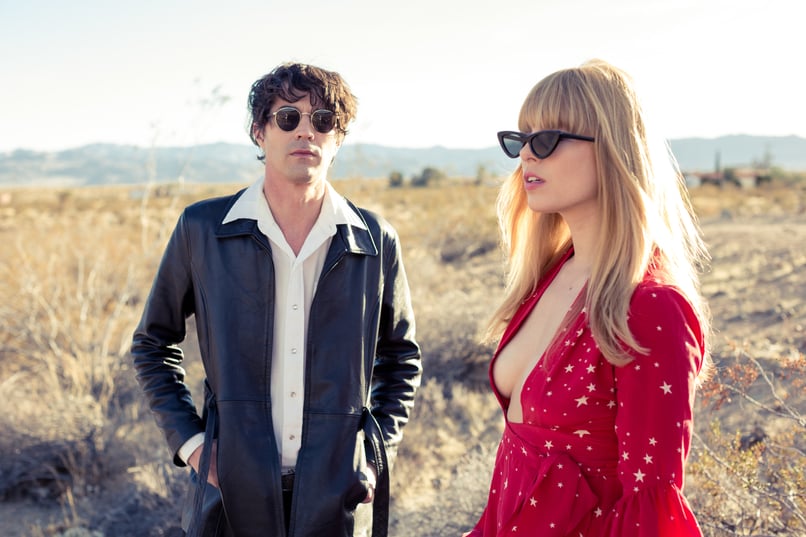
Photo Credit: Daisy Glaze/Vincent Perini
Wovenhand ‘Silver Sash’
(Glitterhouse Records) 4th February 2022
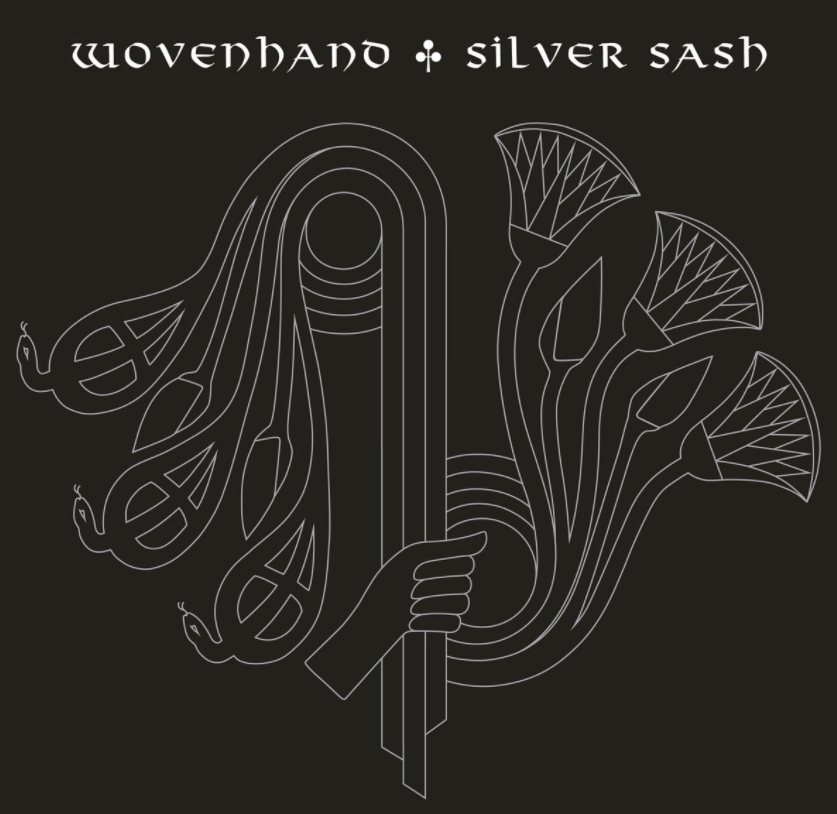
An esoteric landscape of Bury My Heart At Wounded Knee, Blood Meridian and the Egyptian Book Of The Dead awaits on the first album in nearly six years from the mystic David Eugene Edwards Westerns scripture imbued Wovenhand vehicle.
The former 16 Horsepower front man collaborates with Chuck French of the American hardcore band Planes Mistaken For Stars on a wildly driven, occasionally pummeling Biblical and occult raid on Western and Native American symbolism and allegory. Apache, Comanche and ‘Sicangu’ (one of the album’s track title) war dance jangling, rattled and marching percussion gear up against gnarling, doom-laden textures of heavy rock, the industrial, dark wave and the Gothic both on and off the reservation.
Edwards and his foil channel a troubling, even traumatic dark vision of a bloody West; a geography full of metaphysical holy mountains, sacred sites and timbered temples. Silver Sash squalls and creeps between NIN’s collaborations with Bowie and the Swans and Crime And The City Solution and The Mission as rattlesnakes hiss, eagles soar and the distant tribal drums beat out danger. All the while Edwards part quasi-prophet, part descriptive author style lyrics emphasis the supernatural, the holy and some romantic displays of anguish.
An atmospheric grind and hauntingly fierce album that burns scorch marks across an already scarred land, Silver Sash carries weight and mystique on nine songs of esoteric Western hammered invocations.
Ilmiliekki Quartet ‘S-T’
(We Jazz) 11th February 2022

Anything but a lifeless frozen tundra when it comes to contemporary jazz, Finland’s We Jazz (clue is in the name) label platform has been prolific and instrumental in promoting a rich abundance of the Scandinavian region’s talent – three titles no less making our recent ‘choice albums of 2021’ lists.
One such Helsinki stalwart, honing their impressive skills for two decades, is the assured Ilmiliekki Quartet. Their new self-titled album is an understated, lightly touched suffusion of jazz-blues and soul with a whiff of the Savoy and 60s period Blue Note labels output. Although saying that the action can rise to a tumultuous crescendo, a climatic splash of the waters. But for the most part the intensity is simmered in a sizzle of cymbal and snare resonance, quietly stretched, elegant double bass bobs, gentle spotted piano and nuzzled drifting trumpet.
Each member of this special quartet gets to flex their compositional skills, with trumpeter Verneri Pohjola orchestrating the veiled, ghostly-touched ‘Follow The Damn Bread Crumbs’; pianist Tuomo Prättälä dreaming up the early Miles bluesy reflective ‘Sgr A*’ and huffed trumpeted ‘Kaleidoscopesque’; the bassist Antti Lötjönen conjures up the cushioning bounced and dusted rebirth of cool NYC boardwalk evoked ‘Three Queens’; and drummer Olavi Louhivuori serves up the nocturnal serenaded, factory streamed and wind rustled ‘Night Song’. The album’s only cover, ‘Aila’ by the Finnish pop group Karina, keeps within the considered perimeters, stirring between a haze and controlled climatic maelstrom.
The quartet’s overall sound is one of elegance and purposeful development, experiment; a rich channeling of sophisticated jazz from both sides of the pond.
Ziad Rahbani ‘Houdou Nisbi’
(Wewantsounds) 25th February 2022

As the agit-pop artwork cover that has been faithfully reproduced from this cult Middle Eastern treasure’s original cassette/CD release in 1991 shows, the almost surreal climate that existed in Beirut and the South Lebanon at the time it was recorded in the mid-80s, is in constraints with the lighter escapist fantastical fusions of the country’s iconic polymath Ziad Rahbani. Against a backdrop of hard-fought civil war, Ziad was leading everyone into the discothèque and their bedrooms.
A high-heeled local dressed to the nines steps out of a casually placed machine gun diorama; just another statement on the day-to-day horrors that threatened the entire region towards all-out war. The iconic Arabian crate-digger’s favourite, Houdou Nisbi, which is finally being released on vinyl by the Wewantsounds reissue specialists, translates as “relatively calm”: the oft-used TV anchor’s ironic expression in the face of a tumultuous raging conflict. Two thirds of the way into a two-decade spanning civil war, far too complex to detail here, the Lebanon was at the epicentre of war between opposing religious militant groups; sucking in Israel, Syria and a myriad of client states as peacekeepers. During one of the worst atrocities of that war – the infamous Sabra and Shatila massacres – the Lebanese star went to work in his By-Pass studio to make an album of smooth, MOR romantic balladry, funk, soul, jazz and, what sounds like, both Nino Ferrer and Gainsbourg Franco-Arabian troubadour like pop. Both softened and sexy, there’s even, at a stretch I’d admit, a touch of Leonard Cohen 80s slow dances and Odyssey-style disco.
A towering cultural figure in the Middle East at large, as a musician, composer, producer, playwright and activist, Ziad’s fate was mapped out from birth. His feted musician father Assi Rahbani was part of the famous Rahbani Brothers, whilst his mother, Fairuz, was a legendary singer – a number of her most prized albums were actually produced by Ziad in the 80s. With those genes it’s almost a given that he would go on to accomplish so much.
Heavily influenced, as you will hear, by Western music and with a first-rate band of performers (Tewfic Farroukh on sax, Paul Dawani on guitar and Emile Boustani on percussion) on side, Ziad created a sentimental as much as a salacious mood of lilted swoons, maladies and sleep sophisticated groovy dancefloor moves. It all starts with the smooched and tingled piano, floated flute and whistled heart-to-heart ‘Bala Wala Chi’, and moves onto the more mysterious, brassy resonating Arabian title-track. Another piano dalliance – of which Ziad was a maestro – beckons on the dreamy funk-jazz fantasy ‘Nafs Al Sheghlat’, followed by one of those sexier deeply-voiced with bending, melting coquettish female accompaniments, and with a early 80s Sakamoto like production-job, ‘Yalla Kichou Barra’.
A female presence of both lofted, airy allurement and exotic oozing can be heard throughout, alongside the main man, who hinges between almost baritone and more yearning croons: even the whispering.
There’s one cover picked out in the notes, a louche French-esque version of smooth-operators, The Crusaders’ (one name that I would have thought had very negative connotations in the Lebanon) modern soul classic ‘Soul Shadow’. Under the Arabesque ‘Routh Khabbir’ translation Ziad keeps relatively close to the original.
Touches of 70s NYC Broadway, Michael Legrand showtime, Brazilian Tropicana, club lounge Arabia and 80s sentimental Japanese balladry seem to subtly flow on a heart-string tucked fusion that seems to transcend the chaos and death all around. A calmer soundtrack to all the violence and confusion of that moment, Houdou Nisbi would have you thinking everything was hunky dory; as a “relatively clam” escape it works a treat.
Daisy Glaze ‘S-T’
(The Sound Of Sinners) 25th February 2022

What do you get when the one-time drone spaceman Sonic Boom sets out the production controls for a panoramic envisioned Western soundtrack? Well, you get a cinematic free ride across a well-travelled vibrato and tremolo twanged resonating landscape of Tex-Mex border dotted chapels, rebellious skulking outlaw county hideouts and lamentable lover’s rendezvous.
Yes, Boom facilitates the dreamy and sulking Western fantasies of the musical partnership that is Daisy Glaze (named I take it, after the Big Star song); a boy/girl union between Louis Epstein and Alix Brown, a duo that extends to a five-piece outside the studio.
Arriving from congruous but slightly different musical byroads, the duo meet at the same knowing dangerous lovelorn junction that Lee Hazelwood and Nancy Sinatra etched their entwined names; a match that the duo describes as more “blues than pink”, on a soundtrack in which the established echoes of Jack Nitzsche’s strings and Morricone’s spaghetti Western scores cross with The Mekons Sacri Cuori, Ritz Ortolani and noughties Domino Records. Within that indie-country and often supernatural spooked Western scope the duo corrals a wide panning shot of influences to produce a songbook based on the “sinister side of prismatic love”.
From the bell tolls of a shotgun wedding to melted desert mirage apparitions, the Daisy Glaze imprint mixes up decades (traversing the 50s, 60s, 80s, 90s and present) whilst moving from swells of indie to reverent electric organ suffused country-gospel. Although the big sound of ‘Statues Of Villains’ did remind me of both Stereo Total, the Dark Horses and Arabian sand dunes. Almost Gothic in parts, like the Bad Seeds or Crime And The City Solution at a séance during the Day of the Dead, there’s wobbled vibrations of Elvis Presly’s ghost and the dearly departed ready to shake a boney skeleton hip and leg.
Sonic Boom’s touch gives the whole thing an echoed and reverberating spell, and helps to send this ‘psych-outlaw’ partnership in an indie-rock direction. Daisy Glaze pick up all the right vibes and run with them, moseying and cooing sweet everything’s on a recognisable but bleak modern set.
Al Doum and The Faryds ‘Freaky People’
(Black Sweat Records) 18th February 2022

More acid-washed Harmonious Bosch than Hieronymus, the spiritual unifying force that is the ever-changing Al Doum and The Faryds collective turn the garden of earthly delights into a celebration of Mother Nature’s freaks.
At this particular time and space the rambunctious Milan group are a ten-piece ensemble, once more pushing their recent Freaky People free-for-all. A self-confessed paradox of the raucous and seriously considered, the “chaotic and respectful”, “calm and furious”, they’ve managed to invoke both Egypt 80 and Albert Ayler; The Flaming Lips and Vis A Vis; and an astral travelling Lonnie Liston Smith and Les Freres Smith on a bustling Kuti protestation come gospel paean party.
In practice this means spiritual jazz like choruses of soulful wellness mixed with bust downtown Lagos shuffles, suffused horns, fluty flights, celestial chimes, Afro-rock and hints of a psychedelic India. An organised simmered outpouring of energy in honour of Earth’s green goddess, Freaky People’s rainbow alliance sucks in a hand-clapping Janelle Monáe, the afflatus African homages of Idris Ackamoor and Philip Cohran with the modernising improve eclectic peregrinations of The Cosmic Range and soul revue backbeat of Kasalèfkut Hulu to drum up a dancing and tumbled healing balm of optimism.
Orange Crate Art ‘Contemporary Guitar Music’
The Quietist ‘Hidden’
(Both on Somewherecold Records) 18th February 2022
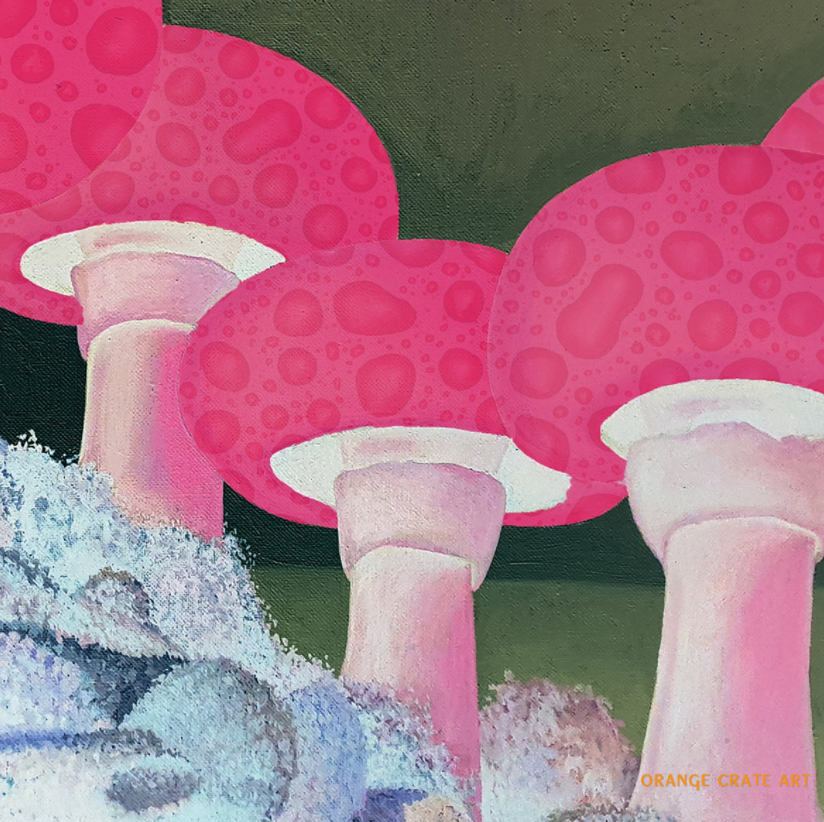
Transducing, transfusing the electric guitar so that this fuzzed-up and flange effected instrument nearly loses itself in the varied states that the Orange Crate Art’s driver Tobias Bernsand sends it, the Contemporary Guitar Music title doesn’t come close to describing the seven musical journeys found within.
Billed as a collection of spontaneous in the moment songs, this latest album from the Malmo explorer traverses a cosmic myriad of trip-hop, post-rock, kosmische, krautrock, psychedelia, dream-pop, indie and baggy dance music; created I’d imagine in some kind of drug-induced haze, with the signature apparatus mind-bended, wailed, contoured and vibrated into a dream factory of the hypnotic, dubby and melting.
Chronicling Bernsand’s creative head space (though this one-man studio enterprise extends to a four-piece when appearing live) in the summer of 2021, there’s a lovely ether oscillating opener entitled ‘Stud Phases’ that reminded me of a dream-wave Land Observations or Broken Shoulder soaked caught in a sort of quasi-electronic dance music cycle. The next track, ‘Wendy Underway’, moves the action towards a trance drifted communion of soft tickling jazz, George Harrison’s Moog mood music, the Van Allen Belt and The Soupdragons: a psychedelic mushroom of translucent cloud gazing if ever I heard one.
A Lydon free PiL has space dust sprinkled on Jah Wobble’s dub bass pulsations on the magical ‘Self-Similarity Fractals’, whilst it could be Weatherall turning on the effects on the velocity building ‘Energetic Superbubble Of Synthetic Telepathy’. Things only get better from here on in, with the epic krautrock peregrination and cosmic courier special ‘Young Spine’, which in equal measures evokes a quasi Klaus Dinger drum beat (not the motorik, but the other kind he specialised in) and echoes of The Untied Knot, Embryo and Higamos Hagamos on its stellar journey – perhaps’ the album’s highlight for me. Just as epic, if probing towards the subterranean is the camel caravan motioned psych bad turn ‘Two Ponies Make No Pint’. A Massive Attack ‘Protection’ style broody bassline is absorbed into a dark patchwork of the HiFi Klub, Andy Haas, Seefeel, Olivia Tremor Control and speaker bouncing arppegiator circling rotations. If you’re aware of the background, the mythology, then you will know that most of the OCA’s material has never been released – that last track being a case in point, a radical ‘remix’ of an unreleased song from four years ago. After a couple of previous attempts and false starts, Bernsand has finally assembled a collection for the highly prolific experimental label Somewherecold (releasing at least four albums a month on average). And it’s an astral belter, a cosmic dream and post-rocking beauty worthy of our attention.
In short, another worthy release on the North American label of note this month is the collated epic ambient album from The Quietist – curiously both albums share mushroom themed cover art. A congruous expanded collection of slow-burning peregrinations from across Phillip Ward’s catalogue, plus three new tracks especially written for this album, Hidden charts the developments of this composer, from his initial apprenticeship writing music in the late 90s on a Playstation 1 (of all things) to a Cubase SE upgrade.
There’s some really incredible moving ambient, low electronic dramas and soundtracks amongst these almost pure suites. Touches of Eno, Popol Vuh, Tangerine Dream, Jean Michal Jarre can be detected in both the long form beautified sweeps and blooms and more mysterious mood boards. A great way to lose oneself for an hour or two.
Seigo Aoyama ‘Prelude For The Spring’
(Audiobulb Records) 2nd February 2022
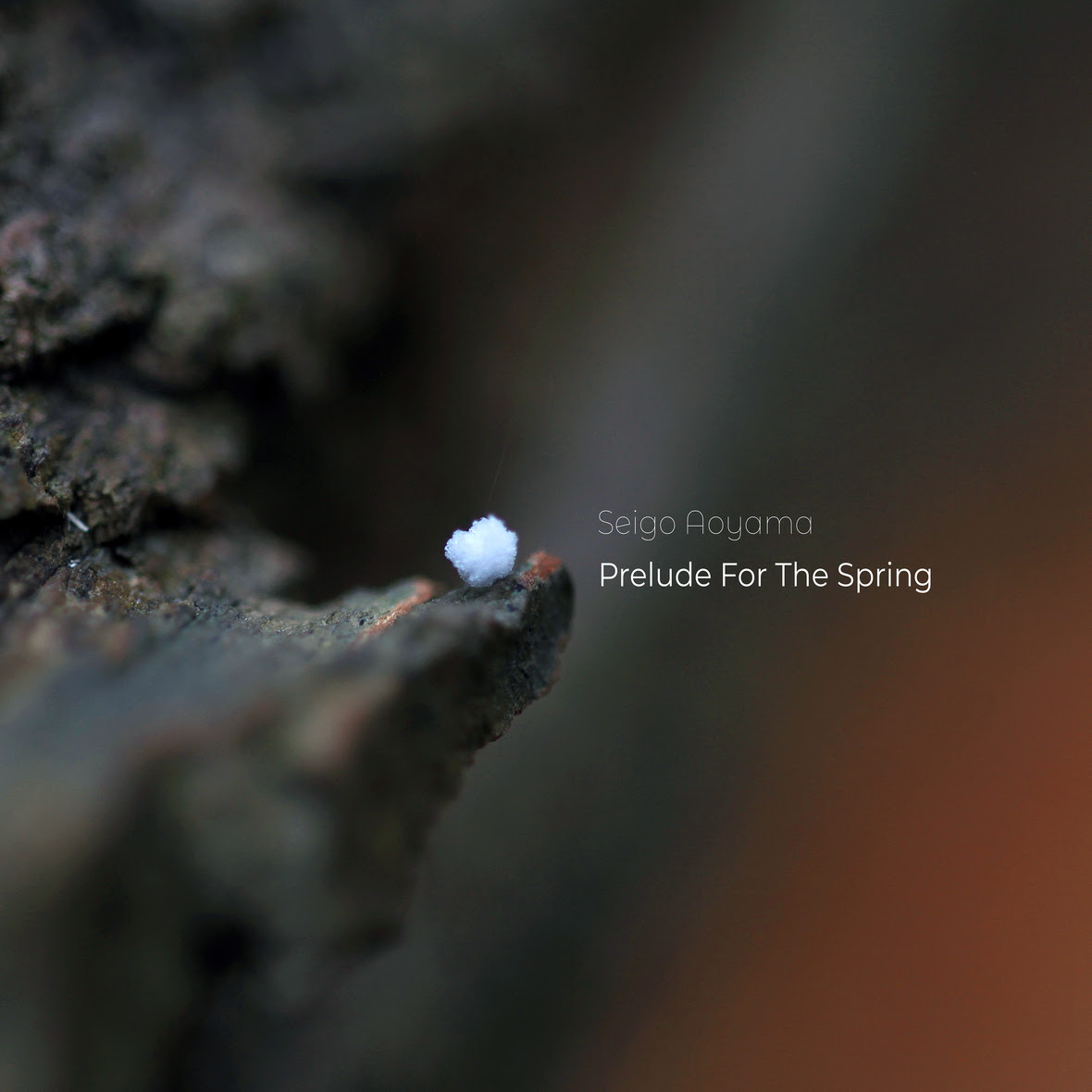
Evoking the tail end of Autumn as nature comes alive in the “prelude” to Spring, the Tokyo-based musician/composer/sound designer Seigo Aoyama magic’s up a minor ambient and neo-classical triumph on his new album of seasonal suites.
The dewy-grass and misty veils of a still dampened landscape are still present as wispy vapours, but the blossom buds are now starting to sprout on a sophisticated soundtrack of ambient like haikus.
To set the mood Aoyama includes a richly lyrical, poetic descriptive introduction of gentle Eastern breezes, a climbing luminous silver moon and various other evocative scenes. But the prelude begins with the resonated thrum of an orchestra tunning up and goes on to feature fourth world echoes of Jon Hassell’s nuzzled trumpet before settling into a Zen garden retreat of delicate wind chimes, softly rung bells and serene contemplative synthesized sine-waves.
The piano, albeit subtle with every note and short run deeply and methodically thought out, has a starring role on this cloud-gazing dreamy nature trail.: Touches of Kabuki theatre, delicate Sakamoto, the classical, Eno and Tim Story come to mind when the ivory and its inner workings are poured and elsewhere singularly struck.
The odd light piece of choral-like voices, the odd line of dialogue and field-recorded tramples through both nature and a Tokyo environment can be heard as life is breathed into this Spring passage of rites and communion. Aoyama proves a capable, adroit, patient composer on what is a moving, calm and deeply felt descriptive soundtrack. One of the best ambient releases I’ve heard this year without a doubt.
T.E. Yates ‘Strange Weather EP’

As recent packages delivered to the Monolith Cocktail HQ go, the eye-catching bundle of music and artwork sent by the Bristol-based creative polymath T.E. Yates is hard to beat. An almost complete physical biography/discography of the artist’s various projects, some of which are award-winning, Yates sent me a number of his Poe-esque and surreal pencil-graphite and charcoal hybrid prints (A Bat And A Raven and Bedlam Six Microphone Faces); some postcard-sized artwork promotions of his short Evil Cat animation, shown at the Edgar Allan Poe film festival; and of course, his pastoral art nouveau illustrated debut album (on vinyl) Silver Coins And White Feathers, and most recent EP, Strange Weather.
And so, just for revision sake that’s the illustrator, animator, artist, singer-songwriter and musician strings to an impressive bow logged. All of which could be directly because of or despite a myriad of neurodivergent issues; outlined to a touch of Americana David Byrne, Warren Zevon and Roy Orbison on the warmly radiating electric-piano shuffled EP opener of dappled-lit plaint ‘Condition’. Laid out in an almost relieved candid fashion, Yates turns the sadness of alienated school days into a gauzy triumph of realisation; coming to terms with what he sees as “both a blessing and a curse”. The very fiber of Yates work and personality, this “condition” (“not a sickness”) leitmotif extends to a ‘creative partnership’ with fellow neurodivergents in a specially made video for the track (through Biggerhouse Films).
It also may account for the EP’s eclectic tastes, which wonder, meander through light jazz, echoes of mariachi or Tex-Mex border Americana, ragtime, radiohall, folk, 70s and 80s MOR pop, whimsical 60s and of course country. Aided on all these dalliances by a very reputable ensemble that includes a chorus of voices and harmonies, and a wide-range of just as eclectic instruments – from Yates’ musical saw to Mikey Kenny’s elbowed fiddle work hoedowns and the presence of C.J. Hillman’s steel pedal guitar wanes -, Yates tells it like it is; both demystifying, and yet I think aching for understanding, the fairytale completeness of romance to the accompaniment of a country fiddled barn dance.
Overlooked, ignored in company on the soft galloping folksy ‘Fierce Horses’; despondent with a dreamy sadness about the greed and avarice in the ‘Palace Of Your Master’; and quaintly rolling along on the unrequited Nick Lowe with tinges of mid 70s Kinks ‘Mystery Window’, Yates unburdens the weight on his shoulders and shows a full gamut of emotions on a most peaceable, disarming EP. There’s nothing strange about this weather, just first-rate songwriting and musicianship from an artist who might just have a unique take on the climate and world around him.
In these troubled times, with so much stacked against independent, unsponsored voices, you can help us to continue probing and delivering great new music:
Hi, my name is Dominic Valvona and I’m the Founder of the music/culture blog monolithcocktail.com For the last ten years I’ve featured and supported music, musicians and labels we love across genres from around the world that we think you’ll want to know about. No content on the site is paid for or sponsored and we only feature artists we have genuine respect for /love. If you enjoy our reviews (and we often write long, thoughtful ones), found a new artist you admire or if we have featured you or artists you represent and would like to buy us a coffee at https://ko-fi.com/monolithcocktail to say cheers for spreading the word, then that would be much appreciated.
Monolith Cocktail Monthly Revue: January 2022: Trupa Trupa, Jam Baxter, Binker & Moses, Silverbacks…
January 28, 2022
PLAYLIST REVUE/Picked By Dominic Valvona, Matt Oliver, Brian ‘Bordello’ Shea’ and Graham Domain

The inaugural “revue” playlist of 2022 from the Monolith Cocktail team picks up on a few stragglers from the end of last year plus a load of eclectic treasures from the last month. The Monthly is a sort of summary; an encapsulation of the music we’ve loved, reviewed and picked up on during January.
That track list in full::
Rokia Koné & Jacknife Lee ‘Kurunba’
Avalanche Kaito ‘Dabalomuni’
Melt Yourself Down ‘Balance’
Detective Larsson ‘Magic Show’
Trupa Trupa ‘Uniforms’
Thyla ‘Amber Waits’
Claptrap ‘Out Of’
Spaceface ‘Long Time’
Kristine Leschper ‘Picture Window’
RULES ‘Ghost’
Labelle ‘élude’
Nyokabi Kariuki ‘Equator Song’
Pleasure Craft ‘Dead Weight’
Lion’s Drum ‘Kami Shintai’
Selci ‘Ghost’
The Jazz Butcher ‘Running On Fumes’
Tom Shotton ‘Here, Always’
Wesley Gonzalez ‘Greater Expectations’
FNKPMPN ‘The Typical Boob’
Sylph ‘Ancient Hole’
Rob Burger ‘Hotel For Saints’
Letters From Mouse ‘Elizabeth’
Sarah Vaughan ‘Inner City Blues’
Kojey Radical Ft. Knucks ‘Payback’
Jam Baxter ‘Go On’
Cephas Teom ‘Primordial Forms’
Buck & Gase And Rahrah Gabor ‘Pass Impasse’
Andrew Heath, Phonsonic & Simon McCorry ‘The Passage Of Time (Live)’
King Kashmere, Cupp Cave, Herrmutt Lobby & Booda French ‘Donuts’
The Doppelgangaz ‘Concord Grapes’
Nelson Dialect & Mr Slipz ‘Only Just Begun’
Binker And Moses ‘Accelerometer Overdose (Edit)’
Ashinoa ‘Disguised In Orbit’
Bollards ‘Plate Up’
Salem Trials ‘Funkytown’
Chris Church ‘We’re Going Downtown’
Michael Rother & vittoria Maccabruni ‘Exp 1’
Laurie Anderson – The Arca Remix ‘Big Science’
Kate Havnevik ‘Dream Her To Life’
Bagaski ‘Campan’
Roedelius & Tim Story ‘Crisscrossing’
EXEK ‘Unseasonable Warmth’
Deserta ‘Where Did You Go’
Silverbacks ‘Archive Material’
Our Daily Bread 486: (Album) Labelle ‘Eclat’
January 11, 2022
Words by Dominic Valvona
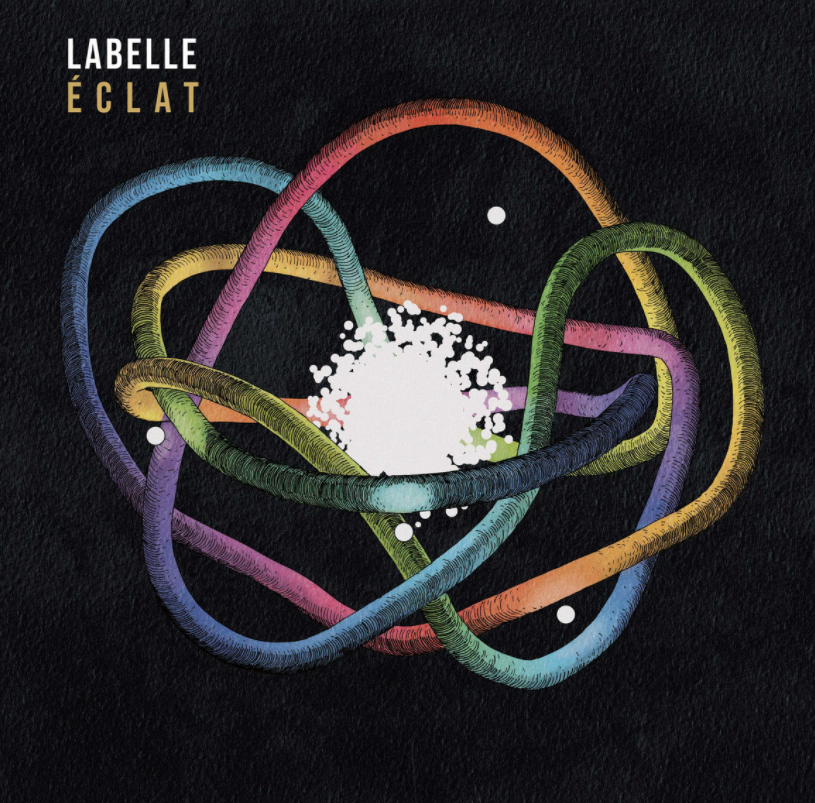
Labelle ‘Éclat’
(InFiné) 24th January 2022
Few have done more to both elevate and wed the distinct sounds of Maloy to a contemporary, often experimental, palette than the Réunion Island composer Jérémy Labelle. A traditional music, born in the 19th century as an outpouring for the suffrage, reverberations and lament of slavery that core inspiration – only found on Labelle’s island home – makes connections to the classical and to the rhythms of the East and the scratchy, hypnotic musical genre of Morocco known as Gnawa. The last of these can be strongly detected o both the dainty danced, retuned ‘Giant’ and the rattled and cosmically bandy suite it leads into, ‘Mes Mondes’. It’s no surprise to find that Moroccan venerable style works, as Labelle pitched up his signature Maloy fusion a quartertone to match it.
Forbidden as the entwined revolutionary music for Réunion’s indigenous population (mostly made up of those who arrived from Madagascar and the Indian Ocean’s atoll of islands) by the French colonial powers (still an official region of France that never achieved independence), Maloy was banned right up until 1981. One of the island’s two most popular ingrained styles it was nevertheless wrapped up in rituals, played at religious ceremonies; seen as an unwelcome occult influence by the French. Here it’s pushed like never before into an almost avant-garde direction, augmented and suffused with electronic music and transformed beyond measure.
Labelle’s known for transducing his original conceived compositions into something cosmic, universal and unique. That process, which was likewise successful on the previous critically acclaimed albums (Éclat marks his fourth studio album proper), led to a highly experimental set of pre-pandemic performances performed by a string quartet. What makes it so distinct though was that he set out to break all the rules of classical composition, writing music for a traditional rock band set-up but running it through an acoustic-electronic chamber ensemble. Adding another layer to the process, multifaceted London producer, composer, DJ an artist in his own right Hector Plimmer reshapes, cuts and put’s in congruous augmented effects. The results send this brilliant album suite towards jazz and techno whilst never losing its expletory post-classical roots.
Éclat (or “spark”, though in my translator searches it came out as “shine”) as its name makes clear sounds almost like the light above Labelle’s head suddenly switched on, prompting a sublime, yearning and pining contemplative/reflected counterpoint of Philip Glass. Max Richter, Nils Frahm, Simon McCorry and Kriedler.
More sustained, reverberated strings and atmospheric synthesized beds are layered with shorter, arched bows, warped snatches and arpeggiator-like pitter-patters. Ambient music transduced into subtle stirred violins and cellos undulate beneath emotive swells and moments of real intensity. Often these bowed strung instruments wail like an electronic guitar or sound more like a rusty saw biting into the fabric. On the quickened ‘RON’ those same strings are enveloped within a scrawled vortex; funneled through a black hole into a universal horizon reprise of Glass-like seriousness.
This record is incredible: already one of my highlights of 2022. The Maloy tradition and the classical are remodelled, sent out into an ever-more expansive cosmology of fusions. Éclat is every bit as dynamic, emotive and fresh as the previous albums, if not the most sophisticated and interesting yet.
From the Archives:
Labelle ‘Orchestre Univers’ (2019)
Hi, my name is Dominic Valvona and I’m the Founder of the music/culture blog monolithcocktail.com For the last ten years I’ve featured and supported music, musicians and labels we love across genres from around the world that we think you’ll want to know about. No content on the site is paid for or sponsored and we only feature artists we have genuine respect for /love. If you enjoy our reviews (and we often write long, thoughtful ones), found a new artist you admire or if we have featured you or artists you represent and would like to buy us a coffee at https://ko-fi.com/monolithcocktail to say cheers for spreading the word, then that would be much appreciated.
Monolith Cocktail Monthly Playlist: August 2021
August 27, 2021
PLAYLIST SPECIAL/Dominic Valvona/Matt Oliver/Brian ‘Bordello’ Shea
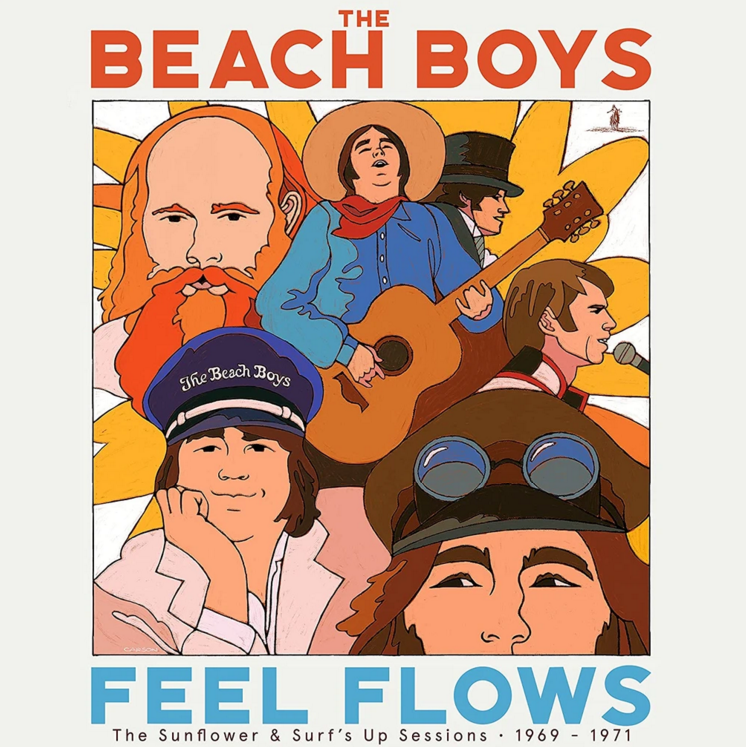
Unapologetic fans of California’s favourite sons, The Beach Boys, this month’s imaginary Monolith Cocktail radio show playlist features a hell of a lot of tracks from the Feel Flows box set, which came out today. Some of which, are choice tracks that have lain dormant for decades.
Joining them is a fine selection of new music from the MC team (that’s me Dominic Valvona, our remote contributor and hip-hop selector Matt Oliver, and the maverick troubadour lo fi rock god turn critic Brian ‘Bordello’ Shea) that includes bloomed pop loveliness from Bloom De Wilde, respectful nods to prog rock icons from Uncommon Nasa, Homeboy Sandman slurping on the dairy, the brand new Fiery Furnaces mellotron bellowed plaint, and some mad dashing mayhem from Girl No. III. Plus plenty of greatness from Pons, SonnyJim, Ryuichi Sakamoto, Brandee Younger, Ephat Mujuru and Liz Cooper. 46 tracks to soundtrack your weekend.
Tracks Listing:.
The Beach Boys ‘It’s A New Day’
Gabrielle Ornate ‘Waiting To Be Found’
Bloom De Wilde ‘Garden Of The Sun (Jstar Remix)’
Ester Poly ‘Pressés’
Flowertown ‘The Door The Thief The Light’
SLONK ‘Erstwhile’
Julia Meijer ‘Borta Från Allt’
Seaside Witch Coven ‘A.E.O.’
Liz Cooper ‘Slice Of Life’
The Beach Boys ‘It’s About Time – Live 1971’
Brian Jackson, Adrian Younge & Ali Shaheed Muhammad ‘Duality’
Uncommon Nasa ‘Vincent Crane’
Tanya Morgan ft. Rob Cave ‘Tanya In The Sky With Diamonds’
Homeboy Sandman ‘Cow’s Milk’
Creatures Of Habit ‘The Devil’s Hands’
Bronx Slang ‘Clock’s Ticking’
Lore City ‘Once-Returner’
Your Gaze ‘Black Afternoon’
Sølyst ‘Flex’
Ephat Mujuru & The Spirit Of The People ‘Mudande’
Ballaké Sissoko ‘Simbo Salaba’
The Beach Boys ‘4th Of July (2019 Mix)’
Sorrows ‘Rita’
Lisa Mychols & Super 8 ‘Pet Sounds (Story)’
Makoto Kubota & The Sunset Gang ‘Bye Bye Baby’
Brandee Younger ‘Somewhere Different’
Ryuichi Sakamoto ‘Mountains’
The Beach Boys ‘Forever (2019 A Cappella Mix)’
The Fiery Furnaces ‘The Fortune Teller’s Revenge’
Graham Domain ‘Limbs Of Loneliness’
Corduroy Institute ‘An Interpretation Of Our Own Story’
YOUNGMAN ‘GALACTIC LUV’
Celling Demons Ft. Zarahruth ‘Silver Birch’
Kid Acne Ft. Jaz Kahina and Vandel Savage ‘Transistors’
The Mouse Outfit & ayiTe ‘Don’t Stop’
Girl No. III ‘Wales’Whales’Wails At Weyl’
Pons ‘JOHNNY PERSUASION (HABITAT 67)’
Sebastian Reynolds ‘Crows (L’Étranger Remix)’
CMPND ‘WEAINTPLAYIN’
Lee Scott/Hyroglifics Ft. Black Josh ‘Sacrificial Goat’
Sonnyjim ‘Mr Singh’
Sweaty Palms ‘The Dance’
Weak Signal ‘Barely A Trace’
Xqui X SEODAH ‘Timete’
Giacomelli ‘Phaze II, Pt. 2 (Bonus Track)’
Shreddies ‘(no body)’
Our Daily Bread 432: Rafiki Jazz ‘NDUGGU’
March 19, 2021
Album Review/Dominic Valvona

Rafiki Jazz ‘NDUGGU’
(Konimusic) 26th March 2021
With possibly one of the most diverse lineups going, the polygenesis Rafiki Jazz ensemble can boast of eight different languages and between them play at least thirty different instruments, and that’s without counting their guest contributors.
The foundation core of eight band members represents near enough every corner of the globe; from the Middle East to Southeast Asia, the Mediterranean, India and Africa. It’s a cross-pollination of cultures that musically weaves together each member’s heritage seamlessly. And so you’re just as likely to hear the West African spindly harp-like kora alongside a tapping, bobbing set of tablas, or a vague air of Moorish Spain, South America and romantic Urdu vocals all sharing space in the same song.
Following on from 2019’s entrancing and captivating ‘mystic utopia’ translated Saraba Sufiyana album, and with funding from the Arts Council in England, Rafiki Jazz now reveal their fifth omnivorous geographical songbook, recorded remotely in lockdown, NDUGGU. Pronounced “dug-goo” that title means “dust”; a theme that is mentioned throughout the album but one that is in particular a reference to the increasing desertification of the Sahel region in Northern Africa, where climate change is having an erosive and unstable effect.
Dust, as the PR spill reminds us, is also our ‘ultimate destiny’. The lingering dust of previous generations imbues this eight track album of serious but diaphanous, harmoniously articulated dreams and filmic quality traverses. Though deeply affecting, these borderless mergers somehow wash over the listener with a certain translucence and lightness of touch; like a silken veil over the romantic floated Turkish language ‘Gesi Baglari’ (an ode to the band’s manager), and sadder, clandestine Tango across the Arabian Seas to Pakistan ‘Tum Na Aaye’.

Elsewhere there’s a lyrical, sweet synchronicity of Tamil, India and West Africa on the opening enchanted, almost-duet(ed) fluty ‘Naalaikku Nalla Naal’, and a languid Ghanaian Highlife hop between the Hispaniola, South Seas and Afro-Caribbean that settles down into a snuggled sunny groove, ‘Ngozi Ucheoma’.
Intoxicated opium scented Arabia to the Upper Nile via a magical Kashmir lullaby, scenes, and concerns are set to heartfelt yearning vocals and gently stirred rhythms. Rafiki Jazz’s main strength then, is in transferring listeners to these exotic musical environments – many of which are suffering from the harshest consequences of climate change, and in many cases too, violent conflict.
Created in the shadow of Covid with all the restrictions it brings, and because of that recorded remotely, NDUGGU is still every bit as beautifully conceived, harmonious, and of course as embracing of diversity, as previous international affairs from the band. With a focus on drawing attention to communities on the frontline of global change and extreme upheaval, Rafiki Jazz keep a number of forgotten people, their compatriots in many cases, in the spotlight. They do this with a most stunning, panoramic and worldly rich and lyrical songbook: a celebration in a sense against the forces that have tried to disconnect, disunite these international voices and musicians.
See also…
Hi, my name is Dominic Valvona and I’m the Founder of the music/culture blog monolithcocktail.com For the last ten years I’ve featured and supported music, musicians and labels we love across genres from around the world that we think you’ll want to know about. No content on the site is paid for or sponsored and we only feature artists we have genuine respect for /love. If you enjoy our reviews (and we often write long, thoughtful ones), found a new artist you admire or if we have featured you or artists you represent and would like to buy us a coffee at https://ko-fi.com/monolithcocktail to say cheers for spreading the word, then that would be much appreciated.
PLAYLIST/DOMINIC VALVONA
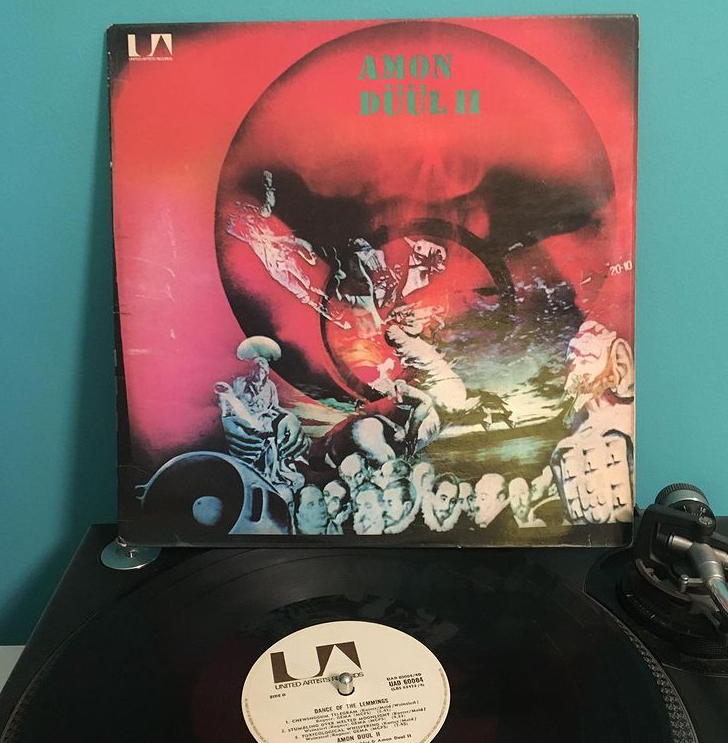
For those of you unfamiliar with the long-running Monolith Cocktail Social Playlist, this is Dominic Valvona’s eclectic and cross-generational imaginary and dream version of the blog’s radio show. It’s also a chance to show off his record collection, and the sort of music he’d play when DJing over the past thirty years. Expect the unexpected, as the oddities and the sublime rub up against each other on a curated playlist with no limits, no borders, and no one to please other than ourselves: we just hope you enjoy and share some of our tastes, or get switched and turned on to what we rave about.
Volume #53 includes the mad, bad and dangerous to know alongside turns from the post-pink, pub rock, jazz, Krautrock, psychedlic, garage, transient, soundtrack genres. Dominic also raises a glass to both the 50th anniversary of Amon Duul II’s Dance Of The Lemmings and the 30th anniversary of R.E.M.’s Out Of Time albums.
The Full Track List Is As Follows:
The Count Bishops ‘Down In The Bottom’
Viv And The Sect. ‘Blues Days’
Poison Girls ‘Underbitch’
Oblivians ‘Motorcycle Leather Boy’
Bailey’s Nervous Kats ‘Surf Express’
Avavikko ‘Alas Volgaa’
Jan Ptaszyn Wroblewski ‘Sweet Beat’
Ihre Kinder ‘Wrote’
Message ‘THOUGHTS’
Afous ‘Malha’
Ernie Hawks ‘Cold Turkey Time’
Phill Most Chill ‘This Is What It Is’
Lejuan Love ‘My Hardcore Rhymes’
Marley Marl & Craig G ‘Droppin’ Science’
Falle Nioke ‘Barke’
Exuma ‘Empty Barrels’
The Cutlass Dance Band ‘Odofo Na Aden’
Comadre Florzinha ‘Arauna’
Maria Monti ‘Il Pavone’
Freur ‘Matters Of The Heart’
The Sixth Great Lake ‘Ballad Of A Sometimes Traveller’
The Field Mice ‘End Of An Affair’
R.E.M. ‘Country Feedback (Live)’
Supreme Dicks. ‘In A Sweet Song’
Elysian Spring ‘2 & 2’
Dennis Farnon ‘The Trackers’
Compton & Batteau ‘Honeysuckle’
Bill Jerpe ‘Mrs. Frost’
Michael Bundt ‘Midnight Orange Juice’
Alphataurus ‘Croma’
Ruth Copeland ‘Your Love Been So Good To Me’
Peace and Love ‘Until’
Remigio Ducros ‘Fabbrica Vuota’
Amon Duul II ‘Chamsin: Toxicological Whispering’
Eroc ‘Abendmeer’
Our Daily Bread 421: Disco Zombies ‘South London Stinks’
January 25, 2021
Compilation Breakdown/Review: Words by Dominic Valvona

Disco Zombies ‘South London Stinks’
(Optic Nerve) 29th January 2021
Emerging from a fit of bands during the punk era, Leicester’s Disco Zombies never quite broke through despite meeting with the approval of John Peel and bridging both the agreeable knockabout youthfulness of The Undertones and more sneering, University Challenge politico riling of their Tory-baiting peers. Pub rock to fuzz; new wave and even post-punk, they could sound at any one time like The Skids, Damned, Magazine, Swell Maps, Subway Sect and even (on the slower Indie roaming ‘New Scars’) XTC.
Formed almost at the apex of the punk explosion by Andy Ross (vocals and guitar), Johnny ‘Guitar’ Hawkins (as his moniker makes pretty obvious, guitar), Geoff ‘Dod’ Dodimead (bass) and Andy Fullerton (drums), the DC played their debut gig at the student halls of residence, we’re told, to “a packed room of cross-legged intellectuals”. That line-up soon expanded to accommodate Dave Henderson of The Blazers; all part of a scene that could boast the cult obscurity of bands like The Foamettes, Dead Fly Syndrome and The RTRs. The DC would bring in The Foamettes’ guitarist Steve Gerrard when they soon relocated to London in the vain hope of making it to replace founding member Johnny Guitar, who couldn’t go as he had another year at Uni to finish. As it happened, he never really missed his break, as even his replacement soon returned home from the capital due to the lack of success. Gerrard would however make it into Leicester’s version of Rock’s Back Pages by joining another cult band, The Bomb Party.
In an age characterised by the spirit of diy and lo fi, the band recorded their first EP for the fleeting Uptwon Records venture set up by Carl Tebbutt. This now legendary EP, recorded in one four-hour session, featured a Blazer’s number (‘Top Of The Pops’) and a trio of rough ’n’ ready Stiff Records, tongue-in-cheek adolescent ravers (‘Time Will Tell’, ‘Punk A GoGo’, and ‘Disco Zombies’). It was unfortunately shelved due to the occupational hazard of these enterprises going bust. They still carried on however, recording a session for a local radio station, the only fruits of which (included on this twenty-track revision compilation of mishits) is the rebel-country meets Skids goggle-box sneer ‘TV Screen Existence’. The DC would also go on a mini tour showcase of their hometown, playing five nights in five different pubs. But a move to the Big Smoke was on the cards after exhausting the Leicester scene, and hopefully a crack at breaking through. It’s hardly a spoiler to suggest they didn’t; the compilation title of South London Stinks a dead giveaway, and perhaps broadside at the Deptford clique of the time.
In another customary shift of line-up, the group recruited Mark Sutherland to fill the gap left by Gerrard. Gigs at a litany of infamous London showcase spots followed: the Scala, Hope & Anchor, North London Poly. Out of frustration, or just ennui, Andy Ross launched his own label, South Circular Records as a vehicle to releasing the band’s debut single proper; the gnarled Jam-knocks-about-with-The-Clash National Front parodied, ‘Drums Over London’. A classic single of the period, it was totally misinterpreted by Rock Against Racism, who missed the irony, believing it to be an endorsement of far right anti-immigration rhetoric. John Peel had to weigh-in on the side of the DC, to clear up the misunderstanding. It’s more or less the band’s anthem. Alongside overseeing an EP from the Peel approved Adicts, Ross’ label put out the Magazine fatalism with white disco Dr. Boss drum machine shaking, ‘Here Come The Buts’: Another slight turn in direction for the band, now expanding their two-minute blasts to over four, you can hear a hint of more brooding post-punk and a resigned polemic on that record. Just before that diy label folded, the DC recorded the Damned like parody sporting spectacle (“Best position to the chase and pursuit”) ‘The Year Of The SexOlympics’, the wrangled guitar and Lou Reed fronts Voidiods, lyrically violent, ‘Target Practice’, and the already mentioned ‘New Scars’. None of which ever saw the light of day. Still, persevering and now in the dying embers of punk they knocked out the brilliant, more upbeat new wave track ‘Where Have You Been Lately Tony Hately’. Showing a keenness for knockabout pun and chirpy wit, with references to pop and sporting culture they paid a sort of wry homage to the extremely well-travelled English centre-forward of the title: A player who moved between eleven clubs in his two decade plus career, even joining (for the briefest of times) the beleaguered USA side, the Boston Minutemen. In a similar vane, but perhaps obscuring a more honest debate about the sex industry and its troubled, used-up pinups, and voyeurism, detachment, the band released a Monochrome Set meets Swell Maps imbued aphorism to the 70s sexpot Mary Millington; star of untold jazz-mags and blue movies in the UK, and the girl-next-door fuck fantasy of a million men. Drugs, depression, debt, the old bill, and the moralist guardians of so-called decency hounded and hampered Mary into an early grave, the sex star taking her own life by overdose in 1979. With that in mind, the DC song is more tragedy, elegy than rave-up and sniggering schoolboy hijinks.
‘Tony Hately’ met with Peel enthusiasm, but other than a test pressing, the single was never properly released; ending up only subsequently on the Cordelia label’s Obscure Independent Classics compilation – a title that tells you all you need to know about that particular chapter in the band’s career. A consequence of this was the break-up of the band. Sutherland opened a studio in Bow, London; Dodimead (god forbid) got a day job, and Fullerton…well he was already in gainful employment. The remainder joined the experimental Club Tango; though later on, Ross would go on to discover bands himself, such as Blur most famously, for the legendary Brit-pop era Food label he started with the ex-Teardrop Explodes’ David Balfe.
Yet they could never let it lie, and thirty years after initially splitting up, the DC (ala the drum machine incarnation) descended upon Sutherland’s studio to record the extremely limited edition 10” pairing of the Sci-Fi homage ‘Night Of The Big Heat’ and bandy JFK conspiracy shtick ‘LHO’. The first of these is a broody indie take on the cult Terence Fisher directed and Hammer double-act of Lee and Cushing 1967 environmental terror of the same name, its partner, a motorcade denunciation vision of a Brit-pop Dead Kennedys. A few years later original drummer Andy Fullerton kicked the staid Dr. Rhythm into touch, recording a trio of originals from a bygone punk age: the antithesis of X-Factor chart-topping mediocrity ‘Hit’, The Dickies bash around with Ramones Cold War pastiche ‘Lenin’s Tomb’ (“All good Russians visit Lenin’s Tomb” you know), and polka-punk resigned parody on the banality of nuclear Armageddon ‘Paint It Red’ (“As the arms race escalates, refit the double-glazing”). All three were released on limited 10”. That recent hurrah style resurrection was followed up by a gig at The Dublin Castle in 2019. And just to make certain that the Disco Zombies don’t vanish from Sniffin’ Glues Back Pages, Optic Nerve have collected all those singles, tracks and missives into this “stinking” collection: probably the first and only chance to find the back catalogue in one place, from a band that seldom managed to release much music to the public.

Shelved recordings, ones salvaged from obscurity mingle with Peel favourites and the few actual physical records they managed to put out. Not really part of any particular scene, out-of-sorts with the London set anyway, the Disco Zombies were never as rowdy and antagonistic as the Pistols, but never quite as cuddly as Eddie And The Hot Rods. They did cover many bases however, developing and changing with the times. Above all that and most importantly, they made some cracking records: which you will discover yourself when digging into this fandom compilation. Another piece in the UK punk jigsaw filled in. Dominic Valvona
Hi, my name is Dominic Valvona and I’m the Founder of the music/culture blog monolithcocktail.com For the last ten years I’ve featured and supported music, musicians and labels we love across genres from around the world that we think you’ll want to know about. No content on the site is paid for or sponsored and we only feature artists we have genuine respect for /love. If you enjoy our reviews (and we often write long, thoughtful ones), found a new artist you admire or if we have featured you or artists you represent and would like to buy us a coffee at https://ko-fi.com/monolithcocktail to say cheers for spreading the word, then that would be much appreciated.

