Our Daily Bread 289: Acid Mothers Temple & The Melting Paraiso U.F.O. ‘Reverse Of Rebirth In Universe’
November 26, 2018
Album Review/Dominic Valvona
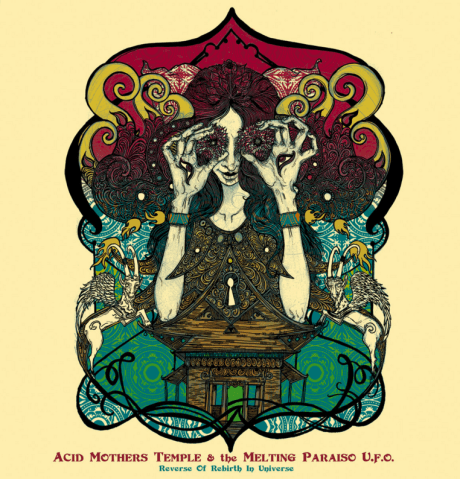
Acid Mothers Temple & The Melting Paraiso U.F.O. ‘Reverse Of Rebirth In Universe’ (Riot Season) 30th November 2018
As the title alludes, this is a rebirth; a new incarnation and phase in fact of the legendary acid-rock psychedelic transcendental freak out that is now in its 23rd year of cosmic operations. Founding instigators Kawabata Makoto and Higashi Hiroshi have in recent years welcomed a new intake of worthy disciples; adding vocalist and ‘midnight whistler’ Jyonson Tso, drummer from ‘another dimension’ Satoshimi Nani and the bassist, known only as, Wolf to its ranks. Their first task it seems is refreshing and transforming previous sonic stunners and rituals from the extensive Acid Mothers Temple & The Melting Paraiso U.F.O. back catalogue; part of an on-going repackage of the iconic troupe’s music that has recently seen, for the first time, a cassette tape release of both the In C and La Novia opuses by Kamikaze Tapes. Coinciding with a recent European tour, the Osaka outfits sprawling Reverse Of Rebirth In Universe album essentially breaks-in a new generation of collaborators.
Krautrock replicates, bowing in reverence at the temple gates of their German inspirations, but also carrying on the lineage of their native country’s own experimental doyens (groups like Les Rallizes Dénudés and the Far East Family Band), the Acid Mothers have carried the torch for acid-rock, the avant-garde and progressive when forbearers and contemporaries have faded or disbanded. Relighting the flame and going even more ‘cosmic’ (if that was even possible) the new recruits breath life once more into a trio (quartet if you have the bonus track version, which I’m reviewing) of moonage daydreams, Tibetan new age fantasies and wild psychedelic improvisations.
Transducing the entire Yeti and Wolf City Nepal esotericism and hippie magic of Amon Düül II into one monumentous caravan procession, the album’s opening epic anthem, ‘Dark Star Blues’, showcases the Acid Mothers signature occult cosmology. All at once hypnotizing, doom-y, melodious, trudging and noodling this far-out blues trip free falls into a wrestling guitar manic jazz jam after ten minutes of Byzantium universe soul-searching to reach a certain nirvana state of enlightenment. By contrast, though still untethered to earthy realms, ‘Blue Velvet Blues’ (about as far away from the blues genre that you can get) mixes tremolo Western echoes with the pining aching and waning guitar work of Ash Ra Temple and what sounds like Grace Slick yearning over a drowsy drum beat. Talking of vocals, the motorik driving ‘Black Summer Song’, sounds like a holy union of Nico and Damo Suzuki; ethereal and hauntingly wooing over a Future Days period Can meets Klaus Dinger’s Japandorf project backing.
The bonus, ‘Flying Teapot’, if you haven’t had the aural pleasure yet, leans more towards Embryo and Agitation Free; a progressive, acid-jazzy warp factor ten freeform trip of stargazing and druggy indulgence: A perfect finish in my book.
In a sprawling swirl of grooves and flailing, wilding display of guitar experimentation and oscillations, the Acid Mothers, boosted by the ‘next generation’, reinforce their reputation as one of the most out-there, influential and dynamic forces in cosmic rock. With a back catalogue that constantly keeps evolving they manage to push further and beyond the band’s past triumphs and freak-outs to deliver something energetically and dynamically refreshing. Here’s to the next phase in the Acid Mothers legacy; one that seems to show a promising glowing future of possibility.
Our Daily Bread 288: Refree ‘La Otra Mitad’
November 19, 2018
Album Review/Dominic Valvona
Refree ‘La Otra Mitad’ (tak:til/Glitterbeat Records) 7th December 2018
Recording in the field, catching both on-set and off the dialogue, conversations and even the spontaneous warbling song of a child, the lion’s share of the material on the renowned Spanish producer and film music composer (also solo artist in his own right) Raül Refree’s La Otra Mitad album was created for film director Isaki Lacuesta’s movie exploration of Flamenco, Entre dos Aguas.
Capturing both the essence and environment of the movie’s San Fernando location, and spirit of the non-professional cast, Refree’s often-reflective compositions and sketches represent his unique approach to conveying the abstract and visceral.
Representing at times what I, with my admitted ignorance of the form, recognize as the toiled, yearning and sometimes diaphanous flourishes of the highly-skilled Flamenco tradition, Refree performs the odd deft solitary passage but mostly reconfigures this signature Spanish style, remodeling it into an amorphous soundscape, or reversing it through a vacuum of suspense – ‘Dar a luz (Mix 1)’, which when translated into English means ‘giving birth’, and so makes sense as the sensation sounds like someone being rushed backwards out of a womb-like tunnel of both radiance and trepidation. Tracks such as ‘Barbacoa’ are literal, the composer recording the mood and conversation of the film crew and actors in their downtime at a barbecue; the results of which when edited in Refree’s in-situ studio sound intimate, yet like an ambient mirage. But sometimes the voices are in song, the Flamenco singers Rocio Márquez, Niño de Elche and Pilar Villa find their sonorous wails, lulls and beautifully expressed vocals sampled and turned into the ghostly and transported. Though the brighter, in praise, and less transformed ‘Cuando Salga El Sol (When The Sun Rises)’ is left to work its delightful Flamenco magic.
Lacuesta had in mind the relationship enjoyed by Neil Young and Jim Jarmusch on the collaborative score for the movie Dead Man, when approaching Refree. And in some way there is a semblance of that process; Refree pushing traditional sources into contemporary directions, his eclectic CV, which includes both co-producing and collaborating with Sonic Youth’s Lee Ranaldo (Electric Trim), and Spanish enigmas Silva Pérez Cruz and Rosalía, channeled through an experimental traverse of ideas; from the picturesque to tragic, fleeting to sobering.
Originally earmarked for a two-volume duo of instrumental-leaning 10” solo EPs, La Otra Mitad couples what was two separate envisaged projects together on one album. Volume Two, the soundtrack, I’ve already discussed; Volume One however is a different, but concomitant, proposition. Named after the guitars it was performed on, Jai Alai Vol 01 (as it was titled) featured a series of reflective pining, waning and timeless solo guitar compositions. The LGO played (is that even a guitar?) track features Flamenco gestures and resonating echoes of Ry Cooder country, but also, on the second of the ‘LGO’ performances, a hint of the Middle East permeates an intense to wound-down, heavy to light, ratcheted spring folksy rhythm. The moiety of ‘Ramírez’ experiments feature a plucked, harmonics twanging nuanced guided hand; both sounding classical and sad but transcending subtly their time and place.
An amorphous, removed album of guitar articulations, moods, location and voice that somehow seems simultaneously tethered to Spain yet peculiarly outside of it. An experiment in reification and the aleatory, capturing the essence but also transient, Refree creates an unusual aural experience that’s difficult to categorize; neither avant-garde nor world music as such, nor is it in the perimeters of rock, it is instead a most unique collection.
Our Daily Bread 287: R. Seiliog ‘Megadoze’
November 14, 2018
Album Review/Dominic Valvona
R. Seiliog ‘Megadoze’ (Turnstile Music) 30th November 2018
The Welsh producer’s most cerebral and tactile electronic evocations yet, Robin Edwards’ (under the mantle of his R. Seiliog moniker) new album subtly pushes out into the expanses of a naturalistic imbued void with a depth and patience seldom heard outside the fields of ambient and new age music.
Echoing the trance-y and controlled build-ups of techno’s burgeoning creative epoch in the early to mid 1990s – especially the likes of Seefeel, Sun Electric, Beaumont Hannant and, well, a fair share of the Warp and R&S labels output in that period – Edwards ‘ambisonic’ visions shift seamlessly between the mysterious and radiant; weaving together elements of Kosmische, minimalism, intelligent techno and even psychill into wondrous soundtrack of discovery.
Megadoze is in no way, as the title might suggest, one big somnolent snooze fest; even if there is a lot of suffused ambience to be found, and tracks take an unhurried amount of time to unfurl their brilliance and scope. The minimalist whispery, silvery and peaceable ‘DC Offset’ (a reference to ‘mean amplitude displacement’ too lengthy to discuss here) for example bears traces of The Orb and David Matthews, yet also features the sort of downplayed beats and rhythms associated with sophisticated dance music. In fact, no matter how gentle or languid, each track features constantly stimulating and evolving textures of metallic and crisp, whipped beats amongst the vapours, undulations, drones and waveforms.
A manufactured wilderness and cosmos, Megadoze sounds like Autechre rewiring The Future Sound Of London and Steve Reich: Imagine cascading waters, volcanic glass, the dewy lushness of fauna and awe of the constellations organically shining or ringing through omnipotent machinations and the itchy, pitter-patter of computerized, sequenced drums.
In many ways a 90s album thrust into the next century, produced on more sophisticated apparatus; Edwards’ brand of nuanced electronica is rich with the possibilities of both eras. His most ambitious work to date, Megadoze is alive with ideas and tactile sensibilities, a moody record that can, over time, open-up with wonder and radiant magic.
Our Daily Bread 286: Vukovar/Michael Cashmore ‘Monument’
November 12, 2018
Album Review: Dominic Valvona
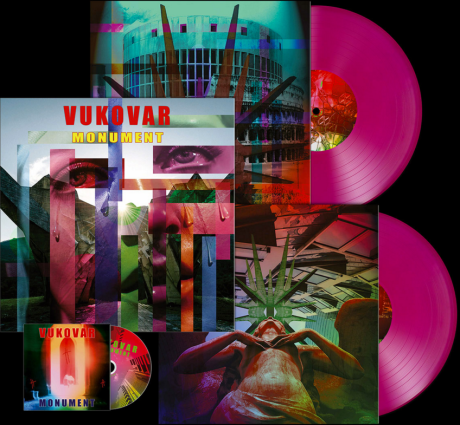
Vukovar/Michael Cashmore ‘Monument’ 16th November 2018
Another month, another three-syllable entitled grandly Gothic statement from Vukovar; on this occasion traversing the void with Current 93 stalwart and producer/composer Michael Cashmore, who appears under the guises of his Nature And Organization nom de plume.
A congruous in what is a melancholy harrowing romance partnership with the morbidly curious Vukovar, Cashmore leads with a vaporous, industrial and often godly (whichever God/Gods they be) brutalist swathe of sagacious moodiness and narration; adding to the already despairing lament that is Vukovar’s signature.
Deadly committed to the point of alienating everyone they work with, Vukovar’s fraught collaborations may end in acrimony, but the results musically are always first rate and dramatic; this latest breaking-of-bread partnership proving to be among their best work so far. It’s impossible to tell where Cashmore ends and Vukovar begin, and vice versa, and who’s album this actually is. Arguably inheritors of Current 93 and, even more so, Coil’s gnostic-theological mysticism and brooding venerable communions, Cashmore seems the obvious foil. Current’s The Innermost Light and Coil’s (and John Balance’s swan song as it were) The Ape Of Naples both permeate this conceptual opus.
As ever, reflecting the band’s reading material, monument is fueled by Hermetic occultists, despondent followers of Thelma, Dante’s visions of purgatory and redemption, and, to a point, architectural analogy. Inhabiting the concrete musically and materially, twisting post-punk, Kosmische, industrial and early British synth-pop, Vukovar and their partner in this gloomy trudge through the wastelands produce an apocalyptic hymn of gauze-y supernatural resignation and dreamy visages.
Straddling two slabs of vinyl, Monument’s indulgences are given ample room to haunt the listener. Shorter narrations and passages fade into more fully realized songs. Shorter pieces like the ‘This Brutal World’ feature a reading of a most despondent, mopey even, extract from Alice In Wonderland (the sad Walrus’ ‘sweeping away’ metaphor sounding even more plaintive read out in this setting) and fairytale surrealist, erring towards the unsettling, twinkled xylophone, followed by more expanded visions of yearning dark arts. When the band and their host do emerge from the ether, the Gothic experimentation features a more melodious, dare I even suggest catchy, quality; even in its most stark sleepless eulogy form, with a chorus like, “In a dream she’s always dying/One day she may awake”, taken from the Bauhaus swirling cathedral indie ‘Little Gods’, there is a certain surge of broody dynamism and anthem.
Vocally for the most part, both the voices of Vukovar and Cashmore’s dulcet, lower tones are layered over each other; some sung, though mostly spoken, uttered, howled and cried-out. On the middle section of the ‘Visions In Silence’ cycle (following the edict entitled nod to Rosicrucian championing physic and occult icon, Robert Fludd, ‘Utrique Cosmi Et Sic In Infinitum’) the “exist as I exist” mantra and ruinous decaying lyrical morose could be by Alan Moore, and the off-kilter jerking march of the no-wave ‘The Duty Of Mothers’ sounds like an unholy alliance between John Betjeman and Aleister Crowley.
From haunting melodrama to harrowing decay, unrequited love to radiant escape, the loss of innocence and youth to sagacious death rattles, Vukovar prove ideal torchbearers of the cerebral Gothic sound and melancholic romanticism. A meeting of cross-generational minds with both partners on this esoteric immersive experience fulfilling their commitments, Monument shows a real progression for Vukovar, and proves a perfect vehicle for Cashmore’s uncompromising but afflatus ideas to flourish in new settings, whilst confirming his reputation and status. Whatever happens next, this ambitious work will prove a most fruitful and lasting highlight in the Vukovar cannon; one that’s growing rapidly, six albums in with a seventh already recorded; another ‘momentous’ statement that affirms the band’s reputation as one of the UK’s most important new bands.
Our Daily Bread 285: Moulay Ahmed El Hassani ‘Atlas Electric’
November 2, 2018
Album Review: Dominic Valvona
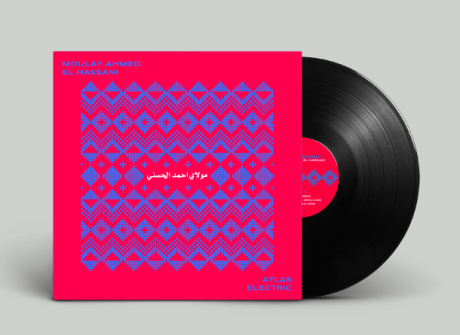
Moulay Ahmed El Hassani ‘Atlas Electric’ (Hive Mind Records) 30th November 2018
Returning to the stimulating landscapes of North Africa after a brief excursion to the visceral South American horizons of Rodrigo Tavares Congo, Marc Teare’s burgeoning tactile Hive Mind label rests in the shadows of the Titanic straddling Atlas Mountains with its third release, Atlas Electric.
Paying tribune to the atavistic folk music forms of the Amazigh people (the Izlan and Ahidous) of Morocco meets modern synthesized pop fusions of the celebrated Moroccan polymath Moulay Ahmed El Hassani, Teare’s latest labour-of-love repackages a double album’s worth of material that was originally released on Hamid’s own label, Sawt el Hassani, during a decade timespan between 2004-2014.
Relatively unknown outside his homeland, the prolific doyen of modern Moroccan pop music has knocked out over fifty albums (mainly confined to cassette tape and CD) during a thirty-year career. Though crate-diggers, samplers and admirers of cult Arabian music will know the name, this lavishly illustrated and compiled collection acts as an introduction for the rest of us: A showcase if you like.
A sprawling musical odyssey that immediately evokes the romanticized escapism and exotic fantasy of the Atlas Mountain landscape it was produced in, Ahmed’s swirling paeans and lyrical social commentaries trot and canter on air like a magical camel trail through the rugged canyon and desert terrains. Like the Bedouins, this electrified pop hybrid moves lightly and freely across an expanse, weaving the traditional with a taste of modernity: The dramatic, sauntering and gliding mirages of tradition, in this setting, are countered by Casio keyboard pre-set rhythms, fizzled drum pads and warbled auto-tune. This melding of forms, a bridge between generations, gives it a twist. Though undoubtedly the technology is lagging behind a little, elongated thumbed strings and psychedelic, Tuareg-like, blues guitar are undulated by 1980s style balladry synth and programmed drums throughout.
Joining Ahmed on this adventure is the richly voiced trio of dueting Arabic and Amazigh language sirens, Karima, Hind and Khadija, who lull, trill and accentuate the heavenly and romantic gestures of these delightful sonnets: Often sounding like the Arabian equivalent of a Bollywood musical.
Electrifying the landscape with a strange beguiling fusion of R&B and pop (the sort of sound clash M.I.A. soaks up), yet staying true to tradition, Ahmed’s Moroccan musical fantasies soar and flutter above the travails and toils of the modern world; representing, even if plaintive at times, the beauty and dreamy lovelorn desires of those who live in the shadows of the Atlas Mountain. It’s a marvelous release and an education.
Our Daily Bread 284: Fofoulah ‘Daega Rek’
October 18, 2018
Album Review: Dominic Valvona
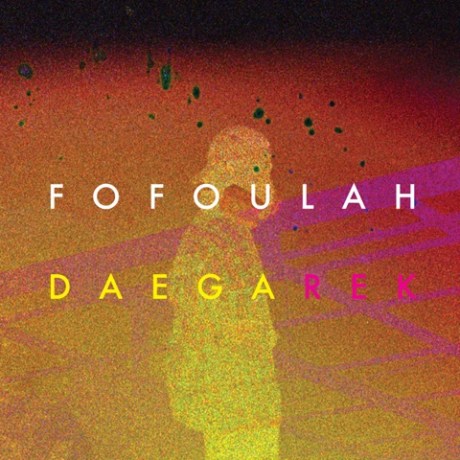
Fofoulah ‘Daega Rek’ (Glitterbeat Records) 9th November 2018
Bustling onto the transglobal London and Bristol scenes in 2014 with their earthy and urban bombastic fusion of Wolof African culture and dub electronica rich debut LP, the Fofoulah ensemble laid down the template for the a unique adventurous sound. Though taking its time to materialize, four years on, the follow-up album hasn’t just moved on but supersonically zoomed into the experimental void; even an esoteric, spiritual one at times. And in many ways this is down to the production.
Daega Rek, ‘the truth’ when translated from the Wolof language of coastal West Africa, sees Fofoulah’s saxophonist, keyboardist and producer Tom Challenger transmogrify the original Gambian talking drum of the group’s shamanistic rapping lead Kaw Secka and the accompanying percussion and propulsive drumming rhythms of his band members. (All of which were laid down at the Real World studios). Secka would then reappear in post-production to record his half spoken/half-rapped protestations and observations; the results all re-shaped into a ricocheting lunar-tropical bounding dub cosmology.
After a short introductory vignette of mysterious churned tetchy and dampened crunchy beats, the ode to a family’s first born (Secka’s notes emphasis not only the importance but heavy responsibility laid upon the first child; the ‘star’ or in Wolof, ‘Taaw’, must above all set a good example to his siblings), ‘Ndanane’, opens up the music box of effects; languorously swirling in an Afro-dub diaspora; evolving and stretching with interlayered limping beats towards a less zappy Ammar 808 vortex. Continuing with a similar message of responsibility, urging leaders of the country (especially Gambia’s very own president, Adama Barrow), from the very top down to the community, to remember their moral obligations, ‘Njite’ is a sound clash of Lee Scratch Perry, PiL and the On-U sound label. It also envisions an alternative moment in history; a sputnik space launch from Jamaica!
Skipping and skittish in motion; pushing the envelope as they pay tribute to lost brothers (‘Kaddy’ pays 2-Step rhythmic eulogy to the late photographer Khadija Saye who died in the Grenfell Tower disaster), the visceral taste of home (‘Chebou Jaine’ dedicated to Secka’s cousin, who cooked the best national Gambian dish) and search for the truth, Fofoulah lunge into the electrified dub ether.
On the ensemble’s most out-there of experimental dance albums, vague echoes and passing reverberations of R&B connect with roots, hip-hop with drum’n’bass, and the tribal with post-punk synthesized music as rhythms both rapid and chattering flutter with slower slurred ones and synthetic melodic atmospheres. Not to put it any better than the band, Daega Rek embodies the ‘spirit of morphing and connectivity’, and can be read as a sonic attack on the ‘fortress mentality’ and dangers of shutting down borders.
This album proves a congruous fit for Glitterbeat Records, and shares a bond with the musical explorations of their label mates Ammar 808 and Ifriqiyya Électrique, but remains tethered to its own sonic imaging. A great album that improves on the debut, progressing as it does into new fields of dub and beyond experimentation.
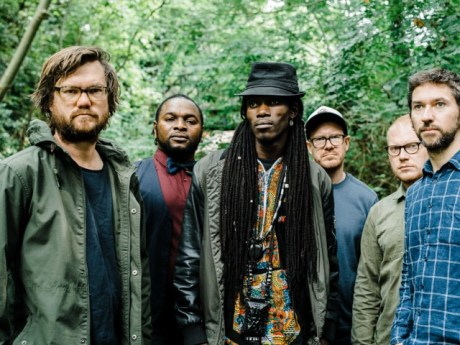
Fofoulah band photo courtesy of Alex Bonney.
Our Daily Bread 283: Qluster ‘Elemente’
October 15, 2018
Album Review/Dominic Valvona
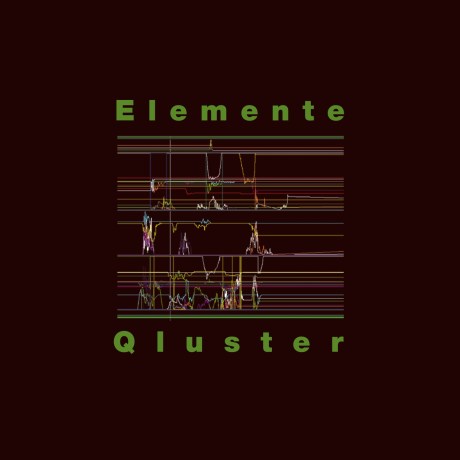
Qluster ‘Elemente’ (bureau b) November 2nd 2018
Transforming through the decades, as contributors to the Hans-Joachim Roedelius and (late) Dieter Moebius navigated unit have joined and left, the Kluster/Cluster/Qluster arc has taken on various forms over the last five decades. A founding pillar of the Kosmische sound in the late 1960s and early 70s, originally taking shape from experimental performances at the legendary Berlin club they helped found, the Zodiak Free Arts Lab, the first incarnation of this amorphous partnership featured Joseph Beuys disciple and electronic music progenitor Conrad Schnitzler; the music, almost dark, Lutheran and hymn like, an early modulation of piano, organ and guitar, fed through an array of homemade effects, that made its debut on a label sonorous for its stoic church organ music.
Many ‘head music’ fans will be enamored or at least familiar with the second phase, as Kluster interchanged its capital letter to a C and Schnitzler left (for the first time). Releasing some of the most sublime peregrinations and odd candy coated pop electronica under the Cluster banner, their most formative period during the early to mid 70s remains their most famous and influential. This brought plenty of admirers and fellow sonic travelers to their Forst located woodland glade studio retreat. Most famously Brian Eno and Michael Rothar of Neu! Both of which would join Roedelius and Moebius to form the (a)side project supergroup Harmonia.
Apart from a dormant period during the 80s, as Roedelius and Moebius pursued both solo and collaborative careers (many of which would overlap), Cluster survived well into the next century. Finally calling it a day in 2010: For this version of the partnership anyway. Dropping the C for a Q, Roedelius found a new collaborative partner in the sound installation artist and like-minded sonic explorer keyboardist Onnen Bock. After a number of albums together the duo expanded to a trio when bass player virtuoso and (another) keyboardist Armin Metz joined the ranks. In the last few years the Qluster trio have been drawn to Roedelius’ neo-classical piano compositional improvisations and sketches; the previous suite Tasten was built around a trio of them, and the more electronic offering Echtzeit, though far less so, also seemed informed by it.
In many ways following on from the last album together, making a return to the warmth and traversing heavenly space sounds we have come to associate with all things Kosmische, the golden epoch of that genre fills our ears once more on Elemente. Once again meeting in the unassuming hamlet of Schönberg to perform an unhurried series of improvisations, later distilled to shorter passages with the odd melody, beat and effect added in post-production, the instrumentation has changed to accommodate sequencer triggered loops for the first time. The piano is enervated, removed almost entirely, replaced by the wondrous sound of the ARP2600, a Farfisa organ and Fender Rhodes, all of which are filtered through various lunar and otherworldly effects. The results of which are both expansively mysterious and often diaphanous in their celestial transcendence.
As the title suggests, the opening continuum ascendance of ‘Perpetuum’, and forevermore gliding spacescapes of ‘Infinitum’ both promise an unending voyage into the interiors of the universe and mind. The first of which recalls the Tangerine Dream and the Baroque cosmos of Sky Records, the second, the dreamy visions of Novalis. The possibilities of these arpeggiator style space-dusting, aura-anointed bookend tracks seem endless.
When not echoing through deep space Qluster, using that dream-melody maker, the ARP 26000, float close to the Adriatic cascades and mirages of Vangelis and Xaos on ‘Zeno’ (a reference I assume to the Greek philosopher and his confounding paradoxes); lift the lid up on the inner workings of a piano and pluck out a Japanese like sprung-y melody on ‘Xymelan’; and introduce a flattened beat to the Techno-bordering-on-Acid ‘Tatum’.
Tubular droplets, rapidly calculating algorithms and chemical elements interplay with overlapping, transformed organ and electrified piano melodic wafts throughout this most thoughtful sound map. The reification, the feelings of awe-inspiring expanse and discovery are subtly set in motion and made visceral. On the cusp of his 84th birthday, Roedelius shows no signs of retiring let alone resting as he leads his troupe to infinite possibilities.
https://soundcloud.com/bureau-1/symbia?in=bureau-1/sets/qluster-elemente
Tickling Our Fancy 069: Minyeshu, Dr. Chan, Brace! Brace!, Grand Blue Heron, Don Fiorino and Andy Haas…
October 9, 2018
Dominic Valvona’s new music reviews roundup

Another fine assortment of eclectic album reviews from me this month, with new releases from Papernut Cambridge, Sad Man, Grand Blue Heron, Don Fiorino and Andy Haas, Junkboy, Dr. Chan, Minyeshu, Earthling Society and Brace! Brace!
In brief there’s the saga of belonging epic new LP from the Ethiopian songstress Minyeshu, Daa Dee, a second volume of Mellotron-inspired library music from Papernut Cambridge, the latest Benelux skulking Gothic rock album from Grand Blue Heron, another maverick electronic album of challenging experimentation from Andrew Spackman, under his most recent incarnation as the Sad Man, a primal avant-garde jazz cry from the heart of Trump’s America from Don Fiorino and Andy Haas, the rage and maelstrom transduced through their latest improvised project together, American Nocturne; and a bucolic taster, and Music Mind compilation fundraiser track, from the upcoming new LP from the beachcomber psychedelic folk duo Junkboy.
I’ve also lined up the final album from the Krautrock, psychedelic space rocking Earthling Society, who sign off with an imaginary soundtrack to the cult Shaw Brothers Studio schlockier The Boxer’s Omen, plus two most brilliant albums from the French music scene, the first a shambling skater slacker punk meets garage petulant teenage angst treat from Dr. Chan, The Squier, and the second, the debut fuzzy colourful indie-pop album from the Parisian outfit Brace! Brace!
Minyeshu ‘Daa Dee’ (ARC Music) 26th October 2018
From the tentative first steps of childhood to the sagacious reflections of middle age, the sublime Ethiopian songstress Minyeshu Kifle Tedla soothingly, yearningly and diaphanously articulates the intergenerational longings and needs of belonging on her latest epic LP, Daa Dee. The sound of reassurance that Ethiopian parents coo to accompany their child’s baby steps, the title of Minyeshu’s album reflects her own, more uncertain, childhood. The celebrated singer was herself adopted; though far from held back or treated with prejudice, moving to the central hub of Addis Ababa at the age of seventeen, Minyeshu found fame and recognition after joining the distinguished National Theatre.
In a country that has borne the scars of both famine and war, Ethiopia has remained a fractious state. No wonder many of its people have joined a modern era diaspora. Though glimmers of hope remain, and in spite of these geopolitical problems and the fighting, the music and art scenes have continued to blossom. Minyeshu left in 1996, but not before discovering such acolytes as the doyen of the country’s famous Ethio-Jazz scene, Mulatu Astatke, the choreographer Tadesse Worku and singers Mahmoud Ahmed, Tilahun Gessesse and Bizunesh Bekele; all of whom she learnt from. First moving to Belgium and then later to the Netherlands, the burgeoning star of the Ethiopian People To People music and dance production has after decades of coming to terms with her departure finally found a home: a self-realization that home wasn’t a geographical location after all but wherever she felt most comfortable and belonged: “Home is me!”
The beautifully stirring ‘Yetal (Where Is It?)’ for example is both a winding saga, with the lifted gravitas of swelling and sharply accented strings, and acceptance of settling into that new European home.
Evoking that sense of belonging and the theme of roots, but also paying a tribute and lament to the sisterhood, Minyeshu conveys with a sauntering but sorrowful jazzy blues vibe the overladen daily trudge of collecting wood on ‘Enchet Lekema’; a hardship borne by the women of many outlier Ethiopian communities. Though it can be read as a much wider metaphor. The blues, in this case, the Ethiopian version of it (perhaps one of its original sources) that you find on ‘Tizita’ (which translates as ‘longing’ or ‘nostalgia’), has never sounded so lilting and divine; Minyeshu’s cantabile, charismatic soul harmonies, trills and near contralto accenting the lamentable themes.
There is celebration and joy too; new found views on life and a revived tribute to her birthplace feature on the opulently French-Arabian romance ‘Hailo Gaja (Let’s Dance)’, and musically meditating, the panoramic dreamy ‘Yachi Elet (That Moment)’ is a blissed and blessed encapsulation of memories and place – the album’s most traversing communion, with its sweet harmonies, bird-like flighty flutes and waning saxophone.
Not only merging geography but musical styles too, the Daa Dee LP effortlessly weaves jazz (both Western and Ethiopian) R&B, pop, dub, the theatrical, and on the cantering to lolloping skippy ‘Anteneh (It Is You?)’, reggae. Piano, strings and brass mix with the Ethiopian wooden washint flute and masenqo bowed lute to create an exotic but familiar pan-global sound. Minyeshu produces a heartwarming, sometimes giddy swirling, testament that is exciting, diverse and above all else, dynamic. Her voice is flawless, channeling our various journeys and travails but always placing a special connection to those Ethiopian roots.
Don Fiorino and Andy Haas ‘American Nocturne’ (Resonantmusic) 16th September 2018
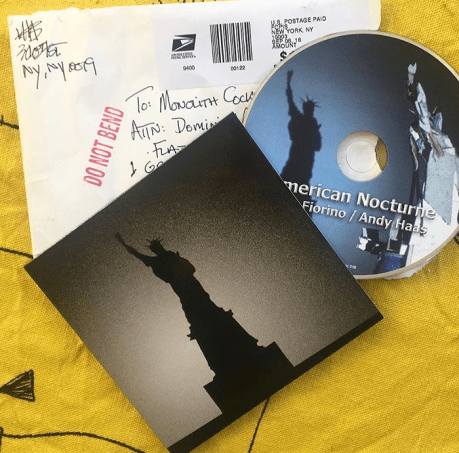
Amorphous unsettling augers and outright nightmares permeate the evocations of the American Nocturne visionaries Don Fiorino and Andy Haas on their latest album together. Alluded, as the title suggests, by the nocturne definition ‘a musical composition inspired by the night’, the darkest hour(s) in this case can’t help but build a plaintive warning about the political divisive administration of Trump’s America: Nicola Plana’s sepia adumbrated depiction of Liberty on the album’s cover pretty much reinforces the grimness and casting shadows of fear.
Musically strung-out, feeding off each other’s worries, protestations and confusion, Fiorino and Haas construct a lamentable cry and tumult of anger from their improvised synthesis of multi-layered abstractions.
Providence wise, Haas, who actually sent me this album after seeing my review of a U.S. Girls gig from earlier in the year (he was kind enough to note my brief mention of his Plastic Ono Band meets exile-in-America period Bowie saxophone playing on the tour; Haas being a member of Meg Remy’s touring band after playing on her recent LP, In A Poem Unlimited), once more stirs up a suitably pining, troubled saxophone led atmosphere; cast somewhere between Jon Hassell and Eno’s Possible Musics traverses, serialism jazz and the avant-garde. The Toronto native, originally during the 70s and early 80s a band member of the successful Canadian New wave export Martha And The Muffins, is an experimental journeyman. Having moved to New York for a period in the mid 80s to collaborate with a string of diverse underground artists (John Zorn, Marc Ribot, Thurston Moore and God Is My Co-Pilot) he’s made excursions back across the border; in recent times joining up with the Toronto supergroup, which features a lion’s share of the city’s most interesting artists and of course much of the backing group that now supports Meg Remy’s U.S. Girls, the Cosmic Range (who’s debut LP New Latitudes made our albums of the year feature in 2016). He’s also been working with that collective’s founder, Matt ‘Doc’ Dunn, on a new duo project named KIM (the fruits of which will be released later this year). But not only a collaborator, Haas has also recorded a stack of albums for the Resonantmusic imprint over the years (15 in total), the first of which, from 2005, included his American Nocturne foil, Fiorino. An artist with a penchant for stringed instruments (guitar, glissenter, lap steel, banjo, lotar, mandolin), Fiorino is equally as experimental; the painter musician imbued by blues, rock, psychedelic, country, jazz, Indian and Middle Eastern music has also played in and with a myriad of suitably eclectic musicians and projects (Radio I Ching, Hanuman Sextet, Adventures In Bluesland and Ronnie Wheeler’s Blues).
Recorded live with no overdubs, the adroit duo is brought together in a union of discordant opprobrious and visceral suffrage. Haas’ signature pained hoots, snozzled snuffles and more suffused saxophone lines drift at their most lamentable and blow hard at their most venerable and despondent over and around the spindly bended, quivery warbled and weird guitar phrases of Fiorino. Setting both esoteric and mysterious atmospheres, Haas is also in charge of the manic, often reversed or inverted, and usually erratic drum machine and bit-crushing warped electronic effects. Any hint of rhythm or a lull in proceedings, and it’s snuffed out by an often primal and distressed breakdown of some kind.
Skulking through some interesting soundscapes and fusions, tracks such as the opening ‘Waning Empire Blues’ conjures up a Southern American States gloom (where the Mason-Dixon line meets the dark ambient interior of New York) via a submerged vision of India. It also sounds, in part, like an imaginary partnership between Hassell and Ry Cooder. ‘Days Of The Jackals’ has a sort of Spanish Texas merges with Byzantium illusion and ‘New Orphans’ transduces the Aphex Twin into a shapeless, spiraling cacophony of pain.
With hints of the industrial, tubular metallic, blues, country, electro and Far East to be found, American Nocturne is essentially a deconstructive jazz album. Further out than most, even for a genre used to such heavy abstract experimentation, this cry from the bleeding heart of Trumpism opposition is as musically traumatic as it is complex and creatively descriptive. Fiorino and Haas envision a harrowing soundtrack fit for the looming miasma of our times.
Papernut Cambridge ‘Mellotron Phase: Volume 2’ (Ravenwood Music/Gare du Nord) 5th October 2018
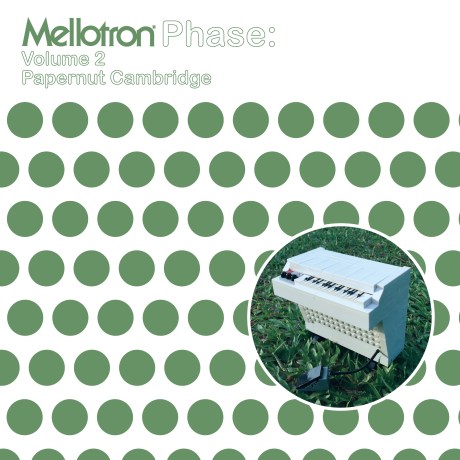
A one-man cottage industry (a impressively prolific one at that) Ian Button’s Eurostar connection inspired label seems to pop up in every other roundup of mine. The unofficial houseband/supergroup and Button pet project Papernut Cambridge, the ranks of which often swell or contract to accommodate an ever-growing label roster of artists, is once again widening its nostalgic pop and psychedelic tastes.
Following on from Button’s debut leap into halcyon cult and kitsch library music, Mellotron Phase: Volume 1 is another suite of similar soft melodic compositions, built around the hazy and dreamy polyphonic loops of the iconic keyboard: An instrument used to radiant, often woozy, affect on countless psych and progressive records. That first volume was a blissful, float-y visage of quasi-David Axelrod psychedelic litany, pop-sike, quaint 60s romances and a mellotron moods version of Claude Denjean cult lounge Moog covers.
This time around the basis for each instrumental vision is the rhythm accompaniments from Mattel’s disc-based Ontigan home-entertainment instrument. These early examples of instrumental loops and musical breaks were set out across the instrument’s keys so that chord sequences and variations can be used to construct an arrangement. Mellowed and toned-down in comparison to the first volume, though still featuring drum breaks, percussion, bass and on the Bacharach-composes-a-screwball-tribute-to-French-Western-pulp-fiction (Paris, Texas to Paris, France) ‘A Cowboy In Montmartre’, an accordion. If the French Wild West grabs you then there’s plenty of other weird and wonderful mélanges to be found on this whimsically romantic, sometimes comically vaudeville, and often-yearning fondly nostalgic album. The swirling cascade of soft focus tremolo vibrations of the stuttered ‘Cha-Cha-Charlie’ sounds like Blue Gene Tyranny catching a flight on George Harrison’s Magical Mystery Tour. The Sputnik space harp pastiche of ‘Cygnus Probe’ is equally as Gerry Anderson as it is Philippe Guerre, and ‘Boss Club’ reimagines Trojan Records transduced through lounge music. Kooky Bavarian Oompah Bands at an acid-tripping Technicolor circus add to the mirage-like mellotron kaleidoscope on ‘Sergeant Major Mushrooms’, Len Deighton’s quintessentially English clandestine spy everyman, as scored by John Barry, cameos on the clavinet spindly and The Kramford Look-esque ‘Parker’s Last Case’, and Amen Corner wear their soft soul shufflers on the Tamala backbeat ‘Soul Brogues’.
A curious love letter to the forgotten (though a host of champions, from individuals to labels, have revalued and showcased their work) composers and mavericks behind some of the best and most odd library music, Mellotron Phase will in time become a cult album itself. As quirky as it is serenading, alternative recalled obscure soundtracks that vaguely recall Jean-Pierre Decerf, Jimmy Harris, Stereolab, Jean-Claude Vannier and even Roy Budd are given a fond awakening by Button and his dusted-off mellotron muse.
Sad Man ‘ROM-COM’ October 2018
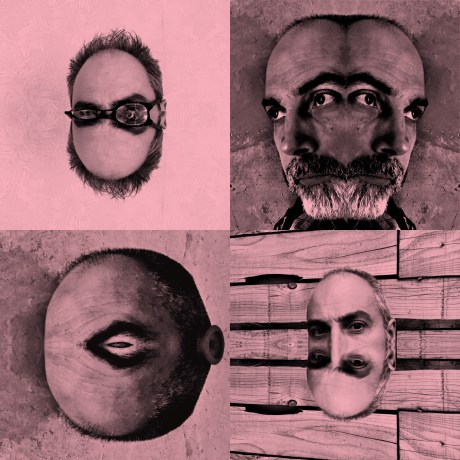
Haphazardly prolific, Andrew Spackman, under his most recent of alter egos, the Sad Man, has released an album/collection of giddy, erratic, in a state of conceptual agitation electronica every few months since the beginning of 2017. Many of which have featured in one form or another in this column.
The latest and possibly most restive of all his (if you can call it that) albums is the spasmodic computer love transmogrification ROM-COM. An almost seamless record, each track bleeding into, or mind melding with the next, the constantly changing if less ennui jumpy compositions are smoother and mindful this time around. This doesn’t mean it’s any less kooky, leaping from one effect to the next, or, suddenly scrabbling off in different directions following various nodes and interplays, leaving the original source and prompts behind. But I detect a more even, and daresay, sophisticated method to the usual skittish hyperactivity.
Showing that penchant for exploration tracks such as the tribal cosmic synwave ‘Play In The Sky’ fluctuate between the Twilight Zone and tetchy, tentacle slithery techno; whilst the shifting bit-crush cybernetic ‘Hat’ sounds like a transplanted to late 80s Detroit Art Of Noise one minute, the next, like a isotope chilled thriller soundtrack. Reverberating piano rays, staggered against abrasive drumbeats await the listener on the sadly melodic ‘King Of ‘. That is until a drilling drum break barrels in and gets jammed, turning the track into a jarring cylindrical headbanger. ‘Coat’ whip-cracks to a primitive homemade drum machine snare as it, lo fi style, dances along to a three-way of Harmonia, The Normal and Populare Mechanik, and the brilliantly entitled ‘Wasp Meat’ places Kraftwerk in Iain Banks Factory.
Almost uniquely in his own little orbit of maverick bastardize electronic experimentation, Spackman, who builds many of his own bizarre contraptions and instruments, strangulates, pushes and deconstructs techno, the Kosmische, Trip-Hop and various other branches of the genre to build back up a conceptually strange and bewildering new sonic shake-up of the electronic music landscape.
Grand Blue Heron ‘Come Again’ (Jezus Factory) October 19th 2018
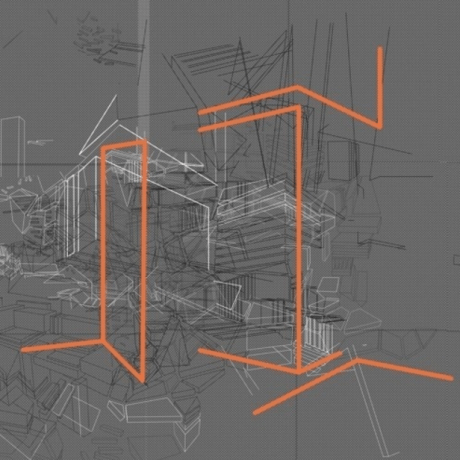
Grand Blue Heron, or GBH as it were, do some serious grievous harm to the post-punk and alt-rock genres on their latest abrasive heavy-hitter, Come Again. Partial to the Gothic, the Benelux quartet prowl in the miasma; skulking under a repressed gauze and creeping fog of doom as they trudge across a esoteric landscape of STDs, metaphorical crimes of the heart and rejection.
Born out of the embers of the band Hitch, band mates Paul Lamont (who also served time with the experimental Belgium group and Jezus Factory label mates, A Clean Kitchen Is A Happy Kitchen) and Oliver Wyckhuyse formed GBH in 2015 as a vehicle for songs written by Lamont. Straight out of the blocks on their thrashing debut Hatch, they’ve hewn a signature sound that has proven difficult to pin down.
Both boldly loud with smashing drums and gritty distorted guitars, yet melodic and nuanced, they sound like The Black Angels and Bauhaus working over noir rock on the vortex that is ‘Wwyds’, a grunge-y Belgium version of John Lyndon backed by The Pixies on the controlled maelstrom title-track, and Metallica on the country-twanging, pendulous skull-banger ‘Head’. They also sail close to The Killing Joke, Sisters Of Mercy (especially on the decadent wastrel Gothic ‘The Cult’), Archers Of Loaf and, even, The Foo Fighters. They rollick in fits of rage and despondency, beating into shape all these various inspirations, yet they come out on top with their own sound in the end.
Playing live alongside some pretty decent bands of late (White Denim, Elefant, The Cult Of Dom Keller) the GBH continue to grow with confidence; producing a solid heavy rock and punk album that reinforces the justified, low-level as it might be, hype of the Belgium, and by extension, Flanders scene.
Dr. Chan ‘Squier’ (Stolen Body Records) October 12th 2018

Keeping up the petulant garage-punk-skate-slacker discourse of their obstinate debut, the French group with just a little more control and panache once more hang loose and play fast with their spikey influences on the second LP Squier.
Hanging out with a disgruntled shrug in a 1980s visage of L.A. central back lots, skating autumn time drained pools in a nocturnal motel setting, Dr. Chan crow about the transition from adolescence to infantile adulthood. Hardly more than teenagers themselves, the band seem obsessed with their own informative years of slackerdom; despondently ripping into the status of outsiders the lead singer sulkingly declares himself as “Just a young messy loser” on the opening boom bap garage turn space punk spiraling ‘Wicked & Wasted’, and a “Teenage motherfucker” on the funhouse skater-punk meets Thee Headcoats ‘Empty Pockets’.
The pains but also thrills of that time are channeled through a rolling backbeat of Black Lips, Detroit Cobras, Brian Jonestown Massacre, The Hunches, Nirvana and new wave influences. The most surprising being glimmers of The Strokes, albeit a distressed version, on the thrashed but polished, even melodic, ‘Girls!’ And, perhaps one of the album’s best tracks (certainly most tuneful), the bedeviled ride on the 666 Metro line ‘The Sinner’, could be an erratic early Arctic Monkeys missive meets Blink 182 outtake.
The Squier is an unpretentious strop, fueled as much by jacking-up besides over spilling dumpsters, zombified states of emptiness and despair as it is by carefree cathartic releases of bird-finger rebellious fun. Reminiscing for an adolescence that isn’t even theirs, Dr. Chan’s directed noise is every bit informed by the pin-ups of golden era 80s Thrasher magazine as by Nuggets, grunge and Jon Savage’s Black Hole: Californian Punk compilation. The fact they’re not even of the generation X fraternity that lived it, or even from L.A. for that matter, means there is an interesting disconnection that offers a rousing, new energetic take. In short: Ain’t a damn thing changed; the growing pains of teenage angst still firing most of the best and most dynamic shambling music.
Brace! Brace! ‘S/T’ (Howlin Banana) 12th October 2018

Looking for your next favourite French indie-pop group? Well look no further, the colourful Parisian outfit Brace! Brace! are here. Producing gorgeous hues of softened psychedelia, new wave, Britpop and slacker indie rock, this young but sophisticated band effortlessly melt the woozy and dreamy with more punchier dynamic urgency on their brilliant debut album.
Squirreled away in self-imposed seclusion, recording in the Jura Mountains, the isolation and concentration has proved more than fruitful. Offering a Sebastian Teller fronts Simian like twist on a cornucopia of North American and British influences, Brace! Brace! glorious debut features pastel shades of Blur, Gene, Dinosaur Jnr., Siouxsie And The Banshees (check the “I wrecked your childhood” refrain post-punk throb and phaser effect symmetry guitar of ‘Club Dorothée’ for proof) and the C86 generation. More contemporary wafts of Metronomy, Mew, Jacco Gardner, the Unknown Mortal Orchestra and Deerhunter (especially) permeate the band’s hazy filtered melodies and thoughtful prose too.
At the heart of it all lies the subtly crafted melodies and choruses. Never overworked, the lead-up and bridges gently meet their rendezvous with sweet élan and pace. Vocals are shared and range from the lilted to the wistful and more resigned; the themes of chaste and compromised love lushly and wantonly represented.
This is an album of two halves, the first erring towards quirky new wave, shoegaze-y hearty French pop – arguably featuring some of the band’s best melodies -, the second, a more drowsy echo-y affair. Together it makes for a near-perfect debut album, an introduction to one of the most exciting new fuzzy indie-pop bands of the moment.
Junkboy ‘Old Camera, New Film’ – Taken from Fretsore Record’s upcoming Music Minds fundraiser compilation; released on the 12th October 2018
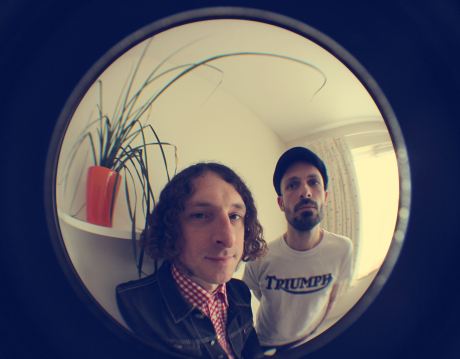
Quiet of late, or so we thought, the unassuming South Coast brothers Hanscomb have been signing love letters, hazy sonnets and languorous troubadour requests from the allegorical driftwood strewn yesteryear for a number of years now. The Brighton & Hove located siblings have garnered a fair amount of favorable press for their beautifully etched Baroque-pastoral idyllic psychedelic folk and delicately softly spoken harmonies.
To celebrate the release of their previous album, Sovereign Sky, the Monolith Cocktail invited the duo to compile a congruous Youtube playlist. Proper Blue Sky Thinking didn’t disappoint; the brothers’ Laurel Canyon, Freshman harmony scions and softened psychedelic inspirations acting like signposts and reference points for their signature nostalgic sound: The Beach Boys, Thorinshield, Mark Eric, The Lettermen, The Left Bank all more an appearance.
A precursor to, we hope, Junkboy’s next highly agreeable melodious LP, Trains, Trees, Topophilia (no release date has been set yet), the tenderly ruminating new instrumental (and a perfect encapsulation of their gauzy feel) ‘Old Camera, New Film’ offers a small preview of what’s to come. It’s also just one of the generous number of tracks donated to the worthy Music Minds (‘supporting healthy minds’) cause by a highly diverse and intergenerational cast of artists. Featuring such luminaries as Tom Robinson, Glen Tilbrook and Graham Goldman across three discs, the Fretsore Records release coincides with World Mental Health Day on the 12th October.
Sitting comfortably on the second disc with (two past Monolith Cocktail recommendations) My Autumn Empire, Field Harmonics and Yellow Six, Junkboy’s mindful delicate swelling strings with a hazy brassy, more harshly twanged guitar leitmotif beachcomber meditations prove a most perfect fit.
Earthling Society ‘MO – The Demon’ (Riot Season) 28th September 2018

Bowing out after fifteen years the Earthling Society’s swansong, MO – The Demon, transduces all the group’s various influences into a madcap Kool-aid bathed imaginary soundtrack. Inspired by the deranged Shaw Brothers film studio’s bad-taste-running-rampart straight-to-video martial arts horror schlock The Boxer’s Omen, the band scores the most appropriate of accompaniments.
The movie’s synopsis (though I’m not sure anyone ever actually wrote this story out; making it up in their head as they went along more likely) involves a revenge plot turn titanic spiritual struggle between the dark arts, as the mobster brother of a Hong Kong kickboxer, paralyzed by a cheating Thai rival, sets out on a path of vengeance only to find himself sidetracked by the enlightened allure of a Buddhist monastery and the quest to save the soul of a deceased monk (who by incarnated fate happens to be our protagonist’s brother from a previous life) killed by black magic. A convoluted plot within a story of vengeance, The Boxer’s Omen is a late night guilty pleasure; mixing as it does, truly terrible special effects with demon-bashing Kung Fu and Kickboxing.
Recorded at Leeds College of Music between November 2017 and February of 2018, MO – The Demon is an esoteric Jodorowsky cosmology of Muay Thai psychedelics, space rock, shoegaze, Krautrock and Far East fantasy. Accenting the mystical and introducing us to the soundtrack’s leitmotif, the opening theme song shimmers and cascades to faint glimmers of Embryo and Gila; and the craning, waning guitar that permeates throughout often resembles Manuel Göttsching later lines for Ash Ra Tempel. By the time we reach the bell-tolled spiritual vortex of the ‘Inauguration Of The Buddha Temple’ we’re in Acid Mothers territory, and the album’s most venerable sky-bound ascendant ‘Spring Snow’ has more than a touch of the Popol Vuh about it: The first section of this two-part vision features Korean vocalist Bomi Seo (courtesy of Tirikiliatops) casting incantation spells over a heavenly ambient paean, as the miasma and ominous haze dissipates to reveal a path to nirvana, before escalating into a laser whizzing Amon Duul II talks to Yogi style jam. The grand finale, ‘Jetavana Grove’, even reimagines George Harrison in a meeting of minds with Spiritualized and the Stone Roses; once more setting out on the Buddhist path of enlightenment.
Sucked into warped battle scenes on the spiritual planes, Hawkwind (circa Warriors On The Edge Of Time) panorama jams and various maelstroms, the Earthling Society capture the hallucinogenic, tripping indulgences of their source material well whilst offering the action and prompts for another set of heavy psych and Krautrock imbued performances. The Boxer’s Omen probably gets a much better soundtrack than it deserves, as the band sign off on a high.
Quarterly Playlist Revue: Part Three: Idris Ackamoor, Stella Sommer, Mac Miller, White Denim, Simon Love…
September 26, 2018
Playlist: Chosen by Dominic Valvona & Matt Oliver/ Curated by Dominic Valvona
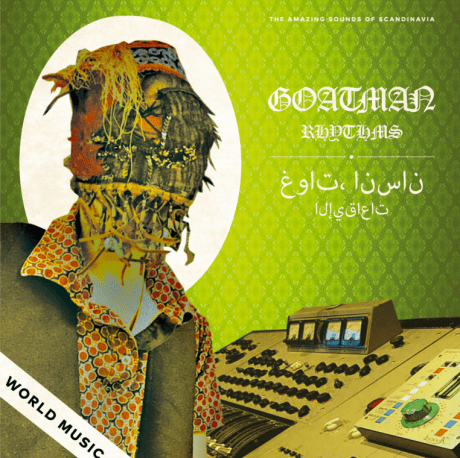
Priding ourselves on the diverse, pan-global playlists we collate for your aural pleasure and indulgence, the Monolith Cocktail Quarterly Revue series is the eclectic behemoth of them all. With no demarcation of any kind or rules we mix the harrowing and gothic with beckoning polyrhythmic dancefloor screamers, flights of panoramic fantasy with raging protestations, and the most sublime peregrinations with experimental cries from the wilderness.
Everything you find on this playlist has either featured on the site over the last three months or been in our general orbit (the sheer volume of music we get sent means there is inevitably issues of space and time, and so some great tracks just don’t make it; this is our chance to feature those lost tracks). Below you will find a full track list, including links to reviews.
Tracklist:-
Malawi Mouse Boys ‘Hunger (Hymn)‘
Spike & Debbie ‘Strike – Compilation Version‘
Dur-Dur Band ‘Yabaal‘
Goatman ‘Jaam Ak Salam’
Mac Miller ‘Party On Fifth Ave.‘
Parquet Floors ‘Wide Awake’
LCD Soundsystem ‘Oh Baby – Lovefingers Remix’
Papernut Cambridge ‘The Hobbledehoy‘
Yuzo Iwata ‘Gigolo’
Soft Science ‘Undone‘
Stella Sommer ‘Dark Princess, Dark Prince‘
Mehdi Rostami & Adib Rostami ‘Delight‘
Yiddish Glory (Loyko, Alexander Sevastian, Sophie Milman) ‘Shpatzir in Vald (A Walk In The Forest)‘
Yazz Ahmed ‘The Lost Pearl – Hector Plimmer Remix‘
John Coltrane ‘Impressions – Take 3’
Thelonious Monk ‘Nutty, Pt. 2’
RAM ‘Dambala Elouwe’
Vaudou Game ‘Tata Fatigue’
Derya Yıldırım, Grup Şimşek ‘Uc Kiz Bir Ana’
Idris Ackamoor & The Pyramids ‘Land Of Ra’
Bixiga 70 ‘Quebra Cabeça‘
Etuk Ubong ‘Black Debtors’
Ayalew Mesfin ‘Hasabe (My Worries)’
Ippu Mitsui ‘Shift Down‘
Otis Sandsjo ‘Teppich‘
Nyeusi ‘Jupiter’s Giant Red Spot’
Angels Die Hard ‘Acid Beach‘
Mothers ‘PINK’
Rat The Magnificent ‘Up The Street‘
American Nudism ‘Future 5-0’
Dead End, M, Second Son ‘Let The Music Talk‘
Tenesha The Wordsmith, DJ Khalab ‘Madea’
CRIMEAPPLE, Big Ghost Ltd. ‘Your Love’
The Last Skeptik, Mikill Pane, Allana Verde ‘Rules Of Engagement‘
Beans, Sam Fog ‘The Black Chasm’
Bronx Slang ‘Rushing The Stage‘
Wordburglar ‘Rental Patient‘
Gunshot ‘Sulphur‘
Stringmodulator ‘Betwixt & Between‘
Laure Briard ‘Janela’
Brian Bordello ‘Eddie Cochran’
Simon Love ‘God Bless The Dick Who Let You Go‘
Picturebox ‘The Vicar’s Dog‘
Atmosphere ‘Make It All Better Again’
Daniel Rossen ‘Deerslayer’
White Denim ‘Good News’
La Luz ‘Mean Dream’
Kammerflimmer Kollektief ‘Action 3: Thoughtless, Hamburg‘
Previous Quarterly Revues From 2018
Our Daily Bread 282: Bixiga 70 ‘Quebra Cabeça’
September 14, 2018
ALBUM REVIEW/WORDS:DOMINIC VALVONA
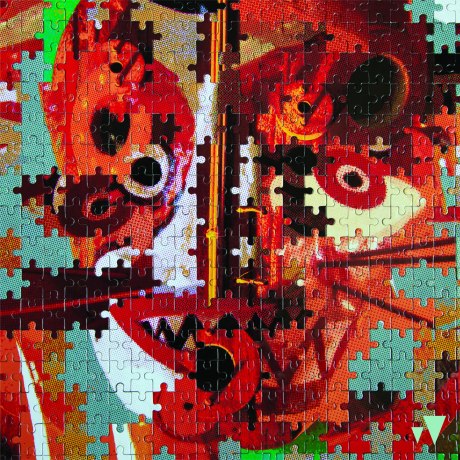
Bixiga 70 ‘Quebra Cabeça’ (Glitterbeat Records) 12th October 2018
Few bands speak Fela Kuti so fluently and convincingly as the Brazilian outfit Bixiga 70, fusing, as they do, the Afrobeats progenitor showman’s rhythms with the Latin sounds of South America to such dynamic affect. The Sao Paulo group’s fourth album is once more informed and fueled by this connective spirit to Africa, though arguably more ambitious in scope and musically more complex than previous releases. In the past the ten-strong group have played live in the studio, capturing as close as they can their famous energetic, exciting stage performances. Whilst still continuing to do this, the post-production process has been much longer, with each originally spontaneous recording played with and reshaped to create a longer more shifting musical journey.
A year in the making Quebra Cabeça, which translates as the ‘puzzle’, is a full 360-degree panoramic evocation (both joyful and lamentable) of Brazil’s African roots. That heritage, which has woven almost seamlessly into the very fabric of life and culture, obviously originally sprung forth from the heinous ‘Black Atlantic’ slave trade. The toil, sweat and harrowing maltreatment of this history permeates throughout the album, yet this is also a celebration of the rich musical legacy they brought from Africa to the shores of Brazil.
Translating those roots, an ancestry that runs through many of the band members (some individuals descended from the Africa-Caribbean religion of ‘candomble’ for instance), Bixiga are also inspired on this journey by some of the highly talented artists they’ve shared various stages with over the years. Artists such as the Ghanaian highlife singer Pat Thomas, the Nigerian sublime traversing saxophonist legend Orlando Julius and Brazilian octogenarian star João Donato. Incorporating the lot they merge their brass-y signature carnival funk and shaking Afrobeat sass with cosmic voodoo, Afro-jazz and sloping funk: And that’s just on the opening title-track. Rattling, thumping drums underlay echoes of Santana on the cantering ‘Ilha Vizinha’, traces of Archie Shepp day-tripping in Memphis undulate the veiled sorrowful memories of the ‘Levante’, and the polygenesis fusion of rock guitar, electro rumba and R&B that sends the band off into entirely new spheres on ‘Primeiramente’ envisage a day of the dead march on the moon.
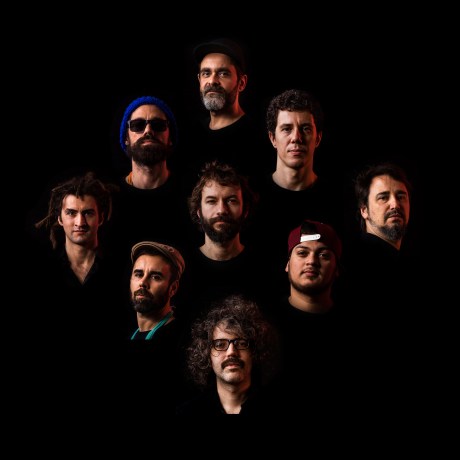
Credit: José de Holanda
The quality shines through on every track, with the visions and evocations of both Africa and Bixiga’s hometown of Sao Paulo articulated by an energetic but also ruminating soundtrack of the tribal, funky, cosmic, tropical, gospel and ritual. The slave portal of Benin, further outlying deserts of the sub-Sahara and busy rhythmic bustles of Nigeria are channeled via the melting pot hubs of Brazil on the group’s most epic, ancestral and geographical straddling album. It only remains to see just how great it will sound live on stage.
Words: Dominic Valvona
 Monolith Cocktail Blog