Glitterbeat Records 5th Anniversary: A Celebration
March 22, 2018
Words: Dominic Valvona

If the Glitterbeat Records label had a remit, ‘a raison d’etre’, it would be all about transcending borders, whether it’s the physical, geographical or subconscious kind, to bring the most ‘vibrant’ and ‘committed’ of artists to a global audience. Finding existing and ‘possible musics’ (to borrow a term from the label’s own reissue of Jon Hassell and Brian Eno‘s iconic 1980 transformative soundscape experiment, Fourth World Volume One: Possible Musics) from across the world, the independent German-based sister label to Glitterhouse Records has in a short timeframe helped reshape and redefine what we know as ‘world music’ – a fatuous term in itself, still largely used to denote anything outside the comfort zone of Western commercial music.
Originally putting out a catalogue of sublime and obscure records from some of Malia’s most important, traversing desert blues and rock artists (from Ben Zabo to Tamikrest and the Songs For Desert Refugees compilation) on Glitterhouse, world traveler bluesman Chris Eckman of Dirtmusic fame (the labels unofficial in-house band) went on to co-found the Glitterbeat imprint with Peter Weber in 2013. The inaugural release on that label, now celebrating its fifth anniversary, was a 12″ remix of Ben Zabo’s Dana by Mark Ernestus (Rhythm & Sound, Basic Channel), released sometime around March 22nd, 2013.
From the already mentioned desert blues stars of Mali and ‘beyond’, Eckman’s ever growing roster of contemporary sonic adventurers hail from a number of other African countries, including Ghana, Mauritania and the Bargou Valley bordering Algeria. And has since gone on to expand its remit and reach out to include music from the Balkans, Southeast Asia, the Levant and South America.
As you can imagine, this global expansion encompasses a myriad of musical styles, many of which were in serious danger of disappearing into obscurity if not for the work of music ethnologists such as Paul Chandler and Grammy Award winning field-recordist/producer Ian Brennan (we were lucky enough to interview Ian a couple of years ago), who both recorded for posterity ‘lost voices’ and atavistic guardianship documented collections for the label under the Hidden Musics series.
So busy and bustling with potential releases, in the last couple of years they’ve set up a congruous imprint of their own, the tak:til scion: an extension and home for more transcendental, meditative and experimental material that doesn’t quite fit the main label. Featuring a mix of re-released and remastered iconic albums from the ambient, soundscape and devotional genres – including the already mentioned inaugural Jon Hassell and Brian Eno collaboration -, Tak:til has featured Širom‘s Slovenian odyssey I Can Be A Clay Snapper and 75 Dollar Bill‘s psychedelic desert rock and trance of the Maghreb, avant-garde, jazz and even swamp boogie delta blues transient W/M/P/P/R/R.
From handkerchief waving Albanian songs of sorrow to Istanbul dub; from hybrid collaborations such as Tony Allen‘s album with some of Haiti’s finest musicans, the Afro-Haitian Experimental Orchestra, to the electric griot psych of Noura Mint Seymali; from the Turkish pregriation and siren vocals of Gaye Su Akyol to the carnival funk of Bixiga 70; Glitterbeat Records has helped uncover a whole new musical world of discovery for people like me. It’s no surprise that they’ve won the WOMAX label of the year so many times, and attracted heaps of acclaim. I’ve more or less featured every single one of their forty plus releases, and seldom found a dud. And Glitterbeat Records have appeared more times than any other label in our end of year features.
To celebrate the label’s fifth anniversary, I’ve chosen both personal favourite releases and tracks from the back catalogue.
Lobi Traoré ‘Bamako Nights: Live At Bar Bozo 1995’ 2013
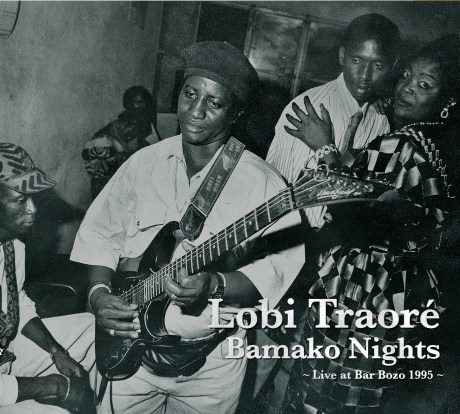
From the very beginning, one of Glitterbeat Records earliest releases, Bamako Nights captures the loose, almost extemporized sounding, drift of the late Malian legend Lobi Traoré (who died at the age of 49 in 2010); capturing one of his ‘packed-to-the-rafters’ live shows from the feted and iconic Bar Bozo. The singer/songwriter takes the crowd with him as he meditatively affects an adroit passage through Mali’s social and political pains. Attenuate guitar lines bolstered by flanger; licks powered by enveloping sustain; and a band whose steady yet often expletory solo spotted, bubbling bass and rapid percussion bind the nuanced accents together, all prove rhythmically hypnotic.
To have been a-fly-on-the-wall at one of these intimate, intense, shows must have been a magical experience; especially as Traoré kept the anticipation building; the appreciative audience either enthralled by every descriptive note and earthy toiled vocal or adding their own backing chorus of spiritual hollering and hand clapping: You’ll be hard-pressed to find a greater live experience and encapsulation of the atavistic West African blues.
Samba Touré ‘Albala’ 2013
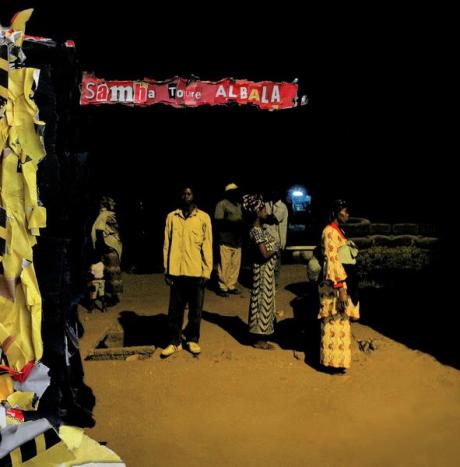
As Mali continues to exist in a fragile union after the recent Islamic hijacked insurgency (curtailed by former colonial masters France with additional support from the UK), a host of the country’s great and good (Bassekou Kouyate, Fatoumata Diawara, Baba Salah, Tamikrest to name just a few), compelled to speak out, have added gravitas to their praised sweet tribal blues in defiance of the regimes that would have banned or at the very least censored their music. Known for his work with the late Malian legend, Ali Farka Touré, Samba Touré is an amiable enough chap whose previous acclaimed albums, Songhaï Blues and Crocodile Blues, were more genial affairs, shows his disapproval with a grittier, riskier brand of protest on Albala.
Albala – translated from the Songhaï language as ‘danger’ or ‘risk’ – is a darker, albeit lamentably so, album. But so delicately melodious and nimble is the delivery that the cries of woe remain hymn-like and hypnotically diaphanous: the blues may have turned a deeper shade of forlorn yet still sways with meandrous buoyancy and restrained elegance.
A traditional accompaniment from Touré’s regular band mates Djimé Sissoko (on ngoni) and Madou Sanogo (tapping out a suitable candour on congas and djembe), with guest performances from celebrated ‘master’ of the one-stringed violin, the souk, Zoumana Tereta, and fellow Malian ‘neo-traditional’ singer Aminata Wassidje Touré is bolstered by effective guitar and keyboard layers from Hugo Race (The Bad Seeds, Dirtmusic, Fatalists). This subtle mix works wonders, giving the overall sound a mystical delta blues feel, resplendent with fuzz, wah-wah and wailing soul.
Aziza Brahim ‘Soutak’ 2014

Born in the hardened landscape of a Saharawi refugee camp on the border of Algeria and the Western Sahara, beguiled vocalist Aziza Brahim embodies the wandering spirit of her people; their settled, though often borderless and disputed lands, previously claimed by Spain, were invaded in 1975 by Morocco. Though made up of many tribes with many different goals the Saharawi people did mount a fight back. It was in this climate that Brahim was hewed.
Soutak, or ‘your voice’, is centered on just that. The backing is striped to a degree, so the poetic reverberated vocals can echo and warble soulfully without interruption. Though there is no mistaking that strong, robust and primal Saharan spirit, the congruous accompaniment is a mix of both Balearic and folk rock styles – especially the deep sleek bass guitar notes that slide and weave under Brahim’s distinctive voice.
Produced by Chris Eckman (of Dirtmusic fame), whose assiduous talents have done wonders with Malian blues rockers Tamikrest and Bamako Afrobeat artist Ben Zabo, Soutak was recorded live in Barcelona: the fluid lilting cosmopolitan sound of that city is unmistakable.
Serene and subtly sung, the choral, almost desert gospel hymns take time to unfurl their charms, so be patient. Once again Glitterbeat and Eckman have a classic world music crossover on their hands.
Dirtmusic ‘Lion City’ 2014

Connecting the ‘dirt music’ environment of an unforgiving Australian outback with the Cajun swamplands, desert and bustling African townships, Glitterbeat Records co-founder and producer of their awe-inspiring roster of world music greats, Chris Eckman, leads his nomad troupe across esoteric and meditative terrain soundscapes.
At times almost alien, their borderless approach to mixing rock, blues and (mostly) West African music in a seamless wash, creates something both mysterious and original. Recorded at the same time as their last album Troubles, in Bamako, Lion City couldn’t help but be guided politically and socially by the upheaval in Mali. A testament to the eerie developments and a lament that also offers hope, Dirtmusic and their guests (which include such luminaries as the Ben Zabo Band and Samba Touré) prove that you can work alongside African artists without succumbing to condensation.
Far more successful if not authentic than anything Albarn or indeed the ‘Radio’ polygenesis collectors The Clash could ever produce, these Westerners move serenely, blurring the cultural boundaries as they circumnavigate the psychogeography of the chaotic city and romanticized but often harsh sand dune landscapes of both West and North Africa. You could say it was a culmination of the entire Glitterbeat labels stock, condescend into one challenging soundtrack.
Noura Mint Seymali ‘Tzenni’ 2014
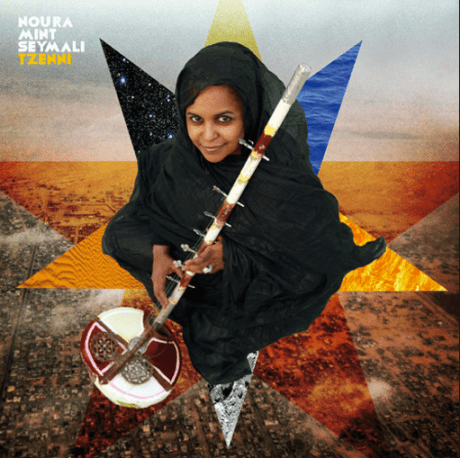
The technicalities, pentatonic melodies and the fundamental mechanics aside, nothing can quite prepare you for that opening atavistic, panoramic vocal and off-kilter kick-drum and snare; an ancestral lineage that reaches back a thousand odd years, given the most electric crisp production, magically restores your faith in finding new music that can resonate and move you in equal measure.
Hailing from the Islamic Republic of Mauritania, nestled in between Algeria, Senegal, Mali and the Western Sahara, with the Atlantic lapping its shoreline, Noura Mint Seymali keeps tradition alive in a modern, tumultuous, climate. Her homeland – run ever since a coup in 2008, by the former general Mohamed Ould Abdel Aziz, duly elected president in 2009 – was rocked by the immolation sparked Arab Spring and subsequent youth movement protests, all of which were violently suppressed by the authorities. Add the omnipresent problems of FGM, child labour and human trafficking to the equation and you have enough catalysts to last a lifetime. However, Noura’s veracious commanding voice responds with a dualistic spirit, the balance of light and shade putting a mostly positive, if not thumping backbeat, to forlorn and mourning.
Recorded in New York, Dakar and in the Mauritania capital of Nouakchott, Tzenni transverses a cosmopolitan map of influences and musical escapism. The original heritage still remains strong, yet the ancient order of griot finds solace with the psychedelic and beyond.
Jon Hassell/Brian Eno ‘Fourth World Vol.1: Possible Musics’ 2014
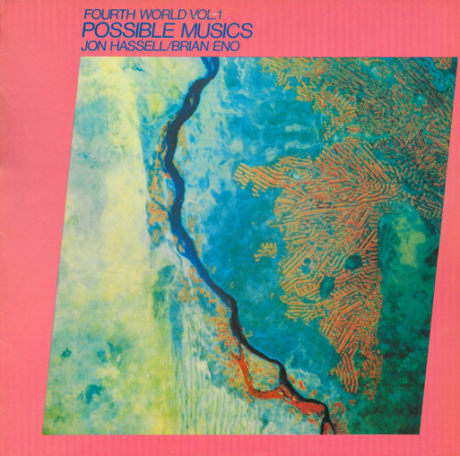
Already riding high on a crust of acclaimed production projects and numerous semi-successful collaborations and solo albums, when Brian Eno touched down in New York City in 1978 he would unintentionally help direct another important development in ambient and world music (and also end up staying for five-years). Absorbed in what the city had to offer him musically, Eno came across the stripped and atmospherically rich experiments of trumpeter/composer Jon Hassell, who’s own pathway from adroit pupil of Stockhausen to seminal work on Terry Riley’s harangued piano guided In C, encompassed an polygenesis of influences: a lineage that draws inspiration from avant-garde progenitors like La Monte Young, and travels far and wide, absorbing sounds from Java to Burundi.
Though a minor figure in the sense of worldwide recognition, and never one to brush with any sort of commercial popular appeal, Hassell irked out his own personal philosophy. With a handy masters degree in composition, he attempted a reification of what he would term the “fourth world”; a style that reimagined an amorphous hybrid of cultures; a merger between the traditions and spiritualism of the third world (conceived during the “cold war” to denote any country that fell outside the industrious wealthier west, and not under the control of the Soviet Empire) and the technology of the first.
Untethered to any particular landscape and age (though traversing for the most part the mysterious, veiled continent of a inter-dimensional Africa), geographical and environmental alluded titles act as points of reference; alluding both to such diverse subject matter as the traditional songs of the Central African pygmy tribes (Ba-Benzéle) and the latitudes and weather phenomenon of an undisclosed landscape or city (Rising Thermal 14° 16’ N; 32° 28’ E).
Moving at a similar pace throughout, the lingering vapours drift over and enclose the listener; hinting always at some mystical or miasma presence; steeping each composition in a sepia of low emitting foggy harbour like droning horns, plastic pipe sounding percussion, tape echo experimentation, panoramic glides over the savannahs and of course Hassell’s stripped bare, reedy and masked stirring trumpet.
An almost continuous set of transient movements, the mood varied from lightly administered rhythmically slow paced pieces to cerebral blankets of panoptic memory; a style coined as “future primitive”. Reissued by Glitterbeat Records under their visionary imprint Tak:til, this album can be read as a principle guiding light and inspiration for their roster and ambitions.
Various ‘Hanoi Masters: War Is A wound, Peace Is A Scar’ 2015
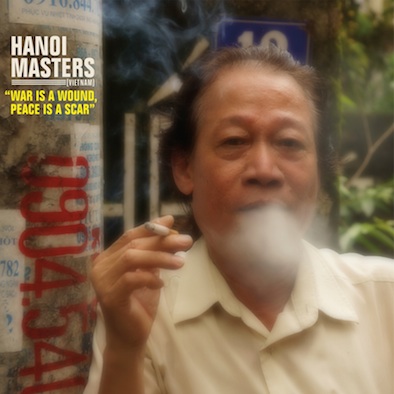
A side excursion, travelling due east to Asia and breathing in the evocative songs of Vietnam, Glitterbeat Records launched their new series of field recordings entitled Hidden Musics with the Hanoi Masters compilation. Finding a congruous musical link with their usual fare of West African releases, the label sent Grammy-award winning producer Ian Brennan (credits include, Tinariwen, Malawi Mouse Boys, The Good Ones) to Vietnam in the summer of 2014 to record some of the most lamentable and haunting resonating war-scarred music. Indelibly linked to what the indigenous population call ‘the American war’, the examples of both yearning and praise pay tribute to the fallen: delivered not in triumphant or propagandist bombast but in a gentle meditative manner, these survivors, forty years on from the end of the harrowing and catastrophic (the repercussion still reverberating in the psyche of the burned America and its allies) war, were still undergoing the healing process.
Tinged with an omnipresent lilting sadness these songs are imbued with battle scars (hence the albums subtitle War Is A wound, Peace Is A Scar), featured artisans and traditional music masters who had joined the cause, sometimes for the first time in years, allow their voices to be heard once again and recorded for posterity.
Considering the history and ill blood between cultures – though this has eroded as capitalism takes hold and the country opens up – it has in the past been difficult to investigate the serene and attentive beauty of the Vietnam music scene, but this earnest and adroit study into a world seldom covered proves enlightening and humbling.
Bixiga 70 ‘III’ 2015
Speaking Fela fluently with marked respect and reverence, going as far as to borrow part of the late Nigerian bandleader and doyen of Afrobeat’s backing group moniker, Bixiga 70 may be inspired and informed by Kuti but they do so much more with his high energy polyrhythms and feverish hot-footed anthems. The eclectic Sao Paulo band, who joined the Glitterbeat family in 2015, add even more flavour to the Afrobeat template on this their third album. Energised by their performances in the hotbeds of fusion, from North Africa to Europe, and working with a decentralised method of producing new material, the III album reaches out and embraces an even richer array of world sounds.
Incorporating the rhythms and dances of their own continental home, Bixiga shake and shimmy to the local customs of cumbia and the sensual hip movements of the carimbo on a trio of slinky paeans to the indomitable spirit of joyous release. Congruously they go, flowing from one source to the next deftly, passionately and with a raw powered energy, our Brazilian friends relationship with Glitterbeat has proved to be a sound move; an ideal home for the group’s ever expanding fields of sound and exploration.
Afro-Haitian Experimental Orchestra ‘A.H.E.O’ 2016
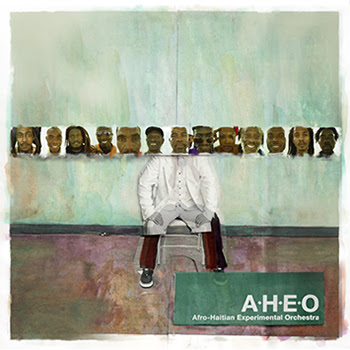
Progenitor and embodiment of the Afrobeat drum sound, still in high demand four decades after his explosive partnership with Fela Kuti, the much-venerated Tony Allen extends his infectious percussion style beyond the African homeland. Sharing an obvious entwined history with Africa, the shared Hispaniola Island of Haiti proves both an esoterically mysterious and congruous collaborative foil to Allen’s distinct drumming patois.
Invited to perform in 2014 by the French Institute Of Haiti’s director Corinne Micaelli, Allen’s visit would end with a public broadcasted concert in the main square of the capital, Port-au-Prince. Collaborating with Allen would be a cross-section of local percussionists and singers recruited by vocalist, dancer, ‘voodoo priest’ and director of the Haitian National Bureau Of Ethnology, Erol Josué; Josué would himself lend his sweet yearning and reflective tones to two of the tracks on this album.
The call went out and the great and good of the Haitian music scene came. Racine Mapou de Azor, the Yisra’El Band, Lakou Mizik and RAM. Another Monolith regular and one-time Port-au-Prince resident, Mark Mulholland was drafted in as the experimental orchestra’s guitarist, and as it would turn out, eventual legacy overseer. With only five days of studio rehearsal time to gel and work out their performance, the sessions proved both, as Mulholland observed, ‘chaotic’ and overwhelming’.
Elevating beyond the borders it was created behind, the Afro-Haitian Experimental Orchestra root foundations shuffle and shake free of their stereotypes to move freely in an increasingly amorphous musical landscape. You’re just as likely to hear vibrations and traces of Dub, native Indian plaintive ghostly echoes, Sun Ra’s otherworldly jazz and funk as to hear the indigenous Haiti sounds and Afrobeat pulse. Tony Allen is once more at the heart of another bustling, dynamic explosion in rhythm.
Various Artists ‘Hidden Musics Vol 2. Every Song Has Its End: Sonic Dispatches From Traditional Mali’ 2016

Though no less an achievement, the second volume in Glitterbeat Records “Hidden Musics” series offers the full gamut not just musically but visually too, and is a far more ambitious documentation of a troubled country’s lost tradition than the 2015 Hanoi Masters survey. Expanding to include 11 concatenate videos, Every Song Has Its End is the most complete purview of Mali’s musical roots yet. This is due to the project’s mastermind and architect Paul Chandler, who has documented Mali’s music scene for more than a decade.
Forgotten in some extreme cases, ignored or considered as Mali’s past by new generations, maestros of the 6-string Danh, such as Boukader Coulibaly, and the Balafon, Kassoun Bagayoko, are celebrated and interviewed for this collection. Whether it’s traversing the Gao region in the northwest to record the earthy desert pants of the female vocal ensemble, Group Ekanzam, or capturing a Sokou and N’goni love paean performance by Bina Koumaré & Madou Diabate in the heart of the country, this chronicle of the pains, virtues, trauma and spirit of the country’s musical heritage is an extraordinary love letter and testament to the country.
Bargou 08 ‘Targ’ 2017
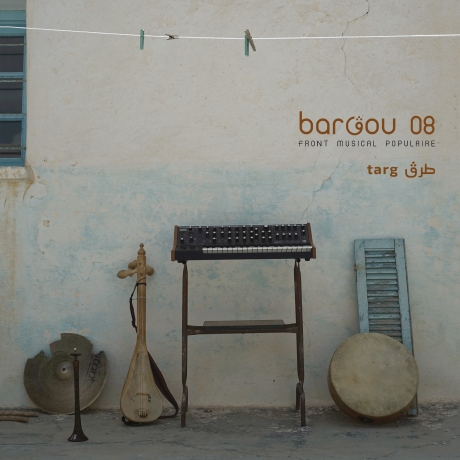
Ahh…the sounds of a dusky reedy gasba flute; the tactile patted and burnished bendir drum; the rustic, earthy strung loutar, and the flowing, soaring scale vocals of the Bargou 08 project’s chief instigator Nidhal Yahyaoui, set an impressive atmosphere in the first couple of minutes of the album’s opening track, Chechel Khater. And that’s all you’d need, except there’s another eight equally evocative and thrilling tracks to hear.
The source of this sound derives from a relatively uncharted region that lies obscured between the mountains of northwest Tunisia and the Algerian border, called the Bargou Valley, which despite its barren isolation, has cultured a unique musical fusion, stretching back hundreds of years. Captivating and magical enough in its ancestral unchanged form, the songs of the valley, sung in the local Targ dialect (a language that is one part Berber, the other Arabic), are given a contemporary jolt that transforms the atavistic paeans, odes and poetry of yore into an intoxicating swirling rapture of electronic North African funk.
Filled with a legacy of turmoil and tension that goes back an aeon the album’s many themes, from describing a lover’s vital attributes on Mamchout to laments of alienation, resonate strongly with the growing unease of events, initiated six years ago by the Arab Spring. Tunisia itself is facing a struggle and teetering on the edge, with no guarantee that certain cultures won’t just disappear or be fragmented in the ensuing melee. Originally setting out to document his Bargou Valley home’s musical heritage before it disappeared, Yahyaoui has successfully and thankfully, with his musical partner, producer and the album’s keyboard player Sofyann Ben Youssef captured this rich mesmeric culture for posterity. And in doing so, produced a masterpiece that will endure.
Širom ‘I Can Be A Clay Snapper’ 2017
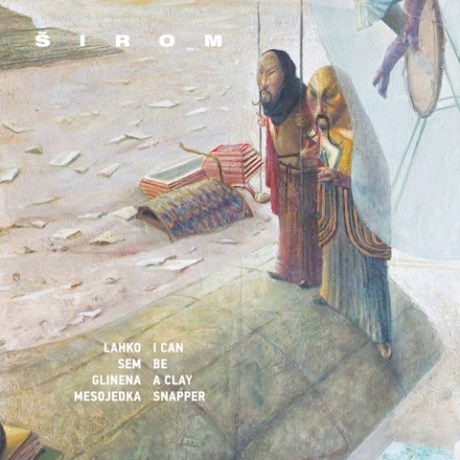
With an unspecified, but as the name suggests, emphasis on the “tactile”, Glitterbeat Records new imprint label gives a welcome platform to entrancing experimental tonal performances and sonic polygenesis traverses alike. In the latter camp is this Slovenian peregrination suite from the landlocked, Alps nestling country’s visceral sonic conjurors, Širom.
Evoking memories and feelings, both real and imagined, with a soundtrack thick with atavistic connections, the trio of punk and post-rockers turn experimental folk and acoustic instrumental cartographers convey a personal relationship to their homeland, on their second album together under the Širom banner.
Yet whatever the backgrounds, traces of North Africa, the Adriatic and the Middle East, the performances sail scenically through a dreamy otherworldly representation of Slovenia: Oriental, alien and Balkan visions permeate the plucked, malleted, chimed and purposefully played compositions, which subtly and rather cleverly build up complicated layers and various overlapping time signatures during the course of their journey.
Theremin like siren voices drift in and out, enacting the myth and seraph, whilst on the watermill turning Everything I Sow Is Fatal Sun Ra travels with John Cale and Pharaoh Sanders on a pilgrimage to Samarkand. The most recurring sounds however pay testament to the Balkans ghosts. The folkloric stirrings, lulls and yearning of Slovenia’s past bordering both a pan-Europa of migration and grief – stretching back a millennia – are transduced into often haunted vistas and metaphysical passages.
A most impressive and expansive inaugural Balkans travail; different from the previous two releases on this burgeoning new imprint, yet keeping to the tactile, accentuate and imaginative remit, whilst conjuring up mystical new soundscapes.
Tamikrest ‘Kidal’ 2017
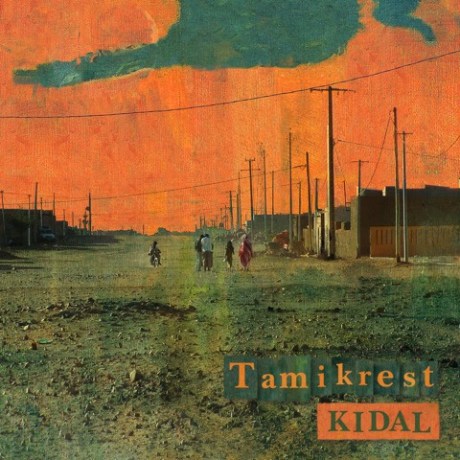
Still availed of a homeland, though now liberated from their draconian Islamist partners, the Tuareg are once again left as wanderers in their own land, the unofficial guardians and custodians of the Saharan wilderness. For now only a dream, best realized and protested through music, the rock’n’roll Bedouins Tamikrest emerge once more from the barren landscape with a message of “power and resistance” on their fourth, equally entrancing, album Kidal. Paying homage to the strategically and spiritually important cultural trading town of the title, the highly-acclaimed (and rightly so) Tamikrest exude both the sadness and suffering of the dispossessed people who cling to the southwestern Saharan hub that is Kidal: a town which has seen its fair share of fighting, fought over, conquered and reconquered over time, it remains a symbolic home to the Tuareg. This is after all the town that nurtured them and where it all began.
Assiduous, confident and articulate, the musicianship shows not so much a progression as a balance between the meditative and rock’n’roll spirit of the Tuareg musical resistance. Tamikrest are as brilliant as ever musically, and Kidal is, despite its plaintive and lamentable subject woes, a beacon of hope in an ever-darkening world of uncertainty.
Ifriqiyya Électrique ‘Rûwâhîne’ 2017

Capturing something quite unique, the collaborative industrial post-punk and avant-garde rock scenes of Europe clash head-on with the descendants of the Hausa slaves atavistic rituals styled group, Ifriqiyya Electrique, create an often unworldly chthonian conjuncture of Sufi trance, spirit possession performance and technology.
A film project and now immersive sonic experience, inspired by the important Banga music traditions and the accommodating, rather than exorcising, of spirits ceremonial wild dances and call and response chanted exaltations of the black communities – originally transported to the region from sub-Saharan Africa – in the oasis towns of southern Tunisia, this astounding meeting of cultures and history is anything but scenic.
Formed in the Djerid Desert, the idea forged by field-recordist and veteran guitarist of the politically-charged Mediterranean punk and “avant-rock” scenes, François Cambuzat, and bassist Gianna Greco – both of which occasionally join forces with that livewire icon of the N.Y. underground, Lydia Lunch, to form the Putan Club -, the Ifriqiyya Electrique spans both continents and time. For their part, Cambuzat and Greco provide the grind, industrial soundscape texturing, sonorous drones and flayed guitars, but mostly, the “electrique”, whilst, offering a dialogue with the spirits and the tradition, Banga musician Ali Chouchen – joined in the live theatre by an expanded cast of fellow voices, krabebs and Tunisian tabla players from the community, which includes Tarek Sultan, Yahia Chouchen and Youssef Ghazala – provides peripheral sounding evocative echoed and esoteric vocals and equally haunting nagharat.
Spiritual conversations transformed and realigned with the machine age turmoil of industrial noise, Arthur Baker style rock and hip-hop production, post-punk and even Teutonic techno, Rûwâhîne is a rambunctious unique force.
Park Jiha ‘Communion’ 2018

Circumnavigating the globe to bring much-needed exposure to new sounds, Glitterbeat Records imprint tak:til gives a second wind to a suite of acuity serialism from Southeast Asia. Released originally in South Korea in 2016, the neo-classical musician/composer Park Jiha’s debut solo album Communion is given an international release by the label of repute.
Inspiring what we’re told is a burgeoning Korean music scene (well, an alternative to the K-Pop craze), a chief progenitor of the movement Jiha alongside collaborative partner Jungmin Seo originally melded the country’s musical heritage with an eclectic range of contemporary sounds as the 숨[suːm] duo in 2007. Releasing the highly influential regional albums Rhythmic Space: A Pause For Breath (2010) and 2nd (2014), Park and Seo crossed the time zones to perform at both WOMAD and SXSW. Congruously putting the duo on hold to explore a more ‘personal’ and minimalistic ‘musical vocabulary’ as a solo artist, Jiha dexterously balances the air-y abstract breathes of the ‘piri’ double reed bamboo flute, the searing twang of the ‘saenghwang’ mouth organ and the softly paddled patter of the ‘yanggeum’ hammered dulcimer in what is a dialogue between a dulcet calm, the meditative and an entangled dissonance.
Transforming Korean traditions into a more experimental language that evokes the avant-garde, neo-classical and jazz yet something quite different, Park Jiha’s tranquil to entangled discourse evocations reach beyond their Southeast Asian borders both musically and metaphysically into something approaching the unique.
Playlist
Quarterly Revue Playlist 2018 Part One:
March 15, 2018
The Quarterly Playlist chosen by Dominic Valvona, Matt Oliver and Ayfer Simms

A reasonable assessment of the last three months, the Quarterly Playlist features an eclectic selection of ‘choice’ tracks from the Monolith Cocktail team. From across the musical spectrum, songs from the far east sit alongside glittering pop; traversing meditations share room with hip-hop and the Kosmische.
The inaugural revue playlist of 2018 features Plastic Ono Band sultry protest pop from U.S. Girls, fragmented reeling breakbeats from Cut Chemist and friends, Motorik mooning from Station 17, electrified dance jazz from Hailu Mergia, mystical cosmic cumbia from Sonido Gallo Negro, a cappella paean to Nelson Mandela by the Afrika Mamas, direge-y garage rock from the Moonwalks and 38 other equally interesting and varied tracks from across the globe.
Tracks in full:
‘Incidental Boogie’ U.S. Girls (review)
‘Look At Your Hands’ Tune-Yards (review)
‘Well Who Am I’ Band Of Gold
‘Die Cut (Theme)’ Cut Chemist feat. Deantoni Parks (review)
‘(((leapfrog)))’ MC Paul Barman (review)
‘Addis Nat’ Hailu Mergia
‘Ein Knall’ Station 17 feat. Harald Grosskopf and Eberhard Kranemann (review)
‘The Timeless Now’ Nonpareils
‘1001 Nights’ Ouzo Bazooka (review)
‘Fresh Product’ Awate
‘Anything Goes’ Andy Cooper feat. Abdominal (review)
‘Efrati’ Fadaei
‘Black Sambo’ Skyzoo (review)
‘Kingz & Bosses’ Slim Thug feat. Big K.R.I.T. (review)
‘That Jazz’ Coops (review)
‘Cumbia Ishtar’ Sonido Gallo Negro
‘A Casa De Anita’ Camarao
‘All That We Are’ Brickwork Lizards (review)
‘Hlala Nami’ Hot Soul Singers
‘Le Château’ Fishbach (review)
‘Into Space’ Sailing Stones
‘Illogical Lullaby’ Hatis Noit (review)
‘Also’ Astrid Sonne (review)
‘Reptile’ Soho Rezanejad (review)
‘Remain Calm’ Tony Njoku
‘Air Rage’ Lukas Creswell-Rost (review)
‘Embers’ Flights Of Helios (review)
‘And The Glamour Fell On Her’ Brona McVittie feat. Myles Cochran and Richard Curran (review)
‘Same Old, Same Old’ The Cold Spells (review)
‘Winter Bound’ Hampshire & Foat (review)
‘Vidsel-Sthlm, Enkel’ Bättre Lyss (review)
‘Akokas’ Tal National
‘The Border Crossing’ Dirtmusic (review)
‘I’ll Be Ready When The Great Day Comes’ John Johanna
‘Diego Says Hello’ Modulus III (review)
‘Communion’ Park Jiha (review)
‘De Roda’ Rodrigo Tavares (review)
‘You Get Brighter’ John Howard (review)
‘Tata Madiba’ Afrika Mamas (review)
‘In Between Stars’ Eleanor Friedberger
‘No Place Like Home’ Life Pass Filter’ (review)
‘I Don’t Wanna Dance (with My Baby)’ Insecure Man
‘Israel Is Real’ Moonwalks (review)
‘Men Of The Women’ Peter Kernel (review)
‘We Have Always Lived In The Palace’ Sunflowers (review)
Our Daily Bread 268: Hatis Noit ‘Illogical Dance’
March 13, 2018
Words: Dominic Valvona
Hatis Noit ‘Illogical Dance’ Erased Tapes, 23rd March 2018
An ‘illogical dance’ of voices, a serialism of language, the range of Hatis Noit’s vocals are as sublime as they are artfully experimental. Since finding her calling at the age of sixteen after hearing a lone voice singing in the hallowed sanctuary of the women’s temple in Lumbini, Tibet, the backpacking Noit began a self-taught travail in both the spiritual and avant-garde; adopting and synchronizing a myriad of techniques in a quest to convey ‘nature’s many sounds’ and form a ‘beautiful conversation that isn’t restricted to words like the human language is.’
The Japanese performer, who hails from a small town on the country’s second largest island, Hokkaido, has studied the native Gagaku style of classical music and takes her name from Japan’s lotus flower folklore – the stem of this exotic symbolic flower is said to represent the living world, its roots the spirit world. Yet, this astonishing dialect and vocal articulation reaches beyond those shores to absorb the operatic, pop music, Gregorian chants, atavistic Bulgaria and Balkans styles and, what sometimes sounds like, Orthodox Russia.
Initially improvised, all of the sounds you hear on this impressive EP are sourced entirely from Noit’s voice; re-aligned, cut up and transmogrified into a trio of sonic explorations that reflect the scope of, what is, our oldest ‘powerful’ instrument: the voice. Noit channels a cornucopia of styles, all of which are reconstructed and formed into an abstract dialect both spatial and organic, yet also building towards the ebbs and flows of a diaphanous multilayered cacophony.
Named after the famous oil-transfer monoprint of the same name by one of the most proficient and influential artists of the twentieth century, Paul Klee, Angelus Novus is a stunning hallowed (almost a choral-like hymn), deeply expressive voice-scape that sounds almost cinematic. Cloister hushed whispers are layered, stuttered or harmonically clustered with various breathy and accentuate yearning and amorphous trilling on what is an astounding performance. Anagram c.i.y. has a sharper edge, utterances more chaotic, Noit’s various vocal deconstructions propelled forward in a bity staccato fashion.
There are two versions of Illogical Lullaby included on this showcase EP, the original version, an elegant synchronization of soaring aria, the choral and hummed, and the retreated version from the brilliant Baltimore partnership Matmos, a changeable filmic soundtrack inspired by a scene from the Russian auteur Andrei Tarkovsky’s bleak, harrowing movie Andrei Rublev. Known for their collaboration with the similarly experimental siren Bjork, Matmos take the Illogical Dance through various stages of transformation, from charming echo-y loops to Medieval sinister intensity and quirky electronica; adding rain, thunder and Foley effects to reflect an imaginary score for one of Andrei Rublev’s most philosophical acts. They create a suitable mirror-y vision that takes Noit’s voice into even more explorative realms.
Highly impressive, far from a cold art-y conceptual study devoid of soul, rhythm and direction, Noit has produced a most beautiful abstract odyssey for the voice. A revelatory progression that goes some way towards creating a fresh dialogue in modern music.
Tickling Our Fancy 060: Park Jiha, Hampshire & Foat, Rodrigo Tavares, Flights Of Helios, Perhaps, Flora Fishbach.
February 20, 2018
DOMINIC VALVONA’S ESSENTIAL REVIEWS ROUNDUP
Reaching the sixtieth edition of my eclectic music revue – that’s roughly 500 albums over the last four years – I find an as ever eclectic mix of albums from around the globe; from South Africa to South Korea; from Brazil to Sweden and France.
Searching out the best or at least notable and interesting releases from the last month or so then, my latest circumnavigation includes the Brazilian composer/guitarist Rodrigo Tavares first album on the new Hive Mind Records label, the traversing amorphous road trip Congo, and the second soundtrack-like collaboration between Hampshire & Foat, the yearningly beautiful fairytale suite The Honey Bear. I also take a look at the ambitious debut album from the Oxford-based expansive indie pop and celestial electronic collective Flights Of Helios (Endings); the international debut release of Korean avant-garde, soundscape and minimalism rising star Park Jiha’s Communion; another numeral entitled free-jazz and Kosmische blowout from the USA trio Perhaps; the fourth album of matriarchal harmonious a cappella from the South African vocal group, the Afrika Mamas; a reissue of the obscure Swedish prog and heavy rockers Bättre Lyss’ 1975 private pressing Till Den Sträng Som Brast Än Att Aldrig Spänna En Båge; and the impressive ‘deluxe’ edition of the pop-revisionist chanson album À Ta Merci by French sensation Flora Fishbach.
Hampshire & Foat ‘The Honey Bear’ Athens Of The North, 28th February 2018
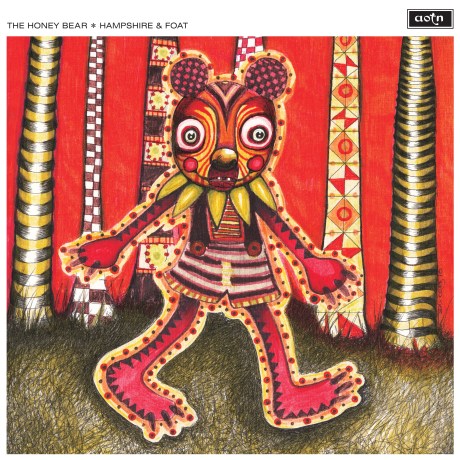
As with all fairy tales, the roots of these often enchanting stories lie in real psychological trauma and truths – forewarning metaphors aimed at finding happy endings, yet alerting to the dangers of a myriad of human failings: ones we all share by the way. The congruous partnership of jazz pianist/composer Greg Foat and ex-Bees multi-instrumentalist Warren Hampshire – both natives of the Isle Of Wight, which they use as a base, retreat and inspiration for much of the music on this their second album, as a collaborative duo, together – are ambiguous about the narrative that underpins the charmingly weaved The Honey Bear album, but the references and themes are all signposted well enough to be deciphered.
Based on an imaginative fictional children’s book, each instrumental track attributed to one of its chapters, The Honey Bear could be read in a number of ways; alluding as it does to sagacious rumination, the passing of time and seasons, innocence and of course the travails of addiction, the search for the magic elixir of life. You can substitute ‘honey’ for as many different substances and desires as you want; the kooky candy stitched honey bear that merrily jaunts into a magical if ominous woods on the cover may be all sweet and light, but that innocence is tested in the beautifully yearning bucolic soundtrack.
Foat – riding high creatively off the back of a stunning run of well-thumbed sci-fi novel and library music imbued jazz albums with the Jazzman label – and his Island compatriot Hampshire – no less accomplished, the former Bees band member turned in an equally adroit, articulate performance on the duos last highly praised collaboration, Galaxies Like Grains Of Sand – in what seems like no time at all, embark on their second peaceable relenting journey for the Edinburgh label, Athens Of The North. Always developing and exploring with each release, the duo take a romantic diaphanous traverse through the pastoral; a fantastical world of Ralph McTell folksy storytelling, Peter Ilich Tchaikovsky (Peter And The Wolf especially), both cult Eastern European dreamscape and Wiccan fable inspired English cinema of the 70s, the Jewish traditional music of Central Europe, and Kosmische (the fluctuating analogue synth whirling that undulates beneath the field recorded buzz of The Hive). An interplay that works well, featuring the string composed arrangements of Foat and Hampshire’s borderless guitar narratives, an album that was envisioned on the Jurassic coastline of Ventnor – about as far east as you can go in the UK – and added to in Edinburgh, travels well across national demarcations, picking up a myriad of inspirations on its 500 mile journey.
Following, what might be either a solace or (honey) trap, our lolloping protagonist starts this wandering album with a comforting patchwork accompaniment of gentle plush strings and the fluttery charming song of the flute; meandering towards the warbled and trilling bird call of a Brothers Grimm forest diorama – a certain ache and sadness subtly coming through a beautifully played suite. During an expedition to locate the honeyed prize, the listener is dreamily introduced to characters, the weather and metaphorical objects of desire and reflection.
Expressionistic pucks articulate the clawing scratch of Crow’s Feet – perhaps another analogy to ageing, for obvious reasons -, whilst the cliff or beach head environment – featuring real field recording sounds of seagulls, surf and of course a fly – of the wandering meditative beachcomber and his only companion in this isolated paradise, The Fly And I, feature the most subtle, minimal of acoustic guitar. Almost melancholic and heartbreaking in comparison, the stirring Winter Bound majestically sweeps in storm clouds, as the mood turns sentimentally mournful. Yet without doubt it is the album’s most painfully beautiful track. It doesn’t last long, this sadness, as the mood is lightened with the folksy down-the-rabbit-hole enchantment of Honey Dreams, and the entrancing evergreen Polynesian/South Seas floating The Elderflower. By the time we reach the closing Honey For A Penny, it feels like the clouds and sorrow have dissipated; the burden lifted, as we reach a sort of slow joyful release; played out to a fluttering ascendant flute and tranquil troubadour rhythm guitar.
Plush, often sumptuous, Hampshire & Foat continue to create beautifully articulated narratives and imaginary soundtracks for as yet unmade films. This children’s fairytale is certainly sweet and lilting, yet wise: analogy laden, waiting to be unpicked and interpreted. For Foat it proves a welcome escape from the jazz scene; a showcase for his arrangement skills – with the piano lid firmly shut on this project. For Hampshire, it is another gentle encapsulation of his wandering guitar compositions; unbridled free to roam where the mind takes him across cultures and time.
And to think, without the generosity of others via a crowd funder initiative this album might have never seen the light of day. Those who pledged have been well rewarded with a most gorgeous, yearning and evocative soundtrack.
Rodrigo Tavares ‘Congo’ Hive Mind Records, Available now digital release/Vinyl version 15th March 2018
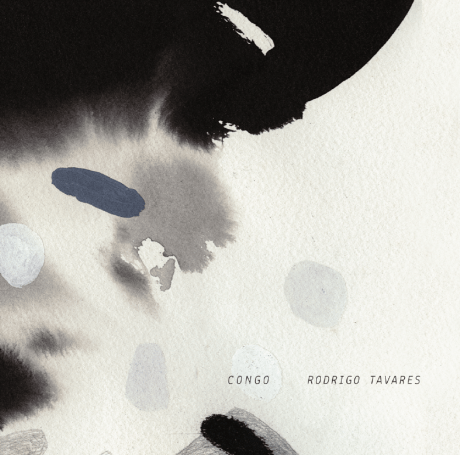
Far too early of course to define a burgeoning label with only two releases on its roster, but the new amorphous traversing post-rock and jazz travelogue from Brazilian guitarist/composer Rodrigo Tavares shares a similar meditative and spiritual yearn with Hive Mind Records inaugural Maalem Mahmoud Gania communion Colours Of Night.
The spiritual here is represented in Congo’s genesis; the catalyst for Tavares soundtrack inspired by, in part, a visit to the controversial ‘spiritual healer’ John of God – a medium, psychic surgeon of dubious repute -, who lives in the remote central Brazilian town of Abadiânia. The meditative, in this case, runs throughout the suggestive instrumental passages and vignettes that ponderously drift, cascade and ebb across a real and imagined borderless global soundtrack.
Tavares is joined on this ambiguous journey by a host of complementary musicians on accentuate sliding double-bass, brushed and sauntering drums, splashing, softly trickled percussion, octave ascending light Fender Rhodes, the subtlest of Ayers vibraphone notes, pining saxophone and a harmonic twanging, jazzy dreamy guitar.
Suffused throughout are lingering traces of ACT label jazz, minimalism, Tortoise post-rock, Brazilian legends Joâo Gilberto, Dorival Caymmi and Tom Jobim, and removed by quite a few degrees, a hint of the free-form untethered to any easy classification, evolving guitar experimentation of the Sun City Girls – as it happens a show in a remote former gay bar in Brazil by the same band was one of the stopovers on Tavares ‘transformative road trip’; the fruits of which and experience laying down the creative foundations for Congo.
Amorphous as I said before, though there’s no mistaking that South American influence, you could just as easily be anywhere along the Atlantic coastline splashing in the surf on the opening dreamy Rosa Rio, and be transported to Moorish Spain on the romantically mysterious sketch, Cidade Sol II. Still, there’s plenty of that Latin American vibe to be heard on these waterfall and mountain peregrinations; especially on the progressive movement A Raposa E O Corvo and the sauntering De Roda.
Truly transglobal, Tavares helps take Brazilian music – like his fellow compatriot Sentidor – into often trance-y, unburdened and unlabored directions. With few rough edges, this congruous soundtrack makes for a ruminating, thoughtful smooth journey.
Park Jiha ‘Communion’ tak:til/Glitterbeat Records, 2nd March 2018
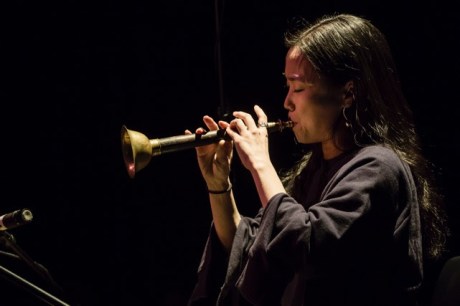
Circumnavigating the globe to bring much-needed exposure to new sounds, Glitterbeat Records imprint tak:til gives a second wind to a suite of acuity serialism from Southeast Asia. Released originally in South Korea in 2016, the neo-classical musician/composer Park Jiha’s debut solo album Communion is given an international release by the German-based label or repute.
Inspiring what we’re told is a burgeoning Korean music scene (well, an alternative to the K-Pop craze), a chief progenitor of the movement Jiha alongside collaborative partner Jungmin Seo originally melded the country’s musical heritage with an eclectic range of contemporary sounds as the 숨[suːm] duo in 2007. Releasing the highly influential regional albums Rhythmic Space: A Pause For Breath (2010) and 2nd (2014), Park and Seo crossed the time zones to perform at both WOMAD and SXSW.
Congruously putting the duo on hold to explore a more ‘personal’ and minimalistic ‘musical vocabulary’ as a solo artist, Jiha dexterously balances the air-y abstract breathes of the ‘piri’ double reed bamboo flute, the searing twang of the ‘saenghwang’ mouth organ and the softly paddled patter of the ‘yanggeum’ hammered dulcimer in what is a dialogue between a dulcet calm, the meditative and an entangled dissonance.
Each of these instruments represents a different voice: each one expressing certain sensitivity or a sharpened pique. Along with the equally expressive accompaniment of Kim Oki’s trilling, wildly intense tenor saxophone and yearned bass clarinet, John Bell’s gentle resonating vibraphone, and Kang Tekhyun’s tubular trickling and rattling atmospheric percussion, Jiha’s untethered compositions also articulate the solemn of a holy retreat – the monastery in Leuven, Belgium to be exact; a space used by Jiha’s band to rehearse -, the flow and cascading beauty of water, reverberations from the moon, and the passing of time itself – measured out on the fluctuating rapid movement of a seconds hand and the slower candor tick of an hour hand on the springs, cogs and coil microseism, Accumulation Of Time.
Quite tender in the beginning, each track builds a poetic minimalistic and avant-garde jazz interplay between all the numerous traditional instrumentation. It must be said that the tenor sax takes a leading role in piercing the serene and often majestically plucked performances of Jiha, pleading and occasionally pained, even squealing as it does in aching ‘communion’. Sometimes hypnotic, sometimes at a fever pitch of discordant beauty, a balance is cleverly struck between intensity and the attentive. At its most quiet and abstract, you can hear the most delicate of controlled breathing, blowing across the reed. At its most liberated, set free, those same breathes become harsh and attacking.
Transforming Korean traditions into a more experimental language that evokes the avant-garde, neo-classical and jazz yet something quite different, Park Jiha’s tranquil to entangled discourse evocations reach beyond their Southeast Asian borders both musically and metaphysically into something approaching the unique.
Afrika Mamas ‘Iphupho’ ARC Music, 23rd February 2018

Released in the year of what appears to be pique matriarchal fight back in the West, the gorgeous sounding 6-piece a cappella group Afrika Mamas remind us of the travails and hard won freedoms of women from outside the European and North American bubbles. In a year in which we rightly celebrate the achievements of the Women’s suffrage movement in attaining the ‘vote’, the indigenous women of South Africa would have to wait an age longer to not only get that same vote but to also overthrow the entire Apartheid system that had, until the 1990s, kept them segregated by race. Though Nelson Mandela rightly stands as the bastion of reconciliation and unity, the right leader at the right time as history would have it, it is the strong prevailing character and struggles of the country’s matriarch that deserves recognition now; celebrated and cherished on the Mamas’ fourth album together, Iphupho.
Mandela’s legacy can’t help but cast an omnipresent shadow over everything in South Africa; especially as his party have failed in many ways to build on his foundations, with talk of high-level corruption and a ruling government that over the past year has fought to remove the controversial President, Jacob Zuma – who as this goes live has since resigned and stepped down, replaced by the ANC candidate and Deputy President Cyril Ramaphosa, in the face of mounting opposition and an untenable position caused in part by his connections to the wealthy, Indian-born Gupta family. From the most beautiful soprano to the contralto bass, the all-female close-harmony group pays an almost effortlessly soulful paean to ‘Madiba’; Sister Zungu’s penned tribute, which borders on the gospel, touchingly thanks the late leader for bringing, amongst other things, free education to children in primary schools and for getting free school uniforms and food for those children from the most deprived families.
Iphupho meaning ‘the dream song’ is itself a reference to the Mamas’ own struggles and ambitions in bringing the Zulu heritage to a wider audience. Made-up of single mothers from Durban striving to make their way in a male-dominated industry, the ladies hope to emulate the success and reach of the four times Grammy award winners, Ladysmith Black Mambazo. Vocal wise they are sensational; perfectly pitched, pure and soothing.
The stories, anecdotes and themes of their songs highlight the daily lives and practicalities of survival in a climate of injustice and poverty; exasperated by the hindrance of the menfolk. Despite being tired in some cases of men – Ulwabishi (which means ‘rubbish’), penned by the group’s Sindisiwe Khumalo, makes a languidly cutting disapproval of those men who don’t support their families; instead hanging around, causing a nuisance and not looking for work, yet demanding their food on the table when they dictate – the group recorded this latest album at the famous Sibongiseni Shabalala co-founded United Rhythm Studio with top world music producer and maskandi tradition guitarist Maghinga Radebe. The lyrically named Shabalala is of course the son of Ladysmith Black Mambazo founder and former musical director Joseph – a group he himself joined. That influence can be felt suffused throughout Iphupho with the ‘a cappella’ style they’ve adopted, the ‘isicathamiya,’ a predominantly male vocal Zulu tradition. Those traditions, rolling back and forth from the lead call and backing chorus response are evoked on the lush veld-rolling lament to the plight of the KwaZulu dwellers of Natal on Lapha KwaZulu, and soothing lullaby heartache of ‘my mum is ill’, uMama Uyagula.
Enjoying a real momentum musically and culturally over the last decade, with South African artists as diverse as Die Antwoord, Dope Saint Jude, Spoek Mathambo, and scenes like the Shangaan Electro craze, a small but interesting touch of the contemporary makes its way into the Mamas more traditional rootsy vocal music with the guest appearance of leading South African beatboxer Siyanda Pasgenik Makhathini. He adds a down tempo sort of trip-hop meets R&B percussive rhythm to the Mamas’ graceful if ominously low harmony Ispoki – a song penned by group member Sibongile Nkosi about her father’s belief in the ‘bad spirits’ that make a nuisance of themselves outside his home at night. The only other accompaniment (the only actual instrumentation) is the jangle of percussion and a smattering of hand drums on Ulwabishi from Ayernder Ngcobo. Other than that it’s all down the clear lush, tongue-clicking and strong bass vocals of the ladies.
Highly impressive, articulated beautifully and at times spiritually soaring, the Afrika Mamas thoroughly deserve a place on the global stage. They bring a much-needed perspective, strong and defiant yet achingly blissful and majestic.
Flora Fishbach ‘À Ta Merci’ Blue Wrasse, Available Now

The French music press we’re told have fallen hook, line and synth for the alluring contralto voice of Flora Fishbach, who’s 80s revisionist pop twist on chanson oozes with such sophistication that its difficult not to embrace. Fishbach picked up the album révélation award at the Le Prix des Indés for best independent debut LP, winning high praise and plaudits galore ever since. Looking to make a similar impact across the Channel, the ‘bohemian darling’ has just released a deluxe edition of her electro pop requiem À Ta Merci. That decision is more or less echoed in the album’s title, which translates as, “at your mercy”.
Featuring the original running order and a bonus septet of gorgeous live recordings, this aloofly chic, yet theatrical, and especially when performing, animated, album recasts Françoise Hardy as a disco pop and electro swooned crooner. Effortlessly channeling the vaporous dreamy pining of Kazu Makino on the moon dust sprinkled fantasy title-track and ambient textured, synthesizer bas bubbling yearned lament Un beau langage, and a Gallic Alison Goldfrapp on the opening ice-y cool malady Ma voie lactée, Fishbach adds a French nuance and sensibility to the synthesized pop ascetic: a signature you could say that despite the revivalist backing of electronic drum pads, post punk sass, Moroder arpeggiator, Rococo harpsichord and hi-energy is unmistakably contemporary and French.
À Ta Merci is a warm album despite the clandestine thriller backing of songs such as the haunted, bell tolled theatre Feu; the soundtrack skipping and modulating through Clavinet boogie, Madonna (the earlier queen of MTV era), Chateau opulent disco, Air and even the fathers of French synth pop, Space.
The bonus material is by contrast, and for obvious reasons stripped of its cleaner production, more intimate with a harder edge. The title-track, recorded at the famous and fateful Bataclan in 2017, maintains a full backing but sounds purposeful; Fishbach sounding emotionally raspy and poised on a version of the original that features an almost venerable pause. Live Le Meilleur de la fête becomes a post-punk Bowie tangoing with Talking Heads. The venerability on these live performances is at the forefront, emotionally starker and raw.
In an industry burdened by a zillion synth-pap artists it will really take some effort from an individual voice to break through. With the momentum already building in France and with the recent runaway success of music press darling Christine And The Queens (who I personally find utterly dull) I’m sure the UK will embrace this sophisticated chanteuse. She’s certainly impressed me enough – what’s not impressive about referencing the philosophical aloof quandary that is Rimbaud’s “Je est un autre” (“I am another”) on a tropical slinking crystalline pop song, Un Autre Que Moi (“Another Me”) – to recommend her as one to watch in 2018.
Flights Of Helios ‘Endings’ Available now

Full on expansive; up amongst the mythological heavens that have inspired the Oxford collectives Titan harbinger of the sun band name and lyricism, Flights Of Helios go deep and spatial on their debut album, Endings.
A credible Everything Everything. A space pop indie band with metaphysical intentions dreaming big, Flights Of Helios bring together a quintet of musicians, producers and composers with backgrounds in a wealth of genres: Seb Reynolds (no stranger to this site) on sonic layering and production duties, Phil Hanaway-Oakley on bass and vocals, Chris Beard on lead vocals, James Maund on guitar texturing and James Currie on drums.
Featuring both previous singles and new material, Endings flights of panoramic fantasy are certainly ambitious; an epic undertaking from a collective who’ve previously honed their balance of space rock, drones, indie and post-rock on a number of celestial transcendental remixes and projects. Far more interesting when touching on the venerable, alluding to spiritual, heavenly or otherworldly elements than when more grounded, the Helios sun worshippers sound like Kasabian on the motorik shuffled cyclonic Factory – a lyrical response we’re told to the Spanish auteur Alejandro Iñãrritu’s convoluted film Biutiful – and an esoteric Klaxons on the haunted, brooding implosion to the enchantress folkloric demons Succubus – who take, so the legend dictates, on the form of an alluring seductress to reel in their male prey. Both of these tracks, previous singles, have more of an urgency and thump about them, whereas the rest of the album’s quartet of, often vulnerable, opuses are allowed the time and subtlety to expand.
The opening twelve-minute Donalogue, a transmogrified version of the traditional a cappella Irish folk ballad, builds and builds. This oscillating cosmological hymn to spurned love introduces us not only to each of the collective’s individual components and the building blocks of the Helios sound, but also the angelic choral quality of Beard’s lofty vocals. Swooning, often fragile, and at times not even decipherable – uttering vowels and mouthed shapes instead of words – Beard stretches his range, helped by Hanaway-Oakley who also provides support.
Remodeling another key influence, alongside atavistic Celtic inspirations, they turn the Bleeding Heat Narrative’s Cartographer track into a hallowed ethereal eulogy. Lingering in a plaintive beauty of angel-kissed whispery synth, reverberated vocals and slow drums, this trance-y swansong sounds like I See You era XX, the Arcade Fire and A Dancing Beggar in a holy communion.
Lolloping in a constant swill of stormy tides and paranormal Gothic metaphors, one of the album’s most striking tracks, Funeral, pitches esoteric Americana and progressive electronica on the high seas. Bashing against the rocks in a barrage of swells, what starts out as Depeche Mode and Radiohead slowly builds like an improvised trip into energetic psych garage.
Evolving within the perimeters of each track, Funeral encapsulates the organic transformations that propel the group forward into such epic grand spaces, creating cerebral sensibility escapist music for a pop and indie audience. Rather than ‘endings’, Flights Of Helios have produced the sonic building blocks for a glowing future under this their most panoramic collective umbrella.
Bättre Lyss ‘Till Den Sträng Som Brast Än Att Aldrig Spänna En Båge’ Sommer, February 22nd 2018
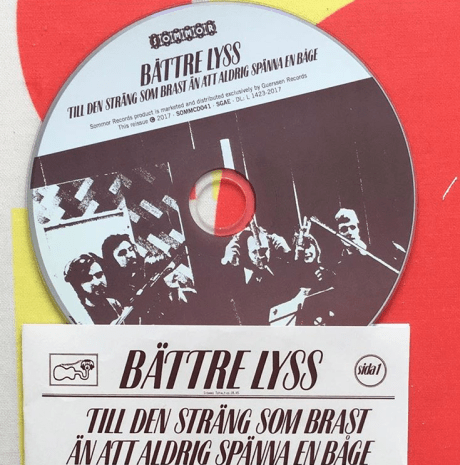
From a label I’ve previously had no experience with, another rarity from the 70s Swedish heavy and progressive rock vaults to drool over with the first ever reissue of the obscure Bättre Lyss group’s private pressing Till Den Sträng Som Brast Än Att Aldrig Spänna En Båge.
Notable for featuring guitarist Anders Nordh of LIFE fame (check out their highly impressive self-titled album from the early 70s) as an outlier member of the Bättre Lyss core trio of Rolf Hammarlund (vocals, bass), Christer Palmquist (vox, acoustic guitar, piano) and Rolf Johansson (drummer and songwriter), the group adopted a whole myriad of rock music influences on this rare find: the soft kind, the glam kind, the progressive kind and the American West Coast psychedelic heavy kind.
Formed during 1973-1974 by mutual friends Hammarlund and Palmquist, the duos first furors together were written in English. Johansson joined just after they switched to singing in the native tongue, and in time to record the group’s debut album, released a year later in ’75. Bolstered, as you will hear, by a number of talented extended pals on guitar, saxophone, flute and organ the group attempt in their own inimitable way to do justice to soft rock power balladry and epic rock outs. Sounding at any one time like 1st era Bee Gees cutting up rough with Spirit on the energetic opener Göta Lejon, or a Scandinavian Bread on the following heart-yielding Emma, or indeed King Crimson on the slightly menacing, slinking saxophone keen Vapnet, they seem to change the nuance and adapt their sound to each song. And so at times it sounds more like a collection of recordings than complete album. The only constant in fact is the often enervated, softly sweet vocals, which do, it must be said, occasionally soar and utter anguish.
Though I can’t fault the musicianship, and there are more than enough convincing, if sentimental, songs to grab you on this album, they can’t help but bare an uncanny resemblance to Blonde On Blonde, Savoy Brown, Forest, Humble Pie, Mott The Hoople, even Boston, throughout. There’s a total of four guitarist too, each one displaying telltale signs of riffage and refrains, bends and pleading lines from the era.
Lilting and flowing between troubadour piano and full-on progressive jamming, this more than competent Swedish slab of rock is well worth reviving. It also offers another look at the, probably largely unnoticed, developments in the Swedish head music scene; picking up what is essentially a rare marriage between the heavy stuff and a more commercial melodic sensibility.
Perhaps ‘V’ Cassette version available now via Important Records, Vinyl also available now, via Riot Sunset
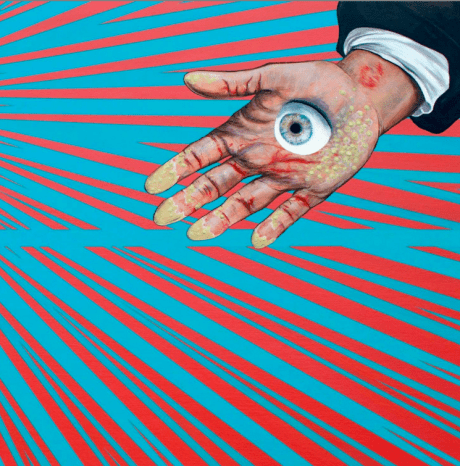
I can’t be expected to keep tabs on every exciting, mad or Kool-aid chalice glugging band from a scene that is over-subscribed with a landfill sites worth of promising, but quickly disappearing into obscurity, releases. Of course it doesn’t help that the psychedelic-Krautrock-Kosmische-whatever genre is also filled with the most unimaginative and cover-band like pastiches of groups that originally did it so much better. Yet once in a while, finding its way into my inbox, there is a rare find. For ‘head music’ aficionados then, a three-piece of Teutonic, free-jazz, cosmic explorers from Boston, Massachusetts known as Perhaps – an open-ended moniker, without a question mark in sight, that alludes to possibility.
Scant information is provided, only that their origins go back as far as the year of their debut album, Volume One, in 2012, and that the line-up comprises of ‘ringleader’ and bassist Jim Haney, drummer Don Taylor and guitarist Sean McDermott. Unsurprisingly picking up on a few inspired vibes during their collaborations and tours with the rambunctious Acid Mothers Temple and one-time shaman poet Can member Damo Suzuki, Perhaps go all out free-spirited psychedelic and Kosmische on their fifth numeral entitled album V.
The sole track of this album performance, Mood-Stabilizer is a thirty-seven minute continuous ebbing and flowing contortion jam of floating louche saxophone, fret scratching and tangled guitar, and stop/start drums that hints at the Acid Mothers (of course), Brainticket, Guru Guru, Embryo, Agitation Free and in one particular segment, a Mogadon drugged Amon Duul II.
From topographic submerged guitar pangs to tubular fuzzy vortexes and squalls, the trio travel via the primordial soup to gaze into deep space. Moving like a liquid and gaseous entity throughout a combined atmosphere of wafting, languid jazz and more dissonance fuzz frazzling waves of spiraling noise, it’s surprising to hear them meander, almost sexily, into slow jam Funkadelic territory in the first third of this meta space exploration. Whilst at their most heavy they slip into PiL.
Honing their own signature interpretation of the music that so inspires them, Perhaps’ oscillating heavy, Ash Ra commune trip shows a real depth and intelligence; a group sucked in the portal, taking their time to build a space-rock, free-jazz blowout of a journey. Enjoy hitching a transcendental ride into the deepest trenches of contemporary ‘head music’: no ticket required.
Tickling Our Fancy 059: Brickwork Lizards, Brona McVittie, John Howard, Astrid Soone, Orouni…..
February 1, 2018
NEW MUSIC REVUE WORDS: DOMINIC VALVONA
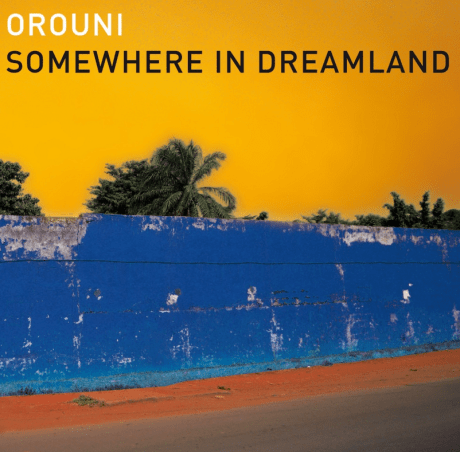
Featuring another eclectic borderless roundup of interesting and innovative, and sometimes previously lost, treasures, this latest edition of my reviews package includes a fond and timeless quality collection of songs from the Irish folk legend John Dunhan; the second album from Oxford’s English tea dance meets Ottoman jig outfit, the Brickwork Lizards; a morning chorus inspired EP of homage covers from the adroit John Howard; Lukas Creswell-Rost transforms and remodels his soft rock triumph Go Dream into something more abstract, eclectic and dreamier; and a promising pair of debut albums from the ‘Celtic phantasmagoria’ inspired Irish harpist and songstress Brona McVittie, and the abstract sonic sculptor Anna Sonne. We also have, yet another blast of garage, doom, psych and this time Gothic mooning fun from the Stolen Body Records label, in the guise of the Portuguese boy/girl Sunflowers.
And if that isn’t enough already, I have a roundup of equally interesting and eclectic ‘shorts’ from as far afield as Canada and Paris too, with tracks, singles and oddities from the Parisian Anglo-French group Orouni, Toronto-based producer Luxgaze and the Leeds Psych pop electronic outfit Lost Colours.
Brona McVittie ‘We Are The Wildlife’ Available Now
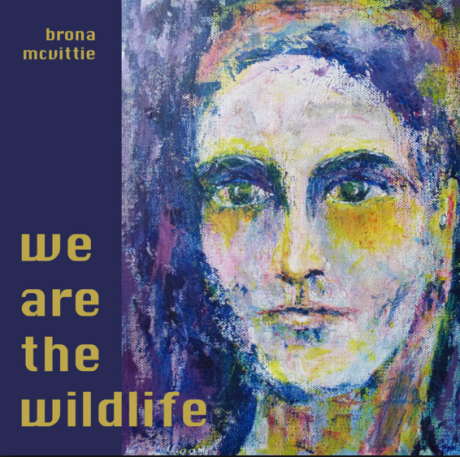
With the lightest, most deft of touches, Irish songstress and harpist Brona McVittie embarks on a voyage of ‘psycho-geographic’ inspired encapsulations of a mysterious, magical landscape and history on her debut album, We Are The Wildlife.
The title of this original and transformed traditional suite alludes to the premise that even people and the modern infrastructure (pylons for instance) that spans the land are just as important and intrinsic to the landscape as ‘spiders and cobwebs’; acting as they do throughout this album as both manmade and natural catalysts with which to bounce ideas and sounds from, or even off of – the inspiration for the pining bliss of the ethereal voiced and caressed bucolic, Under The Pines, arose from hearing the reverberation of a dog’s bark off the trees that stand on the edge of the Rostrevor pine forest.
Tracing the sonic contours of London’s urban fringes and the rural landscapes of Mourne, McVittie pitches her fluttery diaphanous harp-led songbook somewhere between post-folk and the cinematic – helped along in part by the drifting trumpet evocations of film composer Hutch Demouilpied, who’s contributions sound at times like Miles Davis Dingo transported to an Irish peat bog.
Her ephemeral harp melodies and phrases often feel like a breath or just the merest hazy lingering presence of the instrument, which – and I’ve never heard of anyone else doing this before – might in some ways be down to McVittie’s technique of playing them all on the guitar first before transcribing over. It certainly offers a different perspective and technique. And it certainly takes this heavenly traditional instrument into even more mystical, accentuate abstract realms, helped of course by an accompaniment of meadow flute (Keiron Phelan), sad bowed delicate strings (Richard Curran), searching fleeting slide-guitar and shuffling to full-on breakbeat drums (Myles Cochran). All of which amorphously pushes the often-ancient feelings and geography towards John Martyn and Bert Jansch one minute, towards the Incredible String Band or trip-hop the next.
As an additional running theme to that of a modern natural panorama, McVittie also draws deep from the well of Irish musical folklore and literature, borrowing as she does both titles and ‘the great Celtic phantasmagoria whose meaning no man has discovered, nor any angel revealed’ (interrupted on the yearning instrumental The Vast And Vague Extravagance That Lies At The Bottom Of The Celtic Heart) lyrical adage from W.B. Yeats to reinterpret her ancestral home’s legacy and hard to define feelings. Taking the And The Glamour Fell On Her reference to mean, in a manner, ‘away with the fairies’, and When The Angels Wake You, a reference to the ancient Celtic perception of death, from Yeats, McVittie’s quivering harp caresses and translucent vocals articulate a misty veiled dreamscape; both haunting and peaceable.
Transformed with a subtle undulation of electronic ambience, traditional fare such as the resigned death lament The Jug Of Punch (“When I am dead in my grave, no costly tombstone will I have. Lay me down by my native peat, with a jug of punch at my head and feet.”), and more obscure County Down love ballads, such as the greenery meandrous tip-toe Newry Mountain, have an eerie, elegiac echo, shrouded as they are in the haze of a pastoral adumbrate swooning soundtrack.
Played, as I said at the very beginning, with the lightest of touches, McVittie’s wildlife and Celtic inspired filmscape subtly crafts tradition into a cerebral suite of neo-classical and ambient folk. We Are The Wildlife is the most inviting and unique of debuts.
Astrid Sonne ‘Human Lines’ Escho, 19th February 2018

Merging a background in the classical with a love for electronic composition, the Copenhagen-based composer/musician Astrid Sonne examines the balance between computer-generated and organic sounds on her spatial sonic debut LP, Human Lines. Conceptually minded, Sonne is know for her burgeoning work in creating site-specific compositions for a number of installations in Denmark, including the old ruins under the Danish Parliament and a stretch of the Copenhagen Metro – part of the Trans Metro Express for the Strøm Festival. Human Lines sounds at times like an extension of this: certainly informed by it in the use of space and depth.
Structurally and thematically exploring both the organic and mechanical, but also, as Sonne puts it, ‘the balance between repetition and renewal in various universes which responds to different emotional stages’, each piece develops from either its initial crystal sharp sonorous pings or tubular metallic twitches into interconnecting hovers or fissure stretching cyclonic warps.
Leaving it to the listener to interpret, each ambient, drone and transduced viola performance seems to spark or stutter into action on its own accord, as though Sonne gathers the elements together and once generated lets them fall, probe and encircle where and how they desire. There’s clean scattered nodes and seeping melody on the Kosmische style Also, gabbling crushed and warped percussive loops and a cosmic ethereal repeating choir on the heavier Real, and a hint of Japanese electronica on the abstract, arpeggiator A Modular Body; all of which, as does most of the album, ascend, marvel and encircle the celestial.
It’s left to the final and most achingly beautiful sad composition, Alta, to break free from the machine (almost) and find the humanity. Erring towards the playing of Tony Conrad and John Cale, Sonne’s last impression bows towards her classical learning, with only the subtlest of synthesized sound to accompany a touching, atmospheric, viola performance.
Still developing and searching ideas, Sonne’s debut is a very promising start; combining the conceptual with techno, darkwave and ambient. The balance suggests the machine element hasn’t completely taken over just yet.
John Howard ‘Songs From The Morning’ John Howard/Kobalt, Available Now
Probably more productive than he’s ever been, during a career that spans five decades, songwriter/pianist troubadour and A&R man John Howard has in recent years worked with a myriad of collaborative talent (the Robert Rotifer, Andy Lewis and Ian Button instigated, and most brilliant revival, John Howard & The Night Mail) and released a number of solo albums and EPs – the last of which, the stunning cerebral Across The Door Sill, made our choice albums of 2016 features.
Enjoying a calm and restrained renaissance of a sort since the feted days of his acclaimed debut Kid In A Big World, Howard’s status as a seriously adroit songwriter and assiduous tickler of the ivory is assured and proven beyond doubt with every subsequent project. His latest collection, a five-track homage EP of covers, is a welcome breather, even stopgap, between albums. Howard is set to release his eighteenth long-player this summer, with news of a nineteenth to follow – though this is purely at the writing stage at the moment.
Perhaps a reflection and circumstance of Howard’s approaching 65th birthday, Songs From The Morning muses at a leisure over a selection of favorite songs from the artist’s formative years in the late 60s and early 70s – a time when he was adoring fan, and not quite the confirmed artist. Highly influential, imbuing Howard’s own craft, a carefully chosen quartet of tracks themed around both the celebration and lament of the morning sun, have been subtly lifted and transformed with signature aplomb. Showing a great taste in music, he picks from the golden spring of both lauded and tragic songwriter artists.
Featured a couple of months back on the Monolith Cocktail as a taster, a Waterboys-esque, almost jangly version of the fated Nick Drake’s most touching pulchritude – which more or less lends its name to the EP title – From The Morning is given the venerated praise treatment by Howard. This is a leitmotif, an almost deep reverence that comes out as pastoral gospel. Sharing with Howard a certain promise that failed to crossover into commercial success, though of course the understated quiet figure spiraled into a mental abyss and tragically committed suicide at the age of only 26 – the year before Howard’s debut album release – Drake was renowned for penning the mournful and serious, yet he wrote this most uplifting of beauties, a favourite of Howard.
In a similar vein, Mike Heron’s – of The Incredible String Band fame –bucolic delight You Get Brighter is another glorious declaration of love for nature’s brightest life-giving force. Positively radiant, meandering as it does through a Baroque folk majesty, Howard subtly marks the original with his own peaceable nature and joy.
Wishing to hold off the morning’s rays, Tom Springfield’s lovelorn plea, Morning, Please Don’t Come – originally recorded with his sister Dusty in 1969 for his own LP Love’s Philosophy – playfully yearns for the dawn to never come; a signal as it seems for his love to leave his bedside, and maybe step out of his life forever. Howard rings out the tambourine, lightly caresses the piano and swoons a faithful tribute.
Once again drawn to the tragic, Howard also does justice to Sandy Denny’s complex woven lament The Lady and Tim Buckley’s equally troubled, but achingly beautiful, Morning Glory. Savoring the challenge of translating “rather a lot of chords” (as Denny herself puts it on a live recording of this elegiac delight) on to piano, Howard transposes the malady and bellowed heartbreak to sound like a lost Elton John classic. He turns Buckley’s rather ambiguous 1967 ballad into a 70s style epic that rolls on and on. Accompanying anecdotal notes of interest from Howard explain each song’s appeal and influence, with a mention about the ‘musical scholars’ debate over the meaning of Buckley’s “fleeting house” lyric; a reference that Howard himself believes alludes to a ‘house we only live in temporally, like the hobo the lyric mentions several times in the song.’ Whatever you decipher from this cryptic and great lyric, the song is somehow congruous to the collection, yet barely mentions the ‘morning’; just as easily conjures up an ambivalent atmosphere of time and the seasons.
A great songbook, lifted and subtly turned into a venerable homage, Songs From The Morning is an articulate often peaceable collection from an artist happy to spend a moment contemplating and celebrating those that inspired him, but also a pause before launching into a string of new solo work.
John Duhan ‘The Irishman’s Finest Collection’ ARC Music, Available Now
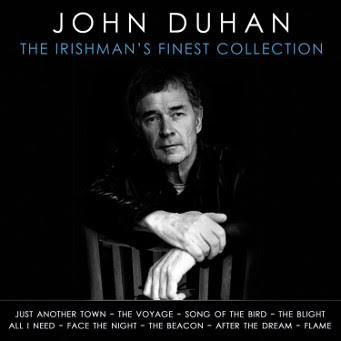
With a certain earnest sentimentality and the Irish brogue of a “folkie” Springsteen, songwriting legend John Duhan’s five decade spanning songbook is for many of his admirers both a heartfelt hymn to life and love and an article of faith.
Despite penning highly popular peaceable anthems and the most romantic of love songs, Duhan’s music has mostly been brought to attention via international Irish icons such as Mary Black and The Dubliners. His most popular hit of all, the timeless Emerald Isle metaphorical seafaring paean The Voyage, was a much loved sentiment to overcoming life’s obstacles together as a couple and family (a recurring theme throughout), much beloved by Duhan’s local community but propelled to global success by Christy Moore, who covered it in 1989.
And so for many this latest collection come compendium musical accompaniment to his autobiography, To The Light (a title taken from the leading track of his album of the same name), is an introduction to the songwriter/performer who originally started out in the 60s as the fifteen year old frontman for the highly successful Irish beat group Granny’s Intentions, before going on to carve out a career as a lone troubadour.
Corresponding to each of the four chapters of that bio, songs have been ‘carefully’ selected from a quartet of his most ‘epic’ albums: Just Another Town, The Voyage, Flame, and, of course, To The Light itself. Self-confessedly never following ‘trends or fashions’, Duhan’s music remains timeless, accompanied as it is by gentle oboe, violins, cello, pipes, the accordion and his tender guitar. There is some room however for modernity, with the subtlest of technological advancements allowed to create synthesized atmospheres and melodies when wanted.
Following a toiled life story, it makes perfect sense to start at the beginning, paying homage to the town of his birth, Limerick. Featuring a diorama cast of locals and scenes that have obviously touched and been lived by its author, Duhan muses that his town is “just another town” like any other, but it’s the first of two occasions to include lyrics that reference his old dad – lyrically etched as a character, singing in baritone, ‘with the emphasis on the ‘bar’’ – on the track of the same name and on the rousing Don’t Give Up Till It’s Over, and paints a fond picture of home.
All the cornerstones of the family and the touchstones of a life well lived are drawn upon for material, including the offering of a steady hand of assurance to both his teenage daughter – in the middle of some tumult on Your Sure Hand – and to his son Kevin – on the immensity of the great unknown and our place in the scheme of things pondering Face The Night. There’s a coo-like bowed tribute to his mum in the form of a charming reminder from the past on Song Of the Bird; a tale of when Duhan and his Mum nursed an injured bird back to life, offering hope and a fond memory of his mum when she sadly passed away.
Through it all, from meandering family rifts to stargazing philosophically, there’s a deep sense of faith and the tender gesture of overcoming adversity. Mostly set in the here and now, though musically transcending any specific timeline, the only song that deviates from this is The Blight. A sad saga about the fatal disease that infected and destroyed as a consequence so many potato harvests in Ireland, known by its Latin name as Phytophthora infestans but named ‘the Blight’ by those communities it devastated, this obviously emotionally aching chapter from the Island’s history is turned into a tale of death and survival on the ‘blight’ riddled toiled fields and lands by Duhan, but it could so easily be an ode to the hardships of eking out substance on the American frontier as well.
A perfectly pleasant guide to one of Ireland’s greatest living songwriters – who it must be said is also pretty deft and handy with the guitar too – Duhan’s Finest Collection gently explores his adroit magic and sincerity over time, and will remain one of the best encapsulations of his craft for years to come.
Brickwork Lizards ‘Haneen’ Available Now
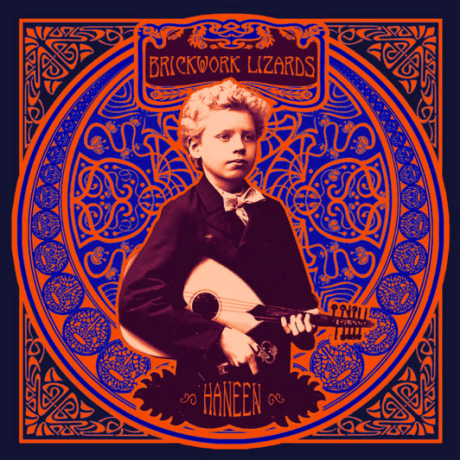
A beneficial creative exchange of musical backgrounds that blossomed from a chance meeting between Oxford stalwart Tom O’ Hawk and the Egyptian vocalist and oud player Tarik Beshir – of the town’s Arabic ensemble Oxford Maqam – into the fusion, the Brickwork Lizards, sprung from a mutual love for the 1930s harmony group The Ink Spots, but also a yearning for a, mostly, lost past.
Nostalgic reverberations from both the exotic Ottoman Empire of yore and 1920s English dancehalls seamlessly elope off together to create something fairly unique and congruous. This second LP to date, Haneen, is an often joyful bound across time, soaking up lines, melodies, riffs and the atmosphere of a shellac scratchy tea dance one minute, a lavishly decorated, carpeted seraglio the next.
The very definition of that album title in Arabic describes a longing sense of the past. And so timelines align as the two distinct backgrounds of the group’s founders harmonize with surprising results. You will for example hear a Tim Westwood style late night radio host introduce a wartime blitz era ballroom romantic crooned lullaby of sentimental assurance (Old Fashioned Song) and a creeping transformation of a traditional 16th/17th century ‘hanging song’ that takes in both the atavistic bucolic of merry ole England but also features an air of Latin American (The Hanging Tune).
Better when they evoke and redeem the exotic – reclaiming almost forgotten Ottoman pieces Hijaz Zeybek and Hijaz Mandira: the prefix alluding to an eclectic transformation that takes these traditional encapsulations out of their epoch into something more electric, from the Silk Road to cocktails at The Ritz – than the bohemian, the Brickwork Lizards most promising excursions are amongst the amorphous sand dunes and bazaars of a vague North Africa and Middle East panoply. Songs such as the mosey wagon trail western metaphor, Come On Home, – which as a tinge of White Album McCartney about it – and the cornet trumpet nuzzled cabaret swoon, Queen Of Bohemia, can sound twee and pastiche, but this is made up for with the album’s abundance of zeal and fun at fusing pastures new – Ottoman rap, anyone?!
Sunflowers ‘Castle Spell’ Stolen Body Records, February 9th 2018

In what is proving to be a busy year for the Bristol label Stolen Body Records – we must have featured at least four bands from the label’s ever-expanding roster in the last month alone – we have yet another garage-psych-stoner-doom backbeat propelled slice of international mayhem to wake-up the dead with. In the guise of a Portuguese Cramps embracing The B52s, Moon Duo and Black Lips inside Grandpa Munster’s cloak of Gothic looning, the Sunflowers, despite the name and fiery vigor, lurk in the graveyard of human metaphorical gloom.
Their second album, Castle Spell, is full of fantasy and voodoo, yet throbs, bends and whines with pantomime horror. Tongue-firmly-in-cheek, the girl/boy yahoo, mooning and wooing vocals and tumult backing of scuzz, fuzz, spunk rock and explosive blues suggests some fun. Though in no way does this mean it’s a cartoon imitation or joke, as the group do get very heavy and the lyrics echo a sort of inevitability, an illusion to death, grief and kool-aid enthused destruction.
Tumbling off-kilter on the tangled lunar-hopping, fretwork in space, opener The Siren, we’re introduced to the Sunflowers spikey howling energy, as each track careers and thrashes its way to a destination; be it Link Wray riding the big one down to the Mexican coast on the ole! tremolo-twanged Surfin With The Phantom, or creeping like The Black Angels in Poe’s cemetery on Grieving Tomb. For pure zaniness and what-the-fuck-is-all-that-aboutness, the barking scuzzed A Spasmodic Milkshake features the most bizarre boy/girl exchange of lyrics (“I’m a milkshake don’t disturb me, I don’t want to die!”), and the finale, We Have Always Lived In The Palace, is just…well, weird: a ponderous bass riff stride through the palatial palaces of the mind.
Still, a cracking great album, full of thrills; light and shade dynamics but heavy as fuck, Castle Spell is a real explosive blues, garage thumping, punky doom withering surfin’ cosmic psych blast.
Lukas Creswell-Rost ‘Gone Dreamin’’ Plain Sailing Records, Available Now
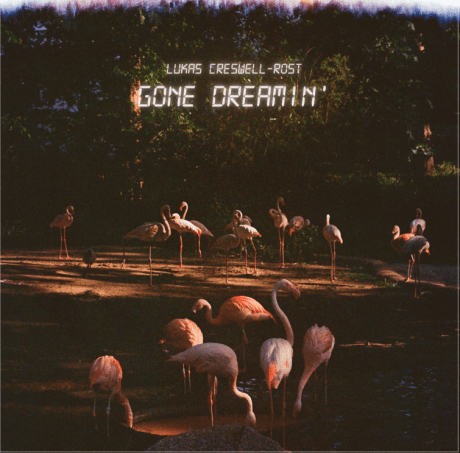
An Extension. A re-contextualization. A transmogrification leading to a concatenate yet new set of songs, developed from the English troubadour Lukas Creswell-Rost‘s 2014 Go Dream songbook, Gone Dreamin’ is a reimagined transformation of that original misanthropic tragedy, culled from Rock’s Back Pages. Taken off into more experimental realms, with ideas, scraps of dialogue, riffs and melodies ‘flying around’, merged with various effects and breaks, these original beautifully vaporous soft rock ballads and cruising songs are given a new lease of life.
Alluding to track titles from Go Dream and sounding at times like the Animal Collective remixing Michael Angelo and Paul McCartney, or 10cc fronted by Michael Farneti, this latest nine-track suite – described by Lukas as: ‘A pop soundscape road trip going through different radio stations that are all haunted by the same voice.’ – builds upon the sentiments and dazed recollected tales of fate, suicide and ego on rock’s highway, but drinks liberally from the woozy poisoned chalice of Kool-aid woe.
Championing Go Dream at the time, becoming a sort of cult album, Lukas has revisited that collection, which weaved such blissful, cursing visages on the fate of Bad Finger, the strange unnerving limbo of a transient life on the road as a touring band in the 70s, the detachment of star power, sipping cocktail aimlessly in Miami, and the tantrums of an air bound miscreant Yngwie Malmsteen. Though amorphous in dipping in and out of that album to conjure up something new, it’s difficult to recognize what bit of which song he’s used, echoed with effects or turned inside out. Gone Dreamin’ has just Cocktails, whilst Go Dream had Ten Dollar Cocktails. Gone Dream also has Patient Pilot, whilst Gone Dreamin’ has Air Rage. Yet neither particularly collate; just the essence and vague linger. Shimmery, shining with synth percussion, sauntering bossa rhythms, troubadour acoustic guitar and echoes of a sun-dappled Laurel Canyon Lukas’ music is now submerged and remodeled with ambient music, hallucinogenic and garish 80s pop production – Here In Hollywood signposts every signature buzz, drum-pad pre-set, vapours and electro boogie sound from that decade, sounding like Nile Rodgers on speed.
Lukas has done a great job too; loosening, bending, crystallizing and stretching his 70s blessed, Pacific Ocean Blue meets Fleetwood Mac and Steely Dan crafted cerebral soft rock songs into something experimentally more colorful and, even, dreamier.
Shorts: curios, oddities, great sounds and tracks floating our orbit this month.
Orouni ‘Uca Pugilator’ Taken from the Somewhere In Dreamland EP
Making a return visit to their 2014 musical travelogue album Grand Tour, this time with singer and flutist Emma Broughton at the helm – the previously admired from afar Anglo-French artist, provider of a rich, effortless timbre, is now a paid-up full time member of the band – the Parisian pop band Orouni recast a quartet of older songs on their latest EP, Somewhere In Dreamland.
The shape of things to come, Emma Broughton features as the lead singer on all of the reconfigured EP’s tracks, Somewhere In Dreamland will act as a bridge of sorts to an upcoming album, released later this year.
Blending world music instrumentation – usually picked up on their travels – with a kind of clever, air-y and breezy melodic style of lilting pop, Orouni glide amorphously between a myriad of French and English influences. Sounding at times like a French-African Belle & Sebastian, or a Breton styled New Pornographers.
Taken from their new EP – a taster if you like – the opening Uca Pugilator is described as ‘a two-chord pop song about Senegalese wrestling’ by the group. Formerly the first track from the group’s Grand Tour, this alternative version features a more up-tempo rhythm guitar pick-me-up – part Bowie, part Kate Bush, part Postcard Records – and of course now features Broughton on lead vocals. Dreamily conjuring up the well-traveled tourist’s observations – imagine Goddard on a road trip with Paul Simon across West Africa – about a Senegalese pugilistic ritual, this beautiful light but sophisticated song promises the most glittering of African adventures. And it’s very, very nice indeed: swimmingly so.
Luxgaze ‘Pretty Eyes’
Vaporizing before our ears the latest electronic track from Toronto-based music producer Luxgaze (Natalie Veronica) is a dreamy instrumental of slow beats, mirror rippling and reverse effects entitled Pretty Eyes. This glass-y abstract trip-hop meets electronica track meanders; swirling gently and indolently in its space like a chilled mystery.
It follows on from a trio of similar previous singles and also acts as a guide towards the upcoming full-length debut LP. Keep a lookout on the site for more details in the future.
https://soundcloud.com/luxgaze/pretty-eyes
Lost Colours ‘One Space Left’ 12th February 2018
Splashing a range of dreamy kaleidoscopic ‘colours’ on their celebratory, almost life-affirming, universal pop psychedelic spectacular One Space Left, the Leeds paint a most ambitious canvas with their debut single. In what will be a busy year going forward for the band, ahead of both their Different Life EP and Talking In Technicolour LP releases (to be released consecutively over the next two months), One Space Left is open invitation to soak up the band’s expansive, even transcendental, ambitions.
Alluding to the Indian subcontinent, this flight of fantasy features the ethereal calls of Rebekah Dobbins (of Nouvelle Vague and The Living Gods Of Haiti fame) drifting over subtle hints of sitar and the echoes of an undulating exotic voyage, as a constant bloom and cycle of drums and stargazing opulence – not a million miles from MGMT or Snowball II – materialize like ether.
A Ty Unwin remix of that same song – one of the three versions on this three-track release that also features an instrumental – strips the song back, sending it towards a dreamscape trance. Unwin reweaves the original threads and vocals, untethering what are already quite float-y and light voices until they become translucent, as samples of those Indian sounds waft in and out of a most vaporous, celestial, atmosphere until reaching the final section of the remix, which introduces sonorous bass and glassy shard percussion.
Lost Colours aim to put ‘huge smiles on peoples faces’ with their cinematic electronic and pop psychedelia, and One Space Left, I can thankfully conform, does just that. I’ll be keeping an ear out and hopefully will bring you more news and a possible review in the near future.
Our Daily Bread 265: U.S. Girls ‘In A Poem Unlimited’
January 23, 2018
ALBUM REVIEW
WORDS: DOMINIC VALVONA

U.S. Girls ‘In A Poem Unlimited’
4AD, 16th February 2018
Featuring most of the Toronto cast of collaborators that propelled the first U.S. Girls release for 4AD records, Half Free, forward, but stretched and lushly flexed into space boogie and other equally eclectic grooves by the city’s multi-limbed collective The Cosmic Range, Meg Remy’s latest cerebral pop revision tones down some of the vibrancy for acerbic, sax-wailing pouted-lips resignation and introversion.
Moving across the border from the USA with her husband and musical collaborator Maximilian Turnbull, aka guitar-slinging maverick Slim Twig, long before Trump reached The White House, Remy has broadened her postmodernist transmogrification of bleeding hearts 60s girl group meets tape-loops signature to accommodate femme fatale disco and funk since making a new home for herself in Canada.
With the emphasis on the dark machismo and chauvinist undercurrents and pains of womanhood that lie beneath the surface of the records created by such groups as The Ronettes and disco artists such as Gloria Ann Taylor – her relatively obscure but sublime plaintive Love Is A Hurting Thing transformed into her own seductive lamentable Window Shades by Remy on her last album -, Remy makes acidic, sometimes bitter ironical commentary on contemporary issues; from personable anecdotal evidence to cross-societal issues: an end to the war machine; an end to the patriarch; an end to the nascent forces of disunity.
Thematically In A Poem Unlimited’s dark meditations and character studies reflect, as Remy puts it, ‘the changed atmospheres that directly precede and follow acts of violence and the desperate strategies used to mitigate its infliction’. Remy however also, and as a consequence, turns on political and spiritual leaders and the lies that they, as much as all of us, tell each other to survive. Though Trump can’t help but draw a miasma over proceedings, its surprisingly the charismatic, lauded over by the left, Obama who meets the ire of a disappointed, expectant but crushed, Remy on the album’s most bouncy weaponized boogie, M.A.H. Suddenly picking up after a somewhat labored start, the third track on this eleven track album, Mad As Hell, reevaluates those two-terms in office with a chic Ronnie Spector fronting Blondie style diatribe. Obviously an original supporter, now pulling apart the enigmatic myth, she lands some solid blows on a number of policies and actions – including an increase in drone strikes – that undermine Obama’s celebrated status (almost considered saintly). A real swell disco preening pop hit with substance, it’s one of the album’s most effective highlights and one of 2018’s best tracks.
Continuing that musical sensibility, the album’s other most vibrant pop standout, the seductively Catholic laced, anecdotal Pearly Gates, reimagines a controversial prime 80s Madonna in a venerated heavenly pout against the dubious and dangerous sexual practice of “pulling out” at the moment of release – another story as told to Remy by a friend, but an all too twisted practice of unprotected sex, the male protagonist boasts: “I’m really good at pulling out.” Twisting religious icons (St. Peter) and the liturgy into a tale of sexual pressure, Remy is joined by fellow Toronto artist James Bayley, who adds a real nice swooning soulful gospel harmony to the metaphorical “pearly gates” hip-hop, disco and pop crossover.
In the pop mood still, Incidental Boogie is a bruising (“to be brutalized means you don’t have to think”) tumult set to a contorting tropical limbering Chewing Gum Annie meets The Cosmic Range glitterball swank, whilst the, often egalitarian but fanciful sentiments utopia, arpeggiator electro glide in neon Poem sounds like a vaporous Moroder era Sparks fronted by Kylie Minogue channeling Olivia Newton John.
The influence of the Toronto Cosmic Range collective – an interstellar shindig facilitated by Matthew ‘Doc’ Dunn, which features both Meg and Turnbull and a host of other musicians from the area, with a sound that stretches from Ash Ra to Sun Ra – can be heard on the album’s more quack-boogie and contorting jazz pumped workouts. The final thrashed out jamming group effort Time grows and grows from funk chop bordering on Broken English style vivid broody 80s disco-pop to no wave.
The momentum of this album fluctuates throughout, and compared to Half Free, takes a lot to bed in and flow – and I’m still not sold on the two skits -, starting as it does with the aching ponderous slow burner Velvet 4 Sale – perhaps Remy’s most dark fantasy yet, imaging (just imagining mind) a role reversal of power, as she implores a girl friend to buy a gun for protection, impressing that the only way to change men is for women to use violence. An unsettling twist played out to a dragging soul fuzz backing track, the song’s central tenant imagines a world where women take up arms against men, though Remy ‘deplores violence’ of course. It’s followed by an equally sensually nuzzling sax and yearned vocal performance, and take on the Plastic Ono Band, Rage Of Plastic, before picking up with the already mentioned M.A.H.
Still an impressive album by an obvious great talent who dares to be provocative where it counts, adding danger and darkness to the mostly bland in comparison pop scene, Remy’s U.S. Girls vehicle – a collaborative effort, though Remy leads and carries it as a solo project – continues to revise past musical influences to produce an objectionable expression of feminist anger and grief. Hardly disarming, In A Poem Unlimited deplores the present hierarchy with a seething checked rage, set to a challenging but melodious soundtrack of yearning no wave, scintillating chic disco, Plastic Ono Band soul, vaporous 80s pop and even jazz. The patriarch comes in for some scathing poetic justice; played out to some great tunes.
Tickling Our Fancy 058: Tune-Yards, Soho Rezanejad, Moonwalks, Spanish Underground Cassette Culture…
January 12, 2018
DOMINIC VALVONA’S ESSENTIAL NEW MUSIC REVIEW ROUNDUP

Welcome back after the Christmas holidays to the inaugural 2018 edition of my TOF reviews; plenty to get through, so without further ado let’s have a quick run through of this month’s releases.
In a blaze of transmogrified 80s inspirations, Merrill Garbus kicks off 2018 with a honed and vibrant new Tune-Yards LP, I Can Feel You Creep Into My Private Life, and Danish artist Soho Rezanejad poses a striking celestial and throbbing distressed staccato shimming opus on gender, roots and futurism politics with her debut LP Six Archetypes. From the new Spanish imprint, Insane Muzak, we have an extensive collection of diy style cassette tape recordings and mayhem from Spain’s burgeoning underground scene of the 80s. Making their debut on Ian Button’s cottage industry Kent label Gare du Nord, Estuary trio The Cold Spells offer up their first incantation style psychedelic and folk long player. With an already packed schedule of new release and bands planned for 2018, Stolen Body Records kick off the year with the space rock garage and shoegaze of Detroit’s Moonwalks, and before they plow forward with a busy roster of new releases, I take a look at the last two albums of 2017 from the Greek ‘boutique’ label, Sound In Silence: a heavenly ascendant ambient drone collection from A Lily and an emotional classical meets Baroque and electronica suite from Jason Sweeney.
Tune-Yards ‘I Can Feel You Creep Into My Private Life’
4AD, 18th January 2018
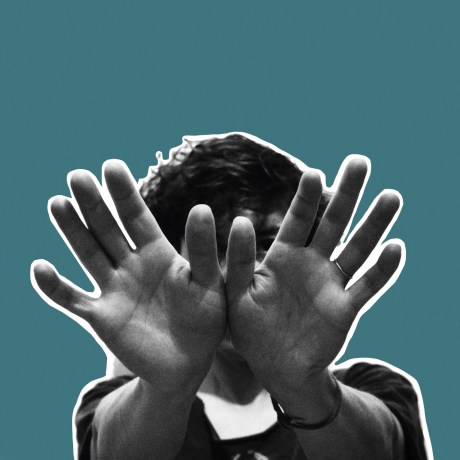
Reassembling the alternating lowercase and capital letter typography of her polygenesis nom de plume for a less rambunctious mnemonic on this latest offering, Merrill Garbus refines and pars down the kaleidoscopic Haitian and bubblegum neo-geo pop of 2015’s Nikki Nack triumph for something more attuned to the post-Trump epoch. Still under the Tune-Yards banner, officially billed as a duo, Garbus is back with her longtime collaborators and foil Nate Brenner on this ruminating dance album.
Also still clattering with a glimmer of those Hispaniola and African rhythm, I Can Feel You Creep Into My Private Life mines that most popular of decades, the 80s, for its inspiration. Highly sophisticated and always inventive Garbus and Brenner bounce amorphously between Chicago House, electro, ESG and the merest hints of Lodger era Bowie – the feel and melody of African Nite Flights instantly springs to mind when listening to Colonizer. Dub scales and ponderous bass guitar, kinetic beats, lamenting trilling saxophone, modern pop R&B and synthesized whip cracking percussion are added to this colourful mix of dynamics.
Vocally and lyrically flexing Garbus’ voice throughout, from lullaby to bordering on gospel, the hot topics of the last two years are inwardly auspice and conveyed via repetitive sloganist repose, lines from personal experience and augers; much of which features a MPC transmogrified robotic vocal effect – Garbus says this is to counter the sincerity, though it adds an often warbled warped reverb and manipulation (trapped in the machine) to her voice, it odes little to diminish the emotional pull and anger.
Race, politics, ‘intersectional feminism’, and environmental concerns – a very apt burning California analogy appears on the nursery rhyme damnation ABC 123 – are all run through the vibrant, soulful electro fantasia of Tune-Yards most psychedelic pop signature. Clever, sharp, indicative of a weary worried section of outsider, I Can Feel You Creep Into My Private Life sounds like Grace Jones mixing it up with Deerhunter, St.Vincent and the LCD Soundsystem at the foot of Trump Towers.
V/A ‘Golpea Tu Cerebro: Spanish Underground Cassette Culture 1980 – 1988’
Insane Muzak, 15th January 2018
‘Rock music is dead. It’s absolutely repulsive.’ – Arturo Lanz (Disco Actualidad) 1981.
Unleashed in the dying embers of Franco’s dictatorial epoch, Spain’s generation X screamed and riled with an unchecked geyser like gush of industrial, avant-garde, noise and lo fi analogue electronica experimental defiance. Still confined to the outsiders underground status, Spain’s new guard, inspired by the punk and post developments of the UK and especially – as you’ll hear aped throughout this collection – Cabaret Voltaire, Psychic TV, Throbbing Gristle and SPK, let loose with a torrid of primal, often maniacal, and extreme sonic and vocal transmogrifications.
Set into motion by early pioneers of the scene such as Esplendor Geométrico (from Madrid) whose first single in 1981 and ‘fabled’ EGO 1 cassette release from ‘82 are both considered worthy exponents and torchbearers for the underground scene, a golden period is documented by Alex Carretero of Guerssen Records in a generous – if exhausting and challenging an experience – double album set; complete with scholarly liner notes and research.
Honing in on the cassette tape phenomenon especially, the platform medium of choice for a generation with scant resources any only the most basics of recording equipment, Carretero’s choice favourites track the key developments in a diy scene originally spread via fanzines and the burgeoning ‘free’ radio stations that began to pop up in the aftermath of Spain’s fascistic past.
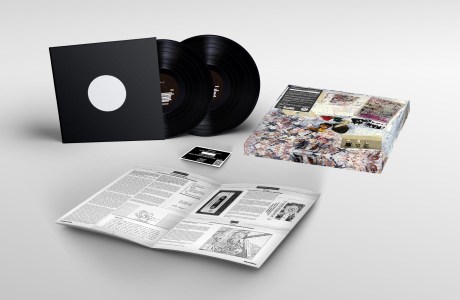
Imbued by both Spain’s instigation of Surrealism, and to an extent its predecessor Dadaism, and by George Maciunas’ ludicrous Fluxus movement of 60s/70s America, including composers Nam June Paik and George Brecht, the cassette kids – and many of the artists behind these tracks were just that when they started out – channeled the absurd, the madness, into their political, often hostile, sound manipulations.
Be warned. Many of these tracks can test the patience: my neighbours must have thought I was torturing some poor screaming unfortunates next door, such is the agonizing distressed screams that feature heavily in these uncompromising mind fucks.
Fucked-up reel-to-reel and squealing tape manipulations abound as abstract white noise and obscured voices bark, pant, shrill and cry for help from beyond the void (check out an extract from Brigada Nadie’s Sin Título and Bulbo Raquídeo’s Cuando Me Entra El Teléle for starters – the translation of the later offering a surreal metaphorical description, ‘when the telephone enters me’).
Strangulated daemonic entities squeal in terrifying reverb madness (Línea Táctica Ambient Music For Empty Congress), a Tangerine Dream alien invasion force oscillates in orbit above Earth (Iéximal Jélimite La Noche De Las Vísceras Palpitantes), and a primal yodeling Tarzan is devoured by his own companions (ZusammenWachsen Sin Títule) on what is an often harrowing mix of experimental pain and lunacy.
Constantly fuzzy and distorted, there are however the odd signs of relief as Casio keyboard melodies, Kosmische style drones and swells and post-punk riffs prop up: for example, Oh-Casio-Ón (as the moniker suggests) switch on the Yellow Magic Orchestra accompaniment preset on Anuncios Pur Palabras, and El Coleccionista De Poliedros scrape together cutlery and what sounds like a churning washing machine drum to produce a Stone Age techno beat on Golpea Tu Cerebro. There’s even the tinkling of a transmogrified piano, a slurred and speeded-up Flamenco song and banshee singing hidden in amongst the gabbling tape spool fuckery.
From the primordial soup to the paranormal, the industrial to hallucinogenic. The pummeling punishment of a pneumatic drill to white noise ambience, there’s a constant reverberating atmosphere of distress and forbade; a sonic Guernica, a political howl from deep transduced via homemade equipment on the cheapest of mediums.
The inaugural release on Alex Carretero’s (appropriately named) new label, this extensive collection shines a fanzine style obsessive light on the Spanish underground, illuminating one of the country’s most avant-garde envelope-pushing decades of musical exploration and sonic pain. Not for the faint of heart.
The Cold Spells ‘S/T’
Gare du Nord, 2nd February 2018
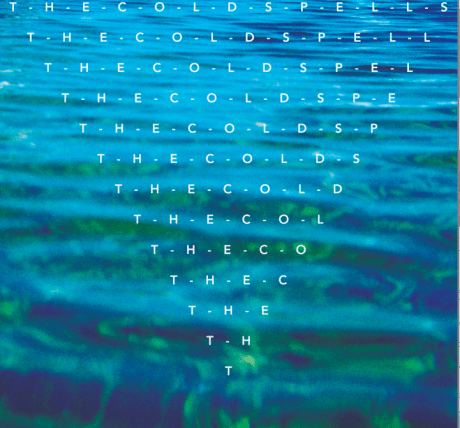
Strange bucolic manifestations linger on the outskirts that divide East London and the border of Essex; the bedroom pastoral psychedelic troupe The Cold Spells, the latest group of Estuary dwellers to join Ian Button’s Kent label Gare du Nord, lurk on the edges like ghosts looking in.
Not so much a reference to weather fronts as an illusion to magic, the Morse code styled typography structured to resemble a traditional ‘Abracadabra’ incantation. Esoterically gentle and wistful, the trio’s debut long player is a gauze-y organic and ambiguous (to a point) affair of undulating ‘moss covered’ circuitry, folk, quintessential English psych, paisley patterned hallucinogens and Kosmische.
Communing with the ether, connecting with the psychogeography of their chosen environment – from the soft Wiccan with forebode travail of Thomswood Hill to the alluded to abandoned mental hospital waste ground near Hainault -, a host of spirits tune in and out of the continuous, though (as we’re told) not in a linear order, flowing suite of laudanum imbued Victoriana lyricism and Beatles-esque melody.
At any one time you can expect to hear not only the warping reversal effects and Magical Mystery Tour and transduced Eleanor Rigby lonely lament musicality of The Beatles but also shades of Nico, Robert Wyatt, Kaleidoscope, Shirley Collins, Cluster and Martin Carthy – The Ghosts Of Them What Didn’t Make It sounds like a WWI Western Front Jona Lewie.
Meanderingly evoking the age old themes of death, love and everything via the 60s halcyon embrace of Lewis Carroll and his strange acid dazed literary chums, a “painted wooden horse” both resembles the magical Freudian symbolism of Leonora Carrington’s children’s rocking horse and the Trojan tragedy Greek gift horse as a metaphor for escaping pressures and misunderstanding: mounting a most sad immobile steed, going nowhere.
As I’ve already stated, The Cold Spells is a quintessential English record, with its daemonic countryside – a place of beauty but atavistic surreal dangers and magic too – and seafaring rich tapestry of analogy. Channeling an age of ghostly memories, the ancestors inhabit the band’s present to address the here and now concerns of a troubled, unstable world. A most brilliant, magical if troubled album.
Moonwalks ‘In Light (The Scales In The Frame)’
Stolen Body Records, January 26th 2018

At least geographically close to the spirit of the Motor City, if generations apart, Detroit’s Moonwalks brood in the shadows of the counterculture doyens that made it such an infamous breeding ground for snarling attitude garage, psych and acid rock in the 60s and early 70s.
Transitioning, so we’re told, from ad hoc abandon warehouse performances as a diy glam psych rock troupe to experimental space rock stoners, spiraling in a vaporous gauzy vortex of 80s British Gothic and acid shoegaze influences, the Moonwalks make a certain progression on their second full length album, In Light.
Throwing up a wall of multilayered, almost continuous, twisting reverb and phaser effect guitars and motorik to ritualistic totem heavy drumming the feel of this, the group’s first international release, is that of a controlled interstellar maelstrom. Taking flight on the grinding trebly oscillating opener, A Little Touch Of Gravity, the lunar imbued group head into a musical vacuum of Hawkwind space rock influences. But by the Cultish esoteric Dust Is Magic we’re plunged dreamily into BRMC or The Black Angels on a Scorpio Rising kick territory.
Sometimes they sound like a black magic rites Byrds and at others like a doomed The Glass Family on a bum ride. Their curtain call, The Joy Of Geraniums, is the most odd vignette of all; taking the Moonwalks into a whistling led peyote-induced trip to the Mojave Desert.
Vocally malaise with only the odd lyric picked out by myself, the voices wafts between Siouxsie Sioux, Bauhaus’ Peter Murphy and Slowdive’s Rachel Goswell. Of course it fits the nebulous cosmic doom and dreamy psych style of the group perfectly, ambiguous, drifting through magical rites and petulant as it is.
Bringing one of Detroit’s burgeoning underground acts, hopefully, to a wider audience outside their home state, the most brilliant Bristol label Stolen Body Records kick off the year on a high with another worthy addition to their roster. I’ll be keeping an eye on the band’s progress for sure.
A Lily ‘Ten Drones On Cassette’
Sweeney ‘Middle Ages’
Both available now through Sound In Silence
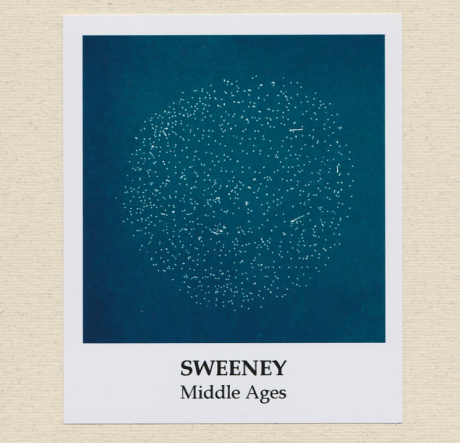
From the fag end of 2017 a pair of cinematic ambient suites and emotionally yearned songs from the collectables boutique Athens label, Sound In Silence.
The purveyors of limited edition experiments and works of sonic art, the Greek label’s roster of artists has recently been boosted by the addition of the Brighton based musician James Vella, better known as A Lily. A member of the post-rock outfit Yndi Halda, Vella has also carved out a name for himself producing a mix of ambient, folktronica and classical releases for a myriad of labels, including Dynamophone, Fierce Panda and Love Thy Neighbour.
Navigating solo into heavenly ambient spheres, Vella’s first album for the label (his first full length record since 2011) is a subtle minimalist collection of cinematic drones that ascend and ebb between the mysterious and ethereal. Each track – inspired by or named after a specific person – on this cassette tape conceptualized album serenely hovers above the clouds. Atmospherically encircling smoky valleys (Hildur) or hauntingly mimicking angelic choral breaths (Jas), Vella’s sonic imaginings are mostly majestic, spiraling in a dappled intriguing light. There are however slightly denser evocations and signs of alien forbade: for instance, the otherworldly tubular and humming gateway to a parallel dimension soundtrack, Miles, and the Zeppelin engine leviathan gliding Konstantin.
A collection of pulchritude drone currents with ascendant and subtle gravitas, Ten Drones On Cassette is surprisingly melodic in places. Neither warm nor cold, but just right, it is a quality ambient experience, and cinematic in scope. Limited, as are all Sound In Silence releases, to only 200 handmade and hand-numbered copies – better than its original release, confined to just one copy of each track on a separate cassette – you can thankfully access it via the label’s Bandcamp page. And it rightly deserves a wider audience.
Complimentary but quite different, the second release from the label is a neo-soul classical tumult of emotional suffrage and mythical yearning love from the Adelaide musician, interactive artist and composer Jason Sweeney.
Recording for the last two decades under a stream of solo guises (Panoptique Electrical, Simpática) and with friends in various groups (far too many to name, but includes Pretty Boy Crossover, Sweet William and Par Avion), Sweeney pours his heart out, making use of his back catalogue and wider projects producing work for galleries and theatre, on his latest romantic heart-wrenching album, Middle Ages. As the title suggests – though could also be a reference to a middle age crisis – this album features a sort of Medieval trace of the choral; a hymn-like venerated beauty of yore. You could say it had a timeless quality, blending as it does the classical with subtle electronica elements, including misty and peaceable synth.
With collaborators Jed Palmer and Zoë Barry providing plaintive, accentuate and pining string arrangements (though they both also offer bass, guitar and accordion accompaniment) to Sweeney’s elegant melodic piano and mournful, Antony Hegarty meets James Blake, vocals, there’s a real elegiac quality to this mix of suffused Baroque poetry and sophisticated dramatic malady.
Thematically an album about men, or rather the spurned or requited love for them, but also a commentary on man’s place in the world, both old and contemporary, from birth to eventual death – check the morbidly curious full-circle-is-complete leitmotif of the curtain call, Burial. Beautifully sung, Sweeney exudes a sort of worshipped love for the Man Of Dreams on one of the album’s most tender enchanting paeans: Sweeney’s object of affection conjurer’s up a Greek warrior from the side of an earthenware vase. A love carried across an ancient timeline, there’s Talk Talk like odes to goddesses (Oh Goddess), Scott Walkeresque poetry (End Of Men) and swelling orchestral chamber pop diorama (Night At Spirit Lake).
Tender and fraught, moving and at times deeply sad, Middle Ages is a mature literary rich and mythological cerebral highlight from a musician at the top of his game.
Soho Rezanejad ‘Six Archetypes’
Silicone Records, 19th January 2018

Impressive in all its striking celestial and throbbing distressed staccato shimmer the experimental Danish artist Soho Rezanejad’s ethereal but equally futurist dystopian ambitious new LP, Six Archetypes, is a bold exploration of identity politics.
Interplaying six of the major character symbols (The Guardian, The Orphan, The Seeker, The Russian, The Idealist, The Prostitute) from the Tarot with Carl Jung’s Psychological writings on the collective and structured reality, Rezanejad weaves the complex contemporary themes of gender liquidity and self-discovery into an amorphous mix of electronica, darkwave and Gothic pop suites.
Though not always audible, Rezanejad’s untethered vocals – vaporous and often ghostly undulating in an aria style – whisper, coo, lull, pant, wrench and shout throughout the shard majestic and multilayered intricate backing of synthesized, programmed, modeled sounds. It’s a striking voice too. At times, such as the beautiful but serious stellar flight of the navigator, Bjork meets Chino Amobi, rotary opener Pilot The Guardian, she sounds like Nico. And at other times, such as the lush Bowie/Sylvian synchronicity, Soon, her vocals sound like a mixture of Jesus Zola and Lykke Li.
Whilst lyrics float, linger and carve through the microtonal melodies and ambient visages, we have to wait until the Actor’s Monologue to hear, in almost clarity, Rezanejad’s stark phaser modulated rapid flowing message of protest: advocating an escape from the restrictions of the body you were born into; that the mind is all; and that normality is suppression.
Fluidity musically as well as lyrically and thematically, there’s echoes of space-age darkness Massive Attack on the “moonless world” cry of the plaint Reptile, scuttling panoramic metallic techno on the heartbeat-based pulse of Intermezzo, and transmorphic avant-jazz on the broody romantic December Song.
Returning to the soil, so to speak, Rezanejad saves her most heartfelt yearn until the end; lovingly but starkly impassioned, singing in her ancestral tongue of Farsi – Rezanejad is the daughter of first generation Iranian immigrants – the National Council Of Resistance Of Iran’s alternative national song in protest against the state’s heavy-handed ideology. With its Middle Eastern exotic forbade and plaintive beauty, Elegie speaks of exile and proves to be a perceptive song to include in these anxious times as the world (well unlikely figures such as Trump at least) watches to see what happens next with the small but significant current demonstrations in the country that began last month in 2017 – calling for jobs and an end to economic failures, a movement of protest has spread throughout Iran and been met with strong resistance; though at the time of writing this review, at least 20 plus protesters had been killed and thousands arrested.
An ambitious debut opus of dark beauty and ominous despair, Six Archetypes is a highly impressive cosmology of gender, roots and futurism politics and narratives, perhaps already a 2018 creative highlight.
Quarterly Playlist: Part Four: U.S. Girls, TootArd, Sparks…
December 18, 2017
CHOICE TRACKS OF 2017: PART FOUR
SELECTION: DOMINIC VALVONA, AYFER SIMMS, MATT OLIVER

Wrapping up 2017 with the final part of our quarterly playlist revue, Matt Oliver, Ayfer Simms and Dominic Valvona have chosen another eclectic genre spanning collection of ‘choice’ tracks from the latter end of the year. From the Golan Heights (TootArd) to the cantons of Switzerland (Ester Poly), from weaponised disco pop (U.S. Girls) to attacking vibrant Curaçao electro protest (Kuenta i Tambú), from Gilbert and Sullivan cerebral pop (Sparks) to unearthed lost golden 60s nuggets (Cymbeline), this last curtain call of the year playlist reflects our tastes and opinions, and reflects what has been an anxious, unsettling twelve months.
Tracklist:
Mark Barrott ‘The Pathways Of Our Lives’
Snapped Ankles ‘Hanging With The Moon’
Kuenta i Tambu ‘E Kalakuna’
TootArd ‘Laissez Passer’
Mustafa Ozkent ‘Kasap’
Los Camaroes ‘Mbembe Ndoman’
The Movers ‘Kansas City’
U.S. Girls ‘Mad As Hell’
Destroyer ‘Cover From The Sun’
Wild Ones ‘Invite Me In’
The Moth Poets ‘The Shabby Gentlemen’
Ester Poly ‘Dienstag’
Alpine Those Myriads ‘Mail Order Doom (WHWGH)’
L’Orange ‘Cooler Than Before’
Danny Watts & Aye Mitch ‘Young & Reckless’
Evidence ‘Jim Dean’
Thavius Beck ‘Akhenaten’
Ocean Wisdom ‘Eye Contact’
Antiheroes, Lee Scott & Salar ‘No Sleep Till Mars’
Psycho & Plastic ‘Boojum’
Alexander Stordiau ‘Fulfilling Eclipse’
Solo Collective: Anne Muller & Alex Stolze ‘Solo? Repeat! (Live)’
Audiac ‘Gospels Unreal’
Bjork ‘Arisen My Senses’
Miles Cooper Seaton ‘I Am That’
Gwyneth Glyn ‘Tanau’
The Cornshed Sisters ‘The Message’
Girl Ray ‘Preacher (Radio Edit)’
Wesley Gonzalez ‘Piece Of Mind’
Cymbeline ‘Strax Nedenfor Tomen’
Martian Subculture ‘Chewing Gum’
John Howard ‘From The Morning’
Sparks ‘I Wish You Were Fun’
Previous Quarterly Playlists from 2017:
Part 3
Part 2
Part 1
CHOICE ALBUMS/EPS OF 2017 PART TWO: M – Z
SELECTION/WORDS: DOMINIC VALVONA, MATT OLIVER and AYFER SIMMS

M – Z : Mazzi & SOUL Purpose to Msafiri Zawose.
Welcome to part two of our mega ‘choice albums/EPs of 2017’ feature. If you haven’t already checked it out, have a good perusal of part one, as the second part is a continuation, carrying on in an alphabetical order from where we last left off.
The decision making process:
Continuing to shy away from fatuous rating systems and ‘best of lists’, the Monolith Cocktailendeavors to offer a more eclectic spread of worthy ‘choice’ picks, with no album dominating or holding any particular numbered position – unlike most of our contemporaries lists stuck with the ridiculous task, for example, of explaining why one album is more deserving of their fatuous number 32 spot than another.
Lined up in alphabetical order then, our favourite new and reissued albums and EPs from 2017 are of course considered to be the most interesting, vibrant and dynamic of the year’s releases. But the best? Granted, to make this list you have to have made some sort of impact, but we’d never suggest these entries were categorically the best albums of 2017, even if that might be true. Instead our list is an indicator of our amorphous tastes, rounding up a year in the life of the Monolith Cocktail, and we hope, introducing you to titles and artists/bands that may have dropped below the radar or got lost in the noise of more commercial better promoted releases.
M.
Mazzi & SOUL Purpose ‘The Building’ (SOUL Purpose)

“A towering B-boy document gives familiar samples new life and piles banks of bricks and mortar beats and rhymes you can always back to do the business”. RnV, Feb 17
The Building by established New Jersey movement Mazzi & SOUL Purpose is built on two levels and ends up a skyscraper, to a specification of telepathy that works from close range or miles away. Mazzi as emcee rhymes his ass off for fifteen tracks without leaving you behind (“love what you’re doing and you’ll never have to work a day in your life”) and not without addressing the state of the world, relationship complexities and being prepared to fight (with the listener playing the twelfth man).
The SOUL Purpose movement begins with a mash-up of every essential hip-hop break known to man, going on to cover cavernous, fusionist swells of sound, B-Boy skippers, deep cover gangster business, and samples found in Boots adverts/Sugababes singles and on Madonna tours. That the album was also helping do its bit for good causes added an extra layer to the album’s complete package status. Matt Oliver
Nicole Mitchell ‘Mandorla Awakening II: Emerging Worlds’ (FPE Records)
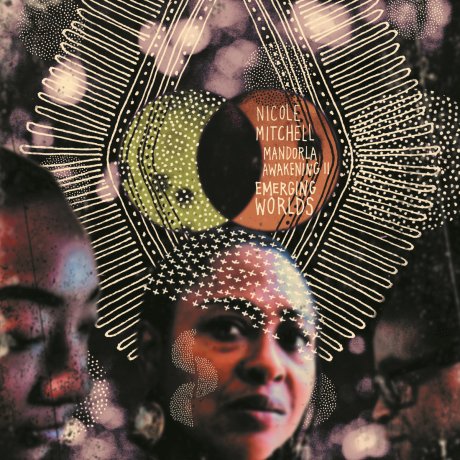
Taken from a 2015 live performance commissioned by the Chicago Museum of Contemporary Art, the erudite American jazz flautist, composer, bandleader, educator, scion of Afrofuturism, former president of Chicago’s Association for the Advancement of Creative Musicians and a founder of The Black Earth Ensemble, Nicole Mitchell’s outstanding Mandorla Awakening II: Emerging Worlds conceptual suite, straddles two evocatively imagined contrasting worlds: the tumult of a patriarchal world, called The World Union, in decay against the egalitarian desire of the advanced utopia called Mandorla, where technology and nature, freedom and tolerance are in ultimate synchronization.
Set in the year 2099 this multimedia project, which includes a short novella, blurs the line between philosophy, mysticism, modern art, science fiction and radical political critique on what is both a diaphanous and moody groundswell soundtrack of contorting confusion and beautiful flute accompanied polygenesis magic. To suggest this album of instrumental peregrinations and odysseys and poetically conscious soulful lectures and passionate, Last Poets meet Pharaoh Sanders, declarations – courtesy of Avery R Young – can be simply classed as a jazz is to ignore how amorphous the musicality of Mitchell and her reconfigured Black Earth Ensemble is in transcending the genre. With an expansive range of instruments and sounds, including Kojiro Umezaki on shakuhachi, Renée Baker on violin, Tomeka Reid on both cello and banjo, Alex Wing on electric guitar and oud, Tatsu Aoki playing bass, shamisen and taiko, and Jovia Armstrong handling percussion, the paradise versus dystopia exoticism of the ‘awakening’ simultaneously evokes orientalism, fantasy, nature, the classical and the atavistic.
At its heart, articulating the nervous but adventurous, pinning but diaphanously elevating characteristics of the narrative, Mitchell’s flute performances are stunning and spiritual throughout, even gracious. And the direction of travel is never quite certain, but always impressive and questioning.
As a frame for this conceptual suite, Mitchell asks: “What would a world look like that is truly egalitarian, with advanced technology that is in tune with nature?” We may never know, but the tumultuous journey towards it certainly sounds magnificently ominous and beautifully experimental. Dominic Valvona
N.
Nolan the Ninja ‘Yen’ (Left of Center)

“Aggressive, eyeballing rhymes to get you bouncing, and beats strategically picking their punches”. RnV, Oct 17
In his bid “to retire before I’m 35” and “trying to see a million before I go to sleep”, Nolan the Ninja absolutely busts a gut to get his rhymes hurrying up his pension plan. Landing haymakers on dosed up vintage Queensbridge and clatters of muddy kicks and snares that can call up a posse from miles, the Detroit dragon slayer also knows that living by an all-or-nothing mindstate means every single syllable has to have the clarity to rightfully shatter ciphers.
Getting Royce 5’9” to guest on Calisthenics is a smart move in seeing whose chest is first to tighten, and Chess is the least civil checkmate recorded as everything threatens to spin of control. The album actually decelerates – or likelier, gives the music a chance to catch up – to show that the go-for-mine Nolan can manage the throttle when soulful drops start clearing the debris. MO
O.
Open Mike Eagle ‘Brick Body Kids Still Daydream’ (Mello Music Group)

“Maintaining his rightful place in the line of ghetto superheroes”. RnV, Aug 17
Two tracks define the multi-talented emcee’s latest intricacies and humour, cosmopolitan accessibility and underground elusiveness. Open Mike Eagle draws himself from his shell by completely rewriting the rules on what it means to be hard in hip-hop on No Selling. Despite the Dark Comedy compère being a nostalgic peacekeeper for a lot of Brick Body…, capable of bringing up an argument about which condiment is king of the kitchen to prove a greater point, the album’s political piece de resistance, My Auntie’s Building, fights for what he believes in with tangible rage, a housing project held close providing the album with an explosive conclusion that might have got lost further up the album sequence.
We disagree that “everything is better when you don’t know nothing” – everyone needs Eagle in their corner – but can certainly vouch for the confirmation of “I promise you, I will never fit in your descriptions”. MO
P.
Hermeto Pascoal ‘Viajando Com O Son (The Lost ’76 Vice-Versa Studio Session)’
(Far Out Recordings)
Thankfully surfacing forty odd years after the fabled ’76 sessions at Rogério Duprat’s São Paulo Vice Versa studio, the extemporized jazz performances of Hermeto Pascoal and his impressive Paulo troupe sound every bit as fresh and dynamic as the day they were recorded.
Held in high esteem, in the upper echelons of experimental traversing exotic jazz pantheon, anointed by a hyperbolic Miles Davis who called him “the most impressive musician in the world” after catching him play live, Pascoal’s transcendent voyages from Brazil have become the stuff of legends. Crate-diggers and jazz or indeed even world music aficionados have always salivated at the prospect of such material being found and released, and the missing Viajando Com O Son session is up there with the most desired.
Unburdened by such trivialities as time and composition, this four track suite shimmers with the celestial as it dreamily saunters through a tropical rainforest groove on the opening Dança do Pajé; quacks and quivers through a percussive bending bright organ peregrination on Mavumvavumpefoco and mysteriously and surreptitiously explores an exotic landscape, tip toeing and lovingly serenaded by magical flutes, on Natal. However, the main, twenty-six minutes long, expansive highlight, Casinha Pequenina, follows on from the previous tracks with similar leitmotifs played out and taken into ever more experimental directions: from Miles Davis to Guru Guru.
The Lost ’76 Vice-Versa Studio Session is a lush tropical jazz odyssey from the Brazilian maverick and genius that’s well worth every penny. DV
Piano Magic ‘Closure’ (Second Language Music)

Calling time on a twenty-year career with one last swansong, the Anglo-French Baroque indie dreamers Piano Magic echo the sentiments and themes of their 2000 song No Closure on their final majestic and profound album, Closure.
Drawn to a despondent melancholy, a most diaphanous one at that, the sagacious founder member and songwriter Glen Johnson is aided in his last ever enterprise by Franck Alba (guitars), Jerome Tcherneyan (drums, percussion), Alasdair Steer (bass) and the band’s original drummer from their debut gig at the infamous Wag Club, Paul Tornbohm, now providing keyboards. Wounded and troubled as ever by the lingering traces and ghosts of past relationships and liaisons, Johnson’s resigned poetics attempt to meet head-on those feelings he just can’t seem to lay to rest: as Johnson calls it, the “mythical formal conclusion”, the need to “move on” from broken relationships is not so easy. And so he croons, “Let’s get this thing sewn up” on the Morricone meets Ry Cooder cinematic title track, knowing full well that “…you never get closure.” The supernatural echoes of a lost love, channeled through a dusty answering machine message séance, on Landline leave the singer’s voice paled and weakened; lamenting loss form the far side of the ether. Marooned as a passive onlooker to the goings-on in the backstreets of his southeast London neighbourhood, a voyeuristic, removed Johnson (in Talk Talk mode) vanishes almost completely before our very ears. The song’s sad lyrics it must be said are a most beautiful kind of misery.
Magnificent in their despair, the musicianship poised, purposeful and subtly stirring, Piano Magic’s last ever fling is one of the band’s most accomplished, and definitely one to savour. As near perfect as any Piano Magic suite can be, Closure proves that you can perhaps after all find a satisfactory ending. DV
R.
Reverse Engineer ‘Elusive Geometry’ (Floored Music)
Both in the moniker by which the Edinburgh-based ‘sonic experimentalist’ Dave House is known by, and deduced from the title of his latest album, Elusive Geometry, we can view the sound-artist’s music as a restructuring of sounds and mechanics.
House unravels, strips and inverts his apparatus of field recordings and sampled instruments to reconstruct new, often mysterious and at times foreboding soundscapes; some of which recall Jon Hassell’s Fourth World Musics explorations: a trace of the Javanese or Malay can be heard like a veil hanging over the uneasy densely packed traverse of cascading crystal droplets, marimba and tubular echoed Proto, and a similar, familiar yet obscured sense of place can be heard on the bamboo shuttling Insider, which also features the bobbing and dipped percussion and tablas of sound-designer and producer Pete Vilk.
A transformation of House’s themes of ‘transition, self (re)discovery and moving on’, the precise chemistry of his compositions and use of collaborators – the already mentioned Vilk is joined by the jazz vocalist Matty Eeles, harpist Esther Swift and BAFTA award-winning cellist Atzi Muramatsu – sends these explorations off into numerous nuanced, but untethered, atmospheres. Masked looming leviathans, honked saxophone like probes, coils and springs, stone and vegetation, the odd guitar strike drift over or interweave through sophisticated minimalist beats and breaks – the most abstract and discordant drum break of which features on the hallucinatory Decoherence -, with the mood fluctuating between both controlled uncertainty and more deconstructive chaos.
Elusive Geometry will tease out and reveal its textures and intricacies slowly, each listen drawing your attention to some other interesting interplay and sparse sound. House has in short created a brilliant album of thoughtful, moody transitions and discovery. DV
S.
Miles Cooper Seaton ‘Phases In Exile’ (Ascension Hall Recordings)
This music is a cinematic poetic recitation, an eloquent art object; sticking to the blurry lines of your shadow while you float through this existence, this street, this town-deserted-or this day, mundane. That dreamy music with the aura of a long lost ocean is the sound of the beyond: you will see, in a cloud, half stunt postures of people trying to deal with mourning. Their eyes wide open yet unsure of how to breathe. And while they exhale, the music pours as if descending from a kind heaven, nested in peace, cooing for drenched figures of the earth.
Miles Cooper Seaton is the ghost who reaches out, entrusting us with a sensation of hope and relief, tranquility, a loophole, mindfulness. Forgive and forget. In the morning dreamers try to get a hold of their visions, trying to catch a glimpse of that faint reality; Miles’ music is lingering too. It tinkles and echoes with a slowness. This is how the rhythm goes, lingering among a field of green, yellow barns, with an horizon of blue and grey shades, some drops sweep the face of a child who understands it all. The clamorous pearls are just from the fierce-y wind. Inside he is all right. The album is dense and tortured. Inside he is all right; the child has grown, and given us these notes. Ayfer Simms
Sentidor ‘Am-Par-Sis’ (Sounds And Colours)
A most congruous if challenging futuristic Rio de Janeiro psychogeography remix of sounds and ideas, built around the transformed cut-up samples and influence of one of Rio’s most famous sons, Tom Jobim, and his post-bossa nova peak leftfield experiment Passarim, fellow compatriot and burgeoning experimental music star João Carvalho creates one of the year’s most haunting and magnificent lush ambient suites, Am-Par-Sis.
Synonymous and celebrated for bringing bossa nova to the world, Jobim’s explorations outside the genre had gone largely unnoticed. Under his alter ego, Sentidor, Carvalho sheds new light on the legendary artist’s innovative experiments whilst also drawing on the drone, ambient, trance, funk carioca, classical and plunderphonics styles to create a uncertain multi-textured augur for future generations to ponder over.
On, what is the most traversing of ambient and collage concept albums, he poses a number of questions, such as: How would Jobim’s record be interpreted by a new generation whose connection with the past and the rest of the world has been cut? How would the record be used in creating new rituals? How can art be reorganized and rebuilt democratically? It also questions the very ideas of what constitutes as the public domain in the modern world and whether something sacred should be preserved or rather gather dust and slowly turn into something else.
Via the power of a seamless, amorphous soundtrack of ethereal pulchritude, cascading veiled piano, ether Panda Bear like voices and song, atmospheric manipulations, transmogrified melodies, whispery winds, Neu! boat trips, reversed samples and magic Carvalho sets out to mull over and articulate these questions. DV
Shadow ‘Sweet Sweet Dreams’ (Analog Africa)
For the first time branching out towards the Caribbean Islands, Africa Analog turn their attention to one of Trinidad & Tobago’s most enigmatic music stars, Winston Bailey, better known as Shadow.
Previously marooned on a desert island of obscurity, panned by critics at the time and failing to sale, Bailey’s bouncing scintillating Soca-boogie and Calypso hybrid lovesick dance floor tracks were ahead of their time. Unlike anything coming out of the islands at the time, these often bright, swaying pop love spurned and springy ballads took the island’s sound into the cosmos.
Bailey started out in the mid 70s reinvigorating the Calypso genre, adding a slick production to the atavistic roots sound that made its way across the Atlantic via the slave trade, and giving it panache and a slinky radiating candour. Though originally used as a tool for social commentary, the synonymous rhythm of the Caribbean is channeled into a number of space age love songs. But despite the lamentable aspects, Bailey’s vocals are sunbaked with ripe swoon and lilting soul, fit for the dancefloor.
A missing masterpiece waiting to be (re) discovered, Sweet Sweet Dreams is simply a beautiful pop album. DV
John Sinclair & Youth ‘Beatnik Youth Ambient’ (Ironman Records)
Synonymous for steering and kicking out the jams in his short role as manager of Detroit’s renowned rebel rousing motherfuckers The MC5, renegade poet, scholar, activist and establishment rattler John Sinclair is also remembered for his free radical zeal and dalliances with the law – leading to a short spell in the slammer. Keeping his hand in so to speak, but taking up residency in Amsterdam – a much safer bet -, the beatnik jazz sage continued, and as you can hear on this latest recording, continues, to record and perform in a host of setups with a multitude of contributors and backing bands.
The appropriately (in every sense) entitled Beatnik Youth Ambient mini LP is a foretaste, and as the title implies, ambient treatment version of material from a full-length album, released a couple of months later. The “Youth” of that title refers of course to the Killing Joke bassist turn in-demand producer Martin Glover. Arguably one of the most consistent producers over the last few decades in the UK, Glover, under his Youth alter ego, has taken on more or less most forms of music and worked on both commercial and underground experimental projects. He now provides Sinclair’s “literary synthesis” with a suitable “beatnik ambient” soundtrack: a serialism quartet of turmoil, turbulent jazz and dreamier trance.
Running through a vivid purview of postwar counterculture, bringing to life the energy and excitement that writers such as Kerouac (who gets referenced a lot) captured when seeing the Bebop jazz revolution and its great proponents perform, Sinclair delivers a magical enthusiastic experience on another track, evoking Thelonious Monk’s 1957 LP of the same name, Brilliant Corners. Titans of American beatnik and psychedelic literature lineup, Burroughs, Ginsberg and Neal Cassady (“…had the ability to park a car anywhere”, just one of his talents alongside his status as the “human bridge between the 50s and 60s.”), rubbing shoulders with jazz music’s new guard Lester Young, Byrd and Gillespie; immortalized by Sinclair to “head music” cosmos of jazzy lamenting woe, ghostly squawking and hooting saxophone and swirling mirages.
If anything, Beatnik Youth Ambient leaves the listener pining for a lost age; Sinclair’s evocative prose and delivery lifted (and cradled at times) by Youth’s congruous seething tensions and floaty dream-like production, which enthrall me to once again get stuck in to the “beat generation” and spin those Savoy label jazz totem recordings again. A prompt for the present times, the zeal of the postwar “baby boomers” (those with a soul anyway) counterculture not necessarily translating to generations X, Y and Z, even if it is needed; Sinclair’s language is nevertheless just as powerfully descriptive and energizing now as it was over forty years ago. DV
Širom ‘I Can Be A Clay Snapper’ (tak:til/Glitterbeat)
With an unspecified, but as the name suggests, emphasis on the “tactile”, Glitterbeat Records new imprint label gives a welcome platform to entrancing experimental tonal performances and sonic polygenesis traverses alike. In the latter camp is this Slovenian peregrination suite from the landlocked, Alps nestling country’s visceral sonic conjurors, Širom.
Evoking memories and feelings, both real and imagined, with a soundtrack thick with atavistic connections, the trio of punk and post-rockers turn experimental folk and acoustic instrumental cartographers convey a personal relationship to their homeland, on their second album together under the Širom banner.
Yet whatever the backgrounds, traces of North Africa, the Adriatic and the Middle East, the performances sail scenically through a dreamy otherworldly representation of Slovenia: Oriental, alien and Balkan visions permeate the plucked, malleted, chimed and purposefully played compositions, which subtly and rather cleverly build up complicated layers and various overlapping time signatures during the course of their journey.
Theremin like siren voices drift in and out, enacting the myth and seraph, whilst on the watermill turning Everything I Sow Is Fatal Sun Ra travels with John Cale and Pharaoh Sanders on a pilgrimage to Samarkand. The most recurring sounds however pay testament to the Balkans ghosts. The folkloric stirrings, lulls and yearning of Slovenia’s past bordering both a pan-Europa of migration and grief – stretching back a millennia – are transduced into often haunted vistas and metaphysical passages.
A most impressive and expansive inaugural Balkans travail; different from the previous two releases on this burgeoning new imprint, yet keeping to the tactile, accentuate and imaginative remit, whilst conjuring up mystical new soundscapes. DV
Solo Collective ‘Part One’ (Nonostar)
Gathered together in a congruous union under the Solo Collective umbrella, the Anglo-German partnership of virtuoso performers/composers Anne Müller, Seb Reynolds and Alex Stolze take turns in the spotlight and provide supporting roles with a cast of additional collaborators on the chamber pop meets traversing evocations suite Part One.
An interconnected triangle of familiar themes and musicality, with each musician also individually experimenting and creating their own solo pathway, in their respective field, all three artists have crossed paths and worked together previously on a variety of projects; some of which, in alternative neo-classical stripped versions, appear on this album. For instance, the original pizzicato acoustic-electronic Don’t Try To Be, from the violinist Stolze’s 2016 EP, Mankind Animal, now features Müller’s yearning emphatic cello, and is striped of its synthesizer electronics in favour of woodblock percussion and doleful low bass notes to create a more tragic and sad version.
A showcase for a particularly harmonious partnership of individuals with a pan-Europa vision of collaboration and crossing sublime musical boundaries, Part One – of what I hope will be a continuing venture – proves to be a stirring neo-classical ambient collection of solo and ensemble performances; each artists sharing and pooling their obvious talents to find a common interplay and a bond to create a challenging but mostly beautiful album. DV
Sparks ‘Hippopotamus’ (BMG)
Bombastically pitched as a “comeback” album, unseasonal followers and those not so familiar with the maverick siblings Sparks career may have been under the impression that the much-hyped Hippopotamus marked some kind of return from an imagined sabbatical, a retirement or an emergence from the wilderness. It was nothing of the sort of course, their last official Sparks albums may have been released in 2008 (Exotic Creatures Of The Deep) and 2009 (The Seduction Of Ingmar Bergman), yet they also went on to collaborate with Franz Ferdinand in 2015 for the mighty team-up FFS. Three albums in seven years isn’t bad, considering the rate most groups knock out records these days, and considering Ron Mael is in his early seventies and brother Russell is only a few years behind.
Maybe what the media meant was a return to form. Admittedly – apart from FFS, which made our albums of the year in 2015 – the music hasn’t quite matched the quality of their 70s output or indeed the 2002 triumph Lil’ Beethoven and the 2006 follow-up Hello Young Lovers. Hippopotamus I can thankfully say is very much Sparks at the top of their game.
The Gilbert And Sullivan of cerebral pop music takes the form to ever-new intelligent heights of absurdity and revelation. Daring to merge intellectual ideas and themes into an art form; yet never laborious, condescending or aloof, every song on this latest theatrical rock and pop suite features an infectious melody, satirical but heartfelt clever lyricism and the usual Noel Coward piano witticisms (updated for the modern age of course).
Communicating both the frankly bizarre and the almost insignificant of contemporary foibles (from the middle class anxiety of stylish furniture design, on the Kierkegaard ponders Scandinavian Design, to the difficult to usually rhyme with anything in any song, surreal assortment of metaphorical, or very real, items and figureheads tormenting Russell in his room on the title track), the Mael Brothers frame all their ditties within a melodramatic often plaintive setting of levity.
Minor concertos and pop triumphs abound, as Sparks use the usual assortment of figureheads, including Edith Piaf and an ambiguous French film director auteur, to articulate their feelings on an assortment of theatrical and operatic (the almost aria style domestic imaginings of The Macbeths on the Living With The Macbeths duet) anthems – though of course, Piaf “always said it better”.
Cleverly creating social and political satire and commentary without the rage, finger wagging and virtue signaling, Sparks remain one of the most consistent bands – or duos if you like – in music history; five decades on and still producing epic pop, the likes of which has seldom been equaled. DV
Strange U ‘#LP4080’ (High Focus)

“#LP4080 has a deftness that allows it to be daft; a first class bizarre ride to and from the far side”. Our Daily Bread 234, Feb 17
It’s always fun and games when King Kashmere/The Iguana Man/Lord Rao starts spraying jocular, juvenile sci-fi syllables and delirious, crowd-pleasing hooks at will. When he hits hyperspace, he’s an unstoppable force of nature few can compare to – “you enjoy buying trainers, a person like me enjoys firing lasers” – though his intergalactic court jester act belies the wicked yarns he spins about our alien overlords and fantastical set-plays (environmental health, relationships, politics) that are closer than you think.
Helming a future primitive craft with Dr Zygote, mechanic to an 8-bit jalopy with head knocks and funky splutters aplenty, Strange U float through the cosmos as an entertainingly erratic two-man crew. Despite being recorded in a studio far, far away, LP#4080 has got its head screwed on with attention to the fundamentals – the MC-producer combination, prime beats and rhymes, a concept that works, and a spectacle promising multiple revisits. MO
T.
Tamikrest ‘Kidal’ (Glitterbeat Records)
Still without a homeland, though liberated from their draconian partners, the Tuareg are once again left, as wanderers in their own lands, the unofficial guardians and custodians of the Saharan wilderness. For now only a dream, best realized and protested through music, the rock’n’roll Bedouins Tamikrest emerge once more from the barren landscape with a message of “power and resistance”, on their fourth, equally entrancing, album Kidal. Paying homage to the strategically and spiritually important cultural trading town of the title, the highly-acclaimed (and rightly so) Tamikrest exude both the sadness and suffering of the dispossessed people who cling to the southwestern Saharan hub that is Kidal: a town which has seen its fair share of fighting, fought over, conquered and reconquered over time, it remains a symbolic home to the Tuareg. This is after all the town that nurtured them and where it all began.
Preserving an increasingly endangered ancestral culture and language, Tamikrest’s cause cannot be separated from their music. Yet, rather than protest with bombast or angry rhetoric, they articulate their woes with a poetic, lyrically sauntering cadence. Oasmane Ag Mosa’s earthy lead vocals resonate deeply, even if his timbre maintains a stoic dignified pitch. Backed by Aghaly Ag Mohamedine and Cheick Ag Tiglia on backing and duets, a lulling sweetness transcends, which on occasions adds a certain romanticism to the impassioned struggle. Swaying effortlessly between the meandering and up-tempo, the accentuated dynamics of Mosa and Paul Salvagnac’s entwined, untethered and contoured guitar work, Mohamedine’s “gatherer” Djembe rope-tuned goblet drumming, Nicolas Grupp’s askew backbeats and Tiglia’s smooth, free-roaming bass lines transport the listener to the mystical topography of the desert.
Assiduous, confident and articulate, the musicianship shows not so much a progression as a balance between the meditative and rock’n’roll spirit of the Tuareg musical resistance. Tamikrest are as brilliant as ever musically, and Kidal is, despite its plaintive and lamentable subject woes, a beacon of hope in an ever-darkening world of uncertainty. DV
Tanzania Albinism Collective ‘White African Power’ (Six Degrees Records)

In so many respects a “spiritual follow-up” to the acclaimed producer Ian Brennan’s Grammy Award-nominated Zomba Prison Project and follow-on from the equally evocative and raw Hanoi Masters sessions, White African Power attentively and respectfully draws out the repressed voices of the Albino community in Tanzania. Brennan’s productions often serve as a kind of hands-off form of creative counseling and healing; helping people to overcome trauma, such as the survivors of Pol Pot’s genocide in Cambodia. He’s renowned for being the most inconspicuous of in the field and on location producers, letting the atmosphere and elements, the moment if you like, and even serendipity bleed into the performances he captures for posterity. And the production methodology used for this latest project, recording the songs of the Standing Voice Community of Ukerewe, is no different.
A safe haven, Ukerewe, where Ian travelled to in 2016 to document their plight, is the largest inland island in Africa, only reachable by a four-hour ferry ride. Its community is, hardly surprising, haunted by their experiences. Self-conscious, avoiding eye contact, it proved a difficult task for the producer to encourage his subjects to open up. But open up they did, and the results are often surprisingly melodious, poetic, and diaphanous if raw and emotional. Far from a harrowing catalogue of despair and pity, the 23 recordings on this collection prove illuminating.
Fitting no obvious style, these amorphous performances do however resonate both with the delta blues of Louisiana and the stark, stripped down and earthy blues of South East Asia. Touches of raw African dusty tradition do appear, ascending and descending alongside gospel and soulful voices, naturally echoed, sighed and open-heartedly sung with a pure vulnerability. They’re accompanied either by stark lo fi electric guitar performances, that range from scratchy, straggly proto-punk to slower scrabbly emotive twangs, or an acoustic backing of rubber-band and bottle shaking percussion. Standing out production wise though is the classical – imagine Brahms on harpsichord transferred to East Africa in the 80s – reverberating cradling deep soulful ballad, Never Forget The Killings.
Ian Brennan coaxes another startling, eye opening, set of recordings from the victims of trauma; one that proves every bit as impressive as it does plaintive and sad. The collective will astonish, if not surprise listeners, those suppressed voices, thankfully released and given an international platform, sound emotionally honest and revelatory. DV
Terry ‘Remember’ (Upset The Rhythm)

The disarming world-weary punk and quirky pop touting quartet of Melbourne scenesters, banding together under the ubiquitous Terry moniker, follow up a prolific run of 2016 EPs and their debut LP with another acerbic witted, snappy melodious release of profound disenchantment and wistful “wish fulfillment”.
Continuing with the shared girl/boy dynamic of lulling, placeable idiosyncratic vocals and flexible punk, country and new wave bubblegum backing, Terry look to expand their repertoire on Remember. The combined musical savvy and experiences of band members Amy Hill (of Constant Mongrel and School Of Radiant Living), Al Montfort (UV Race, Dick Diver, Total Control), Zephyr Pavey (Eastlink, Russell St Bombings and also Total Control) and Xanthe White (Mick Harvey, Primo) push the quartet into all kinds of nonchalant mischief. The gang embraces nonplussed French new wave chanteuse vibes on the brilliant breezy, mosey country lilting, Toy Love meets Serge Gainsbourg Take Me To The City (one of the tracks of the summer), and snappy, bouncy indie synth pop on Rio. At their most raucous, rough and ready to tumble, Terry softens the edges of The Damned on both their keystone kops rave-up Start The Tape and spiky frazzling Give Up The Crown.
Suggesting nothing more rebellious than a cheeky smoke behind the bike sheds, the group’s knockabout catchy hooks and charm cloak a personal profound response to the political and personal anxieties and dramas of the times. And they do this with a certain aloof coolness and adroit ear for a great tune, making this 2017’s most melodious and catchy album of knowing pop slanted punk. DV
Vieux Farka Touré ‘Samba’ (Six Degrees Records)

A studio recording with a difference, played out and developed live in front of just fifty lucky people in Saugerties, N.Y., Vieux Farka Touré’s latest album blurs the boundaries between performance and the processes of making an album.
Ever the consummate maestro and backed by an equally accomplished band of musicians, there was some initial apprehension on Touré’s part about allowing an audience into the studio. Though we have the finished product, free of any mistakes, restarts and disagreements, it seems this audience far from unnerving the band, egged it on, with the results sounding effortless and natural. There were overdubs of course and one of the songs was recorded back home in Mali – the calabash driven Ni Negarba. But far from cutting corners or relying on the back catalogue, Touré has fashioned an entirely new songbook of vocal and instrumental material for Samba. Some of which amorphously touches upon unfamiliar influences, including reggae on the unapologetically roots-y swaying Ouaga.
Touré is as the Songhai title of his new album Samba translates, the second son of the late Ali Farka Touré, a doyen of the Mali music scene himself who left an indelible mark. If we expand on the title’s meaning, “Samba” is a byword for “one who never breaks”, “who never runs from threats, who is not afraid”. It is even said that those adorned with the name are “blessed with good luck.” Inspired by his ancestry, imbued with three generations, Touré’s album is suffused with special tributes to his family. Outside the family sphere, Touré confronts both Mali’s recent Jihadist takeover – only stopped and defeated by the intervention of the country’s former colonial masters, France – on the radiantly rippling, chorus of voices, funky blues number Homafu Wawa, and environmental issues on the dexterously nimble-fingered bluesy rock, Nature.
The almost never-ending efflux, the constant lapping waves of textures that Touré plays, which offer a cyclonic bed on which to add the deftest licks, have never sounded so sagacious and free flowing. This ain’t no Saharan Hendrix at work, this is something else entirely, and better for it. This is the devotional, earthy soul of Mali, channeled through a six-string electric guitar. DV
V.
VVV ‘Bozo Boyz’ (VVV)
“The trio take apart prowling club beats powered by the high beams of an 80s sportscar”. RnV, Nov 17
Preceded by Apocalypse Trent poking fun yet completely understanding modern hip-hop’s rules, the Nottingham trifecta of Vandal Savage, Cappo and Juga-Naut are a heavy rotation of individual voices.
Rhymes and word associations – pop culture, mind’s eye observations, opaque battle bars covered in enough 80s hairspray to tear the ozone layer a new one – jut out at free-flowing, at times unworkable angles, yet are held together by undeniable dope infused with a carried over drop of cheek.
Flicking VVVs at club beats, a slim line 80s synth chassis is rolled out to maximum effect (an evolutionary eye-opener for East Midlands rap fans – this won’t be their usual milk and two sugars). Both chilled and chilling, sonically Bozo Boyz lives an alternate life of soundtracking a slasher movie making a wrestler’s entrance to the ring. One of the more idiosyncratic hip-hop picks on this list, it’s VVV for victory. MO
Various ‘Hidden Musics 4: Abatwa: Why Did We Stop Growing Tall?’
(Glitterbeat Records)
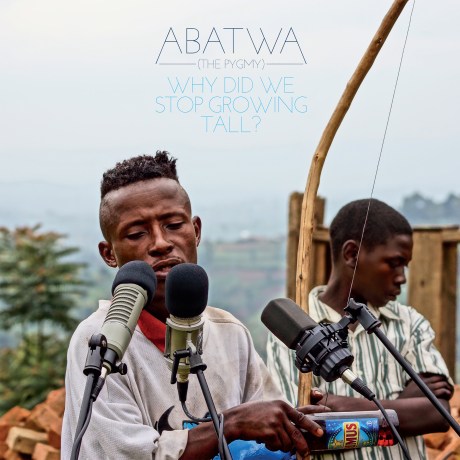
Ian Brennan, yet again, probing the furthest, most inhospitable and outright dangerous places in the world to record marginalized voices, journeys to the post genocide borderlands of Rwanda on the fourth volume of Glitterbeat Records illuminating Hidden Musics series.
Taking the unmarked, haphazard, road (less traveled) to the edges of Rwanda, avoiding the animosity and embers of vengeance that still burn and remain between the country’s minority Tutsis and majority Hutu communities, Brennan visited and recorded for posterity the Abatwa tribe’s seldom heard lament, anger and incredible soulful, if raw, blues.
The Abatwa name remains mostly unknown outside Africa, that’s because, due to their limited growth, we know them better as the ‘Pygmy’. A derogatory name loaded with infamy, yet preferred by the very people it derides, the tribe rather that put-down than (as Brennan puts it) “the official PC mouthful/post-genocidal replacement: The people who were left behind because of the facts of Rwandan history.”
What you get from this community is battery powered electronics and rusty, ramshackle dusty instruments coming together in hybrids that evoke ritual, the ceremonial but equally the blues, soul and hip-hop; all played with an undeniably emotional Rwandan verve and lilt. Make no mistake; this is performance in its most deconstructive raw form. Devoid of embellishments and overbearing production, recorded in situ with only the rudimentary elements and atmosphere for company, and it sounds great. It is nothing short of revelatory; field recordings of hope and recovery created in the face of despair. DV
Various ‘Pop Makossa: The Invasive Dance Beat Of Cameroon 1976-1984’
(Analog Africa)
The latest in a tenure adventure of excavating lost treasures from the African continent; Analog Africa’s main man Samy Ben Redjeb once more digs deep, sifting through a daunting mountain-size pile of records and recordings as he draws the spotlight on Cameroon’s Makossa scene of the 70s and 80s.
Originally the traditional rhythm and funeral dance of Cameroon’s Sawa and Essewé peoples, later transformed in the country’s cities as it collided with everything from merengue and rumba to Highlife and disco, Makossa, which means, “to dance” in the Cameroon Douala language, is a highly loose and adaptable style: as you will hear on this twelve-track collection of hits and rarities from the golden era of pop makossa.
Honing in on the period when makossa rubbed-up against funk and disco, this balmy dance beat compilation’s pulse is luminous and fluid and most importantly, funky. This is in major part down to some of the most smooth, bouncing, slick and relaxed but constantly busy of bass lines – Cameroon’s bass players rightly revered as among the best throughout the world – and the constantly shuffling hi-hats, tom rolls and splashing drums.
Every bit as “invasive”(and infectious) as the extended album title suggests, the classy pop massoka sound – once considered the unofficial national sound of Cameroon – is waiting to be rediscovered and let loose once again. In what seems like a recent shift in direction at the Analog Africa label, with the emphasis on the late 70s and 80s – from last year’s Space Echo collection from Cape Verde to reissues of Trinidad & Tobago star Shadow’s Sweet Sweet Dreams and the Benin solo singer Vincent Ahehehinnou’s Best Woman – this latest survey continues to unearth musical treats from the same era, albeit in different geographical settings, yet sharing many of the same production and trends traits. In short, another classy sun-basking exposé of the most sauntering, scintillating African pop from one of the top labels in the field. DV
Vukovar ‘Puritan’ (The Brutalist House)
Following in the tradition of their three-syllable sloganist album titles, Vukovar’s fourth LP drums home the Puritan mantra and analogies; a cleansing if you will of the status quo, a year zero, and perhaps also a return to the roots and communal deliverance of protest in music – not, I hope, the ‘puritanical’ steeple hat and buckle shoe wearing bible bashing of zealots, burning heretics at the stake, nor the bloody zeal of so many badly turned-out revolutions that end up creating just as terrible a reign of tyranny. The only fires here are the metaphorical kind; a funeral pyre of mediocrity, a bonfire of vanities, the-bland-leading-the-bland towards a conversion of raw intensity, dangerous, shamanistic performed anarchistic rock’n’roll: well I think that’s the idea.
As the band’s previous album, Fornication showed, Vukovar have at least listened to many of the right bands; released at the start of the year, this amorphous, transmogrified covers style collection featured reconfigured homages to a host of iconic luminaries including David Sylvian, Coil, The Monks, The Birthday Party and Neu!. Cultish in a manner, the band’s influences and manifesto statements of propaganda intent, plus allusions to cultural regicidal and ability to shrink from publicity – even self-sabotage any signs of success or promotion – suggests a band that takes itself very seriously. Yet even with countless references to history’s outsiders, philosophers, discontent mavericks, revolutionaries and demons throughout their previous trio of albums, and the elegiac resignation that shadows them, they waltz sublimely (for a majority of the time), rather than rage in romanticized contempt, as Olympus slowly grumbles.
Between the Gothic skulking and crystalline rays of shared 80s synth new romanticism Vukovar wander transfixed in a nightmare state of both despair and indolent antagonism; with stark lyrics more descriptively visceral than forced down the listener’s throat. Donning the vestiges of the Puritan, the front man, an amalgamation vocally of both Ian Curtis and Bernard Sumner, sets the scene (“I am a sinful man, yet an honest man”) to a backing track of slung low growled bass, Jesus and Mary Chain’s bastardize Spector drum death knells and the miasma threat of Nick Cave’s Bad Seeds on the opening inflicted and gradually ascendant Nietzsche propound Übermensch.
The most complete and best produced encapsulation of Vukovar’s sound and venom yet, balancing both their experimental raw and ritualistic live performances with melancholic post-punk, and even brooding new romanticism pop, Puritan offers a travail through the dirge and gloom of our (end) times with all its sinful and cleansing, often biblical, connotations and language. Though it also often sounds like some kind of personal tortured Nick Cave love requiem, unfolding in the midst of chaos, looking over the edge into the abyss, the heretics taking over the asylum. DV
Y.
Your Old Droog ‘Packs’ (Fat Beats)

“Working a number of hustles and stakes-high dice games, with a penchant for humour and words to the wise on a varied album with no time to waste”. RnV, Mar 17
Your Old Droog’s crowning glory pays the utmost attention to album constructs. Packs is 11 tracks all vying to be the jump-off, featuring skits that help rather than hinder, and guests like Danny Brown and Edan giving the action a hot cameo.
In running his own Grand Theft Auto route through New York (if there’s ever a Baby Driver sequel, or Marvel need a new street hero, surely Droog’s your man), storylines find time to dispense worldly wisdom that you’d be foolish to leave unheeded, and punchlines show that firing from that borderline meh mouth of his, is always smarter than letting off a few from the trigger finger. A 30 minute car chase always in complete control, cool with wrenching the steering wheel off-road before resuming its day-to-day cruising, and whose crucially compact composition makes it a red letter day for the rewind button. The Nas comparisons are now ancient history. MO
Z.
Msafiri Zawose ‘Uhamiaji’ (Soundway Records)
Handing on the baton, so to speak, to another generation, the late great Gogo Tanzanian musician Hukwe Zawose’s equally talented son Msafiri takes up the reigns on his latest album for Soundway Records, Uhamiaji.
From the heartlands of Tanzania, Msafiri in collaboration with the much-respected Santuri platform – enablers and promoters for a much neglected East African music scene – and SoundThread’s Sam Jones has created a vibrant and sauntering, drifting adventure in dub and Afrofuturism jazz from the gogo traditions. Building to a degree on his father’s own 2002 experimental collaboration with ambient electronica producer Michael Brook, on the album Assembly, Msafiri takes his heritage into new and expansive sonic territories whilst intrinsically sounding African.
Buzzy, bright, hypnotic and at times trickling like watery vibes, this amorphous album is an odyssey of the lilting, danceable, meditative and peaceable. A peregrination of mystery, a journey across acoustic and electric frontiers musically and vocally, Uhamiaji is both a most beautiful and imaginative album. DV
Our Choice Albums/EPs of 2017: Part One: Yazz Ahmed to Al Lover Meets Cairo Liberation Front
December 4, 2017
CHOICE ALBUMS/EPS OF 2017 PART ONE: A – L
SELECTION/WORDS: DOMINIC VALVONA & MATT OLIVER

The decision making process:
Continuing to shy away from fatuous rating systems and ‘best of lists’, the Monolith Cocktail endeavors to offer a more eclectic spread of worthy ‘choice’ picks, with no album dominating or holding any particular numbered position – unlike most of our contemporaries lists stuck with the ridiculous task, for example, of explaining why one album is more deserving of their fatuous number 32 spot than another.
Lined up in alphabetical order then, our favourite new and reissued albums and EPs from 2017 are of course considered to be the most interesting, vibrant and dynamic of the year’s releases. But the best? Granted, to make this list you have to have made some sort of impact, but we’d never suggest these entries were categorically the best albums of 2017, even if that might be true. Instead our list is an indicator of our amorphous tastes, rounding up a year in the life of the Monolith Cocktail, and we hope, introducing you to titles and artists/bands that may have dropped below the radar or got lost in the noise of more commercial better promoted releases.
The Context: An Age Of Hysteria. Dominic Valvona
The silent majority to the wrath and often derision of a mouthy, louder, minority carried on defying and surprising the establishment on both sides of the political divide in 2017. The ‘outraged’ of Tunbridge Wells in the letters pages of yore has been replaced with the ‘outraged of social media’, as the year’s unofficial collective anxious end times tagline #losingourshit replaces moderation, distance and analyses: comment before taking it in fully and reading without prejudice.
Context is thrown out the window when the instant gratification of outrage surfaces.
Despite the rolling news miasma of events feeding into the social media vacuum that has now, more or less, become impossible to ignore or leave; despite the encroachment on every facet of our daily lives by technology and the progressive zealots augurs of a complete matrix like synchronization with our gadgets and tech, the fact that people can be bothered to release music on vinyl still, let alone cassette tapes, is heartening, even if the naysayers bemoan that it’s a gimmick, mostly repackaging old material and reissues or an excuse to charge a lot of money for the tactile and physical. The death of everything physical – from books to newspapers, vinyl to CDs – has always been exaggerated; fueled in hope more than actual demand by the camarilla of Silicon Valley.
Still, streaming is fast becoming the most popular model, even though hardly anyone is benefitting – even Spotify, whose business model is particularly hostile towards the artist, is branching out into other industries, including makeup, because though their value is constantly marketed as high, they have failed to make a profit. Soundcloud, running ads now, is constantly teetering on the edge of folding. And the high expectations, glossy launch of the artist love-in Tidal has failed likewise in changing that model, currently languishing way behind its rivals. Bandcamp meanwhile remains the best choice for artists at present, and gives more control to those who use it. Yet, Bandcamp have recently moved into marketing those who frequent its site, writing roundups and blog posts, moving into a promotional critic’s role. How far this will go is anyone’s guess, I’m a little uncomfortable myself with its implications, its method of choosing the worthy from its vast catalogue, and what incentivizes them. How any of these platforms will hold-up going into another uncertain year politically and economically is anyone’s guess, yet despite the constant harping and expectancy of one of these sites and many like them to close, they’ve all managed to limp on regardless.
A teetering stasis between the physical and the digital exists for now. Writing anyone off at this stage would be foolish.
History is a marvelous scholarly pursuit. Yet anything past the year dot of social media’s conception is either revised to fit contemporary fashions or discarded totally. And so a sense of perspective is needed more than ever, especially up against the worrying diplomatic and military developments taking place throughout the Middle East, Europe (both at the very heart of the EU, including Brexit and with the unfolding independence row in Catalonia, but also Russia’s continuing moves and baiting in the Ukraine), Central and South America and Asia.
We also have the march of the robots and automation to consider, the impact of which will take a little time to filter through but will eventually change all our lives, not necessarily for the better – the most repeated mantra that it will only replace the most monotonous, labour intensive and under resourced job roles shtick is evidently untrue, as automation, bots and the programs being designed and rolled out are coming not only for the middle class occupations but all our creative roles too.
Unsurprisingly much of the music that has been released in the past year reflects the ‘fake news’ obsessed, Trumpism, post-postmodern era in which we find ourselves, some brilliantly, others whining and melodramatic – the cyclone of #metoo and the mounting charge sheet of sexual assaults and misdemeanours stacking up against men in, it seems, most industries is live, but yet to filter through yet on record (well there are few exceptions of course). Not many artists offer answers, certainty or solutions though. And some would say that we’re missing the venom, bite, and the rebellious streak that defined the spirit of rock’n’roll, punk and hip-hop.
And so below, the albums and EPs chosen by myself, Matt Oliver and Ayfer Simms reflect the concerns, protestation, lament of the times in which we live: for better or for worse. And not just from the myopic view of the UK, Europe and North American music scenes, but also from Africa, South America, Australasia and Southeast Asia. The Monolith Cocktail has always done its utmost to draw our readers attention to what’s happening outside the Western dominated music industry, and this year’s two-part feature includes artists as diverse as the entrancing Algerian/Tunisian Bargou 08 and Moroccan Gnawa legend Maalem Mahmoud Gania.
So without further ado…here is the first part of this year’s ‘choice albums’ feature. Part two will follow in a week’s time, and our final Quarterly Revue Playlist the week after that.
A.
Yazz Ahmed ‘La Saboteuse’ (Naim Records)
Encapsulating the dreamy enchantment and exotic peregrinations of her Bahrain heritage with the polygenesis jazz scene of her London home, soloist, collaborator and composer extraordinaire Yazz Ahmed takes us on an evocative, transcendental at times, voyage with her new album, La Saboteuse.
Working with everyone from Radiohead – who’s Bloom track is covered by Yazz on this imaginative Arabian suffused suite – to These New Puritans, from Lee ‘Scratch’ Perry to Amel Zen, trumpet virtuoso – though she seems to be proficient with most wind and brass instruments, including the flugelhorn – Yazz steps out to lead her own small troupe on her first solo album since 2011’s Finding My Way Home. With Shabaka Hutchings on bass clarinet and Naadia Sheriff on Fender Rhodes piano, she lingers in an entrancing and often mysterious world of magical brooding vistas and dusky silhouetted sand dunes.
Isolated trumpet lingers and wafting meditations and traverse style vignettes are placed between longer performances of spiritual and Miles Davis sublimity, as Yazz guides us under the starry skies of Arabia and beyond. Dominic Valvona
Tony Allen ‘The Source’ (Bluenote)
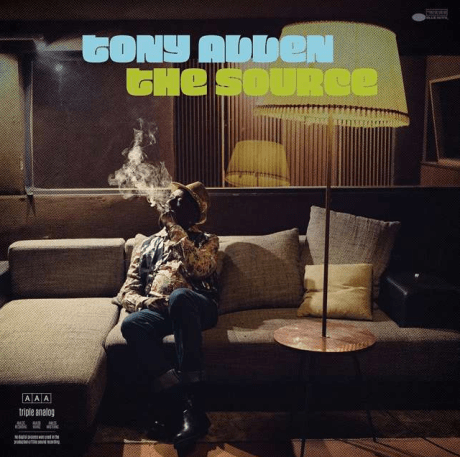
The divine rhythm-provider to Fela Kuti, trustee of the Afrobeat groove, Tony Allen has, and not before time, been recognized for his ability to transcend the style he’s rightly venerated for. Hardly surprising to find him furnishing the jazz tastemakers choice label, Blue Note, with an impressive hybrid album of both – though arguably Afrobeat and jazz have influenced and inspired each other over the decades.
Releasing a four-track homage earlier in the year for the same label, a nod to one of his inspirations, Art Blakey (A Tribute To Art Blakey And The Jazz Messengers), Allen traverses that Blakey swing and the sound of the Savoy label via Lagos and the Parisian joints of the city he has called home for years on the polyrhythm elasticated The Source. Joining him on this enterprise is a band of Paris jazz musicians and the Cameroonian guitarist Indy Dibongue providing the licks, as well as the odd guest spot, including Damon Albarn’s low key contribution to the heralding Kuti funk Cool Cats – a reference no doubt to ‘Sir’ Victor Olaiya’s highlife band of the same name that Allen was hired to play claves for in his early career.
As I say, it has the swing, it has the funk, it has the jazz, and most definitely it returns to the source. Allen bends morphs and pushes those rhythms beyond showboating to produce a remarkable fusion and synergy. DV
Chino Amobi ‘PARADISO’ (UNO)

Looking out from the balcony of a crumbling civilization, reciting a chilling poetic melodramatic transmogrification of Edgar Allan Poe’s The City In The Sea, as tumultuous storms and waves, the sound of seagulls, the crashing of towers fallen into the sea and gargling howls conjure up all manner of Chthonian trepidation, Chino Amobi’s displaced stark and bleak electronic collage soundtrack PARADISO begins as it means to go on.
The Richmond, Virginia artist has dropped his Diamond Black Hearted Boy moniker in favour of his own name for this expansive plunge into the void. And what a dark world it is to discard masks and alter egos in.
A co-founder of the NON collective of African artists, and of the diaspora, Amobi’s remit is focused on ‘using sound as’ the ‘primary media, to articulate the visible and invisible structures that create binaries in society, and in turn distribute power. The exploration of ‘non, prior to the adjective gives intel into the focus of the label, creating sound opposing contemporary canons’.
This translates in the short concatenate serialist style vignettes and passages of worrying trepidation, heavy thumping, bleak, chilling and uncertain twisted minimal electronica, concrete, post punk, Foley sounds and experimental dystopian vistas. A long list of NON collaborators make appearances on this disturbing, at times violent, end times suite, whether it’s through narrated passages, occasional erratic and gauze-y raps or radio show interjections.
A contorted reality awaits, a world without end. Are we circling the void or already in it? Meanwhile crows feed on the flesh, heralded fanfares sound and bestial cyclones blow us off course from Paradise Lost into a sonic chaos. Yet, we’re not so lost as to be totally incapable of redemption; and the ill effects, as the glimmers that do appear allude and Amobi himself has suggested, are reversible. DV
Austra ‘Future Politics’

Imbued by, amongst others, the work of Nick Srnicek and Alex Williams and their manifesto for the end of capitalism tome, Inventing The Future, which calls for and envisions better days for all of us – an escape from the toxic neoliberalism that has defined that last twenty years -, the Canadian synth siren Katie Stelmanis creates a most encapsulating, pining and beautiful glossy synthesizer pop opus on Future Politics.
Written before the Trump victory of 2016 and the spiraling decay of both political and societal moderation that followed in its wake, Stelmanis, under her Austra persona, has inadvertently synchronized her angelical and suffused dreamy pop swooning airs, arias and coos to the anxious end times.
Stelmanis excels, as you will hear for yourselves, in evocative and cool glimmer-of-hope dreamy minimalist electronica pop. She strips away any excess this time around, going further than usual in producing a starker but highly melodious, trance-y and vaporous swooning melodrama fit for the club and heart. DV
B.
Bargou 08 ‘Targ’ (Glitterbeat Records)
Ahh…the sounds of a dusky reedy gasba flute; the tactile patted and burnished bendir drum; the rustic, earthy strung loutar, and the flowing, soaring scale vocals of the Bargou 08 project’s chief instigator Nidhal Yahyaoui, set an impressive atmosphere in the first couple of minutes of the album’s opening track, Chechel Khater. And that’s all you’d need, except there’s another eight equally evocative and thrilling tracks to hear.
The source of this sound derives from a relatively uncharted region that lies obscured between the mountains of northwest Tunisia and the Algerian border, called the Bargou Valley, which despite its barren isolation, has cultured a unique musical fusion, stretching back hundreds of years. Captivating and magical enough in its ancestral unchanged form, the songs of the valley, sung in the local Targ dialect (a language that is one part Berber, the other Arabic), are given a contemporary jolt that transforms the atavistic paeans, odes and poetry of yore into an intoxicating swirling rapture of electronic North African funk.
Filled with a legacy of turmoil and tension that goes back an aeon the album’s many themes, from describing a lover’s vital attributes on Mamchout to laments of alienation, resonate strongly with the growing unease of events, initiated six years ago by the Arab Spring. Tunisia itself is facing a struggle and teetering on the edge, with no guarantee that certain cultures won’t just disappear or be fragmented in the ensuing melee. Originally setting out to document his Bargou Valley home’s musical heritage before it disappeared, Yahyaoui has successfully and thankfully, with his musical partner, producer and the album’s keyboard player Sofyann Ben Youssef captured this rich mesmeric culture for posterity. And in doing so, produced a masterpiece that will endure. DV
Beans ‘Love Me Tonight’ (Tygr Rawwk Records)

Returning after a short hiatus with a highly prolific fervor, the founding member of the legendary Anti-Pop Consortium leftfield hip-hop troop Beans has made a sort of triple album comeback; putting out a triumvirate of bold, salacious, congruous and provocative records all within a few months of each other. It’s hard to choose but preference dictates that it is the middle of that trio Love Me Tonight that edges it.
A futuristic gleam of eeriness and trepidation hangs over proceedings as Beans travails Cliff Martinez meets Daft Punk club, torture chamber chiming gloom, Super Mario jazz acceleration, Exorcist organ and female led R&B. Changing moods convincingly each and every time, you think you’re getting a Kanye West style dancefloor disco rap album one minute, the next, a dystopian cerebral hip-hop ride into the abyss.
Reading out prose, narratives, scripts and passages like a rap ‘beat poet’ (as well as recording Beans has also released his debut novel, Die Tonight, this year) Beans spit is almost like abstract narration; lyrics broken down into compounds like chemistry and descriptive soliloquy.
In keeping with rap music’s provocative of featuring a roll call of collaborators and guests, Elucid and the Kid Prolific chide in on the hiccup scratching, “that dream is over”, – and perhaps my favourite track of Beans – dark chiming Waterboarding, and the darkwave R&B artist Prince Terrence adding the right soulful yearning tones to the Talons love-in, and pep to the club pumped opener, Apeshit.
Passing lyrical dexterity and abstract thoughts on all the ills currently spinning round in the tumult vortex of 2017, but also carrying on a theme of domestic abuse through a number of tracks, with a running forensic detailed commentary on a father and son crime scene on the disturbing V.X., Beans Love Me Tonight seems like a cry for help, or at least an attempt to make sense of it all. Though at times the lyrics are outright schlock pornographic, and accent hardly plaintive. In a manner it’s a tease, attracting certain condemnation as well as respect. DV
Big Toast & Ill Move Sporadic ‘You Are Not Special’ (Starch Records)

“Blocking today’s culture of aspiration with dollops of common sense; a specialist subject for this year’s UK curriculum that won’t fail you”. RnV, Aug 17
In these troubled times we need assurance and support more than ever. Big Toast and Ill Move Sporadic are not the knights in shining armour the situation requires, rerouting British bulldog spirit by mapping out modern reality more genuine than a million so called keep-it-realists. With one of the great voices to dwarf the mic on his way to becoming his own protest march, Big Toast hammers home the black and white of life ten times over, a dismissive totem who won’t budge for anyone and will battle any life aspect until it’s crying back to its casting couch.
IMS has the cheek to throw in a couple of slow jams to tuck you in when Toast is tucking you up, otherwise coming out swinging from the first bell and landing tooth-loosening one-twos. Anti-motivational speakers who will get your arse in gear, and what the youth of today should be listening to. Matt Oliver
Black Angels ‘Death Song’ (Partisan Records)

If you were looking for a creative musical reaction to Trump and the anxious times we live in then The Black Angels beautiful apocalyptic Death Song must be one of the most anguished and daemonic of responses. The Austin psych-rocking overlords first album in four years was written and recorded during the miasma of the US elections after all: and doesn’t it show!
An emotionally charged despair and anger with moments of catharsis, carried out to a Byzantine flavored soundtrack of esoteric Amon Duul II and Far East Family Band psych, a vortex of 80s Goth inspirations – including The cult and Siouxsie and the Banshees – and the tolling chimes of doom and drone, Death Song is, as the title suggests, a heavy, but most excellent trip.
Brooding romantically in Gothic tragedy as the world continues to turn, undaunted by the prospects of universal uncertainty, The Black Angels spread their wings magnificently on what is, perhaps, one of their best albums yet. The leviathans of the psych-rock scene have learnt much and after a recording hiatus return with something sharper, refined but just as mystical and hallucinatory. DV
The Bordellos ‘Love, Life And Billy Fury’ (Recordiau Prin)
Prolific, if haphazardly, dropping albums upon the unsuspecting, and quite frankly undeserving, public at a whim, St. Helen’s greatest dysfunctional family bring us one of their most ambitious collections of cynical derision and honest yearned anxiety yet: a kind of Joy ‘de vive’ Division.
More or less The Bordellos love songs collection, this latest lo fi affair – that makes even The Fall sound professional – is a raw opening of the heart, and in some cases, the veins. Transmogrifying Spector’s voices of the beehives (The Crystals to The Ronettes), the Spacemen 3, The Cure and, of course, The Velvet Underground, The Bordellos eulogize the nearly man of British rock’n’roll, Billy Fury, craft (perhaps) one of their most beautiful ballads, Starcrossed Radio, and pen a “speeding train” metaphor themed ode to breakups.
Romancing the stoned, the life, loves and failures of rock’n’roll are laid bear and as usual, ignored by an unsympathetic, disinterested public. But despite mostly alluding recognition and validation (because that seems to be all that matters in the social media age: affirmation from the echo-chamber of peers), The Bordellos mope and grind on, producing some of the most important diatribes and, in this case, scuzzy, dirge-y and primal garage band spirited love-pained grievances. DV
Brother Ali ‘All the Beauty in This Whole Life’ (Rhymesayers)

“A triumph of crowd gathering words to the wise meets devil’s advocacy, guaranteeing end of term honours”. RnV. May 17
In these troubled times we need assurance and support more than ever. Comparing two of 2017’s most prominent protesters, Joey Bada$$ (on All Amerikkkan Bada$$) got you to show your colours while keeping it funky. Brother Ali on the other hand was there so a circle could form around him when handing out affirmative rhymes that wouldn’t sound out of a place around a campfire, promising the “type of love you can’t type with your thumbs”.
Without detracting from the former, it’s the latter’s warmth that makes him sound like he’s talking to you one to one, and where a rapt audience will follow, that gets the nod; a soft, grit-speckled delivery assuring everything’s gonna work out even when he’s recounting history lessons to the contrary. To a backdrop of blazing suns starting to dip and winter huddles taking shape thanks to great cleanse and polish from Atmosphere’s Ant Davis, it’s confirmation you should always put faith in Brother Ali’s hands. MO
C.
Dr. Chan ‘Southside Suicides’ (Stolen Body Records)

Like some obscure French exchange garage band of students – the kind you’d find if it existed, on a European version of the Teenage Shutdown! compilations – hanging out in the 80s L.A. of plaid shirt and paisley bandana fatigue wearing skater-punks, Dr Chan are an abrasive and coarse mix of renegade petulant inspirations.
Essentially powered by garage rock and all its various manifestations, the group from the south of France hurtle through an up tempo and raging backbeat of The Chocolate Watch Band, The Standells, The Rationales, Black Lips and Detroit Cobras. The difference here is that they also throw in a miscreant Molotov of thrash punk, courtesy of Fidlar, and “death rap” – cue Florida’s $uicideboy$ and their dollar sign typeface indulgence – into the riot on their Southside Suicides protest. It gives the Chan’s brand of garage band mania a different intensity and drive: more screaming in a ball of flames spikiness than tripping psych.
Riled and obviously pissed about the current state of affairs both at home and overseas, Dr Chan’s rage and insolence is in keeping with the primal spirit of rock’n’roll: fun, fun, fun! It’s a blast. DV
Oliver Cherer ‘The Myth Of Violet Meek’ (Wayside & Woodland)

Set in the Forest of Dean, this lamentable concept album (billed as ‘part-fiction’ ‘part fact’) from the man behind Dollboy, Oliver Cherer, weaves the dreamy folkloric story of the tragic protagonist Violet Meek (a play on words of ‘violence’); mauled to death or not by the dancing bears of a visiting circus troupe in the twisted and, musically alluded ominous maybe magical, tree thickened woods. Based we’re told on a vaguely real event that happened in the 1880s, Cherer’s story isn’t just a vintage walk in the past and melodic indictment on the cruelty of Victorian society towards women, but draws parallels with the continuing issues of inequality, chauvinism and mistreatment still prevalent in our own times.
This is an unforgiving unflattering portrayal of England, a nascent nostalgic one with little room for equality and the presence of outsiders, but every bit as revealing about our present. As lovely, often dreamily so, as the music is the 70s pastoral accompaniment is often trembling and quivering, the fiddles distressed and bewitchery, enticing us into a esoteric psychogeography that features a languid brushed backbeat and Morris Dancers like flourish around the maypole on one song, but finds evil in the idyllic scenery on another.
In short, it is a most stunning, ambitious and beautiful minor opus. For those who like their folk and pastoral eerie and esoteric. DV
The Church ‘Man Woman Life Death Infinity’
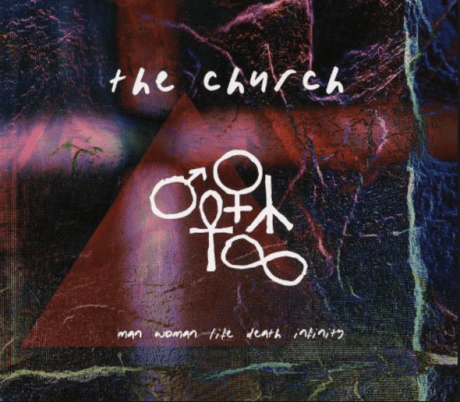
To infinity and beyond, Australia’s stalwart alternative rock and pop guitar romantics The Church, nearly thirty years since their inception continue to breathily produce quiet masterpieces; continue to experiment and explore new sonic textures. Travelling into the ethereal, the sagacious Man Woman Life Death Infinity is a suffused glide and traverse of air-y vapours and misty mystery; beginning with the opening, soaring minor opus Another Century, sustained throughout, with each song materializing out of the ether.
Reflecting but an unconscious inspiration, The Church’s founding member Steve Kirby calls this album the group’s “water record”. Though all the characteristics of water, trickling chords, cascaded dripping notes and a sense of floating are all correct, this dreamy pop and transient songbook seems to leave the ocean floor and rivers for something more astral. Songs such as Submarine for instance seem imbued with a spirit of the Kosmische. Yet fans of the group’s staple of pop guitar swan songs and subtle psychedelic 80s lovelorn classics will love Before The Deluge and I Don’t Know How I Don’t Know: both of which show traces of that college rock meets garage riffage that arguably inspired or was picked up by The Stone Roses.
Still writing timeless anthems without lazily reverting to the back catalogue, still pushing forward after four decades, The Church can still illuminate and surprise. This, there 26th, album is anything but jaded. If anything it seems that The Church are still very much in the game, and able to balance familiarity with discovery. DV
Clap Your Hands Say Yeah ‘The Tourist’
Inimitably jump-starting a cerebral indie-pop scene in the mid noughties with his unique off-kilter melodies and quivered, yodeled vocals, the fiercely independent, Alec Ounsworth created major ripples with his nom de plume, Clap Your Hands Say Yeah’s self-released debut in 2005.
Ounsworth stumbles and ponders through a “post factual” strewn world of challenging emotions trying to make sense of it all on The Tourist. At times the album title could even be said to act as a metaphor for the artist’s own estranged and removed soul-searching: a tourist in his own country. Despite some sad and profound pathos heavy lyricism, Ounsworth’s “purging” of thoughts is meant to be a cathartic experience. The anxieties of our times can’t help but leak from every other line, yet this album is a fairly warm, jangly surprise package of lolloping and anthemic songs.
Building and soaring to an emotive brightened crescendo of sweetness and yearning on The Vanity Of Trying; contorting and bending guitar textures in a Robert Fripp fashion on the psych-pop gnarled Down (Is Where I Want To Be); and, up close and personal (every breathe audible) to the mic, driving through an 80s nocturnal rock ballad on Better Off, the inimitable Ounsworth careers through a full gamut of moods and chaos in the most natural and energetically purposeful way.
Clocking in at well under the forty minute mark (bands and artists take note) The Tourist is an unlabored, near-perfect melodious album. It says all it needs to and more; free of indulgence, and despite its bombast, sophisticated suffused layering is incredibly lean and brisk. A most enjoyable if poignant experience, this album already sets the benchmark in 2017, and is without doubt one of CYHSY’s best. DV
Full review…
Anna Coogan ‘The Lonely Cry Of Space & Time’
Not the easiest of bedfellows, difficult to love and often (rightly) condemned as indulgent and overblown, but the worlds of rock and opera do occasionally overlap in a congruous union. The unquestionably talented Anna Coogan for instance, mixes the two majestically, using her finely trained 3-octave soprano and classical background to offer fluttering siren-like arias that seem to surreptitiously manifest from, what is, an ever-changing metamorphosis of musical styles, on her latest album, The Lonely Cry Of Space & Time.
Inspired by scientific discoveries, a “childhood listening to Puccini’s La Boheme”, the fateful poet Sylvia Plath, the tumultuous grave mistakes of intervention in the Middle East and, no surprises, the 2016 US elections Coogan’s ambitious suite of songs and instrumental evocations is far from lofty and classical.
Spanning country, Ry Cooder desert meditations, Anna Calvi like trembled sensual emulations, PJ Harvey and even bubbly synth pop, Coogan together with musical collaborator Willie B – offering atmospheric Moog bass line undertones and drums – produces a ‘wave’ fixated lamenting and balletic travail and a surprise highlight of 2017. DV
D.
Daniel Son ‘Remo Gaggi’ (Crate Divizion)
“Toasting the high life and low lives, gangster rap bearing honourable intentions”. RnV, May 17
Canadian slick talker Daniel Son is the front for this, one of many Giallo Point heists that the UK producer ran during 2017. With the authentic mob experience evident in such titles as Flat Tyers, Car Seizures, Strippers Den etc and the kingpin adoring the sleeve, it’s instantly noticeable how dry GP’s noir-ish production is; sharply tailored loops of muted house band jazz that has seen nefarious comings and goings, but are gagged by confidentiality agreements and the fear of loose lips sinking ships.
Potent in what it doesn’t disclose, display one bead of sweat and you’re in trouble. Before you know it Daniel Son – “we the reason that the yacht insurance be going up” – has decked you with a leg sweep before disappearing back into the night. While it’s easy to apply Godfatherly stereotypes to Remo Gaggi, the style of this international union contrasting brash and diligent, compellingly separates the best from the rest. MO
Dope KNife ‘NineteenEightyFour’ (Strange Famous)

“An absolute battering ram of four wheel drive blasting through the boggiest of boom bap. Big Brother would think twice about listening in”. RnV, Feb 17
We’re not trying to discredit Dope KNife by saying that NineteenEightyFour is an almost unfashionable antidote to tween trap, happily, mercilessly fanning the flames of the very 2017 argument of what constitutes real hip-hop between upstarts and originals (and if there’s an argument abound, it’s only right that Sage Francis is tagged in as well). Far from an Orwellian vision yet probably something of a dystopia to some as he walks with an intimidating shadow, DK comes slathered in dirt, ready to punch you in the ear with a splattered larynx.
As a one-man steamroller on beats and rhymes it’s not an exact science, but that’s absolutely fine with us, the battle-hardened, bitter-as-blasé (yet also able to reference the Fresh Prince theme tune) Georgia emcee leaving competition standing (“I can’t help being a damn cynic, this damn planet got a fucking lot of wack in it”). MO
The Doppelgangaz ‘Dopp Hopp’ (Groggy Pack)
“A drop of ‘Dopp Hopp’ a day will keep the haters away; will creep up on the button marked ‘repeat’ until it progresses to heavy rotation”. RnV, Jul 17
Despite the sub-Gothic sleeve looking like the NY pair are auditioning badly for a death metal gig, Dopp Hopp ranks high on this year’s list on the strength of its smoothness alone. “Live by the cloak, die by the cloak” say The Ghastly Duo; but the mystery ends once their views from West Coast low riders, developing a smoky lens that’s intoxicating but never fuggy, embrace the inevitable sunshine.
Also readymade for reminiscing as on E.W.W. and Strong Ankles, the ‘Gangaz have set themselves the relatively easy task of riding the vibes properly, and they oblige with a natty turn of phrase prepared to shift towards the nearest street corner at their leisure. Dopp Hopp is another feather in a cap looking more and more like the crown jewels. Beats and rhymes guarantee return visits to golden-edged climes, where you simply have to rewind the boast that “if ‘Dopp Hopp’ was a beer, it’d be an IPA”. MO
75 Dollar Bill ‘Wood/Metal/Plastic/Pattern/Rhythm/Rock’
(Glitterbeat Records)

This album could have rightly qualified for last year’s feature, but re-launched, repackaged for Glitterbeat Records’ burgeoning new imprint tak:til, 75 Dollar Bill gets another shot: mainly because it slipped under most radars on its maiden voyage in 2016. Now in 2017 with a hopefully wider global release it will shine.
Adhering to Jon Hassell’s “fourth world music” blurring of the division between futurism and tradition the 75 Dollar Bill duo of NYC-based musicians Rick Brown and Che Chen, traverse the psychedelic desert rock and trance of the Maghreb, avant-garde, jazz and even swamp boogie delta blues in a most indolent but listless transient manner on W/M/P/P/R/R. Motivated by an interest in “compound meters” – meter involves the way multiple pulse layers work together to organize music in time; a compound essentially dividing the beat into three equal parts -, but playing in a fashion that feels natural and organic, the follow-up to 2015’s more “forward momentum, stomping and shaking” style Wooden Bag is a nuanced clever exploration of interconnected tonality and tactile responses to a wealth of harmonics and melodies from a pan-global array of influences: from modal jazz to Arabic modes and eastern scales.
What they produce is an often adumbrate, repetitive experience that builds gradually, slowly releasing various tangents of interplay between the principle duo and their extended backing group of friends; traversing genres and moods to evoke new expletory musical spaces. DV
E.
Ester Poly ‘Pique Dame’ (Ikarus Records)
Experimentally rocking the cantons of their Swiss home for a while in their respective separate outfits, Béatrice Graf and Martina Bérther unite as an unholy drum and electric bass alliance under the Ester Poly (a scramble of ‘polyester’ of course) banner.
Pitching generation X(er) Bérther with Y(er) Graf, this rambunctious vehicle for the duo’s feminist protestations and irony is hardly hampered by the limitations of their chosen drum and bass instrumentation, and hardly comparable to any of the many such similar combinations plying their trade. Instead, Ester Poly use a stack of effects and distortion tools to widen their sound spectrum; evoking hints and obvious homages to post-punk, art school, Jazz, doom rock, heavy metal, no wave and Krautrock in the process.
Recorded in more or less one-takes, both combatants facing off against each other in the studio with no headphones or click track, Pique Dame captures not only the lively, hostile and enraged but also the humour (even if it is dark and resigned) of this energetic union. Despite the raging tumults, dynamism and soundclash of ideas, this album is a steady and even showcase of festering ideas and moods. It’s also quite brilliant and encapsulates the ‘pique’ perfectly; arousing, curious and irritated! DV
F.
Faust ‘Fresh Air’ (Bureau B)
Still banging the cement-mixer drum and manning the barricades after forty odd years in the business, the Jean-Hervé Péron and Werner “Zappi” Diermaier duo version of Faust – at its most base drummer/percussionist and bassist-come-tormentor of sound – and their latest protestation Fresh Air is a sort of art-provocateur road trip of the USA, featuring an abundance of locals and internationalist artists and musicians, picked-up on the way through New York, Texas and California: A counter-cultural agitation travail from coast to coast.
Featuring the usual Faust totems and that workmanlike methodology of extracting sounds and evocations from machinery, found objects, debris and the architecture – even Péron’s front door hinges from home make an appearance – Fresh Air is an urgent gasp for relief from the polluted, choked, environment. It’s also a highly convoluted attempt at transforming geometrical forms and abstractions into a sonic score. Three of the tracks on this album take their inspiration from a faux-workshop at the highly regarded California Institute of the Arts. A session that includes the loony 23-second vocal exercise symphony Partitur – defined loosely as “a sort of Dadaist choir, a musique impressionniste” by Péron –; the loose Slits do souk jazz, camel ride Chlorophyll, which features Barbara Manning “sneaking” in word association sketches alongside Zappi’s own strange utterings; and the saxophone squalling, motoring Lights Flicker, which again features Manning, bridging the role of Laurie Anderson and Patti Smith, repeating an agitated mantra over a quasi art-dance backing.
Continuing with their signature agitation, often menacing, call-to-arms whilst also sonically turning the abstract into something audible, Péron and Zappi can still be relied upon to create provocative statements, five decades on from when the original Faust dynamic barraged audiences with the most confrontational and experimental sound ideas. Struggling like the rest of us, but finding a comradely with another generation of artists and musicians, they look for hope in the miasma. DV
Craig Finn ‘We All Want The Same’ (Partisan Records)
Occupying a rich postmodern American literary landscape, channeling such celebrated chroniclers as Bruce Springsteen and Vic Chesnutt, former The Hold Steady, and prior to that Lifter Puller, front man Craig Finn has in more recent years carved out a career as a successful solo artist. In true Springsteen style, though with far less guttural bombast, Finn brings a certain levity and importance to the lives of America’s “ordinary folk”, building a highly erudite diorama to stage the unfolding, and to outsiders, the often inconsequential dramas that are acted out across the States on a daily cycle.
Subtly tapping into the “liberal” creative psyche of America, one that’s still in a state of shock, but also the so-called “blue collar” America that put Trump in the White House, Finn doesn’t so much point fingers or berate as reflect the resignation of a cast on the peripherals of society.
Enriched with the graceful subtle presence and soaring vocal harmonies of Caithlin De Marrais and singer/songwriter Annie Nero, the keys of Sam Kassirer, swaddling and lifting horns maestro Stuart Bogie and longtime contributor from The Hold Steady, guitarist Tad Kubler, the musical backdrop is a mix of rolling Warren Zevon piano psychodrama, bluesy rock’n’roll and Ashbury Park period E Street Band brass. A solid performance and assiduous edition to the modern American songbook, Finn’s third solo album shows a full-bodied, sagacious artist at his pinnacle. DV
G.
Maalem Mahmoud Gania ‘Colour Of The Night’ (Hive Mind Records)
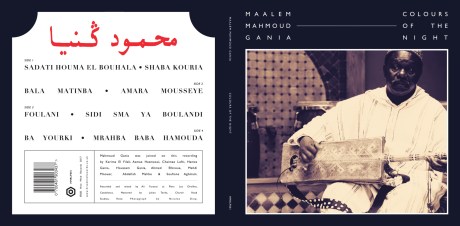
Maalem Mahmoud Gania, the near-exulted star of the Moroccan honed Gnawa – a style of traditional Islamic dance, music and poetry with roots spread across the sub-Saharan crescent of Africa; considered by many to be one of the origins of the “blues” rhythm – and artisan of the genre’s key instrument, the camel-skin covered three-string lute like “guimbri”, released an extensive catalogue of recordings for labels such as Tichkaphone, La Voix El Maaref and Sonya Disques.
Choosing such a revered icon with which to launch their inaugural new imprint Hive Mind Records, the Brighton outfit’s inaugural baptism is the legend’s final studio recording, the afflatus, entrancing Colours Of The Night. What makes it special is that this is the first solo release by the artist outside his native homeland to be released on vinyl.
Stringy, wiry, occasionally a tone or two lower and played like a quasi-bass guitar, Gania’s playing style is raw, deep and always infectious: from blistering solos to slower and lighter ruminating descriptive articulations; this is equally matched by his atavistic soulful voice and the chorus of swooning, venerated female and male voices and harmonies that join him on each track.
Colours Of The Night is a highly hypnotic collection of performances both magical and transcendental, beautifully traversing Arabia and desert blues traditions. DV
Golden Teacher ‘No Luscious Life’
Seeming to just follow wherever the groove takes them, whether it’s ESG uptown/downtown Boho Noho Soho New York, electro Afrobeat, the griot traditions of West Africa or 80s Chicago House, the polygenesis influences of Glasgow’s sonic multilingual Golden Teacher sextet seamlessly entwine to produce the most solid of on-message dance music.
Flexing and limbering to a hip 80s heavy melting pot of sounds and references, the Glasgow troupe move like liquid through a soundtrack of polyrhythms, acid and tight drum presets, oscillations, clean and not so clean futuristic galactic house funk. Not many groups can inaugurate and move between both the Senegalese griot matriarch Aby Ngana Diop and Cabaret Voltaire on the same album, but such is the myriad of musical backgrounds, and they encompass every kind of genre you can think of, of the band members that make up this loose collective, you’re never quite sure what you might hear next.
Though rhythmically and melodically, pumping and sonically doing all the talking for them, there are succinct, atmospheric vocals from Cassie Ojay and Charles Lavenac to give either a certain sway and louche entrancing quality or, as on the opening Afro-funk meets pumping House Sauchiehall Withdrawal – a reference to one of Glasgow’s most, famous and popular main thoroughfares, with everything from the Glasgow School Of Art and CCA art hub of venues and galleries to shopping and nightclubs on its mile and a half long strip – a soulful austerity groundhog day political context: dutifully working the daily slog and for what?!
Moving to Glasgow, from about as far south of the border as you can go, a couple of years ago, one of the first gigs I saw was a sort of impromptu, diy style, performance from the group at The Old Hairdressers in town. Improvised to a degree they caught the wide-eyed excitement and dynamism of an earlier time as if it was fresh and new. A must-see live turn, the group has, unlike so many others before them, captured that free spirit and looseness on record. Yet production is really slick.
The city has always enjoyed a reputation for the eclectic, and Golden Teacher more than most, encapsulate that cross-pollination, borderless approach to absorbing music from across the globe – from The Levant to Compass Point – and making it funky. DV
H.
Happyiness ‘Write-In’ (Moshi Moshi)
Ah…the sound of a band embracing the heartfelt warmth, accentuated dazed melodies and special feel of such 70s fare as Randy Newman, Harry Nilsson and Big Star, Happyness evoke the hazy fond memories and subtle sophistication of these and other complimentary artists on their brilliant album Write In.
The opening Falling Down gambit, with its radiant phaser guitar, conjures up the Scottish indie supremos (and fellow Big Star acolytes) Teenage Fanclub, whilst the pastel-shaded saddened tone of The Reel Starts Again sounds like a lost, ghostly remnant of a George Harrison and Jeff Lynne malady. A touch of the Brighten The Corners era Pavement permeates the band’s weary slacker muffled Uptrend/Style Raids, but by the time we reach the halfway stage of the album the lads are back to thrashing out a languorous grunge-y grind on Bigger Glass Less Full.
Subtle and confident, Write In is a halcyon, beautifully executed album with real depth and personality. Happyness have found their flow with loose but perceptively well-crafted gentle pop songs of a timeless quality: to be played as the “credits roll forever”. DV
Here Are The Young Men And Uncle Peanut ‘This Is Standard Life’
(Musical Bear Records)
Unceremoniously released almost on the sly, though because we are inundated with 100s of releases every week it could be we missed this one, the brilliant cut price, and with far more humour, authenticity and irony than the Sleaford Mods (as if scribbled by David Shrigley) Here Are The Young Men & Uncle Peanut are back with a load more broadsides leveled at life’s most cunty personalities and foibles.
Not so much poetic, not really rap in the true sense of the word either, they make observational snatches of overheard misnomers, condemnations and Estuary patois on the modern toss life of a pissed-stained mattress society. Modern life isn’t so much rubbish as depressingly shite, as the group transmogrify a sort of Daft Punk ‘Teachers’ style litany of great influential bands into a council estate, backroom punk paean to the spirit of punk and good music; safe in the knowledge that Mark E Smith Is Still Doing The Fall, even after a hundred years!
Diatribes on outsourcing, hipsters (the Day The Hipsters Stole Our Look; those penny-farthing riding tossers), lads banter (“yes mate, yes mate, standard”), gentrification, “nobbers” (who are “fucking everywhere!” on the Underworld goes punk song of the same name) and pop stars abound, and there’s even collaborations with Art Brut’s inimitable Eddie Argos (on the and Billie Ray Martin (of S’Express and Electribe 101 fame).
It’s nothing short of fucking brilliant, short and anything but sweet. The use of swearing alone is commendable. A sort of vitriolic, generation X middle-aged series of rants on what we’ve lost, what we are set to lose and what we could do without. DV
I.
Ifriqiyya Électrique ‘Rûwâhîne’ (Glitterbeat Records)
Capturing something quite unique, the collaborative industrial post-punk and avant-garde rock scenes of Europe clash head-on with the descendants of the Hausa slaves atavistic rituals styled group, Ifriqiyya Electrique, create an often unworldly chthonian conjuncture of Sufi trance, spirit possession performance and technology.
A film project and now immersive sonic experience, inspired by the important Banga music traditions and the accommodating, rather than exorcising, of spirits ceremonial wild dances and call and response chanted exaltations of the black communities – originally transported to the region from sub-Saharan Africa – in the oasis towns of southern Tunisia, this astounding meeting of cultures and history is anything but scenic.
Formed in the Djerid Desert, the idea forged by field-recordist and veteran guitarist of the politically-charged Mediterranean punk and “avant-rock” scenes, François Cambuzat, and bassist Gianna Greco – both of which occasionally join forces with that livewire icon of the N.Y. underground, Lydia Lunch, to form the Putan Club -, the Ifriqiyya Electrique spans both continents and time. For their part, Cambuzat and Greco provide the grind, industrial soundscape texturing, sonorous drones and flayed guitars, but mostly, the “electrique”, whilst, offering a dialogue with the spirits and the tradition, Banga musician Ali Chouchen – joined in the live theatre by an expanded cast of fellow voices, krabebs and Tunisian tabla players from the community, which includes Tarek Sultan, Yahia Chouchen and Youssef Ghazala – provides peripheral sounding evocative echoed and esoteric vocals and equally haunting nagharat.
Spiritual conversations transformed and realigned with the machine age turmoil of industrial noise, Arthur Baker style rock and hip-hop production, post-punk and even Teutonic techno, Rûwâhîne is a rambunctious unique force. DV
J.
Jam Baxter ‘Mansion 38’ (High Focus)
“Half cut, whip smart. Ultimate, grungy outlaw hip-hop, putting the trap in trapdoor”. RnV, Mar 17
UK crown rulers High Focus reached new levels of cult when Mansion 38 became that creepy house at the end of the road that may be good for a heart-in-mouth laugh at Halloween, but not somewhere you’d venture to acquire a friendly cup of sugar.
Recorded and produced in Bangkok, Jam Baxter’s quotable cynicism is of an emcee breed that gets caught in a landslide escaping reality in a bid to keep himself amused, but whose focus is actually doing overtime. Seeming nonsense suddenly swoops down at you with lethal intent, most notably on the shrewd consumerist commentary on offer For a Limited Time Only. He of The Gruesome Features squats on Chemo’s production, and where there’s no such thing as a wrong turn, it’s alien, exotic, and worryingly comforting at once, slowly beginning sinkhole formation, and with Dumb demanding you take cover while running in slow-motion. Bugged out, bug-bombed, brilliant. MO
Jehst ‘Billy Green is Dead’ (YNR)

“Showing the sort of word association and plain English penmanship that has long made him the UK’s premier emcee”. RnV, Jun 17
Whether the eponymous subject of Jehst’s sixth full-length is man or myth, a reflection on society or the High Plains Drifter letting his imagination run wild while disclosing clues from his own personal memoirs, you’ll be hanging on Billy Green’s every move, tic and confession.
It’s the album’s lost, tired soul trying to keep the walls from closing in, but then seeming to be at peace with any pending doom. It’s the human element, from the debilitation of an everyday Joe to referencing the Kardashians and when the most important decisions can sometimes boil down to choosing “the Snickers or the Mars, E&J liquor or the six-pack of the Stella Artois”. It’s Jehst’s delivery that even when close to succumbing to heat exhaustion, finds a reserve from deep down that’s of an improbable, impeccable sharpness. It’s the simmering sphere of wax and wane production whose highs and lows run a perfect parallel. ‘Billy Green is Dead’, long live Jehst. MO
Jonwayne ‘Rap Album Two’ (Authors Recording Co)

“Personal struggle both poignant and unapologetic for showing its hand…watch its humble humanity become the choice of the open eared this year”. RnV, Feb 17
Rap Album Two approaches that long-standing hip-hop (and society in general) elephant in the room: the refusal to admit vulnerability. In laying crises on the line, Jonwayne becomes his own therapist and subsequently an outlet for the hesitant and anxious to claim as their own. At his most lo-fi, the times to think become deafening and don’t necessarily mean there’s a clean pathway to redemption.
It would take a kingsized about-turn for Jonwayne to become self-destructive on record, but it’s the legitimacy of his 20/20 vision and the potential of the what-ifs that sit kindly. Particularly on the beautifully dejected/accepting Out of Sight and Afraid of Us, bearing the powerful “look at these people, counting on me when I can’t even count on myself”, you can hear him fighting for his very survival. Also behind the excellent Black Boy Meets World by Danny Watts (who features here), Rap Album Two bridges the gap between cult hero and everyman icon. MO
K.
King Ayisoba ‘1000 Can Die’ (Glitterbeat Records)
Sounding the klaxon call in defense of his native Ghana, and Africa at large, on his inaugural LP for Glitterbeat Records, the striking, lively King Ayisoba, from the roots up, uses his guttural earthy howl and atavistic kologo lute to great effect in demonstrating not only a raw anger but also a deep love for a much misunderstood continent.
From the very outset Ayisoba and his contributors Wanlov da Kubolar & Big Gad – just two of the many guest appearances on this album – rap, sing and stamp a slogan sentiment on the opening Africa Needs Africa of, “Let’s fight for Africa/Africa needs us.” Covering the North African diaspora, the boat people’s sorry saga, the colonial past and umpteen other issues that more or less shape the image that those observers from outside the continent believe is the only side to Africa – between a misplaced sentimentality and outright ignorance. There is protestation and indictment, but also a lively focus on the positives too; finding solutions through the medium of music and culture.
In-between the fiery, bordering on punk, clatter of guluku, dundun and Djembe drums and rambunctious electronic phasing beats there are more plaintive, yearning stripped-back moments: Grandfather Song, a toiled from the soil of tragedy lament, offers a more intimate knee-jerk from the full-on band sound, and Dapagara is sent off into a sweeping, wafting vista by the Nigerian legend Orlando Julius’ traversing, reedy accentuated saxophone.
Raw from the heart, highly evocative and rebellious, King Ayisoba’s songs of rage and vitality actually offer a kind of hope in the face of adversity. The future of Ghana’s music scene is in good hands at least. DV
L.
L’Orange ‘The Ordinary Man’ (Mello Music Group)
“An evocative performance capturing a concerto producer whose trick-from-sleeve ratio remains visionary”. RnV, Nov 17
Another 12 months of might and magic on Mello Music Group, including must-checks from Oddisee and Mr Lif and Akrobatik as the reconvening Perceptionists. However, it’s the beatsmith with the knack from Nashville building up quite the back catalogue where Tenneseein’ is Tennebelievin’. Loosely based around the sleight-handed history of when illusionists were the rockstars of their day – on premise alone, L’Orange is out by himself – the mostly instrumental The Ordinary Man is described as “vaguely reminiscent of RJD2’s ‘Deadringer’”, where loops slip off straitjackets and straight up gallivant.
Reserving the mic for only a handful of guests after a starry stack of collaborative LPs, L’Orange offers jazziness with a spring in its step, even when its grainy monochrome quality appears to be suffering (perhaps reflecting his own personal health issues). Covered in a sweet patchwork of samples, the headnodding will rock your neck stiff (Cooler than Before soars like the plane on Raekwon’s Criminology), while placing it delicately upon a pillow. MO
Liars ‘TFCF’ (Mute)

The confusing soundtrack to a musical divorce, the enduring creative partnership behind the Liars, Angus Andrew and Aaron Hemphill, finally fell apart after the release of Mess. Though confounding fans and critics alike on every release, the now streamlined version of the Liars sees Andrew at the helm of, essentially, a one-man band, churning up and lurching through what should by rights be another ‘mess’ of ideas to produce something quite vivid and experimentally sharp.
Chronicling what he felt was akin to a musical marriage, Andrew sitting miserably slumped in a wedding dress, left holding the bouquet on the cover of TFCF (Theme From Crying Fountain) charts a deteriorating relationship, with dysfunctional material – some of which was marked for the next Hemphill & Andrew Liars album – spun into a brilliant sulky, miserable melodrama of electronic, new wave, punk and cerebral pop.
Leaving L.A. for his native home of Australia, a dethatched Andrew transmogrifies those American influences into acoustic, labored drum break lamentable sneers (The Grand Delusional), Love style Mexican psych flare crossed with Medieval courtship (Cliché Suite) and disjointed daggered, The Knack meets Beck, lurches (Cred Woes).
Often resigned, hurt, pranged with pity throughout, it hardly sounds appealing, yet TFCF is full of reinvention, experimentation and lyrically, both dreamily and petulantly opprobrious. DV
Al Lover Meets Cairo Liberation Front ‘Nymphaea Caerulea’ (Hoga Nord)
A meeting of exotic minds, San Francisco producer/remixer Al Lover (The Brian Jonestown Massacre to Goat) and the Tilburg collective Cairo Liberation Front set out on an evocative mesmerizing flight of escapist fantasy on the extended Nymphaea Caerulea EP.
Continuing a partnership with the Hoga Nord label and following up the previous Zodiak Versions, Al and his collaborators merge psychedelic dance music with a spiritually mysterious imagined vision of Egypt: Nymphaea Caerulea being the Latin name for the blue Egyptian lotus, a flower of the Orient.
Over six ‘levels’ they traverse and evoke entrancing Egyptian flute led feverish ritual, mysticism, sweeping desert winds, ancient kingdoms, belly dancing and cyclonic Afro-Futurist beats.
References to a new sonic deliverance, a musical Arab Spring, infuse the six instrumental tracks with a certain levity and theme. But rather than bang the drum of rage and protest in the land of the Pharaohs and old gods, Al and the Cairo Liberators create a moody mysterious, veiled soundtrack fit for the dancefloor. DV
 Monolith Cocktail Blog