The Monolith Cocktail Social: Playlist #XXXI
November 22, 2017
DOMINIC VALVONA’S PLAYLIST
In danger of repeating myself forever, but for newcomers to the site here’s the premise of my playlist selections. Previously only ever shared via our Facebook profile and on Spotify our regular Monolith Cocktail Social playlists will also be posted here on the blog itself.
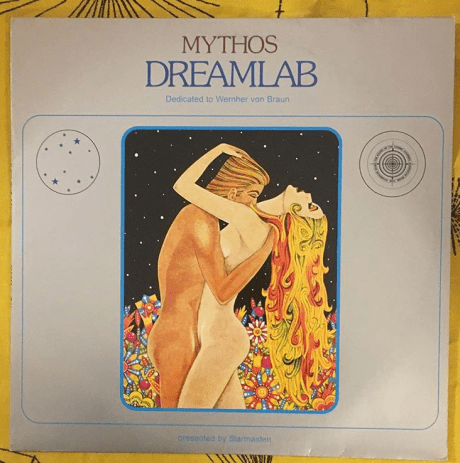
With no themes or demarcated reasoning we pick songs from across a wide spectrum of genres, and from all eras.Selection #31, chosen as always by me, Dominic Valvona, includes Jean-Jacques Perrey‘s charming kitsch flights of fantasy into space, L.A. Jay‘s languid, floating jazzy remix of the Californian hip-hop troupe, The Pharcyde‘s Otha Fish, Penny Goodwin‘s fluttering flute ballad turn super funk acid dancefloor blast Too Soon You’re Old, South Seas dreamy sauntered pop from the Insecure Men, Kosmische traverses from the German dream team Mythos, plus spiritual, conscious and sublime jazz from Roy Hargrove & Ronnie Matthews and Brother Ah, and troubadour psych magic from Elyse Weinberg.
Tracks:
Jean-Jacques Perrey ‘Spatial Blues’
LaVice & Company ‘Thoughs Were The Days’
Jeff Parker ‘Get Dressed’
Claudia Lennear ‘Not At All’
Penny Goodwin ‘Too Soon You’re Old’
Insecure Men ‘Subaru Nights’
The Pharcyde ‘Otha Fish (L.A. Jay Remix)’
Lords Of The Underground ‘Flow On (New Symphony)’
Murs ‘What Do You Know?’
The Move ‘Message From The Country’
Affinity ‘I Am And So Are You’
Roy Hargrove, Ronnie Matthews ‘Salima’s Dance’
Brother Ah ‘Transcendental March (Creation Song)’
Joe Harriott, Amancio D’Silva Quartet ‘Stephano’s Dance’
Famous L. Renfroe ‘Believe’
Gunn – Truscinski Duo ‘Minetta River’
Krzysztof Komeda ‘Litania’
The Monzas ‘In My Lonely Room’
Evinha ‘Que Bandeira’
Elyse Weinberg ‘City Of The Angels’
Annette Peacock ‘Love’s Out To Lunch’
Midnight Magic ‘Walking The Midnight Streets’
Raw Material ‘I’d Be Delighted’
Mythos ‘Eternity’
La Dusseldorf ‘Geld’
Jean-Jacques Perrey ‘Chicken On The Rocks’
Tickling Our Fancy 056: Rowan Coupland, John Howard, Kuenta i Tambú, Anne Müller, Sebastian Reynolds & Alex Stolze…
November 9, 2017
REVIEWS ROUNDUP
WORDS: DOMINIC VALVONA
Right, quick as you like, look lively. We have a lot to get through this month.
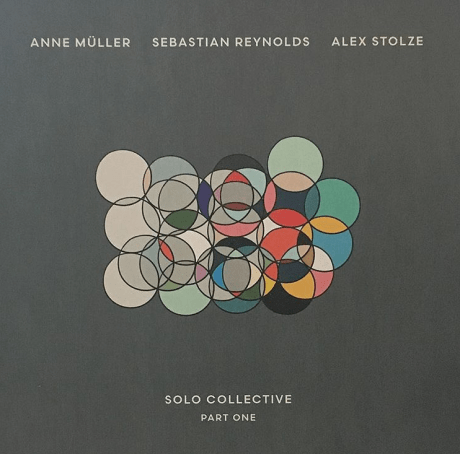
Part catch-up and partly featuring releases to come, the latest TOF review includes the latest poetically alluring and chorister evocations suite, Circuits, by Rowan Coupland; a new mix of electronic music and Curaçao traditions, colliding in a sonic explosive protest, from the Amsterdam-based Kuenta i Tambú; an esoteric and spooky seasonal EP of curios, Little Legs For Little Eggs, from the mysterious Quimper; strange cartoon Moog soundtracks and space japes from the late Guatemala electronic composer Emilio Aparicio; a collection of lost recordings from the bucolic and fuzz psych Swedish trio Cymbeline; the Anglo-German experimental triumvirate of Anne Müller, Sebastian Reynolds & Alex Stolze, with their first collective album of neo-classical and ambient performances, Part One; and form the Edinburgh-based sonic experimentalist Reverse Engineer a stunning low key album of transitional electronica and field recordings, Elusive Geometry.
I also have singles and EPs from pianist and troubadour extraordinaire John Howard, releasing his cover of Nick Drakes diaphanous From The Morning; the latest track, Mastakink, with accompanying remixes, from the cerebral electronic duo Room of Wires; and the debut EP of thrashing indie and new wave rock from Oxford’s Easter Island Statues, Why Don’t You Live In The Garden?.
Read on…

Kuenta i Tambú ‘Rais’
Buchi Records, 15th November 2017
Fired-up and blazing out of Amsterdam, the Dutch-based (‘major leaguers’) Kuenta i Tambú, with their collision of dance music and Afro-Caribbean hard-hitting sonic triggers and attacks, make an explosive impression with their latest global beat travailing Rais album. Apparently attempts have already been made to frame this force of nature with a coherent or trendy tag: ‘new sound global bass’ and ‘tambútronic’ being the frontrunners, the former a bit clumsy, the latter more catchy and closer to the truth.
Built around the Dutch-Caribbean island musical traditions of the group’s founder Roël Calister, a native of Curaçao, the group uses the indigenous Papiamento language and dialect of that island not only for their moniker, which translates as ‘Tales and Drums’, but the title too, which means ‘Roots’: The ‘Tambú’ part of that band name also refers to a particular Curaçao style of dance and music, named after the drums that accompany it. You can hear those traditional hand drums pummeling away throughout this exuberant, restless but directed chaos of strutting synthesizer betas and earthy echoes of the ancestors.
Transfusing the signature sounds, from reggae to dancehall, with a dose of Major Lazer and MIA, Calister and his troupe pays certain homage to those ‘roots’, energizing and keeping ‘alive’ the sound of that southern Caribbean island –name checking notable Curaçao artists such as his sister Izaline Calister, Grupo Issoco and Elia Isenia – whilst blasting it forward into a polygenesis futuristic fusion.
Amplifying into a twerking, booty-shaking voodoo summoning bombast of rapping, spitting and soul-with-attitude vocal led charges, traditions come alive; those tribal atavistic themes entwined with the galloping urgency and incessant vibrations of dancefloor protest. A call-to-arms in one sense with its fierce shouts, laser strafing and pneumatic drilling bass, Kuenta i Tambú sound like a tropical island Die Antwoord, at other times, especially on the bottle-tapping and hand drum blitz Roll like the Ghana’s King Ayisoba.
Truly omnivorous the group throw Bhangra, R&B, Techno and Samba carnival saunters into a mix of swaggering male vocals, a local children’s choir and the equally ferocious, though also sultry and lulling, voice of Diamanta Kock. Recording half the album on Curaçao itself, soaking up the atmosphere, Kuenta i Tambú’s lively fervor propels the local culture forward into the 21st century with a spirited, even rebellious injection of loops, effects and colliding rhythms. In the words of the group, they are, in a manner, more “like a Caribbean punk band”, going “harder and harder, louder and louder!” Rais proves a perfect testament to that.

Rowan Coupland ‘Circuit’ (Album and Illustrated Book)
27th October 2017
It’s the voice of course that draws you in: that ability to convey deep, though eloquently lights, descriptions so effortlessly whilst trilling and cooing between the role of chorister and Medieval bard, countercultural folk troubadour and earnest poet. The highly capable Rowan Coupland lets the words tumble and fall with great care, even when he packs those articulate observations into a cramped bar or two, as he does on occasion almost without taking a breathe, his diction natural and unhurried.
Difficult to define in an era in which artists can easily cross boundaries and take inspiration from anyone, Coupland’s voice is rich with both traditional and modern influences. Some of which are merely aspirational, whereas others colour each and every line. Indebted to the relatively obscure though highly influential 60s/70s English folk singer/songwriter Anne Briggs, who’s list of followers and admirers is both lengthy and legendary (Bert Jansch and Sandy Denny for starters), and the starry folklore of Shirley Collins (The Power Of True Love Knot for sure) there’s also mentions of the powerful atmospheric bowed and quivered music partnership of Richard Dawson and Rhodri Davies, and similar tremulous waning violin work of John Cale on this most impressive songbook. In the modern camp, echoes of I Poo Clouds, Rufus Wainwright and Jeff Buckley waft through the undercurrents.
Expanding his repertoire and progressing forward gaining more experience and skills, Coupland has gone from a formative home-recording artist and Brighton scenester to polygenesis singer/songwriter/composer. Moving from his native Bath to Berlin in 2010, Coupland’s global travelogues – touring Canada and Europe – are enriched by his numerous collaborations, many of which relate again to the past: including the renaissance madrigal group Garland Hearse, folk singer Mary Hampton and the Vancouver gamelan orchestra, Gamelan Gita Asmara.
In fact modernity seems somehow out of place in the beautifully doleful geography of Circuit. A wistful, uneasy balance exists then between age-old sentiment and scenery and the encroachment of technology: the poetically endeared ephemeral observations of a scenic bicycle ride, the spell of which is interrupted by mono-crackled noise emanating from the mobile phone of a passing jogger, to the metaphorical lamentable changing facades of a community, encapsulated in the ebb and flow of one transient culture replacing a more entrenched one; a history of displaced people taking root from another time (“burnt out synagogues”) replaced by one of “internet cafes” and “late night casinos”.
On the weary chamber weepy The Canadian Whole Earth Almanack, which includes a diaphanous classical piano guest spot from Sr. Charli, Coupland waxes lyrical about legacy: both his own and that of mother natures. Meandering through a geologically descriptive rich terra firma, dotted with Arthurian like references to a poisoned chalice nee cup and his own mortal fate, he offers up the old adage that “You can’t take out what you didn’t put in.” Indeed.
Imbued with a sense of the ancestral, with vague evocations to a variety of mixed-up chapters and atmospheres from across the ages, Circuit’s moody but always gently majestically played accompaniment also has a timeless quality. So it comes as no surprise that parts of the album were recorded in the hallow sanctity of an ancient church, in the Brandenburg village of Grüneburg. You can hear Coupland tapping into those venerable surroundings on the sorrowful, Medieval echoed suite, Opening.
The landscape and architecture of the main recording location, in and around the artist’s Berlin home, can be felt too; the language, music and expressions evoking the beauty and isolation of the central northern belt of Europe and the Flemish countryside, framing songs such as Frozen River in the snowy Bavarian expenses like a Pieter Bruegel the Elder painting.
Though recorded in fact in the summer, there are countless references and a prevailing mood of winter, the wilderness and harsh but breathtaking panoramas of Coupland’s other topographical inspiration, Canada.
Saving perhaps the best until last, the less morbidly curious and more pep in his step version of Leonard Cohen (another tie to the Canadian landscape, albeit a cultural one) tiptoeing finale Puzzle Pieces is an inquisitive wondering and plaintive curtain call; lightly and gently stirring, Coupland doles out some great lines on this classically theatrical star turn: “I cried like a child on the day we left, I cried the same again on a day to forget. I cried like the sound of upturned teacups, like fallen turrets of conversations out of earshot.”
Circuit is an ambitious suite (an accompanying book of illustrations by Vancouver-based artist Eva Dominelli expands upon and adds an extra interpretative layer of meta to Coupland’s concepts) that showcases Rowan Coupland at his best and most intelligent, both lyrically and musically. This is a most rewarding and impressive album.
Room Of Wires ‘Mastakink’
30th October 2017
Featured a few months back in one of my last round-ups, and on the last Quarterly Revue playlist, the Room Of Wires duo impressed with their sophisticated amalgamation of cerebral techno, dark beats and corrosive mind and outer body soundtracks rich Black Medicine EP. Little is known, or at least volunteered, information wise about this cloaked in mystery duo; only that they work apart in isolation, in different locations. Whatever the methodology: it works. And works well.
Their latest bandcamp release, Mastakink, is a single and trio of remixes: each one varying in abstraction and intensity. The original version is a hollowed-out sonar rotating dance track of unidentified voices, expanding chrome machinery, ascending and descending tetchy techno and dubstep beats and blips. MTCH’s transmogrification, imbued with a hint of acid, bit-crushing, rebounding warping Aphex Twin, is first up and stretches the effects with a breakdown of alien interference. However, Vlnc Drks applies a mistier, veiled cosmic trance treatment; adding slithery reel-to-reel – almost slithering off the tape spools – sounds, a sort of quasi-UNCLE like slower beat breakdown and laser quest zaps.
Wolf Asylum goes all out with a cacophony of speed-shifting effects, busy kinetic beats, and rapid breakbeat drums. Reshaping the original and having fun at the same time by the sounds of it, the Wolf’s remix sounds like a missing Polygon Window track.
They used to call this sort of beats programming, or something very similar, ‘intelligent techno’ back in the nineties; a term that quickly lost its original elevation for pretension. Yet it does prove a handy if glib label for the sophistication of this and many of the duo’s output. And that should be taken as a compliment.
Quimper ‘Little Legs For Little Eggs’
14th October 2017
It comes as no surprise to find the mysterious maverick duo that is Quimper paying a near nonsensical homage to one of the Surrealists – and for that matter the German titan of late twentieth century conceptual mayhem, Martin Kippenberger – favorite symbols, the egg, on the latest in a series of curio EPs.
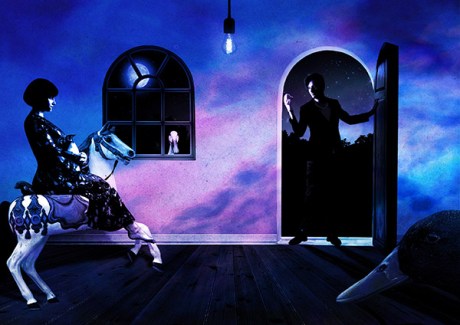
Their third such collection of 2017, Little Legs For Little Eggs, errs towards the haunted with its vaporous, mumbled and wafting esoteric siren call and undulating foggy horror schlock synth.
Released in time for Halloween, Jodie Lowther relays her vocals from beyond the ether; her musical foil John Vertigen, in the role of spiritualist, channeling those ethereal coos and nursery rhyme coquettish voices via the Ouija board.
Ominous though as it may sound, these little eggs and spooky shtick companions are often whimsical; the shocks, such as the black cat tip-toeing over a grave spine-tingling notes, aria like ghostly calls and ectoplasm dripping atmospherics are more in keeping with the Belbury Poly and The Advisory Circle than the wrenching doom and harrowing bestial augurs of Scott Walker and such Fortean Times ghost hunters as the Crow Versus Crow label.
Information, such as it is, remains scant, but the former Soft Bodies Record instigators, Lowther and Vertigen, offer a smattering of influential references” Lynch and Broadcast being two of the most obvious from a list that also includes The Associates – the closest they come to that is on the Eastern-tinged strange opener, Thomas Egg Has Little Legs, which channels Billy Mackenzie through Coil. Lynch creeps from the gloom, his presence just hanging there, on the Carpathian choir, ring modulating Halloween treat Shrike, whilst the much fated Broadcast influence can be heard throughout the rest of the EP’s trio of lilting spooky visages. However, there’s a strong whiff of the grand doyen of 70s and 80s horror soundtracks, John Carpenter, on the miasma heartbeat drum throbs Cut Below The Knee, which pairs the composer with a miserable, malcontent version of Clannad.
Difficult to frame or pin down, Quimper’s strange traverses are translucent, untethered and evanescent, threatening to float away or evaporate on touch. Little Legs For Little Eggs is part avant-garde chanson, part witchery synth and completely weird.
Cymbeline ‘1965 – 1971’
Guerssen, 16th November 2017
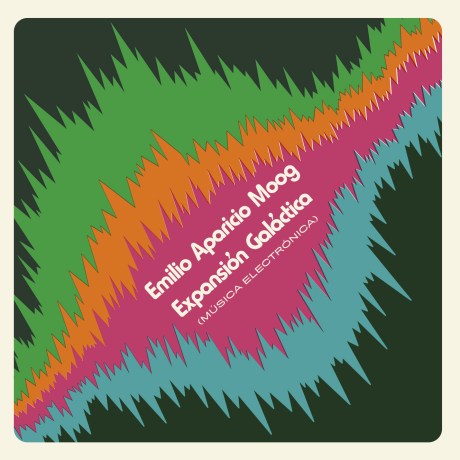
Emilio Aparicio Moog ‘Expansión Galáctica’
Mental Experience, 16th November 2017
Proving themselves a regular provider of the forgotten (sometimes for a good reason) and weirdly kitsch, Spanish vessel Guerssen has surprised as much as amused me with their busy 2017 release schedule. From thrift shop mid 80s garage to Franco era holiday resort disco flamenco, the crate-digging enthusiasts have resuscitated some astounding eclectic deadbeats, mavericks and, occasionally, pioneers from their metaphorical deathbeds of obscurity.
From the latest batch, all released during the next two weeks, I’ve picked out the primordial and Kosmische koolaid electronic nonsense 70s recordings of Emilio Aparicio (released through Mental Experience, and fed through the Guerssen promotion hub) and the, as it happens, pretty decent 60s/70s psych, bucolic folk home recordings of the Swedish trio Cymbeline to chew over. Though there is a bounty of odd and strange compilations also worth checking out.
Guatemala seems both the most unlikely and obvious fertile environment to find an odd burbling Bruce Haack like Moog classic. Seldom making headlines, for better or worse, the Central American country – part of the umbilical shaped cord that tethers the North and South American continents together – shared a common revolutionary zeal with its Latin neighbours. Simultaneously enjoying an economic boom whilst the local branches of the Revolutionary Movement fought a guerilla war, Guatemala’s youth, well some of them, tuned into America’s counterculture. With ties to a fortune, or at least a family of drinks maker industrialists, Emilio Aparicio, under the patronage of fellow compatriot, the painter and producer Roberto Abularach, created some of the country’s most curious electronic music compositions and exotic flights of fantasy. Lucky enough to have Abularach sipping from the same magic cup, – both, along with a number of Guatemala bohemians and ‘heads’, indulged themselves with copious amounts of LSD and Datura in the lead up to these recordings – the producer on his return from a trip to New York in 1969, where he met Robert Moog himself, brought back home two of the newly-fangled analogue synthesizers, one of which he presented to Aparicio as a gift.
After two years of stimulant induced experimentation, and released staggered over just a month-long window, the resulting Moog recordings were far too loony, zany and futuristically strange for the Guatemalan market. And so, pressed privately as a series of 45” records, some given away as part of a drink’s promotion for that family connection’s business (in exchange for four corks of the local brew), these oddities have remained stored away and mostly unheard: none of them ever making the record stores.
Long forgotten, copies so scarce that it took this compilation’s architect, Ruffy Tint (of Discodelic) some serious excavation work amongst the rat dung and dusty grotty basement of a rock-o-la machines distributor in the Guatemalan city of Quetzaltenango to find the missing and complete set of Aparicio recordings that make up Expansión Galáctica (no translation needed).
Undulating between transmogrified library music and a Latin variant of the BBC Radiophonic Workshop, these curios range in cosmic kitsch influences; from primordial Joe Meek crouched in a moist subterranean space vault to bubbly candy Zuckerzeit period Cluster. The two finds that initiated this collection, Brujería and Transfiguración del Iniciado pitch the ritualistic and bewitching in an acid-dandy vision of Hanna-Barbera haunted house spell casting, the first of which conjures up a misty spooky soup of babbling, trips-y beats and yawning silly gaping cries from the dungeon, the second, more serious but no less kitsch saunters towards the altar of some cultish brethren.
Goggle-eyed bossa nova wobbles, warbles and bleeps permeate the Moog modulated scenery of a space chasm Sputnik era version of space. And for the most part it seems quite quaint. As an exotic example of Moog performed exotica and weirdness, the late Aparicio’s recordings could be considered a rare missing link in electronic music. The travails of saving these obscure quirks has been worth the effort, and in a small way brought attention to a scene few had ever even heard of. Just don’t get too excited about it; Guatemala’s part is a footnote not a game changer.
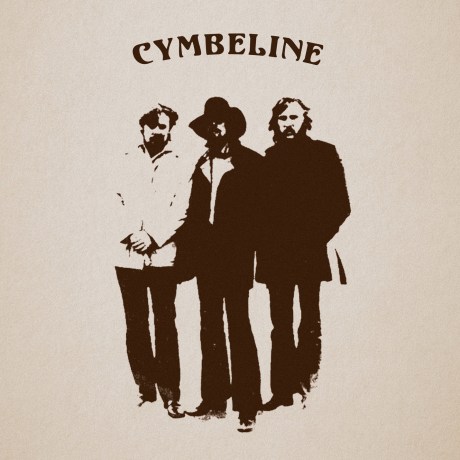
Meanwhile back on European soil, the equally obscure Swedish trio Cymbeline were, in-between their respectful gigs for a host of Scandinavian beat groups, producing a variety of recordings during the 60s, which would remain mostly unheard as demos and home recordings collecting dust, until forty years later. Laid dormant until founding member, the former lead guitarist of The Rovers, Michael Journath retrieved them from the loft and begun digitizing and uploading to Youtube, these increasingly – as the years went on during the band’s six-year history – professional recordings and extemporized experiments came to the attention of the Guerssen label, who quickly realized they’d found some gems.
Mostly recorded at the home of the group’s co-founder Anders Weyde (another lead guitarist, notably with Swede outfit The Scarlet Ribbons), this mix and match of styles, quality and line-ups follows the trajectory of a band finding its sound over one of the most changeable, rich periods of music development in history. Originally formed out of a yearning to write and perform their own material in 1965, bored with covers, Journath and Weyde along with old classmate Lars Hygrell, holed-up in the home studio, began aping the Rolling Stones and skulking moody garage rock of the States on their first records, the melancholic Everly Brothers harmony Look At The Stars and lamentable bucolic, Lady Jane-like haunted, Imagination.
At the same time however they also started improvising; incorporating their surroundings, from furniture for drums to the sound of birds, an electric cocktail mixer and even a refuse chute. The results of these expansions and melodious meanders were filed at the Image title series, of which the Third, Fifth and Sixth survived and are gathered together on this collection – the latter is a re-recorded 1970 version of the original. Starting with a bass guitar line, riff or plucked classical prompt these images were allowed to wander and end-up where they may: Fifth being a sun-dappled pastoral dreamy garage psych track that wouldn’t seem to out of place on an early Tyrannosaurus Rex album, Third a hoof-footed Electric Prunes in Allan Edgar Poe mayhem, and Sixth, a Moody Blues pastoral paean to love amongst the elements, which appeared on the group’s only single as the flipside to the ’71 released New York.
As time went on and improvements were made at Weyde’s home studio, Cymbeline adopted more folksy and progressive influences, looking across to the tapestry bucolic of England and the American West Coast, and to the wah-wah psychedelic songs of Jimi Hendrix, who’s famous standard The Wind Cries Mary is covered and given a gentle, almost muffled treatment by Cymbeline. Echoes of Donavon, Buffalo Springfield and backward/forward dreamy guitar-pedal effects feature through the trio’s late 60s repertoire. Some of which is mere pastiche, others, pretty decent, including the brilliant Traffic-esque Motala Ström from ’68.
A whiff of late success beckoned when Ulf Ryberg joined the trimmed-down to a duo Cymbeline in 1970, his amiable proto-glam meets Manfred Mann style acoustic rhythm travelogue New York became the band’s only official release. Prospects for an album in ’71 saw the trio locating from the industrial town of Norrköping for the Europa Film Studios in Stockholm to record a number of demos. Supposedly channeling the feel of the band’s live performances, a couple of tracks seem to be all that remains from this period; one of which is a more urgent but still wistful fuzz and shimmering cymbal retake of an earlier Stolta Vingar, the other, the more Amon Düül II acid-prog Strax Nedanför Tornen. Unfortunately during this late surge the band split up indefinitely before an album could be finished.
Obscurity and the right to be forgotten seems an impossible option in the internet age, and so even a lost box of nuggets as this Cymbeline collection can reach an audience previously cut-off through third parties (take your pick, from labels to management and radio) or the inactions of the group itself. Just when you believe or hope there’s nothing left to drag or dig up – thinking you may have finally got a fix on the whole Scandinavian folk and psych scene of the sixties – something comes along that grabs and surprises you into reevaluating what you know. Cymbeline is another one of those ‘what ifs’, though both good enough to have certainly gone further than they did, you can also see, in a crowded market, how they could so easily be lost and passed over for the multitude of quality that defines the whole era.

Easter Island Statues ‘Why Don’t You Live In The Garden?’
15th December 2017
Bonding over a shared passion for the music of The Pixies (plenty of that on display) and the Neutral Milk Hotel (not so much), amongst a variety of other similar bands, in 2015, the Oxford trio of Easter Island Statues Donald Campbell, James Askwith and Tom Hitch are set to release their debut EP, the five track Why Don’t You Live In The Garden?, next month.
Leading single Bow & Arrow, which has been doing the rounds recently, has already pricked the attention of 6Music’s Tom Robinson with its lively maelstrom of shimmery crashing cymbal and rapid-fire tight drums, The Walkman like angulated thrashing guitars and serenaded Mexican trumpet accompaniment. Running moodily over the downs the trio create a busy but perfectly executed slice of rambunctious Pixies via The Manics style alternative rock single bursting with energy, moodiness and elan.
In a similar vein the opener, Jousting Colours, offers little in the way of chivalry, but plenty of thrashing spiky punk and post-Britpop American rock: early Franz Ferdinand, The Buzzcocks and The Strokes to name just three.
Things get interesting with the split and changeable Little Bird/Ballerina, which runs through a number of musical changes, from Interpol style post-punk to senorita yearning brass, country and crashing indie. Holy Day is another sea change with its acoustic treatment, plucked prangs of ascending strings, funeral pyre analogies and mandolin. It’s is one of the best and most original, most mature and sophisticated tracks on the EP. The finale, Street Static, is a mix of all the influences in a way, controlled yet just as lively, with hints of R.E.M. and the same crashing, full-on alternative rock guitar riffs and crescendos as Jousting Colours and Bows & Arrows.
An impressive debut indeed from the often crashing and blasting, but thoughtful and assured trio.

The Reverse Engineer ‘Elusive Geometry’
Floored Music, 24th November 2017
Both in the moniker by which the Edinburgh-based ‘sonic experimentalist’ Dave House is known by, and deduced from the title of his latest album, Elusive Geometry, we can view the sound-artist’s music as a restructuring of sounds and mechanics.
House unravels, strips and inverts his apparatus of field recordings and sampled instruments to reconstruct new, often mysterious and at times foreboding soundscapes; some of which recall Jon Hassell’s Fourth World Musics explorations: a trace of the Javanese or Malay can be heard like a veil hanging over the uneasy densely packed traverse of cascading crystal droplets, marimba and tubular echoed Proto, and a similar, familiar yet obscured sense of place can be heard on the bamboo shuttling Insider, which also features the bobbing and dipped percussion and tablas of sound-designer and producer Pete Vilk.
Exotic sensory concepts of reimagined ‘possible musics’ and places can also be detected in the transduced display of dreamy African plain aria, scatting, soaring and soulful vocals by the jazz vocalist Matty Eeles, on the down tempo shuffling minimalistic Metastability. Fluidly interchanging between the soothed and soaring, Eeles’ voice is manipulated until her diction become almost alien, animalistic, stripped to just vowels sounds and exhales. And whether it’s meant to or not, the glass-bottle tapping and hand drum patterned Rhythmed has an air of the Haitian about it.
A transformation of House’s themes of ‘transition, self (re)discovery and moving on’, the precise chemistry of his compositions and use of collaborators – the already mentioned Vilk and Eeles are joined by harpist Esther Swift and BAFTA award-winning cellist Atzi Murumatsu – sends these explorations off into numerous nuanced, but untethered, atmospheres. Masked looming leviathans, honked saxophone like probes, coils and springs, stone and vegetation, the odd guitar strike drift over or interweave through sophisticated minimalist beats and breaks – the most abstract and discordant drum break of which features on the hallucinatory Decoherence -, with the mood fluctuating between both controlled uncertainty and more deconstructive chaos.
The closing arched trembled cello etched and splayed crunched beat peregrination Post is a perfect example of the kind of beauty, emotion and trepidation that permeates throughout this ‘elusive geometry’. It ends with the line, “It’s so beautiful here”, which appears out of the embers of a fading strung-out breakdown, drone and melancholy dreamy ambient wave.
Fashioning his own sonic descriptions; sending us off into our own space to contemplate and picture these re-engineered imaginations, House’s photographer brother John has even created a series of limited edition prints, created in response to the music – though these are only available as part of the ‘special’ CD edition. It’s no wonder that they’ve inspired such artwork photography, those low key but expansive, often dreamy and gauze-y sonic journeys evoke all manner of emotion and narratives, both introspective and worldly. Elusive Geometry will tease out and reveal its textures and intricacies slowly, each listen drawing your attention to some other interesting interplay and sparse sound. House has in short created a brilliant album of thoughtful, moody transitions and discovery.
https://soundcloud.com/thereverseengineer/elusive-geometry-preview-fl003
John Howard ‘From The Morning’
John Howard Label, 1st December 2017
A signature adroit, deep piano and wise but lightly sprung vocal performance from John Howard, covering – as so many have tired before – one of England’s most tragic introverts, the late Nick Drake, on his first solo release-proper since 2016’s beautifully expansive masterpiece, Across The Door Sill (which rightly made our ‘choice albums of 2016’ features). Howard’s Waterboys style, enervated gospel organ undertone version of Drake’s original diaphanous but so obviously sorrowful From The Morning marks a subtle change in Howard’s methodology; releasing, as he will on December the 1st, this homage paean single style precursor to next year’s extended five track EP of similar inspired covers, Songs From The Morning.
A virtuoso, seldom matched, both technically and creatively – not just because he could confound or at least make it difficult to replicate his music, using as he did his own tuning methodology – the shy and fatefully mentally-anguished Drake, who took his own life at the age of 26, is an obvious muse for Howard whose own debut Goodbye Suzie, and most iconic album, Kid In A Big World, share a unique sense of isolated detachment from the music scene of the times, and were also overlooked commercially, though critically applauded.
Taken from Drake’s final album, Pink Moon, From The Morning is rendered a venerated rolling, tambourine-shaking dawn chorus by Howard; guiding the original towards an awakened brighter day.
Solo Collective ‘Part One’
Nonostar Records, 10th November 2017
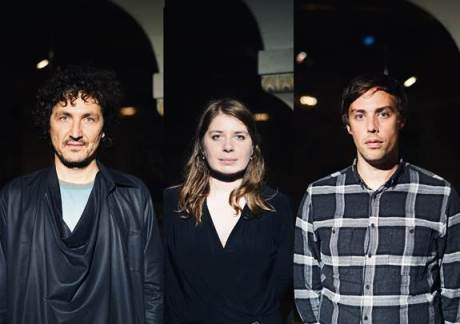
Gathered together in a congruous union under the Solo Collective umbrella, the Anglo-German partnership of Anne Müller, Seb Reynolds and Alex Stolze take turns in the spotlight and provide supporting roles with a cast of additional collaborators on the chamber pop meets traversing evocations suite Part One.
An interconnected triangle of familiar themes and musicality, with each musician also individually experimenting and creating their own solo pathway, in their respective field, all three artists have crossed paths and worked together previously on a variety of projects; some of which, in alternative neo-classical stripped versions, appear on this album. For instance, the original pizzicato acoustic-electronic Don’t Try To Be, from the violinist Stolze’s 2016 EP, Mankind Animal, now features Müller’s yearning emphatic cello, and is striped of its synthesizer electronics in favour of woodblock percussion and doleful low bass notes to create a more tragic and sad version.
No stranger to the Monolith Cocktail, Reynolds has been one of the most prolific polymaths to feature on the blog over the last couple of years, whether its for his work as a solo artist, producer, promoter, remixer or collaborator – which includes his recent Thai-inspired gamelan peregrination collaboration with the Neon Dance Company, Mahajanaka and Puzzle Creature. It’s as an exploratory avant-garde with classical inclinations pianist that Reynolds appears on this collective experiment however; his, depending on how you hear it innocent (if foreboding) transcendence or fear-evoking prowl of a drone looming overhead, gradually ascending and descending ambient traverse Ascension features both Müller and Stolze but also Mike Bannard. Rotating the line-up, Reynolds beatific undulating opuscule Holy Island retains both Müller’s beautifully pining presence and Bannard’s but also features Jonathan Quinn and Andrew Warne helping to perform one of the album’s most ethereal highlights.
Going ‘solo solo’, Müller, who has toured and recorded with Agnes Obel and is a regular musical foil to Nils Frahm, provides the tubular chimed expansive air Silbersee, and Stolze, a stalwart of the Berlin techno scene but also a violinist virtuoso pushing the instruments boundaries, provides the classically 18th century attuned stirring melodious meets twanged, crushing abrasive, approaching leviathans, Cell To Cell. Both also perform as a duo on the opening Philip Glass evoking elegant and quivery Solo Repeat!.
A showcase for a particularly harmonious partnership of individuals with a pan-Europa vision of collaboration and crossing sublime musical boundaries, Part One – of what I hope will be a continuing venture – proves to be a stirring neo-classical ambient collection of solo and ensemble performances; each artists sharing and pooling their obvious talents to find a common interplay and a bond to create a challenging but mostly beautiful album.
ALBUM REVIEW
WORDS: DOMINIC VALVONA

Various ‘The Ultimate Guide To Welsh Folk: Compiled By Cerys Matthews’
ARC Music, 27th October 2017
A springboard introduction but nevertheless mammoth undertaking, the latest entry in a series of indigenous folk collections from the leading world music showcase label ARC, leaves no patch of land, valley, croft, mining town and backroom of Wales untouched or forgotten in its quest to encapsulate the diversity of Welsh folk music.
Familiar faces, even chart toppers, appear alongside more obscure and atavistic doyens of the genre on, what is, a most generous survey, stretched over two CDs. Following on from previous Scottish and English editions, ARC settles in for a gorgeous sounding ‘ultimate guide’ under the assured curatorship of Welsh polymath Cerys Matthews (MBE no less). Admittedly casting “with the largest net possible”, Cerys has put together a fond and occasionally divine traverse of her native pastures. Anyone who tunes into Cerys’ regular spots on 6Music will no doubt admire her knowledge and championing of fellow Welsh artists, and so it comes as no surprise to find her fronting this collection. It will also come as no surprise to find her included amongst the many luminaries, the Nashville lilted and smoky voiced rearrangement of the hymn-like Sosban Fach, taken from Cerys’ ‘most successful’ solo album Tir, a congruous and worthy addition to a compilation packed with some of the most diaphanous and moving voices in Welsh music history.
Listeners will probably recognize a fair few of the artists and songs; no doubt accustomed to the highly talented songstress Gwyneth Glyn, who I praised and featured most recently with her new solo album Tro. Glyn’s ‘love poetry’ communion collaboration of 2015, Ghazalaw, with Ghazal signing sensation Tauseef Akhtar traversed the Vales of Wales and ‘Muslim and Urdu’ enclave, merging for the first time ever the Welsh tradition to a style of ancestral singing formerly kept separate from the outside world, confined to India. A perfectly romantic and airy example of that cross-fertilization from the album, Moliannwn is a ‘children’s favorite adapted into a softened tabla rattling backed endearing paean.
Staying with contemporary choices, there’s a short but enchanting twee, Magic Roundabout-like instrumental vignette from the sibling heavy Cowbois Rhos Botwnnog (Didl-Dei); fairytale dreamy folk rock from the Welsh Avalon evoking 9Bach (Pontypridd), the trickling brooks and gallop of wild horses meets Western Sahara pulchritude collaboration between Catrin Finch and the Senegalese artist Seckou Keita (Ceffylau), and a plucked acoustic contour of the local diaphanous topography by former Gorky’s Zygotic Mynci frontman Euro Childs (Roedd hi’n nofio y bore bach).
Paying homage to Wales signature beatific harp traditions, Cerys opens the first part of this double compilation with a heavenly performance from the ‘Queen of the harp’ (no idle boast) Nansi Richards; compared no less to Jimi Hendrix for her own unique showmanship of tricks, such as playing behind her back and playing two harps at a time. Angelic indeed, Richards Pwt Ar y Bys (translates as ‘A little something for the fingers’) sounds effortless, light, almost translucent, and is a great introduction from the harp grandee: many of who’s scions and pupils appear scattered throughout this collection. As Cerys says: ‘The harp reigns supreme in Welsh folk music’. And so there is a wealth of its synonymous empyrean tones to be found, including the specialized triple harp evocations of Robin Huw Bowen, with his graceful tip-toeing Romany Gypsy Waltz, and the classical sounding pitter-patter caresses of another influential doyen and teacher of the instrument, Elinor Bennett, on Pant Corlan yr Wyn.
Another signature sound of Wales, the male voice choir, is best exemplified by the deeply moving ethereal ascendant recording Tydi a roddaist, by the North Wales miners Rhos Male Voice Choir. Cerys makes a strong case for such choirs in a compilation that celebrates folk music, tracing its roots back through the mists of time and, rightly so, comparing it to the gospel music of the American south; the voice and communion of an earnest poor community of miners, some of which braved the scars and trauma of a colliery accident the day before to proudly summon the energy and poignancy to deliver a rousing hymn.
As you might imagine there’s some competition in the vocal stakes, with both wizened and breathtaking voices seemingly commonplace; the superlatives running out by the time you reach the Cardiff marvel Heather Jones and her star Celtic turn Lisa Lãn, a most stunning vocal delivery that soars.
The width and breadth as I say is large and expansive, with international troubadours, such as the ‘Welsh Bob Dylan’ Meic Stevens (who is allowed two tracks to match his undeniable status in the Welsh music scene over the decades) sitting alongside the ‘nightingale’ trilling and shrilled eccentric singing of the local elder South Glamorgan legend Phil Tanner; the church hall recorded marching song of the Free Wales Army radical campaigner Cayo Evans alongside the Crosby, Stills and Nash country rock folk of the three-piece Cardiff act the Hennessys.
Over a century’s worth of Welsh icons and lesser known (but of course, no less important) local and often amateur talent, spread over a generous collection, the Ultimate Guide is both a visceral and fondly compiled survey; more or less including something from every branch of the folk genre, and even the many international fusions that have helped spread the allure of Welsh music to all four corners of the globe. Even if this compilation falls short of its mighty title boast, then it can at the very least act as an exceptional introduction for further research or immersion.
Our Daily Bread 260: Vukovar ‘Puritan’ LP
October 24, 2017
ALBUM REVIEW
WORDS: DOMINIC VALVONA
Vukovar ‘Puritan’
The Brutalist House, 25th October 2017
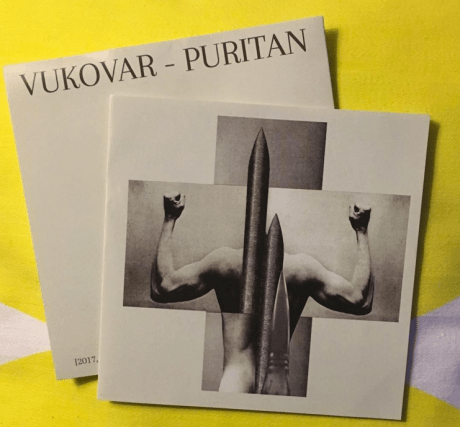
Ah, the times in which we find ourselves. Portrayed in a maelstrom of uncertainty, anxiety and utter chaos by the collective forces of the established press and social media, and by reactionaries on all sides of the political divide: from those who envision a Marxist takeover to those losing their shit over fascistic dystopias. Fear and (self) loathing in a post-postmodernist world, all the constructs and old arguments previously, we believed, answered as democracy, and by its extension capitalism, seemed to have won out, are once more dragged to the surface.
No side in the political struggle, left or right and its various iterations however seem capable or ready to handle the personality cult leaderships (of which Corbyn’s own party could be accused) of Trump, Putin, Xi Jinping, and of course ‘supreme leader’ Kim Jong-un. They also seem almost powerless to legislate and reign-in the domineering forces of Silicon Valley, which continues, in the name of so-called progress, to manipulate and filter much of the content and media we see and hear; taking over from traditional broadcasting whilst circumnavigating any restrictions and collecting our data for their own nebulous (daresay nefarious) intentions – well perhaps it isn’t that much of a secret, we know that Facebook et al are serious about entering the political fray in one way or another, and their tweaking of the algorithms in future will certainly benefit their own held ideals and leanings.
Yet despite the cataclysmic augers and the visions of the four horsemen appearing on the horizon, history proves that the world keeps spinning through all the bullshit regardless. And so proving that age old adage that history not only keeps on turning but often repeats itself (in a manner) the malcontent romantics Vukovar remind us through their chosen moniker that only a mere twenty odd years before in the infamous Croatian city of the same name, on the EU’s own doorstep, 300 poor souls, mostly Muslims, were rounded up and barbarically executed by Serb paramilitaries and the Yugoslav Peoples Army in what remains one of the worst committed atrocities of its kind since WWII. This was of course during the Balkans implosion of the nineties that followed the defrosting of the Cold War, as the Berlin Wall fell and the Soviet Empire crumbled. A decade long war that eventually redrew the map of the region, demarcating for the most part, ethnic groups into their own republics and countries, with the most fought over and disputed being the NATO backed Kosovo. In a different part of the world, in the same generation, a similar genocidal persecution of a Muslim minority unfolds in Myanmar. A former darling of the West and liberals, Aung San Suu Kyi has proven to be anything but the democratic champion in the wings, having after a decades long struggle to hold office and take power away from the totalitarian military regime, turned a blind eye to the massacre of the country’s Rohingya Muslim population. Talks are ongoing, though Aung San’s constant stoicism and ‘fake news’ crowing in the face of blatant persecution doesn’t exactly fill you with confidence that the situation will improve anytime soon.
Before this review becomes an all-encompassing purview style essay of the state of affairs throughout the world and the multiple crisis we all face, I’d better stick to the catalyst of this piece and return to Vukovar.
Following in the tradition of their three-syllable sloganist album titles, Vukovar’s fourth LP drums home the Puritan mantra and analogies; a cleansing if you will of the status quo, a year zero, and perhaps also a return to the roots and communal deliverance of protest in music – not, I hope, the ‘puritanical’ steeple hat and buckle shoe wearing bible bashing of zealots, burning heretics at the stake, nor the bloody zeal of so many badly turned-out revolutions that end up creating just as terrible a reign of tyranny. The only fires here are the metaphorical kind; a funeral pyre of mediocrity, a bonfire of vanities, the-bland-leading-the-bland towards a conversion of raw intensity, dangerous, shamanistic performed anarchistic rock’n’roll: well I think that’s the idea.
Vukovar have their work cut out in a climate of such chaotic unreasoning, as people tend to turn towards escapism or certainty, even assurance. And so it comes as no surprise to find the creative landscape lacking in ‘danger’, new ideas, and confrontation; with much of the most fiery, interesting music coming from outside North America and Europe.
As the band’s previous album, Fornication showed, Vukovar have at least listened to many of the right bands; released at the start of the year, this amorphous, transmogrified covers style collection featured reconfigured homages to a host of iconic luminaries including David Sylvian, Coil, The Monks, The Birthday Party and Neu!. Cultish in a manner, the band’s influences and manifesto statements of propaganda intent, plus allusions to cultural regicidal and ability to shrink from publicity – even self-sabotage any signs of success or promotion – suggests a band that takes itself very seriously.
Yet even with countless references to history’s outsiders, philosophers, discontent mavericks, revolutionaries and demons throughout their previous trio of albums, and the elegiac resignation that shadows them, they waltz sublimely (for a majority of the time), rather than rage in romanticized contempt, as Olympus slowly grumbles.
I’ve stated in the past that Vukovar sound best when encouraged towards the light of melancholic pop and post-punk than when firing into a cyclone of caustic discord and noisy self-indulgence. Better when they enact Joy Division than say Throbbing Gristle; melody doesn’t necessarily mean commercial; doesn’t necessarily mean compromise, whilst industrial strength misery can grate and test the patience: in a live setting, depending on circumstance, a primal cacophony is just what’s needed; captured on record for posterity, it better be good and have some meaning beyond the atmosphere of the studio on the day it was recorded. Thankfully the band seem to have reigned-in the chaos and used it wisely and sparingly. Puritan however is closer to the debut Emperor, inasmuch as it balances the group’s dynamic forces of tortured-soul poetry and violent more aggressive tormented bursts of churning hell and occasional screaming.
Between the Gothic skulking and crystalline rays of shared 80s synth new romanticism Vukovar wander transfixed in a nightmare state of both despair and indolent antagonism; with stark lyrics more descriptively visceral than forced down the listener’s throat. Donning the vestiges of the Puritan, the front man, an amalgamation vocally of both Ian Curtis and Bernard Sumner, sets the scene (“I am a sinful man, yet an honest man”) to a backing track of slung low growled bass, Jesus and Mary Chain’s bastardize Spector drum death knells and the miasma threat of Nick Cave’s Bad Seeds on the opening inflicted and gradually ascendant Nietzsche propound Übermensch.
Pounding away like the BRMC on the life and death rock’n’roll discordant Veil, a tension is first released and then carried over with sinister effect on The Leadership Is My Light: the singer channeling Trent Reznor at Lynch’s Bang Bang Bar stage and Berlin era Crime And The City Solution as he shrieks “I am nothing!” repeatedly on one of the album’s most ominous seedy doomed outpourings of daemonic grief.
Waltzing once more through a gloomy dreamscape, joined for the first of a trio of tracks that feature the daemonic siren folksy vocals of Elizabeth Menally, Once More For The Puritan is a pendulous duet bordering on esoteric shoegaze, and despite its mantra title is anything but puritanical, consulting as it sounds with spirits and hallucinogenic substances. The first of two traditional song translations, and again featuring Menally, who floats in the ether with fateful ghost like calls, the old Appalachian via even older Celtic roots Down In The Willow Garden lament continues in the haunted vein. The macabre beckons, as in a fashion, Menally and Vukovar echo the murder ballad partners Nick Cave and Kylie Minogue; our protagonist inching towards the gallows after doing away with his lover in all manner of diabolical ways, the spirit of his love cooing from a maelstrom of spiraling dread from beyond a watery grave.
The second old faithful, All The Pretty Little Horses – itself a handed-down version of the hush-a-bye lullaby – is given a bewitching enchanting treatment that suggests foreboding rather than comfort and a good night’s sleep.
A second guest spot is reserved for the Lancashire actor, writer and producer, and owner of an equally disenchanted weary ominous voice, Graham Duff, who narrates a despondent eulogy full of death throes, destruction and adages over the two-part A Final Solution. The first part of which is starker, delivered over a drone, the second part submerging his speech beneath a merger of Radiohead, The Stooges and Joy Division influences, and the repeated vocal line, “Without you I’m an empty space”.
If Vukovar were in the business of releasing singles, then the trio of tracks in the last half of the album would prove ideal. I’ve already featured the group’s precursor to Puritan, the rapturous OMD joining Echo & The Bunnyman and The The on Nero’s veranda, A Clockwork Dance – launched on bandcamp in the run-up to this latest album -, but equal contenders for the single status are the Tubeway Army-Visage-OMD(again) melding synth pop indie crawl through the wastelands The Moment Severed, and the brilliantly dark throbbing Radiohead-esque S.S.S.
The most complete and best produced encapsulation of Vukovar’s sound yet, balancing both their experimental raw and ritualistic live performances with melancholic post-punk, and even brooding new romanticism pop, Puritan offers a travail through the dirge and gloom of our (end) times with all its sinful and cleansing, often biblical, connotations and language. Though it also often sounds like some kind of personal tortured Nick Cave love requiem, unfolding in the midst of chaos; looking over the edge into the abyss, the heretics taking over the asylum.
Tickling Our Fancy 055: AUDIAC, Matt Finucane, Andrew Heath, In Time, Poly Ester, Psycho & Plastic and TootArd.
October 10, 2017
NEW MUSIC REVIEWS
WORDS: DOMINIC VALVONA

Welcome as always to the latest edition of my reviews roundup. Meeting with my approval this month, there’s the (both literally and musically metaphorical) ‘laissez passer’ wandering TootArd from the Golan Heights making an international debut on Glitterbeat Records; the return, in a manner, of the enigmatic Brighton-based artist Matt Finucane; a stunning theatrical avant-garde meets Chanson and morose romantic pop opus from AUDIAC, waltzing onto the stage after years of inactivity; the pique soundclash of Swiss drum and electric bass combo Ester Poly; and the fourth album of ‘lower-case’ minimalism and ambient music from Andrew Heath.
I also take a look at the fanboy style resurrection of the obscure 80s Pennsylvania garage, punk, post-rock and psych outfit In Time, by thrift store digger Steve Krakow, who celebrates the fleeting and undiscovered group’s only album (found unloved by Krakow on cassette tape) and a number of unreleased attic recordings for the Guerssen label. Last but in no means the least of today’s selections, I take a look at the debut album from the Berlin duo of kooky and fun electronica and techno, Psycho & Plastic, Kosmopop. Championed from the very start on this very blog, it seems to have taken the duo – who to be fair are busy with a multitude of projects including the running of their label GiveUsYourGOLD – an age to finally release it.
Read on…
TootArd ‘Laissez Passer’
Glitterbeat Records, 10th November 2017

Photo credit: Mercedes Ortego González.
Caught in, what might seem to them, a perpetual limbo, devoid of a recognized identity, the collective band members of the omnivorous Levant group TootArd are officially stateless: citizens in effect of nowhere. Growing up in the contested, bloodily fought over, Golan Heights the group’s mouthpiece, guitarist Hasan Nakhleh, articulates the predicament of a population stuck between two, once, warring factions – feeling detached with no legal representation; no sense of belonging – throughout the press notes that accompanied this, their latest album, Laissez Passer.
Carved up in two by the former warring states of Syria and Israel after the divisive Yom Kippur War of 1973 and the eventual ceasefire that followed – with the greater share by some distance given to the latter -, the Golan Heights has been uneasily observed by both parties for decades. Under an accord the following year, an international buffer zone – known as the UNDOF ‘purple line’ – was put in place to help keep a fragile peace. Before the apocalyptic civil – and proxy – war in Syria begun, both nations seemed to be approaching some agreement over the region. Israel however, following a policy of non-intervention, is in no hurry to secede ground to Syria.
Under the authority of Israel but without official citizenship, the native inhabitants of the western Golan Heights region are forced to carry the special situation, ‘laissez passer,’ papers of TootArd’s album title to cross borders and travel. Despite this the group have found a certain musical freedom; amorphously drifting across those imposed demarcation lines to adopt styles from across the entire Levant; from Africa and even Jamaica. Originally covering the Caribbean island’s most famous musical export, the group started out playing reggae covers before relishing a change in direction.
However, before settling on their recent traverse fusion of desert blues – finding a commonality and affinity with the Beaudion and, equally stateless, Tuareg -, Arabic modalities, rock and funk influences, the founding members of the group all left for Europe; all going their separate ways: Hasen Nakhleh moving to Berlin and then Bern, recalls that this sojourn period would split the collective up internationally, yet when visiting home they would all regroup for impromptu performances in their native villages, as if they’d never been apart. After a two-year hiatus Hasen and his brother, multi-instrumentalist Rami Nakhleh – missing their fellow compatriots – organized a reunion of a sort, preparing the way forward for a reincarnation of their band.
With a new enthusiasm, new material and new sound, TootArd’s second album – though billed as their ‘international’ debut showcase – Laissez Passer has much to contemplate and pine over; framed as it is in the ‘blues’ tradition. Themes of identity and the chaos that continues to engulf their homeland dominate the album. Yet far from lamentable and sad this latest effort is surprisingly relaxed, with controlled swells of more funky and soulful driven upbeat rhythms throughout, and even the odd saunter of swaying joy. The languid reggae candor, transmogrified into a Levant groove, helps to create a sort of Baba Zula souk gait, whilst hints of Tamikrest and Tinariwen’s camel gangly, handclapping, desert blues funk gives the music a drive on both the title-track and, almost galloping and spinning into Dervish territory, Bayati Blues.
But those bluesy ruminating and gazing ponderously inducing themes do often sound haunting; especially with the addition of Ams Mdah’s snake charming and romantically dusky jazz saxophone evocations, and Hasen’s modified oud sounding electric guitar – extra frets added to ape the synonymous dulcet tones of the short-necked lute-like string instrument.
Bringing people together under darkening skies or gazing out across the Golan Heights prism back towards Syria with a Rast scale composed travailing moody accompaniment, TootArd flow and spiral subtly across the region soaking up ancestral musical customs as they go. Though imposed upon them, the Laissez Passer status hasn’t held the group back creatively: forcing them in fact by circumstance to find a new musical freedom. They are, even if it sounds a tad clichéd, only limited by their own restless imaginations, and this album indeed dreams big.
AUDIAC ‘So Waltz’
Klangbad Records, 20th October 2017

In the age in which the majority of recording artists and bands are struggling to survive on the mediocre, almost vaporous, earnings from their craft and graft, it could be argued that without a monetary reward (no matter how modest) and without security you may as well take risks; push the boundaries; never compromise, and in the case of the Tübingen and Hamburg straddling duo AUDIAC, concentrate your efforts on producing a ‘work of art’. And make no mistake So Waltz is an ambitious album’ bordering at times on the theatrical, but definitely art-y.
Knowing admittedly nothing about this duo, I can only assume they were lucky enough to have at least the time to pursue these artistic ambitions. Though as the press release is not entirely clear, I assume this latest album is the follow up to Alexander Wiemer von Veen and Niklas David’s 2003 debut, Thank You For Not Discussing The Outside World; marking quite an absence between releases, but nevertheless indicating that they certainly had enough time to create an epic suite. They also had one of the (infamous) original co-founders of Germany’s most uncompromising iconic groups, the mighty Faust, Hans Joachim Irmler on board to produce; his impressive skillset, shaped in a baptism of fire during the Krautrock epoch, and explorations pushing his chagrins further into sonic experimentation.
Remaining true to that debut album however, AUDIAC still sound inspired by Chanson, trip-hop, chamber pop, psychedelic music and Kurt Weill. Only they drop some of those more psychedelic pretensions this time in favour of melodrama and spectacle; dancing in malcontent and lament to a semi-classical avant-garde soundtrack, both melodically beautiful and elegiacally forlorn.
With all the limitations and pressures lifted, the duo is able to put forward their grandiose schemes undaunted by commercial success: or so they say. And so moving quasi-classical soul merges with Popol Vuh like divine choral atmospheres, and harsher, stark declarations of pained expression. Not quite in the realms of Scott Walker but sailing pretty close, the vocals and backing fluctuate the malady intensity and constantly restless plunging piano playing and voice combo of Diamanda Galas at its most harrowing – especially on the tumultuous, in a state of despair and rage, Doberman -, and the aching blue-eyed soul of George Michael and cerebral crooning accentuation of David Sylvian at its most romantic. Yet this concatenate pan-European songbook, mostly travailing the moody northern realms of Germany, France and the Lowlands, evokes a penchant for the UK too. Hints of Massive Attack, Thom Yorke, an enervated Underworld, early Queen and the Welsh maverick John Cale appear amongst the waltzing, gushing and graceful allusions of a spurned brooding European protagonist – probably sucking on a Gitanes; carrying all the weight of the world’s problems on his shoulders.
Returning with an impressive minor opus, So Waltz sounds like it took a lot of time and effort to create. Highly dramatic, occasionally indulgent, yet always quite moving they make quite the statement with this bleak but diaphanous and expressive tragedy.
Psycho & Plastic ‘Kosmopop’
GiveUsYourGOLD, 20th October 2017
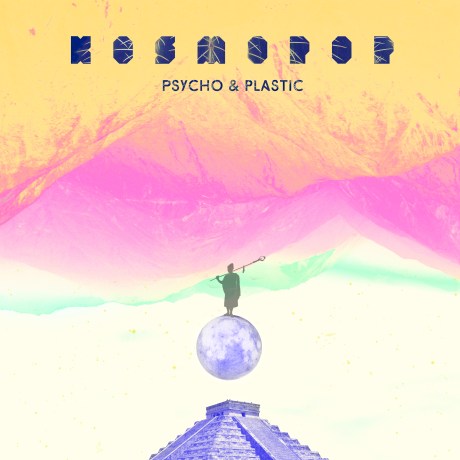
Guiding lights into the expanses of an imaginary galaxy, the Psycho & Plastic duo of Berlin dance music stalwarts, Thomas Tichai and Alexandre Decoupigny, search both inner and outer space with a suave funky and cosmic techno soundtrack on their new album, Kosmopop.
Previously releasing a string of EPs and videos, with the emphasis on fun and quirky electronic dance music experimentation – bordering at times on the goofy and cartoonish -, the duo have finally found time to produce a more complex, daresay conceptual, album; with aloof wondrous inspirations abound. Self-released through their burgeoning label GiveUsYourGOLD (Armour, AXLOTL, Irk Yste), their debut album proper dials down the more loony, bubbly and tropical kooky influences in favour of smoother, groovier rhythms. This isn’t to suggest they’ve suddenly become serious; the larks and optimism remain, with fond homages to the first and second summers of love, and a particular penchant for the unconscious organic flowering of the 90s rave scene.
Alluding to certain science-fiction ascetics in the artwork, the music is itself alien and mysterious at times, erring towards Kosmische influences like Tangerine Dream on the more enigmatic searching voyages – check the brocaded synth fanning, solar winds blowing and whistling satellite signally Superflare and Banco de Gaia does Mayan temple dub Entropy.
For the major part however, the music sounds like a Mir Space Station house band of Der Plan, Niles Rodgers, International Pony and Felix da Housecat beaming down a love-in direct to the berlin dancefloors. Expect to hear astral funk lightly entwining with early echoes of the electro hip hop compilations; echoes and specs of an alien presence reverberating and floating over Chicago House; sitar like brass-y meditations chiming along to pocket calculator algorithms; stoic Germanic tuned narration encouraging philosophical self-discoveries across the universe whilst also urging the listener “to get down” to tribal beats and 808 preset percussion – the four-to-the-floor disco punk Divine Loser even reimagines Depeche mode being born in Düsseldorf rather than Basildon.
Psycho & Plastic’s interstellar travels flow in a cyber boogie motion, gazing as they do into the wonders of a funky techno and as pop disco vision of space. Kosmopop is a cracking debut album and marks a small but significant sophisticated change in the duo’s style; more ambitious, smoother and sleeker.
Andrew Heath ‘Soundings’
Disco Gecko, 3rd November 2017
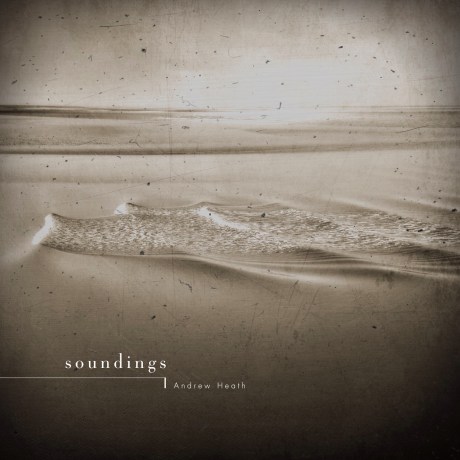
Praised as a sort of progressive sound and ambient music torchbearer of a genre renowned for such luminaries as Brian Eno and Hans-Joachim Roedelius, Andrew Heath’s own experiments in the field lean towards the reification of the fleeting, disturbed and ephemeral quiet traces of ‘people within spaces’. The self-styled composer of ‘lower-case’ minimalism evokes enigmatic, mysterious and occasionally mournful passages of evolving, passing time through the use of found and created sound manipulation and in-situ (a concatenate theme that connects to Heath’s site specific video art) field recordings.
His fourth solo album for Disco Gecko follows on from previous work, building up both synthetic and natural textural layers, drones, obscured broadcast voices and sonorous piano phrases. However, the main difference with Soundings is the atmosphere it creates; the echoing leitmotif of creaking footsteps pacing up and down a room and the almost heavy methodical concentration of memories pouring from the typewriter notation for me conjure up a writer’s garret: the author’s struggle, turmoil and thoughts represented by Heath’s serialism soundtrack.
Used subtly the neo-classical instrumentation that swirls and floats around the concrete sounds is used to bring melody, intrigue and sometimes, sadness. As well as Heath’s lingering, pondering classical piano notes and scales, there’s a touching twinkling and warmer Fender Rhodes offering lighter jazzy tinged, comfort and balance; a counterpoint interaction between the two instruments that began in the 90s when Heath collaborated with Felix Joy under the experimental Aqueous banner. It also resonates with similar piano explorations by Roedelius, who as it happens has worked with both Heath and Joy previously, most famously on the Meeting The Magus album, and more recently with Heath and fellow avant-garde composer/artist Christopher Chaplin on the live improvised recording Triptych In Blue. Roedelius could be said to have an open-ended collaboration with Heath, who it must be said can’t help but be enthused by the Kluster/Cluster/(and in more recent times) Qluster trinity steward of Kosmische and neo-classical exploration.
Another (on-going) collaboration with the Dutch ambient musician Anne Chris Bakkes continues on both the album’s winter moody traipse through the Dutch province of Noorderhaven, and the serene Happenstance articulation. Bakkes on her part performs a masked and fluttering guitar peregrination and plays with more unusual, mostly unidentifiable background sounds on the two tracks: described in the press release as ‘ephemeral’.
Breaking the veiled, swirling clouds hovering atmospherics, Stéphane Marlet and Bill Howgego are on hand to offer both arching serious, lamentable, and swooned jazz inspiration; the former enriches the cyclonic pondering Days In-Between with saddening cello, the latter tenderly sailing above the Tibetan imaginations of A Break In The Clouds with a striking clarinet flourish.
Pivoting between levitating above the heavens and space and counting the days in a haunted soundscape of captured movements and memories on Earth, Soundings hints at scenes and scenery alike; the traces of which make up this gently unfolding series of ambient descriptive passages in time.
Matt Finucane ‘Threaten Me With Your Love’
Light Crude, 25th October 2017

Returning after what seems an age away from crafting some of the most understated moodily resigned and mentally fatigued indie, Brighton-based all-rounder Matt Finucane is back with an instrumentally pared down, but just as sophisticated, duo of EPs this Autumn.
Not that we wish to pry, and only knowing Finucane from a distance, it seems his travails and dysfunctional personal life has got the better of him recently and in the past: hence the absence; part of which was spent in rehab. Threaten Me With Your Love is the idiosyncratic troubadour’s first proper release since then.
Back doing what he does so well, with eight new songs split between two staggered EPs, Finucane has employed the talents of fellow Brighton musician Mik Hanscomb – one half of the city’s (via Southend) pastoral Laurel Canyon imbued folk siblings Junkboy – to accompany him both live and on this recording.
Once again channeling vague notions of Lou Reed, David Slyvian, Ian Hunter, Bowie and Bolan, Finucane’s more relaxed, even languid, acoustic heavy material has an unintentional but accepted ‘druggy malaise’ feel to it. Crooning with a certain drowsy but meandrous confidence, our swooning maverick also often channels the quivering moodiness and slick sneer of a 50s rock’n’roll performer – similar in style to Bradford Cox’s very own donning of the vestiges of a crooning 50s rock’n’roll balladeer on the Atlas Sound LP Parallax. Updated of course with slivers of glam rock and post punk, and with the concerns and sentiments closer in principle to the loss of innocence and the emotional wreckage of ‘dead man’s curve’ than the harmless High School melodramas of the genre.
Experimenting with delivery throughout, the vocals often trail off, swooning into the crevices of Finucane’s darkened room, or loosely hovering between both the high and low registers; tripping along in what sounds like an exercise in catharsis; releasing thoughts in a melodically enriching counsel session. The music echoes that mood, both rallying and accentuating the sentiment and evocations on the acoustic rhythm and electric guitar – Moon Madness for some reason reminded me of Mick Harvey. However, the final song of this four track collection, Self Possession Version Two, moves through a number of musical ideas; reverberating brassy guitar strings jangle through Gothic cowboy boot spurs rattling back beat, new romanticism and the Velvet Underground before pushing into a bent-out-of-shape Sonic Youth and ending on a haunting final waning dissipation.
Still finding his range with one of his most stripped-down recordings yet, Finucane thankfully makes a welcome return to the music scene, and once again defies categorization with a unique, if despondent lovelorn, style of delivery.
In Time ‘Inside Your Mind’
Mental Experience via Guerssen, 13th October 2017

The, what seemed almost limitless at the time, pool of lost and obscure garage band treasures was drained a long time ago. Well, at least the halcyon days of the original primal punk, pop-sike, blue-eyed soul and psychedelic R&B back beat era in the 60s; the architects of the Nuggets-Rubbles-Pebbles-Teenage Shutdown compilations feast truly now exhausted. Drying up the reserves of every band and tenuous collection of misfits that ever recorded a single or had a whiff of a named – no matter how minor and obscure – record label or, managed to wow the locals in the provincial state scene for even the most briefest of moments, many crate-diggers and dewy-eyed salivating acid and garage freaks started dredging up the most amateur of home recordings and wannabe demos.
This process has been repeated for most genres, moving on to different more fertile ground in the following decades, and as with this obscurity from Pennsylvania outfit In Time, honing in on the 80s revival; though equally at the apex of both the raw indie and grunge fusions that were to come.
Skeptical about these finds ever since a musician I used to knock about with in the 90s – Spacemen 3 and Sun Ra enthusiast I recall – told me the story of when he and his band mates used to mischievously pass off mock garage band recordings of themselves as authentic lost ‘nuggets’ from the 60s USA hinterland; leaving these constructed recordings on cassette tapes in secondhand stores, or as the American’s would say “thrift stores”. Whether anyone was ever taken in or not, discovering such curiosities has always made me cautious and nervous. In the photocopied ‘ultra rare’ D.I.Y. mode, what might be a cunning ruse or by luck a damn good find, the only ever release by the In Time quartet, Inside Your Mind, was discovered in such circumstances in a Chicago ‘thrift store’. How it got there is anyone’s guess, but this discovery enthused the guy who found it, the Plastic Crimwave’s Steve Krakow, enough to set in motion a fanboy like zeal to track down the culprits responsible; leading to an official reissue style celebratory vinyl release of the boys only proper showcase: boosted by a number of unreleased raw and experimental detritus from the attic.
Krakow pinned down for long enough one of the original members of the shallow angst and knockabout youth punk-garage-psych for a terse interview; chronicling the little information he did obtain in the Ugly Things/Greg Shaw typewritten fanzine style accompanying liner notes. Surprised that anyone gave a shit, two decades on, Stephen Turk, Stephen Daly, Ed Keer and Anthony (AJ) Fischer nonetheless are now immortalized, in a fashion, by their champion Krakow.
‘Homespun’ indeed, In Time sound rough and sloppy, powering through a dizzy carnage of the TV Personalities, Subway Sect, 13th Floor Elevators, Swell Maps, The Dils, a thoroughly unclean version of The Clean, and The Gruesomes for starters. Growling and looning throughout, the often hard-to-fathom vocals change from a surly Yank version of John Lydon to a disheveled Dan Treacy; the music from primal rough’n ready Apache beat garage rock to indulgent shimmery meandering. Theme wise the band takes adolescent swipes at the elderly (Old Ladies) and those who meet the ire, or moon about isolation and detachment from the Outside world whilst reserving a special kind of malcontent and rage at a love spurned.
Whether its aping The Residents strangulating Paint It Black on the astonishing and lolloping Antonetta Perplexes Me, or sinking in the hallucinatory toxins of a vat of Kool Aid on the phaser messy experiment Many Are The Tears, the musical reference points are numerous and thickly applied. Despite sounding erratic, on the edge of distortion – the volume and cacophony constantly threatening to overload the sound – and about to fall apart, In Times spirited recordings and unfinished, rehearsal style ideas betray a melodious sophistication and decent performance dynamic. Too late for the original garage band phenomenon and for punk obviously, the band made sure they’d make, no matter how fleeting, some kind of mark on the 80s revival. And yet they are an augur for what was to follow, with hints of post-rock and grunge, and at times sounding like the forefathers of bands such as The Hunches.
Well there time has finally come, or at least a fanboy nod of approval in the right direction, a mark of respect. This collection is every bit as much about the obsession of Krakow as much as it is about the injustice that such a group could fail to catch on, disappearing instead into the ether…well, at least Pennsylvania’s attics and Chicago’s thrift stores.
Ester Poly ‘Pique Dame’
Ikarus Records, October 6th 2017

Experimentally rocking the cantons of their Swiss home for a while in their respective separate outfits, Béatrice Graf and Martina Bérther unite as an unholy drum and electric bass alliance under the Ester Poly (a scramble of ‘polyester’ of course) banner.
Pitching generation X(er) Bérther with Y(er) Graf, this rambunctious vehicle for the duo’s feminist protestations and irony began as a casual improvised meeting of minds a few years back, before blossoming and gaining traction with more structured, paced material. The spirit of volatility and avant-garde probing experimentation is no less diminished now that they’ve channeled that energy and ennui into nine, more controlled, songs: granted many fall outside the perimeters of the formulaic; amorphously clashing and flaying, dissipating and fading out between the loosest of vocal and instrumental performances and narratives.
Framed as a clash of styles and inspirations, with even the record label unsure of how exactly to position the duo’s new album, Pique Dame, Ester Poly perform with great dexterity and articulation as they thrash through brash Stilts bravado (Slutwalk); catch themselves in an overlap, churlishly antagonizing the 72 virgins myth to a Giallo paperback thriller soundtrack (72 Vierges); sultrily but with ominous overtones, apply trebly gangly Pylon throbbing basslines and a Raincoats reggae gait to a sinister Chanson cover (La Vie En Rose); and smash along to a bestial doom soundscapes (The Rise Of The Witches).
Not hampered in anyway by the limitations of their chosen drum and bass instrumentation, and hardly comparable to any of the many such similar combinations plying their trade, Ester Poly use a stack of effects and distortion tools to widen the sound spectrum; evoking hints and obvious homages to post-punk, art school, Jazz, doom rock, heavy metal, no wave and Krautrock in the process. The latter influence of which pops up a lot actually. Whether it’s the transmogrified inaction of a limping Mother Sky by Can on Dienstag, or the redolent constant rolling motion syncopation of the same group’s late rhythm provider, Jaki Liebezeit, or the prowling, growling bended bass playing of Faust’s Jean-Hervé Péron, that Teutonic influence be heard loud and clear: they even sound like a riot grrrl Neu! on the track Big Bang.
Recorded in more or less one-takes, both combatants facing off against each other in the studio with no headphones or click track, Pique Dame captures not only the lively, hostile and enraged but also the humour (even if it is dark and resigned) of this energetic union. Despite the raging tumults, dynamism and soundclash of ideas, this album is a steady and even showcase of festering ideas and moods. It’s also quite brilliant and encapsulates the ‘pique’ perfectly; arousing, curious and irritated!
The Monolith Cocktail Social Playlist #30:
October 5, 2017
Our Imaginary Radio Show Playlist
Selected By Dominic Valvona
In danger of repeating myself, but for newcomers to the site here’s the premise of my playlist selections. Previously only ever shared via our Facebook profile and on Spotify our regular Monolith Cocktail Social playlists will also be posted here on the blog itself.
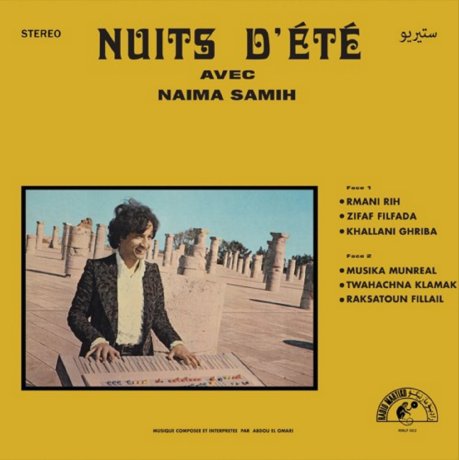
With no themes or demarcated reasoning we pick songs from across a wide spectrum of genres, and from all eras. Reaching a sort of milestone edition, selection #30, chosen as always by me, Dominic Valvona, features one of our favourite troubadours, Michael Chapman, all manner of explosive, spiritual and traversing jazz and soul from Arthur Lee, The Rwenzori’s, Abdou El Omari, Bobby Callender and Wayne McGhie, plus golden era Hip-Hop treats from The Jungle Brothers, KMD and D-Nice, and a tribute to the late great Holger Czukay who sadly passed away recently. Intermittent amongst that lot are tracks from The Hunches, R. Stevie Moore, The Brian Jonestown Massacre, East Of Eden, Jade Warrior and many more.
Tracklist:
Norma Tanega ‘Treat Me Right’
Michael Chapman ‘Landships’
Vanusa ‘Mundo Colorido’
Paulo Diniz ‘Piri Piri’
East Of Eden ‘Ain’t Gonna Do You No Harm’
Arthur Lee ‘Love Jumped Through My Window’
Arrogance ‘Peace Of Mind’
Jade Warrior ‘Telephone Girl’
Byard Lancaster ‘Dogtown’
The Rwenzori’s ‘Handsome Boy (E Wara) Parts 1 & 2’
Rene Costy ‘Scrabble’
Idrissa Soumaoro et L’Éclipse de L’lja ‘Nissodia – Joie de l’optimisme’
Abdou El Omari ‘Raksatoun Fillall’
Jungle Brothers ‘Tribe Vibes’
Intelligent Hoodlum ‘Back To Reality’
D-Nice ‘Crumbs On The Table’
KMD ‘Who Me? (With An Answer From Dr. Bert)’
Metropolitan Jazz Affair ‘Find A Way’
Lion ‘You’ve Got A Woman’
Denis Mpunga & Paul K ‘Funyaka’
El Turronero ‘Las Penas – Las Canas’
Holger Czukay ‘Cool In The Pool’
T. Rex, The Reflex ‘Light Of Love (The Reflex Revision)’
Charles Earland with Freddie Hubbard and Joe Henderson ‘Warp Factor 8’
Koen De Bruyne ‘And Here Comes The Crazy Man’
The Knights ‘Precision’
The Hunches ‘Swim Hole’
R. Stevie Moore ‘The Bodycount’
The Brian Jonestown Massacre ‘Open Minds Now Closed’
Bobby Callender ‘Shanta Grace’
Wayne McGhie ‘Take A Letter Maria’
Little Ed & The Soundmasters ‘It’s A Dream’
Our Daily Bread 257: Maalem Mahmoud Gania ‘Colours Of The Night’
September 1, 2017
REVIEW
WORDS: DOMINIC VALVONA
Maalem Mahmoud Gani ‘Colours Of The Night’
Hive Mind Records, September 8th 2017
Adding its name to an already crowded but all the same welcome market of world music reissues and contemporary undiscovered obscurities, Brighton based label Hive Mind Records announces its intentions and presence with an album of Gnawa trance recordings from the late great Maalem Mahmoud Gania.
The near-exulted star of the Moroccan honed Gnawa – a style of traditional Islamic dance, music and poetry with roots spread across the sub-Saharan crescent of Africa; considered by many to be one of the origins of the “blues” rhythm – and artisan of the genre’s key instrument, the camel-skin covered three-string lute like “guimbri”, released an extensive catalogue of recordings for labels such as Tichkaphone, La Voix El Maaraf and Sonya Disques.
Colours Of The Night however, the final studio recording by Gania, will be the first solo release by the artist outside his native homeland to be released on vinyl: six performances spread over four sides of vinyl to be exact.
For the uninitiated, Gnawa is a highly hypnotic experience based around the repetition of a musical phrase, a few succinct lines of poetic devotion or a communion with the spiritual for a duration that can last hours. Performances tend to bleed into each other, and so what can seem like one uninterrupted piece of music are, often, three or four different songs strung together. Building up an entrancing rhythm of spindly plucked vibrating guimbri and metallic scratchy percussion (courtesy of the iron castanets, the “krakebs”), call and response vocals in paean and lament break the instrumental monotony. Though there’s room for nuanced fleches and riffs to add variety, intonation and intensity. These are all the key components then; of a style that evokes both the sound of Arabia and desert blues traditions.
Equally influencing others whilst, it seems, also embracing and exploring sounds from further afield himself, during his illustrious career Gania worked with artists as diverse as Pharaoh Sanders, Bill Laswell and Carlos Santana. Enriching his own recordings perhaps, the suffused mirage-like synthesizer that hovers over the horizon on this album’s Sidi Sma Ya Boulandi track shows a late penchant for electronic keyboards and ambient waves of atmospheric soundscaping: though this is the only time the instrument is used on these specific recordings.
Stringy, wiry, occasionally a tone or two lower and played like a quasi-bass guitar, Gania’s playing style is raw, deep and always infectious: from blistering solos to slower and lighter ruminating descriptive articulations; this is equally matched by his atavistic soulful voice and the chorus of swooning, venerated female and male voices and harmonies that join him on each track.
As an introduction, Colours Of The Night would be better experienced in sections – a side at a time perhaps. After a while it can all sound a little tiring. Gania advocates will however find this a worthy addition to the legacy.
Hive Mind start as they mean to go on, with the full sanctioning of the Gania family and artists who appear on this album, releasing a most brilliant set of recordings that could so easily have disappeared off the radar. As inaugural releases go, this one is definitely a winner.
Our Daily Bread 256: Pharaway Sounds 70s Spanish rumba-funk, disco, cosmic and Flamenco pop reissues extravaganza!
August 28, 2017
FEATURE
WORDS: DOMINIC VALVONA

Spearheading a reappraisal of Spain’s adventurous experiments and fusions, transforming and modernizing the country’s ancestral folk and Flamenco traditions during the decade of Studio 54 and a boom in Costa del Sol tourism, the Guersson label imprint Pharaway Sounds is reissuing a number of difficult to source rarities over the next few months. Starting with the double-bill release of Trigal’s Baila Mi Rumba and El Turronero’s New Honda albums next month, Pharaway will be unearthing a range of vinyl crate-digger favorites and novelty treasures from a host of artists and bands who embraced the fervor to reinterpret and inject modernity into Spain’s musical legacy.
Remastered from original tapes, with political, historical context and in-depth notes on the recordings, artists and material swelling the retro-chic packaging each album and compilation, which also includes Morena Y Clara’s No Llores Más and Dolores Vargas’ La Terremoto (amongst others) has more than enough detail to keep the listener busy and informed.
The first two albums, both originally conceived and released on the Belter label, offer an eye opening revelatory mix of dramatic Eurovision pop, cabaret, rumba-funk, laser-y synth disco, jazz, and above all, transmogrified Flamenco.
Receiving a similar showcase, Finders Keepers released a brilliant Belter double album compilation back in 2010; shining a light on one of Spain’s most important labels during the late 60s and 70s. Though neither of the artists/bands in this series – “the grooviest and funkiest band of the scene”, Trigal, and troubadour Manuel Mancheño, reinvented and rechristened El Turronero – featured on that purview, both are held in high regard and considered influential: especially amongst those obscure rare sample enthusiasts; the boogie hangover and yearned longing theatrical gypsy funk New Hondo (influenced as much by Saturday Night Fever as dreamy Arabia) even sent the LCD Soundsystem’s honcho James Murphy into a spin trying to source a copy a few years back.

Buoyed by an “adventurous in-house” team of producers and sound engineers at Belter – namely Josep Llobell, Jean Barcons and Lauren Postigo– the Andalusia trio Trigal pushed traditional rhythms and forms towards a mixed bag of genres on their gypsy-rock sassy dancefloor cavorting Baila Mi Rumba LP. Featuring the married coupling of Antonio “Tony” Carmona and Maria Victoria “Vicky” Cabrera, and Rafael Romera, the original set-up went under the Tres Del Sur moniker, performing Latin American classics in tourist nightspots during the late 60s. A new contract took them to the States touring Army bases and clubs, with a brief trip across to Jamaica. Bringing home the funk, soul and the current explosion in Blaxploitation soundtracks they’d heard during their American sojourn, the Sur on their return became the Trigal. Replacing Romera with the virtuoso guitarist and former Los Adams band member Manuel “Manolo” Gallego Carter and drafting in pianist/composer Ramon Farrán the band opened their minds and went eclectic: fully embracing a smorgasbord of 70s trends and fads.
https://soundcloud.com/user-99941444/sets/trigal-baila-mi-rumba-snippets
The second of two albums for the belter label, Baila Mi Rumba is by fat their most adventurous: marking a brief inventive period for the group, who would only survive a few years more, eventually breaking up for good as the new decade dawned. Bright, lively and scintillating with cabaret-like slinky funk, Trigal did their best to sex-up the Flamenco and rumba. The trio’s soft porn “ahhhs” and brassy sassy horn heavy Med pop sound borders on San Francisco detective movie schlock, Vegas and a louche Santana in Harlem funk. Sauntering, fiery and just on the right side of being kitsch, the album has a certain infectious bombast and showbiz veneer. It’s also actually pretty good, and brazenly funky: even if it is aping, with a naïve spirit, the American music scene. Above all though, they do manage to drag Spain’s traditional forms into the glitzy, suave and sexy decade of disco and super funk.

Available on streaming sites already, though this is far from a satisfactory alternative to holding a physical copy, El Turronero’s New Hondo is another iconic “modernized” take on Spain’s earnest heritage. Though following a traditional route as a dedicated performer of atavistic toiled musical styles, the dramatic, longing voiced Manuel Mancheño’s reinterpretations for Belter upset the country’s cultural purist lobby: the self-proclaimed preservers of the country’s musical traditions weren’t averse to pouring scorn on anything new or experimental, epically in the heightened oppressive epoch of Franco’s last years in power. Going along with the changes in fashion and the yearning need to modernize, Mancheño proved a good sport in changing tact and performing to a contemporary and not so contemporary – flagging behind musical genres that were already becoming outdated – soundtrack.
With a name change to El Turronero the serious toned singer laid down his deep ruminations and lovelorn yearnings on a bed of Italo disco, pop, funk and boogie. Rather handy for the uninitiated like me, the original album came with plenty of notes and prompts, including the style of each song: from “tanguillos” to “malagueña”, all of which are given a 80s sheen and glossy production revamp.
Trembling with the theatrics of a requiem and Morricone spaghetti western score, the opening boogie Les Penas (a la cãna style of gypsy music that will challenge the skills of any adroit vocalist) sets the scene between cult kitsch and Euro pop extravagance. From then on in, countless instruments and sounds are thrown into the transglobal tapas; marimba and sitar on Si Yo Volviera a Nacer; Caribbean cod-reggae disco on Eres Lava de un Volcãn; and dewy-eyed condor strafing mountaintop pan flutes on Y La Raźon.
Despite being equally sentimental and daft, New Hondo has some stand out dynamic breaks and grooves. And it’s obvious why this record has been a collectors item for so long. This repackaged version gives us a chance to actually own a physical copy.
https://soundcloud.com/user-99941444/sets/el-turronero-new-hondo-snippets
Following in this double-bill wake is a host of Balearic disco and hip cuts, though many don’t as yet have a release date. There’s the strange Spanish female duo Morena y Clara. Launched by bizarre flamenco producer Lauren Postigo, they released a string of 45s and three LPs (highly sought after now) for the Discophon label, a worthy rival to Belter. They mixed a heavy dose of breaks, fuzz wah-phaser guitar and Moog soundtrack with rumba, flamenco, psychedelic rock, funk and disco. This illuminating, cute album features their “psychotronic” hits No llores más, Dejé de quererte, Buscando alegría and many others.

Continuing the ladies first rumba disco and pop fusions, there’s also an anthology dedicated to the 70s period of Dolores Vargas, known as “The Earthquake” due to her wild and frenzied dancing style. In these songs, released 1970-1975, you’ll hear a killer sound and production mix of funk, rock and pop, and of course Vargas’ powerful vocal delivery. The collection will include the “gipsy-funk” numbers A la pelota, Anana Hip and La Hawaiana along with a bizarre cover version of Chirpy Chirpy Cheep Cheep.
Lastly, Pharaway are set to release a couple of compilations, Rumbita Buena: Rumba Funk & Flamenco Pop from the Belter & Discophon archives, 1970 – 1976 and Tani: Disco Rumba And Flamenco Boogie, 1976 – 1979. Featuring as the titles suggest, a collection of tracks from two of Spain’s leading cult labels, the first comp features, “14 dance-friendly tracks taken from overlooked 45s and LPs”. And the second, “12 disco-rumba-flamenco bombs, a time machine to the “boites’ and discotheques of the late 70s and the perfect soundtrack to an imaginary “Kinki” cinema soundtrack.”
It is an extravaganza, marking as it does a serious attempt to bring some glory and reverence to a forgotten period of the Spanish music scene.
Our Daily Bread 255: Vukovar ‘The Clockwork Dance’
August 4, 2017
Single/Video Exclusive
Words: Dominic Valvona
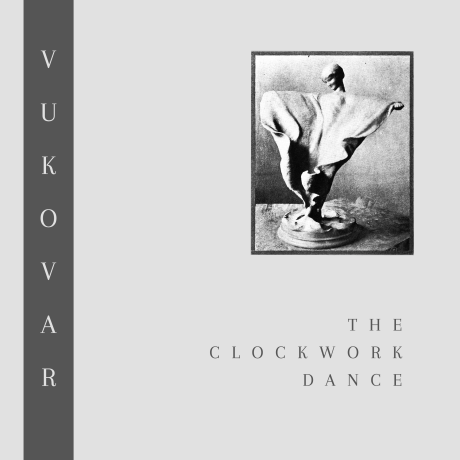
Vukovar ‘The Clockwork Dance’
4th August 2017
“Resistance is token. Commence the clockwork dance.”
Vukovar – a band name that signifies the abject horror of the Croatian City that saw one of the worst atrocities in the Balkan civil war implosion of the 90s – would, if you asked them, say they were frustrated and perturbed by the delays of releasing material, and the process, self-aggrandizement, of promotion.
However, the trio remains quite prolific, having already released three albums of spiraling blissful apocalyptic post-punk and discordant heavy Krautrock flavours since their inception in 2015. And now ahead of a fourth, Puritan, the group unveil a new single, The Clockwork Dance as an advance warning.
Waltzing with romantic anarchist melancholy towards the end times, the despondent outsiders ponder melodically in a swirling Gothic version of a Phil Spector backbeat, almost in a dream like stasis. Quietly anthemic and yet calmly settling, The Clockwork Dance evokes a rapturous OMD joining Echo & The Bunnyman and The The on Nero’s veranda, contemplating the futility of it all.
If like me, you love the group’s more melodious, bordering on cerebral pop, balance between broody and soaring shimmery majesty, and in particular the band’s baptism of fire debut Emperor (more specifically the tracks Koen Cohen K and The New World Order) then you’ll embrace this latest sublime lament.
The B-side as it were, is a live version of Quiet from the group’s second album Voyeurism, which acts as a showcase for the band’s darker, rowdy and raw form of performance and howling rage. Channeling The Birthday Party, Bauhaus and the shaman blues style of The Doors, Vukovar put the frighteners on the original; bending and stretching Quiet with a stalking trebly bass and bedeviled and bedraggled rock’n’roll punctuations, before playing out on a long extended fuzzy rippling electronic drone.
Following up on this year’s transmogrified covers album, Fornication, Vukovar’s fourth (and again, featuring a three syllable title) Puritan will be released on the 25th October 2017. If The Clockwork Dance is any indication, then I’m pretty excited at the prospect of what might be one of the year’s best releases.
REVIEWS/PREVIEWS ROUNDUP
WORDS: DOMINIC VALVONA

Not that I ever mean to do it, but this month’s roundup does have a tenuous theme of sorts, or rather many of the releases in this, the 52nd edition of my eclectic revues, are more or less all experimenting with the electronic music format in one way or another. The sagacious counterculture totem and beatnik poet of renown, John Sinclair leads the charge this month, his vivid jazz lyricism recitations put to an evocative soundtrack by Youth on the mini-album Beatnik Youth Ambient. Jono Podmore’s recently re-launched label, Psychomat, follows up on the inaugural release with another electronic peregrination – this time far more melodic and dreamy –, from the mysterious Reason Stendec. Working in isolation and apart, never meeting in person, the Room Of Wires duo release their third EP of otherworldly and atmospheric techno and downtempo beats, Black Medicine. And an assortment of artists from the ambient, trance, electronica fields contribute towards the One String Inspiration project, highlighting and collecting money for the Syria Relief charity effort.
We also have the latest and it seems final album of outsider New York slacker pathos from Charles Griffin Gilson, otherwise known as CHUCK. Calling it quits on his alter ego, due to a multitude of reasons, Gilson records his sincere CHUCK swan songs collection, Frankenstein Songs For The Grocery Store, for the Audio Antihero label.
Read on for full analysis and review…
John Sinclair ‘Beatnik Youth Ambient’
Ironman Records, 28th July 2017

Synonymous for steering and kicking out the jams in his short role as manager of Detroit’s renowned rebel rousing motherfuckers The MC5, renegade poet, scholar, activist and establishment rattler John Sinclair is also remembered for his free radical zeal and dalliances with the law.
Even too hardcore for the MC5, Sinclair’s foundation of the anti-racist socialist White Panthers, and his countless associations with equally revolutionary counterculture players and shakers, marked him out; leading as it did to the now infamous drug bust for marijuana possession in 1969. Whilst his love for the herb and gesticulations, whether through poetry or diatribes, is in no doubt, the way this particular bust was set-up (for what was a very insignificant amount of drugs) is considered heavy-handed and unjustifiable. Handed an initial ten-year sentence, Sinclair’s status in the “heads” and political agitators communities had singled him out as a poster child for deterring the like-minded boomer generation from stepping out of line. Fortunately (to a degree) this sentence and media furor galvanized support and sympathy and reduced that ten-year stretch to two, with Sinclair emerging from jail in 1971.
Keeping his hand in so to speak, but taking up residency in Amsterdam – a much safer bet -, the beatnik jazz sage continued, and as you can hear on this latest recording, continues, to record and perform in a host of setups with a multitude of contributors and backing bands.
The appropriately (in every sense) entitled Beatnik Youth Ambient mini LP is a foretaste, and as the title implies, ambient treatment version of material from a full-length album, due to be released later on in September. The “Youth” of that title refers of course to the Killing Joke bassist turn in-demand producer Martin Glover. Arguably one of the most consistent producers over the last few decades in the UK, Glover, under his Youth alter ego, has taken on more or less most forms of music and worked on both commercial and underground experimental projects. But he’s perhaps better known for pushing the boundaries of dub through his own productions and with a number of other artists; notably setting up the WAU! Mr. Modo imprint with fellow Orb band member Alex Paterson in 1989.
He now provides Sinclair’s “literary synthesis” with a suitable “beatnik ambient” soundtrack: a serialism quartet of turmoil, turbulent jazz and dreamier trance.
Split into two sides, Sinclair’s sagacious burr recitations are left to flow with only an occasional echo, reverb or metallic ominous effect added for atmosphere or to reinforce the sentiment and hallucinatory philosophy. The opening history lesson, Do It, which enthuses this generation to once again upend the status quo, turns Sinclair’s cerebral lyricism into a quasi-dance track rallying cry: the lingering reflective melodic and amorphous synth chorus in the first half of the track gradually joined by an Orb-like cloud-bursting trance beat.
Running through a vivid purview of postwar counterculture, bringing to life the energy and excitement that writers such as Kerouac (who gets referenced a lot) captured when seeing the Bebop jazz revolution and its great proponents perform, Sinclair delivers a magical enthusiastic experience on the next peregrination and nod to Thelonious Monk’s 1957 LP of the same name, Brilliant Corners. Titans of American beatnik and psychedelic literature lineup, Burroughs, Ginsberg and Neal Cassady (“…had the ability to park a car anywhere”, just one of his talents alongside his status as the “human bridge between the 50s and 60s.”), rubbing shoulders with jazz music’s new guard Lester Young, Byrd and Gillespie; immortalized by Sinclair to “head music” cosmos of jazzy lamenting woe, ghostly squawking and hooting saxophone and swirling mirages.
The greatest “head trip” however is saved until last. Sinclair channeling Captain Beefheart delivering the most “high” meandering TED talk ever, translates, or rather makes a reification of the almost impossible to articulate spark and feelings that kick started the whole boomer generation of beatniks, on the spiritual jazz voyage Sitarrtha. Sitars shimmer, an electric guitar twists and contorts, snares are played in a military, misty revolutionary reveille style, and the saxophone battles on as Sinclair implores us to grasp his message: a return to the real.
A eulogy of a sort, certainly homage, fellow renegade and jailbird, the late convivial Welsh sage Howard Marks reads out a befitting War On Drugs. Part epistle, part rambling thoughts, Marks, the cosmic prophet, weaves between the nonsensical and profound, the intimate and enraged. An obvious candidate and fellow drug evangelist, Marks makes a welcome addition to Sinclair’s congregation.
If anything, Beatnik Youth Ambient leaves the listener pining for a lost age; Sinclair’s evocative prose and delivery lifted (and cradled at times) by Youth’s congruous seething tensions and floaty dream-like production, which enthrall me to once again get stuck in to the “beat generation” and spin those Savoy label jazz totem recordings again. A prompt for the present times, the zeal of the postwar “baby boomers” (those with a soul anyway) counterculture not necessarily translating to generations X, Y and Z, even if it is needed; Sinclair’s language is nevertheless just as powerfully descriptive and energizing now as it was over forty years ago.
Reason Stendec ‘Impulsion EP’
Psychomat, 17th July 2017

Wingman to Can’s Irmin Schmidt and the late Jaki Liebezeit, on both a myriad of band legacy projects and various collaborations over the years; solo electronic music composer, and professor to boot; and in the last few years, part of the analogue manifesto enthused trio, Metamono; Jono Podmore has just recently, in the last two months, after a twenty year hiatus, re-launched his 90s Psychomat record label. The aim being to release, in both physical and digital formats, a cerebral experimental run of electronic music 7”s.
Featured on the Monolith Cocktail in June the inaugural extemporized Podmore & Swantje Lichtenstein partnership of serialism amorphous avant-garde backing and exploratory spoken word, Miss Slipper/Lewes, and subsequent series of remixes that followed, laid down the foundations and signature ascetics of the label. Record number two, Reason Stendec’s Impulsion EP, congruously keeps up the momentum: just as shrouded in mystery; every bit as challenging, but this time around for more melodic and flowing, and on Podmore’s (under his Kumo persona) remix treatment transforms the original material into a bubbling Roland TRs acid techno (reminiscent of Waveform Transmission era Jeff Mills and Derrick Carter) thumper.
An interesting story lies behind that Reason Stendec moniker, which helps to reinforce a sense of mystique. “Stendec” was the last, and as it turned out confounding, word of a Morse code message sent by the crew of the doomed Lancastrian flight between Buenos Aires and Santiago on August 2nd 1947. Turning into a conspirator dream factory of ever outlandish, convoluted theories, including the obligatory alien abduction angle, the Stendec saga had to wait 51 years to be finally laid to rest. It certainly had all the right components for a conspiracy or unworldly mystery, disappearing completely as it did, with no signs of wreckage, no bodies and the most cryptic of messages left to unscramble. But as it turned out the plane crashed, the impact as it hit one the looming mountain ranges triggered an avalanche that buried and entombed the plane and passengers for decades in an area known as the Tupungato glacier. As it thawed over those years, the plane was exposed and finally discovered by mountain climbers.
With this in mind, Reason Stendec cast a spell of otherworldliness; wafting along on a ghostly visage of Pan-European and Arabian sounding influences: like a breeze over an imaginary sand dune landscape, heightened by knife-sharpening percussion.
Like Grace Jones’ Parisian tango en vogue dalliances and contralto husky romantic burr crossed with a restrained Diamanda Galas, the vocals on this track follow the sonic contours; switching from an opening chant to English, French and German. A Vocal Mix version of the same track manipulates, pitch-shifts, bit-crushes, and refashions the voice into various forms: ominous and cybernetic, ritualistic and floating; one minute quivering towards the operatic, the next, in an incantation style.
A languid, lingering and sophisticated turn, the Impulsion EP is another electronica adventure and move in the right direction; both befitting the Psychomat label’s raison d’être yet cerebrally drifting off into more melodic, flowing directions.
CHUCK ‘Frankenstein Songs For The Grocery Store’
Audio Antihero, 18th August 2017

Bowing out (or bailing out) on a high note with another signature collection of pathos rich idiosyncratic slacker anthems and plaints, Charles Griffin Gilson calls time on his alter ego CHUCK. Stating a number of reasons for this closure, including his recent marriage, hitting thirty and honestly feeling he just hasn’t got it in him anymore, Gilson releases his final swansong, Frankenstein Songs For The Grocery Store, on the perfect home for such a maverick artists, Audio Antihero.
A most generous offering it is too: fifteen observatory songs and instrumentals of wistful, often of a despondent, bent, with ruminations on diets, exercise, work, love, TV and animals – more in the metaphorical sense.
An outsider of a kind, originally upping sticks from his Massachusetts home to New York, Gilson’s CHUCK persona whimsically, though often stirringly sad, looks at the foibles of living in the metropolis. This is exemplified in the most direct way on the bubbly knockabout (tongue-in-cheek) tribute to New York and its citizens, New Yorker, which lists a number of postcard landmarks made (in)famous in song and reputation (from Rockaway Beach to Hipster Williamsburg), and the personal traits, such as their stereotype brash offensive manner, of many of its residents: “Get the hell outta my way/Now go and die.”
Though just as domineering theme wise is the ‘social media’ constraints and context of a wider world, encroaching upon (as much as deriving from) these New York musings. This can be heard on the millennial blues trysts Becky and Bodies, which both feature a number of references to our obsession for validation in the online world. The pains of never growing up, streaming lives through a never-ending feed of updates and memes, Gilson encapsulates in his slightly nasal lo fi emo meets Tom Petty, Jonathan Richman, Clouds and Daniel Johnston waking up late in a Williamsburg bedsit style of delivery the regrets and anxieties of a generation growing up in a society that’s never offline: one that conducts its love affairs over a smart phone.
There’s a real sadness to many of these relationship-themed laments; the modern travails of long-distance love in an ever-connected but alienating world, and as with the Dylan-esque flowing turn pizzicato Arcade Fire rousing Caroline, an almost resigned to fate, shrugged, relationship with the ill-suited cavalier subject of the title: “My friends say you’re wasting my time/Baby I don’t mind.”
Whether dreamily drifting along to tropical palm swaying alluded notes, lasers, synthesizer presets and fanned phaser effects, Gilson sings of both unrequited love, gaining and regaining love in a languorous candid manner: removed but betraying a real fragility and care for his characters.
And so we bid fond well to CHUCK, though whether that means a more grown-up post-millennial with commitments Gilson emerges in its wake remains to be seen and heard. I only know that it’s a real shame that he’s decided to call time on his creation. Frankenstein Songs For The Grocery Store is a fitting swansong.
Various Artists ‘One String Inspirations’

So much has happened on the international stage since the April release date of this benefit for Syria album, yet the bitter catastrophic Syrian civil war still rages on unabated by talks and the erosion of ISIS in the country and bordering regions (especially more recently, Iraq). Now in its seventh year with no sign of ending anytime soon, the ensuing humanitarian tragedy throws more desperate Syrian refugees to the mercy of people smugglers and their cadre. Entangled with a never-ending flood of those escaping the devastation of this conflict and with those escaping poverty and violence from across a wide area of the Middle East, Asia and Africa, the Mediterranean has, even this summer, seen huge numbers desperately making the crossing to Europe.
Statistics are staggering: the Syria Relief charity website, which all funds from this release go towards, refers to 6 million children inside the warzone currently needing urgent humanitarian assistance, alone. With this glaring travesty in mind, the 28-track One String Inspiration compilation offers a stirring collection of poetic (and not so poetic: see the bish bosh no-nonsense punk raging Hostile Skies by 3 Chords & A Lie) indictments and bleak instrumental soundtrack atmospheres. The premise of which, alluded to in some ways via the title, challenges each artist to feature either a found or self-made instrument in their composition. Not that any of the results sound restrictive, even if it means some artists have had to move outside their “comfort zones” in the process.
Most of the contributions could be classed in the ambient or experimental sound and mood categories: The opening tabla rattling, spinning travail Night Journey To The Coast by Bowmer Holmes setting the right scene of magical Middle Eastern promise and reflection. Serene veiled drones and obscured leviathan movements follow with the Melodic Energy Commission’s Hole In Timeless and the transmogrified Animal Waves, by Can, put through a wobbly switched-on Bach treatment Budget Airlines from Detlev Everling – which shows a certain sense of humor and offers a kooky respite from the moodier material.
Tribal futurism, ratchet-y workshop mechanics, Transglobal Underground laments and duck quacks abound until reaching the stark folksy plaintive lyricism of Anna Knight’s unapologetic indictment on the refugee crisis, With His Lifejacket. Following the fateful plight of one poor unfortunate child, drowned like so many others crossing the straits to Europe, Knight somberly mourns but also attacks the inhumanity and cruelty of it all.
Full-on warping drum’n’bass and techno (courtesy of the tetchy Kitchen Sink Drama by Glove Of Bones) at its most lively, tapping an object to produce a serial environmental accompaniment at its most minimalist, and whistling to a wood shavings itchy dub track at its most strange, One String Inspiration features a diverse and generous range of wonders; many of which evoke the Warp (early on in its creation), Leaf and First World labels.
A few months on and just as vital, the collection in its own small way keeps the crisis in the spotlight, as more and more artists do their bit and make sense of such chaos.
Room Of Wires ‘Black Medicine’
Section 27
For a duo of sonic experimentalists that have never met – working apart in total isolation -, the Room Of Wires partnership, no matter how seething with ominous twists and turns, is a complimentary synchronized meeting of minds.
The rather anonymous, faceless downtempo and in industrial techno composers manipulate, churn and whip up a mysterious combination of futuristic atmospheres and inner turmoil on their third, most recent, EP Black Medicine.
Beginning as they mean to progress, the kinetic chain snaking opener Game Over builds gradually, weaving touches of Kraftwerk, Basic Channel and Mike Dred to a rhythmic soundscape of harmonious discord. Undulating spheres, radio waves, obscured broadcasted voices and stretching creaks and expanding steel structures move overhead on the following space journey Protected Space, whilst Temple Run juxtaposes lumbering bit-crushing monolith punctuations with a haunting Oriental siren chorus.
Unsettling and sonorous in places, yet able to lift the miasma and darkness with lightened breaks of more serene, glowing synth waves, Room Of Wires constantly offer glimmers of humanity and nature: even if the voices, transmissions sound lost and ebbing away like ghostly visages. A mouthful of Black Medicine that won’t do you any harm.
 Monolith Cocktail Blog