Choice/Favourite Albums Of The Year: Part Two: H to N
December 14, 2023
SELECTED BY GRAHAM DOMAIN, BRIAN ‘BORDELLO’ SHEA & DOMINIC VALVONA

Welcome to PART TWO of this year’s favourite/choice albums features. If you missed PART ONE, follow this link.
2023’s list, as ever in alphabetical order, is broken down into three more digestible parts.
And as we have since our inception back in 2008, the Monolith Cocktail continues to avoid those silly, factious and plain dumb numerical charts that our peers and rivals insist on continuing to print – how can you really suggest one album deserves their place above or below another; why does one entry get the 23rd spot and another the 22nd; unless it is a vote count. We’ve always chosen a much more diplomatic, democratic alphabetical order – something we more or less started in the first place.
Whilst we are proud to throw every genre, nationality together in a serious of eclectic lists, this year due to various collaborators commitments, there will be a separate Hip-Hop roundup by Matt Oliver in the New Year.
The lists, broken up this year into three parts (A to F, H to N, P to Z), includes those albums we’ve reviewed or featured on the site in some capacity, plus a smattering of those we just didn’t get the time to include. All entries are displayed thus: Artist in alphabetical order, then the album title, label, who chose it, a review link where applicable, and finally a link to the album itself and a quote.
So without further ado, cast your eyes over the H to N entries for 2023.
H________
Hackedepicciotto ‘Keepsakes’ (Mute)
Chosen by Dominic Valvona/Reviewed by DV/Link
‘The sound of Berlin with stopovers across Europe and New York City, Keepsakes conjures up evocative visions, dramas and characters out if the arty, the gothic, the cerebral and surreal; creating an alternative photo album and collection of memories, events. As earthy as it is dreamily floating in a constructed world of fairytale, myth and magic, the creatively sagacious couple draws upon a lifetime of experiences, friendships to produce another captivating album for the Mute label.’ DV
H. Hawkline ‘Milk For Flowers’ (Heavenly)
Chosen by DV/Reviewed by Gillian Stone/Link
‘Starting out a certain way, where you think you know what you’re getting into, then taking you by surprise, is the thematic journey of H. Hawkline’s Milk For Flowers (Heavenly). So is lyrical vulnerability.
Milk For Flowers begins steeped in traditional songwriting, takes you on a breathless journey, then brings you back into a place of safety, where feelings can be acknowledged and processed.’ GS
Healing Force Project ‘Drifted Entities Vol. 2’ (Beat Machine)
Chosen by DV/Reviewed by DV/Link
‘The re-rebirth of cool in an ever-forward momentum of flux, Antonio Marini’s Healing Force Project once more tumbles across a broken-beat, jungle, free-jazz and cosmic spectrum of reverberating exploration and spliced assemblage.
A splashy mirage of effected, realigned beats and reframed jazz inspirations sent out into space, Volume 2 in this series continues the ‘spiritual music mission’ but offers something once more eclectic and boundless.’ DV
Andrew Heath ‘Scapa Flow’ (Disco Gecko)
Chosen by DV/Reviewed by DV/Link
‘A geopoetry; a psychogeography of that famous body of shallow waters, Heath’s gauzy drifts, serene washes, glassy piano notes, Myles Cochran and Joe Woodham-like post-rock refracted guitar bends and harpic zither spindles coalesce to score an effective mysterious soundtrack to the former naval base and battleship graveyard.
Andrew Heath plays a combination of instruments, merged with ambient and real sounds that falls somewhere between such notable artists as his old foil Roedelius, Eno, John Lane (i.e. A Journey Of Giraffes), Jon Tye, Ulrich Schnauss and Flexagon. Stirrings from beneath are conveyed with a subtle drama and sonic history on yet another exemplary album of minimalist music.’ DV
The Holy Family ‘Go Zero’ (Rocket Recordings)
Chosen by DV/Reviewed by DV/Link
‘A phantasmagoria of occult manifestations, conjured or drawn from out the old soil, from out of the ether, The Holy Family’s Go Zero album offers darkness with glimmers of light. The Holy of their name, taken from the controversial Angela Carter narrated documentary on Christ’s depiction in the Western art cannon, not so forgiving and Christian, but an open vassal for confronting and exploring the divine and ungodly. Guidance there is none, as the band unnerve, rush, grind or prowl across a mystical dreaded mind fuck of a world that mirrors our own mortal chaotic, ungovernable hell hole. In short, it’s a great dense trip with dramatic voodoo and accelerated velocity.’ DV
James Howard ‘Peek-A-Boo’ (Faith & Industry)
Chosen by DV/Reviewed by DV/Link
‘To a languid soundtrack of bendy, dreamy blue Hawaii (relocated to Margate), and Tales Of The Unexpected and Third Man waltzes performed in a spoiled ballroom that Strictly Come Dancing couldn’t even revive, James Howard once again wanders wistfully across a worn, battered, disconsolate post-Brexit landscape.
Augurs of a reckoning; the sullied state of a septic Isle; an English seaside Ennio Morricone; just some of the feels and atmospheres all listlessly and longingly channeled into a well-crafted songbook (complete with leveling-up asides/intervals). Howard shields the hurt to an extent with his soft stinging observations, aphorisms and melodramas on yet another fantastic album; one of my favourites of 2023 already.’ DV
J__________
Carmen Jaci ‘Happy Child’ (Noumenal Loom)
Chosen by Dominic Valvona/Reviewed by DV/Link
‘A brilliance of candy-electronica and Casio symphonies, Happy Child is a clever work of unburdened, unpretentious, but indeed deliberate and well-crafted, kidulthood. Jacki Carmen’s magical, if occasionally straying into the mysterious, new album pings back and forth with humour and, above all else, playfulness. Not for the burgeoning artist (I say burgeoning, Carmen is quite the professional technician with some years of experience: you can even pay for one-on-one tuitions at her own studio) the sour-faced seriousness of many of her peers, this is electronic music with a taste of fantasy and fun recollections of childhood.’ DV
Kenneth Jimenez ‘Sonnet To Silence’ (We Jazz)
Chosen by DV/Reviewed by DV/Link
‘Taking a leap into the untethered realms of Kenneth Jimenez’s dreams, the jump off point for his newest album literally takes flight. The Brooklyn-based bassist, composer and quartet bandleader runs for the mountains and sprouts wings; flying over the valley and the versant contours of free jazz and hard-bop: ala New York style.
So much is happening on this incredible, engaging and sometimes challenging (in the best possible way) album, which draws you in and then ups or changes the tempo, mood and direction. This is free jazz at its most promising; certainly encouraging and with dreamy quality that lifts you up into an imaginative vision of soaring and more complicated expression. Kenneth Jimenez and his quartet have produced one of the leading jazz albums of 2023.’ DV
Darius Jones ‘fLuXkit Vancouver (i̶t̶s suite but sacred)’ (We Jazz/Northern Spy)
Chosen by DV/Reviewed by DV/Link
‘Absorbing all the history and ethos of Vancouver’s multidisciplinary Western Front hothouse, the acclaimed alto-saxophonist, composer and bandleader Darius Jones conceptually, artfully embodies the spirit of that creative hub’s avant-garde, Fluxus/Duchampian foundations on his new album of free-jazz movements.
Jones and ensemble have created something emotionally charged and highly expressive (challenging too, in a good way) from a site and history. The home of the avant-garde in Vancouver proves fertile, fiery kindle for an impressive, raw at times, catharsis and unload of free thought and art.’ DV
Junkboy ‘Littoral States’ (Wayside & Woodlands)
Chosen by DV/Reviewed by DV/Link
‘A loving tribute, romantic cartography and healing process, Littoral States provides an alternative pathway from another age; a world away from the vacuous self-absorption of popular culture and the distractions of the internet. It’s a wonderful, magical, and for the most part reassuring, gentle gradient landscape that the brothers dream up; tailoring nostalgia and influences into something picturesque, peaceable but above all, moving. Folklore from a recent past is woven into much older geological layers, with the emphasis on the element of water; acting as the source, the road that connects the stopover on this West and East Sussex travelogue photo album. It’s good to have them back in the fold, so to speak, waxing lyrical and dreamily envisioning such beautiful escapism.’ DV
L____________

Laraaji & Kramer ‘Baptismal’ (Shimmy Disc)
Chosen by DV/Reviewed by DV/Link
‘Divine styler of radiant ambiance zither spiritualism Laraaji can be found in communion with no less a pioneer than Shimmy Disc founder and downtown no wave doyen Mark Kramer, on this latest release from the New York label. Two pioneers of their form together over four movements of immersive, deeply affected mood music, draw on their extensive knowledge and intuition to create suites rich in the mysterious, the afflatus and more supernatural. What’s not to like.’ DV
Natalie Rose LeBrecht ‘Holy Prana Open Game’
Chosen by DV & Graham Domain/Reviewed by Graham Domain/Link
‘This is a beautiful album of cosmic folk strangeness singular in its vision and unique today, in its combination of sounds.
Sitting somewhere between Nico, Linda Perhacs and Alice Coltrane, the six haunting songs have superb intricate arrangements and a wonderful spiritual element! It could easily be mistaken for a long-lost album from the 1970’s, such is its charm.
Every home should own a copy of this album and play it each day as the sun rises bringing hope to the world.’ GD
Legless Crabs ‘American Russ’ (Metal Postcard Records)
Chosen by Brain Bordello Shea/Reviewed by BBS/Link
‘What if Joan Jett was telling lies and she did not love Rock ‘n’ roll at all, and she was just playing at it to make her millions, and really she loved nothing better than to listen to the old sequence dance compilations – the Swing And Sway series say – or was really a closet Pat Boone fan and preferred his version of Long Tall Sally and not in a ironic way, and did not believe in the old adage that the devil had all the best tunes (which to be truthful is not true, as Cliff Richards Jesus single was one of the finest singles of the 1970s). If Joan Jett was indeed a fake I am sure The Legless Crabs could and would turn the leather panted one to the dark side. And I don’t mean the Dark Side Of The Moon as that is as rock ‘n’ roll as a defrosted box of Fish Fingers. I mean the dark side of rock ‘n’ roll, the side filled with feedback and Cramps like guitar riffs and both sexual frustration and sexual exploitation (in a seedy 70s porn like way). See, that is what I like about the Legless Crabs, they are rock ‘n’ roll in a seedy 70s porn like way.’ BBS
Yungchen Lhamo ‘One Drop of Kindness’ (Real World Records)
Chosen by GD/Reviewed by GD/Link
‘This is a fantastic album of beautiful spiritual music by the wonderful world-renowned Tibetan female singer. Accompanied by a variety of acoustic instruments from around the world the seven songs are offerings to the Great Divine Spirit ‘devoted to spiritual awakening, unconditional love and compassion for all beings!’ A record to treasure – a beacon of hope in the darkest of times.’ GD
The Lilac Time ‘Dance Till All The Stars Come Down’ (Poetica)
Chosen by BBS
‘‘Why Stephen Duffy is not as big as Bob Dylan, I will never know. Maybe it is because Dylan did not form Duran Duran or make albums with Robbie Williams and Nigel Kennedy (one of the best LPs from the 90’s). Dance Till The Stars Come Down is yet another album from The Lilac Time‘s that is criminally ignored.’ BBS
Antti Lütjönen ‘Circus/Citadel’ (We Jazz)
Chosen by DV/Reviewed by DV/Link
‘During the initial pandemic wave of April 2020 the double-bassist maestro Antti Lötjönen released his debut proper as bandleader to a quintet of exciting Finnish jazz talent.
That album, Quintet East, with its monograph vignettes and flexible free-play of be bop, Sonny Clark, the left bank and Bernstein-like musical NYC skylines, is improved upon by the ensemble’s follow-up, Circus/Citadel. With a title both inspired and imbued by the Romanian-born, German-language titan of 20th century poetry, Paul Celan, the issues of a tumultuous world on the precipice of disaster is channeled through a controlled chaos and a reach for the old and new forms of expressive jazz.
I’m always building the We Jazz label up; always aggrandising that Helsinki based hub of Scandinavian jazz. But really, this is an enriching, immersive and artful start to the label’s 2023 calendar with a classic jazz album in the making. I reckon it will be one of the year’s best.’ DV
Lukid ‘Tilt’ (Glum)
Chosen by DV/Reviewed by DV/Link
‘Those of you waiting on a new Lukid album will not be disappointed. If more ‘refined’, composed and ‘simplistic’ than before, there’s still a real rhythm to Luke’s form of subtle but effective electronica. A ‘tilt’ perhaps of process, method and outcomes, this is a minimalistic iteration styled vision of dance music, submerged in lo fi veils, fuzz and gauze.
Tilt is an album of real quality; a cerebral distillation of Ambience, Techno, House and Electronic forms into some reification of time and moments caught before they disappear in smoke. This is a great returning album from the Lukid alias, one of the best in its field in 2023.‘ DV
Lunar Bird ‘The Birthday Party’
Chosen by DV/Reviewed by DV/Link
‘Disarming malady and alienation with such vaporous gauzy diaphanous veils of dream wave, Lunar Bird with a myriad of fellow Italian artists and musicians weave vulnerability and fragility into the most purified of intoxicating pop songs.
Not so much dipping as submerged fully in that drowsy intoxicating dream vision, Lunar Bird entwine emotional pulls, anxieties with the most delicious, sumptuous of Southern European ethereal pop. The Birthday Party is a spellbinding songbook that subtly pushes the Italo-Welsh group into swimmingly new waters without losing the signature diaphanous bohemian sound we all love them for. There’s absolutely no reason they shouldn’t be much bigger, well known and successful with potential hits like this.’ DV
M_____________
June McDoom ‘With Strings’ (Temporary Residence Ltd.)
Chosen by DV/Reviewed by DV/Link
‘Despite the diaphanous, wispy and hushed delivery, June McDoom’s voice is anything but evanescent or forgettable. Because just like one of her most cherished heroines, Judee Sill, every word and expression is believable as a lived experience of heartbreak, yearning and a close relationship with the elementals of an ethereal, but deeply felt, nature.
McDoom’s inspirations are worn on the sleeves, and yet I keep racking my brain to fathom who she reminds me of. An American Maria Monti? A softer Natalie Ribbons? Maybe a passing resemblance to Connie Converse perhaps? McDoom settles somewhere in-between them all as a refreshing, heavenly talent as she disarms the hurt and depth of emotional turmoil, inquiry and wonder with the most beautiful and impressive of deliveries.’ DV
Jean Mignon ‘An/al’ (Metal Postcard)
Chosen by GD/Reviewed by GD/Link
‘
‘Raucous debut album by New York based Johnny Steines. A mixture of high energy garage punk and high-speed rock and roll – it sounds like a live album such is the energy contained in the grooves!
‘Tackled By Men’ recycles parts of ‘Jumping Jack Flash’, whilst ‘Canadian Exit’ has echoes of Warsaw’s ‘Failures’. If he can produce this excitement in a live-setting he will surely make his own impact! Primal Rock and Roll that screams from the speakers andexcites like a high-speed car chase!’ GD
Liela Moss ‘Internal Working Model’ (Bella Union)
Chosen by GD/Reviewed by GD/Link
‘There are some great melodies and expressive vocal performances on the album. At times, she reminds me of Sarah Blasko at her most colourful and daring! ‘The Wall from the Floor’ sounds like a James Bond theme with its ethereal vocals and ‘Bad World’ refrain! ‘Ache in the Middle’ meanwhile has a melody that falls somewhere in-between Tears for Fears Mad World and Kate Bush the Sensual World! ‘New Day’ feels like a hymn to World Leaders for a better tomorrow – a call to feel empathy for others, concern and love for each other! If the overall feel of the electronic music is one of dystopia, alienation and oppression, the intent, the motivation is human – love and kindness as the antidote to isolation and inertia, feelings of helplessness transformed into positivity and action!’ GD
MultiTraction Orchestra ‘Reactor One’ (Aion Records)
Chosen by DV/Reviewed by DV/Link
‘‘A moving, evocative odyssey [through] a myriad of imaginative, mysterious environments and landscapes. One of those albums that truly gets better and better with every listen.’ DV
N______________

N’dox Électrique ‘Tëdd ak Mame Coumba Lamba ak Mame Coumba Mbang’ (Bongo Joe) Chosen by DV/Reviewed by DV/Link
‘Continuing to circumnavigate the depths of Africa, on a quest to connect with the purest origins of that continent’s atavistic rituals, the Mediterranean punk and avant-rock motivators Gianna Greco and François R. Cambuzat seize on the adorcist practices of Senegal’s Lebu people.
The successor to that partnership’s Ifriqiyya Electrique collaboration with the descendants of Hausa slaves (a project that produced two albums of exciting Sufi trance, spirit possession performance and technology), the next chapter, Ndox Électrique, radically transforms the Lebu’s N’doep ceremonies of spirit appeasement.
Between worlds the Ndox Électrique transformation moulds spheres of history and sound, whilst creating a dramatic new form of communication and ritual. Summoning up answers to a sickening society, both groups of participants in this blurred boundary exchange rev-up the sedate scene with a blast of authentic regeneration and dynamism. One that is neither wholly African nor European. Dimensions are crossed; excitement and empowerment, guaranteed.’ DV
Neon Kittens ‘Nine Doesn’t Work For An Outside Line’ (Metal Postcard Records)
Chosen by BBS & GD/Reviewed by BBS/Link
‘Post-punk beatnik shenanigans are afoot with this the new release from Neon Kittens. Their second album [I think] carries on where their last left off, with spoken female vocals purring erotically like an attractive nun filing her nails, smiling, knowing her crotchless knickers are only slightly hidden by her too short mini habit wondering just where to place her oversized cross next, over the scratch and sniff guitar yearnings that are part Fire Engines, part Scary Monster & Super Creeps, part rock ‘n’ roll, and part sexual abandonment. Yes, this is the true sound of total derailment. This is the sound of a 15 year old girl French kissing her jazz induced slightly older best friend with benefits; an album of pure off-center genius.’ BBS
Sam Newsome & Jean-Michel Pilc ‘Cosmic Unconsciousness Unplugged’
Chosen by DV/Reviewed by DV/Link
‘Joining the ranks of the great jazz (although they go beyond that, into the blues, classical and avant-garde) duos, the partnership of experimental soprano saxophonist and composer Sam Newsome and pianist, composer and educator Jean-Michel Pilc left a critically acclaimed marker with 2017’s Magic Circle album. Before that, and ever since, both foils in that collaborative duet built up enviable reputations, notably with Newsome as a soloist, and Pilc with his trio.
There’s some real class mixed with the unburdened pouring through every second of this album’s fifteen pieces; a real sense of freedom on the move, with the destination uncharted, unsettled and in some small part, mysterious. But as a showcase, the ‘unplugged’ consciousness platform reinforces the reputations of Sam Newsome and Jean-Michel Pilc’s explorative mastership and ingenious collaboration.’ DV
Greg Nieuwsma & Antonello Perfetto ‘Earth’ (Submarine Broadcasting Co.)
Chosen by DV/Reviewed by Andrew C. Kidd/Link
‘The score offered by Nieuwsma and Perfetto is as complex and intricate as the source material. Their waveforms and filters arpeggiate poetically to illuminate its idealism. They bring me closer to the chimaera of collectivisation that Dovzhenko was perhaps intending to showcase.’ ACK
Gard Nilssen’s Supersonic Orchestra ‘Family’ (We Jazz)
Chosen by DV/Reviewed by DV/Link
‘The debut from Gard Nilssen and his Supersonic Orchestra Family album is ambitious in scale and musicality; a real impressive first effort that in which Prikoviv, Ayler, Coleman, Braxton, Dolphy and Phil Ranelin mix it with Ill Considered, Binker & Moses and The Hypnotic Brass Band over an octet of extended suites. I can hardly do it justice in the brief space I’ve got left, but suffice to say, this is an incredible cacophony of every era in the jazz and classical cannon you can think of; everything from Latin to bop, the soulful, theatrical, wild and even stage. Wow. A real feat.’ DV
Hi, my name is Dominic Valvona and I’m the Founder of the music/culture blog monolithcocktail.com For the last ten years I’ve featured and supported music, musicians and labels we love across genres from around the world that we think you’ll want to know about. No content on the site is paid for or sponsored and we only feature artists we have genuine respect for /love. If you enjoy our reviews (and we often write long, thoughtful ones), found a new artist you admire or if we have featured you or artists you represent and would like to buy us a coffee at https://ko-fi.com/monolithcocktail to say cheers for spreading the word, then that would be much appreciated.
Monthly Playlist: May 2023: Delilah Holliday, Tony Allen, Alecs DeLarge & King Kashmere, Lucia Cadotsch…
May 31, 2023
CHOICE MUSIC FROM THE LAST MONTH: TEAM EFFORT
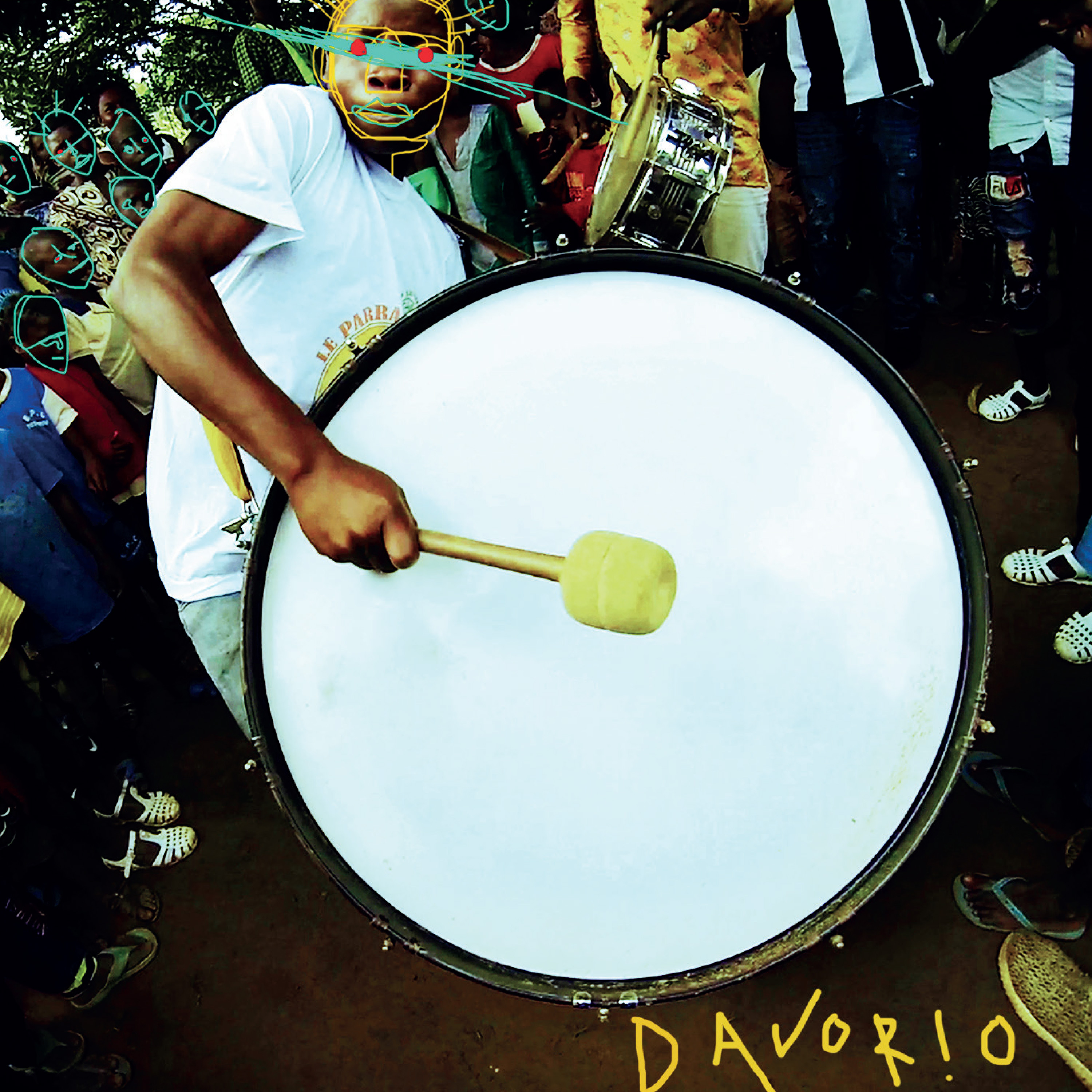
The Monthly Revue playlist of 2023; a choice selection of tracks from the last month on the blog. Curated by Dominic Valvona with Matt Oliver on the Rap Control once more, and music from reviews by Brian ‘Bordello’ Shea, Graham Domain and Andrew C. Kidd. Expect to hear the unexpected.
TRACKLIST//
Alecs DeLarge & King Kashmere ‘Damien Darhk’
Samuele Strufaldi ‘Davorio’
Les Dynamites ‘Pop Oud #2’
Andrew Hung ‘Ocean Mouth’
Matt Saxton ‘Freedom’
John Parish & Aldous Harding ‘Three Hours’
Lunar Bird ‘The Birthday Party’
YOVA ‘Feel Your Fear’
Atmosphere ‘Dotted Lines’
Illogic ‘Hot Lead’
Odd Holiday, Mattic & Daylight Robbery! ‘It Is Whut It Iz’
Delilah Holliday ‘Silent Streets’
Big Yawn ‘Crying’
Tony Allen ‘No Beginning’
Harold Land ‘Chocolate Mess’
Baby Cool ‘Magic (Live)’
Dyr Faser ‘This Menace’
Mekong ‘Out Of Control’
The Telescopes ‘(The Other Side)’
The Bordellos ‘Attack Of The Killer B-Sides’
Adjunct Ensemble ‘Nothing Grows/How Dare You Be Free’
Kassa Overkill, Danny Brown & Wiki ‘Clock Ticking’
Depf & Linefizzy ‘My Love’
Paw One ‘Sepekku’
Cas One ‘Silver Spoons’
Axel Holy & Badhabitz ‘Runnin’
Efeks, The Strange Neighbour & Downstroke ‘Its Only Right’
Chocolate Hills ‘Mermaids’
Orange Crate Art ‘We’re Just Innocent Men’
Tinariwen Ft. Fats Kaplin ‘Ezlan’
Cherry Bandora ‘Esy’
Danuk ‘Sewqo’
Lucia Cadotsch ‘I Won’t’
Jman & The Argonautz ‘Green Light’
Chuck Strangers & Obii Say ‘Say’
Billy Woods, Kenny Segal & Danny Brown ‘Year Zero’
Caterina Barbieri ‘Swirls Of You’
August Cooke ‘Flying Swimming Dredging’
Liz Davinci ‘I’m Through With Love’
Kayhan Kalhor & Toumani Diabate ‘Anywhere That Is Not Here’
Oceans ‘Mike Tysong’
Creep Show Ft. John Grant ‘Moneyback’
Jean Mignon ‘Canadian Exit’
The Perusal #42: Tobias Meinhart And Berlin People, Suki Sou, MultiTraction Orchestra, Brìghde Chaimbeul, Lunar Bird…
April 13, 2023
Dominic Valvona’s Reviews Column

MultiTraction Orchestra (Ft. Arve Henriksen) ‘Reactor One’
(Superpang) Available Now

A multiverse of musicians from troupes and bands that congruously intersect, the MultiTraction Orchestra draws in members from GoGo Penguin, Supersilent, Melt Yourself Down, Crash Ensemble, Sly & The Family Drone, Hen Ogledd and beyond. A stellar lineup you could rightfully claim, such talents as the multi-awarding winning saxophonist, clarinetist, composer and Alexander Technique teacher James Alsopp; the “Reductionist School” freeform harpist Rhodri Davis; gifted cellist Kate Ellis; bassist, vocalist, composer, environmentalist and Acoustic Ladyland instigator Ruth Galler; jazz drummer, Son Of Kemet, Jon Scott; and Krakow via London and Detroit composer, guitarist, producer and interdisciplinary collaborator Alex Roth are joined by the Norwegian trumpet star Arve Henrikson on this new project of remote syncopation.
The orchestra’s members, brought together by Roth, made this, their debut expanded work, across various distances; collaborating apart from each other from different locations: A fact that in no way impedes on the quality and harmony of direction; even in the most histrionic parts.
Reactor One may suggest some nuclear fusion, but this feels and sounds almost like an orchestrated gathering “reacting’ to and playing together in one space at one time. Across a set of six performances that ensemble stir the senses and picture a myriad of imaginative, mysterious environments and landscapes. Such eclectic communions unsurprisingly draw a mix of genres, from jazz to the classical, post-rock and soundtracks.
The opening soft and grainy rasped, snozzled saxophone gauzy ‘Reactor I’ has an air of John Cale and Simon McCorry adrift in a mizmar of India or Arabia: and yet, it also sounds rather esoteric and otherworldly. Suite ‘II’ has a sustained post-rock bed of scuzz guitar harmonics, drama and bluesy-droned horns, whilst ‘III’ features delicate rippling harped aria-like pitches and raspy, almost rusted, sax.
‘IV’ is a crepuscular piece of concentrated brow cello and wisped stirrings that build, eventually, into a cacophony of drum breaks and smashed rolls and cosmic articulations. The harps are back on suite ‘V’, but sound almost like the African kora. They’re joined by an elephant trumpeted sax, what sounds like Jed Kurzel’s intense carved-up bowed strings dramatics, and a synthesized sense of unease. The final piece in this moving, evocative odyssey sounds like Popol Vuh caught in metallic, whining hinge bracketed and bass-y resonance.
A serialism of intuitive tonal movements, the sense of an ambiguous geography, mood and time, the combined efforts of so many threads sounds anything but disjointed or disconnected. Instead, the MultiTraction Orchestra deliver a coherent, balanced drama of gravitas and mood music.
Suki Sou ‘Notes On Listening’
(Curious Music) Available Now
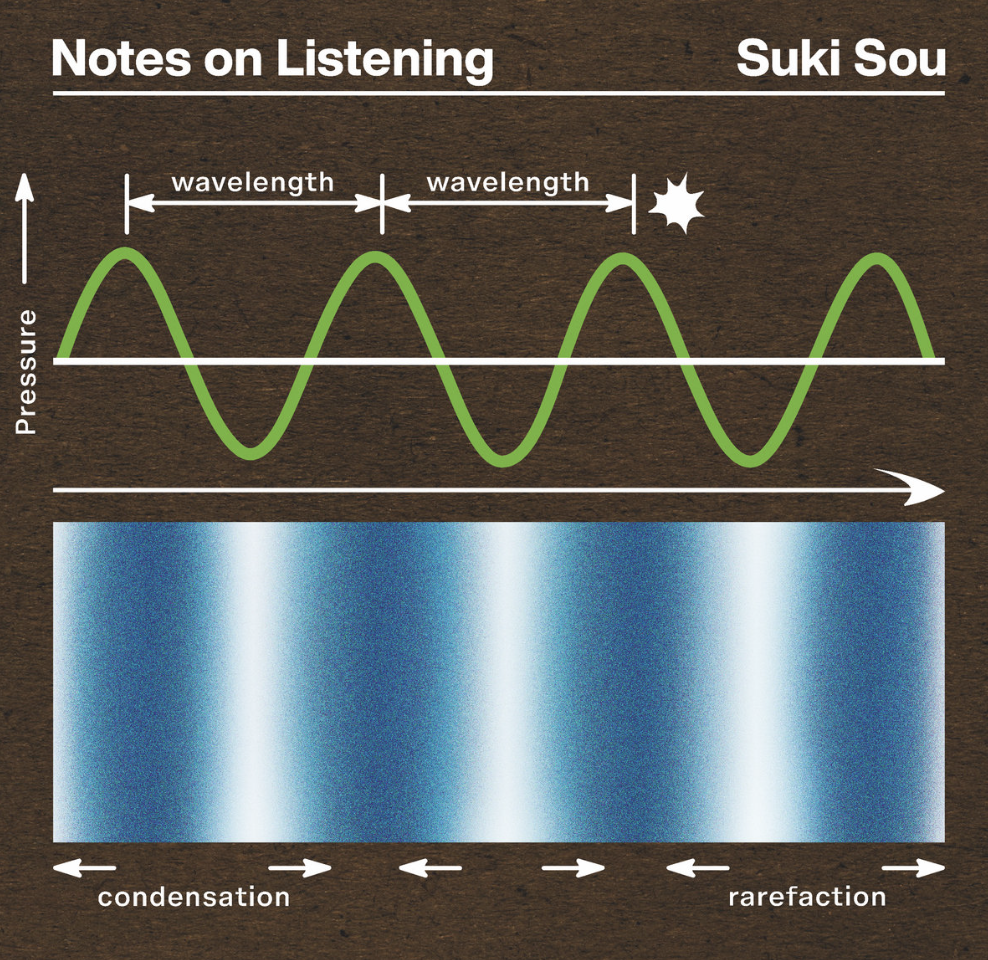
Gentle impressions in the modulated waves, ripples and drones, Suki Sou’s sophisticated analogue electronic pieces require a certain commitment.
Inviting a deeper listening experience, the intuitive self-taught composer and sound designer elicits subtle moods and evocations from a home studio apparatus of Moog, Arps and Buchla synths and MIDI controllers on the debut album, Notes On Listening.
Pitched somewhere between the nostalgic and electronic pioneered sounds of such luminaries as Suzanne Ciani, Sarah Davachi, Roedelius and Klaus Schulze and Library music, yet looking with opportunity towards the future, recollections of childhood out in the Far East are transported and fed into a symmetry of machine produced music and environmental, tactile humanism. There’s a soul within that multilayered network that works arppegiator, waveforms, algorithms and burbled and bobbed synthesized notes into genteel moving translations of abstract projections, feelings, places, even observed weather patterns.
Somewhere in the stratospheric ambient weightlessness of the ‘Kelvin-Helmholtz Clouds’ – the rare billowing wave pattern cloud phenomenon named after the professors of that title – and the moistened kosmische artificial splashes of ‘Velocity Of Water’, the distinctive memories of Sou’s journey from Macau to Berkshire, London and later, the Lake District, are transduced into ambient currents, melodies, languorous drifted spells, liquid flows and airy glides. It could be, as laid out in the notes, the reflections of listening to the Taiwanese pop star Teresa Tang in the rain at grandmother’s that is audible on ‘Petricher’. The outdoors is sealed off with the shut of a door or window in the studio on that one.
If JakoJako or the Warm Colours made an album with Metamono on Sky Records in the 1970s this could well be the result. Too minimal to be lush, yet beautifully, knowingly composed with room for serendipity, Notes On Listening brings warmth, and on the finale ‘Light Intervals’, a sort of pastoralist spiritualism to synthesised analogue electronica. Sou’s sources, influences make for an accomplished debut of subtly and purposeful ambience.
Lunar Bird ‘The Birthday Party’
(Supported by Help Musicians Do It Differently Fund 2022) 28th April 2023
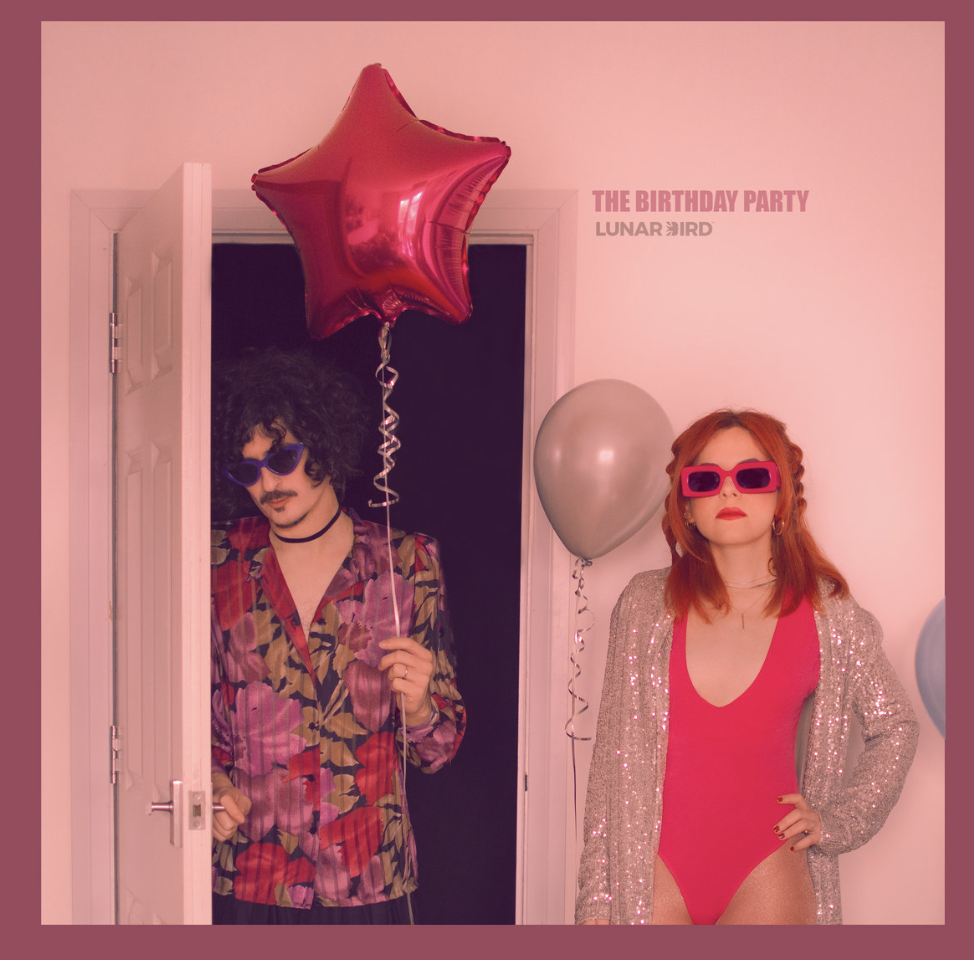
Disarming malady and alienation with such vaporous gauzy diaphanous veils of dream wave, Lunar Bird with a myriad of fellow Italian artists and musicians weave vulnerability and fragility into the most purified of intoxicating pop songs.
Although making the move from their native home to take up residence in Cardiff a number of years back, founding members Roberta Musillami and Eliseo Di Malto evoke a Mediterranean and Adriatic light-giving feel of consumed holiday romance and of longing disconnection: the distance between lovers drawn apart.
Lingering in a lush synthesized haze, Lunar Bird (named after Joan Miró’s signature abstract bronze sculpture) once more ooze a subtle, sophisticated mirage of alternative European pop from the 80s with Beach House, Diva Dompe and Julia Holter. Although, rather surprisingly, the saddened, synth and piano-chimed, near psychedelic ‘Firestorm’ sounds like a collaboration between Kate Bush and The Beatles (Sgt. Pepper era), and the Giorgio Tuma and Riccardo Raho penned coastal Iberian, almost Latin-American percussive, twanged and fluted (courtesy of another guest, Marco Tuma) ‘Dreaming’ reminded me of the late Mandy; a touch too of a Hellenic Lee Hazelwood if you please.
From paradise to metaphorical plunges into the gauzy waters of the deep end, the group’s second album is one long extended languorous dream. The title-track opener both musically and lyrically glows. A slow release of Italo-electronica and strobe-lit soft aches, a near creeping buzz and hint of Numan-sampled Sugarbabes sits comfortably with breathless Beach House vibes.
Recent single-video ‘Creatures’ is a gilded, glistened and softly rippled enchantment, a call-to-arms of a kind for “misfits”, shone down on with certain radiance. The already mentioned Giorgio Tuma joins electro-siren Roberta in a translucent, almost hushed duet on the new wave ‘A Crow’. Another guest of many, Adriano Modica joins Roberta on the Abba-esque Eurovision grand opening ‘Driven By The Light’; Modica “learning to fly” over a blissful, heaven sent production.
Featured on the Monolith Cocktail a while back, another of the already released single-videos, ‘Venilia’ references the Roman deity of the winds and sea to an almost cinematic allurement that conceals a spell of restlessness in paradise.
The album’s bookended by another of those slowly released anthems, ‘Astronaut’. This time celestial fanned rays light up the ephemeral on a golden shimmer of 90s dream pop, as the intangible, the fleeting space dust and romantic allusions are captured and bottled for posterity.
Not so much dipping as submerged fully in that drowsy intoxicating dream vision, Lunar Bird entwine emotional pulls, anxieties with the most delicious, sumptuous of Southern European ethereal pop. The Birthday Party is a spellbinding songbook that subtly pushes the Italo-Welsh group into swimmingly new waters without losing the signature diaphanous bohemian sound we all love them for. There’s absolutely no reason they shouldn’t be much bigger, well known and successful with potential hits like this.
Tobias Meinhart And Berlin People ‘Dark Horse (Live At The A-Trane, Berlin)
(Sunnyside Records) 28th April
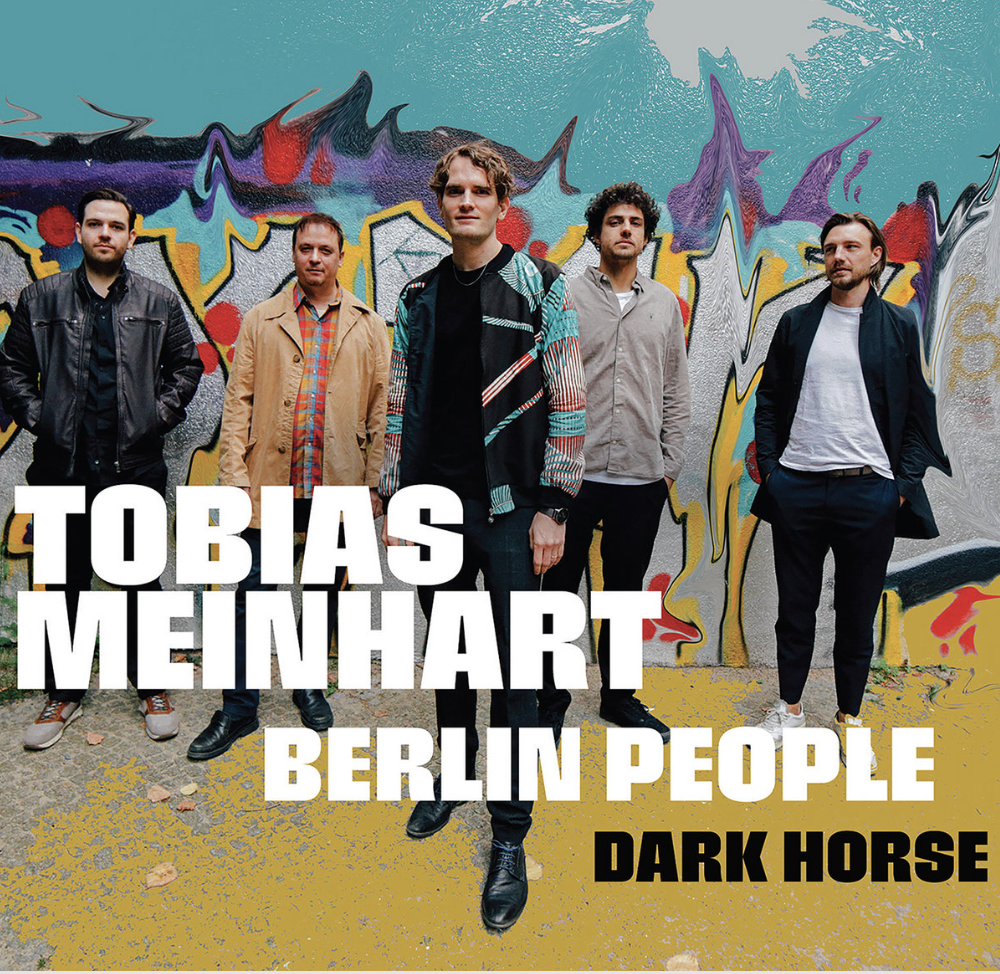
With an ever-widening international flavor, the Bavaria-born, but Brooklyn-based, saxophonist, composer and bandleader Tobias Meinhart picks up and infuses his sound with echoes of the NYC skyline, Latin America and Europe on his new album with the Berlin People ensemble.
Inspired by the dynamics of that set-up’s world tour – out on the road after storming onto the scene with the eponymous acclaimed debut –, Meinhart’s second album showcases a concept-bound live sound with performances from a two week spot at Berlin’s leading jazz club the A-Trane during 2021 and 2022.
Playing every night over the course of that period, encouraged by a respectful but appreciative clapping audience, Meinhart and his accompanying quartet of guitarist Kurt Rosenwinkel, pianist Ludwig Hornung, bassist Tom Berkmann and drummer Mathias Ruppnig shine both together and in the solo spotlight. And as that “dark horse” title suggests, each composition either finishes in a surprising way to where it started out or alludes to some hidden meaning. This might mean virtuoso skills in tandem with a mood, a groove and expressive breakout of dynamism.
With an air of Art Blakey & The Jazz Messengers, Dexter Gordon, Mark Tornes, Albert Ayler and more contemporary touches of European jazz throughout, there’s still room for the Afro-Brazilian style of BRBQ and Spanish flair of Chick Corea on the smooth Latin styled turn scenic dalliance and bustled park activity exchange, ‘Luna Park’, and the guitar work of Zappa and Nir Felder on the subtle Lalo Schifrin accented and tumultuous title-track. That same track has (like the later ‘Sonic River’) its very own introduction part; an almost clarinet-like solo saxophone lead-in of subtle rasped resonance and fluted flight.
Pining serenades softly build into flexed and bounced expressions of free jazz as drummed breakbeats suddenly evoke a splash of Buddy Rich when moving through a set of reflections, mirages and busier performances. Each instrument guided by as much deft skill as spontaneity, but with Meinhart switching between tenor and soprano fusing lighter spiraled climbs with shorter, more pecked or peppered toots.
You can hear that a real fluidity exists between each member of this troupe, as no matter the mood, the surprise, these live actions prove wholeheartedly rhythmic, melodic and above all top quality. Meinhart, as do his bandmates, reinforces an already glowing reputation as a leading light on the contemporary jazz scene with this essential album. This record captures them live on stage turning out both an explorative and classy kind of jazz dynamism; showcasing thought and action in perfect synchronicity.
Ale Hop & Laura Robles ‘Aqua Dulce’
(Buh Records) Available Now

Although both artist-researchers in this debut union grew up on the Peruvian coastline and popular beach area of Aqua Dulce near Lima, it wasn’t until years later and thousands of miles away in Berlin that they crossed paths and decided to work together. With a shared geography and musical interests Alejandro Cárdenas, under the guise of Ale Hop, and her foil Laura Robles liberate and transform the Afro-Peruvian heritage of their homeland from its colonial history: namely the Spanish Imperial Viceroyalty of Peru.
With a legacy of greedy conquest and genocide that wiped out the indigenous Incas, and the heinous uprooting of the people of Western and Central Africa, transported to the Americas including Peru, the local cultures and traditions managed to survive through subversion. One of the most important focal instruments (played here by Robles), the wooden cart-like cajón, was one such traditional percussive form with ties to Africa that was banned by the Spanish. The origins remain blurred but its thought to have originated in the ports of South America as a means to keep that drumming heritage, connection to home alive. Using the wooden packing cases that innocuously carried fruit and other goods, in a rudimental fashion, these boxes were adapted to be played whilst sitting on between the knees with hands, sticks, brushes or mallets. The basic shape remains, but is now no longer banished of course. Instead, it’s a mainstay of such Afro-Peruvian and Colonial-indigenous fusions as the two-bar figure Landó, the Zamacueca, the festive energetic improvised dance of Festejo, the Sande Las Diablos and the Alcatraz. The last of those being an erotic dance in which the man follows behind his tissue-decorated “posterior” female partner with a lit candle!
On this album the cajón’s quickening, stumbling or slowly lumbered rhythms go up against a radical reshaping of the coastal Peruvian environment, with natural evocations synthesized and made alien, otherworldly and futuristic. Improvisations later edited and with additional electronics and more obscured electric guitar, the African-Spanish-Amerindian dance of ‘Son De Las Diablos’ (which according to the late Peruvian “reciter and ethnomusicologist” Nicomedes Santa Cruz, may have no links at all with African rituals) is thrust into a sound world of non-musical wooden mechanized objects, synth purrs, poured primitivism and the atavistic.
A natural canopy of parrots, insect buzzing chatter; the creaks of and expansions of woodland and vines; and humidity are all turned into sci-fi with various effects, lunar bends and metallic fizzes/splashes/tears/ripples. One such scene, ‘El Fenómeno De La Niña’ sounds like Richard H. Kirk mooning in the exotic undergrowth.
Radio tunings and high-pitched whines and frequencies permeate a variation of rhythmic peregrinations and avant-garde sound experiments that build bridges with Peru’s incredible breathtaking landscapes and its ancient forms. Yet, can also evoke such alien and cosmic ideas too. In fact, Aqua Dulce doesn’t really sound much like anything else, except for the hints of Jon Hassell’s fourth world traverses on the brushed cajón, liquid poured title-track. And so both experienced artists/composers create a new dialogue; a sonic soundscape language as they reimagine a Peru unburdened and lifted from its colonial past.
Issei Herr ‘Distant Intervals’
(NNA Tapes)

Liminal in more ways than one, the Brooklyn cellist-composer Issei Herr’s debut album is both imbued and led by a number of transformations. From a change in musical direction to gender transition, a new life is articulated with an incredibly studied, moving work of suites, forms and memories that exist almost simultaneously in the past, present and future.
Classical groundings and that forms language (the “Aria”, “Elegy”, “Toccata” etc.) act as a base from which to explore various states of emotions, but also imagined possibilities. Reminding me in parts of fellow cellist and experimental artist Simon McCorry, Herr’s instrument of choice is similarly processed, overdubbed and improvised with – recorded, we’re told, in a bedroom closet of all places.
Distant Intervals begins with the recent couplet single of ‘Prelude (An Eternity Of Light)’ and ‘Aubade (The Farewell Is A Beginning)’. The former brings forth that yearned light to a stirring classical air, textured drones and a blown, dusted resonance of sophisticated sighs; the latter, a dawn serenade Aubade – a love song to the early morning made famous by John Donne no less – sounds almost like an English pastoralist yearn of majesty, sympathy and love. There’s a certain bass note on that same piece that seems to mark time itself. Both are class acts on an extended captivating album of deeply moving, inquisitive emotional pulls.
The ‘Aria’ on this album is quite different from the operatic allusions that this word would normally conjure; Herr both gracefully playing triplets of bowed notes and churning a kid of dance to the washed-out memories of a busy swimming pool scene. The eve-song ‘Serenata’ – in parenthesis, “To A Hidden Moon” – features a plucked, spring cello, saddening arcs, a certain feeling that borders on a cry, and what sounds like gentle mallets hitting the strings. ‘Fugato (Night’s Transfiguration)’ has a touch of Johann Johannsson and a choral-like quality of both awe and serenity in equal measure. Vocalist Maria BC offers a subtle Dead Can Dance ethereal swooned gravity to the album’s finale, ‘Aveu (The Beginning In A Farewell)’. More or less translating as “confession”, the Aveu here is used as a soothing vehicle for heartache and vulnerability, yet also gives off a real mystery too.
A parting from one stage to the next, Herr’s debut conveys, serenades and also offers more forlorn eulogies to past lives, woes as the pathway illuminates to a better future. This is a confident and quite accomplished work from the burgeoning composer and cellist that will stand the test of time.
James Howard ‘Peek-A-Boo’
(Faith & Industry) 14th April 2023

To a languid soundtrack of bendy, dreamy blue Hawaii (relocated to Margate), and Tales Of The Unexpected and Third Man waltzes performed in a spoiled ballroom that Strictly Come Dancing couldn’t even revive, James Howard once again wanders wistfully across a worn, battered, disconsolate post-Brexit landscape.
Appearing from out of the guises of both the Norfolk recorded, bleached onto parchment septic Isle folk of Thomas Nation (Battle Of The Grumbles), and the Blue House collaboration (Gobstopper), Howard’s newest songbook pulls from both, as a felt, if forlorn, picture of modern lawless Britain unfolds over a eleven-song cycle of idiosyncratic craft: Who else can evoke Roddy Frame, 70s Scott Walker, The Bluebells, Pink Floyd and Hansa studio saxophones all on the same album?
In the middle of an undeclared English Civil War of ideologies, divisions have never seemed so deep: beyond reconciliation. The puritanical demagogues on both sides seem to have drawn on that tumultuous period of our history. The bloodshed of that era left indelible scars on the country’s psyche; putting paid to revolution as a consequence. The film director Ben Wheatly tried, rather surreally, to encapsulate that same age in his 2013 film A Field In England. With all the events – including the roles of the hermetic, of science, religion and kingship versus a limited democracy – all unfolding in a field microcosm, England’s trauma bleed out into a both hallucinogenic and ominous nonsense of dream-realism. In one scene, the old lullaby of ‘Baloo, My Boy’ is sung across the desolation. A version of this ballad and Civil War curio is beautifully delivered by Howard as a wounded closer on Peek-A-Boo. Allegedly composed by the Bishop of Orkney’s daughter, Lady Anne Bothwell, after being “jilted” by the Earl of Mar’s son, Alexander Erskine (though to be fair he did have an excuse, having been killed on the field of battle), this is the lament of an abandoned mother and child. Repurposed rather nicely, this same song becomes a disarming, weepy swansong that makes perfect sense in the context of the album’s themes and mood.
Because somehow, Howard straddles multiple timelines with beautifully evoked ghosts of the Civil War and the Georgian with life in a contemporary setting. Nothing does this better than ‘County Lines’; matching the cross-border drug dealing crisis of the Home Counties and small towns with a languorous alt-pastoral and Scott Walker-esque country (I’m sure that’s a touch of steep pedal guitar) wane musical accompaniment that seems quite timeless. Again, there’s a melodious, lovely disarming quality that hides the pain, tragedy and sheer arrogant selfishness of those involved in the drug’s trade.
I’m not entirely sure what Howard is saying on the Pulp-ish ‘Family Values’ about the “nuclear family” set-up, and the paranoia of Cold War mutual assured nuclear destruction. As a Generation X(er) (just!), growing up in the 80s, it must have seemed a pretty daunting prospect, going toe-to-toe with the “Russkies”. Whilst When The Wind Blows and public information films on hiding under the stairs or an upturned table seemed terrifying, they also seems bonkers in hindsight. I’m not sure; in fact I lie, as I do know, not many of my peers seemed traumatized by it, or have lingering anxiety from that time. And as it turned out, so many of those aggrandized boastful military displays across Red Square included missiles made out of wood; the Soviet powers couldn’t even afford the fuel to power most of their arsenal. I’m wondering if Howard is trying to draw parallels with the present battle lines between much of the West (though allies are everywhere around the world) and Russia over their heinous invasion of Ukraine; that and a side line of disgust at the once accepted nuclear family unit set-up.
Augurs of a reckoning; the sullied state of a septic Isle; an English seaside Ennio Morricone; just some of the feels and atmospheres all listlessly and longingly channeled into a well-crafted songbook (complete with leveling-up asides/intervals). Howard shields the hurt to an extent with his soft stinging observations, aphorisms and melodramas on yet another fantastic album; one of my favourites of 2023 already.
Brìghde Chaimbeul ‘Carry Them With Us’
(tak:til/Glitterbeat) 14th April 2023
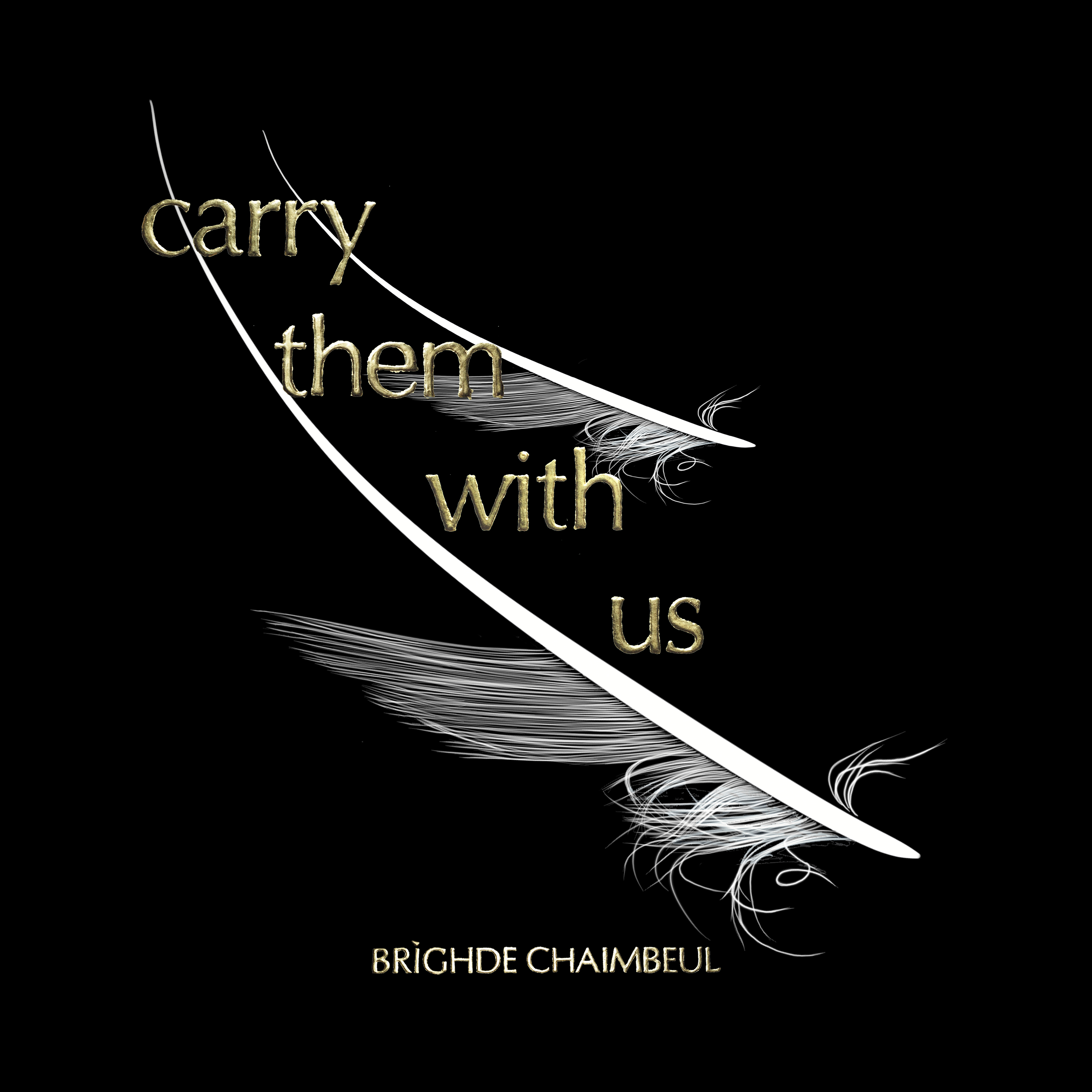
Squeezing new life into the obscure double-note droning Scottish small bagpipes, the Isle of Skye artist Brìghde Chaimbeul explores fertile new atmospheres on her second album, Carry Them With Us. Although borne out of long-held traditions, a bird themed mythology and Western Isles folklore, the piped and circular avian-like suffusions transform old arrangements and tales into something altogether different.
A familiar Celtic air is improvised with, transcribed to sound like a bedfellow of India, the Appalachians and the dream-realism folk of Chaimbeul’s tak:til label mates Širom. Already an award-winner (BBC Young Folk and Horizon prizes), the native Gaelic speaker expands horizons further on this newest work of mysticism and stirring scenic evocations by collaborating with the visionary saxophonist/artist/composer Colin Stetson.
Initially exchanging tweets, with an invitation from Stetson for Chaimbeul to record something for a documentary he was involved with, in kind the explorative American came over for a visit in the summer of last year. Writing and recording with his Scottish host, this sonic partnership ended up producing the “organic” foundations of this nine-track fusion of folk, the neoclassical, new age and fourth world-like peregrinations. Stetson appears on six of those tracks; although its difficult to know where one individual instrument, contribution ends and the other one starts, as both the small pipes and saxophone pretty much meld together in a mizzle or sustained bed of droned impressions. Saying that, ‘Uguviu (II)’ with its almost fiddled dance reminded me in part of Don Cherry, and has more obvious stirrings of new age jazz. It also reminded me a lot of Ariel Kalma. Together on the traditional sourced ‘Órgn An Eich Uisge: Song Of The Waterhorse’ they take what sounds like a Jacobean Highland battle drum arrangement towards the minimalistic borders of Cage and Riley, and the more spiraling vortex cosmos of Frédéric D. Oberland.
This inspired musical partnership proves highly successful envisioning an almost hermetic synthesis of influences and geography; the opening ‘Pilliú: The Call Of The Redshank’ and ‘Tha Fonn Gun Bhi Trom: I Am Disposed Of Mirth’ proving extraordinary, evocative riffs on bird-flight and the ancient lore of the land.
Uncoupled from Stetson, Chaimbeul channels both the Celtic and a whiff of India mountains on the fluty, turn near polka dance, ‘Banish The Giant Of Doubt & Despair’ – a tragic old tale of a drowned, once marauding, giant succumbing to his fate through the alluring siren song of the King’s daughter. We actually get to hear Chaimbeul’s effective apparitional-like voice, singing in the mother tongue on the beautiful misty vaporous finale, ‘Bonn Beinn Eadarra: The Haunting’. Another string to the proverbial bow you could say.
An evolution and a response to the traditions of the Western Isles, Chaimbeul’s drones, bellows and piped vapours conjure up a whole new folkloric magic that sonically reaches beyond Scotland’s borders. This is an album that connects different worlds and centuries on an impressive textural, tonal soundtrack of the recognisable and more abstract forms of Gaelic, minimalism and the new age.
Tuzeint ‘Raixes’
(Extra Soul Perception/Worldwide Records) 21st April 2023

Returning to his roots, Tuzeint opens up his heart on his Latin-soul flavoured debut.
Marking not only the first expansion by the community-collaborative Extra Soul Perception platform into the Spanish language, but this soloist release also finds, for the very first time, Tuzeint singing in his native Mexican-Spanish tongue too; aided by an ensemble of musicians playing a number of localized Central and South American instruments with links back to Iberia.
Channeling a CV that includes stints as the motivational force behind Mexico’s 90s hip-hop legends Control Machete, as a producer, and a remixer for M.I.A., Run The Jewels and Vampire Weekend, the thirty year old Monterrey-based artist weaves together a lilting, sauntering merger of Veracruz region stringed guitar work serenades, Afro-Brazilian percussion, r’n’b and sophisticated breakbeat soul.
Unmistakably Latin but with some subtle, interesting twists and whiffs of 80s new wave, some hip-hop production and a touch of the dreamy, near psychedelic, Raixes is like a tropical bleached romance between Earth period Vangelis, D’Angelo, Manduka, the Buena Vista Social Club, El Michal’s Affair and Les Sins. Accompanied by the plucked, flanged, delicately woven Baroque and folk of Xinto’s nylon-stringed, narrow-bodied Jorana Jarocha (almost a guitar but much smaller), Vico Diaz’s lower-pitched, almost double-bass-like, four-stringed Leona, Lucio de los Santos’ bird-y flute, Alan Fajardo’s shortened tooting and more suffused trumpet and a combined percussive and drummed effort from Jorge Jimenez, Andres Jamie, Orestes Gomez and multi-instrumentalist Enrique Toussaint, Tuzeint sings with a soul-love yearn and lulling relaxed flair.
To echoes of light jazz, tropical mirages, Gulfstream beachside troubadour reminisces and sumptuous soothed croons, burdens and desires are shared equally with romantic, languorous élan. As relaxed and inviting as this music is, the emotional draws are deep and affecting. But its nothing less than a delightful, soul bearing and enjoyable album; a neo-soul delight.
Les Abranis ‘Amazigh Freedom Rock 1973-1983’
(Bongo Joe Records) 28th April 2023

Making good on Bongo Joe’s 2018 45s series showcase of Les Abranis tracks, this expanded compilation follows the eclectic Algerian group’s adoption of garage, psych, disco, acid rock and synth-pop during a decade period of their existence.
Proudly marrying an atavistic Kabyle heritage to Western sounds, Les Abranis were born out of a diaspora and mass migration to France: Paris especially. The Berber Kabyle from Algeria’s Northern region and Atlas Mountains moved in great numbers to escape cultural persecution, civil war and economic strife. This ethnic group’s reach is far, with iconic stars of the screen, music and arts, politics and sports all fully embedded in popular French culture (Zinedine Zidane being one such superstar with those Kabyle roots).
However, politically, as Les Abranis promoted, this million-plus community seek autonomy, self-determination in Algeria: the name of which is used in the “freedom” barricade breaching title, the “Amazigh”. That freedom, found in Paris of the tumultuous counterculture late 60s, was not just political but musically important. It gave a greater scope to the band’s sound, as they opened up the traditional signature rhythms of home with a fusion of genres; sometimes to the consternation of their fellow Algerians, as one highlighted anecdote regales. Performing both this compilation’s opening high-pitched Doors and 60s garage beat grooving ‘Athedjaladde’ (which actually, as it progresses, also pulls in a guitar pedal wah of Isaac Hayes and touch of 60s Zappa) and the Habibi Funk like, suffused Doors (again) organ and handclapped spin ‘Ayetheri A L’ Afjare’ on national Algerian TV in 1973, as part of the more traditional Festival of Modern Algerian Song, they cause a certain furor and were near booted off stage: their hippie, loose liberal interpretation deemed too radical it seems.
Originally crossing paths in one-such Maghreb rich hip Paris neighbourhood in 1967, Shamy El Baz and Karim Abdenour conceived the idea of merging the Western styles they both loved with home. Bassist Madi Mehdi and drummer Samir Chabane would fill out that first proper lineup, playing a form of garage, psych and North African acid-rock. By the time they reached the 80s they’d not only changed personal – recruiting the Corsican jazz drummer and rhythm provider for fellow Kabyle superstar Idir, André “Dédé” Ceccarelli – but their style too; fully immersing themselves in synth pop. A chunk of the choice tracks on this collection actually come from the band’s 1983 album N1; the sound of which is slicker, smoother and enveloped in the decade’s vapoured production of disco, new wave, pop and soft rock. Songs like the female swooned and male vocal caroused ‘Therrza Rathwenza’, and the synthesized wind swept, Sly & Robbie era Grace jones slinked reggae groove ‘Avehri’ are two such examples of this shift. ‘El Guoum Agui’ sounds a bit 80s Paisley Prince, albeit with that exotic Algerian production. The cool Persian discotheque number ‘Akoudar’ is almost Chic-esque. But from a previous chapter in the band’s development, the organ-poked ‘Chenar la Blues’ sounds simultaneously like early Can, Canned Heat, the Stones and the Easybeats shimmying in a Berber dance.
There are some quite incredible progressive fusions and more than enough Parisian-Algerian nuggets to make this a vital addition to the collection. Kabyle culture rocks out in the Western arena.
Kiji Suedo ‘Hosek (EP)’
(Hobbes Music) Available Now

Following up on a well received album in December (Riot) for the Edinburgh electronic label Hobbes Music, Osaka artist Kiji Suedo heads lightly towards the dancefloor with an EP of “working it” House and Techno numeral-loaded tracks.
Jacked-up and softly pumped with various shimmered and melodious wave forms, acid-washes, knocked beats and hushed languid soulful vocal prompts/actions, Suedo offers up a deeper dance music listening experience.
It’s an early House meets Electronic Body Movement and sparse Harthouse/R&S Techno kind of vibe, with additional spells of untethered bulb-like jazzy organ notes, scrapping kinetic marbles and a near constant motion of rotating, sliding, switching and turning synthesized mechanisms.
Good calls have already been made: Moodyman and Herbert on the press sheet, and someone else gave a shout for Theo Parish. I would add to that equation some Basic Channel, Dave Clarke, Mike Dred and a hell of a lot of late 80s/early 90s sounds too. But in short, and without sounding to gauche, this is dance music for the mind, body and soul from an artist on the rise.
Puce Moment ‘Epic Ellipses’
(Sub Rosa) Available Now
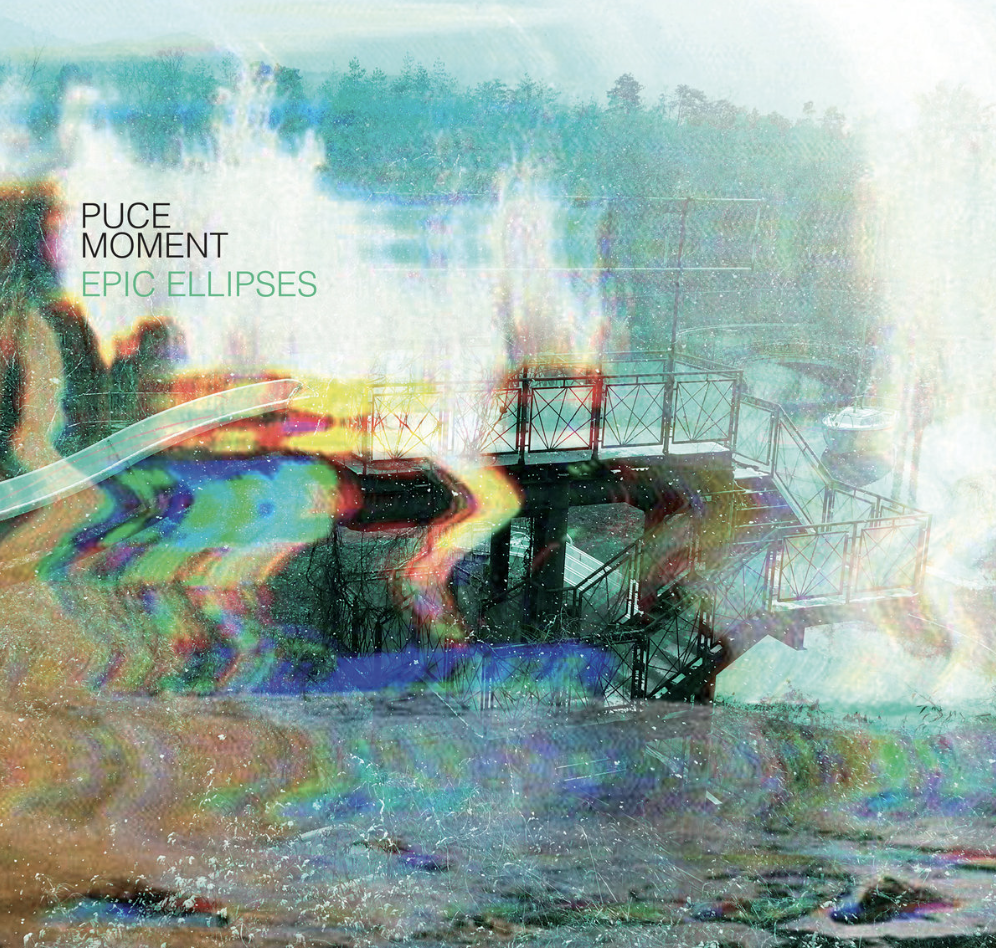
From out of Nicolas Devos and Pénélope Michel’s Puce Moment sound research lab (a French located incubator, inspired, well so it sounds on occasion, by the famous Kosmische Zodiak Club frequented by Moebius, Roedelius and Schnitzler) emerges another self-styled “climatic-noise” soundtrack of slow building drama and gravitas.
Existing somewhere between the forms of peregrination and studious composition, the duo finds conclusions, just the right end points through intuition and experience. Working together now for 15 years, across the arenas of fiction, documentary and virtual reality, both foils on this sonic explorative journey can be said to have found that perfect syncopation.
Their fourth album together, Epic Ellipses evokes both the alien (the sci-fi meaning of the word) and the ambiguous. Over four long organic and synthesized atonal but yet melodious and motored tracks, off-world data, the sounds of strange oscillating and looming craft merge with vague percussive rhythms that could have been sourced from the South Seas, South America or Africa. Not so much ethnography as the balanced but untethered construction of new worlds, ritual is transduced into near-cinematic suspense, thriller and the mysterious.
“Allotropia” sets out from an echoed chasm of sine waves and static-rips in the fabric, before a siren’s ethereal voice materializes from industrial ominous atmospherics and internal, heartbeat rhythms. ‘Skyli’ has robotic-like calculus, fed digital data, cosmic undulations and a distant singular knocking beat. Gradually those knocks turn into a slow beat, as strange noises and the corridor to some distant constellation opens up and guides us onto some new plane. ‘Motor’ reminds me of Hamburg label Bureau B’s output – that tie to kosmische and German minimalist electronica perhaps. Although the lulled voice and vague elements of faraway lands eventually end up sounding quite dramatic: lost in the ether. An air of very early Cluster and Popol Vuh’s Affenstunde debut can be detected alongside Cosey Fanni Tutti under the quietened surface veils of the womb-like ‘Taifuu’. From vaporous mists, waves and ambience a filmic, immersive soundtrack builds; one that entices and organically forms visitations, memories, feelings of time and place: destination. Epic Ellipses is a quartet of moods, emotional draws that ends up inventing environments and score to mysterious surface and horizons.
Carla Boregas ‘Pena Ao Mar’
(iDEAL Recordings) Available Now

Featured last year on the Monolith Cocktail, congruously in electroacoustic jazz-primitivism union with fellow Brazilian explorative sound artist Maurício Takara on the Grande Massa D’Auga peregrination, Carla Boregas now drifts out an ambient, both non-musical and more melodic-hinted sonorous waves with her debut solo offering.
Although already making a name for herself, both in native Brazil and in Europe (currently based in Berlin) with the Rakto trio (with Paula Rebellato and again, Maurício Takara) and Fronte Violeta duo (with Anelena Toku), and as the founder of the experimental AUTA venue and Dama Da Noite label, Boregas now expands on a subtle minimalistic palette of tape play, sonic assemblage manipulations, field recordings and hidden instrument sources.
Conduced to roaming and following the played and synthesized air and wind flows, as we reflect on the tenuous, fragile and complex nature of existence, Pena Ao Mar (or “pity the sea”) envelopes the listener within an ambiguous veil of sci-fi, mysticism and wooded menagerie, and drones that evoke the hermetic and a distant vision of India.
The opening ‘Acôes em Paralelo’ (“actions in parallel”) manipulates, plays with what sounds like a reel-to-reel machine; a reversed, crackled and hum drone mix of the avant-garde tape culture of underground Spain and Italy, with touches of kosmiche. Those early resonations of German cosmic music (from Kluster to Tangerine Dream and Gunther Wüsthoff) and “sisters with transistors” luminaries such as Suzanne Ciani can be heard permeating the title-track’s fanning geometric rays and refractions; the otherworldly harmonium church music gauzy ‘Grafia do Invisível’ (“invisible spelling”); and the robotic calculating, alien bird tweeting and box-of-tricks vibrating ‘A Cidade dos Outros’ (“the city of others”). ‘Current 2 Ventos’ (“wind and currents”) seems to gravitate more towards tubular-like blown droned instrumentation (a kind of transmogrified version of a serialism styled wind quartet, and a Jodorowsky feel, whilst ‘Sopro’ (“breath”), with its night creatures forest atmospherics, spoken word experiments and spooked piano, errs towards hints of Lucrecia Dalt and Xqui.
Along varied vapours, currents, waves and wisps of air, Boregas transports the listener to both evaporated and more tangible (but only just) environments and moods; realms of reflection and mysterious spaces that attempt to capture the abstract feelings of being alive in a most vulnerable state.
A Begging Bowl Request From Your Host:
Hi, my name is Dominic Valvona and I’m the Founder of the music/culture blog monolithcocktail.com For the last ten years I’ve featured and supported music, musicians and labels we love across genres from around the world that we think you’ll want to know about. No content on the site is paid for or sponsored and we only feature artists we have genuine respect for /love. If you enjoy our reviews (and we often write long, thoughtful ones), found a new artist you admire or if we have featured you or artists you represent and would like to buy us a coffee at https://ko-fi.com/monolithcocktail to say cheers for spreading the word, then that would be much appreciated.
A March Digest: Lonnie Liston Smith, Saba Alizadeh, Crime And The City Solution, Faust Tapes, Brian Bordello…
March 9, 2023
New Music on our radar, news and archive spots
Dominic Valvona

A new thread, feed for 2023, the Digest pulls together tracks, videos and snippets of new music plus significant archival material and anniversary celebrating albums or artists. The March edition features new sounds from Lonnie Liston Smith, Saba Alizadeh, Benedict Benjamin, Sebastian Reynolds, Brian Bordello,…plus from the Archives, a tenth anniversary piece on Crime And The City Solution’s 2013 rebirth ‘American Twilight’, and 50th anniversary piece on the Faust Tapes.
NEW MUSIC IN BRIEF
Lonnie Liston Smith ‘Cosmic Change’
(Jazz Is Dead)
Smooth soulful vibes, bulb-like notes and cosmic fanning rays from the great jazz-funk doyen Lonnie Liston Smith, who is set to release his first album in 25 years! Thanks to the overseeing facilitators of the enriching Jazz Is Dead label project, Adrian Younge and Ali Shaheed Muhammad have coaxed the legendary artist, ensemble bandleader and sideman for such impressive luminaries as Miles Davis, Pharoah Sanders, Gato Barbieri and Leon Thomas, back into the studio; just one of many great names from the spiritual, conscious and funky-jazz rolls of inspiring talents.
Co-composing and collaborating with their chagrin Younge and Muhammad both work in the old magic with a sense of the new and forward; paying homage yet creating something new, performing the very kinds of influential music that had an impact on those who came later, namely the hip-hop fraternity (Jazzmatazz era Guru and the Digable Planets being just two such notable collaborators and acolytes).
I can’t wait to get a hold of the full deal.
Lonnie Liston Smith JID017 is due out on the 28th April 2023.
Saba Alizadeh ‘Nafir (Clamour)’
(30M Records)
A very special, politically important vivid visual and musical statement from the evocative Iranian artist-composer and reputable virtuoso kamancheh (Iranian spike fiddle) player, Saba Alizadeh, ‘Nafir’ (or “Clamour”) is a metaphorical, symbolic encapsulation on life during the recent uprisings. Set in motion after the callous killing of Mahsa Amini and the strict authoritarian imposition of Islamic law and the violation of women’s right, last year’s protests in Iran were brutally crushed – with a number of executions carried out on the most tenuous of charges. And, if it couldn’t get much worse, there’s been an escalation of mass poisonings in girl’s schools throughout the country. The war in Ukraine, a continued war of words with the West over Iran’s nuclear capabilities and the growing pains of the economy have done all they can to bury the attention, brave opposition and movement for change since the initial spark in July of 2022.
As a reminder to the pain and suffering of that movement, Alizadeh has released this touching and moving video and electroacoustic suite. You can read his statement and press blurb below, which explains the thinking, process behind this incredible track.
“Nafir” is the sound of a million outcries channeled through the ancient string instrument Kamancheh” says composer and musician Saba Alizadeh about his latest single. “It’s the voice of the shed tears and blood”.
His instrument, the Kamancheh is said to be resemble the spectrum of the human voice, and it’s why he used it prominently in this piece as a metaphor for singing, for the gathered voices and cries of the oppressed, fighting against the darkness, the oppressor, here represented by the rhythm section.
Alizadeh explains: “This section is based on the rhythms of T’azie (traditional religious mourning ceremonies during shia commemoration Ashura) but at the same time resembles the sound of explosions (the sound that became the soundtrack of our lives in Iran for the past 5 months) and a respirator machine. It is at the same time a spray paint can that is writing slogans on walls or wiping them out.
At some point in the piece the rhythm section crescendos and tries to distort and destroy the kamancheh melody but it is not able to.”
In the video which is masterfully implemented by visual artist Siavash Naghshbandi, the voice of the Kamancheh and the beam of light interact with each other: the louder the voice of the kamancheh gets the brighter the beam becomes. It battles with the rhythm section and a metaphoric swarm of Kalashnikov bullets (as a universal sign of oppression). The finale gives hope: the cry of the Kamancheh and the warm bright light succeed defeating the bullets, the darkness and oppression.
Benedict Benjamin ‘Furlough Blues’
I’m not sure I could put it better, but the high anxiety of the Covid era is as Benedict Benjamin (formerly of The Mariner’s Children and Peggy Sue) puts it, channeled through a merger of the Byrds, Electrelane and DJ Shadow. Folk bluesy pop meets the psychedelic the roll of breakbeats and even an echo of jazz on a pandemic journal that’s almost wistfully disarming in its vocal delivery.
Featured a while back in Brian Bordello’s column (and making last month’s choice music playlist), Benjamin has now painstakingly produced a video for the song, the first in a series of such visual storytelling accompaniments to songs taken from the upcoming Tunnel album (released in June). A mix of collage and stop motion, the Furlough Blues video is a visual metaphorical feast of rocketed lighthouses and “evil catholic altars” that blast off towards the moon and fly across various digests, magazine backgrounds, beaming out their light.
Since that video’s official drop last week, Benjamin has released another single ‘White Noise’, which moves the music into another psychedelic folksy indie direction: “Elliott Smith crossed with Serge Gainsbourg” as Benjamin puts it. Have a listen here:
Abel Ray Remixes Sebastian Reynolds ‘Cheptegei’
A simmered techno reverberated dance vision of polymath composer and long-distance runner Sebastian Reynolds’ most recent athletics-euphoric and travailed inspired ‘Cheptegei‘ by Abel Rey, has just been dropped on Youtube. Feel the itching electronic vibes as Rey builds up a sophisticated remix of the homage to the 5000M Ugandan superstar Joshua Kiprui Cheptegei. The original version appeared on Seb’s Athletics EP last May, but there’s news of a new album, Canary, being released this summer.
Lunar Bird ‘Creatures’
I just have room to mention the latest diaphanous dream-pop single and video from those heavenly creatures Lunar Bird. Beach House with a taste of Italy and Cardiff, the brilliant, beautifully captivating group, swayed and floated along by Roberta Musillami‘s charming lush vocals, have been a mainstay of the Monolith Cocktail for a few years now. Once more they beguile and charm, even with the most plaintive and yearning of themes, on this infectiously spellbound new song. You don’t need much more than that…just give it your time and embrace the Lunar Birds magic.
NEW MUSIC/LONGER READ HIGHLIGHT
Brian Bordello ‘Songs For Cilla To Sing’
(Think Like A Key Music)

It is telling that Brian Bordello uses the title of a famous and lauded book/movie that depicts the desperation of a diorama of washed-up, failed characters willing to die in the course of winning a dance marathon, and so gaining the attentions of those who might save them from a life of pure poverty (and worst of all, obscurity and irrelevance) in America’s great depression. Horace McCoy ‘They Shoot Horses Don’t They’ melodrama, later turned into a film by Sidney Pollock almost forty years later in 1969, reflects the Shea Family patriarch and instigator of the Bordellos and soloist’s own, against all odds, desperations to get noticed; leading to one of the great “what ifs” in rock ‘n’ roll’s annals.
As ridiculous as it may seem on the surface, the lower than lo fi (making Sparklehorse sound like a flash git bombastic ELO in comparison), nee no fi King of the well-worn Tascam four-track and St. Helens idiosyncratic Les Miserable, was only one person away on the Venn diagram of Cilla Black’s orbit. His potential songbook of flange-y distorted (more through low grade recording techniques) and curmudgeon demos did make its way to the, then retired from singing, Liverpool songbird – in the three or four decades before her death more the star of TV presenting and hosting than performer.
We don’t know what the late Cilla made of it; the 80s Merseyside via Manc diy, C86 and Jason Pierce-echoed hushed unrequited and lovesick pop musings of Brian, recorded on the most basic of bog-standard equipment.
And yet, the aphorism, puns, and “desperation” prove melodically heart aching, touching and, above all, truthful. Use your imagination. Replace that guitar with a conducted orchestra, a touch of Abbey Road professionalism, and you can easily hear the one-time hatcheck girl personality turn songstress belt out some of these lamentable odes. Especially such fair as the shabby rain-washed ‘Betrayal’ and the vibraphone-like chimed ‘Impossible’. Saying that, the creepier, wallowed and spanked ‘Not Such A Bad Girl’ could easily be a nun-habit frocked Marianne Faithful number, and the lo fi breezy, almost continental bastardised, Paris meets Entertaining Mr. Sloan, ‘Handsome Jacques’ isn’t a million miles away from any Gauloise-fawned chanteuses of the 60s Belle Époque era.
Of course for me, as Brian’s editor at the Monolith Cocktail (our Brian has now been furnishing us with his reviews for the last four years or more) but also as a fan and obvious insider, I know and hear his passion for the spirit of a purer, more personality driven rock ‘n’ roll, and for the pop symphonies, ballads of such starlets and characters as Cilla and her generation. A nostalgia perhaps for simpler times, but also for a time when there was such a thing as the working classes getting on in the music and arts industries. That despite living it rough with a bog in the brick outhouse, no central heating and the fact you had to entertain yourself in those days, the greatest changes, such icons could reign.
And so this songbook is as much about the past as it is in catapulting another working class talent onto a bigger stage: hopefully through such patronesses as Cilla. That wasn’t to be of course, and so Brian continues to drag his arse up the coalface of obscurity each week. Saying that, as part of the American label Think Like A Key Music’s diy series, this album has had a small flourish of popularity, even making some lo fi amazon chart the other week. For a Collection of Cilla demos – some since released and transformed on other Bordellos releases – lost down the back of a proverbial sofa, it’s done quite well. If imagining Brian Epstein inviting Ian McCulloch to front The Tremolos, or The Red Crayola, Spaceman 3 and a budget Inspiral Carpets time-travelled back to 1962 sounds like one incredible proposition, then this songbook is for you. Unguarded, heart-on-the-sleeve honesty, pity and yet always with a wry sense of humour, Brian has conjured up a brilliant album: possibly despite himself. A national destitution, his name should join the pantheon of such notable mavericks as Stevie R. Moore, Roky Erickson and Saint Julian of Cope.
ARCHIVES/ANNIVERSARY
Crime And The City Solution ‘American Twilght’
(Mute Records) 2013

The second/third/fourth rebirth, incarnation of the iconic cult Crime And The City Solution was launched in 2013 with, perhaps, one of the ensemble’s best albums yet: American Twilight. Ten years on and my original review, written for the Welsh-international indie webzine God Is In The TV, still stands.
Re-born, so to speak, after a twenty-year hiatus, the poetically forlorn Antipodes Crime & The City Solution have returned to document the miasma landscape of our troubled times.
Breathing in the toxic fumes of mass-unemployment, foreclosures and desperation, their re-location to what was once the industrial hub of America, Detroit, seems entirely apt. Home to the furious garage rock and political spit of the MC5 and Stooges (to name just two big guns from the motor city’s heritage) Detroit imbues its latest émigrés with a wealth of material to chew on.
The four horseman of impending doom have tested the waters lately, their scout parties observed on the horizon by the band, who announce to anyone that listens: “Here comes the rain!” Though there is, thankfully, always a chance of redemption: “We must not let the doomsayers and the naysayers cause us to lose our faith. Because without love and without hope there can be no future.”
Morosely inquisitive, our ‘shined-on’ vessels wrestle with compassionate displays of belief and optimism in a very bleak world. Hardly strangers to the darker and seedier side of the boardwalk, the group’s numerous twists and turns since their birth in the late 70s, has seen them burn up the punk/post-punk scenes of Sydney and Melbourne; relocate to London at the invitation of Bad Seed, Mick Harvey; and end-up gaunt and morbid, residing in Wim Wender’s black and white ‘Wings Of Desire’ Berlin: their most productive but fabled swan song.
At one time or another their ranks have included members from The Birthday Party, Nick Cave & The Bad Seeds, Einstürzende Neubauten and DAF. Now in the lord’s year of 2013, core founder Simon Bonney and ‘Ich bin ein Berliner’s’ Alexander Hacke and Bronwyn Adams are joined in their quest by visual artists Danielle de Picciotto, drummer Jim White (Dirty Three, Cat Power), guitarist David Eugene Edwards (16 Horsepower, Wovenhand), bassist Troy Gregory (Witches) and Moog, keyboard operator Matthew Smith (Outrageous Cherry, Volebeats).
Mob-handed their wide-screen panoramic sound seems more spiritual and relenting, though still informed by that Gothic, almost Lynchian, twang: amplified through the country blues and Americana that’s absorbed by the group on this American Twilight odyssey.
Released as a teaser a few months back, the beatific, choral backed, ‘My Love Takes Me There’ exudes a haloed magnificence, yet equally darkened with distorted guitars and plaintive vocals that hail back to the bands earlier brooding soliloquies. A mature romantic nature is also found on the leading single, ‘Goddess’, an Apache toms-beaten power paean to a mythologized beauty: perhaps the bands most commercial anthem yet, though still permeated by those esoteric layers of lapsed Catholicism and scuzzy strident rock.
Meanwhile ‘The Colonel (Doesn’t Call Anymore)’ is a chilled reading from the scriptures, complete with a teetering Tower of Babel and ravaged roaming wolves, Bonny comes on like a mix of Scott Walker and a jaded Bob Dylan. And the ‘Domina’ is a gospel swaying, minor lament, heavenly remorseful and waning.
Looking for inspiration, whether it’s in the atavistic spiritualism of ghosts of the desert or in the sepulchre of organised religion, Bonney and his pilgrims move towards the light on their expansive return to form.
Faust ‘Faust Tapes’
(Virgin) 1973

50 this year, the second Faust album release of 1973 was a publicity stunt of subterfuge on the general public. With a ridiculously silly throw-away price tag, the Virgin label had a massive loss-making exercise in stupidity on their hands with the launch of their German malcontent signings. Now iconic, a cultish collage of propagandist machine music, industrial snores, the avant-garde, and krautrock break-outs of performed scraps, the Faust Tape may have sold over 50,000 copies in the scramble for a good deal, but it did little to help the fortunes of the band. Here then is my original lengthy essay on that story and album, taken from my night 20 year-old kruatrock odyssey series.
Virgin records began life in 1972, the brainchild of Richard Branson, Nik Powell and Simon Dapper, the story of which began with a shop in Notting Hill gate and a backroom mail order business known as Virgin Records and Tapes. The company name reflected their in-experience and self-confessed, but enthusiastic, naivety towards business. Starting out at first to sell other labels material and to unearth those hard to get underground releases, these three rather green long-haired upstarts, quickly transgressed to setting up a label of their own within a year of starting. Specialising in import records, Virgin relied upon a dedicated customer base of like-minded heads, who would inform them of what was currently worth checking out. This included turning the trio of entrepreneurs onto the burgeoning Krautrock scene of the late 60’s and early 70’s.
Requests began to roll in for obscure German bands, so many in fact, that Drapper contacted the infamous Ohr label, putting in an order for the more hip-happening groups of the moment. Soon a rich bundle of over thirty titles arrived on Drapper’s desk, comprising mostly of ‘Utter rubbish’ – Drapper’s words – and a few highlights, such as Tangerine Dream and Faust. But by this time, Virgin had already made an early play for the proto-spiritual ambient pioneer Mike Oldfield, whose Tubular Bells opus would become the first official release on the label. Overtures then, were made to both the Tangerine Dream and Faust, who it seemed were just about to drop ship from their current paymasters Polydor.
Uwe Nettlebeck and his band of crazed, freewheeling insurgents had finally over-stayed their welcome with that major label, testing the patience of the boardroom just a little too far. Faust’s last album, So Far, failed to toe the party line as more commercially viable big-seller. Continuing instead to follow there own agenda, the band hurried along an uncompromising avant-garde pathway of revolutionary deconstructive music. A move that drew much celebrated reactionary pats on the back, but did little to shift copies of their albums. Cast adrift, Faust now welcomed the attention of Virgin, deciding to sign a deal, though Uwe had no intention of making life easy for them, insisting that the first release must be sold for free to the public.
Uwe then handed over a collection of cutting room floor ideas and musical experiment excerpts, left over from the previous album recording sessions, giving the content away to Virgin for a nominal fee: zero in other words. This set of 26 unique snippets, sound collages and cutaways, would be bundled together and be titled “The Faust Tapes”, and end up being priced at the reduced token rate of 49p – at the time the price of a single – to cover expenses. Virgin to this day insists they never lost any money on the deal.
From the mere glancing explorations in piano, drums and voices to encouraging moments of startling produced promising songs, chaos reigns down, with pitched intergalactic warfare breaking out amongst the spillage from some industrial accident, to make this bundle of tracks far from boring or uninspired. God only knows what the public would make of this LP, with its Bridget Riley Op-Art black and white cover and reputation scaremongering press clippings on the back, to the missing track list and controversial price tag.
Well, the first week of release alone they shifted 50,000 copies, doubling sales not soon after and putting the band in the charts – for the first and only time – at number 12, though they would be removed on the grounds of the cover price. The heads and public seemed to go into a sort of feeding frenzy, buying into this relatively unheard of act from the fatherland, as if it was a competition. A large number of people hated the record, once they actually got it home, and as a consequence the follow up record, released at the end of the year, Faust IV, sold quite poorly in comparison. Branson, carried away in the initial overnight success, was convinced that they’d created a new ingenuous business model with which to break new bands – he would quite quickly rethink that strategy.
The Faust Tapes were an enigma, with small mystifying scraps of info and those untitled vignettes; the album became something of a cult. John Peel added to the aloof campaign that went with the record, by announcing a list of mock titles for the as yet unnamed tracks, stirring up the listeners in anticipation to quickly grab a pen as he would only read them out once. As it turned out, old Peely was in on the act, swindling many fans including Julian Cope with a disdained gesture of ridicule.
Virgin decided to back up the over-whelming success of the 1973 album by bringing the guys over for their first ever UK tour.
Fair enough you might think, only Uwe and co. had other plans; like throwing some turbulent spanners into the faces of the label.
The band’s Hans-Joachim Irmler and Rudolf Sosna refused point blank to embark on the tour, unless a ridiculous advance sum of £500,000 was paid – half exuberant and half antagonistic, fully encouraged by Uwe. A now apparent rift formed within the ranks, leading to Werner Diermaier, Jean- Hearvé Péron and Gunter Wüsthoff and a hastily recruited Peter Blegvad of Slapp Happy infamy, to fulfil the live dates. In true rebellious style, Uwe conceived a sort of auto-destructive performance with pneumatic drills, TVs and a cement mixer acting as props, waiting to be interacted with or smashed to smithereens: If anyone in the band got bored by all this reactionary antagonism, they could take a rest and play on the handy pinball machine, which would also deck the stage. All of this was of course meant to test the audience’s patience, on top of the proceeding ear splitting, innards dislodging hailstorm of sound that would leave them feeling sick.
Borrowing a PA from none other then the world’s one time loudest band The Who, Faust upped the ante and went one louder, channelling the most insane industrial gut wrenching music through their engineer, Kurt Graupner’s satanic black box of tricks, whilst chewing up the stage with the many building site strewn tools. This resulted in an often gob-smacked audience reacting in disbelief at the musical equivalent of having a bucket of pig shit poured over their heads. Even Blegvad remarked that it was the worst music he’d ever heard, and that it induced countless bouts of nose bleeding, leaving him with feelings of misery and nausea – and that’s one of their friends and band mates He went on to describe witnessing one over-enthusiastic young man headbutting the stage floor in unison to the bass drums incessant pounding, the resulting streaming blood worn like a badge of honour.
Despite all this, their fans were quite forgiving and sympathetic to the cause, even happily lapping up the handed out manifestos of intent, though usually in that typical pleasant English manner of ours, which never really leads to acting on our convictions.
After the uproarious set of concerts, Faust were scheduled to record their fourth album; Virgin insisting on them recording in England at their very own choice studio, the famous Manor House in Oxfordshire. Uwe objected at first but backed down, his band of misfits agreeing under a certain duress. Irmler and Sosna must have agreed to set aside their demands, as they both appear on the record. Faust IV would be their third album proper and cause many upsets, tantrums and even lead to arrests – don’t worry I’m saving this till the next chapter for you.
The Faust Tapes finally gained a track list when transferred to CD, which basically rectifies to a certain extent, what is actually taking place on each piece of sound or music. Some tracks have French or German titles, such as ‘J’ai Mal Aux Dents’, which translates as “I have toothache”, or ‘Der Baum’, which means “the tree”. Most remain untitled still or are referred to as exercises with maybe a bracketed explanation for a guide.
BUT WHAT DOES IT SOUND LIKE?
Out of the eerie discourse of enigmatic sounding disturbances, fades into view a rumbling low bass and ivory tinkling cramped run down, as various sets of hands feel up the grand piano for a thrill. The rumble turns into a drone over this short rift, like a squadron of B52s flying overhead on their way to some unfortunate target. Our first exercise is over in under a minute, interrupted by the next, a call and response loop that features some garbled compressed drums and saxophone gargles. Sharp intersected snippets of screeching car brakes are dispersed throughout the track, as someone blares out an illegible cuckoo taunt in a fraught hysteria fashion.
‘Flashback Caruso’ gently flows in with some embracing wistful acoustic guitar picking and delicate artful strumming, in the manner of an English psychedelic folk number, with wry token impressions of a Germanic Syd Barrett, who sings of marshmallow sandwiches and Lewis Carroll garden parties. A leftover from the late 60’s, this delightful foray even has the vocals bounce from speaker to speaker, as gentle waves of beautiful percussion and piano head towards la la land – the first highlight of the album.
Next up, a return to the exercise labelling with an otherworldly effects driven voices segue way. Elephant like trumpeting and disturbed bellowing is dripped in reverb, delay and echo to create an unsightly incident in the middle of a Marrakech bazaar, before swiftly leaving the scene and stumbling into the next track. ‘J’ai Mal Aux Dents’ shambles in, falling over a mix of proto-punk and staccato Stooges, conducted by a jittery guitar, its erratic rhythmic workout attacked by various thrown in sound effects and a rather obtuse saxophone. Disregard for conventional grooving gets under way as the song moves into uncharted territory, though it awkwardly has all the appearance of Them’s ‘Gloria’ being played by Devo or Dr. Feelgood met with a torrent of situationist sloganeering.
Moving on, we eavesdrop onto an atmospheric recording of the band going about their daily routine washing up, stacking bottles, listening to the radio and continuously stomping up and down a never-ending flight of wooden stairs. An answer machine unravels its un-translated message, which could imply something serious or banal. Funky zip zapping break beat drumming announces the intro of ‘Arnulf and Zappi on drums’, an explosion of Silver Apples, UFO’s and hurried phasered sounds that interject over the glorious rhythms. Péron knocks up a soul shaking krautrock bass riff to get this party truly off the ground.
‘Dr. Schwitters’ whips up a mesmerising diagnosis of baroque electro synths, holy sounding melodies and futuristic brain food on this far too short and promising exquisite burst of ethereal bewitchment. The good doctor of the title certainly knows his pills, liberally dishing out some kaleidoscope inducing mind benders for this track. Soon we are thrust into the melancholy, as the next vignette has dark moody shifting mangled soundscapes to chew on; ones that suffocate the listener in their grip. A further couple of excerpts also stray towards the shadows, comprising of short uncomfortable bursts of Trappist monks solemnly groaning or delayed soaked chainsaws from space, cutting through an incessant tribal esoteric led drum barrage. All the while choral accompaniments float in the background, sending the willies right up you with their stirring macabre spooky wallowing.
Our good doctor returns to duty with another charmed moment of grooving, though it doesn’t have any of the same identifying themes of its counterpart, this quick shot of falling apart drums and whirling dreamy organs sure taste good though.
Side one finishes on a de-tuned untitled cacophony of cosmic slop, as chaotic forward rolling drums and alarming synthesizer currents of sparks bash away together in the primordial soup.
Side two opens with more untitled bouts of fun and trickery, as phasers, delay and echo conjugate round a shifting space age theme, before jumping head long into a menagerie of saxophones squeaking away in confused unison. These haunting animalistic sirens of sax sound like Sun Ra on a real downer, as they wallow away like a herd of brass wildebeest drifting across the Serengeti in pained expressions of woe. Storms now gather overhead on our next stop, with curious metallic sounding strings wrestled through a speed shifter grinder and taken on some oriental styled esoteric nightmare. A last departing gesture of Gothic evoking piano leaves its mark on this occult oddball.
Those low humming aeroplane drones are back on Sosna’s little suite of keyboard and guitar excursions; he is given a trio of tracks to bewilder the listener with. Firstly he builds up a Dune evocative sweeping veranda of humming bass and oscillating spirits, then lets loose on a promising piano score, played with alluring and poised composure, before ending on drip-dropping dabs of ghostly cosmic effects. These droplets work towards a rhythm and are accompanied by more over-head bombing raids and reverberating nonsense.
An old world calls from the mists on the following bundle of non-titled tracks, as an atmospheric caustic blowing soundscape is built up for a wandering set of drums and unobtrusive xylophone. This is dragged into an attention-starved moment of up-tempo tumbling rhythms, menaced with an onset of gongs, drills, rattles, scaffold tubes, which are processed through heavy reverb.
Then a twitchy guitar is let loose, pinging around and fiddling while the background burns away. Some light percussion and piano quietly go about their business, neither adding nor taking anything away from this aimless ditty.
We’re now into the final few furlongs, which are all more conventionally song based, though that’s a slight misleading description, as they’re anything but conventional. ‘Stretch Out Time’ starts with jangled guitars, bass and tambourine and Zappi’s cardboard box/tin pots sounding drum kit. The vocals ape the title and offer such poignant romantic reflections as:
‘Stretch out time, dive into my mind and sign,
Get answer and hold dime,
But not into the coco smile.
Love is really so,
Love is really true.’
Faust attempt to be loved by the listener!
‘Der Baum’ is a lo-fi affair, which constantly stop/starts over its duration. Tight delay on the drums and emphasised cymbal shimmers, go all proto ‘Jennifer’ on this warmly felt ode. A descriptive analogy to the environment is used to express some memories of a failed love affair:
‘See her sitting on her chair,
When she stops kissing I know she won’t care.
He opened the door, turned on the light,
And it hurt my eyes.’
They continue with a final regretful, but touching verse of:
‘Feeling like a tree today,
And it’s a nice feeling, yeah.
The wind has come now,
So the leaves, they’re gone,
Because the wind has come.
See her lying in her bed,
Must be a nice feeling for her head.’
The final song ‘Chère Chambre’ translates as “dear room”, though the colourful narrated French/German prose gives few clues as to whether the vocalist is spewing forth his thoughts from a lonely room, dictating an abundance of ideas to his secretly or reading aloud from a Dear John letter. Thankfully I found a transcribed translation that seems to describe a free-flowing uninterrupted spewing of motorway journeys, emotional wellbeing, questions and state of mind, all told in a story telling like rendition.
A twee folksy guitar plays all the way through in an affable manner, whilst the narrator switches languages and continues to eloquently lay down genial tones.
The Faust Tapes act as a jump-off point for the next album. With startling insights and textural ideas it draws obvious comparisons to CAN’s Limited Edition LP, which likewise dips into the psyche of the band, digging up promising snatches of pure gold. It differs however from the Faust studio albums, which tend to follow a particular theme through to a conclusion, whereas this album hops quite erratically from one idea to the next. Generally an impressive futuristic and de-constructive collection of tracks, with touches of pulchritude and effulgent wonder that further enhances the reputation of Faust as trailblazing counter culture visionary misfits.
MEMORIAL
Ye Gods….the jazz messenger, doyen of melodious free jazz and teacher of the ways, Wayne Shorter has sadly passed away. Blue Note deity, still making it, still pushing at the envelope and still relevant even in his 80s, saxophonist/clarinetist/composer Shorter leaves behind one of the most accomplished and enviable catalogues in the jazz cannon. Where do you start? Art Blakey. Miles Davis. Weather Report. Herbie Hancock. Gil Evans. The Power Of Three. Esperanza Spalding. The list goes on and on, and across so many eclectic planes; electronica to opera. And so here is just a smattering:
Hi, my name is Dominic Valvona and I’m the Founder of the music/culture blog monolithcocktail.com For the last ten years I’ve featured and supported music, musicians and labels we love across genres from around the world that we think you’ll want to know about. No content on the site is paid for or sponsored and we only feature artists we have genuine respect for /love. If you enjoy our reviews (and we often write long, thoughtful ones), found a new artist you admire or if we have featured you or artists you represent and would like to buy us a coffee at https://ko-fi.com/monolithcocktail to say cheers for spreading the word, then that would be much appreciated.
Monthly Playlist Revue Of February 2023: Moonlight Benjamin, Von Pea, Philip Selway, Pussy Riot…
February 28, 2023
The Monolith Cocktail’s Monthly Playlist Of Choice Music
Picked By Dominic Valvona, Matt Oliver, Brian ‘Bordello’, Gillian Stone, Graham Domain
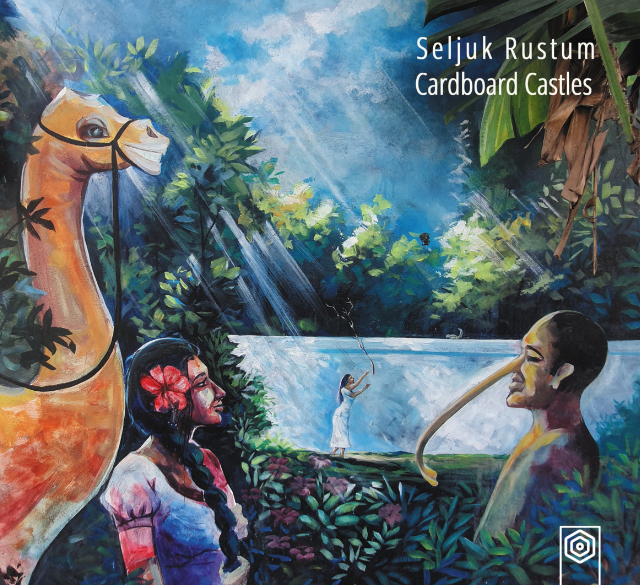
Four hours of choice music from February, the Monolith Cocktail Revue features tunes from our reviews and columns, plus the tracks we didn’t get room to feature. This month’s selection is courtesy of Dominic Valvona, Matt Oliver, Brian ‘Bordello’ She, Graham Domain and Gillian Stone.
.:TRACK LIST IN FULL:.
Moonlight Benjamin ‘Wayo’
Lunar Bird ‘Creatures’
Von Pea ‘Ode To Slick Rick’
Champion Poundcake ‘RAGS ANYMORE’
Spectacular Diagnostics ‘The Played List (Ft. Sonnyjim and Kid Acne)’
The Go! Team ‘Whammy-O’
Rogue Jones ‘Fffachlwch Bach (Bach)’
the clickBAITERS ‘Rear Ended’
Lucy & The Drill Holes ‘A Mouse’
Langkamer ‘Sing At Dawn’
First Day Of Spring ‘Normal Person (Love You Forever)’
SUO ‘Blue Evening’
Bondo ‘Instrument’
Mary Ocher ‘Love Is Not A Place (Ft. Your Government)’
Novelistme ‘Make Nothing’
Benjamin Benedict ‘Furlough Blues’
Za!/Tarta Relena/La TransMegaCobla ‘El Sweep The Lehelan’
Seljuk Rustum ‘Desi Bunny’
La Tene ‘La Taillée’
Imaad Wasif ‘Mr. Fear So Long (Money Mark Rework)’
Efeks ‘As Good As It Gets (Ft. The Strange Neighbour)’
The God Fahim ‘Man Of Steel’
Fliptrix ‘OCD With The LOVE (Ft. Coops And Verb T)’
Brainorchestra ‘Thin Patience’
Flying Monk & Wz (Corrupted Monk) ‘AF1’s’
Room Of Wires ‘Welcome To The End Game’
ANKHLEJOHN & LOOK DAMIEN! ‘CELINE AT THE MET GALA’
Pussy Riot ‘Putin’s Ashes’
Geeker-Natsumi ‘A Sheep That Never Gets Lost’
ASSASSUN ‘At Gunpoint’
Neon Kittens ‘Portable Fire’
Demikhov/Norda ‘Science! Science! Science!’
Antti Lötjönen ‘Circus/Citadel Pt. III’
Saint Abdullah ‘Divine Timing Is Intuitive’
Tachycardie ‘Collision Au Sens Strict’
Kety Fusco ‘Starless’
Polobi & The Gwo Ka Masters ‘Kawmélito’
Seaming To ‘Blessing’
Lisel ‘Immature’
Sly Moon ‘The Ghosts Comin’’
FUZ ‘First light’
Lavar The Star & Shabazz Palaces ‘Glass Top Roof (The One)’
Mecánica Clásica ‘Mantra De Felpa’
Kalia Vandever ‘Temper The Wound’
Xqui & Kaiho Zion ‘Agori Quitonie’
Stereo Hypnosis & Roedelius ‘VÍK I’
Philip Selway ‘Strange Dance’
The Good Ones ‘This Amazing Love Has Stayed With Me’
NO(w) Beauty ‘Atonia’
Floral Portrait ‘Winter Isolation’
Hawk Percival And Friends ‘The Mountain’
The Mining Co. ‘Wake Up’
Steve Stoeckel ‘Just One Kiss’
Chris Plum ‘As Long As The Sun’
Total Refreshment Centre ‘Black (Ft. Brother Portrait)’
Anteek Recipes ‘NY Fatcap’
Verb T & Illinformed ‘Bogus Journey’
Hus KingPin ‘Tony (Ft. Sagelnfinite)’ Copywrite/AWOL One & Kount Fif ‘Word From Our Sponsor’
Monthly Playlist: November 2022: Cities Aviv, Mui Zyu, Edrix Puzzle, Juga-Naut, Illogic, Arthur King…
November 30, 2022
CHOICE MUSIC FROM THE LAST MONTH
CURATED BY DOMINIC VALVONA

The very last monthly playlist of 2022 is a bumper edition of eclectic choice music from the last month, with a smattering of tracks from upcoming December releases too.
This month’s picks have been collected from Dominic Valvona, Matt Oliver, Brian ‘Shea’ Bordello and Graham Domain. The full track list can be found below the Spotify link.
The monthly will be back in the New Year. Until then absorb this behemoth of a selection, and next month, ponder and peruse the blog’s 140 plus albums of 2022 features.
TRACK LIST IN FULL
Black Market Karma/Tess Parks ‘The Sky Was All Diseased’
Enter Laughing ‘Met Me When I landed’
Salem Trials ‘Man From Atlantis Is Dead’
Humour ‘Jeans’
Cities Aviv ‘Funktion’
Vlimmer ‘Mathematik’
Gabrielle Ornate ‘Phantasm’
Dead Horses ‘Can’t Talk, Can’t Sleep’
Lunar Bird ‘Driven By The Light’
Mui Zyu ‘Rotten Bun’
Thank You Lord For Satan ‘When We Dance’
Pozi ‘Slightly Shaking Cells’
My Friend Peter ‘When I Was’
U.S. Girls ‘Bless This Mess’
Sofie Royer ‘Feeling Bad Forsyth Street’
Surya Botofasina ‘Beloved California Temple’
Edrix Puzzle ‘Shadow of Phobe’
Let Spin ‘Waveform Guru’
Etceteral ‘Gologlavka’
Juga-Naut ‘Camel Walk’
The Pyramids ‘Queens Of The Spirits Part 1’
Illogic ‘Nowhere Fast’
Planet Asia/Snowgoons/Flash ‘Metabolism’
Dabbla/alone ‘Adept’
Karu ‘Spears Of Leaves’
Neon Kittens ‘Nil By Vein’
Renelle 893/King Kashmere ‘My Demons’
Mount Kimbie/Don Maker/Kai Campos Ft. Slowthai ‘Kissing’
Homeboy Sandman/Deca ‘Satellite’
Uusi Aika ‘S-T’
Gillian Stone ‘The Throne’
Raw Poetic/Damu The Fudgemunk ‘A Mile In My Head’
Boldy James/Futurewave ‘Mortemir Milestone’
Arthur King ‘Dig Precious Things’
Tom Skinner ‘Voices (Of The Past)’
Trans Zimmer & The DJs ‘Wind Quintet No. 3 In E Major, Second Movement’
George T ‘Dub On, King’s Cross’
The Dark Jazz Project ‘Great Skies’
Noémi Büchi ‘Measuring All Possibilities’
Russ Spence ‘Spectrum’
Seez Mics/Aupheus ‘Cancel The Guillotine’
Dezron Douglas ‘J Bird’
Fliptrix/Illinformed ‘Eden’
Apollo Brown/Philmore Greene ‘This Is Me’
Illogic ‘She Didn’t Write’
Milc/Televangel Ft. AJ Suede ‘Ronald Reagan’
Vincent/The Owl/Nick Catchdubs ‘Fade 2 Black’
Shirt/Jack Splash ‘Cancel Culture’
Clouds In A Headlock/ASM/Daylight Robbery ‘3D Maze’
The Strange Neighbour/Leolex/Bobby Slice Ft. DJ Sixkay ‘Keep Your Head Straight’
Kormac Ft. Loah & Jafaris ‘Bottom Of The Ocean’
A. O. Gerber ‘Walk In The Dark’
Ben Pagano ‘Hot Capital’
Hög Sjö ‘Love Is A Gamble’
Kinked ‘Introduzione Alla Fabula’
Årabrot ‘Going Up’
Old Fire Ft. Julia Holter ‘Window Without A World’
Meg Baird ‘Star Hill Song’
Susanna/Stina Stjern/Delphine Dora ‘Elevation’
Rita Braga ‘Nothing Came From Nowhere’
Orchid Mantis ‘Endless Life’
The Zew ‘Come On Down’
Ocelot ‘Santa Ana’
LINN ‘Okay, Sister’
Sanfeliu ‘Grassy Patch’
Young Ritual ‘Ages’
Yermot ‘Leaning To Lie’
The Monolith Cocktail Monthly Playlist Revue: Future Kult, Your Old Droog, Baby Cool, Drug Couple, Brown Calvin…
August 31, 2022
PLAYLISTS SPECIAL
TEAM EFFORT/ CURATED BY DOMINIC VALVONA

All the choice tracks from the last month, selected by the entire Monolith Cocktail team: Dominic Valvona, Matt Oliver, Brian ‘Bordello’ Shea, Graham Domain and Andrew C. Kidd.
For the past couple of months we’ve been experimenting with both Spotify version and Youtube (track list will vary) versions of the playlist. Whatever your preference found both below:
TRACKLIST
Future Kult ‘We’
Grooto Terazza ‘Tropische Krankheiten’
Speech Debelle Ft. Baby Sol ‘Away From Home’
Joe Nora & Mick Jenkins ‘Early’
A.G. ‘Alpha Beta’
Your Old Droog & Madlib ‘The Return Of The Sasquatch’
Gabrielle Ornate ‘The Undying Sleep’
Yumi And The Weather ‘Can You Tell’
Baby Cool ‘Magic’
Claude ‘Turn’
Lunar Bird ‘Venilia’
Imaad Wasif ‘Fader’
Legless Trials ‘X-Tyrant’
Dearly Beloved ‘Walker Park’
Staraya Derevnya ‘Scythian Nest’
Short Fuze & Dr. Kill ‘Me And My Demons’
Group ‘The Feeling’ JJ Doom ‘Guv’nor’ (Chad Hugo Remix)
DJ Nappa ‘Homeboys Hit It’
DJ Premier Ft. Run The Jewels ‘Terrible 2’s’
Zero dB ‘Anything’s Possible’ (Daisuke Tanabe Remix)
Underground Canopy ‘Feelm’
Revelators Sound System ‘George The Revelator’
Montparnasse Musique Ft. Muambuyi & Mopero Mupemba ‘Bonjour’
The Movers ‘Ku-Ku-Chi’
Yanna Momina ‘Heya (Welcome)’
Vieux Farka Toure & Khruangbin ‘Savanne’
Barrio Lindo ‘Espuma De Mur’
Brown Calvin ‘Perspective3’
Nok Cultural Ensemble Ft. Angel Bat Dawid ‘Enlightenment’
Li Yilei ‘A Hush In The Dark
Celestial North ‘Yarrow’
Andres Alcover ‘White Heat’
Nick Frater ‘Aerodrome Motel’
Drug Couple ‘Lemon Trees’
Cari Cari ‘Last Days On Earth’
Ali Murray ‘Passing Through The Void’
Diamanda La Berge Dramm ‘Orangut The Orangutan’
Your Old Droog ‘The Unknown Comic’
Jesse The Tree ‘Sun Dance’
TrueMendous & MysDiggi ‘Talkk’
STS & RJD2 ‘I Excel’
Jester Jacobs & Jack Danz ‘HIT’
Oliver Birch ‘Docile Healthier’
GOON ‘Emily Says’
Lucy & The Drill Holes ‘It’s Not My War’
Apathy, Jadekiss & Stu Bangas ‘No Time To Waste’
Verbz & Mr Slipz ‘Music Banging Like’
Sly Moon ‘Back For More’
Guilty Simpson Ft. Jason Rose & DJ Ragz ‘Make It Count’
Hi, my name is Dominic Valvona and I’m the Founder of the music/culture blog monolithcocktail.com For the last ten years I’ve featured and supported music, musicians and labels we love across genres from around the world that we think you’ll want to know about. No content on the site is paid for or sponsored and we only feature artists we have genuine respect for /love. If you enjoy our reviews (and we often write long, thoughtful ones), found a new artist you admire or if we have featured you or artists you represent and would like to buy us a coffee at https://ko-fi.com/monolithcocktail to say cheers for spreading the word, then that would be much appreciated.
Singles Night At The Monolith Cocktail HQ: Montparnasse Musique, Lunar Bird, Gabrielle Ornate, Future Kult…
August 24, 2022
SINGLES/VIDEO TRACKS ROUNDUP
BY DOMINIC VALVONA
PHOTO CREDIT: ERIC BECKMAN

A one-off revue of recent and upcoming singles and videos being dropped that I didn’t have room for in my perusal roundups, I’m trying something very new with this post, as the blog’s never specifically done this sort of thing before.
Montparnasse Musique ‘Bonjour’
(Real World Records)
A welcoming polygenesis, South African lilted and woozy pattered beat teaser for the forthcoming album from the duo Montparnasse Musique, ‘Bonjour’ is full of pan-African essences, rhythms and goodwill. A collaborative affair, the new single features both Muambuyi and Mopero Mupemba of the Congotronics outfit, the Kassai Allstars. Another layer to this complimentary electric mix, a congruous, scene-setting music video has been created – shot on the streets of Kinshasa – by the renowned filmmaker Renaud Barrett (Systeme K!, KOKOKO!).
Carrying on from where they left off with their self-titled EP, Aero Manyelo and Nadjib Ben Bella combine their South African and Algerian roots with both the old and new to create a 21st century African hybrid that mixes ritual, ceremony and ancient mysticism with what’s happening on the streets and dancefloors of the continent now. The debut album dig, Archeology is due out on the 11th November 2022. Expect a review in the coming months.
Future Kult ‘We’
(Action Wolf Records/AWAL)
One of my favourite renegade soundclashs of 2022, the Berlin-based Welsh-Austrian sonic-visual partnership of Sion Trefor and Benjamin Zombori pump out their fourth and newest single ‘We’ this week.
In the wake of their highly recommended self-titled pan-global sounds album (by us), arrives another eclectic, omnivorous power grab that drags the vacuous, soul-destroying and destructive selfish, image obsessed malignant hyperbole of the 21st century onto the dance floor. Moodily bouncing to the sound of barricade drums and climatic EDM, with shades of Battles, Front 242, The Juan Maclean and Midnight Juggernauts, the Future Kult duo and friends turn anguish and riled-up anger into an infectious broody anthemic electronic flashpoint. It gets better on every play I’m telling you. And Benjamin’s visual effects add a cosmic energy to the sound.
Lunar Bird ‘Venilia’
Excuse my ignorance for one second, but I did think the title of this latest diaphanous, magical enchantment from the Joan Miro-inspired Lunar Bird was just another spelling of the word ‘vanilla’. It is of course ‘Venilia’ the Roman deity associated with the winds and the sea that proves a both lofty and atavistic poetic subject for another dreamwave wisp of a song from the band. Allured hallucinatory towards that goddess, the lush Beach House-like soundtrack of synthesised fizz, gauzy psychedelic breathlessness and swimmingly vibed restlessness entwines mythology with a beautiful language of rebirth and longing; an Italian cinematic beach paradise in song – even if it is probably the band’s claimed home of Wales.
Celestial North ‘Yarrow’
Like a muse siren from the canvases of the Pre-Raphaelites or the cooed breathless yearns of a chivalry medieval tapestry depicting some magical garden of escapism, Celestial North once more steps over into the ethereal realms with this enchanted botanical themed suite. A meditative fauna dwelling score of beautiful piano tinkled reflection and sentiment, misty synthesised dreamy atmospherics and diaphanous sighed voices, has the air of something magical and sublime. ‘Yarrow’ then is something of a healing balm; nature’s ways distilled into a most stirring but pleasant mirage.
The Edinburgh artist, now based in the Lake District, has been graciously releasing tracks in the run up to the debut album, earmarked for this September. I suggest you keep an ear out for that album.
Violet Nox ‘Magnetar’
(Aumega Project Records – Germany/Infinity Vine – USA)
Available since the end of July 2022
From the Gaia attuned Eris Wakes album, another colourful, textural exploration visualisation to accompany an aria voiced (courtesy of the trained opera singer and guest vocalist Noell Dorsey) electronic state of consciousness. Yes, the Boston synth collective (working around and off the core of Dez De Carlo and Andrew Abrahamson) send out more positive if mysterious vibes with Chris Konopka’s magnetic filings turn psychedelic corrosion video for the ticking House rhythmic, phaser waves and buoyant drum pad bobbled ‘Magnetar’. Artist Konopka manages to add allure and to entrance a track that is already fairly wispily cosmic and trance-heavy.
Gabrielle Ornate ‘The Undying Sleep
Proving quite the prolific artist, the colourful mélange imbued Gabrielle Ornate has just released her seventh single, The Undying Sleep. More pop, slightly less bohemian, the language remains but the trance and maximalist production is upped another level with a slow release of cosmic fizzled star bursts, churned trip-hop like beats and St. Vincent-style guitar licks. Teardrops fall into the ether under the hippie eye of Horus on another hit record from the burgeoning artist. One to watch as they say.
Barrio Lindo ‘Espuma de Mar’
(Shika Shika)
A move by the Latin American folktronica artist Barrio Lindo (alias of Agustín Rivaldo) to create music for the listener to get lost in, this new wafted, dreamy project was made with friends on the outskirts of Buenos Aires in early 2020. The sea foamed imbued Espuma de Mar album is filled with refined, studied evocations of a jazzy tinged, ambient and woozy South America, Africa and the Caribbean, and chamber orchestral music.
The title-track traverse features the hazy blows, lingers and spells of Mariana Iturri (on flute and vocals), Nicolás Lapine (on trumpet), Ignus on drums and Rumbo Tumba and removes Latin lilted moves to somewhere entirely different, even ethereal. The album is due out on the 23rd September 2022.
Hi, my name is Dominic Valvona and I’m the Founder of the music/culture blog monolithcocktail.com For the last ten years I’ve featured and supported music, musicians and labels we love across genres from around the world that we think you’ll want to know about. No content on the site is paid for or sponsored and we only feature artists we have genuine respect for /love. If you enjoy our reviews (and we often write long, thoughtful ones), found a new artist you admire or if we have featured you or artists you represent and would like to buy us a coffee at https://ko-fi.com/monolithcocktail to say cheers for spreading the word, then that would be much appreciated.
Perusal #13: Lunar Bird, Khasi-Cymru Collective, Rachel Langlais, Andrés Vargas Pinedo, Versylen, Wladyslaw Trejo
May 20, 2021
A Short Roundup Of Recommended Releases On The Peripheral/Dominic Valvona

Andrés Vargas Pinedo ‘The Fabulous Sound Of Andrés Vargas Pinedo: A Collection Of Amazonian Popular Music (1966-1974)’
(Buh Records) Digital April/Vinyl 25th May 2021
Whistling, tooting under a living Amazonian canopy and across the heights of the Andean mountain range, celebrated Peruvian street musician Andrés Vargas Pinedo brings a smile to the face and lifts the mood on a cheery, merry and rain forest carnival bustling showcase of his sauntered music. Collated together from recordings authored directly by the blind composer, violinist and quena (the traditional flute of the Andes) virtuoso, this compilation finds the bird-whistling piper leading both the Conjunto Típico Corazón de la Selva and Los Pihuichios de la Selva bands down a fife–beating, hand-clapping and joyful Amazon pathway.
Originally hailing from the vibrant interchange Amazon port city of Yurimaguas, Andrés later moved to Lima, joining various popular groups and movements in the process. From an eight-year period in a long career the Buh label has chosen the meandering star’s infectious mix of local and further afield musical rhythms from between the years 1966 to 1974. Aping the wildlife, enacting a fever of calls, howls, trills and energetic encouragement, Andrés music weaves and shakes as it embraces tropical festival and processional music, seafaring jigs, canters, Mexican westerns and the Celtic on a most joyous sweet dance.
Lunar Bird ‘S/T’
(Self-release – supported by Help Musicians ‘Do It Differently Fund 2020’)
Out Now Digitally/CD Version 2nd July 2021
A pure blossoming of enchantment and dreams, the beguiling Cardiff troupe has just unfurled the most diaphanous lucid radiant album this month. On a granderscale and canvas, theytransform certain vulnerabilities and yearns into something positively and celebratory spellbinding and golden; meandering, tinkling and floating across a fairytale that evokes hints of Beach House and Diva Dompe wafting in lush and vaporous landscapes.
Valuing instead of diminishing fragility and all it entails, the Italian formed, but in recent years Wales-based, Lunar Bird (a reference to Joan Miró’s famous abstract bronze sculpture of the same name) enrapture themselves in a cosmic, romantic fantasy. The focus in this beautifully realised mirage remains the translucent siren tones of the group’s vocalist Roberta Musillami; a sort of drifting apparition and lushly voiced songstress, inhabiting a dreamscape of languid and more heart aching uncertainty. A bewitching album at times, the band occasionally slips into esoteric realms, yet remain constantly beautified and untethered. Hopefully this will finally put the dreamers on the map.
Khasi-Cymru Collective ‘Sai-thaiñ ki Sur’
(Naxos World/ARC) 28th May 2021
An interwoven musical connection between two very different communities, the Welsh music prize winner Gareth Bonello, in collaboration with a myriad of musicians, poets and enablers, has bonded the folklore, poetry and reverent, spiritual music of both Wales and the North East Indian region of the Khasi Hills together in a mutual union of universal suffrage. Finding an affinity with the Assam and Bangladesh bordering region, which became the very first location for the Welsh Calvinistic Methodists inaugural overseas mission in the 1840s, Bonello (who often appears under The Gentle Good alias) explores his native land’s religious-ideological led history with the Khasi people.
Though reverent colonialists to an extent, superseding the indigenous cultures traditions for their own, the Welsh were a little more sympathetic to the Khasi identity – perhaps in part because they too had fallen prey to British Empire hegemony, and lost much of their own unique traditions. Some good did come out of the mission (education, healthcare), but this extensive album project that grew out of academic study is all about finding a certain commonality in saving each other’s roots, whilst seamlessly flitting between languages and indigenous musicianship to condemn, pay attention to contemporary issues, from the environment to women’s rights. The first of those can be heard in resigned malady on the folky poetic ‘Soso & Waldo’, the second, on the proposed bill amendment to strip Khasi women of their status should they marry outside of their own community powerfully spoken-worded ‘To The Men With Hate Speech On Their Lips’. Just one of the brilliant artists to appear on this album, Lapdiang Syiem delivers that strong retort to a John Cale, bordering on Reich, stark soundtrack.
Earthy yet transient, the (translated roughly into English) “weaving of voices” album features open-air performances in thunder cloud downpours, and to the sound of rhythmic crickets and cuckoos, and reinvented, repurposed hymns, poems and wistful beautiful yearns. Amongst the echoes of lovely Welsh valley harmonies and folk the Khasi bird-like flighty bamboo flute (the “besli”) and rustic banjo expressive guitar-like “duitara” add an almost oriental, atavistic feel that pushes this album into a beautiful hinterland.
The concerns, history are deeply serious but delivered so magically and in such a compelling way as to transport the listener to a peaceable, earnest but lush landscape of shared dreams, dignity and conservation. A successful exchange in other words.
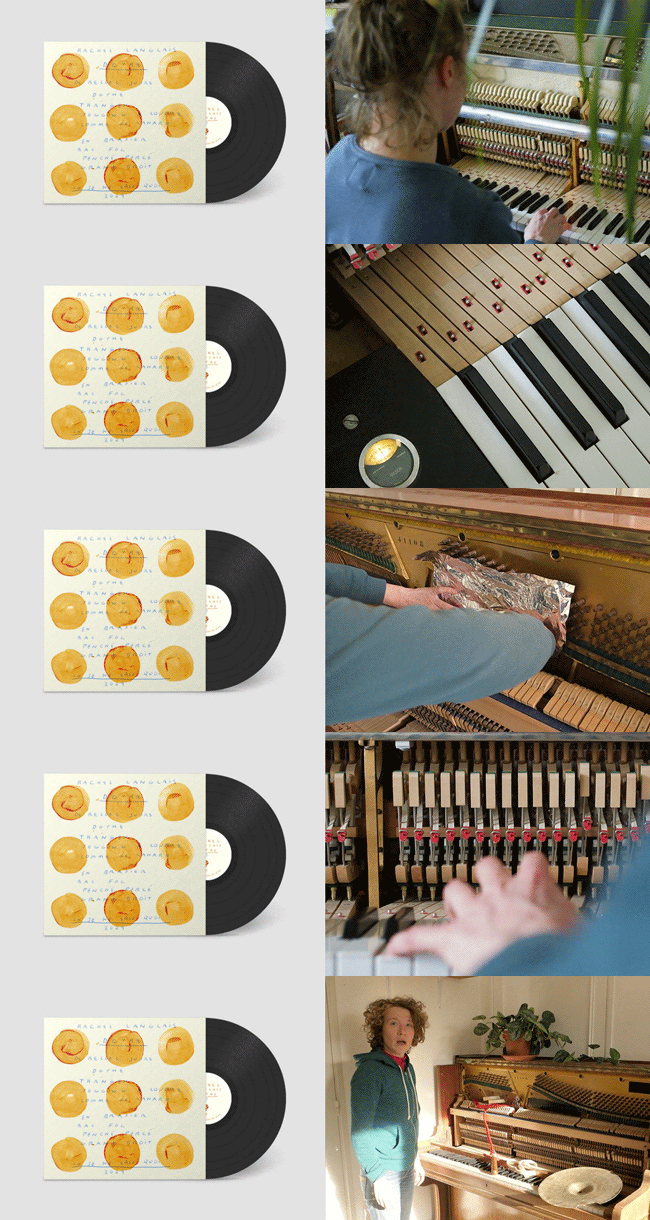
Rachel Langlais ‘Dothe’
(unjenesaisquoi) 28th May 2021
The inaugural album of experimental piano suites from Rachel Langlais is filled with adroit compositions that convey so much, even with such a minimal and sparse use of the instrument. Imbued by John Cage’s famous use of prepared pianos, Langlais places a myriad of tactile and more abrasive materials (paper, metal objects, pieces of wood, adhesive tape, plastic etc.) directly onto the strings to create a sound both interwoven with spindly harp like cascading flows, starker jarred singular notes and neo-classical touches of melodious evocation. Further to the application of materials, the piano tuner graduate also uses a number of recording and digital processing techniques (from cutting to slowing it down) to manipulate something familiar into, well, something less so.
No matter how minimal those notes are they all seem to resonate melody or the semblance of a tune, a movement; from trickled arpeggiator, to deeper more sonorous bass notes; metallic springy thumps to more playful tiptoes across the keyboard.
The title is borrowed from Ursula K. Le Guin’s science-fiction novel The Left Hand of Darkness (1969), in which “dothe” is a nervous hysterical strength that can be controlled and that is practiced by some inhabitants of a planet called Gethen. After using dothe, the body must take a rest called “thangen.” And that is more or less exactly what you get on this contextual articulation of explorative energy.
Wladyslaw Trejo ‘Nuestra Voz’
(Leipzig Inn Records) 12th May 2021
An ultra rare release physically (being confined to thirteen copies ‘carved in real time on lathe’) Wladyslaw Trejo’s latest yelp of pyschogeography pain, despair and angst is dedicated to Warsaw – a city that has seen and suffered greatly from of all too real effects of totalitarianism; caught between both Fascist Germany and Soviet Russia in the last century. Part one of this shared single, ‘Nuestra Voz’, is a forewarning poem about the creeping, silent threat of such dictatorial regimes, put to the soundtrack of post-punk tight delay snare snaps, synthesizer moody suspense and looping windy ill tides; an uneasy early electro seedy Eastern European meets Italian occult preened mix of Bernard Szajner, Kraftwerk, Kas Product, The Normal, and early Human League.
Part Two, ‘Tranzyt W’, meanwhile is a no less moody instrumental float of lo fi Depeche Mode meets DAF synthesized beats and sizzled drum machine and bounced nodes that soundtracks ‘the walk of an inveterate observer’ (that’s Wladyslaw himself), ‘through the streets of modern Warsaw’. Like a despondent electronic peruse, it bends and bubbles and warps as finally meets the void.
Released by the micro-label Leipzig Inn Records (an imprint that only publishes special and limited editions of underground and exploratory electronics), you’d better be quick to snap up the physical copies. If you miss out, you can always thankfully purchase the digital, now on Bandcamp.
Versylen ‘Radiance’
(See Blue Audio) 14th May 2021
Continuing to assail an ocean of the most sophisticated, subtly cinematic and developing ambient and electronica music, the Barcelona-based See Blue Audio label is on an impressive run of under-the-radar classics – just catch my review of last month’s adroit, ascending and lofted materialisations by the Cretan traveller Bagaski for proof. Undulating some most gorgeous ambient geographical peregrinations, washes, expansions and radiant skyscapes with kinetic Techno, Hip-Hop and ‘post-dubstep’ rotating, wavering beats, the young producer Versylen (aka Elliot Ferguson) brings yet another fresh and expanded vision to the imprint. The perfectionist we’re told has spent a lot of time getting this five-track suite right, so take just as much time out to enjoy and reflect on these meticulous yet airy moodscapes.
Hi, my name is Dominic Valvona and I’m the Founder of the music/culture blog monolithcocktail.com For the last ten years I’ve featured and supported music, musicians and labels we love across genres from around the world that we think you’ll want to know about. No content on the site is paid for or sponsored and we only feature artists we have genuine respect for /love. If you enjoy our reviews (and we often write long, thoughtful ones), found a new artist you admire or if we have featured you or artists you represent and would like to buy us a coffee at https://ko-fi.com/monolithcocktail to say cheers for spreading the word, then that would be much appreciated.
Our Daily Bread 414: Lunar Bird, Jeremy Bastard, SAD MAN and Francis Lowe, De Beren Gieren, Azmari
December 4, 2020
New Music
Words: Dominic Valvona

Not so much a moping up mission, but clearing the backlog of new music we’re sent each day that threatens to engulf us, here’s a quick roundup of December releases before the blog winds down for Christmas. We’ve another Brian ‘Bordello’ Shea roundup coming, but after that it’s the Monolith Cocktail’s ‘choice favourite’ albums of the year features (in three parts).
Azmari ‘Fat Ari’
De Beren Gieren ‘A Funny Discovery’
(Sdban Ultra) 26th November 2020

Showcasing a couple of great vibrant groups on the polygenesis eclectic Ghent based label Sdban Ultra, ahead of their respective 2021 albums, here’s a double-helping of ethio-cosmics and jazzy fluidity from the Brussels sextet Azmari and Dutch/Belgium electronic piano trio De Beren Gieren.
Offering a progressive flute-y blowing desert mirage that traverses Ethiopia, Arabia and the Orient on the dusky musical wilderness of ‘Fat Ari’, Azmari continue to weave a rich odyssey of ethiogrooves, dub, and psychedelic funk. The sextet of Arthur Ancion (on drums), Basile Bourtembourg (keys, saaz and percussion), Jojo Demeijer (percussion), Niels D’haegeleer (bass), Mattéo Badet (saxophone and Kaval) and Ambroose de Schepper (saxophone and flute) take their inspiration from artists such as Okay Temiz, Mulatu Astatke, Cymande, Fela Kuti and The Heliocentrics. The band name, an “Azmari”, literally “one who praises” in Amharic, is an Ethiopian singer-musician, comparable to the European bard or the West African griot often accompanied with a masenqo – one-stringed fiddle or krar – lyre, two traditional Ethiopian instruments.
Having released their debut EP Ekera last year, a series of shows across Europe saw the Azmari sound develop and ten days performing in Istanbul opened the band’s ears to the Turkish sounds and rhythms from the 1960s. Keen to get back in the studio to start work on their debut album, studiously studying Turkish and Ethiopian scales, along with learning new instruments along the way including the berimbau, the ney and bağlama, the Azmari sound transformed into a rebellious, unrelenting trip.
The resulting nine tracks that make up their debut album Samā’ī, are a deeply hypnotic experience of ‘mesmerising rhythms and winding improvisations’ that (hopes to) send the listener in to a higher state of consciousness! That cosmological desert pilgrimage is due out on the 22nd January 2021.
Next up is the inaugural single from the Benelux troupe De Beren Gieren’s upcoming Less Is Endless album, ‘A Funny Discovery’. Which has been furnished with a new video, directed by Belgian graphic artist and video maker ysbear (Felix Ysenbaert). Who has this to say about it: “I decided to take the song title ‘A Funny Discovery’ quite literally. For this clip, I immediately started to draw and animate with an open vision. Consequently, the artistic direction was shaped in a very organic way. When creating the animations, I simply let myself be carried along, through the vibe of the song. It appeared to be a research for myself as well: I tried to play again. And what is more fun than playing? My intention is mainly that the viewer/listener is sucked out of reality for a moment, and is dropped into this new one: floating on a cloud for 6 minutes 47 seconds where the imagination is stimulated by spontaneous associations.”
Formed in 2009, the trio of Fulco Ottervanger (on piano, fx, synths), Lieven Van Pée (double bass, electric bass) and Simon Segers (drums, fx) quickly built a reputation across the Benelux region with their ‘must-see’ live shows. They’ve since taken their transcendental live energy across Europe, Morocco and Japan, and have performed at North Sea Jazz, Jazz Middelheim, Trondheim Jazzfestival, Ljubljana Jazz Festival, Moers Festival, Gent Jazz, Kanazawa Jazz Street and Eurosonic. They’ve also during that tenure collaborated with a number of renowned jazz artists, including Louis Sclavis, Ernst Reijseger, Joachim Badenhorst, Marc Ribot, Jan Klare and Jean-Yves Evrard.
The new album, produced by Dijf Sanders and Frederik Segers, and is an ode to a universe teeming with life. Seen as an extension to the critically acclaimed 2017 album Dug Out Skyscrapers, it searches for vents through which life can emerge and evolve. The secret of communicating creativity can be found in the cultivation of the unfinished; the missing piece of the puzzle tickles the imagination more than the perfect end result.
The album’s nicely multi-textured Euro-Jazz grooves and deep jazz bouncing celebratory precursor single/video is described as thus by the group: “This song has the feeling of a new insight. From a haze of information, you’re suddenly captivated by a fresh awareness. It’s not clear how to put it in words yet, but it’s new and feels like a positive revelation. This song was vertically written: we had 2 melody lines, a right hand piano idea and a vamp somewhere. After making a lot of structures with these elements, we decided to mostly play everything at the same time. For us, there is a French feeling to it.”
Less Is Endless is due out on the 19th February 2021.
Jeremy Bastard ft. Elektra Monet ‘Shadowboxing’
(Somewherecold Records) 2nd December 2020

Sounding like a 90s Techno thug in chains and leathers, DJ, Shoegaze guitarist, remixer, and with his upcoming debut album for Somewherecold Records, a producer, Jeremy Bastard actually concocts sophisticated Gothic dream pop synth music, fit for the dance floors. Waiting out the pandemic in Florida, away from his Big Apple base of nightclubs and such, Jeremy is said to have “got creative” with his laptop and invested in new music software. With a DX7 synth, some vintage drum machine samples and a suite of Arturia virtual instruments, he set to work without any of his usual band mates or tools. Finding inspiration in his limitations, he was soon composing guitar figures on synths, using a cue from his early heroes, The Sisters of Mercy. In a nutshell: Guitar music with no guitars. In practice, and on this the first single from that new album, ‘Shadowboxing’, it sounds a bit like a smoldering connection between Popol Vuh, Moroder, Gina X Performance, Jennifer Touch, Kas Product at a neon bedecked German club circa 1984.
As this is not a strictly solo outing, the first of many collaborators from his years of development in music makes an appearance: the breathless posing ethereal Dallas electro siren with a great moniker, Elektra Monet, and on live guitar duties, band mate Tristan.
This first single also includes a couple of remixes, one from Eric Shans and one from The Corrupting Sea, plus an original track not on the forthcoming album called ‘Glasscutter’ that features meviu§ and sounds like a icy cool no wave meets NIN in clubland. The singles out now, and the album, Everyone is History, There is No Memory will be released on January 22, 2021 both on Vinyl and Digital.
Lunar Bird ‘Emerald And Blue’
4th December 2020

Blooming into existence, a diaphanous as ever single from the Italo-Welsh troupe Lunar Bird, who cast a most flowery spell on the poetic ‘Emerald And Blue’. Disarmingly floating in an orchestrated musical of dream pop, there lies a gossamer shrouded tale of fatalistic symbolized infatuation. Yes, despite the crystal spokes reverb, swimmingly vibes and cooed backing voices, there are profound contrasts on the more uncontrollable, melancholic limits of dreams. It sounds like a kind of theatrical meets trip-hop meets cosmic doo-wop vision of Patti Page: quite heavenly.
See also…
Lunar Bird ‘A Walk’ (HERE)
SAD MAN and Francis Lowe ‘Stories From An Island’
(Cue Dot Records)

The latest, and third, installment from the newly established conceptual electronica venture Cue Dot Records pitches the unique techno and experimental visions of the Sad Man against the visceral Irish burr storytelling of the writer Francis Lowe. Cue Dot’s remit is to provide a platform for its guests to explore an ever-evolving narrative; none more so than this match-up of often supernatural, magical, violent and surreal sound-tracked narrations.
Stories From An Island sees the harebrained garden shed avant-garde (and often bonkers; going as far as to build his own apparatus to mangle and contort sounds from) composer Andrew Spackman subdue some of his more ennui-fractious and pulling-in-all-directions signature ravings for an industrial-pastoral soundtrack that emphasis, blends, remixes and sometimes warps Lowe’s Wicker Man Island narrated travails. Sometimes this errs towards the disturbing, with Lowe’s voice emerging from the daemonic on the creeping ‘Diary’ horror. God knows what kind of place this is that Lowe has chanced upon, wondered into, but it’s a realm filed with strange and weirdly described characters: imagine Paula Rego, Samuel Becket and Nick Cave on the The Third Day series island.
Lowe explains in greater detail the spark of inspiration and process behind this project:
‘In late Autumn 2019 I was driving home along a deserted stretch of road. The horizon was obscured by mist and suddenly this familiar stretch of road became distinctly unfamiliar. A story started to form inside my head; a story set on an Island, a place where the inhabitants have very particular gifts, secrets, and histories. I rang Andy (SAD MAN). I told him that I was going home to write a story and asked him if I recorded it, would he be interested in putting music to it. He immediately said yes. This was a Friday and the following Monday the first story, ‘The Ferry’, was completed. A year on and here we are, finishing the final story in the series, ‘Witness’, and releasing them into the world.’
A bespoke vision that sees both collaborators pushing themselves – especially Andrew who proves himself an impressively burgeoning soundtrack composer with filmic ambitions – the third chapter in the Cue Dot series is a truly escapist and immersive experience of well-crafted, descriptive sonics and winding, brilliant literature.
Hi, my name is Dominic Valvona and I’m the Founder of the music/culture blog monolithcocktail.com For the last ten years I’ve featured and supported music, musicians and labels we love across genres from around the world that we think you’ll want to know about. No content on the site is paid for or sponsored and we only feature artists we have genuine respect for /love. If you enjoy our reviews (and we often write long, thoughtful ones), found a new artist you admire or if we have featured you or artists you represent and would like to buy us a coffee at https://ko-fi.com/monolithcocktail to say cheers for spreading the word, then that would be much appreciated.
 Monolith Cocktail Blog