The Digest for January 2026: New Music/The Social Playlist
January 16, 2026
The monthly Digest includes a clutch of accumulated short new music reviews and the social inter-generational/eclectic and anniversary albums celebrating playlist.
___THE NEW (All those latest & upcoming releases in brief) ___
The Bordellos ‘Who Do you think You Are? Paul McCartney?’
Single – (Metal Postcard Records) 7th January 2025
More The Rutles’ Stig than The Beatles’ McCartney, the latest self-depreciated, no-fi buzzing guitar string strummed piece of “silliness” from The Bordellos family (that’s Brian Shea and his brother Ant, and Brian’s son Dan) pays a handsome tomfoolery homage to good ol’ Paul.
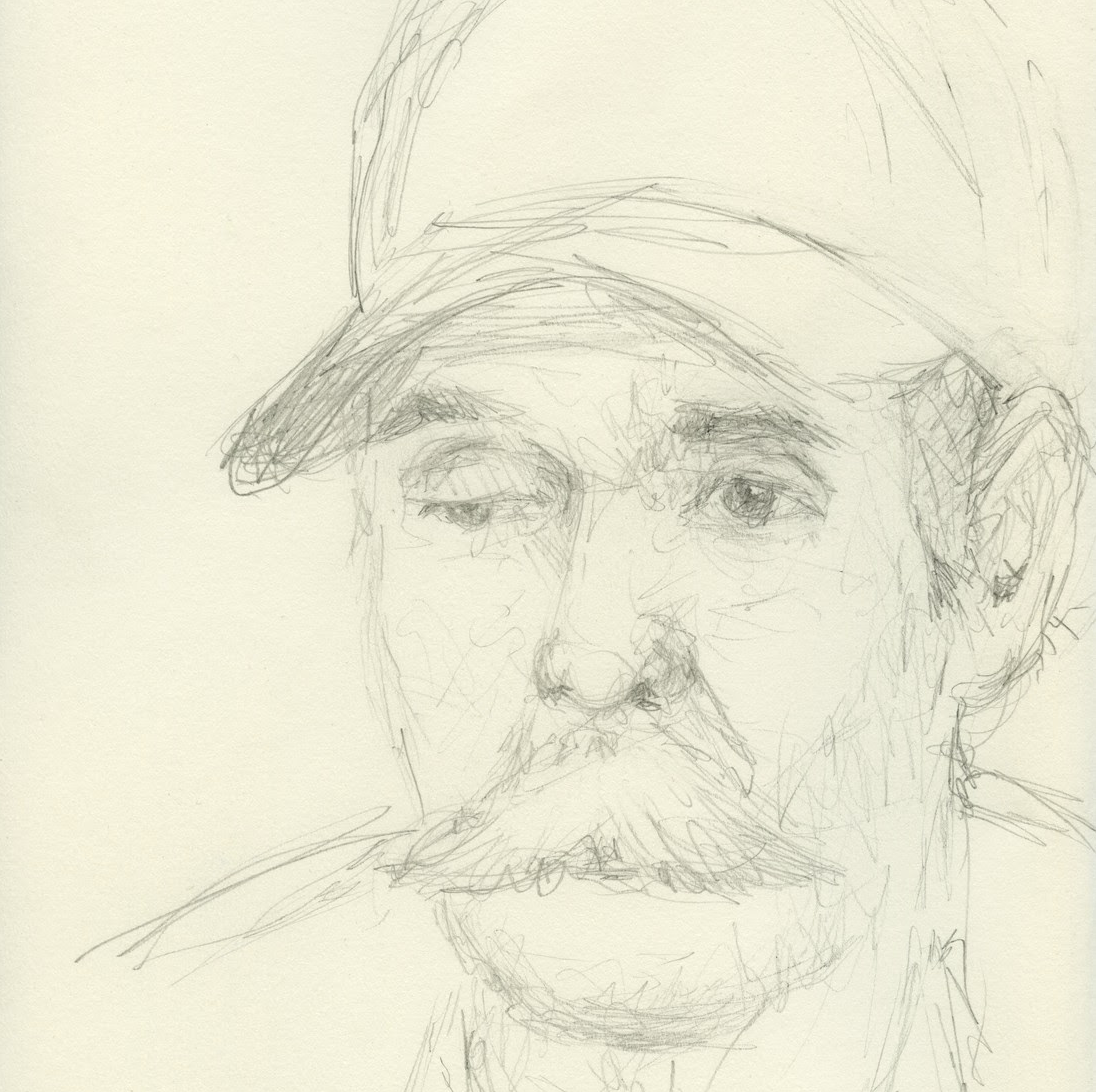
The Bordellos were behind Half Man Half Biscuit and the Cleaners From Venus in the dole queue of the 1980s; powered by aphorism, a ridicule of the current industry, and a litany of muthafuckers from across the golden age of rock ‘n’ roll, punk and post-punk, psych and garage. Brian will be no stranger to followers of the Monolith Cocktail, having regaled us with his reviews over the years, and of course gracing these pages as a solo performer: think John Shuttleworth meets Sparklehorse.
This latest single to be released by the Metal Postcard Records hub was influenced (I quote) “by [Brian’s] love of Paul McCartney and memories of walking up to Dead Fly Rehearsal rooms in the 80’s with my guitar and every time an old man in his garden would shout “Who Do You Think You Are? Paul McCartney”. As I walked past…it never got old for both him and me…I was tempted occasionally to buy a gun and shoot him and shout who do you think you are? John Lennon!”
If skiffle-indie-punk was a thing, then here it is in all its rudimental, near distorted jangled and sprung glory. It actually sounds less Paul and more like a sarky Lennon…that and a touch of Frank Sidebottom. No one quite manages to summarise a feeling, an era, a memory like The Bordellos, nor sound so brilliantly shambolic and devoid of even the rubber bands to replace the long loosened/slackened and fucked bands in their Tascam 4-track recorder. Off to a fine rambling start in 2026.
Greg Stasiw ‘Guesswork’
Album – (Hidden Harmony Recordings) 2nd February 2026
Greg Stasiw could quite rightly be called a polymath with a worldly scope of influences, having travelled and spent time in New York, Tokyo, Toronto, Paris, Boston, and Bratislava. Home, I believe, is New England on America’s Northeastern edge. The CV includes the occupations of experimental musician, visual artist and writer, but also include the study of anthropology, animation and illustration. Channelling all that into a musical sonic practice and the results are less happenstance than that title might suggest.
Guesswork was actually intended as a collaboration, a response to a visual stimulus created by the artist Phillipe Shewchenk. For one reason or another it was shelved, but Stasiw decided to continue experimenting and formulating a ponderous biomorphic set of ideas relating to a range of subjects, from plumbing systems for plants, to real locations and adjective prompts; many of which seem to point to nature, geography and the weather.
Ending up as Stasiw’s debut album, this amorphous blending of vignettes, studies, semi-improvised experiments sounds like a field trip conducted by Walter Smetek, Nicolas Gaunin and Hiroshi Yoshimura. It’s both recognisably trudging through the lush, the humid and exotic environments of Earth, yet simultaneously otherworldly and near sci-fi. To label it ambient would be a mistake, but minimalist all the same with its airs and the skying sound-scaping, the synth effects of kosmische and the new age combined with Harold Budd and his like.
Real sounds, like the bird life under a rich canopy, mix with percussive tools like a pestle and mortar, the knocks of heavy objects, the drawing of chains and desert sonar-like signals. A shuddery and often lovely reflective piano can be heard alongside a church-like organ producing the most melodic of paused moments. Thrusting gleams of light on the horizon; tunnelled chutes to new worlds; windy tundra’s; playful landscapes of bulb-like shaped notes; Stasiw magics up a stimulating, often pretty and with a sonorous depth, soundscape of possibilities and artistic mystery.
Tachube ‘Mincminc’ (Inverted Spectrum Records/PMGJazz)
Album – Released 4th January 2026
An international combination of band members and album facilitators/labels makes for a truly ambiguous and amorphous experiment with the latest moody and wild post-jazz exploration from the improvisational trio of Tachube. Based in the Serbian city of Novi Sad, a culmination of various musical strands and influences brings together Saint Petersburg electroacoustic/noise musician and founder of the Intonema label Ilia Belorukov (who performs on both the alto sax and rudimental, playful fluteophone), plus two active members of the Novi Sad free and ambient jazz and psychedelic dub scenes, Marko Čurčić on effects pedals and electric bass, and Nemanja Tasić on a minimised drum kit.
Their third collaborative release, platformed in conjunction with the independent boutique label and booking agency that spans in Hungary, Serbia and Turkey, Inverted Spectrum Records and the Macedonian label PMGJazz, Mincminc sounds like Anthony Braxton, Andy Haas and Sam Rivers creeping, prowling and consumed on a mysterious plain with Krononaut. It’s a combination of the improvised Polish and American freeform jazz schools, but also an emotional fit and squeeze of mythology, the darkness and the arid; enveloped as it all is by meta and the depth of the trio’s expanded spheres of influence and skills.
Incipient stirrings and jangles create the right mystique, with blows and the driest of alto expressions, quivered and shivered and shaved cymbals, busy undulated and descending bass runs and the knocks and mulch sounds of hidden sources building a serial and abstract atmosphere that vaguely invokes the Balkans and its geographical history, psychogeography and mystery. Something different in the jazz field; an expansion of ideas and moods and the extemporised.
Roudi Vagou & Läuten der Seele ‘Taghelle Nacht’
Album – (Quindi) 6th February 2026
Once more stepping out behind their aliases, the collaborative union of German artists Matthias Kremsreiter and Christian Schoppik (respectfully reimagined as Roudi Vagou and Läuten der Seele) transduce and manipulate ripples in time to invoke both blissfully dreamy and more mysteriously haunting sonic and musical ideas of nostalgia, German nationalism and geography.
Drawing upon their personal connections, their relationship to the lands and the city that moulded and influenced them both, this latest union could be filed under the hauntology label – a very good label as it happens, one that perfectly, if overused and misdirected on occasions, fits this interdimensional album of filmic score passages, vignettes and looped hallucinations. For Taghelle Nacht captures the “day-bright night” character of a simultaneously pastoral Heimatfilm era vision of German cinema, of the surreal, of fairytale and mirages whilst providing a suitably ghostly and occultist atmosphere.
It’s as if Roedelius and Moebius, or even Popol Vuh, fed the movie scores of Hans J. Salter, Philip Martell, Harry Robinson and Ronald Stein into a German time machine. Old matinee and classical suites, songs of the romanticised, the near ethereal coos of apparition sirens and angels, a fairground Bavarian Wurlitzer, the call of an esoteric nature (the field recordings of trampled walks across the land, the birds in the trees), and the sound of woodwind and brass are looped or obfuscated by the sounds of hidden whirly, unoiled sound sources, of Fortean machines and valves, folksy horror soundtracks, the concertinaed and bellowed and surface noise of old wax cylinders. Melodies and the wistful embrace of that old age are embraced and then somehow made more unreal and otherworldly as if transmitted through a séance or played on a possessed record player from an earlier age. And then again, you can pick out hints of Belbury Poly and their ilk, Martin Denny and Drew Mulholland across a haunting backdrop stepped in historical values, horrors and the mystical.
Charles ‘Poppy Bob’ Walker ‘Double-Wide’
Album – (Castle Dome Records) 10th February 2026
Outsider art from the 1980s, the left behind recordings of the fabled Charles ‘Poppy Bob’ Walker have already filled one such album of haunted imaginings, of mirages and dusty Western peregrinations. Released back in 2024, the Dirt Bike Vacation collection platformed a near secret archive of desert renderings, of loosened and ambient-esque country sketches. It reads however like one of those concocted projects, the alias of a very much still-breathing silent partner hiding behind anonymity. But reassuringly, this “normal guy”, who worked hard, kept some friends, though never married or had kids, liked nothing more than to drive off on various recording adventures in his old, yellow Datsun pickup.
The remembrance of an unassuming outsider, articulating or washing or crafting or letting his inner thoughts and observations and meditations of places in and around his Yuma, Arizona home ghostly emit through the lo fi amplified strings of his Martin D-28 guitar, onto his trusty and rudimental Tascam 4-track recorder. And as such an unassuming amateur working in the field, Walker’s music has, refreshingly, no one to please, no one to serve other than its creator’s own vision and perhaps improvised musings and contouring’s of the landscape, the thoughts and reification of mood and place.
At one turn taking on the mantle of a hidden Ry Coder soundtrack, or indeed invoking certain passages and refrains from Dylan’s Pat Garrett and Billy the Kid soundtrack, this latest collection’s controlled, mediated and shortened cinematic qualities build towards an alternative country-waned and mirage-like score. From incorporating a rustic banjo to the electrified vapours and more concrete panning and splayed strums and strikes of his guitar and the chorus of hidden sounds (from the railroad barrier’s bell-rung-like signal to the occasional use of reverberated lo fi synthetic drums, the esoteric rattle snake shaken ceremonies of the second cut, the windbreakers and even the sound of the tape’s hiss and surface sounds) Double-Wide feels like we’re watching a dreamy, hallucinating film of the surreal American West.
If you dig the art and experiments of such alt-country company as Myles Cochran, The Droneroom, the Gunn-Truscinski duo, Daniel Vickers and Chuck Johnson, then Walker should be as much a revelation as a familiar companion on the transformed leftfield road of such maverick artists.
___/The Monolith Cocktail Social Playlist Vol. 104___
The Social Playlist is an accumulation of music I love and want to share, with tracks from my various DJ sets and residencies over the years and both selected cuts from those artists and luminaries we’ve lost on the way and from those albums celebrating anniversaries each month.
In the latter camp we have the following anniversaries to mark:
The oldest celebration this month falls to Them’s mighty garage R&B raver I Can Only Give You Everything, taken from their 1966 LP Them Again. Van the man Morrison in full on maximum R&B glory; turn it up you muthafuckers! Still the best, guaranteed to get every dancefloor riotously jumping. The whole LP is peerless.
David Bowie’s Station To Station is 50 this month, and I’ve picked the Word On A Wing version used in Brett Morgen’s Moonage Daydream spectacular. Bowie’s epitaph Blackstar is 10 in January. I’ve decided on Sue (Or In A Season Of Crime).
Bob Dylan’s Desire is also 50 this month. Not the most sympathetic of subjects to mythologise, what with equal opportunities pain-in-the-neck Mafia types like Joey Gallo, but there’s merit with Oh Sister and its sublime backing vocals by Emmylou Harris (apparently, and very rare, overdubbed a day later). The musical attempt to clear the former middleweight boxer Rubin “Hurricane” Carter on Hurricane is overlong and sanctimonious in comparison.
Another 50th anniversary special, Cheyenne Fowler’s Cheyenne’s Comin’ boards the funky Stevie Wonder goes indigenous funk train. I was nice enough to give this original LP to my old pal James Bull a number of years; it probably now sits in his collection, getting an occasional airing on his turntable making in California.
Lou Reed’s country bar room bell-ringers Coney Island Baby is another LP celebrating the half century mark this month. I’ve gone for the opener, Crazy Feeling, not the best track, but still a favourite.
Only just making our albums of the year list last month with their first album in a decade (Touch), Tortoise’s Millions Now Living Will Never Die is unbelievably 30 this month. An album that defined a post-everything scene and year. And so, what to pick. How about the various gears-changing Glass Museum.
Very different, but from the same era. Britpop’s The Bluetones‘ Expecting To Fly is an unmistakable example of that era’s sound. Slight Return was the single, and track that made them, and still their best moment on wax.
Beth Ditto’s Gossip fired up the noughties, arriving with the vanguard of attitude post-no-wave, funk punk and such titans as the Yeah Yeah Yeahs. Some incredible fiery matriarchs stamped all over the sensibilities of the male dominated indie and rock scenes. The trio’s debut Standing In The Way Of Control is twenty this month, and I could have picked anything from an album that is almost a perfect encapsulation of the times it was made. But here’s Jealous Girls.
I never really need an excuse to feature Serge Gainsbourg, but to honour the memory of that French muse, chanteuse of new age French cinema and 60s starlet Brigitte Bardot here’s Initials B.B and the outlaw duet Bonnie & Clyde. Remarkably still such an icon, despite her best and most of her work being in the 1960s: retiring more or less early to concentrate on animal welfare for the next sixty years of her life.
From the newer section, or those recentish tracks that missed out on a place on the site’s Monthly Playlists, a smattering of tracks released in the last few months (occasionally a little further back). From the Live In Mestre Venezia series of outstanding performances, Get Happy by the ’84 union of sax and jazz pianist icons Sam Rivers and Mal Waldron; made available near the end of 2025. Also, and I’d bet a very popular choice amongst my peers, The House That Doesn’t Exist from Melody’s Echo Chamber’s Unclouded album, released last month; Leave by NEDA, released back in September; Volcano by Penza Penza, released last month; Pete Evans and Mike Pride’s exploratory alchemy of Substance X, also put out last month; Deanna Petcoff’s Not Too Proud, another December release; and Papernut Cambridge’s I’m A Photograph Of You, released just in the last couple of weeks.
From across time, across genres, across geography, a number now of tracks I either played in my various DJ sets over the years, wished I’d owned, or just came across in my research. This includes the mellotron imbued prog-rockers Gracious and Introduction; another prog obscurity, Kingdom Come and Spirit of Joy; American jazz trumpeter Kamal Abdul Alim and Al Nafs; German electronic and kosmische luminary and progenitor Conrad Schnitzler and Convex 4; the Memphis snot rocking garage thumping R&B outfit Compulsive Gambler’s and The Way I Feel About You; the Chicago post-rock-avant-garde Shrimp Boat and Pumpkin Love; the Cleveland garage-prog troupe Damnation ( their name whittled down for some reason by their label from The Damnation of Adam Blessing) and their funky-psych-Hammond cover of The Monkees’ Last Train To Clarksville; hip-hop royalty from the golden age, Showbiz & A.G. with Silence Of The Lambs; strange sampled fruit from Ether Bunny with the Bunny Jump; and because I was recently reminded of this song through Apple TV’s Palm Royale series, Moonshot by the dodgy, or found out, Buffy Saint Marie – not so indigenous American as she had us all believe, and yet, the music is just as sublime, the lyrics incredible.
As a special this time around, and to show at least some support for those bravely taking to the streets of many of Iran’s cities to protest against its authoritarian theocracy, and the crippling cost of living crisis (burdened by Western sanctions), I’ve chosen to include some choice music from the country’s inspiring female underground. Written – and just to show how these protests have continued since the pandemic, flaring up after brutal crackdowns, executions and state murder – back in 2023 my review of AIDA and Nesa Azadikhah’s co-founded Apranik Records compilation platform of Iranian artists is receiving another airing today (read below, with some modifications in light of recent events).
I’m also adding a number of tracks to this month’s social – the least I can do. The left’s moral compass seems stuck at outright condemnation. In fact, it has fallen completely silent on the matter, as thousands of body bags mount up on the Iranian streets. Whilst American influence, and Trump’s threats to strike at the regime if it doesn’t stop murdering its citizen protesters all feed into the conspiracy theories of Western interventionism, it must be pointed out that all previous protests – and we are talking a sizable percentage of the population that are fed up with the hardline authoritarianism; a whole younger generation wishing to have the same freedoms enjoyed in the West, the same opportunities – have failed under heavy handed suppression and sanctioned violence.
Let’s hope the Iranian people can make that change for a much better future.
Various ‘Intended Consequences’
(Apranik Records)
With a hellish multitude of flashpoints and distractions across the globe keeping the continuing fight for women’s liberation in Iran off the news rolls, it has become apparent that the Iranians themselves have been left to carry on the struggle with little support; that is until late last year and early 2026, with Trump weighing in with threatening strikes upon the regime and those that keep them there. In an ongoing war between the forces of the authoritarian religious state and a younger generation demanding an end to the erosions of their civil liberties and freedoms, heavily impeded by sanctions that began as a consequence of the country’s nuclear programme, the crisis in the country entered a dark bloody chapter in 2022 with the murder, in custody, of Masha Zhina Amini by the “morality police”.
After a rightful campaign of protest and action at such a heinous crime, a brutal crackdown by the state led to mass arrests and even executions (mostly of male supporters and activists, usually on trumped up charges). Further restrictions were invoked. And just as horrifying, in 2023 there was a nationwide spate of deliberate poisonings of schoolgirls (one of the groups who mobilised against the authorities in the wake of Amini’s cruel death). Defiant still, even in the face of such oppression, the brave women of Iran have strengthened their resolve only further.
In the face of such attacks, clampdowns, the music scene has responded with a strong message of resistance and solidarity. Despite everything, cities like the capital of Tehran have a strong music scene of contemporary artists, composers, DJs and performers working across all mediums, including art (which is probably why so much of the music is also so visceral, descriptive and evocative of imagery). One such collaborative force of advocates, AIDA and Nesa Azadikhah, co-founded the Apranik Records label, a platform for female empowerment.
Following 2022’s earlier Women Life Freedom compilation, a second spotlight volume delves further into not only the Tehran scene but picks out choice tracks from those female Iranians working outside the country in such epicenters as London (AZADI.mp3) and Berlin (Ava Irandoost).
Sonic wise it covers everything from d’n’b, trance, deep house and techno to sound art experimentation. The range of moods is just as diverse in that respect, from restlessness to the reflective and chaotic.
Contributions from both Azadikhah (the hand drum rattled d’n’b breaks and spacy, airy trance ‘Perpetual’) and AIDA (the submerged melodious and dreamy techno ‘Ode To Expectations’, which features the final love-predicament film sample, “You know that I love you, I really do. But I have to look after myself too.”) can be found alongside a burgeoning talent pool. The already mentioned London-based producer and singer AZADI.mp3 opens this collection with a filtered female chorus of collective mantra protest, set to a sort of R&B, 2-step and bass throbbed production, on ‘Empty Platform’– just one of many tracks that uses the sounds of a more traditional Iran, especially the daf drum, alongside modern and futuristic warped effects. The sound artist and composer Rojin Sharafi likewise features the rattled rhythms of hand drums and some hidden spindled instrument – like running a stick across railings – on her entrancing kinetic techno ritual of “trauma”, ‘dbkk’.
Abji_hypersun allows the sounds of the environment to seep into her slow-building track of field recordings, collage and breaks (two-stroke scooters buzz by as distant female conversations reverberate on the street). Part jungle breaks pirate radio, part Matthew David, Jon The Dentist and LTJ Bukem, ‘Resist The God Trick’ evokes a tunneled vision of haunted reminisces and resistance in the shadows.
Emsho’s ‘Down Time’ is a rotor-bladed electro mix of Basic Channel and The Chemical Brothers, and Aida Shirazi’s mysterious wind of dark meta ‘R.E.V.O.L.U.T.I.O.N’ spells out the rage with a shadowy, near daemonic scripture of wrath and revenge – a gothic synth sinister avenging angel promises that the women of Iran will neither “forget” nor “forgive” their oppressors, torturers and murderers. Farzané seems to evoke the alien, the sci-fi on her experimental, sometimes disturbing dial twisting and crackled ‘Quori’ transmission, and the Berlin-based DJ, video artist and music producer Ava Irandoost draws on Laraaji-like dulcimer tones for her dream mirrored kosmische evocation ‘CINEREOUS’. The Tehran composer, pianist and bassist Ava Rasti draws a close to the compilation with a classical-tinged, harmonic ringed, saddened piano-lingering performance, entitled ‘Eight Night’ – an atmospheric troubled trauma is encapsulated with the deftest of touches.
It might be my own nostalgic penchant for 90s electronic music (my formative years of course), but this series (if we can call it that) could be an Iranian version of the Trance Europe Express compilations brought out during that decade; a treasure trove of discoveries and whole scenes that opened up a world of previously unknown music to many of us not living in the epicenters of North America, the UK and Europe and beyond. Hopefully this latest platform of innovative artists from across the arts will draw the attention it deserves; the message hardly virtuous, in your face, but sophisticated: the very act of female Iranians making a name for themselves despite censorship and bans a sign of empowerment and resistance in itself. Few groups deserve our support (which in the West has been sadly absent) more, but don’t just purchase for the cause but for the musical strives being awakened and produced under tyrannical oppression, and because this is a solid collection of great electronic music.
If you’ve enjoyed this selection, the writing, or been led down a rabbit hole into new musical terrains of aural pleasure, and if you can, then you can now show your appreciation by keeping the Monolith Cocktail afloat by donating via Ko-Fi.
For the last 15 years both me and the MC team have featured and supported music, musicians and labels we love across genres from around the world: ones that we think you’ll want to know about. No content on the site is paid for or sponsored, and we only feature artists we have genuine respect for /love or interest in. If you enjoy our reviews (and we often write long, thoughtful ones), found a new artist you admire or if we have featured you or artists you represent and would like to say thanks or show support, than you can now buy us a coffee or donate via https://ko-fi.com/monolithcocktail
Tickling Our Fancy 069: Minyeshu, Dr. Chan, Brace! Brace!, Grand Blue Heron, Don Fiorino and Andy Haas…
October 9, 2018
Dominic Valvona’s new music reviews roundup

Another fine assortment of eclectic album reviews from me this month, with new releases from Papernut Cambridge, Sad Man, Grand Blue Heron, Don Fiorino and Andy Haas, Junkboy, Dr. Chan, Minyeshu, Earthling Society and Brace! Brace!
In brief there’s the saga of belonging epic new LP from the Ethiopian songstress Minyeshu, Daa Dee, a second volume of Mellotron-inspired library music from Papernut Cambridge, the latest Benelux skulking Gothic rock album from Grand Blue Heron, another maverick electronic album of challenging experimentation from Andrew Spackman, under his most recent incarnation as the Sad Man, a primal avant-garde jazz cry from the heart of Trump’s America from Don Fiorino and Andy Haas, the rage and maelstrom transduced through their latest improvised project together, American Nocturne; and a bucolic taster, and Music Mind compilation fundraiser track, from the upcoming new LP from the beachcomber psychedelic folk duo Junkboy.
I’ve also lined up the final album from the Krautrock, psychedelic space rocking Earthling Society, who sign off with an imaginary soundtrack to the cult Shaw Brothers Studio schlockier The Boxer’s Omen, plus two most brilliant albums from the French music scene, the first a shambling skater slacker punk meets garage petulant teenage angst treat from Dr. Chan, The Squier, and the second, the debut fuzzy colourful indie-pop album from the Parisian outfit Brace! Brace!
Minyeshu ‘Daa Dee’ (ARC Music) 26th October 2018
From the tentative first steps of childhood to the sagacious reflections of middle age, the sublime Ethiopian songstress Minyeshu Kifle Tedla soothingly, yearningly and diaphanously articulates the intergenerational longings and needs of belonging on her latest epic LP, Daa Dee. The sound of reassurance that Ethiopian parents coo to accompany their child’s baby steps, the title of Minyeshu’s album reflects her own, more uncertain, childhood. The celebrated singer was herself adopted; though far from held back or treated with prejudice, moving to the central hub of Addis Ababa at the age of seventeen, Minyeshu found fame and recognition after joining the distinguished National Theatre.
In a country that has borne the scars of both famine and war, Ethiopia has remained a fractious state. No wonder many of its people have joined a modern era diaspora. Though glimmers of hope remain, and in spite of these geopolitical problems and the fighting, the music and art scenes have continued to blossom. Minyeshu left in 1996, but not before discovering such acolytes as the doyen of the country’s famous Ethio-Jazz scene, Mulatu Astatke, the choreographer Tadesse Worku and singers Mahmoud Ahmed, Tilahun Gessesse and Bizunesh Bekele; all of whom she learnt from. First moving to Belgium and then later to the Netherlands, the burgeoning star of the Ethiopian People To People music and dance production has after decades of coming to terms with her departure finally found a home: a self-realization that home wasn’t a geographical location after all but wherever she felt most comfortable and belonged: “Home is me!”
The beautifully stirring ‘Yetal (Where Is It?)’ for example is both a winding saga, with the lifted gravitas of swelling and sharply accented strings, and acceptance of settling into that new European home.
Evoking that sense of belonging and the theme of roots, but also paying a tribute and lament to the sisterhood, Minyeshu conveys with a sauntering but sorrowful jazzy blues vibe the overladen daily trudge of collecting wood on ‘Enchet Lekema’; a hardship borne by the women of many outlier Ethiopian communities. Though it can be read as a much wider metaphor. The blues, in this case, the Ethiopian version of it (perhaps one of its original sources) that you find on ‘Tizita’ (which translates as ‘longing’ or ‘nostalgia’), has never sounded so lilting and divine; Minyeshu’s cantabile, charismatic soul harmonies, trills and near contralto accenting the lamentable themes.
There is celebration and joy too; new found views on life and a revived tribute to her birthplace feature on the opulently French-Arabian romance ‘Hailo Gaja (Let’s Dance)’, and musically meditating, the panoramic dreamy ‘Yachi Elet (That Moment)’ is a blissed and blessed encapsulation of memories and place – the album’s most traversing communion, with its sweet harmonies, bird-like flighty flutes and waning saxophone.
Not only merging geography but musical styles too, the Daa Dee LP effortlessly weaves jazz (both Western and Ethiopian) R&B, pop, dub, the theatrical, and on the cantering to lolloping skippy ‘Anteneh (It Is You?)’, reggae. Piano, strings and brass mix with the Ethiopian wooden washint flute and masenqo bowed lute to create an exotic but familiar pan-global sound. Minyeshu produces a heartwarming, sometimes giddy swirling, testament that is exciting, diverse and above all else, dynamic. Her voice is flawless, channeling our various journeys and travails but always placing a special connection to those Ethiopian roots.
Don Fiorino and Andy Haas ‘American Nocturne’ (Resonantmusic) 16th September 2018
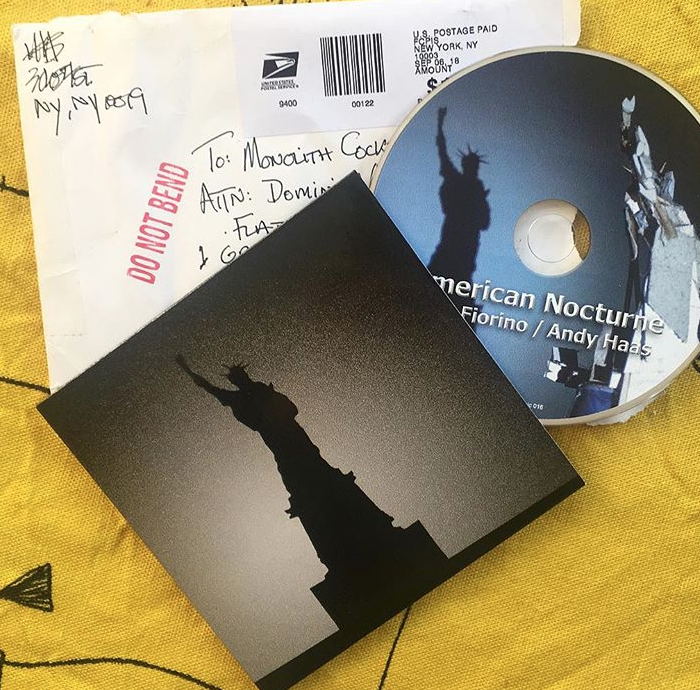
Amorphous unsettling augers and outright nightmares permeate the evocations of the American Nocturne visionaries Don Fiorino and Andy Haas on their latest album together. Alluded, as the title suggests, by the nocturne definition ‘a musical composition inspired by the night’, the darkest hour(s) in this case can’t help but build a plaintive warning about the political divisive administration of Trump’s America: Nicola Plana’s sepia adumbrated depiction of Liberty on the album’s cover pretty much reinforces the grimness and casting shadows of fear.
Musically strung-out, feeding off each other’s worries, protestations and confusion, Fiorino and Haas construct a lamentable cry and tumult of anger from their improvised synthesis of multi-layered abstractions.
Providence wise, Haas, who actually sent me this album after seeing my review of a U.S. Girls gig from earlier in the year (he was kind enough to note my brief mention of his Plastic Ono Band meets exile-in-America period Bowie saxophone playing on the tour; Haas being a member of Meg Remy’s touring band after playing on her recent LP, In A Poem Unlimited), once more stirs up a suitably pining, troubled saxophone led atmosphere; cast somewhere between Jon Hassell and Eno’s Possible Musics traverses, serialism jazz and the avant-garde. The Toronto native, originally during the 70s and early 80s a band member of the successful Canadian New wave export Martha And The Muffins, is an experimental journeyman. Having moved to New York for a period in the mid 80s to collaborate with a string of diverse underground artists (John Zorn, Marc Ribot, Thurston Moore and God Is My Co-Pilot) he’s made excursions back across the border; in recent times joining up with the Toronto supergroup, which features a lion’s share of the city’s most interesting artists and of course much of the backing group that now supports Meg Remy’s U.S. Girls, the Cosmic Range (who’s debut LP New Latitudes made our albums of the year feature in 2016). He’s also been working with that collective’s founder, Matt ‘Doc’ Dunn, on a new duo project named KIM (the fruits of which will be released later this year). But not only a collaborator, Haas has also recorded a stack of albums for the Resonantmusic imprint over the years (15 in total), the first of which, from 2005, included his American Nocturne foil, Fiorino. An artist with a penchant for stringed instruments (guitar, glissenter, lap steel, banjo, lotar, mandolin), Fiorino is equally as experimental; the painter musician imbued by blues, rock, psychedelic, country, jazz, Indian and Middle Eastern music has also played in and with a myriad of suitably eclectic musicians and projects (Radio I Ching, Hanuman Sextet, Adventures In Bluesland and Ronnie Wheeler’s Blues).
Recorded live with no overdubs, the adroit duo is brought together in a union of discordant opprobrious and visceral suffrage. Haas’ signature pained hoots, snozzled snuffles and more suffused saxophone lines drift at their most lamentable and blow hard at their most venerable and despondent over and around the spindly bended, quivery warbled and weird guitar phrases of Fiorino. Setting both esoteric and mysterious atmospheres, Haas is also in charge of the manic, often reversed or inverted, and usually erratic drum machine and bit-crushing warped electronic effects. Any hint of rhythm or a lull in proceedings, and it’s snuffed out by an often primal and distressed breakdown of some kind.
Skulking through some interesting soundscapes and fusions, tracks such as the opening ‘Waning Empire Blues’ conjures up a Southern American States gloom (where the Mason-Dixon line meets the dark ambient interior of New York) via a submerged vision of India. It also sounds, in part, like an imaginary partnership between Hassell and Ry Cooder. ‘Days Of The Jackals’ has a sort of Spanish Texas merges with Byzantium illusion and ‘New Orphans’ transduces the Aphex Twin into a shapeless, spiraling cacophony of pain.
With hints of the industrial, tubular metallic, blues, country, electro and Far East to be found, American Nocturne is essentially a deconstructive jazz album. Further out than most, even for a genre used to such heavy abstract experimentation, this cry from the bleeding heart of Trumpism opposition is as musically traumatic as it is complex and creatively descriptive. Fiorino and Haas envision a harrowing soundtrack fit for the looming miasma of our times.
Papernut Cambridge ‘Mellotron Phase: Volume 2’ (Ravenwood Music/Gare du Nord) 5th October 2018

A one-man cottage industry (a impressively prolific one at that) Ian Button’s Eurostar connection inspired label seems to pop up in every other roundup of mine. The unofficial houseband/supergroup and Button pet project Papernut Cambridge, the ranks of which often swell or contract to accommodate an ever-growing label roster of artists, is once again widening its nostalgic pop and psychedelic tastes.
Following on from Button’s debut leap into halcyon cult and kitsch library music, Mellotron Phase: Volume 1 is another suite of similar soft melodic compositions, built around the hazy and dreamy polyphonic loops of the iconic keyboard: An instrument used to radiant, often woozy, affect on countless psych and progressive records. That first volume was a blissful, float-y visage of quasi-David Axelrod psychedelic litany, pop-sike, quaint 60s romances and a mellotron moods version of Claude Denjean cult lounge Moog covers.
This time around the basis for each instrumental vision is the rhythm accompaniments from Mattel’s disc-based Ontigan home-entertainment instrument. These early examples of instrumental loops and musical breaks were set out across the instrument’s keys so that chord sequences and variations can be used to construct an arrangement. Mellowed and toned-down in comparison to the first volume, though still featuring drum breaks, percussion, bass and on the Bacharach-composes-a-screwball-tribute-to-French-Western-pulp-fiction (Paris, Texas to Paris, France) ‘A Cowboy In Montmartre’, an accordion. If the French Wild West grabs you then there’s plenty of other weird and wonderful mélanges to be found on this whimsically romantic, sometimes comically vaudeville, and often-yearning fondly nostalgic album. The swirling cascade of soft focus tremolo vibrations of the stuttered ‘Cha-Cha-Charlie’ sounds like Blue Gene Tyranny catching a flight on George Harrison’s Magical Mystery Tour. The Sputnik space harp pastiche of ‘Cygnus Probe’ is equally as Gerry Anderson as it is Philippe Guerre, and ‘Boss Club’ reimagines Trojan Records transduced through lounge music. Kooky Bavarian Oompah Bands at an acid-tripping Technicolor circus add to the mirage-like mellotron kaleidoscope on ‘Sergeant Major Mushrooms’, Len Deighton’s quintessentially English clandestine spy everyman, as scored by John Barry, cameos on the clavinet spindly and The Kramford Look-esque ‘Parker’s Last Case’, and Amen Corner wear their soft soul shufflers on the Tamala backbeat ‘Soul Brogues’.
A curious love letter to the forgotten (though a host of champions, from individuals to labels, have revalued and showcased their work) composers and mavericks behind some of the best and most odd library music, Mellotron Phase will in time become a cult album itself. As quirky as it is serenading, alternative recalled obscure soundtracks that vaguely recall Jean-Pierre Decerf, Jimmy Harris, Stereolab, Jean-Claude Vannier and even Roy Budd are given a fond awakening by Button and his dusted-off mellotron muse.
Sad Man ‘ROM-COM’ October 2018
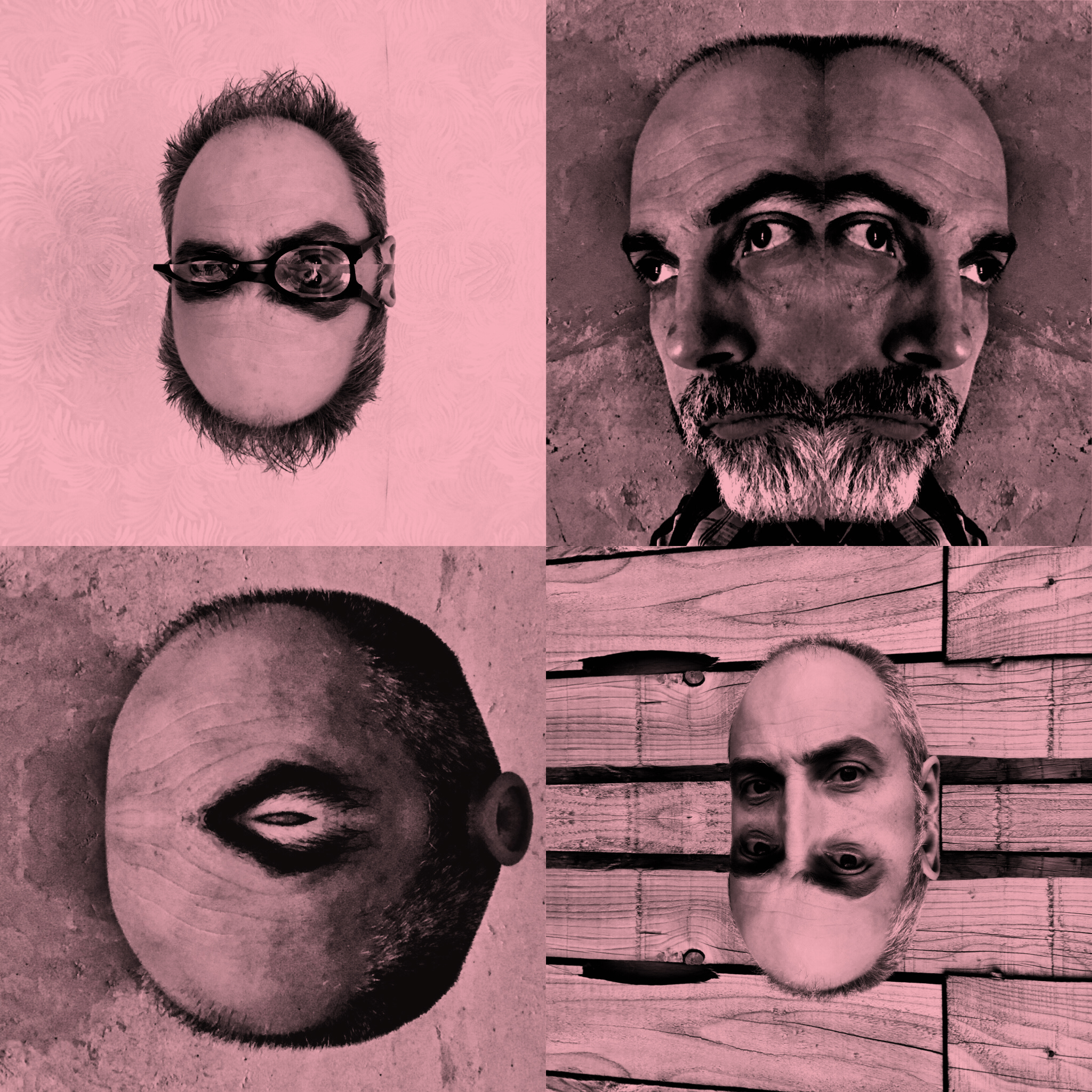
Haphazardly prolific, Andrew Spackman, under his most recent of alter egos, the Sad Man, has released an album/collection of giddy, erratic, in a state of conceptual agitation electronica every few months since the beginning of 2017. Many of which have featured in one form or another in this column.
The latest and possibly most restive of all his (if you can call it that) albums is the spasmodic computer love transmogrification ROM-COM. An almost seamless record, each track bleeding into, or mind melding with the next, the constantly changing if less ennui jumpy compositions are smoother and mindful this time around. This doesn’t mean it’s any less kooky, leaping from one effect to the next, or, suddenly scrabbling off in different directions following various nodes and interplays, leaving the original source and prompts behind. But I detect a more even, and daresay, sophisticated method to the usual skittish hyperactivity.
Showing that penchant for exploration tracks such as the tribal cosmic synwave ‘Play In The Sky’ fluctuate between the Twilight Zone and tetchy, tentacle slithery techno; whilst the shifting bit-crush cybernetic ‘Hat’ sounds like a transplanted to late 80s Detroit Art Of Noise one minute, the next, like a isotope chilled thriller soundtrack. Reverberating piano rays, staggered against abrasive drumbeats await the listener on the sadly melodic ‘King Of ‘. That is until a drilling drum break barrels in and gets jammed, turning the track into a jarring cylindrical headbanger. ‘Coat’ whip-cracks to a primitive homemade drum machine snare as it, lo fi style, dances along to a three-way of Harmonia, The Normal and Populare Mechanik, and the brilliantly entitled ‘Wasp Meat’ places Kraftwerk in Iain Banks Factory.
Almost uniquely in his own little orbit of maverick bastardize electronic experimentation, Spackman, who builds many of his own bizarre contraptions and instruments, strangulates, pushes and deconstructs techno, the Kosmische, Trip-Hop and various other branches of the genre to build back up a conceptually strange and bewildering new sonic shake-up of the electronic music landscape.
Grand Blue Heron ‘Come Again’ (Jezus Factory) October 19th 2018
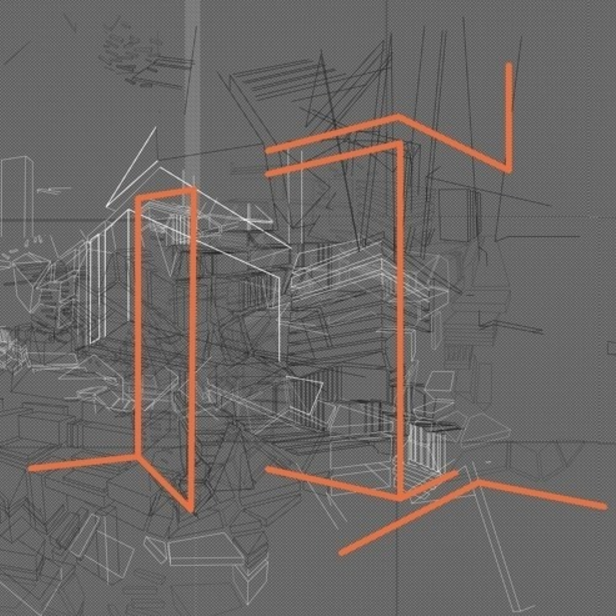
Grand Blue Heron, or GBH as it were, do some serious grievous harm to the post-punk and alt-rock genres on their latest abrasive heavy-hitter, Come Again. Partial to the Gothic, the Benelux quartet prowl in the miasma; skulking under a repressed gauze and creeping fog of doom as they trudge across a esoteric landscape of STDs, metaphorical crimes of the heart and rejection.
Born out of the embers of the band Hitch, band mates Paul Lamont (who also served time with the experimental Belgium group and Jezus Factory label mates, A Clean Kitchen Is A Happy Kitchen) and Oliver Wyckhuyse formed GBH in 2015 as a vehicle for songs written by Lamont. Straight out of the blocks on their thrashing debut Hatch, they’ve hewn a signature sound that has proven difficult to pin down.
Both boldly loud with smashing drums and gritty distorted guitars, yet melodic and nuanced, they sound like The Black Angels and Bauhaus working over noir rock on the vortex that is ‘Wwyds’, a grunge-y Belgium version of John Lyndon backed by The Pixies on the controlled maelstrom title-track, and Metallica on the country-twanging, pendulous skull-banger ‘Head’. They also sail close to The Killing Joke, Sisters Of Mercy (especially on the decadent wastrel Gothic ‘The Cult’), Archers Of Loaf and, even, The Foo Fighters. They rollick in fits of rage and despondency, beating into shape all these various inspirations, yet they come out on top with their own sound in the end.
Playing live alongside some pretty decent bands of late (White Denim, Elefant, The Cult Of Dom Keller) the GBH continue to grow with confidence; producing a solid heavy rock and punk album that reinforces the justified, low-level as it might be, hype of the Belgium, and by extension, Flanders scene.
Dr. Chan ‘Squier’ (Stolen Body Records) October 12th 2018

Keeping up the petulant garage-punk-skate-slacker discourse of their obstinate debut, the French group with just a little more control and panache once more hang loose and play fast with their spikey influences on the second LP Squier.
Hanging out with a disgruntled shrug in a 1980s visage of L.A. central back lots, skating autumn time drained pools in a nocturnal motel setting, Dr. Chan crow about the transition from adolescence to infantile adulthood. Hardly more than teenagers themselves, the band seem obsessed with their own informative years of slackerdom; despondently ripping into the status of outsiders the lead singer sulkingly declares himself as “Just a young messy loser” on the opening boom bap garage turn space punk spiraling ‘Wicked & Wasted’, and a “Teenage motherfucker” on the funhouse skater-punk meets Thee Headcoats ‘Empty Pockets’.
The pains but also thrills of that time are channeled through a rolling backbeat of Black Lips, Detroit Cobras, Brian Jonestown Massacre, The Hunches, Nirvana and new wave influences. The most surprising being glimmers of The Strokes, albeit a distressed version, on the thrashed but polished, even melodic, ‘Girls!’ And, perhaps one of the album’s best tracks (certainly most tuneful), the bedeviled ride on the 666 Metro line ‘The Sinner’, could be an erratic early Arctic Monkeys missive meets Blink 182 outtake.
The Squier is an unpretentious strop, fueled as much by jacking-up besides over spilling dumpsters, zombified states of emptiness and despair as it is by carefree cathartic releases of bird-finger rebellious fun. Reminiscing for an adolescence that isn’t even theirs, Dr. Chan’s directed noise is every bit informed by the pin-ups of golden era 80s Thrasher magazine as by Nuggets, grunge and Jon Savage’s Black Hole: Californian Punk compilation. The fact they’re not even of the generation X fraternity that lived it, or even from L.A. for that matter, means there is an interesting disconnection that offers a rousing, new energetic take. In short: Ain’t a damn thing changed; the growing pains of teenage angst still firing most of the best and most dynamic shambling music.
Brace! Brace! ‘S/T’ (Howlin Banana) 12th October 2018

Looking for your next favourite French indie-pop group? Well look no further, the colourful Parisian outfit Brace! Brace! are here. Producing gorgeous hues of softened psychedelia, new wave, Britpop and slacker indie rock, this young but sophisticated band effortlessly melt the woozy and dreamy with more punchier dynamic urgency on their brilliant debut album.
Squirreled away in self-imposed seclusion, recording in the Jura Mountains, the isolation and concentration has proved more than fruitful. Offering a Sebastian Teller fronts Simian like twist on a cornucopia of North American and British influences, Brace! Brace! glorious debut features pastel shades of Blur, Gene, Dinosaur Jnr., Siouxsie And The Banshees (check the “I wrecked your childhood” refrain post-punk throb and phaser effect symmetry guitar of ‘Club Dorothée’ for proof) and the C86 generation. More contemporary wafts of Metronomy, Mew, Jacco Gardner, the Unknown Mortal Orchestra and Deerhunter (especially) permeate the band’s hazy filtered melodies and thoughtful prose too.
At the heart of it all lies the subtly crafted melodies and choruses. Never overworked, the lead-up and bridges gently meet their rendezvous with sweet élan and pace. Vocals are shared and range from the lilted to the wistful and more resigned; the themes of chaste and compromised love lushly and wantonly represented.
This is an album of two halves, the first erring towards quirky new wave, shoegaze-y hearty French pop – arguably featuring some of the band’s best melodies -, the second, a more drowsy echo-y affair. Together it makes for a near-perfect debut album, an introduction to one of the most exciting new fuzzy indie-pop bands of the moment.
Junkboy ‘Old Camera, New Film’ – Taken from Fretsore Record’s upcoming Music Minds fundraiser compilation; released on the 12th October 2018

Quiet of late, or so we thought, the unassuming South Coast brothers Hanscomb have been signing love letters, hazy sonnets and languorous troubadour requests from the allegorical driftwood strewn yesteryear for a number of years now. The Brighton & Hove located siblings have garnered a fair amount of favorable press for their beautifully etched Baroque-pastoral idyllic psychedelic folk and delicately softly spoken harmonies.
To celebrate the release of their previous album, Sovereign Sky, the Monolith Cocktail invited the duo to compile a congruous Youtube playlist. Proper Blue Sky Thinking didn’t disappoint; the brothers’ Laurel Canyon, Freshman harmony scions and softened psychedelic inspirations acting like signposts and reference points for their signature nostalgic sound: The Beach Boys, Thorinshield, Mark Eric, The Lettermen, The Left Bank all more an appearance.
A precursor to, we hope, Junkboy’s next highly agreeable melodious LP, Trains, Trees, Topophilia (no release date has been set yet), the tenderly ruminating new instrumental (and a perfect encapsulation of their gauzy feel) ‘Old Camera, New Film’ offers a small preview of what’s to come. It’s also just one of the generous number of tracks donated to the worthy Music Minds (‘supporting healthy minds’) cause by a highly diverse and intergenerational cast of artists. Featuring such luminaries as Tom Robinson, Glen Tilbrook and Graham Goldman across three discs, the Fretsore Records release coincides with World Mental Health Day on the 12th October.
Sitting comfortably on the second disc with (two past Monolith Cocktail recommendations) My Autumn Empire, Field Harmonics and Yellow Six, Junkboy’s mindful delicate swelling strings with a hazy brassy, more harshly twanged guitar leitmotif beachcomber meditations prove a most perfect fit.
Earthling Society ‘MO – The Demon’ (Riot Season) 28th September 2018

Bowing out after fifteen years the Earthling Society’s swansong, MO – The Demon, transduces all the group’s various influences into a madcap Kool-aid bathed imaginary soundtrack. Inspired by the deranged Shaw Brothers film studio’s bad-taste-running-rampart straight-to-video martial arts horror schlock The Boxer’s Omen, the band scores the most appropriate of accompaniments.
The movie’s synopsis (though I’m not sure anyone ever actually wrote this story out; making it up in their head as they went along more likely) involves a revenge plot turn titanic spiritual struggle between the dark arts, as the mobster brother of a Hong Kong kickboxer, paralyzed by a cheating Thai rival, sets out on a path of vengeance only to find himself sidetracked by the enlightened allure of a Buddhist monastery and the quest to save the soul of a deceased monk (who by incarnated fate happens to be our protagonist’s brother from a previous life) killed by black magic. A convoluted plot within a story of vengeance, The Boxer’s Omen is a late night guilty pleasure; mixing as it does, truly terrible special effects with demon-bashing Kung Fu and Kickboxing.
Recorded at Leeds College of Music between November 2017 and February of 2018, MO – The Demon is an esoteric Jodorowsky cosmology of Muay Thai psychedelics, space rock, shoegaze, Krautrock and Far East fantasy. Accenting the mystical and introducing us to the soundtrack’s leitmotif, the opening theme song shimmers and cascades to faint glimmers of Embryo and Gila; and the craning, waning guitar that permeates throughout often resembles Manuel Göttsching later lines for Ash Ra Tempel. By the time we reach the bell-tolled spiritual vortex of the ‘Inauguration Of The Buddha Temple’ we’re in Acid Mothers territory, and the album’s most venerable sky-bound ascendant ‘Spring Snow’ has more than a touch of the Popol Vuh about it: The first section of this two-part vision features Korean vocalist Bomi Seo (courtesy of Tirikiliatops) casting incantation spells over a heavenly ambient paean, as the miasma and ominous haze dissipates to reveal a path to nirvana, before escalating into a laser whizzing Amon Duul II talks to Yogi style jam. The grand finale, ‘Jetavana Grove’, even reimagines George Harrison in a meeting of minds with Spiritualized and the Stone Roses; once more setting out on the Buddhist path of enlightenment.
Sucked into warped battle scenes on the spiritual planes, Hawkwind (circa Warriors On The Edge Of Time) panorama jams and various maelstroms, the Earthling Society capture the hallucinogenic, tripping indulgences of their source material well whilst offering the action and prompts for another set of heavy psych and Krautrock imbued performances. The Boxer’s Omen probably gets a much better soundtrack than it deserves, as the band sign off on a high.
Quarterly Playlist Revue: Part Three: Idris Ackamoor, Stella Sommer, Mac Miller, White Denim, Simon Love…
September 26, 2018
Playlist: Chosen by Dominic Valvona & Matt Oliver/ Curated by Dominic Valvona

Priding ourselves on the diverse, pan-global playlists we collate for your aural pleasure and indulgence, the Monolith Cocktail Quarterly Revue series is the eclectic behemoth of them all. With no demarcation of any kind or rules we mix the harrowing and gothic with beckoning polyrhythmic dancefloor screamers, flights of panoramic fantasy with raging protestations, and the most sublime peregrinations with experimental cries from the wilderness.
Everything you find on this playlist has either featured on the site over the last three months or been in our general orbit (the sheer volume of music we get sent means there is inevitably issues of space and time, and so some great tracks just don’t make it; this is our chance to feature those lost tracks). Below you will find a full track list, including links to reviews.
Tracklist:-
Malawi Mouse Boys ‘Hunger (Hymn)‘
Spike & Debbie ‘Strike – Compilation Version‘
Dur-Dur Band ‘Yabaal‘
Goatman ‘Jaam Ak Salam’
Mac Miller ‘Party On Fifth Ave.‘
Parquet Floors ‘Wide Awake’
LCD Soundsystem ‘Oh Baby – Lovefingers Remix’
Papernut Cambridge ‘The Hobbledehoy‘
Yuzo Iwata ‘Gigolo’
Soft Science ‘Undone‘
Stella Sommer ‘Dark Princess, Dark Prince‘
Mehdi Rostami & Adib Rostami ‘Delight‘
Yiddish Glory (Loyko, Alexander Sevastian, Sophie Milman) ‘Shpatzir in Vald (A Walk In The Forest)‘
Yazz Ahmed ‘The Lost Pearl – Hector Plimmer Remix‘
John Coltrane ‘Impressions – Take 3’
Thelonious Monk ‘Nutty, Pt. 2’
RAM ‘Dambala Elouwe’
Vaudou Game ‘Tata Fatigue’
Derya Yıldırım, Grup Şimşek ‘Uc Kiz Bir Ana’
Idris Ackamoor & The Pyramids ‘Land Of Ra’
Bixiga 70 ‘Quebra Cabeça‘
Etuk Ubong ‘Black Debtors’
Ayalew Mesfin ‘Hasabe (My Worries)’
Ippu Mitsui ‘Shift Down‘
Otis Sandsjo ‘Teppich‘
Nyeusi ‘Jupiter’s Giant Red Spot’
Angels Die Hard ‘Acid Beach‘
Mothers ‘PINK’
Rat The Magnificent ‘Up The Street‘
American Nudism ‘Future 5-0’
Dead End, M, Second Son ‘Let The Music Talk‘
Tenesha The Wordsmith, DJ Khalab ‘Madea’
CRIMEAPPLE, Big Ghost Ltd. ‘Your Love’
The Last Skeptik, Mikill Pane, Allana Verde ‘Rules Of Engagement‘
Beans, Sam Fog ‘The Black Chasm’
Bronx Slang ‘Rushing The Stage‘
Wordburglar ‘Rental Patient‘
Gunshot ‘Sulphur‘
Stringmodulator ‘Betwixt & Between‘
Laure Briard ‘Janela’
Brian Bordello ‘Eddie Cochran’
Simon Love ‘God Bless The Dick Who Let You Go‘
Picturebox ‘The Vicar’s Dog‘
Atmosphere ‘Make It All Better Again’
Daniel Rossen ‘Deerslayer’
White Denim ‘Good News’
La Luz ‘Mean Dream’
Kammerflimmer Kollektief ‘Action 3: Thoughtless, Hamburg‘
Previous Quarterly Revues From 2018
Tickling Our Fancy 065: Rat The Magnificent, Papernut Cambridge, Crayola Lectern, Mehdi Rostami & Adib Rostami, Kumo…
July 2, 2018
REVIEWS ROUNDUP/ WORDS: DOMINIC VALVONA
Welcome to Dominic Valvona’s regular reviews roundup. This latest edition of Tickling Our Fancy includes albums, EPs and singles by Rat The Magnificent, Papernut Cambridge, Kumo, Deben Bhattacharya, Mehdi Rostami & Adib Rostami, Moa Mckay, Crayola Lectern and Ippu Mitsui.
Interesting releases from across the world and music spectrums; Tickling Our Fancy is my most eclectic of reviews roundups. With no themes, demarcations of any kind, or reasoning other than providing a balanced platform for the intriguing, the great and at times, most odd releases, I bring you this month’s selection.
Electronic music composer extraordinaire Jono Podmore is back under the guises of Kumo with another serialism styled field recording, released through the London-based cassette tape label, Tapeworm; Rat The Magnificent rock, grunge, drone and grind their way through a new caustic shoegaze and industrial album, The Body As Pleasure; ARC Music sift through more of the celebrated late ethnomusicologist Deben Bhattacharya’s archives to bring us the fifth edition of their Musical Explorers series, Waves Of Joy/Bauls From Bengal, and also bring us a mesmerizing album of Kurdish traditional performances, Melodic Circles, by the Iranian cousins Mehdi Rostami & Adib Rostami; the Gare Du Nord label’s unofficial house band, Papernut Cambridge, return with another enviable ensemble led songbook of Glam Rock, Psych and poetic resignation, honouring the late polymath maverick scientist and utopian dreamer, Richard Buckminster Fuller; the enchanting quivery psychedelic bathers, Crayola Lectern, return with a new album of ghostly voiced heartbreak, ‘Happy Endings’. We also have the new peppy modern soul pop fusion EP from Moa McKay and friends, Illusions Of A Dream, and a more relaxed, calming electronic cruise from the Tokyo composer Ippu Mitsui.
Rat The Magnificent ‘The Body As Pleasure’ TTWD Records, 21st June 2018
Not as the name suggests, celebrating their rodent status whilst scratching like vermin at the bin bags in the gutter, as more guttural with seething yearning, Rat The Magnificent claw away in melodically dark despair on the new album, The Body As Pleasure. The noisy rock trio both clash and ponder on a grinding synthesis of pain, regret and isolation; dragging an impressive chorus of guest drone, grunge, shoegaze and post-rock exponents behind them. For the record, at any one time either caustic twiddling guitar, sonorous bass notes and harrowing longing vocals from Future Of The Left and Art Brut wingman Ian Gatskilkin, My Bloody Valentine and Graham Coxon band member Jen Marco and Hot Sauce Pony’s Caroline Gilchrist appear alongside a number of guest contributors – another Gilchrist for one, Stephen Gilchrist of Graham Coxon, The Damned and the Cardiacs infamy, being just one of the many.
That main catalyst and drive however is pendulously swung and elliptically (especially on the off-set rotation of the increasingly unhinged and entangled ‘Where You Been’) powered by the maverick trio maelstrom. Yet it’s a maelstrom of both fuzzed-up sinister prowling and melodious sensibilities. Like a Nordic sounding Thom Yorke drowning in a heavy dynamism of Swans, Interpol and Death From Above 1979 one minute, and plaintively following the contours of The Telescopes drones the next, the band conjure up all kinds of heavy rock and indie-on-steroids splinters, from The Birthday Party to DEUS, Marilyn Manson and the Archers Of Loaf.
Though the forebode and drone of songs like the skate punk Muse meets slacker rock ‘Olon’ and the Nick Cave No More Shall We Part swooned and trilled female vocalized like ‘Inevitable’ there’s a hint of lovelorn despair and confession. The most subdued dissipation, and oddest of finales, is the piano-accompanied-by-a-strange-crunching-Foley-sound ‘Panarron’, which stripes away the vortex of industrial anguish for an esoteric ambient soliloquy; the vocals so hushed as to be barely audible, as if the singer’s run out of steam, enervated and worn out: everything now off his chest, relieved yet fucked.
Noisy and caustic for sure, yet full of surprises (even space-age alpha wave synth on one track) The Body As Pleasure contorts and channels the energetic chaos through a prism of relief and accentuated tinkering. An illusion to all manner of references, the rodent’s left scurrying in the aftermath pick at the morsels to deliver a most intense album.
Papernut Cambridge ‘Outstairs Instairs’ Gare Du Nord, 29th June 2018
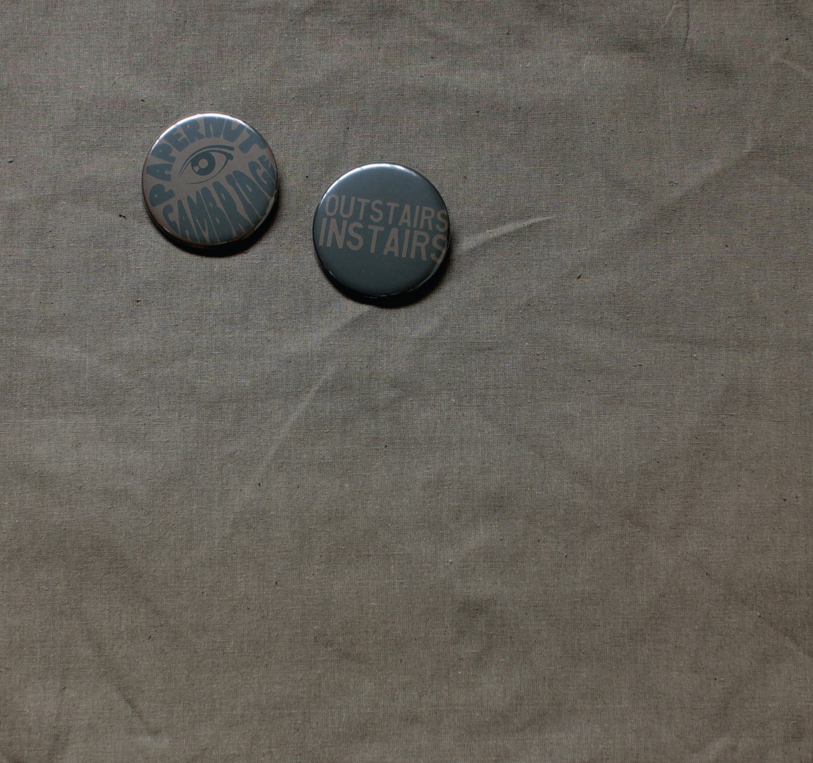
The first full length album since 2016’s generous carrier-bag packaged Love The Things Your Lover Love, the Ian Button instigated cottage industry, known as the Anglo-French romanticized Gare Du Nord, finally releases a follow-up from the label’s unofficial house band, Papernut Cambridge. Like a session group but made-up of mostly deft and critically applauded artists in their own rights, Button’s ragtag group of friends, acquaintances and label mates includes such refined minstrels and troubadours as Darren Hayman, Robert Rotifer, Jack Hayter, Emma Watson and Ralegh Long. This already enviable ensemble is broadened by the Hunky Dory period piano accents and Mike Garson plays Gershwin flourishes of pianists Terry Miles and Luke Smith, smatterings of Malcolm Doherty’s recorder arrangements, Sterling Roswell’s synth and the wailing, squawking and slinking Roxy Music saxophone of Stabs Mackenzie.
In a convoluted family tree style, this cast has consistently overlapped on a myriad of projects and releases; all emanating from Button’s end of the London train line HQ on the borders of Kent. As with that previous album and incarnation, the Papernut Cambridge conveys idiosyncratic tragedies, injustices and heartache through an often wistful and whimsical prism of 1970s musical nostalgia; the cut-off point of their inspiration and influence being the change over from the snug hazy security of late 60s to mid 70s Top Of The Pops, beaming and disarming the gender-bending teenage angst of Glam and Art Rock through a fond afterglow, to the petulant arrival of punk. Certainly nostalgic and cosy then, Outstairs Instairs builds a rich melody and frequent Glam-beat stonk around its deeper themes of loss, anger, resentment and malady. Yet with quintessential English humour dragging Button and his cast from feeling despondent and conceited, lyrics often finish with a subtle note of resigned wit to snap the protagonists and listener from despair: The Hollies conducting an elegiac service of remembrance styled ‘No Pressure’ pays a fond and warm homage to Button’s late father; humble recollections of dad’s sagacious advice to tickling ivory is saved from over-sentimentality by the final line of the song, “Sometimes you have to cater for cunts!”
As referencing goes, conducing the maverick utopia and inventive theorems of the late American scientist polymath Richard Buckminster Fuller takes some doing. Yet, from borrowing his, perhaps, far too over-analyzed (and thought) but astronomically accurate method of describing the actions of going up or down a staircase – going as far as to cleverly cut the vinyl version of this album so each side mirrors this spiraling rotation – for an album title to framing the name given in his honour for a carbon molecular, the ‘Fullercenes’, as a metaphor for the charged chemistry of love on the starry Alvin Stardust-Mott The Hoople-Bowie-esque opening track, Papernut Cambridge weave their icons and cerebral pining’s into articulate hazy pop. Though, making concessions for, as I’ve already remarked, 60s beat groups, psych and even grown-up rock’n’roll blues, the Nuts graze Goats Head Soup era Stones romantic weeping on ‘How To Love Someone’, and waft in their honky tonk Orleans boogie on the pastoral garden party ‘House Of Pink Icing’. On the Victoriana fairground knees-up comes sad tale of the “best dog in Battersea”, ‘Angelo Eggy’, they sound like a mongrel-breed of the Alex Harvey Band, Wings and Marmalade, and on the St. Peter-as-overburdened-civil-servant ‘New Forever’, they reimagine Highway 61 Revisited Dylan fronts The Soup Dragons or early The Charlatans. You can also expect to hear at any one time in the mix, hints of Edison Lighthouse, Fleetwood Mac, Cockney Rebel and The Rubettes.
From ill fated, nee cursed, characters to the all too-real forgotten victims of industry and losers in life, the Papernut Cambridge envelop pain and resignation in a warm caring blanket of nostalgic and beautifully crafted pop music. With an ensemble to die for, this is a sweetened if sad album of cherished memories and augurs to come; a missing link between 70s Top Of The Pops annuals, Hunky Dory and Aladdin Sane Bowie, Glam Rock and I Can See For Miles’ halcyon English songwriting compilations. A most magnificent return from a most maverick of outfits.
Crayola Lectern ‘Happy Endings’ Onomatopoeia, 1st June 2018
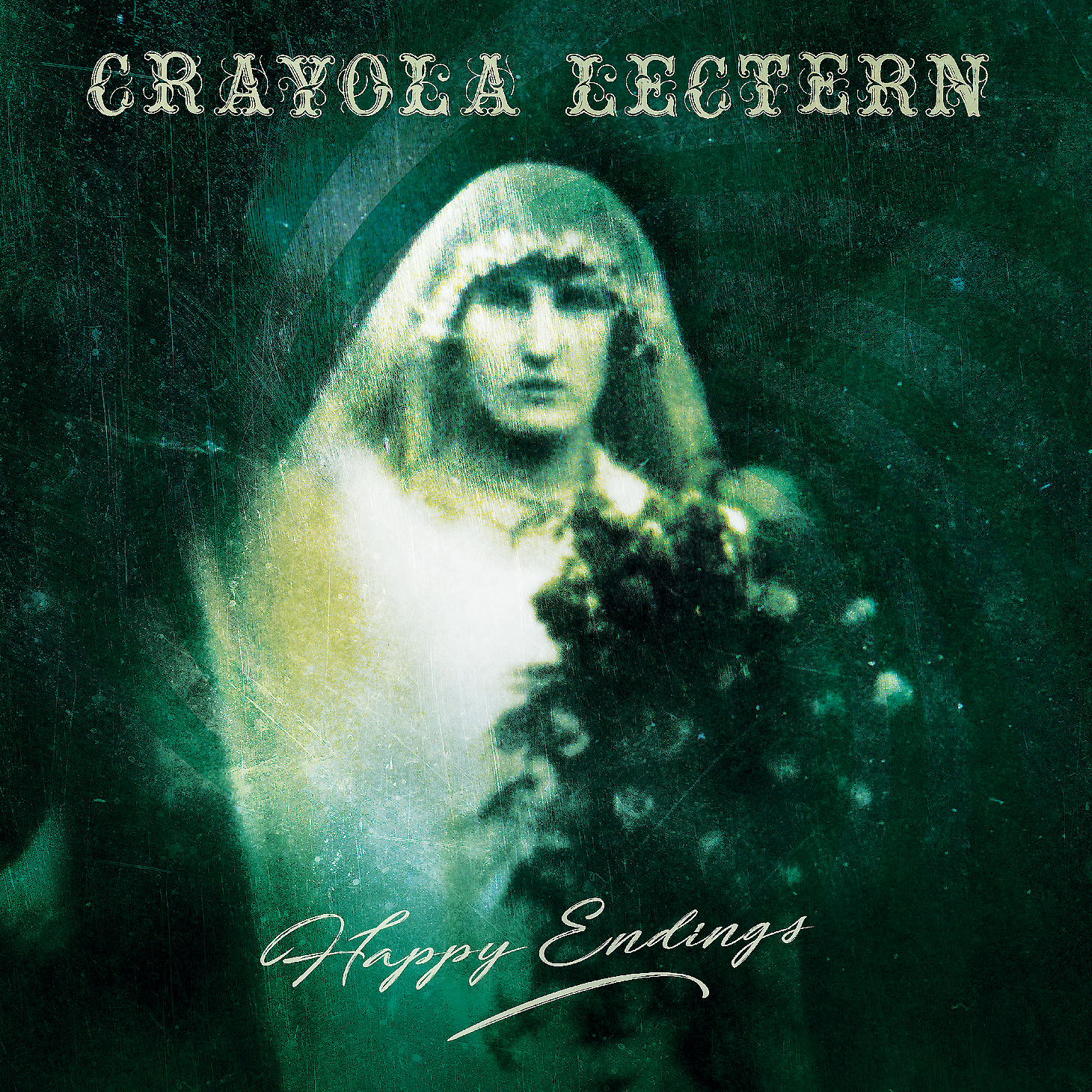
Bathing in the same South Downs of Southeast England water, even if it’s further west along the coastline at Worthing, as the gentle psych imbued outfits Electric Soft Parade and The Fiction Aisle, the Chris Anderson instigated Crayola Lectern embark on a most pastoral, stirring malady on the group’s second album, Happy Endings.
Featuring band members and guest spots from the former of those two Brighton bands, but also a trio from London stalwarts, The Cardiacs, the Crayola Lectern fondly and nostalgically absorb a cannon of rich 1960s psychedelia, seaside vaudeville, dancehall tea parties and quintessential irreverent witty eccentricity. Gazing through the pea green sea-like gauze-y sepia of the album’s cover (a photo of Anderson’s grandmother on her wedding day), revisiting old ghosts to a vague backing of early Floyd, Robert Wyatt, and even at times a spot of Family, Anderson moves amorphously through time whilst alluding to a rafter of contemporary problems: One of the overriding sentiments of which, gleamed from the beautifully hazy melodious piano led, and cherubic sung, opener ‘Rescue Mission’, is that love is really all; but whatever this self-centered world throws at you, “Don’t let the buggers bring you down.”
Diaphanously played throughout, softened, occasionally venerable and choral with dreaming visages of mellotron, trumpet and finely cast musical spells, the album can seem like it’s being summoned from the ether and beyond. Emerging from a burial-at-sea like seaweed covered aquatic specters on the ode to a ‘Submarine’ metaphor (which even includes lines in Latin), or caught in a nursery rhyme loop, lying in bed each night thinking of the inevitable, the theme of death is always close at hand; but handled with sighing reassurance and the comforting strains of a dashing about lullaby.
From end-of-the-pier shows to séances on a wet afternoon, the nostalgic quaintness of Happy Endings dips its toes into vibrato like waters, with shades of The Beach Boys Surf’s Up on ‘Secrets’, and presence of a lapping tide on the theatrical pining and beautiful ‘Barbara’s Persecution Complex’. A general ebb and flow motion, not just rhythmically and musically but in the relationship between an almost childlike innocence and the sagacious meditations of experience, is suffused throughout; though breakouts of rock opera, ascendant spiraling and more dramatic loveliness do splash about in the psychedelic mysterious waters. And on the title track, though it’s prefixed in brackets with ‘(No More)’, there’s an allusion to alien visitors that could be read as a metaphor for the illegal alien otherness of not starbound extraterrestrials but migrants, refugees and even our cousins across the Channel.
Conveying the mood and plaguing anxieties of the past and contemporary; circumnavigating the choppy waters of uncertainty; Anderson and his troupe effortlessly exude a subtle elegance and enchanting charm to produce a gauze-y psychedelic melodrama. Lush and quivery, Anderson’s vocals almost ghostly heartbreaking throughout, the piano played with an understated but emotive caring patience, Happy Endings is a peaceably beauty of a minor opus.
Various ‘Musical Explorers: Waves Of Joy/Bauls From Bengal: Field Recordings By Deben Bhattacharya’ ARC Music, 25th May 2018

If you’re a regular visitor to my reviews roundup then you might already be familiar with ARC Music’s Musical Explorer series: celebrating the work of pioneering ethnomusicologists, and currently sifting through the renowned archives of the late Indian field recordist and filmmaker, Deben Bhattacharya.
The fifth volume in this series once again delves into the rich vaults of material Bhattacharya captured when travelling his native Indian homeland: Other volumes highlight his recordings from Taiwan and Tibet; though he recorded in a multitude of locations and countries during his career.
Settling in London at the turn of the 1950s with mixed results (though after juggling many jobs, finally able to make a living from documenting exotic music, at the time mostly unknown to Western ears), Bhattacharya made many return trips, especially to his birthplace of Benares in Bengal. Previous editions in this explorers series (Colours Of Raga, Krishna In Spring) have either included or alluded to music from the region, and the dual film/audio recordings of Waves Of Joy/Bauls From Bengal is no different.
Amateurish and make-do by the technical standards of today, Bhattacharya’s ’12-volt battery’ powered laden ‘one-man mobile’ recording apparatus still magically captures the most unpretentious in-situ purity of performances. In natural surroundings, the majority in adulation or paean to spiritualist guidance and, not exclusively by any means, Hinduism, these timeless recordings seem to have been caught serendipitously: the opposite of staged, directed and scholarly.
Recorded before his death in 2001, the audio part of this package features a revolving troupe of players performing the spiritual enlightened poetics of the traditional holy wandering minstrels known as the Baul. Translated from the original Sanskrit word for ‘vatula’ or ‘mad’ – though in this case a kind of entranced devotional madness -, these sagacious weavers of philosophical devotion study the ambiguity between divine and sensual love; unburdened by established religion or dogma. Finding a commonality with the Sufis, and especially the ideas of the Persian mystic Rumi, the Baul’s song (also known as ‘bauls’, which can be confusing) are filled with poetic worship, but always stating humbleness, offering nothing other than love as the opening ‘Doya Kore Esho’, sung in exultation by Robi Das Baul, exemplifies:
How shall I adore Thy feet – incomparable?
No prayer or dedication have I
O gracious one!
No devotion,
nor wisdom do appear within my heart of hearts,
Bid farewell to my joylessness,
Give me more joy
In this humble abode of my heart.
Analogies to a “shoreless sea” and the desirable banks of joyful aspiration and nirvana that meet its waves coupled with symbolist fauna, dealing with death, and the conversion of lost souls to whatever guru is being venerated flow throughout this collection’s fourteen track songbook on a buoyant bending and dipping rhythmical accompaniment. Beautifully sung, hollering and soaring even, a quintet of baul minstrels take turns, accompanied by atavistic instrumentation. An intrinsic feature of which is the tucked under the arm ‘anandalahari’, a tabla like tension drum with a plucked string. Held tightly in one arm, the player can pull on a small knob to stretch this string whilst using his other hand to pluck away with a plectrum. Its bending resonance can be heard alongside the one-string drone ‘ektara’, fretless long-necked lute like ‘dotara’, small metal pellet ankle bells chiming ‘ghungru’, bamboo flute ‘banshi’ and tied around the waist clay kettle drum, the ‘duggi’.
All recorded in Shantiniketan, an area synonymous with baul history, these performances feature compositions from such revered gurus as the 19th century mystic/poet Lalon Shah Fakir and Matam Chand Gosain, but also more contemporary figures, such as the film actor and folk musician Mujib Paradeshi and lyricist, composer Bhaba Pagla: It all sounds timeless however, with only a subtle allocation made for more modern themed metaphors.
The documentary, filmed in 1973, is a grainy but colourful informative (if slightly stiff in narration) highlight, featuring as it does the Kenduli Mela festival in West Bengal. A huge momentous musical and religious gathering, it’s held at the birthplace of the famous poet Jaidev in the Birbhum district, attracting, as you’ll see, a myriad of baul ensembles. Probably unrecognizable today – in fact Simon Broughton, of Songlines fame, and the author of this compilation’s linear notes, remarks on its built-up modernity – the plains and riverside of Kenduli in the 1970s is agrarian with the only transport in sight, a multitude of ox pulled carts. Reading out poetic, wise lyrics whilst moving the camera from temples to villages and bazaars, the narrator informs and explains not only the folklore and myths of the baul, but also the basics of the instruments and songs. The message of this study is of the individual’s pursuit in communing with their spiritual guide unburdened by barriers, as the words, read out whilst resting the camera on the icon carvings of a temple sum up so well:
The road to you is barricaded with temples and mosques
I hear you calling my lord, but cannot reach you.
Teachers, preachers and prophets bar the way.
Both revelatory and insightful, an education you could say, Bhattacharya’s extensive archives showcase Indian music at its most venerable and spiritual. A snapshot on the devotional and a survey on the baul phenomenon this latest stimulating Musical Explorers package is a visual and audio treat.
Mehdi Rostami & Adib Rostami ‘Melodic Circles: Urban Classical Music From Iran’ ARC Music, 27th July 2018
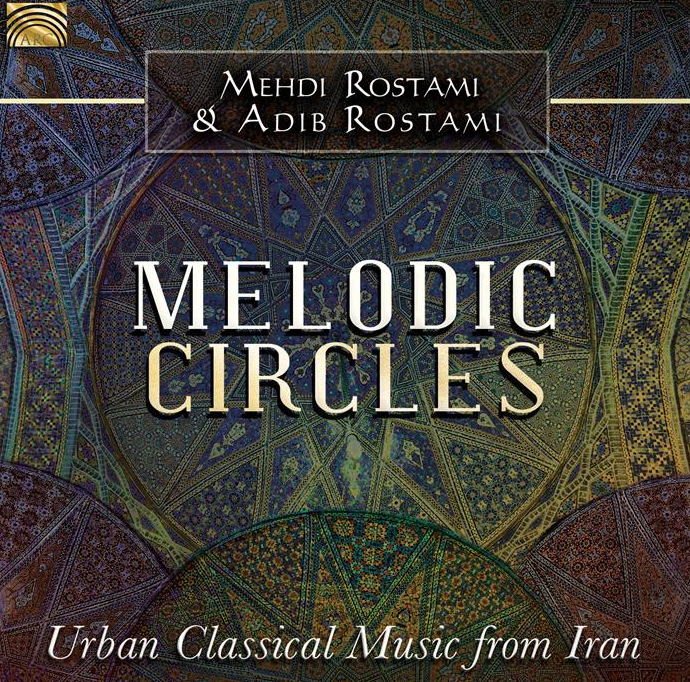
The second ARC Music release to grab my attention this month, the entrancing circular and eastern mirage rippling evocations of the Mehdi & Adib Rostami cousins bring a certain modernity to the classical ‘urban’ music of their homeland, Iran. Tensions between Iran (both with the nebulas and all too real physical influences) and its neighbours in the region, and of course the West, have never been shakier; especially with the recent collapse of the ‘nuclear deal’ and renewal of sanctions, but also with its military presence in Syria and the Yemen. And with the roots of the Rostami cousins’ performances deriving from the Kurdish music of Iran’s Fars province (‘widely considered’, as the liner notes suggests, ‘the cultural capital of Iran’; it is indeed the original home of the Persian people after all) you can’t help but think of the controversies and complexities that hound the Kurdish people in a number of violent flashpoints; most of which derive from the fight for an independent state: though not all Kurds are involved or even agree on the issue.
It makes a change then, to celebrate rather than hector or feel despondent about Iranian culture; ARC Music shedding a light on a positive, magical aspect of the country and its musicians; showcasing, as they do, the technical and creative improvisational skills of the Rostami maestros.
Conventionally divided into two general branches; one deriving from the ethnic minorities (which also includes Nomadic traditions), each with its own distant musical system, the second, and what you’ll hear on this album, is the urban tradition, though it’s a much later style: the ‘radif-e dastgāhi’. Passed down orally, the, what seems like an amalgamation of systems and ‘melodic circles’ structures (so named for the manner in which these Iranian melodies link together to form ‘circles’), ‘radif’ is traditionally divided into ‘instrumental and vocal music’. A serious dedication is needed, as each student of this system must learn their art with a number of masters; the ultimate goal of which, we’re told, is ‘for the musician to cultivate, through many years of practice and performance, the capacity to improvise, wherein ideally, the musician would create a new work in each performance.’ Not just able scions of that learning but international artists of repute and masters of their chosen Iranian instruments, the long-necked, plucked lute ‘setār’ and goblet-shaped drum, the ‘tombak’, the cousins studied with a wealth of talent. Mehdi began playing the wooden fretted setār at the tender age of six, going on to study under the tutelage of Mohammadreza Lofi and Hossein Alizadeh, and take a ‘masterclass’ with Kayhan Kalhor, whilst Adib started out learning the principal percussion instrument, the tombak, on his own before later taking lessons and refining his technique with Mohammed Ghodsi and Pejman Hadadi. He also studied the Iranian fiddle, the ‘kamancheh’, with Roozbeh Asadian and Lofi, and as his cousin did, took masterclasses with Kalhor.
Performing several times in the UK, including as part of the BBC Proms season and with the Syrian ‘qanum’ player Maya Youssef, under the Awj Trio collaboration, the cousins are calling this album their first official release. An album in two parts, subdivided into a trio and a quartet of various passages, Melodic Circles is essentially a contemporary interpretation of the atavistic Kurdish ‘Bayāt-e Tork’ and ‘Bayāt-e Esfahān’ cycles. Though following the handed-down prompts of these age old ‘modes’, they imbue their versions with deft improvisation; breathing in the atmosphere and mood of their surroundings and feelings on the day of the recordings to offer something organic and fresh.
‘Circle One’, comprised of three separate chapters, arises from the Persian epoch with a spindled trickle of ancient evocations; cantering and rolling when the rapid tub-thumping percussion joins in, beside the waters of the Fertile Crescent. The opening section, ‘Nostalgia’, alludes musically to another era, mystical and timeless but unmistakably played out in the present. It’s followed by any equally dusty mirage of enchantment and cascading dripping plucked notes on the travelling ‘Journey’; which, by the end of its perusal, turns a trickle into a flood.
The final piece of that trilogy, ‘Delight’, dashes straight in with a speedy, mesmerizing display of blurry percussion; the lute gliding and entrancing until locking into a circular loop, resonating with brass-y echoes and spiraling nuances.
The second ‘circle’, featuring a quartet of pieces, opens with the longing ‘Lonely’. Romantic gestures, ripples and vibrations gather momentum until reaching a crescendo and dissipating, on this dusky earthy track. Picking up on the intensity, ‘Life’ is like an energetic camel trot across mirage shimmered deserts, whilst, reaching tranquil, less galloping, waters ‘Past’ is the musing respite before the frenzied hypnotic circulations of the ‘Mystic Dance’ spin into play.
Caught in the moment, feeding off each other whilst channeling their intensive studies, the cousins perform with dexterous, masterful skill and a sense of freedom. Melodic Circles faithfully keeps the traditions of the Rostami’s native heritage alive in a contemporary setting; a heritage that is seldom celebrated in the West, especially in such trying times, yet proves an intoxicating experience of discovery.
Kumo ‘Day/Night’ Tapeworm
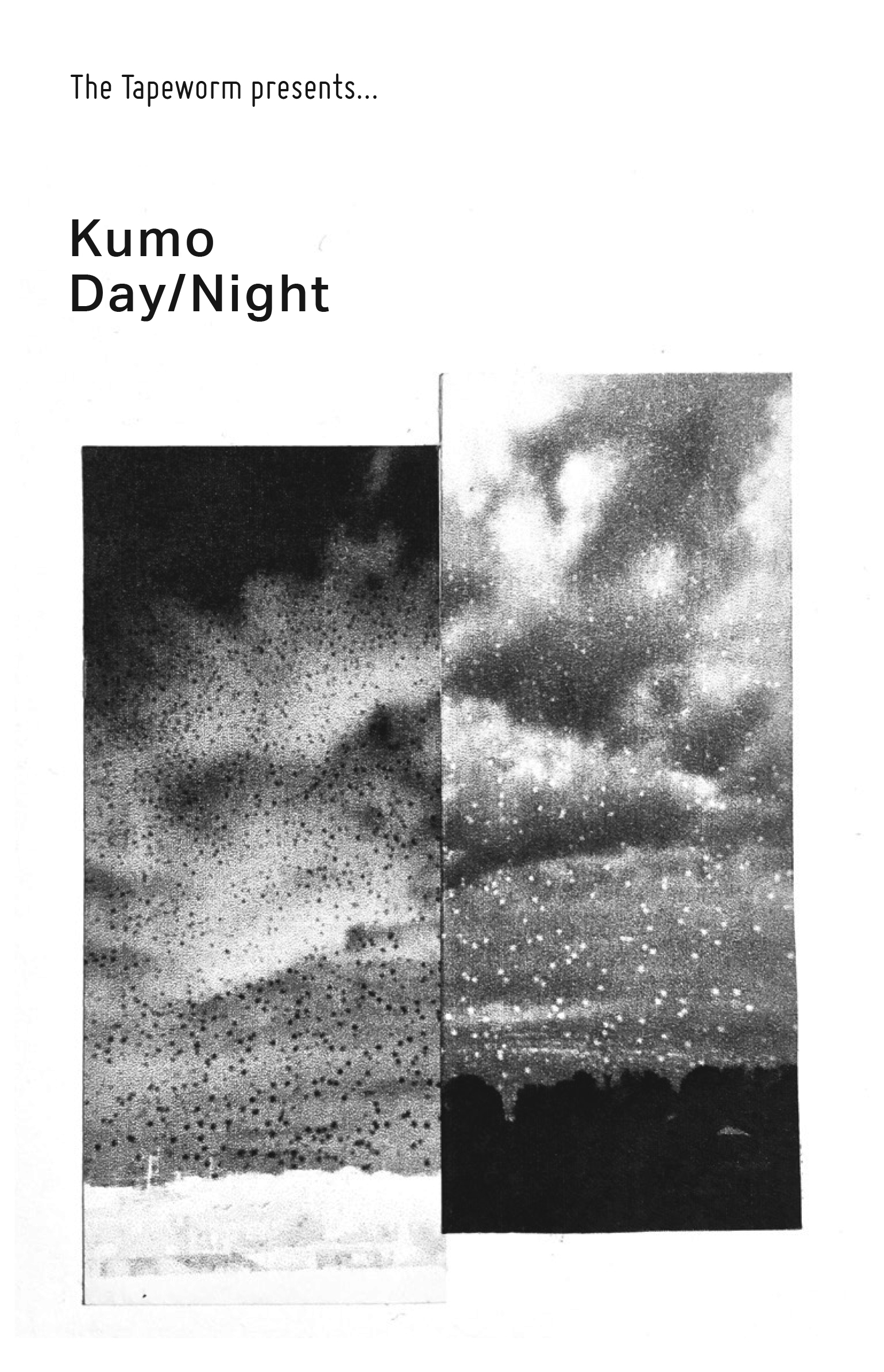
Releasing a myriad of ‘micro-scale’ peregrinations via his revitalized imprint Psychomat and now through the London-based cassette tape label Tapeworm, Jono Podmore once again channels his longest running alter-ego as Kumo for another serialism style trip into the unknown.
Finding a suitable home for his latest experiment with the highly conceptual Tapeworm (a label with an aloof roster of projects from serious thinkers and avant-garde artists alike, including the late Derek Jarman, Stephen O’Malley, Philip Jeck and Can’s one time front-of-house shaman, Damo Suzuki), the professor of ‘popular music practice’ at Cologne’s Hochschule für Musik, sometime Irmin Schmidt foil and guiding light of the Can legacy (the recent Lost Tapes being just one project he helped put together and produce), and founding instigator of the rebellious analogue adventurers Metamono, imbues a set of field recordings with decades of electronic experience.
Lifting off from the concrete of terra firma into alien Kosmische amorphous realms, his Day/Night moiety converts the environmental sounds (from mopeds to barking dogs, the sonorous bass boom of a subwoofer drifting from a car stereo, to city landscape birds squawking and commercial airplanes flying overhead) he recorded from the balcony of his South East London flat into something often mysterious and even at times transient. Both tracks are undulated with Tangerine Dream ambient machinations and oscillations, and ethereal siren trilled Theremin: left to linger, waft and occasionally ascend above the looming hovering clouds.
There are subtle differences between the two aspects of the same day of course; the movements and appearance of nocturnal wildlife and the human inhabitation of Podmore’s estate reverberate on the ‘Night’ recording; inverted owl-like signature sound and orbiting satellites overlap with darker stirrings and the visage shimmers of an unknown presence.
A Kosmische and avant-garde electronic panorama, viewed from a concrete vantage point, Podmore’s efflux styled synthesis convolutes the 360-degree city environment with engineered sounds to create another quality ambient drone and kinetic recording. If you like early Cluster (Kluster even), TD, Orb, even early Kraftwerk, and a lifetime of cerebral techno minimalism then track this tape down. You better be quick though, as it’s limited to only 125 copies!
Moa McKay ‘Illusions Of A Dream’ 29th June 2018
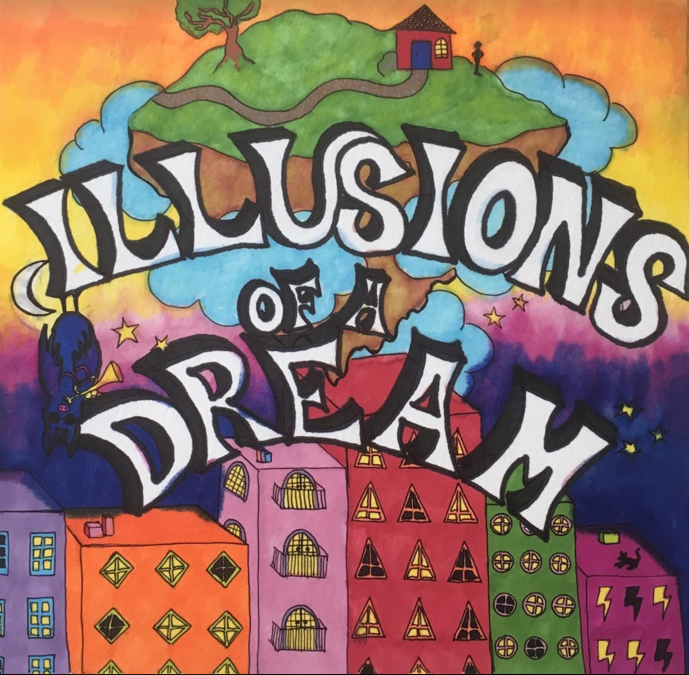
Though I know absolutely nothing about – what sounds to my ears like a sassy bubblegum soulstress with millennial pep – the pop-y soul singer Moa McKay, the lilting but deep grooves of the opening track from her summery new EP, wafting from my speakers, immediately caught my attention when I first heard it recently: alluringly intriguing, drawing me.
Though the lingering breezy jazz tones may evoke Frank era Amy Winehouse with a tinge of American R&B, McKay actually hails from Stockholm and resides in Berlin: a city that doesn’t exactly scream soul. Earlier material, from what I can deduce, is more in the mode of Scandi-pop heartbreak; sung in McKay’s native dialect. With a fresh outlook and collaborating with a trio of musicians that includes guitarist Tristan Banks, drummer Gabriele Gabrin and bass player Per Monstad, McKay now expands her vocal range on an EP’s worth of summertime retro soul pop hits.
Sounding as effortless and floaty as that summer breeze she arrives on, this smoky lounge meets urban suite is rich with nice little funk licks and twangs, rolling jazzy blues percussion and a live feel backing. R&B heartache with attitude, she weaves the woes and travails – from first person perspective to looking in from the outside – of relationships in the modern age. She won’t take any crap mind: channeling as she does, the steely women of 1960s soul and turning the “tramp” put-down on its head.
A modern take on the sort of fusion soul and jazz that the Talkin’ Loud label used to pump out in the 90s, but with nods to the original blueprints, McKay and her partners create a brilliant EP of pliable, melodious and sophisticated sun-dappled soul and pop.
https://soundcloud.com/oacay/sets/illusions-of-a-dream-ep
Ippu Mitsui ‘Shift Down EP’ Submarine Broadcasting Company, 6th July 2018
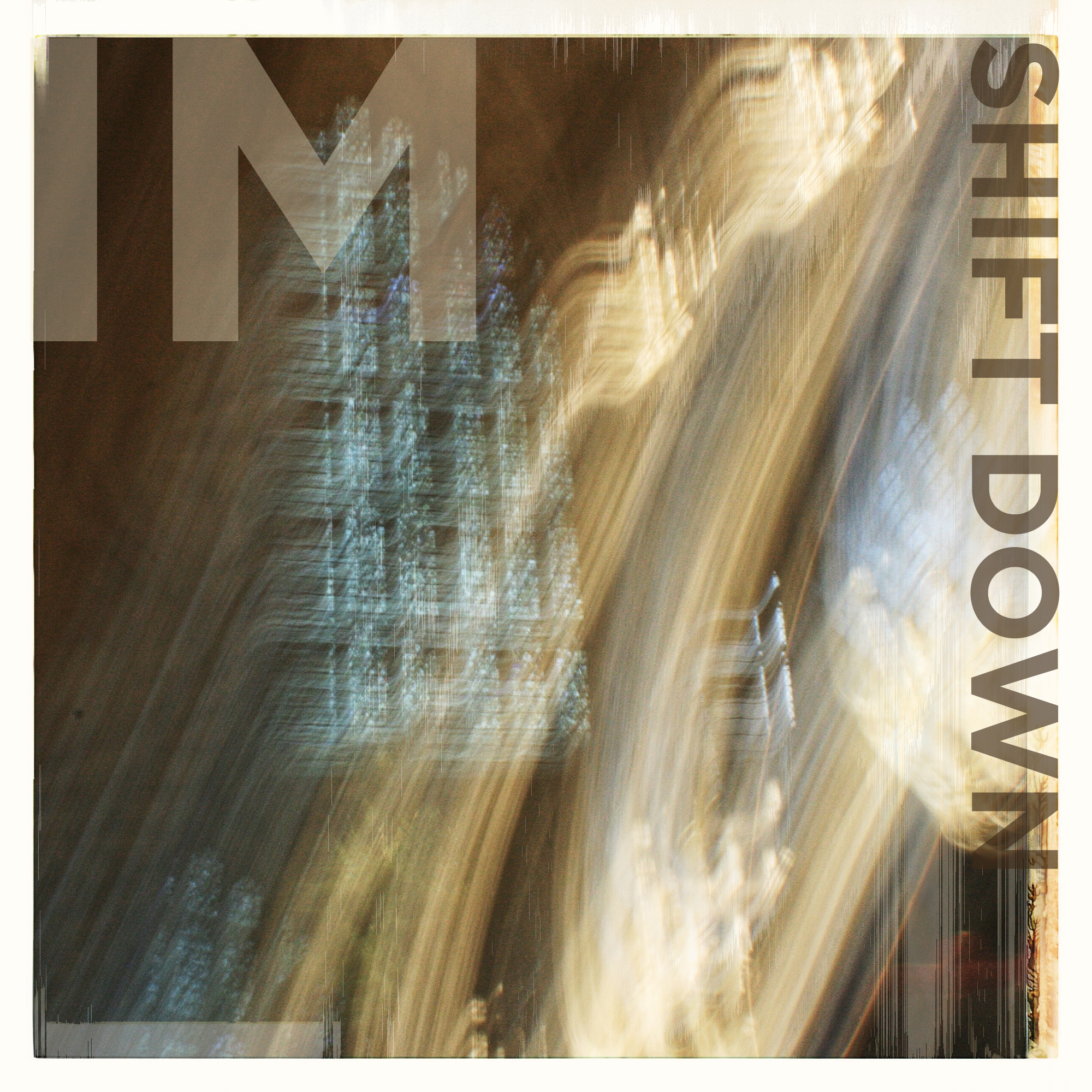
Atypical of EPs from the mysterious Tokyo-based composer of quirky ennui electronica, Ippu Mitsui’s latest transmission, as the title suggests, is a (gear)‘shift down’ from his usual broken-up, bit-y and effects cornucopia signature style of dance music. Choosing to flow and relax on a neon-glowed cruise through a quartet of both nocturnal prowls and sunset beckoning castaways, Mitsui’s kooky visions summon evocations of a Leaf Label soundtracked Drive, or Warp transmogrified Tokyo Drift: a pulse, you could say, perfect for motoring runs across an Akira illustrated cityscape.
Still throwing us curve-balls; bending and morphing, twisting and turning; changing the odd note for example on a bass run; despite throwing us occasionally, our enigmatic producer creates his most peaceful suite yet. From hanging out the back of a Sega games console 16-bit pixelated sports car on the title track, to imagining the Yellow Magic Orchestra pumping out from an 1980s West Coast lowrider stereo on ‘Squeeze 87’, and navigating early Aphex Twin and futurist Baroque on ‘Rotation’, Mitsui melds TR-808 electro and acid Techno with swelling strings to once again soundscape his own imaginations.
Idiosyncratic, sophisticated and plowing his own furrow, this emerging talent remains a well-kept secret on the electronic music scene. Hopefully, translating from his native Japan, and distributed in the last couple of years through independent UK labels and platforms, such as Bearsuit Records and, on this latest release, the Submarine Broadcasting Company, he’ll now reach a much wider audience at last.
 Monolith Cocktail Blog