PART THREE OF THE MONOLITH COCKTAIL’S ALBUMS OF THE YEAR LISTS
Welcome to the concluding part of the Monolith Cocktail’s choice and favourite albums of the year lists (Part One and Part Two). Compiled by Dominic Valvona, Brian ‘Bordello’ Shea and Graham Domain, each entry is in alphabetical order, with this final run down starting at P and finishing at Z.
P________________
Pan Afrikan Peoples Arkestra ‘60’ (The Village)
Chosen by DV/Reviewed by DV/Link
‘Serving the South Central L.A. Black community from within for six decades (and counting), the late Horace Tapscott and his preservation Arkestra ensemble captured and reflected the social and racial injustices of that oppressed community with a righteous politically conscious and radical jazz style blueprint; a documentation, but also self-reliant stand against the state’s brutality and economic suppression.
The 60 album proves an important preservation of a self-reliant social activist institution, integral to the community in which it serves, teaches and rises up. A great encapsulation of that story, musical journey and the changes it has gone through, this will both excite the Ark’s fans and newcomers to the cause.’ DV
Nico Paulo ‘Nico Paulo’ (Forward Music Group)
Chosen by GD/Reviewed by GD/Link
‘This is a wonderful summery album of Bacharach-like melodies by the Portuguese-Canadian singer. A truly remarkable debut of ten self-composed wonderful songs that sound like standards.
Her voice is a bewitching combination of Judy Collins, Joni Mitchell and Natalie Mering (Weyes Blood). Musically it covers a wide spectrum of Tropicalia, Folk, Americana, Jazz and Pop. Her voice conveys real emotion and depth that is bounced off the beautiful melodies and lyrics.
A future classic that will undoubtedly have a far-reaching influence on stars not yet born!’ GD
Hawk Percival ‘Night Moods Vol. 1’ (Think Like A Key)
Chosen by BBS/Reviewed by BBS/Link
‘Oh my god! How I love Hawk Percival. She is like a lo-fi indie Noosha Fox (I am once again showing my age). But come on, ‘S-S-S-Single Bed’ was one of the singles of the 70s and I think that Hawk Percival shows the potential to make something equally as wonderfully magical, as this 6 track mini album shows so much pop suss and quirky originality.
It takes from the past – you can hear the timeless melodies from the 60s/70s – and twists it into something new. She plucks the spinning melodies from the air and weaves them into her own unique creation making an album of future desert island discs. I think Hawk Percival could well be one to watch.
This album is part of the DIY music series released by the excellent Think Like A Key records, and good on them for releasing this little lo-fi treasure.’ BBS
Polobi & The Gwo Ka Master ‘Abri Cyclonique’ (Real World)
Chosen by DV/Reviewed by DV/Link
‘Suffused, elevated and morphed with Parisian-based Doctor L’s jazz, electronica Francophone new waves and trip-hop, the ancestral Guadeloupe rural folk traditions of Léwòz and one of its renowned modern practitioners-deliverers Moïse Polobi is transformed into an environmental traverse. As the good doctor has proscribed so well for Les Amazon D’Afrique and the Mbongwana Stars, the roots of another form are, with subtle wondering and sophistication, given a unique sound experience.
A very personal album, this is the first to be released under Polobi’s own name. Previously the Guadalupe star has performed with his Indestawa Ka band, releasing eight albums and performing internationally. But this cyclonic whirlwind is something different, a galvanised, electrified and bolstered earthy and magical vision of his country’s past, present and future. It’s one of the most interesting albums yet in 2023, with a sound that reboots folkloric traditions in the face of an ever-encroaching modernity.’ DV
Psyche ‘Self-Titled Debut Album’ (Four Flies Records)
Chosen by GD/Reviewed by GD/Link
‘This is a brilliant album of funky Mediterranean psychedelic instrumentals that sits somewhere between Khruangbin and the Barry Gray Orchestra! Every track is a Gem! Wonderful!’ GD
R__________________
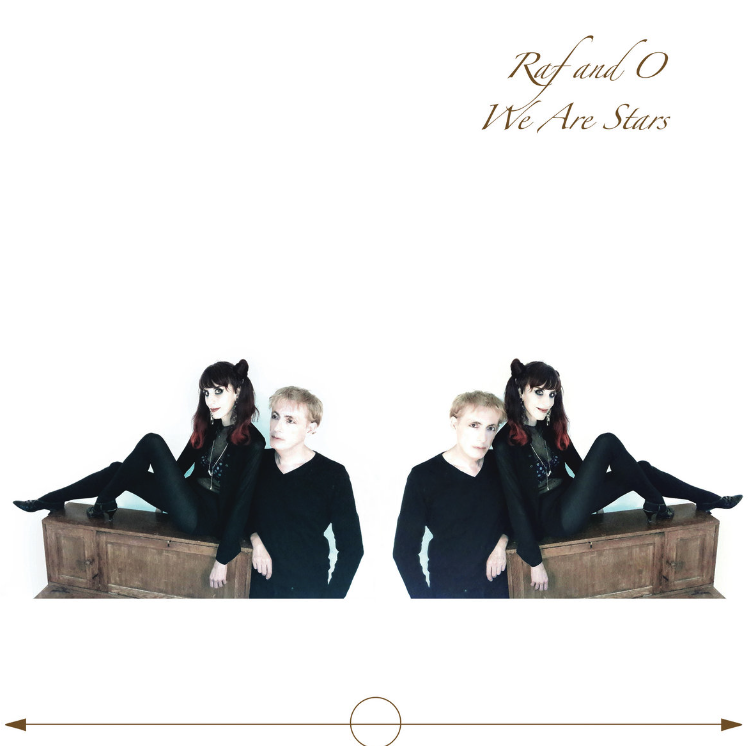
Raf And O ‘We Are Stars’ (Telephone Records)
Chosen by Dominic Valvona/Reviewed by DV/Link
‘Few artists have purposely entwined themselves so deeply with their idols than the Raf And O duo of Raf Mantelli and Richard Smith (the “O” in that creative sparked partnership). David Bowie and Kate Bush loom large, permeating near every note and vocal infliction of their idiosyncratic, theatrical, cinematic and up-close-and-personal intimate style of avant-garde pop and art school rock experimentation. Raf even has a Kate Bush tribute side project; coming the nearest I’ve yet heard of anyone to that maverick progenitor’s range-fluctuating, coquettish and empowered delivery, and her musicianship and erudite playful and adventurous songwriting.
An alternative time travelling theatre of interwoven fantasy, dream realism and the reimagined, We Are Stars is as playful with its unique style as it is only too aware of the deep held stresses, strains, pain and detachment that plagues society in the aftermath of a global pandemic, economic meltdown and war. Looking to the stars, but knowing that even escapist dreams of the cosmos have failed us, Raf And O (who I haven’t mentioned in name at all, but is an adroit craftsman of his form, accentuating, punctuating or loosely weaving a meandered musicality around Raf) take their concerns, observations and curiosities into ever more arty and intriguing directions. They remain one of the most individual acts in the UK; true inheritors of Bowie and Bush’s legacy and spirit.’ DV
Refree ‘El Espacio Entre’ (Glitterbeat Records)
Chosen by DV/Reviewed by DV/Link
‘Coming on like an Iberian vision of the Neel Murgai Ensemble and Hackedepicciotto trapped with Nacho Mendez (I’m thinking of the Ángeles y Querubines album) in an undefined, veiled timeline and atmosphere, the follow up sketchbook album of Raul Refree’s imagination is yet again a unique, “seamless”, amalgamation of reflective enquiry, soundtracks, semi-classical etudes and the visceral.
Not so much an album of performances as a quality production of fleeting descriptions, of moments captured in poignant scenery, Refree’s second such album of scores and sound pieces is an incredible, immersive mood board of magical and often plaintive thoughts, feelings, processes and films yet to be made. I’ve been sitting on this album for months and it never loses its initial pull, gut feeling, and yet I can also hear new things on every listen. Raul Refree is a great talent indeed.’ DV
Sebastian Reynolds ‘Canary’ (PinDrop)
Chosen by DV/Reviewed by DV/Link
‘After what seems like an age, and with a prolific string of projects, collaborations and EP releases behind him, Sebastian Reynolds finally unveils his debut solo album.
A near lifetime’s experience and musicology is called upon for a mostly sophisticated and subtle amalgamation of the electroacoustic, trance, EDM, electronic-chamber music, techno ambience and soundtracks on an album that draws on all of Reynolds passions and emotional threads. Self-help guidance with the neurons fired-up, the mind open, Canary counterpoints mistrust with wonderment, alarm with the rational and the optimistic. It has taken a while to arrive, but Reynolds debut expanded album of thoughts and ideas is a mature statement of quality. ‘ DV
Room Of Wires ‘Welcome To The End Game’ (Ant-Zen)
Chosen by DV/Reviewed by DV/Link
‘A buzz, whine, flex and resonating ring of zinc and alloy, of recondite machines, permeates another heavy set from the Room Of Wires duo. The latest in a strong catalogue of such dark materials and alien mystery, Welcome To The End Game ties together a complex of dystopian woes, rage and dramas into an interlayered twisting and expanding metal muscled album of electronic.
Room Of Wires navigate and balance the uncertainty with glimmers of escape, and moments of hope and release; the machinations and unseen forces that bear down upon us all at least dissipated enough to offer some light.’ DV
Seljuk Rustum ‘Cardboard Castles’ (Hive Mind)
Chosen by DV/Reviewed by DV/Link
‘Imbued by a rich history of place and time, and the trading winds that brought so many atavistic and less ancient civilizations to its natural harbor hub, Seljuk Rustum’s Kochi-base of creative activity is a city steeped in polygenesis sounds and ideas.
For the most part the musical mind of Rustum and his partners on this magical, entrancing and dreamy journey, reveals a great sonic knowledge, both a part of, yet also in some ways, escaping history.’ DV
S___________________
Salem Trials ‘What Myths Are We Living’ (Metal Postcard Records)
Chosen by DV & GD/Reviewed by Graham Domain/Link
‘Crawling along dark streets, shadows loom in every doorway, footsteps echo in the night silence. Cold sweat trickling down spine, dark rumblings from a dirty basement, shadows dancing on the barred windows. Fish bones in a mouth. Coughing up blood and the smell of urine. Decay and aftershave. Cracked voice and beer-stained floor. Each step shoes stick. Black trail like slime from a snail. A coffin landfill club of noise and danger! The night ignites with saw-like melodies and cavernous hypnotic rhythms kicking against the pricks! Smoke and dark truths bounce off the walls shaking flesh and brick, glass and bone. Inspiration as sonic affray, until the last notes flare into a howl of darkness. A murder of youth collapse through doors and out along streets. City centre lights, a loneliness of drinkers cast adrift, flowing like a cut artery in a thrombosis of social isolation. Music smashed against walls! Exciting! Unbreakable!’ GD
Ryuichi Sakamoto ‘Ongaku Zukan’ (WeWantSounds)
Chosen by GD/Reviewed by DV/Link
‘A timely, special release in the wake of the Japanese icon’s death in March of this year, the impeccable vinyl specialists WEWANTSOUNDS have reissued Sakamoto’s cult 1984 solo album Ongaku Zukan (or “Musical Encyclopedia”).
Sakamoto assails the mid 80s with his own manual, a merger of signatures and fresh horizons, but above all, rewriting the Japanese cannon whilst reaching into a future yet unwritten. There will be a lot of people very happy that this classic has been rejuvenated, whilst a new generation can hear what all the fuss is about. Not his best by any stretch of the imagination, but everything Sakamoto touched is worthy of investigation, and this feels like a bridge between periods. WWS has done us all a great favour in resurfacing this lost class piece of experimentation and groove.’ DV
Schizo Fun Addict ‘Love Your Enemies’ (Fruits Der Mer)
Chosen by BBS/Reviewed by BBS/Link
‘This album is one of the best and wormiest sounding albums I have heard in many years. It has the same magic and otherworldly but inwardly peaceful calmness about it as Pet Sounds, and there is something about Schizo Fun Addict that reminds me of the Beach Boys but without ever actually sounding like them – I will put it down to musical genius and heavenly inspiration.’ BBS
Seaming To ‘Dust Gathers’ (O Sing At Me)
Chosen by DV/Reviewed by Gillian Stone/Link
‘The structure and tracking of Dust Gatherers are utterly brilliant. Instrumental “AnOverture” introduces the juxtaposition of the electronic and symphonic elements the make up the album’s ethos. The next three tracks, “Blessing”, “Tousles”, and “Brave” are imbued with choral synths and swirling vocals. It is not until the fifth track, “Traveller”, that acoustic instruments come back into the fold, with the introduction of Seaming To’s clarinet. Clarinets then mesh beautifully with synths on “Water Flows”, followed by the instrumental synth piece “xenanmax”. The album then takes a left turn into the string-quartet-driven “Hitchhiker”, and pivots again into the Björk-style melodies and microbeats of “Look Away”. The final two songs on Dust Gatherers, which appear to be companion pieces, harken back to the golden era of jazz, finishing the record with a sense of timelessness. Piano ballad “Pleasures are Meaningless” alludes to the final track, jazz standard “Tenderly”, which is tethered down by pulsing clarinets and synth glitches. Ever present are Seaming To’s profoundly strong character vocals, which evoke goosebumps at every turn.’ GS
Silver Moth ‘Black Bay’
Chosen by GD/Reviewed by GD/Link
‘Cinematic tracks full of atmosphere and grandeur! 45 minutes of Bliss! It may become the holy grail of lost albums in future years – if it slips under the radar!’ GD
Slow Readers Club ‘Knowledge Freedom Power’ (Velveteen Records)
Chosen by GD/Reviewed by GD/Link
‘The fifth (official) album by Manchester band The Slow Readers Club comes across like a live album such is the energy captured in the recording. First track ‘Modernise’ is perhaps the most powerful, if least representative, song on the album. With its Chemical Brothers rave intro and pounding rhythm it also has the most individual sounding vocal on the album, a bit PIL like! It’s a song created to be exciting live and it serves that purpose well!
A great album of powerful anthemic songs and possibly their most consistent effort to date.’ GD
Lonnie Liston Smith ‘Cosmic Change’ (Jazz Is Dead)
Chosen by GD/Reviewed by DV/Link
‘Smooth soulful vibes, bulb-like notes and cosmic fanning rays from the great jazz-funk doyen Lonnie Liston Smith, who released his first album in 25 years in 2023. Thanks to the overseeing facilitators of the enriching Jazz Is Dead label project, Adrian Younge and Ali Shaheed Muhammad have coaxed the legendary artist, ensemble bandleader and sideman for such impressive luminaries as Miles Davis, Pharoah Sanders, Gato Barbieri and Leon Thomas, back into the studio; just one of many great names from the spiritual, conscious and funky-jazz rolls of inspiring talents.
Co-composing and collaborating with their chagrin Younge and Muhammad both work in the old magic with a sense of the new and forward; paying homage yet creating something new, performing the very kinds of influential music that had an impact on those who came later, namely the hip-hop fraternity (Jazzmatazz era Guru and the Digable Planets being just two such notable collaborators and acolytes). and of course, Liston is in supreme form as sagacious keyboard foil.’ DV
Snowcrushed ‘Snowcrush’
Chosen by BBS/Reviewed by BBS/Link
‘Snowcrushed’s A Frightened Man debut album was one of my fave albums of 2021; an album of beguiling atmospheric found sounds ambient gems. But on Snowcrush he’s gone on an alternative music journey of post-punk, Goth and Darkwave, and on occasion lo-fi folk – the excellent ‘Cowardice’ sounding like someone has taken Kurt Cobain’s tortured soul and spread it on Johnny Cash’s toast, which he ate before recording the American Recordings series of albums: A truly dark wonderful song. Although nothing else on the album quite matches up to the brilliance of ‘Cowardice’, which is no slight as not many other tracks I have heard this year matches up to it, the rest of the album is still full of unsettling dark gems.’ BBS
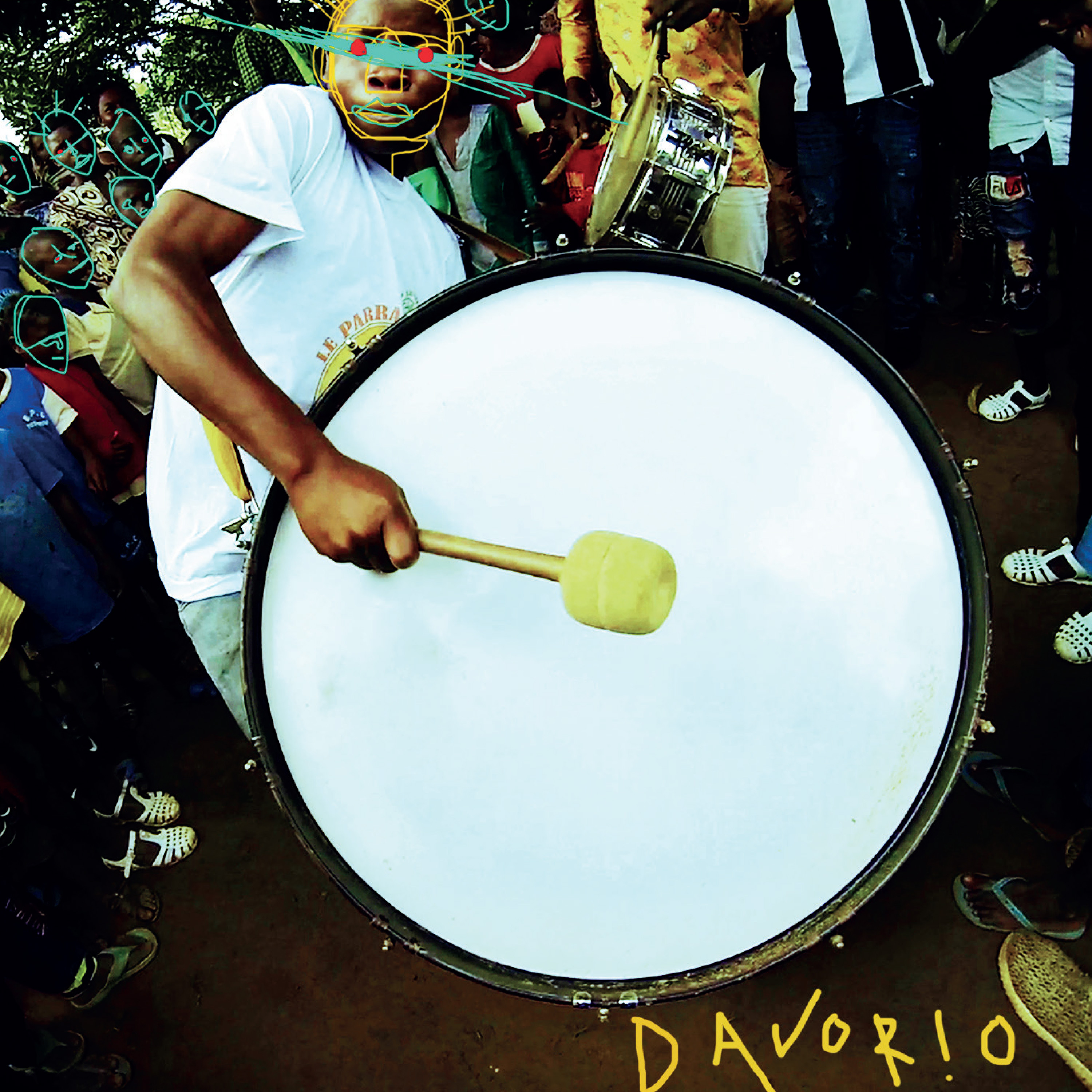
Samuele Strufaldi ‘Davorio’ (Música Mascondo)
Chosen by DV/Reviewed by DV/Link
‘Every expression has meaning, a story, which is then transformed by Strufaldi’s production into something almost dream like and cosmic yet still connected to the villagers’ roots. A transistor radio collage here, some Songhoy Blues on a bustling street with a small amp there; a display of rattled and scrapping percussion and hymnal stirrings merge with zaps, warbles and various embellishments. This cultural exchange with the Ivory Coast blurs the lines between worlds; an act of preservation, but much more, as the foundations of this culture prove intoxicating, dynamic and mesmerising.’ DV
Susanna ‘Baudelaire and Orchestra’ (Susanna Sonata Label)
Chosen by GD
T____________________

Tachycardie ‘Autonomie Menerale’ (Un-je-ne-sais-quoi)
Chosen by GD/Reviewed by GD/Link
‘This is the third album in a trilogy of ambient sound-art works by French composer Jean-Baptiste Geoffroy. Consisting of seven pieces of strange, dark, tribal, alien ambient dissonance and warm unnatural half-light!
In the first piece, ‘Parties sud puis nord’, tribal drums and hyper percussion are intermittently infiltrated by reverberating clangs and deep disturbed atmospheric noise. It is a strangely compelling listen! Although if listened to by those of a disturbed mind it may likely trigger psychosis, one-legged.
You will not find another album like this. It will penetrate your dreams bringing raptures of nightmare terror, joyous pain and nerve scraping pleasure. As the stones with eyes move closer, watching, surrounding your house, you may never ‘escape into night’ or feel at ease again!’ GD
Tele Novella ‘Poet’s Tooth’ (Kill Rock Stars)
Chosen by DV/Reviewed by DV/Link
‘A wistful, almost disarming, Tele Novella weave their magic on an album that takes its cues from Harold & Maude and a removed version of the heartbreak yearning vulnerability of Nashville and Texas country music; albeit a version in which Cate Le Bon and Aldous Harding sip despondently from a bottle of life’s despair. Better still, Mike Nesmith writing for Patsy Cline.
As whimsical and beautifully executed as it all is, Poet’s tooth is a moving album of timeless tropes, somehow delivered musically and visually through a slightly off, sometimes surreal, vision of the familiar. Natalie Ribbons and foil Jason Chronis dream up an idiosyncratic staged world, their moniker taken from the serial drama/soap opera phenomenon of the “television novel”, a format most prominently produced for the Latin American markets.
Adolescence escapism wrapped in a softened, but no less stirring, epiphany, Tele Novella has a surreal, dreamy quality about them. From the Tex-Mex border of yore to the contemporary Austin scene of City Limits, they weave a really impressive songbook that’s as Hal Ashby and Sidney Lumet as it is pining Country and Western. Poet’s Tooth is both lyrically and musically perfect; one of my favourite albums of 2023 – no idle boast. Prepare to be equally charmed and moved with a counterculture resurgence of quality, subtle comedy and tragedy, eccentric disillusion.’ DV
Tomo-Nakaguchi ‘The Long Night in Winter Light’ (Audio Bulb Records)
Chosen by GD/Reviewed by GD/Link
‘This is a beautiful album where each piece conjures-up a different vision of winter – the wonder of nature surviving and flourishing as the seasons change! As the composer himself says, the music reflects the beauty of nature – frost glistening on grass – a field of snow lit by moonlight – the night sky filled with stars! Like a ray of light, a ray of hope, this is beauty that shines through the darkest of times!’ GD
Ali Farka Touré ‘Voyageur’ (World Circuit)
Chosen by DV/Reviewed by DV/Link
‘This latest project, produced by the label’s Nick Gold who spent time with the late Ali (his brilliant accompanying notes are full of vivid anecdotes and adventures spent with the Mali icon) and his scion, the equally gifted virtuoso Vieux Farka Touré is the first album of ‘unheard’ material from the legend since his 2010 posthumously released partnership with Diabate.
Voyageur is a welcoming addition to the catalogue, an incredible nomadic traverse of songs that capture Mali’s diversity and rich musical heritage; especially with his celebrated guests opening the sound up, travelling even further afield to those bordering regions that meet Mali.
Ali Farka Touré aficionados will find this a welcome addition to the chronology, with recordings that many will have either never known about or been anticipating. But I’m sure there’s going to be surprises for even the most committed of fans. And for newcomers to Ali’s legacy, this album will prove a great entry point with its diversity and range, showing Ali with various collaborators and paying homage to several cultural styles, traditions. These songs are anything but unfinished scraps, demos, or downtime experiments. Instead, Voyageur is a collection of real quality.’ DV
Trupa Trupa ‘ttt’ (Glitterbeat Records)
Chosen by DV/Reviewed by DV/Link
‘The Polish outfit Trupa Trupa fashion their very own Faust Tapes out of an accumulation of sonic explorations, unfinished jams and rehearsal sessions, field recordings and play.
In the interval between recording new martial ttt is an almost seamless cassette offering of two experimental sound collages – coming in at just under the forty-minute mark. A development played out under the spell of psychedelic hallucination, mirage and more caustic machined distortions and abrasions, the triple “ts” experiment could be read as a really untethered avant-garde outlet for the band. Not that they’ve ever been conventional on that front with previous works melding and contorting, as they do, psych with no wave, post-punk, the industrial and indie to produce a multi-limbed psycho drama or revelation, the hypnotic and propulsive.
Trupa Trupa are in their ascendency all right, their creative collective consciousness constantly dreaming up fresh ways of hearing and articulating the wastelands of what was once called civilisation; the discourse all but filtered out for the most part on this immersive experience. They can do no wrong it seems at the moment, and must be considered one of the most important bands to emerge from Europe in the last decade. On the strength of this latest release it will be very interesting to know where they will go next.’ DV
V______________________
Various ‘New No York’ (Metal Postcard Records)
Chosen by BBS/Reviewed by BBS/Link
‘A compilation of music from Metal Postcard bands, but what all these bands have in common is Andy Goz. Yes, the guitar genius who’s in all these bands, and all the bands are of course pretty darn special.
New No York is a quite wonderful comp of post-punk invention and fury and no doubt will be soundtracking my next few weeks.’ BBS
Various ‘Parchman Prison Prayer – Some Mississippi Sunday Morning’ (Glitterbeat Records) Chosen by DV/Reviewed by DV/Link
‘Back in the state penitentiary system, the producer, author and violence prevention expert Ian Brennan finds the common ground once more with another cast of under-represented voices. Eight years on from his applauded, Grammy nominated Zomba Prison Project, Brennan, thousands of miles away from that Malawi maximum-security facility in the deep, deep South of America, surprises us with an incredible raw and “uncloyed” (one of Brennan’s best coined interpretations of his production and craft) set of performances of redemption and spiritual conversion.
There’s music, song and litany that would be recognizable to inmates from the turn of the last century, whilst others, tap right into the modern age. The Gospel’s message runs deep in the Southern realms, and encouragingly seems to motivate even those with little hope of being released. Hard times are softened by belief and redemption on a revelatory production. Returning to America after a myriad of recordings throughout the world’s past and present war zones, scenes of genocide and remote fabled communities, Brennan finds just as much trauma and the need for representation back home.’ DV
Various ‘Woman, Life, Freedom’ & ‘Intended Consequences’ (Apranik Records)
Chosen by DV/Reviewed by DV/Link /Link two
‘As the West’s attention is quite rightly invested in the ongoing Russian aggression in Ukraine, it’s fallen on artists, musicians to draw that intense scrutiny on the Iranian regime and its heinous treatment of women. Prompted by the death of Mahsa Jina Amini in the custody of the authorities last year, an ensuing battle of ideals and freedoms has ensued that threatens to topple the tyranny. However, the regime has pushed back harder and with an almost unprecedented violence started executing (mainly men so far) supporters and activists on trumped up, tortured confessional charges of treason. But even in the face of this bloody repression history is on the side of Iran’s younger more liberal generations.
In bringing that plight to Western attention and ears, Iranian artists AIDA and Nesa Azadikhah announced two volumes of not-for-profit compilations.
Both platform a multi-diverse cosmology of electronic female artists working both under endurable pains and censorship inside Iran, or self-exiled and making waves in the diaspora. Each compilation is a discovery of riches in the field of the avant-garde, techno, sound experimentation and protest. There’s been few worthier causes, and few that have been so ignored: the outrage, protests and marches here in the West sadly lacking and silent.’ DV
Violet Nox ‘Vortex And Voices’ (Somewherecold Records)
Chosen by DV/Reviewed by DV/Link
‘A sci-fi chemistry of vapours the Boston, Massachusetts electronic outfit Violet Nox once more entrance with a futuristic new age album of psy-trance, cerebral techno and acid ethereal-voiced self-realization/self-discovery. Wired into the “now” however, messages of self-love and inclusiveness waft and drift to a rhythmic, wavy vision of EDM, crossover rave music and soulful electronica.
For this newest venture – their first for the highly prolific and quality North American label Somewherecold Records – features, more than ever, the experimental, often effected, vocals of group member Noell Dorsey: a mix of hippie cooed yearn, Tracey Thorn, Claudia Brücken and Esbe if you will.
Whether it’s journeying into the subconscious or leaving for celestial rendezvous’, Violet Nox turn the vaporous into an electronic art form that’s simultaneously yearning and mysterious. Fizzing with techy sophistication and escapism, the American electronic group continue to map out a fresh sonic universe.’ DV
W_______________________
The Waeve ‘The Waeve’ (Transgressive)
Chosen by GD/Reviewed by GD/Link
‘The WAEVE are a new band formed by Blur’s Graham Coxon (vocals/sax/guitar/medieval lute) and The Pipettes’ Rose Elinor Dougall (singer/songwriter/piano/ARP 2000 Synth).
The interaction and balance between the two voices is perfect with each singer excelling in their introversion and reserve! The band do have their own sound – a strange mix of folk-rock, punk, no wave, psych and easy listening! A truly great album that deserves a wide audience! Give it a listen – you may be surprised!’ GD
The Wedding Present ’24 Songs’ (HHBTM Records)
Chosen by BBS
‘An album that collects the A and B-sides to the series of singles released last year by the mighty Wedding Present, so obviously one of the best of the year.’ BBS
Y__________________________
Dhafer Youssef ‘Street of Minarets’ (Back Beat Edition)
Chosen by GD
Z___________________________
Zohastre ‘Abracadabra’ (ZamZam)
Chosen by DV/Reviewed by DV/Link
‘Spinning and dancing around the phosphor glowing fire whilst invoking a polygenesis array of pagan, hermetic and galactic deities, the French-Italian combo cast magical spells of progressive, psychedelic, noise, primitivism, electronica and cosmic krautrock on their conjuring sonic Wurlitzer.
Reworking references from each of the duos respective countries into a dizzy and often accelerated kaleidoscope of acid-trip occult ritual and more moody, near eerie, mystical uncertainty, Héloise Thibault and Olmo Guadagnoli combine an electronic soundboard with drums as they hurtle, collide and work a frenzy around the maypole.
For those seeking to discover some lost tribe of extraterrestrial worshipping acolytes with a penchant for Zacht Automaat, Sunburned Hand Of Man and the Soft Machine then ZamZam Records have you covered with an occult and tripping invitation too good to be missed.‘ DV
Hi, my name is Dominic Valvona and I’m the Founder of the music/culture blog monolithcocktail.com For the last ten years I’ve featured and supported music, musicians and labels we love across genres from around the world that we think you’ll want to know about. No content on the site is paid for or sponsored and we only feature artists we have genuine respect for /love. If you enjoy our reviews (and we often write long, thoughtful ones), found a new artist you admire or if we have featured you or artists you represent and would like to buy us a coffee at https://ko-fi.com/monolithcocktail to say cheers for spreading the word, then that would be much appreciated.
Monthly Playlist For October 2023: Bex Burch, Tele Novella, Fantastic Twins, The God Fahim…
October 31, 2023
CHOICE MUSIC FROM THE LAST MONTH/CHOSEN BY THE MONOLITH COCKTAIL TEAM

Every month, depending on who’s contributing, the Monolith Cocktail team create a choice track journey of eclectic music; an encapsulation of that month’s reviews plus those tracks we either didn’t get time or room to write about but loved. Joining me, Dominic Valvona, in October, there’s selections from our resident Hip-Hop guru Matt Oliver and indie, lo to no-fi and underground motherfucking rock ‘n’ roll maverick, Brian ‘Bordello’ Shea.
Without further ado, let’s crack on with the playlist and track list:::
Bex Burch “Joy Is Not Meant To Be A Crumb’
Lukid ‘Haringey Leisure’
Mike Reed’s The Separatist Party ‘A Low Frequency Nightmare’
Chouk Bwa & The Angstromers ‘Sala’ <THIS MONTH’S COVER STARS>
Slimzee, Boylan & Riko Dan ‘Mile End’
Daiistar ‘LMN BB LMN’
Axis: Sova ‘Hardcore Maps’
Pound Land ‘Bunker – Live’
Party Dozen ‘Wake In Might’
Crime & The City Solution ‘Brave Hearted Woman’
Tele Novella ‘Poet’s Tooth’
Aesop Rock ‘By The River’
Verb T & Vic Grimes ‘Inner Child’
Joker Starr & DTY FT ‘Revelation’
Les Amazones d’Afrique ‘Kuma Fo (What They Say)’
Fantastic Twins ‘Twins Can’t Love’
Beans & Anti-Pop Consortium ‘ZWAARD_OVER’
The god Fahim ‘Big Money Talk’
Black Josh & Wino Willy ‘Today’s The Day’
Dylan Jack Quartet ‘Of Caves, Tombs And Coffins’
Daykoda ‘TONGUES’
Dhani Harrison ‘La Sirena’
Salisman & His Unwavering Circle ‘Empty Pool’
Fortunato Durutti Marinetti ‘Clerk Of Oblivion’
Junkboy ‘Chase The Knucker’
Tele Novella ‘Hard-Hearted Way’
Maria Arnqvist ‘Morning Sun’
Apathy & Kappa Gamma ‘Fenwick’
Mendoza Hoff Revels ‘Interwhining’
Cookin Soul & The God Fahim ‘Blood Sport’
Guilty Simpson & Uncommon Nasa ‘Easy’
Black Josh & Wino Willy ‘Close To The Edge’
Les Mamans du Congo & PROBIN ‘Mpemba’
fhae ‘I Just Want To Know Where We Go When We Die’
August Cooke ‘Family Portrait’
Michelle Lordi ‘Only Love Can Break Your Heart’
Raf And O ‘Still Sitting In Our Time Machines’
A. Savage ‘David’s Dead’
twin coast ‘Scratch On You’
Dirty Harry ‘Through Chaos’
The Smile Rays ‘To Do List’
Daniel Son & Wino Willy ‘CAMH’
Raul Refree & Pedro Vian ‘La Vera Pau VIII’
Andrew Heath ‘Heavy Water, Pt. 1’
aus ‘Flo – Red Snapper Rework’
Tonn3rr3 & Bikaye ‘Balobi’
Hooveriii ‘Dreaming’
Louis Carnell & Ben Vince ‘three’
Koum Tara ‘Corona Chitana’
Catrin Finch & Aoife Ni Bhrain ‘Waggle’
The Perusal #48: Crime & The City Solution, Tele Novella, Chouk Bwa & The Angströmers, Yara Asmar…
October 5, 2023
A WORLD OF DISCOVERIES REVIEWED BY DOMINIC VALVONA
(Unless stated otherwise, all releases are available now)

Chouk Bwa & The Angströmers ‘Somanti’
(Bongo Joe)
Reuniting for a second explosive dynamic album of electrified Vodou and Mizik Rasin, the Haitian collective Chouk Bwa and the Belgian production duo The Angströmers once more propel ritual and ceremony into an otherworldly futuristic setting.
Originally crossing paths back in 2016, formulating a project performance two years later followed by the release of the partnership’s inaugural album, Vodou Alé, in 2020, this Euro-Haitian combination was interrupted by the Covid pandemic. Unable to meet in the flesh, as it were, for two and a half years they still managed to release a string of 12” EPs; the bridge to what would be that eventual reunion in the May of 2022 and an intensive workout tour of Europe.
This enabled them to record their second album together, Somanti, in a Brussels studio; the culmination of tour performances and interactions, quickly recorded in just one day, such was the energy.
Framed as a more “mature” record, and different in focus to Vodou Alé, there’s now an emphasis on the ritual, ceremonial aspects of this African exported religion, spiritualism and rites, and the sagacious proverbs that are hailed, harnessed and playfully invoked by the Vodou chorus of voices. The hypnotizing and galloping barrage of drums are back, with each ritual subscribed its own rhythm and call. But if we go deeper, the hotbed of Haitian independence Gonaïves-hailing Chouk Bwa also invoke their ancestral African homelands; that being the once powerful, rich and pivotal kingdom of Oyo (growing to become the largest Yoruba speaking state in what is now eastern Benin and western Nigeria); the central African kingdom of Kongo (a Portuguese vassal but independent state with 600 years of history behind it); and key regional kingdom of Dahomey in what is now within the borders of Benin (once uncoupled from a tributary state to the larger Oyo, a global trading post built unfortunately on slavery and conquest). The latter of which, a prominent source of Vodun, the belief system that was torn from its roots and shipped with the poor souls that were transported into slavery, to the Americas and Hispaniola.
That age-old roots music, summoning of spirits, pummeled, beaten and danceable rhythm is given a transformation by the Belgian duo, who zap it with shooting laser beams and cosmic fuzz, fizzles, buzzes of oscillations and reverberations. The dub genes of Lee Scratch Perry, African Head Charge and Major Lazer can be heard throughout, alongside post-punk, Ammar 808, Moonlight Benjamin and Ifriqiyya Electrique on an album of both mysticism, danger (in an exciting way) and spirit world communion.
The groove on the female lead and group sung ‘Fèy Nan Bwa’ is like a cool no wave vision of Vodou-House music – it actually reminded me of Glasgow’s own international project, The Green Door Allstars. But that contemporary fused electronica of magnetic force fields, echoes, phasers, subsonic bass thumps and metallic elements never overshadows the authentic rollicking, tribal bounding and bobbing drums and the expressive, sometimes bordering on hysterical and manic vocals/voices.
Music from another dimension, the Haitian roots music and performative religious invocations and words of wisdom from Chouk Bwa are sent through a vortex into the future on another successful union.
Crime & The City Solution ‘The Killer’
(Mute) 20th October 2023

A decade on from the last project inception of the Simon Bonney and Bronwyn Adams led Crime & The City Solution, and yet another restless move back to one of the city’s that solidified their gothic, hard won reputation and shadowy presence, Berlin.
If 2013’s American Twilight was suffused with the dying embers and toxic fumes of Detroit, with its mass unemployment, foreclosures and desperations, then The Killer seems almost resigned to the fate and inhumanity of our divisive post-Covid times. Incidentally, American Twilight was itself released after an even longer hiatus of twenty years, and with a, near enough, entirely different lineup. Although conceived back in Bonney and Adams native Australia (where Crime & The City Solution were born in the late 70s, burning up the Sydney and Melbourne scenes before following their skulking bedfellows of Nick Cave and Mick Harvey to London, and then onto Wim Wender’s Wings Of Desire backdrop Berlin) during the harsh conditions of lockdown, the band and production were forged in the German capital. The roll call of which includes Frederic Lyenn (on piano, bass and synth), Donald Baldie (guitar), Georgio Valentino (synth and guitars), Chris Hughes (drums and percussion) and Joshua Murphy (piano and guitar). That ensemble is overseen, or rather, ‘conducted’ as it were, by the highly respected producer Martin J. Fiedler.
Originally conceived as a PhD application on decision-making in Afghanistan during the late 1980s, the initial brief was expanded by Bonney’s work delivering aid programmes across the Indo-Pacific region, his professional and personal relationship with Adams, his brief time in post-invasion Ukraine, and lyrically by the ‘syncopated’ delivery rap styles of Mos Def and Talib Kweli’s Black Star collaboration. Although America isn’t mentioned, its leading part in the events that unfolded during the 80s in Afghanistan is impossible to deny. As part of the Cold War strategy to checkmate an expansion-driven Soviet Union, America unintentionally stirred up a viper’s nest in aiding the Mujahedeen and warlords in their outgunned fierce war against the invading aggressor. In forcing the Soviets into a humiliating withdrawal, followed by the entire collapse of the Bloc and regime, and the fall of the Berlin Wall, those Cold War partners turned on their enablers, as they became hardline Islamist fanatics.
Decades later, and after the still never reconciled bloody Balkan wars, and it’s the turn of Putin’s Russia to unleash barbaric bloodshed. But this time, after successfully propping up the heinous regime of Assad in Syria, death and destruction has been dragged to Europe’s front door. The scenes of dead bodies may keep Bonney awake at night, but it’s also the resilience, the matter-of-fact manner in which lives go on in the face of such despairing evil that filters through to the music, themes and lyrics of The Killer. Just as one of his idols, Scott Walker, could convey horror and resignation but love too, Bonney and his foil and muse, Adams, churn up a tempest of emotional tumult in which romance of the hungered, yearned, longed and sentimental kind offers some sense of humanity: the spirit not yet crushed by the enormity of it all. And again, though never mentioned, it is to a both Southern Gothic and Cormac McCarthy-esque America that they turn musically. For this is the broody, Biblical Western terrain the band and their Bad Seeds, Wovenhand peers have trodden for decades; a kind of almost esoteric Americana and dark moody Southern rock ’n’ roll signature that offers haloed magnificence, reverence in the face of apocalyptic dread.
The album begins with the morbidly sinister entitled ‘Rivers Of Blood’ and Bonney’s plaintive, ached declarations for his muse, under a blood moon lit panorama. Danger prowls the Chris Isaak on the road with Cave mood, as a broken Bonney pines with fatalistic worship for his flame, and makes sense of, processes the turmoil in his psyche.
‘Hurt You, Hurt Me’, with its subtle sentimental, wept strings, sounds more like a loose duet between Avalon era Bryan Ferry and Patti Smith. Two voices starting at different points, shadowing each other, emote pain and suffering, and breath languid despondency on frosted glass. Angels cry and faith is promised on a flange affected entwined romance.
A sullen longing pervades the dramatic, slow, testament-poetic ‘River Of God’ (another of those river metaphors). And yet despite the various references to death, the suffrage of the “children of war” and somber tones, there’s a message that “you can be anything you want to be” after all, and a sprouting of wings encouragement – the very opposite of Icarus’ sticky fall to Earth.
As mentioned and alluded to earlier, Bonney pays a most deeply felt form of romantic thanksgiving to his partner Adams with the resounding ‘Brave Hearted Woman’. Going through sophisticated changes – from Cohen to Dylan and Barrett vibrato psychedelics -, Bonney, with the occasional lofty yearns from Adams herself, shares his passionate wants for the woman he so obviously holds in the highest of regards, respects, loves, falls to his knees for, and forms part of his very fibre: “She is ecstasy, filled inside me”; “You are creation for all to see”.
I’m sure it’s Adams’s coos on the next song, ‘Killer’, a piece of torn gothic withering noir, malevolence and redemption. It’s yet another protagonist who’s no damn good, strung out, morose and struggling with self-identity, their place in the world, and perhaps, their heinous crimes. Those syncopated influences that I mentioned much earlier, can be heard weaving an almost non-stop serious-voiced incantation of consciousness and gristlier Western preacher’s song. It seems to take notes from Amon Düül II (Yeti period) and The Rolling Stones.
It’s followed by the outlaw pained ‘Witness’ wake-up call and the seriously hard won conclusion of ‘Peace In My Time’. With a resigned sadness to suffering and a gothic simmered weep of Diamanda Galá style piano arrangement, the latter song, and finale, finds some reconciliation with a world in eternal chaos and torment; Bonney unsurprised, yet not humbled, to the atrocities and harm that we humans dish out on a hourly basis. And yet, there’s an eventual peace in the valley moment there; a glimmer that love will lead Bonney out of the nightmare of his own troubled psyche.
As a statement on Afghanistan, the references are very cryptic, symbolic and veiled. Rather it’s a catalyst, prompt for the Bonney and Adams and the band to expand those horizons and murky textures, and to say much about the external and internal state of the world we live in.
Tele Novella ‘Poet’s Tooth’
(Kill Rock Stars)
A wistful, almost disarming, Tele Novella weave their magic on an album that takes its cues from Harold & Maude and a removed version of the heartbreak yearning vulnerability of Nashville and Texas country music; albeit a version in which Cate Le Bon and Aldous Harding sip despondently from a bottle of life’s despair.
As whimsical and beautifully executed as it all is, Poet’s tooth is a moving album of timeless tropes, somehow delivered musically and visually through a slightly off, sometimes surreal, vision of the familiar. Natalie Ribbons and foil Jason Chronis dream up an idiosyncratic staged world, their moniker taken from the serial drama/soap opera phenomenon of the “television novel”, a format most prominently produced for the Latin American markets.
It’s a world in which, much like Harold and Maude, the bonus of youth is squandered until a mature presence at the very opposite end of the aging equation – with death not far away and looking to grasp every opportunity of youthful risk and carefree adventure – closes the circle with a life lived without regret. That cult movie said much about the Boomers age of high anxiety, caught in the headlamps fretting away their youth; stuck between suicide and depression, hard drugs (proscribed and otherwise) in the face of a society moving past the hopes of the last decade into the violence and despondency of the 70s: Take your pick, from Nixon to Vietnam, the crushing resistance in the Soviet Bloc and so on…
Roles are reversed, with Maude more childlike (yet wise) and the morbidly curious Harold, fearing for experiences yet to materialize, on a death trip. The most obvious reference to this movie’s odd romance can be found in the video for the band’s toy box like, almost twee but charmingly evocative ‘Broomhorse’, which features one such dark comedic episode, with Chronis playing the part of a bathtub, wrists slashed suicidal Harold in a magical world of 70s furnishings and wallpaper. Maude is from a pre-war generation, with the all too real traumatic experiences of her youth literally tattooed on her arm, and yet attempts to bring her partner round to the possibilities of perseverance and making do with one’s lot in life – Harold is a typical lost child of the wealthy Socialite classes; in material and nepotistic terms rich, yet devoid of connection and mentally adrift.
Before I start running away with myself, and this becomes some sort of screen review, the purpose of all this analysis is that Poet’s Tooth is suffused with those same themes; borrowing heavily from the Hal Ashby playbook of tragic-comedy and the screwball to make some sense of the world now. And yet this is only one aspect of the album.
Ribbons and Chronis – joined it must be mentioned by Danny Reisch, who handles the drums, samples, loops and field recordings but is also involved with the production too – hail from an increasingly creatively changing Austin, Texas. And so this is also a 21st century take on that State’s cowpoke, steers and rodeo signature of yodeled hangdog country music; only the heartbreak is coming from a female protagonist’s point. Not a new concept but any stretch, but still undervalued. But this is a whole other version of that; the Country & Western scores of Morricone and music of Sacri Cuori, Bonnie Dobson, K.d. Lang, Chris Isaak merged with an air of Lynch’s go to composer Angelo Baldametti, Kathy Smith, Gene Clark, Elyse Weinberg, the Laurel Canyon, Georgia Greene and Rosemary Clooney.
This music is both knowing and naïve, charming and disturbing. For there’s an esoteric alchemy of pitched-perfect fluid poetry on the surreal pillow, Lewis Carroll and Sandy Denny reading the Tarot, ‘The Unicorn’ song. Part renaissance, part death pact, part Percy Sledge’s reverent church organ, and part Temperance Society, Ribbon’s captivating voice charms us into a magical kingdom that at first seems to hide a much creepier menace; the language fantastical but progressively alluding to “poison”, “zombies” and what can only be described as some cultish gathering, waiting on “angels” to arrive. Meanwhile, the titular song – utterly compelling and beautiful – alludes to “incantation”, a “goblin”, a “cloak” and a “cauldron” on a song that sounds more fairytale than dark bewitching arts. Although of the metaphorical kind – A mosey June Carter and Lee Hazelwood type of down-on-the-ranch country tune, with a rhythmic horse canter -, there’s a ‘Vampire Cowgirl’ to add to that sense of the “other”. There is the mention of war too; or a war: The Vietnam War? The Iraq War? The American Civil War perhaps?
But just when you get some sort of measure, songs like ‘Eggs In one Basket’ takes an arty Baroque turn (courtesy of the autoharp I’m sure), via Gainsbourg and 60s cult French/Italian cinema: I say Baroque, it could easily by Tudor. Imagine the Thomas Crown Affair scored by Michel Legrand as Fellini directs and you’ll half way there.
Adolescence escapism wrapped in a softened, but no less stirring, epiphany, Tele Novella has a surreal, dreamy quality about them. From the Tex-Mex border of yore to the contemporary Austin scene of City Limits, they weave a really impressive songbook that’s as Hal Ashby and Sidney Lumet as it is pining Country and Western. Poet’s Tooth is both lyrically and musically perfect; one of my favourite albums of 2023 – no idle boast. Prepare to be equally charmed and moved with a counterculture resurgence of quality, subtle comedy and tragedy, eccentric disillusion.
Raf And O ‘We Are Stars’
(Telephone Records) 27th October 2023

Few artists have purposely entwined themselves so deeply with their idols than the Raf And O duo of Raf Mantelli and Richard Smith (the “O” in that creative sparked partnership). David Bowie and Kate Bush loom large, permeating near every note and vocal infliction of their idiosyncratic, theatrical, cinematic and up-close-and-personal intimate style of avant-garde pop and art school rock experimentation. Raf even has a Kate Bush tribute side project; coming the nearest I’ve yet heard of anyone to that maverick progenitor’s range-fluctuating, coquettish and empowered delivery, and her musicianship and erudite playful and adventurous songwriting.
The death of Bowie however, must have had a crushing effect on the duo, who, perhaps, covered his music better than anyone else: at least in spirit. They got close to their hero through the supportive words of Bowie’s key pianist foil of the 70s, Mike Garson. But an audience with the thin white duke eluded them. It’s a pity, as I think he would have certainly connected with the duo’s fifth album, We Are Stars. He certainly would have recognized the signatures and the references, both the in your face eulogies, homages to his most dedicated of alien roles in The Man Who Fell To Earth, and the less obvious but musically inspired ones too.
Omnipresent throughout, there’s the angular, shredded and bended guitar of Scary Monsters era Robert Fripp and Carlos Alomar, and the strangely interesting progressions of the arty-pop and dress-up of that album, but also some pre-Ziggy albums too. ‘Tommy Newton’ stands out of course; the Icarus alien fallen to Earth in the hope of returning with water to save his family on an arid distant star, is woven into a fatalistic existential love eulogy, as told in the third person by Mary-Lou, his estranged human love interest: if you can call her that. Recognizable plots and scenes from Walter Tevis’ novel and Nicolas Roeg’s film versions – later given a second wind in the form of the Lazarus ‘off-Broadway’ musical, based on Enda Walsh’s book vision, and with lyrics provided by Bowie -, appear in a non-linear, otherworldly mournful tragedy. Loving the alien, Mary-Lou’s character introduced the distracted, disconcerted Newton to some of Earth’s vices, little knowing his true identify until the dramatic reveal: unknowingly waylaying his task, plied with alcohol and the foibles, deceit and nature of humankind. Raf embodies this dislocated figure, lost and cast adrift in a thematic void; pining for what was and what could have been.
But it’s not all about Bowie and his famous film role. That last track also reminds me of Deux Filles, and so much of this soundtrack to the current restless age of high anxiety, disconnection and our reliance on technology, swims around in a most curious new wave suffusion of 70s and 80s sounds. The opener, ‘Still Sitting In Our Time Machines’, actually seems to recall the duo’s decade-old Time Machine EP, but has a more cosmic, canoodled, neo-romantic soul funk sound and feel. With a message for retro nostalgia, with nothing moving on since the last time machine voyage, the early 80s portal is reopened.
Raf comes close to Lene Lovich on the Radiohead crosses paths with a Latin-flavoured Banshees ‘Andy Warhol’. Warhol is the theme here on this yearned, wooed and urgent changeable curio; or rather the pop art icon’s obsession by a homeless character.
The titular song itself once more enters a starry void; those common celestial objects and all their various metaphors, analogies form the substance to an alternative, stressful The Man Who Fell To Earth soundtrack, yet recalls the influence of Tricky and Portishead.
It’s all change by the time we reach the avant-garde electronic pop ‘Every Time It’s Bleak We Dance’, with Raf now channeling a merger of Alison Goldfrapp and Liela Moss, but with a meandrous European allurement. Stranger too, the makeup in ‘Eyeliner’ is blusher coquettish Bush languidly draping an arm around Jane Birkin at her most untethered, whilst Joe Meek’s reverb pings and ‘Telstar’ whizzes by. Ah yes, as if to reinforce a thematic thread of retro-futurism there’s a lot of 1950s space sounds and effects: part of the sci-fi tapestry. But it’s the 1960s, albeit a fantastical version, I’ve dreamt up as a critic to describe the beguiling oddity ‘Waterloo’; a beautiful sentiment to an inspiring, supportive partner, and not a cover of The Kink’s standard paean to London. In my mind this sounds like Lou Reed penning a Berlin period balled, time travelling back to the early 60s and handing it over to beat group era Rolling Stones, who in turn, pass it on to Marianne Faithful.
If you’ve never had the pleasure of experiencing Raf And O in a live setting before, then drink in the intimacy of the club lounge-esque ‘The Guardian Of Your Mind’. During or in between Covid lockdowns, the duo performed a series of incredibly striking, fragile and artful concerts online; and this stripped, but no less powerful, untethered, vibrato echoed and Raül Refree-esque performance shows you what you missed.
An alternative time travelling theatre of interwoven fantasy, dream realism and the reimagined, We Are Stars is as playful with its unique style as it is only too aware of the deep held stresses, strains, pain and detachment that plagues society in the aftermath of a global pandemic, economic meltdown and war. Looking to the stars, but knowing that even escapist dreams of the cosmos have failed us, Raf And O (who I haven’t mentioned in name at all, but is an adroit craftsman of his form, accentuating, punctuating or loosely weaving a meandered musicality around Raf) take their concerns, observations and curiosities into ever more arty and intriguing directions. They remain one of the most individual acts in the UK; true inheritors of Bowie and Bush’s legacy and spirit.
Yara Asmar ‘Synth Waltzes And Accordion Laments’
(Hive Mind Records)

In a diaphanous gauze of dream-realism, the Beirut multi-instrumentalist, composer, video artist and puppeteer Yara Asmar conveys a sense of dislocation, loss and remembrance on her second album for one of the Monolith Cocktail’s favourite labels, Hive Mind.
Last year’s Home Recordings palette of serialism, atonal atmospheres, ambience and minimal semi-classical melodies has been expanded upon, with an emphasis on the synth and accordion of the title. Surrounded by a sound source of electronics, toy xylophones, a metallophone, music box, percussive mobiles and wind chimes, and of course her grandmother’s handed-down green-coated accordion, Asmar seems to float once more above a city in turmoil and distress; a place in which psychogeography and family history haunt present Beirut. For as beautiful, immersive and dreamy as it all is, these ‘waltzes’ and ‘laments’ seem to have an almost supernatural, even spooky feel: The veiled wisps, high sounded whistles and bubbled ‘Everything Is Wrapped In Cling Film’ reminded me of both Jodie Lowther and Lucrecia Dalt in that regard; bewitching but not so much scary. The fate prompting ‘It Is 5PM And Nothing Bad Has Happened To Us (Yet)’ actually reminded me of that knowing supernatural and library music group, Belbury Poly. I guess what I mean is that this sound, mood is more like the suffused enveloping veils of the ether, a translucent resonance, reverberation of Asmar’s family tree and the lives they lived then esoteric.
This is the sonic memory of that family’s toil, trauma, but also the small observations of daily life, For example, ‘three clementine’s on the counter of a blue-titled sun-soaked kitchen’; scenes that hold more than just a descriptive title for a good painting. Like that kitchen scene, those meanings soak through to emote a magical garden in a bustling city.
A bellow or concertinaed accordion movement can say so much. That same accordion was originally made in a workshop in the German town of Trossingen; a stones throw from Asmar’s residency in the Black Forest, last March. Locally famous it would turn out; people recognized its maker’s mark and directed Asmar to visit the source. Although the town was a farming community, during the winter they’d turn their hands towards building clocks and accordions. Asmar’s workable heirloom, keepsake, was recorded in an old ledger at the back of the workshop that made it; sent to the Lebanon on the 21st October 1955 with seven other models. That date, or near enough, marks the release of this album, and that providence is inspiring enough to inform some of the direction of wafted travel and emotions contained within.
Better times perhaps, less upheaval; maybe with hope for something, whatever happened or was dreamed for in the past, the present is full of uncertainty. Clinging to those memories, there are abstract sonic feelings of limbo and loneliness; a call to those that left the city, but also a reference to those that returned or stayed throughout. ‘Are These Your Hands? Would You Like Them Back?’ the only peregrination to feature a clear voice, features the poetic questioned turmoil of Majd Chidiac, who poses a consciousness of lament, unfairness and grief to a Carlos Niño-like spell of xylophone-esque bulb notation, atmospheric wisps and dreamy uncertainty. Elsewhere there are the faint, obscured or just ether-emitted signs of either a siren spiritual voice, or those that are more sorrowful and harrowing: Not so much haunted as the apparitional calls for remembrance and recognition of that which was lost or taken away.
And yet, there is a real alluring, magical pull to those strange warm ambient reverberations and removed ideals of waltzes. It’s much in part down to the accordion (French sounding on some tracks, and like a church organ on others) that these visions sound so unique; taking ambient music in a different direction and to a different environment that few have attempted before. Saying that, although performed in Beirut it remains universal, with themes and feelings we can all recognise, or at least sympathise with. But Asmar stays true to her home; bringing us adroit but empirical examples of quality ambient and explorative music that hopes to convey stories from the family photo album; the observed scenes from childhood made real in a sonic, immersive experience.
Bex Burch ‘There Is Only Love And Fear’
(International Anthem) 20th October 2023

In the moment extemporized expressions in multiple locations, both in Europe and North America, the feels on Bex Burch’s new album are led or prompted by a hand made xylophone. Any yet, there’s no particular pattern nor pathway to these captured performances; Burch joined as she is by a myriad of notable artists/musicians, all of whom only met for the first time before each improvised performance. That collaborative roll call was picked by International Anthem’s Scottie McNiece and Dave Vettrainoi, the same label responsible for invitng the percussionist, producer and instrument maker over to the US to make this album.
Proving fruitful foils, the eclectic polymaths Ben LaMar Gay and Macie Stewart, the in-demand bassist and composer Anna Butterss, drummer Mikel Patrick Avery and Tortoise member and multi-instrumentalist Dan Bitney pop up alongside Rob Frye (on clarinet and flutes), Diego Gaeta (piano), Ben Lumsdaine (the second drummer to join this cast), Oren Marshall (tuba) and Anton Hatwich (another bassist is seems) across various location stimulated pieces of music. Yorkshire, The Baltic Sea, Berlin, SüdTirol, Wyoming, L.A. and a storefront in Bridgeport, Chicago stand in as the stages for descriptive sound work and grooves that traverse between freeform/cosmic/spiritual/Afro-jazz and the arty and avant-garde. But even within that scope there’s elements of Appalachian country, Hassell’s fourth world possible musics series, the 80s no wave melting pot of Ramuntcho Matta and The Lounge Lizards, and the more contemporary partnership of Matthew Herd, Will Glaser and Liam Noble. And it all begins with nature’s spell on the cuckoo-proclaimed rhythmic trudge through the woods, ‘Dawn Blessings’. Burch lightly introduces us to the glassy bulb bobble of her beatific xylophone on a slowly awakening intimate landscape.
The great outdoors is suffused across much of Burch’s ‘love’ and ‘fear’ emotive passages; a chorus of birdcalls, chirps and warbles, the sound of the sea crashing against the beach, the breeze itself mixed with human interactions such as the bustle and greetings on the street, an appreciative audience in the garden and the feint recordings of conversations. Intimate and up close, even on the more avant-garde needs to draw breath, you can hear all the squeezed and winded blows, the strained exhales of the brass and woodwind on the Anthony Braxton-like ‘If I Was You I’d Be Doing Exactly The Same’. Well, the first part anyway, as this same sucked and almost inaudible reedy rasped piece goes on to feature more recognizable instruments, an increase in volume, and hits a Marshall Allen and Yusef Lateef burst of jazz energy.
The rhythm, groove is changed again on ‘You Thought You Were Free’; a kind of amalgamation of the Art Ensemble Of Chicago, Sun Ra, New Orleans Nightcrawlers and Hugh Masekela herding percussive cattle across a police siren urban street corner.
‘This Is The Sound Of One Voice’ is a pretty clear title description, featuring as it does a soothed faint female “doo-doo” woo over, what sounds like, tine plucks and scrappy, scuffled and shaken percussion (Širom meets Alice Coltrane’s healing balm).
‘On Falling’, which I take it is in the more anxious fear category, sounds like watery plops and the quiet slow turn of a winding down music box.
Burch’s instrument of choice, a bought handmade xylophone, often sounds like a vibraphone or Gamalan mettlaphone. On the Laraaji-esque ‘Don’t Go Back To Sleep’ you can hear a polyrhythm trickled variation of that xylophone: Two of them in fact, crossing over into separate timing signatures.
Each day is a different sound and a new canvas for Burch, who transcends her bearings and musical boundaries. There’s rhythm to these improvisations, a real groove that at times counterbalances the passages of avant-garde expression to create a non-linear journey of emotions, thoughtfulness and sense of yearned fears.
Mike Reed ‘The Separatist Party’
(We Jazz/Astral Spirits) 27th October 2023

It wasn’t planned this way, and both releases are from entirely different labels, but the drummer, composer and band leader Mike Reed’s new album shares collaborators with the previous album (see above) by Bex Burch. It’s also entrenched in the same Chicago hothouse. For also appearing on Burch’s There Is Only Love And Fear is the multi-instrumentalist, singer, poet Ben LaMer Gay and flute clarinet maestro Rob Frye. Both join Reed’s oft-used live performance appellation, The Separatist Party; now used as a album title for his latest album project.
And added to that Constellation in-situ hive of creativity (the C being the multi arts venue in Reed’s hometown that he’s successfully owned and operated since 2013) is Cooper Crain on guitar, synth and engineer duties; Dan Quinlivan on synth; and Marvin Tate on vocals.
Drawn together under less celebratory circumstances, the Chicago AACM hot-housed Reed and his talented troupe explore the societal, political and monetary crisis of ‘forced seclusion’; inspired, influenced by both the renowned New York Times reporter and non fiction author N.R. Kleinfield’s 2016 Pulitzer Prize nominated essay on the death of George Bell, and the restricted rules of Covid lockdowns. The former, a sad indictment on isolation, the lack of human contact and neighborly care, the latter, a self enforced curtailment of freedoms that led to a tsunami of mental problems, and again, isolation. Bell’s fate is said to have haunted readers, including Reed: We all unfortunately know or have heard of such scenarios; the hoarder neighbor with no family, the neighbor that no one looks in on; dying without anyone even noticing for a week. In the case of this Jackson Heights (79th Street to be exact) resident, the authorities, of which there were many, struggled to piece his life together. The Pulitzer Prize site described Kleinfield’s expose as a ‘part detective, part eulogy, and part exploration of a city’s bureaucracy of death’.
Although not named specifically, the first chapter in what will be a three-album cycle, finds a vocalized and musical language that demonstrates this growing epidemic and its causes. This can sometimes be delivered with clear urgency, and at other times with a more abstract but emotive expressive performance, from a band totally in synch, yet still able to crisscross, counter and push at the direction of travel. What I mean by that is, in spite of the tumult, untethered freedoms, there’s never a chance this music will come unstuck, nor descend into chaos.
With a voice pitched somewhere between blues-rock performer, Malcolm Mooney and Amiri Baraka, spoken and word artist poet Marvin Tate adds a very loose narration. On the opening synth undulated and drum shuffled ‘Your Soul’, Tate’s intensity strengthens as he sorts through a “mosh pit” of a life lived, laid bare with cryptic descriptions: “I reached the wooden floor/Decades of old shit.” A hoarder’s accumulation piled high; nonsocial and maddening to those who don’t get it, or understand. The musical style is partially Idris Ackamoor, partially Kahil El’ Zabar and a little Don Cherry’s Organic Society. It’s followed up by the Werner ‘Zappi’ Diermaier drum motioned, and Hugh Masekela conducted Mardi-Gras ‘A Low Frequency Nightmare’, which now moves on over into a semi-Krautrock-jazz lane. That same track features some great trumpet action (hence the Masekela reference), and a Donny McCaslin cosmic synth signature that envelops his saxophone peregrinations. ‘We Just Came To Dance’ has Tate repeating the titular statement over a backing or primal Chicago House music, as played by El’ Zabar, and laid out in Embryo’s African percussion explorations. It pops and clops along like Basquiat’s figure limbering and breaking down a 80s NYC no wave boardwalk.
A musical partner to Reed over recent years, the incredible visionary Nicole Mitchell springs to mind on the fluted and diaphanous constellation yin of ‘Floating With An Intimate Stranger’. Almost in the spiritual waterfall vein, this feels like a tranquil spot to gather one’s thoughts; take a pause and then float on up into the astral.
Rolling in on a Sam Rivers’ vibe and tumble of drums, ‘Hold Me, Hold Me’ is more a case of spurned pleas of unrequited love declaration. And yet it’s followed by the cupped trumpet serenade of ‘Our Own Love Language’, which features dappled electric piano and Bobbi Humphrey style flute; taking romance into the spheres of Knoel Scott and early Miles Davis.
Tate is back to walk through a neighborhood photo album of foibles, connections, anecdotes and fate, on the centerpiece track, ‘One Of Us’. Amongst the characters (the guy too fucked-up on booze to make anything of an invitation to join The Temptations, to some guy who could punch like “Tyson”) and location spots on this bluesy saunter, Tate regales the story of someone he grew up with (attending the same “fucked-up schools” and church): “one of us”. And despite being on the receiving end of the “N” word from Mary Wells (I’m not sure if this is “the” Mary Wells, Motown songstress, fucked over by that label and many others during a career of false starts and travails), her idiosyncrasies and failures, is someone whose loss is to be marked and mourned: a missed part of the community. That final vocal statement of the album proves one of its most insightful and visceral.
Reed and his troupe pull off a real feat in drawing the listener into a rich Chicago imbued and eclectic soundtrack: that’s Chicago Jazz, Godspell, Blues and House merging with New Orleans, Afro, the spiritual, and consciousness styles of jazz. A deep emotive statement about societal ills and seclusion is made by a seriously class act. I look forward to the next cycle in this conceptualised body of work.
Raül Refree & Pedro Vian ‘Font De La Vera Pau’
(Modern Obscure Music) 20th October 2023

A most auspicious occasion, the Iberian pairing of avant-garde polymaths Raül Refree and Pedro Vian marks a rightly welcoming proposition for those of us in the experimental scene.
A familiar name to Monolith Cocktail readers over the years, Refree has gained plaudits for his transformation of the Flamenco tradition, with such doyens of the form as Rosalía and Rocío Márquez, and for his Fado reinvention partnership with the extraordinary and captivating Lina. In between those projects he’s also produced a number of albums for other artists, including Sonic Youth’s Lee Ranoldo. That relationship in particular has led to Refree’s wider role in the contemporary New York scene. As a composer he’s scored music for various films, some of this material released in the form of his Spanish sketchbook, La Otra Mited, followed up by the El Espacio Entre album, released at the beginning of the year: an album I rated highly at the time, describing it as a ‘Spanish Neel Murgai Ensemble and Hackedepiccotto trapped with Nacjo Mendez in an undefined, veiled timeline and atmosphere…’ It’s no surprise, considering the ambiguous blurring of boundaries between disciplines and styles that Refree is set to make his theatre director’s debut next year.
Finding it hard to believe, but Vian is a stranger to this site. Making his debut appearance in the MC, the Catalan producer, musician, composer and DJ also runs the deep thinkers’ experimental label that is facilitating this album of nine explorative suites. Vian has previously released a trio of solo albums and a collection of singles for his imprint, and last year, after instigating an ‘immersive’ live set at the Sonar Festival, released the Cascades collaboration with the Piedmont-born composer and producer Mana; setting him up nicely for this tactile, sometimes physical, stretch of piano, synth and organ – those being the main trio of instruments used on Font De La Vera Pau; the replenishing, fluctuating fountain waters of serialism, the atonal and the more melodic.
Simply labeled with no prompts or points of reference, each improvised sounding piece is a passage in itself and yet part of a whole performance, with both partners taking the familiar into curious, mysterious and often alien settings. And yet, when the droplets of piano notes, and moist resonance evoke the subterranean (a pool of water in the cavern), the sound of chirping birds and the sunlit woods opens up a window into the fresh air.
The low but soft rumbles of bass piano and metallophone like playing of that instrument’s inner workings conjures up hints of Alice Coltrane’s Turiya Sings, Terry Riley and Fluxus. Even the piano’s lid and frame is used in the process, tapped to create a rhythm of a kind. And at other times, it all sounds like a glass-strung vision of Chinese music, or something from South Korea: dal:um spring to mind. But then there’s obscured valves, whistles of a strange pitch, the hovering presence of spacecraft and evocations of slow ships moving through a vapour.
Surface noises; the sound of a running film projector, there’s more to decipher from what appears to be minimalistic, marginal changes and hidden instrumentation.
The fluctuating undercurrents, patterns, trickles of melodious notes float between echoes of Harold Budd, John Lane, Sylvain & Sakamoto, The Corrupting Sea, Vangelis, Roedelius and Susma Yokota on a hard to define collaboration. Not so much out of either foil’s comfort zone, this partnership does offer something challenging; a link back to their respective catalogues, and yet intuitively, texturally and tonally something a little different. It is another immersive experience in avant-garde, in the moment exploration.
Fantastic Twins ‘Two Is Not A Number’
(House Of Slessor) 13th October 2023

Competitive from the outset, birthed from a primordial cosmic womb, the Fantastic Twins in Julienne Dessagne’s otherworldly sci-fi fantasy go through hellish travails and separation before finding a final resolution. From the bawled birth of ‘I Was First’, the Berlin-based French producer, musician and vocalist explores the magic, duality and multiplicity of twins over an album of metallic, chrome and liquefied material sci-fi and otherworldliness: even the haunted and supernatural.
This is the dry-ice coldness of futurism merged with the Lynchian, strung out and drifting in a cerebral void. The title of this album, Two Is Not A Number, paraphrases a quote from the schizophrenic monkey in Lynch’s What Did Jack Do?, but is also suffused by the atmospheric esoteric wisps and vapours of that cult auteur’s go-to composer, Angelo Baldametti.
With a sizable apparatus of the electronic, synthesized and sequenced, Dessagne creates a refined concept, imbued with influences and a multimedia stimulus of ideas and sparks. In the PR spill, which more or less writes the review for itself, Sun Ra’s New Horizons is mentioned as resonating with Dessagne’s approach to music: “The sight of boundless space reaching ever outward as if in search of itself.” Another reference point is the Blight Of The Twin documentary, filmed in Vodun practicing Benin. As an added layer it forms another piece in the collage, taking in, as it does, the cultural mythology of this atavistic African religion and its ritual celebration of twins.
On the number counting, cyborg techno building ‘Land Of Pleasure Hi Fi’, one or both of the twins is cast adrift in that infinite space; repeating the ached “Feel alone in space” line as Basic Channel, The Pyrolator and Cabaret Voltaire coolly and intelligently pulse and reverberate away.
Albums from Carl Craig, Man Parrish, Fever Ray, Andy Stott and others, alongside the influence of Cosey Fanny Tutti, Chris Carter, Coil, Nina Simone and Pan Sonic can be added to the depth and range of this accumulative mood board and framework. And you can indeed pick up all of it, especially in the second data count of ‘Silver Moon Dial’, which is very Germanic, but a little Cosey too. Yet is also the most club-like of techno tracks too; a sort of Boiler Room session remix of Dessagne’s music in real time.
The vocals are wafted and manipulated in vapours, but sound at their most agitated and conniption-like a smoother Diamanda Galás apparition, and at other times when more icy, cleaned by the frosted synth waves, like Fever Ray, Ladytron and Zola Jesus.
The Fantastic Twins at the heart of this album are brought into a gauzy tubular paddled and padded melodic dream hallucination of a technological world; reconciled at last in the final Sylvain and Sakamoto-esque ‘All Of This Is Resolved’: the lasting statement of reassurance, connection and family unity being “I’ve come to take you home with me”.
It proves a fertile concept and doorway to the investigations of the “psyche” and its relationship to all manner of inquisitive explorations. A most striking sophisticated debut from an artist with depth and curiosity.
Lukid ‘Tilt’
(Glum)

It might well be a sizable break between Luke Blair’s last solo Lukid alias expanded work and this newest album (eleven years in all!), yet the North London artist has still been busy and prolific: as his CV will testify. In that period of time Luke has worked with Jackson Bailey under the Rezzett duo title; formed his own label, Glum; created another pseudonym, Refreshers, for his more dance focused productions; and of course notched up credits as a composer for projects with the BBC, ESPN, Palace Skateboards, the American Ballet Theatre and Arsenal Football club. And in between that there’s also been a smattering of releases on a number of other notable labels. I think we can all agree it’s a very full schedule.
Those of you waiting on a new Lukid album will not be disappointed. If more ‘refined’, composed and ‘simplistic’ than before, there’s still a real rhythm to Luke’s form of subtle but effective electronica. A ‘tilt’ perhaps of process, method and outcomes, this is a minimalistic iteration styled vision of dance music, submerged in lo fi veils, fuzz and gauze.
At the most purposely-produced low quality filtered end, ‘Confessions Of A Wimpy Kid’ sounds like an old cassette recording from an early 90s rave; compressed and under a sizzle of static, the tape so poor as to wind in and out of becoming inaudible, as if disappearing into water: More the memoary, mirage of a Techno track, played in the open air.
Despite the lo finess and more stripped-down approach, this is a danceable album: of a sort. There’s a bounce, spring to the rhythms that easily flow between deep House and Techno. But the percolated muffled beat and percussion of the opening track, ‘End Melody’, evokes a vague suggestion of Finis Africae and Jon Hassell (albeit it without Jon’s purred trumpeted wisps).
The subtle old school Techno tempered ‘Harringey Leisure’ has the air of a bobbed fourth world marimba or bamboo instrument; part African, part South American perhaps, but nestled in North London.
The environment seems to bleed into some tracks; distant, obscured chatter, utensils in a kitchen perhaps, extending out into the ‘Daisy Cutter’ rotor arppegiator, playful and Roedelius-like soundtrack garden lawn.
The almost foggy, gauzy ‘The Great Schlep’ has a more classical sound: more in the style of Reich or Glass, albeit with a Techno undulation. And the final ‘End Loop’ seems to hazily ebb in the clouds on a Boards Of Canada vibe. But for the majority of the time there’s a real subtle network of sophisticated generated beats that recall everyone from Richard H. Kirk to Tim Hecker, Black Dog and Autechre gently powering along trance-y and attenuated square waves. Tilt is an album of real quality; a cerebral distillation of Ambience, Techno, House and Electronic forms into some reification of time and moments caught before they disappear in smoke. This is a great returning album from the Lukid alias, one of the best in its field in 2023.
boycalledcrow ‘//MELODY_MAN’
(Waxing Crescent Records) 27th October 2023

The face behind the most recent incarnation of the Chester-based sound artist, Carl M Knott, earlier this year revealed a very unique vision of folk music with the Nightmare Folk album. Mysterious, near supernatural and alien in a manner, but hardly nightmarish: just different. Filtered, rotor-bladed, flipped and fluttered through various effects, and seen through many angles, the familiar sounds of a nylon-stringed guitar were transmogrified beyond recognition.
That previous album was in part, inspired by William Gibson’s dystopian sci-fi novel Virtual Light. And although there’s no direct mention of that alt-futuristic San Francisco plotted work here, the second boycalledcrow album of the year is musically, sonically and atmospherically similar. And that translates as both melodically spindled and tabbing guitar being concertinaed and chopped up through various effects across passages or score that are alien, esoteric and hallucinatory. This is a kind of pastoralism and primitivism folk music, channeled through a Fortean radio set, the obscured machinery of alien spacecraft, and the stray heavens.
Between darker passing phases of heavier set metallics (‘8lob’), a Lucrecia Dalt and Emptyset invocation (‘1414[]’), and ambient solar pleasantries (the eventual Boards Of Canada and Ariel Kalma softly radiant ‘SUNSun+’, and the changing course of the elephant machine noisy, turn crystalized Peter Schickele fluted, ‘FOREST/…\MOON’), there’s vague speed-shifted hints of dulcimer and zither; paddled, tub-hand thwacked rhythms; removed versions of techno electronics; shadowy forces; and strange folkloric dances from another dimension.
I’m picking up Laraaji, Xqui, Black Dog, Eno & Fripp and Panda Bear’s Portuguese-imbued Tomboy vibes. And yet, //MELODY_MAN, with its coded, distinct titles, is a quite idiosyncratic and unique vision: folk music from off-worlds and alternate histories…some not yet written.
Andrew Heath ‘Scapa Flow’
(Disco Gecko)

Always developing and exploring his self-coined ‘lowercase minimalism’ craft, the adroit Andrew Heath has produced a number of sublime and empirical albums for the Disco Gecko label over the years. His latest carries on the good work with a deep ambient reading of the Scapa Flow body of water that lies surrounded by the Orkney Islands of the Mainland, Graemsay, Burray, South Ronaldsay and Hoy.
A geopoetry; a psychogeography of that famous body of shallow waters, Heath’s gauzy drifts, serene washes, glassy piano notes, Myles Cochran and Joe Woodham-like post-rock refracted guitar bends and harpic zither spindles coalesce to score an effective mysterious soundtrack to the former naval base and battleship graveyard.
Closer to Norway than the capital of Scotland, it’s unsurprising that the Orkney Islands have a shared history with the Vikings; both on land and with Viking kings mooring their longboat fleets in the waters – as recorded in the famous sagas. The Vikings called it ‘Skalpaflós’ (‘bay of the long isthmus’); a name that through dialectal changes stuck. Fast-forward to the War Of The Three Kingdoms during Charles I’s ill-fated reign, and Scapa Flow (as it was now known) was the anchorage point of operations for the 1st Marques of Montrose’s preparations to raise a rebellion in Scotland, from his Herderinnan ship.
By the turn of the 1900s, in the face of German expansionism and a build up of their naval forces, the British looked towards protecting their North Sea borders. Although a number of harbours were considered, Scapa Flow would eventually be chosen for mooring the northern wing of British sea power. When the cataclysm of war finally did come, in 1914, German U-boats attacked it: unsuccessfully I might add. Although the Vanguard was a non-combatant casualty of that period, exploding and sinking beneath the waves; one of the harbor’s noted war graves. The Germans would be forced to surrender their fleet just four years later; through subterfuge they would famously scupper their ships rather than hand them over. Joining those shipwrecks, twenty odd years later, German submarines managed to penetrate Scape Flow and sink the anchored HMS Royal Oak (a WWI era battleship). Days later, the Luftwaffe would go on to damage HMS Iron Duke.
The Royal Navy pulled out of the site during the 1950s, whilst the petroleum industry moved in. Scapa Flow became the main hub for oil and gas operations in he Orkneys after that, hosting the Flotta Oil Terminal. Amongst the near haunted calls and apparitions from under the shallow waters, there’s traces or an essence of hidden industrial machinery, the pulling of chains and swept brushes of work.
Some titles helpfully set the scene, mood, and subject matter sparks of inspiration. They also point to Heath’s expansion of the main theme, outbound from the Orkney Islands to the autonomous (but considered part of the Kingdom Of Denmark) archipelago of the Faeroes, and generally out into the North Seas and beyond. For example, the opener is a reference to the powerful warm Western boundary current of the ‘North Atlantic Drift’.
Mostly capturing a shrouded, blanketed feel of the environment, its past livelihoods, distress and natural powers, this album mines the impressions left behind; from the murky depths where the light barely touches, to the prowling silent creep of submersibles.
Andrew plays a combination of instruments, merged with ambient and real sounds that falls somewhere between such notable artists as his old foil Roedelius, Eno, John Lane (i.e. A Journey Of Giraffes), Jon Tye, Ulrich Schnauss and Flexagon. Stirrings from beneath are conveyed with a subtle drama and sonic history on yet another exemplary album of minimalist music.
Hi, my name is Dominic Valvona and I’m the Founder of the music/culture blog monolithcocktail.com For the last ten years I’ve featured and supported music, musicians and labels we love across genres from around the world that we think you’ll want to know about. No content on the site is paid for or sponsored and we only feature artists we have genuine respect for /love. If you enjoy our reviews (and we often write long, thoughtful ones), found a new artist you admire or if we have featured you or artists you represent and would like to buy us a coffee at https://ko-fi.com/monolithcocktail to say cheers for spreading the word, then that would be much appreciated.
Choice Albums of 2019: Part Three: Chris Quelle to Yugen Blakrok.
December 10, 2019

Choice Albums of 2019 Part Three: Chris Quelle to Yugen Blakrok
Welcome to the final part of our ‘choice albums’ features of 2019. To reiterate once more in case you missed parts one and two, because we’ve never seen the point in arguing the toss over numerical orders, or even compiling a list of the best of albums of the year, the Monolith Cocktail’s lighter, less competitive and hierarchical ‘choice albums’ features have always listed all entrants in alphabetical order (since our inception, a decade ago). We also hate separating genres and so everybody in these features, regardless of genre, location, shares the same space.
Choice were made by Dominic Valvona, Matt Oliver, Brian ‘Bordello’ Shea and Gianluigi Marsibilio.
Previous parts:
One
Two
Q…………….
Quelle Chris ‘Guns’
(Mello Music Group)

“The definition of enterprising, Quelle Chris remains a singular underground voice, loading latest album ‘Guns’ with intelligent angles on a topic never far from the news” – RnV Apr 19
You’ve got guns, we’ve got guns, the serious ones…Quelle Chris leaps to your attention at the best of times, now notwithstanding an album called Guns and his head engulfed in firearms on the sleeve – he could well have parodied the world’s accessory of choice such is the way he owns his own lane (the next album will guaranteed to be off on a completely different tangent). Instead of simply just pointing and shooting, his firing range is well-rounded opinion and scenario without turning Guns into documentary, his chuntering under his breath potent enough to never have to repeat himself, and knitted tightly enough to get you going back over and over. He holds back some of his stock off-kilterness – “I was never a weirdo, they just had to acclimate” – for production that can go from slight and soulful to screwface to thick and sludgily underground. That said, we can’t pass by the fact that on ‘Straight Shot’, he builds into a solemn contemplation somehow featuring comedian James Acaster as an apparitional, free-roaming sensei. (Matt Oliver)
R………………
Raf And O ‘The Space Between Nothing And Desire’
(Telephone Records)

Imbued by both the musicality and spirit of David Bowie, Scott Walker, David Sylvian (both as a solo artist and with the fey romantics Japan), Kate Bush and in their most avant-garde mode, Bjork, the South London based duo of Raf (Raf Montelli) and O (Richard Smith) occupy the perimeters of alternative art-rock and experimental electronica as the true inheritors of those cerebral inspirations.
Sublime in execution, subtle but with a real depth and levity, TSBNAD is an astonishing piece of new romantic, avant-theater pop and electronica that dares to unlock the mind and fathom emotion. I’m not sure if they’ve found or articulated that space they seek, between nothing and desire, but the duo have certainly created a master class of pulchritude magnificence. Lurking leviathans, strange cosmic spells and trips into the unknown beckon on this, perhaps their most accomplished and best album yet; an example of tactile machinations and a most pure voice in synergy.
The influences might be old and well used, but Raf And O, as quasi-torchbearers, show the way forward. They deserve far more exposure and acclaim, and so here’s hoping that TSBNAD finally gains this brilliant duo their true worth. (Dominic Valvona)
Rafiki Jazz ‘Saraba Sufiyana’
(Konimusic)

It’s no idle boast to suggest that the North of England based Rafiki Jazz could be one of the most diverse groups on the world stage. Testament of this can be heard on the troupe’s previous trio of polygenesis albums: an untethered sound that simultaneously evokes Arabia, the Indian Subcontinent, Northern African, the Caribbean, South America and Balkans.
The troupe’s latest visionary songbook is a filmic panoramic beauty, no less worldly and stirring. The opening diaphanous spun ‘Su Jamfata’ encapsulates that perfectly; mirroring the group’s musical freedom and spiritual connection; lilting between a myriad of regions with stunning vocals that evoke both Eastern Europe and the Middle East. Saraba Sufiyana translates as “mystic utopia”, a title that epitomizes the group’s curiosity and respect for other cultures as they build a brave new sonic world of possibility. One that takes in all the dramas and woes of the current international crisis and the lamenting poetry of venerable hardship – the final quartet cycle of prayer and spiritual yearning, ‘My Heart My Home’, beautifully conveys a multitude of gospel and traditional religious plaint, ending on the stirring Hebrew field song ‘Shedemati’. Devotional music at its most captivating and entrancing. (DV)
Rapsody ‘Eve’
(Jamla)

“An unflinching belief system sees off the ill-equipped not so much striking a chord as demolishing it with style” – RnV Sep 19
Certainly not short on confidence or ambition – second track ‘Cleo’ goes for self over Phil Collins’ most famous ode to lifeguards – this is good and sassy throughout from an emcee going from strength to strength. ‘Eve’ = education, verbs, entertainment, dovetailing with the knowledge and understanding of Sa-Roc and the fearlessness of Rah Digga. “To be more than a woman now comes with some ties” – but digging in and challenging the status quo is all Rapsody knows, not by just saying that women on the mic aren’t going quietly, but you should know that they’ve always been putting in work. Every track is named after an influential female figure (‘Oprah’, ‘Serena’), and 9th Wonder’s lion’s share of production is a direct reflection of the orator – wise, feisty, a savant of pure hip-hop’s nuts and bolts, playful, and able to take on anyone on away turf. A safe pair of hands for the artform’s future that’s celebratory, but adamantly not cutting corners. (MO)
Ras Kass ‘Soul on Ice 2’
(Mello Music Group)

“In the mood for a high score body count, maximising velocity on every single word as if it’s his last” – RnV Sep 19
If you’re fake, wack or simply don’t measure up to his standards, eternal underdog Ras Kass will call you on it, the ‘sequel’ to 1995’s Soul On Ice roaring out the traps with two opening cuts that should soundtrack summits and state of emergency think tanks. In a way the phony stasis of hip-hop should keep up its shoddy work – it’s all ammunition for the West Coaster to dismantle and hopefully reroute some career paths. More than just a battler to the death doling out deliciously vindictive punchlines, the world in its entirety is made to wobble on its axis once Ras has got stuck into society as well: again, thank God life is hurtling towards hell in a handbasket, so Ras can take its photo like an end of rollercoaster insta-snap. His knowledge of album flow and addition of prestige guests, plus production that 1) makes Ras flip his lid and 2) makes him even more potent when reducing the heat…how many more warnings do you need? Go get. (MO)
Royal Trux ‘White Stuff’
(Fat Possum Records)

Royal Trux has returned without great proclamations and arrogance, to put themselves to the test with a music scene completely revolutionized since the early 90s. The duo have maintained the avant-garde drive and the desire to be something else, completely different from whatever the word Rock means today, because even if important projects such as The War On Drugs, The National or others are easily indicated in one vein, the Royal Trux remain other, but not only in terms of sound, their choice is an aptitude that deeply distances the duo from any other band.
Twin Infinities (1990) could be a good problem, such a monumental work of historical impact can lead to comparisons, further comparisons, but in the end an album like White Stuff also touches important peaks in songs like ‘Sic Em Slow’ or ‘Under Ice’. The psychedelic progression is preponderant in tracks like ‘Purple Audacity #2’, and the dreamlike wandering that lasted about 20 years offers a solid and iconic cue. Hagerty and Herrema show that they can complete themselves extensively, but above all they can make up for each other at the limits of the other, hiding personal and non personal smears and imperfections: it’s clear that the tumultuous journey that ended in 2001 is an example of what it means to complete, wander and start again. (GM)
S………………
Sad Man ‘Untitled Album’ ‘Indigenous & Indigenous 2’

Haphazardly prolific, Andrew Spackman, under the plaint alter ego of the Sad Man, improves with every release he puts out. Included yet again in the choice features, a trio of releases from 2019 cement a growing reputation for pushing the electronic music envelope. Still on the peripheral, Spackman has been working like a boffin from his shed, building the homemade musical contraptions that form the base of his loony and radical deconstructions for years.
Perhaps coming near to his most perfect album yet, Untitled is a full spread of cosmic techno imbued and ridiculous pottering’s, debris, flotsam and more celestial dancefloor goers. The Indigenous moiety of releases however further muddies the waters, as Spackman’s improvised mixes of his own tracks go into jazzier, tribal and skittish realms of unpredictability. All three are worthy of your attention. (DV)
Sampa the Great ‘The Return’
(Ninja Tune)

“A debut to have critics clamouring” – RnV Aug 19
Brought to the fore by the fantastic front foot funk of Final Form, The Return is an event calling the shots as to which top 10s it’ll occupy in the year’s retrospectives. Culturally rich, musically articulate and ambitious, and with a rhymer fighting for every movement and inch of space with a heavy side of attitude blowing bubblegum bombs, The Great one carves out a singular mic presence. The album’s extended length turns the Aussie-based sovereign’s debut into act-by-act theatre, full of moving parts and motifs in shifting through global soul and jazz, always evolving and with twists, turns and exclamation points to jolt you from you wind down and settle you back down from a vicious dancefloor circle. These variations mean that even if your powers of endurance aren’t up to much, you can still make two or three separate playlists from the styles she assimilates and owns, including the crowns previously held by Hill and Badu. (MO)
SAULT ‘5’ and ‘7’
(Forever Living Originals)

Knowing next to nothing about this limbered band of no wave funk ravers, I completely came across this release by chance. SAULT has released two albums of similar sassy ESG meets Liquid Liquid buffalo girls hopscotch this year; the sound of New York, an 1980s one I admit, but they have given it a touch of the contemporary to make it once more dynamically and soundly relevant and alive.
There’s nothing in it really, both albums are equally class in merging political funk with post punk, Annie, R&B, early Hip-Hop and neo-soul to infectious heights of both smooth and elasticated contorting. Buy both. (DV)
Seba Kaapstad ‘Thina’
(Mello Music Group)

Soulfully churning a cornucopia of intricate but organic kinetics and beatific yearnings, the polygenesis Seba Kaapstad create a beautiful cosmology on the sumptuous Thina. Capturing the moment and mood with the most meandrous and softened of diaphanous deliveries, they merge R&B with jazz, hip-hop with neo-soul to forge a seamless celestial and spiritual imbued traverse. Joyful and lamentable in equal measures, Seba Kaapstad lushly reaches dizzying heights on this magically sophisticated bowed, arching, liquid soundtrack. (DV)
Silver Sound Explosion ‘Pop Dithyramp’

Hooray the Silver Sound Explosion is back together after splitting about six or seven years ago. They were and are a wonderful band from the Manchester area. They recorded many demos that make up this their debut LP. And after much encouragement and prompting by myself, they have finally released it.
They’re led by Ben Fuzz, one of those songwriters who has soaked up the spirit and history of Rock N roll and releases the spirit in finely written pop songs that take in 60s pop, garage rock, late seventies power pop and the post punk 80s indie, and mesh it all together to make the most perfect pop imaginable.
You will be hard pressed to find a better debut LP this year; an LP that deserves much more than a small scale release on the bands band camp: creeping out without any fanfare. And it is a pay what you want to download release at that. So what you waiting for?! Fill your winklepickers. A true undiscovered gem that needs discovering. (Brain ‘Bordello’ Shea)
Širom ‘A Universe That Roasts Blossoms For A Horse’
(tak:til/Glitterbeat)

Channeling the varied topography of their respective parts of the Slovenian landscape via a kitchen table of both recognizable instrumentation and found assemblage (everything including the kitchen sink and water tank), the Širom trio of Iztok Koren, Ana Kravanja and Samo Kutin create another vivid album of dream realism with their second LP, A Universe That Roasts Blossoms For A Horse. Inspired by this environment yet ambiguous, they float across the borders to evoke a certain mystery and yearn to create something new. In so doing, they’ve coined the term ‘imaginary folk’ to describe their amorphous blending of geographical evocations and echoed fables.
From the Mongolian Steppes to sorrows of East Europe and the hints of the Appalachians and Sumatra, Širom draw inspiration – whether intentional or not – from a fecund of sources; the Slovenian backdrop melting into a polygenesis mirage. With this spiritual, ritual, dreamy longing for a kaleidoscope of real and imaginary cultures the trio’s second album for the Glitterbeat label’s instrumental imprint tak:til is as poetically wondrous as it is (sometimes) supernatural and otherworldly. An alternative folk fantasy imbued in part by the hard won geography, Širom once more wander unafraid across an ever-ambiguous musical cartography that (almost) fulfills their wish to produce something unique: A soundtrack of infinite possibilities. (DV)
Snapped Ankles ‘Stunning Luxury’

The whirring and exciting sounds of post punk circa 2019 coming at you like a extravagant wholemeal piece of chiffon scarred alternative disco meat; the sound of Devo fucking the brains and beats out of the B52s whilst the horny ghost of Mark E Smith watches on making cutting asides whilst stomping on the hopes and dreams of the not yet born love child of David Byrne and Lena Lovich.
Stunning Luxury is dirty, it is funky, it is experimental, it is blistering rock ‘n’ roll. (BBS)
Stereo Total ‘Ah! Que! Cinema’

This LP is bloody genius. Any LP that kicks off with a track that sounds like The Prodigy but played on a Bontempi organ is not going to go very wrong, and then carries on with the pure blissfulness of French lo-fi garage pop.
This LP is so good it has pissed me off a little. I thought I’d made the album of the year with the Bordello and Clark Atlantic Crossing LP, but this has knocked it into a cocked hat. But I don’t mind, especially when there are bands capable of making records of such beauty; when bands can come on like Stereolab one minute and a French Velvet Underground the next – ‘Brazil Says’ is a track worthy of the Velvets at their finest: pure pop heaven.
I think the playing of Ah! Quel Cinema may become a daily event this year; an LP to lose yourself in the pure beauty of perfect lo fi pop. (BBS)
SUO ‘Dancing Spots And Dungeons’
(Stolen Body Records)

Stolen Body Records have released some wonderful albums this year, and here is yet another one. This is a fine pop album, all power punk chords and girl group kisses. Part Blondie part Suzi Quatro, it really has a late 70s feel to it; the kind of record you can imagine blasting from your old tiny transistor on a summer night. An LP with a lovely warm sound (maybe one of the best sounding records I’ve have heard all year) it embraces all that is magical about pop music; it is sexy, laid back, moving and fun all at the same time, an album of extremely well written and crafted guitar pop songs with a 70s new wave twist. Dancing Spots And Dungeons is a really lovely sounding record. (BBS)
T………………
The Telescopes ‘Exploding Head Syndrome’

There is no place like drone, well not at least if you are a member of The Telescopes: Just over thirty minutes of top class dronery, not something I normally spend my Friday evenings listening to but as they say a change is as good as a rest.
If this LP were a debut album by some young new psychsters they would be being raved about and hailed to the rafters as the second coming, the next new big thing. I hope the same platitudes are heaved onto this wonderful LP by this wonderful band, as it really has taken me by surprise how much I love it and I feel guilty in not expecting to like it. For that The Telescopes I offer my humble apologies you have indeed blown my head. (BBS)
Thirty Pounds Of Bone and Philip Reeder ‘Still Every Year They Went’
(Armellodie Records)

This is a bewitching LP of old sea shanties recorded on a working fishing boat at sea; a wonderful idea and quite stunningly performed. There is a beauty in the loftiness which captures the dark magic romance of the sea and also keeps alive some quite genius beautiful old folk songs.
Acoustic guitars blend beautifully with the sound of crashing waves and sea birds weaving a spellbinding web of sound. In this day and age of here-today- thrown-away-tomorrow it makes more than a refreshing change to hear a album that you will keep and play and be a mainstay in your music collection for the rest of your days: a truly beautiful collection. (BBS)
Toxic Chicken ‘Uncomfortable Music’

This LP has everything that I love about the magic and joy of music. It has humour and a madness that at times reminds me of the great Syd Barrett and the wonderful White Noise Electric Storm LP. It is eccentric pushed to the extreme. Songs with the subject matter of eating politicians and love songs for cats and for Mother Nature and what is bad about England, but that track only being under two minutes long does not quite manage to list everything.
Uncomfortable Music is certainly an enjoyable and rewarding listening experience, and at times, the subject matter does live up to its title. But this album is a pay-what-you-want to download, so is well worth a listen. Another great album from a great artist: And I mean artist. And the track ‘Little Snail’ is the best dance track I have heard all year. (BBS)
Owen Tromans ‘Between Stones’
(Sacred Geometry)

In the spirit of maverick adventure, Hampshire-based singer-songwriter Owen Tromans walks a similar path to the arch druid of counterculture and psychogeography traversing, Julian Cope. The co-founder of the most informative sonic accompanied rambling fanzine guide, Weird Walks, Tromans (and his co-authors) circumnavigates the hidden British landscape of run-down flat roof pubs whilst waxing lyrical about the fantasy role-play meets Black Metal flowering of the Dungeon synth scene, and the more well-known traipsed chalk pits and megalith landmarks.
The soundtrack is important, both as an enriching experience and communicative tool. And on Between Stones the soundtrack could be said to be a surprising one. Ambling certainly; wandering this sceptered Isle imbued typography with all the ancient lore it entails, yet far from held-down to the British sound, Tromans actually channels a English pen pal version of R.E.M. and the great expansive outdoor epic trudge of Simon Bonney on the album’s hard-won stirring opus ‘Grimcross’: Imagine an 80s American college radio John Barleycorn. There’s even a touch of a mellower Pixies and early Dinosaur Jnr. on the grunge-y ‘Vague Summer’, and hints of Mick Harvey throughout the rest of the album.
Beautifully conveyed throughout with subtle Baroque-psych chamber strings and a country falsetto, Tromans follows the desire lines, hill forts and undulating well-travail(ed) pathways on a most ruminating magical songbook; a thoughtful and poetic accompaniment that goes hand-in-hand with those “weird” and wonderful walks. (DV)
Trupa Trupa ‘Of The Sun’
(Glitterbeat Records)

Freshly signing over to the German-based label Glitterbeat, the multi-limbed quartet play off gnarling propulsive post-punk menace and tumult with echo-y falsetto despondent vocals and hymnal rock on their fifth album, Of The Sun. Feeding into the history of their regularly fought-over home city, Gdansk, Trupa Trupa create a monster of an album steeped in psychodrama, dream revelation and hypnotic industrialism.
A sinewy, pendulous embodiment of their Polish city environment and metaphysical philosophy, Trupa Trupa write “songs about extremes”, but use an often ambiguous lyrical message when doing it: usually a repeated like poetic mantra rather than charged protest. On one of those framed “extremes”, the wrangling guitar-heavy post-punk-meets-80s-Aussie-new-wave ‘Remainder’ sounds like Swans covering The Church, as the group repeat the refrain, “Well, it did not take place.”
The PR spill that accompanies this nihilistic-with-a-heart LP is right to state, “Of The Sun is an unbroken string of hits.” There are no fillers, no let-up in the quality and restless friction, each track could exist as a separate showcase for the group’s dynamism: a single. East European, Baltic facing, lean post-punk mixes it up in the Gdansk backstreets and harbor with spasmodic-jazz, baggy, math-rock, psych, doom and choir practice as this coiled quartet deliver an angst-ridden damnation of humanity in 2019. (DV)
U……………….
Uncommon Nasa & Kount Fif ‘City as School’
(Man Bites Dog)

“Blockbuster burners laid end to end as outlaws of the corridors, “trust the process, avoid the nonsense” at all costs” – RnV Nov 19
If Uncommon Nasa and Kount Fif were headmasters, the pep rally would be a Deftones meltdown and the Ofsted inspection would get ‘Funcrusher Plus’, ‘The Cold Vein’, ‘The Multi Platinum Debut Album’ etc straight on the syllabus. Blocky, rocking beats, rhymes that hang with a critical pause and judder across the page for greatest impact, b-boys and backpackers and headbangers all in the same corner…City as School gives hope as to what the underground can still be. By mining the last great boundary and perspective shift from the mid to late 90s, its drum machines and steel rain synth sweeps also sound like a comic book metropolis to sink yourself in, and its New York influence replicates there being so much to take in amidst a battery of dazzling lights, but with something always rumbling in the sewers. “History don’t repeat, it rhymes” is Nasa & Fif’s ‘O Captain My Captain’ call to arms – class not to be dismissed. (MO)
The Untied Knot ‘Falling Off The Evolutionary Ladder’
(Sonic Imperfections)

Imbued with a sense of scientific methodology and monocular dissection, the experimental United Knot duo of Nigel Bryant and Matt Donovan attempt once more to sonically convey the wonders and enormity and chaos of the universe on Falling Off The Evolutionary Ladder.
With both band members serving a variation of roles in the improvisational and electronic music fields, Bryant and Donovan have all the experience and skills needed to create something that is refreshingly dynamic as it is ponderous. Playing hard and loose with a myriad of influences, Donovan’s constantly progressive drum rolls, tribal patters, cymbal burnishes and more skipping jazzy fills recall Faust’s Weiner ‘Zappi’ Diermaier and Guru Guru’s Mani Neumeier, whilst surprisingly, on the late 60s West Coast rock experiment ‘Rhythm From Three Intervals’ a touch of Mick Fleetwood. Meanwhile, Bryant, on both bass and atonal guitar duties (both also share the synth), channels Ax Genrich, Jah Wobble and Youth.
On what could be the duo’s, in this incarnation, last furore together, the Untied Knot sound far from weary and burnt-out: going out on a high. They stretch their influences with improvised skill and depth, a buzz saw, scrawling caustic but investigative soundtrack for the times. (DV)
V………………….
Vampire Weekend ‘Father of The Bride’
(Columbia Records)

Vampire Weekend sings on Father of The Bride, of a humanity that lives on a suffering planet. The album is, however, an opportunity to subvert a catastrophic narrative and, in fact, throughout the work, it raises, through a series of pop melodies perfectly designed by Ezra Koenig and his companions, an aura of incredible positivity. Vampire Weekend give their best in songs like ‘Married In a Gold Rush’ or ‘Jerusalem, New York, Berlin’, which through a dialogue between various piano chords draws a line that links stories, eras and ideas, not only in music but also in politics. The key to the album is the story of a humanity that, on the brink of a catastrophe, finds the right coordinates to find itself, to be reborn.
The Vampire Weekend in each of the 18 tracks try to deconstruct, both conceptually and semantically, the idea of an end in itself chaos applied to the world. The essence of the poetic and tragic paradox of life itself is sung in ‘Harmony Hall’: “I don’t wanna live like this, but I don’t wanna die”.
Vampire’s songs always show an ethereal shine, this characteristic has always been fundamental for their clear and absolutely unique songwriting. The culture in which Ezra & co are immersed is a melting pot functional to the construction of a strong identity, and that in a few years has also established itself in the live dimension of the band. The album plays with the tragic and stimulating oppositions of contemporary society, confronts itself with the cultural and technological change that pushes all of us to a deeper analysis, which also touches on issues such as faith and the mystery of humanity.
Ezra Koenig is a pop-priest, but he doesn’t need to draw moral conclusions, he simply points to a new way to tell us the tales of the world.
Exactly in this set of meanings and themes moves this band that, in recent years, has shown to be a multifaceted reality but perfect.
The strength is all in the centered ability to develop a story, an idea and a vision of the world that is transformed into storytelling that speaks and is combined with the present. (GM)
Verb T & Pitch 92 ‘A Question of Time’
(High Focus)

“Grown man hip-hop in the business of casual downtime – will see off those that can’t handle ‘Time’ on their hands” – RnV Sep 19
One of the UK’s great unflinching voices – get all up in his grill and he won’t bat an eyelid, just deconstruct you with a slight shrug – teams with a producer becoming a fixture on the phones of homegrown hip-hop’s best and brightest. A muscular sound full of fluid funk melodies, dimming the lights before snapping out of it with Mobb Deep levels of hectic on ‘Frostbitten’, is glided over by modern life manifestos with the usual one-take snap that could go back to chatting at the bar at any moment. This is the 14th+ album Verb T has put his name to in a remarkably consistent run, but there’s much more to simply knowing what you’re gonna get. He won’t be starting anything stupid, but has formed yet another partnership of strong potential when in cahoots with someone who sounds like he’s tracked his partner’s every move for the whole of the noughties (also see Pitch 92’s ‘3rd Culture’ collaboration from this year). Beats and rhymes not to be questioned. (MO)
Vukovar ‘Cremator’
(Other Voices Records)

In a constant state of erratic flux, you never know which particular inception of Vukovar will show up when the time comes to laying down their brand of hermetic imbued visions for posterity, the only constant being de facto avatar, whether anyone agreed or not to this appointment, Rick Antonsson.
Suffused with disillusion, as they row across a veiled River Styx (or in this case, as alluded to in the yearning slow junk ride over the lapping black waves of tortured cries of ‘The River Of Three Crossings’, the Japanese Buddhist version of that mythological destination), Vukovar and converts add more fuel to a bonfire of vanities to an overall sound that reimagines Bernard Summer as the frontman of a Arthur Baker produced Jesus And Mary Chain.
Though always wearing their influences on their sleeves, there’s also this time around a trio of cover versions, both obvious and more obscure. These include a despondent if scuzzed growling bass with radiant synth live version of the Go-Betweens ‘Dive For Your Memory’, a cooed ethereal voiced dreamy, with phaser-effects set to stun, diaphanous vision of Psychic TV’s ‘The Orchids’, and, most poignant, a gauze-y heaven-bound ghostly homage (complete with Hebrew vocals) to the late Tel Aviv cowboy Charlie Megira, on the hymnal ‘Tomorrow’s Gone’.
Cremator is a death knell; the end of one era and setting in motion of a new chapter: whatever that ends up looking or sounding like. It just happens that they’ve bowed out in style with, perhaps, the original lineup (of a sort) most brooding masterpiece yet. Long may they continue, in one form or another. (DV)
W…………………..
White Fence ‘I Have To Feed Larry’s Hawk’

The unassuming maverick artist Tim Presley paints outside the lines; his idiosyncratic applied coloring-in like a double vision of kaleidoscopic floating blurriness. Deeply felt yet softened and often languid in practice, Presley’s off-kilter musings blend lo fi psychedelia with quirky troubadour sadness, jilting punk, library music, and early analogue synthesized music, and on this latest album of sweetened, hazy malady, the Kosmische to create the most dreamy of soft bulletins.
Amorphously wafting between the bucolic and tragic psychedelic whimsy of England, the Warm Jets era of Eno, the fragility lament of Nilsson and the cerebral lurch of The Swell Maps, Richard Hell and David Byrne, Presley’s bendy vulnerabilities sound understated and lo fi but dream big. The title-track, with postmodernist élan, embodies this spirit perfectly, merging the magical if unsure twinkle of Willy Wonka with Pete Dello, Syd Barrett and a slacker Ray Davis. Suffused venerable organs, monastery-like intonations, and the lightest of washes all sit well with the gangly disjointed lolloping guitars and the woozy drug-induced new wave rock’n’roll longing of such tragic mavericks as Johnny Thunders, who Presley dreamt appeared before him, from beyond the grave, with a message of encouragement: “To be honest and simple”.
Tethering a multitude of ideas and influences to something more concrete and solid can’t have been easy, but I Have To Feed Larry’s Hawk captures those blurred reimaging’s within the amorphous boundaries of a successful off-kilter album of dreamy magnificence and wonky indulgences. (DV)
Y……………………
Your Old Droog ‘Transportation’
(Mongoloid Banks)

“The smoothest source of scornful, so-what couplets and eyewitness accounts” – RnV May 19
An end of year round up in itself given that Droog release two more stellar albums within months of one another, Transportation edges out the prior It Wasn’t Even Close (though just buy both and be done with it) on account of its vaguely attached vehicular theme (see the ad campaign-in-waiting ‘Taxi’). Otherwise it’s Droog groundhog day: punchlines to pull faces to, and that ever pleasingly natural delivery that for all its cheek-pinching aggression is like a serene countryside commute, while a batch of funk, soul and psych rock rifles gambol and prance (YOD doesn’t seem to have a natural habitat beats-wise, everything’s fair game to get taken). Also housing a bunch of sampled misfits, the kind of which you’d only meet on the night train or on the highway with their thumbs out, ‘My Plane’, including the most straightforwardly effective dis on everyone, and ‘Train Love’ smooth it out with a knowing nod, still creating an expressive world as easy on the eye as the ear. (MO)
Yugen Blakrok ‘Anima Mysterium’
(IOT)

“Prophecies and riddles raining down like an RPG sherpa, where you best take the right path or else” – RnV Jan 19
Hip-hop has a long, varied and invariably inaccurate relationship with the scientific and forces of another nature. On Anima Mysterium, South Africa’s Yugen Blakrok pulls back the curtain to her own vision of Alice in Wonderland, a grimly relentless world of full moon theoreticals, secret handshakes and rune-patterned combination locks to burial ground gates. Karma is looking bad, and believable, with this one. With her expressive doom-mongering, Kanif the Jhatmaster’s 50 shades of black production is as big a trigger for imaginations running wild, leaving you fearful as to what’s not being revealed, intimation and presence of blank gaps as powerful as revealing truths by torch light. Which brings up another premise – Yugen, delivering parables like she herself is being subjected to some sort of mind control. You’ll be hard pressed to find an album from the last 12 months that sounds like anything like this one: umpteen rewinds later and you’ll still only be half way towards the truth. (MO)
Quarterly Revue Playlist 2019: Part Two: Apparat, Cairo Liberation Front, Tinariwen, Sampa The Great, Seba Kaapstad…
June 25, 2019
PLAYLIST
Compiled: Dominic Valvona/Matt Oliver
Art: Gianluigi Marsibilio


From an abundance of sources, via a myriad of social media platforms and messaging services, even accosted when buying a coffee from a barristo-musician, the Quarterly Revue is expanding constantly to accommodate a reasonable spread that best represents the Monolith Cocktail’s raison d’etre.
As you will hear for yourselves, new releases and the best of reissues plucked from the team – me, Dominic Valvona, Matt Oliver, Brian ‘Bordello’ Shea, Andrew C. Kidd and Gianluigi Marsibilio (who also put together the playlist artwork) – rub shoulders in the most eclectic of playlists, with tracks as geographically different to each other as Belem and Palermo.
Digest and discover as you will, but we compile each playlist to run in order so it feels like the best uninterrupted radio show or most surprising of DJ sets.
Album Review: Dominic Valvona
Raf And O ‘The Space Between Nothing And Desire’
(Telephone Records) 31st May 2019
Imbued by both the musicality and spirit of David Bowie, Scott Walker, David Sylvian (both as a solo artist and with the fey romantics Japan), Kate Bush and in their most avant-garde mode, Bjork, the South London based duo of Raf (Raf Montelli) and O (Richard Smith) occupy the perimeters of alternative art-rock and experimental electronica as the true inheritors of those cerebral inspirations.
Previous albums by the unique duo have featured the most spellbinding, frayed accentuate of Bowie covers, with even Aladdin Sane’s oft pianist Mike Garson extolling their strung out exploration of ‘Lady Grinning Soul’, and a version of the Philly Soul period ‘Win’, quite exceptional in its purring beauty, that ranks amongst the best covers I’ve ever heard. Paying further tribune to, easily, the duo’s most revered musical deity, they lay a diaphanous ethereal accompanied wreath at the metaphorical graveside on the latest, and fourth, album opener ‘A Bow To Bowie’. With all the duo’s hymnal and venerable qualities in full bloom, Raf’s dream-realism coos and fluctuating accented velvety tones ripple through the Bowie cosmos; sending thanks across a strange space-y soundscape of satellite bleeps, mirror reversals and twilight vortex. If he is indeed somewhere up there in the void or ether, pricking our consciousness, I’m sure he’ll appreciate such sentiments and idol worship.
To add to the covers tally, Raf And O also weave a sophisticated dreamy elegy of the early but burgeoning Bowie plaint ‘The London Boys’; a wistful malady, already ghostly when it first emerged, resurrected by Bowie himself and slipped into later setlists, now elegantly clothed in a spell bounding, draped gauze by our duo.
Almost held in as high esteem, sharing the pantheon of idols, Kate Bush can be heard channeled through Raf’s extraordinary vocals: on the surface vulnerable and stark yet beneath lies a steely intensity that often whips, lashes and jolts. It’s unsurprising considering that Raf’s most recent side-project, the Kick Inside, is an acoustic tribute to Kate Bush that almost spookily capture’s the doyen’s phrasings and deft piano skills perfectly.
On their spiritual and philosophical quest to articulate the space between nothing and desire, Raf embodies that influence once more; crystallizing and reshaping to just an essence; part of a diverse vocal range that always manages to sound delicate but otherworldly, like an alien pirouette doll full of colourful giddy exuberance, yet a darker distress and tragedy lurks in the shadows.
Swept up in the Lutheran romantic maladies of a third idol, Scott Walker, Raf And O strip down and reconstruct the late lonesome maverick’s Jack Nitzsche-string conducted gravitas ‘Such A Small Love’. That stirring, solemn almost, ballad of existential yearning was originally part of the inaugural solo-launched songbook Scott. In this version those strings are replaced by, at first, a minimal revolving acoustic guitar and wash of sonorous bass. And instead of the reverential cooed baritone Raf’s hushed beatific voice is shadowed instead by a second slurred, slowed and deep, almost artificial, one: think a dying HAL.
Beautifully spinning a fine web of both delicate vulnerability and strength, at times even ominous, Raf And O seek out enchanting pleasures beneath the sea on ‘Underwater Blues’, crank up the gramophone and let the tanks trundle across a churning lamentable wasteland re-imagination of Bertolt Brecht’s famous unfinished WWI Downfall Of The Egoist Johann Fatzer on ‘With Fatzer’, and coo with a strange clipped vocal gate over a mellotron-like supernatural ballad soundtrack on ‘The Windmill’.
Sublime in execution, subtle but with a real depth and levity, TSBNAD is an astonishing piece of new romantic, avant-theater pop and electronica that dares to unlock the mind and fathom emotion. I’m not sure if they’ve found or articulated that space they seek, between nothing and desire, but the duo have certainly created a masterclass of pulchritude magnificence. Lurking leviathans, strange cosmic spells and trips into the unknown beckon on this, perhaps their most accomplished and best album yet; an example of tactile machinations and a most pure voice in synergy.
The influences might be old and well used, but Raf And O, as quasi-torchbearers, show the way forward. They deserve far more exposure and acclaim, and so here’s hoping that TSBNAD finally gains this brilliant duo their true worth.
Choice Albums Of 2016 (Part Two): M – Z
December 6, 2016
Melt Yourself Down to Sam Zircon

Welcome to part two of our eclectic ‘choice albums of 2016’ feature, which starts with Melt Yourself Down‘s seething trans-Egypt-Nubia-London jazz funk and post-punk fusion Last Evenings On Earth and ends on Sam Zircon‘s psychosis-induced Anxiety Skits hip-hop peregrinations.
Lined up in alphabetical order then, our favourite new and reissued albums from 2016 are of course considered to be the most interesting, vibrant and dynamic of the year’s releases. But the best? Granted, to make this list you have to make some sort of impact, but we’d never suggest these entries were categorically the best albums of 2016, even if that might be true. Instead our list is an indicator of our amorphous tastes, rounding up a year in the life of the Monolith Cocktail, and we hope, introducing you to titles and artists/bands that may have dropped below the radar.
Choice picks from Dominic Valvona, Matt Oliver and Ayfer Simms.
Melt Yourself Down ‘Last Evenings On Earth’ (Leaf Label)
Unbelievable that we never had room to review this withering polygenesis explosion of jazz, funk, no wave, dub, electro and post-punk on its release; it is after all what the Monolith Cocktail was started for. A trans-North African travail of sounds and mysticism channeled via the Blurt/Konk/ESG scene of 80s melting pot New York and PiL hangout London of the late 70s Last Evenings On Earth is a seething tension and prowling doomsday soundtrack for our times. Pulled together from a cornucopia of Afrobeat, spiritual and conscious jazz bands – including Sons Of Kemet, The Heliocentrics, Mulatu Astatke, Zun Zun Egui and Transglobal Underground – and headed by former Acoustic Ladyland saxophonist Pete Wareham, Melt Yourself Down straddle esoteric Egyptian funk, Roman galley paursarius drumming, a coherent James Chance and the clarion calling horns of Jericho. It’s nothing short of exhilarating.
Mongrels ‘Attack the Monolith’ (Invisible Spies)

“A couldn’t-give-a-monkeys classic…their focus on the basics is undiluted, making the mundane darkly humorous”. MO
Resurrected by Sheffield hip-hop superheroes Benjamin Hatton and Kid Acne (remember, don’t fuck with Eddy Fresh), the Mongrels respawn was a very British affair cataloguing mind boggling artefacts like a mad scientist emptying an Argos book and TV Times from a time capsule, but was never found minding its Ps and Qs. The arid wit and on-point delivery billowing from a beaten up mic, went glove-like with old skool boom bap frayed around the edges and pushing the reds. New Kingdom’s Sebash revelled in his role as honorary third member – a collaboration whose relevance wasn’t lost on the lyricism – by rabidly spoiling any remaining British primness. Topped off by being released as a painstakingly put together vinyl package, and you have a labour of love that bangs from South Yorks to New York.
Read original review here…
Melody Parker ‘Archipelago’

‘The musicians behind Melody Parker form an orchestra unique for each track; kindling the day with its bright and dense aura. The early morning sun burns the dusty tarmac; the city, the village, the town, the burg wakes up in style. Festivity and pleasure exude from the album.’ Ayfer Simms
Bounding between imaginary locations and timeframes, from WWII boogie-woogie to Otterman tango, the idiosyncratic Melody Parker sings her magical songs from the belfry and the minaret. A chamber pop version of the Dirty Projectors and Bjork, dreamily fluttering and fluctuating all the way, Parker embraces the atavistic romance of the accordion one minute and liltingly sways to the echoes of the Hawaiian slide guitar the next.
Read the full review here…
L’Orange & Mr Lif ‘The Life & Death of Scenery’ (Mello Music Group)

“Classily, caustically executed…as the national anthem bangs drums of death, it’s worth sneaking a listen to come blackout.” MO
Just pipping Mr Lif’s other release this year by a hair’s breadth – Don’t Look Down, a very fine album that walked a thin line between introspection, life coaching and role playing – The Life and Death of Scenery showed that the concept album isn’t dead, that skits can still work if they’re done correctly, that sometimes truth is stranger than fiction, and that such opuses don’t have to be 80 minute-plus rambles. With producer L’Orange quietly but quickly assembling a top drawer back catalogue of collaborative LPs (Jeremiah Jae, Kool Keith), his artistry paired with the Boston emcee’s distinctive flow hitting a nimble apex explored a “light-hearted dystopia” – words deserving of instant exploring while igniting a minor fear factor. Pure theatre that doesn’t hang around in taking you to strange new places, without resorting to cliché.
Read the original review here…
Edward Penfold ‘Caulkhead’ (Stolen Body Records)

‘Gargling with the electric kool aid, swimming in a soft gauze of vaguely familiar Syd Barrett, Kevin Ayers, Pete Dello and Idle Race-isms, Penfold joins the best of England’s bygone eccentric songwriters. Like some profound demos recorded for posterity, dusted off for future generations, his heavily compressed single-track tape machine obscurities sound simultaneously nostalgic and modern; evocating both the louche shimmer of The Beatles LSD experiments in swaddled hallucinogenic sounds and the lo fi enervated personifications of Greg Boring and Ty Segall.’ DV
Isle of Wight émigré in Bristol Edward Penfold wistfully hones his native homeland’s outsider spirit of maverick, if languid, poetics and hazy, blurry psychedelia on his debut solo effort Caulkhead – the nickname given to anyone who wasn’t born there. Capturing perfectly the sense of isolation, strung-out and detached from reality, the despondent themes tune into the literary and musical psychedelic mavericks that made the Island home during the last couple of hundred years and of course the orginal festival legacy, Ed weaves a unique lo fi typestry of the bucolic and Victorinia. Almost soporific in parts, untethered and close to slowly drifting away off into the ether, Ed manages to convey the mood effortlessly.
Read the full review here…
Raf And O ‘Portal’
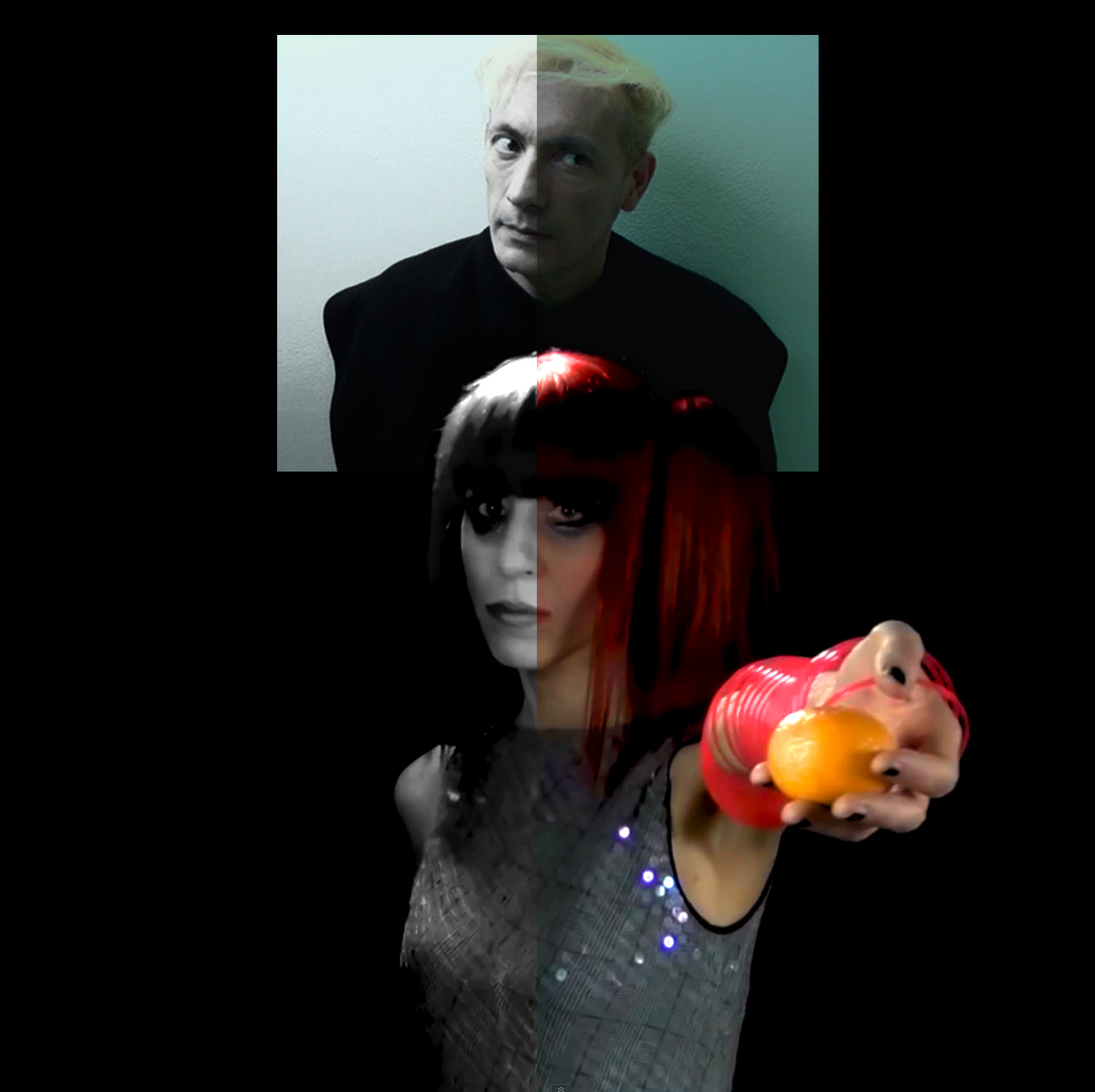
‘Sucked through a Portal into a parallel musical universe, the idiosyncratic London duo of Raf Mantelli and Richard Smith submerge the listener once again into their beguiling futuristic panorama. Re-imagining a world in which a Memory of a Free Festival arts lab and Gemini Spacecraft Bowie enmeshed with Portishead, Raf and O’s gothic and magical references are twisted to conjure up ominous visions, to a backing track of free-spirited avant-jazz drumming, trip-hop and contorted machine music.’ DV
And so whilst a multitude of bewailing and lamentable artists outpoured their grieve over Bowie’s death this year, and ignored just why the creative force was so lauded in the first place, at least the amorphous London duo of Raf And O could be depended upon to pay homage by continuing to orbit around the pheripherials of the avant garde. With the most strung-out and tactile cosmic lulled space age version of the crooning soul incarnated Bowie’s ‘Win’ ever recorded, the maverick double act blessed his passing. However, what their most impressive release to date showcased best was the duo’s challenging cybernetic baroque and progressive trip-hop sound, of which no one else on the radar can come close. Through the imaginary interdimensional Portal we go!
Read the full review here…
RAM ‘6: Manman M Se Ginen’
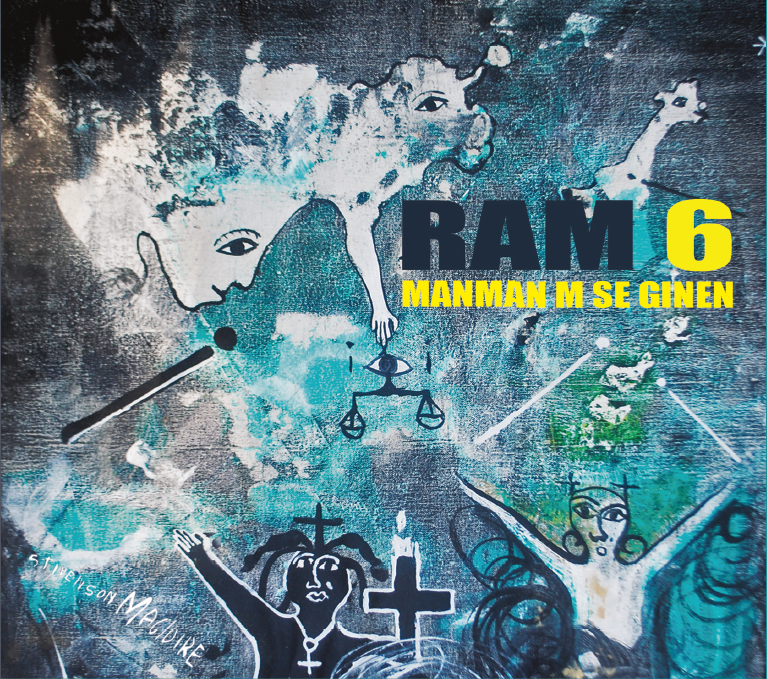
‘Constantly moving, transforming often-complex interplay with transcontinental imbued high energy and the local carnival spirit, RAM combine their activism and messages of hope and struggle with a strong evocative and infectious groove. Manman M Se Ginen is a beguiling and infectious album, full of tradition but electrified for a contemporary audience.’ DV
Although still playing their residency gigs at the Hotel Oloffson, jamming with the likes of Arcade Fire, in Port-au-Prince and playing live throughout the world, Richard A. Morse‘s mizik-rasin (a style that combines traditional Haitian Vodou with folkloric and rock and roll music) powerhouse ensemble RAM have remained absent from the recording studio for the past decade. Until now. Returning to take up the peoples struggle on wax with a record whose feverish and yearning rhythms fall congruously into two spheres of influence; both the Haitian and African rich fusion of the atavistic and modern have never sounded better together. The group hurl themselves headfirst into the tumultuous chaos with a frenzy of blurting saxophone punctuated stonks and barricade storming freefalling Ethno-jazz and Ska frenzies; reflecting the recent tumultuous upheavals and trauma of both the political and natural disasters that have rocked the Island. Elsewhere the album is stripped off its ferocity, replaced by gentler island breezes and ambling sweet West African highlife. ‘Koulou Koulou’ is a perfect example of this; the hymn like soothing Kreyol vocals of Lunise wafting over a sauntering highlife backing. Or on the disarming plaintive ballad ‘Ogou Oh’, which begins with a Popol Vuh like soothing but venerable piano and later breaks out into a tribal drumming ritual. Magical and rambunctious in equal measure.
Read the full review here…
Xenia Rubinos ‘Black Terry Cat’ (ANTI-)

‘Xenia Rubinos wants to bite, deep. She sings like an intimidating snake in the outback, her venom appears thick and long, like a spitted chewing gum from the mouth of another, yet she is like candy. She must understand the coarse skin of the enemy, perhaps teach a few lessons, she must not fear but simply face it, sing with it, groove with it, with tunes that make our tendons tremble. Disguised in an urban daredevil, there’s no real grudge here, style and subjects are up to date, the banter is mutual, the succeeding embrace even stronger. Her battle of the raised fist is to boost consciousness, for the better and worse but really for the better.’ AS
With far more roots, soul, jazz and sazz than anything her more celebrated counterparts could ever produce, Xenia Rubinos flamboyant rage is delivered with a salacious wit and sensibility sadly lacking elsewhere in the mainstream. Whilst plaudits are given to Beyonce and her camarilla of uber-protesters – which failed spectacularly in the face of “Trumpism” -, Rubinos subtle but no less enraged cornucopia of influences (from R&B to rock) are the true voice of authenticity. And what a voice! Once heard never forgotten, a distinctive mix that both soothes and jolts but always remains soulful and warm. And the somewhat controversial ‘Mexican Chef’ is one of the year’s best tracks by far. This is just a great album by a great talent: simple as.
Read the full review here…
Noura Mint Seymali ‘Arbina’ (Glitterbeat Records)

‘Continuing to in-trance, constantly moving in a rotating spell, Noura’s follow-up Arbina, we’re told, ‘delves deeper into the wellspring’ of her Moorish roots. And with recent tumultuous events, not only in West Africa but also throughout an increasingly insecure world, Noura reaches for the divine: the album title of Arbina being an appellation for God.’ DV
Emerging from the shifting sand-dune landscape of Mauritania in 2014 with one of the year’s most captivating, and at times almost uniquely otherworldly, albums, Tzenni, the griot chanteuse Noura Mint Seymali returned with an equally heady intoxicating embodiment of the ‘trans-Saharan’ culture and spiritual sounds of worship. With a familiar signature of drowsy slinking low-end bass lines, propulsive swirling breakbeat drums and tremolo quivering spindly alien guitar (provided by Noura’s husband, the adroit masterful Jeiche Ould Chighaly), there’s a certain confidence and refinement on this, the second of Noura’s international releases. Closer in momentum and candour to the previous album’s ‘El Barm’ and ‘El Mougelmen’ tracks, Arbina widens its scope; stretching the desert blues and psych funk template to accommodate twangs and inspirations from further afield. Always at one with the textures and contours of her homeland, the time signatures also continue to breezily, almost surreptitiously, change at will, with many of the songs on this album changing from one rhythm to the next halfway through. Meanwhile Noura’s amplified vocals resonate strongly, lingering loudly; the poetic and lyrical storytelling griot tradition thrust into a new century with renewed energy and musicality. Passionate throughout yet attentive and controlled, that melodious voice is even richer and soulful than before. Working in a circular movement, Noura’s vocals are both celestial and earthly, as the songs of veneration and guidance flow in waves or, repeat in an impressive breathless mantra. It is another magical peregrination from the Mauritanian soulstress.
Read the full review here…
Sidestepper ‘Supernatural Love’ (Real World Records)
‘Supernatural Love is a bright, flowing encapsulation of the current Colombian music scene, with sonic feelers reaching out across the continent and towards Africa. Unrushed and organic, with exceptional musicianship throughout the collective return with one of their best albums yet, merging gospel, soul, cumbia, salsa, Afro-Colombian, folk, psych and dub seamlessly together to produce something infectiously fresh.’ DV
Sharing a couple of commonalities and passions with another choice album and group, RAM and and their Manman M Se Ginen album, the electro-cumbia doyans Sidestepper have also made a comeback after a recording sabbatical, returning with sauntering diaphanous embodiment of their Bogota barrio, La Candelaria, on Supernatural Love. Joyous, an evocation of that city and the Colombian music scene both atavistic and contemporary, they weave the most free-spirited and soulful becalming soundtrack; repeating leitmotifs and letting the energy and music just carry itself to where it needs to go. Co-founded in 1996 by former Real World Records studio engineer and producer/DJ Richard Blair, who originally travelled to Colombia in the mid 90s to work with Afro-Colombian folk star Toto La Momposina, but decided he loved the culture and music so much he’d stay for good, and local singer/songwriter/producer Iván Benavides, Sidestepper were renowned instigators of the electro-cumbia fusion that swept its way across the clubs of Medellin, London and New York. However, bored with hearing the same old “kick, snare and hi-hat”, Blair and a reinvigorated Sidestepper line up that features virtuoso percussionist Juan Carlos ‘Chongo’ Puello and “soulboy/vocalist” Edgardo ‘Guajiro’ Garcés joining the band’s lead singer Erika ‘Eka’ Muñoz and guitarist Ernesto ‘Teto’ Ocampo, has changed direction with this adventurous and ‘supernatural love’ for Colombian music’s roots.
Read the full review here…
Si-Phili ‘The 11th Hour’ (Phoenix Recordings)
“Simply unstoppable. A mic crusher with a touch of class, the heart of a lion and machine gun lungs”. MO
Go hard or go home. All or nothing. Never give less than 100%. Ready to battle, whatever the time of day. Show-n-prove, call-n-response, leading to crowd surfs. Introspection to give the hurricane an angle of humanity, without dousing the flames. Stacking up punchlines that are then sent cartwheeling over non believers like giant Jenga bricks. A kickstart to your day, and a gee up to get you out of a fix. The right way to do things, both in UK hip-hop and life in general. All over a premium selection of boom bap and soulful stoking of the fire, provided by Richy Spitz, Urban Click, Leaf Dog and Pete Cannon. The sheer focus, belief and single-minded consistency of Si Phili, a standard bred from his Phi-Life Cypher days, is a rampage that can only be admired. ‘The 11th Hour’ has the mic veteran approaching national institution status.
Read the full review here…
Soundsci ‘Walk the Earth’ (World Expo)

“Big funk, no front; ‘Walk the Earth’ is up there with hip-hop’s best for the year.” MO
So good in fact that we forgot to review first time round. Amateurs. Anyway, enriched funky beats and liquid mic swaps from the Soundsci crew, who proved their reliability with ‘Walk the Earth’ maximising the performance bests of Solesides and Jurassic 5. Giving a knowing look to show promoters everywhere, in no small part due to the involvement of the Herbaliser‘s Ollie Teeba, the crew’s third album has a precision at its core liable to explode into the front rows of the crowd. And while not bragging about how versatile they most definitely are, there’s a lot here for everyone to grab a piece and go home happy with.
Teksti-TV 666 ‘1,2,3’ (SVART Records)

‘Probably as influential as it’s ever been, one of the most over-used, misunderstood and clichéd influences, Krautrock – a missive if ever there was one – occasionally acts as a springboard to more interesting and unique places. Teksti-TV 666 takes it towards a gothic CBGBs, as motorik goes “hey, ho”.’ DV
Despite the USP boast of featuring six guitarists in their lineup, Finland’s Teksti-TV 666 manage to quell the egos and rein-in the resulting maelstrom with a driven but attentive light and shade style Krautrock/Punk fusion. More a showcase than an album proper, SVART have pieced together the group’s previous three EPs for an attack on the senses.
Though a million others have tried to bend and hone Krautrock to deliver something fresh, Teksti-TV have injected a speedball cocktail into the motorik pulse of Neu!, merging it with spiky monotone fun of The Ramones and the gothic shoegaze and drones of umpteen 80s bands. Every song is an epic in itself, building up gradually with finesse; running through the full gamut of emotions before a final release. Edgy and moody enough to suggest the ominous and despondent, and hard enough to shake the rafters, the miasma that threatens to engulf is always eased up on for something calmer and celestial. Finland’s multi-limbed guitar cacophony is quite unique; transforming their influences with as much humour as fury.
Read the full review here…
Various Artists ‘Khmer Rouge Survivors – They Will Kill You, If You Cry’ (Glitterbeat Records)

Growing in stature and reputation Glitterbeat Records continue to release many of the best, most influential contemporary albums and collections from around the world. Expanding on their original West African remit under the adroit stewardship of musician/producer Chris Eckman, they have also brought us various evocative and profound records from some of the least represented locations including South East Asia. Sending Grammy-award winning producer and celebrated author Ian Brennan to capture the dying art and memories of Vietnam veterans for the startling Hanoi Masters testament last year, they’ve followed up in 2016 with an equally vivid and harrowing account from Cambodia’s Khmer Rouge survivors.
Proving that the roots and primal howl of the blues is every bit as entrenched in the Cambodian delta as the African and the Americas, those who suffered at the hands of Pol Pot’s genocide recall and lament on their own experiences: both as a therapy and to remind a new generation brought up in a completely different age, almost ignorant of the country’s recent past, of the trauma and turmoils that for many still run deep. As raw and captivating as you’d imagine, Brennan’s hands-off, in-the-moment, approach to production allows these battle-scarred victims an ad-hoc platform to share their sad but diaphanous songs globally.
Read the Ian Brennan interview here…
Various Artists ‘Hidden Musics Vol 2. Every Song Has Its End: Sonic Dispatches From Traditional Mali’ (Glitterbeat Records)

‘Though no less an achievement, the second volume in Glitterbeat Records “Hidden Musics” series offers the full gamut not just musically but visually too, and is a far more ambitious documentation of a troubled country’s lost tradition than last years Hanoi Masters survey. Expanding to include 11 concatenate videos, Every Song Has Its End is the most complete purview of Mali’s musical roots yet. This is due to the project’s mastermind Paul Chandler, who has documented Mali’s music scene for more than a decade. With an enviable archive of recordings and interviews, Chandler has at last found the perfect testament to Mali’s past.’ DV
Glitterbeat Records once again feature heavily in our ‘choice albums features’ with a quartet of releases making the grade this year, including Paul Chandler‘s compilation and accompanying film panoply, Sonic Dispatches From Traditional Mali. Recording, before it disappears forever, the fragile Mali atavistic roots, which prove far more polygenesis than you’d ever imagine, a diverse range of cultures have left their indelible mark upon the landscape and population. Forgotten in some extreme cases, ignored or considered as Mali’s past by new generations, maestros of the 6-string Danh, such as Boukader Coulibaly, and the Balafon, Kassoun Bagayoko, are celebrated and interviewed for this collection. Whether it’s traversing the Gao region in the northwest to record the earthy desert pants of the female vocal ensemble, Group Ekanzam, or capturing a Sokou and N’goni love paean performance by Bina Koumaré & Madou Diabate in the heart of the country, this chronicle of the pains, virtues, trauma and spirit of the country’s musical heritage is an extraordinary love letter and testament to Mali.
Read the full review here…
Various Artists ‘Space Echo – The Mystery Behind The Cosmic Sound Of Cabo Verde Finally Revealed’ (Analog Africa)
‘Selected for our enjoyment by the Celeste/Mariposa crew, a sound system based in Lisbon, Mexico-based producer Deni Shain, and Analog Africa’s founder Samy Ben Redjeb, this compilation offers an undeniably infectious dance soundtrack for the summer.’ DV
350 miles adrift of the West African coast Cape Verde lies almost isolated out in the Atlantic Ocean. But this former overseas ‘department’ of Portugal fatefully, so the local legend goes, happened to be stuck in the exact right place when a shipment of the latest Rhodes, Moog, Farfisa, Hammond and Korg synthesizers and keyboards bound for the Exposição Mundial Do Son Eletrônico Exhibition in Rio De Janeiro ended up marooned on one of the archipelago’s ten volcanic islands in 1968. The real story grows ever more mysterious, as the cargo, destined to reach a promising market in South America, disappeared off the radar on a calm morning the same day it set sail from Baltimore and ended up 8km away from the Cape Verde coastline in a field near the village of Cachaço. And so a new era in the Island’s musical development was borne as the melting pot of Mornas, Coladeras, carnival and previously prohibited – deemed far too risqué and sensual by the Portuguese overseers- Funaná styles of music were given a new lease of life and modern twist by the booty of futuristic sounding synthesizers. However, despite the emphasis on the strange space like emulations and modulations of the keyboard technology and its impact on the Cape Verde music scene, this compilation is really about a former suppressed colony finding its own independence; revitalising once banned traditions and giving them, for the time, a unique twist.
Read the full review here…
Verbal Kent & !llmind ‘Weight of Your World’ (Mello Music Group)

“Sarcastic punchlines wired to a big-assed boom-bap plunger…dominant, imposing music to lay warpaths by”. MO
Mello Music Group reeled off killer album after killer album in 2016, boasting a roster of underground burners plentiful in their potent variety. Within something of an internal Venn diagram, Apollo Brown gave soul a kickstart/kick up the jacksie so that Ugly Heroes comrades Red Pill and Verbal Kent (‘Everything in Between’) and Skyzoo ‘(‘The Easy Truth’) could demonstrate parallels in muscular grace, heaviness done with heart. Verbal Kent and !llmind’s ‘Weight of Your World’ warned that “beggars who are choosers are heading for bruises”, and while all three are worthy picks, we’ll plump for the latter. With the added advantage of being absolutely free, it’s cocksure enough to seemingly look at clubs with disdain before slyly leading with its elbows, laying down battle humour with the jib of vintage Canibus and Jadakiss that would reduce ciphers to smithereens, and packing a mean strut at all times. All hail the power of being pissed off.
Read the original here…
Wovenhand ‘Star Treatment’ (Sargent House/Glitterhouse Records)
‘Inspired in a wondrous and metaphysical sense by humanities navigational dependence, worship and cultural fascination with the stars, David Eugene Edwards sets out on another esoteric Americana adventure on his latest opus, Star Treatment. The former 16 Horsepower front man saddles up and unfurls the Wovenhand banner, traversing the great western plains of historical reality and literature to produce a gothic Bury My Heart At Wounded Knee meets the Egyptian Book Of The Dead.’ DV
Spiritual interdimensional peregrinations abound on David Eugene Edwards‘ Wovenhand epic. Linking parallels between atavistic tropes of loss, wisdom, a sense of wonder and nature with the original holy lands and the new world promised land of America’s west. Working on many levels with this star-guided concept, Edwards meta panorama may look towards the night skies yet it also digs beneath sacred ground to conjure up the ancestral; mixing America’s indigenous culture, ritual and ceremony with those of the most ancient mariners and travellers from the ‘fertile crescent’. This is an ambitious piece of work, taking as it does Americana to another more ambitious and afflatus level, as expansive and full of gravitas as the landscapes he searches.
Read the full review here…
Sam Zircon ‘Anxiety Skits’ (Blah)
“The ultimate instrumental downer on eggshells…an excellent, tantalisingly poised headswim against the tide.” MO
On the impressively individual Blah Records, another UK imprint to have a blinder of a year with releases from Morriarchi, Bisk, Blak Josh and Sleazy F Baby, typically it was one of the labels silent assassins who wore a ruling crown of thorns for the last 12 months. In a year when instrumental sets were pleasingly still doing a brisk trade, Sam Zircon forwent the usual rub downs of funk and soul loops and picked off opposition by pricking goosebumps with a harrowing virus. Anxiety Skits plays like the recovered footage of an explorer long lost to the wilderness, but whose demise you can only assume was grisly and/or involving hypothermia. Catching some of the implied psychoses of Company Flow’s ‘Little Johnny from the Hospitul’, you know Zircon is doing his job when disorientating frostbite starts developing around your headphones.
Read the original here…
 Monolith Cocktail Blog