Kalporz X Monolith Cocktail: (Review) ÉLIANE RADIGUE ‘Occam XXV’
October 10, 2022
ALBUM REVIEW
Edoardo Maggiolo

In a synergy between our two great houses, each month the Monolith Cocktail shares a post (and vice versa) from our Italian pen pals at Kalporz. This month we relay Edoardo Maggiolo erudite piece on the latest project from the pioneering composer Éliane Radigue.
ÉLIANE RADIGUE ‘Occam XXV’
(Organ Reframed, 2022)
If you have ever stopped to look closely at any textile work, you will surely have noticed how, when seen up close, the filaments of the fabric draw textures and arabesques of subtle finesse. The same can be said of music: if we play a note and let it spread in the air, we realise how in reality this is a precious container of harmonics, true filaments of sound.
Few have explored this fundamental acoustic impression like Éliane Radigue, a French composer who has plunged into the study of sound over the course of several decades: first as a student at the Studio D’Essai in Paris, the former place of choice of the French Resistance and then immediately after the war it became both the national radio centre and the electroacoustic and concrete music laboratory of the pioneers Pierre Schaeffer and Pierre Henry; then as a precursor to the study of tape feedback, and finally he was one of the leading voices of experimental electronics of the 70s thanks to her compositions for her modular ARP 2500 synthesiser, which she tenderly baptised with the name of Jules.
Today Éliane is a fresh ninety year old who lives in an apartment in Montparnasse and who for at least ten years has discovered the way to her fourth musical life, which began with the cycle of works dedicated only to acoustic instruments called Occam Ocean. Radigue writes with a particular instrument and a particular performer in mind; she invites the latter into her apartment, the two sniff each other a little and, if they like each other, she starts the job tête-à-tête.
Occam XXV is a composition for organ and features the French organist Frédéric Blondy as performer. Here the instrument is completely stripped of any past sacred majesty, becoming the protagonist of what appears to be an icy stasis, but which in reality, despite its bare structure, is a slow but constant emergence from dark and humid mists until it becomes ineffable flight. . If listened to with a receptive ear and not just lazily reclining, on the one hand you notice how within the timbral staff that makes up the piece there are hidden minimal rhythmic impulses, fluttering harmonics and precious subharmonics that make up the wave movement of the individual notes and that they are the real underwater vegetation of this superficially placid sound lake; on the other hand, how a melodic progression of meticulous musical indolence is slowly drawn which, with wise calm, reaches passages of concretely pure beauty. Only in this way is it possible, albeit with difficulty, to describe how in these forty-five minutes one passes almost imperceptibly from the timbral-oceanic depths of the first part to the sonic ascensions of the finale; and in this journey into the unfathomable, the organ is transfigured, looking as much a bubbling synthesiser as a string section with very acute timbres. An ascent of vibrations markedly faded with the sound that, once it reaches the top, transcends itself becoming silence.
Like a thoughtful walk, in which only when we regain the sense of reality do we realise where we have arrived, Occam XXV is the sound of small steps on an acoustic path of mysterious fullness, which challenges even the totally inexpressive form in which is presented. One of the greatest works of a composer who has lived for a lifetime in the only fundamental element of music: pure sound.
The Perusal #36: Liraz, Tau & The Drones Of Praise, Can, Montparnasse Musique, Carl Stone…
October 6, 2022
Dominic Valvona’s Reviews Roundup

A Glitterbeat Records Double-Bill:-
Liraz ‘Roya’
(Glitterbeat Records) 7th October 2022
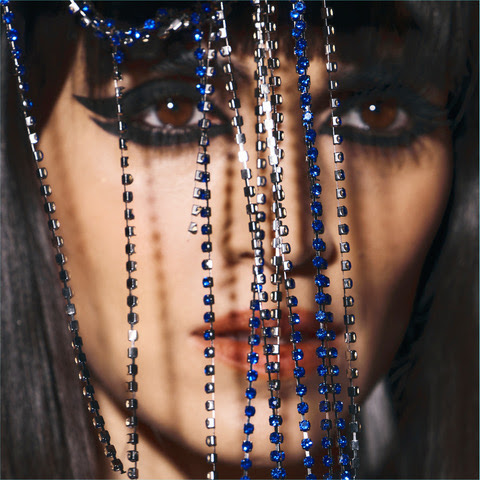
With one foot on the nostalgic dance floors of, a pre-revolutionary, Tehran, Cairo, Beirut and Tel Aviv, and another, sweeping a fantastical Persian landscape, pop princess Liraz oozes passionate yearns and diaphanous delivered protestations on her third album, Roya. In the adopted Farsi-tongue that title translates as ‘fantasy’. And this latest harmonious Israeli-Iranian traverse has plenty of it; swirled in vaporous whispers, veils and the airy across matinée romantic swoons and the yearning.
It’s a fantasy in the fact that Liraz has once more recorded an album in a clandestine manner, with musicians from Iran in Istanbul – a flavor of that city’s age-old cultural wellspring is evident in the music. Out of the shadows of Tehran’s secret police and having to remain anonymous, this form of fantasy imagines peace throughout the Middle East and good relations specifically between Liraz’s ancestral Iranian and adopted Israeli homes. The daughter of Sephardic Jews who left Iran at a time of cordial relations with Israel, in the time since, both countries have locked horns in a both cold and hot war. Although being Jewish in what was once the heartlands of the atavistic Persian Empire has never been exactly easy, with persecutions going back generations and a millennia or three. And so the ensemble cast of ‘tar’ lute, wasp-waisted wooden Iranian flute, viola and violin players and voices have taken a big risk in fraternizing and making an album with an Israeli citizen; especially one of Jewish heritage. It probably doesn’t help that Liraz also starred as a Farsi-speaking Mossad operative in the semi-successful Apple TV espionage series Tehran. And in light of the tragic death of Mahsa Amini, demonstrations and civil unrest is being met with extreme violence and subjugation by the state. We could even being seeing the catalyst of regime change, with talk of what comes next, power and administration wise, daring to be aired and seriously challenged by a more liberal generation of young Iranians: such has been the outcry.
As an actor, now in the role of her life, Liraz builds bridges across those barriers as she imagines and retells in song the stories and yearnings of women silenced in Iran, banned from singing. A union is formed between a life and ancestry she can only be a part of in the Iranian diaspora.
Musically this translates into exotic sweeps, bouncy and retro disco zapped pop with a Middle Eastern suffusion of familiar panovison framed fantasies. With a swell and weeping of moving strings it could even be a musical reference to the classical strained beauty and lament of the Eastern European Jewish community – although Liraz’s ancestry is connected to the Iberian Sephardic Jews.
The album’s bookended by two versions of the title-track. The first is a lifting of veils Arabian Kate Bush, galloping up that hill of sand, the second, a tearful, stripped of electronics traditional and classical-bowed farewell. Between those points there’s an incredibly voiced stirring of disco, pop, psychedelic and Middle Eastern fusions; the near-halcyon against retro throwbacks to more liberated freer times in the region. Yet all thoroughly invigorated, refreshed and given a suitably contemporary electric feel.
Contouring the piques and lows there’s a dance of disco-funk (with even the fuzz whacker-whacker buzz of Fred Wesley & The J.B.s) and kitsch Franco-Arabian pop, soulful longing and Moroder-esque synth-electro pop. Liraz is all the while the perfect enchantress or moving vocalist, with a beautiful voice, cadence and articulation.
By far Liraz’s greatest adventure and sound, this is a fantasy with an all too real, alarming undercurrent of suppressed voices, forced to go underground in the act of creating some magical pop music. Please venture further than the myopic pop cliques and commercial output of the UK, America and Europe, as Roya is a stunning, sublime electro-charged album imbued with a myriad of forbearers from the Iranian, Egyptian, Turkish disco, psych, funk and balladry scenes of better times.
Tau & The Drones Of Praise ‘Misneach’
(Glitterbeat Records) 21st October 2022
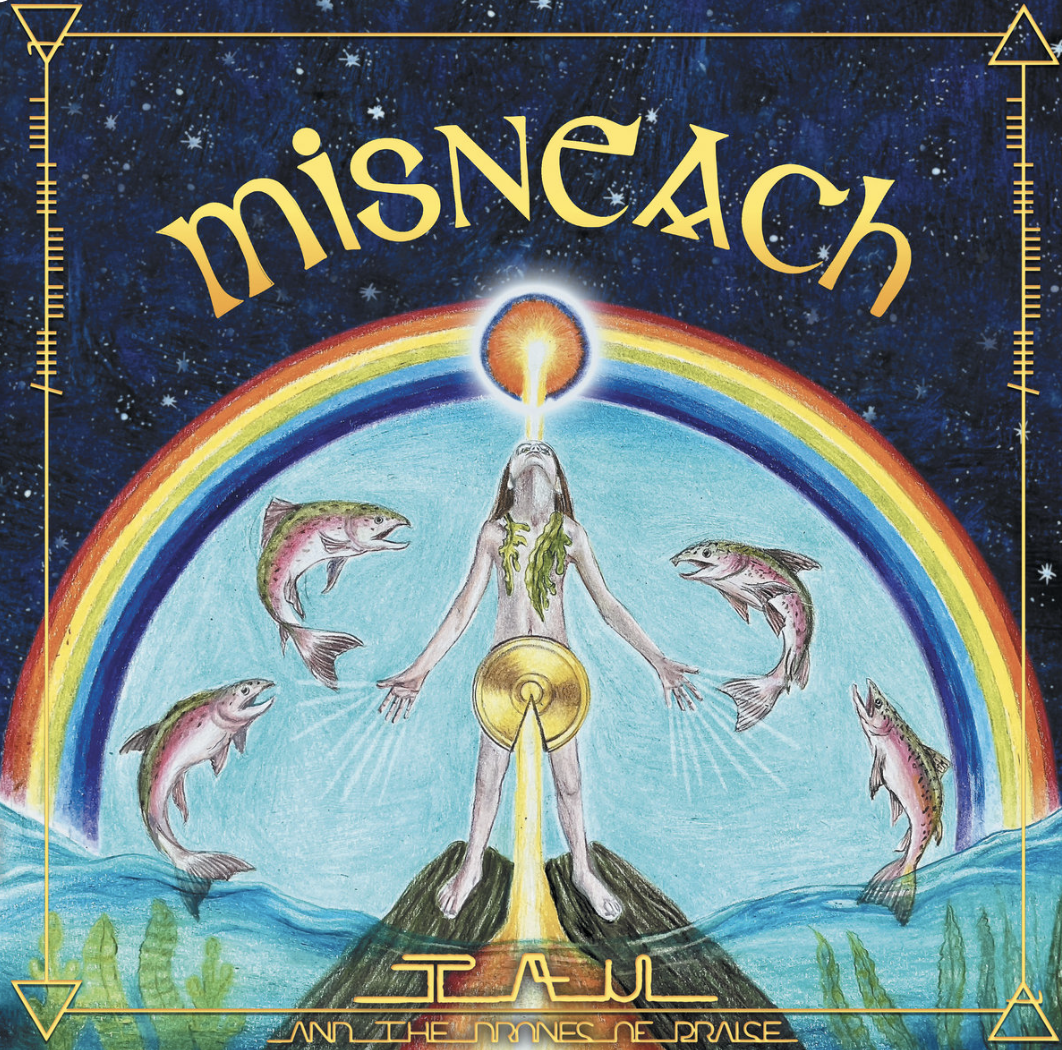
The second in a Glitterbeat Records double-bill and another fantasy-inspired spell of ancestry and magic, Seán Mulrooney’s led Tau & The Drones Of Praise band reconnect with their Celtic roots.
A return to an Ireland of myth, fables, enchantment and allurement, Mulrooney and his core of foils Robbie Moore (who also recorded this, the band’s third album, at the Impression Studios in Berlin), the Tindersticks’ Earl Harvin and Iain Faulkner (who ‘helmed additional recording at the Sonic Studios in Dublin’) are bolstered further by a large cast of musicians and voices. None more congruous and influential to the overall Celtic feel as the new age misty Irish veiled Clannad, who lend Damien Dempsey and Pól Brennan to this ensemble piece of folk and beyond theatre and reconnection.
Like a Mummers troupe, a merry procession, this harmonious bunch pay reverence to the tree spirits; homage to the ancestors; and fall at the feet of enchantress muses. With a concertinaed air of Breton, a Men Without Hats vibe and a singer who sounds like an Irish Michael Stipe or Alasdair Roberts, they invoke nature’s children making amends with the evergreen sprites on the opening, and brilliant, chorus call of alms, ‘It Is Right To Give Drones And Praise’.
From then on in we’re pulled into a world and across timelines: from atavistic Ireland to the Medieval, Georgian and Present. Old traditions via the folk-psych of The Incredible String Band, Pentangle and Sproutly Smith merge with the already mentioned misty-mystique of Clannad – but also their former ethereal siren Enya too –, The Polyphonic Spree, Flaming Lips and Octopus. Although the group’s lasting message and finale, ‘Hope’, reminded me of both Echo And The Bunnymen and The Mission. An atmosphere of bucolic wistfulness and idyllic idling prevail as the rhythm and soft marches change between the dreamy and courtly, the folksy and anguished. Always melodious in whatever realm, there is however a moment on ‘The Sixth Sun’ when the beautiful if longed female choral voices swim against a more wild, dissonance of noise. But that is the exception. Yet despite the challenges, the history Misneach (from the Old Irish lexicon, it translates as ‘courage’ and ‘spirit’) is a fantastical wilding, droning mélange of Celtic influences, the psychedelic, ancient and folk. And at its heart is a story of reconnection and an environmental yearn.
And A We Jazz Double-Bill:
Carl Stone ‘We Jazz Reworks Vol.2’
(We Jazz) 21st October 2022

Three years on and out the other side of the pandemic, my favourite contemporary jazz label is releasing a second volume of “reworks”.
The Helsinki label, festival and magazine has once more opened up its back catalogue to reinvention/transformation, inviting in the reputable and noted American artist/electronic composer Carl Stone to work his magic on another chronologically ordered stack of ten albums from their growing discography. Inaugural guest Timo Kaukolampi of K-X-P fame conjured up an ambiguous cosmic mix of We Jazz’s first ten albums on Volume 1 of course. And now Stone likewise takes familiar phrases, riffs, rhythms and performances somewhere entirely new and out there. Although both exciting and equally daunting, overwhelmed by a sizeable chunk of material at his disposal, Stone favoured intuition and feel over everything else. That process (re)works wonders as the already experimental and brilliant music of acts and collaborations like Terkel Nørgaard (his album with Ralph Alessi), OK:KO (Syrtti), Jonah Parzen-Johnson (Helsinki 8.12.18) and traces of 3TM, Ilmiliekki Quartet, Peter Eldh and Timo Lassy & Tappo Mäkynen are sent out towards the stars, expanse or morphed into gauzy states of untethered freeform hallucinations.
The opening circular-wafted peregrination ‘Umi’ is more like a mirage of snozzled and snored saxophone cycles, undulated piano and space vapours: Pharaoh Sanders, Donny McCaslin transmogrified by Brown Calvin on the edge of the Milky Way.
A suffusion of drifted, woozy and more hysterical horns, submerged double-bass runs and noodling sporadic and more rhythmic rolling, crescendo drums and ghostly tinkled, hazed piano is handled differently on each track. On the quickened to slow counterbalance timed skiffle and stuttered ‘Sasagin’ Zorn and Haas skit-scat and dream with Tortoise on the NYC underground jazz scene of the 80s, whereas the strange ‘Hippo’ sounds like some kind of Baroque holy ritual piece as reimagined by some kosmische act on Sky Records.
The action is often chaotic and in freeform discourse: like Chat Baker on speed or Oscar Peterson running out of notes. Yet somehow these transformations keep moving in the right direction; finding a rhythm and even a touch of melody on occasions. Avant-garde, free jazz, the cosmic and electronic converge on another alternative vision of the We Jazz catalogue. Stone creates some incredible, even beautiful, experiments; probing the ether, void and hyper-stellar realms of his imagination.
Say What ‘S-T’
(We Jazz) 7th October 2022
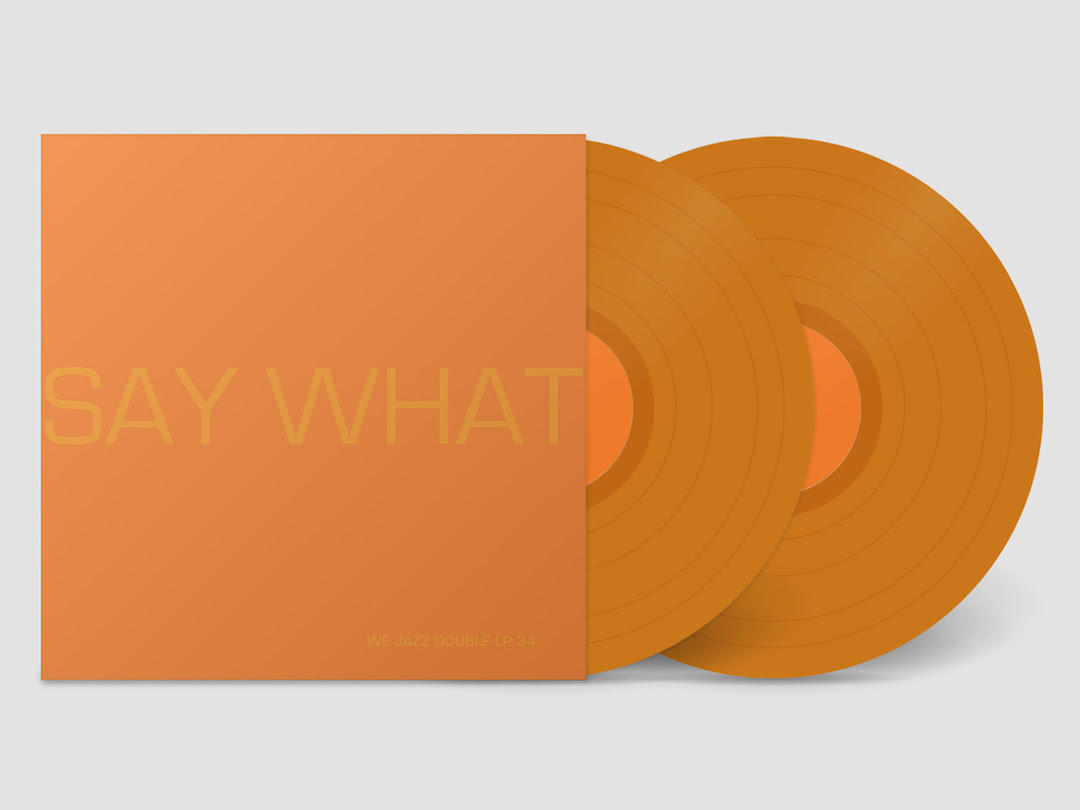
Shrouded with a certain mystery, the second We Jazz label release this month is tight-lipped in the information department. There’s very little to go on other than that this was a never to be repeated, existing just at that specific time in that arena (Austin, Texas’ Sonic Transmissions festival), performance, the trio’s defacto leader and saxophonist luckily names his bassist and drummer partners on this wild, contorted free jazz with a punk and no wave attitude recording. The Black Myths partnership of Luke Stewart and Warren ‘Trae” Grudup III join forces with our unnamed saxophonist across riled, spiritual funking, post-rock and avant-garde frenzy growled, swinging and dynamic performances. Taking no breaks, but sorted into seven Roman numeral marked tracks, the obviously versatile/talented trio turn our idea of jazz music inside out.
With the welcoming pleasantries out of the way we’re straight out smacked-up with a badass merger of Miles’ The Last Septet whomp, the sinewy rage of a wrangled Fugazi and the whelp, wail and manic expressive experiments of Roscoe Mitchell doing ‘Ornate’ doing Ornate Coleman, Sam Rivers and The Chicago Underground. That’s only the opening number. It gets even more free range and hysterical with Stewart’s blurred bass slides, crazy frictions and thick-stringed scuttles and slippery entanglements up against Grudup’s splashes, crescendos, tight rolls, slips and smashes all growing ever more experimental and probing.
Track ‘III’ finds a sort of strut and attitude with sax toots, trills and stresses over a busy drums and gnarly bass. It changes from a warped Red Hot Chilli Peppers and Zappa to something approaching the spiritual. That spiritual, almost oboe-like sax carries over into track ‘IV’, like some kind of Pharaoh Sanders Egyptian odyssey. But then Stewart descends his instrument like a scratching spider, sliding in tandem with Grudup’s quickened drumming until both synchronize in a quivered blur before imploding.
With some of these parts running to well over thirteen minutes in length, it’s an incredible energy that keeps the gig continuously moving and bursting into the purely psychical. Say What enters and exits on a high; an energetic, moody and powerfully adroit expression of riled-up tensions, rage and the explorative. One of the best slices of jazz you’ll hear all this year.
Aucoin ‘Synthetic: A Synth Odyssey Season 1’
19th October 2022

Given an enviable access to The National Music Centre in Calgary’s extensive archive of rare and historically iconic synthesizers, Rich Aucoin as artist-in-residence models the first chapter in an ambitious seasonal project.
A Synth Odyssey Season 1is the maverick composer’s latest magnum opus; a four-part work released in six month intervals over the next two years.
Such ventures have been tried before, although a decade ago with his debut album proper, the orchestral rocking We’re All Dying To Live, which included untold collaborators. Ten years on with a grand project interrupted by the Covid pandemic, the first fruits of his synth palace residency are about to be released.
Originally conceived and let loose in 2020 on a synth collection that features such prized and cult apparatus as the Supertramp-owned Elka Rhapsody 610 String Machine, the ARP 2600, Selmar Clavioline CM 8 and Oxford Synthesizer Company Oscar (analogue boffins’ wet dreams), the pandemic restrictions, lockdowns and such put the project on hold. In the meantime, Aucoin carried on producing film scores, most notably for the No Ordinary Man documentary about the trans-masculine jazz musician Billy Tipton. Picking up again in 2021, he was finally able to finish this wonderful synth cosmology.
No doubt enthusiasts will know every waveform, arpeggiator, knob-tweaking signature but as a handy guide of a sort, some of the tracks on this inaugural seasoned album are named after the synths used in the process. It all starts with the multitimbral polyphonic analogue synth, the TONTO (or ‘The Original New Timbral Orchestra’). On the opening suite it turns from a moody kosmische shimmer into a more upbeat Orbital acid dance track. During that transformation you can pick up the German New Wave, early Warp and R&S Records.
A bit later on and it’s the turn of a Buchla Electronic Musical Instruments company synth – named after its Californian innovator Don Buchla. In this capacity it sounds suitably retro-futuristic, crossing towards a cosmic void on fanned rays, orbiting bit-crush handclaps and bobbing synth tom rolls.
Elsewhere Aucoin slips into, or surges towards moments of EDM euphoria, Vangelis peregrinations of gravitas, simmered techno, electro and House music – especially on the female vocal N-R-G club track ‘456’. However, the vapourous, prowled and cinematic ‘Space Western’ theme teleports a Moroder vision of the Blood Meridian to a venerated chorus Arrakis.
Sophisticated and well crafted throughout, these aren’t so much experiments or synth showcases as hopeful and more moody traverses and cerebral dance tracks. Iconic synths are given a contemporary feel both playful and adroit, a balance of both serious knowledgeable musicianship and welcoming levity. I look forward to next season’s accomplishments in the field synth escapism.
Montparnasse Musique ‘Archeology’
(Real World Records) 7th October 2022

What was a chance encounter on the busy Montparnasse-Bienvenüe subway interchange has led to a far wider Pan-African sonic adventure. From Paris to mother Africa, the sophisticated dance music production of South African House DJ Aero Manyelo and his foil, the French-Algerian producer Nadjib Ben Bella, transforms the street cultural electronic and more traditional sounds of the continent for a congruous fusion of collaborative polygenesis energy and warmth.
Wiring into the various electrifying movements of the D.R.C. and South Africa, the burgeoning duo met and worked with the leading lights of Kinshasa and Johannesburg. Members from such trailblazing combos and collectives as the Kasai Allstars, Konono No. 1, Mbongwa Star, Bantou Mentale and Kokoko weave, bob and express themselves over and to the attuned but deeply felt synthesized House beats, Acid burbles and squelches, polygon Techno evocative vapours, and pulsating dance music.
The familiar sounds of Congolese rock-blues-soul guitar, voices both earthy and pure, the lilt of sunny joy and a constantly moving assemblage of African percussion meet synthesised, sub-bass throbbing and zapping electronica in a almost perfect synchronicity.
At times it reminded me of Khalab’s similar African productions, at others, like a remixed Francis Bebay, some Clap! Clap! and Four Tet. The Menga Waku featured ‘Makonda’ evoked the early Detroit House and Techno scenes of a toned-down Kevin Saunderson, whilst the following, more moody, piped and experimental ‘Plowman’ (featuring the voice of Cubain Kaleya) had me thinking of Black Mango. However, all things change on the sand dune Arabian fantasy score ‘Chibinda Ilunga’, which moves to Northern African and a romanticised, mysterious Bedouin court; the music more like a film score, or Finis Africae traversing a trinket-percussive and synthesised Arabia.
Whatever the methodology the results are as welcoming as they are entrancing, with a pathway formed towards the dance floor. Archeology is neither an ethnography-type dig or revived language of sonic forms, but a lively and inviting great fusion of Congotronics, more traditional sounds and the European club scenes. Definitely an album for the end of year lists.
CAN ‘Live In Cuxhaven, 1976’
(Mute/Spoon) 14th October 2022
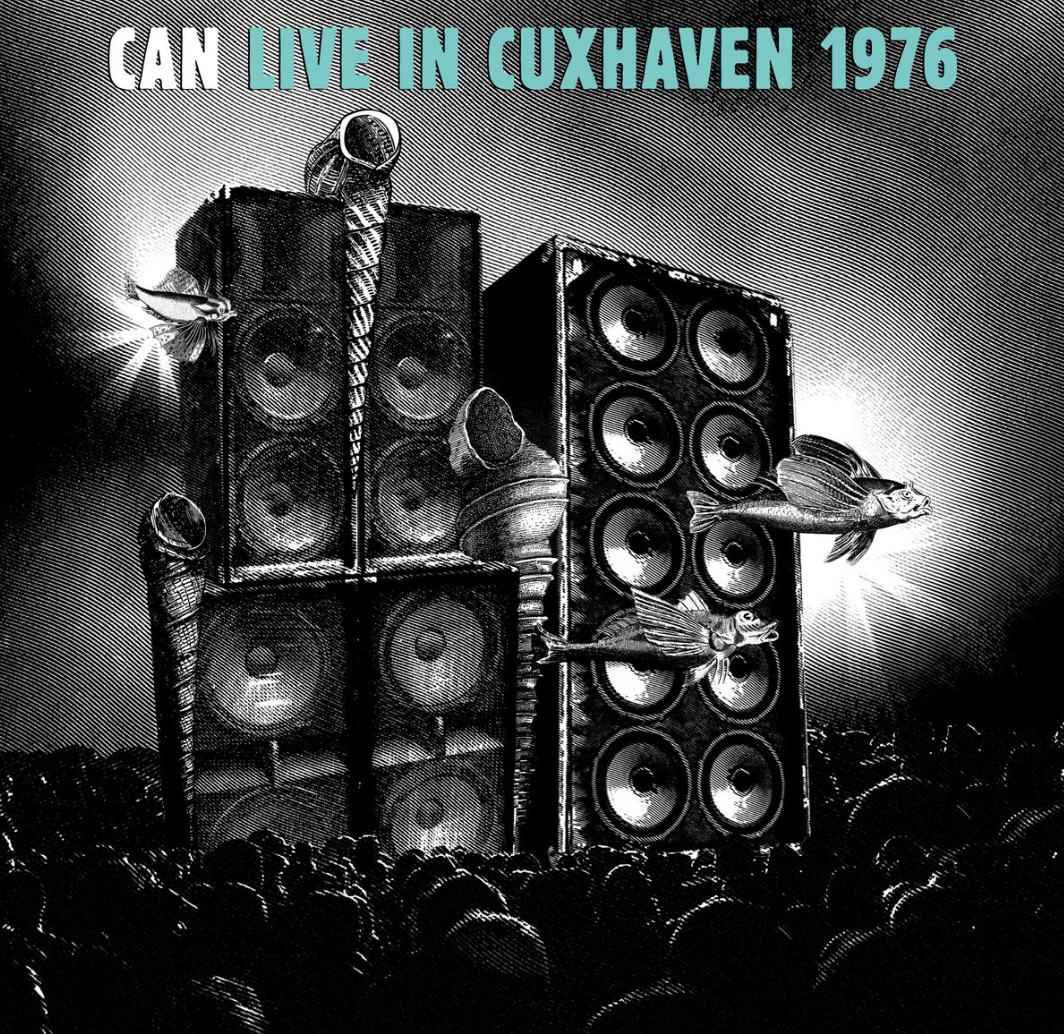
1976 the year of the bandy reggae waltzing, discothèque probing Flow Motion album, and CAN’s only bonafide hit, ‘I Want More’. It’s also a treasure trove year of bootleg material if Youtubes anything to go by, with countless live dates across Europe and the UK.
Almost two albums into their 1975 contract with Virgin, recording wise, the Cologne band were loosening up with a sound that moved ever closer to world music fusions and even the commercial: well, of a kind. Not universally a welcoming move with diehards and the head community however, the results were mixed at best. Performance wise, in concert, CAN still riffed off an admirable, innovative and experimental legacy, right up until the end of that year.
Although no gig is the same, you can find transformed, explorative version jams of material that stretches right back to the Galactus sported Monster Movie debut. Popping up like a signature anthem, ‘Dizzy Dizzy’ from the 1974 space-programmed trip Soon Over Babluma appears as a staple groove and prompt on the latest, and third, CAN Live album. Officially sanctioned by the band’s Spoon and Mute label custodians, this previous sneaky bootlegged recording captures them on stage in the German (Lower Saxony to be exact) seaside town of Cuxhaven, on the North Sea coastline – as a bit of useless trivia, its twinned with, amongst others, the English port town of Penzance.
I don’t think this time, like previous bootlegs, it was recorded by the sadly, recently, departed Andrew Hall, who’s handed over a bounty of such material to CAN’s sole survivor Irmin Schmidt and producer/engineer René Tinne to be brushed-up and mastered to acceptable aural pleasures. But why the need for this bootleg series? Well, as I lay out in previous CAN Live reviews, the band were always victims of bad luck when attempting to record any sort of official, legitimate “live” album performance. Gremlins in the works – once failing to record someone’s entire part – the technical glitches meant that there was never a proper live CAN record as such. Mind you, this was a band that more or less played live in the studio setting, making albums out of countless hours of extemporised or improvised sessions. And, as I’ve already said, CAN never quite played the same thing twice, let alone an entire set.
Here on the ’76 special you will hear a once more transformed, in-the-moment vision of tracks from Future Days (‘Bel Air’), Soon Over Babluma (‘Dizzy Dizzy’, ‘Splash’, ‘Chain Reaction’) and Landed (‘Full Moon On The Highway’). There may very well be even traces of Tago Mago, and the yet to be released, Flow Motion albums too in that heady mix.
Across four Germanic-numerical sections it’s the lunar, wailed, bendy, squalling whacker-whacker guitar contours, licks, chops and phrases of Michael Karoli that win out. Ten Years After blues meets the whomp-whomp of Miles Davis’ Bitches Brew live band and the psychedelic, Karoli transforms familiar album cut riffs into fuzz-scorched, garbbled, loose and seared cosmic acid rock magic.
Other live performances from the same year include far more vocals, with Karoli having to take over after the departure of the mushroom haiku incanting Damo Suzuki after Future Days. Here his barely audible enervated whispers can just about be detectable during one bout of locked-in grooving.
Keyboards chopping aviator Schmidt offers up another suitable chemistry of the celestial, tubular and avant-garde, going as far as to start laying down something approaching gospel, or Southern Blues on the first track, ‘Eins’. As always, Jaki Liebezeit keeps that human metronome ticking, holding flights of fantasy, tangents and spacey ascendance all together with his impeccable sense of rhythm and time. Dare I say, he ventures into funk at times, and during part of track ‘Drei’ bobs and rattles out a tin and bottle percussive Latin-soul passage: the sort Santana would happily embrace.
Unfortunately I couldn’t hear all that much of the designated bassist Holger Czukay; it’s there but very much lost against a louder Karoli, Schmidt and Liebezeit, the frequencies a bit foggy.
Still, this is yet another example of a band in total synchronicity, no matter how wild or off the beaten tracks the direction taken. Though to be honest, this is nowhere near CAN at their wildest or avant-garde, nor most dynamic and interesting. In fact the performances are a little more composed and tight. Not disappointing, just not so amazing.
A different time, a different version of CAN, Live In Cuxhaven offers yet another side to the feted band; a bridge towards Flow Motion for a start. It will be interesting to see what follows: my own particular interest being their expansion of the lineup and the Saw Delight album period.
Puppies In The Sun ‘Light Became Light’
(Buh Records)

A slow release of maximalist energy and cosmic explosions the Puppies In The Sun duo conjure up a big sound on their debut album, Light Became Light.
Buddies since childhood back in Peru, but serendipitously crossing paths a longtime later in Barcelona, Alberto Cendra and Cristóbal Pereira made base camp together in Rotterdam. But despite the European-wide travelling it’s the great universal void and expanses of space that they’ve chosen to sonically navigate and transcend, with just the use of a drum kit, apparatus of synths and open mind.
The notes, quotes however mention the duo’s noise rock credentials, which despite a lack of any guitar or bass is nevertheless present on these peregrinations, vortex hyper-drives and odysseys.
Locked in to each track of starry wonder and languorous crescendo, the pace of direction is often in slow motion. Dissipated crashes and rolls, slow dives and frazzled oscillations head towards the explored and unexplored realms of Mythos, Embryo, Adam’s Castle, LNZNDRF, Angels Die Hard and the Secret Machines. Although the N-R-G pumped ‘Raging’, They Came To Dance’ sounds more like Cabaret Voltaire and FSOL at a space cowboy hoedown.
Space is deep, as Hawkwind once aggrandised. And so it is too on this light travelling discover of a big-sounding kosmische. Krautrock, prog and controlled noise rock score.
Spelterini ‘Paréidolie’
(Kythibong) 4th October 2022

Named in honour of the 19th century Italian tightrope walker, Maria Spelterini, who’s death-defying stunts included numerous handicapped (blindfolded, manacled or with weighted peach baskets strapped to her feet) walks across the Niagara Falls, the quartet Spelterini pairing of Papier Tigre and Chasusse Trappe members do a bit of their own tightrope walk on this new peregrination and driving motorik long form performance. Keeping balanced whilst straddling modes, chapters and movements, Pierre-Antoine Parois, Arthur de la Grandière, Meriadeg Orgebin and Nicolas Joubaud embrace kosmische. Krautrock, psych and the esoteric on a continuous, thirty-five minute opus.
After the phenomenon in which the brain creates optical illusions of familiar faces or shapes where there is only abstraction, “Paréidolie” progresses from hymnal drones and rays to something far more haunted, uneasy and razored – the notes reference the Lynchian (think the most recent Twin peaks series return mixed with The Land Of Ukko & Rauni era live documented Faust). And so, incipient and building from the kosmische and reverent ambient the direction begins to drive towards rhythmic and totem ritualistic evocations of both Embryo and ‘Rainy Day’ and later Just Us/Is Last Faust (them again). This in turn sees a real physical weight start to embody the hypnotising knocks, hi-hat scuffs and beat.
Elements of The Velvets, avant-garde, France and Neu! all get drawn into the pummeled march before the portal opens up a far more ominous world of shadows, metallic abrasions and bestial industrial squalls. It’s Bernard Szajner holding a cosmic séance with Emptyset and Jóhann Jóhannsson if you like.
That alien leviathan suite passes as a reverberated cacophony of percussion shimmers and splashes away until a final crescendo-like beat of a thousand butterfly wings.
Spelterini mystify and invoke a locked-in rhythm across a half hour of probed illusion, disillusion and inter-dimensional abstraction. Imbued with krautrock they magic up an impressive drum and drone journey.
No Base Trio ‘II’
(Setola di Maiale) 14th October 2022
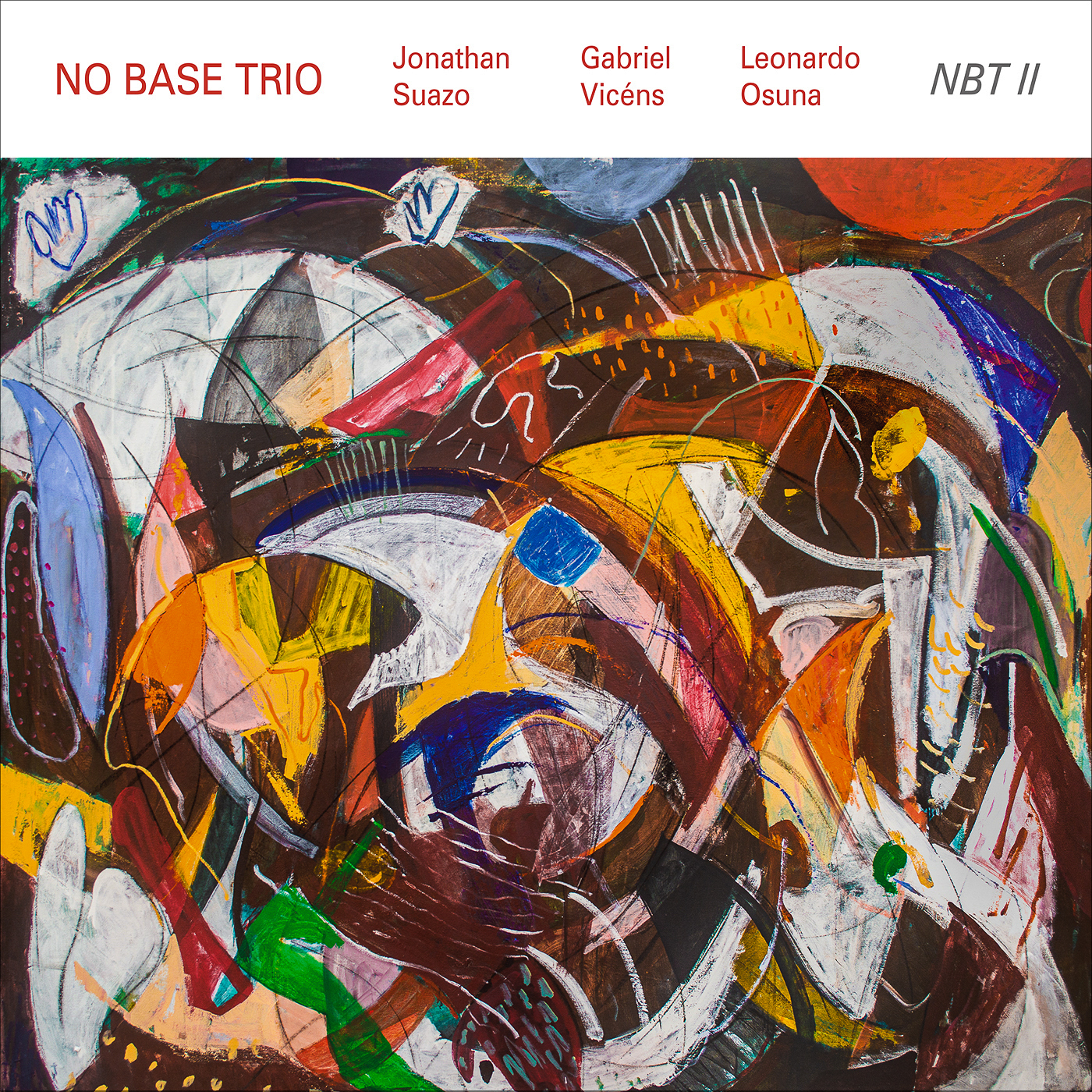
It’s a port we at the Monolith Cocktail have seldom sailed to, but Puerto Rico boasts an impressive contemporary jazz scene; one that the adroit and accomplished No Base Trio endeavor to export to the global community.
In the field for twelve years as a unit, horns and EWI practitioner Jonathan Suazo is flanked by the versatile guitarist Gabriel Vicéns and drummer Leonardo Osuna on another intuitive, fully improvised work of free jazz, jazz rock, fusion and beyond.
A grandiose, nigh two hour extemporized septet of performances – recorded the day after a highly successful concert at the El Bastión in Old San Juan – work II finds the trio in perfect synchronicity ready to probe and venture forth with atonal, tactile and juddered rhythmic explorations.
Across passages that last over twenty minutes in length, the recognisable jazz elements are stretched, repurposed and entangled in various bendy mirages and naturalistic atmospheres as ascending and descending patterns and more serialism type abstract musicality takes shape.
Suazo moves between flighty flute and windy spiraled alto/tenor saxophones like some sort of expressive natural force, caught up in mysterious soundscapes that evoke both fertile environments and more arid landscapes. Vicéns guitar accents, twangs and nimble finer work reminded me a little of the South American jazz guitarist Rodrigo Tavares, and on ‘ST 4’, a little bit of Ry Cooder articulating a mysterious psychedelic desert setting. Osuna’s drums meanwhile, sound out the tribal, spiritual and freeform, often sophisticated, quiet and spindled, or, taking time to find a rhythm. In action, all together, the trio varies the mood from the more abstract and avant-garde to built-up dynamic tumultuous climaxes: that translates as croaked and plectrum scratched guitar and industrial detuned sounds on ‘ST 2’, and a Hobby Horse meets head-on with Irreversible Entanglements in a rock-jazz crescendo squall on ‘ST 5’.
Each track is like a score in itself, cast adrift of a subject, theme or visual inspiration; a mix of jazz with various percussive influences and sources that swings between Buh label outsiders to the ACT label, Donny McCaslin, an avant-garde Americas and Ornate Coleman. It’s an impressive album of synergy that manages to probe the wilds without bombast and total dissonance; kept together at all times with the most intuitive of unsaid musicianship and deft foresight.

Following in the wake of his debut novel THE GREAT IMMUREMENT, which we serialised during the summer of 2020, Vukovar helmsman (and book reviewer collaborator to the Monolith Cocktail) Rick ACV now follows up with the surreal, esoteric and challenging Astral Deaths & Astral Lights. Playing with format, language and font, with half-thoughts of waking hours, death and the occult, Rick merges dream-realism and a languid sense of discomfort: a sorry state of existence, where angels dare to tread. William Blake and Austin Osman Spare meet Kōbō Abe in the hotel lobby portal of the never-world: personal and universal. Parts One & Two were debuted during August, followed up by Part Three and Part Four. We now continue with the next three chapters in the opus, Water, V and The Nurses below:
WATER
To ‘sleep’
to then, to this
X X X
6am. Saturday. No work today. I can indulge in my one true passion: inventing elaborate and complicated water features. I pull myself from the bed with little fuss, excepting from a little resistance from my well-worn joints, and enter the bathroom to begin my morning routine.
Whilst brushing my teeth I stop short suddenly. I stare at my reflection, mouth open, brush still in hand whilst foam of toothpaste drips onto the floor. I stare at the man staring back. Same thinning grey hair, same deep wrinkles around the eyes, same strong jawline; essentially the same person this myself has known all of our lives. But something is different and undeniably so. I stand still as a corpse.
Is my presence so obvious?
A few moments pass but the suspicion remains.
After completing my morning tasks I sit down. Dark wooden floors mopped. Dishes clean and put away. Overalls on. Each and every room clean, fresh and empty save for the necessary furniture, the only evidence that somebody exists here. My mind feels free enough to plan the day ahead.
I step out of my back door, my back door to paradise, and into the cavernous hangar-type building I call my laboratory. It’s a separate world. Scattered chalkboards full of equations and diagrams… unique tools of my own invention… blueprints… countless sculptures and prototypes varying drastically and dramatically in size… Dead-Centre is The Clearing.
The Clearing is home to my masterpiece.
My masterpiece:
A model of an unrepentant imposing concrete tower, hexagon shaped – looking from a bird’s eye view split into four equal parts, formed by a cross-like walkway. These four parts are huge open-top water tanks whose depths reach down a quarter of the height of the building, and, in each quadrant, a colossal tap.
This is the object of my attentions and affections. All is perfectly detailed and dimensioned. It is a work of art.
Today is the day I contact the Mayor to commission this magnificence. I sit down and begin my letter.
The phone rings.
I frown.
I answer.
There is no immediate response.
I hear somebody breathing and so wait patiently for the silence to be broken. Though it seems as no reply is to be forthcoming, I can’t bring myself to put down the phone, but I don’t seem to be able to speak.
So I simply wait, transfixed by nothingness.
All I can do is stare at my creation. Hairs stand up on the back of my neck.
Hello? Hello?
It’s a lady’s voice, gentle and kind. I don’t recognise it.
“Hello? Is that XX?
Speaking?
Hello dear, my name is XXXXX; I believe you did work for a friend of mine – XXXXX? She recommended you. Well, anyway, my house is flooded and I was wondering if you could come and sort it out? I’ll pay double for the labour.
No, no… that’s okay XXXXX. I normally work on a Saturday so it’ll be normal rate. I have nothing else booked in today so I’ll head straight out. What’s the address?
XXXXX said you were a gentleman! The address is [REDACTED]. Do you need the postcode?
No. I know where it is.”
I gather and check my tools, exit the hangar through a solid metal door straight into the garage and set off in the van.
The day is a grey one. The light fog drifting through the damp, empty city and the build up of clouds prevent any sort of meaningful light brightening the place up. Autumn by the sea and mountains. However, the closer I get to my destination, the more aggressive the fog seems to get.
This is ridiculous.
I slow to a stop; I can barely see less than a metre ahead of the van now and I’m fearful of hitting somebody.
It’s fortunate I know this district well. The pipework in the surrounding streets is growing increasingly unpredictable and giving me a good source of work and a greater source of Sisyphean toil. All is illogical… perverse… obstreperous…
I arrive only a couple of minutes late at the large, traditional home of XXXXX. The fog makes the short walk from the back of the van to the front door of the house a task ludicrously more difficult than it has any right to be.
I knock loudly upon the door to which there is no immediate answer.
Again. Again no answer.
A slow, low creaking noise creeps behind me as I head to the van to check my notes. I turn quickly expecting to see XXXXX but do not do so. All that greets me is a growing uncertainty; my loud greeting into the aether beyond the door, the empty darkness, responded to by silence…
…then – now – a distant thumping of metal on metal, hidden away by a thousand walls.
I step inside, suddenly into light. There is no XXXXX but there is a note:
Dear XX,
I’ve had to leave to tend to an urgent matter. Please, conduct your work as normal. I should return in time to pay you, but if not, I have left out some cash in the office.
The issue seems to be coming from the loft so I’ve unlocked the door for you.
Yours,
XXXXX
Ps. Please help yourself to food and drink – I have set out a lunch spread for you in the kitchen.
I put the note back in exactly the same place I took it from. I am aware of myself, deeply, and the significance of every movement that is departed, now, long since decided for us and long since distributed unto us all.
In the loft there isn’t much light; in fact it is as though the fog has drifted itself into every corner of everywhere. My torch offers no guidance, only a lazy uninterested flickering which soon subsides.
I look for CXJXXXZXNSLEKPWMD
SDJFO)JEPWOF$_)R@UEFJ
This is RVOJFJ{WRPMF{PE)${RU)@£UF
THIS IS ALL WRONG SXXXXXJPOCJQ
wrong
This is all wrong. What is this pain?
I am bowled over in agony.
Somebody is inside my loungs, pushing outwards with all their might, stretching the membrane as if forcing a whole new world into and out of my chest. The distant industrial thumping is drilling its way into my eardrums; the thin, sharp, absolute point of the bit teasing and slicing at the sound-dam entrance to my brain. Flesh on flesh. Metal on metal. Bone on bone. A blinding magnesium fire-light and I am gripped by something momentous, so comprehensively, and everything is excruciating. I slump, begging for release.
A ghostly voice sings to me, just to me, from a world away.
It gets louder and the growing spectral choir now reaching a crescendo. Abrase and unrelent
Pain seeps in and seeps out from every pore, ebbing and flowing for-ever and ever-more.
Circle-come-Cycle mania blood and shit
Body broken against wall
Mind, Spirit
Everything else capitulate
The pain dissipates as though it was never there at all, awaiting another day, another place, another time, Another Self to attack once more.
I heave myself up off the ground and make my way to the water tank on the other side of the loft. The fog has, like my pain, dissipated into sudden nothingness. Everything dissipates into nothingness. I find the leak in the mass of copper pipes leading into and away from the tank. Or at least I think I do. Under closer inspection and after some confused attempts at stemming the steady flow, I follow the pipes along to the connecting wall between this building and the next, having to crouch under the beams, on this, my great voyage into an oceanic mystery.
Something, some dust in my eye
Fall…
Make contact with the wall and try and use it as a support to keep upright
Fall through …. Frail plasterboard?
This body follows the whole of This Self
This is a shock.
I’m in a new place, dark and cold. I gather my thoughts and survey the wall; it is a solid brick thing, the only fragile part of which is the exact small square I fell through.
[DISSIPATION
THE DROWNING HAD TAKEN HOLD; WOULD HAVE SOONER HAD WE BEEN A LESS PERSON
THE LAST BREATH, HEAVENLY SO, FELT,
OR CAME, AS. A
WELCOMING
RELEASE…
RELIEF…
TAKE
ME
AWAY FROM US.]
The eyes that looked, that stared – even – were careful in their judgement, though a lack of light was somewhat of a deterrent. No sooner had XX thought this, and taken a tentative step forward, some dull, flickering light bulbs alighted. They hung very low from a ceiling that was at least four times XX’s height. Only a handful of the lights worked – no matter how (un)reliably – just enough for him to make out his surroundings. He was stood in a shadow filled corridor that stretched out a fair distance ahead of him, though he could not see beyond a tight bend, and behind him stood an improbably large set of heavy, wooden doors. The industrial thumping XX had heard throughout XXXXX’s house was more prominent and exaggerated with a powerful, echoing reverberation. The air was damp and dank, the concrete walls, stacked with rotting leaden pipes, appeared wet, soaked in fact, with huge patches of mould spread out intermittently along the narrow and claustrophobic passageway.
As the body of the surging river forces its whole self into such a cosily fitting gap – the mouth – it spreads out into the great, open void of egotistical pleasure; a reward for the hardships and energy expended in getting there. This is a cycle. Aptly so, XX had forced himself into – or out of – a new place.
He had reached the end of the corridor and was now in a sort of darkened lobby which contained only one door, the room organized around it as though this was the main feature. An unmanned desk sat to the left hand side of the room, though XX didn’t stop to examine it, and what appeared to be a cordoned-off museum exhibit sat to the right. He was sure the place was abandoned. He came to the submarine-like steel door which would not open as easily as he would have so wished.
His fingering of the cold steel brought about a momentary lapse in his newly found focus, causing his mind to drift to a place not dissimilar from the one he was stood in. Charcoal greys. Rotting pipework. Dampened mouldy walls, air, breath, flesh and all that came with it. Regaining himself, XX fought with the door that locked him from his unfortunate discovery, gracefully heaving and ho-ing, fighting their way to a mutually impossible conclusion; the door wanting to remain shut and the old man wanting safe passage through it. He stopped to consider all-things and all-passages and all-events for a moment, possibly two, and cast his cautious eye all the way over the door, though the half-light made it difficult. He gasped and took a step back. An astounded ‘What the…?’ escaped from his hung-open mouth.
A mighty, wrought iron plaque stood proudly above the door, announcing to the world its gratitude for the grandeur that its creator bestowed upon it. There could be no mistaking the names written in gold, though they were shockingly aged and faded:
XX
How could this be? The light bulb directly above him awoke from its deep rest and illuminated his immediate surroundings so comprehensively so that it revealed more questions than answers. On the museum exhibit wall was another plaque. This plaque had on it two illustrations – one portraying XX in an impressive stance, the other a picture of the apple of XX’s eye; his brutalist concrete high-rise, still an unborn foetus back in the laboratory to his mind. He must be the new life, growing, in a manner of speaking, in the womb of his own magnificence. Underneath the illustrations was some writing from an unknown author:
“Today, I fully realized, for the first time in all my lives, just how far from the ground I really stand, and, perhaps more tellingly, just how wide the breadth of my shoulders span. I am power, I am might. I am the wits of man and I am the strength of concrete. The complete understanding of one’s worth is not to be underestimated and I give these words unto you in the vain hope that you, too, find your ultra-place:
Small is beautiful. BIG IS SUBLIME.
I will be there behind you, casting my Colossus shadow over and around you.”
XX wasn’t sure what to think of either the words or the premise, though he could feel it strike a primeval chord deep inside. He lightly touched the smooth, handsome plaque, admiring the handy work. His touch met that of the building.
XX heard urgent sprinting footsteps. He saw only a dark figure running furiously at him. For the first time the poor old plumber felt a stabbing panic breach his chest. He threw his full weight at the previously immovable submarine door, which now lay open, and passed through.
‘Wait!’ was the shout, begging as though all life depended on it, ‘Please! Don’t go up there! Listen to me! Come back!’. A big man, the guard was short of breath and panted heavily. Sweat dripped from his forehead to the floor. He reached the door. He stopped. He bent over. He shouted limply up to XX: ‘Mr XX, please…’
XX, in his unfamiliar state of terror, had not heard any of this. He had bolted through the door and didn’t stop to look back.
Through the submarine door was a staircase. It led only up, was narrow and dark, and after every 10 steps it would turn 90 degrees to the left; XX did not know what could have been waiting for him around each corner, but he did not pause to dwell on this. And so, running – limping – as fast as his ageing and stiffened legs would allow, he duly followed his ascension.
The Guard sat back down at his huge mahogany desk in the now-lit lobby; he didn’t know what else he could do, such was the magnitude of the shock he felt towards his neglect of duty.
After what felt like several hours, but in reality was no more than five minutes, XX realized that nobody and/or nothing was following him. So he stopped. He sat down and rested his head against the dry, but still warm, concrete wall. He sat silent. Almost sleeping.
The strange, alternating lights and shadows perplexed XX. There were no windows, no lights or candles. He couldn’t tell how far he’d come up from the lobby, and it was equally impossible to estimate how far he was from the top because of the closed-off nature of the stairs.
XX climbed higher, he didn’t stop, and he was fully committed to that until he reached the next floor – if there was one. Sweat had begun to emerge upon his brow and his lips and mouth were crusted and cracked with thirst. The feet that gave themselves completely to their owner, his will and his command, were now just pools of blood in their work-boot home. The owner himself was nothing of substance anymore; he had sweated and walked and suffered so much. XX wearily placed one foot in front of the other. It was automatic. He was stooped, his eyes barely open.
XX took his last breath. He stumbled a step further. Just one, for that was all he could muster. He swayed gently; a reed in the wind. The violence would come later. A hand, outstretched… the strain found something. A jutting out of something… cold, calculating… a handle to a door, a door to a rebirth. XX let his weight fall against it and into another new world he fell. Instantly, XX recovered, his exhaustion forgotten, his death postponed. The echo from his boots upon the metal floor was something new; beauteous tinny waves lapped against him in what was a change of tidal formalities from the dull thud of subdued concrete.
The old man stopped in the centre of… it wasn’t exactly a room… he felt he should know each nook and cranny of this building… He was in the centre of what would have been the cross section of two corridors, had there been a ceiling. The corridors cut the hexagon shaped building into four equal quadrants. The same steel of all the other parts of the building were here disturbed by huge windows looking into each quadrant. They were colossal water tanks and if XX squinted, he could see he was still a long way from the top of the building and the gigantic taps that stood proudly up there. Each one as imposing as a cathedral.
XX opened the door to a new, better staircase. One that would hopefully oversee an altogether more peaceful journey. It went up in a spiral, made of more charcoal grey steel, the walls that shut it in made of glass. All of the four taps turned and the sound of crashing water drowned out all, any and every thing else. Immense oceans of water fell all around but not touching XX’s little space of sanctity. The tanks began to fill up. Curiously, they followed the exact pace he went as he made his way up the new staircase. He felt like a child again, bounding upwards to the roof – he would look and try and see if he could spot his house from up there, he decided.
XX finally reached the top; there was a ceiling to the corridors after all. He climbed through the hatch. It wasn’t as expected.
…
This is a town. Low buildings, trees, dirt roads, and, in the middle distance on all sides, hills all coming together to build the impression of a real place. How can there be land in the sky? Or: how can there be another land underneath this land?
…
There is no way back. Stairs sealed. Tanks filled and deeper than imaginable.
…
All is becoming lost.
…
A meeting with The Governor:
They sat in silence. The heavy emptiness of all things rested unevenly upon XX, and the glare across the desk from his compatriot, which grew fiercer every time he tried to begin to say something and end the torture, made the unease all the more unbearable.
Finally the strange official spoke, seemingly fuelled by the tension he himself had built in all the glory of cycles and circles. He addressed XX severely.
‘There is no necessity in small talk; forming the words and sounds, using the mind’s power to do so to fit them into an order so that I may understand, is a heinous waste. Much like the solution you so dearly crave to a problem that doesn’t exist. You are here, you are not there. There is there and is not here. The paths do not cross. They intertwined once and you were stupid enough to be present at the juncture. Now, as ever, beyond here is not there, but instead is nothing. You cannot be here, it is not allowed, but if you do not fight to remain, you shall be nowhere. This is my first and final warning.’
The meeting was concluded.
Holed away in this internment of confused longing, XX could barely face the non-containment and non-existence of his so-called mission any longer. It was as if he had trapped himself in this invisible prison; not so much not wanting to be here and not wanting to escape (nor having the want to do both either) but that some force – the will of the town and its inhabitants perhaps – had applied itself to trap him without meaning to, and resented its own inability to set his poor, extinguished soul free.
What caused him most anguish about this was that a man of problem/solution, punishment/reward (somebody who could even pre-empt these problems and punishments with such a logical defiance) was left at the mercy of no-things and all-things with no room to manoeuvre. Never one for philosophical grandeur, XX disliked that he had lifted the veil and saw what lies behind the world a little, and disliked the glimpse that seemed to him to be bludgeoning him mind, body and soul, repeatedly, to a mass of bloody pulp. He discovered, now, that it was not possible to break these parts of being without dying, to experience the complete loss of subjective self identity.
Enough. Should he continue in this vein and vain… He was sure he could end this, no matter how delusional, he could, he swore to himself. There is a way out and the will has to be done. It could be done and would be done with no triumph and no glory. This most complicated of contusions would be and should be confronted with the simplest of thought and therefore simplest of consequences. He began his work. He would use an aid dive to the bottom of a tank and force his way through.
X X X
All the fight has left my body. I feel all the lighter for it. All the thoughts and panicked urges are drifting away, just as my limp torso is now doing. I’m sure I can even see them all
leaving myself. I allow the gentle floating to carry me
away anywhere to
peace. to death to nothing
anywhere.
The Guard marches with officious duty, footsteps from the heavy black boots thundering, echoing off the damp concrete and metallic walls, following him to his scene-of-action and making him grow, as though these blows of noise adds to his height and breadth. He wanders like this through the maze he has been assigned, knowing all of the right corridors and how to open the impenetrable doors. With the reverberations accompanying him through my masterpiece, all forgotten, all decayed, he can’t help considering himself as some blind and unknowing St. Peter. He isn’t as important as all that, but his imaginations help fuel the passage of eternal time until one day he can leave.
Without prejudice or needing to alter his stride, he comes to the door he was searching for. It’s a curved door at the bottom of one of the four impossibly huge tanks. He turns the handle exactly so and the seal breaks. He steps with agility, almost wary that the powerful echoes of his gait could deafen him in this most cavernous of places. He finds the body – my body – where expected, hoists it over his shoulder and sets off once more with no moment nor pause to consider the drowned body lolling like a puppet under his control. Now even more imposing, with this second flesh upon his own and the noise of his boots still thundering, The Guard makes his way to his given destination. He opens the door, steps inside and puts my still-wet carcass down amongst the piles of other bodies, all in the same state. The sound of piercing radio static floods everything and everywhere and The Guard shuts and locks the room of resting death and continues onwards along his path.
V
Pier Paolo Pasolini, as Giotto, says “Why produce a work of art when it’s so nice to dream about it?”.
Pasolini, by being Giotto, is an Ascender/Descender. Maybe I will awaken to find myself as himself. Maybe he is Giotto being Pasolini and re-being Giotto. Or maybe I will awaken to find nothing, nothing at all. These things and links and contrivances are so easily spotted when you/me/we spend more than half the time living as others. Angels climbing and reclimbing and declimbing Jacob’s Ladders.
Sleep please let me sleep
Detach and disassociate to a disappearing degree. There is trouble, sometimes, observing the things around me, as though everything is not in its proper place. The edges of everything just ever so slightly out, agitated in the atmosphere, not quite fitting, outlines blurred, making the presence of this world around me sickly with the soft pillowy aura surrounding everything within it. As a child – though now I’ve come to realize I was never a child, it was just the same body but containing a different being – I recall vividly the feeling of a dream where everything was like this, the pillowy soft air, invisible but encasing everything. I woke up laughing hysterically and deeply confused. I vomited almost instantly, as I have started to frequently do now. The Partner and other background cast members that support my existence are convinced I am sick. There is not enough evidence to prove this. How can I be sick or dying when I am living everywhere and everyone? You are dying and will die. All of these people cast members are dying and will die. All of the people I inhibit are dying and will die. But I will not.
This is discovered, nailed to my own calf:
“If we keep the eyes open in a totally dark place, a certain sense of privation is experienced. The organ is abandoned to itself; it retires into itself. That stimulating and grateful contact is wanting by means of which it is connected with the external world, and becomes part of a whole.”
I wish for Goethe to be dying and dead.
THE NURSES
My body has hit the water. My body has been submerged by the water. My body is part of the water. The water is part of my body.
My Water Body moves on and on with no sense of direction but with a clear sense of destination.
The moment is stuck in time, an Immortal Hour, and is happening even now. Only subtle changes with each Immurement, each eternal recurrence; this time I hear the sweet voice cooing to My Water Body along the threads of The Spinner:
“The locked-air is freezing, but the Immured is not left wanting. Except a change of mind, though the heart will stay the same. And that heart now has to feel nothing; unaware of the suffering, of all the pain… of everything outside those enclosed walls… of anything except the Great Immurement… of nothing except nothing, nothing ever again… nothing but nothing ever again.”
This eases the journey of My Water Body this time, and then for all-times after it. The Body Of Water erodes My Water Body, it empties all of the heaviness and empties all of the emptiness.
The immortal spirit comes clear from within My Water Body and I hum happily:
“Destroy yourself. Whatever comes next will be better.
Erode me, O dismantling waters, and carry me with that emptying tide.
And carry me to me, I to I, mine to mine.”
I am living underwater. I am drowning in slow motion – all the while following the length of thread as decided by The Alotter.
I come to The Unturnable point of the journey. The Nurses, led by The Three Fates, all swan-swim to, through and then away from my bodies…my body’s place of rest, where the emptying tide ceases to be. The dismantling waters have stripped it to the soul. The Nurses, they gather me safely in.
This is where the rainbow ends and now into the Hymns to which I am faithful:
The Nurses will finish all things you left half-finished.
The Nurses will never let thy works diminish.
The Nurses will deliver your little love notes.
The Nurses will erase from memory all the cruel things you spoke.
The Nurses will return your body to its former glory.
The Nurses will make sure it’s no longer bloated and watery.
The Nurses will overlook your fixed stare and filthy laugh.
The Nurses will undo all the bad things you did in the past.
The Nurses will listen to all the things you are not saying.
The Nurses will focus thy mind whilst you are praying.
The Nurses will think you unblemished.
The Nurses will tell you you don’t need to be quite so apologetic.
The Nurses will reach out to you with no pity.
The Nurses will softly whisper to you a little ditty.
The Nurses will wish for something greater, always.
The Nurses will listen even though you’ve always got something to say.
The Nurses will…
In their hospital I see them spin everything and everyone and everywhen onto webs. All these things and all things more are interconnected this way. The suspension of lives and of stars, of accidents and of coldness, of happiness and of surgeries; everything IS everything else. All matter is all of us and every myself. The Fates as The Nurses have cut my thread in just the right places, in just the right way to leave me suspended and unended, that I may observe this secret of the universe and I thank them. I find my thanks are just another thread and they already know.
With thanks to them, in return, I am threadless, I am lifeless and I am free.
Our Daily Bread 544: Brona McVittie ‘The Woman in The Moon’
October 3, 2022
Album Review
by Graham Domain

Brona McVittie ‘The Woman in The Moon’
This album is like being able to travel back in time to days of childhood innocence. A time when things were simpler. Life was less hectic. People took the time to talk to each other. Shops shut on Sundays. The seasons had defined weather patterns. In the summer the days were carefree, long and sunny, thunderstorms occasionally breaking the humidity. In the winter, it was cold and often freezing with large downfalls of snow. Ice often froze the water pipes creating icicles of all sizes. Life was hard but somehow more bearable. There was less stress, less craving for more! People seemed to smile more often and enjoy nature, the woods, the fields, newts, frogs and fish swimming in a myriad of tiny ponds.
The music is Irish folk but with a modern twist – there are electronic keyboards sprinkled across the songs, but not merely as an afterthought. They fit in perfectly with the laid-back atmosphere, often underpinned by soft jazz drumming and swathes of ambient sound – almost like David Sylvian has joined the party.
The album version of the title track differs greatly from the more commercial single with its slower pace creating more space and a smoky jazz ambience. It’s still a great song though and works in both settings.
‘Summer Will Come’, sung in the native language, holds the attention of the listener with its quiet beauty and melodic charm. The fact I have no idea if any of the songs are traditional or new compositions shows that the whole album avoids cliché and manages to create its own world of wonder, magic, fairy-folk, peace and tranquility. In today’s hectic times it provides a great refuge from the chaos of an angry world, with its beauty and quiet reflection. Simply wonderful!
The Monthly Playlist: September ’22: No Age, The Beach Boys, Al-Qasar, King Kashmere, Sampa The Great, Yemrot….
September 30, 2022
PLAYLIST
TEAM EFFORT/CURATED BY DOMINIC VALVONA

After avoiding Covid for nearly two and a half years (with periods of shielding) I’ve finally succumbed to the dreaded virus this week. And it’s hit me hard. But because I’m such a martyr to the cause of music sharing I’ve managed to compile this eclectic bonanza of choice music from the last month.
The Monolith Cocktail Monthly features tracks from the team’s reviews and mentions, but also includes those tunes we’ve just not had the room to feature. That team includes me (Dominic Valvona), Matt Oliver, Brian ‘Bordello’ Shea, Andrew C. Kidd and Graham Domain.
We’ve supplemented the original audio playlist with a video version on our Youtube channel. This will feature a slightly different lineup (the electronic music collective Violet Nox’s ‘Senzor’ primer for one).
The full track list is as follows:
Dead Horses ‘Macabro’
Grave Goods ‘Source’
No Age ‘Compact Flashes’
Etceteral ‘Rome Burns’
Al-Qasar Ft. Jello Biafra ‘Ya Malak’
Clear Path Ensemble ‘Plazma Plaza’
Antonis Antoniou ‘Syntagi’
Ocelot ‘Vanha Hollywood’
The Beach Boys ‘You Need A Mess Of Help To Stand Alone – Live At Carnegie Hall’
Rezo ‘Soemtimes’
Blue Violet ‘Favorite Jeans’
Teo Russo ‘Novembre’
Keiron Phelan & The Peace Signs ‘Guessing Game’
Micah P. Hinson ‘Ignore The Days’
Sonnyjim/The Purist Ft. MF DOOM & Jay Electronica ‘Barz Simpson’
Salem Trials ‘Just Give Up’
The Bordellos ‘Nurse The Screens!’
Legless Trials ‘Ray’s Kid Brother Is The Bomb’
S. Kalibre ‘Hip Hop World’
King Kashmere/Leatherette ‘G-Cell’
Depf/Linefizzy ‘Rain’
Isomonstrosity/645AR/John Lenox Ft. Danny Brown ‘Careful What You Wish For’
Tess Tyler ‘Try Harder’
Qrauer Ft. Anne Muller ‘Rund’
Sampa The Great Ft. W.I.T.C.H. ‘Can I Live?’
Rob Cave/Small Professor ‘Eastern Migration’
Salem Trials ‘Jc Cells’
Wish Master/Axel Holy Ft. Wundrop ‘FLIGHT MODE’
Alexander Stordiau ‘Nothing’s Ever Acquired’
Simon McCorry/Andrew Heath ‘Mist’
Andrei Rikichi ‘At Home I Hammer Ceramic Golfing Dogs’
OdNu ‘My Own Island’
Floorbrothers ‘In Touch’
Conformist X H O R S E S ‘Heddiw’
Slim Wrist ‘Milk Teeth’
Forest Robots ‘Everything Changes Color With The Rainfall’
Noah ‘Odette’
Yara Asmar ‘there is a science to days like these (but I am a slow learner)’
Tess Tyler/Spindle Ensemble ‘Origami Dogs (Graphic Score Interpretation)’
Christina Vantzou/Michael Harrsion/John Also Bennett ‘Piano On Tape’
Yemrot ‘Big Tree’
Our Daily Bread 543: The Bordellos ‘Ronco Revival Sound’
September 27, 2022
Album Review
by Graham Domain
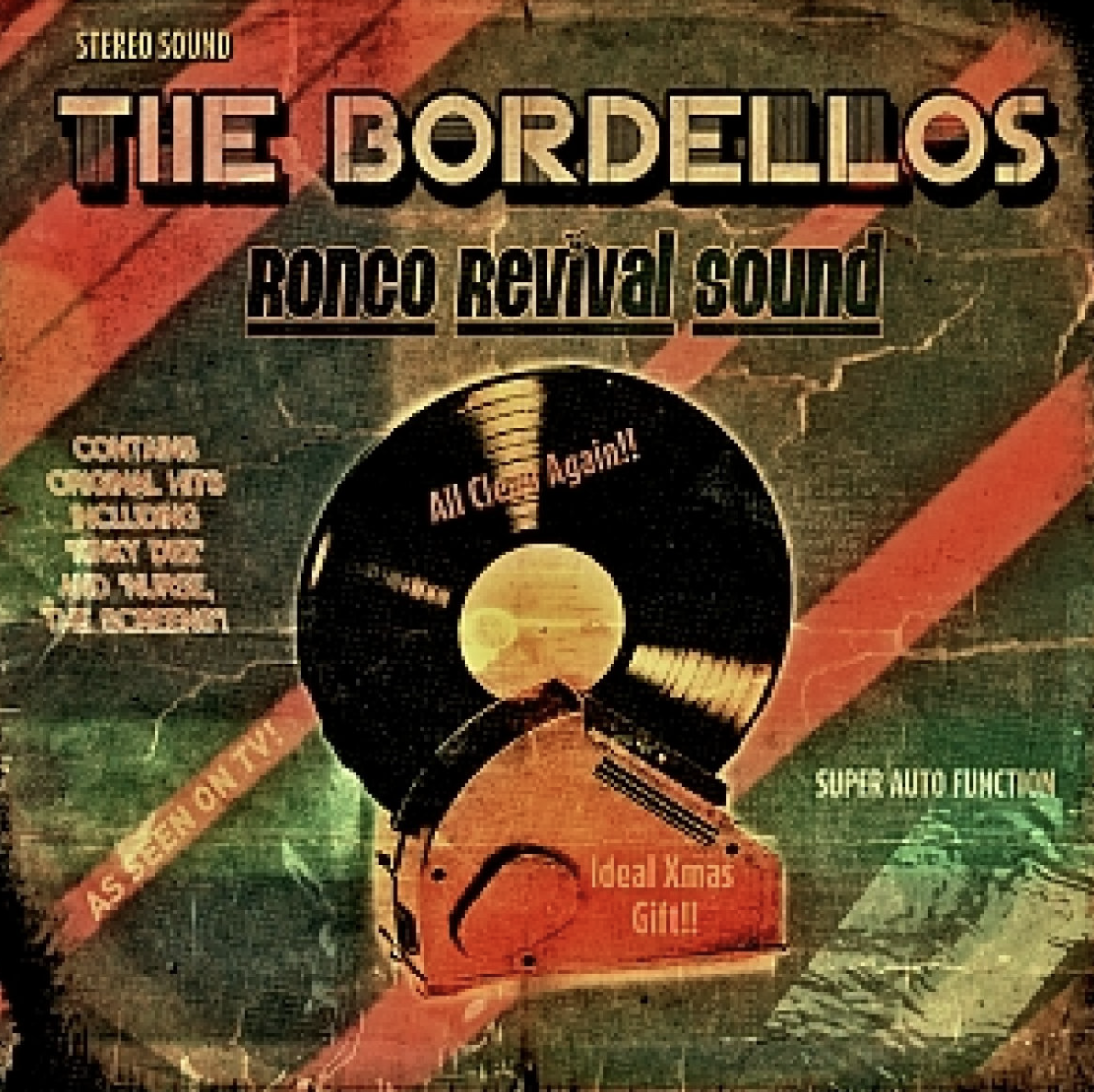
The Bordellos ‘Ronco Revival Sound’
(Metal Postcard Records)
This Gem of an album begins with the Slade-Glam-Stomp of ‘Ronco Revival Sound’ – a return to the innocent days of youth, the days of paper pounds, when we listened to radio 1 for the Charts and a smiling Gary G topped the charts with songs asking you to touch him and his silver platform boots! This song sticks in your head like a harpoon! After 3 plays I was singing along with all the words and imitating the fly-like synth noise! It is catchy, probably the most commercial song I’ve heard from the Bordellos’ and would make a great single!
Next, we have ‘Another Song Named Deborah’, a psychedelic masterpiece of Camberwick Green proportions – like Sid Barrett or Mark E Smith backed by the Byrds after imbibing several jelly tots! If Pulp had covered this song circa 1994 it would have been a huge hit! An uncredited Roger Whittaker, or a milkman, guests on whistling!
‘Fruitcakes and Furry Collars’ is a psychedelic bad trip – all discord and chocolate cake – the Velvets tripping over Pavement with Scott Walker dream-like lyrics – Fabulous!
‘Kinky Dee’ blasts out of the speakers like early Beck backed by the New York Dolls or the Telescopes mixed with Pavement, the MC5 and Suicide! Massive guitar chords chop through a song about love for Garage Rock, giving way to a discordant yet strangely tuneful chorus! At 1.45 min it doesn’t outstay it’s welcome! A song that gets more powerful with each play!
‘Who’s to Blame’ is an acoustic guitar ballad, like Daniel Johnston fronting New Model Army. It namechecks the Fall and reminisces about the days of the summer Manchester acid craze!
‘Sun Storm’ is a beautiful psychedelic love song underpinned by a stoned drum machine tripping on electrical power surges! My favourite song on the album, it reminds me of Beautify Junkyards, Julian Cope with hints of Traffic, the Moody Blues and Ash Ra Temple! Wonderful!
‘Weird K’ is another fabulous song, like Bob Dylan jamming with the Cure in an early morning comedown – tripped out Bliss!
The thing about the Bordellos is that, musically, they go wherever the mood takes them. ‘Nurse, the Screens!’ sounds like a song that Radiohead might do to wild applause! While ‘A Man You’ve Never Seen’ is a dark acoustic ballad that seems to be about depression with the protagonist intimating ‘This could be the darkest place I’ve ever been…’ and asking the question of his love ‘could you sleep
with a man you’ve never seen’, a man whose internal demons have surfaced once again, changing him, through no fault of anyone! It is a simple yet affecting song!
The album ends with a synth pop song not unlike New Order. ‘Temperature Drop’ hints at ‘Atmosphere’ and ‘Your Silent Face’, but is still a good song in its own right, with a great vocal.
On this album the Bordellos revel in the magic of music. If LA Woman brings to mind the West Coast of America, Ronco Revival Sound brings to mind the carefree hot summers of the North West of England, when climate change was just an imagined story plot in science fiction! Enjoy this album and be happy, be carefree, be alive!
Our Daily Bread 542: Christina Vantzou, Michael Harrison and John Also Bennett ‘Self-Tilted’
September 26, 2022
ALBUM REVIEW
Andrew C. Kidd
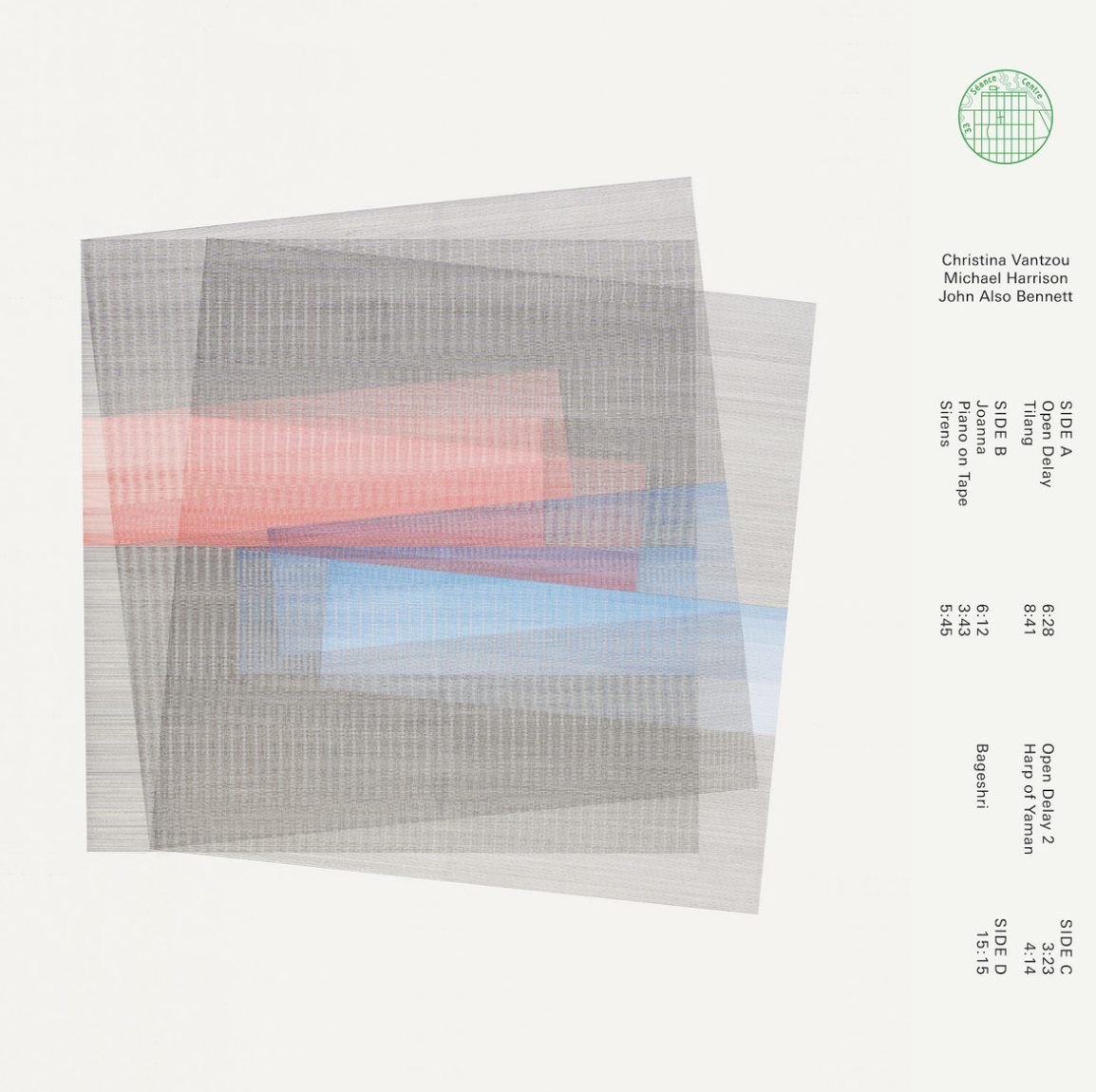
Christina Vantzou, Michael Harrison and John Also Bennett ‘Self-Tilted’
(Séance Centre)
The Séance Centre is one of those labels that rove. They are a little bit like Phaethon with headphones except that they are in control of the chariot. From the map-making Schleswig-Holstein Aufnahmen (Phil Struck) to the modular musings of Kobzir (Oren Cantrell) and dubby zings of Le Sommeil Vertical (Shelter) they command a central place in the cobbled and too-often potholed ambient avenue of today. Bandcamp Daily even featured them in one of their revues last year. Before Dominic Valvona (Editor of The Monolith Cocktail) contacted me about this self-titled release, I had listened to Fly Me to the Moon (Joseph Shabason/ Vibrant Matter) during a Bandcamp lottery play day earlier this year.
So enter Christina Vantzou, Michael Harrison and John Also Bennett with a very different sound. Their principal instrument is the piano, played by Harrison. There is clever use of droning synthetics by Bennett. Under Vantzou’s direction (or “observation”, as alluded to in the pre-release information provided by the label), their tri-synergy is powerful. It is a difficult sound to describe. I have tried a few different approaches to summarising what has been offered here. The creator of the faded geometric artwork that accompanies the album (Parul Gupta) is quoted as saying that “the songs feel like an extension of silence”. I think this is an accurate description.
The listener is immediately met by ‘Open Delay’, which wave-forms and disfigures to scale its octaves. Notes are held before being gently released. The left hand keys are altered and rustle quietly in the background. ‘Tilang (33SC)’ opens up to showcase more technical pianistic nous. A tilang is a classical Indian raga, or form of melodic improvisation. Both the ascent up (arohana) and descent down the scale (avarohana) are played here. The piano on this album is the string of a sitar, and the synth is the plucking of a tanpura.
There are beautifully expressive moments on the album, such as those played on ‘Bageshri’ and ‘Joanna’. More on ‘Bageshri‘ later. The piano notes of Joanna play atop a droning and subtly changing synth backdrop. The piano notes have an indefinable depth of feeling. I cannot tell if loss or joy was felt when the composer penciled this. I suppose it does not matter as each emotion inevitably self-circles to meet the other in the ceaseless sphere of life. This contrasts heavily with the discord of ‘Piano on Tape’. The left hand of the piano climbs a seemingly unattainable summit. It is masterfully contained.
Electronics feature heavily in tracks such as ‘Sirens’ and ‘Open Delay’. The former opens with a Vangelis-esque whorl of modular synths, as if wind is coursing through its coiled and interconnecting wires. There are analogue ‘Subotnicktronics’ that dial in later. The elongated acoustics melt in like long notes played on a future accordion where the ivories have been replaced by emotionally receptive faders. The album at times feels like a giant echo chamber.
‘Open Delay 2’ shares reverberances with its predecessor. It is more fragmented though, as if some of the wavelengths have been swallowed in the endless ether of space. The same can be said of the heptatonic ‘Harp of Yaman (33SC)’. When viewed on my music player, its amplitudes display as a sawtooth-like waveforms. The tone is not sharp but muted. Its denouement is an album highlight where deep bass notes gradually climb to grace note at the scale’s peak.
As previously alluded to, ‘Bageshri’ is beautiful. A bageshri is a raga that portrays the emotions of a lover’s reunion. In this piece we have the soft interplay of finely balanced notes that are sustained by clever foot peddling. An introspective motif appears around its halfway mark and expands to hit piercingly high top notes that tie. The frequencies do not exceed pianissimo or mezzo piano. A feeling of anticipation is invoked here. The entire piece also sits within a major key, which is joyous. It gently filters away in quasi niente. What a peaceful way to conclude this most delicate and modest of albums.
The Monolith Cocktail Social Playlist #69: Ramsey Lewis, Spaceheads, dwi, Tresque, Blooms Corda…
September 23, 2022
PLAYLIST
DOMINIC VALVONA
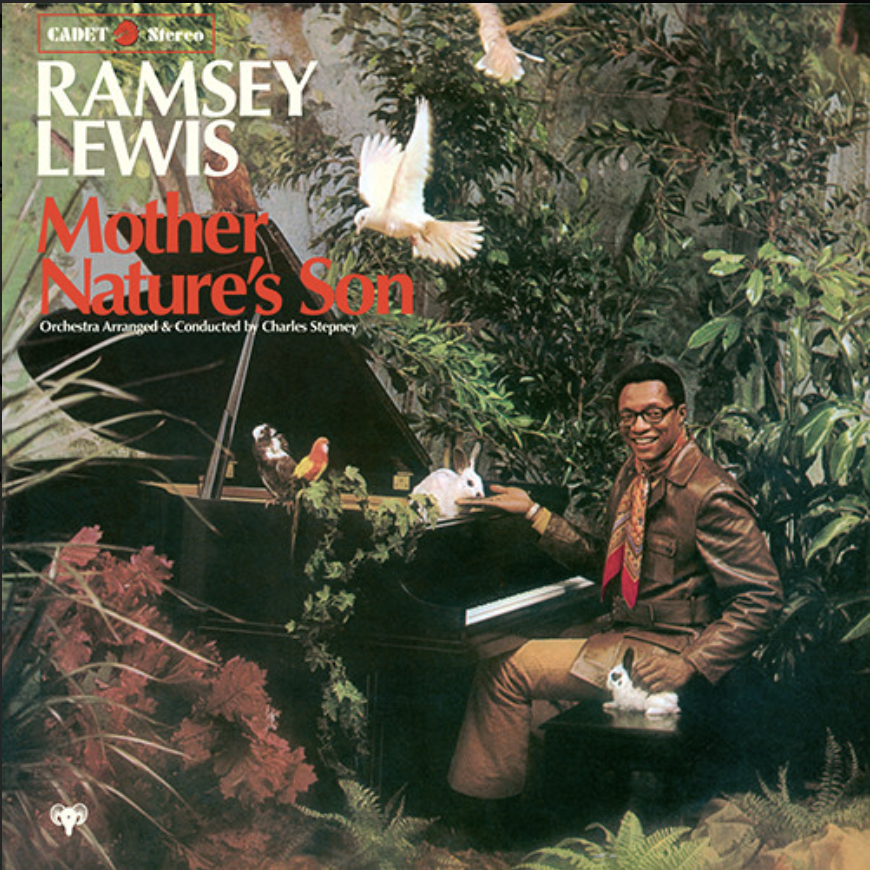
An imaginary radio show or podcast with tracks chosen from my own personal collection and music I’ve accumulated over the last four decades, the Social is a cross-generational, cross-genre playlist. Within that list are also nods to those dear departed souls we’ve lost during the last month plus anniversary celebrating albums.
The September selection (or volume 69 as it were) has eulogies galore, with homages to swinging jazz/R&B pianist doyen Ramsey Lewis and cinematic auteur Jean-Luc Goddard (with the inclusion of scores from both Breathless and Alphaville). I also mark a reverent respect to Elizabeth II, feeling it a good opportunity to embrace the hymnal magnificence of both Henry Purcell and Malcolm Williamson whose music was used in the funeral service.
Added to that we have music from such diverse artists/bands as Spaceheads, dwi, Tresque, Chill Rob G, Anteloper, Poets of Elan, Help Yourself, Noah House Of Dread, Moderne, Moonkyte, Blooms Corda, Univeria Zekt, Mainhorse, Eroc and more.
Ramsey Lewis ‘Mother Nature’s Son’
Spaceheads ‘What Does The Money Machine Eat’
dwi ‘Reverse Engineering – Live From 604 Studios’
Hubble Bubble ‘New Promotion’
Retards ‘Action Woman’
Tony, Caro & John ‘Forever And Ever’
Dina Ögon ‘Ficktjuven’
Tresque ‘Hanyatlas’
Anquette ‘Let’s Rock & Roll Y’all’Antipop Consortium ‘Staph’
Chill Rob G. ‘Wild Pitch (KDAY Remix)’ Bebe Manga ‘Ami’
Anteloper ‘Delfin Rosado’
Maria Monti ‘L’armatura’
Horseface ‘Kuijen Kuijen’
Martial Solal ‘Poursuite’
Sun Hammer ‘Trim’
Taeko Onuki ‘Dobutsu Puzzle’
Poets Of Elan ‘Self-Efficacy’
Ramsey Lewis Trio ‘If You’ve Got It, Flaunt It (Part 1)’
Johnny Dyani ‘Appear’
Eroc ‘Zimperlein’
Loudest Whisper ‘Magic Carpet’
Fraction ‘Sons Come To Birth’
Paul Misraki ‘La Ville Inhumaine’
wubworld ‘Chachevella’
The Classical ‘Shovel & Bevel’
Malcolm Williamson ‘Fantasy on, “O Paradise”’
Heartless Bastards ‘When I Was Younger’
Sylvie ‘Stealing Time’
Kevin Ayers ‘Lay Lady Lay’
Help Yourself ‘I Must See Jesus For Myself’
Bavon Marie Marie ‘Beatrice’
Nocturnal Emissions ‘Verda’
Moderne ‘Judo-O-Dojo’
Noah House Of Dread ‘Wicked Kingdom’
Alogate Oho & His Sounds Of Joy ‘Allema Timba’
Biglietto Per L’inferno ‘Mente Solamente’ My Brother The Wind ‘Song Of Innocence Part 2’
Henry Purcell/Choir Of Clare College, Cambridge ‘Thou Knowest Lord’
Blooms Corda ‘Робінзон криза’
Don Antonio ‘Acceso’
Moonkyte ‘Search’
Univeria Zekt ‘Something’s Cast A Spell’
Mainhorse ‘Basia’
Serialisation: ‘Astral Deaths & Astral Lights’ By Rick ACV (Part Four)
September 21, 2022
Following in the wake of his debut novel THE GREAT IMMUREMENT, which we serialised during the summer of 2020, Vukovar helmsman Rick ACV now follows up with the surreal, esoteric and challenging Astral Deaths & Astral Lights. Playing with format, language, font, with half-thoughts of waking hours and occult merge with dream-realism and a languid sense of discomfort: a sorry state of existence. William Blake and Austin Osman Spare meet Kōbō Abe in the hotel lobby portal of the never-world: personal and universal. Parts One & Two were debuted during August, followed up by Part Three. We continue with the next chapters, EVERYONE IS ENDED and IV below:
EVERYONE IS ENDED
“Now I live in a ghost world, enclosed in my dreams and imaginings.”
Images flash by.
A hidden backstory to be deciphered, hands reaching out to grasp at them and to them and put them all-together.
There are 3 things, 3 beings and they attempt a film … but there must be death, Real-Death. Even though the world that has created these people… the person or people in that world… there has been Real-Death there.
And so in this imaginary world with these 3 imaginary filmmakers, their imaginary friend, as a result, is now a Dead-Friend and their only purpose in life cannot be completed.
They exist in a limbo far crueller than their eternal recurrence.
Images become clearer.
They were written into a script, that’s their existence. When the film opens, theirs and every other character’s in that script’s life begins. The film finishes, the credits roll; Everyone Is Ended.
And it begins again. But this now can’t happen.
IMAGES COME YET CLEARER.
They stop flashing and moving.
…
.
……..
..
…………………………………
.
…
I am frozen by a cerement of despair; the morosity and monstrosity is shared by all three of us, but not Charon, who awaits us further on. His flashing eyes gleam through the mid-winter, mid-morning, mid-mourning fog, directing us towards him.
We know this scene, Grey, Nancy and I, but it feels as though Something Has Changed. Our collective De Ja Vu is not as nauseating, our futile existence not as repetitive.
We walk silently side by side, exchanging solemn but reassuring looks now and again in place of the usual vindictive and often tedious words that blight our many conversations, funny as they may be to those who Witness Us.
It feels as though we have wrestled back control from our Creators, from our destiny, from our all encompassing Purpose.
In reality, we have simply been forgotten about and left forever to wander and wonder.
The fog moves quickly and we can barely make out the lake, the perimeter of which our path naturally follows, and, so too we are blinded to the woodland that surround and are usually so beautiful and full of life. This is a cold, dark day.
Limnal hymns haunt our every movement and direction.
The hard, coarse stones underfoot that form the ever-widening beach – itself an estuary to a barren Stone-Sea, which is our destination – occasionally pierce our feet; the pain is a mild self-flagellation to punctuate our silent affirmations that this is the Truest Of Choices.
We move towards Charon and Place To Rest.
Place To Rest for our Dead-Friend whom Nancy carries in an old, battered tin. She has to be strong as the ashes have been fighting to emerge for an eternity now.
Place To Rest for all of us.
As we come ever closer to Charon, we take formation; Nancy a couple of paces ahead with myself and Grey flanking. Nancy holds the tin with outstretched arms to warn Charon that this time…
…this time it is different.
I recall from the usual world, and then imbibe all of us in this one, of a passage:
“‘Noone will suffer. I’ll save them all.’
Creators now become Cremators.
The daylight as strong as the potent meph these grievers snort whilst the salvaged and salvated body drifts through the air into the Chapel Of Ash.
There are many people but people-as-props for this – our – final attestment to thy testament.
Surrounded by voices. Surrounded by seers. Surrounded by voices.
The smoke into the atmosphere as the only real thing. Even though we must craft in clay, we first dream in smoke. The smoke envelops this whole Immortal Hour, this whole celebration, this whole play; A play that the cremated’s smoke itself has written and is now directing.
The smoke is the metaphysical embodiment, entombing us, immuring us within The Great Immurement, to be held within until the crafting begins and the clay can take its place. The ashes are a physical monument, but nothing more.
Besides, there are no differences between ashes.”
Our version and vision of Charon is a crazed old man, deranged and unhinged, seething with malevolent playfulness. But not today.
Today, he still rows his little wooden boat, gnarled with eternal age, but immune to external damage, and it is upon the wide expanse of stone and pebble on the water’s edge that he rows.
We climb aboard, our Dead-Friend and ourselves and we sit, together.
All is quiet; the liminal hymns are at one with the atmosphere.
We huddle.
The sun sets.
Soon we will all die and this time, never live again.
Everything fades.
Everyone Is Ended.
IV
There is often fear of ‘The Bed’. The fear is growing of ‘The Bed’.
I’m not there. I can’t go there. Is the partner on it? Trying to coax me to ‘The Bed’, as though it’s some normal thing, some normal place to go to at the end of the day?
There is no security, not even a false sense. ‘The Bed’ should be avoided at all costs. There is no rest there.
How can it be sleep and rest when all I do is see through other waking eyes, in other waking worlds?
Another note from Another Place:
“As we get older and more time has passed, we become attached to the ideals of people rather than the people themselves, as we understand that they cannot fulfil what we require of them, and learn how to find fulfilment, instead, within ourselves. Then we become more detached to those things that mean nothing, turning instead to nothingness, the things and places that lie beyond the Veil.
These things and places are not wondrous. It is a crushing vastness that is impossible to navigate but exciting to explore, and, in return, to be explored by.
When the crushing vastness decides we can neither offer nor fake any more of ourselves, our life is taken from us and given to something new.
This is not our decision.”
One more here in fact… this by another’s hand… all battered and bruised… blood drips…
“I am scared to death
Scared to death of death;
to unexist after all i’ve lived learned loved … the thought of this
is a source of great depression
of cut hands
of night falls fast
PLEASE GOD
XXXXX XXXXXXXXXXXXX XXXXXXX MY GREATEST WISH IS TO
NOW LIVE EVERYONE IN EVERYTIME EVERYWHEN AND EVERYWHERE
until unexistence is escaped and I may always
be.
Just to be, forever, is all I want.
STEPS HAVE ALREADY BEEN MADE.”
Did I write this?
Please, God.
Our Daily Bread 541: No Age ‘People Helping People’
September 20, 2022
ALBUM REVIEW
DOMINIC VALVONA
No Age ‘People Helping People’
(Drag City) 16th September 2022
Fucked-over like the rest of us during the Covid pandemic, the drum and guitar pushing No Age partnership of Randy and Dean lost their original studio space of the last decade. Forced to take up space in Randy’s garage instead, the duo set out on another sonic adventure of both languid and more weighted slacker angst, pain and dismissal.
Six albums into a feted career that began sixteen years ago, No Age have lasted the course and maintained their thirst for experiment; taking that drum, guitar and vocal combo further than most. And for the first time ever the new optimistically, daresay hopeful, entitled People Helping People album is entirely recorded by the duo themselves.
They bookend it with two of the most dreamy resonating instrumental pieces: the first, ‘You’re Cooked’ envelopes and traverses cylindrical vaporous loops, reversed sucked-in guitar sonics and sparse drum pad hits, the second, ‘Andy Helping Andy’ is even more psychedelically sleepy and ghostly; a wistfully aching and hazy vision that could have easily soundtracked the recent Netflix documentary, The Andy Warhol Diaries. The former reminded me of the Liars Aaron Hemphill and his solo Nonpareil project, the latter, like a languorous, quite sad waft of remembrance. The Warhol track is actually among my favourites. Over time it gets better and better, more evocative on every play.
So, No Age continue to change the mood, waiting until well into the album’s second track, ‘Compact Flashes’, to open up the vocal valves, chase wild horses and skid, clash and clatter with sporadic free fall jazz spills, new wave sensibilities and a loosened concept of timing. It is however a continuous balance of those stirring instrumental fogs, wisps and a rolling, fanned and disjointed unique vision of scuzz, garage, punk, grunge, shoegaze and music that no ones quite been able to name convincingly yet.
If you could even call them reference points, there’s a taste of the already mentioned Liars, a guzzle fuzz of Lou Reed (‘Violence’), Iggy period Stooges and Dylan if he’d be born as a generation Xer snot rocker (‘Flutter freer’), Crispy Ambulance (in many places) and Rudolf Sosna’s scratchy guitar work on the Faust albums (‘Plastic (You Want It)’).
At times on a lo fi vibe and at other times pushing at the halcyon, No Age keep moving, keep navel gazing and keep on surprising. Just when you get a sense of direction they change tact, plant a new seed. On waves, in bombardments and fizzled petulance the duo redefine their sound and push the envelope a little further forward down the road.

