25 for 25: an alternative hip-hop retrospective
December 17, 2025
Matt Oliver’s Choice Hip-Hop Releases of 2025
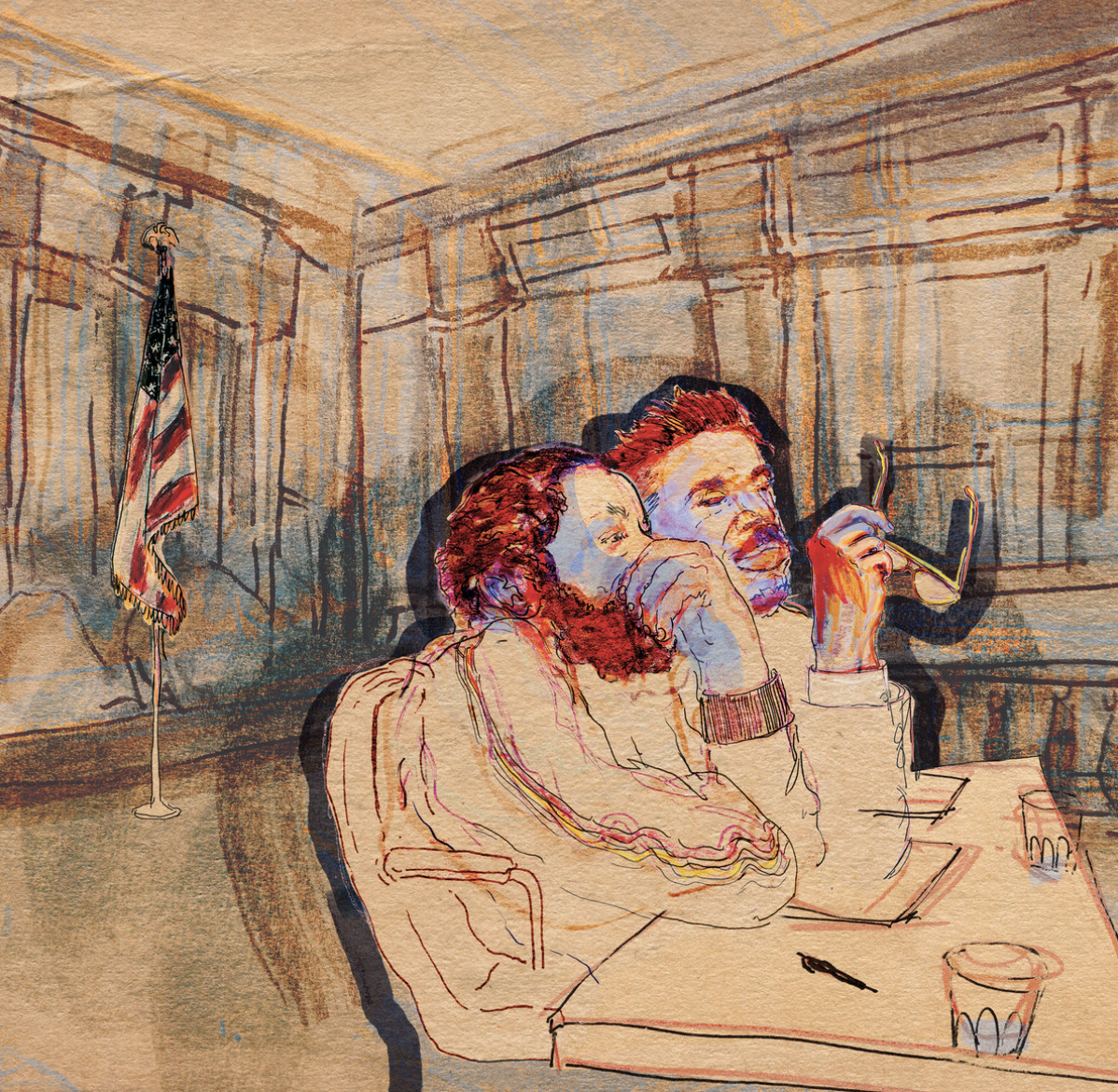
Armand Hammer & The Alchemist ‘Mercy’ (Backwoodz Studioz)
Armand Hammer = uncommon carnage and luxuriously slow violence, where “everything justified when you’re starving, right?” Challenging Alchemist time signatures give the MPC twisted blood, finding the unfazed ELUCID and billy woods counteracting with formidable, structurally-dismissive street riddles and artisan rambling from beyond off-the-top. In a game of who’ll blink first, a band of drizzly soft rock head nodders (‘Peshawar’ and ‘Calypso Gene’ reflecting ALC’s work on Evidence’s ‘Unlearning Vol.2’), turn the page in a surreal, open-ended world filtering between pure, “aura matte black” menace, Alchemist looping on his merry way and a kind of spectral connection/disconnect (‘Nil By Mouth’ and the magnificently dead of night ‘Crisis Phone’), as if ELUCID and billy woods are occupying disembodied mid-regeneration. Riding designer gangsterisms into town with bulletooth brainteasers where “every story tell a story that’s already been told” and barely allowing any breathing space, Mercy is a tour de force, probably reaching unexpected new levels of notoriety.
Batsauce ‘Echolocation’ (Full Plate)
Apollo Brown ‘Elevator Music’ (Escapism)
Lord Finesse ‘The SP 1200 Project: Sounds & Frequencies in Technicolor’ (Coalmine)
Leading the instrumental set this year, classy head nods and hip-hop time-outs from Florida’s bespoke Mexico-crossing beat director Batsauce red-carpets an instrumental set waiting for a soundtrack call-up. Echolocation darts between suited-and-booted scenarios, that even with the wind in its hair and its cufflinks checked, like the casting of a retro Bond who wants a Blaxploitation assignment via some folky replenishment, doesn’t forget the requisite thump of the breaks.
‘Elevator Music’ doesn’t do the creamy, calming creations of Apollo Brown any disservice; it’s his long established craftsmanship and detail, politely shushing vocals (few would be worthy of having the mic passed to them anyway – Bronze Nazareth a worthy accomplice on July’s collaborative LP ‘Funeral for a Dream’). Summoning the fading of summer with autumn leaves paving the way, whispered realisations of it being better to have loved and lost than not at all, and palm tree flutters found in finessed keys, this is a resplendently solemn, Michigan state of mind.
Legendary Bronx boardsmith and Diggin in the Crates PhD Lord Finesse keeps the boom bap simple and uncluttered with his weapon of choice, not forgetting the omnipotent sleigh-bell and horn stab combo that any emcee worth their salt sought out in the 90s. The SP1200 Project lets its warm elements breathe in the fresh air of the streets, creating smooth joints and vibes that cliques will want to huddle around and call their own, and whose exclamation points snap on instrumentals for cold calculations and dramatic entrances. Both a preservation and cracking open of a boom bap time capsule.
BlackLiq & Dub Sonata ‘Much Given Much Tested’ (Dub Sonata)
Blackliq has got prime previous with Monolith Cocktail after 2023’s Choice Is A Chance and The Lie, that mercilessly intelligent cackle-drawl from Virginia (‘I’m not a musician, I’m a conduit’) pulling New York’s Dub Sonata into his orbit. Production regularly resembles a marching orchestra bundled down the wrong side of the tracks, thrust down mystical rabbit holes. While ’10 Black Commandments’ is a smart re-up of Biggie’s classic shopping list to live by, the key here is the ferocity of rhymes that are comfortable in loosening the armour. ‘Traumatized’, ‘Me Too’ and ‘The Ride’ put everyone on an even footing, and ‘Rockwood’, with a combustible mixture of pride, defiance and bitterness, reminisces on the crest of sweeping black & white movie strings. Rugged, ruthless (the title track issues the mother of all bruises) and with rich trains of thought, Blackliq going for self ends up as catharsis everyone can tap into.
Black Milk & Fat Ray ‘Food of the Gods’ (Computer Ugly)
Detroit dream team business overdue a re-up after 2008’s The Set Up, Food of the Gods is ripe for metaphors about being a feast of beats and rhymes. And rightly so, with that Fat Ray stare down, fuck-around-and-find-out flow, and Black Milk’s production that’s customarily funk & soul-rich. An anxious patina runs through the LP’s early stages, before the Gods open the throttle (literally, on the road-ready ‘CANE’) and pop the cork so that swirls of colour mingle with record crate dust catching the light. Milk’s expressiveness and Ray’s staunch stance, elevated further (while inversely feeling looser) during the album’s latter stages, brokers a laser-like focus, as if every 16 is a business deal, reflected in the short 11-track time. Therefore, there’s no need for overcooking – just know the recipe and let it set, with Guilty Simpson, Danny Brown and Bruiser Wolf passing through a prize pick-me-up for your palette.
Buck 65 ‘Keep Moving’ (Bandcamp)
Packing 31 tracks into 50 minutes, prolific Canadian vet Buck 65 acts as someone whose thumb is constantly hovering above the pause button in the hope his mixtape can become local currency. Dressed in old skool garb (more a Beastie Boys tracksuit than a gold chain and fat laces) and where keeping it real reflects the joy of receiving a Bandcamp payment – also seeing his leftfield standing way off into the distance – it’s no problem that some of the samples and breaks you’d have heard umpteen times before. The craft of Buck’s transitions is twofold: there’s the undeniable funkiness of his sub two-minutes throwdowns, and his unphased, Ugly Duckling-meets-Paul Barman nerdiness (“hip but I’m not pelvic…I’m Robin Hood giving the nerds their lunch money back”), knowing when rhymes need a natural full stop and pause for thought after racking up rat-a-tat word associations. Always engaging, Keep Moving does indeed make you wonder where’s he gonna turn next.
Cappo ‘Houses’ (Plague)
Cappo’s subtle advancement of the art continues. In the aftermath of STARVE and Canon, Houses has Nottingham’s elite kitchen sink dramatist rhyming, daft as it sounds, more from A to B (though no less expressively or bloody-mindedly, as he does on the bit-between-teeth follow-up ‘ITO’), rather than going off on name-dropping tangents. Understandably so perhaps, given the gravity of the subject matter in this ode to domesticity and its surrounding killjoys. Sleepless nights, debt collectors, personal loss, striving to defeat stacked odds, provider’s pride and just ‘being’, and where the overlapping of all of these activates the closing in of walls – the ghosts seem to talk back on the greasily uneasy ‘Will We’. Ultimately, the need to have backbone and staying power to see things through is never in doubt, over suitably pensive, wary production. Coupled with some excellent HMRC-themed packaging and promo from Plague, Cappo continues to preserve his national treasure status.
Confucius MC & Bastien Keb ‘Songs for Lost Travellers’ (Native Tribe)
A definite hip-hop outlier in this list but all the better for it, a folky; lute-plucking, through-the-looking-glass rumination whose deep sighs and woodwind washes nullify outside noise while relaying being burdened and battered by it. Confucius MC’s always nice, levelheaded South London pen game allows the cradle-rocking narration of gentle lullabies (‘Little Man’) to become easily transferable to the grit of the screen-burnt real world (‘Fairytale’ finding itself “taught between the lines and the margins: life really is quite a sentence”; ‘Question Or Consume’ finding idylls pulled from under). Midlands Midas Bastien Keb sends you to catch Zs (‘It Would Speak’), his fantastical micro concertos and sub-Tolkien worlds conversely challenging you to a spiritual, danger-laden quest attached to “the burden of a heavy chain, the urgency of heavy shame”. The cocooned hush slowly develops into a more of a jazzy, beat-lead murmur, without the pretention of a poetry slam or coffee house special, as the pair craft a precious sonic compass.
Crimeapple & DJ Skizz ‘Rose Gold’ (Different Worlds Music Group)
After collaborative albums Wet Dirt and Breakfast In Hradec (both referenced on the track ‘Trifecta’), this latest, consummate gangster experience from Skizz and the never static Crimeapple is beautifully tailored as an NYC’s kingpin day-to-day – heads will roll, and stylishly so, with conviction always trumping the ostentatious. With the audacity to interpolate R Kelly (‘Taste Like Butter’) Lisa Stanfield-Notorious BIG (‘Congratulations’) and what we’re pretty sure is Skizz messing about with Wings’ ‘Jet’ on ’97 Tape Master’ – and steadfastly meaning it – Rose Gold represents cold-veined composure when there’s panic in the streets, but where there’s always time for a punchline for that extra chef’s kiss of respect. ‘Paradigms’ runs rampant, hook-less rhymes to destroy ciphers like drug rings, crystallising that subhuman/beyond emotion strand of focus that won’t stutter, but project the voice. As both promote the quiet storm ethic amidst the Blaxploitation resets, the pair then take it to the church on ‘The Pastor’s Whip’ as Rose Gold racks up the carats.
Defcee & Parallel Thought ‘Other Blues’ (Parallel Thought LTD)
One of the coolest sounding albums of 2025 – deferred from 2022 – Other Blues humbly never sets out to achieve such Holy Grail status of electric relaxation. New Jersey duo Parallel Thought achieve this by glossy funk and soul that learns to see past the red carpet light bulb flashes with reverent mastery of the MPC. The conversational grown man rhymes and down to earth done goodness of Illinois 9-to-5er Defcee (‘You Still Rap?’ downplaying status by being “not even Chicago famous”) develop into lore without ever yelling at any clouds, getting front rows straining to reach out in appreciation of his clarity and pragmatism. ‘Graduation Picture’ is a storytelling what-might-have-been highlight, while ‘Beasts’ emerges from the happy-to-be-here dwelling to apply a sabre prefix to being long in the tooth. A road trip of carefree origins before home truths start hanging heavier in the air (nothing realer than ‘Big Sisters’), Other Blues is everything that the beats-and-rhymes bedrock should be.
doseone & Steel Tipped Dove ‘All Portrait, No Chorus’ (Backwoodz Studioz)
2025’s grungiest, most super-villainous flow belongs to doseone; but those who know their Anticon archives will understand how these things work. Seemingly burying his hissing, cackle-cracked flow under bedcovers by torchlight and then capable of twisting his jowls double-time, in a Hanna-Barbera-meets-death metal fashion, doseone has long perfected the classic of sermons being at their most haywire when all seems hushed (‘Went Off’), bending the leftfield to his will (“semantics steadily setting these idiots free”) and leaving nothing to chance on the eye-popping ‘Inner Animal’, sustaining a Busta Rhymes-Sticky Fingaz hybrid. With the shakiness of a Blair Witch camcorder, Steel Tipped Dove’s production dares to dream, strikes out with forked teeth, holds its ground, and recognises every variable is fair game in keeping up with/goading doseone’s mindstates. The mad scientist writ large on ‘Epinephrine Pen’, it’s uneasy listening, but All Portrait, No Chorus will definitely prise ears open, by fair means or foul.
Farma G ‘How to Kill a Butterfly’ (High Focus)
Still posing one of the most potent, be-careful-what-you-wish-for flows, Task Force’s Farma G challenges himself on the mic after a prolonged spell producing underground heaters and artefacts, making a bold call for album of the year in January. How To Kill A Butterfly is an enjoyably bruising experience, the UK hip-hop legend shrouding himself in a fog weighing the world down which turns everything on the brink of lopsided, while muscle memory maintains the straight and narrow (‘Bearskin Coats’, ‘Classic Tech’). A technician, of the mould seemingly rubbing his eyes from slumber but whose survivor instinct never dulls, is always enlightening in staring down struggles and close-to-home tribulations (“the all consuming battle between happy and sad”). The likes of ‘Say It How You See It’ encompass Farma’s rounding up of weary troops to offer a sense of rain-lashed, underdog belonging; and his way of floating like a ‘Butterfly’ is to swarm opposition into suffocation.
Infinity Knives & Brian Ennals ‘A City Drowned in God’s Black Tears’ (Phantom Limb)
The axis of provocation and punishment – but then you shouldn’t expect anything else from a title screaming that this is not a drill. Maryland duo and Kneecap-supporters Infinity Knives and Brian Ennals are pourer of fuel on fire with the sort of rhymes that are done tolerating the world mark 2025 (“the death of one man is a tragedy, the death of a million – is a statistic”). Conspiracy quashing and intense namedrops are all part of the game, but their loose canon nature (“alcoholic househusband, I was made for that”) is actually heightened by genuine moments of calm, sometimes pastoral reflection/dysfunction. Quieten the vocals, and you’re subject to a warped, cut-n-shut jukebox of clppng-like static and metal blackouts, with glossy R&B, psychedelic Bond themes, OutKast-like groove and folk acoustics. Showing moments of universal appeal on the theoreticals of ‘Sometimes, Papi Chulo’, the pair pleasingly offers as much intrigue and complexity as the obvious DGAF shock value on display.
Jansport J ‘West Covina Prayer’ (All Attraction No Chasin)
Hard at work as ever through 2025 with ‘The Weight of the World’ and ‘Hard 2 Hate’ bookending this ode to California, the evergreen Jansport J pushes a local feelgood factor bathed in West Coast warmth and well, coasting, as only the Golden State knows. J’s mixboard smoothness, where cruise control supplants hydraulics, throws in a handful of 80s throwbacks stark (‘T-Top’), glossy (‘Brown Suga’) and with water pistols cocked (EDF running the cook-out of ‘$100 Soup’), and works with a juxtaposition of swaggy emcees that won’t retreat to the shade – the heat only makes them work harder (West Covina’s motto is “live, work, play”, so it checks out). It also comes with a touch of danger when the LA temperature turns slightly redder and mistier, exemplified by album highlight ‘It’s A Game’ featuring AJ Snow & Polyester The Saint. Just over half an hour long, but well worth the visit.
Lee Reed ‘Pitchforks & Torches’ (Strange Famous)
“I don’t know who needs to hear this – but you’ve been warned”. Armed with the baying mob’s titular weapons of choice, veteran Canadian Lee Reed is the classic antagonist elect going against the world’s current negative, vegetative, corrupted and fat cat-rewarding state – from cost of living to the declaration that “this ain’t rap, this is class war” and then directing the placards on ‘This Economy’ – with an outlaw status sipping liquor neat and done taking no for an answer. The sound of vengeance from producer ripple-eh-hex is rock-n-roll brawl, bang-your-head ready with a little voodoo seeping in, and it’s easy to imagine Reed marching from town to town in a swirl of backwater dust and scorched vocals, pistols cocked and movement mobilised to the jangle of cowboy spurs. No pauses for thought or reflection, this is undiluted and unapologetic: just as the world likes it right now.
LMNO & D-Styles ‘Three Mimes & An Elephant’ (Perpetual Stew)
This starts with slightly American gothic/folky backwater production from Beat Junkies associate D-Styles, immediately putting this 10-track album down in the trenches. With an elephant’s turn of speed it then moves into funk delivered on the low, then into super catchy stripped back loopage, and then back again to tread on eggshells. Underground Cali stalwart and Visionaries alumni LMNO is the tale-teller whose solemn, soft-edged delivery doesn’t mean it should be taken lightly (‘Hip-Hop AF’ knows the ledge, issuing a notice to turn the screw). For when the backpack starts to weigh heavy – eyes of innocence or a thousand yard stare? – ‘Three Mimes’, featuring an appearance from the ubiquitous Blu, is an ideal after-hours soundtrack bursting into life and making the shadows dance. The lane drifts, continuing with ‘Bloody White Flags’, ‘Garlic Braid’ and its line of “diarrhoea of the mouth, it’s a vowel movement”, are unexpected sneak attacks beyond the first listen. Such more-than-meets-the-ear stage management creates an absolutely rock solid, cult listen for 2025 that’s “a masterpiece born out of catastrophe”.
miles cooke ‘ceci n’est pas un portrait’ (Rucksack Records)
2025’s slurpiest, most rottonous flow belongs to miles cooke; from the first bar the Brooklynite is great at plugging ears with cranky-to-put-it-mildly disdain on the Company Flow-themed ‘negus’, a flow baptised in dirty water or birthed in Oscar the Grouch’s trashcan. Beats get lighter and varied over the course of the LP, but cooke is not a horses for courses emcee, consequently creating a savage contradiction never skimping on syllables, as an antihero not in the business of sympathy (“just trying to keep the roof over my head daily”). The refusal to budge from his wallowing, worn down by his environs and American dreamisms so that his sneer becomes unadjustable, weaponise ‘sangria’ and ‘dismiss the fear of being you’ as two of 2025’s bleakest landscapes. It’s safe to say that you shouldn’t look at ‘…portrait’ the wrong way when cooke declares “I’m half altruistic, half horrible/but you won’t find me resting on my laurels”.
Mr Muthafuckin eXquire ‘Vol 2: The Y.O.UPrint’ (Old Soul Music)
While we’ll probably never get the sleeve to Kismet out of our head and some of the barbs on the self-titled 2019 album won’t ever be safe for work, Mr eXquire continues to quell the rage of moral panickers by continuing as an older and wiser Brooklyn headhunter. Not to say he’s downgraded to a PG13 status of adult situations, but as a leader (‘It IzwWhat it iZ’) rather than a pure troublemaker (living the most opulent gangster life on ‘Y.O.Utopia’), eXquire as ghetto Sherpa (‘The Magician’ might surprise you) hits upon one of the year’s most consistent albums in terms of no skips from first track to last. In a 43 minute ball of sweat, muscle and no little wit (the pure show and prove of ‘The Soloist’) over a funky clatter of beats from KRILL, MonkeyRad7, Griff Spex, Enoch and EV – with some bars still beyond pardoning – do as the man says: “if you want some understanding, then humbly, listen to me”.
Nacho Picasso & TELEVANGEL ‘Séance Musique’ (Last Epoch Records)
Put your hands together for Séance Musique’ Woozy with a capital ‘ooh’, Portland’s TELEVANGEL, who also came correct with Lord OLO on Demon Slayer 2 in 2025, absorbs the energy of irrepressible supersonic Nacho Picasso, whose husky wisps and horizontal, Lyrics Born-meets Mr Eon flow with a mouthful of munchies, delivers zingers by the dozen. Séance is cloud-sent, undoubtedly chill and will make your lights flicker, but through the smoke there are moments of vigilance (‘Skylar’), and Nacho’s snaking through the nooks and crannies with a preference for simple structures, is a stoner style you can still follow word for word despite sitting below the mix. ‘Toast to the Chaos’ typifies both Nacho working the axis of slack and locked on, and TELEVANGEL’s intelligent lacing of the psychedelic with sufficient anxiety. The burning of incense as a perilous pursuit is hammered home on the VHS imbalance of ‘Fly Ritchie’, featuring a surprising guest hook from Mayhem SAS.
PremRock ‘Did You Enjoy Your Time Here?’ (Backwoodz Studioz)
Of an arid drawl that barely looks up from the mic – engaging in eye contact is asking for a hiding to nothing lest he loom over you – New York’s PremRock would probably dismiss adjectives such as enigmatic and scoff at being labelled leftfield. Production from ELUCID, YUNGMORPHEUS, Blockhead, Controller 7 and more elevate their target, coming in off the beaten track with a degree of admiring lo-fi mystique smuggling a reserve of trip wires (‘Aim’s True’ sounds like Pandora’s Box being jacked open). PremRock perpetuates a recluse (“complicated man, simple needs” / “up Schitt’s creek without an either/or” / “hello darkness my old homie…you’re lucky I’m so low-key”) who won’t beckon you to come closer: so listen very carefully when he starts piling up syllables while barely giving himself a run-up (and usually within a three minute timeframe). The title may be rhetorical, but you’ll get lost in this one quickly as Backwoodz Studioz chalk up another victory.
R.A.P. Ferreira & Kenny Segal ‘The Night Green Side Of It’ (Ruby Yacht/Alpha Pup)
Aboard the good ship Ruby Yacht out of Nashville, Green represents the smoothness and disruption of jazz, a rash and a methodical finding of notes, partnered with chatting where the beats don’t go and the exacting precision of line and length. Segal’s clatter of free-jazz spitballing and the sheer fucking around of ‘Blood Quantum’, is embraced with a cocksure rebuttal of “can you find the difficulty in this style?” – the atonal and off-kilter deserving of Ferreira’s acute turns of phrase (“I emailed God once, reply came back from a Mailer-Daemon”). Showing-and-proving between feeling himself and look-what-I-can-rhyme-over, Ferreira owns the double bass dope of ‘Dazzle on the Casual’ and thoroughbred jazz hop of ‘Defense Attorney’, and has the underground pluck to chronicle the ultimate triumph in adversity of ‘The Night Dreamer’s Flu Game’. All shades of green are game when he poses conundrums and reveals fleeting vulnerability, detailing that “I’ve been everything from a poet to a punching bag, an inspiration to a coulda-had” on ‘Credentials’.
The Cool Kids ‘Hi Top Fade’ (Fool’s Gold)
Generational retro from Midwest MySpace graduates Chuck Inglish and Sir Michael Rocks. From the on-point sleeve to the title to their resumption of redressing low-rider music that they’ve been doing since 2008’s The Bake Sale, the pair still have the skills to back the B-boy stances. Drum machines locked in with monster kicks for your hydraulics (the unavoidably catchy ‘Rockbox’ – an open house party invite), interplays over jazzy recliners (‘We Got Clips’, the great ‘Cinnamon Pt.2’ flipping 50 Cent), and with more than a little mining of peak era Neptunes (‘Foil Bass’), their pick-up-and-rhyme styles bearing a slight Clipse equivalency, don’t always feel they have to lock together to form a single mouthpiece. Slick and willing to knock out frauds in a second, but also in it for a summery good time with a touch of 80s electro-fied flossing, ‘Hi Top Fade’ will cause a spike in ghettoblaster sales – “this not for airpods, you gonna need good speakers”.
The Expert ‘Vivid Visions’ (Rucksack Records)
This year’s one producer-extends-invite to underground emcee roster package belongs to Ireland’s The Expert, encouraging the everyman for himself ethos while attempting to sneak a unifying headswim through each track. From humbly funky beginnings, highlights are the prescription posse cut ‘Take A Trip’, the downright nasty, leather jacketed boom bap of Buck 65’s gangster geekin’ ‘What It Looks Like’, and the cop chase ‘Acid Test’ with its scraping, TikTok-ready percussion. It’s an 18 track whole or 18 individual stand outs without a weak moment to be found, subsequently leaving you poring over the back catalogues of the album’s contributors. Playlisters can separate from the psychedelic and the flat out, the long-gamers will revel in the back and forth of the full on and easing back. ‘Running’ provides the bridge, a slide guitar loop ridden by Andrew & Defcee, who then provides a closing, slightly more caustic commentary on ‘In The Style of Bigg Juss’. A vast yet compact collection, big on discipline and the disciplines.
Von Pea & The Other Guys ‘Putcha Weight On It’ (HiPNOTT)
A collaboration well versed in hip-hop fundamentals (see 2017’s The Fiasco), there’s much to appreciate about the quality and calibration of the loops laid down by DC’s The Other Guys – on the surface there’s nothing complicated about the funk, but then there shouldn’t be with the best snare-snapping, soul/jazz refitting boom-bap. This’ll sort stiff necks immediately in one chiropractor-sacking 32 minute appointment such is their complete measure of the MPC. Von Pea’s lyrical demeanour over this rugged luxury gambols down the street, passing through (and owning) as many street corner ciphers as possible, with a little singsong in his voice (‘Slide Off With Her Homie’) and call and response prompts at all the right points adding to his too-cool-for-school knowledge (“does music even exist without wi-fi?”) that packs a deceptive amount of heft (“don’t confuse my energy with meek, I’m making chess moves as we speak”). Add spots from Che Noir, Skyzoo, Oddisee and Tanya Morgan teammate Donwill and ‘…Weight…’ represents cracking pound for pound value.
Honourable mentions:
Open Mike Eagle – Neighborhood Gods Unlimited
TELEVANGEL & Lord OLO – Demon Slayer 2
J Littles & Kong the Artisan – Furthermore
Aupheus – High Artifice
Da Fly Hooligan – Nocturnal Hooli 2.0/3
sleepingdogs – Dogstoevsky
Brother Ali – Satisfied Soul
OldBoy Rhymes – Curly Head
Verbz & Mr Slipz – The Way FWD
Jesse The Tree – Worm in Heaven
Oh No – Nodega
Extras: Matt’s essential hip-hop soundtrack to 2025; 108 tracks that represent the last year in rap.
Matt Oliver
End of the Year Revue For 2025: Part Two: N to Z
December 15, 2025
Choice Highlights From The Last Year Part Two
In case you missed Part One of this illustrious list, here’s a recap.
I said I wasn’t going to do it this year. And this may be the last. But here is the second part of a comprehensive revue listing of choice albums (some extended EPs too) from 2025 that we returned to the most, enjoyed or rated highly. See it as a sort of random highlights package if you will.
As usual a most diverse mix of releases, listed alphabetically – numerical orderings make no sense to me unless it is down to a vote, otherwise what qualifies the placing of an album? What makes the 25th place album better than the 26th and so on…
Whilst there is the odd smattering of Hip-Hop releases here and there, our resident selector and expert Matt Oliver has compiled a special 25 for 25 revue of his own, which will go out next week.
Part One: A to M can be perused here
N……………
Neon Crabs ‘Make Things Better’ (Half Edge Records)
Review by Dominic Valvona
Noir & Superior, Che ‘Seeds In Babylon’
Picked by Dominic Valvona
Novelle & Rob Mazurek, Alberto ‘Sun Eaters’ (Hive Mind Records)
Review by Dominic Valvona
Nowaah The Flood ‘Mergers And Acquisitions’
Picked by Dominic Valvona
O……………
Occult Character ‘Next Year’s Model’ (Metal Postcard Records)
Picked by Dominic Valvona
P…………….
Philips Arts Foundation, Lucy ‘I’m Not A Fucking Metronome’
Reviewed by Brian Bordello Shea here
Phill Most Chill & Djar One ‘Deal With It’ (Beats House Records)
Picniclunch ‘snaxbandwitches’
Review by Brian ‘Bordello’ Shea
Pound Land ‘Can’t Stop’ (Cruel Nature Records)
Review by Brian ‘Bordello’ Shea
Q……………..
Querci, Cosimo ‘Rimane’ (Quindi Records)
Review by Dominic Valvona
R………………
Robertson, Kevin ‘Yellow Painted Moon’
Review by Brian ‘Bordello’ Shea
Rose, Sophia Djebel ‘Sécheresse’ (Ramble Records/WV Sorcerer Productions/Oracle Records)
Review by Dominic Valvona
Rumsey, Andrew ‘Collodion’ (Gare du Nord)
Review by Brian ‘Bordello’ Shea
S……………….
SAD MAN ‘Art’ (Cruel Nature Records)
Review by Dominic Valvona
Salem Trials ‘Heavenly Bodies Under The Ground’ (Metal Postcard Records)
Review by Brian ‘Bordello’ Shea
Sanders, Pharoah ‘Love Is Here – The Complete Paris 1975 ORTF Recordings’
(Elemental Music Records) Picked by Dominic Valvona
Schizo Fun Addict ‘An Introduction To…’ (Fruits der Mer)
Review by Brian ‘Bordello’ Shea
Schnitzler, Conrad ‘RhythmiCon’ (Flip-Flap)
Review by Dominic Valvona
Scotch Funeral ‘Ever & Ever’
Review by Brian ‘Bordello’ Shea
Silva, Maria Elena ‘Wise Men Never Try’ Review
‘Wise Men Never Try Vol. II’ Review by Dominic Valvona
Širom ‘In the Wind of Night, Hard-Fallen Incantations Whisper’
(Glitterbeat Records) Picked by Dominic Valvona
Sleepingdogs ‘DOGSTOEVSKY’ (Three Dollar Pistol Music)
Picked by Dominic Valvona
Soft Speaker ‘Rippling Tapestries’ (Cruel Nature Records)
Review by Brian ‘Bordello’ Shea
Sol Messiah ‘War of the Gods’ Picked by Dominic Valvona
Staraya Derevyna ‘Garden Window Escape’ (Ramble Records/Avris Media)
Review by Dominic Valvona
Stewart, Macie ‘When The Distance Is Blue’ (International Anthem)
Review by Dominic Valvona
T………………..
Teamaker, Marc ‘Teas n Seas’
Review by Brian ‘Bordello’ Shea
Theravada ‘The Years We Have’ Picked by Dominic Valvona
Toivanen Trio, Joona ‘Gravity’ (We Jazz)
Reviewed by Dominic Valvona here
Tomo-Nakaguchi ‘Out Of The Blue’ (Audiobulb Records)
Review by Dominic Valvona
Tortoise ‘Touch’ (International Anthem X Nonesuch Records)
Review by Dominic Valvona
Toxic Chicken ‘Mentally Sound’ (Earthrid)
Review by Brian ‘Bordello’ Shea
Trupa Trupa ‘Mourners’ (Glitterbeat Records)
Info/Singles Review Feature by Dominic Valvona
U…………………
Uhlmann, Josh Johnson, Sam Wilkes, Gregory ‘Uhlmann Johnson Wilkes’
(International Anthem) Review by Dominic Valvona
Ujif_notfound ‘Postulate’ (I Shall Sing Until My Country Is Free)
Review by Dominic Valvona
V………………….
Various ‘TUROŇ/AHUIZOTL’ (Swine Records w/ Fayuca Retumba)
Review by Dominic Valvona
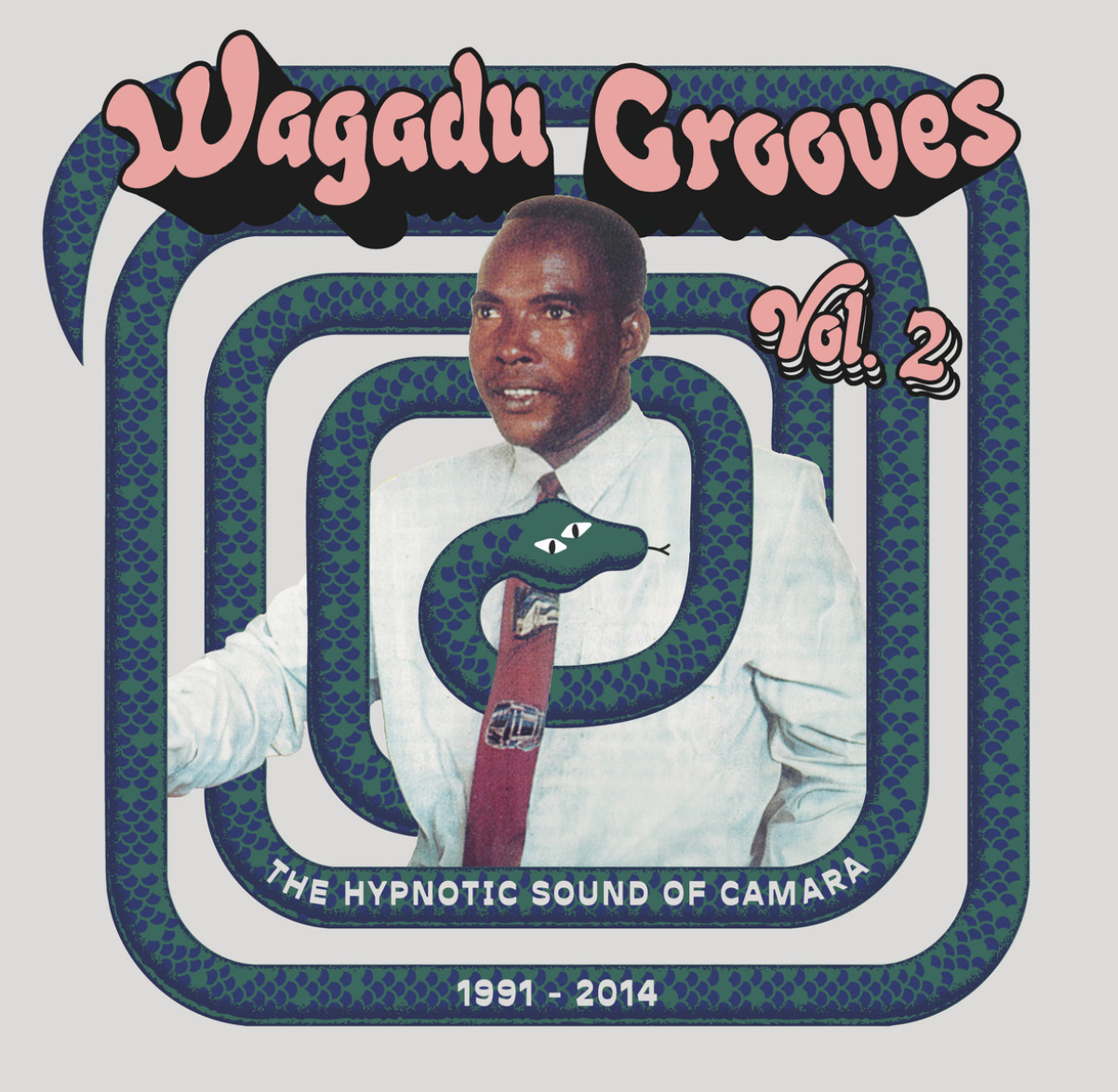
Various ‘Wagadu Grooves Vol. 2: The Hypnotic Sound Of Camera 1991 – 2014’
(Hot Mule) Review by Dominic Valvona
Vexations ‘A Dream Unhealthy’ (Cruel Nature Records)
Review by Brian ‘Bordello’ Shea
Violet Nox ‘Silvae’ (Somewherecold Records)
Review by Dominic Valvona
Voodoo Drummer ‘HELLaS SPELL’
Review by Dominic Valvona
W…………………..
Wants, The ‘Bastard’ (STTT)
Review by Brian ‘Bordello’ Shea
Warda ‘We Malo’ (WEWANTSOUNDS)
Review by Dominic Valvona
West Virginia Snake Handlers Revival ‘They Shall Take Up Serpents’
(Sublime Frequencies) Reviewed by Dominic Valvona
Winter Journey, The ‘Graceful Consolations’ (Turning Circle)
Reviewed by Dominic Valvona here
Y…………………….
Yellow Belly ‘Ghostwriter’ (Cruel Nature Records)
Review by Brian ‘Bordello’ Shea
Young Mothers, The ‘Better If You Let It’ (Sonic Transmissions)
Review by Dominic Valvona
Z……………………..
Zavoloka ‘ISTYNA’ Picked by Dominic Valvona
For those that can or wish to, the Monolith Cocktail has a Ko-fi account: the micro-donation site. I hate to ask, but if you do appreciate what the Monolith Cocktail does then you can shout us a coffee or two through this platform.
End of the Year Revue For 2025: Part One: A to M
December 11, 2025
Choice Highlights From The Last Year
I said I wasn’t going to do it this year. And this may be the last. But here is the first part of a comprehensive revue listing of choice albums (some extended EPs too) from 2025 that we returned to the most, enjoyed or rated highly. See it as a sort of random highlights package if you will.
As usual a most diverse mix of releases, listed alphabetically – numerical orderings make no sense to me unless it is down to a vote, otherwise what qualifies the placing of an album? What makes the 25th place album better than the 26th and so on…
Whilst there is the odd smattering of Hip-Hop releases here and there, our resident selector and expert Matt Oliver has compiled a special 25 for 25 revue of his own, which will go out next week.
Without further ado….the first half of that selected works revue:
A.
A Journey Of Giraffes ‘Emperor Deco’ (Somewherecold Records)
Review by Dominic Valvona
Alien Eyelid ‘Vinegar Hill’ (Tall Texan)
Review by Brian ‘Bordello’ Shea
Allen, Marshall ‘New Dawn’ (Week-End Records)
Review by Dominic Valvona
Armstrong ‘Handicrafts’
Review by Brian ‘Bordello’ Shea
Audio Obscura ‘As Long As Gravity Persists On Holding Me to This Earth’
Review by Dominic Valvona
Aus ‘Eau’ (Flau)
Review by Dominic Valvona
B..
Balloonist, The ‘Dreamland’ (Wayside & Woodland)
Review/Piece by Dominic Valvona
Barman, MC Paul ‘Tectonic Texts’
Picked by Dominic Valvona
Bedd ‘Do Not Be Afraid’
Review by Dominic Valvona
Bird, Jeff ‘Ordo Virtutum: Jeff Bird Plays Hildegard von Bingen, Vol 2’
(Six Degrees Records) Review by Dominic Valvona
Blanco Teta ‘‘La Debacle las Divas’ (Bongo Joe)
Review by Dominic Valvona
Bordellos (with Dee Claw)/Neon Kittens, The ‘Half Man Half Kitten’
(Cruel Nature Records) Review by Dominic Valvona
Braxton, Anthony ‘Quartet (England) 1985’ (Burning Ambulance)
Picked by Dominic Valvona
Brody, Jonah ‘Brotherhood’ (IL Records)
Review by Dominic Valvona
Brother Ali ‘Satisfied Soul’ (Mello Music Group)
Picked by Dominic Valvona
Burning Books ‘Taller Than God’ (Ingrown Records)
Reviewed by Dominic Valvona
C…
Cindy ‘Saw It All Demos’ (Paisley Shirt Records)
Reviewed by Brian ‘Bordello’ Shea here
Craig, Kai ‘A Time Once Forgotten’ (Whirlwind Recordings)
Review by Dominic Valvona
Crayola Lectern ‘Disasternoon’ (Onomatopoeia)
Review by Dominic Valvona
Cross, Theon ‘Affirmations: Live at Blue Note New York’ (New Soil)
Review by Dominic Valvona
Cubillos, Julian ‘S-T’ (Ruination Record Co.)
Review by Dominic Valvona
Cumsleg Borenail ‘10mg Citalopram’ (Cruel Nature Recordings)
Review by Dominic Valvona
Joel Cusumano ‘Waxworld’ (Dandyboy Records)
Review by Dominic Valvona
D….
Dammann Sextet, Christopher ‘If I Could Time Travel I Would Mend Your Broken Heart aka Why Did The Protests Stop’ (Out of Your Head Records) Review by Dominic Valvona
Darko The Super ‘Then I Turned Into A Perfect Smile’
Picked by Dominic Valvona
Dyr Faser ‘Falling Stereos’
Picked by Dominic Valvona
E…..
Eamon The Destroyer ‘The Maker’s Quilt’ (Bearsuit Records)
Review by Brian ‘Bordello’ Shea
Expose ‘ETC’ (Qunidi)
Reviewed by Brian ‘Bordello’ Shea here
F……
Farrugia, Robert ‘Natura Maltija’ (Phantom Limb/Kewn Records)
Reviewed by Dominic Valvona here
Fir Cone Children ‘Gearshifting’ (Blackjack Illuminist Records)
Review by Brian ‘Bordello’ Shea
Fortunato Durutti Marinetti ‘Bitter Sweet, Sweet Bitter’ (Quindi Records/We Are Time)
Review by Dominic Valvona
G…….
Goldman, Ike ‘Kiki Goldman In How I Learned To Sing For Statler And Waldorf’
Review by Brian ‘Bordello’ Shea
Good Ones, The ‘Rwanda Sings With Strings’(Glitterbeat Records)
Review by Dominic Valvona
H……..
Haas & Brian g Skol, Andy ‘The Honeybee Twist’
Review by Dominic Valvona
Howard, John ‘For Those that Wander By’(Think Like A Key)
Review by Brian ‘Bordello’ Shea
I………
Ishibashi, Eiko ‘Antigone’ (Drag City)
Picked by Dominic Valvona
iyatraQuartet ‘Wild Green’
Review by Dominic Valvona
J……….
Jay, Tony ‘Faithless’
Review by Brian ‘Bordello’ Shea
Johanna, John ‘New Moon Pangs’(Faith & Industry)
Review by Dominic Valvona
K………..
Kheir , Amira ‘Black Diamonds’(Sterns Music/Contro Culture Music)
Review by Dominic Valvona
Khodja, Freh ‘Ken Andi Habib’(WEWANTSOUNDS)
Review by Dominic Valvona
Kweli, Talib & J Rawls ‘The Confidence Of Knowing’
Picked by DV
L…………
Lassy Trio, Timo ‘Live In Helsinki’ (We Jazz)
Picked by Dominic Valvona
Last Of The Lovely Days, The ‘No Public House Talk’(Gare du Nord)
Review by Brian ‘Bordello’ Shea
Lt. Headtrip & Steel Tipped Dove ‘Hostile Engineering’ (Fused Arrow Records)
Review by Dominic Valvona
LIUN + The Science Fiction Band ‘Does It Make You Love Your Life?’
(Heartcore Records) Review by Dominic Valvona
Locks, Damon ‘List Of Demands’ (International Anthem)
Reviewed by Dominic Valvona here
M………….
Mikesell, Emily & Kate Campbell Strauss ‘Give Way’ (Ears & Eyes Records)
Reviewed by Dominic Valvona here
Mirrored Daughters ‘S/T’ (Fike Recordings)
Review by Dominic Valvona
Mohanna, Nickolas ‘Speakers Rotations’ (AKP Recordings)
Review by Dominic Valvona
If you’ve enjoyed following and reading the Monolith Cocktail in 2025, and if you can, then please show your appreciation by donating to our Ko-Fi account. The micro donation site has been vital in keeping us afloat this year.
For the last 15 years both me and the MC team have featured and supported music, musicians and labels we love across genres from around the world: ones that we think you’ll want to know about. No content on the site is paid for or sponsored, and we only feature artists we have genuine respect for /love or interest in. If you enjoy our reviews (and we often write long, thoughtful ones), found a new artist you admire or if we have featured you or artists you represent and would like to say thanks or show support, than you can now buy us a coffee or donate via https://ko-fi.com/monolithcocktail
Brian ‘Bordello’ Shea’s Reviews Roundup – Instant Reactions. All entries in alphabetical order.
The Conspiracy ‘Dungeness’
EP (Metal Postcard Records) 23rd November 2025
The Conspiracy are back with another fine EP of post-punk art rock; a band that are as British as watching cricket on a summer’s day. The Fall, The Kinks, The Only Ones are all lovingly stroked and warped into a mesmerising shuffle of old man’s fancy. This is the sound of modern-day England as seen through the eyes of middle-aged men who can remember when rock ‘n’ roll had a meaning and need to the young, and soundtracked young rebellion, and was not just something they streamed from their phone as they nip down to Nando’s to ignore their friends as they watch videos on tic tok together but apart.
I Am Hands ‘Lastings’
Single 5th December 2025
This is the debut single by I Am Hands and it is no hands, feet and bumps a daisy but a lovely sail down the river of peaceful tranquillity, a song of the supreme confidence of knowing that your supreme confidence has never been painted in such a blue shade of subtly. It really is a rather lovely track that fans of the first Trembling Blue Stars album might clutch to their cardigan encrusted breast.
The Last Sound ‘All That’s Missed’
Album (Cruel Nature Records) 28th November 2025
This is the sound of candy filled sugar pop, the kind that you might see on Top Of The Pops in the glory madness days of the 80s when Strawberry Switchblade seductively swooned from your transistor radio and pop could be both wonky and bliss like and whisper sweet nothings into your ear like an ethereal Green Gartside. All That’s Missed is an album that really is not to be missed. It’s yet another off-kilter pop wonder released by Cruel Nature Records, a label that certainly specialises in releasing off-kilter pop and or just plainly the off-kilter.
The Lounge Bar Orchestra ‘E.N.D.A.N.G.E.R.M.E.N.T. & The Room of Wrong Reflections’ Album (Self-Release) 26th November 2025
E.N.D.A.N.G.E.R.M.E.N.T. & The Room of Wrong Reflections is a collection of the tracks that made two-vinyl only releases on The Heavens Lathe label. The Lounge Bar Orchestra, who I have written about a number of times in the past, make a magical concoction of easy listening splenditude. The sort of thing one may hear on old sixties spy thrillers or takes you back to the golden age of seventies tv: you can easily imagine Bruce Forsyth willing on contestants on The Generation Game as they attempt to mold a mug in the shape of Anthea’s backside as “The Girl with Golden Hips Plays”.
Once again, The Lounge Bar Orchestra magically transports me back in an aural time machine to the days of Texan chocolate bars, Saturday night bath time, and watching Cilla duet with Marc Bolan as my dad eagerly awaits Starsky And Hutch and Match Of The Day. Yet again The Lounge Bar Orchestra proving why music is the most magical of all arts.
The New Tigers ‘Off The Wall/Butterfly’
Single (Soliti) 21st November 2025
These two tracks are a catchy foray into indie rock/pop, sounding not unlike The Bluetones with just a hint of what Teenage Fanclub might have produced during their heyday. All semi fuzz guitars and delightful melodies, and there is nothing wrong with that, let me tell you.
Origami Horses ‘Scenes’
EP (Metal Postcard Records) Released 23rd November 2025
I do not know if this EP was released to prove that post punk, garage rock, prog and psych can be melded into a hardy brew of rock ‘n’ roll finery. If not, it should have been as in fact that is what this EP is; one wonderful sparkling concoction of all the aforementioned, and track two, ‘Access Denied’, is an eight-minute gem that proves the point, and really needs to be heard by all, and takes one back to those hot summers days in 1989 when Madchester ruled the airwaves. The Scenes is another gem to be added to the aural crown that is the criminally ignored Metal Postcard Records label.
Sir Robert Orange Peel ‘A Man Dressed Up’
Single (Metal Postcard Records) Released 22nd November 2025
‘A Man Dressed Up’ is a beautiful Christmas symphony of seeing the magical time of the year through children’s eyes. A track filled with memories and nostalgia and an innocence to life that we all at one point in our life will lose. The perfect song to soundtrack sipping a sherry and watching the Christmas lights reflect from the baubles hanging from the tree and wishing you or your kids were young again.
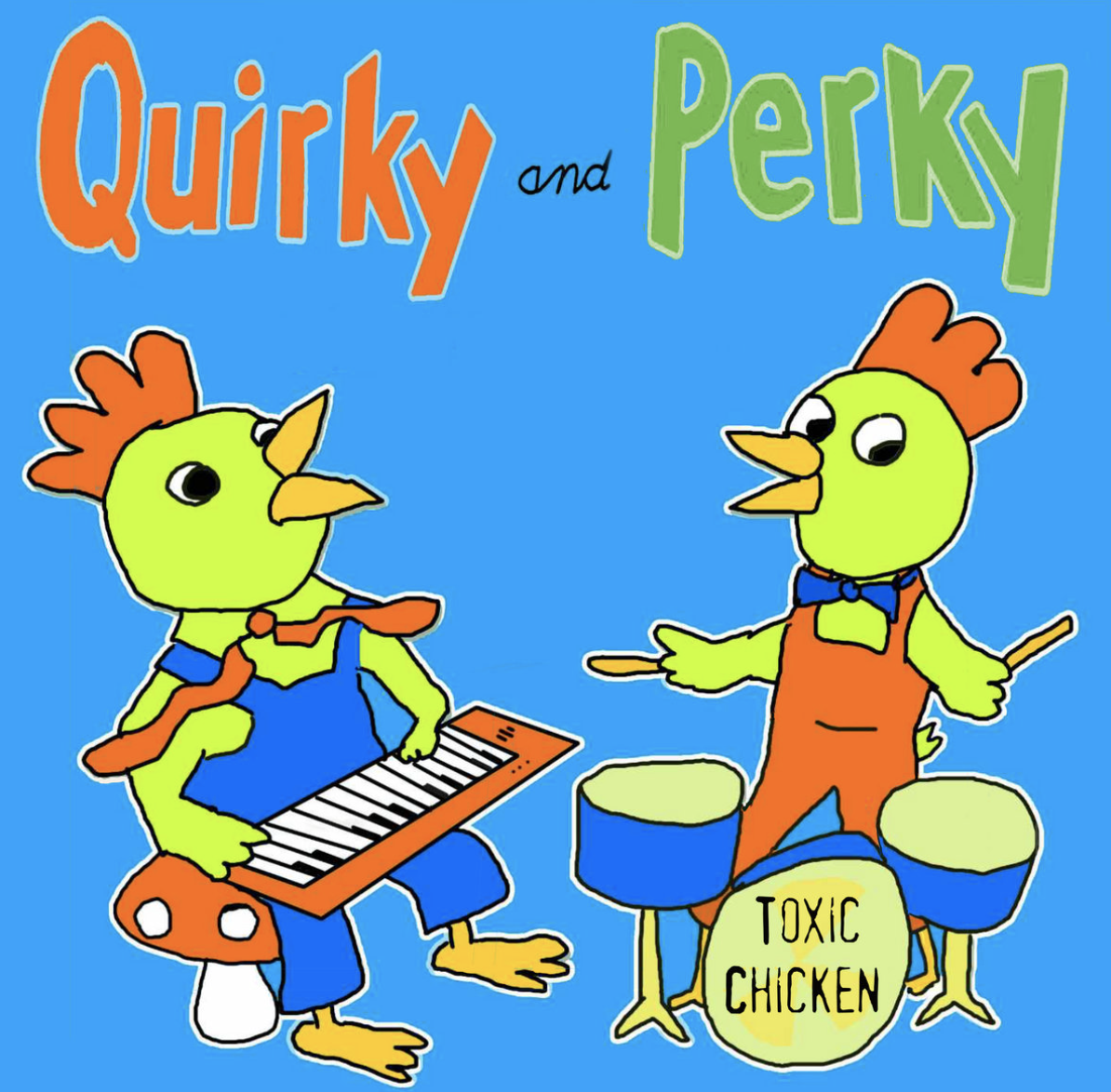
Toxic Chicken ‘Quirky & Perky’
Album (Earthrid) 7th November 2025
Toxic Chicken is insanely brilliant and brilliantly insane. And Quirky & Perky is a fine introduction to his crazy world.
TC takes dance electronica and game music to new and unexplored levels of madness, and quite wonderfully tuneful melodious instrumental shenanigans are oozed from one’s speakers.
I would love Toxic Chicken to have made an album with Jim Morrison as for some reason his keyboard skills had me thinking this is what The Doors may have sounded like if they were brought up with the Game Boy and not the blues. A truly great fun listen.
Vlimmer ‘Hintersommer’
Album (Blackjack Illuminist Records) Released 21st November 2025
Ah yes, Vlimmer is back to offer all those lovers of Gothic Euro disco with a hint of post punk synth shoegazery a new Vlimmer of light. Those who’ve never tasted such a shot of pulverising gothic industrial tuneage since members of Fields Of The Nephilim, Smashing Orange and Depeche Mode were chased through the streets of a rain paved Wigan by an angry mob of spotty faced chavs on undersized bikes all holding out for sponsorship by the North Face clothing company whilst waving knocked off vapes into the air like an ancient Greek Olympian wielding his flaming torch. Yes indeed, Deliveroo has never witnessed such a wave of free advertising.
Hintersommer gets around the snag of being sung in German by both Vlimmer being German and myself not really giving a fuck as the tunes are blissfully dark and encouraging enough to imagine that what he is singing about is a worthy subject. So yes, an album I entrust will soon be in the collections of all you old and young goths who still roam this earth.
For those that can or wish to, the Monolith Cocktail has a Ko-fi account: the micro-donation site. I hate to ask, but if you do appreciate what the Monolith Cocktail does then you can shout us a coffee or two through this platform.
The Perusal #74: F. Ampism, Aus, Burning Books, Mauricio Fleury…
December 3, 2025
A world of sonic/musical discoveries reviewed by Dominic Valvona. All entries in alphabetical order.

F. Ampism ‘The Vertical Luminous’
(Hive Mind) 5th December 2025
A curious and, as the title suggest, luminous biomorphic world of inner and outer bodied molecules, particles and matter, the Brighton-based F. Ampism cuts a most wonderfully playful, curious and intriguing album for the always enlightening and brilliantly experimental label Hive Mind this month.
Ampism (that’s Paul Wilson when uncloaked from their sonic pseudonym) delights in making atoms speak, communicate, sing, gargle, mewl and murmur in a world of floated forms and running, pouring waters. Of an organic nature, sounds both recognisable and not connect with the electronic to create hallucinogenic, near cosmic and twinkled aspects of both cerebral and microscopic observations. And within that sphere there’s a host of fluctuations: ‘Worm Moon’ a near silken spun and spindled delicate vague evocation of Japanese theatre and ambient jazz, whilst the serial rhythms and beats, the suspended alien forms and cup pours of ‘Lunar Mansions’ could be a union between Mira Calix and Carmen Jaci. Such is the gentleness and dreaminess of this amorphous fourth world and bubbling and burbling chemistry that even the synth possessed ‘Midi Evil’ whirls and discombobulates disarmingly and harmlessly. ‘The Severed Head Is Smiling’ is also hardly sinister, caught in a magic-realism of mirrors, hallowed tubular dimensions and the sounds of the bird house.
Lovingly produced, full of that luminosity and replenished liquid growth, the album evokes feelings of happiness, rumination, the inquisitive and of near alien visitations. Less studied and technical, and more an enjoyable life form of music and sounds that proves a most enjoyable and mostly beautiful experience.
Aus ‘Eau’
(Flau) 6th December 2025
Finely balanced, Japan’s national instrument, the koto, is disarmingly and organically taken from its courtly origins and placed in more intimate, attuned settings. With his adroit koto foil Eden Okuno, the Tokyo composer and producer Yasuhiko Fukuzono creates a both fragrant and descriptive subtle album of ambient music, minimalist and environmental electronica; unmistakably Japanese, with threads and traces of the neo-classical and Hogaku music traditions and even further back, and yet almost in the spheres of Fourth World experimentation and the futuristic.
Under the Aus alias, Fukuzono produces a new project that centres around the fine, delicate and spindled use of the half-tube zither koto. Said to be an “ancestor” of the Chinese guzheng, brought over to Japan during either the 7th or 8th century, it’s thirteen or seventeen-stringed forms, strung over movable bridges, are plucked by the fingerpicks on the player’s right hand. Depending on the piece the instrument can be tunned differently, and sometimes, the seventeen-string version, when used in an ensemble, takes on the duties of the bass. It has an instantly recognisable sound; the accompaniment to rumination and contemplation within the bamboo waterfall replenished gardens of Japan; the uncurling flowery weavings and the calligraphy-like strokes of the brush.
Here, Okuno’s keen playing skills dazzle with subtle aplomb, description and a cascade of repeating rhythms as an electronic bed of surfaces and effects are placed underneath or used like an envelope. There’s also an equally subtle use of the piano – the lower-case work of Andrew Heath, a touch of Roedelius and even Tim Story, but also Sakamoto, sprung to mind -, the suffused presence of various poured, ceremonial and dripped waters, and the chimes, the tinkles, jangles and rings of various percussive and wind chime features. Altogether it makes for a most beautifully felt work of sensibilities, the naturalistic and meditative and visceral scales. And within that sound you can hear the crafting and scraping of artistic tools, the atmospheres of the recording settings and spaces, and the near fuzzy hum of the tape.
Attentive to the surroundings, but also aware of pushing the use of the koto, saving it from its more ceremonial staidness and just so preparations, Fukuzono claims the instrument for his own purposes and experiments for something more modern and intimate. For those with a penchant for the music of Satomi Saeki, Jo Kondo, Laraaji – who has even recorded a track after the instrument -, Akira Ito, Masahiro Sugaya and the partnership of Francesco Messina and Raul Lovisoni. Flau continue to produce exquisite, thoughtful works of disarming skill.
Burning Books ‘Taller Than God’
(Ingrown Records) Released 17th November 2025
One day someone will write the great study on music made during the Covid pandemic. A period that defined an era, no matter the cultural, geographical and political differences, by providing far too much time for all of us to think and reflect on the pointlessness of our existence: or was that just me? A shared consciousness of anxiety, stress and uncertainty prevailed, which hasn’t really abated: getting worse if anything. That day is not today, however. But, just one of the latest releases to pop up in my inbox this month from the highly prolific Ingrown Records imprint (if you ever want to disappear down the proverbial rabbit hole, to find new artists on the periphery then head over to the label’s bandcamp page for hours if not days of aural discoveries), Burning Books’ dramatically entitled Taller Than God album, was created during that momentous period.
Despite the epic subject matters, the grappling with all life’s philosophical quandaries, much of the music produced from between 2019 to 2021 was usually quite understated. And even though there is a presence outside us, a looming leviathan to be found hovering and often bearing down over the sonic landscapes here, the production is itself a balance of isolated intimacy and the sonorous heaviness and awe of the gradual, glacial movements of time over that map. A personal attempt to make sense of the enormity without losing sight of the individual at the centre.
And so, the trials and travails, the feelings of mental anguish are all transduced into a stunning work of both ambience and weight, a merger of the haunted and the reflective, the deep and tingly. Enervated passages of past or found recordings, a dancing pirouetted dancer a top of an old music box, can be heard amongst the near Lynchian and prowling as memories pass through the veils and hues of the shadows cast upon the mountain sides and across the plains. Gleams and drones, ebbing waves contour and create various atmospheres, whilst the reverberating chings and fuzz of an electric guitar and bass articulate something more ominous and brooding. The electrification occasionally sounds more like a mirage, almost like the country ambience of Steve Gunn and Daniel Vickers on tracks like the humming tone, soft knocked ‘Mountains Move’. Within that scope, the fateful creep of ‘Death Is Forgetting’ sounds like a union between Mike Oldfield and John Carpenter. There are a few instances of this near supranatural feel and atmosphere to be found, alongside the mysterious deep sounds of a ship in the mist, the bowels letting out some esoteric ferryman’s call. Elsewhere there’s faint hints of Eno, A Lily and the heavy bowed evocations of Simon McCorry. And on the finale title-track a touch of Daniel Lanois amongst the glassy hues, drones, percussive crescendos and scale. Taller Than God ends on the reassurances of hope after immersing us all in a simultaneously personal and collective experience across a varied topography of emotions and reflections. An ‘ode to humanity’, no less, Burning Books has produced one of the very best and well-crafted, sophisticated but empirical albums of this genre in 2025.
Mauricio Fleury ‘Revoada’
(Altercat Records) 5th December 2025
The last time I saw the well-travelled Brazilian musician Mauricio Fleury live was nearly a decade ago, when bandmates from the Bixiga 70 troupe he helped found led a carnival conga of audience members through the aisles of a seated venue as part of Celtic Connections – held each year in Glasgow, my adopted home of the last ten years. That night, and for a further seven or eight years, he was part of a collective that fused the language of Fela Kuti (which they spoke fluently) with a menagerie of Latin influences and the sound of Brazil’s inner-city bustle and hustles. And although it is a much celebrated and critically applauded group, Fleury’s CV is filled with more enviable collaborations, including a meeting and jam session with none other than Afrobeat rhythm provider and progenitor Tony Allen and the “blacktronica” and soulful house luminaries Ron Trent, Theo Parrish and Steve Spacek. This was back in 2007, but alongside his work with both the Brazilian jazz and bossa nova piano icon João Donato and tropicalia titan songstress Gal Costa, proved a catalyst for a migratory-like album of personal indulgences/stories, dramas and experiment.
Stepping out on the solo pathway, inspired as much by the places he’s lived and toured as by his crate-digging passions, the architecture, parks, its exotic bird life, and more urban environments of Brazil and further afield act as melodiously assured but pliable and warm map references. For Revoada is a personal album of worldly influences that springs forth from Brazil into Europe and the gateway to the Mediterranean, the Middle East and Eastern Africa. Starting out in ‘Kadıköy’, a district on the Asian shore of the Bosporus straddling city of Istanbul that overlooks the Sea of Marmara, Fleury reminisces on a hectic hunt for records by the cool Anatolian rock icons Barış Manço, Erkin Koray and Cem Karaca; in the city for a jazz festival back in 2017. This led to dreams of all those records he didn’t manage to find and this composition: the trip also led to Fleury, now living in Berlin, picking up the saz. The album’s opener takes a spice of Koray, a pinch of the backing from Selda Bağcan’s records and matches it with Altin Gun and a warm feeling of clavichord soul and Med grooves: It sounds like the Isley Brothers sunbathing in old Anatolia. There’s just enough electrified fuzz to make this an acid-soul number, as reimagined by Batov Records.
The first trip is followed by memories of home and the playground environment and its formative hangouts. ‘Banhando’ can be translated from Portuguese to mean “showered’ or “bathed”, but in this context is a reference to the nature park in the southeastern Brazilian city of São José dos Campos, where Fleury grew up. With a big rolling intro of bossa that quickly shimmies into a Latin-jazz sound with hints of Brubeck, Ramsey Lewis, Ayzymuth’s ‘Seems Like This’ and Greg Foat, there’s a sense of both breezily laid out memories and reminisces that capture the very feel of the place. The keys sound like bulbs of light. We next head to the city in which Bixiga 70 was formed, São Paulo, and the classic Riviera Bar, a place that obviously holds many memories for Fleury. ‘Tanto Faz’ is meant to be inspired in part by the sound of old TV soap – which it does – but reminded me in part of a Latin Americanised Lalo Schifrin and Michael LeGrand in the middle of a whistle and fluted diaphanous melody of feathered friends.
Fleury himself plays a range of keyboards, analogue synths, the flute and guitar on this musical voyage, aided by longtime foils, a number of notable and exciting Brazilian artists and players, and good friends. On pliable, walking and flexible acoustic and electric basses is the renowned Latin Grammy Award winner, producer and guitarist Fabio Sá;on rolling, falling, splashed drums and dried bone rattled, Latin percussion is the versatile producer and music director Vitor Cabral; the vibraphone and effects of Beto Montag (on the album’s zappy, beamed and jazzy-funk retro-fitted finale ‘Briluz’); and as part of the tumultuous, thunder wrapped dramatic turn Andrés Vargas Pinedo whistled bird called woodwind and brass rich title track ensemble, the flute of Sintia Piccin, oboe of Julianna Gaona, bassoon and French horn of Richard Fermino and clarinet of María “Mange” Valencia. Sá was also asked to write the wind quintet of bird-like mimics on the exotic aviary inspired title-track. This is a composition of contrasts, beginning as it does with a more serious turbulence of wobble board-like thunder and stormy cymbals, both reflecting the themes of travails and more difficult times, and a second part that opens up with that bird call menagerie. Sá also wrote the album’s Eastern African, via the spiritual jazz route, detour, ‘Jimma’. Inspired and influenced by the Ethiopian Jazz luminary Mulatu Astatke, who he toured Brazil with a number of years back, Sá paid homage to the great multi-instrumentalist and arranger’s hometown with a composition of spontaneity; a camel ride like motion trail across the dunes, unseating and decamping to the Addis saloon for a loose Ethio-jazz jamboree around the piano. There are hints of not only Astatke, Hailu Mergia and Abdou EL Omari but The Sorcerers, Ndikhu Xaba and one of Fleury’s biggest influences and musical heroes, Sun Ra.
A most touching, reminiscing and delightful travelogue of places, dear memories, and evocations that shows off, in a disarming and harmoniously melodious and funky jazzy way, Fleury’s capabilities and skills as both a composer and musician. The solo route looks to be a delightful and pleasingly creative one on an album with much to offer, setting out various moods and journeys.
Hamouna Isewlan ‘Təlle Talyadt’
(Remote Records / Studio Mali) Released 28th November 2025
Like many of the desert blues and rock luminaries before and after him, Hamouna Isewlan’s new album is suffused by the nomadic freewheeling and artisanal skills of the Berber ancestral Tuareg people; a loosely atavistic-connected confederacy (to put it into any kind of meaningful context) of diverse tribes that have traditionally roamed Sub-Saharan Africa since time immemorial. If further context and history was needed, this diverse society of various people, grouped together in an age that demanded a label, the term of ‘Tuareg’ is highly contested: arguably brought into the lexicon through the language of European Colonialism, though etymology traces the term back further through multiple sources. But many in the community would prefer we used the original ‘Kel Tamashek’. Isewlan’s rootsarein Mali, a country that he has been forced to leave to seek sanctuary in Algeria due to the unstable conditions; though as I write this, events are overtaking me as both the capital of Bamako and Mali itself are at risk of collapse and takeover by Jihadist groups.
Carved out of France’s greater Western African empire, demarcated without any sympathy for its diverse populations and history, Mali was cut more or less into two on its inception; the poorer north, one such seat of the Kel Tamashek, was more or less left to wither by the south and the government who considered its nomadic peoples backward, uncouth and because of their lighter skin colour, inferior. Though extremely complicated and far more nuanced than space allows here (I recommend reading Tim Marshall’s The Power of Geography: The Maps That Reveal the Future Of Our World for an analysis of the entire Sahel region and its many conflict over the decades), the Kel Tamashek began a decades long fight to create a self-governing autonomous state known as the Azawad. Beginning in the late 1960s and continuing until more recent times, this struggle made worldwide headlines when it was hijacked spectacularly by more extremist Islamic insurgents. Worryingly gaining ground as a Trojan Horse within their nomadic allies’ fight for independence, the destructive Islamist horrified many when they took the ancient seat of West African learning and trade, Timbuktu, and preceded to demolish it like barbarians. Former Colonial masters France were forced to intervene, finally halting the insurgents progress before forcing all groups involved back to where they started: many of them back across the border. Far from ideal, the Islamist usurpers dissipated to a degree but then switched to sporadic acts of terrorism, carrying out smaller militia attacks in Mali’s capital. This was pre Covid of course and the situation has changed dramatically; the threat has intensified with many declaring Mali a state on the verge of a Jihadist takeover. Much of this has been down to the expulsion of France by a Malian junta, led by General Assimi Goita. But with their departure the junta was unable to secure the country or even the capital. They made an even greater mistake by hiring Russian mercenaries, who failed miserably to fight off the main jihadist insurgent group, Jamat Nasr al-Islam wal Muslimin (JNIM), an affiliate of al-Qaeda. The capital of Bamako has been under direct threat and siege by the group who, as The Times reported last month, “paralysed the Malian economy with a fuel blockade that has prevented harvesting in several regions and forced the government to ration power, close schools and restrict civilian movement.” Anything can happen, including another coup within the Malian military itself: the omens are looking bleak; the outcome a possible state run by Jihadists: another Afghanistan in the making. It is undeniable that the country is suffering, with no-go zones across Mali, the threat of extreme violence and of imposed strict Islamic rule in those places controlled by the Jihadist groups. The original Kel Tamashek campaign and fight has been hijacked, its concerns, politics were always more localised but have now been engulfed by terror groups hellbent on a complete takeover of the entire Sahel region.
However, despite all this turmoil music is still being made, life is still going on in the country: as tough as they may be. In the face of such geopolitical upheaval and violence Isewlan chooses to embrace various topics of love: the yielding kind; the plaintive; the yearned; the desired; and the declared. A most touching but also yearning album that tends to the subjects of betrayal, universal and more intimate and personal love.
His new album, under this name (Isewlan in the Tamashek Tuareg language translates poetically as “the mountains of the desert”), is a songbook full of wanton reflections of both a love lost and gained, projected against the desert landscapes of his homeland. You can literally follow the pathways, the very contours, love lines and sloping dunes of Mali through his resonating electrified guitar work and the percussive and drummed rhythms and grooves of the band; many of the tracks moving in a camel or hoofed horsed motion across that iconic terrain.
An incredible player, starting out like so many of his peers and inspirations crafting a rudimental guitar from just tin cans and planks of wood (and still out blasting, outperforming those Western guitar gods with every luxury to hand), Isewlan’s career began to take off during the early noughties after making the leap from performing at weddings to recording with the band he co-founded in 2012, Aratan N’Akalle. Inspired in equal parts by Tinariwen, Ali Farka Touré, Aboubacar Traoré “Karkar”, Mark Knopfler, but most surprising, REM, the burgeoning lead artist now creates multiple evocative mirages and dreamy wanderings from a romantic travail of heartaches and more pleasing paeans to the pursuit of love and his muse.
Musically buoyant, changing from a rockified blues that Southern Americans would recognise (‘War hi toyyed’) to the signature sound of Tuareg desert rock (‘Iamna Iahla’) and a sort of rural form of reggae (‘Tənhay titt in’), the album is full of rich evocations and great flange and reverberated demonstrations of playing. I’m also hearing that Dire Straits influence on the pining resonating ‘Agg Adduniya’, and Vieux Farka Touré on the clopped motioned title-track.
This album, incidentally, has been released by the Bamako label and studio project Remote Records, but been brought to my attention by Paul Chandler, who has chronicled Mali’s music scene for a good couple of decades now. If you’ve been following us for a while, you may recall my piece on Chandler’s most excellent Every Song Has Its End: Sonic Dispatches From Traditional Mali survey (volume 2 of Glitterbeat Records’ Hidden Musics series), which went on to make our choice albums of that year’s list. So, thank you for introducing us to an artist keeping the traditions alive but also in the moment; Təlle Talyadt is an electrifying experience of lovelorn sentiment, rhythm and blues and groove.
Modern Silent Cinema ‘Surveillance Film (Original Motion Picture Soundtrack)’
(Bad Channel Records) 1st December 2025
A veritable flurry of activity this month from Cullen Gallagher’s long-running Modern Silent Cinema project, with both redux versions of archival soundtrack albums The Man Who Stopped and Stared at the Clouds (premiering on CD, vinyl and digital, we’re told, on the 15th December) and Flesh Mother (released on vinyl and CD on the 29th December) plus the new Surveillance Film soundtrack album. But for the purposes of this review, I’m going to focus on the latter, and Gallagher’s fifth collaborative original motion picture score for the Baltimore-based experimental filmmaker Matt Barry.
Plot wise, Barry’s latest docu-fiction movie interweaves the filmmaker’s own questions of intent with theoretical discussions about surveillance aesthetics and early cinema. On previous projects Gallagher reverberations, resonated shakes of the psychedelic, post-rock, krautrock, scuzz and fuzz have been led by the guitar and various atmospherics experiments; the themes ranging from the art of Duchamp, Man Ray and Marc Allégret and Winsor McCay’s famous Gertie On Tour animation. Here though, the sound is inspired or influenced in part by the scores of Ennio Morricone and his oft foil and Italian peer Alessandro Alessandro, but also by the use of the jaw or Jew’s harp in the former’s iconic Western soundtracks – played by Billy Strange. That instrument’s springy and spongy signature bounces and leaps like the march hare across many of the Latinised and Greek mythologically entitled instrumental tracks and vignettes/passages. That crucial instrument forms Riley-like patterns, boings and rebounds, as glass-like bulb, the bell jar notes and the crystal ring out or chime on the first few tracks.
Evocations of Walter Semtak and A Journey Of Giraffes sprung to mind on the first half of the album, that and the essence of those Italian composers working on Giallo soundtracks, Alain Goraguer, and on one of the quartet of mythological referenced Empusa (a one-footed shape-shifting female) tracks John Barry scoring Harry Palmer in an Hellenic setting. Later on, the mood reminded me of the submersible synth and electronic scores of Shepard Stevenson; especially on the plastic tube-y paddled and Fourth World-light ‘Medius’ – named I believe after one of Alexander the Great’s officers and friends, a native of Thessaly. But there’s many changes, from the near supernatural to distorted, the kinetic and library music-esque. It can give a near paranoia feeling, or at times something close to terrifying and ominous. And then again, there’s a sense of mystery, of myth and the ghostly amongst the loosened wires, detuned and both toy-like and spooked piano workings.
Gallagher expands his palette of instruments and ideas for a highly atmospheric score that stands alone and yet doesn’t proving overbearing or distract from the film it accompanies. Well worth the cinema ticket.
Andrew Spackman ‘The Marcus Neiman Cookie Recipe Hoax’
(Mortality Table Records) 12th December 2025
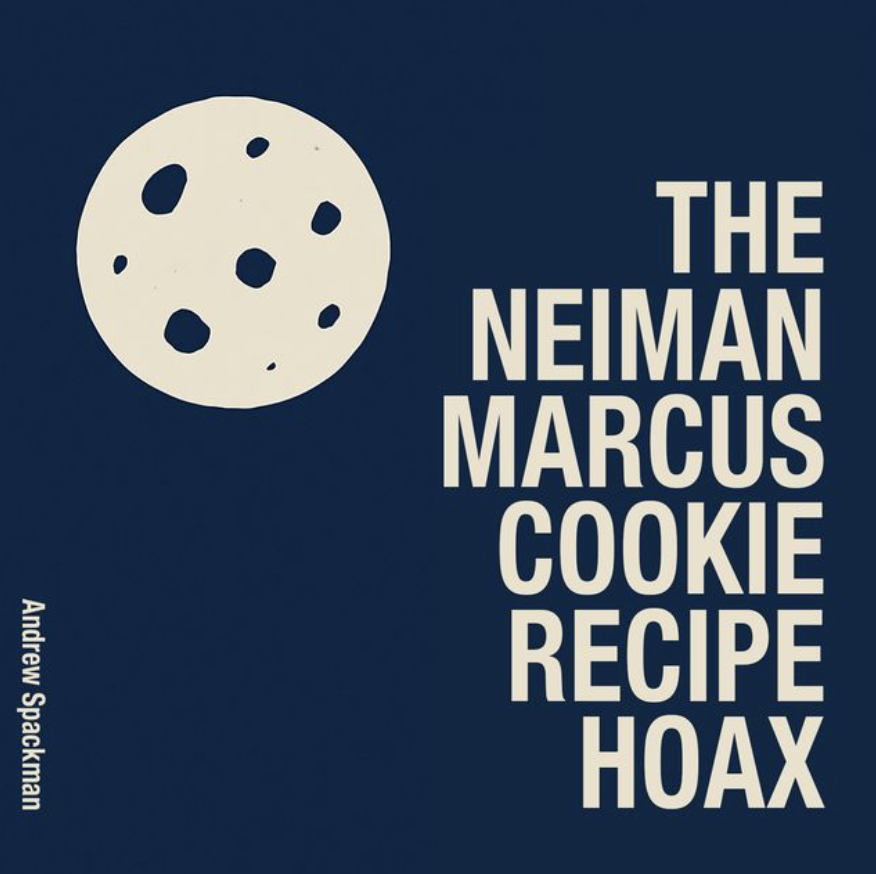
I’ve estimated that Andrew Spackman under his various alias and appellations (from the forlorn SAD MAN to Duchampian Nimzo Indian, Cars From The Future and The Dark Jazz Project) has easily released over thirty albums in just over the last decade. From boffin produced apparatus to techno glitches, distortions and soundtracks, the idiosyncratic inventive trick noise maker has tried his hand at everything, including a number of conceptually minded multimedia projects and stories.
Uncloaked, under his own name, Spackman builds an impressive sonic and melodic world from one of the Internet’s earliest viral bullshit hoaxes. The Marcus Neiman Cookie Recipe, as it was known, fuelled a whole industry of such faked indignations; not the only such lie to run and run, many varied episodes followed in its wake. For one of the best summaries, the Dallas (the city in which this hoax takes part) Eater obliges:
‘A woman visited “Neiman-Marcus Cafe” in Dallas and ordered a dessert after her dinner — the Neiman Marcus cookie. The woman was so enthralled by the delicious cookie that she asked an employee at the cafe if she could have the recipe. When the employee declined, the woman asked to purchase the recipe, and was told that it would cost her “two-fifty.” When the woman received her VISA statement a month later, she’d been charged $285 — $10 each for two salads, $20 for a scarf, and $250 for the famous cookie recipe.’ The outrage however was in mishearing the original “two-fifty”, which in her mind meant $2.50, not $250. And so, both incensed and in pique of revenge, she posted the recipe online for free. It doesn’t matter, as the recipe and entire incident was hokum – although the company at the centre of this lie did decide, after receiving opprobrium and a flood of angry letters, to eventually create their own cookie -, but the actual ingredients and baking instructions were pretty run-of-the-mill: nothing special. Over time, and various iterations the story has changed and the recipe with it: replacing certain ingredients, adding maybe more to the mix.
As a metaphor/analogy on the spread of such “compelling lies” and hyperbole, Spackman has cooked up a fantasy of his own; running with the original tale, handing out the ingredients and building up and scaling up a concept-based album of electronica and vague horns that sweep, drift, herald and toot across a plane of the cerebral, distorted and melodious.
Working across various electronic spines, with passages that conjure up the dramatic and at other times dissonant, the album’s ten tracks vary between shorter and long form passages. Between tubular pipes and scores, it can sound simultaneously like a lost futuristic Vangelis soundtrack or Mike Dred and Richard James lost in the fourth world peregrinations of Hassell and Pekka Airaksinen. There’s much to unravel, as each track develops in its own way and forms a hallucinatory experience of the buzzing, bristled, shaved, blowing and screwy.
Amongst the effects, the electronically synthesized there’s wah-wah-wah, heraldry to jazz tones and airs of sax, Budd-like tinkles and iterations of piano and pipes. A mix of avant-garde, a Riley nightmare on occasions, the most removed wisps of jazz, the cosmic, the metallic and machined and vapored voices, The Marcus Neiman Cookie Recipe Hoax is like a meeting between Variát, Popol Vuh, Robert Musci, and the Warp and Artetetra labels. Both in and projected outside the machine, new sound, sonic and sometimes melodious feelings are fed into the abstract, into entropy, the alarming and liquid. Whilst the themes, the inspiration are concrete, this soundtrack (I would call it it) shutters, expands and atmospherically offers more. Spackman is on a roll, with already a successful SAD MAN enterprise earlier this year, and now this on top of other recent filmic and art-electronic projects. Check back in a week or two to see if it has made my choice albums of the year list.
West Virginia Snake Handlers Revival ‘They Shall Take Up Serpents’
(Sublime Frequencies) Released 3rd October 2025
Reminding in part of the kind of religious sermon broadcasts used to great effect on Eno And Byrne’s My Life In The Bush Of Ghosts, but reverberated here, booming like a bluesman preacher half crazed by the effects of the poisonous serpents he wields and insists take’s a bite out of his arms to show a deadly, fateful commitment to faith, the performances and voices on this latest in-situ recording project by Ian Brennan (in cooperation and facilitated by Sublime Frequencies) is a revelatory reclamation of the original rock and roll and blues spirit. Or at least a more zealous form of the music used to accompany and rally literal interpretations (depending on sources, one that could be very skewed indeed) of lines from the Gospels of both Mark and Luke on healing and showing a strength of faith:
‘Behold, I give unto you power to tread on serpents and scorpions, and over all the power of the enemy: and nothing shall by any means hurt you.’ Luke 10:19
‘And these signs shall follow them that believe: In my name shall they cast out devils; they shall speak with new tongues. They shall take up serpents; and if they drink any deadly thing, it shall not hurt them; they shall lay hands on the sick, and they shall recover.’ Mark 16:17 – 18 (Thanks to Wikipedia for these quotes)
In all his time navigating the most dangerous and difficult to reach peoples and places in the world, it took a trip closer to home, to the only remaining West Virginian community of snake handlers, to witness a truly alien experience. Nothing could prepare for what awaited Ian on that fateful day, setting up his usual stripped-down apparatus of recording equipment, placing mics so as not to interfere or distract from the performances around the alter and platform for both bloodletting and speaker-breaking screaming exaltations.
To put it in more context, loosened and set free from the archetypal studio, Ian’s ad hoc and haphazard mobile stages have in the past included the inside of a Malawi prison, Mali deserts, and the front porches and back rooms of Southeast Asia: one of which was on the direct flight path of the local airport. Even that is only a tiny amount of a near forty release back-catalogue recorded over just the last two decades. As regular followers will know, I’ve interviewed and featured a majority of those projects from the field-recordist, producer, writer and violence prevention expert. But I have to say, this is one of the most incredible and wild yet.
From his own notes and descriptions ‘They Shall Take Up Serpents’ is linked to 2023’s Parchman Prison Prayer – Some Mississippi Sunday Morning album; back in the state penitentiary system, Ian recorded the songs of various prisoners inside the infamous maximum-security facility in the deep, deep South of America, finding a number of surprising performances of redemption and spiritual conversion. On the opposite bank geographically and spiritually speaking, showing certain divisions between the two forms and locations, the Appalachian side of this coin takes its lead from a controversial and dangerous (sometimes fatal) practice with its use of poisonous snakes. So dangerous in fact that at least a hundred prominent pastors have died over the last century, including founding father, the noted George West Hensley – an illiterate Prohibition era convicted moonshiner. Even if you survive, the omens are not great, with all medical intervention strictly forbidden. They do this to primarily test the faith, but also sometimes in the use of healing.
Excuse the pun, but a dying art, the practice as all but vanished from most parts of America; from 500 or more flocks in the 1970s to just a handful of dwindling pockets in the backwoods. As both a religion and way of life, scorned by Middle Class American, frowned upon by many as arcane, primitive and even backwards, the last surviving outposts of this rite stand now as a sort of twisted bastion against modernity and outsiders. The whole region has itself been decimated by globalisation and the move either overseas or away from its most prized industry of coal mining. Gutted out, as Ian would put it, this part of American is now infamous for its drug deaths: the highest per capita.
You may of course have seen the church of snake handler’s phenomenon via the 2020 HBO documentary Alabama Snake, which hones in on the 1991 attempted murder of Darlene Summerford by her husband, snake handling pastor Glenn Summerford (investigative journalist Dennis Covington originally covered this in his Salvation on Sand Mountain book), or through the National Geographic Channel aired Snake Salvation series of 2013 (again, another fatal snake bite killed the show’s main focus, Jamie Coots), or even the Sundance Film nominee Them That Follow, starring current in vogue star of the screen Walton Goggins. If you haven’t, then you’re in for a crazy, wild ride; a vehement demonstration of faith set to both the rawest and most pastoral rock ‘n’ roll and blues accompaniment.
The whole thing is insane, a reclamation of rock ‘n’ roll from Satan. For this church and their forebears believe they actually created the musical form: On the same crossroads as Robert Johnson, but instead of selling one’s soul for it, they wrestled it back from the devil. Near riotous – and Ian’s own descriptions are strikingly vivid, crazy and backdropped by the ritual of blood being spilled liberally from the climatic snake bite wounds; though it seems no one died this time thankfully.
It’s akin to witnessing the first flash of danger/excitement of the original rock ‘n’ roll spirit: say, Jerry Lee Lewis smoking his keys, setting alight to the piano for the first time. A spectacle, stripped back to the essence of performance, scripture and evangelism, every speech is delivered in a weird Captain Beefheart style – could this indeed be where the great progenitor of psych and off-the-grid rock ‘n’ roll and blues got it from in the first place. All the energy, palpitations, heaving convulsions and sweat comes through in the recordings. You could be there, in amongst the congregation as the musicians in the flock belt out roots rock ‘n’ roll like the Jon Spencer Blues Explosion in communion with John Lee Hooker and Canned Heat. Though it could also as easily evoke the MC5, and on the scuffle bluesy boogie ‘Jesus Has To Be #1’ a trace of ‘It’s All Over Now” and Taj Mahal. The more scuzzed-up doomed Biblical prophecy of ‘Prepare For The Time Of Famine’ recalled, to my ears anyway, both Wreckless Eric and electric Muddy Waters. And yet there’s also more refined moments of gospel to be found amongst the possessed teachings; an amble along a less rocky road to the banks of the River Jordon and onto heaven – however, it takes until the very end to hear a lead female vocal, much in the style of June Carter.
The titles are worthy of investigation alone: I never thought I’d ever see “ADHD Meds & Starbucks” in the same sentence together, or the supposedly reassuring and testing fateful last words of “Don’t worry, it’s just a snake bite” – the sub-title in brackets, being a disapproving and rhetorical “what happened to this generation”.
White men (and women) sing the blues in a fevered frenzy of the expelled and exhalated. Foreign, estranged, to even most of their fellow Americans, this practice is given free rein to astound and surprise the listener. Without any hint of the preconceived and without prejudice, Ian shines a light in on a controversial isolated community in the grip of social and economic disillusion and disparity: you could call it a retreat from the mechanisms of the outside world that works against such communities. Ian is neither an interloper nor ethnomusicologist in his role; choosing instead to let us decide or form opinion to these highly dangerous and volatile sermons, the words spoken, and acts invoked. This project is nothing short of a revelation; a glimpse into Godly anointed rock ‘n’ roll of a very disturbing and often evocatively punkish kind.
If you’ve enjoyed this selection, the writing, or been led down a rabbit hole into new musical terrains of aural pleasure, and if you can, then you can now show your appreciation by keeping the Monolith Cocktail afloat by donating via Ko-Fi.
For the last 15 years both me and the MC team have featured and supported music, musicians and labels we love across genres from around the world: ones that we think you’ll want to know about. No content on the site is paid for or sponsored, and we only feature artists we have genuine respect for /love or interest in. If you enjoy our reviews (and we often write long, thoughtful ones), found a new artist you admire or if we have featured you or artists you represent and would like to say thanks or show support, than you can now buy us a coffee or donate via https://ko-fi.com/monolithcocktail
Our Monthly Playlist selection of choice music and Choice Releases list from the last month.
We decided at the start of the year to change things a little with a reminder of not only our favourite tracks from the last month but also a list of choice albums too. This list includes both those releases we managed to feature and review on the site and those we just didn’t get the room for – time restraints and the sheer volume of submissions each month mean there are always those records that miss out on receiving a full review, and so we have added a number of these to both our playlist and releases list.
Keep an eye out next month for our end of the year lists; a compilation of all the choice releases from 2025.
November’s Choice Albums (in alphabetical order):
Babau ‘The Sludge of the Land’
(Artetetra) Review
Bad Trips ‘Nothing But Trouble’
Review
The Cindys ‘S-T’
(Breakfast Records/Ruination Records) Review
The Flower Press ‘Slowdance’
Review
Imperial Motors ‘Charlie Don’t Surf’
Review
Neon Kittens ‘21 Minutes of Adventure’
(Metal Postcard Records) Review
The Noisy ‘The Secret Ingredient Is Even More Meat’
(Audio Antihero) Review
Plants Heal ‘Forest Dwellers’
(Quindi) Review
Shoko Nagai ‘Forbidden Flowers’
(Infrequent Seams) Review
SML ‘How You Been’
(International Anthem) Review
Super Grupa Bez Fałszywej Skromności ‘The Book Of Job’
(Huveshta Rituals) Review
Suntou Susso ‘Jaliya Silokang: The Path Of A Griot’
Review
The Playlist:
The Digest for November 2025: New Music/The Social Playlist
November 19, 2025
THE MONTHLY DIGEST INCLUDES A CLUTCH OF ACCUMULATED NEW MUSIC REVIEWS AND THE SOCIAL INTER-GENERATIONAL/ECLECTIC AND ANNIVERSARY ALBUMS CELEBRATING PLAYLIST
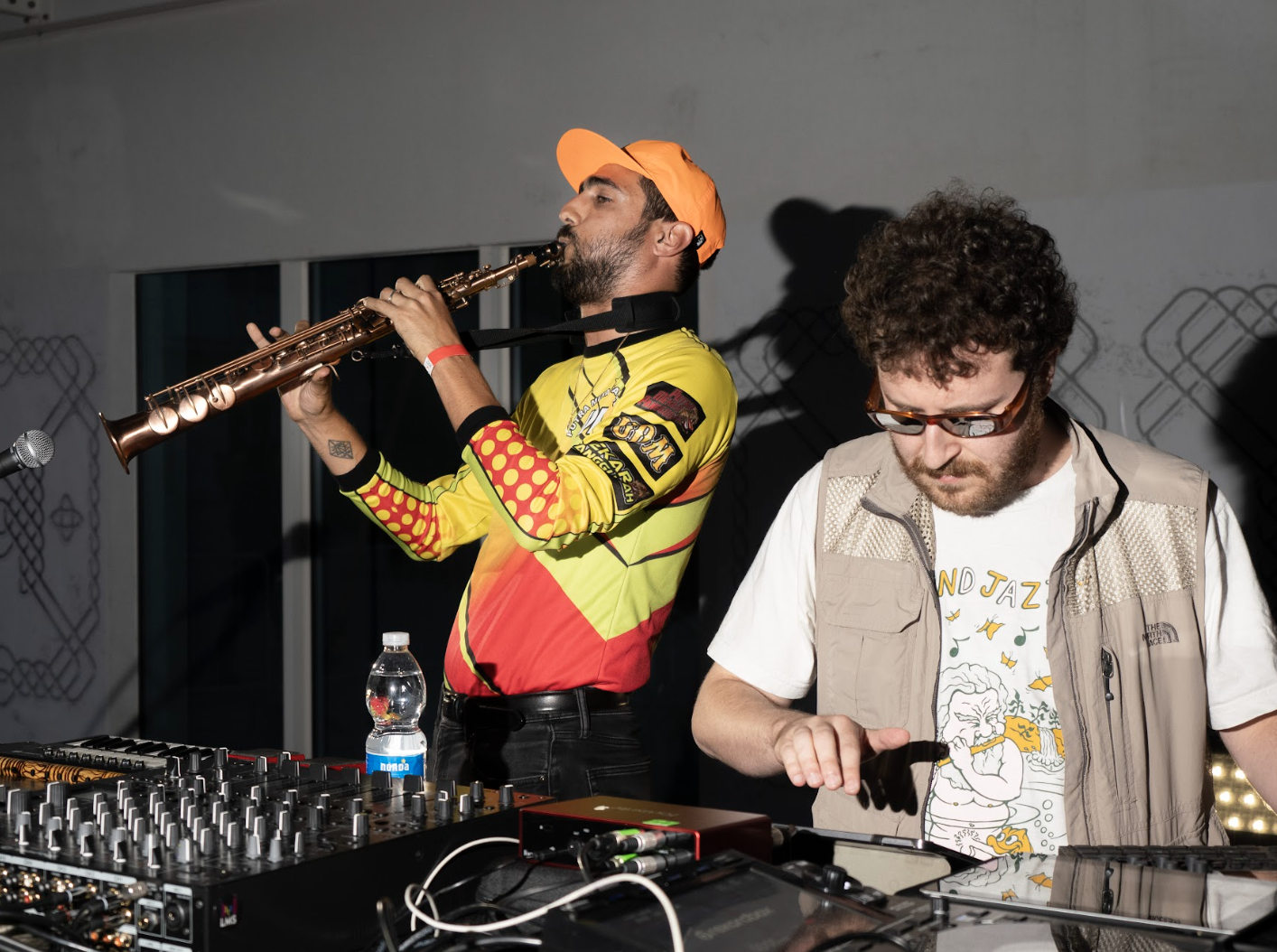
Photo Credit: Babau by Marco Valli
_/THE NEW___
Babau ‘The Sludge of the Land’
(Artetetra) 14th November 2025
A phantasmagorical shifting of tectonic plates and fever dream of a Henri Rousseau conjured equatorial lost world. And I could leave it at just that, but I’m sure both you as the reader and curious mind, and the duo behind this strange fourth worlds peregrination and inhabitation, would want a bit more to go on.
From the Artertra label founding sonic partnership of Italians Matteo Pennesi and Lugi Monteanni and their long-term Babau project an album that moves an imagined continent of influences towards new sonic, hallucinatory and kooky climes. The first “full length” work since 2023’s Flatland Explorations Vol.2, The Sludge of the Land funnels library music, the avant garde, the discombobulated, wonky electronica, the cartoonish, 32-bit console music, vague uses of ethnography and the atavistic, the visions of Jon Hassell, the breakdown shunts and floppy disc music of Esperanto era Sakamoto, the morphing AI electronic lunacy of Cumsleg Borenail, the fun kookiness and springy worlds of Carmen Jaci and Trans Zimmer & The DJs, new age trance, and at times, the more sublime drifts of Wu Cloud and Iasos into an odd repurposed wilderness. A track like ‘I tried to find myself but eventually found another, and now it’s the two of us somehow’ for example, merges Carl Stone with the mirage guitar bends and hangs of Daniel Vickers, the thinly dried blows of Ariel Kalma.
With titles that are so long as to read like haikus or little stories in their own right, there’s much in the way of descriptive prompts – although some seem like they might reflect the overuse these days of feeding blindly words, detritus and meta from the Internet into ChatGPT or some such device. Much of it describes a hodgepodge of ritual, mythologies, culture and the surreal. And musically and sonically reads like a mixed topography of palm trees, exotic islands, deserts, misty mountains and wet vegetation.
As part of a residency at Casa degli Artisti, Milan, in 2022, Babau turned their creative space into a recording studio and performing venue thanks to audio engineer and musician Francesco Piro, who produced the album. That apparatus includes instruments and effects that make sounds like reversed shaves, tangled and gangly wires, springs, chimes, the mistily fluted, and whistled alongside the recognisable sounds of a lingering foggy sax, of sauntered and hand tub drumming rhythms and both the inner workings of and the serial kooky notation of the piano.
This is an environment that squeezes the Mosquito coast up against Java, Malaysia, Polynesia and the near fantastical to produce something familiar but disjointed and surreal.
The Flower Press ‘Slowdance’
6th November 2025
Continuing to pursue a solo course, but now under the new appellation of the delicate craft imbued The Flower Press, Matt Donovan, in his own meditative and wistful way, turns the sudden loss of his sister into a subtly beautiful and reflective work of art on his fourth album.
The process of grief that prompted not only a change in musical direction (not so much that the musical signatures of past albums are entirely lost) but a much-needed therapeutic outlet, a project in which to find meaning from such a tragic event. The softly evocative Slowdance album offers consolation and testament to a life lived; the memories – referenced in a style with the track titles -, near abstract and visceral, are quantified and saved in sound and musical form to reflect upon with a great fondness and love. For Matt doesn’t just pay his respects, but also sends out moving testimony and vibrations as a way of keeping contact, of saying all the things he might have never had the chance to before, whilst healing himself.
Regular readers of the site may know Matt as the former motorising and propulsive drum beat behind Eat Lights Become Lights, and for his collaborative partnership with Nigel Bryant in the psych-Krautrock-post-punk-folk-industrial duo The Untied Knot. Away from the latter, Matt has released a trio of solo albums: Underwater Swimming (’21), Habit Formation (’22) and Sleep Until The Storm Ends (’23). This latest album of mainly instrumental pieces, takes some of the old influences but, with warmth and a wisped gauze of ether, is moving towards the orbits of Ariel Kalma, Daniel Lanois, The Durutti Column, the flange guitar-like ambient works of Harold Budd, Eno, Susumu Yokota and Mark Hollis post Talk Talk. But then there’s always a certain quirkiness and flash of post-punk and no wave dance music trebly bass playing to be found. And of course, the acoustic folksy and troubadour influences that sound particularly pastoral or in-situ: conjuring up some held dear or nostalgic escape, a glade perhaps or the sensation and touch of falling snowflakes and the building of a snowman. Some of those moments reminded me of the Wayside & Woodlands label whilst others of Arthur Russell.
The measuring of time, the chimes and triangle rings; the thin stick hitting tablas and the desert melting mirage guitar evocations of Daniel Vickers; the harmonium like moods and the Fripp-esque articulated memory of a slow dance watched from dreams; and both the stillness and the wavy, reverberated movements all articulate notions of remembrance and invested introspection. But also perhaps, manifestations of better times ahead, of durability in the face of such a heavy personal loss: the loss of a sibling hitting all that much harder.
A most wonderful album that eventually soars towards a starry celestial plane, Slowdance hovers and drifts above terra firma on a quest to evaluate and represent a life lived and the memories that pour forth from such fateful challenges. With a new title, Matt pushes into ever new and emotionally resonating territories.
Erell Latimer ‘Stay Still’
(Kythibong) 18th November 2025
The translation of visceral and abstract speech, dialogue, narration, poetry, testament, inquiry through musique concrète and tape manipulation, the new experiment from the sociolinguist composer and writer Erell Latimer is an immersive performance of reaction, interaction and interruption.
I’m not sure of the apparatus used, but other than the various machines used for effects, distortion, and what sounds like the manipulated in real time, folded, counter-folded and warped tape reels, both the long form pieces that make up this work rely upon Latimer’s voice and readings. Described in the accompanying notes as partly “concrete fiction”, fragments of Latimer’s text pieces and writings are set to a both alien and distorted, machine-like and discombobulated sounds and oscillations. Mostly in French, with passages of often disturbed or obstructed poetic philosophy and forbode from some English male speaker, the texts fluctuate between the hushed, the near in-hiding and held hostage to the clearly proclaimed and read. The cadence, both interrupted and defined signifies pain, anguish, the critical, stress, panic and theory.
The various resonated and reverberated voices and talks move from background quietness to foreground rustled distortion, and often form interlayered semantic rhythms and new utterances. Often though, Latimer’s voice is stripped down to an assortment of breathing techniques: often sounding like the aftermath of a panic attack, with Latimer trying to get her breath back or get it under control: exhales as important as anything else in this experiment and expression of “alienation, confinement, suffering, resignation, abandonment and death”.
There’s plenty of interesting, thrown, or points and nodes where both vocals and sounds interact to form hallucinations or more supernatural and haunting passages. Sometimes these interactions culminate in simulated tumults of hurricane winds, and others, into something far more musical; nearer the end of the first piece, ‘Ils seront silencieux après’ (“they will be silent after”), there’s a sort of lovely piece of music that’s part Gainsbourg, part Krautrock, part classical soundtrack.
From what sounds like paper or tape fluttering in the draft of a ventilation unit or extractor to bulb-like notes rings and chimes and the sounds of the environment, the voices and speech find space across a constantly explored soundscape of effects and obfuscation. At times it reminded me of Michèle Bokanowski, Matija Schellander, Lucie Vítková and that musique concrete progenitor Pierre Schaeffer; in short, an experimental work of language and semantics that deserves greater attention.
Plants Heal ‘Forest Dwellers’
(Quindi) 28th November 2025
The prolific and always into something drummer and trick noise maker Dave De Rose is back with his keyboardist/percussionist foil Dan Nicholls and visual anthropologist collaborator Louise Boer (otherwise known as Lou Zon) for another round of the electroacoustic project, Plants Heal.
De Rose popped up on the site as part of the Rave At Your Fictional Borders union of Jon Scott of (of GoGo Penguin note), Marius Mathiszik (Jan Matiz, I Work In Communications) and Henning Rohschürmann a while back, but his CV is packed with notable creative enterprises and collaborations, including membership of Electric Jalaba, a stint with the acclaimed Ethio-jazz luminary Mulatu Astake and instigation of the Athens-London traversing Agile Experiments project. The initial seeds for the Forest Dwellers project were planted both through the latter and through Nicholls and Lou’s London-based Free Movements events; both acting as intersections for all three contributors to cross paths, and to explore the central tenant of merging instrumental music with live electronics and DJ sets. If we’re talking about spheres of influence and CVs, Nicholls of course has just as prolific and busy schedule as a keyboardist, reeds player, composer, producer, and visual artis, whilst Lou’s documentary and experimental filmmaking and visual skills have led to a teaching role at Goldsmiths.
Lou’s work revolves around ecology, community, plant medicine, feminism, movement and experiments with analogue techniques. And this seems a good base from which De Rose and Nicholls have spontaneously reacted or conjured up improvised-like sounds and rhythms rich with organic meta and matter. During performances Lou improvises with analogue footage from her library run through video mixers and synthesisers, focused on medicinal plants such as yarrow, hawthorn, nettle and thistle. All those plants feature in processed form on the cover of the record, which was designed in collaboration with Lou’s brother Arthur Boer. Meanwhile, Lou recorded additional footage in Athens during the recording sessions to feed into the continued cycle of the project’s live evolution.
The trio’s second album together (their previous self-titled debut was released back in 2021) is a biomorphic eco system of new age trance music, techno, dub, light jazz, breaks, amorphous ethno-beats, acid and both plant-based and more alien atmospherics. Tech and nature combine to create a kind of Fourth World version of electronic dance music. But that’s really only part of the story, as the living and breathing creepers, vines and branches of the forest canopy and floor integrate with pulsations, shuttered, tubular, hollowed pole paddled and shaved or slowly released electronics to produce a camouflage reverberating effect of movement, growth and expansion.
There’s a revolution of a kind in the same air, with whispery like effected and morphed voices emerging from the fauna, and a revision of the old tribal gathering nature-tech and freedom rave-ups of the late 80s and early 90s. I’m hearing vague signs of Richard H. Kirk, FSOL, Jeff Mills, Lukid, Warp Records, Conrad Schnitzler, Mike Dred and Jon Hassell. Still, there’s more to unpick from the very much percussive and drum led rhythmic evolutions on this album; echoes of various more atavistic and exotic musical influences; timings and patterns enhanced by ethnography study and absorption. From terra firma to the stars, this organic flora form of electroacoustic dance music proves pliable, liquid but full of substance and the tactile, the earth and air.
Super Grupa Bez Fałszywej Skromności ‘The Book Of Job’
(Huveshta Rituals) 28th November 2025
From true obscurity and the dusty shelves of dormant archiving, The Book of Job emerges from its forty-year sleep – recorded as it was back in an omnipresent Soviet controlled Poland of 1985 – into a climate that scarily resonates. Whilst the sickle and hammer have disappeared from the flag, and Communist totalitarian rule has been replaced by a new form of oppressive authoritarianism in Putin’s leader-cult Russia, aggression persists and the threat of invasion, or at least escalation against those former countries that fell behind the Iron Curtain after WWII, looms large. No longer an abstract threat, Russia’s expansionist ambitions look to lock horns with Nato and the West, with a near apocalyptic destructive war in neighbouring Ukraine pushing at the borders of Poland. If nerves can no longer hold, if there is no end to the hostilities, no ground given on either side of this brutalist invasion, and if Ukraine is lost, then Poland becomes the new frontier between Europe and dictatorial Russia: a Russia hellbent it seems on regaining its lost influence and control of Eastern Europe.
There will be generations now totally separated from Poland’s past as an occupied state, subjected to draconian control by the USSR. But the timely arrival of this cult recording will once more remind its people and the world at large, of events in the 1980s; a decade when despite violent suppression, the population rose up to eventually overthrow its Soviet authorities at the end of that decade. When the various notable luminaries of the Polish underground and jazz scenes, and the counterculture’s actors and voices behind the collective ensemble of Super Grupa Bez Fałszywej Skromności first performed this multilingual and faith spanning work at the 1981 Jazz Jamboree festival, the omens weren’t quite so grave. Only weeks later the situation had changed dramatically, with Genral Jaruzelski’s ordained Martial Law rules cracking down ruthlessly on the population. In light of civil peaceful protest and the strike action and heroism of Lech Wałęsa’s famous Solidarity movement, the authorities more or less implemented a military coup of extreme measures: As the accompanying album’s scene-setting essay informs us, “Art was replaced by parades of heavy artillery”. By the time this same group recorded an album, four years later, the very act of making music would be considered a symbol of defiance: unless of course it was used to glorify the Soviet regime. “Paradoxically” the Catholic Church of Poland became a sanctuary. This may explain, in part, why the Hebrew’s Old Testament (reused in the Christian Bible and also “echoed” in the An-Nisa chapter of Islam’s Qur’an) chronicle of Job was used as totem for endurance in the face of such suffering. Because much as Job suffered tribulations and trails at the hands of God, beguiled and tempted by Satan to turn away from his piety, many of the Polish people found solace, resistance and hope despite the relentless attacks on their freedoms.
An allegory of the human condition, The Book of Job, for those who never attended their Sunday Schooling lessons, nor attended a faith-based school, tells the tale of the protagonist and his testing by God through litany and prose: that’s three cycles of debates between Job and his friends, Job’s lamentations, a poem to Wisdom, Elihu’s (a critic of Job and his friends, who may have been a descendent of the Abraham lineage) speeches, and God’s two speeches from a whirlwind. In short, Job is a wealthy God-fearing man with a comfortable life and large family, living in the Land of Uz (which has been situated in various locations of the atavistic Levant and beyond by various sources; anywhere from the old Aram, now modern Syria, to the Edomites kingdom, which now stretches across modern Jordon and Israel). God discusses his piety with Satan (though this is often written down as “adversary”, but we know who they mean), who rebukes God, stating that Job would turn away from God if he was to lose everything within his possessions: which was a lot. God decides to test that theory or challenge by allowing Satan to inflict pain on Job. The test increase, the suffering gets much, much worse, and Job ends up losing his wealth, children and health. Through it all he maintains his faith and piety, but not without much discussion and challenge. By the epilogue, Job’s fortunes and family are thankfully returned to him: Satan I take it, scuttling off to curse and sulk in the shadows.
Recorded in a makeshift “high-fidelity” studio at the STU Theatre in Krakow in the Spring of 1985, The Book of Job album draws with serious depth and political allegory upon the text. Covering everything from stage theatre to the filmic, the avant-garde and of course jazz – most of the lineup in this singular gathered super group hail from Poland’s incredible and influential jazz scene -, but so much else, the Holy Land is transported across porous borders to Eastern Europe to take in the Jewish diaspora, acolytes of Indian and Far Eastern scriptures and the then contemporary 80s sounds of the underground.
The “revered” pool of players, luminaries that took part include the multi-instrumentalist Milo Kurtis, a Pole of Greek origin, born into a family of refugees escaping the civil war in Greece, noted for his roles in Grupa w Skład, Ya-Sou, the cult rock band Maanam and jazz-fusion super group Ossian (also said to have worked with Don Cherry, who gifted Milo his ocarina), on percussion, Jew’s harp and trombita; the Polish flutist of world renown, composer and arranger Krzysztof Zgraja, who made his debut in the jazz-rock band Alter Ego, but also played with Czesław Gładkowski and Jacek Bednarek, on not only his main instrument of choice but the lighter made and smaller range Fortepiano; the Polish avant-garde and free jazz player Andrzej Przybielski, who’s notable credits include stints with the Gdansk Trio, Sesia 72, the Big Band Free Cooperation and Acoustic Action, on trumpet; drummer, composer and cultural animator Janusz Trzciński, known for his extensive work in the theatre, a writer of plays and one of the main instigators behind this project, on drums; the highly rated Zbigniew Wegehaupt, who played with just about every Polish jazz icon going and in both Wojciech Gogolewski’s Quartet and Extra Ball, on both electric bass and double-bass; and the Polish composer, multi-instrumentalist, vocalist and teacher Mieczysław Litwiński, who studied with such groundbreaking luminaries as Stockhausen and co-founded far too many groups and projects to list here, but notably the Independent Studio of Electroacoustic Music and Light For Poland, on sitar.
Added to that role call was an ensemble of either commanding, English Repertory-like or ominous voices and vocalists from stage, screen, including Ignacy Machowski, Adam Baruch, Zdzisław Wardejn, Jerzy Radziwiłowicz, Juliusz Berger and Andrzej Mitan. It must be pointed that only Mitan receives the credit of vocalist; the Polish poet, performer, founder of the Alma Art record label, chants a poetically evocative forgiving gospel of obedience and implored yearning whilst on the album track ‘When A Man Dies’. Echoed as much from a cavern or cave on the desolate plains of the Uz as in the synagogue, the repeated mantra of “Man. World. Pain. Silence” is stoically announced over and over to sombre and yet beautiful tones. The rest of that cast find themselves either narrating or interlayered with a whisper, chattering chorus of atmospheric dialogue. It reminded me, in part, of Aphrodite’s Child own Biblical opus 666.
Hallowed yet dark and almost Chthonian in places – a touch of Byzantine too – the album sets an otherworldly, afflatus but esoteric scene with the opening resonated waves of airy, fluted and blowy vibrations, moving like cycled or tubular wind from the subterrain, on the introductory entitled opener. Something mystical dances in the wind, as echoes of Alice Coltrane and Prince Lasha stir up spiritual jazz mirages and something quite ghostly seems to be lurking in the vibrations. The story unfolds, the mood suitably enacted. ‘Satan’s Concept’ follows this with percussive shimmer and shivers and a supernatural voice of forbode. Evocations of both Don Cherry and 80s Miles Davis like trumpet both trill and sound almost swaddled on another visceral and porous geographical musical landscape: the vibrated bowl sounds of Tibet for example. But the whole feel changes on the first of three litanies, with what could be called a post-punk bass and signs of krautrock and jazz-fusion: think an impressive union of Einstürzende Neubauten, My Life In The Bush of Ghosts Eno and Byrne, Desert Players Ornette Coleman, Jon Hassell and Ramuntcho Matta relocated to the land of the lost tribes. ‘Accusation’ has a promising Blue Note jazzy double bass introduction, a little bluesy and bendy. It’s accompanied by some rattled hand drums; the only instruments that express and lay down the atmospheric flexed, stretched, harmonic pinged backing to the biblical echoed English voice that narrates and questions God.
The post-punk-jazz mood is back for the second litany. A sort of no wave funk noodle of Dunkelziffer and Miles, a long low horn from the Steppes, and dialogue of wisped and more esoteric voices spoken in multiple dialects, there’s a supernatural quality to the atavistic summoning of scripture, and the age-old battles between good and evil. Almost skulked, there’s vocal coos and spectre like demons and angels in the shadows of this dramatic Krautrock-esque holy visitation. ‘Hope’ brings back in the Eastern influences, the sound of Buddhist India with the signature reverberations and brassy rings of the sitar: Shiva on the Vistula. With its psychedelic ragga mediations, the sitar acts in unison with the twanged boing sound of the Jew’s harp, the only accompaniment to the Hebrew narration.
The third and last of the litanies is quasi-80s funking jazz, with elements of Hassell’s Fourth World experiments. The flute whistles and flutters willowed fashion on a moving jazzy-fusion-funky-no-wave bass, as overlayed voices create a more convivial dialogue. There’s a smog horn too that creates a misty vapour effect. But the rhythm is like some kind of Israeli or Eastern European dance.
The album finishes on a strongly reverberated Hebrew voiced narration, a sacred holy conversation. Near the end of ‘Final’ a dreamier ray of light like flute emerges, slowly and softly drifting skywards. The sound of relief. A burden lifted.
You can easily find the parallels, the battles with faith in the face of such brutality, of oppression, and in this case, Soviet authoritarianism: The role of religion and believing playing a crucial part in resistance. As a near cryptic or hidden means of showing such defiance, The Book of Job and its lessons carried that message of artistic and political/social hope. This album, even without any of its important cultural and political context, is an artefact that deserves saving and savouring: a real intriguing, atmospheric and near theatrical experience worthy of attention and acclaim. Not just a slice of history but an experimental work of art.
___/The Monolith Cocktail Social Playlist Vol. 103___
For the 103rd time (and most probably the last as I change the format for next year), the Social Playlist is an accumulation of music I love and want to share, with tracks from my various DJ sets and residencies over the years and both selected cuts from those artists and luminaries we’ve lost on the way and from those albums celebrating anniversaries each month.
It was a few months back that I celebrated the 100th edition of this series, which originally began over 12 years ago. The sole purpose being to select an eclectic and generational spanning playlist come radio show, devoid of podcast-esque indulgences and inane chatter. In later years, I’ve added a selection of timely anniversary celebrating albums to that track list, and paid homage to some of those artists lost on the way.
The final social of 2025 merges together anniversary celebrating albums from both November and December. This selection includes 50th trumpeted milestones for Eno’s Another Green World, Patti Smith’s Horses, Kraftwerk’s Radio-activity, Burning Spear’s Marcus Garvey and Parliament’s Mothership Connection. There are even older throwbacks, 60th salutations, to The Who’s My Generation (I’ve gone for The Users version of ‘It’s Not True’ for something a bit different) and The Beatles’ Rubber Soul (I’ve gone for two covers, Davy Graham’s take on ‘I’m Looking Through You’, and Anne Murray’s version of ‘You Won’t See Me’). Added to that impressive list are 40th nods to The Jesus and Mary Chain’s Psychocandy, and LL Cool J’s Radio; and finally, whilst we’re in the hip-hop icon camp, I had to drop a track from the Genuis/GZA’s Liquid Swords, which is 30 this month.
The rest of the list includes songs from across the last five decades, with entries from Excepter, Vitriol, The Mattoid, Cowboys International, Milford Graves triumvirate free jazz experiment with Arthur Doyle and Hugh Glover under the Children of the Forest banner, Pekka Airaksinen, Sir Robert Orange Peel, Byzantium, Thony Shorby Nwenyi, Fat Spirit and more…
Tracks:
The Users ‘It’s Not True’
Anne Murray ‘You Won’t See Me’
Cowboys International ‘Part Of Steel’
Brian Eno ‘I’ll Come Running’
Excepter ‘Maids’
The Mattoid ‘Suicide’
Patti Smith ‘Redondo Beach’
The Jesus and Mary Chain ‘Taste The Floor’
Fat Spirit ‘Planet Earth III’
Catherine Ribeiro ‘Iona melodie’
The Springfields ‘Are We Gonna Be Alright?’
Davy Graham ‘I’m Looking Through You’
This Heel ‘Bad World Above’
LL Cool J ‘That’s A Lie’
Parliament ‘Mothership Connection’
GZA ‘Hell’s Wind Staff/Killah Hills 10304’
Pekka Airaksinen ‘Ratnasikhin’
Vitriol ‘Restart’
Sir Robert Orange Peel ‘Brutalists’
Kraftwerk ‘Antenna’
Et At It ‘Beets’
Burning Spear ‘Marcus Garvey’
Thony Shorby Nwenyi People in the World’
Milford Graves, Arthur Doyle and Hugh Glover ‘March 11, 1976 II’
Byzantium ‘What A Coincidence’
Dry Ice ‘Mary Is Alone, Pt. I’
EABS ‘Niekochana’
Jack Slade ‘Lipstick’
Eberhard Schoener ‘Only The Wind’.
Brian ‘Bordello’ Shea’s Reviews Roundup – Instant Reactions. All entries in alphabetical order.

Mute Swan Photo credit: Pat Hickman
Bad Trips ‘Nothing But Trouble’
Album 17th November 2025
I enjoyed this album: it’s experimental, it’s noisy, it’s peaceful, and at times it reminds me of Jimi Hendrix jamming with The Surfaris in a wind tunnel, and at other times of “I Hear A New World” by Joe Meek, but if being performed by Skip Spence. It really is a wonderful creation of sound art. Those out there who are old enough to remember the kids tv show The Clangers can imagine this would be playing at their local hop or discotheque. Nothing But Trouble is indeed a fine and rewarding listen.
Oliver Birch ‘Betty’
Single
OOOh Betty the Donkey has done a Whoopsie on the carpet…well, there is always one… Yes, sadly this has nothing to do with Betty the long-suffering wife of Frank Spencer in Some Mothers Do Ave Em or maybe it does. Maybe Oliver Birch has an alter to the paragon of 70s sitcoms other halves and Betty is the chosen one, and he has written this Oar like homage to her. Yes, it does remind me of Skip Spence or maybe even a Jeff Buckley demo, which is no bad thing.
Robert Callender ‘Rainbow – The Anniversary Concert’
Album (Think Like A Key) 14th November 2025
After over 55 years since the release of Rainbow, the cult classic psych ragga-rock album from 1968, Robert Callender decided to perform the album live for the first time. And here we have that performance, captured in all its wonderful mystical glory, released by Think Like A Key records.
This live performance has a quite lovely warmness and intimate magical quality that draws the listener into the song cycle, and has one lose themselves in the same way you can lose yourself in Van Morrisons Astral Weeks or The Beach Boys Pet Sounds as Rainbows shares the same uniqueness and one off-ness of those two classics. Rainbow is a beautiful blend of ragga, psych, rock, pop and jazz, and this live recording is one of pure oneness and love.
The Cindys ‘S-T’
Album (Breakfast Records/Ruination Records) 7th November 2025
The Cindys debut album is an album recommended to all those who have a soft spot for late 80’s/90’s alternative guitar bands. As I was listening, the Teenage Fanclub, Pavement, House Of love and even the Frank and Walters all came flooding back. The Cindys are a very good band who may one day be a great band who knows. I am of such an age when I have heard all this so many times before, but The Cindys do it all very well and have quite a lovely quirk in their lyricism which I heartily approve. Believe me, without putting a curse on the poor blighters, they could well be ones to watch.
Mute Swan ‘Hypnosis Tapes’
Single (Hit The North Records / Wooden Tooth Records)
I like this. It has a rather nifty nagging guitar line and rather lovely melody line. Dare I say Mute Swan could be ones to watch as they had me hunting out my Ultra Vivid Scene albums and had me stroking my memories from my mad year of 1991. Everyone has a lost weekend of high art and hedonistic tomfoolery and if the Mute Swans had been around in that musically great year, they, I am sure, would have helped soundtrack it.
My Violence ‘Isabella Rossellini’
Single (Starfish Records)
If you release a single named Isabella Rossellini it has to be dark, sultry and beautiful. And this fine pop song has indeed all those boxes ticked; a suave, blissful floating artful drift of pure pop melancholy.
Neon Kittens ‘21 Minutes of Adventure’
Album (Metal Postcard Records) Released 21st October 2025
The latest Neon Kittens album is upon us and anyone who loves the other litter of releases should add this post-punk gem to their collection. And anyone who has so far not heard their previous releases, 21 Minuets Of Adventure is a fine introduction. The lead off track “No Free Hugs” is a Tubeway Army like forage into the cold clinical extremities of post-punk sexual shenanigans and a nod and a wink and the house on the hill is truly yours. For The Neon Kittens carry a dark sinister humour in the lyrics that equally match the joyful dry dripping sarcasm of Andy Goss and his fretwork mastery, and both the music and lyrics intertwine beautifully to soundtrack living in these confusing and troubled times. The Neon Kittens is the aural equivalent of sitting opposite a beautiful girl on the train and wondering what she is thinking about as she licks her fingers after finishing her sherbet.
The Noisy ‘The Secret Ingredient Is Even More Meat’
Album (Audio Antihero) Released 24th October 2025
The Secret Ingredient Is Even More Meat is a fine indie alt-pop album; an album filled with candy floss dreams of fame sex and a melancholy nostalgic lust of fallen whispers.
The stony ground has never felt so waver thin, soft. It has never tasted so sweet cherry lipped. The Noisy have taken 60s girl group want, lust and ambition and wrapped it in a 21st century blanket of glitz and glamour, and managed to keep the old fashion ideals that sex does happen but will only take the one foot off the floor when the curtains have been drawn.
In an ideal world the singles taken from the album would be being played all over the radio. “Grenadine” is one of the finest pop singles of 2025 and the album is filled with fine pop songs like this, which makes it a fine and essential pop album, and in this day age a fine and essential pop album can make a difference to your life and mental well-being.
Occult Character ‘Her Guts My Graveyard’
Single (Metal Postcard Records) Released 29th October 2025
Another song you won’t be hearing on the radio or reading about in your favourite blog, unless your favourite blog is the Monolith Cocktail, which if it is the case I would like to compliment you on your good taste, also if you do indeed read the Monolith Cocktail you will in fact have read about Occult Character and know he is a man who makes weird and wonderful alt pop music combing hip-hop and folk and pop and weird sci fi soundtracks – a little like Beck I suppose, that is if Beck at birth had been breast fed hallucinatory drugs.
The Pains Of Being Pure At Heart ‘Kurt Cobain’s Cardigan’
Single (Slumberland Records)
What a great title for a song, but it was a great cardigan it must be said. The Pains Of Being Pure At Heart have immediately put themselves under pressure: Does the song do justice to the cardigan? I am happy to report it does, and it is a fine indie pop romp of joyful proportions. And I am sure Kurt would heartedly agree if he was still with us.
Shitnoise ‘Charades’
Album (Cruel Nature Records) 17th November 2025
“It’s all rock n roll” as the old saying goes, and that is a perfect phrase to describe this wonderful mish mash of post punk, grunge, metal, thrash and yes probably many other genres and probably some they don’t yet have a name for – my daughter described something as pastel goth the other day: what the bloody hell is pastel goth? So maybe this has a bit of pastel goth in it who knows. It is certainly unhinged and deranged in the best possible way, and we all need a bit of music that slips from the lips to the hips and adds some sanity into our lives, and if not, you are dead from the waist down and from the shoulders up, so basically you are a torso.
A world of sonic/musical discoveries reviewed by Dominic Valvona. All entries in alphabetical order.

Le Grand Couturier ‘S-T’
(Un Je-ne-sais-quoi) 7th November 2025
The hula limbo swinging hoop of French-Polynesia is both languidly and more wildly reimagined, transported and pulled in various directions by the Le Grand Couturier trio of Rachel Langlais (keyboards and vocals), Jean-François Riffaud (composition, steel guitar and sharing vocals) and Clément Vercelletto (drums, synths).
Newly formed for the explorative Un Je-ne-sais-quoi label, with two of that group already familiar names to Monolith Cocktail readers – I reviewed Rachel’s solo avant-garde, textural and tactile prepared piano suites album Dothe for the same label back in 2021, and Clément’s nightjar imbued experimental L’ engoulevant album for the label at the start of this year -, this ensemble of widely diverse experiences draws upon a rich soundscape of tradition and the psychedelic to weave a sort of part-beckoning and part-chaotic Hawaiian homage. Cross-referencing a multitude of sources, some form their own projects, the trio’s debut album is an altogether more mirage and hallucinatory vision of Island life, drawn into a modern world of electrical-charged, felt-like rippled interreferences and coarser transmissions. Whilst sauntering and swaying to a familiar Hawaiian rhythm and melody and the sound of the steel guitar, there’s a constant funnelling and layering of what sounds at times like scraps from CAN’s ‘Unfinished’ and ‘E.F.S.’ series, The Beatles Magical Mystery Tour funfair organ and psych trippy reversals, and musique concrete.
If you loved Pete Fowler’s Monsterism Island curated compilations then you will easily pick out traces of Les Baxter, White Noise, The United States of America (especially Rachels’s ether emergent distant voice on ‘Maneki Neko’, a reference to the lucky “beckoning cat” figurine), The West Coast Pop Art Experimental Band and Martin Denny. But maybe surprised to hear the delightful South Seas motions and lilt of Makoto Kubota & The Sunset Gang and the wavey bendy sounds of bluegrass and country: reimagined by Moebius & Plank, Charlie Megira and Bailey’s Nervous Kats. But what’s this approaching from the sea, paddling through the waves on an outrigger canoe of old, but Dick Dale and The Bel-Airs thumbing a lift in the company of Sonido Galle Negro.
A sanctuary come portal to other worlds, this tropical magical hideaway proves fertile ground for musical and sonic manipulation, repurpose. Hawaiian phrases – ‘I Ku’u Wa Li’i Li’i’ or “my childhood days” for example – and typography, the vibe of the place, its blues and more fragrant wilts, marooned lethargy is not so much guarded or restored as woven into something beguiling, strange, serenading, sometimes distorted and often swimmingly lunar. There’s undoubtedly some layer of post-colonial revisionism, of ownership and the anthesis of European lens ethnography, but the trio’s debut album is just a very lovely, magical thing of Polynesia fantasy. It will be interesting to hear more.
Imperial Motors ‘Charlie Don’t Surf’
Released 21st October 2025
States/countries that claim to have adopted the Marxist doctrine have, historically, usually enforced it with a totalitarian fist, forcing its artists to propagate the authoritarian propaganda of its own choosing. We can forgive the exuberance and contemporary rage of the young, possibly knowing that they will have less, pay more, and lose many of their freedoms in the process: making them a doomed generation depending on your pessimism scale. Marxism has its utopian promises: a fairness of distribution, power to the proletarian and all that – and I’m sure Marx, to paraphrase, said that the worker can never be happy working for someone else: though self-employment is no picnic. But like every idea, in reality fails to grasp our innate individualism, our differences. But as I already opened with, artists in such climates have usually been just as threatened, locked up and sent to Siberia for daring to stray from the one-party line.
Anyway, I’m only banging on about this because the latest agit-post-punk-disco-indie band to emerge from the Brooklyn scene, Imperial Motors, have mentioned it in their email to me. Or at least, as an influence (and damn fine one to have) they cite the Gang Of Four’s version of sonic Marxist rhetoric and fire. Whilst also, it must be stated, they use the term satirical, they wish to employ their political polemics and protestations via music, rather than throw real Molotov’s from the barricades. And yet, despite the rightful outrage, disillusion and riled injustices of our present times the quartet’s debut EP is actually very melodic, tuneful, disarming in parts and full of DFA Records and post-punk disco synth lines and beats: think early LCD Sound System and the anarchic energy and maximalist approach of such contemporary groups as Crack Cloud and Squid matched by Martin Dupont, the Pop Group and Boots For Dancing. And that’s only half the story.
But let’s introduce the band first. We have Liam O’Toole on vocals and guitar, Josh Cukier on drums and also vocals, Ben Biber on synth/keys, and again, sharing vocals, and Andrew Graces on guitar. This core has expanded for the proposes of the EP’s second half pairing of tracks, ‘Sonya’ and ‘Infinite Money Glitch’, bringing in the climatic ariel bending intensity of violists Ryan Anderson and Jarrod Ajhar and violinist Lila Lifton on the latter, and the accompanying vocals of Hely Morales on the former.
Referencing, so it says in the email, a level from Call of Duty but obviously a cultural throwback to Sandinista era The Clash via its original immortal line in Apocalypse Now – spoken by Robert Duvall’s character, Lieutenant Colonel William “Bill” Kilgore -, Charlie Can’t Surf is twisted by the toxins in the waters. Each track is a battle between holding it together and falling apart in a world torn asunder, starting with the brilliant opener ‘Bartender’, which pits our protagonist bar fly spiralling into a pit of doubt and reactionary disillusion by the transactional culture that leave us all numbed, isolated and without any sincerity. Lurching like a derailed David Byrne or even Scary Monsters period Bowie, and even an Eno, between eyeing up the unrequited bartender and spinning into bar stool bursts of preachy frustration; a statement on the poisoned waters and our inability to fish without contamination and erosion of our closeness to nature. It sounds like a slice of Scottish 80s post-punk via XTC and has a great chorus that stays with you.
‘Freeloader’ sees a slight change in direction; still riled-up, and almost unhinged in places, but now evoking signs of ‘Helicopter’ era Bloc Party and The Futureheads. The band attempt to find the tangible, connective in a world of synthetic vacuous exchanges; turning on neighbours like a passionately agitated Talking Heads in suburbia. The EP’s most surprising turn is ‘Sonya’, a damaged love song, about to be squashed by the collapse of the Artic shelf. Their most synth-pop-orientated track is disarming with its subject: climate change apocalypse. The lovelorn glaciologists at the centre of this sorry doomed love explosion of euphoric crescendo art-pop contemplate a sort of Romeo & Juliet suicide in the shadow of ecological destruction.
No one could put it better in trying to explain the finale, ‘Infinite Money Glitch’ than the band themselves: I would have missed most of this contextualised layering. The “uncanny valley is inverted: it’s not machines imitating humans, but humans running on cold, mechanical instinct. Screeching guitar, off-kilter drums, and an asymmetrical bass groove lay the black midi-like foundation as various speakers retell colonial anecdotes through glib, filtered vocals as if automated by their own apathy. “Mortgage rates [are] saved on the mass graves,” sings a real estate agent. “Seafront plots if you can spot some, never mind the bones, the flotsam.” The various narrators then become united by the refrain “help us make a difference / help us make them different, combining into one single voice, one single organism — the US colonial project of subjugation, domination, and profit. In the name of corporate growth, annihilation is just collateral.” You all got that? Good. It’s a very nice closer actually, heavenly gilded with drama and showing signs of all the influences I’ve already mentioned plus Faith No More, PONS and Black Medi. Capitalism is a bitch. Apathy the curse. And yet there is a certain fantastical element, and the sense of something rising up out of the gloom.
An impressive EP that offers much hope and anticipation for the album; a burgeoning band with much potential, caught between dancing and riling at the system.
Shoko Nagai ‘Forbidden Flowers’
(Infrequent Seams) 14th November 2025
Revealing a both playful and more stirring emotional tumult of memories, chapters from the multi-instrumentalist and experimental musician Shoko Nagai’s life encapsulate a musical conjuncture of the wild, the avant-garde and more plaintively classical on a most extraordinary album.
At the head of a new quartet, and in a “semi-autobiographical” mode, Nagai draws upon a lifetime it seems of eclectic influences and experiences; at any one time, and often in the same composition, combining Japanese salon music, free form jazz, klezmer and Eastern European classical tragedy with spine-tingling and haunted tension soundtracks and the manic.
But before we go any further, a little information is needed: some background if you like. For those unaware of Nagai’s reputation and prowess, the keys specialist – I say keys, as on this record, she plays an assortment of such instruments, from the piano to the Farfisa and Fender Rhodes, but is credited for electronics and the most unusual of sound devices, the Nintendo DS – made her way from Japan to the USA, where she studied at the prestigious hot house of Berklee. Career wise, Nagai has rightfully received a number of nominations and awards, and worked with such luminaries as Pauline Oliveros, John Zorn, Butch Morris, Satoshi Takeishi, and Yiddish singers. Joining her on this latest album under the newly assembled quartet are the Brooklyn-based drummer and percussionist Kate Gentile, active on the NYC jazz scene since 2011; the Grammy Award-winning recording artist and composer, and on this album violinist, Pauline Kim Harris; and trumpet/flugelhorn player and composer Pamela Fleming. All three have extensive, admirable CVS, and plenty of experience in their chosen fields. And bring an almost infinite scope of musical and sonic possibilities to the album.
If led is the right word, this ensemble matches and stretches the ideas, sentimental prompts and both bluesy and more poetic fluid language of Nagai’s playing and compositional set-ups. I haven’t any info on how this record was made, so no idea how planned or improvised it is, but it sounds like the perfect balance of both; there’s room for exploration, room for passages and break outs of energy, tension and release, and yet there is something always tangible, a melody, a direction and compositional device to make a return. For every more instantaneous Art Ensemble of Chicago burst or more manic, quick-stepped Bad Plus moment there’s a moment of reflective musical haiku. And for every leap into the jazz-fusion of the Weather Report, or the more fluid quickened piano works of Ryo Fukui and Cecil Taylor, there’s echoes of Cosmic Coltrane, Annie Gosfield and Alex Roth’s Cut the Sky project.
The action is constantly on the move between splashing waves and near cartoon retro gaming music, between deep classical poignancy and the more sinister and troubling. For example, ‘Whispering to the Bubbling Wall’ could be Phillip Glass in troubling, near haunted and ghoulish circumstances, whilst ‘Hello Universe’ sounds like a burbled synth and twinkled keyed and cartoon skidding and skirting of Ethio-jazz and Shigeo Sekito. But then you get pieces that are more like the music of Toru Takemitu, the Jewish diaspora in Eastern Europe, the Don Cherry Quintet and La Monte Young.
Every instrument is put through its paces, stretched but also played with near grace at times, or melodically holding an emotion and reference to a particular piece of Nagai’s story and expressions. And whilst a switchboard of calculations, quirky effects and near shrills and heralded trumpets blast or staccato across kooky flighty spells of quickness, the electrifyingly hectic and whistled, there’s a real weight to each poetically entitled episode in this story. Forbidden Flowers is simultaneously a whirlwind, contemplation, observation and incredible creative outpour of musicianship; the sources and influences proving surprising and dynamically playful in equal measures.
Silver Nun ‘Tabula Rasa’
(The Crystal Cabinet) Release 31st October 2025
Driven up into a ringing and resonating performance of the mystically ritualistic and expressively rallying, the international Silver Nun duo of Lucy Valentine and Simo Laihonen proves that both distance and time are no barriers to a congruous union of creative disciplines. Demarcated to a point, though running near seamlessly into each other, Tabula Rasa is one long complete work set in motion by Valentine and recorded during the Pandemic: born into a very different world to now. On that day, in the venerable, or not, setting of a “deconsecrated” church – shorn of its original afflatus purpose for secular inclusion or as an idiosyncratic venue -, the County Durham silversmith, film maker, label founder (this album is being released through Valentine’s own The Crystal Cabinet imprint, an electroacoustic label that focuses, I believe, on cassettes) and multi-instrumentalist strummed, blazed and whipped up a resounding invocation and rallying concentration on the guitar. This was in 2021. At a later date in 2023, drumming and percussionist foil, Laihonen added his own rhythms, cymbal splashes and crashes and hoof-like gallops. It sounds however like the collaborative partners were both in the same space together, not two years apart, with one in the North of England the other in Finland.
Going much deeper, this nebulous offering and invocation evokes the melodic circled spins and dervish religious music of Iran, of atavistic Persia, the Levant and amorphous echoes of various Gothic folk styles, of doom music and the Biblical. It’s akin at times to dropping Death In June or Ash Ra Tempel in the Middle East of the Sufi. And then again, the stamps and danced steps in places reminded me of Islamic Spain. But then the temenos set ‘Underneath the Hypaethral Sky’ segment sent me into an incense smoked trance-like recall of the Hellenistic. And the guitar at times reminded me of Steve Gunn, and at others, like the music of Wovenhand, the mood describing a more esoteric vision of the old American West.
There’s a lot going on reference wise to be sure: even the title of the album is borrowed from the Latin, “the idea of individuals being born empty of any built-in mental content, so that all knowledge comes from later perceptions or sensory experiences”: or to put it simply, “a clean slate”. And yet “rasa” is also used in Indian culture and religion, describing the aesthetic flavour of any literary, visual or musical work that evokes an indescribable feeling in the reader or listener. Channelled into one reverberating and beating, fluctuating momentum of rattled rhythmic strings, metallic and burnished elements, the spun and more elan, and frame drummed and more kit rolling bounds, both the daemonic and the spiritual collide to create an atmosphere that’s simultaneously refined yet strong. In years to come, generations will study this period of creativity very closely; the most bleak, restrictive and frightening period in most people’s living memory was a catalyst for a pouring of anxieties, stresses but deliverance too. The Silver Nun vehicle, its title reflecting Valentine’s silversmith craftsmanship and how it applies to and informs her musical processes, is ritualistic, a purging almost or letting go; the changes ringing out, sounding out into a suitably atmospheric environment. And yet travelling far, reaching across time and geography to take in near Byzantine and atavistic old evocations. A sound collaboration that proves distance is no barrier to a unifying experience like no other.
SML ‘How You Been’
(International Anthem) 7th November 2025
The inter-connections and overlaps are strong on this one, with the enviable might and scope of influences stretching across a multitude of scenes, styles, decades and geography.
Based in L.A. but from a multi-national and even international cast, the often abbreviated Small Medium Large includes the Aussie-born artist, bassist and composer Anne Butterss (last year’s solo headed, but featuring many SML band mates, Mighty Vertebrate album was included in our choice list of 2024), “synthesist” Jeremiah Chiu (another favourite from 2024, Chiu’s team up with the violist Marta Sofia Horner and luminary of new age trance Ariel Kalma, The Closest Thing To Silence, another highlight of 2024), saxophonist Josh Johnson (back in March Johnson collaborated with fellow SML member Gregory Uhlmann and Sam Wilkes for the Uhlmann Johnson Wilkes triumvirate), drummer Booker Stardrum (this is the first time that the all-round percussionist and drummer, educator and composer, who’s worked with Weyes Blood and Lee Ranaldo, has appeared on this site I believe) and the guitarist Uhlmann. In some ways this combo could be called the International Anthem house band, or the label’s super group of a sort, as near enough each member has released of featured on an album or two on that Chicago institution – celebrating a modest birthday anniversary recently, the label has managed in a quick time to establish itself as one of the most critically favoured experimental imprints; a hub for all things jazz and beyond, and just the other month, the chosen platform for Tortoise’s first album in years – a group who’s imprint can be heard and felt on this SML album.
For the ensemble’s second album together, and following a similar process, methodology to their debut, the rhetorical How You Been features an “extensive post-production of recordings from a handful of shows” pulled together to make a whole – you can hear the audience’s appreciation at one point. Flexing and honing their improvisations and more locked-in work outs, they’ve managed to surprise and take a few quirky, kooky and often funky turns to create a kinetic fusion of post-rock, post-jazz, no wave, agit-dance music body movements, fourth world musics, environmental ambience and vague ethnographic percussion. On one hand its Ariel Kalma and Tortoise meet with Jan Jelinek and Kirk Barley, and on the other, like Kraftwerk deciding to move to downtown NYC in the early 80s. But then again, I’m hearing Eno & Byrne, Golden Teacher, Heroes Side Two Bowie, Kriedler and Carl Stone too. For between the longer future-post-punk-funk and jazz-fusion (if rewired by the Chicago hothouse of stars) numbers there’s shorter passages of the tubular, fluttered, new age and liquid: a lot of water passing through, from deep dives to the ocean bed to water side tranquillity gazing.
Titles merely set out amorphous prompts, steps and references, as a “Moving Walkway” is musically represented more by a Greg Foat-esque walking milky way traverse. And “Blood Board SHROOM” shapes up to be an atmospheric passage of crystallised light forming. But generally, you never know exactly where the SML group are going to take you. Essentially though, this is an outfit with groove and rhythm and confidence in extending an already loose jazz core into new fields and orbits. If no one has put this proposal forward already, they’d be great touring partners with Tortoise.
Snorkel ‘Past Still Present Tense’
(Slowfoot & Archaeon) 14th November 2025
Tortoise with a groove and rhythm as manipulated and effected by Lee Scratch Perry. The Mosquitos meets Populäre Mechanik at the workshop of Walter Smetak. Just as couple of reference point combinations I’m throwing out there to describe this evolving and revolving South London based ensemble’s sound and scope of influences. And yet, it barely scratches the surface, as the fixed – at that moment of time when recording this loose collection come both retrospective and future teasing survey – lineup modulate, discombobulate, stutter, flex, warp, transform, oscillate and reverberate ideas as eclectic as gamelan, industrial funk, krautrock/kosmische, post-rock, jazz, d ‘n’ b, no wave, post-punk, cult library music, the fourth world “musics” of Hassell, Byrne and Eno, and of course dub.
But let’s pull back a moment before ploughing into this generous double-album spread – the group’s third studio album proper I believe, following on from 2007’s Glass Darkly and 2012’s Stop Machine -, and share a little information about this incarnation of Snorkel. Original instigator, drummer-percussionist, performer with This Is Not This Heat, Daniel Sullivan and the Lifetones, and producer for such acts as Gong, Charles Hayward and Vibration Black Fringe, Frank Byng is joined by Ben Cowen (another connection to Vibration Black Fringe, Cowen was also formerly a member of 7-Hurtz and has collaborated with Morcheeba) on keys and synths, Tom Marriott (a member of Pest) on trombone and effects, Roberto Sassi (formerly of the Vole Trio and Cardosanto, and a current member of Heckle Chamber and Charles Hayward’s Abstract Concrete project) on guitar, Ralph Cumbers (releases music under the Bass Clef moniker) on modular synth and samplers, trombone and bass, Charles Stuart (currently the music director for Grace Jones’ live band, but also the driving force behind The Fish Police; Stuart also goes under the “clandestine” cloak of 129 when producing and gets a separate credit under both on this album) on various electronic apparatus, percussion, melodica, vocals, keys and guitar, and, popping up on two tracks on the D-Side of this double-album, Nick Doyne-Ditmas (credits include Pinski Zoo, Monkey Puzzle Trio and Crackle) on bass duties. You’ll probably not going to get the chance to listen to this particular septet configuration again, so enjoy the moments captured, improvisation style, during the time it took to lay all nineteen tracks down in the studio environment. I imagine that whatever happens next, the set-up will again have changed: another varied lineup of connected players from the scene, orbiting around the mainstays.
Past Still Present Tense mixes not only time but combines elements of sci-fi, global rhythms, the near clandestine, Giallo spooks and something more alien into an often-post-punk-funk of the kooky, mystical, esoteric, futuristic and galactic. The foundation, the base, or I should say, the main influence that permeates throughout is dub (more On-U Sound, Lee Scratch Perry and World of Echo); transmogrified and liquified to vibrate and resonate off an electrical wave of zapped electronica and jilted, skewered, wavy metallic dance music. And yet somehow, they’ve managed to run it through the same processors, the same gait metric as Dunkelziffer, Conrad Schnitzler, Der Plan and Klaus Kruger to give it a Germanic bent.
Hand drums, various ethnic percussion and instruments (the Ghanian Gyil is mentioned in the accompanying press notes) are interwoven and merged with electronica, the yells and hysterics and riles of post-punk (the vocals pitched somewhere between the Pop Group, Cabaret Voltaire and Damo Suzuki) and the subversive. There are traces of everything from tubular concrete musique to the ambient, from Bill Laswell to Jeff Parker, Krononaut and Holy Fuck; from Roni Size to Finis Africae, Moebius, The Missing Brazilians, Gary Numan and Irmin Schmidt. The organic and machine in a loose rhythm cross multiple borders to create both a post-no wave dance and more mysterious, sometimes creeping and dystopian sci-fi (the nod to Iain Banks ‘The Wasp Factory’ couldn’t escape anyone’s notice). There’s much to discover and absorb with each play that I can imagine this collection will keep listeners very busy – a lifetime of work in some band’s cases.
Suntou Susso ‘Jaliya Silokang: The Path Of A Griot’
7th November 2025
“Some people are born into a family of kings
Some people are born into a family of farmers
Some people are born into a family of scholars
God has created me to be a Griot.”
Right from the outset the Gambian Griot, multi-instrumentalist, singer, composer and filmmaker (you could claim a true polymath) Suntou Susso sets out his afflatus legacy with the chorus on this album’s title track and opener ‘Jaliya’. Born into a service, the divine anointed position of “cultural guardian”, of “storyteller”, of “praise singer” (all terms used to describe the ancient role that stretches back over 700 years), Suntou like his father before him continues in the grand tradition, yet always looks to pastures new, working with and pushing those roots forward.
Roughly explained as a musician or entertainer from Western Africa whose performances include tribal histories and geologies, the Griot’s instrument of choice is the 21 or 22-string (Suntou favours the later), a long-necked lute crafted out of half a gourd and covered with cow skin. Suntou is just one such brethren from the extended family to play this harp-like sounding instrument; his half-brother is none other than the equally celebrated Seckou Keita (no stranger to this blog over the years), and his father, the legendary Mamudou Susso. Just in the last year or so, Suntou toured the great Griot songbook with his father: an intergenerational experiment you could say. That musical heritage continues through his sister, the applauded vocalist Binto Suso. Binto makes an appearance on the serious kora spilling and, starting off with, near solemn attentive piano backed track ‘Jula Jekereh’; a reimagining of an ancient Griot song, the protagonist of which was a well-known wealthy flamboyant trader called Jekereh Bayo who decided to celebrate the age-old traditional Muslim festival of Tobaski ten days later than usual, co-opting the regions kings and all the right movers with his riches. Close to her brothers lead vocal, Binto carries a beautiful echo of Miriam Makeba – the kora actually reminds me of Suntou’s half-brother Seckou. As the song progresses this voice starts to soar and cover the heights, beautifully sung, like all the songs, in the ancestral Mandinka mother tongue – a community and dialect found predominantly in the Senegambia region, but also in Southern Mali and Eastern Guinea, the Mandinka are said to be descended from the atavistic Mali Empire.
Binto appears alongside a number of special guest stars and an extended company of musicians (twenty in all). For this is nothing if not an ambitious record, recorded both in the UK and Senegal with an expanded ensemble of gifted players; from strings to brass, drums, guitars and of course a host of backing vocalists. Perhaps one of the most iconic names to have contributed to the album is that of the Malian guitar legend Vieux Farka Touré, son of the rightly venerated late icon Ali Farka Touré. He brings a more tamed version of his sustained fuzz desert rock style and Bamako club movers’ shoe-shuffle to ‘Joulou Fula’, a song that entwines both sets of guitar and kora strings together in an electrified bluesy union across the sand dune contours of the land. Another “super” star, the Ghanian performer, vocalist, percussionist, arranger, bandleader and art director Kweku Sackey, otherwise known professionally as K.O.G., makes an appearance and leaves an impression on the Afro-rock fusion ‘Lannaya’. In celebration, the values of trust, integrity, love and mutual respect are given a funky ride, as Kweku both toasts and vocalises with a positive energy: if there was a camera in on the session, I’m sure he’d be very animated and dancing about in the vocal booth.
With a production of both fluidity and softened punches, elliptical and staccato rhythms merging effortlessly with the smooth, Jaliya Silokang: The Path Of A Griot’s amorphously crosses porous borders culturally and musically. With both golden and rustic threads, the spindled and cascading, and a kora sound that is simultaneously harp-like and woven as if making a tapestry, it’s a most pleasant, beautiful, soul-searching, yearned, reflective and gracefully transportive listening experience. And with the addition of strings and serenaded and more drifty saxophones, there’s both subtle evocations of the classical and jazz genres to enrich the overall sound.
All of this fits together very nicely, extending the musical family geographically, and embracing modern sounds and the old in another successful intergenerational project that looks back whilst facing current strife and the topics of immigration. But at the heart of this album is a joy and need to embrace heritage, and to celebrate the Griot: a role that bookends the album, firstly at the very beginning with a song about the family’s traditional roots, and at the end with a ruminating panoramic display of rolling and expressive kora playing that articulates the eternal Griot traveller’s journey from destination to destination, storytelling and musically sharing the stories and bonds of that calling. This is a most ambitious and sprawling album that uses its many threads brilliantly and evocatively and will do much to cement Suntou Susso’s reputation as a burgeoning star and virtuoso of the Griot form and the kora.
Tana Delle Pigri ‘Wunderkammer’
Released 3rd October 2025
Five EPs into a newish project from the very excellent K. Board & The Skreens’ Jacopo and friends Guido and Pioppo, and the Monolith Cocktail is introduced to a languid amorphous sound world of post-punk-jazz, post-punk-funk, krautrock, psychedelia, post-hardcore and vague Ethnic destinations. A play on words that only really works in Italian, Tana Delle Pigri or “Den of the Lazy” repurposes Den of Tigers, is an illusion/hallucination of almost organic and relaxed influences, cast adrift, dangled or hovered, almost as if improvised or in a live setting.
From the mirage like shadows cast across arid plains on the opener to spells in which the atmosphere of finger cymbals and percussion evoke the Middle East and the Far East and the Byzantine, or when the woody breathed and chuffed lazy flute points towards fourth world sketches of the Amazon or Egypt, there’s both a balance of prods and flexed wanders across familiar turned unfamiliar terrains. All the while that trebly bass provokes echoes of post-punk mixed with Fugazi, but also CAN, Dunkelziffer and Embryo. But the vibes change on nearly every track, moving between the Killing Joke and The Untied Knot, Isotope 217, Mosquitoes, The Cosmic Range (for sure on the lovely finale ‘Musica Maestro’) and Slint. There’s even an organ serenade of Ethio-jazz at one point, and a sort of Red Hot Chilli Peppers if warped by Introvoid bit on ‘Felpa Grigia’ (“grey sweatshirt”). Touches on every instrument seem near indolent at times, relaxed, as they manifest pictures, scenes and landscapes both earthly and on the astral planes. But overall, there’s some intriguing and brilliant ideas taking shape from such indolent qualities. A fascinating project from the Italians.
Yalla Miku ‘2’
(Bongo Joe Records) 7th November 2025
Cornering the market in musical Cyril’s it seems, the Swiss-based loose collective of Yalla Miku features both the Cyril Cyril partnership of Bongo Joe label honcho Cyril Yeterian and drummer/percussionist Cyril Bondi, plus a revolving lineup of congruous foils plucked from the canton’s diverse assembly of globally imbued and post-punk groups and projects. The mainstay in this case, and co-founding instigator and Ethiopian and Eretria pentatonic scale Krar lute player come vocalist, Samuel Ades Tesfagergsh brings the roots and connections of his homeland to an already busy and seamlessly blended fecund of sounds and influences. A refugee starting life anew in Switzerland, Tesfagergsh came to the attention of Yeterian through the Bongo Joe shop and hub; the record store and label founder’s own upbringing and roots traverse the Middle East, with the PR notes referencing Lebanon, Syria and pre-Türkiye, Anatolia.
This combination, the spheres of influence and backgrounds makes for some surprising and edgy fusions.
Marking a shift in personal after the departures of Simon Aubert, Annouar Baouna, Vincent Bertholet and Ali Bouchaki, the simply entitled new album, 2, features Boxing Noise’s Emma Souharce on machines, synths and vocals and Louis Knobil, who goes under the Knobil signature, on electric bass and vocals. Apart from slimming down to a quintet, the main changes have been vocally, with now every member of the group providing singing, narrating or talking duties. But the merger of the Swiss post-punk underground and the international sounds of the Middle East, North Africa, but Arabian world at large, remains the focus; it’s to what degree that signature is loosened and widened.
Thematic wise, this album is imbued with references to Tesfagergsh’s former Eritrean home, his culture too. His village of Embeyto is immortalised via the vibes of an East African PiL lurking in a dubby reverberated soundscape of metallic hand drums and creaky opening doors, and a ghostly taste of The Specials. Common throughout the album’s ten tracks, between the authentic trills, hollers, cries of the Arab world, the post-punk jutted, elliptical and spikiness of The Pop Group and the Dead Kennedys (see ‘Post-Aventures’), the resonated dub exotics, otherworldliness and wavey bass lines of The Mosquitos and Jah Wobble, and the Anatolian and Egyptian dance pop disco of Altin Gun, there’s a sound that mimics the organ of both Ethio-jazz and fun house spooks garage music: a ghost train merger of Hailu Mergia, ? And the Mysterians and Baba Zulu. Seemingly more pliable, more crypt frights and hauntology than general dark arts and paranormal, the veils of the esoteric add a layer or mist of mystery and creeping disquiet to the themes being aired: the use of religion as a tool to wield power, the geopolitical and status of disposed, and traditions of marriage. Embeyto could be just a lovely nostalgic admiration of home, but its location within the Tigray region can’t help but draw attention to the recent, and much forgotten, conflict there.
To be honest, it’s far beyond my own knowledge and scope of specialism, the conflict fought in the Tigray region (the most northern state within the borders of Ethiopia) is convoluted and has a long history stretching back generations. But to be brief, this two-year conflict pitted forces allied to the Ethiopian federal government and Eritrea against the Tigray People’s Liberation Front (TPLF). The TPLF had previously been a dominant force politically in Ethiopia before conflict with its neighbours, unrest within the country, and disputes over leadership spilled out into horrific violence. But during this particular and most recent chapter, between the 3 November 2020 and 3 November 2022, it is estimated that two million people were displaced from the region, and 600,000 killed. Tigray was itself left in ruins; its capital turned over to the federal government. Reports began to emerge in the aftermath of ethnic cleansing and war crimes. And the situation is no more stable now, a few years along, with conflict once more looming within Eritrea. If you were interested in Tigray musical culture, and liked the sound of the Krar, then you should check out Ian Brennan’s recent raw and uncloyed production project, Tigray Tears ‘The World Stood By’. There’s even a reference, title wise, on the hoof galloping, gangly post-punk North African dance ‘Alemuya’ to the song and album by the Eritrean singer Dehab Faytinga. Mixed in with the Tigrayan/Eritrean thread are references to the Arabian world, its language and even religion; the diverse region’s music effortlessly fused with a myriad of influences from across the diaspora, from Europe and beyond. One minute its quite chic Swiss French, the next authentically North African. It’s Bloc Party, Stereolab, Dunkelziffer, the Orchestre Tout Puissant Marcel Duchamp and Snapped Ankles meets Bongo Joe’s own Maghreb K7 Club survey and Cyril Cyril in an electrified new wave punk and no wave confederation. I can’t think of a better album with which to encapsulate the Bongo Joe sound, which celebrates its tenth anniversary this year. A highly recommended album.
If you’ve enjoyed this selection, the writing, or been led down a rabbit hole into new musical terrains of aural pleasure, and if you can, then you can now show your appreciation by keeping the Monolith Cocktail afloat by donating via Ko-Fi.
For the last 15 years both me and the MC team have featured and supported music, musicians and labels we love across genres from around the world: ones that we think you’ll want to know about. No content on the site is paid for or sponsored, and we only feature artists we have genuine respect for /love or interest in. If you enjoy our reviews (and we often write long, thoughtful ones), found a new artist you admire or if we have featured you or artists you represent and would like to say thanks or show support, than you can now buy us a coffee or donate via https://ko-fi.com/monolithcocktail
Our Monthly Playlist selection of choice music and Choice Releases list from the last month.

We decided at the start of the year to change things a little with a reminder of not only our favourite tracks from the last month but also a list of choice albums too. This list includes both those releases we managed to feature and review on the site and those we just didn’t get the room for – time restraints and the sheer volume of submissions each month mean there are always those records that miss out on receiving a full review, and so we have added a number of these to both our playlist and releases list.
All entries in the Choice Releases list are displayed alphabetically. Meanwhile, our Monthly Playlist continues as normal with all the choice tracks from October, taken either from reviews and pieces written by me – that’s Dominic Valvona – and Brian ‘Bordello’ Shea. Our resident Hip-Hop expert Matt Oliver has also put forward a smattering of crucial and highlighted tracks from the rap arena.
CHOICE RELEASES FROM THE LAST MONTH OR SO:
Bedd ‘Do Not Be Afraid’
Review
Joel Cusumano ‘Waxworld’
(Dandyboy Records) Review
Peter Evans’ Being & Becoming ‘Ars Ludicra’
(More Is More Records) Review
Will Glaser ‘Music of The Terrazoku, Ethnographic Recordings From An Imagined Future’
(Not Applicable) Review
Amira Kheir ‘Black Diamonds’
(Sterns Music/Contro Culture Music) Review
The Legendary Ten Seconds ‘Ricardian Churchward’
Review
NiCKY ‘with’
(PRAH Recordings) Review
Picniclunch ‘snaxbandwitches’
Review
Cosimo Querci ‘Rimane’
(Quindi Records) Review
Širom ‘In the Wind of Night, Hard-Fallen Incantations Whisper’
(Glitterbeat Records)
Striped Bananas ‘Eternity Forest’
Review
Sum of R ‘Spectral’
Tortoise ‘Touch’
(International Anthem X Nonesuch Records) Review
Vexations ‘A Dream Unhealthy’
(Cruel Nature Records) Review
Violet Nox ‘Silvae’
(Somewherecold Records) Review
THE PLAYLIST::
Howling Bells ‘Heavy Lifting’
Melody’s Echo Chamber ‘Eyes Closed’
Arcigrandone & Sone Institute ‘Ancide Sol La Morte’
Pray-Pax ‘Can’t’
Peter Evans Being & Becoming ‘Pulsar’
Petter Eldh Ft. Savannah Harris ‘MIDSUM BREW’
Myka 9, Blu & Mono En Stereo ‘Battle’
Jesse the Tree & Sage Francis ‘A Bad MFer’
Verb T & Vic Grimes ‘Distraction’
Elsio Mancusco & Berto Pisano ‘Nude per l’assassino’
Joker Starr Ft. AnyWay Tha God & Jazz T ‘Don’t Try to Test’
Summers Sons Ft. Ben B.C ‘Promises’
Sebastian Rojas ‘Pulmon Del Tropico’
Amira Kheir ‘Rabie Aljamal (Spring of Wonder)’
Oswald Slain ‘Cranberry Juice’
NiCKY ‘I Saw You’
The Legendary Ten Seconds ‘Bones in the River’
Edward Rogers ‘Astor Place’
Joel Cusumano ‘Death-Wax Girl’
The Stripped Bananas ‘Vampire of Mine’
Bedd ‘Paulie’s a Bum’
Legless Trials ‘American Russ Never Sleeps’
Vexations ‘Let Me In’
OvO ‘Gemma’
Sum of R ‘Violate’
GRABENFUSSS ‘Broken Kingdoms’
Cosimo Querci ‘Rimanemai’
Valley Voice ‘As Though I Knew’
Samara Cyn ‘vitamins n minerals’
The Strange Neighbour ‘No Mans Land’
Truth by Design ‘Stray Shots’
The Cool Kids, Sir Michael Rocks & Chuck Inglish ‘We Got Clips’
Dillion & Paten Locke ‘Always Never’
Sol Messiah & Connect The Dots Movement ‘Small axe wins the battle’
Tortoise ‘Works and Days’
Sirom ‘For You, This Eve, the Wolves Will Be Enchantingly Forsaken’
Violet Nox ‘Whisper’
Liz Cooper ‘New Day’
Sweeney ‘Silent J’
RULES ‘Run Boy’
Tinariwen ‘Chaghaybou – Adalan’
For the last 15 years both me and the MC team have featured and supported music, musicians and labels we love across genres from around the world: ones that we think you’ll want to know about. No content on the site is paid for or sponsored, and we only feature artists we have genuine respect for /love or interest in. If you enjoy our reviews (and we often write long, thoughtful ones), found a new artist you admire or if we have featured you or artists you represent and would like to say thanks or show support, than you can now buy us a coffee or donate via https://ko-fi.com/monolithcocktail

