Quarterly Revue Playlist 2019: Part Four
December 16, 2019
PLAYLIST SPECIAL
COMPILED: Dominic Valvona, Matt Oliver, Brian ‘Bordello’ Shea and Gianluigi Marsibilio
ARTWORK: Gianluigi Marsibilio

From an abundance of sources, via a myriad of social media platforms and messaging services, even accosted when buying a coffee from a barristo-musician, the Quarterly Revue is expanding constantly to accommodate a reasonable spread that best represents the Monolith Cocktail’s raison d’etre.
As you will hear for yourselves, new releases and the best of reissues plucked from the team – that’s me, Dominic Valvona, and Matt Oliver, Brian ‘Bordello’ Shea, Andrew C. Kidd and Gianluigi Marsibilio (who also put together the playlist artwork) – rub shoulders in a continuous musical journey.
The final playlist of 2019 is no less eclectic and frantic, with electrifried peregrinations from Mali next to the best new hip-hop cuts and a wealth of post-punk, souk rock, jazz, noise, indie and the avant-garde.
That tracklist in full:
Automatic ‘Too Much Money’
Dead Rituals ‘Closer’
Comet Gain ‘The Girl With The Melted Mind And Her Fear Of The Open Door’
BRONCHO ‘Boys Got To Go’
SUO ‘Honey I’m Down’
Pocket Knife ‘Manger Constructeur’
Prince Rama ‘F.A.T.E (Bought Us Together)’
Cate Le Bon & Bradford Cox ‘Fireman’
Elizabeth Joan Kelly ‘Baleen Executioner’
Bear With Me ‘Cry’
Max Andrzejewski’s HUTTE ‘Little Red Robin Hood Hits The Road’
Tapan Meets Generation Taragalte ‘Yogi Yamahssar’
Junis Paul ‘Baker’s Dozen’
Invisible System ‘Diarabi’
Homeboy Sandman ‘Yes Iyah’
Guilty Simpson & Phat Kat ‘Sharking’
Iftin Band ‘Il Ooy Aniga’
Kalbata ft. TIGRIS ‘Tamera’
The Budos Band ‘Old Engine Oil’
Aziza Brahim ‘Hada Jil’
Atomic Forest ‘Life Is Anew’
Klashnekoff ft. K9 & Ricko Capito ‘The Road Is Long’
Chris Orrick & The Lasso ‘No Place Is Safe’
Blockhead ‘Spicy Peppercorn’
Willie Scott & The Birmingham Spirituals ‘Keep Your Faith To The Sky’
Jehst & Confucius MC ‘Autumn Nights’
Xenia Rubinos ‘DIOSA’
Genesis Elijah ‘Haunted Trap House’
Rico James & Santos ‘New York Cut’
Hiach Ber Na ‘Another Human Brain’
Mike Patton & Jean-Claude Vannier ‘Cold Sun Warm Beer’
TELGATE ‘Cherrytight’
Land Of OOO ‘Waiting For The Whales (Radio Edit)’
Big Thief ‘Not’
Gary Davenport ‘True Freedom’
Northwest ‘The Day’
The Cold Spells ‘I Hate It When You’re Sad’
Mick Harvey & Christopher Richard Barker ‘A Secret Hidden Message’
Boa Morte ‘Sleep/Before The Landslide’
Vola Tila ‘All Alone’
Owen Tromans ‘Burying The Moon King’
The Good Ones ‘My Wife Is As Beautiful As A Sunset’
Dub Chieftain ‘Enter The Chieftain’
Provincials ‘Cat’s Cradle’
Right Hand Left Hand ‘White Sands’
Ringfinger ‘Burning’
Giant Swan ‘YFPHNT’
Rafiki Jazz ‘My Heart My Home Home (Shallow Brown/Light of Guidance/The Settlers Wife/Shedemati)’
PREVIOUS QUARTERLIES
Tickling Our Fancy 079: Aziza Brahim, The Mining Co., Alex Stordiau, Karkara, Compro Oro, Xylouris White, Invisible System, Rafiki Jazz.
October 11, 2019
Album Reviews
Words: Dominic Valvona
Photo Credit: Aziza Brahim taken by Ana Valiño

This week’s recommendations and reviews (for the most part) share a musical hunger for the polygenesis; combining and merging a cornucopia of international sounds and cultures to spread a message of universal suffrage. A case in point, the ever-evolving North-of-England assemblage of migrants and refugees, Rafiki Jazz feature voices and musicians from all over the globe: from Arabia to India. Their fourth and upcoming captivating album, Saraba Sufiyana, is featured in this roundup. Channeling a mystical Maghreb, the French trio of Karkara goes heavy and transcendent on their new acid-doom-rock epic, Crystal Gazer. The Belgium outfit Compro Oro manages to circumnavigate a myriad of international destinations without leaving the suburbs of their native home on the new dance jazz LP Suburban Exotica, and UK producer Dan Harper, under the Invisible System title, once more transforms the traditional and courtly music of Mali, on the new album Dance To The Full Moon. Closer to European shores, Xylouris White, the Hellenic framed project of Dirty Three drummer Jim White and Greek lute player Giorgos Xylouris, release a fourth installment of their Cretan soundscapes, The Sisypheans.
Leading the charge this week though is the encapsulating soulful Aziza Brahim with her upcoming new album, Sahari. Born in the hardened landscape of a Saharawi refugee camp on the border of Algeria and the Western Sahara, the beguiled vocalist now lives in a state of exile in Spain. Her latest album continues to draw attention to not only that plight but also that of all refugees on an album that tries some a little bit different musically.
Something a little different, and away from this general thread of global initiatives, Belgium composer Alex Stordiau releases his inaugural album of Kosmische imbued neo-classical visions, Poking Your Imagination, for Pure Spark Records.
Preview/Feature
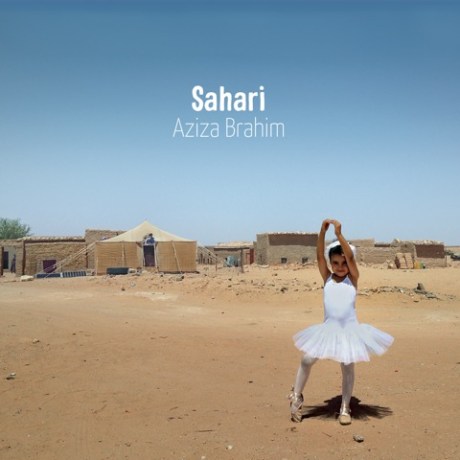
Aziza Brahim ‘Sahari’
(Glitterbeat Records) Album/ 15th November 2019
Bringing the message of the displaced Saharawi people to the world stage, Western Saharan musician/activist Aziza Brahim follows up both her critically rewarded 2014 album Soutak, and the no less brilliant 2016 serene protest of poetic defiance Abbar el Hamada album with her third for Glitterbeat Records, Sahari.
Born in the hardened landscape of a Saharawi refugee camp on the border of Algeria and the Western Sahara, beguiled vocalist Aziza embodies the wandering spirit of her people; their settled, though often borderless and disputed lands, previously claimed by Spain, were invaded in 1975 by Morocco. Though made up of many tribes with many different goals the Saharawi people mounted a fight back. It was in this climate that Brahim was hewed. Exiled in effect, her travails have extended to Cuba, where she was educated as a teenager, and Barcelona, where she now resides and makes music.
Imbued as ever with the desert soul of that disputed region, the latest record, with its visual metaphor of optimism in even the most desperate of backdrops and times – dreams of growing up to be a ballerina proving universal – attempts to marry the beautifully longing and heartache yearns of Brahim’s voice to a number of different styles and rhythms: A subtle change towards the experimental.
Previous encounters have channeled the poetic roots of that heritage and merged it with both Arabian Spain and the lilted buoyancy of the Balearics. Working with the Spanish artist Amparo Sánchez of the band Amparanoia, Brahim has chosen to add a congruous subtle bed of synthesized effects to the recording process: before performing live in the studio, but now recording in various places, the results collected together and pieced together in post-production. This methodology and sound furnishes Brahim’s longing traditional voice with certain freshness and, sometimes, shuffled energy. Songs such as the loose and free ‘Hada Jil’ lay a two-step dance beat underneath a desert song drift. Later on there are dub-y rim-shot echoes and undulating waves of atmospheric tonal synthesizer underpinning that blues-y startling timbre. However, the most surprising fusions to be found on Sahari are the Compass Point reggae-gait ‘Las Huellas’ and the Arabian soul channeling Fado ‘Lmanfra’. There’s even room for a piano on the balladry ‘Ardel el Hub’; a song that plaintively conveys the “impossibility of returning home”, a sentiment the activist Brahim is only too familiar with – denied entry or the right of return, effectively in exile.
The sound of the Sahrawi is never far off, despite the technological upgrade. That most traditional of handed-down instruments, the “tabal drum”, can be heard guiding the rhythm throughout; rattling away and tapping out a beat that changes from the threadbare to the clattering. Brahim’s vocals are as ever effortlessly enriching, captivating and trilling. I dare say even veracious.
Articulating a broader message of global suffrage, Brahim once more encapsulates the sorrows of the exiled and stateless on a sumptuous album, The wanderer and Saharan siren invites new dynamics without changing the intrinsic character and message of her craft, yet ventures beyond those roots to embrace bold new sounds. A most fantastic, poetic songbook that will further cement Brahim’s deserved reputation as one of the deserts most serene artists.
Reviews
Compro Oro ‘Suburban Exotica’
(Sdban Ultra) Album/ 18th October 2019

Illuminating Belgium suburbia with a cornucopia of entrancing and limbering sounds and rhythms from across the world, Compro Oro transport the listener to imaginative vistas on their latest album of jazz imbued exotics. Making waves as part of a loose jazzy Benelux scene, the troupe have even managed to rope in the help of Ry Cooder’s accomplished scion, the multi-instrumentalist talent Joachim Cooder, who adds an “effects-laden” mbira and percussion to a trio of imaginative tracks.
Like their comrades on that scene, Black Flower, the Compro sail into various melting-pot rich harbors, soaking up the atmosphere and embracing what they found, weaving the multilingual sounds into a vibrant soundtrack of tropical new wave pop, dance music, alt rock ‘n’ roll, Turkish-psych and Ethno-jazz fantasy. Cal Tjader, Mulatu Astatke and Marc Ribot are all cited as inspirations, their indelible mark suffused throughout this LP. Add to that trio a strange interpretation of Herbie Hancock (on the Somalia ease-up ‘Mogadishu’; imagine the Dur-Dur Band floating on a kooky jazz cloud above the tumultuous city), Soulwax (on the palm tree Latin dance funk ‘Miami New Wave’) and a rewired Modern Jazz Quartet (that will be the often twinkly and trickling use of vibraphone, but also the marimba too). The curtain call thriller ‘Kruidvat’ even evokes the darker stirrings of later period Can, and the wafting ambiguous snuffles of Jon Hassell.
For the most part dreamy and under a gauze-y veil, Suburban Exotica sashays and drifts across a musical landscape of Arabia, Anatolia, Eastern Africa, The Caribbean and Hispaniola without setting foot outside of their Belgium front door. The more you listen the more you discover and get out of this brilliant dance album of borderless jazz. What a treat to the ears and feet.
Invisible System ‘Dance To The Full Moon’
(ARC Music) Album/ 25th October 2019

An apt hand in transforming the traditional sounds of Mali, the British producer Dan Harper’s experiment in this field stretches back two decades; set in motion by the rudimental laptop-produced Acid Mali project he created whilst working as a Capacity Builder for a local Malian environmental NGO. So taken was Harper with the country, he ended up not only meeting his future wife there but setting up home and a studio in the capital, Bamako. His wife, Hawa, would introduce Dan to childhood friend and renowned guitarist Bandjougou, who in turn would bring in tow the dusty soulful rich vocalist Sambou koyaté to sing for him. Both artists appear on this new album alongside the griot siren Astou Niamé Diabaté, who as it turns out sang at Dan and Hawa’s wedding.
Taken from the same recording sessions as Dan’s previous album, Bamako Sessions, his latest transportive exploration under the nom de plume of Invisible System, once more lends an electrified and synthesized pulse to the spiritual soul of Malian music. Originally put together in a more languorous fashion with a variety of musicians coming and going, jamming in a mattress proofed room in a rented house in the capital, Dance To The Full Moon took shape at the end of a tumultuous and violent period in Mali’s history. Experiencing firsthand (literally on Dan’s own doorstep) the terrorist attacks that followed in the wake of a, finally curtailed, Islamist insurrection and the ongoing war between Mali’s government in the West and the Tuaregs of the North and Eastern desert borders, fighting to set-up an autonomous region, known as the Azawad. Though a certain stability has returned in part to Mali, attacks still occur sporadically; the effects of which permeate throughout the work of the country’s artists, the majority offering a conciliatory tone with the emphasis on unity and understanding. With that in mind, Dan’s album is rich with passionate expressive longing and intensity; the varied juxtapositions of the griot tradition and less rural, more urban vocals combine to deliver some startling performances.
The gently resonate accents and fanned waft of the Malian guitarist’s Kalifa Koné and Sidi Touré accentuate the brilliant vocal parts; a gathering of powerful griot acolytes, singers and even a rapper (Mali rap star Penzy) that includes the already mentioned trio of Bandjougou, Koyaté and Diabaté spiral between the sweetened and intense, the hymnal and physical. Dan boosts and filters those strong performances with a production of techno, modern R&B, dub and futuristic post-punk that sonically weaves in echoes of Massive Attack, Daniel Lanois, King Ayisoba and Dennis Bovell.
Nothing can ever truly improve upon the roots and soul of the traditional courtly music of Mali, its desert blues and Bamako rock of course, but you can push it into exciting directions. Dan’s rewired buzz and pulse does just that, giving a kick and lending an attuned production to the Mali soundscape.
Alex Stordiau ‘Poking Your Imagination’
(Pure Spark) Album/ 30th September 2019

Enticing former label mates from Edinburgh’s Bearsuit Records to his burgeoning venture Pure Spark, Tokyo electronic wizkid Ippu Mitsui welcomes the Brussels based composer Alex Stordiau to the ranks. Featuring alongside House Of Tapes Yuuya Kuno, Stordiau also previously appeared on the Mid Lothian Bearsuit roster – mentioned on this very blog for his standout Vangelis-style voyager waltz into the cosmos ‘Fulfilling Eclipse’, from the label’s The Invisible And Divided Sea compilation.
Like a missing neoclassical Kosmische suite from the Sky Records vault, Stordiau’s inaugural album for Mitsui’s imprint is a serene, though often dramatically stirring, exercise in sculpting retro-electronic soundtracks.
With a classical background, studying at various Belgium conservators, Stordiau combines elements of cascading, romantically accentuated piano and suffused strings with synthesized and computer programmed sine waves, glassy tubular glistened percussion and vaporous sweeps.
The Belgium visionary often works with Bristol musician Lee Williams, who plays, among other things, both electric guitar and bass, and sometimes drums. It sounds as if Williams is present once more, on hand with warm ponderous bass and the odd bit of wilder kooky lead guitar.
Track titles on Poking Your Imagination only go so far in describing each composition’s route on an album of undulating mood pieces. The opening descriptive ‘In The Tepid Shine’ is pure escapist air-bending; crafting vague echoes of Jean Michel Jarre with Roedelius’ more beautifully spherical elevations. Most of these tracks waver over the course of duration; changing or pausing between parts, starting off like the Blade Runner neon skyline lighted ‘Tree Healing’ with a darker, theatrical classical grandeur but suddenly joined by drums and a touch of Vangelis sci-fi. Elsewhere you’re bound to identify the space peril looming shadow of Tangerine Dream and the more popcorn kookiness of Cluster amongst the Baroque cathedral and gravity arcing visions.
A panoramic, mostly cosmic soundtrack of classical Kosmische and humanized electronica, Poking Your Imagination is an assiduous suite of the mysterious, scientific and dreamy.
The Mining Co. ‘Frontier’
Album/ 25th October 2019

Not that you can detect it from his lilted peaceable, if hearty, Americana burr, or the Western-alluded nom de plume that he goes under, but singer/songwriter Michael Gallagher was born in Ireland. Obvious now you’ve read his actual name I know, but just sound wise, it is difficult to hear that Irish bent. In a similar vein to such luminaries as Simon Bonney, the County Donegal troubadour subtly channels a timeless vision of the lyrical, pioneering old West (and South for that matter) on his new LP, Frontier.
Via a Nashville, Texas and New Mexico panorama, Gallagher tailors personal anxieties of disconnection, dislocation and growing pains with familiar old tropes on a songbook of “hangdog” country fare. A romantic album at that, with shades of a pining Josh T. Pearson, The Thrills, Lee Hazlewood, Tom Petty and the Eels, Frontier showcases the artist’s most tender swoons and yearnings. This is a soundtrack of purposeful blues, skiffles and mellow gospel, all softly laced with a subtle echo of Mariachi horns and tremolo twang.
Various memories of a childhood back in Ireland (the night Elvis died sounding a special resonance on the lilted lap-steel rich ‘The Promised Line’) and phobias (a rational fear in my book of flying inspiring the country-prayer ‘Empty Row’) are transported to wistfully articulate American musical settings; a landscape and sound it seems Gallagher belongs.
The third such album from his The Mining Co. alter ego, Frontier is full of romantic intent and stirring candid cathartic heartache; a shuffling songbook handled with care and tenderness that will unfurl its charms over time.
Xylouris White ‘The Sisypheans’
(Drag City) Album/ 8th November 2019

Less a Greek tragedy, more a kind of acceptance of one’s fate (or, play the hand you’re dealt and make the best of it), the Hellenic inspired collaboration project of Giorgos Xylouris and Jim White take their lead on the purgatory fate of boulder carrier Sisyphean from Albert Camus: to a point.
The absurdist doyen once wrote a famous tract on that Greek fella’s predicament: Punished by Zeus to roll a large boulder up a mountainside in Hades, each time he reached the top the boulder would roll right back down to the start. And so the process began all over again: An endless, thankless trudge and metaphor for all the all too real daily grind of life outside the mythological imagination. Or so you’d think. Camus however saw it not has a pointless waste of effort and slow punishing meaningless task but as a challenge: noble even. That Sisypheans’ repeated burden should be seen as an achievement, that the struggle should be enough to “fill a man’s heart”. Sisyphean has accepted his it and so should you, or, words and sentiment to that effect.
Of course, even deeper contentions can be found in Camus’ essay; how our tragic figure confined to a limited limbo landscape created in his mind a whole universe from it. Xylouris and White themselves pondered how he might experiment with carrying that burdensome rock; alternating hands, carrying behind his back and so on. Essentially though, this is about experiencing, seeing and discovering anew each day with a concentrated mind the things you take for granted: especially your surroundings. The duo initially turn to the atavistic in conveying these ideas and sentiments; using the suffused blown stirrings of the Greek flute (Aulos) and vibrato resonating spindly fanning tones of the laouto (a long-necked fretted scion of the lute family). In addition to these two lead instruments, the scene is set with shrouded misty and soulfully yearned voices, Giorgos’ son Nick on cello and on the serialism waning moodscape second track a ‘Goat Hair Bowed’ instrument. And so a sweeping, mournful at times, traverse that takes in dancing Grecian figures, wedding celebrations, bewailed lament and travels to the furthest reaches of the Greek borders: sailing at one point into the tumultuous mysterious vision of the much-disputed and fought over ‘Black Sea’.
However, the both taught and freeform, skittish experimental percussion and breaks of Dirty Three drummer White adds another dimension to the rootsy and earthy feel. Always tactile and congruous, White lifts or underpins certain tracks with avant-garde taps, clutters, rim rattles and jazzy frills and crescendos. A touch of progressive jazz, even Krautrock, that sends this project into more contemporary climes.
Between the chthonian and ethereal, the philosophical and viscerally dreamy, The Sisypheans minor epic is an extraordinary musical peregrination worth exploring: Music for the cerebral and the senses.
Rafiki Jazz ‘Saraba Sufiyana’
(Konimusic) Album/ October 2019

It’s no idle boast to suggest that the North of England based Rafiki Jazz could be one of the most diverse groups on the world stage. Testament of this can be heard on the troupe’s previous trio of polygenesis albums: an untethered sound that simultaneously evokes Arabia, the Indian Subcontinent, Northern African, the Caribbean, South America and Balkans.
With representatives from nearly every continent, many of which have escaped from their homelands to find sanctuary in the UK, Rafiki Jazz is an ever-evolving ensemble of migrants and refugees alike coming together to produce sweeping divine borderless music.
Their latest visionary songbook is a filmic panoramic beauty, no less worldly and stirring. The opening diaphanous spun ‘Su Jamfata’ encapsulates that perfectly; mirroring the group’s musical freedom and spiritual connection; lilting between a myriad of regions with stunning vocals that evoke both Eastern Europe and the Middle East. The following floaty and ethereal well-of-sorrows ‘Azadi’ even features a Celtic and folksy air (one that is repeated later on). This is in part due of course to the guest performances of both the English fiddle extraordinaire and songwriter Nancy Kerr and traditional Gaelic singer Kaitlin Ross. A third vocal addition, Juan Gabriel, can be heard lending a guttural throated underbelly to an already eclectic chorus of singers.
Buoyant tablas and spindled kora sit in perfect harmony with Arabian oud, tropical steel drums, the Brazilian berimbau and the varied voices of Sufi, Hebrew, Hindu, Egyptian-Coptic and Islamic, without ever feeling crowded or strained.
Saraba Sufiyana translates as “mystic utopia”, a title that epitomizes the group’s curiosity and respect for other culture as they build a brave new sonic world of possibility. One that takes in all the dramas and woes of the current international crisis and the lamenting poetry of venerable hardship – the final quartet cycle of prayer and spiritual yearning, ‘My Heart My Home’, beautifully conveys a multitude of gospel and traditional religious plaint, ending on the stirring Hebrew field song ‘Shedemati’. Twenty years in and still improving on that global remit, Rafiki Jazz delivers a magical and rich fourth LP. Devotional music at its most captivating and entrancing.
Karkara ‘Crystal Gazer’
(Stolen Body Records) Album/ 25th October 2019

There’s a hell of a lot wind blowing throughout the mystical and spiritually Toulouse trio of Karkara’s Crystal Gazer epic. North African wind that is; the exotic charms and mystery of the Maghreb on a swirling breeze, flows through and introduces each incantation heavy communal transcendence.
The mirage-shimmery title-track vignette even features a sirocco echo of ghostly enervated Tuareg desert guitars, whilst the electrified speed freak ‘Zarathoustra’ doesn’t just allude to Nietzsche’s infamous Thus Spoke but astrally heads back to the founding father of that mystical Persian faith via an eastern Link Wray and Gothic soup of Krautrock jazz and acid rock.
The counter flow breathes of another desert also permeate this LP, the sound of a veiled didgeridoo constantly present in building atmosphere and mysticism. Loud and physical, though not without some sensitivity, the trio chant, howl and pray their way through a vortex of flange and fuzz as they soar over a fantastical landscape that takes in the southern constellation star of “proxima centauri” and the gates of the Tunisian Medina, ‘Jedid’.
Allusions to seers, mystics and Gothic romantics abound, whilst the musical inspirations fluctuate between heavy space rock (Hawkwind) and Krautrock (Xhol Caravan, Embryo), post-punk (Killing Joke) and baggy (Stone Roses on a bum ride), and spooked, sleazy rock’ n ’roll (Alan Vega).
Transcended Tangier trips, Karkara aren’t exactly the first group to occupy this space, but they do it with volume and dreamy élan.
Premiere: A Journey Of Giraffes ‘Kona’ LP
August 22, 2019
Premiere
Words: Dominic Valvona
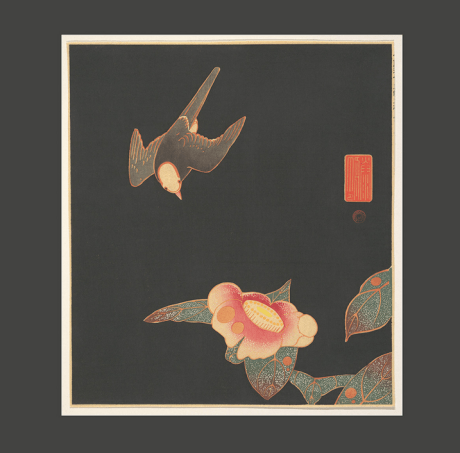
A Journey Of Giraffes ‘Kona’
(Somewherecold Records) 23rd August 2019
John Lane has travelled a long way, in musical terms, from his burgeoning lo fi days recreating a Casio keyboard vision of Brian Wilson’s beachcomber dreamy beatifications, under the seashell symphony ego of Expo, to the more transcendental meditative beginnings of his present alter ego, A Journey Of Giraffes. The safari has moved, in more recent years, away from the Beach Boys to more ambient and traversing experimental influences. The last album from the unassuming Baltimore composer that we featured, a couple of years back, went all out on an aimless supernatural field-recorded walk through the forest. F² is an eerie and strange affair; a mixture of Arthur Russell meets Panda Bear and Alejandro Jodorowsky in the backyard of Maryland.
Taking another road-less-travail kind of amble through another sort of imaginative woods setting, Lane’s latest, and quite possibly his most complete, album Kona, which we are lucky and indeed honored to be premiering today, is inspired by a Japanese art, music and contemplation. A love letter in many ways to the late Japanese electronic composer Susumu Yokota, this sweeping, often subtly matriculate and ambient affair, suite pays a homage not only to his more washed and ruminative musical peregrinations but his quotes as well. The album title is itself taken from one such lyrical pronouncement/augur: “Bones of the dead are shattered like kona and sprinkled over the homeland. Children can fly in the sky when sprinkled with Angel’s kona.”
Known for bridging techno, house and more minimalistic, and almost the neo-classical, fields of electronic music to forge a thoroughly modern Japanese sound, it is Yokota’s brushed calligraphy and mysterious evocations that are used like footnotes to Lane’s interpretive exploration: Less the Jeff Mills and Rob Hood acid burbles and intelligent techno of Acid Mt. Fuji, and more the gliding, thoughtful intricacies and panoramas of Sakura.
A clue as to what you might expect to hear from Lane’s Japonism, the quilted bird-in-motion artwork (Swallow and Camellia by Itō Jakuchū) is a suitable guide to this deep immersive experience; one that is influenced as much but the literary finesse of Natsume Soseki‘s The Three Cornered World novella as it is by Studio Ghibli’s seminal animated movie, Spirited Away. Kona is full of glistening water pool grottos and firefly lit paper lantern trails; a night garden both mysterious and imbued with peaceable Taoist understatement. You can certainly expect to hear dulcet thumb-plucked strings cascade against reverberated singular piano notes and pestle-and-mortar like scrapings, or, an insect chorus and water droplets falling on a millennia-aged and stoic moistened rock whilst hovering low synthetic drones pulse and throb. Beats are kept to a minimal, but they are there in the sophisticated mix of the fairytale and plaintive.
Magically ruminating, offering both the beatific and uncertain, Kona is an exotic, sometimes ceremonial, Zen like soundtrack that evokes the Fourth World Possible Musics of Jon Hassell, Popol Vuh and the higher plain communal glistened zither transcendence of Laraaji. As I’ve already said, this could be Lane’s most realized, complete album yet. And you can now wander that path yourself, as we premiere the album today, here:
Tickling Our Fancy 077: BaBa ZuLa, Junkboy, Jodie Lowther, House Of Tapes, Society Of The Silver Cross, Taichmania, Trupa Trupa….
August 8, 2019
REVIEWS
Words: Dominic Valvona
Photo: (of BaBa ZuLa) Emir Sıvacı
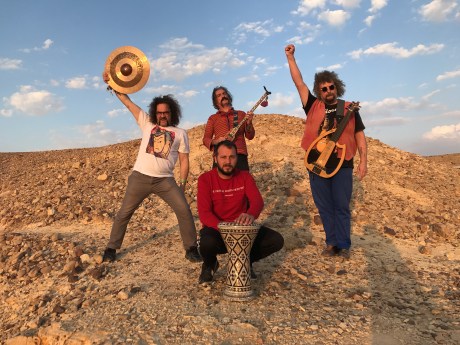
Freely traversing borders once more, Dominic Valvona’s regular roundup of discoveries and interesting finds this month circumnavigates Japan, Israel, Turkey, Poland before returning to the more chilled pastoral Estuary greenery of the Sussex and Essex landscapes. There’s a double-helping of upcoming releases from Glitterbeat Records stable with the return of the Turkish dub cosmology legends Baba ZuLa – their first studio LP in five years, Derin Derin – and a new album of post-punk limbering from the Gdansk band, Trupa Trupa. In a similar vane to the ZuLa, Israeli troupe Taichmania also fuse a cosmology of sounds, and use both the an electrified dynamism of the “oud” and “saz” to fuzz and amp up a merger of Middle Eastern traditions with jazz and prog. Their debut LP, Seventh Heaven is given the once-over. The trio of radio show host ethnomusicologist Matthew Nelson, Hopi musician Clark Tenakhongva and world-renowned flutist Gary Stroutsos come together on sacred ground to invoke a magical homage to the music of the Hopi people on the beautifully evocative LP Öngtupqa. Inspired by more Eastern mysticism the Seattle coupling of Society Of The Silver Cross release their debut long-suite, 1 Verse, and an amazing freefall-in-motion jazz exploration from Philip Gropper’s Philm, entitled Consequences.
There’s horror of a diaphanous apparitional kind with the latest solo album of invocations and ether siren sighed sonnets from Jodie Lowther, and the first album in five years from Junkboy, the marvelous scenic Trains, Trees, Topophilia, and, finally, the inaugural release from Ippu Mitsui’s brand new electronic music label, Pure Spark Records, the House Of Tapes two-track Embers Dreams.
BaBa ZuLa ‘Derin Derin’
(Glitterbeat Records) 27th September 2019

Stalwarts of Turkish cosmology dub, the Istanbul Ege Bamyasi acolytes BaBa ZuLa return to the fray with their first studio LP in five years. And what a time to make that return, as Turkey, or rather its increasingly apoplectic quasi-Sultan-in-waiting Recep Tayyip Erdoğan, continues a policy of conformism that endangers any form of oppositional descent, and threatens artists and critics alike with severe censorship. The once famous secular moderate bridge between Europe and Asia is growing hostile to the West as the administration errs towards a hardline form of Islam, and moves closer towards Putin’s Russia.
Maintaining a constant rebellious streak throughout their twenty-three year career, whatever the ruling regime, the recent turmoil propels the ZuLa to reconvene; raising their heads above the barricades in a creative act of defiance: Music for dangerous times.
Still led, in part, by the switched-on electric ‘saz’ maestro Osman Murat Ertel, the group weaves together another expansive soundtrack of vivid souk dub and sashaying rambunctious post-punk on Derin Derin. Inspired by a number of things, not just the current political climate, the album is imbued by BaBa ZuLa’s long-running collaborations with the late Jaki Liebezeit: who was himself in turn influenced by a myriad of Anatolian rhythms – which you can hear permeating throughout both the Can legacy and his own many collaborative projects over the decades. The Can metronome and drumming doyen sat in with the group on a number of occasions, and the resonance, at least, of those sessions can in part be felt on this newest album. Especially on the Krautrock pulse of the solo fuzzed saz-snarling ‘Kizil Gözlüm’, which runs through a gamut of Germanic sounds, from Can to Blixa Bargeld and 80s Berlin post-punk. There’s even an air of Michael Karoli’s signature cosmic flares and reverberating wanes, as played on an amped-up oud (or saz), on the Sublime Porte reimagined vision of King Tubby, ‘Port Pass’. In retrospect, the band considers Jaki as an unassuming mentor.
Another thread to this album is the group’s ancestral connection, with musical ties that stretch back generations: Ertel paying a special homage to his artistic forbearers, enthused by traditions but also the country’s psychedelic furors in the 60s and 70s. From the 150 year-old photographic plate process used to produce the album cover, to the inclusion of a song penned by Ertel, his wife and young son, ‘U Are The Swing’, there’s a deep sense of family and inheritance; BaBa ZuLa as custodians of the faith.
A third strand, the instrumental portions of this Oriental cosmic album grew out of a soundtrack commission; the group asked to record music for a documentary about falcons, created a suitably exotic echo of serene flight and soaring majesty, as they accentuated the bird-of-prey plunging and floating over evocative commendable heights. These do act as mini-branches, vignettes and interludes between the longer songs.
The rest of the album oscillates and saunters between camel ride momentum Arabian Desert blues (thanks in part to the inclusion of an electrified oud), futurist Bosphorus reggae (via On-U-Sound and the Warp label) and even alternative rock. In the process they find an echo-y balance between the haunting and abrasive, and the elasticated and intense. A mystical union of the entrancing, sweeping and often chaotic, BaBa ZuLa ‘s hybrid of Turkish and Middle Eastern exotica straddles time and geography to once more create a fearless rump of defiance, yet also inspiring some hope.
Trupa Trupa ‘Of The Sun’
(Glitterbeat Records) 13th September 2019
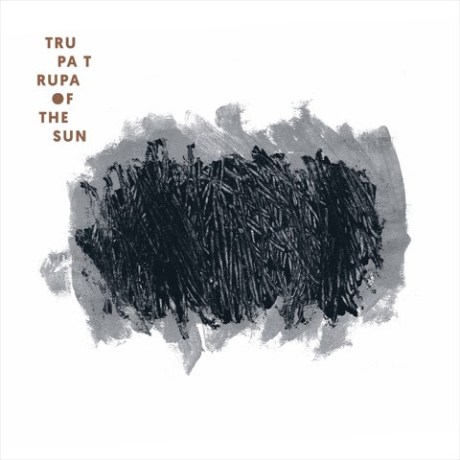
The second Glitterbeat release to feature in my roundup up this month, the counterbalanced Polish band Trupa Trupa couldn’t be further apart, sound wise, from the more languid looseness dub of their label mates Baba ZuLa.
Freshly signing over to the German-based label, the multi-limbed quartet play off gnarling propulsive post-punk menace and tumult with echo-y falsetto despondent vocals and hymnal rock on their fifth album, Of The Sun. Feeding into the history of their regularly fought-over home city, Gdansk, Trupa Trupa create a monster of an album steeped in psychodrama, dream revelation and hypnotic industrialism.
In a perpetual tug-of-war for dominion with its Prussian, then German neighbors Gdansk strategic and commercial position as Poland’s most important post has seen the famous city become a sort of geopolitical bargaining chip over the centuries because of its gateway to the Baltic. After one such episode in a “convoluted” legacy, the city and much of its surrounding atelier of villages were turned into the Free City state of Danzig after WWI; a part compromise result of the Versailles Treaty in 1919. Famous son-of-Gdansk, philosopher Arthur Schopenhauer is credited as a major influence on the group and this album, and though not strictly born within the city limits, the infamous madman of cinema, Klaus Kinski – in one of his most wild-eyed legendary roles as the obsessive loon opera impresario, Brian Sweeney “Fitzcarraldo” Fitzgerald – is also mentioned in the PR spill: the “great effort of pathetic failure” and “strain sublimating into nothing” of that barely veiled characterization proving fruitful suffrage and inner turmoil for the group.
A sinewy, pendulous embodiment of that environment and metaphysical philosophy, Trupa Trupa write “songs about extremes”, but use an often ambiguous lyrical message when doing it: usually a repeated like poetic mantra rather than charged protest. On one of those framed “extremes”, the wrangling guitar-heavy post-punk-meets-80s-Aussie-new-wave ‘Remainder’ sounds like Swans covering The Church, as the group repeat the refrain, “Well, it did not take place.”
Though taut, industrial with ominous machinations, there’s a surprising melodious quality to the turmoil and free fall of Trupa Trupa’s proto-Gothic rumblings. In amongst the slogging, chain dragging of the Killing Joke, PiL, Bauhaus and Gang Of Four are echoes of a wandering angelic House Of Love, Echo And The Bunnymen, early Stone Roses, Pavement and flange-fanned Siouxsie And The Banshees. Strangely, however, the dreamy haunted title-track evokes Thom Yorke in a dystopian Bertolt Brecht theatre, and the stripped-to-bare-bones acoustic ‘Angle’ even sounds like a odd, if charming, folksy harmonics pinged missive from Can’s Unlimited archives: Incidentally, Can’s walrus mustache maverick, Holger Czukay, was born in Gdansk, or rather Danzig as it was known at the time.
The PR spill that accompanies this nihilistic-with-a-heart LP is right to state, “Of The Sun is an unbroken string of hits.” There are no fillers, no let-up in the quality and restless friction, each track could exist as a separate showcase for the group’s dynamism: a single. East European, Baltic facing, lean post-punk mixes it up in the Gdansk backstreets and harbor with spasmodic-jazz, baggy, math-rock, psych, doom and choir practice as this coiled quartet deliver an angst-ridden damnation of humanity in 2019.
Taichmania ‘Seventh Heaven’
21st June 2019

The second group in this roundup to fuse the “saz” and “oud” within a cross-border traverse of Arabia and Turkey, Israeli troupe Taichmania take a similar line to BaBa ZuLa in freely merging musical cultures.
Well-traveled founding member, and the man whose name appears so prominently in the band moniker, Yaniv Taichman has a rich and varied pedigree having studied jazz at the Rimon College Of Music, Turkish music with Professor Mutlu Torun in Istanbul, and Indian music with Pt. Shivanath Mishra in Varanasi. His band mates, Sharon Petrover on drums, Yoni Meltzer on keys and electronics, and Lois Ozeri on bass, are no less musically worldly in that respect.
Stalwarts on the Israel scene in various forms, together under the Taichmania umbrella the quartet limber across a panoramic landscape of Sufi funk, souk-rock, prog and jazz on their debut suite, Seventh Heaven. A veritable elasticated fantasy of both intense hypnotic rhythms and desert peregrinations, this heavenly bound odyssey entwines the traditional sounds and scents of the Arabian Orient with zappy cosmic electronic undulations of synth atmospherics.
Broadcast samples from Middle East radio linger through a kind of spicy exotic brooding mix of Natasha Atlas and the Transglobal Underground on the opening ‘Arabesk’, whilst other such exotic intensity as the contorting spiraling title-track, and post-punk bendy ‘Saba’ are whole journeys, sagas, in their own right; moving between progressive-jazz fusion and futuristic Arabian vapours.
Taking classic leanings to the heavens and beyond, Taichmania knottily skip, scuffle, spindle, echo, quiver and solo through their magical influences to produce a live-feel Oriental soundtrack: heavy on the Prog!
Junkboy ‘Trains, Trees, Topophilia’
(Fretsore Records) 2nd August 2019

Regular readers will (hopefully) be aware that we premiered the Hanscomb brothers’ vibrato-mirage-y ‘Waiting Room’ single last month. This Baroque-pop fashioned nugget, bathed in a halcyon shimmer, proved an idyllic introduction to a pastoral album of geographical traversing instrumentals.
As its album title suggests, public transport(ive) and a strong sense of place have inspired the brothers first album since the much acclaimed 2014 album, Sovereign Sky: Both relocating years ago from Southend-On-Sea to the south coast ideals of Brighton, Junkboy siblings Mik and Rich compose a twelve-track suite to the back-and-forth journeys they made between the two counties of Essex and East Sussex. The “Topophilia” of that title, a term wrongly as it transpires attributed to John Betjeman, can be roughly translated as a love for certain aspects of a place that often gets mixed with a sense of cultural identity.
Passing through a myriad of versions of this landscape, influences include the troubled World War artists of England who depicted the torn-up apocalyptic aftermaths of Europe and the results of bomb raids across the English topography (becoming the doyens of the English modernist movement in the process), to the passing glimpses of the versant downs, beaches and “splendor towns” from a train window, and (friend and Junkboy photographer) Christopher Harrup’s Thames Estuary photo album. The first of these inspirations offers both a colour palette and a semi-abstract empirical vision of that countryside; messrs Paul Nash, Graham Sutherland and John Piper, a triumvirate of influential painters, providing a suitable rich canvas: Just one of the guests on this charming LP (and no stranger to this blog) Oliver Cherer even helps pen a Nash homage, ‘A Chance Encounter’ plays with the light musically on a magical pop melody of slow jazzy brass, relaxed drums and flute-y forlorn.
Disarmingly chilled yet full of wistful rumination, Junkboy’s Brighton-Seaford-Southend traverse wonders what it would sound like if Brian Wilson was born and bred on the English Rivera instead of Hawthorne, California; the beachcomber vibes of Pet Sounds permeating throughout this quint lush English affair. You can safely add vague notions of Britpop era Octopus, a touch of the Super Furry Animals more folksy psych instrumentals, some early Beta Band, echoes of 90s Chicago post-rock, and on the dreamboat bluegrass lilted-and-silted ‘Sweetheart Of The Estuary’ more than a nod to Roger McGuinn and pals.
Trains, Trees, Topophilia is a peaceable musical landscape littered with the ghostly reverb of railways station interchanges, mew-dewed laced green hillsides, tidal ebbs and flows and Cluniac Abbeys – the millennia-old, Benedictine scion religious brethren, brought over in droves after William The Conqueror’s invasion of England, make a historical connection between both the album’s Essex and East Sussex locations; the orders’ priory in the Prittlewell of the same song title, originally set up by Cluniac monks from Lewes, just outside Brighton.
Pastoral musical care for the soul, Junkboy’s instrumental album is a beautifully conveyed canvas of the imagined and idyllic; a subtle ode to the Southeast cartography and painters, poets, writers that captured it so perfectly. This is an album that will grow on you over time, revealing its sophistication and nuanced layers slowly but surely: a lovely hour to wile away your time.
Jodie Lowther ‘The Cat Collects’
26th July 2019
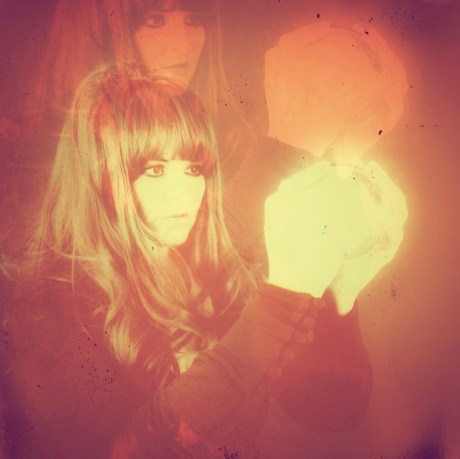
One apparitional half of the surrealist Quimper duo, vaporous siren Jodie Lowther has been known to, on occasion, float solo. Her latest haunted diaphanous malady, The Cat Collects, is (as ever) a magical suite of dream realism and supernatural theater.
Between the characters of ethereal seraph and alluring cat lover, Jodie warbles, coos and entrances with a voice so fragile and gauze-y as to be almost an evanescent whisper: Jodie transmitting her vocals from the spirit side of the ether like a aria woozy Mina Crandon.
Drifting in a seeping cantabile sigh throughout this witchery spell of spooky misty songs and graveyard crypt sonnets is a subtle backing of feint melodies and stripped electronica – think Ultravox marooned on the Forbidden Planet or, an early Mute Records vision of 70s British horror soundtracks (Amicus, Hammer, British Lion). From invocations of Vampire lovers to black magic nuptials, The Cat Collects stirs up the right balance of scares and esoteric enchantment on an album of mysterious, creeping beauty and hazy Gothic soundtracks.
Society Of The Silver Cross ‘1 Verse’
28th June 2019
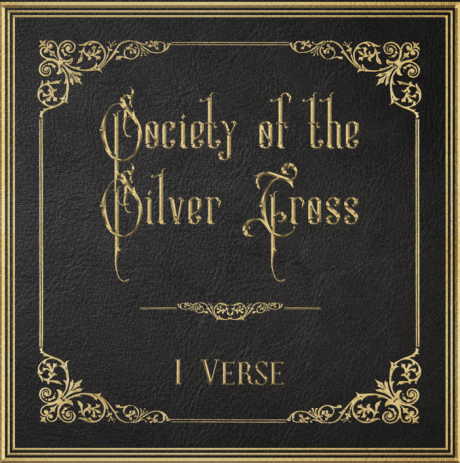
Over the last few months, and featured in previous editions of my roundups, the Seattle coupling of Joe Reinke and Karyn Gold-Reinke, under the auspicious appellation of the Society Of The Silver Cross, have presented us with a trio of evocative-enough Eastern death cult imbued video-singles. Making good on those mystical visions, the duo have released an album that both continues the Velvet Underground say “Om” Indian Gothic drone psychedelia of those tracks but also widens the musical palette to take in shoegaze, new wave and 90s alt-rock.
Still inspired by their spiritual travels to India, and adopting the invocation drone of the “shahi baaja” (Indian autoharp) and induced bowing of the “dilruba”, the Silver Cross explore the “transformative and renewing powers of death” as they flick through a bewitching songbook of Orientalism, Byzantium incense-scented opulence and bellowing sea shanty Edgar Poe scribed Gothic coastlines.
Leaving aside that run of singles (‘When You’re Gone’, ‘Kali Om’ and ‘The Mighty Factory Of Death’) the book of spells adorned 1 Verse piles on the melodrama of opiate arcane rites and woozy harmonium pumped esoteric atmospherics; opening with the repeated echo-y chanting ritual ‘Diamond Eyes’. In a similar mystical vain, distant tolled bells and the reverberations of a choral Popol Vuh creep into the holy processional lamented ‘Funeral Of Sorrows’. Yet, amongst the death marches and promises of spiritual release, rejuvenation and the inevitable there’s more radiant escapism in the form of spindled Baroque-psych (‘Dissolve And Merge’), alt-pop (‘Because’ imagines The Cars and Why? in holy communion) and even a bastardized Travelling Wilburys (‘Can’t Bury Me Again’).
Kneeling at the altar of a many-faced god/goddess the Silver Cross play freely with all those many influences; indulging in the Eastern arts but expanding horizons and even absorbing past Seattle imbued projects.
If you’ve only thus far heard the singles then much of the second half of this album will be a surprise. Dreamy mantra and morbid curiosity coalesce to produce a mesmerizing, hypnotic ritual; opening the door to further experimentation and proving a worthy new incarnation for Joe and Karyn to channel.
Tenakhongva, Stroutsos And Nelson ‘Öngtupqa: Sacred Music Of The Hopi Tribe’
(ARC Music) 26th July 2019
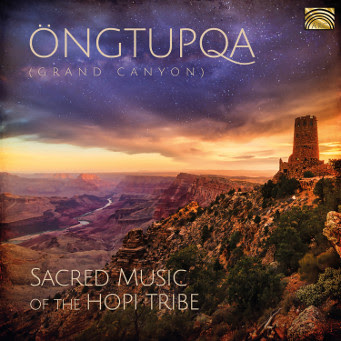
Breathing (literally) life back into the ancestral evocative paeans and spiritual communions of the Hopi people, the trio of radio show host ethnomusicologist Matthew Nelson, Hopi musician Clark Tenakhongva and world-renowned flutist Gary Stroutsos come together on sacred ground to invoke a magical homage.
First a little background. The Hopi, unlike many of their fellow communities of Native Indian tribes in the Americas, lived in more permanent villages, across swathes of South East Utah, North East Arizona, North West Mexico and South West Colorado. These dwellings, some very complex in their construction, gave birth to the Colonist appellation, the Pueblo People, but also because they were considered a more civilized, polite community; their concept of life based on a reverence for all things.
At the heart of this stirring earthy but often-transcendent project is the atavistic instrument that set it all in motion: the 1500-year-old Hopi long clay flute. Unearthed in the last century by the archeologist Earl Halstead Morris, who was leading a Carnegie Institute Expedition to the Prayer Rock district in North East Arizona in the 1930s, these hollow, reedless flutes were part of a thousand artifact haul of discoveries. Relatively remaining a mystery for decades to come, it wasn’t until further research in the 1960s that these flutes from the now renamed “Broken Flute Cave” could be confidently dated to around 620- 670 AD. What remains remarkable is that this sacred instrument was thought lost by the Hopi descendants themselves; disappearing hundred of years ago, until flute specialist Stroutsos with project instigator Nelson played a replica version in front of Hopi custodian Tenakhongva, who promptly invited him to play it in front of his entire family and then, at a later date, at a venerated spot near where the original clay flutes were found.
Part of the wider Canyon Music Festival in 2017, at the Mary Colter built Desert View Watchtower, the trio’s performance, with Nelson keeping rhythm on clay pot drums (keeping it all historically accurate, stretched-skin drums being out of time and step with the 7th century flutes), Strouthos improvising on flute and Tenakhongva singing whilst handling the percussive rasps, rattles and gourd, was filmed and recorded. An “approximation” of how the Hopi’s holy music would have sounded almost 1500 years ago, the Öngtupqa (the name given by the Hopi people to the canyon in which our trio played) nine-track suite remains untouched, unmodified or edited two years on.
Setting the atmosphere of both earthy soul connectedness and flighty astral mystery, the obviously talented and well-honed players perfectly capture the dream-like ritual and awe-inspiring panorama that surrounds them. If you were expecting the synonymous rain dance and powwow holler chants of much Native Indian music, think on. Öngtupqa is more entrancing, ambient in places, with the vocals, or chanting, graceful and often melodious but deep. Lifting out of the canyon to dizzying cloud-ruminating heights, you’ll still constantly reminded of the vast American outdoors and desert landscape: A rattlesnake shakes his distracting tail here, a panpipe flight of a condor or thunderbird over there on the mountainside.
An intimate tribute to the Hopi cycle of life (as Tenakhongva explains it, “…we were born within the Grand Canyon and when we are done, we return back to this place to rejuvenate life of a new beginning…”), the stories and music of that scared site are offered and opened-up to a global audience; a message of the communal, of preservation, being at the very heart of this vivid undertaking. The ancestors will be proud, as the two millennia old blessings and spiritualism of the Hopi is brought back to life.
House Of Tapes ‘Embers Dreams’
(Pure Spark Records) 7th August 2019
The Japanese electronic music wiz kid Ippu Mitsui has graced these roundups on a number of occasions over the years, and featured on numerous Monolith Cocktail playlists. Releasing a varied kaleidoscope of futuristic Tokyo electro-glides-in-blue and kinetic techno on a spread of labels, Mitsui originally came to my attention through his releases for the Edinburgh-based Bearsuit Records. Still recording ad hoc, Mitsui has now just launched his very own imprint, Pure Spark Records. Another one of Bearsuit’s extensive roster of mavericks, the inaugural release on that venture is from the experimental composer Yuuya Kuno, who under a variety of alter egos has prolifically knocked out a mix of the weird and sublime electronica.
Back recording under the House Of Tapes moniker in this instance (known as Swamp Sounds when passing sonic oddities through Bearsuit), Kuno’s two-track showcase, Embers Dreams, is a lucid, air-y and sophisticated affair. The “Embers” of that title is an inviting exotic amble through a moist-vegetated oasis of itchy, scratchy, woody and echo-y deep electro percussion, whilst the accompanying ‘Melted Ice’ offers a glass-y trance-y, robotics-in-motion slice of downtempo chiming soundtrack. A great subtle and deep piece of electronic manna and flow with which to launch Mitsui’s brand new label, House Of Tapes kickstarter is a serious piece of classy techno: an augur, a good omen I hope of what’s to come.
Philipp Gropper’s Philm ‘Consequences’
(Why Play Jazz)
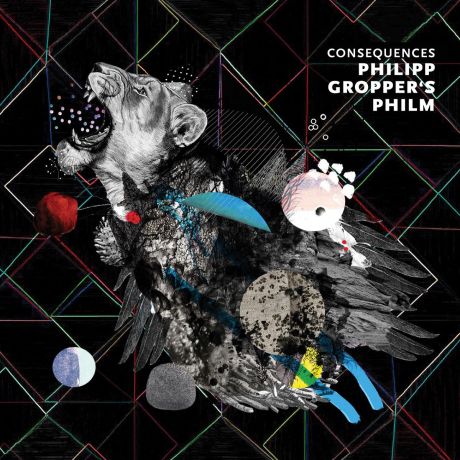
A balletic jazz freefall in motion, the latest tumultuous suite from the acclaimed “David Bowie of jazz”, tenor saxophonist/composer/bandleader Philipp Gropper (and his Philm troupe), is a highly experimental reification of contortions and sporadic, spasmodic chaos: albeit a controlled, kept-in-check, vision of an avant-garde one.
The multifaceted title of this orderly breakdown in heightened tensions and liberating angst can be read in many ways: The “consequences”, for example, of our political divisive times can be heard and read loudly crashing throughout this six track album of disjointed intensity; the fallout from all sides of the societal divide causing enough anxiety, suffering and despondency to fuel Gropper for the next decade or more. In fact the whole course of “neo-liberalism” itself is on trail (or at least its knock-on effects of intervention), however abstract that might be.
Space expletory wondrous track titles aside, the filthy lucre spiral of dependency and spluttering wild ’32 Cents’, and funneling discordant interchange ‘Thinking From The Future (Are You Privilaged?)’ are both the most obvious proponents of that socially “woke” commentary – though whose privilege needs to be checked exactly in this exchange is open to debate.
The concerns of “interpersonal” and “interrelationships” within this charged political landscape are also a major focus for the Berlin-based jazz man; adding to a uncertain free flow of both centrifugal spinning discourse and more haunted, sometimes diaphanous, twinkling.
Escaping the atmosphere, orbiting the cosmology of deep space, Gropper’s most serene dance of glistened, starry majesty and mystery is the astral soundtrack to ‘Saturn’. Both the enormity and expansive uncertainty of this planetary titan is expressed evocatively enough by Gropper’s otherworldly Theremin aria like reedy breaths on the tenor sax, as his companions bounce and skip around the planet’s rings. Saturn holds a strong fascination for all of us, but it can’t have escaped Gropper’s notice that jazz music’s most celestial star, and progenitor of Afrofuturism, Sun Ra, claimed to have ascended to Earth from his Saturn home.
The musicianship is, as you expect, first rate, with Gropper’s sax totally untethered, squawking, fluting, brilling and even trembling, whilst his band of Elias Stemeseder (on piano and synth), Robert Landfermann (on double-bass) and Oliver Steidle (on drums) react decisively with limbering, elasticated reflexes. Together hey create an iridescent breakdown and reconstruction of digital calculus, science-fiction and the cerebral; merging contemporary European jazz with elements of Coltrane, Coleman, Billy Cobham, Stockhausen, The Soft Machine and the electronic and hip-hop genres. Futurism and avant-garde classicism collide in an oscillating and tumbling fusion of complex ideas: Consequences is a musical language on the verge of collapse. How it all stays together is anyone’s guess. This is a most impressive adventure in jazz.
REVIEWS ROUNDUP
Words: Brian ‘Bordello’ Shea

Brian ‘Bordello’ Shea joined the Monolith Cocktail team in January 2019. The cult leader of the infamous lo fi gods, The Bordellos, has released countless recordings over the decades with his family band of hapless unfortunates, and is the owner of a most self-deprecating sound-off style blog. Each month we end him a deluge of new releases on his virtual desk to see what sticks.
Toxic Chicken ‘Uncomfortable Music’
21st July 2019
I don’t apologise for writing another review of Toxic Chicken, as this is his 3rd LP in as many months, and this like the other two is a work of pure maverick pop genius: and not just because there is a four second track called ‘Brian From The Bordellos’ on it!
This LP has everything that I love about the magic and joy of music. It has humour and a madness that at times reminds me of the great Syd Barrett and the wonderful White Noise Electrical Storm LP. It is eccentric pushed to the extreme. Songs with the subject matter of eating politicians and love songs for cats and for Mother Nature and what is bad about England, but that track only being under two minutes long does not quite manage to list everything.
Uncomfortable Music is certainly an enjoyable and rewarding listening experience, and at times, the subject matter does live up to its title. But this album is a pay-what-you-want to download, so is well worth a listen. Another great album from a great artist: And I mean artist. And the track ‘Little Snail’ is the best dance track I have heard all year.
Snapped Ankles ‘Stunning Luxury’
1st March 2019

The whirring and exciting sounds of post punk circa 2019 coming at you like a extravagant wholemeal piece of chiffon scarred alternative disco meat; the sound of Devo fucking the brains and beats out of the B52s whilst the horny ghost of Mark E Smith watches on making cutting asides whilst stomping on the hopes and dreams of the not yet born love child of David Byrne and Lena Lovich.
This LP is one big extravagance of dark dance and post punk joy, the sort of album to soundtrack your wildest night out ever: sordid clubs, cheap drinks, hanging out with girls and boys who really should know better, the best musical electro porn one could ever hope to gorge oneself on.
Stunning Luxury is dirty, it is funky, it is experimental, it is blistering rock ‘n’ roll. A luxury indeed. One that should be enjoyed by all.
Anton Barbeau ‘Berliner Grotesk’
(Beehive Records / Pink Hedgehog Records) 19th July 2019
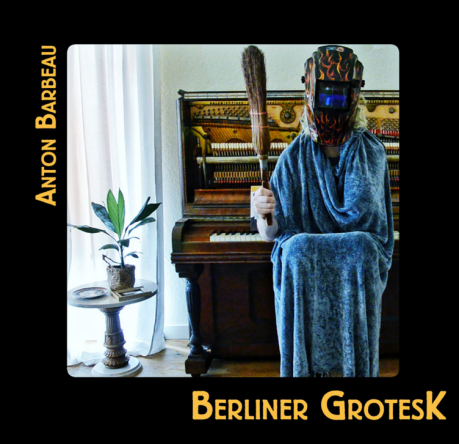
There is a dark playful melancholy I love about this LP, not the weeping into your hanky kind, or, the “oh I feel so sorry for myself kind”, but the, “I am middle aged and looking back at my life through the good and bad the happy and bad” kind. There is hope in the future kind, the kind of melancholy that Martin Newell thrives at writing. Even the cover of the Beatles ‘Love Me Do’ is enriched with a sadness the original misses; this version overcomes the familiarity by transforming it into a slightly electro reggae beauty.
But not all is sadness and tears there is also fine pop of the power variety: the sort Jellyfish so excelled at releasing. The Bowie Mott and the Fabs influences of course shine bright bringing a lovely old time Englishness that is so often ignored in modern music of today. This LP is a finely crafted pop album, with enough quirks and twists to make it a very enjoyable listen.
Simon Waldram ‘Into The Blue’
27th July 2019
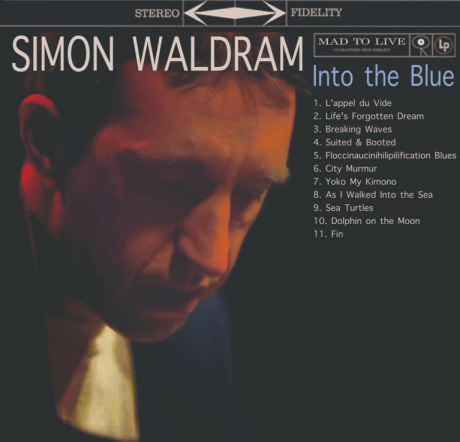
Simon Waldram made one of my favourite LPs from 2016, the wonderful self released Insolation, an LP that dipped and swayed, taking in JAMC one minute and the next, beautiful swathes of psych folk. This, his new album, Into The Blue, takes off where that album left off, but is a slightly more subdued affair: Songs of darkness, love, depression and hope merge into a quite beautiful collection.
In these days when the acoustic guitar has taken over the electric, sales wise, there is certainly a market for LPs of softly strummed melancholia, and Simon does it far better than most; bringing to mind at times, the beautiful slowcore shimmer of Low (especially on ‘Breaking Waves’), at other times, recalling the magic of the Go Betweens and The Smiths.
The highlight for me though is the beautiful psych folk instrumental ‘Sea Turtles’: a few moments of total bliss.
Into The Blue is a fine LP and with the right backing and a bit of luck could well fight its way to the top of the overcrowded melancholic brigade, and could find favor on many late night radio shows. An album of real beauty and sadness and hope.
Moody Mae ‘Throwing Rocks at John E. Road’
2nd July 2019
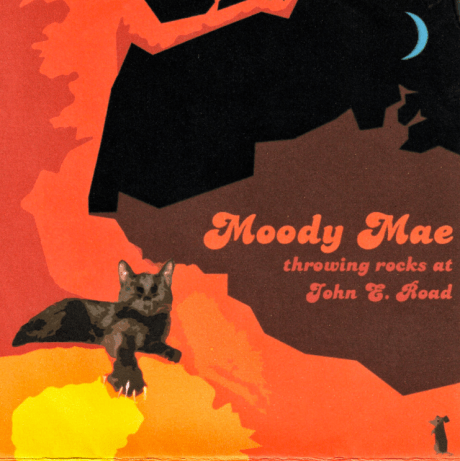
Indie pop from Sweden is on the whole a wonderful thing indeed, and this EP/mini LP from Moody Mae keeps within that wonderful remit. Beatles like ‘Martha My Dear’ piano, lovingly could not give a toss female vocals, ba ba bas and lofi psychedelia join forces to force music lovers to nod their heads and grin like grinning idiots. And to think that this was recorded in 2005 and has taken 14 years to see the light of day. I think it may be time for Moody Mae to reform and record a full length waxing. For when a band has the gift of pure pop wonderment it is a shame not to share that wonderment with the less fortunate. A treasure of a release.
Radio Europa ‘Community Is Revolution’
(Wormhole) 19th July 2019
It seems like a weekly event that Wormhole Records release a new underground LP of chilled out darkness. This weeks release is by Radio Europa and is an LP of chilled out darkness with the odd offering of a glimpse of light appearing through the cracks of the drawn heavy curtains called life: The beam of light showing the particles of dust exploding and hovering around the thoughts of insolvent tomorrows and the broken promises of yesterday.
Gentle soft spoken vocals lilt into the wave of dark synth and drum beats that blanket you in the warmth of the cold that whispers sweet nothings whilst grinding a worn down stiletto heel into your vacant soul.
Community Is Revolution is an album to soundtrack these uncertain times; an album to close your eyes and let the music sweep over you and take you to the dark recess of your mind where devils and angels juggle with the happy/sad of your life.
bigflower ‘Night And Day’
13th July 2019
Another week another fine free to download single from bigflower. An explosion of post punk guitars do battle with horns and a bass riff so mighty it would make Jean Jacques Burnel want to call it a day and to take up flower arranging. When oh when are this mighty band going to be picked up by some label. For this is far to a fine a track to slip under the radar yet again. Blogs, djs of the alternative variety should be ramming this down people’s throats instead of some acoustic guitar charlatan whining on about how twee their girlfriend’s vagina is [like they have saw their girlfriend’s vagina! They saw an egg box and let their imagination take hold]
Bigflower are one of the most exciting underground bands around at the moment and we at the Monolith Cocktail will keep ranting on about their majestic take on modern life until the less with-it blogs catch on. Blogs, djs, record labels for God sake get your fingers out.
Why Sun ‘Frugte’
14th June 2019

Softly strummed guitars and deeply crooned vocals kick start this beautiful five track EP of softly strummed guitars and deeply crooned vocals; songs that bring the joys of Galaxie 500 and the Wild Swans oozing into my mind, and lovers of those bands and the many bands of that ilk should enjoy this. So give it a listen especially if you are hung-over or on the verge of doing fuck all.
Our Daily Bread 320: Toby Marks & Andrew Heath ‘Motion’
April 10, 2019
Album review: Andrew C. Kidd
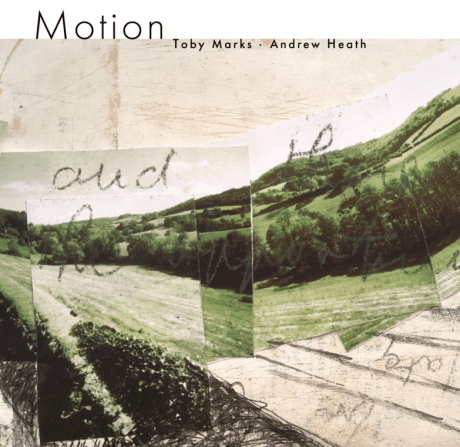
Toby Marks & Andrew Heath ‘Motion’
(Disco Gecko) 10th May 2019
The search for the gesamtkunstwerk led to Toby Marks and Andrew Heath embarking on a tour in the four cardinal directions of England and Wales to record more than one hundred hours of audio. The conjoint and condensed output is Motion.
I am first drawn to Marks and Heath’s metric structure. After the introductory and rather magnificent antiphonal chanting on the opening track For Stone (West) Parts 1-3, the reverberated guitar notes surge and swell like rolling waves. Multiple progressive rhythms surface from this repetitive phrase and others that emerge as the album advances. I am equally impressed by their capabilities as sound engineers. The stereo width is as broad as anything I have heard on Loscil’s Submers (Kranky, 2002) and is best illustrated by the breadth of frequencies played on For Stone (West) Parts 1-3: crisp piano notes immediately contrast the low rumble of background synths, the vibrations of which filter into ears nestled in headphones.
An iron horse slowly gathers pace in the second part of For Stone (West) Parts 1-3; the sound is heavy as it weighs against sleepers and tracks. Trains in ambient music always bring me back to Elvis On The Radio, Steel Guitar In My Soul from The KLF’s Chill Out album (Wax Trax!, 1991). Motion’s finale, By Fire (East) Parts 1-4, commences abruptly with the clamorous din of a whistling steam locomotive. The guitar notes that follow are water droplets falling from the boiler of an engine. The meditative modulations of the deep bass mirror the oscillations of a piston firing back and forth inside a cylinder. The screeches of wheels on the curve of a railroad are the drawn-out distortions of amplified strings.
Marks and Heath’s idea of kinesis is not just confined to the automatic. They also turn to the sounds of nature, or rather, natural phenomena. The merging of natural and man-made sounds is done so seamlessly that I am often left wondering as to which is which. Non-mechanical examples include waves lapping against a sandy shoreline on With Iron (South) Parts 1-3 and the familiar sound of buzzing bees in flight on In Air On Water (North) Parts 1-3, the latter contrasting against the hum and rattle of a single-engine aircraft.
This is a very human album. The distorted train announcer and youthful calls on By Fire (East) Parts 1-4 and the muffled laughs heard through the wall of water on For Stone (West) Parts 1-3 invoke many feelings. Small cracks appear in the field recordings which create a sense of vulnerability. The mostly major keys employed by the duo are uplifting and there are moments of blinding brightness; exempli gratia, the synth sequences and guitar tremolos on By Fire (East) Parts 1-4.
Near-perfect equilibrium is achieved on In Air On Water (North) Parts 1-3. Clear bell chimes ring around birdsong. Human voices chatter beneath the warmth of a bright ‘duet’ of piano and guitar as storm clouds gather. The most memorable moment of the album follows: pulses start to race with the deafening roar of a plane and the claps of thunder that crash around the granular and delayed decay of the background synths; the relief of rain after the storm serves as a calming coda.
It was the Greek philosopher Empedocles who first described the four ‘roots’ of earth, water, air and fire alluded to in Marks and Heath’s track titles. He considered each of the four roots to have their own nature and that diversity could be created by combining them. Science has obviously moved forward some two thousand years and rationalists like Lavoisier have helped place Empedocles’s theories in the basket of archaic curiosities. Nevertheless, Empedocles made an early attempt to explain the inner workings of a world that, at times, simply cannot be explained. Marks and Heath have also sought to explore the same inner workings and every time I listen to Motion new emergent properties arise from its natural, mechanistic and human components. In my opinion, that is their biggest triumph.
Andrew C. Kidd
Playlist: Dominic Valvona/Matt Oliver
I’ll be brief – less chat, more music please – as you want the goods, but the Quarterly Revue is our chance to pick out choice tracks to represent a three month period in the Monolith Cocktail’s output. New releases and the best of reissues plucked from the team – me, Dominic Valvona, Matt Oliver, Brian ‘Bordello’ Shea, Andrew C. Kidd and Gianluigi Marsibilio – rub shoulders in the most eclectic of playlists. The full track list is awesome, global and diverse and can be found below.
Tracklist in full:
Abdesselem Damoussi & Nour Eddine ‘Sabaato Rijal’
Bassekou Kouyate & Ngoni Ba (Ft. Abdoulaye Diabate) ‘Fanga’
Foals ‘Cafe D’Athens’
Kel Assouf ‘Tenere’
Deep Cut ‘Sharp Tongues’
Royal Trux ‘Suburban Junky Lady’
Ifriqiyya Electrique ‘Mashee Kooka’
39 Clocks ‘Psycho Beat’
The Proper Ornaments ‘Crepuscular Child’
Swazi Gold ‘Free Nelly’
Eerie Wanda ‘Magnetic Woman’
Julia Meijer ‘Fall Into Place’
Mozes And The Firstborn (Ft. PANGEA) ‘Dadcore’
Lite Storm ‘People (Let It Go Now)’
Downstroke & Gee Bag ‘Ooh My My My’
Errol Dunkley ‘Satisfaction’
Old Paradice/Confucius MC/Morriarchi ‘Sunkissed’
Black Flower ‘Future Flora’
Santiago Cordoba ‘Red’
Dexter Story (Ft. Kibrom Birhane) ‘Bila’
Houssam Gania ‘Moulay Lhacham’
Garrett N. ‘Avant’
Sir Robert Orange Peel ‘I’ve Started So I’ll Finish’
Gunter Schickert ‘Wohin’
Defari & Evidence ‘Ackknowledgement’
Eddie Russ ‘The Lope Song’
Oh No & Madlib ‘Big Whips’
CZARFACE & Ghostface ‘Mongolian Beef’
Greencryptoknight ‘Superman’
Choosey & Exile (Ft. Aloe Blacc) ‘Low Low’
Little Albert ‘Gucci Geng’
The KingDem ‘The Conversation (We Ain’t Done Yet)’
Wiki ‘Cheat Code’
Dear Euphoria ‘Push-Pull’
Tim Linghaus ‘Crossing Bornholmer (Reprise, Pt. II)’
Station 17 (Ft. Harald Grosskopf & Eberhard Kranemann) ‘…And Beyond’
Heyme ‘Noisz’
Clovvder ‘Solipsismo’
Ustad Saami ‘God Is’
Louis Jucker ‘Seagazer’
The Telescopes ‘Don’t Place Your Happiness In The Hands Of Another’
Blue House ‘Margate Jukebox’
Tempertwig ‘Apricot’
3 South & Banana ‘Magdalen Eye’
With Hidden Noise ‘The Other Korea’
Beauty Stab ‘O Eden’
Coldharbourstores ‘Something You Do Not Know’
Katie doherty & The Navigators ‘I’ll Go Out’
Mekons ‘How Many Stars?’
Graham Domain ‘Farewell Song’
Album Review: Andrew C. Kidd

Escupemetralla ‘Fe, Esperanza Y Caridad’
(Nøvak) 1st December 2018
Escupemetralla were first brought to my attention by the editor of this digital revue who received a blank CD in the post accompanied by an enigmatic message stating that it will “send Apple computers to sleep”. Fe, Esperanza Y Caridad (Faith, Hope and Charity) is revealed as the title of the album once the play button is pressed.
The words ‘faith, hope and charity’ have biblical origins; they appear in the First Epistle to the Corinthians. The cover photograph, a religious triptych containing symbols that represent the supernatural virtues of Christianity, provides further evidence to support this conjecture. The musical duo from Barcelona even remark on “Mary having given birth to Jesus parthenogenetically”* and propose that “Christ was a female”. Yet their allusion to Erich von Däniken, the author of Chariots of the Gods?†, on Petroglifo descubierto en un cálculo renal extends far beyond the theological; it is positively ontological!
According to the album notes, Fe, Esperanza Y Caridad is “to be composed, recorded and mixed by Muhammad and Muhammad” in 2025. Escupemetralla clarify this statement by describing themselves as “virtual entities that will actually exist in several years’ time”. These truly eternalistic assertions are perhaps most palpable in the second half of the album as the listener evaporates into The Orb-level realms of deep space exploration. L.A.I.K.A. features a barking dog (presumably an homage to the Soviet canine that was the first animal to orbit the Earth) as well as intermittent radio contact with cosmonaut Vladimir Komarov just prior to his Soyuz 1 module crash in the 1960s. See-sawing low rumbles and analogue noises swirl around Pop industrial artificial del Tecno Núcleo and repetitive cut-effect sequences hammer away on Gas de Nasqueron (eagle-eyed readers will recognise Nasqueron from the novel The Algebraist by Iain Banks). The murky ambient undertones, pings of active sonar, muffled lub-dubs of a beating heart, echoey radio static and near-euphoria of the synths on Albedo 7 give the impression that it is a transmission that has only been partially received.
In terms of the music, inky black marks from the industrial music sub-genre stamp appear all over the album. A 4-4, snare-heavy breakbeat rhythm drops part way through Pastelería industrial and heavily programmed bops and squelches are interrupted by demonic cockerel sound effects. Cmmrcl mss is a sonic headbutt that seeks to emulate the glass smashing and metal banging percussive high jinks of Einstürzende Neubauten and the pop track rulebook rewriting of The Commercial album by The Residents (Ralph Records, 1980). There are also a couple of recognisable samples thrown in for good measure; sporadic lines from Frankie Goes To Hollywood’s Relax can be heard on ¿Raspas mi orpón en Urano? and the metamorphosed bass-line on Paso de insecto has been borrowed from Blitzkrieg Bop by the Ramones.
Synthetic sounds are king on Fe, Esperanza Y Caridad. The driving bass sequence on Holy conception is the constant in an equation of samples that circle around metallic-sounding beeps, blips and boings. The track is anything but formulaic; Escupemetralla’s inspiration came from listening to a twenty five-minute version of Grateful Dead’s masterpiece of improvisation, Dark Star (Warner Bros, 1968). Petroglifo descubierto en un cálculo renal is Morton Subotnick reincarnate. Sporadic pan-range synth sequences float around innumerable drone sounds. The sub-bass module comes at you like a breath underwater and the lowest notes lie deeper than a depth gauge in Atlantis. Strained strings become a unified harmony at the midpoint as alarm bells ring away frantically in the background. Escupemetralla also happily experiment with their track tempos. The accelerando on Paso de Insecto pushes the polyrhythmic synths and distorted voice codec into a chaotic finale and the calando on Petroglifo descubierto en un cálculo renal opposes the low frequency oscillators that slowly phase towards a peak.
From the theological to the xenological, Fe, Esperanza Y Caridad is a ‘musical polysemy’ that draws on many influences. To draw any inferences on the deeper meaning contained within its references would be an attempt to prove ignotum per ignotius. One thing I am certain of is that I look forward to hearing it again when it is eventually recorded in the year 2025.
*parthenogenesis: from the Greek parthenos (virgin) and genesis (origin)
†von Däniken sought to explore possible extraterrestrial influences on early human civilisation
Words: Andrew C. Kidd
Tickling Our Fancy 072: Katie Doherty & The Navigators, Abdesselam Damoussi & Nour Eddine, 3 South & Banana, Günter Schickert…
February 14, 2019
Reviews Roundup: Dominic Valvona
Each month Dominic Valvona brings us the most eclectic recommendations roundups, with reviews of albums, singles and EPs from across the globe and genres.
This latest edition includes a brand new album of unsettling cosmic traverses from Krautrock and Berlin guitar legend Günter Schickert – working with Ja, Panik main man Andreas Spechtl – based around the concept of his home city’s transport system and a moth; the return of the peaceable voiced folk maiden Katie Doherty and her The Navigators pals; the debut album of Latintronica, psych, prog and Kosmische peregrinations from the Argentine artist Santiago Córdoba, ‘En Otres Lugares’; a trio of World Music showcases from the prolific ARC Music catalogue, with collections from the Vietnamese zither maestro Tri Nguyen, the co-production and musical Sufi mystical transforming partnership of Abdesselam Damoussi & Nour Eddine and traditional Thrace mythological imbued Rodopi Ensemble; the debut solo album of ‘attic noise’ from Benelux alt-rock scenester Heyme Langbroek; and the brilliant new album of sentimental dreampop from Toronto musician Charlie Berger, under his newest incarnation With Hidden Noise.
There’s also the upcoming playful psychedelic pop and tropical lilted dance around the Berlin architecture EP, Rooftop Trees, from Aurélien Bernard – under his 3 South & Banana alter ego; the latest in a line of singles from the Oxford-based Swedish angulated indie pop songstress Julia Meijer;and the profound afflatus elegiac opener, ‘When You’re Gone’, from the marital fronted Settle band Society Of The Silver Cross.
Albums
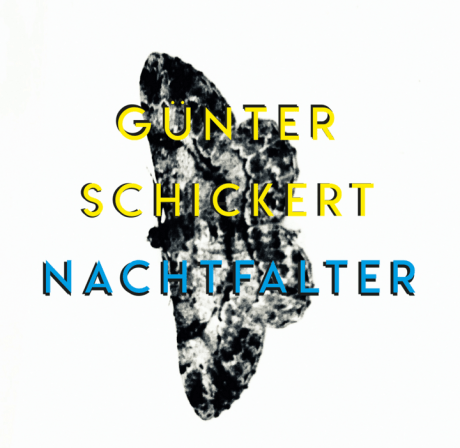
Günter Schickert ‘Nachtfalter’
(Bureau B) 15th February 2019
Notable progenitor of flanging echo-pedal guitar, free-jazz instigator of the traversing cosmic GAM, No Zen Orchestra and Arumaruma (among the least obscure succession of groups), the Berlin Krautrock legend Günter Schickert continues, like so many of his surviving WWII born and Boomer generation comrades, to circumnavigate the sonic unknown; probing for tears in the fabric, looking to penetrate new horizons.
An extension of Schickert’s previous solo flights of guitar exploration – the 1975 Brain label debut Samtvogel, and the Sky label follow-up of 1980 Überfällig – Nachtfalter features all the signature echo-y reverberations and waning searching guitar accentuations. Recorded back in the summer of 2018, in collaboration with Ja, Panik navigator Andreas Spechtl, who refashioned Schickert’s untethered live performances, adding his very own drum accompaniments and loops, this instrumental album evokes both the cosmic mysticism of Ash Ra Tempel and the more haunting, ominous deep space Kosmische of Tangerine Dream. Spechtl’s production, drum patterns and effects however, add a touch of tubular metallic sheen, futuristic tribal percussion and nuanced Techno to the otherworldly, often threatening, mood.
There are two inspirations at work on this LP; the naturalistic progress and presence, and then demise, of the moth that this album is named after (this said moth also features in the artwork) and the motion, rhythm of public transport in the city of Schickert’s birth. As the artist himself says, “I was born in Berlin and I am a true city child.” And like so many before and after, the city has left it’s indelible mark; the beat (not to be confused with the Dusseldorf birthed ‘motorik’ rhythm of Klaus Dinger) on Nachtfalter mirrors the industrious clang, rattle and cycle of Berlin’s metro and buses to an extent, though the northern European atmosphere of the city’s psychogeography attracts a more darker, eerie misaim throughout. The opening ‘Nocturnus’ (as the title might imply) is especially creepy with its Kubrick monolith pulse and unsettling conch shell horn – imagine Faust and Tangerine Dream invoking the arrival of a cosmic Viking long ship, emerging from the mists. The final all-encompassing merging of Schickert’s full gamut of guitar manipulations and strides, ‘Reflections Of The Future’, even evokes moments of John Carpenter’s synth-tracked horrors.
Despite the heart-of-darkness moods and craning instrumental eulogies to the moth that by happenstance entered the studio (clinging to the ceiling all night before dropping dead the next morning) during recordings, there are occasional bursts of energetic thumping rhythm: bordering on juddering Electro on the gliding, county bowed guitar arching and leaning ‘Wohin’ (which translates as ‘Where’: indeed where?!!). There are glimmers of light to be found amongst the darkened unknowing mystery, and far from suppressive and heavy, Schickert’s guitar roams freely, drifting, wafting and expansively has he accents the spaces before him.
An impressive cool transformation of the guitar innovator’s echoed enveloping signatures and traverses, Nachtfalter benefits enormously from Spechtl contemporary and energetic production. A dynamism and touch of modern electronica is added to the Krautrock messenger’s articulations to produce a most unsettling, interesting of musical experiences.
https://soundcloud.com/bureau-1/sets/gunter-schickert-nachtfalter/s-U0Dbo
Santiago Córdoba ‘En Otros Lugares’
(Sounds And Colours) 8th February 2019
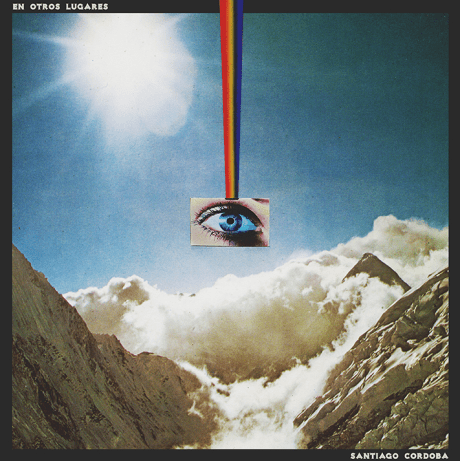
A gateway to everything worth celebrating (as much as it might also be confounding and a mystery to many) about the South American and Central American continent, the Sound And Colours hub, which includes one of the most in-depth of reference and news sites, guide books and events, has proved a rich essential source for me. Whether it’s through the site’s cultural, political and historical purview style series of accessible guides to Peru, Brazil and Colombia, or their considered catalogue of music projects, I’m kept up-to-speed and introduced to some of the continent’s most interesting artists and scenes. The latest of which is the emerging and burgeoning solo artist Santiago Córdoba, who releases his panoramic multi-city composed suite En Otros Lugares on the site’s in-house label this month.
ormerly a percussionist band member of the ‘revolutionary’ Tango outfit Violentango, the Argentine born Córdoba left his native home in 2016 for a ‘peripatetic’ life, moving from one place to the next; making a fleeting base of operations for himself in Madrid, Italy and Beirut. Backpacker travails and the sounds of each short-stay imbue this eclectic travelogue; though these often free-spirited peregrinations also stir up cosmic, magical and transcendental horizons as much as the Earthly: As the album title itself alludes, En Otros Lugares translates as “in other places” or “elsewhere”.
Both geographically and musically diverse, the opening panorama, ‘La Llamada’ (“the flamed”), traverses an amorphous Andean outback landscape, filled with ghostly echoes, arid hums and a trance backing, whilst Fuck Buttons meet School Of Seven Bells astral planning over the Amazon on the progressive psychedelic ‘A Dos Leagues’ (“two leagues”).
Post-rock influences merge with Latintronica, 2-Step, free-jazz crescendos, the Kosmische, Refree like harmonic plucks and brushed guitar, and radio transmissions tuned to poignant past figures of interest on a condor flight of fantasy and mystical voyage of thoughtful meditation.
The former Tango agitator expands his tastes and picks up a host of new instruments to fashion an impressive ambitious slow-burner of a debut album. Another brilliant South American export.
Katie Doherty & The Navigators ‘And Then’
(Steeplejack Music) 25th January 2019

Sidetracked, in a positive and inspiring way, by a detour into stage production, folk maiden Katie Doherty has probably taken a lot longer than she envisioned to release another album.
The award-winning songwriter released her debut, Bridges, to favorable reviews back in 2007 and went on to share the stage with such luminaries as Karine Polwart, the McGarrigle Sisters and Ray Davis on a giddying trajectory, before (as Doherty herself puts it) ‘life got in the way’. In that time Doherty, far from idle, took on roles as both a composer for a number of Northern Stage productions and as a MD for a Royal Shakespeare Company production. It is these roles, and ‘broadening’ of horizons that now inform Doherty, her Navigators (Shona Mooney on fiddle and vocals and Dave Gray on the button accordion melodeon) and wider backing group (which includes more chorus vocalists, a cellist, percussionist and double bassist) on the concertinaed pastoral theatrical And Then.
Three tracks specifically sound like they were plucked from the stage. And in a roundabout way they were; the peaceable air-y bellowed shanty dedication to ‘leaving a beloved city behind’ ‘Yours’ and gentle-building lulled symphony finale ‘We Burn’ were both originally commissioned by the November Club for ‘Beyond The End Of The Road’, and the enchanting picturesque scene-setting waltz ‘Heartbeat Ballroom’ was commissioned by the Wallsend Memorial Hall for the reopening of the town’s grandiose ballroom.
Marking ‘change’ in various forms and analogies Doherty’s themes encompass the change of the seasons, the life-altering change of bringing up a child in a changing society hooked-up 24 hours to, an often, poisonous internet, and the rapidly escalating changes in society as a consequence of the equality debate: Doherty, in the shape of an enervated ‘anti-apology’ framed protest, takes a dignified stance on the album’s title track, giving a more considered intensity to a R&B pop-folk backing as she reassures us that “This is not war music. This is not a fighting song.”
Such heavy important anxieties, such as the pressures of expectation (epically in our validation age of social media shaming, easy inflamed indignity and virtue signaling) and responsibility are woven into a lovely songbook, as Doherty’s lightly caressing vocals waft and dance to a mix of Celtic tradition, snow flurry landscape malady, buoyant sea motion affairs of the heart and Eastern European travails.
After years spent away from the studio, Katie Doherty emerges with a purposeful and composed reflective collection of distilled folk.
Heyme ‘Noise From The Attic’
(Jezus Factory) TBA
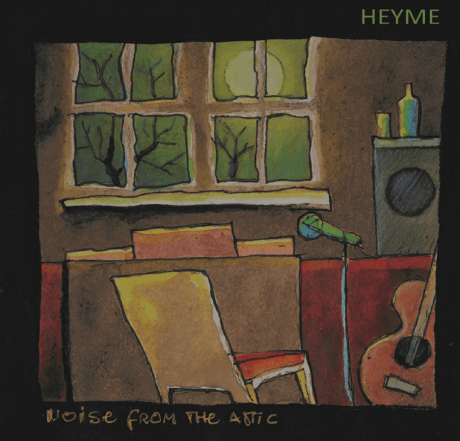
Spending much of his formative musical education in the Benelux, playing with a litany of alternative underground rock and experimental angulated Antwerp bands (Kiss My Jazz, IH8 Camera and Lionel Horowitz & His Combo), the Dutch-born musician Heyme Langbroek now sets out on a solo mission with his curious debut, and self-explanatory entitled, album Noise From The Attic.
Settling (for the last six years at least) in Poland Heyme puts all his past experiences into an understated album of songs and instrumentals created by the use of a loop station; Heyme using this unit to build a basic track which he then plays over the top of with various overlapping melodies, rhythms and improvisations. A quaint routine, Heyme’s attic noises, as the title makes clear, were all recorded in the said attic garret of his house, mostly on alternate Sundays. It might be nothing but by choosing the traditional day of liturgy worship to record his music on, it could be read as a metaphor for cathartic release; unburdening ideas, sentiments and regrets at the altarpiece of a home-recording studio.
Tethered to the past as much as moving forward experimentally, Noise From The Attic is imbued by many of the same performance recording techniques as used by the Antwerp collective of Kiss My Jazz; a group that Heyme served with alongside members from, perhaps Belgium’s most revered and recognized alt-rock group, dEUS. Heyme even reprises one of the band’s estranged songs, ‘Burn In Hell’; a woefully mooning ‘fuck you’ break-up submerged beneath a vacuum of Hawaiian rock’n’roll warbles. On the remainder of the LP he despondently wanes to a suffused template of Casio keyboard like presets, snozzled oozing Roxy Music and Hansa Studio Bowie saxophone, forlorn northern European melodies and chugging guitar. Within those perimeters the moody attic troubadour of alternative lo fi brooding pop does a Sparks, on ‘Klara’, evokes 70s era Floyd, on the mentally fatiguing ‘Paranoid’, adopts Blixa Bargeld’s tonsils and trans-European malady, on ‘Where She Goes (She Goes)’, and channels Eno’s ‘Another Green World’, on the far from discordant row, ‘Noisz’.
Showing the ‘proverbial’ Dutch courage, unloading worn, grizzled sentiments the solitary Heyme provides one of the year’s most peculiar reflective solo experiments. Fans of the solo work of the former dEUS guitar triumvirate of Rudy Trouve, Mauro Pawlowski and Craig Ward will find a fourth such inspired maverick to add to the list.
With Hidden Noise ‘Beside The Sea’
(Loss Leader Records) 18th January 2019
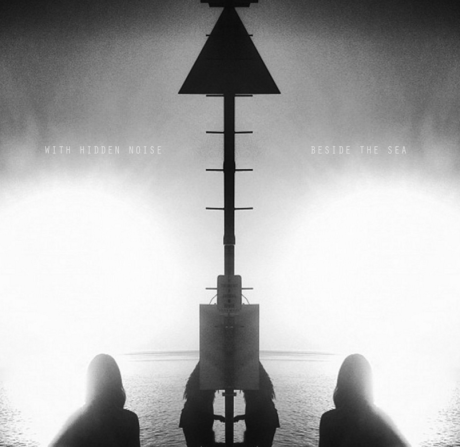
Rising with a certain languid tremble from the nocturnal wintery Canadian frontiers before dissipating back into the ether of a somnolent dreampop soundscape, Charlie Berger under the guises of his newest project, White Hidden Noise, wafts in and out of a fluxes state of pining and sighed romanticism.
Well versed in the dreampop, shoegaze and slowcore departments the Toronto musician-singer-songwriter’s diaphanous brooding album is a congruous continuation in a career that includes stints with Soft Wounds, Slowly and Tone Mirrors, and the launch of his own diy label, Loss Leader Records – of which this LP is released through. In that mode, with influences like Low (a huge influence in fact), Cigarettes After Sex and The Red House Painters lingering throughout the wistful fabric, the veiled Beside The Sea opus dreams big. Berger woos expansive heartache across the panoramas; meditating on the loss of memory to a considered purposeful backing that builds from suffused lulls to gradually built-up and swelled indie-shoegaze choruses.
The album title and gentle prompts, including the artist’s own guidance that this eight-track suite could be “moody late night driving music”, pretty much sets the listener up as to the mood, environment and sentiment. Amongst the bendy tremolo flanges and placid rhythms of the brushed cymbal and echo-y forlorn, the trio of songs, ‘The Other Korea’, ‘Close The Door’ and ‘Look’, placeably break out from their dreamy state into beautiful shoegaze-y Britpop anthems – hues of Slowdive, Gene and Sway drift around in the general absorption of influences.
It could just be me, but I can even hear a touch of early REM in the fanned-drift and soft pained harmony of ‘Further More’ and The Bends era Radiohead on the opening tenderly swooned ‘Window’ metaphor heavy plaint.
Berger’s yearned and pined ‘drive time’ soundtrack beckons the listener into a moody dreamy atmosphere of emotive outpourings; the subject of these songs remaining a lingering presence, lost, with only the traces of those memories remaining. Beside The Sea is a beautiful album – ok, some tracks do overstay their welcome – that reimagines Low as a British 80s dreampop combo.
Rodopi Ensemble ‘Thraki-Thrace-The Path Of Dionysus’
(ARC Music) 25th January 2019
Abdesselam Damoussi & Nour Eddine ‘JEDBA-Spiritual Music From Morocco’
(ARC Music) 25th January 2019
Tri Nguyen ‘The Art Of The Vietnamese Zither-Đàn Tranh’
(ARC Music) 22nd February 2019

Among the most prolific of world music and folk labels the ARC Music catalogue spans eras, genres and geography: In-depth surveys, collections and performances from the Welsh vales to Andean Mountains, from the South African veldts to Arctic Tundra. Probably sending us the most CDs of any label on a weekly basis, ARC’s diverse schedule is always worth further inspection, even if the cover art and packaging suggests the kind of CD you might pick up from a garage – filed under ethnocentric muzak. Far from it, each release is always a showcase of adroit musicianship with only the best examples of every style and tradition covered.
Usually built on the foundations of each respective artists or troupe’s heritage, these albums offer a contemporary twist on occasion: even a fusion.
Not so much randomly but just taking a trio of recent releases from the ARC stable we find three very different examples of this with the music of the atavistic recalled Thracian imbued Rodopi Ensemble, the masterful Vietnamese zither expert Tri Nguyen and Sufi-inspired advocates of Moroccan spiritual music partnership, Abdesselam Damoussi & Nour Eddine. All three commit a new energy to very old forms, and merge with influences outside their source material.
The first of this trio reverts back to the ancient moniker of what was straddling region that encompassed Southern Bulgaria, North West Turkey and the tip of Greece, Thrace; an area dominated by the 240 Km stretching mountain range behemoth that lends its name to this quintet’s ensemble, Rodopi. Steeped in Greek mythology, the Rodopi is synonymous for being the final resting place of Queen Rhodope and her husband King Haemus of Thrace; the lovers, so it is told in legend, rather unwisely offended the Gods Zeus and Hera, and were punished by being turned into the said mountain range.
Inspired by this homeland, Rodopi musically travel through Ottoman dervish, fluting Egyptian and Balkan folk on an erudite and immaculately performed collection of matrimonial, free form and scarf-waving giddy dances. Providing a swirling, but when acquired equally poised forlorn performance, the spindled spiraling lute and Kanun, heavy range of percussion (from the exotic ‘riqq’ to ‘dara-bakka’ and bendir’), swooned clarinet and weeping violin conjure up a vivid homage to a continuously changing landscape. In dual-language, songs and titles cross between Greek and Turkish; wrapped up in the obvious history of the two former dominant Empires: whether it’s in the traditional romantic flower and fauna metaphorical accompaniment of Asia Minors Greek refugees ‘Menexédes Kai Zouboulia’ (Violets And Hyacinths), or, in the tribute to the ensemble’s late clarinetist, Sol Hasan, on the improvisational ‘Roman Havasi’ (The Air Of Gypsies).
A wonderful dance of yearning remembrance and tradition, the music of Thrace is brought back to life with a touch of contemporary dynamism, flair and love.
Presenting the Vietnamese Zither, otherwise known as the sixteen-string Đàn Tranh, in a new light, ‘bi-cultural’ practitioner Tri Nguyen uses both his classical Western training and Vietnamese ancestry to delicately accentuate a collection of poetically brush-stroked scenes and moods. This congruous marriage of forms and cultures often results in moments and swells that evoke the gravitas of the opera or ballet, yet seldom drown out the light deft touches of the lead instrument.
Just as renowned for his adroit pianist articulations as he is for bringing the Đàn Tranh – a cousin of the Chinese ‘guzheng’, Japanese ‘koto’ and Korean ‘gayageum’ – to a wider international audience, Nguyen caresses a diaphanous web of descriptive quivers over classical strings and percussion on this latest showcase.
Emphasizing his native homeland and the countries that border it he mirrors the elements (the flow of a stream; the droplets of gentle rain), wildlife (the blackbird singing proudly; a galloping stoic horse) and moods (a contemplative sad refrain that ushers in a seasonal and metaphorical change; the joy of returning home after a sojourn spent away).
From lullaby to the Imperial, whether it’s a picturesque meditation or a tale from the time of China’s Three Kingdoms, the musical performances are beautifully immaculate. In truth, too classical and varnished for my taste, I have to admire the faultless musicianship.
Personally the more interesting for me of these three ARC titles is the co-production partnership of Moroccan composers Abdesselam Damoussi and Nour Eddine, who bring together a cast of authentic Sufi singers and musicians on the dynamic Jedba album showcase.
With backgrounds in everything from Hip-Hop to Jazz, Rock, Electronica, World Music and (in Eddine’s case) the Vatican’s vaults of Classical music, both musician-producers provide an exciting backing of bombastic percussion and hypnotizing rhythms to the venerable spiritual mystique of the Sufi tradition. Literally invited and transported into the studio from their impromptu performances in the famous walled marketplace of Jemaa el-Fnaa, located in the heart of Marrakech, a cast of mystics, poets and players from various tribes and disciplines gathered together for one collective exchange: The “Jedba” of the title referring to a collective dance in which people from multi faiths including Jewish, Christian and Muslim hold hands in a symbol of harmony and friendship; “united in love of the divine”.
The magic is in the fusion, as instruments as exotic and diverse as the wind equivalent of the Scottish bagpipes, the ‘ghaita’, rasps over a swanning break beat like percussion on the opening title-track, or, Arabian female tongue trills excitably warble in divine celebration over a dramatic filmic bounding accompaniment on the song-of-praise ‘Allah Hay’. Encompassing Berber desert rock, the adoring commanding vocals of Yemdah Selem (the ‘diva’ of desert music as Damoussi puts it), the solitary prayers of the bred and born Sufi and imam of a mosque in Tangiers, Said Lachhab, and giddy dance, the chants and exaltations of these Marrakech street performers is given a new dynamism and energy via the dual purpose of preservation and in beaming this entrancing mystical tradition to a new audience.
EPS
3 South & Banana ‘Rooftop Trees’
(Some Other Planet Records/Kartel) 1st March 2019
Stepping-out from the sunny-dispositional ranks of the psychedelic indie and tropical lilted London-based Cairobi – formerly, for a decade previous to the name-change in 2017, Vadoinmessico – the group’s drummer Aurélien Bernard follow’s up on his last two singles with a new EP of bright disarming soft-shoe shufflers.
The French-born but Berlin-based all rounder uses his adoptive home as inspiration, though musically the compass is pointing towards the tropical equator. The angulated skip and catchy opening track, ‘Magdalen Eye’, treats Berlin as a jump-off point; its architecture and history (where do you start?!!) echoing and reverberating in what sounds like a psychedelic dream pop with Nirvana grunge drop Ariel Pink. It also reminds me of the recent brilliance of fellow French new wavers, grunge and indie sensations Brace! Brace! The very French-esque float-y and whistle-y ‘Soleil’, sung in the native tongue, wistfully bids farewell to the long Berlin winter as the “first warmer sunny days of April” ease in.
Named after one of Bernard’s previous singles, the four-track EP includes 2018’s ‘Rooftop Trees’ and ‘Fake Jungle’ records. The first of which poses a meditation on the tensions between man-made and natural structures to a woozy psychedelic jaunt: Literally dancing to architecture, Bernard dapples the catchiest of psych and cool Gallic pop on a concrete environment. The latter, rather unbelievably, was inspired by a one-off jam session with James Brown (a throwback to Bernard’s days as a session drummer in Las Vegas), and sounds like a swimmingly Malian Syd Barrett produced by Nino Ferrer.
Light and jaunty but with a depth and sense of concern, Bernard’s oddly entitled 3 South & Banana alter-ego delivers a sumptuous cantaloupe lolloping EP of playful catchy brilliance.
Singles
Julia Meijer ‘Train Ticket’
15th March 2019

It seems almost obligatory, at least in the last decade, to affix the fatuous term of Scandi-pop to every single artist or band emerging from Sweden: whether they play guitars or programme synths. Native Swede songstress-musician Julia Meijer is no different. Even though she lives in Oxford her taciturn, slightly skewed angulated indie-pop sound falls easily into the Scandi-pop fold of classification.
With a string of singles behind her, Meijer is finding her feet; trying out new things on every one, with the only real consistency being quality and depth.
The latest, Train Ticket, is no different. A collaborative affair that features a couple of Guillemots in the ranks (Greig Stewart on drums and Fyfe Dangerfield on suffused low-ray burnished Hammond organ) and Oxford’s busiest polymath of the moment Sebastian Reynolds (Flights Of Helios, the Solo Collective, Mahajanaka project) on swallow undulated synth duties, Meijar’s musical partners construct a counterbalance between a Kate Nash fronted New Young Pony Club version of art school indie and looser, almost, quasi-Talking Heads African lilted mirage-y chorus.
Every bit as taut and tense as Meijer planned – reflecting the lyrical anxious sentiments of uncertainty, expectations and disappointments –yet bendy and supple when that same tension is lifted, the page-turning autobiographical Train Ticket proves to be yet another sophisticated slice of unsure protagonist yearned pop, and wrangled, just raw and edgy enough, indie.
Still adapting and evolving, Julia Meijer has laid down a quality series of singles thus far, all slightly different. We’ll be able to soon experience the full effect when she delivers that debut album, Always Awake, in May.
Society Of The Silver Cross ‘When You’re Gone’

Feasting out on the strength of their most afflatus (and only) single, ‘When You’re Gone’, the venerable marital-fronted Society Of The Silver Cross have built up quite a momentum and drawn some considerable weighty acclaim. Wafting on to my radar at the end of last year – included on the last Monolith Cocktail ‘choice’ playlist of 2018 – this bellowed harmonium and zither-droned esoteric profound elegy reimagines the Velvet Underground led by a lapsed-Catholic Kurt Cobain.
Achingly diaphanous despite its forlorn succinct wise cycle of lyrics (“When you’re gone, you’re gone, you’re gone. We’re only here for a while. We’re only here for a day.”), this humbled sea shanty-motion mystery was in part inspired by the band’s husband and wife protagonists’ travels across India; part of that Velvet imbued sound enacted by the Indian auto-harp, the shahi baaja.
With the spotlight drawn towards this Seattle outfit’s Joe Reineke and Karyn Gold-Reineke partnership, the Society Of The Silver Cross does also include a small but extended cast of enablers on an accompaniment that features the mellotron, accordion and host of similar evocative instruments.
Vividly dreamy in a plaintive humbled atmosphere filled with various visual references of haunting iconography, Society Of The Silver Cross’s inaugural single is a most sagacious opener; a stark but confident creation of real quality and depth that merges the underground with Gothic Americana. Brilliant.
Words: Dominic Valvona
Album Review: Words: Andrew C. Kidd

Welcoming our newest guest writer to the Monolith Cocktail fold, Andrew C. Kidd pens a most philosophical purview of the recently-released About B. collection of reworked and previously unreleased “memory sketches”, by the German-based composer Tim Linghaus.
Tim Linghaus ‘About B. (Memory Sketches B-Sides Recordings)’
(Sound In Silence) 18th January 2019
“Memory, even if you repress it, will come back at you and it will shape your life”, postulated the lauded German writer and academic W. G. Sebald in what would be his last published interview1. After listening to About B. (Memory Sketches B-Sides Recordings), I am left ruminating on Sebald’s statement highlighting the inexorable influence of memory.
Memory has been the focus of other experimental musicians. One such project that comes to mind is Everywhere at the End of Time, the bold, six-album series written by The Caretaker, a pseudonym of James Leyland Kirby, that chronicles the gradual diminution and distortion of memory in the context of Alzheimer’s disease. Unlike Kirby, Tim Linghaus does not pursue a linear narrative in his wistfully elegant collection. Instead, his 17 compositions are sketches, or rather, brief snapshots in time that seek to capture the subtle moments that occur in a life.
Although About B. (Memory Sketches B-Sides Recordings) does not follow a linear course, to suggest that Linghaus considers memory to be non-linear would be incorrect. His interpretation of the linearity of memory, or to put it simply, the idea of memory as a continuum with our self-development in present day being highly influenced by memories of the past and future memories unconsciously being shaped by past events, occurs through a series of recurring motifs. These include the distinct but detached sounds of radio static, the familiar crackle of a vinyl record spinning atop a platter and the muffled warmth of the mechanical assembly of hammers hitting piano strings as keys are pressed. He also captures the often fleeting and frustratingly fragmented aspects to memory through the periodicity of his analogue synth arpeggios and the ephemeral nature of many of the pieces (some are as short as 30 seconds).
Devoid of intelligible words (the dreamy Where Is My Girl does feature a disguised vocal harmony), I do wonder whether Linghaus has opted for the piano as an instrument to represent his ‘voice’. The warm tonality of the piano, or perhaps even temperament (in the piano tuning sense), evokes many emotions. Snow at Franz-Mehring-Platz is melancholic. Anatomy Of Our Awkward Farewell Gestures springs into a slow waltz and contradicts the other pieces around it. The piano notes on Chased By Two Idiots are long and sustained; this track engenders a feeling of darkness which is further augmented by the deep bass-sequence and the glassy drone noises.
People listening to Tim Linghaus will of course draw comparisons to the German-born British composer Max Ritcher, particularly when presented with the complex rhythmic structure on Before Berlin (About B. End Title), the legato played on Jonathan Brandis and the plaintive strings that flood over I Was Atom And Waves (Reprise, Pt. II). The shifts of tone colour on Repetitive Daydream Sequence, Pt. VI (Humboldt University Chemistry Class 1975) are very reminiscent of the American producer Oneohtrix Point Never and his Russian Mind EP (No Fun Production, 2013). The oscillated rhythms of Looking For Dad In Radio Noise (Reprise, Pt. III) and Plaenterwald are akin to the now disbanded group, Emeralds; in particular, their Does It Look Like I’m Here? LP (Editions Mego, 2010).
Of the 17 tracks on About B. (Memory Sketches B-Sides Recordings), 4 are reworked versions of compositions from a previous album. Only Linghaus will know whether he calls the memories that featured on his debut album differently. Alternatively, these recollected memories may indeed be the same, but perhaps on further introspection he felt it necessary to make alterations to the original interpretations to better record their deeper meaning. Nevertheless, memory is a thoroughly complex faculty and an extremely difficult subject to explore and document. I applaud Tim Linghaus in his attempt to preserve his memories in the form of music.
1Jaggi M. The Last Word. The Guardian [newspaper on the Internet] 2001 Dec 12 [cited 2019 February 5].

