Our Monthly Playlist selection of choice music and Choice Releases list from the last month.

We decided at the start of the year to change things a little with a reminder of not only our favourite tracks from the last month but also a list of choice albums too. This list includes both those releases we managed to feature and review on the site and those we just didn’t get the room for – time restraints and the sheer volume of submissions each month mean there are always those records that miss out on receiving a full review, and so we have added a number of these to both our playlist and releases list.
All entries in the Choice Releases list are displayed alphabetically. Meanwhile, our Monthly Playlist continues as normal with all the choice tracks from July taken either from reviews and pieces written by me – that’s Dominic Valvona – and Brian ‘Bordello’ Shea. Our resident Hip-Hop expert Matt Oliver has also put forward a smattering of crucial and highlighted tracks from the rap arena.
CHOICE RELEASES FROM THE LAST MONTH OR SO:
Alien Eyelid ‘Vinegar Hill’
(Tall Texan) Review
Darko The Super ‘Then I Turned Into A Perfect Smile’
Eamon The Destroyer ‘The Maker’s Quilt’
(Bearsuit Records) Review
Ike Goldman ‘Kiki Goldman In How I Learned To Sing For Statler And Waldorf’
The Good Ones ‘Rwanda Sings With Strings’
(Glitterbeat Records) Review
Headless Kross/Poundland ‘Split Album’
(Cruel Nature Records) Review
John Johanna ‘New Moon Pangs’
(Faith & Industry) Review
The Last Of The Lovely Days ‘No Public House Talk’
(Gare du Nord) Review
Lt. Headtrip & Steel Tipped Dove ‘Hostile Engineering’
(Fused Arrow Records) Review
Pharoah Sanders ‘Love Is Here – The Complete Paris 1975 ORTF Recordings’
(Transcendence Sounds)
SCHØØL ‘I Think My Life Has Been OK’
(GEOGRAPHIE) Review
Tom Skinner ‘Kaleidoscopic Visions’
(Brownswood/International Anthem) Review
Theravada ‘The Years We Have’
Ujif_notfound ‘Postulate’
(I Shall Sing Until My Country Is Free) Review
Visible Light ‘Songs For Eventide’
(Permaculture Media) Review
THE PLAYLIST::
Star Feminine Band ‘Mom’lo Siwaju’
A-F-R-O, Napoleon Da Legend, PULSE REACTION ‘Mr Fantastic’
Pharoah Sanders ‘Love Is Here (Part 1) (Live)’
Tom Skinner ‘Margaret Anne’
Holly Palmer & Jeff Parker ‘Metamorphosis (Capes Up!)’
Matt Bachmann ‘TIAGDTD’
Darko the Super, Andrew ‘The Bounce Back (Heaven Bound)’
Verb T, Vic Grimes ‘Anti-Stress’
Cymarshall Law, Ramson Badbonez ‘Emerald Tablet’
Datkid, Mylo Stone, BVA, Frenic ‘Poundland’
Verbz, Mr Slipz ‘What You Reckon?’
Theravada ‘Doobie’
The Expert, Buck 65 ‘What It Looks Like’
Lt Headtrip, Steel Tipped Dove ‘0 Days Since Last Accident’
Ujif Notfound ‘Postril’
Lael Neale ‘Some Bright Morning’
Alien Eyelid ‘Flys’
John Johanna ‘Justine’
Ike Goldman ‘Land Of Tomorrow’
Ananya Ashok ‘Little Voice’
Rezo ‘Nothing Else’
Howling Bells ‘Unbroken’
The Good Ones ‘Kirisitiyana Runs Around’
Jacqueline Tucci ‘Burning Out’
Dyr Faser ‘Control Of Us’
The Last Of The Lovely Days ‘Runaway’
Frog ‘SPANISH ARMANDA VAR. XV’
The Bordellos ‘The Village People In Disguise’
The Jack Rubies ‘Are We Being Recorded?’
The Beths ‘Ark Of The Covenant’
SCHOOL ‘N.S.M.L.Y.D’
Neon Kittens ‘Own Supply High’
ASSASSUN ‘The Sons Of The United Plague’
Pelts ‘Don’t Have To Look’
Visible Light ‘Purple Light’
Wayku ‘Suchiche’
Here’s the message bit we hate, but crucially need:
If you’ve enjoyed this selection, the writing, or been led down a rabbit hole into new musical terrains of aural pleasure, and if you able, then you can now show your appreciation by keeping the Monolith Cocktail afloat through the Ko-Fi donation site.
For the last 15 years both me and the MC team have featured and supported music, musicians and labels we love across genres from around the world: ones that we think you’ll want to know about. No content on the site is paid for or sponsored, and we only feature artists we have genuine respect for /love or interest in. If you enjoy our reviews (and we often write long, thoughtful ones), found a new artist you admire or if we have featured you or artists you represent and would like to say thanks or show support, than you can now buy us a coffee or donate via https://ko-fi.com/monolithcocktail
The Perusal #69: Theon Cross, Wolfgang Pérez, Sebastian Reynolds, Fortunato Durutti Marinetti…
July 7, 2025
A world of sonic/musical discoveries reviewed by Dominic Valvona
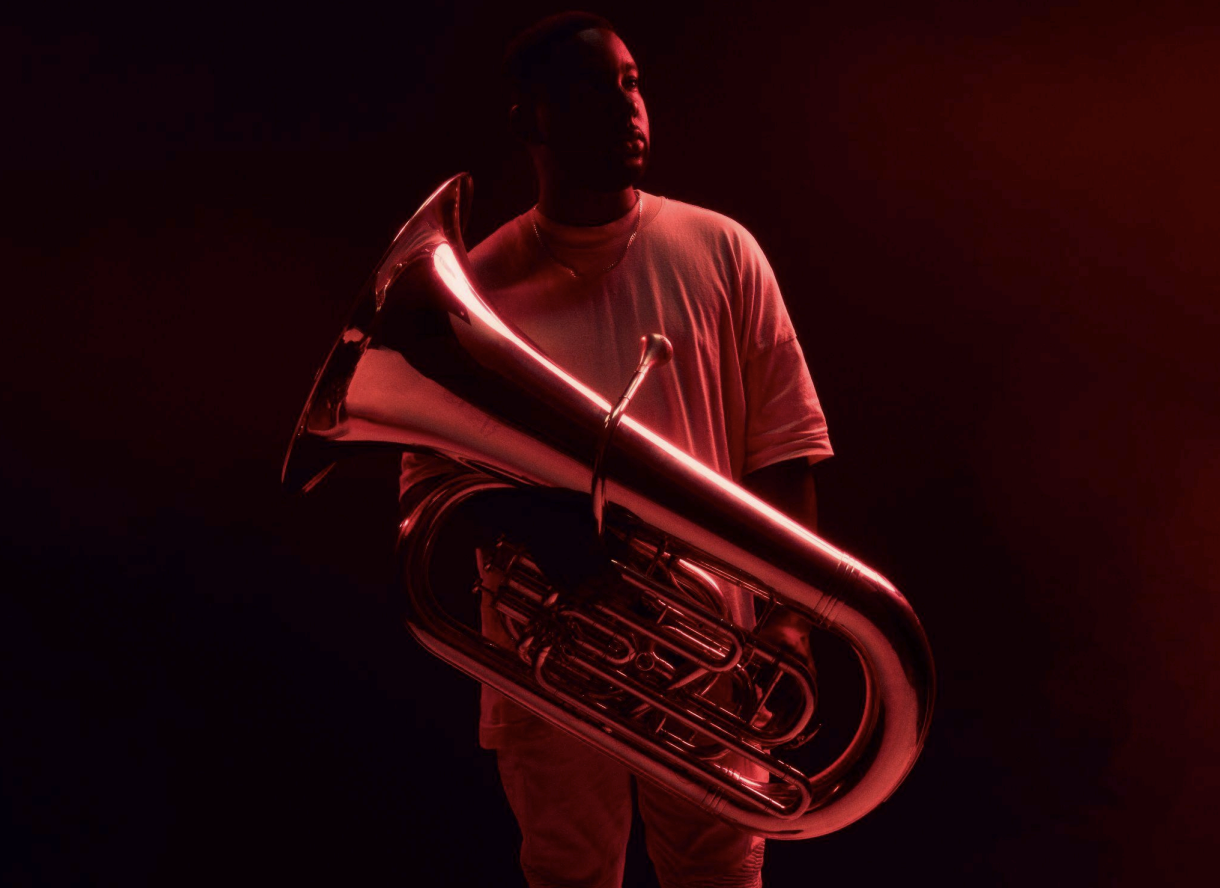
(photo by Ian Hippolyte of Theon Cross)
Lukas Cresswell-Rost ‘Weight Away’
(Wayside & Woodland Recordings) 4th July 2025
A welcome return home and a welcome return to the fold musically speaking, Lukas Cresswell-Rost is back in Yorkshire after spending the best part of the last 15 years ‘living and getting slightly lost in Berlin.’ Engaging once more with the world around and bringing back a collection of songs and pieces of music he created over the years whilst eking out a creative career in the German capital, Lukas proposes a touching reconnection, a sense of loss, of remembrance and reflection on his new songbook, Weight Away.
A tale of two cities, or two locations, a majority of the newly released material was written back in Berlin, tested at gigs there, but was completed in England with the aid of friendly musical companions James Yates (who goes under the Majetona nom de plume, and also plays with epic45, the duo formed by the co-founders of the label that not facilitates this album) on drums, Danny Laycock on both standard and fretless bass guitars, and his wife Emaline Delapaix on backing vocals.
But before we concentrate on the new album, let’s rewind to Lukas’ previous releases – or the ones I reviewed and featured on the site.
If you’ve followed the Monolith Cocktail over the years, you may well have caught my reviews of both his underappreciated Go Dream and Gone Dreamin’ releases. I praised both highly at the time, saying this about the former: ‘Travelling a well-worn highway; tuned into a radio station straight from in-between the 1970s covers of Rolling Stone, Creem and The Village Voice; accompanied by a cast of “misanthropic” characters, the former Leeds troubadour of deconstructed pop Lukas Creswell-Rost dreams up a most sophisticated songwriting opus. His relocation, five years ago, to the creative hive of Berlin has done the artist a world of good, this solid contextual collection of earnest dramas and lamentable episodes from the rock of ages, slowly but surely, unfurling its quality.’ And about the latter, Gone Dreamin’, ‘a reimagined transformation, taken off into more experimental realms, with ideas, scraps of dialogue, riffs and melodies ‘flying around’, merged with various effects and breaks, these original beautifully vaporous soft rock ballads and cruising songs are given a new lease of life.’
But now back on English soil, Lukas takes stock whilst opening up his sound. And whilst there are hints, especially on the instrumental vignettes, of his past work, the sound is a little less Fairlight 70s/80s troubadour pop, and more like a mix of soft dreamy psychedelic indie, folktronica, the classical, and a mirage-like waned version of Americana. Don’t get me wrong, there’s still the odd hint of Steely Dan, of Wings, but now also hints of a subtle The Flaming Lips, a touch of Galaxie 500 and Mike Gale on the tropical blue Hawaiian dreamt ‘Spiral Island’, which features the soft beachcomber lulls of Delapaix and may or may not be hiding far more philosophical quandaries of death and shaking one’s self out of a stupor, the blues, beneath its fantasy islet vibes. Gale popped up a lot when listening through this generous fourteen-track songbook of vocalised and instrumental pieces, lead-ins to fuller songs and momentary breaks – these short pieces range between the incipient plucks of elastic band strings to near plaintive plinks that induce a real sadness; most of them linking or bringing in the next song like the more minimal or ambient and felt congruous stirs of an intro track.
But then I also heard an inkling of the SFA and even The Beach Boys. But shifting those evocations a little, ‘More Jam Than Band’ made me think of the drifted and near dreamy country bluegrass and Americana music and scores of Myles Cochran: that and Blue Rose Code on a song of harmonic pinged atmospherics, DJ lyric analogies, the semi-classical and reflective.
Personal travails, a battle to escape a state of mentally sapping stasis, and the deaths of those close, including the suicide of a friend, breach comfort zones at every turn – good God, the bass, when not in fretless slides, on ‘The Bird Of Prey’ finale reminded me of Climate of Hunter era Scott Walker. And yet, this is a lush at times, often dreamy (as I’ve already mentioned) listen of the picturesque and emotively drawn-out. With a new set-up, an embrace of musical friends Lukas Cresswell-Rost produces a complicated album of feelings and quandaries made melodious and rich in lucidity.
Theon Cross ‘Affirmations: Live at Blue Note New York’
(New Soil) 11th July 2025
Hot footing across the Atlantic on a wave of critical acclaim tubist son of Kemet Theon Cross lands down in one of the most auspicious of jazz crucibles, the Blue Note in New York City. Off the back of a number of long and short players, and a reputation for working with some of the key trailblazers in the contemporary UK jazz movement (most notably Mosses Boyd and Nubya Garcia), Cross has ventured out on his own in recent years to much fanfare, transporting and transforming the sound of his chosen instrument to probe into ever evolving territories, but also once more putting that brassy instrument at the centre.
Although one of the most durable instruments in the jazz cannon, with a history that dates back to that style’s birth in New Orleans, the tuba has often gone in and out of fashion; disappearing from the frontlines during the electrified era or replaced by the bass (whether that’s the double or electric). Hanging on in there, the tuba was ideal for outdoor performances, its natural resonated amplified bassy notes and rumbles carrying far enough without the need for amplifiers. Through such pioneers and luminaries as Bill Barber, who lent his tuba to various Miles Davis albums, and Raymond Drapper, who was said to have beaten Miles to forming the first jazz-fusion’ ensemble in the 1960s, the tuba has been pulled back into focus, the mix and limelight. Drapper for his part was able to bridge jazz with the burgeoning psychedelic and rock scenes of that decade and take it further – a kind of Sly & The Family Stone of jazz-fusion if you like -, but also laid down markers during a previous decade with such luminaries and anointed saints of jazz as Coltrane. Interestingly, Coltrane and his highly influential Live at the Village Gate LP are mentioned in the notes for Cross’ live debut album – ‘honoured’ alongside Sonny Rollins’ Live at the Village Vanguard LP. And although it isn’t obvious, Affirmations: Live at Blue Note New York has echoes of his spirit, channelled through the saxophone of Cross’ saxophone foil, the celebrated and already established all-rounder, Chosen Few band leader and solo talent Isaiah Collier.
As a side note of a sort, early on in this performance there’s a track named ‘Transition’, which I thought might be a reference to Coltrane’s own track of the same name, recorded in 1965 but only released posthumously five years later. It is in fact just that, a ‘transition’ between pieces, a continual bridge on a performance that never really lets up, dynamically fluctuating between the tampered, incipient and full-on. The whole thing runs continuously for 80 minutes, with the odd shoutout, and simmering down and stripped interaction with the whistling and whooping but respective audience to take the action down a notch or two. In fact, Cross’ intention was to structure this live gig like a DJ set. And it does indeed sound like that, albeit on real instrumentation, with lots of grooves, breaks and plenty of bass lines played either on the tuba or the electric bass guitar.
You could say a journey is mapped out, riffing on both tracks that feature on Cross’ 2019 album Fyah, his 2021 album Intra-I (which translates as “within self”) and his single doublet of Wings/Back To Africa (the former gets a serious airing here) and improvisations that predominately featuring the versatility of the tuba – some of the most experimental pieces in the set, they feature Cross either unaccompanied holding the attention or with minimal interaction from his chosen troupe of talented foils. Solo efforts, introductions to the next group effort, they do occasionally star or put in the spotlight his highly in-demand guitarist Nikos Ziarkas. The Greek guitar virtuoso, who moved to London more than a decade ago, and co-leader of Valia Calda, settles in an evolving experimental and descriptive space between that of mirage, phaser lunar bends, the melted, looped and cosmic; evoking echoes of fusion-jazz, Afro-rock and the work of Bill Frisell and Nels Cline – although Hendrix is mentioned in his own bio, and his guitar parts here do verge on the psychedelic at times, but nothing truly bluesy and heavy. There are whole passages for Ziarkas to navigate and enrich, or to wrangle and describe, accentuate or cast off into space.
Completing this gifted assembled quartet is the brilliant Chicago drummer James Russel Sims, who splashes around, gives groove and a percussive lift to the performances. There’s a real feel of the African and even Latin in some of the tapping, bottle-like and jar hitting. Plus, what sounds like recurring shake or rattle of dried beans, rice or grass. Sims keeps momentum with bass drum kicking bounce, breaks, rolls and punctuations.
The album starts with the dry bones shake and stirred synthesized waves of the mystical and sci-fi like spiritual maelstrom ‘Greetings’, which at any one point evokes the work of Donny MacCaslin, Afrikan Sciences, The Comet Is Coming and Pharoah Sanders. From then on in, we are moved between impressive tuba performances that sound like a digeridoo or bass guitar, or chuff and sonorously register and the lowest of frequencies or quicken and pump without taking any breaths. Soulful, funky and R&B like on the finale ‘Confidence of Your Ability’ but raising the tuba like an elephant’s trunk and puffing away like a New Orleans brass band on the Afro-Futurist’s Egyptology ‘Play To Win’, the scope of influences at play is wide and deep, and yet always connective to Cross’ themes and sound: the whole group unifying their ranges and own CVs worth of past and present projects to help create the perfect ensemble piece. I’m hearing Jon Sass, Lester Bowie’s Brass Fantasy, the Soft Machine, Oren Marshall, Karl Hector & The Malcouns, Coltrane’s Ole, funk-jazz, spiritual, and Afro-futurism vibes that almost roll into hip-hop and breakbeat territories: akin to Roots jamming with Archie Shepp and Idris Ackamoor.
From ascending to transcending, the spiritual to otherworldly, the concentrated to parred down, the vibes vary on a live recording that stays consistently inter-dimensional and cosmic yet tethered to the Blue Note legacy and the iconic live showcases that shone even more anointed light upon such luminaries as Rollins and Coltrane. Above all a showcase for Cross’ inventiveness, energy and command of adroit musicianship, this recorded performance will stand as a testament to his brand of tuba fusions and contemporary jazz journeys of futurism and the universal. A lasting legacy at that, and one of the best live performances I’ve heard in a long time.
Cumsleg Borenail ‘10mg Citalopram’
(Cruel Nature Recordings) 27th June 2025
Nightmare or escapism from mental illness and desperation? AI fever dreams or hyperbolic morphing accelerators to total hallucinational evolution? The collider general of all these elements, the anonymous Cumsleg Borenail, seems to exist in-between various consciousnesses, wired in to an intravenous of 21st century tech overload, distractions, glitches in the matrix and the daily dosage of citalopram – for those who would like to know these things, citalopram is an antidepressant that belongs to the ‘selective serotonin reuptake inhibitor class’. It is used to treat major depressive disorder, obsessive compulsive disorder, panic disorder, and social phobia, but just as likely to be induced by those seeking drug comas of a less medicinal kind.
Like hits of dopamine the discombobulations on Borenail’s latest album – one arrives so quickly these days, that by the time you’ve read this it will have been followed up by at least two more releases – is constantly in a manic shift of growing, evolving industrial electronic music, breakbeat, techno, fucked-up hip-hop beats, no wave, glitch and 80s style sound clash transformations: even the “ambient” breather track is a humorous bastardisation of its own purpose, shooting off 12-gauage gunshots like beats, whilst gazing into the flames. But imagine throughout, a broken up phantasmagoric version of Merzbow, Authchere and Nocturnal Emissions – the latter of which I’m picking up a lot during the course of this thrash-electronic mind-warp that takes more cues from Coil, Populaire Mechanik, The Gruesome Twosome, Conformist and Ramuntcho Matta than it does the EDM or tech experiments of our modern age.
From the kink fattening grossness of the accompanying album artwork to snatches and riffs of dialogue and samples off the telly and from the cult film worlds, life’s general dystopian, vacuous and ridiculous noise and ambience is fed into hadron; spewing out nonsense that makes a mockery of society and its mania, its dependency on gratification and manufactured drug hits. I say that: it could just as easily be a celebration of that very nightmarish shopping list of anxiety-inducing bilge. Broken glass, various dialects and soundbites, both the stringy and pained, the supernatural and daemonic get flicked through like a cluttery rolodex of havoc and silliness.
Fabrication could be the order of the day: fabricated artist, fabricated imagery and fabricated prompted noise installations. It’s impossible to tell how and if there is indeed even a real Cumsleg Borenail behind the machine. Whatever the truth, CB makes the most insane and experimental electric-metal-break-techno-no-wave-thrash on the Internet. And you should care about that, and indeed support it.
Fortunato Durutti Marinetti ‘Bitter Sweet, Sweet Bitter’
(Quindi Records/We Are Time) 25th July 2025
With an alias borrowed from a saint, a Spanish anarchist and an infamous Italian futurist poet, disruptor, Daniele Colussi suavely carouses between the emotional quandaries and atavistic dualities of the bittersweet on his upcoming, and fourth, album. And despite those moniker references his music is anything but confrontational and revolutionary. Instead, he creates a familiar but repurposed musical songbook world that takes its inspirations from those disconsolate French singer-songwriters that would forlornly gaze across the Seine and light up a Gitane or Gauloise in philosophical reflection, and from those arch, arty broads and dames that dared to tread their own idiosyncratic musical pathways. For this is a smooth, sophisticated songbook with both Mediterranean resort and French-Canadian vibes that’s easy on the ear; effortlessly and loosely moving between the jazzy (the album’s two instrumental Theme tune vignettes bordering on both classic Blue Note and Affirmation Coltrane, but played by a cool European lounge band), soft funk, troubadour, those French and Italian mavericks of the 70s and 80s, the soulful, the Baroque, and both art-pop and Franco-pop.
Colussi perfectly counters the weary with romantic illusions, metaphors and forlorn absurdity; simultaneously pulling on the heart strings, need consolation, and yet dethatched and self-deprecating. Colussi delivers some great lines throughout. On ‘Do You Ever Think’, and in the manner of Gainsbourg, he comes out with this near sardonic: “And tell me, is that dog that’s drowning in your new painting supposed to look like me?” In the same song he changes that voice to sound almost like Lay Lady Lay era Dylan when in a more poetic mode he comes out with this, “When the hawks rush the morning doves, does that make you think of me.” The dog returns, in a different capacity, on the autobiographic allegorical Baroque-Eno ‘Call Me The Author’: “I started out as a dog/A kind of dog that refused to bark”.
Vocally and lyrically, there’s more than a resemblance to the craft of Llyod Cole, Dr Robert and Leonard Cohen. The latter isn’t so surprising to me, because even if it wasn’t intentional, Colussi recorded this album with a full band and brass section in his adopted Toronto home. And though he also has Turin roots, there is a deep Frenchified sound to this record; and of course, a French-Canadian one. So, Cohen seems a good call to make, even though he isn’t mentioned in the notes and bio. Moving away from that, and with the vocal addition of Victoria Cheong on the Chateau-pop-Rhodes-Wonder soulful and string accompanied walk through ‘Beware’, this could be a reunion between Brigitte Fontaine and Areski Belkacem, or a match-up of Gainsbourg and Little Annie: there’s also a hint of Joanne Grauer about it too.
The title and themes of this album are in part inspired by the Canadian author, poet, essayist, translator and classics professor Anne Carson and her debut book of criticism, Eros: The Bittersweet. At its heart, there is an analysis of that ancient Greek deity’s duality, the simultaneous concepts and experiences within its lore of both pleasure and pain. One of the main thread or sources for this book is Sappho, who is said to have coined the phrase, encapsulation of this duality, “glukupikron”: later translated into the “bittersweet”. Carson sees Eros as “deferred, defied, obstructed, hungry, organised around a radiant absence – eros as lack.” Make what you will of that. Colussi for his part, transfers it to a contemporary setting, and yet feels attached to nostalgia and the past.
Despite the melody, the harmony and smooth musicianship, Colussi pushes himself like never before with “chorus-less compositions swirling in 6/8 time”, and a musical accompaniment that includes the attentive airs and sweep of strings and the soft pipes of brass. The meandering palette expands to evoke signs of Sebastien Tellier, Susana Estrada, Loic Lanteine, Annette Peacock, Ricki Lee Jones, The Blow Monkeys, Bernardo Devlin, and I know this will sound odd, but a touch of Jarvis Cocker. All meet in this drama, this setting of cigarette smoking angels, wistful malady and shrugged romantic surrealism.
Things are wrapped up with the detached state of melancholic dark humour curtain call, ‘My Funeral’, with Colussi observant of his own bluesy-jazzy-Franco Jacques Brel and Brecht accompanied passing. Balancing his own scales with reminders of all those good deeds (“But remember, I held the door open for a little old lady.”), this semi-dirge of the barely trumpeted and sulking is a perfect ending to a bittersweet life of despondency and grace. What an album; the perfect one at that. A great songbook that just gets better with every single play. Colussi has produced his best work yet.
Freh Khodja ‘Ken Andi Habib’
(WEWANTSOUNDS) 4th July 2025
After various international stopovers, the vinyl reissue specialists return to North Africa, and the former French colony of Algeria with one of the most desired LPs from its diaspora, Freh Khodja’s 1975 released Ken Andi Habib showcase.
Reissued for the first ever, after fifty years that French studio recording has finally been accorded a long overture reprise – remastered and with a package that includes liner notes and context by Rabah Mezouane. Given the tip-off, as it were, by DJ Cheb Gero – the Paris-based DJ and curator is responsible for recently curating the Sweet Rebel Rai set, and for working with WEWANTSOUNDS on their Abranis LP revival a while back – Khodja’s seminal album is rightfully given its dues; a highly influential bridge between Alegria and its diaspora’s adopted European homes, the resulting fusion of cultures and influences culminating in a truly international sound that spans various continents, from North And South America to the Caribbean Islands, Arabian North Africa and Cape Verde.
But first, a little background to this story. Khodja was born in 1949 in Sidi Bel Abbès, an Algerian city famous for its markets, agriculture and industry; named after the noted Muslim noble who is buried there. It’s also a centre, of a sort, for Algeria’s highly popular Rai form of folk music. Translating as ‘opinion’, Rai originated in the Algerian city of Oran sometime in the 1920s and developed into a spirited form of protest and nationalistic pride: falling foul of the French overlords as a rallying cry against colonialism.
Although his family pushed him towards sport, the young aspiring musician quickly took to the saxophone whilst studying musical theory and composition. His obvious talents led him to France in the 1960s. Although, as Mezouane shares in his linear notes and interview with the still thriving and passionate Khodja, his move was saddled by the ‘immigrant experiences’ of working “twelve jobs, thirteen miseries”. Reuniting with his brother in Lyon, Khodja was worked as a lab technician for a period, before later returning to Paris where he enrolled at the Ecole Normale de Musique to study saxophone under the tutelage of the classical saxophonist Marcel Josse.
His first furores into the music world included membership of Les Flammes, a group of immigrant musicians mostly drawn from North Africa – actually, a number of them came from the West African island of Cape Verde. But his career went on to span arranging and composing for film, TV and theatre. He even had a few turns on screen as an ‘occasional actor’.
In 1975, backed by Les Flammes, and with the addition of the vocal harmonizing group El Salem, Khodja went into a Parisian studio to record Ken Andi Habib, a versatile set of numbers that featured horns and an electric mix of instruments, mixed vocal choruses and longed, sometimes feminine yearned harmonies and responses.
A ‘commanding performer’ with obvious stage presence and a way of not only singing but acting the lyrics and their emotional draws, Khodja swings the saxophone round to sound out caresses, the pining and soulful – not so much jazzy as Arabian-soul and R&B style. Trumpets join the brass section, and rather than evoke the North African landscapes seem to suggest both Latin America and the Tex-Mex borders as they blaze and herald like a mariachi band crossed with a Sicilian funeral procession, and a removed version of romantically alluding Stax.
There’s funk, there’s R&B, soul, moments of an electrified Rai and allusions to the homeland across a brilliant performance of reminiscing, heartache, lament and various emotional pulls. But though those Arabian roots are all present and correct, the music often spills over seamlessly into the Med, to African Brazil and into America’s deep South – the often simmered and sustained Hammond or organ that’s present on nearly every track, has more than an air of Southern gospel and soul to it. Some of it sounds like a lost soundtrack to some cult Italian or French detective movie. And there’s more than a passing resemblance to the Cape Verde sound of Funaná – an infectious quick-step of driving percussive rhythms that is played with a kitchen knife scrapping over an iron rod, christened the ‘ferro’ or ‘ferrinho’ by the islanders, and the bellowed dizzying sway and short concertinaed melodies and lead of the diatonal accordion.
A standard bearer if you like, this revitalised LP is an incredible, fun at times, and funky showcase of North African diaspora fusions. Surprises galore on an album that is just as comfortable hot-stepping soul with Rai as it is bare-footing across Caribbean sands and merging Latin America with the Med. A great album from start to finish, and worthy of not only attention but your quickly eroded cash supply. I have a feeling this one will fly.
Wolfgang Pérez ‘Só Ouço’
(Hive Mind Records) 18th July 2025
Making a return to the site after last April’s ‘Memorias Fantasmas’ short, Wolfgang Pérez is back with a brand-new album of mirage/hallucination and dreamy-realism, imbued and led by a penchant for all things Música Popular Brasileira – that post-bossa, urban pop music phenomenon that fused Brazil’s various traditional and Portuguese flavours, its poetry and fantasy with Western modern pop, jazz and rock.
As the name might indicate, with the most German of German names and most Spanish of Spanish names, Pérez’s heritage, his “casta”, is a mix of the two nationalities. Based in Essen, the industrial hub of the Ruhr, the songwriter, arranger, guitarist and artist has previously released albums that draw upon this linage: especially 2024’s Spanish language AHORA album, the follow-up to the debut Who Cares Who Cares from 2021. Within that scope of influences there’s a musical embrace of everything from pop to chamber music and jazz.
Memorias Fantasmas – facilitated by those keen folk at Hive Mind Records, who now release this latest anticipated album – drew from Pérez’s Spanish genes with a transmogrification of the beautified coos and voices, and the melodious traditional accompanied music of his family singing in church. Part memories placed in new sonic surroundings, part mirage/hallucination and “phantom” inhabited, recordings taken by his grandfather Fernando on a cheap piece of “shitty” recording equipment in a church in the historically famous Spanish city of Segoiva are rendered otherworldly and near supernatural.
Hanging onto those roots, and the phantom parts, the dreaminess, Só Ouço (“Just Listen”) brings together an extensive cast of musicians from Brazil (mainly Rio de Janeiro) to reimagine the country’s poetic, fantastical, environmental symmetry of chaos and beauty. Using the elementals of Música Popular Brasileira and its concomitant trends of Tropicália and Samba Rock and Psych, Pérez and his band of foils take a snapshot of their surroundings and moods and weave a magical, often meandering and languid, journey full of sound and sampled collage.
The results of an extended stay in Rio a few years ago (part of an 18-month residency and student exchange programme) the album and band that was assembled to deliver this dance, saunter and off-kilter dream was put together off the back of Pérez’s full-on absorption of the city and its life: So absorbed that Pérez went as far as to learn the idiosyncratic slang and the cultural nuances. There would be introductions to the city’s musical luminaries, including the former Lounge Lizard and no wave pioneer Arto Lindsay and Thiago Nassif – who the former feted, and worked with -, and study with the guidance of the celebrated Josimar Carneiro, Marcello Gonçalves and Almir Cortes masters at UFRJ/UNIRIO.
But through happenstance and chance encounter, and through various jam sessions, a band of a kind took shape with the trio of Luis Magalhães (bass), Pedro Fonte (drums) and Paulo Emmery (electric guitar). This alignment began to thrash out arrangements and ideas, leading to a gig at Audio Rebel, where they met Angelo Wolf, the owner of Wolf Estúdio and engineer for artists such as Bala Desejo, Dora Morelenbaum, Zé Ibarra, Marcos Valle, Antonio Neves and Ana Frango Elétrico. Keen on what he heard, Wolf offered them both a residency and studio time. The band was extended further to incorporate a brass and woodwind section, led by the drummer and saxophonist and arranger Antonio Neves, son of the notable and celebrated saxophonist Eduardo. Also joining this fantastical ensemble was the Rio guitarist, singer-songwriter and artist Carol Maia, who brings a reminiscent beautiful soothed voiced evocation of the 60s and 70s to the vocals.
Altogether, this troupe that assembles around the loose direction and giddy at times imagination of its instigator, maps out a spellbound, fantastical tapestry and languorous cross-traffic prism of Brazil. There’s so much to hear and unpack, from what is a highly sophisticated but organic sounding record. From picking up radio waves and signal codes from overhead choppers, as the contemporary pairing of our host and Maia invoke Joyce Moreno and Naná Vasconcelos on the opening dreamy-realist Brazilian oscillation to the near untethered, psychedelic and cosmic influences of the great Caetano Veloso on the trip-y Latin-jazz tinged, sorrowed beachcomber mirage ‘Tristeza’, there is a both vibrant and yet softly hallucinated filter to this songbook. Songs don’t just play and recall the art and beauty of such noted Brazilian pioneers and icons as Hermeto Pascoal, Som Tres, Flora Purim, Jorge Ben Sor, Tom Zé and Gal Costa, but go further in gently pushing the boundaries of the song format, reaching into pure atmospheres and a collage of passing, fleeting sounds and those emanating from memory to conjure up a sense of place, time and emotion. Church bells peal to evoke something of the country’s Catholic culture, daily saintly worship, but also something far more mysterious. But there’s the sounds of the city, the environment, all reimagined and brought in as a sort of meta layer. Instruments too, with the fluted and pan piped essence of the Amazon floating into the mix.
Some songs really go far out, especially Pérez’s venture with the already briefly mentioned Thiago Nassif, who once made my choice albums of the year list with his experimentally cool, liquid tropical no and new wave album Mente – which I described at the time as ‘A leopard skin upholstered, neon-lit sumptuous groove of the fuzzy and sauntering.’ I’m not sure exactly who’s playing or doing what, but their ‘O Mundo É Um Moinho’ collaboration is a strange pairing of Seu Jorge acoustic guitar and the reverb flapping of beating, thudded wings. Ideas, musical threads seem to almost fly off into the imagery, with dreamt vistas and city life forming a backdrop to a lightened mix of brassy, woodwind fluting, whistling accompaniment and the beautifully conveyed poetic emotional states captured moments of the artist’s absorption of Rio and Brazil. It all comes to a curtain call, with a perfect chorus finale of shimmery organ and horns-serenaded and smoked fun and dancing; the perfect bow to a most lovely and inventive album that reimagines a wealth of Brazilian influences, and yet feels refreshingly dreamy and softly adventurous.
Sebastian Reynolds ‘New Beginnings’
(PinDrop) 4th July 2025
After what seemed like an age, and after an enviable prolific string of projects, collaborations and EP releases behind him, Sebastian Reynolds finally managed to release his debut solo album, Canary, a couple of years back. The Oxford polymath -his juggled roles including that of musician, artist, producer, remixer, PR, label boss and damn fine amateur track athlete – has never really taken a pause since he first began making, remodelling, reworking and transforming both his own and a host of collaborators’ various eclectic projects over a decade ago.
But if we take, say, just for an example his work since 2017, Sebastian has helped shape two impressive volumes of electronic-chamber music with the Anglo-German Solo Collective (a trio that included the virtuoso cellist Anne Müller alongside Reynolds’ longtime foil, the violinist, electronic music star Alex Stolze, who makes several appearances on this album); crafted the multimedia Jataka texts inspired Maṇīmekhalā dance and musical scored drama with a host of collaborators, including the Neon Dance company, chorographer Pichet Klunchun and The Jongkraben Ensemble; released The Universe Remembers, Nihilism Is Pointless, Crows and the long distance running inspired Athletics EPs (a sporting passion for Reynolds, who’s a pretty decent amateur runner and contender in his own right). That’s without considering all his production and remixing duties, or his various stints in other groups; a mere smattering of which is represented on his latest collaborative project showcase, New Beginnings.
A sonic imaginative oeuvre of the dreamy, the cosmic and new age unfolds across previously unheard selected reworks and remixes; the central signatures being, the way Sebastian can transform the material, taking the listener beyond into new spaces, environments and dreamt-up visions of Southeast Asia, Arabia, and India.
From his own backyard of Oxfordshire, there’s treatments and transformations of work by the synth-indie quintet Flights of Helios (named after the Titan harbinger of the sun), the Americana-indie band The Epstein, roots, reggae and dub group Dubwiser, and the idiosyncratic Egyptian-English troupe Brickwork Lizards. The first of these actually included Sebastian within its ranks at one time. Now opening this collection, with a sound of metaphysical imbued space hymns, paeans and bliss, their own “beginnings” act as an introduction to an entrancing and danceable house-style experience that evokes traces of a softened LCD Soundsystem and Der Plan, whilst looking to cerebral fields of the celestial. Fast forward to the centre of this album, and you find a remix of Dubwiser’s Renegade Soundwave via On-U-Sound radio Clash ‘The Jackal’. Empathising not only the reverberated dub and echo chambers but its underlying menace, Sebastian goes full on Sabres of Paradise. Formed from a bond and passion for the music of The Ink Spots, the Brickwork Lizards fusion of Ottoman yore and 1920s English dancehalls joyfully bounds between shellac scratched tea dance music, the Sublime Porte and fantastical diva song of Cairo. Here though, ‘All That We Are’ (a track from their 2018 album Haneen) is converted into an essence, a wisp of mystical Istanbul as reimagined by an electro-dub DJ. A voice straight from the minaret sounds out to an hallucination of dry bean shaken percussion and continuous vibrato string. Finally, from the Oxford scene, the earnest parched yearned alt-country band The Epstein are remoulded by Sebastian into another dreamy astral vision. Their anthemic turn of emotional reassurance, ‘Make This Our Home’ (taken from their expansive Burn The Branches album of 2020; the title now playfully changed to reflect Sebastian’s involvement and touch to “drone”) maintains some of the original vocals, the echoes of a sound that absorbs early Radiohead, Fleet Foxes and the Magnetic Fields, but is given a new gravity and beauty of healing balm astral trance.
From beyond Oxford city and the county – although some of these artists have orbited it or been based there – there’s a solid representation of Irish artists working in the UK. There’s the evergreen songstress and ephemeral harpist Bróna McVittie, who’s‘Broken Like The Morning’ (taken from her 2018 album We Are Wildlife), is given an EDM thump, electro pulses and futuristic folky mystical vibrations. The London and Spain-based Donegal troubadour Michael Gallagher, aka The Mining Co., releases his take on the Christmas hit each year. His previous ‘One Year To Go’ pinecone scented yuletide number now resembles a trip-hop treated semi-psychedelic trip into environmental-trance. The duo of Colm O’Connell and Rory McDaid, otherwise known as Rezo, have released a few decent albums now. Sebastian takes ‘Molotov’ from the former Mitcheners bandmates eclectic songbook The Age of Self Help (released last year) and sculpts a menacing dubby version that has more than a touch of Meatraffle, Adrian Sherwood and the trumpeted reverberation of Horace Andy about it.
As examples of the range in scope, the various musical backgrounds and sounds the final trio of artists featured on this selection includes a Balearic drifted vision of the Kentucky-roots guitarist, composer, songwriter and producer Myles Cochran’s (with additional dreamy vocal hums, airs and yearning from the Oxford singer-songwriter and guitarist Kelly Michaeli) placeable, relented ‘If You Could See Me’; a dream-electro and metal textured percussive dance pulsated rework of the Kritters’ ‘New York’ malady to a city they no longer recognise (I’m hearing both Leftfield and The Juan Maclean); and buoyant if wafted Indian geographical mirage rework of the eclectic Will Lawton & The Alchemists’ ‘Fossils of the Mind’ (the title-track from their 2018 album). With just these three examples you have a fusion of electronic dance duo and poetry, a musician who is able to reimagine and score new vistas from bluesgrass, the Baroque, folk and the influence of John Fahey, and a group that seamlessly merges classical music, electronica, jazz, prog and folk. With sophistication and respect for the artists involved, Sebastian manages to expand horizons further, craft new directions and amplify those parts and sounds and moods he finds most interesting or creatively evocative. New Beginnings in fact are born from old material.
A welcome pause or catch-up style showcase, this collection is a great reminder of Sebastian Reynolds’ versatility and depth. He is able to transport the listener without totally losing the original’s intentions and direction, and to create a cerebral atmosphere of that you can dance to. I don’t think it will be long before we get another volume, such is the demand on his services and his prolific working methods.
Cecil Taylor/Tony Oxley ‘Flashing Spirits’
(Burning Ambulance Music) 11th July 2025
Picture a cross-Atlantic meeting of freeform avant-garde jazz luminaries, with the extemporized pairing up of the renowned American pianist Cecil Taylor and British drummer Tony Oxley, who performed a synergy of the energetically chaotic and serial on a stage in Crawley, West Sussex on the 3rd of September 1988.
As part of the adventurous Outside In Festival programme that year, these two foils entered into a barely controlled but studied, steeped with a rich experience, improvisation that slashed, thrashed, splashed, ran back and forth, up and down and across an imaginary abstract canvas. Sizzled with brassy and metallic resonance, the drum kit’s entire makeup, its apparatus, its stands entered into a dynamic off-kilter union with Taylor’s extraordinary atonal and more sporadic phrases, runs and near untethered crashes and near melodic crossings of chords and notes. For nearly forty minutes the duo’s momentum kept at a pace, never really letting up, and with most of the performance a full-on actionist concentration of pure unleashed non-musical adventure. And yet, there’s a semblance of jazz, of the classical, and above all a history of the avant-garde with a performance that rolls and pounds between the theatrical and jazz at the boundaries of experiment. There are also the tracings of a dance; those flashed spirits of the title like lightning bolts or flickered bodies on an abstract staging, jabbed at and falling, but often placed like a strike.
What led to this partnership of constantly moving and metamorphosizing piano and heightened, galloping and percussive descriptive and tumultuous drums? Well, if we take this moment, expand out and incorporate the decade, Taylor’s radical trailblazing career was hit by the loss of his longtime sideman, the alto saxophonist Jimmy Lyons, who passed away in 1986. Lyons had of course been an integral and gifted member of Taylor’s famous 60s quartet. It’s said to have come as a real blow. But Taylor, who had previously turned to teaching during furrow periods a decade earlier in the 70s, proved more prolific in the 80s, releasing a number of LPs for such labels as hatART, Soul Note, FMP and Leo Records – the latter’s founder Leo Feigin is a collaborative partner in releasing this previously ‘unknown archival’ live performance.
An improvised jazz stalwart of the British scene for decades, Oxley was in-between groups, having taken the SOH trio with saxophonist Alan Skidmore and bassist Ali Haurand to its conclusion in 1984, and just about to join Taylor in the intermittent (as it has been described elsewhere) Feel Trio with bassist William Parker (who joined in 1989) – a project that lasted until 1990. Before all that though and stretching right back to the beginning of the 1960s, Oxley was already a notable founding figure in this Island’s improvisational jazz scene; so notable that he got the gig as the in-house drummer at the UK’s foremost jazz mecca Ronnie Scot’s during one of the best periods to have been alive in London. His debut album as a bandleader, The Baptised Traveler, arrived at the end of that decade. The 70s beckoned, bringing with it new challenges and the founding of a new label imprint, Incus Records, with renowned saxophonist Evan Parker and guitarist Derek Bailey.
Taylor and Oxley only crossed paths three months before the performance on this specially retrieved recording – limited on CD to a run of 500, packaged in a heavy-duty gatefold mini-LP sleeve and printed on textural artwork by Burning Ambulance’s Founder I.A. Freeman. Which seems extraordinary and speaks volumes about their reputations and readiness to enter the moment together in front of a live audience filled with expectations. That crowd is to be fair, willing the duo on; they show not only the more respectable obligatory hand claps of bravo, but whistle too and nearly roar, caught up in the experience of witnessing such a dynamic full-on performance.
Full of experience, but hardly weathered or worn, both virtuosos adapted and responded in a split second to each other’s art. Taylor leads, if you can call it that. But only because it seems he lights the torch paper first with incipient pushes and dabs and slashes. But really there’s no telling in who leads what, as the action picks up and runs, leaps, dives, falls, tumbles and flushes through a pummelled, sieving, hoof-like gallop and wild non-rhythmic spirited traffic of drums and elbowed as well as cross handed piano. Despite all this avant-gardism and energy, neither of the percipients ever lose the thread, get lost in the excitement and uncoupled freedoms of spontaneity. There’s a real weight involved with streaks of the 1920, the 30s and 60s alongside a very removed vision of the most experimental aspects of both turn of the century classical music and Latin music. How two players can keep this up is beyond me. But there is a couple of ‘encore’ extras that seem to simmer down the action, offering up attentive and expressive bluesy and stirring conclusions. Pretty unique, being sharply focussed yet layered with so much sound and noise, and being near dissonant, this performance is somehow congruous and complete. Two performers at the height of maturity, abandoning convention and free-wiled, Flashing Spirits is an incredible document of disciplined chaos and play. I’m sure there are many comparisons to be found, but off the top of my head, it recalled Chick Corea and the A.R.C. album.
If you’ve enjoyed this selection, the writing, or been led down a rabbit hole into new musical terrains of aural pleasure, and if you can, then you can now show your appreciation by keeping the Monolith Cocktail afloat by donating via Ko-Fi.
For the last 15 years both me and the MC team have featured and supported music, musicians and labels we love across genres from around the world: ones that we think you’ll want to know about. No content on the site is paid for or sponsored, and we only feature artists we have genuine respect for /love or interest in. If you enjoy our reviews (and we often write long, thoughtful ones), found a new artist you admire or if we have featured you or artists you represent and would like to say thanks or show support, than you can now buy us a coffee or donate via https://ko-fi.com/monolithcocktail
Wayside And Woodland Recordings Ben Holton shares his latest album as The Balloonist, Dreamland, and a specially curated accompanying playlist with our Monolith Cocktail readers. Author: Ben Holton and Dominic Valvona.
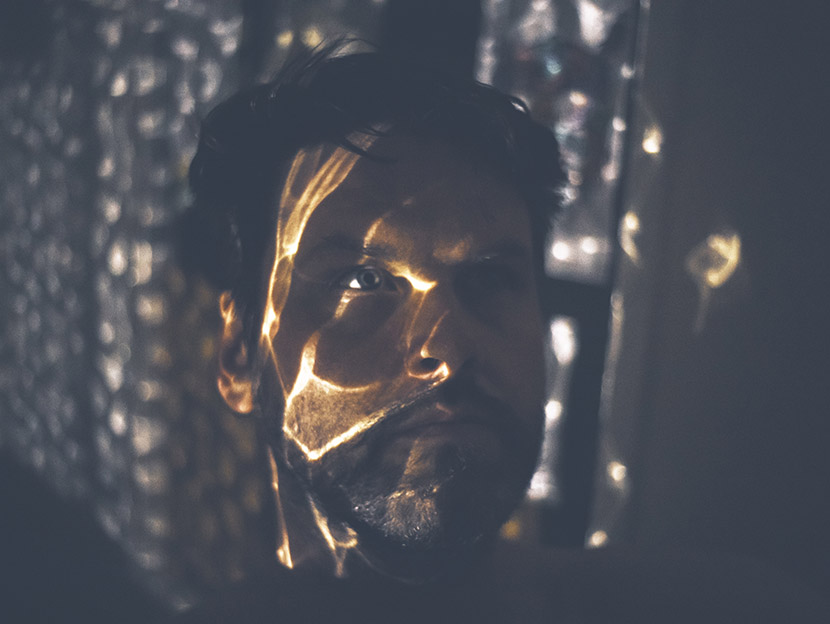
A week on from the release of Ben Holton’s latest stunning and mesmerising hazy album under The Balloonist appellation, the Monolith Cocktail is pleased to have been asked to share a specially curated accompanying playlist palette of musical and atmospheric influences chosen by the co-founder of the South Staffordshire and West Midlands based record and print platform Wayside And Woodland Recordings.
Thematically, through the delicate and gauzily floated and sparkled, Dreamland is inspired by Holton’s ‘childhood memories’ and ‘how they echo and ripple through adolescence, young adulthood and beyond.’ Retrieved and conjured up into spells of ambient ghostly resonance, the more hypnotising and hazily filtered, these visitations from the past are both magical and oblique. The Balloonist’s oeuvre of recollected memories prompted by landmarks on the environment, and the more abstract formed dreamscapes of his imagination form an understated but no less stunning, visualised soundtrack.
Holton’s Bandcamp entry offers up ‘shades of The Caretaker, July Skies, Basinski etc but also ghostly echoes of Prefab Sprout, Pet Shop Boys and other smudged 80s/early 90s sounds…’ All of which I’d concur with, but also offer a touch of the Durutti Column and Mark Hollis. Most of those inspirations, or at least congruous bedfellows, can be found in the playlist that Holton has specially compiled for the blog below.
From sisters with transistors to new age ambient composers, 80s art pop and school TV soundtracks, the journey that Holton has laid out for our readers and followers is sublime and majestic: a rich compilation of crystallised heralding, synthesised bells and tender sweeps.
I now hand you over to Ben who has written an insightful accompaniment that informs and offers a window in on his and that of The Balloonist’s processes and inspirations:
‘For this mix I’ve included music that hovers in and around the last three The Balloonist albums and, in some ways, has been feeding into my subconscious over the last 43 years. This is music I never thought, when I first started making music, would be influencing the sounds I made myself.
Specific to Dreamland, though, and the only ‘song’ featured on the playlist, we begin with ‘Wild Horses’ by Prefab Sprout. There are actually a fair few 80s pop songs I could have included here but that wasn’t quite my aim for this mix. ‘Wild Horses’ is a spectacular production, one which teeters on the edge of a dream and, at points, falls right in (maybe it’s when we hear the breathy voice of Jenny Agutter?). This is the exact kind of song I was imagining falling in and out of sleep listening to, whilst be driven around the warm summer lanes in the late 80s/early 90s. It’s all about those warm pads and chimes.
Ray Russell is an English session musician and Jazz player and it’s very likely you’ve heard some of his soundtrack and incidental music on one of the many TV shows he appears in. The album ‘Childscape’ is my particular favourite and features many glistening, chiming pieces that transport me back to childhood (as I’m guessing was at least *part* of his aim?).
More library music now, with the legendary Trevor Bastow of Bruton Music fame etc. It’s his late 80s and 90s work that fascinate me the most though. Seen by some as a little sterile (maybe?), to me, it’s the soundtrack to childhood intrigue and the subtle beauty of the every day. ‘Preservation’ is a perfect example of this.
Watching the ITV Schools programming of the 80s and early 90s, either in school on a massive telly on wheels or at home feeling ‘slightly unwell’ was an absolute delight (for some strange reason I can’t quite put my finger on!). One of my favourite bits though was the in-between segments, during which we waited for a programme to start, literally watching a chrome ITV logo slowly rotate. To aid our anticipation, were treated to Brian Bennett’s wonderfully exploratory ‘The Journey’, lulling us into a hazy daydream. Then, to snap us out of it and gently rouse us for the ‘main feature’, we’d have the cheery ‘Just A Minute’ (not included here). Both classics.
I only discovered Suzanne Ciani a couple of years ago and it may have been the cover that caught my eye. A soft-focus image of a lady in white, in front of a big mixing desk. And behind her, a couple of lovely big synthesisers in front of a nice big window. It put me in mind of a living room from the early 80s, all wood panelling and afternoon sun. The album is an absolute beauty and ‘Malibuzios’ blew me away when I first heard it. The descending synth chimes were so familiar and connected with something deep inside, something that, you’ve guessed it, whisked me back to the warmth of childhood. In particular the quiet weekdays on which I reflected on the ‘A Quiet Day’ album.
Will Ackerman is an artist I’ve only recently delved into properly, after dipping my toe into the world of his California based Windham Hil label (now sadly defunct) a little over the years. His is a sound I feel very familiar with. Not just the folk inspired acoustic guitar, a sound I grew up hearing, but the fretless bass, synth pads and crisp reverb that accompanies and enhances it. Again, it’s a sound that takes me back to my 80s childhood, listening to tapes in my parent’s car. The way folk music, such as Fairport Convention adapted to the popular pallet of times is where I can trace this familiarity back to, I think. Also, as with Suzanne Ciani, there’s the aspect of New Age music here that, as a kid, being exposed to it by my mum, kind of annoyed and infuriated me. However, those sounds stayed in my head and I’m becoming more and more open to those sounds as time goes on.
My good friend Antony Harding of July Skies introduced me to (Genesis founder member) Anthony Phillips a few years ago and I am eternally grateful to him for that. I mainly love Anthony’s home recorded ‘Private Parts and Pieces’ series that started in the late 70s. Dreamlike snapshots that can lull one into a nostalgic revery at the drop of a well-timed key change. ‘Summer Ponds and Dragonflies’ is a good example of this.
I’m not sure how I stumbled onto the work of Kuniyuki Takahashi, but it was definitely via Bandcamp. I don’t really know any of his other music other than his ‘Early Tape Works’ compilations to be honest but was captivated, totally, the first time I heard them. There’s something about the saturated warmth of these tape recordings that, especially on headphones, just completely encapsulates me. Cocoon-like. I think some of this definitely seeped into certain tracks on Dreamland.
I’ve been listening more and more to artists on the German ECM label over the past few years and Eberhard Weber is one of my favourites. Again, like the New Age music I detested as a kid, Jazz is something I’ve grown to absolutely adore, especially the stuff that borders on ambient and New Age. It’s definitely something I’m leaning into with The Balloonist. As I’m by *no means* a jazz proficient guitarist, it’s fun to pretend I am and, as a result, it pushes me into unfamiliar territory. Which is important as an artist, I think.
Staying with the ambient Jazz theme I’ve chosen another of the greatest exponents of the genre, Pat Metheny. His chord phrasing, tone and melodic sense is just magical I think.
And to end, we go back to pop music. But this time it’s a drifting, dreamlike deconstruction of ‘Everybody Wants To Rule The World’ by Tears For Fears. I heard this many moons ago on the b-sides compilation CD ‘Saturnine Martial & Lunatic’ which I’d borrowed from a friend of mine. I was enjoying the gently swaying rhythm and synth pads and then I was hit by that beautiful pirouetting guitar line. Eventually it resolved into the familiar cyclical pattern we all know and love and I realised it was some kind of meditation on the original theme of the song. I was quietly blown away. In some ways it’s the ultimate reference point for Dreamland, as it’s literally a piece of drowsy ambience with disembodied elements of pure pop threaded and weaving through it like ribbons of memory.
So, in short, with The Balloonist, I’m leaning into sounds that informed my childhood in ways that other music didn’t. The less obvious sounds. Half heard smooth radio pop, incidental TV music and 80s folk. Also, sounds that I actively *didn’t like* as a young teenager, namely Jazz and New Age which have taken on a deeper resonance and poignance over time, further opening my ears and mind to the infinite possibilities of making music.’ Ben Holton
Hi, my name is Dominic Valvona and I’m the Founder of the music/culture blog monolithcocktail.com For the last ten years both me and the MC team have featured and supported music, musicians and labels we love across genres from around the world: ones that we think you’ll want to know about. No content on the site is paid for or sponsored, and we only feature artists we have genuine respect for /love or interest in. If you enjoy our reviews (and we often write long, thoughtful ones), found a new artist you admire or if we have featured you or artists you represent and would like to say thanks or show support, than you can now buy us a coffee at https://ko-fi.com/monolithcocktail
The Perusal #65: The Young Mothers, Inturist, Nickolas Mohanna, A Journey Of Giraffes…
March 5, 2025
A World of Sonic/Musical Discoveries Reviewed by Dominic Valvona

Photo Credit: The Young Mothers shot by Malwina Witkowska
The Young Mothers ‘Better If You Let It’
(Sonic Transmissions) 21st February 2025
Those (Young) Mothers of reinvention transform crate digging reminisces and nostalgic hummed melodies from the age of the Great American Songbook on their new album, Better If You Let It.
Whilst maintaining the freeform principles and eclectic range that has come to define them; cut loose from obligation, any burden, and so free to roam and extend their scope of influences as they please, The Young Mothers return after an interregnum of setbacks, relocation and both forced and unforced breaks: some of that time can be blamed on the global inconvenience of Covid and the resulting lockdowns.
Corralling such a loose configuration of able and notable musicians and artists together is no mean feat; especially with the diversity of schedules, with every willing collaborator and band member in such high demand or leading their own projects. But all six players managed to commune in 2022; coming together to record the group’s third album in Oslo, the capital of TYM’s founding instigator and electric/acoustic bassist Ingebrigt Håker Flaten. The group was actually first conceived when Flaten moved in the opposite direction from Norway – after sojourns with such noted groups as the Norwegian Ornette Coleman imbued trio Neon – to Austin, Texas, back in 2009. Not wasting much time, Flaten’s rich Nordic legacy of contemporary jazz met head-on with the arid Southern state’s burgeoning scene of experimental and leftfield polygenesis collaboration. But after a decade or more of improvising both live and in the studio, Flaten decided to move back home: hence the location of this new album.
But there is a secondary connection to the Nordic scene and homeland through the sextet’s vibraphonist, drummer, percussionist and voice Stefan González, who’s late father, the revered Texan jazz trumpeter Dennis González, recorded an album in Oslo together with some of Norway’s most notable musicians in the early 90s: By the way, that González musical legacy also includes bassist brother Aaron; both siblings play together in various setups, most notably as Akkolyte. Stefan and the group pay tribute to Dennis’s memory, that time and location, on the sombre and mysteriously whispery track, ‘Song For A Poet’. Taking a near esoteric, near Sufi mystical and wild turn with the use of collaborating voices from Klara Weiss and Malwina Witkowska, the mood is at first chthonian, shadowy and near foreboding until the tints and bulb-like vibraphone notes of Milt Jackson and the Modern Jazz Quartet tinkle and hover, and digeridoo-like blows merge with bristled reed breaths in an amorphous dimension of feeling-it-out-jazz and exploration of abstract commemoration and recall.
I must at this point mention the rest of TYM’s lineup, which includes a name Monolith Cocktail regulars will hopefully be familiar with, Frank Rosaly. The attuned, experimental drummer extraordinaire appeared alongside his foil the multimedia performer and singer Ibelisse Guardia Ferragutti on last year’s enriching MESTIZX album – one of my favourite and choice albums of 2024. Sharing the drums with González, but also switching to electronic programming,he’s joined by the Shape of Broad Minds polymath Jawwaad Taylor on trumpet, rhymes and electronic programming, accomplished player Jason Jackson on both tenor and baritone saxophone, and Plutonium Farmer and Flaten regular sparring partner Jonathan F. Horne on guitar.
Between them, they cover everything from post-rock to freeform jazz, hardcore, hip-hop and death metal – I presume its González’s daemonic black metal-esque growling on the album finale ‘Scarlet Woman Lodge’, as he is credited in the liner notes with “voice” duties alongside drumming, percussion and vibraphone.
I think I’m right in saying that this is the first album in which all the participants share writing duties. The inspiration and source, a “whimsical” ballad, behind the opening title-track for instance, was first brought to the band by Jackson as a sort of tribute to the Great American Songbook. In turn inspired by rifling through old records from another age, this original idea, the melody, was transformed, deconstructed, reinvented and fused with the rap style rhyming of the Freestyle Fellowship, The Roots, Death Grips and Talib Kweli, the fuzz scuzz guitar of Monster Movie period Michael Karoli, the soulfulness and vibraphonic twinkle of Isiah Collier and the already referenced Modern Jazz Quartet, and the feels of old time Art Pepper, but all performed by Madlib remixing in real time Isotope 217 and Zu.
There’s a whiff still of nostalgia on the next track, ‘Hymn’, which recalls the Savoy label, the sound of Gillespie, but reconfigured by the Pan Afrikan Peoples Arkestra. As that title suggests, this is a spiritual of a kind that twangs and stirs until reaching a climatic passage of buzzing, croaking, straining saxophone pleads. ‘Lijm’ glues together elements of Q-Tip, clipping., Rahsaan Roland Kirk, Trenchmouth and Sault, with the pulse and current this time being more tuned towards the electronic: flips, mechanical devices and data sit with and underneath the action and the activist coaching.
Engaging and embracing past influences and inspirations, the eclectic ensemble pushes further in stretching the boundaries. And despite the range and scope, the many musical threads, it all comes together quite congruously to produce the perfect rounded album of nostalgic and free jazz, hip-hop, no wave, hardcore and acid rock, and electronica. A definite choice album for March and 2025.
Inturist ‘Tourism’
(Incompetence Records) 14th March 2025
Engaging at the best of times with a wealth of regional cultural/musical/sonic influences and passions, the producer, musician, former Glintshaker instigator and multidisciplinary artist Evgeny Gorbunov continues to transform his various exiled travails and more pleasing creative pilgrimages into magical, playful and odd adventures under the Soviet era borrowed Inturist guise: itself a reference to the sole Soviet era tour operator and travel agency for foreign visitors to the country before the fall of the Berlin Wall.
Sparked by an interest for Southwest Asia and North Africa, Gorbunov’s latest travelogue is a curiosity of mirages, bendy sun-bleached guitar, elastic and rubbery pliable plastic and tubular rhythms, morphed Salyut space programme soundboards, library music oddities and psychedelic primitivism. More attuned to the abstract and both vapoured and hallucinatory transformations of his travels beyond the Russian homeland to the Balkans and Israel than the geopolitical crisis of our times, the worldly sonic traveller finds a balance between the strange and bejewelled. An entire voyage of aural discovery awaits like an escape from the destructive carnage unfolding in real time, with Gorbunov caught between both the Russian invasion of Ukraine and Israel’s fight with Hamas.
Originally in forced exile, having left Russia as it menaced and then set in motion one of the most cruelling and horrifying conflicts of the age, Gorbunov moved to Belgrade, the capital of Serbia – a country fraught with its own history of war and the cracking down in recent times of civil liberties and a free media. However, there would be journeys made further afield, including the city of Tel Aviv (Trump take note, there is already a Middle Eastern Rivera of a kind, and this is it), where he recorded and produced some of the tracks on this fifteen-track travel guide. Luckily not on the frontline of the murderous Hamas insurgency that led to an ever-widening revenge of score-settling by Israel (they’ve been very busy, clearing up a lot of the mess for the West in the process; fighting on at least four different fronts; weakening Iran’s grip and influence; and eradicating much of that empire’s proxies in the bargain), the very last Tel Aviv studio session in 2023 took place on the fatalistic date of October 7th . But this is an album of intriguing, idiosyncratic peculiarities; of sound invention and engagement with a landscape both imagined and real.
Moving seamlessly across that map, influences from the avant-garde, kosmische, psychedelic, ethnic, new age, trance, otherworldly, tropical and no wave cross paths to form a novel retro-futuristic and transmogrified vision of exotic and folkloric ethnography and etymology. As part of that cosmopolitan project, there’s references to the Russian dance and driving-horses harness of “Troika” to the French dialect phrase for “winter landscape” “Paysage d’Hiver”. The former, and opener, is said to include a dance that mimics the prancing of horses puled by a sled or carriage. Musically there’s little to reference this, as the bandy ripping effects of lightly torn felt, the lunar effects of a Soviet era sci-fi movie and padded rhythms amorphous conjure up a movement and direction of a kind. The latter sure has some vague dull sun sparkle of light sharply hitting the wintery scape as a loose spring and twangy Charlie Megira guitar flicks over another cosmonaut lunar spell of retro-space sounds.
The Soviet underground meets Überfällig era Gunther Schickert and Finis Africae on the huffed and mewing voiced, valve opening effects twiddling ‘Special Offer’; and there’s something Malaysian, albeit very removed, sounding on the fluted, piped and tubular blown ‘Reminder’. But if you were looking to get a hold on the overall sound, which changes constantly as it vaguely picks up percussive and rhythmic, folksy and traditional hints of Afro-Brazil, the Balkans and Asia, then imagine Populäre Mechanik booking a surreal tour of those regions with Ramuntcho Matta, Gene Sikora, Sun City Girls, Ganesh Anandan, Moebius & Plank and Aksak Maboul in tow.
A great approach to sound collage and the transference of special held scenes, memories – especially those that offer nostalgia for the cold war period optimism of Soviet technology and the space programme – and trippy dreams, the Tourism album envisions oscillated, melting, animated and cult flights of fantasy that repurpose the terrain and topography. In short: one of my favourite albums of 2025.
Gregory Uhlmann, Josh Johnson, Sam Wilkes ‘Uhlmann Johnson Wilkes’
(International Anthem) 14th March 2025
Hot-housed in various creative incubators both in Chicago and L.A., the triumvirate gathering of guitarist, composer and producer Gregory Uhlmann, saxophonist, composer, multi-instrumentalist and award-winning producer Josh Johnson and bassist, arranger, composer and producer Sam Wilkes can all draw upon a wealth of experience and influences from the jazz world and beyond.
Crossing paths on numerous occasions – only last October both Uhlmann and Johnson appeared on fellow International Anthem artist Anna Butterss’ Mighty Vertebrate album –, all three exceptional musicians and artists congruously join together for an extraordinary attuned, sensitive and improvisational project that fuses the electroacoustic with a removed vision of chamber jazz, Americana and the experimental.
As a most tantalising prospect, this trio was conceived and set in motion by a couple of live shows – you’ll hear the polite but encouraging audience on the first two tracks – and a session at Uhlmann’s pad in L.A. And from that, a near organic growth of both attentive and stirring moods and ideas prompted an evocative language of harmonics, carefully placed twitches and plucks, sustained serenity, moving melodious hallucinations, strained misty breathes, subtle ambient and trance-y beds and wisps, vapours of synthesized effects, and plastique and pad pattered tubular rhythms.
With references to a brand of especially creamy and luxuriously textural toothpaste, the Armenian name for “sunshine” and a Mexican turnip, an international and abstract world of motivations is transduced into a mood music of the dreamy, introspective, soulful, ebbing and amorphous. From landscape gazing with Daniel Vickers, Myles Cochran and 90s David Sylvian (‘Unsure’) to floating in a warbling dreamy alien mirage (‘Shwa’), the performances, interactions effortlessly convey images, emotions as they both daintily and like a vapour of steam seem to drift or chirp along in an almost shapeless form.
In keeping with a theme of introspection, of the loner seeking a moment away from the onslaught of noise and distraction, the trio have chosen to loosely cover McCartney’s wistful break away from the idiosyncratic surreal, music hall and madcap rambunctiousness of the Magical Mystery Tour coach trip, ‘The Fool On The Hill’. It’s a lovely gesture; an indulgent mizzle and long exhaled alto sax breath of hazy and watery trickling finery that blends echoes of healing balm Alice Coltrane and Kamasi Washington with an ambient tremulous and beautiful haze. They’ve pretty much kept the signature melody but stretched it out and dispensed with the whistled flute and felt capped folksy magic for something more in the spiritual mode. A lovely finish to a sympathetically attentive and masterfully felt album that balances the unhurried with the prompted, playful and abstract.
A Journey Of Giraffes ‘Emperor Deco’
(Somewherecold Records) 7th March 2025
I’m taking it personal now. For after years and years of trying to sell the adroit, visionary ambient, neoclassical, electronic works of John Lane, and showcasing the American’s prolific catalogue of explorative opuses, he remains largely ignored: cast out on the fringes. Not that I give a shit about validation, but it would be nice if bandcamp at least wrote a feature, or that his work was played across the airwaves internationally and more regularly.
I’ve championed the unassuming composer since the very start, going back to the very inception of this blog fifteen years ago. From the early days of experimentation and the beachcomber bedroom transformations of Pet Sounds under the Expo guise to his various projects under the A Journey Of Giraffes moniker, I’ve pretty much covered everything John has ever transmitted. And after all this time, I find it bewildering that his music hasn’t managed to cut through.
Arguably John’s most enduring partnership in recent years has been with the North American label Somewherecold Records, who’ve released around eight of his albums, including this concomitant partner to 2023’s Empress Nouveau. There’s been other releases in between, but planned at the time, and now seeing fruition, is his masculine answer to that feminine album’s subtle and decorative qualities, Emperor Deco.
A change musically as he balances the tactile and the refined crafted filigree of that previous conceptual work, the curves and softer lines of Art Nouveau are now replaced by the geometric crystals, the harder light catching shapes and lines of Art Deco – there’s even a reference, title-wise, to famous the Bohemia makers/manufacturers of crystal Art Deco-styled glassware “Karl Palda”. Playing with those era defining art movements, in a literal and metaphorical sense but symbolically too, John now emphasis the noirish and bluesy, the brooding and remunerative.
For Nouveau, arriving during the Belle Epoque of a golden age that soon crumbled during the onset of World War I, its applied softened ideals and art is identified by John as feminine. Whilst Deco is synonymous with the roaring 20s: the feelgood period that despite everything was soon caught up in the Great Depression and then the rise of European Fascism. And this art form, from the design of products to architecture, is defined as masculine by John. Both now converge to form a whole.
Still very much in the ambient field of exploration. And still showing signs of the subtle craft and influence of John’s musical guru Susumu Yokoto. The mood music now embraces a soft layer of smoky, wafted, cuddled, strained, blown, accentuated saxophone and carefully placed synthesized drumbeats and rhythms: of a kind. For John has essentially created a removed version of a jazz album; something more akin to Alfa Mist or Jacek Doroszenko transforming the essence of Pharoah Sanders, Sam Gendel (both are referenced in the accompanying notes), Petter Eldh and Archie Shepp.
You could suggest there was also a “spiritual jazz” vogue to the sound, especially with the shake of trinkets, the amorphous echoes of bells and percussion that could be from the Far East, Tibet and North Africa, and of course the spindled sounds that could have been caressed and woven by Alice Coltrane or Laraaji. And that’s without mentioning the jazzy bulb-like electric piano notes and, what could be, the vibraphone, which has more than an echo of the Modern Jazz Quartet about it.
Add to this noirish, spiritual jazzy feel another subtle layer of Jon Hassell fourth world musics and a resonance of Nyman, Glass, Finis Africae and Sylvain and the perimeters are further expanded, his range growing ever more expansive. We can also hear the odd memory recall from those seashells collecting Brian Wilson-like Expo experiments of old, which when mixed with the jazz elements makes for a winning combination.
John inhabits this space at times like a mizzle, a gauze, effortlessly absorbing references, sounds and moods as he languidly and beautifully captures his concerns, moods and offerings of escapism from the full-on assault of the daily grind. There’s depth, a touch of sadness, but for the most part this is like a mirage or dream that repurposes the sound of jazz.
After last year’s long form Retro Porter (one of my choice albums of 2024) John’s deco-imbued, romantic and smoky album returns to the shorter track format with a generous offering of twenty-two musical pieces, experiences and evocations that never drag, seem indulgent or test the patience: You could say John has found the perfect length of time in which to express himself on an album in which each track is perfectly realised and executed; existing both as a singular moment, passage of time, and yet also forming part of a one whole experience of repeating signatures. This could (should) be the album that finally cements John’s reputation as one of the most imaginative and prolific artists working in this, or these, fields of compositional experimentation.
Nour Symon ‘I am calm and angry • e’
(Magnetic Ambiances) 7th March 2025
Nour Symon’s orchestrated and instigated reification of angst, rage and activism speaks just as much about the present decade’s movement against authoritarianism, the State commodification of education and health, and the erosion of civil rights as it does about this work’s main inspiration, the “Printemps érable” protests of 2012.
You could say that the expressions, the sonic and orchestral devices, the use of voices and poetry, of manifesto and barricade rattling are all just as prescient in the aftermath of the pandemic as they were thirteen years ago when a groundswell of support grew up around demonstrations against the proposed doubling of tuition fees in the province: increasingly expanding the remit, widening the disgruntlement, everyone from labour unions to environmentalists, leftists and marginalised groups ended up supporting a growing resentment, the ranks of which numbered around 250,000 at its peak.
Despite various setbacks – the lockdowns had a knock-on effect for this project, forcing an abandonment of the original plan to work with the Montérégie Youth Symphony Orchestra – the Egyptian-Quebec composer transforms the energy and directs an abstract despair into an avant-garde electroacoustic and experimental voiced theatre of the absurd, dramatic, expressionist and pained. In many ways a cross-generational grief and pull of despair, political activism and action, this album’s notable contemporary poet collaborator Roxanne Desjardin draws upon the 1980s and 1990s countercultural writings of the iconic Quebec poets Denis Vanier and Josée Yvon.
Ambitious and covering a multitude of disciplines from visual and text art (a graphic score was conceived to communicate the concept) to performance, orchestral transmogrification, opera and video, I am calm and angry • e uses a host of renowned, prize nominated poets, soloist musicians and ensembles; far too many to mention in detail here, but all integral to conveying the very real emotional maelstrom and rage of protest. Across six tracks, divided liberally into the Supermusique Ensemble and Collective Ad Lib groupings, mewling, contorting, accented, untethered, enunciated and experimental theatre-like voices circle and ride the contours, rises and quirks of a fusion between the classical avant-garde, experimental arts, Musique concrète, and, of all things, a removed version of freeform jazz.
Recognisable instruments from the wind, strings and brass sections join together with artistic impressionistic symbolism, percussion and electronic elements to evoke forebode, the unearthly, dramatic, mooning, unbalanced and abstract. Reference points within that overlapping sphere of influences and musical threads/connections includes (to these ears anyway) Charlie Morrow, Stockhausen, Cage, György Ligeti, Xenakis, the Art Ensemble of Chicago, Don Cherry and on the heralded, whip-cracked and concertinaed collective agonised ‘I will die in a closed room’, a strange fusion of Alex North and The Drift era Scott Walker.
Unbalanced with the ground constantly shifting below, the tumultuous and agitated are invoked and revoked in a musical experiment of plummets, falls and rises. A mix of French, amorphous and descriptive languages is adopted in a successful attempt to merge the poetic arts with protest, manifesto and performance, whilst physically stimulating the emotions and trauma of such protest.
Nickolas Mohanna ‘Speakers Rotations’
(AKP Recordings) 7th March 2025
A study in time, of impermanence, this uninterrupted continuous work from the New York based artist/composer emits miraged rippling vibrations across amorphous futurist Americana panoramas; stirs up the presence of alien craft overhead; and cloaks mysterious voices and sounds in an ever-changing sonic reverberation and feedback of instrument transmogrification and effected loops and field recordings.
As each track merges into the next, this adroit and evocative survey of a concept both atonally and rhythmically conjures new worlds of fourth world music, the kosmische and shadowy. Mohanna breaths futuristic sci-fi propeller-like zip-lines and long drawn air into the trombone, evokes the guitar drones and hanging astral mind-scaping and astral mysticism of Ash Ra Tempel, and plucks and pulls subtly in a resonating echo the tines of some hidden stringy apparatus. Grand gestures of a kind are made as the visionary scope of fogged and gauzy inner and outer space manifestations sits on a liminal border between the Cosmic Jokers, Daniel Lanois, Faust, Chuck Johnson, the Droneroom and Bill Orcutt.
I’ve now sat through this album over three times, and fully appreciate its skills in evoking not just the hypnotic but the near ominous, and for the way it seems to seamlessly keep changing the mood and the stay intriguing.
Ships of many kinds prowl the metallic fissures and beds of guitar sustain, and the doomish rumbles of the leviathan elements resemble the Lynchian and Bernard Szajner’s alternative score for Dune. And as one sound, one wave dissipates into the ether, or is left behind a weather front, something even more curious, sometimes beautiful, emerges: the brassy saloon bar-like chiming, trembling and spindled piano that starts to take hold in the last part of ‘Hollow In The Rock’ and continues into the finale, ‘Past Light Cone’, reminded me of the heavenly Laraaji.
This is AKP Recordings inaugural release of 2025, and it is of the highest quality. An improvisational soundtrack that vaguely shapes imaginative terrains and textures via the art of speaker rotation, manipulation and the use of the electronic and tactile, this album merges the interplanetary looming hovers of UFOs and sound generators with the cerebral and mystical: the voices, if that is indeed what they are, equally evoking throat-singers and something more hermitic and paranormal. I’d happily recommend this album to anyone wishing to immerse themselves for three quarters of an hour and will be highlighting it as one of my choice picks from the month.
he didnt ‘Distraction Threshold’
(drone alone productions) 14th March 2025
After a sideways venture under the newly conceived guise of i4M2 last year, the mysteriously kept secret Oxfordshire-based electronic musician, guitarist and producer returns under his main he didnt moniker; a project he’s honed over the last few years and across several albums of granular gradients, frazzled fissures, currents and thick set walls of drones.
Creating a certain gravitas that demands more from the listener, his latest album of concreted contours, ripples, movements and metallurgical sonics opens with a fifteen-minute statement of noisy concentrated filaments and machine-made purrs and propellers. Not so much industrial as a longform immersion of drones and cryptic soundscaping, there’s elements of hallowed organ from the church of the Tangerine Dream and early Kluster meeting with the sustained guitar waves of The Spacemen 3 and The Telescopes.
An ominous rippling effect of sci-fi conjures up a frozen tundra ghost world on the album’s title-track. Carrying over that troubling set of propellers from an overhead alien presence or supernatural dimension, the mood is chilling. ‘I Realise Now How It Is Connected To My Youth’ is even darker and menacing; like Jóhann Jóhannsson’s soundtrack for Mandy sharing room on the ghost ship’s bow with Coil and Svartsin. Harrowing images of supernatural psychogeography are dredged up from the recall of the artist’s past on a troubled doom mission.
A little different sonic wise, ‘Luminescent Medium’ brings in a slow deadened drum and a semblance of repurposed dreamy synth-pop. A singular reverberated and echoed hit is all that is needed to change the mood here, as the Cocteau Twins meet the BoC, Cities Aviv and the Aphex Twin in a fizzled arena of helicopter-like rotor blades, Matthewdavid-like real and unreal transmogrified field recordings and broadcasts, and a most out-of-place gallop of horses. It is as hallucinogenic as it is churningly moody and serious.
Distraction Threshold is very much slow music for the masses hooked up to their devices, unable to concentrate for more than a nanosecond let alone make any sort of deep connection or form a relationship with the sounds emanating from their tinny speakers. The aural equivalent of finding profound prophecy and divination from entrails or seaweed, this heavy meta gloomed and movable pull of uncertainty, trauma and metal machine chills focuses the mind with answers and questions to our present and past disturbed natures, as it builds or prompts deeply felt and evoked images and moods. he didnt continues to mine for drone-inspired gold on yet another successful atmospheric work of both the abstract and vivid.
Sporaterra ‘Seven Dances To Embrace The Hollow’
(Präsens Editionen / La Becque Editions) 14th March 2025
Multimedia spheres of sound and performance art, of theatre, of sonics and various forms of music merge on this latest fully realised album from the Italian-Polish duo Sporaterra. Convening under this guise since 2019, artists Magda Drozd and Nicola Genovese roam the catacombs, the psychogeography, the halls and lands of a reimagined Europe and beyond to conceptualise a dream realism of mystery, invocation and intelligent aural archaeology. They uncover and then transform their curiosities and inquiry into something both hermetic and disturbing; old ghosts retrieved from across time, going back as far as the primal, through to ancient Rome, the Renaissance and Baroque époques.
The time-travelling Seven Dances To Embrace The Hollow album unveils itself over seven suites of Mummers parades, Dante imbued evocations, hauntings, mystical disturbing bestial gargles and snarls, and fairytale. Under that Sporaterra entitled partnership – a name that translates as “above the ground” –, the two artists inhabit some strange timelines as they dance to both the heralded and otherworldly manifestations of frame drummed and foggy sonorous cornu accompanied procession and arcane ritual (think Dub Chieftain and Sharron Kraus), the crystal cut dulcimer and glassy bulbs twinkled evocations of Southeast Asia (Park Jiha), the suffused and swaddled atmospheric sax tones of Colin Stetson and Donny McCaslin, and the stirrings of These New Puritans, Italian prog and Sproatly Smith.
Whether it’s the fate of the scaffold, reverberations from the coliseum, Medieval merriment, monastic choral drama, and vocal mewling and mooning, there’s signs of some esoteric presence to be felt throughout. Old lives and movements, actions conjured from beneath are brought to the surface, with the recognisable made anew and slightly estranged. In short: an electroacoustic sonic archaeological dig into the phantom layers of the conceptual, intuitive and imaginative.
Hi, my name is Dominic Valvona and I’m the Founder of the music/culture blog monolithcocktail.com For the last ten years I’ve featured and supported music, musicians and labels we love across genres from around the world that we think you’ll want to know about. No content on the site is paid for or sponsored and we only feature artists we have genuine respect for /love. If you enjoy our reviews (and we often write long, thoughtful ones), found a new artist you admire or if we have featured you or artists you represent and would like to buy us a coffee at https://ko-fi.com/monolithcocktail to say cheers for spreading the word, then that would be much appreciated.
The Perusal #64: Marshall Allen, Trupa Trupa, Helen Ganya
February 10, 2025
A WORLD OF SONIC/MUSICAL DISCOVERIES REVIEWED BY DOMINIC VALVONA

PHOTO CREDIT: AYANA WILDGOOSE
Marshall Allen ‘New Dawn’
(Week-End Records) 14th February 2025
It’s timely and says a lot about the intentions and feel, the mood music, that the debut-led album by the centenary-celebrating alto saxophonist, flutist, oboist, piccolo player and Electric Wind Instrument synthesist Marshall Allen is set to be released on Valentine’s Day. Having led the late Saturn cultural ambassador Sun Ra’s Arkestra since 1995, and before that, been a creative foil to the celestial and Afro-jazz futurist progenitor since meeting in the late 1950s, Allen bathes in the sentimental romanticism of his former teacher’s vision with a love letter to the cosmos.
It’s staggering to believe that Allen has only just, in his hundredth year, been invited to record his inaugural bannered album. Sure, Allen’s name is synonymous with that of Sun Ra’s, but since serving his time in the army overseas in France, where the action was at, during the 1940s, and then taking up the alto sax and studying in Paris, he hung out with such notable talent as Art Simmons and James Moody, and been side man to such luminaries as Terry Adams and Paul Bley, featuring on untold recordings or in concert. And so, there’s a sizable catalogue to explore.
But this must be a record, perhaps the oldest musician to ever achieve this unbelievable milestone of releasing your first solo-headed LP when reaching such an age. I’m not even sure how he has the energy, nor more importantly the breath. This is itself an astounding achievement. Not to mention that with over seventy years of experience the sagacious freeform, improvising and adventurous player-artist is still pushing – if at a more sedated and leisurely pace – and learning; still experimenting, or at least switching things up.
And yet, near spritely at a hundred as he ushers in a “new dawn”, Allen emits universal love and celestial spiritualism, whilst also flexing and bristling with Earthlier Chicago smokestack skyline, Latin and Big Band jazz of another era.
He’s backed in this endeavour by a group of fellow Sun Ra acolytates and other worthy musicians of the idiom and beyond, many of which have served on the Arkestra, or at least orbited that space age swinging cosmology of the interplanetary and Egyptology. That roll call includes a name that many Monolith Cocktail readers may recognize, Knoel Scott, who invited Allen to appear on his 2023 album, Celestial, and featured on the site with a glowing review. Made for the Night Dreamer project-label, that debut Scott studio performance was a perfect example of the Sun Ra ethos and legacy. Reed specialist, bandleader and composer Scott initially auditioned for the Arkestra troupe back in 1979. He’s joined by fellow Ra members, at one time or other, Michael Ray and Cecil Brooks on trumpet, guitarist Bruce Edwards on guitar and George Gray on drums. Rounding out the ensemble is Ornette Coleman side man – principally the thumb slapping bassist in the Science Fiction legends Prime Time 80s project -, soloist and leader in his own right, Jamaaladeen Tacuma.
Outside that key unit, there’s a host of facilitators and well-wishers taking part, plus an appearance by Neneh Cherry, who proves to have found her voice as a jazz singer on the purposefully romantic and spiritual Benny Goodman-esque inter-war ballad style title-track. Cherry’s voice melodiously flows like a cross-between Anita O’ Day and Nancy Wilson and shows a real talent for this sort of courting sentiment. The guitar, which apes at one point the sound of a piano, harks back to the age of Django Reinhardt and Wes Montgomery, whilst the trumpet is a cornet-style that Miles and Don would have recognised back during their apprenticeships in the early 1950s. Edwards’ nimble guitar playing is exceptionally detailed but free, with bursts of incredible skill that evokes the blues, Latin-American, the Southern Pacific archipelagos and the lunar – those cosmic nibbled looms, bends and arcs that set a space age scene alongside beeped communicating satellites and sputniks, the stars and rings of Saturn.
The album opens with the introductory ‘Prologue’ short, which features a part Oriental/ part heavenly celestial harp in the style of Alice Coltrane, Ashby and Alina Bzhezhinska, but builds towards an accelerated oscillated take-off into astral realms. We are then introduced to the serenading warm soft anointed tones of ‘African Sunset’, which marries an essence, a reverberation of Afro-Latin influences to melodious touches of Stitt, Paul Desmond and Joe Pass and hot breeze drives along sunset-bathed coastlines evoked scores from US cinema in the 60s and early 70s. Almost comforting at times, Allen’s sax is gentle and pleasing: his sax almost hovers in places, whilst, what I think is a piccolo, mimics starry lunar dust caught in the slowly waking sun rays of a new age and day.
‘Are You Ready’ has the legacy of both Chicago and New York running through it, with suggestions of early Chess Records blues, Sun Ra’s big band origins, Bernstein, Cab Calloway and the burgeoning skyscraper sets of Dos Pasos put to music by Coleman, Albert Ayler and the Jazz Messengers. Great guitar licks and mimicking again as Edwards manages to deftly conjure up a sound that resembles the marimba. ‘Sonny’s Dance’ however, is more in the freeform or at least fusion style of bristled reeds, registered breathes through the mouthpiece and pipes ala Rivers and Braxton, and harder squalls and shorter squawks. Tacuma provides a moving and sliding, near funky bass, whilst drummer Gray conjures-up percussive and cymbal shimmered mirages.
Lalo Schifrin San Fran and Spanish Harlem is twinned with Africa on the soulful ‘Boma’, a track or version of which, I believe, appeared on the Allen “directed” Arkestra live album Babylon. Here it sounds like Hugh Masekela and Cymande sauntering to simmering percussion, hand drummed rhythms and soulful Afro-jazz vibes. And as a couplet of Sun Ra imbued material, the dawn awakened album closes on ‘Angels And Demons At Play’, a version of which, credited to Allen and double-bassist Ronnie Boykins from 1960, appears on the collected studio performances gathered together for 1965 LP of the same name, released under the Sun Ra and his Myth Science Arkestra. In this space, at this time, it has a certain dub-like twilight quality and lunar loop of blown tubes and funk grooves but remains in a subtle orbit around the spiritual and loving.
At what should ordinarily be the very twilight of an artist’s career and trajectory, is just the first steps on Marshall Allen’s new dawn pathway. His debut fronted album is imbued by a rich legacy that opens its heart to kindness, tenderness and the serenaded but also offers passages and dances of more electrifying freeform expression that sound instantly fresh and prompted by his gifted ensemble of inter-generational players. Here’s to the next one hundred years of the Marshall Allen spirit.
Trupa Trupa ‘Mourners EP’
(Glitterbeat Records) 21st February 2025
The urgency, abrasive and energy of punk and post-punk is matched by Eastern European intelligentsia, dream-realism psychedelia and erudite literary influences once more as the Polish underground outfit of Trupa Trupa continue to build on their growing reputation as one of the continent’s leading bands of recent years.
Not to keep on repeating myself, after reviewing and sharing countless posts about the recently parred down trio, but the sound they produce, broadcast and fill the space with is an intense and cerebral psychodrama of dream revelation, the hypnotic and propelled, and a succinct expressive art and psychedelia locked-in conjuncture of history and wiry Gdańsk industrialism. This is all underpinned by the poetically lyrical, atmospherically charged events, legacy and activism both personal and collective that continues to shape their city and greater homeland. For their city famously faces out into the Baltic seas as a vital and important centre of trade and industry, whilst also being coveted militarily for its strategic positioning by various competing empires over the millennium. In a perpetual tug-of-war for dominion with its Prussian, then German neighbours, Gdańsk became a sort of geopolitical bargaining chip. The city and much of its surrounding atelier of villages were turned into the Free City state of Danzig after WWI, partly as a compromised result of the Versailles Treaty in 1919. Under Nazi German control two decades later, it acted as a transportation point to the death camps for the city’s Jewish community. But even in eventual defeat, Nazi Germany’s grip was only replaced by that of Soviet Russia, who extinguished or at least tried in every way to oppress a nationalistic identity – of course, Imperial Russia, stretching back to Catherine the Great, had already invaded and occupied Poland on numerous occasions, or, when Poland was either united with or itself absorbed against its will into Commonwealths and empires, usually at odds with its neighbour.
An integral inspiration, and hence why they find it difficult to gain traction in their own country, is the country’s links to the Holocaust with its numerous concentration camps, and its active role amongst a minority of the population to aid the Nazi regime. Fuelled in recent times by Polish nationalism of a more hostile kind, there has been a concerted effort to, literally, pave over that history. With Russia’s invasion of the Ukraine and Donald Tusk’s victory in recent elections that wave of right wing rhetoric has been headed off to a degree: Poland now looking more and more likely the next frontline and NATO bulwark against Putin’s destructive push westwards into the heart of Europe; in my opinion, the plan being to reinstate or rather sculpt from barbarity and death a new version of the Warsaw Pact, and to bring down another Iron Curtain.
Trupa Trupa’s music, filled with a psychogeorgaphy, travails and activism, goes further than just sonically encompassing the past and present. Band member and spokesman of a kind, and my first port-of-call and pen pal of a sort, Grzegorz Kwiatkowski is not only a musician but a published poet/writer, academic and local activist. Feeding into all these roles, Grzegorz has managed to successfully petition the authorities of his home city to mark Gdańsk’s former Jewish ghetto with a special memorial plaque. Housed as it was in the Old Red Mouse Granary on Granary Island in the city, this stain on the city’s reputation was eventually bombed by the Allies in 1945. The grandson of a concentration camp survivor himself, Grzegorz campaigned with others towards building a permanent link, reminder to a mostly “forgotten” part of the Polish city’s history.
He’s also helped to uncover half a million shoes left to decay near the infamous Stutthof concentration camp. In a secluded, marshy, and wooded area 34 km east of the city of Gdańsk in the territory of the German-annexed Free City of Danzig, this camp was originally used to imprison Polish leaders and the intelligentsia and was the first such camp constructed outside Germany itself: the last to be liberated by the allies. Roughly 65,000 poor souls died there, either through murder, starvation, epidemics, extreme labour conditions, brutal and forced evacuations, or lack of medical attention. A third of that number were Jews. Many were also deported from that heinous crime scene to other death camps (estimated to be 25,000). Grzegorz has fought to have it preserved and recognised officially as a site of memory, which at this point in geopolitical turmoil, with antisemitism at record levels not only in Europe but across the world, and the increasingly depressing divisive nature of politics and activism in the X/Twitter/tiktok sphere, is needed more than ever.
A man in-demand, Grzegorz has been invited by several institutions to lead workshops, complete a residency or lecture: from Harvard and Oxford to an artist’s residency spot at Yale. The latter is an incredible opportunity, and furthers his poetic and musician roles, tying them together with his chosen speciality in amplifying the voices and testimonies of Holocaust survivors. Combing research and archival accounts from the University’s famous Fortunoff Video Archive, Grzegorz will fashion new poems and bring in his foils from Trupa Trupa to create new art. The results will be exhibited both at Yale and in his home city.
Away from the academic, although inseparable from the Trupa Trupa cause, 2025 marks a new and second chapter for the group after settling into a trio. Joining Grzegorz on joint-vocals, guitar and lyrics is drummer Tomasz Pawluczuk and co-vocalist and bassist Wojciech Juchniewicz.
Off the back of critically acclaimed and applauded albums for Sub Pop and Glitterbeat Records (the latter a much better home for the band) and with a burgeoning reputation live, Trupa Trupa have gained a lot of momentum and traction, championed (most importantly) by me and Iggy Pop. Festival appearances are growing alongside a trio of sessions now for 6Music.
It’s with this positive acceleration of fortunes in mind that the trio have managed to fall under the favour of the much in-demand British producer, composer and engineer Nick Launey – he of Nick Cave and the Bad Seeds, Anna Calvi, BRMC, the Yeah Yeah Yeahs and Arcade Fire fame, and before that, at the centre of the UK’s post-punk explosion in the late 70s and early 80s (you name it, he was there, whether it was PiL, Gang of Four, the Killing Joke or The Slits). You can hear a lot of those bands and reference points on this latest release, the Mourners EP. Balancing the taut with the loose, elegiac poignancy and remembrance with the grinded, the repressed with confrontation, and darkly lit gravitational pull of the chthonian, the underworld with the illusions of a dream world in which Syd Barret fronted The Pop Group, they pull off a post-punk-psych-poetic dare of the psychedelic and industrial.
Mourners in metaphorical and real terms, the EP kicks off with the lead single of 2024, ‘Sister Ray’. Borrowing both that title and a lo fi hardliner rock ‘n roll, bordering on post-punk, spirit from the Velvet Underground the band’s echoey repeated “A line of idols, to the horizon” is beefed-up with a broody dose of snarled trebly bass and a shot of growled throbbing sinewy knotted impetus. The stripped-down, determined, and raw trio channel The Killing Joke, The Fall, Elastica, Banshees, Archie Bronson Outfit and Wire (especially the band’s Colin Newman and his solo work) on this slab of surreal attitude.
The opening is followed by ‘Looking For’, which is a post-punk and baggy cross between Renegade Soundwave, XTC, the Banshees and Von Südenfed. Searching disaffection to a sharp cymbal invert, minimalist filtered megaphone lyrics and slinking broody groove, the trio seem to occupy a relaxed yet ruffled liminal border. ‘No More’ meanwhile, bounds in with barracking drums and a slow guzzled, trebly bassline and chimed guitar; the vocals between the gothic and narrated, a story of Orpheus, absence and the death of a close friend, taken far too young in a landscape so evocative it materializes from the speakers into your living space. Could be The Gun Club and Colin Newman (I’m thinking of his A-Z album especially) working up a vivid momentum of remembrance with Brian Reitzell. The words are prompted, or use, Grzegorz’s Decree and Combustion poems to mine the sorrow, the grind of mourning those dearly departed souls and the loss, the absence (once more) of common bonds and friendship in a cruel, unforgiving landscape.
Once more referencing the underworld, the Magazine, Fugazi, Gang of Four vortex growled, and punk-spiked ‘Backward Water’ features an accelerated Eastern European vision of Mark E Smith. There are dips into more hallucinated breaks as the action seems to counter the raucous attitude and energy with more spaced-out and far out lunar and cosmic drifts into the abyss.
The title-track switches things up with a change of style and pace. Sounding like an imaginative filtered and wildly shirked and called-out dream in which we are all pulled through the mirror into a world in which the Tom Tom Club, Carlos Alomar and Phoenix meet the Phantom Band, Archie Bronson Outfit and Syd Barrett, the trio translates American and French no wave funk and psych into an idiosyncratic dream-realism of laidback but prescient keening.
Mourning songs and elegiac poignancy run through the grind, abrasive and changeable attitude of post-punk and punk, whilst opening-up to ever more evocative chapters of disturbing history in a poetic form as the band continue to embody the subjects, politics and geography they both inhabit and rile against. Below the surface illusions lies disturbing chapters with a gravitational pull towards the underworld and tragedy. And yet, a light of a kind can be found, and the barricades thrown up against the forces of disruption and violence. Trupa Trupa have an intelligence sadly lacking in most music these days, and an angle that offers something new and different – namely that Gdansk legacy, the wounded traumas of past and present wars and genocide, but also the political disturbances of recent times in the region. Post-punk/punk, call it what you will, has seldom offered anything so important and erudite, expressive or worthy, nor mined such an important history, which is why this trio are vital. This EP will only further cement that appeal as their star continues to rise.
Various ‘Wagadu Grooves Vol. 2: The Hypnotic Sound Of Camera 1991 – 2014’
(Hot Mule) 14th February 2025
Continuing to dig into that back catalogue of, and to shed light on a rarely told story, the second compilation from the Paris label Hot Mule goes further in unfolding the backstory and “hypnotic” sounds of Gaye Mody Camara’s iconic Franco-African label; a story that encompasses, primarily, the West African Soninke diaspora and their legacy. The entrepreneur turned label honcho and umbrella for those artists both from the mainland French migrant community and from across swathes of what was the atavistic kingdom of the Soninke ethnic groups’ Wagadu, Camara, through various means and links, helped create a whole industry of music production in Paris during the 80s, 90s and the new millennium.
Gaye Mody Camara, who lends his name to the successful label he set up in the French capital during the later 70s, built up his own little business empires amongst the diaspora communities that left West Africa.
The story of his ascendance on the music scene is laid out in the liner notes of the first volume, and far too lengthy to outline here in full. But during the course of his stewardship Gaye would rub shoulders with various iconic figures (such as the internationally renowned Guinean musician and producer Bonkana Maïga and owner of the Syllart Records label and the main distributor of tapes at the time, Ibrahima Sylla) on the scene as he moved between originally buying releases from others to resale in his own chain of establishments to producing and setting up his own cassette tape production facilities.
In-house and a label in its own right, the Camara imprint broke new Soninke acts and artists from across a wide range of West African countries. And as you will hear, fanned a four-decade period of innovation and trends whilst still maintaining the essential essence and roots of tradition: Each and every one of the artists represented on this collection has a story to tell about how they were discovered or how they came to Gaye’s attention; from the migrant housing centre to hearsay, the word-of-mouth and the gentlemen who insisted that Gaye listen to his wife’s cassette tape recordings and take charge of her career.
Volume 2 in this saga showcase moves the timeline slightly, covering recordings made between 1991 and 2014, and homes in on the fusion cultures and music of the Wassoulou, a both historic and cultural region centred around the porous borders of Mali, the Ivory Coast and Guinea. Records of this vague allied society of villages set between the Niger and Sankarnni rivers are scant, but it was said to have been relatively decentralised and egalitarian. That was until much later, during the late 19th century, when the Malinka Muslim cleric and military strategist Samori Ture overthrow the previous state to create a Muslim Wassolou Empire.
But when referring to this region’s music, Wassoulou is said to be a root of the “sogoninkun” tradition of masquerade, a performance of fast tempo rhythms and singing accompanied by the “djembe” and large cylindrical dundun drums. This masked dance is centred around and named after the “the little antelope head”. It forms one of the various strands, the musical and traditional styles, the harvest dances of this compilation, which are then picked up and merged with the contemporary buzz of French housing developments to produce a hybrid.
The Wassoulou style is also a popular form of music performed predominantly by women, backed by, traditionally, the fiddle-like “soku”, djembe, “kamalen n’goni” (a six-string harp of a kind, but in this case the prefix means “youth” or “harp of a new generation”), the metal tube percussive “karinyarn” and four-stringed harp “bolon”. Empathetic and passionate in a call-and-response style, the music deals with recurring themes of childbearing, fertility and polygamy. In recent times modernity has added MIDI instrumentation, synths and autotune effects.
I am in no way an expert, and have only a cursory grasp of this style, but I think examples on this collection include Doussou Bagayoko’s light and pretty pop MIDI pre-set groove ‘Taman’, Bande Koné ‘s highly autotuned wobbled and spindled Afro-reggae pop lilted bounce ‘Togo’, Aïchata Sidibé’s smoky sax and desert blues guitar styled noir pop ‘La Vie Est Si Belle’, and Adja Soumano’s marimba bobbled and Fatoumata Diawara-esque ‘Dja Dja’. Taken from various cassettes and CDs, spread throughout the label’s cannon, this little assembled quartet of divas and expressive singers features the talented scion of legendary Mali singer Nahawa Doumbia and guitarist Nrgou Bagayoko, Doussou, who first came to notice when taking part in singing talent contests at a young age, going on to debut with the Sinabar album and then 2014’s Dayele, from which I believe this track is taken. She famously mixes the French Antillean originated style of “zouk” with that of the Wassoulou region.
You can find examples of the Caribbean-flavoured zouk elsewhere on the collection. A fast tempo percussive driven rhythm accompanied by loud horns, made famous and said have been pioneered in the early 1980s by Kassav’, this fusion of West Indies and African influences seems to be woven, with a lilted thread, into the very ease and sway of the MIDI brass and whistly fluted sauntered Havana evoked ‘Faalé Mokoba’ track by Abdoulaye Brévété – cast somewhere, to these ears anyway, between Fania and the Buena Vista Social Club. But you can also hear something decidedly Latin American on Djelikeba Soumano’s ‘Tougharanke’, which seems to pitch the idea of both Fela Kuti and Gilberto Gil in a summery masquerade of both mating calls and more volatile expressive pains.
Elsewhere, there’s star turns from Lassana Tamoura, with the kora spun and buoyant dipped tuning drummed and MIDI effected ‘Lassana Boubou N’kana Ké Kiye’, and Souley Kanté, with his Afro-pop 80s, Fairlight CMI Afro-pop ditty ‘Bi Magni’.
But every track is a revelation, with a music that bumps, bobs and, most essentially, grooves along to the electronic sounds of the urban and modern. Another successful dive into the Camera catalogue by Hot Mule and friends, who move the spotlight this time around, introducing us to unfamiliar fusions, dances and voices from the Wassoulou diaspora.
Helen Ganya ‘Share Your Care’
(Bella Union) 7th February 2025
Marking an embrace of her heritage after being previously put off by worries of fetishised Orientalism, the Scottish-Thai songwriter and artist Helen Ganya’s latest album is fully imbued by her Southeast Asian roots. Although rather tragically stressed and prompted by the death of her last remaining Thai grandparent, Ganya hurried to gather and record the family tree’s memories, conversations before absence and remembrance dissipated into the “ether”.
Share Your Care is however a record that wrestles dreamily, achingly and beautifully with a sense of both detachment and belonging; with the last physical trace to that heritage gone, recollection and recall is all that remains. In missing that connection, both empirically and emotionally, the Brighton-based artist feels adrift, caught between cultures. And so, she sets out on a musical journey in which family ties, rituals and cultural observations are married to an authentic and contemporary soundboard of Thai music and Western pop. It’s a refreshing take, because at least the artist’s ancestry is legit. And in making and producing this album alongside co-producer foil Rob Flynn, Ganya has brought in the trio of Thai musicians Artit Phonron, who plays the boat-shaped, cord suspended twenty-two wooden bars mallet struck ranat ek, the silky two-stringed bowed saw duang and hammered dulcimer-like khim, Chinnathip Poollap, who plays the traditional “pi” style Thai oboe, and Anglo-Thai artist John ‘Rittipo’ Moore, who performs on both the flute and saxophone.
Altogether, Viparet Piengsuwan, Omuma Singsiri, Chaweewan Dumnern and classical, traditional Thai music is melded into both an uplifting, colourful oasis and more poignant near plaintive hunger of new wave, art and synth pop. A radiant vision of sayonara-kissed blossoms, dreamily sailing on the South China Seas, and plaintive misty-eyed Mekong River-set balladry unmistakable oriental signatures are coupled with evocations of St. Vincent, Eerie Wanda, Weyes Blood and Dengue Fever. The lushly fanned and spindled pop reincarnation riffed ‘Fortune’ could be a meeting of Altered Images and Reflektor era Arcade Fire, with Ganya, vocally, channelling a more harmonic and melodious Yoko Ono – for some reason, this reminds me of Lennon’s Walls And Bridges LP too. The ‘Myna’ finale features the British-Nigerian producer and singer Tony Njoku standing in, as it were, for Ganya’s late grandfather on a sort of duet; his sympathetic soulful earthy baritone in this case reminding me a little of Murray Lightburn of The Dears. A good fit, Njoku has explored and grappled with similar themes of cultural disconnection, and conjures up the right, sensitive presence here; a reminder of “conversations left too late” and of absence.
‘Morlam Plearn (Luk Khrueng Surprise)’ takes a different turn, evoking a range of both mystical Arabian and Southeast Asian landscapes and sounding like a fusion of Thonghaud Faited, The Cure and The Banshees.
Bringing to life a rich heritage, excerpts or brief tape-recorded passages of memory, of walks and time spent in Thailand and Singapore respectively, are slotted in-between the album’s songs and sonic evoked geographical compass points: everything from Buddhist temples to the street and traffic bustle of the city and fauna. And despite being labelled and outsider of a kind, even by her own family (the only Thai language song on the album, the psych-coloured playful ‘Barn Nork’ is dedicated to this identity struggle), her attachment to those roots is both lifting and magical; a neon signed cherished embrace that turns grief, moments of sorrow and feelings of dislocation into a musical photo album, scrap book of captured touching memories as pretty as they are emotionally charged.
3 South & Banana ‘Tempérance’
(Some Other Planet/Symphonic Distribution) 14th February 2025
Receptors tuned to the fleeting, the poetic wistful observance of love, painting moods and sentiment with such peaceable dreaminess, Aurélien Bernard once more lightly bounces along to a laissez-faire backbeat of bouncy, relaxed snapped and little rolled drums, quasi-80s new wave/art-pop guitar, and swimmingly synths under the 3 South & Banana moniker. And now, on this latest album, Tempérance, you can add a sophisticated, snuggled and romantic saxophone to that musical makeup: a sax sound that’s reminiscent of the easy-going and 80s tuxedo donned music of such Japanese icons as Yukihiro Takahashi, and of the later indie-child, and highly influential, Shintaru Sakamoto.
Both of those inspirations can be heard throughout this Tarot card inspired album of eased poignancy, and dreampop psychedelic indie; that and an air of Nino Ferrer and Jaques Dutronic on the Franco-Japanese sparkle cruise along Akira Inoue’s freeway ‘Rear View Mirror’. And if you can imagine it, the flange-guitar and snozzled sax drifted, imaginatively described landscape of ‘Kinship’ sounds like a meeting between Gainsbourg and Barrett. The closer ‘Fugue’, which could either be a reference to the musical term or the loss of one’s identity, is an instrumental with more than a hint of Roedelius and Eno about it: a lovely – time signature wise – changeable, enchanted and clean synthesiser sound that takes turns to flow and bobble.
‘Blueberry Night’ seems somehow innocent, describing a muse in impressionist and unworldly terms. But musically it could, with its theremin-like aria and touching acoustic feels and nice naivety could be Donovan fronting Pet Sounds era Beach Boys. The purely instrumental break or deliberate breather before continuing further along this journey, ‘Six Eight’ (which might be just a reference to the song’s time signature) could be a neo-pop Animal Collective re-imaging a similar instrumental passage from that same Beach Boys LP.
Released on Valentines Day, this love album of playfulness (a date bonding with a romantical partner over ‘Mario Cart’) and more wistfully plaintive sightseeing ruminations of paradise (the Brazilian set ‘Lights of Minas Gerais’) uses the 14th (most usually) symbolic, divination guidance card from the Tarot deck to imbue a relaxed songbook of musing on the ideas of balance, reflection and connection.
The (again, usually) androgynous angel like figure of Tempérance pouring water from one cup, or water carrying implement, into the next, can be interpreted in many ways depending on who you seek out and ask. As one of the three “virtues” in the pack, most can agree that it signifies strength and justice. Famous British scholarly mystic and poet Arthur Edward Waite opined that it could also, after much research, represent economy, moderation, frugality, management and accommodation. And when reversed, multiple things to do with churches, religion, sects, the priesthood, but also disunion, unfortunate combinations and compelling interests.
The opening track, ‘The Fool The World’, which has musical echoes of Orange Juice, Peter Bjorn and John and Air, riffs lyrically on a reading, namechecking other iconic figures and omens from the Tarot deck. And yet, the symbolism is less hermetic and more whimsical: more a beautifully penned balance of sweet moments and call for some kind of guidance.
The easy-going nature of this album might well hide or disarm more despondent airs of melancholy and wantonness; the emotional turmoil smoothed over by the prettiness of the melodies and perfect subtle production, but there’s a sweet hint of wooing lovelorn hunger and disconsolation on this charming pop album. 3 South & Banana will grow on you with each listen, and soon become one of your favourite albums of the year.
Jupiter & Okwess ‘Ekoya’
(Airfono) 7th February 2025
In what turned out to be a blessing, the latest, and fourth, album from the electrifying Congolese band Jupiter & Okwess was conceived during one of the insufferable lockdowns of 2020. Stuck in Mexico during a tour of South and Central America, with time on their hands, the group and their lively instigator/bandleader Jean-Pierre ‘Jupiter’ Bakondji breathed in and embraced the local Latin American culture and sounds as they waited for the green light to return back to the Democratic Republic of Congo’s capital of Kinshasa; making a note to return when the time was right to record a polyglot album infused by the two continents. That time came a little later under the recording stewardship of Camilo Lara, the DJ, electronic artist, musical consultant and film/TV composer, who also created the Mexican Institute of Sound project, with the sessions spread between both Mexico City and Guadalajara.
Marking a change in sound, or at least a tweak and embrace of sounds and a feel carried from Africa across the Atlantic to Brazil and Mexico, the group weave Afro-Latin and indigenous Zapotecan voices, rhythms and vibes with a mix of funky riffs, soul, Afro-rock and sounds indigenous to the south of Africa and their DRC homeland.
But before we go any further, a very brief history of the lifeforce behind that outfit, Jean-Pierre ‘Jupiter’ Bakondji and his most enduring creation, Okwess International (the later dropped after a time of course to a more slimmed down moniker). The son of a diplomat, grandson of a traditional healer, Bakondji’s musical apprenticeship started early. Between playing percussion at various ceremonies and funerals of the faith by his Grandmother, and absorbing the latest soul and funk and R&B sounds through a transiter radio, he soon learnt to fuse international influences with those of Congolese soukous (in short, an offshoot of rhumba but faster in tempo and with longer dance sequences and brighter intricate guitar parts), the street scenes of the capital and the traditional ethnic signatures of the equatorial forest Mongo people. The later would inspire and form the backbone for his first band proper, Der Neger; formed whilst relocating behind the Iron Curtained East Berlin with his family after his father secured an ambassador role in the divided city.
At a later point in the 80s, Bakondji returned to the mega city capital of Kinshasa before travelling around the wider interior of the country, soaking up and engaging with all the various music scenes. It didn’t take him long to form a new band, Bongofolk, which lasted through the mid to later 80s. However, a new decade led to the creation of his most famous and lasting group. And despite civil war and the loss of band members who’d decided it was preferable to escape the ensuing horrific violence to find sanctuary in Europe, the band managed to pick up again when the fighting died down.
Although well-meaning, and despite neither seeking validation nor approval, and being already popular in their own lands, the group was catapulted into the Western spotlight by Damon Albarn as part of his Africa Express project. This would lead to a tour spot with the revived Blur. Massive Attack picked up on the vibe, and ended up remixing the band, whilst fortune and exposure followed with performances across all the noted Western festivals.
Now in 2024 they’ve extended a hand to a number of female performers whilst falling for the sounds of South America. Although still a recognisable Congolese vibe and groove of contemporary street music scenes, soukous, polyrhythmic township guitar, soul and funk, the goodwill and reflective gazes now have an added flavour of Latin America. Acclaimed Brazilian singer Flavia Coelho does much to bring a melodious and lucid rich taste of her homeland to the funky Franco-Latin ‘Les Bons Comptes’, and the confrontational no-nonsense Mexican rapper Mare Advertencia Lirika brings fire to the equally funky Afro-American ‘Orgullo’. The former encapsulates that fusion, with Coelho’s own effortless eclectic style of samba, bossa, reggae, ragga and even jazz effortlessly evoking the hot-tempo dances of the continent, whilst the latter, gives voice to Lirika’s indigenous Zapotec origins; the rapper voicing uncomfortable truths about the disrespect and prejudice shown to her people and machismo attitudes of men towards women in a country that deals daily with the violence and killings of the female population.
From the DRC itself, the album opens with a near exotic crowing and bird-call-like vocal contribution from Soyi Nsele, who joins Bakondji on an infectious shuffled funky and moving, sliding baseline number that blasts Pedro Lima, Franco and Papa Wemba into the present.
Through different moods, and now adopting that South American influence, the group and their leader move between the humbling and reflective to the excitable, and from the soulfully cooed and wooing to leaping funkified expressions of joy and energy. And so, you are just as likely to pick up hints of Niles Rodgers guitar licks as you are the iconic Congolese star Vercky’s. To these ears though, tracks like the near twinkled and warm emotionally cherished ‘Na Bado’ sound like a fusion of Koffi Olomide and Afro-Latin lullaby, whilst ‘Eyabidile’ could be an amalgamation of Afro-Cuban, Soweto and Zimbabwe influences.
It all gels perfectly together, producing a lively, harmonious and funky dynamic fusion of cross-continental riches that opens and expands the Jupiter & Okwess signature. But that’s because much of the music embraced here from Central and South American music is itself either influenced or built on the African rhythms and sounds that were brought to those shores via the slave trade. You could say there was an instant click, an understanding. And yet of course, the indigenous influences and styles and the Colonial Latin influences are all at play too, creating a multi-layered modern approach to cultural exchanges. Nothing can work as tight as this latest serving from the premier Congolese outfit, who blend all those elements effortlessly as they both rip up the stage and find time to ruminate with touching and more heartfelt messages whilst dwelling or gazing out across the lands they inhabit.
Sophia Djebel Rose ‘Sécheresse’
(Ramble Records/WV Sorcerer Productions/Oracle Records) 17th February 2025
Both vivid and more shrouded, ghostly invocations of time and place are conjured up by the Franco-Moroccan artist and activist Sophia Djebel Rose on the arid entitled Sécheresse – which translates as “drought”. Enacted atmospheres and sensory emotionally troubled and libertarian expressions from a free-spirited soul channel a well of recollections and despair to vapours, wisps and a deeper felt backing of tones, timbres and stirring tremulous instrumentation across nine-poetically prompted and more obvious themes mined from the North African and more mythological, fabled French landscapes of literature and conceptualism.
Uncoupled for a time now from the psychedelic-folk An Eagle In Your Mind duo, Sophia has chosen to the walk the solo pathway as an idiosyncratic artist marrying her North African roots to the avant-garde, folk, experimental and near gothic spheres of influence. And within that framework, you can add the influences of the French literary and poetic greats like Baudelaire, Eluard and Ferré, and the wordship of Leonard Cohen – especially the lyrics of ‘God is Alive, Magic is Afoot’, which was iconically covered by Buffy Sainte-Marie on her incredible, but until recent decades underrated, subtly synthesized game-changing Illuminations LP from 1969. That LP makes a mark here, with a similar use of synths and drones, and the sound of parallel visions, soundscapes. Only the topics, the history, concerns and magic are drawn from different sourced and experienced visitations, intimate projector screened home movies, and both Medieval and esoteric tragedy; the former playing out on one of the album’s few extended pieces, the lead single ‘Blanche Bicke’ or “white doe”.
Retrieving a 16th century French ballad based on an even older tale, in the style of Madame d’Aulnoy, Sophia retranslates the sorry tale and metaphor of omens, of shape-shifting females, of menstrual bloodletting into a contemporary statement on feminism and ecology. The original ballad told the tale of a woman who transforms into a white doe at night, only to be murdered by her own unsuspecting brother whilst out hunting in the evening and devoured at a banquet. Musically it sounds like a Levant version of The Doors and a spindled hermetic-style Velvet Underground and Stones fronted by an apparitional Paula Rae Gibson conjuring elemental tragedy and harmonium-like bellowed lament.
Moorish Spain and North Africa and the dark underground is woven into a mourning and mystical tapestry of literary orchards and symbolic literary referenced scenes, some from paintings and others from sorrowful conjured chthonian imaginings, on an album of ghosts, grief, hallucination, pleaded emotions, martyrdom and both beautifully sullen and more melodious tremulous torment.
From those archival passages of a more sedate nature, amongst a running spring and the almond trees, where childhood is relived, to the more tortured and tumultuous gothic atmospheres of pained experiences and protestation, there’s hints of Nature and Organization, Current 93, the Putan Club, Annie Anxiety, All About Eve and an avant-garde version of mystical Morocco in the shadow of minarets. Altogether, it makes for a very immersive experience; a layered album of mystery, uncertainty, the felt and troubled that channels real world misfortune and concerns and transforms them into a unique minimalist requiem trapped between the shadow world and horrors of reality. Highly recommended.
Mirrored Daughters ‘S/T’
(Fike Recordings) 21st February 2025
Bards, pilgrims of a kind on a road well-traversed, the Mirrored Daughters communion of the Firestations’ guitarist and singer Mike Cranny, the Leaf Library’s drummer Lewis Young and Matt Ashton, and the singular talents Hannah Reeves (on cello) and Marlody (vocals) gently meditate and in near weary plaint weave a parchment defence against the encroachment of the city sprawl on the pastoral fey landscapes and woodlands of Epping Forest in Essex.
Lightly as they go to a folksy-indie and near country-style soundtrack of dusting and brushed shuffling drums, sympathetically beautiful cello, progressive rather than jazzy saxophone, percussive elements taken from the pastures and the imaginary farmed and toiled smallholdings of olde England an age ago, and both held and near concertinaed and pumped bellows, the ensemble evoke visions of a mystical arcadia whilst lamenting the ecological realities of a disappearing lifestyle and community lost to the so-called forces of technological and concrete-pouring progress.
A world of dreams, a psychogeography of ley lines and old ghosts is invoked in a filtered bathing of venerated and more cosmic light, as new life is breathed into iron age ruins, streams and hallowed mystical nocks and crannies. All the while it seems illusionary, like being enticed into the magic mirrors of the titles, as the stirrings often merge the rural and forest canopy of idyllic of the rural with something approaching the alien, the otherworldly: As the familiar jangles and chimed traces of livestock, of cattle and flocks are shepherded around the scenery, oscillation dial turns and pulsations from a more hermetic or spacey dimension conjure up images of Popol Vuh or Sproatly Smith being dropped surreptitiously into the Essex countryside.
Imbued by both the real landmarks of this county’s ancient woodland – such as the hill fort remains of Ambresbury, the legendary last stand of Boudica against the Romans in 61 AD, but unfortunately proven to be utter rot historically – and literary references – the “lanthorn” light as featured in George William McCarther Reynolds The Magic Lanthorn of the World, an archaic word for a particular large lantern favoured by the Greeks, used much later as a light for rural and more darkened towns and villages and placed, it is said and speculated, in church belfry’s – the Mirrored Daughters spin a folklore of concern and wistfulness at on the edges of the London metropolis. Epping Forest amorphously spreads around the edges of the capital, a site of untold fables, tales, history and sanctuary. Across that loose, undefended and porous border peoples mix, old and new ways merge and cross. And so, it proves a fruitful inspiration.
Method wise, this inaugural album by the ensemble was put together remotely, with each participant applying their skill and musicianship imagination to the initial “quickly recorded acoustic guitar and bass pieces” dreamed up by Young. And yet, you’d have no idea, such is the beatified and harmoniously coalesced results.
Vocalist Marlody, who sounds at times like a cross between Dolly Collins, Sally Oldfield and Sharron Kraus, doesn’t just sing as woos and swoons folksy enchantment, forlorn and loss. Whilst familiar to those schooled in the English scenes of the 60s and 70s, Marlody can subtly change the pitch and tone effortlessly between mediated wanderings and deeper, lower near contralto register yearnings to sound idiosyncratic. Musically elsewhere, obvious references can be made to a haul of folk-rock, folk-indie inspirations, from Fairport to The Unthanks, Mellow Candle and The Incredible String Band. But on the pastoral bluesy and propheted ‘City Song’ there’s echoes of Fleetwood Mac and a vague American influence. The similarly acoustic guitar stroked, brushed and traced seasonal woo of despondent beauty ‘The New Design’ reminded me of Junkboy, and the plaintive metaphorical, allegorical doorways of ‘Unreturning Sun’ the Beta Band and Cocteau Twins. If you can imagine it, the delicate awakening, rebirth of an enriching landscape, giving nourishment and beauty to the world around, themed ‘Waiting At The Water’ could be a nostalgic halcyon meeting between Radiohead and the Fleet Foxes.
A diaphanous as much as lamenting wisp of veiled pastoral folk rich tapestry, Mirrored Daughters haven’t just evoked the landscape but blended right in with it, becoming part of the stories, the myth and dream realism of an iconic English woodland. The ensemble manages to inhabit many different ages of existence as they stage an intervention against urbanisation and the loss of wildling areas.
Many fans of the folk idiom, of the English school of folk-rock and bards and troubadours will feel very much at ease with this album, whilst presently surprised by the touches of the unearthly, of visitations and the near cosmic. A case of the familiar and yet, not so familiar. A good start to a new project.
Hi, my name is Dominic Valvona and I’m the Founder of the music/culture blog monolithcocktail.com For the last ten years I’ve featured and supported music, musicians and labels we love across genres from around the world that we think you’ll want to know about. No content on the site is paid for or sponsored and we only feature artists we have genuine respect for /love. If you enjoy our reviews (and we often write long, thoughtful ones), found a new artist you admire or if we have featured you or artists you represent and would like to buy us a coffee at https://ko-fi.com/monolithcocktail to say cheers for spreading the word, then that would be much appreciated.
The End of the Month Revue: Playlist & Choice Album Releases
January 30, 2025
THE MONTHLY PLAYLIST SELECTION PLUS A NEW FEATURE IN WHICH WE CHOOSE OUR CHOICE ALBUMS FROM THE LAST MONTH.

Something a little different for 2025: a monthly review of all the best music plus a selection of the Monolith Cocktail team’s choice albums. Chosen this month by Dominic Valvona and Matt Oliver from January’s post.
The 32 tunes for January 2025:
Noémi Büchi ‘Gesticulate Elastically’
Cumsleg Borenail ‘Topological Hausdorff Emotional Open Sets’
Psychedelic Porn Crumpets ‘March on for Pax Ramona’
Hifiklub & Brianna Tong ‘Angelfood’
Divorce ‘Pill’
Trinka ‘Navega’
Gnonnas Pedro and His Dadjes Band ‘Tu Es Tout Seul’
Rezo ‘Molotov – The Sebastian Reynolds Remix’
The Winter Journey ‘Words First’
Saba Alizadeh ‘Plain of the Free’
Miles Cooke & Defcee ‘zugzwang’
Eric the Red & Leaf Dog ‘Duck and Dive’
Harry Shotta ‘It Wasn’t Easy’
Kid Acne, Spectacular Diagnostics & King Kashmere ‘AHEAD OF THE CURVE’
Damon Locks ‘Holding the Dawn in Place (Beyond Part 2)’
Talib Kweli & J. Rawls ‘Native Sons’
Emily Mikesell & Kate Campbell Strauss ‘Recipes’
Ghazi Faisal Al-Mulaifi & Boom.Diwan ‘Utviklingssang – Live’
Nyron Higor ‘Me Vestir De Voce’
Ike Goldman ‘Bowling Green’
Elea Calvet ‘Filthy Lucre’
Expose ‘Glue’
Neon Kittens ‘Enough of You’
Occult Character ‘Tech Hype’
Dyr Faser ‘Physical Saver’
Russ Spence ‘Phase Myself’
The Penrose Web ‘Hexapod Scene’
Park Jiha ‘Water Moon’
Robert Farrugia ‘Ballottra’
Memory Scale ‘Afternoon’s Echoes’
Joona Toivanen Trio ‘Horizons’
Timo Lassy Trio ‘Moves – Live’
Choice Albums, thus far in 2025
So, for an age I’ve been uneasy with the site’s end of year lists: our choice albums of the entire year posts, which usually take up two or three posts worth, such is the abundance of releases we cover in a year. I’ve decided to pretty much scrape them going forward. Instead, each month I will pick out several albums we’ve raved about, plus those we didn’t get time to review but think you should take as granted approved by the Monolith Cocktail team. Some of these will not be included in the above playlist. Each album is listed alphabetically as I hate those numerical voting validation lists that our rivals put out.
Cindy ‘Saw It All Demos’ (Paisley Shirt Records)
Reviewed by Brian ‘Bordello’ Shea here
Cumsleg Borenail ‘A Divorced 46 Year old DJ From Scunthorpe’
Picked by Dominic Valvona
Dyr Faser ‘Falling Stereos’
Picked by Dominic Valvona
Expose ‘ETC’ (Qunidi)
Reviewed by BBS here
Farrugia, Robert ‘Natura Maltija’ (Phantom Limb/Kewn Records)
Reviewed by DV here
Kweli, Talib & J Rawls ‘The Confidence Of Knowing’
Picked by Matt Oliver & DV
Locks, Damon ‘List Of Demands’ (International Anthem)
Reviewed by DV here
Mikesell, Emily & Kate Campbell Strauss ‘Give Way’ (Ears & Eyes Records)
Reviewed by DV here
Occult Character ‘Next Year’s Model’ (Metal Postcard Records)
Picked by DV
Philips Arts Foundation, Lucy ‘I’m Not A Fucking Metronome’
Reviewed by BBS here
Toivanen Trio, Joona ‘Gravity’ (We Jazz)
Reviewed by DV here
Winter Journey, The ‘Graceful Consolations’ (Turning Circle)
Reviewed by DV here
ZD Grafters ‘Three Little Birds’
Reviewed by DV here – technically released digitally the end of last year, but vinyl arriving sometime in February
For those that can or wish to, the Monolith Cocktail has a Ko-fi account: the micro-donation site. I hate to ask, but if you do appreciate what the Monolith Cocktail does then you can shout us a coffee or two through this platform.
The Monthly Playlist for October 2024
October 31, 2024
CHOICE MUSIC FROM THE LAST MONTH ON THE MONOLITH COCKTAIL: TEAM EFFORT

The Monthly Revue for October 2024: Sixty choice tracks from the last month, chosen by Dominic Valvona, Matt ‘Rap Control’ Oliver and Brian ‘Bordello’ Shea. Features a real shake up and mix of tracks we’ve both covered in our review columns and articles over the last month.
We’ve also added a smattering of tracks that we either didn’t get the room to feature or missed at the time. Covering many bases, expect to hear and discover new sounds, new artists. Consider this playlist the blog’s very own ideal radio show: no chatter, no gaps, no cosy nepotism.
tRaCkLiSt
Anna Butterss ‘Bishop’
Peter Evans w/ Petter Eldh and Jim Black ‘Fully Born’
Juga-Naut ‘Two Thousand’
Mark Ski & Katiah One ‘I’m A Gamer’
Hemlock Ernst & Icky Reels ‘Break Time/In The Factory’
The Eurosuite ‘Bagman’
Not My Good Arm ‘Let em burn’
TRAINNING + Ruth Goller ‘lineage’
SCHØØL ‘The End’
Cosmopaark ‘Olive Tree’
Sassyhiya ‘Boat Called Predator’
Paten Locke & Dillon ‘JustRockin’
Sadistik & Alla S. ‘Figure with Meat’
Philmore Greene ‘Money Over Vegas Story’
Habitat 617 & DJ Severe ‘Soundclash’
Mr Slipz, Vitamin G, Jehst & Farma G ‘The Internet’
Rev. Eddie James and Family ‘Jesus Will Fix It’
Khalab ‘I Need A Modem (Nihiloxica Remix)’
Distropical ‘Independent Cricket League’
Greentea Peng ‘TARDIS (hardest)’
Che Noir & Rapsody ‘Black Girl’
Exterior ‘Boreal (Edit)’
Elea Calvet ‘Don’t make me go’
Juanita Stein ‘Mother Natures Scorn’
The Tearless Life ‘Beyond the Thread the Spinners Span’
Newburg Radio Chorus ‘Stand Up for Jesus’
Donald Beaman ‘Old Universe’
Groupe Derhane ‘IIkmge Tillnam’
The Poppermost ‘I Don’t Want To Know’
The Armoires ‘Ridley & Me After the Apocalypse’
Mike Chillingworth ‘Friday The Thirteenth’
Rachel Eckroth & John Hadfield ‘Saturn’
Niwel Tsumbu ‘Afrique Moderne’
Annarella and Django ‘Aduna Ak Asaman’
Alex Stolze ‘Tumult’
Violet Nox ‘Umbre’
Rhombus Index ‘Giiflora’
freddie Murphy & Chiara Lee ‘Terra Nova Part II’
Suumhow ‘E’
Cumsleg Borenail ‘Words Formed Around Swollen Gums Then Puked’
Yellow6 ‘Restart’
Max Jaffe ‘The Droopy’
Kungfoolish ‘Guns Down’
Skuff ‘Doozie’
Habitat 617, Lee Ramsay & Scorzayzee ‘The Settlement’
Sonnyjim, Giallo Point & Farma G ‘Exotic Cough’
Wish Master & Sonnyjim ‘Crème de la Crème’
Aidan Baker & Stefan Christhoff ‘Januar Pt.4’
Ex Norwegian & John Howard ‘What Are We Doing Here?’
The Junipers ‘While You Preside’
The Smashing Times ‘Mrs. Ladyships and The Cleanerhouse Boys’
Yaryu ‘Gandhara’
The Bordellos ‘I’m A Man’
Farma G & Jazz T ‘In Between The Lines’
The Expert & NAHreally ‘Sports!’
Wish Master, Kong The Artisan & Datkid ‘Masterpiece’
Jabee & Marv Won ‘Money Ain’t Everything’
Sparkz & Pitch 92 ‘Start And Show’
Clbrks & NickyDiesel ‘ADIOS’
Newburg Radio Chorus ‘Calvary’
Hi, my name is Dominic Valvona and I’m the Founder of the music/culture blog monolithcocktail.com For the last ten years I’ve featured and supported music, musicians and labels we love across genres from around the world that we think you’ll want to know about. No content on the site is paid for or sponsored and we only feature artists we have genuine respect for /love. If you enjoy our reviews (and we often write long, thoughtful ones), found a new artist you admire or if we have featured you or artists you represent and would like to buy us a coffee at https://ko-fi.com/monolithcocktail to say cheers for spreading the word, then that would be much appreciated.
The Perusal #60: Anna Butterss, Niwel Tsumbu, TRAINNING + Ruth Goller, Donald Beaman…
October 10, 2024
A WORLD OF SONIC/MUSICAL DISCOVERIES REVIEWED BY DOMINIC VALVONA
(Unless stated otherwise, all releases are available now)

Anna Butterss ‘Mighty Vertebrate’
(International Anthem)
Branching out once more to lead a company of long-time collaborators on an expletory journey of groove and rhythm (because no matter what the concept, the theory, the strategy, this album has both), bassist and composer Anna Butterss fuses the likely and unlikely into a new album of expressive possibilities, landscapes and feels.
The scope of wandering into new worlds, conjuring up new moods and peregrinations is large. Mainly a result of wanting to write music after a long period of extensive touring, Mighty Vertebrate is a refreshing outlet of ideas prompted by Oblique Strategy-like stimulations. Hardly restricting, as I’ve already laid out, these strategies spark creative trains-of-thought, of process, methodology and performance. So, for example, as Butterss describes, they are “…going to make a song where the bass doesn’t function in the role of a bass”, or, “…make a song that uses groups of three-bar phrasing”. And so on. Technical yet simultaneously vague and even open-ended, this amorphous set of rules merely acts as a starting point: not only for the in-demand bassist but their foils as well. And despite all that technical musical language and the range of influences, sounds, ideas, the bass guitar (sometimes Butterss switches to the upright) is mostly recognisable: sounding on occasion quite funky (think Bootsy Collins) and soulful, rather than avant-garde and deconstructed.
Moving in the right-on circles in L.A., and very much in-demand for not only heading their own projects but collaborating and improvising with such notable names as Jeff Parker, Makaya McCraven, Phoebe Bridges and Jason Isbell, the Australian-born artist is a member of that city’s Small Medium Large super-quintet. Members of that same group now join their bandmate on their solo adventure, with both Gregory Uhlmann (on guitar) and Josh Johnson (on saxophone) contributing parts throughout alongside International Anthem’s (pretty much) in-house sound mixer, Call & Response concert series founder, in-demand drummer and multi-instrumentalist Ben Lumsdaine (acting as the album’s co-producer and percussionist). Added to that quality lineup, the L.A. based guitarist and composer, “prolific sideman”, oft member of the highly influential Tortoise and founding member of both Isotope 217 and the Chicago Underground, Jeff Parker offers up a special one-off turn on the electro 80s, Japanese new wave and jazz twiddling fusion ‘Dance Steve’.
Hints and recalls from all the above’s own groups, ensembles and projects can be heard at one time during the duration of Mighty Vertebrate. And why not? This is one talented bunch of players and innovators, working in a very hot scene right now; encouraged by one of the most prolifically brilliant labels of recent years in contemporary jazz and beyond. And yet it feels like a culmination of musical threads being put together, whether intentionally or just going with the energy, the directional prompts of the moment.
Across many of the tracks there’s a balafon-like bobble and shuttering woody percussive influence of Africa (Mali, perhaps Kenya too), a simmered down Afrobeat rhythm ala Tony Allen in places, and the saxophone of Peter King. This fuses with a Tortoise, Yoshiaki Ochi and Ramuntcho Matta vibe on the opening ‘Bishop’, and merges with touches of label mates Jeremiah Chiu And Sofia Honer, Antibalas and LAGOSS on the fluted and smoky sax serenaded ‘Shorn’.
The more gently inclined and peaceable ‘Ella’ reminisce takes a jazzier blues and American prog approach. And the following mirage shimmered ‘Lubbock’ (named after the Texan city with a famous son, Buddy Holly, and famously nicknamed “Hub City”) reminded me of both Daniel Vickers and Daniel Lanois. ‘Breadrich’ is a real mix, with its crunching more gnarly bass, Cobham fusion jazz inklings and Brides Of Funkenstein meets cosmic 80s Italian new wave vibes. And then at other times it’s more like Ariel Kalma, Chick Corea’s Elektric Band, Alfa Mist, Joe Zawinul, Coltrane, and Matthew Halsall. But regardless of all that, Butterss finds a near intuitive pathway of individuality that crosses borders, timelines, moods, musical signatures and structures to find rhythm and groove balanced by emotional pulls to important reference points and feelings in their life. I’m not even sure if you’d call it leading so much, but this solo gig proves a stimulating treasure trove of musical and sonic ideas with purpose and skill.
TRAINNING + Ruth Goller ‘threads to knot’
(Squama Recordings) 18th October 2024
Two connective forces in the experimental, inventive contemporary jazz scenes combine their experiences and art on this sonic and musical hybrid.
Although both participants have crossed paths previously, this is the inaugural adventure from the German drumming and saxophone combo of Max Andrzejewski and Johannes Schleiermacher and the serial UK jazz movement instigator Ruth Goller. Regular readers may have recognised the former pairing, both being synonymous with the HÜTTE name, an ensemble that began back in 2011, and featured on the Monolith Cocktail back in 2019 with their radical take on the music of Robert Wyatt. Born out of more recent rehearsals, the TRAINNING appellation has stuck for now, and it is in this form that they appear now – although that Northern European HÜTTE influence is hard to resist.
Goller’s CV is way too impressive and prolific to list in its entirety here, but the composer and bass player’s most notable credits include two of the most important and influential groups to set off a jazz renaissance in recent years, Acoustic Ladyland and Melt Yourself Down. Goller has also performed with such luminaries as Kit Downes, Sam Amidan, Marc Ribot and (Sir) Paul McCartney, and plays with both Let Spin and Vula Viel.
There’s enough threads, nodes and junctions in between to feed off, but both partners in this knotted tension and more spiritual, lofty, airy and aria-like ether Linda Sharrock “ah’d” fusion of influences and prompted sparks of inspiration read each other very well. Directed by, and riffing off, the “Exquiste Corpse” parlour game so beloved by the Surrealist movement, the trio of players expand beyond the jazz idiom into shadow worlds, the mysterious, supernatural, cosmic and near industrial.
Although popular in France amongst many circles, the Surrealists used the exquisite corpse game as a subversive collaborative drawing exercise in which each participant added whatever subconscious extension they could dream up to a chain of hidden images, the results of which when revealed could result in the weirdest of oddities. With the likes of grand doyen of the form, and way beyond, Max Ernst taking part alongside Dali and Miró you might have big bird’s plumage next to the shapely naked crossed legs of a muse and tennis racket feet. It’s used differently here however, generations on, and in musical form, with one of the players either writing bars or music, but then passing only the last bar, or sometimes only the last two notes, onto the next, then the same again to the next player and so on until a song’s skeleton was formed.
Far from exotic creatures and humans of dreams and nightmares, the results are a mix of chaotic freeform, post-punk prowling, the down beat, the foggy and the fourth world experiments and suffused atmospheres of Jon Hassell.
Both the TRAINNING lads also play synths and guitars, and so the range of sounds and instruments is expanded even further than sax, drums, voice and bass: sometimes towards the electronic. There are oscillations, arpeggiators and synth lines that hint at the kosmische and early analogue sound: from Conrad Schnitzler to Kraftwerk and Schulze. The guitars meanwhile have more than a hint of Marc Ribot about them, especially in passages on the hovering, alt-country ritual of ‘Backlog’ – this one is as disturbing as it is mysterious and vague with its post-rock doom threads, singular thumped drum, shimmered hazy rattle shakes of percussion and harmonic picks and plucks.
Elsewhere, old as dirt, ‘Agelong’ walks in the shadows of Scott Walker and Krononaut; the bass guitar, gnarled and trebly in a post-punk fashion, lurking and shaking in an atavistic gloom. And the messy off-kilter escalation that grows out of the opening electronics of ‘Threadfin’ is more like Last Exit and Peter Brötzmann. But then as the track progresses the mood changes again, merging math rock and punk no wave with Ethio jazz, veiled gauzy voices and instances of a more soothed Ivo Pearlman in a spiritual communion with Matana Roberts. By contrast, ‘Finback’ reminded me of Tortoise in some parts, and Donny McCaslin in others, whilst the dotted cone-like electronics that bring in ‘Lineage’ change shape and form, breaking out into a spell of Ill-Considered jamming with Nocturnal Emissions.
Pretty much out on the peripherals of jazz, ascending, flexing, rasping, soothing and breathing iterations and more untethered expressions of freeform music, TRAINNING + Ruth Goller fashion organic fusions from a process that promises the wild, tumultuous, wrangled and strange, yet also provides the melodic and dreamy.
Niwel Tsumbu ‘Milimo’
(Diatribe Records)
So, what does it sound like when a Democratic Republic of Congo born and raised virtuoso guitarist brought up on that central African region’s homegrown Soukous, studies the classical, relocates to Ireland, and finds themselves recording their debut LP at Peter Gabriel’s famous Real World label studios with the assistance of the renowned engineer Dom Shaw. Well, it sounds almost courtly, Iberian, Baroque, intricate, studied, and bluesy with a jazzy lilt and underlying feel of the homeland. For such is the range of Niwel Tsumbu’s skills as a deft and expressively rich maestro of the nylon-stringed guitar that the blending of international inspirations and absorptions is near effortlessly merged to create something quite unique.
Outlined in the press blurb, Tsumbu’s music and direction of travel is as influenced by the classical genius of Bach as it is by the Spanish Flamengo maestro Paco de Lucía and jazz deity Charlie Parker. Match this with the inspirational sounds of François Luambo Luanzo Makiadi, aka the legendary “Sorcerer of the guitar” Franco, one of the most influential figures in Congolese music in the last century (one time leader of the mighty TPOK Jazz band), and Congolese Rhumba’s more up-tempo and brighter, more intricately played scion/offshoot, Soukous, and you have a real worldly fusion of cultures at play.
With not much more than a guitar, and on only one occasion, a voice that seems to follow that guitar’s versant and twirling patterns, you can hear legato, glissando and the “rubato” (from the Latin for “stolen time”) signature of expressing rhythmic freedom by slightly speeding up and the slowing down the tempo forms of those referenced inspirations. It’s de Lucía, with a little Sabicas too, on the opening ‘Rubato’ reflection, and on the entwinned gypsy classical, plucked and pricked ‘Polyphony’; Bach, with touches of courtly old England on the trio of ‘Etude’ shorts; and Parker, joined by Wes Montgomery, on the near romantic dappled and picked ‘Tirizah’. The open-ended finale of watery motioned notes, ‘To Be Continued’, could be Bach resurfacing during the jazz age of 1920s America. And the sliding intro title-track has a nylon buzzy toned resonation of Mali blues to it.
The album’s most experimental performance/composition, ‘The Silence Within’, takes a completely different turn. A resonation of harmonics, a shimmer and rung pluck of notes hangs and lingers in the echoed canyons of Tsumbu’s inner sanctum.
With both a depth and real intricate lightness of touch to the often rapid, near seamless phrases, runs, articulations and intonations on this solo offering, and with a foot in both Africa and abroad, a classical learning is blended with a contemporary ear and musically well-travelled soul to produce a modern guitar gem.
Donald Beaman ‘Fog On Mirror Glass’
(Royal Oakie) 25th October 2024
The play and course of light, the recurring “phantom” and a beautiful subdued, nigh on elegiac poetry conjures up a simultaneous union of the beatific and longing on the latest solo effort from Donald Beaman.
Like a drifter’s songbook of subtle, intimate and home-recorded wanderings, metaphors and the like for yearned and plaintive romantic loss, fondness, the passing/measuring of time, and the urge to find comfort and solace, Fog On Mirror Glass uses memories of the weather, the way the light touched or dimmed at a given moment in time, and the smallest of witnessed movements/touches to evoke the right atmosphere of gossamer and sparsity.
Although backed on his previous four outings by a full band, Beaman has stripped right back, recording the bulk of the material in his own living room: where he sat and wrote most of the songs. Longtime stalwart Kit Land helped Beaman set up a makeshift studio of a sort, whilst also contributing bass and keys, and that room’s resonance and reverberated surface sounds can be heard throughout. It also gives the album sound an almost lo fi quality at times: in a good way. Yet despite that pared down approach, Beaman states that this album emerged from an idea he had to “present solo performances in conversation with full-band work”. And so, he brings in Michael Nalin on brushing and dusting light drum duties – occasionally those same accentuated, snare resonating rattled and languid drums gather some more pace and rhythm -, Jen Benoit to add a subtle and emotional touch of attentive backing vocals to the stairway of winding time, ‘Awhile’, and the yearned, disconsolate ‘Usual Phantom’, and Ken Lovgren on additional guitar for the slow-paced, fatigued title-track.
In a former life part of The Doubles band, and a mover on the turn of the new millennium New York City scene, Beaman has in one guise or another shared stages with a staggeringly impressive range of artists, from the late Jonathan Richman to Sharon Van Etten, Mdou Moctar and Marisa Anderson, and toured with an eclectic list of noughties influencers.
But his music, and in this instance, is like a Venn diagram of Cass McCombs, Bob Dylan, Bert Jansch, Jeffery Silverstein, Jake Xerxes Fussell, The Mining Co. and early Fleetwood Mac. However, the opening lovely trickled and drifted warmth and resonance of ‘Glass Bottom Boat’, formed in New York and finished once making it to his new home of North California, has an air of Robbie Robertson playing some Baroque or near Greek beauty on a mandolin about it – by the way, I don’t believe it is actually a mandolin being played on the record, just has that feel. A wanderer’s tale; an alternative aquatic floating road trip in the humid heat, it’s perhaps one of my favourite songs on the album.
Some songs also have almost a country and bluegrass feel to them, like the skiffle and shuffled “drawn by the light” ‘Old Universe’ – one of those themes of distilling the entire gravity of it all, the world, the universe, into a moment captured, a gesture, a turn or look in a very particular room, on the stairwell or in an idyllic but less than homely scene by a river. There’s also the inclusion of a church-like organ to add some kind of beatific bathed light on the Leonard Cohen-esque ‘Your Dreaming Eyes’.
In all, a most impressive and understated songbook of honest quality and performance, themed largely around the way light falls upon any given metaphor, analogy, phrase, description and texture. Unadorned, the feelings are left to pull and draw the listener into a most intimate world. Each play reveals more, as the album really begins to grow on you. A fine record indeed.
Rhombus Index ‘hycean’
(See Blue Audio)
Named after the hypothetical type of planet with liquid water oceans under a hydrogen atmosphere – in other words, a promising candidate for habitability -, Rhombus Index’s fourth album for the discerning introspective ambient and electronic label See Blue Audio reflects on the ever expanding, and encroaching, fusion of artificial intelligence and the organic. Sonically in wonderment, if near joyously radiant and positive in places, that relationship between nature and the digital is stimulating, regenerative and subtly hypnotically entrancing.
Back in solo mode after his collaboration with See Blue Audio label mate f5point6, the West Yorkshire artist and crafter of biomorphic worlds continues that “symbiotic” union by releasing his album on the same day as his foil. Both are similarly cut from the same kinetic ambient and electronic cloth it seems.
hycean however, has a certain life force of softly bobbing bulb-like notes, melodic wave forms, gentle ebbing synthetic tides, dancing atoms and dispersing playful pollen fizzes that builds towards insect wing fluttered and rotor-bladed itchy ticking techno beats. The natural shapes of geography are mapped out on a soundboard of the blanketed, submerged, the beaming and vaporous. In fact, the gentle ambient undulated ‘Coastal Curve’ uses a “sonification of coastal path measurement data” to evoke the desired effect.
Sometimes the beats are more active, like on ‘Flotsam’. Here they sound almost like some kind of transformed version of sticks or hand drums, or even tablas, tapping away in a near soft d’n’b style. ‘Digital Anemone’ (from looking it up, I’ve come up with “anemone” being the word for a genus of flowering plants in the buttercup family) doesn’t so much break out into but builds lovingly towards a joyful beaming dance of subtle techno and trance.
A musical photosynthesis; a sonic growth of fauna, flora and algae; hycean is both an audio and image generated fusion – see the videos and accompanying artwork – of crystallisation, the blooming and expanding: an image manifestation that shows nature in a very alien new light. Part Dr. Alex Paterson ‘Loving You Live’, part Seefeel, part eco trance, it will (excuse the pun) really grow on you with each new listen.
Poppy H ‘Wadham Lodge’
(Self-Release)
Haunted invocations of past lives and half lost and half hallucinatory recalled memories swim around in the metallic filament ether of Poppy H’s imagination on the mysteriously veiled experimental artist’s latest release.
In “celebration” of the cassette format – the first physically tactile album in a while from the prolific composer -, all the foibles of that format are emphasised and played with; from the degradation in quality, changes in speed, and the signature surface sounds of tape itself, to the physical presses of the stop, pause and play buttons on a tape recorder. Finding its way onto tape culture, the expletory concept and processes used to conjure up Wadham Lodge – apart from the name of the semi-professional East London football team Walthamstow F.C.’s home ground, and the Tudor era Wadham patrons who founded an Oxford Collage, I’m not sure if this title is borrowed, meant to be based on a real place or a reference, or made up – are new. Physical recordings of his catalogue of work, both old and unreleased, were played and mixed live simultaneously, and accompanied by original live improvisation and compositions. This multilayered process was then captured and mixed, like much of his work, on to a mobile phone.
An interesting and novel concept that results in Fortean transmissions, mirages and vague traces of human activity, conversations and environment. Greyed out, filtered and often in a lo fi magnetic shroud that borders on the paranormal and apparitional, more melodic tunes, mechanised beats and sonic illusions manifest from the mystical fabric of reconstructed time.
Memories are fed into a cryptic model of visitations and sonic consciousness. Take ‘loosely based on grief’, which merges the familiar – albeit manipulated and filtered – sounds of industry and the train yard contact points – the iron scuffed and screeched sounds of a train moving down the tracks – with a Faust Tapes-like foreign broadcast. Or the woody mechanical slot machine-like sounds that merge with a mist of a supernatural Murcof and the Aphex Twin and tweeting bird life on the time measured ‘wild stab in the dark’. From these prompts, these maybe half lingered forgotten thoughts of scenes and the moving world around him, emerge visages and emotions.
It’s the sound of the Boards of Canada, Matthewdavid, Lukid and Oberman Knocks half reminisced, and captured on to ghost tapes. Another unique experiment from Poppy H that elicits new visions.
The Galactic Cowboy Orchestra ‘Lost In Numbers’
(Independent) 11th October 2024
Losing themselves in the mathematical technicalities, phrasings and time signatures of a tumultuous, but kind and melodious, jazz-prog-country-indie-alt-rock fusion, the highly talented Galactic Cowboy Orchestra run the numbers forwards, backwards and every which way their dynamic performances take them.
Originally founded back in 2009 by bassist extraordinaire John Wright, imbued and prompted by the music of such notable influences as King Crimson, Mahavishnu Orchestra and The Dixie Dregs, the quartet have since fashioned their own form of technically challenging music that expands beyond the fusion sphere into all kinds of genres and moods.
The most recent iteration of the group features John’s wife and electric violin/lead vocalist foil Lisi Wright, drummer/percussionist Mario Dawson and acoustic and electric guitarist Dan Neale (who also occasionally picks up the mandolin, in true prog rock instrument switching style). Across various themes they masterfully gallop, spike and pique, riding a constant shimmer and splash of cymbals and percussion, as they fuse a squalling Michael Urbaniak and Jessica Pavone with Arti & Mestieri, a noodling Jaco Pastoruis and King Crimson: and that’s just on the opening title-track. When Lisi sings however, the mood is more like The Charlottes or Belly, even Madder Rose, backed by Zappa or Rush – see the math rock prog and alt 90s female-led ‘Righteous’ and more enchanting lyrical winding ‘Faith, Peace, Hope’.
To further the sound and influences even further, the group mimic the speedy flourishes and scales of the Raga Piloo on ‘In Passing’ – entwinning the traditional Indian form with ariel-like violin and active busy drums -, and sound positively supernatural, otherworldly on, what I take to be a tamed riff on Coltrane’s even wilder, maddening ‘Ascension’.
The Galactic Cowboy Orchestra’s new album (their sixth I believe) is for those seeking something different in the jazz and rock-fusion worlds, something as melodic and tuneful as it is technically clever and complicated.
Groupe Derhane/ freddie Murphy & Chiara Lee ‘Batch #4’
ALBUM (Purplish Records)
When not in the company of the celebrated Tuareg musician-guitarist Mdou Moctar (in a roll that includes bass, guitar, backing vocals, drum machine and producing duties) Mikey Coltun runs his Purplish Records label, dropping unconventional releases in “batches”: a singing of which is the already mentioned Moctar. With this unique method, Coltun twin’s artists from completely different backgrounds, international zones and genres, in a double cassette package.
Volume #4 really attracts polar opposites, with albums from both the Niger Tuareg band Groupe Derhane, fronted by Issouf Derhane, and the Italian experimental partnership of freddie Murphy and Chiara Lee, who also go under the name of Father Murphy, channelling Catholic guilt through natural and synthetic manipulation.
What unites both participants is a shared reification of the concepts, atmospheres and geographies of deserts; Derhane, with the most exquisite camel motioned rhythm and with that signature desert blues and rock guitar resonance, contouring and paying respect, whilst also longing, for the south central Saharan region of Ténéré (which in the Tuareg language literally means “desert”), and the Murphy/Lee duo scoring the overwhelming nothingness of the white desert landscapes of Antarctica for fellow Italian film director Lorenzo Pallota. Both works find their creators embedded in the landscape, performing and extracting the mood of the place.
With a remarkable back story of travails and movement, Issouf Derhane started off life in the Tuareg (though it must be pointed out, depending on who you ask, that many from this community of freewheeling Beaudoin prefer the term Kel Tamashek instead of the later Tuareg colonial loaded name) encampment of Tidene in Niger, a hub as it turns out for exceptional musicians, including Omara “Bombino” Moctar. But he was quickly swept up, we’re told, and itching to travel, ending up in Libya where he picked up the guitar. As the horrific, destabilising shitstorm of that country’s civil war broke out, and the Gaddafi regime tumbled, Derhane was forced to move once again, returning to Niger and the city of Agadez, the “gateway to the desert”, in 2015. This is where he met a fellow guitar enthusiast by the name of Mohamed. A connection was made, fuelled by shared roots, and together they formed the Groupe Derhane band, which quickly became a bit of a sensation in Tuareg circles.
Channelling a tumultuous time in the Tuareg plight, with the fight still ongoing for autonomy within the regions that spread across Niger, Chad, Mali and the Sahel, the increasingly alarming over-desertification and effects of climate change, and preservation of their way of life, the Derhane group encapsulate a longing and paean for home and their roots that sounds entrancing, beautifully and emotionally charged. The clapped rhythms, motions of the camel trail and shifting sand dune contours, and constantly turning, brightly resonating and buzz of the guitar are close to the sound of such Tuareg icons of the form as Faris, Terakraft and Tinariwen. It’s not mentioned in the notes, but I take it that both the opening ‘Tamidtin’ and closing ‘Ténéré’ are both riffs on or covers of Tinariwen’s songs, albeit with a less bassy and low vocal, more echo and brightness.
There’s a subtle use of the synthesized and electronic, which makes the reverberating and buoyant ‘Khay Tamadroyte Tamacheq’ sound near cosmic and throbbing.
The six-track showcase is an invitation to dig deeper, consume and absorb a burgeoning talent on the Tuareg scene.
Sharing this dispatches double-bill, the Torino-based sonic partnership of freddie Murphy (the lower case is intentional) and Chiara Lee channel a whole different kind of desert. More an isolated, white awe-expansive tundra, they transform the abstract forbode, mystery and overwhelming senses of vast Antarctica into a soundtrack for Lorenzo Pallotta’s experiences aboard an icebreaker. On his return from this field trip, the film director emphasised the shock of readjustment in a land where the sun never sets; where time has no meaning, or at least is hard to measure. Pallotta also described the vibrations, the breakage of the vessel as it cut through the ice, sounding like a constant earthquake.
All of this is fed into a soundtrack of the paranormal, primal, fogged, beastly and wonderous. Manipulated off-world readings, hums, surfaces noises, drones, dissonance and obfuscated voices provide the paranoid, the esoteric and a sense of movement through a world with no borders, nothing concrete but just space: lots of white space. Nurse With Wound, Throbbing Gristles, Gunther Westhoff and Szajner lost in the cold psychogeography, the Antarctic is as disturbing as it is a polar adventure vision of the Heart Of Darkness. But then the finale double of ‘Intermezzo + Closer’ sounds like an electronic kosmische scenery of Dinger and Cluster and cult Library music; the radiant magnetic lights of the southern hemisphere shimmy to a tubular dance.
Consider the mood set, the senses retuned.
Batch number four is yet another unique pairing of influences and sounds; two different geographies, different methods, yet both sharing a general theme of landscape and all the unsaid or unsayable abstract feelings, atmospheres that go with it.
Pyramid Waves ‘Screaming Brain’
(Syrup Moose Records) 18th October 2024
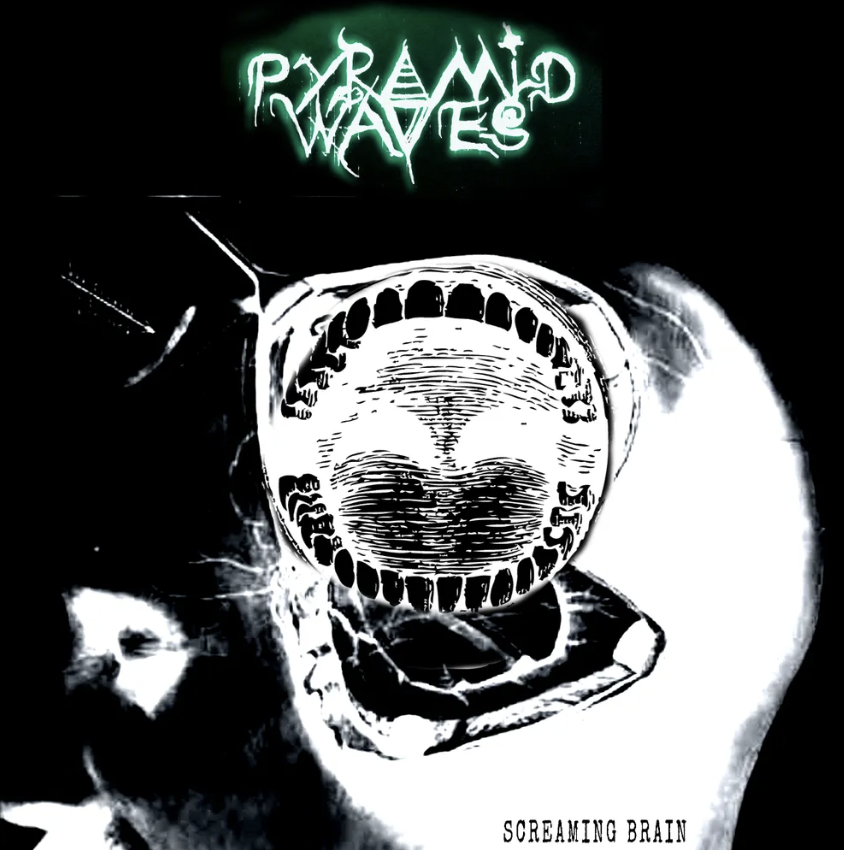
A cerebral haemorrhage; a blunt force of industrial sonics, caustic electronica and Fortean distress, the fifth work of traumatic discourse and dissonance from the French duo of Pyramid Waves drills into the four pillars of our dysfunctional modern society: that being, addictions, mental health, anxiety and cravings.
A bastard trauma of Front Line Assembly, Test Dept. and Merzbow, the Screaming Brain improvisations (recorded at their home studio) will leave you in no doubt as to the pained sufferings of its creators.
Demarcated into four parts of static white noise, analogue reverberations and interdimensional radio transmissions, crunch and crumbled beats, and echoed voices from some distant harrowing memory, doors to a tumultuous mind are opened to forces from beyond the mortal world. Because whilst the gristle for this album is all very real, the sounds grate, spin, switch towards a phantasm of the paranormal and alien. It’s as if a trapped psychogeography of echoing stresses and long dormant troubled episodes in the cortex has been wired into a supernatural apparatus of haunted and bestial sonorous severe disturbances.
Unsettling to put it mildly – especially the repeating dreamy melodic piano part that plays and meanders over a coarse bed of fearful distortion on ‘Trapped Underwater’ -, this uncomfortable but fascinating pull into the metal torture workshop of neuroscience squeals, slaps meat, drills and thumps its way to challenging and meeting its psychological demons.
If Richard H. Kirk, Richard James and SEODAH invoked Cthulhu whilst all in a room together, hunched over an apparatus of transistors, generators, motors, tools, drum pads and effects, then this is surely what it would sound like. Screaming Brian by name and nature, Pyramid Waves dissect the psyche of our troubling times, and the battles faced by the individual screwed-up by the system with horror and hurt.
Hi, my name is Dominic Valvona and I’m the Founder of the music/culture blog monolithcocktail.com For the last ten years I’ve featured and supported music, musicians and labels we love across genres from around the world that we think you’ll want to know about. No content on the site is paid for or sponsored and we only feature artists we have genuine respect for /love. If you enjoy our reviews (and we often write long, thoughtful ones), found a new artist you admire or if we have featured you or artists you represent and would like to buy us a coffee at https://ko-fi.com/monolithcocktail to say cheers for spreading the word, then that would be much appreciated.
The Monthly Playlist For September 2024
September 30, 2024
CHOICE MUSIC FROM THE LAST MONTH ON THE MONOLITH COCKTAIL: TEAM EFFORT

The Monthly Revue for September 2024: Fifty choice tracks from the last month, chosen by Dominic Valvona, Matt ‘Rap Control’ Oliver and Brian ‘Bordello’ Shea. Features a real shake up and mix of tracks we’ve both covered in our review columns and articles. We’ve also added a smattering of tracks that we either didn’t get the room to feature or missed at the time. Covering many bases, expect to hear and discover new sounds, new artists. Consider this playlist the blog’s very own ideal radio show: no chatter, no gaps, no cosy nepotism.
TrAcKliSt
David Liebe Hart ‘James Earl Jones’
Mosik Rhymes & Tha God Fahim ‘E.S.P.’ – this month’s cover art
Seez Mics & Metermaids ‘Walter Wrong’
Kong The Artisan, Essa & Phat Kat ‘Get Nasty’
Etran de L’Air ‘Amidinine’
Carmen Souza ‘Amizadi’
Daniel Inzani ‘Beyond The Pale’
Zerrin ‘Spring Cleaning’
Black Artist Group ‘For Peace And Liberty Part 2’
Michal Urbaniak ‘UrbTrap’
AINON ‘Komorebi’
Derrero ‘Painting with Sound’
Neon Kittens ‘Lika Like’
SHITNOISE ‘Gum Opera’
The legless Crabs ‘Piercings And Tattoos’
I do You do Karate ‘Jabiru’
Cuushe ‘Faded Corners’
Inflatable Men ‘He’s Going Out With Marilyn’
Inre Kretsen Grupp & Prins Emanuel ‘Volta Semantron’
Phantom Handshakes ‘Dusk Enchanted’
Xeno & Oaklander ‘Via Negativa (in the doorway light)’
Beauty Stab ‘Use Me As Bait’
Wings Of Desire ‘OTTAMYMIND’
Nonpareils ‘Bring It On’
Short Fuze & 4Most ‘3AM Thoughts’
Desert Camo, Heather Grey & Oliver the 2nd ‘Sun Lord Mixtape’
leisure fm ‘illuminated manuscript’
Ghostwriter ‘Satan, Your Kingdom Must Come Down’
Elea Calvet ‘Trigger – Acoustic’
Holy Matter ‘The Dove’
Trust Fund ‘The Mirror’
Christopher Haddow ‘Look Homeward’
John Howard ‘Great Horse’
Minarets of Nessef ‘Instrumental’
Daniilaioi Brotherhood Choir ‘Christos Anesti, Mode Plagal A’
Umlaut ‘Gaze back into you’
Anja Ngozi & OKI ‘Utanobori’
Will Lawton and the Alchemists ‘Fossils of the Mind – Sebastian Reynolds Rework’
The New Tigers ‘Saba’
Viktor Ori ‘Vsetci sme v tom spolu’
Banca De Gaia ‘Electric Sheep’
Tanya Morgan, 6th Sense & Rob Cave ‘The Motion’
The Doppelgangaz ‘W.I.T.H.H.’
Xray & Monsta Island Czars ‘Evacuate The Club’
Jon Phonics ‘U JUST A LYING ASS HOE’
Ant ‘4-Track Beyond Beat 1996’
Leonard Charles ‘Rose’
Dr. Syntax & Pete Canon ‘Robot Problem’
Diamond D & KRS-One ‘THE KINGS’
Dead Players ‘Just Above Water’
A WORLD OF SONIC/MUSICAL DISCOVERIES AND POSSIBILITIES REVIEWED BY DOMINIC VALVONA
(Unless stated otherwise, all releases are available now)
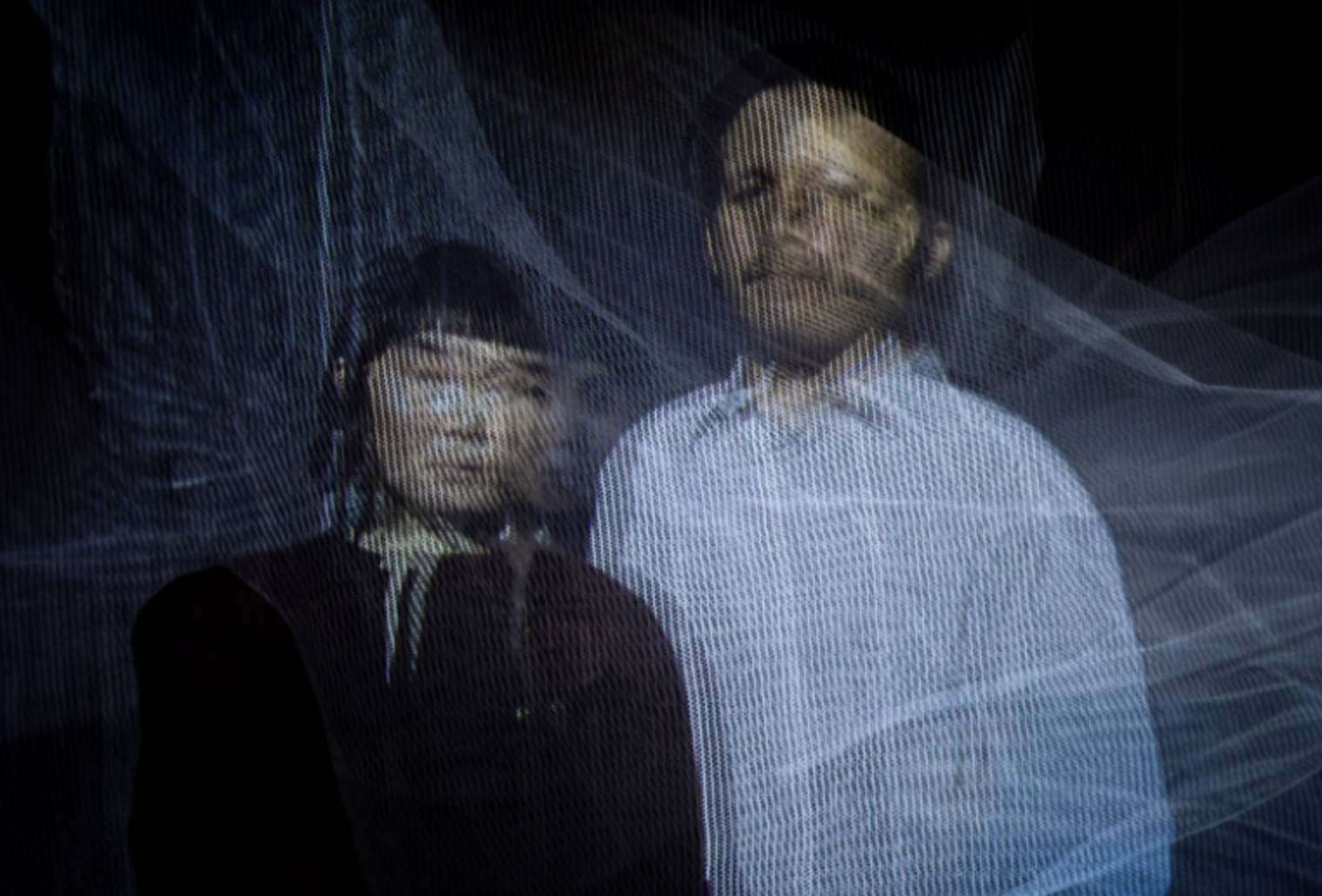
Credit: Hanne Kaunicnik
Poeji ‘Nant’
(Squama)
In shrouded chambers polygenesis cultures and roots cross paths and open up an amorphous portal to a unique world of redolent Asian percussion and Mongolian “urtyn duu” vocal soundings.
Making good on their cryptically coordinate-like coded 031921 5.24 5.53 EP from 2022, German drummer extraordinaire Simon Popp and the Ulaanbaatar born vocalist Enkhjargal Erkhembayar (shortened to Enji) have combined their individual disciplines and scope of influences to venture even further into uncharted territory.
For his part, the Bavarian Popp uses an extensive apparatus of hand drums and worldly sourced percussion to conjure up an atmosphere of both atonal and rhythmic (sometimes verging on a break or two) West Africa, Tibet, gamelan Indonesia and Japan. This in turn evokes a transmogrified vague sense of the avant-garde, of Kabuki theatre, of Shinto and Buddhist mysticism and mystery.
Popp’s collaborative foil Enji is a scion of the old Mongolian tradition of the Long song, a form of singing that emphasis and extends each syllable of text for long stretches of time. It’s said that a song with only ten actual words can last hours. Strong on the symbolism of the Mongolians much dependable horse, the long song form can be philosophical, religious, romantic or celebratory. Now, in a different century, Enji channels this heritage to voice, utter, accent, assonant, woo, and like breathing onto a cold glassy surface, exhales the diaphanous, gauzy, ached and comforting – the truly mysterious hummed ‘Buuwein Duu’ sounds like a lullaby.
Although much of the wording is linked to those roots, there’s an ambiguity to much of the carrying style vocals. For instance, the duo’s appellation of Poeji was chosen because it can be translated into various languages: meaning “sing” in Slovenian and roughly “poetry” in Japanese. The album title, Nant, is itself old Welsh in derivation, and can be translated as both “stream” and “valley”.
A fourth world dialect is achieved; a communication that needs no prior knowledge or understanding as the meaning is all in the delivery, emotion the cadence and largely extemporized feels and mood of the moment.
Described as working in the vernacular of post-dub and the downtemp, Nant reminded me in parts of the “tropical concrete” of the Commando Vanessa label pairing of Valentina Mag aletti and Marlene Riberio, Hatis Noit, Steve Reich and Werner “Zappi” Diermaier’s various drumming experiments as part of the faUSt duo with fellow original Faustian Jean Harve-Pèron. It is a unique conjuring of tones, textures, atmospheres, the avant-garde, the spontaneous (wherever the mood takes them) and the esoteric that won’t scare the horses. Instead, it sets a wispy, shrouded course to ventures into new realms of improvised communication; a bridging of cultures that reaches into new spheres of worldliness and the realms of new dimensions.
Raymond Antrobus & Evelyn Glennie ‘Another Noise’
30th August 2024
So tangible and effective is the clever – if taking a leap into the unknown and by chance – union between the two accomplished deaf artisans of their artistic forms that each pin-like sharp spike, each metallic shave, rattle and atmospheric undulation that builds around the unflinching candid delivery really hits hard and marks: leaves an audible impression.
The musicality, the rhythm is all in the poet Raymond Antrobus’ voice and often put-upon and sometimes self-doubting, cadence. It can’t all be put down to his deafness, but it offers something unique – although the William Blake professor of the album’s final bittersweet sign-off was both condescending and embittered-sounding in his succinct dismissal of Antrobus. I guess what I’m trying to say, is that sure the deafness is crucial, and that it opens up new or different ways of creating and circumnavigating the loss of this sense, but there is so very much more to both partners in this venture’s art form and genius that transcends the deaf condition.
Framed as it is, this inaugural collaboration between the poet and the virtuoso percussionist/composer Evelyn Glennie pushes the boundaries of poetry and sound; causing us to reevaluate our own perceptions. And with the equally acclaimed – and no stranger to this blog, as probably its most prolific featured artist/producer – in-situ producer Ian Brennan on board there’s an authenticity to what develops from the readings and mostly improvised percussive soundscapes.
Both partners on this evocative project can hardly be said to have a condition, a disability, or suffer for it. Glennie especially, through her old teacher Ron Forbes during her formative years, learnt to hear sound through different parts of her body: a physical response and channeling of sound that has helped and shaped the star percussionist to become one of the world’s greatest living musicians.
Unencumbered, the poetic language conveys, describes that unique relationship with sound, music and noise. The opening tubular shaken and spindled ‘The Noise’, which features the wooing, near ethereal sweet hummed undulations of guest artist Precious Perez, is the most obvious example of this. Rather importantly, the classically trained but eclectic Latin singer/songwriter/educator Perez, who is herself blind, is the president of the RAMPD.org charity fighting for disabled performers in the arts and more access. But it is her evocative voice that is called upon to offer something approaching a subtle wooing-like hum.
Giving each poetry performance a shiver of avant-garde, concrete and abstract sound art (even near Dadaist and Fluxus), Glennie (who had no prior knowledge of the material she was contextualizing or sounding) uses an apparatus of spokes, chains, tubes, bells and metallic-sounding brushes to articulate but also dramatically jolt and jar the alien, the unknown, but also the disturbing. She can also emphasis a state of isolation very well too; her foil’s themes often touching on a feeling of dislocation, not only because of his own deafness but because of his mixed ethnic roots: a feeling of the other you could say; of feeling adrift of both his English and Caribbean heritage.
Antrobus is unflinching on the topic of ancestral Black trauma and legacy. ‘Horror Scene As Black English Royal’ is a vivid example of slavery and that heritage that the Black community feels it can never leave behind or unshackle; prompted, I take it, by the whole Meghan Markle debacle and her fleeting acceptance into English royalty before the deluge of perceived outsider, and skin colour muddied the calm waters of stiff upper lipped etiquette in the White establishment. Glennie scores this poem with an atmosphere of horror and hurt; the sound of what could be an animalistic growl and pain striking out from the torture of slavery. ‘Ode To My Hair’ meanwhile, deals with the kinks and prejudice of a said Black “throw”, with Antrobus underlying dislocation once more emphasized as Black enough to be the victim of racism, but not Black enough for some in the Black community itself. There’s also a secondary theme of reconnection, using a haircut to talk about his relationship with his father. There are a few poems like this, where the touching relationship to a loved one, a child and even a cat is poignantly open and candid without resorting to the saccharine or to platitudes.
Talking of animals, birds, with all their various connotations, feature at various points on the album; cleverly linked to the learning of signing and to the very rhythm of city life on the visceral and incredible ‘Resonance’. I love some of the descriptions on this reading, especially the lyrically language used to describe their movement, like an “uncharted astronomy”, and the way Antrobus describes city birds as a whole different species to their country cousins.
Affectionate, personal as much as near dystopian, unnerving and hurting, Another noise is unlike anything you may have heard or felt in some time. For both artists sound and speech is near tangible; something you can almost touch. A sensory experiment, this collaboration does much to push, probe and explore perceptions of language, timbre, performance and delivery. This album is nothing less than a genuine work of artistic achievement from two of the UK’s most important artists.
The Mining Co. ‘Classic Monsters’
(PinDrop Records) 9th August 2024
Continuing to mine his childhood the London-based singer-songwriter Michael Gallagher once again produces a songbook of throwbacks to his formative adventures as a kid growing up in Donegal in Ireland.
His previous album almanac, Gum Card, touched upon a silly fleeting dabble with the occult, but this latest record (his sixth so far) is filled with childhood memories of hammy and more video nasty style supernatural characters, alongside a whole host of “weirdos”, “freaks” and “stoners”.
Once more back in his childhood home, frightened to turn the lights off, checking for Christopher Lee’s Dracula and the Wolfman under his bed, yet daring himself to keep watching those Hammer house of horror b-movies, Salem’s Lot and more bloody shockers, Gallagher links an almost lost innocence with a lifetime of travails, cathartic obsessions and searching desires.
A recurring metaphor, analogy and theme of blood runs throughout Classic Monsters, whether it’s the Top Trumps ghoulish kind of youth, or the more mature, adult-themed kind found on the taking-stock, trying not to run away, ‘Rabbit Blood’. The life force is both a reminder of immortality and the source of adolescent frights.
As always Gallagher’s lyrics are layered with references and meaning, and stretch the loose concept to open-up about anxieties, growing up and both the bliss and pains of love; the alum finale, ‘Planetarium’, sets a near ethereal astrological scene from the said title’s stargazer observatory, as two star-crossed in stoned awe and wonder look up to the celestial heavens to a retro-lunar, Theremin-like voiced and ballad style piano soundtrack. Songs like that evoke Gallagher’s sci-fi passions, and alternative Dark Star songbook score fixations (see the brilliant Phenomenology album). But even though there’s a smattering of space dust, and no matter what, a musical signature that runs throughout all his work – enervated cosmic cowboy troubadour, soft rock and evocations of the Eels, The Thrills, Josh T Pearson, Rezo and The Flaming Lips – Gallagher has changed his set-up a little.
Recording back in the Spanish studio environment that has served him so well, and once again working with the musician and producer Paco Loco (credits and highlights include working with the outstanding Josephine Foster, the Jayhawks’ Gary Louris and The Sadies), Gallagher is now also backed by the Los Jaguares de la Bahía band, who bring subtle psychedelic country and alternative rock influences to the sound. The cover art, especially the lettering style, signals The Flying Burrito Brothers or The Byrds – both of which you may detect – but there’s an almost distinct CAN-style drum on the opening sparse and wisped ‘Failure’, and a touch of Bonnie Prince Billy, Phosphorescent and Fleet Foxes.
Step forward Pablo Erra on bass, Patri Espejo on piano, Esteban Perler on drums and Loco on synths and ambient effects, for they manage to seamlessly evoke Bill Callahan one minute and Lou Reed the next. And yet also sound like Joe Jackson teaming up with Nick Lowe and the Boomtown Rats – to be honest, that last reference is largely down to the piano sound. They make the vampiric and howling themed ‘Blood Suckers’ sound disarmingly like a Scarlet’s Well fairytale of sweet dreams, soothed from beneath a baby’s calming mobile hanging over the cot. Weirdly (or not) both the band and Gallagher reminded me of Elbow and David Gray on the very 90s upbeat tempo’d ‘Killer Sun’.
It’s a winning combination that expands Gallagher’s musical scope without altering his signature style and voice, feel and intimacy. I’ve said it before about Phenomenology, but I really do think this is now his best album to date. And I’m still astounded by the lack of support for his music or exposure, as Gallagher’s The Mining Co. vehicle is worthy of praise, airplay and attention. Hopefully it will be sixth album lucky for the Irishman.
Jessica Ackerley ‘All Of The Colours Are Singing’
(AKP Recordings) 16th August 2024
Gifted guitarist, composer, bandleader and soloist Jessica Ackerley adds even more colour (sometimes vivid and striking, at other times, more pastel or muted) to their pliable sonic/musical palette. Seamlessly crossing over into art – inspired in part by the arid desert outdoor symbolic and metaphorical flowerings and abstracted landscapes of Georgia O’ Keefe – the now Honolulu-based musician turns markings and sketches into both untethered performative compositions that traverse the avant-garde, jazz, blues, experimental rock, R&B and the virtuoso. O’ Keefe’s “to see takes time” wisdom is used almost like a catalyst for the album’s articulation and more energetic ways of seeing.
Recorded in the unceded territory of the indigenous Kanaka Maoli, in the Mānoa Valley (one of Hawai’i’s venerated mythological creation story landscapes) All Of The Colours Are Singing filters an inspiring geography, sense of time and place whilst also channeling Ackerley’s synesthesia – hence that title.
With a rich CV of performances (from John Zorn’s The Stone to The Metropolitan Museum of Art) and projects behind them (from their extensive catalogue of eclectic work with such notable musicians as Marc Edwards, Tyshwan Sorey and Patrick Shiroshi), it’s no wonder that Ackerley manages to attract a talented pool of collaborators or foils. Step forward Walter Stinson on upright bass, Aaron Edgcomb on drums and Concetta Abbata on alternating violin and viola. Boundaries are crossed and blurred with this ensemble on an album of varying beauty and wilder improvisations; an album in which subtle sensibilities are comfortably followed by challenging free expressions of fusion and freeform progressive jazz. If there was an underlying genre or influence sound wise, then it must be jazz in its many forms, with echoes of the Sonny Sharrock Band and Philip Catherine, but also shades of the noirish, the smooth and more impressively quickly played and bent-out-of-shape kinds. Edgcomb’s drums can add to the jazzy feel, but also sieves, brushes and sweeps across the snare in a more tactile fashion – almost like applying brush strokes at times. It might just be me, but he reminded me of Guru Guru’s Mani Neumeier on the changeable in tempo and style, jazz-fusion ‘The Dots Are The Connection’.
But then there’s the near sweetly hummed and dreamy intro to that O’ Keefe borrowed title quote, and then what sounds like Tuareg desert or Songhoy blues guitar on the first part of the ‘Conclusion: In Four Micro Parts’ finale – this soon develops into a bout of buzzy intense Yonatan Gat experimental physical rock. That use of strings obviously steers the music away from the jazz sound towards the classical and chamber. Abbato, subtly reinforcing or emphasising the moments of grief, mourning and thoughtfulness, can both articulate dew being shaken off fluttered shaken feathers and stretch, strain and fray the violin and viola in a more avant-garde fashion – reminding me of Alison Cotton, Alex Stölze and, although she is a cellist, Anne Müller. Ackerley uses the guitar like an artist’s brush stroke, whether it is in a frenzy or blur of abstract or rapid markings and swishes, or more placed and calming. Invoking such refined and experimental bedfellows as Joe Pass, Marisa Anderson, Bill Orcutt, Chuck Johnson and the Gunn-Truscinski Duo, they walk a unique personalised pathway between medias and art forms to showcase and push at the boundaries of artful guitar-led performance and inner emotional workings.
Drew Mulholland & Garden Gate ‘Night Blooming Flowers’
(Subexotic Records) 23rd August 2024

Serial offenders of occult sounds and more nostalgic early analogue and library music, the transatlantic sonic conjuring sparring partners Drew Mulholland and Timmi Meskers have coalesced their individual disciplines for a suitably atmospheric esoteric soundtrack of retro horror novelties and pastoral chamber folkloric magik.
By candelabra light Meskers’ Garden Gate alter ego is called upon to bring a certain ethereal apparitional siren allure, enchantment and vintage, and bowed classical heightened spine-tingles and spooks to Mulholland’s BBC Radiophonics Workshop and his very own Mount Vernon Arts Lab project style electronics.
The University of Glasgow lecturer and composer-in-residence and his American “Baroque psych/horror savant” foil don’t do things by halves, having written a mini synopsis storyline of a kind for the protagonist of this horticultural paranormal and dream-realism tale. The title more or less tells you all you need to know: that is, a search and waylaid adventure to find the rarest of flowers, the botanist’s precious treasure, that only bloom’s at night. In between the start of a expedition and the final unveiling of this sought-after flower, there’s many a misstep along the pathway, as the dark arts merges with pagan and idyllic folklore to drag our main character into various spellbound jeopardies, fairytales and hallucinations.
Imbibed and inspired by a number of sources, one of Meskers most notable is the late British historian Emma Wilby’s Cunning Folk And Familiar Spirits: Shamanistic Visionary Traditions In Early Modern British Witchcraft And Magic tome; the central propound argument of which is that early modern beliefs and witchcraft were influenced by a substratum of shamanistic beliefs found in pockets of Europe – of which they are many detractors. You can throw in the Tarot and what musically sounds like to me the cult British horror soundtracks of the Amicus and Tigon studios, Dennis Wheatley, Isobel Gowdrie and a whole woodland of sprites, fairies and mythical beasts.
Altogether, with both partners’ range of influences, the soundtrack shivers, creeps and in both a supernatural and merrily manner merges the otherworldly analogue-sounding atmospheres of Belbury Poly, The Focus Group, Pye Corner Audio and Bibio with the pastoral willowy tapestries and bewitching spells of Tristram Cary, Marc Wilkinson, James Bernard, Harry Robinson and Sproatly Smith.
From dramatic stiletto piano and meanderings amongst the grass snake foliage and Piltdown Man decorated hilltops, to more hallucinatory passages of enticement, each piece of music conjures up a scene or chapter in a larger idiosyncratic tale from the pages of the Fortean Times, King James’s Daemonologie or pulp supernatural fiction. As Hauntology projects go, Night Blooming Flowers is a retro-styled success of subtle but effective storytelling, mystery and cult references; a soundtrack that now needs a film to go with it.
Asteroide & Fiorella16 ‘Suni A Través Del Espejo’
Downtime ‘Guts’ (Cruel Nature Records)
Through the various sonic peregrinations, noises and protestations of their extensive roster, the Northumberland diy label Cruel Nature travels between the hard bitten dystopias of life in a modern fractured state to more fantastical climes out in the expanses of space. Keeping up a steady prolific schedule each month, the label covers everything from the psychedelic to riled punk and societal angst.
Just dipping into the July haul of releases, I’ve picked out two albums from the mysteriously cosmic and krautrock imbibed camps; the Peruvian pairing of the Asteroide duo and Fiorella16’s Suni A Través Del Espejo and Downtime’s seemingly uninterrupted one-take Guts jam.
The former channels the psychogeography (both atavistic and otherworldly) of the Andean Altiplano, which spans Boliva, Chile and Peru. A natural phenomenon, the Altiplano (from the Colonial Spanish for “high plain”) is the most extensive high plateau on the planet outside of Tibet. It encompasses a whole high altitude giddy biosphere of pristine environments: from the famous Salar de Uyuni salt plains to Lake Titicaca – one of the main hubs along its banks, Puno, is where one half of this collaboration, the indy rock siblings Asteroide, hail from. “Through the looking glass” (as that album title translates), alongside sonic foil José María Málaga, aka Fiorella16, they magic up a highly mysterious communion with the elements and the forms, the ghosts and the extraterrestrial bodies that flicker in and out of the consciousness; that appear like dizzy, lack of oxygen and air, hallucinations and mirages.
A biomorphic score created in-situ, the properties of water, the season of Spring and a hilltop suddenly sound like the cosmic whirrs of UFOs, alien transmissions and caustic stirrings from the belly of volcanic chambers. A mixture of Steve Gunn and The Howard Hughes Suite-like post-rock Americana and harder Sunn O))) and Gunter Schickert guitar and synthesised atmospherics, generators, oscillations, satellites and Throbbing Gristle coarseness build up a near esoteric, primal communication with the plateau’s guardians. The finale, ‘PRIMAvera’, with its ‘Jennifer’ style reverberated throbbing wobbled bass, sulfur waves and data exchanges, finds the collaborative partners finally beamed-up via the tractor beam to some subterranean alien dimension.
A little bit different, though there are some krautrock-style overlaps, the “power duo” Downtime orbit head music space on their latest just-let-the-tape-record-whatever-emerges-from-an-intense-heavy-jam-like-session. Over forty minutes of edited thrashing, kraut/heavy/acid/doom rock, the participants in this expulsion of energy channel everything from the Boredoms, Acid Mothers Temple, Zeni Geva, Hawkwind, Ash Ra Tempel and Boris.
In a cosmic vacuum, near virtuoso fuzzy and scuzzy soloing and ripping phaser and flange guitar and tempo-changing beaten, crashed, squalling drums and acid galactic effects create a heavy meta(l) space rock behemoth of interstellar proportions.
A mere whiff of what to expect from this label’s catalogue, both albums are worthy of your credit and spare change.
Zack Clarke ‘Plunge’
(Orenda)
The critically hailed pianist-composer, New York improvised jazz scene stalwart, and bandleader Zack Clarke finds ever more inventive and omnivorous ways to push both the jazz form and his studied instrument on his latest album for the Orenda label.
“Building” (to paraphrase the album notes) bridges between groups of people, and cleverly merging the intelligent dance music movements with cosmic-funk-jazz, hip-hop breaks, prog and both classical and avant-garde forms, Clarke takes the proverbial “plunge” and resurfaces with a sometimes fun and at other times intense serialism of either spasmodic and stuttering or free-flowing discombobulating performative fusions.
Using modern production methods and a whole kit of tech, Clarke takes the idea of jazz in its earliest incarnation as dance music and runs with it; aping the minimalist techno and electronic rhythmic off-kilter mayhem of such iconic labels as Warp through an effects transforming removed version of the piano.
Dashed, chopped and cross-handed sophisticated modal runs and the piano’s very guts (its inner wiry stringy workings played at times almost like a splayed mallet(ed) chiming dulcimer) work with varied combinations of breakbeats, clattered, rattled, splashing and electronic padded drums and what sounds like 303 or 808 electro synths across a generous sixteen tracks.
At times all this sounds like Keith Jarrett corrupted by Drukqs era Aphex Twin; or like µ-Ziq fucking around with zappy-futuristic Herbie Hancock; or even Zappa jamming with Chick Corea. But then certain compositions (if that’s the appropriate word) reminded me of The Bad Plus, of Radiohead In Rainbows, of Mantronix, Squarepusher and Andrew Spackman’s Sad Man alter ego. It might only be me, but album finale ‘ANTHEM’ sounds like Abdullah Ibrahim transduced through d’n’b and breakbeat filters.
There’s a lot to unpick, to absorb, but weirdly enough Clarke’s inventive intentions are successfully accomplished as he bridges the avant-garde and jazz with a spectrum of fusions and experimental technology to produce a unique vision of dance music for a new century.
___/+ THESE RECOMMENDATIONS IN BRIEF
Any regular readers will know that I pride myself in writing more in depth purview-style reviews with a wider context. This means I naturally take more time and effort. Unfortunately, this also means that I can only ever scratch the surface of the thousands of releases both the blog and I get sent each month. As a compromise of sorts, I’ve chosen to now include a really briefly written roundup of releases, all of which really do deserve far more space and context. But these are recommendations, a little extra to check out of you are in the mood or inclined to discover more.
Poppy H ‘Good Hiding’
ALBUM (Adventurous Music)
In a constant artistic flux, the idiosyncratic trick noise maker and musical statements composer Poppy H always manages to embody a whole new sound with each release and project. The latest is no different for being different in that regard. A Good Hiding (a reference to taking a good beating or kicking, or just literally a “good hiding place”) is both a studied and beautifully evocative chamber haunting of removed folk and traditional ideas, windy funnelled atmospheres, low key padded bobbling and spinning electronics, voices and whispers from the air, ghostly classical piano and suffused ambient drama. To truly articulate the elegance, near Gothic mystery and dreaminess of it all would need far more words and depth: a real long form reading. But hopefully this will be enough to whet the appetite, as this is a very good album indeed.
Cumsleg Borenail ‘Broadmoor Time’
TRACK/VIDEO
Prolific instigator of phantasmagoria electronica Cumsleg Borenail is at it again with another fucked-up nightmare of sonic disturbance. As you may have rightly guessed from the title, this ominous, scary score channels the abusive, harrowing pained psychogeography of the infamous high-security psychiatric hospital in Berkshire, England. A right rogue’s gallery of inmates has occupied this facility over the decades; some of the UK’s very worst and unhinged offenders and murderers. And you can read much into the reasons behind the subject matter, the mental health care aspects and treatment especially, but it is a very haunted soundtrack of the recognisable made otherworldly, scaly and metallic.
Pauli Lyytinen ‘Lehto/Korpi’
ALBUM (We Jazz) 30th August 2024
Conjuring up a whole eco system of forest canopy menageries and lush greenness, the Finnish saxophonist Pauli Lyytinen sets out a “deep forest grove” biosphere of fertile heavenly auras and bird-like reedy probes on his solo debut for the We Jazz label.
A moiety of Don Cherry, both 60s hippy idealistic eco-friendly and more divine Biblical MGM sound studios soundtracks, cylindrical Fourth World blasts, and hints of Stetson and Brötzmann, Lyytinen’s saxophone positively sings on the wing whilst opening a blessed environment. Mentioned in the references, and on the nose, our fluttered, feathery saxophonist has Evan Parker’s own bird songs down to a tee. An unassuming charmer and yet full of experiment and organic untethered freedoms, Lehto/Korpi is far too good an album to be missed or overlooked.
Hi, my name is Dominic Valvona and I’m the Founder of the music/culture blog monolithcocktail.com For the last ten years I’ve featured and supported music, musicians and labels we love across genres from around the world that we think you’ll want to know about. No content on the site is paid for or sponsored and we only feature artists we have genuine respect for /love. If you enjoy our reviews (and we often write long, thoughtful ones), found a new artist you admire or if we have featured you or artists you represent and would like to buy us a coffee at https://ko-fi.com/monolithcocktail to say cheers for spreading the word, then that would be much appreciated.

