The Monthly Playlist selection of choice music, plus our Choice Albums list from the last month.

A couple of months back we decided to change things a little with a reminder (if you like) of not only our favourite tracks from the last month, but also a list of choice albums too. This list includes both those releases we managed to feature and review on the site and those we just didn’t get the time or room for. All entries are displayed alphabetically.
Our Monthly Playlist continues as normal, with tracks this month chosen by me, Dominic Valvona, Matt Oliver and Brian ‘Bordello’ Shea.
A Journey Of Giraffes ‘Emperor Deco’
(Somewherecold Records) Review
MC Paul Barman ‘Tectonic Texts’
Elea Calvet ‘Seasons’
Inturist ‘Tourism’
(Incompetence Records) Review
Eiko Ishibashi ‘Antigone’
(Drag City)
Timo Lassy Trio ‘Live In Helsinki’
(We Jazz)
Nickolas Mohanna ‘Speakers Rotations’
(AKP Recordings) Review
Che Noir & Superior ‘Seeds In Babylon’
Alberto Novelle & Rob Mazurek ‘Sun Eaters’
(Hive Mind Records) Review
Andrew Rumsey ‘Collodion’
(Gare du Nord) Review
Schizo Fun Addict ‘An Introduction To…’
(Fruits der Mer) Review
Snapped Ankles ‘Hard Times Furious Dancing’
Sonnyjim & Kong Artisan ‘Effortless, Almost Dead’
(Noel & Poland Records)
Russ Spence ‘Phase Myself’
(Metal Postcard Records) Review
Macie Stewart ‘When The Distance Is Blue’
(International Anthem) Review
Gregory Uhlmann, Josh Johnson, Sam Wilkes ‘Uhlmann Johnson Wilkes’
(International Anthem) Review
The Young Mothers ‘Better If You Let It’
(Sonic Transmissions) Review
Previous Monthly Choice Releases:
And now, the tunes of the month playlist selection:
Snapped Ankles ‘Pay The Rent’
Psychedelic Porn Crumpets ‘Weird World Awoke’
MC Paul Barman, Donwill ‘Killinagame’
Jansport J, Airplane James, Sham1016 ‘T-Top’
Alessandro Alessandroni ‘Militari in allarme’
Black Mynah ‘Colleen’
Che Noir, Superior ‘Sovereignty’
Droogie Otis, Boldy James ‘Everything Designer’
Timo Lassy Trio ‘Rumble Outro – Live’
Gregory Uhlmann, Josh Johnson, Sam Wilkes ‘Marvis’
Takuro Okada ‘Howlin’ Dog’
Inturist ‘Special Offer’
Elea Calvet ‘Bad Joke’
Sweeney ‘Love Is A Waste Of Time’
Eiko Ishibashi ‘Antigone’
Meggie Lennon ‘Connexion Astrale’
Apollo Brown ‘Honestly Don’t’
The Moose Funk Squad ‘Cheetah Piss’
Black Josh, Lee Scott ‘Aw, Here It Goes’
Queen Herawin, Pretty Bulli, Illa Ghee ‘Denial’
The Young Mothers ‘Better If You Let It’
Lord Finesse ‘Habits of Desperation’
Sonnyjim, Kong The Artisan, Lord Sko ‘Idiot Savant’
clipping. ‘Polariods’
Macie Stewart, Lia Kohl ‘I Forgot How To Remember My Dreams’
Nickolas Mohanna ‘Past Light Cone’
Previous Industries ‘Adriana Furs’
Sporaterra ‘Unglued’
PremRock, Sebb Bash ‘Did You Enjoy Your Time Here…?’
Flying Tulpa ‘Signless’
Andrew Rumsey ‘The Memorial Service Orders of Friends’
Nick Frater ‘One Minute’
Honor Saint William ‘THE IDIOT’
Puce Moment ‘Bugaku’
Alberto Novello & Rob Mazurek ‘Ricochet Edge Verse’
El Leon Pardo ‘Viaje Sideral’
Mick Harvey & Amanda Acevedo ‘Juliette’
Hi, my name is Dominic Valvona and I’m the Founder of the music/culture blog monolithcocktail.com For the last ten years both me and the MC team have featured and supported music, musicians and labels we love across genres from around the world: ones that we think you’ll want to know about. No content on the site is paid for or sponsored, and we only feature artists we have genuine respect for /love or interest in. If you enjoy our reviews (and we often write long, thoughtful ones), found a new artist you admire or if we have featured you or artists you represent and would like to say thanks or show support, than you can now buy us a coffee at https://ko-fi.com/monolithcocktail
THE MONTHLY DIGEST OF ACCUMULATED NEW MUSIC; THE SOCIAL INTER-GENERATIONAL/ECLECTIC AND ANNIVERSARY ALBUMS CELEBRATING PLAYLIST; AND CHOICE PIECES FROM THE ARCHIVES.

Photo Credit:: Shalev Ariel
THE NEW/
Apifera ‘Keep The Outside Open’
(Stones Throw) 21st June 2024
Pouring forth from hangout sessions at Yuvi Haukin’s studio (a member of the L.A. based quartet), the friendly, playful and jovial toking environment around Apifera’s second album inspires a constant change and lucid fluctuation between prompted musical fusions.
Near omnivorous in tastes and drivers, the often dreamy, hallucinating moods envelope a psychedelic, trippy palette of jazz-funk, disco, vapour synth music, the kosmische, the progressive, Euro chic scores and Indian influences. The later is can be heard via the cadence, almost meandered mantra vocals, of the album title (“keep the outside open”) on the opening Secret Machines-esque slow released, spacy ‘Iris Is Neil’ – a reference to the search for a missing cat called Iris, who was chasing a bat named Neil at the time of the feline’s disappearance.
Over the course of fifteen tracks (some mere vignettes in duration) Havkin, Nitai Hershkovits, Amir Bresler and Yonatan Albalak open minds and broaden horizons through various portals and mirrors; soaking up the cosmic rays whilst wistfully contemplating the universal, aching dreamily over infatuations and casting drug-induced allusions. Everything is pretty smooth and evened out, the changes in style rounded so as not jolt, but work in harmony together.
With a diverse and notable range of CVs, we have Havkin’s electronic-jazz alter ego Rejoices, Albalak fronting the post-rock-psych-jazz band Geshem, Bresler’s Afrobeat and jazz blended Liquid Saloon, and Hershkovits’s soloist piano outings for the esteemed ECM label. All of which is channeled and merged further with both suffused waves and shorter flashes of Sven Wunder, Wax Machine, The Future era George Duke, Greg Foat, Flying Moon In Space, The Flaming Lips, Jini Tenor, El Michels affair, Les McCann and The Fatback Band.
Extending the loose configuration of influences further still, the quartet invite the trumpeter and ECM signing Avishai Cohen to blow smokestack Miles Davis and more southern border bluesy expressions over the minimal vapors and gauzy airs of the finale, ‘Sera Sam’.
A smattering of made-up characters fashioned from “smoking jams” act as cartoon, psychedelic-like vehicles for sharing concerns, woes, but also for conveying a message of escapism from the increasingly divided, polarised suffocation of a hostile world at war. Advocating a return of a “wilder” untethered “freestate” of culture, music and life, Apifera leave the gateways permanently open, inviting us all to embrace, not fear, such anarchic freewheeling.
Herald ‘Linear B’
(Errol’s Hot Wax) 14th June 2024
If mid-70s Eno working his magic with Merriweather Post Pavilion sounds like a match anointed in heaven then Lawrence Worthington’s ridiculously long-delayed debut album is going to send you into a woozy alt-pop state of bliss. The latter partner in that ideal fantasy of influences is hardly surprising, with the Animal Collective’s “infrequent” co-founding member Josh Dibb (aka Deakin) playing the part of co-producing foil and soundboard. And although the eventual Linear B album was first conceived twenty plus years ago, when the Animal Collective and Panda Bear and a menagerie of congruous bands were building an alternative-psych-pop scene – the darlings (quite rightly) of Pitchfork and the burgeoning MySpace culture -, and when the musical palette of sounds is produced on cheap 90s Casio and Yamaha equipment, Worthington’s Herald nom de plume still resonates and feels refreshingly dreamily idiosyncratic.
And yet of its time, Linear B chimes, swims, shimmers, drifts and bubbles along to tubular and padded Casio percussive presets and both dream and coldwave patterned synths like it’s the late 90s and early 2000s.
The gap, after drumming his way through the 90s with The Male Nurse, Country Teasers and Yummy Fur, is due to such important affairs of the heart as marriage but also relocation and the pursuit of a useful trade – probably more important than ever, with the musician and artist’s plight never so woefully dire in monetary terms.
Picking up the ideas and partially written songs from that time at a much later date, Worthington met Dibb (a natural music partner if ever there was one) whilst (and here’s where that carpentry trade comes in not only useful but fatefully too) helping to build a recording studio. Getting on like the proverbial house-on-fire through a mutual passion for The Residents, Frank Ocean, Love’s Forever Changes, Portishead’s Third and J&MC’s Psychocandy, and spurred on by close friends, that pair set to creative work: Worthington would send his new friend demos until something struck, at which point Dibb’s would suggest booking time in the studio when the real fun began.
The results set a personal psychedelic language of feels and character-dotted whimsy to a maverick alt-synth-pop production: imagine Syd Barrett, K. Leimar and Edward Penfold backed by a Factory Records White Fence or Panda Bear. Unassumingly lo fi yet symphonic, you can hear hints of neo-romantics, colder synth spells, the post-punk, the Bureau B label’s cult German new wave and post-krautrock offerings, John Cale and a very removed vision of The Beach Boys – a stretch I know, but I swear I can hear them on the album’s closer, ‘SS Caledinghi’.
There’s much to love about this album of vapours, rays, waves, almost angelic-like moments of drifting coos. The quality, production is first rate, with each song opening up more of its subtleties and sophistication on every play.
If anything the passing of time, life hiatus, has helped in giving Worthington the space and wealth of experiences to develop and really make the album he always wanted to.
Sis ‘Vibhuti’
(Native Cat) 21st June 2024
“Vibhuti” means many things to many people; the etymology translated differently by a host of Indian cultures, spiritualists and denominations, and depending on which language, can be defined in a myriad of ways. In this case, Sis, the spiritual imbued recording guise of Jenny Gillespie Mason, uses the Sanskrit meaning of that title: “the divine spirit in the human body”.
Framed as a “roving document of spiritual awakening”, prompted by a series of “healing dreams”, the Vibhuti album channels new age motherhood, rebirth and the poetic output of the Indian mystic, nationalist and Noble Prize contender (nominated twice, once for literature and later, for peace) Sri Aurobindo and his partner in spiritual-literary learning and teaching, Mirra Alfasssa: Known as “Mother”, the French national was considered the equal partner of Aurobindo in every way – she would eventually join the maharishi at his Pondicherry retreat pursing a lifetime of philosophical and devotional learning.
An integral part of Mason’s lyricism, that iconic pairing’s message of humanity and the recognition of our divine origins and future ascension is mixed with environmental poetry, gratitude and the wonders of birth and love, love, love.
The musical vibrations are pretty surprising, helped in part by a guest list that includes the notable addition of Devendra Banhart providing subtle electric guitar lines and vibrations to a couple of tracks, but also Will Miller’s overall suffused Fourth World imbued Jon Hassell-like gauzy trumpet pines and snuggles. Longtime foils Brijean and Doug Stuart are also on hand once more to provide chimed, tinkled and trinket shimmer percussion, smooth basslines and production. But this is both a mirage and trance-like electronic alt-pop-jazz-soul-new-age-chill-wave spread of diaphanous and rainbow refracted vapours and more softly driven swells of yearned searching. One minute we’re in the realms of Alice Coltrane and Carlos Niño, the next, 70s Fleetwood Mac harmonising with Karen Vogt. And then there’s spells in which it sounds like a loose merger of Curtis Mayfield Roots period, EDM and the Tara Clerkin Trio. Beautifully sung, expressed and fluid throughout, the articulations and messages of self-healing prove artistically therapeutic and successful. Mason branches musical experimental and commercial to produce a melodious, memorable entrancing and devotional odyssey of discovery and Indian inspired philosophical mindfulness.
Neuro…No Neuro ‘Mental Cassette’
(Audiobulb) 14th June 2024
Charging up the neurons and memory receptors once more, the Tuscon, Arizona synthesist and electronic artist Kirk Markarian softly captures abstract feels and recollected scenes/evocations from his past. Under the binary Neuro…No Neuro nom de plume, Kirk’s bulb shaped translucent spaced-out notes, pips, bubbles and cloud gazing and horizon opening waveforms soundscape the subtle gauzy mental reminisces contained in the memory banks of a febrile mind.
On cassette form, with all its idiosyncratic tweaks and foibles – from a little hiss, the odd spell of bity granular surface noise and some staccato stuttered cuts and breaks in the flow – this latest hallucinogenic mirage of the tingled, arched, bended, warbled and languorous is like being blanketed in the soft play area of a psychoanalyst session.
Woozy ambience and delicate, rounded pollinations and mauve-coloured coated melodic minimal electronics and echoes of Library music conjure up such innocuous prompts as sticky tape, coaches and playground slides. This is like a watercolor version of fond recollections of innocence; an almost hypnotizing and dreamy abstraction of childhood created by a truly unique sound artist.
But changing the mood, the signature, there’s a longer remix treatment of ‘My words Come Out In Different Ways’ by Subgenuis – who, for all I know, might just be another disguise, alter ego of Kirk. This never quite hits its stride, filtering, as it does, in and out of a sort of vapoured psy and techno futuristic vibe; with a sample (I think) of some female writer/speaker communicating some theoretical address to an audience on the processes of something creative that involves dialogue, the sharing of one’s thoughts: and perhaps, repressed memories.
The Mental Tapes now could be said to archive, document for posterity those feelings and emotional states of regression therapy. Connecting with one’s childhood has seldom sounded so oblique and empirical.
Morio Maeda & All-Stars ‘Rock Communication Yagibushi’
(WEWANTSOUNDS)
As part of the vinyl specialist’s Japanese catalogue, WEWANTSOUNDS have thankfully found the time to reissue, for the first time internationally, the coveted jazz-funk-swing Rock Communication Yagibushi fusion by the renowned arranger, pianist Morio Maeda.
A beat-maker, DJ cut chemist’s and crate-digger’s delight, Maeda’s Americanized swung and Lalo Schifrin cop theme scored reinterpretations of age-old Japanese Islands folk songs and dances was originally released on the cusp of a new decade in 1970.
Using a similar formula to its precursor, This Is Rock (recorded in cahoots with foil saxophonist Jiro Inagaki), only this time replacing international hits with the traditional Shinto, the festive, the fisherman’s laments and romantically alluded handed-down songs and poetry of a diverse Pacific geography closer to home, this cult display takes many of its cues from the U.S. of A. – see the already mentioned Schifrin signatures, but also David Axlerod, a little Jerry Fielding, Jimmy Castor Bunch and Ahmed Jamal (I’m thinking specifically here of ‘Footprints’). That and a smattering of 60s Italian cinema and Library music – Armando Trovajoli springs immediately to mind.
The horns blaze and bristle, trill like a mounted curbside bust on the streets of San Fran, or swoon with lovelorn plaint in a similar West Coast location – a dockside romantic moment perhaps – as the more indigenous sounds and song from Yamageta, Kumamoto, the Island of Sado, Fukushima and Akita are transferred, given oomph and a funky showtime swagger. There are exceptions to that rule; the sake drinking seaman’s ode to love, ‘Sado Okesa’, seems to be channeling an Egyptian Hammond vibe and snake charmer’s oboe.
Largely self-taught – although it was with encouragement from his father, who taught him how to read sheet music – the 1930s born Maeda was quick to embrace jazz. Moving to Tokyo in the mid 1950s, the pianist-arranger joined the Japanese guitarist Shungo Sawada’s ensemble, and a little later, the saxophonist Konosuke Saijo’s West Liners band. In-between both those contributions and afterwards, he started his own group, the Wind Breakers, and founded We3 with the notable jazz players Yasuo Arakawa and Takeshi Inomata. He also penned music for the The Blue Coats, Tatsuya Takahasi and Nobuo Hara. The culmination of that provenance, Maeda’s All-Stars – two actual lineups make up that all-star cast, a quintet and a extended ensemble boosted by a larger horn section – Rock Communication Yagibushi adds a fuzz and twang of 60s guitar and jazz drum rolls, crescendos, a glassy-sounding marimba and sustained Dr. Lonnie Smith organ to the native heritage. Breaks aplenty, samples and fun await all those eager to get their hands on an affordable copy of a cult fusion from a revered artist on the fringes of jazz, swing, TV and film scores.
THE SOCIAL PLAYLIST VOLUME 87\__

The Social Playlist is an accumulation of music I love and want to share, tracks from my various DJ sets and residencies over the years, and both selected cuts from those artists, luminaries we’ve lost and those albums celebrating anniversaries each month.
Running for over a decade or more, Volume 87 is as eclectic and generational spanning as ever. Look upon it as the perfect radio show, devoid of chatter, interruptions and inane self-promotion.
As always, each month I select choice cuts from albums that have reached certain milestone anniversaries. This June (or thereabouts) that selection includes tracks from LPs by Bob Dylan and The Band (Before The Flood, 1974), Jade Warrior (Floating Worlds, ’74), Arti & Mestieri (Tilt, ’74), Miles Davis (Decoy, 1984), Nick Cave And The Bad Seeds (From Here To Eternity, ’84) and Noura Mint Seymali (Tzenni, 2014, which is also featured below in the archives section).
There’s also a smattering of homages to the late French chanteuse of forlorn and sorrow, Françoise Hardy, who passed away just last week. An impossible choice, but I’ve picked out a quartet of interesting tunes and covers from different points of her grand sweeping career that spanned six decades.
I’ve added a sprinkling of newish tunes too; picking tracks I didn’t get the time or room to feature in the Monthly Playlist Revue. That roll call includes Chris Cohen, Ivan The Tolerable, Beak>, The Green Kingdom, and a cut from the recently released collection of ‘homegrown’, homespun songs from the much-overlooked troubadour Tucker Zimmerman.
That leaves room for an eclectic mix of intergenerational tunes from a myriad of genres: KMD, Twenty Sixty Six & Then, the Mo-Dettes, Howdy Moon, Drahla, TVEGC, Peter Principle, Bill Dixon, Tadalat and more…
TRACK LIST IN FULL\__________
Françoise Hardy ‘That’ll Be The Day’
Typical Girls ‘Girl Like You’
Meta Meta ‘Oba Ina’
Beak> ‘Ah Yeh’
Julian Jay Savarin ‘Stranger’
Arti & Mestieri ‘In Cammino’
Kante Manfila ‘Diniya’
Miles Davis ‘That’s What Happened’
Bill Dixon ‘Vecctor’
KMD ‘Popcorn’
Tadalat ‘Tamiditin’
Noura Mint Seymali ‘Hebebeb (Zrag)’
Nick Cave & The Bad Seeds ‘Cabin Fever!’
Jade Warrior ‘Red Lotus’
Ivan The Tolerable ‘Supermoon’
The Green Kingdom ‘Softly Away’
David Gasper ‘China Camp’
Tucker Zimmerman ‘It All Depends On The Pleasure Man’
Françoise Hardy ‘Suzanne’
Bob Dylan & The Band ‘Up On Cripple Creek’
Twenty Sixty Six & Then ‘Time Can’t Take It Away’
Françoise Hardy ‘La Sieste’
Chris Cohen ‘Damage’
Howdy Moon ‘For Tonight’
Françoise Hardy ‘Et Voila’
Mo-Dettes ‘Sparrow’
Drahla ‘Second Rhythm’
The Victorian English Gentlemen’s Club ‘I Kick Higher Than A Child’
Peter Principle ‘Friend Of The Extinction’
Saecula Saeculorum ‘Radio no Peito’
ARCHIVES\_____
This month’s archive spots travel back a reasonable and recent decade ago, with the whirlwind dynamic griot star Noura Mint Seymali’s first album, Tzenni, for the Glitterbeat Records label, and Mick Harvey’s re-released consummate 2014 package of homages to Serge Gainsbourg.

Noura Mint Seymali ‘Tzenni’
(Glitterbeat Records)
The technicalities, pentatonic melodies and the fundamental mechanics aside, nothing can quite prepare you for that opening atavistic panoramic vocal and off-kilter kick-drum and snare; an ancestral linage that reaches back a thousand odd years, given the most electric crisp production, magically restores your faith in finding new music that can resonate and move you in equal measure.
The afflatus titular experience channeled with energetic passion and poetic lament, revolves around the whirling – and at its peak moment of epiphany, a fervor – dance. Performed over time under the desert skies and khaima tents by the Moorish griots, this cyclonic Hassaniya worded movement (which variously translates as, ‘to circulate’, ‘to spin’ or ‘to turn’) that enacts the orbiting solar system and with it all the elements (wind and tides) on Earth, is hypnotically invigorating.
From the German label, Glitterbeat Records, this latest Maghreb African transmission follows in the wake of the equally compelling electric transcendent desert blues of Tamikrest, Dirt Music, Samba Touré and the Bedouin diaphanous song of Aziza Brahim. Tzenni by Noura Mint Seymali and her accompanying clan make suggestive musical and social/political connections with all of these groups and artists.
Hailing from the Islamic Republic of Mauritania, nestled in between Algeria, Senegal, Mali and the Western Sahara, with the Atlantic lapping its shoreline, Noura keeps tradition alive in a modern, tumultuous, climate. Her homeland – run ever since a coup in 2008, by the former general Mohamed Ould Abdul Aziz, duly elected president in 2009 – was rocked by the immolation sparked Arab Spring and subsequent youth movement protests; all of which were violently suppressed by the authorities. Add the omnipresent problems of FGM, child labour and human trafficking to the equation and you have enough catalysts to last a lifetime. However, Noura’s veracious commanding voice responds with a dualistic spirit, the balance of light and shade putting a mostly positive, if not thumping backbeat, to forlorn and mourning.
Recorded in New York, Dakar and in the Mauritania capitol, Nouakchott, the album transverses a cosmopolitan map of influences and musical escapism. The original heritage still remains strong, yet the ancient order of griot finds solace with the psychedelic and beyond. Noura’s family linage is one of the regions most celebrated; her father, Seymali Ould Ahmed Vall, was instrumental in bringing Mauritanian music to the outside world, her late stepmother, who the whole nation mourned, was the great Dimi Mint Abba. Noura would serve an apprenticeship with Dimi, and later strike up an inspired union with her husband, the visionary guitarist Jeiche Ould Chighaly, whose dune-shifting amorphous flange-delivered licks and spindly fingered riffs create a kosmiche alien landscape, flirting with both rock and the blues. No less respected, the bass and drums combo of Ousamane Touré and Matthew Tinari bring the funk and groove.
Moving at a momentum and seamlessly across these musical boundaries, the band articulate a mostly uplifting exultation to turbulence and instability, steering through Amon Duul II and Ash Ra Tempel like field studies on the groups break out titular anthem, meditatively channeling the wah-wah delta blues on ‘El Mougelmen’, and paying homage to the prophet with an epic vocal note holding hymn to forgiveness on ‘Soub Hanallah’.
Noura Mint Seymali will undoubtedly follow Tamikrest’s success in reaching across the divide. The Northern Mali electric-blues Tuareg’s, in no small part brought to attention by the escalations in the country’s insurgency and later containment by the former colonists, France, last year wowed new, less keen world music fans. Though obviously a result of its own unique history and culture, Noura’s sound is congruous with that of both Tamikrest and Aziza Brahim – vocally. Like those artists, she will undoubtedly find a receptive, ever hungry for horizons new, audience.
Mick Harvey ‘Intoxicated Man/ Pink Elephants’
(Mute)

Creatively absent from sparring with Nick Cave and the Bad Seeds in 2013, fellow founding member and stalwart Mick Harvey missed out on the group’s mid-life opuscule, Push The Sky Away: an album that surely marks a pinnacle in meditative requiems.
Yet, since leaving the ranks, Harvey has enjoyed a fruitful run of his very own. Despite being ignored by the majority of press and blogs, his charmingly understated Four (Acts Of Love) album of afflatus paeans and lamentable covers and original numbers was wholly embraced by the Monolith Cocktail, the only blog, to our knowledge, to both critically endorse it and grant it a coveted place in a ‘choice LPs of the year’ list. In 2014, Harvey alongside Crime and the City Solutions’ Alexander Hacke and Danielle De Picciotto and musical director Paul Wallfisch, formed the nursery grime musical outfit The Ministry Of Wolves for a set of theater performances. By way of the Pulitzer Prize winning author Anne Sexton’s, even more, macabre revisionist take on the original Brothers Grimm fairy tales, the acclaimed stage production has also spawned a soundtrack LP, Music From Republik De Wölfe – reviewed favorably by us back in February.
And now, we have the re-release, accompanied by live tour dates, of Harvey’s homages to the late great, salacious Gallic maverick, Serge Gainsbourg to once again fall in love with. To coincide with the anniversary of Gainsbourg’s birth, Harvey’s 1990s moiety duo of tributes to the lecherous titan of cool, Intoxicated Man and Pink Elephants, were trundled out on April 2nd. The vinyl versions are earmarked for the 23rd June. As a precursor to this celebratory push, Harvey and his band performed a selection of songs at the Yeah Yeah Yeahs curated ATP festival back in 2013. Threatening to forever bring down the curtain on this tributary oeuvre, he has recently been back out on the road, performing in his native Australia, the UK and throughout Europe, nailing the lid shut on his Gainsbourg infatuation for good with the last date on the 14th June in Tilburg, the Netherlands: or so we believed.
Not without reservation, Harvey the ardent fan, was persuaded and prompted to record a whole catalogue of cover versions whilst working with fellow Antipodean Anita Lane, in the mid 1990s. The sleepy-eyed coquette singer/songwriter, object of desire for Nick Cave during The Birthday Party and burgeoning Bad Seeds days, Lane proposed to record the post-coital ‘Je T’aime…Moi Non Plus’ in English; originally performed of course by Gainsbourg and his English muse, Jane Birkin. Troubled by the inimitable quirks and idiosyncrasies, Harvey labored long and hard to translate the French into a less than preposterous English version: Je T’aime…Moi Non Plus as ‘I Love You…Nor Do I’ is no less steamy but Nick Cave, filling in for the nonplussed Gainsbourg, is a little too theatrical as the song takes on a less shrouded, more mooning, conversion.
Truly egged on, Harvey expanded his horizons and eventually recorded enough material for two albums and more: left over and unreleased at the time, the sociopath loony, ‘Dr. Jeckyll’ and soft focus love tragedy, ‘Run From Happiness’ have been bundled in with this re-release. But none of this would work without the quality of the supporting cast, who excelled. Channeling Gainsbourg’s leading ladies, Lane oozes that same knowing breathy sexiness, her entwined cooing dove vocals and comely sighs emulating the love nest fey Bardot and Birkin. Lane is joined in these misadventures by a qualitative backing of longtime collaborators, such as the already mentioned Cave, and newly appointed Bad Seed miscreant, Warren Ellis (both appearing on the 1997 Pink Elephants LP). Permeating and driving it all on are the lavish, though sumptuously tentative, string arrangements of French musician/composer Bertrand Burgalat and former Orange Juice bassist David McClymont.
The first of those suites, Intoxicated Man, doesn’t shy away from the hard truths, yet it is perhaps the lighter, popier and accomplished of the two records. Released in 1995, this hangover scoundrel of an album merges those blissfully unabashed dry-humping classics with its newly acquired 90s panache for European Yé-Yé, cutesy 60s nostalgia and, itself spurred on by reliving the golden decade, Britpop. However, Harvey also injects some of the more serious, Gothic-tinged, aspects of his infamous day-job band, into the pulchritude mix for good measure. Rather convincingly, Harvey’s intonations and impressions are quite good, and the English language versions of these iconic songs capture the Left Bank spirit: never availed of Gainsbourg’s ever-present genius, but nevertheless offering a fresh take.
Huskily delivered by our troubadour and caressed by Lane’s sultry enchantress tones, the deadpan Harvey begins as he means to go on, with the opening double-entendre chanson, ‘60 Erotic Year’. Flitting and flirting between erotically charged, metaphorical, pop and wanton lust, it proves the ideal introduction. Highlights are frequent, the chariot-to-the-gods, motorcycle riot, ‘Harley Davidson’, a petulant enough anthem of the ‘die young stay pretty’ variety – a rollicking union of Transvision Vamp and Saint Etienne -, just one of the many great three-minute bursts of rebel-rousing freedom. A predilection for auto-erotica persists with the arousing tribute to the Ford Mustang, and with the unfortunate plunge off the cliff road on the way to Monte Carlo, amusing ‘Jazz In The Ravine’ – “At dawn, they used a spoon to scrape up the remains.”
Harvey ups the ante on the carnival, rolling-conga fueled, ‘New York, USA’, and forlornly duets with Lane – stepping in for Bardot – on the fateful depression-era-most-wanted-on-the-run-Rom-com, and standout, ‘Bonnie And Clyde’. Bridget Bardot, whose fleeting but torrid affair with Gainsbourg left plenty of indelible marks, also inspired the album’s whirlwind, stabbing string, final affair, ‘Initials B.B.’: performed with brilliant understated morose.
Complimenting that first volume, the 1997 released, Pink Elephants, is a slightly darker proposition. It begins with the titular instrumental, a swooning cinematic teary-eyed lament, and is followed by the Massive Attack-esque, rolling trip-hop bassline and drum beat slinky, ‘Requiem’: Harvey with a Jarvis Cocker like contemptuous whisper, relishes the opportunity to sneer detestably, “You stupid cunt.” Continuing to echo Gainsbourg’s morbid curiosity and the allure of dysfunction Harvey tackles the pervy, voyeuristic ‘Hotel Specifics’; warns the kids to stay off the hard drugs (“don’t shoot-up that shit”) with wry cynicism on ‘To All The Lucky Kids’; and as Harvey imitating Gainsbourg imitating Jacques Brel, tells a sorry tale of repetitive boredom and depression, as the suicidal ‘Ticket Puncher’.
From the earliest incarnations via the various troubled and sexually heightened duets, Harvey cast his net wide, choosing a varied feast of delectable and lustfully spurned soliloquies and contemptuous exchanges between lovers. Mambo to disco-noir, each manifestation of the troubled, often objectionable and drunkenly debauched, flawed genius’s work is masterfully handled by the ensemble. Translating those quirks of language, phrases and cadence can’t have been easy, and though Harvey doesn’t exactly treat the source material with kid gloves or reverence, his dedication and love for Gainsbourg shines through every note and verse: It’s really quite an accomplishment; pretty much a resounding success.
Hi, my name is Dominic Valvona and I’m the Founder of the music/culture blog monolithcocktail.com For the last ten years I’ve featured and supported music, musicians and labels we love across genres from around the world that we think you’ll want to know about. No content on the site is paid for or sponsored and we only feature artists we have genuine respect for /love. If you enjoy our reviews (and we often write long, thoughtful ones), found a new artist you admire or if we have featured you or artists you represent and would like to buy us a coffee at https://ko-fi.com/monolithcocktail to say cheers for spreading the word, then that would be much appreciated.
THE MONTHLY DIGEST OF ACCUMULATED NEW MUSIC; THE SOCIAL INTER-GENERATIONAL/ECLECTIC AND ANNIVERSARY ALBUMS CELEBRATING PLAYLIST; AND ARCHIVE MATERIAL.ALL WRITTEN & CHOSEN BY DOMINIC VALVONA

___/NEW\___
Leah Callahan ‘Curious Tourist’
29th April 2024
Still channeling The Glass Set’s The Sundays and My Bloody Valentine vibes, Bostonian singer-songwriter Leah Callahan continues the musical journey under her own name. The fourth album since leaving behind the group she once fronted in the mid 2000s, Callahan works hand-in-hand with foil Chris Stern of The Sterns fame. A fan of Callahan’s former band, Stern’s congruous contributions including co-writing, arranging, producing and playing a number of instruments on Curious Tourist: a title that more or less sums up both partners on this songbook’s exploration and revival of various music scenes and sounds; like a re-energized flick back through the record collection, picking out and giving a contemporary take on the new wave, power pop, C86, alt-synth-pop, shoegaze and Britpop genres.
Callahan’s voice has already been compared to a female Morrissey, whilst the flange reverberations and chimes of Johnny Marr’s guitar riffs can be heard ringing out across a number of the tracks on the newest album. But I also detect more modern echoes of the Sparrow & The Workshop’s Jill O’ Sullivan and a touch of LoveLikeFire. However, every track seems to take a different turn from the one before; from the cathedral organ intro that soon turns into an indie anthem of languid yearned vocals and strings – evoking both Lush and Echobelly – ‘Nowhere Girl’, to the indie-country espionage merger of Howling Bells, Interpol and Blondie ‘No One’. Those Western twangs are made even more obvious and atmospheric on the next song and title track, with rattle snake tambourine shakes, cinematic vistas and melting heat mirage guitar bends and tremolo – imagine a more subtle Heartless Bastards. Taking yet another turn on the highroad, ‘Ordinary Face’ was written as an answer to the Bronski Beat’s ‘Smalltown Boy’, but I’m picking up Beatles and early Floyd, mixed with 90s Dubstar, light psych-pop vibes.
Often such pick ‘n’ mix attempts can sound incoherent and incongruous, but Callahan and Stern make each excursion their own; keeping a momentum and signature that is all theirs. I hope Callahan stays “curious”.
Sarah/Shaun ‘It’s True What They Say?’
(Hobbes Music)
A sprinkled stardust statement of heartbreak and yearned romanticism from the Edinburgh wife and husband team of Sarah and Shaun McLachlan, making their debut on the Scottish capital’s leftfield electronic (and beyond) label, Hobbes Music. Shaun’s previous highlights with Delta Mainline (a band we have reviewed in the past, comparing them to an angelic Jesus And Mary Chain, OMD, Wilco and Spiritualized) put him in good stead, working arm-in-arm with Sarah on their duo’s first EP, with that band’s expansive epic ambitions and big horizons carried over into this more cosmic alluded project.
The lovelorn voiced pair, who duet together or back each other up harmoniously throughout and play and arrange a multitude of instruments between them, are joined by complimentary friends and foils Jaguar Eyes (a band mate of Shaun’s in Delta Mainline, contributing guitars and synths and arranging strings, programming drums and on engineering duties), Darren Coghill (of Neon Waltz fame, providing some percussion and drums, effects and, rather strangely, credited on “fire extinguisher”), Daniel Land (The Modern Painters’ instigator helps out on guitar), Chris Dixie Darley (the oft Father John Misty guitarist offers touches of slide guitar), Bruce Michie (brass) and Gavin King (the longtime collaborator and pal provides keys, and offers his pre-production and engineering skills). Altogether, this ensemble cast open up the sound: dreamily in a shoegaze fashion, but big.
With an affinity for the ending of the Star Man movie, and its romantic allusions, but in particular the score, Sarah and Shaun paly star-crossed lovers across a constellation of diaphanous synth and dream pop, of waned country music and Sarah Records influences. Imbued with memories, the almost impossible to describe feelings of everything from hope to family and community, the EP changes course from soft electronic pumped reminisces of the 80s to star-gazing from a range in the old West. Lulled, soothed and other times almost lamented, the vocals voice lyrical fancies of love but also heartbreak and concern at veiled loss and breakups.
Musically, sonically, the duo and their contributing partners touch upon Beach House, Ladytron, The Sundays, The Mining Co., The Field Mice, Sparklehorse, Duke Spirit and Cocteau Twins. From moseying across the open plains to following vapour trials; from electronica to starry strings arranged dreamy indie; and from the filmic to the personal; the scale is epic and feels nostalgic. I’m looking forward to more from this duo over the coming year: if only to see how expansive and enveloped in twinkled space dust it can get.
Nicolas Cueille ‘Curiositi’
(Un je-ne-sais-quoi)
As that title – one amongst a number of phonetically broken down prompts and descriptions of the artist’s headspace, direction of travel – translates, the French composer and multi-instrumentalist Nicolas Cueille let’s his curiosity run loose on the first album he’s ever released under his “birth” name.
A magical, and as stated, “discombobulated” realm of field recordings, digital and analogue synths, Cueille’s gentle succinct vocals settle amongst a wonderment of strangely constructed yet organic wildernesses and liquid primordial cup-poured and water-mill turning exotic atmospheres. The voice is almost soulfully indie (like a cross between Douglas Dare and Panda Bear) compared to the synthesized springy and sprung oddities, the textural transmogrified tin and string stretched sounds, rustles in the undergrowth, ambiguous workshop tools and machinery and waves of arpeggiator.
Abstractions of Walter Smetak, Fabbrica Vuota, David Slyvian (his music not voice in this instance), Heiko Maile, Eno, The Books, abstract works era Aphex Twin, µ-Ziq, neo-romantic synth and Library Music inhabit this quirky see-saw balance of softly put questions and emotions. The sounds of a cup-and-ball, knocks, nocturnal wildlife, plops and cheek slapping are transformed across Cueille curious musical terrains, his yins and whims and inquiries, to create something quite unique: the machine integrating with the biosphere.
Alexander Stordiau/The Stordiau Revolution ‘Skin Of Salt’
Breathing in the coastal airs, conversing with the local seagulls, and ruminating about such existential enquires as the circle of life and the still lingering traces of those loved-ones that passed on, the Belgium-based electronic composer, DJ and producer Alexander Stordiau returns with his revolutionary-suffix moniker to provide a new soundtrack to the motions and questions circling around in his consciousness.
Featured on the Monolith Cocktail over the years, through his partnerships with the Edinburgh label Bearsuit Records and Tokyo label Pure Spark, Stordiau has been constantly evolving his sound into various categories, split into the fields of ambience, trance, analogue sounding early electronica, minimal techno and kosmsiche. All of which are now enacted on his newest release, Skin Of Salt; a sophisticated retro soundtrack of fluctuating synthesized, arpeggiator movements and wave forms both shooting through the galaxy and articulating matters closer to home.
Covering millenniums, as humanity left the “salty water” and primordial soup to live on land, and articulating the abstract, almost impossible to describe traces and sounds left behind in the family home after parents pass away – the comforting sound, in this case, of fond memories of mum opening drawers in the corridor cupboards -, Stordiau uses a sound palette of Roedelius, Vangelis, Tangerine Dream, Sky Records, Jarre, Schulze and stripped back techno to build his thematic tracks. Alpha waves and knocked beats pass by the Twilight Zone, as theremin-like kooky waves evoke the lunar and supernatural on what sounds like a soviet era space programme documentary soundtrack on the opener ‘Fear Merges Easily’, whilst the title-track travels back to the dawn of time and back in state of near transcendental mystique of cathedral Tangerine Dream and retro-synth dramas.
Over four tracks the electronic fields vary, with even moments of 303 hi-hats and claps that wouldn’t sound out of place on early Ritchie Hawtin records, and there’s always a touch of Library music to be found in the more quirky parts. Supernatural breathes, lunar spells, the vaporous and visitations are all involved on this sophisticated electronic sound suite, as Stordiau transduces his environment and thoughts into another class retro-synth journey.
Distropical ‘Jaguarundi’
19th April 2024
As diverse and numerous as their globally sourced sounds and field recordings, the new EP from the Milan duo of Govind Singh Khurana and Stefano Greco borrows from nature, the landscape and ethnographical. Taking inspiration from an amorphous map of possible worldly fusions, the electronic partnership warp, effect and morph the sounds and vegetation of India, South America, the Far East and Africa, merging them with sophisticated dance beats, bounced bass, and diamond crystalized synth rays – there’s also an effect that sounds like the slow reassembling of broken glass.
From Asian monkeys (‘Astral Langur’) to the tiny Japanese town that hosts a remarkable small shrine (‘Birds of Toi’) and a famous Venezuelan cacao-producing village that can only be reached by boat (‘Chuao Chuao’), reference points on the compass are brought to sonic life. Traditional sounds and in-situ recordings from these navigated locations are amplified and given a House, Psy-Trance and Techno spin. Rainforest raves meet clattering tribal rhythms in the dense lush undergrowth, whilst futuristic tech is overgrown with the fertile vines. Chuffed blows from Castaneda’s fantastical shaman are pumped along by a combination of Basic Channel, Anteloper, Lion’s Drum, Bonobo, Ammar 808 and Mr. Ozio. Authenticity – from the recordings of Afro-Venezuelan drums to the unforgettable South American sounding acoustic guitar used on the wild ‘cougar-esque’ feline referenced title-track, ‘Jaguarundi’ – is still at the root of these electronic propulsive transformations; two worlds, two histories, coming together in a congruous dance-fueled exotic combination.
Empty House ‘Bluestone’
(Cruel Nature Records) 26th April 2024
The megalithic period “cromlech” (frequently interchanged with and referred to a “dolmen” too) construction of large stone blocks that stands within the borders of the Pembrokeshire Coast National Park, in the village of Pentre Ifan, acts as a gateway to the imagination for the Blackpool-based musician Fred Laird, who goes under the moniker of Empty House.
Theories as to the purpose, significance of these stones vary: A monument perhaps? A communal burial chamber, maybe? Or perhaps an elaborate demonstration of its builders’ skills? Whatever that purpose, in the right light, the right season this atavistic assemblage evokes the mysterious, mystical, and otherworldly. Even the stones’ geological make up, providence is used as a soundboard; the album title of Bluestone even references it – one now long debunked theory suggested that the local bluestone was used and carted all the way to build Stonehenge. That same bluestone is thought to have been hewn and moved from Pembrokeshire’s Preseli Mountains (also often referred to as the less imposing “hills”) region which surrounds the cromlech at the centre of this complimentary partner album to February’s “brighter sounding” The Golden Hour – recorded in a similar fashion, but during the Spring/Summer of 2023. Its “lunar sister” (recorded last November) is a field trip of atmospheric psychogeography; an empirical soundtrack that channels the emanating signals that either exist or remain mere fantasy.
It’s one of Wales’s most impressive and largest structures of that age and kind (we’re talking more than 5000 odd years ago here). If it could talk/communicate, what stories it could tell. Laird gives it a suitable antiquarian, new age and megalithic ambient go anyway; telling or implying and evoking a veiled timeline of Druidic initiations, of magic, of pagan rituals, of long dead spirits invoked, of Medieval pastoral processions, and of the more ominous and near doomed.
Traversing and absorbing various elements, from the supernatural to Wiccan, the ancients to the kosmische music of the 70s, Laird uses sonorous guitar drones, sustained e bow feedback, suitably evocative synthesized melodies, the pastoral spindled movements and folk sounds of the Irish bouzouki (an adopted version of the original Greek long-necked and pear-bottomed shaped plucked instrument, introduced to Irish music in the mid 60s, most notably by the Sweeney’s Men folk group), tinkled piano notes, a crackling fire and subtle bellows to magic up a soundscape illusion. Introduced into that sphere, Nick Raybould and his West African rope-tuned goblet drum, a djembe, make a guest appearance on the fire-lit crackled hybrid ‘Fires At Midnight’ – a scene that merges the relaxed hand drum patters of the djembe with kosmische oscillations, a Fortean transmitter and hints of sci-fi.
Avalon mists descend across a communication with the landscape, whilst shriven archaic reenactments stir-up the hallucinatory and esoteric. Old vacuums of air blow through the spaces in between the stones as a haunted geology shrieks, howls, mourns and swirls. And a wispy passage of monastery choral voices carries on the wind as children giggle and the neolithic generator revs up vibrations and pulses from the afterlife. The Incredible String Band makes merry with Julian Cope; Steve Hillage joins Ash Ra Tempel; and Affenstunde period Popol Vuh invokes ghostly parallel histories with Xqui and Quimper on a tour of Ley lines. Atmospheres and scenes from a long history of settlement, of the spiritual, envelope the listener on a most subtle but rich field recording trip.
___/THE SOCIAL PLAYLIST VOLUME 85\___
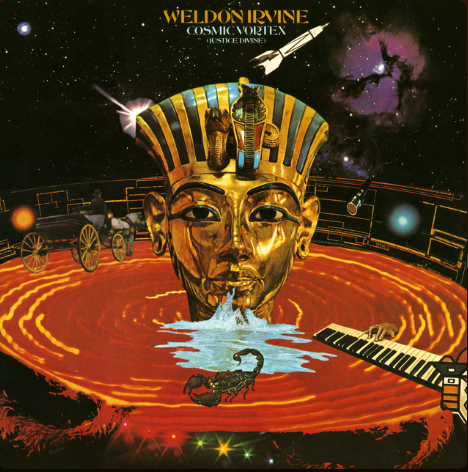
Continuing with the decade-long Social – originally a DJ club night I’d pick up at different times over the past 20 plus years, and also a café residency from 2012 to 2014 – playlist, each month I literally chose the records that celebrate anniversary albums, those that I’d love to hear on the radio waves or DJs play once and while, and those records that pay a homage and respect to those artists we’ve lost in the last month.
Anniversary picks this month include a big 60th shoutout to The Rolling Stones debut (see a little piece on my thoughts further down the page), 50th call outs to jazz-funk-soul greats Calvin Keys (Proceed With Caution!) and Weldon Irvine (Cosmic Vortex (Justice Divine)), Funkadelic (Standing On The Verge Of Getting It On). Moving into the 80s, REM’s Reckoning is unbelievably now 40 years.
Pulp’s His ‘N’ Hers LP, and Britpop’s near zenith with it, reaches the 30th milestone. An album that couldn’t be more different from the same year, Nas’ decade defining Illmatic is also 30 this month.
We now reach the unfortunate part of the playlist selection: the deaths or death in this case of the one of the last mavericks, John Sinclair. Synonymous for steering and kicking out the jams in his short role as manager of Detroit’s renowned rebel rousing motherfuckers The MC5, renegade poet, scholar, activist and establishment rattler John Sinclair is also remembered for his free radical zeal and dalliances with the law.
Even too hardcore for the MC5, Sinclair’s foundation of the anti-racist socialist White Panthers, and his countless associations with equally revolutionary counterculture players and shakers, marked him out; leading as it did to the now infamous drug bust for marijuana possession in 1969. Whilst his love for the herb and gesticulations, whether through poetry or diatribes, is in no doubt, the way this particular bust was set-up (for what was a very insignificant amount of drugs) is considered heavy-handed and unjustifiable. Handed an initial ten-year sentence, Sinclair’s status in the “heads” and political agitators’ communities had singled him out as a poster child for deterring the like-minded boomer generation from stepping out of line. Fortunately (to a degree) this sentence and media furor galvanized support and sympathy and reduced that ten-year stretch to two, with Sinclair emerging from jail in 1971.
Keeping his hand in so to speak but taking up residency in Amsterdam – a much safer bet -, the beatnik jazz sage continued to perform, write, and record. I’ve chosen a mere smattering of his recordings.
I always sprinkle a few newish tracks into the cross-generational mix. This month it’s the turn of the Neon Kittens, Mick Harvey, Nduduzo Makhathini and Forest Swords.
The rest of the playlist, well, it’s just tunes I played out, own or just rate. In that vein, there’s Mary Wells, Nefertiti, The 3, The Mad’s, Okay Temiz, Danny Arakaki, Ilous and more….
Calvin Keys ‘Aunt Lovey’
Weldon Irvine ‘Love Jones’
Jean Wells ‘Somebody’s Been Loving You (But It Ain’t Me)’
Funkadelic ‘Sexy Ways’
Nefertiti ‘Miss Amutha Nature’
3 Melancholy Gypsys ‘The 3’
Nas ‘It Ain’t Hard To Tell’
John Sinclair ‘When Will The Blues Leave’
The Mad’s ‘Feels Like Love’
The Rolling Stones ‘Little By Little’
Eulenspygel ‘Menschenmacher’
Okay Temiz ‘Galaxy Nine’
The Monkees ‘Time And Time Again’
Donnie Fritts ‘Prone To Lean’
Danny Arakaki ‘All Thanks’
Samadi ‘La Luna Llena’
Coumba Sidibe ‘Djagolla’
Ilous ‘Chanson Chagrin’
John Sinclair ‘Ain’t Nobody’s Business’
R.E.M. ‘Little America’
Neon kittens ‘Schrodinger’s Party Animal’
Virna Lindt ‘Shiver’
Pulp ‘Joyriders’
The Twilights ‘Sorry, She’s Mine’
Mick Harvey ‘When We Were Beautiful & Young’
Clancy Eccles ‘I Need You’
Gerardo Manuel & El Humo ‘Where Did You Go’
Nduduzo Makhathini ‘Libations: Omnyama’
Forest Swords ‘Torch’
John Sinclair ‘Sitarrtha’
__//ARCHIVES\\__

50th Anniversary to Guru Guru’s Dance Of The Flames and a staggering 60th to The Rolling Stones’ Debut.
Guru Guru ‘Dance of The Flames’
(Atlantic Records)
Trawling around Europe – and wherever they found a door that was laid open to them – like a ragtag gypsy caravan convoy, Guru Guru took their 1973 album, Don’t Call Us (We Call You), out on the road. With most of their monies funneled into purchasing a solid and heavy monolithic ballsy sound-system, they bled dry the ears of many a ‘head’.
The trios imbued in sonic genius and omnivorous lynch-pin guitar gunslinger, Ax Genrich, somehow managed to disappear from this mad procession, leaving the group and heading into nigh obscurity. His difference of opinion on which direction the ennui band of lunatics should progress resulted in a split, with Mani Neumaier hell bent on creating improvisational material against Genrich’s more delineate structured compositions – though it must be made clear that Genrich always threw himself unwieldy into every track, regardless of who wrote it or what form it took. For a scene that produced an abundance of over-qualified, sickeningly gifted, innovative, and erudite guitarists – West Germany spewed them out like an ever-efficient Volkswagen production line – it was, you could say, a job to stand out from the mighty throngs of erudite axe welders. Yet Genrich with his re-wired Hendrix and deconstructed rock’n’roll space licks, managed to leave an indelible footprint in the Krautrock canon, and hall of fame.
To plug this gaping chasm, and before embarking on the next LP, the one-time member of the progressive jazz outfit Eliff and exotically named Houchäng Nejadepour – half German, half Persian – joined the one-album veteran Hans Hartmann and founding father Neumaier to become part of Guru Guru mark III. Talented in many disciplines including guitar and sitar, alongside both compositional and technical production skills, Nejadepour added a more Popol Vuh-esque flavour to the band’s sound, lending Guru Guru a Balearic and far eastern quality. Such was his contribution – though this could also be partially down to Neumaier’s lack of new material – that the well-talented troubadour composed half of all the tracks on their next album, Dance Of The Flames. Unfortunately, that listless and cold-footed obligation to move on, led to Nejadepour’s departure soon after the LP’s recording in the Spring of 1974 – his replacement was Gila axe man Conny Veit, who himself only managed a short sojourn of a few months.
Dance Of The Flames, the second release on Atlantic, not only saw a wider and more cosmopolitan influence and catchment, but it also grew fat on a robust hard rock sound, which at times plunged into the dark recesses of Gothic heavy metal. Andalusian vistas and South American themed Sambas cut the collection of eight-songs into two camps. Neumaier, as chief patriarch, tends to either brood on or veer towards folly. Take the opening grandstanding ‘Dagobert Duck’s 100th Birthday’, a paean ode to Donald Ducks tight-beaked Uncle Scrooge, that could also be a reference to the last Merovingian king of the Franks, but then maybe not. The track features a display of fatuous duck-call kazoos and outlandish gestures of both The Edgar Winter Bands ‘Frankenstein’ and King Crimson, on showboating duties. But then there are also ethereal opuses, such as the romanticized ‘The Girl From Hirschhorn’ – a lament to the mysterious figure of affection, who resides in the nearby German town of the title – to balance it all out.
Production values are high, and slickly executed with every note, no matter how drenched in echo, reverb, or fuzz, all audible and separated apart. Those erratic rolling time signatures and unruly voracious drum solos of Neumaier are all still in evidence, as usual, as are the dependable assiduous bass runs and jazz riffs, favored by Hans Hartmann who’d joined the Guru Guru family the previous year. The high-plain astral traveler, preparing us for a meeting with visitors from beyond the stars, is almost erased from the groups original founding musical manifesto, replaced by a sturdier rock and, world music, agenda.
From the start:
Kazoo twitching gonzo trumpets announce the extravagant goof-off rock opus that is ‘Dagobert Duck’s 100th Birthday’ party anthem. This flitting Alice Cooper muscling rocker features a jovial, if under the surface portentous, ode to Donald Duck’s disparaging money grabbing capitalist Uncle Scrooge – known in Germany as Dagobert. Macho feats of savage and squalling guitar solos brand scorch marks across the stonking, stalking monster backing track; Nejadepour hurtling through the scales at a rabid rate of knots, hoping to erase the hovering presence of Ax Genrich, with his own blistering blurry-eyed fret work. Gratuitous and highly ridiculous in equal measure, this slab of over-cooked mega prog, is used as some kind of showcase, just to prove their mettle.
An inexorable ethereal and lightly laid-back gallop of a groove rolls into view over a harmonic pinpoint sweeping introduction. The diaphanous love pinning tryst, ‘The Girl From Hirschhorn’ – placed highly in my all-time top 100 Krautrock tunes, just in case you were wondering – floats in on the dreamy breezy melody. Hans Hartmann builds up a repetitive pounding bass line, as a gliding quivering lead guitar preens and majestically swoons along to the rousing pleasing and drifting backing. After seven-minutes of proto-Amon Düül II Wolf City era bliss, and dashes of love-in Acid Mother Temple – you can see why Neumaier went on to work with them – a vocal relief sublimely transcends the soundtrack, as Neumaier exhales joyfully –
“I can’t stop thinking of you.
Where could you be, little babe,
Why I am gently playing this song for you?”.
With his querying display of lament finally let out, the band hyper-drive towards a lunar wah-wah stop/starting outré; shimmering in reverb and slipping into a jazz-rock sporadic free-for-all, that spills over and onto side one’s closing track, a bombastic spasmodic odyssey.
‘The Day Of Time Stop’ is Sun Ra, Beefheart and Santana all sharing a pleasure voyage to the 5th Dimension. Staccato timings create a jump and off-kilter raging loop, that acts as a cyclonic spiraling blast for Nejadepour to launch another blast of light-speed attacking pomp, searing from his bewildered guitar. Stumbling drums and octave hurling bass brew up a right shitstorm before the trio use the Arthur. C. Clarke galactic elevator to the stars, disappearing into some distant cosmological whirlpool of depravity. Like Edger Winter, our maddened guitar alchemist, runs wild, flipping through key changes and reeling off utterly fanciful and one-fingered licks – total filth.
Side two begins with the album’s title track. Neumaier promptly rattles off a smashing cymbals introduction, as Hartmann slaps his bass around some bending rhythms. Everything is coated in a strange reverberated and, reversed effect, flipping backwards and forwards, stretching out the instrumental and whipping it into a twisted carcass of a song, with the very air itself sucked out into some kind of vacuum.
A taste of the Samba is up next, albeit an Hieldberg etymological version of the sun-kissed exotic dance. Nejadepour’s sprightly jazz-tinged composition sounds like a happy-go-lucky Yes, twinned with the be-bop indulgences of Herb Albert. Hartmann twangs and bounces along on the contra bass, as a cheerful Neumaier taps away on the congas, each of them enjoying the succinct distraction that is ‘Samba Dos Rosas’ – just one of Hejadepour’s Balearic enthused joints that make up most of side two’s track list.
‘Rallulli’ is cast from the same mold, but steers closer to home, as the musical accompaniment melds together fits of acoustic jamming and hidden-in-the-attic sound effects. Tablas, congas, and a trapped jar of hornets produce a strange old avant-garde miss-mash, the final word going to a flushed toilet – perhaps a critique of the track, or more of that Neumaier humor.
Those Andalusian plains and mountains come a calling, as pranged delicate harmonies add to a pained melancholic mood-piece entitled ‘At The Juncture Of Light And Dark’. Hemmingway-esque Death In The Afternoon allusions are cast, with resplendent flamingo flourishes and a suspense filled air of Spanish mystery – file under evocative musical narrative.
Bringing the album to a dramatic close is the doom lit curtain call of ‘God’s Endless Love For Man’, a Gothic heavy metal droning and throbbing prowling instrumental that stabs a fork in the eye of the creator. More like an attempt to soundtrack the works of Bosch then a hymn to the divine, this bubbling cauldron of a stonker takes over from Amon Düül II’s Phallus Dei quest and drags Black Sabbath through the killing fields. This is indeed some scary shit: Guru Guru on a fuck-rock satanical crusade, summoning up some kind of end-plan Armageddon. Interspersed in the mire, bursts of rapid-fire jazz rich breaks and tangled glorious guitar solos add a glimpse of hope to this one-way helter skelter ride into the abyss.
The Rolling Stones ‘S-T’
(Decca) 1964
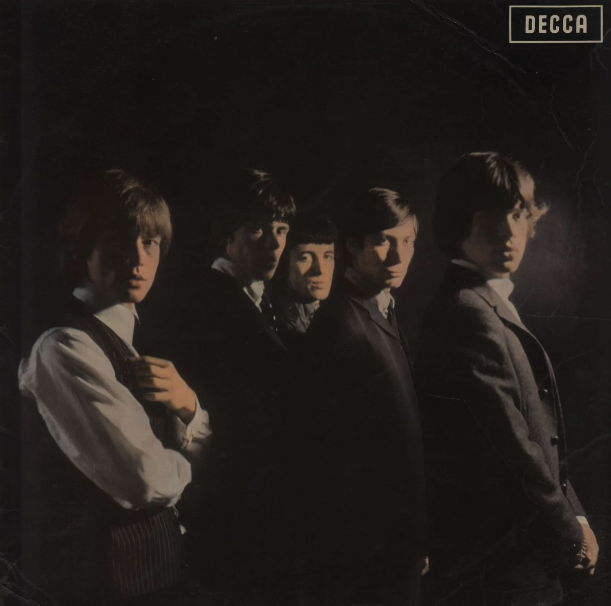
Those sulky near petulant straight-faced punks stare out from their dark shadowed album with a look that means business. Made-up almost entirely of cover versions, grabbed from the patron black blues and r’n’b characters of Chicago, The Mississippi and Tennessee, the debut LP is almost an exalted tribute to their heroes.
Rambunctious and loud, the pure rawness and bleed over of the instruments (something that no-one seemed concerned about in the studio at the time; encouraged by their manager Oldham) as they filled each other’s space, was a mixture of giddy adulation and blue-eyed indecorous rebellion. From the frayed, proto-punk amateurish sound of ‘Route 66’ to the gospel ye-ye of ‘Can I Get A Witness’, this album shambles along and offers up some convincing attempts to sound like Jimmy Reed, Willie Dixon and Slim Harpo. Of course, they fail but the results are better than the intention in many ways; the vital kick start to a whole scene and call for a generation. Can it really be sixty years old this month?!
THE KING OF NO-FI BRIAN ‘BORDELLO’ SHEA REVIEWS ANOTHER HAUL OF NEW AND UPCOMING RELEASES FOR THE MONOLITH COCKTAIl. (Unless stated otherwise, all releases are available at time of publication)

/SINGLES\
Tearless Life ‘Conversations With Angels’
(Other Voices Records)
The debut single from The Tearless Life and a strange thing it is indeed; part post-punk gothitude, part Harry Styles: maybe they should have called themselves Boy Division. It is a quite interesting and enjoyable pop single and is blanketed in a summer warmth that captures the long lost summer radio evenings of Radio one, when Kid Jenson and Janice Long used to entertain us whilst waiting for the stranger sounds from John Peel. And the B-side does not half remind me of Julian Cope in one of his stranger pop explosions of leather flying pants glory. A quite wonderful pairing.
Candid Faces ‘Coming Home’
(Warren Faces)
Every week I seem to have an email box full up of great guitar music by young bands. Sadly I cannot write about them all, so Candid Faces are one of the chosen ones in this month’s round up. And as I have just written, they are young, full of life and humour, vim and vigour, and are blessed with a pop nonchalance that I very much approve of. I’m very sure they will be riding the waves of success when the damn breaks and guitar music will once again become a musical mainstream necessity.
Hydroplane ‘Stars (Twilight Mix)’
(World Of Echo)
A sweet twee last dance of a song, all heavenly bobby socks melodies chiming Buddy Holly guitars and the taste of the end or the beginning of first love; the sound of the ending of innocent wishes and kisses and a rather beautiful thing it all is too.
Slow Pulp ‘Doubt’
(ANTI-)
Slow Pulp’s ‘Doubt’ is an enjoyable little indie rock/emo pop song that my daughter seemed to enjoy. As I was listening to the track she asked what and who it was, and is now considering going to watch them at Jimmys in Liverpool in November. So they must be doing something right, and is nice to know that music still reaches out and touches the souls and inspires youngsters to go out and have a good night with friends. The power and emotional pull of music will never subside.
\ALBUMS-EPS/
Liam Gallagher ‘Live At Knebworth 22’
11th August 2023

Ok, people who know anything about me know that I’m really not an Oasis fan. I find them extremely over-rated and I think they put guitar music back 30 years with their unimaginative paint by numbers guitar sludge. They made it fashionable to be average and beige, and to make mock ‘n’ roll music. For real rock ‘n’ roll has a spirit; a sexiness; a taste of adventure that Oasis songs really do not have: they have as much danger as watching an episode of Hollyoaks.
So I admit I wasn’t expecting to really like this album much. And for once I was right: I really do not like this album at all. It has all the lack of qualities that Oasis had. It is of course Liam Gallagher‘s triumphant return to Knebworth in all its paint by numbers glory. Liam standing bow legged like he has a full nappy singing in his voice like he has just been told off by his mum, backed by a band who knows all the right chords and are played in all the right order with no deviation from the recorded and released versions. Half the songs are Oasis classics (if classics is the right word for songs of such stodgy lack of glamour), but at least they have a melody unlike the other half of the album made up of highlights from his solo albums – again, highlight might not be the right word as the highlight of a Liam album is the last bar of the last song on it. I know people will say Liam must be good because he sold out Knebworth so many times and all these people went to watch him. Yes indeed, but remember people also pay to watch Golf.
Is there anything good I can say about this album? Well actually I can find two things. The first is it does not have a version of ‘Little James’ on it, which is the worst song ever written by a grown up, and the second thing, is at least it is not a Noel Gallagher solo album, which would take tedium to new highs: or would that be lows. So an album to be avoided by all: even if you are an Oasis fan. You might as well listen to your already cherished copies of the studio albums as there is nothing different here, just the same old sameness.
Mick Harvey and Amanda Acevedo ‘Phantasmagoria In Blue’
(Mute) 1st September 2023

Phantasmagoria In Blue is an album of sweeping lush duets between a man and a woman; mostly covers with a couple of originals thrown in. An old and wonderful concept that has done many times before, but a concept that I for one never tire of, as I never grow tired of renditions of ‘Songs For The Siren’. For yes there is another version on Phantasmagoria In Blue, and a fine version it is, swathed in beauty and strings and conjuring up images of windswept lovers meeting on winter beaches with the ocean whispering sweet truths and wishful wants.
The whole album in fact is one long journey; one long story that sets a mood and for the length of the album never loses that mood; an album of romantic redemption; an album to lose yourself in with the partner of your choice or one to soundtrack the unforgiving beauty of loneliness.
Craig Fortnam ‘Ruins In Time EP’
(Believer’s Roast)

Late 60s early 70s psych folk vibes abound with this rather spiffing three-piece slice of Bandcamp magic. From the excellent opener, the Syd Barrett like ‘Shepard’s On The Lawn’, through to the second and my fave of the three, the rather beautiful folky ‘Ruins In Time’ – which had me wondering where I have left my ‘A Game For All To Play Boxset’ – these tracks really do take you back to a much gentler and magical time. The only bad point about this EP is that it not an album.
Funeral Cake ‘One Funny Place EP’
(Dandy Boy Records)

Does anyone out there want a slice of Funeral Cake? A 4 track EP of fuzzy guitar pop and tuneful melodies, that sounds a lot like those pesky Primitives; yes, that band from the 80s that held our pop hearts in their hands and juggled and performed various holiday fairylike tricks with it sprinkling sparkle dust over the pesky blighter. Yes indeed, the Funeral Cake carry the same magic, the same pop suss, the same melodious let-me-tickle-your-funny-bones-and-make-your-day-a-sunny-treat. Yes, Funeral Cake are popadelica: a real treat for you.
The Monthly Playlist Revue: April 2020: Nick Cave, Big Thief, Homeboy Sandman, Kahil El’Zabar…
April 30, 2020
Playlist/Dominic Valvona/Matt Oliver/Brian ‘Bordello’ Shea

By now we’ll probably all aware and getting jaded by the constant newsroll of Covid-19 horror stories, and the ominous stench of pandemic armageddon. To return to some sort of normality, the Monolith Cocktail promises to keep finding all the best new music for you to enjoy, dance to, contemplate and mull over. No cheap epidemic cash-ins and no tenuous links to self-promotional lockdowns here. Just great music, which we hope you will all keep supporting during these anxious uncertain times. And remember, if you do find anything on this playlist that you’d love to purchase, please root the artist, band out on Bandcamp tomorrow (Friday 1st May 2020), as the platform is once more waiving their cut of the fees.
For those of you that have only just joined us as new followers and readers, our former behemoth Quarterly Playlist Revue is now no more! With a massive increase in submissions month-on-month, we’ve decided to go monthly instead, in 2020. The April playlist carries on from where the popular quarterly left off; picking out the choice tracks that represent the Monolith Cocktail’s eclectic output – from all the most essential new Hip-Hop cuts to the most dynamic music from across the globe. New releases and the best of reissues have been chosen by me, Dominic Valvona, Brian ‘Bordello’ Shea and Matt Oliver.
Tracks in full are:
Hanni El Khatib ‘ALIVE’
Mashmellow ‘Share It’
3 South & Banana ‘Rush Hour’
Supergombo ‘Alien Felines From Beyond The Galaxy’
iyatraQuartet ‘Chandra’
Santrofi ‘Africa’
Damily ‘Zaho Va’
Holy Hive ‘Didn’t You Say’
Euan Hartley And Friends ’30/1′
Twisted Ankle ‘Landlord Laughs’
Lucidvox ‘Knife’
Pabst ‘Skyline’
Senji Niban ‘Where The Birds Fly Now?’
Higamos Hogamos/Spacerocks ‘Crome Yellow’
Raw Poetic & Damu the Fudgemunk ‘Head On’
Tanya Morgan ‘Resurrection’
Evidence ‘Unlearning’
The Doppelgangaz ‘Cloak Makes The Man’
Antti Lotjonen ‘Pocket Yoga’
R.A. The Rugged Man ft. Chuck D ‘Malice Of Mammon’
Dope Knife ‘Face Fuck’
Cambetta & Apollo Brown ‘Nightmare’
Makoto Kino ‘West Madoka’
Bodyvox ‘Yeah Yeah (D Ramirez Vocal Radio Edit)’
RJD2 ft. Homeboy Sandman ‘One Of A Kind’
Sparks ‘One For The Ages’
Mick Harvey ‘The Journey: Part 1: Conflict’
Alex Stolze ft. Ben Osborn & Anne Muller ‘Babylon’
Chicago Underground Quartet ‘Orgasm’
Aksak Maboul ‘Silent Silhouettes’
Halftribe ‘Subliminal’
Clovvder ‘My Mother Was The Moon’
Nick Cave ‘Cosmic Dancer’
Die Wilde Jagd ‘Himmelfahrten’
David Ahlen ‘If I Have You’
Big Thief ‘Love In Mine’
Yakima ‘It Helped’
Murmur Tooth ‘A Fault In This Machine’
Farezi & Sinan Oktem ‘Dionysian’
So Beast ‘Multiplayer’
Simon McCorry ‘Pieces Of Mind’
Kahil El’Zabar & David Murray ‘In My House’
Roedelius ‘Geruhsam’
Hi, my name is Dominic Valvona and I’m the Founder of the music/culture blog monolithcocktail.com For the last ten years I’ve featured and supported music, musicians and labels we love across genres from around the world that we think you’ll want to know about. No content on the site is paid for or sponsored and we only feature artists we have genuine respect for /love. If you enjoy our reviews (and we often write long, thoughtful ones), found a new artist you admire or if we have featured you or artists you represent and would like to buy us a coffee at https://ko-fi.com/monolithcocktail to say cheers for spreading the word, then that would be much appreciated.
REVIEW
Dominic Valvona

Mick Harvey ‘Waves Of Anzac/The Journey’
(Mute) 17th April 2020
Excuse the obligatory uninspired platitudes but Mick Harvey’s first soundtrack release in a decade is a most worthy and stirring orchestration for two poignant themes; the often forgotten story of the ANZACs and their sacrifices and loyal service during both World Wars and, later, Vietnam, and the ongoing crisis of child refugees and people seeking asylum in offshore detention centers scattered throughout the South Pacific atolls.
Though it’s been a long time since Harvey released a soundtrack the former Birthday Party bruiser, Bad Seeds and Crime And The City Solution instigator has been busy. Despite being ignored by the majority of press and blogs, his charmingly understated Four (Acts Of Love) album of afflatus paeans and lamentable covers and original numbers, was wholly embraced by the Monolith Cocktail, the only blog, to our knowledge, to both critically endorse it and grant it a coveted place in a ‘choice LPs of the year’ list. In 2014, Harvey alongside Crime and the City Solutions’ Alexander Hacke and Danielle De Picciotto and musical director Paul Wallfisch, formed the nursery grime musical outfit, The Ministry Of Wolves, for a set of theater performances. By way of the Pulitzer Prize winning author Anne Sexton’s, even more, macabre revisionist take on the original Brothers Grimm fairy tales, the acclaimed stage production also spawned an LP, Music From Republik De Wölfe. Inspired and finding it far more fun than he originally envisaged, Mick Harvey’s 90s English translations of the louche coffee society genius of wit, salacious and often dark humoured song, Serge Gainsbourg, were given a new lease of life that same year. To coincide with the anniversary of the bawdry polymath’s birth, Harvey’s moiety of homages, Intoxicated Man and Pink Elephants were re-issued, followed up with a small number of select live shows in Australia and Europe (including shows at Primavera and London’s Union Chapel). Invigorated by this return to the back catalogue, Harvey and his congruous band mates, which include the assiduous multi-instrumentalist J.P. Shilo and the no-less talented Glen Lewis and Hugo Cran, set up camp in Harvey’s Melbourne base of operations to record another two volumes of Gainsbourg prose, Delirium Tremens and Intoxicated Women. Fast-forward to this year and once more alongside J.P. Shilo, Harvey has been paying another homage. This time to the late knockabout foil Rowland S. Howard. Originally involved with and playing on the maverick’s Teenage Snuff Film and, later, Pop Crimes albums, Harvey has taken part in a tribute concert, whilst his label Mute have recently re-issued those two high influential totems.
The Waves Of Anzac/The Journey LP collects together two recent soundtracks of evocative timeless classical gravitas; composed and performed with an attentive touch, only occasionally revving up the unsettling electrified caustic waning specter of the late Scott Walker when scoring the most ominous, tumultuous of moods.
As a concatenate relative to Waves Of Anzac, at the end of last year Harvey collaborated (on yet another project) with Christopher Richard Barkes on the tragic WWI pliant The Fall And Rise Of Edgar Bourchier And The Horrors Of War. Before this and only now seeing the light, the soundtrack to Kriv Stenders 2015 directed Why ANZAC? documentary with Sam Neill was released to coincide with the centenary of the Gallipoli campaign. A campaign that featured the recently formed Australian And New Zealand Army Corps of the acronym title, commanded by General William Birdwood, the concentration of which took part in the ill-fated fight to open up a second front in the bogged-down war against Germany and her Ottoman allies. Even by the standards of the carnage on the Western Front and the badly laid plans of removed generals, this invasion of The Dardanelles was a tragic horror show. Audaciously planned by Churchill with certain fatal assumptions made about the Turkish forces who held the high ground, had knowledge of the terrain and were, unfortunately for the Allies, commanded by the military genius and future young Turk leader of a post-Ottoman Turkey, Mustafa Kemal (Atatürk), many of the antipodeans most hardy, loyal and brave died on the beaches in a eight month slog against tenacious defenders. The final tally of 56,000 Allied deaths included 8,070 Australians and 2,721 New Zealanders; disproportionate figures considering the populations of these British overseas territories: a generation lost as they say.
Part of an ABC documentary series on ‘forgotten war stories’, the Aussie actor Neill presented a personal journey and family attachment to that sorry chapter; setting the Gallipoli and Western Front against a contemporary background of political division. Harvey for his part composed a mostly subtle, moving movement of short spiraling strings and atonal searing atmospheric leitmotifs. From melodious ripples to elbowed cello maladies, Waves Of Anzac is both a yearned and moody, with the final timpani and pealing bell tolled ‘The Aftermath’ being the album’s most dark. Though the focus of this album is Gallipoli, half of the tracks reference the ANZACs various actions on The Somme and in Mesopotamia during WWI, and their part in the defense of Greece and Crete during WWII. There’s even a piece of edgy reverberated trauma in motion music for a chapter on Vietnam. Though, in hindsight rather wisely, Britain declined to join the Americans, Australia and New Zealand unfortunately did.
A balance of stain glass lit annotations, the stately and aching; Harvey produces an articulate tribute to the horrors of war.
The four-part Journey performance is no less evocative, reflecting as it does the travails and terror of refuges making their way across the Pacific maelstrom towards sanctuary and the hope of asylum. Most of these unfortunate souls however, find themselves metaphorically washed up in detention camps indefinitely, marooned on islets such as Nauru, Manus Island and Christmas Island. Released in support of #KidsOffNauru, Harvey conducts a tumult mix of chamber and Baroque-pop, an oceanic waltz of dramatic swells and mournful torrents. Harvey and his The Letter String Quartet ensemble track that journey, from the ‘Pyramids’ like Radiohead signature beckoning and lamentable march of ‘Conflict’, through the confusion intense torrid of ‘All At Sea’ to the lulled ethereal choral ‘Hope’.
Classical music with an augmentation of the modern, Waves Of Anzacs/The Journey is an often-understated work of sadness, fear, trauma and also anger that stands well in any period. Harvey offers a moving testament of assured maturity to his subjects, connecting as he does, two different tragedies, from wartime and a so-called peacetime, on one sublime album.
Related posts from the Archives:-
Mick Harvey ‘Delirium Tremens’
Mick Harvey Live At The Oran Mor
Mick Harvey ‘Four Acts Of Love’
Rowland S. Howard ‘Teenage Snuff Film’ & ‘Pop Crimes’
The Monolith Cocktail is now on the micro-donation hub Ko-Fi:
Hi, my name is Dominic Valvona and I’m the Founder of the music/culture blog monolithcocktail.com For the last ten years I’ve featured and supported music, musicians and labels we love across genres from around the world that we think you’ll want to know about. No content on the site is paid for or sponsored and we only feature artists we have genuine respect for /love. If you enjoy our reviews (and we often write long, thoughtful ones), found a new artist you admire or if we have featured you or artists you represent and would like to buy us a coffee at https://ko-fi.com/monolithcocktail to say cheers for spreading the word, then that would be much appreciated.
 Monolith Cocktail Blog