End of the Year Revue For 2025: Part Two: N to Z
December 15, 2025
Choice Highlights From The Last Year Part Two
In case you missed Part One of this illustrious list, here’s a recap.
I said I wasn’t going to do it this year. And this may be the last. But here is the second part of a comprehensive revue listing of choice albums (some extended EPs too) from 2025 that we returned to the most, enjoyed or rated highly. See it as a sort of random highlights package if you will.
As usual a most diverse mix of releases, listed alphabetically – numerical orderings make no sense to me unless it is down to a vote, otherwise what qualifies the placing of an album? What makes the 25th place album better than the 26th and so on…
Whilst there is the odd smattering of Hip-Hop releases here and there, our resident selector and expert Matt Oliver has compiled a special 25 for 25 revue of his own, which will go out next week.
Part One: A to M can be perused here
N……………
Neon Crabs ‘Make Things Better’ (Half Edge Records)
Review by Dominic Valvona
Noir & Superior, Che ‘Seeds In Babylon’
Picked by Dominic Valvona
Novelle & Rob Mazurek, Alberto ‘Sun Eaters’ (Hive Mind Records)
Review by Dominic Valvona
Nowaah The Flood ‘Mergers And Acquisitions’
Picked by Dominic Valvona
O……………
Occult Character ‘Next Year’s Model’ (Metal Postcard Records)
Picked by Dominic Valvona
P…………….
Philips Arts Foundation, Lucy ‘I’m Not A Fucking Metronome’
Reviewed by Brian Bordello Shea here
Phill Most Chill & Djar One ‘Deal With It’ (Beats House Records)
Picniclunch ‘snaxbandwitches’
Review by Brian ‘Bordello’ Shea
Pound Land ‘Can’t Stop’ (Cruel Nature Records)
Review by Brian ‘Bordello’ Shea
Q……………..
Querci, Cosimo ‘Rimane’ (Quindi Records)
Review by Dominic Valvona
R………………
Robertson, Kevin ‘Yellow Painted Moon’
Review by Brian ‘Bordello’ Shea
Rose, Sophia Djebel ‘Sécheresse’ (Ramble Records/WV Sorcerer Productions/Oracle Records)
Review by Dominic Valvona
Rumsey, Andrew ‘Collodion’ (Gare du Nord)
Review by Brian ‘Bordello’ Shea
S……………….
SAD MAN ‘Art’ (Cruel Nature Records)
Review by Dominic Valvona
Salem Trials ‘Heavenly Bodies Under The Ground’ (Metal Postcard Records)
Review by Brian ‘Bordello’ Shea
Sanders, Pharoah ‘Love Is Here – The Complete Paris 1975 ORTF Recordings’
(Elemental Music Records) Picked by Dominic Valvona
Schizo Fun Addict ‘An Introduction To…’ (Fruits der Mer)
Review by Brian ‘Bordello’ Shea
Schnitzler, Conrad ‘RhythmiCon’ (Flip-Flap)
Review by Dominic Valvona
Scotch Funeral ‘Ever & Ever’
Review by Brian ‘Bordello’ Shea
Silva, Maria Elena ‘Wise Men Never Try’ Review
‘Wise Men Never Try Vol. II’ Review by Dominic Valvona
Širom ‘In the Wind of Night, Hard-Fallen Incantations Whisper’
(Glitterbeat Records) Picked by Dominic Valvona
Sleepingdogs ‘DOGSTOEVSKY’ (Three Dollar Pistol Music)
Picked by Dominic Valvona
Soft Speaker ‘Rippling Tapestries’ (Cruel Nature Records)
Review by Brian ‘Bordello’ Shea
Sol Messiah ‘War of the Gods’ Picked by Dominic Valvona
Staraya Derevyna ‘Garden Window Escape’ (Ramble Records/Avris Media)
Review by Dominic Valvona
Stewart, Macie ‘When The Distance Is Blue’ (International Anthem)
Review by Dominic Valvona
T………………..
Teamaker, Marc ‘Teas n Seas’
Review by Brian ‘Bordello’ Shea
Theravada ‘The Years We Have’ Picked by Dominic Valvona
Toivanen Trio, Joona ‘Gravity’ (We Jazz)
Reviewed by Dominic Valvona here
Tomo-Nakaguchi ‘Out Of The Blue’ (Audiobulb Records)
Review by Dominic Valvona
Tortoise ‘Touch’ (International Anthem X Nonesuch Records)
Review by Dominic Valvona
Toxic Chicken ‘Mentally Sound’ (Earthrid)
Review by Brian ‘Bordello’ Shea
Trupa Trupa ‘Mourners’ (Glitterbeat Records)
Info/Singles Review Feature by Dominic Valvona
U…………………
Uhlmann, Josh Johnson, Sam Wilkes, Gregory ‘Uhlmann Johnson Wilkes’
(International Anthem) Review by Dominic Valvona
Ujif_notfound ‘Postulate’ (I Shall Sing Until My Country Is Free)
Review by Dominic Valvona
V………………….
Various ‘TUROŇ/AHUIZOTL’ (Swine Records w/ Fayuca Retumba)
Review by Dominic Valvona
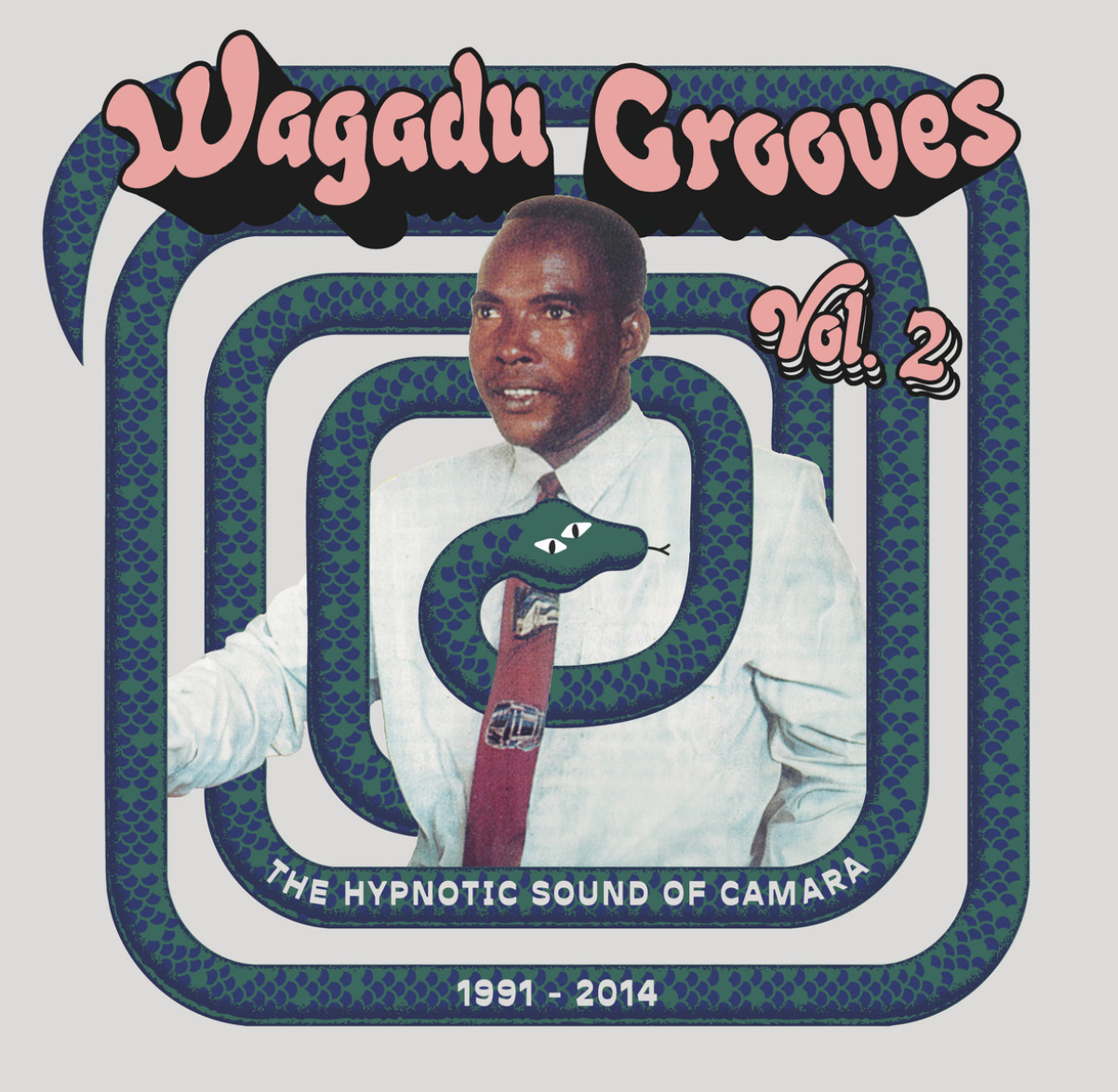
Various ‘Wagadu Grooves Vol. 2: The Hypnotic Sound Of Camera 1991 – 2014’
(Hot Mule) Review by Dominic Valvona
Vexations ‘A Dream Unhealthy’ (Cruel Nature Records)
Review by Brian ‘Bordello’ Shea
Violet Nox ‘Silvae’ (Somewherecold Records)
Review by Dominic Valvona
Voodoo Drummer ‘HELLaS SPELL’
Review by Dominic Valvona
W…………………..
Wants, The ‘Bastard’ (STTT)
Review by Brian ‘Bordello’ Shea
Warda ‘We Malo’ (WEWANTSOUNDS)
Review by Dominic Valvona
West Virginia Snake Handlers Revival ‘They Shall Take Up Serpents’
(Sublime Frequencies) Reviewed by Dominic Valvona
Winter Journey, The ‘Graceful Consolations’ (Turning Circle)
Reviewed by Dominic Valvona here
Y…………………….
Yellow Belly ‘Ghostwriter’ (Cruel Nature Records)
Review by Brian ‘Bordello’ Shea
Young Mothers, The ‘Better If You Let It’ (Sonic Transmissions)
Review by Dominic Valvona
Z……………………..
Zavoloka ‘ISTYNA’ Picked by Dominic Valvona
For those that can or wish to, the Monolith Cocktail has a Ko-fi account: the micro-donation site. I hate to ask, but if you do appreciate what the Monolith Cocktail does then you can shout us a coffee or two through this platform.
The Monthly Playlist selection of choice music, plus our Choice Albums list from the last month.

We decided at the start of the year to change things a little with a reminder of not only our favourite tracks from the last month, but also a list of choice albums too. This list includes both those releases we managed to feature and review on the site and those we just didn’t get the time or room for.
All entries are displayed alphabetically.
Meanwhile, our Monthly Playlist continues as normal, with all the choice tracks from May selected by Dominic Valvona, Matt Oliver and Brian ‘Bordello’ Shea.
CHOICE RELEASES FROM THE LAST MONTH OR SO:
A Single Ocean ‘S-T’
Review
The Balloonist ‘Dreamland’
(Wayside & Woodland) Review/Piece
Black Liq & Dub Sonata ‘Much Given, Much Tested’
The Bordellos ‘Liam Gallagher’
(Metal Postcard)
Cumsleg Borenail ‘It’s Your Collagen Not Your Conversation I Desire, My Pretty’
Famo Mountain ‘For Those Left Behind’ – This month’s cover art
Fir Cone Children ‘Gearshifting’
(Blackjack Illuminist Records) Review
LIUN + The Science Fiction Band ‘Does It Make You Love Your Life?’
(Heartcore Records) Review
Neon Crabs ‘Make Things Better’
(Half Edge Records) Review
SAD MAN ‘Art’
(Cruel Nature Records) Review
Staraya Derevyna ‘Garden Window Escape’
(Ramble Records/Avris Media) Review
Tomo-Nakaguchi ‘Out Of The Blue’
(Audiobulb Records) Review
Zavoloka ‘ISTYNA’
AND NOW, THE MONTHLY PLAYLIST::
LIUN + The Science Fiction Band ‘SPEAK TO ME’
SISTER WIVES ‘YnCanu’
Neon Crabs ‘J Spaceman’s Blues’
Fir Cone Children ‘Madness!’
A Single Ocean ‘White Bright Light’
Your 33 Black Angels ‘Your Sickness Solution’
Dabbla, Ghosttown, Dubbledge ‘Karate Good’
Black Liq & Dub Sonata ’10 Black Commandments’
Homeboy Sandman & Brand The Builder ‘Infinite Pockets’
Milena Casado ‘Yet I Can See’
Wildchild ‘Change For 2 Cents’
The Strange Neighbour & L One ‘625’
Pan Amsterdam & Leron Thomas ‘Evening Drive’
Famo Mountain ‘My Struggle To Survive’
Orain ‘Tangerine’
Smashing Red ‘Dark Eyed Girl’
Meggie Lennon ‘Running Away’
Dyr Faser ‘Sinister Dialogue’
Battle Elf ‘Stops Pretty Places’
Violet Nox ‘Strange Remix by Jonathan Santarelli’
Tomo-Nakaguchi ‘Indigo Line’
Tom O C Wilson ‘Better Off’
The Mining Co. ‘Treasure in Spain’
Oliver Earnest ‘Directionless’
The Bordellos ‘Cabbage Patch Doll Kiss’
Mama Oh No ‘Samba De Janeiro’
Zavoloka ‘Vesnianka’
Cumsleg Borenail ‘Signus Vectors’
OvO ‘Scavo’
Fatboi Sharif & Driveby ‘Swim Team Audible Function’
Cosmic Ear ‘Father and Son’
Staraya Derevnya ‘Tight-Lipped Thief’
Operation Keep The monolith Cocktail Afloat:
Hi, my name is Dominic Valvona and I’m the Founder of the music/culture blog monolithcocktail.com For the last 15 years both me and the MC team have featured and supported music, musicians and labels we love across genres from around the world: ones that we think you’ll want to know about. No content on the site is paid for or sponsored, and we only feature artists we have genuine respect for /love or interest in. If you enjoy our reviews (and we often write long, thoughtful ones), found a new artist you admire or if we have featured you or artists you represent and would like to say thanks or show support, than you can now buy us a coffee or donate via https://ko-fi.com/monolithcocktail
A WORLD OF SONIC/MUSICAL DISCOVERIES REVIEWED BY DOMINIC VALVONA

Battle Elf ‘10’
(Birdman Records) 2nd May 2025
Tago Mago era CAN invoking visitations in cahoots with Third era Soft Machine, the sound of the motor city trio of Battle Elf is a mysterious, supernatural concentration of various elementals and threads pulled together in heavy psychedelic dose of “conflict” and “redemption”.
Harnessing the Detroit environment of both active and defunct, rusted decayed industry and manufacture, the triumvirate draw of Gretchen Gonzales and Chris Peters on guitars and David Hurley on drums moves across a simultaneously disturbing and experimentally evocative landscape of cosmic and tribal mirages, the barren and chaotic. With leaps and bounds of faith and reaction, they recall the already mentioned influences of CAN – especially ‘Aumgn’, although ‘Stops Pretty Places’ could be a live version of the group – and the Soft Machine – tell me that doesn’t remind you of proto–Mike Ratledge Geiger-counter-like ripped organ on the opening part of the album’s first track, ‘Behind The Wilderness’ – alongside Fred Frith, Eddie Hazel, Ash Ra Tempel, and most surprisingly, the Cosmic Jokers. Apart from the Canterbury troupe, the rest are all referenced in the PR notes. But you could add Bill Orcutt and maybe some Faust to that list, along with a whole modern smorgasbord of similar sounding kosmische and experimental psych travellers, of avant-garde and space jazz funk influences. For an album without brass or horns of any kind, 10 has a real jazz feel and sound about it: you could say a Cosmic Slop version of Bitches Brew and such psychedelic affected LPs.
It helps that all three members of this project, between them, have a diverse range of bands, collaborations to channel; from Peters’ Racehorses Are Resources union with hip-hop producer and artist Quelle Chris, to Gonzales’ Universal Indians partnership with John Olson of Wolf Eyes note, and Hurley’s membership and crossover union with Peters in the Panto Collapsars trio. All tangents, interactions now meet at the Detroit crossroads: motor city now a distant memory of a heyday, superseded by kick out the jams, the revolutionary call of post-industry decline and the electricity and rebellion that forged the techno movement of the 1980s.
In this time and space, out on the margins, they counter actions of entanglement with the resonating effects of machinery and steel, the otherworldly and alien with the chthonian and wild. Free-range and yet examined, this avant-hard mood music of a kind is both improvisational and yet concentrated in heavy meta.
There’s plenty of nice touches, surprising and intriguing sounds and motions to be found across the quartet of long form pieces, with untethered rhythms emerging from the melee and more considered passages of guitar play and obscured atmospheric soundings. At times they manage to echo Manuel Gottsching’s transcendent and alien visions: both the menacing kind and the inviting astral plane kinds.
A cult record for head music nuts, the fantastical role-playing Battle Elf pulls together a strange, unearthly and yet industrial scarred heavy psych trip of the supernatural, marooned and wild.
A Single Ocean ‘S-T’
2nd May 2025
From the Chicago hot-house resurgence of cross-pollinated ideas and experiments, another vital conjuncture of that city’s underground post-everything sounds. In the form of an amorphous single ocean of rhythms, of fourth world possible and Japanese environmental musics, of organic electronica and analogue patterns, of post-rock-no-wave-funk and the chimed, the trio of Cameron Brand, Scott McGaughey and Christopher Schreck come together in a special union of transformed and edited improvisation.
After ‘formerly’ coming together to produce a solo album by McGaughey back in 2018, all three foils decided to continue the good work under the open-ended, all flows into the same body of water metaphor, A Single Ocean heading. The collaboration’s debut album is an impressive, congruous but fluctuating immersion and absorption of influences both studied and traversing.
There’s subtlety but more than enough surprising turns on the way, as that ocean of music ebbs and flows between shifts in emotion, pitch, rhythm and style. But that rhythmic response and the ease of the swimmingly and magnetic flows alongside the quirks, the manipulations, and building blocks (layering like bricks of sound, loops, percussion on top of each other) that echo Harmonia & Eno’s ’76 union as much as they do Eno’s My Life In The Bush Of Ghosts collab with Byrne, and even, Bowie’s Hansa period – especially the momentary squeezes and freedom wafts of saxophone. But from the opening dulcimer-like chimes and bamboo music, the near breathes of flute and the use of what could be a Fairlight-like 80s evocative synth, the trio meticulously seem to place the inspired spark of influence soundly in the 1980s and late 1970s. I’m hearing Japan (both the country and band) on the sprinkled ‘Cascades’ alongside Cybe; a hint of Orchestral Manoeuvres In The Dark’s inaugural LP alongside skying new age trance, Masayoshi Fujita and Tortoise – taking the post-rock out of the highly influential Chicago ensemble’s sound – on the poles and tubular synth shuttered and percussive ‘6.4 Blocks’; and a near complete change around of brooding bass and cool no wave on the synth-pop meets 80s cut-up hip-hop collage ‘White Bright Light’. You could add shades of moody TV On The Radio, Holy Fuck and Major Force to the latter. This is all within the boundaries of the first few tracks on a twelve-track spread, as the trio merge hidden sources of percussive instrumentation with the tubular and the electronic. For instance, ‘Waterways’, to these ears, reminded me of a Warp 9 kind of near nu-funky bassline, yet also seemed to work in Jon Hassell and Ramuntcho Matta to the clap of wood and bubbled bulbs of sparkle and strange dialectical, non-religious but near sacred or mysteriously voiced, hints of Bowie’s Low period. Voices, when they appear, are often obscured in some way, or broken up like a clicky disembodiment. There are snatches of what could be samples, snippets from various sources adding to a sense of tuning in to the frequency of the time and place, but perhaps eliciting another evocation, a sense that there is more going on beneath and surface and woven into the fabric.
By the time we reach the second half of the album, there are beams of near cathedral and pastoral organ, those drifted elements of a transmogrified Modern Jazz Quartet, and moments of Casio preset Arabia, Tonto’s Exploding Head Band, Richard Pinhas, Myssa Musique and Lukid; all effortlessly flowing to a data calculus, chemistry and airy mix of electronic movement music. A perfect balance and perfect album that will surprise as much as hypnotise and transport you, A Single Ocean is fresh and inventive enough to softly and subtly set its own course over familiar seas of sounds and influences. This comes highly recommended, especially for those fans of International Anthem and the rich Chicago underground scene.
OvO/Mai Mai Mai ‘Split Album’
(Arsenic Solaris) 25th April 2025
Both frightening visions and supernatural arcane traditions are invoked by the two sets of partners on this split album release from the French label. Having crossed paths a few years back at the Roadburn Festival in the Netherlands, the Ravenna-originating noiseniks OvO duo of chthonian and daemonic Biblical sludge-metal-doom-dread and the disguised Rome-based sonic explorer Mai Mai Mai converge for a special shared vinyl title: four new tracks from the former and two from the latter.
I’ve championed the work of Mai Mai Mai before. A few years back, I was kindly asked to premiere the ‘Fimmene Fimmene’ track from 2023’s double-spread Rimorso album, a work that drew upon the traditions and mysticism of the Apulia region of Italy’s deep south and included a contribution from the mesmerising ethereal elementals siren and Apulia folkloric choreographer dancing spirit of Vera di Lece. Something I called “Gothic ethnological” at the time, Mai Mai Mai transforms, transmogrifies the rural outliers, the regions shrouded in occult traditions, taking recordings from toiled fields, old superstitious rituals and traditional forms of music and combining them with the industrial, proto-techno, drones and, sometimes, punishing miasmic electronics.
Identified as Toni Curtone when unshrouded, the Rome artist now provides a couplet of supernatural atmospheres based around real documentations of spiritualism and old beliefs. ‘Affascino’ (or “I fascinate”) uses a recording of a Calabrian ritual to protect against the “evil eye”. Slowed down otherworldly transformations of monastic-like ceremonial incantation and instruction are merged with force fields, unidentified looming and zip-line craft, exorcism and an anointing cleansing cymbal brush.
‘Portatore di Luce’ (“bearer of light”) is similar in atmosphere and theme, featuring as it does the credited voice of M.E.R. taking part in a Mediumship trance. Communing with the spirit world in whispers before inhabiting some strange apparitional force, the voices of spiritualism are gradually turned into near animalistic barks, pants and unholy evocations as sonic wisps of paranormal activity envelope an ominous entrancement.
OvO (who I must admit I’m not familiar with) consists of guitarist and vocalist Stefania Pedretti and drummer Bruno Dorella, who seem to drag up from the bowels of hell, a heavy meta(l) of apocalyptic distress and bestial vocalised conniption. Across a quartet of fresh recorded material, the duo generates tunnelled industrial unit forbode, drag carcasses across morbidly curious horizons and attune themselves to heretic broadcasts. From the near laboured, and in some kind of near suspended pendulum drop, to accelerated kick drumming pummels and needle-like scratches, various 666 invocations and more mystical cultish atavistic forces are conjured up in infinite realms of horror and trauma. Pedretti talks in tongues, curses and growls from the very depths of pained recall and stressed guttural unhinged torment, as noise, various metals and machinery, and pulses stir up something unashamedly prophetic and fucked-up. ‘In Hollywood’ for example, features a repeated sample from some radio announcement transmogrified into something weirdly supernatural and creepily abstracted.
Together in a near unholy and otherworldly premonition of sonic manipulation, both partners prove their worth in striking up visitations and avant-doom communions.
SAD MAN ‘Art’
(Cruel Nature Records) 9th May 2025
The title is Art, and perhaps the first time that the Sad Man – uncloaked as Andrew Spackman – has cast off the implied references to his great love, his career outside the circuitry and boffin-made instrumentation and electronics of sound and rhythm, to make clear his intentions and inspirations.
Spackman’s most prolific guise yet is once more absorbed in the concept of art, or to be more particular surrealism. Taking as a muse, or a springboard for leaps further into the fantastical, this latest work of electronica and voice manipulation, dream-realism and alien supernaturalism is inspired by the famous English surrealist artist and poet Emmy Bridgwater. Though her station in Edwardian England and before WWII was hardly destitute, but of working-class stock, her progression and life choices were stymied – both due to her parent’s profession and her sex. And yet she entered both the Birmingham and London circles of the Surrealist movement, becoming a prominent member of both groups through her use of automatist pen ink drawings, magic realist and abstract paintings and collage.
Unlike many of her peers at the time, there would be no artistic furores to Paris, the epicentre of that movement during the first half of the 20th century. Many of Emmy’s contemporaries were of largely middleclass and upper-class stock, and so able to afford the time to pursue their art, to travel freely and even idle away their lives dining out on their radical ideas and playing out various stunts to overthrow closeted society. Emmy was already relied upon to care for her disabled sister, and when her mother took ill, she was forced to pretty much stall her artistic ambitions. But there would be return, in the 1970s, a time far more used to conceptualism and long since familiar with surrealism and all its eccentricities. The focus was now on collage and that continued use of juxtaposition and symbols, of placing the familiar in more magical or strange landscapes and situations.
One piece in particular, the Garden of Pleasure, has informed Spackman’s latest Sad Man concept story and soundtrack. A menagerie of animals both wild and domesticated, from a bird of prey to Heffer, butterflies and elephants, have been picked up and placed in a new setting, up on the hills whilst down below a cast of characters (from the shoulders up) have been plunked on pedestals. And a group of straw-hatted workers toil away in an unspecified field in the corner of the picture. The train-of-thought that has been imitated has spun a woven back story featuring a fictionalised version of Emmy; pulled out of time and cast in a story that both makes some sense and none at all. For a father, who isn’t really who he says he is, dies and leaves the family farm to his daughter Emmy – very prescient in these times, with Labour’s inheritance tax changes to farmers, and the ensuing battle between a political metropolitan class at odds with those of the traditional rural heartlands. Whilst travelling to the village in which she grew up, and to claim her holdings – although she doesn’t want or need a farm, and will sell it -, Emmy meets various suicidal characters and ghosts of the past. Between the linear narrative there’s chapters that hark back to the family history; a father overseas winning the war but making a fateful poor decision to throw the deeds on the show of a hand of cards, and Emmy’s special gift of talking to animals is described through what could be imagined events. The farm is central to all this, but the village pub, which is situated, it is said, across ley lines, is also a focus of strange going ons, a time-travelling portal to inquiries and philosophical questions of time itself and belonging.
Each chapter (there is ten in all) loosely applies to the sound world and the manifestations conjured and manipulated by Spackman on the score to this tale. However, the soundtrack extends to twelve pieces, each one having its own title and flight of reference point fantasy. Some of which seem to be computed spelling glitches, others more obvious descriptions such as ‘Voice’, which builds an almost serial suite and canvas of mysterious futurism, rotary shaved metallic pins, a walking or stomping soft but deep bass sense of movement and cybernetic techno from the panted, the uttered, rattled and detuned samples of an AI-like siren – sounding like Holly Herndon, who Spackman has collaborated with in the past on a NFT project that used her Holly+ AI digitalised vocals, and Laure Anderson. I’m convinced that this voice is repeating a line that sounds something like “hot house” at the start of the track.
Capturing the “surrealist” element in the making, Spackman’s artform is an attempt to subvert and find a unique or new approach to creating music and sound; to encapsulate the abstract in a form that doesn’t depend on the usual tools, the usual processes, especially in his chosen field of experimental electronica and soundtrack. Whilst even with the Panglossian lure and excitement of AI, it is almost impossible to make anything anew, unheard before. But Spackman’s discontented sounding Sad Man has a good try at remodelling a form that has now been around for half a century, combining a constant movement, his own juxtaposition of abrasive, coarse, needle-sharp electronic stalactites and beats, of magnetics and metal fillings with melodic touches, airs, beams of Tangerine Dream-like cathedral cosmic light, and the vapoured visions of Vangelis. He is after all looking for the “beauty” in such harsh examples of the kinetic, of mechanics and the bit-crushed and tightly wound.
Across both longer and shorter pieces, all of which themselves go through various changes, never ending up in the place in which they started, there’s those moments of tubular rays, wisps of cloud, dreamt vistas, parallel worlds and the playful. Overall, that grasp, the unearthing or celebration of crystal light and beams, reflections, is very sci-fi. Solar airs and stratospheric cathedrals hover and hang over a more hardened techno and electronic soundscape, as hints of Riley and Glass emerge from force fields, obscured alien terrains and ghostly visitations. The familiar trigger of tablas and a near lulling guitar stand out in the washes, the moistened dripped environments, and constantly evolving, changing passages of distortion, the plastique, and granular shapeshifting. Within that sphere there are sounds that could be alien breathing apparatus, an electrical storm of hailstones falling on a screen and shooting lasers.
Choosing a more inventive way to form this soundtrack, Spackman’s mode of dream-realism, his surrealist inspirations, sound somehow out of time and yet very much futuristic. The Garden of Pleasure collage is now more alien and needs deciphering, transformed as it is into a space between technological meltdown and the hallucinogenic. For Spackman this is yet another intriguing conceptual score and piece of literature fantasy. Art also pays homage to a pivotal figure within the English surrealist movement, and a local Brummie icon in freedom and inventive art – Spackman is himself from near about that neck of the wood -; one that deserves far wider attention.
Tomo-Nakaguchi ‘Out Of The Blue’
(Audiobulb Records) 3rd May 2025
A refined balance of the sonorous and lightened, of microtonal sounds and wave forms, and transformed instruments, constantly drifting and wafting and sometimes reverberating over a traverse of serenity, the lunar and blossomed, Tomo-Nakaguchi’s third album for the Audiobulb label is, as it is billed in the promotional material, “meticulous” and “intricate”.
Adroit with every sound, every texture and translucent jingle and tinkle placed perfectly to both subtly evoke a dance of filaments, of abstracted but felt scenes, moments captured in time and more cosmic/kosmische suspended animations.
As the title suggest, Out Of The Blue does have its surprises; the appearance out of more quiet and subdued ambient fields of a more abrasive but not overhearing electric guitar, sustained in an ebbing fashion, or, the beauty of a beachside aviary succumbing to hallucinatory mirages of the acoustic guitar: as transformed as it to sound more like a dulcimer or even a celeste. The flap of loosened recording tape, the sound of an amp switch, of the power sources that fire it up are there to offer a technological contrast to the more naturalistic soundings, the weightless and warming.
The generated soon winds down. The beauty soon shines through. And distortions never hide or shade the mostly floated airs of the saxophone, the bulb-like electric piano notes that pollinate the sun-bathed haze and various glassy tones. Environment music of 80s Japan, a touch of early Cluster, even something approaching the Kraftwerkian on the majestic ‘Filament’, and A Journey of Giraffes all came to mind when absorbing this slow ambient, modernist classical and cerebral electronic voyage of the inner and outer spaces, imaginings and landscapes transduced into an atmospheric dream. In all, a most immersive experience from the Japanese musician and composer, and contender for this month’s choice albums list.
Neon Crabs ‘Make Things Better’
(Half Edge Records) 2nd May 2025
Another twisted conception as members of the highly prolific and durable Neon Kittens and The Legless Crabs pool together in both a riled and darkly humorous, embittered frenzy; with jived barbed lyrics and wrangled steely sinewy guitar projectiles, sustain, wails and chugged punk-snot-rock and post-punk velocity aimed at the Trump administration and the greater board of douche bags running the “USS of A”. Yes, as the title of this remotely orchestrated and recorded project’s opening salvo makes clear, this is a rebellious sonic and hardwired dig at the authoritarian rule of the Donald and his cronies; a call-to-arms against the fascistic goosestepping march of a class that seems to relish being a piece-of-no-good-shit.
From both sides of the Atlantic, the British Neon’s instigator Andy Goz and his foils Nina K and Hope Munro join forces with their estranged Legless Crabs American maverick cousin Matt Nauseous on an album of bleak aphorisms, derangement, petulance and suicidal tendencies. Catching the zeitgeist, as the Trump maxim of unchained and lethal disruption, bullying negotiation and chaotic messaging throws up a new kind of hell and threatens to supersede the globalised norms of the past two decades for an unruly alliance of authoritarian “strongmen”, this violent, contortion of underground artists mines the present landscape of drug dependency escapism, disillusion, victimhood, suffering, austerity and anxiety.
Coming on at times like a wake-up call from a union between Iggy Pop and the B52s, and at others, like a skulking PiL and Scary Monsters Bowie, or even Sonic Youth, the action and timings fluctuate between the driven, the motoring and more strung-out. For this is often an album that evokes a bastardised and re-routed route 66 rock’n’roll Alan Vega shake of the open and on the road vision of America. Nauseous takes this on an amusing detour, via the Hitchhiker’s Guide To The Galaxy, The Beach Boys and Kim Fowley’s Animal God of the Streets, on the phaser and flange guitar mockery of intergalactic frippery ‘Space Vibes USA’ – a dig perhaps at the egotistical Musk and other entrepreneurial space dreamers.
The lyrics, as always, are fucking great; both fun, mocking (that word again) and hardcore. Not so much whining or crying, but simultaneously as irreverent as they are making a serious point about the disfunction of our times, and the spectre of fascism – I’d argue this word has been often overused in the past, and perhaps has outlived its usefulness, as fascism now, to me, doesn’t so much reflect its origins, its supremacist roots as stand for authoritarianism nationalism of a different ideological stripe; so for instance, Russia is fascistic, Iran is fascistic, China is fascistic, and so on and so on. A civil war, a cultural war has already begun – perhaps as long ago as a decade or more. A battle between the classes and the politics of globalism, open borders against the warranted fears of those that haven’t benefited a cent or penny from it. I’m being glib, opining a summary, when the various motivations and reasons need reams and hours of discussion. The Neon Crabs have a good stab at it though; paring down sometimes into one line how we all feel, or how fucking crazy the whole damn situation is.
Concerning to these ears though, the dejected Heroes style ‘Age of Annihilation’ sounds like a suicide chatroom. Nina K delivers a customary deadpan mix of virtual girlfriend empathetic malfunction and a Slavic version of Michi Hirota on this distraught Armageddon anthem. In contrast, ‘Some Random Country’ takes the throwaway disingenuous bully boy put-downs and antagonism of Trump and his shrill Vance against foreigners and the international community on a hyperbole piss-take – Vance, as he showed against Zelensky in the worst disrespected exchange to soil the White House, has no real grasp of history or geography; his comments aimed at Europe, but we all know he meant Britain and France, on war and conflict were so twisted and contemptible as to make this plank sound like a thicko tool in pay of the Russian state. (Has America actually won, outright, a single conflict on its own? Britain in contrast has, and so has France, but both have enabled, sacrificed and fought with America; both joined the coalitions in America’s war with Iraq and Afghanistan alongside something like 50 other countries. America, for all its recent pomp, hasn’t stood alone since Vietnam: and we all know how that turned out.)
As Nauseous hails on the drug-kick Iggy turn ‘J Spaceman’s Blues’ “wake up man!”. But then he also sings, “you bring the needle, I’ll bring the crystal”, and fist pumps drug addiction as Rome comes tumbling down around him. As the American SS reigns supreme, ripping up and skidding across the White House lawn in their gas-guzzling convertible Humvee, the Neon Crabs shake, rattle and roll up a post-punk derisory resistance. Long live this cross-Atlantic union.
Xqui ‘The Colour Of Spring’
2nd May 2025
Although, for the most part, a form of emotive evocative purity, of colder near tundra-like white breaths, tubular airs and chills, the highly prolific experimental composer Xqui ushers in the warming seasonal change, as the clocks go forward and the evenings get lighter. For Spring sounds less like a pretty, flowering, budding and blossoming dance of dewdrops and hazy sun beams, and more a thawing out distillation of Winter.
And then again, just to throw us off the scent, Xqui pays homage to the late, great Mark Hollis by naming both the album title and tracks after both songs from his Talk Talk and soloist (if that did mean only one, very influential and acclaimed, album under his own birth name) catalogues. The legacy of the adventurous and pioneering artful pop group Talk Talk is echoed mostly through those title references, with examples such as ‘Life’s What You Make It’, ‘Spirit of Eden’, ‘After The Flood’ and ‘Chameleon Day’. But it is Hollis’s sparser minimalistic later work that can be detected here across eleven ambient, atmospheric and near glacial visions of the crystalized, blowen and clean. Visions that often promise serenity and reflection, but also offer subtle hints of enormity, of environmental change and the cosmic. Some tracks could even be said to be moving in a sci-fi direction, aping echoes of the Kubrickian, of Tangerine Dream and a host of other quality synthesized and analogue space score sculptors. There are signs of deeper leviathans, of the alien, or a presence of some kind – maybe even some form of craft, or Arthur C. Clarke visionary intelligence aboard…I don’t know, maybe a cigar-shaped, impenetrable ship that hovers on the border of the ominous and awe-inspired on the edge of our atmosphere. At other times, this could the bow of a ship hidden in a fog or even an ether, slowly passing by in cycles. The ether element is a key one I think, as sometimes the atmospheres, the refined, perfectly measured minimal waves, pitches, scales seem to serenely merge with such a substance and mystery.
Alongside the mentioned spheres of influence and sounds, there’s a sense of drama, a transformed version of hidden sources and instruments and sentiment of reverence – especially on the lower but soft scales and movements of the mysterious ship like bows on ‘It’s Getting Late In The Evening’ – a title borrowed from the B-side to one of Talk Talk’s most commercially successful singles, ‘Life’s What You Make It’. Elsewhere, we are submerged within amorphous shaped clouds and elements that seem to have no density at all. And yet there is a real weight to it all that’s hard to describe. But for the most part Xqui creates the merest of essences, as he sculpts and prompts reactions and encapsulates a feeling and scape from the ether, his sources and finely attuned inspirations. Not so much a homage, as a prompt, a transformed response to the late Hollis, Spring is an original seasonal abstraction, and further expansion of Xqui’s desire to carry on communicating his sonic and compositional experiments to the wider world.
Greg Nieuwsma & Antonello Perfetto ‘Bird Brain’
(Cruel Nature Records) 25th April 2025
Connecting in Krakow as members of the progressively experimental Sawark before an eventual disbandment, the Midwest American and Neapolitan bred musicians Gerg Nieuwsma and Antonello Perfetto formed the Corticem partnership before sporting their own birth names for a new avant-garde chapter. After a number of albums, and once more partnering up with the Cruel Nature Records limited edition cassette platform, the duo expands their sound further still, prompted by a pair of nesting blackbirds observed over a month-long duration on Nieuwsma and his family’s balcony.
Taking the usual “bird brain” put-down and flipping it round to reflect both an affinity and near reverence for our avian friends, the duo sound out and react to the cerebral, philosophical and impressive behaviour and communications of the blackbird. But, inspired by Nieuwsma and his wife studying with curiosity and anticipation the birth of a quartet of “nestlings”, these themes also incorporate the very humanistic feelings of loss and nurturing, with Nieuwsma’s own thoughts about his kids leaving the family roost. And yet, after reading and swatting up on the study of such pioneering theorists as Robert Dooling and the philosophers Michel Serrer and Vinciane Despret, found that his perceptions, his sympathies and actions to protect and nurture were unwarranted. This was made clear when with a concentrated mind and plenty of research material, he found that blackbirds, and all birds, measured time differently: to them a month may seem like a year. This was made clear when the blackbird family abandoned their nest after only a month on Nieuwsma’s balcony, bringing up their family of fledglings in what seemed like such a short space of time.
Time and perception are the key words, but this album is also the reification of fascinating stats and theories on how we perceive the life cycle and our humanistic projections on nature as a whole. It all makes for an interesting, near miraged at times and psychedelic, soundboard experiment and device for free-improvised quantification. The blackbird’s song, the communication between its cloud or merl, are transformed from the familiar to the near alien, disturbing and supernatural through a trio of environmental field recordings. In either naturalistic real time or stretched-out and compressed, these recordings take on various transformative values; the variations change from the tranquil capture of passing time to a near otherworldly and paranormal pairing of cult Italian horror suspense and early Amon Düül II. Chirps suddenly sound more like squiggles, as the passing motions of hidden real sounds take on the generated machine sounds of a space craft.
Musically though, the rest of the album is in either a state of near slow suspension, a slowing down of time, or more spilled and splashing with the feelers in a sort of improvised mode of travel. With Nieuwsma on guitar and his foil Perfetto on a constant move across his drum kit and percussive apparatus, the playing shifts between a slacker-like bluesy psych vibe, post and math-rock, raga-like hallucinations and melts, and a strange aping of Moroccan gnawa. You could describe it better as Guru Guru meets King Champion Sounds, Don Caballero and Rhyton in a loose, acid head rock world of the wild and more languorous – throw in a little Velvets and a Mogadon induced Archers of Loaf to that mix for the full picture.
As momentary expectant, encouraging parents to a blackbird family, Nieuwsma and Perfetto channel study, theory, surprise, shock, and observation into a musical and sonic experimental flight of fantasy and improvised-like free play. Cerebrally transducing how time is measured by more or less embodying or looking at the subject through the eyes and brains of our avian friends, the duo question, inquire and mark their intricate behavioural patterns and unsaid intelligence, their speech and remarkable life cycles.
Hi, my name is Dominic Valvona and I’m the Founder of the music/culture blog monolithcocktail.com For the last ten years both me and the MC team have featured and supported music, musicians and labels we love across genres from around the world: ones that we think you’ll want to know about. No content on the site is paid for or sponsored, and we only feature artists we have genuine respect for /love or interest in. If you enjoy our reviews (and we often write long, thoughtful ones), found a new artist you admire or if we have featured you or artists you represent and would like to say thanks or show
The Monthly Playlist Revue: January 2024
January 30, 2024
CHOICE MUSIC FROM THE LAST MONTH

THE INAUGURAL MONTHLY PLAYLIST FOR 2024: Tracks chosen by the Monolith Cocktail team of Dominic Valvona, Matt Oliver, Brian ‘Bordello’ Shea and Graham Domain that represent the eclectic and international tastes of the blog, the Monthly is our chance to remind our followers and readers of the last 31 days (we may have added in a few late entries from December too) in aural delights on the site, with music from review sections and posts, plus the odd track we might not have had room to feature, all compiled into one epic playlist.
TRACKLIST:….
Brion Gysin ‘Sham Pain’
George Demure ‘Wishful Thinking’
Donita Sparks ‘Sliding Through Life On Charm’
MIZU ‘Pavane’
Hesky ‘Dandelion’
The Bordellos ‘Running Back To You’
Bound By Endogamy ‘Nothing’
Rhys Bloodjoy ‘Vividsection’
Lynx 196.9, Arturo Banbini & Kool Keith ‘Wild Cowboys’
Shottie, Farmabeats & Skam2? ‘Organizized Confusion’
Black Josh, Sly Moon & Lee Scott ‘Council Pop’
K. Board & The Skreens ‘Mystery Magoo’
Vilmmer ‘Mauerkipp’
Kreidler Ft. Khan Of Finland ‘Loisaida Sisters’
Nehan ‘Ocean Side – Edit’
Park Jiha ‘Pink Lakes’
Neuro… No Neuro ‘A Day With Focus’
Cumsleg Borenail ‘Tsdtenhyilnm Sdhco Kiiwya U-‘
Sad Man ‘Go Egg’
King Kashmere, Cuth ‘Door Of Truth’
Essa, Yungun, Devise ‘What Eye See Pt. 2’
Oldboy Rhymes, Sage Francis, Rituals Of Mine, ALXNDRBRWN ‘Master Cleanse’
Tammy Faye Starlite, Barry Reynolds ‘The Ballad of Lucy Jordan’
divr ‘Tea High’
Charles Lloyd ‘Defiant, Tender Warrior’
Corduroy Institute ‘Say Something Gentle’
FANALI, Vera Di Lecce ‘I’ll Be Your Mirror’
Kiledjian, Sako Wana ‘Shaadu’
Lina ‘Cancao’
Che Noir, Your Old Droog, Evidence ‘Junior High’
Eda Diaz ‘Sabana y Banano’
Matthew “Doc” Dunn ‘My Love’
Letters From Mouse ‘Habitual Joy’
Nino Gvilia ‘Raspberry Hands’
Elea Calvet ‘Sinuous Ways’
Anni Kiviniemi Trio ‘Tiu Dropar’
C’mon Tigre ‘Nomad At Home’
Walter Kemp 3 ‘Defacto (Live)’
Tickling Our Fancy 096: Azmari, Myles Cochran, Richard Von Der Schulenburg, White Ring…
January 14, 2021
A Reviews Roundup/Words: Dominic Valvona

Greetings to regular and new readers alike, the first such revue roundup from me in 2021 features another eclectic spread of curious and choice releases. Albums wise I take a look at the latest Benelux-with-global-reaching-curiosity release from the polygenesis label Sdban Ultra: an Ethiopian, Anatolian, Oriental and Arabian sweeping cosmic odyssey from the Azmari collective. Adroit experimental guitarist and composer Myles Cochran delivers a slow music vision of bluegrass, Americana, soundtrack music and minimalism on his new album, Unsung. Hamburg sonic explorer stalwart Richard Von Der Schulenburg delves into Library Music, with a hint of Bamboo Music and Kosmische, on his debut suite for the label Bureau B; prolific Oxford-based polymath Sebastian Reynolds lets his consciousness unfold on the brilliant electronic EP Nihilism Is Pointless; maverick art-House and electronic music composer Andrew Spackman, under his Sad Man guise, offers another unique Techno-driven album, Music Of Dreams And Panic; and there’s a dark arts of psychedelic and country, doom rock ’n’ roll whisky drenched ruminations from Anaximander Fragment to behold.
On the singles, skits, videos and odd tracks front I’ve included this month the precursor single to the tragic-bound White Ring and their upcoming second album Show Me Heaven, and a blooming lovely single from the Israeli group Mazeppa, entitled ‘Roses’.
Singles/Videos/Tracks.
White Ring ‘Light Hours Linger/I Need A Way’ (Rocket Girl Records)
Arriving two years after their bewitching, if challenging (in the very best way), debut album Gate of Grief, the tragic-stricken and tormented White Ring open up their souls on the equally grieving Show Me Heaven opus. In October 2019 while writing this album, founding member Kendra Malia sadly passed away after an on-off struggle with drugs and schizophrenia. She was slated to be involved but didn’t get the opportunity to contribute before her death. Thematically then, Show Me Heaven focuses on the aftermath of that tragedy, though creative foil and White Ring co-founder Bryan Kurkimilis also explains, “This album is about the consequences of darkness.” Kurkimilis is joined in this acceptance and unravelling of loss by Adina Viarengo, who joined the band back in 2017. In the run up to that second longplayer’s release on the 19th February 2021, the Ring’s label, Rocket Girl Records has made available the first two tracks via Bandcamp. First up is the caustic and dissonant, countered by ethereal vapours and wisped veils, drawing in of the diaphanous outer body light beauty ‘Light Hours Linger’: an allurement towards the rocks, lush dreamscape that disarms the plaint and esoteric moodiness. The second, ‘I Need A Way’, is rockier, more coarse and industrial Gothic, a meeting of NIN and Bowie in sludge doom fuzzy lament. This couplet of tracks bows well for that upcoming full-length album next month. Expect a review sometime in the next few weeks.
Mazeppa ‘Roses’
Out Now
What a really lovely melange of c86/shoegaze 80s period alternative indie pop beauty from the Haifa, Israel band Mazeppa. Featured back in 2020 with their Kabbalah style Patti Smith wafting and lingering around an intoxicating incense of Middle Eastern and Byzantium psychedlica enriched single ‘The Way In’, the quartet now turn to a heady diaphanous gauze of Altered Images via The Breeders and Athens, Georgia 80s scene. Heavenly brooding romanticism has seldom sounded better and lusher: though they always manage to add some grit into that lovely wash. Mazeppa have released the blooming ‘Roses’ in the run-up to a new album (released on the 10th February 2021), which I will review next month. Until then, soak this gem of a single up.
Albums/EPS..
Azmari ‘Samā’ī’
(Sdban Ultra) 22nd January 2021
From the polygenesis Benelux label Sdban Ultra another eclectic odyssey of African, Arabian and Oriental cosmic-jazz and Afrobeat, with the inaugural full-scale mirage of an album from the Brussel’s hot-housed Azmari collective. Showing off their internationally-open references and inspirations, the sextet of Arthur Ancion (on drums), Basile Bourtembourg (Keyboards, Saaz and Percussion), Jojo Demeijer (Percussion), Niels D’haegeleer (Bass) Mattéo Badet (Saxophone and Kaval) and Ambroose de Schepper (Saxophone and Flute) have chosen a moniker that translate from the ancient and official Ethiopian language of Amharic as “one who praises”. That name also refers to that region’s version of a West African Griot, or European Bard; a singer-musician of song, story and recount, often accompanied by the one-stringed lute-like “Masenqo” and five or six-stringed, bowl-shaped pentatonic scale lyre, the “Krar”. Within this lineup you’ll find a wealth of instruments and scales being intergrated: from the Saaz to Persian Ney flute and Kaval. Though a penchant to the exotic sounds and wonders of the already mentioned Ethiopia and Eritrea dominate throughout their work.
Offering an expansive, entrancing expansion of their live act and debut EP Ekera (released back in 2019), and with numerous travels under their belts, Samā’ī traverses the group’s immersion in Turkish music (especially from the 1960s) and the camel-laden musical accompaniments of Mali’s Tuareg; following these nomadic bluesmen on the semi-annual trade route between the northern Taoudenni salt mines and Timbuktu.
A promising fantasy of epochs and geography (both real and imagined), the album opens with the shimmery and hazy fluty suffused incipient sun rise ‘Zegiyitwali’: a scene of quivering cymbals and mystical horns that evokes our protagonists waking up in the red desert, dusting off the sand from their blankets. It then hits the Kuti trail on the next flight of fantasy, ‘Cosmic Masadani’: an Afrobeat by way of Hailu Mergia Ethio-Jazz and the dub of Transglobal Underground. The first official reference to a real location, ‘Kamilari’, takes Sun-Ra and Orlando Julius on a playful dance through the Minoan ruins of the Cretan Island – though this Byzantine derived name also means “the one who rides a camel”, and there is a kind of clopping coconuts percussive trot to this soul-funk desert, dreamy hypnotism.
It’s take off from the Ethiopian space agency on the lunar crater endorsed Tardis thrashing cosmic Afro-Jazz ‘Kugler’, and a shrouded, clandestine soundtracked vision of Isaac Hayes in the atavistic historical thoroughfare of Anatolian Chalcedon, on the shuttled, breakbeat and sax circling, squawking ‘Kadikoy’. From the mesmeric and dusky to outbursts of psychedelic jazz and Afrobeat, Samā’ī passes through an esoteric Orient, the mystical desert lands and caravan routes of Mali and Arabia, and the Asian banks of Istanbul. Those with a yearning and hunger for the quality of the Budos Band, Antibalas, Okay Temiz and Mulatu Astatke will soak this borderless odyssey up.
Myles Cochran ‘Unsung’
(9 Ball Records) 29th January 2021

Making good on a run of empirical and refined precursor soundtracks in 2020, the placable Kentuckian guitarist, composer, songwriter and producer Myles Cochran follows up with a broadened canvas of Americana traces and bluegrass reification on his Unsung album. On the outskirts of a recognisable Western panorama Cochran applies misty attentive lingering guitar caresses, vibrations and brushes until his country roots are all but washed out, leaving only a vague gesture and sense of place and time.
Sure, it’s bluegrass…but not quite as we know it. For all the evocations of a Mid-Western homestead and porch, or, a rustic trek across the Appalachians there’s drifts into the semi-classical, the blues, avant-garde, primitive and, even, jazz.
A well-travelled man, some of this effortless embrace of styles is in part down to an absorption of music picked up by Myles as he moved from Kentucky to New York, then, onto the UK – this album was in fact recorded between his new home studio in the UK and one in France. It also helps that he’s quite the prolific collaborator: working for example in recent years with the experimental Celtic and new-folk siren of note, and Monolith Cocktail favourite, Bróna McVittie. Myles brings in the cello maestro Richard Curran and Nashville fiddler Lauren Conklin to add both congruous and stirring layers to his acoustic, electric and steel guitar romanticisms, lingers, mood suites and captured moments of both emerging and fading light, dates and emotions.
Augmented synthesized atmospheres, undulations, strings, a plonking piano and the most minimal of both frame drums and a full brushed, scuffled and shuffling drum kit extend the palette; resulting in a kind of fusion of Ry Coder and Steve Reich. At times there’s a splash, hint of Talk Talk, Droneroom and even Mark Knopfler. And sometimes the pace, rhythm picks up enough to suggest a strange, removed form of boogie-woogie blues grooving.
Myles is a multi-instrumentalist, but it’s his adroit, carefully (even if he’s greatly influenced by improvisation) place bowed, hovering, fanned quivered guitar renderings that describes and sets the mood throughout this alternative rural soundscape. Most of all Unsung shows Myles’ talent for a lower-case form of amorphous blending; counterbalancing more cutting edge studio techniques with rustic charm and those bluegrass origins. This is an album of slow music that transports the listener to quiet places: a rewarding immersion of gentleness that unfurls its secrets and depth over time.
Sebastian Reynolds ‘Nihilism Is Pointless’
(Faith & Industry) 29th January 2021

If you can recall, back in the year zero of the pandemic epoch the Monolith Cocktail premièred yet another cerebral sonic vision from the prolific Oxford-based polymath Sebastian Reynolds: ‘HAL’s Lament’. The second such mood-piece from Reynolds first extended work of 2021, the ironically entitled Nihilism Is Pointless EP, this prowling counterpoint of increasingly obscured 2001: A Space Odyssey referencing and wallowed, vaporous cybernetics is a warning against the unchecked developments in A.I.: a sonic reification of existential angst; the eventual intellectual superiority of machine thinking over humans. HAL is the ultimate totem and example of that fear: A.I. acting increasingly ruthlessly through a logical conclusion of self-preservation and mission success at any cost. So many theories have been woven, but the red-eyed sentinel machine of Arthur C. Clarke and Stanley Kubrick’s imagination/vision could be said to have overstepped the boundaries: maybe deciding the next evolutionary step in humankind’s transcendence and survival was an artificially intelligent programme/machine; that useless artefact of a body no longer needed, just code.
Joining an equally mind-expanding exercise of thematic electronically crafted tracks, the lamentable HAL fits alongside a myriad of concerning topics on this new EP. Reynolds consciousness unfolds over a quintet of developed, mindful preoccupations you could say. Finding room to breathe and think in an over-indulged online driven society of distractions and fake news being a main one of those concerns: The Pandora’s box is a hub, and it has been opened. Reynolds navigates, finding a way out through spiritualism and meditation. You can find this coping strategy, an investigation of it, on the EP’s counterbalance of semi-classical and dissonance, ‘Diving Board’: As Reynolds says, “deep breath before taking the plunge.”
As to be expected from a sophisticated palette imbued as much by classical music as it is trance, ambient music and trip-hop, you’ll find a composed set of suites on this expansive EP. The underlying sound of which, on the rest of this EP’s trio of tracks, is a convergence of August Pablo and Amorphous Androgynous dub electronica meets Daniel Lanois, Boards Of Canada and Burial. If you ever wanted to hear what the solar winded chill of ‘The Silent Majority’, marooned out in the starry uncertain expanses of a dismissive woke puritanical hostile banishing committee, sounds like, or, how the plaintive loss of someone held dear might be channelled into a sombre yet beautifully composed elegy (‘Mother’s Day’), then Reynolds latest conscious investigating EP will be a good place to start.
Richard Von Der Schulenburg ‘Moods And Dances 2021’
(Bureau B) 29th January 2021

The latest incarnation in a long line of sonic developments for the multifaceted musical explorer Richard Von Der Schulenburg sees the Hamburg scene stalwart venture into Library Music’s golden age: Roughly a point somewhere in the 70s judging by this album’s penchant for Kosmische and early synth productions. More or less a category wide open to include anything from cult composers to brief directed musicians producing incidental, theme music and sonic monikers for commercial enterprises, Library Music also means anything deemed outsider, and is now full of knowing homages, pastiches created by artists in the modern vogue.
Schulenburg since the mid-90s has dallied with the Top Banana Trio and the punkier Soup de Nüll, and also performed organ soirées of Floyd, AC/DC and ABBA songs at one of his many late 90s monthly club nights. He’s also featured in the line-up of Deris Sterne, founded labels and experimented with jazz under the 440Hz Trio ensemble appellation, and in recent years appeared under the abbreviated RVDS initials tag. The latest project is a debut recording of cosmic and worldly analogue and digital traverses and serene imaginings for the Hamburg-based label Bureau B.
During various carefully constructed journeys and geographical evocations, our meditative composer (re)envisions the tropical primitive exotica of Les Baxter, the lush dreamscapes of Ariel Kalma, the synthesized Kosmische sound of Klaus Schulze and Cluster, and more cult kooky space music of Pierre Detour: at least that’s what it sounds like to me. All of which are filtered through the kit that’s often referenced in the album’s titles; the most obvious being the opening ‘Mrs Yamahas Summer Tune’, an oceanic bob through some botanical bamboo music set, accompanied by the tonal washes, synthesized drums and the sort of itchy, brushing tight-delayed percussion found on any number of Yamaha keyboards. A more specific reference is made later on to that company’s ‘DX7’ model, the first successful digital keyboard, and biggest selling. Schulenburg uses that keyboard to waltz in space and curiosity on the plaint romantic Kosmische style ‘DX7’s Broken Hearts’.
It’s the spotting tones of a Farfisa, on the Ethio-Jazz riddle, sand dune contoured and solar-wind blowing ‘Flowers For The Farfisa Sphinx’; a Roland synth’s worth of pre-set effects and oscillations, on the serenade through paradise nocturnal wobbling and warbled ‘Rolands Night Walk’; and the German manufacturer Wersimatic and their CX1 rhythm machine, on the blue Hawaiian dreamy ‘Wersimatic Space Bar’.
Showing perhaps a different collector’s hobby, there’s also a couple of references to analogue cameras: the final model in the Yashica company’s unsuccessful camera series, the ‘Pentamatic’ (‘Caravan Of The Pentamatics’), and the Pentax (‘Dance Of The Space Pentax’); the former, musically speaking, a fantasy traverse of Arabia aboard Cluster’s mother ship, and the latter, dances on a spring board of electronic piano notes towards an Eno imagined South American landscape. Playing in a very sophisticated and extremely knowing way with his sources, inspirations, Schulenburg isn’t so much mischievous as adroit in producing a magical, filmic hologram of escapism. With hints of Library Music, but also a heavy Kosmische presence (Cluster, sky Records, Mythos), touches and shimmery saunters of Ethio-Jazz, and more contemporary peers such as Alex Puddu, Air and Jimi Tenor, this album fits perfectly in the cosmology of Germany’s foremost electronic music label Bureau B. And so rather than a passing fancy, homage or even pastiche, RVDS goes deeper to produce a brilliant sonic mirage of ideas.
Anaximander Fragment ‘Wagon Drawn Horse’ (Shimmy Disc)

I last heard of Adam G as part of the extraordinary brutalist and discordant Water Fragment sonic project, which pitched Boston noise artist Art Waterman with the New England music scene stalwart on a torrent miasma of concentrated conflict. That album collaboration was, and still is, a challenging caustic barrage of Swans, Coil and Scot Walker imbued mood music.
Under a new, if familiar, moon Adam’s latest cursed-soul expulsion sees the noise and skronk survivor adopting the solo Anaximander Fragment guise for his latest oeuvre. Originally conceived to a Santa Monica backdrop in 2013, Wagon Drawn Horse was meant to be the middle chapter in a trilogy; filed under just one of three different pseudonyms. Unfinished at the time, but now revived, resurrected, this album now crosses over two creative timelines: refreshed, rewritten as it is for an evolving cycle of despair, anguish and political tumult. And of course, the most worrying development of all, the crisis of the last year, Covid-19, can’t help but rear its ugly head. Again, like many records being released in 2020 and the beginning of 2021, there isn’t any recognisable, obvious reference to the pandemic, the lockdowns, but the often-disturbing post-punk, gothic, industrial, noise and psychedelic atmospheres on this record certainly seem to connect and evoke it. I say psychedelic in that list of genres, but what I really mean is Panda Bear detuned and transformed by Einstürzende Neubauten, or, the Red Crayola jamming with The Telescopes; even Rocky Erikson lost in an industrial grinder.
There’s also a conjuncture of those more doom and caustic merging with a vision of alternative vibrato-guitar led country: imagine in this case, Jason Pierce and Charlie Megira sharing a packet of Mogadon. Yes, a country album, even a sleazed rock ‘n’ roll one. A removed one at that, but it’s all there. Though sometimes it feels like Suicide gyrating with The Jesus And Mary Chain, and a Scorpio Rising leathered-up protagonist jukebox jiving in the company of The Fall.
In the despondent, beaten shadow of James Earle Fraser’s End Of The Trail statue, Adam uses both unguarded and a more cryptic lyricism to denounce the effects of colonisation; lament with sinister connotations about a number of muses, “siren(s)”; and riles against apathetic lethargy. That Wagon Drawn Horse title takes on far more damaging meanings when it proves to be the instrument catalyst for the unseemly, even the genocide aspects of the frontier spirit. The final title-track opus curtain-call thrashes and gallops across a devastation of “stolen land” to make a point with grizzled, haunted passages of poetic distress and doom.
A confliction of both assurance and frightening auguries permeate this album. Through a fog of metallic grinding and steel fibre springs, Adam prays and offers a homecoming on the Silver Apples through a chiselling dissonance ‘Metamorphosis’, and pours a gasoline-strong torrid of trauma on the Iggy fronts Velvets ‘Colonised’.
Almost hypnotised towards the void, yet always pulling away, the Anaximander Fragment demon knows when to throw in a chains-and-leather rock ‘n’ roll hip gyration, and when to ease the industrial tumult. A strong, broody album, Wagon Drawn Horse plays hard with the pioneer myth whilst also brooding and despairing of age-old themes. This somehow makes it an album that chime with current times, drawing from the uncertainty and divisive fragmentation of a pandemic world in freefall.
Sad Man ‘Music Of Dreams And Panic’
(Wormhole World) 29th January 2021

Prolific Techno and potting shed electronic boffin Andrew Spackman has continued to knock out a string of pent-up collections of ennui experiments and sonic collisions during the pandemic. And though nothing on this first burst of energy from the maverick in 2021 makes it obvious, no artist can really avoid the omnipresence, fears, anxiety and uncertainty of Covid-19’s influence and grip. Music Of Dreams And Panic however seems just as much inspired sonically by flights of the imagination and by following improvised pathways: even by just seeing what happens when you take a particular filter, tonal effect to breaking point, or, float, ride on happenstance waves and algorithms. The titles in that regard offer something of a description, inspiration and starting point.
Metal-on-metal, tubular fuel rods and space permeate this album of sophisticated star gate hinge waning and searing mystery. Those often signature colliding beats and breaks are mostly kept in check for something approaching a float, drift in the great expanse. ‘Mugstar’ for example balances moments of Warp Records output and Gescom with 90s Harthouse label Trance on a stellar hyper-driven spectacle in the cosmos: The controlled chaos is still there, with various serial progressions of a sort, throated alien sinister warnings, yet somehow gives way to moments of crystalized serenity. Elsewhere, Spackman (now more or less only running with his Sad Man alter ego) sort of joins together Lynch’s Twin Peaks and Dune on the refraction shinning, whistled high ‘Vin Werski’, and maybe referencing a Heaven 17 meta-inspiration on the static popped percussive, cathedral in the sky, Tangerine Dream turn ‘Seventeen’. Strangest of all, reference wise, is ‘Fra Fra’, which is the colonial name given to a particular number of tribes, concentrated in northern Ghana (also the subject, their funeral songs, of a 2020 Glitterbeat Records album). There’s an odd tweeting of exotic space birds and alien wildlife, but no obvious musical connection.
Still pumping out a transmogrified vision of Techno, Acid, Trip-Hop and Breakbeat, Spackman also crams in some (removed) House Music and Kosmische (a lot of that about lately) too. It seems the despondent guise of Sad Man is producing an ever-expanding range of sonic experimentation. This album in particular seems far less fidgety, though the music is always curiously developing. From garden shed assemblages and synthesized, computerised escapist mind of an art-dance music outsider arrives another unique Techno-driven statement.
Hi, my name is Dominic Valvona and I’m the Founder of the music/culture blog monolithcocktail.com For the last ten years I’ve featured and supported music, musicians and labels we love across genres from around the world that we think you’ll want to know about. No content on the site is paid for or sponsored and we only feature artists we have genuine respect for /love. If you enjoy our reviews (and we often write long, thoughtful ones), found a new artist you admire or if we have featured you or artists you represent and would like to buy us a coffee at https://ko-fi.com/monolithcocktail to say cheers for spreading the word, then that would be much appreciated.
Our Daily Bread 414: Lunar Bird, Jeremy Bastard, SAD MAN and Francis Lowe, De Beren Gieren, Azmari
December 4, 2020
New Music
Words: Dominic Valvona

Not so much a moping up mission, but clearing the backlog of new music we’re sent each day that threatens to engulf us, here’s a quick roundup of December releases before the blog winds down for Christmas. We’ve another Brian ‘Bordello’ Shea roundup coming, but after that it’s the Monolith Cocktail’s ‘choice favourite’ albums of the year features (in three parts).
Azmari ‘Fat Ari’
De Beren Gieren ‘A Funny Discovery’
(Sdban Ultra) 26th November 2020

Showcasing a couple of great vibrant groups on the polygenesis eclectic Ghent based label Sdban Ultra, ahead of their respective 2021 albums, here’s a double-helping of ethio-cosmics and jazzy fluidity from the Brussels sextet Azmari and Dutch/Belgium electronic piano trio De Beren Gieren.
Offering a progressive flute-y blowing desert mirage that traverses Ethiopia, Arabia and the Orient on the dusky musical wilderness of ‘Fat Ari’, Azmari continue to weave a rich odyssey of ethiogrooves, dub, and psychedelic funk. The sextet of Arthur Ancion (on drums), Basile Bourtembourg (keys, saaz and percussion), Jojo Demeijer (percussion), Niels D’haegeleer (bass), Mattéo Badet (saxophone and Kaval) and Ambroose de Schepper (saxophone and flute) take their inspiration from artists such as Okay Temiz, Mulatu Astatke, Cymande, Fela Kuti and The Heliocentrics. The band name, an “Azmari”, literally “one who praises” in Amharic, is an Ethiopian singer-musician, comparable to the European bard or the West African griot often accompanied with a masenqo – one-stringed fiddle or krar – lyre, two traditional Ethiopian instruments.
Having released their debut EP Ekera last year, a series of shows across Europe saw the Azmari sound develop and ten days performing in Istanbul opened the band’s ears to the Turkish sounds and rhythms from the 1960s. Keen to get back in the studio to start work on their debut album, studiously studying Turkish and Ethiopian scales, along with learning new instruments along the way including the berimbau, the ney and bağlama, the Azmari sound transformed into a rebellious, unrelenting trip.
The resulting nine tracks that make up their debut album Samā’ī, are a deeply hypnotic experience of ‘mesmerising rhythms and winding improvisations’ that (hopes to) send the listener in to a higher state of consciousness! That cosmological desert pilgrimage is due out on the 22nd January 2021.
Next up is the inaugural single from the Benelux troupe De Beren Gieren’s upcoming Less Is Endless album, ‘A Funny Discovery’. Which has been furnished with a new video, directed by Belgian graphic artist and video maker ysbear (Felix Ysenbaert). Who has this to say about it: “I decided to take the song title ‘A Funny Discovery’ quite literally. For this clip, I immediately started to draw and animate with an open vision. Consequently, the artistic direction was shaped in a very organic way. When creating the animations, I simply let myself be carried along, through the vibe of the song. It appeared to be a research for myself as well: I tried to play again. And what is more fun than playing? My intention is mainly that the viewer/listener is sucked out of reality for a moment, and is dropped into this new one: floating on a cloud for 6 minutes 47 seconds where the imagination is stimulated by spontaneous associations.”
Formed in 2009, the trio of Fulco Ottervanger (on piano, fx, synths), Lieven Van Pée (double bass, electric bass) and Simon Segers (drums, fx) quickly built a reputation across the Benelux region with their ‘must-see’ live shows. They’ve since taken their transcendental live energy across Europe, Morocco and Japan, and have performed at North Sea Jazz, Jazz Middelheim, Trondheim Jazzfestival, Ljubljana Jazz Festival, Moers Festival, Gent Jazz, Kanazawa Jazz Street and Eurosonic. They’ve also during that tenure collaborated with a number of renowned jazz artists, including Louis Sclavis, Ernst Reijseger, Joachim Badenhorst, Marc Ribot, Jan Klare and Jean-Yves Evrard.
The new album, produced by Dijf Sanders and Frederik Segers, and is an ode to a universe teeming with life. Seen as an extension to the critically acclaimed 2017 album Dug Out Skyscrapers, it searches for vents through which life can emerge and evolve. The secret of communicating creativity can be found in the cultivation of the unfinished; the missing piece of the puzzle tickles the imagination more than the perfect end result.
The album’s nicely multi-textured Euro-Jazz grooves and deep jazz bouncing celebratory precursor single/video is described as thus by the group: “This song has the feeling of a new insight. From a haze of information, you’re suddenly captivated by a fresh awareness. It’s not clear how to put it in words yet, but it’s new and feels like a positive revelation. This song was vertically written: we had 2 melody lines, a right hand piano idea and a vamp somewhere. After making a lot of structures with these elements, we decided to mostly play everything at the same time. For us, there is a French feeling to it.”
Less Is Endless is due out on the 19th February 2021.
Jeremy Bastard ft. Elektra Monet ‘Shadowboxing’
(Somewherecold Records) 2nd December 2020

Sounding like a 90s Techno thug in chains and leathers, DJ, Shoegaze guitarist, remixer, and with his upcoming debut album for Somewherecold Records, a producer, Jeremy Bastard actually concocts sophisticated Gothic dream pop synth music, fit for the dance floors. Waiting out the pandemic in Florida, away from his Big Apple base of nightclubs and such, Jeremy is said to have “got creative” with his laptop and invested in new music software. With a DX7 synth, some vintage drum machine samples and a suite of Arturia virtual instruments, he set to work without any of his usual band mates or tools. Finding inspiration in his limitations, he was soon composing guitar figures on synths, using a cue from his early heroes, The Sisters of Mercy. In a nutshell: Guitar music with no guitars. In practice, and on this the first single from that new album, ‘Shadowboxing’, it sounds a bit like a smoldering connection between Popol Vuh, Moroder, Gina X Performance, Jennifer Touch, Kas Product at a neon bedecked German club circa 1984.
As this is not a strictly solo outing, the first of many collaborators from his years of development in music makes an appearance: the breathless posing ethereal Dallas electro siren with a great moniker, Elektra Monet, and on live guitar duties, band mate Tristan.
This first single also includes a couple of remixes, one from Eric Shans and one from The Corrupting Sea, plus an original track not on the forthcoming album called ‘Glasscutter’ that features meviu§ and sounds like a icy cool no wave meets NIN in clubland. The singles out now, and the album, Everyone is History, There is No Memory will be released on January 22, 2021 both on Vinyl and Digital.
Lunar Bird ‘Emerald And Blue’
4th December 2020
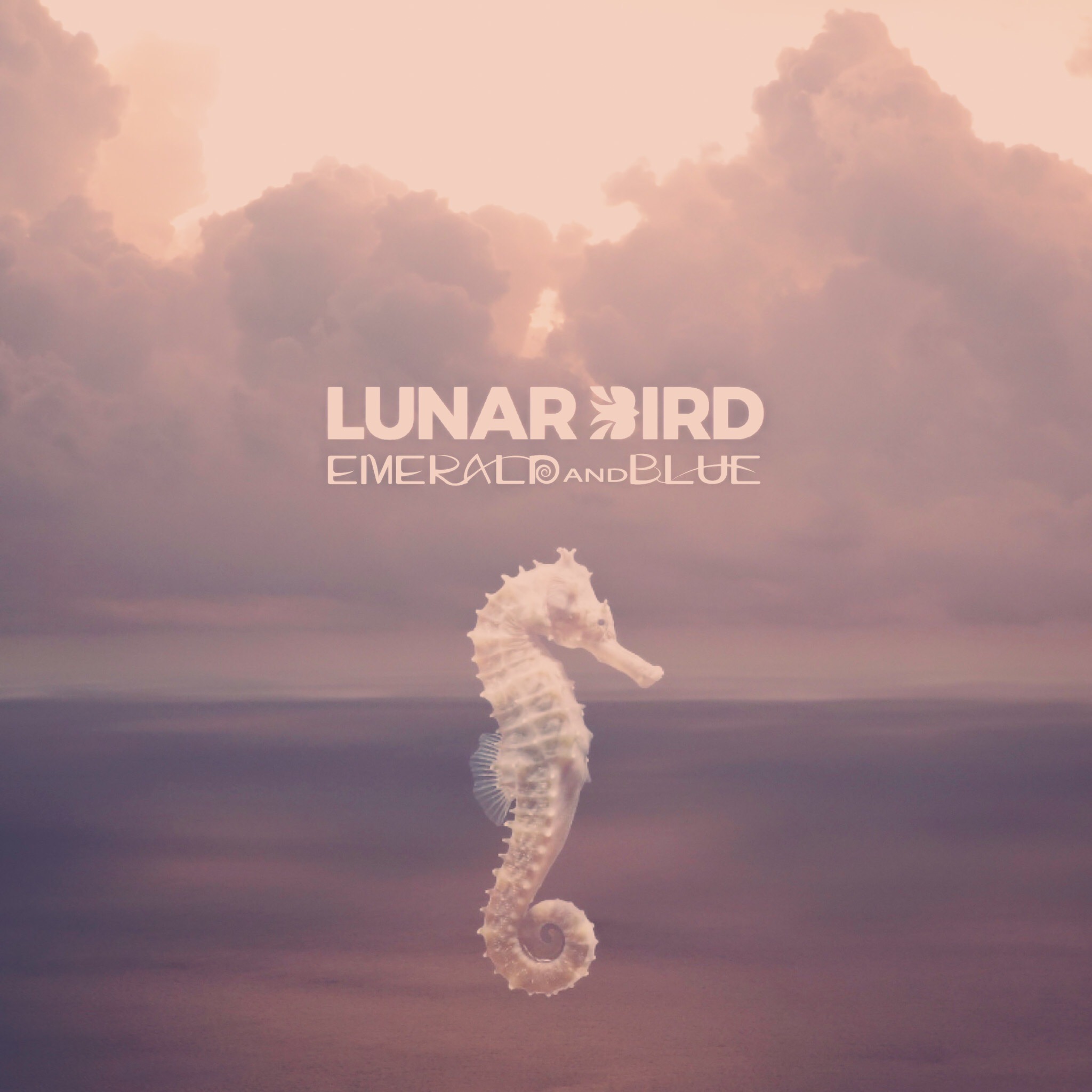
Blooming into existence, a diaphanous as ever single from the Italo-Welsh troupe Lunar Bird, who cast a most flowery spell on the poetic ‘Emerald And Blue’. Disarmingly floating in an orchestrated musical of dream pop, there lies a gossamer shrouded tale of fatalistic symbolized infatuation. Yes, despite the crystal spokes reverb, swimmingly vibes and cooed backing voices, there are profound contrasts on the more uncontrollable, melancholic limits of dreams. It sounds like a kind of theatrical meets trip-hop meets cosmic doo-wop vision of Patti Page: quite heavenly.
See also…
Lunar Bird ‘A Walk’ (HERE)
SAD MAN and Francis Lowe ‘Stories From An Island’
(Cue Dot Records)

The latest, and third, installment from the newly established conceptual electronica venture Cue Dot Records pitches the unique techno and experimental visions of the Sad Man against the visceral Irish burr storytelling of the writer Francis Lowe. Cue Dot’s remit is to provide a platform for its guests to explore an ever-evolving narrative; none more so than this match-up of often supernatural, magical, violent and surreal sound-tracked narrations.
Stories From An Island sees the harebrained garden shed avant-garde (and often bonkers; going as far as to build his own apparatus to mangle and contort sounds from) composer Andrew Spackman subdue some of his more ennui-fractious and pulling-in-all-directions signature ravings for an industrial-pastoral soundtrack that emphasis, blends, remixes and sometimes warps Lowe’s Wicker Man Island narrated travails. Sometimes this errs towards the disturbing, with Lowe’s voice emerging from the daemonic on the creeping ‘Diary’ horror. God knows what kind of place this is that Lowe has chanced upon, wondered into, but it’s a realm filed with strange and weirdly described characters: imagine Paula Rego, Samuel Becket and Nick Cave on the The Third Day series island.
Lowe explains in greater detail the spark of inspiration and process behind this project:
‘In late Autumn 2019 I was driving home along a deserted stretch of road. The horizon was obscured by mist and suddenly this familiar stretch of road became distinctly unfamiliar. A story started to form inside my head; a story set on an Island, a place where the inhabitants have very particular gifts, secrets, and histories. I rang Andy (SAD MAN). I told him that I was going home to write a story and asked him if I recorded it, would he be interested in putting music to it. He immediately said yes. This was a Friday and the following Monday the first story, ‘The Ferry’, was completed. A year on and here we are, finishing the final story in the series, ‘Witness’, and releasing them into the world.’
A bespoke vision that sees both collaborators pushing themselves – especially Andrew who proves himself an impressively burgeoning soundtrack composer with filmic ambitions – the third chapter in the Cue Dot series is a truly escapist and immersive experience of well-crafted, descriptive sonics and winding, brilliant literature.
Hi, my name is Dominic Valvona and I’m the Founder of the music/culture blog monolithcocktail.com For the last ten years I’ve featured and supported music, musicians and labels we love across genres from around the world that we think you’ll want to know about. No content on the site is paid for or sponsored and we only feature artists we have genuine respect for /love. If you enjoy our reviews (and we often write long, thoughtful ones), found a new artist you admire or if we have featured you or artists you represent and would like to buy us a coffee at https://ko-fi.com/monolithcocktail to say cheers for spreading the word, then that would be much appreciated.
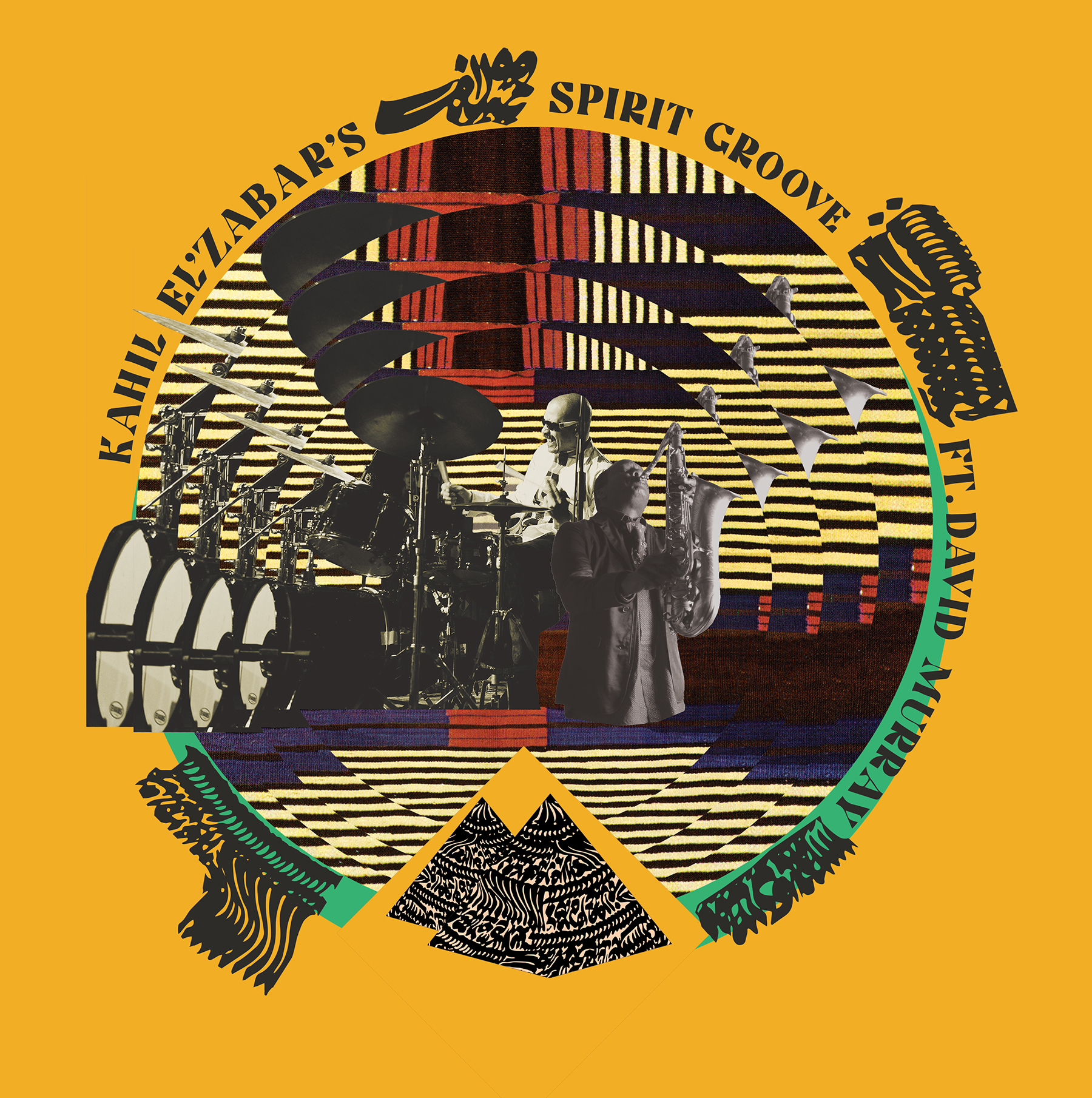
Tickling Our Fancy 087: Kahil El’ Zabar & David Murray, Above The Tree, Scarlet’s Well, Etienne de la Sayette…
June 10, 2020
REVIEWS ROUNDUP/Dominic Valvona
As of writing this latest roundup of new music recommendations and curios, the lockdown restrictions that many of us in the UK have been under are erratically and confusingly being lifted (to some degree). Still, anxiety and uncertainty reigns, as the music industry (I’m thinking more the venues, small scale enterprises, self-made and the diy) is left pretty much high and dry with little in the way of finical help, or even solutions to the inevitable problems of a post-Covid, isolationist society.
Live music being the biggest casualty of this lockdown, it is indeed pretty worrying that one of the only revenue streams left open to artists to make any real money from is now so endangered. As we have all seen for ourselves or heard from an abundance of artists and labels, the so-called savior of streaming has been anything but beneficial for the majority of artists. And can hardly count as revenue at all – unless you are Kanye West or Justin Bieber.
We will of course need time however to see how physical sales will fare; though I bet many out there have baulked at buying vinyl, CDs, anguishing over the spread of the virus. Records stores have been forced to close down and move online of course, which may also affect sales: the browser in particular will be affected, as will many of us who enjoyed not only looking for records but just the company and chat with the shop owner, the chance of coming across something by chance or being recommended something. Spontaneity has gone out the window in that respect.
With all that in mind, I ask you to do what you can in supporting new music and the artists featured in this roundup. You can of course purchase many on Bandcamp and similar sites.
As ever this selection is an eclectic gander at artists and bands from around the world, cosmos and beyond. Bringing us beautiful, evocative bluegrass rooted traverses, Kentuckian born and imbued Myles Cochran delivers a new subtly unveiling EP of ambient and guitar experiments, My Own Devices; sonic navigator Alex Norelli, under the Fierro Ex Machina nom de plume, conjures up an album of heavy electro-acoustic imaginings; and painter/musician Marco Bernacchia, aka Above The Tree, produces a vivid soundtrack of ambiguous folkloric and synthesized mystery on the new album King Above. In the Techno field of experimentation, the ever-prolific Sad Man is at it again with another album; this time in lockdown and going for the kicks. Also, Etienne de la Sayette unleashes another pleasant polygenesis album of African and South East Asian grooves.
In the reissues in-tray this month, I have a special treat for fans of The Monochrome Set’s stalwart vocalist, songwriter and guitarist Bid and his noughties project of surrealist and eccentric escapism, Scarlet’s Well. Join me as I run through a new decade spanning collection of songs from the catalogue. I also run through the recent reissue of the Indonesian music legend and maverick Harry Roesli’s ambitious 1975 psych-soul-pop-funk-gamelan opus, ‘Titik Api’.
Headlining this latest roundup, two titans of the contemporary and spiritual jazz scene, Kahil El’ Zabar and David Murray, join forces once more to lay down a righteous transportive performance on the ancestral with a modern pulse communion Spirit Groove.
LEAD REVIEW
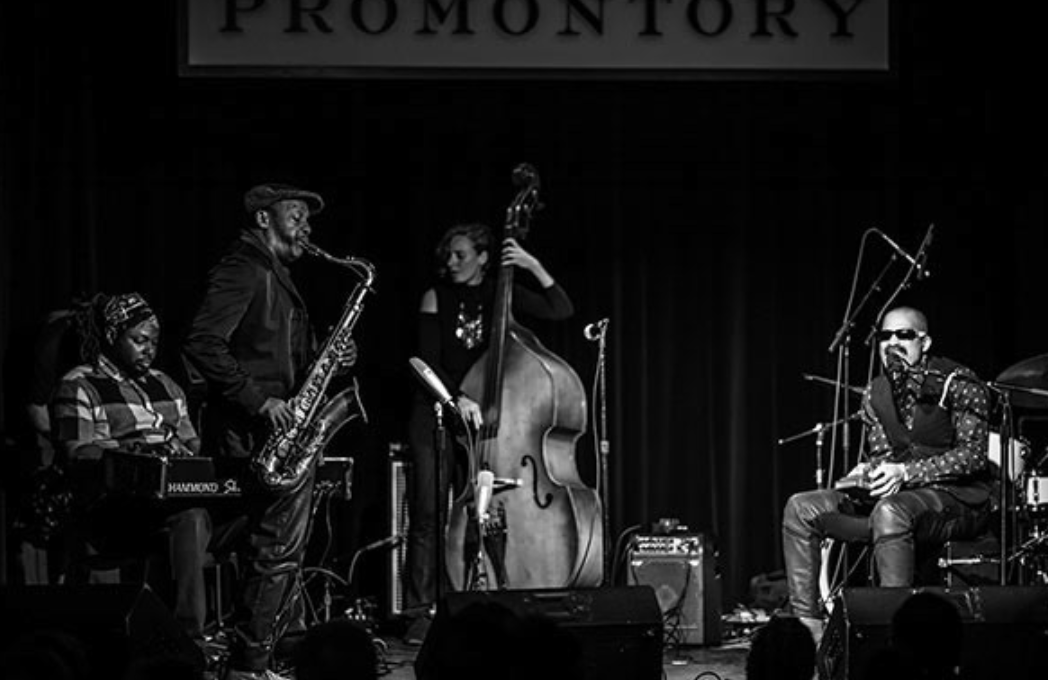
Kahil El’ Zabar’s ‘Spirit Groove Ft. David Murray’
(Spiritmuse) LP/12th June 2020
Praise be to the healing arts of those contemporary jazz luminaries Kahil El’ Zabar and David Murray. If ever there was a time when we all needed calm and a spiritual deliverance it’s right now. A service, a quasi-liturgy of spiritual jazz, the two American titans of their experimental forms have drawn on a wealth of providence and influences to once more join forces through El’ Zabar’s “spirit groove” of connectivity.
As a harmonious bedfellow to the Chicago drummer/percussionist’s lauded (especially be me) Ethnic Heritage Ensemble, this righteous groove communion with the tenor sax and bass clarinet maestro Murray “intends to move you nakedly with a deep sense of dance on a Mind/Body/Spirit level.” And what a groove it is; a disarming rhythmic set of performances with a poignant, timely message, or, as El’ Zabar himself puts it, “This is the moment to rekindle the notion of social relevance within the legacy of jazz as an improvised people’s movement for social change.”
The creative partners enact this change (or at least attempt it) by channeling both the ancients and jazz greats they’ve both been lucky enough to share stages with over the last fifty years. El’ Zabar for his part, learning the craft through the Chicago hothouse known as the School of the Association for the Advancement of Creative Musicians, and by playing with or supporting such greats as Eddie Harris, Cannonball Adderley, Rahsaan Roland Kirk, Pharoah Sanders, Dizzy Gillespie, Nina Simone and Archie Shepp (the list goes on). Oakland born Grammy Award winner Murray meanwhile has recorded and performed with a no less impressive list of notable talents, including Henry Threadgill, Olu Dara, McCoy Tyner and Elvin Jones. Murray was also a founding forefather of the horns and wind instruments lauded World Saxophone Quartet.
El’ Zabar’s atavistic with a modern pulse spiritual soul and jazz experiments are coupled with Murray’s untethered long and short breath saxophone contortions on an album of new, specially written material and expansions of compositions from the back catalogue.
Joining them on church service organ and cascading, accentuate piano is Chicago stalwart Justin Dillard, and on bowing soothed and more scuttling acoustic bass, the burgeoning talent Emma Dayhuff. This makes for an enviable solid act; a quartet of jazz apprentices from different generations that between them have connections to every great jazz pioneer of the last fifty plus years. But, nearly, all roads lead back to Coltrane in particular. Murray despite practicing and molding amore unique technique inspired by the triumvirate of old guard doyens Coleman Hawkins, Ben Webster and Paul Gonsalves then what Coltrane preached, he’s paid various homages to the late great saxophone deity. ‘Trane’, a notion, encapsulation, nod to his universal influence pared down to just the second syllable of a name, is all that’s needed on the track that appears on this album as a tribute of sorts. The swing time ‘Trane In Mind’ is a mood, a sense of that style; a splashed poolside dash of Coltrane in his ascendance.
Faith though is the main driver of the groove and varied utterances that pour out of this erudite ensemble’s performances. The water-carrier trickled percussive opener, ‘In My House’, welcomes all to El’ Zabar’s titular sanctuary; a place to raise the spirits and soul. A prayer in the form of a primal gospel House music anthem, the jug pouring shuffler features El’ Zabar’s signature vocal exaltations, which sometimes negate words and lyrics for just hums, feelings and an essence of vocal expression. A frame for a freeform expansion of the mood, Dillard switches from subtle piano phrasing to venerable organ, whilst Dayhuff bobs around as Murray customarily catches shortened hooted breaths and longer sublime circular breathing squalls.
The power of faith in love is enshrined on the next dreamy flight, ‘Necktar’. Dedicated to not only Murray’s new wife Francesca but also true love itself, the quartet skiffle and swing to a liquid soul music groove that sets up a meeting between Gil Scott Heron, Bill Withers and Lester Bowie. Talking of dedications, El’ Zabar’s ancestral percussive, vocal cooing ‘Katon’ opus was written for his fourth oldest son. (El’ Zabar has quite the brood of children and grandchildren we’re told). A special bond and sentiment is conveyed over a magical meditative suite of music box mbira, deft piano, serenading and hooting tenor and dipped bass.
‘In The Spirit’ is, as the title says, another faith radiating communion. Bird like fluting floats over dusty brushed drums on this venerated shuffled version of the original, first performed by El’ Zabar in late 70s Germany. Another past composition, the low-key Savoy jazz like ‘Song Of Myself’ was part of El’ Zabar’s trio project with Murray and the late bassist Fred Hopkins. “An introspection of dancing in your mind”, this riff on that recital stands out on an album of ancestral percussive heavy spiritual jazz and stripped acoustic House music with its smoky, kept subdued almost downtempo, intimacy. Almost veiled even, toots, dusty drums, hints of the vibes and live lounge atmospherics take the listener off into a new thoughtful space.
Working in various forms together since the late 80s, a third composition – appearing on the lauded LP of the same name – ‘One World Family’ is framed as a sort of “theme song” for the partnership. Extending the original with a more expansive performed backing of woody-slapped rhythms (which near the end climax in an erratic display of pounding and punching), spiraling reedy fashioned free-flowing saxophone and soulful melody, the quartet flex and breathe across a earthy but skybound cycle.
A reconnection, a spiritual bound partnership El’ Zabar and Murray appear from the tumult to capture a difficult to quantify feeling: a rage even. Quenching the soul with a “spirit groove”, they’ve laid down a both swinging and mesmeric alternative jazz service of mediation but also, and above all, they push for a positive change in the most inflamed and dangerous of times.
RECOMMENDATIONS
Etienne de la Sayette ‘Kobugi’
(Muju Records) LP/1st June 2020

As pleasantly inviting as the album’s sumptuous artwork, the highly active Etienne de la Sayette delivers another worldly traverse of Africa and South East Asian rhythms.
Channeling a wealth of his ever-expanding array of projects, from the Ethnio-groove imbued Akalé Wube to Bae Ho homage-inspired Baeshi Bang, and from Frix to an assortment of film scores, the Etienne de la Sayette platform pulls together the overspill. Put together in-between all these other commitments, but far from a secondary concern, the latest album to emerge from that project is a rich gentle flowing exotic affair. Played entirely by the intimate band of flexible drummer Stefano Lucchini, balafon maestro Lansiné Diabaté, and a small circle of guests, the undulating soundtrack is mostly devoid of technological interference: no virtual instruments or MIDI were used in the making of this record we’re told. Etienne for his part plays a mix of accentuate and hooted, relaxed honked saxophone and flighty flute throughout this borderless escape.
Embracing genres, especially in the rhythm department, the opening odyssey ‘Jajinmori’ takes a traditional Korean rhythm that Etienne discovered whilst collaborating with percussionists in Busan in 2016 and adds a softened Kuti Afrobeat vibe, Orlando Julius Afrojazz sax and the buoyant wooden bobs of the balafon. Riding over the top of this wavy fusion, Chicago rapper turn Parisian scenester RaceCaR lyrically flows with a stream of poetic consciousness that kicks back to the ancients. He gets to finish the album too, with a more political spit against the arms industry and the militarization of authority on the growled, scuzzed acid-metal-psych Deep Purple-esque monster riff ‘War Business’. Though spanning a two-year period, this “sawn-off shotgun” of a leap from the rest of the material proves the timeliest in light of recent events.
Second guest spot on this album goes to Cameroon troubadour Erik Aliana, who arrives from another compass point to rasp, growl and also lay down sweeter vocal charms on the rustic-folky village song ‘Safari Kames’.
Taking the guiding light of Afrobeat once more, the busier ‘LOULOU’ is as much influenced by Steve Reich ad chamber music as it is by Kuti and Tony Allen. There’s even a tone of Benin spotting organ and Hailu Mergia woven into the flashbacks. Diabaté’s balafon is almost watery, like a jug pouring out the droplets of bouncing notes. It’s “shamanic invocations” that rise from ‘Kobugi King’; another undulating fusion of the dreamy and soulful, taking in Muscle Shoals organ, oriental voodoo and impassioned talking-in-tongues utterances.
With slightly more buzz and rattle, the group channels the spindled resonance of the metal tine thumbed Kalimba, as played in the style of Konono #1, on the wilder exchange of organ and free-form drums tribune to the African and Caribbean god of knowledge of stories, ‘Anansi’. They also evoke a bit of the intense fuzz of Marc Ribot; his ‘Ceramic Dog’ being mentioned in the notes.
The only cover, Tegenu Balkew’s Ethnio cassette obscurity ‘Anchi Bale Game’ plays loose with the original’s magical spell drift towards the Orient. In another example of the free-travel music show, the group takes on a reggae gait with the church service suffused beachcomber ‘Tortoises’.
The most interesting thing about this album and the musicianship is the flow of ideas, and the weaving together of both African and Korean rhythms, as Etienne and his ensemble blend tastes of Nigeria, Ghana, Cameroon and the Orient together in one track. Apart from a couple of numbers, Kobugi is a lilting, relaxed but deep listen; a cross-pollination of music synchronicity.
Myles Cochran ‘My Own Devices’
(9Ball Records) EP/19th June 2020

Regular readers and followers may remember that we premiered the experimental Kentuckian bluegrass, roots guitarist and composer Myles Cochran’s subtly evocative single, ‘It’s Like This’ last month on the Monolith Cocktail; a track that reverberated with the atmospherics and mood of a vaguely traced place on the outskirts of a recognizable American panorama. A hazy semblance of Cochran’s alternative Americana sound, that same single now forms one part of an extended version, ‘It’s Like This – It’s Like That’, on the new EP, My Own Devices. Expanded into a drifting Appalachian traverse with echoes of 75 Dollar Bill, and part rustically dreamy guitar, part lilted classical waned and bowing strings (the cello parts courtesy of Robert Curran), this couplet would make a great soundtrack to ambiguous horizons.
Recorded and put together between rural studios in France and the UK (where he now resides), much of this EP’s material wanes and sighs, breathes and pines across a sonorous prairie. The opening swooned, rhythmic shuffle ‘Love Is As Beautiful As Pizza’ merges reverberations of Myles Bluegrass signature trails with jazz, post-rock Mogwai and Daniel Lanois. As the title suggests, it is indeed a beautiful, and bowed mirage-y, instrumental.
Released a few months back, the ‘Early Dark’ peregrination blends more yearning sad and trembled strings with brushed drums, and the hint of a Mick Harvey soundtrack (there’s that word again, ‘soundtrack’). Though you can also confidently add shades of Ry Cooder, Robert Fripp, Warren Ellis and Steve Reich to both this ‘springtime mix’ and the rest of the EP’s material.
Plonking peaceably across the prairie, Cochran finishes up on a Bruce Langhorne meets Eno mosey ‘Churrito’; another drifter traverse of skiffle like rhythms, resonating guitar and spindly strings.
Almost just the tracings, lingering from behind the valley landscape, Cochran’s meditations and waning mood pieces are easy and quiet on the ear; shaped towards an alternative contemporary ambient vision of those bluegrass roots.
Myles will follow this latest EP up, we’re told, with an album entitled UNSUNG later this year.
Fierro Ex Machina ‘Processions’
LP/19th June 2020

The sensory sonic processed imaginings of Alex Norelli concentrate the mind on some foreboding sometimes creeping recondite worlds: Worlds that branch both the chthonian and alien.
From an apparatus of electro-acoustic, and what the L.A. based multi-instrumentalist and creative calls their “noise harp” – an assemblage of deconstructed electric versions of classical strings and dejected music equipment, which includes Alex’s Grandmother’s out-of-tune 1950s S1 Hammond Organ -, materializes a quartet of heavy studies in the experimental neo-classical, ambient, soundtrack and jazz fields. Yes, I did mean to include jazz; the kind that the American Nocturnal avant-garde saxophonist Andy Haas exudes on his various boundary-pushing peregrinations. But also a semblance of Ornette Coleman’s strung-out writhed, iron gate hinge waning saxophone can be heard enervated on the album’s opening mourned journey through the portal, ‘Praeter Nexus’. Unsettling as it slowly gains gravitas and a seething momentum that grows more mysterious, more unknown. The Nexus track demonstrates a frayed, fabric torn movement simultaneously as spatial as it is claustrophobic and dark.
Ominous nocturnal movements follow with the spherical shifting ‘The Shadows Of Plants At Night’. Metronome counted ripples tick away in the night garden as a ghostly-like voiced sound and permutations of Donny McCaslin’s sax waft by. Those plants sound more like concrete planetary leviathans chiding and scraping together. The lamentable entitled ‘Do You Know The Sorrow Of The Horses’, which sounds like the opening from a particularly harrowing plaint from beyond the ether features howls of a kind from wolves of some sort prowling the borders. This wispy invocation, as a scion of Cage and Nam June Paik, trundles across the inner workings and mechanisms of a grand piano: or so sounds.
‘A Sail Of All Tears’ finds a trace of melody and even a rhythm amongst the circling uncertainty and the chills. Turning over in the darkness, dawdling bass guitar and electric guitar notes act as guidance through the enormity of the elementals.
There’s a dark majesty and gravity to all four of these heavy evocations. The dissonance is nowhere to be found however, and so even in the abyss each one of Norelli’s visceral statements remain in a sort of ominous building harmony; a synthesis of sonorous emotion, journeying towards the void: A soundtrack for our frightening times.
Sad Man ‘Daddy Biscuits’
LP/5th June 2020

Despite the alter ego moniker of garden shed electronic music boffin Andrew Spackman’s most prolific incarnation yet, the Sad Man in lockdown is anything but as anxious and plaintive as the name might suggest. The latest (must be millionth, or something like that, release from Andrew now) experiments-in-motion album is in fact quite playful: a laugh even. Euphemisms, innuendo aside, Daddy Biscuits has a more uninterrupted flow of rhythms and progresses in a less agitated, ennui fashion than most of Andrew’s output.
Set loose with a trick noise making apparatus, the Sad Man goes for the kicks, transmogrifying House music and Techno for a staccato dancefloor. Jolted Djax Techno gets warped and bashed with shocks of Mike Dred, galloping 808s and mischievous Ed Banger electro funk on an album in which you can hear the cogs moving around in the artist’s noodle: where to go next? What about this, zap-bang-clatter-wobble-drill!! A Sad Man track seldom ends where it began.
God knows what the titles indicate half the time either. The titular cyber wilderness track alone goes through Luke Slater, Juan Atkins, Aphex Twin and the Chemical Brothers. The track ‘Sleeper’ is anything but somnolent, running as it does through a bastardize version of Herbie Hancock’s ‘Rockit’, 16-bit computer game coin-up prizes and hints of M-Plant Rob Hood and a crystalline dream magic. For me though, I love the strange curio ‘House Work’ (definitely a tune that would improve the chores no end). It sounds like Major Force mashed with Wagon Christ and Les Rita Mitsouko; a sort of electro-operatic funk.
For kicks then, Andrew eyes up the groove on a collection of both panel-beater workshop beats and modulated weirdness; an album for lovers of Warp, Leaf, early Jeff Mills and House Of Tapes. Lockdown proves a fertile environment for the conceptual artist and sonic maverick. I like this subtle change. Pass round the magic biscuits selection again in the future please.
Above The Tree ‘King Above’
(Hukot Disc/Plug In The Gear/Krimzkramz Sub Post) LP/Available Now

Dropped into some alternative futuristic pastoral world in the aftermath of an unexplained event – or that’s at least what it feels and sounds like to me -, visual artist and amorphous sonic sculptor Marco Bernacchia creates a visionary traced soundscape of haunting holy and esoteric materializations from out of the ether on his latest vivid soundtrack, King Above. A soundtrack, as it turns out, for an as yet unreleased documentary, this regal entitled suite of passages, renderings and lingerings would suit a mysterious theme with its signs of the ominous, exotic, and in some cases, supernatural.
Gravitating around the so-called “Italian occult psychedelic” scene, a catch-all term coined in the early noughties to describe the emerging esoteric and out-there sound being made by bands such as Comaneci and Father Murphy (both of whom feature in various ways on this album), Bernacchia practices a sort of ever-evolving vision of “outsider music”. Far too knowing and technically proficient and learned to be the musical equivalent of the usually naïve outsider art, his Above The Tree moniker mapped abstractions have a depth and knowledge that betrays an eclectic, studied palette of influences.
Blessed and doomed in equal measure, the Urbino Academy of Fine Arts alumni paints a both unsettling and pretty atmosphere. In between his professional practice (reaching the heights of exhibiting at the Venice Biennale; which is one way to say you’ve made it in the contemporary conceptual art world), the painter has learnt an assortment of instruments, from saxophone to guitar, the Malian harp-like Kamalengoni to the Russian variant of the Jew’s harp, the Vargan. All of which appear throughout the various dreamy drifts and Kosmische stirrings.
All these instruments and influences are filtered through a gauze of the gossamer, wispy and misty, with the bewitching chimes set against distant echoes of voices, messages and Medieval leftfield folk: think Faust at their most atavistic meets Sproatly Smith. Something like the courtly, rustic reverberations of a past epoch drift in and out of a vaporous bed of drones, ambience and exotic swathes of an unearthly realm. The plucked brushed tremulous guitar phrases often evoke Ry Cooder and (sharing this particular roundup) Myles Cochran.
Nature is always present no matter where Bernacchia guides us. There’s even a sort of nature meditation codex at the end of this fourteen-track oeuvre; the sound of birdsong and an ambiguous great scenic outdoors is permeated by the waning gravitas building accompaniment of bowed strings and the barest undulations of the synthesized. Icy blows, vortexes, cylindrical metallic and ghostly visitations merge with the pastoral and at times the revenant.
With permission from his already mentioned compatriots, Father Murphy, a sample from the group’s 2018 esoteric blessed ‘Communion’ – which featured on the Rising. A Requiem LP – features on the cooed cloisters score ‘Merci On Us’. The original song’s venerated choral atmospherics are woven into the lulled dreamy renaissance treatment.
“Donating” lyrics and voice to a couple of tracks, Francesca Amati of the Comaneci duo offers up a strange repeated breathy mantra on the open couplet ‘Windows Soul’, and utters soliloquy like phrases on the title-track. Amati sounds like a weird space-age narrator on the latter; her statements fragmented, almost disjointed.
Those utterances offer another layer of mystique to an album steeped in the abstract. Tangible instruments exist with the unmistakable tremolo of a guitar, gabbling of the ngoni and spring of a vargen, yet it’s the obscured textural hints of imagined places and spaces that win out. Bernacchia has embraced a history, myriad of emotive forces and atmospheres, the organic and synthesized, and transduced it all into this suffused empirical soundtrack of sublime outsider folk. I thoroughly recommend you seek it out.
REISSUES
Harry Roesli ‘Titik Api’
(Lamunai/Groovyrecord) LP/2nd June 2020

It may sound surprising to many of you dear readers to find that someone as switched-on as me hasn’t come across, until now, the Javanese Temple psychedelic funk of the Indonesian maverick Harry Roesli. Submitted by the kind folks at the Lamunai/Groovyrecord hub, a reissue version of the celebrated artist’s iconic mid 70s concept opus Titik Api has piqued my interest.
Providence wise first, Roesli was born in the bastion of Gamelan, on the island of Java in 1951. In what could be described as a privileged upbringing, Roesli’s father was a major general in the Indonesian army, his mother a doctor; both positions offering a relative security in a country ruled by the quasi-dictator Suharto – a leader with a tightening grip, who managed to keep hold of power for four decades, from 1967 to 1998.
Obviously a talented musician from a young age, Roesli actually decided to study engineering instead of music. It was during those formative years that the creatively minded bohemian was turned on to political activism – a story retold in more detail in the album’s liner notes. To be glib and race through the details, he became an active member of the 70s Tradisi Baru Movement. Translating as “New Tradition” this growing political and creative movement were committed to experimenting with Indonesian traditions such as gamelan. Critical of the regime however, it soon became too dangerous for student activists such as Roesli to evade the authorities iron fist. In one such crackdown, Roesli found himself imprisoned. Luckily for him, a Dutch member of Amnesty International was on the case; gaining an escape route for Roesli through the promise of a scholarship, studying percussion in Holland.
To cut a long story very short, this gave the burgeoning talent another layer of musicianship and host of new influences, which he eventually would take back to his native home. The music of Indonesia was now fused with prog rock, psych, acid rock, pop, enervated funk, soul and even the more complicated rock experiments of Zappa. All of which you can hear on the ambitious 1975 concept album, Titik Api: a kind of Indonesian drama set to music, with ‘prologs’ and ‘epilogs’ and a quasi-overture, a work of art from a hip-international minded cat. It’s nothing short of a Southeast Asian panorama of atavistic mysticism, romance and spiritual yearning.
The first cut from this double album alone, ‘Sekar Jepon’, moves from a gamelan Goblin to Bolero, whilst maintaining the signature zappy effects, sizzled fuzz and chiming percussion that permeates this entire opus. Those prog rock influences get harder on the hypnotizing temple rock ‘Jangga Wareng’: almost Sabbath heavy. The fluty thirteen-minute epic ‘Lembe Lembe’, features both shades of Jethro Tull and ‘Revolution’ era Jefferson Airplane. Slicker, leaning towards soul music, the romantic-sounding female lulled harmonies, sun-anointed ‘Merak’ fans out towards a lilting Brazilia. In a similar vein, another lengthy opus, ‘Kebo Jiro’, switches from soft funky soul and pop to fantasy boat ride, then snake-charming prog and rattling conga solo. ‘Curah Hujan’ takes a scenic route in an Alfa Spider convertible, as the radio blasts out a quasi-Bossa Italo love theme.
It seems Roesli wasn’t shy in throwing everything into his musical fantasy; Latin dreamy troubadour on the first of two ‘epilogs’, proto-disco on ‘Dinding Tolan, and Samba-rock on ‘Bunga Surga’.
From seductive slumbers to golden temple spiritualism and mirage-y trinkets and tubular tolls, Titik Api is an adventurous psychedelic vision from a fertile, expansive mind. An alternative Javanese dimension, invigorated by contemporary late 60s and 70s influences this is an all-encompassing epic from the Indonesian maverick. Don’t worry if like me you missed it first, second even third time around, this new reissue will serve crate-diggers and psychedelic fans alike well enough. Take a punt, dig it out and be introduced to a whole new rabbit hole of Southeast Asian music.
Scarlet’s Well ‘Magic (Selections From 1999 – 2010)’
(Tapete Records) LP/26th June 2020

The saga of the Monochrome Set spans five decades and umpteen break-ups. Blossoming at the fag end of the punk epoch, and continuing to produce music even to this day, the revered group has disbanded at least three times during a checkered history. The second those breakups, in 1998, proved a fertile escape for the Set’s stalwart singer, guitarist and songwriter Bid, who plowed his fantastical and whimsical inventions into a new band, Scarlet’s Well: a band that would, in one form or another last until the third incarnation of the Set in 2010.
A congruous bedfellow to Bid’s former group, Scarlet’s Well not only featured the Set’s 90s period keyboardist Orson Presence and producer Toby Robinson, but also transformed some of the unfinished material. Though it wasn’t just a place to crash for former Set members, the evolving, changing lineup would after a few albums expand to include Alice Healey on vocals.
Conceived as an “atmosphere” rather than a band, Bid conjured up a surrealist village diorama and cast of bawdy rouges, lost supernatural characters and monsters, explorers and pining cowboys/cowgirls to build an evocative storybook. Coming to life over seven albums of varying quality, this strange but disarming set location and its vague geographical tributaries (“somewhere east of the Azores and only slightly north of the Styx”) offers a magical encapsulation of all life’s woes, tribulations and physiological defects. It’s an adventure in which some of the salty sea dog inhabitants take the listener on a voyage to various atolls and exotic river ways; sailing into a range of both suffused and fleeting musical ports-of-call. Even the means of nautical travel differ, from a junk to galleon, a skiff to Pugwash shambolic pirate ship.
Receiving an appraisal a decade on from the Well’s final swansong, this oeuvre brings together a (almost) chronological collection of idiosyncratic pastoral whimsy and deeper, darker metaphors. “Bless my barnacles”, the rightly titled Magic collection opens with a couplet of alternative pop sea-shanties from the Well’s 2006 LP, Unreal: A year that proved very productive, with the band uncharacteristically releasing a duo of albums that year. ‘Sweetmeat’, which despite its alluded title sails on a junk to the gentle tones of a lullaby, has Bid channel Scott Walker and Roy Orbison on this beautiful sayonara caress. ‘Willy Whispers’ – no sniggering at the back – features the harmonizing sweet tones of Healey; who by this time was now a prominent member of the band. An example of that diverse range of influences and instrumentation, this spindled beauty simultaneously evokes Westerns, a punt down the Neva and the charming psychedelic storytelling of Pete Dello.
The debut album, Strange Letters, which now puts the songbook back in linear order, is represented by the solitary oompah-tuba ‘The Captain’s Song’. Reimagining a Brecht version of The Yellow Submarine, Bid’s put-on seadog baritone croons a veritable feast of sea-lovers Bonzo lyricism. Both comical and violent, he comes across like Blixa Bildgard early era Bad Seeds.
The first album of a new decade, 2000’s Les Baxter-esque The Isle Of Blue Flowers is represented by a trio of Spanish and concertinaed songs. Maybe a consequence of being signed to the Spanish label Siesta Records, there’s a dalliance with the host’s Flamenco and Latin spirit in the form of the castanet cantina ‘Lord Fish Garlic’s Last Expedition’: a song that fantasizes about a Suzanne Vega senorita fronting Fairport Convention during the Mexican war with America –imagine that! From the same album there’s the Franco-paradise Edwyn Collins-goes-surfing bendy title-track and the South Pacific meets Creole lala ‘Dark Dreams Aboard The Hesperus’.
Lewis Carroll’s literary and psychedelic totem heroine inspires the Well’s next album in the sequence, 2002’s Alice In The Underworld. A castaway choice of songs reflects the album’s use, again, of certain Spanish motifs and flairs. The exotic ‘Night Of The Macaw’ wafts lazily in a Caribbean bay; soft marimba and a lulling spiritual organ drift in the background of this beachcomber sway. ‘The Ballad Of Johnny Freak’ is another story entirely; a metaphorical tale of acceptance from Monsterism Island that puts Healey center-stage of a Hispanic lilted lament.
Moving forwards another two-years, The Dream Spider Of The Laughing Horse album features another of the band’s characteristic musical embraces: a kind of transcendent mosey form of Americana. The title-track, a trotting on the trial cowboy song, and ‘Big Dipper On The Spearman’s Floor’, a waylaid Hawaiian cowboy amongst the rock pools serenade, are chosen to fit the unfolding travelogue compilation.
The second album from 2006, Black Tulip Wings, goes all noir on us. The Bad Seeds rub shoulders with an enervated B52s, ‘Savage’ even goes into lounge swing halfway through its tremolo and Theremin-like wobbles. It’s show time on the album’s title-track as Brecht is brought to the Hollywood detective paperback.
Once more on the lonesome cowboy/cowgirl trial, the next two albums, 2008’s Gatekeeper and 2010’s Society Of Figurines reimagines the Western and country music cannons. On the first of these albums, Bid and his ensemble traverse The Mekons rebel country signature on the sweetly laced, springy desert key metaphor themed ‘Golden, It Is, Beautiful’. From the same record, ‘My Little Doll’ is a little more upbeat in comparison; a shuffling vision of The Bluebells round the campfire with the Frank And Walters. From the porcelain supernatural cast second of these two albums, it’s a strange combo of garage band with elements of the Inspiral Carpets baggy version of Tex Mex beat that underpins ‘Supernatural Services’. From that same record and drawing this decade spanning collection to a close, ‘The Vampire’s Song’ pitches Nosferatu in Nashville; the bloodsucker’s wandering song is a most lonesome pining affair.
Ambiguous throughout, Bid’s microcosm of mavericks, illusionists, rum miscreants and the plain misunderstood is an escape into the fantastical; a wealth of cryptic, surrealist psychedelic and cartoon outsider storytelling and art transduced into a disarming songbook of posy, shanties, ballads, cantas and pop. If you enjoy that long English tradition of eccentric songwriting, then this marvelous collection will quench your soul, heart and mind.
Hi, my name is Dominic Valvona and I’m the Founder of the music/culture blog monolithcocktail.com For the last ten years I’ve featured and supported music, musicians and labels we love across genres from around the world that we think you’ll want to know about. No content on the site is paid for or sponsored and we only feature artists we have genuine respect for /love. If you enjoy our reviews (and we often write long, thoughtful ones), found a new artist you admire or if we have featured you or artists you represent and would like to buy us a coffee at https://ko-fi.com/monolithcocktail to say cheers for spreading the word, then that would be much appreciated.
ALBUM REVIEWS/Dominic Valvona

Easing the boredom of coronavirus lockdown, join me from the safety of your own home once more on a global journey of discovery. Let me do all the footwork for you, as I recommend a batch of interesting and essential new releases from a myriad of genres. All of which I hope you will support in these anxious and trying times. With all live gigs and events more or less quashed for the foreseeable future, buying music (whether it’s physical or through digital platforms) has never been more important for the survival of the bands/artists/collectives that create it.
This month’s spread of featured bands and artists dreams of more exotic and mysterious places, but hail from Europe. From Germany with the new impressive filmic chthonian Techno suite there’s Die Wilde Jagd, from Sweden the collective noise welders, Orchestra Of Constant Distress, and from Finland the debut LP from renowned jazz bassist and now bandleader, Antti Lötjönen.
Back in the UK there’s a new ambitious classical experimental suite from iyatra Quartet and ambient and electronic music releases from Ryan Bissett’s – under the Halftribe title –and ennui composer Sad Man.
I do however leave the borders of Europe with a short stopover in Ghana, with Santrofi’s debut revamped Highlife special, and Madagascar, with a compilation of early cuts from Damily.
Santrofi ‘Alewa’
(Outhere Records) 24th April 2020

A love letter to Ghana’s golden age status as an incubator for some of the Africa’s greatest performers and bands in the 1960s and 70s; home of the, arguably, most influential music style to emerge from the continent in the 20th century, Highlife; Accra-based fusion Santrofi enthusiastically bridge past glories with a contemporary generation who’ve all but forgotten their roots. A reintroduction to Ghana at a time when its reputation as a hothouse for talent was at its nadir – when luminaries like Fela Kuti, Hugh Masekela and Orlando Julius came looking for a new sound, eager to sup liberally from the explosive scene – the band’s debut album Alewa champions the sunny-disposition Highlife style whilst adding some modern licks and on-trend dances – the Nigerian hip-hop dance Shaku Shaku and South African street dance Gwara Gwara, created by DJ Bonge – to the mix.
A result of a merger of show and marching bands, dancehall jazz and homegrown influences Highlife evolved to absorb all manner of styles and instruments over time, including soul and funk, but maintained it’s sunshine bleached heralded horns, thinly spindled polyrhythm guitars and lilted but infectious grooves. Kuti would merge it most famously with the blazing R&B, soul and funk sound from across the Atlantic to invent Afrobeat, others would ‘up’ the jazz elements or inject it with some psychedelic rock.
Santrofi bandleader and bassist Emmanuel Ofori knows more than most how important this legacy is having rose up the ranks performing with legends like Ebo Taylor and Pat Thomas and the Kwashibu Area Band. Yet his eight-piece collective – who’ve toured with Gyedu Blay Ambolley, the mighty Osibisa, and George Darko – have a reputation for backing the pop sensation Sarkodie and the Nigerian “superstar” 2Face Idibia in recent years. Now though they return to the roots, channeling the heritage not just musically but the etymology and myth. The band name Santrofi itself derives from the mythology of the Akan – a meta-ethnicity of people living in the southern parts of Ghana, but also found in the Ivory Coast -, and refers to the rare, precious bird that brings bad luck to those that hunt or entrap it: a caged bird style analogy. The debut album title refers to the popular black and white striped sweet; used in this case as a symbolic metaphor for racial unity and cohesion.
Ebo Taylor and his peers can be heard throughout this swimmingly soulful and gorgeous sounding showcase. It’s unmistakable when listening to the sweetened swinging lullaby-like title-track, and golden, softly blown horn blasting funky ‘Kwaa Kwaa’. The opening ‘Kokroko’ however kicks off the album with an earthy tribal rhythm and live party feel that includes whistles and call-and-response. It also features fellow Ghanaian, the poet/author/MC Fapempong setting the mood; holding court on a groove that’s part gabbled dance, partly hymn. The re-tuned radio “United States Of Africa” speech – first propounded by Marcus Garvey in his 1924 poem – ‘Africa’ has a more bluesy rock feel, whilst its an imaginary Stax revue backed by Al Green that’s evoked on the organ humming sultry R&B ‘Mobo’.
A refreshing homage to the Highlife phenomenon (unfairly overshadowed by its Afrobeat scion), Alewa may channel past triumphs, yet this isn’t just a straight-up tribute act, but a modern fusion that proves its relevance and enduring soul-power. Let the sunshine in: Highlife is here to stay.
Die Wilde Jagd ‘Haut’
(Bureau B) 17th April 2020
Birthed into another chthonian landscape of incipient stirrings, Sebastian Lee Philipp’s third such ambitious experimental suite continues where the previous eerie 2018 LP, Uhrwald Orange, left off: Lurking, stalking and disappearing into a recondite mystery of esoteric electronica and Techno. Earthy then, with evocations of a wild, veiled terrain populated by the whispering bewitched, strange rituals and metaphysical forces, Haut is a brilliantly realized slow-burning expansive supernatural soundtrack imbued with elements of Krautrock, Kosmische, the psychedelic, avant-garde, industrial and atavistic.
Once more joined by co-producer foil Ralf Beck – absent on Phillipp’s more or less solo outing, Uhrwald Orange – and live performance drummer Ran Levari, Die Wilde Jagd’s instigator songwriter/producer channels notions of memory, premonition and birth into a filmic quartet of drawn-out chapters. The opening minor-opus ‘Empfang’, which translates as “reception”, takes its time to emerge from the undergrowth; four minutes of ambient throbs, finger cymbal chimes and daemonic slithers before the first signs of Levari’s drum kit kicks in and takes off like a communion of Daniel Lanois and the Chemical Brothers. All the while sounds from the wilderness – like a crow’s croak and a regular occurring cold wind – encroach on the live instrumentation and sonic bed of synthesized pulses and motions. By the end of this thirteen-minute offering the magical Germanic-folk song of special guest vocalist Nina Siegler pricks the ominous chills to bleed over into the album’s, and project’s, only duet, ‘Himmelfahrten’.
Not so much a change in scenery as a mantra Whicker Man maypole entanglement between the Maid of Orleans and Philipp, the ‘ascent’ – as it translates into English – is part ritual, part ceremonial procession. Owl totems hoot on a hypnotic sweet chorus conjunction that invokes the Velvet Underground, GOAT, Acid Mothers Temple and Perpetuum Mobile period Einsturzende Neubauten.
‘Gondel’ – which doesn’t the lexicon to work out means “gondola” -, with its toiled, less rhythmic drumming reminded me of Jean-Hervé Perron and Zappi Diermaier’s more modern Faust partnership. A percussive rich mystery, echoes of operatic voices linger in what sounds like a very windy passage way.
There’s a pendulous motion to the album’s abstracted finale, ‘Sankt Damin’ – which I think is St. Damian, one half of the canonized Arab twin physicians who plied their trade for free on the Syrian coastline; two of the earliest Christian martyrs. Somewhere between courtly Medieval and the more ancient, there’s a whiff of the Dead Skeletons and the Velvets Byzantium vapours on this wispy blown stark wandering.
It’s certainly an imaginative world that awaits the listener on the Die Wilde Jagd’s third grandiose experiment. One that takes a breather, holding back on the beats and kicks for a more expansive and creeping sound production; those anticipated reveals kept on a tight rein. A sign of real quality and patience, Haut marks both a continuation but slight change in the dynamics as Philipp and Beck further erode and stretch the perimeters of Techno and electronic music.
Orchestra Of Constant Distress ‘Live At Roadburn 2019’
(Riot Season Records) 10th April 2020

An unholy alliance of Scandinavian extreme dissonance, the caustic noisy Orchestra of Constant Distress unleashes another solid wall of sonic experimentalism on an already anxious public in lockdown. Well not entirely on solid lump, because despite the squalling feedback, heavy, heavy sustain, grinding wanes and monolithic density the collective sound is not always so daemonic and unwieldy that snatches of rhythm and even splinters of lightness can’t be found in the seething menace.
Pulling together fuzz freaks and industrial welders from miscreant scenesters The Skull Defekts and Brain Bombs, the Orchestra’s latest live release – taken from a performance at the Roadburn Festival in Holland, in 2019 – is a near tumult of black magik, space rock, propulsive post-punk, chthonian drones and heavy metal. Sawing through pylons, squealing towards the primal, the repetitive distress of this mortuary malady reimagines a heftier, drum snapping Sunn O))), or, Boris with a rhythm, or, a Mogadon induced Death From Above. At times, despite the discordant violence, they sound positively psychedelic.
A pulsating, ghoulish and stirring noise, the Orchestra bends the squall and noise to their will on a warped oscillation generator of uncomfortable energy.
Halftribe ‘Archipelago’
(Sound In Silence) 16th March 2020
Another understated ambient suite from the purveyors of unobtrusive experimental soundscapes, Sound In Silence, the latest deep cut on the label’s roster is a lightly touched pulsation of geographical and mysterious soundtracks by the Manchester-based producer/DJ Ryan Bissett.
Under the Halftribe title, Bissett’s fifth long-player Archipelago subtly layers resonated hums, drones, throbs, glimmers and metallic tubular sounds with refracted suggestions of light and various imagined atmospheres. Though most of the titles allude to descriptive actions and contemplative thoughts of the enormity of it all, there’s always a sense of movement and environment to be found. The opening long fade ‘Exposed’, with its gleams and submerged washes, evokes a tropical location, and the angelic and monastery-like ghostly choral drifting title-track goes beyond the earthly towards the celestial.
Whilst transportive, what sounds like swells of new age gamelan can be heard on both the veiled wafting ‘Fader’ and lost transmission from the tropics ‘Drops’. Avant-classical elements, such as a low bowed cello sound and floated piano, quiver and plonk amongst Kosmische entrancing improvised instruments and pond-like ripples and hollowed-out bass-y wooden reverb on an ambiguous album of the haunting and serene; the masked and spacious.
Bissett reminds us that we’re all ‘Just Dust’. Which may be, yet what a contemplative musical conjuring we humans can produce in light of that lamentable certainty. This Archipelago is a small testament to that.
Sad Man ‘Indigenous Mix 3’
1st April 2020

I think it’s pretty safe to say that Coventry’s avant-garde garden shed boffin Andrew Spackman has produced his best electronic music indulgences under the resigned Sad Man moniker. His most prolific incarnation, the former Duchamp favoured Nimzo Indian defense chess move sonic explorer has balanced an ennui for chaos with a passion for Techno rhythms and beats: even if all semblances of anything musically consistent are bombarded with constantly warped manipulations and curveballs.
Following in the wake of this year’s fully realized The King Of Beasts album is the third in the Sad Man series of radical reworks, Indigenous Mix 3. Essentially a transmogrified remix of that same LP; the original Beast tracks shimmer, burble, twist, shift and flex to a new ever-changing treatment.
Often these new mixes prove more flowing, even grooving: some could even be described as spasmodic dance music. ‘Teleprompter’ gets the party off to a twisted start; Tibetan reverberations meet woody mechanics, acid licks, Aphex girders of polygon light and dreamy iterations. The following tetchy beat generator ‘Trespass’ has some nice touches, and even reminded me of Wagon Christ at his most fucked-up. As the title suggests, and keeping at least a lingering trace of that city’s exotic atmosphere, ‘Marrakesh’ channels Orbital and LFO into a industrial spindled mooning otherworldly enigma. It’s the late and much-missed Andrew Weatherall that pops up on the mirror-y dub, Mogadon time-lapse ‘Carbonated’.
Elsewhere Chicago House rubs up against air-y wonked weirdness on ‘Kalafornia’, and A Guy Called Gerald goes into meltdown on the broken-up ‘The Physician’.
An unconscious stream of ideas and tinkering’s; remodeling hints of Warp, Ninja Tunes, Leaf, acid and breakbeat, Spackman let’s loose once more with another cracking volume of mixes. This series is proving to be amongst some of his best work yet.
iyatraQuartet ‘Break The Dawn’
24th April 2020
A veritable escapist odyssey that connects past with the contemporary, the latest timeless concerto from the multifaceted instrumental UK quartet transports the listener to both poetically stirring histories and landscapes.
Imbibed by individually strong and impressive classical CVs and a shared experience of study at the Royal Academy Of Music, the iyatraQuartet merge a penchant for India and Arabia with closer-to-home influences. The latest album’s opening bowed, sustained tremulous theater sea-shanty, ‘Black Sea’, for example is inspired by the former poet laureate (1930-1967) John Masefield’s tumultuous Sea Fever poem. Encouraging many classical homages before them, iyatraQuartet’s take on this classic travels on the mud banks of a hardy landscape with an attentive score of earthy sawing violin and cello, and skimmed and pattered frame drum; yet as with many of the tracks on this LP, they somehow manage to also evoke Eastern European folk music too. ‘Dompe’ goes much further back historically, to the Tudor epoch of Henry VIII, taking one of the earliest surviving “renaissance” keyboard manuscripts – the author composer of which remains unknown – ‘My Lady Carey’s Dompe’ as a foundation, they at first spindly and daintily walk through a dewy pastoral tapestry of float-y clarinet, glistened cobwebbed percussion and quill-etched mournful violin before evoking a hint of the Balkans. This is also the first suite to include a leitmotif of mantra like chants; a unison of choral voices emerging from the veils. ‘Alpine Flowers’ meanwhile, takes its inspiration from memorial plaques displayed at Oxford’s Somerville College Chapel, commemorating ‘significant’ women from the turn of the 19th/20th centuries. Almost jazzy and smoky in feel, there’s a hint of a mysterious geography that errs towards the Native Indian.
Gravitating towards India, both musically and religiously, the rebirth celebratory rejoice themed title-track weaves countless personal connections into a number of tunes. The group’s name, pronounced “ey-at-ra”, is even taken from the Hindu expression for travel, “yatra”. Mostly obvious the morning Raga transformation ‘Bhairav’, refers to the many contrasting aspects of Bhairava (a manifestation of Shiva), who created and then dissolved the three stages of life. That trio of universality is mirrored by a quiet incipient moody bowed, droning and strummed section, followed by quivered wails, clarinet honks and scrapes and busy tablas. It helps that the quartet’s co-founder and violinist maestro (to name just one instrument among her repertoire) Alice Barron studied South Indian violin techniques with the country’s star turn duo, the Mysore Brothers.
Continuing that thread, the joyful classical meets Swami ‘Chandra’ was originally written for the Indian sire of the title, Chandra Chakraborty, in 2017. The swayed, swan-like melody is based on, of all things, a medieval plainchant, woven into a Raga Yaman. It’s a dusky beauty of a fusion, with ascendant violin and airy clarinet: gracious in fact.
Sweeping across musical panoramas, the quartet reach out towards the Middle East with the sand dune contoured ‘Lama Bada’. Born out of a fruitful meeting with Basel and Mohammed ‘Taim’ Saleh of the Orchestra Of Syrian Musicians that turned into the 2018 touring The Songs Of Syria project, this atmospheric romantic piece utilizes Arabian love stories for a reverent camel ride.
Impressive in scope with instruments from folksy Ireland, rootsy Africa, mystical Tibet and of course pan-Europe, Break The Dawn is an ambitious reading of experimental classical music that doesn’t easily take to defining. Reminding me of the escapist Balkan trio Širom, but with chamber strings, the iyatraQuartet conjure up an imaginative time-spanning sound; performed with assured skill and an open mind.
Antti Lötjönen ‘Quintet East’
(We Jazz) 17th April 2020

Highly active as a bassist on the flourishing Finnish jazz scene with such notable groups as The Five Corners Quintet, 3TM and the Aki Rissanen Trio, Antti Lötjönen now steps out as bandleader on his debut longplayer, Quintet East. Bringing with him a whole host of “hard hitters” Antti leads 3TM band mate and saxophonist Jussi Kannaste, trumpeter Verneri Pohjola, drummer Joonas Rippa and Koma Saxo supergroup saxophonist Mikko Innanen on a free-jazz, hard bop and serenaded jazz exploration.
Released just a day before his 40th birthday milestone, this debut offering is a culmination of all that experience and learning. And so you’re just as likely to hear echoes of Sonny Clark and Wayne Shorter as you are the Arild Andersen Quartet and the avant-garde.
The bassist’s signature instrument however, though always present, is never overbearing, and seldom brought to the front. Whilst highly articulate, sometimes physical, the double bass in this instance offers a constant bowed rhythm and sense of depth. Occasional elasticated noodling and skips are always great to hear when the rhythm picks up, but soloist style showcases are kept to a couple of ‘Monograph’ series vignettes: The introductory ‘Monograph I’ features a quietly plucked and flexing bass, spring and meandering; ‘Monograph II’, a sort of tuning exercise in which the bass takes on the characteristics of a cello.
There’s plenty of nicely untethered, if never too loose, performances from Antti’s ensemble. ‘Erzeben Strasse’ has a European title but finds the quintet traversing Bernstein, Be Bop and Lalo Schifrin on a journey that sets out with a breezy rhythm, swaddling sax, spiraling Miles Davis style trumpet and a laid back bounce but ends on a much busier dampened drumming off-kilter skip. Alluding to the mid to late 70s satirical soap opera of the same name, ‘Mary Hartman, Mary Hartman’ is another evolving instrumental piece; starting out with snuggled romantic sax, fluting trumpet and a flitting meander, the track then gets going with some big band theme tune vigor. ‘Pocket Yoga’ (is that a euphuism?) has some nice runs and nozzled horns and drums that just keep on moving, and the spiritual jazz leaning, increasingly erratic honked ‘Oblique’ evokes Electric Byrd. ‘La Petit Lactaire’, as the title may suggest, is a wholly Euro-jazz serenade; the mood set to a snuggly scene on the Left Bank.
Swaddled between the experimental and familiar warmth of American jazz in the late 50s and 60s, Antti has bridged the decades to produce a musical showcase as meandrous as it is intense and busy; as traditional as it is modern. A great start as a bandleader, but Quintet East also extolls the talents of an extraordinary proficient and prolific Finnish jazz scene.
Damily ‘Early Years: Madagascar Cassette Archives’
(Bongo Joe) 24th April 2020

As worldly as I am, I have to level with you. Until this attest discovery from the crate-digging folks at Bongo Joe arrived, the frenzied, ceremonial and ritual rooted sound of Madagascan ‘Tsapiky’ had completely passed me by. This handy little collection however proves an inviting introduction to not only this unusual busy music but also one of its most celebrated proponents, Damily.
Hailing from the southwestern region of the Island, where tsapiky is prevalent, Damily has molded the foundations laid down in the 1970s to create a idiosyncratic fusion of blistering bluesy rock guitar, innocent sounding high-pitched vocals, lo fi tech and galloping, on the move, percussive rhythms. This compilation hones in on the early years, picking through the tape archives to highlight Damily’s burgeoning beginnings: This is the Madagascar star unfiltered if you like.
Originally, as so many of his peers and forbearers did, learning to play as a poor kid on the most rudimentary of knocked-together, nylon-stringed guitars, and despite lacking the length in his small fingers to reach the low strings, Damily flourished. Giving the music a unique characteristic initially, he developed a technique of releasing the two bass strings as his other fingers were hitting the higher strings – other guitarist with similar disadvantages, or because they just preferred it, just moved the lowest string completely. The results gave a more aggressive attacking sound that was soon adopted by a host of artists; so many in fact that it has become a signature of this electrified genre ever since.
Sung in the Island’s Malagasy dialect, the racing fusion of lilted sweetened gospel soul, spindly and flicked electric guitar, jostling and skiffle like percussion has echoes of South Africa township polyrhythm rock and Afropop. Almost childlike vocals joyfully skit across patted, skipping padded drums – the sticks made from the pelts of the humped Zebu cattle – and what sounds like a pan-pipped melody on the opener ‘Zaho Va’; and you can hear, what sounds like, Casio presets and splashes of cymbal on the delightfully scrappy ‘Mangebakbake’.
Threatening to collapse or trip over itself throughout, the diy produced trotting rhythms somehow keep going. And Damily’s reedy guitar runs, phrases and trills nearly overload the system at one point, staying just the right side of discord, and staying just about in tune.
Back to the foundations, with a smattering of tracks from ’95 to 2020, the Early Years is a refreshing collection of an artist in development: finding his style. You don’t need all the baggage or investigation to appreciate it, better still enjoy the distinctive sound. Just open your ears, sit back and be taken to new thrilling musical escapes: Yeah, that’s the sound of a recommendation.
You can now support the Monolith Cocktail via the micro-funding platform Ko-Fi:
Hi, my name is Dominic Valvona and I’m the Founder of the music/culture blog monolithcocktail.com For the last ten years I’ve featured and supported music, musicians and labels we love across genres from around the world that we think you’ll want to know about. No content on the site is paid for or sponsored and we only feature artists we have genuine respect for /love. If you enjoy our reviews (and we often write long, thoughtful ones), found a new artist you admire or if we have featured you or artists you represent and would like to buy us a coffee at https://ko-fi.com/monolithcocktail to say cheers for spreading the word, then that would be much appreciated.
The Monolith Cocktail Playlist Revue: Feb 2020: Chassol, U.S. Girls, Juga-Naut, Pongo…
February 28, 2020
PLAYLIST
Dominic Valvona/Brian Shea/Matt Oliver

The behemoth Quarterly Playlist Revue is now more! With a massive increase in submissions month-on-month, we’ve decided to go monthly in 2020. The February playlist carries on from where the popular quarterly left off; picking out the choice tracks that represent the Monolith Cocktail’s eclectic output. New releases and the best of reissues have been chosen by me, Dominic Valvona, Brian ‘Bordello’ Shea and Matt Oliver.
The full track list is as follows:
A Journey of Giraffes ‘Into The Open Air’
Graham Costello’s Strata ‘Cygnus (Edit)’
Calibro 35 ft. MEI ‘Black Moon’
The Four Owls ‘Honour Codes’
Juga-Naut ‘Jackson Pollock’
Chassol ‘Rollercoaster Pt.2’
Dream Parade ‘Adderall’
U.S. Girls ‘4 American Dollars’
Piney Gir ‘Puppy Love’
November Bees ‘Pot Called Pan’
Joss Cope ‘Indefinite Particles’
Slift ‘Hyperion’
Martin Mansson Sjostrand Trio ‘Overkilghetsflykten’
Bob Destiny ‘Wang Dang’
Dueling Experts ‘Dark Ninjas’
TrueMendous ‘That Don’t Mean’
Confucuis MC ‘Look Deeper’
Lewps Hekla ‘Rose Gold Ruger Pose’
Pulled By Magnets ‘Gold Regime People Die’
The Dream Syndicate ‘The Regulator (Single Edit)’
Mai Mai Mai ft. Maria Violenza ‘Secondo Coro Delle Lavandaie’
Sad Man ‘Door’
Pongo ‘Quem Manda No Mic’
Ranil ‘Cumbia Sin Nombre’
Nordine Staifi ‘Zine Ezzinet’
Adebukonla Ajao And Her Group ‘Aboyin Ile’
Mazzi & Tac ‘Brackets’
Dillion & Batsauce ‘Self Medicated’
Elaquent & Chester Watson ‘Airwalk’
A Journey Of Giraffes ‘Poet’s Muse’
Jimi Tenor ‘Lassi Laggi’
Seu Jorge & Roge ‘Sarava’
John Howard ‘It’s Not All Over Yet’
Birgitta Alida ‘Closely’
Anytime Cowboy ‘Story Of Skin Island’
King Krule ‘Comet Face’
Brian Bordello ‘Liverpool Hipster Set’
Postcards ‘Dead End’
Zinn ‘Diogenes’
Mazeppa ‘The Way In’
Vivienne Eastwood ‘Hanging Gardens’
Village Of The Sun, Binker & Moses ‘Village Of The Sun’
Simon McCorry ‘The Nothing That Is’
Tickling Our Fancy 081: Deutsche Ashram, Li Yilei, Hallelujah, John Hassell/Farafina, The Epstein…
January 22, 2020
ALBUM REVIEWS
Dominic Valvona

Welcome to the inaugural reviews roundup of 2020 by Dominic Valvona; a cosmopolitan, expansive roundup of interesting albums and oddities.
For your discerning ears this month we have Verona’s caustic dancing punks, Hallelujah. The group pawn their guitars for a synth on the new album, Wanna Dance. The vortex dreamers Deutsche Ashram release their second LP, Whisper Om – club beats meet shoegaze, post-punk and dream wave in one intoxicating vacuum. Glitterbeat’s impressive tactile instrumental imprint tak:til continues to deliver the goods with a re-release of John Hassell and his West African foils Farafina 1987 “possible musics” collaboration, Flash Of The Spirit.
I stomp and roll down Alex Molica’s (the Seattle Stomp) garage-punk-country-blues-slacker on the lo fi acoustic rhythm guitar maverick’s debut LP, Maudlin Madness. Oxford-based Americana troupe The Epstein return with an anthemic epic, the band’s first album in years, Burn The Branches. And Mike Gale releases the first volume of B, C, D Sides.
Electronica wise we have the highly prolific electronic music boffin Andrew Spackman, who starts the New Year with his bestial spew of the weird and ennui, releasing yet another techno maverick LP under the lamentable Sad Man nom de plume. Debut wise, Chinese born and now London-based, sound sculptor Li Yilei releases a synthesis of the evanescent and tactile with her upcoming inspired ambient LP Unabled Form.
Deutsche Ashram ‘Whisper Om’
(Wormer Bros. Records) LP/24th January 2020

Brought to my attention just as the dream wave vortex duo grow more “spacious and immersive” with their second album, Whisper Om, the Deutsche Ashram have surprised me with their vaporous, druggy-hazed and intense qualities: And for that matter, their sheer audacity. You can’t mistake Ajay Saggar’s reverberating-heavy flange, phaser and resonating guitar chimes nor Merinde Verbeck’s wispy and ethereal vocals, but throughout this mixtape collage of gauze-y tunneling produced tracks you hear shades of Siouxsie And The Banshees, My Bloody Valentine, Strawberry Switchblade, New Order, Adult Net, Moon Duo, Grimes and even Jah Wobble. It’s psychedelic. It’s post-punk. It’s shoegaze. It’s C86. It’s all of these.
Saggar bends and wanes, sounding like a spindly Keith Lavene one minute, a tremolo-fanned Johnny Marr the next, whilst Verbeck’s lingering like tones of love, loss and desire, echo between the breathless, mysterious and ominous candy-pop mirages.
The opening ‘Stumbleweed’ sees the Ashram place a scatter-club beat beneath a shoegaze hallucination, but the majority of this album is an accentuate intoxicating neo-pop vacuum of veiled brilliance; a successful experiment in the “spacious and immersive” that is every bit as melodically dreamy as it is intense.
Li Yilei ‘Unabled Form’
(LTR Records) LP/28th February 2020

In her synthesis of the evanescent and tactile, the London-based (via sojourns in Tokyo and Vienna) sonic sculptor Li Yilei finds stimulation in the most transient and concrete on her debut album, Unabled Form. From the field recordings of recondite conversations on public transport to, what sounds to me like, the creaking of a metal gate swinging in the breeze, Yilei’s sounds flow in a natural motion through a serialism of both searing and understated ambient soundscapes. These are all of variations oscillations, tidal waves and vapours; piqued and shot through with more static buzzes, clangs, pulses and the barest of incipient humming beats.
Mixing real sounds with synthesized electronics, the familiar (even if removed from its source) with the mysterious and industrial, these atmospheric experiences are imbued with Yilei’s embrace of Buddhism and its values. The daughter of a Buddhist nun, the Chinese born artist embodies that belief’s concepts and ruminations of “emptiness” and “impermanence” (the state of fact of lasting for only a limited time, and the philosophical problems of change) on an album of amorphous, evocative immersions.
Track titles sometimes offer a vague sense of reference and mood, especially ‘A Star Without Guidance’, which fizzles and sizzles in the afterglow of a strange cosmos, and ‘A Filed Of Social Tensions’ – a much more chaotic matrix of warping and tape spool speed shifting that threatens to unwind itself. The ambiguous ‘1920’ – with its alien scuttles, repeated loops of reverberating distant voices, horsehair bows, hints of Tibetan bowls and tetchy electronic percussion – is a more mysterious exploration; a pivotal year of revolution and civil war that also saw the catastrophic earthquake in Haiyun county which killed over 73,000 people. Heavenly bodies seep into the traffic of an industrious city, and cyclonic drones hum and brim under solar winds on an ambient soundscape that is as airy, transparent as it can be shadowy and searing. Unabled Form is both unforced and considered. An album of keenly ventured moods, its an abstracted vision of transience from a merging artist with a more unique outlook and inspiration.
Jon Hassell/Farafina ‘Flash Of The Spirit’
(tak:til) LP/7th February 2020

Less a trumpet player composer absorbing various ideas from across the globe than a performer vessel capturing the empirical essence of a borderless, seamless ideal of new musical horizons, Jon Hassell is rightly hailed as a true pioneer of visionary ambient and entrancing soundscapes. Adroit pupil of Stockhausen, rubbing shoulders with the likes of Terry Riley and Le Monte Young on his way to creating a truly international language with a concomitant series of iconic and highly influential albums in the late 70s and 80s, the American trumpet maestro famously coined the terms “fourth world musics” and “possible musics” for his own experimental fantasies.
The timeless geography of his earlier Vernal Equinox meanderings would prick the ears of Brian Eno; embarking on his very own ambient peregrinations. Far too disingenuous to suggest Eno discovered Hassell (especially when his records with Eno as a collaborator would be filed in record stores under the Englishman’s name and not his), but they would indeed work together on that albums that helped define Hassell’s legacy. As an enabler processing and filtering Hassell’s amorphous microtonal trumpet blends and lingers, Eno sat in on both the first fourth world sessions (entitled Possible Musics Volume 1) and the Dream Theory In Malaya follow-up. A third manifestation, Flash Of The Spirit stands outside that series as an outlier of those minimalist peregrinations.
Re-released on Glitterbeat’s explorative instrumental imprint tak:til, Hassell’s 1987 partnership with the acclaimed Burkina Faso troupe Farafina is a continuation of that practice in polygenesis traverses, only far more rhythmic, tribal and, well…collaborative. Also the spark and roots of each composition on that dreamy voyage were initiated for the most part by the West African group: Between them, founder and balafon virtuoso and vocalist Mahama Konaté and principle drummer (using the ornamental djembe) Paco Yé are responsible for laying down the foundations. Fresh from working their magic on U2’s Joshua Tree Eno alongside his production partner of note Daniel Lanois, were back in the fold and favour; Lanois recording the original sessions and mixing half of the final album’s track list, Eno reshaping and transforming the rest.
Proposed and facilitated by Jazz In Sardinia Festival director Riccardo Sgualdini the, as it would turn out, fruitful union between Hassell and Farafina didn’t get off to the best of starts. The Farafina octet already seasoned having worked with such luminaries as the Rolling Stones and Ryuichi Sakamoto since their formation in 1978, were initially unsure, even suspicious of this Hassell collaboration. Thankfully something gelled and, settled in, the inspiration flowed; the results sounding like an otherworldly evocation of the familiar: African yet distant and vaporous.
Merging Hassell’s smoky and swaddling trumpet and array of sampled strings, harps with the Farafina group’s myriad of talking drums, percussion, flute and voices, Flash Of The Spirit is both spaciously entrancing and rhythmically tribal. Taking the title from Robert Farris Thompson’s book of the same name, the inspiration behind this often gauze-y communion taps into that book’s exposition of African immigrants experiences in the Americas and how they maintain (keep alive) and transform their traditions through creative adoption; harking at a continuingly fruitful, if forced, “collision of cultures”. And, in what is a congruous layering rather than collision, both histories evoke the atavistic whilst also venturing into an imaginary future of sonic interaction and flow.
Evocative individual track titles, accompanied by their parenthesis spirits, offer a theme or movement of direction on this album. For example, “laughter” precedes the gauze-y dancing title-track itself (a rippling, wafting and woody traverse that reminds me of 80s Miles Davis soundtracks) whilst “fear” permeates the nocturnal dipped and bobbing tribal drumming in liquid motion ‘Night Moves’. Surveying the vast Savannah, the almost sensual ‘Air Afrique’ is as airy and attached to the “wind” as its title suggests, taking off on a fantastical flight above the clouds into uncharted soundscapes. ‘Kaboo (play)’ might well be describing something entirely different, but to these ears sounds like a dreamy crawling caravan through the undergrowth, the resonating voices of unseen trilling poets calling out from the wilderness. There’s a crystal ball like mystery echoed in the shivering glassy materializations of ‘Tales Of The Near Future (clairvoyance)’, and an esoteric swirl to the increasingly intense speedy drumming flares of ‘A Vampire Dances (symmetry)’.
As “possible musics” go, this one is successful in creating an amorphous fusion; neither wholly African nor Western but something less tethered or beholden to any specific location and time. The Burkina Faso troupe add a far more “propulsive” rhythm to Hassell’s peregrinations; adding a certain weight to those signature ambient wisps and swaddled passages, yet still sounding as nuzzling and vaporous as ever. Three decades later and you could argue that Flash Of The Spirit is just as refreshing and novel today as it would have been in 1987; caught as it was on the cusp of a new epoch in ambient and electronic music, an augur of truly borderless sounds. Add this to the collection.
Sad Man ‘The King Of The Beasts’
(Self-Released) LP/10th February 2020

Starting the year as he means to go on, sporadically releasing albums of varying degrees in kooky electronic music mischief, Andrew Speckman, under his mooning Sad Man persona, unleashes the beasts with his first trick noise making experiment of 2020: The King Of The Beasts.
Like a Loony Tunes Cage or Stockhausen, banished to a makeshift potting shed laboratory, the Coventry boffin once more broadens his sonic horizons on an album that, in an ennui fashion, knocks about between a warped vision of d’n’b, techno and more avant-garde meanderings. Prepare to be thrown into a pinball flipper buffeting chaos as busy itchy electronic percussion and a myriad of mulching, whipping and speed shifting effects come up against a transmogrified Orb, Sakamoto, Major Force and Phylps.
In other words: expect the unexpected as Speckman merges dub techno with nocturnal tropical post-punk (‘Xylophone’), clandestine Howie B with a ghostly visitation soundtrack (‘The Pysician’), Les Baxter exotic lullaby with the Leaf Label (‘Nine’) and a buoying bobbing analogue bubble bath with cosmic sub-Indian alpha waves (‘Bus Swerve’).
Somewhere on the Venn diagram of sublime and ridiculous, the plaintive Sad Man steers a mixed bag of ideas into a constantly developing album; churning, squeezing and contorting plenty of odd and more cerebral mileage out of the experimental dance music genre.
Hallelujah ‘Wanna Dance’
(Maple Death Records) LP/21st February 2020

From the caustic, abrasive noise raises a limbering fucked-up no wave punk contortion you can dance to: within reason and with the use of heavy opioids and imagination. Having discarded the lead guitar for that most rudimentary but beloved of early synths, the Korg MS20, Verona’s disruptive Hallelujah put a real (di)stress on their main motivator; cranking up and pulling the dials until the lift off and scream into a vortex.
Pared down to a trio, after one of the troupe quit, this industrial unit collide with early Mute Records, DAF, Peter Kernel and The Pop Group on an heavy strength album of seedy scuzz and Italo-grime-y disdain. Sung, hysterically and with disruptive sneering petulance, in English you can’t mistake the reactionary spite and goofed erraticism of letting off steam. And if you do, a track title such as ‘Burka For Everyone’ will soon set you straight. Anyway, it forces its way into and occupies the brain, before leaving its scorched marks with a quick spasm of disruptive jerk-off punked and retro-synth dance chaos.
Rome might well be burning, but Verona’s disgruntled angst noiseniks just fucking “wanna dance”.
Seattle Stomp ‘Maudlin Madness’
(Crush Grove) 3rd January 2020

In a beaten-up saloon, careering down a slackers rock’n’roll garage road map, Alex Molica as the Seattle Stomp channels a familiar musical palette of influences on a battered acoustic guitar with his idiosyncratic wanderers debut LP, Maudlin Madness. Fueled up on a millennial cocktail of self-loathing and anxiety, the self-deprecating lo fi roller in (mostly) languid dishevelment beats and strums about lost love, road trips and alcoholism on an album that threatens to disappear below the radar into obscurity.
Far too good escape attention, Maudlin Madness is a deceptively melodic and infectious minor works of both intense and loose gonzo-indie-beat-garage-punk-country-rock. Short enough to not overstay its welcome on repeat plays, the eight tracks really do grow on you. From the Bosco Delrey meets Jonathan Richman and Alan Vega on a psycho rockabilly bum ride opener, ‘Anxious Thoughts’, to the mid-60s period Jagger breaks bread with Sky Saxon and Wolf Parade nursery rhyme creeper ‘Little Red Ridding Hood’ and the country rocking blues flat beat of ‘Power Jam Situation’, there’s the permeating spirit of an outsider looking in.
Molica in his travels bears wintery blasts (in the mode of The Standells on ‘January’), driving towards Denver mooning over the one-that-drifted-away and gets agitated over the contents of a fridge. Strangely though, the last track (if you can make it past the repeating car alarm-like chirping) moves from rock’n’roll jitters to a Mellotron cosmic narration traverse; Molica talking about voyager and moon craters: escapism into the void. Hardly the most original of albums, Maudlin Madness is still a great little LP that bridges slacker indie with garage, country and rock’n’roll.
The Epstein ‘Burn The Branches’
(Zawinul Records/Pindrop Records) LP/14th February 2020

Ambitious in its quivered anthem rousing and rich panoramas, Oxford-based Americana troupe The Epstein take it up a notch on their latest album, Burn The Branches. With earnest parched yearning the group return after a long hiatus (releasing only their third LP in twelve years) with an expanded sound and dynamism that ratchets up those root country influences to venture beyond the homestead prairie for pastures anew. Don’t worry though; the alt-country vibe is still very much in evidence still, just grander and erring more towards the light and shade of rock and indie music.
They cement this new expansion with a couplet of loud anthems; the brilliantly stirring ‘life-affirming’ ‘That Voice’ and heavier punctuated, increasingly vocally erratic, epic ‘It Will Pass’. The first of which evokes (for me anyway) hints of Meursault, early Radiohead and Deacon Blue, and the second, the Fleet Foxes, Broken Family Band and Wolf Parade. In their more serene, becalming moments The Epstein shimmer towards the hymnal, even country gospel on the quivering with softened timpani rumbling ‘Grand Canyon’ – a faithful cover no less of The Magnetic Fields’ lovelorn hymn from the iconic 69 Love Songs suite -, and march in plaintive step to a crushed piano and a tender accompaniment on the album’s dramatic curtain call, ‘Funeral’. Elsewhere there’s more scenery building with the ethereal desert spirited forsaken ‘Red Rocks’ and mysterious seeking vision ‘Wandering’.
If Wilco, Richmond Fontaine and CYHSY improbably joined forces for the greater good, they might very well sound something a little like this. Heightened crescendos aplenty and grand gestures await on an album that is both highly commercial yet has a real soulful depth and dynamism lacking in so much more popular anthemic music. This could well be the band’s finest work yet.
Mike Gale ‘B, C, D Sides Volume 1’
LP/2nd January 2020
In no way diminishing what is an actually quite good little album, but former Co-Pilgrim and Black Nielson honcho Mike Gale’s latest release is a stopgap between last year’s brilliant surf noir and Pacific ocean Beach Boys imbued Summer Deluxe and a, as yet, unnamed new LP in September. A gathering of material, left wanton in some cases, and just left off of previous albums, B, C, D Sides Volume 1 is a collection of tracks that somehow manages to work as a congruous album of quality romantic paeans, ruminations, breezes and more experimental ideas: some working better than others. However, apart from the odd starry satellite blinking Electronic meets The Farm pop-like early synthesizer tune, the Bs, Cs and Ds on show here sound anything but unsure or half-finished.
You can almost fit Gale’s music into two categories of influence and sound; the first, the more Beach Boys (with the onus on mike Love and Bruce Johnston) and Marc Eric kind of dappled harmony, and the second, harks back to both the C86 phenomenon and the 90s. Sometimes the two crossover of course; especially on ‘Something’s In The River’, a dreamy vocal track that places that Beach Boys lushness over Japan’s brooding synthesized pizzicato strings. In the former category, the opening beautifully be-jangled Donavan-esque ‘All The Traps Of Earth’ features Mike Gale as nature’s son, whilst the similarly acoustic, but with tambourine and more vigor, monastic haunting ‘Good Day, Doomsday’s Here’ has echoes of Paul Simon paling up with the Wilson brothers – possibly one of those tracks that didn’t make Summer Deluxe perhaps? In the latter camp, Gale places a harsher-toned lo fi rock guitar under a dreamy early Stone Roses vibe on ‘New Frontier’; goes all out epic45 and Casio pre-sets on the electro glide pop ‘Drive Ultimate Robot’; and puts an arpeggiator underneath the lilting lovely Cabinessence feel ‘Weather Patterns’.
Elsewhere on this collection, Gale rises dreamily again from the doldrums on the languid despondency ‘I’m Wasting All My Time’ and pens a romantic modern sonnet to a true love on ‘Your Smile’.
Occasionally you can hear the workings of Gale’s evolutions and mind, but these songs are nothing less than well executed; the songwriting as delightful as always. Far from second best, this first volume of tunes that never made the cut is another quality release that fills a Gale-shaped hole until the next album proper arrives in the autumn.
Hi, my name is Dominic Valvona and I’m the Founder of the music/culture blog the Monolith Cocktail. For the last ten years I’ve featured and supported music, musicians and labels we love across genres from around the world that we think you’ll want to know about. No content on the site is paid for or sponsored and we only feature artists we have genuine respect for /love. If you enjoy our reviews (and we often write long, thoughtful ones), found a new artist you admire or if we have featured you or artists you represent and would like to buy us a coffee at https://ko-fi.com/monolithcocktail to say cheers for spreading the word, then that would be much appreciated.
 Monolith Cocktail Blog