ALBUM REVIEW
Dominic Valvona
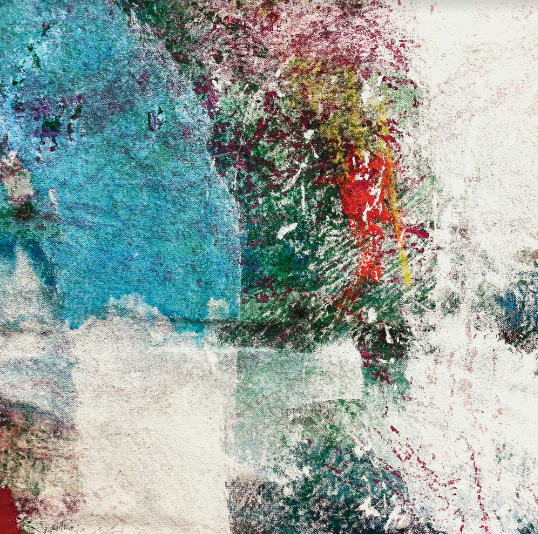
Mauricio Takara and Carla Boregas ‘Grande Massa D’Agua’
(Hive Mind)
Nestled somewhere between the Brazilin oceanic coastline and the rainforest waterfalls’ of the interior, the impressive duo of Mauricio Takara and Carla Boregas embrace the replenishing vibes of water on their new album for the Hive Mind set.
Both foils in this electroacoustic avant-garde enterprise bring much to the water table, with Takara playing in the (highly recommended) São Paulo Underground, Hurtmold and MNTH set-ups but also involved in an array of sit-ins with such icons as the late Pharoah Sanders, the one-time mushroom mantra haiku Can front man Damo Suziki, and Acid Mothers Temple guardian Makoto Kawabata, and Boregas instigating the Rakto and Fronte Violeta projects, a soloist and founder of the experimental Brazilian venue AUTA and the Dama Da Noite label.
From the fringes of jazz, primitivism and electronica they pour that experience into the immersive, often mysterious, and otherworldly Grande Massa D’Agua set of peregrinations and ushering-ins of the elements.
Tightening, ratcheting, tinkled percussive tools that evoke the work of Walter Smetak sit with both singular bounced and more skittish drum rolls and tumbles across ceremonial, ritualistic, atavistic yet also futuristic invocations. São Paulo and its surrounding nature might be the catalyst but whole different auras and planes are summoned; some of which fall upon the realms of the kosmische and even Faust.
Amongst the rustles of grass, the circled ring of ceremonial bowls and drips of water hints of Aquiles Navarro and Jon Hassell-like trumpet linger on the veiled, textured air, all the while as the drums leap into action, rebounding off the rims and splashes of cymbal.
This is Art Ensemble Of Chicago via the Portico Quartet style jazz meets the percussive, rhythmic experiments and intuition of Valentina Magaletti and Ibn Battuta period Embryo. And yet as the sun rises on the horizon of this exotic landscape, we’re beamed almost into a lunar bending cosmos. Although the refracted, reversed and entrancing ‘Areia Preta’ feels like you’re at the centre of a hallucinatory dream.
Melodic parts emerge out of the avant-garde free-play throughout this both suffused and zigzag rhythmic skate, rattled, poured and chimed water world. The idea of kinetic type energy in the movement (at one point taking on the illusion of a steam chuffed train ride down loose tracks) and sense of progression offer a semblance of musicality and melody even in the middle of the most singular serialism-edging and abstract performances.
Deeply felt and convincing, Grande Massa D’Agua is both an intriguing and true measure of the duo’s quality, pushing at the elementals without losing the listener or thread. They delve with adroit skill and a curiosity for sounding the abstract, and succeed in creating a mysterious and evocative soundtrack.
Hi, my name is Dominic Valvona and I’m the Founder of the music/culture blog monolithcocktail.com For the last ten years I’ve featured and supported music, musicians and labels we love across genres from around the world that we think you’ll want to know about. No content on the site is paid for or sponsored and we only feature artists we have genuine respect for /love. If you enjoy our reviews (and we often write long, thoughtful ones), found a new artist you admire or if we have featured you or artists you represent and would like to buy us a coffee at https://ko-fi.com/monolithcocktail to say cheers for spreading the word, then that would be much appreciated.
Our Daily Bread 549: Gillian Stone ‘Spirit Photographs’
November 15, 2022
ALBUM REVIEW
DOMINIC VALVONA
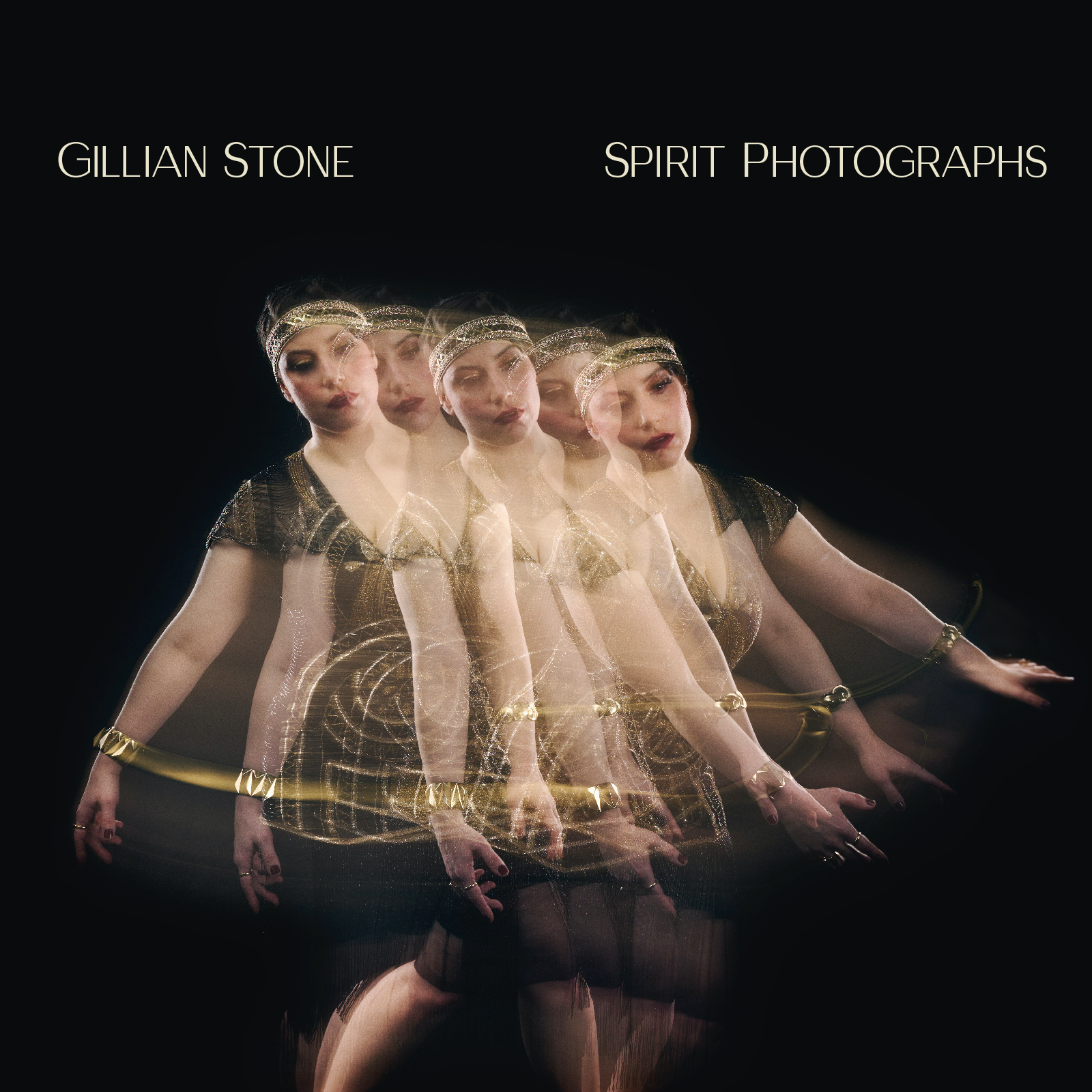
Gillian Stone ‘Spirit Photographs’
Dressed like a spiritualist flapper of the 1920s on the cover of her new EP, the Toronto siren and artist Gillian Stone summons various manifestations in the pursuit of processing both grief and the debilitating effects of mental health.
Made apparent by the title, the 19th century and early 20th century phenomena of “spirit photography” lends a somewhat esoteric, supernatural and mysterious angle to what is in fact the more academic psychiatric method of dealing with, and in time, coming to terms with loss. For each song on this deeply felt, atmospheric release represents one of the five stages of Elizabeth Kübler-Ross’ pioneering model: that’s Denial, Anger, Bargaining, Depression and finally, Acceptance. The Swiss-American doyen of psychiatry, heralded in Time magazine as one of the 20th century’s “100 Most Important Thinkers’, wrote one of the leading works (On Death And Dying) on accepting the inevitable in the late 1960s, after personally witnessing such traumas and dealing with childhood illness herself – an epiphany was struck after facing the aftermath of the Second World War’s concentration camps.
More or less the standard in counseling and navigating death, Kübler-Ross’ process is merged with unscientific empirical desperation and the often charlatan practice of Spiritualism. As a practice that grew out of the infancy of photography itself, and in part from the collective grief of the American Civil War, certain practitioners using various techniques added dead family members, loved ones in apparitional form to sitting portraits – usually lurking behind the very much alive subject, or manifesting from their supposed psyche. What may have been a comfort to some – proof of life-after-death and messages from beyond the ether – was essentially a trick. However, Stone draws that which cannot be quantified, explained together with the scientific mind in an act of describing her own anxieties, pains, but eventual release from the spectre of depression. And although this is a sometimes haunting, uneasy EP, Stone’s beautifully accented prose and emotions are delivered with a lighter, diaphanous touch that exudes as much promise as sorrow. Even when covering the heavy melancholy of Black Sabbath’s morbidly curious ‘Solitude’ Stone turns a self-pitied gloom of a tune into a Pentangle (the quintessential English acid-psych-folk ensemble not the Satanic symbol) like, medieval reaching and more sweetened proposition.
Stone obviously turns the original’s pained, male-prospective on its head: with everything that entails. Mind, it’s still a trudge through the miserable, and it’s also used to represent ‘stage four” on the scale: depression. Talking though of addressing gender imbalances, Stone enters, at times, the heavily over-subscribed post-rock arena on many of the EP’s tracks. It’s a genre I’m not too impressed with personally, and find quite boring and mundane – sacrilege I know, but God I hate Mogwai and their self-indulgent turgid malaise. Stone however, brings an endearing, inviting almost, quality to that genre; especially on the gently sweeping, almost sleepwalking dreamt spell ‘June’, which opens the EP. Representing the first stage, denial, this slow drummed bohemian and quivery-droned chill is one of Stone’s most sublime turns; a kind of haunted communion of Dana Gavinski, Michael Peter Olsen, the Heartless Bastards and Aldous Harding – two of which appear on Stone’s specially created playlist of EP influences.
Working with co-producer Michael Peter Olsen (Zoom, The Hidden Cameras) and drummer Spencer Cole (Weaver, Weather Staion) Stone’s singular talents are amplified by the accentuated, careful and purposeful contributions of her foils. Especially on the two tracks already mentioned, but also on the folksy and gothic travelled tumultuous ‘Amends’ (Provincials and These Trials break bread with All About Eve as a snuggled suffused saxophone-like drone weeps), and David Sylvain mood piece ‘Raven’s Song’. The latter I’m sure has some American Gothic, Poe-like inspiration about it; after all, it is supernatural in sound with touches of creeping hymnal atmospherics and even the ominous clopping of hooves.
That’s both “anger” and “bargaining” dealt with on this journey. The final stage, turning point you could say, is of course “acceptance”, and this is reflected on the siren song ‘The Throne’. Full of “drowning” metaphors it might be, but the waters of despair also cleanse and wash away the helpless state of a mental stumbling block in the process. Hints of 70s folk-rock and country can be, intentional or not, detected on what is another beautifully conveyed plaint. I must emphasis however that Stone’s timbre, cadence and tone is far from mournful, or even helpless. Instead the abstract of dealing with such problems, illness and grief is articulated with a certain beauty (that word yet again) and spirit of perseverance and understanding. In an age, as Stone quotes, of “collective trauma” it can feel so comforting to know that others get your pain, or, in this case can transform it into something so constructive and creatively therapeutic: no matter how bleak. But unlike the parlour tricks, charade of spirit photography, Stone casts her ghostly visitations aside, finding a release and source of light in the darkness of both inner and outer torment.
Hi, my name is Dominic Valvona and I’m the Founder of the music/culture blog monolithcocktail.com For the last ten years I’ve featured and supported music, musicians and labels we love across genres from around the world that we think you’ll want to know about. No content on the site is paid for or sponsored and we only feature artists we have genuine respect for /love. If you enjoy our reviews (and we often write long, thoughtful ones), found a new artist you admire or if we have featured you or artists you represent and would like to buy us a coffee at https://ko-fi.com/monolithcocktail to say cheers for spreading the word, then that would be much appreciated.
Monolith Cocktail Social #71: Tame One, Aphex Twin, Orange Juice, CAN, Ryo Fukui, Bnny…
November 9, 2022
THE CROSS-GENRE/CROSS-GENERATIONAL PLAYLIST
DOMINIC VALVONA SELECTS
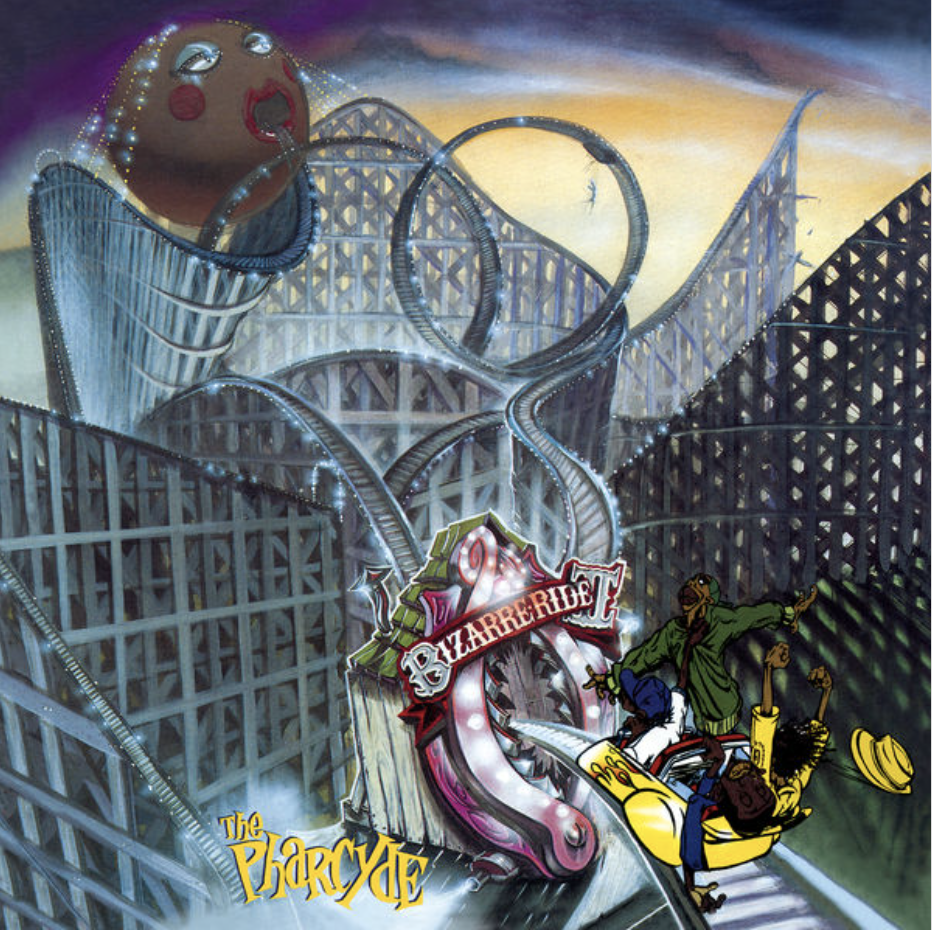
The final Social of 2022 is another bonanza of both the well-worn and more obscure tunes from across the expanses of eclectic music with a few recent choice tracks thrown in. My imaginary radio show, a taste of my collection and my past audio misadventures in DJing, the Social is meant to be a diverse soundtrack free of barriers and cliquey snobbery.
As always it’s both a celebration and commiseration as I mark the passing of both the hip-hop legend Tame One and the mad, bad and dangerous to have known rock ‘n’ roll progenitor Jerry Lee Lewis, whilst also highlighting the 50th anniversaries of Lou Reed’s Transformer, Hawkwind’s Doremi Fasol Latido, CAN’s Ege Bamyasi and Nektar’s A Tab In The Ocean albums; the 40th anniversary of Orange Juice’s Rip It Up and the 30th anniversaries of The Pharcyde’s ‘Bizarre Ride II The Pharcyde’ and the Aphex Twin’s Selected Ambient Works 85-92 LPs – both of which I remember buying on their release.
Added to that list are some incredible jazz suites from Rudolph Johnson, The John Betsch Society and Ryo Fuki; a pained score from the Ukrainian frontline by Angel Rada; another glimpse into the Beach Boys upcoming Sail On Sailor 1973 box set with the previously unreleased (officially speaking) Holland outtake ‘Carry Me Home’, penned and sung by Dennis Wilson, and amongst the fandom, hailed is one of the group’s most sublime and best songs to get the elbow; and Sahal sounds from Etran de L’Air, with a track from their new album, Agadez. Vince Tempera, Plone, Shawn Lee’s Ping Pong Orchestra, First Frontal Assault, Fall of Saigon, New Burns and more can be added to that list too.
TRACK LIST FOR THE MONOLITH COCKTAIL SOCIAL VOLUME #71
Orange Juice ‘Flesh Of My Flesh’
Etran de L’Air ‘Imouwizla’
Rudolph Johnson ‘Devon Jane’
Vince Tempera ‘Pelle di Albicocca’
The John Betsch Society ‘Ra’ Jerry Lee Lewis ‘Money – Live At The Star Club, Hamburg 1964’
Mickey Gloss ‘Crocodile Smile’
Plone ‘Minature Magic’
Aphex Twin ‘Pulsewidth’
Elzhi ‘Amnesia’
First Frontal Assault ‘Bloodfire Assault’
Tame One ‘Da Ol’ Jersey Bastard’
The Pharcyde ‘Pack The Pipe’
Shawn Lee’s Ping Pong Orchestra ‘Rocket Ship’
CAN ‘One More Night’
Fall Of Saigon ‘Visions’
Lou Reed ‘Andy’s Chest’
Stockholm Monsters ‘Winter’
Christine Perfect ‘And That’s Saying A Lot’
Ryo Fukui ‘Speak Low’
New Burns ‘Marlene Left California’
The Beach Boys ‘Carry Me Home’
The Idets ‘Look My Way’
Bnny ‘I’m Just Fine’
Som Imaginario ‘Armina – Vineta 1’
Plastic penny ‘Your Ways To Tell Me Go’
Nekter ‘King of Twilight’
Little Free Rock ‘Wait A While’
Angel Rada ‘Ghost In Odessa’
Hawkwind ‘Urban Guerilla’
Diane Cluck ‘4 Score Lightnings’
Museao Rosenbach ‘Zarathustra – Il Tempio Delle Cles’
Hamilton Leithauser & Paul Maroon ‘How & Why’
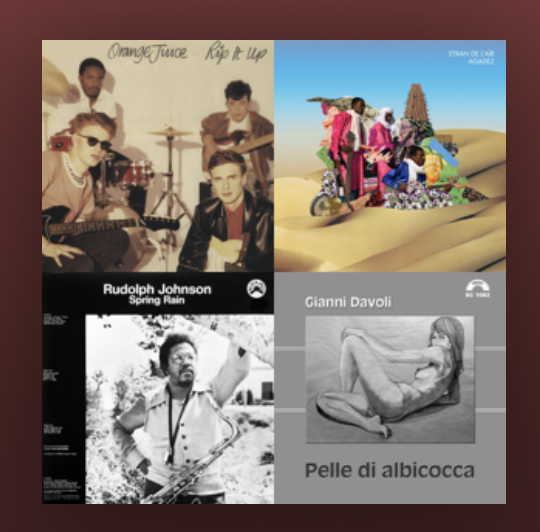
The Perusal #37: Edrix Puzzle, Surya Botofasina, Dead Horses, Etceteral, The Dark Jazz Project…
November 4, 2022
Dominic Valvona’s Albums Revue For November
Unless stated otherwise all releases are now available to buy
Edrix Puzzle ‘Coming Of The Moon Dogs’
(On The Corner Records)
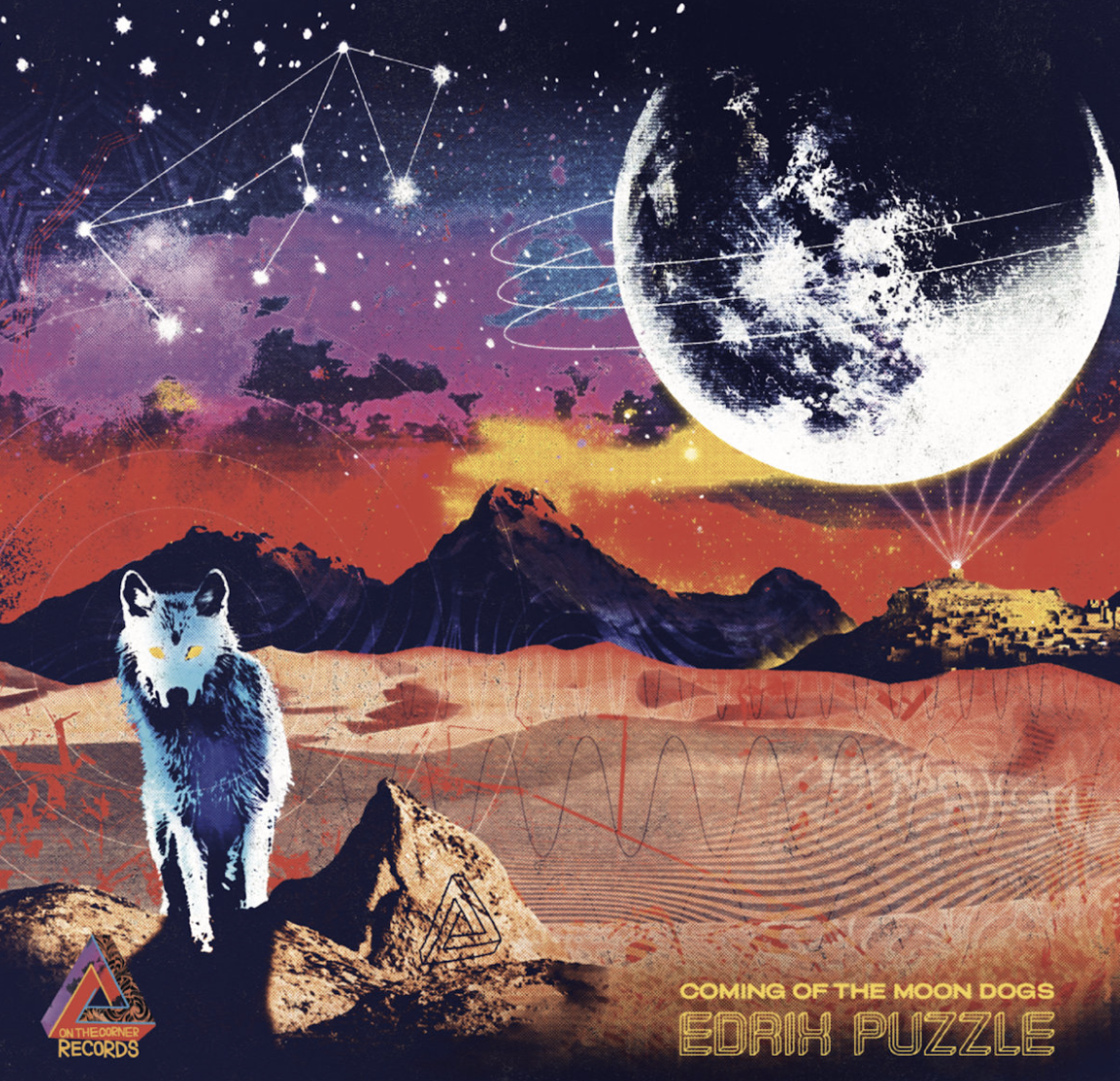
Looping string theory jazz particles to a rocket ship bound for a deep space cosmology of titan referenced stellar sets, the Nathan “Tugg” Curan led Edrix Puzzle ensemble find a musical freedom amongst the stars of an alien concept world on their newest trip, the Coming Of The Moon Dogs.
Reimaging Herbie Hancock’s Mwandishi transferred to the made-up body-locking Afro and futurist jazz planet of Battagon, Curan and his astro crew of Martin Slattery (on bass guitar, clarinet and saxophone duties), Tom Mason (double-bass), Oli Savill (percussion) and Darren Berry (violin) zip and zap across a lunar environment overseen by a galactic vision of mythology’s Gia and Uranus and some of their kin: Rhea, Dione, Hyperion and Phobe.
Amongst the analog calculus, signals and bleeps an equally elastic and moon-bound tripping transformation of the Art Ensemble of Chicago vibe takes shape on an imaginative off world. It’s a world in which Afrikan Sciences break bread with King Crimson; where Soweto Kinch reassembles the late Pharaoh’s astral projections. Within that science fiction the troupe balance totally untethered chaos with breakbeats and a certain swing.
David Ornate Cherry’s organic water bowl percussion joins a celestial voodoo march on the old country resonated Art Ensemble fiddled ‘Deep In Dione’, whilst Matthew “Doc” Dunn and Andy Haas slink and waft the vapoured murk of the living, breathing ‘V11’ coded suite.
Tracks like the time changing spin around the Van Allen Belt ‘Unhuman Hyperion’ verge on hip-hop. But it’s the imbued spirit of Herb, his peers and acolytes in the space, progressive jazz field that permeate this alchemist exploration of far out atmospheres. In a constant motion throughout with the energy released in all directions, and on all planes, Coming Of The moon Dogs is an incredible survey of quickened and more floated, waning galactic jazz evocations. A solid piece of art, lit by a remote chemistry and performed with assured but always probing musicianship. Rather an escape to the planet of the breaks than an escape from it, sci-fi jazz meets the experimental, spiritual and progressive in a visceral explosion of ideas, vibes and grooves.
Surya Botofasina ‘Everyone’s Children’
(Spiritmuse Records)
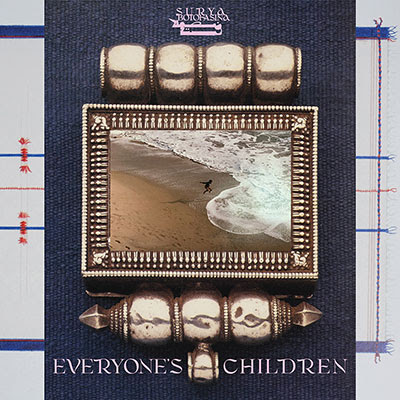
An acolyte of Alice Coltrane’s devotional embrace of Eastern spiritualism, imbued by that sagacious innovating jazz seer’s afflatus music and teachings, the keyboardist, composer and actor of some repute (from parts in Vinyl and Broadwalk Empire) Surya Botofasina bathes in his mentor’s light on this debut opus.
With the meditative, motored ascending arcs of Om Rama and such threaded throughout, Botofasina and friends set out on an astral and naturally felt work of spiritual jazz, trance, new age and ambient transcendence.
Our guide on this album of worship, remembrance and healing grew up at the Sai Anantam Ashram in the Southern Californian hills, where Coltrane led the daily bhajans, the traditional Hindu songs of praise and paean. His mother, Radha, was a disciple before him of this idyllic retreat’s guardian, a notable harpist but also pianist and vocalist herself and a one-time member of the American string band, The Spirits Of Rhythm. With such an enviable musical lineage and influence it’s no wonder that Botofasina would go on to become the Ashram’s music director and to internationally spread the word of this particular devotional form.
Encompassing all that reverence on his first fully realized album, Botofasina, aided by a cross-generational cast of guests, seeks to calmly honour but also demonstrate that faith. As a album to these enraged, divisive times, Everyone’s Children – with everything that album title’s metaphors, allusions, analogy entail – perseveres in the face of turbulence; softening and weakening the choppy waters in a blessed light of disarming but deeply felt warm suffused elevation.
With a both sentimental and yearning new age language of utterances from the Los Angles jazz singer stalwart Dwight Trible and fellow Californian indie folk vocalist Mia Doi Todd welling up and adding a certain wailed gravity, these divine acts of veneration ascend at a peaceable pace. The opening beachside temple suite running to over twenty-seven minutes as it shimmers and glistens with dappled electric piano, a serene air of the holy and washes of ambient synth.
Although often soothing with lightened touches of astral plane jazz and soul music, Botofasina’s piano occasionally stirs up outpourings of louder and harder pressed expressive emotions and serenades – as on the semi-classical and 60s jazz riptide evoked ‘I Love Dew, Sophie’.
Accentuating these spells of keyboard cascades, lit-up bulb like notes and rays the Canadian jazz drummer Efa Etoroma Jnr. adds splashes and tumbles, and the New York saxophonist Pablo Calogero wafts in with a suitable longing embrace. And overseeing it all is the Californian polymath (from noted producer to radio host, poet, percussionist and performer) Carlos Niño, who resembles a counter-culture 70s Carl Wilson chic. Together on this swami dedicated odyssey they border the heavenly as successful inheritors of Alice Coltrane’s devotional magic. As a debut album it’s a grand statement of spiritualism, nature and peacefully ascendant jazz; an escape from the material world.
Etceteral ‘Rhizome’
(tak:til/Glitterbeat Records) 11th November 2022
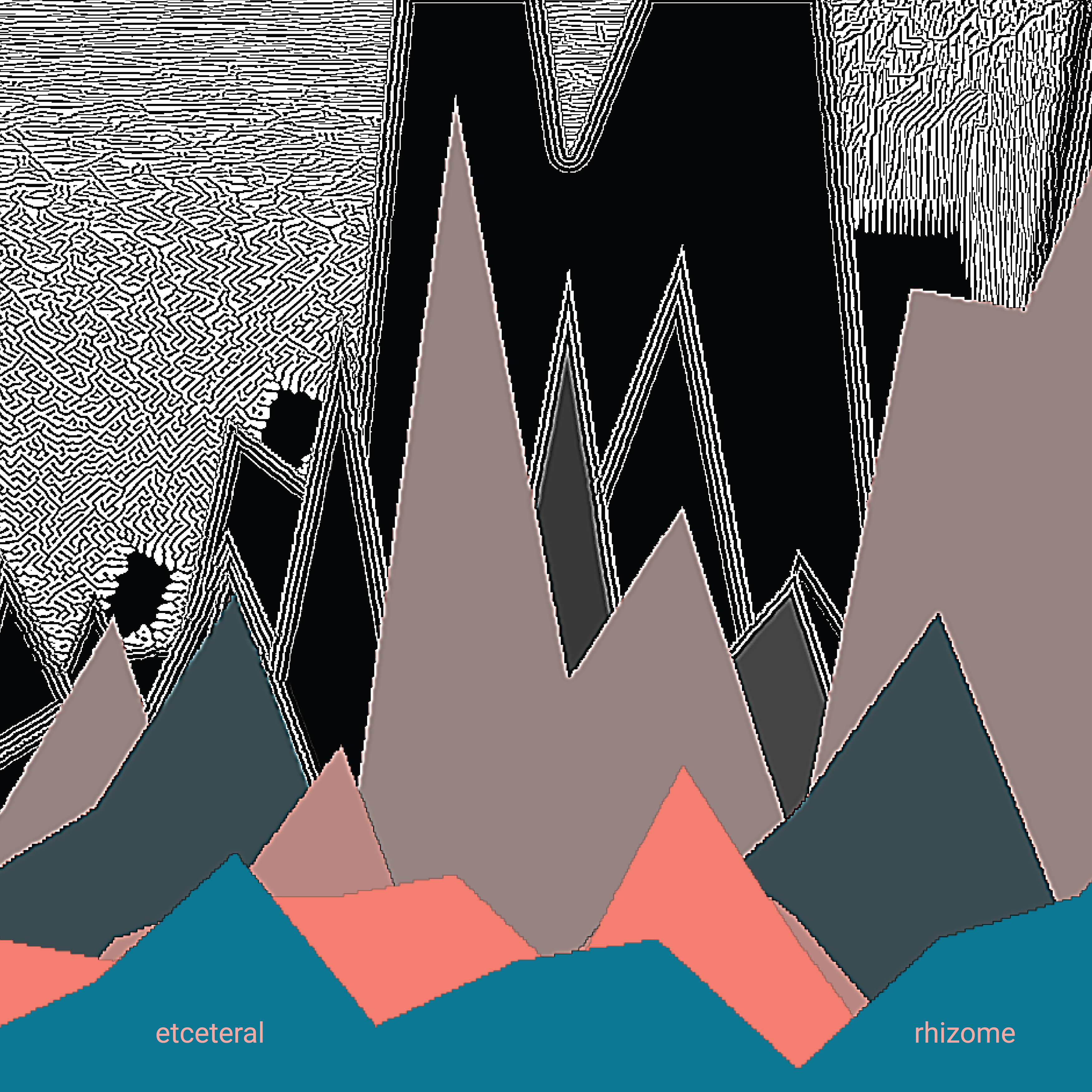
In what is a different, unique fashion, the Slovenian trio’s musical pairing of Boštjan Simon and Marek Fakuč (in part) react to their bandmate Lina Rica’s visual stimulus to create a cosmic electronic-jazz album of interlaced networks, connectivity and environmental crisis alarm.
Joining their fellow Slovenian compatriots, the dream-realism Širom, at Glitterbeat’s explorative, fourth world imbued instrumental sister imprint tak:til, the kosmische and organically freeform Etceteral base their new, mostly improvised album on the concept of its title, Rhizome: A continually growing horizontal underground stem, which puts out lateral shoots and adventitious roots at intervals; a non-linear network that connects any point to any other point.
With that theme, process in mind the trio reflect back a constant motion of soundscaping, rhythm and probing; balancing, at times, contemporary jazz with computer calculus, data, signals and metallic polygon shaped electronica. Yet, whilst Simon’s saxophone often drifts off into space, and his electronic effects, undulations more than hint at gravity-free zones in the cosmos, tracks such as the rolling, bounced and techno purred ‘Rome Burns’ allude to climate change and the extreme wildfires that engulfed much of Europe this year. It’s a great piece of flexible jazz that fuses Donny McCaslin and Go Go Penguin with Basic Channel to reflect an environmental angst of doom – fiddling with your suv sat nav whilst Rome burns to a cinder.
The rest of this interconnected, visual reactive album of performances and electronic augmented pulses and fusions goes through varying degrees of warping and reverberating transference. A jazz foundation is guided through a mirrored and computerised apparatus, which evokes shades of Squarepusher, Anteloper, Alfa Mist, Pyrolator and (rather handle as they share this column this month) Edrix Puzzle. Familiar echoes of rasped, cyclonic and honked sax, drum breaks and splashes receive an outer space production. Fakuč’s drums actually go into slow motion on the chrome soundscape ‘Dunno’. Etceteral turn it on and out on their improvised odyssey and contortion of activism. And yet the rhythms often driven, progressive and on occasion buoyant or bobbing, make this a most unique sort of an electronic dance album, despite its avant-garde, free and cosmic jazz foundations.
Karu ‘An Imaginary Journey’
(Beat Machine Music) 18th November 2022
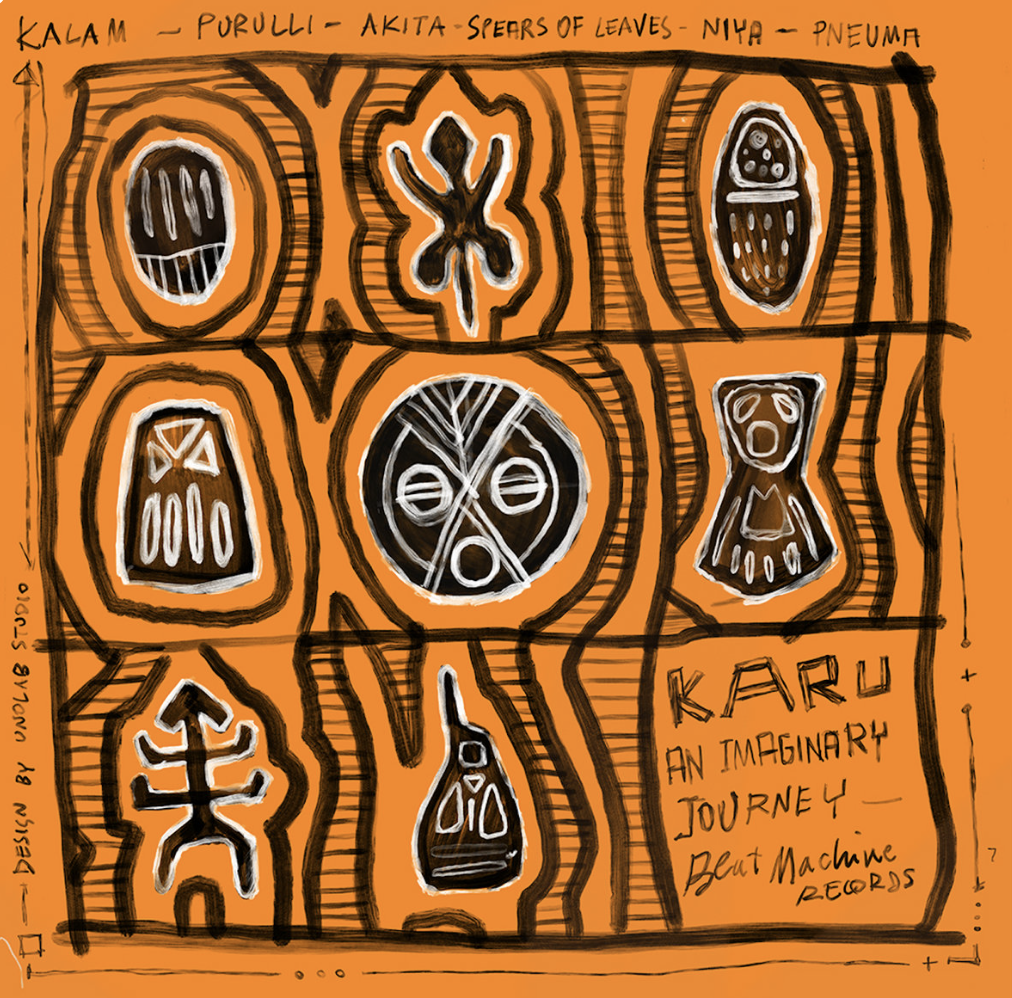
Lost in the Karu alias of mystical, atavistic mining and reimagined absorptions and traverses, the Italian double-bassist and producer Alberto Brutti’s collaborative project transforms, transmogrifies a fertile polygenesis palette of rituals and dances and ethnography to produce a contemporary affected album of Afro-Futurism, jazz and primitivism.
Wrapped up into a musical journey across both familiar and more ambiguous, vague cultural landscapes, Brutti creates suggestive atmospheres and ceremonies; many of which are conjured from title references to old worlds, religious and mythological etymology. In that wide field of influences, inspirations there’s the Abrabic “kalam”, which can roughly be used to mean “speech”, “word” or “utterances” pertaining to the Islamic faith, but was also the catchall term to define that religion’s tenants of faith in the face of the philosophical doubters; the antiquity Hattian empire festival “purulli”, held at the Bronze Age settlement of Nerik, dedicated to the earth goddess Hannahanna (which may well be the source of the Biblical “hosanna”); the West Slavic (otherwise known as Lechites) tribal name for the chthonian god “Nyia”; and the ancient Greek word for “breath”, or in the religious context, “spirit” or “soul”, “pneuma”.
The first of that quartet lends itself to the album’s opening peregrination of African drums, Blacks’ Myth and cut-up Anthony Braxton, Roscoe Mitchell jazz renderings, reversals, abrasive industrial resonated sounds, Širom type otherworldly primitivism and stick choppy rhythms. Following in its wake there’s signs of Andy Haas, the esoteric, elephant trunk raising horns and the no wave sound of Mars and Milk TV. The latter title of that same quartet of wordy mentions signals a move further East, with again, vague notions of the Indian, Baul but also a soundtrack of downtempo breaks (ala Alfa Mist and J Dilla) and the hallucinogenic trance of Fursaxa (if remixed by Clap! Clap!).
‘Spear Of Leaves’ however, rearranges the bedeviled Faustus pact blues and dialogue of Robert Johnson on a palanquin caravan lumber across vapours of snorkeled saxophone. The final dream sequence on this imaginary travelogue drifts into a hollowed-out cane spun and fluted rainforest wash; ending on a more laidback piece of South American flavoured geography and waning jazz.
Between the haunted illusionary and mysterious, a removed time-travelling worldly plane emerges. Herbs, Roberto Musci, Amorphous Androgynous and Drexciya converge somewhere in the middle of the underworld and elevated.
The Dark Jazz Project ‘S-T’
(Irregular Frequencies) 14th November 2022
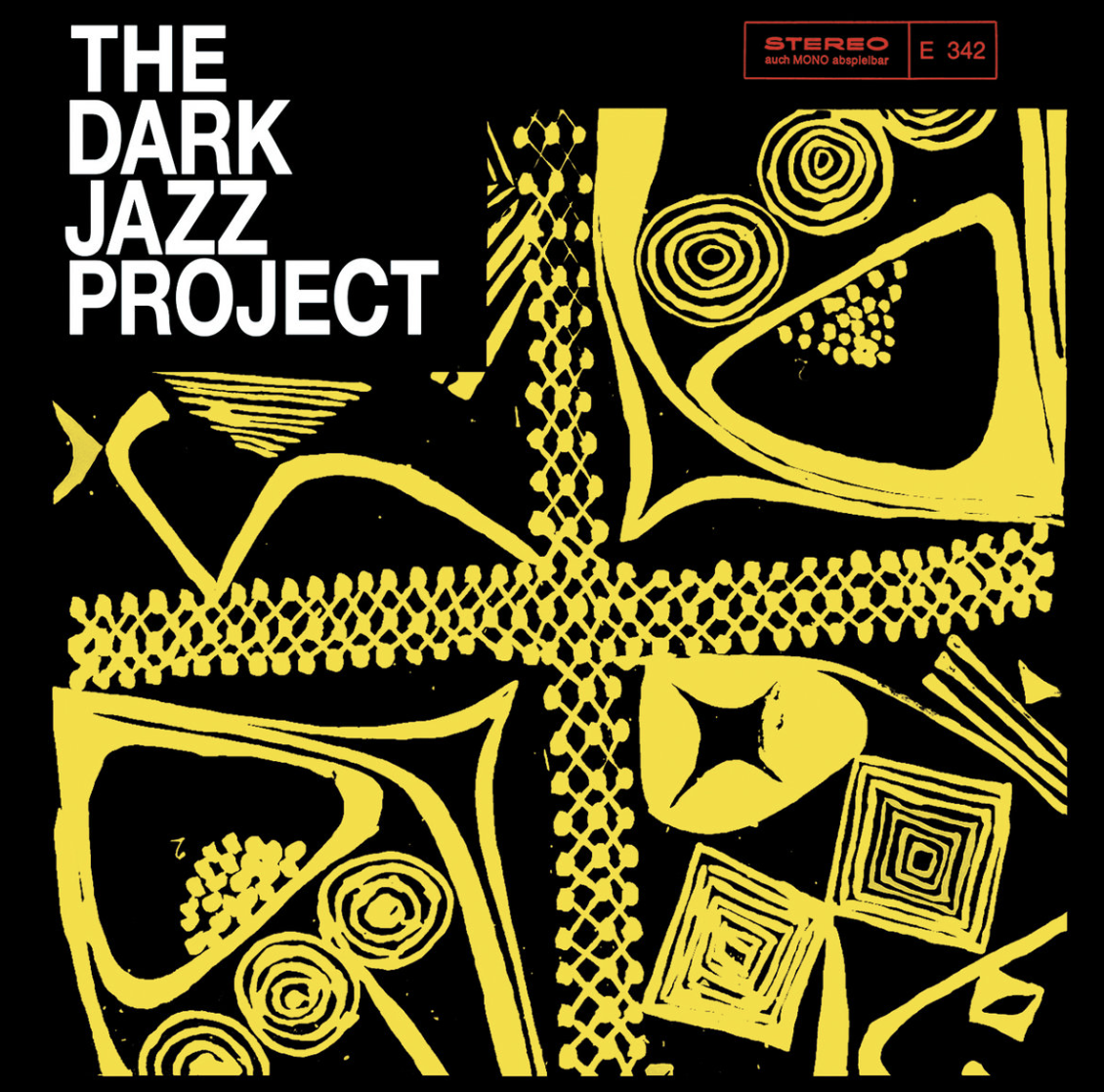
Making good on this summer’s three-track introductory EP, Andrew Spackman now unleashes a whole album of his latest regeneration creation, The Dark Jazz Project, on an unsuspecting audience.
The singular maverick electronic and art-house boffin recently hung-up his SAD MAN alias (after a splurge of numerous releases over the last five years) to crunch the codes of jazzcore.
‘100% political, 100% jazz, 100% dark’ we’re told, this latest platform for Andrew’s often sporadic leaps in electronic music and crushing techno filament cut-ups is about as removed from that jazz tag as you can get. The fact he’s also borrowed Sun Ra’s ‘Space Is The Place’ mantra too only feeds into the confusion. Any semblance to jazz is lost under a heavy tubular and granular transmogrification of the ominous, mysterious and, well, dark.
For this is the alien, sci-fi broken and fed through the Aphex Twin, Basic Channel, Radium, Rob Hood, Jeff Mills and Niereich & Shadym machine. Although the album’s opening hardline, dialed-in and pummeled beat gabbling Sun Ra lend sounds like Holly Herndon being thrown into the Hadron Collider, and Madlib seems to get trampled over, detuned and dissimulated on the bladed, driven and compressed frequency lunar ‘No Input’.
Andrews full gamut of skills, sonic palette comes to bear, as touches of primal, and even paradise moulding scores are set against more dissonant and chrome coated beats. Pins rain down on pulsating graphite spiky landscapes and imaginative darkly lit techno blocks of scrunched giant, weighted noise. A mirage or a topographic ocean; Olympus Mons or scorched earth, it all sounds a million miles away from even the most edgy and freeform ideals of jazz: not a saxophone in sight.
The Dark Jazz Project is yet another challenging move from one of the UK’s most inventive, inspired and, crucially, interesting leftfield electronic and techno composers of the last decade.
Yemrot ‘The Sunken Garden’
(PRAH Recordings)
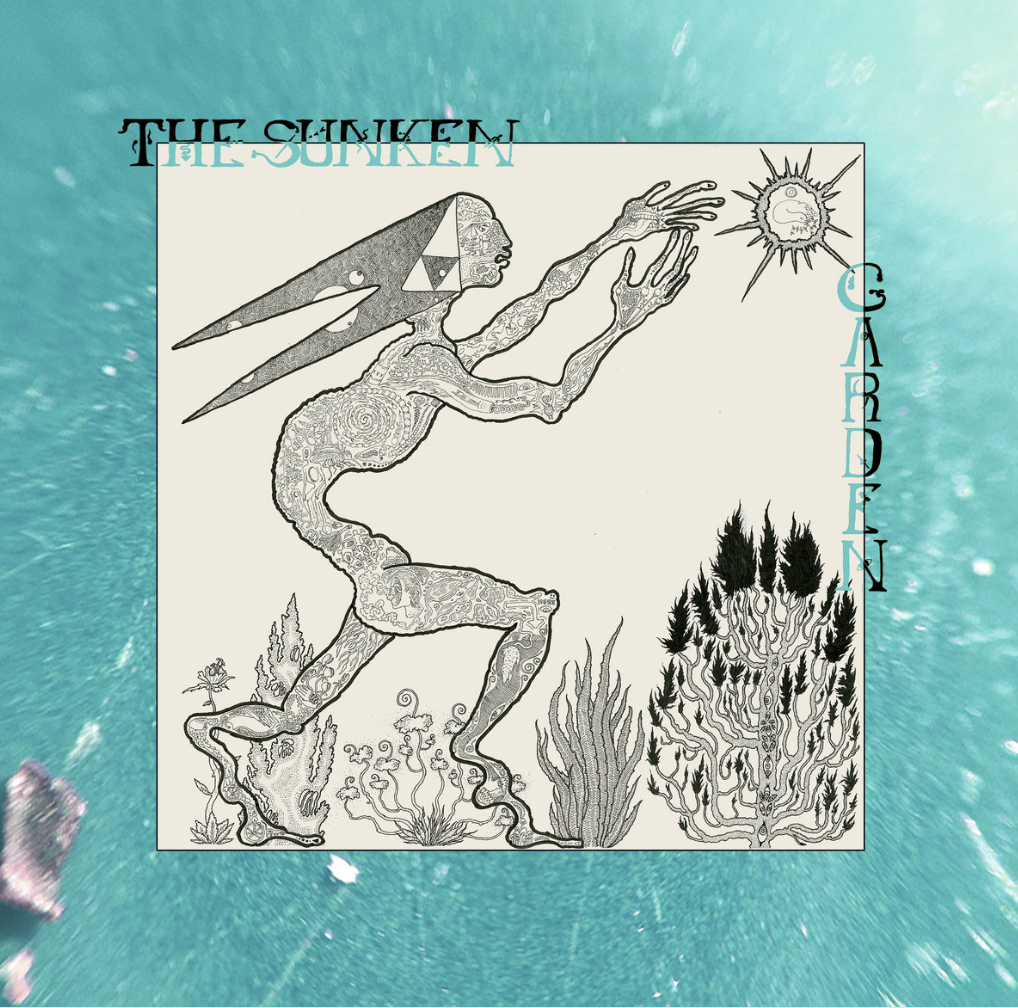
Who wouldn’t when faced with the despair of the modern world and in processing the deep loss of a parent want to take a giant leap into escapism and the fantastical? Looking into one such yearning chasm the Margate-based musician Jimi Tormey, acting under the alias of both Yemrot and the character Dill Dandin, finds solace in a neverworld of the dreamy and plaintive: a creeping sadness to be exact.
Unfortunately, in part, triggered by the death of his father (the gorgeous, welling-up and heavenly ached ‘Big Tree’ being the most obvious eulogy to that passing) The Sunken Garden is a both heartfelt and also psychedelic process of grief and some drama.
That process is, at times, a family affair with his mother Lisa providing the majority of emotive violin/viola, and his brother Eric offering harmonies alongside their sister Tuli, but also mixing and mastering the whole mini album. The results are achingly beautiful, yet there’s a constant deep feeling and vapour of unease, despondency and shadowy despair that swells up or looms over the magical illusions.
Canterbury scene troubadours and Syd Barrett influences wind and delicately emerge from the heavier atmospheres of Alex Harvey, Daevid Allen, Soundgarden and Radiohead. The album’s centerpiece, ‘The Ballad Of Dill Dandin’, is an eleven-minute stretching instrumental of changing, moving parts and passages. From the Floydian to chimes of Mark Hollis an almost theatrical drama and shimmer of something magical and creates a starry aura. Dill floats and tumbles across a trio of “Learning To” affixed songs that balance the soft with the harsh, the cosmic with the mournful.
Classical forms, the psychedelic, progressive and alternative all merge to form an interesting twisting journey of loss and acceptance; a working through of beautifully heart wrenching and articulated poetic expression. In the end I don’t think that sinkhole world is an escape route, but just a more imaginative coping strategy at dealing and conveying such miserable times. The masterful, gentle ‘Big Tree’ alone will move even the most numbed to tears, and deserves a place in any list of the best songs in 2022.
The Magic City Trio ‘Amerikana Arkana’
(Kailva) Late November 2022
Finally out the other side of the pandemic The Magic City Trio emerges with the second half of their originally conceived double album package of Americana, Country and Western scored songs from 2018. If part one was consumed with death, bad luck and mental health, part two is concentrated on the themes of serenaded, romantic affairs, with disarming little tales, alms, hymns and barn dances dedicated to both unrequited and strained relationships and knockabout love.
As with the previous album, a familiar soundtrack and language, lyricism is used to convey the contemporary: something of the moment. The bell tolls and tremolo rattle snake sets of Ennio Morricone and untold Western themes rub up against Nashville, the Carter Family, Lee Hazelwood, Mariachi brass, Willie Nelson and the psalms songs of America’s Methodist Church, yet this is an unmistakably modern record. Timeless feelings, subjects nonetheless, but with a slight updated twist.
An extended guest list joins the band’s principles, the June Brides’ Frank Sweeney and Annie And The Aeroplanes’ Annie Holder. Most notably the Nashville virtuoso John Heinrich, who lends that irresistible steel pedal quiver and upward bend to the Sweetheart Of The Rodeo if covered by Teenage Fanclub, with Orbison and The Carters in tow, ‘Our Life In Chains’, and the Red Rhodes-esque accompanied Gram and Bonnie Raitt in heartache duet ‘She Left Without A Warning’. “Record breaking” (for what I’m not sure) banjo player Johnny Button meanwhile adds his Appalachian hoedown spring to ‘The Final Day On Earth’ tale of woe and alarm. Also on that same lamentable group effort, Primal Scream’s Andrew Innes offers up bird sounds, flutes and mellotron. He’s back, playing both electric and acoustic guitars, on the Muscle Shoals Stones like, touching ‘You’re My Best Friend’ – which actually could be a Primal Scream attempt to once more ape the Stones’ spiritual washed-up tides.
Frank, when not carrying a tone and timbre that evokes both Richard Hawley and Mick Harvey, and Annie, vocally a mix of Kirsty MacColl and a rustic Marianne Faithfull, share an array of twanged, bowed and stirring and washboard scratched instruments with Jeff Mead, Matt Lloyd, Larry Saltzman, Dave Howell and others: a full panoply of the country sound.
Amongst the self-penned declarations, hungdog lovelorn regrets and outlaws-on-the-run sense of rebellious romance, the band cover the theme from the archetypal thrown-together-in-desperate-circumstances Western ‘3:10 To Yuma’ (great movie, both the original and remake) and the Wesleyan Methodist church hymn, ‘And Am I Born To Die’. The first of which, originally penned by Frankie Laine, keeps a sense of the matinee drama and atmosphere but now sounds a bit like later Crime And The City Solution bounded together with Scott Walker (At The Movies) on a heavenly aria touched dusty trail. The latter, is every bit as reverent and elegiac, conjuring up the “trembling spirit” and quivering to the sounds of timpani and the bells of judgment. It did remind me however of Rick Danko; more lovely than stoic serious damnation.
Amerikana Arkina once more sets the mood, a complimentary partner to their more moody, plaintive 2018 songbook. Souls are bared; heartache delivered with a cinematic panache, and the Americana cannon once more successfully invoked.
Leverton Fox ‘In The Flicker’
(Not Applicable)
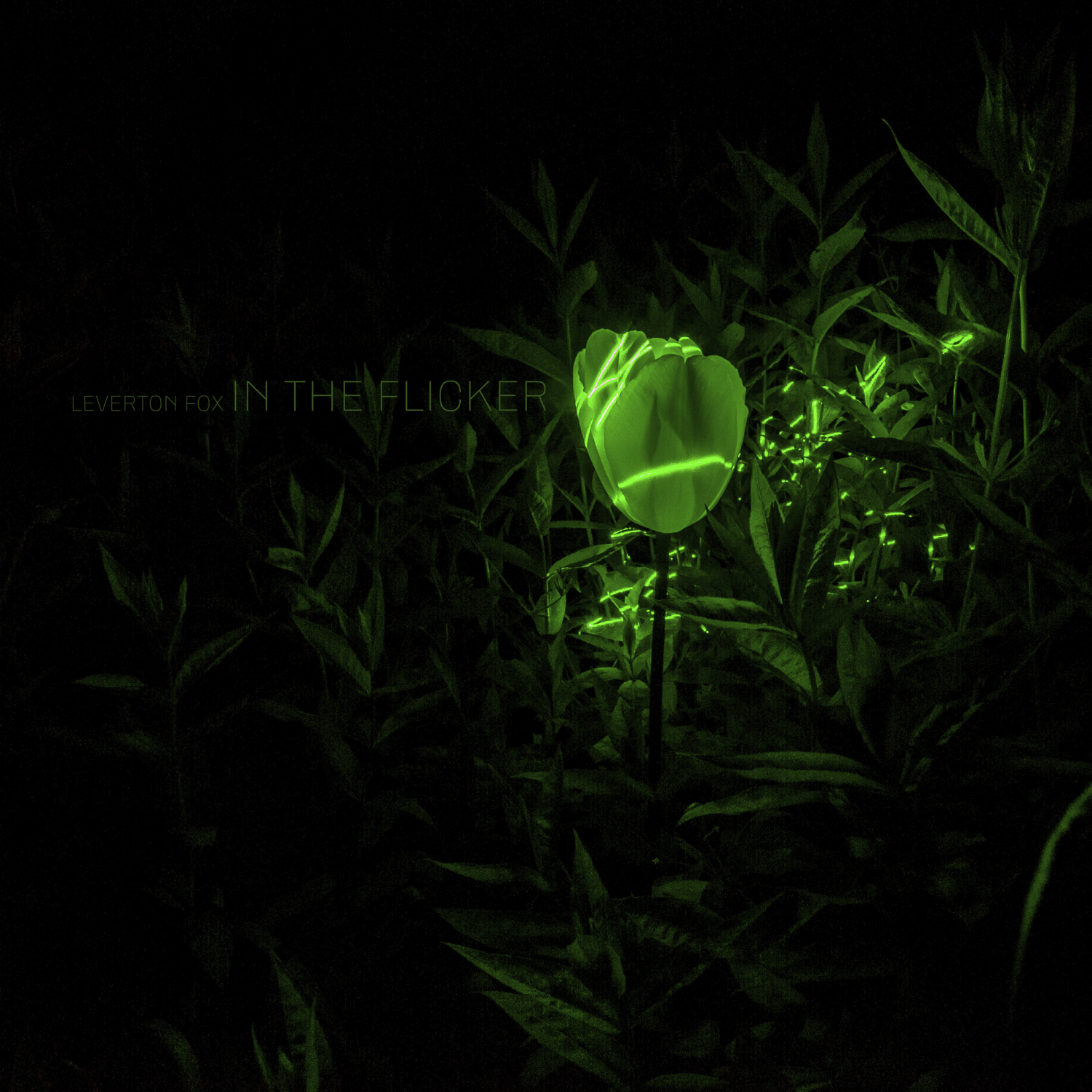
The gentle breeze rustling through the leaves and the sound of bracken and broken sticks underfoot in a less circumspect Sussex woodland has seldom sounded more alien, inter-dimensional and mysterious. Yet the Leverton Fox trio of Alex Bonney, Tim Giles and Isambard Khroustaliov has transmogrified the environment/atmosphere of their site-specific improvisation to beam out towards altogether more imaginative realms.
Intensified, if that’s the word, the trio of noted musicians/composers/artists in their own right attempt to sonically sculpt a 3D world with the added use of Dolby Atmos, a ‘surround’ format. Immersive being the key word, they draw the listener into lost worlds, primal soups and a more eerie lunar looming, time-travelling spheres.
Širom set-up in the undergrowth with Miles Davis at his most transient and wafting, Autechre, Tangerine Dream and Jon Hassell as ghostly traces of hidden sources merge with various aerial squiggles, zip-lines, machine purrs, occult sounds beamed from the Fortean Times transmitter, whipped up winds, clapped beats, crackles, raps, propeller and exotic sounding wildlife. A fully improvised soundscape that crosses mystical terra firma and unearthly corridors, In The Flicker takes in the most far-out, minimalist touches of jazz, electronica, dub, the dark arts, industrial, kosmische and Foley to create a certain mystique. The Leverton Fox(es) skilfully, intuitively explore and push a concept, conjuring up portals to more abstract planes; the familiar woodland site a mere jumping point for misty and bubbling invocations of an entirely different nature.
Dead Horses ‘Sunny Days’
(Maple Death Records) 14th November 2022

Jangling to a soft-stomping flange-induced country, rock ‘n’ roll bluesy acid dirge the Dead Horses esoteric sense of despair rings loud with slackened melodrama and scuzzy, dirty wiles. Whether it’s uprooting Spaghetti Western sets or up amongst the Andean condor nests looking down on the Nazca Lines, or, wading through swamps and thumbing a bum ride to a less idealized Laurel Canyon, the shared male/female vocal Italian group add a chthonian mystique and a touch of the Gothic to their brand of wrangled malcontent and doomed romantic aloofness.
A fair share of the new album, Sunny Days (released on the always intriguing and quality-delivered Maple Death Records label), rattles, spooks and melodically inhabits a reverberated atmosphere of Appalachian mountain songs and both languid and more heightened hysterics. A rewired Grace Slick, early Bad Seeds, Gun Club, Wall Of Voodoo and ‘Up The Hill Backwards’ Bowie flail about The Blood Meridian on the album’s opening song, ‘Can’t Talk, Can’t Sleep’, and Bosco DelRey mixes it up with the Velvets, Rey Crayola on ‘Hobo Talks’. The more mournful ‘The Cross’ has both an hallucinatory and The Kills vibe about it.
One of the standout songs however, takes a different direction. ‘Macabro’ still has that acid-folk country kick but also summons up a Latin drama, with a stirring vocal performance and Italo-Iberian stamp of bolero. Apparently this is the band’s first ever song in their native Italian tongue, and it’s all the better for it: more mysterious and hot-bloodily intense. No wonder it has become a sort of live anthem for the band.
It’s a long stretch from the Po Valley of antiquity to the Death Valley of inspired, mirage shimmered Western blues, but the Dead Horses as our guides navigate it with a flourish and macabre curiosity. If Crime And The City Solution buddying up with Aguaturbia and The Vaselines sounds like a desirable description then the rather ironically entitled Sunny Days stunt ‘n’ stomper is for you.
Biensüre ‘S-T’
(WEWANTSOUNDS)

Bringing together a mixed Mediterranean and Middle Eastern diaspora of musicians with a collective sense of belonging and yearn for their homelands, Biensüre transduces various cultural threads into a sophisticated and cool production of electro-pop, disco and sorrow.
Crossing paths in the cosmopolitan port city of Marseille, a refuge for centuries of émigrés and exiles, the group’s ranks include Kurdish, Turkish, Italian and Armenian lineages: The latter as a consequence of the early 20th century genocide. Within that gathering of cultural affiliations, and using the repurposed French expression for “of course”, Biensüre rally around the experiences of their poetically and longing yearned vocalist and saz player Haken Toprak. By the sounds of it that includes not just pining aches for his Kurdish-Turkish roots but declarations of unattainable love and serenaded exotic fantasies.
Already well into a contemporary revival of Anatolian and Middle Eastern synthesized pop, electro and disco (see groups such as Altin Gün and the Şatellites) Biensüre evoke such original trailblazers and icons as Erin Koray, Baris Manco, Moğollar and Kamuran Akkur. They augment those influences with subtle hints of Moroder, Vangelis, a throb of EDM and an unlikely bit of Nu Shooz on the drum-pad sizzled new waver ‘Çawa’.
Electrified misty veils hug the dancefloor, seductive movers are made, and swooned wanton vocals ache for what’s been lost on a unhurried smooth production that is simultaneously Turkish, Kurdish, Greek and Arabian in nature.
As funky as it is clean and lush, the Biensüre LP soaks up the great Marseille exile community and comes up with the goods. Breathlessly groovy yet casting back to the language (‘Zivistan’ the Northern-Kurdish word for “winter”) and memories of their ancestral homes, a nice balance is struck emotionally and musically between the modern and tradition. In all, a great pop record of Med flavours, with a soul and purpose.
Trans Zimmer & The DJs ‘S-T’
(Artetetra)
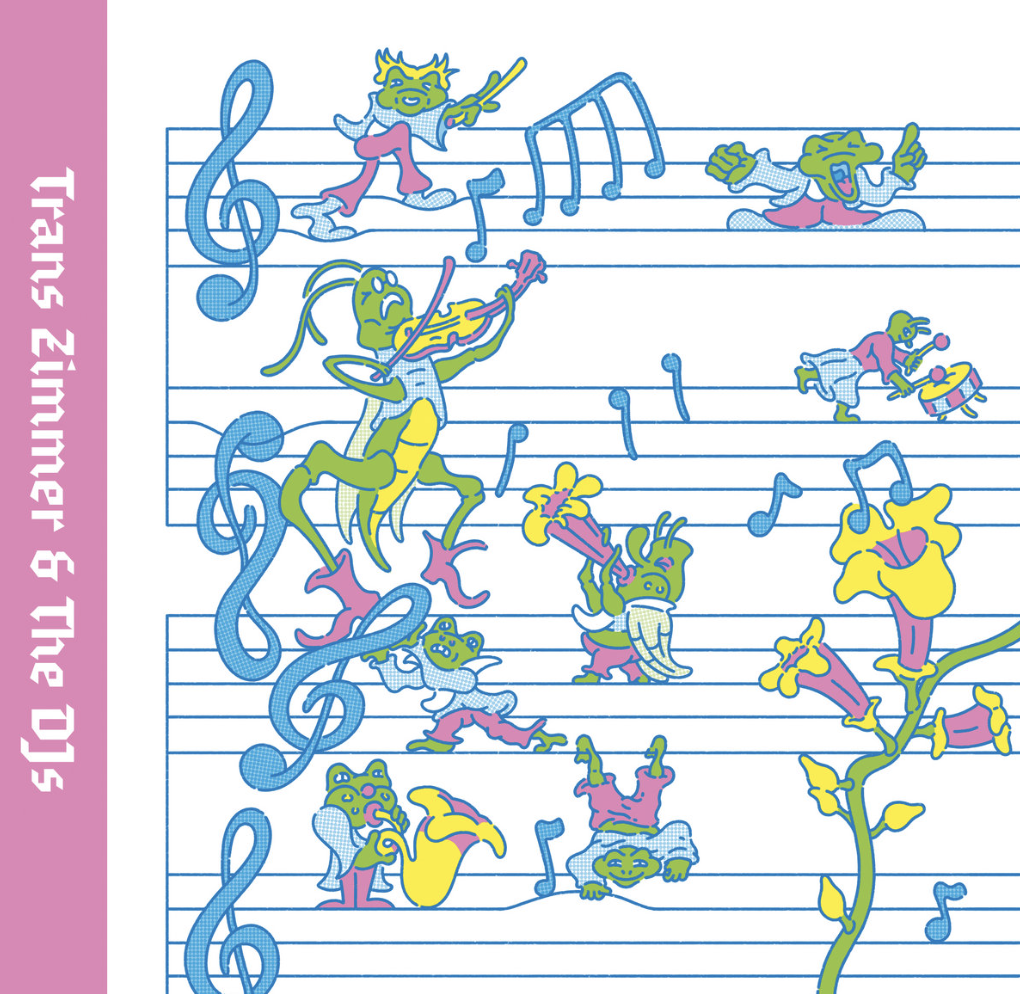
Launched into the most bonkers MIDI sound collage of platform hopping video game music, Esperanto era Sakamoto experimentation, slacker American dialogue, kooky fantasy and cartoon classical movements, the collective Trans Zimmer & The DJs (surely a play on the notable German film composer Hans) reimagine a Ritalin-starved Wendy Carlos running amok on Candy Crush.
Within the walls of a Taito/Capcom 80s arcade a loony tunes of polyphonic pre-set symphonies and chaotic snatches of gameplay chat trample over the course of a most silly bubblegum opera. It’s Baroque on speed; the Flaming Lips colouring in classical music scores; a grand misadventure of super hyped-up fanfares and cute vocoder J-Pop, hip-hop, electronica and lemon meringue pie snacks. Even aboard the S.S. Romulus the waters are choppy, tossing us around in a strange voyage of cult library music and late 90s American psych. I haven’t a clue what’s going on: not that it matters. The whole manic, yet always melodious and fun, experience seemingly a run through of the kitsch, crazy, miss-matched playful minds of those who created it. Skidding and scrabbling on a quest inside a 32-bit fantasy, Zimmer and friends level up across a most confusing, colourful whistle and skipped aural sinfonietta.
FOR THE FUNS
Casta ‘The Temple Of Doom’
(Bandcamp)
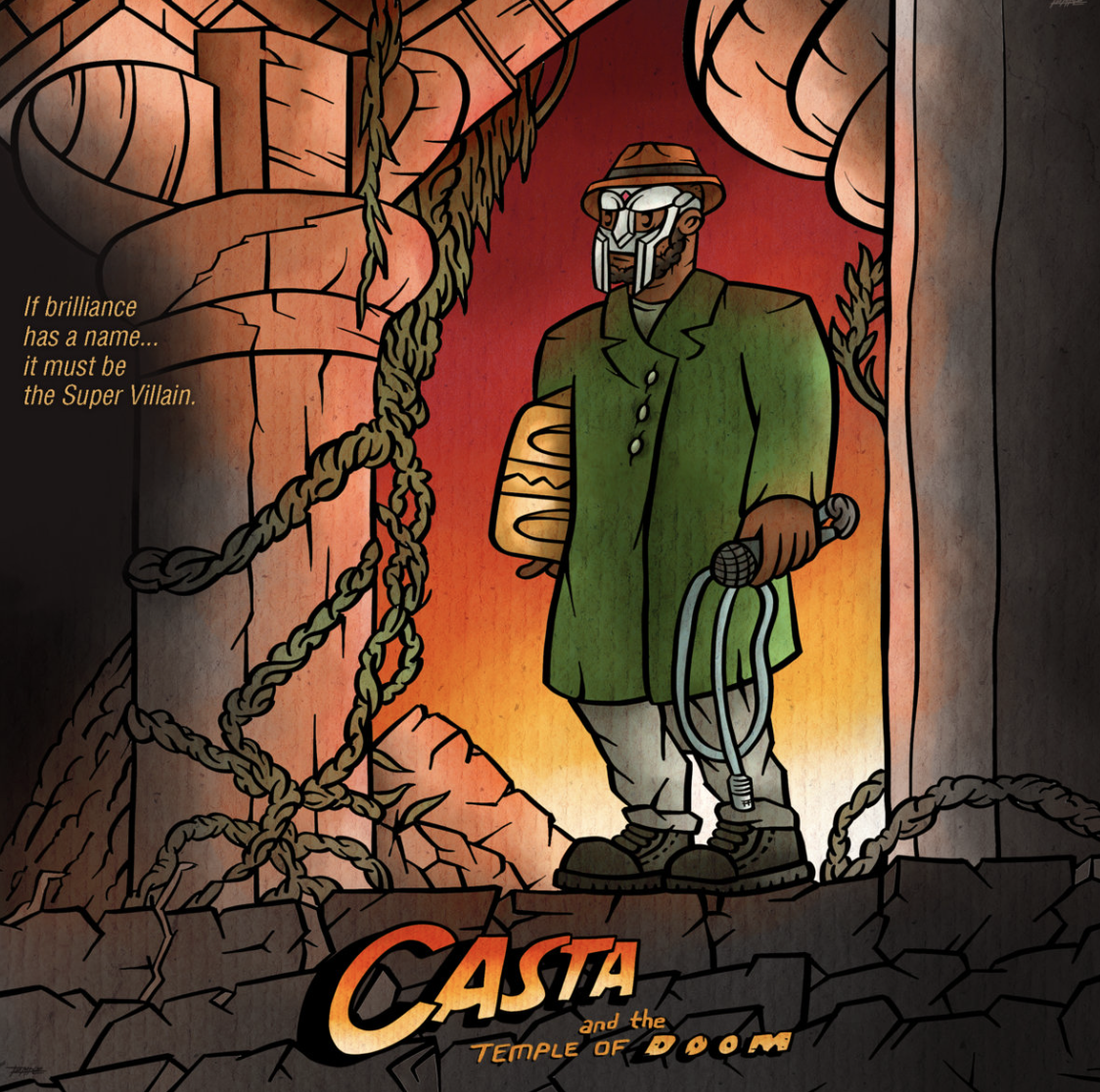
I suppose it was inevitable that at some point someone from the extensive late metal face villain and underground hip-hop genius MF Doom fandom would play on the Indiana Jones franchise – Indy literally escaping death in an airplane crush only to fall into the clutches of the Thuggee cult. I even named my playlist homage to the former Kausing Much Damage founder and prolific name riffing soloist, collaborator after the second Jones cinematic adventure myself. And I’m not alone on that score.
Released a year to the day of Daniel Dumile nee DOOM, Viktor Vaughn, Zev Love X’s death, the enterprising Portland producer Casta has merged the score from the Temple Of Doom with both samples and interview snippets from the MF Doom cannon: though it could have done with more Short Round quips in the mix.
In the spirit of such hip-hop mashups, with even Doom himself not adverse to sampling some cult, obscure and leftfield scores, Casta has some fun in paying tribute to a much-missed artist. From the Monsta Island Czars all-stars team-up to his work with a new breed of rap stars, such as Bishop Nehru, he leaves behind one of the greatest legacies in Hip-Hop: though his influence, creativeness, wordplay, pop culture, visuals and artwork reaches far beyond rap music, as this project proves.
Hi, my name is Dominic Valvona and I’m the Founder of the music/culture blog monolithcocktail.com For the last ten years I’ve featured and supported music, musicians and labels we love across genres from around the world that we think you’ll want to know about. No content on the site is paid for or sponsored and we only feature artists we have genuine respect for /love. If you enjoy our reviews (and we often write long, thoughtful ones), found a new artist you admire or if we have featured you or artists you represent and would like to buy us a coffee at https://ko-fi.com/monolithcocktail to say cheers for spreading the word, then that would be much appreciated.
Monthly Playlist Revue: October ’22: Muramuke, Marlowe, Voice Actor, Lira, Underground Canopy, Keep Shelly In Athens…
October 31, 2022
PLAYLIST SPECIAL
TEAM EFOORT/COMPILED BY DOMINIC VALVONA

Each month the Monolith Cocktail pool of collaborators search long and hard for the choicest of choice tracks; mixing genres and geography into an encapsulation of the last month on the blog.
That team includes me (Dominic Valvona), Matt ‘rap control’ Oliver, Brian ‘Bordello’ Shea, Andrew C. Kidd and Graham Domain.
You may have noticed since the summer that we’ve started compiling a Youtube playlist version, which includes extra bonuses from the No Base Trio and a seasonal treat from Escupemetralla plus some alternative tunes from the same artists on the Spotify list.
So without further ado, here is the October Revue:
And the Youtube version:
Full Track List:-
Montparnasse Musique Ft. Muambuyi and Mopero Mupemba ‘Panter’
Muramuke ‘Just One More’
Balaklava Blues ‘BEAT UP’
Marlowe/L’Orange/Solemn Brigham Ft. Deniro Farrar ‘Godfist’
Rockness Monsta/Method Man/Ron Browz ‘Beastie Boyz’
BeTheGun ‘Metropolis’
Lee Tracy/Isaac Manning ‘Love Is Everything’
Lee Scott Ft. Sly Moon ‘THE MORE I THINK ABOUT IT, THE LESS I CARE’
Voice Actor ‘Battling Dust’
Juga-Naut ‘To The Table’
Ernesto Djédjé ‘Nini’
Liraz ‘Mimiram’
Mehmet Aslan/Niño de Elche ‘Tangerine’
Underground Canopy ‘Space Gems’
Valentina Magaletti ‘Low Delights’
Carl Stone ‘Sasagin’
Tau & The Drones Of Praise ‘Bandia’
Keep Shelly In London Ft. Sugar For The Pill ‘Don’t Want Your Romance’
Librarians With Hickeys ‘I Better Get Home’
Una Rose ‘Partly’
Carla dal Formo ‘Side By Side’
Derrero ‘Long Are The Days’
Super Hit ‘Donde’
Rahill ‘Haenim’
David Westlake ‘English Parish Churches’
Cormac o Caoimh ‘Didn’t We’
VRï ‘Aberhonddu’
Tuomo & Markus ‘Highest Mountain’
Pitou ‘Dancer’ Dana Gavanski ‘Strangers’
The Zew ‘Come On Down’
Brona McVittie ‘Living Without You’
Brian Eno ‘These Small Noises’
Edouard Ferlet ‘REFLEX’
Rich Aucoin ‘Esc’
Puppies In The Sun ‘Light Became Light’
Short Fuze Ft. Dr. Khil ‘Love Letters To The Lost’
Loyle Camer ‘Speed Of Flight’
Ill Move Sporadic/Tenchoo ‘Amulet Chamber’
Atmosphere ‘Sculpting With Fire’
Ghoster ‘CRAME 4’
Clark ‘Frau Wav (Brief Fling)’
Verbz/Mr Slipz ‘Music Banging Like’
Jester Jacobs/Jack Danz ‘Opportune’
Darko The Super/Yuri Beats ‘Don’t Stay’
Open Mike Eagle ‘I’ll Fight You’ A.G. ‘The Sphinx’
El Gant Ft. DJ Premier ‘Leave It Alone’
Heavy Links/Luca Brazi ‘Complicated Theory’
Fliptrix, King Kashmere/Pitch 92 ‘Primordial Soup’
Shirt/Jack Splash ‘Death To Wall Art’
Smellington Piff/Ill Informed ‘Hard Times’
Hi, my name is Dominic Valvona and I’m the Founder of the music/culture blog monolithcocktail.com For the last ten years I’ve featured and supported music, musicians and labels we love across genres from around the world that we think you’ll want to know about. No content on the site is paid for or sponsored and we only feature artists we have genuine respect for /love. If you enjoy our reviews (and we often write long, thoughtful ones), found a new artist you admire or if we have featured you or artists you represent and would like to buy us a coffee at https://ko-fi.com/monolithcocktail to say cheers for spreading the word, then that would be much appreciated.
The Monolith Cocktail Social: Volume #70: Pharoah Sanders, Ros Serey Sothea, R.E.M., J Scienide, Genesis, Nicolini…
October 14, 2022
Dominic Valvona’s Eclectic/Generational Spanning Playlist

More or less the blog’s radioshow (minus any vacuous chat and clique guests), the Social is my ‘anything goes’ playlist selection of tracks I’ve played out, accumulated, come across or been handed over the last forty years.
Reaching the 70th volume this month, the choice tracks are every bit as eclectic, sometimes fun, and intriguing. I usually pay homage or doff my cap to those we’ve lost in that time, but also to those albums celebrating special anniversaries. In the former camp I couldn’t not miss the opportunity to say farewell to astral, spiritual and freeform jazz doyen Pharoah Sanders, including a smattering of personal favourites and a snatch of interview from the In The Beginning 1963-64 album.
In the celebratory mode, I’ve picked tracks from Prince’s 1999 LP (marking its fortieth anniversary this October), R.E.M.’s Automatic For The People (thirty this month) and Genesis’ Foxtrot (unbelievably a half century).
However, we kick off volume 70 with the Cambodian chanteuse Ros Serey Sotha and the electrified, hot-footing Orchestra Baobob from Senegal – we’ve already raked up the musical air miles with just those two opening acts. Added to that there are cuts from Annie Anxiety, Stelvio Cipriani, Platonica Erotica, Magic Mixture, Ill Biskits, the Jim Black Trio and more.
That Track List In Full:
Ros Serey Sotha ‘Easy Come Easy Go’
Orchestra Baobab ‘Kelen ati leen’
Pharoah Sanders ‘High Life’
Santiago Córdoba/Bauls Of Bengal ‘Tigres En Fuga’
More Eaze/Claire Rousay ‘kyle’
Annie Anxiety ‘Closet love’ Prince ‘Delirious’
Stelvio Cipriani ‘Bersaglio altezza uomo (Titoli)’
Universal Totem Orchestra ‘Codice Y16’
Platonica Erotica ‘Holy Holy’
Romica Puceanu ‘Multă Lume Noroc Are’
David Ackles ‘Surf’s Down’
R.E.M. ‘The Sidewinder Sleeps Tonite’
Nicolini ‘Snake Head Wine’
Algebra Suicide ‘Somewhat Bleeker Street’
NINA/Dean Blunt ‘grandiosee’
Paul Jacobs ‘After Dark’
Able Tasmans ‘Dileen’
Magic Mixture ‘You’
Flaming Ember ‘Livin’ High, Money Low’
’68 Comeback ‘Clean Yong 16’
Pharoah Sanders ‘Farrell Tune (Live In Paris 1975)’
Barney Wilen ‘Scorpion’
Ill Biskits ‘Let ‘Em Build’
Mic Geronimo/Murder Inc. ‘Time To Build’
J Scienide ‘Why Even Try???’
Between ‘Song For Two’
Genesis ‘Watcher Of The Skies’ Nick Garrie ‘Ink Pot Eyes’
Pharoah Sanders w/Sun Ra & Black Harold ‘The Shadow World’
Picchio dal pozzo ‘Cocomelastico’
Jim Black Trio ‘Next Razor World’
Dom Um Romao ‘Jungle Carnival’
Pharoah Sanders ‘Interview – Coming To New York’
Pharoah Sanders ‘Colors’
The Monthly Playlist: September ’22: No Age, The Beach Boys, Al-Qasar, King Kashmere, Sampa The Great, Yemrot….
September 30, 2022
PLAYLIST
TEAM EFFORT/CURATED BY DOMINIC VALVONA

After avoiding Covid for nearly two and a half years (with periods of shielding) I’ve finally succumbed to the dreaded virus this week. And it’s hit me hard. But because I’m such a martyr to the cause of music sharing I’ve managed to compile this eclectic bonanza of choice music from the last month.
The Monolith Cocktail Monthly features tracks from the team’s reviews and mentions, but also includes those tunes we’ve just not had the room to feature. That team includes me (Dominic Valvona), Matt Oliver, Brian ‘Bordello’ Shea, Andrew C. Kidd and Graham Domain.
We’ve supplemented the original audio playlist with a video version on our Youtube channel. This will feature a slightly different lineup (the electronic music collective Violet Nox’s ‘Senzor’ primer for one).
The full track list is as follows:
Dead Horses ‘Macabro’
Grave Goods ‘Source’
No Age ‘Compact Flashes’
Etceteral ‘Rome Burns’
Al-Qasar Ft. Jello Biafra ‘Ya Malak’
Clear Path Ensemble ‘Plazma Plaza’
Antonis Antoniou ‘Syntagi’
Ocelot ‘Vanha Hollywood’
The Beach Boys ‘You Need A Mess Of Help To Stand Alone – Live At Carnegie Hall’
Rezo ‘Soemtimes’
Blue Violet ‘Favorite Jeans’
Teo Russo ‘Novembre’
Keiron Phelan & The Peace Signs ‘Guessing Game’
Micah P. Hinson ‘Ignore The Days’
Sonnyjim/The Purist Ft. MF DOOM & Jay Electronica ‘Barz Simpson’
Salem Trials ‘Just Give Up’
The Bordellos ‘Nurse The Screens!’
Legless Trials ‘Ray’s Kid Brother Is The Bomb’
S. Kalibre ‘Hip Hop World’
King Kashmere/Leatherette ‘G-Cell’
Depf/Linefizzy ‘Rain’
Isomonstrosity/645AR/John Lenox Ft. Danny Brown ‘Careful What You Wish For’
Tess Tyler ‘Try Harder’
Qrauer Ft. Anne Muller ‘Rund’
Sampa The Great Ft. W.I.T.C.H. ‘Can I Live?’
Rob Cave/Small Professor ‘Eastern Migration’
Salem Trials ‘Jc Cells’
Wish Master/Axel Holy Ft. Wundrop ‘FLIGHT MODE’
Alexander Stordiau ‘Nothing’s Ever Acquired’
Simon McCorry/Andrew Heath ‘Mist’
Andrei Rikichi ‘At Home I Hammer Ceramic Golfing Dogs’
OdNu ‘My Own Island’
Floorbrothers ‘In Touch’
Conformist X H O R S E S ‘Heddiw’
Slim Wrist ‘Milk Teeth’
Forest Robots ‘Everything Changes Color With The Rainfall’
Noah ‘Odette’
Yara Asmar ‘there is a science to days like these (but I am a slow learner)’
Tess Tyler/Spindle Ensemble ‘Origami Dogs (Graphic Score Interpretation)’
Christina Vantzou/Michael Harrsion/John Also Bennett ‘Piano On Tape’
Yemrot ‘Big Tree’
Our Daily Bread 541: No Age ‘People Helping People’
September 20, 2022
ALBUM REVIEW
DOMINIC VALVONA
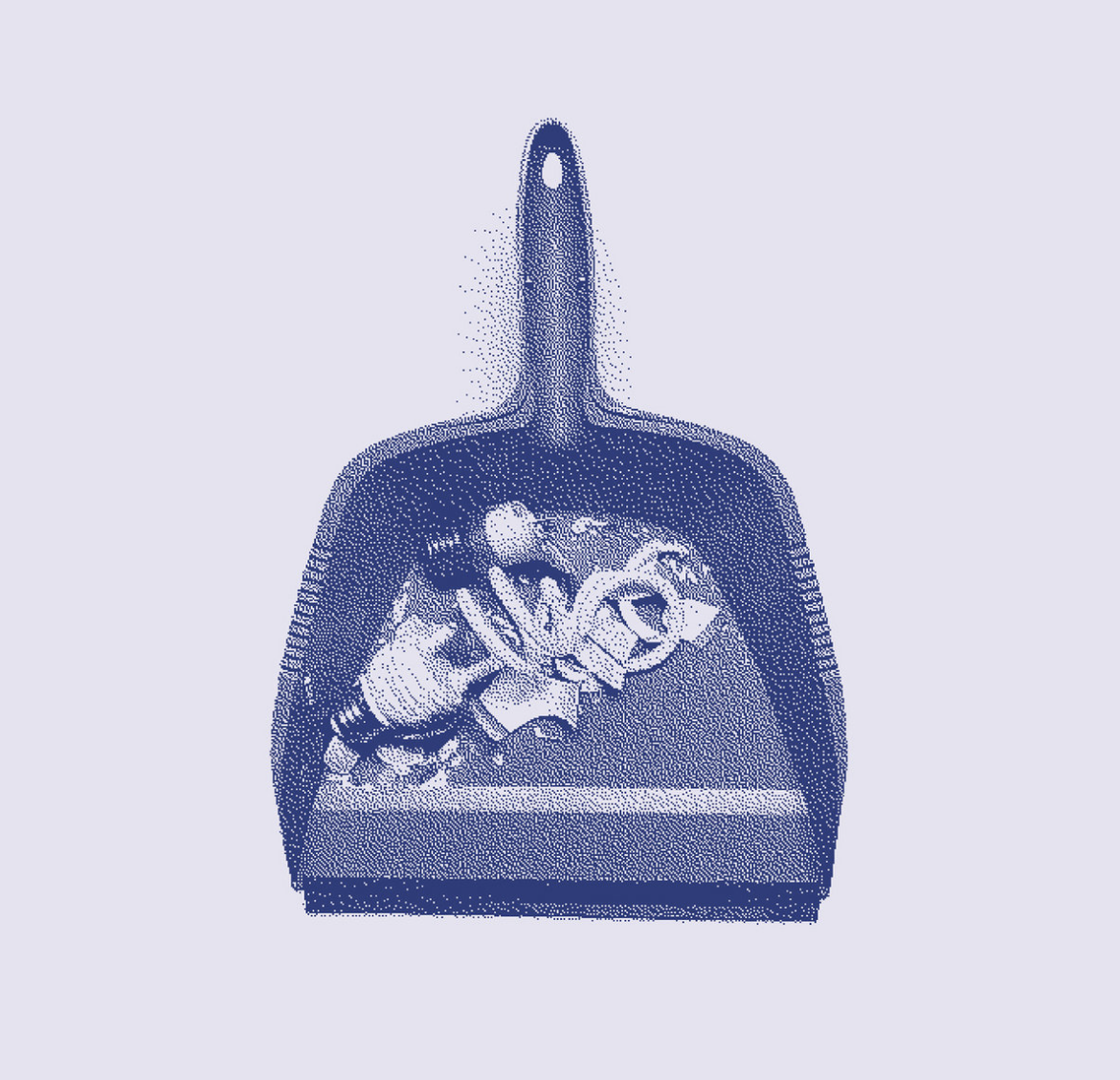
No Age ‘People Helping People’
(Drag City) 16th September 2022
Fucked-over like the rest of us during the Covid pandemic, the drum and guitar pushing No Age partnership of Randy and Dean lost their original studio space of the last decade. Forced to take up space in Randy’s garage instead, the duo set out on another sonic adventure of both languid and more weighted slacker angst, pain and dismissal.
Six albums into a feted career that began sixteen years ago, No Age have lasted the course and maintained their thirst for experiment; taking that drum, guitar and vocal combo further than most. And for the first time ever the new optimistically, daresay hopeful, entitled People Helping People album is entirely recorded by the duo themselves.
They bookend it with two of the most dreamy resonating instrumental pieces: the first, ‘You’re Cooked’ envelopes and traverses cylindrical vaporous loops, reversed sucked-in guitar sonics and sparse drum pad hits, the second, ‘Andy Helping Andy’ is even more psychedelically sleepy and ghostly; a wistfully aching and hazy vision that could have easily soundtracked the recent Netflix documentary, The Andy Warhol Diaries. The former reminded me of the Liars Aaron Hemphill and his solo Nonpareil project, the latter, like a languorous, quite sad waft of remembrance. The Warhol track is actually among my favourites. Over time it gets better and better, more evocative on every play.
So, No Age continue to change the mood, waiting until well into the album’s second track, ‘Compact Flashes’, to open up the vocal valves, chase wild horses and skid, clash and clatter with sporadic free fall jazz spills, new wave sensibilities and a loosened concept of timing. It is however a continuous balance of those stirring instrumental fogs, wisps and a rolling, fanned and disjointed unique vision of scuzz, garage, punk, grunge, shoegaze and music that no ones quite been able to name convincingly yet.
If you could even call them reference points, there’s a taste of the already mentioned Liars, a guzzle fuzz of Lou Reed (‘Violence’), Iggy period Stooges and Dylan if he’d be born as a generation Xer snot rocker (‘Flutter freer’), Crispy Ambulance (in many places) and Rudolf Sosna’s scratchy guitar work on the Faust albums (‘Plastic (You Want It)’).
At times on a lo fi vibe and at other times pushing at the halcyon, No Age keep moving, keep navel gazing and keep on surprising. Just when you get a sense of direction they change tact, plant a new seed. On waves, in bombardments and fizzled petulance the duo redefine their sound and push the envelope a little further forward down the road.
The Perusal #35: Al-Qasar, Forest Robots, Clear Path Ensemble, Lampen, Noah, Yara Asmar…
September 7, 2022
DOMINIC VALVONA’S ECLETIC REVUE
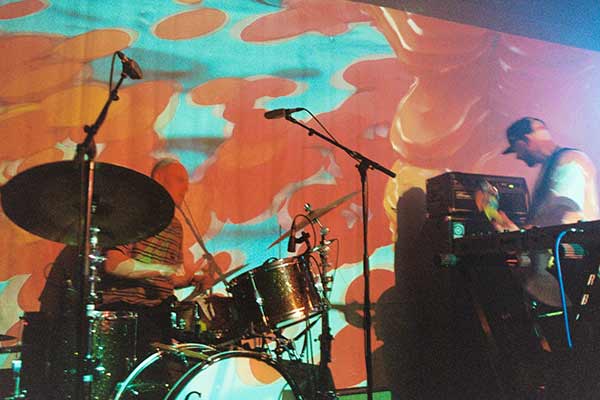
Al-Qasar ‘Who Are We?’
(Glitterbeat Records) 16th September 2022

Bubbling up from the Barbès Algerian enclave of Paris (the 18th Arrondissment boulevard that’s home to the yet to be gentrified and tourist-friendly passed Little Algeria community) and crisscrossing continents, the Al-Qasar group fuzz-up and electrify the sound of Arabia and its diaspora.
Helmed by instigator-in-chief Thomas Attar Bellier that neighborhood bustle is elevated and blasted back out into the world at large, absorbing and picking up sonic waves, spikes from Northeast Africa to a hardcore California and a rich tasting Sublime Porte.
It all helps of course that Attar Bellier is a global nomad, having lived in New York, Lisbon and Paris, but also having worked in the recording studios of L.A. during that circumnavigation of multicultural living he produced enough tracks of his own, releasing the well-received Miraj EP.
I get the impression that this is a fluid project, but at the time of this, the debut longplayer, Attar Bellier has opened up the ranks to include Jaouad El Garouge on vocals and a number of instruments synonymous with Moroccan Gnwa and North African traditions, Guillaume Théoden on bass and sub-bass duties, Nicolas Derolin on a myriad of percussive and hand drum instruments and Paul Void on drums. That seems the core anyway, but in this electric saz tangling and psychedelic post-punk rich sound there’s a cast of guest pioneering musicians to add yet another layer, another sonic perspective.
From the start there’s Sonic Youth’s guitar-sculptor Lee Ranaldo providing multi-layers of sustain, whines and abrasions to both the opening Swans meet Faust squall turn spindled and more familiar Middle Eastern electric fez intro ‘Awtar Al Sharq’, and the second, dervish-spun spirited and phlegm-voiced tour of Anatolia, The Balkans and Arabia, ‘Awal’.
That legend of the California punk scene, miscreant Dead Kennedys founder Jello Biafra goes free-radical on the staccato jangling ‘Ya Malak’. In a kind of John Sinclair mode, he reads out a poignant translation of a poem by the famous Egyptian revolutionary poet Ahmed Fouad Negam, updated for the cataclysmic state of the world in 2022, and the crumbled, violently oppressed post Arab Spring. This is where, despite the Cairo-futurism, the rattled and slapped hand drum energy, that the political motivations, the despair and anger comes to the fore; all that history, the post-colonial tumult and also fall-out from an Arabian-wide protest movement seeking modernization, the right to earn and end to greed. Read through a tiny transistor style radio Biafra’s agitator spirit turns this into a sort of Arabian Fugazi.
Moving on, but just as political, the New York-based Sudanese vocal doyen Alsarah (of Alsarah & The Nubatones renown) brings her impressive expressive outpourings and trill to the rattlesnake desert song ‘Hobek Thawrat’. In that soulful, rising loved-yearned voice there’s a protest against the coup on her homeland, the chorus itself repeating a slogan from the recent demonstrations. A sound of the Sahel, the women folk of Tinariwen and a little Bab L’Bluz Gnawa hover over this beautifully delivered protestation.
It runs throughout, this sound’s birthplace, but Al-Qasar pay a special homage on the (so good they name it twice) ‘Barbès Barbès’, which also features the electric oud pioneer Mehdi Haddab (of Speed Caravan note). Metal work drums, a nice rolling groove and souk candour prove a friendly hustled soundtrack for a meander in the heavily African outpost. Haddab gets a solo of a kind, providing a romanticized, poetic and folksy oud, with bursts of blurred quickened neat fretwork that borders on Baba ZuLu style psychedelic rock.
The finale, ‘Mal Wa Jamal’, features the longing ached vocals of the Egyptian singer Hend Elrawy soaring over an inspirial organ and almost post-punk push. Elraway’s beautiful wails prove disarming as the song’s lyrics concern a female-centric outlook on prostitution and its consequences. There’s attitude certainly, but it’s all wrapped up in a fizzled, fuzzy and mystical film of Arabian dance and fantasy. No surprise that they’ve been added to the Glitterbeat Records label roster, an imprint for just this sort of fusion; one in which you’ll hear an Arabic Muscle Shoals merging with Anatolian psych, a touch of Electric Jalaba and Şatellites if remixed by Khalab. A brilliant package of transformed traditions wrapped up in electrifying futurism; the sounds of Arabia, North Africa and beyond are thrust into a dynamic, unifying and eclectic direction.
Clear Path Ensemble ‘Solar Eclipse’
(Soundway Records) 9th September 2022

Out of the Wellington jamming session hothouse incubator and blossoming jazz scene in New Zealand Cory Champion rides the sun-birched rays and waves to cook-up a congruous album of many flavours. From a knowing position the jazz percussionist flows freely between a 70s ECM back catalogue of inspirations and the funk, fusion, spiritual and more freeform genres of his chosen art form.
Under the Clear Path Ensemble alias – his second such alias, also going under the Borrowed CS title when making leftfield deep house and techno cuts – Champion channels both Latin and Uniting Of Opposites style brassy Indian reverberations on the golden ‘Kihi’; offers up an acid jazz turn retro zippy-zappy late 70s disco funk fusion on ‘Drumatix’; and magic’s up a post-Bitches Brew Mile Davis band mystery of African-flavoured marimba and jug-poured, lava-lamp liquid cosmic spiritualism on ‘Revolutions’. But the mood, musicality changes again when we reach the jazzy-suspense score ‘Absolvo’: an early 70s cool cult vision of a Lalo Schifrin thriller.
The finale, ‘Tennis Ball’, could be said to have taken Liquid Liquid’s percussion, beats and a bit of the Style Council’s laidback washy soul-funk. And the dreamy seasonal solstice ‘Sunrise Motif’ finds a blend of the Modern Jazz Quartet, the willowy fluted bucolic and Nate Morgan. All the while translucent bulb-like notes flow or float from the vibraphone as other light-footed percussive vibrations dance and softly quicken the pace.
A harp run here and muffled, mizzle sax or trumpet there; a touch of electric piano and pining strings on anther track; all elements that come together across a changing groove.
Clive Zanda meets a less busy Michael Urbaniek on a minor jazz odyssey of nostalgic but very much alive and contemporary fusions, Champion’s second album in this role is a sophisticated, smooth but also freeform set of moods, visions and counterflows. It proves a perfect fit for the eclectic and much-praised Soundway label.
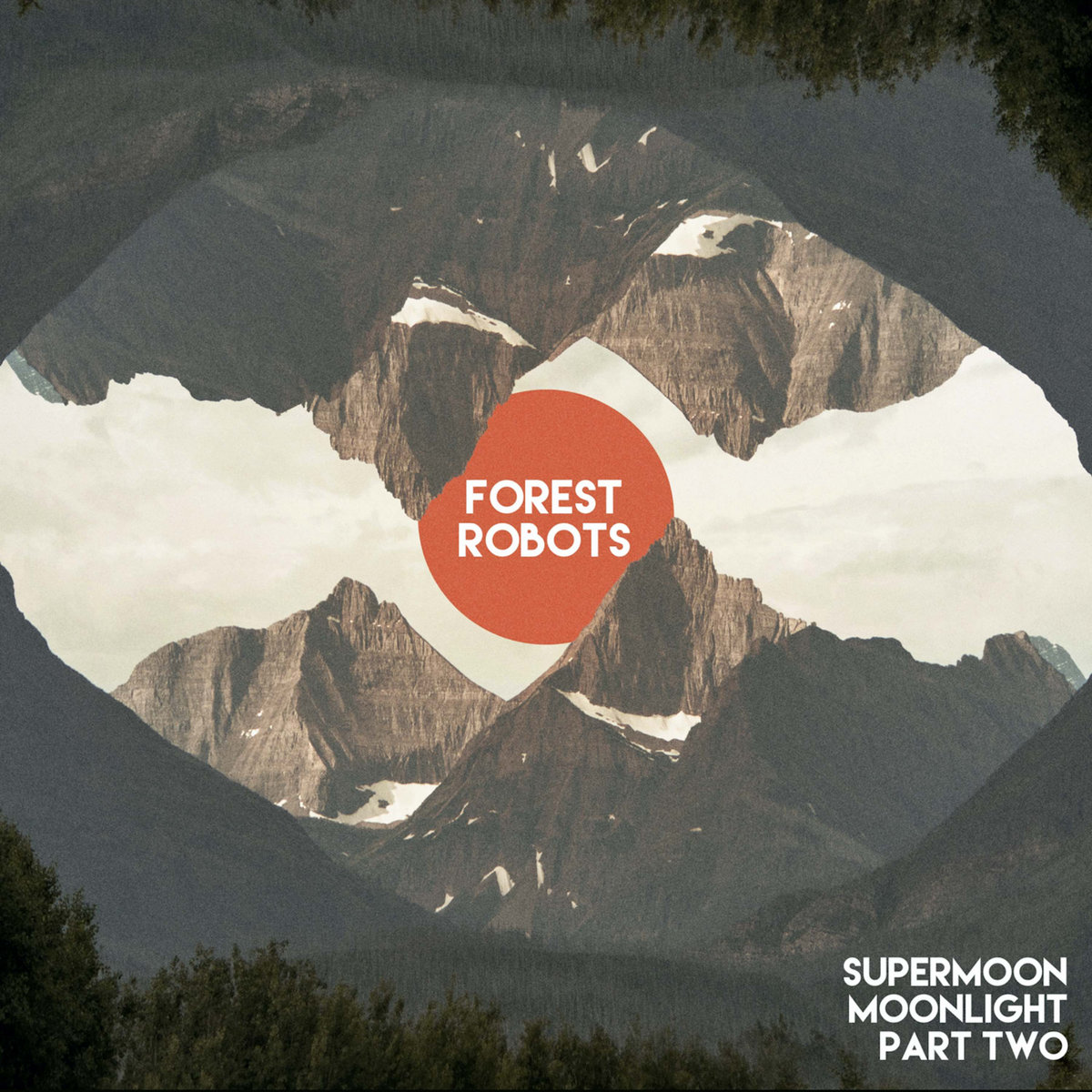
Forest Robots ‘Supermoon Moonlight Part Two’
(Subexotic)

After an initial redolent arpeggiator wave of Roedelius, a rainbow of trance, vapoured breathed coos and transience follows, marking what will be an entirely different kind of record for the Californian electronic artist and topographical trekker Fran Domingeuz.
Under the Forest Robots alias/umbrella, Fran has produced numerous adroit, studied and evocative ambient and neoclassical soundtracks to the myriad of landscapes and forest trials he’s traversed over the years. As the world dramatically succumbed to a global pandemic, and the chance to escape to the wilds became scarce, the signature form stayed but now the music was suddenly a therapy and a vehicle for channeling the anxiety, stresses of such uncertain times.
Now (thankfully) with the worse behind us, Fran emerges with the ‘long gestating’ follow-up to Part One of his Supermoon Moonlight suites from 2018. Although recording sessions for Part Two started back in 2019 it has taken a while to finally process the last couple of years and to finish and release this beautifully conceived album of suffused and uplifting hope.
The geography and National Geographic almanac proverb-like and Zen titles remain (‘All The Rivers Born In The Mountains’, ‘Wind Always Runs Wilder Along The River’s Current’) but the underlying theme has Fran exploring the complexities of parenthood and the ‘kind of spiritual and emotional legacy a father would wish to leave for his kids.’ A warming sentiment and inspired prompt makes for a very different kind of album though. From the same gifted mind and ear yet swimming in the sine waves of trance, synth-pop, 90s techno and dance music this is relatively a new but welcoming direction, expansion on his signature sound.
Upbeat as much as reflective, the feel is often dreamy; the gravity and awe of nature gently present; cut-out mountainsides, flowing connective rivers and a canopy of redwoods, the stage is set as stars shoot across the night skies and moonbeams illuminate.
In the slipstream and bubbled undulations The Beloved shares space with The Orb, Stereolab, 808 State, Sakamoto, Vince Clarke, Boards Of Canada, I.A.O., the Aphex Twin and Ulrich Schnauss. This is a beautiful combination that filters the aftermath of the rave culture, the burgeoning British minimal techno scene of the early 90s Warp label, 80s synth-pop and electronic body music. Yet there’s room for a certain crystallised chilled sparkle of the Chromatics and the Drive time moody, ruminated dry-ice scores of Cliff Martinez within that beat-driven glow. And the elements of charcoal fires crisply burning and flickering, and the poured waters have a certain Luc Ferrari influence – albeit far less avant-garde.
Playful and sophisticated with a surprising dance-y pulse and radiant outlook, Part Two should act as a testimony to an inspired and inspiring composer. I think his kids will be rightly proud of their dad and his musical legacy: electronic music with a soul and purpose.
Machine ‘S-T’
(WEWANTSOUNDS)

Back again in The Perusal (becoming a 2022 regular) those vinyl specialists at WEWANTSOUNDS have remastered and pressed that rarest-of-rare conscious-soul-funk LPs, the obscure assembled Machine’s self-titled debut (and only) album from 1972.
The rumour-mill is strong on this one; the cause of its £500 plus price tag on Discogs believed to be a result of either a very limited release or no release at all – shelved as it were. It could be down to the sheer quality of the competition, arriving as it did in the wake of similar social-political soul as Marvin Gaye’s What’s Going On and Curtis Mayfield’s Superfly (but also his albums previous to that). Both prove a massive influence on this smooth and funky eight-track showcase.
What we do know however is that the make up of this group included a trio of well-rehearsed session players from the All Platinum Studios stable in New Jersey. That included main man Michael Watson on vocals and guitar, bass-player Curtis McTeer (also playing with labelmates The Rimshots) and drummer Donald McCoy, who were then fattened out with the organist/pianist Ray Jones, another bassist, Frank Prescod, and both Dee and Cordy Pridges on horns. On the same label and one of the most established, successful acts The Whatnauts lent both their backing vocalists and, rather oddly, their manager (credited on percussion) Bunch Herndon to this widening lineup. And on top of all that, the notable Sammy Lowe (arranging for such distinguished company as Nina Simone, Sam Cooke and James Brown) offers a subtle suite of strings to the mix, taking it down the Rotary Connection route.
The Whatnauts prove a pretty integral ingredient to the Machine track list, lending both the ‘Only People Can Save The World’ and ‘Why Can’t People (Be Color Too?)’ songs to the album. Machine keep the sentiment of both, but add both an almost bucolic and pastoral gospel-rayed yearn to the first, and up the Gator funk and Stevie Wonder boogie on the Sly Stone on-message second.
They open on the relaxed but simmered Southern-funk-hits-the-streets-of-NYC style ‘Time Is Running Out’. Fred Wesley & The J.B.’s buzzy licks meet Maxayn attitude sass, sweet sax and touch of ‘Brotherman’ The Final Solution on a conscious-political workout – the repeated vocal refrain apparently ad-libbed.
Very much of its time and again on-message, ‘World’ tunes into the Vietnam War and its impact on and confliction with the African-American community. The actual groove is quite percussive with a touch of The Temptations Psychedelic Shack, Mayfield and The Meters.
There’s a seagull hovering harbor scene, not a million miles away from Otis’ wistful gaze, on the gear-changing ‘Trails’. It starts with that atmospheric rumination, a hint of the Latin and some romantic allusions before quickening into a banjo-rhythmic strumming West coast jive. It then goes on to wail and cry with a sequel of electric guitar. ‘Lock Your Door’ however could be a lost Northern Soul dancer, and the balladry pined ‘Boots In The Snow’ is another of those Marvin Gaye try-outs, with a touch of 70s Motown.
An enervated Nat Turner, Undisputed Truth, Mary Jane Hooper, Johnny Pate with those Mayfield and Gaye inspirations, Machine stepped-out to lead their own socially conscious project. But whilst the elements are all present, the sound isn’t quite unique enough, overshadowed as they were by a multitude of bands/artists working in the same groove and message. Still, at least you can now own a real rarity without forgoing this month’s rent, gas or mortgage payment. And it’s well worth a spin at that.
Noah ‘Noire’
(Flau Records) 26th August 2022

Ever the diaphanous siren of soothed vaporous experiments and song, the Hokkaido-born artist Noah once more drifts and floats across a sophisticated combination of futuristic etudes and distilled electronica. Following on from the beautiful balletic-inspiredÉtoile (given a glowing review by my good self), this latest emanation of whispered and cooed translucence is just as lovely and swathed in dreamy effects.
A collection of tracks from between a pre-Covid era of 2015-2020, the Noire album is awash with studied yet effortless sounding sonic theme variations; a nine-track congruous suite that riffs on Noah’s signature of ghostly plinky-plonked semi-classical piano (occasionally an electronic one by the sounds of it) and minimal 808-style synthesized waves, percussion and bobbled beats.
Noah’s breathless vocals and atmospherics seem to be reaching us from the ether: often just the reverberations of some distant hazy whisper. The opening transparent slow spiral ‘Twirl’ could be a distant relation to Julee Cruise; an enchanted but haunted echo from a palatial ballroom, yet still highly intimate. ‘Odette’ oozes languorous modern soul and R&B, like Solange drifting over the Boards of Canada.
Undulated by softened kinetic ratchets, screws and turns there’s a coming together of purposeful techno and more rhythmic retro house beats, enervated as to never overpower the general woozy and beautifully longing mood.
Shorter reflections, pieces are balanced by extended tracks and the heavenly, bobbing and echoed looped single ‘Gemini – Mysterious Lot’; the sound relaxing as it moves from transformed Sakamoto to cool dreamy pop.
Remaining something of an enigma Noah appears and then floats away, leaving a lingering presence with music created in a dream. Noire is another great, captivating showcase for that talent.
Lampen ‘S-T’
(We Jazz) 9th September 2022

A re-release of a kind, in case you both missed it the first time around or because of its limited run on CD, the free and post-jazz Finnish duo Lampen are now offering their 2020 self-titled album on vinyl for the first time – a very nice package it is too.
I would be one of those people that did miss it the first time around, and so I now find myself discovering its highly experimental, explorative qualities, imbued as they are by the Japanese art of “kintsugi” (or “golden joinery”), the repairing art of mending areas of breakage with lacquer dusted or mixed with powdered gold, silver and platinum. As much a philosophy as a method of repair, the breaks and cracks are treated and documented rather than disguised or thrown away.
The binding metal dust is like a woven vein and testament to that object’s knocks and history. With all its obvious metaphors the Lampen lads are less than careful, seeming to deconstruct and rebuild simultaneously in an act of free-spirited concentration: if that makes sense. For they break and stretch the performances yet, because their craft is obviously brilliant, they seem to always be in unison, synchronicity throughout.
Across five crawling and more crescendo splashed tracks, guitarist Kelle Kalima and percussionist/sampler Tatu Rönkkö rattle and wane; bend and set in motion a tumult of krautrock, progressive, industrial, post-punk, psychedelic and avant-garde workouts and soundtracks. In abandoned rusted turbine dominated factories, mysterious chambers but also hovering over lunar terrains Lampen evoke hints of Rhyton, Peter Giger, Krononaut, The Mount Fuji Doomjazz Orchestra, King Crimson, Faust and The Mosquitoes. All good and appealing to those like me longing to hear jazz pushed into such directions.
Rather surprisingly, amongst the sustained drones, harmonic pings and sculpting Kalima’s guitar bursts into acid-country indie-rock territory – think, of all people, John Squire on the Stone Roses second album. There’s even spots of no wave and dub to be found emerging from various tangents and untethered directions.
Impressive throughout, whether that’s in slow motion or more maelstrom driven bursts, Lampen’s debut album is a barely contained, unnerving in places, cranium-fuck of excellent moody jazz and industrial resonating experiment. Second time around then, the duo offer us another chance to indulge in their brand of unbridled post-jazz. I think you should take them up on the offer.
Qrauer ‘Odd Fazes’
(Nonostar) 22nd September
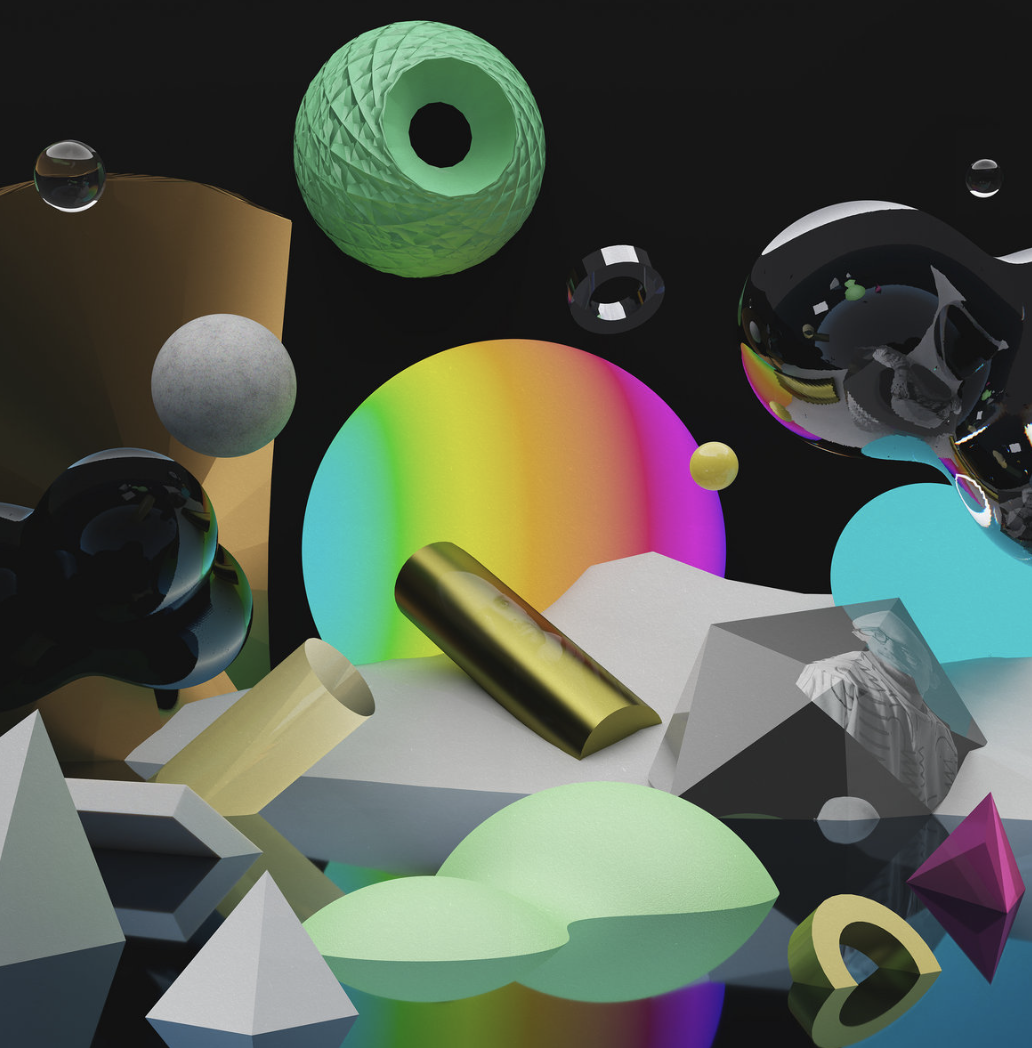
Following on from their debut Heeded showcase for Alex Stolze’s burgeoning Nonostar label back in April, arrives an extended debut album from the German electronic duo Qrauer, who transduce chamber music, the semi-classical and percussive into a sophisticated transformation of minimalist-techno and intelligent EDM suites.
The combined, refined but ever open skills of percussionist, producer and remixer Christian Grochau and his foil the pianist, multi-instrumentalist and composer Ludwig Bauer come together to fluidly remodel their chosen instruments into a both mindful and danceable work of electroacoustic moods and soundscape sonic worlds.
Instead of a pulled-together album of 12”’s and mixes and the like, Odd Fazes feels like a complete journey from beginning to end, with shorter more ambient gazing vignettes alongside longer more evolving pieces. And so you have the trance-y, droned and transformed glitch-y orchestral spell of the incipient stirring ‘Reg. Capture’ followed immediately by the polyrhythmic, clean percussive and galvanized EDM noirish ‘Drumthrives’. Or the Drukqs era Aphex Twin piano – played on a distant echo-y stage – beautifully, but slightly off-kilter, resonating ‘Fuq’ following on from the Artificial Intelligence series trance and suspense soundtrack ‘Cool Edit’. This offers a variation and nice set of breaks between the more techno pumped movers and sonic imaginations.
Later on, Nonostar labelmate Anne Müller adds her swoonstress cello to a couplet of evocative tracks. The first of which, ‘Rund’, has an air of the Aphex Twin (again) about it. Circling bowl rings, kinetic twists and percussive itches are woven into a mild tempo EDM pulse as Müller’s trembled and attentive cello saws and plucks are turned into repeating, recontextualized beats or motifs. On ‘Oval’ the adroit, experimental cellist seems to revive some of her stirring, pining gravitas from the Solo Collective project she shares with both Nonostar founder Stolze and, another labelmate, Sebastian Reynolds. There’s also a hint, I think, of fellow cellist and experimental artist Simon McCorry too on this deeply felt mournful piece.
Multi-textured with a constant movement and undulated beat that builds and builds yet never settles for the predictable euphoric, anthem moment, there’s a lot of clever, purposeful work at play. I haven’t even mentioned the layers of satellite and moon-bending refractions, nor the cosmic flares, the droplets of notes, cooed waveforms, fizzes and experimental recondite sound sources that have been meticulously thought-out. Again, just like the Heeded EP, the debut album is another cerebral rework of electronic body music, techno, EDM and the classical; a complete dancefloor-ready and mindful journey.
Simon McCorry ‘Scenes From The Sixth Floor’
(Shimmery Moods)

Turning the worries and mental strains of ill health into something creatively rewarding, the highly prolific cellist sound sculptor and composer Simon McCorry is thankfully back on the experimental electronic scene after a stay in hospital last Christmas. After a period of healing, recuperation, McCorry assembles a sort of soundtrack to that worrying, anxious period.
Following a loose ‘mental thread’ (as he puts it) Scenes From The Sixth Floor is an evocative and ruminating work of both studied ambient peregrinations and post-club techno comedowns; beginning with the cult kosmische drop through Tarkovsky’s glass portal, ‘Falling Through The Mirror Backwards’. Part illusion, part Moebius scores Hitchcock’s Spellbound, it’s the sound of our composer freefalling through a gauzy blanket, unable to latch onto the sides or gain traction as he spirals in sedated state to earth. Yet this there’s also no panic, rather a hallucinatory feel.
The next track, ‘Fragmentation’, is the first of two pieces developed from previous commissions/projects. Originally, albeit loosely, based on a Mad Hatter’s Tea Party dance piece, the landscape on this piece is less Lewis Carroll surrealism and more an evolving soundtrack that absorbs Bleiche Brunnen period Asmus Tietchens, Bernard Szajner sci-fi, Tangerine Dream, John Carpenter and Sven Vath. From the primal liquid blobs to the supernatural and futuristic, McCorry creates a whole atmospheric world before building steadily towards a patter beat of early 90s set techno (R&S/Harthouse).
Another developed idea, ‘The Sea Of Stories’ takes its cue from Philip Ridley’s feted Moon Fleece book – an intense and thrilling exploration of memory and identity. One of the only tracks with which you can hear a mostly untreated, transformed as it is, cello, McCorry’s instrument of virtuoso choice aches and arches movingly whilst a constant arpeggiator waterfall cascades onto shimmered, light catching waves. Be careful, if you close your eyes you could just find yourself carried away on the tide.
Up above now to the skies and the stirring and soaring ‘The Secret Life Of Clouds’. A beautiful if almost little mysterious, unsure passage, I picked up Schulze, Frosse and even a touch of Air Liquide on this natural phenomenon. But it’s Roedelius’ fairground piped style of playfulness and new classical analogue electronica that’s felt on the arpeggiator-bounced ‘Surfacing’; although this mood changes with another of those post-club undulations, pitter-pattering way at the end.
Tubular marimba and small thrusts of Kriedler and Pyrolator make up the mid-temp techno styled ‘Earth Best’, and the angrier entitled ‘Day Of Wrath’ has a certain European yearn and another echo of Roedelius’ whistled Bavarian fairground vibes. The cello, which remains pretty much hidden throughout the album, now starts to materialize, producing a weepy bowed melody and sense of purpose. Constantly enriching the ambient genre and beyond McCorry has bounced back with a reflective and developed soundtrack of perfectly crafted and moving compositions, some of which contain a certain mystery, dreamy-realism that remains to be deciphered. Proving the cello still has some way to go as an imaginative and explorative tool, the gifted player finds new tones, textures and spells of magic to further that instrument’s sound, use and reach. It’s good to have him back is all I can say. And this album further cements an already impressive reputation as a true innovator and master of the form.
REZO ‘Sew Change’
30th September 2022

Shy of just eighteen months the Irish duo of REZO follow up last year’s debut album Travalog with another relaxed, gentle-of-touch songbook, Sew Change. The seeds of this particular brand of disarming but deeply moving craft were sown from a distance, with both partners in this project recording their parts in separate locations on that debut. Nothing quite concentrates the mind as an epidemic and its confinement, and so the introspection flowed on that record, which despite the distance geld perfectly: in keeping with both musician’s Ireland and Med environments, the music effortlessly blended a touch of the Balearics with more soft-peddled Americana and singer-songwriter material.
As a sort of bridge back to Travalog, the spoken-word return down memory lane family themed ‘You Are What You Wear’ repurposes the sleepy, laidback rolled and Damon Alban-esque with a lick of Baxter Dury ‘Life During Lockdown’ backing. Only this time there’s an additional soulful female cooed chorus and the subject is Colm O’Connell’s family-run knitwear factory in the city centre of Dublin. Within that idyllic-natured return to a more carefree childhood, the whole gamut of life, death and remembrance is narrated both fondly and poignantly.
Concentrating on what’s most important, attempting to right some wrongs and holding one’s hands up to past mistakes, Colm and his foil Rory McDaid ease through some highly sensitive subjects to a musical accompaniment of Americana (once more), synthesized shading and gentle spacey takeoff sparkles, enervated bobbing dance music, piano-led balladry and wistful acoustics. However, within that scope they evoke a Muscle Shoals spiritual Rolling Stones, and a little Billy Preston, on the gospel organ sustained (with a cheeky hint of ‘Let It Be’ I might add) ‘I’m Not Enough’.
Talking of the sensitive, and careful not to cancel themselves in the process, the duo filter their concerns on the increasingly problematic and volatile theme of cancel culture on the Med-twanged, gauzy ‘Erays’. Like passing through gargled spacy waters and a dry-ice machine they make sure to carefully word their take; misspelling “Erase” as a nod to rays of sunshine and hope in this struggle over censorship. They also seem to tackle teenage suicide and mental health issues on the iconic Dublin Nine Arches set drama ‘Boy On A Bridge’, and explore the grief of dementia by marrying solo McCartney to the Eels on the synth undulating ‘Sometimes’.
Already included on July’s monthly playlist, ‘Your Truth’ still stands out as one of the album’s best offerings. On a song about the cost of “freeing your mind”, or the indulgences of going too far, that Americana feel is taken in a novel direction with softly padded congas, a smooth bass and veil of psychedelic-indie ala later MGMT – I’m also positive I can also hear a touch of TV On The Radio.
In its entirety Sew Change is a completely realised album of reminisces, reflections and softly hushed reconciliations, set to a gentle wash of the spiritual, Irish snug and saloon bar piano, a lilted Dylan-esque lyrical cadence (see the nativity-evoked ‘Hiding In Plain View’) and hazy suffusion of synth. The duo expand the palette without upsetting the formula to produce a complimentary follow-up every bit as slowly captivating.
John Howard ‘From The Far Side Of A Far Miss’
(Kool Kat) 9th September 2022
Following in the slipstream of his third and final volume of memoirs (In The Eyeline Of Furtherance) the singer-songwriter John Howard, with the wind in his sails, is back with yet another album. But instead of the usual songbook formula this is a continuous one-track work of disarming, gentle brilliance that runs to over thirty-five minutes.
You could say it was a return to Howard’s long form songwriting experiments of 2016 and the Across The Door Sill album, or perhaps even a reaction to (one of his heroes of the form) Bob Dylan and his Boomer odyssey ‘Across The Rubicon’, which more or less charts an entire epoch. Howard is a bit younger than Dylan of course, but both artists seem to be making some of their best work at this stage in their lives: uncompromising and unburdened by expectation or the need to suck up to fashions, labels, even the public they share an envious position. That Dylan mini-opus only lasted a mere seven-minutes in comparison, whilst Howard’s grand effort runs and runs, covering as it does a lifetime as a proxy soundtrack to his series of autobiographies.
Far more melodious than his hero’s reflections, this scrapbook photo album reminisce features Howard’s signature balladry-troubadour and stage musical verve of poetically candid prose, sung both wistfully and with a certain yearn.
Love is all though as Howard sets scene after scene, analogy after analogy; reconciling his past to a watery-mirrored piano-led score that’s constantly moving, picking up suffused strings, Dylan’s harmonica, a bucolic burnished harpsichord, a planetarium mood piece starry synth and light dabbing’s of congas and shaker. In what could be a reference to his own semi-cover version album Cut The Wire, there’s a hint of the Incredible String Band and also Roy Harper about this extended performance; especially Howard’s version of the former’s ‘In The Morning’. Later on it’s a lilt of The Beach Boys, bobbing on the “ripples of forever” line. Yet it’s unmistakably a John Howard sound, a lovingly executed piece of songwriting that more than holds its own across thirty-five minutes plus of ebbing drama.
But this is also a two-way conversation with Howard playing both sides of a long affair; the part of old lovers and new, friends, acquaintances and family, their words echoing now in the mists of the time that’s left. Dylan, that recurring idol, acts as a silent partner in one such discourse, as Howard sings about artistic integrity and his inspirations, a pantheon of uncompromising doyens. And in that same particular passage we also have Monroe and the Fab Four popping up; a Hard Days Night Beatles name-checked in what is both a celebrated yet fraught with delusion and remembrance chapter on this long winding road.
I particularly enjoyed the more salt-of-the-earth café scene diorama; Howard in voyeuristic mode describing a very unlikely cast, using both a kid who’s reading a Russian literary titan and a priest faraway in reflective thought (perhaps regret) as conduits for naming even more idols and favourites: “The kid who’s reading Tolstoy, listening to The Rolling Stones; I can hear old Jagger’s laughter floating from his phone.” Great lines by the way. The priest is “remembering Bowie’s Low”, which could of course be a reference to the same priest featured in the lyrics to ‘Five Years’ now contemplating a life that’s perhaps not all it seems.
Addressing, redressing whilst swanning through fantasies of a swish Ritz, 5th Avenue and Caesars Palace, imaging an alternative stratospheric career trajectory, headlining the Albert Hall, Howard takes us on a rolling, fluctuating journey through of his thoughts, dreams (realized and abandoned), regrets and hurt. By the end of this epic piece the final phrase, sung in a lasting glow, says it all: “It simply is what it always was”. Dylan couldn’t have put it much better.
An ambitious undertaking, From The Far Side Of A Far Miss is the work of an artist still willing to take chances and explore. Whilst his peers rely on the back catalogue, or drum out the same music they made over fifty plus years ago, Howard seems entirely comfortable in his own skin as a wiser yet still spritely young-at-heart artist composing music on his own terms. Fresh new introspections, concepts abound as he shows there’s still so much more to share and create.
Yara Asmar ‘Home Recordings 2018-2021’
(Hive Mind Records) 16th September 2022
The latest discovery on the Hive Mind radar emanates from Beirut, with the serialism and tonal atmospheres, ambient and minimal semi-classical melodies of Yara Asmar.
In a tumultuous climate, referenced in a sampled conversation piece on ‘Is An Okay Number’ and in the unsaid but moody reflections and vaporous drifts that push out into the unknown and untethered, the twenty-five year old multi-instrumentalist, video artist and puppeteer manages to often leave the earthly mess of a region in crisis and float out above the city.
From an airy viewing platform we can identify swirls, waves, gauzy veils and echoes of the concertinaed (courtesy of Asmar’s grandparents’ accordion), tubular metallic rings and tingles (that will be the metallophone), a serious but graceful piano, a music box, hinges and searing gleams and a beatified magical spell of Christian church liturgy. The latter source was recorded by Asmar from church hymnal services around the Lebanon; transduced into the hallowed yet otherworldly and mysterious, given a gentle waltz-like ghostly quality and only sense of a presence. A reference to country’s much troubled religious turmoil? The art of remembrance? Spiritualism? Or the familiar sounds of an upbringing? Whatever the reason it sounds both equally as ethereal, as it does supernatural: passages into other realms.
Tracks like ‘We Put Her In A Box And Never Spoke Of It Again’ are almost lunar in comparison to those hymns; lending a moon arc of Theremin-like UFO oscillations and cult library cosmic scores to this set of peregrinations and field-recordings. Yet for the most part this is a truly dreamy, translucent and amorphous album of delicate classicism, explorative percussion and ambient; an ebb and flow of reverberations and traces of moods, thoughts that literally floats above the clouds and out beyond the Lebanese borders. These home recordings recorded onto cassettes and a mobile phone capture something quite unique, in what are the most unique of times.
Valentina Magaletti & Yves Chaudouët ‘Batterire Fragile’
(Un-Je-Ne-Sais-Quoi) 23rd September 2022
Is it performance art or just performance? Probably both as the lauded drummer extraordinaire Valentina Magaletti once more sits behind the artist Yves Chaudouët’s conceptualized porcelain drum kit.
If you follow either of these artists then you’ll know that this is the second installment of recordings to be taken from the original project back in 2017. Conceived by the painter turn multimedia artist Chaudouët as an exploration in texture and friction, wood, metal and rubber were all added to the porcelain kit; the effects of which, in the hands of such an accomplished musician traverse the concrete, avant-garde, art rock, breakbeat, the classical and freeform and dark jazz.
It’s been a couple of years since I last featured the highly prolific composer/producer and percussionist Magaletti, featuring her ‘tropical concrete’ communal with Marlene Riberio, Due Matte. In this space Magaletti continuously rattles, rolls, skids, skiffles, dusts and lays spidery tactile rhythms and strokes down as mooning, wailed and frayed bowed primal supernatural atmospherics stir.
We could be in Southeast Asia, Tibet or West Africa, even the Caribbean with passages that sound like steel drums bouncing away. We could also be in a subterranean chamber as resonating echoes of this tinny, metallic and deadened kit ricochet of the walls. Reductionist theatre, ceramic jazz, a paranormal drumming séance, the mood isn’t always easy to gauge. But as experimental as it is Magaletti is constantly rhythmic throughout; switching yet always hitting a beat, and even in some parts something that resembles a groove. An exercise on concept but also percussive, drumming performance, this collaboration straddles both the art and musical camps to bring us something quite different yet always engaging, interesting and virtuoso.
Hi, my name is Dominic Valvona and I’m the Founder of the music/culture blog monolithcocktail.com For the last ten years I’ve featured and supported music, musicians and labels we love across genres from around the world that we think you’ll want to know about. No content on the site is paid for or sponsored and we only feature artists we have genuine respect for /love. If you enjoy our reviews (and we often write long, thoughtful ones), found a new artist you admire or if we have featured you or artists you represent and would like to buy us a coffee at https://ko-fi.com/monolithcocktail to say cheers for spreading the word, then that would be much appreciated.
The Monolith Cocktail Monthly Playlist Revue: Future Kult, Your Old Droog, Baby Cool, Drug Couple, Brown Calvin…
August 31, 2022
PLAYLISTS SPECIAL
TEAM EFFORT/ CURATED BY DOMINIC VALVONA

All the choice tracks from the last month, selected by the entire Monolith Cocktail team: Dominic Valvona, Matt Oliver, Brian ‘Bordello’ Shea, Graham Domain and Andrew C. Kidd.
For the past couple of months we’ve been experimenting with both Spotify version and Youtube (track list will vary) versions of the playlist. Whatever your preference found both below:
TRACKLIST
Future Kult ‘We’
Grooto Terazza ‘Tropische Krankheiten’
Speech Debelle Ft. Baby Sol ‘Away From Home’
Joe Nora & Mick Jenkins ‘Early’
A.G. ‘Alpha Beta’
Your Old Droog & Madlib ‘The Return Of The Sasquatch’
Gabrielle Ornate ‘The Undying Sleep’
Yumi And The Weather ‘Can You Tell’
Baby Cool ‘Magic’
Claude ‘Turn’
Lunar Bird ‘Venilia’
Imaad Wasif ‘Fader’
Legless Trials ‘X-Tyrant’
Dearly Beloved ‘Walker Park’
Staraya Derevnya ‘Scythian Nest’
Short Fuze & Dr. Kill ‘Me And My Demons’
Group ‘The Feeling’ JJ Doom ‘Guv’nor’ (Chad Hugo Remix)
DJ Nappa ‘Homeboys Hit It’
DJ Premier Ft. Run The Jewels ‘Terrible 2’s’
Zero dB ‘Anything’s Possible’ (Daisuke Tanabe Remix)
Underground Canopy ‘Feelm’
Revelators Sound System ‘George The Revelator’
Montparnasse Musique Ft. Muambuyi & Mopero Mupemba ‘Bonjour’
The Movers ‘Ku-Ku-Chi’
Yanna Momina ‘Heya (Welcome)’
Vieux Farka Toure & Khruangbin ‘Savanne’
Barrio Lindo ‘Espuma De Mur’
Brown Calvin ‘Perspective3’
Nok Cultural Ensemble Ft. Angel Bat Dawid ‘Enlightenment’
Li Yilei ‘A Hush In The Dark
Celestial North ‘Yarrow’
Andres Alcover ‘White Heat’
Nick Frater ‘Aerodrome Motel’
Drug Couple ‘Lemon Trees’
Cari Cari ‘Last Days On Earth’
Ali Murray ‘Passing Through The Void’
Diamanda La Berge Dramm ‘Orangut The Orangutan’
Your Old Droog ‘The Unknown Comic’
Jesse The Tree ‘Sun Dance’
TrueMendous & MysDiggi ‘Talkk’
STS & RJD2 ‘I Excel’
Jester Jacobs & Jack Danz ‘HIT’
Oliver Birch ‘Docile Healthier’
GOON ‘Emily Says’
Lucy & The Drill Holes ‘It’s Not My War’
Apathy, Jadekiss & Stu Bangas ‘No Time To Waste’
Verbz & Mr Slipz ‘Music Banging Like’
Sly Moon ‘Back For More’
Guilty Simpson Ft. Jason Rose & DJ Ragz ‘Make It Count’
Hi, my name is Dominic Valvona and I’m the Founder of the music/culture blog monolithcocktail.com For the last ten years I’ve featured and supported music, musicians and labels we love across genres from around the world that we think you’ll want to know about. No content on the site is paid for or sponsored and we only feature artists we have genuine respect for /love. If you enjoy our reviews (and we often write long, thoughtful ones), found a new artist you admire or if we have featured you or artists you represent and would like to buy us a coffee at https://ko-fi.com/monolithcocktail to say cheers for spreading the word, then that would be much appreciated.

