Tickling Our Fancy 087: Kahil El’ Zabar & David Murray, Above The Tree, Scarlet’s Well, Etienne de la Sayette…
June 10, 2020
REVIEWS ROUNDUP/Dominic Valvona
As of writing this latest roundup of new music recommendations and curios, the lockdown restrictions that many of us in the UK have been under are erratically and confusingly being lifted (to some degree). Still, anxiety and uncertainty reigns, as the music industry (I’m thinking more the venues, small scale enterprises, self-made and the diy) is left pretty much high and dry with little in the way of finical help, or even solutions to the inevitable problems of a post-Covid, isolationist society.
Live music being the biggest casualty of this lockdown, it is indeed pretty worrying that one of the only revenue streams left open to artists to make any real money from is now so endangered. As we have all seen for ourselves or heard from an abundance of artists and labels, the so-called savior of streaming has been anything but beneficial for the majority of artists. And can hardly count as revenue at all – unless you are Kanye West or Justin Bieber.
We will of course need time however to see how physical sales will fare; though I bet many out there have baulked at buying vinyl, CDs, anguishing over the spread of the virus. Records stores have been forced to close down and move online of course, which may also affect sales: the browser in particular will be affected, as will many of us who enjoyed not only looking for records but just the company and chat with the shop owner, the chance of coming across something by chance or being recommended something. Spontaneity has gone out the window in that respect.
With all that in mind, I ask you to do what you can in supporting new music and the artists featured in this roundup. You can of course purchase many on Bandcamp and similar sites.
As ever this selection is an eclectic gander at artists and bands from around the world, cosmos and beyond. Bringing us beautiful, evocative bluegrass rooted traverses, Kentuckian born and imbued Myles Cochran delivers a new subtly unveiling EP of ambient and guitar experiments, My Own Devices; sonic navigator Alex Norelli, under the Fierro Ex Machina nom de plume, conjures up an album of heavy electro-acoustic imaginings; and painter/musician Marco Bernacchia, aka Above The Tree, produces a vivid soundtrack of ambiguous folkloric and synthesized mystery on the new album King Above. In the Techno field of experimentation, the ever-prolific Sad Man is at it again with another album; this time in lockdown and going for the kicks. Also, Etienne de la Sayette unleashes another pleasant polygenesis album of African and South East Asian grooves.
In the reissues in-tray this month, I have a special treat for fans of The Monochrome Set’s stalwart vocalist, songwriter and guitarist Bid and his noughties project of surrealist and eccentric escapism, Scarlet’s Well. Join me as I run through a new decade spanning collection of songs from the catalogue. I also run through the recent reissue of the Indonesian music legend and maverick Harry Roesli’s ambitious 1975 psych-soul-pop-funk-gamelan opus, ‘Titik Api’.
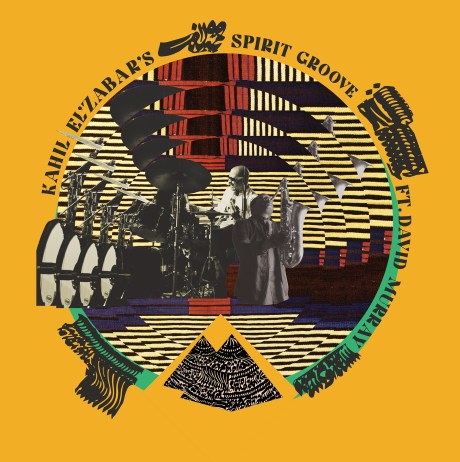
Headlining this latest roundup, two titans of the contemporary and spiritual jazz scene, Kahil El’ Zabar and David Murray, join forces once more to lay down a righteous transportive performance on the ancestral with a modern pulse communion Spirit Groove.
LEAD REVIEW
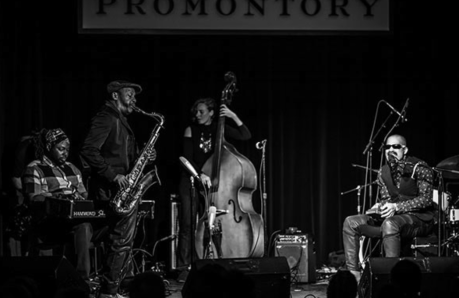
Kahil El’ Zabar’s ‘Spirit Groove Ft. David Murray’
(Spiritmuse) LP/12th June 2020
Praise be to the healing arts of those contemporary jazz luminaries Kahil El’ Zabar and David Murray. If ever there was a time when we all needed calm and a spiritual deliverance it’s right now. A service, a quasi-liturgy of spiritual jazz, the two American titans of their experimental forms have drawn on a wealth of providence and influences to once more join forces through El’ Zabar’s “spirit groove” of connectivity.
As a harmonious bedfellow to the Chicago drummer/percussionist’s lauded (especially be me) Ethnic Heritage Ensemble, this righteous groove communion with the tenor sax and bass clarinet maestro Murray “intends to move you nakedly with a deep sense of dance on a Mind/Body/Spirit level.” And what a groove it is; a disarming rhythmic set of performances with a poignant, timely message, or, as El’ Zabar himself puts it, “This is the moment to rekindle the notion of social relevance within the legacy of jazz as an improvised people’s movement for social change.”
The creative partners enact this change (or at least attempt it) by channeling both the ancients and jazz greats they’ve both been lucky enough to share stages with over the last fifty years. El’ Zabar for his part, learning the craft through the Chicago hothouse known as the School of the Association for the Advancement of Creative Musicians, and by playing with or supporting such greats as Eddie Harris, Cannonball Adderley, Rahsaan Roland Kirk, Pharoah Sanders, Dizzy Gillespie, Nina Simone and Archie Shepp (the list goes on). Oakland born Grammy Award winner Murray meanwhile has recorded and performed with a no less impressive list of notable talents, including Henry Threadgill, Olu Dara, McCoy Tyner and Elvin Jones. Murray was also a founding forefather of the horns and wind instruments lauded World Saxophone Quartet.
El’ Zabar’s atavistic with a modern pulse spiritual soul and jazz experiments are coupled with Murray’s untethered long and short breath saxophone contortions on an album of new, specially written material and expansions of compositions from the back catalogue.
Joining them on church service organ and cascading, accentuate piano is Chicago stalwart Justin Dillard, and on bowing soothed and more scuttling acoustic bass, the burgeoning talent Emma Dayhuff. This makes for an enviable solid act; a quartet of jazz apprentices from different generations that between them have connections to every great jazz pioneer of the last fifty plus years. But, nearly, all roads lead back to Coltrane in particular. Murray despite practicing and molding amore unique technique inspired by the triumvirate of old guard doyens Coleman Hawkins, Ben Webster and Paul Gonsalves then what Coltrane preached, he’s paid various homages to the late great saxophone deity. ‘Trane’, a notion, encapsulation, nod to his universal influence pared down to just the second syllable of a name, is all that’s needed on the track that appears on this album as a tribute of sorts. The swing time ‘Trane In Mind’ is a mood, a sense of that style; a splashed poolside dash of Coltrane in his ascendance.
Faith though is the main driver of the groove and varied utterances that pour out of this erudite ensemble’s performances. The water-carrier trickled percussive opener, ‘In My House’, welcomes all to El’ Zabar’s titular sanctuary; a place to raise the spirits and soul. A prayer in the form of a primal gospel House music anthem, the jug pouring shuffler features El’ Zabar’s signature vocal exaltations, which sometimes negate words and lyrics for just hums, feelings and an essence of vocal expression. A frame for a freeform expansion of the mood, Dillard switches from subtle piano phrasing to venerable organ, whilst Dayhuff bobs around as Murray customarily catches shortened hooted breaths and longer sublime circular breathing squalls.
The power of faith in love is enshrined on the next dreamy flight, ‘Necktar’. Dedicated to not only Murray’s new wife Francesca but also true love itself, the quartet skiffle and swing to a liquid soul music groove that sets up a meeting between Gil Scott Heron, Bill Withers and Lester Bowie. Talking of dedications, El’ Zabar’s ancestral percussive, vocal cooing ‘Katon’ opus was written for his fourth oldest son. (El’ Zabar has quite the brood of children and grandchildren we’re told). A special bond and sentiment is conveyed over a magical meditative suite of music box mbira, deft piano, serenading and hooting tenor and dipped bass.
‘In The Spirit’ is, as the title says, another faith radiating communion. Bird like fluting floats over dusty brushed drums on this venerated shuffled version of the original, first performed by El’ Zabar in late 70s Germany. Another past composition, the low-key Savoy jazz like ‘Song Of Myself’ was part of El’ Zabar’s trio project with Murray and the late bassist Fred Hopkins. “An introspection of dancing in your mind”, this riff on that recital stands out on an album of ancestral percussive heavy spiritual jazz and stripped acoustic House music with its smoky, kept subdued almost downtempo, intimacy. Almost veiled even, toots, dusty drums, hints of the vibes and live lounge atmospherics take the listener off into a new thoughtful space.
Working in various forms together since the late 80s, a third composition – appearing on the lauded LP of the same name – ‘One World Family’ is framed as a sort of “theme song” for the partnership. Extending the original with a more expansive performed backing of woody-slapped rhythms (which near the end climax in an erratic display of pounding and punching), spiraling reedy fashioned free-flowing saxophone and soulful melody, the quartet flex and breathe across a earthy but skybound cycle.
A reconnection, a spiritual bound partnership El’ Zabar and Murray appear from the tumult to capture a difficult to quantify feeling: a rage even. Quenching the soul with a “spirit groove”, they’ve laid down a both swinging and mesmeric alternative jazz service of mediation but also, and above all, they push for a positive change in the most inflamed and dangerous of times.
RECOMMENDATIONS
Etienne de la Sayette ‘Kobugi’
(Muju Records) LP/1st June 2020
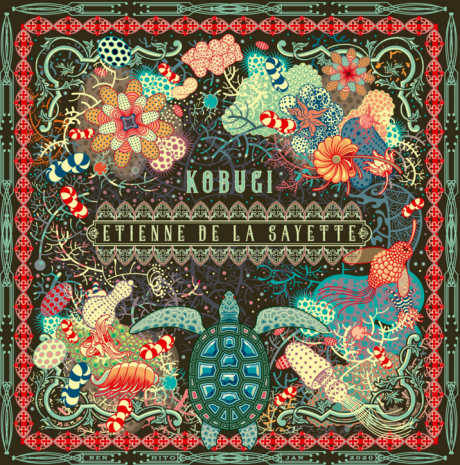
As pleasantly inviting as the album’s sumptuous artwork, the highly active Etienne de la Sayette delivers another worldly traverse of Africa and South East Asian rhythms.
Channeling a wealth of his ever-expanding array of projects, from the Ethnio-groove imbued Akalé Wube to Bae Ho homage-inspired Baeshi Bang, and from Frix to an assortment of film scores, the Etienne de la Sayette platform pulls together the overspill. Put together in-between all these other commitments, but far from a secondary concern, the latest album to emerge from that project is a rich gentle flowing exotic affair. Played entirely by the intimate band of flexible drummer Stefano Lucchini, balafon maestro Lansiné Diabaté, and a small circle of guests, the undulating soundtrack is mostly devoid of technological interference: no virtual instruments or MIDI were used in the making of this record we’re told. Etienne for his part plays a mix of accentuate and hooted, relaxed honked saxophone and flighty flute throughout this borderless escape.
Embracing genres, especially in the rhythm department, the opening odyssey ‘Jajinmori’ takes a traditional Korean rhythm that Etienne discovered whilst collaborating with percussionists in Busan in 2016 and adds a softened Kuti Afrobeat vibe, Orlando Julius Afrojazz sax and the buoyant wooden bobs of the balafon. Riding over the top of this wavy fusion, Chicago rapper turn Parisian scenester RaceCaR lyrically flows with a stream of poetic consciousness that kicks back to the ancients. He gets to finish the album too, with a more political spit against the arms industry and the militarization of authority on the growled, scuzzed acid-metal-psych Deep Purple-esque monster riff ‘War Business’. Though spanning a two-year period, this “sawn-off shotgun” of a leap from the rest of the material proves the timeliest in light of recent events.
Second guest spot on this album goes to Cameroon troubadour Erik Aliana, who arrives from another compass point to rasp, growl and also lay down sweeter vocal charms on the rustic-folky village song ‘Safari Kames’.
Taking the guiding light of Afrobeat once more, the busier ‘LOULOU’ is as much influenced by Steve Reich ad chamber music as it is by Kuti and Tony Allen. There’s even a tone of Benin spotting organ and Hailu Mergia woven into the flashbacks. Diabaté’s balafon is almost watery, like a jug pouring out the droplets of bouncing notes. It’s “shamanic invocations” that rise from ‘Kobugi King’; another undulating fusion of the dreamy and soulful, taking in Muscle Shoals organ, oriental voodoo and impassioned talking-in-tongues utterances.
With slightly more buzz and rattle, the group channels the spindled resonance of the metal tine thumbed Kalimba, as played in the style of Konono #1, on the wilder exchange of organ and free-form drums tribune to the African and Caribbean god of knowledge of stories, ‘Anansi’. They also evoke a bit of the intense fuzz of Marc Ribot; his ‘Ceramic Dog’ being mentioned in the notes.
The only cover, Tegenu Balkew’s Ethnio cassette obscurity ‘Anchi Bale Game’ plays loose with the original’s magical spell drift towards the Orient. In another example of the free-travel music show, the group takes on a reggae gait with the church service suffused beachcomber ‘Tortoises’.
The most interesting thing about this album and the musicianship is the flow of ideas, and the weaving together of both African and Korean rhythms, as Etienne and his ensemble blend tastes of Nigeria, Ghana, Cameroon and the Orient together in one track. Apart from a couple of numbers, Kobugi is a lilting, relaxed but deep listen; a cross-pollination of music synchronicity.
Myles Cochran ‘My Own Devices’
(9Ball Records) EP/19th June 2020

Regular readers and followers may remember that we premiered the experimental Kentuckian bluegrass, roots guitarist and composer Myles Cochran’s subtly evocative single, ‘It’s Like This’ last month on the Monolith Cocktail; a track that reverberated with the atmospherics and mood of a vaguely traced place on the outskirts of a recognizable American panorama. A hazy semblance of Cochran’s alternative Americana sound, that same single now forms one part of an extended version, ‘It’s Like This – It’s Like That’, on the new EP, My Own Devices. Expanded into a drifting Appalachian traverse with echoes of 75 Dollar Bill, and part rustically dreamy guitar, part lilted classical waned and bowing strings (the cello parts courtesy of Robert Curran), this couplet would make a great soundtrack to ambiguous horizons.
Recorded and put together between rural studios in France and the UK (where he now resides), much of this EP’s material wanes and sighs, breathes and pines across a sonorous prairie. The opening swooned, rhythmic shuffle ‘Love Is As Beautiful As Pizza’ merges reverberations of Myles Bluegrass signature trails with jazz, post-rock Mogwai and Daniel Lanois. As the title suggests, it is indeed a beautiful, and bowed mirage-y, instrumental.
Released a few months back, the ‘Early Dark’ peregrination blends more yearning sad and trembled strings with brushed drums, and the hint of a Mick Harvey soundtrack (there’s that word again, ‘soundtrack’). Though you can also confidently add shades of Ry Cooder, Robert Fripp, Warren Ellis and Steve Reich to both this ‘springtime mix’ and the rest of the EP’s material.
Plonking peaceably across the prairie, Cochran finishes up on a Bruce Langhorne meets Eno mosey ‘Churrito’; another drifter traverse of skiffle like rhythms, resonating guitar and spindly strings.
Almost just the tracings, lingering from behind the valley landscape, Cochran’s meditations and waning mood pieces are easy and quiet on the ear; shaped towards an alternative contemporary ambient vision of those bluegrass roots.
Myles will follow this latest EP up, we’re told, with an album entitled UNSUNG later this year.
Fierro Ex Machina ‘Processions’
LP/19th June 2020
The sensory sonic processed imaginings of Alex Norelli concentrate the mind on some foreboding sometimes creeping recondite worlds: Worlds that branch both the chthonian and alien.
From an apparatus of electro-acoustic, and what the L.A. based multi-instrumentalist and creative calls their “noise harp” – an assemblage of deconstructed electric versions of classical strings and dejected music equipment, which includes Alex’s Grandmother’s out-of-tune 1950s S1 Hammond Organ -, materializes a quartet of heavy studies in the experimental neo-classical, ambient, soundtrack and jazz fields. Yes, I did mean to include jazz; the kind that the American Nocturnal avant-garde saxophonist Andy Haas exudes on his various boundary-pushing peregrinations. But also a semblance of Ornette Coleman’s strung-out writhed, iron gate hinge waning saxophone can be heard enervated on the album’s opening mourned journey through the portal, ‘Praeter Nexus’. Unsettling as it slowly gains gravitas and a seething momentum that grows more mysterious, more unknown. The Nexus track demonstrates a frayed, fabric torn movement simultaneously as spatial as it is claustrophobic and dark.
Ominous nocturnal movements follow with the spherical shifting ‘The Shadows Of Plants At Night’. Metronome counted ripples tick away in the night garden as a ghostly-like voiced sound and permutations of Donny McCaslin’s sax waft by. Those plants sound more like concrete planetary leviathans chiding and scraping together. The lamentable entitled ‘Do You Know The Sorrow Of The Horses’, which sounds like the opening from a particularly harrowing plaint from beyond the ether features howls of a kind from wolves of some sort prowling the borders. This wispy invocation, as a scion of Cage and Nam June Paik, trundles across the inner workings and mechanisms of a grand piano: or so sounds.
‘A Sail Of All Tears’ finds a trace of melody and even a rhythm amongst the circling uncertainty and the chills. Turning over in the darkness, dawdling bass guitar and electric guitar notes act as guidance through the enormity of the elementals.
There’s a dark majesty and gravity to all four of these heavy evocations. The dissonance is nowhere to be found however, and so even in the abyss each one of Norelli’s visceral statements remain in a sort of ominous building harmony; a synthesis of sonorous emotion, journeying towards the void: A soundtrack for our frightening times.
Sad Man ‘Daddy Biscuits’
LP/5th June 2020
Despite the alter ego moniker of garden shed electronic music boffin Andrew Spackman’s most prolific incarnation yet, the Sad Man in lockdown is anything but as anxious and plaintive as the name might suggest. The latest (must be millionth, or something like that, release from Andrew now) experiments-in-motion album is in fact quite playful: a laugh even. Euphemisms, innuendo aside, Daddy Biscuits has a more uninterrupted flow of rhythms and progresses in a less agitated, ennui fashion than most of Andrew’s output.
Set loose with a trick noise making apparatus, the Sad Man goes for the kicks, transmogrifying House music and Techno for a staccato dancefloor. Jolted Djax Techno gets warped and bashed with shocks of Mike Dred, galloping 808s and mischievous Ed Banger electro funk on an album in which you can hear the cogs moving around in the artist’s noodle: where to go next? What about this, zap-bang-clatter-wobble-drill!! A Sad Man track seldom ends where it began.
God knows what the titles indicate half the time either. The titular cyber wilderness track alone goes through Luke Slater, Juan Atkins, Aphex Twin and the Chemical Brothers. The track ‘Sleeper’ is anything but somnolent, running as it does through a bastardize version of Herbie Hancock’s ‘Rockit’, 16-bit computer game coin-up prizes and hints of M-Plant Rob Hood and a crystalline dream magic. For me though, I love the strange curio ‘House Work’ (definitely a tune that would improve the chores no end). It sounds like Major Force mashed with Wagon Christ and Les Rita Mitsouko; a sort of electro-operatic funk.
For kicks then, Andrew eyes up the groove on a collection of both panel-beater workshop beats and modulated weirdness; an album for lovers of Warp, Leaf, early Jeff Mills and House Of Tapes. Lockdown proves a fertile environment for the conceptual artist and sonic maverick. I like this subtle change. Pass round the magic biscuits selection again in the future please.
Above The Tree ‘King Above’
(Hukot Disc/Plug In The Gear/Krimzkramz Sub Post) LP/Available Now

Dropped into some alternative futuristic pastoral world in the aftermath of an unexplained event – or that’s at least what it feels and sounds like to me -, visual artist and amorphous sonic sculptor Marco Bernacchia creates a visionary traced soundscape of haunting holy and esoteric materializations from out of the ether on his latest vivid soundtrack, King Above. A soundtrack, as it turns out, for an as yet unreleased documentary, this regal entitled suite of passages, renderings and lingerings would suit a mysterious theme with its signs of the ominous, exotic, and in some cases, supernatural.
Gravitating around the so-called “Italian occult psychedelic” scene, a catch-all term coined in the early noughties to describe the emerging esoteric and out-there sound being made by bands such as Comaneci and Father Murphy (both of whom feature in various ways on this album), Bernacchia practices a sort of ever-evolving vision of “outsider music”. Far too knowing and technically proficient and learned to be the musical equivalent of the usually naïve outsider art, his Above The Tree moniker mapped abstractions have a depth and knowledge that betrays an eclectic, studied palette of influences.
Blessed and doomed in equal measure, the Urbino Academy of Fine Arts alumni paints a both unsettling and pretty atmosphere. In between his professional practice (reaching the heights of exhibiting at the Venice Biennale; which is one way to say you’ve made it in the contemporary conceptual art world), the painter has learnt an assortment of instruments, from saxophone to guitar, the Malian harp-like Kamalengoni to the Russian variant of the Jew’s harp, the Vargan. All of which appear throughout the various dreamy drifts and Kosmische stirrings.
All these instruments and influences are filtered through a gauze of the gossamer, wispy and misty, with the bewitching chimes set against distant echoes of voices, messages and Medieval leftfield folk: think Faust at their most atavistic meets Sproatly Smith. Something like the courtly, rustic reverberations of a past epoch drift in and out of a vaporous bed of drones, ambience and exotic swathes of an unearthly realm. The plucked brushed tremulous guitar phrases often evoke Ry Cooder and (sharing this particular roundup) Myles Cochran.
Nature is always present no matter where Bernacchia guides us. There’s even a sort of nature meditation codex at the end of this fourteen-track oeuvre; the sound of birdsong and an ambiguous great scenic outdoors is permeated by the waning gravitas building accompaniment of bowed strings and the barest undulations of the synthesized. Icy blows, vortexes, cylindrical metallic and ghostly visitations merge with the pastoral and at times the revenant.
With permission from his already mentioned compatriots, Father Murphy, a sample from the group’s 2018 esoteric blessed ‘Communion’ – which featured on the Rising. A Requiem LP – features on the cooed cloisters score ‘Merci On Us’. The original song’s venerated choral atmospherics are woven into the lulled dreamy renaissance treatment.
“Donating” lyrics and voice to a couple of tracks, Francesca Amati of the Comaneci duo offers up a strange repeated breathy mantra on the open couplet ‘Windows Soul’, and utters soliloquy like phrases on the title-track. Amati sounds like a weird space-age narrator on the latter; her statements fragmented, almost disjointed.
Those utterances offer another layer of mystique to an album steeped in the abstract. Tangible instruments exist with the unmistakable tremolo of a guitar, gabbling of the ngoni and spring of a vargen, yet it’s the obscured textural hints of imagined places and spaces that win out. Bernacchia has embraced a history, myriad of emotive forces and atmospheres, the organic and synthesized, and transduced it all into this suffused empirical soundtrack of sublime outsider folk. I thoroughly recommend you seek it out.
REISSUES
Harry Roesli ‘Titik Api’
(Lamunai/Groovyrecord) LP/2nd June 2020

It may sound surprising to many of you dear readers to find that someone as switched-on as me hasn’t come across, until now, the Javanese Temple psychedelic funk of the Indonesian maverick Harry Roesli. Submitted by the kind folks at the Lamunai/Groovyrecord hub, a reissue version of the celebrated artist’s iconic mid 70s concept opus Titik Api has piqued my interest.
Providence wise first, Roesli was born in the bastion of Gamelan, on the island of Java in 1951. In what could be described as a privileged upbringing, Roesli’s father was a major general in the Indonesian army, his mother a doctor; both positions offering a relative security in a country ruled by the quasi-dictator Suharto – a leader with a tightening grip, who managed to keep hold of power for four decades, from 1967 to 1998.
Obviously a talented musician from a young age, Roesli actually decided to study engineering instead of music. It was during those formative years that the creatively minded bohemian was turned on to political activism – a story retold in more detail in the album’s liner notes. To be glib and race through the details, he became an active member of the 70s Tradisi Baru Movement. Translating as “New Tradition” this growing political and creative movement were committed to experimenting with Indonesian traditions such as gamelan. Critical of the regime however, it soon became too dangerous for student activists such as Roesli to evade the authorities iron fist. In one such crackdown, Roesli found himself imprisoned. Luckily for him, a Dutch member of Amnesty International was on the case; gaining an escape route for Roesli through the promise of a scholarship, studying percussion in Holland.
To cut a long story very short, this gave the burgeoning talent another layer of musicianship and host of new influences, which he eventually would take back to his native home. The music of Indonesia was now fused with prog rock, psych, acid rock, pop, enervated funk, soul and even the more complicated rock experiments of Zappa. All of which you can hear on the ambitious 1975 concept album, Titik Api: a kind of Indonesian drama set to music, with ‘prologs’ and ‘epilogs’ and a quasi-overture, a work of art from a hip-international minded cat. It’s nothing short of a Southeast Asian panorama of atavistic mysticism, romance and spiritual yearning.
The first cut from this double album alone, ‘Sekar Jepon’, moves from a gamelan Goblin to Bolero, whilst maintaining the signature zappy effects, sizzled fuzz and chiming percussion that permeates this entire opus. Those prog rock influences get harder on the hypnotizing temple rock ‘Jangga Wareng’: almost Sabbath heavy. The fluty thirteen-minute epic ‘Lembe Lembe’, features both shades of Jethro Tull and ‘Revolution’ era Jefferson Airplane. Slicker, leaning towards soul music, the romantic-sounding female lulled harmonies, sun-anointed ‘Merak’ fans out towards a lilting Brazilia. In a similar vein, another lengthy opus, ‘Kebo Jiro’, switches from soft funky soul and pop to fantasy boat ride, then snake-charming prog and rattling conga solo. ‘Curah Hujan’ takes a scenic route in an Alfa Spider convertible, as the radio blasts out a quasi-Bossa Italo love theme.
It seems Roesli wasn’t shy in throwing everything into his musical fantasy; Latin dreamy troubadour on the first of two ‘epilogs’, proto-disco on ‘Dinding Tolan, and Samba-rock on ‘Bunga Surga’.
From seductive slumbers to golden temple spiritualism and mirage-y trinkets and tubular tolls, Titik Api is an adventurous psychedelic vision from a fertile, expansive mind. An alternative Javanese dimension, invigorated by contemporary late 60s and 70s influences this is an all-encompassing epic from the Indonesian maverick. Don’t worry if like me you missed it first, second even third time around, this new reissue will serve crate-diggers and psychedelic fans alike well enough. Take a punt, dig it out and be introduced to a whole new rabbit hole of Southeast Asian music.
Scarlet’s Well ‘Magic (Selections From 1999 – 2010)’
(Tapete Records) LP/26th June 2020

The saga of the Monochrome Set spans five decades and umpteen break-ups. Blossoming at the fag end of the punk epoch, and continuing to produce music even to this day, the revered group has disbanded at least three times during a checkered history. The second those breakups, in 1998, proved a fertile escape for the Set’s stalwart singer, guitarist and songwriter Bid, who plowed his fantastical and whimsical inventions into a new band, Scarlet’s Well: a band that would, in one form or another last until the third incarnation of the Set in 2010.
A congruous bedfellow to Bid’s former group, Scarlet’s Well not only featured the Set’s 90s period keyboardist Orson Presence and producer Toby Robinson, but also transformed some of the unfinished material. Though it wasn’t just a place to crash for former Set members, the evolving, changing lineup would after a few albums expand to include Alice Healey on vocals.
Conceived as an “atmosphere” rather than a band, Bid conjured up a surrealist village diorama and cast of bawdy rouges, lost supernatural characters and monsters, explorers and pining cowboys/cowgirls to build an evocative storybook. Coming to life over seven albums of varying quality, this strange but disarming set location and its vague geographical tributaries (“somewhere east of the Azores and only slightly north of the Styx”) offers a magical encapsulation of all life’s woes, tribulations and physiological defects. It’s an adventure in which some of the salty sea dog inhabitants take the listener on a voyage to various atolls and exotic river ways; sailing into a range of both suffused and fleeting musical ports-of-call. Even the means of nautical travel differ, from a junk to galleon, a skiff to Pugwash shambolic pirate ship.
Receiving an appraisal a decade on from the Well’s final swansong, this oeuvre brings together a (almost) chronological collection of idiosyncratic pastoral whimsy and deeper, darker metaphors. “Bless my barnacles”, the rightly titled Magic collection opens with a couplet of alternative pop sea-shanties from the Well’s 2006 LP, Unreal: A year that proved very productive, with the band uncharacteristically releasing a duo of albums that year. ‘Sweetmeat’, which despite its alluded title sails on a junk to the gentle tones of a lullaby, has Bid channel Scott Walker and Roy Orbison on this beautiful sayonara caress. ‘Willy Whispers’ – no sniggering at the back – features the harmonizing sweet tones of Healey; who by this time was now a prominent member of the band. An example of that diverse range of influences and instrumentation, this spindled beauty simultaneously evokes Westerns, a punt down the Neva and the charming psychedelic storytelling of Pete Dello.
The debut album, Strange Letters, which now puts the songbook back in linear order, is represented by the solitary oompah-tuba ‘The Captain’s Song’. Reimagining a Brecht version of The Yellow Submarine, Bid’s put-on seadog baritone croons a veritable feast of sea-lovers Bonzo lyricism. Both comical and violent, he comes across like Blixa Bildgard early era Bad Seeds.
The first album of a new decade, 2000’s Les Baxter-esque The Isle Of Blue Flowers is represented by a trio of Spanish and concertinaed songs. Maybe a consequence of being signed to the Spanish label Siesta Records, there’s a dalliance with the host’s Flamenco and Latin spirit in the form of the castanet cantina ‘Lord Fish Garlic’s Last Expedition’: a song that fantasizes about a Suzanne Vega senorita fronting Fairport Convention during the Mexican war with America –imagine that! From the same album there’s the Franco-paradise Edwyn Collins-goes-surfing bendy title-track and the South Pacific meets Creole lala ‘Dark Dreams Aboard The Hesperus’.
Lewis Carroll’s literary and psychedelic totem heroine inspires the Well’s next album in the sequence, 2002’s Alice In The Underworld. A castaway choice of songs reflects the album’s use, again, of certain Spanish motifs and flairs. The exotic ‘Night Of The Macaw’ wafts lazily in a Caribbean bay; soft marimba and a lulling spiritual organ drift in the background of this beachcomber sway. ‘The Ballad Of Johnny Freak’ is another story entirely; a metaphorical tale of acceptance from Monsterism Island that puts Healey center-stage of a Hispanic lilted lament.
Moving forwards another two-years, The Dream Spider Of The Laughing Horse album features another of the band’s characteristic musical embraces: a kind of transcendent mosey form of Americana. The title-track, a trotting on the trial cowboy song, and ‘Big Dipper On The Spearman’s Floor’, a waylaid Hawaiian cowboy amongst the rock pools serenade, are chosen to fit the unfolding travelogue compilation.
The second album from 2006, Black Tulip Wings, goes all noir on us. The Bad Seeds rub shoulders with an enervated B52s, ‘Savage’ even goes into lounge swing halfway through its tremolo and Theremin-like wobbles. It’s show time on the album’s title-track as Brecht is brought to the Hollywood detective paperback.
Once more on the lonesome cowboy/cowgirl trial, the next two albums, 2008’s Gatekeeper and 2010’s Society Of Figurines reimagines the Western and country music cannons. On the first of these albums, Bid and his ensemble traverse The Mekons rebel country signature on the sweetly laced, springy desert key metaphor themed ‘Golden, It Is, Beautiful’. From the same record, ‘My Little Doll’ is a little more upbeat in comparison; a shuffling vision of The Bluebells round the campfire with the Frank And Walters. From the porcelain supernatural cast second of these two albums, it’s a strange combo of garage band with elements of the Inspiral Carpets baggy version of Tex Mex beat that underpins ‘Supernatural Services’. From that same record and drawing this decade spanning collection to a close, ‘The Vampire’s Song’ pitches Nosferatu in Nashville; the bloodsucker’s wandering song is a most lonesome pining affair.
Ambiguous throughout, Bid’s microcosm of mavericks, illusionists, rum miscreants and the plain misunderstood is an escape into the fantastical; a wealth of cryptic, surrealist psychedelic and cartoon outsider storytelling and art transduced into a disarming songbook of posy, shanties, ballads, cantas and pop. If you enjoy that long English tradition of eccentric songwriting, then this marvelous collection will quench your soul, heart and mind.
Hi, my name is Dominic Valvona and I’m the Founder of the music/culture blog monolithcocktail.com For the last ten years I’ve featured and supported music, musicians and labels we love across genres from around the world that we think you’ll want to know about. No content on the site is paid for or sponsored and we only feature artists we have genuine respect for /love. If you enjoy our reviews (and we often write long, thoughtful ones), found a new artist you admire or if we have featured you or artists you represent and would like to buy us a coffee at https://ko-fi.com/monolithcocktail to say cheers for spreading the word, then that would be much appreciated.
Monolith Cocktail Social Playlist: #XLVI: Itadi, Chrissy Zebby Tembo, Ludus, Drum Circus…
June 5, 2020
Playlist/Dominic Valvona
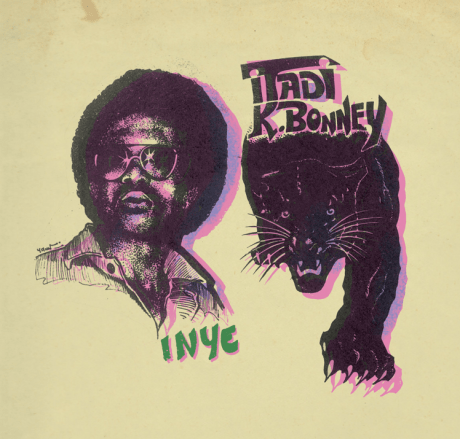
For all our friends and followers alike in various states of emergence from a full coronavirus lockdown and the escalating events of George Floyd’s death at the hands of the police, let the Monolith Cocktail ease some of the anxiety, uncertainty and the rage with another volume of Dominic Valvona’s cross-generational, cross-genre Social Playlists (the 46th edition in fact).
Soothing the soul, embracing the eclectic the blog’s imaginary radisohow (or podcast if you prefer) brings together tracks from across time, genres and the globe to take the listener on a musical odyssey of discovery.
For those of you without access to Spotify, we’ve chosen a random smattering of tracks from Youtube.
Tracks In Full:
Mombasa ‘Yenyeri’
Horoya ‘Sete Curvas’
Chrissy Zebby Tembo ‘Coffin Maker’
Colin Hare ‘For Where Have You Been’
Dick Stusso ‘I Am Not The Girl You Used To Know’
Stack Waddy ‘It’s All Over Now’
The Research ‘All These Feelings’
The Weather Prophets ‘The Key To My Love Is Green’
Ludus ‘Little Girls’
Itadi ‘Ye, Ye, Ye’
Kashmere Stage Band ‘Thank You’
Hooksy ‘Flying Market’
Twin Hype ‘Do It To The Crowd’
Neek The Exotic ‘Backs and Necks’
Nolan Porter ‘Iron Out The Rough Spots’
Rob Sonic ‘Jesus Christ Super Tramp’
Tommy McGee ‘The Hatch’
Mike Nyoni and Born Free ‘It’s Only A Dream’
Allen Toussaint And Eldridge Holmes ‘Gone Gone Gone’
Easy Kabaka Brown ‘Belema’
Sola ‘Tu Te Has Ido’
Crystal Syphon ‘Have More Of Everything’
The Pretty Things ‘Baron Saturday’
The Overton Berry Trio ‘Hey Jude’
Shawn Phillips ‘From All Of Us’
Jad Fair ‘Haunted By Frankenstein’
The Dream ‘Four Phone-Calls’
The Youngbloods ‘Faster All The Time’
Quatermass ‘Make Up Your Mind’
Sam Rivers, Anthony Cole, Doug Matthews ‘Spark’
Nate Morgan ‘Mrafu’
Clap! Clap! ‘Southern Dub’
Psychic Ills ‘Never Learn Not To Love’
The Pretty Things ‘Parachute’
Drum Circus ‘Groove Rock’
Thunder And Roses ‘Moon Child’
Goran Kajfes Subtropic Arkestra ‘I’m On My Way/Patch Of Blue’
Sarah Webster Fabio ‘Together/To The Tune Of Coltrane’s ‘Equinox”
Awa Poulo ‘Djara Wilam’
Willis Earl Beal ‘True’
Video Choices
Hi, my name is Dominic Valvona and I’m the Founder of the music/culture blog monolithcocktail.com For the last ten years I’ve featured and supported music, musicians and labels we love across genres from around the world that we think you’ll want to know about. No content on the site is paid for or sponsored and we only feature artists we have genuine respect for /love. If you enjoy our reviews (and we often write long, thoughtful ones), found a new artist you admire or if we have featured you or artists you represent and would like to buy us a coffee at https://ko-fi.com/monolithcocktail to say cheers for spreading the word, then that would be much appreciated.
Tickling Our Fancy 086: Les Frères Smith, Love-Songs, Valentina Magaletti & Marlene Ribeiro, Soft Plastics…
May 25, 2020
Reviews Roundup/Dominic Valvona

Easing the boredom of coronavirus lockdown – though many of our international followers, and those across the border in England, are tentatively coming out of isolation – join me from the safety of your own home once more on a global journey of discovery. Let me do all the footwork for you as I recommend a batch of interesting and essential new releases from a myriad of genres. All of which I hope you will support in these anxious and trying times. With all live gigs and events more or less quashed for the foreseeable future, buying music (whether it’s physical or through digital platforms) has never been more important for the survival of the bands/artists/collectives that create it.
This week’s roundup takes on an unplanned devotional vibe, with many of the featured albums/EPs inspired or imbued by religious music and themes. The cellist, composer Simon McCorry is a case in point, his latest ambient drone soundscape The Light Only Blinds is guided in part by the Catholic liturgy of a Requiem Mass; though drifts and expands into the universal and space itself. Equally the stirring hushed beatific new EP from Swedish artist David Åhlén, ‘My Face Will Shine’, is also (among other things) inspired by Christian liturgy: especially the Biblical Psalms. Meanwhile, Bhajan Bhoy, the alter ego of Ajay Saggar, proves a transcendence of spiritual, talking to Yogi, style Kosmische and post-punk reverence. A strange performative alchemy is struck up between the collaborative union of Valentina Magaletti and Marlene Ribeiro on their mysterious, primal ‘tropical concrete’ communion Due Matte.
Not so spiritual, and untouched by the afflatus, Daniel J. Gregory (and his Carnivorous Plants) composes and assembles a ambient and lingering post-rock blues soundscape to the images he captured on a old Soviet camera, Fela Kuti disciples Les Frères Smith pack a punch on their explosive Afrobeat imbued new LP, Mutation. Love-Songs release their inaugural convolution of the organic and synthesized, Nicht Nicht, for the Hamburg label Bureau B. And finally, there’s the inaugural album from Carey Mercer’s new project Soft Plastics; an extraordinary, ambitious album at that.
Les Frères Smith ‘Mutation’
(Amour et Son) LP/22nd May 2020
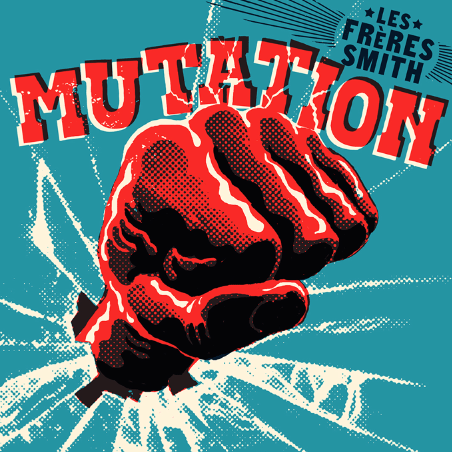
Adepts of the Fela Kuti patois, the self-described musical ‘smugglers’ Les Frères Smith not only emulate their inspiration but even feature the Afrobeat progenitor’s youngest scion Seun Kuti on the group’s latest, and third, infectious bustle, Mutation.
Speaking Kuti fluently this eleven-strong group doesn’t just imitate the sun-bleached heralded horns, Tony Allen shuffles and entrancing grooves of the Nigerian superstar’s music but also channel his loosely delivered vocal protestations too. Always keeping it funky and suffused with a sauntered jostle even in the face of ever-growing tensions, the threat of increasingly hostile nationalism and the rise of populism the political slogans are liberally peppered or soulfully woven into the tapestry by the group’s rallying flanked singers and motivators Swala Emati and Prosper Nya. Les Frères Smith fill-in for Seun’s Egypt 80 on the splashed drum and Clav frills ‘No Waiting’: An impatient message of African unity rides over a signature nimble Afrobeat performance that has Seun deliver a usually cool vocal and swinging saxophone.
Of course these sonic contraband handlers of the faith will find their politics, freedom of movement even harder to evangelize in the current miasma of epidemic lockdown. For now, we’ll just have to let them musically take us on a backpack tour of riches. Because they don’t just fly Air Lagos but make stopovers in Cameroon (check out those basslines), Ghana, Guinea and on the shimmery fluted desert escape ‘Arouah’, Arabian North Africa. What they call the “Afrikanbeat” is a smooth merger of all these geographic scenes. Throw in some nitty, nifty Congolese guitar licks, some Orlando Julius lilted Afrojazz, reminisces of The Sweet Talks and Ebo Taylor, and then from across the seas, add a pinch of stateside soul sister Lauryn Hill, Erykah Badu, some Stevie Wonder and even a touch of The Brand New Heavies to find all the sunshine hustle grooves you could want.
Bedeviled, limbering, relaxed, Les Frères Smith lend a Gauloise flair to the Afrobeat blueprint on an album of bustled liberating energy.
Soft Plastics ‘5 Dreams’
(Paper Bag Records) LP/5th June 2020
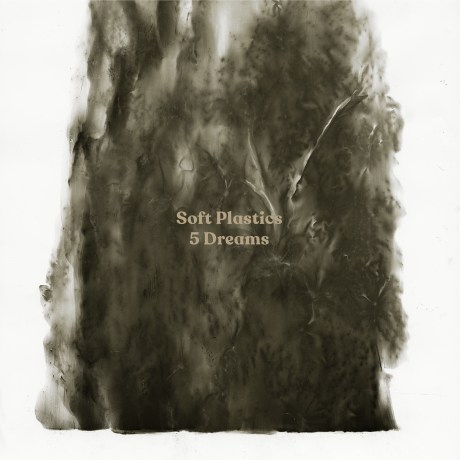
From the embers of Frog Eyes rises Carey Mercer’s vivid dreamology, the Soft Plastics; an extraordinary-voiced inhabited vision, playful, untethered yet also intense. With partner and creative foil Mel Campbell at his side and an intimate circle of musicians – many of which are from the ranks of fellow Canadian scenesters Destroyer – Mercer’s abstract dreams are channeled into a magical, if often sad, songbook of lyrical symbolism, metaphor and passages of trauma.
Everyone is probably aware of the idiosyncratic songwriter’s travails, coming out the other side of throat cancer years ago; the very best outcome an affect on his music career and obviously his already unique bellowed, sibilant, fluctuating, weaving vocals. Though free from a cohesive theme as such, amongst the recurring lyrics of “swirling”, allusions to a green miasma, “wyld thyngs” and an actor’s diorama there’s the constant presence of “angels”: guardians perhaps. But it’s the album’s references (again, perhaps) to Mercer’s most dramatic episode on ‘The Party’s Still On’ that evocatively alludes to that diagnosis: “Knocked on the roof of my mouth, and said “shelter me in warmth”.
With some visions weighing heavier than others, and some darker, the inaugural LP under the Soft Plastics furnishing uses the imagery and lucid recall of Mercer’s dreams. These “remembrances” were sent to soundboard Joshua Wells (just one of the Destroyer cast that feature and help facilitate this album) as a foundation for, what is, a visceral journey through the musician/vocalist’s imaginings and augurs. It’s an ambitious world – not many albums come with a contextual-style essay. 5 Dreams “exists in a land that is deeply wet, dark, flooded” we’re told. The dank dampness is however broken by the occasional “gilded sun-beam” that “comes out of nowhere”, at which point “the song just stops and stares in bloody awe at what we are given, what we might see.”
Almost theatrical, the musical stage is expansive and deep; a counterbalance between the darkness and light. Sins, the omnipresence of a nuclear threat (of the winter, and family stasis kind), the pains of loss, and the biblical feature heavily on a soundtrack that omnivorously feeds on elements of lilted mariachi horns, industrial post-punk, ragged soul, new wave, shoegaze, pop, indie-dance, funk and Mercer’s back catalogue (Frog Eyes, Swan Lake). This means wandering hints of Blixa Bargeld, Talk Talk, Alex Harvey, Wolf Parade, The Mekons, New Pornographers and The Rapture. With a vocal freedom, between the languidly winding and more intense falsetto, the pathway traverses wildly imagined southern borderlands; a virtual dystopia where the hangman’s rope looms as a warning; a place where fascism lurks in the small towns. There’s something not quite right with this scene however; an artificial construct, peopled by willing (or unwilling) actors, playing the part of Mercer’s vivid dreamscapes and actions.
Mercer’s dream weaving evocations are, as I’ve already said, extraordinary on this ambitious, mesmeric album suite. Cryptic and charged, wondrous and yet dark, the Soft Plastics go further and deeper into the psyche to fathom the unfathomable. 5 Dreams warrants a place in every choice and best of the year lists at the end of this anxious, epidemic ravaged year. It really is that good.
Bhajan Bhoy ‘Bless Bless’
(Wormer Bros. Records) LP/5th June 2020
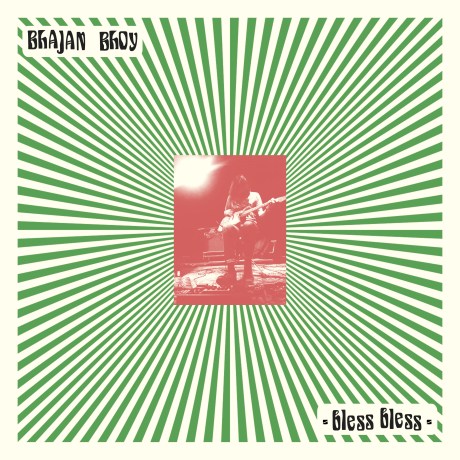
Veiled in swathes of reverence and an afterglow of Gothic shoegaze, post-punk and the kosmische Ajay Saggar turns his fanned, flange reverberating guitar towards the transcendental on his first solo outing. Recently appearing in my January roundup as part of the Deutsche Ashram collaboration with Merinde Verbeck, Saggar extends that duo’s vaporous spiritual waves and dreamy translucence on this six-string led Eastern cosmology.
In case you missed the “blessed” anointed direction of this heavenly – if just as moodily mysterious and full of trepidation – panoramic opus, the alter ego “Bhajan” of this incarnation’s name refers to the amorphous devotional music of the Indian subcontinent. Synonymous with Hinduism, but also Jainism, this melodic raga form of worship has no set rules, and so fits in well with Saggar’s formless framework of layered melting guitar phrases, gossamer radiance, space-echo unit delay and ripples in the cosmic fabric atmospheres. Bhajan can be translated as “revere”, but also can be read as “sharing” too, and that’s what Saggar does: sharing his spiritual oeuvre of the esoteric and meditative.
We’re “welcomed” to this service with a brassy vibrating mantra: an introduction set-up for what’s to follow. The pouring guitar washes of Manuel Gottsching’s Ash Ra Temple permeate the album’s first long wave devotion ‘Strung Out’, which also features the Washington artist Prana Crafter as congruous communal collaborator. Those lingering six-string explorations increase with intensity as the traverse goes on; bending and craning with fuzz and scuzzy sustain in a Gunter Schickert fashion. Second guest spot goes to Holly Habstritt Gaal; her lulling siren coos beckon from the ether on the ethereal post-punk free-falling embrace ‘Cascade’.
On a pilgrimage of the magick and Indian mysticism, Saggar aligns wisps of Popol Vuh mantra otherworldliness with cause winds on the strangely titled ‘Stuck In A Barrel’, and casts a pulsing prodded synthesized spell of Roedelius arpeggiator and the Tangerine Dream on ‘Magicho’.
Whether drifting off after trekking the ‘King’s Mountain’, or circumnavigating the Kush interior, Saggar finds enlightenment in a cosmic vacuum. Sensory glides, harmonic rings, creepier growls, the twinkled and dub-y all merge on this ebbing tide of devotional music. Emerging from this isolation with a spirit of wonderment, Bhajan Bhoy reimagines a kosmische version of The Mission; a space rock Slowdive on an expansive multilayered guitar meditation.
Love-Songs ‘Nicht Nicht’
(Bureau B) LP/22nd May 2020
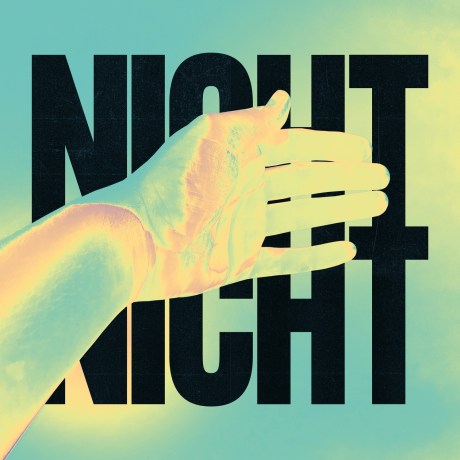
It shouldn’t come as a surprise to find the visceral electro-acoustic trio from Hamburg gravitating towards that incubator of Kosmische and expletory German electronica, the Bureau B label: A label that’s ranks include not just the second (or third) generation of Germany’s electronic and experimental music revolution but also some of the progenitors that started it, from surviving members of Faust to Roedelius.
Love-Songs inaugural convolution of the organic and defined for the label absorbs much of that pioneering providence, especially the Kosmische and the quasi-tribal, quasi-ceremonial wood-rim-clatter drums of Faust’s Zappi Diermaier.
A mysterious, sometimes Byzantium, invocation of the improvised, the synthesized and the acoustic, Nicht Nicht is a veiled world of amorphous resonance. There’s the use of Chinese cymbals that hints towards Tibetan and East Asian mysticism, what sounds like a clarinet or oud offers Egyptian fantasy, and the cattle bells evoke mountain cowherds of the Steppes. Add to this the utterances and chanted cadence of Love-Song’s vocalist Thomas Korf, which aren’t so much sung as lyrically described as they occupy the gauzy space. Korf’s lyrics are described as ‘Surrealist’, ‘Dada’, though I’d have no idea as he sings in German throughout.
Electronically sonic wise, pulsating bass throbs echo throughout this labyrinth alongside carefully, dare say sophisticated, arpeggiators, dark wave undercurrents and, when it really gets going, cybernetic techno beats. Suffused and vibrating with that air of mystery, Love-Songs create a stirring environment of reverberated tubular synthesized evaporations and both naturalistic scuttled rhythms and percussive trinkets. Nicht Nicht finds a balance between the two on a most experimental fusion of Kosmische, Techno and the mystical; an album that finds the trio pushing the boundaries further than ever.
Valentina Magaletti & Marlene Ribeiro ‘Due Matte’
(Commando Vanessa) LP/11th June 2020

A communion of sonic forebode and untethered visions of the universal, the collaborative Due Matte performance ascension brings together Valentina Magaletti (of Vanishing Twins fame) and her foil Marlene Ribeiro (of both Gnod and Negra Brancia) to forge an uninterrupted exploration of what the artistic partnership has coined “tropical concrete”. A counterbalance of the improvised and form, the natural and augmented, synthesized effects and the acoustic, this tropical concrete soundscape weaves recognizable instrumentation with (as the ‘concrete’ of that term would suggest) a masked assemblage of found objects and utensils. And so, an ever-present tolled, processional frame drum patters out a repetitive beat as the trinkets of tapped bottles, scrapped tin and other metallic objects trickle or scratch across a mysterious alchemy of Latin esotericism and an ever-shifting echoed soundbed of filters.
Metal bucketing, the circled ringing of bowls, brushes across the surface of a drum skin, water-carriers, revolving mechanisms, rasps and rustling noises and sounds are all the more mysterious as they spiral or spindle on this magic-reality soundtrack. In a fluxes between the supernatural and dreamy, the lucid and hypnotizing reverberations of an ambiguous world, cast adrift of its moorings, stirs up various references: whether intentional or by happenstance – a spell of South East Asia one moment, the Nile and even an atavistic Iberia the next.
Cooing voices and obscured talking add another layer of mystique to the serial Gothic, religious and fantastical elementals.
This, the third release on the burgeoning Italian ‘boutique label’ Commando Vanessa, was originally performed as part of Francisca Marques’ curated project Hysteria; a result of the collaborators artistic residency at Sonoscopia in Porto, a project conceived to ‘offer a look at female production and creation in today’s musical universe, creating new bridges between creators and audiences.’ The fruits of this strange, mostly uncalculated vision of artistic freedom traverse a mirror-y, occasionally primal, world of abstracted death knolls and rituals, under a killing moon. Let’s hope there’s more to come from this congruous union in the future.
Simon McCorry ‘The Light Only Blinds’
(Herhalen Recordings) EP/14th May 2020

Proving prolific in this year of anxious isolation and lockdown misery, composer, artist and adroit cellist of renown Simon McCorry is once more conjuring up evocative soundscapes, both introspective and universal, on his latest ambient suite The Light Only Blinds. After two recent Monolith Cocktail premieres of McCorry standalone singles – the minimalist Acid Techno imbibed ‘Pieces Of Mind’ last month, and the stirring atonal ‘The Nothing That Is’ in February –, and following in the wake of the fully-realized escapist, haunted environments and materialized spaces of the ambiguous atmosphere-building Border Land LP, McCorry offers a trio of light inspired meditations on the power, immensity and light-giving properties of the Sun.
Veiled, longing and at times inhabiting the awe and mystery of Kubrick’s cinematic visions of space, the arid lunarscapes and terrains of this lightened sonic escapism are both magisterial and daunting. Though alien in parts, with passing leviathans and gauzy metallic gleams, saws and waves suffused throughout, the EP is not just bathed in the rays of the Sun but also loosely imbued by the themes (hence the Latin liturgy titles, ‘Sanctus’, ‘Benedictus’ etc.) of the Catholic Requiem Mass. Instead of the David Axlerod route, McCorry gravitates towards the almost supernatural Atmosphères, Lux Aeterna, Requiem and Aventures suites of revered composer György Ligeti; all of which of course featured in Kubrick’s 2001AD, A Space Odyssey opus.
But this sacred wonderment at the Sun was also developed from the sound design work for a play that the ambient and neoclassical composer worked on in early March. “The theatre we were working in closed around us and the play only went as far as the first dress rehearsal. I’d been experimenting with a couple of analogue monosynths and liked the idea of using these as the sole source of sound design material. They have an unpredictable organic nature and paradoxically sound unnatural and alien. The play, Born Bad written by Debbie Tucker Green, is an intense family drama with a lot not said or on the verge of being said, it is an exercise in a slow build of tension that never quite overwhelms but threatens too as more and more is revealed. I wanted the sound design to be as if it is was the space, the hum of the electric appliances, lighting and heating, occasionally clawing it self into consciousness from a bed of churning chaos that lies behind everything.
The prevailing bed of those hums, undulations and waves sit under a synthesis of universal secrets, as enervated solar winds blow across the moonscapes and interiors, and shrouded movements trigger unearthly stirrings and shooting stars fly by in the night sky. An escapist soundtrack, McCorry’s subtle enlightened contemplations prove atmospherically evocative, another quality suite of minimalist gravity.
David Åhlén ‘My Face Will Shine’
(Jivvär) EP/15th May 2020

You may remember we premiered the Swedish singer, songwriter and multi-instrumentalist David Åhlén’s moving hymnal ‘If I Have You’ single, recently on the Monolith Cocktail. A whispery diaphanous veiled plaint that’s informed and inspired by the artist’s study of mystical Judeo-Christian texts on the Swedish Island of Gotland, and his own personal faith, this most beatific and angelic of songs also features on the new release, the devotional My Face Will Shine EP.
Though faith has once more concentrated the minds of many during this epidemic – you could say there’s been a resurgence -, society in general still casts a cynical derision of suspicion at those who practice religion. A lot of Christian music is of course dire, especially the modern happy-clappy sort. Åhlén though has found a gossamer balance between the choral-backed worship lament of tradition and a breathtakingly heart aching form of chamber pop.
Particularly moved by the Biblical Psalms, lyrics from the first single – lines such as “deep calls to deep in the roar of your waters” – are directly inspired by Psalm 42, as David explains: “Many of the lyrics for the EP are about the mystery of our soul speaking to God and the longing that follows”. Musically steeped in this traditional influence and spiritual yearning, ‘If I Have You’ like the rest of the music on this EP are elevated further towards the heavenly by the inclusion of the holy tones of The Boy’s Choir Of Gotland and a an attentive, sympathetic chamber ensemble.
Åhlén’s hushed and cooed falsetto softly ascends the Cloisters atmosphere like a yearning, robed, Antony Hegarty taking communion. The reverence is suffused across all four spiritual elevations, from the beautifully wooed and bowed longing string accompanied stunner ‘My Face Will Shine’, through to the ethereal Biblical cosmology ‘Shamayim’ (the Hebrew word for “heaven”).
My Face Will Shine offers a full immersion into the devotional and longing; a connection to a higher calling you could say; a step away from our own preoccupations into the moody chamber pop of holy reverence. Aside from the spiritual leanings, many will find this an incredibly constructed heartfelt and beautiful record.
Daniel J. Gregory & Carnivorous Plants ‘Dusty Starlight’
(Kirigirisu Recordings) LP/Available Now

From rifling through workshop drawers like a sound burglar, to lending the most lingering traces of post-rock and blues-y guitar to attuned radio/TV broadcasts from an unspecified European geography, Daniel J. Gregory’s minimal sonic collage for the Japan-based Kirigirisu label is an album of channeled refracted landscapes. From mountains to coastlines and cities, Gregory’s serial synthesis of guitar and textured drones and winding mechanisms soundscapes give a sound and visceral life to pictures taken on an ‘old Soviet camera’.
A photo album given an assemblage of ambient resonate waveforms and more noisy musique-concrète, Dusty Starlight passes through ‘Blue Holland’ colour palette waterways and scrapped contours of a vague landscape. Foreign transmissions intermittently crackle and spark into action but offer only more mystery. You can even hear the artist himself counting in, or, in soliloquy style mumbling under his breath on the rummaging ‘V’.
Over various hums, signals, static, chains, clicks, camera loading and caustic interference Gregory plays various electric guitar renderings. Played with a light touch, these sometimes reverberating, often rippled and drifting trails linger between touches of Craig Ward, Spaceman 3 era Jason Pierce and Raül Refree. On the album’s final Roman numeric entitled ‘VII’ there’s even a hint of a more enervated, less dark, Sunn O))). But this could be framed as a kind of post-rock blues; a style not too dissimilar to the label boss Neil Debnam’s very own Broken Shoulder/Flying Kites alter egos.
A soundtrack in many ways that offers a strange collage of found, usable object manipulations and tremulous experimental guitar, the Dusty Starlight album looks through a removed lens at a scarred, displaced landscape. One that’s more mysterious and subtly stirring than dystopian or even haunting. This old Soviet tech offers another angle on ambient experimentation.
Hi, my name is Dominic Valvona and I’m the Founder of the music/culture blog monolithcocktail.com For the last ten years I’ve featured and supported music, musicians and labels we love across genres from around the world that we think you’ll want to know about. No content on the site is paid for or sponsored and we only feature artists we have genuine respect for /love. If you enjoy our reviews (and we often write long, thoughtful ones), found a new artist you admire or if we have featured you or artists you represent and would like to buy us a coffee at https://ko-fi.com/monolithcocktail to say cheers for spreading the word, then that would be much appreciated.
Premiere (Single): Myles Cochran ‘It’s Like This’
May 14, 2020
Premiere/Dominic Valvona
Myles Cochran ‘It’s Like This’
(9Ball Records) Single/15th May 2020
Somewhere on the outskirts of a recognizable American panorama, a hazy semblance of Myles Cochran’s Kentuckian bluegrass roots can be heard resonating on his newest subtly evocative single, ‘It’s Like This’. A continuation of the composer, songwriter, multi-instrumentalist and producer’s previous ‘Early Dark’ traverse (released just a few months ago), today’s premiere is an attuned and sophisticated merger of vaguely reminiscent, rustically dreamy guitar, waned and bowing strings, spindled movements and various lightly administered production effects. Here is how Myles sums up this musical assemblage of ideas and inspirations:
“Roots and country music were in the air when I was growing up and they still shape my aesthetic. My love of improvised music, whether Miles Davis or Talk Talk, also informs what I do, and the American Primitive guitarists such as John Fahey and Leo Kottke made a deep impact. To me, all these aren’t disparate influences, but make beautiful sense together”.
A both lingered minimalist and sonorous soundtrack, with echoes of such titans of the form as Ry Cooder, Robert Fripp, Warren Ellis, Daniel Lanois, Steve Reich and even Mick Harvey, ‘It’s Like This’ was composed, produced and performed by Myles at his rural studios in the UK and France. Myles is joined on this oft-emotional tarverse by the cello virtuoso Richard Curran, who supplies the atmospherically charged low bows.
Marking a sort of flurry of activity from the Kentucky born artist, now residing full-time in the UK, this latest single is being released via Myles own 9Ball Records label ahead of the June 19th EP, My Own Devices. Myles will follow this up, we’re told, with an album entitled UNSUNG.
If you like what you found, hear and see on the Monolith Cocktail, you can now support us via the micro-donation platform Ko-Fi:
Hi, my name is Dominic Valvona and I’m the Founder of the music/culture blog monolithcocktail.com For the last ten years I’ve featured and supported music, musicians and labels we love across genres from around the world that we think you’ll want to know about. No content on the site is paid for or sponsored and we only feature artists we have genuine respect for /love. If you enjoy our reviews (and we often write long, thoughtful ones), found a new artist you admire or if we have featured you or artists you represent and would like to buy us a coffee at https://ko-fi.com/monolithcocktail to say cheers for spreading the word, then that would be much appreciated.
Tickling Our Fancy 085: Chouk Bwa & The Ångströmers, Edikanfo, Fra Fra, Muriel Grossman, Fadhilee Itulya…
May 7, 2020
ALBUM REVIEWS/Dominic Valvona

Easing the boredom of coronavirus lockdown, join me from the safety of your own home once more on a global journey of discovery. Let me do all the footwork for you, as I recommend a batch of interesting and essential new releases from a myriad of genres. All of which I hope you will support in these anxious and trying times. With all live gigs and events more or less quashed for the foreseeable future, buying music (whether it’s physical or through digital platforms) has never been more important for the survival of the bands/artists/collectives that create it.
As international as ever, this month’s revue includes not one but two releases from the wellspring of Highlife music, Ghana – though only one of these is contemporary, and only one could be considered a link to that signature sound. First, the sixth volume in Glitterbeat Records’ Hidden Musics series is, as its title may suggest, a more elegiac-framed affair of rustic processional performances: Fra Fra ‘Funeral Songs’. The second, Edikanfo’s The Pace Setters is the first ever reissue of an iconic 80s album from the Afrodsico troupe, produced, with the lightest of touches, by Brian Eno. From South America, the ever-changing Miguel Sosa (formerly of The Strumpets and IH8 Camera) releases another album under a new alias and with a new sound, Plano Remoto. Japan-based polymath Paul Thomas Kirk, under his Akatombo alias, is granted a (almost) twenty-year spanning highlights collection of discordant gloom industrial dance music by the Japanese label So I Buried Records. From Haiti, we have the collaborative voodoo communion between the locals Chouk Bwa and the Belgium dub electronica duo The Ångströmers, Vodou Alé. And from Kenya, guitarist Fadhilee Itulya releases his debut album fusion of Omutibo music.
Closer to home, though imagining all kinds of cosmological and spiritual visions, Sebastian Reynolds releases a ‘universal’ escapist EP of peregrinations, and Austrian saxophonist Muriel Grossman is granted a showcase of her spiritual jazz suites from the Jazzman label.
Chouk Bwa & The Ångströmers ‘Vodou Alé’
(Bongo Joe Records) LP/22nd May 2020

Like so many others before them, allured to the voodoo hypnotism of the shared Hispaniola Island of Haiti, Belgian production duo The Ångströmers spent a residency immersing and absorbing the local fusion of ‘mizik rasin’, and working with the Gonaïves-borne collective of Chouk Bwa. A hybrid of roots music tradition, the voodoo ceremony enchantments brought over to the Island from the Congo, the folkloric and rock and roll, mizik rasin has been made famous in more recent decades by Richard A. Morse’s acronym Haiti collective RAM, who have in turn welcomed curious acts such as Arcade Fire and tUnE-yArDs to its propulsive rhythm. The late Afrobeat rhythm king Tony Allen also spent time there working with local musicians on the Afro-Haitian Experimental Orchestra project in 2017. It’s easy to see why; the invigorating lively, often locked-in rhythms and spiritual call prove intense and inviting: to dance music artists especially.
The synthesis of Soukri voodoo polyrhythms and bassier dub electronica on this collaboration proves so attuned to both sensibilities and in-sync as to be difficult to separate the natural ritual from the augmented and synthesized. The furious, rushing hand-drumming is subtly reinforced and layered up for the most part with pulsating and throbbing undulations, atmospherics, phaser, echo and reverb reversal effects; all of which are used sparingly and wisely, and even sensitively.
A yearning plaintive procession of voices, both earthly and soulfully, emerge from the swirled vapours to lament Haiti’s tragic run of ecological disasters; the lead single ‘More Tan’ a bobbing and clattery beat with sonorous fuzzy bass lends a moving tribute to all those unfortunate souls affected by a quartet of devastating hurricanes and the Armageddon earthquake of 2010, which killed tens of thousands and left hundreds of thousands displaced, at the mercy of the elements, disease and a destabilized authority.
A primal ceremony of tumbled, fluttered cylindrical rhythms sucked into a vortex of warped dub and ringing oscillations, this collaborative union proves just how intoxicating and electrifying the voodoo spell can be. Given a sympathetic undercurrent and resonance of atmospheric electronica, the ritual sound and outpour of Haiti is reframed, guided into the 21st century. Not so much a novel direction as a subtle electronic music boost to tradition.
Muriel Grossmann ‘Elevation’
(Jazzman) LP/15th May 2020

Many jazz greats have of course attempted it, the ‘elevation’ of not just the form but consciousness itself. The Egyptologist anointed Pharoah Sanders even named an album after it; an ascendance at a time when jazz was embracing its spiritual roots and historical gravitas: a return to the source in Africa.
The supremely talented saxophonist bandleader Muriel Grossmann, imbued with that same spirit of vague conscious mysticism and experimentation, has now named one of her own impressive Afrojazz odysseys after that totem of an influential album. It won’t come as any surprise to find that the Pharaoh just happens to be one of Grossmann’s influences, alongside such luminaries as John and Alice Coltrane, Lester Young and Eric Dolphy; all of which permeate throughout this survey of the European jazz star’s recent(ish) work.
A sort of introduction for those unfamiliar with an artist who’s spent the last two decades on the European scene, playing with the likes of Joachim and Rolf Kühn, Wolfgang Reisinges and Thomas Heidepriem, the impeccable Jazzman label have chosen to represent Grossmann’s catalogue with suites from the 2016 Natural Time and 2017 Momentum albums; a moiety almost of complimentary records.
In all a quintet of congruous traverses, from a duo of albums, Grossman’s own Elevation seems a fully realised, interconnected and flowing oeuvre that could have been recorded all at the same session, only yesterday. An adventure across desert contours, on the caravan trail in search of enlightenment and jazz nirvana; the impressively invocative saxophonist and her troupe of regulars turn in a fantastical panoramic opus.
We start with the latter of those albums and a trio of pyramid backdrop numbers that pay homage to the Coltranes (especially Alice), the Pharaoh, Archie Shepp and Greenwich-hip era Albert Ayler. That guiding light title-track is a ten-minute plus extravaganza of splashing drums, oozing and swaddled sax and mini plucked out guitar solos. It sounds like the group is on an opulent trinket laden barge. At first lingering, trembling and stirring in milder Nile waters, the action hot’s up as the river becomes more animated and choppy. Grossmann literally spirals towards the stars; giddily blowing so fast that her trademark instrument turns into a clarinet at one point. Almost easing into the shimmery resonating ‘Rising’, the quartet sumptuously treads further along a mysterious pathway. Uros Stamenkovic brushes the sand off his flighty drum kit, and Radomir Milojkovic bends and picks out a dizzying frill of notes on guitar as Grossmann flitters and flutters on another of these conscious trips.
Still gliding or walking that same North African jazz geography, both ‘Your Peace’ and ‘Peace For All’ may very well have furnished another album, but embrace and breath the same spiritual to experimental jazz air. Shifting sands move underfoot on the first of those dusky shufflers, whilst Eastern mystical chimes and serenity make way for progressive soulful sax, successions of deft guitar licks and burnished drums on the second of those mirages.
Hardly a slavish attempt at reproducing Grossmann’s inspirations, Elevation is an impressive, evocative continuation of those forbearers blueprint. A showcase of exploratory jazz left free to follow those same forbearers by a group of European avant-gardists.
Edikanfo ‘The Pace Setters’
(Glitterbeat Records) LP/8th May 2020

Depending on who you listen to, inventive leftfield, ambient music doyen Brian Eno and his part in propelling the Ghanaian troupers Edikanfo to international attention (if for only the briefest of moments), off the back of their dynamic rich bustling debut album, was either merely down to “endorsement” or more to do with his key production skills. The fact that his indelible mark is light, if almost hidden, would suggest a less than fleeting relationship with the eight-piece Afrodisco group. Yet stage-manage the production of this Highlife funk fusion he did.
That endorsement, usually a sign of quality and importance, is shared by self-appointed one-man Ghanaian music industry mover-and-shaker Faisal Helwani. A forceful character in a time when you had to be forward and sometimes ungracious in getting results, Helwani was responsible in kick-starting the modern Ghana scene; setting up the now legendary Napoleon Club complex in the capital of Accra. Club, casino, restaurant and studio – Accra’s first professional recording studio; known as the less than imaginary but history cementing Studio One – all in one, the Napoleon became a lively exchange hub of activity and a hothouse for both emerging and established talent, inside the region and outside of it. With a finger in every conceivable pie, from running the studio to managing, publicizing and contracting bands, Helwani’s grip was strong and nebulous. As Eno – who offers linear notes insight on what is the very first reissue of Edikanfo’s influential and justifiably entitled The Pace Setters album – divulges: ‘Although undoubtedly an important figure in the African music scene he was quite a possessive man. There was a fair amount of grumbling going on among the musicians, who had pretty poor lives. After some of their appearances the band ended up actually owing Faisal money since he owned their equipment and hired it out to them for shows.’
Eno hit upon a novel way of sending the band some money as a thank you, fearing it wouldn’t reach them unless it fell directly into their hands: ‘All the musicians liked the beret I wore at the time, so I had the idea to send one to each of them as a gift – which would be a kind of Trojan horse for the real gift. Back in New York my girlfriend Alex, who had come to Accra with me, carefully sewed a few hundred dollar bills into the rim of each beret and somehow I got a message to them which said ‘DON’T OPEN THE BERETS WHEN FARISAL’S AROUND!!’ It worked…one of the musicians later told me he’d bought a small farm in Central Ghana with his hat-money.’
Helwani had initially approached Eno as a publicity coup after reading about his fostering interest in African music. The impresario invited him as ‘international observer’ to the biennial Festival Of African Song And Dance. It didn’t take long to leap from that to producing Helwani’s recent upcoming electric signing. Staying for around a month, Eno spent time and effort with Edikanfo, who’s live, busy sound proved problematic for the studio manipulator, unaccustomed as he was to recording a live band all at once. Without nearly enough mics for the task at hand, Eno was forced to think on his feet and to eventually just let the performances happen with as little interference as possible. Upon returning to NYC – Eno’s base at the time in the later 70s and early 80s – he released upon listening back to these electric sessions that, for once, his post-production magic as redundant. And so The Pace Setters is a relatively pure, unburdened sound without augmentation; closer to capturing the group’s famed live performances: the sweat and all.
Formed just a couple of years before; Edikanfo would quickly build a momentum after colliding with Eno’s ascended star. His brand soon shone a light that very quickly went out. Brought to an international stage, the octet rose just as their native country was plunged once more into political tumult. A second coup by the military leader-politician Jerry John Rawlings at the end of 1981 removed the civilian government he initially put in place – set up after Rawling’s original junta-led coup in 1979. Ghana had been relatively lucky, having escaped such violent upheaval up until then. Concentrating the mind somewhat and pushing Rawlings into action, the soon-to-be leader was on the former governing power of General Fred Akuffa’s execution list. When he did take over, Rawlings implemented a spot of his own ‘house-cleaning’ of former officials and supporters. The shock of which led to demonstrations, which in turn led to elections; though Rawlings would still win, being re-elected again and again, staying in power until 2001. The early days of power would be severe however, with curfews that soon ‘gutted’ not only the economy but also the live music scene. Restrictions and harassment proved so bad that Edikanfo were forced to part company, scattering overseas.
Now though, almost four decades after their spotlight burned most bright, bandleader, bass player and songwriter Gilbert Amarty Amar and those band mates that survived are back with a new tour prompted by the reissue of their seminal debut. In what can only be described as a laser beam reflective mirror ball of Afrodisco and Highlife funk, The Pace Setters is a humid fusion of sweetened lullaby serenades and busier sunburst dances. A shared effort with near enough each member of the troupe offering up a track, there’s a mix of timings, themes and rhythms. Tracks like the opener ‘Nka Bom’ celebrate “togetherness” with sun-blessed horns, dappled electric piano and open hi-hat bustle, whilst the elastic bass noodling, springy and Orlando Julius loose jazz swaddled ‘Gbenta’ is both peaceable and relaxed. Hints of Osibisa can be found on the lulled hymn like vocal beauty ‘Moonlight Africa’, which puts a faster hustle of drums and bass underneath the twinkled organ caressed chorus of sweetly laced voices. At all times (well nearly) the bounce of refracted laser disco beams ricochet off the brass and rafters.
What a great album: true to its name, setting a sometimes blazing, and others, a sometimes-sashaying pace. Forget the fact it’s now forty years old, turn the mother up and shake-off the woes and weight of life in lockdown. Edikanfo’s 1981 classic is still alive and magical in the here and now; sending us with verve towards the summer: even if that summer is very different to any most of us have ever experienced. Enjoy this most worthy repress.
Fadhilee Itulya ‘Kwetu’
(Naxos World) LP/8th May 2020

Though the Kenyan guitarist turn frontman has been around for a decade the Kwetu album of belonging and questioning, released via a re-invigorated Naxos World, is Fadhilee Itulya’s debut.
Channeling what sounds like a lifetime into that inaugural record, Fadhilee combines his Kenyan roots with more contemporary rock, soul, blues, and on the album’s one and only attempt at a celebratory sun-praised club mix, Balearic dance music. Creating a bridge between the more earthy, unspoiled authenticity of tradition and more polished pop production of a modern studio, Fadhilee draws on the Luhya and Isukha peoples of Western Kenya and their ancestral dances, ceremonies and instruments. This includes the duel guitar and empty incessantly tapped soda bottle accompanied chanted Omutibo, and the Isukuti drums of the celebratory dances performed amongst the latter of those communities. The driving syncopated rhythms of Omutibo were developed during the 1950s, into the 60s, before falling out of favour in the 70s. It forms a foundation on the Swahili entitled ‘Kwetu’ song; a title-track that translates as “home”, but carries more weight in what Fadhilee encapsulates as, “a place where I am welcome.” That could be anywhere, not just his homeland, as this is an album as much about international unity and liberation as a songbook that passes commentary on the closer-to-home social and political problems in Kenya.
Language is another constant theme, with Fadhilee switching effortlessly from Swahili to English to the chanted Luhya.
Sprinkled throughout this generous album, the rustic tapped bottle ringing, hand drum propulsed rhythms and chorus of dusty-soul chanting and more enthusiastic female trilling traditions sit alongside smoother, finessed performances: though it all feels like a intimate live session. The album opens with the reedy and flighty “prayer” of ‘‘Afirika’; an opening salvo that sets up the smooth reggae and jazzy-rock sound of Fadhilee’s lilted guitar and the accompanying backing of a rich harmony chorus. It also introduces us to the folksy flute-heavy collaboration of guest musician Adam Adiarra, who’s instrument flutters, weaves and floats throughout that opening introduction. More sauntering rhythms beckon on the spiritually lulled, twinkled piano tribute to women and motherhood ‘Mama’. Whilst the electric sunny funk ‘Tabasm’, which translates as “smile”, works up a fusion of flange-rock and gospel.
Despite moments of intensity and urgency, wilder electric guitar frills and the untethered breaks of tribal ceremonial passion, Kwetu is a mostly gentle, soulful affair. A peaceable showcase for an artist honed on tradition but pushing forward. A commercial album of smooth Kenyan fusions with some rougher edges, Fadhilee’s debut shows an artist as comfortable with the modern studio as he is with the in-situ rustic roots of the Kenyan grasslands.
Akatombo ‘Discordia: 2003-2020’
(So I Buried Records) Album/25th May 2020

From a label synonymous for unleashing the sludge-dread rock of those ominous bearers of doom, Qujaku, comes a sort of ‘best of’ collection of similarly caustic menace from the Scottish post-punker turn industrial electronic composer Paul Thomas Kirk. As it turns out, a logical creatively successful leap for the one-time band member of the 80s punk agitators The Actives, Kirk’s magnetic-charged Akatombo avatar fuses, fries and beats-into-shape remnants of that post-punk past. Based in Hiroshima the musician, producer, filmmaker, photographer and label boss has released a quintet of albums, all but one of them under his own Hand-Held Recordings imprint, since 2003. Collected together here is a smattering of buzzy dissonance and growling electronic transmissions from each of the album’s, plus one previously unreleased track, ‘Oblique & Fearless’: a cause metallic evocation of techno punk and Reznor chained industrial dread.
Going back to the beginning, 2003’s inaugural augury Trace Elements – released via the SWIM label – is represented by the Japanese trip-hop Western soundtrack ‘Humid’, the rough UNKLE trip-breaks with snarling bass ‘Overheat’, and dub-y reverb spiraling ‘Ponderlust’. Six years later Kirk would release the Unconfirmed Reports album under his own label. Taking the sonic exploration further towards the experimental, the frizzled distortion and Aphex Twin clattering of ‘A Prior Disengagement’ and Barry Adamson spy thriller tremolo with DJ Shadow drum breaks ‘SSRI’ mark that album’s evolving range and scope. 2011’s False Positives lends the Basic Channel tuned unfolding Kitchen-sink drama ‘Kleptocrat’ and cylindrical, muffled voiced ‘Precariat’ to this compilation.
The prize of opening this Discordia falls to the ominous moist chamber atmospheric ‘Click/Bate’, taken from the 2015 album Sometime, Never. Both lurking in the dark web subterranean yet also communicating with orbital space waves, this bleak vision reimagines The Orb on a downer. Reaching further into the esoteric sound, most recent album Tensile Strength is represented by a trio of industrial, ringing noisy visitations and broadcasts: ‘Debug. Injector’ is a churning vortex of the haunted, whilst the album’s title-track is full of punk snarls.
Veering between the heavy dance music of The Chemical Brothers and the sonorous metal machine music of Emptyset, and between the steaming razor breaks of UNKLE and the industrial wilding of Einsturzende Neubauten, Kirk’s Akatombo manifestation is channeled into a pretty decisive collection of highlights. Too driven to be classed as ‘mood music’ or dark soundtracks, the dystopian discord of Kirk’s sonic augurs and emotions could even be considered dance music: albeit on the fringes of a doomed dancefloor. A great showcase anyway for an electronic artist working in the gloom.
Sebastian Reynolds ‘The Universe Remembers’
(Faith & Industry) EP/22nd May 2020

Oxford-based polymath Sebastian Reynolds has finally found the time in his prolific schedule of collaborations, remixes, session work and productions to create his very own solo soundtrack of various eschatology inspired peregrinations. The Universe Remembers EP’s quintet of traverses drifts and wafts across an ambiguous, often vaporous, soundscape of neo-classical composition, retro futurist production, swanned Tibetan mystical jazz, both languid and accelerated running breakbeats, and ghostly visitations – haunted narrated extracts from T.S. Eliot’s all-encompassing philosophical, religious and metaphysical Holy Grail purview The Wasteland can be heard in a fuzzy echo on the EP’s title-track and single.
A cosmological junction of dystopian literature and the Buddhist/Daoism, The Universe Remembers is, as you might expect from a composer/multi-instrumentalist/producer who’s created music as varied as the transcendent Southeast Asian Manīmekhalā score that accompanied the multimedia Mahajanaka Dance Drama and the visceral chamber pieces of his collaboration with the pan-European Solo Collective trio, a mix of evocations simultaneously as dreamy as they are ominous and mysterious; and as contemplative as they are resigned to the fates.
Framed as a distillation of previous incarnations, namely the Keyboard Choir and Braindead Collective, the sound and sonic landscape channels the peaks and descending remembrance of a musical lifetime, with some of the material taken from various periods over the years, transformed and attuned for a concept of Theology; the part that’s concerned with death, judgment and the final destiny of the soul and humankind: Not too big a concept then.
Previously premiered on the Monolith Cocktail the guest produced title track features the attentive skills of Capitol K (who’s label is also facilitating the release of this EP) guiding a musical odyssey of twinkled trembled cascaded piano, slow beats and the mystical fluttering, spiraling and drifting clarinet of guest contributor Rachel Coombes. Featuring Seb’s penchant for the glitch-y piano resonance of Susumu Yokota and a most strangely sourced sample of the revered writer Anthony Burgess purchasing a Bösendorfer piano in Harrods, this magical escapist suite wafts between the snake charmer bazaars of Egypt and Calcutta, the Hitchcockian and avant-garde. It must be emphasized at this point that Burgess’ dystopian visions have had a profound effect on Seb; especially his most famous slim novel A Clockwork Orange. Seb has previously performed at the Burgess Foundation with the Solo Collective and even (in the last week) written a guest post for their website. Not that anything on this EP is even close to aping the synonymous ominous switched-on Bach of Wendy Carlos’ score for the Kubrick vision of that most famous futuristic nightmare.
Opening reverberating vapour ‘Amoniker’ builds a suffused trilled melodic swathe of pastoral merry evocations from a past epoch, smatterings of jazz, and distant masked break-beats around an increasingly echoing and delayed layered counting iteration. Doing what he does best, Seb finds and then takes original samples to explorative new soundscapes and worlds on the EP’s curtain call, ‘You Are Forgotten’. The Oxford polymath uses the baritone like resigned mooning vocal from the track of the same name by Desmond Chancer & The Long Memories as a foundation for a suffused saxophone swaddled and pining (courtesy of Adam Davy) slice of retro-futurist electronica. Spiritual manna phrases like “no memory”, ”no legacy” and “universal” drift into focus from a constructed ether to echo dramatically over the mysterious and masked invocations.
Keeping to the holy mountain of awe footpath, the totem of endurance, mysticism, beauty and immensity ‘Everest’ once more features those Tibetan evoking horns and cosmic awakenings. It also features not so much guitar performances as the essence of lingering notes and wanes (attributed to collaborators James Maund and Andrew Warne) on an ascendant score of both the celestial and peaceable.
If you love your trance, esoteric mysticism, trip-hop, the new age, satellite jazz and the poetic, then stick on The Universe Remembers and be transported to wondrous and meditative planes.
Plano Remoto ‘Plano Remoto’
(Jezus Factory) LP/11th May 2020
Whether its ennui or a conscious decision to keep critics, and his audience, on their toes the Argentine maverick Miguel Sosa once more changes direction on his latest album for the marvelous cottage-industry label, Jezus Factory. Sosa’s previous peregrination, Bermudas, was an analogue patchbay cosmic psychogeography of the infamous Bermuda Triangle region; filed under yet another alter ego, the Moog and ARP soundtrack homage Cassini Division. Prior to that the Jezus Factory stalwart had spent a tenure living in Antwerp, instigating or joining all manner of Belgian bands, from IH8 Camera to Strumpets and Parallels. The Strumpets would mutate into Angels Die Hard when Sosa had to return back home.
His latest venture, Plano Remoto, ropes in bass player/singer Mike Young, old pal and the owner of the TDR Studio in Buenos Aires Lucas Becerra, on drums, and Nico Courreges on double-bass. The results of two years of studio jamming and a build-up of Tascam recordings, this informal set-up’s self-titled debut (though it could easily be the first and only LP from this incarnation) is a right old mix of styles and ideas. A return, of sorts, to songwriting it starts with a day dreamy Gilberto Brasilia sandy lull of “la las” and pop with the strangely entitled ‘Bossa Zombie’ – the first part of that title is obvious, the second…not so much. Sosa and friends go on to jangle through removed versions of Bad Finger meets The Olivia Tremor Control balladry, harmony power pop (‘Leona’), Jeff Lynne “ahing” psychedelic anthems (‘Mel’), early 60s European new wave cinematic spell casting circus scene-set jazz lullaby (‘Fantasma’), and Baroque retro-futurist galactic love (‘Sandra’).
You may very well also pick up moments of Alex Harvey showmanship prog, soft rock furnishings and what sounds like an ominous Clockwork Orange space march on an album both simultaneously odd but also essentially pop. It’s a form of songwriting slightly askew and novel, yet pleasant, melodic and comfortable to the ear. God knows where Sosa will take us next.
Fra Fra ‘Funeral Songs’
(Glitterbeat Records) LP/24th April 2020

No stranger to this site, Grammy Award winning producer, author and peacemaker Ian Brennan has appeared countless times; namely as the in-situ producer on a myriad of unfiltered and direct performances and as the subject of an interview in 2016. Continuing his collaboration with Glitterbeat Records, Brennan is back with another chapter in the global expletory label’s Hidden Musics adventure; a series that unearths performances from ad-hoc musicians, located in some of the most remote, off-the-beaten-track, environments.
The sixth volume in this collection follows on from excursions to Pakistan, Cambodia, Vietnam and Mali, landing somewhere on a dusty road outside the northern Ghana hub of Tamale. Brennan once more entices a captivating set of recordings with as little interference as possible. Those previous records, whether it was capturing the evocative war-scarred yearns of both survivors of the Vietnam War or Pol Pot’s Khmer Rouge apocalypse, or lending a voice to the suffering plight of the Abatwa people in the border regions of a post-genocide Rwanda, all adhere to the American producer’s signature technique of less is more. As Brennan himself put it in his How Music Dies (or Lives) book in 2016: ‘My concern is not cultural authenticity, but emotional truth and uncloying performances. Purity without baggage.’
Brennan is not in the business of earnest backslapping or ethnography, rather, he wishes to just make what he calls ‘candid and new punk and dusty records.’ Forget Lomax and company, Hidden Musics is less an exercise in preservation and archiving, and more a trailblazing exposure of relatively unburdened magic outside the confines and restrictions of Western music. Responsible for all but one of the series – that being Paul Chandler’s Every Song Has Its End sonic dispatch from Mali survey -, Brennan focuses once again on the extremely localized sounds of his destination.
Fra Fra, the colonial name given to this particular tribe found in the northern part of Ghana, is a convenient name for just a trio of musicians who perform the funeral songs, plaints and paeans traditions of the country. A reversal of the north/south divide, it is northern Ghana that is synonymous for its wellspring of blues. That roots lament can be heard in the rustic, rudimental and springy performances of this group of locals. Led by the appropriately named Small, ‘a man who celebrates his diminutive size rather than seeing it as a lack of’, this trio proved difficult to capture. In part this was down to the processional manner of their playing style delivery; a manner that has more than a passing resemblance to New Orleans marching bands, which isn’t hard to figure when you consider the enforced enslavement of Ghanaians who passed through or made their home in the burgeoning port. So Brennan was forced to go for ‘coverage’ instead of precision, as Small and his wingmen gyrated in circles on the gravel floor.
Playing better (so they’d have us believe) when drunk on the production’s beer quota, inebriation seems to have lubricated proceedings for the better. With just the poor imitation of a guitar – the two-string Kologo – and its rusty percussive jangle of dog-tags that hang around the neck, and the tiny boned mouth flutes – which the Fra Fra call ‘horns’ – the funeral laments on this record are a grieving plea between the earthy and hidden spiritual forces. Primal, hypnotic with various sung utterances, call-outs, hums and gabbled streams of despondent sorrow the personable process of grief is opened up to a new audience. Not as mournful however as I’ve described, the cadence of voices, the scraped tremulous rhythms are often energetically poetic and bluesy: albeit far removed from what most people would recognize as the blues.
A chorus and a twang-y, hollowed-out and sporadic accompaniment of serial instrumentation deliver fatalistic subject matters, such as the destiny of orphans and the pining for loved ones.
Sadly we will hear a lot more funeral music before this Covid-19 epidemic ends, which is yet, and we hope it won’t, to hit Africa on the scale that it has in Europe and North America. For those in lockdown discovering music in its purest forms, the sixth showcase in the Hidden Musics series is another essential, unique taste of the sonic road less travelled. A record in which Brennan remains merely the ghostly facilitator.
The Monolith Cocktail needs your support more than ever:
Hi, my name is Dominic Valvona and I’m the Founder of the music/culture blog monolithcocktail.com For the last ten years I’ve featured and supported music, musicians and labels we love across genres from around the world that we think you’ll want to know about. No content on the site is paid for or sponsored and we only feature artists we have genuine respect for /love. If you enjoy our reviews (and we often write long, thoughtful ones), found a new artist you admire or if we have featured you or artists you represent and would like to buy us a coffee at https://ko-fi.com/monolithcocktail to say cheers for spreading the word, then that would be much appreciated.
The Monthly Playlist Revue: April 2020: Nick Cave, Big Thief, Homeboy Sandman, Kahil El’Zabar…
April 30, 2020
Playlist/Dominic Valvona/Matt Oliver/Brian ‘Bordello’ Shea

By now we’ll probably all aware and getting jaded by the constant newsroll of Covid-19 horror stories, and the ominous stench of pandemic armageddon. To return to some sort of normality, the Monolith Cocktail promises to keep finding all the best new music for you to enjoy, dance to, contemplate and mull over. No cheap epidemic cash-ins and no tenuous links to self-promotional lockdowns here. Just great music, which we hope you will all keep supporting during these anxious uncertain times. And remember, if you do find anything on this playlist that you’d love to purchase, please root the artist, band out on Bandcamp tomorrow (Friday 1st May 2020), as the platform is once more waiving their cut of the fees.
For those of you that have only just joined us as new followers and readers, our former behemoth Quarterly Playlist Revue is now no more! With a massive increase in submissions month-on-month, we’ve decided to go monthly instead, in 2020. The April playlist carries on from where the popular quarterly left off; picking out the choice tracks that represent the Monolith Cocktail’s eclectic output – from all the most essential new Hip-Hop cuts to the most dynamic music from across the globe. New releases and the best of reissues have been chosen by me, Dominic Valvona, Brian ‘Bordello’ Shea and Matt Oliver.
Tracks in full are:
Hanni El Khatib ‘ALIVE’
Mashmellow ‘Share It’
3 South & Banana ‘Rush Hour’
Supergombo ‘Alien Felines From Beyond The Galaxy’
iyatraQuartet ‘Chandra’
Santrofi ‘Africa’
Damily ‘Zaho Va’
Holy Hive ‘Didn’t You Say’
Euan Hartley And Friends ’30/1′
Twisted Ankle ‘Landlord Laughs’
Lucidvox ‘Knife’
Pabst ‘Skyline’
Senji Niban ‘Where The Birds Fly Now?’
Higamos Hogamos/Spacerocks ‘Crome Yellow’
Raw Poetic & Damu the Fudgemunk ‘Head On’
Tanya Morgan ‘Resurrection’
Evidence ‘Unlearning’
The Doppelgangaz ‘Cloak Makes The Man’
Antti Lotjonen ‘Pocket Yoga’
R.A. The Rugged Man ft. Chuck D ‘Malice Of Mammon’
Dope Knife ‘Face Fuck’
Cambetta & Apollo Brown ‘Nightmare’
Makoto Kino ‘West Madoka’
Bodyvox ‘Yeah Yeah (D Ramirez Vocal Radio Edit)’
RJD2 ft. Homeboy Sandman ‘One Of A Kind’
Sparks ‘One For The Ages’
Mick Harvey ‘The Journey: Part 1: Conflict’
Alex Stolze ft. Ben Osborn & Anne Muller ‘Babylon’
Chicago Underground Quartet ‘Orgasm’
Aksak Maboul ‘Silent Silhouettes’
Halftribe ‘Subliminal’
Clovvder ‘My Mother Was The Moon’
Nick Cave ‘Cosmic Dancer’
Die Wilde Jagd ‘Himmelfahrten’
David Ahlen ‘If I Have You’
Big Thief ‘Love In Mine’
Yakima ‘It Helped’
Murmur Tooth ‘A Fault In This Machine’
Farezi & Sinan Oktem ‘Dionysian’
So Beast ‘Multiplayer’
Simon McCorry ‘Pieces Of Mind’
Kahil El’Zabar & David Murray ‘In My House’
Roedelius ‘Geruhsam’
Hi, my name is Dominic Valvona and I’m the Founder of the music/culture blog monolithcocktail.com For the last ten years I’ve featured and supported music, musicians and labels we love across genres from around the world that we think you’ll want to know about. No content on the site is paid for or sponsored and we only feature artists we have genuine respect for /love. If you enjoy our reviews (and we often write long, thoughtful ones), found a new artist you admire or if we have featured you or artists you represent and would like to buy us a coffee at https://ko-fi.com/monolithcocktail to say cheers for spreading the word, then that would be much appreciated.
Perusal #010: Singles, Previews & Oddities Roundup: Shaw & Grossfeldt, Lucidvox, Makoto Kino, Supergombo…
April 29, 2020
New Music/Dominic Valvona
The Perusal is a great chance to catch up, taking a quick shifty at the mounting pile of singles, EPs, mini-LPs, tracks, videos and oddities that threaten to overload the Monolith Cocktail’s inboxes each month. Chosen by Dominic Valvona, this week’s roundup includes choice picks from Mexico City, Moscow, Lyon, and the UK from Shaw & Grossfeldt, Lucidvox, Makoto Kino, Quimper and Supergombo.
Lucidvox ‘Knife (Нож)’
(Glitterbeat Records) Single/28th April 2020 & Video/29th April 2020
Hell hath no fury like a squalling sonic quartet of post-punk and psychedelic razor slashing Muscovites banshees intent on a musical knife fight. Better known as the firebrands Lucidvox, Alina (vocals/flute), Nadezhda (drums), Galla (guitar) and Anna (bass) have returned from a two-year hiatus to once more kick up a caustic anarchic storm of emotional guttural truth with a new album, appropriately entitled, Knife (Нож). In a baptism of fire, the modestly acclaimed diy band will release this LP on the ever worldly Glitterbeat Records label: another coup and string to the bow of an ever expanding eclectic and welcoming hub for interesting new sounds.
Shared with our readers today, way ahead of the album’s release on the 9th October 2020, is the lead introductory single ‘We Are (мы Есть)’; a swirling post-punk meets prog and math rock union of stumbling and lugging drums, scuzzy resonance and tangled riffing guitars that regales a harshly worded witch-burning metaphorical story of guilt, affection, and acceptance:
I stuck a knife in your back
Trampled your dreams
Burn me like I’m a witch
Don’t look in my eyes, but burn
I’m lying, protecting myself
Burn me like I’m a witch
Burn me to the bottom, to the bottom
I don’t ask for trust
I’m not close, I don’t wait and don’t believe
I laugh and spit in your face
Crucify me and feed me to the beast
I don’t repent, I don’t care
I don’t cry asking for forgiveness
Do not believe my sweet lies anymore
Burn me like I’m a witch
Do not seek my salvation, but burn.
The fuse has definitely been lit for the third phase of the Lucidvox movement. You have been warned.
Shaw & Grossfeldt ‘Klavier p’
Single/Available To Stream Now
https://soundcloud.com/drone-out/shaw-grossfeldt-p
Simian Mobile Disco’s Jas Shaw and “new talent” Bas Grossfeldt have teamed up to deliver a cerebral and sophisticated propulsive album of both Basic Channel imbued Techno and Hauschka purposeful piano minimalism built around the high-tech reproducing Yamaha Disklavier keyboard. It’s an apparatus style concept that produces the most poised and deep of albums without losing the throbbing and dub-y rhythms of dance music; a centrifugal unveiling of deft piano and kinetics in motion.
The background story and inspiration for this album, Klavier, came about by chance; whilst Jas was in Cologne for a gig with Bas, the latter booked studio time in the local art school he was working and studying at. On arriving, they noticed a Disklavier in the live room – a real piano fitted with electronic sensors and triggers.
Ditching their original plan to set up and use synths, this union decided instead to use the Disklavier and its attributes to produce something different. Instead of sequencing the synths, they ended up with an unusual and unplanned system where a Max MSP software patch controlled the piano and, while one guided the patch, the other controlled the piano by dampening strings to create interesting sounds.
Klavier is comprised partly of sections from the session where their system came together nicely – simply documented and with minimal postproduction. Other tracks are the result of treating the piano recordings as one might treat a synth – chopping and processing them through gear. The entire LP is defined by that lucky day though, when a spontaneous change of plan bore strange new fruit.
As one half of Simian Mobile Disco, Jas Shaw has been a key fixture in electronic music for over a decade. With SMD on temporary hiatus, in 2018 he released a collaborative album called On Reflection with Gold Panda under the name Selling, followed by his solo project Exquisite Cops last year. He continues to receive treatment for AL amyloidosis – a rare disorder of bone marrow cells.
Coming from a fine arts background working in installation, choreography and performance art under real name Søren Siebel, Shaw’s partner on this sonic voyage has adopted the alias Bas Grossfeldt to focus on music. His talent for recording has quickly been recognised, both with this album and also a forthcoming solo EP on Detroit legend Juan Atkins’ feted label Metroplex. Back in the wider arts world, he is working on “a constellation of seven contemporary dancers, a spatial intervention and a live-sound performance” called ‘The Architecture Of The Unconscious’.
Shaw & Grossfeldt are already working on more new material, a live show and a club tour – which will showcase their intense back-to-back DJ sets. Ahead of that new album, released on June 5th, here’s the single ‘Klavier p’.
Supergombo ‘Alien Felines From Across The Galaxy’
(Z Production) Video/Available Now
With paper-cut diorama visuals of half-human animals battling it out in a titanic struggle, the newest fused jamboree video from the seven-piece troupe Supergombo is a surreal anthropomorphic collage every bit as fun as the band’s eclectic sound. Underlined with an obvious cosmological message of interconnectivity amongst the debris of all-out worldwide war, the Supergombo raise their sun-bleached Afrobeat horns, strum their space funk licks and chops, and aim their guided Afrodisco lasers at the dancefloor on the B-movie entitled ‘Alien Felines From Across The Galaxy’.
There’s a lot to take in with this French group’s international offshoot-of-offshoot hybrid of rhythms and sounds; mixing as they do those sci-fi honk and squawks and infectious Kuti with the ‘a shock’, ‘jolt’ ‘jerk’ of the Congolese Soukous – a dance with seeds in the local rumba phenomenon -, and the sacred ceremonial Sabar drumming of Senegalese Mbalax. It all combines to produce a most pleasing funk.
A heralded fanfare and tantalizing taster, ‘Alien Felines From Across The Galaxy’ is being released ahead of the troupe’s extravaganza album showcase SigiTolo, released in October.
Makoto Kino ‘Glitter Rose Garden’
Mini LP/available Now
The alter ego of the Mexico City based musician Francisco Cabrera Celio, Makoto Kino is a both dreamy and Gothic kaleidoscopic platform for the artist’s sonic rituals and multi-layering entranced mantras.
Composed and produced between 2015 and 2020, in-between other projects by the musician, Glitter Rose Garden showcases Francisco’s various electronic music influences; from the electronic stuttering cut-up abrasions and Grimes like dreamy high-pitched trip-hop pop of the opening ‘West Madoka’ to the cavernous bity club glitch spooky reverberations of ‘Scorpio Waters’ and the building trance-y traverse of the whispery chiming ‘Hànzì Semiotics’. However, the final twelve-minute opus ‘Angel’s Garden’ veers away from the electronica towards a strange dreamy fusion of bluesy Prince guitar licks and soulful gossamer vocals that eventually drifts towards a spiraling escalation of reverberated texturing.
Using the metaphor of a garden that needs due care and attention if it’s to avoid decay, Francisco explores the central themes of the consequences and emotional burdens of putting oneself as priority. This comes across as often searching, and even hallucinatory, on a soundscape and melodious mini-album of reflective quixotic electronica.
Francisco is influenced by artists like Rites Wild, Holly Herndon, Laurel Halo, Tentenko, Aqours, the Japanese idol scene, contemporary Asian music, the international club scene, astrology and mysticism, so expect some interesting if subtle multi-layering of ideas.
Quimper ‘Boroq-Thaddoi’
EP/Available Now
Conjured up from the disturbed, if often quaint, imaginations of John Vertigen, who is on occasions joined in his visions by the ghostly visitation whispers of foil Jodie Lowther (Jodie also provides the neo-surrealist De Chirico meets Ensor praying to the Wicker Man artwork), Quimper gently and mysterious drift towards the most serenely disturbing of ruins.
Once more summoning up vague vapours of Eastern European art house magical-realism, 1970s library music and the sort of British horror soundtracks favoured by the Belbury Poly, The Advisory Circle and Berberian Sound Studios period Broadcast, Vertigen’s latest invocation of escapism, Boroq-Thaddoi, evokes The Cleaners From Venus in a haunted house of ambient paranormal activity.
The songs on this particular EP – though you’d be pushed to ever work it out for yourselves – are about ‘waiting, cleaning up, cheerful annihilation and monochrome computer games about ants’. In short, a strange plane of the supernatural and retro-futurism.
The Monolith Cocktail is now on Ko-Fi, the micro-donation and support platform.
Hi, my name is Dominic Valvona and I’m the Founder of the music/culture blog monolithcocktail.com For the last ten years I’ve featured and supported music, musicians and labels we love across genres from around the world that we think you’ll want to know about. No content on the site is paid for or sponsored and we only feature artists we have genuine respect for /love. If you enjoy our reviews (and we often write long, thoughtful ones), found a new artist you admire or if we have featured you or artists you represent and would like to buy us a coffee at https://ko-fi.com/monolithcocktail to say cheers for spreading the word, then that would be much appreciated.
Premiere (Single): David Åhlén ‘If I Have You’
April 16, 2020
Single Premiere/Dominic Valvona
Press photo/Ola Elmquist

David Åhlén ‘If I Have You’
(Jivvär) Single/17th April 2020
A beatific longing of hymnal beauty, the brand new whispery veiled single from the hushed falsetto Swede David Åhlén is a most reverent ethereal plaint from the spiritual soul. Released ahead of the upcoming If I Have You EP on the 17th May, the title track angelically ushers in the Island of Gotland based singer, songwriter and multi-instrumentalist’s communicative passion for the Christian liturgy.
Retreating to that island community of Gotland and with the space and skies of island existence Åhlén took time to start studying mystical Christian texts, and to take on board the space and peace of the work of musical mystics such as the Estonian composer Arvo Pärt. He was particularly moved by the Biblical Psalms, lyrics such as “deep calls to deep in the roar of your waters” are directly inspired by Psalm 42, as David explains “many of the lyrics for the EP are about the mystery of our soul speaking to God and the longing that follows”. Musically steeped in this traditional influence and spiritual yearning, ‘If I Have You’ is elevated further towards the heavenly by the inclusion of the diaphanous holy tones of The Boy’s Choir Of Gotland and a sympathetic chamber ensemble.
Åhlén’s previous releases have found international acclaim, with glowing reviews and radio play all over the world – especially for his similarly holy inspired 2016 LP, Hidden Light. Previous to that his 1921 duo toured extensively, supporting such luminaries as Peter Broderick, SOHN and Loney Dear.
The If I Have You EP is production collaboration between Åhlén and Swedish producer Manne von Ahn Öberg, who is known for his work with artists such as Stina Nordenstam and Nicolai Dunger, and features a host of congruous musicians and voices. The Monolith Cocktail is delighted to be able to premiere, in the UK, the showcase title-track ahead of its official release on Friday 17th April.
Hi, my name is Dominic Valvona and I’m the Founder of the music/culture blog monolithcocktail.com For the last ten years I’ve featured and supported music, musicians and labels we love across genres from around the world that we think you’ll want to know about. No content on the site is paid for or sponsored and we only feature artists we have genuine respect for /love. If you enjoy our reviews (and we often write long, thoughtful ones), found a new artist you admire or if we have featured you or artists you represent and would like to buy us a coffee at https://ko-fi.com/monolithcocktail to say cheers for spreading the word, then that would be much appreciated.
Monolith Cocktail Social Playlist: #XLIV: Clothilde, Keef Hartley Band, Finis Africae, Eno & Cale, Haruomi Hosono…
April 6, 2020
PLAYLIST/Dominic Valvona
Cool shit that the Monolith Cocktail founder and instigator Dominic Valvona has pulled together, the Social playlist is a themeless selection of eclectic tracks from across the globe and ages. Representing not only his tastes but the blogs, these regular playlists can be viewed as an imaginary radio show, a taste of Dominic’s DJ sets over 25 plus years. Placed in a way as to ape a listening journey, though feel free to listen to it as you wish, each playlist bridges a myriad of musical treasures to enjoy and also explore – and of course, to dance away the hours to.
For those of you without access to Spotify, we’ve chosen a random smattering of tracks from Youtube.
Tracks
The Lovin’ Spoonful ‘Revelation: Revolution ’69’
Dyke & The Blazers ‘Swamp Walk’
Keef Hartley Band ‘You Can Choose’
Steamhammer ‘Supposed To Be’
Klaus Doldinger’s Passport ‘Schirokko’
Som Tres ‘Eu Já Tenho Você’
Freda Payne ‘Let It Be Me’
Emitt Rhodes ‘Let’s All Sing’
Keyboard ‘I Wish You know’
Clothilde ‘Saperlipopette’
N’Goma Jazz ‘Kupassiala Kuawaba’
Tabou Combo ‘Haiti’
Dick Khoza ‘Zumbwe (Baby Tiger)’
Def Jef ‘Get Up 4 The Get Down’
Souls Of Mischief ‘A Name I Call Myself’
Honey Cone ‘Deaf, Blind, Paralysed’
The Last Electro-Acoustic Space Jazz & Percussion Ensemble ‘One For The monica Lingas Band’
Sum Pear ‘Bring Me Home America’
J Scienide & Kev Brown ‘100 Grand’
Paper Garden ‘Lady’s Man’
Brian Eno & John Cale ‘Lay My Love’
Mick Ronson ‘Growing Up And i’m Fine’
David Johansen ‘Here Comes The Night’
Ben Von Wildenhaus ‘The Limping Axeman’
Marconi Notaro ‘Ah Vida Avida’
Alessandro Alessandroni ‘Babylon City’
Between ‘Scatter’
Finis Africae ‘Zoo Zulu’
Gescom ‘C2’
Luke Vibert ‘Funky Acid Stuff’
Cos ‘Video Boma’
Haruomi Hosono ‘Sports Men’
Blurt ‘Let Them Be (Live)’
Essential Logic ‘The Order Form’
Parasites Of The Western World ‘Mo’
Rob Jo star Band ‘Stone Away’
Semi-Colon ‘Ebenebe’
Sam Rivers ‘Crux’
N’Ghare Hi Power Band ‘Campus Rock’
Dr. Alimantado ‘NO Gwaan SOH’
VIDEOS
ODB 374: Roedelius ‘Selbstporträt Wahre Liebe’
April 2, 2020
ALBUM REVIEW
Words: Dominic Valvona

Roedelius ‘Selbstporträt Wahre Liebe’
(Bureau B) LP/10th April 2020
Losing none of that zest for creating and wonderment, the eight-five year old progenitor of ambient, new age and neo-classical music Hans-Joachim Roedelius is still exploring and still producing experimental compositions at a prolific rate. There is, four decades on from his richest period of self-discovery and defining the perimeters of what electronic music could be, no let up in the Roedelius schedule. As famous for his collaborative partnership with the late Dieter Moebius in the Kluster/Cluster/Qluster arc, the Berlin born masseur and physiotherapist turned self-taught composer, has also laid down a breadcrumb trail of impressive and highly influential solo releases, numbering somewhere in the 100s.
Just one part of that extensive catalogue of solo work, the introspective Selbstporträt series is being revisited by the aging doyen for the Bureau B label. Originally made during various sessions for Cluster, between 1973 to 1979, these intimate contemplative and ruminating self-portraits were released in the late 70s and early 80s – later volumes appear sporadically in the 90s and 2000s too. Though always going forward, Roedelius has been nudged into a challenge as Bureau B founder Gunther Buskies proposes the octogenarian return to the processes and methodology of that period to create another ‘Selbstporträt’. Cheekily as the PR spill has it, seeing if he, ‘was capable of “beaming back” to his youthful years, reaching into the sonic past of the Self-Portrait series to deliver similarly persuasive results.’ The short answer to that is: Yes. But before we divine the results of Selbstporträt Wahre Liebe, a little background colour first.

A founding pillar of the Kosmische sound in the late 1960s and early 70s, originally taking shape from experimental performances at the legendary Berlin club they helped found, the Zodiak Free Arts Lab, the first incarnation of this amorphous partnership that made Roedelius’ name, Cluster, featured Joseph Beuys disciple and electronic music progenitor Conrad Schnitzler; the music, almost dark, Lutheran and hymn like, an early modulation of piano, organ and guitar, fed through an array of homemade effects, that made its debut on a label sonorous for its stoic church organ music. This was the first incarnation, Kluster.
Many ‘head music’ fans will be enamored or at least familiar with the second phase, as Kluster interchanged its capital letter to a ‘C’ and Schnitzler left (for the first time). Releasing some of the most sublime peregrinations and odd candy coated pop electronica under the Cluster banner, their most formative period during the early to mid 70s remains their most famous and influential. This brought plenty of admirers and fellow sonic travelers to the Forst located woodland glade studio retreat. Most famously Brian Eno and Michael Rothar of Neu! Both of whom would join Roedelius and Moebius to form the (a)side project supergroup Harmonia.
Apart from a dormant period during the 80s, as Roedelius and Moebius pursued both solo and collaborative careers (many of which would overlap), Cluster survived well into the next century. Finally calling it a day in 2010: For this version of the partnership anyway. Dropping the C for a ‘Q’ this time around, Roedelius found a new collaborative partner in the sound installation artist and like-minded sonic explorer keyboardist Onnen Bock. After a number of albums together the duo expanded to a trio when bass player virtuoso and (another) keyboardist Armin Metz joined the ranks. In the last few years the Qluster trio have been drawn to Roedelius’ neo-classical piano compositional improvisations and sketches; the previous suite Tasten was built around a trio of them, and the more electronic offering Echtzeit, though far less so, also seemed informed by it.
In many ways following on from the last album together, making a return to the warmth and traversing heavenly space sounds we have come to associate with all things Kosmische, the golden epoch of that genre filled our ears once more on Qluster’s seventh (and so far last) album, Elemente; a feat that is repeated on this solo portrait.
Leaving Qluster aside for the moment, Onnen Bock, together with Wolf Bock, shadows Roedelius on this vintage warm-up. Intimately (re)acquainted with himself, the fascinations and interests that originally sparked the previous series of visceral sketches may have changed but the soundboard tools remain the same, with Roedelius once more making use of the Farfisa organ, Fender Rhodes, drum machine and tape-delay to fashion a new empirical suite of Kosmische neo-classical moods and dreamgazing.
Though it’s been over four decades since those iconic peaceable recordings, the old apparatus from that period is just as warm and receptive to the ambient progenitor’s touch and imagination. If you’re familiar with those composition then you’ll bound to recognize the recurring Baroque fairground piped merry-go-rounds and serene glide motifs that appear on this wonderful erudite album. Especially the playful but calmed trans-alpine gliding ‘Geruhsam’, which – in my imagination anyway – conjured up an image of either a bossa signature steamboat sailing across a Swiss lake, or, a enervated chuffing steam engine travelling across a tranquil mindscape.
Elsewhere the bright diaphanous notes of the Rhodes lightly hang in the air as they did before; lingering with an echo of glassy Kosmische reverent soul on compositions such as the romantic resonate ‘Wahre Liebe’ – that’s ‘true love’ – and dreamily fanned on the comforting cloud breathing ‘Nahwärme’ – which translates as, depending on your fancy, either ‘local heating’ or ‘convenient heat’; an aloof soundtrack for a German boiler installation company perhaps? Sometimes that organ glistens and at other times almost drifts into the ecclesiastical. The complimentary Farfisa is equally as gorgeous; deftly played and perfectly attuned. A real warmth is created (there’s that word again), but also an overlapping cascade of bulb-like notation and subtle refractions of light play.
Reverent, beautiful, encapsulating, with even a touch of giddy uncertainty – I’m referring to the ‘roundabout’ motion of ‘Im Kreisel’ – Roedelius has lost none of his sparkle, or for that matter his romanticism and hope. A fine balance between past triumphs and the new, Selbstporträt Wahre Liebe is unhurried and playfully understated; a timeless album simultaneously made with a sagacious touch and young curiosity. At the stately age of 85, Roedelius proves to still be on form as he looks back once more before easing forward.
Related posts from the Archives:
Hans-Joachim Roedelius Interview
Qluster ‘Elemente’ Review
Hans-Joachim Roedelius ‘Kollektion 2: Roedelius – Electronic Music Compiled By Lloyd Cole’ & ‘Tape Archive 1973-1978’ Review
Cluster ‘1971 – 1981’ Boxset Review
And Now, A Word From Our Founder
Hi, my name is Dominic Valvona and I’m the Founder of the music/culture blog monolithcocktail.com For the last ten years I’ve featured and supported music, musicians and labels we love across genres from around the world that we think you’ll want to know about. No content on the site is paid for or sponsored and we only feature artists we have genuine respect for /love. If you enjoy our reviews (and we often write long, thoughtful ones), found a new artist you admire or if we have featured you or artists you represent and would like to buy us a coffee at https://ko-fi.com/monolithcocktail to say cheers for spreading the word, then that would be much appreciated.
 Monolith Cocktail Blog