The Monthly Playlist For September 2024
September 30, 2024
CHOICE MUSIC FROM THE LAST MONTH ON THE MONOLITH COCKTAIL: TEAM EFFORT

The Monthly Revue for September 2024: Fifty choice tracks from the last month, chosen by Dominic Valvona, Matt ‘Rap Control’ Oliver and Brian ‘Bordello’ Shea. Features a real shake up and mix of tracks we’ve both covered in our review columns and articles. We’ve also added a smattering of tracks that we either didn’t get the room to feature or missed at the time. Covering many bases, expect to hear and discover new sounds, new artists. Consider this playlist the blog’s very own ideal radio show: no chatter, no gaps, no cosy nepotism.
TrAcKliSt
David Liebe Hart ‘James Earl Jones’
Mosik Rhymes & Tha God Fahim ‘E.S.P.’ – this month’s cover art
Seez Mics & Metermaids ‘Walter Wrong’
Kong The Artisan, Essa & Phat Kat ‘Get Nasty’
Etran de L’Air ‘Amidinine’
Carmen Souza ‘Amizadi’
Daniel Inzani ‘Beyond The Pale’
Zerrin ‘Spring Cleaning’
Black Artist Group ‘For Peace And Liberty Part 2’
Michal Urbaniak ‘UrbTrap’
AINON ‘Komorebi’
Derrero ‘Painting with Sound’
Neon Kittens ‘Lika Like’
SHITNOISE ‘Gum Opera’
The legless Crabs ‘Piercings And Tattoos’
I do You do Karate ‘Jabiru’
Cuushe ‘Faded Corners’
Inflatable Men ‘He’s Going Out With Marilyn’
Inre Kretsen Grupp & Prins Emanuel ‘Volta Semantron’
Phantom Handshakes ‘Dusk Enchanted’
Xeno & Oaklander ‘Via Negativa (in the doorway light)’
Beauty Stab ‘Use Me As Bait’
Wings Of Desire ‘OTTAMYMIND’
Nonpareils ‘Bring It On’
Short Fuze & 4Most ‘3AM Thoughts’
Desert Camo, Heather Grey & Oliver the 2nd ‘Sun Lord Mixtape’
leisure fm ‘illuminated manuscript’
Ghostwriter ‘Satan, Your Kingdom Must Come Down’
Elea Calvet ‘Trigger – Acoustic’
Holy Matter ‘The Dove’
Trust Fund ‘The Mirror’
Christopher Haddow ‘Look Homeward’
John Howard ‘Great Horse’
Minarets of Nessef ‘Instrumental’
Daniilaioi Brotherhood Choir ‘Christos Anesti, Mode Plagal A’
Umlaut ‘Gaze back into you’
Anja Ngozi & OKI ‘Utanobori’
Will Lawton and the Alchemists ‘Fossils of the Mind – Sebastian Reynolds Rework’
The New Tigers ‘Saba’
Viktor Ori ‘Vsetci sme v tom spolu’
Banca De Gaia ‘Electric Sheep’
Tanya Morgan, 6th Sense & Rob Cave ‘The Motion’
The Doppelgangaz ‘W.I.T.H.H.’
Xray & Monsta Island Czars ‘Evacuate The Club’
Jon Phonics ‘U JUST A LYING ASS HOE’
Ant ‘4-Track Beyond Beat 1996’
Leonard Charles ‘Rose’
Dr. Syntax & Pete Canon ‘Robot Problem’
Diamond D & KRS-One ‘THE KINGS’
Dead Players ‘Just Above Water’
The Perusal #59: Nonpareils, El Khat, BAG, Christopher Haddow, Daniel Inzani, John Howard…
September 9, 2024
A WORLD OF SONIC/MUSICAL DISCOVERIES REVIEWED BY DOMINIC VALVONA
(Unless stated otherwise, all releases are available now)

Nonpareils ‘Rhetoric & Terror’
(Mute) 20th September 2024
Amicably uncoupling, nearly eight years ago, from the group he co-founded with foil Angus Andrew, the former Liars instigator Aaron Hemphill has pursued an inventive conceptual imbued pathway collaborating, recording and scoring a host of projects, from cinema to the gallery space and music stage. The L.A. born and raised artist upped sticks for the year before the Liars split for new horizons and a new cultural hotspot.
Three years later and with a fresh start and process of working, Hemphill released his debut solo album Scented Pictures under the Nonpareils appellation – chosen so that it didn’t evoke a single person or a producer’s name but instead, hopefully, in Hemphill’s words, “sounded like a group or a band name…something plural too.” Christened as “metaphysically reconstructed pop” at the time, that inaugural album was accorded a raving review from me. My description went a little something like this: “Cyclonic churning and confusing barrages of sonic displacement”, and “a window in on the woozy state of Hemphill’s mind, all those ideas, snippets and memories channelled through an abstract and broken staccato and heavy reverb obstruction that’s still capable of throwing out some pretty good hooks and tunes.” My favourite track from that album, ‘The Timeless Now’, sounded like a centrifugal space sequence breakdown of time itself.
But now moving away slightly, philosophically and methodically, Hemphill attempts an unbroken flow between family life and his theoretical practice. The personal relationships arrive in the form of Hemphill’s spouse and creative foil Angelika Kaswalder, who lends voice to many of the tracks on this second Nonpareils album; sharing space with old pal and post-hardcore Blood Brother Morgan Henderson, who is on hand to suffuse the constantly changing sonic and musical landscape with chamber-style enchanted fairy tale and pastoral woodwind.
Although now embracing a fluid relationship between the reasonability’s of home life, of bring up children and his art, Hemphill has lost none of his conceptual curiosity. Rhetoric & Terror is a very different album yet still carries some of the debut’s signatures: highly experimental with signs of John Cale, R. Stevie Moore, Coil, Deerhunter and Royal Trux-like feel of druggy-induced languidness.
More “emotionally available” this time around, but not without devices and themes, the album takes its name from a chapter in Giorgio Agamben’s The Man Without Content. The Rhetoric & Terror heading in the original book is used to describe two different types of writers: the “terrorist” being the misologist (in its simplest terms, someone with a hatred for argument, debate or reasoning) who is only into feeling, and the “rhetorician”, committed to logic and form. The connotations and feels/emotions all play out across a mix of fantasies, nightmares, hallucinations, and corrupted industrial and Gothic pop-synth duets of a very removed kind, or swell into crescendos of the tortured, the sonic howled and distorting unsettling blocks of corrosive scuzz. During these moments Kaswalder’s voice sounds either like Jarboe or peculiarly like a haunted Lennon! Whilst Hemphill’s voice is smothered at times in a Bradford Cox fog, in pain or strung out.
With the additional subtly of woodwind, there’s suggestions of dreaminess and woodland adult tales. There’re multilayers of Meta, heaps of influences at play, and counterbalances of light and shade, repulsion and candid sexuality, morphed into a constantly changing soundtrack. At any one time this can all sound like the Flaming Lips, the Legendary Pink Dots, Glenn Branca’s Symphony No.1, the atmospherics of Norman Westburg, Swans, Faust, DAF, Current 93, FLips or Brian Reitzell. There’s a lot to unpick, and some tracks threaten to overload the listener on the first run through: everything from post-punk to the German new wave, the gothic, indie-dance music and the psychedelic wrapped up and expelled, catching the emotional rollercoasters. Logic and feelings clash, with the latter winning out.
Gristly fear and surreal theatre find common ground in a strange reality on yet another successfully untethered and unbound album of ideas from the Nonpareils project.
Various ‘Synthesizing The Silk Roads: Uzbek Disco, Tajik Folktronica, Uygher Rock & Crimean Tatar Jazz From 1980s Soviet Central Asia’
(Ostinato Records) 20th September 2024
Everything you’d expect to hear in the West but transported via the 80s equivalent of a workhorse camel along the silk roads network that connected an age-old trade between nations, kingdoms and city states across Eurasia and beyond, the latest compilation “anthology” from the Ostinato label surveys a synthesizer-fuelled musical revelation in the Soviet Union’s double landlocked central Asian realm of Uzbekistan.
No one asked the various mix of Turkic peoples that made up this trading post and hub whether they wanted to be absorbed into the Russian and then, later, revolutionary Soviet communist empires. An old community of diverse ethnicities (though originally, so I believe, descended from Scythian nomads) once divided for an epoch between the Emirate of Bukhara and Khanates of Khiva and Kokand, the lands known as Uzbekistan (named after the largest of the Turkic official languages, Uzbek) contain such real but fantastical exotic atavistic draws as Samarkand and Tashkent. Surviving brutal conquests by Tamerlane in the 14th century, and waves of interference, authoritarian rule and cultural, historical erosion and the quashing of nationalism and identity by the Russians, these nomadic peoples have managed to maintain their roots and practices and spirit.
The demographics were radically shaken up during the summer of 1941 when a struggling USSR – caught out and caught short by Nazi Germany’s invasion -, under a panicking Stalin, ordered a mass evacuation eastwards of sixteen million people. Many of ended up in Tashkent. Not only the Uzbekistan capital but the country’s largest city, Tashkent was infamously destroyed by Genghis Khan in 1219. Rebuilt over time, but felled by a devastating earthquake in 1966, it was once more put back together, but this time built in the image of a model Soviet propaganda city.
One of many such transfers of people – from 1930 to 1952, Stalin forced various groups east, either as punishment, as labour or to fill ethnically cleansed territories – the wartime waves included, of all trades, several gramophone engineers. This would prove very handy, leading to the establishment of the Gramplastinek pressing plant in Tashkent near the end of the war; a central, we’re told, player in Soviet era record production, knocking out 200 million records by the 1970s. With the death of Stalin in 1953, the iron glove replaced the, well, just iron fist, and the Soviet music scene saw a “blossoming” of jazz clubs and later, discotheques. The story behind this selection brings together a number of communities, all playing their part in building a unique multicultural scene in the face of dictatorial censorship, surveillance and continued repression.
One such vital contribution includes those members of the Bukhavan Jewish community that had started importing “state-of-the-art” music technology from the USA and Japan to the region: namely both Moog and Korg synths. Combined with a growing demand for homegrown produced music, the sounds of disco, fuzz rock, the pop new wave (the American, French and German kinds), funk, soul and the troubadour were all lent a distinct Eurasian romantic fantasy of the pouted, the courtly, the lovelorn, dreamy and pumped. Several artists on this compilation suffered for it, punished by the KGB, sent to the gulags and even forced to undergo psychiatric treatment in some cases: hardly the fertile conditions for the music artist and industry. But then some, still, view that time, before the Berlin wall came down, as a golden period of art and cultural expression.
Words such “groundbreaking” and “rare” are used by the label and their curatorial partners Maqom Soul. And to be fair, I’ve certainly never heard any of the records included here, nor was I previously aware of an Uzbekistan scene as such. But from a “dead stock” of vinyl retrieved from the Gramplastinok plant (which closed its doors in 1991) and a smattering of live TV recordings that period is revived and roused from relative obscurity. What with all those diverse threads, musically and ethnicity wise, we’re introduced to transit points between Western and Eastern, Northern and Southern Asia; a place in which the Uzbek meets the Afghan, the Russian, the Uyghur, the Tatar and the Tajik. A veritable fusion of cultures bounce, zip and zap around a track list that includes doe-eyed dreamy and phaser effected vapours of the silk road, woven into chanteuse stepper pop (Nasiba Abdullaeva’s Afghan dialect oozed and longing caravan trail ‘Aarezoo Gom Kardam’ – or translated into English, “I lost my dream”); Lipps Co. laser-beam shooting disco with a macho beat (the “live” edit of the Original Band’s pumped ‘Bu Nima Bu’); NRG consults with Gino Socco and bamboo music Sakamoto (Bolalar’s Jewish harp springy muse yearn ‘Lola’); and inspiral garage organ and scuzzy fuzz rock guitar (Yashlik’s joyful ‘Radost’).
Outside those spheres of influences, the misty drizzled Minarets Of Nessef’s (Uzbekistan has been and is still majority Sunni Muslim) ‘Instrumental’ wouldn’t sound out of place on a Greg Foat album these days, with its smoky and smooching bluesy and jazzy saxophone, smozzy romantic landscaping cult sounds and Aphrodite’s Child like evocations. Khurmo Shirinova’s filmic mirage ‘Paldot Kardam’ (“found a sweetheart”) sounds like a lost Michael LeGrand ballad from Never Say Never Again, and the Korean ethnic Ariran’s ‘Pomni Menya’ (“remember me”) sounds like a saddened hybrid of Issac Hayes and Lalo Schifrin dropped into Seoul during the early 1970s.
You’ll hear soundalikes of Jarre, Space, Patrick Cowley, Carrone and, rather surprisingly, Liquid Liquid, but with a Eurasian twist of the exotic, sometimes naïve, and on occasion, fun. In my books, that makes Synthesizing The Silk Roads everything you’d hope it would be; the gateway to a chapter in synth history you never knew existed, never knew you needed, and now can’t wait to add to your life.
Christopher Haddow ‘An Unexpected Great Leap’
(Erol’s Hot Wax)
A comfort blanket bookended by the reassuring signs of life via the sounds of an ultrasound, Christopher Haddow’s first steps out as a solo artist (flanked on either side by the contributions of Josh Longton on double-bass and Jamie Bolland on piano) capture the abstract feelings of parenthood. An Unexpected Great Leap is in fact, partially, an ambient tool to send both Christopher and his artist wife Athene Grieg’s son Louie off to sleep.
As a documentation, a lovely musical sonic gift, this debut album is also a response to Athene’s 2020 Til Morning Wakes exhibition: “a reflection on time spent as a new parent”. As companion pieces they evoke the sleep-deprived hours spent waiting for baby to nod off. This is often represented by the continuous loops, the actions of pushing a buggy in circles around the park. And yet, aside from the child rearing, the ambient mirages, illusions on this album offer a vague semblance of Americana and Western panoramas, but also a sense of landscape and atmospheres captured by time-motion cameras; places mostly empty, devoid of people, machinery and distractions: and all the better for it too.
This is ambience style music with a specific mission; a hazy congruous score of beautifully crafted melodious serialism and deeply felt tactile evocations. And although Christopher probably didn’t envision this when producing this work of languid patience, my Jack-Chi Poppet fell gently asleep in peaceful comfort beside me as we both listened through the album.
Laconic in a good way, dreams are cast, but mysteries too. And that sense of building scenes thousands of miles away. For this sounds like a fantasy collaboration that never was between Eno and Daniel Lanois, Paul Tasker, Daniel Vicker and Chuck Johnson.
Away from a Glasgow environment and the local famed Green Door studios, and his own Stroud studio, there’s echoes of country-folk, porch music and bluegrass melting into subtle painted ebbing strokes of ambience and the neo-classical – the piano of Roedelius, and although it’s not an instrument listed in the making of this record, some of the plucks, bows and tactile quivers sound like the work of the experimental cellist Simon McCorry.
There’s so much more going on beneath and above the surface: a texture of whirring tape machine, flange-like mirages and magical bendy open-tuned guitar-rung versions of the dedicatedly romantically swooned ‘Plaisir d’amour’ (or as Elvis crooned, making it truly famous, “I just can’t help falling in love with you”) under crepuscular skies.
You may know Christopher as the former lead guitarist of Paper Planes and as a member of Jacob Yates and the Pearly Gates, but under his own name and with a different, more personal, direction he’s beautifully, imaginatively and conceptually complimented his wife’s visual feels of parenthood with a searching and settling album of ambient Americana and womb music.
Daniel Inzani ‘Selected Worlds’
(Hidden Notes Records/Tardigrade Records)
Still leading a myriad of ensembles and collaborating with a host of artists and collectives both on and outside the Bristol contemporary and neo-classical scenes, Daniel Inzani, after two decades, is only now stepping out under his own name.
The CV is an enviable one, and far too long to list here, but in the last four or five years the composer, pianist and arranger and oft musical director has worked with the label and festival platform Hidden Notes Records, both recording albums with his own Spindle Ensemble quartet and teaming up with the Toronto-based Evergreen Club Contemporary Gamelan octet. His third project for that facilitator hub of carefully chosen discerning releases in the experimental classical and worldly spheres is a most ambitious trio of connected, but also experienced in their singular forms, vinyl albums made with different ensembles and bands with various configurations, and with the sound, musicality and performances gradually transforming from chamber impressionism to jazz and the cosmic.
As intimate as it all is truly cinematic, the scale and breadth are impressive; the performances as articulate and stirring as they are dramatic and full of descriptive scenes, thoughts, meditations and moods.
As I’ve already said, you can either take this triple spread in as a whole work or individually, as each LP (broken up into the Form, Lore and Play titles) is a complete concept, an encapsulation of a separate recording sessions with several different lineups, and even sometimes, different instrumentation – although some instruments, including Inzani’s piano remain constant across all three records. What also stays constant is the influence of such pioneers and mavericks as Moondog and a mix or reignited classical and more modernist, avant-garde composers.
However, the scope is stretched towards African (Ethiopia specifically but also Northern and Western Africa) and American jazz, soundtrack scores and the one-man omnivorous Zappa by album number three. But Selected Worlds first begins with the impressionist brush strokes of a small chamber ensemble and a mix of string movements, suites and soloist piano performances. Recorded live, like all the albums in this collection, over three days, Form takes the classical sparks and the pastoral scenes of both the romanticised and more sorrowful evocations of Ravel and Mahler and wraps it around heightened, thriller and cutting shrilled violins, 50s cinema, theatre, the more modern work of Johnny Greenwood and Steve Reich’s Mallet Quartet. ‘Midsummer Piano Trio’ captures that titular seasoned yearn as Inzani’s piano touches on vague reminisces of Duke Ellington, Pascal Amoyel and Camille Saint-Saëns, or a silent age soundtrack.
Not quite the Four Seasons, the Form album does however capture seasonal changes with a palette of both the measured and more dramatic.
Album number two, Lore, extends the orchestral ensemble of players, introducing more percussion and, I believe, the deep bassy tones of the cello. This set-up takes the mood into ever more expansive areas of inquiry, of intensity, and at times the ominous. Here the influences (whether purposefully or not) point to Bernard Hermann, Krzysztof Penlerecki, Riley, György Ligeti (especially on the sombre and scary swelled creation of ‘In The Midst’) and Sun Ra. You can a semblance of Saturn’s cultural ambassador to Earth’s celestial-otherworldly-meets-transformed-old-time-jazz-vibes throughout, but notably on the sweetly sorrowful stargazing ‘The Zodiacal Light’.
As I mentioned, you can hear a lot more percussion, and the soft bass drum and dusting, sifting and brushing of cymbals and snare.
The serious ‘Based Around’ pulls the listener back into the soundtrack world, with viola (maybe) and violins at one point aping the menacing shark signatures of Jaws, albeit if Hitchcock and not Spielberg had made the movie and commissioned the score.
Album three, the final piece in this grand work, retains some of the previous musicality but now finds a new rhythm, a groove even, as it shifts the classical action towards Africa, the Levant, Anatolia and America. Performances now take in a vague lilt of Morricone and combine it with the Ethio-jazz sax and melody of Getatchew Mekurya, the beautiful scores of the cult Norwegian composer Sven Libaek and a hint of Mingus and the more contemporary Misha Panfilov: and that’s all just on the LP’s opening somnolent spell ‘Sleepwalking’. ‘Beyond The Pale’, meanwhile, sounds like a restless Marshall Allen squawking and pecking over a mix of Anatolian scuzz rock, Jimi Tenor, Mulatu Astake and The Heliocentrics: the soundtrack for a chase through the souk. ‘Sultana’ takes a leaf out of the Kasmi Washington’s playbook but also features the bobbing bulb-like notes and hallowed tubular sounds of gamelan. ‘The Great Nebula’ matches that malleted influence with an Afro shuffle backbeat and clarinet to create a Javanese-Ethio Tony Allen fusion. It’s the saxophone of Peter King that can be felt on the Afro-jazz imbued ‘The Wind Bids Me Leave You’ – that title sounds more like a haiku than sweltered African movement -, and on the ‘Roundup’ track, it sounds like he’s been joined by a rasping, mooning Pharoah and Idris Ackamoor. It all ends with the sleepy dust sprinkled Satie meets Sven Wunder dream sequence ‘Glasswing’, which is every bit as glassy as that title suggests.
It seems like a lifetime of work and practice has gone into this impressive cycle of albums, with every composition and performance a rich, stirring and cinematic dance of sources and influences moulded to make something anew. Classical theory and foundations are reignited, revitalised and congruously fused with jazz, film scores, the avant-garde, pastoral, the impressionistic and worldly to announce the inaugural Daniel Inzani-named opus. Fans of the Spindle Ensemble, his contributions to Cosmo Sheldrake’s big band and the Ethiopian inspired octet Tezeta, and his work with Alabastor deplume, will find some common ground and overlaps, but be surprised in the scale and the free reign that he’s been given. There’s no fear either of showboating and egotistical grandstanding, despite that scope and broad canvas as Inzani is generous in letting others come to the forefront. Selected Worlds is nothing less than an incredible achievement.
El Khat ‘Mute’
(Glitterbeat Records) 13th September 2024
The great upheavals that once forced the Jews of the Yemen to emigrate, at first in waves then on mass, to Israel during both the late 19th and mid 20th centuries mark out this unique community. Before Islam, and even before the birth of Christ, Jewish settlements in Northeastern Africa and the Arabian Peninsula were numerous. It’s believed that the Yemenite Jews can trace their roots all the way back to 110 BC, during an epoch in which the Yemen was considered a vital rich interchange of cultures and trade. It proved a haven two centuries later to those Jews escaping the barbaric fallout of the Bar Kokhba revolt against Rome in 132 AD.
These same Jewish communities survived for a further thousand years, even in the face Islamic conquest and conversation. Yemenite Jews had previously, during a sixty-year period since the 1880s and rise of Zionism (the return) emigrated in small numbers to their spiritual home of Israel. But in1924 (Northern) Yemen ruler Inman Yahya forbid any further attempts to leave. Once Israel was (re)established a generation later, and although reluctant and unprepared for such an influx, David Ben-Gurion’s government carried out the controversial Operation Magic Carpet uplift of those Yemenite Jews still trapped there. Because of the 1947 UN Partition Plan, Yemen’s authorities, and many in the Muslim community, began to persecute their Jewish neighbours; partly fuelled by the declaration of an Israeli state, but also, specifically, down to the claims that Jews had murdered a couple of Muslim Yemeni girls. Alongside smaller community numbers in Aden, Djibouti, Eritrea and Saudi Arabia, around 47,000 Yemenite Jews were brought to Israel. Not without criticism, many were forced to live in transit camps, with mortality rates high, corruption and a government that had stalled and questioned whether it should have even carried out this mass immigration plan.
Fast forward to modern times, and bearing that legacy, the Eyal el Wahab led El Khat trio have continued the nomadic-like exodus, emigrating from their Jaffa home to Berlin. Never an easy fit in Israel and abhorred by the politics of their adoptive home in recent years, they’ve chose to leave in the summer of 2023. This was of curse before the war in Gaza, which they strongly condemn. The title of their third album, Mute, is a reference to this, but also takes that word’s many other connotations into account too. But specifically, it is used to define the absence of unity, of finding commonality and resolution. As el Wahab puts it: “Every distance between two people is an opportunity for conflict. Two of anything creates sides and sides create conflict. In such cases there will be muting.”
The journey to Europe is chronicled in the El Khat way, with a both hypnotising and elliptical shambled buzz of swaddled heralded horns, taut-strung sawing and bowing, scrappy percussion and dot-dash staccato organ and haunting old country, salon barrel, Lloyd Miller-like piano.
Somehow the multi-instrumentalist el Wahab and his percussionist Latan Yaish and organist Yefet Hasan foils manage to convey the seaward passage (I suppose they could have just caught a plane, but it sounds so much less romantic and adventurous) of a ship horn, the nomadic caravan motion of emigration with the emotions of leaving something precious behind. With a fusion of Yemeni influences – especially Fatimah Al-Zaelaeyah on the “la la” lulled bandy, scrapped, rubbed and dusted percussive canter and clopped ‘Commodore Lathan’, but also Raji Ali and abu Baker Salim – plus something from Egypt, Anatolia, Arabia and Ethiopia – Emahoy Tsega Mariam Gebiu and Getatchew Mekurya -, El Khat mix traditional pulls with a modern twist of dub and post-punk and a subtle use of electronic frequencies and filters.
Not so much a cacophony as a diy, raw and lively ramshackle brilliance of Yemenis wedding and processional marching bands music and the craziest of taxi rides amongst the Arab diaspora, the sound lollops, circles, whirls or stumbles along gloriously.
El Khat throw up some surprises too, sounding like a removed Two-Tone Specials waylaid on the Arabian coastline waiting to board an ocean liner to Europe on the tub-rattling, funnel horn sounding ‘La WaLa’. They evoke label mates Avalanche Kaito on the clanging and fiddled, Ethio-organ drumming circle ‘Zafa’. The electrified garage band stamping and tin can rattle ‘Ward’ even reminded me of those Istanbul legends Baba Zula, whilst yet another former Glitterbeat label mate, Bargou 08 rings loud throughout the entire album.
But I’m not sure anything else quite sounds like this mix of cultural and geographical influences; the hybrid of their former Jaffa port scene, the Levantine and greater regional fusions all coming together on traditional instruments and reconstituted junk. It all makes for a dizzying, mystifying, energetic and yet near languid spin of speeds, timings signatures and tunings. El Khat finds a language of their own to express serious issues in an amazing colour of rambunctious rustic yearning, joy and magic.
John Howard ‘Songs For Mr. Feld’
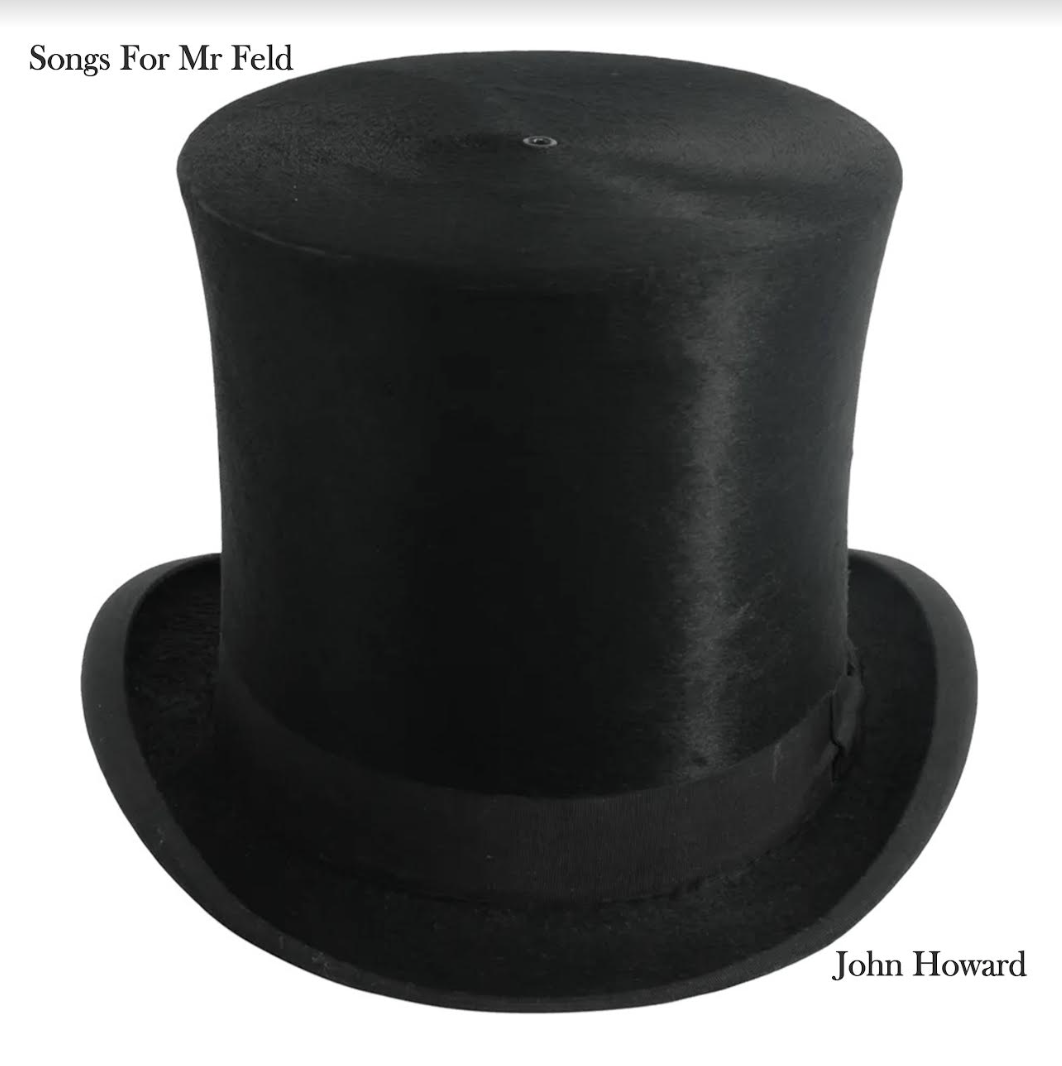
Stick with me on this one, but if you’d previously zero knowledge of Marc Bolan and his music, or didn’t recognise the song titles you could easily imagine this homage EP being from the hand of, and written, by John Howard. Replacing Bolan’s characteristic fey acoustic, and later leaner electric, guitar and the percussive elements of both Steve Peregrin Took and his replacement Micky Finn with the piano and just a little touch of strings and low bass-y cello (or so that’s what is sounds like), Howard makes every reinterpretation sound his own.
The lyrical flairs of Tolkenism, magical scenes, pastoral fairytale is not so much Howard’s, but here he is taking a quintet of songs from Bolan’s transformative period between the campfire invoked fantasies of Tyrannosaurus Rex and the full-on boogie glam rocking T. Rex and lending them a certain committed touch of flowing but weighted graceful wisdom.
There’s been many such dedications to Bolan, or should I say, as Howard does, Mr. Feld –that’s Mark Feld, the name his parents gave him. Nick Cave for one, during Covid, set to the ivories and attempted a frank plaintive version of ‘Cosmic Dancer’.
Howard has however chosen an eighteen-month (give or take) period, pre the rock-pop titan of ‘Get It On’, ‘20th Century Boy’ and ‘Jeepster’. A time when Bolan was still lost and swept-up in wistful enchantment, lyrically painting images of faraway places across an imagined time. This would all tie-in with Howard’s own formative years, studying for ‘O’ Levels whilst hanging out with his best friend and confidant Pauline in her bedroom, playing all their latest musical discoveries on the record player. Regaling in a bon vivant mood, Howard wraps each song he performs – be it a track or single that appeared on either the Unicorn, A Beard Of Stars or the eponymous T. Rex albums – with anecdotal context and fond memories.
He’s had plenty of practice at this in the last five or so years, turning raconteur author with three volumes of autobiography, staring with Incidents Crowded With Life. I feel a brief outline of those chronicles is needed now, before we go any further. After an almost meteoric rise to fame off the back of his accomplished piano-driven Kid In A Big World songbook in 1975, it soon became apparent, as the first honest account in his triple autobiographical series documents, that the adulation and glitter would quickly fade. Though never written-off as such Howard was, like a magnitude of artists before him and ever since, continuously hampered and screwed-over; the records ever far and few between as time went on. The next “big thing” at one point Howard’s real troubles began after a life-changing accident in 1976. In an attempt to escape the mad raging clutches of his Filipino housemates’ bit of rough (a violent maniacal Russian sailor as it turned out), Howard jumped from a flat window, breaking his back in the process. Despite this horrific chapter there was still the CBS contract, recording at the fabled Abbey Road studios, the theme song to a Peter Fonda movie and countless promises to lift the mood. But by the end of the 70s and early 80s the music career had all but stalled, with only brief flashes of ill-advised makeovers and one-off songwriting projects. Book two in this life story, Illusions Of Happiness picked up that period, documenting a post recovery Howard on the cusp of a new decade and mounting a comeback. Again, even with such future big names as Trevor Horn and Steve Levine in his corner, nothing really took off. Frustrated by various ill-thought out and misplaced marketing ploys Howard gallivanted to a soundtrack of synthesised Eurovision pop and overproduced easy listening balladry.
Volume three, or the third chapter, in that life story finds a not so much disillusioned Howard as a waning artist making the most of it; playing the cards dealt, moving from front stage to a role behind the scenes in music licensing. Making perfect sense really, keeping a hand in the game so to speak, Howard began this career change of a sort at Pickwick Records in 1986. As it turns out, even this corner of the industry is riven by egos and petty one-upmanship, bitter jealousies. And so, there’s a number of “jump ships”, with stints at MCA and Readers Digest to follow. Sorry tales of bad bosses and greed follow as In The Eyeline Of Furtherance fills in the blanks of a decade in which Howard really swam against the tide of the bean-counting petty executives in charge. Even when successful (and Howard was constantly that) his actions would rile whoever was in charge it seems.
If we fast-forward, and into the 2000s, with Howard now in semi-retirement, enjoying the idyllic countryside of Pembrokeshire, his debut LP was reissued to another generational audience. Receiving much critical acclaim and coverage in the music press, it sparked what was perhaps and still is, Howard’s most prolific creative period. Starting with the Robert Cochrane collaboration, The Dangerous Hours, and Howard’s first collection of wholly original material in decades, As I Was Saying, albums, another seven albums of quality songwriting followed. But it was his 2015 collaboration with Andy Lewis and the estuary pipe-dreaming Gare du Nord record label chief Ian Button, and one of his signings, Robert Rotifer, under the John Howard & The Night Mail moniker that really set things in motion. Garnered with countless plaudits and five-star reviews that most brilliant album drew the biggest attention yet and proved another ideal opportunity to perform the back catalogue. However, two years on from his last solo effort, My Name Is, and with a renewed vigour to try something different, Howard experimented with long form songwriting on Across The Door Sill – in my estimation, one of his finest albums yet. Untold records have followed, from the accomplished Cut The Wire LP to the From The Morning covers EP (Howard’s version of Mike Heron‘s bucolic, sun anointed delight ‘You Get Brighter’ was playing in my head whilst listening to a number of songs from this latest EP) to concept works such as LOOK! The Unknown Story Of Danielle Du Bois.
But now, even more sagacious and happy with their lot, Howard chooses the projects that give him complete freedom, joy and creative control.
His latest EP is another fond piece of nostalgia, a return to his formative years; a time when Howard may have struggled with his sexuality, brought up as he was in a staunchly Catholic household during the 1950s and 60s, but nevertheless, had rebellious fun replacing the religious symbolism of the church with elfin beatific posters of Marc Bolan. With a fifty-year distance or more, he now pays a certain recollected homage to Mr. Feld. Far from a work of idol worship and fandom, Howard lends credible depth, emphasises the brocade and Baroque tapestry of Bolan’s original ‘Dead Meadows’ by playing what sounds like a harpsichord, and reflects even more the ephemeral veiled nature of Bolan’s muse on ‘The Seal Of Seasons’.
Bolan had a beautiful poetic gift for setting imaginative illusions, myths and legends with just a rhyming couplet of lines. The saddened Barrett-esque dreamy ‘Great Horse’ is no exception: “Great horsey champer goldbriad, pranced proudly in the golden villas/Dipped diving with his horned onyx, saddle shinning in the black aped eyeballs of the gun.” An Arthurian magical, near hazy plaintive yearn from A Beard Of Stars, here it’s given an equally diaphanous fluidity by Howard.
The already referenced, and earliest recording (taken from the Unicorn LP, released in the May of 1969) on this EP, ‘The Seal Of Seasons’, with its Orcadian lore and allure, is lent a more oceanic motion. But it all begins with ‘Dove’, the song that Bolan once introduced at a BBC concert taping on New Years Day in 1970, as his first “love song”. The gentle original pastoral acoustics and tubbing hand drums are replaced with semi-balladry classical piano, a new sense of gravity, and the barest of sympathetic strings. Howard underlines a more purposeful, meditative mood with a long-undulated bass-y piano fade out.
I think ‘Dead Meadows’ could also claim to be a love song. Taken from the filed-down, easier to consume, T. Rex LP, and now featuring more of that electric guitar, more riffs (also minus the Hobbit inspired Steve Peregrin Took, who was quietly fired and replaced by Micky Finn), ‘Dead Meadows’ has a Medieval courtly magic about it. The original featured some chamber strings, and Howard seems to have stayed relatively faithful with what sounds like a viola or cello on his most prettily woven interpretation.
Moved onto the piano, or pianos if you like, Bolan’s more fey, wistful and longed storyteller lovelorn hippie enchantments, the loss of a certain innocence, are treated with respect and the gentlest of touches by Howard. His fondness and love for the work is undeniable. And yet he somehow makes the material his own, attaching his own memoirs to each song. I think Bolan would have approved.
Black Artist Group ‘For Peace And Liberty, In Paris December 1972’
(WEWANTSOUNDS)
Saved from obscurity and jazz lore, the previously believed “long-lost” recordings of the Black Artist Group’s radical free, avant-garde, spiritual and Afro jazz (with a side order hustle of funk) performance in Paris has been thankfully unearthed, dusted off and remastered in a project partnership between the band and the French Institut national de l’audiovisuel. Facilitating this operation are the reissue revivalist vinyl specialists WEWANTSOUNDS – regularly featured in my review columns over the years -, who’ve invited various connoisseur experts to provide liner notes, essays and photographic images to this package.
Only the actual second official release from the St. Louis group, For Peace And Liberty, In Paris December 1972 is taken from a session recorded at the French state broadcasters ORTF (that abbreviation reads as the Office de Radiodiffusion Télévision Française, an institution that lasted between 1964 and 1975) for the Jazz sur Scene radio show; the format of which included a two hour showcase of groups (usually four) performing live for a studio audience.
Radically different, we’re told, to the quintet’s first and only album proper, Aries from 1973, the near continuous thirty-five-minute set finds the lineup of Oliver Lake (on saxophone), Baikida Carroll (trumpet), Floyd LeFlore (trumpet), Jospeh Bowie (trombone) and Charles “Bobo” Shaw (drums/percussion) totally untethered: at liberty and free.
Part of this title expression is down to the group’s recent, at that time, move to France; partly encouraged by Jospeh Bowie’s older brother and established jazz supremo Lester Bowie, but partly because that city offered more culture and a less racially hostile environment in which to push the limits of jazz. Leaving behind the bitter, divisive fallout of the Vietnam War, of segregation, of Watergate for pastures new, BAG made steps to leave America for France, which beckoned a host of Black artists to its shores and capital, mostly because Black jazz artists felt more appreciated on the European continent; their practice better understood.
The quasi-house band of a sort for the much larger St. Louis BAG collective of musicians, poets, playwrights and dancers, they found a fertile scene filled with compatriots, many of which the quintet had individually worked with back in the States. The CVs read like a jazz family tree. At a glance you have the alto/soprano saxophonist/flutist/composer/poet/visual artist Lake who founded the World Saxophone Quartet and Trio 3; the trumpeter, big band director, sextet band leader Carroll who worked with such illustrious company as Lester Bowie, Albert King and Little Milton; the composer/poet/trumpeter and BAG founding member LeFlore; Lester’s younger sibling, the trombonist and vocalist Joseph Bowie, who would go on to lead the jazz-punk outfit Defunkt and join Kahil El’Zabar’s Ethnic Heritage Ensemble; and the free jazz drummer “Bobo” Shaw who played with Lester, Anthony Braxton and Cecil Taylor and led the Human Arts Ensemble. You won’t be surprised to learn that this ensemble also found common ground and had links with the Association for the Advancement of Creative Musicians, Chicago’s iconic hothouse for Black artists and jazz musicians.
Channelling that whole bag of experiences, the different strands, motivated by forces inside and outside the jazz idiom, the extemporised quintet both naturally and in sporadic leaps and bounds performed a set (not so much divided into five parts as congruously labelled with natural pauses and winding downs between each movement) without boundaries. Shaw’s drums alone follow from the African and near Latin to swing joints like a New Orleans marching band at a sports day. There’s also a section in which he drills the snare like he’s at a military revue, which isn’t so surprising as Shaw, like some of his other band mates, had drummed for the Bugle Corp in the 1950s – Carroll had spent some of his formative years of study at the Armed Forces School of Music, and LeFlore had served in the army during the early to mid 60s. Cattle bells and other percussive trinkets evoke either African pastures or spiritual mystery.
Brass wise you can hear both familiar cupped and unhindered heralding, hooks, blazes and ascendent spirals of trumpet, sax and bassoon, but also shrills, the driest of near fleeting ripping, tearing and zippy rasps, gasps for air and chirped experimental expressions. From near excitable elephant trunk calls to a menagerie of duck-billed pecks, swallows and ruffling feathered turmoil the action evokes an exotic wildlife. This is matched with the inner arty smokestack outlines of NYC and Chicago, and the police-like whistles, the careering horn-honked freight train and bustles of the streets.
At times we’re talking Coltrane and Sun Ra, and at other times Roscoe Mitchell, Carlos Garnett and the Art Ensemble Of Chicago. You can also pick up some Chick, a touch of Cymande, of Art Blakey, Sam Rivers and Anthony Braxton. But to be specific, if you dig Rahsaan Roland Kirk’s ‘Safari’, Ornnette Coleman’s ‘Lonely Woman’ and Don Cherry’s Organic Music Society then you’ll really need to part with the cash and have this on your shelf asap: not before blasting it out from your turntable.
Ghostwriter ‘TREMULENT’
(Subexotic) 13th September 2024

Drawn from the veils of time and from several overlapping spiritualist and reverent sources, author, musician and instigator Mark Brend once again winds up and sets in motion the mechanisms and retunes the hauntology radio for a third Ghostwriter album.
A collaborative affair since day one (started back in 2009), with a revolving cast of cross-disciplinary “music-makers”, writers and vocalists, the Ghostwriter lineup this time around includes the talents of Michael Weston King (formerly of the alt-country pioneers The Good Sons, soloist and currently one half of the country duo My Darling Clementine), Suzy Mangion (musician, artist and historian) and Andrew Rumsey (an Anglican bishop, of all things, writer and musician who released the critically acclaimed Evensongs album just last year, and who also provides this album’s cover photo).
All three provide a suitable beatific, near supernatural and spiritual hymnal atmosphere of vocals to the pipe organ imbued and inspired TREMULANT. That title references the device on a pipe organ that varies the wind supply to the pipes of one or more divisions, causing amplitude and pitch to fluctuate. This produces a tremolo and vibrated effect. You can hear its more subtly sustained and held suffused bellows and air-pumped tremulant effects throughout on a record that occupies a liminal space between pastoral English church service, the American spiritual, and esoteric.
Altogether it sounds like a collage of antique recording sources from another age and the ghostly – like parlour seances in places – stirrings and visitations of Americana, gospel music, Georgian posey, the Celtic, folk and late 90s and early 2000s alternative American indie (Mercury Rev, The Music Tapes). But within that sphere of influence there’s an air of Christian Evangelism and the twinkled chimes of a godly majorette marching band on the opening traditional inspired ‘Satan, Your Kingdom Must Come Down’; a vibrato voiced supernatural Blood Meridian redemptive take on a standard covered by a wealth of country and bluesy-rock icons, from Robert Plant to Willie Nelson.
Amongst the reversals, the vortex and morphing elementals and more uncertain passages, the vocals can be harmonious and moving. Especially the contributions of Mangion, who can channel a choral, hymnal beauty that lies somewhere between holy communion and the Laurel Canyon (see the 1960s troubadour evocations of ‘Often Forfeit’).
Seeking sanctuary and protection in the face of tumult and torment there’s fishing community set anchor metaphors and analogies, devotions and shipwreck coastline pleas that merge The Polyphonic Spree with The Mekons’ ‘How Many Stars’ tricorn hatted period Georgian Child of the Jago influences too to be found amongst the purposely dated evocations.
Considering that all four participants on this album recorded their parts in isolation – I believe none of collaborators have ever actually met in person – project coordinator Brend has managed to pull together a complete coalesced soundtrack of both changeable and repeated phases, ideas, passages and swells. TREMULANT by name, tremulant by nature and divine calling, the third Ghostwriter album is a curious cult recommendation.
Our Daily Bread 620: John Howard, SWIFTUMZ, MAbH…
June 21, 2024
BRIAN ‘BORDELLO’ SHEA’S REVIEW SECOND REVIEWS ROUNDUP OF MAY – INSTANT REACTIONS.
UNLESS STATED OTHERWISE ALL RELEASES CAN BE PURCHASED RIGHT NOW
SCHØØL ‘N.S.M.L.Y.D’
(Géographie)
Baggy drumbeats from the late eighties and shoegaze guitars, are we watching Snub TV? No it seems that the past is once again the present in this ever-evolving circle of not evolving at all. N.S.M.L.Y.D is actually a pretty catchy little number with a nagging keyboard riff that elevates it from the good to the quite good stakes. If this was the late eighties/early 90s it would have a good chance to making the bottom end of the top 40 and a fleeting appearance on the Chart Show.
John Howard ‘Currently/ I am Not Gone’
5th July 2024
The new single from John Howard is a beautiful thing. Two songs that take you back to the days when songwriters used to write simple melodic songs that would appear magically on the radio and brighten your day. The days when you could pick up the song you heard on the radio from your local record shop, or the record department from one of the bigger stores like Boots or Woolworths, on 7-inch vinyl; and you would not have to sell your grandma’s China to be able to afford it. Ah those where the days we of a certain age remember with a tear in our eye. And why am I babbling on about memories from old you may ask, and not writing beautiful prose about the new John Howard single? Well I am, because that is the beauty and magic John has, the power to weave with his music. He has the bewitchery to take one back on a melancholic magic carpet ride to the days of record store dust and memories of old friends and lovers and celebrate the bittersweet beauty of still being alive and finding wonder in the simple everyday things we in younger years would not have noticed. Hopefully people of all ages will find the simple pleasure and wonder in these two rather touching ballads.
Yea-Ming and The Rumours ‘I Can’t Have It All’
(Dandy Boy Records)
For some reason I thought I had already reviewed this fine album, but I have not; it must be the latter stages of middle age setting in. Either way this album by Yea-Ming and The Rumours [not to be confused with Graham Parker and The Rumours] is quite a lovely steeped-in-summer indie pop album with beautifully constructed pop songs all lushly strummed acoustics and some quite lovely twangy guitar lead lines. Lovers of the Gentle Waves and bands of that ilk will indeed find this album extremely appealing: as do I.
Neutrals ‘New Town Dream’
This is splendid stuff, an album of supreme guitar jangle, of well written and catchy songs about life in a small town that at times musically reminds me of early Wedding Present and The Pastels with such wonderfully British lyrics; although I wonder when “Travel Agents Window’s” was written as he mentions buying a bag of chips for 50p, when was the last time you managed to buy a bag of chips for 50p? Maybe life in this small town isn’t as bad as the Neutrals think. I do love this album though. I love the romance of everyday life songs, like little mini Kitchen sink dramas filmed in grainy black and white. This is quite a gem of an album.
SWIFTUMZ ‘Simply The Best’
(Empty Cellar) 14th June 2024
I recently had the misfortune to hear the new Jesus and Mary Chain album; an album that lacked their normal magic: in fact it was quite dull. It was missing what this album has in troves, which is sparkling guitar pop songs, songs that jangle and chime with a wild abandon and ballads that are sincere and quite beautiful, like ‘Second Take’, a Sparklehorse like treasure of a track, or the Alex Chilton like ‘For Bucher’.
Simply The Best is a prime example of the magic that can be achieved when making Bedroom Pop. It has a warmth and invention, which when done well cannot not be matched for heart and soul, and SWIFTUMZ does it very well indeedy.
MAbH (Mortuus Auris & the Black Hand) ‘Wolves, Windows And Curtains’
(Cruel Nature Records) 28th June 2024
From your mother’s cunt to the coffin is an experience we all have. An experience filled with laughter, tears, love and heartbreak; of times of pure and utter despair to times of great happiness. And if we are lucky, the good will outweigh the bad.
In times when we are living, or at least surviving, through the bad, the good times can seem like they have never happened: just a brief dream someone else has told you about. It’s like they have never happened to you, and sometimes the happy memories just drive the nail into your skull, into your heart kicking you between the legs, telling you, taunting you just how shit life is at this time. We have all been there: if you haven’t, then you have never experienced life in its all so tragically naked beauty. MAbH has experienced this, and through this dark work of spoken word tonal poems lets you into the black precipice he currently resides.
Score ‘Temporary Arrangement’
(Cruel Nature Records) 28th June 2024
This is an enjoyable instrumental romp through the sounds of a distance past. Instrumental tracks that bring to mind the drunken early mornings of watching Ceefax and job finder, awaiting for the oncoming treat of sleep or to the soundtrack to some straight to video bad movie. This fine album captures all that is magical from the instrumental glory that is a cheap Casio keyboard, guitar, bass and a fertile imagination.
Brian Bordello and The Bordellos newest album compilation, The Lo-Fi Psych Sounds Of The Bordellos, is available now on Bandcamp and Spotify, via Metal Postcard Records.
Bandcamp Link
A ROUNDUP OF NEW MUSIC REVIEWS BY CULT INSTIGATOR OF THE NO-FI, AND SIBLING BAND MEMBER OF THE BORDELLOS, BRIAN SHEA.
___/SINGLES – EPS\___
The Blow Monkeys ‘Stranger To Me Now’
(Last Night From Glasgow)
Admittedly I do like The Blow Monkeys from way back, but have sort of lost track over the years and have not really paid much attention since their 80s heyday, which on listening to this their new single has been slightly remiss of me as this is a lovely soft blue eyed soul slow dance of a song: a lovely little thing indeed.
Amateur Cult ‘Eyes’
This is a humdinger of a single, all 80s synth and sax post punkery with a splash of Krautrock and a dash of the Silver Apples like genius. We have a fine radio friendly experimental radio friendly smash here.
Bright Islands ‘Five Songs’
There is nothing surprising about this EP. It is simply well written guitar indie pop that has a lovely laid back feel, and could have been made anytime over the last 40 years or so. And there is nothing wrong with that, at times reminding me of Gene, at other times, the Wedding Present in their quieter moments. And any lovers of indie guitar and jangle pop should enjoy this EP.
____/ALBUMS\____
John Howard ‘Single Return’
(Kool Kat Records)
With it being 10 years since John Howard and The Night Mail got together to record their eponymous album, Kool Kat records have decided, it being a good idea, to release the original solo John Howard versions. And as an idea, it is indeed a good one.
Just John alone with his piano singing songs of love and loss and sketches of life and characters; songs that dip and swoon into memories, just a man alone putting his heart into his art, painting lyrical pictures of the poetic injustices and the apple stork romantic eccentricities that invade and dive bomb our thought’s on a daily basis. John Howard is a national treasure: a lost pleasure. If he was given the record label backing back in the 70s his debut album deserved John would now be seen as the English Randy Newman or the modern day Noel Coward writing pithy vignettes on the UK’s ever increasing lack of culture and panache; writing songs with a style and eloquence and wit one can only stand back and admire. Single Return is a great place to start if you have had the misfortune of never hearing John’s music before; a fine album from a fine artist.
Poundland ‘Mugged’
(Cruel Nature Records)
Sludge rock, the sound of old-fashioned punk rock, metal and the slow grind of decay erupting in an explosion of bile and chaos and shambolic tension. That is the ideal description of “mugged”, this fine album by Poundland.
Recorded in a studio in a day, ala The Beatles with their debut LP Please Please Me, but whereas The Beatles captured the excitement and joy and the freedom of being young in 1963, Mugged by Poundland captures the terror and horrors of life in the UK in 2024: the poverty, violence and dying high-street where closing banks are replaced by food banks and people working full time cannot afford to heat their houses or feed their kids.
Lets be frank about this music. It should and could be the catalyst for cultural change like Rock N roll did in the 50s and The Beatles/Dylan did in the 60s and Punk rock of the 70s. We need a revolution now in 2024 and we are slowly and quietly having one; it is slowly building momentum and will soon explode in a beautiful array of sound and when it does Poundland will be there at the forefront with their caustic tales of life backed by the sound of chaotic noise pollution.
Avi C. Engel ‘Too Many Souls’
(Cruel Nature Records)
“Too many Souls” is a hauntingly bewitching album; an album that carries the acoustically sonic ambience of the Gene Clark “No Other” LP – it carries the same atmosphere, the sound of mother earth placing her arms around you gently caressing, running her fingers through your hair whispering that all will be all right.
This is the sound of sitting on a mountain by a gentle running stream lost in your thoughts and memories and hopes; listening to the breeze echo around the majestic Ness of the fading light. “Too Many Souls” is once again a truly artful release by Cruel Nature Records.
Curling ‘No Guitar (Deluxe Edition)’
Do not let the title of this album fool you, “No Guitar” is in fact full of the little bleeders twanging and rocking away in an explosion of Big Star/Velvet Crush/Teenage Fanclub and Creation era Nick Heyward. Frenzied weaving melodies pull you into the days when radio and music magazines was a must in discovering what musical delights you should be looking out for. Yes indeed, this is an album of well written guitar songs that could have been written anytime over the last 50 or so years; songs that could have been entertaining you, soundtracking your preparations for a night out in the local bar to watch some wonderful up and coming guitar band: which could in fact sound like Curling.
Yes this is the sound of the days before smart phones and the Internet got in the way of seeking adventure, of not knowing what the band sounded like before going to watch them, of taking a punt on an album that you actually had to buy to hear. Curling brings all those days back, and if it was those days and you did take a punt on “No Guitar” then you wouldn’t have been disappointed.
Jordan Jones ‘And I, You’
(Kool Kat Music)
I do have a thing for tastefully produced melodious 70s style piano driven pop, so “And I, You” is right up my Tin Pan Alley. It is an album that brings the joy of mainstream 70s radio to your speakers; music to brighten up this horrible depressing decade with a touch of old fashioned flared sunshine; songs that could be introduced by Dave Lee Travis or Terry Wogan; songs that have you scrambling back through your memories to “just what was that Gerard Kenny hit again that I used to like” and “did the sun always seem to shine in the school holidays those where the days when the transistor radio was your best friend and you always had chips for your tea.” Yes Jordan Jones is a wonderful throwback to better times “And I, You” is a true beaut of a pop album.
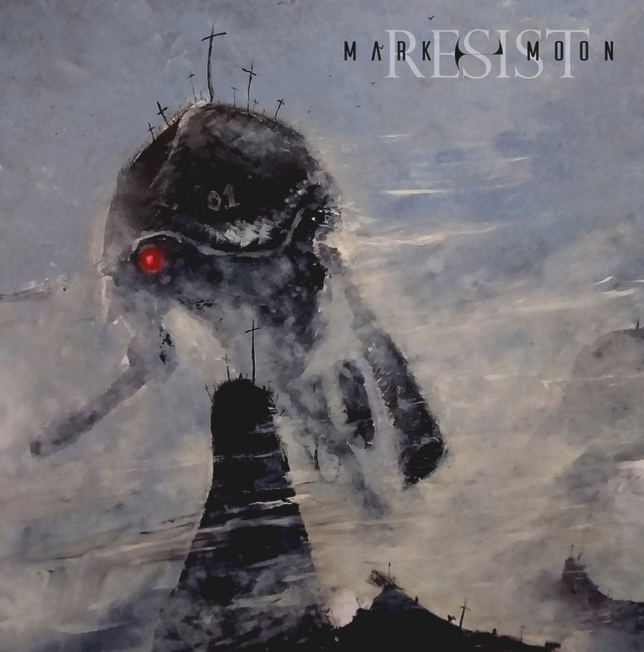
Mark E Moon ‘Resist’
(Cold Transmission Music)
Resist by Mark E Moon is an over the top gothic flamboyance of album; the sort one should listen to wearing ill-fitting velvet pantaloons whilst sipping red wine from an engraved silver goblet. Imagine if Robbie Williams had taken a turn for the Goth instead of making his Rudebox monstrosity, if he had been injected with the blood of Dave Vanian circa “Eloise” and decided to thrill his adoring public with the outpourings of the slightly dark and sinister, it could have well sounded like this entertaining album.
Resist has a pop sheen and a camp glamour that is brought into line with the Depeche Mode and very early New Order synth like greyness that makes Resist an album that is in fact hard to resist.
NCD Instigators ‘Swimming With Sharks’
The NCD Instigators were Tony, Brendan, and Desi Bannon, three brothers from Newcastle County Down in Northern Ireland who decided to form a band in the 80s together after many years of playing in various other bands. They took their love of metal, prog, folk and rock and home recorded several albums for their own pleasure, burning them onto CDRs to give to friends and family and playing the occasional gig.
This Album, Swimming With Sharks, was the 5th album and their first concept album; one about a young lad entering into the world of big business and boardrooms, and one that became a bit of a considered lost underground prog classic, with burned off CDR’s passed around like nobody’s business – this was pre internet days remember. It has never been officially released until now, after a cdr came into the hands of myself which I raved about and passed onto the head of Metal Postcard Records.
This might well be an album that draws on the trio’s love of Pink Floyd (post Syd, a band, as many know, I hate) but for some reason I love this and prog folk in equal measures. There is a home recorded warmth and a love of prog that shines through, and it helps matters that at times Brendan’s guitar playing is simply stunning, and that the songs are just so fucking weird: “Hammerhead” is an early 80s New Romantic, Post Punk and mid-seventies Pink Floyd on a collision course, that has one at times thinking of what the Orb would have sounded like if they had six pints of Guinness each before going into the studio and decided they wanted to sound like Public Image Ltd.
“Shark Attack” is an instrumental gem; a duel of guitar and Keyboard that shows off Des’s love of The Doors.
There is just something quite magical about this album, and it is sad that now it is only being released years after the fact and that Tony (bass and vocals) is no longer with us, having passed away in 2020. Hopefully this release will ignite some long overdue interest in this underground lost great band from Northern Ireland.
Our Daily Bread 607: John Howard, James P M Phillips, Corduroy Institute, Charlie Butler…
January 18, 2024
A ROUNDUP OF REVIEWS FROM BRIAN ‘BORDELLO’ SHEA

__/SINGLES\__
Heskey ‘Crack In The Mirror’
Do you like Teenage Fanclub and bands of tuneful guitar strum? If so you are going to enjoy this blissful pop song of tunesmithery; it has all the ingredients one would want for such a release; if it was fish and chips it would just have the right amount of salt and vinegar.
John Howard ‘Safety In Numbers/In The Light Of Fires Burning’
(Kool Kat Music)
The brand new single from John Howard is upon us and it is a double A-sided thing of nostalgic beauty, two brief glimpses of how songs where written and performed, with a pop eloquence that sadly seems mostly a thing of the past. To kick things off we have “Safety In Numbers”, a sublime pop ballad that brings to mind The Beach Boys in their Pet Sounds days; wonderful harmonies drift upon a sea of piano tranquility. The second little pop gem is “In The Light Of Fires Burning”, which again is another nostalgic gem a song that captures the magic and sadness of growing old whilst celebrating your youth and memories through the joys of pop song: A song worthy of Sedaka at his finest.
Liam Gallagher & John Squire ‘Just Another Rainbow’
I was expecting nonsense I will be honest, but was taken aback by just what an explosion of nonsense it was. We have John “I have all the Led Zep albums on vinyl, cd and cassette” Squire showing he knows all the chords, and he has six strings, and he is going to play everyone of them with as little subtlety as possible. He has seen rock school. He knows how it goes. Is it original? No, we have heard it all before. Is it good? No. Did I want the monstrosity to stop? Yes! Not to be outdone by John “I have all the Led Zep albums on vinyl cassette, cd and 8 track” Squire, we have Liam ‘I have done poo poo’s in my pants” Gallagher once again demonstrating his vocal prowess; the singing like he has just been told off by his mum vocal emoting. And to show that he is not going to be outdone by John “I have every Led Zep album on vinyl, cassette, cd, 8 track and download” Squire he decides to demonstrate how he knows the names of all the colours in the laugh out loud badness of the lyrics. I once wrote that the Oasis song “Little James” could be the worst song ever written by a grown up. Well, maybe not any longer. It is a close run thing. So for that, Squire and Gallagher should be proud.
___[ALBUMS]___
James P M Philips ‘Spite, Bile & Beauty’
(Turquoise Coal)
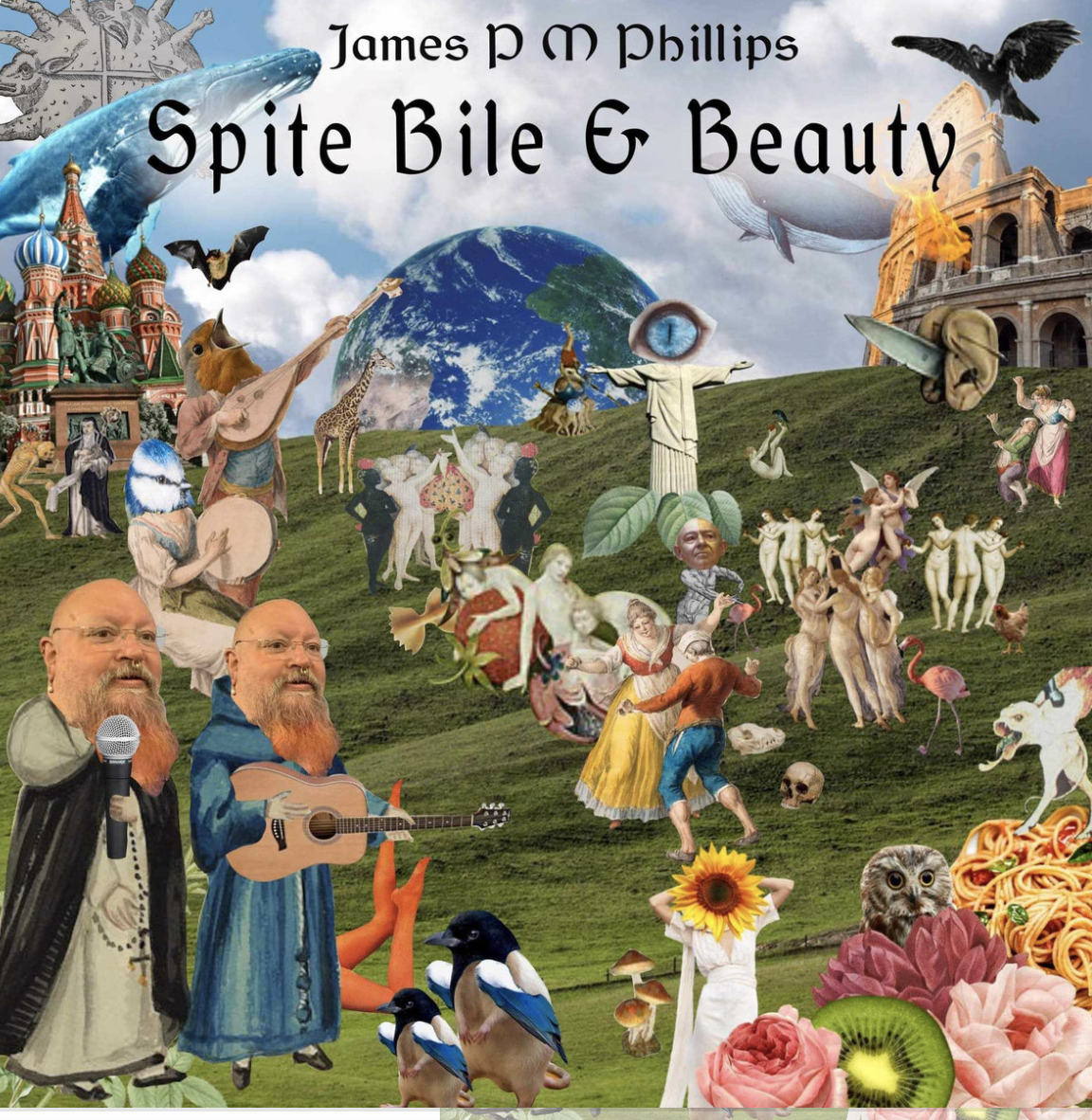
Punk, folk, rock and a medieval becoming strangeness all collide to bring us another album of psychedelic whimsy from the head and heart of James P M Phillips: an album of joy, sadness, humour and pain. Whether it be the quite wonderfully disturbingly jagged “My Head Is Full Of Rats” or the quite beautiful folk strum of “My New Friend”, James has his own unique way of making music and writing songs; dipping his own original thought patterns into a hybrid of musical genre hopping eccentricity. And it is pleasure to listen to an album of short snippets of musical madness and joy.
The Incurables ‘Inside Out & Backwards’
(Big Stir Records)

It does make me smile when middle-aged men sing about growing up, as The Incurables do on the first track ‘When I Grow Up’. As I well know, middle-aged men who play in bands never grow up; that is the power and magic of music and long may it continue.
The Incurables are a punk pop band that performs punk pop well, and at times they remind me of Green Day but without the annoying singer and with a more bubblegum sometimes New York Dolls feel, and some quite wonderful Batman bass riffs: in fact, some just wonderful bass riffs. This music is no longer going to change the world but sadly I cannot see any music anymore doing that, but The Incurables have their place and that place is in any pop punkers record collection.
Corduroy Institute ‘Take A Train To Manchester’

I have taken a train journey to Manchester many times in my life and none have been as enjoyable or as interesting as this, or indeed, as experimental – is it possible to take an experimental train journey I wonder? Anyway, the title track is a wonder: imagine Funkadelic being sucked into a video game whilst Delia Derbyshire juggled fruit. And from there we are taken on a long and dreamlike journey, calling at stops that are both rewarding and disturbing in a good way.
“[A] Girl Named Philosophy” is a bass heavy vacuum of Scott Walker like lust and mystery – just how much I miss that man and his artistry. And I could be wrong, but Scott could be a big influence on the excellently named Corduroy Institute: at least they are reading from the same book or singing from the same hymn sheet.
I love how the Corduroy Institute take jazz, pop, classical and funk and mold it into a warm expression of artistic splendicity; from at times sounding like Japan tuning up – not the band I might add, but the whole country -, and you opening your eyes and seeing life for the first time for what it is: full of love, hate, sadness and joy. An album of supreme aural wonder, and next time you take a train to Manchester soundtrack it with this.
Orchard Til You Fall Down
(Cruel Nature Records)
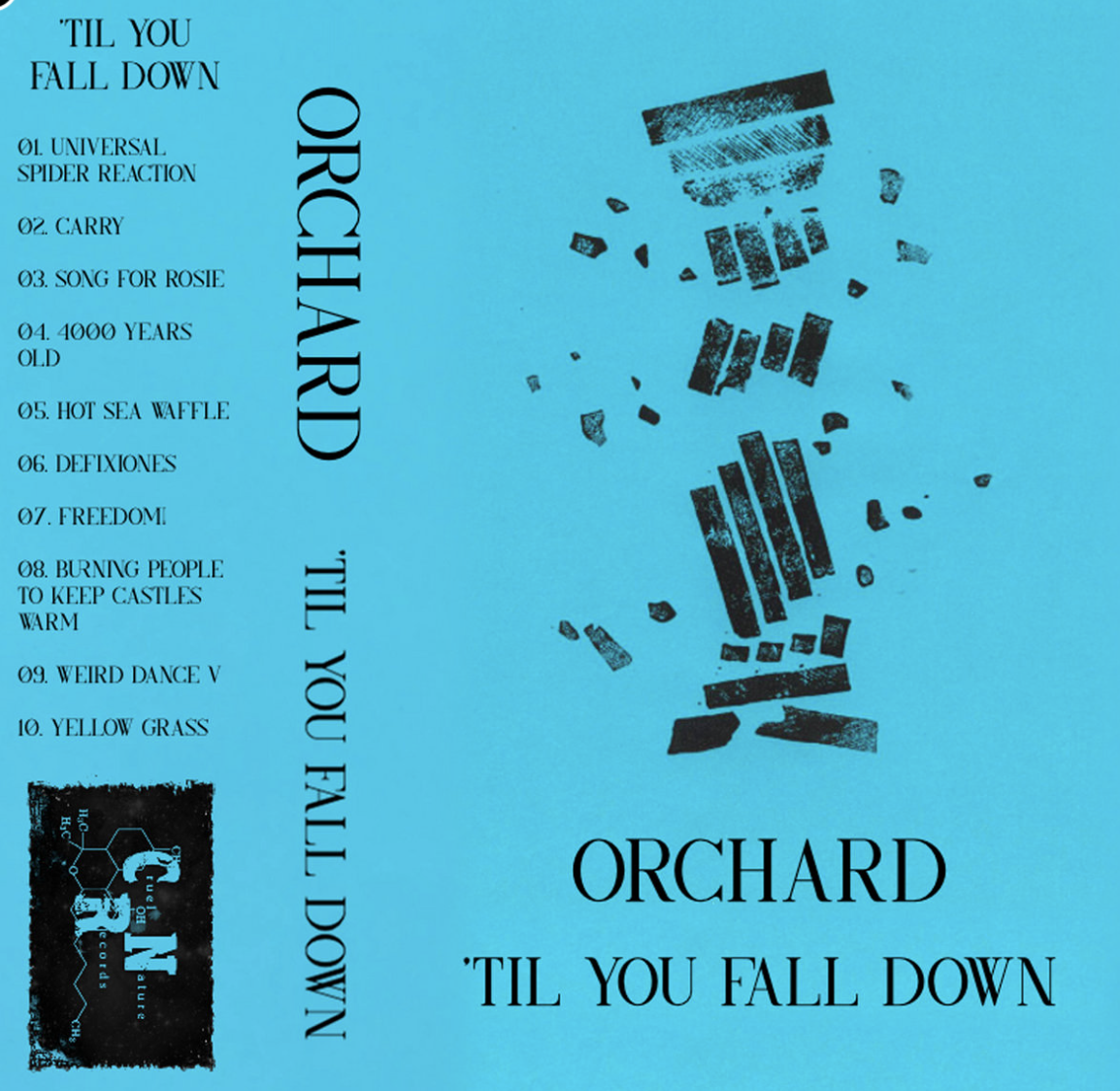
Punk rock is alive and well and living in Cruel Nature Records. Another ltd edition cassette delight of lo-fishness from the label that offers you all kinds of alternative delights; this time supplying us with ram jam bag of indie punk experimental joy. With mostly just guitar and drums, and occasional bass, and some fine vocals it reminds me at times of early Siouxsie and The Banshees. And, with all its beautiful post punk starkness, takes you back to an old dive of a small venue that was full of cheap booze, cig smoke and battered leather jackets and dreams of your youth when the world offered the chance to make a difference and the future was coloured in the shade of weekly music papers and John Peel on the radio and local bands blowing your minds on a weekly basis. Til You Fall Down is an album of old hopes remembered: a beauty of a release.
Charlie Butler ‘Wild Fictions’
(Cruel Nature Records) 1st February 2024

Are you all fuzzed up and ready to take that trip to the local magic carpet store and fly your purchase home, but not first deciding to stop by the local fields to pick a few magic mushrooms to pop into your grannies soup and watch her explode into a explosion of rainbow colours, which Liam Gallagher will then tell you the names of as he is good like that – he knows all the names, he is a clever boy, it won’t be long before he’s been toilet trained. You then decide to soundtrack this event by popping the brand new cassette into your hi-fi that the postman has delivered riding on his old 70s vintage chopper bike; the cassette has been posted by some kind wizard who works at Cruel Nature Records, and you are more than delighted by the magic the tape emits; the sound of all your yesterday’s rolled into four slices of psychedelic keyboard frenzy that slow dances with some augmented guitar. Oh how the soup is warm and refreshing; like how your granny is warm and refreshing, her skin surfing with delight at every organ chime; a lovely of ladybirds sit outside your window marvelling at the aural majesty not heard since the golden days of the Spacemen 3 and those long summer days daisy hopping. The music is all that you hoped it would be, for music without hope is hopeless and this is anything but that; it is the cream cake among lesser mortals.
Fran Ashcroft ‘Songs That Never Were’
(Think Like A Key)
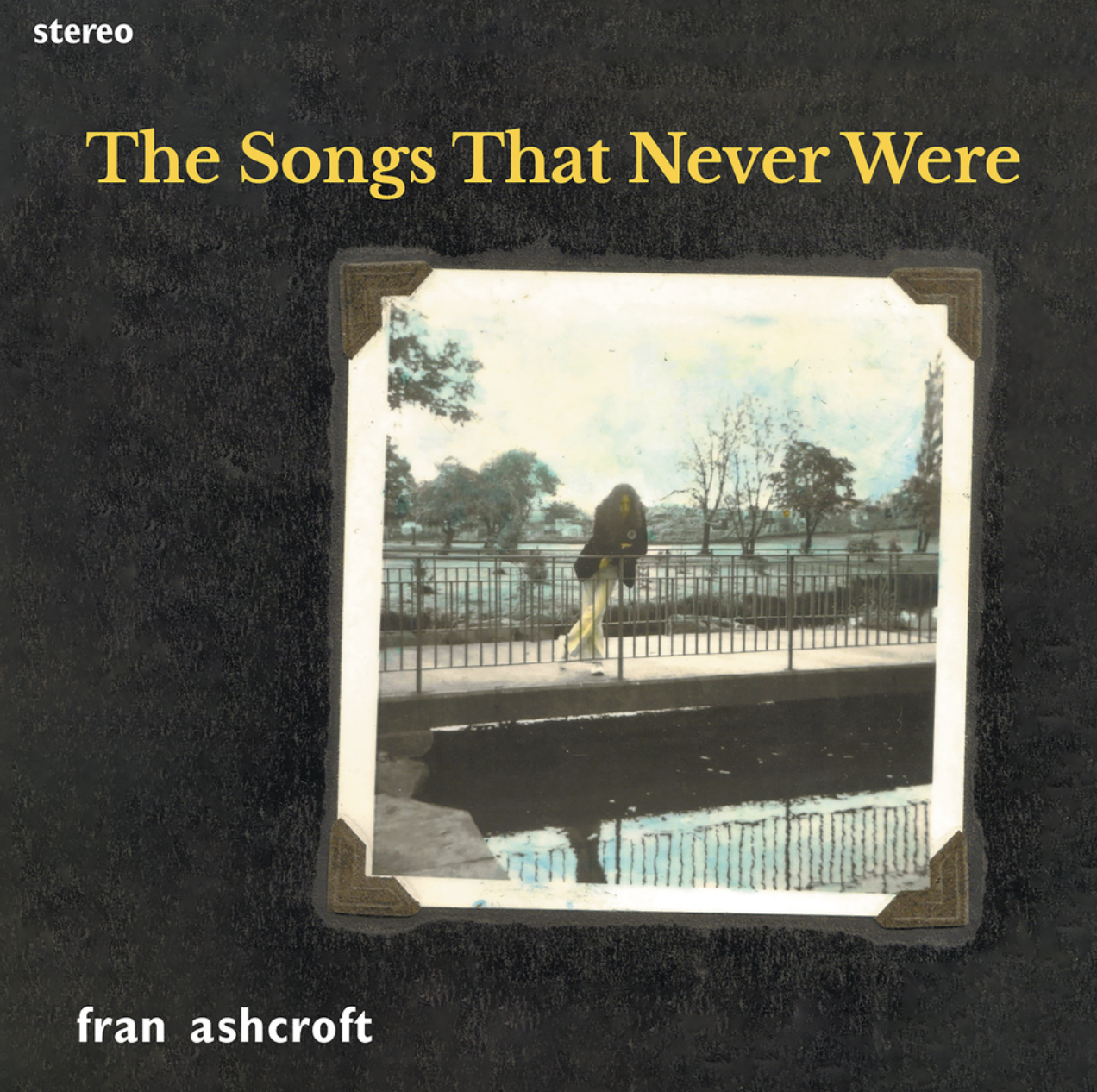
There is magic afoot, a warm kind of musical magic; a treasure trove of forgotten emotions that are plucked and streamed from the past 50 years and gathered together in the form of the greatest of artforms; songs that explode with a cheeky nod and a wink to our musical past, our musical heritage. Yes indeed, Fran Ashcroft has given us a strange and warm sounding album.
All the music that I’ve heard Fran has had a hand in producing is always steeped in a loving glow: From the excellent “Waiting For A Britpop Revival” – a song Luke Haines would sell his left arm to have written – to the McCartney like “I Believe In You” – a song worthy of the Pete Ham album “7 Park Avenue”.
There is a uniqueness about this album; a trueness and soul you do not come across often much in these days of music to be played on phones. These are songs that could have been written anytime over the last 50 or so years, with some quite beautiful melodies and great lyrics; songs made for and by a music lover…already one on my end of the year best list.
Cumsleg Borenail ‘…Plays The Beatles’

I am a huge Beatles fan and this album captures all the magic and experimental forward thinking music the Beatles recorded. These are some of the finest and well thought out and performed covers of well known classics; songs you can hear everyday by turning on the radio can eventually sound stale, but these have been reworked and reimagined to such a degree that they would have the avant-garde young 60s Macca waving his thumbs in delight. This is an album to be heard and cherished by all Beatles fanatics.
A February Digest: Siavash Amini, Kalia Vandever, John Howard, Stella Chiweshe, Popol Vuh, Kahil El’Zabar Ethnic Heritage Ensemble…
February 3, 2023
New Music on our radar, news and archive spots
Dominic Valvona
A new thread, feed for 2023, the Digest pulls together tracks, videos and snippets of new music plus significant archival material and anniversary celebrating albums or artists. In the February edition we draw your attention to the upcoming album from the Chicago jazz luminary Kahil El’Zabar and his Ethnic Heritage Ensemble with a live recorded performance of the Pharoah’s ‘Harvist Time’, Brooklyn-based trombonist, composer quartet leader and soloist performer Kalia Vandever manages to make her instrument sing a nuzzled bluesy song of longing and thoughtfulness on his newest tune ‘Temper The Wound’, and the avant-garde Iranian composer Siavash Amini creates a fully immersive, drawn-in electroacoustic suite for State51 Conspiracy’s instigated Singularity Series. In the Archive sections we have tributes to both Tom Verlaine and Stella Chiweshe, look at the re-release of John Howard’s Cut The Wire album on vinyl, and celebrate the 50th anniversary of Popol Vuh’s Seligpreisung LP.
THE NEW
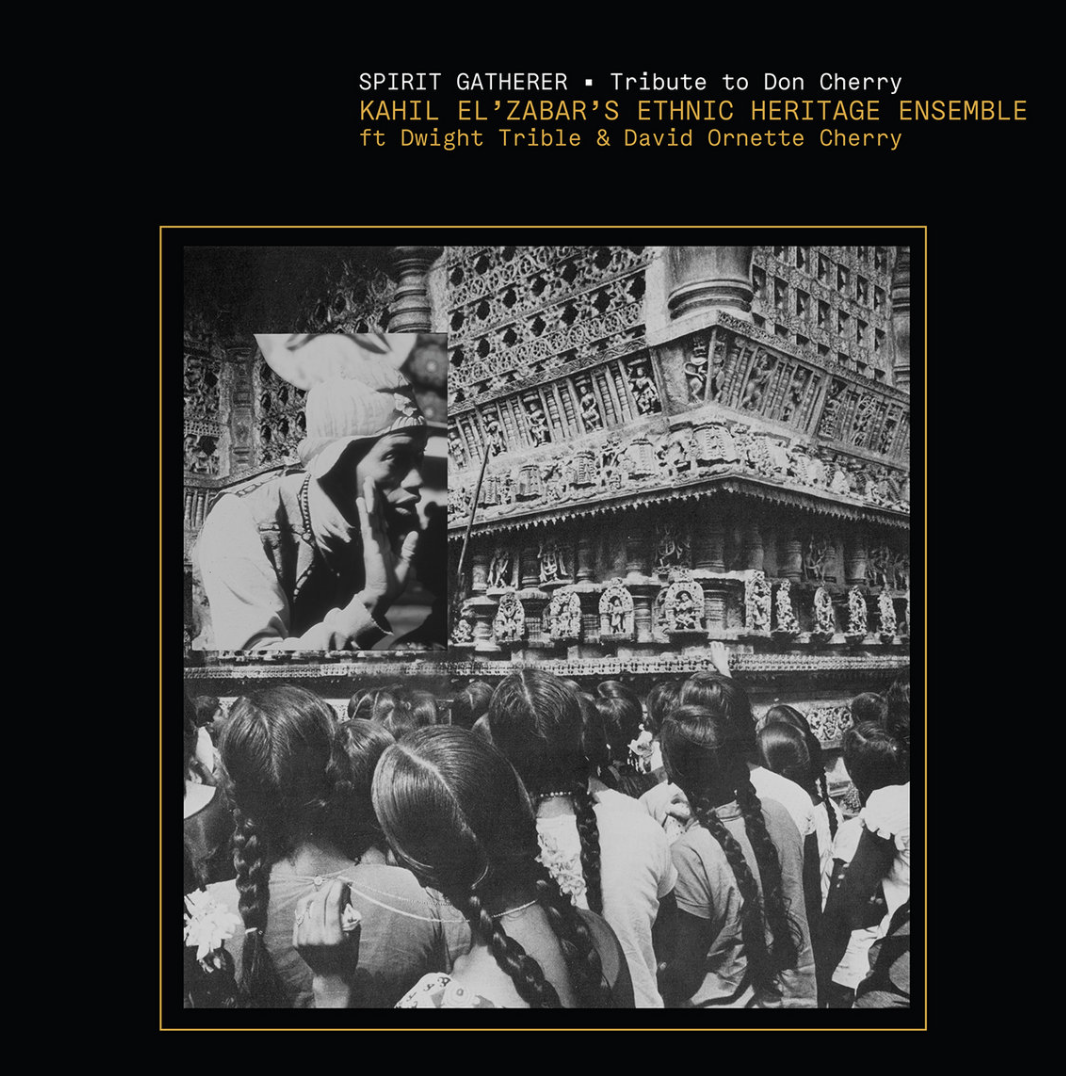
Kahil El’Zabar Ethnic Heritage Ensemble ‘Harvest Time’
(Spiritmuse Records) Youtube Now
Partly as a tribute to and marking the late David Ornate Cherry’s last ever project, the Chicago jazz maestro, percussionist, and band leader Kahil El’Zabar and his ensemble reimagine the late Pharoah Sanders’ spiritually shimmered ‘Harvest Time’, as part of the upcoming Spirit Gatherer • Tribute to Don Cherry opus on Spiritmuse Records.
A celebration, a homage to two icons of the avant-garde and worldly jazz scenes, this album is dedicated to both riffs on such icons as the Pharoah and David’s late, great luminary father Don Cherry. Sadly both the Pharoah and David passed away late last year, David just as he was collaborating, partnering with Kahil on this new record. You can however catch David playing the piano on this video live version of that reinterpretation-in-their-own-image performance, together with Kahil on balafon, Dwight Trible giving divine voice and the pairing of Alex Harding and Corey Wilkes on horns.
Kahil has this to say about his great inspirations:
“Pharoah Sanders was the most popular village griot of the avant-garde jazz movement”, says El’Zabar of the late, great saxophonist. “So, when Pharaoh did songs like ‘Harvest Time’, they became something that the entire community embraced. In the same way, Don Cherry was the griot of the community”, and there’s no better way to pay tribute to these noble ‘warriors’, by connecting their spirit in music.”
I was lucky enough (paid too as well) to write the liner notes of Kahil’s last album, A Time For Healing.
But you can find previous reviews here:-
Spirit Groove Ft. David Murray
Kalia Vandever ‘Temper The Wound’
(AKP Recordings) Out Now
When you need that deep bass, a bow from the ship’s horn kind of low but almost huffed sound then the trombone is the choice instrument to use. The Brooklyn-based trombonist, composer quartet leader and soloist performer Kalia Vandever manages to make it sing a nuzzled bluesy song of longing and thoughtfulness on her newest tune ‘Temper The Wound’.
Released ahead of the upcoming debut solo album We Fell In Turn, this lingered, reedy resonated serenade of gentle breaths, touching reflection and gazing is accompanied by the interdisciplinary NYC artist Fame’s video animation. They had this to say about it:
“The animation expresses the feeling of intimacy, soothing, and healing, which simulates the same sense when listening to “Temper the Wound”. The visuals trigger haptic sense by using gently rubbing gestures from the audience’s point of view. It also reveals a scar on the hand that caresses in the form of memory metaphor to the wound itself has the healing power.”
As a hand brushes a pool of water, wafts in a wild garden, it turns inwards to reveal in its palm a window, portal to a sketched scene of footsteps. It makes for a subtle and gentle set of images to a jazzy-bluesy stirred remembrance.
Siavash Amini ‘Not Yet Plant-Life, No Longer Flesh’
(The State51 Conspiracy Singularity Series) Out Now
Adding his name to the notable roll call of experimental and avant-garde artists taking part in the independent portal State51 Conspiracy instigated Singularity Series, the avant-garde Iranian composer Siavash Amini creates a fully immersive, drawn-in electroacoustic suite of recondite natural sounding string manipulations and more machine-like creaks and whines. A both aural and visual experience, Amini’s slithers, scrapes, hinged and bracketed shifts and drones are heard and seen through the geometric light play vision of Louise Mason’s film, featuring Nathan Sherwood’s “Kaleidobscura” lens.
Across its 18-minute duration ‘Not Yet Plant-Life, No Longer Flesh’ seeks both the light and the alien with passages and suggestions of sonic intensity and calmer pattern shifts of near melodic mystery. Inside this kaleidoscope are evocations of spidery crawls across wires and strings, gleaning metallic surfaces, the slithered, looming and rumbling, and the sound of unwinding, and unraveling or sppeded up tape reels.
‘Not Yet Plant-Life, No Longer Flesh’ is released both as a lathe-cut 12” (limited to only 51 copies) and via digital channels. At a later date (April 14th 2023 to be exact) the lathe series, which also includes releases from Alison Cotton, Shit and Shine, Hey Colossus, Vanishing Twin, and Matmos, will be compiled both digitally and as a special lathe box set.
The facilitators that commissioned these pieces of sonic art, State51 Conspiracy, are a completely independent one-stop music company. Record label duties include dealing with physical and digital distribution, marketing, rights management and monetisation, creative, product design and media production. Intrigued? You can visit them here.
ARCHIVES
John Howard ‘Cut The Wire’
(Think Like A Key Music) Out Now

Recently reissued and given its debut vinyl release by Think Like A Key Music, John Howard’s 2019 album Cut The Wire (originally on You Are The Cosmos label) marks a sort of break and period of reflection for the singer-songwriter, author and pianist of renown. Busier and more productive than at anytime in his forty-plus years career, with new albums every other year since the 2010s, and a trilogy of autobiographies, John can now gaze back at these wonders and take a breath.
As with near enough everything he’s released, I wrote a review on this album on its release – back in the post-Covid heady days as it were. Here’s a reminder of what I had to say at the time:
Returning after the deep cerebral peregrinations of the previous Across The Door Sill album to the shorter romantic balladry and stage show-like songwriting that first garnered such acclaim for the adroit pianist troubadour, John Howard’s first full songbook in three years is a most sagacious beautifully articulated affair of the heart.
Enjoying a renaissance of interest in recent years; choosing projects wisely and wholly on artistic and desirable (enjoyable too) merit, Howard has recorded a well-received collaboration with Andy Lewis, Ian Button and Robert Rotifer, under the The Night Mail moniker, the already mentioned open-ended experimental ATDS, and delivered the first volume in a vivid and travail autobiography (part two to follow anytime soon) that not only deals with Howard’s haphazard rise and misfortunes in the music industry but chronicles the misadventures of a gay artist in a far from understanding world. The star-turn dealt a typical band hand by the industry as a burgeoning artist in the 1970s, the singer-songwriter pianist turned to A&R (quite successfully as it happens) but always seem destined to plow his own unique furrow; decades later and with wised self-belief, fully in control of his own career. Though he’s found congruous labels, including the wonderful You Are The Cosmos, to launch his recent catalogue of new music, Howard is a candid one-man industry, totally in command of his legacy and story.
So far the overall results of this output have been anything but indulgent, the quality maintained, with arguably some of his best work being produced in the previous five or six years. The 16th studio album, Cut The Wire, is the first to be recorded at Howard’s Una Casita hacienda studio oasis in Murcia; surroundings that lend themselves well to the meditative and questioning yearns of Howard’s most rich balladry.
Those familiar with the previous From The Morning EP of inspired cover versions will hear the imbued spirit of The Incredible String Band once more on this album’s percussive jangly and bellow-y Parisian peaceable opener ‘So Here I Go’ and the mobile-trinket twinkly and bowed strings title-track: The first of those homespun-words-of-wisdom sonnets evoking a Krishna Dylan, even Donovan. Intentioned or not, the softened doo-wopish lull of enduring adversity ‘Keep Going, Angel’, the forlorn venerated organ blessed ‘We Are’, and sweetly-laced Baroque-psych autobiographical ‘Remains’ all sound like lost ballads from The Beach Boys Friends and Surf’s Up albums. You can also pick up the scents of prime 1970s Elton John, The Beatles, Jeff Lynne and Nilsson in the sage’s purposeful beatific longing maladies and paean performances.
Decentering with blissful melodic ease, Howard, with signature vulnerability, swells and also glides through various chapters of his life; ‘Remains’ recalling to a chiming harpsichord and swooning harmonies regrets in not standing one’s ground, and the nostalgic dreamy-pop ‘Idiot Days’ reflects on the foolish indulgences of youth and the oblivious-at-the-time harmful consequences. But Howard, in more mournful mood, also ruminates on the divisive topics of Brexit; sailing on an accordion wafting elegiac barge on ‘Pre-Dawn’ with cathartic despondency to the changing political landscape and the lack of generosity.
A thoughtful songbook that returns to the melodious balladry of past triumphs and a nod to the rich tapestry of influences that first inspired him, Cut The Wire is timeless; another beautifully written and sung album from an artists radiant with quality.
You can purchase said album here.
ARCHIVE/ANNIVERSARY
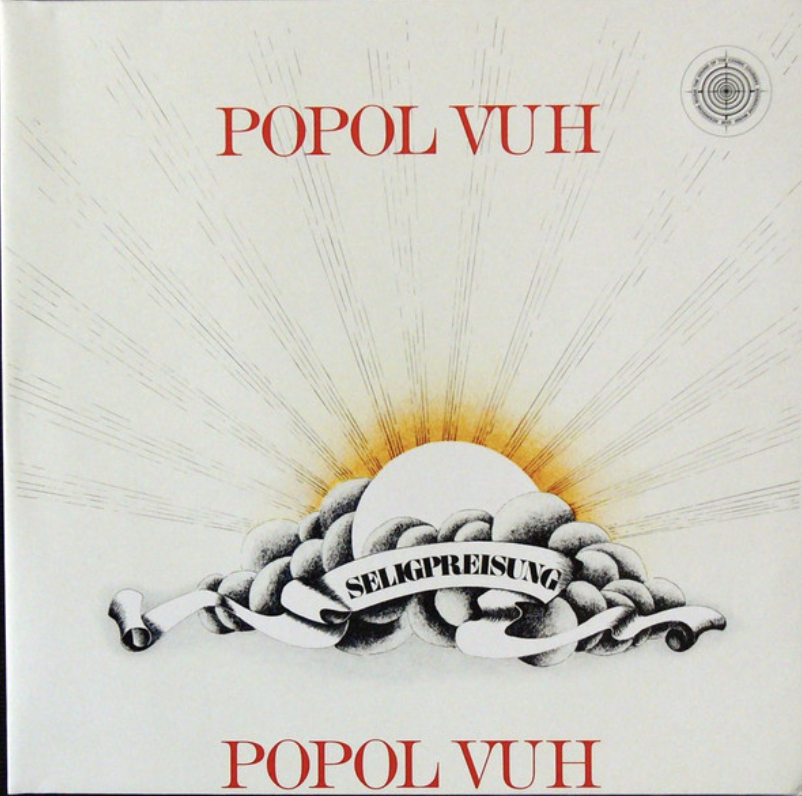
Popol Vuh ‘Seligpreisung’
The big 5-0 this year, the Vuh’s fourth album proper was released back in 1973. From my old Krautrock odyssey series, another chance to read my appraisal of this afflatus divine music…
If there is such a reassuring prospect as an afterlife then Popol Vuh‘s divine-styler Florian Fricke would surely have cemented his rightful place in the eternal, empyreal, choir above.
Covering all bases, just in case, Fricke’s reconnoitre’s into the heart of Mayan mysticism, Hinduism, Buddhism and Christianity guaranteed him a fair hearing upon reaching all those nirvanas.
Fricke thumbed through the New Testament for inspiration and solace; falling upon the canonical gospel of Matthew and lifting its blessed text for Popol Vuh’s fourth outing, Seligpreisung. Loosely translated as “beatitude” (‘happiness of the highest kind’) or “song of praise”, Seligpreisung is a continuous 30-minute long service built around Matthew’s profound utterances and writings: Matthew’s gospel – the first book of the New Testament – followed the life of Christ, from his ministry to crucifixion, and resurrection.
Coalesced into adumbrate passages, each of the 8-tracks represents Matthew’s pronouncements and declarations on the worthy; those he considers the righteous: from the meek to the poor. For example the ongoing leitmotif, “Selig sind die, die da hunger. Selig sind die, die da dursten nacho Gerechtigkeit. Ja, sie sollen stat warden” – a right old mouthful -translates as, “Blessed are those which are hungrey. Blessed are those that are after justice. Yes, they are to become fuller”.
Continuing with the same elegiac mellifluous exhalations as on previous releases, Popol Vuh’s diaphanous psalms finally break-out of their suffused ambient constraints into bouts of meditative acid-rock, as the drum-kit is introduced for the first time. Sharing similar spiritual harmonics and builds as Amon Duul II‘s, “stairway-to-OM”, opus Wolf City, Seligpreisung uses a familiar exotic, eastern, musical palette; with reverent pinning oboe and the raga inspired soul-stirring charms of, both, the harpsichord-like cembalo, and lute-toned tamboura all directing us towards the holy calling of Tibet.
Subtly transforming the dynamics with a more progressive, flowing, feel, Fricke also took a step backwards, reverting to a more traditional – if not classical – template; led by the majestic atavistic tones of a grand piano. This shift was partly influenced by the introduction of Amon Duul II’s Daniel Fichelscher, who contributed swathes of plaintive electric guitar and, those newly added élan drums, to the Popol Vuh transient sound.
Whether through mutual appreciation or due to the efflux of ideas criss-crossing between the two bands, Popol Vuh’s resident star-gazer lead-guitarist, Conny Veit, also reformed his dismantled prog-rock band Gila; bringing both Fricke and Fichelscher along to help produce that groups most acclaimed work – the Native Indian history of America inspired tome – Bury My heart At Wounded Knee. Unfortunately Gila broke up again the following year (1974), but for a brief period they functioned as two groups.
Absent from this synthesis hippie-trip are the lilting choral shading vocals of Djong Yin – temporally tied-up at the time, she returned for the next album, Einjager & Seibenjager. Not entirely convinced of his own timbre, Fricke found himself forced to fill-in; yearning and placably sighing numerous hallelujahs at the quasi-alter of worship – though he makes a good job of it. With its, now male, cooing and tentative vocals, Seligpreisung peacefully lifts the spirt over its short duration; altering the main opening theme of “Holy Mountain mystical escapism meets pastoral rock” enough so that each lose bracketed track bleeds into the next; though some of these movements are used as laconic breathers and interregnums before the main narratives.
Every piece is as beautiful as the last, so highlights are difficult to single-out; the atmosphere kept at a constant heavenly quality, and the playing spread evenly: Fichelscher and Veit play some of their most soaring magical guitar paeans, whilst Fricke’s cembalo and piano tenderly weep and dance amongst the climbing melodies and chords.
It might be considered an unfair criterion with which to gauge the music of Popol Vuh by, but this album was my very first purchase of the groups artful poised soundtracking vistas, so I’ve come to love it – I’ve obviously had to work backwards, from full band line-up jamming to minimal ambience. This LP hardly shakes off the ominous trance-like state and translucent stripped blueprint of their last three records – I mean even with a fuller sound, they’re still restrained and kept in check – so consider this as the “letting-their-hair-down” experiment, or Ash Ra Tempel without the Leary-spiked incentives.
ARCHIVE//THOSE WE’VE LOST
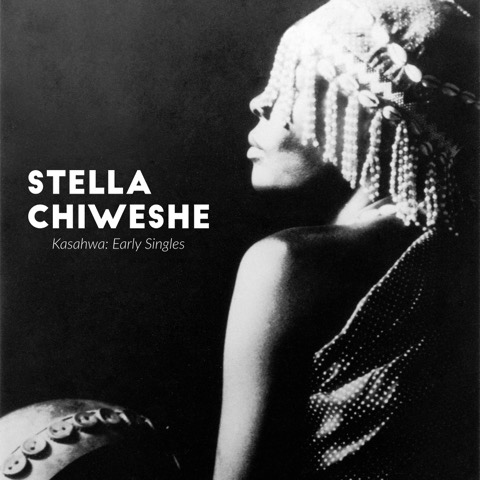
Stella Chiweshe
Sad news reached us near the end of last month via the esteemed world label Glitterbeat Records that the Zimbabwean songstress and ‘Queen of Mbira’ Stella Chiweshe had died on January 20th. Back in 2018, the Glitterbeat imprint picked up a compilation of the groundbreaking artist’s early singles: called Kasahwa. As a bio, state of providence here’s my review of that album and purview of Stella’s legacy…
Spearheading a second revival and paving the way to a comeback of a sort, the previously only available as a digital-release version (via that increasingly encroaching behemoth, Bandcamp) of the Zimbabwe music icon and maestro of the mbira instrument Stella Chiweshe’s Kasahwa: Early Singles collection, has been picked up by the award-winning global music label Glitterbeat Records. To be released on the full gamut of formats (both physical and digital) this remastered smattering of previously rare healing paeans and emotional tumults will for many, be an introduction to the diaphanous and earthy roots metal-y springy mbira accompanied soul of Chiweshe.
With her most formative years spent in colonial Rhodesia, before Zimbabwe’s eventual independence in 1980, in an environment that didn’t exactly encourage or foster equality between races let alone sexes, the strong-willed Chiweshe nevertheless pursued a career in music. More attuned to the Western sounds of Rock’n’Roll and Country than the atavistic culture of her native homeland, feasting instead on a diet of Elvis Presley, Ricky Nelson, Jim Reeves and The Everly Brothers (and why not), it would take some time and an epiphany before Chiweshe picked up the mbira: an instrument and style she would soon master; so much so that she would be hailed as the ‘Queen of Mbira’ in the following decades.
Confusingly for the student and novice, mbira refers not only to an instrument – made-up of 22 to 28 metal keys, mounted on a ‘wooden healing tree body’ – but also an all-encompassing Zimbabwean spiritual but also secular culture and way of life. Mbira, which is cultivated by the Shona people of the region, involves the ceremonial ritual practice of invoking contact with deceased ancestors and tribal guardians through musical accompaniment; just one of the influences that imbues the voice and playing style of Chiweshe’s captivating songs.
Showing the independent spirit she’d long be admired and celebrated for, a younger Chiweshe would, despite meeting stoic opposition, overcome the bigotry of her male compatriots and elders to embrace not only the Mbiri heritage but the instrument too. Stiff resistance from teachers and even instrument makers, outright refusing to build her a mbira, wouldn’t stop her from recording a debut single (the one that give’s its name to this compilation) in 1974: even though she would have to borrow an ad hoc thumb piano; unable to lay her hands on a mbira. Chiweshe would not only preserver but flourish.
Trumpeted in our modern virtue-labeling climate as a ‘feminist’, the outspoken star was certainly strong-willed, even a rebel. Making a name for herself overcoming the obstacles of tradition and a patriarchal-dominated society, her obstinacy soon garnered attention, not only in Zimbabwe but further afield. In a decade that saw a surge in Western interest in ‘world music’, thanks in part to (in the UK anyway) such global music explorers and passionate advocates as Andy Kershaw and John Peel (who would play host to two Chiweshe performances on his coveted Radio 1 sessions), the Mbira star would soon be touring internationally: first as a featured soloist with the New National Dance Company of Zimbabwe, and later under her own name. Chiweshe would even make a second home for herself in Berlin, criss-crossing between the German city and her native home for the next 35 years.
Still performing her spiritually soulful intense and trilling vocals and mbira craft, but perhaps not as prominent a figure on the world stage, this re-introduced eight song package of formative years recordings will revive an interest in not only Chiweshe but the music of Zimbabwe: a state that looked to be finally emerging from the grasp of Robert Mugabe, whose role (lets face it) has soured and hidden the true face and culture of the country; though in the aftermath of his resignation and after new elections, his successor in the ZANU-PF party, candidate President Mnangagwa and self-declared winner of those elections, has meted out extreme violence on oppositions supporters (killing a number of them in the process) taking to the streets in protest at the contested results. An uneasy tension exists, even with outside observers presiding over these elections, as Zimbabwe’s Movement for Democratic Change candidate Nelson Chamisa stoically refuses to back down, rejecting the results outright.
With helpful encapsulation style suffixes summing up each song’s theme, the early singles opens with the determined ‘Ratidzo’; a high whistling and trickling stream like mbira melodic accompanied invocation of the lush landscapes of Zimbabwe that pretty much encompasses Chiweshe’s struggle to become a musician with its matter-of-fact subtitle, ‘Managing to do what people considered impossible’. More traumatic themes follow, with the unceasing waterfall cascades of the mbira and earthy lamented ‘Musarakunze’ suddenly making an emotional impact when translated as ‘An orphan seeing what the late elders never saw’; so beautifully played as to almost hide the plight. The ‘Innermost emotional pain is like a fishbone stuck in the throat’ ‘Kasahwa’ has a similar air of beautiful delivery even when kicking up the dust and rotating to a more abrasive and rubbing scratchy percussion; the pained evocations confined to that title rather than performance.
Mbira as a living tradition and healing process is enacted on the grasslands lilted ‘Chipindura’ – ‘The herb that transforms anything’ – and the placeable tubular turning ‘Mayaya’ (in two parts no less; the longest articulation on this entire collection) – ‘The effect of healing herbs’. Both of which, whether it’s intentional or not, feature a percussion that reflects the rubbing, grinding preparation of these herbs. Elsewhere the routine travails of a people kept through colonial oppression and then the misrule, surviving in abject poverty, is evoked on the yodeled sung ‘Nhemamusasa’; a song that describes and articulates ‘Cutting branches for a temporal home’.
Channeling the very soul of Zimbabwe, performing the mbira with energy but also certain serenity, and in a soliloquy manner voicing the empirical, Stella Chiweshe’s early recordings may sound swimmingly diaphanous, yet they serve as a reminder to the struggles of change. Recorded during the Chimurenga – roughly translating from the Shona language as ‘revolutionary struggle’, this, the second such ‘war’ or uprising, pitted African Nationalist groups against the predominantly white minority government; also known by its eventual victors as the Zimbabwe Liberation War, it would lead to independence and the rise of one of the resistance’s key figures, Robert Mugabe – revolution these singles, no matter how lilting, could be celebrated as a testament and clarion call for not only a resistance to the patriarch but seen also as a break from the atavistic status quo, with Chiweshe’s twist laying down the path for those to follow; a more equal rebalance giving voice to the often repressed matriarchal singers and musicians of Africa.
Tom Verlaine

What a shock to the system to see poor old Tom Verlaine pass way last week, the gaunt frontman of pre-punk favourites Television – far too arty and well-read to be part of the dumb nihilistic punk vanguard, but all the same in that initial rush of bands that would crown an entire scene. Although what we call a counter-culture, a in-scene New York phenomena, Verlaine’s unique lyricism and guitar playing would go on to influence possibly as many people as the Velvet Underground and Nico’s infamous Banana LP. If you were in any doubt, just look at the scale of homages, tributes and the Marquee Moon album covers displayed across the worldwide net of social media validation. This is an album that both sailed close to the edge, but was melodic enough to encourage a future new wave scene. In fact it has become such an obvious record, a copy in every record collection. And yet it hasn’t lost any of its power, twists and art school pretensions because of that absorption into popular culture.
There will be extensive eulogies and bios to come or indeed already shared. And so I’m just going to share some favourite clips and tracks; hopefully some you may not have seen or come across. A celebration then:
That’s it from me for another month. You can find January’s edition here...
Hi, my name is Dominic Valvona and I’m the Founder of the music/culture blog monolithcocktail.com For the last ten years I’ve featured and supported music, musicians and labels we love across genres from around the world that we think you’ll want to know about. No content on the site is paid for or sponsored and we only feature artists we have genuine respect for /love. If you enjoy our reviews (and we often write long, thoughtful ones), found a new artist you admire or if we have featured you or artists you represent and would like to buy us a coffee at https://ko-fi.com/monolithcocktail to say cheers for spreading the word, then that would be much appreciated.
A (near) 150 albums survey of the year, with choice eclectic albums chosen by the Monolith Cocktail Team.

Well was I wrong last year when I called 2021 the annus horribilis of all years. It has been soundly beaten by the shit-show that is 2022. The invasion of the Ukraine, cost of living crisis, another hideous wave of Covid – which even if the jabs are being rolled out, and the deaths rate, hospitalisations is nothing like the first wave back in 2020, is still causing major illness, absences and disruptions to a society already facing a heap of doomsday scenarios -, strikes, activism, fuel poverty, Iranian protests, and the continuing horror show of a zombie government being just some examples. Yes 2022 qualifies as one of the most incomprehensible years on record of any epoch; an ungovernable country in the grip of austerity point 2.0, and greater world untethered and at the mercy of the harridans on either side of the extreme political divide, the billionaire corporates and narcissist puritans.
And yet, it has been another great year for music. Despite the myriad of problems that face artists and bands in the industry, from a lack of general interest to the increasingly punitive costs of touring and playing live, and the ever encroaching problems of streaming against physical sales and exposure, people just can’t quit making music. And for that we, as critics – though most of us have either been musicians or still are – really appreciate what you guys do. In fact, as we have always tried to convey, we celebrate you all. And so, instead of those silly, factious and plain dumb numerical charts that our peers and rivals insist on continuing to print – how can you really suggest one album deserves their place above or below another (why does one entry get the 23rd spot and another the 22nd; unless it is a vote count) –, the Monolith Cocktail has always chosen a much more diplomatic, democratic alphabetical order – something we more or less started in the first place. We also throw every genre, nationality together in a serious of eclectic lists: no demarcation involved.
The lists include those albums we reviewed, featured on the site in some capacity, and those we just didn’t get the time to include. All entries are displayed thus: Artist in alphabetical order, then the album title, label, who chose it, a review link where applicable, and finally a link to the album itself.
Because of the sheer number of entries, we’ve split that list in to two parts: Part One (A – L) starts with Anthéne & Simon McCorry and finishes with Lyrics Born; Part Two (M-Z) begins with Machine Girl and finishes with The Zew.
This year’s picks have been chosen by (Dominic Valvona), Brian ‘Bordello’ Shea, Matt Oliver, Andrew C. Kidd and Graham Domain.
A.
Anthéne & Simon McCorry ‘Mind Of Winter’ (Hidden Vibes) Dominic Valvona
Review
Seigo Aoyama ‘Prelude For The Spring’ (Audiobulb) DV
Review
Armstrong ‘Happy Graffiti’ Brian ‘Bordello’ Shea
Review
Yara Asmar ‘Home Recordings 2018-2021’ (Hive Mind) DV
Review
Avalanche Kaito ‘S-T’ (Glitterbeat) DV
Review
Avantdale Bowling Club ‘TREES’ Andrew C. Kidd
B.
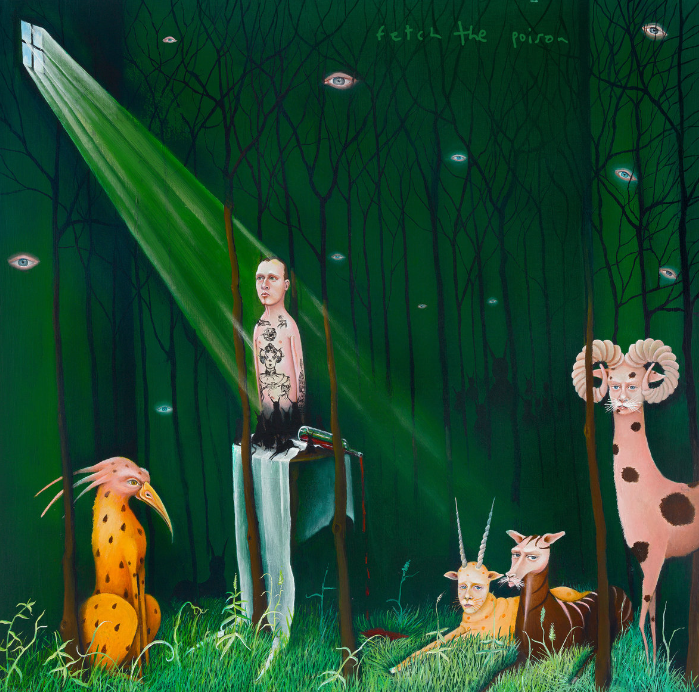
Caterina Barbieri ‘Spirit Exit’ (Warp Records) ACK
Review
Jam Baxter ‘Fetch the Poison’ (Blah) Matt Oliver
Oliver Birch ‘Burning Daylight’ BBS
Review
Black Mesa ‘Research Facility’ (猫 シ Corp. ‘Selected Works’) ACK
Brigitte Beraha ‘Blink’ DV
Review
Brian Bordello ‘Cardboard Box Beatles’ (Metal Postcard Records) DV
Review
The Bordellos ‘Ronco Revival Sound’ (Metal Postcard Records) Graham Domain
Review
Boycalledcrow ‘Wizards Castle’ (Waxing Crescent Records) BBS
Review
Broadcast ‘The Maida Vale Sessions’ (Warp Records) GD
Apollo Brown & Philmore Greene ‘Cost of Living’ (Mello Music Group) MO
Brown Calvin ‘dimension//perspective’ (AKP Recordings) DV
Review
C.
Loyle Carner ‘Hugo’ (EMI) MO
Tom Caruana ‘Strange Planet’ (Tea Sea Records) MO
Cities Aviv ‘Man Plays The Horn’ (D.O.T.) DV
Claude ‘A Lot’s Gonna Change’ (American Dreams) DV
Review
Clouds in a Headlock ‘Breakfast in Phantasia’ (Offkiltr/Fat Beats) MO
Julian Cope ‘England Expectorates’ BBS
Link
D.
The Dark Jazz Project ‘S-T’ (Irregular Frequencies) DV
Review
Aftab Darvishi ‘A Thousand Butterflies’ ACK
Review
The Difference Machine ‘Unmasking the Spirit Fakers’ (Full Plate) MO
Review
Ferry Djimmy ‘Rhythm Revolution’ (Acid Jazz) DV
Matt Donovan ‘Habit Formation’ DV
Review
The Doomed Bird Of Providence ‘A Flight Across Arnham Land’ DV/BBS
Review
Dubbledge ‘Ten Toes Down’ (Potent Funk) MO
Review
E.
Eamon The Destroyer ‘A Small Blue Car – Re-made/Re-modelled’ (Bearsuit Records) BBS
Review
El Khat ‘Albat Alawi Op.99’ (Glitterbeat) DV
Review
Kahil El’Zabar Quartet ‘A Time For Healing’ (Spiritmuse) DV
Roger Eno ‘The Turning Year’ (Deutsche Grammophon) GD
Review
Eerie Wanda ‘Internal Radio’ (Joyful Noise Recordings) DV
Exociety ‘Deception Falls’ (Exociety) MO
F.
Fera ‘Corpo Senza Carne’ (Maple Death Records) DV
Catrin Finch & Seckou Keita ‘Echo’ (bendigedig) DV
Review
Flat Worms ‘Live In Los Angeles’ (Frontier Records) DV
Review
Forest Robots ‘Supermoon Moonlight Part Two’ (Subexotic) DV
Review
Nick Frater ‘Aerodrome Motel’ (Big Stir Records) BBS
Review
Future Kult ‘S-T’ (Action Wolf/AWAL) DV
Review
G.
Mike Gale ‘Mañana Man’ DV
Premiere
Dana Gavanski ‘When it Comes’ (Full Time Hobby / Flemish Eye) GD
Review
Gold Panda ‘The Work’ (City Slang) ACK
The Good Ones ‘Rwanda…You See Ghosts I See Sky’ (Six Degrees) DV
Review
Goon ‘Hour of Green Evening’ (Demode Recordings) Graham Domain
Review
Guillotine Crowns ‘Hills to Die On’ (Uncommon Records) MO
Review
Gwenno ‘Tresor’ (Heavenly Recordings) GD
H.
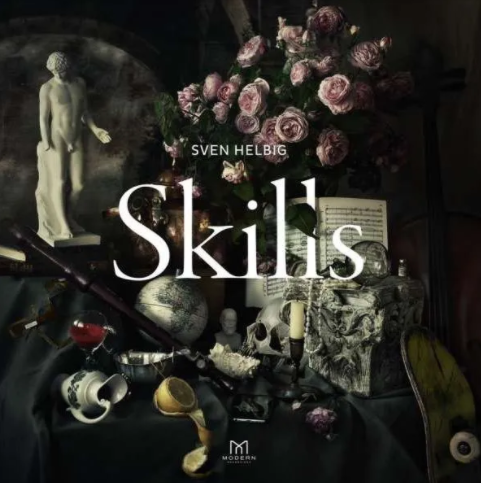
Aldous Harding ‘Warm Chris’ (4AD) GD
Healing Force Project ‘Drifted Entities Vol. 1’ (Beat Machine Records) DV
Review
Sven Helbig ‘Skills’ (Modern Recordings) DV
Review
Bruno Hibombo ‘Parting Words’ DV
Houseplants ‘II’ (Win Big Records) DV
Review
John Howard ‘From The Far Side Of A Miss’ (Kool Kat) DV
Review
I.
IBERI ‘Supra’ (Naxos World Music) DV
J.

Juga-Naut ‘Time & Place’ (Juga-Naut) MO
JPEGMAFIA ‘OFFLINE!’ ACK
K.
Kamikaze Palm Tree ‘Mint Chip’ (Drag City) BBS
Review
Kick ‘Light Figures’ (Anomic Records/Dischi Sottoernnei/Sour Grapes) DV
Review
King Kashmere ‘Woof’ (High Focus) MO
Evan Kertman ‘Rancho Shalom’ (Perpetual Doom) BBS
Review
KMRU ‘Temporary Stored’ ACK
L.
Labelle ‘Éclat’ (Infiné) DV
Review
The Legless Crabs ‘Always Your Boy’ (Metal Postcard Records) BBS
Review
The Legless Trials ‘Cheese Sandwich’ (Metal Postcard Records) BBS
Kristine Leschper ‘The Opening Or Closing Of A Door’ (Anti-) DV
Review
Liraz ‘Roya’ (Glitterbeat) DV
Review
Francesco Lurgo ‘Sleep Together Folded Like Origami’ (Bosco Records) DV
Review
Lyrics Born ‘Mobile Homies’ (Mobile Home Recordings) MO
Review
Keep an eye out later this week for Part Two.
Hi, my name is Dominic Valvona and I’m the Founder of the music/culture blog monolithcocktail.com For the last ten years I’ve featured and supported music, musicians and labels we love across genres from around the world that we think you’ll want to know about. No content on the site is paid for or sponsored and we only feature artists we have genuine respect for /love. If you enjoy our reviews (and we often write long, thoughtful ones), found a new artist you admire or if we have featured you or artists you represent and would like to buy us a coffee at https://ko-fi.com/monolithcocktail to say cheers for spreading the word, then that would be much appreciated.
Brian Bordello Shea’s Final Roundup of 2022
SINGLES/EPs
John Howard ‘Christmas Was Made For The Children’
‘Christmas Was Made For The Children’ is pure schmaltz, pure Christmas Schmaltz as all great Christmas songs are. John Howard succeeds where so many seem to fail as he wraps the Schmaltz in a melody so beautiful and timeless it takes one back to the golden days of 70s Christmas TV, when the Val Doonican or Bing Crosby Christmas special would be aired mid evening on Christmas Eve and we’d be entertained by there special guest who would perform a song just like ‘Christmas Was Made For The Children’ as the host looked on resplendent in their Christmas jumper.
This song is filled with magic and nostalgia and I almost feel like I’m that young kid trudging through the cold to attend midnight mass, at least comforted by the thought that my Christmas morning would not have to be interrupted by an hour or so of God bothering. If you are going to buy one Christmas song this year I suggest you choose this gem.
LINN ‘Okay, Sister’
This is a slow dance with your own shadow; a mixed delight of a lone shard of glass reflecting the crescent of the moon; a night time bathe in melancholia; a song to sing to your loved one as they leave you wanting alone with only memories for company; a bewitching jewel of longing and regret. A fine and beautiful song.
Humour ‘Jeans’
(So Young Records)
I really like this, it has a wonderful wonky post-punk Captain Beefheart, Zappa feel to it; a song that sent me spiralling back to my youth of energetic nights out drinking in the local alternative pub soaking up the pleasures of too many bottles of newkie Brown and soaking up the sounds of Wigan’s finest, The Volunteers [whose Bladdder Of Life mini album is a must own for all lovers of wonky guitar thrills]. Yes indeed, I enjoyed this track a great deal. You could say I enjoy the cut of their Jeans, which I imagine to be quite flair-y but darn sexy at the same time.
Dead Patrons ‘Nothing’
There is nothing like a good Christmas song and video to bring the oncoming tide of nostalgia rushing towards you like the onslaught of a swarm of meat hungry giant turkeys all ready to weave a wave of mass destruction on the waiting children all ready for Santa to bring them their ideal Christmas gift, but instead are pecked to death in their beds, their last thought being it did not look like this in the Argos catalogue. But luckily for us this is not a wholesome Christmas ditty but instead a slow and dirty as death hardcore slow romp of mental cold metal anguish and depravity that we all really need this time of the year: believe me we really do.
Kevin Robertson ‘Why/D.C.B.A 25’
(Fruits Der Mer)
The new single from the infamous Fruits der Mer label, the label of course that released vinyl releases when vinyl releases where not the thing to release but did it anyway and over the years have released a whole slew of collectable vinyl, mostly psych shenanigans of the first degree, is a double-sided joy of 60s cover jangle by Kevin Robertson. The A-side ‘Why’ is a colourful and calmly laid-back reworking of The Byrds gem that explodes in the middle with a guitar solo and a half of acid induced seagull frenzy [which believe me is such a thing]. The B-side is a cover of Jefferson Airplanes ‘D.C.B.A 25’, which actually sounds like The Byrds strangely enough and is wrapped in a blanket of chiming almost Christmassy 12 string guitars, which I suppose this time of the year is very apt and no doubt the radio will soon be blessed with the sound of Chrissie Hynde telling us that 2000 Miles is very far.
ALBUMS
Sanfeliu ‘To Absent Friends’
(4000 Records)

This is a rather lovely relaxing wonky album of synth pop; an album full of bleeps and whooshes and wizzes and soft vocals that at times reminded me of The Frazier Chorus and at others, the Magnetic Fields, and on the excellent ‘El Rey Y La Reina De Los Descastados’ Sanfeliu seems to evoke the spirit of the wonderful Wilder album by The Teardrop Explodes: all hushed tones of angelic beauty, a really lovely track on an album filled with them. To Absent Friends is a must hear for all those with a love of synth pop and smooth relaxing warm slightly wonky music.
Richard Öhrn ‘Sounds In English’
(Big Stir Records)
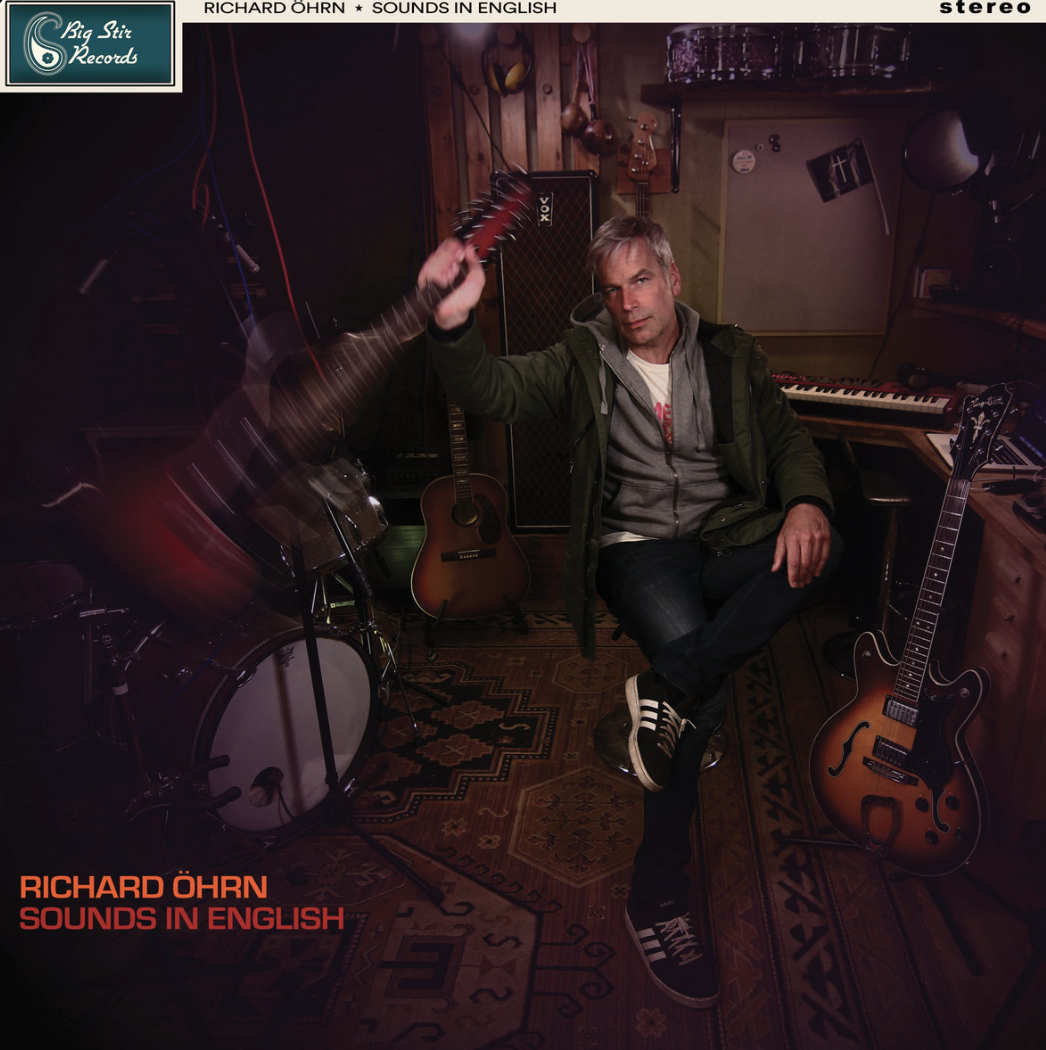
Sounds In English starts with a beautiful chiming jangle of the 12-string guitar, which should come as no surprise as of course this album is released on the excellent Big Stir record label. As anyone who reads my reviews will probably realise I normally review at least one album most months from the label. So, you will know what to expect as Big Stir specialise in releasing albums of well written and performed slices of guitar magic, and Sounds In English is yet another lovely gem of that ilk but with a much calmer and pastoral edge and with a baroque pop quality; ‘The Coolest Manners’ could easily fit on Costello’s Imperial Bedroom and ‘5th Month Announcement’ and ‘Love And Friendship’ recalling the sound of Simon And Garfunkel. ‘Every Shade’ has a fine seventies singer-songwriter feel – I think Big Stir might have found their own John Howard.
Richard Öhrn has crafted a fine and enriching grower of an album, the more you listen the more the melodies seep in and soundtrack your days.
Eamon The Destroyer ‘A Small Blue Car -Re-made/Re-modelled’
(Bearsuit Records)

‘A Small Blue Car -Re-made/Re-modelled’ is a remix album of sorts of the excellent Eamon The Destroyer album, and this is a rare thing as I actually prefer it to the original, and I enjoyed the original a great deal.
This album has a spooky warm quality to it and the opening track ‘Nothing Like Anything’ has a feel of The Beach Boys ‘Cabinessence’ and sounds like it is having its thigh stroked in a sensual way by a slightly out of it Momus. And track nine, ‘Uledaru’, is taken over and consumed by the brilliance of the Schizo Fun Addict taking the track on a short detour to heaven.
A Small Blue Car… is another overwhelming success of a release taking the experimental and layering it with blankets of alternative pop electronica warmth.
Scott Robertson ‘Footprints In The Butter’
(Subjangle)
Scott Robinson is a young man from Scotland and member of the excellent Jangly 60s inspired Vapour Trails [who I have written about in the past] and another band whose name escapes me [let’s call it a senior moment shall we], who are a little more prog and 90s alternative psych sounding and also excellent, but I have for some reason never written about [let’s call it another senior moment and be done with it].
Anyway, young Scott is a talented chap and this, his debut, album lies somewhere between his two bands. Opening track ‘Lost My Curtains’ is a lovely soft psych-tinged ballad recalling Teenage Fanclub when they where worth a damn, and ‘The Death Of Daylight Saving’ again psych’s it up with Cinnamon Girl guitar riffs and a Byrds like adventure that has not been heard since the long-lost adventure filled days of the early 90s when the much-underrated Spirea X looked like they where about to rule the roost.
Footprints In The Butter is a lovely album filled with a mature songwriting but with a veal and adventure that can only be performed by a young soul not yet fully tarnished by life. And an album I like so much it has had me dipping into my paypal: heating bills be damned, I will just keep myself warm frigging vigorously to this excellent debut.
The Perusal #35: Al-Qasar, Forest Robots, Clear Path Ensemble, Lampen, Noah, Yara Asmar…
September 7, 2022
DOMINIC VALVONA’S ECLETIC REVUE
Al-Qasar ‘Who Are We?’
(Glitterbeat Records) 16th September 2022

Bubbling up from the Barbès Algerian enclave of Paris (the 18th Arrondissment boulevard that’s home to the yet to be gentrified and tourist-friendly passed Little Algeria community) and crisscrossing continents, the Al-Qasar group fuzz-up and electrify the sound of Arabia and its diaspora.
Helmed by instigator-in-chief Thomas Attar Bellier that neighborhood bustle is elevated and blasted back out into the world at large, absorbing and picking up sonic waves, spikes from Northeast Africa to a hardcore California and a rich tasting Sublime Porte.
It all helps of course that Attar Bellier is a global nomad, having lived in New York, Lisbon and Paris, but also having worked in the recording studios of L.A. during that circumnavigation of multicultural living he produced enough tracks of his own, releasing the well-received Miraj EP.
I get the impression that this is a fluid project, but at the time of this, the debut longplayer, Attar Bellier has opened up the ranks to include Jaouad El Garouge on vocals and a number of instruments synonymous with Moroccan Gnwa and North African traditions, Guillaume Théoden on bass and sub-bass duties, Nicolas Derolin on a myriad of percussive and hand drum instruments and Paul Void on drums. That seems the core anyway, but in this electric saz tangling and psychedelic post-punk rich sound there’s a cast of guest pioneering musicians to add yet another layer, another sonic perspective.
From the start there’s Sonic Youth’s guitar-sculptor Lee Ranaldo providing multi-layers of sustain, whines and abrasions to both the opening Swans meet Faust squall turn spindled and more familiar Middle Eastern electric fez intro ‘Awtar Al Sharq’, and the second, dervish-spun spirited and phlegm-voiced tour of Anatolia, The Balkans and Arabia, ‘Awal’.
That legend of the California punk scene, miscreant Dead Kennedys founder Jello Biafra goes free-radical on the staccato jangling ‘Ya Malak’. In a kind of John Sinclair mode, he reads out a poignant translation of a poem by the famous Egyptian revolutionary poet Ahmed Fouad Negam, updated for the cataclysmic state of the world in 2022, and the crumbled, violently oppressed post Arab Spring. This is where, despite the Cairo-futurism, the rattled and slapped hand drum energy, that the political motivations, the despair and anger comes to the fore; all that history, the post-colonial tumult and also fall-out from an Arabian-wide protest movement seeking modernization, the right to earn and end to greed. Read through a tiny transistor style radio Biafra’s agitator spirit turns this into a sort of Arabian Fugazi.
Moving on, but just as political, the New York-based Sudanese vocal doyen Alsarah (of Alsarah & The Nubatones renown) brings her impressive expressive outpourings and trill to the rattlesnake desert song ‘Hobek Thawrat’. In that soulful, rising loved-yearned voice there’s a protest against the coup on her homeland, the chorus itself repeating a slogan from the recent demonstrations. A sound of the Sahel, the women folk of Tinariwen and a little Bab L’Bluz Gnawa hover over this beautifully delivered protestation.
It runs throughout, this sound’s birthplace, but Al-Qasar pay a special homage on the (so good they name it twice) ‘Barbès Barbès’, which also features the electric oud pioneer Mehdi Haddab (of Speed Caravan note). Metal work drums, a nice rolling groove and souk candour prove a friendly hustled soundtrack for a meander in the heavily African outpost. Haddab gets a solo of a kind, providing a romanticized, poetic and folksy oud, with bursts of blurred quickened neat fretwork that borders on Baba ZuLu style psychedelic rock.
The finale, ‘Mal Wa Jamal’, features the longing ached vocals of the Egyptian singer Hend Elrawy soaring over an inspirial organ and almost post-punk push. Elraway’s beautiful wails prove disarming as the song’s lyrics concern a female-centric outlook on prostitution and its consequences. There’s attitude certainly, but it’s all wrapped up in a fizzled, fuzzy and mystical film of Arabian dance and fantasy. No surprise that they’ve been added to the Glitterbeat Records label roster, an imprint for just this sort of fusion; one in which you’ll hear an Arabic Muscle Shoals merging with Anatolian psych, a touch of Electric Jalaba and Şatellites if remixed by Khalab. A brilliant package of transformed traditions wrapped up in electrifying futurism; the sounds of Arabia, North Africa and beyond are thrust into a dynamic, unifying and eclectic direction.
Clear Path Ensemble ‘Solar Eclipse’
(Soundway Records) 9th September 2022

Out of the Wellington jamming session hothouse incubator and blossoming jazz scene in New Zealand Cory Champion rides the sun-birched rays and waves to cook-up a congruous album of many flavours. From a knowing position the jazz percussionist flows freely between a 70s ECM back catalogue of inspirations and the funk, fusion, spiritual and more freeform genres of his chosen art form.
Under the Clear Path Ensemble alias – his second such alias, also going under the Borrowed CS title when making leftfield deep house and techno cuts – Champion channels both Latin and Uniting Of Opposites style brassy Indian reverberations on the golden ‘Kihi’; offers up an acid jazz turn retro zippy-zappy late 70s disco funk fusion on ‘Drumatix’; and magic’s up a post-Bitches Brew Mile Davis band mystery of African-flavoured marimba and jug-poured, lava-lamp liquid cosmic spiritualism on ‘Revolutions’. But the mood, musicality changes again when we reach the jazzy-suspense score ‘Absolvo’: an early 70s cool cult vision of a Lalo Schifrin thriller.
The finale, ‘Tennis Ball’, could be said to have taken Liquid Liquid’s percussion, beats and a bit of the Style Council’s laidback washy soul-funk. And the dreamy seasonal solstice ‘Sunrise Motif’ finds a blend of the Modern Jazz Quartet, the willowy fluted bucolic and Nate Morgan. All the while translucent bulb-like notes flow or float from the vibraphone as other light-footed percussive vibrations dance and softly quicken the pace.
A harp run here and muffled, mizzle sax or trumpet there; a touch of electric piano and pining strings on anther track; all elements that come together across a changing groove.
Clive Zanda meets a less busy Michael Urbaniek on a minor jazz odyssey of nostalgic but very much alive and contemporary fusions, Champion’s second album in this role is a sophisticated, smooth but also freeform set of moods, visions and counterflows. It proves a perfect fit for the eclectic and much-praised Soundway label.
Forest Robots ‘Supermoon Moonlight Part Two’
(Subexotic)

After an initial redolent arpeggiator wave of Roedelius, a rainbow of trance, vapoured breathed coos and transience follows, marking what will be an entirely different kind of record for the Californian electronic artist and topographical trekker Fran Domingeuz.
Under the Forest Robots alias/umbrella, Fran has produced numerous adroit, studied and evocative ambient and neoclassical soundtracks to the myriad of landscapes and forest trials he’s traversed over the years. As the world dramatically succumbed to a global pandemic, and the chance to escape to the wilds became scarce, the signature form stayed but now the music was suddenly a therapy and a vehicle for channeling the anxiety, stresses of such uncertain times.
Now (thankfully) with the worse behind us, Fran emerges with the ‘long gestating’ follow-up to Part One of his Supermoon Moonlight suites from 2018. Although recording sessions for Part Two started back in 2019 it has taken a while to finally process the last couple of years and to finish and release this beautifully conceived album of suffused and uplifting hope.
The geography and National Geographic almanac proverb-like and Zen titles remain (‘All The Rivers Born In The Mountains’, ‘Wind Always Runs Wilder Along The River’s Current’) but the underlying theme has Fran exploring the complexities of parenthood and the ‘kind of spiritual and emotional legacy a father would wish to leave for his kids.’ A warming sentiment and inspired prompt makes for a very different kind of album though. From the same gifted mind and ear yet swimming in the sine waves of trance, synth-pop, 90s techno and dance music this is relatively a new but welcoming direction, expansion on his signature sound.
Upbeat as much as reflective, the feel is often dreamy; the gravity and awe of nature gently present; cut-out mountainsides, flowing connective rivers and a canopy of redwoods, the stage is set as stars shoot across the night skies and moonbeams illuminate.
In the slipstream and bubbled undulations The Beloved shares space with The Orb, Stereolab, 808 State, Sakamoto, Vince Clarke, Boards Of Canada, I.A.O., the Aphex Twin and Ulrich Schnauss. This is a beautiful combination that filters the aftermath of the rave culture, the burgeoning British minimal techno scene of the early 90s Warp label, 80s synth-pop and electronic body music. Yet there’s room for a certain crystallised chilled sparkle of the Chromatics and the Drive time moody, ruminated dry-ice scores of Cliff Martinez within that beat-driven glow. And the elements of charcoal fires crisply burning and flickering, and the poured waters have a certain Luc Ferrari influence – albeit far less avant-garde.
Playful and sophisticated with a surprising dance-y pulse and radiant outlook, Part Two should act as a testimony to an inspired and inspiring composer. I think his kids will be rightly proud of their dad and his musical legacy: electronic music with a soul and purpose.
Machine ‘S-T’
(WEWANTSOUNDS)

Back again in The Perusal (becoming a 2022 regular) those vinyl specialists at WEWANTSOUNDS have remastered and pressed that rarest-of-rare conscious-soul-funk LPs, the obscure assembled Machine’s self-titled debut (and only) album from 1972.
The rumour-mill is strong on this one; the cause of its £500 plus price tag on Discogs believed to be a result of either a very limited release or no release at all – shelved as it were. It could be down to the sheer quality of the competition, arriving as it did in the wake of similar social-political soul as Marvin Gaye’s What’s Going On and Curtis Mayfield’s Superfly (but also his albums previous to that). Both prove a massive influence on this smooth and funky eight-track showcase.
What we do know however is that the make up of this group included a trio of well-rehearsed session players from the All Platinum Studios stable in New Jersey. That included main man Michael Watson on vocals and guitar, bass-player Curtis McTeer (also playing with labelmates The Rimshots) and drummer Donald McCoy, who were then fattened out with the organist/pianist Ray Jones, another bassist, Frank Prescod, and both Dee and Cordy Pridges on horns. On the same label and one of the most established, successful acts The Whatnauts lent both their backing vocalists and, rather oddly, their manager (credited on percussion) Bunch Herndon to this widening lineup. And on top of all that, the notable Sammy Lowe (arranging for such distinguished company as Nina Simone, Sam Cooke and James Brown) offers a subtle suite of strings to the mix, taking it down the Rotary Connection route.
The Whatnauts prove a pretty integral ingredient to the Machine track list, lending both the ‘Only People Can Save The World’ and ‘Why Can’t People (Be Color Too?)’ songs to the album. Machine keep the sentiment of both, but add both an almost bucolic and pastoral gospel-rayed yearn to the first, and up the Gator funk and Stevie Wonder boogie on the Sly Stone on-message second.
They open on the relaxed but simmered Southern-funk-hits-the-streets-of-NYC style ‘Time Is Running Out’. Fred Wesley & The J.B.’s buzzy licks meet Maxayn attitude sass, sweet sax and touch of ‘Brotherman’ The Final Solution on a conscious-political workout – the repeated vocal refrain apparently ad-libbed.
Very much of its time and again on-message, ‘World’ tunes into the Vietnam War and its impact on and confliction with the African-American community. The actual groove is quite percussive with a touch of The Temptations Psychedelic Shack, Mayfield and The Meters.
There’s a seagull hovering harbor scene, not a million miles away from Otis’ wistful gaze, on the gear-changing ‘Trails’. It starts with that atmospheric rumination, a hint of the Latin and some romantic allusions before quickening into a banjo-rhythmic strumming West coast jive. It then goes on to wail and cry with a sequel of electric guitar. ‘Lock Your Door’ however could be a lost Northern Soul dancer, and the balladry pined ‘Boots In The Snow’ is another of those Marvin Gaye try-outs, with a touch of 70s Motown.
An enervated Nat Turner, Undisputed Truth, Mary Jane Hooper, Johnny Pate with those Mayfield and Gaye inspirations, Machine stepped-out to lead their own socially conscious project. But whilst the elements are all present, the sound isn’t quite unique enough, overshadowed as they were by a multitude of bands/artists working in the same groove and message. Still, at least you can now own a real rarity without forgoing this month’s rent, gas or mortgage payment. And it’s well worth a spin at that.
Noah ‘Noire’
(Flau Records) 26th August 2022

Ever the diaphanous siren of soothed vaporous experiments and song, the Hokkaido-born artist Noah once more drifts and floats across a sophisticated combination of futuristic etudes and distilled electronica. Following on from the beautiful balletic-inspiredÉtoile (given a glowing review by my good self), this latest emanation of whispered and cooed translucence is just as lovely and swathed in dreamy effects.
A collection of tracks from between a pre-Covid era of 2015-2020, the Noire album is awash with studied yet effortless sounding sonic theme variations; a nine-track congruous suite that riffs on Noah’s signature of ghostly plinky-plonked semi-classical piano (occasionally an electronic one by the sounds of it) and minimal 808-style synthesized waves, percussion and bobbled beats.
Noah’s breathless vocals and atmospherics seem to be reaching us from the ether: often just the reverberations of some distant hazy whisper. The opening transparent slow spiral ‘Twirl’ could be a distant relation to Julee Cruise; an enchanted but haunted echo from a palatial ballroom, yet still highly intimate. ‘Odette’ oozes languorous modern soul and R&B, like Solange drifting over the Boards of Canada.
Undulated by softened kinetic ratchets, screws and turns there’s a coming together of purposeful techno and more rhythmic retro house beats, enervated as to never overpower the general woozy and beautifully longing mood.
Shorter reflections, pieces are balanced by extended tracks and the heavenly, bobbing and echoed looped single ‘Gemini – Mysterious Lot’; the sound relaxing as it moves from transformed Sakamoto to cool dreamy pop.
Remaining something of an enigma Noah appears and then floats away, leaving a lingering presence with music created in a dream. Noire is another great, captivating showcase for that talent.
Lampen ‘S-T’
(We Jazz) 9th September 2022

A re-release of a kind, in case you both missed it the first time around or because of its limited run on CD, the free and post-jazz Finnish duo Lampen are now offering their 2020 self-titled album on vinyl for the first time – a very nice package it is too.
I would be one of those people that did miss it the first time around, and so I now find myself discovering its highly experimental, explorative qualities, imbued as they are by the Japanese art of “kintsugi” (or “golden joinery”), the repairing art of mending areas of breakage with lacquer dusted or mixed with powdered gold, silver and platinum. As much a philosophy as a method of repair, the breaks and cracks are treated and documented rather than disguised or thrown away.
The binding metal dust is like a woven vein and testament to that object’s knocks and history. With all its obvious metaphors the Lampen lads are less than careful, seeming to deconstruct and rebuild simultaneously in an act of free-spirited concentration: if that makes sense. For they break and stretch the performances yet, because their craft is obviously brilliant, they seem to always be in unison, synchronicity throughout.
Across five crawling and more crescendo splashed tracks, guitarist Kelle Kalima and percussionist/sampler Tatu Rönkkö rattle and wane; bend and set in motion a tumult of krautrock, progressive, industrial, post-punk, psychedelic and avant-garde workouts and soundtracks. In abandoned rusted turbine dominated factories, mysterious chambers but also hovering over lunar terrains Lampen evoke hints of Rhyton, Peter Giger, Krononaut, The Mount Fuji Doomjazz Orchestra, King Crimson, Faust and The Mosquitoes. All good and appealing to those like me longing to hear jazz pushed into such directions.
Rather surprisingly, amongst the sustained drones, harmonic pings and sculpting Kalima’s guitar bursts into acid-country indie-rock territory – think, of all people, John Squire on the Stone Roses second album. There’s even spots of no wave and dub to be found emerging from various tangents and untethered directions.
Impressive throughout, whether that’s in slow motion or more maelstrom driven bursts, Lampen’s debut album is a barely contained, unnerving in places, cranium-fuck of excellent moody jazz and industrial resonating experiment. Second time around then, the duo offer us another chance to indulge in their brand of unbridled post-jazz. I think you should take them up on the offer.
Qrauer ‘Odd Fazes’
(Nonostar) 22nd September
Following on from their debut Heeded showcase for Alex Stolze’s burgeoning Nonostar label back in April, arrives an extended debut album from the German electronic duo Qrauer, who transduce chamber music, the semi-classical and percussive into a sophisticated transformation of minimalist-techno and intelligent EDM suites.
The combined, refined but ever open skills of percussionist, producer and remixer Christian Grochau and his foil the pianist, multi-instrumentalist and composer Ludwig Bauer come together to fluidly remodel their chosen instruments into a both mindful and danceable work of electroacoustic moods and soundscape sonic worlds.
Instead of a pulled-together album of 12”’s and mixes and the like, Odd Fazes feels like a complete journey from beginning to end, with shorter more ambient gazing vignettes alongside longer more evolving pieces. And so you have the trance-y, droned and transformed glitch-y orchestral spell of the incipient stirring ‘Reg. Capture’ followed immediately by the polyrhythmic, clean percussive and galvanized EDM noirish ‘Drumthrives’. Or the Drukqs era Aphex Twin piano – played on a distant echo-y stage – beautifully, but slightly off-kilter, resonating ‘Fuq’ following on from the Artificial Intelligence series trance and suspense soundtrack ‘Cool Edit’. This offers a variation and nice set of breaks between the more techno pumped movers and sonic imaginations.
Later on, Nonostar labelmate Anne Müller adds her swoonstress cello to a couplet of evocative tracks. The first of which, ‘Rund’, has an air of the Aphex Twin (again) about it. Circling bowl rings, kinetic twists and percussive itches are woven into a mild tempo EDM pulse as Müller’s trembled and attentive cello saws and plucks are turned into repeating, recontextualized beats or motifs. On ‘Oval’ the adroit, experimental cellist seems to revive some of her stirring, pining gravitas from the Solo Collective project she shares with both Nonostar founder Stolze and, another labelmate, Sebastian Reynolds. There’s also a hint, I think, of fellow cellist and experimental artist Simon McCorry too on this deeply felt mournful piece.
Multi-textured with a constant movement and undulated beat that builds and builds yet never settles for the predictable euphoric, anthem moment, there’s a lot of clever, purposeful work at play. I haven’t even mentioned the layers of satellite and moon-bending refractions, nor the cosmic flares, the droplets of notes, cooed waveforms, fizzes and experimental recondite sound sources that have been meticulously thought-out. Again, just like the Heeded EP, the debut album is another cerebral rework of electronic body music, techno, EDM and the classical; a complete dancefloor-ready and mindful journey.
Simon McCorry ‘Scenes From The Sixth Floor’
(Shimmery Moods)

Turning the worries and mental strains of ill health into something creatively rewarding, the highly prolific cellist sound sculptor and composer Simon McCorry is thankfully back on the experimental electronic scene after a stay in hospital last Christmas. After a period of healing, recuperation, McCorry assembles a sort of soundtrack to that worrying, anxious period.
Following a loose ‘mental thread’ (as he puts it) Scenes From The Sixth Floor is an evocative and ruminating work of both studied ambient peregrinations and post-club techno comedowns; beginning with the cult kosmische drop through Tarkovsky’s glass portal, ‘Falling Through The Mirror Backwards’. Part illusion, part Moebius scores Hitchcock’s Spellbound, it’s the sound of our composer freefalling through a gauzy blanket, unable to latch onto the sides or gain traction as he spirals in sedated state to earth. Yet this there’s also no panic, rather a hallucinatory feel.
The next track, ‘Fragmentation’, is the first of two pieces developed from previous commissions/projects. Originally, albeit loosely, based on a Mad Hatter’s Tea Party dance piece, the landscape on this piece is less Lewis Carroll surrealism and more an evolving soundtrack that absorbs Bleiche Brunnen period Asmus Tietchens, Bernard Szajner sci-fi, Tangerine Dream, John Carpenter and Sven Vath. From the primal liquid blobs to the supernatural and futuristic, McCorry creates a whole atmospheric world before building steadily towards a patter beat of early 90s set techno (R&S/Harthouse).
Another developed idea, ‘The Sea Of Stories’ takes its cue from Philip Ridley’s feted Moon Fleece book – an intense and thrilling exploration of memory and identity. One of the only tracks with which you can hear a mostly untreated, transformed as it is, cello, McCorry’s instrument of virtuoso choice aches and arches movingly whilst a constant arpeggiator waterfall cascades onto shimmered, light catching waves. Be careful, if you close your eyes you could just find yourself carried away on the tide.
Up above now to the skies and the stirring and soaring ‘The Secret Life Of Clouds’. A beautiful if almost little mysterious, unsure passage, I picked up Schulze, Frosse and even a touch of Air Liquide on this natural phenomenon. But it’s Roedelius’ fairground piped style of playfulness and new classical analogue electronica that’s felt on the arpeggiator-bounced ‘Surfacing’; although this mood changes with another of those post-club undulations, pitter-pattering way at the end.
Tubular marimba and small thrusts of Kriedler and Pyrolator make up the mid-temp techno styled ‘Earth Best’, and the angrier entitled ‘Day Of Wrath’ has a certain European yearn and another echo of Roedelius’ whistled Bavarian fairground vibes. The cello, which remains pretty much hidden throughout the album, now starts to materialize, producing a weepy bowed melody and sense of purpose. Constantly enriching the ambient genre and beyond McCorry has bounced back with a reflective and developed soundtrack of perfectly crafted and moving compositions, some of which contain a certain mystery, dreamy-realism that remains to be deciphered. Proving the cello still has some way to go as an imaginative and explorative tool, the gifted player finds new tones, textures and spells of magic to further that instrument’s sound, use and reach. It’s good to have him back is all I can say. And this album further cements an already impressive reputation as a true innovator and master of the form.
REZO ‘Sew Change’
30th September 2022

Shy of just eighteen months the Irish duo of REZO follow up last year’s debut album Travalog with another relaxed, gentle-of-touch songbook, Sew Change. The seeds of this particular brand of disarming but deeply moving craft were sown from a distance, with both partners in this project recording their parts in separate locations on that debut. Nothing quite concentrates the mind as an epidemic and its confinement, and so the introspection flowed on that record, which despite the distance geld perfectly: in keeping with both musician’s Ireland and Med environments, the music effortlessly blended a touch of the Balearics with more soft-peddled Americana and singer-songwriter material.
As a sort of bridge back to Travalog, the spoken-word return down memory lane family themed ‘You Are What You Wear’ repurposes the sleepy, laidback rolled and Damon Alban-esque with a lick of Baxter Dury ‘Life During Lockdown’ backing. Only this time there’s an additional soulful female cooed chorus and the subject is Colm O’Connell’s family-run knitwear factory in the city centre of Dublin. Within that idyllic-natured return to a more carefree childhood, the whole gamut of life, death and remembrance is narrated both fondly and poignantly.
Concentrating on what’s most important, attempting to right some wrongs and holding one’s hands up to past mistakes, Colm and his foil Rory McDaid ease through some highly sensitive subjects to a musical accompaniment of Americana (once more), synthesized shading and gentle spacey takeoff sparkles, enervated bobbing dance music, piano-led balladry and wistful acoustics. However, within that scope they evoke a Muscle Shoals spiritual Rolling Stones, and a little Billy Preston, on the gospel organ sustained (with a cheeky hint of ‘Let It Be’ I might add) ‘I’m Not Enough’.
Talking of the sensitive, and careful not to cancel themselves in the process, the duo filter their concerns on the increasingly problematic and volatile theme of cancel culture on the Med-twanged, gauzy ‘Erays’. Like passing through gargled spacy waters and a dry-ice machine they make sure to carefully word their take; misspelling “Erase” as a nod to rays of sunshine and hope in this struggle over censorship. They also seem to tackle teenage suicide and mental health issues on the iconic Dublin Nine Arches set drama ‘Boy On A Bridge’, and explore the grief of dementia by marrying solo McCartney to the Eels on the synth undulating ‘Sometimes’.
Already included on July’s monthly playlist, ‘Your Truth’ still stands out as one of the album’s best offerings. On a song about the cost of “freeing your mind”, or the indulgences of going too far, that Americana feel is taken in a novel direction with softly padded congas, a smooth bass and veil of psychedelic-indie ala later MGMT – I’m also positive I can also hear a touch of TV On The Radio.
In its entirety Sew Change is a completely realised album of reminisces, reflections and softly hushed reconciliations, set to a gentle wash of the spiritual, Irish snug and saloon bar piano, a lilted Dylan-esque lyrical cadence (see the nativity-evoked ‘Hiding In Plain View’) and hazy suffusion of synth. The duo expand the palette without upsetting the formula to produce a complimentary follow-up every bit as slowly captivating.
John Howard ‘From The Far Side Of A Far Miss’
(Kool Kat) 9th September 2022
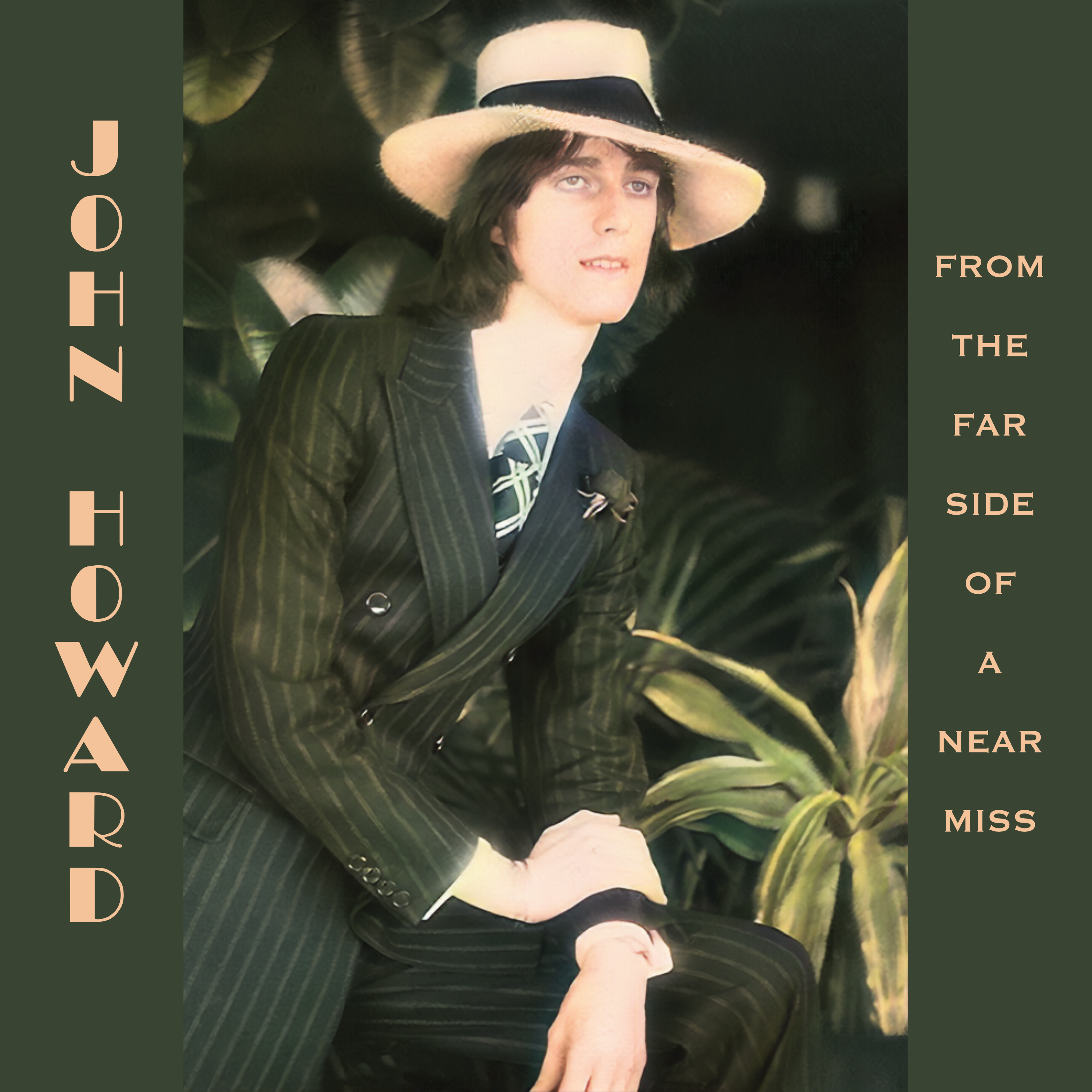
Following in the slipstream of his third and final volume of memoirs (In The Eyeline Of Furtherance) the singer-songwriter John Howard, with the wind in his sails, is back with yet another album. But instead of the usual songbook formula this is a continuous one-track work of disarming, gentle brilliance that runs to over thirty-five minutes.
You could say it was a return to Howard’s long form songwriting experiments of 2016 and the Across The Door Sill album, or perhaps even a reaction to (one of his heroes of the form) Bob Dylan and his Boomer odyssey ‘Across The Rubicon’, which more or less charts an entire epoch. Howard is a bit younger than Dylan of course, but both artists seem to be making some of their best work at this stage in their lives: uncompromising and unburdened by expectation or the need to suck up to fashions, labels, even the public they share an envious position. That Dylan mini-opus only lasted a mere seven-minutes in comparison, whilst Howard’s grand effort runs and runs, covering as it does a lifetime as a proxy soundtrack to his series of autobiographies.
Far more melodious than his hero’s reflections, this scrapbook photo album reminisce features Howard’s signature balladry-troubadour and stage musical verve of poetically candid prose, sung both wistfully and with a certain yearn.
Love is all though as Howard sets scene after scene, analogy after analogy; reconciling his past to a watery-mirrored piano-led score that’s constantly moving, picking up suffused strings, Dylan’s harmonica, a bucolic burnished harpsichord, a planetarium mood piece starry synth and light dabbing’s of congas and shaker. In what could be a reference to his own semi-cover version album Cut The Wire, there’s a hint of the Incredible String Band and also Roy Harper about this extended performance; especially Howard’s version of the former’s ‘In The Morning’. Later on it’s a lilt of The Beach Boys, bobbing on the “ripples of forever” line. Yet it’s unmistakably a John Howard sound, a lovingly executed piece of songwriting that more than holds its own across thirty-five minutes plus of ebbing drama.
But this is also a two-way conversation with Howard playing both sides of a long affair; the part of old lovers and new, friends, acquaintances and family, their words echoing now in the mists of the time that’s left. Dylan, that recurring idol, acts as a silent partner in one such discourse, as Howard sings about artistic integrity and his inspirations, a pantheon of uncompromising doyens. And in that same particular passage we also have Monroe and the Fab Four popping up; a Hard Days Night Beatles name-checked in what is both a celebrated yet fraught with delusion and remembrance chapter on this long winding road.
I particularly enjoyed the more salt-of-the-earth café scene diorama; Howard in voyeuristic mode describing a very unlikely cast, using both a kid who’s reading a Russian literary titan and a priest faraway in reflective thought (perhaps regret) as conduits for naming even more idols and favourites: “The kid who’s reading Tolstoy, listening to The Rolling Stones; I can hear old Jagger’s laughter floating from his phone.” Great lines by the way. The priest is “remembering Bowie’s Low”, which could of course be a reference to the same priest featured in the lyrics to ‘Five Years’ now contemplating a life that’s perhaps not all it seems.
Addressing, redressing whilst swanning through fantasies of a swish Ritz, 5th Avenue and Caesars Palace, imaging an alternative stratospheric career trajectory, headlining the Albert Hall, Howard takes us on a rolling, fluctuating journey through of his thoughts, dreams (realized and abandoned), regrets and hurt. By the end of this epic piece the final phrase, sung in a lasting glow, says it all: “It simply is what it always was”. Dylan couldn’t have put it much better.
An ambitious undertaking, From The Far Side Of A Far Miss is the work of an artist still willing to take chances and explore. Whilst his peers rely on the back catalogue, or drum out the same music they made over fifty plus years ago, Howard seems entirely comfortable in his own skin as a wiser yet still spritely young-at-heart artist composing music on his own terms. Fresh new introspections, concepts abound as he shows there’s still so much more to share and create.
Yara Asmar ‘Home Recordings 2018-2021’
(Hive Mind Records) 16th September 2022
The latest discovery on the Hive Mind radar emanates from Beirut, with the serialism and tonal atmospheres, ambient and minimal semi-classical melodies of Yara Asmar.
In a tumultuous climate, referenced in a sampled conversation piece on ‘Is An Okay Number’ and in the unsaid but moody reflections and vaporous drifts that push out into the unknown and untethered, the twenty-five year old multi-instrumentalist, video artist and puppeteer manages to often leave the earthly mess of a region in crisis and float out above the city.
From an airy viewing platform we can identify swirls, waves, gauzy veils and echoes of the concertinaed (courtesy of Asmar’s grandparents’ accordion), tubular metallic rings and tingles (that will be the metallophone), a serious but graceful piano, a music box, hinges and searing gleams and a beatified magical spell of Christian church liturgy. The latter source was recorded by Asmar from church hymnal services around the Lebanon; transduced into the hallowed yet otherworldly and mysterious, given a gentle waltz-like ghostly quality and only sense of a presence. A reference to country’s much troubled religious turmoil? The art of remembrance? Spiritualism? Or the familiar sounds of an upbringing? Whatever the reason it sounds both equally as ethereal, as it does supernatural: passages into other realms.
Tracks like ‘We Put Her In A Box And Never Spoke Of It Again’ are almost lunar in comparison to those hymns; lending a moon arc of Theremin-like UFO oscillations and cult library cosmic scores to this set of peregrinations and field-recordings. Yet for the most part this is a truly dreamy, translucent and amorphous album of delicate classicism, explorative percussion and ambient; an ebb and flow of reverberations and traces of moods, thoughts that literally floats above the clouds and out beyond the Lebanese borders. These home recordings recorded onto cassettes and a mobile phone capture something quite unique, in what are the most unique of times.
Valentina Magaletti & Yves Chaudouët ‘Batterire Fragile’
(Un-Je-Ne-Sais-Quoi) 23rd September 2022
Is it performance art or just performance? Probably both as the lauded drummer extraordinaire Valentina Magaletti once more sits behind the artist Yves Chaudouët’s conceptualized porcelain drum kit.
If you follow either of these artists then you’ll know that this is the second installment of recordings to be taken from the original project back in 2017. Conceived by the painter turn multimedia artist Chaudouët as an exploration in texture and friction, wood, metal and rubber were all added to the porcelain kit; the effects of which, in the hands of such an accomplished musician traverse the concrete, avant-garde, art rock, breakbeat, the classical and freeform and dark jazz.
It’s been a couple of years since I last featured the highly prolific composer/producer and percussionist Magaletti, featuring her ‘tropical concrete’ communal with Marlene Riberio, Due Matte. In this space Magaletti continuously rattles, rolls, skids, skiffles, dusts and lays spidery tactile rhythms and strokes down as mooning, wailed and frayed bowed primal supernatural atmospherics stir.
We could be in Southeast Asia, Tibet or West Africa, even the Caribbean with passages that sound like steel drums bouncing away. We could also be in a subterranean chamber as resonating echoes of this tinny, metallic and deadened kit ricochet of the walls. Reductionist theatre, ceramic jazz, a paranormal drumming séance, the mood isn’t always easy to gauge. But as experimental as it is Magaletti is constantly rhythmic throughout; switching yet always hitting a beat, and even in some parts something that resembles a groove. An exercise on concept but also percussive, drumming performance, this collaboration straddles both the art and musical camps to bring us something quite different yet always engaging, interesting and virtuoso.
Hi, my name is Dominic Valvona and I’m the Founder of the music/culture blog monolithcocktail.com For the last ten years I’ve featured and supported music, musicians and labels we love across genres from around the world that we think you’ll want to know about. No content on the site is paid for or sponsored and we only feature artists we have genuine respect for /love. If you enjoy our reviews (and we often write long, thoughtful ones), found a new artist you admire or if we have featured you or artists you represent and would like to buy us a coffee at https://ko-fi.com/monolithcocktail to say cheers for spreading the word, then that would be much appreciated.
ALBUM REVIEW/Dominic Valvona

John Howard ‘LOOK! The Unknown Story Of Danielle Du Bois’
(Kool Kat Musik) 11th March 2022
Depending on how you measure success of course, you could view John Howard’s career in two ways: the artistic kind (which is really the only one that counts at the end of the day) and the stardom kind. Failing in the later stakes after the damp squib that followed in the wake of the piano-player-songwriter’s 1975 debut on a major label, Kid In A Big World, John’s career hit the rocks; restricted on various occasions by a both idiotic and sympathetic cadre of managers, publicists, producers, labels and well-wishers. All to no avail.
However, through a myriad of anecdotal relayed projects (all written down by the raconteur troubadour, so far, in three volumes of entertaining autobiography) continued across the 70s and 80s, John had to wait until the noughties to finally pick and choose his projects, and to work with whom he wished: on his own terms. Arguably more successful and creatively on fire now than he ever was in the heady heydays of the 70s, he’s enjoying himself; able at last to bang out a concept album without the merest hint or resistance or scoff.
Personally, I’m still holding out for a sequel to the longform cerebral Across The Door Sill album from 2016, and a cover album of Beach Boys maladies, but until then, here’s John’s latest opus; arriving off the back of a rich prolific run of records.
Although billed as a musical concept songbook based on the fictional transgender character Daniel Wood, later to transition into the Paris cause célèbre Danielle Du Bois, LOOK! The Unknown Story Of Danielle Du Bois is a barely veiled sympathetic magnum opus to the late April Ashley. Perhaps amongst the first men to go through sex reassignment surgery at a time when it was so taboo that you had to fly out to a clinic in Casablanca, April’s own life story mirrors that of John’s fictional creation. But I also detect something of, parallels with, John’s own story of escape and search for identity; only allowed to live out his true homosexual spirit when moving away from home to London, where he thrived.
And so, this is a story of identity, rebirth and the lengths someone is willing to go to accomplish their dreams; to transition and discard a previous life, even if it comes back to haunt them: which it does. However, the projection of Daniel Wood is different to that inspired biography, with the boy wonder, despite various travails, a bullying WWII veteran father and a puzzled mother, making it big in the burgeoning music scene of the late 50s and early 60s. With his hit carousel and theatrical harpsichord furnished ‘Every Day A New Adventure’ wowing both national and international audiences alike, the bucks and offers come flooding in. There’s even talk of a Hollywood movie biopic. But Daniel’s journey ends here, as Danielle’s begins: the young pop star leaving it all behind, bound for that reassignment appointment at an exclusive clinic in Paris.
As Daniel is left behind to be dredged back up as a “whatever happened to?” salacious redtop exposé decades later, a new belle hot foots it around the Paris cabaret circuit, struts it out in style through the salons of the exclusive bohemian and arts set; later adored as a sensation and heroine of the LGBT plus community. In another age, able to live as they always wanted, the final deathbed dream sequence reimagines, in theatrical staged pomp, the school daze that never were; played out to a camp rock ‘n’ roll and glam musical accompaniment, a dying, fulfilled Danielle is whisked away by guardian angels to a fantastical classroom of the 1950s to perform an upbeat cast number as the woman she always knew she was.
Despite being of the times and almost overtly on-trend, this album feels like unfinished business; more the ambitious follow-up to Kid In A Big World then a follow-on from his recent catalogue. Musically too, this seems a 70s conceptual piece – not that there’s anything wrong with that – with shades of early Elton & Bernie, Gilbert O’ Sullivan, Bruce Johnston, pre-disco Bee Gees and even a tint of Russell Meal vocally.
In the linear story’s feather boa panache and garish swished parades through the French capital (and even namechecked alongside a soiree of French stars that includes Brigitte Bardot, Gainsbourg and references to the intelligencer: see Jean Genet) there’s a decadent air of Charles Aznavour. And although of course musically at opposite ends, there’s The Who’s Tommy mirror symbolism (both to gaze into but ultimately smash) going on, and the bookend framing of an overture and a reprise. ‘Last Night He Woke Up Screaming’ is the overture of a kind, moving through a slightly ominous nursey rhyme, a sorrowful church organ service, and a lushly swooned backstory; the reprise, ‘A Place In Time (After-ture)’ repeats that dissonant lullaby whilst revisiting musical passages, refrains and touching melodies from the entire album.
John does however evoke a more contemporary Rufus Wainwright on songs like the descriptive left banke accordion wafted goodbye plaintive ‘Good Day Daniel’, and on the cabaret celebration in the face of mortality and aging ‘Still Gorgeous’: a raunchy anthem that ‘brings down the house’.
Filled with brocade and gilded sentiment, chamber orchestrated swells and stage musicals, LOOK! The Unknown Story Of Danielle Du Bois shows a full gamut of variety; a showcase for John’s musicianship, arranging skills and song writing. A perfumed, lush songbook fit for the stage, John’s homage to his late friend shines a sympathetic light on not just April’s travails but those transgender trailblazers (and I’d put the late Jan Morris in that list) that struggled, and still do, to lead the life they should without recrimination and prejudice. All very platitude inducing, but correct nonetheless. John Howard once more has that magic touch, seemingly in his elements, the sagacious polymath enriching us all with his best work five decades on from his initial break. Not many artists can do that.

