The monthly Digest includes a clutch of accumulated short new music reviews and the social inter-generational/eclectic and anniversary albums celebrating playlist.
Kaloja ‘A Body Of Water’
(Artetetra) Released 19th April 2026
A new team-up on the kooky and experimental label of repute, Artetetra, with Paul Wilson aka F. Ampism collaborating with Jan Anderzén of Tomutonttu, Kemialliset Ystävät and Tarzana note to create an aquatic and liquid plopped and plonked world of molecule dances and the birthing of odd giddy, tweeting and high pitched lifeforms.
Wilson under his sonic disguise has form in this sphere having released the speaking, communicating, singing, gargling and mewling atoms and floated microscopic forms soundtrack The Vertical Luminous on Hive Minds last December. Now with a new foil, those explorations once more spring into action across a lush blossoming and air-bubbled immersion of a maverick biomorphic world populated by alien creatures, more familiar hints of nature and the shapeshifting.
A bubbly lava. A computerised floppy disc cut and shutter. An oriental dulcimer like glisten and slide of spindled microbiology. All this and the whistled high pitches and the uncurling of life on an adventurous roving and shifting sonic world of blips, the courtly, the dubby, the rhythmic, the lunar and most importantly, watery. A short review, but I’ve more or less summed up this blooming oasis of quirks and quarks, nature and the aquatic. Another recommendation if you are looking for something different in the electronic field of biospheric inventiveness.
Carol Maia & Jeremy Gustin ‘It’s Nice To See A Lake In Your Eyes’
(Hive Mind Records) Released 27th March 2026
Last heard on these pages adding her soothed vocal evocations to Wolfgang Pérez’s Só Ouço album last year (another quality release on the Hive Mind label), the Rio guitarist and singer-songwriter Carol Maia now brings that ethereal to woozily dreamy voice to the collaborative imaginings of the Brooklyn homed drummer, percussionist, songwriter and producer Jeremy Gustin.
Created long distance, between each artist’s respected studio bases in North and South America and pulling in a number of equally visionary players from those two scenes, this partnership effortlessly merges ideas and inspirations to create a dreamy realism. For It’s Nice To See A Lake In Your Eyes transports the listener to peaceable if sometimes haunted descriptive realms that amorphously dip into the new wave, the vaporous, pop, the psychedelic, the Fairlight era of the 80s, the drifting and most importantly untethered. And amongst those perimeters there’s mirages aplenty, the hallucinatory and poetic: at least in part, the album is influenced by Maia’s readings of Marcelo Ariel’s poetry collection, A água veio do sol, disse o breu. It offers up something both magical and cosmically fatalistic; here’s a sample, included both in the PR notes and on the bandcamp page:
The light of being is like water
it also came from the Sun
where all the planets want to enter
Within the Sun
Being is immobile
like the gratuitousness of an ecstasy
similar to breathing
Outside the Sun
Being is mobile
Time eternal
and chronological time
If still unfamiliar with both the orchestraters of this blissed and equally saddened affair, Gustin’s notable contributions include tours and recordings with such luminaries as Joan As A Policewoman, David Byrne, Marc Ribot, Norah Jones and fellow Hive Mind artist Ricardo Dias Gomes (who incidentally offers up a certain saddened Franco-esque vocal on the mid 90s Radiohead-like ‘Vou Ficar’), whilst Maia has been building up a reputation for herself on the contemporary experimental Rio scene. It’s from this same scene that Maia has enlisted the notable players and artists Frederico Heliodoro, Paulo Emmery and already mentioned Dias Gomes. From Gustin’s neck of the woods you’ll hear both the contributions of Will Graefe and Ryan Dugre. Altogether it makes for a promising if subtle partnership of dreams and visions; one minute almost in the Chanteuse mode, the other, evoking Flora Purim and Tom Ze or lost in an 80s pop haze and more chaotic jazz: Strangely, ‘Lake Of Meaning’ reminded me in places of 70s balladry Beach Boys checking into a miraged version of 70s Brazil.
From hollowed tubular trips into nature, to soft synth soundtracks conjuring up various horizons and scenes of personal and heartfelt escapism, love and loss, the acoustic and synthesized merge to complete a poetically mesmerising and soulful work of art. Ramon Farran & Robert Graves Olive Treemeets Arto Lindsey in a supple, chimed, tubular and tinkled spellbound experiment. A fantastic album in short, worthy of your support and better still, money!
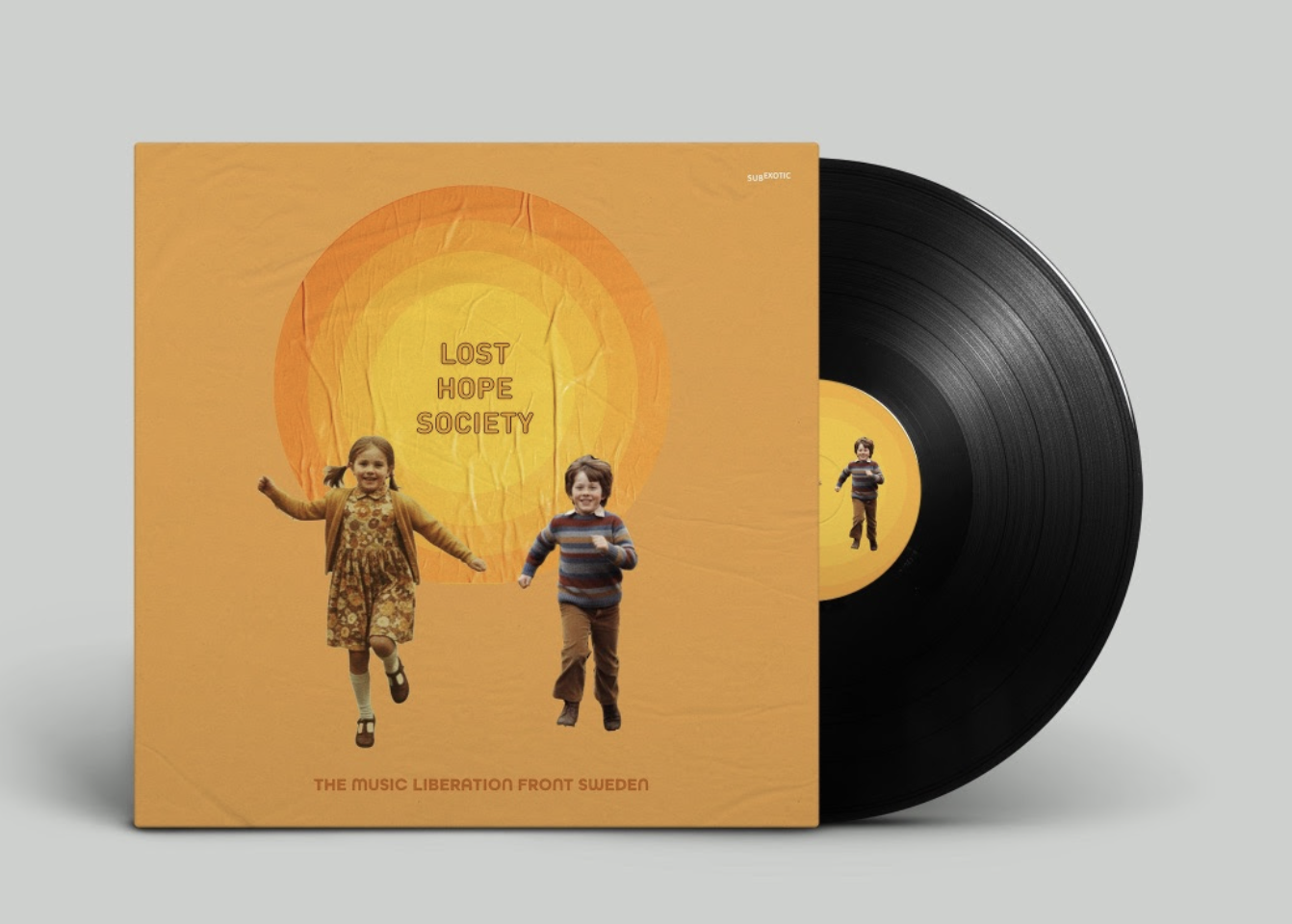
The Music Liberation Front Sweden ‘Lost Hope Society’
(Subexotic) 24th April 2026
Emerging this month from out of the Subexotic portal, a refreshing call for compassion; a shout out for all the “nice people” missing from the high anxiety era of individualism, community and social detachment. Content at their lot, with no fear of missing out on the next TikTok generated bullshit, or envious of their neighbour’s lifestyle, the Portsmouth artist Michael Evill cranks up the generators, oscillators and apparatus and plugs in various instruments under The Music Liberation Front Sweden guise to venture forth into an occult musical world of vaguely familiar evoked inspirations and influence from the 70s, 80s, 90s and the now.
The Lost Hope Society isn’t quite as resigned as it sounds, lingering amongst a soundtrack of library music, Kosmische, electrio-pop, the Gothic and sci-fi, and finding as it does composed passages of thought and resilience in the face of social media and technological-driven fear, discourse and selfishness. As vocalised throughout, both through female and male voices (sometimes the borrowed and collaged), there’s a constrained contempt and anger held against the forces of such division and upset whilst extending a near despondent hand to those that could make it all so much better.
In this sphere the quintessential queer, supernatural and esoteric sounds of Sapphire & Steel meet Mike Oldfield, Electrelane, Stereolab, Tomat, Belbury Poly and New Order. A cosmic toybox is opened up of the accelerated, motorised, dialled, crystalised, glassy and fizzing. Machines, synthetic operators and kit sit alongside guitar fx, interferences, spacy rays and the wilderness on an album that makes offers up both wishful thinking and daydreams of a more aspiring society of common decency and well, niceness.
Rave At Your Fictional Borders ‘Analogue Nomadism’
(Meakusma Records) Released 3rd April 2026
Despite the liberal ideals of a borderless world, the realities can be far messier and pressured, a strain even, when put into practice. But though politically a much more difficult promise to make, this multicultural paradise, it’s already been put into practice musically: for ages in fact.
Step forward in-demand drummer and bassist Dave De Rose and fellow trick noise maker and guitarist Marius Mathiszik of Rave At Your Fictional Borders, a troupe of sonic and musical nomads; a newly instigated and rearranged trio that now includes the drummer and vocalist Salim Akki. It’s a sort of new formation, brought together for the group’s debut album proper. In keeping with the concept, ideas of leadership and instigation are amorphous, with no one in charge and ideas freely shared between whoever happens to be in the room at the time of the recording.
For the debut album, Rose and Mathiszik in pursuit of that same nomadic freewheeling spirit of musical adventure, were invited by Akki to take up a short residency at Essouri Jamal‘s newly built L’Bridge recording studio in the famous Moroccan city of Kenitra (for geographical fans of the site, that’s 40km north of Rabat). Tapping into that rich city’s atmosphere, its amalgamation of Roman, Phoenician, Portuguese and Spanish colonialism and its eventual Moulay Ismail liberated 17th century architecture, history and culture, the trio embarked on a spontaneous experiment of porous and mystical rhythm making. As with previous broadcasts from the troupe, the signature of these rhythms is varied; once more like a drum kit engine slipping and spluttering in a ricochet, stilted, skipped and wobbled staccato fashion, taking time to find traction and a groove amongst the alien, mysterious sounds and beds of the fx, loops and manipulations.
Provenance-wise we are dealing with a shadowy mirage bleed of Moroccan mysticism, various African rituals and alchemy, post-rock, post-punk, dub and darkened progressive-jazz. A hybrid world in which Idris Ackamoor and Sly & Robbie share room with Battles, Jah Wobble, BLK JKS and Tortoise. Or one in which you can hear a transformed vision of a chinking and glass raising Afro-party following on after a subterranean hallucination of Gnawa music and Ifriqiya Electrique. Akki’s voice is just as amorphous and bound to fluctuate between references to his own Arabian culture as to hoot and shout expressively in a language all of his own making over the beats, the deep vaporising and throbbed basslines.
With an avian menagerie of titles as the only guide (from long billed and long-limbed wading birds to warblers, ducks and hummingbirds), reflecting the diverse range of references, or cultures in the blend, but also their migratory nature, the listener is transported to vaguely familiar and yet often exotic shadowy worlds. Curiosity and improvisation culminate in a very modern sounding fusion of mystique and global inspirations; a fourth world of possibilities.
Morita Vargas ‘III’
(Hidden Harmony) Released 17th April 2026
Aligned with Hidden Harmony from the very start, the Argentinian producer and singer Morita Vargas now unfurls a generous offering of recordings created between 2014 and 2025 for that same label. A concept of futurizing almost familiar Latin sounds, rhythms, the sound of a signature Spanish guitar and ancestry with Argentina’s minimalistic club scene, electronic “avant-pop” and a transformative vision of aria opera is extended further to cover multiple experiences, soundscapes, suites of contemplation in the stillness of a South American desert range and ideas of sensory hallucination.
Both on a vaporous near lost in the ether and cinematic scale, Vargas uses allurement and the beckoning in synchronicity with the haunting. Simultaneously as diaphanous and cloaked in the vaporous, subtle industrial and metallic electronic drum padded sounds of the alien, the listener must beware that these tracks are as esoteric as they are dreamily birthed in touching and melodic synthesized beauty.
Permeating with often the most succinct of lyrics, Vargas’s voice is transformed, filtered, modified, taken down pitches and doubled-up to sound like either an apparition or a cosmic aria. Though there’s also passage in which Vargas near raps in a feverish modern pop manner or like a both kooky and disturbing child. That voice, constantly in a flux between effects and performance, is married to shuttered and shunting beats, subtle concertinaed dub, the manufactured sound of steaming valves, an anvil being struck, electro tremolo guitar reverberations, the dance of a puppeteer, coldwave and various percussive elements that recall ancient and very much alive pre-Hispanic colonised South America.
Zola Jesus, Grimes, Celestial North are the names that came into my head when listening and reviewing this minimalistic work of vocal, sound and rhythmic work. But with the Latin influences, the call and immersion of the Argentine scene, it becomes something far more unique and distinct.
Van Pool ‘Special Purpose Vehicle’
Released 15th April 2026
Everybody who follows the Monolith Cocktail should by now be familiar with the expletory, freely untethered and often squeezed until the pips fall out saxophone playing and accompanying electronic manipulations of the prolific Andy Haas: an artist whose career began as a Muffin in Martha’s new wave outfit of the late 70s to his work with Meg Remy’s ever expanding U.S. Girls troupe and his myriad of solo and collaborative offerings born out of the New York scene. Appearing this month as part of just one of those many projects, the Van Pool troupe are back with another “unburdened” near freeform and untethered improvised album that stretches the boundaries of live music further.
Whilst the lineup seems reasonably fixed, joining Andy on the quartet’s latest album Special Purpose Vehicle (a reference or poke at the legal term created by a parent company or individual for a specific, restricted business purpose, such as holding property assets, project financing, or risk isolation) are the guitarists Omer Leibovitz and Kirk Schoenherr, and the drummer Layton Weedeman. As a fifth wheel, and so far, featured on at least the last two releases, is bassist Ari Folman-Cohen.
Together, they conjure up a kind of live-feel fusion of post-rock, rock-jazz, grooves, the playfulness, prog, freeform and almost psychedelic across five performances of varying moods, speeds, and feels. Not so much workouts, but the rhythms are there as the band strike up passages of climatic breaks, splashes and the funky. Haas varies his input from the melodic to the vibrato, and from the squeaking to the near mizmar-like, recalling everyone great and cool from Ivo Perelman to Evan Parker and Anthony Braxton. Both Leibovitz and Schoenherr combine elements of Zappa with Fred Firth and Bill Frisell, whilst Weedman sends out shimmered waves of cymbal, bounces seamlessly around the kit and provides the grooves in partnership with Folman-Cohen’s placed and flexing bass lines and noodles.
There’s a mix of action and the more hallucinatory: the sunny disposition of ‘Sunset Clause’ seesthem play around on the sunspots cast on the boardwalk; a dream imaginary release on ECM by tortoise perhaps. ‘Off Balance’ almost starts like a Floydian meets Pat Metheny mirage, whilst the opener ‘Limited Exposure’ has a real kick of late 60s West Coast rock meets jazz-fusion.
Both bent out and in shape, the band strike up a grooving and soulful exploration of ideas and spontaneous interactions. Van Pool will be well worth catching live in the flesh, which apparently is happening in June after a delayed set of circumstances prompted by Covid. Anyway, the album is available via their Bandcamp page, which I recommend you seek out.
___/The Monolith Cocktail Social Playlist Vol. 105___
The Social Playlist is an accumulation of music I love and want to share, with tracks from my various DJ sets and residencies over the years and both selected cuts from those artists and luminaries we’ve lost on the way and from those albums celebrating anniversaries each month.
In the latter camp we have the following anniversaries to mark:
Stax R&B super power duo Sam & Dave’s Hold On, I’m Comin’ LP is 60 this month.
Garage progenitors, the Nuggets kings of mid-sixties scuzz sike, The Seeds self-titled LP is also 60 this month and still sounding every bit as fucking powerful, freaked and fuzzed-up.
SPOTLIGHT: The Rolling Stones’ Aftermath is another 60th special this month, whilst Black And Blue is 50.
As a light-hearted chide at their rivals, The Rolling Stones, who’d just released Aftermath, when the Beatles were themselves stumped for an album title Ringo Starr chimed in with “After Geography”.
On a roll, literally, the Stones fourth studio album was a major artistic breakthrough. Wholly consisting of original material, the 14-song suite convinced the world of the band’s talent.
What’s not to like! Strutting punk number rock hits, Under My Thumb, sit side-by-side with the enchanting Elizabethan lamented, Lady Jane, whilst the epic rousing Out Of Time (covered brilliantly by Chris Farlowe) and ode to Nembutal-popping housewives, Mothers Little Helper, are two of the best songs the Stones ever put on wax. This is the Stones really breaking the mould and upping the ante as they strive to compete and go head-to-head with their Mersey rivals.
Rather than head back out onto the open road to promote It’s Only Rock ‘n Roll, our effete troubadours continued to record whilst the going was good; much, as it turned out, to the exasperation of Mick Taylor who decided to call it a day.
The leading single from their back-to-back Musicland studios recorded album, Black And Blue – an LP remembered more for its initial S&M bruised and battered female model fronted campaign, than for the music -, ‘Fool To Cry’ has all the traits of a Philly soul balled, as reworked by Bowie on Young Americans.
Both this oozing sentimental number and the album had a gestation period before being released in 1976; tour commitments and the release of a compilation prolonged the wait.
During recording sessions, the band auditioned a wealth of guitar talent that included Harvey Mandel (Canned Heat for a while, and John Mayall) and Wayne Perkins (Alabama session man from the Muscle Shoals stable), as Taylor finally quit. Both made it onto various songs with Mandel playing on the final cut of Fool To Cry. Ronnie Wood, the former Faces lead guitarist and occasional stand-in for the Stones, eventually slipped into the permanent role; his baptism of fire being on the super group’s 1975 “Americas” tour (one that was fuelled “purely” by Merck’s pharmaceutical “grade A” cocaine, or so Richards claims).
Rumours run wild of course, but Steve Marriott and Peter Frampton were, at least, muted as possible replacements for Taylor, though a lack of collaborating evidence and scant details can only consider these choices as wishful thinking.
Easily the best track from the, largely berated LP (or as Lester Bangs surmised, “This is the first meaningless Stones album, and thank God!”), Fool To Cry is a more confident and mature record, which seemed ill at odds with their quasi-funky and lumbering black-rhythmic postulations and posing.
The Penguin Café Orchestra’s highly influential LP Music From…. is 50 this month.
And finally this month, Tokyo Police Club’s rambunctious millennial indie LP A Lesson In Crime is 20.
Obituaries wise this month, the multi-instrumentalist, Traffic co-founder, session man extraordinaire David Mason passed away in the last week. The CV is impressive to put it lightly: George Harrison, the Rolling Stones, Jimi Hendrix, Eric Clapton, Paul McCartney and Wings, Michael Jackson, David Crosby, Graham Nash, Steve Winwood, Fleetwood Mac, Delaney & Bonnie, Leon Russell, and Cass Elliot. Read it and weep! He also fitted in a solo career, backed on his debut single’s B-side no less than by the visionary Family – Mason produced (yes, another string to the widest bow in music history) the much-forgotten band’s Music In A Doll’s House. Just the credits could fill this month’s post. But I’ve chosen a popular Traffic tune and one from his 1973 solo LP It’s Like You Never Left.
As the old trope and saying goes, you can’t libel the dead. I’m not willing to test that theory, but Afrika Bambaataa’s legacy is obviously and quite rightly now overshadowed by the numerous allegations of sexually molestation during his career as one of the leading or most famous icons and progenitors of Hip-Hop culture. Whether it was really one of hip-hop’s dirty secrets, numerous rappers and victims came forward a decade or more ago, and in recent times, with at least one case making it to the civil courts (a case Bambaata lost after failing to appear).
The former street gang tough turn Zulu Nation syndicated pioneer’s mark on the scene is undeniable; firstly, by convincing former gang members and adversaries to exchange aggression and territorial wars with the burgeoning loose culture of breakdancing, graffiti, rapping and DJing during the first golden age of the 70s; and secondly, by marrying the German precision of Kraftwerk futurism with that of Afro-futurism and New York’s emerging street trends to create Electro – although many on the West Coast would disagree, claiming they invented it years earlier. His presence and influence spread through a united message, leading to collaborations with as unlikely bedfellows as John Lydon and James Brown. Planet Rocking, his stamp on the generation X culture is undeniable; even with such dark heinous shadows cast.
Len Deighton died a while back, and this is the first opportunity I’ve had to mark his passing. In my estimates a far better writer than many of his spy, clandestine enterprise rich peers, and prolific with it. Read not only his Harry Palmer series but all his singular wartime riches too: Bomber, XPD, Goodbye, Micky Mouse and MAMista. Phenomenal loss to the world of publishing. But I leave you with John Barry‘s cerebral, spindled score to one of Deighton’s most influential and successful books and films, the Ipcress File.
The rest of this’s month’s playlist is handed over to an ever-eclectic, inter-generational number of tunes from the Flavour Crystals, Maitreya Kali and Craig Smith, Krumbsnatcha, If, Mike Hurst, The Frost, Pharoah Sanders, Eye Q, Bibi Ahmed and more….
That track list in full::::
The Seeds ‘Mr. Farmer’
Tokyo Police Club ‘Cut Cut Paste’
The Golden Palominos ‘Clean Plate’
Baby Cool ‘Everything’
Eye Q ‘Making Life Out Of Music’
Sam & Dave ‘Ease Me’
Krumsnatcha ‘Remarkable’
Afrika Bambaata & The Soulsonic Force ‘Renegades Of Funk (The Latin Rascals Remix)’
If ‘What Can A Friend Say’
The Rolling Stones ‘I Am Waiting’
Maitreya Kali & Craig Smith ‘Color Fantasy’
Traffic ‘Hole In My Shoe’
The Rolling Stones ‘Fool To Cry’
Penguin Café Orchestra ‘Zopf: From The Colonies’
Flavour Crystals ‘He Screamed as He Fell to the Soil’
Bibi Ahmed ‘Sef-Afrikia’
Steve Gunn ‘Shape of a Wave’
John Barry ‘The Ipcress File’
Pharoah Sanders ‘Little Rock Blues (Live Montreal ’84)’
Mike Hurst ‘Place In The Country’
The Beach Boys ‘Holy Man (with Carl Wilson Vocals)’
Floating Action ‘Diamond Store’
Dave Mason ‘Misty Morning Stranger’
The Frost ‘Black As Night’
Terreno Baldio ‘Despertar’
Peter Michael Hamel & Alexander String Quarter ‘String Quartet No. 3: II. Mu-ak’
Neon Kittens ‘Cocaine Lawyer’
Novelistme ‘Huh Huh Huh’
King Kashmere & BVA ‘I Smoke’
Time Zone (Bambaata and John Lydon) ‘World Destruction’
BRIAN ‘BORDELLO’ SHEA’S REVIEWS ROUNDUP – INSTANT REACTIONS.

The Conspiracy ‘VI’
Album (Metal Postcard Records) Released 10th March 2026
The Conspiracy are a fine band: have I have already written on many occasions about how under the radar they are, and that they deserve much more attention than they get. Why, I never know. Well actually I do, it’s all down to finance and the mechanics of getting featured in the larger blogs and magazines and appearing on the major radio stations as if the label/band can afford the pr and plugger fees you are much more likely to reach the audience. If you are willing to pay for an advert in a magazine you are more likely to get a review in said magazine. The music business like life is unfair and sometimes the more talented and deserving get overlooked.
But onto the album. VI is a long album, and if issued on vinyl would be a double at least. 18 well written songs that sparkle and rock and chime with the history of the great British bands: be it the Kinks or Billy Childish or Julian Cope or XTC or many others. The Conspiracy don’t hide their influences, just cherish them. They emit a wonderful aural montage of the psychedelic: “Rainbow Prism” if released on the Fruits De Mer label would have picked up many a play on BBC 6 Music evening shows no doubt when released as a single some months ago, post punk the catchy as hell “Tick Tok” part Fall part XTC another song that deserves to be lighting up national evening radio. The wonderful song “England” has the spirit of Ray Davies running through it. VI is an album that is full of songs of songwriting suss and love and really does deserve to be given a chance to be heard by a wider audience.
Stephane C. Cotti ‘A Love Absolute’
Album (Wool Recordings) Released 8th April 2026
Without sounding like an Amazon, Spotify or YouTube recommends thingy, but if you like Nick Drake, Tim Buckley and John Martyn you might very well enjoy this lovely album of mostly acoustic loveliness; an album of lostness and wholesome sadness, a beautiful album of warm folk delight.
A Love Absolute is one of those albums that the more you play the more you will sink into its invitingness and will soon become one of those albums that will soon settle into your regular routine of soundtracking your evening of basket weaving or playing chess or playing Pacman (I’m at the cutting edge of video games as you can tell; are they still called video games?!|). Anyway, however you spend your evening this album will only add to it in a good way.
Dewin ‘Dan y Dderwen’
Album Release 1st May 2026
Derwin weave together a rich tapestry of pop, psych, folk, jazz and Rock to give an enjoyable if unusual listen and comes across like a strange Welsh musical. I not being able to speak Welsh have not a clue lyrically to what is going on but that does not in any way spoil the album for me as the melodies adventure and music more than makes up for it. And let’s be honest, Welsh is just a beautiful sounding language; it really does not take anything away from it, and anyway, the lyrics could be shit and that could spoil the listening experience. I have also discovered that Cheesy Nibbles in Welsh is in fact Cheesy Nibbles. So, you live and learn.
Ex Norwegian ‘I Want To See The Bright Lights Tonight [live]’
Single/Video (Think Like A Key) Released 29th March 2026
What I like about this single is the old time good old-fashioned band playing a cover in the bar/club vibe, which is probably because that is what it is and that seems to be becoming more of a thing from the past as venues and bars close at a frightening rate. How far away are we from an AI band playing in a virtual bar I do not know, but Ex Norwegian, a band who have written many a fine song in their time, return with this fine rendition of the Richard Thompson classic showing that there is still joy and excitement to be found in real people picking up real instruments and soundtracking a good night out.
Frog ‘Dark Out’
Single (Audio Antihero) Released 17th April 2026
Dark Out? It certainly is. In fact, it’s dark in and out. We are surrounded by clouds of darkness that engulf us like a mythical sponge of darkness. These are the darkest times I can remember but at least we have the rather lovely new single from Frog to tap our toes to; a quirky stroll through McCartney-like melodies. In fact, has darkness ever felt so light?! Dark Out is like submerging yourself in a bath filled with your favourite flavour ice cream and watching yourself sink in the mirror with a smile on your face.
Peanus ‘Peanus EP’
EP (Metal Postcard Records) Released 1st April 2026
Imagine if you will Flight Of The Conchords overdosing on Julian Cope’s masterwork that is the Skellington album and playing it to Royal Trux in an ironic manner. If you cannot imagine such a thing then just listen to this fine three track EP and it will do the imaging for you. Yes, fun abounds on this short and sweet exploration into the realms of lo-fi and rock ‘n’ roll musical thrift store sounds for the clinically disadvantaged.
Robertson ‘Robertson’
Album (Futureman Records) Released 20th March 2026
Robertson is the debut album from the father and son duo and is a rather splendid musical affair; harmonies, chiming guitars and melodies float on a breeze of pure nostalgia. For my dear friends, 60’s folk rock and psych collide in the most perfect way, embracing 50’s pop and 80’s/90/’s indie guitar pop exuberance and even the Flying Burrito Brothers like country rock on the rather lovely “Sticking Around” and wrapping them in a warm comfort blanket of hope peace and light in these days of hate and war.
Robertson once again proves the magic and power of the greatest of all art forms, to turn off and escape real life and surf the stream of unconscious bliss especially when performed with a true love and grace for the music songs they have written and performed so skilfully.
St Johns Wood Affair ‘Memory Lane’
Track (Think Like A Key) Released April 3rd 2026
“Memory Lane” is a fine slice of nostalgic aural pie, a song of sixties melodies and chiming guitars and wistful tear-stained john Lennon spectacles. A song taken from St Johns Wood Affairs rather excellent second album “St Johns Wood Affair 2” and an album to put on your albums to listen to list and indeed Memory Lane is a rather wonderful place to wander down.
Xqui ‘Nocturnal Drift’
Single (Wormhole Records) Released 24th April 2026
If Moody introspection atmospheric drone is your thing, then you could do worse things than check out this ltd 7inch single from Xqui as it is one of those things that lives up to title, ‘Nocturnal Drift,’ as it sounds like one is drifting nocturnally or in fact nocturnally drifting. It’s a track that is as far removed from a rerun of Top Of The Pops as one can imagine, so if you yearn a Doolies rehash with shiny jump suites and tinsel filled memories of yester year then maybe this is not for you, or then again it could well be as I am more than fond of Doolies like behaviour and am somewhat taken with this atmospheric drone beauty.
Perusal #78: Irmin Schmidt, Whitney Johnson, Lia Kohl & Macie Stewart, Golden Samphire Band…
April 13, 2026
A world of sonic/musical discoveries reviewed by Dominic Valvona. All entries in alphabetical order.
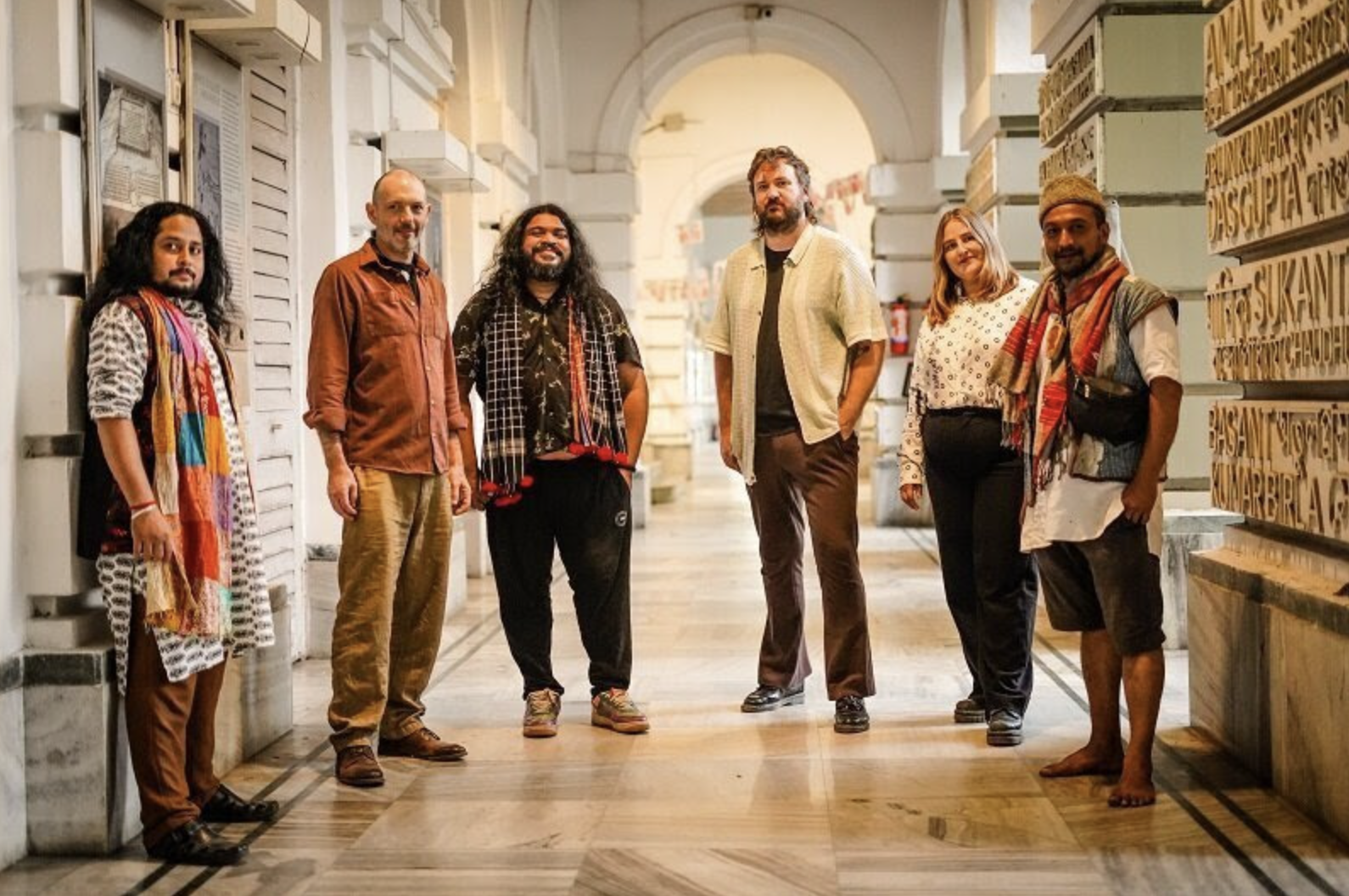
.at/on ‘ANTI-RAVE’
(Adventurous Music) Released 5th March 2026
The first of two experimental sonic releases from the Adventurous Music platform this month (see Lauré Lussier’s symphonic album featured further down the page), the mysteriously coded artist behind the .at/on guise has chosen to limit themselves, apparatus wise, with their newest release.
Building a sci-fi, alien sound world out of modified and abstracted component parts, steel works machinery, accelerated oscillations and bounced sheet metal Techno beats, .at/onmanages to create a whole universe out of the anti-rave named noise box/drum machine of the title. This free patching, fully modular synth in a compact form piece of kit is then sampled, re-sampled and processed until the desired effect is made: a sort of space-bound drifted vision of Bernard Szajner and Basic Channel.
The title by the way, and emphasised in the available scant info, in no reflects any political or musical stance on rave music; merely, as I’ve shared already, the name of the box of tricks used to produce this factory of the galvanized, the sometimes unsettling, and the magnetic.
From such minimal equipment a sonic universe is created, which often veers into stripped-down techno and even d ‘n’ b. From a prolific label and hub, another intriguing and cool experiment in the basics of electronic sound crafting.
Golden Samphire Band ‘Dream Is the Driver’
(Wayside & Woodland Recordings) 17th April 2026
For many years the brothers Hanscomb (that’s Mik and Rich) of Junkboy fame have idealised a triangular spread of counties, from Essex down to both East and West Sussex through their signature trade of harmonic poetic and descriptive lyrical forms of instrumentation. This soundtrack is embedded within a magical zen-like quality and an appreciation of English psych-rock, folk and the more exotic allure of Tropicália. The brother’s main creative vehicle has been augmented by the odd vocalised appreciation or encapsulation of these Southern English surroundings; that’s the pier dotted coastline of Brighton and its porous neighbours, the chalk figure decorated hillsides and valleys left behind by the Victorians and our more atavistic neolithic ancestors, and the mythologized woods and forests.
As an idyllic portal, or a form of escapism from the sorry state of the world, the mundane and divisive noise, the brothers weave more from that musical timeless palette with a new project. The Golden Samphire Band ordained trio ropes in former Junkboy foil Hannah Lewis, who’s soaring vocal range of folk-like arias and romanticized pleadings, and longed highs was last heard on the rightly applauded and well-received Littoral States album, back in 2023. Lewis’s range is allowed to a free reign and to wander on the trio’s debut songbook, with the ethereal, the pastoral, the near reverent (amplified by the undulations and foundations of stained class anointed organ and near venerated harmonies) and the sentimental.
Reflecting the wild coastal flower of the title, precariously clinging in full tufted bloom and beauty attached to sea cliffs or springing forth from salty marshes, the band wax both lyrical and in a sometimes more sombre mood about their various interactions with the landscape; from the sun-blessed pursuit of gardening to embracing the Japanese mindfulness art of Shinrin-yoka (in essence and translated into our own vocabulary as “forest bathing”; to take in the atmosphere as it were on a spiritual level). But the niggles and pains of the long commute, forced to live miles away from the job and places you grew up in because of affordability in one of the UK’s most expensive stripes of coastline, are drawn upon too; a disarming descriptive and beautifully conveyed point is made about this on the willowed and fluted, almost 90s-female-led indie hinted and Latin-soul lilted ‘(We Wunt) Travel Further’. Less a celebration of the age of steam and the electrified railways of an idealised England, and more a discontented poetic discourse on the commuter’s woes, plagued by a never-ending cycle of cancellations, engineering works and increased ticket prices. With more than a recurring use of shakers and such, the rhythm of the train is itself integral to the journey being made back and forth across the scenic borders. But if you want something truly sombre and inevitable, the album’s sympathetically and disarmingly handled eulogy to growing old and spending your last days in the care home system, ‘Bid Farewell’, brings a certain dignity, resplendent with some light strings and a Spanish flourish, to the crisis in caring for the elderly.
Elsewhere, aside from echoes of Hampshire & Foat, Tudor Lodge, Fortherringay, Pentangle, Judy Collins, Shelagh McDonald and Jerry Yester, songs like the opener ‘Chalk Space’, evoke eighties Athens, Georgia meets the pastoral backdrop of English folk-rock and Baroque-psych – imagine Peter Buck’s mandolin spells of Green, but also his hints of his jangle on earlier R.E.M. LPs from the mid 80s. There’s also a loose sense of early 90s-indie, and just a passing fancy of folk-inspired SFA to be detected.
But what really makes the album, lifts it, is Lewis’s rising scales, personification of each subject and ability to modulate her incredible range over the versants, the lines of woodland trees, the coastal pathways and lapping waves.
A truly dreamy combination that makes for a finely woven and articulated tapestry of South Coast mirages, soulful ruminations, self-help and natural bathing, the Golden Samphire Band excels on a debut stepped in topographical allurement, magic and sensibility. In my book, a resounding collaborative success story.
Whitney Johnson, Lia Kohl & Macie Stewart ‘Body Sound’
(International Anthem) Released 20th March 2026
A promising collaborative trio of experienced and multifaceted explorative players, pulled together under the International Anthem label banner, the potential of a Whitney Johnson, Lia Kohl and Macie Stewart project is always going to be one worth investigating and savouring. Between them more or less covering every nuance and expansion of the experimental and the avant-garde neo-classical scenes, the electro-acoustic and beyond, all three inspired players, composers and, in some cases, teachers pull together their talents and resources for a debut project.
But first, a run through of each participant’s CV.
Perhaps one of the most prolific collaborators of recent years, across several mediums, the multi-instrumentalist, composer, songwriter and artist Macie Stewart has come to represent a flourishing, explorative contemporary music scene with multitudes of connections and threads. Apart from projects with choreographer Robyn Mineko, Sima Cunningham, and the Pacific Northwest Ballet, Stewart has become a stalwart of the International Anthem family, contributing and helping steering releases by Rob Mazurek, Bex Birch, Damon Locks, Makaya McCraven and Alabaster DePlume. On top of this, Stewart has also collaborated in a duo project with Lia Kohl. Kohl proves a symbiotic foil in this latest project, having experimented within the spheres of sound art, sound installation and the extemporised through the use of the cello and an apparatus that incorporates synths, field recordings, toy instruments and radio. Projects are extensive and lengthy, with various works and performances at the Art Institute of Chicago, the Museum of Contemporary Art Chicago, The Renaissance Society, Union Station Chicago, Eckhart Park Pool, and Big Ears Festival. And she has also created sound installations for Experimental Sound Studios’ Audible Gallery and Roman Susan Art Foundation. The credits roll on and on.
Finalising the ranks of this trio is the equally prolific musical collaborator and music professor (currently assistant prof of Art and Technology/Sound Practices at the School of the Art Institute of Chicago) Whitney Johnson. Another Kohl collaborator on the Chicago scene, Johnson also goes under the pseudonym of Matchess, releasing music on the Drag City label. A violist equally adept at composing and performing on an apparatus of hardware, Johnson produces sound and music in the psychoacoustic idiom and beyond. The label website has the full CV, but it includes ‘recent performance-installations FIAT (2025, Indexical, Roulette Intermedium and 2023, Forecast Platform Berlin), The Tuning of the Elements (2023, Renaissance Society of the University of Chicago), Death in Trafo (or, The Crater) (2023, Logan Center for the Arts), Huizkol (2020, Lampo), and Fundamental 256 Hz (2019–2022, worldwide) which considers the possibility of brainwave entrainment, an alternative healing technique using binaural beats to induce relaxed or energized mental states.’
A multi-diverse lineup of possibilities awaits the listener, prompted by the shared couplet descriptive titles of the album; a language waiting to be deciphered across eleven strings-related deeply evocative suites: some sombre, others near esoteric and others lived. The impressions of these elemental titles and often droned or plucked interactions recall the neo-classical, the avant-garde, the descriptive, the near abstract but also melodious. An album of simultaneously thoughtful and mysterious meditations enquires and ruminations, the trio use both their signature stringed instruments and their voices to elicit abstract moods, descriptions, song and a rectification of the various moods they attempt to stir up.
Theatre, near veiled arias and sombre tones fill the space with ceremony, touches of the blues, the sublime and near folkloric ritualistic. For amongst the most beautiful qualities of these emotive, evocative pieces there’s passages or moments of the uneasy and fabric textural torn.
Reference points could well include the Velvet Underground, Cage, some Krautrock even, but also La Monte Young, Harry Patch, Morton Feldman, Fran & Flora and Alison Cotton. And yet, this is a unique draw of resources, experiences and articulation of mirages, feels, subjects and descriptions that is this entirely of the trio’s own making. A chamber set suites for our times. Every play uncovers more magic, more depth, more interactive intuition and playfulness. But essentially this trio have successfully aligned, making good on their inquisitiveness nature and abilities to score the most abstract.
Lauré Lussier ‘The Orphana Symphony’
(Adventurous Music) Released 26th March 2026
The strap line being the “Orphana Symphony does not plead: she moves forward”, Lauré Lussier’s middle section vision (part of an eventual finished triptych of such experimental suites) progresses (in a fashion) across a mysterious series of mythologised and alien ruins and misty veiled atmospheric mirages.
The second of two Adventurous Music releases to make my roundup this month – from an extensive list of explorations and avant-garde studies facilitated by the label hub -, merges the electroacoustic with both older echoes of the classics and the contemporary, but also makes stopovers within the fields of analogue, the Kosmische, the new age, the avant-garde, the scuzzed, the theatrical, and the operatic. High drama and suspense also play a part on the Quebec author and composer’s symphonic work of evocative and more still movements.
As I already said, this is the middle section of a triptych framed vision; although each album exists, it seems, in its own right: not a moiety but rather a close sibling. Eighty minutes in length, and split into two, these lengthy pieces are shaped over the course by various continuous sonic and more melodic changes; from the rolling thunderous timpani, the ziplines and cold winds that blow across tundra’s, the fogged ship’s horn, to moments of transformed Bach and Beethoven and the early synth work of Michael Hoenig, Peter Baumann and Suzanne Ciani, right through to more modern composers as Noémi Büchi and Brian Reitzwell. And yet that’s not nearly enough names to drop, or references to describe this incredible set of suites. For this would make an amazing film or operatic piece, perhaps even a ballet, with the foundations and repeated refrains of orchestra striking up from out of those mists to score moments of suspense. There are also sheet music dances aplenty, the concrete sounds mixed with elongated and tubular metals, hidden sourced instrumental scales and the more familiar sorrowed or esoteric sounds of Eastern European classical music, the Greco and more wild climatic drumming sprees of action and chaos.
Inspired I’m sure from myth, from some ancient source, and from the classical (those who know more about it than me will detect echoes of everything from avant-garde of the last century to the Baroque and Prokofiev I’m sure). As playful as it is mysterious and courtly, The Orphana Symphony is almost undefinable, and a score without a performance: Arcadia in turmoil. I look forward to hearing the as yet tbc third and final album in the series.
Irmin Schmidt ‘Requiem’
(Mute/Future Days Music (Spoon)) 24th April 2026
Hot housed in both the Stockhausen and Ligeti systems and the more starched schools of classical composition, the future titan of German innovation and experimentation Irmin Schmidt chose, early on, to lose himself in the burgeoning reverberations of the late 60s American counterculture. Whilst taking part in a compositional competition in New York, Schmidt took a detour via the Chelsea Hotel: seduced in a manner by a city that hosted a rich and seedy underworld of pop art and the Neo-dadaist high jinks conceptualism of Fluxus; the musical score supplied by the burgeoning Velvet Underground, Steve Reich, Terry Riley and John Cage (all of whom were introduced to Schmidt during his sojourn in the city).
Tuned-in to the generational divide that saw Schmidt and his compatriots reject Germany’s past horrors and fanaticism, he returned from the States with a new outlook and mission. Initially influenced more by The Jimi Hendrix Experience than the avant-garde, Schmidt helped form, what was essentially, the acid rock band Can. Their debut album proper, Monster Movie, was a feverish rolling totem: part psychedelic west coast part Velvet Underground east coast, those exploratory jams were held and concentrated around the strange beat poetic vocals of the American – ‘lost in a foreign land’ – sculptor, Malcolm Mooney. Not until Tago Mago would Can really venture into their own worlds; shaking off the shackles of music history, creating as they did a unique esoteric sound, totally adrift and bereft of any obvious influence from outside their own deranged and genius minds. An integral part of that experience – and all the Cologne-based group’s releases – would be their talisman organ, keyboards, effects magnet and composer Schmidt, whose databank of tricks and dials pumped out creatively warped textures and fluctuating soundscapes of otherworldly and mystical magnificence and horror.
Much more than just an acclaimed and respected Krautrock band, Can were and remain perhaps one of the most reverential landmark groups of gifted players in the music annals. But it is Schmidt’s solo work, away from that supergroup, which is being spotlighted by Mute and Future Days Music (Spoon), released now in his, unbelievably, eighty-ninth year – Roedelius perhaps the only other titan of that period, now tiptoeing into his nineties, still creating new music.
Schmidt’s CV is just as extensive and influential when spilt away from the band that first made his name. His collaborations are lengthy and legendary; either through the various scores and compositions he created for such luminaries of German film as Wim Wenders, his multiple projects with Jono Podmore aka Kumo, and his celebrated suite for Mervyn Peak‘s fantasy trilogy turned opera, Gormenghast.
Many of these works were gathered together thirteen years ago by Mute for the Villa Wunderbar compilation.Taking a sporadic journey through Schmidt’s back catalogue on the first CD of that collection, the label chose a mix of benchmark compositions and more neglected pieces, including the languorous drifting, jazzy Can-tastic, title track (from his 1987 LP, Musk At Dusk); esoteric Bavarian fairground of the damned, tongue-in-cheek castanet and wild strangled guitar ‘Le Weekend’ (a 1991 single); and the Miles Davis accompanied by a drum machine siesta, turn darker warped David Arnold Bond theme, ‘Kick On The Floods’ (from the 2008 Schmidt and Kumo collaboration project, Axolotl Eyes, album).
Popol Vuh had Werner Herzog, Can and to some degree in their incubator state, Amon Düül II, all had their own film auteur in the guise of Wim Wenders. A relationship which saw Schmidt score many of his film projects over the decades. Wenders curated and wrote the sleeve notes for that collection, picking another rich tapestry of Schmidt suites and extracts on CD number 2.
Following in its wake were 2018’s 5 Klavierstücke (a piano work using prepared and unprepared piano) and 2020’s Nocturne albums (a live album documenting his performance at the Huddersfield Contemporary Music Festival).
Years later, and when not still gathering what’s left of the Can archives and overseeing the release of a chosen curated schedule of live albums, or indeed being interviewed for various books on the subject, Schmidt spends his time reflecting on the garden space, and the natural surroundings of his home in Southern France.
A Requiem no less: but not in the grand sense of operatic scale; no grand dramatic choruses here, just the use of both prepared and unprepared piano plus the environmental recordings of nature, which seems to revolve a lot around a pond-like set of croaked-stretched and billing frogs, bird song and communication, and a distant (or what sounds like to me) baaing of lambs.
Separated into two lengthy suites or pieces, each recording embraces the elements: building up a sort of non-linear evocation, or settling up a meditative distraction, and at times even conjuring up Zen-like scenes of ritual and replenishment. There’s a sense of loss to that permeats certain passages of piano play and can sound near haunting as the act of reembrace and absence is conveyed through the merest of touches and tinkles. Whilst sometimes played or performed in the moment, a spontaneous reaction or even a lead, the piano parts have been further edited and helped along by Schmidt’s long-time foil René Tinner.Those parts increasingly become avant-garde in certain sections, with the sound of perhaps objects wedged into or hanging off the piano’s inner workings and stringed guts. You can hear all kinds of reverberations and resonated surprises from this experiment, including what sounds like a nodding or seesawing metal object being tipped up and down by the near continuous waters that either flow downstream or fall from the sky in sheets of rain. You could forgive yourself for being transported to either a Japanese garden of well-being, or to Java and even Tibet. Though the final minutes of the Part 2 sound like a trip through the dream portal into hallucinated mirages of a garden landscape left very far behind. Schmidt creates some both subtle and more deliberate, near struck sounds and abstracted dredges and plucks of transformed nature brilliantly and with a real curiosity; tying such observations, embraces and absorptions of the environment with contemporary ideas of classical experimentation, the avant-garde, the sounds of Walter Smetak, his old teachers in the movement and the imaginative. Not that I want to remind him, but in his eight-ninth year Schmidt continues to surprise and explore the very ideas and philosophical quandaries of nature’s soundtrack and its effects on the soul, body and mind.
The Three Seas ‘Antaḥkaraṇa’
(Earshift Music) Released 20th February 2026
In a fabled exchange of metaphorical, lyrical, poetic and geographical sea routes, and across various trails and caravan routes on land, the fusion ensemble that is The Three Seas interweaves various global creative references with their roots on what has been billed as their most “expansive” and “spiritual” album yet.
Formed around seventeen years ago in the Bolpur neighbourhood of Shantinketan in West Bengal by the Australian saxophonist Matt Keegan and locals Deo Ashis Mothey, Gaurab “Gaboo” Chatterjee and Raju Das Baul, the troupe’s fortunes have followed the times, especially during the Covid years. But revigorated by a residency at the Edinburgh Fringe Festival in 2022, the group managed to write and put together their newest album; a call and yearn for transglobal embraces fused with the poetry and mysticism of the Baul.
As a foundation, the age old Baul tradition of minstrels and troubadour shared Sufism and Hindu Vaishnava Sahajiya (a tantric focused on the Radha Krishna workshop, specifically developed in Bengal. The verses of the Baul are both spontaneous and mystical, stepped in lore and spiritualism.
With all this in mind, there’s a transformation of what sounds like Baul spirituals, their yearns, their calls of prayer and desire to seek, mixed with Baul-jazz, a form invented, or so I’ve read, by one of The Three Seas band member’s fathers. Gaurab Chatterjee’s polymath musician father Gautam Chattopadhyay not only instigated that Baul-jazz form but was also a pioneering force in Indian fusion, founding the prog rock group Moheener Ghoraguli in the process. Track four on this new album, ‘Prithibi’, was written by the highly influential singer-songwriter and guitarist and refers to one of the Sanskrit words for the Earth goddess: responsible for many things, but essentially fertility, stability and grounding in Hindu mythology. Updated perhaps for the contemporary ear with fx sounds and what sounds like the synthesized, this paean of a kind takes its religious origins into the realms of fusion and along the Iberian coastline, the vocals a near call and response of the most soulful and yearned.
Reflecting their transglobal embrace of musical and cultural references, classical Indian religious symbols fuse with a cross-pollination of both Hindu and Sufi themes and motifs that sonically and lyrically encompass the longed and the religious with jazz, sonic effects, Bedouin rock, prog, Latin grooves and on the album’s finale, ‘Real World’, a Fela Kuti vibe – Matt Keegan’s sax actually reminded a little of Shango era Peter King.
Recorded at Peter Gabriel’s world-famous Real World studio, and with a unifying framework of the devotional and mystical, Antahkarana conjures up an eclectic magic of the spiritual and the electric, with moments when the action seems to recall bands like Amon Düül II and Embryo, and at other times, Dirtmusic and Genesis.
Shamanistic, venerable, worldly and full of grooves and various musical fusions, Antaḥkaraṇa is a yearn, a yin and spirited unification of musical ideas, cultures, devotions and questions that gels seamlessly together for a both mystical and danceable experience.
Here’s the message bit we hate, but most crucially need:
If you’ve enjoyed this selection, the writing, or been led down a rabbit hole into new musical terrains of aural pleasure, and if you able, then you can now show your appreciation by keeping the Monolith Cocktail afloat through the Ko-Fi donation site.
The End of the Month Revue for Feb/March 2026
April 2, 2026
A very much delayed bi-monthly Playlist selection of choice music
Starring…
White Fence ‘Your Eyes’
Dyr Faser ‘Winter Olympics’
Rusty Santos ‘Psycho Horses’
Hello Cosmos ‘Black Gloss’
Cashell ‘Ferris Wheels’
Ira Dot ‘Voices’
Mecanica Clasica ‘Pulsacion’
Greg Stasiw ‘Field’
Triple Blind ‘Chaotic Eyes’
Lauten der Seele ‘Mondratsel’
Simon Mogul ‘Can’t Shake The Spirit’
Shabaka ‘Step Lightly’
Ramson Badbonez & Jazz T ‘Raw Rap Syndrome’
Dominic J Marshall ‘Imagination’
Farma G & Relense ‘Makes Me Wanna…’
DJ Ian Head & Omega Jackson ‘Sith Lord’
Chris Crack & Bruiser Wolf ‘Somebody Pinched MyAss When I Crowdsurfed’
Gregory Uhlmann ‘Pocket Snail’
Benjamin Herman w/ Jimmi Jo Hueting, Thomas Pol, Akihito Obama & Ko Ishikawa ‘Kazegafuku’
Brother Ali ‘Another Country’
Sonnyjim & Sumgii ‘Muse’
Roce ‘Laisse Les enfants courir’
The Architect ‘THE FORCE OF LIGHT’
RJD2 & Supastition ‘Reset (Better Friends)’
Darko the Super, MF Grimm & Doseone ‘Desktop Eternity’
Cult of The Damned, Lee Scott, Black Josh, BeTheGun, King Grubb, Tony Broke, Salar, Sly Moon, Bill Shakes, Sleazy F Baby & Sniff ‘EXT. CAR PARK – NIGHT’
Tiny das Neves e Conjunto Sol d’Africa ‘Africa e’
Lice (Homeboy Sandman & Aesop Rock) ‘The Burgers’
Ras Kass ‘FUN & GAMES’
Farma G & Relense ‘Sun Wukong’
Os Untues ‘Feca non Chiga-za’
aus & The Humble Bee ‘I Follow A Barren Path Across the Old Mountain’
Magda Drozd ‘Piosenka Ludowa’
The Legal Matters ‘Everybody Knows’
Salem Trials ‘Shot Out of Nowhere’
Boilermen ‘Curious Thing’
Vlimmer ‘Aufbeiber’
Black Milk ‘Crash Test Dummy’
hazbeen, Kong The Artisan & Quelle Chris ‘Scary Kids’
Camp Nowhere ‘Hiatus is just emo for breakup’
Origami Horses ‘Joyless’
Xqui & Pyramids of Phobos ‘Hindsight’
BRIAN ‘BORDELLO’ SHEA’S REVIEWS ROUNDUP – INSTANT REACTIONS.
Bigflower ‘Stay’
Track Released 25th January 2026
Another beautiful cinematic all-encompassing brief encounter with the atmospheric guitar guile of Ivor Perry. Yes readers, a beautiful ballad, a slow waltz of heartache and regret.
Boggis Fringe ‘Desperate Dreams Destroyed’
EP Released 12th February 2026
Desperate Dreams Destroyed is the debut EP by post punk band boggis Fringe and is all jolly and post punky – more punk than the post variety. Do you ever sit in on a Friday evening and watch old Top Of The Pops on BBC 4 and get all nostalgic when the Members or Stiff Little Fingers or The Ruts come on and you start to wax lyrically about the good old days of late seventies early 80’s John Peel shows to your uninterested offspring? If so you will enjoy this EP as it will bring back the essence of small pub venues with smoke filled rooms and sticky beer stained carpets and well-thumbed copies of the NME scattered around the joint.
Boilermen ‘A 1000 Words On Sound’
Album Released 13th March 2026
What we have here is an album of short and sweet punk rock snogs That is supposed to read songs but I will keep it as snogs as it is very appropriate, as this rather excellent kissable bunch of guitar tomfoolery and alt guitar has tunes and melodies that don’t take a lifetime to listen to; songs that come tell you how it feels and gets to the point then piss off again as every good punk song should, and unlike a lot of punk music they are not afraid to mix things up a bit and have an occasional jangle: “By Accident” is a lovely short Wedding Present like gem of a pop song and “Working Abroad Dub” is a fine experimental instrumental that breaks the album up in a becoming way, and the final track “Life Map” at being over 8 minutes long ends this fine album in a haze of atmospheric splendour.
Camp Nowhere ‘Hiatus Is Just Emo For Breakup’
Single Released 18th February 2026
What we have here is the debut single from a young band from Wigan, and rather excellent it is as well, all Sebodah guitars and Mo Tucker drums and an angst that can only be expressed with such punk rock glee by a gang of teenagers with many more years of life left to live and a guitar riff Kurt Cobain would have sold Courtney Love’s best frock for. A wonderful gem of a release and dare I say a band to watch and in time with luck, encouragement and nurturing could become very special indeed.
Legless Trials ‘Listen To Static’
(Metal Postcard Records) Released 12th March 2026
I am not going to start this review with “What we have here” as I have, noticed, that I’ve already started two of my reviews with the phrase, so I will just hop straight in and say more post punk glamourance from The Legless Trials their second album of the year and is as just as good and enjoyable as their last. I especially like the second song “Dead Towns” which in an ideal world would be the theme to the next Batman movie as it is dark and Fall-like and has an aura of Caped Crusader bass madness about it; and I also love “Lubbock Blues” which has a wonderful Andy guitar riff and totally magical madness lyrics from Matt. Have you noticed I have already mentioned the word madness twice in this review and with good cause as insanity is a calling card left by The Legless Trials. I suppose like two psychotic Milk Tray men. So many great tracks so many great guitar riffs and so many fine lyrics: “From The Bottom Of The Well To The Top Of The World” is a great line and can be found on the wonderful chaotic “Ramblin Kook“. Yes, The Legless Trials just seem to get better and better.
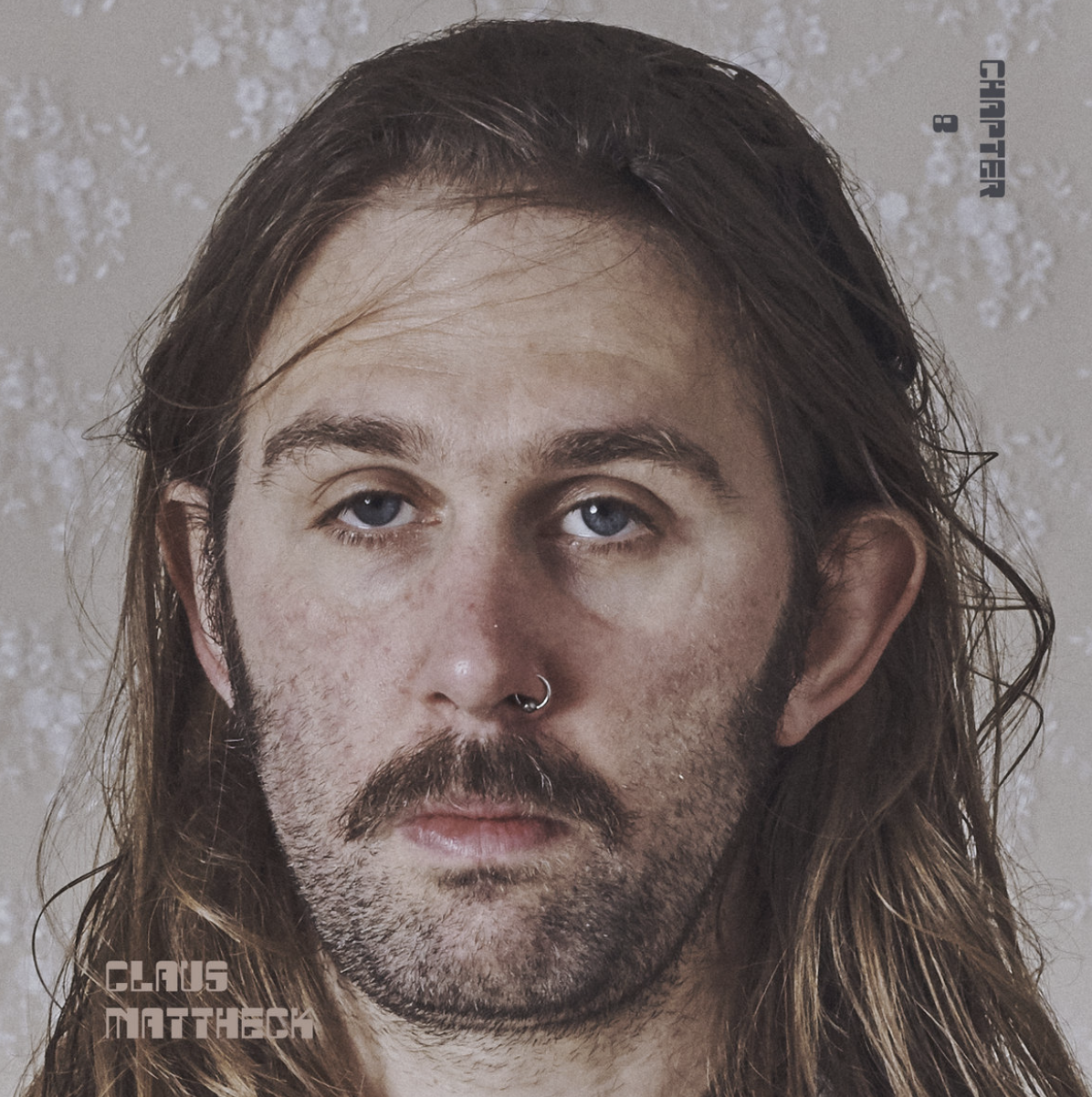
Claus Mattheck ‘Chapter 8’
Album (Cruel Nature Records) Released 25th March 2026
I love this album it is just so bloody British, not in a rule Britania, hoist the flag kind of way, but in the standing in the rain waiting for your bus to turn up kind of way. The deadpan dour humour of the lyrics, the monotone spoken vocals that are completely at odds with the Sonic Youth/Fall like mood of the music. Songs about cars, office life, the inanity of small talk, the DIY bore are all wonderfully taken apart with the lyrical accuracy of a sniper’s bullet.
Origami Horses ‘Joyless’
Single (Metal Postcard Records) Released 19th March 2026
This new single from the Origami Horses takes me back to the days of Snub TV, when semi commercial alt/indie guitar used to liven up the hour before you went to bed after getting back from the pub on a Sunday. Yes, the Origami Horses have the sound that would have the major labels scrambling for their cheque books back in the day; they have the commercial sheen of indie glamour down to a perfect tee. Which I’m very much in approval of.
A world of sonic/musical discoveries reviewed by Dominic Valvona. All entries in alphabetical order.
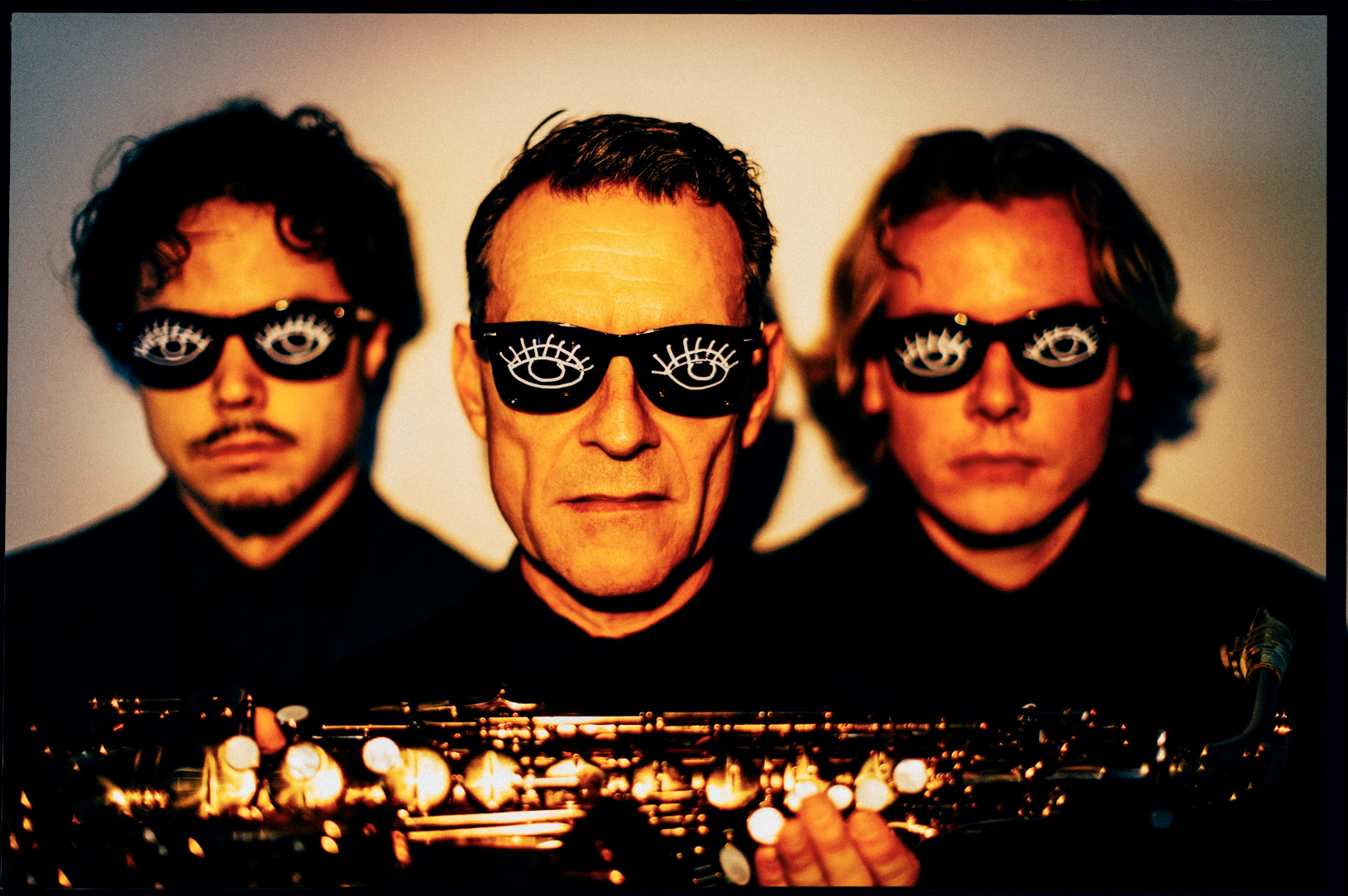
Image Credit: Jonathan Herman
Andy Haas ‘In Praise Of Insomnia’
(Resonantmusic) Released 1st February 2026
I’ve been saddled with insomnia for years, but unlike the highly talented and explorative, and curious saxophonist Andy Haas, I’ve found it difficult to put those waking hours to good use creatively; let alone on the auspicious seasonal occasion of the Winter Solstice, the date on which all these recordings were played and then saved for posterity. I must say, since the double whammy of a kidney autoimmune disease and a minor stroke, my own personal problems of insomnia have pretty much disappeared – I don’t recommend it however! But put to good use here, Andy ushers in the light changes, the almost religious and spiritual emotions and feels of the environment. His sax mirrors the fluctuations and expressions of playing without the hindrance, burden or weight of expectation; just one guy expressing himself and current moods, his experiences of life in the moment on a special day.
Whilst not wishing to repeat myself, I struck up an online and postal friendship with Andy after first writing about the highly experimental saxophonist, trick noise maker and effects manipulator’s turn touring as a band member with Meg Remy’s Plastic Ono Band-esque U.S. Girls a few years before Covid. The former Muffin, NYC side man to the city’s attracted maverick luminaries of the avant-garde and freeform jazz, and prolific collaborator with Toronto’s most explorative and interesting artists, has sent me regular bulletins (and physical copies) of his various projects ever since. Some have been in the solo mode, others with friends, foils and collectives. In Praise Of Insomnia is free of artifice and augmentation; the sound of a singular saxophone and circular breaths (the only other apparatus or consideration is Andy’s stereo manipulations of each track once its finished) alive with a language that admirers and followers of such luminaries as Sam Rivers, Jonah Parzen-Johnson, Evan Parker and Roscoe Mitchell will recognise. It has history and roots, but exists in the now with its squalls, shrills, the fluted, drones, curves, peaks and reedy vibratos that often sound like a mizmar – in fact I sometimes pictured minarets when closing my eyes and just letting the playing transport me from my boring surroundings at home in a dreary, wet Glasgow.
Free and wild, and yet also thought through, almost considered and concentrated, each track (prompted by descriptive and personalised titles) shows purpose; the subject matters often plaint, questioning or disheartened at the metaphorical darkness of the age, but also noting the artist’s own mood changes, and his battles with insomnia itself. It would also make a great soundtrack.
Benjamin Herman ‘The Tokyo Sessions’
(P-Vine Records in Japan/Roach Records & Dox Records the rest of the world) 27th March 2026
Though this is possibly the first time I’ve ever featured the London born but Netherlands raised alto-saxophonist Benjamin Herman on the site, his influence across the European arena of jazz looms large. With over fifty albums and untold thousands of the live gigs (either as a solo artist or as the frontman of the New Cool Collective troupe) to his name during the last thirty or so years, Herman has pretty much convincingly expanded his talents to play foil, collaborator and instigator to projects that span the musical and creative genres – from hip-hop to poetry, to rubbing alongside pop stars and embracing everything from Afrobeat to Latin and film, to the more anarchic and wild.
Venturing out to the far East with double-bassist Thomas Pol and drummer and producer of this album Jimmi Jo Hueting, Herman and his musical partners absorbed everything that was on offer from the eclectic Tokyo hothouse districts of Shimokitazawa and Koenji. Expanding the ranks to include a rich ensemble of guest from the Japanese jazz scene and beyond, they recorded these inspired sessions at the well-known “recording sage” Akihito Yoshikawa’s equally famous Studio Dede hotspot.
Paying homage, spiritual recognition and cultivating the mystique and mystery of Japan’s landscape, its culture, its traditions and abundance of talented jazz players, there’s haywire-like chops of floppy disk experimental Sakamoto, the shrouded misty sounds of Shinto and fluted and blown bamboo music amongst an abundance of reference points from elsewhere. With accomplished musicians like Ko Ishikawa on the Sho (a mouth organ), Tomoaki Baba on sax and Shinpei Ruike on trumpet (bringing a blue shade reminisce of Miles Davis sadness to the studio referenced ‘Dede’) there’s tributes to the Japanese scene and one of its capital’s most famous jazz nightspots, the NRFS abbreviated “no room for squares” – as borrowed from Hank Mobley’s iconic Blue Note released LP of 1964, and more than an inspiration here I believe.
But amongst those cultural appeals, a distillation of the Japanese scene and environment, there’s literal blurts of no wave and post-punk jazz, the noirish and cinematic, show tunes, swing, funk, the wired, colourful, willowy and many examples of mirages and swamp-like veiled mysterious.
At any one time then, you can expect to hear a free flow and agitation of downtown NY, the city skyline jazz scenery of the 50s and 60s, Last Exit, Snapped Ankles, John Zorn, Biting Tongues, Mats Gustafason, Donny McCaslin’s work with Bowie, Jimi Tenor, Comet Is Coming, the Nordic school of jazz, Tong Allen, Lalo Schifrin and John Barry! (in the closing moments of the spy soundtrack does Blue Note ‘Tokyo Moon’ you can hear what sounds like a riff on the 007 theme). Yes, I think we can agree a lot to take in. But with a generous offering of 13 great tracks and no fillers, this Tokyo session is going to appeal to many.
Ombrée ‘Calvaire’
(I Shall Sing Until My Land Is Free) Released 2nd February 2026
Seemingly apt if in an entirely different geographical setting, far from the torn-up battlefields, this album is tied via its facilitator to the Ukraine supporting I Shall Sing Until My Land Is Free label, and its founders own sonic manifestations of doom-laden scared environments: In the case of both Dmyto Fedorenko and Kateryna Zavoloka it’s their native and brutalised country, now in its fifth year of defensive action against the barbaric invasion forces of Putin’s Russia. Meanwhile, coming to terms with their own loss, Ombrée uses a similar soundboard and apparatus of industrial noise, metal machine music, sonorous bass guitar frequencies and slabbed vibrations and crackled pylon charges to process the death of his father, who passed away in February of 2025.
Prompted or set in motion by the sounds of the surroundings and the village’s church bells, Calvaire invokes memory through both field recordings and expressions of death’s many manifestations. Ombrée’s father, we’re told, would have probably hated this musical invocation, illusion and dark meta-built encapsulation of that mourning process, but for its creator and us the album is both a guttural and sophisticated response to its subject.
To the distant echoes of tolled bells and a Gothic atmosphere of an older rural France – the toil of the land, the echoes perhaps of old wars and tragedies still very much of the everyday scenery and psyche – Ombrée scratches the needles of detectors and equipment over the terrain to produce a death noise industrial slab of static, the paranormal, the razored and ghostly. Apparitions in the shadows at every turn; the venerable sounds and atmospheres of the funeral and wake; the coarse fibres of broken electricity and magnetic forces; the Fortean radio set tuned into the afterlife; and the dark materials of trauma uncovered by the plough and spade all come together in one suitably unsettling memorial.
Rocé ‘Palmier’
(Hors Cadres) Released 20th March 2026
With a softer and more melodious flair for an ever-widening use of music references and inspirations, the French-international hip-hop veteran Youcef Kaminsky (better known as Rocé) seamlessly blends new compositions of Latin, French, Italian, North African and South American flavours with modern spells of R&B, rap and electronica on his incredible new album Palmier (“Palm Tree”).
On a disarming pathway, Youcef taps into his roots and his mixed heritage (born in Algeria with his formative years spent in Paris) to rap, sing, report and recall with both emergency and poetic conscious fluidity. And whilst learning of his parents own extraordinary stories and backgrounds – his dad’s history within various anti-colonist resistance movements around the world (Adolfo Kaminsky, as that family name may suggests, are Russo-Algerian French in origin), and his checkered career as a photographer and master forger – and the depth to Youcef’s own studies and extensive recording output, this album has less of a revolutionary zeal and more a sense of real warmth and beauty to it. Listeners will find a sound that’s just as open to the embrace of Morricone as café society jazz, Issac Hayes, cool classical French maladies and American vocoderised soul. In other words: pure class. And yet there’s still an edge to it, a realism and sense of suspense, of the shadows, of current concerns in the search for balance, harmony and identity.
There’s seldom been much like it; the attempt to merge so many cultural markers and ideas and experiences; to recall those innocent and important feelings and places that matter – not in hip-hop anyway. The musicianship and contrast between rapping and a band of jazzy and classical or chamber musicians did remind me a little of Marcelo D2 & SambaDrive ‘Direct-to-Disc’ LP from a couple of years back. But it remains rather unique, crossing over as it does into so many classy and fully lush genres.
You can certainly, even if you don’t understand the French dialect and language, gauge the emotion and the intensity, the themes and scenes conjured out of the notebook and from each instrument. It also helps that guest vocalist, the worldly, Natacha Atlas does much to soothe and dreamily invoke a certain romantic plaint of North Africa to the deft electric piano-like tinged ‘La Voie Laactee’. And whilst we are at it, a shout out to Nathalie Ahadji’s dreamy, wafted and mizzle-like saxophone; to Cisko Delgado’s soulful and light jazzy cosmic keys (though also credited with bass and on arrangements); and to Samy Bishi’s sweeping, near cinematic in places, violin – Youcef can be heard himself picking up the violin on one of the album’s airy mirage-like interludes.
Compositions and songs are mapped out like a personal cosmology of jazzy suites, neighbourhood reportage, frank discussion and more sympathetic articulations and dreams. A great album in short that entertains as much as it educates and impresses.
Nicolas Remondino ‘Hieratico’
(OOH-sounds) 27th March 2026
Scrapes, shavings, rubs, carvings, tangles of tin and metal; various percussive and drum apparatus timbres, textures along with the unidentified sound of spokes are all used to illuminate crepuscular observed moments and experiment in a soundscape of almost silent disturbances, shadows and observations on Nicolas Remondino latest album. Filed under the solo name this time around, Hieratico includes a host of cameos and an appearance from one of the many groups he’s founded over the years, the Dròlo Ensemble. Many voices and musicians join the fold, appearing often for a brief moment, or suffused amongst the avant-garde, explorative and minimalist passages, churns, circular brushing movements of a simultaneously venerable, supernatural and esoteric nature.
Appearing, I believe, for the very first time on the site, Remondino studied under the improvising luminary of classical and jazz piano, Stefano Battaglina. Remondino appears variously under the LAMIEE moniker when in the solo guise but also founded the Tabula Rasa and Silentium ensembles. There’s also been an extensive list of collaborations, some of which appear on this album. And as if to reflect these various foils and their homelands, track titles seem to be in multiple languages: Italian, Spanish, Portuguese, Corsican, but also as far away as Japan. There are some solid names with renowned reputations on the abstract, avant-garde and musique concrète fronts, including the highly respected and experienced musician and vocalist Limpe Fuchs, who’s mantric “no formalism” approach to soundscaping and fluctuated peaks and meandered twisted spoken words can be heard on the strange ching and chimed gamelan-esque ‘Blue Hymn’. The trio of Pierre Bastien (perhaps best known for the Meccano machine Mecanium orchestra), Massimo Silverio (singer-songwriter and composer) and Marco Baldini (a Florence-based composer) manifest some unease amongst the low tuba-like Close Encounters calls and cathedral organ permeation of ‘Tombal’. You could call it an inter-generational balance of ideas, or just feeling out the right sound, the right atmospheres.
Dialects traced back to the time of the Romans, with the Carnic region of the Alps, can be heard in abstracted forms alongside mountain goat trails into, what sounds like, the various ranges that surround Tibet and a reification of the I Ching. Sounds like felt and various materials are wrapped or brushed over the mic, and bottles are rattled, sheets of metal wobbled to resemble a strange thunder, and spoken passages, poems of s sort are pronounced with both wistful resignation and disturbing disquiet.
At times it reminds me of cLOUDEAD and at others of Walter Smetek, but also a whole load of experimental Italian contemporaries too. But at its heart, the album seems unique in its surroundings and processes; the atmosphere and mood personal yet dealing with abstract ideas in a nocturnal climate of freedom and textural experiment. That’s a recommendation by the way!
Snake De ‘Alla Sorrentina’
(Kythibong) 27th March 2026
The results of emptying out an assemblage of hard drives, Dictaphones, mobiles and other assorted devices and units of storage, the collaborative duo of Maxime Canelli and Aymeric Chaslerie put together a less linear and more abstracted, surreal and sci-fi album of eroded fragments, passages, extemporised hauntings and sci-fi interiors.
With a bilingual language of prompted and descriptive titles, each piece seems to have manifested from the ether or the recalled. Like La Monte Young playing exquisite corpses with the Olivia Tremor Control, Basic Channel and a host of kosimsiche innovators, Alla Sorrentina merges the concrete with the tubular, the kinetic, the alien and avant-garde: and many points between. There are touches of the melodic and tuneful amongst the collage and the fragments of data, voices (even continental laughter), static, cosmic bells and the varied jingles and jangles, the hanging and scrapes of the Zodiak and Swiss Cabaret Voltaire art-theatre percussion.
An enervated Faust Tapes perhaps, the album also reminded me in places of playful Cluster and Roedelius. The remnants of near church-like keys are placed with the alpine, the galactic and spells of hallucinatory dream weaving. You could catch something Japanese, something of the Fluxus composers and those working in early electronica as the carousal of sonic ideas and influences circulates. And you can read a lot into the oscillations, the staccato signals, hums, harmonic pings, the indigestive-like masked voices, and the metallic visions of extraterrestrial life.
It’s the sound of liquid bowls; it’s a world both underwater and luna; an hallucination of accumulated sounds, atmospherics, field recordings, tunings, hidden percussive objects, whistled and blown tubes, a baby’s cry and removed surroundings. Something a little different anyway, worthy of investigation and absorption.
Gregory Uhlmann ‘Extra Stars’
(International Anthem) Released 6th March 2026
The innocuous, those meandered thoughts, incidents and gestures magnified, and the noted observations witnessed of nature and its interactions are transformed into a unique musical language by the composer and guitarist (though should really say multi-instrumentalist at this point) Gregory Uhlmann.
A rightly celebrated and held in esteem regular of the L.A scene and constant presence on the rightly revered and much liked International Anthem label, with turns in the collaborative SML collective, a foil to both Perfume Genius (who appears on this album) and to Josh Johnson and Sam Wilkes (last year’s Uhlmann Johnson Wilkes album made my choice release of the year roundup) and to fellow label mate Anna Buterss (anther collaborator who makes an appearance, popping up on bass), Uhlmann has finally found time to go solo with an enriching synthesis of luminescent and ruminated quandaries, descriptions and serendipitous wonders.
Extra Stars inhabits a familiar if now made dreamy, lunar, sometimes oddly and beautifully world and environment; some of it used as prompts and reference points, like Lucia, which refers to the lodge where both Uhlmann and his partner stayed out on the famous Cabrille Highway that runs between San Francisco and Santa Barbara. Less an innocent Beach Boys-like celebration of Big Sur culture and more a tine’s ticking and Mulatu Astatke and Getatchew Mekurya embraced mizzled and snozzled hum of languid unease, the field recorded waves that crashed all around during that stay appear more like tape hiss and noise and point towards the “unnerving”. Though, with Alabasters deft wistful and near serenaded touches it is a beauty of a track. Actually, there’s a feel of that near Ethiopian influence, mixed with something further east and oriental on the beautifully Matmos does cosmic Joe Meek and Django ruminating Days – what a dreamer of a lulled tune that one is. I’m hearing the composition and playing of Emahoy Tsege Mariam Gebru too, but a lot of the calculus of flutters, bulb-like notation, cascades, harmonic twangs, numbers and multi-layered techniques of such luminaries as Riley, Cage, Reich and Spiegel; all made that more appealing, magical, sparkled, lunar and dotty!
There’s a good and transformative use of the guitar, the mellotron and organ, amongst other expanded instrumentation. And even a use of the voice, with guest Tasha Viets-Vanlear’s “bah” voice put through different pitches and sequences on Voice Exchange.
This really is a most delightful and imaginative album, a whirly trip of modulations, sequences at ease, quirks and warbles. Touching on everything from new age avant-garde to the kosmische (some hints of Cluster and their peers), the American school of pioneering electronics, the post-whatever it is that bands like Tortoise do, echoes of Sakamoto at his most loose and experimental, ambience and cosmic shimmered atmospheres. It makes for an intriguing, often woozy and dreamily transformative listening experience.
Here’s the message bit we hate, but crucially need:
If you’ve enjoyed this selection, the writing, or been led down a rabbit hole into new musical terrains of aural pleasure, and if you able, then you can now show your appreciation by keeping the Monolith Cocktail afloat through the Ko-Fi donation site.
The Digest for March 2026: New Music/The Social Playlist
March 9, 2026
The monthly Digest includes a clutch of accumulated short new music reviews and the social inter-generational/eclectic and anniversary albums celebrating picks.
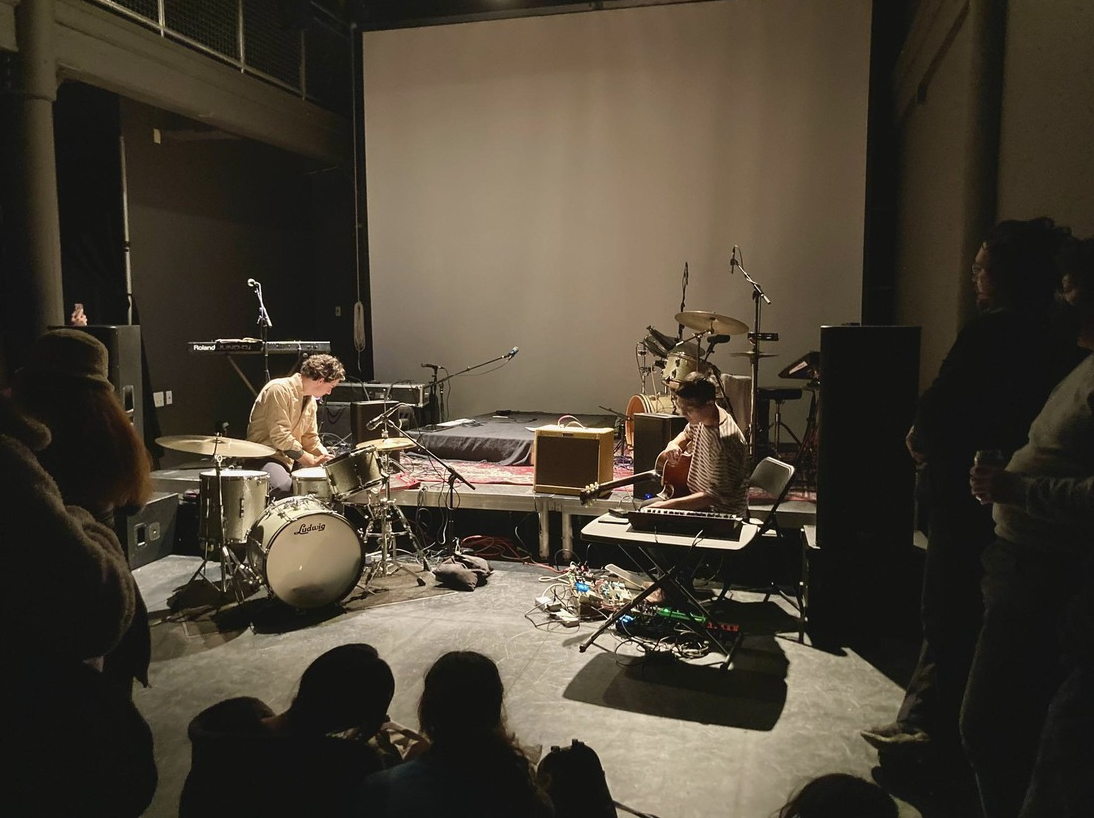
Image: Credited to the Asian Arts Initiative
Something a little different this month after missing February’s Digest deadline. In case readers/followers and those new to the site haven’t heard or seen on some of the blog’s social media platforms, I’ve been in the wars, spending a lot of time this year in hospital. Earlier this year after being ill for a while, I was diagnosed with an autoimmune kidney disease, but then was struck down, out of the blue (and totally unrelated) by a minor stroke. This has meant untold tests, appointments, and treatments, of which I’m merely just beginning to get my head around. I won’t lie, and whilst the stroke is still a mystery with no actual diagnoses as to why I had one yet, it has been a very frightening and confusing time. This will affect the site and my writing going forward, so I ask for some patience and understanding.
I’ve gathered together a number of reviews, pretty much completed before much of this happened for the new(ish) releases section. And for the archives and social playlist have decided to share videos of tracks taken from those albums enjoying various anniversaries this month (or thereabouts), from those dear artists/producers that have left our mortal realm.
___THE NEW (All those latest & upcoming releases in brief) ___
Camille Baziadoly ‘Skin On Fire EP’
(PinDrop) 6th March 2026
Somehow simultaneously intimate yet panoramic and universal, a whole emotive register of vulnerabilities emanates from the both aria-like cutting and yet also diaphanous breathed voice of the French-born, but Oxford-based, singer-songwriter Camille Baziadoly. The new EP, following on from last year’s favourably reviewed and received Fifteen album, opens with the former single and title-track, and from there, unfurls its beauty, its reverence and pained prangs of fragility across a quartet of newly written songs in the key of slowed-trip-hop-crunching-and-mechanized-winding dreampop and Gothic cinematic allurement.
Skin On Fire EP feels like a score; the soundtrack to what’s lyrically alluded to, an abstract feeling of recovery, therapeutic healing and self-care. From the very first line of declaration (“Skin is all I am”) to the loss and grief, the despondency and aches of the transfixed beatific yearned ‘Trial’ and the even more reverent, steamed and mirrored beat cranked ‘Under Water’. The former reminded me of a little of the dreamy, veiled music and voice of Celestial North, but the synths of Chromatics, whilst the latter, recalled the production of Julee Cruise and the submersible aquatic poetry and voice of Nino Gvilia and the atmospheres of This Mortal Coil. The final act, ‘Around You’, is perhaps the most tenderly if plaintive song of them all. Whether stepping outside and removed from this particular relationship, looking in from the ether and from behind the most minimalistic of backings, or lamenting someone else’s, Baziadoly fills the vapours with a real yearning.
Despite the care, gentleness and its subtleties in the use of both instrumentation and the electronic (from minimal but no less evocative piano and organ to various well-placed effects), the production has an air of gravitas and drama about it: of scale too if you like, and of ambition. Much of this is down to the highly prolific (and a constant presence on the Monolith Cocktail) Sebastian Reynolds, who in a producer’s role articulates, emphasis whilst also allowing Baziadoly’s voice to shine, resonate and breath. That production can at any time invoke the influence of Beach House, Air, and the Cocteau Twins.
It is the voice that truly makes this EP however, and its ability to soar towards the birds but also navigate the harsh realities, troubles and traumas of life, love and hurt. Baziadoly brilliantly and cerebrally emerges from the other side having shown such vulnerability and sang such heartaches of balladry to claim another transfixing success.
Márcio Cunha ‘Imaginary Soundtrack’
(Nostril Records) Released 8th January 2026
A sonic showreel collating a year’s worth of recordings made throughout the period of 2019 and 2020 – just as the world lurched fatally over the cliff edge of Covid -, the Portuguese experimental musician, composer and multidisciplinary artist Márcio Cunha’s newest release is a CV of possibilities. As a calling card and sampler of his obvious eclectic and omnivorous influences and talents, this generous thirty-six track work mines, traverse and explores a portfolio’s worth of stand-alone ideas, passages, vignettes, filmic scores, cosmic mirages and electronic motions, and comes together as one loose soundtrack.
Either submerged and muffled or clean and crystal, the overall atmosphere and sound is one of familiar Earth-bound electronica, instances of tangly and strung-out guitar and marching snares, and the buzz, fuzz and static generator force field charges of machines and the alien. For Cunha projects towards the stars, but often toward unseen, mysterious forces beyond our reaches.
Within that universe and orbit you can expect to hear techno, d ‘n’ b, kosmische, all kinds of beat-bouncing electronic, various mechanics, the more tribal, vapour waves, a roll of hand drums, liquidated electro, oscillations, the plastique, Basic Channel, Room Of Wires, Aphex Twin, Mouse On Mars, Sven Vath, Conrad Schnitzler, the industrial, music of the spheres, lunar indolent shimmies, wonky bell-ringing, the burbling, and the tubular. Some come with an added drama and celestial voiced airs, whilst others almost recall the post-punk. But there’s a general signature to be found throughout, connecting all these numerous experiments together; a sort of oeuvre with a general purpose and theme, guided or inspired by the unknown elements of the cosmos.
You’re bound to find something interesting, absorbing or able to send you off on some space adventure from this veritable CV of electronic experiments. A prolific range that will keep you invested for an hour or two.
The Early ‘I Want To Be Ready’
(Island House Recordings) 27th February 2026
Transposing a newly invested language of sonic, musical and extemporised ideas over the last five or six years together, the most recent version of an idea that was formed back in 2004, imbued by many of the Chicago undergrounds’ most enduring post-rock and post-jazz doyens (Tortoise being the most obvious glowing influence), sees guitarists and synths operator Alex Lewis and drummer and electronics manipulator Jake Nussbaum take inspiration from improvised dance.
Taking a lead from the central tenets of the choreographer, researcher and author Danielle Goldman’s 2010 published work I Want To Be Ready: Improvised Dance as a Practice of Freedom, the duo enact the book’s outlined “state of readiness for whatever’s to come”. As repeated and lifted from Goldman’s study, “A skilled improviser will be intimately familiar with her habitual ways of moving, as well as the shifting social norms that gives these movements meaning. Then, on a moment-to-moment basis, she figures out how to move.” This is a distillation of course, whittled down from years and acres of research enquiry. But as a starting point for The Early foils, this demonstratable exploration of improvisation proves a successful prompt to investigate or just let a feel lead the various forms of instrumentation towards interesting, tactile, multilayered and stirring spaces and horizons; some that melt, others that are near otherworldly or like mirages.
From the cluttering to reverberating and shuttering, the off jazzy breaks to post-rock mirages of wrangled, melting and spikier guitar entanglements and loops, meaning is transcribed via the caresses, the resonated touches, scuffs, the subtle streaks of movement up and down the nickel guitar strings, moments of melody, the drifted, the bending and various generated waves of electronica effects. Time itself falls freely in this space, the passing of it almost suspended for the duration as the duo feel their way with a kind of musical telepathy. From Tortoise-style blues to the Fourth World and the redolent explorations of Pacha Wakay, the sound of The Cosmic Range, the Zacht Autommat, of Daniel Lanois, the guitar work of Jeff Parker, Yonatan Gat, Steve Gunn and Christopher Haddow, and the pendulous near swung and thumping drumming of Werner ‘Zappi’ Deirmaier (especially on the Faust-like ‘SandClock’), there’s vague echoes of ethnic sounds and dreamt landscapes. It reminds me of a relatively obscure duo called Pidgins, and the way they stir up such familiar and yet almost unique soundscapes, horizons and atmospheres built from a stream of always evolving sources. And yet, once in the space, once together with the feelers spreading out, can magic up both dreams and the mysterious with equal skills. The non-musical and serial join together with passages of the rhythmic and melodious on an album that will unfurl its full creative expanses and oeuvre over numerous plays. A scion of the Chicago hothouse of such experiment, even if it was made in Philly, The Early pick up the baton and run with it.
MMBTUPM ‘Meditation Music Beyond The Unsleeping Psychopathic Mind’
(Hidden Harmony) 28th February 2026
Directed or merely amorphously suggested a direction by the multi-instrumentalist (mainly focused on the alto sax, the drums and synths, but I guess generally can get a sound out of anything) and prolific instigator Davin Brahja Waldman, the newly brought-together Meditation Music Beyond The Unsleeping Psychopathic Mind troupe of like-minded twisted and untethered artists/musicians invoke various apparitions, paranormal, spiritualist and new age vibrations from the Fortean transmitter on their inaugural session together.
Drawing from an ensemble that includes a triple-threat of saxophonists covering all the tones (Devin himself on alto of course, joined by Adam Kinner on tenor and Conner Bennett on soprano), another triple bill of keys, synth and vocalists (Annie Shaw, Sarah Good and Devin tour mate Nadah El Shazly), and various guitarists and drummers (Vicky Mettler and Alexei Orechin in the former camp, Daniel Gélinas and Philippe Melanson in the latter), Devin stirs up an improvised smog and hauntology of a both damaged and solace-finding bluesy psyche.
From stoking up supernatural atmospheres to charging up meditative pulsations fed through various generators, the atmosphere is heightened by a simultaneously feeling of unease and the unknown in equal measure. Redolent wafts, dried exhales and the pipe strains of jazz and such saxophone luminaries as Julius Hemphill, the Pharoah and Donny McCaslin are woven into a fabric of old RKO ghost scores, the wails, soars and apparitional otherworldly evoking vocal expressions and mewls of Matana Roberts, the synthesized calculus and data of esoteric technology, the brainwave experiments of Nehan, and the body movement mechanism rhythms of David Ornette Cherry. And even within that framework of the extemporised you’ll hear what can only be described as passages of New Orleans dockyard smog and procession, and a near child-like apparatus of ghost house toy instruments on the march.
A peculiar place and vibe are envisioned from an enviable pool of talent (Devin alone has performed with or played foil to Patti Smith, Thurston Moore, Lydia Lunch, his famous poet aunt Anne Waldman, and Malcom Mooney, but also steered his own Brahja band and been a member of Heroes Are Gang Leaders and Land of Kush) on their first outing together. A baptism of strange no wave jazz, the séance, the transcendental and paranormal cross streams in an improvised state awash and circulated by bellowed and wooden mechanised movements, bellows, roulette-like spins of bearings and the spellbound.
Phew & Danielle de Picciotto ‘Paper Masks’
(Mute) 20th February 2026
Whilst unassumingly stuck out in the hinterlands of experiment and electronica, a collaboration between Phew and Danielle de Picciotto proves an unmissable and intriguing phenomenon to experience and savour.
Phew’s own entry into this field of explorative and manipulated investigation and inquiry started with the instigation of the Osaka psychedelic-punk group Aunt Sally in 1978, which she fronted until their brief but influential burnout just a couple of years later. During the next decade Phew would work with an enviable cast of experimental doyens including Ryuchi Sakamoto, DAF’s Christo Haar, and, as if to tie in with this latest union, Danielle’s husband and foil Alex Hacke of Einstürzende Neubauten fame. Fast-forwarding to the noughties and the underground pioneer has performed live and recorded with The Raincoats’ Ana Da Silva, Jim O’Rourke and Ikue Mori and Yoshimi of the OOIOO/Boredoms/Saicobab arc of ensembles. Her solo work tends to err towards amorphous sonic sensibilities that exist both in the metallic gauze of space and in more concentrated earthly reverence.
Danielle meanwhile, is the co-founder of the Love Parade, the lead singer of the Space Cowboys, for a longtime, a stalwart member of Crime And The City Solution and member of Ministry Of Wolves. But for the last nine-years Danielle has been making some her most sublime and interesting work together with her husband Hacke under the “symbiotic” coupled Hackedepicciotto banner – standing at five albums thus far. Mixing anything from heightened snatches of beauty, romance and drama to a backdrop of the Biblical, cinematic and ominous, the Morricone, the Weimer and heavy meta, their sound and performances have proven as captivating as they are dream-like, Gothic and otherworldly.
Produced “quietly” we’re informed over the course of five years, the futuristic, alien and sci-fi contextualised, discombobulated and manipulated Paper Masks finds Danielle’s vocalised and spoken interests, stories, observations, fairy tales and inquisitive announcements transformed via Phew’s various apparatus of effects and minimalistic
Drawing on decades of experience whilst always responding to the now, both partners in this latest enterprise combine forces to create a unique space and soundscape; a cyber ecological plane of archaeology filled with the ghosts, traces, messages, and cerebral memories. Phew envelopes, wraps or places a factory of unseen mysterious alien machines and tech, acid squiggles, looming piercing arcs, code and high pitches and frequencies around, above and under Danielle’s both surreal and evocative wordage. From furry philosophers and ghosts to the tundra and fog, and the flights of whispered thoughts that are prompted by personalised memories and incidents, a transformed language of mewls, phrases, narration, song, the untethered and unshaped is now woven into a dialect both humanly distorted and droid-esque, mournful and ominous. And yet, at times, it feels or sounds like a fairy tale transposed to off-worlds and the age of technological symbiosis.
Simultaneously as haunting and mysterious as it is Intelligent and challenging, Paper Masks wears its many faces well to straddle the worlds of art, theatre, electronica, the spoken word and cyber. A signature Mute experiment and listening experience, and yet something very different and original. Let’s hope the two partners bring their talents together more often in the future.
Toshi Tsuchitori and Ryuichi Sakamoto ‘Disappointment–Hateruma’
(WEWANTSOUNDS) 27th February 2026
Whether it was building a unifying electronic music post-war future with the Yellow Magic Orchestra, building Bamboo houses of colour with David Slyvain, scoring the harrowing tragedy of war with Merry Christmas Mr. Lawrence, or winning gold at the Oscars/Grammys for his innovative soundtrack work, Ryuichi Sakamoto reworked neoclassical and electronica into a most influential new language – not totally at odds with its past, yet constantly evolving and probing at the edges of the undiscovered. But rewinding back further, to the incipient days of the early and mid 70s, whilst still a student at the Tokyo National University of Fine Arts and Music and a contributor to such influential outliers as Transonic Magazine, Sakamoto was navigating his way freely and untethered as a member of the multimedia group Gakushudan alongside future collaborative percussionist and ethnomusicologist Toshi Tsuchitori.
Crossing paths in those burgeoning days, the pair quickly worked upon their obvious musical/sonic chemistry to release a new language and interacted experience devoid of solid foundations and free of boundaries. Tsuchitori had recently returned from New York having imbued himself and embraced the philosophy of free form jazz luminary Milford Graves. For those unfamiliar with Graves natural fused approach, he drew upon Indian, African and Asian rhythms, playing with and for such icons as Sun Ra, Albert Ayler and Anthony Braxton. And if you have been following my Monolith Cocktail Social playlists over the years and months, will perhaps recognise Graves as the drummer totem alongside Arthur Doyle and Hugh Glover in the obscure but highly influential Children of the Forest trio.
Breaking from convention, the duo transmogrifies Shinto spirits and traditions and various other Japanese forms from across the centuries into a hurtled, collapsing, often racing and wild convergence of Western avant-garde forms, abstract-classical, free form jazz and the ambient. Certainly not music in any serial or familiar sense, these experiments, improvisations or whatever you wish to demarcate them are mostly devoid of rhythm and form; more expressive unyielding clashes and quietened passages of air, skying and the wind – passed through vents and metallic contraptions. Taking up a whole side, the opening ‘綾 (Aya)’ is one such climatic acceleration of drums, percussion and running, dashing and scuttling piano that recalls Graves and Billy Cobham stirring up voodoo spells, rituals and an entanglement of scrapes and rattles.
Later on, there’s what sounds like the marimba, the steel drums and more zippy prangs and hinged springs of piqued percussion. ‘a / Φ (musique differencielle 1°)’ however, sounds like something you’d expect to hear on an early Richard James album, and seems almost hypnotic: an early attempt in my mind at combining minimalist techno and mysticism. Playing with their lips and tongues at times, especially on the finale, ‘∫ / 𝔷 (musique differencielle 2°’, there’s another attempt to break away into something highly experimentally weird as, and I’m not sure who it is, puffs, shoos, exhales steam-like breaths and swats whilst the sticks roll across skins and rims, or sometimes fall imaginatively across an apparatus of world drums and percussive tools.
Released for the very first time on vinyl, this original 1976 LP (put out by the notable producer Yukio Kojima on his equally notable imprint label ALM Records) will find room with fans of Sakamoto, but also those craving something highly avant-garde and experimental, just with enough touches of African/Afro-Cuban/Asian and free form jazz drumming. Sakamoto wouldn’t dwell long on this phase of exploration, of breaking entirely from tradition and form, so get your fix whilst you can as I’m sure this highly sought-after vinyl package from the guys at WEWANTSOUNDS (one of my favourite such platforms over the last decade) will fly.
/ALBUM ANNIVERSARIES SECTION_______
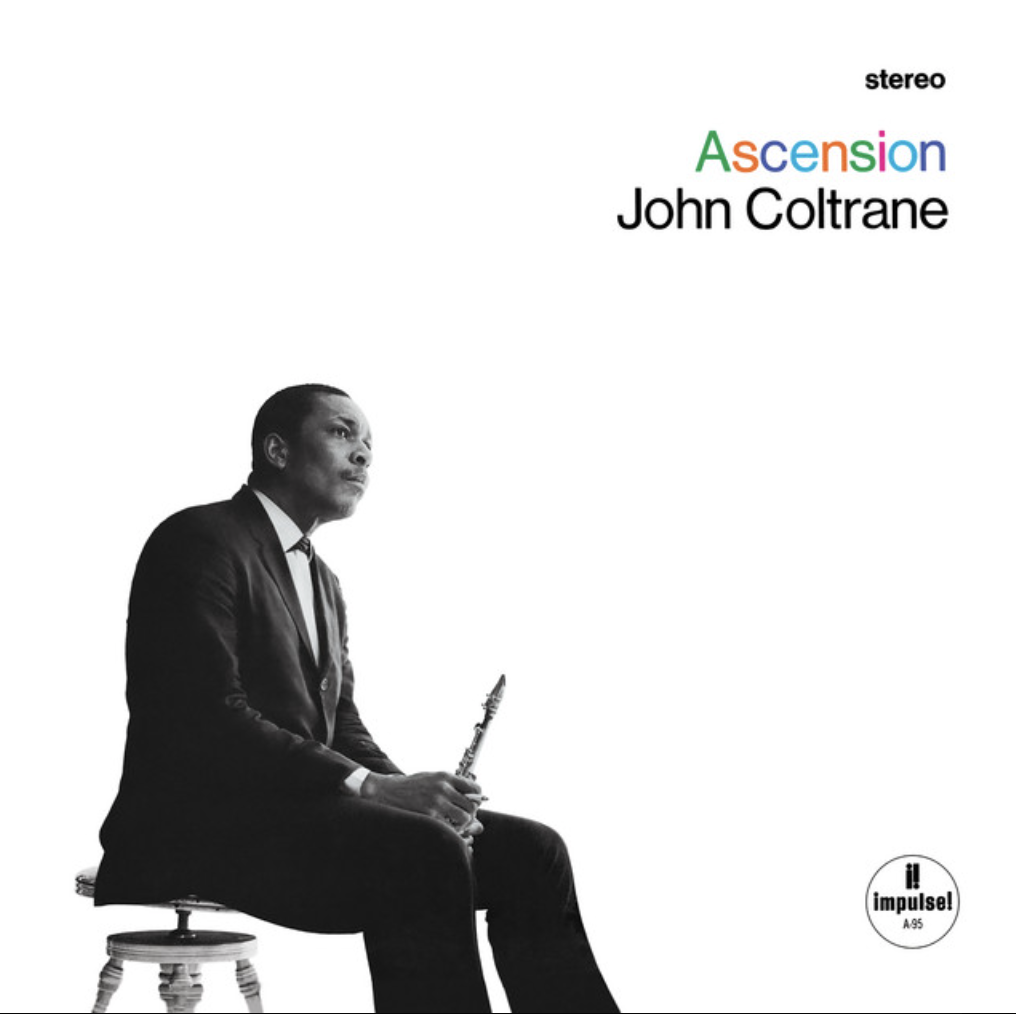
No playlist this month, but video selections tied to those albums celebrating anniversaries this month (and some from February too). Starting with demigod jazz sublime progenitor Coltrane and his 1966 LP Ascension.
Placebo meets Radiohead on the peripherals of Britpop, one of those unique bands form the period that should have been much bigger than they were: accumulating plaudits but not the sales and fame. Subcircus delivered one of the better LPs of that era with their debut Carousel.
Sparks Hello Young Lovers reaches its twentieth anniversary. The Gilbert And Sullivan of cerebral pop music takes the form to ever-new intelligent heights of absurdity and revelation. Daring to merge intellectual ideas and themes into an art form; yet never laborious, condescending or aloof, every song on this theatrical rock and pop suite features an infectious melody, satirical but heartfelt clever lyricism and the usual Noel Coward piano witticisms (updated for the modern age of course).
Time to rip it up with the screamin’ tantrum boom of The Sonics; Garage band proto-punk miscreant royalty, the band’s era defining Boom LP is unbelievably sixty years old.
One of Cope’s muthafuckers and idols, the Arthur Lee led Love dared to dream bigger with their Baroque flourishes, jangles and lamentable love requests. The tapestry songbook that is Forever Changes is also sixty years old this month.
Fast-forwarding to the 90s, and Howie B‘s influential LP, Music For Babies is thirty this month. In that Mo Wax trip hop way, here’s one of my faves, the title track:
Prince time. Parade is forty in March. And here’s my fave of all time video and track, Mountains. The man was incredible. How do you make the shakers effortlessly cool? Or running on the spot in Casanova Rose of Texas gear look cheekily sexy and sassy? Could be naff in anyone else’s hands, but works in the hands of such a singular talent. I miss the conceptual planning, the whole effort from pop stars today as AI does the heavy lifting, and most artists seem totally devoid of ideas. “Guitars and drums on the one!”
Mock 21st century terrordome meets art-punk new wave. Does anyone remember Sigue Sigie Sputnik? Well Flaunt It is forty this month, an LP perhaps ahead of its time or maybe not.
Something more cerebral and experimental now with a live version of the title cut from jazz guitarist progenitor Pat Metheny’s 1976 LP Bright Size Life. Still going strong, with recent releases, we hail back to the 70’s era of fusion-jazz.
__THE DEARLY DEPARTED/___
Pete Dello: Baroque scrolls and flourishes of yearned love, Pete Dello is best remembered as the lead singer of Honeybus during the 60s and for the hit single I Can’t Let Maggie Go. Which is enough in itself to be inducted into great hall of fame and pantheons. But growing up in my household it was Pete’s remarkable And Friends effort Into Your Ears that really resonated and led to my appreciation of his songwriting talents. Quintessentially English, forged from the worlds of Lewis Carroll and T.H. White, this cultish psychedelic Baroque folk songbook uses various characters (including the knightly earwig Harry) to imagine disarming songs of regret, the lovelorn, yearned and fantastical. If in raising a glass to Pete you explore any of his work, this is a great place to start.
John Maus: You got to feel for poor old Maus. Any other vocal pop group of the 60s era may have seen his rep fly. But unfortunately for Maus, he shared the stage with the genius baritone Scott Walker, who’s tones better suited the arrangements and the sense of scale and moodiness of sullen unrequited and dramatic love affairs. Both changed their names to better fit their newly formed Walker Brothers aggrandisement with third member and garage band royalty Gary Leeds (a former Standell no less). But whilst despite his own self-inflicted sabotages, Scott’s star rose, John’s merely fizzled out. And despite attempts to go solo after the Walkers first split in the late 60s, the trio in mosey mode donned cowboy denims and reformed in late ’74. Staying together until the dawn of the next decade before finally drifting aimlessly apart, they did manage to produce the coveted and extremely influential Nite Flights LP, which though unsuccessful in terms of sales is critically up there. In between regular jobs John knocked out the odd recording, but never returned to the heady days or success of the Walkers triumphant period in the 60s. And never really connected with his old foil Scott.
Simon Harris: Almost going unnoticed, but not to an old Britcore Hip-Hop head like me. Producer and Music of Life founder Simon Harris passed away last month. Its’ his highly influential and memorable comps from the 80s that cement the rep for me; platforming early raw tracks from the Demon Boyz, She Rockers, Derek B, Asher D & Daddy Freddy, Hijack, M.C. Duke and many others: part of the original stable of UK talent that fought back against the US wave of hip-hop, giving it a distinct UK twang and even harder edge at times. A real progenitor and leading light in the scene that deserves our full respect.
Country Joe McDonald: I couldn’t not mention counterculture figurehead Country Joe, who literally died in the last couple of days (as I write this). Obvious choice, but his famous crowd-led rendition of THE Vietnam protest song at Woodstock in ’69 – at the age of 17 he enlisted in the US Navy, stationed over in Japan. The Boomer journals will go in overdrive, so I’m not wasting time with obituaries or list of accomplishments. But suffice to say, Country Joe released a hell of a lot of quality protestations, rebellious yells, most notably with his The Fish comrades. Go seek out.
BRIAN ‘BORDELLO’ SHEA’S REVIEWS ROUNDUP – INSTANT REACTIONS.

Hello Cosmos ‘Black Gloss’
Single (Cosmic Glue) Out Now
Black Gloss is a Fall-like frenzy of Glam stomp post punk attitude; a song that one can imagine getting many plays on Dandelion Radio and receiving platitudes from various music blogs. Even this one.
John Howard ‘Can you Hear Me Ok?’ (Prof Stoned Remaster)
Album (Think Like A Key Music) Released 30th January 2026
Can You Hear Me Ok? was supposed to be the follow up to John Howard’s Kid In A Big World on CBS records in 1975 but for some strange reason was never released, which I will put down to major label foolhardiness, which is a common thing and has never changed and has helped the music business turn into the shambles it is today. But I digress.
Anyone who is familiar with the music of John Howard may already have heard or even own a copy of this fine album as it was released a number of years ago on CD. But it’s well worth giving this, the remastered version by Prof Stoned, a listen or indeed a purchase as it brings all the eloquence and style and downright talent and charm of the lovely John into a marvellous technicolour splendour: like in the Wizard Of Oz where Dorothy is transported from the grey black and white Kansas to the magical multi-coloured land of Oz, which means maybe we should start calling The good Prof Stoned Wizard Stoned.
Anyone who has not had the divine pleasure of hearing John’s music before should maybe give up an hour or so of their life and lose themselves in the pure 70’s pop piano balladry as I feel there is always room in one’s life for a well-crafted pop gem and this album is full of the darlings.
The Legal Matters ‘Lost At Sea’
Album (Big Stir Records) 27th February 2026
Ah, lets Bad Finger boogie shall we. Let’s cut some rug and roll turf and make shapes like it’s a pop frenzy of nobodies understanding. Oh, dearie me, this album is fun. It is seventies guitar pop covered in a Beatlesque stature of a stolen Cheshire cat’s smile.
Lost In Sea is a fine pop album, so good it could have been Jellyfish’s third or a time travel delight of being emitted from your transiter radio stuck on BBC radio one in their golden decade of the seventies when all their DJs where nonces but had great taste in music. Yes, you could picture this playing in the background whist Dave Lee Travis slapped his sectaries backside whilst dressed as Aladdin on his way to star in a Pantomime wondering which lucky young lady he will be able to pull out of the audience to rub his magic lamp.
Lost At Sea is an album made to be played on the radio, and an album to be added to your collection and filed alongside your Bad Finger and Cheap Trick CD’s unless of course you file alphabetically, and it won’t be anywhere near those.
Neon Crabs ‘This Puppy Can See The Frog’
Album (Cruel Nature Records) 27th February 2026
This Puppy Can See The Frog is an album that is only available on ltd cassette from Cruel Nature Records, and by the time you read this review it could be sold out. I have already bought my copy, so “na na na na na” to you. So, I am one of the lucky owners of this artefact of art punk joy and it makes me think I wonder who else will have this ltd treasure in the collections and if so, will they appreciate the special madness they hold under their roof. Will they marvel at the Stooges riffs, the whooshing cold metallic synths and post punk attitude that party together on this fine debut album; an album that has a certain drop dead cool and dark humour – imagine if you will that Mark E Smith was American and a cartoon super hero scientist that wore a psychedelic lab coat and read the Washington Post with eyebrows arched and wandered through the day with a steady stream of The Banshees and Wire and Killing Joke and the Stooges being fed into his brain by a microchip implanted to give him his superpower of aiming his lyrical pop shots with the accuracy of a paid assassin. That is what this little spool of cassette boxed frenzy is to me. And to you if you have bought one.
Occult Character ‘Silver Fork Stories’
EP (Half Edge Records) Released 30th January 2026
Occult Character, yes, I know I reviewed a single from this eccentric Texan Gentleman last month but that was released on Metal Postcard Records and this 5 track EP is released on Half Edge Records. It is another fine release so deserves a little acclaim thrown once again his way, and acclaim thrown in the direction of Half Edge records who are savvy and brave enough to release this eccentric darkly comic experimental montage of musings from the modern-day Woody Guthrie. And as the world gets stranger and darker by the day, thank God for artists like OC soundtracking these difficult and horrific times.
Salem Trials ‘Tell’
EP (Metal Postcard Records) Released 27th January 2026
The Salem Trials are back with another 5 track EP of post-punk genius. The wonderful madness of this duo is for all to see or hear. They have a wonderful live cool that would have Tubeway Army reaching for fake fur coats. They hold a complete fascination with me, like watching Giant Haystacks eating a vat of soup with a dessert spoon. They walk the tricky tight rope of experimental and commercial post-punk perfectly. “Spit & Soldier” is quite marvellous, sounding like John Cooper Clarke fronting the Fall – and why did that not ever happen?! “Tell” is just simply marvellous.
Rusty Santos ‘Psycho Horses’
Album (Self-Released) 19th February 2026
Rusty Santos is a great name. A name that will stick in your mind in fact – I receive so many albums sent to review that a name like Rusty Santos leapt out and I thought is this an album of old country music that my dad used to play in my youth. Well, it is not but it is a rather lovely album of American alt folk with a sci-fi undercurrent of whooshing synths and throbbing bass – imagine Elliot Smith guest starring in an episode of Space 1999 or a lo-fi David Bowie just pre his Hunky Dory days. Yes, it is that good, and Rusty Santos is defiantly a name to review for so many reasons.
Vlimmer ‘Aufbeiber/ Young Folks’
Single (Blackjack Illuminist Records) Released 6th February 2026
Yes Vlimmer,everybody’s favourite dark wave messiah from Germany is back with two more sad (in a good way) tracks of dark beauty and mistrust. Like a harmonic Valentines card from a slightly spooky uncle who resolves to put the world right by manoeuvring his angular thoughts onto his delipidated garden shed walls where he keeps treasure troves from his ex-wife who left him: for his idea of a good time was not to everyone’s taste. Two tracks that could bring a tear to a stuffed ferret.
White Fence ‘Your Eyes’
Single (Drag City) Available Now
I like this single. It has a laid-back lackadaisical charm which is very becoming, and I also like that for the first twenty seconds or so it is going to be a cover of ‘Big Yellow Taxi’: which is no bad thing. I also remember my band The Bordellos getting compared to White Fence in a review years ago, and I never got around to giving them a listen and now I have, and they are very good so will have to investigate further.
Perusal #76: Howling Bells, The Odes, Magda Drozd, Yoshiko Sai…
February 5, 2026
A world of sonic/musical discoveries reviewed by Dominic Valvona. All entries in alphabetical order.
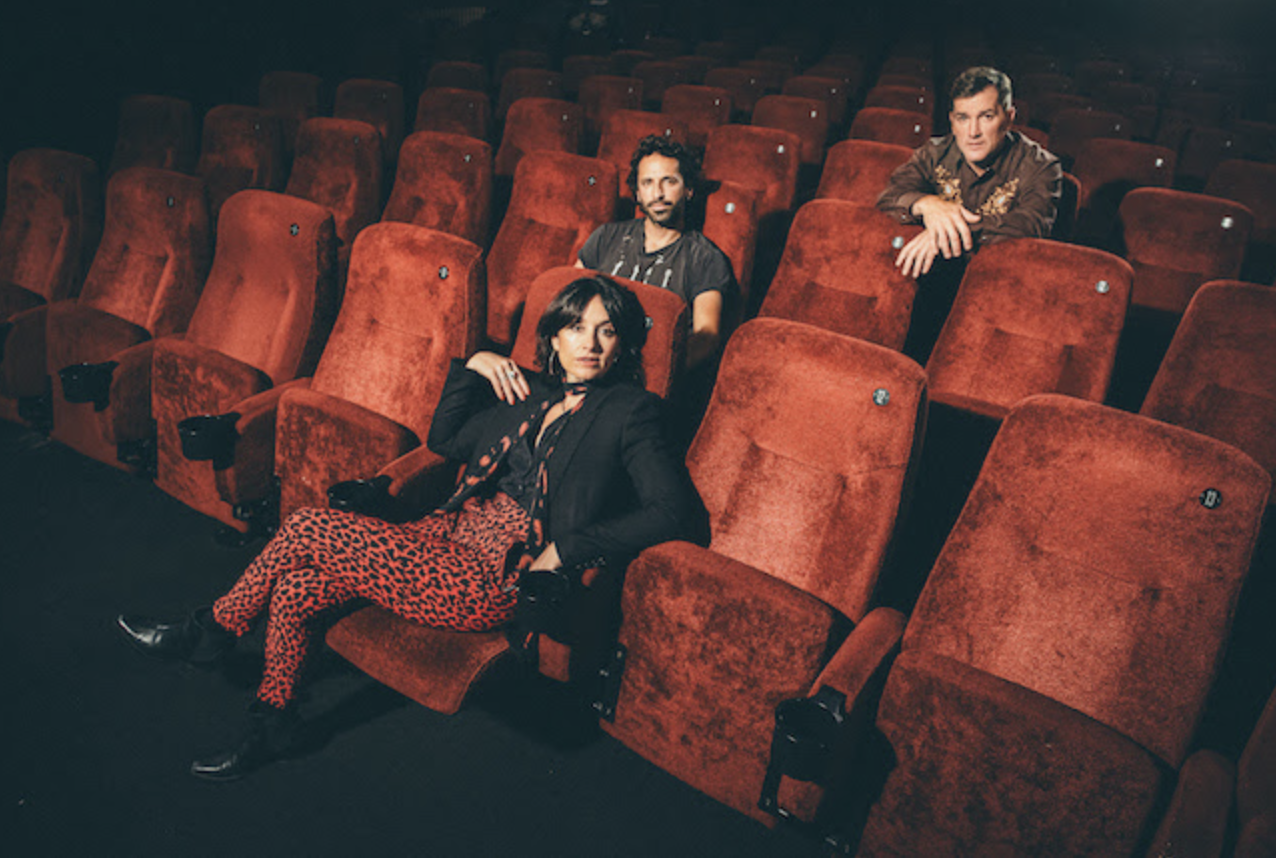
Magda Drozd ‘Divided By Dusk’
(Präsens Editionen) 13th February 2026
Coupling a renewed interest in Polish folklore, its history and roots with time spent in Japan, the composer, violinist and sound artist Magda Drozd inhabits an often alien, mysterious and experimentally intensity of field recordings, atmospheres, the neo-classical, avant-garde, serial and most hauntingly ethereal.
It’s as much an apparitional-ambient and dream-like album as it is dramatic and full of a certain otherworldly drama. And for some of that time it draws not only from the two countries that inspired it, but also from natural phenomenon: an eclipse to the album’s dusk divided title. For in-between worlds, the Warsaw born, but living between Zurich and London artist Drozd inhabits a sonic and vocally invocative landscape that is one part Theatre Of Eternal Music and another part Noémi Büchi.
Working in part with Japanese foils Rai Tateishi and Koshiro Hino – both of the Osaka rock minimalist troupe goat – Drozd absorbs the sound of the high-pitched Japanese shinobue bamboo flute and the NE Thailand and Laos khaen bamboo mouth organ into a partly neo-classical and abstracted drama of aria-like voices, the slightly industrial, willowy, ghostly and folkloric.
Folk songs transformed, stirred up and given a new impetus meet with klezmer and the courtly (especially on the near fairytale and whistled-pitched ‘Piosenka Ludowa’; a free-form transported interpretation of the folkloric folk song), or come up against heart of darkness style guitar, vocal callings, electronic filaments, ghostly reverberations, and the incantations of crickets and insects. The mood and soundscape are enhanced and given a secondary geographical feel by the use of various instruments and electronic/effects apparatus, including the Lyra-8 – described as an organismic analogue synth, its eight varied generators are referred to as voices that resemble the tones of an old electric organ. And with the addition of both wordless and lyrically sung spells, siren songs and cantos of an abstract kind, the whole album hovers and strains between the esoteric symphonic and the strangely folkloric; between Japanese traditions and environmental music, the harrowed depths and pulls of East European and something not quite of this world. Nightmares and dreams, realities and folklore meet in a new space and time.
Howling Bells ‘Strange Life’
(Nude Records) 13th February 2026
An unforced return and obligation, with enough time (just over twelve years) and distance to make a mature judgement, the Howling Bells are back with a new, and crucially, pretty damn fine album of grown-up indie-rock, indie-pop and the psychedelic.
It must be said however, that in the crazy divisive decade since the band’s initial break-up many of the issues that perhaps led to the split are still to be resolved. Bossing it with a flurry of more stripped-down solo albums, one half of the sibling team that instigated the band, the vocalist and guitarist Juanita Stein has spent the intervening years writing and producing music that erases everything but the most vital, emotionally receptive and connective elements of the Howling Bells sound to produce confident (despite the fragility and vulnerability in places) songbooks of personal memories and identity. Even though Juanita’s brother Joel is just as much an integral wellspring of ideas, motivation and creativity, and despite a number of lineup changes during the band’s career trajectory, the focal point, the spotlight, has always shone brightest on their front woman. That light can also burn, and Juanita’s time spent out at the front hasn’t exactly been a positive one – as referenced on her solo work, especially on 2024’s The Weightless Hour; one of my choice picks of that year. Whilst the bane of music press cliché, the allure of the front woman is nevertheless a phenomenon, a selling point throughout an industry previously dominated by males. It’s felt and seems to perhaps be referenced on this album’s own winding indie and spiky ‘Heavy Lifting’, that relationship and in the press, Juanita was carrying around a lot of weighted expectation on those slim shoulders of hers. Perhaps, now, in more recent years, from the viewpoint of motherhood, Juanita wishes to set things straight, to pass on her knowledge and resolutions from sagacious advantage point, having come out the other side, still persevering and still standing strong.
After originally leaving their Australian home to pursue a music career abroad, Howling Bells moved to London where they quickly stood out amongst the dying embers of the MySpace era and its concentration of raggedly male indie bands and post-post-Britpop wannabes. After being championed to a point by such rags as the NME, they soon hurtled up the ranks and earned a spot supporting one of the biggest, if most boring, bands of the era, Coldplay on a stadium tour. This acceleration would have its drawbacks. But with singles like ‘Setting Suns’ (I would say one of the best, certainly among my favourites, from the early noughties) they managed to be both relatively popular and yet highly credibly creative wise. That time hasn’t been forgotten, and after the first split, made after the band’s 2014 album Heartstrings, there seems to have always been a desire or need to gather back around the Howling Bells catalyst.
But Strange Life is much more than that, it’s also a statement of dreams, plaints and diaphanous psychedelic rock carousal rides on the subjects of nostalgia, ideas of home and resilience. On this theme we can pick out the Echobelly and Mazzy Star-esque ‘Melbourne’, a song with a sad cooed tone that speaks of the letdown in finding that despite returning to the bosom of home and its attractions, the reality is quite different: friends, and those you grew up with more or less all moving on and away. Better to perhaps move forward than back and dwell on the past. Meanwhile, ‘Halfway Home’ seem to catch them cut adrift and homeless yet finding a reassuring candour of belonging.‘Unbroken’ is a great opener, a single if not already in the making, and ‘Angel’ seems to be a real departure for the band towards circus Britpop.
As I’ve already described, there is a new sense of confidence about these songs; the scope of influences and range subtly expanded, helped in many ways by Juanita’s solo pathway, which emphasis the “light” touch over the heavy and raging. Vocally speaking, that voice is just as diaphanous, but able also able to turn on the Grace Slick switch, or to escape down the rabbit hole into metaphorical and allegorical dreaminess. Both Joel and drummer Glenn Moule lay down a solid backbeat that switches between echoes of Jet, the Cocteau Twins, Britpop and Juliana Hatfield. Everything is just so; energetic when needed, subtle and sympathetic at other times, and even psychedelic. As reunions go, it’s a very successful one. The vulnerability shorn, the dreaminess ramped up, and the songs speaking with a more mature strength. I for one am glad to see them back anyway.
Ira Dot ‘In Blue Time’
27th February 2025
In development for the last five years, the debut album of disarming indie-blues melancholy from the Ira Dot collaborative partnership of Eddy Wang and Ryan Akler-Bishop seeks comfort and reassurance in these most disconsolate and plaintive of times. Drawing on a wealth of lament, or yearned expression, and a sense of detachment from not just race but the universe, both foils in this project exude a cosmic, fairytale, whimsy and Chinese-operatic patchwork of early noughties influences in their hour of neediness and slacker-like indolent sadness.
Powered as much by such melancholic dreamers, observers and unfortunates as Virginia Woolf and Marcel Proust as by the writings of the cultural theorist and American literary scholar Anne Anlin Cheng, In Blue Time is essentially rooted, or unrooted as it were, in both the psychological and all too real problems of racial identity. With the musician, filmmaker, Pennsylvania PhD alumni and Toronto Experimental Translation Collective member Wang left a little wanton and dejected over his Chinese heritage and identity, the album’s lyrics – mostly enchantingly downcast or twee – often reference ideas of belonging and detachment. Cheng interestingly, has written much about this, especially from the Chinese and Southeast Asian viewpoint (Cheng is herself of Taiwan heritage); an identity that seems to slip down the virtuous order of importance on the race meter, with Cheng voicing her own criticisms when Asian women are left out of the debate, the picture, and out of the protest movements for social justice despite facing hostility, racism and various forms of abuse. As one of the oldest communities in America if not anywhere, the Chinese are embedded in the fabric of our landscape and culture. However, this relationship has relied mainly on exploitation of one kind or another. But as is often the case, and through the negative effects of the authoritarian rule of the Chinese communist party, the country and its people have been subjected to scrutiny and racial abuse. There’s so much to unpack, and I haven’t the room. But suffice to say Wang’s cultural separation from those roots, growing up in the West, have left a void that needs addressing.
This main thrust is answered by lyrical displays of the longing, wanton and dismayed, put to the production and music of the multi-disciplinary artist, filmmaker and co-editor of the Big Toe magazine Akler-Bishop. With sympathetic pianos, some light but emotionally effective strings, Casio-like shimmies, tropical and celestial atmospheres, various frequencies and interference, the tunning into one sampled or captured narration or metaphor, the accompanying delightful female shadowed vocals, and reverberations the album traverses a whole spectrum of moody blue shades. And within that palette there’s hints of The Unicorns, Jonathan Richman, The Books, Olivia Tremor Control, Frog, Mercury Rev, The Terror Pigeon Dance Revolt!, Broken Social Scene, early Eno, Chinese opera, the Muppet show musical parts and the exotic.
Despite the title it never feels like a malady, nor does it come across as anything but a most lovely indie album of sentiment and belonging. It just gets better on every play, like a musical comfort blanket.
The Odes ‘Déjeuner Sous L’Herbe’
(Not Applicable) 6th February 2026
A union of the untamed, Blurt’s legendary frontman and wild squawking, stonking saxophonist Ted Milton teams up with the electric trick noise maker, sound artist, software developer and composer Sam Britton for a double-album feature of both sonic assemblages backed free-improv/free association vocalisation and shorter poetic vignettes.
Already pretty much a cult progenitor of a sound that could only be riotously described as post-punk-no-wave-protestation-mutant-jazz, Milton’s testaments amd rages transformed the group he founded in 1979 with his sibling and former English prog-psych outfit Quintessence band member Jake and guitarist Peter Greese. And although that group mutated constantly over the following decades, the revolving set-up near enough always featured Ted as chief instigator/performer. Whilst it would be disingenuous to those artists on the vanguard of the 80s scene that took over the downtown scene of NYC and Europe, Ted could be singled out as one of the earliest originators of no wave and its various offshoots. Joined now in 2026 by Britton, who channels much of his idiosyncratic Isambard Khroustaliov alias and work with such troupes as Scarla O’Horror, both Ted’s wild saxophone skonks, squeals, squeezes and drifts and partly Dadaist, partly beat, partly avant-garde and partly snide, sneery and pitying digs at nationalism and the state of society are transmogrified or laced with warping, crunching, enveloping claps of thunderous electronica; punched, slapped and singularly whacked synthetic drum pads; 8-bit and binary distortions; and Populäre Mechaniks.
Forty-five tracks in all, divided into two parts; the first section, the surrealist impressionistic and situationist imbued Déjeuner Sous L’Herbe (which I believe translates as “Lunch Under The Grass”) draws both foils together in a post-punk, fucked-up jazz and leftfield dance music collaboration, whilst the second part, Anti Climb Paint, feature Tim unaccompanied performing over thirty short (some lasting only the time it takes to read out the title) poems of the absurd, politically charged, pitying, silly, observational and comedic: sung at times but mostly spoken, Tim invokes a fusion of Lydon, Ken Livingstone, music hall, a bastardised and updated wrathful version of the WWI poets and Jon Sinclair. The latter section features everything from “stringing up” the Westminster front bench to loud shirts (“Braille for the sighted”), corporate office jobs on the Moon, Captain Tom’s charity walk during Covid (“he kept a walking, flapping his gongs”), and his uneasy relationship, so it seems, with “dad” (a theme that stretches across a number of readings).
The more musical, rhythmic but highly experimental former section could be described as a meeting between the sax of Archie Shepp, Andy Haas, Colin Stetson, Biting Tongues, James Chance and Konk and the off script improvised tubular scaffold effects, wraps and reverberated noise of Britton’s various hidden sources and apparatus: often sounding particular Germanic.
A generous offering of words and sound, anointed under the more lyrically and near disarming (certainly giving zero indication of the nature and to the sound of this duo) The Odes union, Déjeuner Sous L’Herbe and its second act cement reputations, encapsulates the current messy, fucked-up state of the society and politics, and offers up a performance of equals working out on the peripherals of the music world.
Pefkin ‘Unfurling’
(Morc) 30th January 2026
Both drawing from and fascinated by the landscape, the history of Western Scotland and the many islands that sit between itself and Ireland, Gayle Brogan (under the Pefkin alias) once more embodies a both abstracted and devotional near otherworldly vision of that old home. The first album since moving across the Scottish border to the North of England and Sheffield, Unfurling, as its title would suggest, does just that as it unfurls a simultaneously beatific, sober, haunted, mysterious and misty soundtrack to the seasons and the Irish saints sent in their Gaelic etymologically named small lightweight coracles across the sea to pagan Scotland. It’s the mystique, the hermit’s life and the early rituals, the conversion that intrigues.
Emoting a both haunting and hymnal-like atmosphere throughout, Brogan invokes the abstract feels of the environment in a cycle that traverse’s winter and spring. This is done through the use of either apparitional-like or transformative folk choral voices, the use of the viola and violin (erring towards John Cale, and a touch of Jed Kurzel), various drones and purrs, throbs and the sound of the landscape itself: the lapping tides of either the sea or the waters that wash up on Scotland’s dramatic loch topography.
I was reminded in part of Delphine Dora, Susan Alcorn and Simon McCorry. But this album is mostly unique in capturing a mysterious essence and the feel of each season’s embrace or shroud: winter really does seem quite sober, ghostly but also beatific; I can see the heat rising off the damp and melting moss on the opening ‘Green Bound In Ice And Snow’. At other times it feels like a transformative vision of the Gaelic; old songs and geography transcribed beyond the parchment and recordings of scrolls on to the air and into the ether.
An extraordinary work of both the short and long form, Unfurling emotionally and intimately soundtracks a feeling of time and place, of history, and of religious myth.
Yoshiko Sai ‘Mikkou’
(Wewantsounds) 13th February 2026
The famous silk road, from Europe and Persia to China, formed the backdrop or mood for the ethereal and clean-cut siren Yoshiko Sai’s second studio album Mikkou, released back in 1976. Tying the atavistic with the contemporary, picturing in words and music that fabled trade route and the lands it crossed – the Takalamakan desert and such – Sai longingly, seductively and achingly transports the listener to magical, dreamy and mirage-like realms. And yet, despite the fantasy, the relaxed near show-like and almost cabaret funk, the bluesy influences and brassy resonance of such peers as The Far East Family Band and worldly prog, the album is anchored with references and plaints to femineity, freedom and the “passage of generations”.
The singer-songwriter and artist (for it is her fantastical/mythological painted cats and nudist sprites, nymphs, muses that don the various album covers) released a flurry of albums between the mid and late 70s, before talking a considerable respite, and picking up again in 2001. In fact, this latest album to be released from Wewantsounds’ series of Sai vinyl reissues (many receiving a proper international release for the first time) features a new interview with the Japanese cult star. But for those yet to experience her most evocative crystal voiced metamorphosis and vision of folksy-blues and balladry, and know little about her, Sai was born in the old Japanese capital (during the 8th century) seat of Nara, located on Honshu in the 1950s. Surrounded by shrines, temples, architecture and a landscape of great cultural importance, Sai absorbed herself in myth, the dream-realism, the dark and the bizarre literature of such notable Japanese authors as Mushitarō Oguri, Yumeno Kyūsaku and others. It was whilst recovering from a kidney disease and putting on hold her law study at Doshisha University that she began to paint and write poetry and songs. After competing in a number of competitions and submitting songs, she was invited to perform as the opening act for Rabi Nakayam – anointed the female Japanese Bob Dylan. Proving a successful leg on the ladder, Sai was swiftly signed to the Teichiku label, with her inaugural album being released on that label’s subsidiary Black in 1975; produced by the notable Japanese jazz muso Yuji Ohno no less.
Revisited in 2026, accompanied by Hashim Kotaro Bharoocha’s informative liner notes and interview, the Mikkou LP entwines faraway dreamt lands and islands with a most beautifully envisioned songbook of the weepy, sublime and drifted. Creating the right atmosphere of Turkic, Samarkand and Persian allure is the spindly-lattice and springy reverberating sounds of the dulcimer and what sounds like tablas – produced and arranged by the noted Isamu Haruna. But making his mark throughout is the famous Japanese guitar hero Masayoshi Takanaka, who channels his most bluesy credentials with folk, psych, Latin America and country on the silk road of travails and magic.
Soulfully and softly fluctuating between flourishes of old Persia, the Caucuses and China, but also seemingly embracing touches of the Iberian, of the Caribbean lilt, of funk, and the Laurel Canyon, Sai effortlessly oozes fantasy, love and lamented aches. Almost filmic, ambitious yet very much contained and sentimental, Sai’s second LP is a silkscreen of yearning escapism.
Here’s the message bit we hate, but crucially need:
If you’ve enjoyed this selection, the writing, or been led down a rabbit hole into new musical terrains of aural pleasure, and if you able, then you can now show your appreciation by keeping the Monolith Cocktail afloat through the Ko-Fi donation site.
Our Monthly Playlist selection of choice music and Choice Releases list from the last month.
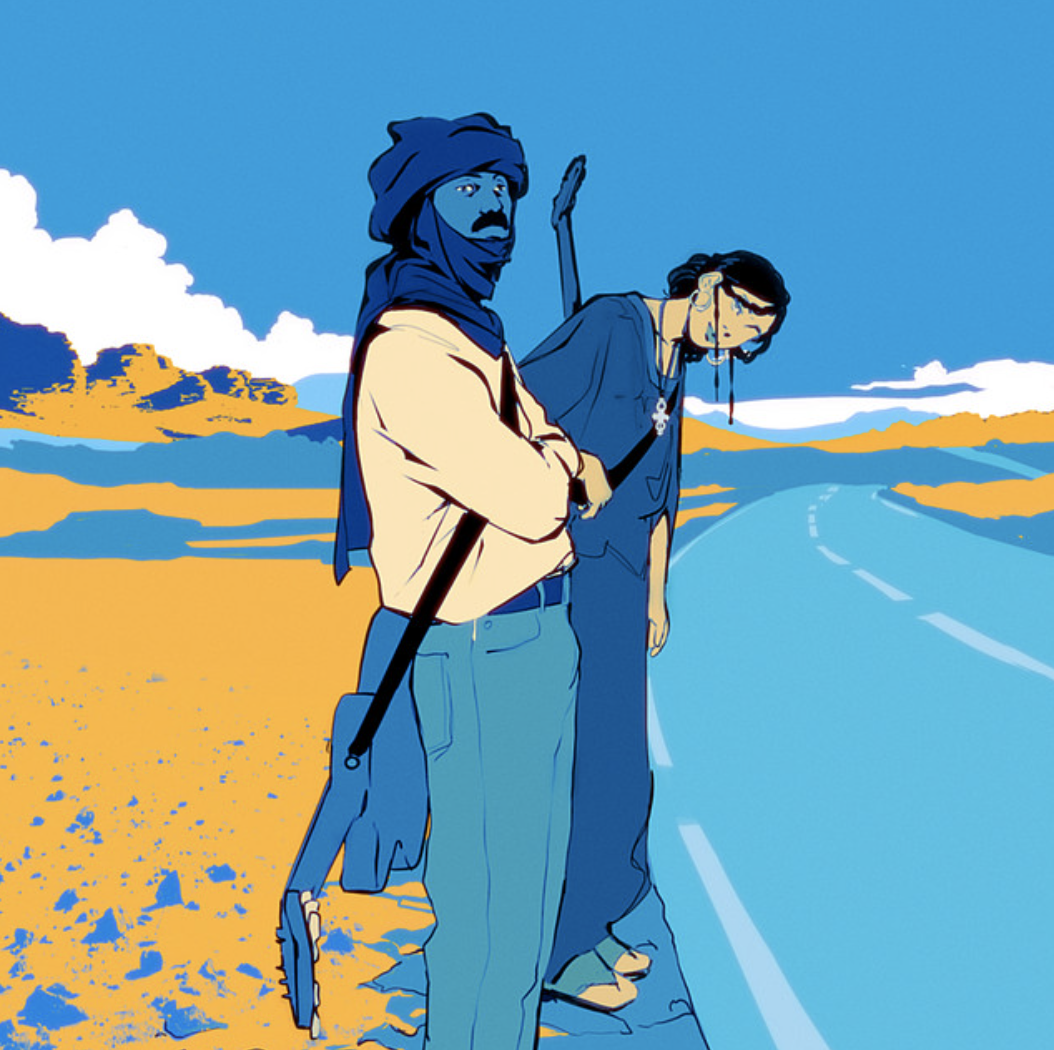
Apologies, as I’m writing this from my bed in the Renal Unit of the Queen Elizabeth mega hospital, waiting on my weekend free pass for home and recovery in much more inviting surroundings. If you haven’t yet heard, I was rushed into Acute last Thursday lunchtime and ended up in the kidney specialist unit; prodded, tested, observed, scanned, observed more, biopsy and trialling various meds: some of left me pretty unfocussed and groggy. You get your own room, own shower and facilities, plenty of sockets and pretty good free WiFi, so it isn’t that bad a stay. Just waiting in limbo for action plans, lifestyle change advice and long-term medication. I will however at least try to get the site on some sort of regular track whilst all this is going on, but events may hinder this, and my state of health may make it impossible sometimes, but we shall see how it goes.
Saying all that, I’m able, or at least in a more awakened state to finish off the month with a revue playlist and selection of choice releases list from January 2026. This list includes both those releases I or my contributors (Matt Oliver and Brian ‘Bordello’ Shea) managed to feature and review on the site and those we just didn’t get the room for – time restraints and the sheer volume of submissions each month mean there are always those records that miss out on receiving a full review, and so we have added a number of these to both our playlist and releases list.
CHOICE RELEASES FROM THE LAST MONTH OR SO:
Elea Calvet ‘Spurious Transmutations’
Chosen by Dominic Valvona
Geologist ‘Can I Get A Pack Of Camel Lights?’
(Drag City) DV Link
Clémentine March ‘Powder Keg’
(PRAH Recordings) DV Link
DakhaBrakha ‘Ptakh’
Chosen by DV
Roc Marciano ‘656’
(Pimpire Records/Marci Enterprises) Chosen by MO & DV
Minor Dents ‘Sitting With The Fish’
EP – (Rose Hill Records) Brian ‘Bordello’ Shea Link
Reine des Lezards ‘Lady Coca-Cola’
EP – (Metal Postcard Records) BBS Link
Sis and the Lower Wisdom ‘Saints and Aliens’
(Native Cat) DV Link
Wilson Tanner Smith ‘Perpetual Guest’
(Sawyer Editions) DV Link
Tachube ‘Mincminc’(Inverted Spectrum Records/PMGJazz)
DV Link
Charles ‘Poppy Bob’ Walker ‘Double-Wide’
Album – (Castle Dome Records) DV Link
Leo Wolf ‘Veiled In Light’
(The Oldest River) DV Link
PLAYLIST:
Sis and the Lower Wisdom ‘Luce’
Tinariwen Ft. Sulafa Elyas ‘Sagherat Assani’
Reine des Lezards ‘I’m Made Up’
Robert Stillman ‘Reality Distortion Field’
Neo-Magics ‘Acid Tongue’
Clementine March ‘After The Solstice’
The God Fahim & Nicholas Craven ‘Bik Luster S’
Roc Marciano ‘Vanity’
Doctor Nativo ‘Chokolate Kakao’
Shabaam Sahdeeq, Es-K & General Steele ‘Top Tier’
Under The Reefs Orchestra/Catherine Graindorge ‘Banquise’
Occult Character ‘Her Name Is Terriible’
The Bordellos ‘Who Do You Think You Are? Paul McCartney?’
Geologist ‘RV Envy’
Sniff, Caneva & Hush One ‘Polo Jacket’
Fliptrix, Forest DLG, Coops ‘Freedom?’
Toni Geitani ‘Ya Sah’
Wilson Tanner Smith ‘Cherry Picking’
DakhaBrakha ‘Kosari Kosait’
Elea Calvet ‘Bad Joke – Transmutation’
Sweeney ‘Lonely Faces’
Cashell ‘These Things Take Time’
Foster Neville ‘Hob Moor’
Strangebird-Sounds ‘CALCITE’
Charles ‘Poppy Bob’ Walker ‘Winterhaven, 1978’
KatzPascale ‘GBTC’
Sonnyjim & Sebb Bash Kezza’
Minor Dents ‘Rituals’
 Monolith Cocktail Blog